“Big Brother is Watching You.”―George Orwell, 1984
2024 is the new 1984.
Forty years past the time that George Orwell envisioned the stomping boot of Big Brother, the police state is about to pass off the baton to the surveillance state.
Fueled by a melding of government and corporate power—the rise of the security industrial complex—this watershed moment sounds a death knell for our privacy rights.
An unofficial fourth branch of government, the Surveillance State came into being without any electoral mandate or constitutional referendum, and yet it possesses superpowers, above and beyond those of any other government agency save the military.
It operates beyond the reach of the president, Congress and the courts, and it marches in lockstep with the corporate elite who really call the shots in Washington, DC.
This is the new face of tyranny in America: all-knowing, all-seeing and all-powerful.
Tread cautiously.
Empowered by advances in surveillance technology and emboldened by rapidly expanding public-private partnerships between law enforcement, the Intelligence Community, and the private sector, the Surveillance State is making the fictional world of 1984, Orwell’s dystopian nightmare, our looming reality.
1984 portrays a global society of total control in which people are not allowed to have thoughts that in any way disagree with the corporate state. There is no personal freedom, and advanced technology has become the driving force behind a surveillance-driven society. Snitches and cameras are everywhere. People are subject to the Thought Police, who deal with anyone guilty of thought crimes. The government, or “Party,” is headed by Big Brother who appears on posters everywhere with the words: “Big Brother is watching you.”
Indeed, in our present age of ubiquitous surveillance, there are no private lives.
Everything is increasingly public.
What we are witnessing, in the so-called name of security and efficiency, is the creation of a new class system comprised of the watched (average Americans such as you and me) and the watchers (government bureaucrats, technicians and private corporations).
We now find ourselves in the unenviable position of being monitored, managed and controlled by our technology, which answers not to us but to our government and corporate rulers.
This is the fact-is-stranger-than-fiction lesson that is being pounded into us on a daily basis.
There are roughly one billion surveillance cameras worldwide and that number continues to grow, thanks to their wholehearted adoption by governments (especially law enforcement and military agencies), businesses, and individual consumers.
Surveillance cameras mounted on utility poles, traffic lights, businesses, and homes. Ring doorbells. GPS devices. Dash cameras. Drones. Store security cameras. Geofencing and geotracking. FitBits. Alexa. Internet-connected devices.
Stingray devices, facial recognition technology, body cameras, automated license plate readers, gunshot detection, predictive policing software, AI-enhanced video analytics, real-time crime centers, fusion centers: all of these technologies and surveillance programs rely on public-private partnerships that together create a sticky spiderweb from which there is no escape.
With every new surveillance device we welcome into our lives, the government gains yet another toehold into our private worlds.
As the cost of these technologies becomes more affordable for the average consumer, an effort underwritten by the tech industry and encouraged by law enforcement agencies and local governing boards, which in turn benefit from access to surveillance they don’t need to include in their budgets, big cities, small towns, urban, suburban and rural communities alike are adding themselves to the surveillance state’s interconnected grid.
What this adds up to for government agencies (that is, FBI, NSA, DHS agents, etc., as well as local police) is a surveillance map that allows them to track someone’s movements over time and space, hopscotching from doorbell camera feeds and business security cameras to public cameras on utility poles, license plate readers, traffic cameras, drones, etc.
It has all but eliminated the notion of privacy enshrined in the Fourth Amendment and radically re-drawn the line of demarcation between our public and private selves.
The police state has become particularly adept at sidestepping the Fourth Amendment, empowered by advances in surveillance technology and emboldened by rapidly expanding public-private partnerships between law enforcement, the Intelligence Community, and the private sector.
Over the past 50-plus years, surveillance has brought about a series of revolutions in how governments govern and populations are policed to the detriment of us all. Cybersecurity expert Adam Scott Wandt has identified three such revolutions.
The first surveillance revolution came about as a result of government video cameras being installed in public areas. There were a reported 51 million surveillance cameras blanketing the United States in 2022. It’s estimated that Americans are caught on camera an average of 238 times every week (160 times per week while driving; 40 times per week at work; 24 times per week while out running errands and shopping; and 14 times per week through various other channels and activities). That doesn’t even touch on the coverage by surveillance drones, which remain a relatively covert part of police spying operations.
The second revolution occurred when law enforcement agencies started forging public-private partnerships with commercial establishments like banks and drug stores and parking lots in order to gain access to their live surveillance feeds. The use of automatic license plate readers (manufactured and distributed by the likes of Flock Safety), once deployed exclusively by police and now spreading to home owners associations and gated communities, extends the reach of the surveillance state that much further afield. It’s a win-win for police budgets and local legislatures when they can persuade businesses and residential communities to shoulder the costs of the equipment and share the footage, and they can conscript the citizenry to spy on each other through crowdsourced surveillance.
The third revolution was ushered in with the growing popularity of doorbell cameras such as Ring, Amazon’s video surveillance doorbell, and Google’s Nest Cam.
Amazon has been particularly aggressive in its pursuit of a relationship with police, enlisting them in its marketing efforts, and going so far as to hosting parties for police, providing free Ring doorbells and deep discounts, sharing “active camera” maps of Ring owners, allowing access to the Law Enforcement Neighborhood Portal, which enables police to directly contact owners for access to their footage, and coaching police on how to obtain footage without a warrant.
Ring currently partners with upwards of 2,161 law enforcement agencies and 455 fire departments, and that number grows exponentially every year. As Vice reports, “Ring has also heavily pursued city discount programs and private alliances with neighborhood watch groups. When cities provide free or discounted Ring cameras, they sometimes create camera registries, and police sometimes order people to aim Ring cameras at their neighbors, or only give cameras to people surveilled by neighborhood watches.”
In November 2022, San Francisco police gained access to the live footage of privately owned internet cameras as opposed to merely being able to access recorded footage. No longer do police even have to request permission of homeowners for such access: increasingly, corporations have given police access to footage as part of their so-called criminal investigations with or without court orders.
The fourth revolutionary shift may well be the use of facial recognition software and artificial intelligence-powered programs that can track people by their biometrics, clothing, behavior and car, thereby synthesizing the many strands of surveillance video footage into one cohesive narrative, which privacy advocates refer to as 360 degree surveillance.
While the guarantee of safety afforded by these surveillance nerve centers remains dubious, at best, there is no disguising their contribution in effecting a sea change towards outright authoritarianism.
For instance, as an in-depth investigative report by the Associated Press concludes, the very same mass surveillance technologies that were supposedly so necessary to fight the spread of COVID-19 are now being used to stifle dissent, persecute activists, harass marginalized communities, and link people’s health information to other surveillance and law enforcement tools.
As the AP reports, federal officials have also been looking into how to add “‘identifiable patient data,’ such as mental health, substance use and behavioral health information from group homes, shelters, jails, detox facilities and schools,” to its surveillance toolkit.
These cameras—and the public-private eyes peering at us through them—are re-engineering a society structured around the aesthetic of fear and, in the process, empowering “people to not just watch their neighborhood, but to organize as watchers,” creating not just digital neighborhood watches but digital gated communities.
Finally, there is a repressive, suppressive effect to surveillance that not only acts as a potentially small deterrent on crime but serves to monitor and chill lawful First Amendment activity.
As Matthew Feeney warns in the New York Times, “In the past, Communists, civil rights leaders, feminists, Quakers, folk singers, war protesters and others have been on the receiving end of law enforcement surveillance. No one knows who the next target will be.”
No one knows, but it’s a pretty good bet that the surveillance state will be keeping a close watch on anyone seen as a threat to the government’s chokehold on power.
In our current technocratic society, it’s incredibly rare to meet someone who is genuinely free. The erosion of the Consent Decrees of 1948—which allowed media conglomerates to own and control movie theaters—drastically altered the landscape of film and video production, further destabilizing an already unlevel playing field between corporate interests, content creators, and consumers. The trickle-down economics Reagan touted in his 1981 tax act proved only to favor the affluent, further alienating independent creators who were frozen out of a livelihood through economic blacklisting, a perpetual attack that continues to this day. Bill Clinton’s elimination of the fin-syn rules that required television networks to source 35% of their content from independent producers only helped to continue this trend into the new millennium, and soon the mainstream movie and TV-consuming public was offered a slate of hegemonic programming supplied by a monopoly rule.
With traditional avenues of information exchange becoming more restricted, pockets of transgressive media resistance—inspired by the countercultural film and video collectives of the ‘60s and ‘70s—gained 501(c)(3) non-profit status in 1980s America. These artist-run community organizations championed alternative educational perspectives on media literacy and performance, such as Artists’ Television Access in the Mission District of San Francisco, California. Operating under the umbrella of this community space exists a cinematic collective with a subversive trajectory: a film screening series and analog archive curated from the margins of mainstream media and acceptable art practice. Under the stewardship of underground filmmaker and curator Craig Baldwin, Other Cinema stands as the vanguard of Baldwin’s personal artistic conviction—what he calls “cinema povera,” an anti-capitalist filmmaking creed where artists only use the materials at their disposal to create art. Combine this practice with an ethos of media archeology and mixed-media collage that predates our current remix culture activities and what’s generated is an exhibition calendar of the modern avant-garde—a thirty-six week screening schedule projecting experimental film and video to the masses. Every Saturday night, cartoons, B movies, and commercials hold equal ground with industrial, educational, documentary, personal essay, and public domain/orphan films, bringing together numerous artists and filmmakers from around the world under one cinematic ceiling for close to 40 years.
Specific details surrounding the origins of Other Cinema are hard to quantify, partially due to the vastly prolific yet oddly cryptic career of founder Craig Baldwin. Born into a self-admitted 1950s middle-class existence in the Sacramento suburb of Carmichael, California, Baldwin spent his teenage years nurturing a ravenous curiosity for subversive cultures and media. During high school, he was often at the local Towne Theater enjoying the latest midnight show of underground programming, absorbing the cinematic combustion of the ‘60s experimental scene led by filmmakers like George Kuchar and Bruce Conner, who as a teacher would later kick Baldwin out of his film class while attending San Francisco State University. In college Baldwin also indulged in subterranean films such as Peter Watkins’s 1966 pseudo-doc The War Game and exploitation flicks like Paul Bartel’s 1975 sci-fi dystopian romp Death Race 2000. Forming a fascination with film exhibition, Baldwin worked as a projectionist at several movie houses throughout the city, navigating the film worlds through an eclecticism of arthouse, exploitation, pornography, and political activism—including contributing programming and film services to El Salvador Film and Video Projects for the Salvadoran solidarity movement of northern California. His early activism with the artistic political action collective the Urban Rats saw him and his cohorts reclaim San Francisco’s urban landscape through adverse possession or “squatter’s rights,” which allowed Baldwin to experiment with expanded cinema performance, such as projecting film in abandoned buildings and other derelict dwellings.
This direct approach towards genre and social action speaks to Baldwin’s personal opposition towards the status quo, an attitude that not only informs Other Cinema’s motion picture programming but also Baldwin’s own filmmaking forays. His early experiments with Super 8 film—such as the prototypical culture jam/situationist prank Stolen Movie—bled into his 16mm attacks on advertising, consumerism, and colonialism in Wild Gunmanand RocketKitKongoKit before gaining maximum velocity with his Dexedrine-driven, countermyth conspiracy report Tribulation 99. Making up the pure found footage/collage aesthetic of his filmography until introducing live-action performance into the mix with his films !O No Coronado!, Spectres of the Spectrum, and Mock Up on Mu, these early works draw heavily from Baldwin’s now massive archive of analog film. Housed beneath the Artists’ Television Access property, this subterranean scroll of marginalized media is continuously rescued from the bowels of civilization’s ever evolving technological burden and given new purpose. The shift from film in the 1970s to magnetic tape in the 1980s saw major institutions overhaul their audio/visual collections in favor of more economical video formats, sending reels of celluloid to the dumpsters and landfills. Much like the Dadaists of the early 20th century avant-garde, whose use of appropriation and photomontage expressed anti-bourgeois protest through their art, Baldwin and company salvaged these bastardized works from material obscurity and celebrated their ephemeral nature through collage and remix. These hybrid works of the late 20th century serve as precursor to many of our current 21st century new media innovations, resulting in the continued radicalization of modern artistic folklore, such as the mashups and supercuts of Everything Is Terrible! and the radical anti-authoritarian statements of the sister collective Soda Jerk.
Baldwin and Other Cinema’s defense of the diminished and discarded extends not only to the physical media he interacts with but to the audience he exhibits for. Maintaining a dialectical attitude, Baldwin expresses both respect and disrespect towards film genre and classification by spinning one off the other and forming new categories. Each screening is meant to give equal weight to diverse voices and provoke participation amongst attendees—an ethos Baldwin codified with his underground screening series The RAD, The MAD & The BAD while programming film events for Artists’ Television Access during the organization’s formative years. A protean yet practical film genre grouping system sorted through three major categories stripped of pretense and soaked in punk rock colloquialism, each selection was designated its own time slot on Wednesdays and Saturdays with those represented creating a continuity across each section:
The RAD: showcasing political and social action films
The MAD: mad genius or auteur cinema
The BAD: psychotronic themes of horror/sci-fi/exploitation
Defying the unspoken restraint behind many traditional classification systems that favor a false high-brow aesthetic to an honest low-brow sensibility, The RAD, The MAD & The BAD crossed the cultural demarcation line with an egalitarian stance towards genre representation, allowing for serious discussion about what constitutes a film’s importance and its commodification within society. More importantly, it displayed through example that poor production doesn’t always mean poor quality, and films created on the margins of capital contain a certain cultural influence and accessibility that corporate-backed productions can only hope to afford or inspire.
The authentic response audiences gave towards the weekly film schedule at Artists’ Television Access saw the prestigious San Francisco Cinematheque approach Baldwin to bring his street sensibility to their precocious crowd with Sub-Cinema, a RAD, MAD & BAD-inspired program that ran over the course of 1985. The creation of other pop-up programs like Anti-Films and Eyes of Hell inspired Baldwin to consolidate his film selections under his own programming umbrella, and soon the ethos that fueled The RAD, The MAD & The BAD manifested itself into the physical embodiment of Baldwin’s own psyche and practice with the foundation of Other Cinema.
If the RAD, MAD & BAD helped bring acceptance to the concept of marginalization in film selection and exhibition during the 1980s, the programming behind Other Cinema built upon this provocation by introducing new alternative voices from the microcinema scene of the 1990s. One of the forefronts of this new cinematic experience, Other Cinema became a home for a subculture of film using and reusing old and new technologies to create future underground works, with filmmakers and exhibitors from across the country like Sam Green, Martha Colburn, Greta Snider, Bill Daniel, Orgone Cinema, 3Ton Cinema, and “others” coalescing to this space like the children of Hamelin to the Pied Piper’s whimsical flute. Many of these groups and individuals appear in Baldwin’s upcoming career monograph Avant to Live!, a 500-page treatise detailing his cinematic trajectory in the media arts.
The decline of physical media coupled with our perpetual progression towards a digital state continues to divide us, with some championing the virtual realm and its democratization of new technologies and others questioning its effect on the human experience and how we interact with each other. The popularity of streaming services continues to challenge the economic longevity of physical media, forcing film formats into a wave of obsolescence. Despite this, Craig Baldwin and Other Cinema rise against the tide with an analog assault of expanded cinema every Saturday night. Filmmakers on the fringe and maverick media archeologists with an overwhelming responsibility to film history, yet hamstrung by a lack of resources, congregate at Other Cinema to embrace the struggle in an ever evolving motion picture renaissance. It’s a form of masochism one needs to make it on this side of the art world—the “masochism of the margins,” as Baldwin often says. It takes pain and sacrifice to live here, yet the psychic rewards far outweigh the material loss.
Andy Prisbylla is an underground filmmaker and exhibitor from the rust belt apocalypse of Steel City, PA. His screening series SUBCINEMA showcases subterranean movies and art through digital programming and live pop-up events. Find out more through Letterboxd and Mastodon.
There is no difference between psychopaths and politicians.
Nor is there much of a difference between the havoc wreaked on innocent lives by uncaring, unfeeling, selfish, irresponsible, parasitic criminals and elected officials who lie to their constituents, trade political favors for campaign contributions, turn a blind eye to the wishes of the electorate, cheat taxpayers out of hard-earned dollars, favor the corporate elite, entrench the military industrial complex, and spare little thought for the impact their thoughtless actions and hastily passed legislation might have on defenseless citizens.
Charismatic politicians, like criminal psychopaths, exhibit a failure to accept responsibility for their actions, have a high sense of self-worth, are chronically unstable, have socially deviant lifestyles, need constant stimulation, have parasitic lifestyles and possess unrealistic goals.
It doesn’t matter whether you’re talking about Democrats or Republicans.
Political psychopaths are all largely cut from the same pathological cloth, brimming with seemingly easy charm and boasting calculating minds. Such leaders eventually create pathocracies: totalitarian societies bent on power, control, and destruction of both freedom in general and those who exercise their freedoms.
Once psychopaths gain power, the result is usually some form of totalitarian government or a pathocracy. “At that point, the government operates against the interests of its own people except for favoring certain groups,” author James G. Long notes. “We are currently witnessing deliberate polarizations of American citizens, illegal actions, and massive and needless acquisition of debt. This is typical of psychopathic systems, and very similar things happened in the Soviet Union as it overextended and collapsed.”
In other words, electing a psychopath to public office is tantamount to national hara-kiri, the ritualized act of self-annihilation, self-destruction and suicide. It signals the demise of democratic government and lays the groundwork for a totalitarian regime that is legalistic, militaristic, inflexible, intolerant and inhuman.
Incredibly, despite clear evidence of the damage that has already been inflicted on our nation and its citizens by a psychopathic government, voters continue to elect psychopaths to positions of power and influence.
According to investigative journalist Zack Beauchamp, “In 2012, a group of psychologists evaluated every President from Washington to Bush II using ‘psychopathy trait estimates derived from personality data completed by historical experts on each president.’ They found that presidents tended to have the psychopath’s characteristic fearlessness and low anxiety levels — traits that appear to help Presidents, but also might cause them to make reckless decisions that hurt other people’s lives.”
The willingness to prioritize power above all else, including the welfare of their fellow human beings, ruthlessness, callousness and an utter lack of conscience are among the defining traits of the sociopath.
When our own government no longer sees us as human beings with dignity and worth but as things to be manipulated, maneuvered, mined for data, manhandled by police, conned into believing it has our best interests at heart, mistreated, jailed if we dare step out of line, and then punished unjustly without remorse—all the while refusing to own up to its failings—we are no longer operating under a constitutional republic.
Worse, psychopathology is not confined to those in high positions of government. It can spread like a virus among the populace. As an academic study into pathocracy concluded, “[T]yranny does not flourish because perpetuators are helpless and ignorant of their actions. It flourishes because they actively identify with those who promote vicious acts as virtuous.”
People don’t simply line up and salute. It is through one’s own personal identification with a given leader, party or social order that they become agents of good or evil.
Much depends on how leaders “cultivate a sense of identification with their followers,” says Professor Alex Haslam. “I mean one pretty obvious thing is that leaders talk about ‘we’ rather than ‘I,’ and actually what leadership is about is cultivating this sense of shared identity about ‘we-ness’ and then getting people to want to act in terms of that ‘we-ness,’ to promote our collective interests. . . . [We] is the single word that has increased in the inaugural addresses over the last century . . . and the other one is ‘America.’”
The goal of the modern corporate state is obvious: to promote, cultivate, and embed a sense of shared identification among its citizens. To this end, “we the people” have become “we the police state.”
We are fast becoming slaves in thrall to a faceless, nameless, bureaucratic totalitarian government machine that relentlessly erodes our freedoms through countless laws, statutes, and prohibitions.
Any resistance to such regimes depends on the strength of opinions in the minds of those who choose to fight back. What this means is that we the citizenry must be very careful that we are not manipulated into marching in lockstep with an oppressive regime.
But what does this really mean in practical terms?
It means holding politicians accountable for their actions and the actions of their staff using every available means at our disposal: through investigative journalism (what used to be referred to as the Fourth Estate) that enlightens and informs, through whistleblower complaints that expose corruption, through lawsuits that challenge misconduct, and through protests and mass political action that remind the powers-that-be that “we the people” are the ones that call the shots.
Remember, education precedes action. Citizens need to the do the hard work of educating themselves about what the government is doing and how to hold it accountable. Don’t allow yourselves to exist exclusively in an echo chamber that is restricted to views with which you agree. Expose yourself to multiple media sources, independent and mainstream, and think for yourself.
For that matter, no matter what your political leanings might be, don’t allow your partisan bias to trump the principles that serve as the basis for our constitutional republic. As Beauchamp notes, “A system that actually holds people accountable to the broader conscience of society may be one of the best ways to keep conscienceless people in check.”
That said, if we allow the ballot box to become our only means of pushing back against the police state, the battle is already lost.
Resistance will require a citizenry willing to be active at the local level.
Yet if you wait to act until the SWAT team is crashing through your door, until your name is placed on a terror watch list, until you are reported for such outlawed activities as collecting rainwater or letting your children play outside unsupervised, then it will be too late.
We are human beings, and for the moment, we have the opportunity to remain free—that is, if we tirelessly advocate for our rights and resist at every turn attempts by the government to place us in chains.
The Founders understood that our freedoms do not flow from the government. They were not given to us only to be taken away by the will of the State. They are inherently ours. In the same way, the government’s appointed purpose is not to threaten or undermine our freedoms, but to safeguard them.
Until we can get back to this way of thinking, until we can remind our fellow Americans what it really means to be free, and until we can stand firm in the face of threats to our freedoms, we will continue to be treated like slaves in thrall to a bureaucratic police state run by political psychopaths.
While this article will focus on the genocide in Gaza, it is important to recognize that this genocide against the Palestinians – second only in its severity to the original Nabka in 1948 – is simply exploiting longstanding Zionist aspirations to play a key part in fulfilling a wider Elite program.
If you prefer watching film, this four-part series does an excellent job with archival footage to also illustrate the long history of Zionist planning, political manipulation and imperial collusion that generated and maintains the extraordinary violence inflicted on the people of Palestine. See ‘Al-Nabka: The Palestinian catastrophe – Episodes 1-4’.
But whichever way(s) you acquire a deeper understanding of what has taken place and why it is still taking place, several things will become clear. Most notably for me was (again) perceiving the sheer terror and insanity (and thus warped worldview and predisposition to violence) of those ‘behind’ the entire enterprise from the beginning right through to those responsible for imposing it now. I have discussed this issue many times previously, including here: ‘The Global Elite is Insane Revisited’.
And if you would like to read the 23 emotional characteristics that define the psychological profile of ‘archetype perpetrators of violence’ (such as people like Israeli Prime Minister Benjamin Netanyahu, Defence Minister Yoav Gallant and the Elite figures who put people like this in place), you can do so in the document ‘Why Violence?’ pp.12-15.
This partly explains why the amount of time it takes to kill or displace the bulk of the Palestinian population is of no consequence to Elite agents, including the Israeli and US governments, despite some authors expressing concern that the death of Israeli soldiers is costing the Israeli government support for its genocidal invasion. See ‘Industrial Killing of Civilians in Gaza Won’t Defeat the Armed Insurgency’.
This is because it is neither the Israeli government nor the government of the United States orchestrating this genocide, even though it appears to constitute the latest manifestation of C19th Zionist aspirations to create a Jewish ‘homeland’ in an ethnically cleansed Palestine. Hence, what the respective electorates of Israel and the United States think of this genocide is inconsequential to their governments. The governments answer to a higher power.
But with Elite plans for all cities extensively documented in the ‘smart city’ literature readily available, there remains much more to make Gaza, particularly following its recent substantial destruction, into the technocratic prison that Elite planners envisage for us all.
This was highlighted by Elon Musk’s latest visit to Israel to discuss ‘the operation of Starlink satellite internet in Gaza’ with Israeli officials, including Prime Minister Benjamin Netanyahu and President Isaac Herzog, during which it was made clear that deployment of the satellites – a critical foundation stone that enables creation of the new technocratic surveillance and control-oriented ‘smart cities’ – is already being planned even while the genocide is still being conducted and whatever ‘humanitarian’ slant might be attached to their deployment in the short-term. The agreement between Musk’s company SpaceX and Israel allows the company’s Starlink Internet satellites to operate in the Gaza Strip ‘with the approval of the Israeli ministry of communication’. See ‘Has Power of Starlink Turned Elon Musk Into Tech Oligarch?’ and ‘Elon Musk’s Power as Geopolitical Arbiter Signals “Decay” of US State’.
After all, even with Gaza largely populated by Israeli settlers, Elite plans to imprison us all in ‘smart’ cities means that there is no distinction between Palestinians and ‘ordinary’ Israelis when it comes to how the future population of Gaza will be treated.
If you would like to read an account of how the televised genocide in Gaza is being used to advance the Elite program – including the extensive interests of the Rothschild family – while some sections of the world (including the UN, various national leaders, some Islamic and Arabic organizations and members of the protesting public) complain powerlessly, even while Hamas and its allies within Gaza and the West Bank as well as in the Axis of Resistance (Iran, Syria, the Ansar Allah [Houthis] in Yemen, Hezbollah in Lebanon, and the Popular Mobilization Forces in Iraq) offer military resistance, you can do so in this article: ‘Will Palestine Ever Be Free? Understanding Elite Strategy in the Global Context’.
The problem is simple. Whether in politics or in other domains, while listening to what people say it is imperative to observe what they do. While articles such as these document a range of actors from the US Secretary of Defense Lloyd Austin, prominent actors in West Asia such as Saudi Crown Prince Mohammed bin Salman and others in key Arab and Muslim states suggesting what Israel should do to end the genocide, none of them is willing to take any action that would force Israel’s hand, such as cut off weapons supplies, or even take action that would seriously impede Israel’s genocidal assault. The unspoken message to Israel is as follows: ‘We will make ourselves look good by calling on you Israelis to take some token action to end the genocide but we won’t get in your way. So go ahead.’
And it has never troubled the Elite (and thus its agents) about what might appear to be happening. To reiterate, it is no ‘strategic defeat’ for Israel, as some commentators have argued, or even a ‘political defeat of Israel on the global stage’ because it ignored ‘the fundamental precepts of international humanitarian law’ and allowed itself ‘to be characterized as a practitioner of genocide, and its actions against Gaza as war crimes’. See ‘Israel Headed for Strategic Defeat in Gaza’.
So why don’t these issues concern the Elite and its agents? The answer is simple: As explained below, at the superficial level, the Elite knows that it cannot be held accountable (and it can protect those of its agents that it chooses for as long as it chooses). But there is a more fundamental reason which I will explain after briefly elaborating why the Elite knows it cannot be held accountable.
First, international law is a toothless tiger. Moreover, there is no national jurisdiction that can hold the Elite accountable either. The Elite is immune from prosecution in any court, anywhere.
So don’t be impressed/deceived by governments ‘calling for a ceasefire’ or its various equivalents, UN resolutions, scholars and others signing statements, calls for accountability under international law and large numbers of people signing petitions or protesting. Whatever the level of revulsion expressed, history teaches us that such actions mean nothing but are useful in convincing the ill-informed wider public that ‘something is being done’. It isn’t.
And this brings us to the most fundamental issue: For the Elite, ‘winning’ or ‘losing’ in limited contexts such as Gaza is not important. Killing as many people as possible, enslaving those left alive (these days, technocratically), redistributing wealth and reshaping world order to enhance Elite control are the desired outcomes. As has been the case for the past 230 years at least.
This is why, for example, the United States has been engaged in perpetual war since World War II, has conducted a wide range of coups d’état (‘regime changes’) or otherwise militarily intervened in other countries. See Killing Hope: US Military and CIA Interventions Since World War II.
The point is this: These wars killed millions of people (mainly civilians), enslaved many people (by forcing them into the periphery of the world economy), transferred enormous wealth to the Elite in a wide range of ways and consolidated Elite control. So it matters nought to the Elite if the US government is $34trillion dollars in debt – see US Debt Clock – and much of the US population impoverished.
But to return our attention to Gaza: If you want an accurate understanding of what is actually being done, just keep an eye out for any individual, government, international organization or other entity taking action that actually impedes the genocide and/or moves Palestine closer to liberation.
And people participating in the ongoing Palestinian Boycott, Divestment, Sanctions (BDS) movement – see ‘Act Now Against These Companies Profiting from the Genocide of the Palestinian People’ – are leading the resistance to the Israeli occupation and genocide in the nonviolent realm, although a great deal more needs to be done in this realm for it to have the strategic impact necessary to succeed.
My point is straightforward: After documenting ‘this catastrophe for the Palestinians’, long-time and highly regarded scholar Professor John Mearsheimer poses ‘one simple question for Israel’s leaders, their American defenders, and the Biden administration: have you no decency?’ See ‘Death and Destruction in Gaza’.
The answer, of course, is ‘no’. Elite agents, whether in Israel or the US (or elsewhere), do as they are directed, and morality of any kind is not a consideration. If wars and genocides throughout history, including the C20th, have taught us anything, it is that ‘decency’ is not a factor that enters into Elite deliberations when mass killing is organized and perpetrated to serve Elite ends. And anyone with a cursory knowledge of history and the capacity to analyze should know this too.
In essence, if the primary objectives of Hamas – notably including statehood for Palestine, the release of Palestinian prisoners from Israeli jails and an end to Israeli settler and police incursions into the al-Aqsa mosque in Jerusalem: see the Hamas document ‘Our Narrative… Operation Al-Aqsa Flood’ – are used as the measure of progress (as they should be), then the results are little short of catastrophic so far.
How even ‘winning’ the war in Gaza, assuming this ultimately occurs, achieves Palestinian statehood is problematic, to put it mildly; so far only about 240 Palestinian detainees and prisoners out of 5,000 – see ‘Statistics on Palestinians in Israeli custody’ – have been released in exchange for over 100 Israeli hostages; and there is no mention in anything I have read that suggests that any progress has been made on putting in place a protocol for ending Israeli civilian and police incursions into the al-Aqsa mosque, with the latest Good Shepherd Collective report advising ‘Settlers continue with their program to change the status quo at the Al-Aqsa Mosque, with armed incursions.’ See ‘Weekly Report’.
So the only clear tangible gain for Hamas so far (in relation to its apparent objectives) is some 240 released prisoners.
The strategic reality is that halting the genocide in Gaza and, ultimately, liberating Palestine while also defeating imposition of the global technocracy which this conflict is facilitating, will not be achieved by such tactics.
And the genocide will not be halted, Palestine liberated or the advancing global technocracy impeded by those solidarity groups, such as Palestine Action in the UK, that campaign against Elbit (Israel’s largest weapons manufacturer) by encouraging secretive acts of sabotage by individuals or small ‘cells’ – see ‘The Underground Manual’ – despite occasional apparent ‘victories’. See ‘Palestine Action Campaign Leads to Fisher German Ending Ties with Elbit’.
Halting the Genocide in Gaza and Ending the Occupation of Palestine using Nonviolent Strategy
If the genocide is to be halted and the occupation ended, it will require a substantial mobilization of people to participate in a comprehensive strategically-oriented campaign that precisely identifies the tactics to be undertaken (not just a random list of actions) and, as the historical record demonstrates, not by using secrecy and sabotage in their execution. For detailed explanations of these points, see The Strategy of Nonviolent Defense: A Gandhian Approach.
Before proceeding, if you doubt that a nonviolent strategy can halt a genocide in progress, you can read a solid account of when this has occurred historically and how it was accomplished in the section titled ‘Nonviolent Defense Against an Extremely Ruthless Opponent’ on pp.238-245 of the book just cited.
But if we are able to mobilize enough people to halt the genocide, we will be in a stronger position to keep struggling to end the occupation as well so, strategically speaking, it is useful to see these two political purposes as related.
And while defeating the attempt to impose a global technocracy on us all will require a worldwide mobilization far beyond what has even begun yet, success in Palestine could bolster these efforts. After all, what is happening in Gaza is coming to us all, one way or another, although few people are aware of this yet.
Anyway, to illustrate what both a nonviolent strategy to halt the genocidal assault by Israel against Gaza and a nonviolent strategy to liberate Palestine would entail, I have reproduced below just nineteen ‘consolidated’ strategic goals, written in a form appropriate for this particular context, taken from the comprehensive but generalized list of 50 ‘Strategic Goals for Defeating a Genocidal Assault’.
In most cases, I have also briefly explained the value of that strategic goal and perhaps offered examples, either historically or in the current context, where tactics in pursuit of that goal have been undertaken.
This incomplete/consolidated list of strategic goals is based on principles not explained here but carefully elaborated on the website just identified. Needless to say, it is a straightforward task to consult the full list of strategic goals (to halt a genocide or liberate an occupied country) and reword each of the remaining goals to make it appropriate to the Palestinian situation and nominate the specific groups that should be mentioned where appropriate.
Thus, just nineteen strategic goals that would contribute both to defeating Israel’s genocidal assault on Gaza and liberating Palestine (which conform to the formula described on the website) are listed below (with brief explanations and historical examples where appropriate). It should be noted, however, that the list would be considerably longer as individual organizations – such as each organization involved in inciting, facilitating, organizing, conducting and/or benefiting from the genocide (for whatever reason but including national and religious groups with competing perspectives as well as corporations involved in media, banking and resource extraction) – should be specified separately.
Of course, individual groups within the defense would usually accept responsibility for focusing their work on achieving just one or two of the strategic goals. It is the responsibility of the struggle’s strategic leadership to ensure that each of the strategic goals (identified and prioritized according to local circumstances) is being addressed (or to prioritize if resource limitations require this).
If there is no identified strategic leadership, individuals and local groups should proceed to tackle those strategic goals most relevant to their circumstances, interests and capacities.
(1) To cause the people of Palestine(men, women and children) to identify their support for, and participation in, the Palestinian resistance strategy by wearing a symbol of Palestinian unity (a keffiyeh,as a head covering or scarf, orthe colors of the Palestinian flag: black, white, green and red) and by boycotting all corporate/governmentmedia and social media outlets that support the genocide in Gaza and/or the occupation of Palestine.
(2) To cause the people of Israel(men, women and children) to identify their solidarity with the people of Palestineand opposition to the genocide and occupation by wearing a symbol of solidarity(a keffiyeh,as a head covering or scarf, orthe colors of the Palestinian flag: black, white, green and red) and by boycotting all corporate/governmentmedia and social media outlets that support the genocide in Gaza and/or the occupation of Palestine.
Government and corporate media and social media have long been used to control the narrative regarding what is happening in Palestine. If you choose to boycott these outlets, in favor of outlets committed to telling you the truth, you play a valuable role in holding media that lies accountable and supporting those telling the truth who are often suppressed.
(3) To cause people elsewhere in the world(men, women and children) to identify their solidarity with the people of Palestineand opposition to the genocide and occupation by wearing a symbol of solidarity(a keffiyeh,as a head covering or scarf, orthe colors of the Palestinian flag: black, white, green and red) and by boycotting all corporate/governmentmedia and social media outlets that support the genocide in Gaza and/or the occupation of Palestine.
(4) To cause young people in Israel to resist conscription and recruitment into the military, police, intelligence services and other forces/organizations inciting, facilitating, organizing and/or conducting the genocide or maintaining the occupation of Palestine.
For example, prior to the current genocide and despite four stints in prison, 19-year-old Israeli woman Hallel Rabin resolutely stood her ground, refusing to serve in the Israeli army occupying Palestine. This article includes a video of Rabin speaking eloquently about her reasons for resisting. See ‘Refusing to serve in the army is my small act of making change’.
And despite the risk of a significant jail sentence, Ariel Davidov, a 19-year-old Israeli ‘refusenik’ believes that ‘not joining the army is one of the most effective things you can do’ to ‘end the cycle of violence’. See ‘Why Israeli army refusers are crucial to ending the cycle of violence’.
These intelligent and conscientious young people are far from alone and highlight the possibilities open to those of us who choose to mobilize an effective nonviolent resistance to violence, wherever it occurs in the world.
We just need their commitment and courage.
(5) To cause soldiers, airmen, sailors, intelligence personnel, drone pilots and others in the Israeli military to refuse to obey orders that will lead to the arrest, assault, torture, shooting, bombing and other forms of harm to Palestinians, medical personnel, foreign aid workers, journalists, solidarity activists and othersin Palestine.
Of course, the right and duty to make decisions based on conscience were enshrined in international law a long time ago, including in Principle IV of the Nuremberg Charter: ‘The fact that a person acted pursuant to order of [their] Government or of a superior does not relieve [them] from responsibility under international law, provided a moral choice was in fact possible to [them]’. See ‘Principles of International Law Recognized in the Charter of the Nürnberg Tribunal and in the Judgment of the Tribunal 1950’.
And the historical record demonstrates that dialogue and nonviolent action designed to convince troops to disobey their orders have sometimes been successful. For example, it was a vital element of the Czechoslovakian resistance to the Warsaw Pact invasion during 1968, it was the defining feature of the nonviolent revolution in the Philippines in 1986, it was the crucial factor in thwarting the Chinese government’s first attempt to clear Tiananmen Square on 20 May 1989, and it was fundamental to the defeat of the Soviet coup in 1991. See The Strategy of Nonviolent Defense: A Gandhian Approach. pp.256-8.
Individuals in Israel who make such conscience-based choices are supported by Mesarvot, one of the organizations that supports Israeli ‘refuseniks’ in a campaign against the occupation of Palestine.
[An earlier organization – Yesh Gvul (‘There is a limit’) – was founded in 1982 ‘as a political movement aimed at supporting refuseniks and conscientious objectors’. It now appears to be inactive.]
But the potential for something more significant might be inferred from this article by Shimri Zameret, a soldier who conscientiously resisted participation in the Israeli military response to the Palestinian second Intifada, spending 21 months in prison as a result, and now comments on disquiet within the military for the anti-democratic ‘reforms’ pursued by Netanyahu in 2023. See ‘A mass wave of Israeli army refusal could be a transformative moment’.
Zameret and many others are part of another organization – the Refuser Solidarity Network – that also supports soldiers opposed to the occupation and the policies (genocidal and otherwise) that derive from it.
In any case, there is enough evidence of disquiet among young Israeli conscripts and serving soldiers (and possibly personnel in other services, such as the intelligence services) concerned about participating in the genocide and occupation to make it strategically worthwhile for people, whether in Israel or elsewhere, to contact serving personnel with encouragement to consider their conscience about the moral path in this context and offers to listen while they deliberate.
(6) To cause the private military contractors (mercenaries) employed by the Israeli Army to refuse to participate in the genocide in Gaza and/or in maintenance of the occupation.
According to one source, there are an estimated 28,000 mercenaries in the Israeli military. This constitutes a heavy drain on the Israeli economy, which is now being threatened by various measures. See ‘Gaza Exhausted Israel’s Economy’.
Apart from efforts to dissuade foreign soldiers from joining the Israeli military, increasing pressure on the Israeli economy will make it difficult for ordinary Israelis impacted – as Mohandas K. Gandhi understood the Indian boycott of cloth imports from Manchester in defence of the indigenous khadi industry would make it difficult for workers in England – but the Israeli leadership will endeavour to hold out against enormous pressure as it will be directed to do. Nevertheless, there are many measures that can be taken, including those outlined below, to keep this pressure building.
(7) To cause the officers in the Israeli police and Shin Bet (the security agency) in Israel to refuse to obey orders toinflict violence on Israeli nonviolent activists and to arrest, assault, torture and shoot Palestinians, medical personnel, foreign aid workers, journalists, solidarity activists and othersin Palestine.
Again, there are many historical precedents around the world of police refusing orders to inflict violence on populations they police, including during the lockdowns imposed as part of the restrictions enforced under the recent Covid-19 regime. See ‘Policing the Elite’s Technocracy: How Do We Resist This Effectively?’
And there is already substantial dissatisfaction within the Israeli Police for various reasons, leading significant numbers to leave the force. A key reason for the dissatisfaction is that senior officers are often abusive of lower ranks (in various ways) and, whether in the police or Shin Bet, punishment of these officers is virtually non-existent (or trivial when it happens). See ‘Why do so many Israel Police officers quit?’
Fortunately, the long legacy of nonviolent struggle in extremely violent contexts has much to teach nonviolent activists about dealing powerfully with such situations. This article offers 20 ideas of use in both the Israeli and Palestinian contexts: ‘Nonviolent Action: Minimizing the Risk of Violent Repression’.
Not every police or Shin Bet officer will follow orders to be violent unthinkingly. Our challenge is to amplify their inclination to do what is right, irrespective of the orders they are given.
(8) To cause military personnel in the military forces of Israeli-allied countries including the United States, the United Kingdom and elsewhere to refuse deployment to the conflict zone near Israel and Palestine.
Since then, the United States has set up and deployed ‘Operation Prosperity Guardian’, a multinational coalition supposedly intended ‘to help protect merchant ships in the Red Sea area from drones and missiles’ fired by Yemen’s Ansar Allah against vessels perceived to be supporting, directly or indirectly, Israel’s attacks on Gaza. See ‘US unveils international force to defend Red Sea. Here’s what we know’.
This can also be resisted by people, including anti-war activists, in the various countries (the United States, United Kingdom, Bahrain, Canada, France, Italy, Netherlands, Norway, Seychelles and Spain) that are deploying troops and weapons systems to the region by taking targeted nonviolent action against weapons producers and the troops facing deployment to the region. As always, see the list of possible actions in the article ‘198 Tactics of Nonviolent Action’.
(9)To cause members of trade unions and professional associations, activist groups, religious bodies, women’s organizations, student bodies, consumer groups andethnic groups, as well as artists, musicians, intellectuals and members of other key social groupsin Israel to resist the genocide and the occupation by encouraging their members to boycott all government/corporate media and social media that support the genocide or occupation and to withdraw their labor [temporarily/permanently] from any organization complicit in the genocide and/or occupation.
And while loudly condemned by most of his fellow MPs in the Israeli Knesset, Ofer Cassif had the courage to sign a petition in support of the hearing at the International Court of Justice accusing Israel of genocide in Gaza. In response to his widespread condemnation, Cassif noted ‘I will not give up the fight for our existence as a moral society. This is true patriotism…’. See ‘Balls of Steel’.
While it will clearly take stronger actions than these to halt the genocide, like the efforts of those young Israelis resisting conscription into the Israeli military, they are undertaken by those who have a conscience and the courage to live it and all movements for justice are built on such individuals.
No doubt Israel has plenty more yet and one of our tasks is to encourage Israelis to act and support them when they do. There are plenty of people in the United States and elsewhere who could usefully focus some effort on contacting Israelis they know and encouraging them to take a conscientious stand (and perhaps listen supportively while any individual considers such a course).
As mentioned above, there are trade unions, professional associations, religious bodies, women’s organizations and a great many other groups in Israel that can be approached to ask their members to boycott media supporting the genocide/occupation and to consider withdrawing their labor from organizations that are complicit.
The wider the resistance is spread, the less pressure there is on any one individual.
(10) To cause members of trade unions and professional associations, activist groups, religious bodies, women’s organizations, student bodies, consumer groups andethnic groups, as well as artists, musicians, intellectuals and members of other key social groupsin countries in which governments are complicit in the genocide (including the USA, UK, Germany and other European countries particularly) to resist the genocide and the occupation by encouraging their members to boycott all government/corporate media and social media that support the genocide or occupation and to withdraw their labor [temporarily/permanently] from any organization complicit in the genocide and/or occupation.
The point is that this discontent is everywhere and, at some point, the more courageous will act and inspire many around them, whatever organization in which they work.
And other forms of resistance that are especially effective in that particular context can be considered. Again, for inspiration, consider ‘198 Tactics of Nonviolent Action’.
(11) To cause members of trade unions and labor organizations, activist groups, religious bodies, women’s organizations, student bodies, consumer groups andethnic groups, as well as artists, musicians, intellectuals and members of other key social groupsin countries in which governments are complicit in the genocide (including the USA, UK, Germany and other European countries particularly) to resist the genocide and the occupation by encouraging their members to boycott those products that are extracted (or produced)and exported by corporations acting in concert with the Israeli government.
While Felicity Arbuthnot, in the 2013 article just cited, nominated the interest of the BG Group in Gaza’s gas and oil reserves, in early 2016, the BG Group became part of Shell Global. See ‘Combining Shell and BG: a simpler and more profitable company’.
Of course, Shell has been a Rothschild corporation since the very early 20th century. According to the Rothschild Archive: ‘As it turned out, Rothschilds had a decisive influence in shaping Royal Dutch Shell, more so than anyone had previously imagined.’ See ‘Searching for oil in Roubaix’. But Shell does not represent the only Rothschild investment in energy supplies.
Consequently, widespread and persistent consumer boycotts that target Shell, Chevron (for which the key brand names are Texaco and Caltex) and Siemens products could play a valuable role in compelling these corporations, and their Elite owners, to reconsider their role in sponsoring the genocide and occupation.
(12) To cause people in your country to boycott Israel as a tourist destination.
The genocide in Gaza has had a significant, adverse impact on the Israeli economy. See ‘Gaza Exhausted Israel’s Economy’. Causing people to boycott Israel as a tourist destination (in favor of traveling elsewhere) is an effective way to reduce Israeli government finance available for the genocide and occupation.
An important subset of this, which focuses more on removing the apparent legitimacy attached to Israeli institutions, is advocated by the BDS Movement and involves the encouragement of academics, prominent entertainers, cultural figures (such as writers and artists) and sportspeople to boycott Israel. See ‘Academic Boycott’ and ‘Cultural Boycott’. Individuals in this category can set a powerful example for their colleagues/fans.
(13) To cause the workers in the trade unions andprofessional associationsthat work for individual weapons corporations (such as Elbit Systems, Rafael, Lockheed Martin and Boeing)that supply weapons to the Israeli militaryto withdraw their labor [partially/wholly], [temporarily/permanently].
Thus, whether in relation to an Israeli weapons corporation, such as Elbit Systems and Rafael, or a weapons corporation in the US, the UK, Germany or other countries that supply weapons to Israel, each trade union and/or professional association representing employees working for the corporation is effectively supporting individuals to participate in enabling the genocide and maintenance of the occupation.
Individuals and organizations can be encouraged to choose not to do so using a variety of means, always beginning with dialogue but then, if the issue cannot be resolved through listening and clear communication, using a range of nonviolent tactics at worksites, ranging from demonstrations and picket lines to blockades. But again, plenty of options here: ‘198 Tactics of Nonviolent Action’.
(14) To cause corporations that provide vital services/components to weapons corporations that supply weapons to Israel to cease doing so.
But there are a great many possibilities as the sheer diversity of parts in military weapons means that many corporations are drawn into the staggering array of supply lines. Choosing those services and components that are more specific and critical to military impact – including command, control, communications, delivery, targeting – rather than some insignificant, generic part, will ensure strategic value derives from success in any campaign.
If this isn’t feasible (or efforts fail) in a particular context, consider the following strategic goal.
(15) To cause the workers in the relevant trade unions or labor organizations to withdraw their labor [temporarily/permanently] [partially/wholly] from those corporations that supply services/components to weapons corporations that supply weapons to Israel.
A corporation management might not have a conscience but plenty of workers do, and approaching them through their trade union or labor organization might open opportunities to discuss possible ways they can noncooperate with the genocide and occupation.
(16) To cause vessels and cargo planes engaged in transporting goods and weapons to or from Israel to cease doing so [temporarily/permanently].
Beyond that, however, and given that most governments won’t do this, activists working in conjunction with local trade unions can do it too. For example, starting in the late 1980s in Australia, the combined efforts of nonviolent activists and trade unionists caused significant delays in the unloading of imported rainforest timber from cargo ships. The awareness generated by these widely publicized and graphic actions was used to mobilize a massive boycott of imported rainforest timber by the Australian community, effectively eliminating the trade within three years as entire industries switched to sourcing timber from more sustainable sources. Watch ‘Time to Act’ and see ‘Nonviolent Struggle for the Rainforests’.
Of course, trade union action of this nature has a long history. For example, during the apartheid era in South Africa, Danish dock workers in 1963 decided not to unload ships carrying South African products, triggering a similar boycott in Sweden, England and elsewhere.
In relation to Palestine, the first solidarity action of this nature occurred in South Africa when the South African Transport and Allied Workers Union (SATAWU) decided not to unload an Israeli ship due to arrive in Durban on 8 February 2009. See ‘The BNC Salutes South African Dock Workers Action!’
And in 2014, the Arab Resource and Organizing Center in the United States launched Block the Boat in response to the call by the Palestinian General Federation of Trade Unions (PGFTU) and a coalition of all major Palestinian workers unions and professional associations who called on their fellow trade unionists and workers worldwide to boycott Israel and businesses that are complicit with its apartheid regime. They specifically urged a refusal to handle Israeli goods and support for union members refusing to build Israeli weapons.
Analysing the ten-year history of ‘Block the Boat’ actions in various countries, researchers Rafeef Ziadah and Katy Fox-Hodess identified some crucial variables worth addressing to make these nonviolent actions have maximum impact. Critically, this included thinking carefully about how activists could most effectively get involved in working with unions and how activists can take some of the more extreme pressures off workers, particularly when sanctions for taking solidarity action are onerous. See ‘Dockworkers and Labor Activists Can Block the Transport of Arms to Israel’.
Workers in Palestine has recently posted a video of nonviolent actions undertaken around the world to shut down weapons factories and disrupt weapons shipments to Israel in response to the genocide in Gaza.
If nonviolent actions of this nature in solidarity with Palestine appeal to you and other activists in your local port, you can identify the arrival of Israel’s ZIM vessels on their port schedule – see ZIM vessels Port schedule – and track their vessels on either Marine Traffic or Vessel Finder.
(17) To cause consumers, including members of religious, service, sporting, business and other community organizations,to boycott those products produced by companies taking advantage of the Israeli occupation economy in Palestine.
As the BDS Movement points out, it is superior strategy for people to focus their efforts on certain companies prioritized for targeting (because of their deep complicity in the occupation) rather than dissipate effort so widely that little impact is felt anywhere. See ‘BDS Guide to Strategic Campaigning for Palestinian Rights’.
But if you want more comprehensive lists to view other companies you can boycott, the Who Profits Research Center has compiled a list of companies to boycott because they profit from the Israeli occupation economy.
The American Friends Service Committee has also compiled a list of companies, with two sectors additional to the ‘Who Profits’ list above. See ‘Investigate: What are you invested in?’
Another simple option is to sign the ‘No Tech for Apartheid’ letter to Google and Amazon for providing ‘cloud technology to the Israeli government and military… to surveil Palestinians and force them off their land’. But boycotting Google and Amazon is a far more powerful option given they are spying on you too as part of their role in advancing the Elite’s technocracy.
(18) To cause the individual and organizational investors(including religious and sporting bodies) of banks,asset managers, insurance companies and pension funds in Israel and elsewhere to shift their money to ethical banks and credit unions, asset managers, insurance companies and pension funds that do not finance, invest in or are otherwise involved in supplying banking, asset management, insurance or pension services toIsrael (and Israeli settlements in occupied Palestine) or to weapons corporations that supply weapons to Israel.
The BDS Movement specifically encourages divestment from the French multinational insurance giant AXA ‘for its investments in Israeli banks [with Bank Hapoalim, Bank Leumi, First International Bank of Israel, Israel Discount Bank, Mizrahi Tefahot Bank being the main five], which are deeply complicit in Israel’s illegal settlement enterprise on occupied Palestinian land’. See ‘AXA Divest’.
If you live outside Europe or an organization is not listed and you are in doubt, the general principle is to always seek those (invariably smaller) institutions that identify as ‘ethical’ and investigate these to see if they deserve your patronage.
As an aside, if your knowledge of the management (or membership) of a financial institution with which you deal suggests they might be willing to divest from Israel (or weapons corporations) without significant public engagement first, it may be worth your while to approach them to find out. Obviously, you do not need to boycott or organize a wider boycott of an institution that is responsive to dialogue.
(19) To cause SpaceX, which manufactures and deploys Starlink spy satellites to facilitate genocide in Gaza and the occupation of Palestine generally, to cease doing so.
One way in which pressure can be exerted is by mobilizing people, wherever they live, to boycott the Starlink service (and switch to another provider) in their area. Another less direct way is to boycott X (formerly Twitter) because it is also owned by Elon Musk (who owns SpaceX).
Summary
Not all of the strategic goals nominated above will need to be achieved for the strategy to be successful but each goal is focused in such a way that its achievement will functionally undermine the power of those conducting the genocide and the occupation.
And if we are to defeat the Elite technocracy being imposed on the entire human population, with Palestine (in both the West Bank and Gaza) being used as the testing ground and incubator of so many of the technologies that will be used to kill or enslave us all, then we must resist strategically, as explained in the campaign of ‘We Are Human, We Are Free’ with one-page flyers, identifying the simplest version of the strategy, available in 23 languages.
Conclusion
The people of Palestine have the same choice we all face in relation to the Elite’s rapidly advancing technocracy.
We can do nothing, we can complain (by lobbying and petitioning governments or international organizations), we can sign public declarations, we can turn up at demonstrations, and do all of the other things that put the power to change things in the hands of others. And watch this come to nought.
According to Dr Anis Sayigh, Palestinian intellectual and chairman of the Palestine Research Center in Beirut until it was destroyed by Israel in 1983, in 1936 the Palestinians were convinced by Arab leaders in the region to end a nonviolent general strike to give Britain a chance to prove its ‘good intentions’. Dr Sayigh goes on to state: ‘Unfortunately, to this day, we are still discussing UN resolutions and American and European initiatives to give the West a chance to prove its good intentions.’ Watch episode 2 of ‘Al-Nabka: The Palestinian catastrophe – Episodes 1-4’.
The point is simple: Until we learn that the Elite and its agents – no matter who or where they are: western, Arabic, Israeli, Russian, Chinese, Indian, Christian, Jewish, Islamic, Hindu, international organization, corporation, NGO, philanthropic foundation…. – will never change a system from which they benefit enormously by exploiting us, we will continue to run the treadmill of defeat whatever the cause for which we fight.
So we have a choice: Keep doing what history clearly demonstrates does not work or plan and take strategically-focused action that makes a difference ourselves.
That choice is yours whether we are fighting to defend Palestinians in Gaza from the ongoing genocide, liberate Palestine from Israeli occupation or defend humanity from the rapidly advancing technocracy.
Biodata: Robert J. Burrowes has a lifetime commitment to understanding and ending human violence. He has done extensive research since 1966 in an effort to understand why human beings are violent and has been a nonviolent activist since 1981. He is the author of ‘Why Violence?’ His email address is flametree@riseup.net and his website is here.
A few days after the October 7 attacks in northern Israel, The Atlantic Council ran an inflammatory article on its website by Jonathan Panikoff, a former deputy national intelligence officer, entitled “It doesn’t matter whether Iran planned the Hamas attack—Tehran is still to blame.”[1]
The article referenced a Wall Street Journal article that claimed unfoundedly that Iran was responsible for planning the attacks, and expressed belief that even if Iran didn’t directly plan it, Iran was still responsible because it had supported Hamas in the past.
The article went on to support an aggressive military response by the U.S. and Israel that could potentially entail bombing Iran. The latter was a long-held dream of neoconservatives who have wanted to overthrow the regime of the Ayatollahs since it took over from the Shah, a U.S. and Israeli client, in a 1979 revolution.
Glenn Diesen, The Think Tank Racket: Managing the Information War With Russia (Clarity Press, 2023) looks at the influence of think tanks like The Atlantic Council in driving gargantuan U.S. military budgets and endless wars that have no end in sight.
The Atlantic Council has been particularly hawkish with regards to Russia, helping to fuel a proxy war between the U.S. and Russia in Ukraine that has decimated a generation of Ukrainian and Russian youth and left us on the threshold of World War III.
Diesen is an associate professor at the University of Southeast Norway and an associate editor of the journal Russia in Global Affairs.
His book emphasizes the undue influence that think tank pseudo-intellectuals play because of their ubiquitous presence in the mainstream media as well as academia and because of their authorship of policy reports that often guide government policy.
Rather than being even-handed or in any way objective in their analysis, the think tank fellows follow a preordained narrative.
According to Diesen, their job is to manufacture consent for the goals of their paymasters—weapons manufacturers and oil companies who profit off of war along with foreign governments courting more U.S. military aid.
Diesen writes that “think-tanks have become a symptom of hyper-capitalism in which all aspects of society have become an appendage to the market. Even political influence is regulated by the free-market, in which think tanks are an important component.”
Diesen notes that a brilliant achievement of propaganda has been to convince the population that propaganda is only an instrument of authoritarian states—that the U.S. is supposedly combating—and not liberal democracies.
The think tanks help condition the public to fear foreign threats and support wars of aggression under the veneer of providing independent expert analysis.
Paul Craig Roberts, the Assistant Secretary of the Treasury for Economic Policy under Ronald Reagan, has called The Atlantic Council the “marketing arm of the military-security complex,” while Diesen calls it “NATO’s Propaganda Wing.”
The Atlantic Council’s financial report from 2019/2020 reveals that it received over $1 million from the United Arab Emirates (UAE), according to Diesen. It also received major contributions from the British Foreign and Commonwealth Office, Facebook, Goldman Sachs, The Rockefeller Foundation, the National Endowment for Democracy (NED), U.S. State Department, a Saudi oil billionaire (Bahaa Hariri), Ukrainian oligarch Viktor Pinchuk, Crescent Petroleum, and Burisma, an energy company owned by Ukrainian oligarchs which appointed Hunter Biden to its board along with former CIA counter-terrorism director Cofer Black.
The Atlantic Council’s close ties to the CIA were further evident when its former executive vice-president, Damon Wilson, was appointed CEO of the NED, a CIA offshoot that promotes propaganda and supports dissidents in countries whose governments have been targeted by the U.S. for regime change.
Over the past decade, the Atlantic Council has published countless reports on Russia’s kleptocracy and disinformation being spread allegedly by Vladimir Putin, and has hosted anti-Russian dissidents and Belarusian opposition figures such as Svetlana Tikhanovskaya, who called for more aggressive intervention by the U.S. in Belarusian politics.
One of The Atlantic Council’s fellows, Michael Weiss, spreads his anti-Russia invective as an editor at the popular online media outlet, The Daily Beast. He helps run a neo-McCarthyite website, PropOrNot that promotes the worst kind of fear mongering imaginable, attacking independent media outlets, including the Ron Paul Institute, for allegedly advancing Russian propaganda.
In 2015, the Atlantic Council helped prepare a proposal for arming the Ukrainian military with offensive weaponry like Javelin anti-tank missiles—the same year that it presented its Distinguished Leadership Award to Marillyn Adams Hewson, then the CEO of Lockheed Martin, which produces Javelin missiles and many other lethal weapons.
Since the commencement of Russia’s special military operation in Ukraine, The Atlantic Council has doubled down on its long-standing Russophobia, calling for bombing Russia and starting World War III.
Last February, Matthew Kroenig, the Deputy Director of the Atlantic Council’s Scowcroft Center for Strategy and Security, argued for consideration of the U.S. preemptive use of ’tactical’ nuclear weapons.[2] This would not only kill thousands of people directly but likely cause what scientists characterize as a “nuclear winter” by injecting so much smoke and debris into the air that it will block sunlight and cause a precipitous drop in global temperatures, affecting food production across the globe.
Triggering New Cold and Hot Wars
The Atlantic Council’s support for war with Russia is characteristic of think tanks which played a crucial role in pushing the decision to expand NATO after the Cold War.
George F. Kennan and other foreign policy experts had warned against this because NATO was perceived as a hostile military alliance by Russia and it would undermine new European security initiatives involving Russia. Vietnam War architect Robert S. McNamara at the time also called for a new “peace dividend” by which the U.S. would reduce its military budget and address social needs with taxpayer dollars.
The overriding imperative of the weapons industry, however, was to revitalize cold war thinking to ensure continuously high military budgets and the expansion of NATO and the think-tanks were enlisted to fulfill that end.
Diesen points out that the Brookings Institute, one of the oldest American think tanks, played an instrumental role in the Russia Gate hoax, which greatly contributed to the spread of Russophobia underlying the U.S. proxy war against Russia in Ukraine.
A primary researcher and contributor to the Steele dossier, the seminal document in Russia Gate which spread false information about Donald Trump being blackmailed because of an alleged encounter with Russian prostitutes, was an employee of the Brookings Institute named Igor Danchenko, who was indicted by Special Counsel John Durham for lying to the FBI.
Working under Fiona Hill, a senior fellow at the Brookings Institute and renowned anti-Russian hawk, Danchenko claimed to have accrued incriminating information against Trump from a meeting with Russian-American Chamber of Commerce President Sergey Millian, who said that this meeting never actually took place.[3]
The Atlantic Council was another false purveyor of Russia Gate whose revenues increased tenfold from 2006-2016 when it began demonizing Vladimir Putin and smearing politicians like Tulsi Gabbard who advocated for cooperative diplomacy between the U.S. and Russia.
Leaving out the fact that Putin revitalized Russia’s economy after the failed privatization and shock therapy initiatives of the 1990s, The Atlantic Council made people believe that Putin invaded Ukraine on a whim and would destabilize all of Europe if he was not stopped.
This kind of analysis obscures the true origins of the conflict in Ukraine and the Western role in supporting NATO expansion and a 2014 coup against Ukraine’s legally elected government led by Viktor Yanukovych, which led to the outbreak of civil war.
The Atlantic Council continues today along with other think-tanks to whitewash Ukrainian war crimes, corruption and close ties with the far-right and neo-Nazis.
Michael McFaul of the Hoover Institute even celebrates Ukrainian President Volodymyr Zelensky’s crackdown on opposition politicians and media, while hypocritically framing the struggle against Russia as one of authoritarianism versus democracy.
McFaul and others have made clear that a primary U.S. foreign policy goal is to try and delink Ukraine and the rest of Europe from Russia while expanding U.S. natural gas sales in Europe.
In 2019, the RAND Corporation, the think tank of the intelligence agencies, issued a report calling for threatening NATO expansion and the arming of Ukraine in order to draw Russia into a conflict that would facilitate its overextension militarily and economically and cause the Russian government to lose domestic and international support.
The same report advocated for intensifying the ideological and information war against Russia to weaken the legitimacy and stability of its government, and voiced support for the anti-corruption crusade of opposition leader Alexei Navalny, whom Diesen identifies as a British intelligence asset supportive of policies designed to weaken the Russian Federation.
RAND earlier had advocated for provoking civil war within Syria through covert action and informational warfare and by capitalizing on the sustained Shia-Sunni conflict in order to undermine the nationalist Assad regime and draw Russia into the conflict there.
RAND also advocated for the destabilization of the Caucuses in order to cause a fissure between Russia and its traditional ally, Armenia, hence weakening Russia.
This latter goal was achieved when Armenia’s Prime Minister Nikol Pashinyan expressed no-confidence in Russia’s ability to protect it after Azerbaijan—heavily armed by the U.S. and Israel—invaded the Armenian enclave of Nagorno-Karabakh.
RAND had also issued policy recommendations for reducing Russian influence in Moldova and undercutting Russian trade with Central Asia and promoted regime change in Belarus to destabilize a Russian ally and alter the country’s orientation westward.
Following this prescription, the NED and other U.S. agencies provoked an uprising in 2020 against Belarus’ socialist leader Alexander Lukashenko, who was demonized in western media though he helped curb inequality and poverty considerably while resisting the rapid privatization initiatives carried out by other post-Soviet leaders.
CNAS and Team Biden
One of the most influential think tanks today is the Center For a New American Security (CNAS), which received huge sums from oil companies like Chevron and BP, financial giants like Bank of America, and J.P. Morgan Chase, and Amazon and Google from Big Tech.
CNAS’s former CEO, Victoria Nuland, was a former adviser to Dick Cheney and a key architect behind the 2014 coup in Ukraine.[4]
CNAS’ founder, Michèle Flournoy, was a board member of the defense contractor Booz Allen Hamilton who as the Under Secretary of Defense for Policy helped develop counterinsurgency policy for Afghanistan and contributed to convincing Barack Obama to invade Libya. More recently, she has advocated for an aggressive military buildup in the South China Sea to counter a rising China.
When Joe Biden became president, at least 16 CNAS alumni were selected for foreign policy positions. CNAS had pushed heavily for making Kamala Harris Vice President as her foreign policy team consisted of an army of CNAS think-tankers—including Flournoy.
The appointment of CNAS alumni to prestigious positions and their lobbying influence epitomizes the so-called revolving door in which high level White House and Pentagon officials who serve corporate-military interests while in power are rewarded with lucrative paying jobs in which they continue to serve the same underlying interests.
Diesen emphasizes at the end of his book that think tanks in the modern U.S. have helped to subvert democracy and obstruct U.S. foreign policy in the interests of wealthy corporations that profit from endless wars. He sees as a solution more public disclosures about the sources of think tank funding and public pressures that could help reduce their influence.
Another more radical solution is a socialist revolution that would result in the nationalization of the weapons industry, taking profit out of war, and reorganizing research, development and production toward fulfilling human needs.
Panikoff is the Atlantic Council’s Director of the Scowcroft Middle East Security Initiative. ↑
In John Bellamy Foster, John Ross, and Deborah Veneziale, Washington’s New Cold War: A Socialist Perspective (New York: Monthly Review Press, 2023), 42. ↑
The New Knowledge think-tank fabricated a story of Russian interference in the 2017 Alabama state election with the intent of causing the defeat of Republican candidate Roy Moore. ↑
Nuland was also a fellow at the Brookings Institute. ↑
“Sleep that knits up the raveled sleave of care, The death of each day’s life, sore labor’s bath, Balm of hurt minds, great nature’s second course, Chief nourisher in life’s feast.” – Shakespeare, Macbeth
People often laugh when I tell them that I go to sleep at 8:15 P.M. They laugh harder when I say it’s been a lifetime habit, with unavoidable exceptions of course. And that I wake up long before dawn. Not because I am a dairy farmer or a baker, but because I love to sleep and all the best things I have written have been written in my dreams and refined during reveries while walking or in the early morning when all is silent still and I am alone with my musings. I have always felt that sleeping and being awake were a seamless whole, contrary to the go-getters’ attitude that sleep and dreams are a waste of time, and I have been blessed with the ability to fall asleep as soon as I crawl into my crib and usually to remember my dreams in detail when I wake.
Jonathan Crary, the Meyer Schapiro Professor of Modern Art and Theory at Columbia University, agrees that sleep is profoundly important and under assault today. To enter his book, 24/7, Late Capitalism and the Ends of Sleep, (which was first published in 2014) is for me to discover a kindred spirit, but also to enter a mind so capacious and profound that I wish to share his insights while I dream in words.
If what William Wordsworth (what a name!) wrote in 1802 was true then,
The world is too much with us; late and soon, Getting and spending, we lay waste our powers;— Little we see in Nature that is ours; We have given our hearts away, a sordid boon!
what possibly could one say about today? That shopping or thinking about shopping – things or propaganda or the latest useless buzz – is all we know? That we have become completely insane, bamboozled by a capitalist techno-electronic madness that has not only seized our hearts but convinced our minds that it is good to spend our lives – our sleep and dreams and time and praxis – in tending to machines that destroy our souls night and day without interruption.
When fifty plus years ago the monk Thomas Merton wrote that “someday they will sell us the rain,” he could today add that the hard rain that Dylan sung of then has already fallen and they now need not sell us anything because we have eaten the bitter fruit of our own corruption. People say they want peace while they fill their nights and days with digital dreams, eliminating what Crary calls “fugitive anonymity” for the bait of 24/7 capitalist drug addiction and being “with it.” All the clichés have it that peace begins with “you,” yet you has become them or it, the tech-life 24/7. I hear Sinatra singing Cole Porter’s lyrics today as
Night and day, you are the one Only you ‘neath the moon or under the sun Whether near to me or far It’s no matter, cell phone, where you are I think of you day and night
And such love is reciprocated, of course, as the electronic machines help so many distracted and restless souls make it through the night. Sort of. Not the kind of help Kris Kristofferson sang about, but a fleshless flashing gizmo colder than a frozen heart.
It is well known that sleep disorders are widespread today with technologically produced sleep drugs (and now marijuana) used by vast numbers of people. Such drug-induced sleep, the flip side of the frenetic passivity that precedes and follows it, occurs within a larger 24/7 sleepless framework that Crary accurately notes happens “ . . . within the globalist neoliberal paradigm, [for] sleeping is for losers.” Yet what’s to be won is never enunciated because the winners’ faces are always well-hidden as they execute the prodigious capitalist machine of control that creates docility and separation in people who find the machine life irresistible – even as it drains them of easy-going vitality and the joy of dawdling, even for an idle while. Doing nothing has become a crime.
Last night I stepped outside an hour after sunset and was startled by a massive full moon eyeing me as it rose over the eastern hills. Here where I dwell there are no city or factory lights to block the moon and stars as they illuminate our nights. But most people are not so lucky, for what our ancestors once took for granted – that we are part of nature, part of the Tao – has been lost for so many as artificial lights, urbanization, and a 24/7 linguistic mind-control ideology block the thrill of being transfixed by the moon’s loving gaze, an invitation to taste the sweetness of the north wind’s cookie. Maybe the sight of her face might rattle the televised images lodged in people’s “memories” of mechanical misbegotten men in ghost suits trampling her peaceful countenance.
The 24/7 digital life, essential to neo-liberal financialized capitalism with its day and night markets and infrastructure that allow for continuous consumption and work – total availability – is the culmination of a long process that began with the invention of artificial lighting that allowed the English cotton mills to run 24/7. Crary brilliantly illustrates this point through the 1782 painting, Arkwright’s Cotton Mills by Night, by the British artist James Derby. This painting shows the windows of the massive mills lit like pin-points in the rural night, watched over by a full moon that illuminates the sky. Incongruous time indeed! He writes, “The artificial lighting of the factories announces the rationalized deployment of an abstract relation between time and work, severed from the cyclical temporalities of lunar and solar movements.” This radical break from the traditional relation between time and work and the earth was later noted by Karl Marx as essential to the advance of capitalism since it disconnected the laboring individual from all interdependent connections to family, community, etc. while reorienting people’s feelings for time. The English art critic John Berger, who knew that time with its corollary to place was a key to understanding so much history, put it this way: “Every ruling minority needs to numb and, if possible, to kill the time-sense of those it exploits. This is the authoritarian secret of all methods of imprisonment.”
Dreaming of imprisonment, I just remembered that although it seems like a delusion from so far away and long ago, I once worked in a factory by day with its huge blast furnaces, in a NYC Police precinct jail on the 4-12 P.M. shift, and all-night as a nightwatchman. All good lessons in how American society works, although I hated them all and labored simply for the pay. But each in its own way taught me about imprisonment, especially the watchman’s job, since it involved a jolting sense of time and staying awake all night and sleeping by day. I was always exhausted and felt I was violating my deepest nature.
Sleep deprivation is a central component of the torturers’ methods, as so many victims of the U.S. war machine have learned. And the Pentagon (DARPA) has spent vast sums trying to create a sleepless soldier who can go at least seven days without sleep. As Crary notes: “ . . . scientists in various labs are conducting experimental trials of sleeplessness techniques, including neurochemicals, gene therapy, and transcranial magnetic stimulation.” The war against sleep is being waged on many fronts by well-armed maniacs intent on controlling human beings for nefarious ends. To control sleep is to control time is to confound minds, which is the goal.
Ovid, the most sensual of Roman poets, would be shocked, I imagine, to learn that Morpheus, the god of sleep and dreams from his Metamorphoses, would be attacked so relentlessly by today’s madmen who never heard of his poetry. My mind drifts to my college days translating Ovid under a weeping willow. “My cause is better: no-one can claim that I ever took up arms against you,” he wrote and I read. These words come back to me as I muse on the arms taken today against sleep, but I’m not sure if it’s Ovid or Bob Dylan’s lyrics in his song Workingman’s Blues #2 (from the album Modern Times) that fly to mind, for Dylan also sings “No-one can ever claim/ That I took up arms against you.”
Poor Morpheus, so many people in these modern times yearn for your arms but instead of that balm, they toss and turn in a time out of mind and out of sleep.
Crary tells us that the amount of sleep the average North American adult gets has gone from ten hours in the early twentieth century to eight hours a generation ago to six-and-a-half today. And although people will always have to sleep, I think we can expect further reductions. To say it is a form of torture is probably an exaggeration, but not by much. He writes:
Behind the vacuity of the catchphrase, 24/7 is a static redundancy that disavows its relation to the rhythmic and periodic textures of human life. . . . A 24/7 environment has the semblance of a social world, but it is actually a non-social model of machinic performance and a suspension of living that does not disclose the human cost required to sustain its effectiveness. . . . 24/7 is a time of indifference, against which the fragility of human life is increasingly inadequate and within which sleep has no necessity or inevitability. In relation to labor, it renders plausible, even normal, the idea of working without pause, without limits. It is aligned with what is inanimate, inert, or unageing. As an advertising exhortation it decrees the absoluteness of availability, and hence the ceaselessness of needs and their incitement, but also their perpetual non-fulfillment.
In other words, 24/7 is a form of linguistic mind control tied to cell phones, computers, and the digital life of the Internet whose purpose is to convince people that sleep and the human body is somehow unnatural and the future lies with people accepting their marriage to machines in a disenchanted and transhuman world. It is a lie, of course, for if that is a future people accept, there will be no future, just a desert. “Deleuze and Guattari went to the point of comparing the order-word [24/7] to a ‘death sentence,’” writes Crary. Such an order-word or imperative is similar in this respect to the term “9/11” which was coined to send an instant message that emergencies will now be endless so we will have to monitor you forevermore. Keep your cell phone ready. Be on your toes, stay alert, the terrorists come at all hours – keep awake!
Crary makes a profoundly important point at a time when there is much justifiable focus on propaganda and the lies of governments and the media. This is the power of habit involved in the acceptance of the naturalness of various devices – today, electronic screens that are omnipresent – that we semi-automatically accept as normal. He says, “In this sense, they are part of larger strategies of power in which the aim is not mass-deception, but rather states of neutralization and inactivation, in which one is dispossessed of time. But even within habitual repetitions there remains a thread of hope – a knowingly false hope – that one more click or touch might open onto something to redeem the overwhelming monotony in which one is immersed. One of the forms of disempowerment within 24/7 environments is the incapacitation of daydream or any mode of absent-minded introspection that would otherwise occur in intervals of slow or vacant time.”
This is part of a modern process of psychological reductionism and a changed understanding of the nature of wishes that have excluded dreaming and daydreaming from any connection to a traditional magico-theological framework. Science and especially the neuro-sciences have reduced all life to what is empirically provable, attenuating life and the creation of art in the service of human life. Crary uses Jean Paul Satre’s inelegant but insightful neologism, “practico-inert,” to explain people’s inability to see the nature of the social worlds they are part of with any clarity. “The practico-inert was thus Sartre’s way [in Critique of Dialectical Reason] of designating the sedimented, institutional everyday world constituted out of human energy but manifested as the immense accumulation of routine passive activity.”
To repeat, this frenetic passivity serves to obscure the negative historical reality of life in a 24/7 electronic spectacle that is advertised as amazingly empowering but is the reverse.
For direct experience has fallen on hard times as life today has come to be mediated through electronic gadgets. Surprises must be googled in advance or photographed to prove their reality. Living is never easy, not in the summertime or any other season. Tension, inattention, exhaustion, and constant busyness are the order of the day. This should be self-evident but isn’t. People feel it but can’t see it.
Commenting on the dying art of storytelling, Walter Benjamin, in an essay called “The Storyteller,” said the following about people’s ability to listen and remember stories that they can integrate into their own experience so they can pass them on:
This process of assimilation, which takes place in depth, requires a state of relaxation, which is becoming rarer and rarer [written in 1936]. If sleep is the apogee of physical relaxation, boredom is the apogee of mental relaxation.Boredom is the dream bird that hatches the egg of experience. A rustling in the leaves drives him away. His nesting places – the activities that are intimately associated with boredom – are already extinct in the cities and are declining in the country as well. With this the gift of listening is lost and the community of listeners disappears. [my emphasis]
We have gone beyond rustling in the bushes to a cacophonous electronic world that makes one deaf to all else. That it will come crashing down around our ears is hard to imagine, but it will. It already has in the damage that it’s done.
Once upon a time . . . well, I will spare you. It might just seem like the dream of a ridiculous man, or something Dostoevsky would write, not your normal story or even daydream.
So read Jonathan Crary’s brilliant, 24/7: Late Capitalism and the Ends of Sleep and its sequel, Scorched Earth: Beyond the Digital Age to a Post-Capitalist World. They will get you to think about your sleep habits and whether or not you are ever turned off and tuned out but just sometimes only in “sleep mode.”
The modern food system is being shaped by the capitalist imperative for profit. Aside from losing their land to global investors and big agribusiness concerns, people are being sickened by corporations and a system that thrives on the promotion of ‘junk’ (ultra-processed) food laced with harmful chemicals and cultivated with the use of toxic agrochemicals.
It’s a highly profitable situation for investment firms like BlackRock, Vanguard, State Street, Fidelity and Capital Group and the food and agribusiness conglomerates they invest in. But BlackRock and others are not just heavily invested in the food industry. They also profit from illnesses and diseases resulting from the food system by having stakes in the pharmaceuticals sector as well. For them, it’s a win-win situation.
Lobbying by agrifood corporations and their well-placed, well-funded front groups ensures this situation prevails. They continue to capture policy-making and regulatory space at international and national levels and promote the (false) narrative that without their products the world would starve.
They are now also pushing a fake-green, ecomodernist agenda and rolling out their new proprietary technologies in order to further entrench their grip on a global food system that produces poor food, illness, environmental degradation, dependency and dispossession.
The prevailing globalised agrifood model is built on unjust trade policies, the leveraging of sovereign debt to benefit powerful interests, population displacement and land dispossession. It fuels export-oriented commodity monocropping and regional food insecurity.
This model is responsible for increasing rates of illness, nutrient-deficient diets, a narrowing of the range of food crops, chemical runoffs, increasing levels of farmer indebtedness and the eradication of biodiversity. And it relies on a policy paradigm that privileges urbanisation, global markets and agrifood corporations’ needs ahead of rural communities, local markets, on-farm resources and food sovereignty.
In addition, there are also the broader geopolitical aspects of food and agriculture in a post-COVID world characterised by food inflation, hardship and multi-trillion-dollar global debt.
There are huge environmental, political, social and health issues that stem from how much of our food is currently produced and consumed. A paradigm shift is required.
That book contains substantial sections on the agrarian crisis in India and issues affecting the agriculture sector. Aruna Rodrigues — prominent campaigner and lead petitioner in the GMO Mustard Public Interest Litigation in the Supreme Court of India — stated the following about the book:
This is graphic, a detailed horror tale in the making for India, an exposé on what is planned, to hand over Indian sovereignty and food security to big business.”
‘Sickening Profits’ continues in a similar vein. By describing situations in Ukraine, India, the Netherlands and elsewhere, it is another graphic horror tale in the making that is being intensified across the globe. The question is: Can it be stopped?
In the eerie twilight between fiction and reality, the anthology series “Black Mirror” has captivated audiences with its unnerving portrayal of technological advancements and their potential consequences. As we stand on the brink of a new era, it’s both fascinating and disconcerting to contemplate which of these technologies might soon transcend the screen and become part of our everyday lives. In this exploration, we delve into the dark corridors of possibility, uncovering the most disturbing technologies from “Black Mirror” that could become real in the near future.
The Grains of Memory: ‘The Entire History of You’
In the episode ‘The Entire History of You’, characters have ‘grains’ implanted behind their ears, recording everything they see and hear. This technology is not too far off from the reality we are inching towards with the continuous advancement in augmented reality (AR) and wearable tech. Companies like Google and Facebook are already experimenting with AR glasses. Imagine a world where every conversation and every event in your life is recorded, rewound, and scrutinized. The implications for privacy and mental health are profound, opening up a pandora’s box of ethical dilemmas.
The Echoes of Social Acceptance: ‘Nosedive’
In ‘Nosedive’, society is ruled by social ratings, with every interaction affecting one’s societal status. This dystopian vision mirrors the existing social credit systems and online rating platforms. China’s social credit system, for instance, rewards or punishes citizens based on their behavior. The psychological impact of living in a society where one’s worth is constantly judged and quantified is alarming, leading to a performative existence devoid of authenticity.
The Haunting Presence of the Dead: ‘Be Right Back’
This episode brings to life an AI that imitates the deceased, based on their online presence. With advancements in AI and deep learning, creating digital personas of the departed is not far-fetched. Companies are already developing chatbots based on deceased individuals’ online data. The moral implications are significant, raising questions about grief, closure, and the ethics of digitally resurrecting the dead.
The Tyranny of Surveillance: ‘Arkangel’
‘Arkangel’ presents a future where children are monitored through neural implants, giving parents omnipresent surveillance capabilities. This reflects the growing trend of helicopter parenting and the use of technology to track children. With GPS trackers and smartphone monitoring apps already prevalent, the leap to neural implants doesn’t seem too distant. The invasion of privacy and loss of childhood independence are stark reminders of the dangers of over-surveillance.
The Price of Convenience: ‘Crocodile’
In ‘Crocodile’, memories can be externally accessed and displayed. With tech giants already exploring brain-computer interfaces, the concept of accessing thoughts or memories isn’t purely fictional. Neuralink, for instance, aims to create devices that can be implanted in the human brain. The ethical implications of such technology are immense, potentially threatening the very sanctity of our thoughts and experiences.
The Dark Side of Entertainment: ‘White Bear’
‘White Bear’ shows a world where punishment is turned into a form of entertainment. While this may seem extreme, the proliferation of reality TV and online shaming cultures points towards a society increasingly desensitized to the exploitation of human suffering for entertainment. The blurring lines between justice and voyeurism highlight a disturbing aspect of human nature.
Conclusion: A Reflection on Our Path Forward
As these “Black Mirror” technologies creep from fiction to reality, we must tread cautiously, balancing innovation with ethical responsibility. We stand at a crossroads, where the choices we make today will shape the morality and humanity of our technological tomorrow. In the end, it’s not just about the technology we create, but the reflection of ourselves that we see in it — a black mirror showing us who we might become if we’re not careful.

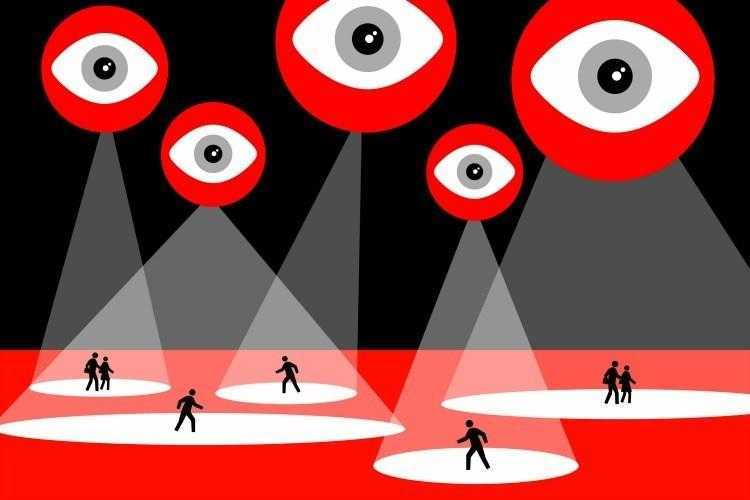
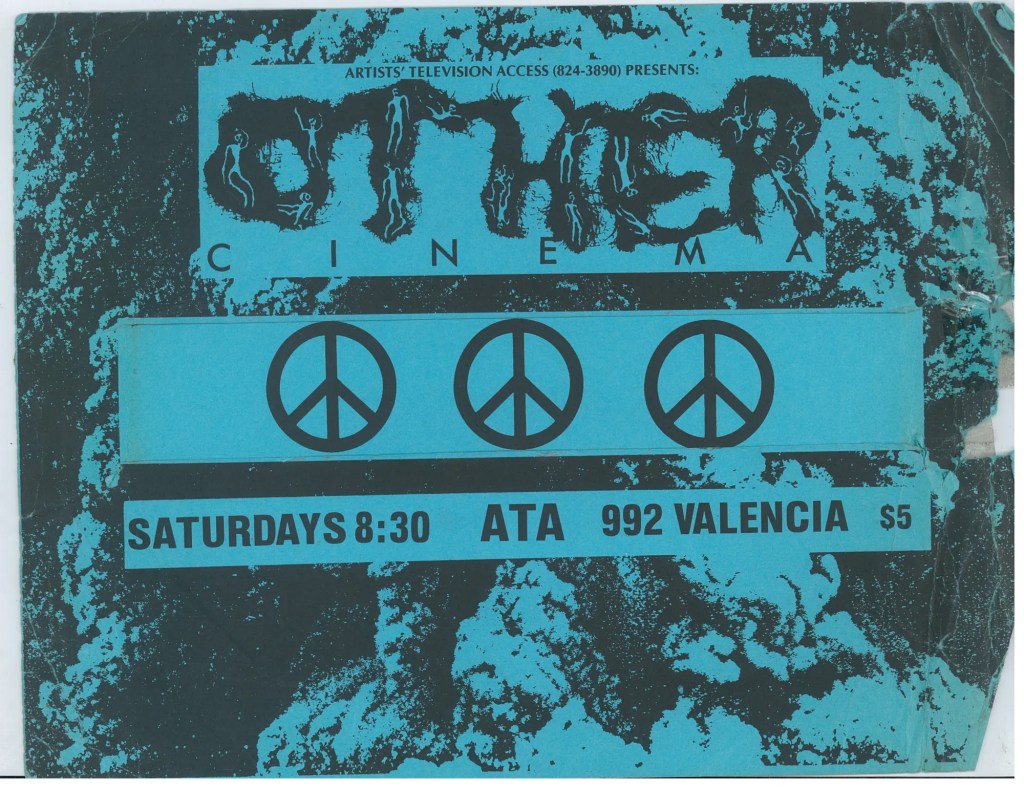

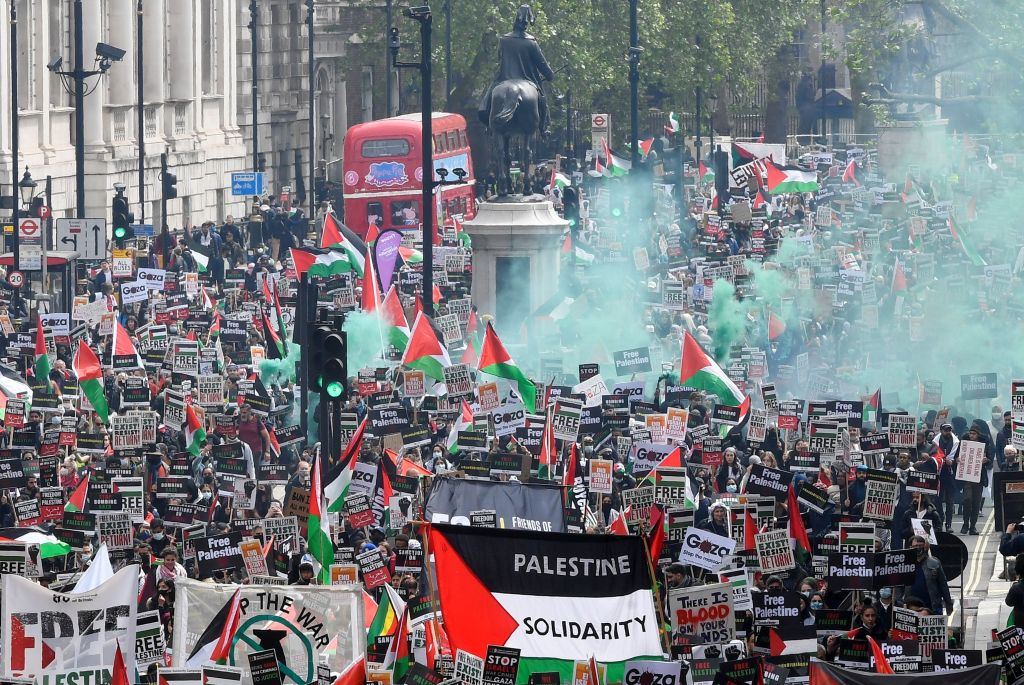
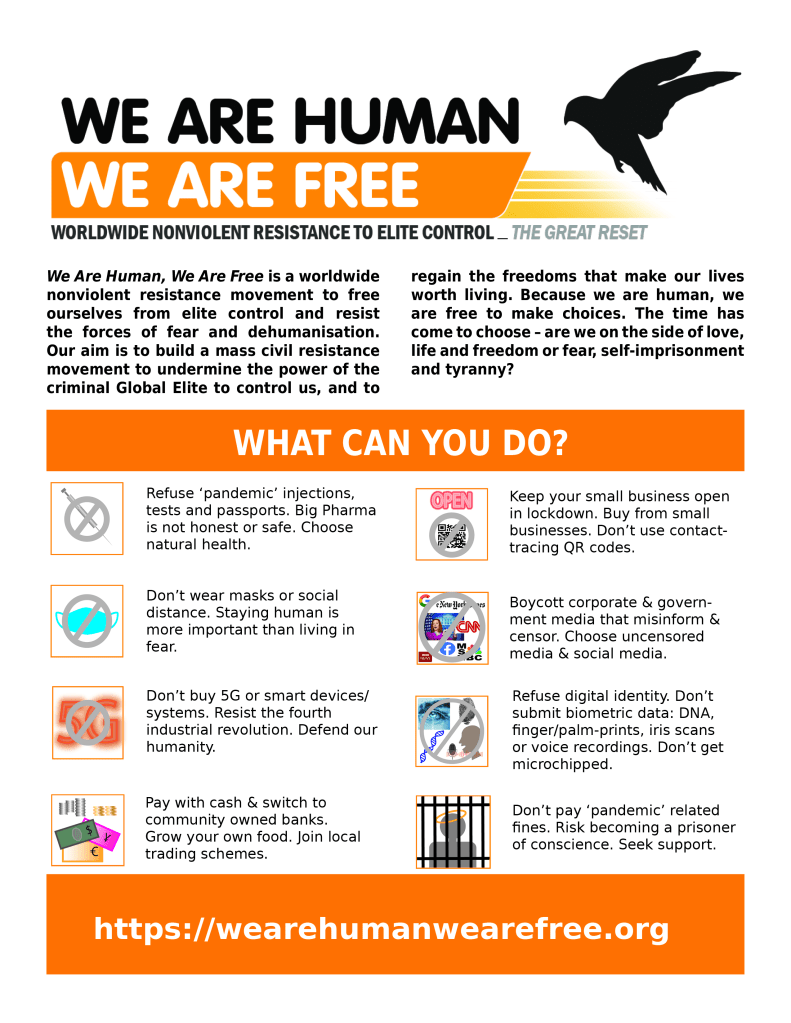




 After the Crash