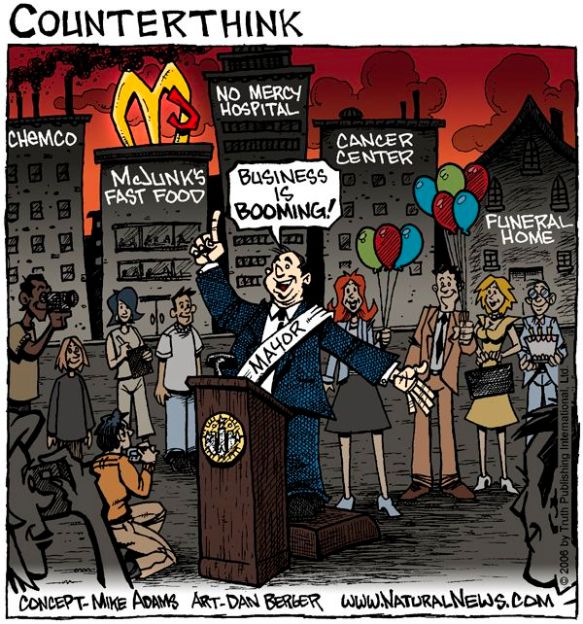
Big Pharma, Big Oil and Big Banks Meet the Definition of Terrorists

Common threads persist throughout definitions of terrorism: violence, injury or death, intimidation, intentionality, multiple targets and political motivation. Big pharma, big oil and big banks meet them all.

By Paul Buchheit

Source: Mint Press News

Various definitions of terrorism have been proposed in recent years, by organizations such as the FBI, the State DepartmentHomeland Security, and the ACLU. Some common threads persist throughout the definitions: violence, injury or death, intimidation, intentionality, multiple targets, political motivation. All the criteria are met by pharmaceutical and oil and financial companies. They have all injured and intimidated the American public, and caused people to die, with intentionality shown by their refusal to acknowledge evidence of their misdeeds, and political motives clear in their lobbying efforts, where among all U.S. industries Big Pharma is #1, Big Oil is #5, and Securities/Investment #8.

The terror inflicted on Americans is real, and is documented by the facts to follow.

Big Pharma: Qualifying for Trump’s Call for Capital Punishment for Drug Dealers

In a Time Magazine article a young man named Chad Colwell says “I got prescribed painkillers, Percocet and Oxycontin, and then it just kind of took off from there.” Time adds: “Prescriptions gave way to cheaper, stronger alternatives. Why scrounge for a $50 pill of Percocet when a tab of heroin can be had for $5?” About 75% of heroin addicts used prescription opioids before turning to heroin.

Any questions about Big Pharma’s role in violence and death in America have been answered by the Centers for Disease Control and the American Journal of Public Health. Any doubts about Big Pharma’s intentions to intimidate the public have been put to rest by the many occasions of outrageous price gouging. And any uncertainty about political pressure is removed by its #1 lobbying ranking.

As for malicious intentions, Bernie Sanders noted, “We know that pharmaceutical companies lied about the addictive impacts of opioids they manufactured.” Purdue Pharma knew all about the devastating addictive effects of its painkiller Oxycontin, and even pleaded guilty in 2007 to misleading regulators, doctors, and patients about the drug’s risk. Now Purdue and other drug companies are facing a lawsuitfor “deceptively marketing opioids” and ignoring the misuse of their drugs.

No jail for the opioid pushers, though, just slap-on-the-wrist fines that can be made up with a few price increases. But partly as a result of Pharma-related violence, Americans are suffering “deaths of despair”— death by drugs, alcohol and suicide. Suicide is at its highest level in 30 years.

Big Oil: Decades of Terror

Any doubts about the ecological terror caused by fossil fuel companies have been dispelled by the World Health Organization, the American Lung Association, the United Nations, the Pentagon, cooperating governments, and independent research groups, all of whom agree that human-induced climate change is killing people.

The oil industry’s intentionality and political motives have been demonstrated by their refusal to admit the known truth, starting with Exxon, which has covered up its own climate research for 40 years, and continuing through multi-million dollar lobbying efforts by Amoco, the US Chamber of Commerce, General Motors, Koch Industries, and other corporations in their effort to dismantle the Kyoto Protocol against global warming.

Big Banks: Leaving Suicidal Former Homeowners Behind

Any doubts about the violence stemming from the 2008 mortgage crisis have been resolved by studies of recession-caused suicides. Both the British Journal of Psychiatry and the National Institutes of Healthfound definite links between the recession and the rate of suicides.

As with Big Pharma and Big Oil, intentionality and political motives are evident in the banking industry’s lobbying efforts on behalf of deregulation — leading to the same conditions that threatened American homeowners in 2008. There has also been a surge in the number of non-bank lenders, who are less subject to regulation.

Making it all worse are private developers, who make most of their profits by building fancy homes for the rich. And by avoiding affordable housing. Since the recession, Blackstone and other private equity firms — with government subsidies — have been buying up foreclosed houses, holding them till prices appreciate, and in the interim renting them back at exorbitant prices.

This is leaving more and more Americans out in the cold — literally. A head of household in the U.S. needs to make $21.21 an hour to afford a two-bedroom apartment at HUD standards, much more than the $16.38 they actually earn. Since the recession, the situation has continually worsened. From 2010 to 2016 the number of housing units priced for very low-income families plummeted 60 percent.

Here’s the big picture: Since the 1980s there’s been a massive redistribution of wealth from middle-class housing to the investment portfolios of people with an average net worth of $75 million. It’s not hard to understand the “deaths of despair” caused by the terror inflicted on people losing their homes.


How To Recognize When Your Society Is Suffering A Dramatic Decline


By Brandon Smith

Source: Alt-Market.com

When historians and analysts look at the factors surrounding the collapse of a society, they often focus on the larger events and indicators — the moments of infamy. However, I think it’s important to consider the reality that large scale societal decline is built upon a mixture of elements, prominent as well as small. Collapse is a process, not a singular event. It happens over time, not overnight. It is a spectrum of moments and terrible choices, set in motion in most cases by people in positions of power, but helped along by useful idiots among the masses. The decline of a nation or civilization requires the complicity of a host of saboteurs.

So, instead of focusing on the top down approach, which is rather common, let’s start from the foundations of our culture to better understand why there is clear and definable destabilization.

Declining Moral Compass

There is always a conflict between personal gain and personal conscience — this is the nature of being human. But in a stable society, these two things tend to balance out. Not so during societal decline, as personal gain (and even personal comfort and gratification) tends to greatly outweigh the checks and balances of moral principles.

People often mistake the term “morality” to be a religious creation, but this is not what I am necessarily referring to. The concepts of “good” and “evil” are archetypal — that is to say they are psychologically inherent in most human beings from the moment of birth. This is not a matter of faith, but a matter of fact, observed by those in the field of psychology and anthropology over the course of a century of study.  How we relate to these concepts can be affected by our environment and upbringing, but for the most part, our moral compass is psychologically ingrained. It is up to us to either follow it or not follow it.

Watching how people handle this choice is a bit of hobby of mine, and I do take notes. You can learn a lot about the state of your environment by observing what people around you tend to do when faced with the conflict of personal gain versus personal conscience. It is saddening to admit that even though I live in rural America, where you are more likely to find self-reliance and cultural stability, I can still see a faltering nation bleeding through.

I have seen supposedly good people act dishonestly in business agreements. I have seen local institutions scam hardworking citizens. I have seen a court system rife with bias and a “good old boy” attitude of favoritism. I have seen local companies pretend to be benevolent contributors to the community while at the same time running constant frauds and rackets. I have even seen a few people within the liberty movement itself put the movement at risk with their own avarice, gluttony, narcissism and sociopathy.

Again, it is important to make a note of such people and institutions, for as the system continues its downward spiral it is these people that will present the greatest threat to the innocent.

As Carl Jung notes in his book The Undiscovered Self, there is always a contingent of latent sociopaths and psychopaths within any culture; usually about 10% of the population. In normal times, they, at least most of them, are forced into moral acclimation by the rest of the populace. But in times of decline, they seem to leak out of the woodwork like a slimy fungus. During heightened collapse, they no longer have to pretend to be upstanding and they show their true colors.

Most dangerous is when latent sociopaths or full blown sociopaths assume roles of leadership or power during the worst of times. With everyone distracted by their own plight, these people can become a cancer, infecting everything with their narcissistic pursuits and causing destruction in their wake.

Disinterest In Rewarding Conscience

During wider cultural collapse, it can become “fashionable” to see acts of principle as something to be scoffed at or ridiculed or to even see them as threats to the status quo. The concept of “going along to get along” takes precedence over doing what is right even when it is hard; this attitude is not relegated to the less honest people within society.

As a system collapses, a fog of apathy can result. Good people can become passive, scrambling to their individual corner of the world and hoping evil times will simply pass them by. The phrase “I just want to put all this behind me” is spoken regularly; but as we ignore the trespasses of terrible men and women, we also enable them. How? Because by doing nothing we allow them to continue their criminality, and we subject future persons and generations to victimization.

When doing the right thing is treated as laughable or “crazy” by what seems like a majority in the midst of widespread corruption, you are truly in the middle of a great decline.

In Christian circles, the idea of “the remnant” is sometimes spoken of. In Christian terms, this usually represents a minority of true believers surviving a tumultuous and immoral era. I see “the remnant” not so much as a contingent of Christians alone, but as a contingent of people that continue to maintain their principles and conscience when faced with unprecedented adversity. In the worst of times, these people remain stalwart, even if they are ridiculed for it.

Disinterest In Independent Effort

It is said that in this world there are two kinds of people — leaders and followers.  I’m not so sure about that, but I can see why this philosophy is promoted; it helps evil people in power stay in power by encouraging passive acceptance.

I would say that there are in fact two kinds of people in this world — people who want to control others and the people that just want to be left alone. In life sometimes we are both leaders and followers; we just have to be sure that when we lead we lead by example and not by force, and when we follow, we follow someone worth a damn.

In any case, passivity is not a solution to determining our roles in society. In most situations, independent action is required by every person to make the world a better place. Yet, in an era of systemic crisis, it is usually independent effort that is the first thing to go out the window. Millions upon millions of people wait around for someone, anyone, to tell them what they should be doing and how they should be doing it. In this way, society finds itself in stasis, frozen in a position of inaction.  Poisonous collectivism wins through mass aggression, but also through mass passivity.

In fact, when individualists do take action they can be admonished for it during times of societal breakdown, even if their actions have the potential to solve a problem. The idea that one man or woman (or a small group of people) could do anything about anything is sneered at as “fantasy” or “delusion.”  But mass movements of citizens working towards a practical goal are rare, and even more rare is when these movements are not controlled or manipulated to benefit the established order. It is not mass movements that change the world for the better, but individual people and small organizations of the dedicated, acting without permission and without administration.

It is these individuals and small groups that, over time and through relentless effort, inspire a majority to do what is necessary and right. It is these people that inspire others to finally take leadership in their own lives.

Individual Self-Isolation

I write often on the plight of the individual and individual rights within society, and I continue to see the factor of the individual as the most important element in any culture. A culture based on protecting and nurturing individualism and voluntarism is the only culture, in my view, that will ever be successful at avoiding full spectrum collapse. That said, the downside to overt individualism is the danger of self isolation. That is to say, when true individuals only concern themselves with their personal circumstances and ignore the circumstances of the rest of the world, they eventually set themselves up to be crushed by that world.

Organization on a voluntary basis is not only healthy but vital in the longevity of a society. The more people turn in on themselves and only care about their own general conditions, the easier it is for evil people to do evil things unnoticed. Also, self isolation in the wake of collapse sets individuals up for failure, as no one is capable of surviving without at least some help from a wider pool of knowledge and talents.

In a system based on corruption, the establishment will encourage self isolation as a means to control the populace. Or, they will offer a false choice, between self isolation versus mindless collectivism. The truth is there is always a middle ground. Voluntary organization and individualism are not mutually exclusive. I call this the “difference between community and collectivism.” A community does not supplant the individual, while a collective requires the complete erasure of individual pursuits and thought.

If you find yourself surrounded by people who refuse any organization, even practical and voluntary organization in the face of instability, then your society may be in the latter stages of a collapse.

Disaster Denial

Even as a crisis or collapse unfolds, if a society actually reels or reacts to it and takes note of the problem, there is hope for that society. If, however, that society willfully ignores the danger and denies it exists when presented with overwhelming evidence, then that society will likely suffer complete disintegration and will probably have to start all over from scratch — hopefully with a set of principles and ideals based on conscience and honor.

The strength of a culture can be measured by its willingness to self reflect. Its survival can be determined by its willingness to accept its flaws when they arise and its willingness to repair the damage done. Self-aware societies are difficult to corrupt or control. Only in denial can people be easily manipulated and enslaved.

If you cannot accept the reality of the abyss, you cannot move to avoid it or prepare yourself to survive the fall. I see this issue as perhaps the single most important element in the fight to save the portions of our society worth saving. Educating people on the blatant facts behind our own national decline can dissolve the wall of denial, and perhaps we will find when disaster strikes that there are far more awake and aware individuals ready to act than we originally thought.

US Technological Transformations and the Narcotic-Fueled Genocide of American Workers

By James Petras

Source: The Unz Review

Introduction

During his recent visit to New Hampshire on 3/20/18, President Trump declared once again that the US is facing a ‘drug epidemic’. This time he advocated the death penalty for criminal drug dealers as the solution to a national crisis that has killed over 1 million Americans since the 1990’s (when the blockbuster prescription opiate Oxycontin was first released on the market). Trump promised that the Justice Department would develop the most severe penalties for criminal drug traffickers, by which he meant foreigners. He argued that his proposed “Wall” (between the Mexican- US border) would cut the flow of drugs responsible for the ongoing addiction of millions of US citizens – as though the prescription opiate addiction epidemic resulted from a foreign invasion, and not corporate decisions from Big Pharma.

President Trump’s claim that 116 ‘drug deaths’ occur every day (42,000 a year) is a major underestimate. In 2017, alone over 64,000 drug overdose deaths were reported in official statistics (with many unreported cases signed off as natural or undetermined, especially in counties too poor to afford autopsies and expensive forensic toxicology). Another 4 million Americans, at least, are currently addicted to opioids and at risk for overdose.

In comparative terms, more American workers have been killed or devastated by narcotics (mostly via prescription) in 2017 alone, than in the entire decade of the Vietnam War with its 58,000 dead and 500,000 wounded. In 2017, 40,000 Americans died in motor vehicle accidents and another 39,000 by gun violence – and these statistics are not broken down to include vehicular accidents due to drug intoxication or gun violence over drugs. Prescription or illegal opiates, alone or mixed with other sedative drugs, like Valium, or alcohol, are the most prominent and preventable cause of premature death in the United States today.

This pattern is unique to the United States, where the irresponsible medical prescription of highly addicting narcotics has been the primary portal of entry into the degrading life of addiction for millions. Despite President Trump’s claims, the addiction crisis is not a product of urban Afro-American street dealers or Mexican narco-traffickers: This uniquely American crisis has been created and fueled by billionaire-owned US pharmaceutical corporations, which produced, distributed and wildly profited from legal narcotics. They were aided by the irresponsible prescription practice of tens of thousands of doctors and other ‘providers’ who introduced millions of vulnerable patients to the world of narcotic dependency – including youngsters with sports injuries and workers with job-related pain. These are physicians and medical providers who rarely stopped to examine their own responsibility, even when their otherwise healthy patients overdosed or were destroyed by addiction. It is especially outrageous that doctors and ‘Big Pharma’ worked hand in hand for over 20 years to create this epidemic, enjoying wild profits and almost total legal immunity. Few have dared to openly question their irresponsibility and greed. In the poorest and most vulnerable areas of this country, the most irresponsible and unaccountable incompetence has replaced real medical care and created a health care apartheid.

The Federal Drug Enforcement Agency (FDA) and the Drug Enforcement Agency (DEA) have protected the corporate drug traffickers and ensured the manicured and cultured narco-bosses the highest rates of return on their products. These polished pushers have their names engraved on the walls of museums and opera houses around the country.

The majority of Presidential, Federal, State and municipal candidates from both major parties have received millions of dollars in electoral campaign funds from these huge legal narcotic manufacturers and distributors, as well as from physicians and other representative of the ‘pain-treatment industry’. Over the past decades, politicians have openly or secretly opposed or weakened legislation designed to address this crisis.

Why not just ask President Trump to direct his Justice Department to impose the death penalty on the board of directors of the big corporate narcotic manufacturers or distributors or on the CEOs of major ‘pain clinics’ or on the owners of local rural ‘health centers’ that drove the villagers of West Virginia into their life-destroying downward spirals?

When will the DEA finally storm the medical centers to arrest the over-prescribing ‘providers’ of narcotics and benzodiazepine tranquilizers (a very common deadly combination)?

When will the SWAT teams seize the vacation homes of the CEOs of major US hospitals where the convenient and fake ideology of promising a ‘pain-free’ experience (‘make it Zero on the Pain Scale’) led to the generalized promotion of highly addicting narcotics for minor injuries, arthritic pain, or chronic back discomfort due to work or obesity? Responsible alternatives existed and were used in the rest of the world – largely untouched by this prescription-fueled crisis.

No doubt what President Trump has in mind is something else: the expulsion of Latin American workers under the pretext of going after the drug dealers and the even more massive incarceration of petty street dealers in the African American community.

Trump will then turn to further monitoring and arresting small-scale American marijuana farmers, who earn a basic income from growing a product that many believe is safe, non-addicting, and significantly reduces demand for dangerous narcotics.

As ugly as this all seems, the complicity of the political, economic and the medical elite in exponentially spreading deadly narcotics among the poor, working class and downwardly mobile middle class, points to a deeper and more sinister policy goal: the systematic elimination of millions of American workers made redundant in the new economy. This is a ‘gentler genocide’, where millions of workers die prematurely seeking an escape from pain as they have been replaced by a new technology and a new ideology: Robots, artificial intelligence and digitalization have rendered them disposable, while the out-sourcing of work to low paid overseas laborers and immigrants have guaranteed unimaginable profits for the elite decision makers.

This highly profitable process, benefiting the political, pharmaceutical, financial, police and judicial elites, conveniently blames the victims, a significant proportion of whom come from the poor and working class in this country, including white rural and small town addicts, especially youth, stuck at minimum wage jobs with no prospects of a decent future – injured construction workers, 15% of whom abuse prescription narcotics for work-related injuries, as well as the marginalized petty drug dealers from the urban slums and desperate Latino immigrants forced to accommodate the cartels. These people have little rights and are easily monitored, incarcerated, expelled and just written-off in one-line obituaries.

The narcotic-fueled genocide had grown out of a calculated corporate strategy meant to cull and subdue a huge population of potentially restive marginalized workers and their families, blaming the overdosing victims for their own ‘irresponsible’ choices, their reliance on prescription opiates, their lack of access to competent medical care, and their untimely deaths as though this were all a collective suicide as the great nation marches forward.

The higher the death toll among marginalized Americans, the greater the reliance on political distractions and racist deceptions. President Trump loudly blames street-level retail distributors, while ignoring the links between tax-exempt mega-billionaires who have profited from the shortened life-expectancies of addicted workers (scores of billions of dollars already saved in future pension and health care expenses) and the millions fired for addiction and denied jobless benefits and treatment. Trump has yet to even mention the actions of the legal pharma-medical industry that set this in motion.

Meanwhile, the Democratic Party leaders denounce the worker-victims of addiction and their communities as ‘irresponsible and racist’, for having believed the populist rhetoric of candidate Trump. Trump’s most intense rural areas of support coincided with areas of the worst opioid addiction and suicide rates. Trump’s rival, Hillary Clinton wrote off scores of millions of vulnerable Americans as ‘deplorables’ and never once addressed the addiction crisis that grew exponentially during her husband’s administration.

Since the implementation of NAFTA during the 1990’s, scores of millions of American workers have been relegated to unstable, low paid jobs, deprived of health benefits and subject to grueling work, prone to physical and mental injuries. Workplace injuries set the stage for the prescription narcotic crisis. Even worse, today workers are constantly distracted by electronic gadgets at the workplace, with their orders from above arriving digitally. These highly profitable gadgets have created enormous distractions and contributed to workplace death and injuries. The plaything of choice for the masses, the I-phone, has added to the addiction crisis, by increasing the rate of injury. This mind-numbing distraction, produced abroad at incredible profit, has played an unexplored role in the increase in premature death in the US.

The corporate narcotic elites, like the ultra-cultured Sackler clan owners of Perdue Pharmaceuticals, and their allies in the finance sector, support the diverse ideological distractions fashioned by their politician pawns: Eager to please her donor-owners, Hillary Clinton and the Democrats blame the working class for their backwardness and genetic propensity to addiction and degradation. Meanwhile, President Trump and the Republicans blame ‘outside’ suppliers and distributors including Mexican narco-cartels, illegal immigrant traffickers, black urban street dealers and now point to overseas Chinese fentanyl labs – as though the entire crisis came from the outside. Trump’s approach flies in the face of the unquestionable source of most narcotic addiction in the US: Irresponsible prescribing of highly addicting legal narcotics.

No other industrialized country is experiencing this scale of addiction and pre-mature death. No other industrialized country relies on a private, for-profit, unregulated system of delivering medical care to its citizens. Only the US.

Both elite political parties avoid the basic issue of the long-term, large-scale structural imperatives underlying the transformation of the US work places. They refuse to address the marginalization of tens of millions of American workers and their families, made disposable by corporate economic and political decisions.

The US corporate elite are completely incapable of developing, let alone favoring, any policy that addresses the needs of millions of surplus office and factory workers and their family members replaced by new technology and ‘global’ economic policies. The American financial and political elite is not about to support an economic, political and cultural ‘GI’ bill to save the scores of millions shoved to the wayside in their rush to obscene wealth and power.

The unstated, but clearly implemented, ‘final solution’ is a Social Darwinian policy of active and passive neglect, the unleashing of profitable prescription narcotics into the population of vulnerable disposable workers, offering them a convenient, painless way out – the opioid solution to the over-population problem of redundant rural and small town ‘Helots’. The political elite’s willing complicity with Big Pharma, the medical profession, the financial oligarchs and the prison-industrial complex has transformed the country in many ways. Shortened lives and depopulation of rural and small town communities translates into lower demand for public services, such as schools, health care, pensions and housing. This is guaranteeing a greater concentration of national wealth in the hands of a tiny elite. The financial press has openly celebrated the projected decrease in pension liabilities as a result of the drop in worker life expectancy.

The ongoing mass genocide by opioids may have started to arouse popular discontent among working people who do not want to continue dying young and miserable! Social services and child protective services for the millions of orphaned or abandoned children of this crisis have been demanding real policies. Unfortunately, the usual platitudes and failed policies prevail. Drug education and ‘opioid addiction treatment’ programs (currently among the largest expense in some union health plans) are pointless Band-Aids when confronted by the larger policy decisions fuelling this crisis. Nevertheless, thousands of health care professionals are beginning to resist corporate pressure to prescribe cheap opioids – and fight for more expensive, but less dangerous, alternative for addressing their patients’ pain. Even if all medical providers stopped over-prescribing narcotics today, there are still millions of addicts already created by past practice, who seek the most deadly street drugs, like fentanyl, to feed their addiction.

Politicians now publicly denounce ‘Big Pharma’, while privately winking at the lobbyists and accepting millions from their ‘donor-owners’.

Public critics in the corporate media are quick to condemn the workers’ susceptibility to narcotic addiction but not the underlying causative imperatives of global capitalism.

Mainstream academics celebrate corporate technological advances with occasional neo-Malthusian warnings about the dangers of millions of redundant workers, while ignoring the profit-driven role of narcotics in reducing the social threat of excess workers!

Finally the role of an elite and respected profession must be re-evaluated in a historic context: In the 1930’s German doctors helped develop an ideology of ‘racial hygiene’ and a technology to demonize and eliminate millions of human beings deemed redundant and inferior, through overwork in slave camps, starvation and active genocide – serving the ambitions of Nazi expansionism and deriving significant profit for select individuals and corporations. US physicians and the broader medical community have less consciously assisted in the ongoing ‘culling of the herd’ of American laborers and rural residents rendered superfluous and undesirable by the decisions of a global oligarchy increasingly unwilling to share public wealth with its masses. There are similarities.

Once prosperous, industrial cities and towns, as well as rural villages, in the US have seen marked declines in populations and a premature death crisis among those who remain.

This must be reversed.

 

Saturday Matinee: High Rise

“High Rise” (2015) is a British dystopian film directed by Ben Wheatley and based on a novel of the same name by J.G. Ballard. The film is set in luxury tower in a 1970s version of the future. The building houses all the conveniences of modern life, giving inhabitants the delusion of self-sufficiency as they become increasingly insular and detached from the outside world. Unfortunately the building is faulty and as the the infrastructure gradually collapses, social pressures among residents approach a breaking point. Truly a metaphor for our times.

Watch the full film here.

Nonviolence or Nonexistence? The Legacy of Martin Luther King Jr.

By Robert J. Burrowes

Fifty years ago, on 4 April 1968, the Reverend Martin Luther King Jr. was assassinated.

The night before he died, King gave another of his many evocative speeches; this one at the packed Mason Temple in Memphis. The speech included these words:

‘Men for years now have been talking about war and peace. Now no longer can they just talk about it. It is no longer a choice between violence and non-violence in this world, it is non-violence or non-existence. That is where we are today.’

In clearly identifying this stark choice and having been inspired by Mohandas K. Gandhi’s wideranging social concerns, King’s concerns were also broad:

‘The Triple Evils of poverty, racism and militarism are forms of violence that exist in a vicious cycle. They are interrelated, all-inclusive, and stand as barriers to our living in the Beloved Community. When we work to remedy one evil, we affect all evils.’ See ‘The King Philosophy’.

So what has changed in the past 50 years? The world has traveled a great deal further down the path of violence. So far, in fact, that nonexistence is now the most likely outcome for humanity. See ‘On Track for Extinction: Can Humanity Survive?’

Despite the vastly more perilous state of our planet, many people and organizations around the world are following in the footsteps of Gandhi, King and other nonviolent luminaries like Silo, and are engaged in what is effectively a last ditch stand to end the violence and put humanity on a path to peace, justice and sustainability.

Let me tell you about some of these people and organizations and invite you to join them.

In Bolivia, Nora Cabero works with the Movimient Humanista. The Movement has many programs including the Convergence of Cultures which aims to facilitate and stimulate true dialogue – oriented towards the search for common points present in the hearts of different peoples and individuals – to promote the relationship between different cultures and to resist discrimination and violence. Another program, World Without Wars and Violence emerged in 1994 and was presented for the first time internationally in 1995 at the Open Meeting of Humanism held in Chile at the University of Santiago. It is active in about 40 countries. It carries out activities in the social base and also promotes international campaigns such as Education for Nonviolence and the World March for Peace and Nonviolence.

Eddy Kalisa Nyarwaya Jr. is Executive Secretary of the Rwanda Institute for Conflict Transformation and Peace Building and also President of the Alternatives to Violence Program. For the past 18 years, he has been active in the fields of ‘peace, reconciliation, nonviolence, healing of societies, building harmonious communities’ in many countries including Burundi, Chad, eastern Congo, Darfur (western Sudan), Kenya, Rwanda, Somalia, South Sudan and northern Uganda. Late last year he was in New Zealand to deliver a paper on the Great Lakes conflict. In Rwanda, the Institute for Conflict Transformation particularly works on nonviolence education in schools, universities and refugee camps. Another initiative is the conduct of workshops on nonviolence and peace through sports for head teachers in the country but it also has programs to fight early marriages and pregnancies, as well as offering trauma counseling to refugees.

In Russia, Ella Polyakova is a key figure at the Soldiers’ Mothers of Saint-Petersburg. Ella and her colleagues work to defend the rights of servicemen and conscripts in the Russian military. Ella explains why:

‘When we were creating our organization, we understood that people knew little about their rights, enshrined in Russia’s Constitution, that the concept of “human dignity” had almost disappeared, that no one had been working with the problems of common people, let alone those of conscripts. We clearly understood what a soldier in the Russian army was a mere cog in the state machine, yet with an assault rifle. We felt how important hope, self-confidence and trust were for every person. At the beginning of our journey, we saw that people around us, as a rule, did not even know what it meant to feel free. It was obvious for us that the path towards freedom and the attainment of dignity was going through enlightenment. Therefore, our organization’s mission is to enlighten people around us. Social work is all about showing, explaining, proving things to people, it is about convincing them. Having equipped ourselves with the Universal Declaration of Human Rights and Russia’s Constitution, we started to demolish this dispossession belt between citizens and their rights. It was necessary to make sure that people clearly understood that, having a good knowledge of rights, laws, and situations at hand, they would be able to take responsibility and protect themselves from abuse.’

Bruce Gagnon, coordinator of the Global Network Against Weapons & Nuclear Power in Space, was recently part of a committed effort to convince the Maine state legislature not to give warship-builder General Dynamics, which has already received more than $200 million in state and local tax breaks for the Bath Iron Works (BIW), any more ‘corporate welfare’. Bruce recently completed a fast, which lasted for more than a month, as one of the actions that Maine peace activists took to try to prevent this welfare payment to a company that has spent $14.4 billion buying back its own stocks between 2013-2017 and whose CEO was paid $21 million in 2016.

Despite their efforts, the Maine House of Representatives voted 117-31 in favor of the $45million General Dynamics corporate welfare bill and the Senate supported it 25-9. The decision was announced on the same day that General Dynamics sacked 31 workers from the BIW. As Bruce noted: ‘It was an honor to work alongside [those] who stood up for the 43,000 children living in poverty across Maine, for the tens of thousands without health care, for our starving public education system, and for the crumbling physical infrastructure as Maine joins Mississippi in the “race to the bottom”’. You can read more about this ongoing campaign to convert the Bath Iron Works into a location for the production of socially useful and ecologically sustainable non-killing technologies on the website above. There are some great photos too.

Gaëlle Smedts and her partner Luz are the key figures at Poetry Against Arms based in Germany. ‘The inspiration for this campaign is the life, work and legacy of the Latin American poet, philosopher and mystic: Mario Rodriguez Cobos, also known as Silo. His total commitment to active nonviolence, his denunciation of all forms of violence, his doctrine for overcoming pain and suffering and his magnificent poetry are a great affirmation of the meaning of life and transcendence.’ Poetry Against Arms publishes poetry/songs of people around the world who take action to resist militarism.

Since the 1970s, the world’s leading rainforest activist, John Seed, has devoted his life to saving the world’s rainforests. Founder and Director of the Rainforest Information Centre in Australia, one of his latest projects is to save the tropical Andes of Ecuador, which is ‘at the top of the world list of biodiversity hotspots in terms of vertebrate species, endemic vertebrates, and endemic plants’. From the cloud forests in the Andes to the indigenous territories in the headwaters of the Amazon, the Ecuadorean government has covertly granted mining concessions to over 1.7 million hectares (4.25 million acres) of forest reserves and indigenous territories to multinational mining companies in closed-door deals without public knowledge or consent. These concessions will decimate headwater ecosystems and biodiversity hotspots of global significance. If you would like to read more about this campaign and what you can do to help, you can do so in John’s article ‘Ecuador Endangered’.

Apart from the individuals mentioned above, signatories and endorsing organizations are engaged in an incredibly diverse range of activities to end violence in one context or another. These include individuals and organizations working in many countries to end violence against women (including discriminatory practices against widows), to rehabilitate child soldiers and end sexual violence in the Congo, activists engaged in nonviolent defense or liberation struggles – see Nonviolent Defense/Liberation Strategy – in several countries and occupied territories, as well as campaigns on a vast range of environmental, climate and indigenous rights issues, campaigns to promote religious and racial harmony as well as campaigns for nuclear disarmament and to end war. See Nonviolent Campaign Strategy.

But it also includes many individuals tackling violence at its source – see Why Violence?’ and Fearless Psychology and Fearful Psychology: Principles and Practice – by focusing on their own healing – see ‘Putting Feelings First’ – and/or working on how they parent their children for a nonviolent world. See ‘My Promise to Children’.

Given the perilous state of the global environment and climate, still others are focusing their efforts on reducing their consumption and increasing their self-reliance in accordance with the fifteen-year strategy outlined in The Flame Tree Project to Save Life on Earth.

If you would like to be part of the worldwide movement to end violence that has drawn the six people and several organizations mentioned above together, along with many others in 103 countries around the world, you are welcome to sign the online pledge of The Peoples Charter to Create a Nonviolent World.

Reverend King posed the fundamental choice of our time: nonviolence or nonexistence. What is your choice?


Biodata: Robert J. Burrowes has a lifetime commitment to understanding and ending human violence. He has done extensive research since 1966 in an effort to understand why human beings are violent and has been a nonviolent activist since 1981. He is the author of Why Violence? His email address is flametree@riseup.net and his website is here.


Robert J. Burrowes
P.O. Box 68
Daylesford, Victoria 3460
Australia

Email: flametree@riseup.net

Websites:
Nonviolence Charter
Flame Tree Project to Save Life on Earth
‘Why Violence?’
Feelings First
Nonviolent Campaign Strategy
Nonviolent Defense/Liberation Strategy
Anita: Songs of Nonviolence
Robert Burrowes
Global Nonviolence Network


Why We’re Underestimating American Collapse

The Strange New Pathologies of the World’s First Rich Failed State

By Umair Haque

Source: Information Clearing House

You might say, having read some of my recent essays, “Umair! Don’t worry! Everything will be fine! It’s not that bad!” I would look at you politely, and then say gently, “To tell you the truth, I don’t think we’re taking collapse nearly seriously enough.”

Why? When we take a hard look at US collapse, we see a number of social pathologies on the rise. Not just any kind. Not even troubling, worrying, and dangerous ones. But strange and bizarre ones. Unique ones. Singular and gruesomely weird ones I’ve never really seen before, and outside of a dystopia written by Dickens and Orwell, nor have you, and neither has history. They suggest that whatever “numbers” we use to represent decline — shrinking real incomes, inequality, and so on —we are in fact grossly underestimating what pundits call the “human toll”, but which sensible human beings like you and I should simply think of as the overwhelming despair, rage, and anxiety of living in a collapsing society.

Let me give you just five examples of what I’ll call the social pathologies of collapse — strange, weird, and gruesome new diseases, not just ones we don’t usually see in healthy societies, but ones that we have never really seen before in any modern society.

America has had 11 school shootings in the last 23 days. That’s one every other day, more or less. That statistic is alarming enough — but it is just a number. Perspective asks us for comparison. So let me put that another way. America has had 11 school shootings in the last 23 days, which is more than anywhere else in the world, even Afghanistan or Iraq. In fact, the phenomenon of regular school shootings appears to be a unique feature of American collapse — it just doesn’t happen in any other country — and that is what I mean by “social pathologies of collapse”: a new, bizarre, terrible disease striking society.

Why are American kids killing each other? Why doesn’t their society care enough to intervene? Well, probably because those kids have given up on life — and their elders have given up on them. Or maybe you’re right — and it’s not that simple. Still, what do the kids who aren’t killing each other do? Well, a lot of them are busy killing themselves.

So there is of course also an “opioid epidemic”. We use that phrase too casually, but it much more troubling than it appears on first glance. Here is what is really curious about it. In many countries in the world — most of Asia and Africa — one can buy all the opioids one wants from any local pharmacy, without a prescription. You might suppose then that opioid abuse as a mass epidemic would be a global phenomenon. Yet we don’t see opioid epidemics anywhere but America — especially not ones so vicious and widespread they shrink life expectancy. So the “opioid epidemic” — mass self-medication with the hardest of hard drugs — is again a social pathology of collapse: unique to American life. It is not quite captured in the numbers, but only through comparison — and when we see it in global perspective, we get a sense of just how singularly troubled American life really is.

Why would people abuse opioids en masse unlike anywhere else in the world? They must be living genuinely traumatic and desperate lives, in which there is little healthcare, so they have to self-medicate the terror away. But what is so desperate about them? Well, consider another example: the “nomadic retirees”. They live in their cars. They go from place to place, season after season, chasing whatever low-wage work they can find — spring, an Amazon warehouse, Christmas, Walmart.

Now, you might say — “well, poor people have always chased seasonal work!” But that is not really the point: absolute powerlessness and complete indignity is. In no other country I can see do retirees who should have been able to save up enough to live on now living in their cars in order to find work just to go on eating before they die — not even in desperately poor ones, where at least families live together, share resources, and care for one another. This is another pathology of collapse that is unique to America — utter powerlessness to live with dignity. Numbers don’t capture it — but comparisons paint a bleak picture.

How did America’s elderly end up cheated of dignity? After all, even desperately poor countries have “informal social support systems” — otherwise known as families and communities. But in America, there is the catastrophic collapse of social bonds. Extreme capitalism has blown apart American society so totally that people cannot even care for one another as much as they do in places like Pakistan and Nigeria. Social bonds, relationships themselves, have become unaffordable luxuries, more so than even in poor countries: this is yet another social pathology unique to American collapse.

Yet those once poor countries are making great strides. Costa Ricans now have higher life expectancy than Americans — because they have public healthcare. American life expectancy is falling, unlike nearly anywhere else in the world, save the UK — because it doesn’t.

And that is my last pathology: it is one of the soul, not one of the limbs, like the others above. Americans appear to be quite happy simply watching one another die, in all the ways above. They just don’t appear to be too disturbed, moved, or even affected by the four pathologies above: their kids killing each other, their social bonds collapsing, being powerless to live with dignity,or having to numb the pain of it all away.

If these pathologies happened in any other rich country — even in most poor ones — people would be aghast, shocked, and stunned, and certainly moved to make them not happen. But in America, they are, well, not even resigned. They are indifferent, mostly.

So my last pathology is a predatory society. A predatory society doesn’t just mean oligarchs ripping people off financially. In a truer way, it means people nodding and smiling and going about their everyday business as their neighbours, friends, and colleagues die early deaths in shallow graves. The predator in American society isn’t just its super-rich — but an invisible and insatiable force: the normalization of what in the rest of the world would be seen as shameful, historic, generational moral failures, if not crimes, becoming mere mundane everyday affairs not to be too worried by or troubled about.

Perhaps that sounds strong to you. Is it?

Now that I’ve given you a few examples — there are many more — of the social pathologies of collapse, let me share with you the three points that they raise for me.

These social pathologies are something like strange and gruesome new strains of disease infecting the body social. America has always been a pioneer — only today, it is host not just to problems not just rarely seen in healthy societies — it is pioneering novel social pathologies have never been seen in the modern world outside present-day America, period. What does that tell us?

American collapse is much more severe than we suppose it is. We are underestimating its magnitude, not overestimating it. American intellectuals, media, and thought doesn’t put any of its problems in global or historical perspective — but when they are seen that way, America’s problems are revealed to be not just the everyday nuisances of a declining nation, but something more like a body suddenly attacked by unimagined diseases.

Seen accurately. American collapse is a catastrophe of human possibility without modern parallel . And because the mess that America has made of itself, then, is so especially unique, so singular, so perversely special — the treatment will have to be novel, too. The uniqueness of these social pathologies tell us that American collapse is not like a reversion to any mean, or the downswing of a trend. It is something outside the norm. Something beyond the data. Past the statistics. It is like the meteor that hit the dinosaurs: an outlier beyond outliers, an event at the extreme of the extremes. That is why our narratives, frames, and theories cannot really capture it — much less explain it. We need a whole new language — and a new way of seeing — to even begin to make sense of it.

But that is America’s task, not the world’s. The world’s task is this. Should the world follow the American model — extreme capitalism, no public investment, cruelty as a way of life, the perversion of everyday virtue — then these new social pathologies will follow, too. They are new diseases of the body social that have emerged from the diet of junk food — junk media, junk science, junk culture, junk punditry, junk economics, people treating one another and their society like junk — that America has fed upon for too long.

The political logic of the junk food revolution

By Jonathan Cook

Source: TruePublica

Here is an article on food whose political implications are really worth considering. We already know that people in western societies, particularly the US and UK, are eating far too much junk food, and that this leads to an epidemic of obesity, heart disease and cancer.

But the latest research not only reveals the extent that “ultra-processed” foods have come to dominate our diets in Europe – now comprising more than half of what Britons eat, for example – but raises the question of what effects the consumption of this much junk food will have on our behaviours.

The nutritionists here are reluctant to offer even well-informed speculation, which always seems to be the case with publicly funded scientists until things have moved beyond a critical point. Think of smoking and climate change: we usually learn much later that the corporations’ own pet-scientists had done the research decades earlier proving or predicting exactly what was coming.

But there are hints from the nutritionists to the Guardian of what might be going on:

“People are missing out not only on vitamins and minerals but also bioactive compounds found in natural foods such as phytoestrogens and fibre.

And then you get salt and starch and sugar and fat and all these additives. We are consuming every day an amount of new substances that are these flavours and colours and emulsifiers and we don’t have any idea as to what will be the problem of these items,” [Professor Carlos Monteiro from the University of Sao Paulo in Brazil, who led the research team] said. …

Other cumulative effects of eating these industrially-made substances are not yet known. “The honest answer is we don’t know what is going on,” said Monteiro.’

Here is an educated guess, based in part on experience and in part on the economic and political logic of our current junk food revolution. (Those of us who eat these industrial substances rarely enough that they do not dominate our diets still have a sense of what happens to us on the occasions we do.)

These lab-created, nutritionally empty substances that our bodies have not evolved to digest not only make us physically sick, but emotionally and mentally sick too: addicted, depressed, lazy, sluggish, docile and anxious.

In fact, a mess of emotions that transforms us into the perfect consumers, buying more of this cheap, harmful “food”. That boosts both the profits of food and other corporations and the electoral fortunes of crowd-pleasing, money-grubbing, vacuous politicians who wish to serve those corporations.

That is how an advanced capitalist system – premised on a psychopathic drive by the strongest to maximise profits by exploiting the weakest – will naturally evolve. It needs to make us as dependent, as passive and docile, as possible.

On Track for Extinction: Can Humanity Survive?

By Robert J. Burrowes

Anyone reading the scientific literature (or the progressive news outlets that truthfully report this literature) knows that homo sapiens sapiens is on the fast track to extinction, most likely some time between 2025 and 2040.

For a taste of the evidence in this regard focusing on the climate, see ‘Climate Collapse and Near Term Human Extinction’, ‘What They Won’t Tell You About Climate Catastrophe’, ‘Release of Arctic Methane “May Be Apocalyptic,” Study Warns’ and ‘7,000 underground [methane] gas bubbles poised to “explode” in Arctic’.

Unfortunately, of course, the climate is not the only imminent threat to human survival. With an insane leadership in the White House in the United States – see ‘Resisting Donald Trump’s Violence Strategically’ – we are faced with the prospect of nuclear war. And even if the climate and nuclear threats to our survival are removed, there is still a substantial range of environmental threats – including rainforest destruction, the ongoing dumping of Fukushima radiation into the Pacific Ocean, extensive contamination from military violence… – that need to be addressed too, given the synergistic impacts of these multiple and interrelated threats.

Can these extinction-threatening problems be effectively addressed?

Well the reality is that most (but not all) of them can be tackled effectively if we are courageous enough to make powerful personal and organizational decisions and then implement them. But we are not even close to doing that yet. And time is obviously running out fast.

Given the evidence, scientific and otherwise, documenting the cause and nature of many of these problems and what is required to fix them, why aren’t these strategies to address the problems implemented?

At the political and economic level, it is usually explained structurally – for example, as an outcome of capitalism, patriarchy and/or the states-system – or, more simply, as an outcome of the powerful vested interests that control governments and the corporate imperative to make profits despite exacerbating the current perilous state of the Earth’s biosphere and its many exploited populations (human and otherwise) by doing so.

But the reality is that these political and economic explanations mask the deeper psychological drivers that generate and maintain these dysfunctional structures and behaviours.

Let me explain why and how this happens using the climate catastrophe to illustrate the process.

While scientific concern about the increase in carbon dioxide in the Earth’s atmosphere had been raised more than a century ago – see ‘The Discovery of Global Warming’ – it wasn’t until the 1980s that this concern started to gain significant traction in public awareness. And despite ongoing agitation by some scientists as well as climate and environment groups, corporate-funded climate deniers were able to stall widespread recognition of, and the start of serious official action on, the climate catastrophe for more than two more decades.

However, as the truth of the climate catastrophe was finally being accepted by most people and the climate deniers were finally forced into full-scale retreat on the issue of whether or not the climate catastrophe was, in fact, so serious that it threatened human extinction, the climate deniers implemented their back-up strategy: they used their corporate media to persuade people that action wasn’t necessary ‘until the end of the [21st] century’ and to exaggerate the argument about the ‘acceptable’ increase above the pre-industrial norm – 2 degrees? 3 degrees? 1.5 degrees? – to obscure the truth that 0.5 degrees was, in fact, the climate science consensus back in 2007.

But, you might ask: ‘Why would anyone prefer to ignore the evidence, given the extinction-threatening nature of this problem?’

Or, to put the question more fully: ‘Why would anyone – whether an “ordinary” worker, academic, lawyer, doctor, businessperson, corporate executive, government leader or anyone else – prefer to live in delusion and believe the mainstream narrative about “the end of the century” (or 1.5 degrees) rather than simply consider the evidence and respond powerfully to it?’

And what is so unattractive about the truth that so many people run from it rather than embrace it?

Obviously, these questions go to the heart of the human (psychological) condition so let me explain why most humans now live in a delusional state whether in relation to the climate, environment issues generally, the ongoing wars and other military violence, the highly exploitative global economy or anything else.

People do not choose to live in delusion nor do they choose their delusion consciously. A delusion is generated by a person’s unconscious mind; that is, the part of their own mind of which the individual is normally unaware. So why does a person’s unconscious mind generate a delusion? What is the purpose of it?

A person’s unconscious mind generates a delusion when the individual is simply too terrified to contemplate and grapple with reality. Instead, the person unconsciously generates a delusion and then lives in accord with that delusion for the (obvious) reason that the delusion does not frighten them.

This unconscious delusional state is the fundamental outcome of the socialization, which I call ‘terrorization’, of the typical child during their childhood.

Endlessly and violently coerced (by a variety of threatened and actual punishments) to obey the will of parents, teachers and religious figures in denial of their own self-will, while simultaneously denied the opportunity to feel the fear, anger, sadness and other feelings that this violence causes, the child has no choice but to suppress their awareness of how they feel and the reality that caused these feelings. As a result, this leaves virtually all children feeling terrified, full of self-hatred and powerless. For brief explanations of how this happens, see ‘Understanding Self-Hatred in World Affairs’ and ‘Why Are Most Human Beings So Powerless?’

However, and this point is important, each of these feelings is extraordinarily unpleasant to feel consciously and the child never gets the listening they need to focus on feeling them. See ‘Nisteling: The Art of Deep Listening’.

As a result, these feelings are suppressed below conscious awareness and this fear, self-hatred and powerlessness become the primary but unconscious psychological drivers of their behaviour and, significantly, results in them participating mindlessly in the widespread ‘socially acceptable’ delusions generated by elites and endlessly promulgated through elite channels such as education systems, the corporate media and entertainment industries.

Hence, as a result of being terrorized during childhood, delusion is the most common state of human individuals, irrespective of their role in society. For a full explanation of why this happens, see ‘Why Violence?’ and ‘Fearless Psychology and Fearful Psychology: Principles and Practice’.

And, as one part of their delusional state, most people must engage in the denial of reality whenever reality (unconsciously) frightens them (or threatens to bring their unconscious self-hatred or powerlessness into their awareness). See ‘The Psychology of Denial’. This, of course, means that they are frightened to take action in response to reality but also deny it is even necessary.

So what can we do about all of this? Well, as always, I would tackle the problem at various levels.

If you are one of those rare people who prefers to research the evidence and to act intelligently and powerfully in response to the truth that emerges from this evidence, I encourage you to do so. One option you have if you find the evidence of near-term human extinction compelling in light of the lacklustre official responses so far, is to join those participating in ‘The Flame Tree Project to Save Life on Earth’.

Obviously, tokenism on your part – such as rejecting plastic bags or collecting rubbish from public places – is not enough in the face of the profound changes needed.

Of course, if you are self-aware enough to know that you are inclined to avoid unpleasant realities and to take the action that this requires, then perhaps you could tackle this problem at its source by ‘Putting Feelings First’.

If you want intelligent, compassionate and powerful children who do not grow up living in delusion and denial, consider making ‘My Promise to Children’.

If you want to campaign on the climate, war, rainforest destruction or any other issue that brings us closer to extinction, consider developing a comprehensive nonviolent strategy to do so. See Nonviolent Campaign Strategy.

And if you want to participate in the worldwide effort to end violence in all of its manifestations, you are welcome to consider signing the online pledge of ‘The People’s Charter to Create a Nonviolent World’.

In summary, the primary threat faced by humanity is not the synergistic multitude of complex social, political, economic and technological forces that are precipitating our rush to extinction.

The fundamental threat to our survival is our psychological incapacity (particularly because of our fear, self-hatred and powerlessness) to perceive reality and respond powerfully to it by formulating and implementing appropriate social, political, economic and technological measures that address our multifaceted crisis systematically.

Unless we include addressing this dysfunctional individual and collective psychological state in our strategy to avert human extinction, we will ultimately fail and extinction will indeed be our fate.


Biodata: Robert J. Burrowes has a lifetime commitment to understanding and ending human violence. He has done extensive research since 1966 in an effort to understand why human beings are violent and has been a nonviolent activist since 1981. He is the author of ‘Why Violence?’ His email address is flametree@riseup.net and his website is here.

Robert J. Burrowes
P.O. Box 68
Daylesford, Victoria 3460
Australia

Email: flametree@riseup.net

Websites:
Nonviolence Charter
Flame Tree Project to Save Life on Earth
‘Why Violence?’
Feelings First
Nonviolent Campaign Strategy
Nonviolent Defense/Liberation Strategy
Anita: Songs of Nonviolence
Robert Burrowes
Global Nonviolence Network