Russiagate: The Miserable Truth

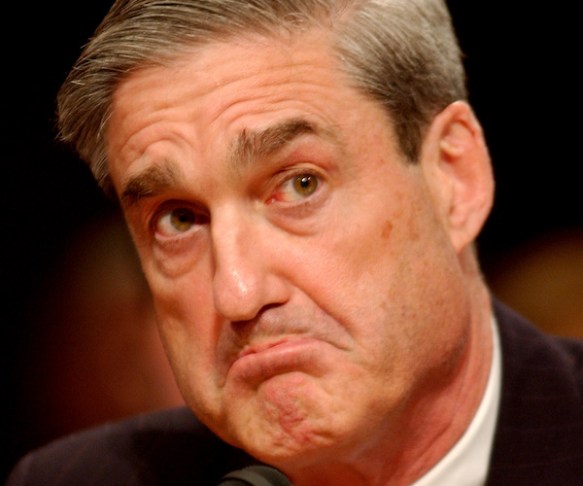
in Washington, DC on April 14, 2004. Robert Mueller named special prosecutor for Russia probe, Washington DC, USA – 17 May 2017 (Rex Features via AP Images)

By Barry Kissin

Source: OpEdNews.com

Introductory Disclaimer: I have never voted Republican for Federal office and I deplore most of what Fox News has to offer. I am currently registered Democrat in order to vote in the Presidential primary for either Bernie Sanders or Tulsi Gabbard.

Going on three years ago, on Nov. 12, 2016, my local newspaper, the Frederick News-Post, published my letter that stated: “Hillary Clinton was a terrible candidate. In an effort to deflect attention from the DNC rigging of her primary contest with Bernie Sanders, she resorted to somehow blaming the Russians. This was part of a pathological pattern, whose ultimate purpose was and is to remove the main obstacle (Russia under Putin) to neo-con schemes for global domination.”

We do not want to further demonize Russia (or Iran). This is unwarranted and dangerous to human survival. Its purpose is to aggressively assert American Empire against all limitations and to justify the astronomical sums we spend on war and weapons.

Hillary touted that all of our 17 intelligence agencies concluded with “high confidence” that the Russians meddled in our election for Trump’s benefit. False. The assessor was John Brennan, then spy-in-chief, who put together a secret panel of his choices from FBI, CIA and NSA in order to produce his miserable invention of the who, how and why the Russians did their dastardly meddling.

See Washington Post, June 23, 2017: “CIA Director John Brennan first alerts the White House in early August [2016] that Russian President Vladimir Putin had ordered an operation to defeat or at least damage Hillary Clinton and help elect her opponent, Donald Trump” based on what Brennan claimed was some source “deep inside the Russian government that detailed Russian President Vladimir Putin’s direct involvement in a cyber campaign”. Which source had supplied “Putin’s specific instructions on the operation’s audacious objectives”? No evidence has ever been produced backing up any of this.

Enter Mueller, a “deep state” hack if there ever was one. It bears mentioning that Mueller is the grandnephew of Richard Bissel, second in command at the CIA when JFK fired him after the Bay of Pigs fiasco. Mueller is married to the granddaughter of General Charles Cabell, third in command at the CIA, also fired by JFK; Mueller’s wife is also a grandniece of Earl Cabell, Mayor of Dallas when JFK was assassinated there, who was recently uncovered to have been a CIA asset. Small world.

Mueller’s career is replete with the production of disinformation and cover-ups. My community, home of Fort Detrick, got a dose of Mueller at work in the Amerithrax investigation. That investigation is the one in which Mueller framed Detrick scientist Bruce Ivins for sending the anthrax letters in order to cover up that the weaponization of the anthrax attack was a unique CIA technology.

On behalf of his current handlers, Mueller sang and danced his way into various indictments, most of which truly had nothing to do with Russiagate, but he couldn’t pull off even trying to nail Trump for collusion.

Of course, this isn’t the end of it. Pathetically, Democrats are pretending that Russiagate was nevertheless worthwhile (thus compounding the stupidity) on the basis that Trump obstructed justice, and also that we now know we have to protect our precious Presidential election from the Russians.

Obstructed what? Obstructed an investigation into the fabricated charge of collusion? Mueller just testified (on July 24) that whatever Trump did, it neither curtailed nor hindered his investigation, which after more than two years could neither find nor manufacture any evidence of collusion.

But now let’s drill down into this mantra of Russian meddling. According to the Mueller report, there were two facets: 1.) hacking of the DNC emails then sourcing to Wikileaks; and 2.) social media campaign. The social media campaign is a joke. The hacking story is more serious.

According to Mueller, it was the Russian company Internet Research Agency (IRA) that on behalf of the Russian government conducted the Facebook campaign. At page 25 of Vol. 1, Mueller informs us that this Russian company purchased 3,500 ads for a total expenditure of $100,000, which I ask you to compare to the $81 million spent on Facebook ads by the Trump and Clinton campaigns.

It’s sillier than that. According to Facebook’s testimony before Congress, most of the ads the IRA purchased were after the election and most said nothing about either Hillary or Trump. But they tended to promote “divisiveness” according to Mueller. Absurd!

We also now have a recently unsealed ruling by the U.S. District Court for D.C. that ordered Mueller to cease and desist from claiming that IRA was acting on behalf of the Kremlin – his linchpin claim — supported by no substantive evidence.

The most credible analyst of the hacking story has been completely (and deliberately) ignored by mainstream media. The implications of his analysis are so unsettling (dangerous) that even most alternative media avoid acknowledging him. But I believe “unsettling” is necessary to the process of waking up from the fairy tales Americans rely on, so I will lay out the truth about the stolen emails. This truth is simple and clear and unsettling.

The “most credible analyst” is named William Binney. He is a 32-year veteran of the NSA who, when he left the NSA in 2001, was the “Technical Leader” for intelligence, the senior technical analyst at the NSA. Binney resigned and blew the whistle when he discovered that his surveillance program was being used to spy on Americans without probable cause. Binney went on to co-found Veteran Intelligence Professionals for Sanity (VIPS) comprised of our smartest and bravest intelligence veterans whose very first effort in Feb., 2003 was to debunk Colin Powell’s UN presentation and to warn against “a war [upon Iraq] for which we see no compelling reason and from which we believe the unintended consequences are likely to be catastrophic.”

The VIPS forensic analysis of the hacking story in all of its painstaking detail can be accessed at ConsortiumNews.com. Here is a takeaway: On July 5, 2016, the intrusion into the DNC emails transferred data at an average speed of 22.7 megabytes per second, a speed that far exceeded the capability of the Internet as of July 2016. The speed of that data transfer corresponds with the speed of copying to a thumb drive (memory stick). Thus, there was no hack via the internet; it was a leak by someone with physical access to a DNC computer or server, most probably an insider.

We know who that insider was. His name, Seth Rich; a 27-year old DNC staffer who supported Bernie Sanders, and who was murdered in Washington, D.C on July 10, 2016. Two gun shots in the back. D.C. police said Rich was the victim of a “random burglary,” but nothing was taken, not his expensive watch, nor his money, nor his credit cards, nor his cell phone.

On August 9, 2016, Julian Assange was interviewed on Dutch TV in a segment available on YouTube at https://www.youtube.com/watch?v=Kp7FkLBRpKg Without violating the Wikileaks cardinal rule of never revealing sources, Assange came as close as he could to identifying Seth Rich as the source of the DNC emails. On that same date, Wikileaks offered a $20,000 reward for information leading to the conviction of Rich’s killer or killers.

William Binney informs us that in response to a FOIA request seeking records of communications between Seth Rich and others including Julian Assange, the NSA revealed that it has 15 documents, 32 pages of relevant records, but that it is all classified.

Next witness, Seymour Hersh. Wikipedia: “Hersh first gained recognition in 1969 for exposing the My Lai Massacre and its cover-up during the Vietnam War, for which he received the 1970 Pulitzer Prize for International Reporting. During the 1970s, Hersh covered Watergate for The New York Times and revealed the clandestine bombing of Cambodia. In 2004, he reported on the US military’s mistreatment of detainees at Abu Ghraib prison. He has won two National Magazine Awards and five George Polk Awards. In 2004, he received the George Orwell Award. More recently, Hersh uncovered that Obama, and Trump in 2017, blamed chemical attacks in Syria on Assad as a pretext for bombing Syria when in fact the chemical attacks were staged by the “rebels” we support.

In Nov. 2016, when Hersh did not realize he was being recorded, the recording became available months later on youtube at https://www.youtube.com/watch?v=rwMKFnzLoxQ , here’s what Hersh said: “All I know comes off an FBI report”. Paraphrasing : The D.C. police got a warrant to search Rich’s apartment. They seized his computer and turned it over to the FBI’s cyber unit. What the [FBI] report says is that sometime in late spring/early summer, [Seth Rich] makes contact with Wikileaks. That’s in his computer; [Rich]; had submitted some juicy emails from the DNC. He offered an extensive sample”, and said, “I want money; anyway Wikileaks got access.

Hersh goes on to say: “Brennan’s an a**hole. I’ve known all these people for years. I have somebody on the inside who will go and read a file for me. This person is unbelievably accurate and careful. He’s a very high level guy. It’s a Brennan operation. [Russiagate] was an American disinformation operation.”

Seth Rich had to be eliminated before Russiagate could be perpetrated.

Finally Time for DNC Email Evidence

By Patrick Lawrence

Source: Consortium News

Three years after the narrative we call Russiagate was framed and incessantly promoted, it crumbles into rubble as we speak. The mini-empire of allegations, presuppositions, fallacious syllogisms, leaps of logic, imagined connections and mis– and disinformation marshaled to support charges of Russian interference in the 2016 elections is more or less a ruin.

The total collapse of the Russiagate orthodoxy now appears within reach — this for the first time since the Democratic National Committee set the narrative in motion after its email servers were compromised during the Trump–Clinton presidential contest. There is a good chance — though this is not a certainty — that Attorney General William Barr’s just-launched investigation will fully expose the numerous charges of Russian intervention as fabrications. Evidence of these fabrications, long available but ignored in a remarkably prevalent case of willful blindness, continues to grow such that it may be difficult to obscure it much longer.

It is now officially acknowledged that there is no credible evidence that Donald Trump colluded with Russia to defeat Hillary Clinton in the 2016 election. At this point, the demonstrably bogus assertion that Russian intelligence hacked into the DNC’s email system in mid–2016 is the one remaining feature of the Russiagate orthodoxy that is commonly considered rock solid.

The mythology on this question remains deeply embedded, the absence of any supporting evidence notwithstanding. Press and broadcast reports rarely miss an opportunity to cast Russian responsibility for the DNC email intrusion as a foregone conclusion. But this, too, is a tower built on sand. To put Russiagate decisively in the past now comes to demolishing this last, unsound edifice. The rest is already too discredited for anyone but naïve liberals, wishful-thinking “progressives” and the most committed ideologues to take seriously.
This focuses attention on the evidence — considerable and accumulating — that Russian intelligence agencies, officially charged with intrusion into the DNC’s servers, had nothing to do with it. It is now two years since technically qualified intelligence professionals of long experience reported viaConsortium News that the theft of Democratic Party email in 2016 was neither a hack nor a Russian intelligence operation. In July 2017 Veteran Intelligence Professionals for Sanity presented persuasive evidence that the DNC’s servers had been compromised by someone with direct access to them.

The email messages subsequently posted by WikiLeaks had been pilfered by an insider of unknown identity: This was the conclusion VIPS drew in VIPS50, the group’s report on the mail incident, on the basis of the evidence it had gathered while working with other independent forensic investigators. The “hack,” in short, was not a hack. It was a leak.

A cacophony of objections erupted after Consortium posted VIPS50. Much — vastly too much — has been made of a group of “dissenters” within the VIPS organization who did not endorse the report. But neither these dissenters nor the many others attempting to discredit VIPS50 have succeeded in doing so. No countervailing evidence from any quarter has been presented. Based on continuing research, VIPS subsequently altered some of its initial conclusions, as noted in this space a year ago. But its principal findings stand.

VIPS50 

This puts VIPS50, while still officially excluded from the record, among the most consequential documents to be published since the Russiagate narrative took shape three years ago. If we are to recover from the destructive, divisive nightmare Russiagate has become, VIPS50 will be key to the process. There are indications now that its findings, based on impartially conducted data analysis and forensic science, will soon get the consideration they have deserved from the first. My sources suggest Barr’s office is making use of VIPS report and subsequent findings as it begins its investigation into the genesis of the Russiagate allegations.

Much anticipation preceded the publication in mid–April of the report on Russian interference completed in the office of Special Counsel Robert Mueller. Contrary to prevalent expectations, however, the 448–page document failed to confirm the case for Russiagate and did much to weaken it. Not only did the report conclude that neither President Trump nor anyone in his campaign colluded with Russia as he fought the 2016 election; it also made clear that the special counsel’s office did not undertake a credible investigation of the charge that Russian intelligence hacked the DNC’s mail servers.

Mueller failed to call numerous key witnesses, among them Julian Assange, the WikiLeaks founder and publisher, and Bill Binney, formerly a technical director at the National Security Agency and one of several technical experts in the VIPS group. He also failed to pursue alternative theories in the email-theft case; a duty of any investigator in Mueller’s position. Only the willfully blind can accept these irregularities as legitimate conduct.

Remarkably enough, Mueller’s investigation appears to have conducted no forensic tests of its own to verify allegations of a Russian hacking operation. It relied instead on the patently faulty findings of Crowdstrike, the disreputable cyber-security firm that was working for the DNC by mid–2016. Critically, the special counsel also appears to have neglected to consult the NSA for evidence pertaining to the DNC incident. Had the intrusion been a hack conducted over the internet, by Russians or anyone else, the agency would have a fully detailed digital record of the operation and the means to trace the intervention to its perpetrators. Why, it is perfectly logical to ask, was such a record not cited prominently in the Mueller report?

Mueller’s testimony before two congressional committees on July 24 was a further blow to the Russiagate thesis. The special counsel came over as a detached, out-of-touch figurehead with a very loose grip on his own investigation and poor knowledge of the report bearing his signature. Soon afterward, even Trump’s adversaries in the Democratic camp began to give up the ghost. “In the hours and days after Mr. Mueller gave his opening statement before the House Judiciary Committee,” wrote Samuel Moyn, a Yale law professor, “it became clear how tenaciously many liberals and progressives are clinging to fantasy.” Moyn’s piece appeared in The New York Times. The headline reads, “The Mueller Fantasy Comes Crashing Down.”

Despite the stunningly anticlimactic outcome of the Mueller report and his subsequent appearance on Capitol Hill — which was intended from the first to be a matter of spectacle rather than substance — new allegations of Russian interference  continue to arrive on front pages and in news broadcasts. The latest came the day after Mueller’s testimony, when the Senate Intelligence Committee reported that Russia intruded into the election systems of all 50 states during the 2016 campaigns. The report offered no supporting evidence, per usual. It was heavily redacted at the request of the relevant intelligence agencies, again per usual.

Question of Evidence

This brings us to the question of evidence. To go back to the initial allegations of Russian interference three years ago, at no point since have any of these commonly accepted charges been accompanied by hard, legally and logically sound evidence to back them up. This astonishing lacuna, while intently papered over in the media, on Capitol Hill, at the Justice Department, in the intelligence apparatus, and among law-enforcement agencies, has rendered the Russiagate orthodoxy vulnerable from the first. It now emerges that the evidence problem is worse than even the most committed critics of the Russiagate narrative had thought.

This came to light this spring, during the pre-trial discovery phase of the case against Roger Stone, the onetime Trump aide charged with obstructing justice and misleading Congress. When Stone’s attorneys requested Crowdstrike’s final report on the DNC email theft, which they said was relevant to his defense, prosecutors returned with the stunning revelation that Crowdstrike, the DNC’s cyber-security firm, never submitted a final report. “The government does not possess the information the defendant seeks,” the Justice Department responded via a court filing.

The Federal Bureau of Investigation’s failure to take possession of the DNC’s email servers from Crowdstrike after the mid–2016 intrusion, a shocking case of official malfeasance, has long been dismissed as an unimportant detail. We now know that the FBI, the Justice Department and the Mueller investigation relied on nothing more than three Crowdstrike drafts — all of them redacted by Crowdstrike — to build the case for Russia’s culpability in the theft of the DNC’s email.

Not only did the FBI fail to establish a proper chain of evidentiary custody after the incident at the DNC; it is now clear the bureau knows of the email theft only what Crowdstrike chose to tell it. There is no evidence that the FBI asked the NSA for its records of the incident. Nor is there any indication that Crowdstrike has ever given the FBI or prosecutors in the Stone case the data it used to produce its never-completed report. “Crowdstrike appears to have destroyed evidence or is hiding it,” Bill Binney said in a telephone interview.

The corporate media continue to pretend in their press reports and news broadcasts that the official investigation of the DNC email incident was conducted according to the highest standard of legitimacy. Democrats on Capitol Hill, still pursuing their own investigations, never question the validity of the officially constructed case alleging Russia’s responsibility. The revelation of negligence the Stone trial brings to light, which amounts to corruption, could hardly expose this prolonged charade more starkly.

Forensic investigators, meantime, continue to gather evidence supporting the leak-not-hack case made in VIPS50. The gap thus widens between the official story of the DNC mail incident and the case supported by forensic research done by VIPS and other independent investigators working in association with it.

Last February these investigators discovered that email pilfered in 2016 and subsequently conveyed toWikiLeaks had been stored according to a system called File Allocation Table, or FAT. The FAT system time-stamps data according to their last modifications and, because it is less precise than other storage systems, it rounds up time stamps to the next even number. If the FAT system is used to store data, it is a strong indication that the data were stored on a memory key or another such portable device.

In the 35, 816 email messages investigators examined, the FAT system assigned even-numbered time stamps to all of them. Binney, a mathematician by training, puts the chance of this occurring without the use of a portable storage device at 1 in 2 to the 35,816thpower — meaning it is a virtual impossibility.

The FAT numbering pattern detected in the email messages tested does not indicate at what stage or where a portable device was used. It shows only that such a device was used at some point in the handling of the data; a portable device may or may not have been used to execute the initial download. But the presence of the FAT system in the metadata of the emails tested adds another layer of circumstantial evidence supporting the VIPS case that the theft of DNC mail was a leak executed locally via a portable device and not a remote hack conducted through the internet. At the very least, it is an additional line of inquiry the FBI, the intelligence agencies, and the Mueller investigation have left unexamined.

VIPS Dissenters

Among the critics of VIPS50, none has influenced public opinion as much as the dissenters within the group’s membership. The presence of these dissenters has been evident since VIPS50 went through repeated drafts over a period of nearly two weeks. This is a group of honorable, in many cases brave people. But they advanced no coheren objections to the VIPS document prior to its publication, and this remained the case for some time after Consortium News posted it on July 24, 2017. Having begun reporting on VIPS50 shortly after that date, I found — and continue to find — the dissenters’ position heavily inflected with personal animosities and political leanings having no bearing on the validity of the VIPS50 findings.

A number of dissenters signed a contribution to a forum The Nation hosted after the magazine published a piece I wrote on VIPS50 in August 2017. This was the first time the dissenters publicly presented substantive objections to VIPS50, and they focused on the core of the VIPS case. This case continues to rest primarily on the speed at which a mail theft could be executed in mid–2016. The transfer speed, identified by an analysis of metadata found on documents stolen at that time, was considerably faster than the rate possible over the internet at the time of the intrusion, indicating a leak by someone using a portable storage device and with direct access to the DNC’s servers.

The dissenting group took specific issue with these findings. “Data-transfer speeds across networks and the Internet measured in megabits per second (or megabytes per second) can easily achieve rates that greatly exceed the cited reference in the VIPS memo,” the dissidents wrote.

It was at this point the dissenters repeated the failures of the intelligence apparatus and the Mueller investigation: They produced no evidence. There is no indication the dissenters conducted tests to support their assertion on the speed question. The VIPS memo applied scientific method to the DNC mail theft for the first time and was intended as an “evidence to date” document. This marked a transformative advance in how the DNC incident can be understood: The imperative since has been to bring countervailing evidence to the investigative process, which continues. No one —not the dissenters, not the DNC, not the “intelligence community,” not Mueller, not the press — has done so.

The dissenters have been silent since their contribution to The Nation’s forum. Members have declined invitations to work with VIPS50 signatories to develop further the evidence presented in the memo. When I queried a number of dissenters for this commentary, one replied. This person did not address the findings of forensic investigators while reproducing what VIPS50 signatories term the “emotional arguments” that have characterized the dissenters’ response to the memo since the drafting phase two summers ago. These continuing difficulties appear partly to reflect a desire not to be seen defending either Trump or the Russians.

Barr’s Investigation

The NSA, the CIA, the FBI, the Mueller investigation, the press — none has shown the slightest interest in the findings outlined in VIPS50. This can come as no surprise, given the heavy investments all of these entities have made in the Russians-did-it explanation of the DNC email incident. But this omission is nonetheless negligent when one considers the contradicting evidence VIPS and those associated with it continue to amass. A key question now arises: Will the Barr investigation into the genesis of allegations of Russian interference, begun three months ago, transcend this politically inspired ignorance to expose official accounts of the mid–2016 mail theft as fallacies?

The early signs were that Barr’s investigators would at last explode the Russiagate narrative. Trump was unmistakably determined to do so when he urged Barr to “investigate the investigators” last spring. In mid–May Barr appointed John Durham, a federal prosecutor, to direct this effort. Ten days later Trump gave Barr “full and complete authority to declassify information” related to the conduct of the intelligence agencies, the FBI, and the Justice Department.

It was clear very early that Trump was aware of VIPS50 and entertained a lively interest in its findings. In September 2017, two months after Consortium published the memo, he ordered Mike Pompeo, then director of the CIA, to interview Bill Binney, the leading technical expert within the VIPS group. Pompeo did so in October 2017, but by Binney’s account he flinched: Pompeo heard Binney out at the president’s insistence, but he never pursued the forensic findings the former NSA technical director walked him through.

This was an early sign, it is now plain, that even efforts to unearth the truth of the allegations against Russia that emanate from the White House would meet political resistance. Another came last Friday, when Trump was forced to drop John Ratcliffe, a Texas Republican who pledged to support a full investigation of Russiagate, as his nominee to replace Dan Coats as director of national intelligence. While Ratcliffe considered the orthodox Russiagate narrative bogus, Coats was vigorous in his promotion of it.

This makes political will another key question to ask of the Barr investigation: Full exposure of the travesty of Russiagate is almost certainly within Barr’s power to achieve. Will he do so?

Whether Trump will remain consistent in his backing of Barr is another such question. While Trump habitually terms Russiagate “a hoax,” he has also indicated on a number of occasions that his true objective is simply to escape the charge that he colluded with Russians to win the 2016 election. “I never said Russia did not meddle in the election,” Trump tweeted earlier this year. “I said, ‘It may be Russia, or China, or another country or group, or it may be a 400–pound genius sitting in bed and playing with his computer.’ The Russian ‘hoax’ was that the Trump campaign colluded with Russia—it never did!”

A president who slips and slides, an administrative state — the Deep State if you like — thoroughly committed to defending falsified accounts of the mid–2016 intrusions into the DNC’s email servers, a supine press: It is impossible to say when or whether the truth of the events of three years ago will emerge. The evidence is there, sufficient now to conclude the Russigate case. The greatest remaining obstacle is the willful ignorance that incubated the Russiagate narrative and now prolongs it. We reach a point when evidence and more evidence, along with political integrity, are the only effective replies to this cynical, foolish, and costly recalcitrance.


Patrick Lawrence, a correspondent abroad for many years, chiefly for the International Herald Tribune, is a columnist, essayist, author and lecturer. His most recent book is “Time No Longer: Americans After the American Century” (Yale). Follow him on Twitter @thefloutistHis website is Patrick Lawrence. Support his work via his Patreon site. 

Mass Media Delusions

By Dmitry, Orlov

Source: Club Orlov

For anyone who lives in the West (the US, the EU and its various adjuncts such as Australia, New Zealand) and wants to know what really goes on in the world, a major hindrance is the powerful filter imposed on reality by Western mass media. It uses two methods to prevent reality from leaking through to the public, one active, one passive.

The passive method uses omission and obfuscation: certain events and facts are simply not reported. Some are willfully suppressed, others carefully underemphasized, yet others are presented in a context designed to disguise their significance. For example, anybody attentive enough could have easily ascertained that Robert Mueller is senile and in no way shape or form was ever capable of running any sort of investigation or writing a report. And yet this salient fact was not reported at all; that’s willful suppression.

But now that Mueller has provided six hours of congressional testimony to prove this fact before anyone who cared to watch, outright suppression has become impossible and context substitution has come into play: those who draw attention to Mueller’s obvious senility are accused of being right-wing extremists. But how can a readily observable medical fact be dismissed as political bias? How could he have failed to recall important details from a report he supposedly wrote (or at least read)? Mind you, I am just using the Mueller disaster as a handy example. As I have explained many times, it doesn’t matter who is president and the entire ridiculous witch-hunt is an instance of fiddling while Rome burns.

The active method is to label all those who try to circumvent their filter as “conspiracy theorists”—a derogatory term that is easy to apply, although making it stick is rather tricky. It is easy to fall into the trap by insisting on a certain version of events without being in possession of specific physical proof. But it is equally easy to act as an independent collector and connoisseur of conspiracy theories (which are popular because they are interesting) in which case your accusers must be on par with you in their depth of knowledge of conspiracies or else be ready to forfeit their position as preeminent authorities on all things conspiratorial.

If none of the major Western news outlets reported a certain salient fact that can be readily exposed and attested by multiple sources by some people who, each one separately, do a bit of research, then how are these people conspiring, and how is that a theory? It can perhaps be argued that there is indeed a conspiracy—on the part of the major Western news outlets—to suppress this salient fact. That would indeed be a theory, but a difficult one to prove, and so why would anyone care to argue this point? Why not just let the salient fact speak for itself?

In short, the trick for avoiding the label of “conspiracy theorist” when reporting an unreported or underreported fact is to always couch it in the form of a question—“Here’s some evidence of something quite important, but Western mass media has failed to cover it; why?”—and leave Western mass media with the burden of proof that they didn’t conspire to suppress the coverage. Of course, no mass media outlet would ever accept such a challenge. Alternative responses include stony silence and, when that tactic starts looking ridiculous, resorting to ad hominem attacks and name-calling. But that leads to an inevitable loss of face because it automatically reduces to the childish game of “I know you are, but what am I?” As, for instance, in “Is refusing to report on Mueller’s obvious senility a sign of political extremism?”

Western mass media malfeasance doesn’t stop at suppression of facts; there is also its massive failing to provide any sort of meaningful analysis, or even to form rather obvious conjectures that we can then consider on their merits. For example, I might wildly conjecture that Robert Mueller was chosen as a senile stooge behind whose back Hillary Clinton’s political operatives conspired to unseat Donald Trump by a combination of falsified and coerced evidence, entrapment and various other forms of prosecutorial misconduct.

Again, I don’t have a dog in this race because I believe the US is in the process of flushing itself down the same golden toilet no matter who is its president. I have no particular love of “Donny, Putin’s man in Washington” (that’s a joke; Russians find it hilarious), but I do enjoy the comedic elements of watching this “Art of the Deal” president fail to close a single deal with anyone. In any case, I am perfectly happy to wait until the truth of the matter comes out. Sure, maybe it was Putin’s clever plan to make Americans spend four years beating each other up over an orange-haired buffoon who, as ordered by Putin, has been working tirelessly to wreck the relationship between the US and China and to ease China into an alliance with Russia, and also to wreck the relationship between the US and Europe, leaving a weakened and faltering US stranded all alone on the wrong side of the planet, but that’s just a conspiracy theory, isn’t it?


Russiagate as Organized Distraction

By Oliver Boyd-Barrett

Source: Consortium News

For over two years Russiagate has accounted for a substantial proportion of all mainstream U.S. media political journalism and, because U.S. media have significant agenda-setting propulsion, of global media coverage as well. The timing has been catastrophic. The Trump administration has shredded environmental protections,jettisoned nuclear agreements, exacerbated tensions with U.S. rivals and pandered to the rich.

In place of sustained media attention to the end of the human species from global warming, its even more imminent demise in nuclear warfare, or the further evisceration of democratic discourse in a society riven by historically unprecedented wealth inequalities and unbridled capitalistic greed, corporate media suffocate their publics with a puerile narrative of alleged collusion between the 2016 Trump campaign and Russia.

The Russiagate discourse is profoundly mendacious and hypocritical. It presumes that the U.S. electoral system enjoys a high degree of public trust and security. Nothing could be further from the truth. The U.S. democratic system is deeply entrenched in a dystopian two-party system dominated  by the rich and largely answerable to corporate oligopolies; it is ideologically beholden to the values of extreme capitalism and imperialist domination. Problems with the U.S. electoral system and media are extensive and well documented.

U.S. electoral procedures are profoundly compromised by an Electoral College that detaches votes counted from votes that count. The composition of electoral districts has been gerrymandered to minimize the possibility of electoral surprises. Voting is dependent on easily hackable corporate-manufactured electronic voting systems. Right-wing administrations reach into a tool-box of voter-suppression tactics that run the gamut from minimizing available voting centers and voting machines through to excessive voter identification requirements and the elimination of swathes of the voting lists (e.g. groups such as people who have committed felonies or people whose names are similar to those of felons, or people who have not voted in previous elections). Even the results of campaigns are corrupted when outgoing regimes abuse their remaining weeks in power to push through regulations or legislation that will scuttle the efforts of their successors. Democratic theory presupposes the formal equivalence of voice in the battlefield of ideas. Nothing could be further from the reality of the U.S. “democratic” system in which a small number of powerful interests enjoy ear-splitting megaphonic advantage on the basis of often anonymous “dark” money donations filtered through SuperPacs and their ilk, operating outside the confines of (the somewhat more transparently monitored) electoral campaigns.

Free and Open Exchange of Ideas

Regarding media, democratic theory presupposes a public communications infrastructure that facilitates the free and open exchange of ideas. No such infrastructure exists.  Mainstream media are owned and controlled by a small number of large, multi-media and multi-industrial conglomerates that lie at the very heart of U.S. oligopoly capitalism and much of whose advertising revenue and content is furnished from other conglomerates.

The inability of mainstream media to sustain an information environment that can encompass histories, perspectives and vocabularies that are free of the shackles of U.S. plutocratic self-regard is also well documented. Recent U.S. media coverage of the U.S.-gestated crisis in Venezuela is a case in point.

The much-celebrated revolutionary potential of social media is illusory. The principal suppliers of social media architecture are even more corporatized than their legacy predecessors. They depend not just on corporate advertising but on the sale of big data that they pilfer from users and sell to corporate and political propagandists often for non-transparent AI-assisted micro-targeting during “persuasion” campaigns. Like their legacy counterparts, social media are imbricated within, collaborate with, and are vulnerable to the machinations of the military-industry-surveillance establishment. So-called election meddling across the world has been an outstanding feature of the exploitation of social and legacy media by companies linked to political, defense and intelligence such as – but by no means limited to – the former Cambridge Analytica and its British parent SCL.

Against this backdrop of electoral and media failures, it makes little sense to elevate discussion of and attention to the alleged social media activities of, say, Russia’s Internet Research Agency.

Russian Contacts Deplored

Attention is being directed away from substantial, and substantiated, problems and onto trivial, and unsubstantiated, problems. Moreover, in a climate of manufactured McCarthyite hysteria, Russiagate further presupposes that any communication between a presidential campaign and Russia is in itself deplorable. Even if one were to confine this conversation only to communication between ruling oligarchs of both the U.S. and Russia, however, the opposite would surely be the case. This is not simply because of the benefits that accrue from a broader understanding of the world, identification of shared interests and opportunities, and their promise for peaceful relations. A real politick analysis might advise the insertion of wedges between China and Russia so as to head off the perceived threat to the USA of a hybrid big-power control over a region of the world that has long been considered indispensable for truly global hegemony.

Even if we address Russiagate as a problem worthy of our attention, the evidentiary basis for the major claims is weak.

Former Special Counsel Robert Mueller’s indictments and investigations implicated several individuals for activities that in some cases have no connection whatsoever to the 2016 presidential campaign.  In some other instances they appear to have been more about lies and obstructions to his investigation rather than material illegal acts, or amount to charges that are unlikely ever to be contested in a court of law.

The investigation itself is traceable back to two significant but extremely problematic reports made public in January 2017. One was the “Steele dossier” by former MI6 officer Christopher Steele. This is principally of interest for its largely unsupported allegations that in some sense or another Trump was in cahoots with Russia. Steele’s company, Orbis, was commissioned to write the report by Fusion GPS which in turn was contracted by attorneys working for the Democratic National Campaign. Passage of earlier drafts of the Steele report through sources close to British intelligence, and accounts by Trump adviser George Papadopoulos concerning conversations he had concerning possible Russian possession of Clinton emails with a character who may as likely have been a British as a Russian spy, were instrumental in stimulating FBI interest in and spying on the Trump campaign.

There are indirect links between Steele, another former MI6 agent, Pablo Miller (who also worked for Orbis) and Sergei Skripal, a Russian agent who had been recruited as informer to MI6 by Miller and who was the target of an attempted assassination in 2018. This event has occasioned controversial, not to say highly implausible and mischievous British government claims and accusations against Russia.

The  most significant matter raised by a second report, issued by the Intelligence Community Assessment and representing the conclusions of a small team picked from the Director of Intelligence office, CIA, FBI and NSA, was its claim that Russian intelligence was responsible for the hacking of the computer systems of the DNC and its chairman John Podesta in summer 2016 and that the hacked documents had been passed to Julian Assange and WikiLeaks. No evidence for this was supplied.

Although the hacking allegations have become largely uncontested articles of faith in the RussiaGate discourse they are significantly reliant on the problematic findings of a small private company hired by the DNC. There is also robust evidence that the documents may have been leaked rather than hacked and by U.S.-based sources. The fact that the documents revealed that the DNC, a supposedly neutral agent in the primary campaign, had in fact been biased in favor of the candidacy of Hillary Clinton, and that Clinton’s private statements to industry were not in keeping with her public positions, has long been obscured in media memory in favor a preferred narrative of Russian villainy.

Who Benefits?

Why then does the Russiagate discourse have so much traction? Who benefits?

Russiagate serves the interest of a (No. 1) corrupted Democratic Party, whose biased and arguably incompetent campaign management lost it the 2016 election, in alliance (No. 2) with powerful factions of the U.S. industrial-military-surveillance establishment that for the past 19 years, through NATO and other malleable international agencies, has sought to undermine Russian President Vladimir Putin’s leadership, dismember Russia and the Russian Federation (undoubtedly for the benefit of Western capital) and, more latterly, further contain China in a perpetual and titanic struggle for the heart of EurAsia.

In so far as Trump had indicated (for whatever reasons) in the course of his campaign that he disagreed with at least some aspects of this long-term strategy, he came to be viewed as unreliable by the U.S. security state.

While serving the immediate purpose of containing Trump, U.S. accusations of Russian meddling in U.S. elections were farcical in the context of a well-chronicled history of U.S. “meddling” in the elections and politics of nations for over 100 years. This meddling across all hemispheres has included the staging of coups, invasions and occupations on false pretext in addition to numerous instances of “color revolution” strategies involving the financing of opposition parties and provoking uprisings, frequently coupled with economic warfare (sanctions).

A further beneficiary (No.3) is the sum of all those interests that favor a narrowing of public expression to a framework supportive of neoliberal imperialism. Paradoxically exploiting the moral panic associated with both Trump’s plaintive wailing about “fake news” whenever mainstream media coverage is critical of him, and social media embarrassment over exposure of their big-data sales to powerful corporate customers, these interests have called for more regulation of, as well as self-censorship by, social media.

Social media responses increasingly involve more restrictive algorithms and what are often partisan “fact-checkers” (illustrated by Facebook financial support for and dependence on the pro-NATO “think tank,” the Atlantic Council). The net impact has been devastating for many information organizations in the arena of social media whose only “sin” is analysis and opinion that runs counter to elite neoliberal propaganda.

The standard justification of such attacks on free expression is to insinuate ties to Russia and/or to terrorism. Given these heavy handed and censorious responses by powerful actors, it would appear perhaps that the RussiaGate narrative is increasingly implausible to many and the only hope now for its proponents is to stifle questioning. These are dark days indeed for democracy.


Oliver Boyd-Barrett is professor emeritus at Bowling Green State University. He is author of “RussiaGate and Propaganda: Disinformation in the Age of Social Media” London and New York (Routledge).

Nemesis Rising

By James Howard Kunstler

Source: Kunstler.com

Where are Clintons, these dog days of summer? The Hamptons? Salty, sunny Martha’s Vineyard? Under a rock somewhere in the Chappaqua woods? Fate is turning in more than one uncomfortable way for the once-charmed couple of Boomerdom.

There is, of course, the freshly re-issued Jeffrey Epstein underage sex scandal, come ‘round again with a vengeance this time because there are fewer Clinton partisans left in the Department of Justice where the matter has festered for decades like a fistula slowly seeping its rot through the body politic. The vengeance emanates from the Clinton’s nemesis, the uppity Golden Golem of Greatness who dared to “steal” Hillary’s place in the Oval Office (and history). To put it plainly, Mr. Trump had enough of the two-year-plus persecution he endured from the Clinton-inspired Mueller investigation into the Clinton-propagated Russia Collusion flim-flam. And having patiently survived this audacious, seditious effrontery, is now out to squash the Clintons like a pair of palmetto bugs.

At this fraught hour of a frightful age, one turns to a metaphysical contemplation of these two Clintons, Hill-and-Bill, and just what it is that they represented in our national life these many years. Mainly, what I wonder is just how much power and influence they exerted behind-the-scenes in Washington since their exit from the White House in 2001. For example, starting with the most recent shenanigans, the curious composition of Robert Mueller’s Special Counsel team, spiked with obvious Clinton insiders such as Andrew Weissmann, present at HRC’s aborted victory party on election night 2016, Jeannie Rhee, a lawyer for the Clinton Foundation, and several other former Obama-era DOJ staffers. How did that happen? How did Mr. Mueller get away with that?

One obvious answer: the media titans ignored it. This leads the casual observer to ask; how did it work that revered pillars of The News, like The New York TimesThe Washington Post, NBC, CBS, and so many others became captives of the Clinton narrative? What is the reality there? Probably not so much that the Clinton’s actually control persons and agencies, but that they are figurehead monarchs of the bureaucratic monster called the Deep State; and that this Deep State has been doing everything possible to preserve its increasingly corrupt perquisites against the call to dismantle them — a.k.a. “draining the Swamp.”

Can there be any shred of doubt left in this land that if anyone “colluded” with Russians to interfere in the 2016 election it was the Clinton Campaign’s Fusion GPS disinformation unit, which assembled The Narrative, with the assistance of CIA Director John Brennan, and peddled it to the willfully credulous FBI led by James Comey and the news media. We won’t rehash any more of this excruciatingly complex criminal project, except to note that it is now unraveling with equally painful blowback to the people responsible, including Hillary Rodham Clinton who may be liable for a heap of felony charges in the matter.

All of that nasty business may redound to the various intrigues emanating from HRC’s years as Secretary of State, namely the fantastic hoovering up of hundreds of millions of dollars by the Clinton Foundation from foreign parties doing business with the State Department, including the Russian Federation. How did all that indecency slip through the cracks? Once again, the media ignored it because it would not advance their interests in gender and identity politics to investigate the avatar of the party promoting those crusades. And because the Obama Justice Department under Loretta Lynch deliberately looked the other way for similar reasons.

And now there is the Epstein matter, which threatens not only former president Bill Clinton, but a cosmos of political, financial, and entertainment “stars” in countless ugly incidents that involve a kind of personal corruption that has no political context but says an awful lot about the obliteration of moral and ethical boundaries by the people who ended up running things in this fretful moment of US history. President Clinton has already kicked off this debacle by lying to the media about the number of rides he took on Mr. Epstein’s notorious airplane.

I voted for Bill Clinton twice. When they came up from the backwater of Little Rock, Arkansas, in 1992, they seemed like the fresh, bright antidote to twelve years of fusty Reaganism with the GHW Bush moldy cherry-on-top. Governor Bill, so glib and charming. Tall and catnip to the ladies, too! And almost immediately he was in deep shit over that part of his act, but he wiggled through it all with the aid of his perky, stalwart wife and partner, who defended him sedulously on nationwide TV. (America had never even heard about her misadventures on the Watergate Committee, where, age 27, she gained a reputation for being less than honest.) And that was followed by the first instance of Hillary moneygrubbing when she turned a few thousand bucks into a six-figure bonanza almost overnight in a wired commodities trade.

After all that bother they mostly minded their manners in the White House until Bill got all sexed up by Miss Lewinsky, and they managed to slip through that fiasco without penalty. It was really in the years following — after they left the White House copping some historic GI furnishings, and got caught doing it — that they put together their fabulous empire of grift known as the Clinton Foundation, with its do-good cover act called the Clinton Global Initiative. Curiously now, we learn that Bill was pretending to be on various world-saving missions during many of those trips he took on the Epstein Travel Service plane. We’ll see how that pans out going forward.

When all is said and done, the official business of going forward with these various scandals and their unwindings may prove to be the most nauseating and destabilizing period in our nation’s history. Nemesis is rising.

Propaganda Is The Root Of All Our Problems

By Caitlin Johnstone

Source: CaitlinJohnstone.com

new article by Forbes reports that the CEO of Crowdstrike, the extremely shady cybersecurity corporation which was foundational in the construction of the official CIA/CNN Russian hacking narrative, is now a billionaire.

George Kurtz ascended to the billionaire rankings on the back of soaring stocks immediately after the company went public, carried no doubt on the winds of the international fame it gained from its central protagonistic role in the most well-known hacking news story of all time. A loyal servant of empire well-rewarded.

Never mind that US government insiders like Hillary Clinton had been prepping for escalations against Russia well in advance of the 2016 elections, and that their preexisting agendas to shove a geostrategic obstacle off the world stage benefitted from the hacking narrative as much as George Kurtz did.

Never mind that Crowdstrike is tied to the NATO narrative management firm known as the Atlantic Council, which receives funding from the US government, the EU, NATO, Gulf states and powerful international oligarchs. Never mind either that Crowdstrike was financed with a whopping $100 million from Google, which has had a cozy relationship with US intelligence agencies since its very inception.

Never mind that to this day the DNC servers have not been examined by the FBI, nor indeed were they examined by the Special Counsel of Robert “Iraq has WMD” Mueller, preferring instead to go with the analyses of this extremely shady outfit with extensive and well-documented ties with the oligarchic leaders of the US-centralized empire. Also never mind that the Crowdstrike analyst who led forensics on those DNC servers had in fact worked for and was promoted by Robert Mueller while the two were in the FBI.

As I never tire of saying, the real underlying currency in our world is not gold, nor bureaucratic fiat, nor even raw military might. The real underlying currency of our world is narrative, and the ability to control it.

As soon as you really grok this dynamic, you start noticing it everywhere. George Kurtz is one clear example today of narrative control’s central role in the maintenance and expansion of existing power structures, as well as an illustration of how the empire is wired to reward those who advance pro-empire narratives and punish those who damage them; just compare how he’s doing to how Julian Assange is doing, for example.

But you see examples pop up every day:

  • The US State Department just got busted using a $1.5 million troll farm to manipulate public discourse on social media about Iran.
  • Video footage has just surfaced of the OPCW Director General admitting that the OPCW did indeed deliberately omit any mention in its official findings of a report from its own investigation which contradicts the establishment narrative about a chemical strike in Douma, Syria, an admission which answers controversial questions asked by critics of western imperialism like myself, and which the mainstream media have not so much as touched.
  • Mintpress News broke a story the other day about a new narrative management operation known as “The Trust Project”, a coordinated campaign by establishment-friendly mass media outlets for “gaming search-engine and social-media algorithms in collusion with major tech companies like Google and Twitter.”
  • In a new interview with The Canary, UN Special Rapporteur on torture Nils Melzer explicitly named the mass media as largely responsible for Assange’s psychological torture, excoriating them for the way that they “have shown a remarkable lack of critical independence and have contributed significantly to spreading abusive and deliberately distorted narratives about Mr Assange.”
  • In a new essay called “Freeing Julian Assange“, journalist Suzie Dawson reports that “Countless articles appear to have been obliterated from the internet” about Assange and WikiLeaks, amounting to some 90 percent of the links Dawson examined which were shared in tweets by or about WikiLeaks and Assange since 2010.
  • I just finished reading this excellent Swiss Propaganda Research essay about the little-known fact that “most of the international news coverage in Western media is provided by only three global news agencies based in New York, London and Paris.”

Any one of these could have a full-length Caitlin Johnstone essay written about it. I write about this stuff for a living, and even I don’t have the time or energy to write full articles about every single narrative control tool that the US-centralized empire has been implementing into its arsenal. There are too damn many of them emerging too damn fast, because they’re just that damn crucial for maintaining existing power structures.

Because whoever controls the narrative controls the world.

Power used to be much easier to identify in our society: just look for the fellow with the sparkly hat made of gold sitting in a really big chair and bossing everyone around. As our society advanced philosophically, however, people began to tire of having every aspect of their society determined by some schmuck in a golden hat, and started fighting for ideals called “freedom” and “democracy” in their respective nations. And, as far as our parents and teachers have taught us, freedom and democracy are exactly what we have now.

Except that’s all crap. Freedom and democracy only exist within the western empire to the extent that it keeps up appearances. Because the trouble with democracy, it turns out, is that human minds are very hackable, as long as you’ve got the resources. Wealthy and powerful people do have the resources, which means that it’s very possible for wealthy and powerful people to manipulate the masses into voting in a way that consistently benefits the wealthy and powerful. This is why billionaires and narrative control consistently go hand-in-hand.

This dynamic has allowed for western power structures to operate in a way that western democracy was explicitly designed to prevent: for the benefit of the powerful instead of for the benefit of the voting populace. So now we’ve got people in so-called liberal democracies voting to maintain governments which advance wars which don’t benefit them, to advance intrusive surveillance and police state policies which oppress them, to advance austerity policies which harm them, to advance labor policies which exploit them, and to maintain ecocidal environmental policies which threaten the very survival of our species. All because the wealthy and powerful are able to use their wealth and power to manipulate the way people think and vote.

This is why I pay far more attention in my work to narrative control than to politics. Politics is downstream from narrative control, which is why the 2020 US presidential race is already a contest to see what level of Democratic corporatist warmonger will be running against the incumbent Republican corporatist warmonger. The narrative-controlling class does its level best to hide the fact that anything’s fundamentally wrong with the system, then when people notice it’s deeply broken they encourage them to use completely impotent tools to fix it. “Don’t like how things are run? Here, vote for our other puppet!”

The root of all our problems right now is the fact that human minds are very hackable with enough resources, combined with the fact that war, oppression, exploitation and ecocide are highly profitable. This dynamic has caused human collective consciousness to generally dead-end into a kind of propagandized, zombified state in which all our knowledge and all our thinking moves in alignment with the agendas of existing power structures. It’s much easier to continue believing the official narratives than to sort through everything you’ve been told about your society, your nation and your world since grade school and work out what’s true and what’s false. Many don’t have the time. Many more don’t have the courage.

We will remain in this collective dead-end, hurtling toward either Orwellian dystopia or extinction via climate collapse or nuclear armageddon, until we find a way out of it. It won’t come from the tools our rulers have given us, and it won’t come from repeating any of the old patterns which got us here. In order to escape from the increasingly adept narrative control matrix that is being built around our collective mind by the powerful, we’re going to have to change our relationship with narrative altogether. We will either pass this great test or we will fail it, and we absolutely have the freedom to go either way.

Our Reality Can Beat Up Your Reality. Spreading False News Stories on Iran

By Helen Buyniski

Source: Global Research

Twitter has declared victory over disinformation, deplatforming thousands of pro-Iranian Twitter accounts this week to coincide with US Secretary of State “Rapture Mike” Pompeo’s evidence-free declaration that Iran had attacked two oil tankers in the Gulf of Oman. But the mass deletion is merely an effort to distract from the implosion of two anti-Iran troll campaigns dedicated to smearing pro-peace Americans, both tacitly Twitter-approved. And there’s plenty more where those came from. As US media and politicians continues to hyperventilate about Russian bots, who’s the real troll-master?

Pompeo was out front with the blame hours after the attack, absent a shred of proof beyond unspecified “intelligence” and a few other dubious incidents in the Middle East that the US has previously pinned on Iran (also absent a shred of proof). But even mainstream media has initially been reluctant to take his word for it, mostly because the narrative is so improbable – Japan’s PM Shinzo Abe was in Tehran when it happened, promising to make the “utmost effort” to de-escalate tensions, when, as if on cue, one Japanese ship and another carrying Japanese cargo were hit? What are the odds?

When even CNN acknowledged that the attack “doesn’t appear to benefit any of the protagonists in the region,” and Bloomberg admitted “Iran has little to gain” from blowing up the ships of its esteemed guest, Pompeo clearly understood another route of influence was required. Who better to call in for reinforcements than Twitter, which has demonstrated time and again its willingness to serve the US’ preferred narrative with mass deplatformings? 4,779 accounts believed to be “associated or backed by Iran” were removed – less than an hour after Pompeo’s declaration of Iranian guilt – for nothing more than tweeting “global news content, often with an angle that benefited the diplomatic and geostrategic views of the Iranian state.” This was deemed “platform manipulation,” and therefore unacceptable.

One troll down, thousands more to go

Tweeting with an angle that benefits the diplomatic and geostrategic views of the American state, however, is perfectly acceptable – at least, it wasn’t Twitter that brought the “Iran Disinformation Project” crashing to a halt earlier this month. The State Department officially ended its @IranDisinfo influence operation after the social media initiative, ostensibly created to “counter Iranian propaganda,” went rogue, smearing any and all critics of Trump’s hawkish Iran policy as paid operatives of the Iranian government. Human rights activists, students, journalists, academics, even insufficiently-militant American propagandists at RFE/RL, Voice of America and other US-funded outlets were attacked by @IranDisinfo – all on the US taxpayer’s dime.

Congress only learned of the project in a closed-door hearing on Monday, when the State Department confessed the troll campaign had taken $1.5 million in taxpayers’ money to attack those same taxpayers – all in the name of promoting “freedom of expression and free access to information.” The group contracted to operate Iran Disinfo, E-Collaborative for Civic Education, is run by an Iranian immigrant and claims to focus on strengthening “civil society” and “democracy” back home, though its work is almost exclusively US-focused and its connections with pro-war think tanks like the Foundation for Defense of Democracies have alarmed congressional staffers.

“What rules are in place to prevent state-funded organization from smearing American citizens? If there wasn’t public outcry, would the Administration have suspended funding for Iran Disinfo?” Rep. Ilhan Omar (D-Minnesota) tweeted after the mea culpa meeting. While the State Department was long barred from directing government-funded propaganda at its own citizens, that rule was quietly repealed in 2013 with the passage of the Smith-Mundt Modernization Act, which gave its narrative-spinners free reign to run influence operations at home. And while the Pentagon is technically forbidden from running psychological operations (“psy-ops”) against American citizens, that rule goes out the window in case of “domestic emergencies” – and the domestic emergency declared by then-President George W. Bush days after the September 11 terror attacks remains in effect, 18 years later.

Trump’s favorite anti-Iran troll

Nor was the State Department’s trolling operation the only anti-Iran psy-op to be unmasked in recent weeks. Heshmat Alavi, an anti-Iranian columnist promoted by the Trump administration and published in Forbes, the Hill, and several other outlets, was exposed by the Intercept as a propaganda construct operated by the Mojahedin-e Khalq (MEK), a controversial Iranian exile group often called a cult that has only recently lobbied its way off the US’ terror list. The MEK is notorious for buying the endorsement of American political figures, and national security adviser John Bolton, Senator Bob Menendez (D-NJ), and former New York mayor Rudy Giuliani are among those who have spoken at its events.

Heshmat Alavi’s stories were used to sell Trump’s withdrawal from the Iran deal to the Washington Post and other more reputable outlets, as well as to promote the MEK as a “main Iranian opposition group” and viable option for post-regime-change leadership of Iran – even though it is very much fringe and hated by the majority of Iranians for fighting on the side of Iraq during the Iran-Iraq war of the 1980s. Indeed, Alavi’s relentless advocacy for the MEK may have scared off a few of the sites that initially published his work.

None of the editors who’d published Alavi’s work had ever spoken to him and none could provide the Intercept with any evidence that he was not, in fact, “a persona run by a team of people from the political wing of the MEK.” Defectors confirmed that Alavi is a small part of a massive US-directed propaganda campaign.

“We were always active in making false news stories to spread to the foreign press and in Iran,” a Canadian MEK defector told the Intercept, describing a comprehensive online propaganda operation run out of the group’s former base in Iraq that sought to control the narrative about Iran on Facebook and Twitter. Alavi may be gone, his account quietly suspended by Twitter in the wake of the Intercept’s unmasking and his stories pulled from Forbes and the Diplomat, but there are more where he came from. The Intercept delivered Twitter all the evidence they needed to take down the MEK’s trolling network, a swamp of “coordinated inauthentic behavior” in which Alavi was a prominent node, but the social network sat on its hands.

Friends funding fiends

Add to this toxic US-approved stew the Israeli astroturf operation Act.IL, which in 2018 took $1.1 million from Israel’s Ministry of Strategic Affairs to troll Americans critical of Israeli policies, including its hostility toward Iran. Initially founded to combat the Iran nuclear deal, the Ministry’s mission has pivoted to combating the Boycott, Divestment and Sanctions movement, for which it receives significant US funding (Israeli Lt-Gen Gabi Ashkenazi admitted in 2012 that American taxpayers contribute more to the country’s defense budget than Israeli taxpayers). Act.IL boasts it has gotten Americans fired from their jobs, and the app encourages users to accuse American students and journalists who support BDS of antisemitism, mass-report their posts, and otherwise engage in what would be called “coordinated inauthentic behavior” if any other country did it.

Act.IL is by no means the only Israeli trolling campaign aimed at American eyeballs, either. Psy-Group, the Israeli private intelligence company that infamously pitched a social media influence operation to the Trump campaign, ran a multi-pronged online smear operation to influence a local election in California in 2017 and has pitched dozens more. The Israel on Campus Coalition attacks pro-Palestinian student activists and professors through coordinated social media campaigns, while The Israel Project operates a network of Facebook groups whose admitted purpose is to smuggle pro-Israeli propaganda into users’ newsfeeds by concealing it among bland inspirational messages.

Such clear-cut deception by state-sponsored actors is a blatant violation of Facebook’s policies as they’ve been applied to other users, but the site claims the Israeli groups are kosher. Yet of the pro-Iran accounts deleted by Twitter, one “set” included 248 accounts “engaged with discussions related to Israel specifically” – these were shut down for nothing more than their country of origin, even as inauthentic accounts run by Israel were given carte-blanche to spew propaganda. Twitter and Facebook don’t mind being weaponized in the propaganda wars, as long as they’re working for the “right” side.

As 21st century wars are fought more and more in the informational sphere, the brightly-colored propaganda posters of the previous century have been replaced with relatively sophisticated social media influence operations. What Pompeo can’t accomplish by lying to the American public, the State Department will attempt to achieve through the slow and steady drip of disinformation.

US politicians, meanwhile, remain so fixated on the “Russian trolls stole the election!” narrative they’ve been flogging for the last three years that the Senate last week unanimously passed a bill to restrict entry to any foreign national convicted of “election meddling,” a toothless piece of legislative virtue-signaling that reveals their utter disconnection from reality. It’s more than a little ironic that they’d embrace and even pay for foreign meddling as long as they believe the trolls are working for them.

As Friedrich Nietzsche said,

“Whoever fights monsters should see to it that in the process he does not become a monster.” Or a troll.

Manufacturing War With Russia

By Chris Hedges

Source: Information Clearing House

Despite the Robert Mueller report’s conclusion that Donald Trump and his campaign did not collude with Russia during the 2016 presidential race, the new Cold War with Moscow shows little sign of abating. It is used to justify the expansion of NATO to Russia’s borders, a move that has made billions in profits for U.S. arms manufacturers. It is used to demonize domestic critics and alternative media outlets as agents of a foreign power. It is used to paper over the Democratic Party’s betrayal of the working class and the party’s subservience to corporate power. It is used to discredit détente between the world’s two largest nuclear powers. It is used to justify both the curtailment of civil liberties in the United States and U.S. interventions overseas—including in countries such as Syria and Venezuela. This new Cold War predates the Trump presidential campaign. It was manufactured over a decade ago by a war industry and intelligence community that understood that, by fueling a conflict with Russia, they could consolidate their power and increase their profits. (Seventy percent of intelligence is carried out by private corporations such as Booz Allen Hamilton, which has been called the world’s most profitable spy operation.)

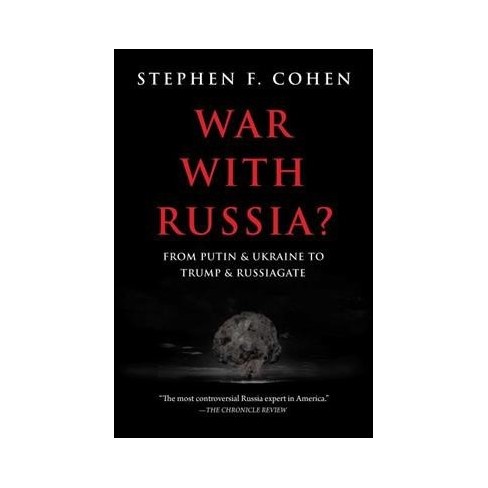
“This began long before Trump and ‘Russiagate,’ ” Stephen F. Cohen said when I interviewed him for my television show, “On Contact.” Cohen is professor emeritus of politics at Princeton University, where he was the director of the Russian studies program, and professor emeritus of Russian studies and history at New York University. “You have to ask yourself, why is it that Washington had no problem doing productive diplomacy with Soviet communist leaders. Remember Richard Nixon and Leonid Brezhnev? It was a love fest. They went hunting together [in the Soviet Union]. Yet along comes a post-Soviet leader, Vladimir Putin, who is not only not a communist but a professed anti-communist. Washington has been hating on him ever since 2003, 2004. It requires some explanation. Why do we like communist leaders in Russia better than we like Russia’s anti-communist leader? It’s a riddle.”

“If you’re trying to explain how the Washington establishment has dealt with Putin in a hateful and demonizing way, you have to go back to the 1990s before Putin,” said Cohen, whose new book is “War With Russia? From Putin & Ukraine to Trump & Russiagate.” The first post-Soviet leader is Boris Yeltsin. Clinton is president. And they have this fake, pseudo-partnership and friendship, whereas essentially the Clinton administration took advantage of the fact that Russia was in collapse. It almost lost its sovereignty. I lived there in the ’90s. Middle-class people lost their professions. Elderly people lost their pensions. I think it’s correct to say that industrial production fell more in the Russian 1990s than it did during our own Great Depression. It was the worst economic and social depression ever in peacetime. It was a catastrophe for Russia.”

In September 1993 Russians took to the streets to protest the collapse of the economy—the gross domestic product had fallen by 50% and the country was convulsed by hyperinflation—along with the rampant corruption that saw state enterprises sold for paltry fees to Russian oligarchs and foreign corporations in exchange for lavish kickbacks and bribes; food and fuel shortages; the nonpayment of wages and pensions; the lack of basic services, including medical services; falling life expectancy; the explosion of violent crime; and Yeltsin’s increasing authoritarianism and his unpopular war with Chechnya.

In October 1993 Yeltsin, after dissolving the parliament, ordered army tanks to shell the Russian parliament building, which was being occupied by democratic protesters. The assault left 2,000 dead. Yet during his presidency Yeltsin was effusively praised and supported by Washington. This included U.S. support for a $10.2 billion International Monetary Fund loan to Russia during his 1996 re-election campaign. The loan enabled the Yeltsin government to pay huge sums in back wages and pensions to millions of Russians, with checks often arriving on the eve of the election. Also, an estimated $1.5 billion from the loan was used to directly fund the Yeltsin presidential campaign. But by the time Yeltsin was forced out of office in December 1999 his approval rating had sunk to 2%. Washington, losing Yeltsin, went in search of another malleable Russian leader and, at first, thought it had found one in Putin.

“Putin went to Texas,” Cohen said. “He had a barbecue with Bush, second Bush. Bush said he ‘looked into his eyes and saw a good soul.’ There was this honeymoon. Why did they turn against Putin? He turned out not to be Yeltsin. We have a very interesting comment about this from Nicholas Kristof, the New York Times columnist, who wrote, I think in 2003, that his own disillusion with Putin was that he had turned out not to be ‘a sober Yeltsin.’ What Washington was hoping for was a submissive, supplicant, post-Soviet Russian leader, but one who was younger, healthier and not a drinker. They thought they had that in Putin. Yeltsin had put Putin in power, or at least the people around Yeltsin did.”

“When Putin began talking about Russia’s sovereignty, Russia’s independent course in world affairs, they’re aghast,” Cohen said of the Washington elites. “This is not what they expected. Since then, my own thinking is we were pretty lucky after the 1990s to get Putin because there were worst contenders in the wings. I knew some of them. I don’t want to name names. But some of these guys were really harsh people. Putin was kind of the right person for the right time, both for Russia and for Russian world affairs.”

“We have had three years of this,” Cohen said of Russiagate. “We lost sight of the essence of what this allegation is. The people who created Russiagate are literally saying, and have been for almost three years, that the president of the United States is a Russian agent, or he has been compromised by the Kremlin. We grin because it’s so fantastic. But the Washington establishment, mainly the Democrats but not only, have taken this seriously.”

“I don’t know if there has ever been anything like this in American history,” Cohen said. “That accusation does such damage to our own institutions, to the presidency, to our electoral system, to Congress, to the American mainstream media, not to mention the damage it’s done to American-Russian relations, the damage it has done to the way Russians, both elite Russians and young Russians, look at America today. This whole Russiagate has not only been fraudulent, it’s been a catastrophe.”

“There were three major episodes of détente in the 20th century,” Cohen said. “The first was after Stalin died, when the Cold War was very dangerous. That was carried out by Dwight Eisenhower, a Republican president. The second was by Richard Nixon, advised by Henry Kissinger—it was called ‘the Nixon détente with Brezhnev.’ The third, and we thought most successful, was Ronald Reagan with Mikhail Gorbachev. It was such a successful détente Reagan and Gorbachev, and Reagan’s successor, the first Bush, said the Cold War was over forever.”

“The wall had come down,” Cohen said of the 1989 collapse of East Germany and the fall of the Berlin Wall. “Germany was reunifying. The question became ‘where would a united Germany be?’ The West wanted Germany in NATO. For Gorbachev, this was an impossible sell. Twenty-seven point five million Soviet citizens had died in the war against Germany in the Second World War on the eastern front. Contrary to the bunk we’re told, the United States didn’t land on Normandy and defeat Nazi Germany. The defeat of Nazi Germany was done primarily by the Soviet army. How could Gorbachev go home and say, ‘Germany is reunited. Great. And it’s going to be in NATO.’ It was impossible. They told Gorbachev, ‘We promise if you agree to a reunited Germany in NATO, NATO will not move—this was Secretary of State James Baker—one inch to the east. In other words, NATO would not move from Germany toward Russia. And it did.”

“As we speak today, NATO is on Russia’s borders,” Cohen said. “From the Baltics to Ukraine to the former Soviet Republic of Georgia. So, what happened? Later, they said Gorbachev lied or he misunderstood. [That] the promise was never made. But the National Security Archive in Washington has produced all the documents of the discussion in 1990. It was not only [President George H.W.] Bush, it was the French leader François Mitterrand, it was Margaret Thatcher of England. Every Western leader promised Gorbachev NATO would not move eastward.”

“What do you end up with today?” he asked. “Betrayal. Any kind of discussion about Russian-American relations today, an informed Russian is going to say, ‘We worry you will betray us again.’… Putin said he had illusions about the West when he came to power.”

“Trump comes out of nowhere in 2016 and says, ‘I think we should cooperate with Russia,’ ” Cohen said. “This is a statement of détente. It’s what drew my attention to him. It’s then that this talk of Trump being an agent of the Kremlin begins. One has to wonder—I can’t prove it—but you have to think logically. Was this [allegation] begun somewhere high up in America by people who didn’t want a pro-détente president? And [they] thought that Trump, however small it seemed at the time that he could win—they really didn’t like this talk of cooperation with Russia. It set in motion these things we call Russiagate.”

“The forefathers of détente were Republicans,” Cohen said. “How the Democrats behaved during this period of détente was mixed. There was what used to be called the Henry Jackson wing. This was a very hard-line, ideological wing of the Democratic Party that didn’t believe in détente. Some Democrats did. I lived many years in Moscow, both Soviet and post-Soviet times. If you talk to Russian, Soviet policymakers, they generally prefer Republican candidates for the presidency.”

Democrats are perceived by Russian rulers as more ideological, Cohen said.

“Republicans tend to be businessmen who want to do business in Russia,” he said. “The most important pro-détente lobby group, created in the 1970s, was called the American Committee for East-West Accord. It was created by American CEOs who wanted to do business in Soviet Russia.”

“The single most important relationship the United States has is with Russia,” Cohen went on, “not only because of the nuclear weapons. It remains the largest territorial country in the world. It abuts every region we are concerned about. Détente with Russia—not friendship, not partnership, not alliance—but reducing conflict is essential. Yet something happened in 2016.”

The accusations made repeatedly by James Clapper, the former director of the National Security Agency, and John Brennan, the former director of the Central Intelligence Agency, concerning the Kremlin’s supposed control of Trump and Russia’s alleged theft of our elections are deeply disturbing, Cohen said. Clapper and Brennan have described Trump as a Kremlin “asset.” Brennan called Trump’s performance at a news conference with the Russian president in Finland “nothing short of treasonous.”

Clapper in his memoir, “Facts and Fears: Hard Truths From a Life in Intelligence,” claims Putin’s interference in the 2016 presidential election on behalf of Trump was “staggering.”

“Of course, the Russian efforts affected the outcome,” writes Clapper. “Surprising even themselves, they swung the election to a Trump win. To conclude otherwise stretches logic, common sense and credulity to the breaking point. Less than eighty thousand votes in three key states swung the election. I have no doubt that more votes than that were influenced by this massive effort by the Russians.”

Brennan and Clapper have on numerous occasions been caught lying to the public. Brennan, for example, denied, falsely, that the CIA was monitoring the computers that Senate staff members were using to prepare a report on torture. The chairwoman of the Senate Intelligence Committee, Dianne Feinstein, took to the Senate floor to accuse Brennan and the CIA of potentially violating the U.S. Constitution and of criminal activity in its attempts to spy on and thwart her committee’s investigations into the agency’s use of torture. She described the situation as a “defining moment” for political oversight. Brennan also claimed there was not a “single collateral death” in the drone assassination program, that Osama bin Laden used his wife as a human shield before being gunned down in a U.S. raid in Pakistan, and insisted that torture, or what is euphemistically called “enhanced interrogation,” has produced valuable intelligence. None of these statements are true.

Clapper, who at the time of the U.S. invasion of Iraq was the head of the National Geospatial-Intelligence Agency, the Pentagon unit responsible for interpreting spy-satellite photos and intelligence such as air particles and soil samples, concocted a story about Saddam Hussein spiriting his nonexistent weapons of mass destruction and the documents that verified his program to Syria on the eve of the invasion. He blatantly committed perjury before the Senate when being questioned about domestic surveillance programs of the American public. He was asked, “Does the NSA [National Security Agency] collect any type of data at all on millions, or hundreds of millions of Americans?” Clapper responded, “No, sir. … Not wittingly.” It was, as Clapper knew very well, a lie.

Our inability to oversee or control senior intelligence officials and their agencies, which fabricate information to push through agendas embraced by the shadow state, signals the death of democracy. Intelligence officials seemingly empowered to lie—Brennan and Clapper have been among them—ominously have in their hands instruments of surveillance, intimidation and coercion that effectively silence their critics, blunt investigations into their activities, even within the government, and make them and their agencies unaccountable.

“We have the Steele dossier that was spookily floating around American media,” Cohen said of the report compiled by Christopher Steele.

The report was commissioned by Fusion GPS and paid for by the Hillary Clinton presidential campaign and the Democratic National Committee. Bob Woodward reported that Brennan pushed to include the Steele dossier in the intelligence community assessment of Russian election interference.

“He [Steele] got it from newspapers,” Cohen said. “I don’t think he had a single source in Russia. Steele comes forward with this dossier and says, ‘I’ve got information from high-level sources.’ The Clinton campaign is funding this operation. But Steele is very important. He’s a former U.K. intelligence officer, if he’s really former, who had served in Russia and ran Russian cases. He says he has this information in the dossier about Trump frolicking with prostitutes. About Trump having been corrupted decades ago. He got it from ‘high-level’ Kremlin sources. This is preposterous. It’s illogical.”

“The theory is Putin desperately wanted to make Trump president,” Cohen said. “Yet, guys in the Kremlin, around Putin, were feeding Trump dirt to a guy called Steele. Even though the boss wants—does it make any sense to you?”

“Why is this important?” Cohen asked. “Right-wing American media outlets today, in particularly Fox News, are blaming Russia for this whole Russiagate thing. They’re saying that Russia provided this false information to Steele, who pumped it into our system, which led to Russiagate. This is untrue.”

“Who is behind all this? Including the Steele operation?” Cohen asked. “I prefer a good question to an orthodox answer. I’m not dogmatic. I don’t have the evidence. But all the surface information suggests that this originated with Brennan and the CIA. Long before it hit America—maybe as early as late 2015. One of the problems we have today is everybody is hitting on the FBI. Lovers who sent emails. But the FBI is a squishy organization, nobody is afraid of the FBI. It’s not what it used to be under J. Edgar Hoover. Look at James Comey, for God’s sake. He’s a patsy. Brennan and Clapper played Comey. They dumped this stuff on him. Comey couldn’t even handle Mrs. Clinton’s emails. He made a mess of everything. Who were the cunning guys? They were Brennan and Clapper. [Brennan,] the head of the CIA. Clapper, the head of the Office of [the Director of] National Intelligence, who is supposed to oversee these agencies.”

“Is there any reality to these Russiagate allegations against Trump and Putin?” he asked. “Was this dreamed up by our intelligence services? Today investigations are being promised, including by the attorney general of the United States. They all want to investigate the FBI. But they need to investigate what Brennan and the CIA did. This is the worst scandal in American history. It’s the worst, at least since the Civil War. We need to know how this began. If our intelligence services are way off the reservation, to the point that they can try to first destroy a presidential candidate and then a president, and I don’t care that it’s Trump, it may be Harry Smith next time, or a woman; if they can do this, we need to know it.”

“The second Bush left the Anti-Ballistic Missile Treaty in 2002,” Cohen said. “It was a very important treaty. It prevented the deployment of missile defense. If anybody got missile defense that worked, they might think they had a first strike [option]. Russia or the United States could strike the other without retaliation. Once Bush left the treaty, we began to deploy missile defense around Russia. It was very dangerous.”

“The Russians began a new missile program which we learned about last year,” he said. Hypersonic missiles. Russia now has nuclear missiles that can evade and elude any missile defense system. We are in a new and more perilous point in a 50-year nuclear arms race. Putin says, ‘We’ve developed these because of what you did. We can destroy each other.’ Now is the time for a serious, new arms control agreement. What do we get? Russiagate. Russiagate is one of the greatest threats to national security. I have five listed in the book. Russia and China aren’t on there. Russiagate is number one.”