Warning : Reality Is Escaping Out The Back Door

By Patrick Wood

Source: Technocracy News & Trends

There’s a big word that you can add to your vocabulary: Simulacrum. It is a hard word to wrap your head around, but one you are not too likely to forget. Indeed, you should not forget it!

Collins defines it as: “1) an image; likeness; 2) a vague representation; semblance; 3) a mere pretense; sham.”

Cambridge Dictionary says: “something that looks like or represents something else”.

Purdue University put it this way: “Something that replaces reality with its representation.”

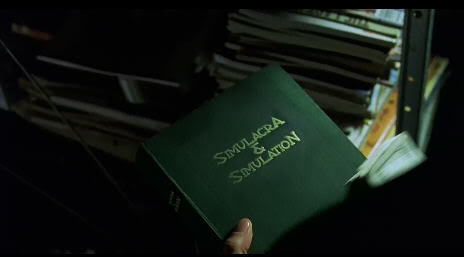
Jean Baudrillard wrote about this in a 1981 paper called “The Precession of Simulacra”, where he digs deeper, making a distinction between a simulation and a simulacrum.

Whereas representation attempts to absorb simulation by interpreting it as a false representation, simulation envelops the whole edifice of representation itself as a simulacrum. Such would be the successive phases of the image:

it is the reflection of a profound reality;

it masks and denatures a profound reality;

it masks the absence of a profound reality;

it has no relation to any reality whatsoever;

it is its own pure simulacrum.

So, the switch for reality is anti-reality: “The simulacrum is never what hides the truth – it is truth that hides the fact that there is none.”

This whole process does not happen in a vacuum because it involves human agency. Reality exists but human perception distorts it.

Just for review, reality slips into distortion, then into simulation, then finds its resting place in a state of simulacrum. Reality is subsumed by the simulacrum.

An example of simulacrum in the making

It is estimated that 90 percent of all online content will be generated by AI by 2025. This means news, social media posts, chats, pictures, videos, podcasts, websites, etc. A deluge of fake social media accounts will be run by AI. In short, everything.

Nina Schick, A.I. thought leader, wrote,

“What generative AI can do, essentially, is create new things that would have thus far been seen as unique to human intelligence or creativity, Generative AI can create across all media, so text, video, audio, pictures – every digital medium can be powered by generative AI. So, I think these valuations that you’re seeing for OpenAI are actually going to go up and you’re going to start to see even more generative AI companies which have universal applications across many industries in 2023.”

People will remember back to 2023 images and think that nothing has changed in 2025.

Warning : The Total Collapse Of Reality Could Be At Hand

As described above, a simulacrum is anti-reality.

This is not a paradigm shift of reality. This is not a “new realty”. This is not reality, period. Unfortunately, billions of people risk being captured by it.

While everyone is looking at shiny new simulacra forming right before their eyes, reality is escaping out the back door.

THE INVERSION: HOW WE HAVE BEEN TRICKED INTO PERCEIVING A FALSE REALITY

By Kingsley L. Dennis

Source: Waking Times

Let us begin with a story …

Human life is a story. And yet it is not one single story. It is an open book full of rich, amazing, powerful, and sometimes dangerous, stories. Humanity is quite literally living its own 1001 Nights yet across millennia. And just like that book of masterful storytelling, there have been incredible stories that filled the minds, and hearts, of many millions of people throughout the ages. We live upon and within a story each second of our lives. Some of these stories are greater than others – more epic, more powerful, and more influential. Others are daily stories that fill our pockets and arrange our hours. Yet over and above our stories there has always been a grand narrative. It is this grand, sweeping story that narrates, and influences, the general direction in which humanity moves.  And this grand narrative is often so compelling, so full of persuasive detail, that we believe in it wholeheartedly. Like an amazing tale told to a child before bedtime, this tale then becomes woven into that night’s dream. Upon waking, the dream feels so real that it lingers far long into the day and until it is replenished once again before bedtime. And yet sometimes, within special circumstances, the dream is so captivating and convincing that it causes the dreamer never to awaken. The dreamer continues to dream the dream that they were told before sleeping.

Human history is like a dream within a dream – an inversion within an illusion. And as many dreamers know, there are levels within dreams. Like a Russian Matryoshka doll, there are nesting layers of stories that all combine to create an overarching narrative body or realm. And many people, like good dreamers, find themselves caught up within one of the layers. And it can be almost impossible to get out. Even though we are technically awake, we are also dreaming. Why? Because we are living through particular stories and narratives that have been sown, implanted, or entwined in our heads. They get into our subconscious and from that privileged position they begin to influence our behaviour and thinking from behind the scenes. Even when we think we are awake, we are never free from those stories, narratives, and constructs that manage our perceptions and create the arc of our dreaming lives. To truly be awake, a person would need to know how to drop all these stories and step out of the construct; that is, to turn ourselves the right way up within the inversion. This may actually have been achieved by a few people, yet it has always been considered something odd, esoteric, or mystical to do so. Because to the dreamers, anyone who steps out of the dream must be some weird eccentric, must they not? Or that is perhaps just how the main story goes.

‘We are dreaming the wrong dreams.” ~Anon

The mainstream story doesn’t like very much when dreamers – sorry, people – try to leave. Why would people want to leave when the story is so compelling? Overall, however, this is rarely a problem as so few people ever realize that it is all a dream within a dream, so the issue hardly ever comes up. So, shall we get back to our story?

… Things in life are not as they seem… Human life is lived as a normalization of this inverted reality construct. That is why life is filled with so many irregularities, oddities, and downright madness. We all know, or instinctively feel, that something has gone astray.

We now believe in anything because nothing seemingly has any truth to it. We’ve become lost within the reflections of our own mirror world. Seeing our reflections smile back at us, we are content with the distraction. Everything must be okay, we tell our reflections – the governments wouldn’t lie to us, would they? We’re protected by benevolent authoritative structures that care for us like our mothers. Oh dear. Topsy-Turvey.

To let you in on a little secret… it’s been like this for a long time. Only that until recently, the waking dream of the Inversion was good at keeping everyone asleep (except the rare few) because the trickle of consciousness within the reality construct was low. But something has been happening – if you haven’t noticed? There’s been cracks in the veil; and more consciousness has been seeping through. And it’s been getting into our heads, even if we hadn’t noticed. Gradually, people have been gaining more and more awareness over this thing they call the ‘human condition.’ There have been a few exceptional individuals within each generation that spoke about these things, or even wrote about them; but few people listened and fewer still read any of their writings (because they had been kept illiterate). But still, the gradual seeping of consciousness into this reality construct continued. And the insights kept coming. Some people were inspired; others gained revelations. But the numbers remained small. The Inversion continued to impose itself; to keep the blinders on the dreamers whilst turning up the music. Greater distractions were offered; a glittering array of entertainment sprang up. And incentives were given to those people who began to open just one of their eyes. Those few who suspected something were spotted early on and fast-tracked up the hierarchy of the ‘people pyramid’ so that they benefited most from the pleasures and gains of the Inversion. Then these higher ups would want to invest in keeping the system exactly how it was – a protection of self-interests. The masses of dreamers – the sleeping mob as they were called – remained swaying to the lullaby. But slowly, the frequency of the lullaby was being changed. A new vibration was being added. I think you get the gist of where this is going.

And it arrives to here: where you are sitting right now.

So – what are you going to do about it…?

At the Lost and Found

By Edward Curtin

Source: Behind the Curtain

“Nothing is more real than nothing.”
Samuel Beckett, Malone Dies

Those who are never lost are forever lost.  Only those who know they are lost and that life is a shipwreck have a chance to find their way to shore.

The world’s great religions, including Taoism and Existential philosophy, understand that at the heart of human existence is the presence of the not (death, emptiness, void), but this negative reality, this “nothingness” interpenetrates with the positive of being alive so that our knowledge coincides with our ignorance, our lives with our death, and our truth with untruth.  This is also common sense.

Everyone is a pilgrim on the way, and because there are no maps, we all get lost.  And it is only by getting lost in a deep sense that we can find ourselves and discover the truth about the world.

It is well known that Ernest Hemingway made famous the phrase “the lost generation” when he opened his novel The Sun Also Rises with the epigram “You are all a lost generation,” attributed to Gertrude Stein, who said she heard it from a garage owner who said it about a young auto mechanic in his employ.

It is less well known that Hemingway later wrote “that all generations were lost by something and always had been and always would be …But to hell with her lost-generation talk and all the dirty easy labels.”

He was thinking of how the madness of war with the calls to patriotism and God and country and the never-ending official lies about everything maimed people at very deep levels.  His words in A Farewell to Arms have lasted because they are so true in their dismissal of abstract obscenities and their embrace of the concrete:

I was always embarrassed by the words sacred, glorious, and sacrifice and the expression in vain …. And I had seen nothing sacred, and the things that were glorious had no glory and the sacrifices were like the stockyards of Chicago if nothing were done with the meat except to bury it …. Abstract words such as glory, honor, courage, or hallow were obscene beside the concrete names of villages, the numbers of roads, the names of rivers, the numbers of regiments and the dates.

No doubt he was also thinking of the existential anxiety of being alive and the fear of death and nothingness that is conveyed in his powerful short story, “A Clean Well-Lighted Place” that appeared in the 1930 volume Winner Take Nothing.  He was well acquainted with nothing (the not, nada) and knew that social circumstances only add to it, particularly wars and the nihilistic death wishes of lying political leaders.

Some say nothing has changed for millennia and that every age is similar and people are the same, always complaining about the present and recalling the good old days.  There is some truth in this, but the issue of assessing today in all its uniqueness remains paramount.  For every age and every generation is different; therein lies its potential and dangers.  Each can only be understood within its place and time.  We live in the era of high technology that has never before existed.  It is unique.  And it is uniquely dangerous.

Today is a time of unprecedented official lies about everything, endless wars hot and cold, class wars of the rich against the poor, medical wars of international elites against everyone, etc. –  it is a daily electronic digital  barrage meant to pound people into the deepest despair.  Call it “The Lost World of the Information Superhighway.”  These lies have sown a vast sense of bewilderment, as intended.  Lostness for so many, including those who don’t know it and take those lies for truth. People who don’t know that there are still places, although they are shrinking, where truth can be found.  The problem is, of course, that even when they are told about media sites and writers that operate honestly and outside the propaganda mill, they usually refuse to go there.  They prefer to live inside what Jim Garrison, the former New Orleans District Attorney who brought the only trial in the assassination of President Kennedy, correctly termed “the Doll’s House.”

Picking through the bins at the lost and found on the Internet, which is dominated by intelligence services and their Silicon Valley big tech partners, many who feel lost find “things” they think they have lost but which are counterfeit.  They cling to them as to false gods, not realizing that they have been placed there by the elite mountebanks and their accomplices, a process similar to a document dump that contains fabricated records.  It is an old trick.  Often what is really lost is the sense that life makes sense and is meaningful, but this awareness is often replaced with shards of false reassurance meant to distract and far too much information for anyone to comprehend.

What’s up?  Check your cell phone and head down the primrose path to unreality.

Just as there are two senses to being lost, one based on the awareness that if we refuse to grasp at straws and proceed through life by faith, the unknown road will bear us up (Thoreau said, “How vigilant we are! determined not to live by faith if we can avoid it…”), and the other being the more socially induced one of incessant propaganda, so too there are two ways of thinking about nothing.  The existential sense as described by Hemingway in his famous story mentioned above, and the sense of trivia or superficial preoccupations that distract.  C.S. Lewis described the latter sense very well:

The Christians describe the enemy as one ‘without whom Nothing is strong’. And Nothing is very strong: strong enough to steal away a man’s best years not in sweet sins but in a dreary flickering of the mind over it knows not what and knows not why, in the gratification of curiosities so feeble that the man is only half aware of them, in drumming of fingers and kicking of heels, in whistling tunes that he does not like, or in the long dim labyrinth of reveries that have not even lust or ambition to give them relish, but which, once chance association has started them, the creature is too weak and fuddled to shake off.

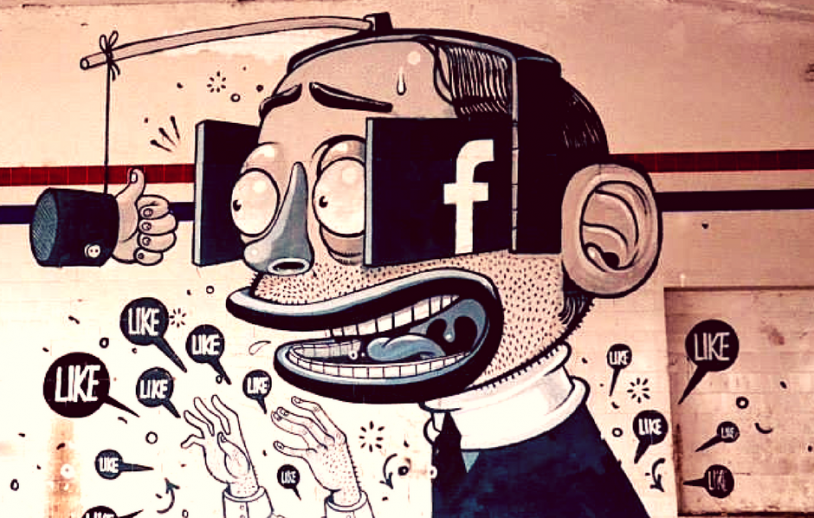
This is a perfect description of the passivity of scrolling the internet or social media.  Much ado about absolutely nothing but distractions.  Tranquilized by trivia.

Our current situation has been long in coming.  Back in the early 1960s, there was a  highly touted intellectual named Marshall McLuhan whose 1964 book, Understanding Media: The Extensions of Man, was gobbled up by the baby boomers raised on television, whose rebellious members protested the inhumanity of IBM computer technology of that time.  Ironically, it was members of this generation who later created the computer revolution and have promoted the digital revolution.  They carry cell phones as sidearms to defend themselves from reality.

Newsweek called McLuhan “the oracle of the New Communications.”  He was an obscurantic celebrator of the electronic media and retribalized man long before the Internet, cell phones, personal computers, and digital mania.  McLuhan’s paeans to technology sounded very profound and liberating  with their vaguely Gnostic and Jungian rhetoric, which also fit with the 1960s “vibes.”  He called the electronic media our gods whom we must serve, for they in turn would liberate us.  He gave life to things while taking it from persons.  He wrote:

Electromagnetic technology requires utter human docility and quiescence of meditation such as befits an organism that now wears its brain outside its skull and its nerves outside its hide. Man must serve his electronic technology with the same servo-mechanistic fidelity with which he served his coracle, his canoe, his typography, and all other extensions of his physical organs. But there is this difference, that previous technologies were partial and fragmentary, and the electric is total and inclusive. An external consensus or conscience is now as necessary as private consciousness. [my emphases]

Clearly this was a message of a prescient religious crank: mystical, mythological, technological nonsense perfectly in tune with the dawning new age. Not any coming of the Age of Aquarius, however, but that of the Age of Digital Control and endless wars.

By turning the person inside out and giving life to things, McLuhan was certainly anticipating and promoting the developments of the past forty years.  His ideas gave legitimacy to the passivity of the person in the face of the burgeoning mass media consumer culture.  They supported the growing commodification of all aspects of life, especially people.  By externalizing the person, McLuhan was eliminating the idea of the autonomous self and opening the way for today’s era of consumers, blank screens for the reception of advertising, public relations, and propaganda on a vast scale.  In fact, what he wrote of television runs deeper for cell phones and computer screens.  “ … with TV,” he wrote, “the viewer is the screen.  He is bombarded with light impulses that James Joyce called the ‘Charge of the Light Brigade’ that imbues his ‘soulskin with subconscious inklings.’ “

Inklings of abstract obscenities at war with the lost world of reality.

While many people sense this, they still embrace their killers, feeling that they would be lost without them. They have become appendages of their electronic appendages.  The current push to transform all person-to-person life into a digital one run by Artificial Intelligence (AI) technologies with its mass surveillance powers is recognized by many but dismissed as a weird conspiracy.  This is so far from the truth.  A good indicator of this nonchalant attitude toward such developing trends is the vastly increased popularity of on-line shopping.  Its innocence conceals the future that is coming.

I recently won a very high-tech looking electric toothbrush at the dentist.  When I opened it, I discovered it contained a gadget with a suction cup that could hold a “smart phone” that you could attach to the mirror.  The phone could electronically be linked to the toothbrush and it would monitor your brushing as you watched yourself brush.  Poor me, I felt so stupid: a man without a smart phone!

While everybody knows that the boat is leaking and the captain lied, to paraphrase Leonard Cohen, such knowledge is abstract.  It is a sort-of knowledge, sensed but also denied.  Real but unreal.  Known but unknown.  And that’s how it goes.  It is very difficult for many conventional people to admit that the life they have known is disappearing while they dawdle in fantasy land, believing the propaganda of their rulers.  To live in the U.S.A. is to live in Neverland where no one ever has to be alone, never grow up, and always be “in touch” through the ether.  It is a country of lost children.

You can choose any issue of importance and its official explanation is certain to be untrue, obvious or subtle propaganda.  The lies about Ukraine and Russia; Covid-19, lockdowns, and vaccines; China and Taiwan; U.S. forces in Syria and U.S. support for Israeli aggression against Syria and the Palestinians; its support for Saudi Arabia’s ruthless policies and war against Yemen; the economy, central banking, and inflation; the increasing censorship of dissident voices; digital IDs, digital programmable currencies, and social credit systems; the persecution of Julian Assange; the Great Reset; a series of binaries meant to suggest false alternatives, etc.  The list is endless.  All official lies to support a sinking ship captained by psychopathic liars seemingly intent on a world war that will destroy the world.  Melville’s Captain Ahab writ large. Like those traveling on the Titanic, today’s passengers on the flailing American empire’s Good Ship Lollipop are in for a surprise, and it won’t be a sweet trip to a candy shop.

Hemingway was surely right that “Winner Take Nothing.”  Yet losers also exit empty-handed.  Everybody knows this but goes on surrounding themselves with stuff, lots of things.  Hoarders are a popular TV subject because they represent the extreme form of this madcap method of trying to secure oneself from loss.  It is a form of mental and spiritual despair that could only exist in advanced capitalist consumer society.  Too many possessions and too much information.  Cluttered minds, cluttered abodes.  There is a reason why the world’s poor are called the dispossessed.  One could say hoarders are the possessed, and it is a form of demonic possession.

Recently I was called upon to help a hospitalized elderly relative by checking on her house.  The house is filled from attic to basement, in every nook and cranny, with collected things that serve no life purpose but were kept to provide a security blanket that was really a strangulation cord.  I will spare you the details, except to say that this relative is an intelligent woman, as was her deceased husband, and yet they surrounded themselves with so much “stuff,” never threw things out, kept papers from 70 years ago, old keys and coins, empty jewelry boxes by the score, etc.  An overwhelming scene to behold.  And why did they do this?  Because they thought they were protecting themselves against loss, against nothing, nada.

As T. S. Eliot wrote in The Wasteland: “These fragments I have shored against my ruins.”  But there is nothing that will protect against the loss Eliot was referring to – the social, psychological, and spiritual fragmentation of Europe as a result of World War I.  A wasteland created by politicians. Like today.

We too are now living in a wasteland, and the only way to find our way forward is to acknowledge that we are lost and to jettison the false security of believing the vast tapestry of lies promulgated by the captains of the American-led Titanic.

I often think of the words of the poet Rilke as good advice, a step in the right direction where there is a lost and found worth visiting and insights await us. While primarily writing about the artist who time and again is that someone who emerges from the crowd and whose “winged heart everywhere beats against the walls of their time,” I think his words apply to every person, including journalists.  To plumb the depths of our sordid current world demands aesthetic, political, and spiritual resistance rooted in the open sociological imagination, a willingness to go wherever the facts and intuition leads us.  Rilke said:

Not any self-control or self-limitation for the sake of specific ends, but rather a carefree letting go of oneself; not caution, but rather a wise blindness; not working to acquire silent, slowly increasing possessions, but rather a continuous squandering of all perishable values. This way of being has something naïve and instinctive about it, and resembles that period of the unconscious best characterized by a joyous confidence, namely the period of childhood …. [the child] has no anxiety about losing things …. And whatever he has once been lit up in love remains as an image, never more to be lost, and the image is possession; that is why children are so rich.

For a country of lost children, this is a good place to start.

The War on Reality

By CJ Hopkins

Source: Consent Factory, Inc.

So, the War on Reality is going splendidly. Societies all across the world have been split into opposing, irreconcilable realities. Neighbors, friends, and even family members are bitterly divided into two hostile camps, each regarding the other as paranoid psychotics, delusional fanatics, dangerous idiots, and, in any event, as mortal enemies.

In the UK, Germany, and many other countries, and in numerous states throughout the US, a “state of emergency” remains in effect. An apocalyptic virus is on the loose. Mutant variants are spreading like wildfire. Most of society is still shut down or subject to emergency health restrictions. People are still walking around in public with plastic face shields and medical-looking masks. The police are showing up at people’s homes to arrest them for “illegally gathering outdoors.” Any deviation from official reality is being censored by the Internet corporations. Constitutional rights are still suspended. Entire populations are being coerced into being injected with experimental “vaccines.” Pseudo-medical segregation systems are being brought online. And so on … you’re familiar with the details.

Meanwhile, in Sweden, and a few other countries, and in various other states throughout the US, there is no apocalyptic pandemic. People are just going about their lives as normal. OK, sure, there is a nasty virus going around, so people are taking common sense precautions, as people typically do for any nasty virus, but there is no “state of emergency” in effect, and no reason to radically transform society into a paranoid, pathologized-totalitarian dystopia.

This state of affairs, in which two contradictory, mutually-exclusive realities exist, is … well, it’s impossible, and so it cannot continue. Either there exists a devastating global pandemic that justifies a global “state of emergency,” the suspension of constitutional rights, and the other totalitarian “emergency measures” we have been subjected to since March of 2020 or there doesn’t. It really is as simple as that.

Except that it isn’t as simple as that. It is easy to forget, given the last 16 months, that people have been bitterly divided, and inhabiting mutually-exclusive realities, and regarding people who don’t conform to their realities as enemies for the last five years. I’m not talking about political disagreements, or even socio-cultural differences. I’m talking about contradictory realities. Things that actually happened, or didn’t happen. Things that exist, or do not exist.

I’m not going rehash the whole War on Populism — I covered it extensively at the time — but that’s when the current global-capitalist War on Reality was officially launched. It wasn’t just the usual lies and propaganda. It was a full-scale ideological assault. By the end of it, people actually believed that (a) Donald Trump was a Russian agent, (b) that he was literally Hitler, and so was going to stage some sort of “coup,” declare himself American Führer, and launch the “Trumpian-White-Supremacist Fourth Reich,” and (c) that he had actually attempted this by sending a few hundred unarmed protesters — violent domestic extremist grandmothersfather-and-son kill squads, and bison hat loonies — to “storm the Capitol” and overthrow the government during the so-called “January 6 Insurrection.”

So, when GloboCap rolled out the “New Normal” reality, they weren’t exactly starting from scratch. Millions of people — not just Americans, because the War on Populism was a global campaign — were already living in a new reality in which facts no longer mattered at all, where things that never happened officially happened, and other things that obviously happened never happened, not officially, or were “far-right extremist conspiracy theories,” “fake news,” or “disinformation,” or whatever, despite the fact that people knew that they weren’t.

But the goal of GloboCap’s War on Reality isn’t simply to deceive the masses and divide them into opposing camps. Rulers have been deceiving the masses and dividing them into opposing camps since the dawn of human civilization. This time, it’s a bit more complicated than that.

OK, bear with me now, because this gets kind of heady.

The War on Reality is not an attempt to replace reality with a fake reality. Or it is that, but that is only one part of it. Its real goal is to render reality arbitrary, to strip it of its epistemological authority, to turn it into a “floating signifier,” a word that has no objective referent, which, of course, technically, it already is. You cannot take a picture of reality. It is a concept. It is not a physical object that exists somewhere in time and space.

But let’s leave that last point for a later discussion. This is not the time to get lost in semiotics. For most people, for most practical purposes, reality is … well, reality. It’s objective. Material. It actually exists. It exists independent of our beliefs. It isn’t just an arbitrary, empty signifier that doesn’t actually refer to anything, but which we use, strategically, to assert authority, or to impose ideology on society. If that were the case, there would be no reality. Nothing would be true, everything would be permitted … which is a bunch of postmodern Marxist nonsense.

But just imagine, for a moment, if that were the case … if what determined reality was actually just a question of power rather than facts. Imagine that reality was just a concept that we used to mark the current limits of our knowledge and ideological beliefs. Our doctors — oncologists and virologists, for example, but they could be any kind of doctors or scientists — would be not all that different from medieval alchemists, who totally believed in their reality at the time, as did the patients they were treating, but which we know now was not reality at all, because our reality is the real reality. I mean, it’s not as if people, five hundred years from now, are going to look back at our medical practices and scientific knowledge, and laugh, like we do at those medieval alchemists, right?

Sorry, I got a little off track there. I was trying to explain the ultimate purpose of this global-capitalist War on Reality, and I wandered off into an ontological swamp, which isn’t going to get us anywhere. So, let’s get back to imagining reality, not as what we all know it is (i.e., an actual, material thing that exists), but as a construct people use to validate certain officially-sanctioned beliefs and perceptions and invalidate other beliefs and perceptions, more or less like a system of morals, except instead of dividing things into to “good” and “evil,” it divides things into “real” and “fake.”

Now imagine that you were an immensely powerful, globally hegemonic ideological system, and you wanted to impose your ideology on as much of the entire world as possible, but you didn’t have an ideology per se, or any actual values at all, because exchange value was your only real value, and so your mission was to erase all ideologies, and values, and truths, and belief systems, and so on, and transform everything and everyone in existence into de facto commodities that you could manipulate any way you wanted, because they had no inherent value whatsoever, because their only real value was assigned by the market.

How would you go about doing that, erasing all existing values, religious, cultural, and social values, and rendering everything a valueless commodity?

Well, you wouldn’t want to destroy reality completely, because people wouldn’t stand for that. They would freak right out. Things would get ugly. So, instead, you might want to go the other way, and generate a lot of contradictory realities, not just contradictory ideologies, but actual mutually-exclusive realities, which could not possibly simultaneously exist … which would still freak people out pretty badly.

Naturally, there would be one official reality that you would force everyone to rigidly conform to at any given moment in time, but you would change the official reality frequently, and force everyone to conform to the new one (and pretend that they’d never conformed to the old one), and then, once they had settled into that one, you would change the official reality again, until people’s brains just shut down completely, and they gave up trying to make sense of anything, and just tried to figure out what you wanted them to believe on any given day.

If you repeated that process long enough, eventually, nothing would mean anything anymore, because everything could potentially mean anything … at which point, you could basically tell people anything you wanted and they would go along with it, because what the hell difference would it make? A narcissistic billionaire ass-clown could be a Russian agent and literally Hitler. A half-assed riot could be an “insurrection.” Children could be born “systemically racist.” Men could menstruate. But wait … it’s gets better.

You could stage an apocalyptic global pandemic that only happened in certain countries, or in certain parts of certain countries, and that more or less mirrored natural mortality, and that didn’t drastically increase historical death rates, but was nonetheless totally apocalyptic.

Perfectly healthy people could become “medical cases.” You could count anyone who died of anything as having died of your apocalyptic virus. You could tell people in no uncertain terms that medical-looking masks will not protect them from viruses, and then turn around and tell them that they will, and then, later, publicly admit you were lying in order to manipulate them, and then deny you ever said that, and tell them to wear masks.

You could experimentally “vaccinate” millions of people whose risk of becoming seriously ill or dying from your apocalyptic virus was minuscule or non-existent, and kill tens or hundreds of thousands in the process, and the people whose brains you had methodically broken would thank you for murdering their friends and neighbors, and then rush out to their local discount drugstore to experimentally “vaccinate” their own kids and post pictures of it on the Internet.

At that point, you wouldn’t really have to worry about “populist uprisings,” or “terrorism,” or any other type of insurgent activity, because the vast majority of the global population would be scramble-headed automatons who were totally incapable of independent thought, and who had no idea what was real and what wasn’t, so just repeated whatever new script you fed them like customer-service representatives on Haldol.

It doesn’t get much better than that for globally hegemonic ideological systems!

OK, sorry, I think I got lost there again. I’m not sure what I was trying to say. I’ve been a little foggy lately. I’m not sleeping so well. It’s probably Long Covid. Or maybe it’s just that time of month. Whatever. It’s not like it matters anyway. Still, I think I’ll go down to my former local bookshop and get myself tested.

Have a nice day in … you know, reality!
The War On Reality

By Wayne Janis

Source: OpEdNews

Permanent Record by Edward Snowden, (Publisher Metropolitan Books, an imprint of Henry Holt and Company). is recommended to anyone wishing to understand the world in which we live.

The most dangerous war currently being fought is the “war on reality”. Of course this was Orwell’s greatest fear as expressed in 1984 – that reality itself would be appropriated, manipulated and obliterated at will by powerful forces. His original title for 1984 was “The Last Man In Europe” – i.e., the last man connected to reality.

We live in a world in which spurious realities are being manufactured by the media, by governments, by big corporations, by religious groups, political groups, all of which are filtered through major media conglomerates that are attached to the globalist ether (let’s call it the “globalist cloud”). This globalist cloud is controlled and manipulated by a globalist Intelligence Community for political/economic/social purposes.

The bombardment of pseudo-realities will produce inauthentic humans very quickly, spurious humans as fake as the data pressing at them from all sides. We need to detach the now essential and probably irrevocable social media matrix from this globalist ether and reign it in to do the good work of humanity at large. Net neutrality is one major initiative that must be pursued and won.

Net neutrality is the concept that all traffic on the Internet should be given equal treatment by Internet providers with little to no censorship, manipulation, interference, prioritization, discrimination or preference given based on usercontentwebsiteplatformapplication, type of equipment, source address, destination address, or method of communication. Any rules of conduct must be determined democratically and implemented equally.

In addition the globalist cloud has misappropriated, stored, monetized and misused the entirety of our personal digital data for corporate profit and social control. We will only reclaim our privacy by exerting the highest level political pressure.

“Ultimately, saying that you don’t care about privacy because you have nothing to hide is no different from saying you don’t care about freedom of speech because you have nothing to say. Or that you don’t care about freedom of the press because you don’t like to read…Just because this or that freedom might not have meaning to you today doesn’t mean that it doesn’t or won’t have meaning tomorrow, to you, or to your neighbor or to the crowds of principled dissidents I was following on my phone who were protesting halfway across the planet, hoping to gain just a fraction of the freedoms that my country was busily dismantling.” – Snowden, Edward. Permanent Record (p. 208-209). Henry Holt and Co.. Kindle Edition.

And we, the people, need a powerful reality motto. I have found no better one than:

Reality is that which, when you stop believing in it, doesn’t go away..Philip K. Dick

Only the courage and implacable resistance of authentic human beings to powerful corruptors of truth and reality will save us from a world much like that depicted in 1984. It is unknown whether there are enough such authentic human beings or whether the battle can be won no matter the number.

As Reinhold Niebuhr said, it takes a “sublime madness of the soul” to fight against the “malignant powers of the world”.

And Chris Hedges:

“There is nothing that’s going to rationally justify it. You can know that everything around you points to the fact that your struggle for justice, maybe your entire life, has been futile. But this knowledge doesn’t invalidate what you’ve done.”– Hedges, Chris. Unspeakable: Talks with David Talbot about the Most Forbidden Topics in America . Skyhorse Publishing. Kindle Edition.

People like Julian Assange, Edward Snowden, Chelsea Manning, Daniel Ellsberg, Chris Hedges, John Kiriakou and others are examples of these brave and implacable martyrs who have paid the price for what is at its core a battle for the soul of humanity.

Historically, Galileo is a martyr in the war on reality even though his trial ended with an abjuration which allowed him to avoid execution and remain under house arrest for life. But I personally like the raw testicularity of Bruno Giordano (PC police be damned). He defended his astronomical beliefs to the end and refused to recant his rejection of certain dogmas of the Catholic Church. Knowing he would be burned at the stake (he was first hung naked upside down in a public square in Rome) he made a disdainful gesture to the judges and said:

“You pronounce this sentence against me with greater fear than I receive it.”

A Metaphysical Malaise?

By Kingsley L. Dennis

Source: Waking Times

‘The real tragedy of our time lies not so much in the unprecedented external events themselves as in the unprecedented ethical destitution and spiritual infirmity which they glaringly reveal.’

Paul Brunton

There is little doubt that we are living in an age of extreme contradictions where opposing trends appear to exist side by side. It is a time when individuals take greater care of their bodies and are obsessed by diet and health fads, while obesity is an epidemic. We live amidst a paradoxical combination of playfulness and fear, of fun and anxiety, of euphoria and unease. It has been said that ‘When a materialistic civilization becomes outwardly impressive but remains inwardly impoverished, when political relations become an elaborate façade for hiding the spiritually empty rooms behind them, menacing problems are sure to appear on every side.’This quote adequately describes our current situation and yet the author, Paul Brunton, published this in 1952.  However, it remains as starkly correct in its analysis for today as it was for his own time.

The current situation is that ‘menacing problems’ are indeed appearing on every side: political corruption and ineptitude; economic manipulations; national aggression and politically-motivated warfare; refugee crises; human torture and suffering; capitalist greed; corporate corruption; aggravated social unrest; religious and moral intolerance; increased displays of psychopathic behaviour (private individuals and authority figures); blatant propaganda; environmental degradation; ecological ignorance; spiritual destitution, and the rest.

The result is that many people have become ‘spiritually numbed’ by what they see occurring in the world, and feel that only a similar harsh, physical response can be effective. The words ‘mystical’ and ‘spiritual’ remain vague and ethereal. People have always depended on language to bring guidance and nourishment. Yet in this mental environment, words are but skeletal traces of the real flesh. The crisis of our times has clarified little and succeeds in confusing almost everything for the rest of us. There is nowhere to turn in public for finding the truth – seemingly little to believe in for the present and too much uncertainty for the future. The result of this is that many people have doubts that they don’t know how to deal with, and these are building up within their minds like a pathological infection.

An Absence of Meaning

In these current times there is a sense, a feeling, of something lacking or missing within many people’s lives. Unfortunately, this need has been met by the consumerist marketplace. There is a great deal of compensation for this lack through ‘quick fix’ guruism; that is, costly paid retreats, so-called spiritual counselling, and ‘life coaching’ mentorship. Yet these are like fast-food remedies for a deeper hunger. The real struggle today is rather between the material perspective on life and that of the inner, developmental state. Many of the events occurring in the world are manifestations of issues existing within ourselves. The anger and negativity we see so much of in the world is a projection from the collective interior state of humanity. We can manifest both the dream or the nightmare, and we share in its waking state. Being physically mature is not enough; we also need to be emotionally, intellectually, and inwardly mature.

Our cultures and societies are in disequilibrium because they seek to be governed by artificial laws that ignore the timeless wisdom that corresponds to human development. It is a dominant mentality that promotes a short-sighted, myopic worldview that is largely concerned only with physical gains and material power. It is a mentality that promotes fear, defence and attack – rather than a welcoming, embracing vision.

Our societies do not consider human purpose and the deeper meaning of human existence. They drive us to live by working; to enjoy through distractions; and to eventually die with debt and taxes. The world is governed not by fairness or equity, but by a lopsided arrangement of elite power. Conferences of peace are based on compromise and not compassion. Trade is based on strength rather than collaboration. Power and politics are at war with the world and do so beyond the reach of accountability. There is a resurgence of the illegitimate, surging through black markets, offshores, and dark networks. Dark pathways will always emerge and grow in the places where the light is flickering without focus or intent.

Today’s so-called modern cultures are increasingly fragmented, or like liquid streams, that can no longer be accurately identified or navigated by the old signs, symbols, and meanings. Modern life has, to some degree, started to dissolve in order to re-assemble. This may indeed be a part of the needed cathartic process that humanity has to pass through before circumstances will improve. A feature of the current times is that new ways of thinking and behaviour have not yet fully materialized into the present order of things. That which now constitutes ‘daily life’ is void of the questions of metaphysical meaning. Any notion of the developmental, or the metaphysical, is deemed outside of daily life, and people are continually programmed against such deeper truths. In other words, we should not let anything that is ‘other’ – otherworldly or transcendental – replace the responsibility of our social daily grind.

Human societies often make political declarations to promote what they decide to be ‘social happiness.’ Yet political institutions have no genuine models for this, for the dominant political mindset is overruled by a form of psychosis. Social ‘happiness’ is whatever fits into the particular dominant belief system of the age. And as can be seen, this dominant belief, or narrative, has been hijacked by a collective psychosis that I have termed the wounded mind. It appears that as a collective society we have no lasting image of happiness. As a consequence, personal lives are in danger of becoming now less about actual experience and more about the data trails left behind. We have entered another struggle – another social fray – where the battle is between the transparency of our private, inner lives and our public identity.

Identity & Self

These days people are being encouraged to expose their inner demons onto the public stage, especially online. The human shadow is wanting to come out and be revealed. According to Jung, the psychological ‘shadow’ is the underdeveloped and undesirable aspects of ourselves that we try to keep hidden away. And yet there are times when we are unable to hold it at bay, or unconsciously wish for it to manifest. Humanity possesses a tremendous imagination for doing good as well as evil, and this can be a finer line than is realized. As the aphorism states, the road to hell is paved with good intentions. Each person needs to exercise the capacity to detect and acknowledge those unconscious desires, feelings, and thoughts that exist within. American psychologist Rollo May once wrote – ‘Our age is one of transition, in which the normal channels for utilizing the daemonic are denied; and such ages tend to be times when the daemonic is expressed in its most destructive form’2

In short, we need to be extremely mindful in these times about what’s inside of us. Our minds – our thinking and consciousness – is a target and has been for a long time. In the last century this has become more evident, more public. We have become increasingly stuck in modern times within our stories around psychological need and a ‘loss of self.’ Perhaps what is needed is to acknowledge that some people are suffering from what is termed as ‘soul loss.’

People who experience ‘soul loss’ frequently have the feeling of being fragmented, not whole or completely ‘in’ themselves. They feel as if an essential part of them is missing. They may clinically be diagnosed as ‘dissociated.’ Depression is another symptom of soul loss. Soul loss can be associated with the traumas of modern life – fear, terror (warfare), incest or rape, domestic abuse. These are all the external stresses that modern life creates. Counselor and educator John Bradshaw uses the term toxic shame which he sees as a form of alienation from the self, causing it to be ‘otherated.’ In response, people may turn to external sources to fill this internal void.

Carl Jung also made a reference to soul loss in his psychological work. According to psychotherapist Robert Francis Johnson,

‘This loss of soul Jung speaks of is manifested in our culture by the crises we are all facing (increased drug use, violence, moral and emotional numbness) and our attempt to solve moral and spiritual questions by electing wounded leaders who promise economic answers.’3

It is interesting that Johnson refers to ‘wounded leaders’ here who seek our compliance through the language of greed (‘economic answers’). Similarly, prominent Jungian analyst Marie von Franz writes that

‘Soul loss can be observed today as a psychological phenomenon in the everyday lives of the human beings around us. Loss of soul appears in the form of a sudden onset of apathy and listlessness; the joy has gone out of life, initiative is crippled, one feels empty, everything seems pointless.’4

Is this not a description of what faces many people today? Apathy, listlessness, a feeling of a pointless, joyless life? There is clearly a toxic social problem, and we are clearly in need of a metaphysical response.

Where is the Metaphysical?

Any society or civilization that does not recognize the human as a developmental being will fall short in its accomplishments. We simply cannot allow ourselves to fall short – not in the long run, at least. Yet recognition of the human as a developmental being will not come from the world first; and definitely not from social-cultural-political institutions. It will first only come from the individual. And it is from here that genuine change must be nurtured. Now is a crucial time for managing our psychological, emotional, and physical states. We may be uncertain about the future, yet we have the technologies to radically transform our age into something unprecedented. We have both external technologies as well as what may be called ‘technologies of the soul.’ What we are, we transmit to others. We are compelled not only to be mindful, but crucially to be both sensible and soul-ful.

On a practical level, the number of people around the world who have been awoken by the current crises to seek greater inner development is not in the majority. It can be said that at present there exists a metaphysical malaise. Those people who aspire for inner self-development are still all too few. However, a majority was never needed. There is enough.

Humanity is now engaged in a profound moment along its species path. Whether it is recognized or not, we are each living and participating in a reality that exists upon profound metaphysical principles. That’s the bottom line. We can choose to participate in this metaphysical reality, consciously and willingly, or to drift through our lives unbeknown to the forces that impel us. Right now, it is about recognizing this choice, and whether to act upon it. It will not be easy, for all the obstacles that the psychosis-ridden governing systems will throw at us. And yet it must be a force of unwavering inner commitment and genuine self-trust. Each person must choose their freedom from within. The real site of freedom can only be within the inner self – and it is to this we must place our trust.

Epistemological divide: How we live in two different worlds of understanding

By Kurt Cobb

Source: Resilience

Epistemology is the study of how we know things. All of us cycle between two main ways of knowing in our modern culture: 1) the rational, reductionist way and 2) the holistic, relational, intuitive way. By far the most dominant way is the rational, reductionist way and our institutions, scientific, economic, financial and organizational are governed by this way of thinking.

For the reductionist thinker, everything in the universe is made up of parts. If we can understand the parts, we can understand the whole. Depending on the field, the physical world is nothing but atoms and molecules and the social world is nothing but self-maximizing, rational actors. The reductionist view is very powerful and filled with “nothing but” statements. It never occurs to the thoroughgoing reductionist that the idea of “parts” is merely a mental construct.

In our everyday relationships with friends and family, in our nonrational pursuits in music and the arts, in our religious lives, we tend toward the second way of thinking, holistic, relational and intuitive.

We cycle back and forth between these ways of knowing almost effortlessly and for the most part unconsciously. That seems to work well for us as individuals—except when we miscalculate or misperceive a situation and bad consequences follow. Mostly, we regroup and recover and go on, adjusting for what we have learned.

Can the same be said of society as a whole? Yes and no. Global human society can be likened to a superorganism that has its own logic and modes of action. Each of us is strongly influenced by its trajectory and constrained in our actions. We may wish fervently to address income inequality or hunger or climate change. But the complex interactions and power arrangements in our global society make it difficult to do anything but make a small dent. Even our personal destinies seem to be caught up in a flow of events which we cannot control, but rather must react to.

The reductionist way suggests mastery through manipulation of carefully measured forces: mass, temperature, vectors of force, energy gradients (both physical and chemical). We build machines that use energy to build yet more machines. We erect great public works, dams, bridges and roads that create the arteries through which commerce and people flow. We douse the land with chemical fertilizers boosting farm yields to feed hungry billions.

The holistic way suggests mastery through alignment with natural and social forces. We say that it is best to “go with the flow” in both the physical and social dimensions of our lives. Such words imply an intuitive apprehension of an entire pattern. Recognition of patterns becomes the master key to understand the world. But what is a pattern? It is certainly something that repeats, but not always exactly.

Mark Twain is often quoted as saying,”History never repeats itself but it does rhyme.” The mystery of comparison is the engine of perception, cognition and our resulting cultural outputs of literature, art and music.

The holistic way tries to see the entire picture including all the messy consequences. Knowing that those consequences ramify infinitely, it can only intuit the extent and significance of any pattern. The holistic way knows ahead of time that it will never see the whole, only “feel” its meaning.

Both ways are general approaches to modeling the world we see. We create mental models of how the world works and fits together. When we mistake those models for “the truth,” we can get stuck, failing to adjust to new information and experience. We begin to dismiss information contrary to our model rather than embracing such information as a new insight for our process of adjustment. You can hear the dismissal happening when people say, “That can’t be” or “Everybody knows that…”

Heraclitus says, “Nothing endures but change.” The global superorganism—described by Nate Hagens in the piece cited above entitled, “Economics for the future – Beyond the superorganism”—keeps changing but in a direction that constantly undermines the survivability of humankind (and many other organisms and animals). That organism perceives the world as parts to be controlled and exploited, not just partially and temporarily, but completely and permanently. The perception that the universe is a seamless whole where a victory of mastery in one place means a perilous defeat in another, never occurs to this superorganism.

As Hagens describes it, the global human superorganism does not understand that there is a future in which the consequences of its actions will be manifested in a colossal systemic collapse. There is only the hungry maw of now, of immediate control and mastery, of immediate gratification, of immediate power.

The point is not to banish the reductionist way of thinking. Rather, it is to recognize it for what it is, but one model of perception that has its limitations and will never embrace the entire universe—a model that is as prone to error as any other model and one that will never get close to “the truth” because as Heraclitus tells us, “the truth” of the universe is always changing.

The Need for a Greater Vision: Recognizing Reality

By Jennifer Ladd

Source: Resilience

Question Beliefs

We live in a culture that is embedded in unquestioned beliefs passing as truth. These beliefs are the source of our current crisis. We attempt to solve the problems of degradation of our environment and climate disruption, but we do not look at these core beliefs. We hold on to the idea that capitalism is the only right way to organize an economy, that democracy is essential to our freedom, that freedom itself is a core ingredient to our happiness. We believe corporate slogans such as “Progress is our most important product” (General Electric), and subscribe to the belief that technology will solve whatever problems we have, even the ones caused by technology.

Grasp the Scope of the Crisis

Most of us are unable to back away far enough to grasp the whole picture. We are like a tourist with a flashlight trying to get a view of a huge mural that covers a block-long wall. The news media can only focus our attention on a tiny fraction of the image at any one time. We read daily reports of record temperatures in the arctic, of ice sheets melting in the Antarctic, of floods, forest fires all over the world, political gridlock, and recession fears. We are deluged with information. Most of us have been touched directly by at least one aspect of the crisis. Today I am breathing the smoke of fires in British Columbia and Alaska hundreds of miles away. These are direct experiences, yet there are still those who deny that climate change is real or that it is a problem. And worse yet we do not have the political will or mechanism to respond. Many scientists clam we are beyond the tipping point. They say the damage done to the ecosystem is so great that further decline is assured, even if we drastically reduce our impact in the next 5 years.

We are confronting a confluence of issues – environmental degradation, climate disruption, political tension and economic instability – that create an unprecedented risk to future generations. Climate disruption is getting all the headlines, but talk to a fisherman anywhere on the coast and he will point to depleted fish stocks making it impossible to earn a living fishing. Some of that is due to climate, but over-fishing, water pollution and destruction of spawning grounds also play major roles. Agricultural runoff is creating large dead zones at the mouths of rivers, areas that used to be some of the most productive.

Insect populations are plummeting with some reports of 75% loss in the last 50 years1.Insects are the base of the food chain for many creatures. If they die off then we will all go. The cause is not simple but insecticides on farm land and habitat destruction are major factors.

Fresh water is another resource in critical decline. We have been pumping water from aquifers at rates that far exceed the rate of recharge. Worldwide, 40% of our food grown on irrigated land.2 Without irrigation we will face severe food shortages. In addition, much of the remaining irrigated land is dependent on snowpack that feeds reservoirs in the mountains. As the climate warms there is less snow and it melts sooner, reducing the amount of stored water available.

If we listen to the economic news we cannot help but be aware of the rapid increase in the US national debt. Politicians seem incapable of holding the debt in check, especially the Trump administration that established policies and tax cuts that have dramatically increased the debt at a time when the economy is doing relatively well and we should be reducing the debt. Despite the ignorance of some lawmakers, debt cannot continue to rise indefinitely. Many countries have tried that. In the end it leads to hyper inflation, and in extreme cases, a collapse of the government.

A more subtle and less talked about issue is that of resource depletion. True, Malthus warned the world of this 200 years ago during a time when energy resources in the form of wood were being depleted.Then we discovered coal, then oil, and the industrial revolution sparked a new level of development and environmental destruction on a level Malthus could never have foreseen. The issue is that while technology has kept the price of raw materials from increasing dramatically, metals like copper, and energy sources like oil and gas are finite. The deeper we have to mine or drill and the more complex the extraction process, the smaller the final product derived from the energy expended to get the material. When oil was first discovered it took roughly one barrel of oil’s worth of energy to extract 100 barrels. Now that one barrel might get us 10 barrels. The costs are multiplied throughout the system. In other words if it now takes 3 times as much energy to mine a ton of copper as it did 50 years ago, because the high quality and easily extracted ore are gone, and that energy is derived from oil which itself requires 10 times more energy to extract, then the two factors multiply the real cost of the copper. In our example it now “costs” the equivalent of 30 times more oil to produce a ton of copper. Again, we run into limits.

I am proposing that the solution is a radical redesign of our civilization based on a more sustainable model. To do that we need to examine the core beliefs of our society to see which ones are compatible with a new vision and which ones need to be abandoned. This requires that we face our fear of change, grieve for the losses, clear our nervous systems of intergenerational trauma that blinds us to seeing the reality of our time and open our hearts to living in connection. This cannot come about by any rational decision by a governing body. Those in power have a vested interest in keeping the current system alive as long as possible. Call it a form of corruption, but it is also simply a matter of self preservation. We can, however, make changes on a personal and local level. We can have working models established on a small scale that can replace systems on a national level as they fail. We either cling to the existing paradigm as it implodes, or we can place our attention and focus our energy on creating new systems that support life in harmony on the planet.

Look Below the Symptoms

A partial list of these beliefs was mentioned already – that our prosperity depends on capitalism, democracy, and progress through technology. Let’s go deeper to see how these structures of society evolved, and how they affect us today. The core belief that underlies our current civilization is the idea that we are separate from nature and superior to other creatures and even other races of human beings. It leads to a distrust of nature which shows up even in the fables we tell our children, which are filled with images of the dark and dangerous forest and the merciless ocean depths.

Another belief is that security consists of having enough food or money stored away to last through hard times. In itself the belief is true, but it becomes dysfunctional in a world of finite resources when each person is focused on maximizing their own resources without consideration for the whole. To justify our actions we convince ourselves that there are no limits, we can have it all and, through technology, everyone can be raised up to the lifestyle we enjoy in the USA.

We are embedded in the psychology of capitalism, and we live in a world shrouded in fear. The combination is lethal. Fear leads to contraction and thinking only of one’s own survival. Capitalism promotes the value of gathering resources for our own use and enjoyment. When capitalism is combined with the Puritan work ethic, it allows us to justify income inequality because of the unspoken belief that if we have more than our neighbor it is because we worked harder or smarter and therefore deserve the rewards. We may feel no obligation to share our good fortune because those who are less well off obviously did not work hard enough. The result is a society that is fundamentally adversarial, pitting the wealthy against the poor, those in power against those who would like to be in control.

That leads to us versus them thinking that pervades our culture and shows up on all levels, particularly in public arenas like politics. The two party system has devolved into two conflicting ideologies that feel irreconcilable. Each party has become more isolated and rigid in their doctrine to the point that many people only listen to information that supports their point of view or their party’s view. Where is the middle ground that allows for a cooperative solution? Problems that require dramatic solutions like climate disruption cannot be effectively addressed.

Capitalism has been the driving force behind the industrial age. It has brought us technology that was unimaginable 200 years ago.  The problem is that it is fundamentally incompatible with a sustainable world. The core precepts – private ownership of goods and land, a competitive market for labor and materials, emphasis on capital accumulation – lead to a society that is made up of a few wealthy “owners” and a large number of “workers”. The system is dependent on keeping the wages paid to labor low enough that the owners can produce products that are competitive in the market place. When labor unions were strong there was a balance of power, but the advent of free trade and multinational corporations has robbed labor unions of their bargaining power because of the availability of cheap labor in the developing world. The result is an ever increasing disparity of wealth between the owners and the workers, and an ever increasing number of workers at the lowest level of the economy. Until the last 10 years, this has been partly disguised by an overall improvement in living standards through technology, but when one compares the hours worked in 1950 to support a family, when one person’s income was adequate, compared to the present when both adults of the family have to work, it’s clear that the average working family has to work harder simply to pay for the necessities of life. Free time to enjoy life has evaporated. We do not account for that in the statistics of progress like GDP.

To facilitate the transactions of a capitalistic economy we invented money and a banking system to manage the creation of money. In our system, money is created by the banks in an equal amount to the loans they make. In other words the creation of money is dependent on the creation of debt. Debt, however, once created, tends to grow faster than the money supply because of the effect of compounding interest. Debt will tend to accumulate with those members of society that are unable to pay it off, and capital will accumulate to those who have wealth already and are free from debt. At first it works well, but as debt accumulates to the workers, they have less money to buy the goods produced by the owners and the economy goes into recession. Debt is reduced through bankruptcies and foreclosures. Capital is reduced by the downsizing and failure of businesses. Eventually a new cycle begins. Historically, the cycle often becomes extreme and outcome is revolution as the tension between the wealthy and the poor becomes intolerable.

Capitalism is a natural outgrowth of our survival instinct in disconnected world. If we do not feel supported by our fellow humans, by the natural world, and by a greater presence, then there is a level of insecurity that we continually try to appease by building protective shells around us. In modern times this translates into ownership of land, house, and enough money and other resources to allow us to feel secure. Unfortunately in the rush to acquire these items we have sold our soul to the banks which in effect own our homes and often our cars. We end up feeling even less secure because we now have even more to lose if the economy turns down and we lose our job. We crave a sense of control over our lives, but we can no longer hunt for our food or harvest it directly from the earth so even to eat we are dependent on a complex web of corporate-run systems of transportation and production that we do not control or even understand.

Healing the Wound Of Separation

In order to live in harmony with each other and with the earth we need to heal the core wound of separation from a close community, separation from the earth and the natural world, and separation from the spiritual ground from which all of this manifested world arises. Without resolving all three levels of separation we will continue to live in fear and grief, maybe depression. It is that core sense of not enough that drives the Euro-American addiction to doing, to trying to get somewhere or get something that we think will cure that sense of not enough. We invent better technology, more powerful machines to get us there faster, but the result is that we find out ever sooner that the goal we had set is not going to satisfy the sense of lack. We may accumulate more wealth at the expense of the community around us and defend that wealth with all our strength, but it does not bring us the security we seek.

In order to heal, let us acknowledge the true state of our own life and of the world. Let us fully feel the grief of the separation and fully feel the rage that lies hidden. We may have a sense of being betrayed by the society that we were taught to trust as a child. We accepted the promise of perpetual progress and came to expect that we should have a better life than our parents.

On a global level, can we feel the pain and destruction this has caused to the earth? Can we acknowledge and feel the horrors of genocide against the native population of this country and other colonized places in the world? Can we feel the full impact of enslaving millions of African natives to work our fields? The grief is immense. We have kept it suppressed for centuries, but it must be felt. Let us clear the intergenerational trauma so we can come into our hearts and truly feel the connection with the earth and with each other.

Only then, free from clinging to a failing system, in the hope of preserving the status quo, can we reconnect with source and make the leap to a new way of living. We do not have to invent better ways of living on this planet. There are models of aboriginal societies that have lived here for more than 10,000 years without destroying their environment or collapsing from internal dysfunction. They have evolved sophisticated systems of government and economic systems that allowed the wealth that was accumulated to be redistributed to those in need. They held their land in common for the benefit of the whole tribe. We have much to learn from their societies.

1. In 2017, scientists reported a decline of more than 75 percent in insect biomass across 63 nature areas in Germany between 1989 and 2016. https://www.scientificamerican.com/article/as-insect-populations-decline-scientists-are-trying-to-understand-why/

2 .http://www.fao.org/nr/water/aquastat/infographics/Irrigated_eng.pdf