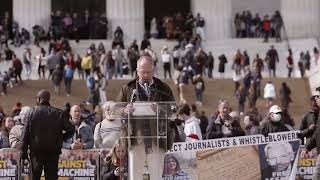
Rage Against The War Machine: What Rage? ‘When Will They Ever Learn?’

By Robert J. Burrowes

In his iconic 1950s anti-war hit song ‘Where Have All the Flowers Gone?’, Pete Seeger posed the eternal question about war: ‘when will they ever learn?’ Of course, Seeger’s question was primarily directed at those individuals who choose to participate in the fighting. But it might equally have been directed at those in the ‘anti-war’ movement.

A few years later in 1963, Native Canadian Buffy Sainte-Marie penned the equally iconic ‘Universal Soldier’ to draw attention to ‘individual responsibility’ for war.

The question ‘Why war?’ has troubled human beings for millennia and individuals of conscience have long resisted it, sometimes paying a heavy price for doing so. And back in 1932, two of humanity’s giants – Albert Einstein and Sigmund Freud – grappled with the question, exchanging letters on the subject.

See ‘Why War?’

Beyond war, a great deal of effort has gone into understanding conflict and violence, including their structural and cultural components, and I have noted some of these efforts, including my own, in a wide range of documents such as these:

‘Why Violence?’,

‘Comforting a Baby is Violent’,

‘The War to End War 100 Years On: An Evaluation and Reorientation of our Resistance to War’ and

‘Einstein and Freud’s ‘Why War?’

Revisited: Why Anti-War Efforts Go Nowhere’.

Four things fundamentally missing from all previous efforts to halt a particular war or to end war generally, however, are these:

  1. a serious effort to understand the dysfunctional psychology, and what causes it, that drives human violence generally,
  2. a serious effort to analyse war as a system of power: Who is causing it, why and how? (This is important because understanding how power works in the world system as well as who, precisely, is driving what is happening, why, and how they are doing it are crucial prerequisites for developing an effective strategy to resist, or end, war.)
  3. a sophisticated nonviolent strategy based on this understanding and analysis that is thoughtfully designed to address each of the foundational components of war, and
  4. sufficient courageous people committed to implementing this strategy by participating in it themselves and mobilizing others to do so too.

Consequently, to say that anti-war efforts lack sophistication is to put it mildly in the extreme. As the very long history of ‘anti-war’ struggle clearly demonstrates.

And so it was listening to the anti-war speeches delivered in Washington DC at the Rage Against the War Machine rally on 19 February 2023. You can watch whole or abridged versions of these speeches here: Rage Against the War Machine.

Rage might give a person power in some contexts but, in itself, rage has zero strategic value. And are these people really feeling ‘rage’ about the ongoing war all over the planet or even the war in Ukraine? And acting on it? Of course not. Even if they were, as mentioned ‘rage’ is no substitute for acting powerfully (that is, strategically) to end war.

Moreover, there is a simple reason for this. Most anti-war activists do not feel rage against the war machine for the simple reason that they are terrified of it.

And this fear incapacitates them, leaving most anti-war activists too scared to seriously commit themselves to doing what is necessary to end war. Again, as the record demonstrates.

Hence, they complain powerlessly, rather than analysing, devising strategy and then acting powerfully knowing that their actions will contribute to the long-term struggle to end war once and for all.

So let me go back a step and analyze why the anti-war movement is so frightened and powerless and why it cannot learn from its own history of failure.

Why do most people complain?

In essence, this happens because when they were children, their parents interfered with their emotional expression which, in turn, stifled those innate behaviors bestowed by evolution to ensure that the baby, and later the child and then adult, acted to have their needs met. Usually by a young age, the child will learn to complain powerlessly when they do not get what they want. But complaining, rather than acting, does not meet their needs.

Thus, just as the child, endlessly thwarted by a parent who ignores the child’s genuine needs and then ignores their pleas to have these addressed, is trapped in the mode of complaining, most activists never learn that the role of politicians is to ignore them too. Of course, the value in this for those who genuinely wield power in society and whose aim is to facilitate perpetual war to achieve a variety of Elite ends (notably including the ongoing consolidation of Elite power and the maximization of corporate profits by financing both sides in any war) is that efforts of this nature, such as public protests against ‘government policies’ absorb and dissipate dissent, as intended.

And so it was on 19 February 2023 when a list of anti-war speakers echoed the eternal cries of powerlessness at one of the latest manifestations of an anti-war street protest:

‘Enough is enough! We demand change! Do the right thing! Implement ceasefire in Ukraine!’ See ‘Twenty Years after the Start of the War in Iraq, People Around the World are still Raging Against the War Machine’.

Einstein and Freud’s ‘Why War?’ Revisited: Why Anti-War Efforts Go Nowhere

Really?

As even former US Secretary of State Alexander Haig once noted about a massive anti-war demonstration: ‘Let them march all they want, as long as they continue to pay their taxes.’ See Alexander Haig. As a four-star general, Haig, not regarded as the most intelligent Secretary of State in US history, certainly understood that tactical choice is a question of strategy. Most activists have no idea.

So What Must We Do to End War?

Earlier in this article I identified four elements missing from the anti-war movement’s efforts. Let me restate them and offer my own learning in relation to these points.

  1. a serious effort to understand the dysfunctional psychology, and what causes it, that drives human violence generally.

As the final stage of more than four decades investigating the cause of violence, I spent 14 years living in seclusion with Anita McKone. You can read what I learned in the document ‘Why Violence?’, in which I explain the destructive impact of the ‘visible’, ‘invisible’ and ‘utterly invisible’ violence that adults relentlessly inflict on children – resulting in the bulk of the adult human population being unconsciously terrified, self-hating and powerless, with Anita’s description of our process in:

‘Fearless Psychology and Fearful Psychology: Principles and Practice’.

If you like, you can also read other articles I have written such as

‘The Psychology of Projection in Conflict’ and

‘Challenges for Resolving Complex Conflicts’.

  1. a serious effort to analyse war as a system of power: Who is causing it, why and how? This is important because understanding how power works in the world system as well as who, precisely, is driving what is happening, why, and how they are doing it are crucial prerequisites for developing an effective strategy to resist, or end, war.

I made considerable effort to explain this as part of a wider study identifying the Global Elite and how its power is exercised in the world system. This included explaining why the Elite has a vested interest in ensuring that war continues. For more than 200 years, members of this Elite have carefully facilitated the precipitation of war and then profited immensely from financing both sides in any war of significance as well as the rebuilding of infrastructure and the care of injured soldiers in its aftermath. Hence, preparations for war, the conduct of war and the rebuilding/healing necessary post-war is the most profitable economic venture, by far, conducted on Planet Earth and it greatly enriches Elite families, such as the Rothschilds and Rockefellers, as well as their agents.

See Historical Analysis of the Global Elite: Ransacking the World Economy Until ‘You’ll Own Nothing.’

  1. a nonviolent strategy based on this understanding and analysis that is thoughtfully designed to address each of the foundational components of war.

First, this requires a completely different approach to parenting if we want to raise powerfully nonviolent children.

See ‘My Promise to Children’ and

‘Do We Want School or Education?’

And given that strategy has long been a passion of mine and nonviolent strategy particularly, I investigated this thoroughly when I wrote The Strategy of Nonviolent Defense: A Gandhian Approach.

But for the simplest explanation of nonviolent strategy to end war, you can read it on this website starting with the list of ‘Strategic Goals for Ending War’.

  1. sufficient courageous people committed to implementing this strategy by participating in it themselves and mobilizing others to do so too. This is important because nonviolent activism to end war has a price, measured in jail terms, adverse psychological assessments from people intent on stopping you, and a myriad other penalties depending on the legal jurisdiction in which the activist operates.

But if the antiwar activist is not willing to pay the price of their nonviolent activism, then the victims of wars in other places will pay the price of war with their lives.

Clearly, identifying sufficient courageous people is a primary challenge and the obvious shortage of courageous and tenacious people committed to strategically resisting war is just another outcome of our violently dysfunctional parenting of children mentioned in the first point above.

So if we are going to mobilize sufficient people willing to act powerfully over an extended period to resist all of those foundational elements that make war possible, we must profoundly alter our parenting model to produce powerful children and offer adults a chance to heal from the violence they suffered as children as well.

See ‘Putting Feelings First’ and ‘Nisteling: The Art of Deep Listening’.

Otherwise we are condemned to watch people speak against war and march up and down in ‘anti-war’ rallies (or employ other tactics devoid of strategic impact) until the world is blown up.

An Obvious Criticism

An obvious criticism of the approach I have outlined above is that it is ‘too slow’. It offers no quick solution to deal with the immediacy of the threat we face at the current moment with the proxy war being fought by the US and NATO through Ukraine against Russia which includes the risk of the war ‘going nuclear’.

See ‘The Dire Significance of Putin’s Feb 21 Speech’.

And I am well aware of the many calls for negotiations on the one hand – see, for example, ‘The Ukraine War: Think Deeper Or We Shall All Lose’ – and long-standing US war-fighting policy on the other as routinely explained in a plethora of US Government ‘defense strategy’ documents.

See, for example, ‘2022 National Defense Strategy of The United States of America’ and a thoughtful discussion of US nuclear strategy by Professor Michel Chossudovsky in

‘“Preemptive Nuclear War”: The Historic Battle for Peace and Democracy. A Third World War Threatens the Future of Humanity’.

I am also aware of calls, such as that by Scott Ritter, for US anti-war activists to focus on nuclear arms control as the highest priority for now.

See ‘Scott Ritter on the War Machine and the Future of the Antiwar Movement’.

And other perspectives and proposals besides.

But the obvious response to the ‘too slow’ criticism of my longer-term proposals above is simple: The result of the current crisis is so far beyond the existing anti-war movement to realistically influence, it is laughable. And so, in my view – which is consistent with my research into, and analysis of, what has transpired historically:

see Historical Analysis of the Global Elite: Ransacking the World Economy Until ‘You’ll Own Nothing.’ – the war will most probably end when Russia has defeated the Ukrainian state but only after the war has been dragged on for as long as it can be conducted profitably, from an Elite perspective.

And while there is undoubtedly considerable risk of the war ‘going nuclear’ through policy or strategic miscalculation – see ‘Stanislav Petrov, “The Man Who Saved The World,” Dies At 77’ – accident – see Command and Control – or rogue local ‘initiative’, the Elite will ‘gamble’ against these possibilities while (presumably) constraining it at policy level, as has most likely occurred throughout the nuclear age.

Insane? Of course, it is insane. See ‘The Global Elite is Insane Revisited’. It’s just that, in my view, there is nothing new to observe here: Just repetition of what we have seen before, which includes being taken to the brink of nuclear war and relying on ‘unknown factors’ – including, but not exclusively, background control by the Elite – to avoid it.

Conclusion

War is brutal. The Elite perpetuates war endlessly to capture control of people and resources to maintain the existing system of world power and make monumental profits. It will not be stopped because we make fine speeches, chant anti-war slogans at rallies or call for negotiations.

The human world is a system of power. And we need to understand how that system of power works to understand, and change, the world. This applies particularly when dealing with systems, structures and processes at the heart of Elite power, such as economics and war.

But underlying even this we need to understand the psychology of human violence because this also enables us to understand why the Elite controls world affairs to precipitate war (among a vast range of other violent and exploitative outcomes) as well as why ‘ordinary’ people fight in wars and the vast bulk of people who identify as ‘anti-war’ are so powerless.

In essence, war will be ended by analysing and understanding what makes it all happen and taking action intelligently, courageously and tenaciously to change what makes it possible; that is, by resisting in strategically appropriate ways the foundational components on which the entire system of war is built.

And given the ultimate foundation of the war system is our violent parenting model that renders virtually all humans into a state of fearful submission to violence, we haven’t even started the long journey to end war yet.

Nevertheless, while my own lifetime of effort has failed to remedy anything significant about the war system, out of love for my uncles, great uncles and humanity generally – see ‘Who Am I?’ – I continue to focus my own attention on undermining its foundations as documented above. It is slow, ‘unrewarding’ work in the short term.

But my hope is that some future generations of humans, assuming we effectively resist a myriad of current and future threats notably including the vast range of threats we all face at the hands of the Elite now – see ‘We Are Being Smashed Politically, Economically, Medically and Technologically by the Elite’s “Great Reset”: Why? How Do We Fight Back Effectively?’ – will live in a world without violence and war.

Obviously, given the precarious state of the world in many respects, a tremendous amount of intelligent, strategically-oriented action will be needed for this hope to be realized.

Biodata: Robert J. Burrowes has a lifetime commitment to understanding and ending human violence. He has done extensive research since 1966 in an effort to understand why human beings are violent and has been a nonviolent activist since 1981. He is the author of ‘Why Violence?’ http://tinyurl.com/whyviolence His email address is flametree@riseup.net and his website is here. http://robertjburrowes.wordpress.com
We Are Human, We Are Free – Building Worldwide Nonviolent Resistance to the Great Reset

By Anita McKone

In late 2020 Robert J. Burrowes and myself were asked by some Melbourne activists protesting against the lockdowns and Covid vaccinations to help them develop more effective strategy. Many of the protesters were new to activism, and those with an inclination towards following a nonviolent approach wanted education in this area.

In February, Robert and I ran two Introduction to Nonviolent Action workshops, and one Nonviolent Strategy weekend, and with the inspiration and input of this great group of participants, I have now put the basics of a worldwide nonviolent campaign strategy to defeat the Great Reset on a website. We have named this campaign We Are Human, We Are Free.

The website is designed as a resource that activists anywhere in the world can use to develop effective local nonviolent campaigns.

Here are some excerpts from the website:

We Are Human, We Are Free is a worldwide nonviolent resistance movement to free ourselves from Elite control and resist the forces of fear and dehumanisation.

Our aim is to build a mass civil resistance movement to undermine the power of the Global Elite to control us, and to regain the freedoms that make our lives worth living. Because we are human, we are free to make choices. The time has come to choose – are we on the side of love, life and freedom or fear, self-imprisonment and tyranny?…

What is happening in our world?

Do you have a gut feeling that there is something ‘wrong’ with the way this supposed pandemic is being presented, and with planetary wide lockdowns as a response? Are you being negatively impacted by lockdowns, or vaccines, in ways that make you feel the ‘cure’ is worse than the original ‘problem’? If what is going on doesn’t make sense to you, is there another, reasonable way to explain what is happening?…

The supposed pandemic and the planetary lockdown response are key tools in achieving the Global Elite’s aims – psychologically designed to dramatically increase people’s fear of the unknowable, and justify greater and greater loss of freedoms and human rights…

What is The Great Reset?

In brief, the Global Elite is in the process of establishing:

  • A Monopolised Corporate Dictatorship of the economy, including all natural, agricultural, human, technological and financial resources, destroying any attempt of ordinary people to achieve economic self-reliance through independent farming, small and medium sized business, organic food production or local trade. The full digitisation of money (the end of currency altogether), will leave people with no control over currencies they can use to trade in ways they see fit. The advent of the ‘fourth industrial revolution’ is expected to lead to at least one-third of jobs now performed by humans being replaced by software, robots, and smart machines by 2025, leaving at least 30% of people permanently unemployed. In a short video, the WEF predicts that by 2030, ‘You’ll own nothing, and you’ll be happy’.
  • A Medical Dictatorship by profit-driven pharmaceutical medicine and psychiatry for social control, that denies the true value of natural and holistic physical and mental health, disallows use of non-patented or previously patented medicines, and forces damaging and experimental medical treatments and procedures on people without informed consent. These include vaccines involving genetic engineering and nanotech which have the potential to fundamentally change the way we exist as independent biological entities.
  • National/State Government Dictatorships (intended to become a Global Government Dictatorship) controlled by elite ‘advice’ and interests, that destroy privacy through mass surveillance and restrict freedom of thought, speech, work, finances and movement.
  • A Monopolised Media Dictatorship that uses censorship and propaganda for social control.
  • A Technocratic Dictatorship run by pseudoscientific ‘experts’, involving the fourth industrial revolution (AI, satellites, robotics, drones and the Internet of Things); the surveillance, control and attempted ‘robotisation’ of our biological selves through nanotech implants and connection to AI through 5G technology; the control and destruction of the natural environment through technologies such as 5G and genetically modified crops; and the denigration of genuine scientific methods and principles, which are non-authoritarian by nature…

What can we do? Why choose nonviolent resistance?

We Are Human, We Are Free recognises that to defend our human needs and rights it is necessary to noncooperate with the forces of fear, and this involves many types of courageous and conscientious individual and collective action. While legal and political challenges within the system help raise awareness of the unhealthy nature of tyranny, we need to trust ourselves to make the final decisions about how to meet our own needs when existing political and legal systems are corrupted and fail. When we cannot defend ourselves according to legal or conventional political rules, we must step outside these rules and draw upon the more natural and fundamental powers of human solidarity, conscience and courage.

Some powerful acts of nonviolent noncooperation, such as boycotts, will remain legal and risk free. Increasingly, however, noncooperation will require civil disobedience, as the forces of fear attempt to reign us in ever more tightly. The Global Elite and their agents have already used arrests, fines, imprisonment, psychiatric committal, property seizure and direct violence against pro-freedom activists in different countries to try to intimidate us into giving up. They will continue to use violence against us. In these challenging circumstances, nonviolent processes and interactions provide the greatest degree of physical and psychological/emotional safety possible for activists and will help build the greatest number of participants in our growing movement…The Covid-19 Crisis: Defending Humanity Against the Elite Coup

Everyone is Welcome

Everyone is welcome to take action under the We Are Human, We Are Free banner if they agree with the three fundamental points that unify this movement:

  1. That whatever the level of illness occurring in the community, and whatever its causes, there is no genuine evidence of the existence of a contagious pandemic that is killing statistically significant numbers of people, and therefore no justification for any of the measures which are supposedly a response to this ‘crisis’.
  2. That the false pandemic is one tool being used by the Global Elite to achieve The Great Reset, which is designed to gain total control over the world’s natural resources and the entire human population. The various elements of The Great Reset must be collectively resisted if we are to gain back the freedoms that make our lives worth living.
  3. All participants in this movement are willing to abide by the code of nonviolent discipline detailed on We Are Human, We Are Free in their campaigns.

We hope to build an easily recognisable worldwide movement against Elite dictatorship, which will unite us as we enact the many locally organised nonviolent campaigns necessary to win back our freedom.

Many nonviolent actions and campaigns are already occurring – we invite local campaigns to consider adding the We Are Human, We Are Free banner to their existing identities as a worldwide unifying element in their campaign…

What Sort of Actions Will Make a Real Difference to the Situation?

Public protests where we show our discontent and connect with the many others who feel as we do are a first step in addressing the problem. But effectively undermining attempted global dictatorship requires more than this – we need to take actions of strategic significance that transfer power from the hands of the Elite to ordinary people…

Choose messaging that clearly asks ordinary people to noncooperate in specific ways. For example “Choose Natural Health. Say No to Experimental Vaccines”; “Provide No Excuse for Lockdowns. Don’t Get Tested”; “Don’t Buy Censorship. Boycott Facebook”; “Use Your Own Eyes and Ears. Turn off Your TV”; “Don’t Buy 5G Upgrades”; “Don’t Feed the Monsters. Boycott Amazon…

And here are a few examples from the website of 29 ‘Strategic Goals’ which will contribute to achieving our overall purpose of defeating the Global Elite’s attempted takeover:

(1) To cause people and groups all around the world to join the resistance strategy by wearing a global symbol of human solidarity.

Asking people and groups all around the world to wear an orange ribbon, wristband or armband showing their solidarity as part of this worldwide nonviolent movement is a key way to increase people’s courage to take action. Can you think of particular groups of people to whom you might make this suggestion, or ways in which you might spread this message to the general public?…

(8) To cause people and groups all around the world to conscientiously refuse to submit to vaccination, which is likely to include nanotechnology that will subvert your individual identity, freedom, dignity, volition and privacy; including through a ‘digital vaccine passport’ (possibly delivered via a microneedle platform using fluorescent microparticles called ‘quantum dots’, which can deliver vaccines and at the same time invisibly encode vaccination history directly in the skin).

How can we best encourage people not to receive Covid vaccinations (experimental injectables), regardless of whether or not they are made legally mandatory by your national government? Can you organise picketing or boycotts of businesses that are coercing their workers into having vaccinations as a condition of employment?

Can you ask all air traffic controllers, and pilots and drivers of air, land and water transport (including military transport), and construction machinery such as cranes, to refuse to take vaccinations on account of the potentially catastrophic dangers to the community if they have a negative reaction to these experimental injectables while working?

Can you organise nonviolent protests or interventions at any education, healthcare (such as nursing homes) or travel related sites that have been targeted as priority vaccination sites to convince the management not to go ahead?

Can you organise a strike by workers at your workplace or in your industry in support of your right to choose not to be used as part of a medical experiment?

Can you organise a strike or ‘refusal to act on vaccine related punishment’ by public servants if they are ordered to cut off people’s government benefits for not taking a vaccine?

Can you ask GPs to resist performing Covid vaccinations by stating they are already overworked and have no further time for this ‘health’ campaign? Can you ask GPs to take positive responsibility for the health of their patients by presenting those patients who ask to be vaccinated with information regarding the exact contents of the vaccine and data regarding the known negative effects of the vaccine, and the data that is still unavailable because of its experimental nature, so that patients can make a genuinely informed choice?

(9) To cause people and groups all around the world to organize or participate in a collective event that conscientiously resists the Covid lockdowns.

This could be, for example, a cultural, religious or sporting event, a nonviolent action for another cause, a community activity such as working to establish a community garden to increase local self-reliance, a celebration or a return to work.

This is all about showing its okay to live our normal lives. The more people involved in a mass ‘dispersed’ event, the less likely we are to be arrested or receive fines. If you are just organising locally, with a small number of people involved, police liaison is crucial for the best possible outcomes to occur. You must be prepared personally for the risk of arrest, and think about how you can make this process as dignified as possible to show your courage and commitment, and your willingness to engage with the police as individual human beings. Then, they may arrest you today, but decide that they don’t wish to do so tomorrow.

The 50,000 restaurants in Italy that opened in defiance of lockdown restrictions in January 2021 are a great example of a mass, dispersed action of noncompliance. Many religious services have been held in defiance of lockdowns. What cultural events matter most in your local community? Sport? Music? How about a ‘Football for Freedom’ match or a ‘Band Together for Freedom’ music event? You may be arrested before completing your event, but if you go with police with dignity, the absurdity of the police’s actions will be made all the more clear.

(10) To cause people and groups all around the world to organize or participate in events that conscientiously refuse to maintain social distance.

Are you a grandparent? Is it possible to organise ‘Grandparents for Freedom’ days, where grandparents visit their grandchildren against lockdown regulations, and take photos of themselves hugging and kissing their grandchildren to post online, or to print off and letterbox drop around their local community? This would work directly against the Elite narrative of having to ‘protect’ our older people by keeping them in isolation, showing that older people have courage and volition of their own.

To give people non-arrestable and arrestable options for showing their support for the campaign, public nonviolent actions could be organised where some of the group abides by social distancing and mask wearing (the masks could have a question mark drawn on them, or lips that appear to be speaking), and holds banners with clear messages encouraging acts of noncooperation, while others remove masks and hold hands or hug one another, accepting arrest in a dignified manner if the police decide to take that course. These actions will work best if you have done solid police liaison beforehand. To discourage use of water cannons and teargas to clear crowds, many smaller public actions could be organised around a city on a particular day, rather than one mass action in a centralised location.

(15) To cause people all around the world fined for breaking ‘pandemic’-related health laws or regulations (mask wearing, social distancing and lockdown restrictions, including curfews, local and wider travel restrictions, ‘non-essential’ work bans and business closures) to refuse to pay their fines and continue to conscientiously break these laws or regulations, accepting time in jail as a prisoner of conscience if necessary.

The legal system as it exists in any country does not have the resources to put large numbers of people through the court and prison system. If people refuse to pay fines, and do not deliver themselves up to the legal system voluntarily, it will take enormous resources to send police to locate and arrest all those with a warrant, put them in front of a magistrate, and then imprison them for a number of days, weeks or months in lieu of paying the fine. Already, in Victoria, Australia, for example, many unpaid fines have been withdrawn by the government, presumably for this reason, and the 50,000 restaurant owners in Italy who reopened against lockdown restrictions cannot possibly all be imprisoned for their actions.

It will be necessary to morally and practically support anyone who is targeted for prosecution as a ‘public example’ – if these people can be supported well through a prison experience, they can understand their important role in remaining courageous and patient for the benefit of the movement as a whole. The more of us who refuse to pay fines, the less chance there is of anyone being prosecuted, until the point where the authorities simply give up trying to enforce the laws or regulations.

(16) To cause the police to refuse to obey orders from the Global Elite and its agents to arrest, assault, torture and shoot nonviolent activists and the other citizens of your country.

There are already some great nonviolent initiatives happening with the police, which you may like to copy in your local area. Check out Police for Freedom, for example. Talking to police at stations in your area, to get to know them as individuals, and when you are planning actions, is vital to the success of this movement. We need the police, security personnel and military personnel on our side and need to give them every opportunity to see us as people they respect and want to stand with. Obviously when people have had very bad experiences with police and other security forces, this can make it difficult for them to feel confident or willing to do this. Choose people who do have confidence to liaise with security forces, and work out ways to support and provide extra protection for those who have been previously abused.

We hope that the We Are Human, We Are Free website will provide a user friendly resource for developing a worldwide nonviolent campaign against the Global Elite’s Great Reset, encouraging many acts of noncooperation from ordinary, empowered people. We look forward to your participation!

Much love to you all from Victoria, Australia.

Anita McKone has been a nonviolent activist, educator and researcher since 1993. She has been arrested and imprisoned on a number of occasions for her activism. She has written many articles on different aspects of nonviolent activism, psychology and philosophy. Her website is at Songs of Nonviolence.

The Government’s War on Free Speech: Protest Laws Undermine the First Amendment

By John W. Whitehead & Nisha Whitehead

Source: The Rutherford Institute

“If freedom of speech is taken away, then dumb and silent we may be led, like sheep to the slaughter.”— George Washington

It’s a given that the government is corrupt, unaccountable, and has exceeded its authority.

So what can we do about it?

The first remedy involves speech (protest, assembly, speech, prayer, and publicity), and lots of it, in order to speak truth to power.

The First Amendment, which is the cornerstone of the Bill of Rights, affirms the right of “we the people” to pray freely about our grievances regarding the government. We can gather together peacefully to protest those grievances. We can publicize those grievances. And we can express our displeasure (peacefully) in word and deed.

Unfortunately, tyrants don’t like people who speak truth to power.

The American Police State has shown itself to be particularly intolerant of free speech activities that challenge its authority, stand up to its power grabs, and force it to operate according to the rules of the Constitution.

Cue the rise of protest laws, the police state’s go-to methods for muzzling discontent.

These protest laws, some of which appear to encourage violence against peaceful protesters by providing immunity to individuals who drive their car into protesters impeding traffic and use preemptive deadly force against protesters who might be involved in a riot, take intolerance for speech with which one might disagree to a whole new level.

Ever since the Capitol protests on Jan. 6, 2021, state legislatures have introduced a broad array of these laws aimed at criminalizing protest activities. Yet while the growing numbers of protest laws cropping up across the country are being marketed as necessary to protect private property, public roads or national security, they are a wolf in sheep’s clothing, a thinly disguised plot to discourage anyone from challenging government authority at the expense of our First Amendment rights.

It doesn’t matter what the source of that discontent might be (police brutality, election outcomes, COVID-19 mandates, the environment, etc.): protest laws, free speech zones, bubble zones, trespass zones, anti-bullying legislation, zero tolerance policies, hate crime laws, etc., aim to muzzle every last one of us.

However, as Human Rights Watch points out, these assaults on free speech are nothing new. “Various states have long-tried to curtail the right to protest. They do so by legislating wide definitions of what constitutes an ‘unlawful assembly’ or a ‘riot’ as well as increasing punishments. They also allow police to use catch-all public offenses, such as trespassing, obstructing traffic, or disrupting the peace, as a pretext for ordering dispersals, using force, and making arrests. Finally, they make it easier for corporations and others to bring lawsuits against protest organizers.

Make no mistake: while many of these laws claim to be in the interest of “public safety and limiting economic damage,” these legislative attempts to redefine and criminalize speech are a backdoor attempt to rewrite the Constitution and render the First Amendment’s robust safeguards null and void.

For instance, there are at least 205 proposed laws being considered in 45 states that would curtail the right to peacefully assemble and protest by expanding the definition of rioting, heightening penalties for existing offenses, or creating new crimes associated with assembly.

No matter how you package these laws, no matter how well-meaning they may sound, no matter how much you may disagree with the protesters or sympathize with the objects of the protest, these proposed laws are aimed at one thing only: discouraging dissent.

In Alabama, lawmakers are pushing to allow individuals to use deadly force near a riot. Kentucky, Missouri and New Hampshire are also considering similar stand your ground laws to justify the use of lethal force in relation to riots.

In Arizona, legislators want to classify protests involving seven or more people as felonies punishable by up to two years in jail. Under such a law, traditional, nonviolent forms of civil disobedience—sit-ins, boycotts and marches—would be illegal.

In Arkansas, peaceful protesters who engage in civil disobedience by occupying any government property after being told to leave could face six months in jail and a $1000 fine.

In Minnesota, where activists continue to protest the death of George Floyd, who was killed after police knelt on his neck for eight minutes, individuals who are found guilty of any kind of offense in connection with a peaceful protest could be denied a range of benefits, including food assistance, education loans and grants, and unemployment assistance.

Oregon lawmakers wanted to “require public community colleges and universities to expel any student convicted of participating in a violent riot.” In Illinois, students who twice infringe the rights of others to engage in expressive activities could be suspended for at least a year.

Proposed laws in at least 25 states, including Oklahoma, Mississippi, and Florida, would give drivers the green light to “accidentally” run over protesters who are preventing them from fleeing a riot. Washington wants to levy steeper penalties against protesters who “swarm” a vehicle, punishing them for a repeat offense with up to 40 years in prison and a $100,000 fine.

Responding to protests over the Keystone Pipeline, South Dakota enabled its governor and sheriffs to prohibit gatherings of 20 or more people on public land if the gathering might damage the land. At least 15 other states have also adopted or are considering legislation that would levy harsher penalties for environmental protests near oil and gas pipelines.

In Iowa, all it takes is for one person in a group of three of more people to use force or cause property damage, and the whole group can be punished with up to 5 years in prison and a $7,500 fine.

Obstruct access to critical infrastructure in Mississippi and you could be facing a $10,000 fine and a seven-year prison sentence.

North Carolina law would have made it a crime to heckle state officials. Under this law, shouting at a former governor would constitute a crime.

In Connecticut, you could be sentenced to five years behind bars and a $5,000 fine for disrupting the state legislature by making noise or using disturbing language.

Indiana lawmakers wanted to authorize police to use “any means necessary” to breakup mass gatherings that block traffic. Lawmakers have since focused their efforts on expanding the definition of a “riot” and punishing anyone who wears a mask to a peaceful protest, even a medical mask, with 2.5 years in prison and a $10,000 fine.

Georgia wants to ban all spontaneous, First Amendment-protected assemblies and deny anyone convicted of violating the ban from receiving state or local employment benefits.

Virginia wants to subject protesters who engage in an “unlawful assembly” after “having been lawfully warned to disperse” with up to a year of jail time and a fine of up to $2,500.

Missouri made it illegal for public employees to take part in strikes and picketing, only to have the law ruled unconstitutional in its entirety.

Oklahoma created a sliding scale for protesters whose actions impact or impede critical infrastructure (including a telephone pole). The penalties range from $1,000 and six months in a county jail to $100,000 and up to 10 years in prison. And if you’re part of an organization, that fine goes as high as $1,000,000.

Talk about intimidation tactics.

Ask yourself: if there are already laws on the books in all of the states that address criminal or illegal behavior such as blocking public roadways, trespassing on private property or vandalizing property—because such laws are already on the books—then why does the government need to pass laws criminalizing activities that are already outlawed?

What’s really going on here?

No matter what the politicians might say, the government doesn’t care about our rights, our welfare or our safety.

Every despotic measure used to control us and make us cower and comply with the government’s dictates has been packaged as being for our benefit, while in truth benefiting only those who stand to profit, financially or otherwise, from the government’s transformation of the citizenry into a criminal class.

In this way, the government conspires to corrode our core freedoms purportedly for our own good but really for its own benefit.

Remember, the USA Patriot Act didn’t make us safer. It simply turned American citizens into suspects and, in the process, gave rise to an entire industry—private and governmental—whose profit depends on its ability to undermine our Fourth Amendment rights.

In much the same way that the Patriot Act was used as a front to advance the surveillance state, allowing the government to establish a far-reaching domestic spying program that turned every American citizen into a criminal suspect, the government’s anti-extremism program criminalizes otherwise lawful, nonviolent activities such as peaceful protesting.

Clearly, freedom no longer means what it once did.

This holds true whether you’re talking about the right to criticize the government in word or deed, the right to be free from government surveillance, the right to not have your person or your property subjected to warrantless searches by government agents, the right to due process, the right to be safe from soldiers invading your home, the right to be innocent until proven guilty and every other right that once reinforced the founders’ belief that this would be “a government of the people, by the people and for the people.”

Not only do we no longer have dominion over our bodies, our families, our property and our lives, but the government continues to chip away at what few rights we still have to speak freely and think for ourselves.

Yet the unspoken freedom enshrined in the First Amendment is the right to think freely and openly debate issues without being muzzled or treated like a criminal.

In other words, if we no longer have the right to voice concerns about COVID-19 mandates, if we no longer have the right to tell a Census Worker to get off our property, if we no longer have the right to tell a police officer to get a search warrant before they dare to walk through our door, if we no longer have the right to stand in front of the Supreme Court wearing a protest sign or approach an elected representative to share our views, if we no longer have the right to protest unjust laws or government policies by voicing our opinions in public or on social media or before a legislative body—no matter how politically incorrect or socially unacceptable those views might be—then we do not have free speech.

What we have instead is regulated, controlled speech, and that’s what those who founded America called tyranny.

On paper, we may be technically free.

In reality, however, we are only as free as a government official may allow.

As the great George Carlin rightly observed: “Rights aren’t rights if someone can take them away. They’re privileges. That’s all we’ve ever had in this country, is a bill of temporary privileges. And if you read the news even badly, you know that every year the list gets shorter and shorter. Sooner or later, the people in this country are gonna realize the government … doesn’t care about you, or your children, or your rights, or your welfare or your safety… It’s interested in its own power. That’s the only thing. Keeping it and expanding it wherever possible.”

In other words, we only think we live in a constitutional republic, governed by just laws created for our benefit.

As I make clear in my book Battlefield America: The War on the American People, we live in a dictatorship disguised as a democracy where all that we own, all that we earn, all that we say and do—our very lives—depends on the benevolence of government agents and corporate shareholders for whom profit and power will always trump principle. And now the government is litigating and legislating its way into a new framework where the dictates of petty bureaucrats carry greater weight than the inalienable rights of the citizenry.

Remember: if the government can control speech, it can control thought and, in turn, it can control the minds of the citizenry.

It’s Time to Declare Your Independence from Tyranny, America

Photo by Alla Sokolova

By John W. Whitehead

Source: The Rutherford Institute

“These are the times that try men’s souls. The summer soldier and the sunshine patriot will, in this crisis, shrink from the service of their country; but he that stands it now deserves the love and thanks of man and woman. Tyranny, like hell, is not easily conquered; yet we have this consolation with us, that the harder the conflict, the more glorious the triumph.”—Thomas Paine, December 1776

It’s time to declare your independence from tyranny, America.

For too long now, we have suffered the injustices of a government that has no regard for our rights or our humanity.

Too easily pacified and placated by the pomp and pageantry of manufactured spectacles (fireworks on the Fourth of July, military parades, ritualized elections, etc.) that are a poor substitute for a representative government that respects the rights of its people, the American people have opted, time and again, to overlook the government’s excesses, abuses and power grabs that fly in the face of every principle for which America’s founders risked their lives.

We have done this to ourselves.

Indeed, it is painfully fitting that mere days before the nation prepared to celebrate its freedoms on the anniversary of the Declaration of Independence, the City Council for Charlottesville, Virginia—the home of Thomas Jefferson, author of the Declaration—voted to do away with a holiday to honor Jefferson’s birthday, because Jefferson, like many of his contemporaries, owned slaves. City councilors have opted instead to celebrate “Liberation and Freedom Day” in honor of slaves who were emancipated after the Civil War.

This is what we have been reduced to: bureaucrats dithering over meaningless trivialities while the government goosesteps all over our freedoms.

Too often, we pay lip service to those freedoms, yet they did not come about by happenstance. They were hard won through sheer determination, suffering and sacrifice by thousands of patriotic Americans who not only believed in the cause of freedom but also had the intestinal fortitude to act on that belief. The success of the American revolution owes much to these men and women.

In standing up to the British Empire and speaking out against an oppressive regime, they exemplified courage in the face of what seemed like an overwhelming foe.

Indeed, imagine living in a country where armed soldiers crash through doors to arrest and imprison citizens merely for criticizing government officials.

Imagine that in this very same country, you’re watched all the time, and if you look even a little bit suspicious, the police stop and frisk you or pull you over to search you on the off chance you’re doing something illegal.

Keep in mind that if you have a firearm of any kind (or anything that resembled a firearm) while in this country, it may get you arrested and, in some circumstances, shot by police.

If you’re thinking this sounds like America today, you wouldn’t be far wrong.

However, the scenario described above took place more than 200 years ago, when American colonists suffered under Great Britain’s version of an early police state. It was only when the colonists finally got fed up with being silenced, censored, searched, frisked, threatened, and arrested that they finally revolted against the tyrant’s fetters.

No document better states their grievances than the Declaration of Independence, drafted by Thomas Jefferson.

A document seething with outrage over a government which had betrayed its citizens, the Declaration of Independence was signed on July 4, 1776, by 56 men who laid everything on the line, pledged it all—“our Lives, our Fortunes, and our sacred Honor”—because they believed in a radical idea: that all people are created to be free.

Labeled traitors, these men were charged with treason, a crime punishable by death. For some, their acts of rebellion would cost them their homes and their fortunes. For others, it would be the ultimate price—their lives.

Yet even knowing the heavy price they might have to pay, these men dared to speak up when silence could not be tolerated. Even after they had won their independence from Great Britain, these new Americans worked to ensure that the rights they had risked their lives to secure would remain secure for future generations.

The result: our Bill of Rights, the first ten amendments to the Constitution.

Imagine the shock and outrage these 56 men would feel were they to discover that 243 years later, the government they had risked their lives to create has been transformed into a militaristic police state in which exercising one’s freedoms—at a minimum, merely questioning a government agent—is often viewed as a flagrant act of defiance.

In fact, had the Declaration of Independence been written today, it would have rendered its signers extremists or terrorists, resulting in them being placed on a government watch list, targeted for surveillance of their activities and correspondence, and potentially arrested, held indefinitely, stripped of their rights and labeled enemy combatants.

The danger is real.

We could certainly use some of that revolutionary outrage today.

Certainly, we would do well to reclaim the revolutionary spirit of our ancestors and remember what drove them to such drastic measures in the first place.

Then again, perhaps what we need to do is declare our independence from the tyranny of the American police state.

It’s not a radical idea.

It has been done before.

The Declaration of Independence speaks volumes about the abuses suffered by early Americans at the hands of the British police state.

Read the Declaration of Independence again, and ask yourself if the list of complaints tallied by Jefferson don’t bear a startling resemblance to the abuses “we the people” are suffering at the hands of the American police state.

If you find the purple prose used by the Founders hard to decipher, here’s my translation of what the Declaration of Independence would look and sound like if it were written in the modern vernacular:

There comes a time when a populace must stand united and say “enough is enough” to the government’s abuses, even if it means getting rid of the political parties in power.

Believing that “we the people” have a natural and divine right to direct our own lives, here are truths about the power of the people and how we arrived at the decision to sever our ties to the government:

All people are created equal.

All people possess certain innate rights that no government or agency or individual can take away from them. Among these are the right to Life, Liberty and the pursuit of Happiness.

The government’s job is to protect the people’s innate rights to Life, Liberty and the pursuit of Happiness. The government’s power comes from the will of the people.

Whenever any government abuses its power, it is the right of the people to alter or abolish that government and replace it with a new government that will respect and protect the rights of the people.

It is not wise to get rid of a government for minor transgressions. In fact, as history has shown, people resist change and are inclined to suffer all manner of abuses to which they have become accustomed.

However, when the people have been subjected to repeated abuses and power grabs, carried out with the purpose of establishing a tyrannical government, people have a right and duty to do away with that tyrannical Government and to replace it with a new government that will protect and preserve their innate rights for their future wellbeing.

This is exactly the state of affairs we are under suffering under right now, which is why it is necessary that we change this imperial system of government.

The history of the present Imperial Government is a history of repeated abuses and power grabs, carried out with the intention of establishing absolute Tyranny over the country.

To prove this, consider the following:

The government has, through its own negligence and arrogance, refused to adopt urgent and necessary laws for the good of the people.

The government has threatened to hold up critical laws unless the people agree to relinquish their right to be fully represented in the Legislature.

In order to expand its power and bring about compliance with its dictates, the government has made it nearly impossible for the people to make their views and needs heard by their representatives.

The government has repeatedly suppressed protests arising in response to its actions.

The government has obstructed justice by refusing to appoint judges who respect the Constitution and has instead made the Courts march in lockstep with the government’s dictates.

The government has allowed its agents to harass the people, steal from them, jail them and even execute them.

The government has directed militarized government agents—a.k.a., a standing army—to police domestic affairs in peacetime.

The government has turned the country into a militarized police state.

The government has conspired to undermine the rule of law and the constitution in order to expand its own powers.

The government has allowed its militarized police to invade our homes and inflict violence on homeowners.

The government has failed to hold its agents accountable for wrongdoing and murder under the guise of “qualified immunity.”

The government has jeopardized our international trade agreements.

The government has overtaxed us without our permission.

The government has denied us due process and the right to a fair trial.

The government has engaged in extraordinary rendition.

The government has continued to expand its military empire in collusion with its corporate partners-in-crime and occupy foreign nations.

The government has eroded fundamental legal protections and destabilized the structure of government.

The government has not only declared its federal powers superior to those of the states but has also asserted its sovereign power over the rights of “we the people.”

The government has ceased to protect the people and instead waged domestic war against the people.

The government has plundered our seas, ravaged our Coasts, and destroyed the lives of the people.

The government has employed private contractors and mercenaries to carry out acts of death, desolation and tyranny, totally unworthy of a civilized nation.

The government through its political propaganda has pitted its citizens against each other.

The government has stirred up civil unrest and laid the groundwork for martial law.

Repeatedly, we have asked the government to cease its abuses. Each time, the government has responded with more abuse.

An Imperial Ruler who acts like a tyrant is not fit to govern a free people.

We have repeatedly sounded the alarm to our fellow citizens about the government’s abuses. We have warned them about the government’s power grabs. We have appealed to their sense of justice. We have reminded them of our common bonds.

They have rejected our plea for justice and brotherhood. They are equally at fault for the injustices being carried out by the government.

Thus, for the reasons mentioned above, we the people of the united States of America declare ourselves free from the chains of an abusive government. Relying on God’s protection, we pledge to stand by this Declaration of Independence with our lives, our fortunes and our honor.

That was 243 years ago.

In the years since early Americans first declared and eventually won their independence from Great Britain, we—the descendants of those revolutionary patriots—have through our inaction and complacency somehow managed to work ourselves right back under the tyrant’s thumb.

Only this time, the tyrant is one of our own making: the American Police State.

The abuses meted out by an imperial government and endured by the American people have not ended. They have merely evolved.

“We the people” are still being robbed blind by a government of thieves.

We are still being taken advantage of by a government of scoundrels, idiots and monsters.

We are still being locked up by a government of greedy jailers.

We are still being spied on by a government of Peeping Toms.

We are still being ravaged by a government of ruffians, rapists and killers.

We are still being forced to surrender our freedoms—and those of our children—to a government of extortionists, money launderers and corporate pirates.

And we are still being held at gunpoint by a government of soldiers: a standing army in the form of a militarized police.

Given the fact that we are a relatively young nation, it hasn’t taken very long for an authoritarian regime to creep into power.

Unfortunately, the bipartisan coup that laid siege to our nation did not happen overnight.

It snuck in under our radar, hiding behind the guise of national security, the war on drugs, the war on terror, the war on immigration, political correctness, hate crimes and a host of other official-sounding programs aimed at expanding the government’s power at the expense of individual freedoms.

The building blocks for the bleak future we’re just now getting a foretaste of—police shootings of unarmed citizens, profit-driven prisons, weapons of compliance, a wall-to-wall surveillance state, pre-crime programs, a suspect society, school-to-prison pipelines, militarized police, overcriminalization, SWAT team raids, endless wars, etc.—were put in place by government officials we trusted to look out for our best interests and by American citizens who failed to heed James Madison’s warning to “take alarm at the first experiment on our liberties.”

In so doing, we compromised our principles, negotiated away our rights, and allowed the rule of law to be rendered irrelevant.

There is no knowing how long it will take to undo the damage wrought by government corruption, corporate greed, militarization, and a nation of apathetic, gullible sheep.

The problems we are facing will not be fixed overnight: that is the grim reality with which we must contend.

Frankly, as I make clear in my book Battlefield America: The War on the American People, we may see no relief from the police state in my lifetime or for several generations to come.

That does not mean we should give up or give in or tune out.

Remember, there is always a price to be paid for remaining silent in the face of injustice.

That price is tyranny.

As Edmund Burke, the eighteenth-century British statesman and author who supported the American colonists warned, “The only thing necessary for the triumph of evil is for good men to do nothing.”

To Liberate Cambodia

By Robert J. Burrowes

A long-standing French protectorate briefly occupied by Japan during World War II, Cambodia became independent in 1953 as the French finally withdrew from Indochina. Under the leadership of Prince Norodom Sihanouk, Cambodia remained officially neutral, including during the subsequent US war on Indochina. However, by the mid-1960s, parts of the eastern provinces of Cambodia were bases for North Vietnamese Army and National Liberation Front (NVA/NLF) forces operating against South Vietnam and this resulted in nearly a decade of bombing by the United States from 4 October 1965. See ‘Bombs Over Cambodia: New Light on US Air War’.

In 1970 Sihanouk was ousted in a US-supported coup led by General Lon Nol. See ‘A Special Supplement: Cambodia’. The following few years were characterized by an internal power struggle between Cambodian elites and war involving several foreign countries, but particularly including continuation of the recently commenced ‘carpet bombing’ of Cambodia by the US Air Force.

On 17 April 1975 the Communist Party of Kampuchea (CPK), otherwise known as the Khmer Rouge, took control of Cambodia. Following four years of ruthless rule by the Chinese-supported Khmer Rouge, initially under Pol Pot, they were defeated by the Vietnamese army in 1979 and the Vietnamese occupation authorities established the People’s Republic of Kampuchea (PRK), installing Heng Samrin and other pro-Vietnamese Communist politicians as leaders of the new government. Heng was succeeded by Chan Sy as Prime Minister in 1981.

Following the death of Chan Sy, Hun Sen became Prime Minister of Cambodia in 1985 and, despite a facade of democracy, he and the Cambodian People’s Party (CPP) have been in power ever since. This period has notably included using the army to purge a feared rival in a bloody coup conducted in 1997. Hun Sen’s co-Prime Minister, Prince Norodom Ranariddh, was ousted and fled to Paris while his supporters were arrested, tortured and some were summarily executed.

The current main opposition party, the Cambodia National Rescue Party (CNRP) was founded in 2012 by merging the Sam Rainsy Party and the Human Rights Party. Emblematic of Cambodia’s ‘democratic’ status, more than two dozen opposition members and critics have been locked up in the past year alone and the CNRP leader, Kem Sokha, known for his nonviolent, politically tolerant views, is currently imprisoned at a detention centre in Tboung Khmum Province following his arrest on 3 September 2017 under allegations of treason, espionage and for orchestrating anti-government demonstrations in 2013-2014. These demonstrations were triggered by widespread allegations of electoral fraud during the Cambodian general election of 2013. See ‘Sokha arrested for “treason”, is accused of colluding with US to topple the government’.

On 16 November 2017 the CNRP was dissolved by Cambodia’s highest court and 118 of its members, including Sokha and exiled former leader Sam Rainsy, were banned from politics for five years.


Cambodian Society

Socially, Cambodia is primarily Khmer with ethnic populations of Chinese, Vietnamese, Cham, Thai and Lao. It has a population of 16 million people. The pre-eminent religion is Buddhism. The adult literacy rate is 75%; few Cambodians speak a European language limiting access to western literature. Most students complete 12 years of (low quality public) school but tertiary enrollment is limited. As in all countries, education (reinforced by state propaganda through the media) serves to intimidate and indoctrinate students into obedience of elites. Discussion of national politics in a school class is taboo and such discussions are rare at tertiary level. This manifests in the narrow range of concerns that mobilize student action: personal outcomes such as employment opportunities. Issues such as those in relation to peace, the environment and refugees do not have a significant profile. In short, the student population generally is neither well informed nor politically engaged.

However, many other issues engage at least some Cambodians, with demonstrations, strikes and street blockades being popular tactics, although the lack of strategy means that outcomes are usually limited and, despite commendable nonviolent discipline in many cases, violent repression is not effectively resisted. Issues of concern to workers, particularly low wages in a country with no minimum wage law, galvanize some response. See, for example, ‘Protests, Strikes Continue in Cambodia: Though their occupations differ, Cambodian workers are united in their push for a living wage’. Garment workers are a significant force because their sector is important to the national economy. Land grabbing and lack of housing mobilize many people but usually fail to attract support beyond those effected. See, for example, ‘Housing Activists Clash With Police in Street Protest’. Environmental issues, such as deforestation and natural resource depletion, fail to mobilize the support they need to be effective.

Having noted that, however, Cambodian activists require enormous courage to take nonviolent action as the possibility of violent state repression in response to popular mobilization is a real one, as illustrated above and documented in the Amnesty International report ‘Taking to the streets: Freedom of peaceful assembly in Cambodia’ from 2015.

Perhaps understandably, given their circumstances, international issues, such as events in the Middle East, North Korea and the plight of the Rohingya in neighbouring Myanmar are beyond the concern of most Cambodians.

Economically, Cambodians produce traditional goods for small local households with industrial production remaining low in a country that is still industrializing. Building on agriculture (especially rice), tourism and particularly the garment industry, which provided the basis for the Cambodian export sector in recent decades, the dictatorship has been encouraging light manufacturing, such as of electronics and auto-parts, by establishing ‘special economic zones’ that allow cheap Cambodian labour to be exploited. Most of the manufacturers are Japanese and despite poor infrastructure (such as lack of roads and port facilities), poor production management, poor literacy and numeracy among the workers, corruption and unreliable energy supplies, Cambodian factory production is slowly rising to play a part in Japan’s regional supply chain. In addition, Chinese investment in the construction sector has grown enormously in recent years and Cambodia is experiencing the common problem of development being geared to serve elite commercial interests and tourists rather than the needs (such as affordable housing) of ordinary people or the environment. See ‘China’s construction bubble may leave Cambodia’s next generation without a home’.

Environmentally, Cambodia does little to conserve its natural resources. For example, between 1990 and 2010, Cambodia lost 22% of its forest cover, or nearly 3,000,000 hectares, largely to logging. There is no commitment to gauging environmental impact before construction projects begin and the $US800m Lower Sesan 2 Dam, in the northeast of the country, has been widely accused of being constructed with little thought given to local residents (who will be evicted or lose their livelihood when the dam reservoir fills) or the project’s environmental impact.

Beyond deforestation (through both legal and illegal logging) then, environmental destruction in Cambodia occurs as a result of large scale construction and agricultural projects which destroy important wildlife habitats, but also through massive (legal and illegal) sand mining – see ‘Shifting Sand: How Singapore’s demand for Cambodian sand threatens ecosystems and undermines good governance’ – poaching of endangered and endemic species, with Cambodian businesses and political authorities, as well as foreign criminal syndicates and many transnational corporations from all over the world implicated in the various aspects of this corruptly-approved and executed destruction.

In the words of Cambodian researcher Tay Sovannarun: ‘The government just keeps doing business as usual while the rich cliques keep extracting natural resources and externalizing the cost to the rest of society.’ Moreover, three members of the NGO Mother Nature – Sun Mala, Try Sovikea and Sim Somnang – recently served nearly a year in prison for their efforts to defend the environment and the group was dissolved by the government in September 2017. See ‘Environmental NGO Mother Nature dissolved’.


Cambodian Politics

Politically, Cambodians are largely naïve with most believing that they live in a ‘democracy’ despite the absence of its most obvious hallmarks such as civil and political rights, the separation of powers including an independent judiciary, free and fair elections, the right of assembly and freedom of the press (with the English-language newspaper The Cambodia Daily recently closed down along with some radio stations). And this is an accurate assessment of most members of the political leadership of the CNRP as well.

Despite a 30-year record of political manipulation by Hun Sen and the CPP – during which ‘Hun Sen has made it clear that he does not respect the concept of free and fair elections’: see ‘30 Years of Hun Sen: Violence, Repression, and Corruption in Cambodia’ – which has included obvious corruption of elections through vote-rigging but also an outright coup in 1997 and the imprisonment or exile of opposition leaders since then, most Cambodians and their opposition leaders still participate in the charade that they live in a ‘democracy’ which could result in the defeat of Hun Sen and the CPP at a ‘free and fair’ election. Of course, there are exceptions to this naïveté, as a 2014 article written by Mu Sochua, veteran Cambodian politician and former minister of women’s affairs in a Hun Sen government, demonstrates. See ‘Crackdown in Cambodia’.

Moreover, as Sovannarun has noted: most Cambodians ‘still think international pressure is effective in keeping the CPP from disrespecting democratic principles which they have violated up until this day. Right now they wait for US and EU sanctions in the hope that the CPP will step back.’ See, for example, ‘The Birth of a Dictator’. He asks: ‘Even assuming it works, when will Cambodians learn to rely on themselves when the ruling party causes the same troubles again? Are they going to ask for external help like this every time and expect their country to be successfully democratized?’

The problem, Sovannarun argues, is that ‘Cambodians in general do not really understand what democracy is. Their views are very narrow. For them, democracy is just an election. Many news reports refer to people as “voters” but in Khmer, this literally translates as “vote owners” as if people cannot express their rights or power beside voting.’

Fortunately, recent actions by the CPP have led to opposition leaders and some NGOs finally declaring the Hun Sen dictatorship for what it is. See, for example, ‘The Birth of a Dictator’. But for Sovannarun, ‘democratization ended in 1997. The country should be regarded as a dictatorship since then. The party that lost the election in 1993 still controlled the national military, the police and security force, and the public administration, eventually using military force to establish absolute control in 1997. How is Cambodia still a democracy?’

However, recent comprehensive research undertaken by Global Witness goes even further. Their report Hostile Takeover ‘sheds light on a huge network of secret deal-making and corruption that has underpinned Hun Sen’s 30-year dictatorial reign of murder, torture and the imprisonment of his political opponents’. See ‘Hostile Takeover: The corporate empire of Cambodia’s ruling family’ and ‘Probe: Companies Worth $200M Linked to Cambodian PM’s Family’.

So what are the prospects of liberating Cambodia from its dictatorship?

To begin, there is little evidence to suggest that leadership for any movement to do so will come from within formal political ranks. Following the court-ordered dissolution of the CNRP on 16 November 2017 – see ‘Cambodia top court dissolves main opposition CNRP party’ – at the behest of Hun Sen, ‘half of their 55 members of parliament fled the country’. And this dissolution was preceded by actions that had effectively neutralized the opposition, with two dozen opposition members (including CNRP leader Kem Sokha) and critics imprisoned in the past year alone, as reported above, and the rapid flight of Opposition Deputy President Mu Sochua on 3 October after allegedly being notified by a senior official that her arrest was imminent. See ‘Breaking: CNRP’s Mu Sochua flees country following “warning” of arrest’. But while Mu Sochua called for a protest gathering after she had fled, understandably, nobody dared to protest: ‘Who dares to protest if their leader runs for their life?’ Sovannarun asks.

Of course, civil society leadership is fraught with danger too. Prominent political commentator and activist Kem Ley, known for his trenchant criticism of the Hun Sen dictatorship, was assassinated on 10 July 2016 in Phnom Penh. See ‘Shooting Death of Popular Activist Roils Cambodia’ and ‘Q&A With Kem Ley: Transparency on Hun Sen Family’s Business Interests is Vital’. Ley was the third notable activist to be killed following the union leader Chea Vichea in 2004 – see ‘Who Killed Chea Vichea?’ – and environmental activist Wutty Chut in 2012. See ‘Cambodian Environmental Activist Is Slain’. But they are not the only activists to suffer this fate.

In addition, plenty of politicians, journalists and activists have been viciously assaulted by the security forces and members of Hun Sen’s bodyguard unit – see, for example, ‘Dragged and Beaten: The Cambodian Government’s Role in the October 2015 Attack on Opposition Politicians’ – and/or imprisoned by the dictatorship. See ‘Cambodia: Quash Case Against 11 Opposition Activists: No Legal Basis for Trumped-Up Charges, Convictions, and Long Sentences’. In fact, Radio Free Asia keeps a record of ‘Cambodian Opposition Politicians and Activists Behind Bars’ for activities that the dictatorship does not like, including defending human rights, land rights and the natural environment.

Moreover, in another recent measure of the blatant brutality of the dictatorship, Hun Sen publicly suggested that opposition politicians Sam Rainsy and Kem Sokha ‘would already be dead’ had he known they were promising to ‘organise a new government’ in the aftermath of the highly disputed 2013 national election result. See ‘Rainsy and Sokha “would already be dead”: PM’. He also used a government-produced video to link the CNRP with US groups in fomenting a ‘colour revolution’ in Cambodia. See ‘Government ups plot accusations with new video linking CNRP and US groups to “colour revolutions”’.

In one response to Hun Sen’s ‘would already be dead’ statement, British human rights lawyer Richard Rogers, who had filed a complaint asking the International Criminal Court (ICC) to investigate the Cambodian ruling elite for widespread human rights violations in 2014, commented that it was simply more evidence of the government’s willingness to persecute political dissidents. ‘It shows that he is willing to order the murder of his own people if they challenge his rule’. Moreover: ‘These are not the words of a modern leader who claims to lead a democracy.’ See ‘Rainsy and Sokha “would already be dead”: PM’. Whether Hun Sen is even sane is a question that no-one asks.

So what can Cambodians do? Fortunately, there is a long history of repressive regimes being overthrown by nonviolent grassroots movements. And nonviolent action has proven powerfully effective in Cambodia as the Buddhist monk Maha Gosananda, and his supporters demonstrated on their 19-day peace walk from Siem Reap to Phnom Penh through war ravaged Khmer Rouge territory in Cambodia in May 1993, defying the expectations of the United Nations Transitional Authority in Cambodia (UNTAC) coordinators at the time that they would be killed by the Khmer Rouge. See ‘Maha Gosananda, a true peace maker’. However, for the Hun Sen dictatorship to be removed, Cambodians will be well served by a thoughtful and comprehensive strategy that takes particular account of their unique circumstances.

A framework to plan and implement a strategy to remove the dictatorship is explained in Nonviolent Defense/Liberation Strategy with Sovannarun’s Khmer translation of this strategy here.

This strategic framework explains what is necessary to remove the dictatorship and, among consideration of many vital issues, elaborates what is necessary to maintain strategic coordination when leaders are at high risk of assassination, minimize the risk of violent repression while also ensuring that the movement is not hijacked by government or foreign provocateurs whose purpose is to subvert the movement by destroying its nonviolent character – see, for example, ‘Nonviolent Action: Minimizing the Risk of Violent Repression’ – as well as deal with foreign governments (such as those of China, the European Union, Japan and the USA) who (categorically or by inaction) support the dictatorship, sometimes by supplying military weapons suitable for use against the domestic population.

Sovannarun is not optimistic about the short-term prospects for his country: Too many mistakes have been repeated too often. But he is committed to the nonviolent struggle to liberate Cambodia from its dictatorship and recognizes that the corrupt electoral process cannot restore democracy or enable Cambodians to meaningfully address the vast range of social, political, economic and environmental challenges they face.


Biodata: Robert J. Burrowes has a lifetime commitment to understanding and ending human violence. He has done extensive research since 1966 in an effort to understand why human beings are violent and has been a nonviolent activist since 1981. He is the author of ‘Why Violence?’ His email address is flametree@riseup.net and his website is here.

Websites:
Nonviolence Charter
Flame Tree Project to Save Life on Earth
‘Why Violence?’
Feelings First
Nonviolent Campaign Strategy
Nonviolent Defense/Liberation Strategy
Anita: Songs of Nonviolence
Robert Burrowes
Global Nonviolence Network

Washington D.C. is Swarming With Unaccountable Parasites

By Michael Krieger

Source: Liberty Blitzkrieg

In theory, Americans should be proud of their national capital and all the important work that gets done there. In theory.

In reality, our nation’s capital is an utter cesspool of self-serving, unethical and unaccountable parasites. We all know it and, even worse, it’s probably a hundred times more grotesque than we can imagine. A distressingly high number of people attracted to this swamp don’t go there to do good public work or help the American people. They go in order to enrich themselves at our expense.

A particularly degenerate strain of D.C. cretin is the lobbyist. These people swarm into Washington to influence the purse-strings of the U.S. government and funnel as much American treasure as possible in the direction of their clients, including Wall Street oligarchs, defense contractors and barbaric foreign monarchies like Saudi Arabia. We’re told that Washington D.C. exists specifically to protect and benefit the American public, yet the average citizen is the one constituency which has virtually no actual representation there. Helping the vulnerable doesn’t pay very well.

Over the past couple of days, I’ve be reading political stories describing the “beltway buzz” in the aftermath of the Paul Manafort and Rick Gates indictments. I’ve found these articles quite instructive. The common theme is that hordes of the shady crooks who operate in D.C., and add absolutely zero value to society, are panicking that their gravy train of legalized corruption may be coming to an end.

To see what I mean, let’s examine two recently published articles. First from Politico:

Washington lobbyists who represent foreign powers have taken comfort for decades in the fact that the Justice Department rarely goes after them for potentially breaking the law. That all changed on Monday.

The two-tier justice system works quite nicely for D.C. crooks.

The news of Tony Podesta’s resignation from his namesake firm and indictment of Paul Manafort and Rick Gates sent K Street scrambling, as lobbyists rushed to make sure they’re in compliance with the rules. The developments also renewed calls for Congress to pass legislation beefing up the Justice Department’s enforcement of the law, which lawmakers in both parties have derided for lacking teeth.

“Firms are going to be even more careful than they have been in the past in the foreign lobbying arena,” said Trent Lott, the former Senate majority leader who’s now a lobbyist at Squire Patton Boggs, where his foreign clients have included Saudi Arabia and Turkey.

Prosecutions of violations of the Foreign Agents Registration Act — which requires lobbyists who represent foreign governments, political parties and other groups seeking to influence American foreign policy to register with the Justice Department — are rare. And it’s not clear whether the Justice Department will follow special counsel Robert Mueller’s lead and start cracking down on foreign lobbying violations.

The DOJ unit dedicated to enforcing FARA is small, and has focused in the past on prodding lobbyists to comply with the law voluntarily, rather than going after them by pressing criminal charges. Mueller’s willingness to indict Manafort and Gates instead of just hounding them to file has struck fear into lobbyists that they could be next.

If you’re a D.C. power player, you get asked politely to follow the law. Must be nice.

“It used to be [that the Justice Department would work with you to become compliant,” said another foreign lobbyist, who also spoke on condition of anonymity. “Now there’s a fear that they’ll just prosecute you.”

Oh, the horror. They might “just prosecute you” like a common peasant.

But the bar for criminal prosecution is high. Under the law, prosecutors can go after lobbyists only for willful violation of the law — a tough standard to prove.

“Policy makers are here to serve the interests of the American people, so we need to know when someone is pushing the priorities of a foreign interest,” Grassley said in a statement. “Unfortunately, we’ve seen time and again how lobbyists of foreign principals skirt existing disclosure laws to conceal their clients’ identities and agendas.”

But Lott said he wouldn’t hold his breath waiting for Congress to pass the legislation, especially with President Donald Trump still pushing to move a tax reform bill by the end of the year.

“There’s not much of anything happening right now in Congress, to be perfectly frank,” Lott said.

Of course not. Criminals run the place and they’re not going to prosecute themselves.

Now let’s turn to a few nuggets from a similarly themed BuzzFeed piece:

WASHINGTON – The threat of serving hard time for failing to disclose foreign lobbying work is rattling Washington’s multi-billion dollar influence industry following Monday’s 12-count indictment against Donald Trump’s former campaign chairman Paul Manafort and his deputy, Rick Gates.

And although the charges have largely been seen as a blow to the White House, Monday’s actions by special prosecutor Robert Mueller also sent shivers down the spines of Washington’s lobbyists, both Democrats and Repulicans.

“It’s a swampy place, and the swampy stink knows no partisan allegiance,” said one senior Democratic congressional aide.

A September 2016 report by the Justice Department’s inspector general identified a series of problems with how DOJ had handled FARA cases in the past. There was disagreement within the department about what types of cases should be prosecuted, the inspector general’s office found, and the FBI felt DOJ attorneys were slow in reviewing FARA cases and reluctant to sign off on criminal charges. The report also found that the FBI and local federal prosecutors reported feeling frustrated at being overruled by attorneys from the National Security Division about cases that they believed were worth pursuing.

Hold on a minute, what the heck is the “National Security Division” and why is it preventing rank and file FBI agents from prosecuting criminal lobbyists?

So that’s how the law works for D.C. lobbyists. Let’s now examine what happens if you’re a protester who happened to be in the wrong place at the wrong time during Donald’s Trump inauguration.

What follows are some very disturbing excerpts from a must read article published in The NationThe Prosecution of Inauguration-Day Protesters Is a Threat to Dissent:

Late next month, the first mass trial will be held for some of the roughly 200 people facing years—or even decades—in prison after being arrested during an anti-capitalist, anti-fascist protest that took place on the day of Donald Trump’s inauguration. The “J20” cases, as they are known, offer a glimpse at the treatment of dissent in this country, and the story they tell is one of overreach and criminalization. Defense lawyers have described the government’s approach as “unprecedented,” its indictments as “littered with fatal irremediable defects.” Sam Menefee-Libey of the DC Legal Posse, a group of activists who provide support to the defendants, was more blunt, criticizing the cases as “blatant political prosecutions” designed to “chill resistance.”

The story of the J20 protesters should frighten anyone concerned about the future of both free assembly and dissent in the United States. The charges—which include felony rioting, inciting or urging others to riot, conspiracy to riot, and property destruction—all stem from the same mass arrest, during which police indiscriminately swept up protesters, journalists, and legal observers. What makes the charges all the more troubling is that prosecutors then failed to allege that the bulk of defendants did anything specifically unlawful; rather, merely being at the protest was a crime.

A case in point: The prosecution charged all of the defendants (at one point numbering 214) with breaking the same windows. Prosecutors, of course, know that 200 people cannot break the same windows. But the logic of the case dictates that the defendants’ mere presence at a protest during which property damage occurred makes them guilty…

Few people dispute that property destruction took place during the march. Some individuals smashed windows, including those of a Bank of America branch and a limousine; prosecutors allege that there was more than $100,000 in property damage and that six police officers received minor injuries. Where things get thorny is that many of the people who have been charged did not commit property damage or violence but have been deemed guilty by their mere presence at the protest.

The problems began during the arrests themselves—arrests deemed so troubling that the ACLU has brought a lawsuit against the Metropolitan Police Department (MPD) accusing its members of using excessive force, making unconstitutional arrests, and more.

Among the controversial practices police engaged in that day, lawyers and observers say, was a tactic called “kettling.” Kettling is a form of indiscriminate mass arrest, wherein police block off a given area and arrest everyone within it. To be lawful, an arrest requires probable cause based on individual suspicion. Yet, inevitably, this heavy-handed tactic often sweeps up other protesters and bystanders whose only offense was their physical proximity to the alleged crime. Indeed, a report on the inauguration by the DC Office of Police Complaints noted that “it seems that proximity to the area where property damage occurred was a primary factor” in the arrests.

The mass arrests gave birth to the next government overreach, mass “felony riot” charges against those arrested. Felony rioting carries a penalty of up to 10 years in prison and a $25,000 fine, and applies when the alleged riot results in more than $5,000 in property damage. This is opposed to misdemeanor rioting, which can get you only 180 days in jail.

Attorneys who have long represented protesters in DC report never having encountered mass felony charges stemming from a protest before. Not the least of the reasons is that it’s difficult to produce enough evidence to sustain felony charges against dozens—or in this case, some 200—people. Yet, rather than backing down, prosecutors expanded the case by filing additional charges, and, in April, a grand jury returned a superseding indictment that added inciting or urging to riot and conspiracy to riot to the list of crimes. These new charges brought the number of felony counts up from one to eight and the amount of time defendants could face from 10 years to more than 70 years in prison.

The government’s overarching theory, then, seems to be one of guilt by association. Or that, as Assistant US Attorney Jennifer Kerkhoff asserted during a hearing about dismissing the charges, it is “the group that is the danger, the group that is criminal.” Thus one need not have committed an act of vandalism as an individual; just being present at the protest makes one guilty. (The DoJ declined to comment for this story, as the cases are currently pending.)

Among those swept up in this overbroad approach was a group of at least seven journalists who were covering the J20 protests. While prosecutors ultimately dismissed the felony rioting charges against the bulk of the journalists nearly as quickly as they were filed, two journalists remain in the crosshairs: Aaron Cantú, then a freelancer who has published with The Nation and The Intercept, and Alexei Wood, who livestreamed the event. In April a grand jury brought a superseding indictment of eight felony charges against both reporters along with the other defendants. They face as many as 70 years in prison, possibly more.

The indictment against Cantú deploys the same guilt-by-association approach that mars the entire case. Per prosecutors, Cantú moved in proximity to the march—something that would be necessary in order for him to do his job as a journalist. But prosecutors have additional evidence against Cantú: He wore the color black.

A dystopia in real time

By Dave Lefcourt

Source: OpEdNews.com

Let’s come straight out with it, to the US government, We the People are the enemy.

If you’ve read John W. Whitehead [1] regularly you’re already aware of that.

The tell-tale sign: surveillance camera’s seemingly everywhere. On most street intersections, photo enforced streets, roads by all schools, airports, railway stations, toll roads and all commercial stores.

Then there’s the ubiquitous, “If you see something, say something” heard in Metro subway stations, airports and railway stations. It’s portrayed as a necessary given for our “safety and protection” make us fearful of would be terrorists and other bad guys out to harm us.

But really ALL meant for the authorities to keep close tabs on us everywhere. Combined with electronic surveillance of our cell phones and computers-whether on or off-and the NSA pretty much has us under its constant surveillance.

Of course it’s all against the 4th Amendments strictures against “unreasonable searches and seizures” and without “probable cause” making it all illegal. Yet most Americans apparently don’t care taking the foolish “I haven’t done anything wrong so why worry about it” mantra.

It appears the public has been so propagandized and indoctrinated, they’ve accepted these illegal surveillance intrusions into their everyday lives.

But think about it: If the public absolutely objected to their governments spying on them these illegal intrusions could be severely curtailed, limited only to court ordered warrants for specific instances of suspected criminal activities-as legally specified in the Constitution.

The reason the government has become so paranoid of the people? They know we’re the many and they’re the few and if our police and military realized they were protecting and defending the indefensible, against the Constitution they’ve sworn to uphold, against all enemies, foreign and domestic, the party would all be over.

And that necessary “revolution” returning the government to and for the people could soon be realized.

Then all our illegal wars and occupations ended, the military downsized to defend only against an imminent attack, the billions spent on unnecessary defense industry weaponry eliminated, nuclear weapons eliminated and peace in the world realized.

So our government knows its biggest enemy is its own people, not terrorists, Russia, China, Iran or North Korea.

It’s us, you and me they’re really afraid of. That’s why they take the measures they do. Why they infiltrate peaceful protests and demonstrations with agent provocateurs who initiate violence giving the authorities the pretext to interfere and shut it down. It’s how “Occupy” was shut down in 2011 with government authorities acting in coordination nationwide.

It’s why the National Guard was called out to intervene in the summer of 2014 after police shot an unarmed Michael Brown in the streets of Ferguson, MO. when citizen protests erupted.

Now protests at political conventions are cordoned off far from the convention sites fearing a repeat of the protests and demonstrations at the 1968 Democratic convention.

It’s also why the military draft was eliminated specifically to get a compliant, all volunteer army of draft age men and women who were a significant part of those 1968 protests.

All governments propagandize and indoctrinate its people. In the US it starts with standing to recite the “Pledge of Allegiance” in our schools, the standing for the “Star Spangled Banner”, saluting the flag, belief in our “supposed” free elections, extolling the military as our “heroes”, the Navy a “force for good”, military flyovers at professional athletic events, spotlighting service men and women in the stands eliciting a standing ovation, playing “America the Beautiful” during the 7th inning stretch.

It’s all part of the indoctrination process.

When this past season professional quarterback Colin Kaepernick was ostracized refusing to stand for the national anthem before an NFL game he was condemned in the MSM as un-American, ungrateful and a traitor to his country. Though what he did was not illegal and protected under the Constitution.

Standing for and singing the national anthem is voluntary and not required. But long standing tradition has made it “appear” as required behavior.

It’s hard to know whether Americans are the most propagandized people ever. We certainly are obedient and compliant people accepting illegal government intrusions and generally accepting the governments explanations (propaganda?) of all significant national and international incidents.

It’s almost certain the government knows with a population generally compliant to its strictures it can and will do anything with impunity knowing it will not be held accountable for its actions.

That’s why “official” Washington represents the most dangerous, rogue state entity in the world and seen by most people worldwide as the primary threat to peace in the world.

Yet to most Americans we’re the beacon on the hill embracing freedom and democracy.

In America “official” lies have been taken on a whole new meaning, become the natural order of things; a dystopia in real time.

[1] John W. Whitehead, “Battlefield America: The War on the American People” and “A Government of Wolves: The Emerging American Police State”

The Government Is Still the Enemy of Freedom

By John W. Whitehead

Source: The Rutherford Institute

“Rights aren’t rights if someone can take them away. They’re privileges. That’s all we’ve ever had in this country, is a bill of temporary privileges. And if you read the news even badly, you know that every year the list gets shorter and shorter. Sooner or later, the people in this country are gonna realize the government … doesn’t care about you, or your children, or your rights, or your welfare or your safety… It’s interested in its own power. That’s the only thing. Keeping it and expanding it wherever possible.”— George Carlin

My friends, we’re being played for fools.

On paper, we may be technically free.

In reality, however, we are only as free as a government official may allow.

We only think we live in a constitutional republic, governed by just laws created for our benefit.

Truth be told, we live in a dictatorship disguised as a democracy where all that we own, all that we earn, all that we say and do—our very lives—depends on the benevolence of government agents and corporate shareholders for whom profit and power will always trump principle. And now the government is litigating and legislating its way into a new framework where the dictates of petty bureaucrats carry greater weight than the inalienable rights of the citizenry.

We’re in trouble, folks.

Freedom no longer means what it once did.

This holds true whether you’re talking about the right to criticize the government in word or deed, the right to be free from government surveillance, the right to not have your person or your property subjected to warrantless searches by government agents, the right to due process, the right to be safe from soldiers invading your home, the right to be innocent until proven guilty and every other right that once reinforced the founders’ belief that this would be “a government of the people, by the people and for the people.”

Not only do we no longer have dominion over our bodies, our families, our property and our lives, but the government continues to chip away at what few rights we still have to speak freely and think for ourselves.

If the government can control speech, it can control thought and, in turn, it can control the minds of the citizenry.

The unspoken freedom enshrined in the First Amendment is the right to think freely and openly debate issues without being muzzled or treated like a criminal.

In other words, if we no longer have the right to tell a Census Worker to get off our property, if we no longer have the right to tell a police officer to get a search warrant before they dare to walk through our door, if we no longer have the right to stand in front of the Supreme Court wearing a protest sign or approach an elected representative to share our views, if we no longer have the right to protest unjust laws by voicing our opinions in public or on our clothing or before a legislative body—no matter how misogynistic, hateful, prejudiced, intolerant, misguided or politically incorrect they might be—then we do not have free speech.

What we have instead is regulated, controlled speech, and that’s a whole other ballgame.

Protest laws, free speech zones, bubble zones, trespass zones, anti-bullying legislation, zero tolerance policies, hate crime laws and a host of other legalistic maladies dreamed up by politicians and prosecutors are conspiring to corrode our core freedoms purportedly for our own good.

For instance, the protest laws being introduced across the country—in 18 states so far—are supposedly in the name of “public safety and limiting economic damage.”

Don’t fall for it.

No matter how you package these laws, no matter how well-meaning they may sound, no matter how much you may disagree with the protesters or sympathize with the objects of the protest, these proposed laws are aimed at one thing only: discouraging dissent.

In Arizona, police would be permitted to seize the assets of anyone involved in a protest that at some point becomes violent.

In Minnesota, protesters would be forced to pay for the cost of having police on hand to “police” demonstrations.

Oregon lawmakers want to “require public community colleges and universities to expel any student convicted of participating in a violent riot.”

A proposed North Dakota law would give drivers the green light to “accidentally” run over protesters who are blocking a public roadway. Florida and Tennessee are entertaining similar laws.

Pushing back against what it refers to as “economic terrorism,” Washington wants to increase penalties for protesters who block access to highways and railways.

Anticipating protests over the Keystone Pipeline, South Dakota wants to apply the governor’s emergency response authority to potentially destructive protests, create new trespassing penalties and make it a crime to obstruct highways.

In Iowa, protesters who block highways with speeds posted above 55 mph could spend five years in prison, plus a fine of up to $7,500. Obstruct traffic in Mississippi and you could be facing a $10,000 fine and a five-year prison sentence.

A North Carolina law would make it a crime to heckle state officials. Under this law, shouting at a former governor would constitute a crime.

Indiana lawmakers wanted to authorize police to use “any means necessary” to breakup mass gatherings that block traffic. That legislation has since been amended to merely empower police to issue fines for such behavior.

Georgia is proposing harsh penalties and mandatory sentencing laws for those who obstruct public passages or throw bodily fluids on “public safety officers.”

Virginia wants to subject protesters who engage in an “unlawful assembly” after “having been lawfully warned to disperse” with up to a year of jail time and a fine of up to $2,500.

Missouri wants to make it illegal for anyone participating in an “unlawful assembly” to intentionally conceal “his or her identity by the means of a robe, mask, or other disguise.”

Colorado wants to lock up protesters for up to 18 months who obstruct or tamper with oil and gas equipment and charge them with up to $100,000 in fines.

Oklahoma wants to create a sliding scale for protesters whose actions impact or impede critical infrastructure. The penalties would range from $1,000 and six months in a county jail to $100,000 and up to 10 years in prison. And if you’re part of an organization, that fine goes as high as $1,000,000.

Michigan hopes to make it easier for courts to shut down “mass picketing” demonstrations and fine protesters who block entrances to businesses, private residences or roadways up to $1,000 a day. That fine jumps to $10,000 a day for unions or other organizing groups.

Ask yourself: if there are already laws on the books in all of the states that address criminal or illegal behavior such as blocking public roadways or trespassing on private property—because such laws are already on the books—then why does the government need to pass laws criminalizing activities that are already outlawed?

What’s really going on here?

No matter what the politicians might say, the government doesn’t care about our rights, our welfare or our safety.

How many times will we keep falling for the same tricks?

Every despotic measure used to control us and make us cower and fear and comply with the government’s dictates has been packaged as being for our benefit, while in truth benefiting only those who stand to profit, financially or otherwise, from the government’s transformation of the citizenry into a criminal class.

Remember, the Patriot Act didn’t make us safer. It simply turned American citizens into suspects and, in the process, gave rise to an entire industry—private and governmental—whose profit depends on its ability to undermine our Fourth Amendment rights.

Placing TSA agents in our nation’s airports didn’t make us safer. It simply subjected Americans to invasive groping, ogling and bodily searches by government agents. Now the TSA plans to subject travelers to even more “comprehensive” patdowns.

So, too, these protest laws are not about protecting the economy or private property or public roads. Rather, they are intended to muzzle discontent and discourage anyone from challenging government authority.

These laws are the shot across the bow.

They’re intended to send a strong message that in the American police state, you’re either a patriot who marches in lockstep with the government’s dictates or you’re a pariah, a suspect, a criminal, a troublemaker, a terrorist, a radical, a revolutionary.

Yet by muzzling the citizenry, by removing the constitutional steam valves that allow people to speak their minds, air their grievances and contribute to a larger dialogue that hopefully results in a more just world, the government is deliberately stirring the pot, creating a climate in which violence becomes inevitable.

When there is no steam valve—when there is no one to hear what the people have to say, because government representatives have removed themselves so far from their constituents—then frustration builds, anger grows and people become more volatile and desperate to force a conversation.

Then again, perhaps that was the government’s plan all along.

As John F. Kennedy warned in March 1962, “Those who make peaceful revolution impossible will make violent revolution inevitable.”

The government is making violent revolution inevitable.

How do you lock down a nation?

You sow discontent and fear among the populace. You terrorize the people into believing that radicalized foreigners are preparing to invade. You teach them to be non-thinkers who passively accept whatever is told them, whether it’s delivered by way of the corporate media or a government handler. You brainwash them into believing that everything the government does is for their good and anyone who opposes the government is an enemy. You acclimate them to a state of martial law, carried out by soldiers disguised as police officers but bearing the weapons of war. You polarize them so that they can never unite and stand united against the government. You create a climate in which silence is golden and those who speak up are shouted down. You spread propaganda and lies. You package the police state in the rhetoric of politicians.

And then, when and if the people finally wake up to the fact that the government is not and has never been their friend, when it’s too late for peaceful protests and violence is all that remains to them as a recourse against tyranny, you use all of the tools you’ve been so carefully amassing—the criminal databases and surveillance and identification systems and private prisons and protest laws—and you shut them down for good.

As I make clear in my book Battlefield America: The War on the American People, once a government assumes power—unconstitutional or not—it does not relinquish it. The militarized police are not going to stand down. The NSA will continue to collect electronic files on everything we do. More and more Americans are going to face jail time for offenses that prior generations did not concern themselves with.

The government—at all levels—could crack down on virtually anyone at any time.

Martin Luther King saw it coming: both the “spontaneous explosion of anger by various citizen groups” and the ensuing crackdown by the government.

“Police, national guard and other armed bodies are feverously preparing for repression,” King wrote shortly before he was assassinated. “They can be curbed not by unorganized resort to force…but only by a massive wave of militant nonviolence….It also may be the instrument of our national salvation.”

Militant nonviolent resistance.

“A nationwide nonviolent movement is very important,” King wrote. “We know from past experience that Congress and the President won’t do anything until you develop a movement around which people of goodwill can find a way to put pressure on them… This means making the movement powerful enough, dramatic enough, morally appealing enough, so that people of goodwill, the churches, laborers, liberals, intellectuals, students, poor people themselves begin to put pressure on congressmen to the point that they can no longer elude our demands.

“It must be militant, massive nonviolence,” King emphasized.

In other words, besides marches and protests, there would have to be civil disobedience. Civil disobedience forces the government to expend energy in many directions, especially if it is nonviolent, organized and is conducted on a massive scale. This is, as King knew, the only way to move the beast. It is the way to effect change without resorting to violence. And it is exactly what these protest laws are attempting to discourage

We are coming to a crossroads. Either we gather together now and attempt to restore freedom or all will be lost. As King cautioned, “everywhere, ‘time is winding up,’ in the words of one of our spirituals, corruption in the land, people take your stand; time is winding up.”


ABOUT JOHN W. WHITEHEAD

Constitutional attorney and author John W. Whitehead is founder and president of The Rutherford Institute. His new book Battlefield America: The War on the American People (SelectBooks, 2015) is available online at http://www.amazon.com. Whitehead can be contacted at johnw@rutherford.org.