One Nation Under Greed: The Profit Incentives Driving the American Police State

By By John W. Whitehead & Nisha Whitehead

Source: The Rutherford Institute

“When plunder becomes a way of life for a group of men in a society, over the course of time they create for themselves a legal system that authorizes it and a moral code that glorifies it.” ― Frédéric Bastiat, French economist

If there is an absolute maxim by which the American government seems to operate, it is that the taxpayer always gets ripped off.

Not only are Americans forced to “spend more on state, municipal, and federal taxes than the annual financial burdens of food, clothing, and housing combined,” but we’re also being played as easy marks by hustlers bearing the imprimatur of the government.

With every new tax, fine, fee and law adopted by our so-called representatives, the yoke around the neck of the average American seems to tighten just a little bit more.

Everywhere you go, everything you do, and every which way you look, we’re getting swindled, cheated, conned, robbed, raided, pickpocketed, mugged, deceived, defrauded, double-crossed and fleeced by governmental and corporate shareholders of the American police state out to make a profit at taxpayer expense.

The overt and costly signs of the despotism exercised by the increasingly authoritarian regime that passes itself off as the United States government are all around us: warrantless surveillance of Americans’ private phone and email conversations by the FBI, NSA, etc.; SWAT team raids of Americans’ homes; shootings of unarmed citizens by police; harsh punishments meted out to schoolchildren in the name of zero tolerance; drones taking to the skies domestically; endless wars; out-of-control spending; militarized police; roadside strip searches; privatized prisons with a profit incentive for jailing Americans; fusion centers that collect and disseminate data on Americans’ private transactions; and militarized agencies with stockpiles of ammunition, to name some of the most appalling.

Meanwhile, the three branches of government (Executive, Legislative and Judicial) and the agencies under their command—Defense, Commerce, Education, Homeland Security, Justice, Treasury, etc.—have switched their allegiance to the Corporate State with its unassailable pursuit of profit at all costs and by any means possible.

By the time you factor in the financial blowback from the COVID-19 pandemic with its politicized mandates, lockdowns, and payouts, it becomes quickly apparent that we are now ruled by a government consumed with squeezing every last penny out of the population and seemingly unconcerned if essential freedoms are trampled in the process.

As with most things, if you want to know the real motives behind any government program, follow the money trail.

When you dig down far enough, you quickly find that those who profit from Americans being surveilled, fined, scanned, searched, probed, tasered, arrested and imprisoned are none other than the police who arrest them, the courts which try them, the prisons which incarcerate them, and the corporations, which manufacture the weapons, equipment and prisons used by the American police state.

Examples of this legalized, profits-over-people, government-sanctioned extortion abound.

On the roads: Not satisfied with merely padding their budgets by issuing speeding tickets, police departments have turned to asset forfeiture and red light camera schemes as a means of growing their profits. Despite revelations of corruption, collusion and fraud, these money-making scams have been being inflicted on unsuspecting drivers by revenue-hungry municipalities. Now legislators are hoping to get in on the profit sharing by imposing a vehicle miles-traveled tax, which would charge drivers for each mile behind the wheel.

In the prisons: States now have quotas to meet for how many Americans go to jail. Increasing numbers of states have contracted to keep their prisons at 90% to 100% capacity. This profit-driven form of mass punishment has, in turn, given rise to a $70 billion private prison industry that relies on the complicity of state governments to keep the money flowing and their privately run prisons full, “regardless of whether crime was rising or falling.” As Mother Jones reports, “private prison companies have supported and helped write … laws that drive up prison populations. Their livelihoods depend on towns, cities, and states sending more people to prison and keeping them there.” Private prisons are also doling out harsher punishments for infractions by inmates in order to keep them locked up longer in order to “boost profits” at taxpayer expense. All the while, prisoners are being forced to provide cheap labor for private corporations. No wonder the United States has the largest prison population in the world.

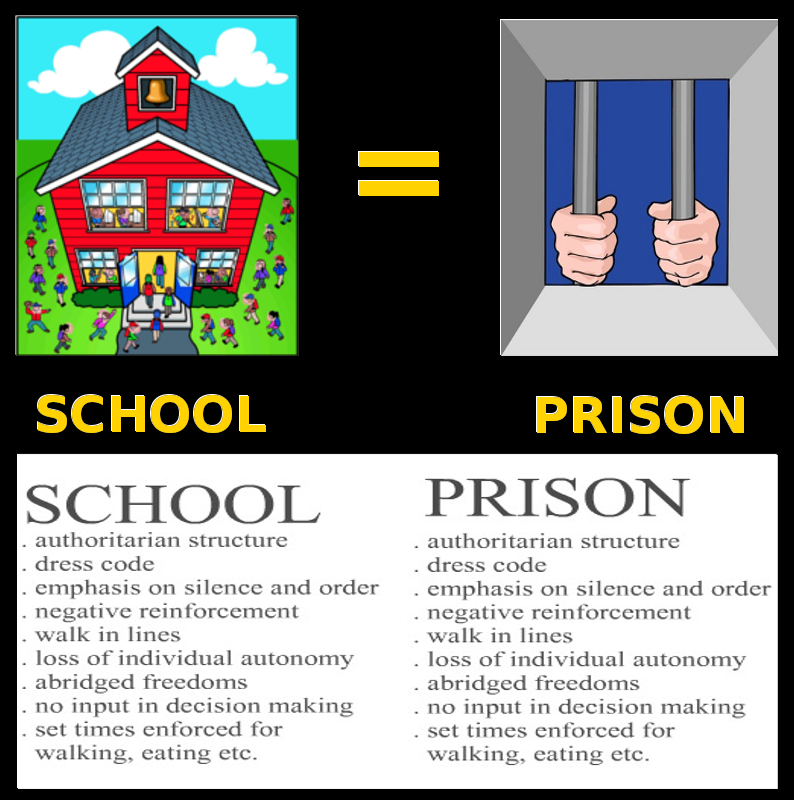
In the schools: The security industrial complex with its tracking, spying, and identification devices has set its sights on the schools as “a vast, rich market”—a $20 billion market, no less—just waiting to be conquered. In fact, the public schools have become a microcosm of the total surveillance state which currently dominates America, adopting a host of surveillance technologies, including video cameras, finger and palm scanners, iris scanners, as well as RFID and GPS tracking devices, to keep constant watch over their student bodies. Likewise, the military industrial complex with its military weapons, metal detectors, and weapons of compliance such as tasers has succeeded in transforming the schools—at great taxpayer expense and personal profit—into quasi-prisons. Rounding things out are school truancy laws, which come disguised as well-meaning attempts to resolve attendance issues in the schools but in truth are nothing less than stealth maneuvers aimed at enriching school districts and court systems alike through excessive fines and jail sentences for “unauthorized” absences. Curiously, none of these efforts seem to have succeeded in making the schools any safer.

In the endless wars abroad: Fueled by the profit-driven military industrial complex, the government’s endless wars are wreaking havoc on our communities, our budget and our police forces. Having been co-opted by greedy defense contractors, corrupt politicians and incompetent government officials, America’s expanding military empire is bleeding the country dry at a rate of more than $32 million per hour. Future wars and military exercises waged around the globe are expected to push the total bill upwards of $12 trillion by 2053.  Talk about fiscally irresponsible: the U.S. government is spending money it doesn’t have on a military empire it can’t afford. War spending is bankrupting America.

In the form of militarized police: The Department of Homeland Security routinely hands out six-figure grants to enable local municipalities to purchase military-style vehicles, as well as a veritable war chest of weaponry, ranging from tactical vests, bomb-disarming robots, assault weapons and combat uniforms. This rise in military equipment purchases funded by the DHS has, according to analysts Andrew Becker and G.W. Schulz, “paralleled an apparent increase in local SWAT teams.” The end result? An explosive growth in the use of SWAT teams for otherwise routine police matters, an increased tendency on the part of police to shoot first and ask questions later, and an overall mindset within police forces that they are at war—and the citizenry are the enemy combatants. Over 80,000 SWAT team raids are conducted on American homes and businesses each year. Moreover, government-funded military-style training drills continue to take place in cities across the country.

In profit-driven schemes such as asset forfeiture: Under the guise of fighting the war on drugs, government agents (usually the police) have been given broad leeway to seize billions of dollars’ worth of private property (money, cars, TVs, etc.) they “suspect” may be connected to criminal activity. Then—and here’s the kicker—whether or not any crime is actually proven to have taken place, the government keeps the citizen’s property, often divvying it up with the local police who did the initial seizure. The police are actually being trained in seminars on how to seize the “goodies” that are on police departments’ wish lists. According to the New York Times, seized monies have been used by police to “pay for sports tickets, office parties, a home security system and a $90,000 sports car.”

Among government contractors: We have been saddled with a government that is outsourcing much of its work to high-paid contractors at great expense to the taxpayer and with no competition, little transparency and dubious savings. According to the Washington Post, “By some estimates, there are twice as many people doing government work under contract than there are government workers.” These open-ended contracts, worth hundreds of millions of dollars, “now account for anywhere between one quarter and one half of all federal service contracting.” Moreover, any attempt to reform the system is “bitterly opposed by federal employee unions, who take it as their mission to prevent good employees from being rewarded and bad employees from being fired.”

By the security industrial complex: We’re being spied on by a domestic army of government snitches, spies and techno-warriors. In the so-called name of “precrime,” this government of Peeping Toms is watching everything we do, reading everything we write, listening to everything we say, and monitoring everything we spend. Beware of what you say, what you read, what you write, where you go, and with whom you communicate, because it is all being recorded, stored, and catalogued, and will be used against you eventually, at a time and place of the government’s choosing. This far-reaching surveillance, carried out with the complicity of the Corporate State, has paved the way for an omnipresent, militarized fourth branch of government—the Surveillance State—that came into being without any electoral mandate or constitutional referendum. That doesn’t even touch on the government’s bold forays into biometric surveillance as a means of identifying and tracking the American people from birth to death.

By a government addicted to power: It’s a given that you can always count on the government to take advantage of a crisis, legitimate or manufactured. Emboldened by the citizenry’s inattention and willingness to tolerate its abuses, the government has weaponized one national crisis after another in order to expand its powers. The war on terror, the war on drugs, the war on illegal immigration, asset forfeiture schemes, road safety schemes, school safety schemes, eminent domain: all of these programs started out as legitimate responses to pressing concerns and have since become weapons of compliance and control in the police state’s hands. Now that the government has gotten a taste for flexing its police state powers by way of a bevy of COVID-19 lockdowns, mandates, restrictions, contact tracing programs, heightened surveillance, censorship, overcriminalization, etc., “we the people” may well find ourselves burdened with a Nanny State inclined to use its draconian pandemic powers to protect us from ourselves.

These injustices, petty tyrannies and overt acts of hostility are being carried out in the name of the national good—against the interests of individuals, society and ultimately our freedoms—by an elite class of government officials working in partnership with megacorporations that are largely insulated from the ill effects of their actions.

This perverse mixture of government authoritarianism and corporate profits has increased the reach of the state into our private lives while also adding a profit motive into the mix. And, as always, it’s we the people, we the taxpayers, we the gullible voters who keep getting taken for a ride by politicians eager to promise us the world on a plate.

This is a far cry from how a representative government is supposed to operate.

Indeed, it has been a long time since we could claim to be the masters of our own lives. Rather, we are now the subjects of a militarized, corporate empire in which the vast majority of the citizenry work their hands to the bone for the benefit of a privileged few

Adding injury to the ongoing insult of having our tax dollars misused and our so-called representatives bought and paid for by the moneyed elite, the government then turns around and uses the money we earn with our blood, sweat and tears to target, imprison and entrap us, in the form of militarized police, surveillance cameras, private prisons, license plate readers, drones, and cell phone tracking technology.

All of those nefarious deeds by government officials that you hear about every day: those are your tax dollars at work.

It’s your money that allows for government agents to spy on your emails, your phone calls, your text messages, and your movements. It’s your money that allows out-of-control police officers to burst into innocent people’s homes, or probe and strip search motorists on the side of the road. And it’s your money that leads to Americans across the country being prosecuted for innocuous activities such as growing vegetable gardens in their front yards or daring to speak their truth to their elected officials.

Just remember the next time you see a news story that makes your blood boil, whether it’s a police officer arresting someone for filming them in public, or a child being kicked out of school for attending a virtual class while playing with a toy gun, remember that it is your tax dollars that are paying for these injustices.

There was a time in our history when our forebears said “enough is enough” and stopped paying their taxes to what they considered an illegitimate government. They stood their ground and refused to support a system that was slowly choking out any attempts at self-governance, and which refused to be held accountable for its crimes against the people.

Their resistance sowed the seeds for the revolution that would follow.

Unfortunately, in the 200-plus years since we established our own government, we’ve let bankers, turncoats and number-crunching bureaucrats muddy the waters and pilfer the accounts to such an extent that we’re back where we started.

Once again, we’ve got a despotic regime with an imperial ruler doing as they please.

Once again, we’ve got a judicial system insisting we have no rights under a government which demands that the people march in lockstep with its dictates.

And once again, we’ve got to decide whether we’ll keep marching or break stride and make a turn toward freedom.

But what if we didn’t just pull out our pocketbooks and pony up to the federal government’s outrageous demands for more money?

What if we didn’t just dutifully line up to drop our hard-earned dollars into the collection bucket, no questions asked about how it will be spent?

What if, instead of quietly sending in our checks, hoping vainly for some meager return, we did a little calculating of our own and started deducting from our taxes those programs that we refuse to support?

As I make clear in my book Battlefield America: The War on the American People, if the government and its emissaries can just take from you what they want, when they want, and then use it however they want, you can’t claim to be anything more than a serf in a land they think of as theirs.

This is not freedom, America.
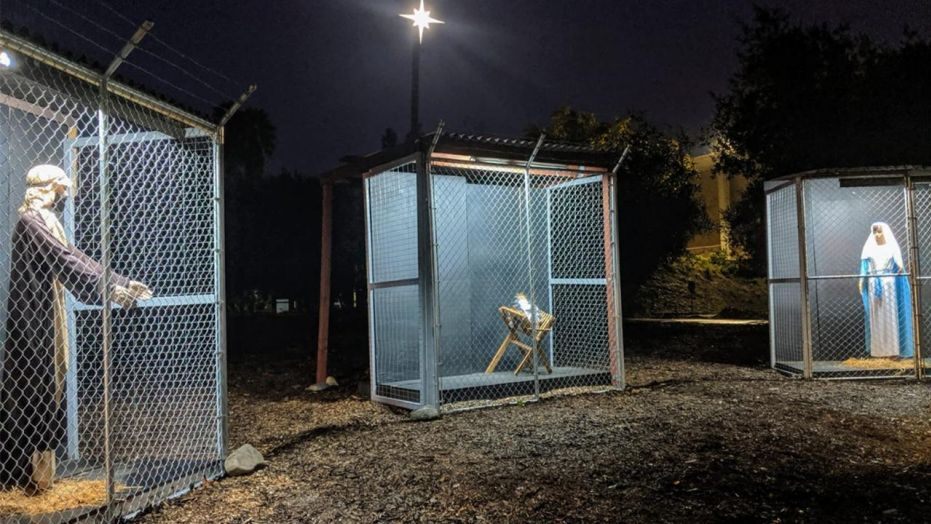
The Child That Christmas Forgot: How Would Jesus Fare in the American Police State?

By John W. Whitehead

Source: The Rutherford Institute

“Once upon a midnight clear, there was a child’s cry, a blazing star hung over a stable, and wise men came with birthday gifts. We haven’t forgotten that night down the centuries. We celebrate it with stars on Christmas trees, with the sound of bells, and with gifts… We forget nobody, adult or child. All the stockings are filled, all that is, except one. And we have even forgotten to hang it up. The stocking for the child born in a manger. It’s his birthday we’re celebrating. Don’t let us ever forget that. Let us ask ourselves what He would wish for most. And then, let each put in his share, loving kindness, warm hearts, and a stretched out hand of tolerance. All the shining gifts that make peace on earth.”—The Bishop’s Wife (1947)

The Christmas story of a baby born in a manger is a familiar one.

The Roman Empire, a police state in its own right, had ordered that a census be conducted. Joseph and his pregnant wife Mary traveled to the little town of Bethlehem so that they could be counted. There being no room for the couple at any of the inns, they stayed in a stable (a barn), where Mary gave birth to a baby boy, Jesus. Warned that the government planned to kill the baby, Jesus’ family fled with him to Egypt until it was safe to return to their native land.

Yet what if Jesus had been born 2,000 years later?

What if, instead of being born into the Roman police state, Jesus had been born at this moment in time? What kind of reception would Jesus and his family be given? Would we recognize the Christ child’s humanity, let alone his divinity? Would we treat him any differently than he was treated by the Roman Empire? If his family were forced to flee violence in their native country and sought refuge and asylum within our borders, what sanctuary would we offer them?

A singular number of churches across the country are asking those very questions, and their conclusions are being depicted with unnerving accuracy by nativity scenes in which Jesus and his family are separated, segregated and caged in individual chain-link pens, topped by barbed wire fencing.

These nativity scenes are a pointed attempt to remind the modern world that the narrative about the birth of Jesus is one that speaks on multiple fronts to a world that has allowed the life, teachings and crucifixion of Jesus to be drowned out by partisan politics, secularism, materialism and war.

The modern-day church has largely shied away from applying Jesus’ teachings to modern problems such as war, poverty, immigration, etc., but thankfully there have been individuals throughout history who ask themselves and the world: what would Jesus do?

What would Jesus—the baby born in Bethlehem who grew into an itinerant preacher and revolutionary activist, who not only died challenging the police state of his day (namely, the Roman Empire) but spent his adult life speaking truth to power, challenging the status quo of his day, and pushing back against the abuses of the Roman Empire—do?

Dietrich Bonhoeffer asked himself what Jesus would have done about the horrors perpetrated by Hitler and his assassins. The answer: Bonhoeffer risked his life to undermine the tyranny at the heart of Nazi Germany.

Aleksandr Solzhenitsyn asked himself what Jesus would have done about the soul-destroying gulags and labor camps of the Soviet Union. The answer: Solzhenitsyn found his voice and used it to speak out about government oppression and brutality.

Martin Luther King Jr. asked himself what Jesus would have done about America’s warmongering. The answer: declaring “my conscience leaves me no other choice,” King risked widespread condemnation when he publicly opposed the Vietnam War on moral and economic grounds.

Even now, despite the popularity of the phrase “What Would Jesus Do?” (WWJD) in Christian circles, there remains a disconnect in the modern church between the teachings of Christ and the suffering of what Jesus in Matthew 25 refers to as the “least of these.”

As the parable states:

“Then the King will say to those on his right, ‘Come, you who are blessed by my Father; take your inheritance, the kingdom prepared for you since the creation of the world. For I was hungry and you gave me something to eat, I was thirsty and you gave me something to drink, I was a stranger and you invited me in, I needed clothes and you clothed me, I was sick and you looked after me, I was in prison and you came to visit me.’ Then the righteous will answer him, ‘Lord, when did we see you hungry and feed you, or thirsty and give you something to drink? When did we see you a stranger and invite you in, or needing clothes and clothe you? When did we see you sick or in prison and go to visit you?’ The King will reply, ‘Truly I tell you, whatever you did for one of the least of these brothers and sisters of mine, you did for me.’ Then he will say to those on his left, ‘Depart from me, you who are cursed, into the eternal fire prepared for the devil and his angels. For I was hungry and you gave me nothing to eat, I was thirsty and you gave me nothing to drink, I was a stranger and you did not invite me in, I needed clothes and you did not clothe me, I was sick and in prison and you did not look after me.’ They also will answer, ‘Lord, when did we see you hungry or thirsty or a stranger or needing clothes or sick or in prison, and did not help you?’ He will reply, ‘Truly I tell you, whatever you did not do for one of the least of these, you did not do for me.’”

This is not a theological gray area: Jesus was unequivocal about his views on many things, not the least of which was charity, compassion, war, tyranny and love.

After all, Jesus—the revered preacher, teacher, radical and prophet—was born into a police state not unlike the growing menace of the American police state. When he grew up, he had powerful, profound things to say, things that would change how we view people, alter government policies and change the world. “Blessed are the merciful,” “Blessed are the peacemakers,” and “Love your enemies” are just a few examples of his most profound and revolutionary teachings.

When confronted by those in authority, Jesus did not shy away from speaking truth to power. Indeed, his teachings undermined the political and religious establishment of his day. It cost him his life. He was eventually crucified as a warning to others not to challenge the powers-that-be.

Can you imagine what Jesus’ life would have been like if, instead of being born into the Roman police state, he had been born and raised in the American police state?

Consider the following if you will.

Had Jesus been born in the era of the America police state, rather than traveling to Bethlehem for a census, Jesus’ parents would have been mailed a 28-page American Community Survey, a mandatory government questionnaire documenting their habits, household inhabitants, work schedule, how many toilets are in your home, etc. The penalty for not responding to this invasive survey can go as high as $5,000.

Instead of being born in a manger, Jesus might have been born at home. Rather than wise men and shepherds bringing gifts, however, the baby’s parents might have been forced to ward off visits from state social workers intent on prosecuting them for the home birth. One couple in Washington had all three of their children removed after social services objected to the two youngest being birthed in an unassisted home delivery.

Had Jesus been born in a hospital, his blood and DNA would have been taken without his parents’ knowledge or consent and entered into a government biobank. While most states require newborn screening, a growing number are holding onto that genetic material long-term for research, analysis and purposes yet to be disclosed.

Then again, had Jesus’ parents been undocumented immigrants, they and the newborn baby might have been shuffled to a profit-driven, private prison for illegals where they first would have been separated from each other, the children detained in make-shift cages, and the parents eventually turned into cheap, forced laborers for corporations such as Starbucks, Microsoft, Walmart, and Victoria’s Secret. There’s quite a lot of money to be made from imprisoning immigrants, especially when taxpayers are footing the bill.

From the time he was old enough to attend school, Jesus would have been drilled in lessons of compliance and obedience to government authorities, while learning little about his own rights. Had he been daring enough to speak out against injustice while still in school, he might have found himself tasered or beaten by a school resource officer, or at the very least suspended under a school zero tolerance policy that punishes minor infractions as harshly as more serious offenses.

Had Jesus disappeared for a few hours let alone days as a 12-year-old, his parents would have been handcuffed, arrested and jailed for parental negligence. Parents across the country have been arrested for far less “offenses” such as allowing their children to walk to the park unaccompanied and play in their front yard alone.

Rather than disappearing from the history books from his early teenaged years to adulthood, Jesus’ movements and personal data—including his biometrics—would have been documented, tracked, monitored and filed by governmental agencies and corporations such as Google and Microsoft. Incredibly, 95 percent of school districts share their student records with outside companies that are contracted to manage data, which they then use to market products to us.

From the moment Jesus made contact with an “extremist” such as John the Baptist, he would have been flagged for surveillance because of his association with a prominent activist, peaceful or otherwise. Since 9/11, the FBI has actively carried out surveillance and intelligence-gathering operations on a broad range of activist groups, from animal rights groups to poverty relief, anti-war groups and other such “extremist” organizations.

Jesus’ anti-government views would certainly have resulted in him being labeled a domestic extremist. Law enforcement agencies are being trained to recognize signs of anti-government extremism during interactions with potential extremists who share a “belief in the approaching collapse of government and the economy.”

While traveling from community to community, Jesus might have been reported to government officials as “suspicious” under the Department of Homeland Security’s “See Something, Say Something” programs. Many states, including New York, are providing individuals with phone apps that allow them to take photos of suspicious activity and report them to their state Intelligence Center, where they are reviewed and forwarded to law-enforcement agencies.

Rather than being permitted to live as an itinerant preacher, Jesus might have found himself threatened with arrest for daring to live off the grid or sleeping outside. In fact, the number of cities that have resorted to criminalizing homelessness by enacting bans on camping, sleeping in vehicles, loitering and begging in public has doubled.

Viewed by the government as a dissident and a potential threat to its power, Jesus might have had government spies planted among his followers to monitor his activities, report on his movements, and entrap him into breaking the law. Such Judases today—called informants—often receive hefty paychecks from the government for their treachery.

Had Jesus used the internet to spread his radical message of peace and love, he might have found his blog posts infiltrated by government spies attempting to undermine his integrity, discredit him or plant incriminating information online about him. At the very least, he would have had his website hacked and his email monitored.

Had Jesus attempted to feed large crowds of people, he would have been threatened with arrest for violating various ordinances prohibiting the distribution of food without a permit. Florida officials arrested a 90-year-old man for feeding the homeless on a public beach.

Had Jesus spoken publicly about his 40 days in the desert and his conversations with the devil, he might have been labeled mentally ill and detained in a psych ward against his will for a mandatory involuntary psychiatric hold with no access to family or friends. One Virginia man was arrested, strip searched, handcuffed to a table, diagnosed as having “mental health issues,” and locked up for five days in a mental health facility against his will apparently because of his slurred speech and unsteady gait.

Without a doubt, had Jesus attempted to overturn tables in a Jewish temple and rage against the materialism of religious institutions, he would have been charged with a hate crime. Currently, 45 states and the federal government have hate crime laws on the books.

Had anyone reported Jesus to the police as being potentially dangerous, he might have found himself confronted—and killed—by police officers for whom any perceived act of non-compliance (a twitch, a question, a frown) can result in them shooting first and asking questions later.

Rather than having armed guards capture Jesus in a public place, government officials would have ordered that a SWAT team carry out a raid on Jesus and his followers, complete with flash-bang grenades and military equipment. There are upwards of 80,000 such SWAT team raids carried out every year, many on unsuspecting Americans who have no defense against such government invaders, even when such raids are done in error.

Instead of being detained by Roman guards, Jesus might have been made to “disappear” into a secret government detention center where he would have been interrogated, tortured and subjected to all manner of abuses. Chicago police have “disappeared” more than 7,000 people into a secret, off-the-books interrogation warehouse at Homan Square.

Charged with treason and labeled a domestic terrorist, Jesus might have been sentenced to a life-term in a private prison where he would have been forced to provide slave labor for corporations or put to death by way of the electric chair or a lethal mixture of drugs.

Indeed, as I show in my book Battlefield America: The War on the American People, given the nature of government then and now, it is painfully evident that whether Jesus had been born in our modern age or his own, he still would have died at the hands of a police state.

Thus, as we draw near to Christmas with its celebrations and gift-giving, we would do well to remember that what happened on that starry night in Bethlehem is only part of the story. That baby in the manger grew up to be a man who did not turn away from evil but instead spoke out against it, and we must do no less.

Empire of Lies: Are ‘We the People’ Useful Idiots in the Digital Age?

By John W. Whitehead

Source: The Rutherford Institute

“Back in the heyday of the old Soviet Union, a phrase evolved to describe gullible western intellectuals who came to visit Russia and failed to notice the human and other costs of building a communist utopia. The phrase was “useful idiots” and it applied to a good many people who should have known better. I now propose a new, analogous term more appropriate for the age in which we live: useful hypocrites. That’s you and me, folks, and it’s how the masters of the digital universe see us. And they have pretty good reasons for seeing us that way. They hear us whingeing about privacy, security, surveillance, etc., but notice that despite our complaints and suspicions, we appear to do nothing about it. In other words, we say one thing and do another, which is as good a working definition of hypocrisy as one could hope for.”—John Naughton, The Guardian

“Who needs direct repression,” asked philosopher Slavoj Zizek, “when one can convince the chicken to walk freely into the slaughterhouse?”

In an Orwellian age where war equals peace, surveillance equals safety, and tolerance equals intolerance of uncomfortable truths and politically incorrect ideas, “we the people” have gotten very good at walking freely into the slaughterhouse, all the while convincing ourselves that the prison walls enclosing us within the American police state are there for our protection.

Call it doublespeak, call it hypocrisy, call it delusion, call it whatever you like, but the fact remains that while we claim to value freedom, privacy, individuality, equality, diversity, accountability, and government transparency, our actions and those of our government rulers contradict these much-vaunted principles at every turn.

For instance, we claim to disdain the jaded mindset of the Washington elite, and yet we continue to re-elect politicians who lie, cheat and steal.

We claim to disapprove of the endless wars that drain our resources and spread thin our military, and yet we repeatedly buy into the idea that patriotism equals supporting the military.

We claim to chafe at taxpayer-funded pork barrel legislation for roads to nowhere, documentaries on food fights, and studies of mountain lions running on treadmills, and yet we pay our taxes meekly and without raising a fuss of any kind.

We claim to object to the militarization of our local police forces and their increasingly battlefield mindset, and yet we do little more than shrug our shoulders over SWAT team raids and police shootings of unarmed citizens.

And then there’s our supposed love-hate affair with technology, which sees us bristling at the government’s efforts to monitor our internet activities, listen in on our phone calls, read our emails, track our every movement, and punish us for what we say on social media, and yet we keep using these very same technologies all the while doing nothing about the government’s encroachments on our rights.

This contradiction is backed up by a Pew Research Center study, which finds that “Americans say they are deeply concerned about privacy on the web and their cellphones. They say they do not trust Internet companies or the government to protect it. Yet they keep using the services and handing over their personal information.”

Let me get this straight: the government continues to betray our trust, invade our privacy, and abuse our rights, and we keep going back for more?

Sure we do.

After all, the alternative—taking a stand, raising a ruckus, demanding change, refusing to cooperate, engaging in civil disobedience—is not only a lot of work but can be downright dangerous.

What we fail to realize, however, is that by tacitly allowing these violations to continue, we not only empower the tyrant but we feed the monster.

In this way, what starts off as small, occasional encroachments on our rights, justified in the name of greater safety, becomes routine, wide-ranging abuses so entrenched as to make reform all but impossible.

We saw this happen with the police and their build-up of military arsenal, ostensibly to fight the war on drugs. The result: a transformation of America’s law enforcement agencies into extensions of the military, populated with battle-hardened soldiers who view “we the people” as enemy combatants.

The same thing happened with the government’s so-called efforts to get tough on crime by passing endless laws outlawing all manner of activities. The result: an explosion of laws criminalizing everything from parenting decisions and fishing to gardening and living off the grid.

And then there were the private prisons, marketed as a way to lower the government’s cost of locking up criminals. Only it turns out that private prisons actually cost the taxpayer more money and place profit incentives on jailing more Americans, resulting in the largest prison population in the world.

Are you starting to notice a pattern yet?

The government lures us in with a scheme to make our lives better, our families safer, and our communities more secure, and then once we buy into it, they slam the trap closed.

It doesn’t matter whether you’re talking about red light cameras, DNA databases, surveillance cameras, or zero tolerance policies: they all result in “we the people” being turned into Enemy Number One.

In this way, the government campaign to spy on our phone calls, letters and emails was sold to the American people as a necessary tool in the war on terror.

Instead of targeting terrorists, however, the government has turned us into potential terrorists, so that if we dare say the wrong thing in a phone call, letter, email or on the internet, especially social media, we end up investigated, charged and possibly jailed.

If you happen to be one of the 1.31 billion individuals who use Facebook or one of the 255 million who tweet their personal and political views on Twitter, you might want to pay close attention.

This criminalization of free speech, which is exactly what the government’s prosecution of those who say the “wrong” thing using an electronic medium amounts to, was at the heart of Elonis v. United States, a case that wrestled with where the government can draw the line when it comes to expressive speech that is protected and permissible versus speech that could be interpreted as connoting a criminal intent.

The case arose after Anthony Elonis, an aspiring rap artist, used personal material from his life as source material and inspiration for rap lyrics which he then shared on Facebook.

For instance, shortly after Elonis’ wife left him and he was fired from his job, his lyrics included references to killing his ex-wife, shooting a classroom of kindergarten children, and blowing up an FBI agent who had opened an investigation into his postings.

Despite the fact that Elonis routinely accompanied his Facebook posts with disclaimers that his lyrics were fictitious, and that he was using such writings as an outlet for his frustrations, he was charged with making unlawful threats (although it was never proven that he intended to threaten anyone) and sentenced to 44 months in jail.

Elonis is not the only Facebook user to be targeted for prosecution based on the content of his posts.

In a similar case that made its way through the courts only to be rebuffed by the Supreme Court, Brandon Raub, a decorated Marine, was arrested by a swarm of FBI, Secret Service agents and local police and forcibly detained in a psychiatric ward because of controversial song lyrics and political views posted on his Facebook page. He was eventually released after a circuit court judge dismissed the charges against him as unfounded.

Rapper Jamal Knox and Rashee Beasley were sentenced to jail terms of up to six years for a YouTube video calling on listeners to “kill these cops ‘cause they don’t do us no good.” Although the rapper contended that he had no intention of bringing harm to the police, he was convicted of making terroristic threats and intimidation of witnesses.

And then there was Franklin Delano Jeffries II, an Iraq war veteran, who, in the midst of a contentious custody battle for his daughter,shared a music video on YouTube and Facebook in which he sings about the judge in his case, “Take my child and I’ll take your life.” Despite his insistence that the lyrics were just a way for him to vent his frustrations with the legal battle, Jeffries was convicted of communicating threats and sentenced to 18 months in jail.

The common thread running through all of these cases is the use of social media to voice frustration, grievances, and anger, sometimes using language that is overtly violent.

The question the U.S. Supreme Court was asked to decide in Elonis is whether this activity, in the absence of any overt intention of committing a crime, rises to the level of a “true threat” or whether it is, as I would contend, protected First Amendment activity. (The Supreme Court has defined a “true threat” as “statements where the speaker means to communicate a serious expression of an intent to commit an act of unlawful violence to a particular individual or group of individuals.”)

In an 8-1 decision that concerned itself more with “criminal-law principles concerning intent rather than the First Amendment’s protection of free speech,” the Court ruled that prosecutors had not proven that Elonis intended to harm anyone beyond the words he used and context.

That was three years ago.

Despite the Supreme Court’s ruling in Elonis, Corporate America has now taken the lead in policing expressive activity online, with social media giants such as Facebook, Twitter and YouTube using their formidable dominance in the field to censor, penalize and regulate speech and behavior online by suspending and/or banning users whose content violated the companies’ so-called community standards for obscenity, violence, hate speech, discrimination, etc.

Make no mistake: this is fascism.

This is fascism with a smile.

As Bertram Gross, former presidential advisor, noted in his chilling book Friendly Fascism: The New Face of Power in America, “Anyone looking for black shirts, mass parties, or men on horseback will miss the telltale clues of creeping fascism. . . . In America, it would be super modern and multi-ethnic—as American as Madison Avenue, executive luncheons, credit cards, and apple pie. It would be fascism with a smile. As a warning against its cosmetic façade, subtle manipulation, and velvet gloves, I call it friendly fascism. What scares me most is its subtle appeal.”

The subtle appeal of this particular brand of fascism is its self-righteous claim to fighting the evils of our day (intolerance, hatred, violence) using the weapons of Corporate America.

Be warned, however: it is only a matter of time before these weapons are used more broadly, taking aim at anything that stands in its quest for greater profit, control and power.

This is what fascism looks like in a modern context, with corporations flexing their muscles to censor and silence expressive activity under the pretext that it is taking place within a private environment subject to corporate rules as opposed to activity that takes place within a public or government forum that might be subject to the First Amendment’s protection of “controversial” and/or politically incorrect speech.

Alex Jones was just the beginning.

Jones, the majordomo of conspiracy theorists who spawned an empire built on alternative news, was banned from Facebook for posting content that violates the social media site’s “Community Standards,”which prohibit posts that can be construed as bullying or hateful.

According to The Washington PostTwitter suspended over 70 million accounts over the course of two months to “reduce the flow of misinformation on the platform.” Among those temporarily suspended was Daniel McAdams, Executive Director of the Ron Paul Institute.

Rightly contending that tech companies are just extensions of the government, former Texas congressman Ron Paul believes that social media networks under the control of Google, Apple, Twitter and Facebook are working with the U.S. government to silence dissent. “You get accused of treasonous activity and treasonous speech because in an empire of lies the truth is treason,” Paul declared. “Challenging the status quo is what they can’t stand and it unnerves them, so they have to silence people.”

Curiously enough, you know who has yet to be suspended? President Trump.

Twitter’s rationale for not suspending world leaders such as Trump, whom critics claim routinely violate the social media giant’s rules, is because “Blocking a world leader from Twitter or removing their controversial Tweets, would hide important information people should be able to see and debate. It would also not silence that leader, but it would certainly hamper necessary discussion around their words and actions.”

Frankly, all individuals, whether or not they are world leaders, should be entitled to have their thoughts and ideas aired openly, pitted against those who might disagree with them, and debated widely, especially in a forum like the internet.

Why does this matter?

The internet and social media have taken the place of the historic public square, which has slowly been crowded out by shopping malls and parking lots.

As such, these cyber “public squares” may be the only forum left for citizens to freely speak their minds and exercise their First Amendment rights, especially in the wake of legislation that limits access to our elected representatives.

Unfortunately, the internet has become a tool for the government—and its corporate partners—to monitor, control and punish the populace for behavior and speech that may be controversial but are far from criminal.

Indeed, the government, a master in the art of violence, intrusion, surveillance and criminalizing harmless activities, has repeatedly attempted to clamp down on First Amendment activity on the web and in social media under the various guises of fighting terrorism, discouraging cyberbullying, and combatting violence.

Police and prosecutors have also targeted “anonymous” postings and messages on forums and websites, arguing that such anonymity encourages everything from cyber-bullying to terrorism, and have attempted to prosecute those who use anonymity for commercial or personal purposes.

We would do well to tread cautiously in how much authority we give the Corporate Police State to criminalize free speech activities and chill what has become a vital free speech forum.

Not only are social media and the Internet critical forums for individuals to freely share information and express their ideas, but they also serve as release valves to those who may be angry, seething, alienated or otherwise discontented.

Without an outlet for their pent-up anger and frustration, these thoughts and emotions fester in secret, which is where most violent acts are born.

In the same way, free speech in the public square—whether it’s the internet, the plaza in front of the U.S. Supreme Court or a college campus—brings people together to express their grievances and challenge oppressive government regimes.

Without it, democracy becomes stagnant and atrophied.

Likewise, as I make clear in my book Battlefield America: The War on the American People, if free speech is not vigilantly protected, democracy is more likely to drift toward fear, repression, and violence. In such a scenario, we will find ourselves threatened with an even more pernicious injury than violence itself: the loss of liberty.

More speech, not less, is the remedy.

A Tale of Two Americas: Where the Rich Get Richer and the Poor Go to Jail

By John W. Whitehead

Source: The Rutherford Institute

“It is said that no one truly knows a nation until one has been inside its jails. A nation should not be judged by how it treats its highest citizens, but its lowest ones.” ― Nelson Mandela

This is the tale of two Americas, where the rich get richer and the poor go to jail.

Aided and abetted by the likes of Attorney General Jeff Sessions—a man who wouldn’t recognize the Constitution if it smacked him in the face—the American dream has become the American scheme: the rich are getting richer and more powerful, while anyone who doesn’t belong to the power elite gets poorer and more powerless to do anything about the nation’s steady slide towards fascism, authoritarianism and a profit-driven police state.

Not content to merely pander to law enforcement and add to its military largesse with weaponry and equipment designed for war, Sessions has made a concerted effort to expand the police state’s power to search, strip, seize, raid, steal from, arrest and jail Americans for any infraction, no matter how insignificant.

Now Sessions has given state courts the green light to resume their practice of jailing individuals who are unable to pay the hefty fines imposed by the American police state. In doing so, Sessions has once again shown himself to be not only a shill for the Deep State but an enemy of the people.

First, some background on debtors’ prisons, which jail people who cannot afford to pay the exorbitant fines imposed on them by courts and other government agencies.

Congress banned debtors’ prisons in 1833.

In 1983, the U.S. Supreme Court ruled the practice to be unconstitutional under the Fourteenth Amendment’s Equal Protection clause.

“Despite prior attempts on the federal level and across the country to prevent the profound injustice of locking people in cages because they are too poor to pay a debt,” concludes The Atlantic, “the practice persists every day.”

Where things began to change, according to The Marshall Project, was with the rise of “mass incarceration.” As attorney Alec Karakatsanis stated, “In the 1970s and 1980s, we started to imprison more people for lesser crimes. In the process, we were lowering our standards for what constituted an offense deserving of imprisonment, and, more broadly, we were losing our sense of how serious, how truly serious, it is to incarcerate. If we can imprison for possession of marijuana, why can’t we imprison for not paying back a loan?”

By the late 1980s and early 90s, “there was a dramatic increase in the number of statutes listing a prison term as a possible sentence for failure to repay criminal-justice debt.” During the 2000s, the courts started cashing in big-time “by using the threat of jail time – established in those statutes – to squeeze cash out of small-time debtors.”

Fast-forward to the present day which finds us saddled with not only profit-driven private prisons and a prison-industrial complex but also, as investigative reporter Eli Hager notes, “the birth of a new brand of ‘offender-funded’ justice [which] has created a market for private probation companies. Purporting to save taxpayer dollars, these outfits force the offenders themselves to foot the bill for parole, reentry, drug rehab, electronic monitoring, and other services (some of which are not even assigned by a judge). When the offenders can’t pay for all of this, they may be jailed – even if they have already served their time for the offense.”

Follow the money trail. It always points the way.

Whether you’re talking about the government’s war on terrorism, the war on drugs, or some other phantom danger dreamed up by enterprising bureaucrats, there is always a profit-incentive involved.

The same goes for the war on crime.

At one time, the American penal system operated under the idea that dangerous criminals needed to be put under lock and key in order to protect society. Today, the flawed yet retributive American “system of justice” is being replaced by an even more flawed and insidious form of mass punishment based upon profit and expediency.

Sessions’ latest gambit plays right into the hands of those who make a profit by jailing Americans.

Sharnalle Mitchell was one such victim of a system for whom the plight of the average American is measured in dollars and cents. As the Harvard Law Review recounts:

On January 26, 2014, Sharnalle Mitchell was with her children in Montgomery, Alabama when police showed up at her home to arrest her. Mitchell was not accused of a crime. Instead, the police came to her home because she had not fully paid a traffic ticket from 2010. The single mother was handcuffed in front of her children (aged one and four) and taken to jail. She was ordered to either pay $2,800 or sit her debt out in jail at a rate of fifty dollars a day for fifty-nine days. Unable to pay, Mitchell wrote out the numbers one to fifty-eight on the back of her court documents and began counting days.

This is not justice.

This is yet another example of how greed and profit-incentives have not only perverted policing in America but have corrupted the entire criminal justice system.

As the Harvard Law Review concludes:

[A]s policing becomes a way to generate revenue, police start to “see the people they’re supposed to be serving not as citizens with rights, but as potential sources of revenue, as lawbreakers to be caught.” This approach creates a fugitive underclass on the run from police not to hide illicit activity but to avoid arrest for debt or seizure of their purportedly suspicious assets… In turn, communities … begin to see police not as trusted partners but as an occupying army constantly harassing them to raise money to pay their salaries and buy new weapons. This needs to end.

Unfortunately, the criminal justice system has been operating as a for-profit enterprise for years now, covertly padding its pockets through penalty-riddled programs aimed at maximizing revenue rather than ensuring public safety.

All of those seemingly hard-working police officers and code-enforcement officers and truancy officers and traffic cops handing out ticket after ticket after ticket: they’re not working to make your communities safer—they’ve got quotas to fill.

Same goes for the courts, which have come to rely on fines, fees and exorbitant late penalties as a means of increased revenue. The power of these courts, magnified in recent years through the introduction of specialty courts beyond your run-of-the-mill traffic court (drug court, homeless court, veterans court, mental health court, criminal court, teen court, gambling court, prostitution court, community court, domestic violence court, truancy court), is “reshaping the American legal system—with little oversight,” concludes the Boston Globe.

And for those who can’t afford to pay the court fines heaped on top of the penalties ($302 for jaywalking, $531 for an overgrown yard, or $120 for arriving a few minutes late to court), there’s probation (managed by profit-run companies that tack on their own fees, which are often more than double the original fine) or jail time (run by profit-run companies that charge inmates for everything from food and housing to phone calls at outrageous markups), which only adds to the financial burdens of those already unable to navigate a costly carceral state.

“When bail is set unreasonably high, people are behind bars only because they are poor,” stated former Attorney General Loretta Lynch. “Not because they’re a danger or a flight risk — only because they are poor. They don’t have money to get out of jail, and they certainly don’t have money to flee anywhere. Other people who do have the means can avoid the system, setting inequality in place from the beginning.”

In “Policing and Profit,” the Harvard Law Review documents in chilling detail the criminal justice system’s efforts to turn a profit at the expense of those who can least afford to pay, thereby entrapping them in a cycle of debt that starts with one minor infraction:

In the late 1980s, Missouri became one of the first states to let private companies purchase the probation systems of local governments. In these arrangements, municipalities impose debt on individuals through criminal proceedings and then sell this debt to private businesses, which pad the debt with fees and interest. This debt can stem from fines for offenses as minor as rolling through a stop sign or failing to enroll in the right trash collection service. In Ferguson, residents who fall behind on fines and don’t appear in court after a warrant is issued for their arrest (or arrive in court after the courtroom doors close, which often happens just five minutes after the session is set to start for the day) are charged an additional $120 to $130 fine, along with a $50 fee for a new arrest warrant and 56 cents for each mile that police drive to serve it. Once arrested, everyone who can’t pay their fines or post bail (which is usually set to equal the amount of their total debt) is imprisoned until the next court session (which happens three days a month). Anyone who is imprisoned is charged $30 to $60 a night by the jail. If an arrestee owes fines in more than one of St. Louis County’s eighty-one municipal courts, they are passed from one jail to another to await hearings in each town.

Ask yourself this: at a time when crime rates across the country remain at historic lows (despite Sessions’ inaccurate claims to the contrary), why does the prison population continue to grow?

The prison population continues to grow because of a glut of laws that criminalize activities that should certainly not be outlawed, let alone result in jail time. Overcriminalization continues to plague the country because of legislators who work hand-in-hand with corporations to adopt laws that favor the corporate balance sheet. And when it comes to incarceration, the corporate balance sheet weighs heavily in favor of locking up more individuals in government-run and private prisons.

As Time reports, “The companies that build and run private prisons have a financial interest in the continued growth of mass incarceration. That is why the two major players in this game—the Corrections Corporation of America and the GEO Group—invest heavily in lobbying for punitive criminal justice policies and make hefty contributions to political campaigns that will increase reliance on prisons.”

It’s a vicious cycle that grows more vicious by the day.

According to The Atlantic, “America spends $80 billion a year incarcerating 2.4 million people.” But the costs don’t end there. “When someone goes to prison, nearly 65 percent of families are suddenly unable to pay for basic needs such as food and housing… About 70 percent of those families are caring for children under the age of 18.”

Then there are the marked-up costs levied against the inmate by private companies that provide services and products to government prisons. Cereal and soup for five times the market price. $15 for a short phone call.

The Center for Public Integrity found that “prison bankers collect tens of millions of dollars every year from inmates’ families in fees for basic financial services. To make payments, some forego medical care, skip utility bills and limit contact with their imprisoned relatives… Inmates earn as little as 12 cents per hour in many places, wages that have not increased for decades. The prices they pay for goods to meet their basic needs continue to increase.”

Worse, as human rights attorney Jessica Jackson points out, “the fines and fees system has turned local governments into the equivalent of predatory lenders.” For instance, Jackson cites:

Washington state charges a 12% interest rate on all its criminal debt. Florida adds a 40% fee that goes into the pockets of a private collections agency. In California, penalties can raise a $100 fine to $490, or $815 if the initial deadline is missed. A $500 traffic ticket can actually cost $1,953, even if it is paid on time. And so we are left with countless tales of lives ruined—people living paycheck to paycheck who cannot afford a minor fine, and so face ballooning penalties, increasing amounts owed, a suspended license, jail time, and being fired from their jobs or unable to find work.

This isn’t the American Dream I grew up believing in.

This certainly isn’t the American Dream my parents and grandparents and those before them worked and fought and sacrificed to achieve.

This is a cold, calculated system of profit and losses.

Now you can shrug all of this away as a consequence of committing a crime, but that just doesn’t cut it. Especially not when average Americans are being jailed for such so-called crimes as eating SpaghettiOs (police mistook them for methamphetamine), not wearing a seatbelt, littering, jaywalking, having homemade soap (police mistook the soap for cocaine), profanity, spitting on the ground, farting, loitering and twerking.

There is no room in the American police state for self-righteousness. Not when we are all guilty until proven innocent.

As I make clear in my book Battlefield America: The War on the American People, this is no longer a government “of the people, by the people, for the people.”

It is fast becoming a government “of the rich, by the elite, for the corporations,” and its rise to power is predicated on shackling the American taxpayer to a debtors’ prison guarded by a phalanx of politicians, bureaucrats and militarized police with no hope of parole and no chance for escape.

The Over-Criminalization of American Life

By Charles Hugh Smith

Source: Of Two Minds

The over-criminalization of America has undermined justice, the rule of law and legal egalitarianism.

While the corporate media devotes itself to sports, entertainment, dining out and the latest political kerfuffle, America has become the Over-Criminalization Capital of the World. The proliferation of laws and administrative regulations, federal, state and local, that carry criminal penalties has swollen into the tens of thousands.

The number of incarcerated Americans exceeds 2.3 million, with the majority being non-violent offenders–often for War on Drugs offenses.

Holly Harris has written an important summary of this profoundly destabilizing trend: The Prisoner Dilemma: Ending America’s Incarceration Epidemic (Foreign Affairs, registration required).

The over-criminalization of America is a relatively recent trend. As Harris notes:

It wasn’t always like this. In 1972, for every 100,000 U.S. residents, 161 were incarcerated. By 2015, that rate had more than quadrupled, with nearly 670 out of every 100,000 Americans behind bars.

The over-criminalization of America is rooted in federal laws and regulations, and state and local governments have followed suite. here is Harris’s account:

The burgeoning U.S. prison population reflects a federal criminal code that has spiraled out of control. No one—not even the government itself—has ever been able to specify with any certainty the precise number of federal crimes defined by the 54 sections contained in the 27,000 or so pages of the U.S. Code. In the 1980s, lawyers at the Department of Justice attempted to tabulate the figure “for the express purpose of exposing the idiocy” of the criminal code, as one of them later put it. The best they were able to come up with was an educated guess of 3,000 crimes. Today, the conservative Heritage Foundation estimates that federal laws currently enumerate nearly 5,000 crimes, a number that grows every year.

Overcriminalization extends beyond the law books, partly because regulations are often backed by criminal penalties. That is the case for rules that govern matters as trivial as the sale of grated cheese, the precise composition of chicken Kiev dishes, and the washing of cars at the headquarters of the National Institutes of Health. State laws add tens of thousands more such crimes. Taken together, they push the total number of criminally punishable offenses in the United States into the hundreds of thousands. The long arm of the law reaches into nearly every aspect of American life. The legal scholar Harvey Silverglate has concluded that the typical American commits at least three federal felonies a day, simply by going through his or her normal routine.

Federal policies reward states for building prisons and mandating harsher sentences:

…federal incentives for states that safely decrease their prison populations and reconsider ineffective sentencing regimes…would represent a stark reversal of legislation signed into law by President Bill Clinton in 1994, which did just the opposite, offering federal dollars to states that imposed harsher criminal penalties and built more prisons, which contributed to the explosion of incarceration rates during the past two decades.

How did we become a Gulag Nation of tens of thousands of laws and regulations and mandatory harsh sentences for non-violent crimes–a society imprisoned for administrative crimes that aren’t even tried in our judiciary system? I would suggest two primary sources:

1. The relentless expansion of central-state power over every aspect of life. As I describe in my book Resistance, Revolution, Liberation: A Model for Positive Change, the state has only one ontological imperative: to expand its power and control. There are no equivalent mechanisms for reducing the legal/regulatory burdens imposed by the state; various reforms aimed at reducing the quantity of laws and regulations have not even made a dent in the over-criminalization of America.

The second dynamic is the political reality that the easiest way for politicos to be seen as “doing something” is to pass more laws and regulations criminalizing an additional aspect of life. The state and its elites justify the state’s relentless expansion of power and control by claiming problems can only be solved by centralizing power further and increasing the number and severity of penalties.

Criminalization is the ultimate expansion of the state’s monopoly on coercive violence. As the state expands its power to imprison or punish its citizens for an ever-wider range of often petty infractions, increasingly via a bureaucratic administrative process that strips the citizens of due process, another pernicious dynamic emerges: the informal application and enforcement of formal laws and regulations.

In other words, the laws and regulations are enforced at the discretion of the state’s officials. This is the systemic source of driving while black: a defective tail-light gets an African-American driver pulled over, while drivers of other ethnic origin get a pass.

This is also the source of America’s systemic blind eye on white-collar crimes while the War on Drugs mandates harsh sentences with a cruel vengeance. When there are so many laws and regulations to choose from, government officials have immense discretion over which laws and regulations to enforce.

Prosecutors seeking to increase their body count will use harsh drug laws to force innocents to accept plea bargains, while federal prosecutors don’t even pursue white-collar corporate fraud on a vast scale.

The over-criminalization of America has undermined justice, the rule of law and the bedrock notion that everyone is equal under the law, i.e. legal egalitarianism.

The over-criminalization of America breeds corruption as the wealthy and powerful evade the crushing burden of over-regulation by either buying political favors in our pay-to-play “democracy” (money votes, money wins) or by hiring teams of attorneys, CPAs, etc. to seek loopholes or construct a courtroom defense.

Meanwhile, the peasantry are offered a harsh plea bargain.

The over-criminalization of America is one core reason why the status quo has failed and cannot be reformed. That is the title of one of my short works, Why Our Status Quo Failed and Is Beyond Reform, which explains why the ceaseless expansion of centralized power leads to failure and collapse.


Another Unsolvable Issue for Americans

Mass Incarceration, Prison Labor in the United States

By John Stanton

Source: Dissident Voice

The Federal Prison Industries (FPI) under the brand UNICOR operates approximately 52 factories (prisons) across the United States. Prisoners manufacture or assemble a number of products for the US military, homeland security, and federal agencies according to the UNICOR/FPI website.  They produce furniture, clothing and circuit boards in addition to providing computer aided design services and call center support for private companies.

UNICOR/FPI makes its pitch for employing call center support personnel to firms thinking about off-shoring their call center functions. The logic is that, hey!, they may be prisoners, but it’s keeping the jobs in the USA that matters. Fair enough. That approach cuts out the middleman though, those Americans desperate for any kind of work but, through no fault of their own, are not behind prison bars and employable by UNICOR/FPI.

Sure, it seems a heartless statement and there are any number of angles to take on why the USA is the world’s number one incarcerator: Capitalism, racism, social and political injustice, a pay-as-you-go legal system, bone-headed policy makers, prison lobbyists, the death penalty, employment/unemployment, drugs, gangs, costs/prices and a host of behavioral, psychological and environmental issues that I have missed.

Inevitably the black hole that is money eventually sucks in and corrupts everyone from those in local communities desperate for the work a prison facility provides to those investors who profit from the prison industry. They earn their livelihoods and take their profits from the misery and labor squeezed from their human property — those prisoners who self-destructed and others who are serving terms way too long for the crime committed.

For the Love of Money

From October 2016 through March 2017, UNICOR/FPI sold $252,414,987 million worth of goods and services.

The prison labor industry is very keen on promoting its role in assembling the US military’s widely used Single Channel Ground and Airborne Radio System (SINCGARS). In January defense contractor Harris Corp. was awarded a $403 million contract by the US Defense Logistics Agency for spare parts supporting tactical radio systems, which includes SINCGARS.

UNICOR/FPI is a major supplier of SINCGARS radios, mounts, antennas, and installation and repair kits and when hard-mounted, our SINCGARS equipment meets rigorous military standards for shock and vibration in aircraft and tactical vehicles, such as Bradley’s and Humvees. Through our nationwide network of factories and trained technicians, we have successfully met aggressive production and distribution needs for this crucial communication equipment in Middle East military operations.

Some of the purchases by the US Department of Defense include $14.8 million for electronic components, $887 thousand for communications equipment, $26.7 million for office furniture, $27.1 million for special purpose clothing and $7.5 million for body armor. The Department of Homeland Security spent $372,255 on administrative support. The Executive Office of the US President spent $389 for signs and identification plates.

Fight Fire with Inmates

According to a Mother Jones article in 2015 somewhere between 30 and 40 percent of California’s forest firefighters are state prison inmates with some 4,000 working at any one time on fire lines. So dependent on the inmates was California that prison reforms that would see the release of some of the incarcerated firefighters were put on hold for fear of losing the manpower to fight California blazes. Then California attorney general Kamala Harris, now a US Senator, was behind the effort to keep the “cheap” firefighters behind bars,

Prison reform advocates have raised concerns that the state is so reliant on the cheap labor of inmate firefighters that policymakers may be slow to adopt prison reforms as a result. The concern was magnified last fall, when lawyers for state Attorney General Kamala Harris argued that extending an early prison-release program to “all minimum custody inmates at this time would severely impact fire camp participation—a dangerous outcome while California is in the middle of a difficult fire season and severe drought.” Harris has since said she was “troubled” by the argument, and the state has ruled that minimum custody inmates, including firefighters, are eligible for the program so long as it proves not to deplete the numbers of inmate firefighters.

US Immigration and Customs Enforcement detains women, men, children, and LGBTQI individuals in over 200 county jails and for-profit prisons, according to the grass roots group CIVIC. Some of these individuals include legal permanent residents with longstanding family and community ties, asylum-seekers, and victims of human trafficking.

It was former President Bill Clinton (Democrat) who started to load up detention centers and jails with immigrants, CIVIC noted.

In 1996, President Bill Clinton signed the Antiterrorism and Effective Death Penalty Act (AEDPA) and the Illegal Immigration Reform and Immigrant Responsibility Act (IIRIRA), which doubled the number of people in immigration detention from 8,500 each day in 1996 to 16,000 in 1998. Today, the detention population has increased fourfold to approximately 34,000 individuals each day, due in part to a congressionally mandated lock-up quota.

President Donald Trump’s (Republican) animosity to immigrants is well known. He and his aptly named attorney general Jefferson Beauregard Sessions will make sure detention centers and prisons are overfilled with men, women and children from Mexico, Central and South America. Trump and Session’s maniacal quest wage war on crime, drugs and terrorism will likely ensure that many thousands more will find themselves locked away and working for UNICOR/FPI or lining the pockets of private prison company owners.

Immigrants Too

The non-profit group Towards Justice reported that a lawsuit is moving forward pitting private prison corporation against immigrants who were forced into labor while in detention.

For the first time in history, a federal court allowed a class of immigrant detainees to jointly proceed with forced labor claims against the country’s second-largest private prison provider. Judge Kane in the District of Colorado certified a class of between 50,000 and 60,000 current and former immigrant detainees held at GEO’s Aurora, Colorado detention facility since 2004. These individuals, some of whom were found to legally reside in this country after months in detention, allege that they were forced to clean the detention center without pay and under threat of solitary confinement. This practice allowed GEO to reduce labor costs at the Aurora facility, where it employs just one custodian to maintain a detention center that houses up to 1,500 people at a time.

Everyone Has Their Hands in the Pie

In January 2017, the Prison Policy Initiative (prisonpolicy.org) worked up a study titled Following the Money of Mass Incarceration. It shines the light on some of the unsettling reasons why the USA will never be able to reduce its reliance on mass incarceration. Those who depend on money that the prison industry provides will never give it up. It’s not just private companies but local communities, bondsmen, unions all the way up to the US Department of Defense who collect fees or purchase UNICOR/FPI products and services at dirt cheap prices.

Bail bond companies that collect $1.4 billion in nonrefundable fees from defendants and their families actively work to block reforms that threaten its profits, even if reforms could prevent people from being detained in jail because of their poverty. Specialized phone companies win monopoly contracts and charge families up to $24.95 for a 15-minute phone call. Commissary vendors that sell goods to incarcerated people — who rely largely on money sent by loved ones — is an even larger industry that brings in $1.6 billion a year. 38 towns and cities in the U.S., more than 10% of all revenue is collected from court fines and fees. In St. Louis County, five towns generated more than 40% of their annual revenue from court fines and fees in 2013.

The over-incarceration of Americans is just one more vexing issue, piled on many—Afghanistan, Syria, education, Trump/Clinton’s health care, taxes–in which US citizens find themselves trapped and unable to reach across the pro/con divide and cause change.

MEET HILLARY’S CAMPAIGN CHAIR: “Moneyman” John Podesta and his Revolving Door

By Gustav Wynn

Source: OpEdNews.com

If you haven’t heard yet about John Podesta, don’t be surprised – the major media’s radio silence belies his power and influence, working both inside and outside the US government to bundle campaign money and influence policy. Outside the US, his family’s lobbying firm is a magnet for gobs of cash coming from Saudi Arabia, Russia, Iraq, Azerbaijan, Qatar and many others hoping to curry favor on the inside track.

The above video demonstrates the bluntness of Mr. Podesta, one time chief of staff to Bill Clinton, as he lay out his ill-fated scheme for public education, raining aggressive standardized testing policies, Common Core and charter schools onto the states through an avalanche of money. Buddied up with Jeb Bush, this 42 minute conference unpacked in 2012 how the Race to the Top initiative would transform every 3rd-8th grade public school into testing factories built on unproven, secret logarithmic formulas to rank students, teachers and schools.

PEARSON PAYDAY: The clip shows Bush and Podesta laughing about how strongly they agreed that billionaire philanthropists, corporations, hedge fund managers and political action committees should pump money into “infrastructure” for education reform. The plot would succeed, farming out major education functions to testing firms and consultants as schools lost student funding, precious learning time, arts, sports and counseling services.

Part of the plan was to generate PR and “communications” through advocacy organizations, but the heavy lifting came as hedge funders flooded statehouses with campaign cash. Once elected, Podesta’s revolving door came into use, dispatching staffers to write the policy for busy politicians. He founded Center for American Progress, the think tank Politico calls Hillary’s “policy shop” and hired a slew of former Dept of Education officials to write articles.

The implementation of Common Core has been roundly panned, with Hillary Clinton herself deeming it a botch-job after it led to explosive test refusals across the states, led in striking fashion by New York. Podesta noted in the video that education “reform” would go through ups and downs, insisting the donors anticipate fierce, sustained resistance.

He accurately described how teachers would reject his corporatization, but he left out how parents and students would opt-out of exams en masse, turning the resultant data into “swiss cheese” and thereby, making expectations of standardization pointless. Yet Hillary doubled down just last week, saying she would encourage her granddaughter to take the Common Core exams. This signals to education reformers to keep funding candidates and keep promoting the “valuable data” claim.

DEEDS, NOT WORDS: Hillary promised last month to end the revolving door onstage in televised debates, but her closest advisers took funding from the Gates, Waltons and Wall Street to promote privatization. Her current staff includes lobbyists for Keystone XL, private prisons and big finance firms.

The idea that she takes Wall Street money yet would still be tough on them defies common sense, as did the claim Obama was tough on banks after he took their millions. Like David Dayen, those following the issue know Obama went exceedingly soft on banks, failing to prosecute securities fraud, robosigning and granting backdoor immunity deals that only cut in the government on the heist.

Hillary says she needs corporate cash to compete with Republicans, but this was proven wrong by Bernie, raising record-breaking amounts at the same time making PAC money a liability. Hillary’s lack of vision shows how little faith she had in working class Americans.

podesta---king-png_3098_20160417-66

THE ESTABLISHMENT HELPS IT’S OWN: But it also shows how entrenched Hillary is in the money-fueled status quo. Podesta has been running SuperPACs since the Obama years, but was also given powerful advisory positions in the White House, picking Obama’s cabinet members and advising on education and environmental issues.

Podesta’s family lobbies for a variety of corporate interests, foreign governments and fossil fuel producers, including Sberbank, the biggest state-influenced bank in Russia, who was looking to avoid sanctions following the occupation of Crimea. The same bank was just found to have shell corporations in the Panama Papers.

The major media won’t report this, but here, Salon exposes how foreign entities ply The Podesta Group with rich lobbying fees, notably Saudi royalty, the governments of Iraq and Kuwait, Qatari liquid natural gas producers and many US corporations including Walmart, Monsanto and Lockheed Martin.

The Podesta Group was founded by John Podesta but is now run by Tony Podesta, also a large bundler for Hillary. The firm was instrumental in brokering unconscionable deals as Clinton administration officials like Madeline Albright and Wesley Clark actually acquired major telecoms in Kosovo, capitalizing on their diplomatic contacts. The revolving door is still in full swing today. Dubbing John Podesta the “Hillary moneyman”, reporter Michael Isikoff listed a number of foreign lobbyists who also bundle big bucks for Hillary including some who served with her at the State Dept.

ABOVE REPROACH: The Podestas maintain that the millions the firm receives do not affect John’s work on policy matters. John also told Politico that speeches the Clintons gave to Wall Street and overseas conglomerates don’t affect their decisions. Podesta himself advised Bill Clinton to repeal Glass-Steagall, in a hasty 3-day decision that is today seen as a contributing cause of the 2008 fiscal crisis, only to lobby for Bank of America and others after leaving office.

Writing for The Nation in 2013, Ken Silverstein described CAP as an uncommonly secretive revolving door to the Obama White House, basically an unregistered lobby shop promising access to important officials for large contributions. CAP took exception, yet refused to disclose donors or basic financial statements.

Time and again, the Podesta’s controversial deeds never seem to reflect back on Hillary. For example, John co-hosted this recent fundraiser with an NRA lobbyist, another with a big pharma lobbyist, and nuclear power producers. Tony’s wife Heather, also a major bundler, lobbies for the health insurance industry.

PRO-UNION, THIS WEEK: In NY, Hillary visited the picket line of striking Verizon workers but she has taken major campaign cash from Verizon. She also took over $330k from the Waltons, the largest anti-union employer in the US. But Hillary’s union support is decidedly top-down. Here the NY Post, Fox News, Jacobin, the LA Times, Slate, and union teachers themselves disapprove of the extremely early endorsement of Clinton by the AFT, followed later by the NEA.

MEDIA MALPRACTICE: The fix will not be televised. CNN’s parent corp is a top donor to Hillary’s campaign which is hard to ignore seeing their “Bernie Blackout”. Here a CNN anchor actually tells Amy Goodman that Bernie’s speech was censored because he didn’t win more states than Hillary.

In order to paint Hillary’s win as a foregone conclusion, media regularly reports delegate totals including superdelegates which are subject to change. But the media didn’t cover Bernie at all for 2-3 months until Rachel Maddow and Chris Hayes started reporting his large crowds. The NY Times was caught stealth-editing a positive Bernie article after it was shared widely. The WaPo’s bias was evident as they publushed 16 anti-Bernie articles right before Super Tuesday.

THANKS HILLARY: Since the first Citizens United ruling in January 2012, media firms have enjoyed over $5 billion per year in expanded ad spending. Ironically, the case began as a lawsuit pitting Citiens United, a right wing organization against Hillary Clinton who wanted to block them from distributing DVDs called Hillary The Movie. The Supreme Court however greatly expanded the scope of the case to categorize almost all political spending in national races as “free speech”.

Later that year, a second Citizens United ruling made unlimited, anonymous spending legal in all political races, including state and local contests. So what started as a bitter vendetta against Hillary became a key ruling greenlighting uncontrollable money orgies during elections, particularly encouraging negative ads as “independent” expenditures are less controversial. The prohibition against coordination between PACs and campaigns has become something of an open joke, but the greater irony is the way Hillary now harnesses the PAC money and unlimited spending as the frontrunner.

THE SUPERDELEGATE FIX: Leaving little to chance, Hillary “bought” hundreds of superdelegates in 2015 before Bernie was even running. The Hillary Victory Fund is a PAC run by her campaign and the DNC which uses the campaign finance loophole created by the awful McKutcheon SCOTUS decision.

Hillary’s wealthy supporters max out contributions to 33 different state parties who then transfer the money to Hillary. It’s legal but this is money laundering. Then, the fund distributes less than a third of the donations to local candidates, securing the votes of superdelegates long before a single primary vote was cast.

They double the money by maxing out spouses, and then double it again by doing it in calendar years 2015 and 2016. So even though we have limits, Hillary found a way to get $25 million from her core contributors and hundred of superdelegates committed. This is how the game was rigged before votes were cast. Wyoming showed us that people’s votes don’t matter, Bernie won by 12% but got 7 delegates to Hillary’s 11.

As the primary progresses, many voters are realizing how byzantine and unfair party primaries are, with many controls on the idea of one person-one vote, not the least of which has been voting improprieties such as the hours-long lines in Arizona, reports of unrequested party affiliation switching in NY, PA and elsewhere.

The bottom line here is class war, with the 1% doing their all to secure a win for the most corporatist candidate they can. An anti-establishment Republican voter backlash has led to unimaginable success by Donald Trump, but so too have Democratic voters flocked to Bernie Sanders as 2016 increasingly becomes an election about rejecting money-in-politics. We can only hope the truth somehow gets out to the largest voting block in the country – the non-voter – to motivate them to get active and defend the middle class.


About the Author:

(OpEdNews Contributing Editor since October 2006) Inner city schoolteacher from New York, mostly covering media manipulation. I put election/finance reform ahead of all issues but also advocate for fiscal conservatism, ethics in journalism and curbing overpopulation. I enjoy open debate, history, the arts and hope to adopt a third child. Gustav Wynn is a pseudonym, but you knew that.

Related Video:

Public School Students Are the New Inmates in the American Police State

school_is_prison_by_twarrior-d4atw5g

By John W. Whitehead

Source: The Rutherford Institute

In the American police state, you’re either a prisoner (shackled, controlled, monitored, ordered about, limited in what you can do and say, your life not your own) or a prison bureaucrat (police officer, judge, jailer, spy, profiteer, etc.).

When you’re a child in the American police state, life is that much worse.

Microcosms of the police state, America’s public schools contain almost every aspect of the militarized, intolerant, senseless, overcriminalized, legalistic, surveillance-riddled, totalitarian landscape that plagues those of us on the “outside.”

From the moment a child enters one of the nation’s 98,000 public schools to the moment she graduates, she will be exposed to a steady diet of draconian zero tolerance policies that criminalize childish behavior, overreaching anti-bullying statutes that criminalize speech, school resource officers (police) tasked with disciplining and/or arresting so-called “disorderly” students, standardized testing that emphasizes rote answers over critical thinking, politically correct mindsets that teach young people to censor themselves and those around them, and extensive biometric and surveillance systems that, coupled with the rest, acclimate young people to a world in which they have no freedom of thought, speech or movement.

If your child is fortunate enough to survive his encounter with the public schools, you should count yourself fortunate.

Most students are not so lucky.

By the time the average young person in America finishes their public school education, nearly one out of every three of them will have been arrested.

More than 3 million students are suspended or expelled from schools every year, often for minor misbehavior, such as “disruptive behavior” or “insubordination.”

For instance, a Virginia sixth grader, the son of two school teachers and a member of the school’s gifted program, was suspended for a year after school officials found a leaf (likely a maple leaf) in his backpack that they suspected was marijuana. Despite the fact that the leaf in question was not marijuana (a fact that officials knew almost immediately), the 11-year-old was still kicked out of school, charged with marijuana possession in juvenile court, enrolled in an alternative school away from his friends, subjected to twice-daily searches for drugs, and forced to be evaluated for substance abuse problems.

Under similarly misguided school zero tolerance policies, students have been suspended for bringing to school household spices such as oregano, breath mints, birth control pills and powdered sugar. Look-alike weapons (toy guns—even Lego-sized ones, hand-drawn pictures of guns, pencils twirled in a “threatening” manner, imaginary bows and arrows, even fingers positioned like guns) can also get a student kicked out.

Acts of kindness, concern or basic manners can also result in suspensions. One 13-year-old was given detention for exposing the school to “liability” by sharing his lunch with a hungry friend. A third grader was suspended for shaving her head in sympathy for a friend who had lost her hair to chemotherapy. And then there was the high school senior who was suspended for saying “bless you” after a fellow classmate sneezed.

Unfortunately, these incidents are indicative of a nationwide phenomenon in which children are treated like suspects and criminals, especially within the public schools.

When you bring the police into the picture, after-school detention and visits to the principal’s office are transformed into punishments such as misdemeanor tickets, juvenile court, handcuffs, tasers and even prison terms.

More and more, police are “stepping in to deal with minor rulebreaking—sagging pants, disrespectful comments, brief physical skirmishes. What previously might have resulted in a detention or a visit to the principal’s office was replaced with excruciating pain and temporary blindness, often followed by a trip to the courthouse.”

Thanks to a combination of media hype, political pandering and financial incentives, the use of armed police officers to patrol school hallways has risen dramatically in the years since the Columbine school shooting.

Funded by government grants, these school resource officers have become de facto wardens in the elementary, middle and high schools, doling out their own brand of justice to the so-called “criminals” in their midst with the help of tasers, pepperspray, batons and brute force.

Now advocates for such harsh police tactics and weaponry will tell you that school safety should be our first priority lest we find ourselves with another Sandy Hook. What they will not tell you is that such shootings are rare. As one congressional report found, the schools are, generally speaking, safe places for children.

In their zeal to crack down on guns and lock down the schools, these cheerleaders for police state tactics in the schools might also fail to mention the lucrative, multi-million dollar deals being cut with military contractors such as Taser International to equip these school cops with tasers, tanks, rifles and $100,000 shooting detection systems.

Indeed, the transformation of hometown police departments into extensions of the military has been mirrored in the public schools, where school police have been gifted with high-powered M16 rifles, MRAP armored vehicles, grenade launchers, and other military gear. One Texas school district even boasts its own 12-member SWAT team.

As if it weren’t bad enough that the nation’s schools have come to resemble prisons—complete with surveillance cameras, metal detectors, drug-sniffing dogs, random locker searches and active shooter drills—the government is also contracting with private prisons to lock up young people for behavior that once would have merited a stern lecture. Nearly 40 percent of those young people who are arrested will serve time in a private prison, where the emphasis is on making profits for large megacorporations above all else.

Young people have become easy targets for the private prison industry. For instance, two Pennsylvania judges made headlines when it was revealed that they had been conspiring with two businessmen in a $2.6 million “kids for cash” scandal that resulted in more than 2500 children being found guilty and jailed in for-profit private prisons.

It has been said that America’s schools are the training ground for future generations. Yet as I point out in my book Battlefield America: The War on the American People, instead of raising up a generation of freedom fighters, however, we seem to be busy churning out newly minted citizens of the American police state who are being taught the hard way what it means to comply, fear and march in lockstep with the government’s dictates.

The lesson is this: you not only get what you pay for, but you reap what you sow.

If you want a nation of criminals, treat the citizenry like criminals.

If you want young people who grow up seeing themselves as prisoners, run the schools like prisons.

But if you want to raise up a generation of freedom fighters, who will actually operate with justice, fairness, accountability and equality towards each other and their government, then run the schools like freedom forums. Remove the metal detectors and surveillance cameras, re-assign the cops elsewhere, and start treating our nation’s young people like citizens of a republic and not inmates in a police state.