The Police State’s Reign of Terror Continues … With Help from the Supreme Court

By John W. Whitehead & Nisha Whitehead

Source: The Rutherford Institute

“Rights aren’t rights if someone can take them away. They’re privileges.”—George Carlin

You think you’ve got rights? Think again.

All of those freedoms we cherish—the ones enshrined in the Constitution, the ones that affirm our right to free speech and assembly, due process, privacy, bodily integrity, the right to not have police seize our property without a warrant, or search and detain us without probable cause—amount to nothing when the government and its agents are allowed to disregard those prohibitions on government overreach at will.

This is the grim reality of life in the American police state.

In fact, in the face of the government’s ongoing power grabs, our so-called rights have been reduced to mere technicalities, privileges that can be granted and taken away, all with the general blessing of the courts.

This is what one would call a slow death by a thousand cuts, only it’s the Constitution being inexorably bled to death by the very institution (the judicial branch of government) that is supposed to be protecting it (and us) from government abuse.

Court pundits, fixated on a handful of politically charged cases before the U.S. Supreme Court this term dealing with abortion, gun rights and COVID-19 mandates, have failed to recognize that the Supreme Court—and the courts in general—sold us out long ago.

With each passing day, it becomes increasingly clear that Americans can no longer rely on the courts to “take the government off the backs of the people,” in the words of Supreme Court Justice William O. Douglas. When presented with an opportunity to loosen the government’s noose that keeps getting cinched tighter and tighter around the necks of the American people, what does our current Supreme Court usually do?

It ducks. Prevaricates. Remains silent. Speaks to the narrowest possible concern.

More often than not, it gives the government and its corporate sponsors the benefit of the doubt, seemingly more concerned with establishing order and protecting government interests than with upholding the rights of the people enshrined in the U.S. Constitution.

Rarely do the concerns of the populace prevail.

Every so often, the justices toss a bone to those who fear they have abdicated their allegiance to the Constitution. Too often, however, the Supreme Court tends to march in lockstep with the police state.

As a result, the police and other government agents have been generally empowered to probe, poke, pinch, taser, search, seize, strip and generally manhandle anyone they see fit in almost any circumstance.

In recent years, for example, the Court has ruled that police officers can use lethal force in car chases without fear of lawsuits; police officers can stop cars based only on “anonymous” tips; Secret Service agents are not accountable for their actions, as long as they’re done in the name of “security”; citizens only have a right to remain silent if they assert it; police have free reign to use drug-sniffing dogs as “search warrants on leashes,” justifying any and all police searches of vehicles stopped on the roadside; police can forcibly take your DNA, whether or not you’ve been convicted of a crime; police can stop, search, question and profile citizens and non-citizens alike; police can subject Americans to virtual strip searches, no matter the “offense”; police can break into homes without a warrant, even if it’s the wrong home; and it’s a crime to not identify yourself when a policeman asks your name.

Moreover, it was a unanimous Supreme Court which determined that police officers may use drug-sniffing dogs to conduct warrantless searches of cars during routine traffic stops. That same Court gave police the green light to taser defenseless motorists, strip search non-violent suspects arrested for minor incidents, and break down people’s front doors without evidence that they have done anything wrong.

The cases the Supreme Court refuses to hear, allowing lower court judgments to stand, are almost as critical as the ones they rule on. Some of these cases have delivered devastating blows to the rights enshrined in the Constitution.

By remaining silent, the Court has affirmed that: legally owning a firearm is enough to justify a no-knock raid by police; the military can arrest and detain American citizens; students can be subjected to random lockdowns and mass searches at school; police officers who don’t know their actions violate the law aren’t guilty of breaking the law; trouble understanding police orders constitutes resistance that justifies the use of excessive force; and the areas immediately adjacent to one’s apartment can be subjected to warrantless police surveillance and arrests.

Make no mistake about it: when such instances of abuse are continually validated by a judicial system that kowtows to every police demand, no matter how unjust, no matter how in opposition to the Constitution, one can only conclude that the system is rigged.

By refusing to accept any of the eight or so qualified immunity cases before it last year that strove to hold police accountable for official misconduct, the Supreme Court delivered a chilling reminder that in the American police state, “we the people” are at the mercy of law enforcement officers who have almost absolute discretion to decide who is a threat, what constitutes resistance, and how harshly they can deal with the citizens they were appointed to ‘serve and protect.”

This is how qualified immunity keeps the police state in power.

Lawyers tend to offer a lot of complicated, convoluted explanations for the doctrine of qualified immunity, which was intended to insulate government officials from frivolous lawsuits, but the real purpose of qualified immunity is to rig the system, ensuring that abusive agents of the government almost always win and the victims of government abuse almost always lose.

How else do you explain a doctrine that requires victims of police violence to prove that their abusers knew their behavior was illegal because it had been deemed so in a nearly identical case at some prior time?

It’s a setup for failure.

A review of critical court rulings over the past several decades, including rulings affirming qualified immunity protections for government agents by the U.S. Supreme Court, reveals a startling and steady trend towards pro-police state rulings by an institution concerned more with establishing order, protecting the ruling class, and insulating government agents from charges of wrongdoing than with upholding the rights enshrined in the Constitution.

Indeed, as Reuters reports, qualified immunity “has become a nearly failsafe tool to let police brutality go unpunished and deny victims their constitutional rights.”

Worse, as Reuters concluded, “the Supreme Court has built qualified immunity into an often insurmountable police defense by intervening in cases mostly to favor the police.”

For those in need of a reminder of all the ways in which the Supreme Court has made us sitting ducks at the mercy of the American police state, let me offer the following.

As a result of court rulings in recent years, police can claim qualified immunity for warrantless searches. Police can claim qualified immunity for warrantless arrests based on mere suspicion. Police can claim qualified immunity for using excessive force against protesters. Police can claim qualified immunity for shooting a fleeing suspect in the back. Police can claim qualified immunity for shooting a mentally impaired person. Police officers can use lethal force in car chases without fear of lawsuits. Police can stop, arrest and search citizens without reasonable suspicion or probable cause.  Police officers can stop cars based on “anonymous” tips or for “suspicious” behavior such as having a reclined car seat or driving too carefully. Police can forcibly take your DNA, whether or not you’ve been convicted of a crime.  Police can use the “fear for my life” rationale as an excuse for shooting unarmed individuals. Police have free reign to use drug-sniffing dogs as “search warrants on leashes.” Not only are police largely protected by qualified immunity, but police dogs are also off the hook for wrongdoing.

Police can subject Americans to strip searches, no matter the “offense.” Police can break into homes without a warrant, even if it’s the wrong home. Police can use knock-and-talk tactics as a means of sidestepping the Fourth Amendment. Police can carry out no-knock raids if they believe announcing themselves would be dangerous. Police can recklessly open fire on anyone that might be “armed.” Police can destroy a home during a SWAT raid, even if the owner gives their consent to enter and search it. Police can suffocate someone, deliberately or inadvertently, in the process of subduing them.

To sum it up, we are dealing with a nationwide epidemic of court-sanctioned police violence carried out with impunity against individuals posing little or no real threat.

So where does that leave us?

For those deluded enough to believe that they’re living the American dream—where the government represents the people, where the people are equal in the eyes of the law, where the courts are arbiters of justice, where the police are keepers of the peace, and where the law is applied equally as a means of protecting the rights of the people—it’s time to wake up.

We no longer have a representative government, a rule of law, or justice.

Liberty has fallen to legalism. Freedom has fallen to fascism.

Justice has become jaded, jaundiced and just plain unjust.

And for too many, as I make clear in my book Battlefield America: The War on the American People and in its fictional counterpart The Erik Blair Diaries, the American dream of freedom and justice for all has turned into a living nightmare.

Given the turbulence of our age, with its government overreach, military training drills on American soil, domestic surveillance, SWAT team raids, asset forfeiture, wrongful convictions, profit-driven prisons, corporate corruption, COVID mandates, and community-wide lockdowns, the need for a guardian of the people’s rights has never been greater.

OCTOPUS PROMIS: The Rise Of Thought Crime Technology — We’re Living In Orwell’s 1984

By Aaron Kesel

Source: Activist Post

I don’t know if you have been paying attention or not, but a lot of police organizations across the U.S. have been using what are known as “heat lists” or pre-crime databases for years. What is a “heat list,” you may ask?

Well, “heat lists” are basically databases compiled by algorithms of people that police suspect may commit a crime. Yes, you read that right a person who “may” commit a crime. How these lists are generated and what factors determine an individual “may commit a crime” is unknown. A recent article by Tampa Bay Times highlights how this program in Florida terrorized and monitored residents of Pasco County and how the Pasco County Sheriff Department’s program operates.

According to the Times, the Sheriff’s office generates lists of people it considers likely to break the law, based on arrest histories, unspecified intelligence, and arbitrary decisions by police analysts. Then it sends deputies to find and interrogate anyone whose name appears, often without probable cause, a search warrant, or evidence of a specific crime.

This program according to the Times has been operating since at least 2011. The program introduces a social credit system. It gives people scores based on their criminal records. People get points each time they’re arrested, even when the charges are dropped, and they even get points for just being a suspect of a crime.

The deputies then make frequent – potentially even daily – visits to those with higher scores in the heavily flawed pre-criminal system.

Activists and journalists sued the Chicago Police Department in 2017 for failing to disclose how these programs operate, as Activist Post reported.

Chicago wasn’t the only major police department exposed using predictive crime algorithms. The Los Angeles Police Department was also caught one year later in 2018 by activists from the Stop LA Spying Coalition, as Activist Post reported.

This heat list idea in local law enforcement actually originated in Miami then was rolled out in Chicago. However, Activist Post may have missed other cities that gained less media attention; and as this writer will discuss shortly, the idea comes from a federal database.

A paper released last year by MIT entitled “Technical Flaws of Pretrial Risk Assessments Raise Grave Concerns” has been signed by some of the highest level university experts in the field of A.I. and law who warn about the “technical flaws” of these pre-crime based systems, Activist Post reported.

Fortunately for us, as Nicholas West noted, the pushback has already started in several cities, and a few police departments have dropped their programs after becoming aware of the inaccuracies. In 2018, for example, New Orleans suspended its 6-year running pre-crime program after its secret predictive policing software was exposed.

The scariest part of all this is that the New Orleans and LA police departments were actually both linked to Palantir Technologies, which directly works with the CIA and is suspected of being the current fork of PROMIS Main Core software. PROMIS pre-dates all of these local police heat lists, with algorithms that put suspected “domestic terrorists” into their own round-up lists, created at first by Oliver North for President Ronald Reagan and Vice President George H.W. Bush under FEMA’s Readiness Exercise — 1984 (REX-1984.)

The use of Palantir’s pre-crime algorithm software posits that other police departments may be utilizing the same software for their own pre-crime programs. Palantir is also the same company working with the U.S. Immigration and Customs Enforcement agency on its own lists to catch illegal immigrants, as Activist Post and investigative journalist Barrett Brown originally reported.

You may remember Palantir from journalist Barrett Brown, Anonymous’ hack of HBGary, or accusations that the company provided the technology that enables NSA’s mass surveillance PRISM which is the successor to PROMIS. Palantir’s software in many ways is similar to the Prosecutor’s Management Information System (PROMIS) stolen software Main Core and may be the next evolution in that code, which allegedly predated PRISM. In 2008, Salon.com published details about a top-secret government database that might have been at the heart of the Bush administration’s domestic spying operations. The database known as “Main Core” reportedly collected and stored vast amounts of personal and financial data about millions of Americans in the event of an emergency like Martial Law.

PROMIS was forked into many reported use-cases for the U.S. government, including an intelligence application on board nuclear submarines of the United States and Great Britain, and the use by both the U.S. government and certain allied governments for inventory tracking of nuclear materials and long-range ballistic missiles. But the most bizarre and frightening use was to keep track of dissident Americans under Main Core.

Trump’s administration has now expanded that effort for local police and federal officials with a national security watchlist that includes Americans who have no connection to terrorism. The new TOC (Transnational Organized Crime) watchlist, was authorized through a classified Attorney General order and launched in 2017, as Activist Post reported.

The TOC database allows the government to track and monitor Americans without a warrant, even when there is no evidence they’re breaking the law. Also, anyone who is considered to be an “authority”  – be it police to state and federal agencies, and even some allied foreign governments – can nominate any single person to the list.

The Main Core database isn’t just a rumor or conspiracy theory; PROMIS software was used by Iran-Contra fall guy then-National Security Council, Lt. Col. Oliver North to create the dissidents list for Rex-84 that would later evolve to Main Core. North used PROMIS software in 1982 in the Department of Justice, and at the White House, to compile a list of American dissidents to invoke if the government ever needed to do so under Ronald Reagan’s Continuity of Government (COG) program as a liaison to FEMA.

In 1993, Wired described North’s use of PROMIS in compiling the Main Core database:

Using PROMIS, sources point out, North could have drawn up lists of anyone ever arrested for a political protest, for example, or anyone who had ever refused to pay their taxes. Compared to PROMIS, Richard Nixon’s enemies list or Sen. Joe McCarthy’s blacklist look downright crude.

This Main Core database of individuals was given to a handful of individuals, meaning most government officials had no knowledge of the program ever existing. The database was passed off from administration to administration through National Security channels, according to sources.

This writer wrote extensively on Main Core and PROMIS in an investigation on the cover-up of stolen Inslaw software and murders of journalists Danny Casolaro and Anson NG Yonc, CIA intelligence operative Ian Spiro and NSA employee Alan Standorf. See: “Octopus PROMIS: The Conspiracy Against INSLAW Software, And The Murders To Cover Up A Scandal Bigger Than Watergate.”

The TOC list includes — “Insider threats,” which is relevant to leakers like Chelsea Manning and Edward Snowden, and journalists leaking these secrets like Julian Assange. In fact, last February, FBI Director Wray told the House Judiciary Committee that the Bureau had expanded initiatives “to focus on insider threats partnering with TCO [transnational criminal organization] actors.” This is a statement that is being re-echoed from 2017, when Wray stated a similar comment mentioning TCOs during a House meeting.

While presidents change, the leadership under them inside agencies only sees a shift by the replacing of the heads of the agencies. However, policies and stigmas inside stick with those in the intelligence community. In fact, Trump’s government, U.S. National Counterintelligence, and Security Center (NCSC) stressed in its latest report that hacktivists “Anonymous” and “public disclosure organizations” like WikiLeaks pose a “significant threat” similar to that of the Islamic State and Al-Qaeda terrorists, as well as Russia, Iran, and China.

Obama’s DHS didn’t hesitate to call those who believe in conspiracy theories potential right-wing terrorists, stating that the following points might make someone a terrorist in a study by the University of Maryland, which was funded in part by the Department of Homeland Security.

  • Americans who “are fiercely nationalistic, as opposed to universal and international in orientation”
  • Americans considering themselves “anti-global”
  • Americans who are “suspicious of centralized federal authority”
  • Americans who are “reverent of individual liberty (especially their right to own guns and be free of taxes)”
  • Americans exhibiting a belief in “conspiracy theories that involve grave threat to national sovereignty and/or personal liberty and a belief that one’s personal and/or national way of life is under attack”

Palantir was founded with early investment from the CIA and heavily used by the military, and Palantir is a subcontracting company in its own right. The company has even been featured in the Senate’s grilling of Facebook, when Washington State Senator Maria Cantwell asked CEO Mark Zuckerberg, “Do you know who Palantir is?” due to Peter Thiel sitting on Facebook’s board.

Palantir’s Gotham software allows Fusion Center police to track citizens beyond social media and online web accounts with people record searches, vehicle record searches, a Histogram tool, a Map tool, and an Object Explorer tool.

According to DHS, “Fusion centers operate as state and major urban area focal points for the receipt, analysis, gathering, and sharing of threat-related information between federal; state, local, tribal, territorial (SLTT); and private sector partners” like Palantir. Further, Fusion Centers are locally owned and operated, arms of the “intelligence community,” i.e. the 17 intelligence agencies coordinated by the National Counterterrorism Center (NCTC). However, sometimes the buildings are staffed by trained NSA personnel like what happened in Mexico City, according to a 2010 Defense Department (DOD) memorandum.

This is only the beginning of the fight, and it’s going to be a long battle drawn out to prevent the use of this technology, not just here in the U.S. but worldwide as well. There’s no telling how long these projects have been active, and trusting police to honestly tell us is like trusting the wolf guarding the henhouse. For more articles on artificial intelligence predicting criminals, see Uri Gal’s hilarious and honestly titled article: “Predictive Algorithms Are No Better At Telling The Future Than A Crystal Ball.”

The Military Must be De-Funded Along with the Police

By Dan Kovalik

Source: CounterPuch

As Vijay Prashad explains in his book, Red Star Over The Third World, domestic fascism in the West has reflected the West’s pre-existing colonial practices abroad. Citing Martinique communist Aimé Césaire, Prashad explains: “What had come to define fascism inside Europe through the experience of the Nazis – the jackboots and the gas chambers – were familiar already in the colonies. . . . [F]ascism was a political form of bourgeois rule in times when democracy threatened capitalism; colonialism, on the other hand, was naked power justified by racism to seize resources from people who were not willing to hand them over. Their form was different but their manners were identical.”

As Prashad and Césaire teach us, the fascist tactics used by our Western governments in the Global South will inevitably be brought home to be used against us. In the case of the US, these tactics have surely been introduced here, and we are now seeing this clearly as our police, sometimes backed by the military itself, are battling protestors in the streets in the same manner that a military force does as a foreign occupying power. Indeed, as a number of commentators have pointed out, the very tactic which killed George Floyd – the knee on the neck – was imported by the Israeli Defense Forces (themselves bankrolled by the US) who use this tactic against the Palestinian people in the Occupied Territories and who are now training US police units, including the Minneapolis police force, to use it as well.

Moreover, the police are using not only the cruel military tactics used to oppress people abroad, they are also using the military’s very equipment to do so.

Democratic President Bill Clinton opened the door wide for this police militarization in the 1990s with the National Defense Authorization Act which created a program, the 1033 program, through which police departments are given surplus military equipment. As recently explained by Michael Shank in an article in The New York Review of Books, entitled “How Police Became Paramilitaries,” pursuant to this program, “local law enforcement began to adopt the type of military equipment more frequently used in a war zone: everything from armored personnel carriers and tanks, with 360-degree rotating machine gun turrets, to grenade launchers, drones, assault weapons, and more. Today, billions of dollars’ worth of military equipment—most used, some new—has been transferred to civilian police departments.”

And, once the police receive this equipment, they must use it. As Shank explains, the 1033 program “requires that law enforcement agencies make use of such equipment within a year of acquisition, effectively mandating that police put it into practice in the public space.”  In other words, the police are actually required to turn the military’s high-tech guns against their own people.

The militarization of the police, moreover, can be seen as a by-product of the US’s over-reliance on the use of military force and war to solve all of its problems, to the near exclusion of all other alternatives. Indeed, the US has given up on trying to lead the world through economic and technological prowess, or through moral suasion. Instead, our leaders have decided that brute military force alone will allow the US to dominate the planet, and our nation’s coffers are being looted to the tune of over $1 trillion a year to do so. The result is the starving of our educational system, our social safety net and our nation’s vital infrastructure. This, of course, then leads to mass deprivation and despair which then leads to mass unrest. And, just as it deals with the rest of the world, our rulers have decided to deal with the unrest at home, not by solving the social ills plaguing this nation, or by fixing a few bridges or dams, but by beating us down with military-style violence.

Military force, indeed, has become the only instrument in our government’s toolbox, as quite starkly illustrated recently by the White House’s decision to give our valuable medical workers military flyovers costing $60,000 an hour instead of providing these workers with the protective equipment they have been desperately demanding. As with all things, our government has money and resources for instruments of violence, but none for human needs. This is literally killing us, just as surely as it is killing hundreds of thousands of people – nearly all people of color, not coincidentally – in foreign lands. The fight against police brutality and racism must therefore be linked to the fight to de-fund our military and to the broader fight to de-militarize our very society and culture.

American Society Would Collapse If It Weren’t for These 8 Myths

By Lee Camp

Source: TruthDig

Our society should’ve collapsed by now. You know that, right?

No society should function with this level of inequality (with the possible exception of one of those prison planets in a “Star Wars” movie). Sixty-three percent of Americans can’t afford a $500 emergency. Yet Amazon head Jeff Bezos is now worth a record $141 billion. He could literally end world hunger for multiple years and still have more money left over than he could ever spend on himself.

Worldwide, one in 10 people only make $2 a day. Do you know how long it would take one of those people to make the same amount as Jeff Bezos has? 193 million years. (If they only buy single-ply toilet paper.) Put simply, you cannot comprehend the level of inequality in our current world or even just our nation.

So … shouldn’t there be riots in the streets every day? Shouldn’t it all be collapsing? Look outside. The streets aren’t on fire. No one is running naked and screaming (usually). Does it look like everyone’s going to work at gunpoint? No. We’re all choosing to continue on like this.

Why?

Well, it comes down to the myths we’ve been sold. Myths that are ingrained in our social programming from birth, deeply entrenched, like an impacted wisdom tooth. These myths are accepted and basically never questioned.

I’m going to cover eight of them. There are more than eight. There are probably hundreds. But I’m going to cover eight because (A) no one reads a column titled “Hundreds of Myths of American Society,” (B) these are the most important ones and (C) we all have other shit to do.

Myth No. 8—We have a democracy.

If you think we still have a democracy or a democratic republic, ask yourself this: When was the last time Congress did something that the people of America supported that did not align with corporate interests? … You probably can’t do it. It’s like trying to think of something that rhymes with “orange.” You feel like an answer exists but then slowly realize it doesn’t. Even the Carter Center and former President Jimmy Carter believe that America has been transformed into an oligarchy: A small, corrupt elite control the country with almost no input from the people. The rulers need the myth that we’re a democracy to give us the illusion of control.

Myth No. 7—We have an accountable and legitimate voting system.

Gerrymandering, voter purging, data mining, broken exit polling, push polling, superdelegates, electoral votes, black-box machines, voter ID suppression, provisional ballots, super PACs, dark money, third parties banished from the debates and two corporate parties that stand for the same goddamn pile of fetid crap!

What part of this sounds like a legitimate election system?

No, we have what a large Harvard study called the worst election system in the Western world. Have you ever seen where a parent has a toddler in a car seat, and the toddler has a tiny, brightly colored toy steering wheel so he can feel like he’s driving the car? That’s what our election system is—a toy steering wheel. Not connected to anything. We all sit here like infants, excitedly shouting, “I’m steeeeering!”

And I know it’s counterintuitive, but that’s why you have to vote. We have to vote in such numbers that we beat out what’s stolen through our ridiculous rigged system.

Myth No. 6—We have an independent media that keeps the rulers accountable.

Our media outlets are funded by weapons contractors, big pharma, big banks, big oil and big, fat hard-on pills. (Sorry to go hard on hard-on pills, but we can’t get anything resembling hard news because it’s funded by dicks.) The corporate media’s jobs are to rally for war, cheer for Wall Street and froth at the mouth for consumerism. It’s their mission to actually fortify belief in the myths I’m telling you about right now. Anybody who steps outside that paradigm is treated like they’re standing on a playground wearing nothing but a trench coat.

Myth No. 5—We have an independent judiciary.

The criminal justice system has become a weapon wielded by the corporate state. This is how bankers can foreclose on millions of homes illegally and see no jail time, but activists often serve jail time for nonviolent civil disobedience. Chris Hedges recently noted, “The most basic constitutional rights … have been erased for many. … Our judicial system, as Ralph Nader has pointed out, has legalized secret law, secret courts, secret evidence, secret budgets and secret prisons in the name of national security.”

If you’re not part of the monied class, you’re pressured into releasing what few rights you have left. According to The New York Times, “97 percent of federal cases and 94 percent of state cases end in plea bargains, with defendants pleading guilty in exchange for a lesser sentence.”

That’s the name of the game. Pressure people of color and poor people to just take the plea deal because they don’t have a million dollars to spend on a lawyer. (At least not one who doesn’t advertise on beer coasters.)

Myth No. 4—The police are here to protect you. They’re your friends.

That’s funny. I don’t recall my friend pressuring me into sex to get out of a speeding ticket. (Which is essentially still legal in 32 states.)

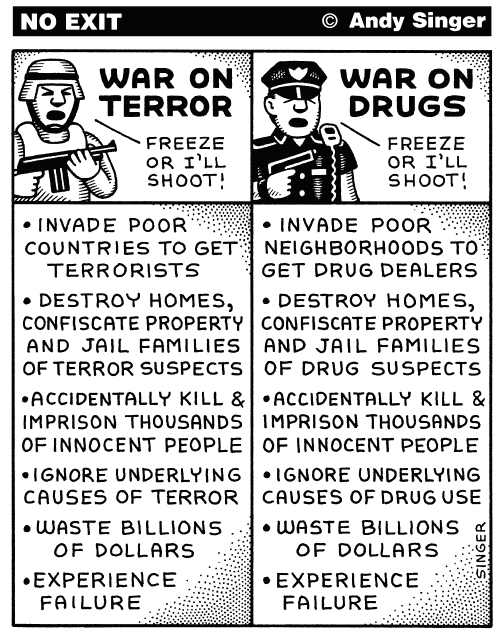
The police in our country are primarily designed to do two things: protect the property of the rich and perpetrate the completely immoral war on drugs—which by definition is a war on our own people.

We lock up more people than any other country on earth. Meaning the land of the free is the largest prison state in the world. So all these droopy-faced politicians and rabid-talking heads telling you how awful China is on human rights or Iran or North Korea—none of them match the numbers of people locked up right here under Lady Liberty’s skirt.

Myth No. 3—Buying will make you happy.

This myth is put forward mainly by the floods of advertising we take in but also by our social engineering. Most of us feel a tenacious emptiness, an alienation deep down behind our surface emotions (for a while I thought it was gas). That uneasiness is because most of us are flushing away our lives at jobs we hate before going home to seclusion boxes called houses or apartments. We then flip on the TV to watch reality shows about people who have it worse than we do (which we all find hilarious).

If we’re lucky, we’ll make enough money during the week to afford enough beer on the weekend to help it all make sense. (I find it takes at least four beers for everything to add up.) But that doesn’t truly bring us fulfillment. So what now? Well, the ads say buying will do it. Try to smother the depression and desperation under a blanket of flat-screen TVs, purses and Jet Skis. Nowdoes your life have meaning? No? Well, maybe you have to drive that Jet Ski a little faster! Crank it up until your bathing suit flies off and you’ll feel alive!

The dark truth is that we have to believe the myth that consuming is the answer or else we won’t keep running around the wheel. And if we aren’t running around the wheel, then we start thinking, start asking questions. Those questions are not good for the ruling elite, who enjoy a society based on the daily exploitation of 99 percent of us.

Myth No. 2—If you work hard, things will get better.

According to Deloitte’s Shift Index survey: “80% of people are dissatisfied with their jobs” and “[t]he average person spends 90,000 hours at work over their lifetime.” That’s about one-seventh of your life—and most of it is during your most productive years.

Ask yourself what we’re working for. To make money? For what? Almost none of us are doing jobs for survival anymore. Once upon a time, jobs boiled down to:

I plant the food—>I eat the food—>If I don’t plant food = I die.

But nowadays, if you work at a café—will someone die if they don’t get their super-caf-mocha-frap-almond-piss-latte? I kinda doubt they’ll keel over from a blueberry scone deficiency.

If you work at Macy’s, will customers perish if they don’t get those boxer briefs with the sweat-absorbent-ass fabric? I doubt it. And if they do die from that, then their problems were far greater than you could’ve known. So that means we’re all working to make other people rich because we have a society in which we have to work. Technological advancements can do most everything that truly must get done.

So if we wanted to, we could get rid of most work and have tens of thousands of more hours to enjoy our lives. But we’re not doing that at all. And no one’s allowed to ask these questions—not on your mainstream airwaves at least. Even a half-step like universal basic income is barely discussed because it doesn’t compute with our cultural programming.

Scientists say it’s quite possible artificial intelligence will take away all human jobs in 120 years. I think they know that will happen because bots will take the jobs and then realize that 80 percent of them don’t need to be done! The bots will take over and then say, “Stop it. … Stop spending a seventh of your life folding shirts at Banana Republic.”

One day, we will build monuments to the bot that told us to enjoy our lives and … leave the shirts wrinkly.

And this leads me to the largest myth of our American society.

Myth No. 1—You are free.

And I’m not talking about the millions locked up in our prisons. I’m talking about you and me. If you think you’re free, try running around with your nipples out, ladies. Guys, take a dump on the street and see how free you are.

I understand there are certain restrictions on freedom we actually desire to have in our society—maybe you’re not crazy about everyone leaving a Stanley Steamer in the middle of your walk to work. But a lot of our lack of freedom is not something you would vote for if given the chance.

Try building a fire in a parking lot to keep warm in the winter.

Try sleeping in your car for more than a few hours without being harassed by police.

Try maintaining your privacy for a week without a single email, web search or location data set collected by the NSA and the telecoms.

Try signing up for the military because you need college money and then one day just walking off the base, going, “Yeah, I was bored. Thought I would just not do this anymore.”

Try explaining to Kentucky Fried Chicken that while you don’t have the green pieces of paper they want in exchange for the mashed potatoes, you do have some pictures you’ve drawn on a napkin to give them instead.

Try running for president as a third-party candidate. (Jill Stein was shackled and chained to a chair by police during one of the debates.)

Try using the restroom at Starbucks without buying something … while black.

We are less free than a dog on a leash. We live in one of the hardest-working, most unequal societies on the planet with more billionaires than ever.

Meanwhile, Americans supply 94 percent of the paid blood used worldwide. And it’s almost exclusively coming from very poor people. This abusive vampire system is literally sucking the blood from the poor. Does that sound like a free decision they made? Or does that sound like something people do after immense economic force crushes down around them? (One could argue that sperm donation takes a little less convincing.)

Point is, in order to enforce this illogical, immoral system, the corrupt rulers—most of the time—don’t need guns and tear gas to keep the exploitation mechanisms humming along. All they need are some good, solid bullshit myths for us all to buy into, hook, line and sinker. Some fairy tales for adults.

It’s time to wake up.


If you think this column is important, please share it. Also, check out Lee Camp’s weekly TV show “Redacted Tonight” and weekly podcast “Common Censored.”

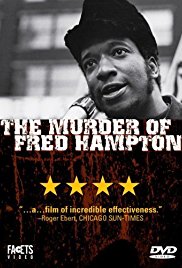
Saturday Matinee: The Murder of Fred Hampton

Fred Hampton, founder of the Illinois chapter of the Black Panther Party for Self-Defense, was assassinated by a special unit of the Chicago Police Department on December 4th, 1969 as he lay face down in bed. He was 21 years old when he was murdered. The police fired 99 unanswered shots into his apartment, wounding Fred as he slept. Apparently drugged by an informant, Hampton was unable to awaken. After the raid the police put two more shots into Hampton’s head and said “Now he’s good and dead.”

This film follows the last year or so of Fred’s life and the investigation immediately following his murder.

The first part of the film shows Fred speaking and organizing and provides a brief glimpse into the Panther community programs such as free breakfasts for school children, as well as a fairly good portrayal of Hampton’s dynamic speaking abilities, vast depth of knowledge for someone so young, and his passion for the revolutionary struggle of all oppressed people worldwide regardless of race.

The remainder of the film focuses on Fred’s murder including footage of the crime scene. The attacking police unit was so secret that the local precinct was not notified to clean things up after the bodies were removed. As a result the Panthers and their attorneys filmed and collected a vast amount of evidence which proved the police and states’ attorneys were lying. The police and government arguments are given, interspersed with contradictory proof by the Panthers and their attorneys proving that this was not a raid gone sour, but rather a carefully planned assassination. The photo of the police smiling joyously as they carry Hampton’s body out of the apartment is ominous.

This film was made right after Fred Hampton was murdered, and before the Panthers were aware that one of their own – William O’Neal – was actually an FBI informant who provided the police with the map of Fred Hampton’s apartment. It was also filmed years before the information about the FBI’s COINTELPRO campaign was made public. It is a great piece of history which gives a rare fair treatment to the Black Panther Party.

Watch the full film here.


Enough Is Enough: If You Really Want to Save Lives, Take Aim at Government Violence

By John W. Whitehead

Source: The Rutherford Institute

“It is often the case that police shootings, incidents where law enforcement officers pull the trigger on civilians, are left out of the conversation on gun violence. But a police officer shooting a civilian counts as gun violence. Every time an officer uses a gun against an innocent or an unarmed person contributes to the culture of gun violence in this country.”—Journalist Celisa Calacal

Enough is enough.

That was the refrain chanted over and over by the thousands of demonstrators who gathered to protest gun violence in America.

Enough is enough.

We need to do something about the violence that is plaguing our nation and our world.

Enough is enough.

The world would be a better place if there were fewer weapons that could kill, maim, destroy and debilitate.

Enough is enough.

On March 24, 2018, more than 200,000 young people took the time to march on Washington DC and other cities across the country to demand that their concerns about gun violence be heard.

More power to them.

I’m all for activism, especially if it motivates people who have been sitting silently on the sidelines for too long to get up and try to reclaim control over a runaway government.

Curiously, however, although these young activists were vocal in calling for gun control legislation that requires stricter background checks and limits the kinds of weapons being bought and sold by members of the public, they were remarkably silent about the gun violence perpetrated by their own government.

Enough is enough.

Why is no one taking aim at the U.S. government as the greatest purveyor of violence in American society and around the world?

The systemic violence being perpetrated by agents of the government has done more collective harm to the American people and our liberties than any single act of terror or mass shooting.

Violence has become our government’s calling card, starting at the top and trickling down, from the more than 80,000 SWAT team raids carried out every year on unsuspecting Americans by heavily armed, black-garbed commandos and the increasingly rapid militarization of local police forces across the country to the drone killings used to target insurgents.

Enough is enough.

The government even exports violence worldwide, with weapons being America’s most profitable export.

Indeed, the day before thousands of demonstrators descended on Washington DC to protest mass shootings such as the one that took place at Stoneman Douglas High School, President Trump signed into law a colossal $1.3 trillion spending bill that gives the military the biggest boost in spending in more than a decade.

Ironic, isn’t it?

Here we have thousands of passionate protesters raging, crying and shouting about the need to restrict average Americans from being able to purchase and own military-style weapons, all the while the U.S. government—the same government under Trump, Obama, Bush, Clinton and beyond that continues to act as a shill and a shield for the military industrial complex—embarks on a taxpayer-funded death march that will put even more guns into circulation, and no one says a thing about it.

Why is that?

Why does the government get a free pass?

With more than $700 billion earmarked for the military, including $144.3 billion for new military equipment, you can expect a whole lot more endless wars, drone strikes, bombing campaigns, civilian deaths, costly military installations, and fat paychecks for private military contractors who know exactly how to inflate invoices and take the American taxpayers for a ride.

Enough is enough.

You can be sure this financial windfall for America’s military empire will be used to expand the police state here at home, putting more militarized guns and weapons into the hands of local police and government bureaucrats who have been trained to shoot first and ask questions later.

There are now reportedly more bureaucratic (non-military) government civilians armed with high-tech, deadly weapons than U.S. Marines.

While Americans have to jump through an increasing number of hoops in order to own a gun, the government is arming its own civilian employees to the hilt with guns, ammunition and military-style equipment, authorizing them to make arrests, and training them in military tactics.

Among the agencies being supplied with night-vision equipment, body armor, hollow-point bullets, shotguns, drones, assault rifles and LP gas cannons are the Smithsonian, U.S. Mint, Health and Human Services, IRS, FDA, Small Business Administration, Social Security Administration, National Oceanic and Atmospheric Administration, Education Department, Energy Department, Bureau of Engraving and Printing and an assortment of public universities.

Seriously, why do IRS agents need AR-15 rifles?

Enough is enough.

Remember, it was just a few months ago that President Trump, aided and abetted by his trusty Department of Justice henchman Jeff Sessions, rolled back restrictions on the government’s military recycling program to the delight of the nation’s powerful police unions.

Under the auspices of this military “recycling” program, which was instituted decades ago and allows local police agencies to acquire military-grade weaponry and equipment, more than $4.2 billion worth of equipment has been transferred from the Defense Department to domestic police agencies since 1990.

Ironically, while gun critics continue to clamor for bans on military-style assault weapons, high-capacity magazines and armor-piercing bullets, expanded background checks, and tougher gun-trafficking laws, the U.S. military boasts all of these and more, including some weapons the rest of the world doesn’t have.

In the hands of government agents, whether they are members of the military, law enforcement or some other government agency, these weapons have become routine parts of America’s day-to-day life, a byproduct of the rapid militarization of law enforcement over the past several decades.

Over the course of 30 years, police officers in jack boots holding assault rifles have become fairly common in small town communities across the country. As investigative journalists Andrew Becker and G.W. Schulz reveal, “Many police, including beat cops, now routinely carry assault rifles. Combined with body armor and other apparel, many officers look more and more like combat troops serving in Iraq and Afghanistan.”

Although these federal programs that allow the military to “gift” battlefield-appropriate weapons, vehicles and equipment to domestic police departments at taxpayer expense are being sold to communities as a benefit, the real purpose is to keep the defense industry churning out profits, bring police departments in line with the military, and establish a standing army.

It’s a militarized approach to make-work programs, except in this case, instead of unnecessary busy work to keep people employed, communities across America are being inundated with unnecessary drones, tanks, grenade launchers and other military equipment better suited to the battlefield in order to fatten the bank accounts of the military industrial complex.

Thanks to Trump, this transformation of America into a battlefield is only going to get worse.

Get ready for more militarized police.

More police shootings.

More SWAT team raids.

More violence in a culture already drenched with violence.

Enough is enough.

You want to talk about gun violence?

According to the Washington Post, “1 in 13 people killed by guns are killed by police.”

While it still technically remains legal for the average citizen to own a firearm in America, possessing one can now get you pulled over, searched, arrested, subjected to all manner of surveillance, treated as a suspect without ever having committed a crime, shot at and killed by police.

You don’t even have to have a gun or a look-alike gun, such as a BB gun, in your possession to be singled out and killed by police.

There are countless incidents that happen every day in which Americans are shot, stripped, searched, choked, beaten and tasered by police for little more than daring to frown, smile, question, or challenge an order.

Growing numbers of unarmed people are being shot and killed for just standing a certain way, or moving a certain way, or holding something—anything—that police could misinterpret to be a gun, or igniting some trigger-centric fear in a police officer’s mind that has nothing to do with an actual threat to their safety.

Enough is enough.

With alarming regularity, unarmed men, women, children and even pets are being gunned down by twitchy, hyper-sensitive, easily-spooked police officers who shoot first and ask questions later, and all the government does is shrug and promise to do better.

Killed for standing in a “shooting stance.” In California, police opened fire on and killed a mentally challenged—unarmed—black man within minutes of arriving on the scene, allegedly because he removed a vape smoking device from his pocket and took a “shooting stance.”

Killed for holding a cell phone. Police in Arizona shot a man who was running away from U.S. Marshals after he refused to drop an object that turned out to be a cellphone. Similarly, police in Sacramento fired 20 shots at an unarmed, 22-year-old black man who was standing in his grandparents’ backyard after mistaking his cellphone for a gun.

Killed for carrying a baseball bat. Responding to a domestic disturbance call, Chicago police shot and killed 19-year-old college student Quintonio LeGrier who had reportedly been experiencing mental health problems and was carrying a baseball bat around the apartment where he and his father lived.

Killed for opening the front door. Bettie Jones, who lived on the floor below LeGrier, was also fatally shot—this time, accidentally—when she attempted to open the front door for police.

Killed for running towards police with a metal spoon. In Alabama, police shot and killed a 50-year-old man who reportedly charged a police officer while holding “a large metal spoon in a threatening manner.”

Killed for running while holding a tree branch. Georgia police shot and killed a 47-year-old man wearing only shorts and tennis shoes who, when first encountered, was sitting in the woods against a tree, only to start running towards police holding a stick in an “aggressive manner.

Killed for crawling around naked. Atlanta police shot and killed an unarmed man who was reported to have been “acting deranged, knocking on doors, crawling around on the ground naked.” Police fired two shots at the man after he reportedly started running towards them.

Killed for wearing dark pants and a basketball jersey. Donnell Thompson, a mentally disabled 27-year-old described as gentle and shy, was shot and killed after police—searching for a carjacking suspect reportedly wearing similar clothing—encountered him lying motionless in a neighborhood yard. Police “only” opened fire with an M4 rifle after Thompson first failed to respond to their flash bang grenades and then started running after being hit by foam bullets.

Killed for driving while deaf. In North Carolina, a state trooper shot and killed 29-year-old Daniel K. Harris—who was deaf—after Harris initially failed to pull over during a traffic stop.

Killed for being homeless. Los Angeles police shot an unarmed homeless man after he failed to stop riding his bicycle and then proceeded to run from police.

Killed for brandishing a shoehorn. John Wrana, a 95-year-old World War II veteran, lived in an assisted living center, used a walker to get around, and was shot and killed by police who mistook the shoehorn in his hand for a 2-foot-long machete and fired multiple beanbag rounds from a shotgun at close range.

Killed for having your car break down on the road. Terence Crutcher, unarmed and black, was shot and killed by Oklahoma police after his car broke down on the side of the road. Crutcher was shot in the back while walking towards his car with his hands up.

Killed for holding a garden hose. California police were ordered to pay $6.5 million after they opened fire on a man holding a garden hose, believing it to be a gun. Douglas Zerby was shot 12 times and pronounced dead on the scene.

Killed for calling 911. Justine Damond, a 40-year-old yoga instructor, was shot and killed by Minneapolis police, allegedly because they were startled by a loud noise in the vicinity just as she approached their patrol car. Damond, clad in pajamas, had called 911 to report a possible assault in her neighborhood.

Killed for looking for a parking spot. Richard Ferretti, a 52-year-old chef, was shot and killed by Philadelphia police who had been alerted to investigate a purple Dodge Caravan that was driving “suspiciously” through the neighborhood.

Shot seven times for peeing outdoors. Eighteen-year- old Keivon Young was shot seven times by police from behind while urinating outdoors. Young was just zipping up his pants when he heard a commotion behind him and then found himself struck by a hail of bullets from two undercover cops. Allegedly officers mistook Young—5’4,” 135 lbs., and guilty of nothing more than taking a leak outdoors—for a 6’ tall, 200 lb. murder suspect whom they later apprehended. Young was charged with felony resisting arrest and two counts of assaulting a peace officer.

This is what passes for policing in America today, folks, and it’s only getting worse.

In every one of these scenarios, police could have resorted to less lethal tactics.

They could have acted with reason and calculation instead of reacting with a killer instinct.

They could have attempted to de-escalate and defuse whatever perceived “threat” caused them to fear for their lives enough to react with lethal force.

That police instead chose to fatally resolve these encounters by using their guns on fellow citizens speaks volumes about what is wrong with policing in America today, where police officers are being dressed in the trappings of war, drilled in the deadly art of combat, and trained to look upon “every individual they interact with as an armed threat and every situation as a deadly force encounter in the making.”

Remember, to a hammer, all the world looks like a nail.

We’re not just getting hammered, however.

We’re getting killed, execution-style.

Enough is enough.

When you train police to shoot first and ask questions later—whether it’s a family pet, a child with a toy gun, or an old man with a cane—they’re going to shoot to kill.

This is the fallout from teaching police to assume the worst-case scenario and react with fear to anything that poses the slightest threat (imagined or real).

This is what comes from teaching police to view themselves as soldiers on a battlefield and those they’re supposed to serve as enemy combatants.

This is the end result of a lopsided criminal justice system that fails to hold the government and its agents accountable for misconduct.

You want to save lives?

Start by doing something to save the lives of your fellow citizens who are being gunned down every day by police who are trained to shoot first and ask questions later.

You want to cry about the lives lost during mass shootings?

Cry about the lives lost as a result of the violence being perpetrated by the U.S. government here at home and abroad.

If gun control activists really want the country to reconsider its relationship with guns and violence, then it needs to start with a serious discussion about the role our government has played and continues to play in contributing to the culture of violence.

If the American people are being called on to scale back on their weapons, then as I make clear in my book Battlefield America: The War on the American People, the government and its cohorts—the police, the various government agencies that are now armed to the hilt, the military, the defense contractors, etc.—need to do the same.

It’s time to put an end to the government’s reign of terror.

Enough is enough.

Trump proposes huge hike in military and police spending

discretionary_spending_pie_2015_enacted

By Patrick Martin

Source: WSWS.org

The Trump administration sent instructions to federal agencies Monday proposing a $54 billion increase in spending for the Pentagon, the intelligence agencies and the Department of Homeland Security, to be offset by $54 billion in cuts for other agencies, mainly those involved in domestic social services and regulation of business.

Trump’s budget outline sets the stage for his first address to Congress on Tuesday. It provides further evidence that the Trump administration will be dedicated to radically rolling back social spending to finance a dramatic escalation of military operations, both in the neo-colonial wars in the Middle East and against the United States’ ‘great power’ rivals: China and Russia.

Federal departments are being told to file budget requests for the fiscal year that begins October 1, 2017 based on the numbers they were given by the Office of Management and Budget. Each agency will be responsible for working out the cuts required to meet proposed reductions, while the Pentagon, CIA and DHS will propose expanded operations with the additional funds they are to be awarded.

There were no details made public about the exact budget ceilings given to each federal department, but White House officials made it clear that foreign aid programs in the State Department and anti-pollution regulation through the Environmental Protection Agency (EPA) would suffer some of the largest cuts.

The total budget of the EPA is only $9 billion, so many other domestic programs are certain to be hard-hit, involving such departments as Education, Labor, Transportation, Agriculture (which includes food stamps), Housing and Urban Development and Health and Human Services.

The biggest federal social programs, Social Security, Medicare and Medicaid, are not affected by the budget order, which involves only funding for so-called discretionary programs, those financed through annual congressional appropriations. Entitlement programs, where benefits are paid out automatically to those who establish their eligibility, are covered by a separate budget process.

OMB Director Mick Mulvaney appeared at the White House press briefing Monday afternoon to explain the action taken by the Trump administration. He emphasized that setting what he called the “top-line budget number” for each department was only the start of a protracted process.

The OMB will use the figures from each department and agency to prepare a budget outline to be submitted to Congress on March 16. A full budget will not be ready until sometime in May, Mulvaney said. He also indicated that while spending on Social Security, Medicare and Medicaid were not addressed in the action taken Monday, “entitlement reform”—i.e., cuts in these critical programs—would be a subject of discussion with congressional leaders later in the budget process.

Press reports identified the three White House officials who have played the main roles in the initial budgeting: Mulvaney, who was confirmed on February 16 as budget director; National Economic Council Director Gary Cohn, the former president of Goldman Sachs, the huge investment bank; and Stephen K. Bannon, Trump’s chief strategist, the former chief executive of the fascistic Breitbart News site, who exercises increasingly broad sway over all White House policy decisions.

While no details have yet been released of what the $54 billion increase in military-police spending will pay for, the scale of the increase, in and of itself, shows the real character of the Trump administration. This is to be a government of war abroad and mass repression at home.

Trump himself touched on this theme in typically rambling and unfocused remarks to a meeting of the National Governors Association Monday. “We never win a war,” he said. “We never win. And we don’t fight to win. We don’t fight to win. So we either got to win, or don’t fight at all.”

He continued, telling the governors, “My first budget will be submitted to the Congress next month. This budget will be a public safety and national security budget, very much based on those two with plenty of other things, but very strong. And it will include a historic increase in defense spending to rebuild the depleted military of the United States of America at a time we most need it.”

Additional money for the Pentagon is likely to go to a dramatically increased tempo of operations in Iraq and Syria. Defense Secretary James Mattis delivered proposals to the White House Monday for an offensive against Islamic State in Iraq and Syria (ISIS), as required by an executive order issued by Trump last month. No details are available yet, but any acceleration of the bombing campaign, let alone the deployment of significant numbers of the US ground troops, would increase the cost of that war by many billions.

The $54 billion increase would also presumably include funds for the construction of Trump’s planned wall on the US-Mexico border, as well as a massive increase in spending on detention facilities for the hundreds of thousands of immigrants to be rounded up under the executive orders already issued by the White House.

The federal budget is operating under the constraints imposed by the 2011 Budget Control Act, the bipartisan legislation negotiated by the Obama White House, the Republican-controlled House of Representatives, and a Democratic-controlled Senate. This set up the so-called sequester process, under which all discretionary spending is subject to a budget freeze, for both domestic and military programs.

Each year, increased spending for programs under the sequester has been worked out on the basis of roughly equal increases for domestic and military programs. Last year, for fiscal year 2016, Congress approved $543 billion for domestic discretionary programs and $607 billion for the military. The Trump White House plan would thus represent a cut of about 10 percent for domestic programs, and an increase of nearly that amount for the military.

Any significant change in the sequester process would require support from congressional Democrats, particularly in the Senate, where the Republican party holds only a narrow 52-48 edge, and any major legislation would require a 60-vote majority to pass.

Several congressional Republican leaders criticized the White House plan as insufficiently skewed to the military. House Armed Services Committee Chairman Mac Thornberry of Texas issued a statement criticizing the “low budget number” and adding, “The administration will have to make clear which problems facing our military they are choosing not to fix.”

Senator John McCain of Arizona, chairman of the Senate Armed Services Committee, declared that the Trump plan is “a mere 3 percent above President Obama’s defense budget, which has left our military underfunded, undersized and unready.”

For all the statements by Trump and the Republicans bemoaning the supposedly “depleted” state of the US military, the United States spends more on its armed forces than the next 15 countries in the world combined. The military budget is only inadequate if the mission of the US military is assumed to be the conquest of the entire planet and the subduing of all armed resistance from any quarter—which is actually the perspective of the American ruling elite.

Review: The Utopia of Rules, by David Graeber

index

By Jonathan Woolley

Source: Gods & Radicals

Reading a book about bureaucracy may not sound like an exciting way to spend a weekend off with my family. And yet, having just started David Graeber’s latest – A Utopia of Rules – when I wasn’t making tea for my elderly grandmother, I curled up in a comfy chair with this little pink book, mocked up to look like one of the forms it excoriates, and excited by each new page. Although many of the ideas Graeber presents here aren’t new, the clarity and force with which they are drawn together and set out is a rare pleasure – a contrast with turgid official paperwork that was almost certainly intentional.

Graeber – a social anthropologist, anarchist, and prominent leftist thinker, based at the London School of Economics (LSE) – develops his argument, in part, by thinking ethnographically with his own personal experiences of officialdom, beginning with a heartbreaking account of his own struggle to deal with his elderly mother’s Medicaid application. In response to this, he introduces the book as a series of short essays on different facets of what he calls “total bureaucratisation” – defined as “the gradual fusion of public and private power into a single entity, rife with rules and regulations whose ultimate purpose is to extract wealth in the form of profits”. Bureaucracy is not a simple matter of red-tape created by the state tying up private enterprise, as right-wing pundits would have us believe: Graeber points out that bureaucratic forms have become intrinsic to both private and public spheres.

While the Left has been largely unable to produce a critique of bureaucracy, the Right has such a critique – but efforts to “roll back” the state by the Right have had the opposite effect, producing even more paperwork than ever. This leads Graeber to propose what he calls “the Iron Law of Liberalism”, which states that “any market reform, any government initiative intended to reduce red tape and promote market forces will have the ultimate effect of increasing the total number of regulations, the total amount of paperwork, and the total number of bureaucrats the government employs.”

In stressing the coeval nature of the free market and an expansive state, Graeber directs his analysis away from shallow criticism of big government, towards the common institutional basis of all inequality, found at the heart of neoliberal governance. Given the extent to which the general public in the English-speaking world continue to view the expansive state and the “free” market as antithetical to one another and synonymous with the Left and the Right of politics respectively, this is an important point to make.

With the foundations laid, Graeber’s lucid prose carries the reader briskly through a sequence of stand-alone essays, each of which engages with a particular aspect of total bureaucratisation today. Each of these, Graeber claims, will need to be addressed by any critique of bureaucracy the Left might develop. Dead Zones of the Imagination utilises feminist theory of imaginative labour to develop the argument that bureaucracy – in addition to being stupid – exists to create stupidity. Its impersonal procedures, backed up by threat of violence, ensure that those in positions of authority – especially the police – are able to avoid doing the imaginative labour of empathising with others, while forcing those others to engage in imaginative labour towards the authorities, simply in order to avoid physical harm. Police insist upon being able to “define the situation” – those who contest this, rather than violent criminals, are the ones who are routinely meet with physical violence. This serves to emphasise a very basic point: don’t underestimate the importance of physical violence, even if it takes place behind a veil of paper.

In Of Flying Cars and the Declining Rate of Profit, Graeber turns his attention to the trajectory of technological development in the modern world. Why is it, he asks, that in the 1950s we were able to explore space, and expected to be surrounded by robotic servants and flying cars by now, but that this awesome potential has not been realised? The answer, he suggests, is that rather than cause social change by itself, the direction of technological innovation is directed by financial interests – so that instead of pursuing automation and space travel that could disrupt existing economic relations on Earth, major funders have prioritised less disruptive research lines, such as information technology. The greatest achievement of the late 20th century – the Internet – is revealed as decidedly chimeric; both a tool for enhanced communication, but also a means of surveillance and manipulation on an industrial scale. The promise of technology has been broken in favour of labour discipline and social control; R&D budgets have been slashed in favour of boosting executive pay and shareholder dividends. Instead of being allowed to pursue their research interests, academics are increasingly forced to spend more and more of their time doing paperwork. Rather than a driver of social change, technology is itself subject to the demands of capital.

The Utopia of Rules, or Why We Really Love Bureaucracy After All concludes the triptych, by exploring the ways in which bureaucracy can, in fact, be deeply enchanting – when it works well – providing human beings with a sense of predictability and certainty that can be deeply seductive. While the second essay uses science fiction to reflect upon the curious falling short of innovation, this essay turns to magic and fantasy fiction in an attempt to understand how the appeal of bureaucratic rationality is generated. Graeber argues that the elaborate angelic hierarchies and formulaic modes of ritual address, developed in the Rennaissance but that now enliven Western Ceremonial Magic, actually reflect a political imaginary – a vision of the chaotic, violent world of the Middle ages reordered according to a spiritualised version of the old, lost, Roman bureaucracy. Nowadays, however, this vision is inverted – fantasy fiction today constructs a pseudo-Medieval world, where bureaucracy is almost entirely absent, where creativity is directly channelled into reality via magic, and where leadership is acquired on the basis of personal virtue and conquest, rather than through impersonal qualification or graduate recruitment. However, while giving us an opportunity to vicariously enjoy a world without bureaucracy, medievalist fantasies – with their perennial sense of threat and danger – nonetheless reinforce our sense that it’s probably preferable to live with the devil we know. Just as the gruesome spectacle of Gladitorial combat both beguiled and repulsed the populace of Rome from the idea of democracy, the blood-soaked cities of Westeros instil in us a fear of a world without bureaucratic order.

Perhaps the most fascinating contestation made by Graeber – albeit, only in passing – is that bureaucratic rationality rests upon a resolutely spiritual set of commitments. The idea that numbers and their rational appraisal can help one to understand and manipulate reality, reaches back to the Pythagoreanism of ancient Greece. They, in turn, directly inspired Plato, the father of Western formalism, and in turn the Medieval angelic hierarchies mentioned above. This commitment to the power of logic and pure numbers conferred upon bureaucracy a utopian air; bureaucrats envision a world of perfect harmony, governed by well-designed, efficient institutions, and develop frameworks that attempt to make that world a reality. The fact that the complexity of the world-as-lived rarely fits these lofty ideals ensures that bureaucracy requires constant enforcement – with the force in question being the threat of violence meted out by private security, the police or the military.

But it is in the Appendix – Batman and the Problem of Constituent Power – that we find some of Graeber’s most timely observations for the present moment. In a playful analysis of the cultural and political significance of superheroes, Graeber points out that – building upon his analysis of medievalist fantasy in the previous chapter – comics teach the same kind of lesson. In pitting basically passive superheroes who seek to preserve the status quo against endlessly creative and scheming villains who wish to unseat it, comics allow the reader to vicariously enjoy the thrill of unfettered creative potential, only to enforce the idea that such potential necessarily leads to violence, and that violence is in turn the only way that it can be controlled.

In the Marvel and DC Universes, the only alternative to bureaucracy is violent creativity of villains – in short, fascism. This, in turn, allows Graeber to highlight a broad distinction between the left and the right: “Ultimately, the division between left-and right-wing sensibilities turns on one’s attitude towards the imagination. For the Left, imagination, creativity, by extension production, the power to bring new things and new social arrangements into being, is always to be celebrated. It is the source of all real value in the world. For the Right, it is dangerous; ultimately, evil. The urge to create is also a destructive urge. This kind of sensibility was rife in the popular Freudianism of the day [1950s]: where the Id was the motor of the psyche, but also amoral; if really unleashed, it would lead to an orgy of destruction. This is also what separates conservatives from fascists. Both agree that the imagination unleashed can only lead to violence and destruction. Conservatives wish to defend us against that possibility. Fascists wish to unleash it anyway. They aspire to be, as Hitler imagined himself, great artists painting with the minds, blood, and sinews of humanity.”

Following from the magistral philosophical treatise Debt: The First 5,000 years (2011), The Utopia of Rules is a more modest project. Graeber does not attempt to propose a leftist critique of total bureaucratisation within its pages, though he argues such a critique is long overdue. Nor does he advance a singular argument – his goal is simply to prompt a conversation. With the rise of the populist right, this conversation is more important than ever. The mainstream Left, Graeber points out, has for too long positioned itself on the side of state control, leaving critiques of bureaucracy to the Right. As the pro-market efforts of neoliberalism have done nothing but concentrate capital in the hands of the rentier classes, the frustration is now boiling over. And yet, in unveiling the mystical roots of stultifying modern paperwork, Graeber reveals a way forward for us – if total bureaucratisation is a spell laid over the world, that spell may be broken. We need not live out the fevered dreams of Renaissance mystics; we can awaken. Nor shall the dark blood and bone portraits of fascists necessarily hold sway over the human imagination, for the Left is just as creative as the right; indeed, unlike them, we can create without fear of creativity. The Right may aspire to break this world, but it is the birthright of the Left to make a better one.