Trust No One

By Michael Krieger

Source: Liberty Blitzkrieg

The title of today’s post is not meant to be taken literally. I trust plenty of people. I trust friends who’ve demonstrated their trustworthiness over the years. I trust my family. Having people in my life I love and trust makes everything far more meaningful and pleasant. I hope people reading this likewise have a circle of trust they’ve built over the years.

On the other hand, you should never trust anyone or anything that hasn’t given you good reason to do so, and if someone or something gives you good reason not to trust them, you should never forget that. The more power a person or institution has in society, the less trustworthy they tend to be. I don’t say this because it’s fun to be cynical, I say this because my life experience has demonstrated its accuracy.

In the 21st century alone, I’ve been given good reason to distrust all sorts of things around me, including the U.S. government (all governments really), intelligence agencies, politicians, mass media, Wall Street and Silicon Valley, to name a few. These power centers make up “society” as we know it in 2020, which is really just massive concentrations of lawless financial and political power obfuscating rampant criminality behind the cover of various ostensibly venerable institutions. What’s most remarkable is how many people still maintain trust in so many of these provably untrustworthy organizations and industries, which speaks to the power of propaganda as well as the comfort of denial.

That said, the ground is clearly beginning to shift on this front. As more and more people recognize that the system’s designed to work against them, increased numbers will reject conventional wisdom and search for an alternative framework. Unfortunately, this next step can be equally treacherous and it’s important not to jump from the frying pan into the fire.

This is where social media comes into play. It offers an endless array of opinions and analysis that you don’t get from mass media, but it’s also filled with bad actors, professional propagandists and con artists. At this point, everyone knows that social media is the new information battleground, so every character or institution with malicious intent is aggressively playing in this arena and often with boatloads of money. The charlatans at MSNBC will have you believe it’s just the Russians or Chinese, but every government and every single special interest on the planet is now involved. They’re all on social media in one form or another, trying to push you in a specific direction that’s usually not in your best interests.

It took me a while, but I’ve finally recognized how unthoughtful and treacherous social media is whenever some big news event hits. Important arguments quickly lose all nuance and devolve into binary talking points and agendas. People split into teams in a way that feels very much akin to the traditional, and now largely discredited, red/blue political theater. For covid-19, it felt like half of Twitter thought it was an extinction-level event, while the other half was convinced the whole thing was a hoax. In the aftermath of George Floyd, you were either cheering on the civil unrest, or wanted to send in the military. Increasingly, if you aren’t in one of two manufactured camps on any issue you’ll be shouted down and ostracized.  That’s not the kind of discussion I’m here for.

As someone who’s found great value in Twitter over the years, I’ve become far more careful in how I use it and where to direct my attention and energy. It reminds me of Mos Eisley in Star Wars, a wretched hive of scum and villainy, but simultaneously a place you can connect with Han Solo and get a spaceship.

As we move forward, it’s going to feel like the world’s ending, and in some ways it will be. No the world isn’t literally ending, but a specific kind of world is ending, and it’ll be extremely difficult for many people to tell the difference as it’s happening. This will likely lead to many more episodes of mass insanity as professional manipulators take advantage of millions upon millions of disoriented people. Priority number one should be to stand guard at the gate of your mind during this time so as not to become a victim.

The best thing you can do from here on out is use your time and energy as productively as possible. We’re going to need builders, creators and inventors more than ever before, because we’re past the point of putting this thing back together. We’ll need to recreate, reimagine and rebuild, and all of this must spring from a point of consciousness in order to bring forth something that is both better and sustainable. Become more beautiful and resilient as others become ugly and unhinged. Focus on what’s within your capacity to control and always remember to resist the crazy.

QUESTIONS OF OUR TIME – TIME NOW TO GET BACK TO OURSELVES?

By Kingsley L. Dennis

Source: Waking Times

‘And the Old Ones say:

look outward seriously
look inward intently
look outward carefully
look inward diligently
look outward respectfully
look inward humbly’

Jack Forbes

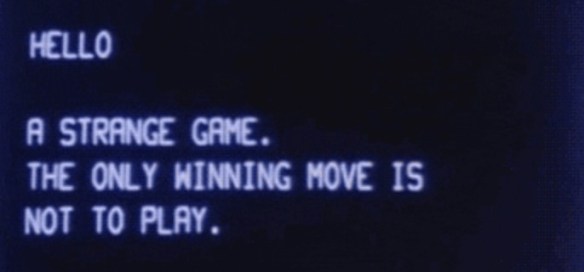
As human beings we seek the beautiful, and this gives us joy. But our lives have made everything complicated. We make ourselves complicated – life is being played around us like a game. This may not sound comfortable, or even correct, to some people. If it’s a game, then why is there so much sorrow and pain? This is the perennial question. Yet like a game, we have choices, and we make our moves. And there are players and gameplays going on all around us. And it seems that the game is rigged. One person who knew this well was Alan Watts. He often spoke about how life should not be lived as a fast journey and that existence in the universe should be recognized as being basically playful. Life is more like music, Watts used to say. And we play music – we don’t ‘work’ music. And in music, the end of the composition is not the point of the composition; otherwise, all conductors would play fast; or some composers would choose only to write the finales. We don’t go to concerts just to hear the final chord being played. We don’t engage in a dance in order to end it (unless we got tricked into it!). And yet, as Alan Watts was so keen in observing, our social systems condition us into grading our lives. Our schooling compels us into chasing grades and making our quotas and then paying our bills. And we keep believing, hoping, wishing, for the ‘great thing’ in life to come whilst we are rushing through our lives with hardly a notice of what we’re leaving behind in our rear-view mirrors. We end up living to retire. And when we retire, we imagine we have ‘finally arrived.’ And yet to where? Do we feel any different? We have a small pot of savings and almost no energy. And then we are told to wait it out. Until what? When? The final curtain? Perhaps only when it is too late do we realize that we were cheated down the whole line. And yet we followed it. We kept racing along in order to keep up or to hold onto what we were told was success. And yet – was it ever ‘our’ success? Did we miss the whole point?

Being human is about trying to create meaning for ourselves – and to enjoy it as much as possible along the way. The life we have is where we have arrived by ourselves and the steps and choices we made. We should not let ‘another mind’ make those choices for us. And most of all, we should not allow ourselves to be played for victims. We may be under the sway of other forces, yet only to the point that we are ignorant of them. Our power comes through recognizing and identifying those other forces that seek to influence and control our thoughts and actions. We need to optimize our lives by optimizing our perspective and understanding. Ignorance may seem to be a social requirement yet knowledge, understanding, creativity, and wisdom are the truer imperatives. Despite what may appear to the contrary at times, there is incredible capacity for goodness within the human race.

The majority of people in the world are good people. They wish for peace and to not do harm to others. There are many sympathetic, caring, and courageous people in the world. Unfortunately, our systems are run by the minority, and these systems are largely corrupt; and the decent people within these systems become corrupted by association or exposure. The main issue is that most of us do not look after our minds. We don’t think it is necessary. We are not aware of the malicious impacts that infiltrate and influence us on an almost daily basis. This unawareness – or ignorance – leaves people open and vulnerable. Many people have become alienated from their own minds. This is where manipulations creep in, such as mob mentality and crowd behavior. Only a large body of people with ‘alienated minds’ can become so influenced by political propaganda, consumerist advertising, and social management. Mass psychosis is only possible through a collective mindset that has become alienated from a transcendental source. In this state, we are prisoners to the impulses that steer our unconscious. We are susceptible to neuroses and psychic illness. We may believe we have freedom when we do not. The forces of bondage are subtle and often insidious. It is a necessity that human civilization returns to the fundamental recognition of the person as a human being.

Being human is about being simple. Or rather, it is about recognizing the essential things. Yet this is no simple thing to do. We are needing to get back to ourselves in so many ways. To begin, we must learn not to take things personally. There are so many ways that life attempts to get us to engage with external strife. It tries to pull us out of ourselves. When, for example, we are criticized or insulted we tend to lash out. We are conditioned to attack in order to defend. Is not a well-known aphorism, ‘Attack is the best line of defense?’ Sometimes this is phrased as – the best defense is a good offense. Yet long before these catchy phrases got circulated through our systems there was a better truism: turn the other cheek. Retaliation feeds the psychosis within the individual and the collective. If we give away our emotional and psychic energy, then we also give away our freedom. The ego must be reined in, yet not abolished. It is through the form of the ego that we can find the realm of the essential self. The ego exists as a signpost that the essential inner self is also there. As Buddhist monk Thich Nhat Hanh says – ‘If love exists, there are other things that exist also. There is ignorance, there is violence, there is craving.’ These external ‘other things’ – the violence and the suffering – can be, and are, manipulated and exacerbated. Yet the essential inner self remains as a pure, undiluted and uncorrupted form. We should allow it to speak to us and manifest in our lives. This is the human question.

Morality and meaning only have significance when they come from a genuine source. Otherwise it is a ‘projected’ form, created from social mores and cultural biases. We are the ultimate touchstone for our sense of reality. We need to have a clean lens and clear vision. And we should begin from the basics – the simple human things. There is a story which tells of a spiritual seeker who after some time comes upon a spiritual master that she feels is genuine and whom she wishes to learn from. The seeker asks the master if he will accept her as a pupil.

‘Why do you seek a spiritual path?’ asks the teacher.

‘Because I wish to be a generous and virtuous person; I wish to be balanced, mindful, caring, and to be in service for humanity. This is my goal’ said the seeker.

‘Well,’ replied the teacher, ‘these are not goals on the spiritual path; these are the very basics of being human which we need before we even begin to learn.’

What people may consider to be ‘spiritual’ is often none other than necessary human nutrition – a daily requirement for living. Yet like our other nutrition, eating, it has to be correctly integrated into our lives without making a song and dance about it. And, of course, not forgetting the saying that goes – ‘If you insist on buying poor food, you must be prepared to dislike it at the serving.’

It often feels like we spend our days trying to grasp at life, trying to understand it, with ways that are not adequate. It is like trying to capture the ocean with a bucket. The ocean stands magnificently before us, and yet our modern societies teach us to run through our lives anxiously as if with empty buckets in our hands. Personal fulfilment is not only about accomplishment; it is also a question of what we can give through each of our individual imperfections.

Here is a story that helps to illustrate this:

A man had two large pots, each hung on an end of a pole which he carried across his neck. One of the pots had a crack in it, and while the other pot was perfect and always delivered a full portion of water at the end of the long walk from the stream to his house, the cracked pot arrived only half full.

For a full two years this went on daily, with the man delivering only one and a half pots full of water to his house. Of course, the perfect pot was proud of its accomplishments, feeling accepted and appreciated. But the poor cracked pot was ashamed of its own imperfection, and miserable that it was able to accomplish only half of what it had been made to do. After two years of what it perceived to be a bitter failure, it spoke to the man one day by the stream.

“I am ashamed of myself, and I want to apologize to you.”

“Why?” asked the man. “What are you ashamed of?”

“I have been able, for these past two years, to deliver only half my load because this crack in my side causes water to leak out all the way back to your house. Because of my flaws, you have to do all of this work, and you don’t get full value from your efforts,” the pot said.

The man felt sorry for the old cracked pot, and in his compassion, he said, “As we return to my house, I want you to look at the beautiful flowers along the path. It will make you feel better.”

Indeed, as they went up the hill, the old cracked pot took notice of the sun warming the beautiful wild flowers on the side of the path, and this made it feel a little happier. But at the end of the path, it still felt bad because it had leaked out half its load, and so again the Pot apologized to the man for its failure.

The man said to the pot, “Did you notice that there were flowers only on your side of your path, but not on the other pot’s side? That’s because I have always known about your flaw, and I took advantage of it. I planted flower seeds on your side of the path, and every day while we walk back from the stream, you’ve been watering them. For two years I have been able to pick these beautiful flowers to take home to my wife. With you being just the way you are, you have given beauty and meaning to me every day.”

The War On Reality

By Wayne Janis

Source: OpEdNews

Permanent Record by Edward Snowden, (Publisher Metropolitan Books, an imprint of Henry Holt and Company). is recommended to anyone wishing to understand the world in which we live.

The most dangerous war currently being fought is the “war on reality”. Of course this was Orwell’s greatest fear as expressed in 1984 – that reality itself would be appropriated, manipulated and obliterated at will by powerful forces. His original title for 1984 was “The Last Man In Europe” – i.e., the last man connected to reality.

We live in a world in which spurious realities are being manufactured by the media, by governments, by big corporations, by religious groups, political groups, all of which are filtered through major media conglomerates that are attached to the globalist ether (let’s call it the “globalist cloud”). This globalist cloud is controlled and manipulated by a globalist Intelligence Community for political/economic/social purposes.

The bombardment of pseudo-realities will produce inauthentic humans very quickly, spurious humans as fake as the data pressing at them from all sides. We need to detach the now essential and probably irrevocable social media matrix from this globalist ether and reign it in to do the good work of humanity at large. Net neutrality is one major initiative that must be pursued and won.

Net neutrality is the concept that all traffic on the Internet should be given equal treatment by Internet providers with little to no censorship, manipulation, interference, prioritization, discrimination or preference given based on usercontentwebsiteplatformapplication, type of equipment, source address, destination address, or method of communication. Any rules of conduct must be determined democratically and implemented equally.

In addition the globalist cloud has misappropriated, stored, monetized and misused the entirety of our personal digital data for corporate profit and social control. We will only reclaim our privacy by exerting the highest level political pressure.

“Ultimately, saying that you don’t care about privacy because you have nothing to hide is no different from saying you don’t care about freedom of speech because you have nothing to say. Or that you don’t care about freedom of the press because you don’t like to read…Just because this or that freedom might not have meaning to you today doesn’t mean that it doesn’t or won’t have meaning tomorrow, to you, or to your neighbor or to the crowds of principled dissidents I was following on my phone who were protesting halfway across the planet, hoping to gain just a fraction of the freedoms that my country was busily dismantling.” – Snowden, Edward. Permanent Record (p. 208-209). Henry Holt and Co.. Kindle Edition.

And we, the people, need a powerful reality motto. I have found no better one than:

Reality is that which, when you stop believing in it, doesn’t go away..Philip K. Dick

Only the courage and implacable resistance of authentic human beings to powerful corruptors of truth and reality will save us from a world much like that depicted in 1984. It is unknown whether there are enough such authentic human beings or whether the battle can be won no matter the number.

As Reinhold Niebuhr said, it takes a “sublime madness of the soul” to fight against the “malignant powers of the world”.

And Chris Hedges:

“There is nothing that’s going to rationally justify it. You can know that everything around you points to the fact that your struggle for justice, maybe your entire life, has been futile. But this knowledge doesn’t invalidate what you’ve done.”– Hedges, Chris. Unspeakable: Talks with David Talbot about the Most Forbidden Topics in America . Skyhorse Publishing. Kindle Edition.

People like Julian Assange, Edward Snowden, Chelsea Manning, Daniel Ellsberg, Chris Hedges, John Kiriakou and others are examples of these brave and implacable martyrs who have paid the price for what is at its core a battle for the soul of humanity.

Historically, Galileo is a martyr in the war on reality even though his trial ended with an abjuration which allowed him to avoid execution and remain under house arrest for life. But I personally like the raw testicularity of Bruno Giordano (PC police be damned). He defended his astronomical beliefs to the end and refused to recant his rejection of certain dogmas of the Catholic Church. Knowing he would be burned at the stake (he was first hung naked upside down in a public square in Rome) he made a disdainful gesture to the judges and said:

“You pronounce this sentence against me with greater fear than I receive it.”

Your Life Is Not Limited To One Path

By Joe Martino

Source: Collective Evolution

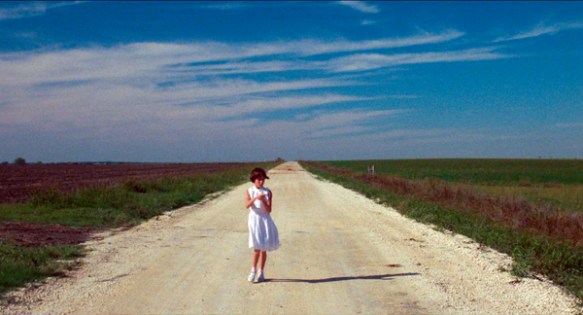
It is no secret that life can sometimes feel like a limited paved road laid out before us that we feel the need to stick to. Look at how we are brought up. Most of the time we come into the world and begin gaining our perceptions from those closest to us –our parents. As time goes on we find ourselves in school. Throughout that time we also begin watching what others do around us, what we see on TV and in movies.

What is happening is we are observing and creating an idea of how life should be; the best way to play the game. But what is ‘best?’

How many times have we heard “That’s not the best decision” or “That’s not the best decision for the whole family.” When you look at either statement you realize that “best” is subjective. What the “best” is to one person may not be the “best” to another. Even further, both of the perceptions of “best” are created from whatever belief systems each have created in their own lives. This is the key factor to realize.

We Get Trapped in Belief Systems

In either case, both scenarios have one thing in common, a belief system of what the “best” choice or decision is. When we create a belief system like this, we limit how we view things. We no longer feel what is “best,” but instead we analyze and define “best” based on a story; often a story from the past, based on entirely different times than the present moment.

Let’s take the example of a child coming out of high school today.  9 times out of 10, that child will be told, and may even believe, that the “best” decision they can make for their life is to continue their education at university or college. It does not matter that they do not know what they want to study, or that the education system will potentially cost them $100,000+, many will state that is best -and even have pride about it.

Next, they would be told to get a job so they can buy a house, as owning and buying a house is a smart decision. Should this child begin their life based on these belief systems, more often than not they will take this idea of what is “BEST” throughout the rest of their life. They will judge their decisions by this, express emotions based on this, develop self-esteem based on this and so forth. From then on, every decision they make will be based on this belief system handed down and taught to them.

Even getting specific, what to study in school, what type of job to get, what type of car to buy, how to spend and save money, what type of house to buy and so on. What is really happening with all of this? We are defining the ideal life or what’s “best” and then we limit our life to a small scope of how things should be.

The Deep Truth

Here is the absolute truth, ready? None of it has any real truth to it. It’s just all a belief system. Perception, ideas! But we often live by this and it becomes so real in our minds that we become stuck thinking this is the way to do it. Then when depression and anxiety follow, as we may believe we are stuck, we forget to look back on the belief system that is often caging us and our reality into a small tight space we often don’t deeply resonate with.

Look at our world. We often all chase the same thing, the same stuff because that is what we have been sold as the ideal life. Each area of the world has its own version of this. Who’s life are you really living? Whose dreams are you chasing and carrying out? We take on these beliefs and we begin to sacrifice ourselves, our health, and our soul desires so we can carry out someone else’s idea of “best” that we grabbed onto.

Back to the child from the example above. Now they have grown into a young man or woman and are in a job they don’t truly like. But it pays the bills and lives up to the idea of “best” that has been given to them. Most of the time, people around them will all reinforce that their decisions are the “best” because they have all been sold on the same belief system. “You have to make sacrifices, you have to work really hard to have a good life!” is what we are told. But who says what is “good?” Even when that grown up child is expressing their sadness or frustration for the reality they are in, we continue to reinforce it to protect the idea of ‘the best.’

We take this entirely expansive creative individual playing in an expansive playground called Earth and we confine them to this tiny little narrow path of what the “best” is. Instead of spending their life being able to make any choice they choose, they stay limited to what they have been sold as the “best” even if they don’t truly love it.

Even Deeper

Then you have the even deeper part, we then look upon and judge others when they make “the wrong decisions.” Look at how we view those who change their minds about what they want to play with all the time. What do we say about those people? “They need to make up their mind and get their life on track.” What track? There is a track? Says who? “They didn’t make a smart decision with their money or their house so they are going to pay for it later.” Who says some decisions are better than others? Is it not an experience either way?

You are the creator of your life and reality. You can choose to play and create whatever type of life you choose. And guess what? If you make a decision and start creating a particular life then you realize you want to create something new, you are free to do this!

No matter what story we tell ourselves like: “it’s too late, I can’t change this now, it’s too costly” etc. know that these are all egoic illusions. You are never limited to whatever life you have created even if you have been doing it for 30 years. Remember to ask yourself: the life you are chasing, the goals you have set, who’s goals are they really? Where did you first hear of them? Are they from your heart? Or are they what you have been sold?

Look inside yourself at what YOU TRULY want and how you wish to express yourself and create. Start there, and create from that space. You will see very quickly that you can create anything you choose.

Remember, there is no right or wrong path here. It’s about looking back on what we choose, where we are at and saying “Is this where I want to be? Am I feeling peace? Expressing my deepest self? Am I inspired about where I am at?” and if you aren’t, you create a new path and see how that feels. Follow how you FEEL, not what you seek as right or wrong. Our life reflects our state of consciousness.

Collective Revolution And Individual Enlightening Are The Same Thing

By Caitlin Johnstone

Source: CaitlinJohnstone.com

Revolution–the real kind–is an inside job.

This is not a click-friendly fact to highlight. Whenever I talk about revolution as having more to do with sincere inner work than with demonstrations and pitchforks and the proletariat rising up against the bourgeoisie, I get met with a lot of blank stares and dead air. It’s much more click-friendly to talk about how terrible this or that politician or oligarch or media figure is and how they should be launched into the sun with a giant crossbow.

It’s true though. Revolution is an inside job.

This is not a click-friendly thing to say because it is not an egoically pleasing thing to say. When they ask why the world is screwed up and what to do about it, people want to be told that it’s because of those Bad Guys over there and they need to be put in their place by these Good Guys over here; they don’t want to be told they need to disentangle themselves from egoic consciousness so they can see clearly enough to operate in an efficacious way.

But it’s a fact.

This is not some new agey, metaphysical philosophical position. I’m not saying that there are no villains outside yourself or any of that dopey spiritual woo woo crap; there absolutely are horrible people in the world who absolutely are doing horrible things that have absolutely horrible consequences for all of us. I’m not saying that if you do inner work you’ll magically make the sociopathic elites who are manipulating humanity toward its doom somehow turn into nice people via some esoteric mystical principle or anything like that. And I’m definitely not saying not to organize, demonstrate or take large, decisive actions against establishment power structures.

What I am saying is that the most effective thing you can do to fight the bastards and create a healthy world is to bring clarity to your own inner processes, so that’s where your energy should be most emphasised.

Egos love being told that the problem and the solution exists outside in other people. Egos thrive on conflict and drama, so the more you make it about fighting others the better; hell it’s even more fun if you can make the case that traitors within your own ranks need to be fought because they have slightly different views from you. What egos don’t like to be told is that it’s the ego itself (or more specifically the belief in it) that is the problem.

But simply pouring your energy into fighting Bad Guys is not an efficacious means toward the end of a healthy world. People who do this find their efforts stagnated and ignored, which is a big part of why so many lifelong revolutionary-minded individuals wind up becoming bitter and jaded in their struggles.

This is because most people, even people who are relatively more awake than the general mainstream population, are severely confused. Most people simply are not conscious of the way their own perception and cognition is actually happening from moment to moment, so their perception and cognition are beholden to subconscious conditioning patterns which were set years or decades ago without any consideration as to whether they would be helpful later on or would be useful in rallying the masses to overthrow their capitalist oppressors. This is made infinitely more complex and confusing by the fact that vast troves of wealth go into manipulating the public away from revolution and toward establishment loyalism.

The word “enlightenment” has a ton of sticky baggage, and can make a shoddy pointer in the way it implies some lofty, elevated state that a very few special people can attain through great effort and then are finished. Really it’s just meant to point to the process of becoming aware of the way your own field of consciousness operates and the perceptual/cognitive habits that you’ve formed for interpreting/understanding your experience. For this purpose I prefer the word “enlightening“, since it suggests an ongoing process rather than some remote “done” state.

By emphasising your own enlightening, your energy is well spent eliminating the mental distortions and egoic sticking points which so often bog down dissident movements (and if you’ve spent any time in revolutionary-minded circles with your eyes even half-open you’ll know exactly what I’m talking about). Because you’re investing your energy in your own backyard, so to speak, you’re dealing with the one area of your life that you actually have some degree of control over. You have no influence over whether the left will espouse your particular vision of revolutionary action by November or whatever, but you absolutely do have influence over whether you’re operating from truth or from delusion.

By making a firm commitment to being ruthlessly honest with yourself and exploring your own inner dimensions via meditation, self-enquiry, contemplation etc, you are opening up the possibility of the birth of a true revolutionary: someone who both desires revolutionary change and has the clarity of vision to efficaciously help manifest it in the world. But first you must pursue the truth at any cost; not “the truth” about Bad Guys and secret societies, but the truth about you and your actual experience of this world. You must put truth, and the desire to know it, above all else.

In this way you are bringing to your own personal microcosm the transformation that we need to see in the outer societal macrocosm: you are enlightening yourself in the exact same way humanity as a whole needs to enlighten. Indeed, it is the exact same movement; your inner work is no more separable from humanity’s collective awakening than an individual antibody’s attack on a pathogen is separable from the entire immune system’s return to health.

A man named Ramana Maharshi once said “Your own Self-realization is the greatest gift you can render the world.” This is what your drive toward revolution is calling you home to. Not toward egoically pleasing conflict and drama, not toward a violent uprising which will inevitably see a reversion to the same preexisting conditioning patterns, but toward a transformation in yourself which will enable you to guide the world toward health in a lucid and efficacious way.

Revolution Is Inevitable and Necessary

By Jason Holland

Source: Dissident Voice

None are so hopelessly enslaved, as those who falsely believe they are free. The truth has been kept from the depth of their minds by masters who rule them with lies. They feed them on falsehoods till wrong looks like right in their eyes.

— Johann Wolfgang von Goethe, Bk. II, Ch. 5; source: Die Wahlverwandtschaften, Hamburger Ausgabe, Bd. 6 (Romane und Novellen I), dtv Verlag, München, 1982, p. 397 (II.5).

I keep plotting a revolution no one else seems to be interested in having. So be it. I’ll have my solitary revolution. There will be no pink hats, guillotines, or marches, just me and a bitter jaded middle finger saluting towards the firmaments in utter rejection of most what this society represents. Although I hold no lasting contempt for anyone in this society because I understand we all have fallen into cultural traps and have done things that we believed we had to do so that we could be accepted, or just to be allowed to sleep indoors somewhere and be fed; we’ve had to commodify and sell out pieces of ourselves to serve the desires of those in a system of power who sanction and control the flow of money backed by military forces and institutions of incarceration, and this way of being was set into motion a long time ago, but it doesn’t have to continue if that’s not what we really desire, but for right now it’s close to all we know.

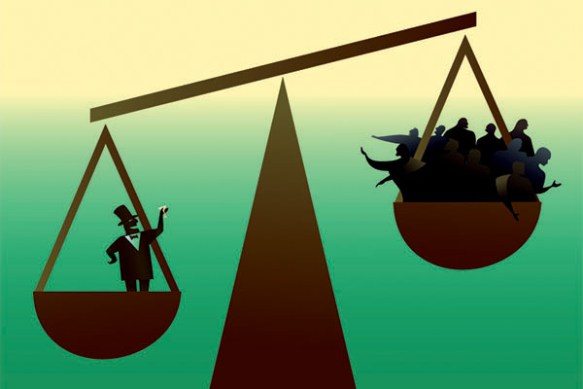
So, it does seem a revolution of sorts is inevitable due to inequality reaching grotesque heights of avarice where there is no longer any excuse for the wealthy to hide behind in order to explain why it is they have so much and others have so little. However, this just emphasizes the point that this population is largely not wise enough yet to create a revolution worth having, because a more enlightened culture would have taken a stand a long time ago before things became an emergency. Every second we acquiesce to power and don’t push for something radically better we compound an already grim situation. Globally there seems to be a majority who don’t understand what it is to be free, they merely fight to be better treated servants. So it’s highly likely their coming revolution will be a flailing inchoate attempt at something marginally better than what is here now and won’t set out to correct much, if any, of the underlying structural problems.

Consequently, the odds are the revolution we’ll end up with will circle directly back to where we are now or worse in no time at all. But my critiques and frustrations are mine, not a concern for the coming revolution. I must remember it’s their revolution, not mine. I’m not invited to theirs — well, that’s not entirely true.  I just have to ignore most of what I believe to be true, then I’m invited. As things are, I have only a single pathetic pity party scheduled as an event to prove my revolution ever existed, but I should be appreciative of what I have and cease bemoaning what I do not.

So this is where I will make my stand. The beginning and likely end of my revolution of one. In reality my revolution is simply a rough translation through the English language describing my light of truth within, which I’ve gone to great pains to keep safe, dry, and burning from a clean source of fuel. Probably all done in futility except to selfishly inoculate my own mind from the lurking darkness of the culture cave; still, a lingering desire remains to light a path out for others to follow who have become stuck watching dark Platonic shadows flicker across the walls.

With that said, here’s the path I’m lighting with argumentation and I believe it to be a solid one.  We, as in the we consisting of the global middle/lower classes of the entire planet, aka the 99%, are not a free people now nor have ever truly been free while living in the bounds of a social hierarchy. While many a winsome word has been applied to parchment declaring this or that people free, unfortunately soon thereafter the founding document is handed over to record keepers to energize the narratives of posterity while the same ole domination and ownership-driven society meters out the same ole grind. The reward and punishment operant conditioning culture is uniformly applied and chosen specifically to keep people compliant, reactive, and rutted into perpetual business as usual subservience to authoritative forces.

Constitutions supply grandiose ideas which are undermined by underlying conditional legislature where the original words are made into feckless futile notions that allows the ruling authority to do all the draconian bullshit they’ve always done with prettier sounding words. The powers that be couch authoritarian ideas in language that sometimes sounds reasonable on the surface but ultimately leads people to a deleterious state of believing they are free when they are nothing close to any working definition of freedom. Freedom is a condition which is now only possible within our own minds, but our physical bodies are fodder for the whims of a class of people who clearly believe themselves superior to just about everyone else.

Those causing the most damage are simply playing out a cultural role that’s a legacy of deceit passed down from one generation to the next, and each falling prey to traps of chasing after things; endless shiny carrots on shiny sticks. And not just chasing, but lusting, demanding, an obsessive hedonistic pursuit wanting total ego domination at any macabre cost. Pure obsession with the chase. While irony sits on many of their own bookshelves as Melville’s whale tale of wisdom lies fallow and ignored serving only as bookcase filler to give guests the impression they’re well read.

The ego-driven mind thinks primarily in the language of temporal imperatives. Short term must do this, must do that kind of thinking where all thought is disseminated through a lens of self importance with agendas to accomplish to validate that self importance. And if it thinks itself important enough it will eventually see itself as messianic. After they have assumed role of savior it’s just logically congruent that the ruling class allocate all the resources they desire for themselves so they can help all the people they will eventually save, and they need deep pockets to be the inspiration for the entire world.

Over time the ruling class creates rules and cultural dogmas that they claim are for the good of the people, but oddly enough their beliefs always result in making them richer and giving them more power. What an odd purported symbiosis they have dreamed up. The surest sign of being under an authoritarian power is when they make it really difficult to live independent of them. They demand you be hooked up to their electrical grid, pay taxes to live on the land, and hooked into the public water system. Total forced dependency on their system and it is barely noticed yet subtly removing choice and creating an artificial cage. Creating dependency is the best way to control people, and tyranny is then accepted under the umbrella of the common good, so the messianic ones can provide shelter from the storm while, of course, the common person sacrifices most of their free will in the process in a Faustian bargain which is the default role we are thrust into in this world of imperial forces.

Social hierarchies hold their grip on power in increasingly sophisticated ways. They’ve mostly advanced past public executions to keep people in line. They’ve learned it’s far more effective to manipulate minds into believing all are equals and free, and stoke the fear response towards something external that threatens that equality and freedom. It’s become understood by hierarchy that if the ruling power is perceived as the threat they are far more likely to be ousted from that power, so the engines of power must diffuse the blame of their actions lest they be held responsible for the tyranny they impose.

So semi-plausible sounding fears are brought to the forefront so they can provide you with adequate safety, which gives them the power to deprive you of the liberty they are telling you they are protecting, since you know they care so much about you. The gas-lighting of the masses creates reactionary conditioning that puts people in a state where they no longer trust their own mind and become prone to believing all the fears power claims are real. And fear is then used as a prod to move the human animal in a chosen direction power wishes.

Revolution of a real kind, one where our relationship to power radically changes, will be a series of progressions in pulling our minds out of this culture trap. Change will come in relation to how well we come to understand the implications of centralized power and ultimately integrate that knowledge into how we live. Further, how well we learn to work together cooperatively in a voluntary manner will correlate  directly to how likely it is our species survives past the next hundred years. But curing ourselves of  these brutal mental afflictions is not an easy path to traverse. However, I’ll argue a radical change is needed if we want to once again have human lives worth living with real choice and agency over our own mind, body, and time.

Philosophy cannot resolve the question ‘How should we live?’

By Dave Ellis

Source: aeon

The question How should we live? is one that many ask in a crisis, jolted out of normal patterns of life. But that question is not always a simple request for a straightforward answer, as if we could somehow read off the ‘correct’ answer from the world.

This sort of question can be like a pain that requires a response that soothes as much as it resolves. It is not obvious that academic philosophy can address such a question adequately. As the Australian philosopher Raimond Gaita has suggested, such a question emerges from deep within us all, from our humanity, and, as such, we share a common calling in coming to an answer. Academia often misses the point here, ignoring the depth, and responding as if problems about the meaning of life were logical puzzles, to be dissolved or dismissed as not real problems, or solved in a single way for all time. True, at various times philosophers such as Gilbert Ryle and more recently Mikel Burley have called for a revision of academia’s approach towards these sorts of questions, for a ‘thickened’ or expanded conception. But, while improving our awareness of their complexity and diversity, such approaches still fail to address the depth that their human origin provides.

The presence of a humanness, or a depth, to these sorts of questions comes not just from the context in which they’re asked, but also from their origin, their speaker. They are real questions for real people, and shouldn’t be dismissed with a logical flourish or treated like an interesting topic for a seminar. I would laugh if I heard a computer ask How should we live? after beating it at chess, but I would cry to hear a wife ask her husband, on the death of their son, How should we live? Although the same words have been uttered, these questions have a different form: the mother’s question contains a qualitative depth, a humanness that isn’t there in the computer’s question. We must acknowledge this if we want to find an answer to the specific question she asked with such poignancy.

The computer is a thing that cannot meaningfully ask those sorts of questions; in contrast, it’s offensive to call a person a ‘thing’. Only a human can ask that sort of question within this sort of context. We would hear the mother’s words and say that they contain a depth that’s revealing something perhaps previously hidden about herself; the computer’s question isn’t even said to be shallow. It seems to have nothing of that sort to reveal about itself whatsoever, like a parrot repeating the words it has been taught without the complexity of the human context that gives them their usual meaning. This isn’t to say that computers won’t one day be intelligent, ‘conscious’ or ‘sentient’, or that human language is ‘private’; it’s closer to the Wittgensteinian remark that: ‘If a lion could talk, we could not understand him.’

This means that the form that a language takes reflects the complex social context of the life of the speaker, and the degree to which I share a similar form of life with the speaker is the same degree to which I can meaningfully understand the utterance. The ‘life’ of the computer, we suppose, is either one-dimensional due to it lacking depth or, even if it has depth, it would be uncommunicable through human language, because, simply put, we and they differ so much. The humanness that provides the depth to our language is simply inaccessible to silicon chips and copper wires, and vice versa.

This depth to the human condition is part of what we mean when we speak of our humanity, spirit or soul, and anyone who wishes to question or explore this aspect of the human condition must do so in a form of language that can access and replicate its depth. We call those sorts of languages spiritual. But this way of speaking shouldn’t be taken literally. It doesn’t mean that spirits, souls and God exist, or that we must believe in their literal existence in order to use this sort of language.

Questions about the meaning of life and others of a similar kind are often misconstrued by those too ready to think of them as straightforward requests for an objective true answer.

Consider, for example, what atheists mean by ‘soul’ when they refute the cognitive proposition that asserts the literal existence of souls, in comparison with what I mean when I describe slavery as soul-destroying. If atheists were to argue that slavery cannot be soul-destroying because souls don’t exist, then I would say that there’s a meaning here that’s lost on them by being overly literal. If the statement ‘Slavery is soul-destroying’ is forced into a purely cognitive form, then not only does it misrepresent what I mean to say, it actively prevents me from ever saying it. I want to express something that represents the depth of the sort of experience I’m having: this isn’t a matter of making an implied statement about whether or not souls exist – it’s not affected by the literal existence or non-existence of souls. This sort of meaning to spiritual language is found at a different dimension to where cognitivists look, irrespective of their atheism, and this is achieved through our capacity to embed a dimension of depth to the form of our language through the non-cognitive process of expressing, describing and evoking our sense of humanity within one another.

When considering how to answer the question How should we live?, we should first reflect on how it is being asked – is it a cognitive question looking for a literal matter-of-fact answer, or is it also in part a non-cognitive spiritual remark in answer to a particular human, and particularly human, situation? This question, so often asked by us in times of crisis and despair, or love and joy, expresses and indeed defines our sense of humanity.

Private gain must no longer be allowed to elbow out the public good

By Dirk Philipsen

Source: aeon

Adam Smith had an elegant idea when addressing the notorious difficulty that humans face in trying to be smart, efficient and moral. In The Wealth of Nations (1776), he maintained that the baker bakes bread not out of benevolence, but out of self-interest. No doubt, public benefits can result when people pursue what comes easiest: self-interest.

And yet: the logic of private interest – the notion that we should just ‘let the market handle it’ – has serious limitations. Particularly in the United States, the lack of an effective health and social policy in response to the coronavirus disease (COVID-19) outbreak has brought the contradictions into high relief.

Around the world, the free market rewards competing, positioning and elbowing, so these have become the most desirable qualifications people can have. Empathy, solidarity or concern for the public good are relegated to the family, houses of worship or activism. Meanwhile, the market and private gain don’t account for social stability, health or happiness. As a result, from Cape Town to Washington, the market system has depleted and ravaged the public sphere – public health, public education, public access to a healthy environment – in favour of private gain.

COVID-19 reveals a further irrational component: the people who do essential work – taking care of the sick; picking up our garbage; bringing us food; guaranteeing that we have access to water, electricity and WiFi – are often the very people who earn the least, without benefits or secure contracts. On the other hand, those who often have few identifiably useful skills – the pontificators and chief elbowing officers – continue to be the winners. Think about it: what’s the harm if the executive suites of private equity, corporate law and marketing firms closed down during quarantine? Unless your stock portfolio directly profits from their activities, the answer is likely: none. But it is those people who make millions – sometimes as much in an hour as healthcare workers or delivery personnel make in an entire year.

Simply put, a market system driven by private interests never has protected and never will protect public health, essential kinds of freedom and communal wellbeing.

Many have pointed out the immorality of our system of greed and self-centred gain, its inefficiency, its cruelty, its shortsightedness and its danger to planet and people. But, above all, the logic of self-interest is superficial in that it fails to recognise the obvious: every private accomplishment is possible only on the basis of a thriving commons – a stable society and a healthy environment. How did I become a professor at an elite university? Some wit and hard work, one hopes. But mostly I credit my choice of good parents; being born at the right time and the right place; excellent public schools; fresh air, good food, fabulous friends; lots of people who continuously and reliably provide all the things that I can’t: healthcare, sanitation, electricity, free access to quality information. And, of course, as the scholar Robert H Frank at Cornell University so clearly demonstrated in his 2016 book on the myth of the meritocracy: pure and simple luck.

Commenting on how we track performance in modern economies – counting output not outcome, quantity not quality, prices not possibilities – the US senator Robert F Kennedy said in 1968 that we measure ‘everything, in short, except that which makes life worthwhile’. His larger point: freedom, happiness, resilience – all are premised on a healthy public. They rely on our collective ability to benefit from things such as clean air, free speech, good public education. In short: we all rely on a healthy commons. And yet, the world’s most powerful metric, gross domestic product (GDP), counts none of it.

The term ‘commons’ came into widespread use, and is still studied by most college students today, thanks to an essay by a previously little-known American academic, Garrett Hardin, called ‘The Tragedy of the Commons’ (1968). His basic claim: common property such as public land or waterways will be spoiled if left to the use of individuals motivated by self-interest. One problem with his theory, as he later admitted himself: it was mostly wrong.

Our real problem, instead, might be called ‘the tragedy of the private’. From dust bowls in the 1930s to the escalating climate crisis today, from online misinformation to a failing public health infrastructure, it is the insatiable private that often despoils the common goods necessary for our collective survival and prosperity. Who, in this system based on the private, holds accountable the fossil fuel industry for pushing us to the brink of extinction? What happens to the land and mountaintops and oceans forever ravaged by violent extraction for private gain? What will we do when private wealth has finally destroyed our democracy?

The privately controlled corporate market has, in the precise words of the late economics writer Jonathan Rowe, ‘a fatal character flaw – namely, an incapacity to stop growing. No matter how much it grew yesterday it must continue to do so tomorrow, and then some; or else the machinery will collapse.’

To top off the items we rarely discuss: without massive public assistance, late-stage extractive capitalism, turbocharged by private interest and greed, would long be dead. The narrow kind of macroeconomic thinking currently dominating the halls of government and academia invokes a simpleminded teenager who variously berates and denounces his parents, only to come home, time and again, when he is out of ideas, money or support. Boeing, Goldman Sachs, Bank of America, Exxon – all would be bust without public bailouts and tax breaks and subsidies. Every time the private system works itself into a crisis, public funds bail it out – in the current crisis, to the tune of trillions of dollars. As others have noted, for more than a century, it’s a clever machine that privatises gains and socialises costs.

When private companies are back up and running, they don’t hold themselves accountable to the public who rescued them. As witnessed by activities since the 2008 bailouts at Wells Fargo, American Airlines and AIG, companies that have been rescued often go right back to milking the public.

By focusing on private market exchanges at the expense of the social good, policymakers and economists have taken an idea that is good under clearly defined and very limited circumstances and expanded it into a poisonous and blind ideology. Now is the time to assert the obvious: without a strong public, there can be no private. My health depends on public health. My freedom depends on social freedom. The economy is embedded in a healthy society with functional public services, not the other way around.

This moment of pain and collapse can serve as a wakeup call; a realisation that the public is our greatest good, not the private. Look outside the window to see: without a vibrant and stable public, life can quickly get poor, nasty, brutish and short.