I made the mistake of involving myself in a sectarian Twitter spat when I was halfway through my morning coffee today and I instantly felt like an idiot.
People from the Left Twitter faction I’d offended rushed in to push back against the offense I’d caused them, and within minutes I felt it: the all-too familiar sensation of inspiration and creativity draining away from my body. Tension, coldness and defensiveness where previously there was playfulness and the crackling sensation of an exciting new day in which anything was possible.
If you’re active online, you’ve probably experienced this too. The days when you’re involved in sectarian bickering are the days when you are at your least creative, your least inspired, and your least effective at fighting against the machine. At best the drama gives your ego a tickle (as social media platforms are designed to do), after which you feel a bit yuck. The longer you engage in it, the lower the probability that you will produce something creative and inspired that day.
As a general rule, you may find that it works best to reject cliques and factions altogether. When you “belong” to any group you feel compelled to defend it, and to move with it wherever it goes even if that’s not where you feel like the energy is. You get invested in wanting the collective to move in a certain direction, and you get frustrated when it just wants to focus on silly nonsense and sectarian feuds.
So my advice to you here, which you of course can take or leave, is to just blast off on your own and fight your own revolution in your own way.
The unfortunate fact is that our society is insane, and its madness pervades literally every political faction to varying degrees. Marrying yourself to any group means marrying its madness. Instead, focus on becoming more sane, and then act based on that sanity.
Just blast off. Don’t wait for your comrades. Don’t try to pull them along with you before they are ready. Just blast forward into your own revolution, burning brightly and scorching the machine with your own light. If you shine brightly enough, the others may follow when they are ready.
One of the most frustrating things is seeing where we need to move and not being able to get the collective to come with you. You’re like, “It’s there! Let’s move!”, and they just want to bicker and ego spar. Just blast off into health yourself, and trust that the others will follow if and when they are able.
Be your own revolution. You have all the media access you need to help wake the world up with the power of your own inspired action. Reject cliques, factions and sectarianism, and have the courage to stand on your own two feet attacking the machine with your own unique abilities.
This doesn’t mean you can’t organize and work collectively; you absolutely can. If you see people doing something you want to uplift, uplift it. But when you’re done, don’t stay and become a member of the club. Move on and retain your self-sovereignty. If you’re doing something that people want to help uplift and amplify, let them do so. When they don’t want to anymore, let them go. Don’t try to manipulate them into staying.
You are free to collaborate with anyone on any issue at any time. You don’t actually need to be a member of the Blah Blah Whateverist Club to do this. And when nothing is happening that you want to collaborate with others on, you can attack the machine on your own, using your own unique set of tools based on your own inspiration. You are not owned or bound.
All these debates we’re seeing lately over who should be let into and kept out of the Revolution Club, how the Revolution Club should act, who should lead the Revolution Club etc are based on the assumption that there has to be a Revolution Club in the first place, and there just doesn’t. Organize and collaborate on a case-by-case, issue-by-issue basis while remaining sovereign.
Have the compassion to prioritize the needs of the collective and the courage to stand as an individual. Trying to impose your will on exactly how the collective revolution should and should not be moving is a doomed endeavor, because you cannot control the collective, you can only control yourself. So be your own revolution and attack the machine wherever you detect a weak point in its armor.
I’ve avoided all cliques and factions like the plague, and I’ve been far more effective in this fight than I would have been if I’d chosen to glom onto some faction and uphold all its -ists and -isms. It would have killed my ability to move with agility in whatever way is demanded by each present moment, because I would have been binding myself to the movements of a group that isn’t seeing what I’m seeing and can’t move the way I move.
This is just what’s worked for me, and of course your mileage may vary. But if you’re like me and you don’t see the various groups, organizations and factions getting us to where we need to go, consider stepping out of the vehicle, standing on your own two feet, and waging your own revolution.
“Something is happening here,
But you don’t know what it is,
Do you, Mr. Jones?”
— Bob Dylan, Ballad of A Thin Man
It’s hard.
Life today seems like a dream, doesn’t it? Surreal to the point where everything seems haunted and betwixt and between, or this against that, or that and this against us.
Something.
Or a Luis Buñuel film. The logic of the irrational. Surrealistic. A film made to draw us into an ongoing nightmare. Hitchcock with no resolution. Total weirdness, as Hunter Thompson said was coming before he blew his brains out. A life movie made to hypnotize in this darkening world where reality is created on screens, as Buñuel said of watching movies:
This kind of cinematographic hypnosis is no doubt due to the darkness of the theatre and to the rapidly changing scenes, lights, and camera movements, which weaken the spectator’s critical intelligence and exercise over him a kind of fascination.
Here we are in Weirdsville, USA where most people, whether of the left, right, or center, are hypnotized by the flickering screens.
That’s what movies do.
That’s what long planned psychological operations do.
That’s what digital technology allows corrupt rulers and the national security state with its Silicon Valley partners in crime to do.
We now live in a screen world where written words and logic are beside the point. Facts don’t matter. Personal physical experience doesn’t matter. Clear thinking doesn’t matter. Hysterical reactions are what matter. Manipulated emotions are what matter. Saying “Fuck You” is now de rigueur, as if that were the answer to an argument.
It’s all a movie now with the latest theatrical performance having been the January 6, 2021 stage show filmed at the U.S. Capital. A performance so obvious that it isn’t obvious for those hypnotized by propaganda, even when the movie clearly shows that the producers arranged for the “domestic terrorists” to be ushered into the Capital. They let the “Nazis” in on Dr. Goebbels orders. Thank God Almighty they were beaten back before they seized power in their Halloween costumes.
Now who could have given that order to the Capital and D.C. police, Secret Service, National Guard, and the vast array of militarized Homeland Security forces that knew well in advance of the January 6 demonstration?
Who gave the stand-down orders on September 11, 2001, events that were clearly anticipated and afterwards were described by so many as if they were a movie? Surreal. Dreamlike.
As with the events of September 11, 2001 and the subsequent anthrax attacks, the recently staged show at the Capital that the mainstream media laughingly call an attempted coup d’état will result in a new “Patriot Act” aimed at the new terrorists – domestic ones – i.e. anyone who dissents from the authoritarian crackdown long planned and underway; anyone who questions the vast new censorship and the assault on the First Amendment; anyone who questions the official narrative of Covid-19 and the lockdowns; anyone who suggests that there are linkages between these events, etc.
Who, after all, introduced the Omnibus Counterterrorism Act in 1995 that became the template for the Patriot Act in 2001 that was passed into law after September 11, 2001? None other than former Senator Joseph Biden. Remember Joe? He has a new plan.
Of course, the massive Patriot Act had been written well before that fateful September day and was ready to be implemented by a Senate vote of 98-1, the sole holdout being Democratic Senator Russ Feingold of Wisconsin. In the House of Representatives the vote was 357-66.
For those familiar (or unfamiliar) with history and fabricated false flags, they might want also to meditate on the Gulf of Tonkin Resolution in 1964 that gave Lyndon Johnson his seal of approval to escalate the war against Vietnam that killed so many millions. The vote for that fake crisis was 416-0 in the House and 88-2 in the Senate.
In the words of Mark Twain:
Suppose you were an idiot, and suppose you were a member of Congress; but I repeat myself.
Harry Houdini, the magical performer who was able to escape from any trap, any nightmarish enclosure, any lockdown, once said, “It’s still an open question, however, as to what extent exposure really hurts a performer.”
The question has been answered. It doesn’t hurt at all, for phony events still mesmerize millions who are eager to suspend their disbelief for the sake of a sad strand of hope that their chosen leaders – whether Biden or Trump – are levelling with them and are not playing them for fools. To accept that Trump and Biden are scripted actors in a highly sophisticated reality TV movie is a bit of “reality” too hard to bear. Exposing them and their minions doesn’t hurt at all. There’s no business but show business.
Houdini knew well the tricks used to deceive a gullible audience hypnotized by theatrics. “A magician is only an actor,” he said, “an actor pretending to be a magician.” This is a perfect description of the charlatans who serve as presidents of the United States.
Life today seems like a dream, doesn’t it?
“Will wonders ever cease,” said Houdini, as he closed his shows.
When I was a child I had a repetitive dream that I was trapped in a maze. Trying to escape, all I could hear as I tried desperately to find an exit was a droning sound. Droning without end. The only way I could escape the maze was to wake up – literally. But this dream would repeat for many years to the point where I realized my dreams were connected to my actual family and life in the U.S.A.
Then, when I was later in the Marines and felt imprisoned and was attempting to get out as a conscientious objector, the dream changed to being trapped in the Marines, or the prison I was expecting if they didn’t let me go. Even when I got out of the Marines and was not in prison, the dreams that I was continued.
It took me years to learn how to escape.
I mention such dreams since they seem to encapsulate the feelings so many people have today. A sense of being trapped in a senseless social nightmare. Prisoners. Lost in a horror movie like Kafka’s novel The Castle in which the protagonist K futilely seeks to gain access to the rulers who control the world from their castle but can never reach his goal.
But these are dreams and The Castle is fiction.
On a conscious level, however, many people continue to rationalize their grasp of what is going on in the United States as if what they take to be reality is not fiction. Trump supporters –despite what are seen by them as his betrayals when he said on January 7 that “The demonstrators who infiltrated the Capitol have defiled the seat of American democracy….My focus now turns to ensuring a smooth, orderly and seamless transition of power. This moment calls for healing and reconciliation.” – still cling to the belief that he is the man they believe in and was going to “clean the swamp” but was sabotaged by the “deep state.” Biden supporters, driven by their obsessive hatred for Trump and the ongoing delusions that the Democratic Party, like the Republican, is not thoroughly corrupt, look forward to the Biden presidency and the new normal when he can “build back better.” For both groups true faith never dies. It’s very touching.
As I have written before, if the Democrats and the Republicans are at war as is often claimed, it is only over who gets the larger share of the spoils. Trump and Biden work for the same bosses, those I call the Umbrella People (those who own and run the country through their intelligence/military/media operatives), who produce and direct the movie that keeps so many Americans on the edge of their seats in the hope that their chosen good guy wins in the end.
It might seem as if I am wrong and that because the Democrats and their accomplices have spent years attempting to oust Trump through Russia-gate, impeachment, etc. that what seems true is true and Trump is simply a crazy aberration who somehow slipped through the net of establishment control to rule for four years. A Neo-Nazi billionaire who emerged from a TV screen and a golden tower high above the streets of New York.
This seems self-evident to the Democrats and the supporters of Joseph Biden, and even to many Republicans.
For Trump’s supporters, he seems to be a true Godsend, a real patriot who emerged out of political nowhere to restore America to its former greatness and deliver economic justice to the forgotten middle-Americans whose livelihoods have been devastated by neo-liberal economic policies and the outsourcing of jobs.
Two diametrically opposed perspectives.
But if that is so, why, despite Trump and Biden’s superficial differences – and Obama’s, Hillary Clinton’s and George W. Bush’s for that matter – have the super-rich gotten richer and richer over the decades and the war on terror continued as the military budget has increased each year and the armament industries and the Wall Street crooks continued to rake in the money at the expense of everyone else? These are a few facts that can’t be disputed. There are many more. So what’s changed under Trump? We are talking about nuances, small changes. A clown with a big mouth versus traditional, “dignified” con men.
Trump’s followers were betrayed the day he was sworn in, as Biden’s will be shortly unless they support a crackdown on civil rights, the squelching of the First Amendment, and laws against dissent under the aegis of a war against domestic terrorism.
I’m afraid that is so. Censorship of dissent that is happening now will increase dramatically under the Biden administration.
Now we have the “insurrection,” also known as an attempted “coup d’état,” with barbarians breaching the gates of the sacred abode of the politicians of both parties who have supported bloody U.S. coups throughout the world for the past seventy plus years. Here is another example of history beginning as tragedy and ending as farce.
But who is laughing?
If you were writing this script as part of long-term planning, and average people were getting disgusted from decades of being screwed and were sick of politicians and their lying ways, wouldn’t you stop the reruns and create a new show?
Come on, this is Hollywood where creative showmen can dazzle our minds with plots so twisted that when you leave the theater you keep wondering what it was all about and arguing with your friends about the ending. So create a throwback film where the good guy versus the bad guy was seemingly very clear, and while the system ground on, people would be at each other’s throats over the obvious differences, even while they were fabricated or were minor. This being the simple and successful age-old strategy of divide and conquer
I realize that it is very hard for many to entertain the thought that Trump and Biden are not arch-enemies but are players in a spectacle created to confound at the deepest psychological levels. I am not arguing that the Democrats didn’t want Hillary Clinton to win in 2016. I am saying they knew Trump was a better opponent, not only because they could probably defeat him and garner more of the spoils, but because if he possibly won he was easily controlled because he was compromised. By whom? Not the Democrats, but the “Deep State” forces that control Hillary Clinton and all the presidents. A compromised and corrupt lot.
The Democrats and Republicans were not in charge in 2016 or in 2020. Their bosses were. The Umbrella people. Biden will carry out their orders, and while everyone will conveniently forget what actually happened during Trump’s tenure, as I previously mentioned, they will only remember how the Democrats “tried” to oust this man in the black hat, while Biden will carry on Trump’s legacy with minor changes and a lot of PR. He will seem like a breath of fresh air as he continues and expands the toxic policies of all presidents. So it goes.
Throughout these recent days that the corporate mainstream media have devoted to this Trump/Biden saga, Julian Assange, a truth teller if ever there were one, remains tortured and locked up in an English high-security prison cell. His plight has been a minor note at best for the corporate media that is focused on the American “coup d’état.” The spectacle rolls on as an innocent journalist who exposed the vast murderous crimes of the American government is left to slowly die in a horrible prison cell. A man who, if free, could report the truth of this current charade and expose the bloody underside of this magic show.
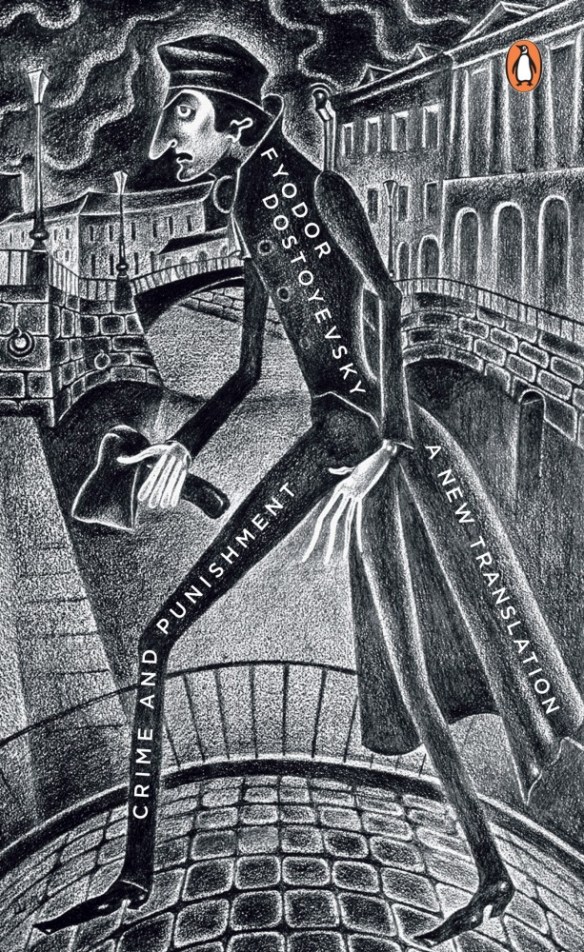
Long ago in Russia, another dissident, Fyodor Dostoevsky, was also sentenced on trumped up charges to prison and exile in Siberia for being “freethinking” and a socialist enemy of the state. When he was finally released, he wrote a novel that was published in 1866. It was Crimeand Punishment, a masterpiece about a man named Rodian Romanovich Raskolnikov who, like Dostoevsky, is sentenced to exile and imprisonment in Siberia. In Raskolnikov’s case, it was for killing an old woman pawnbroker to see if he was “above the common ruck.” The story explores Raskolnikov’s dual consciousness and the right to murder; prideful intellect versus compassion; rationalism versus spiritual values; freedom versus determinism; the individual versus the state.
Like Nietzsche twenty years later, Dostoevsky sent out a warning long ago about the terrifying consequences that would follow in the wake of certain forms of thinking that would result in nihilism. To be “above the common ruck” and murder at will; to play with people as though they were what Raskolnikov calls the woman he murders – “louses”; to create divided minds in a game of social schizophrenia through antitheses that conceal the magician’s devious truths.
At the end of Crime and Punishment, Raskolnikov, while still in Siberian prison exile, feels that he, like Lazarus, has been raised from the dead. He realizes that there is a solution to his split mind and that he has found it as he transitions “from one world into another…his initiation into a new, unknown life.”
But such a resolution that I will not divulge is preceded by a very strange dream, one that rings a bell today when life seems like a dream with something happening here but you don’t know what it is, do you, Mr. Jones?
When he [Raskolnikov] was better, he remembered the dreams he had had while he was feverish and delirious. He dreamt that the whole world was condemned to a terrible strange new plague that had come to Europe from the depths of Asia. Everyone was to be destroyed except a few chosen ones. Some sort of new microbe was attacking people’s bodies, but these microbes were endowed with intelligence and will. Men attacked by them became instantly furious and mad. But never had men considered themselves so intellectual and so completely in possession of the truth as these sufferers, never had they considered their decisions, their scientific conclusions, their moral convictions so infallible. Whole villages, whole towns and peoples were driven mad by the infection. Everyone was excited and did not understand one another. Each thought that he alone had the truth and was wretched looking at the others, beat himself on the breast, wept, and wrung his hands. They did not know how to judge and could not agree what to consider evil and what good; they did not know who to blame, who to justify….The alarm bells kept ringing all day long in the towns; men rushed together, but why they were summoned and who was summoning them no one knew….The plague spread and moved further and further. Only a few men could be saved in the whole world. They were a pure chosen people, destined to found a new race and a new life, to renew and purify the earth, but no one had seen these men, no one had heard their words and their voices.
If you’ve felt at all like you’re in a spiritual war right now, you’re not alone.
Many of the world’s greatest scholars, philosophers and ascetics understood the world to be multi-dimensional and co-inhabited by non-physical beings both good and evil, always at war with us and each other.
It’s not something that can be rightly explained with language or science. One must cultivate such sensitivity that the existence of spiritual beings can be directly experienced.
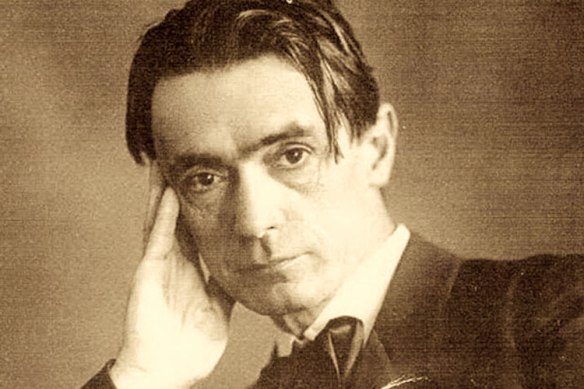
Rudolf Steiner was an Austrian philosopher, educator, and spiritualist, and over the course of his life he published numerous books and papers on the science of spirituality. He viewed the human body as a spiritual vessel, open to occupation by other entities.
To be conscious of these forces was to have the power to reject their negative influence. To remain unconscious of them was to be a leaf in their wind, and spiritual cultivation was the key to developing conscious awareness of them.
“The spirits of darkness are now among us. We have to be on guard so that we may realize what is happening when we encounter them and gain a real idea of where they are to be found. The most dangerous thing you can do in the immediate future will be to give yourself up unconsciously to the influences which are definitely present.” ~ Rudolf Steiner
If people express the natural human inclination toward spiritual growth, they free themselves from fear and anxiety, and effectively develop a sort of immunity to the influences of negative entities. If not, our vibration attracts hostile spirits and we fall unconsciously unto their influence.
“There are beings in the spiritual realms for whom anxiety and fear emanating from human beings offer welcome food. When humans have no anxiety and fear, then these creatures starve… If fear and anxiety radiates from people and they break out in panic, then these creatures find welcome nutrition and they become more and more powerful. These beings are hostile towards humanity.
Everything that feeds on negative feelings, on anxiety, fear and superstition, despair or doubt, are in reality hostile forces in supersensible worlds, launching cruel attacks on human beings, while they are being fed. Therefore, it is above all necessary to begin with that the person who enters the spiritual world overcomes fear, feelings of helplessness, despair and anxiety. But these are exactly the feelings that belong to contemporary culture and materialism; because it estranges people from the spiritual world, it is especially suited to evoke hopelessness and fear of the unknown in people, thereby calling up the above mentioned hostile forces against them.” ~Rudolf Steiner
With such profound global fear, anxiety, and panic over the present pandemic, many are exposing their own spiritual sicknesses and acquiescing to any recommended behavior or intervention that might alleviate these emotions. Along with this is the push to vaccinate 7 billion healthy people.
Nearly 100 years ago, in a series of 14 essays published under the title, The Fall of the Spirits of Darkness, Steiner issued a warning to future generations about a possible measure of mass control, quite similar to the visions presented by Orwell and Huxley. Steiner foresaw a future when vaccines could steal our spiritual nature.
First, some background:
“In these fourteen lectures, given at the end of 1917 following four years of war in Europe, Steiner speaks on the complex spiritual forces behind the World War I, humanity’s attempts to build theoretically perfect social orders, and the many divisions and disruptions that would continue on Earth into our own time. Humanity in general was asleep to the fact that fallen spirits, cast from the spiritual worlds, had become intensely active on Earth. This manifested mainly in human thinking and perception of the surrounding world. ” [Source]
The fall into such destructive slumber would be marked by an age of materialism and centralization of power, during which the influences of ‘spirits of darkness’ would inspire humans to devise new technologies and new means of oppression. Steiner comments:
“I have told you that the spirits of darkness are going to inspire their human hosts, in whom they will be dwelling, to find a vaccine that will drive all inclination toward spirituality out of people’s souls when they are still very young, and this will happen in a roundabout way through the living body. Today, bodies are vaccinated against one thing and another; in future, children will be vaccinated with a substance which it will certainly be possible to produce, and this will make them immune, so that they do not develop foolish inclinations connected with spiritual life – ‘foolish’ here, or course, in the eyes of materialists. . . .
“. . . a way will finally be found to vaccinate bodies so that these bodies will not allow the inclination toward spiritual ideas to develop and all their lives people will believe only in the physical world they perceive with the senses. Out of impulses which the medical profession gained from presumption – oh, I beg your pardon, from the consumption [tuberculosis] they themselves suffered – people are now vaccinated against consumption, and in the same way they will be vaccinated against any inclination toward spirituality. This is merely to give you a particularly striking example of many things which will come in the near and more distant future in this field – the aim being to bring confusion into the impulses which want to stream down to earth after the victory of the [Michaelic] spirits of light [in 1879].” ~Rudolf Steiner
Steiner was talking only about vaccines here. His comment does not consider the compounded effects on human spirituality of the many myriad influences we have in our world today, all of which work against spiritual connection on their own right.
Again, if you’ve felt at all like you’re in a spiritual war, you’re not alone.
“Really, I live in dark times! The guileless word is foolish. (…) The laughing man has only not yet received the terrible news.” This is how Bertolt Brecht‘s poem “An die Nachgeborenen” (To those born later) begins; published in June 1939.
It is one of the most important texts in German exile literature. Three generations later, we are again living in dark times.
Most citizens instinctively feel that “Something is Rotten in the State of Denmark” and “Time is Out of Joint” (Shakespeare). However, a sense of authority and a mental obedience reflex prevent them from distrusting the brazen lies of politicians, scientists and the mass media and from saying no. With this behaviour they stabilise the totalitarian system.
Science has the task of leading people to knowledge. Depth psychology, for example, has found out what prevents people from using their common sense instead of handing over power to politicians. The clear-sighted free citizen will no longer obey: he will rebel against the unconstitutional Corona measures of governments as an outgrowth of the New World Order and will embrace the spirit of revolt. His highest goal is the realisation of freedom for all people. In this act of outrage, he finds himself: I revolt, therefore I am!
Science has to lead man to knowledge
The human community rightly expects science to alleviate the plight of people and to serve the protection of life. But there are hardly any independent scientists left, only academics (with university or college education) who kowtow. More and more scientists are hawking their knowledge and skills, and often their souls, to the military-industrial-media complex and Big Money. They even move so far away from their humanity that they help perfect the means for the general destruction of humanity.
This is also true of psychologists, psychotherapists and psychiatrists who could greatly enrich people’s lives. The fact that the science of psychology is still very much underestimated in our latitudes is largely due to the fact that many German psychologists of Jewish faith had to go into exile in the USA during the period of fascism. However, psychology is also eyed with suspicion because many of its representatives, while striving to help individuals, are in favour of preserving the system. They want the person seeking advice to find his way in society, to be a good and well-behaved citizen.
In war, the state hires psychologists so that the soldier stays in line and does not run away. And if the soldier’s mind falls ill on the battlefield, he is picked up by the psychologist on home leave and prepared again so that he continues to defend the fatherland at the risk of his life. Nowadays, psychologists give dubious advice to young and old alike on how to get through their anxieties, depressions and fits of despair due to the politically imposed Corona measures in reasonably good health. The betrayal of one’s own professional ethics is pushing humanity into misery. (1)
What joy, on the other hand, when one learns that a judge in Germany has already filed a 190-page constitutional complaint with the supreme court in December 2020 because of the drastic Corona measures imposed by the federal and state governments, because it is high time to “stabilise our liberal-democratic legal order again”. (2) Or that a professor from Tübingen is leaving the German Academy of Sciences and Literature Mainz, a sister organisation of the National Academy of Sciences “Leopoldina”, which advises the German government. His reason for leaving reads:
“I want to serve a science that is committed to fact-based honesty, balanced transparency and comprehensive humanity.” (3)
First comes the feeling, then the action!
It is very difficult to get a person to move directly for a humane, peaceful and free society. Unconscious fears and inner psychological blocks prevent him from thinking rationally. When he becomes aware of this with the help of an experienced and compassionate psychologist or psychotherapist, he can begin to “have the mind free and cast off all timidity” (Rabelais).
This person can listen to the other person when he is given new information and one draws his attention. He can then also think his own thoughts and begin to change, to take action. For this to happen, however, his deep soul feeling, his emotional life, must be addressed. The insight of scientific depth psychology is: First comes the feeling, then the action!
For this reason, it is counterproductive and hurtful to discriminate against fearful and obedient fellow citizens as “complete idiots” or “ducking mice”. Such an assessment shows that one does not know their deeper motives. Therefore, all conceivable motivations for obedience and fearful silence must be explored – especially authoritarian and religious upbringing in the parental home and school as well as the influence of society. (4)
Often it is the very personal accounts of those affected that speak to people deep down, stir them up and make them think. A positive example is the heartbreaking story of colleague Peter König, which was published on 27 December 2020 in the Canadian online platform “Global Research” (www.globalresearch.ca): “Death by Ventilator – A Personal Story – for the World to Know.” (5)
I revolt, therefore I am!
The clear-sighted human being who has become conscious of himself, who knows himself to be the master of his destiny, can really do nothing else but rebel against the conditions of the present social order, to commit himself to the spirit of revolt. The form of life that corresponds to this is that of permanent indignation.
In 1952, the French writer, philosopher, critic of religion and winner of the Nobel Prize for Literature Albert Camus (1913-1960) published the book “L’homme révolté” (Man in Revolt). Camus’ thinking culminates in the call to revolt in the sense of an incessant struggle for a higher degree of freedom. To take note of the absurdity of the world is to revolt against it. In this act of revolt, man would find himself – in a variation of Descartes‘ formula: “I revolt, therefore I am!
This person wants neither earthly promises nor reassurances about the hereafter. The announcement of a future kingdom of God on earth or in heaven is indifferent to him. In both cases one had to wait, and during this time the innocent did not stop dying. The working masses, tired of suffering and dying, would be people without God. Man’s place in the revolt would be at their side.
For free man and his revolt in the name of human right and human dignity, there would be no higher goal than the realisation of freedom for all – and that immediately and not via the “diversions” of a dictatorship, as the revolutionary demanded.
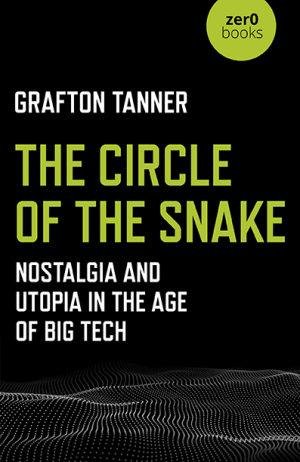
The Circle of the Snake: Nostalgia and Utopia in the Age of Big Tech
By Grafton Tanner
Zero Books, 2020
I’m sure many members of Generation X have taken a moment to look around the pop culture landscape over the past decade and a half and had a sudden moment of realization: there are certainly a whole lot of people trying to sell me things using the media of my youth. Ultimately, this is nothing new. I remember when every pop culture moment, from sitcoms to TV commercials, seemed to be using the Baby Boomers’ favorite songs to sell them cars and sneakers. But in 2020, the dominance of these re-treaded properties is even more nakedly cynical, whether its the endless sequels of the Star Wars and Marvel cinematic universes, or the easy-to-consume, signifier-filled pastiches of the worlds of Stranger Things and Ready Player One. The cultural marketplace, as dominated by bloated media and tech empires, no longer sees any need to admit the novel, the fresh, the unusual.
Both the “why” and the “how” of this cultural and technological tendency are explored by author Grafton Tanner in his new book, The Circle of the Snake: Nostalgia and Utopia in the Age of Big Tech. (Disclosure: Tanner is an occasional contributor to We Are The Mutants.) Tanner explores not only the pop culture properties that utilize nostalgia in an effort to assuage the anxieties of contemporary life in the aftermath of the 2008 financial rupture; he also explains how tech companies use the feedback from algorithmic analysis to keep consumers locked into a never-ending cycle—an ouroboros—of digital satisfaction of their subconscious desires for an older, more secure time. This nostalgic digital utopia, in turn, keeps consumers constantly “on,” working through endless “quests” that approximate proactivity but in the end keep people locked into pointless and unproductive cycles of feedback, emotional satisfaction, and control. “Recommender systems and predictive analytics—the very tools that allow our contemporary media to function—zero in on quick reactions, such as a flash of anger or a swell of nostalgia,” says Tanner in his Introduction. “These reactions are noted by algorithms, which then make recommendations based on them… The result is a nostalgic feedback loop wherein old ideas travel round.”
Tanner examines how the Big Tech tendency towards technolibertarianism and monopoly over the past 20 years has created the material conditions for this self-reinforcing system of psychic feedback. With an increasing belief in culture as disposable and “just for fun,” the material and political implications of this system of control are obfuscated. The way that these cultural narratives award Big Tech further and deeper power over all of us is merely part of the game. And we are enlisted as active players, not merely passive viewers, as in the era of television’s height. The online world, Tanner notes, demands a keen eye for analysis and a deep capacity for paying attention. The technolibertarian and neoliberal alike view our tech-suffused world—everyone is plugged in, 24/7—as a kind of utopia-in-waiting, or indeed a permanent utopia, where the idealized past can be endlessly revisited and basked in, while the present never changes from its current state of cultural and political stasis. This virtual plaza of commerce, emotional satisfaction, the illusion of proactivity, and control and surveillance describe the boundaries of Big Tech’s dominance of both our material and psychic space at the beginning of the 2020s.
The interview below was conducted in November and December 2020 via email and has been lightly edited for clarity.
***
GRASSO: Given the topic of your first book for Zero, Babbling Corpse: Vaporwave and the Commodification of Ghosts, the topic for The Circle of the Snake seems like a natural outgrowth. But from reading the book it also seems like there were a lot of specific events and observations about the world of Online and Big Tech over the past few years that led to the book’s development. What are the origins of The Circle of the Snake, and what kinds of specific cultural developments led you to propose and write the book?
TANNER: I can pinpoint the exact moment I knew I was going to write a book on Big Tech. I was living in a kind of exile in 2016, in this small town in Georgia, trying to piece my life back together after a series of false starts after college. I was sitting in a Barnes & Noble reading the 2016 Tech Issue of The Atlantic, and there was a story by Bianca Bosker about former Google employee Tristan Harris, who left the Valley and started an advocacy group called Time Well Spent because he thought Big Tech was eroding mental health. He was on a mission to fix Big Tech by making it work for us, not against us. But the piece didn’t make me feel better about tech. In fact, it was terrifying: here is an ex-Valley technocrat, mournful that he had invented habit-forming technology with severe public side effects, asking us to not only forgive him, but believe in him to create newer, better tech. I was incensed.
Shortly thereafter, we learned that Cambridge Analytica sharpened their psychographic modeling techniques by harvesting Facebook data from millions of users without their permission, all to aid in the election of Donald Trump. There was suddenly this huge backlash against Big Tech. I was supportive of it, but I also understood it came a little too late. Tech critics had been sounding the alarm for years and years. It took the election of a fascist for the left to wake up to the tech nightmare, only to realize the ones promising to end the nightmare were former technocrats themselves.
And yet, as many were loudly critiquing Big Tech for its role in throwing elections, spreading fascism, and worsening mental health, the culture industry was churning out politically retrograde nostalgia-bait. Was it really that the techlash had made everyone even more nostalgic for the pre-digital past? Or was there some kind of connection between nostalgia and Big Tech? These were the questions I had in mind when I started writing.
GRASSO: I think one of the things I like best about the book is your fusion of theory, philosophy, and epistemology with the material and economic realities of 21st century Big Tech and Big Media. Throughout the book you explore concepts such as surveillance, sublimity, nostalgia (of course), and virtuality with concrete examples from the online plaza. Essentially, if I’m not mistaken, you’re saying that the people who created the feedback loops that keep us hooked on technology and the internet and mine our data for still more ways to sell to us have themselves studied their philosophy, economic history, and techniques of mass psychology and persuasion with great attention?
TANNER: Persuasion techniques, yes, but I wouldn’t go so far as to say the technocrats have studied much else beyond their limited worldview, which is scientistic. Yes, technocrats like James Williams and Tristan Harris like to cite philosophers, but they usually do it to support their self-help solutions to the attention economy. Wake up with a little philosophy, they say, because reading Socrates is better for the mind than scrolling through Twitter. It’s a very neckbeard way of thinking about cultural consumption.
Make no mistake: these technocrats are uninterested in anything other than making a lot of money. If that means learning psychological techniques of persuasion with Stanford psychologist B.J. Fogg, then so be it. They weren’t and aren’t trying to make the world a better place or something. Like the banks before the Great Recession, the technocrats are out to make a quick buck by any means necessary, and they would have kept on doing what they were doing if the bubble hadn’t burst. People were disgruntled with Facebook for years before Cambridge Analytica, and tech critique was already a robust genre by 2016. But it took a kind of implosion, a Great Recession-style reckoning with Big Tech, to change the public opinion. Honestly, the technocrats would probably benefit from studying a little history and philosophy, instead of cloistering themselves in the ideological fortress of STEM.
GRASSO: I think one of the “oh shit” moments in the text for me was finding out that the Black Mirror special choose-your-own-adventure episode “Bandersnatch,” which I quite liked mostly for its material and inspirational signifiers (early ’80s computing, references to Philip K. Dick) was also used to mine viewers’ data in a delightfully dark real-life Dickean stroke. It’s not merely that nostalgia offers us a safe place from the dangerous present, but that those who create these nostalgic visions are working hand-in-hand with the very media empires that make us crave the past: another ouroboros.
TANNER: “Bandersnatch” not only exploits viewers’ nostalgia for its own gain, but it further normalizes the feeling of being controlled. Everyone today knows we’re being controlled from afar: by Twitter, Instagram, Amazon, insurance companies, think tanks, banks, and so forth. We are part of this giant social experiment called consumer capitalism. The purpose is to find out what we’ll buy. But we aren’t being controlled by future gamers or, as much as Elon Musk would like to believe, programmers in this computer simulation we call life. “Bandersnatch” is a work of fiction masquerading a horrible fact—that Netflix is the one controlling us, that we are not as in control as we think. The irony, of course, is that we relinquish our control via the technology we use every day, but we ultimately have very little choice in the matter. Students use devices at school, and jobs often require employees to have smartphones. We aren’t puppets, but we’re by no means totally free either.
GRASSO: So that leads me to asking you about your critique of specific media franchises: Stranger Things and the endless array of sequels and especially reboots we’ve seen since the end of the aughts. You very cannily explore Stranger Things‘ reliance on physical signifiers of commodities and objects that are no longer extant but remind us of the shackles of our technology-laden present (the old landline telephone, the shopping mall) as a key to its appeal to both Gen-Xers who were there and Zoomers who weren’t. Likewise the cinematic reboot is a way to cheaply create product and content that will connect with multiple generations. This element of “spot the Easter egg, aren’t you smart?” for older generations melds with the offer of a trip to a now-alien time for younger generations. These franchises seem to simultaneously reward passive immersion in nostalgia with an illusion of proactivity.
TANNER: Well, the spot-the-Easter-egg activities are very often nostalgic exercises themselves. Viewers are invited to find the nostalgic signifiers, even if they don’t know what they are. That’s the brilliance of Easter egg marketing for advertisers: you might not know what the hidden clue means, but you know it’s a clue and so you make note of it. Of course, the “real” fans will be able to cite all the references, but regular viewers can sometimes recognize a clue, like a corded phone or a VCR or a reference to an older movie, when they see it.
Easter egg marketing is the advertising tactic of choice in the prosumer age. It turns watching into a game. And it’s very heuristic. The films with the most Easter eggs inspire the most “count them all” YouTube videos or Buzzfeed listicles. The problem here isn’t that movies and series reference a bunch of older media; the problem is that Easter eggs reference certain things and leave others out, thus establishing these unnecessary pop culture canons. I don’t care that the Halloween franchise makes reference to itself. It’s an extended universe at this point—of course it’s going to do that. What I find questionable is its constant updating in an attempt to recapture the magic of the original film. I’m always signaling my love of Halloween III: Season of the Witch, but that film is too wacky to be included in the Halloween universe, because the franchise is desperately trying to give us the original again, as if it were the first time, without all the messy parts of the sequels. The Halloween filmmakers want to keep the bloodline of the first film pure, which means anything standing in the way must be excised.
GRASSO: You mark the period between 9/11 and the financial crisis of 2008 (and its aftermath) as the final foreclosure of any alternative to our current future and one of the dividing lines between an idealized past depicted in our nostalgic media and the forever Now. Unsurprisingly, so many of the elements of online life we now recognize as irredeemably toxic (social media, ranking and rating apps, tentpole cinematic universes full of identical sequels) began around the end of the Bush years as well.
TANNER: One of these days, I’m going to write a history-critique of the 2000s. I find the decade fascinating. It was probably the nadir of contemporary culture. Mark Fisher called it “the worst period for (popular) culture since the 1950s.”
It’s true: there was no breaking point at which contemporary nostalgia ramped up. It was a gradual shift between 9/11 and the Great Recession. Directly after 9/11, the U.S. was reeling from shock. Before nostalgia set in later in the decade, there was a feeling of futurelessness, as Robert Jay Lifton wrote—a feeling that there can be no future after 9/11, that the fear of another terrorist attack foreclosed the future altogether, that if people could fly planes into buildings on a regular weekday morning, then anything horrific is possible. During these years, we saw the birth of cinematic universes with the Star Wars prequels and the first megabudget superhero films. Of course, there were Batman, Superman, and Star Wars films before the twenty-first century, but it was after 9/11 that we saw the avalanche of these movies, several of which could not have been made without post-9/11 Pentagon support, with its bloated influence and near-endless supply of capital. You cannot downplay the reach these films have. They’re seen all over the world. And they aren’t just pro-military propaganda, they are engines of nostalgia.
After the Great Recession, nostalgia calcified. People were moving back in with their parents, revisiting old memories to soothe the anxiety of joblessness. Financial recessions are progressive only for the bankers, if they’re bailed out. For workers, they’re regressive. They set people back and invite the sufferers to hide away from it all. There is nothing wrong with this reaction. We cannot blame people who were hit by the Recession for their nostalgia. But we can blame the ones who caused it. And austerity measures only increase the desire to escape into nostalgic feelings. In short, financial meltdowns are crises that affect the future because they erase the plausibility of surviving the present.
GRASSO: You state that nostalgia is not only an emotion used to track us and to trigger specific emotional responses (which themselves are often assuaged by consumption), but also, possibly most importantly, to control us. And that control is not only physical/material but also social/aesthetic, limiting our options to wander away from the digital plaza. How do nostalgia and nostalgic media help this attempt by the market to quantify, objectify, and commodify us, the consumer?
TANNER: Content creators—a sickening term that reduces art and culture to commodities—understand the value of nostalgia. Consumer scientists have known for years that nostalgia sells. If anger draws your attention to the screen, then nostalgia triggers you to buy what will soothe the anger. That’s the cycle we’re dealing with in the present century.
And the worse things get, the more that nostalgia will naturally rise to the surface for many people. It’s not that media companies force-feed nostalgia to us. Many people are already feeling the emotion. It’s inescapable because nostalgia is a modern condition. Corporations merely go the extra mile by locking nostalgia into these feedback loops. The more you feed nostalgia into the cultural industry, the more of it you will consume because entire companies depend on you to want it. We live in a world of disruption, and every modern displacement is accompanied by nostalgia. Corporate capital knows this and depends on it.
GRASSO: Two of the specific technologies you talk about, Instagram and virtual reality, have undergone mutations in their appeals to our desire to escape the modern world. Instagram started off as a fairly disposable nostalgic evocation of the Polaroid camera aesthetic and has become a playground for big-money influencers and exhibitionists; virtual reality has evolved into just another facet of the internet’s control apparatus, despite its conceptual origins in early ’80s cyberpunk and its promised potential to give people the ability to create their own worlds. Why do these technologies seem to always mutate in the direction of greater commercialization and/or control, despite their initial apparent harmlessness or revolutionary promise?
TANNER: In the case of Instagram, its nostalgia factor was mainly due to the horrible photo quality of early smartphone cameras. With some Wi-Fi, a phone, and an app, you could take photos anywhere and upload them on the spot, which was enticing enough for many people to do just that, but you couldn’t deny the photo quality was very poor. So one way to deal with this poor quality was to saturate photos in a kind of analog haze, which could be done by applying one of several different stock filters. I can’t emphasize this enough: so much of our nostalgic appetite in the early 2010s was whetted by the inability to take and post a decent looking digital photo.
Whether it’s Instagram or virtual reality, digital technology is never totally harmless. It’s like when Tristan Harris and the Center for Humane Tech guys tell us we can have our digital cake and eat it too. You can’t have “humane tech” because tech is driven by the profit motive, which itself is often powered by another force: the military. Have you seen this new recruiting ad for the Marine Corps? It’s basically telling young people that joining the military will be an escape from the overwhelming anxieties of the digital age. The scariest thing about the ad is that it conceals the long relationship between tech and the military. Which is to say, the “tech” presented in the ad couldn’t exist without the military-industrial complex. At this point, any new, possibly revolutionary digital technology will either be bought out by a Big Tech monopoly or put to use on the battlefield.
GRASSO: As far as solutions and escapes from this predicament go, you talk a little bit about the ineffectual attempts of former technocrats to try to ameliorate our enslavement to the internet and social media with apps that limit time on websites or “safety labels,” and find them all wholly wanting. Likewise, you mention attempts to make nostalgia something constructive, playful, reflective (in the schema of Svetlana Boym). And yet the very structure of the internet and Big Media as it stands now denies all alternatives to the current control stasis. What does a constructivist nostalgia look like? Where could it exist in the cracks of the current marketplace? Is there a place for nostalgia as a political instrument of the left outside of the usual avenue of Left Melancholy?
TANNER: I’m currently writing a history of nostalgia, out fall 2021 with Repeater Books, called The Hours Have Lost Their Clock: A Recent History of Nostalgia. In it, I put forth a theory of radical nostalgia, drawing on the work of Alastair Bonnett and Svetlana Boym. Radical nostalgia is the third “R” beyond reflective and restorative nostalgia, which Boym coined. She was right about nostalgia, but over the first two decades of the present century, restorative nostalgia ballooned while the reflective strains were edged to the margins. But there needs to be this third form, radical nostalgia, because the melancholic disposition of reflective nostalgia just hasn’t been working for the left and the restorative tint has proven to be destructive.
Radical nostalgia is the act of looking back to those moments when collective action stood up to capital. It yearns for the social movements of the past. It aches for them. It isn’t interested in “getting back there,” in restoring what’s been lost, but in learning from those who came before: the struggle for indigenous rights, the staunch anti-capitalism of Martin Luther King Jr., Stonewall, the Battle of Seattle. When Richard Branson signals his support for LGBTQ+ communities, that isn’t radical nostalgia. There’s nothing radical about it; it’s mere nostalgia. Radical nostalgia looks to these and other movements to continue the fight for a more egalitarian future. It is inherently anti-fascist.
Radical nostalgia takes the action step of restorative and the aching heart of reflective nostalgia and fuses them together. It knows that the past isn’t perfect, which means what we yearn for shouldn’t be either. Restorative nostalgia is too clean, too high-definition. Reflective nostalgia kicks the can around, although reflectors might recognize the problems of the past long before the restorers do. But radical nostalgia knows that everything is imbued with horror, the past especially. Many revolutionary movements of the past suffered from machismo and intolerance, even in their own collectives. Radical nostalgia knows this and endeavors to leave it in the past. Some things must remain buried.
And radical nostalgia is one perspective we can take to resist the utopian thinking of tech. At this point, Big Tech is about the only entity that circulates visions of the future, but those visions are falling out of favor thanks to the techlash. Get ready, because they will absolutely be replaced with a different utopian vision: the humane tech movement. We’re going to be dealing with the technocrats for years. It’s going to seem like we should trust Tristan Harris and the Center for Humane Tech guys. They’re going to be pushing their vision of the future for years to come. But they are the new boss, same as the old. Only collective action, informed by the decolonial and anti-fascist movements of history, can resist what’s coming in the next decade and beyond.
In 1935, reflecting on the creed of productivity which prevailed in modern technological societies, Bertrand Russell, philosopher, pacifist and devout humanist wrote that:
“I think that there is far too much work done in the world, that immense harm is caused by the belief that work is virtuous, and that what needs to be preached in modern industrial countries is quite different from what always has been preached.”
‘In Praise of Idleness and other essays’ is a collection of striking power and originality. Whereas the receieved wisdom of his era held that virtue consisted in yielding to work, monotony and routine, Russell maintained it was not the sole end of life, that beyond work, people needed leisure and pleasure in order to fully live, that what was sought to truly advance society and fortify the human condition was the “organized diminution of work.”
Through the 1920s and 30s Fordism advocated the exact opposite and the cult of productivity began to exert a strong hold on economic and social organization in Europe, the USA and Soviet Union. In the story Brave New World, Aldous Huxley envisioned a society of tyrannical collectivism which raised hell on Earth. In this dehumanizing, nihilistic oblivion, Henry Ford was worshipped as a deity and the fundamentalism of mass production crept in to all spheres of life, rigidly classifying people whose whole lives were planned out on a callow basis of crude economic worth. It was a study in how powerful forces of sublimation and repression incarnate in the edifice of the modern world mutilate our most vital, human instincts and wrench us from our roots.
Huxley’s main belief was that technological ‘progress’ had empowered the worst bureaucrats to assimilate citizens in to a sophisticated machine of repression and control which blocked and frustrated their freedom. Although, as Russell observes, in truth “with modern technique it would be possible to distribute leisure justly without injury to civilization“, the owners of the means of production in the capitalist economy absorb modern technique in to their arsenal against collective liberation. It is not in their interests to free us from bonds.
Of the proprietary class, Russell says:
“their desire for comfortable idleness is historically the source of the whole gospel of work. The last thing they have ever wished is that others should follow their example. “
That is to say that freedom and unfreedom aren’t opposites. The affluence and freedom of the proprietors actively depends on the subjugation of workers who create value.
Throughout his life Bertrand Russell was keenly involved with communities of students, activists and workers who organized against imperialism and the war machine. His belief that people could work less and live more was part of his belief that the economic system could be harnessed to more altruistic ends, justified more reasonably, attuned to satisfy people’s needs and fit to unleash their inherent creative power, instead of conforming to bourgeois imperatives.
Lately Professor Stephen Hawking has weighed in on the question of modern social organization and proffered the view that people need not be scared of machines, but ought to be wary of the systems and people who wield them. Why be scared of the unknown power of machines when what we know about the people who own them is far, far scarier?
Hawking said:
“If machines produce everything we need, the outcome will depend on how things are distributed. Everyone can enjoy a life of luxurious leisure if the machine-produced wealth is shared, or most people can end up miserably poor if the machine-owners successfully lobby against wealth redistribution. So far, the trend seems to be toward the second option, with technology driving ever-increasing inequality.”
Hawking’s view is much like Russell’s and would be called post-scarcity economics. The crux of this view is that competition for resources is not a necessary feature of an economy, that material abundance may be universal instead of there being a socially imposed monopoly of access, regulated by money and work. Like trickle-down theory, scarcity economics is not necessarily based in reality. It goes without saying that obviously we need to find a way reach this economy and mode of production in accordance with environmental protection, which models after the Industrial Revolution got disastrously wrong.
The challenge of the future is to make machines our allies and not our jailers.
It should not be considered radical or extremist to oppose mass murder for profit and power.
It should not be considered radical or extremist to oppose the globe-spanning power alliance that is perpetrating most of that mass murder on the world stage today.
It should not be considered radical or extremist to oppose the existence of secretive government agencies which have extensive histories of committing horrific crimes.
It should not be considered radical or extremist to say that everyone ought to have a basic standard of living instead of being deprived of food, shelter and medicine if they have the wrong imaginary numbers in their bank account.
It should not be considered radical or extremist to oppose the existence of a small class of elites who use their vast fortunes to manipulate our entire society toward their advantage.
It should not be considered radical or extremist to want plutocrats and government agencies to stop deliberately manipulating people’s minds using mass media propaganda.
It should not be considered radical or extremist to want everyone to have an equal chance of getting their voice heard in our information ecosystem instead of a few select power-serving lackeys.
It should not be considered radical or extremist to want a society that is ruled by the many for the benefit of the many instead of one that is run by the few for the benefit of the few.
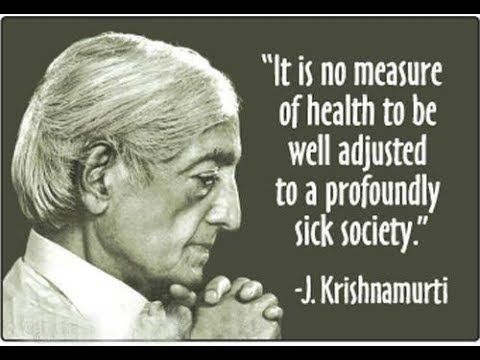
It is very normal, sane and healthy to want a world where everyone has what they need to live, where everyone is free to do, say and think whatever they like as long as it isn’t hurting anyone else, and where nobody is being murdered by powerful governments. This is a very basic, intuitive, common sense desire to have for yourself and for your fellow human beings; it’s wanting for your society what you want for yourself.
Yet people who promote policies which are aimed at creating this kind of world are consistently marginalized and dismissed as radicals and extremists. It’s okay to say you oppose war in principle, but if you oppose any specific acts of warmongering being perpetrated by your government you’ll get labeled a Russian asset, a dictator apologist and all sorts of other pejorative labels which exist solely to justify keeping you off of mainstream platforms. It’s okay to think we should live in peaceful collaboration with each other and our ecosystem, but if you promote specific policies to make that happen you’re an evil commie, a class warrior and a moonbat in the same way.
Simply advocating sanity over insanity gets you shoved out of sight and out of mind by the narrative managers responsible for preserving a world order that is stark raving insane from top to bottom. If you oppose the systems exploited by the ruling power establishment which murders, exploits and oppresses people at home and abroad all day every day while destroying the very ecosystem we depend on for survival, then you are branded a lunatic and your wrongthink quarantined so as not to infect the mainstream herd.
This dynamic is made possible by the fact that the powerful are constantly pouring their wealth and influence into manufacturing the collective delusion that madness is sanity and sickness is health. The plutocrat-controlled political class and the plutocrat-owned media class feed the public an unceasing stream of propaganda aimed at convincing them that capitalism is totally working, that western imperialism is a kooky conspiracy theory, and that the military, police and politicians are our friends. This is what’s constantly being done by mainstream news media, and with varying degrees of subtlety it’s what is being done by every show on television and every movie churned out by Hollywood as well.
But that’s all it is: a collective propaganda-induced delusion. In reality it is the mainstream promoters of the establishment-authorized status quo who are the violent extremists, and it is those who desire health and sanity who are the moderates.
The madness of our world will necessarily continue for as long as we are unable to collectively find our way out of it, and we will be unable to collectively find our way out of it for as long as they are able to keep us collectively confused about what is madness and what is sanity. About what is normal and what is abnormal. About what is moderate and what is extreme.
If you oppose the madness of our world, don’t make an identity out of being a “radical”. Don’t build an egoic structure around life on the fringe. You are not radical, and your ideas should not be fringe. To live a revolutionary life, you should insist on the normality and mundaneness of your own position. Sanity should not be special and unusual, and we should not participate in the delusion that it is.
Let your life be an expression of the common sense ordinariness of revolution.
A spiritual war is upon us and the individual is challenged to maintain integrity in a sea of greed, egotism, terror and fear. With no clear path toward spiritual evolution, so many of us floundering and losing ourselves to addiction, despair and self-destruction.
When in the past ordinary religions might have served to offer a pathway toward spiritual awakening based upon the experiences of their ancient sages, today, the best they seem to offer is communal support. Far too often, though, modern religions are mired in greed, scandal, pedophilia and outright terrorism. Religions are failing to provide the help one needs to spiritually thrive in this insane world.
“Spirit can hardly be found in noisy, crowded churches and temples. Even where the teachings of the past sages have been established they have been spoiled by the insensitive trend of the times.
The spirit of the world’s religions died long ago and left most temples and churches merely empty shells.
These places continue as superficial social conventions and can only supply their devotees with shallow activities, psychological games of shadow playing, and hypnosis, all of which have absolutely nothing to do with spiritual reality.
This is the faith of today’s world, and most of their achievements are not the true answer.” ~ Taoist Master Hua Ching Ni
What then, is spiritual reality? And what does it look like in a world governed by fear, distracted by materialism, and kept in conflict by egotism? It’s really quite straightforward, says Master Ni, who refers to it as the “plain, simple truth of your life,’ which is best understood as the profoundly important concept of inner peace.
“The first spiritual goal of Taoism is the restoration and realization of one’s own well-balanced being, and then one’s spiritual evolution.
The highest goal of life is to combine oneself with the spiritual energy of the universe. There is one way to eliminate all wonder, bewilderment and confusion and that is to have inner peace.
The primary method or principle for personal cultivation is to keep peace within oneself and maintain normalcy in one’s environment; thus you can dwell with the spiritual energy and the spiritual energy dwells within you.” ~ Taoist Master Hua Ching Ni
Comparing the teachings of ordinary religions to true personal spiritual cultivation, Master Ni notes that undeveloped human beings follow and devote themselves to belief systems, deities and spiritual figureheads. In contrast, individuals seeking genuine spiritual evolution understand these systems for what they are: illusions and traps.
“People mistake religious emotionalism and hypnosis for spiritual reality.
Often in history religious emotion has been exalted as truth itself. This gave birth to all kinds of religious prejudice and persecution. Religious mobs have carried out the mischief caused by the hot-blooded in the forceful image of a spiritual sovereign. This has not the slightest connection with spiritual reality. It is the manifestation of the impure, heavy, bloody energy of undeveloped human beings before having completed their spiritual evolution.
Many people are fooled by their own ignorance or that of others. And in their ignorance they fool others too. People like this have no hope of reaching the spiritual realm. They will have no chance to touch the real spiritual life. So, before you commit yourself to any religion, you should develop the mental ability to discern what is religious emotion and what is the spiritual truth. One is the right way to follow, and the other is only a psychological pitfall and trap. This is very important for a seeker of truth on the spiritual path.” ~ Taoist Master Hua Ching Ni
Generating this type of spiritual emotionalism has become a profitable art form. Take note of the costumes worn by Catholic Cardinals and deference to the Pope in his symbolic Mitre hat. Islamic fundamentalists and ISIS do the same when they emote fear and terror by parading captives in front of religious soldiers clad in all black robes with faces covered, armed with rifles and sabres. Using symbolic imagery as tools of dominance and control, as Master Ni points out, has absolutely nothing to do with true spiritual reality.
What would the world look like if individuals first placed their own spiritual development ahead of their desire to change the world in accordance with their beliefs about spirituality and feelings of religious emotionalism? What if individuals were instead offered a plan of genuine spiritual cultivation, a path that led to actual inner peace?
“The spiritual process itself is a process of the evolution of the human spirit.” ~ Taoist Master Hua Ching Ni





 After the Crash