The Dem Establishment Successfully Cinched a Biden Super Tuesday Victory

Democratic presidential candidate former Vice President Joe Biden speaks at a primary election night campaign rally Tuesday, March 3, 2020, in Los Angeles. (AP Photo/Chris Carlson)

Super Tuesday has raised the stakes and set the stage for a battle for the Democratic Party’s soul; one that will decide if it stays the course with neoliberalism with Biden or moves towards a progressive social-democratic model with Sanders.

By Alan Macleod

Source: Mint Press News

Former Vice-President Joe Biden built on his victory in South Carolina last week to emerge as the only credible “stop Bernie” candidate after Super Tuesday – where voters in 14 states decided on their nominations for president. While results are still not official, it is clear that the former Delaware senator won the popular vote in at least nine states yesterday, including in Texas, Massachusetts and North Carolina, amassing at least 433 delegates. Sanders has currently secured 388, although that number is likely to rise after all of California is counted.

In one of the most remarkable and drastic political turnarounds in American history, Biden – thought of by many as a yesterday’s man – secured a stunning upset victory after a series of key endorsements. His campaign had been flagging, virtually out of money and without organization or many activists on the ground. As of Monday, he had spent just $1.5 million on TV ads in Super Tuesday states, with aides admitting to CNN their goal was merely to “remain competitive;” a remarkable admission for a presidential campaign.

But facing a Sanders nomination, the establishment wing of the party went into overdrive to find a viable alternative to the Vermont senator. Both Pete Buttigieg and Amy Klobuchar dropped out and immediately endorsed him, as did other figures like former Texas congressman Beto O’Rourke. In a matter of mere hours, the Democratic Party higher-ups managed to coalesce around him in a way the Republicans were unable to in 2016 to stop Trump, proving to the world that the party is certainly not incompetent and can organize and carry out operations with military precision when they perceive it is in their interest to do so.

While the establishment pooled its resources (and delegates) in favor of Biden, Massachusetts senator Elizabeth Warren has refrained from dropping out, let alone endorsing Sanders, thus splitting the progressive vote. Warren finished a distant third in her home state and secured only 28 delegates yesterday. In a defeatist message, her campaign managers said they would hold a meeting to “assess the path forward.”

Biden declared victory in Los Angeles last night, presenting himself as an opponent of the wealthy and a champion of the people: “Let’s get something straight. Wall Street didn’t build this country. You built this country. The middle class built this country. And unions built the middle class,” he told the crowd. But his speech was upstaged by anti-dairy industry protestors who stormed the stage. Earlier in the speech he also confused his wife for his sister.

https://twitter.com/Breaking911/status/1235044512918941698

While it is clear that he will now be the establishment’s candidate for better or worse, the former vice-president has a long history of making egregious errors in speaking. Earlier this week at a rally he tried and failed to recite the preamble of the Declaration of Independence. “We hold these truths to be self evident. All men and women created by the…you know, the thing” he stuttered. And while he promises the working-class “cures for cancer, Alzheimer’s and diabetes” under his presidency, he also told his billionaire backers that he believes they are being “demonized” and that “nothing would change” about America if he were chosen. “I need you very badly,” he told a group of extremely wealthy donors last year.

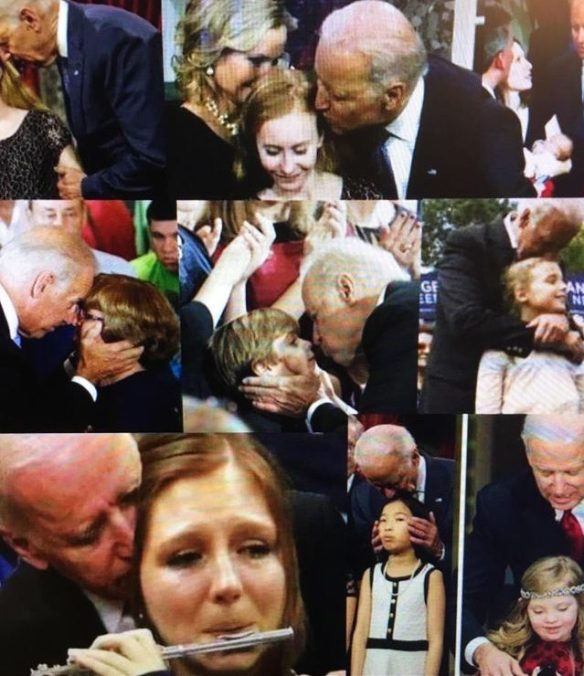
His policy history and positions, too, might be cause for concern for many voters in the presidential election. These include advocating for cuts to social services, fighting against abortion rights, and supporting NAFTA, the PATRIOT Act and the attacks on Iraq and Libya. And while he retains strong support among Southern black voters, he helped write the 1994 Crime Bill and the Anti-Drug Abuse Bill that exploded the prison population, and fought for segregation and against integration. President Trump has already nicknamed him “Handsy Joe” in reference to his inappropriate touching of women and girls.

While Sanders supporters will be disappointed with the results, other candidates had even worse nights. Chief among them was Michael Bloomberg, who spent more than half a billion dollars on his campaign, picking up just 12 delegates, a third of them in American Samoa. Given his poor performance, that works out to nearly $50 million per delegate. The former Mayor of New York dropped out today, endorsing Biden for the nomination. If he is willing to financially aid Biden anything like how he lavishly spent on himself, Sanders will be fighting a seriously uphill battle.

“It really is a class war we’re up against,” said author and progressive journalist Naomi Klein, who has been traveling with the Sanders team.

The vast majority of this campaign are working class people who are daring to hope for the barest decent things in life. It is this amazing process of raising people’s expectations…What we’re seeing with this establishment pushback, this is not against Bernie Sanders, it is against them. It is against people saying ‘I have a right to healthcare. I have a right to a living wage,’ and it is really sad to see.”

Biden has strong support among the wealthy, the elderly and among Southern black voters. But if he is to win outright and beat Trump in November, he will need to address the age gap in voting. Even in Alabama, where he fared worst, Sanders still comfortably won the vote of those under 30. While there is much work to be done, yesterday was a good day for the establishment wing of the Democratic Party.

Next week will see six more states as well as the Democrats Abroad primaries decided. But Super Tuesday has raised the stakes and set the stage for a battle for the Democratic Party’s soul; one that will decide if it stays the course with neoliberalism with Biden or moves towards a progressive social-democratic model with Sanders.

US Technological Transformations and the Narcotic-Fueled Genocide of American Workers

By James Petras

Source: The Unz Review

Introduction

During his recent visit to New Hampshire on 3/20/18, President Trump declared once again that the US is facing a ‘drug epidemic’. This time he advocated the death penalty for criminal drug dealers as the solution to a national crisis that has killed over 1 million Americans since the 1990’s (when the blockbuster prescription opiate Oxycontin was first released on the market). Trump promised that the Justice Department would develop the most severe penalties for criminal drug traffickers, by which he meant foreigners. He argued that his proposed “Wall” (between the Mexican- US border) would cut the flow of drugs responsible for the ongoing addiction of millions of US citizens – as though the prescription opiate addiction epidemic resulted from a foreign invasion, and not corporate decisions from Big Pharma.

President Trump’s claim that 116 ‘drug deaths’ occur every day (42,000 a year) is a major underestimate. In 2017, alone over 64,000 drug overdose deaths were reported in official statistics (with many unreported cases signed off as natural or undetermined, especially in counties too poor to afford autopsies and expensive forensic toxicology). Another 4 million Americans, at least, are currently addicted to opioids and at risk for overdose.

In comparative terms, more American workers have been killed or devastated by narcotics (mostly via prescription) in 2017 alone, than in the entire decade of the Vietnam War with its 58,000 dead and 500,000 wounded. In 2017, 40,000 Americans died in motor vehicle accidents and another 39,000 by gun violence – and these statistics are not broken down to include vehicular accidents due to drug intoxication or gun violence over drugs. Prescription or illegal opiates, alone or mixed with other sedative drugs, like Valium, or alcohol, are the most prominent and preventable cause of premature death in the United States today.

This pattern is unique to the United States, where the irresponsible medical prescription of highly addicting narcotics has been the primary portal of entry into the degrading life of addiction for millions. Despite President Trump’s claims, the addiction crisis is not a product of urban Afro-American street dealers or Mexican narco-traffickers: This uniquely American crisis has been created and fueled by billionaire-owned US pharmaceutical corporations, which produced, distributed and wildly profited from legal narcotics. They were aided by the irresponsible prescription practice of tens of thousands of doctors and other ‘providers’ who introduced millions of vulnerable patients to the world of narcotic dependency – including youngsters with sports injuries and workers with job-related pain. These are physicians and medical providers who rarely stopped to examine their own responsibility, even when their otherwise healthy patients overdosed or were destroyed by addiction. It is especially outrageous that doctors and ‘Big Pharma’ worked hand in hand for over 20 years to create this epidemic, enjoying wild profits and almost total legal immunity. Few have dared to openly question their irresponsibility and greed. In the poorest and most vulnerable areas of this country, the most irresponsible and unaccountable incompetence has replaced real medical care and created a health care apartheid.

The Federal Drug Enforcement Agency (FDA) and the Drug Enforcement Agency (DEA) have protected the corporate drug traffickers and ensured the manicured and cultured narco-bosses the highest rates of return on their products. These polished pushers have their names engraved on the walls of museums and opera houses around the country.

The majority of Presidential, Federal, State and municipal candidates from both major parties have received millions of dollars in electoral campaign funds from these huge legal narcotic manufacturers and distributors, as well as from physicians and other representative of the ‘pain-treatment industry’. Over the past decades, politicians have openly or secretly opposed or weakened legislation designed to address this crisis.

Why not just ask President Trump to direct his Justice Department to impose the death penalty on the board of directors of the big corporate narcotic manufacturers or distributors or on the CEOs of major ‘pain clinics’ or on the owners of local rural ‘health centers’ that drove the villagers of West Virginia into their life-destroying downward spirals?

When will the DEA finally storm the medical centers to arrest the over-prescribing ‘providers’ of narcotics and benzodiazepine tranquilizers (a very common deadly combination)?

When will the SWAT teams seize the vacation homes of the CEOs of major US hospitals where the convenient and fake ideology of promising a ‘pain-free’ experience (‘make it Zero on the Pain Scale’) led to the generalized promotion of highly addicting narcotics for minor injuries, arthritic pain, or chronic back discomfort due to work or obesity? Responsible alternatives existed and were used in the rest of the world – largely untouched by this prescription-fueled crisis.

No doubt what President Trump has in mind is something else: the expulsion of Latin American workers under the pretext of going after the drug dealers and the even more massive incarceration of petty street dealers in the African American community.

Trump will then turn to further monitoring and arresting small-scale American marijuana farmers, who earn a basic income from growing a product that many believe is safe, non-addicting, and significantly reduces demand for dangerous narcotics.

As ugly as this all seems, the complicity of the political, economic and the medical elite in exponentially spreading deadly narcotics among the poor, working class and downwardly mobile middle class, points to a deeper and more sinister policy goal: the systematic elimination of millions of American workers made redundant in the new economy. This is a ‘gentler genocide’, where millions of workers die prematurely seeking an escape from pain as they have been replaced by a new technology and a new ideology: Robots, artificial intelligence and digitalization have rendered them disposable, while the out-sourcing of work to low paid overseas laborers and immigrants have guaranteed unimaginable profits for the elite decision makers.

This highly profitable process, benefiting the political, pharmaceutical, financial, police and judicial elites, conveniently blames the victims, a significant proportion of whom come from the poor and working class in this country, including white rural and small town addicts, especially youth, stuck at minimum wage jobs with no prospects of a decent future – injured construction workers, 15% of whom abuse prescription narcotics for work-related injuries, as well as the marginalized petty drug dealers from the urban slums and desperate Latino immigrants forced to accommodate the cartels. These people have little rights and are easily monitored, incarcerated, expelled and just written-off in one-line obituaries.

The narcotic-fueled genocide had grown out of a calculated corporate strategy meant to cull and subdue a huge population of potentially restive marginalized workers and their families, blaming the overdosing victims for their own ‘irresponsible’ choices, their reliance on prescription opiates, their lack of access to competent medical care, and their untimely deaths as though this were all a collective suicide as the great nation marches forward.

The higher the death toll among marginalized Americans, the greater the reliance on political distractions and racist deceptions. President Trump loudly blames street-level retail distributors, while ignoring the links between tax-exempt mega-billionaires who have profited from the shortened life-expectancies of addicted workers (scores of billions of dollars already saved in future pension and health care expenses) and the millions fired for addiction and denied jobless benefits and treatment. Trump has yet to even mention the actions of the legal pharma-medical industry that set this in motion.

Meanwhile, the Democratic Party leaders denounce the worker-victims of addiction and their communities as ‘irresponsible and racist’, for having believed the populist rhetoric of candidate Trump. Trump’s most intense rural areas of support coincided with areas of the worst opioid addiction and suicide rates. Trump’s rival, Hillary Clinton wrote off scores of millions of vulnerable Americans as ‘deplorables’ and never once addressed the addiction crisis that grew exponentially during her husband’s administration.

Since the implementation of NAFTA during the 1990’s, scores of millions of American workers have been relegated to unstable, low paid jobs, deprived of health benefits and subject to grueling work, prone to physical and mental injuries. Workplace injuries set the stage for the prescription narcotic crisis. Even worse, today workers are constantly distracted by electronic gadgets at the workplace, with their orders from above arriving digitally. These highly profitable gadgets have created enormous distractions and contributed to workplace death and injuries. The plaything of choice for the masses, the I-phone, has added to the addiction crisis, by increasing the rate of injury. This mind-numbing distraction, produced abroad at incredible profit, has played an unexplored role in the increase in premature death in the US.

The corporate narcotic elites, like the ultra-cultured Sackler clan owners of Perdue Pharmaceuticals, and their allies in the finance sector, support the diverse ideological distractions fashioned by their politician pawns: Eager to please her donor-owners, Hillary Clinton and the Democrats blame the working class for their backwardness and genetic propensity to addiction and degradation. Meanwhile, President Trump and the Republicans blame ‘outside’ suppliers and distributors including Mexican narco-cartels, illegal immigrant traffickers, black urban street dealers and now point to overseas Chinese fentanyl labs – as though the entire crisis came from the outside. Trump’s approach flies in the face of the unquestionable source of most narcotic addiction in the US: Irresponsible prescribing of highly addicting legal narcotics.

No other industrialized country is experiencing this scale of addiction and pre-mature death. No other industrialized country relies on a private, for-profit, unregulated system of delivering medical care to its citizens. Only the US.

Both elite political parties avoid the basic issue of the long-term, large-scale structural imperatives underlying the transformation of the US work places. They refuse to address the marginalization of tens of millions of American workers and their families, made disposable by corporate economic and political decisions.

The US corporate elite are completely incapable of developing, let alone favoring, any policy that addresses the needs of millions of surplus office and factory workers and their family members replaced by new technology and ‘global’ economic policies. The American financial and political elite is not about to support an economic, political and cultural ‘GI’ bill to save the scores of millions shoved to the wayside in their rush to obscene wealth and power.

The unstated, but clearly implemented, ‘final solution’ is a Social Darwinian policy of active and passive neglect, the unleashing of profitable prescription narcotics into the population of vulnerable disposable workers, offering them a convenient, painless way out – the opioid solution to the over-population problem of redundant rural and small town ‘Helots’. The political elite’s willing complicity with Big Pharma, the medical profession, the financial oligarchs and the prison-industrial complex has transformed the country in many ways. Shortened lives and depopulation of rural and small town communities translates into lower demand for public services, such as schools, health care, pensions and housing. This is guaranteeing a greater concentration of national wealth in the hands of a tiny elite. The financial press has openly celebrated the projected decrease in pension liabilities as a result of the drop in worker life expectancy.

The ongoing mass genocide by opioids may have started to arouse popular discontent among working people who do not want to continue dying young and miserable! Social services and child protective services for the millions of orphaned or abandoned children of this crisis have been demanding real policies. Unfortunately, the usual platitudes and failed policies prevail. Drug education and ‘opioid addiction treatment’ programs (currently among the largest expense in some union health plans) are pointless Band-Aids when confronted by the larger policy decisions fuelling this crisis. Nevertheless, thousands of health care professionals are beginning to resist corporate pressure to prescribe cheap opioids – and fight for more expensive, but less dangerous, alternative for addressing their patients’ pain. Even if all medical providers stopped over-prescribing narcotics today, there are still millions of addicts already created by past practice, who seek the most deadly street drugs, like fentanyl, to feed their addiction.

Politicians now publicly denounce ‘Big Pharma’, while privately winking at the lobbyists and accepting millions from their ‘donor-owners’.

Public critics in the corporate media are quick to condemn the workers’ susceptibility to narcotic addiction but not the underlying causative imperatives of global capitalism.

Mainstream academics celebrate corporate technological advances with occasional neo-Malthusian warnings about the dangers of millions of redundant workers, while ignoring the profit-driven role of narcotics in reducing the social threat of excess workers!

Finally the role of an elite and respected profession must be re-evaluated in a historic context: In the 1930’s German doctors helped develop an ideology of ‘racial hygiene’ and a technology to demonize and eliminate millions of human beings deemed redundant and inferior, through overwork in slave camps, starvation and active genocide – serving the ambitions of Nazi expansionism and deriving significant profit for select individuals and corporations. US physicians and the broader medical community have less consciously assisted in the ongoing ‘culling of the herd’ of American laborers and rural residents rendered superfluous and undesirable by the decisions of a global oligarchy increasingly unwilling to share public wealth with its masses. There are similarities.

Once prosperous, industrial cities and towns, as well as rural villages, in the US have seen marked declines in populations and a premature death crisis among those who remain.

This must be reversed.


Oligarchs Succeed! Only the People Suffer!

By James Petra

Source: The Fourth Media

On a scale not seen since the ‘great’ world depression of the 1930’s, the US political system is experiencing sharp political attacks, divisions and power grabs. Executive firings, congressional investigations, demands for impeachment, witch hunts, threats of imprisonment for ‘contempt of Congress’ and naked power struggles have shredded the façade of political unity and consensus among competing powerful US oligarchs.

For the first time in US history, the incumbent elected president struggles on a daily basis to wield state power. The opposition-controlled state (National Public Radio) and corporate organs of mass propaganda are pitted against the presidential regime. Factions of the military elite and business oligarchy face off in the domestic and international arena. The oligarchs debate and insult each other. They falsify charges, plot and deceive. Their political acolytes, who witness these momentous conflicts, are mute, dumb and blind to the real interests at stake.

The struggle between the Presidential oligarch and the Opposition oligarchs has profound consequences for their factions and for the American people. Wars and markets, pursued by sections of the Oligarchs, have led opposing sections to seek control over the means of political manipulation (media and threats of judicial action).

Intense political competition and open political debate have nothing to do with ‘democracy’ as it now exists in the United States.

In fact, it is the absence of real democracy, which permits the oligarchs to engage in serious intra-elite warfare. The marginalized, de-politicized electorate are incapable of taking advantage of the conflict to advance their own interests.

What the ‘Conflict’ is Not About

The ‘life and death’ inter-oligarchical fight is not about peace!

None of the factions of the oligarchy, engaged in this struggle, is aligned with democratic or independent governments.

Neither side seeks to democratize the American electoral process or to dismantle the grotesque police state apparatus.

Neither side has any commitment to a ‘new deal’ for American workers and employees.

Neither is interested in policy changes needed to address the steady erosion of living standards or the unprecedented increase in ‘premature’ mortality among the working and rural classes.

Despite these similarities in their main focus of maintaining oligarchical power and policies against the interests of the larger population, there are deep divisions over the content and direction of the presidential regime and the permanent state apparatus.

What the Oligarchical Struggle is About

There are profound differences between the oligarch factions on the question of overseas wars and ‘interventions’.

The ‘opposition’ (Democratic Party and some Republican elite) pursues a continuation of their policy of global wars, especially aimed at confronting Russian and China, as well as regional wars in Asia and the Middle East. There is a stubborn refusal to modify military policies, despite the disastrous consequences domestically (economic decline and increased poverty) and internationally with massive ethnic cleansing, terrorism, forced migrations of war refugees to Europe, and famine and epidemics (such as cholera and starvation in Yemen).

The Trump Presidency appears to favor increased military confrontation with Iran and North Korea and intervention in Syria, Venezuela and Yemen.

The ‘Opposition’ supports multilateral economic and trade agreements, (such as TTP and NAFTA), while Trump favors lucrative ‘bilateral’ economic agreements. Trump relies on trade and investment deals with Saudi Arabia and the Gulf Emirates and the formation of an aggressive military ‘axis’ (US-Saudi Arabia-Israel -Gulf Emirates) to eventually overthrow the nationalist regime in Iran and divide the country.

The ‘Opposition’ pursues wars and violent ‘regime change’ to replace disobedient ‘tyrants’ and nationalists and set up ‘client governments’, which will provide bases for the US military empire. Trump’s regime embraces existing dictators, who can invest in his domestic infrastructure agenda.

The ‘opposition’ seeks to maximize the role of Washington’s global military power. President Trump focuses on expanding the US role in the global market.

While both oligarchical factions support US imperialism, they differ in terms of its nature and means.

For the ‘opposition’, every country, large or small, can be a target for military conquest. Trump tends to favor the expansion of lucrative overseas markets, in addition to projecting US military dominance.

Oligarchs: Tactical Similarities

The competition among oligarchs does not preclude similarities in means and tactics. Both factions favor increased military spending, support for the Saudi war on Yemen and intervention in Venezuela. They support trade with China and international sanctions against Russia and Iran. They both display slavish deference to the State of Israel and favor the appointment of openly Zionist agents throughout the political, economic and intelligence apparatus.

These similarities are, however, subject to tactical political propaganda skirmishes. The ‘Opposition’ denounces any deviation in policy toward Russia as ‘treason’, while Trump accuses the ‘Opposition’ of having sacrificed American workers through NAFTA.

Whatever the tactical nuances and similarities, the savage inter-oligarchic struggle is far from a theatrical exercise. Whatever the real and feigned similarities and differences, the oligarchs’ struggle for imperial and domestic power has profound consequence for the political and constitutional order.

Oligarchical Electoral Representation and the Parallel Police State

The ongoing fight between the Trump Administration and the ‘Opposition’ is not the typical skirmish over pieces of legislation or decisions. It is not over control of the nation’s public wealth. The conflict revolves around control of the regime and the exercise of state power.

The opposition has a formidable array of forces, including the national intelligence apparatus (NSA, Homeland Security, FBI, CIA, etc.) and a substantial sector of the Pentagon and defense industry. Moreover, the opposition has created new power centers for ousting President Trump, including the judiciary.

This is best seen in the appointment of former FBI Chief Robert Mueller as ‘Special Investigator’ and key members of the Attorney General’s Office, including Deputy Attorney General Rob Rosenstein. It was Rosenstein who appointed Mueller, after the Attorney General ‘Jeff’ Session (a Trump ally) was ‘forced’ to recluse himself for having ‘met’ with Russian diplomats in the course of fulfilling his former Congressional duties as a senior member of the Senate Foreign Relations Committee. This ‘recusal’ took significant discretionary power away from Trump’s most important ally within the Judiciary.

The web of opposition power spreads and includes former police state officials including mega-security impresario, Michael Chertoff (an associate of Robert Mueller), who headed Homeland Security under GW Bush, John Brennan (CIA), James Comey (FBI) and others.

The opposition dominates the principal organs of propaganda -the press (Washington Post, Financial Times, New York Times, and Wall Street Journal), television and radio (ABC, NBC, CBS and PBS/ NPR), which breathlessly magnify and prosecute the President and his allies for an ever-expanding web of unsubstantiated ‘crimes and misdemeanors’. Neo-conservative and liberal think tanks and foundations, academic experts and commentators have all joined the ‘hysteria chorus’ and feeding frenzy to oust the President.

The President has an increasingly fragile base of support in his Cabinet, family and closest advisers. He has a minority of supporters in the legislature and possibly in the Supreme Court, despite nominal majorities for the Republican Party.

The President has the passive support of his voters, but they have demonstrated little ability to mobilize in the streets. The electorate has been marginalized.

Outside of politics (the ‘Swamp’ as Trump termed Washington, DC) the President’s trade, investment, taxation and deregulation policies are backed by the majority of investors, who have benefited from the rising stock market. However, ‘money’ does not appear to influence the parallel state.

The divergence between Trumps supporters in the investment community and the political power of the opposition state is one of the most extraordinary changes of our century.

Given the President’s domestic weakness and the imminent threat of a coup d’état, he has turned to securing ‘deals’ with overseas allies, including billion-dollar trade and investment agreements.

The multi-billion arms sales to Saudi Arabia and the Gulf Emirates will delight the military-industrial complex and its hundreds of thousands of workers.

Political and diplomatic ‘kowtowing’ to Israeli Prime Minister Netanyahu should please some American Zionists.

But the meetings with the EU in Brussels and with the G7 in Siciliy failed to neutralize Trump’s overseas opposition.

NATO’s European members did not accept Trump’s demands that they increase their contribution to the alliance and they condemned his reluctance to offer unconditional US military support for new NATO members. They showed no sympathy for domestic problems.

In brief, the President’s overseas supporters, meetings and agreements will have little impact on the domestic correlation of forces.

Moreover, there are long-standing ties among the various state apparatuses and spy agencies in the EU and the US, which strengthen the reach of the opposition in their attacks on Trump.

While substantive issues divide the Presidential and Opposition oligarchs, these issues are vertical, not horizontal, cleavages – a question of ‘their’ wars or ‘ours’.

Trump intensified the ideological war with North Korea and Iran; promised to increase ground troops in Afghanistan and Syria; boosted military and advisory support for the Saudi invasion of Yemen; and increased US backing for violent demonstrations and mob attacks in Venezuela.

The opposition demands more provocations against Russia and its allies; and the continuation of former President Obama’s seven wars.

While both sets of oligarchs support the ongoing wars, the major difference is over who is managing the wars and who can be held responsible for the consequences.

Both conflicting oligarchs are divided over who controls the state apparatus since their power depends on which side directs the spies and generates the fake news.

Currently, both sets of oligarchs wash each other’s ‘dirty linen’ in public, while covering up for their collective illicit practices at home and abroad.

The Trump’s oligarchs want to maximize economic deals through ‘uncritical’ support for known tyrants; the opposition ‘critically’ supports tyrants in exchange for access to US military bases and military support for ‘interventions’.

President Trump pushes for major tax cuts to benefit his oligarch allies while making massive cuts in social programs for his hapless supporters. The Opposition supports milder tax cuts and lesser reductions in social programs.

Conclusion

The battle of the oligarchs has yet to reach a decisive climax. President Trump is still the President of the United States. The Opposition forges ahead with its investigations and lurid media exposés.

The propaganda war is continuous. One day the opposition media focuses on a deported student immigrant and the next day the President features new jobs for American military industries.

The emerging left-neo-conservative academic partnership (e.g. Noam Chomsky-William Kristol) has denounced President Trump’s regime as a national ‘catastrophe’ from the beginning. Meanwhile, Wall Street investors and libertarians join to denounce the Opposition’s resistance to major tax ‘reforms’.

Oligarchs of all stripes and colors are grabbing for total state power and wealth while the majority of citizens are labeled ‘losers’ by Trump or ‘deplorables’ by Madame Clinton.

The ‘peace’ movement, immigrant rights groups and ‘black lives matter’ activists have become mindless lackeys pulling the opposition oligarchs’ wagon, while rust-belt workers, rural poor and downwardly mobile middle class employees are powerless serfs hitched to President Trump’s cart.

Epilogue

After the blood-letting, when and if President Trump is overthrown, the State Security functionaries in their tidy dark suits will return to their nice offices to preside over their ‘normal’ tasks of spying on the citizens and launching clandestine operations abroad.

The media will blow out some charming tid-bits and ‘words of truth’ from the new occupant of the ‘Oval Office’.

The academic left will churn out some criticism against the newest ‘oligarch-in-chief’ or crow about how their heroic ‘resistance’ averted a national catastrophe.

Trump, the ex-President and his oligarch son-in-law Jared Kushner will sign new real estate deals. The Saudis will receive the hundreds of billions of dollars of US arms to re-supply ISIS or its successors and to rust in the ‘vast and howling’ wilderness of US-Middle East intervention. Israel will demand even more frequent ‘servicing’ from the new US President.

The triumphant editorialists will claim that ‘our’ unique political system, despite the ‘recent turmoil’, has proven that democracy succeeds … only the people suffer!

Long live the Oligarchs!


James Petras is a Bartle Professor (Emeritus) of Sociology at Binghamton University, New York. http://petras.lahaine.org


The Secret Global Court – Why Corporate Criminals and Corrupt Politicians Desperately Want the TPP

profits-over-people

By Michael Krieger

Source: Liberty Blitzkrieg

Obama needs to ensure he gets well compensated after leaving office for a job well done protecting, defending and further enriching the global oligarch class. This is precisely why he’s so adamant about passing the TPP during the upcoming lame duck session of Congress, when he knows “representatives” who no longer face reelection can be coerced or bribed into voting for this monumental public betrayal.

The Trans-Pacific Partnership (TPP) ins’t really a free trade deal, it’s a way for global oligarchs to consolidate, grow and protect their enormous wealth. The investor-state dispute settlement system (ISDS) is perhaps the most nefarious and objectionable aspect of the deal, with this shadowy court system being used to accomplish the following for the super rich and powerful:

1) Eliminate sovereign risk from their investments.

2) Earn money by scouring the world for potential ISDS “opportunities” and then speculating on them.

3) Escape prosecution from criminality on a global basis.

The whole thing is absolutely disgusting and epitomizes all that is wrong and unethical about the world today. As such, stopping the TPP from passage is probably the most important near-term challenge ahead for all of us who want to make the world a better place (or at least prevent it from getting much, much worse).

Before getting into today’s article, I want to commend Chris Hamby and BuzzFeed for publishing this extremely timely and important work. We can only hope that it will inform millions of Americans sufficiently to create the needed pushback to prevent the TPP from ever becoming law.

So without further ado, let’s get on with it. What follows are excerpts from Part 1 of a four part investigative series. My snippets don’t do this work the justice it deserves; as such, I strongly encourage you to read the entire piece and share it with everyone you know.

Now, from the blockbuster piece, The Court That Rules the World:

Imagine a private, global super court that empowers corporations to bend countries to their will.

Say a nation tries to prosecute a corrupt CEO or ban dangerous pollution. Imagine that a company could turn to this super court and sue the whole country for daring to interfere with its profits, demanding hundreds of millions or even billions of dollars as retribution.

Imagine that this court is so powerful that nations often must heed its rulings as if they came from their own supreme courts, with no meaningful way to appeal. That it operates unconstrained by precedent or any significant public oversight, often keeping its proceedings and sometimes even its decisions secret. That the people who decide its cases are largely elite Western corporate attorneys who have a vested interest in expanding the court’s authority because they profit from it directly, arguing cases one day and then sitting in judgment another. That some of them half-jokingly refer to themselves as “The Club” or “The Mafia.”

And imagine that the penalties this court has imposed have been so crushing — and its decisions so unpredictable — that some nations dare not risk a trial, responding to the mere threat of a lawsuit by offering vast concessions, such as rolling back their own laws or even wiping away the punishments of convicted criminals.

This system is already in place, operating behind closed doors in office buildings and conference rooms in cities around the world. Known as investor-state dispute settlement, or ISDS, it is written into a vast network of treaties that govern international trade and investment, including NAFTA and the Trans-Pacific Partnership, which Congress must soon decide whether to ratify.

The BuzzFeed News investigation explores four different aspects of ISDS. In coming days, it will show how the mere threat of an ISDS case can intimidate a nation into gutting its own laws, how some financial firms have transformed what was intended to be a system of justice into an engine of profit, and how America is surprisingly vulnerable to suits from foreign companies.

The series starts today with perhaps the least known and most jarring revelation: Companies and executives accused or even convicted of crimes have escaped punishment by turning to this special forum. Based on exclusive reporting from the Middle East, Central America, and Asia, BuzzFeed News has found the following:

  • A Dubai real estate mogul and former business partner of Donald Trump was sentenced to prison for collaborating on a deal that would swindle the Egyptian people out of millions of dollars — but then he turned to ISDS and got his prison sentence wiped away.
  • In El Salvador, a court found that a factory had poisoned a village — including dozens of children — with lead, failing for years to take government-ordered steps to prevent the toxic metal from seeping out. But the factory owners’ lawyers used ISDS to help the company dodge a criminal conviction and the responsibility for cleaning up the area and providing needed medical care.
  • Two financiers convicted of embezzling more than $300 million from an Indonesian bank used an ISDS finding to fend off Interpol, shield their assets, and effectively nullify their punishment.

When the US Congress votes on whether to give final approval to the sprawling Trans-Pacific Partnership, which President Barack Obama staunchly supports, it will be deciding on a massive expansion of ISDS. Donald Trump and Hillary Clinton oppose the overall treaty, but they have focused mainly on what they say would be the loss of American jobs. Clinton’s running mate, Tim Kaine, has voiced concern about ISDS in particular, and Sen. Elizabeth Warren has lambasted it. Last year, members of both houses of Congress tried to keep it out of the Pacific trade deal. They failed.

I wonder why they failed. Perhaps the following will provide some insight: New Report from Princeton and Northwestern Proves It: The U.S. is an Oligarchy 

ISDS is basically binding arbitration on a global scale, designed to settle disputes between countries and foreign companies that do business within their borders. Different treaties can mandate slightly different rules, but the system is broadly the same. When companies sue, their cases are usually heard in front of a tribunal of three arbitrators, often private attorneys. The business appoints one arbitrator and the country another, then both sides usually decide on the third together.

“It works,” said Charles Brower, a longtime ISDS arbitrator. “Like any system of law, there will be disappointments; you’re dealing with human systems. But this system fundamentally produces as good justice as the federal courts of the United States.”

I mean, it takes some nerve to make a statement like that.

But over the last two decades, ISDS has morphed from a rarely used last resort, designed for egregious cases of state theft or blatant discrimination, into a powerful tool that corporations brandish ever more frequently, often against broad public policies that they claim crimp profits.

Because the system is so secretive, it is not possible to know the total number of ISDS cases, but lawyers in the field say it is skyrocketing. Indeed, of the almost 700 publicly known cases across the last half century, more than a tenth were filed just last year.

Bull market in oligarch thievery continues unabated:

Driving this expansion are the lawyers themselves. They have devised new and creative ways to deploy ISDS, and in the process bill millions to both the businesses and the governments they represent. At posh locales around the globe, members of The Club meet to swap strategies and drum up potential clients, some of which are household names, such as ExxonMobil or Eli Lilly, but many more of which are much lower profile. In specialty publications, the lawyers suggest novel ways to use ISDS as leverage against governments. It’s a sort of sophisticated, international version of the plaintiff’s attorney TV ad or billboard: Has your business been harmed by an increase in mining royalties in Mali? Our experienced team of lawyers may be able to help.

In a little-noticed 2014 dissent, US Chief Justice John Roberts warned that ISDS arbitration panels hold the alarming power to review a nation’s laws and “effectively annul the authoritative acts of its legislature, executive, and judiciary.” ISDS arbitrators, he continued, “can meet literally anywhere in the world” and “sit in judgment” on a nation’s “sovereign acts.”

Some entrepreneurial lawyers scout for ways to make money from ISDS. Selvyn Seidel, an attorney who represented clients in ISDS suits, now runs a specialty firm, one that finds investors willing to fund promising suits for a cut of the eventual award. Some lawyers, he said, monitor governments around the world in search of proposed laws and regulations that might spark objections from foreign companies. “You know it’s coming down the road,” he said, “so, in that year before it’s actually changed, you can line up the right claimants and the right law firms to bring a number of cases.”

Can you believe this? Outside of technology, pretty much all the big money being made these days is from purely parasitic, extractive activities.

Opposition to ISDS is spreading across the political spectrum, with groups on the left and right attacking the system. Around the world, a growing number of countries are pushing for reforms or pulling out entirely. But most of the alarm has been focused on the potential use of ISDS by corporations to roll back public-interest laws, such as those banning the use of hazardous chemicals or raising the minimum wage. The system’s usefulness as a shield for the criminal and the corrupt has remained virtually unknown.

This is why Obama will try to pass it when the fewest members of government can be held accountable.

Most of the 35-plus cases are still ongoing. But in at least eight of the cases, bringing an ISDS claim got results for the accused wrongdoers, including a multimillion-dollar award, a dropped criminal investigation, and dropped criminal charges. In another, the tribunal has directed the government to halt a criminal case while the arbitration is pending.

One lawyer who regularly represents governments said he’s seen evidence of corporate criminality that he “couldn’t believe.” Speaking on the condition that he not be named because he’s currently handling ISDS cases, he said, “You have a lot of scuzzy sort-of thieves for whom this is a way to hit the jackpot.

Now here’s an example of ISDS abuse from Egypt.

But, though Mubarak was gone, he had left behind a gift for investors like Sajwani: one of the world’s largest networks of investment treaties — twice the size of the United States’ — that allowed foreign businesses to file ISDS claims against Egypt. Within a week of Sajwani’s conviction over the Red Sea deal, Damac invoked one of these treaties and sued Egypt before the international arbitration arm of the World Bank.

This argument — that the government at the time gave its blessing, so the sweetheart deal couldn’t be criminal — became the template for other businesses facing similar accusations.

By filing an ISDS claim, Sajwani took his case out of the Egyptian court system and placed it in the hands of three private lawyers convening in Paris. For the arbitrator he was entitled to choose, Sajwani appointed a prominent American lawyer who had often represented businesses in ISDS cases. And to press his case, Sajwani hired some of the world’s best ISDS attorneys.

For Egypt, the potential losses were big and would come as the country struggled to revive its floundering economy.

It decided to settle.

But the key benefit for Sajwani, according to all three: In exchange for dropping his ISDS case, Egypt would wipe away his five-year prison sentence and close out the probes of the other deals. The man who had been convicted of collaborating on a deal that would bilk the Egyptian people out of millions of dollars was now free and clear.

“Damac, followed by multiple other cases filed, made them say, ‘You know what, no; there should be another way,’” said Girgis Abd el-Shahid, a lawyer who represents corporate clients and assisted with Sajwani’s arbitration claim. “I believe that, after Damac, Egypt learned its lesson.”

Virtually across the board, the government began trying to settle.

In one case, an Egyptian court had declared a foreign company’s purchase of a factory corrupt and nullified the deal, court records show. But after the company filed an ISDS claim, the government agreed to pay $54 million in a settlement — roughly twice the price the company had paid for the factory just a few years earlier, according to news reports and documents reviewed by BuzzFeed News. A lawyer for the company said that his client had not been found guilty of a crime and that the company had made “significant investments” in the factory after acquiring it.

In another case, a second Dubai developer was under investigation — until he threatened an ISDS claim, according to the Cairo lawyer Hani Sarie-Eldin, who has represented the company. Instead of a criminal trial, the government opted for a settlement, and the mogul’s company went forward with its project, Sarie-Eldin said.

Meanwhile, the government has changed its laws, stripping public-interest lawyers and average citizens of the right to file court challenges to dubious public contracts, such as the sale of public land to a developer like Sajwani.

Heba Khalil, a researcher at an Egyptian human rights organization, recently recalled the chaotic but hopeful days after the fall of Mubarak. “No one knew what Egypt would be like,” she said. “International investors were kind of scared that the kind of deals that they did with the Mubarak regime wouldn’t be possible anymore.”

Then came the ISDS claims. “I think the impact of international arbitration,” Khalil said, was that Egyptians “started knowing that, ‘Oops, if we try to expose corruption, then those investors will take us to court internationally, and we will lose the case. Which means we had better just shut up and let the wrongs of Mubarak continue the way they are.’”

Here’s an example from El Salvador.

Not long after the battery factory set up shop on the edge of Sitio del Niño in 1998, people began noticing clouds of ash floating over from their new neighbor, descending on fields where children played soccer and seeping into their homes at night. It burned people’s throats and sent them into coughing fits.

Eventually, people started connecting the ash with the persistent headaches, dizziness, extreme fatigue, and constant bone and joint pain that children in particular were suffering. In 2004, a committee of local citizens began petitioning leaders for help, writing the town’s mayor, national government ministries, and eventually even other nations’ embassies and international aid organizations. For years, their efforts came to naught.

Then lead started showing up at potentially dangerous levels in the blood of the town’s children. Testing in 2006 and 2007 found that dozens of children, some as young as 3, had been contaminated.

In the midst of the trial, the prosecution agreed to settle. Prosecutors declined to comment on the role ISDS played, but the settlement document lays out the terms. The company agreed to pay for a limited cleanup of only the factory site, far short of the much more expansive cleanup the government has said is needed, and to establish a medical clinic in the village, albeit one that would provide only basic care and be funded for only three years. The company would also pay for some of the costs associated with the prosecution and make small donations to the community. And it agreed to drop its threat and not pursue an ISDS case.

Ultimately, the court concluded that the factory had contaminated the village. But that same court acquitted the three lower-level managers, so, it reasoned, it had no choice but to exonerate the company, too.

A force that helped persuade the judges, said Girón, the company’s lawyer, was the ISDS threat and its potential to slam the government with huge compensatory damages.

The failure to hold the factory accountable is an open wound for the impoverished residents of Sitio del Niño — a village whose very name, “Place of the Child,” is now a cruel joke. For six years, their community has been designated an “environmental emergency” by the government, which has warned them not to eat anything grown in the town’s contaminated soil. But many of them have no other option.

When NAFTA, the North American Free Trade Agreement, took effect in 1994, some lawyers at top firms took notice of ISDS for the first time. One heralded “a new territory” where some pioneering attorneys had ventured and “prepared maps showing a vast continent beyond.” What they saw was the opportunity to expand and reshape ISDS to their benefit, and the previously dormant system changed forever.

“A whole industry grew up,” said Muthucumaraswamy Sornarajah, an international lawyer and ISDS arbitrator who argued that the system is now being misused. Large law firms, he said, see ISDS “as a lucrative area of practice, so what happens is they think up new ways of bringing cases before the arbitration tribunals.”

A key service offered by the ISDS legal industry goes by various euphemisms: “corporate structuring,” “re-domiciling,” “nationality planning.” Critics have a different term: “treaty shopping.” It amounts to helping businesses figure out which countries’ treaties afford the most leeway for bringing ISDS claims, then setting up a holding company there — sometimes little more than some space in an office building — from which to launch attacks.

ISDS lawyers also grow the market for their services by advocating for new treaties, and some of the most outspoken are beneficiaries of the revolving door between the US government and top law firms.

Now meet a particularly nefarious cretin, Daniel Price.

Daniel M. Price negotiated the section of NAFTA containing ISDS when he was a lawyer at the Office of the US Trade Representative. He later served as a top international trade official in the George W. Bush White House.

In between these government stints, he worked as a private lawyer helping clients in ISDS cases. Twice he used the treaty he himself had helped negotiate to help US-based businesses pursue claims against Mexico.

He founded and chaired the unit handling ISDS claims at Sidley Austin, a leading global law firm. Today, he promotes his services as an arbitrator and, along with a powerhouse team that includes other former government lawyers, sells international expertise on ISDS and related matters.

Price, who at first agreed to an interview but later stopped responding to messages, is only one of a number of private lawyers who have exerted outsize influence on American policy on ISDS.

Yes, America. This is your government.

Finally, companies can gain advantages by bringing an ISDS suit, even if they don’t expect to win the case. Krzysztof Pelc, an associate professor at McGill University, found that there has been a proliferation of frivolous cases primarily intended not to win compensation but rather to bully the government — and other nations that want to avoid a similar suit — into dropping public-interest regulations. These new cases, Pelc found, represent a fundamental transformation of ISDS: The system was designed to deal primarily with theft by autocrats, but, in the majority of cases today, businesses are suing democracies for enacting regulations.

Finally, here’s the third example of how ISDS allows powerful people convicted of crimes to escape justice.

The British financial guru Rafat Ali Rizvi had a big problem: In Indonesia, where he’d plied his trade, he and a business partner had been convicted of embezzling more than $300 million from one of the country’s banks. The government there had to bail out the bank — sparking enraged protests that police tried to quell with tear gas and water cannons — and Indonesian authorities were pursuing him and the money they said he’d stashed in accounts around the world.

Ensconced overseas, Rizvi was beyond the reach of the Indonesian authorities. But the conviction came with an Interpol “red notice,” meaning he risked extradition if he traveled abroad. Some of his bank accounts were frozen. And with this stain on his record, he was largely cut off from the world of global finance he’d played in for years.

Rizvi’s topflight criminal lawyer had threatened to sue Interpol if the agency didn’t delete the alert, but so far it hadn’t worked. What Rizvi needed was an entirely different type of lawyer. Someone like George Burn.

Burn had spent years representing businesses in corporate disputes, but, like many of his colleagues, he was drawn to ISDS as the system began to flourish in the 1990s. Now, he said, ISDS cases make up the majority of his work as a London-based partner at the U.S. firm Vinson & Elkins.

The strategy he crafted for Rizvi epitomizes the ingenuity of elite ISDS lawyers and the willingness of arbitrators — many of whom are also attorneys who argue ISDS cases — to expand their own authority. It is a stark example of how canny and audacious lawyers can work the system, crafting a win even when they technically lose. The only real losers: a nation of taxpayers.

As usual.

First, Burn needed to find a treaty that would apply to this case. His team discovered an obscure agreement among predominantly Islamic nations, including Indonesia, where the case was unfolding, and Saudi Arabia, where al-Warraq was a citizen. There was no record of anyone using that pact to file an ISDS claim before, but Burn audaciously forged ahead.

In fact, an official present at the creation of that treaty 30 years earlier told the tribunal that the agreement was not supposed to allow ISDS cases at all. The arbitrators waved off this objection as “irrelevant.”

The key argument that Burn planned to make was that the criminal trial in Jakarta had violated al-Warraq’s right to fair treatment as a foreign investor. This protection is now commonplace in investment treaties and trade deals, and it has become one of the most controversial aspects of ISDS.

Guaranteeing foreign businesses “fair and equitable treatment” sounds like common sense. But many treaties don’t say what exactly that means, so arbitrators have found that governments have acted unfairly even when they regulated the price of water or merely complied with European Union law. Critics argue that such judgments have transformed a system that was supposed to uphold the rule of law into one that places foreign businesses above the law, able to get out of obeying almost any statute or regulation, no matter how worthwhile, that cuts into profits.

Many scholars and activists say the “fair and equitable treatment” provision, which is included in the Trans-Pacific Partnership now being considered by Congress, is the most widely abused element of treaties containing ISDS. Numbers from the UN’s trade and development body show that arbitrators find violations of this controversial provision far more than any other.

As it happened, though, the treaty Burn had invoked didn’t include that clause. But the agreement did have another common and often controversial clause, which requires a government to treat foreign businesses covered under one treaty at least as well as businesses covered under any of its other treaties.

So Burn plucked the fair-treatment provision from another agreement and applied it to the Islamic nations pact. In effect, he constructed his own super-treaty.

And the ISDS arbitrators allowed it, giving themselves the authority to rule on the actual merits of the case.

Martha took that crucial finding and presented it to his former employer. He argued that, unless Interpol dropped its red alerts against Rizvi and al-Warraq, the international cops themselves would be violating international law. Interpol obliged, deleting the red notices.

“Unprecedented Concessions by Interpol,” trumpeted a press release put out on behalf of Martha’s firm. The international cops also had agreed to delete information about the two convicts from its files and to send letters to certain risk profiling and due diligence agencies, as well as the roughly 190 Interpol member countries, according to the release.

“As a result, Mr. Rizvi and Mr. Al-Warraq will be able to travel and conduct business without restriction,” the release boasted. “Such results have never been obtained before from INTERPOL.” Reached by BuzzFeed News, Martha at first agreed to an interview but didn’t respond to subsequent messages.

So gross.

Now the legal team is trying to use the ISDS decision to block Indonesia from seizing the men’s foreign bank accounts. Initially, Indonesian authorities had won a small victory when a Hong Kong court granted them access to a $4 million account. But that’s been put in doubt…

If all of this enraged you as much as it did me, please share this post as widely as possible and consider sending a message to Chris (chris.hamby@buzzfeed.com) thanking him for his work. Also, do whatever you possibly can to push back against Obama’s plan to pass this monstrosity after the election.

Finally, if all that wasn’t enough for you, I suggest reading the following article written by David Dayen a few days ago titled: The Big Problem With The Trans-Pacific Partnership’s Super Court That We’re Not Talking About.

Related Article: The Most Brazen Corporate Power Grab in American History by Chris Hedges


2016 election decides who controls the drug trade

04cd33bf632b3727f5f42ed26a16ae08

By Daniel Hopsicker

(Mad Cow Morning News)

In the Presidential Election of 2016, Republican and Democratic insiders are wrestling like two dogs over a bone over who controls the illegal drug trade.

To the victor go the spoils. Who wins the election wins control of America’s vast drug bazaar, largest in the world, whose proceeds prop up lucky bankers and politicians lapping at the trough of  the biggest richest slush fund in the history of the world.

It’s the smart play

It’s the biggest business in the world, and the No. 1 industry on the face of the planet, in terms of foreign trade. And if you didn’t know that about the illegal drug trade, then the vast amounts spent on propaganda and disinformation every year in the so-called “War on Drugs” is working.

The first industry to globalize vertically was the illegal drug business. It’s an open question whether drug trafficking drove globalization, or the other way around.

Negotiated by Bill Clinton, the chief beneficiary of NAFTA (North American Free Trade Agreement)—by dollar volume and impact on the economy—was the drug trade.

The Democrats, committed to globalization, will continue to farm out transportation and money laundering to, among others,  minions of Mexico’s President Enrique Nieto Pena, cronies of retired Colombian strongman Alvaro Uribe, and a host of eager bankers from the world’s largest banks.

Will a Republican victory will bring back Oliver North? No, it’ll be a Trump Administration appointee with a certain erect posture and short-but-stylishly-cut hair,  chosen to occupy the Oliver North seat on the National Security Council.

The Enterprise Lives. And prospers.

Why there’s no Global War on Johnnie Walker Red

Although America’s sun is slowly sinking  below the horizon, the country still boasts the biggest and the best illegal drug delivery pipeline on the planet, so efficient it’s sick, the and envy of the world. The UK and Europe may be nipping at our heels, growing bigger vis a vis the U.S. as drug consumers, but the U.S. remains the biggest market.

This market is what we sell to the world; one of a few businesses where we’re still No. 1, along with financial services, which basically means meaning laundering drug money, and movies based on comic books.

Here’s a statistic from the UN’s World Drug Report for 2016:

207,000 drug-related deaths globally.

Compare that with this fact from the UN’s World Health Organization:

“In 2012, 3.3 million deaths, or 5.9 percent of all global deaths, were due to alcohol consumption.”

If the U.S. cares about the health of its citizens we’ll soon have a Liquor Enforcement Administration(an LEA), with approximately sixteen times the funding that the War on Drugs receives every year, which is 40 billion dollars.

That’s within reach of the Pentagon budget; its safe to say it ain’t gonna happen.

It doesn’t happen, becauses of the banks, and also because, as the UN World Drug Report also states, and flatly, worldwide people spend more money on drugs every day than on food.

Yup. You can look it up.

An even bigger reason: Global Too Big to Jail Banks.

London’s Financial Times has warning for global elite

Even when you think you’re talking about something else, you’re talking about drugs, even if you don’t know it. London’s Financial Times briefly surfaced from the 19th Century with a headline reading “Global elites must heed the warning of populist rage’

“The explanation for the prolonged stagnation in real incomes are repeated financial crises and subsequent weak recoveries, which have destroyed popular confidence in the competence and moral principles, honesty, and decency of the elite.”

The greedy parasitic elite that betrayed the middle class, and the country.

The Times continues, “The role of finance is excessive. The financial system remains riddled with perverse incentives.”

Without drug money there is no financialization. Because the banks by themselves don’t have the capital. Some say that sounds like a good thing.

“Air America meets  Traffic meets Pineapple Express”

A steady diet of movies like the upcoming ‘Mena’ starring Tom Cruise playing the supposedly-swashbuckling former Air America  pilot Barry Seal, has given the movie-going public the idea that the real action in the illegal drug trade is in drug trafficking.

That’s not the case. The real action is in money laundering. Because if you can’t wash clean the money you end up with, it quickly becomes useless to anyone with more long-term goals than throwing the biggest party or longest orgy the world has ever seen. And because money weighs more than drugs—and is way more bulky unless you’re smuggling marijuana which is today considered more out of the stone age than old school.

So there’s a problem. Providing a solution are casinos, bodegas, cambios, Western Union, grocery stores, restaurants, even dry cleaners, and banks. Especially banks. In fact it they weren’t for laundering drug money, HSBC, JP Morgan, Barclays and Bank of America would have already gone the way of Mario Brothers or YAHOO, which only makes news anymore when pieces are sold off in foreclosure.

Three brief moments  in time in the drug trade

A Turkish boat carrying a massive 3.2 tonnes of high purity cocaine hidden in a ballast tank at the front of the MV Hamal was busted 100 miles east of the Aberdeenshire coast.

It was a record $673 million (£512 million) cocaine haul.The captain and second in command—Mumin Sahin and Emin Ozmen—were convicted, and sent to prison.

The Captain and the second in command” are the drug trade’s equivalent of David Letterman Show favorites Mujibur and Sirajul, who ran a t-shirt shop in a tiny frontage near the Ed Sullivan Theater. They were ordinary people who Letterman found exceptional just because there were so ordinary.

Is there a shortage of people ready to take a chance smuggling a half-billion cargo?  Is that the plan?

“Operation SCREENPLAY” gets a tentative green light

OPERATION Screenplay will go down as one of the all-time great UK drug busts,” enthused John McGowan, head of border investigations.

“To put it in perspective, the total seizure of cocaine by all police forces in England and Wales in 2014-15 was 3.4 tons. That was for everything.  This single seizure was 3.2 tons.”

In a blatant pitch for more government funding—so that he could presumably really go to town, he added, “And all we had was intelligence from the French that there was a considerable quantity of cocaine on board.”

The paper seemed not so sure. The report ended, “Despite the size of the seizure, anecdotal evidence suggests police did not record a dip in the amount of cocaine on our streets.”

Playing whack-a–mole around the world

An expert who testified at their trial about “recognised trade routes” for shipping cocaine was perhaps a little too candid. He told the jury:

“It is now south of Venezuela and Guyana because of a lot of enforcement activity by the USA patrolling the coast. It’s massive importation – unprecedented in my experience.”

Those sneaky traffickers. Always playing whack-a-mole.

Cocaine production in Colombia increased dramatically—shooting up a staggering 46 percent—last year.  The country now has the resources to produce 712 tons of cocaine annually. Growth exploded in lawless areas in the Sierra Nevada mountains in the north and in the Amazon region, on the Venezuelan and Ecuadorean borders and along the Pacific coast.

But cultivation dropped in central Colombia, where the people running  both Colombia’s government and drug trade of Colombia.

Huh. Imagine that.

The Mexican Navy left with many barrels of zesty condiments

The Mexican navy found 13 tons of cocaine inside barrels of hot sauce in Manzanillo, 500 miles west of Mexico City. The barrels full of zesty condiment and cocaine were believed to belong to the Sinaloa Cartel.

A week earlier, busy Mexican sailors discovered almost a ton of cocaine—more than 900 keys—floating in the open sea off the coast of Chiapas.

A ton of cocaine. Just… floating…100 miles from shore.

The world’s richest industries

How much money an industry makes is the best rule of thumb for how much clout that industry exerts on the countries in which it operates. The illegal drug trade has yearly revenues exceeding the 946 billion in annual revenue of Walmart, Microsoft, Google, Ebay, and British Petroleum, combined.

In the U.S., and almost everywhere else, it’s a cash cow of almost unimaginable proportions.

The richest industries are all based on at assets we use in our lives every day, from computers to entertainment, to oil, to shopping, to drugs. According to therichest.com, “They are industries we give our hard-earned money to out of necessity, desire, or a mix of the two. And they also tend to be the most valuable, and not just from a monetary standpoint.  Their value lies in the fact that they’re needed to help society advance and function smoothly.”

Imagine several hundred million people trying to get through Monday morning with coffee. Luckily, that won’t ever happen.


About Daniel Hopsicker

Daniel Hopsicker is an investigative journalist dubious about the self-serving assertion of U.S. officials that there are no American Drug Lords.

Thomas Frank on How Democrats Went From Being the ‘Party of the People’ to the Party of Rich Elites

download

Democrats have gone from the party of the New Deal to a party that is defending mass inequality.

By Tobita Chow

Source: In These Times

The Democratic Party was once the party of the New Deal and the ally of organized labor. But by the time of Bill Clinton’s presidency, it had become the enemy of New Deal programs like welfare and Social Security and the champion of free trade deals. What explains this apparent reversal? Thomas Frank—best known for his analysis of the Republican Party base in What’s the Matter with Kansas?attempts to answer this question in his latest book, Listen Liberal: Or, What Ever Happened to the Party of the People?

According to Frank, popular explanations which blame corporate lobby groups and the growing power of money in politics are insufficient. Frank instead points to a decision by Democratic Party elites in the 1970s to marginalize labor unions and transform from the party of the working class to the party of the professional class. In so doing, the Democratic Party radically changed the way it understood social problems and how to solve them, trading in the principle of solidarity for the principle of competitive individualism and meritocracy. The end result is that the party which created the New Deal and helped create the middle class has now become “the party of mass inequality.” In These Times spoke with Frank recently about the book via telephone.

The book is about how the Democratic Party turned its back on working people and now pursues policies that actually increase inequality. What are the policies or ideological commitments in the Democratic Party that make you think this?

The first piece of evidence is what’s happened since the financial crisis. This is the great story of our time. Inequality has actually gotten worse since then, which is a remarkable thing. This is under a Democratic president who we were assured (or warned) was the most liberal or radical president we would ever see.  Yet inequality has gotten worse, and the gains since the financial crisis, since the recovery began, have gone entirely to the top 10 percent of the income distribution.

This is not only because of those evil Republicans, but because Obama played it the way he wanted to. Even when he had a majority in both houses of Congress and could choose whoever he wanted to be in his administration, he consistently made policies that favored the top 10 percent over everybody else. He helped out Wall Street in an enormous way when they were entirely at his mercy.

He could have done anything he wanted with them, in the way that Franklin Roosevelt did in the ‘30s. But he chose not to.

Why is that? This is supposed to be the Democratic Party, the party that’s interested in working people, average Americans. Why would they react to a financial crisis in this way? Once you start digging into this story, it goes very deep. You find that there was a transition in the Democratic Party in the ‘70s, 80’s and ‘90s where they convinced themselves that they needed to abandon working people in order to serve a different constituency: a constituency essentially of white-collar professionals.

That’s the most important group in their coalition. That’s who they won over in the ’70s, ’80s and ’90s. That’s who they serve, and that’s where they draw from. The leaders of the Democratic Party are always from this particular stratum of society.

A lot of progressives that I talk to are pretty familiar with the idea that the Democratic Party is no longer protecting the interests of workers, but it’s pretty common for us to blame it on mainly the power of money in politics. But you start the book in chapter one by arguing there’s actually something much deeper going on. Can you say something about that?

Money in politics is a big part of the story, but social class goes deeper than that. The Democrats have basically made their commitment [to white-collar professionals] already before money and politics became such a big deal. It worked out well for them because of money in politics. So when they chose essentially the top 10 percent of the income distribution as their most important constituents, that is the story of money.

It wasn’t apparent at the time in the ‘70s and ‘80s when they made that choice. But over the years, it has become clear that that was a smart choice in terms of their ability to raise money. Organized labor, of course, is no slouch in terms of money. They have a lot of clout in dollar terms. However, they contribute and contribute to the Democrats and they almost never get their way—they don’t get, say, the Employee Free Choice Act, or Bill Clinton passes NAFTA. They do have a lot of money, but their money doesn’t count.

All of this happened because of the civil war within the Democratic Party. They fought with each other all the time in the ‘70s and the ‘80s. One side hadn’t completely captured the party until Bill Clinton came along in the ‘90s. That was a moment of victory for them.

Bill Clinton’s presidency is what progressives usually cite as the time when things went bad. But there’s a trend that goes back to the ’70s, right?

Historians always cite the ’68 election as the turning point. The party was torn apart by the controversy over the Vietnam war, protesters were in the streets in Chicago and the Democratic candidate Hubert Humphrey went on to lose. Democrats thought this was terrible, and it was. So they set up a commission to reorganize the party, the McGovern Commission.

The McGovern Commission basically set up our modern system of primaries. Before the commission, we didn’t have these long primary contests in state after state after state. Primaries are a good thing, as were most things the McGovern Commission did.

But they also removed organized labor from its structural position of power in the Democratic Party. There was a lot of resentment towards labor during the Vietnam War. A lot of unions took President Johnson’s side on Vietnam. There was also this sense—which I think was correct at the time—that labor was a dinosaur, that it was out of touch and undemocratic and very white.

There were a lot of reasonable objections to organized labor at the time. The problem is, when you get rid of labor in your party, you also get rid of issues that matter to working people. That’s the basic mistake that Democrats made in the ’70s. Of course, labor still is a big part of the Democratic coalition—it gives them their money, it helps out at election time in a huge way. But unions no longer have the presence in party councils that they used to. That disappeared.

One of the most shocking quotes in the book is from Alfred Kahn, an advisor to Jimmy Carter, who said, “I’d love the Teamsters to be worse off. I’d love the automobile workers to be worse off.” He then basically says that unionized workers are exploiting other workers.

Isn’t that amazing? He’s describing a situation in the 1970s. There was all this controversy in the 1970s about labor versus management—this was the last decade where those fights were front and center in our national politics. And he’s coming down squarely on the side of management in those fights.

And remember, Kahn was a very important figure in the Carter administration. The way that he describes unions is incorrect—he’s actually describing professionals. Professionals are a protected class that you can’t do anything about—they’re protected by the laws of every state that dictate who can practice in these fields. It’s funny that he projects that onto organized labor and holds them responsible for the sins of another group.

This is a Democrat in an administration that is actually not very liberal. This is the administration that carried out the first of the big deregulations. This is the administration that had the great big capital gains tax cuts, that carried out the austerity plan that saw the Federal Reserve jack its interest rates sky high. They clubbed the economy to the ground in order to stop “wage inflation,” in which workers, if they have enough power, can keep demanding higher wages. It was incredible.

What’s the content of the ideology of the professional class and how does it hurt working people? What are their guiding principles?

The first commandment of the professional class is the idea of meritocracy, which allows people to think that those on top are there because they deserve to be. With the professional class, it’s always associated with education. They deserve to be there because they worked really hard and went to a good college and to a good graduate school. They’re high achievers. Democrats are really given to credentialism in a way that Republicans aren’t.

If you look at the last few Democratic presidents, Bill Clinton and Obama, and Hillary Clinton as well, their lives are a tale of educational achievement. This is what opened up the doors of the world to them. It’s a party of who people who have gotten where they are by dint of educational accomplishment.

This produces a set of related ideas. When the Democrats, the party of the professionals, look at the economic problems of working-class people, they always see an educational problem, because they look at working class people and say, “Those people didn’t do what I did”: go and get advanced degrees, go to the right college, get the high SAT scores and study STEM or whatever.

There’s another interesting part of this ideology: this endless search for consensus. Washington is a city of professionals with advanced degrees, and Democrats look around them there and say, “We’re all intelligent people. We all went to good schools. We know what the problems are and we know what the answers are, and politics just get in the way.”

This is a very typical way of thinking for the professional class: reaching for consensus, because politics is this ugly thing that you don’t really need. You see this in Obama’s endless efforts to negotiate a grand bargain with Republicans because everybody in Washington knows the answers to the problems—we just have to get together, sit down and make an agreement. The same with Obamacare: He spent so many months trying to get Republicans to sign on, even just one or two, so that he could say it was bipartisan. It was an act of consensus. And the Republicans really played him, because they knew that’s what he’d do.

To go back to your point about education: At one point you quote Arne Duncan, who was Obama’s secretary of education, saying that the only way to end poverty is through education. Why can’t that work?

The big overarching problem of our time is inequality. If you look at historical charts of productivity and wage growth, these two things went hand in hand for decades after World War II, which we think of as a prosperous, middle-class time when even people with a high school degree, blue-collar workers, could lead a middle class life. And then everything went wrong in the 1970s. Productivity continued to go up and wage growth stopped. Wage growth has basically been flat ever since then. But productivity goes up by leaps and bounds all the time. We have all of these wonderful technological advances. Workers are more productive than ever but they haven’t benefited from it. That’s the core problem of inequality.

Now, if the problem was that workers weren’t educated enough, weren’t smart enough, productivity would not be going up. But that productivity line is still going up. So we can see that education is not the issue.

It’s important that people get an education, of course. I spent 25 years of my life getting an education. It’s basic to me. It’s a fundamental human right that people should have the right to pursue whatever they want to the maximum extent of their individual potential. But the idea that this is what is holding them back is simply incorrect as a matter of fact. What’s holding them back is that they don’t have the power to demand higher wages.

If we talk about the problem as one of education rather than power, then the blame goes back to these workers. They just didn’t go out and work hard and do their homework and get a gold star from their teacher. If you take the education explanation for inequality, ultimately you’re blaming the victims themselves.

Unfortunately, that is the Democratic view. That’s why Democrats have essentially become the party of mass inequality. They don’t really have a problem with it.

So really, the solution would have to be solidarity and organized power.

That was an essential point that I try to make in Listen Liberal: that there is no solidarity in a meritocracy. A meritocracy really is every man for himself.

Don’t get me wrong. People at the top of the meritocracy, professionals, obviously have enormous respect for one another. That is the nature of professional meritocracy. They have enormous respect for the people at the top, but they feel very little solidarity for people beneath them who don’t rise in the meritocracy.

Look at the white-collar workplace. If some professional gets fired, the other professionals don’t rally around and go on strike or protest or something like that. They just don’t do that. They feel no solidarity because everything goes back to you and whether or not you’ve made the grade. If somebody gets fired, they must’ve deserved it somehow.

I have my own personal experience. Look at academia over the last 20 years. They’re cranking out these Ph.D.s in the humanities who can’t get jobs on tenure track and instead have to work as adjuncts for very low pay, no benefits. One of the fascinating parts about this is that, with a few exceptions, the people who do have tenure-track jobs and are at the top of their fields, do very little about what’s happened to their colleagues who work as adjuncts. Essentially this is the Uberizing of higher education. The professionals who are in a position of authority have done almost nothing about it. There are academics here and there who feel bad about what’s happened to adjuncts and do say things about it, but by and large, overall, there is no solidarity in that meritocracy. They just don’t care.

Do you think there’s a connection between the fact that the Democratic Party has turned against workers and the rise of Donald Trump?

Yes. Because if you look at the polling, Trump is winning the votes of a lot of people who used to be Democrats. These white, working-class people are his main base of support. As a group, these people were once Democrats all over the country. These are Franklin Roosevelt’s people. These are the people that the Democrats essentially decided to turn their backs on back in the 1970s. They call them the legatees of the New Deal. They were done with these guys, and now look what’s happened—they’ve gone with Donald Trump. That’s frightening and horrifying.

But Trump talks about their issues in a way that they find compelling, especially the trade issue. When he talks about trade, they believe him. Ironically, he’s saying the same things that Hillary Clinton and Bernie Sanders are saying about trade, but for whatever reason people find him more believable on this subject than they do Hillary Clinton.

Do you think that the rise of the Bernie campaign could herald a new era in the history of the Democratic Party?

I hope so. Both Trump and Bernie are turning their respective parties upside down. What Bernie is doing is very impressive. I interviewed him a few years ago and have always admired him. I think he’s a great man. To think that he could beat a Clinton in a Democratic primary anywhere in this country, let alone many primaries, was unthinkable a short time ago. And he’s done it without any Wall Street or big-business backing. That is extraordinary. It shows the kind of desperation that’s out there.

He has shown the way, and whether he gets the nomination or not (he probably won’t), there’ll be another Bernie four years from now. And there’ll also be another Trump. The Republican Party is being turned on its head much more violently than the Democrats. Hillary will probably get the nomination. I live in Washington, D.C., and I spend time around Hillary-style Democrats. They really think that they’ve got this thing in the bag. And I don’t just mean her versus Bernie. I mean the Democratic Party winning the presidency for the rest of our lives. From here to eternity. They can choose whoever they want. They could nominate anybody and they would win. They think they’re in charge.

One of your villains from the ’70s is Frederick Dutton, who wrote a book about how the Democratic Party needed to realign itself. You have a quote from him saying, “Every major realignment in U.S. political history has been accompanied by the coming of a large new group into the electorate.” You’re very critical of how he uses that idea in the ‘70s. But if you look at the newer voters attached to the Bernie campaign, it looks like the Democratic Party is experiencing something like that now.

Yes, in both cases you’re talking about a generational shift. That’s what he meant in 1971. He was talking about the counterculture and the “Now Generation” and the idea that they would come into the electorate and demand a different kind of politics—specifically his kind of politics.

Everybody always sees this new group that’s coming in as supporting what they want. That’s what he thought. I have a certain amount of contempt for that. Many years ago I wrote a book about the counterculture and how it was used for this purpose—specifically by the advertising industry. But Bernie’s doing the same thing. He’s using it for his own purposes.

Millenials’ take on the world is fascinating. Just a few years ago, people thought of them as very different. But now they’re coming out of college with enormous student debt, and they’re discovering that the job market is casualized and Uberized. The work that they do is completely casual. The idea of having a middle-class lifestyle in that situation is completely off the table for them.

Every time I think about these people, it burns me up. It makes me so angry what we’ve done to them as a society. It really gives the lie to Democratic Party platitudes about the world an education will open up for you. That path just doesn’t work anymore. Millenials can see that in their own lives very plainly.

So I’m very excited that they’re pro-Bernie. They really are the future.


Tobita Chow is chair of The People’s Lobby, an independent political organization based in Chicago, and co-author of “The Movement We Need,” a pamphlet on analysis and strategy for the progressive movement. He has been involved in faith-based community organizing on the South Side of Chicago since 2009, and is a leader in the “Moral Mondays Illinois” campaign against state budget cuts. He is an MDiv student at the Lutheran School of Theology at Chicago.

John Perkins: The New Confessions of an Economic Hitman

apologiesofaneconomichitman

Reposted below is the introduction and sample chapter from John Perkin’s “The New Confessions of an Economic Hitman” (also available in pdf form on his site here).

Introduction

The New Confessions

I’m haunted every day by what I did as an economic hit man (EHM). I’m haunted by the lies I told back then about the World Bank. I’m haunted by the ways in which that bank, its sister organizations, and I empowered US corporations to spread their cancerous tentacles across the planet. I’m haunted by the payoffs to the leaders of poor countries, the blackmail, and the threats that if they resisted, if they refused to accept loans that would enslave their countries in debt, the CIA’s jackals would overthrow or assassinate them.

I wake up sometimes to the horrifying images of heads of state, friends of mine, who died violent deaths because they refused to betray their people. Like Shakespeare’s Lady Macbeth, I try to scrub the blood from my hands.

But the blood is merely a symptom.

The treacherous cancer beneath the surface, which was revealed in the original Confessions of an Economic Hit Man, has metastasized. It has spread from the economically developing countries to the United States and the rest of the world; it attacks the very foundations of democracy and the planet’s life-support systems.

All the EHM and jackal tools—false economics, false promises, threats, bribes, extortion, debt, deception, coups, assassinations, unbridled military power—are used around the world today,even more than during the era I exposed more than a decade ago. Although this cancer has spread widely and deeply, most people still aren’t aware of it; yet all of us are impacted by the collapse it has caused. It has become the dominant system of economics, government, and society today.

Fear and debt drive this system. We are hammered with messages that terrify us into believing that we must pay any price,assume any debt, to stop the enemies who, we are told, lurk at our doorsteps. The problem comes from somewhere else. Insurgents. Terrorists. “Them.” And its solution requires spending massive amounts of money on goods and services produced by what I call the corporatocracy—vast networks of corporations, banks, colluding governments, and the rich and powerful people tied to them. We go deeply into debt; our country and its financial henchmen at the World Bank and its sister institutions coerce other countries to go deeply into debt; debt enslaves us and it enslaves those countries.

These strategies have created a “death economy”—one based on wars or the threat of war, debt, and the rape of the earth’s resources. It is an unsustainable economy that depletes at ever-increasing rates the very resources upon which it depends and at the same time poisons the air we breathe, the water we drink, and the foods we eat. Although the death economy is built on a form of capitalism, it is important to note that the word capitalism refers to an economic and political system in which trade and industry are controlled by private owners rather than the state. It includes local farmers’ markets as well as this very dangerous form of global corporate capitalism, controlled by the corporatocracy, which is predatory by nature, has created a death economy, and ultimately is self-destructive.

I decided to write The New Confessions of an Economic Hit Man because things have changed so much during this past decade. The cancer has spread throughout the United States as well as the rest of the world. The rich have gotten richer and everyone else has got-ten poorer in real terms.

A powerful propaganda machine owned or controlled by the corporatocracy has spun its stories to convince us to accept a dogma that serves its interests, not ours. These stories contrive to convince us that we must embrace a system based on fear and debt, accumulating stuff, and dividing and conquering everyone who isn’t “us.” The stories have sold us the lie that the EHM system will provide security and make us happy.

Some would blame our current problems on an organized global conspiracy. I wish it were so simple. Although, as I point out later,there are hundreds of conspiracies—not just one grand conspiracy—that affect all of us, this EHM system is fueled by something far more dangerous than a global conspiracy. It is driven by concepts that have become accepted as gospel. We believe that all economic growth benefits humankind and that the greater the growth, the more widespread the benefits. Similarly, we believe that those people who excel at stoking the fires of economic growth should be exalted and rewarded, while those born at the fringes are available for exploitation. And we believe that any means—including those used by today’s EHMs and jackals—are justified to promote economic growth; preserve our comfortable, affluent Western way of life; and wage war against anyone (such as Islamic terrorists) who might threaten our economic well-being, comfort, and security.

In response to readers’ requests, I have added many new details and accounts of how we did our work during my time as an EHM, and I have clarified some points in the previously published chapters. More importantly, I have added an entirely new part 5, which explains how the EHM game is played today—who today’s economic hit men are, who today’s jackals are, and how their deceptions and tools are more far-reaching and enslaving now than ever.

Also in response to readers’ requests, part 5 includes new chapters that reveal what it will take to overthrow the EHM system, and specific tactics for doing so.

The book ends with a section titled “Documentation of EHM Activity, 2004–2015,” which complements my personal story by offering detailed information for readers who want further proof of the issues covered in this book or who want to pursue these subjects in more depth.

Despite all the bad news and the attempts of modern-day robber barons to steal our democracy and our planet, I am filled with hope. I know that when enough of us perceive the true workings of this EHM system, we will take the individual and collective actions necessary to control the cancer and restore our health. The New Confessions of an Economic Hit Man reveals how the system works today and what you and I—all of us—can do to change it.

Tom Paine inspired American revolutionaries when he wrote,“If there must be trouble, let it be in my day, that my child may have peace.” Those words are as important today as they were in 1776. My goal in this new book is nothing less than Paine’s: to inspire and empower us all to do whatever it takes to lead the way to peace for our children.


CHAPTER 34

Conspiracy: Was I Poisoned?

The situation has gotten much worse since Confessions of an Economic Hit Man was first published. Twelve years ago, I expected that books like mine would wake people up and inspire them to turn things around. The facts were obvious. I and others like me had created an EHM system that supported the corporatocracy. Together, the EHMs, corporate magnates, Wall Street robber barons, governments and jackals, and all their networks around the world have created a global economy that fails everyone. It is based on war or the threat of war, debt, an extreme form of materialism that pillages the earth’s resources and is consuming itself into extinction. In the end, even the very rich will fall victim to this death economy.

Most of us have bought into it in a big way; we are collaborators—often unconscious ones. Now it is time to change. I had hoped that exposing these facts, making people conscious, would inspire a movement that, by 2016, would have resulted in a new vision, anew story.

People were in fact shaken awake. Activities in so many parts of the world, including localized ones such as the Occupy movements,national ones in places as diverse as Iceland, Ecuador, and Greece, and regional ones such as the Arab Spring and Latin America’s Bolivarian Alliance for the Peoples of Our America (ALBA), have demonstrated that we understand our world is collapsing.

What I had not anticipated was the flexibility in the EHM system or its absolute determination to defend and promote the death economy. I had not anticipated the rise of an entirely new class of EHMs and jackals.

I made it clear in the original book that I did not believe the EHM system was driven by some nefarious, illegal, secret plan devised by a small group of people determined to control the world; in other words, I did not believe in some unified “grand conspiracy.”

Then something strange happened.

In late March 2005, less than five months after publication of the book, I flew to New York City on a Monday. I was scheduled to speak at the United Nations the next day. I was in perfect health,as far as I knew. A man who identified himself only as a free-lance journalist had been hounding my publicist for an interview. Because his credentials were sketchy and I was receiving a lot of press at that time, she kept putting him off. But when he suggested picking me up at LaGuardia Airport, taking me to lunch, and driving me to the apartment where I was staying with a friend, she consulted with me and I acquiesced. He was waiting for me when I exited the airport. He took me to a small cafe, told me how much he admired my book, asked some of what had become rather standard questions about my life as an EHM, and then drove me to my friend’s apartment on the Upper West Side.

I never saw that man again, and meeting him would have been an unmemorable event—except that a couple hours later I suffered severe internal bleeding. I lost about half the blood in my body,went into shock, and was rushed to Lenox Hill Hospital. I ended up spending two weeks there and having more than 70 percent of my large intestine removed.

As I lay recovering in that hospital bed, I thought that perhaps my illness was a message to slow down, that my body was over-taxed and I needed to cut back on writing and the speaking tours.

The New York gastroenterologist told me that I’d suffered from complications due to a severe case of diverticulosis. I was shocked to hear this, because I’d recently had a colonoscopy. My Florida doctor had assured me that there were no signs of cancer, which had been my main concern. He mentioned that I had some diverticula, “like most people your age,” and ended by advising me to come back in five years.

Of course, my UN speech was canceled, as were numerous other media events. Word of my operation got out very quickly, and soon I was receiving lots of e-mails. Most supported me and expressed concern for my well-being. Some e-mails came from people who accused me of being a traitor to my country. Several assured me that I’d been poisoned.

When I asked my gastroenterologist, he responded that he was“quite certain” I hadn’t been poisoned, but that he’d also learned“never to say never.” In any case, all of it got me to thinking and reading more about conspiracies.

I still do not believe in the grand conspiracy theory. In my experience, there is no secret club of individuals who get together to plot illegal, world-dominating strategies. However, I do know that part of the power of the EHM system is that it foments many small conspiracies. By “small,” I mean that they are focused on specific objectives. Such conspiracies—secret actions to accomplish illegal goals—happened when I was just beginning school, such as the CIA coup that replaced the democratically elected Iranian prime minister, Mossadegh, with the shah, in 1953. They continued during my high school years; consider the CIA-supported Bay of Pigs invasion of Cuba, in 1963. But I became most aware of them when I was an EHM and the CIA arranged the assassinations of my two clients, Ecuador’s Roldós and Panama’s Torrijos, in 1981. Then, as I began writing the original of this book in 2002, there was the US-led conspiracy to overthrow Venezuela’s president, Hugo Chávez. After that came the conspiratorial lie about weapons of mass destruction in Iraq. This was followed by a flurry of conspiracies against leaders and governments in the Middle East and Africa.

While I was an EHM, the goals of most conspiracies were to further US and corporate interests in the economically developing countries—to do whatever it took, including overthrowing or killing government leaders, to enable our companies to exploit resources. After my colon operation, as I lounged around my home reading various reports, it became obvious that the tools I had used in Indonesia, Panama, Egypt, Iran, Saudi Arabia, and other countries were now being applied in Europe and the United States. Fortified by the so-called threat of global terrorism after 9/11, these conspiracies have given excessive power to the very wealthy individuals who control global corporations. Among the most striking are conspiracies to implement “free” trade agreements such as NAFTA and CAFTA, and the more recent Trans-Pacific Partnership (TPP) and the Transatlantic Trade and Investment Partnership (TTIP), which empower corporations to assume defacto sovereignty over governments in countries around the world; to convince politicians to pass laws that permit the rich to avoid paying taxes, to control the media, and to use media to influence politics; and to terrify US citizens into fighting endless wars.

These and many other conspiracies took the EHM system far beyond where it had been in the 1970s. Despite all that I had writ-ten, I had to admit that I’d missed much of what had been going on beneath the surface. The old tools had been sharpened and new ones invented. The heart of this system remained the same: an economic and political ideology based on enslavement through debt and enforced by paralyzing people with fear. In my day, it had convinced the majority of Americans and much of the rest of the world that all actions were justified if they protected us from Communist subversives; the fear had now switched to Muslim terrorists,immigrants, and anyone threatening to rein in corporations. The dogma was similar, but the impact was now much greater.

Recuperating from that operation also sent me into the dark abyss of guilt. I’d wake up in the middle of the night haunted by memories of leaders I’d bribed and threatened. I had not yet come to terms with my EHM past.

I asked myself why I’d stayed in that job for ten long years. And then I realized how difficult it had been to escape. It wasn’t just the seduction of money, flying first class, staying in the best hotels, and all the other perks. Nor was it the pressure exerted by my bosses and fellow employees at MAIN. It was also the aura of the job, my title—the very story of my culture. I was doing what I’d been schooled to do, what I’d been told was the right thing to do. I was educated as an American whose job it was to sell America and to believe and convince everyone else that Communist regimes were out to destroy us.

One day, a friend e-mailed me a photograph of a poster like one that had hung on the wall of the boys’ bathroom in my elementary school. It depicted a sinister-looking man who asked, “Is your washroom breeding Bolsheviks?” It was an ad for Scott paper towels, and the subtitle read, “Employees lose respect for a company that fails to provide decent facilities for their comfort.” It sent a strong message that not buying American was akin to treason.

That photograph got me thinking about those most formative years in my life. After the Soviet Union launched Sputnik, the first satellite, we all became convinced that nuclear warheads were on the way. The chilling scream of sirens sent us scampering under our desks in weekly drills, to hide from imagined Soviet missiles. Movies and TV shows like I Led Three Lives, a gripping drama based on the memoir of an FBI agent who infiltrated a Communist cell in the United States, warned us to be vigilant; Red provocateurs, like the evil Bolshevik in the poster, lurked among us, ready to pounce.

By the time I entered the EHM ranks, it had become apparent that we were losing in Vietnam, a nation portrayed as a Sino-Soviet puppet. We were told that there would be a “domino effect”—that Indonesia would go next, then Thailand, South Korea, the Philip-pines, and on and on. It wouldn’t be long before the Red tide would sweep Europe and then engulf the United States. Democracy and capitalism were doomed—unless we halted the onslaught. And that meant doing whatever it would take to promote companies such as Scott, which portrayed themselves as bulwarks against communism.

Delving into my feelings of guilt helped me see the ease with which I had deceived myself in those years. It opened my mind to understanding that millions of people are in positions similar to mine. They are no longer taught to fear communism, but they still fear Russia, China, and North Korea, in addition to al-Qaeda and other terrorists. They may not travel to foreign lands and confront, face-to-face, the consequences of what their companies do. They may not personally stand beside oil spills in the Amazon or see the hovels where sweatshop workers sleep. Instead, they anesthetize themselves with TV. They succumb to assurances by their schools, banks, human relations experts, and government officials that they are contributing to progress. But in their hearts they know other-wise. Deep down, they—we—realize that the stories misrepresent. And now it is time to admit to our complicity.

On a trip to Boston, not long after my operation, I reconnected with my former Boston University professor and the author of A People’s History of the United States, Howard Zinn. Now in his eighties, he was still actively campaigning to reform a system he saw as an experiment that hadn’t worked. When I shared with him the guilt that so often threatened to overwhelm me, he urged me to keep opening to it.

“Don’t be afraid of it,” he said. “You are guilty. We’re all guilty. We have to admit that although the big corporations own the propaganda machine, we allow ourselves to be duped. You can set an example. Show people that the way out, redemption, comes from changing it.”

I told him that I often thought of middle-class Americans as being like the medieval bourgeoisie—the majority of the people, who lived in the bourgs outside the castle walls. “We pay our taxes so soldiers and jackals will defend us from the knights in the neighboring castles.”

“Exactly,” he said, with that smile of his that had enchanted and inspired so many students. “We will do anything to maintain a system that has failed us.”

I came to understand, during those days following my operation and in discussions with Howard, that my most important lesson since the publication of Confessions of an Economic Hit Man was similar to the one I had learned as a Peace Corps volunteer working with Andean brick makers: the only reason the EHM system works is because the rest of us give it permission to work. At best, we look the other way; at worst, we actively support it. One of the things that most bothered me was having to admit to myself that I not only had looked the other way but also had convinced many people to actively support that system. I made a commitment to myself that I’d be more diligent; I’d watch more closely what was going on in my own community, my country, and the world.

Although I was determined to follow Howard’s advice, I also found myself envying another man, who did not struggle with his conscience—a friend who became an immense support during my physical recuperation in Florida and who seemed to have no problem justifying his own violent actions. He was a jackal, taking a short leave of absence from the Middle East.

ABOUT THE AUTHOR

As Chief Economist at a major international consulting firm, John Perkins advised the World Bank, United Nations, IMF, U.S.Treasury Department, Fortune 500 corporations, and leaders of countries in Africa, Asia, Latin America, and the Middle East.

The New Confessions of an Economic Hit Man(2016), a follow-up to John’s classic New York Times bestseller, brings the story of economic hit men and jackal assassins up to date and chillingly home to the U.S. It goes on to provide practical strategies to transform the failing global death economy into a regenerative life economy. Confessions of an Economic Hit Man(70 weeks on the New York Times bestseller list, 32 languages), The Secret History of the American Empire(New York Times bestseller) and Hoodwinked were ground-breaking exposés of the clandestine operations that created the current global crises; they set the stage for the revelations and strategies detailed in The New Confessions of an Economic Hit Man.

John is a founder and board member of Dream Change and The Pachamama Alliance, nonprofit organizations devoted to establishing a world future generations will want to inherit, has lectured at Harvard, Oxford, and more than 50 other universities around the world, and is the author of books on indigenous cultures and transformation, including Shapeshifting, The World Is As You Dream It, Psychonavigation, Spirit of the Shuar, and The Stress-Free Habit. He has been featured on ABC, NBC, CNN, CNBC, NPR, A&E, the History Channel, Time, The New York Times, The Washington Post,Cosmopolitan, Elle, Der Spiegel, and many other publications, as well as in numerous documentaries including The End of Poverty?, Zeitgeist Addendum, and Apology of an Economic Hit Man. He was awarded the Lennon Ono Grant for Peace 2012, and Rainforest Action Network Challenging Business As Usual Award, 2006.

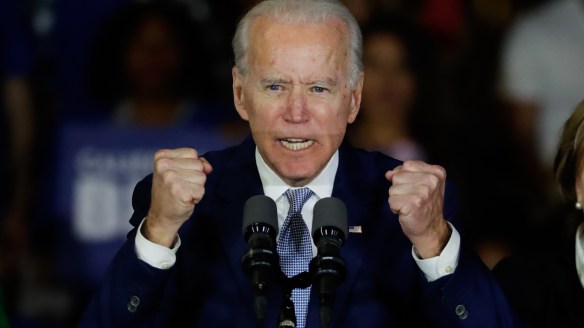
 

Hillary Clinton: The International Neocon Warmonger

06

By Webster G. Tarpley

Source: Voltaire.net

Hillary Clinton has announced her candidacy for President of the United States. While the European press showers her with praise without thinking, Webster G. Tarpley recalls her balance sheet: in all circumstances, she supported war and corporate interests.

As the National Journal reported in 2014, even the pathetically weak anti-war left is not ready to reconcile with Hillary given her warmongering as Secretary of State. And with good reason. Scratching just lightly beneath the surface of Hillary Clinton’s career reveals the empirical evidence of her historic support for aggressive interventions around the globe.

Beginning with Africa, Hillary defended the 1998 cruise missile strike on the El Shifa pharmaceutical plant in the Sudanese capital of Khartoum, destroying the largest producer of cheap medications for treating malaria and tuberculosis and provided over 60% of available medicine in Sudan. In 2006 she supported sending United Nations troops to Darfur with logistical and technical support provided by NATO forces. Libyan leader Moammar Qaddafi was outspoken in his condemnation of this intervention, claiming it was not committed out of concern for Sudanese people but “…for oil and for the return of colonialism to the African continent.”

This is the same leader who was murdered in the aftermath of the 2011 NATO bombing of Libya; an attack promoted and facilitated with the eager support of Mrs. Clinton. In an infamous CBS news interview, said regarding this international crime: “We came, we saw, he died.” As Time magazine pointed out in 2011, the administration understood removing Qaddafi from power would allow the terrorist cells active in Libya to run rampant in the vacuum left behind. Just last month the New York Times reported that Libya has indeed become a terrorist safe haven and failed state— conducive for exporting radicals through “ratlines” to the conflict against Assad in Syria.

Hillary made prompt use of the ratlines for conflicts in the Middle East. In the summer of 2012, Clinton privately worked with then CIA director and subversive bonapartist David Petraeus on a proposal for providing arms and training to death squads to be used to topple Syria just as in Libya. This proposal was ultimately struck down by Obama, reported the New York Times in 2013, but constituted one of the earliest attempts at open military support for the Syrian death squads.

Her voting record on intervening in Afghanistan and Iraq is well known and she also has consistently called for attacking Iran. She even told Fareed Zakaria the State Department was involved “behind the scenes” in Iran’s failed 2009 Green Revolution. More recently in Foreign Policy magazine David Rothkopf wrote on the subject of the Lausanne nuclear accord, predicting a “snap-back” in policy by the winner of the 2016 election to the foreign policy in place since the 1980s. The title of this article? “Hillary Clinton is the Real Iran Snap-Back.” This makes Hillary the prime suspect for a return to the madcap Iranian policies that routinely threaten the world with a World War 3 scenario.

Hillary Clinton is not only actively aggressing against Africa and the Middle East. She was one of the loudest proponents against her husband’s hesitancy over the bombing of Kosovo, telling Lucina Frank: “I urged him to bomb,” even if it was a unilateral action.

While no Clinton spokesperson responded to a request by the Washington Free Beacon regarding her stance on Ukraine, in paid speeches she mentioned “putting more financial support into the Ukrainian government”. When Crimea decided to choose the Russian Federation over Poroshenko’s proto-fascist rump state, Hillary anachronistically called President Putin’s actions like “what Hitler did in the ‘30s.” As a leader of the bumbled ”reset” policy towards Russia, Hillary undoubtedly harbors some animus against Putin and will continue the destabilization project ongoing in Ukraine.

Not content with engaging in debacles in Eastern Europe, she has vocally argued for a more aggressive response to what she called the “rollback of democratic development and economic openness in parts of Latin America.” This indicates her willingness to allow the continuation of CIA sponsored efforts at South American destabilization in the countries of Venezuela, Bolivia, Ecuador, Argentina and Brazil.

It is one of the proud prerogatives of the Tax Wall Street Party to push out into the light the Wall Street and foundation-funded Democrats. The final blow to Hillary’s clumsy façade comes directly from arch-neocon Robert Kagan. Kagan worked as a foreign policy advisor to Hillary along with his wife, Ukraine madwoman Victoria Nuland, during Hillary’s term as Secretary of State. He claimed in the New York Times that his view of American foreign policy is best represented in the “mainstream” by the foreign policy of Hillary Clinton; a foreign policy he obviously manipulated or outright crafted. Kagan stated: “If she pursues a policy which we think she will pursue…it’s something that might have been called neocon, but clearly her supporters are not going to call it that; they are going to call it something else.” What further reason could any sane person need to refute Hillary? A vote for Hillary is a vote for the irrational return to war.

The “Giant Sucking Sound”: Clinton Gave US NAFTA and Other Free Trade Sellouts

“There is no success story for workers to be found in North America 20 years after NAFTA,” states AFL-CIO president Richard Trumka. Unlike other failures of his Presidency, Bill Clinton can not run from NAFTA. It was Vice President Al Gore, not a veto-proof Republican congress, who lobbied to remove trade barriers with low-wage Mexico.

The record of free trade is clear. Multinational corporations and Wall Street speculators realize incredible profits, wages remain stagnant in the US, poverty persists in the developing world, and the remaining industrial corporations in America and Canada are increasingly owned by Chinese, Indian and other foreign interests.

America’s free trade policy is upside down. Besides Canada, Australia and Korea, most of our “free” trade partners are low-wage sweatshop paradises like Mexico, Chile, Panama, Guatemala, Bahrain and Oman. The US does in fact apply tariffs on most goods and on most nations of origin – rates are set by the US International Trade Commission (USTIC), a quasi-public federal agency.

Since a German- or Japanese-made automobile would under USITC’s schedule be taxed 10% upon importation, Volkswagen and Toyota can circumvent taxation by simply building their auto assembly plants for the US market in Mexico. In Detroit, an auto assembly worker is paid between $14 and $28/hour, ($29,120-$58,240/yr); hard work for modest pay. In Mexico, the rate varies from $2-5/hour.

In China, all automobile imports regardless of origin are tariffed as high as 25%. This allows the Chinese to attract joint ventures with Volkswagen and Toyota, and to paraphrase Abraham Lincoln, “keep the jobs, the cars and the money.”

NAFTA-related job loss is not a question of productivity, currency manipulation, “fair trade,” environmental standards, etc. While these issues are not trivial, free trade – as Lincoln’s advisor Henry C. Carey proved – is a matter of simple accounting. Can an American family survive on $4,160/year ($2/hr)? If not, cars and their components will be built in Mexico. If we want cars built in the United States, the only solution is a general tariff (import tax) reflecting the difference between those wage standards, like the very tariffs repealed by Bill Clinton.

In the United States the “runaway shop” under NAFTA and CAFTA has sent trade deficits and unemployment soaring while wages drop relative to the cost of living. Yet Mexico and other “partners” receive no benefit either. Many manufacturing sectors in Mexico pay wages lower than the equivalent sector in China. Mexico is now the world leader in illegal narcotics exportation and weapons importation. The poverty level between 1994 and 2009 remained virtually identical. (52.4% – 52.3%). The shipping of raw materials to Mexico comprise the majority of so called American “exports”. The finished products from these exports are assembled and sold back to the United States at slave labor prices.

Don’t expect Hillary to behave differently with the coming “Trans-Pacific Partnership,” which seeks to replace an ascendant China with less-developed Vietnam and Malaysia. Vietnam would overtake India-allied Bangladesh in the global apparel trade, and Malaysia has a high-tech manufacturing sector poised to rival China’s. With America’s manufacturing economy in shambles, the Clinton machine can now be redirected to geopolitical maneuvers.