A State of Never-Ending Crisis: The Government Is Fomenting Mass Hysteria

By John & Nisha Whitehead

Source: The Rutherford Institute

This country has been having a nationwide nervous breakdown since 9/11. A nation of people suddenly broke, the market economy goes to shit, and they’re threatened on every side by an unknown, sinister enemy. But I don’t think fear is a very effective way of dealing with things—of responding to reality. Fear is just another word for ignorance.”—Hunter S. Thompson, gonzo journalist

We have become guinea pigs in a ruthlessly calculated, carefully orchestrated, chillingly cold-blooded experiment in how to control a population and advance a political agenda without much opposition from the citizenry.

This is mind-control in its most sinister form.

With alarming regularity, the nation is being subjected to a spate of violence that terrorizes the public, destabilizes the country, and gives the government greater justifications to crack down, lock down, and institute even more authoritarian policies for the so-called sake of national security without many objections from the citizenry.

Take this latest shooting in Nashville, Tenn.

The 28-year-old shooter (a clearly troubled transgender individual in possession of several military-style weapons) opened fire in a Christian elementary school, killing three children and three adults.

Already, fingers are being pointed and battle lines are being drawn.

Those who want safety at all costs are clamoring for more gun control measures (if not at an outright ban on assault weapons for non-military, non-police personnel), widespread mental health screening of the general population, more threat assessments and behavioral sensing warnings, more CCTV cameras with facial recognition capabilities, more “See Something, Say Something” programs aimed at turning Americans into snitches and spies, more metal detectors and whole-body imaging devices at soft targets, more roaming squads of militarized police empowered to do random bag searches, more fusion centers to centralize and disseminate information to law enforcement agencies, and more surveillance of what Americans say and do, where they go, what they buy and how they spend their time.

This is all part of the Deep State’s master plan.

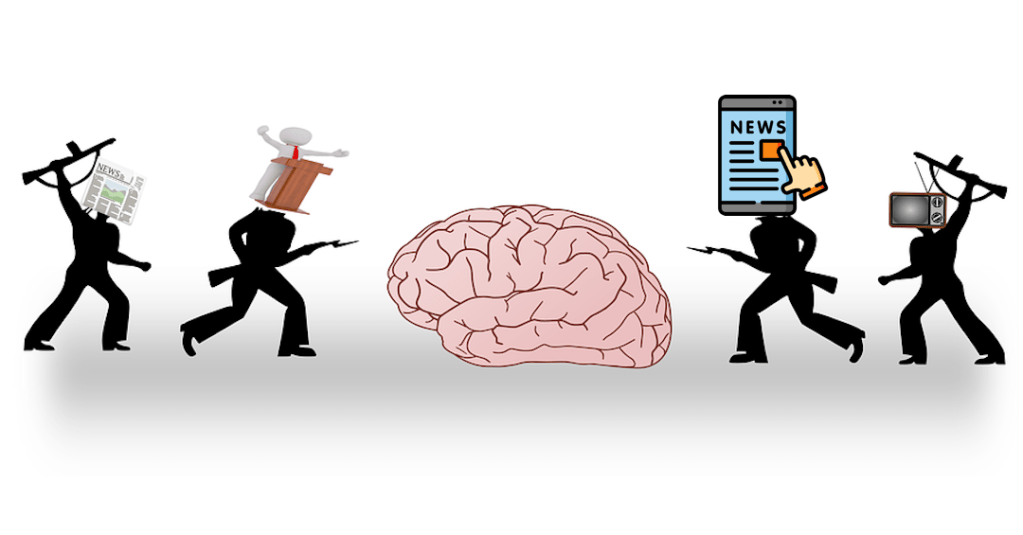
Ask yourselves: why are we being bombarded with crises, distractions, fake news and reality TV politics? We’re being conditioned like lab mice to subsist on a steady diet of bread-and-circus politics and an endless spate of crises.

Caught up in this “crisis of the now,” the average person has a hard time keeping up with and remembering all of the “events,” manufactured or otherwise, which occur like clockwork in order to keep us distracted, deluded, amused, and insulated from reality.

As investigative journalist Mike Adams points out:

“This psychological bombardment is waged primarily via the mainstream media which assaults the viewer by the hour with images of violence, war, emotions and conflict. Because the human nervous system is hard wired to focus on immediate threats accompanied by depictions of violence, mainstream media viewers have their attention and mental resources funneled into the never-ending ‘crisis of the NOW’ from which they can never have the mental breathing room to apply logic, reason or historical context.”

Professor Jacques Ellul studied this phenomenon of overwhelming news, short memories and the use of propaganda to advance hidden agendas. “One thought drives away another; old facts are chased by new ones,” wrote Ellul.

All the while, the government continues to amass more power and authority over the citizenry.

When we’re being bombarded with wall-to-wall news coverage and news cycles that change every few days, it’s difficult to stay focused on one thing—namely, holding the government accountable to abiding by the rule of law—and the powers-that-be understand this.

Yet as John Lennon reminds us, “nothing is real,” especially not in the world of politics.

In other words, it’s all fake, i.e., manufactured, i.e., manipulated to distort reality.

Much like the fabricated universe in Peter Weir’s 1998 film The Truman Show, in which a man’s life is the basis for an elaborately staged television show aimed at selling products and procuring ratings, the political scene in the United States has devolved over the years into a carefully calibrated exercise in how to manipulate, polarize, propagandize and control a population.

This is the magic of the reality TV programming that passes for politics today.

As long as we are distracted, entertained, occasionally outraged, always polarized but largely uninvolved and content to remain in the viewer’s seat, we’ll never manage to present a unified front against tyranny (or government corruption and ineptitude) in any form.

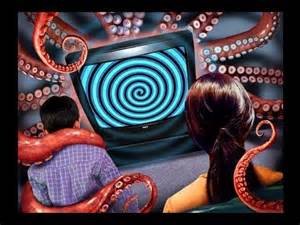
The more that is beamed at us, the more inclined we are to settle back in our comfy recliners and become passive viewers rather than active participants as unsettling, frightening events unfold.

Reality and fiction merge as everything around us becomes entertainment fodder.

We don’t even have to change the channel when the subject matter becomes too monotonous. That’s taken care of for us by the programmers (the corporate media).

“Living is easy with eyes closed,” says Lennon, and that’s exactly what reality TV that masquerades as American politics programs the citizenry to do: navigate the world with their eyes shut.

As long as we’re viewers, we’ll never be doers.

Studies suggest that the more reality TV people watch—and I would posit that it’s all reality TV, entertainment news included—the more difficult it becomes to distinguish between what is real and what is carefully crafted farce.

“We the people” are watching a lot of TV.

On average, Americans spend five hours a day watching television. By the time we reach age 65, we’re watching more than 50 hours of television a week, and that number increases as we get older. And reality TV programming consistently captures the largest percentage of TV watchers every season by an almost 2-1 ratio.

This doesn’t bode well for a citizenry able to sift through masterfully-produced propaganda in order to think critically about the issues of the day, whether it’s fake news peddled by government agencies or foreign entities.

Those who watch reality shows tend to view what they see as the “norm.” Thus, those who watch shows characterized by lying, aggression and meanness not only come to see such behavior as acceptable and entertaining but also mimic the medium.

This holds true whether the reality programming is about the antics of celebrities in the White House, in the board room, or in the bedroom.

It’s a phenomenon called “humilitainment.”

A term coined by media scholars Brad Waite and Sara Booker, “humilitainment” refers to the tendency for viewers to take pleasure in someone else’s humiliation, suffering and pain.

Humilitainment” largely explains not only why American TV watchers are so fixated on reality TV programming but how American citizens, largely insulated from what is really happening in the world around them by layers of technology, entertainment, and other distractions, are being programmed to accept the brutality, surveillance and dehumanizing treatment of the American police state as things happening to other people.

The ramifications for the future of civic engagement, political discourse and self-government are incredibly depressing and demoralizing.

This is what happens when an entire nation—bombarded by reality TV programming, government propaganda and entertainment news—becomes systematically desensitized and acclimated to the trappings of a government that operates by fiat and speaks in a language of force.

Ultimately, the reality shows, the entertainment news, the surveillance society, the militarized police, and the political spectacles have one common objective: to keep us divided, distracted, imprisoned, and incapable of taking an active role in the business of self-government.

Look behind the political spectacles, the reality TV theatrics, the sleight-of-hand distractions and diversions, and the stomach-churning, nail-biting drama, and you will find there is a method to the madness.

How do you change the way people think? You start by changing the words they use.

In totalitarian regimes—a.k.a. police states—where conformity and compliance are enforced at the end of a loaded gun, the government dictates what words can and cannot be used.

In countries where the police state hides behind a benevolent mask and disguises itself as tolerance, the citizens censor themselves, policing their words and thoughts to conform to the dictates of the mass mind.

Even when the motives behind this rigidly calibrated reorientation of societal language appear well-intentioned—discouraging racism, condemning violence, denouncing discrimination and hatred—inevitably, the end result is the same: intolerance, indoctrination, infantilism, the chilling of free speech and the demonizing of viewpoints that run counter to the cultural elite.

Labelling something as “fake news” is a masterful way of dismissing truth that may run counter to the ruling power’s own narrative.

As George Orwell recognized, “In times of universal deceit, telling the truth is a revolutionary act.”

Orwell understood only too well the power of language to manipulate the masses. In Orwell’s 1984, Big Brother does away with all undesirable and unnecessary words and meanings, even going so far as to routinely rewrite history and punish “thoughtcrimes.”

In this dystopian vision of the future, the Thought Police serve as the eyes and ears of Big Brother, while the Ministry of Peace deals with war and defense, the Ministry of Plenty deals with economic affairs (rationing and starvation), the Ministry of Love deals with law and order (torture and brainwashing), and the Ministry of Truth deals with news, entertainment, education and art (propaganda). The mottos of Oceania: WAR IS PEACE, FREEDOM IS SLAVERY, and IGNORANCE IS STRENGTH.

Orwell’s Big Brother relied on Newspeak to eliminate undesirable words, strip such words as remained of unorthodox meanings and make independent, non-government-approved thought altogether unnecessary.

Where we stand now is at the juncture of Oldspeak (where words have meanings, and ideas can be dangerous) and Newspeak (where only that which is “safe” and “accepted” by the majority is permitted).

Truth is often lost when we fail to distinguish between opinion and fact, and that is the danger we now face as a society. Anyone who relies exclusively on television/cable news hosts and political commentators for actual knowledge of the world is making a serious mistake.

Unfortunately, since Americans have by and large become non-readers, television has become their prime source of so-called “news.” This reliance on TV news has given rise to such popular news personalities who draw in vast audiences that virtually hang on their every word.

In our media age, these are the new powers-that-be.

Yet while these personalities often dispense the news like preachers used to dispense religion, with power and certainty, they are little more than conduits for propaganda and advertisements delivered in the guise of entertainment and news.

Given the preponderance of news-as-entertainment programming, it’s no wonder that viewers have largely lost the ability to think critically and analytically and differentiate between truth and propaganda, especially when delivered by way of fake news criers and politicians.

The bottom line is simply this: Americans should beware of letting others—whether they be television news hosts, political commentators or media corporations—do their thinking for them.

A populace that cannot think for themselves is a populace with its backs to the walls: mute in the face of elected officials who refuse to represent us, helpless in the face of police brutality, powerless in the face of militarized tactics and technology that treat us like enemy combatants on a battlefield, and naked in the face of government surveillance that sees and hears all.

As I make clear in my book Battlefield America: The War on the American People and in its fictional counterpart The Erik Blair Diaries, it’s time to change the channel, tune out the reality TV show, and push back against the real menace of the police state.

If not, if we continue to sit back and lose ourselves in political programming, we will remain a captive audience to a farce that grows more absurd by the minute.


Substack: Dead Man Walking

The crowning propaganda achievement of the next phase of authoritarian eradication of free speech is the theatrical takedown of Jack Teixeira.

By Kurt Nimmo

Source: Kurt Nimmo Substack

Substack’s days are numbered. The email newsletter platform is increasingly under attack, most recently by the ADL. The organization wrote on April 3 that Substack “continues to attract extremists and conspiracy theorists who routinely use the site to profit from spreading antisemitism, misinformation, disinformation and hate speech.”

The latest salvo by ADL against the First Amendment dovetails with a congressional push to further erode liberty with its draconian RESTRICT Act. There are a number of tweets that encapsulate the latest threat to liberty, but Substack no longer allows tweet embeds, thanks to an absurd ego-colliding tiff between Substack CEO Chris Best and Twitter boss, Elon Musk.

The RESTRICT Act is dressed up as a response to Tik Tok and China. Contrary to this propaganda, it will be used primarily to sanitize the internet and squash (and criminalize) all speech diverting from USG narratives.

“The Restrict Act Completes the Overthrow of the US Constitution,” writes Paul Craig Roberts. “The purpose is to silence all dissent from official explanations. Truth is criminalized. Propaganda and lies will reign supreme and unchallenged. The Matrix will be complete.”

Connor O’Keeffe writes for the Mises Institute,

With its vague language, the bill gives the government much leeway in defining what qualifies as illegal information. We’ve already seen government officials and their friends in media conflate antiestablishment arguments with foreign disinformation. They’ve even falsely labelled accurate news stories as foreign disinformation. It’s not hard to see these same people using the powers granted to them by the RESTRICT Act to criminalize certain dissenting views under the guise of counterintelligence.

The crowning propaganda achievement of the next phase of authoritarian control over free speech is the theatrical SWAT takedown of 21-year-old patsy Jack Teixeira, a low-level National Guard airman that, according to The Washington Post, somehow managed to get his hands on highly classified CIA and DOD documents. This is highly improbable, but then a blindsided American public is routinely fed improbable lies, exaggerations, and omissions by the USG and its corporate propaganda media.

CNN describes the event as a “carefully choreographed arrest,” and I’d agree with that assessment, although not as a result of the “Biden administration’s scramble” to contain sensitive leaks. The theatrical takedown of Mr. Teixeira is a propaganda event designed to bolster further eradication of dissent and grease the skids for the passage of RESTRICT.

The Washington Post has a documented history of working with the CIA to disseminate propaganda, so when we learn that the newspaper “wrote about the presence of problematic content on Substack, noting its use by spreaders of false information,” according to the ADL, we know for certain Substack will be brought to heel. (For more on the CIA’s takeover of the media, see The CIA and the Press: When the Washington Post Ran the CIA’s Propaganda Network, by Jeffrey St. Clair and Alexander Cockburn).

Add to this the Digital Services Act. It is “the EU’s latest incoming tech rulebook requiring them to stamp out illegal content on their platforms… including social media giants like Facebook, Instagram, TikTok and Twitter. These include quickly taking down flagged illegal content, including hate speech,” Politico reported last October. The corporate propaganda conduit conflated “hate speech” (that is, speech contrary to the narratives of the state) with “child pornography and terrorist videos.”

According to Slate, the Digital Services Act (DSA),

while written to protect EU residents, will almost certainly lead social media firms to change their moderation policies worldwide. Thus, with the DSA, the EU will effectively be doing what the First Amendment ostensibly prohibits our own government from doing: regulating the editorial judgments made by social media platforms on which Americans communicate with each other.

The jaws of the authoritarian vice are tightening. In the near future, the ability to express your opinion will be terminated if it runs counter to official government narratives. All avenues of expression are to be tightly monitored, moderated and censored at the behest of the state.

“The Biden administration is looking at expanding how it monitors social media sites and chatrooms after U.S. intelligence agencies failed to spot classified Pentagon documents circulating online for weeks,” NBC News reported on April 12. “The administration is now looking at expanding the universe of online sites that intelligence agencies and law enforcement authorities track.”

Undoubtedly, this will include Substack, one of the last remaining platforms where free speech is permissible without the heavy-handed interference of the state, and the narrowly focused and highly politicized censorship agenda of the ADL and other anti-First Amendment organizations.

Reality Tunnels: How to Control & Re-Program Your Mind

By Jack Fox-Williams

Source: Waking Times

When I was in secondary school, a teacher showed me an animated optical illusion in which a dancer appears to be spinning in one direction. I was adamant that the dancer was spinning clockwise, while my teacher insisted it was spinning counterclockwise. She then told me that you could change the direction of the dancer by focusing on the feet. I gazed with meditative fixation, and suddenly, to my amazement, the dancer started spinning counterclockwise! My teacher explained that since there are no visual cues for three-dimensional depth, your mind can determine what direction the dancer spins.

At that moment, I realised that reality is a construct of the mind, and we all potentially see the same world differently. I may have put it in less eloquent terms than that (considering I was only a teenager), but there was a fundamental shift in my understanding. The illusion made me realise that the notion of ‘objective truth’ was essentially arbitrary since our subjective beliefs mediate sensory experience.

My teacher and I could have argued for hours, days or weeks as to which direction the dancer was spinning; science couldn’t have proven either of us correct since it was a matter of perception rather than ‘truth’. In ‘reality’, the dancer was spinning in both directions, but since the brain has a natural tendency to classify, categorise and catalogue information in binary terms (up/down, left/right, black/white, clockwise/counterclockwise), the animated optical illusion appears monodirectional.

There are numerous examples of this in our day-to-day lives, like when we fail to appreciate other people’s viewpoints because we perceive the world differently. We believe we are right despite the multiple (if not infinite) interpretations about the nature of reality.

What are Reality Tunnels?

The countercultural guru Timothy Leary coined the term ‘reality-tunnel’ to describe our filtered perceptions of the world. Robert Anton Wilson later developed the concept to describe “pre-composed patterns of thinking which limit and distort the perception of reality by reducing complexity and options.”1 According to Wilson, reality-tunnels shape our phenomenological sense of self, editing out experiences that do not support our beliefs while focusing on those which do.2

An advocate for capitalism, for example, will gather facts to support the view that capitalism is the most effective socioeconomic model, discarding any information that runs contrary to this viewpoint. Similarly, a Marxist will construct arguments based on select information to support the view that communism is the best system, often neglecting evidence that contradicts their position.

As the psychedelic scholar Ido Hartogsohn states, “all of us harbour established ideas about minorities, religions, nationalities, the sexes, the right ways to think, act, feel govern, eat, drink, and what not. Reality tunnels act to help us fortify these ideas against challenging information.”3 In this sense, there is a crossover between the concept of reality-tunnels and confirmation bias, the latter described as the “human tendency to notice and assign significance to observations that confirm existing beliefs while filtering out or rationalising away observations that do not fit with prior beliefs and expectations.”4 The phenomenon of confirmation bias helps explain why people who ascribe to a reality-tunnel are oblivious. Most people believe their worldview corresponds to the “one true objective reality,” however, Wilson emphasises that many reality tunnels are artistic creations, a culmination of biological, cultural and environmental inputs.5

The notion that reality is shaped by the conditions of the human mind is not new. The 18th-century German philosopher Immanuel Kant proposed in his Critique of Pure Reason that experience is based “on the perception of external objects and a priori knowledge.”6 We receive information about the external world through our five senses, which is then processed by the brain, allowing us to conceptualise its contents. When I look at an object, such as a chair or a table, I have no understanding of its external nature. The qualities that enable me to denote the meaning of the object, such as shape, colour, size etc., have no objective existence; they are merely by-products of the brain.

The French psychoanalyst and psychiatrist Jacques Lacan proposed his theory distinguishing between ‘The Real’ and the ‘Symbolic’. Lacan argued that ‘The Real’ is the “imminent unified reality which is mediated through symbols that allow it to be parsed into intelligible and differentiated segments.”7 However, the ‘Symbolic’, which is primarily subconscious, is “further abstracted into the imaginary (our actual beliefs and understandings of reality). These two orders ultimately shape how we come to understand reality.”8

The Harvard sociologist, Talcott Parsons, uses the word gloss to describe how our minds come to perceive reality. According to Parsons, we are taught how to “put the world” together by others who subscribe to a consensus reality based on shared beliefs, norms and associations.9 A gloss constitutes a total system of language and/or perception. For example, the word ‘house’ is a gloss since we lump together a series of isolated phenomena – floor, ceiling, window, lights, rugs, etc. – and turn it into a totality of meaning.

The author and anthropologist Carlos Castaneda commented on this notion, stating, “we have to be taught to put the world together in this way. A child reconnoitres the world with few preconceptions until he is taught to see things in a way that corresponds to the descriptions everybody agrees on. The world is an agreement. The system of glossing seems to be somewhat like walking… we learn we are subject to the syntax of language and the mode of perception it contains.”10

The French philosopher Jacques Derrida stated that our understanding of objects (and the words which denote them) are only understood in relation to how they are contextually related to other objects (and denotive words).11

We can break free from prescribed reality-tunnels by using objects and language in unusual or disjointed ways, thereby creating new discursive meanings, associations and connotations. This was the aim and outcome of certain art movements such as Dadaism and Surrealism, as well as Brion Gysin and William Burroughs’ cut-up method.12

The famous ethnobotanist and psychonaut, Terence McKenna, argued that ideology and culture are tools “which give other people control over one’s experience and identity since they lead individuals to shape their identity according to pre-conceived forms. If a person identifies with commercial brands or with popular ideas of what is beautiful, true or important, they give away their power to other people.”13 McKenna once said that you should not see “culture and ideology as your friends,” implying that you should understand reality on your own terms rather than buying into “pre-packaged ideological and cultural ideals” such as communism, capitalism, democracy or some form of totalitarianism.14 Belief in itself, argued McKenna, was “limiting to the individual, because every time you believe in something you are automatically precluded from believing its opposite. By believing something, you are virtually shutting yourself from all contradictory information, thus once again performing the sin of imposing a rigid simplified structure upon an infinitely complex reality.”15

Much like McKenna, Wilson recommends that a “fully functioning human ought to be aware of their reality tunnel and be able to keep it flexible enough to accommodate and, to some degree, empathise with different ‘game rules’, different cultures.”16 According to Wilson, constructivist thinking, which considers how social and cultural processes determine our perception of the world, constitutes an exercise in metacognition, enabling us to become aware of how reality tunnels are never truly objective, thereby decreasing the “chance that we will confuse our map of the world with the actual world.”17

How Your Reality Tunnel Is Formed

The constraints of human biology partially limit our models of reality. As Wilson states, our DNA “evolved from standard primate DNA and still has a 98% similarity to chimpanzee (and 85% similarity to the DNA of the South American Spider Monkey). We have the same gross anatomy as other primates, the same nervous system and the same sense organs. While our highly developed pre-frontal cortex enables us to perform ‘higher’, more complex mental tasks than other primates, our perceptions remain largely within the primate norm.”18

The neural apparatus produced by our genetic coding helps create what ethologists call the umwelt, or “world-field.” Birds, reptiles and insects occupy a separate umwelt or reality-tunnel to primates (ourselves, included). For example, bees are able to perceive floral patterns in ultraviolet light, which we cannot (unless certain technologies are utilised). Canine, feline and primate reality-tunnels remain similar enough that friendship and communication can occur between these different species, however, a snake (for example) occupies such a different reality tunnel that their behaviour appears entirely alien.

As Wilson argues, the belief that human umwelt reveals “reality” or “deep-reality” is as “naïve as the notion that a yardstick shows more reality than a voltmeter or that ‘my religion is better than your religion’. Neurogenetic chauvinism has no more scientific justification than national or sexual chauvinisms.”19 He goes so far as to suggest that “no animal, including the domesticated primate, can smugly assume the world created by its senses and brain equal in all respects the ‘real world’ or the ‘only real world’.”20

Reality-tunnels are also influenced by “imprint vulnerability,” periods in our lives when early childhood/adolescent experiences “bond neurons into reflex networks which remain for life.”21 The psychological researchers, Lorenz and Tinbergen, won a Nobel Prize in 1973 for their research into imprinting, which demonstrated that “the statistically normal snow-goose imprints its mother, as distinct from any other goose, shortly after birth. This imprint creates a ‘bond’ and the gosling attaches itself to the mother in every possible way.”22 These imprints can be imposed onto literally anything. Lorenz observed a case in which a gosling, in the absence of its mother, imprinted a ping-pong ball. It followed the ping-pong ball around and, on reaching adulthood, “attempted to mount the ball sexually.”23

Wilson estimates that the age at which we are imprinted with language determines lifelong programs of “cleverness” (verbal intelligence) and “dumbness” (verbal unintelligence), since linguistic models enable us to articulate mental processing, evaluate complex ideas and communicate with those around us.24 Furthermore, how and when our first sexual experiences are imprinted can “determine lifelong programs of heterosexuality, brash promiscuity or monogamy etc.”25 In more obscure imprints, such as celibacy, foot-fetishism and sadomasochism, the “bounded brain circuitry seems quite as mechanical as the imprint which bounded the gosling to the ping-pong ball.”26

These examples suggest that experiences during childhood, when the brain exhibits optimal ‘neuroplasticity’ (a term used to refer to malleability of neural networks in the brain), can shape our reality tunnels far into adulthood. As Sigmund Freud proposed, many “rational” thoughts and behaviours are typically the result of “repressed” memories, impulses and desires, which dwell in the murky depths of the unconscious mind.27

Furthermore, reality-tunnels are shaped by social conditioning, the “sociological process of training in a society to respond in a manner generally approved by the society in general and peer groups within society.”28 Manifestations of social conditioning are multifarious but include nationalism, education, employment, entertainment, popular culture, spirituality and family life. Unlike imprinting, which usually requires only one powerful experience to set permanently into the neural networks of the brain, conditioning requires “many repetitions of the same experience and does not set permanently.”29

The processes of social conditioning vary greatly, depending on the cultural environment to which one is exposed. For example, an individual born in a Muslim country (such as Saudi Arabia) will likely believe in the teachings of the Quran and adhere to certain religious norms, customs and traditions. However, individuals born in a Western capitalist/consumerist country, or an Eastern country with Hindu or Buddhist traditions, will adhere to different cultural and behavioural codes.

Reality-tunnels are also formed through the process of learning. Much like conditioning, learning requires repetition, but it also requires motivation. Therefore, it plays “less of a role in human perception and belief than genetics and imprinting and even less than conditioning does.”30 Learning marks a major difference between how mammals, reptiles, insects and birds perceive the world. For example, snakes share the same reality tunnel since they merely act on biologically determined reflexes, with only minor imprinted differences. Mammals show “more conditioned and learned differences in their reality tunnels.”31

Humans demonstrate a higher aptitude for learning due to our highly developed cortex and frontal lobes as well as our prolonged infancy. This variability functions as “the greatest evolutionary strength of the human race” since it enables us to pass down knowledge from one generation to the next. But it also means that we can become brainwashed and label other people who do not share our beliefs as “mad,” “anti-social,” or “blasphemous.” In fact, it could be said that the majority of all wars are the result of two (or more) opposing reality tunnels fighting for supremacy. This is particularly evident in the case of religious conflict, where people kill each other in the name of “God.”

Tunnel Vision: The Politicisation of Reality

The rise of “identity politics” in the 21st century perfectly demonstrates how reality-tunnels prevent us from considering alternative perspectives and viewpoints. During the last decade, the political domain has become increasingly polarised as the left and right engage in a battle for cultural supremacy. Such polarisation was apparent in the Brexit referendum of 2016, in which 51.9% of the British public voted to leave the European Union while 48.1% voted to remain.32 The marginal success of the ‘leave’ campaign highlighted the strong division between both sides of the political spectrum. The former stressed the importance of the Union in promoting social and economic stability, while the latter emphasised the importance of national identity, sovereignty and independence.

The rhetoric employed by both the ‘leave’ and ‘remain’ campaign was so binary in its articulation that neither side engaged in meaningful dialogue; instead, the referendum became a series of baseless slogans, mottos and catchphrases – an advertising campaign designed to appeal to target demographics. The referendum was more about two separate reality-tunnels competing for ideological supremacy than a balanced analysis of benefits and risks.

The US presidential election of 2016 was a similar drama of competing reality-tunnels, shaped by masterful spin doctors and hidden persuaders who exploited modern advertising techniques to capture specific demographics based on class, age, sex, religion, geographical location and other criteria.

Donald Trump was well-known for his campaign slogan ‘Make America Great Again’ and other catchphrases that employed a lexicon of patriotism, populism and protectionism to appeal to those on the right. On the other hand, Hillary Clinton used the slogan ‘Stronger Together’ to evoke feelings of unity, compassion, and solidarity. The election became a battle between two contrasting reality-tunnels, grounded in meaningless rhetoric and hyperbole.

Another example of politicisation is the Covid-19 crisis, with the public divided into two camps – those who supported measures such as lockdowns versus the other side that rejected many of these same measures. Political polarisation demolished a sane balanced approach to the crisis, exacerbated and intensified by the ongoing political divide across the media landscape.

‘Echo Chambers’ & Identity Politics

Social media has fuelled identity politics by enabling groups and movements to generate an online presence and have real-world impacts. According to independent scholar and author Ilaria Bifarini, this results in the emergence of ‘echo chambers’ in which internet users “find information that validates their pre-existing opinions and activates confirmation bias.”33 This mechanism, says Bifarini, “strengthens one’s beliefs and radicalises them, without adding anything to information and knowledge. The result is the ideological extremism that we are observing today and in which we are taking part, where political debates have been replaced by supporters and verbal violence.”34

Another way this happens, for example, is how Google’s online video sharing and social media platform YouTube utilises algorithmic data to show users similar content to their prior engagements – content they are likely to engage with in the future, thus creating a feedback loop in which they are exposed to media reinforcing their political preferences.35 As media scholars Brooke E. Auxier and Jessica Vitak state, “many social media platforms structure their content-feeds based on what an algorithm determines to be the ‘top’ or most ‘relevant’ stories. While these tools may help users control their information and news environments – making consumption more manageable and mitigating information overload – it is possible that these tailoring tools will expose users to redundant information and singular viewpoints.”36

Both sides of the political spectrum fail to engage in meaningful discussion when they are entrapped in a single reality-tunnel, the stability of which is threatened by competing narratives. Instead, political dialogue becomes characterised by inflammatory insults, name-calling and defamation.

Loaded language – such as ‘virtue signallers’, ‘snowflakes’, ‘racist’, ‘transphobic’, ‘Islamophobic’, ‘hetero-normative’, ‘privileged’ – enables identity groups to protect the integrity of their reality-tunnel by excluding those who hold a different opinion. In the same way that religious cult leaders isolate their members from the outside world, so too do identity groups orientate themselves around a closed belief system, which is immune to criticism, contention or challenge.

In order to facilitate a more meaningful discussion, it is important that both sides learn to break free from the constraints of their reality-tunnel.

Rising Above the Fray

In his book Prometheus Rising, Robert Anton Wilson provides various techniques for challenging dominant reality tunnels. Writing in the early 1980s, Wilson suggested that “if you are a liberal, subscribe to the [conservative magazine] National Review… Each month try to enter their reality-tunnel for a few hours while reading their articles. If you are a conservative, subscribe to New York Review of Books for a year and try to get into their headspace for a few hours a month. If you are a rationalist, subscribe to Fate Magazine for a year. If you are an occultist, join the Committee for the Scientific Investigation of Claims of the Paranormal and read their journal, The Sceptical Inquirer, for a year.”37

To put a modern ‘spin’ on this exercise, if you follow conservative thinkers online such as Jordan Peterson or Ben Shapiro, expose yourself to leftist thinkers such as Slavoj Zizek or Noam Chomsky, and do the opposite if you are on the left. Subscribe to internet channels that do not align with your reality-tunnel. By performing this exercise, you will find that you can think about political issues in a more balanced, neutral and multidimensional way, free from the constraints of ideological dogma.

You can use the same technique with religion. In one exercise, Wilson says, “become a pious Roman Catholic. Explain in three pages why the Church is still infallible and holy despite Popes like Alexander VI (the Borgia Pope), Pious XII (ally of Hitler), etc.”38 Then explain why the Church is an immoral and outdated institution; also write three pages detailing why you believe this to be the case. If you have the time, you can perform the same exercise with other religions such as Hinduism, Buddhism, and even Satanism. Explain why these religions hold the key to the ‘true’ nature of ‘reality’ and then refute yourself by providing a counterargument.

You can use the same technique to become more conspiratorial in your thinking. In one exercise, Wilson says, “start collecting evidence that your phone is bugged. Everyone gets a letter occasionally that is slightly damaged. Assume that somebody is opening your mail and clumsily revealing it. Look around for evidence that your co-workers or neighbours think you’re a bit queer and are planning to have you committed to a mental hospital.”39 Observe how these assumptions influence your perception of other people and their behaviour – it won’t be long before you find evidence to support your paranoid thinking!

Once you have sufficiently experimented with this reality-tunnel, “try living a whole week with the program, ‘Everybody likes me and tries to help me achieve all of my goals’.”40 Then try living a whole month with the program, “I have chosen to be aware of this particular reality.”41 Then try living a day with the program, “I am God playing at being a human being. I created every reality I notice.”42 Then try living forever with the metaprogram, “Everything works out more perfectly than I plan it.”43 By adopting these different reality-tunnels, you will notice how malleable your perceptual faculties really are – the world can become a place of conspiracy and collusion or a place of benevolence and positivity, depending on how you view it.

Wilson provides another interesting exercise to expand the boundaries of consciousness, in which you “list at least 15 similarities between New York (or any large city) and an insect colony, such as a bee-hive or termite hill. Contemplate the information in the DNA loop, which created both of these enclaves of high coherence and organisation, in primate and insect societies.”44 Then, “Read the Upanishads and every time you see the word ‘Atman’ or ‘World Soul’, translate it as DNA blueprint. See if it makes sense to you that way.”45 According to Wilson, “Contemplating these issues usually triggers Jungian synchronicities. See how long after reading this chapter you encounter an amazing coincidence – e.g., seeing DNA on a license plate, having a copy of the Upanishads given to you unexpectedly…”46

Experimenting with different reality tunnels is a necessary practice if one wishes to challenge dominant narratives, perspectives and viewpoints and expand the boundaries of human consciousness. As we find ourselves in a post-modern ‘information age’, where an increasing number of political factions compete for informational authority, we are exposed to the hidden forces of propaganda more than ever before.

Every time we log into Facebook, Twitter, Instagram and YouTube, we allow ourselves to be manipulated by a complex system of algorithms that generates content based on our likes, dislikes, and even our differences. In order to escape the trappings of ideological dogma, we must become conscious of our biological, social and environmental conditioning and adopt a more multidimensional way of thinking.

Understanding about ‘reality-tunnels’ becomes instrumental in achieving true inner liberation since it enables us to think about the mind as a form of technological software that can be continually updated and reorganised. We achieve a state of metacognition, an awareness of one’s thought processes and an understanding of the patterns behind them. It is what the pioneering mind explorer John Lilly called our capacity for “metaprogramming,” the creation, revision, and reorganisation of mental programs.47

Although we are constrained by the limitations of biological programming (to a certain extent), the creativity of human consciousness is infinite, a maze of endless possibilities and potentialities waiting to be explored. As the Buddha said, “All that we are is the result of all that we have thought. It is founded on thought. It is based on thought.”48

Footnotes

1. Hartogsohn, I. (2015). The Psychedelic Society Revisited: On Reducing Valves, Reality Tunnels and the Question of Psychedelic Culture, Psychedelic Press, 3
2. ultrafeel.tv/reality-tunnel-how-beliefs-and-expectations-create-what-you-experience-in-life
3. Op cit., Hartogsohn, I. (2015), 4
4. en.wikipedia.org/wiki/Confirmation_bias 
5. Anton Wilson, R. (1983). Prometheus Rising, Tempe, Arizona: New Falcon
6. en.wikipedia.org/wiki/Immanuel_Kant
7. en.wikipedia.org/wiki/Reality_tunnel
8. Ibid
9. Parsons, T. (1951). The Social System, Glencoe, Illinois: The Free Press, 1951
10. Sam Keen, Castaneda interview, Psychology Today, December 1972
11. Derrida, J. (1978). ‘Genesis’ and ‘Structure’ and Phenomenology, in Writing and Difference, Routledge.
12. en.wikipedia.org/wiki/Dada
13. Op cit., Hartogsohn, I. (2015), 1
14. Ibid, 2
15. Anton Wilson, R. (1990). Quantum Psychology: How Brain Software Programs You & Your World, New Falcon Publications
16. en.wikipedia.org/wiki/Reality_tunnel 
17. Quantum Psychology, 74
18. Ibid, 74
19. Ibid, 75
20-24. Ibid, 76
25-26. Ibid, 76-77
27. Wollheim, R. (1971). Freud, Fontana Press
28. en.wikipedia.org/wiki/Social_conditioning 
29. Quantum Psychology, 77
30. Ibid
32. Ibid
33. Bifarini, I. Cognitive bias and echo chambers: The social media trap, www.academia.edu/40650380/Cognitive_bias_and_echo_chambers_The_social_media_trap
34. Ibid
35. Nguyen, C. Echo Chamber and Epistemic Bubbles, www.academia.edu/36634677/Echo_Chambers_and_Epistemic_Bubbles 
36. Auxier, B. and Vitak (2019). Factors Motivating Customization and Echo Chamber Creation Within Digital News Environments. Social Media and Society, April-June 2019
37. Prometheus Rising, 83
38. Ibid, 159
39. Ibid, 241
40-43. Ibid, 242
44-46. Ibid, 190
47. Lilly, John C. Programming & Metaprogramming in the Human Biocomputer, New York: The Julian Press, Inc., 1967
48. The Dhammapada

Journalistic Malpractice on Trial: What the Dominion Voting System Tells Us About How the Media Sacrificed their Credibility to Partisan Falsehoods

By Nolan Higdon

Source: Project Censored

“This is direct evidence of knowing falsity” exclaimed RonNell Anderson Jones, Professor of Law at the University of Utah, in a February 2023 interview with Jon Stewart. Jones noted that in most defamation cases “the likelihood that you will find evidence of them [news outlets] saying, ‘We know this is a lie and we would like to move forward with it anyway is deeply unlikely.’” However, in the case of Dominion Voting Systems v. Fox News, “the filing contains just this trove of evidence of emails and text messages and internal memos that are ‘rare’ both in terms of the ‘volume of the evidence and as to the directness of the evidence.’” This sentiment was echoed by Harvard law professor Laurence Tribe who noted, “I have never seen a defamation case with such overwhelming proof that the defendant admitted in writing that it was making up fake information in order to increase its viewership and its revenues.”

In the $1.6 billion defamation lawsuit, Dominion Voting Systems accuses Fox News Channel of falsely reporting that Dominion’s voting machines fraudulently delivered victory to Joe Biden in the 2020 U.S. Presidential Election. Court documents attained by other media outlets reveal that hosts and other high-ranking Fox News Channel officials – including the Chairman and CEO of Fox’s parent company News Corporation, Rupert Murdoch – knew these reports were false, but aired them because they were more concerned with confirming their audience’s belief that Donald Trump won the election.

The evidence presented in the court documents speaks to the journalistic malpractice that plagues the cable news industry. Journalistic malpractice refers to professional journalists who privilege ideological bias and profits over truth in their reporting. Fox News Channel is patient zero for the plague of journalistic malpractice. It was created in 1996 by Rupert Murdoch and the late Roger Ailes, a media consultant for several Republican presidents, as a political project to sell conservative culture and policy to the American public with pro-conservative propaganda disguised as journalism. For example, Fox News Channel has

  • falsely claimed that other media outlets did not cover the conservative Tea Party rallies;
  • utilized videos out of context to inflate the perceived size of conservative protests;
  • labeled former President Barack Obama a racist;
  • declared Osama bin Laden as a John Kerry supporter;
  • perpetuated discredited reports on the existence of Weapons of Mass Destruction in Iraq;
  • introduced digitally altered photos to fabricate Black Lives Matter violence and make New York Timesreporters appear to be revolting.   

Liberals were right to assert that such chicanery was propaganda, not journalism. But before liberal readers scold Fox News viewers, they should remind themselves that the plague of journalistic malpractice has also infected the liberal leaning cable networks such as CNN and MSNBC. Researchers and scholars have noted that the advent of cable and then the internet saw news media outlets shift from attaining the largest audience possible to focusing on a more specific or narrow demographic of the audience. While Fox News Channel sought to cater to Republican Party voting viewers, CNN and MSNBC did the same for Democratic Party voters. This gave the Democratic Party influence over programming that was tantamount to what the Republican Party long enjoyed at Fox.

When Senator U.S. Bernie Sanders’ 2016 Presidential bid posed a threat to their desired candidate Hillary Clinton in 2016, leaders from the Democratic Party admitted they worked to undermine his campaign. Pro-Democratic party outlets like MSNBC and CNN aided in this effort by

  • creating an unfavorable debate schedule;
  • giving Clinton twice as much and more favorable coverage;
  • publishing 16 negative articles about Sanders in Washington Post (owned by major Democratic Party funder Jeff Bezos) in 16 hours;
  • ghost editing previous news articles to diminish Sanders’ quarter century of accomplishments;
  • inviting his opponent’s surrogates to attack his character under the auspices of being objective journalists.

Their smear of Sanders continued in 2020 when

  • the Democratic Party-leaning news outlets misled the public about Sanders’ polling numbers;
  • CNN’s Abby Phillips drew gasps for ignoring Sanders’ claim that he never said a “woman could not be president;”
  • James Carville on MSNBC made the baseless claim that Russia was supporting Sanders;
  • MSNBC’s Chris Matthews compared Sander’s primary victories to the Nazi’s defeat of the French, an unfortunate comparison as Sanders’ family was murdered in the holocaust.

Journalistic malpractice also plagued Covid-19 coverage. Starting in 2020, CNN’s Chris Cuomo utilized his platform – with the approval of CNN leadership – to host his brother, then New York Governor Andrew Cuomo. The jovial segments seemed like campaign advertisements as Chris treated Andrew as the anti-thesis to then President Trump: a competent executive who took decisive action to address the Covid-19 pandemic. Although, the Democratic versus Republican framing attracted partisan audiences, in reality, Andrew Cuomo and Trump were all too similar: both concealed the actual number of Covid-19 deaths in their jurisdiction, both put patients at risk with kickbacks to industry partners, and both utilized media contacts to stifle press reports about their alleged sexual crimes.

The partisan falsehoods in cable news includes the production of powerful, long- running false stories designed to convince their audiences that the other party is wrong and crazy. For years now, conservatives and Fox News Channel perpetuated the baseless Qanon conspiracy, which alleges that a cabal of Satan-worshiping pedophiles – mainly in the Democratic Party – runs global affairs but Trump will break up the conspiracy. The absurdity of this conspiracy is tantamount to liberal leaning news media’s reporting on Russiagate, which sought to discredit Republicans. Since 2016, Russiagate – the story that Russia meddled in and influenced the outcome of the U.S. election in 2016, had direct connections to Donald Trump and his associates, and worked to help defeat Hillary Clinton for the presidency – was perpetuated by a series of false stories from Democratic Party-friendly media including

  • Russia hacking a Vermont power plant;
  • putting a bounty on U.S. soldiers in Afghanistan;
  • shifting election outcomes around the world;
  • turning Trump into an asset since 1987;
  • labeling the Hunter Biden laptop story as fake news.

Conservatives rightly see this reporting and believe liberals are insane.

Both factions need to look in a mirror. While audiences can clearly see the insanity in other networks’ viewers, they rarely seem to see it in themselves. Indeed, in the same week that CNN and others were having a schadenfreude moment over the Dominion v. Fox case, they hosted a commentator on the train derailment in East Palestine, Ohio without disclosing that he had lobbied for the train company Norfolk Southern. This example of hypocrisy and journalistic malpractice is not only costly to CNN’s credibility, but our democracy as well.   

Without a robust media system that privileges truth over preaching to the choir, the public will have endless debates devoid of facts on key issues such as critical race theory, vaccine efficacy, the origins of the COVID-19 virus, climate change, transgender issues, Ukraine, mysterious balloons, and more. Democratic discourse will be reduced to seeing Republicans as MAGA-hat wearing, blue lives matter-flag waving, gun nuts, and Democrats as medical mask wearing, “this house cares about everything” front-lawn sign adorning, professional victims and virtue signalers. These caricatures have never really been accurate, but as long as the nation is infected with the plague of journalist malpractice they will surely be perpetuated.

While the courts are unlikely to deliver solace from political party propaganda disguised as journalism, they have provided some wisdom. Both Rachel Maddow and Tucker Carlson of MSNBC and Fox News Channel respectively, have been brought to court for spreading false information and were exonerated because the judges concluded that no reasonable person would believe either of them were telling the truth. That is good advice, and viewers would be wise to remember it every time they consider watching cable news.

It Is The Mass Media’s Job To Help Suppress Anti-War Movements

By Caitlin Johnstone

Source: CaitlinJohnstone.com

In a new article titled “European antiwar protests gain strength as NATO’s Ukraine proxy war escalates,” The Grayzone’s Stavroula Pabst and Max Blumenthal document the many large demonstrations that have been occurring in France, the UK, Germany, Greece, Spain, the Czech Republic, Austria, Belgium and elsewhere opposing the western empire’s brinkmanship with Russia and proxy warfare in Ukraine.

Pabst and Blumenthal conclude their report with a denouncement of the way the western media have either been ignoring or sneering at these protests while actively cheerleading smaller demonstrations in support of arming Ukraine.

“When Western media has not ignored Europe’s antiwar protest wave altogether, its coverage has alternated between dismissive and contemptuous,” they write. “German state broadcaster Deutsche Welle sneeringly characterized the February 25 demonstration in Berlin as ‘naive’ while providing glowing coverage to smaller shows of support for the war by the Ukrainian diaspora. The New York Times, for its part, mentioned the European protests in just a single generic line buried in an article on minuscule anti-Putin protests held by Russian emigres.”

This bias is of course blatantly propagandistic, which won’t surprise anyone who understands that the mainstream western media exist first and foremost to administer propaganda on behalf of the US-centralized empire. And chief among their propaganda duties is to suppress the emergence of a genuine peace movement.

As we’ve discussed previously, it has never in human history been more urgent to have a massive, forceful protest movement in opposition to the empire’s rapidly accelerating trajectory toward a global conflict against Russia and China. Other peace movements have arisen in the past in response to horrific wars which would go on to claim millions of lives, but a world war in the Atomic Age could easily wind up killing billions, and must never be allowed to happen.

And yet the public is not treating this unparalleled threat with the urgency it deserves. A few protests here and there is great, but it’s not nearly enough. And the reason the people have not answered the call is because the mass media have been successfully propagandizing them into accepting the continuous escalations toward world war that we’ve been seeing.

People aren’t going to protest what their government is doing if they believe that what their government is doing is appropriate, and the only reason so many people believe what their government is doing with regard to Russia and China is appropriate is because they have been propagandized into thinking so.

The mass media are not telling the public about the many well documented western provocations which led to the war in Ukraine and sabotaged peace at every turn; they’re just telling everyone that Putin invaded because he’s an evil Hitler sequel who loves killing and hates freedom. The mass media are not telling the public about the way the US empire has been encircling China with war machinery in ways it would never permit itself to be encircled while deliberately staging incendiary provocations in Taiwan; they’re just telling everyone that China is run by evil warmongering tyrants. The mass media are not reminding the public that after the fall of the Soviet Union the US empire espoused a doctrine asserting that the rise of any foreign superpower must be prevented at all cost; they’re letting that agenda fade into the memory hole.

Because people believe Russia and China are the sole aggressors and the US and its allies are only responding defensively to those unprovoked aggressions, they don’t see the need for a mass protest movement against their own governments. If you tell the average coastal American liberal that you’re holding a protest about the war in Ukraine, they’re going to assume you mean you’re protesting against Putin, and they’ll look at you strangely if you tell them you’re actually protesting your own government’s aggressions.

The narrative that Russia and China are acting with unprovoked aggression actually prevents peace, because if your government isn’t doing anything to make things worse, then there’s nothing it can change about its own behavior to make things better. But of course there is a massive, massive amount that the western power alliance can change about its own behavior with regard to Russia and China that would greatly improve matters. Instead of working to subordinate the entire planet to the will of Washington and its drivers, they can work toward de-escalation, diplomacy and detente.

We’re not going to get de-escalation, diplomacy and detente unless the people use the power of their numbers to demand those things, and the people are not going to use the power of their numbers to demand those things as long as they are successfully propagandized not to. This means propaganda is the ultimate problem that needs to be addressed. Ordinary people can only address it by waking the public up to the fact that the political/media class are lying to them about what’s happening with Russia and China, using whatever means we have access to.

So that’s what we need to do. We need to fight the imperial disinformation campaign using information. Tell people the truth using every medium available to us to sow distrust in the imperial propaganda machine, because propaganda only works if you don’t know it’s happening to you.

Our rulers are always babbling about how they’re fighting an “information war” against enemy nations, but in reality they’re fighting an information war against normal westerners like us. So we must fight back. We need to cripple public trust in the propaganda machine and begin awakening one another from our propaganda-induced sleep, so that we can begin organizing against the horrific end they are driving us toward.

The MSM Never Was Objective—and It Never Questioned Power, Either

By Iain Davis

Source: The Disillusioned Blogger

In his excellent exposé of the recent decision by the Knight-Cronkite News Lab (KCNL) to advocate journalism that goes beyond objectivity, and in light of the report from the Columbia Journalism Review (CJR) confirming that RussiaGate was fabricated nonsense, genuinely independent researcher, writer and filmmaker James Corbett made a number of very salient points.

As Corbett points out:

As a moment’s sober reflection will immediately reveal, the mouthpiece mockingbirds of the controlled establishment media have never been objective and they have no credibility to damage.

But there is far more to this particular psyop than merely covering up the inconvenient history of media. The new narrative, sold to us in this instance by both KCNL and the CJR, is laying the foundations for a transformation of the media landscape.

The establishment wants us to believe that our “trust” in journalism is a vital component of our democracy—and, moreover, that the state can determine which news media organisation is deserving of our “trust.”

In truth, if democratic principles really matter to us, it is essential that we never trust any “news reports” from any journalist or news provider. Democracy places a duty upon us to be fierce critical thinkers. We should never unquestioningly accept anything we are told.

Journalism Is Story Telling

Every mainstream media (MSM) and “alternative media” outlet presents narratives. They are in the business of telling stories, not simply presenting “objective” facts.

Good journalism expresses an opinion and then cites the evidence that informs it. Well written journalism does this within the engaging and intriguing narratives it weaves. But no journalism is free from the journalist’s own conformation bias, and the tenor of the story is often directed by the editorial policy and allegiances of the publisher.

Pulitzer Prize winner Seymour Hersh’s recent investigation, in which he exposes the likelihood that the US government was behind the destruction of the Nord Stream II pipeline, is only available via independent outlets and on his own Substack. Despite this apparently being a story of enormous magnitude, the MSM seems extremely reluctant to bring it to wider attention. You can read about it only in the so-called “alternative media.”

While some MSM outlets report the official denial of Hersh’s piece, none have lent it much credibility, and many have been quick to cast aspersions on Hersh himself. Yes, the old game of attacking the messenger while avoiding the content of the message.

It is fair to say, based on the Hersh article alone, that no one can really verify his revelations in specific regard to Nord Stream II. He presents no evidence other than anecdotal accounts from unnamed sources. But nowhere in the MSM does there appear to be any interest in pursuing the needed investigation that Hersh’s piece demands.

Thus, it remains a piece of fantastic journalism, most notably because the very specific references it makes to orders given and operations undertaken during the BALTOPS22 exercise can be investigated. Detailed questions can be asked of officials. The blanket denials of Hersh’s story and his precise allegations are nowhere near enough to discredit it.

Given all the circumstantial evidence that also points towards US and NATO aligned culpability, his journalism—a great story—adds real fuel to the fire. This is real investigative journalism. That the story he presents in part reflects his own perspective is irrelevant.

The MSM Was Never Objective

One of the MSM’s main criticisms of the so-called “alternative media” is that it can often be described as activist journalism. This allegation implies that the perspective of the alternative news journalist biases their reporting. But such a criticism is itself a deception, because all journalism reports from a perspective.

There are basic commercial reasons why objectivity doesn’t suit journalism. Consumers of “news” don’t want to simply know what the facts are. They also want a steer on the broader implications of those facts. If that reaffirms their existing world view, all the better for sales. We all want to believe we are right and not be constantly reminded that we are probably wrong.

This is why very few Guardian readers also read the Daily Telegraph or Sun readers the Mirror, even when the presented “facts” are essentially the same. We pay for the perspective we agree with, not simply an objective reporting of the facts.

It is science, not journalism, that strives to achieve absolute objectivity in its pursuit of empirical facts. But the problem with scientific objectivity, beyond its corruption, is that it tends to introduce immense complexity and can be extremely boring to read. It doesn’t lend itself well to stirring up emotions or selling media content.

Other than a few obsessive researchers and the scientists themselves, few of us actually want to read highly technical and sterile scientific papers. We rely upon the journals and the MSM to tell us what the science says, wrongly assuming that their reporting of it is “objective.”

Our faith in the MSM places us in a vulnerable position, especially when it comes to the reporting of hard facts, such as those supposedly revealed by science. If those same alleged “facts” then become the basis for justifying government policy and/or our own decisions, then we had better be damn sure that our belief in the veracity of the story is well-placed.

The evidence that the MSM doesn’t even report the facts accurately is overwhelming. The CJR has exposed RussiaGate as the politically motivated nonsense it was. But this rubbish was relentlessly spewed out on both sides of the Atlantic for more than a year—alongside the equally baseless Skripal yarn—by a majority of MSM outlets. The obvious propaganda was designed to illegitimately demonise the Russian government.

https://odysee.com/$/download/Skripal-Salisbury-Chemical-Weapons-Attack-2018/890ead50a0e7139bbcca98425260c767e938590e

The CJR report demonstrates that today’s Western MSM is a mass purveyor of mis- and disinformation. We are presently regaled with highly spurious Ukraine war propaganda. This is the culmination of the Russophobic Western MSM agenda that has been building for many years.

The scene has seemingly been set, and we have all been psychologically prepared for the current conflict. This makes it easier for us to imagine that the Russians are our enemy.

State propaganda partnerships with the MSM are nothing new. Three examples quickly come to mind:

— British military intelligence were feeding senior broadsheet correspondents “stories” for decades, long before the MSM made up tales about WMD in Iraq to convince the public to accept a fake casus belli for the Iraq War.

— The Church Committee formally exposed the “Operation Mockingbird” network in the US in 1975. The CIA had been manipulating the reporting of the US MSM for many years, feeding selected operative journalists intel that they then reported as “objective journalism.”

— The Mockingbird Operation PBSuccess employed public relations guru Edward Bernays to use the media to overthrow the Guatemalan government on behalf of the United Fruit Company in 1954.

While proven MSM disinformation operations and campaigns, such as these, have purportedly been assigned to the annals of history, disinfo activity is manifestly ongoing. If anything, state control of the MSM narrative for propaganda purposes has reached heights that even Bernays couldn’t have imagined.

State propaganda has been privatised. Governments channel taxpayers’ money to their global corporate partners, which in turn pay the MSM to produce the desired disinformation. During the pseudopandemic we saw whole teams of behavioural scientists at the World Health Organisation global governance level and in various nations states “use” the MSM to unethically deploy applied psychology and disinformation to tackle what the establishment and its MSM hypocritically called “the infodemic.”

When Spi-B—the team of behavioural change experts within the UK’s Scientific Advisory Group for Emergencies (SAGE)—recommended that the UK government should “use the media” to increase “the perceived level of personal threat” to convince British people that they were living through a pandemic, contrary to the evidence of their own eyes, the MSM dutifully obliged. They launched numerous corporate backed terror campaigns upon an unsuspecting public.

We are constantly told by the political class that “press freedom” is an essential part of our democracy. If the MSM really were a pluralistic and free media, it wouldn’t be possible to “use” it for propaganda. There would be too many dissenting articles by investigative MSM journalists to maintain a single, uniform narrative across all outlets simultaneously. But it isn’t a pluralistic and free media and never was, so it is entirely possible for the MSM to be co-opted. What does this say about our alleged democracy?

The so-called “infodemic,” identified by the World Health Organisation as being “just as dangerous” as an alleged global pandemic, included any and all information that questioned the diktats of our “democratic” policymakers. The MSM attacked all dissent—literally without question—on the behalf of governments and intergovernmental authorities and their corporate partners.

The infodemic, according to the establishment, was prompted by the public’s questions about government policy, about “science” as reported by the MSM, and about data that revealed statistical manipulation. The infodemic was also prompted by the MSM looking askance at sceptical scientific papers shared by people who dared question the reported “science” as well as at the millions of people who raised their voices in mass protests. These protests were either ignored by the MSM or the protestors views were distorted and their peaceful demonstrations labelled “extremist.”

There was nothing remotely “objective” about any of this mainstream “news coverage.” Rather, in total obedience to the state, the Western MSM attacked informed opinion, ridiculed all questions and demonised individuals who did not comply. Not because there was any justification for doing so, but because that is the role of the MSM. Objectivity is nowhere in sight, nor has it ever been.

The MSM Has Never Questioned Power

The Knight-Cronkite News Lab (KCNL) goal is to create a “set of standards for trustworthy news.” Indeed, maintaining the public’s “trust” is the overwhelming fixation of the MSM and its government partners. We are urged to place our faith in those who evidently lie to us and suppress facts all the time.

At one point the KCNL noted:

As early as the turbulent 1960s, some younger journalists, especially investigative reporters, began to question what objectivity really meant if it did not challenge power, privilege and inequality.

Similarly, the CJR report on RussiaGate states that “primary missions” of journalism include “informing the public and holding powerful interests accountable.”

We are told that “holding power to account,” or watchdog journalism, is the core principle of journalism. Yet nowhere in the International Federation of Journalists Charter of Ethics or in the UK National Union of Journalists Code of Conduct is there any mention of this alleged principle.

The American Press Association’s (APA) Principles of Journalism does say that journalism must serve as an independent monitor of power. But this “principle” speaks more about defending journalists’ alleged legal “rights” than it does about exposing any wrongdoing:

Journalism has an unusual capacity to serve as watchdog over those whose power and position most affect citizens. The Founders recognized this to be a rampart against despotism when they ensured an independent press; courts have affirmed it; citizens rely on it. As journalists, we have an obligation to protect this watchdog freedom by not demeaning it in frivolous use or exploiting it for commercial gain.

The APA’s watchdog principle is supposedly protected by the government and its courts. It is not a “right,” but rather a permit bestowed upon American journalists by the establishment. This permit can be rescinded. The extent to which journalists in the US can question “power” is based solely on the protection that legacy journalism receives from the institutions it allegedly questions.

Demeaning something as frivolous is precisely what the MSM does when it labels people as conspiracy theorists, as science deniers or as COVID deniers. These attacks are rarely, if ever, based upon any exploration of the evidence. In fact, the labelling system itself is used to omit, obscure or “deny” the evidence.

All the APA’s principles mean is that certain subjects and certain kinds of evidence, characterised as “frivolous,” must not be reported by its members. What is or is not considered “frivolous” is entirely subjective. Given journalism’s legislative “protections,” it seems pretty clear what will be considered “frivolous.” A high degree of subjectivity, not objectivity, is the full extent of the APA members’ ethical commitment to “watchdog” journalism.

We only need look at the history we’ve discussed to understand that the news media barely and rarely holds power to account. Instead, the MSM is more frequently an extension of state and corporate power and is used to control the people through disinformation, omission and misdirection rather than to inform them and question power of their behalf.

This is not to say that good MSM journalism doesn’t exist. But, on those few occasions when MSM journalists do expose state crimes, they pay a terrible price for doing so. Julian Assange is among the small band of journalists who have dared to question power. He currently languishes in a British high-security prison precisely because he did so.

The MSM doesn’t question power when it deceives the public about chemical weapon attacks on behalf of the state. It isn’t holding power to account with its refusal to investigate, or even report, evidence of malfeasance in office. Its ignoring of state crimes can in no way be considered “watchdog freedom.” And it certainly does not act as any kind of watchdog when it simply reports whatever it is ordered to report by a centrally controlled global propaganda network.

We Are the Problem and the Solution

Social media has been lambasted for corralling its users into self-affirming information silos. While this is somewhat concerning, it isn’t anything new. The technological capability of social media to control opinion is an added dimension, to be sure, but the MSM has been doing exactly the same thing for more than a century.

Unfortunately, the MSM is able to propagandise us with relative ease. It does this partly by exploiting our own misconceptions. While we all seem to agree that the Russian and Chinese MSM are state propaganda, we Westerners, for some unknown reason, apparently imagine that our own mainstream media isn’t.

There is, however, a caveat with regard to this apparent gullibility. Research statistics show that there is a remarkable lack of trust in the MSM in the West. Notably, in the US “trust” in the news is as low as 26%. The UK fares little better, at just 34%. “Trust” in the news is higher in Scandinavian countries.

We only need have brief conversations with friends and family to realise that the propaganda does, in fact, work. But what explains this disconnect between our lack of trust in the MSM with our continuing willingness to believe what it tells us?

The answer lies in the greatest achievement of the Western MSM and the parasite class it serves: They have convinced us that our media is free and is pluralistic—this despite it never being true.

Consequently, it seems that while we are wary of spin and propaganda, we refuse to contemplate the likelihood that the MSM is out-and-out lying to us. Perhaps that is because we perceive the MSM as basically serving the public interest—even if we admit to ourselves that it bends the truth a little. Our scepticism does not extend as far as disbelief.

We therefore remain unable to reconcile our credulous acceptance of MSM claims about itself with the reality that we are being misled en masse by that same institution. Cognitive dissonance—the uncomfortable psychological sensation we experience when we hold two or more contradictory thoughts at the same time—may account for our irreconcilable beliefs.

In other words, we are caught between not “trusting” the MSM, on the one hand, and, on the other, our inability to accept the fact that virtually nothing the MSM tells us is true. The implications of this dichotomy are beyond anything we want to contemplate. As a result, we still believe that “the news” is our window on the world.

If you think about it, the idea that all the important global events of the day can be condensed into a single “newspaper” or a 30-minute “evening news” broadcast is quite ridiculous. Even if it were composed of honest, unbiased reports, which it seldom is, “the news” cannot provide us with anything approaching a reasonable understanding of what is actually going on.

Therefore, if we genuinely want to know what’s happening, we have to actively seek information and critically evaluate it ourselves. As James Corbett wrote:

Granted, the realization that all media is constructed for us by someone with an interest in making us believe something is not a happy one for most people. Instead, it is a deeply unpopular realization, because it means we can’t just switch on the evening news, switch off our brain, and expect some totally neutral journalistic saviour to come along and hand us “the news” from on high.

Like it or not, it is our responsibility to think critically about all information, no matter who relays it. This responsibility applies equally to the stories we are fed by the “alternative media.” This article should be read critically! It is, after all, just information that’s being passed along to you.

The Knight-Cronkite News Lab suggests that journalists should give their “readers, viewers, listeners and users valuable information that helps them make better decisions and lead better lives.”

Here, the new breed of MSM journalists, no more nor less objective than their predecessors, has been given the task of reporting “the news” from a value-driven perspective. The aim is to change us by making us “better” people. So what are the values the new breed of journalists are being taught to advocate?

KCNL tell us:

There is broad consensus today about the reality of climate change and the threats that it poses. That may well inform how many resources a newsroom devotes to reporting on the issue as well as any point of view its stories reflect. The same might go for opposition to systemic racism, say, or support for LGBTQ rights. [. . .] One value we believe is worth stating out loud is support for democratic institutions, which are under attack on multiple fronts. Trustworthy news is essential to sustaining a healthy democracy.

Herein lies the problem. Every one of these “values” serves global political agendas and dovetails neatly with government policy and, perhaps most notably, with global governance policy. That is to say, the MSM’s new values are exactly the same as their old values. Their “new” objective, just like the old objective, is to advocate for power, not question it.

Contrary to the KCNL’s claims, democracy is not founded upon our acceptance of whatever we are told by government “institutions.” Rather, it is predicated upon our ability not just to question the state but to limit it. Thus, KCNL’s contention that a “healthy democracy” is one where “democratic institutions” assert sovereignty over us is entirely false.

To point out that these institutions have no authority over us whatsoever is not to attack “democracy.” On the contrary, doing so defends “democracy.” But you will never hear that from the MSM. The MSM’s continuing mission is to maintain the lies that ensure we never realise this “truth.”

It is ironic that the MSM attacks their alternative counterparts for advocacy journalism and yet the MSM’s own apparent solution to the trust issue that preoccupies it is to itself emulate advocacy journalism. The difference? The alternative media is far more likely to advocate the questioning of power, while the MSM looks set to continue advocating for power.

Seeing as how the concept of “news” is, in and of itself, absurd, the suggestion that news should be “trusted” simply adds another layer of misdirection to this new MSM advocacy journalism. So, if our “faith” in the stories we are told is part of the problem, a solution is self-evident. We should abandon any notion of “trust.” We should invest our efforts in being “better” critical thinkers.

The “alternative” media outlet UK Column sums up this point nicely. It asks:

Why should I trust the UK Column? Put simply, you shouldn’t. The question of whether or not to trust a news organisation is a false choice. Making such a choice is promoted by government, the old media, and two new organisation types: the fact checker and the trust provider.

It disenfranchises readers, viewers and listeners. It is based on the principle that if you trust the media organisation you are visiting, there is no need for you to check the information they present. So we ask you not to trust us. Instead, view everything published here with a critical eye. Where possible, primary source material is made available for everything we publish: check it; make up your own mind.

In his previously referenced article, James Corbett provides a list of questions we should all ask ourselves whenever we encounter information offered by any source. We don’t need government or any other “democratic institution” to control information for us, nor we do need to be told what to think about it. We just need to think critically and answer these simple questions to our own satisfaction:

  • Why is this media outlet showing us this report?
  • What interest do they have in making us think a particular way about the issue presented?
  • Can the information in the report be independently confirmed or triangulated from other sources?
  • Whose viewpoint is being shown, and how is that viewpoint portrayed? Whose viewpoint is being excluded? Why?
  • What language is being used to frame the issue?
  • What does the report make us believe about the world?
  • Are we in agreement with the report? Why or why not?

Ultimately, as ever, the choice is yours. You can gather information from any source you wish. If you want to know what the state wants you to believe and what behaviour it expects of you, then go to the MSM. If you want to explore broader criticism of government and its policies, then the more independent “alternative media” provides richer pickings.

Treat those two impostors just the same. There is honest, high-quality journalism in both. There is also propaganda to be found in both. Fortunately, if you answer James Corbett’s suggested questions, you’ll be able to spot the difference more often than not.

Signs of Early Onset Activist Syndrome

By Mickey Z.

Source: Dissident Voice

In my very young days, I lived in a fourth-floor apartment in a five-story, pre-war, walk-up building. On the second floor, you’d find an older Italian couple: Mr. and Mrs. Larucci. (I say “older” because that’s how they appeared to me at the time. I’m probably older now than they were then.)

Anyway, the two Laruccis were the first cat people I had ever encountered. They religiously fed the local strays — rain or shine, in sickness and in health — in an alcove behind the building. Their diligence, effectiveness, and focus clearly inspired my mother and sister to become cat ladies/animal lovers for life. To a slightly lesser degree, both me and my Dad were influenced by witnessing all this animal-based altruism.

It was while dwelling in that building that I first showed signs of Early Onset Activist Syndrome. To follow are but two of many symptoms.

Even as a very young child, I understood:

1. The war in Vietnam was becoming increasingly unpopular

2. Being on TV is a really big deal to most people

So, it was while hanging out on the stoop with my grade school friends — not far from the 59th Street Bridge, connecting Queens to the east side of Manhattan — that I hatched a cynical scheme to allegedly capitalize on the above two facts.

About six of us staged our very own anti-war protest amidst the high volume of motor vehicles streaming down Crescent Street on their way to the city (Queens may be one of New York’s five boroughs but for us, only Manhattan is and will ever be “the city”).

Mimicking the images we saw nightly on our black-and-white TV sets, we made rudimentary signs and posters. One of my fellow subversives wasn’t a regular on the block. He was a little older than me, perhaps a classmate of my big sister. I can’t remember his full name but I do recall that his last name was Castro and that he later became notorious for ending up in the hospital after attempting to ride a motorized mini-bike down a flight of concrete steps.

By the time I was in my teens, I heard a rumor that Castro had died during the commission of a crime. Considering how many of my childhood friends ended up in jail or dying young, this was a rumor to be taken at face value.

Anyway, I can still see Castro’s chastened expression when I scolded him for a misspelling on his sign: “SPOT THE WAR!” it read. I insisted that he correct it.

With or without proofreading, we enthusiastically held up our protest posters to passing cars and trucks and yelled “stop the war” until our pre-pubescent voices grew hoarse. “Someone will call the news,” I promised, “and we’ll all be on TV tonight.”

Our children’s crusade lasted maybe 20 minutes. When it neither ended the war nor landed us on TV, we got bored. One by one, we heard our mothers’ voices calling us to dinner from different windows of the tenement buildings looming above us. Hunger trumped revolution, and the experiment was over. I don’t believe any of us ever mentioned it again.

Today, that same anti-war demo or rally or protest or march or whatever would’ve had its own social media event page. It would’ve been live-streamed. And it would’ve been deemed a “success” if it garnered even just one of us a kick-ass Facebook profile pic for which we could use the caption: #warrior.

Speaking of “anti-war,” a few years after I organized that futile demonstration, I first saw Duck Soup on TV. Instantly, I was hooked on the Marx Brothers… but I had a problem. You see, this was long before YouTube and free streaming services. It was also before VHS players and video stores.

To see more of the Marx Brothers, I had to hope that one of the local NYC channels (5, 9, 11) would randomly show one of their 13 films (12 actually, because Animal Crackers was in the midst of a legal battle at that time).

After catching a couple more of the Marxster’s movies, I grew tired of waiting for the rest so I hatched a plan. With help from my Mom, I found the names and addresses of the directors of programming of the local channels (easier said than done in the pre-Google days of yore).

I hand-wrote three passionate petitions — requesting/demanding more Marx Brothers movies be shown on their stations — and brought the documents to my Catholic grammar school.

I was popular enough and cool enough to convince, cajole, or coerce all my classmates to sign. Feeling mighty proud of myself, I mailed off all three petitions and sat back to wait for a steady supply of Harpo, Chico, Zeppo, and Groucho.

The weeks and months passed with a) no change in local programming and b) no reply from any of the stations. All the necessary lessons about “activism” were right there in front of me, but I wasn’t yet ready to learn. Not even close.

Nope, that part would only happen after decades had passed, and — through personal experience — I could finally recognize activism for what it is. And what it could potentially be.

This brings me back to Mr. and Mrs. Larucci. While I was trying to “spot” the war and spread “Marxism” on TV, my cat-loving neighbors just kept feeding and caring for the local strays. Regardless of weather or personal issues, they fulfilled their chosen mission.

Cat ladies get results.

A cat lady understands urgency when she encounters it. She also accepts her limitations and works around them. From there, she basically behaves like a triage nurse. As a result, she gets results. Day after day, felines within her reach are fed and have safe havens in which to hide. If they fall ill or are injured, they will be promptly cared for with dignity.

When others in the general area see a hungry, sick, injured, or threatened cat, they know who to contact: the local cat lady. No delusions of grandeur about shifting global conditions or ‘changing the conversation.’ No social media fame. Just results.

Finally, lessons learned.

So, to all the #woke activists still out there virtue signaling their way onto my news feed, I have this message from a song by Groucho:

“I don’t know what you have to say. 

It makes no difference anyway. 

Whatever it is, I’m against it!”

ILLUSION & TRUTH: THE DISINTEGRATION OF METAPHYSICAL VALUES

Little rabbit in a magician hat.

By Kingsley L. Dennis

Source: Waking Times

“Yes, the world is an illusion. But Truth is always being shown there.” ~Idries Shah, The Dermis Probe.

It seems that we can talk about consciousness and consciousness studies so long as it remains within the ‘reality remit’ and does not push against the ‘barriers of perception.’ This is why so much of our modern societies and the media marketplace are filled with pop-spirituality as they function as cultural remedies rather than revolutions. That is, they provide a band aid plaster rather than seeking to find a permanent cure. Many easy ‘self-help’ practices offer a ‘false exit’ revolving door so that people are given the sensation of finding a way out of the ‘system’ only to be brought back into it again. Such teachings or offerings act as auto-tranquilizers – they act as auto-tranquilizing mechanisms to provide an alternative treatment, or pleasing sensation, that appears as fringe or ‘outside’ the system but is not. Rather, it is another sub-set within the overall program; but a subset that does not constitute a threat or provide a means to perceive through the programmed reality set. In other words, it is an allowed anomaly.

The ‘allowed anomalies’ are examples of mechanisms of mental anesthesia that soften or even dispel the original urge to seek for answers. They also serve as a quick satiation (fast food) to bring temporary satisfaction. Temporary satiation, or satisfaction, dulls down the real hunger so that afterwards the developmental urge remains in the ‘goldilocks zone’ of not too hungry or too full – just full enough to want to keep on with the spiritual pursuit yet not too hungry that they wish to seek beyond what is openly offered or available in the marketplace. The forces currently acting upon humanity are those that shall compel us to die away or die to become. The opportunity now available compels us to become something qualitatively new. This is now the perfect time for personal advancement and for the expansion of perception and awareness. It is no longer necessary to be clever – it is essential to be wise.

There has been a noticeable decline in what, in simple terms, may be called the ‘metaphysical quest’ (what has also been known as the ‘spiritual quest’). The inner impulse to seek beyond material-physical appearances has almost vanished from contemporary life. It was long ago co-opted into religious pursuits and fashioned into ritualistic ceremonies and dogma. And more recently, it has been ushered into what I have previously called ‘Ashram Avenues’ and ‘Guru Boulevards’ by people enticed with exotic interests. The glamour of ‘self-development’ has found a wanting marketplace within the glare of social media. The depth of inner longing is scratched at the surface and satisfied by sipping at the singing bowls of inner harmony and world peace.

It is all too easy to become stereotypes of ourselves, driven by platitudes of false mysticism and superficial attainment. There is so much within contemporary life that bears down upon us to make us forget ourselves that just the act of self-remembering becomes a force of rebellion and treason against the material world. We are led to forget those capacities that we bring with us from the metaphysical realm. We are here in this world as both guests and custodians; we inhabit our bodies during the life experience in the hope of making the most of those gifted lives. And yet, we rarely come to realize the truth of who we really are. We become entranced by the material realm and its systemic diversions. Our independent liberty and free will is dismantled by succumbing to set patterns, habits, and programmed behaviours. Generally, in our societies an individual is ‘permitted’ to access a form of ‘spirituality’ just enough to provide them with a taster smell of satisfaction. This is then carried around throughout life as a constant marker of ‘satisfied attainment’ – an outer recognized badge of honour. The individual then stops doing the Work – the critical seeking – and falls into line within the Game. The perennial memory starts to fade again. Yet … have we ever done enough?

Human civilization is infected with deviant distractions distributed through social, cultural, and also spiritual mischief. So much false gold within circulation creates a parallel economy. On the other side, however, true gold increases its value. The disintegration of metaphysical values, and the moral decay that accompanies this, are part of a deliberate projection into hyper-materialism. We have yet to fully realize that the fastest way to awaken is to become the cause of someone else’s awakening. By assisting and serving our fellow human beings we are simultaneously helping ourselves. Many people are already awake – they just don’t know it yet. Sounds contradictory? How many times have we known that something is the right thing to do and yet we fail to do it? Similarly, so many people instinctively feel the inner urge, and sense the inversion of the world, and yet choose not to act upon this. In the words of the sage and philosopher Sri Aurobindo:

At first the inner consciousness seems to be the dream and the outer the waking reality. Afterwards the inner consciousness becomes the reality and the outer is felt by many as a dream or delusion, or else as something superficial and external.[i]

Our current consensus reality is not an accurate portrayal of the life experience, and it is no longer where we need to be. We need to turn things around so that the outer world is recognized to be the dream state, or the lower perceptive level of reality. It is time to choose a different timeline – if that makes any sense?

If people continue to be fed by the dross of the external world – its media circus, entertainment absurdities, and directed propaganda – then the consensus reality gets continually imprinted (validated) by these inputs that people feed back into the system. A new template or consciousness field struggles to come into existence. The mass perceptive state remains low – very low. And as a collective species, humanity can no longer remain at this low level of perceptive awareness (ignorance) at a time when an advancement in awareness is vital. It is simply not sustainable in the long term. If this polarized state continues, then there is likely to be a splintering in humanity’s future, and not everyone will walk the same path going forward. What we choose today will become the reality we shall experience later. Now is the time for advancement in terms of perceptive awareness: it is time to EXPAND. It is time to grow out of the lens of infantile perception. It is time to walk each step with awareness, with conscious knowing, instead of stumbling through on autopilot.

Let us ponder on our predicament by concluding with the following tale:

The Fruit of the Tree

An ancient tale tells how a wise man once related a story about a remarkable tree which was to be found in India. People who ate of the fruit of this tree, as he told it, would neither grow old nor die. This legend was repeated, by a reliable person, to one of the Central Asian kings of long ago, and this monarch at once conceived a passionate desire for the fruit – the source of the Elixir of Life.

So the King sent a suitably resourceful representative to find and to bring back the fruit of that tree. For many years the emissary visited one city after another, travelled all over India, town and country, and diligently asked about the object of his search from anyone who might know about its nature and where it was to be found.

As you can imagine, some people told this man that such a search must obviously only be a madman’s quest; others questioned him closely to find out how a person of such evident intelligence could actually be involved in such an absurd adventure; their kindness in this respect, showing their consideration for him as a deluded dupe, hurt him even more than the physical blows which the ignorant had also rained upon him.

Many people, of course, told him false tales, sending him from one destination to another, claiming that they, too, had heard of the miraculous Tree. Years passed in this way, until the King’s representative lost all his hope of success, and made the decision to return to the royal court and confess his dismal failure. Now, there was also, luckily, a certain man of real wisdom in India – they do occasionally exist there – and the King’s man, having heard of him late in his search, thought; ‘I will at least go to him, desperate as I am, to seek his blessing on my journey homeward.’

He went to the wise man, and asked him for a blessing, and he explained how it was that he had got into such a distressed condition, a failure without hope. The sage laughed and explained:

‘You simpleton; you don’t need a blessing half as much as you need orientation. Wisdom is the fruit of the Tree of Knowledge. Because you have taken images and form, secondary names for things, as your aim, you have not been able to find what lies beyond. It has thousands of names: it may be called the Water of Life, the Sun, an Ocean and even a Cloud … But the emblem is not the thing itself.’

Whoever, this Teacher continued, attaches himself to names and clings to concepts without being able to see that these derivative things are only stages, sometimes barriers, to understanding, will stay at the stage of secondary things. They create, and remain in a sub-culture of emotional stimulus, fantasy and quasi-religion.[ii]

References:

[i] Sri Aurobindo, Integral Yoga. Lotus Press (1993), p49

[ii] Idries Shah, (1978) A Perfumed Scorpion. London: Octagon Press, p137-8