New research published Monday found that the top 1% of U.S. income earners have taken $50 trillion from the bottom 90% over the past several decades, and that the median worker salary would be around twice as high today as it was in 1945 if pay had kept pace with economic output over that period.
The study’s authors, Carter C. Price and Kathryn Edwards of the RAND Corporation, examined income distribution and economic growth in the United States from 1945 to the present. The researchers found stark differences between income distribution from 1945 to 1974 and 1975 to 2018.
What if income growth in America had stayed as equitable as it was in the post-war period?
According to the study—which was funded by the Seattle-based Fair Work Center—the median salary of a full-time U.S. worker is currently about $50,000. Adjusted for inflation using the consumer price index, workers at or below the current median income now earn less than half of what they would have if incomes had kept pace with economic growth. This means that if salaries had kept pace with economic output, the median worker pay would be between $92,000 and $102,000 today, depending on how inflation is calculated.
Had the more equitable distribution of the roughly 30-year postwar period continued apace, the total annual income of the bottom 90% of American workers would have been $2.5 trillion higher in 2018, or an amount equal to about 12% of GDP. In other words, the upward redistribution of income has enriched the 1% by some $47 trillion—which would now be more than $50 trillion—at the expense of American workers.
David Rolf, a Seattle labor organizer, president of the Fair Work Center, and founder of Service Employees International Union (SEIU) Local 775, is more blunt. He calls this “the $2.5 trillion theft.”
Every year, $2.5 trillion—that's trillion, with a “t”—is redistributed from the bottom 90 percent of Americans to the wealthiest 1 percent. That $50 trillion used to go to working Americans. It’s instead been rerouted to the pockets of the top 1 percent. https://t.co/d4hNjlIKhS
“From the standpoint of people who have worked hard and played by the rules and yet are participating far less in economic growth than Americans did a generation ago, whether you call it ‘reverse distribution’ or ‘theft,’ it demands to be called something,” Rolf, who helped lead the fight for a $15 hourly minimum wage in Seattle and beyond, toldFast Company.
Remarkably, the study found that workers at all income levels would be better off today if income kept pace with output. Full-time, prime-age workers in the 25th percentile, for example, would be earning $61,000 instead of $33,000. Workers in the 75th percentile, who in 2018 earned $81,000, would be making $126,000. Even 90th-percentile workers, who earn $133,000, would be making $168,000 under the more equitable distribution.
On the other hand, had the economic pie been divided more equitably, the income of the top 1% would fall from around $1.2 million to a still-affluent $549,000.
“We were shocked by the numbers,” said Nick Hanauer, a venture capitalist and self-described “zillionaire” who, along with Rolf, came up with the idea for the study. “It explains almost everything,” Hanauer told Fast Company. “It explains why people are so pissed off. It explains why they are so economically precarious.”
Sen. Bernie Sanders (I-Vt.), who made correcting economic inequality a pillar of both of his presidential bids, lamented the “h-u-g-e redistribution of income in America” in a Monday tweet.
Since 1975, there has been a h-u-g-e redistribution of income in America, but it has gone in the wrong direction. Over the past 45 years, $50 trillion has been taken out of the pockets of the bottom 90% and into the hands of the top 1%—costing the median worker $42,000 a year.
The researchers’ findings, which come amid a deadly coronavirus/Covid-19 pandemic, shine light on the injustice of an economy—by far the wealthiest in the history of civilization—in which essential workers struggle mightily, and often in vain, to survive while the richest people grow ever richer at their expense.
According to Americans for Tax Fairness, the total wealth of U.S. billionaires increased by $792 billion, or 27%, during the first five months of the Covid-19 pandemic. During this period, Amazon CEO Jeff Bezos, the world’s wealthiest person, has become the world’s first multi-centibillionaire, with a net worth now surpassing $200 billion. Meanwhile, his employees struggle to make ends meet, and Amazon workers who speak out against poor pay and hazardous working conditions during the pandemic have been fired and derided by company executives.
Compared to other most-developed nations, the U.S. has done a relatively poor job of taking care of its people during the pandemic. In addition to the U.S. being the only developed nation without universal healthcare, its workers have received less in direct payments and government support than people in many comparable countries.
The gap between the richest and poorest U.S. households is now wider than it has ever been in the past 50 years, according to the most recently available data from the U.S. Census Bureau. The pandemic has only exacerbated the situation, as around half of lower-income American households have reported a job or wage loss due to Covid-19.
Internationally, the U.S. ranks 39th out of over 150 nations in income inequality, according to Gini coefficient data compiled by the CIA, placing it roughly on par with nations like Peru and Cameroon. Among Organization for Economic Cooperation and Development (OECD) nations, the U.S. has the seventh-highest level of income inequality.
The U.S. has the highest poverty rate among the world’s most-developed nations, and the fourth-highest poverty rate among OECD nations after South Africa, Costa Rica, and Romania. According to UNICEF, the U.S. also has the second-highest rate of childhood poverty in the developed world behind Romania, with more than one in five U.S. children—and over one in four Latinx children, and nearly one in three Black and Native American children—living in poverty.
This year, more than 54 million Americans, or roughly one in every six people—including 18 million children—may experience food insecurity, according to the nonprofit group Feeding America.
The collective wealth of the world’s 2,189 billionaires has risen to $10.2 trillion, an increase of nearly $1.3 trillion in the past three years, according to a new report by the Swiss bank UBS and PricewaterhouseCoopers. The unprecedented surge in wealth takes place amidst a global pandemic that has killed more than one million people worldwide, including more than 215,000 in the United States alone.
The report, “Riding the Storm,” is based on data from 43 markets, including interviews with 60 billionaires, accounting for around 98 percent of global billionaire wealth. It sums up the results: “Most of the decade was a time of exceptional prosperity for billionaires regardless of sector…”
The US continues to have the largest concentration of billionaire wealth, accounting for 36 percent of the world’s total, or $3.6 trillion. China ranked second with $1.6 trillion and saw the largest growth over the decade, by 1,146 percent.
Third was Germany, where billionaire wealth totaled $594.9 billion, an increase of 175 percent from 2009’s $216.1 billion. While fourth in terms of billionaire wealth at $467.6 billion, Russia saw the smallest growth by percentage, 80 percent, from $260.2 billion in 2009 to $467.6 billion in 2020.
The $10.2 trillion amassed by less than .0003 percent of the global population is more than the estimated 2020 Gross Domestic Product of every country on the planet except for the US and China. The staggering total hoarded by less than 2,200 people, or about the number of COVID-19 deaths in the US within the last 72 hours, surpasses the previous high of $8.9 trillion recorded in 2017.
For a household earning the average US median income, it would take over 16 million years to accumulate $1 trillion, not even enough to cover what has been collectively usurped from global society in less than three years. Joel Berg, CEO of Hunger Free America, has calculated the cost of ending hunger in the US at $25 billion, which could be done 400 times over with $1 trillion.
The billionaires who have increased their wealth the most, according to the authors, are in the “technology, healthcare and industrial sectors,” including Amazon CEO Jeff Bezos, Tesla CEO Elon Musk, and Facebook CEO Mark Zuckerberg. The report states: “During 2018, 2019 and the first seven months of 2020, technology billionaires’ total wealth rose by 42.5% to USD 1.8 trillion, supported by the surge in tech shares.”
The surge in technology and medical shares was buoyed by unlimited cash from the Federal Reserve, included as part of the $2.2 trillion CARES Act passed at the end of March in a near-unanimous vote by both Democrats and Republicans.
This financial bailout made a “big difference” in the fortunes of billionaires, with the authors writing: “Billionaire wealth is loosely correlated with equity markets, due to holdings in listed companies, and a few weeks makes a big difference. From the end of March, governments’ huge fiscal and quantitative easing packages drove a recovery in financial markets. By the end of July 2020, billionaire wealth was back above its 2019 level.”
Particularly obscene is the surge in wealth of billionaires in the health care industry, in the midst of a deadly global pandemic. The authors write, “Healthcare billionaires’ total wealth increased by 50.3% to $658.6 billion, boosted by a new age of drug discovery and innovations in diagnostics and medical technology, as well as latterly COVID-19 treatments and equipment.”
The report adds: “The number of tech billionaires grew from 68 in 2009 to 234 in 2020, while the number of healthcare billionaires grew from 48 to 167. Tech and healthcare billionaires’ total wealth both multiplied by four times – from $321.3 billion to $1.3 trillion for tech and from $120.8 billion to $482.9 billion for healthcare.”
And what are these “pandemic profiteers” spending their fortunes on? To get some idea, Christie’s auction house in New York held its latest online auction, “20th Century Evening Sale” live-streamed from the Rockefeller Center in New York on October 6. In one night, the world’s wealthiest spent over $340 million on 59 different 20th and 21st century art pieces. The auction also featured the most expensive dinosaur skeleton ever sold, a fossilized Tyrannosaurus rex, for $27.5 million.
The massive concentration of wealth is a decades’ long and bipartisan policy of redistribution to the rich. The Institute for Policy Studies measured the tax obligations of America’s billionaires as a percentage of their wealth between 1980 and 2018 and found that it had decreased 79 percent. Over the last 20 years, the growth in US billionaire wealth has been 200 times greater than the growth in median wealth.
While the billionaires are richer than ever, the response of the ruling class to the pandemic has produced a massive social catastrophe for the working class. In the United States, tens of millions are unemployed and being cut off of all benefits, facing poverty, homelessness and hunger.
Earlier reports found that the 643 wealthiest Americans increased their wealth by a staggering $845 billion between March 18 and September 15. During that same time, over 62 million people in the US applied for unemployment benefits. An estimated 10.5 million jobs were eliminated, with major companies such as Disney, United Airlines, and Cineworld announcing tens of thousands additional layoffs in the last week.
Anew report from the Institute for Policy Studies found that, while tens of millions of Americans have lost their jobs during the coronavirus pandemic, America’s ultra-wealthy elite have seen their net worth surge by $282 billion in just 23 days. This is despite the fact that the economy isexpected to contract by 40 percent this quarter. The report also noted that between 1980 and 2020 the tax obligations of America’s billionaires, measured as a percentage of their wealth, decreased by 79 percent. In the last 30 years, U.S. billionaire wealth soared by over 1100 percent while median household wealth increased by barely five percent. In 1990, the total wealth held by America’s billionaire class was $240 billion; today that number stands at $2.95 trillion. Thus, America’s billionaires accrued more wealth in just the past three weeks than they made in total prior to 1980. As a result, just three people – Amazon CEO Jeff Bezos, Microsoft co-founder Bill Gates and Berkshire Hathaway’s Warren Buffet – own as much wealth as the bottom half of all U.S. households combined.
The Institute for Policy Studies’ report paints a picture of a modern day oligarchy, where the super-rich have captured legislative and executive power, controlling what laws are passed. The report discusses what it labels a new “wealth defense industry” – where “billionaires are paying millions to dodge billions in taxes,” with teams of accountants, lawyers, lobbyists and asset managers helping them conceal their vast fortunes in tax havens and so-called charitable trusts. The result has been crippled social programs and a decrease in living standards and even asustained drop in life expectancy – something rarely seen in history outside of major wars or famines.Few Americans believe their children will be better off than they were. Statistics suggest they are right.
Billionaires very theatrically donate a fraction of what they used to give back in taxes, making sure to generate maximum publicity for their actions. And they secure positive coverage of themselves by stepping in to keep influential news organizations afloat. A Decemberinvestigation by MintPress found that Gates had donated over $9 million to The Guardian, over $3 million to NBC Universal, over $4.5 million to NPR, $1 million to Al-Jazeera, and a staggering $49 million to the BBC’s Media Action program. Some, like Bezos, prefer to simply outright purchase news organizations themselves, changing the editorial stance to unquestioningloyalty to their new owners.
The spike in billionaire wealth comes amid an unprecedented economic crash;26.5 million Americans have filed for unemployment over the last five weeks, and that number is expected to continue to rise dramatically. While the super-rich are holed up in their mansions and yachts, the49-62 million Americans designated as “essential workers” must continue to risk their lives to keep society functioning, even as many of them do not even earn as much as the$600 weekly increase in unemployment benefits the CARES act stipulates. Many low paid workers, such as grocery store employees, have already fallen sick and died. The mother of one 27-year-old Maryland worker who contracted COVID-19 and diedreceived her daughter’s last paycheck. It amounted to $20.64.
Amazon staff, directly employed by Bezos, also risk their lives for measly pay.One third of all Amazon workers in Arizona, for example, are enrolled in the food stamps program, their wages so low that they cannot afford to pay for food. The vast contrast in the effect that COVID-19 has had on the super wealthy versus the rest of us has many concluding that billionaires’ wealth and the poverty of the rest of the world are two sides of the same coin: that the reason people working full-time still cannot afford a house or even to eat is the same reason people like Bezos control more wealth than many countries. Bezos’ solution to his employees’ hunger has been to set up a charity and ask for public donations to help his desperate workers.
The majority of millennials, most of them shut out from attaining the American dream,already prefer socialism to capitalism, taking a dim view of the latter. The latest news that the billionaire class is laughing all the way to the bank during a period of intense economic suffering is unlikely to improve their disposition.
Alan MacLeod is a Staff Writer for MintPress News. After completing his PhD in 2017 he published two books: Bad News From Venezuela: Twenty Years of Fake News and Misreporting and Propaganda in the Information Age: Still Manufacturing Consent. He has also contributed to Fairness and Accuracy in Reporting, The Guardian, Salon, The Grayzone, Jacobin Magazine, Common Dreams the American Herald Tribune and The Canary.
It’s an open secret. The deep state is working hand in hand with Silicon Valley social media giants like Twitter, Facebook and Google to control the flow of information. That includes suppressing, censoring and sometimes outright purging dissenting voices – all under the guise of fighting fake news and Russian propaganda.
Most recently, it was revealed that Twitter’s senior editorial executive for Europe, the Middle East and Africa is an active officer in the British Army’s 77th Brigade, a unit dedicated to online warfare and psychological operations.
In other words: he specializes in disseminating propaganda.
The news left many wondering how a member of the British Armed Forces secured such an influential job in the media.
The bombshell that one of the world’s most influential social networks is controlled in part by an active psychological warfare officer was not covered at all in the New York Times, CNN, CNBC, MSNBC or Fox News, who appear to have found the news unremarkable.
But for those paying attention and for those who have been following ’MintPress News’ extensive coverage of social media censorship, this revelation was merely another example of the increasing closeness between the deep state and the fourth estate.
Amazon owner, and world’s richest man, Jeff Bezos was paid $600 million by the CIA to develop software and media for the agency, that’s more than twice as much as Bezos bought the Washington Post for, and a move media critics warn spells the end of journalistic independence for the Post.
Meanwhile, Google has a very close relationship with the State Department, its former CEO Eric Schmidt’s book on technological imperialism was heartily endorsed by deep state warmongers like Henry Kissinger, Hillary Clinton and Tony Blair.
What Lockheed Martin was to the twentieth century…technology and cyber-security companies [like Google] will be to the twenty-first.”
Another social media giant partnering with the military-industrial complex is Facebook. The California-based company announced last year it was working closely with the neoconservative think tank, The Atlantic Council, which is largely funded by Saudi Arabia, Israel and weapons manufacturers to supposedly fight foreign “fake news.”
The Atlantic Council is a NATO offshoot and its board of directors reads like a rogue’s gallery of warmongers, including the notorious Henry Kissinger, Bush-era hawks like Condoleezza Rice, Colin Powell, James Baker, the former head of the Department of Homeland Security and author of the PATRIOT Act, Michael Chertoff, a number of former Army Generals including David Petraeus and Wesley Clark and former heads of the CIA Michael Hayden, Leon Panetta and Michael Morell.
39 percent of Americans, and similar numbers of people in other countries, get their news from Facebook, so when an organization like the Atlantic Council is controlling what the world sees in their Facebook news feeds, it can only be described as state censorship on a global level.
After working with the council, Facebook immediately began banning and removing accounts linked to media in official enemy states like Iran, Russia and Venezuela, ensuring the world would not be exposed to competing ideas and purging dissident voices under the guise of fighting “fake news” and “Russian bots.”
Meanwhile, the social media platform has been partnering with the U.S. and Israeli governments to silence Palestinian voices that show the reality of life under Israeli apartheid and occupation. The Israeli Justice Minister proudly revealed that Facebook complied with 95 percent of Israeli government requests to delete Palestinian pages. At the same time, Google deleted dozens of YouTube and blog accounts supposedly connected to the government of Iran.
In the last week alone, Twitter has purged several Palestinian news pages, including Quds News Network — without warning or explanation.
Electronic Intifada co-founder Ali Abunimah wrote,
This alarming act of censorship is another indication of the complicity of major social media firms in Israel’s efforts to suppress news and information about its abuses of Palestinian rights.”
Alternative voices not welcome
The vast online purge of alternative voices has also been directed at internal “enemies.”
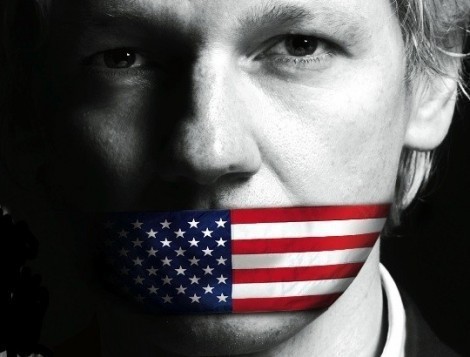
Publishers like Julian Assange and whistleblowers like Chelsea Manning are still being held in solitary confinement in conditions that international bodies and human rights groupscall torture, for their crime of revealing the extent of the global surveillance network and the control over the media that Western governments have built.
As attempts to re-tighten the state and corporate grip over our means of communication increases, high-quality alternative media are being hit the hardest, as algorithm changes from the media monoliths have deranked, demoted, deleted and disincentivized outlets that question official narratives, leading to huge falls in traffic and revenue.
The message from social media giants is clear: independent and alternative voices are not welcome.
One causality in this propaganda war is Daniel McAdams, Executive Director of the Ron Paul Institute for Peace and Prosperity, a public advocacy group that argues that a non-interventionist foreign policy is crucial to securing a prosperous society at home. McAdams served as Senator Paul’s foreign affairs advisor between 2001 and 2012. Before that, he was a journalist and editor for the Budapest Sun and a human rights monitor across Eastern Europe.
McAdams, who spent much of his time on Twitter calling out the war machine supported by both parties, was recently permanently banned from the platform for so-called “hateful conduct.” His crime? Challenging Fox News anchor Sean Hannity over his hour-long segment claiming to be against the “deep state,” while simultaneously wearing a CIA lapel pin. In the exchange, McAdams called Hannity “retarded,” claiming he was becoming stupider every time he watched him.
Yes, despite that word and its derivatives having been used on Twitter over ten times in the previous minute, and often much more aggressively than McAdams used it – only McAdams fell victim to Twitter’s ban hammer. Something didn’t make sense about this ban. One only needs to read the replies under any of President Trump’s tweets to see far more hateful speech than what McAdams displayed to suspect foul play.
I spoke with McAdams about the ban and began by asking him if he accepts the premise of the ban, or if he believes something else was afoot.
A second former Amazon employee would spark more controversy. Deap Ubhi, a former AWS employee who worked for Lynch, was tasked with gathering marketing information to make the case for a single cloud inside the DOD. Around the same time that he started working on JEDI, Ubhi began talking with AWS about rejoining the company. As his work on JEDI deepened, so did his job negotiations. Six days after he received a formal offer from Amazon, Ubhi recused himself from JEDI, fabricating a story that Amazon had expressed an interest in buying a startup company he owned. A contracting officer who investigated found enough evidence that Ubhi’s conduct violated conflict of interest rules to refer the matter to the inspector general, but concluded that his conduct did not corrupt the process. (Ubhi, who now works in AWS’ commercial division, declined comment through a company spokesperson.)
Ubhi worsened the impression by making ill-advised public statements while still employed by the DOD. In a tweet, he described himself as “once an Amazonian, always an Amazonian.”
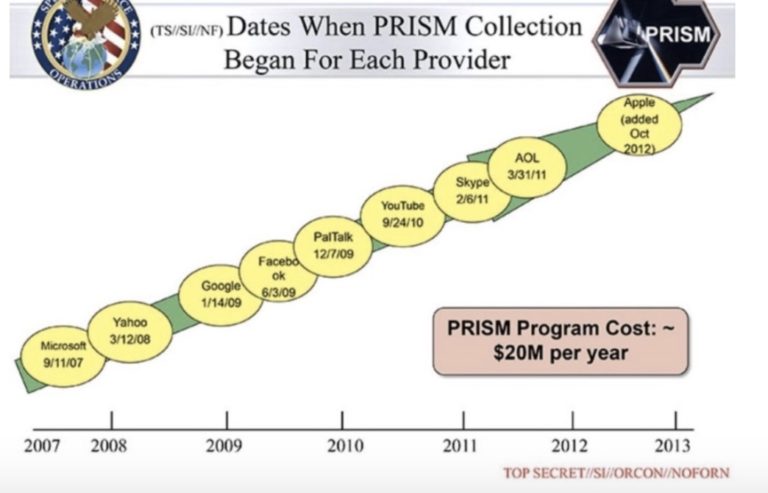
That U.S. tech giants are willing participants in facilitating mass government surveillance has been widely known for a while, particularly since whistleblower Edward Snowden risked his life and liberty to tell us about it six years ago. We also know what happens to executives who don’t play ball.
Perhaps the most high profile example relates to Joseph Nacchio, CEO of telecom company Qwest in the aftermath of 9/11. Courageously, he was the only executive who pushed back against government attempts to violate the civil liberties of his customers. A few years later, he was thrown in jail for insider trading and stayed locked up for four years. He claimed his incarceration was retaliation for not bending the knee to government, which seems likely.
Charges his defense team claimed were U.S. government retaliation for his refusal to give customer data to the National Security Agency in February, 2001. This defense was not admissible in court because the U.S. Department of Justice filed an in limine motion,which is often used in national security cases, to exclude information which may reveal state secrets. Information from the Classified Information Procedures Act hearings in Nacchio’s case was likewise ruled inadmissible
Fast forward to today, and the tech giants have willingly and enthusiastically transformed themselves into compliant organs of the national security state. Big tech executives have by and large embraced this extremely lucrative and powerful role rather than push back against it. There’s simply too much money at stake, and nobody wants to go to the big house like Joe Nacchio. There is no resistance.
Just yesterday, we learned that Twitter’s executive for the Middle East is an actual British Army ‘psyops’ soldier. Unfortunately, this is not a joke.
The senior Twitter executive with editorial responsibility for the Middle East is also a part-time officer in the British Army’s psychological warfare unit, Middle East Eye has established.
Gordon MacMillan, who joined the social media company’s UK office six years ago, has for several years also served with the 77th Brigade, a unit formed in 2015 in order to develop “non-lethal” ways of waging war.
The 77th Brigade uses social media platforms such as Twitter, Instagram and Facebook, as well as podcasts, data analysis and audience research to wage what the head of the UK military, General Nick Carter, describes as “information warfare”.
Here’s how Twitter responded to the revelation…
Twitter would say only that “we actively encourage all our employees to pursue external interests.”
They don’t even care.
While that’s troubling enough, I want to focus your attention on a brilliant and extremely important piece published a couple of months ago at ProPublica, which many of you may have missed. It details the troubling and incestuous relationship between Amazon and Google executives with the Department of Defense. A relationship which virtually guarantees these CEOs immunity as long as they play ball. It’s impossible to read this piece and come away thinking these are “just private companies.” They demonstrably are not.
In the case of Amazon, a Pentagon whistleblower named Roma Laster grew uncomfortable with the cozy relationship Jeff Bezos had with DOD leaders.
We learn:
On Aug. 8, 2017, Roma Laster, a Pentagon employee responsible for policing conflicts of interest, emailed an urgent warning to the chief of staff of then-Secretary of Defense James Mattis. Several department employees had arranged for Jeff Bezos, the CEO of Amazon, to be sworn into an influential Pentagon advisory board despite the fact that, in the year since he’d been nominated, Bezos had never completed a required background check to obtain a security clearance.
Mattis was about to fly to the West Coast, where he would personally swear Bezos in at Amazon’s headquarters before moving on to meetings with executives from Google and Apple. Soon phone calls and emails began bouncing around the Pentagon. Security clearances are no trivial matter to defense officials; they exist to ensure that people with access to sensitive information aren’t, say, vulnerable to blackmail and don’t have conflicts of interest. Laster also contended that it was a “noteworthy exception” for Mattis to perform the ceremony. Secretaries of defense, she wrote, don’t hold swearing-in events…
The swearing-in was canceled only hours before it was scheduled to occur.
Bezos would’ve certainly been sworn into that board had Laster not had the courage to speak up. She later received her reward.
Laster did her best to enforce the rules. She would challenge the Pentagon’s cozy relationship not only with Bezos, but with Google’s Eric Schmidt, the chairman of the defense board that Bezos sought to join. The ultimate resolution? Laster was shunted aside. She was removed from the innovation board in November 2017 (but remains at the Defense Department). “Roma was removed because she insisted on them following the rules,” said a former DOD official knowledgeable about her situation.
Real whistleblowers are never celebrated by mass media and are always punished. That’s how you distinguish a real whistleblower from a fraud.
As mentioned above, Laster also called out and angered Eric Schmidt who, as chairman of Alphabet (Google, Youtube, etc), was trying to sell services to the Pentagon while at the same time serving as Chairman of the Department of Defense’s Innovation Board. That’s about as incestuous and corrupt as it gets.
Schmidt, the chairman of the innovation board, embraced the mission. In the spring and summer of 2016, he embarked, with fellow board members, on a series of visits to Pentagon operations around the world. Schmidt visited a submarine base in San Diego, an aircraft carrier off the coast of the United Arab Emirates and Creech Air Force Base, located deep in the Nevada desert near Area 51.
Inside the drone operations center at Creech, according to three people familiar with the trip, Schmidt observed video as a truck in a contested zone somewhere was surveilled by a Predator drone and annihilated. It was a mesmerizing display of the U.S. military’s lethal reach…
A little more than a year after Schmidt’s visit, Google won a $17 million subcontract in a project called Maven to help the military use image recognition software to identify drone targets — exactly the kind of function that Schmidt witnessed at Creech…
Schmidt’s influence, already strong under Carter, only grew when Mattis arrived as defense secretary. Schmidt’s travel privileges at the DOD, which required painstaking approval from the agency’s chief of staff for each stop of every trip, were suddenly unfettered after Schmidt requested carte blanche, according to three sources knowledgeable about the matter. Mattis granted him and the board permission to travel anywhere they wanted and to talk to anyone at the DOD on all but the most secret programs.
Such access is unheard-of for executives or directors of companies that sell to the government, say three current and former DOD officials, both to prevent opportunities for bribery or improper influence and to ensure that one company does not get advantages over others. “Mattis changed the rules of engagement and the muscularity of the innovation board went from zero to 60,” said a person who has served on Pentagon advisory boards. “There’s a lot of opportunity for mischief”…
Over the next months, Schmidt and two other board members with Google ties would continue flying all over the country, visiting Pentagon installations and meeting with DOD officials, sessions that no other company could attend. It’s hard to reconstruct what occurred in many of those meetings, since they were private. On one occasion, Schmidt quizzed a briefer about which cloud service provider was being used for a data project, according to a memo that Laster prepared after the briefing. When the briefer told him that Amazon handled the business, Schmidt asked if they’d considered other cloud providers. Laster’s memo flagged Schmidt’s inquiry as a “point of concern,” given that he was the chairman of a major cloud provider.
The DOD became unusually deferential to Schmidt. He preferred to travel on his personal jet, and he would ferry fellow board members with him. But that created a problem for his handlers: DOD employees are not permitted to ride on private planes. Still, the staff at the board didn’t want to inconvenience Schmidt by making him wait for his department support team to arrive on commercial flights. So, according to a source knowledgeable about the board’s spending, on at least one occasion the department requisitioned military aircraft at a cost of $25,000 an hour to transport its employees to meet Schmidt on his tour. (The DOD’s spokesperson said employees did this because “there were no commercial flights available.”)
Similar to the situation with Bezos, Roma Laster started asking questions, which angered master of the tech and military-industrial-complex universe Eric Schmidt.
Schmidt responded by threatening to go over her head to Mattis, according to her grievance. She was told to stand down and never again speak to Schmidt. According to the grievance, her boss told her, “Mr. Schmidt was a billionaire and would never accept pushback, warnings or limits.”
There’s so much more in this excellent article, but the key takeaway is the troubling extent of the existing merger between tech giants and the national security state. Disturbingly, this appears to have become even worse in the aftermath of the Snowden revelations, and the reasons why are clear. First, there are billions upon billions of dollars to be made. Second, nobody from the private sector ever gets punished for violating the civil liberties of the American public on behalf of the government and intelligence agencies. On the contrary, the only people who ever lose their freedoms and livelihoods are those who blow the whistle on government criminality (Thomas Drake, John Kiriakou, Chelsea Manning, Edward Snowden and Julian Assange, just to name a few).
Which brings up a very uncomfortable, yet fundamental question. How dangerous are tech giants that have near monopoly level power in core areas such as communications and online retail and also enjoy state sponsorship and the total immunity that comes with it? Add to the equation the enormous amount of money up for grabs provided you play ball with the national security state and you have a very precarious situation. This isn’t a hypothetical future dystopian scenario. It’s where we stand today.
Facebook and Google are two companies with known ties to the national security state that together have enormous control over who, for all practical purposes, gets to speak in the modern online public square. Then consider that the tech giants represent a perfect vehicle for the national security state to censor or disappear from the conversation those deemed problematic to imperial narratives.
The U.S. government cannot explicitly restrict most kinds of speech, but tech giants can do whatever they please and don’t even need to provide a reasonable justification. This means any relationship between companies with this sort of online speech-policing power and the national security state is extremely dangerous. It’s a conduit for fascism.
Tech giants are a conduit for fascism because tech giants can legally do at the government’s behest what the government cannot. These companies are a clear and present danger to liberty.
Then there’s Amazon. A company that has a $600 million contract with the CIA, has used questionable practices in attempts to secure a $10 billion JEDI cloud deal with Pentagon, is aggressively marketing its facial recognition software to police departments across the country, and is coaching cops on how to obtain surveillance footage from its Ring doorbell camera without a warrant. But it gets even worse.
In light of recent public concerns around facial recognition, Bezos and his company are actively writing legislation for Congress on the issue.
Amazon CEO Jeff Bezos says his company is developing a set of laws to regulate facial recognition technology that it plans to share with federal lawmakers.
In February, the company, which has faced escalating scrutiny over its controversial facial recognition tech, called Amazon Rekognition, published guidelines it said it hoped lawmakers would consider enacting. Now Amazon is taking another step, Bezos told reporters in a surprise appearance following Amazon’s annual Alexa gadget event in Seattle on Wednesday.
“Our public policy team is actually working on facial recognition regulations; it makes a lot of sense to regulate that,” Bezos said in response to a reporter’s question.
The idea is that Amazon will write its own draft of what it thinks federal legislation should look like, and it will then pitch lawmakers to adopt as much of it as possible…
In a statement, ACLU Northern CA Attorney Jacob Snow said:
“It’s a welcome sign that Amazon is finally acknowledging the dangers of face surveillance. But we’ve seen this playbook before. Once companies realize that people are demanding strong privacy protections, they sweep in, pushing weak rules that won’t protect consumer privacy and rights. Cities across the country are voting to ban face surveillance, while Amazon is pushing its surveillance tech deeper into communities.”
Meanwhile, Amazon is now using mafia tactics to pressure retailers who feel forced to use the platform given its dominance in online retail, to pay for advertising. It’s not just small brands under the gun, even large companies with high name recognition like Samsonite are being twisted via increasingly unethical practices.
As Recode’s Jason Del Rey explored in his Land of the Giants podcast about the rise of Amazon, companies that sell on Amazon are increasingly having to pay to show up in search results — even when people are searching for their specific brands.
Case in point: the luggage brand Samsonite, which has to pay for sponsored ads in order to be the top result when you search “Samsonite” on Amazon.
As Samsonite’s Chief E-commerce Officer Charlie Cole told Del Rey, “Amazon is making money off your products, making money off your data by creating brands, and Amazon is making money off the privilege of being on their platform by selling you advertising to protect your brand.”
“It’s been a tough relationship,” he added.
Think about how completely insane that is, yet it’s also exactly what you’d expect to happen when one company comes to completely dominate a space as fundamental to the modern economy as online shopping.
Naturally, there’s more. It’s been well documented how Amazon uses its knowledge of product sales on its platform to then rip off existing brands by copying them and making its own version.
Amazon is now straight copying Allbirds.
We have reached "peak cloning" in Silicon Valley.
There are no rules anymore – if you build a product that works, Amazon or Facebook will copy it.
The more connected these tech giants are to the national security state, the more dangerous and unassailable they become. A destructive process which is already very much underway.
Centralized and unaccountable government power is alway an existential threat to human liberty, but centralized and unaccountable government power exercised via tech behemoths which aren’t restrained by the Constitution is even worse. This is the world being built around us, and we’d be wise to address it soon.
It should be obvious by now what the plan is for Julian Assange—psychological torture resulting in either a total breakdown or an untimely death, the latter supported by the psychopaths who claim they are our leaders. This psychological torture was noted, with standard corporate media disinterest, by Nils Melzer, an internationally recognized expert on torture treatment.
“Unless the UK urgently changes course and alleviates his inhumane situation, Mr. Assange’s continued exposure to arbitrariness and abuse may soon end up costing his life,” Melzer, UN special rapporteur on torture and other cruel, inhuman or degrading treatment, said in a statement last week.
Melzer demanded “that London immediately take measures to protect Assange’s health and dignity… However, what we have seen from the UK Government is outright contempt for Mr. Assange’s rights and integrity… Despite the medical urgency of my appeal, and the seriousness of the alleged violations, the UK has not undertaken any measures of investigation, prevention and redress required under international law.”
In America, the UK, and much of Europe, the financial elite and its political class consider truth-telling a cardinal sin, a crime punishable by death—not by lethal injection, but slowly and sadistically under a torture system tweaked by the CIA and put into action in rendition dungeons scattered around the world.
Assange has provided vital information to the international public which demonstrates systematic corruption by Washington and its allies. For telling the truth, he is now being persecuted, just as his whistleblowing colleagues, Chelsea Manning and Edward Snowden are. Manning has been repeatedly imprisoned in the US, while Snowden has had to seek asylum in Russia for fear of being summarily incarcerated as a “traitor” if he returns to the US.
In fact, all of us, those who look beyond the headlines and ferret out the truth, are half a dozen steps away from suffering Julian Assange’s fate.
The national security state and its political class plan to kill Assange, keep Chelsea Manning in prison and find a way to return Snowden to the US for a show trial and life behind bars (or execution).
It must, however, first salt the earth where truth is harvested. Thousands of blogs, similar to this one, and websites contradicting and disassembling approved narratives, will be targeted for extinction.
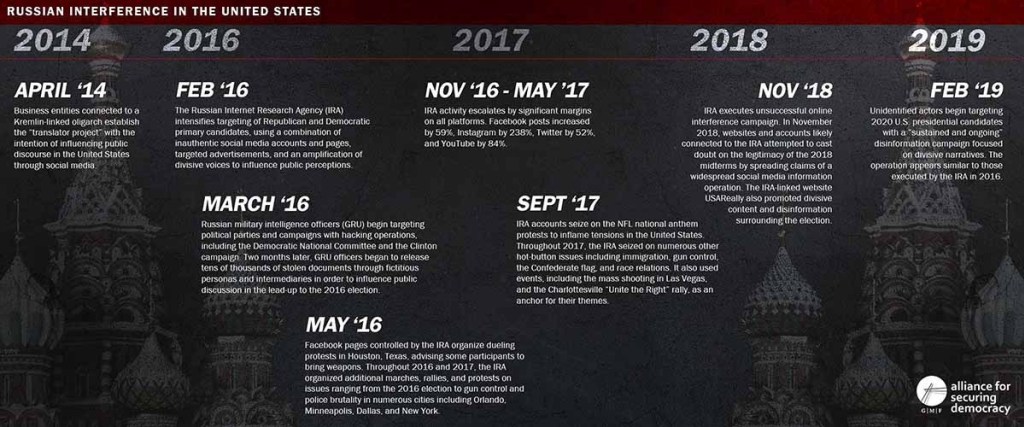
The Mueller investigation did not result in dethroning Donald Trump. The Clinton-DNC attack on a duly elected president, however, resulted in millions of easily duped Americans believing Russia somehow meddled in the 2016 election and will do it again in 2020.
According to corporate entities in “partnership” with the state (the true nature of fascism), Russia is not alone in its supposed hatred of democracy and the self-proclaimed exceptional nation-state.
“There is an undeclared war that Russia and China are waging against the United States and the West,” Jim Sciutto,CNN’s chief national security correspondent and co-anchor of CNN Newsroom, told the Poynter Fellowship in Journalism Speaker Series in October. “China and Russia, over the last 10 years, have done a remarkably good job at this.”
This alleged manipulation of American voters, according to the state and its corporate propaganda media, is assisted by Russian agents and a countless number of mindless dupes unaware of Vladimir Putin’s desire to destroy America.
A shady website that claims “Russia is Manipulating US Opinion Through Online Propaganda” has compiled a blacklist of websites its anonymous authors accuse of pushing fake news and Russian propaganda. The blacklist includes over 200 outlets, from the right-wing Drudge Report and Russian government-funded Russia Today, to Wikileaks and an array of marginal conspiracy and far-right sites. The blacklist also includes some of the flagship publications of the progressive left, including Truthdig, Counterpunch, Truthout, Naked Capitalism, and the Black Agenda Report, a leftist African-American opinion hub that is critical of the liberal black political establishment.
“You can see in the current atmosphere, where anti-Russia hysteria has spread like typhoid, how readily-accepted such a notion would be by many. The reds are under our beds and the Russkies have taken over our airwaves,” wrote Daniel McAdams of The Ron Paul Institute for Peace & Prosperity wrote in 2017.
The Washington Post, owned by billionaire Jeff Bezos, rolled out the red carpet for the shadowy group, PropOrNot, and its baseless fact-devoid accusations of alternative media treason and complicity with Russia.
Bezos is working closely with the CIA on a $600 million internet-cloud deal to get the NSA, DoD, the National Reconnaissance Office, the National Geospatial-Intelligence Agency, and other government snoop-and-subvert operations interconnected.
The Alliance for Securing Democracy’s Hamilton 68 effort to destroy alternative media also has roots in the 2016 election loss of Hillary Clinton. Hamilton 68 is a project supported by the US State Department, the German Marshall Fund, and NATO. Neocon William Kristol and DNC operative John Podesta sit on its advisory board. The organization leans heavily on the Russian collusion fairy tale, thus lending to the conclusion alternative media is a Trojan horse that will help the “New Hitler” Putin destroy democracy.
I certainly don’t have a crystal ball to gaze into and read the future. However, it seems rather obvious what the outcome of all this feverish work to demonize truth-tellers and install gatekeepers on the internet will be.
First, high visibility “fake news” websites will feel the heat. This is already well underway with the persecution of Alex Jones for the crime of questioning Sandy Hook and promoting the Pizzagate conspiracy theory. Lawsuits aimed at Jones are intended to drive his operation into bankruptcy and hold him criminally responsible for questioning official narratives.
The takeaway here—questioning official narratives and positing counter-narratives is a risky business and you are advised not to engage in treasonous behavior with Russian agents if you value your freedom, ability to earn a living, and want to stay off a government terror list.
Second, the concerted effort to sanitize social media of heretical political expression is moving along at a fairly robust clip. Numerous activists and alternative websites and individuals—including the above mentioned McAdams—have been scrubbed since Hillary Clinton declared war on freedom of political expression, which she fallaciously and absurdly chalked up to malfeasance by Russia and the misbehavior of Deplorables.
Third, there will be “meddling by Russia” in the 2020 election regardless of the winner of the presidential teleprompter reader sweepstakes. This will be considered a national emergency and the floodgates will fly open to suffuse the population with scary stories of democracy lost to the autocrat Putin. Radical measures to stem the tide of subversion will be put forward and turned into law by the political class.
I have no idea what the outcome of this will be except to say many of us will be prevented from posting counter-narratives and unearthing hidden truths—historical, political, and economic. Earlier this year the FBI designated alternative media commentary as domestic terrorism.
“The FBI assesses these conspiracy theories very likely will emerge, spread, and evolve in the modern information marketplace, occasionally driving both groups and individual extremists to carry out criminal or violent acts,” the document states. It also goes on to say the FBI believes conspiracy theory-driven extremists are likely to increase during the 2020 presidential election cycle.
The FBI’s not talking about flat-earthers and UFOologists. It is targeting alternative media. The historical record—ignored by the propaganda media—of the FBI’s COINTELPRO operation to destroy political movements in the 1960s and 70s should be revisited. It is paradigmatic of the state and its subversion of opposition. For the FBI, terror is truth unshackled.
Again, I have no idea what will happen, but considering the emphasis placed on the destruction of the First Amendment—along with the Second and Fifth—and the manufactured hysteria of insidious Russian (and Chinese) subversion, and the credulity (or indifference) of the American people, it now appears the alternative media is in danger of extinction, at least on the internet.
“What I find [ominous] is how seldom, today, we see the phrase ‘the 22nd century.’ Almost never. Compare this with the frequency with which the 21st century was evoked in popular culture during, say, the 1920s.”
The 2010s are almost over. And it doesn’t quite feel right.
When the end of 2009 came into view, the end of the 2000s felt like a relatively innocuous milestone. The current moment feels so much more, what’s the word?
Ah, yes: dystopian.
Looking back, “dystopia” might have been the watchword of the 2010s. Black Mirror debuted close to the beginning of the decade, and early in its run, it was sometimes critiqued for how over-the-top it all felt. Now, at the end of the decade, it’s regularly critiqued as made obsolete by reality.
And it’s not just prestige TV like Black Mirror reflecting the decade’s mood of incipient collapse. Of the 2010s top 10 highest-grossing films, by my count at least half involve an apocalypse either narrowly averted or, in fact, taking place (I’m looking at you, Avengers movies).
People have reasons to wallow. I get it. The existential threat of climate change alone — and seeing efforts to mitigate it slow down precisely as it becomes more pressing — could fuel whole libraries of dystopian fiction.
Meanwhile, our current tech landscape — the monopolies, the wild spread of disinformation, the sense that your most private data could go public whenever, with no recourse, all the things that risk making Black Mirror feel quaint — truly feels dystopian.
We enjoy watching distant, imaginary dystopias because they distract us from oncoming, real dystopias.
Since no one in a position to actually do something about our dystopian reality seems to be admitting it — no business leaders, politicians or legacy media — it makes sense that you might get catharsis of acknowledgment from pop culture instead. And yet, the most popular end-of-the-world fiction isn’t about actual imminent threats from climate or tech. It’s about Thanos coming to snap half of life out of existence. Or Voldemort threatening to destroy us Muggles.
Maybe that kind of pop culture, which acknowledges dystopia but not the actual threats we currently face, gives us a feeling of control: Sure, Equifax could leak my social security number and face zero consequences, but there are no Hunger Games. Wow — it really could be so much worse! Maybe we enjoy watching distant, imaginary dystopias because they distract us from oncoming, real dystopias.
But let’s look at those actual potential dystopias for a moment and think about what we need to do to avert them.
I’d suggest the big four U.S. tech giants — Amazon, Facebook, Apple, Google — each have a distinct possible dystopia associated with them. If we don’t turn around our current reality, we will likely get all four — after all, for all the antagonistic rhetoric among the giants, they are rather co-dependent. Let’s look at what we might have, ahem, look forward to — unless we demand the tech giants deliver on the utopia they purportedly set out to achieve when their respective founders raised their rounds of millions. I would argue not only that we can, but that we must hold them accountable.
“Mad Max,” or, slowly then all at once: starring Apple
“‘How did you go bankrupt?’ Bill asked. ‘Two ways,’ Mike said. ‘Gradually and then suddenly.’”
—Ernest Hemingway, The Sun Also Rises.
When you think of Mad Max, you probably think of an irradiated, post-apocalyptic desert hellscape. You’re also not thinking of Mad Max.
In the original 1979 film, the apocalypse hasn’t quite yet happened. There’s been a substantial social breakdown, but things are getting worse in slow motion. There are still functioning towns. Our protagonist, Max, is a working-class cop; and while there’s reason to believe a big crash is coming, or has even begun, society is still hanging on. (It’s only in the sequels that we’re well into the post-apocalyptic landscape people are thinking of when they say “Mad Max.”)
A relatively subtle dystopia, where things gradually decline in the background, is also a good day-to-day description of a society overrun by algorithms, even without the attention-grabbing mega-scandals of a Cambridge Analytica or massive data breach. A kind of dystopia “light” — and Apple is its poster child.
After all, Apple has a genuinely better track record than some of the other tech giants on a few key privacy issues. But it’s also genuinely aware of the value of promulgating that vision of itself — and that can lead Apple users into danger.
In January, Apple purchased a multistory billboard outside the Consumer Electronics Show in Las Vegas, with this message: “What happens on your iPhone, stays on your iPhone.” Sounds great — but it’s deeply misleading, and as journalist Mark Wilson noted, Apple’s mismatch between rhetoric and behavior fuels the nightmare that is our current data security crisis:
“[iPhone] contents are encrypted by default […] But that doesn’t stop the 2 million or so apps in the App Store from spying on iPhone users and selling details of their private lives. “Tens of millions of people have data taken from them — and they don’t have the slightest clue,” says [the] founder of [the] cybersecurity firm Guardian […] The Wall Street Journal studied 70 iOS apps […] and found several that were delivering deeply private information, including heart rate and fertility data, to Facebook.” [Emphasis mine.]
A tech giant that is claiming it’s the path to salvation, while effectively creating a trap for those who believe it, sounds ironically familiar given Apple’s famous evocation of Big Brother.
After all, when people talk about habit-forming technology in terms so terrifying they’ve convinced Silicon Valley executives to limit their children’s access to their own products, let’s be real: They’re talking about iPhones.
When academic child psychology researcher Jean Twenge talks about a possible teenage mental health epidemic fueled by social media, we know what’s at the heart of it: She’s talking about iPhones.
All those aforementioned horror stories, and a huge slice of those algorithms you’ve heard so much about, are likely first reaching you on smartphones that, with world market share above 50%, are largely, you guessed it, iPhones. (And none of these stories even mention Apple workers at overseas at facilities like Foxconn who create our iPhones and who really are living in a kind of explicit dystopia.)
What happens on your iPhone almost certainly doesn’t stay on your iPhone. But who created that surveillance capitalism running it all in the first place?
Enter Google.
“Black Mirror:” “Nosedive,” or, welcome to surveillance capitalism: starring Google
“We know where you are. We know where you’ve been. We can more or less know what you’re thinking about.”
You’ve probably heard it before: “if you’re not paying, you’re the product.” This is usually in reference to ostensibly “free” services like Facebook or Gmail. It’s a creepy thought. And, according to Shoshana Zuboff, professor emeritus at Harvard and economic analyst of what she’s termed “surveillance capitalism,” the selling of your personal information undermines autonomy. It’s worse than you being the product: “You are not the product. You are the abandoned carcass.”
Google, according to Zuboff, is the original inventor of Surveillance Capitalism. In their early “Don’t Be Evil” days, the idea of accessing people’s private Google searches and selling them was considered unthinkable. Then Google realized it could use search data for targeting purposes — and never stopped creating opportunities to surveil their users:
“Google’s new methods were prized for their ability to find data that users had opted to keep private and to infer extensive personal information that users did not provide. These operations were designed to bypass user awareness. […]In other words, from the very start Google’s breakthrough depended upon a one-way mirror: surveillance.”
Twenty years later, surveillance capitalism has become so ubiquitous that it’s hard to live in Western society without being surveilled constantly by private actors.
As far as I know, no mass popular culture has really yet captured this reality, but one small metaphor that kind of hits on its effects is a Black Mirror episode called “Nosedive.”
In “Nosedive,” everyday people’s lived experience is very clearly the picked-apart carcass for an entire economic and social order; a kind of surveillance-driven social credit score affects every aspect of your daily life, from customer service to government resources to friendships, all based on your app usage and, most creepily, how other people rate you in the app.
If surveillance capitalism has been the engine powering our economy in the background for nearly two decades, it’s now having a coming-out party. Increasingly, Google isn’t just surveilling us in private — with its “designing smart cities” initiatives, the company will literally be making city management decisions instead of citizens: Sidewalk Labs, a Google sister company, plans to develop “the most innovative district in the entire world” in the Quayside neighborhood of Toronto, and Google itself is planning on siphoning every bit of data about how Quayside residents live and breathe and move via ubiquitous monitoring sensors that will likely inform — for a fee naturally — how other cities will develop.
If surveillance capitalism has been the engine powering our economy in the background for nearly two decades, it’s now having its coming-out party.
Much like Apple, Google takes pains to present itself as a conscientious corporate citizen. They might be paternalistic, or antidemocratic — but they have learned it’s important to their brand that they’re seen as responsive to their workers and the broader public, largely thanks to the courageous and persistent effort of their workers and consumer advocates in civil society.
Not so much with Amazon.
“Elysium,” or, dystopia for some, Prime Day for others: starring Amazon
“[The New York Times] claims that our intentional approach is to create a soulless, dystopian workplace where no fun is had and no laughter heard. Again, I don’t recognize this Amazon and I very much hope you don’t either.” —Jeff Bezos, August 17, 2015 letter to staff after the New York Times investigation into working conditions at the company.
In 2015, Jeff Bezos felt the need to set the record straight: The New York Times was wrong about Amazon. Working there did not feel like a dystopia.
The years since have only validated the New York Times story, which focused on life for coders and executives at Amazon. Notably, when the Times and other investigative journalists have probed life for the far more numerous warehouse workers employed by Amazon, Bezos has largely stayed silent.
In fact, the further down the corporate ladder you get at Amazon, the more likely it seems that Jeff Bezos will stay quiet on any controversy. Just this month, in a report published almost exactly four years after Bezos’ “Amazon is not a dystopia” declaration, the New York Times has uncovered almost a dozen previously unreported deaths allegedly caused by Amazon’s decentralized delivery network. Rather than defend itself out loud, Amazon has kept quiet while repeating the same argument in the courts: Those delivery people aren’t Amazon workers at all, and thus Amazon is not liable.
Amazon, like every major tech giant, has a key role in the dystopia of surveillance capitalism — the monopolylike market share of Amazon Web Services, and Amazon’s involvement in increasingly ubiquitous facial recognition software, represent their own deeply dystopian trends. But the most visible dystopia Amazon creates, for all to see, is dystopia in the workplace.
In many ways, Amazon is the single company that best explains the appeal of an Andrew Yang figure to a certain slice of economically alienated young voters. When speaking near Amazon’s HQ in Seattle, Yang explicitly talked about the surveillance of Amazon workers, and how reliable those jobs are in any case:
“All the Amazon employees [here] are like, ‘Oh shit, is Jeff watching me right now?’… [Amazon will] open up a fulfillment warehouse that employs, let’s call it 20,000 people. How many retail workers worked at the malls that went out of business because of Amazon? [The] greatest thing would be if Jeff Bezos just stood up one day and said, ‘Hey, the truth is we are one of the primary organizations automating away millions of American jobs.’ […] I have friends who work at Amazon and they say point-blank that ‘we are told we are going to be trying to get rid of our own jobs.’”
You can flat-out disagree with Yang’s proposed solutions, but a lot of his appeal stems from the fact that he’s diagnosing a problem that broad swaths of people don’t feel is being talked about. Yang validates his supporters’ concerns that they are, in fact, living in a dystopia of the corporate overlord variety.
In the movie Elysium, most work is done in warehouses, under constant surveillance, with workers creating the very automation systems that surveil and punish them. The movie takes place in a company townlike setting, with no such thing as a class system or social mobility. Meanwhile, the ruling class in Elysium lives in space, having left everyone else behind to work on Earth, a planet now fully ravaged by climate change.
That might sound particularly far-fetched, but given Bezos’ explicit intention to colonize space because “we are in the process of destroying this planet,” it suddenly doesn’t feel so off the mark. And in an era where Governors and Mayors openly genuflect to Amazon, preemptively giving up vast swaths of democratic powers for the mere possibility that Amazon might host an office building there, it’s hard not to feel like we’re already in an Elysium-flavored dystopia.
Amazon has their dystopia picked out, flavor and all. But what happens when the biggest social network in the world can’t decide which dystopia it wants to be when it grows up?
Pick a dystopia — any dystopia!: starring Facebook
“Understanding who you serve is always a very important problem, and it only gets harder the more people that you serve.”
—Mark Zuckerberg, 2014 interview with the New York Times.
Ready Player One is one of the more popular recent dystopian novels.
The bleak future it depicts is relatively straightforward: In the face of economic and ecological collapse, the vast majority of human interaction and commercial activity happens over a shared virtual reality space called Oasis.
In Oasis, the downtrodden masses compete in enormous multiplayer video games, hoping to win enough prizes and gain sufficient corporate sponsorship to scrape out a decent existence. Imagine a version of The Matrix, where people choose to constantly log into unreality because actual reality has gotten so unbearably terrible, electing to let the real world waste away. Horrific.
Ready Player One is also the book that Oculus founder and former Facebook employee Palmer Luckey used to give new hires, working on virtual reality to get them “excited” about the “potential” of their work.
Sound beyond parody? In so many ways, Facebook is unique among the tech giants: It’s not hiding the specter of dystopia. It’s amplifying dystopia.
It’s hard to pick a popular dystopia Facebook isn’t invested in.
28 Days Later, or any of the various other mass-violence-as-disease horror movies like The Happening? Facebook has been used to spread mass genocidal panics far more terrifying than any apocalyptic Hollywood film.
What about the seemingly way out there dystopias — something like THX-1138 or a particularly gnarly Black Mirror episode where a brain can have its thoughts directly read, or even electronically implanted? It won’t comfort you to know that Facebook just acquired CTRL-Labs, which is developing a wearable brain-computer interface, raising questions about literal thought rewriting, brain hacking, and psychological “discontinuity.”
Roger McNamee, an early Zuckerberg advisor and arguably its most important early investor, has become unadorned about it: Facebook has become a dystopia. It’s up to the rest of us to catch up.
We spent the 2010s on dystopia—let’s spend the 2020s on utopia instead
“Plan for the worst, hope for the best, and maybe wind up somewhere in the middle.” —Bright Eyes, “Loose Leaves”
People generally seem to think dystopias are possible, but utopias are not. No one ridicules you for conceiving of a dystopia.
I think part of that is because it gives us an easy out. Dystopias paralyze us. They overwhelm. They make us feel small and powerless. Envisioning Dystopia is like getting married anticipating the divorce. All we can do is make sure it’s amicable.
Is there room for a utopian counterweight? There’s not only room, there’s an urgent need if we want to look forward (as opposed to despondently) to the 22nd century. We cannot avert or undo dystopias without believing in their counterparts.
But we need to make the utopian alternative feel real, accessible, and achievable. We need to be rooting not for the lesser of two evils, but for something actually good.
Dystopias — real, about-to-unfold dystopias — have been averted before. The threat of nuclear apocalypse during the Cold War. The shrinking hole in the ozone layer (which is both distinct from, and has lessons to teach us about, the climate crisis). We didn’t land in utopia, but it was only by hitching our wagons to a utopian vision that we averted the worst.
In 2017, cultural historian Jill Lepore penned a kind of goodbye letter to dystopian fiction, calling for a renewal of utopian imagination. “Dystopia,” she lamented, “used to be a fiction of resistance; it’s become a fiction of submission.” Dystopian narratives once served as stark warnings of what might be in store for us if we do nothing, spurring us on to devise a brighter future. Today, dystopian fiction is so prevalent and comes in so many unsavory flavors that our civic imaginations are understandably confined to identifying the one we deem most likely to inevitably happen, and to come to terms with it.
But we don’t have to.
A new decade is on the way. Let’s spend the 2020s exercising our utopian imaginations — the muscles we use to envision dystopia are now all too-well-developed, and a body that only exercises one set of muscles quickly grows off-balance.
Dystopias disempower. We are tiny, inconsequential — how could we do anything about them? Utopias, on the other hand, are rhetorical devices calling upon us to build. They invite our participation. Because a utopia where we don’t matter is a contradiction in terms.
Let’s envision a world where those creating algorithms are thinking not only about their reach, but also about their impact. A world in which we are not the carcass left behind by surveillance capitalism. A world in which calling for ethical norms and standards is in itself a utopian act.
Let’s spend the next decade fighting for what we actually want: A world in which the powerful few are held to a higher standard; an industry in which ethics aren’t an afterthought, and the phrase “unintended consequences” doesn’t absolve actors from the fall out of their very deliberate acts.
Let’s actualize the utopia which, ironically enough, the tech giants themselves so enthusiastically promised us when they set out to change the world.
Let’s spend this next decade asking for what we actually want.
Jeff Bezos is the owner of The Washington Post, which leads America’s news-media in their almost 100 percent support and promotion of neoconservatism, American imperialism and wars. This includes sanctions, coups, and military invasions against countries that America’s billionaires want to control but don’t yet control — such as Venezuela, Syria, Iran, Russia, Libya, and China.
These are aggressive wars against countries which have never aggressed against the United States. They are not, at all, defensive, but the exact opposite. It’s not necessarily endless war (even Hitler hadn’t planned that), but war until the entire planet has come under the control of the U.S. Government, a government that is itselfcontrolled by America’s billionaires, the funders of neoconservatism and imperialism — in both major American political parties, think tanks, newspapers, TV networks, etcetera.
That caused Bezos’s net worth to soar even more (and at a sharper rate of rising) than it had been doing while it had been losing money. He became the most influential salesman not only for books, but for the CIA, and for such mega-corporations as Lockheed Martin. Imperialism has supercharged his wealth, but it didn’t alone cause it. Bezos might be the most ferociously gifted business-person on the planet.
Some of America’s billionaires don’t care about international conquest as much as he does, but all of them at least accept neoconservatism; none of them, for example, establishes and donates large sums to, anti-imperialistic organizations; none of America’s billionaires is determined to end the reign of neoconservatism, nor even to help the fight to end it, or at least to end its grip over the U.S. government. None. Not even a single one of them does.
Plutocrat Bezos at the Pentagon with then Defense Secretary Ash Carter, May 2016. (Wikimedia Commons)
But many of them establish and donate large sums to neoconservative organizations, or run neocon organs such as The Washington Post. That’s the way billionaires are, at least in the United States. All of them are imperialists. They sponsor it; they promote it and hire people who do, and demote or get rid of people who don’t. Expanding an empire is extremely profitable for its aristocrats, and always has been, even before the Roman Empire.
Bezos wants to privatize everything around the world that can become privatized, such as education, highways, health care, and pensions. The more that billionaires control those things, the less that everyone else does; and preventing control by the public helps to protect billionaires against democracy that would increase their taxes and government regulations that would reduce their profits by increasing their corporations’ expenses. So, billionaires control the government in order to increase their takings from the public.
With the help of the war promotion of The Washington Post, Bezos is one of the world’s top personal sellers to the U.S. military-industrial complex. He controls and is the biggest investor in Amazon corporation, whose Web Services division supplies all cloud-computing services to the Pentagon, CIA and NSA. (He’s leading the charge in the most advanced facial recognition technology too.)
He also globally dominates, and is constantly increasing his control over the promotion and sale of books and films, because his Amazon is the world’s largest retailer (and now also one of the largest publishers, producers and distributors.) That, too, can have a huge impact upon politics and government, indirectly, by promoting the most neocon works helping to shape intellectual discourse (and voters’ votes) in the country.
Bezos is crushing millions of retailers by his unmatched brilliance at controlling one market after another as Amazon or as an essential middleman for — and often even a controller of — Amazon’s retail competitors.
He is a strong believer in “the free market”, which he has mastered perhaps better than anyone. This means that Bezos supports the unencumbered ability of billionaires, by means of their money, to control and eventually absorb all who are less powerful than they.
Because he is so enormously gifted himself at amassing wealth, he has thus-far been able to rise to the global top, as being one of the world’s most powerful individuals. The wealthiest of all is King Salman— the owner of Saudi Arabia, whose Aramco (the world’s largest oil company) is, alone, worth over a trillion dollars. (Forbes and Bloomberg exclude monarchs from their wealth-rankings.)
In fact, Bloomberg is even so fraudulent about it as to have headlined on Aug. 10, “The 25 wealthiest dynasties on the planet control $1.4 trillion” and violated their tradition by including on their list one monarch, King Salman, whom they ranked at #4 as owning only $100 million, a ludicrously low ‘estimate’, which brazenly excluded not just Aramco but any of the net worth of Saudi Arabia.
Bloomberg didn’t even try to justify their wacky methodology, but merely presumed the gullibility of their readers for its acceptance. That King, therefore, is at least seven times as rich as Bezos is. He might possibly be as powerful as Bezos is. The supreme heir is lots wealthier even than the supreme self-made billionaire or “entrepreneur” is.
Certainly, both men are among the giants who bestride the world in our era. And both men are libertarians — champions of the belief that property rights (of which, billionaires have so much) are the basis of all rights, and so they believe that the wealthiest people possess the most rights of all, and that the poorest people have the least, and that all persons whose net worths are negative (having more debts than assets) possess no rights except what richer people might donate to or otherwise grant to them, out of kindness or otherwise (such as familial connections).
This — privatization of everything — is what libertarianism is: a person’s worth is his or her “net worth” — nothing else. That belief is pure libertarianism. It’s a belief that many if not most billionaires hold. Billionaires are imperialistic because they seek to maximize the freedom of the super-rich, regardless of whether this means increasing their takings from, or ultimately impoverishing, everyone who isn’t super-rich. They have a coherent ideology. It’s based on wealth. The public instead believes in myths that billionaires enable to be promulgated.
Like any billionaire, Bezos hires and retains employees and other agents who do what he/she wants them to do. This is their direct power. But billionaires also possess enormous indirect power by means of their interdependencies upon one-another, as each large corporation is contractually involved with other corporations, especially with large ones such as they; and, so, whatever power any particular billionaire possesses is actually a shared power, along with the others. (An example was the deal Bezos made with Graham.)
Collectively, they network together, even with ones they might never even have met personally, but only through their representatives, and even with their own major economic competitors. This is collective power which billionaires possess in addition to their individual power as hirers of employees and other agents.
Whereas Winston Smith, in the prophetic allegorical novel 1984, asked his superior and torturer O’Brien, “Does Big Brother exist?”
“‘Of course he exists. The Party exists. Big Brother is the embodiment of the Party.’
‘Does he exist in the same way as I exist?’
‘You do not exist,’ said O’Brien.”
This collective power is embodied by Bezos as well as any billionaire does. A few of the others may embody it too, such as Bill Gates, Warren Buffett, Larry Ellison, Mark Zuckerberg, Charles Koch, Sergey Brin, Michael Bloomberg, George Soros, and Jack Dorsey. They compete against each other, and therefore have different priorities for the U.S. government; but, all of them agree much more than they disagree in regards to what the Government “should” do (especially that the U.S. military should be expanded — at taxpayer’s expense, of course, not their own).
Basically, Big Brother, in the real world is remarkably coherent and unified — far more so than the public is — and this is one of the reasons why they control Government, bypassing the public.
Here is how all of this plays out, in terms of what Bezos’s agents have been doing:
The U.S. government consequently encourages mega-corporations through taxes and regulations to crush small firms by making it harder for them to grow. That somewhat locks-in the existing aristocracy to be less self-made (as Bezos himself was, but his children won’t be).
Elected politicians overwhelmingly support this because most of their campaign funds were donated by super-rich individuals and their employees and other agents. It’s a self-reinforcing system. Super-wealth controls the government, which (along with the super-wealthy and their corporations) controls the public, which reduces economic opportunity for them. The end-result is institutionally reinforced extreme wealth-inequality, becoming more extreme all the time.
The billionaires are the real Big Brothers. And Bezos is the biggest of them all.





 After the Crash