We Have Met the Alien and He Is Us

73e633dab43437b78c926c0403c06bcc

By William Astore

Source: TomDispatch.com

We Are The Empire
Of U.S. Military Interventions, Alien Disaster Movies, and Star Wars
By William J. Astore

Perhaps you’ve heard the expression: “We have met the enemy and he is us.” Cartoonist Walt Kelly’s famed possum, Pogo, first uttered that cry. In light of alien disaster movies like the recent sequel Independence Day: Resurgence and America’s disastrous wars of the twenty-first century, I’d like to suggest a slight change in that classic phrase: we have met the alien and he is us.

Allow me to explain. I grew up reading and watching science fiction with a fascination that bordered on passion. In my youth, I also felt great admiration for the high-tech, futuristic nature of the U.S. military. When it came time for college, I majored in mechanical engineering and joined the U.S. Air Force. On graduating, I would immediately be assigned to one of the more high-tech, sci-fi-like (not to say apocalyptic) military settings possible: Air Force Space Command’s Cheyenne Mountain.

For those of you who don’t remember the looming, end-of-everything atmosphere of the Cold War era, Cheyenne Mountain was a nuclear missile command center tunneled out of solid granite inside an actual mountain in Colorado. In those days, I saw myself as one of the good guys, protecting America from “alien” invasions and the potential nuclear obliteration of the country at the hands of godless communists from the Soviet Union. The year was 1985 and back then my idea of an “alien” invasion movie was Red Dawn, a film in which the Soviets and their Cuban allies invade the U.S., only to be turned back by a group of wolverine-like all-American teen rebels. (Think: the Vietcong, American-style, since the Vietnam War was then just a decade past.)

Strange to say, though, as I progressed through the military, I found myself growing increasingly uneasy about my good-guy stature and about who exactly was doing what to whom. Why, for example, did we invade Iraq in 2003 when that country had nothing to do with the attacks of 9/11? Why were we so focused on dominating the Earth’s resources, especially its oil? Why, after declaring total victory over the “alien” commies in 1991 and putting the Cold War to bed for forever (or so it seemed then), did our military continue to strive for “global reach, global power” and what, with no sense of overreach or irony, it liked to call “full-spectrum dominance”?

Still, whatever was simmering away inside me, only when I retired from the Air Force in 2005 did I fully face what had been staring back at me all those years: I had met the alien, and he was me.

The Alien Nature of U.S. Military Interventions

The latest Independence Day movie, despite earning disastrous reviews, is probably still rumbling its way through a multiplex near you. The basic plot hasn’t changed: ruthless aliens from afar (yet again) invade, seeking to exploit our precious planet while annihilating humanity (something that, to the best of our knowledge, only we are actually capable of). But we humans, in such movies as in reality, are a resilient lot. Enough of the plucky and the lucky emerge from the rubble to organize a counterattack. Despite being outclassed by the aliens’ shockingly superior technology and awe-inspiring arsenal of firepower, humanity finds a way to save the Earth while — you won’t be surprised to know — thoroughly thrashing said aliens.

Remember the original Independence Day from two decades ago? Derivative and predictable it may have been, but it was also a campy spectacle — with Will Smith’s cigar-chomping military pilot, Bill Pullman’s kickass president in a cockpit, and the White House being blown to smithereens by those aliens. That was 1996. The Soviet Union was half-a-decade gone and the U.S. was the planet’s “sole superpower.” Still, who knew that seven years later, on the deck of an aircraft carrier, an all-too-real American president would climb out of a similar cockpit in a flight suit, having essentially just blown part of the Middle East to smithereens, and declare his very own “mission accomplished” moment?

In the aftermath of the invasion of Afghanistan and the “shock and awe” assault on Iraq, the never-ending destructiveness of the wars that followed, coupled with the U.S. government’s deployment of deadly robotic drones and special ops units across the globe, alien invasion movies aren’t — at least for me — the campy fun they once were, and not just because the latest of them is louder, dumber, and more cliché-ridden than ever. I suspect that there’s something else at work as well, something that’s barely risen to consciousness here: in these years, we’ve morphed into the planet’s invading aliens.

Think about it. Over the last half-century, whenever and wherever the U.S. military “deploys,” often to underdeveloped towns and villages in places like Vietnam, Afghanistan, or Iraq, it arrives very much in the spirit of those sci-fi aliens. After all, it brings with it dazzlingly destructive futuristic weaponry and high-tech gadgetry of all sorts (known in the military as “force-multipliers”). It then proceeds to build mothership-style bases that are often like American small towns plopped down in a new environment. Nowadays in such lands, American drones patrol the skies (think: the Terminator films), blast walls accented with razor wire and klieg lights provide “force protection” on the ground, and the usual attack helicopters, combat jets, and gunships hover overhead like so many alien craft. To designate targets to wipe out, U.S. forces even use lasers!

In the field, American military officers emerge from high-tech vehicles to bark out commands in a harsh “alien” tongue. (You know: English.) Even as American leaders offer reassuring words to the natives (and to the public in “the homeland”) about the U.S. military being a force for human liberation, the message couldn’t be more unmistakable if you happen to be living in such countries: the “aliens” are here, and they’re planning to take control, weapons loaded and ready to fire.

Other U.S. military officers have noticed this dynamic. In 2004, near Samarra in Iraq’s Salahuddin province, for instance, then-Major Guy Parmeter recalled asking a farmer if he’d “seen any foreign fighters” about. The farmer’s reply was as simple as it was telling: “Yes, you.” Parmeter noted, “You have a bunch of epiphanies over the course of your experience here [in Iraq], and it made me think: How are we perceived, who are we to them?”

Americans may see themselves as liberators, but to the Iraqis and so many other peoples Washington has targeted with its drones, jets, and high-tech weaponry, we are the invaders.

Do you recall what the aliens were after in the first Independence Day movie? Resources. In that film, they were compared to locusts, traveling from planet to planet, stripping them of their valuables while killing their inhabitants. These days, that narrative should sound a lot less alien to us. After all, would Washington have committed itself quite so fully to the Greater Middle East if it hadn’t possessed all that oil so vital to our consumption-driven way of life? That’s what the Carter Doctrine of 1980 was about: it defined the Persian Gulf as a U.S. “vital interest” precisely because, to quote former Deputy Secretary of Defense Paul Wolfowitz’s apt description of Iraq, it “floats on a sea of oil.”

Of Cold War Memories and Imperial Storm Troopers

Whether anyone notices or not, alien invasion flicks offer a telling analogy when it comes to the destructive reality of Washington’s global ambitions; so, too, do “space operas” like Star Wars. I’m a fan of George Lucas’s original trilogy, which appeared in my formative years. When I saw them in the midst of the Cold War, I never doubted that Darth Vader’s authoritarian Empire in a galaxy far, far away was the Soviet Union. Weren’t the Soviets, whom President Ronald Reagan would dub “the evil empire,” bent on imperial domination? Didn’t they have the equivalent of storm troopers, and wasn’t it our job to “contain” that threat?

Like most young Americans then, I saw myself as a plucky rebel, a mixture of the free-wheeling, wisecracking Han Solo and the fresh-faced, idealistic Luke Skywalker. Of course, George Lucas had a darker, more complex vision in mind, one in which President Richard Nixon, not some sclerotic Soviet premier, provided a model for the power-mad emperor, while the lovable Ewoks in The Return of the Jedi — with their simple if effective weaponry and their anti-imperial insurgent tactics — were clearly meant to evoke Vietnamese resistance forces in an American war that Lucas had loathed. But few enough Americans of the Cold War-era thought in such terms. (I didn’t.) It went without question that we weren’t the heartless evil empire. We were the Jedi! And metaphorically speaking, weren’t we the ones who, in the end, blew up the Soviet Death Star and won the Cold War?

How, then, did an increasingly gargantuan Pentagon become the Death Star of our moment? We even had our own Darth Vader in Dick Cheney, a vice president who actually took pride in the comparison.

Think for a moment, dear reader, about the optics of a typical twenty-first-century U.S. military intervention. As our troops deploy to places that for most Americans might as well be in a galaxy far, far away, with all their depersonalizing body armor and high-tech weaponry, they certainly have the look of imperial storm troopers.

I’m hardly the first person to notice this. As Iraq war veteran Roy Scranton recently wrote in the New York Times, “I was the faceless storm trooper, and the scrappy rebels were the Iraqis.” Ouch.

American troops in that country often moved about in huge MRAPs (mine-resistant, ambush-protected vehicles) described to me by an Army battalion commander as “ungainly” and “un-soldier like.” Along with M1 Abrams tanks and Bradley fighting vehicles, those MRAPs were the American equivalents of the Imperial Walkers in Star Wars. Such vehicles, my battalion commander friend noted drolly, were “not conducive to social engagements with Iraqis.”

It’s not the fault of the individual American soldier that, in these years, he’s been outfitted like a Star Wars storm trooper. His equipment is designed to be rugged and redundant, meaning difficult to break, but it comes at a cost. In Iraq, U.S. troops were often encased in 80 to 100 pounds of equipment, including a rifle, body armor, helmet, ammunition, water, radio, batteries, and night-vision goggles. And, light as they are, let’s not forget the ominous dark sunglasses meant to dim the glare of Iraq’s foreign sun.

Now, think how that soldier appeared to ordinary Iraqis — or Afghans, Yemenis, Libyans, or almost any other non-Western people. Wouldn’t he or she seem both intimidating and foreign, indeed, hostile and “alien,” especially while pointing a rifle at you and jabbering away in a foreign tongue? Of course, in Star Wars terms, it went both ways in Iraq. A colleague told me that during her time there, she heard American troops refer to Iraqis as “sand people,” the vicious desert raiders and scavengers of Star Wars. If “they” seem like vicious aliens to us, should we be surprised that we just might seem that way to them?

Meanwhile, consider the American enemy, whether the Taliban, al-Qaeda, or any of our other opponents of this era. Typically unburdened by heavy armor and loads of equipment, they move around in small bands, improvising as they go. Such “terrorists” — or “freedom fighters,” take your pick — more closely resemble (optically, at least) the plucky human survivors of Independence Day or the ragtag yet determined rebels of Star Wars than heavy patrols of U.S. troops do.

Now, think of the typical U.S. military response to the nimbleness and speed of such “rebels.” It usually involves deploying yet more and bigger technologies. The U.S. has even sent its version of Imperial Star Destroyers (we call them B-52s) to Syria and Iraq to take out “rebels” riding their version of Star Wars “speeders” (i.e. Toyota trucks).

To navigate and negotiate the complex “human terrain” (actual U.S. Army term) of “planets” like Iraq and Afghanistan, U.S. troops call on a range of space-age technologies, including direction-finding equipment, signal intercept, terrain modeling, and satellite navigation using GPS. The enemy, being part of that “human terrain,” has little need for such technology to “master” it. Since understanding alien cultures and their peculiar “human terrains” is not its forte, the U.S. military has been known to hire anthropologists to help it try to grasp the strange behaviors of the peoples of Planet Iraq and Planet Afghanistan.

Yet unlike the evil empire of Star Wars or the ruthless aliens of Independence Day, the U.S. military never claimed to be seeking total control (or destruction) of the lands it invaded, nor did it claim to desire the total annihilation of their populations (unless you count the “carpet bombing” fantasies of wannabe Sith Lord Ted Cruz). Instead, it promised to leave quickly once its liberating mission was accomplished, taking its troops, attack craft, and motherships with it.

After 15 years and counting on Planet Afghanistan and 13 on Planet Iraq, tell me again how those promises have played out.

In a Galaxy Far, Far Away

Consider it an irony of alien disaster movies that they manage to critique U.S. military ambitions vis-à-vis the “primitive” natives of far-off lands (even if none of us and few of the filmmakers know it). Like it or not, as the world’s sole superpower, dependent on advanced technology to implement its global ambitions, the U.S. provides a remarkably good model for the imperial and imperious aliens of our screen life.

We Americans, proud denizens of the land of the gun and of the only superpower left standing, don’t, of course, want to think of ourselves as aliens. Who does? We go to movies like Independence Day or Star Wars to identify with the outgunned rebels. Evidence to the contrary, we still think of ourselves as the underdogs, the rebels, the liberators. And so — I still believe — we once were, a long time ago in a galaxy far, far away.

We need to get back to that time and that galaxy. But we don’t need a high-tech time machine or sci-fi wormhole to do so. Instead, we need to take a long hard look at ourselves. Like Pogo, we need to be willing to see the evidence of our own invasive nature. Only then can we begin to become the kind of land we say we want to be.


A TomDispatch regular, William Astore is a retired lieutenant colonel (USAF) and history professor. He blogs at Bracing Views.
Facebook, Twitter, Western Media Attempt to Reassert Monopoly Over “Truth”

logos-v12-1

By Ulson Gunnar

Source: New Eastern Outlook

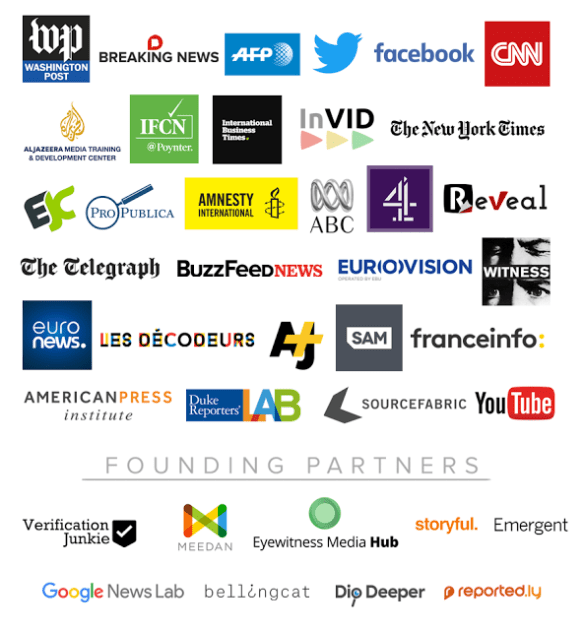
In a surreal and stunning example of 21st century propaganda and censorship, Google has cobbled together a coalition it is calling “First Draft” to tackle what it calls “misinformation online.” 

First Draft’s “founding partners” include News Corporation’s (parent company of Fox News) Storyful and NATO think tank Atlantic Council’s “Bellingcat” blog, headed by formally unemployed social worker Eliot Higgins who now fashions himself as a weapons expert and geopolitical analyst despite no formal training, practical real-world experience or track record of honest, unbiased reporting. In fact, between News Corporation and Bellingcat alone, Google’s First Draft appears to be itself a paragon of, and nexus for “misinformation online.” 

Google’s Glaring Conflicts of Interest 

Google too, having for years now worked closely with the US State Department, faces its own conflicts of interest in “social newsgathering and verification.” In fact, Google has admittedly been involved in engineering intentional deceptions aimed specifically to skew public perception, including doctoring its maps and Google Earth in real-time amid conflicts in favor of US-backed militant groups and through the development of applications designed to psychologically target the Syrian government into capitulating before US-backed militant groups.

The UK Independent in its article, “Google planned to help Syrian rebels bring down Assad regime, leaked Hillary Clinton emails claim,” would report that:

An interactive tool created by Google was designed to encourage Syrian rebels and help bring down the Assad regime, Hillary Clinton’s leaked emails have reportedly revealed.

By tracking and mapping defections within the Syrian leadership, it was reportedly designed to encourage more people to defect and ‘give confidence’ to the rebel opposition.

The article would continue:

The email detailing Google’s defection tracker purportedly came from Jared Cohen, a Clinton advisor until 2010 and now-President of Jigsaw, formerly known as Google Ideas, the company’s New York-based policy think tank.

In a July 2012 email to members of Clinton’s team, which the WikiLeaks release alleges was later forwarded to the Secretary of State herself, Cohen reportedly said: “My team is planning to launch a tool on Sunday that will publicly track and map the defections in Syria and which parts of the government they are coming from.”

Cohen would conclude:

“Our logic behind this is that while many people are tracking the atrocities, nobody is visually representing and mapping the defections, which we believe are important in encouraging more to defect and giving confidence to the opposition.”

Can Google then be relied upon to sort out “misinformation online” if it itself is directly involved in manipulating public perception to achieve US foreign policy objectives? To impartial observers, the answer is clearly “no.”

First Draft would publish on its website a post titled, “Social networks unite with global newsrooms to take action against misinformation online,” adding further details behind the alleged rationale of the coalition. It would state:

Today, news breaks online. Today, the first images to emerge from a breaking news event have been captured by an eyewitness. Today, injustices that may never have been reported become global news stories because a bystander reached for their smartphone. Today, malicious hoaxes and fake news reports are published in increasingly convincing and sophisticated ways. 

We live in a time when trust and truth are issues that all newsrooms, and increasingly the social platforms themselves, are facing. In July, the Guardian’s Editor-in-Chief Katharine Viner wrote about the ways technology is disrupting the truth, explaining “in the news feed on your phone, all stories look the same – whether they come from a credible source or not.” Filtering out false information can be hard. Even if news organisations only share fact-checked and verified stories, everyone is a publisher and a potential source.

The members that constitute the First Draft coalition, however, have enjoyed an uncontested monopoly for decades in determining just what the “truth” actually is, as well as a monopoly over propagating things the global public now know for a fact were “untruths.” Again, we see another case of the proverbial fox guarding the hen house.

The Liars Who Lied About WMDs in Iraq Will Protect Us from Liars Online? 

Indeed, many of the organizations that constitute First Draft’s coalition played a pivotal role in perhaps the most destructive and costly lie of the 21st century (to date), that involving alleged “weapons of mass destruction” or “WMDs” in Iraq, serving as the pretext for the 2003 US-led invasion of Iraq.

According to some estimates, up to a million perished in the initial invasion and subsequent occupation. More conservative estimates are still in the hundreds of thousands.

Undoubtedly, the invasion, justified by lies propagated across the entirety of US and European media, helped trigger a predictable chain of catastrophes that have left the Middle East to this day in conflict and ruination. These same US and European media organizations, the same ones now signing their names to First Draft, also helped justify the continued presence of US troops in Iraq for years after the invasion, up to and including today.

And the same names signed on to First Draft are also the same names who helped sell the disastrous intervention in Libya and who are now attempting to sell yet another direct Western military intervention in Syria.

And it is perhaps the lack of success these same names are having in selling this most recent potential intervention in Syria that has precipitated First Draft’s creation in the first place.

There is a burgeoning alternative media composed of individual independent journalists, analysts and commentators both biased and impartial, both professional and amateur, competing directly with and overcoming the West’s longstanding monopoly over international public perception. There is also the emergence of professional and competitive national media organizations across the developing world who are taking increasingly large shares of both the West’s media monopoly and its monopoly over the public’s trust.

It is clear that First Draft has no intention of protecting the truth as none among its membership have done so until now individually, but rather in collectively protecting what the special interests behind these organizations want the global public to believe is the truth. First Draft is a desperate measure taken by Western special interests to reassert the West’s dominance over global public perception by leveraging the widely used social media platforms it controls, including Facebook and Twitter, as well as IT giant Google and its large range of services and applications.

In the end, all that First Draft is likely to accomplish is convincing the developing world of the necessity of creating domestic alternatives to Facebook, Google and Twitter, as well as to continue expanding their own domestic media organizations to better represent their respective national interests upon the global stage and to dilute the dangerous and destructive media monopoly the West has enjoyed and abused for decades.

Until the members of First Draft can cite a lie told by their competitors that is as destructive and as costly as their own lies preceding and underpinning the invasion and occupation of Iraq or the more recent destruction of Libya, their efforts appear more as a means of further deflecting away from the truth, not defending it.

How War Propaganda Keeps on Killing

071216fake

By Robert Parry

Source: Consortium News

A key reason why American foreign debacles have been particularly destructive mostly to the countries attacked but also to the United States is that these interventions are always accompanied by major U.S. government investments in propaganda. So, even when officials recognize a misjudgment has been made, the propaganda machinery continues to grind on to prevent a timely reversal.

In effect, Official Washington gets trapped by its own propaganda, which restricts the government’s ability to change direction even when the need for a shift becomes obvious.

After all, once a foreign leader is demonized, it’s hard for a U.S. official to explain that the leader may not be all that bad or is at least better than the likely alternative. So, it’s not just that officials start believing their own propaganda, it’s that the propaganda takes on a life of its own and keeps the failed policy churning forward.

It’s a bit like the old story of the chicken that continues to run around with its head cut off. In the case of the U.S. government, the pro-war or pro-intervention “group think” continues to run amok even after wiser policymakers recognize the imperative to change course.

The reason for that dilemma is that so much money gets spread around to pay for the propaganda and so many careers are tethered to the storyline that it’s easier to let thousands of U.S. soldiers and foreign citizens die than to admit that the policy was built on distortions, propaganda and lies. That would be bad for one’s career.

And, because of the lag time required for contracts to be issued and the money to flow into the propaganda shops, the public case for the policy can outlive the belief that the policy makes sense.

Need for Skeptics

Ideally, in a healthy democracy, skeptics both within the government and in the news media would play a key role in pointing out the flaws and weaknesses in the rationale for a conflict and would be rewarded for helping the leaders veer away from disaster. However, in the current U.S. establishment, such self-corrections don’t occur.

A current example of this phenomenon is the promotion of the New Cold War with Russia with almost no thoughtful debate about the reasons for this growing hostility or its possible results, which include potential thermonuclear war that could end life on the planet.

Instead of engaging in a thorough discussion, the U.S. government and mainstream media have simply flooded the policymaking process with propaganda, some of it so crude that it would have embarrassed Joe McCarthy and the Old Cold Warriors.

Everything that Russia does is put in the most negative light with no space allowed for a rational examination of facts and motivations – except at a few independent-minded Internet sites.

Yet, as part of the effort to marginalize dissent about the New Cold War, the U.S. government, some of its related “non-governmental organizations,” mainstream media outlets, and large technology companies are now pushing a censorship project designed to silence the few Internet sites that have refused to march in lockstep.

I suppose that if one considers the trillions of dollars in tax dollars that the Military Industrial Complex stands to get from the New Cold War, the propaganda investment in shutting up a few critics is well worth it.

Today, this extraordinary censorship operation is being carried out under the banner of fighting “fake news.” But many of the targeted Web sites, including Consortiumnews.com, have represented some of the most responsible journalism on the Internet.

At Consortiumnews, our stories are consistently well-reported and well-documented, but we do show skepticism toward propaganda from the U.S. government or anywhere else.

For instance, Consortiumnews not only challenged President George W. Bush’s WMD claims regarding Iraq in 2002-2003 but we have reported on the dispute within the U.S. intelligence community about claims made by President Barack Obama and his senior aides regarding the 2013 sarin gas attack in Syria and the 2014 shoot-down of Malaysia Airlines Flight 17 over Ukraine.

In those two latter cases, Official Washington exploited the incidents as propaganda weapons to justify an escalation of tensions against the Syrian and Russian governments, much as the earlier Iraqi WMD claims were used to rally the American people to invade Iraq.

However, if you question the Official Story about who was responsible for the sarin gas attack outside Damascus on Aug. 21, 2013, after President Obama, Secretary of State John Kerry and the mainstream media pronounced the Syrian government guilty, you are guilty of “fake news.”

Facts Don’t Matter

It doesn’t seem to matter that it’s been confirmed in a mainstream report by The Atlantic that Director of National Intelligence James Clapper advised President Obama that there was no “slam-dunk” evidence proving that the Syrian government was responsible. Nor does it matter that legendary investigative journalist Seymour Hersh has reported that his intelligence sources say the more likely culprit was Al Qaeda’s Nusra Front with help from Turkish intelligence.

By straying from the mainstream “group think” that accuses Syrian President Bashar al-Assad of crossing Obama’s “red line” on chemical weapons, you are opening yourself to retaliation as a “fake news” site.

Similarly, if you point out that the MH-17 investigation was put under the control of Ukraine’s unsavory SBU intelligence service, which not only has been accused by United Nations investigators of concealing torture but also has a mandate to protect Ukrainian government secrets, you also stand accused of disseminating “fake news.”

Apparently one of the factors that got Consortiumnews included on a new “black list” of some 200 Web sites was that I skeptically analyzed a report by the Joint Investigation Team (JIT) that while supposedly “Dutch-led” was really run by the SBU. I also noted that the JIT’s conclusion blaming Russia was marred by a selective reading of the SBU-supplied evidence and by an illogical narrative. But the mainstream U.S. media uncritically hailed the JIT report, so to point out its glaring flaws made us guilty of committing “fake news” or disseminating “Russian propaganda.”

The Iraq-WMD Case

Presumably, if the hysteria about “fake news” had been raging in 2002-2003, then those of us who expressed skepticism about Iraq hiding WMD would have been forced to carry a special marking declaring us to be “Saddam apologists.”

Back then, everyone who was “important” in Washington had no doubt about Iraq’s WMD. Washington Post editorial page editor Fred Hiatt repeatedly stated the “fact” of Iraq’s hidden WMD as flat fact and mocked anyone who doubted the “group think.”

Yet, even after the U.S. government acknowledged that the WMD allegations were a myth – a classic and bloody case of “fake news” – almost no one who had pushed the fabrication was punished.

So, the “fake news” stigma didn’t apply to Hiatt and other mainstream journalists who actually did produce “fake news,” even though it led to the deaths of 4,500 U.S. soldiers and hundreds of thousands of Iraqis. To this day, Hiatt remains the Post’s editorial-page editor continuing to enforce “conventional wisdoms” and to disparage those who deviate.

Another painful example of letting propaganda – rather than facts and reason – guide U.S. foreign policy was the Vietnam War, which claimed the lives of some 58,000 U.S. soldiers and millions of Vietnamese.

The Vietnam War raged on for years after Defense Secretary Robert McNamara and even President Lyndon Johnson recognized the need to end it. Part of that was Richard Nixon’s treachery in going behind Johnson’s back to sabotage peace talks in 1968, but the smearing of anti-war dissidents as pro-communist traitors locked many officials into support for the war well after its futility became obvious. The propaganda developed its own momentum that resulted in many unnecessary deaths.

A Special Marking

In the Internet era, there will now be new-age forms of censorship. Your Web site will be excluded from major search engines or electronically stamped with a warning about your unreliability.

Your guilt will be judged by a panel of mainstream media outlets, including some partially funded by the U.S. government, or maybe by some anonymous group of alleged experts.

With the tens of millions of dollars now sloshing around Official Washington to pay for propaganda, lots of entrepreneurs will be lining up at the trough to do their part. Congress just approved another $160 million to combat “Russian propaganda,” which will apparently include U.S. news sites that question the case for the New Cold War.

Along with that money, the House voted 390-30 for the Intelligence Authorization Act with a Section 501 to create an Executive Branch “interagency committee to counter active measures by the Russian Federation to exert covert influence,” an invitation to expand the  McCarthyistic witch hunt already underway to intimidate independent Internet news sites and independent-minded Americans who question the latest round of U.S. government propaganda.

Even if a President Trump decides that these tensions with Russia are absurd and that the two countries can work together in the fight against terrorism and other international concerns, the financing of the New Cold War propaganda — and the pressure to conform to Official Washington’s  “group think” — will continue.

The well-funded drumbeat of anti-Russian propaganda will seek to limit Trump’s decision-making. After all, this New Cold War cash cow can be milked for years to come and nothing – not even the survival of the human species – is more important than that.


Investigative reporter Robert Parry broke many of the Iran-Contra stories for The Associated Press and Newsweek in the 1980s. You can buy his latest book, America’s Stolen Narrative,either in print here or as an e-book (from Amazon and barnesandnoble.com).


Deep State America Why U.S. Policies Serve No National Interests

deep_state_2_0

By Philip Giraldi

Source: Information Clearing House

On September 9th the Washington Post featured a front page article describing how the Defense Department had used warplanes to attack targets and kill suspected militants in six countries over the Labor Day weekend. The article was celebratory, citing Pentagon officials who boasted of the ability to engage “multiple targets” anywhere in the world in what has become a “permanent war.” The article did not mention that the United States is not currently at war with any of the six target countries and made no attempt to make a case that the men and women who were killed actually threatened the U.S. or American citizens.

Actual American interests in fighting a war without limits and without an end were not described. They never are. Indeed, in the U.S. and elsewhere many citizens often wonder how certain government policies like the Washington’s war on terror can persist in spite of widespread popular opposition or clear perceptions that they are either ineffective or even harmful. This persistence of policies regarding which there is no debate is sometimes attributed to a “deep sThe phrase “deep state” originated in and was often applied to Turkey, in Turkish “Derin Devlet,” where the nation’s security services and governing elite traditionally pursued the same chauvinistic and inward-looking agenda both domestically and in foreign affairs no matter who was prime minister.

In countries where a deep state dominates, real democracy and rule of law are inevitably the first victims. A deep state like Turkey’s is traditionally organized around a center of official and publicly accepted power, which means it often includes senior government officials, the police and intelligence services as well as the military. For the police and intelligence agencies the propensity to operate in secret is a sine qua non for the deep state as it provides cover for the maintenance of relationships that under other circumstances would be considered suspect or even illegal.

It has been claimed that deep state activities in Turkey are frequently conducted through connivance with politicians who are able to provide cover for the activity, with corporate interests and sometimes even with criminal groups, which can operate across borders and help in the mundane tasks of political corruption to include money laundering. This connection of political power with the ability to operate under the radar and generate considerable cash flows are characteristic of deep state.

As all governments for sometimes good reasons engage in concealment of their more questionable activities or even resort to out and out deception, one must ask how the deep state differs. While an elected government might sometimes engage in activity that is legally or morally questionable there are normally some checks and balances in place to limit resort to such activity as well as periodic elections to repudiate what is done. For players in the deep state, there are no accountability and no legal limits and everything is based on self-interest justified through assertion of patriotism and the national interest if they are ever challenged.

Every country has a deep state of some kind even if it goes by another name. “The Establishment” or “old boys’ network” was widely recognized in twentieth century Britain. “Establishment” has often also been used in the United States, describing a community of shared values and interests that has evolved post-Second World War from the Washington-New York axis of senior government officials and financial services executives. They together constitute a group that claims to know what is “best” for the country and act accordingly, no matter who sits in the White House. They generally operate in the shadows but occasionally surface and become public, as when 50 foreign so-called policy experts or former senior officials write letters staking out political positions, as has been occurring recently. The “experts” are currently weighing in to both support and fund the campaign of Hillary Clinton, who, they believe, shares their views and priorities.

The deep state principle should sound familiar to Americans who have been following political developments over the past twenty years. For the deep state to be effective it must be intimately associated with the development or pre-existence of a national security state. There must also be a perception that the nation is in peril, justifying extraordinary measures undertaken by self-described patriots to preserve life and property of the citizenry. Those measures are generically conservative in nature, intended to protect the status quo with the implication that change is dangerous.

Those requirements certainly prevail in post 9/11 America and also feed the other essential component of the deep state, that the control should work secretly or at least under the radar. Consider for a moment how Washington operates. There is gridlock in Congress and the legislature opposes nearly everything that the White House supports. Nevertheless, certain things happen seemingly without any discussion, including the bipartisan, unconstitutional and extremely dangerous assumption of increased executive authority by the White House.

As the Post article demonstrates, there is also widespread acceptance by our country’s elites of the fiction that America is threatened and that Washington has a right to intervene preemptively anywhere in the world at any time. Unpopular and unconstitutional wars continue in Afghanistan, Syria and Iraq while the American president routinely claims the meaningless title “leader of the free world” even as he threatens countries that do not adhere to norms dictated by Washington. In the case of Russia, some American leaders actually believe a potentially nuclear war can be won and should be considered while at least one general has taken steps to bring about such a conflict.

Meanwhile both targeted citizens and often innocent foreigners who fit profiles are assassinated by drones without any legal process or framework. Lying to start a war as well as the war crimes committed by U.S. troops and contractors on far flung battlefields including torture and rendition are rarely investigated and punishment of any kind is so rare as to be remarkable when it does occur.

Here at home banks are bailed out and corporate interests are protected by law. Huge multi-year defense contracts are approved for ships and planes that are both vulnerable and money pits. The public is routinely surveilled, citizens are imprisoned without being charged or are tried by military tribunals, the government increasingly cites state secrets privilege to conceal its actions and whistleblowers are punished with prison. America the warlike predatory capitalist operating with little interference or input from the citizenry might be considered a virtual definition of deep state.

Some observers believe that the deep state is driven by the “Washington Consensus,” a subset of the “American exceptionalism” meme. It is plausible to consider it a 1950s creation, the end product of the “military industrial complex” that Dwight Eisenhower warned about, but some believe its infrastructure was actually put in place through the passage of the Federal Reserve Act prior to the First World War. Several years after signing the bill, Woodrow Wilson reportedly lamented “We have come to be one of the worst ruled, one of the most completely controlled and dominated governments in the civilized world, no longer a government by conviction and the vote of the majority, but a government by the opinion and duress of a small group of dominant men.”

As I have noted, America’s deep state is something of a hybrid creature that operates along a New York to Washington axis. Where the Turks sometimes engage in unambiguous criminal activity like drug trafficking to fund themselves the Washington elite instead turns to the banksters, lobbyists and defense contractors, operating much more in the open and, ostensibly, legally. U.S. style deep state includes all the obvious parties, both public and private, who benefit from the status quo to include key players in the police and intelligence agencies, the military, the treasury and justice departments and in the judiciary. It is structured to materially reward those who play along with the charade and the glue to accomplish that comes ultimately from Wall Street. “Financial services” might well be considered the epicenter of the entire process. Even though government is needed to implement desired policies, the banksters comprise the truly essential element, capable of providing genuine rewards for compliance. As corporate interests increasingly own the media, little dissent comes from the Fourth Estate as the process plays out while many of the proliferating Washington think tanks that provide deep state “intellectual” credibility are similarly funded by defense contractors.

The cross fertilization that is essential to make the system work takes place through the famous revolving door whereby senior government officials enter the private sector at a high level. In some cases the door revolves a number of times, with officials leaving government before returning in an even more elevated position. This has been characteristic of the rise of the so-called neoconservatives. Along the way, those select individuals are protected, promoted and groomed for bigger things. The senior government officials, ex-generals, and high level intelligence operatives who participate find themselves with multi-million dollar homes for their retirement years, cushioned by a tidy pile of investments.

The deep state in American is completely corrupt because it exists to sell out the public interest and it includes both major political parties as well as government officials. Politicians like the Clintons who leave the White House “broke” and accumulate more than $100 million in a few years exemplify how it rewards its friends while a bloated Pentagon churns out hundreds of unneeded flag officers who receive munificent pensions and benefits for the rest of their lives. And no one is punished, ever. Disgraced former general and CIA Director David Petraeus is now a partner at the KKR private equity firm even though he knows nothing about financial services. More recently, former Acting CIA Director Michael Morell, who supports Hillary and is publicly advocating assassinating Russians and Iranians, has become a Senior Counselor at Clinton-linked Beacon Global Strategies. Both Petraeus and Morell are being rewarded for their loyalty to the system.

What makes the deep state so successful? It wins no matter who is in power by creating bipartisan supported money pits within the system. Unending wars and simmering though hard to define threats together invite more spending on national security and make for good business. Monetizing the completely unnecessary and hideously expensive global war on terror benefits the senior government officials, beltway industries and financial services that feed off it. Because it is essential to keep the money flowing, the deep state persists in promoting policies that otherwise make no sense, to include the unwinnable wars currently enjoying marquee status in Iraq/Syria and Afghanistan. The deep state knows that a fearmongered public will buy its product and does not even have to make much of an effort to sell it.

The United States of America is not exactly deep state Turkey but to be sure any democracy can be subverted by particular interests hiding behind the mask of patriotism buttressed by phony international threats. Ordinary Americans frequently ask why politicians and government officials appear to be so obtuse, rarely recognizing what is actually occurring in the country. That is partly due to the fact that the political class lives in a bubble of its own creation but it might also be because many of America’s leaders actually accept and benefit from the fact that there is an unelected, un-appointed and unaccountable presence within the system that actually manages what is taking place from behind the scenes. That would be the American deep state.

[This article is a lightly edited version of a paper presented at the Ron Paul Institute’s conference on peace and prosperity held on September 10, 2016 in Dulles, Virginia]

The Journey of a Psychedelic Marine

high-res-psymar-683x1024

The following is excerpted from Psychedelic Marine: A Transformational Journey from Afghanistan to the Amazon by Alex Seymour, published by Inner Traditions. This book follows Royal Marine Commando Alex Seymour as he copes with the extremes he’s experienced in the war through ayahuasca ceremonies in the Amazon.

By Alex Seymour

Source: Reality Sandwich


Force is temporary, consumes energy, moves from one location to another. Power is self-sustaining, permanent, stationery and invincible.
David R. Hawkins

We boarded the large motorized canoe that would take us all to where the riverbank met the jungle. The moon shone overhead, the water reflecting its brilliance like a mirror. The air temperature was a comfortable 75˚F. Ten minutes later the boatman killed the motor, and the canoe began to drift toward the riverbank. Waiting on shore to greet us was Alfredo, who prepared the ayahuasca, and his crew of four men, who had already cleared a space in the jungle for the ceremony and would act as a safety team.

We stepped ashore. Torches flicked on, and everyone trod off in single file into the jungle, each person walking quickly and staying close to the person in front. No one wanted to get left behind or stray off the freshly beaten path. We came to the clearing. A quick flick of the torch revealed it to be about twenty meters wide. Standing in the middle were eight tiny Shipibo women. None of these medicine or holy women was taller than five feet and most appeared to be quite old. None flinched as our torchlights passed over their faces, their eyes shining brightly in the swathes of light.

Torchlight was the only light. Insects buzzing, and occasional whispers from group members were the only sounds apart from the gentle footfall of people as they moved around, choosing a place to sit. Twenty thin mattresses had been laid out around the edge of the clearing. The Shipibo shamanas—all trained ayahuasqueros—sat in a row in the middle. César, an elderly man with a wide, beatific smile—the Shipibo master ayahuasquero—was seated on the ground at one end of the line of women. He nodded a welcome to each of us as we settled in.

The mood was somber. We all attended to our own needs, making ourselves comfortable as best we could, aware of the implications of where we were and what we were about to do. Most checked to ensure their torch, water, and other comfort items were close to hand.

Andreas called us all to rise from our mattresses and move toward the middle of the clearing and form a circle. He said “Argonauts . . . happiness is a choice! And know this: it’s also a skill, and with intention you can commit to making that choice and learning that skill.”

He instructed us to face north and hold our arms up toward the sky with hands outstretched. He began an incantation, his voice booming into the darkness: “To the eagle of the north, soar above us. Look out for us and guide us as we journey inside.”

He shuffled his bulk a quarter to the left, and we followed suit. “To the hummingbirds in the west, fly near and protect us, let your wings beat softly over us as we make this journey inside to peace.”

We turned south. “To the spirit of the Anaconda, encircle us with your protective strength as we seek love from the Divine Mother of the forest.”

Facing east. “To the spirit of the jaguar, give us your courage, your agility as we seek a connection to you and the spirit of the forest and of the Earth and the mighty river.”

Turning for the last time back to the center of the clearing, we lowered our arms, completing the calling in of the directions with a loud ho. This ritual would start the ceremony each night.

César began to sing very softly. Andreas called out names in groups of four, and we crept forward to receive a cup from one of the female ayahuasqueros. Each person stoically drank the foul-tasting brew, a few shuddered in disgust as the thick brown gloop made its way from mouth to throat to stomach. We crept back to our mattresses and prepared to journey. Andreas admonished us to remain sitting upright for the next twenty minutes to ensure the ayahuasca sank deep into our stomachs. César stopped singing, and we sat in silence, waiting for the brew to take effect.

Out of nowhere a long swathe of light snaked into my peripheral vision. OK, here we go . . . Within minutes phantasmagorical visions erupted volcanically in cataclysmic sensory overload. I watched multicolored geometrical shapes morph into organic sentient forms. As the visions came on in full force, I steadied myself. You’re grounded, you are sane.Despite the attempt to self-soothe, the sensations escalated to the completely otherworldly.

The eight tiny Shipibo women singing icaros were unbelievable! Their voices harmonized beautifully in layer upon layer of exquisite choral vibration. Each of them was singing an entirely different song, but it was woven into an aural tapestry, a giant sound-shawl gently laid over us. Alien, yet soothing. Pure South American genius.

The singing was the cue for us to lie down flat on our mats. A few people had already started purging into their buckets. I glanced up at the sky and the jungle canopy above. Wow! I could only see a chunk of sky filling one-third of my visual field. The rest was a mass of dark foliage. The jungle was dancing! This was my first session outdoors, and everywhere the branches, shrubs, and vines were bathed in neon light and were in motion in a primordial dance. Through the dancing canopy, stars were shining like I’d never seen light shine before. Luminescence from a thousand fireflies flickered on and off. Seeing them burst here and there, flashing one second, dark the next, it seemed Peter Pan’s Tinkerbell and her friends had come to visit. I extended my arms trying to grab them, like a child reaching for bubbles. Then I lay still, and they landed on my outstretched forearms, lights flickering on and off in concert. This couldn’t be happening! It was too magical!

The visual fireworks began to settle down, and I focused on my intention: show me how to trust. Overwhelmingly the thoughts were of my friend JJ. Over the next hour there wasn’t a minute that went by when I didn’t think of him. Here was that sense of the divine once again. I was feeling interconnected to everything, sensing how life on Earth was about us, the collective, not the individual. It’s our separation that’s causing our dis-ease and war. We are connected! My sense of ego diminished to something infinitesimally insignificant—to practically nothing—and it felt so good. For the first time in my life, I actually felt sensations emanating from my heart—emotions literally becoming heartfelt. Much of this energy was directed toward JJ. I sensed the pain from the catastrophe he had suffered in a way that was far more than empathy. JJ, I feel you—all the way from the Amazon. My God, our God, dear God, I feel you in my soul, brother. I felt comparable to a disciple and sensed that JJ was a true holy man. These were the extraordinarily peculiar thoughts that looped over and over for an hour. I got a sense that JJ had been born before and had been revered. It sounds insane, of course, but if you met him, you would know this was not an entirely insane thought.

My hands moved involuntarily, forming into a prayer position. An energy was controlling the actual physical position of my hands, so much so that when my hands moved away from one another, within a minute they mysteriously drew back together again in the prayer position, fingertips extended, touching lightly. Why did this always happen? I’m not religious but had an overwhelming sense that ayahuasca was teaching me something. JJ is a schoolteacher. I thought that he should come to the Amazon and drink. It was such a natural fit: the plant teacher and the schoolteacher. Together a formidable force for good. JJ come to the Amazon and drink ayahuasca. I recommend it 100 percent. I recommend it 1,000 percent. How ridiculous does that sound? But the same thought spilled over and over and over. I recommend it 1,000 percent. The words refused to go away.

The reverie was disturbed by queer noises coming from the people lying nearby. Until now everyone had remained disciplined and quiet. Occasionally, someone called out for Andreas, and he strode into the middle of the circle, his huge bulk silhouetted against ambient light from the moon and asked, “Who called me?”

When the person identified him- or herself, he went over and solved the problem. During the briefing on the ship, Andreas had told us that if someone appeared to be troubled or in need of assistance, we were to ignore them. He and his team would be on hand immediately to lend any assistance. He asked us to be selfish, to focus only on ourselves, to pay attention only to our intention. Hard as it might be, if someone needed assistance, we should not concern ourselves or take action—no matter how anguished the person seemed to be. “Do not help anyone!” he had explicitly commanded. Taking that instruction to heart had amplified the anticipation of what was to come.

But now exceptionally unusual noises were coming from a woman lying a few mattresses away. She was making a weirdahhh sound, more than a sigh, lasting as it did for five to ten seconds at a time. It started at a low pitch and rose higher and higher, or sometimes the reverse. Initially, rather than a woman in ecstasy, it sounded eerie. But it developed into much more than that—as if she were encountering an entity that possessed majesty so astounding that she was awed to a state where mere words were useless to express its magnificence. It was unnerving, the feeling you’d get from a wolf howling in the wild. She uttered occasional gasps of wonder, although she sounded simultaneously fearful and humbled in her rapture. At times it seemed as if she were on the cusp of either a scream or an uncontrollable laugh. I’d never heard anything like it. The noise must have been involuntary, because Andreas had instructed us to remain silent throughout the ceremony unless we needed his assistance. But as the ceremonies unfolded over the coming nights, this woman continued to make the same sounds.

In between my own intermittent gasps of wonder, introspection reigned. Understanding the significance of being able to detach my self from the ego was as insightful as learning the magnitude of the golden rule as a child. If only I could have parked my ego before now. It was infuriating that the solution to much of life’s angst had always been hidden in plain sight if only the veil could have been lifted. The fights I could have sidestepped, the conflicts and squabbles, the overwhelming enormity of self-inflicted suffering that could have been avoided didn’t bear thinking about. And with new comprehension I realized that it is entirely possible to cruise through life, from birth to death, and never even get out of the third gear of consciousness: asleep, awake, occasionally drunk. Repeat for eighty years. Die. There are men I know who will do this, of that there is no doubt. The unholy triumvirate of laws, beliefs, and culture will tragically exclude them from the psychedelic experience. A psychedelic encounter for many men would be like food to an anorexic—what could nourish them is denied, and denied by their own volition.

When the ceremony ended I lay there for a couple of minutes and watched the scene unfold as people rose up, shook themselves out of their introspection, and began talking. Robert, the heart surgeon, was near the foot of my mattress with Andreas, and I watched them embrace, two giants hugging. They held each other for a long while, an intimate moment. Andreas whispered in Robert’s ear. He listened intently for what seemed like an eternity, then slowly nodded and embraced Andreas again, only this time they placed their hands on each other’s upper arms and stared at each other in deep affection. Then they parted. I smiled, noticing a queue had formed behind Robert of other people who also wanted to thank Andreas. He asked us to thank César and the shamanas. We all clapped appreciatively, and they smiled rather shyly and nodded their heads in acknowledgment.

Back on board the ship, there was a celebratory atmosphere. Everyone seemed relieved that they’d gotten through the ceremony and were safe, sanity intact. Everyone I talked to was still very much feeling the aftereffects of the brew. People laughed, hugged, and kissed, inquiring, “So, how was it for you?”

I sat up on the top deck and shared a cigarette with Josh and Julian, the two young Americans. We were still feeling spaced out and woozy. I was thirsty and went to the dining room to grab a fruit juice. Glancing through the dining-room window, I saw Andreas sitting at the head of the long dining table on a high-backed chair reminiscent of a throne. He held a huge staff in his hand—a silent monarch. Two Australians—Phil and Trey—flanked him, sitting on each side, eyes closed, perhaps meditating. It was comically theatrical. I crashed into the room, breaking their trance. Andreas looked over, unfazed.

“Alex, how are you?” he asked, smiling warmly.

“Feeling supergood!” I gushed.

I got the juice, we said good night, and I trotted off to my cabin. Panos was still not back, and so I went over to the full-length mirror and stared at my reflection. My pupils were dilated. The beard—my first—longer than ever. Stripped to the waist, I could see ribs poking through. A pendulous crystal wrapped in a cross-section of ayahuasca vine hung on a leather cord around my neck. A castaway stared back at me—a grown-up Lord of the Flies survivor.

Panos returned, and we greeted each other like old friends. He looked deeply vulnerable as he described how he had developed what he referred to as a dark energy, a shadow, in his stomach area. He even had a specific name for this darkness—an Erebus, a kind of entity living in him. One of the reasons he had come on this trip was to try to manage his relationship with this Erebus. I surmised that Erebus were common to his part of Europe, a kind of ghoul that took up residence in certain unlucky people. He asked earnestly, “Do you have the same kind of thing where you come from?”

“I really don’t think so.”

Every night when he went to bed, he would liberally sprinkle Agua de Florida around him and tap his stomach with an eagle feather. While waiting to join the group back in Iquitos, he’d purchased the enormous feather, which was two feet long and six inches at its widest. He loved it, so much so that, before going to sleep each night, he gently waved it up and down, tapping the tip of the feather on his midriff, where the Erebus resided, furnishing himself the comfort he needed. The Agua de Florida is a sweet perfume often used by shamans and ayahuasqueros in ceremony to cleanse a person or environment of dark energy. It made our room stink.

Now, with this story of the Erebus, I understood that ritual—and that Panos was very superstitious. Sweet and gentle but plagued with doubts and conflicts exacerbated not only by his inability to see without glasses—to see things as they really are—but also by archaic beliefs about energies that could only be managed with rituals and potions. Then again, the shamans believed in and did the same thing. At the quantum level who really knows exactly what is happening?

In all the time we shared a room, Panos never once inquired about my life outside the Mythic Voyage: where I came from, who I was, if I had a family. I think he just enjoyed using his imagination.

I lay down and began to think about the war and the unorthodox possibility of how ayahuasca could help military men prepare for war and heal from war. If we could give modern combatants a sense of the possibility of an afterlife, as I had had with my very first experience with DMT, based on their own direct mystical experience and not something that was merely taught or dependent on faith, then this had to be worth exploring and a potential source of comfort. I lay there thinking that so much pain is endured by emotionally wounded troops. On returning to the US, more troops were committing suicide each year than were actually killed in Afghanistan. There are many men I know who have returned from serving in Iraq and Afghanistan who have suffered greatly, who are, at the very least, disillusioned. A friend of mine has serious post-traumatic stress disorder, is addicted to nicotine, and has been prescribed strong antidepressant medication for the last three years. Veterans like these are denied legal access to natural substances that can induce mystical states. Many feel misunderstood. Some go rogue and postal. Suicides are rife. Everyone loses. Surely, if a natural psychedelic could inspire me with such renewed optimism and faith in the value of life, then it could conceivably be of benefit to other veterans, too.

A totally unexpected gateway had opened in me to compassion, empathy, and a sense of everlasting life after death. The time for being culturally nudged into the seemingly blunt binary choice of being a religious believer or an atheist was over. This was a new alternative: spiritual. A new third way.

I drifted off to sleep feeling a genuine sense of forgiveness for my father and stepfathers. Once and for all, I had to just let that shit go.

Stop Trump! Stop Clinton! Stop the Madness (and Let Me Off)!

869b45d356923d7150751daa3504016c

Source: Stop Imerialism

“That’s the real issue this time,” he said. “Beating Nixon.  It’s hard to even guess how much damage those bastards will do if they get in for another four years.”

The argument was familiar, I had even made it myself, here and there, but I was beginning to sense something very depressing about it.  How many more of these goddamn elections are we going to have to write off as lame, but “regrettably necessary” holding actions?  And how many more of these stinking double-downer sideshows will we have to go through before we can get ourselves straight enough to put together some kind of national election that will give me and the at least 20 million people I tend to agree with a chance to vote for something, instead of always being faced with that old familiar choice between the lesser of two evils?

Now with another one of these big bogus showdowns looming down on us, I can already pick up the stench of another bummer.  I understand, along with a lot of other people, that the big thing this year is Beating Nixon.  But that was also the big thing, as I recall, twelve years ago in 1960 – and as far as I can tell, we’ve gone from bad to worse to rotten since then, and the outlook is for more of the same.

—Hunter S. Thompson, Fear and Loathing: On the Campaign Trail ’72


Another bummer indeed. It’s been nearly four and a half decades since His Majesty, Dr. Gonzo, wrote those words…and my oh my has the rot turned putrid, the stench overwhelming.

Were it only the fact that a corporate imperialist sociopath and a raving pseudo-fascist gasbag are competing to become the Murderer-in-Chief, one could simply retreat to the friendly confines of the Hobson’s Choice Inn.  There, among the carpets and curtains carrying the stains of elections past, one would watch the political circus in peace while doing the work of organizing against both Tweedle Bum and Tweedle Bummer.

But this time, there’s something even more sinister afoot, something far worse than mere cardboard cutouts in formal dress. No, this time it’s the pompous arrogance and vacuous prattling of “leftists,” “anti-imperialists,” and other assorted mental contortionists doing their damnedest to browbeat everyone within earshot (eyeshot?) that THIS TIME it’s important!

“How can you sit aside so smug and allow the fascist Trump to win? You’re being irresponsible,” they chirp.

“How can you attack Trump and let the Warmongering Witch of the West become President? You know what she’ll do,” they drone.

And the response to the denizens of both camps remains the same: If you’re not opposing both Janus faces of Dillary Crump while working to guillotine the many-headed hydra of the ruling class, then what the hell are you really doing?  Oh, right, I forgot – this is all “strategic,” it’s about avoiding a calamity by accepting a disaster.  I’m sure the children of Libya or Muslim-American and Mexican-American immigrants will understand as they are crushed under the bus beneath which they were thrown by a “progressive left” so quick to speak for them.

But perhaps it might be useful for the Left, of which I consider myself a part, to reflect on just what the sort of ‘sophisticated’ and ‘pragmatic’ politics of lesser evilism hath wrought: the continued evisceration of the working class by both the red team and blue team of the single ruling party, perpetual war for profit and Empire, an immutable rightward drift that makes Richard Nixon look like Eugene Debs, and a parasitical ruling class of finance capital whose greatest trick has been convincing the people that it doesn’t rule them.

And where are the victories?  What can we point to as the great breakthrough justifying the tactical vote?  [crickets]…[a single tumbleweed rolls along an empty desert landscape]

Have we seen anything but an acceleration of the worst aspects of imperialism and capitalism?  The climate is in crisis and we’re told by leftist royalty like the great Noam Chomsky that we should vote for Clinton because she at least recognizes the peril of climate change while Trump wants to put a lump of coal in Pachamama’s stockings.  But the obvious question then becomes: so what?

So what Clinton pays lip service to the global threat? She was an ardent supporter of the “All of the above” energy policy of Obama while promoting fracking around the world, taking massive campaign donations from energy industry lobbyists, and tacitly supporting the construction and expansion of the Keystone XL pipeline until it became politically untenable (thanks in no small part to the Bernie Sanders campaign).  And, of course, who could forget the votes she cast in support for expanded offshore oil drilling in the Gulf of Mexico, a shameful vote which directly contributed to the Deepwater Horizon spill in 2010.

I suppose the question should be asked of Chomsky: Is a begrudging vote for Hillary to be cast solely on the grounds of her having appropriately progressive and focus-grouped talking points?  It seems that’s just about the size of it. So then the inevitable follow-up question would be: Why f*cking bother rewarding her for knowing the importance of lying well?

And how about that pesky little World War III problem?  I can almost hear the “Oh, don’t exaggerate…Hillary doesn’t want to start a war with nuclear-armed Russia” cries from the tastemakers of the liberal unintelligentsia.  Well, let’s allow the Queen of Chaos to speak for herself.  In a raving, Strangelovian speech given before the mouth-breathing jingos of the American Legion, Clinton explained:

We need to respond to evolving threats, from states like Russia, China, Iran and North Korea…We need a military that is ready and agile so that it can meet the full range of threats — and operate on short notice across every domain — not just land, sea, air, and space, but also cyber space…You’ve seen reports — Russia has hacked into a lot of things, China has hacked into a lot of things — Russia even hacked into the Democratic National Committee! Maybe even some state election systems, so we’ve gotta step up our game…Make sure we are well defended and able to take the fight to those who go after us. As president I will make it clear that we will treat cyberattacks just like any other attack…We will be ready with serious political, economic, and military responses.

Did anyone else feel a shiver run down their spine, as I did?  Clinton literally advocates for war with Russia, arguing that a cyberattack which may, or may not, have originated in Russia be treated as an act of war.  Nuclear-armed Russia should expect a military response from the United States over allegations of hacking?  It’s sort of a pot calling the kettle black and trying to smash it with a goddamn sledgehammer kind of situation.

Now, of course, there are plenty of good people on the Left – Adolph Reed, Noam Chomsky, Arun Gupta, and many others – arguing that Clinton is a necessary evil to block Trump from bringing to fruition a full-fledged fascist movement that would have dire ramifications for social justice movements.  And there is undeniably an element of truth in that.

However, the wisdom of the logic relies on a false premise: Trump represents an existential threat while Hillary does not.  This basic assumption is undeniably flawed as global war with countries like Russia and China is indeed one of the great threats to humanity; this is precisely what Clinton’s belligerent foreign policy leads toward.  And there was a time when anti-war still was synonymous with Left activism.  What happened that we are now told that the pro-war position is necessary in order to stop, er, um, fascism?  How far we’ve fallen.

Trump: The Fascist “Anti-Imperialist”

In the unending search for the most imbecilic political logic, one comes across that rare breed of obtuse ignoramus who suggests that Trump is the anti-imperialist’s choice.  If that word has any meaning left today – something that is very much open for debate given recent developments – its application to Donald Trump is about as appropriate as referring to Clinton as the anti-fascist’s choice.

Trump doesn’t mean no more imperial wars; he simply means no more pretending our wars aren’t imperial.  He’s not for ending the wars, but rather fighting them with the nakedly neo-colonial intentions made overt that Clinton would only secretly share over candlelit dinners with Huma Abedin, Madeleine Albright, and Mephistopheles.  With people like Walid Phares, Michael Flynn, and Keith Kellogg as advisers, Trump will retain a pro-Israel imperial policy in the Middle East while advocating for NATO’s expanded mission of counter-terrorism.  Oh, excuse me, Trump wants Denmark to pay “it’s fair share” of NATO costs – pardon me while I release to the heavens a flight of doves in his honor.

What anti-imperialist isn’t enamored with a candidate who calls for a full military invasion of Syria and Iraq? And, of course, there’s no connection whatever between imperialism, colonialism and white supremacy, right?  Trump can spout the most virulently racist filth heard in US politics since George Wallace and Barry Goldwater went on a Tinder date to the Old Ebbitt Grill, and yet these anti-imperial mannequins swear up and down that Trump is an enemy of the Empire.  Even his complimentary reach-around to Bibi Netanyahu isn’t enough to shake the cobwebs from the faux anti-imperial noodleheads of the commentariat. Sigh.

And so, where does this leave us on the Left?  Everyone wants to bludgeon leftists into supporting Clinton to stop Trump using the familiar cudgel of “necessary evil”, while offering little to no additional direction other than “once the election is over we will…”  Yeaaaaaah, that’s worked out well for us thus far.

Others secretly root for Trump to upset the apple cart and open a space for the Left, conveniently forgetting that the Left remains a fractured and disunited bloc while the fascist right grows in strength and organization every day.  And commentators of the Left rush to tell their readers and fellow travelers that THIS or THAT is what they should do.

I’ve got an idea. How about we take a breath, drink/smoke/snort something nice and strong, close our eyes and listen close to hear the echoes of Dr. Gonzo reverberating off the walls of the Left echo chamber:

Life has become immeasurably better since I have been forced to stop taking it seriously.

Or, if that’s just too droll:

In a world of thieves, the only final sin is stupidity.

Confirmed: “Draw Mohammed” Contest Attackers Were Managed by FBI

david-yerushalmi-pamela-geller-640x480

Anti-Muslim activists Pamela Geller and David Yerushalmi

UPDATE: Readers should backtrack to CNN’s 2015 coverage of the Garland, Texas shooting to see just how badly they are being deceived. As readers watch CNN’s video coverage and read the article, they must keep in mind that the FBI had been in contact with the suspects for years, and encouraged them to carry out the attack.

By Tony Cartalucci

Source: Land Destroyer

To some the 2015 shooting in Garland Texas at a “Draw Mohammed” contest organized by state-sponsored agitators seemed all too convenient.

The protest was meant to prove Muslims were irrational and violent, and amid the protest two armed men did indeed attack, both killed by police who were already on the scene.

The event was meant to reinforce the narrative that Islam is an irrational and dangerous ideology, that Muslims pose a danger to America and the West in general, and that both Islam and Muslims should be actively resisted culturally, politically, and militarily.

It was the culmination of years of agitation through networks maintained by Washington politicians and policymakers, particularly those who have – ironically – not only engineered America’s various and unending wars begun during the so-called “War on Terror,” but who have also armed and funded some of the most dangerous terrorist organizations on Earth via America’s Persian Gulf allies.

Now it is revealed that not only was the protest organized by politicians and organizations associated with Washington, but the shooting was as well.

The two suspects were being directed by undercover FBI agents, one of which reportedly told one of the shooters shortly before the attack to “tear up Texas.”

The Daily Beast in its article, “FBI Agent Apparently Egged on ‘Draw Muhammad’ Shooter,” would report that:

Days before an ISIS sympathizer attacked a cartoon contest in Garland, Texas, he received a text from an undercover FBI agent. 

“Tear up Texas,” the agent messaged Elton Simpson days before he opened fire at the Draw Muhammad event, according to an affidavit (pdf) filed in federal court Thursday.

The Daily Beast would also report:

That revelation comes amidst a national debate about the use of undercover officers and human sources in terrorism cases. Undercover sources are used in more than half of ISIS-related terror cases, according to statistics kept by the George Washington University Program on Extremism, and civil liberties advocates say some of those charged might not have escalated their behavior without those interventions.

This latest development regarding the 2015 incident reveals how the entire event and attack were organized by the state for the expressed purpose of creating fear, hysteria, and division within American society. It is very likely that similar attacks both in the United States and across Europe are also the work of concerted efforts by Western governments to manipulate public perception.

The toxic climate created by a phenomenon known as “Islamophobia” is helping the West justify an increased police state at home and wider wars abroad. It is also playing a role in helping to radicalize Muslims sorely needed to fill the ranks of the West’s militant fronts in nations like Syria where they are being used to target and overthrow governments obstructing American special interests.

Despite the rhetoric, there are approximately 1.6 billion Muslims on Earth today, meaning that if even 1% were truly as they are characterized by state-sponsored propaganda – as violent fanatics bent on global conquest – that would constitute an army of some 16 million strong – or in other words – an army larger than all of the military forces of the industrialized world combined.

In reality, the number of extremists is extremely low – a fraction of 1% of the total global Muslim population – and the vast majority of these extremists are indoctrinated by US-Saudi funded and facilitated “madrases,” trained, funded, and armed by US and its Persian Gulf allies, and “coincidentally” waging war on all of the West’s enemies – ranging from the now toppled government of Libya to the current governments of Syria and Iraq, as well as even Russia and China.

Those feeding into Islamophobia – then – are in fact aiding and abetting the cycle of violence, ignorance, and fear that keeps viable the West’s use of terrorism as a geopolitical tool both at home and abroad. It is particularly ironic that the “radical Islam” many Westerners are now paralyzed in fear over, is in fact a creation of the modern Western state, springing out of Washington-based policy papers, not the pages of the Qu’ran.

Yes, Hillary Clinton Served on the Board of a Company Who Funds ISIS

hillary-libya

By Alice Salles

Source: theAntiMedia.org

As the race for the White House heats up, WikiLeaks continues to unveil sensitive information showing ties between the Democratic Presidential nominee Hillary Clinton, foreign governments, and corrupt companies.

In a recent tweet, WikiLeaks reported its unveiling of Clinton’s dubious ties to Lafarge, an American company owned by a French conglomerate that, between 2011 and 2013, paid taxes to the Islamic State (ISIS) in order to protect its cement factory 95 miles northeast of Aleppo, Syria. The arrangements were discovered by the French daily, Le Monde. The story became relevant once again after the Office of the Mayor of Paris recently struck a corporate partnership naming Lafarge as its main supplier.

Lafarge bought the cement plant in Syria in 2007, but in 2011, civil war broke out, forcing Lafarge to make the choice of paying the terrorist organization to continue production. The taxes were allegedly paid to ISIS middlemen and other rebel groups in Syria.

Another investigation carried out by Zaman al-Wasl, an independent news organization based in Syria, adds that Lafarge may have also bought oil from ISIS regularly.

On July 13, 2014, Zaman al-Wasl reported, Mamdooh al-Khalid, who served as the manager and sales manager of Lafarge Syria, “wrote to Bruno Pescheux, General Manager of Lafarge warning him about buying [f]uel from non-governmental company in areas out of the regime’s control.” If Bashar al-Assad’s regime discovered the deal, al-Khalid allegedly warned, the regime would not be pleased.

In a reply to al-Khalid, Pescheux “advised him to mention that Lafarge had done its best to get fuel from the government, and wondered about the previous requests for fuel from Homs refinery” before illegally buying fuel from ISIS in case the regime were to find out about the dealings.

According to The Canary, “Al-Wasl reported that the CEO of Lafarge Cement Syria, Frederic Jolibois, had personally instructed his firm to make payments to Isis.”

But the fact a private Western company has allegedly had dealings with ISIS is not the only worrying factor in this story.

According to an article from 2007 published by the Washington Post, Hillary Clinton was the Clinton family’s breadwinner in the early 1990s, when she was “earning more than $100,000 a year from her law firm salary and corporate board fees.” At the time, she served on Lafarge’s board, making about $31,000 a year from the company.

The report added that “[s]hortly before Bill Clinton was elected president in 1992, Lafarge was fined $1.8 million by the Environmental Protection Agency for pollution violations at its Alabama plant.” As soon as Clinton was elected, however, the administration “reduced that fine to less than $600,000.” Hillary left the board in 1992 after her husband won the Democratic nomination.

According to an investigative report published in the 1980s by the American Spectator and used as a source by The Canary, Hillary Clinton was already involved with the firm when Lafarge helped to facilitate the CIA’s support for Saddam Hussein’s secret weapons program. At the time, Clinton “did legal work for Lafarge … [providing] key services for the covert arms export network that supplied Saddam Hussein.” The Canary added that the investigative report unveiled how “the Justice Department was told to bury the investigation” to “prevent exposure of that secret supply line, and collateral damage to Hillary Clinton.”

During the 2013 annual meeting of the Clinton Foundation, Lafarge’s Executive Vice President for Operations, Eric Olson, was a “featured attendee.” In both 2015 and 2016, Lafarge was listed as a donor to the Clinton Foundation.

As Paris accepts a bid from Lafarge to provide sand for this summer’s Paris-Plages event, an international corporate watchdog known as SumOfUs is now urging Paris Mayor Anne Hidalgo to “immediately cut Paris’ partnership” with the company.

In a petition with nearly 40,000 SumOfUs member signatures, the group claims the partnership with Paris is “scandalous.” According to the SumOfUs campaign manager, Eoin Dubsky, this deal “should have never happened.”

By partnering with Lafarge for this summer’s Paris-Plages event, the City of Paris is whitewashing the company’s obscene show of corporate greed that profits off the war and violence created by terrorists,” the SumofUs announcement reads.


Related Article: WikiLeaks Exposes Hillary’s Stunning Connection to ISIS — Mainstream Media Blackout Ensues