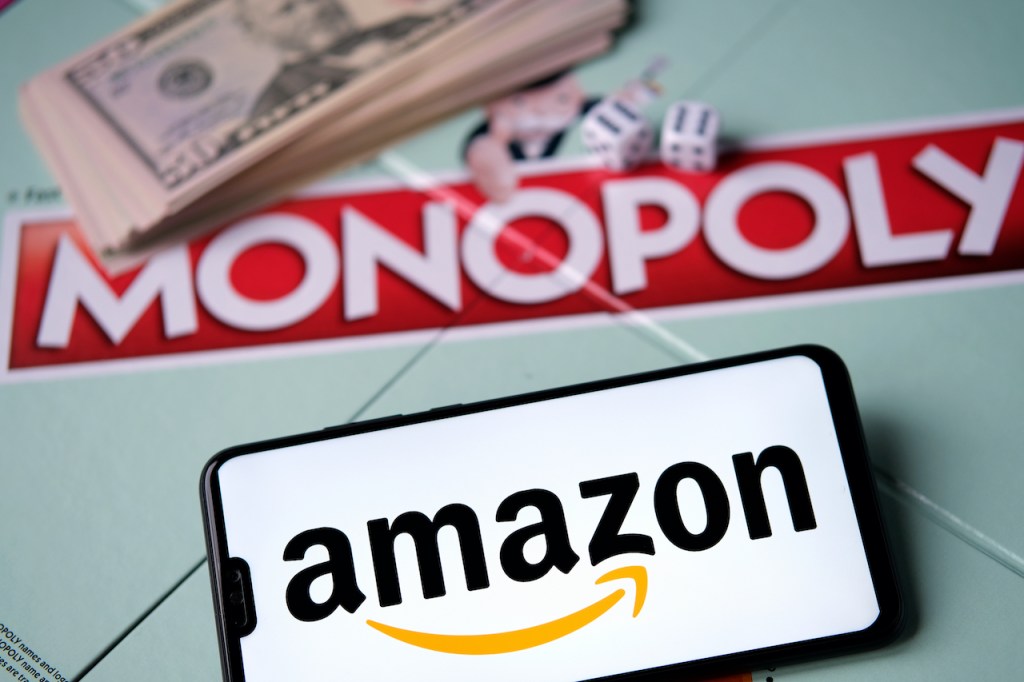
Amazon, “Economic Terrorism” and the Destruction of Competition and Livelihoods

By Colin Todhunter

Source: Off-Guardian

Global corporations are colonising India’s retail space through e-commerce and destroying small-scale physical retail and millions of livelihoods.

Walmart entered into India in 2016 with a US$3.3 billion take-over of the online retail start-up Jet.com. This was followed in 2018 with a US$16 billion take-over of India’s largest online retail platform, Flipkart. Today, Walmart and Amazon control almost two thirds of India’s digital retail sector.

Amazon and Walmart have a record of using predatory pricing, deep discounts and other unfair business practices to attract customers to their online platforms. A couple of years ago, those two companies generated sales of over US$3 billion in just six days during Diwali. India’s small retailers reacted by calling for a boycott of online shopping.

If you want to know the eventual fate of India’s local markets and small retailers, look no further than what US Treasury Secretary Steven Mnuchin said in 2019. He stated that Amazon had “destroyed the retail industry across the United States.”

AMAZON’S CORPORATE PRACTICES

In the US, an investigation by the House Judiciary Committee concluded that Amazon exerts monopoly power over many small- and medium-size businesses. It called for breaking up the company and regulating its online marketplace to ensure that sellers are treated fairly.

Amazon has spied on sellers and appropriated data about their sales, costs and suppliers. It has then used this information to create its own competing versions of their products, often giving its versions superior placement in the search results on its platform.

The Institute for Local Self-Reliance (ILSR) published a revealing document on Amazon in June 2021 that discussed these issues. It also notes that Amazon has been caught using its venture capital fund to invest in start-ups only to steal their ideas and create rival products and services.

Moreover, Amazon’s dominance allows it to function as a gatekeeper: retailers and brands must sell on its site to reach much of the online market and changes to Amazon’s search algorithms or selling terms can cause their sales to evaporate overnight.

Amazon also makes it hard for sellers to reduce their dependence on its platform by making their brand identity almost invisible to shoppers and preventing them from building relationships with their customers. The company strictly limits contact between sellers and customers.

According to the ILSR, Amazon compels sellers to buy its warehousing and shipping services, even though many would get a better deal from other providers, and it blocks independent businesses from offering lower prices on other sites. The company also routinely suspends sellers’ accounts and seizes inventories and cash balances.

The Joint Action Committee against Foreign Retail and E-commerce (JACAFRE) was formed to resist the entry of foreign corporations like Walmart and Amazon into India’s e-commerce market. Its members represent more than 100 national groups, including major trade, workers’ and farmers’ organisations.

JACAFRE issued a statement in 2018 on Walmart’s acquisition of Flipkart, arguing that it undermines India’s economic and digital sovereignty and the livelihoods of millions in India. The committee said the deal would lead to Walmart and Amazon dominating India’s e-retail sector. It would also allow them to own India’s key consumer and other economic data, making them the country’s digital overlords, joining the ranks of Google and Facebook.

In January 2021, JACAFRE published an open letter saying that the three new farm laws, passed by parliament in September 2020, centre on enabling and facilitating the unregulated corporatisation of agriculture value chains. This will effectively make farmers and small traders of agricultural produce become subservient to the interests of a few agrifood and e-commerce giants or will eradicate them completely.

Although there was strong resistance to Walmart entering India with its physical stores, online and offline worlds are now merged: e-commerce companies not only control data about consumption but also control data on production and logistics. Through this control, e-commerce platforms can shape much of the physical economy.

What we are witnessing is the deliberate eradication of markets in favour of monopolistic platforms.

BEZOS NOT WELCOME

Amazon’s move into India encapsulates the unfair fight for space between local and global markets. There is a relative handful of multi-billionaires who own the corporations and platforms. And there are the interests of hundreds of millions of vendors and various small-scale enterprises who are regarded by these rich individuals as mere collateral damage to be displaced in their quest for ever-greater profit.

Thanks to the helping hand of various COVID-related lockdowns, which devastated small businesses, the wealth of the world’s billionaires increased by $3.9tn (trillion) between 18 March and 31 December 2020.

In September 2020, Jeff Bezos, Amazon’s executive chairman, could have paid all 876,000 Amazon employees a $105,000 bonus and still be as wealthy as he was before COVID. Jeff Bezos – his fortune constructed on unprincipled methods that have been well documented in recent years – increased his net wealth by $78.2bn during this period.

Bezos’s plan is clear: the plunder of India and the eradication of millions of small traders and retailers and neighbourhood mom and pop shops.

This is a man with few scruples. After returning from a brief flight to space in July, in a rocket built by his private space company, Bezos said during a news conference:

I also want to thank every Amazon employee and every Amazon customer because you guys paid for all of this.”

In response, US congresswoman Nydia Velazquez wrote on Twitter:

While Jeff Bezos is all over the news for paying to go to space, let’s not forget the reality he has created here on Earth.”

She added the hashtag #WealthTaxNow in reference to Amazon’s tax dodging, revealed in numerous reports, not least the May 2021 study ‘The Amazon Method: How to take advantage of the international state system to avoid paying tax’ by Richard Phillips, Senior Research Fellow, Jenaline Pyle, PhD Candidate, and Ronen Palan, Professor of International Political Economy, all based at the University of London.

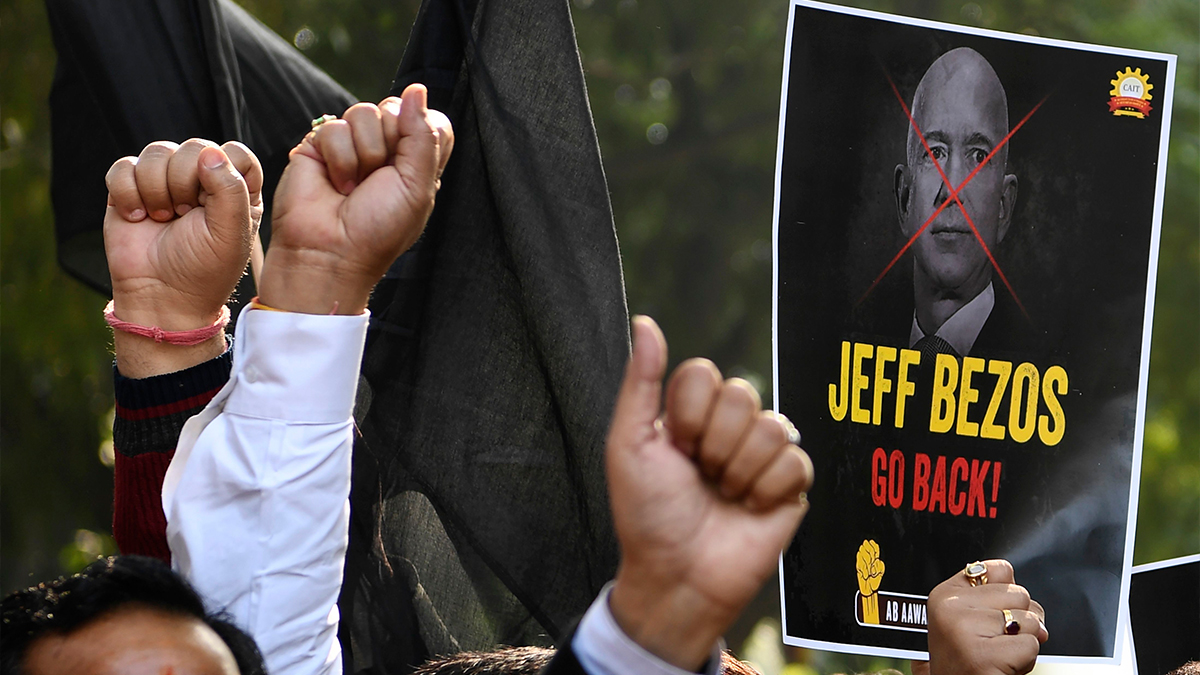
Little wonder that when Bezos visited India in January 2020, he was hardly welcomed with open arms.

Bezos praised India on Twitter by posting:

Dynamism. Energy. Democracy. #IndianCentury.”

The ruling party’s top man in the BJP foreign affairs department hit back with:

Please tell this to your employees in Washington DC. Otherwise, your charm offensive is likely to be waste of time and money.”

A fitting response, albeit perplexing given the current administration’s proposed sanctioning of the foreign takeover of the economy, not least by the unscrupulous interests that will benefit from the recent farm legislation.

Bezos landed in India on the back of the country’s antitrust regulator initiating a formal investigation of Amazon and with small store owners demonstrating in the streets. The Confederation of All India Traders (CAIT) announced that members of its affiliate bodies across the country would stage sit-ins and public rallies in 300 cities in protest.

In a letter to PM Modi, prior to the visit of Bezos, the secretary of the CAIT, General Praveen Khandelwal, claimed that Amazon, like Walmart-owned Flipkart, was an “economic terrorist” due to its predatory pricing that “compelled the closure of thousands of small traders.”

In 2020, Delhi Vyapar Mahasangh (DVM) filed a complaint against Amazon and Flipkart alleging that they favoured certain sellers over others on their platforms by offering them discounted fees and preferential listing. The DVM lobbies to promote the interests of small traders. It also raised concerns about Amazon and Flipkart entering into tie-ups with mobile phone manufacturers to sell phones exclusively on their platforms.

It was argued by DVM that this was anti-competitive behaviour as smaller traders could not purchase and sell these devices. Concerns were also raised over the flash sales and deep discounts offered by e-commerce companies, which could not be matched by small traders.

The CAIT estimates that in 2019 upwards of 50,000 mobile phone retailers were forced out of business by large e-commerce firms.

Amazon’s internal documents, as revealed by Reuters, indicated that Amazon had an indirect ownership stake in a handful of sellers who made up most of the sales on its Indian platform. This is an issue because in India Amazon and Flipkart are legally allowed to function only as neutral platforms that facilitate transactions between third-party sellers and buyers for a fee.

UNDER INVESTIGATION

The upshot is that India’s Supreme Court recently ruled that Amazon must face investigation by the Competition Commission of India (CCI) for alleged anti-competitive business practices. The CCI said it would probe the deep discounts, preferential listings and exclusionary tactics that Amazon and Flipkart are alleged to have used to destroy competition.

However, there are powerful forces that have been sitting on their hands as these companies have been running amok.

In August 2021, the CAIT attacked the NITI Aayog (the influential policy commission think tank of the Government of India) for interfering in e-commerce rules proposed by the Consumer Affairs Ministry.

The CAIT said that the think tank clearly seems to be under the pressure and influence of the foreign e-commerce giants.

The president of CAIT, BC Bhartia, stated that it is deeply shocking to see such a callous and indifferent attitude of the NITI Aayog whch have remained a silent spectator for so many years when:

…the foreign e-commerce giants have circumvented every rule of the FDI policy and blatantly violated and destroyed the retail and e-commerce landscape of the country but have suddenly decided to open their mouth at a time when the proposed e-commerce rules will potentially end the malpractices of the e-commerce companies.”

Of course, money talks and buys influence. In addition to tens of billions of US dollars invested in India by Walmart and Amazon, Facebook invested US$5.5 billion last year in Mukesh Ambani’s Jio Platforms (e-commerce retail). Google has also invested US$4.5 billion.

Since the early 1990s, when India opened up to neoliberal economics, the country has become increasingly dependent on inflows of foreign capital. Policies are being governed by the drive to attract and retain foreign investment and maintain ‘market confidence’ by ceding to the demands of international capital which ride roughshod over democratic principles and the needs of hundreds of millions of ordinary people. ‘Foreign direct investment’ has thus become the holy grail of the Modi-led administration and the NITI Aayog.

The CAIT has urged the Consumer Affairs Ministry to implement the draft consumer protection e-commerce rules at the earliest as they are in the best interest of the consumers as well as the traders of the country.

Meanwhile, the CCI probably will complete its investigation within two months.

As US Prepares to Ban Ivermectin for Covid-19, More Countries in Asia Begin Using It

By Nick Corbishley

Source: Naked Capitalism

The information war takes a dark turn as the corporate media transitions from misinformation and obfuscation to outright lies and fabrication.

The campaign against ivermectin is intensifying in the US. Until recently the health authorities appeared to be quite content merely to ridicule those who take or prescribe the drug in order to treat or prevent Covid-19. A couple of weeks ago, the FDA released a now-infamous advertorial on twitter with the heading “You are not a horse. You are not a cow. Seriously, y’all. Stop it.” The subheading: “Using the drug Ivermectin to treat Covid-19 can be dangerous and even lethal. The FDA has not approved the drug for that purpose.”

It’s a subtle message that has been faithfully echoed by the corporate media: ivermectin, a tried-and-tested drug that has won its discoverers a Nobel Prize for the impact it has had on human health over the last 35 years, should only be given to animals. But now the information war is taking a darker turn, as the media transitions from misinformation and obfuscation to outright lies and fabrication.

At the end of last week, a string of American and British outlets, including The Daily Mail, Rolling Stone, Huffington Post, The Independent, Newsweek, The Guardian, and Yahoo News, ran a story about how people who had “overdosed” on the “horse dewormer” were clogging up so many beds in a hospital in Sequoyah, rural Oklahoma, that doctors were having to turn away gunshot victims. The story, sourced to local Oklahoma outlet KFOR, turned out to be completely false. On Sunday, the hospital in question released a statement that the doctor behind the allegations had not worked in its ER for two months. More to the point, the hospital “had not treated any patients due to complications relating to taking ivermectin.” There were no overdoses. And it had turned no patients away. 

In other words, everything about the story was false. A total fabrication. Yet many of the mainstream outlets that covered the story did not retract their article. Rolling Stone simply “updated” its piece with the new information. The Guardian inserted a note at the bottom of its article informing readers that Sequoyah NHS had released a statement asserting that the doctor behind the allegations that formed the entire basis of the story had not worked in its ER for two months. In other words, you have to read all the way to the end of the article to find out that its entire content is total bullshit. To make matters worse, The Guardian did not even mention the hospital’s categorical denials that it had treated patients for IVM overdose or that it had turned ER patients away.  

The Coming Crack Down 

If the goal of all this disinformation is to put people off wanting to get hold of ivermectin, it doesn’t seem to be working, which is hardly surprising given the already desperately low levels of public trust in both US health authorities and corporate media

There are certain parallels with the furore whipped up over hydroxychloroquine last year. But the case is weaker this time, primarily because IVM is one of the safest medicines on the planet and was widely recognised as such until this pandemic.   

One thing that is abundantly clear is that mocking people’s intelligence and comparing them to horses or dogs for wanting to take a certain medicine isn’t a terribly effective way of getting them to change their behaviour. All they appear to have achieved is to invoke the “Streisand effect.” More people are buying ivermectin (for human use) than ever before. In the US as a whole, prescriptions for the medicine have surged 24-fold since the pandemic began, from 3,600 a week to almost 90,000. Between mid-July and mid-August alone, they rose 400%.

In response, authorities are escalating their crack down. On September 1, the American Medical Association (AMA), American Pharmacists Association (APhA), and American Society of Health-System Pharmacists (ASHP) jointly called for an outright ban on the dispensing of ivermectin to prevent or treat COVID-19 outside of a clinical trial.

We are alarmed by reports that outpatient prescribing for and dispensing of ivermectin have increased 24-fold since before the pandemic and increased exponentially over the past few months. As such, we are calling for an immediate end to the prescribing, dispensing, and use of ivermectin for the prevention and treatment of COVID-19 outside of a clinical trial. In addition, we are urging physicians, pharmacists, and other prescribers—trusted health care professionals in their communities—to warn patients against the use of ivermectin outside of FDA-approved indications and guidance, whether intended for use in humans or animals, as well as purchasing ivermectin from online stores. Veterinary forms of this medication are highly concentrated for large animals and pose a significant toxicity risk for humans.

Demonising a “Wonder Drug” (Not My Words)

While it is true that ivermectin was first commercialised as a product for animal health in 1981, fast becoming one of the world’s biggest selling veterinary drugs, it has been used to treat humans since 1987. But most of those humans were in poor countries. As a 2017 article in Nature noted, ivermectin, perhaps more than any other drug, “is a drug for the world’s poor. For most of this century, some 250 million people have been taking it annually to combat two of the world’s most devastating, disfiguring, debilitating and stigma-inducing diseases, Onchocerciasis and Lymphatic filariasis”

“Ivermectin was a revelation. It had a broad spectrum of activity, was highly efficacious, acting robustly at low doses against a wide variety of nematode, insect and acarine parasites. It proved to be extremely effective against most common intestinal worms (except tapeworms), could be administered orally, topically or parentally and showed no signs of cross-resistance with other commonly used anti-parasitic compounds.”

Since the late ´80s more than 3.7 billion doses have been distributed globally in mass drug administration campaigns. All 3.7 billion of those doses were provided free of charge by the medicine’s developer, Merck. The company knew it would not be able to generate profits or even cover costs by selling the drug in the poverty-stricken communities afflicted by the two parasites, so it gave it away. “As much as needed for as long as needed” was the motto. It was a remarkable — and exceptionally rare — gift of generosity from a major pharmaceutical company.

Later on, it was discovered that ivermectin had many other properties. Using the drug as a long-term preventive against onchocerciasis had reduced the prevalence of other parasitic worms known as soil-transmitted helminths, which infect up to 20% of the world’s population and are a common cause of malnutrition and growth impairment in children. It was also discovered to have potent anti-viral effects.

After being used billions of times, this (in the words of Nature magazine) “enigmatic, multifaceted wonder drug” has been shown to have “an extremely good safety profile” — again Nature‘s words — as well as potential applications against a broad spectrum of diseases, from African trypanosomiasis (sleeping sickness) to schistosomiasis, one of the world’s most neglected tropical diseases that afflicts more than 200 million people worldwide; to asthma and epilepsy; to a host of RNA viruses including Zika, dengue, yellow fever, West Nile, chikungunya and HIV. It also appears to have potent anti-cancer properties. 

Today, the FDA, with a little help from the media, is doing everything it can to destroy ivermectin’s reputation. At the same time, authorities appear to be clamping down on the importation, distribution and sales of the medicine. They are also beginning to crack down on doctors who have been prescribing the drug, regardless of how much success they’ve had with it. 

A Whole Different Story Half a World Away

In Asia, the situation could not be more different. In India the Indian Council of Medical Research (ICMR) — the most important biomedical research body in India and one of the oldest and largest medical research institutes in the world — has added ivermectin in its indication for Covid-19 to its list of essential medicines.

In June, one of three national health regulator in India, the Directorate General of Health Services, (DGHS) overhauled its COVID-19 treatment guidelines and removed almost all of the repurposed medicines it had previously recommended for treating asymptomatic and mild cases, including ivermectin. This sparked concerns that India was about to reverse its approval of ivermectin as a covid treatment. But to their credit, India’s two most important national health regulators — the All India Institute of Medical Science (AIIMS) and the Indian Council of Medical Research (ICMR) — maintained their authorisation of ivermectin.  

It’s hard to keep track of just how many states in India continue to use ivermectin as a treatment or prophylaxis against covid-19. Three states that are definitely using it are Uttar Pradesh (population: 230 million), Goa and Bihar (population: 100 million), a copy of whose home quarantine treatment program can be seen here. So, too, is New Delhi.

Though the usual caveats apply about numbers being under-reported due to inadequate testing, it’s clear that things have improved across India. Since the country began its last wave of infections, in March, no state has contained the virus as effectively as Uttar Pradesh, India’s most populous region with 230 million inhabitants. If it were a country, UP would be the world’s sixth most populous, sandwiched between Pakistan (5th) and Nigeria (7th). UP has been using IVM longer than any other Indian state, including as a prophylaxis for people who come in contact with the disease. The numbers (both in terms of cases and deaths) speak for themselves. The average number of cases per day over the last seven days was just 28 — in a region with a population larger than Brazil’s! Brazil’s daily average is more than 21,000 cases. 

Graph courtesy of data scientist Juan Chamie

It’s a similar story in New Delhi, where the number of new cases is also close to zero.

Compare that to the state of Kerala, which has stopped prescribing ivermectin and other proven therapeutics and is making exhaustive use of Gilead’s largely ineffective (yet excruciatingly expensive) antiviral, remdesivir. Not only have case numbers barely declined from their mid-May peak but they are rising faster than in any other region. Despite boasting just 3% of India’s population, having one of the most advanced health systems in the country and one of the highest vaccination rates (over 50% of the population has received at least one dose), Kerala accounted for 62% of all of India’s Covid-19 cases in early August. The BBC described the region’s stubbornly high numbers as a “mystery”.

In India, nothing is quite as simple as it might seem, says Jerri-Lynn, who knows a thing or two about the subcontinent, having visited there for long periods: 

UP is a large, rural state, with a still largely agrarian economy. It’s part of the northern Indian ‘cow belt’, with low literacy rates, and a distorted sex ratio. It’s the second poorest state in India in terms of per capita income. Kerala is much richer, and has more of a service-based economy; lots of Keralites work in the Gulf states and many send remittances back home. The state has been governed by successive left-wing governments for decades, has high literacy rates, the top female sex ratio in India, and some of its best medical care, particularly on the public health side.

As I mentioned to you before, I believe Kerala recorded the first covid case in India, in a female medical student returning from China — perhaps Wuhan in Jan 2020. The state initially did a good job managing covid and was held up as an exemplar; their contact tracing system was widely praised.

The UP government is notorious for its corruption. Many would take any official UP state figures with large fistfuls of salt. This is not the case for Kerala. 

Kerala has by far the highest number of cases in the country while UP has the lowest, but is that because it is testing more and being more honest about the numbers? According to many mainstream reports (including Times of India and India Today), UP is doing more testing than any other state. Can that be true or is UP’s regional government doctoring the numbers? Or is it simply doing a very good job at keeping the virus contained, just like Mexico’s poorest region, Chiapas?   

In India’s last brutal wave the turnaround in Uttar Pradesh was so dramatic that even the World Health Organization (WHO) showcased its achievements. In a May 7 article titled “Going the Last Mile to Stop Covid-19” the WHO noted that aggressive population-wide health schemes, including home testing and “medicine kits”, had helped regain control of the virus. The one thing the WHO failed to mention in its on-the-ground reporting is what was in those medicine kits.

The Wonders of Early Treatment

One thing that is that is clear is that many doctors in India try to treat covid-19 as early and as aggressively as possible, whereas many doctors in Europe and North America prescribe nothing more than paracetamol during the first seven days. As I’ve learnt from recent direct experience, this is the equivalent of laying down a red carpet for the virus and telling it to make itself at home and go wherever it wants, do whatever it wants.  

“When we started seeing more cases, we decided to take up a door-to-door survey,” Bagalkot District Health Officer Dr Ananth Desai told New India Express in June. “When the health officials noticed people with symptoms during the survey, they tested them immediately and provided them with home isolation kits, which had medicines like Ivermectin, calcium and zinc tablets along with paracetamol. We advised the patients to start with the medication even before their Covid-19 test results came out. With these measures, we noticed that many patients recovered faster. This helped in increasing the recovery rate”.

Besides other factors such as lockdowns, travel restrictions and increased herd immunity, ivermectin has almost certainly played a part in this. But it’s impossible to know just how large a part. The fact that case numbers and deaths have tended to fall precipitously in regions where it is used widely, such as UP, New Delhi, Goa and Bihar, and have tended to remain high in regions where it isn’t, such as Kerala or Tamil Nadu (before it readopted ivermectin in June), does not constitute proof of causation. But when the same thing occurs in so many of the disparate parts of the world where ivermectin is used, a pattern begins to form that strongly supports ivermectin’s efficacy.

That doesn’t mean that it has a perfect record. In Mexico, for example, cases and deaths began surging once again in May, despite the fact that the Institute of Social Security (IMSS), which runs many of the country’s public hospitals, has been using IVM since January, albeit in very low doses. That said, it’s all but impossible to know how many doctors, public and private, are actually using the medicine. In May the newspaper Proceso reported that IMSS had repeatedly clashed with the federal government over its use of ivermectin. In June, the Mayor of Mexico City Claudia Scheinbaum announced that the city’s widespread use of IVM had reduced hospitalisations by up to 76%.    

In early August, the results of the first large randomised control trial into IVM use for Covid-19 were released. And they showed “no effect whatsoever” on the trial’s outcome goals — whether patients required extended observation in the emergency room or hospitalization. However, as we noted in a previous article, this was a trial financed by the deeply compromised Gates Foundation, which is heavily invested in the new Covid vaccines, novel treatments and their manufacturers. And the person who lead the trial, Edward Mills, is a Gates Foundation employee. And the Canadian university that performed the trial, McMaster, is also a major recipient of Gates Foundation funding.  

The results of another large RCT trialsinto ivermectin — the so-called PRINCIPLE trial taking place at Oxford University — should also be released in the coming months. Perhaps they will be more flattering. 

The case for IVM was also not helped by the discovery of irregularities in a trial conducted in Egypt. That, together with the findings of the Together trial, is now cited by many media outlets as proof positive that ivermectin does not work against covid. To reach that conclusion, they steadfastly ignore the impressive results of many other small trials, the on-the-ground experience of untold thousands of medical practitioners and nurses, and the exceptionally low prevalence of covid in many of the places IVM is being used widely.   

Ivermectin Comes Home, to Japan

As the Delta variant has swept through Asia, causing unprecedented devastation, more and more  cities, regions and countries are considering authorising the use of ivermectin. They include Tokyo, where Haruo Ozaki, chairman of the city’s Metropolitan Medical Association, has called for ivermectin and the corticosteroid dexamethasone to be used due to the authorities’ failure to distribute vaccines in time. As Lambert pointed out a couple of days ago, Ozaki’s recommendation is for off-label use under “battlefield” conditions:

[OSAKI:] I am aware that there are many papers that suggest ivermectin is effective in the prevention and treatment of corona, mainly in Central and South America and Asia. There is no effective therapeutic drug, although it is necessary to deal with patients who develop it one after another. The vaccine is not in time. At such an imminent time, there is a paper that shows ivermectin is effective for corona, so it is a natural response for clinicians to try using it. Doctor-led clinical practice. That’s why many test papers came out.

On August 13, Ivermectin was added to the Tokyo Metropolitan Medical Association’s home treatment protocol. This is not to say that the whole nation of Japan — whose soil gave birth to the unique and extraordinary microorganism that produces the avermectins (from which ivermectin is derived) — has now embraced ivermectin. Nor is it clear how may doctors in Tokyo are actually using it. But the move could be an important first step, especially if covid-19 cases, hospitalisations and deaths fall. 

Indonesia has also embraced ivermectin. On July 10, the Indonesian government secured the supply of COVID-19 treatment and created a website showing real time drug availability. Four days later the health regulator authorised the use of ivermectin for Covid-19. Then, on July 22, on July 22 Indonesia’s hospitals began using the drug. By the first week of August cases and deaths were falling.

Meanwhile, Back in the USA…

Pfizer and Merck have announced new trials for their experimental oral antiviral drugs for COVID-19. Merck said in June that the U.S. government has already agreed to pay about $1.2 billion for 1.7 million courses of molnupiravir — working out at $705 per course of treatment — if it is proven to work and is given the green light by regulators. Pfizer, meanwhile, said that if its trial of its “affordable” early treatment pill is successful, it will file for emergency approval between October and December this year.

If the authorisation process is anything like the process employed for Gilead’s Remdesivir, which is included in standard-of-care protocols throughout Europe and the US despite offering next to no real benefits (according to the WHO), and Pfizer’s booster vaccine, Pfizer will be raking in even more money from Covid by the year’s end.

Being able to take an oral antiviral therapeutic for SARS-CoV-2 at home would be a “game changer,” according to Albert Bourla, Pfizer’s CEO.

As I posited in a previous article, one of the main reasons why there has been such fierce opposition to ivermectin is that large pharmaceutical companies are developing their own antiviral therapies that will have to compete directly with ivermectin. Another reason is that if ivermectin were approved as a covid-19 treatment, it could threaten the emergency use authorisation granted to covid-19 vaccines and novel treatments, although the recent approval of Pfizer’s COMIRNATY vaccine may have changed that. 

When financial returns are the primary priority in a health care system, this is what you get. Everything is geared to churning out brand new, barely tested experimental medicines as quickly as possible, with scant communication of what potential side effects they may produce.  Throw in monopoly control of intellectual property and you have the perfect business model.  Whether the new medicines work or not or do more harm than good, they will cost an arm and a leg. And their manufacturers will probably be protected from liability. The patients’ health, well being and welfare are barely an afterthought.

U.S. Takes Down Israeli Spy Software Company

Source: Moon of Alabama

A number of international papers report today on the Israeli hacking company NSO which sells snooping software to various regimes. The software is then used to hijack the phones of regime enemies, political competition or obnoxious journalists. All of that was already well known but the story has new legs as several hundreds of people who were spied on can now be named.

How that came to pass is of interest:

The phones appeared on a list of more than 50,000 numbers that are concentrated in countries known to engage in surveillance of their citizens and also known to have been clients of the Israeli firm, NSO Group, a worldwide leader in the growing and largely unregulated private spyware industry, the investigation found.

The list does not identify who put the numbers on it, or why, and it is unknown how many of the phones were targeted or surveilled. But forensic analysis of the 37 smartphones shows that many display a tight correlation between time stamps associated with a number on the list and the initiation of surveillance, in some cases as brief as a few seconds.

Forbidden Stories, a Paris-based journalism nonprofit, and Amnesty International, a human rights group, had access to the list and shared it with the news organizations, which did further research and analysis. Amnesty’s Security Lab did the forensic analyses on the smartphones.

The numbers on the list are unattributed, but reporters were able to identify more than 1,000 people spanning more than 50 countries through research and interviews on four continents.

Who might have made such a list and who would give it to Amnesty and Forbidden Stories?

NSO is one of the Israeli companies that is used to monetize the work of the Israel’s military intelligence unit 8200. ‘Former’ members of 8200 move to NSO to produce spy tools which are then sold to foreign governments. The license price is $7 to 8 million per 50 phones to be snooped at. It is a shady but lucrative business for the company and for the state of Israel.

NSO denies the allegations that its software is used for harmful proposes with a lot of bullshittery:

The report by Forbidden Stories is full of wrong assumptions and uncorroborated theories that raise serious doubts about the reliability and interests of the sources. It seems like the “unidentified sources” have supplied information that has no factual basis and are far from reality.

After checking their claims, we firmly deny the false allegations made in their report. Their sources have supplied them with information which has no factual basis, as evident by the lack of supporting documentation for many of their claims. In fact, these allegations are so outrageous and far from reality, that NSO is considering a defamation lawsuit.

The reports make, for example, the claim that the Indian government under Prime Minister Narendra Modi has used the NSO software to spy on the leader of the opposition party Rahul Gandhi.

How could NSO deny that allegation? It can’t.

Further down in the NSO’s statement the company contradicts itself on the issues:

As NSO has previously stated, our technology was not associated in any way with the heinous murder of Jamal Khashoggi. We can confirm that our technology was not used to listen, monitor, track, or collect information regarding him or his family members mentioned in the inquiry. We previously investigated this claim, which again, is being made without validation.

We would like to emphasize that NSO sells it technologies solely to law enforcement and intelligence agencies of vetted governments for the sole purpose of saving lives through preventing crime and terror acts. NSO does not operate the system and has no visibility to the data.

How can NSO deny that the Saudi government, one its known customers, used its software for spying on the then murdered Jamal Khashoggi when it ‘does not operate the system’ and ‘has no visibility to the data’?

You can’t claim both a. assure knowledge and b. to have no way to have gained it.

But back to the real issue:

  • Who has the capacity to make a list of 50,000 phone numbers that include at least 1,000 who were spied on with NSO’s software?
  • Who can ‘leak’ such a list to some NGO and make sure that lots of ‘western’ media jump onto it?
  • Who has an interest in shutting NSO down or to at least make its business more difficult?

The competition I’d say. And the only real one in that field is the National Security Agency of the United States.

The U.S. often uses ‘intelligence’ as a kind of diplomatic currency that keeps other countries dependent on it. If the Saudis have to ask the U.S. for snooping on someone it is much easier to have influence over them. NSO is disturbing that business. There is also the problem that the first class spying software NSO is selling to somewhat shady customers might well fall into the hands of some big U.S. adversary.

The ‘leak’ to Amnesty and Forbidden Stories is thus an instrument to keep some monopolistic control over client regimes and over spying technology. (The Panama Papers were a similar kind of U.S. sponsored ‘leak’, only in the financial field.)

Edward Snowden, who once was committed NSA supporter but leaked NSA documents because he wanted it to stick to the law, is supporting this campaign:

Edward Snowden @Snowden – 16:28 UTC · Jul 18, 2021
Stop what you’re doing and read this. This leak is going to be the story of the year: https://theguardian.com/world/2021/…

Edward Snowden @Snowden – 15:23 UTC · Jul 19, 2021
There are certain industries, certain sectors, from which there is no protection. We don’t allow a commercial market in nuclear weapons. If you want to protect yourself you have to change the game, and the way we do that is by ending this trade.
Guardian: Edward Snowden calls for spyware trade ban amid Pegasus revelations

Snowden seems to say that NSO, which sells it software only to governments, should stop doing so but that the NSA should continue the use of such spying instrument:

Speaking in an interview with the Guardian, Snowden said the consortium’s findings illustrated how commercial malware had made it possible for repressive regimes to place vastly more people under the most invasive types of surveillance.

Snowden’s opinion on this is kind of strange:

chinahand @chinahand – 17:28 UTC · Jul 19, 2021
fascinating how Mr “US state surveillance is the greatest threat to humanity” gets worked up about the fact that a bit of state surveillance is apparently outsourced to a private contractor by mid and low tier state actors.

Edward Snowden @Snowden – 17:06 UTC · Jul 19, 2021
Read about the Biden, Trump, and Obama officials who accepted blood money from the NSO group to bury any efforts at accountability — even *after* their involvement in the death and detention of journalists and rights defenders around the world!
WaPo: How Washington power brokers gained from NSO’s spyware ambitions

The uproar in the the media created by the NSO revelation is already having the desired effect:

Amazon Web Services (AWS) has shut down infrastructure and accounts linked to Israeli surveillance vendor NSO Group, Amazon said in a statement.

The move comes as a group of media outlets and activist organizations published new research into NSO’s malware and phone numbers potentially selected for targeting by NSO’s government clients.

“When we learned of this activity, we acted quickly to shut down the relevant infrastructure and accounts,” an AWS spokesperson told Motherboard in an email.

AWs has for years known about NSO’s activities. NSO has been using CloudFront, a content delivering network owned by Amazon:

CloudFront infrastructure was used in deployments of NSO’s malware against targets, including on the phone of a French human rights lawyer, according to Amnesty’s report. The move to CloudFront also protects NSO somewhat from researchers or other third parties trying to unearth the company’s infrastructure.

“The use of cloud services protects NSO Group from some Internet scanning techniques,” Amnesty’s report added.

That protection is no longer valid. NSO will have quite some problems to replace such a convenient service.

Israel will whine about it but it seems to me that the U.S. has decided to shut NSO down.

For you and me that will only marginally lower the risk of being spied on.

Anthony Fauci “has no clue and no authority to lecture on what is good for India”

By Colin Todhunter

Source: Dissident Voice

In light of the current COVID-related situation in India, Dr Anthony Fauci, the top US adviser on COVID, has called for India to implement a hard lockdown and for the mass roll-out of vaccines.

However, Fauci has no clue and no authority to lecture on what is good for India.

That is the view of journalist Ratna Chakraborty. Writing on the Empire Diaries website, she argues that the US is a rich nation, prints the world’s reserve currency, has robust financial coverage for the jobless and its population is spread out.

On the other hand, India is finance-strained, has a brittle economy that lives on the brink of disaster, does not have any financial coverage for the jobless, is densely populated and its people mostly live in congested clusters.

Given the government’s incompetence and the callousness demonstrated towards poorer sections of Indian society the first time around, Chakraborty says any new lockdown would again result in disaster. She adds that nothing has been learnt, with no attempt to upgrade the healthcare set-up nationwide.

It is worth recalling what renowned academic and activist Noam Chomsky said about India’s first lockdown.

During an interview with Amy Goodman of Democracy Now! back in May 2020, Chomsky said:

… you can almost describe it as genocidal. Modi gave, I think, a four-hour warning before a total lockdown. That’s (affected) over a billion people. Some of them have nowhere to go.

He added:

People in the informal economy, which is a huge number of people, are just cast out. Go walk back to your village, which may be a thousand miles away. Die on the roadside. This is a huge catastrophe in the making…

During the first lockdown in India, rural affairs commentator P Sainath painted a dreary picture of the impacts, not least the desperate plight of migrant workers, a shortage of cash to buy food and a potential shortage of food as farmers were unable to complete their harvests.

Sainath also reported the views of Dr. Sundararaman, a former executive director of the National Health Systems Resources Centre, who argued that there was a desperate need to:

identify and act on the reverse migrations problem and the loss of livelihoods. Failing that, deaths from diseases that have long tormented mostly poor Indians could outstrip those brought about by the corona virus.

Regardless of the destructive impact of the first lockdown in India and the questionable efficacy of lockdowns in terms of what they are supposed to achieve, another one would further push hundreds of millions towards poverty and hunger. It would merely fuel and accelerate the impoverishment caused by the first lockdown.

new report prepared by the Centre for Sustainable Employment at Azim Premji University (APU) has highlighted how employment and income had not recovered to pre-pandemic levels even by late 2020.

The report, ‘State of Working India 2021 – One year of Covid-19’ highlights how almost half of formal salaried workers moved into the informal sector and that 230 million people fell below the national minimum wage poverty line.

Even before COVID, India was experiencing its longest economic slowdown since 1991 with weak employment generation, uneven development and a largely informal economy. A recent article by the Research Unit for Political Economy highlights the structural weaknesses of the economy and the often desperate plight of ordinary people.

The study also found that there was a loss in monthly earnings for all types of workers: 13% for casual workers, 18% for the self-employed, 17% for those with temporary salaries, 5% for the permanent salaried and 17% overall.

The poorest 25% of households borrowed 3.8 times their median income, as against 1.4 times for the top 25%. The study noted the implications for debt traps.

Six months later, it was also noted that food intake was still at lockdown levels for 20% of vulnerable households.

How bad is COVID?

Given this impact, before listening to prominent individuals with apparent conflicts of interest related to vaccine roll-outs (see the editorial in the British Medical Journal ‘Covid-19, Politicisation, Corruption, and Suppression of Science’), the current COVID-related situation in India must be contextualised. The sensationalism needs to be put to one side.

According to Yohan Tengra, a Mumbai-based political analyst and healthcare specialist, the true number of infection rates can only be known by testing symptomatic people who have tested positive with either a virus culture test or PCR test that uses 24 cycles or less.

The PCR test has been used as the gold standard for COVID cases around the world. But it has been sharply criticised for being inaccurate, inappropriate, for using cycles in excess of 40 (thereby inflating the numbers) and for producing ‘false positives’.

It seems that even the Swedish Ministry of Health now thinks that it is not fit for purpose:

The PCR technology used in tests to detect viruses cannot distinguish between viruses capable of infecting cells and viruses that have been neutralised by the immune system and therefore these tests cannot be used to determine whether someone is contagious or not. RNA from viruses can often be detected for weeks (sometimes months) after the illness but does not mean that you are still contagious.

We also need to be reminded what the US Centers for Disease Control and Prevention stated about the PCR in December 2020. It is especially important to focus on PCR testing because these tests are the entire basis for restrictions and lockdowns (and vaccination); even when deaths were within normal annual ranges, ‘case’ levels were high and restrictions and ‘tiered lockdowns’ were still being imposed in places like the UK.

The following extract can be found on page 39 of the report from the CDC 2010-Novel Coronavirus (2019-nCoV) Real-Time RT-PCR Diagnostic Panel:

Detection of viral RNA may not indicate the presence of infectious virus or that 2019-nCoV is the causative agent for clinical symptoms. This test cannot rule out diseases caused by other bacterial or viral pathogens.

Perfectly healthy people are being tested and small often insignificant fragments of flu, common cold or some other virus can be detected. People are then labelled as a COVID ‘case’.

But that is not all. In their recent article ‘The Nuremberg Doctors Trial and Modern Medicine’s Panic Promotion of the FDA’s Experimental and Unapproved COVID-19 mRNA Vaccines’, Dr Gary G Kohls and Professor Michel Chossudovsky state that – with regard to the so-called ‘emergency use authorization’ (EUA) of COVID-19 vaccines – it is now established and confirmed by the WHO (January 20, 2021) that the entire data base pertaining to tabulation of confirmed positive cases (RT-PCR test) (since early February 2020 in 193 member states of the UN) is invalid.

The two authors note that this flawed methodology cannot be used to confirm the existence of an emergency situation. EUA criterion is therefore not only invalid but illegal.

Furthermore, there is currently decent scientific evidence to indicate asymptomatic transmission may not be significant.

According to Tengra, the case numbers being reported in India are mainly asymptomatic cases. The directors of the All India Institute of Medical Science and the India Council of Medical Research both say that there are many more asymptomatic cases this time than in the so-called ‘first wave’.

As these ‘cases’ comprise most of India’s case numbers, we should therefore be questioning the data as well as the PCR tests being used to detect the virus.

Tengra says the case fatality rate for COVID-19 in India was over 3% last year but has now dropped to below 1.5%. The infection fatality rate is even lower, with serosurvey results showing them to be between 0.05% to 0.1%.

As has occurred in many other countries, Tengra notes the way that death certificate guidelines are structured in India makes it easy for someone to be labelled as a COVID death just based on a positive PCR test or general symptoms. It is therefore often difficult to say who has died from the virus and who has been misdiagnosed.

We should also bear in mind that respiratory diseases like TB and respiratory tract infections such as bronchitis leading to pneumonia are major killers in India. These conditions are severely aggravated by air pollution and often require oxygen which can be in short supply during air pollution crises in places like Delhi at this time of the year.

Therefore, the current harrowing scenes we see in the media might not necessarily be due to the lethality of the virus but by the numbers who are ending up in hospital.

Vaccines

If the pandemic narrative has been constructed on the house of (statistical) cards outlined thus far, then we should be questioning the need for a mass vaccination campaign, which could actually lead to aggravating the current situation.

This is not lost on Dr Geert Vanden Bossche, a virologist who has held positions at several vaccine companies, carrying out vaccine research and development. He has also been involved with the Bill and Melinda Gates Foundation and has worked with the Global Alliance for Vaccines and Immunization (GAVI). Not an ‘anti-vaxxer’ in any sense of the term.

He offers insight into why it is quite possible that mass vaccine rollouts will actually lead to very disturbing levels of deaths directly related to COVID-19. Far from reducing the numbers and facilitating immunity, he anticipates ‘vaccine assisted immune escape’.

Vanden Bossche warns that mass infection prevention and mass vaccination with Covid-19 vaccines in the midst of the pandemic can only breed highly infectious variants. He offers a truly worrying scenario. Of course, not everyone might agree with his analysis but it is certainly a cause for concern.

There is also the entire issue regarding the necessity, efficacy and safety of the vaccines now being rolled out. The group ‘Doctors for COVID Ethics’ has recently raised serious doubts in all of these areas (its concerns have been published on the UK-based OffGuardian website).

In finishing, there are two questions we should ask.

Can we have confidence in science and evidence-based health and social policy where COVID-19 is concerned? And can we just assume – as governments and the media imply we should – that Anthony Fauci and the pharmaceutical corporations have ordinary people’s interests at heart?

In response to the first question, not much. In response to the second, certain interests have been riding and fuelling a wave of sensationalism and duplicity throughout.

A Case of Graphical Correlations: Making Sense of India’s COVID-19 Surge

By Mathew Maavak

Source: Activist Post

India is currently witnessing a COVID-19 surge of unprecedented proportions, with an allegedly triple-mutant strain stretching the nation’s healthcare infrastructure to the limits.  The uncertainty hanging over the nation is compounded by viral despatches of dead bodies piling up in morgues; of people dropping dead in the streets; of despondent souls jumping off their balconies; and of funeral pyres all over the country. There will be no public service-minded Big Tech censorship in this instance.

This is supposedly Wuhan 2.0. Any social media addict would be forgiven for thinking that India’s population of 1.3 billion might suffer a dip before the year is out.

Amidst the toxic miasma of fear-mongering, coherent explanations over this surge are hard to come by. Therefore, one needs to resort to correlations and proxies in order to gauge causations and effects. For starters, one should compare the yearly death tolls (from all causes) before and after the advent of COVID-19 in India, particularly for the year 2021. But relevant data will only be available a year from now. Many will die as a result of continued lockdowns which generally weaken the immune system. Essential medical procedures will be deferred as hospitals are compelled to focus on COVID-19.  Rising socioeconomic despair will naturally lead to a surge in suicides. In the end, not all coronavirus deaths can be directly attributed to the virus no matter how “experts” add them up.

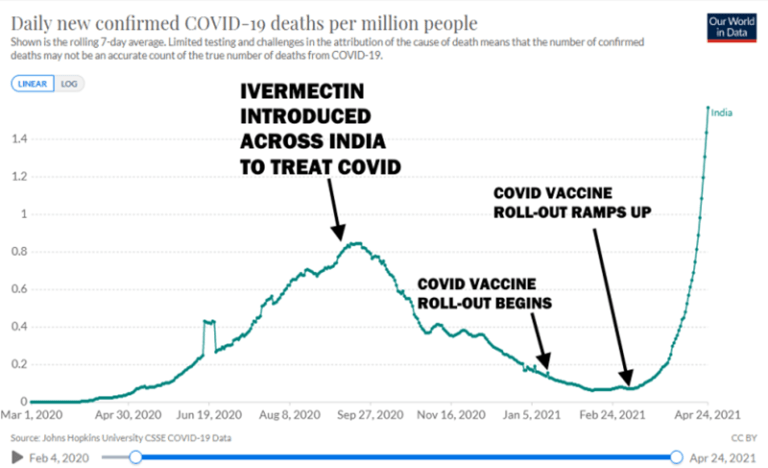
Other correlations must also be explored in the Indian context. India was rather late in joining the mass vaccination bandwagon. Throughout 2020, its COVID-19 mortality figures were moderate by global standards due to the efficacy of low-cost treatment protocols. Hydroxychloroquine (HCQ) was sanctioned for early stage treatment from March 2020 onwards; while a few months later, India’s most populous state of Uttar Pradesh (population 231 million) replaced HCQ with ivermectin (an anti-parasitic drug).

The results were highly encouraging. As the TrialSiteNews (TSN) reported on Jan 9 2021:

By the end of 2020, Uttar Pradesh — which distributed free ivermectin for home care — had the second-lowest fatality rate in India at 0.26 per 100,000 residents in December. Only the state of Bihar, with 128 million residents, was lower, and it, too, recommends ivermectin.

Despite having the coronavirus situation under control, New Delhi was under immense pressure from various international lobbies and their local proxies to roll out a mass vaccination campaign. It can be argued that India’s ongoing oxygen shortages are the direct result of prioritizing foreign-curated experimental vaccines over local necessities.

While the initial mass vaccination launch was pencilled for Jan 16, the campaign effectively took off only in late February. With uncanny timing, the New York Times hailed India as an “unmatched vaccine manufacturing power” that could counter China in the area of vaccine diplomacy.

As the goal of vaccinating 300 million people by August 2021 neared the midway mark, however, the number of COVID-19 cases surged accordingly. The graph below broadly charts this anomaly.

Not only has India’s COVID-19 cases surged in tandem with increased vaccination, the trajectory of infections and inoculations can be neatly superimposed as the following graph suggests.

Can one infer that there may be a correlation between increased vaccinations and infections? This is not the first time that gene-based therapies ended up creating new viral chimeras. The World Health Organisation (WHO) recently admitted that a Bill & Melinda Gates Foundation (BMGF)-backed vaccine program was responsible for a new polio outbreak in Africa.  The usual suspects were also behind a vaccination-linked polio surge in Pakistan and Afghanistan.

Vaccines causing deadly outbreaks of the very diseases they are supposed to eradicate happen to be a 21st century phenomenon – brought to you by an unholy alliance of Big Tech and Big Pharma. In the process, new mutant strains or “vaccine-derived viruses” emerge, necessitating even more potent vaccines which deliver greater profits and levers of global control to Big Tech. This is how the Davos cabal tries to stay relevant in a century that should otherwise be dominated by Asia. India may end up being the first Asian victim of Big Tech’s Great Reset against the East.

A recent study by Tel Aviv University may shed further light on India’s bizarre surge. It seems those who have been vaccinated with the Pfizer-BioNTech vaccine are 8 times more likely to contract the new South African variant of COVID-19 than the unvaccinated.

The Covishield (Oxford University-AstraZeneca) and Covaxin (Bharat Biotech) vaccines used in India may have produced a similar effect. Dr. Harvey Risch, a professor of epidemiology at Yale University, has estimated that over 60 percent of all new COVID-19 cases seem to occur among the “vaccinated.” Dr Michael Yeadon, former vice president and chief science officer for Pfizer, fears a more alarming outcome which includes the possibility of “massive-scale depopulation”. These are not your average basement-dwelling conspiratorial kooks!

“The vaccine,” to paraphrase Francis Bacon, “is now appearing to be the worse than the disease itself.” Gene-based vaccines open up a Pandora’s Box of what systems theorists call “emergence”. The human body is a complex system that may react unpredictably to interferences at its most substrate (or genetic) levels. As a result, mutant virus strains may emerge alongside unforeseen side effects. This is what we are witnessing worldwide.

But as the virus mutates, so does the official narrative. The Indian Medical Association (IMA) now claims that mass vaccinations in densely-packed stadiums and halls are “superspreader” events. Is the IMA suggesting that new vaccine delivery systems, as lobbied by Big Tech, will solve this problem? Let us wait and see. Furthermore, is close proximity the prime culprit behind the super-surge in India? India is a nation where trains, buses and all forms of public spaces teem with human bodies. Yet, it did not lead to mass casualties in 2020 as many had feared.

In the absence of a watertight scientific explanation from mainstream gatekeepers, a more plausible narrative may be sought from peripheral sources. The Daily Expose offers one such graphic-laden narrative to explain the correlation between mass vaccinations and the rising death toll in India.

While the Daily Expose concedes that correlation does not always equal causation, a similar pattern was noticed in other nations. The vaccination-mortality graph for Mongolia, for example, is particularly eye-popping.

Did Mongolia witness a near-zero to mutant COVID-19 surge just when mass vaccinations rolled out? How coincidental can that be?

The Case of America: Red vs Blue States

One may scientifically argue that India’s surge had nothing to do with ramped-up vaccinations. A new mutant virus may also somehow explain the vaccination-mortality correlations in Mongolia.

Therefore one should resort to another layman-friendly proxy to see whether similar correlations exist elsewhere. How about a comparison within the most coronavirus-affected nation on earth – the United States of America?

Reports thus far suggest that US states which have been resisting mass vaccinations and/or mandatory masking, at least in relative terms, are generally faring better than those adhering to draconian COVID-19 guidelines. Just weeks after Texas lifted its public mask mandate – featuring full crowds at bars, restaurants and concerts  no less – COVID-19 cases as well as hospitalizations dropped to its lowest levels since October 2020. The current White House occupant, who continues to make a buzz over his mental acuity, nonetheless panned the move as a symptom of “Neanderthal thinking”.  In the meantime, South Dakota Governor Kristi Noem, a prominent opponent of mandatory masking, is using COVID-19 restrictions elsewhere to lure businesses to her state. Other red states such as Florida and Arizona have moved to ban the so-called vaccine passports.

Rather coincidentally, the annual flu has virtually disappeared in the United States since the onset of the pandemic. It must be a modern medical miracle!

How will India fare?

With the surge affecting the nation badly, the CEOs of Google, Microsoft and Apple, among others, have pledged heartfelt aid to India. With friends like these, one wonders why Indians cannot question the global COVID-19 narrative on Twitter, Facebook or YouTube without being summarily banned or censored. If India can concede the digital rights of its own citizens and the digital sovereignty of the nation to Big Tech, then how is it going to crowdsource solutions for COVID-19? Or deal with any other future crisis for that matter? An Indian scientific paper which tentatively explored a laboratory origin for COVID-19 can be summarily removed after concerted condemnation from Western academics but a similar claim made by the former head of the US Centers for Disease Control (CDC) appears relatively palatable. Isn’t this a textbook example of neoliberal racism?

Indians should also question why Africa has not been badly affected thus far, despite a South African variant hovering in the region. This is a continent mired in conflicts, poverty, serious healthcare deficits and other Third World-related woes. It lacks world-class scientists and institutions which India admittedly has. Is it because Africa does not pose an economic threat to the Western oligarchy the way Asia does? Or maybe, mass vaccinations haven’t yet taken off in Africa?

For the time being, India cannot reverse course on its vaccination drive and adopt measures similar to the one employed by the Eisenhower administration during the 1957-58 Asian Flu pandemic. The fear genie is already out of the bottle. Big Tech controls the digital narrative in India as it does elsewhere. Even if New Delhi manages to tame the COVID-19 crisis within the next few weeks or months, Big Tech will still be around to stifle India’s destiny.

Ultimately, this game is much bigger than COVID-19; it is about global domination through perennial mass-manufactured crises until a Great Reset is achieved.

Viral Inequality: From Jeff Bezos to the struggle of Indian Farmers

Billionaires have profited enormously from lockdown, whilst mega corporations are buying out and shutting down independent stores and farms.

By Colin Todhunter

Source: OffGuardian

According to a new report by Oxfam, ‘The Inequality Virus’, the wealth of the world’s billionaires increased by $3.9tn (trillion) between 18 March and 31 December 2020. Their total wealth now stands at $11.95tn.

The world’s 10 richest billionaires have collectively seen their wealth increase by $540bn over this period. In September 2020, Jeff Bezos could have paid all 876,000 Amazon employees a $105,000 bonus and still be as wealthy as he was before COVID.

At the same time, hundreds of millions of people will lose (have lost) their jobs and face destitution and hunger. It is estimated that the total number of people living in poverty could have increased by between 200 million and 500 million in 2020. The number of people living in poverty might not return even to its pre-crisis level for over a decade.

Mukesh Ambani, India’s richest man and head of Reliance Industries, which specialises in petrol, retail and telecommunications, doubled his wealth between March and October 2020. He now has $78.3bn. The average increase in Ambani’s wealth in just over four days represented more than the combined annual wages of all of Reliance Industries’ 195,000 employees.

The Oxfam report states that lockdown in India resulted in the country’s billionaires increasing their wealth by around 35 per cent. At the same time, 84 per cent of households suffered varying degrees of income loss. Some 170,000 people lost their jobs every hour in April 2020 alone.

The authors also noted that income increases for India’s top 100 billionaires since March 2020 was enough to give each of the 138 million poorest people a cheque for 94,045 rupees.

The report went on to state:

…it would take an unskilled worker 10,000 years to make what Ambani made in an hour during the pandemic…and three years to make what Ambani made in a second.”

During lockdown and after, hundreds of thousands of migrant workers in the cities (who had no option but to escape the country’s avoidable but deepening agrarian crisis) were left without jobs, money, food or shelter.

It is clear that COVID has been used as cover for consolidating the power of the unimaginably rich. But plans for boosting their power and wealth will not stop there. One of the most lucrative sectors for these people is agrifood.

More than 60 per cent of India’s almost 1.4 billion population rely (directly or indirectly) on agriculture for their livelihood. Aside from foreign interests, Mukesh Ambani and fellow billionaire Gautam Adani (India’s second richest person with major agribusiness interests) are set to benefit most from the recently passed farm bills that will lead to the wholesale corporatisation of the agrifood sector.

CORPORATE CONSOLIDATION

A recent article on the grain.org website, ‘Digital control: how big tech moves into food and farming (and what it means)’, describes how Amazon, Google, Microsoft, Facebook and others are closing in on the global agrifood sector while the likes of Bayer, Syngenta, Corteva and Cargill are cementing their stranglehold.

The tech giants entry into the sector will increasingly lead to a mutually beneficial integration between the companies that supply products to farmers (pesticides, seeds, fertilisers, tractors, drones, etc) and those that control the flow of data and have access to digital (cloud) infrastructure and food consumers. This system is based on corporate centralisation and concentration (monopolisation).

Grain notes that in India global corporations are also colonising the retail space through e-commerce. Walmart entered into India in 2016 by a US$3.3 billion take-over of the online retail start-up Jet.com which, in 2018, was followed by a US$16 billion take-over of India’s largest online retail platform Flipkart. Today, Walmart and Amazon now control almost two-thirds of India’s digital retail sector.

Amazon and Walmart are using predatory pricing, deep discounts and other unfair business practices to lure customers towards their online platforms. According to Grain, when the two companies generated sales of over US$3 billion in just six days during a Diwali festival sales blitz, India’s small retailers called out in desperation for a boycott of online shopping.

In 2020, Facebook and the US-based private equity concern KKR committed over US$7 billion to Reliance Jio, the digital store of one of India’s biggest retail chains. Customers will soon be able to shop at Reliance Jio through Facebook’s chat application, WhatsApp.

The plan for retail is clear: the eradication of millions of small traders and retailers and neighbourhood mom and pop shops. It is similar in agriculture.

The aim is to buy up rural land, amalgamate it and roll out a system of chemically-drenched farmerless farms owned or controlled by financial speculators, the high-tech giants and traditional agribusiness concerns. The end-game is a system of contract farming that serves the interests of big tech, big agribusiness and big retail. Smallholder peasant agriculture is regarded as an impediment to be replaced by large industrial-scale farms.

This model will be based on driverless tractors, drones, genetically engineered/lab-produced food and all data pertaining to land, water, weather, seeds and soils patented and often pirated from peasant farmers.

Farmers possess centuries of accumulated knowledge that once gone will never be got back. Corporatisation of the sector has already destroyed or undermined functioning agrarian ecosystems that draw on centuries of traditional knowledge and are increasingly recognised as valid approaches to secure food security.

And what of the hundreds of millions to be displaced in order to fill the pockets of the billionaire owners of these corporations? Driven to cities to face a future of joblessness: mere ‘collateral damage’ resulting from a short-sighted system of dispossessive predatory capitalism that destroys the link between humans, ecology and nature to boost the bottom line of the immensely rich.

IMPERIAL INTENT

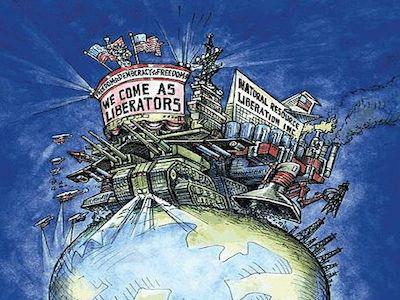
India’s agrifood sector has been on the radar of global corporations for decades. With deep market penetration and near saturation having been achieved by agribusiness in the US and elsewhere, India represents an opportunity for expansion and maintaining business viability and all-important profit growth. And by teaming up with the high-tech players in Silicon Valley, multi-billion dollar data management markets are being created. From data and knowledge to land, weather and seeds, capitalism is compelled to eventually commodify (patent and own) all aspects of life and nature.

Foreign agricapital is applying enormous pressure on India to scrap its meagre (in comparison to the richer nations) agricultural subsidies. The public distribution system and publicly held buffer stocks constitute an obstacle to the profit-driven requirements of global agribusiness interests.

Such interests require India to become dependent on imports (alleviating the overproduction problem of Western agricapital – the vast stocks of grains that it already dumps on the Global South) and to restructure its own agriculture for growing crops (fruit, vegetables) that consumers in the richer countries demand. Instead of holding physical buffer stocks for its own use, India would hold foreign exchange reserves and purchase food stocks from global traders.

Successive administrations have made the country dependent on volatile flows of foreign capital via foreign direct investment (and loans). The fear of capital flight is ever present. Policies are often governed by the drive to attract and retain these inflows. This financialisation of agriculture serves to undermine the nation’s food security, placing it at the mercy of unforeseen global events (conflict, oil prices, public health crises) international commodity speculators and unstable foreign investment.

Current agricultural ‘reforms’ are part of a broader process of imperialism’s increasing capture of the Indian economy, which has led to its recolonization by foreign corporations as a result of neoliberalisation which began in 1991. By reducing public sector buffer stocks and introducing corporate-dictated contract farming and full-scale neoliberal marketisation for the sale and procurement of produce, India will be sacrificing its farmers and its own food security for the benefit of a handful of unscrupulous billionaires.

As independent cultivators are bankrupted, the aim is that land will eventually be amalgamated to facilitate large-scale industrial cultivation. Indeed, a recent piece on the Research Unit for Political Economy site, ‘The Kisans Are Right: Their Land Is At Stake‘, describes how the Indian government is ascertaining which land is owned by whom with the ultimate aim of making it easier to eventually sell it off (to foreign investors and agribusiness). Other developments are also part of the plan (such as the Karnataka Land Reform Act), which will make it easier for business to purchase agricultural land.

India could eventually see institutional investors with no connection to farming (pension funds, sovereign wealth funds, endowment funds and investments from governments, banks, insurance companies and high net worth individuals) purchasing land. This is an increasing trend globally and, again, India represents a huge potential market. The funds have no connection to farming, have no interest in food security and are involved just to make profit from land.

The recent farm bills – if not repealed – will impose the neoliberal shock therapy of dispossession and dependency, finally clearing the way to restructure the agri-food sector. The massive inequalities and injustices that have resulted from the COVID-related lockdowns are a mere taste of what is to come.

The hundreds of thousands of farmers who have been on the streets protesting against these bills are at the vanguard of the pushback – they cannot afford to fail. There is too much at stake.

Having Sucked America Dry, Tech Giants Seek New Markets Beyond Reach of US Antitrust Laws

Sept. 27, 2015 Facebook CEO Mark Zuckerberg hugs Prime Minister of India Narendra Modi at Facebook in Menlo Park, Calif. (AP Photo/Jeff Chiu, File)

An aggressive push to consolidate companies in the tech sector, coupled with the world’s ever-increasing dependence on digital platforms and tools, is quickly leading to a crisis of sovereignty.

By Raul Diego

Source: MintPress News

The American consumer market for big tech gadgets appears to have reached the point of saturation as the novelty of mobile devices and laptops plateau and the persistent lockdown sees savings dwindle and discretionary spending disappear. Apple, which has enjoyed reigning over the smartphone market for more than a decade, has been forced to drop its prices over the last year as a result of a market at full capacity.

Nevertheless, one of the world’s most liquid companies, along with other tech giants like Facebook and Google – whose parent company, Alphabet, Inc. recently overtook Apple as the most cash-rich company in the world – are taking full advantage of their position to gobble up startups in emerging sectors in the Artificial Intelligence (AI) space like Natural Language Processing (NLP), Machine Learning (ML) and Deep Learning (DL), in order to solidify their place in other, mostly untapped markets in developing nations.

Big tech’s insatiable appetite, as manifested in this current sprint to further consolidate their assets, is bound to give them even more control over their already substantial access to our data and other digital activities of the population at large.  Earlier this year, then Presidential candidate Elizabeth Warren led the call to “Break Them Up,” in reference to the big tech companies, declaring that they had “bulldozed competition, used our private information for profit, and tilted the playing field against everyone else. And in the process, they have hurt small businesses and stifled innovation.” Her plan to “level the playing field,” however, seems to have gone away with her fleeting candidacy.

Nonetheless, they are all gearing up to face an election-year challenge to their growing power as a year-long House Judiciary subcommittee investigation is set to conclude and will more than likely provide plenty of fodder for the antitrust battles looming on the horizon. Some analysts have speculated that the U.S. government could impose fines on companies like Google in the tens of billions for past violations. But, whether or not this Congress implements measures with any real teeth remains to be seen.

Captive market shares

American tech giants are turning their focus to south-east Asia as their original markets in the U.S. can no longer support most of their quarterly profit projections. Apple’s recent acquisition of Seattle-based Xnor.ai, which specializes in “low-power, edge-based artificial intelligence tools” that will help them develop low-cost hardware for things like security cameras using artificial visual intelligence.

The Xnor.ai acquisition is just one of several made by Apple this year. Others include an Irish AI platform called Voysis that enables voice interactions with digital retailers; NextVR, a virtual reality headset company that holds over 40 patents in that space and will help Apple carve out a niche in the burgeoning world of streaming music and sporting events.

Google, which already has a virtual monopoly over Internet search capabilities and related tools, is aggressively pursuing startups in the cloud computing space, healthcare, and advertising market. A salient example is the ongoing $2.1 Billion-dollar acquisition of Fitbit, which has reportedly entered its final stages but has raised calls in some quarters for U.S. antitrust regulators to take a closer look.

The bank of Zuckerberg

Meanwhile, Facebook is continuing its incursion into the virtual entertainment arena with the purchase of Sanzaru Games in February as the social media giant solidifies its VR stake by taking over both hardware and software sides of that emerging market. Zuckerberg has also added to his social media empire with plans to acquire animated gif search engine Giphy for $400 Million, extending his consolidation over two of the most popular social media and communication platforms in its portfolio: Instagram and WhatsApp.

Facebook’s recent $5.7 Billion-dollar investment in India’s Jio Platforms also reveals how the tech giant is betting on Asia for its future growth. Facebook claims that Jio has “brought more than 388 million people online” and is poised to leverage its ubiquitous presence in the country through WhatsApp, boasting that the chat/call app has become a “commonly used verb across many Indian languages and dialects.”

The Indian telecom, led by that nation’s richest man, also includes a recently launched e-commerce site called JioMart, that further opens the door for Facebook’s digital payments platform and has the very real potential to put the social media company in a new class as a payment processing giant, shaking up the status quo in a space largely controlled by the banking sector.

Breaking out of the virtual gold cage

Having sucked the American market dry, these colossal corporations continue their unfettered growth and are increasingly beyond the reach of national anti-monopoly laws. Their aggressive push to consolidate across sectors in the technology space, coupled with the world’s ever-increasing dependence on digital platforms and tools is quickly leading us into a crisis of sovereignty.

If three companies own or have a stake in virtually all of the apps, gadgets and software that are ultimately responsible for collecting out data, performing our transactions and providing the content we consume, we will effectively become prisoners of these same corporations.

Even if Google were to re-instate the infamous “don’t be evil” motto in its code of conduct, such a state of affairs would render that promise moot. The slew of acquisitions by the world’s top tech companies in the midst of an economic depression for the rest of us does not bode well for a future of greater self-determination as the wealth and knowledge gaps grow larger.

Efforts to bridge these gaps are being undertaken by people like Dion Devow in Australia, an entrepreneur who is on a mission to close the gap between Indigenous Australians and IT. But, how effective can such efforts really be in the long run if the technological infrastructure continues to accumulate in the hands of so very few?

The Forgotten Past Will Always be Repeated

By Robert Fantina

Source: CounterPunch

“Those who cannot remember the past are condemned to repeat it.” So said George Santayana.

It is difficult today to look at many, many situations in the world and not see some of the worst events in history being repeated, especially as they relate to racism and genocide. Has the world forgotten Nazi atrocities against Jews, Gypsies, intellectuals and others? Do we not remember the horrific U.S. bombing of two Japanese cities? Are Churchill’s colonial atrocities no longer worth considering?

We will review some of the most egregious events unfolding in front of us today.

Israel: This racist, apartheid state, which, for over 70 years has brutally oppressed the Palestinian people, this year declared itself the nation-state of the Jewish people, and only the Jewish people. Yet 25% of people who live within the borders of the Zionist entity are not Jewish. And despite marginalizing fully one-quarter of its residents, and relegating them to second-class citizen status, government spokespeople have the nerve to proclaim Israel as a democracy.

And what international outrage does this bring? Despite flagrant and constant violations of international law, not to mention common human decency, most of the countries of the world either ignore it all, or issue gentle rebukes, at best. And the world’s media seldom reports on it.

Myanmar: For several years now, the repression and expulsion of the Rohingya people has been ongoing government policy. A United Nations study of August 2018 found evidence of widespread violations of human rights. As of that date, nearly three-quarters of a million Rohingya people have had to flee their homeland due to the brutal persecution they have experienced. The U.N. study stated that military abuses of the Rohingyas “undoubtedly amount to the gravest crimes under international law.” Yet, like Israel’s brutal oppression of the Palestinians, this gets little press in North America.

India: Earlier this year, the government of India revoked Article 370 in the constitution that allowed occupied Kashmir some limited autonomy. Since that time, tens of thousands of Indian troops have stormed into Kashmir, communications with the outside world have been cut, and news media personal are forbidden from entering. The death toll from this recent repression is unknown. Government officials have publicly announced plans to colonize Kashmir using the same model of land confiscation and illegal settlement construction that Israel has used for decades against Palestine. Again, one listens in vain for international opposition to these crimes against humanity.

Additionally, India has now passed a law easing the path for citizenship for many refugees, but making immigration by Muslims more difficult. This has caused widespread protest demonstration throughout India, which are being met with police violence.

Saudi Arabia: That nation’s brutal onslaught against the people of Yemen continues, with the Yemeni death toll in the thousands and constantly rising. A bill passed by the U.S. Congress to prevent the U.S. from selling more weaponry to Saudi Arabia (the largest buyer of weapons from the U.S.) for use in Yemen was vetoed by President Donald Trump, thus enabling the continued slaughter of the Yemenis.

United States: Undergirding all this is the United States. That nation provides huge amounts of financial support to apartheid Israel, as well as protecting it from the legitimate consequences of its action on the international stage. Government spokespeople talk of ‘monitoring’ the situation in Myanmar, and have been mainly silent about India.

But the U.S. remains busy: its decades-long sanctions against Cuba remain. Following some easing of restrictions during the administration of President Barack Obama, Trump has re-issued them all. His sanctions against Iran, in violation of the Joint Comprehensive Plan of Action (JCPOA) and international law are causing great hardship for the people there. The U.S. supports the overthrow of the governments of Venezuela, issuing cruel sanctions against that country, and Syria, going so far as to actually arm, equip and train anti-government terrorist groups in the country, where, due largely to U.S. interference, hundreds of thousands of people have died, and hundreds of thousands more have been injured and left homeless. U.S. brutality toward the Yemenis has been mentioned above. The U.S. was involved in the recent overthrow of the Bolivian government.

Yet as recently as this week, U.S. Secretary of State Mike Pompeo proclaimed that the U.S. supports the right of people everywhere to self-determination. He said this when announcing additional sanctions against Iran, the irony of it certainly being lost on him and Trump. Self-determination is all well and good in the eyes of the U.S. government, as long as certain conditions are met: the form of government the people select must not be socialist; it must be a government that will do the U.S.’s bidding; it must not be a government that thinks its country’s natural resources are its own; it must not question or oppose Israel in any way, and it must not put its people before U.S. corporate profits. It must, in all ways and at all times, be willing to do its part to satisfy the U.S.’s geo-political goals.

As we look at the results of forgetting, or not learning from, history, we should ask an important question: When similar behaviors, perpetrated by German, Italian and English leaders happened before, what was the result? Additional questions arise: Did Germany succeed in annexing its neighbors? Were Italy and England successful in achieving their political goals? No, the result of such behaviors was a war whose devastation exceeded anything that can be imagined. And it brought the United States into its role as a super-power, which has been detrimental for much of the world.

The U.S. has never been interested in human rights or international law. Those in power in that country have only coveted riches, and have been, and are, willing to obtain them in any way possible, regardless of how much blood must flow. And that blood can be of innocent men, women and children in a far-off country, or of its own citizens who it sends to war. It will attempt, however futilely, to order the world to its liking. And as people protest, all possible efforts will be made to crush them.

One thing the U.S. and many other nations have failed to learn is that people will only be able to tolerate the thwarting of their legitimate aspirations for a limited amount of time: they will not allow it to go on forever. Working to genuinely assist them will make more friends and allies, and ultimately be far more beneficial for the world than opposing them and oppressing them ever will.

Until the U.S. and other powerful nations learn this vital lesson, the suffering they cause will be unending.