Facebook, Twitter, Western Media Attempt to Reassert Monopoly Over “Truth”

logos-v12-1

By Ulson Gunnar

Source: New Eastern Outlook

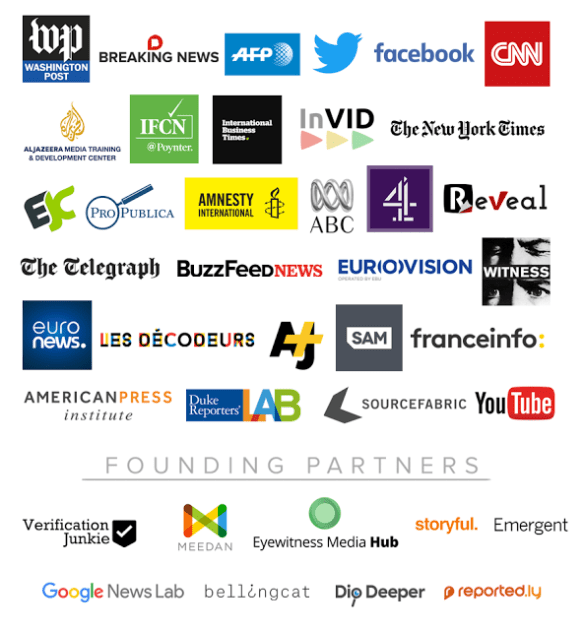
In a surreal and stunning example of 21st century propaganda and censorship, Google has cobbled together a coalition it is calling “First Draft” to tackle what it calls “misinformation online.” 

First Draft’s “founding partners” include News Corporation’s (parent company of Fox News) Storyful and NATO think tank Atlantic Council’s “Bellingcat” blog, headed by formally unemployed social worker Eliot Higgins who now fashions himself as a weapons expert and geopolitical analyst despite no formal training, practical real-world experience or track record of honest, unbiased reporting. In fact, between News Corporation and Bellingcat alone, Google’s First Draft appears to be itself a paragon of, and nexus for “misinformation online.” 

Google’s Glaring Conflicts of Interest 

Google too, having for years now worked closely with the US State Department, faces its own conflicts of interest in “social newsgathering and verification.” In fact, Google has admittedly been involved in engineering intentional deceptions aimed specifically to skew public perception, including doctoring its maps and Google Earth in real-time amid conflicts in favor of US-backed militant groups and through the development of applications designed to psychologically target the Syrian government into capitulating before US-backed militant groups.

The UK Independent in its article, “Google planned to help Syrian rebels bring down Assad regime, leaked Hillary Clinton emails claim,” would report that:

An interactive tool created by Google was designed to encourage Syrian rebels and help bring down the Assad regime, Hillary Clinton’s leaked emails have reportedly revealed.

By tracking and mapping defections within the Syrian leadership, it was reportedly designed to encourage more people to defect and ‘give confidence’ to the rebel opposition.

The article would continue:

The email detailing Google’s defection tracker purportedly came from Jared Cohen, a Clinton advisor until 2010 and now-President of Jigsaw, formerly known as Google Ideas, the company’s New York-based policy think tank.

In a July 2012 email to members of Clinton’s team, which the WikiLeaks release alleges was later forwarded to the Secretary of State herself, Cohen reportedly said: “My team is planning to launch a tool on Sunday that will publicly track and map the defections in Syria and which parts of the government they are coming from.”

Cohen would conclude:

“Our logic behind this is that while many people are tracking the atrocities, nobody is visually representing and mapping the defections, which we believe are important in encouraging more to defect and giving confidence to the opposition.”

Can Google then be relied upon to sort out “misinformation online” if it itself is directly involved in manipulating public perception to achieve US foreign policy objectives? To impartial observers, the answer is clearly “no.”

First Draft would publish on its website a post titled, “Social networks unite with global newsrooms to take action against misinformation online,” adding further details behind the alleged rationale of the coalition. It would state:

Today, news breaks online. Today, the first images to emerge from a breaking news event have been captured by an eyewitness. Today, injustices that may never have been reported become global news stories because a bystander reached for their smartphone. Today, malicious hoaxes and fake news reports are published in increasingly convincing and sophisticated ways. 

We live in a time when trust and truth are issues that all newsrooms, and increasingly the social platforms themselves, are facing. In July, the Guardian’s Editor-in-Chief Katharine Viner wrote about the ways technology is disrupting the truth, explaining “in the news feed on your phone, all stories look the same – whether they come from a credible source or not.” Filtering out false information can be hard. Even if news organisations only share fact-checked and verified stories, everyone is a publisher and a potential source.

The members that constitute the First Draft coalition, however, have enjoyed an uncontested monopoly for decades in determining just what the “truth” actually is, as well as a monopoly over propagating things the global public now know for a fact were “untruths.” Again, we see another case of the proverbial fox guarding the hen house.

The Liars Who Lied About WMDs in Iraq Will Protect Us from Liars Online? 

Indeed, many of the organizations that constitute First Draft’s coalition played a pivotal role in perhaps the most destructive and costly lie of the 21st century (to date), that involving alleged “weapons of mass destruction” or “WMDs” in Iraq, serving as the pretext for the 2003 US-led invasion of Iraq.

According to some estimates, up to a million perished in the initial invasion and subsequent occupation. More conservative estimates are still in the hundreds of thousands.

Undoubtedly, the invasion, justified by lies propagated across the entirety of US and European media, helped trigger a predictable chain of catastrophes that have left the Middle East to this day in conflict and ruination. These same US and European media organizations, the same ones now signing their names to First Draft, also helped justify the continued presence of US troops in Iraq for years after the invasion, up to and including today.

And the same names signed on to First Draft are also the same names who helped sell the disastrous intervention in Libya and who are now attempting to sell yet another direct Western military intervention in Syria.

And it is perhaps the lack of success these same names are having in selling this most recent potential intervention in Syria that has precipitated First Draft’s creation in the first place.

There is a burgeoning alternative media composed of individual independent journalists, analysts and commentators both biased and impartial, both professional and amateur, competing directly with and overcoming the West’s longstanding monopoly over international public perception. There is also the emergence of professional and competitive national media organizations across the developing world who are taking increasingly large shares of both the West’s media monopoly and its monopoly over the public’s trust.

It is clear that First Draft has no intention of protecting the truth as none among its membership have done so until now individually, but rather in collectively protecting what the special interests behind these organizations want the global public to believe is the truth. First Draft is a desperate measure taken by Western special interests to reassert the West’s dominance over global public perception by leveraging the widely used social media platforms it controls, including Facebook and Twitter, as well as IT giant Google and its large range of services and applications.

In the end, all that First Draft is likely to accomplish is convincing the developing world of the necessity of creating domestic alternatives to Facebook, Google and Twitter, as well as to continue expanding their own domestic media organizations to better represent their respective national interests upon the global stage and to dilute the dangerous and destructive media monopoly the West has enjoyed and abused for decades.

Until the members of First Draft can cite a lie told by their competitors that is as destructive and as costly as their own lies preceding and underpinning the invasion and occupation of Iraq or the more recent destruction of Libya, their efforts appear more as a means of further deflecting away from the truth, not defending it.

The Second Phase of the propaganda Fake News War: Economic Strangulation. What Comes Next?

index

Frustrated and outraged at how reality has turned out, the ruling class denizens of Hillary Clinton’s failed presidential tent are lashing out at truth-tellers. “Fake news” is whatever contradicts their lies, and Russia is their all-purpose boogeyman. “Google and Facebook have joined theri corporate media compatriots in an attempt to limit the public’s access to alternative news analysis and independent investigative reporting.”

By Dr. Marsha Adebayo

Source: Black Agenda Report

The public has determined that the corporate media is actually the purveyor of “fake news” and turned to media organizations, such as BAR, Truthout and other outlets for information.”

Within the last 14 days, two phases of the “fake news” strategy has been rolled out for public consumption.  Phase I of the fake news strategy was to demonize news organizations, such as Black Agenda Report (BAR) through McCarthy-era red-baiting and intimidation that included government officials pondering whether the FBI should investigate alternative media on “the list” or hinting that such organizations could be subject to legal prosecution under foreign espionage laws.  The corporate media’s thinly veiled intimidation tactics are intended to depress readership of “fake” news organizations and to link these media outlets with an alleged Russian strategy to elect Donald Trump president of the US.

Corporate media gatekeepers determine which stories are labeled fake news dependent upon which stories serve US foreign and domestic interests and which stories expose US corruption. The corporate media obsession with “fake news” would be laughable if not for the individuals committed to truth-telling who will be sacrificed in the process. Where was the corporate news obsession with fake news when Secretary of State (General) Colin Powell beat the war drums for America’s war adventures in Iraq based on fictitious intelligence that Iraq had weapons of mass destruction?

However, anyone familiar with duopoly propaganda strategy against progressive news organizations would expect an escalation in their intimidation tactics. A covert strategy that would move from a campaign of mere words to direct and consequential actions with corporate coalition members poised to play their part.  Phase 2 of this strategy would exact a higher cost to the intended progressive media targets and by extension to their supporters.

This week, it was revealed that the escalation to Phase 2 will be economic sanctions or economic strangulation. This will be the pressure point in an attempt to force progressive news organizations to heel.  Two of the largest internet companies have joined their counterparts in government to squeeze legitimate investigative reporting into compliance.

Google was the first media giant to announce that it would ban websites that “peddle fake news” from using its online advertising service. In other words, media organizations, such as BAR, Truthout, Truthdig, etc could no longer advertise on Google in order to reach a larger audience or raise funds.

Hours later, Facebook, the social network, updated its policy and announced that “it will not display ads in sites that contains content considered by the duopoly as “fake news” according to corporate news gatekeepers.

The Facebook statement asserted:

“We have updated the policy to explicitly clarify that this applies to fake news…Our team will continue to closely vet all prospective publishers and monitor existing ones to ensure compliance.”

What was “explicitly” clear was that Google and Facebook have joined their corporate media compatriots in an attempt to limit the public’s access to alternative news analysis and independent investigative reporting.

The bait and switch corporate media/government strategy recognizes that the public no longer trusts corporate media, such as the Washington Post and New York Times, to investigate government corruption. There is a growing public recognition that a conflict of interest exists between corporate media investigating government since these two groups are inextricably linked by class and economic interests.  The public has determined that the corporate media is actually the purveyor of “fake news” and turned to media organizations, such as BAR, Truthout and other outlets for information.

This is not the first time corporate power has joined with the political duopoly to undermine the media’s ability to engage in truth-telling.  Julian Assange accused right-wing US politicians of imposing a “death penalty’ on WikiLeaks after major US credit cards blocked its card holders from making contributions to the organization. Assange asserted that six US payment firms blocked WikiLeaks from receiving contributions at a cost of £30 million.

Visa and Mastercard started the financial stranglehold after WikiLleaks published some 250,000 secret State Department cables in December 2010.  WikiLeaks presented documents that proved these financial decisions were made at the instigation of “right-wing” members of Congress. This attack against WikiLeaks forced the staff to take a 40% pay cut.  However, the financial “war” was just the beginning. The unforeseen Phase III of this attack would eventually find Assange and Chelsea Manning incarcerated; Assange taking refuge in an Ecuadorian Embassy in London and Manning sentenced to serve time at Ft. Leavenworth in Kansas.

This is the time to support BAR, Truthout and other progressive media organizations under attack by forces that attempt to obfuscate and distort US domestic and foreign policy. Frederick Douglass during his 1857 address on “West India Emancipation” at Canandaigua, New York, on the 23rd anniversary of the event said:

“The general sentiment of mankind is that a man who will not fight for himself, when he has the means of doing so, is not worth being fought for by others, and this sentiment is just. For a man who does not value freedom for himself will never value it for others, or put himself to any inconvenience to gain it for others.”

Phases I and II forebode a challenging Phase III for truth-tellers in the current iteration of a corporate “fake news” strategy.  This is our time to fight for press freedom and the right to blow the whistle on government corruption. The future of our families and our planet depend on our uncompromising passion for justice.

Dr. Marsha Adebayo is the author of the Pulitzer Prize nominated: No FEAR: A Whistleblowers Triumph over Corruption and Retaliation at the EPA. She worked at the EPA for 18 years and blew the whistle on a US multinational corporation that endangered South African vanadium mine workers. Marsha’s successful lawsuit led to the introduction and passage of the first civil rights and whistleblower law of the 21st century: the Notification of Federal Employees Anti-discrimination and Retaliation Act of 2002 (No FEAR Act). She is Director of Transparency and Accountability for the Green Shadow Cabinet and serves on the Advisory Board of ExposeFacts.com.


Related Video:

Facebook and Google Ready to Kill Alternative Media for the Government

facebook-censorship

By Jake Anderson

Source: AntiMedia

This week three media goliaths — Facebook, Google, and Twitter, who collectively act as information gatekeepers for the Internet — announced they would begin implementing censorship practices against news sites they deem misleading.

Websites that publish “fake,” misleading, or even satirical news will now be subject to a sliding scale of infractions that will target ad revenue and social media algorithms. Without ad revenue from monetization platforms like Google Adsense, many of these sites would not be able to continue publishing, and without Facebook’s distribution platform, even sites with good organic reach could find their traffic severely crippled.

“Moving forward, we will restrict ad serving on pages that misrepresent, misstate, or conceal information about the publisher, the publisher’s content, or the primary purpose of the web property,” Google stated, following the lead of Mark Zuckerberg.

On a proprietary note, do these companies have the right to restrict users of their services who they deem to be in breach of contract? Yes. Is it understandable to want to exert some control over hacks who manipulate search engine and social media algorithms at the expense of a misinformed public? Yes. Does this exonerate the intellectual and cultural crime of using the specter of online ‘yellow journalism’ to deliver a crippling blow to the revenue streams of independent media…?

The move comes after Facebook and Google found themselves taking a lot of heat after the election. (Liberal) detractors went so far as to blame Facebook and Google for Trump’s win, claiming the constant online echo chamber of sensationalist news, unsubstantiated claims, and apocryphal headlines paved the way for Clinton’s electoral collapse.

The new restrictions will target a wide variety of websites: sites whose editorial content is deemed (by, Google, Facebook and Twitter’s board of directors, presumably?) false or misleading; sites that intend to invoke outrage with clickbait-y titles; and even sites that are purposely fake (such as the Onion’s sister site, Clickhole) for satirical purposes.

The websites on the new blacklist include Zero Hedge, The Free Thought Project, Collective Evolution, Disclose.TV, and dozens of others. The selections run the gamut from partisan propagandistic sites to alternative philosophy and healing resources. Unsurprisingly, alt-right darlings Infowars and Breitbart, both of which will soon wield vast power in the Trump administration, are targeted. In the case of Infowars, one might surmise the conservative Trumpland publication’s insistence that Hillary Clinton’s inner-circle practices satanic rituals had something to do with their inclusion on the list.

Some of the other sites on the list are surprising. Collective Evolution, as an example, may be considered by some to have New Age influences, but many of their articles practice sound journalistic ethics.

Why such a draconian response? Some analysts believe “fake news” had a role in flipping the results of the election away from what the mainstream media had predicted — away from their carefully groomed candidate. Their conscription of Google, Facebook, and Twitter (which may institute something called ‘mute’ filters) in order to exact revenge may cripple, if not destroy, an alternative media infrastructure that has grown into a formidable challenge to the traditional media establishment.

Because of how blatantly fascistic this move is, I struggle to respond to those who say, ‘Well, some of these sites are bad.’

Yes, some of them are, but that’s not the point. The point is that this is a Pandora’s Box scenario. Once we give the Corporate State the ability to curate online content via punitive measures, we’ve bestowed upon them the power to act as gatekeeper for a stunning amount of public knowledge. This is crony capitalism integrated into the very ethos of the fourth estate, using groupthink and the free market to drown out sites that don’t make the cut of acceptable. They will now be able to go through all news stories and delegate carte blanche which ones are “false” and must therefore be algorithmically and punitively castrated. They already used Russia as an excuse to not acknowledge Wikileaks impeccably researched leaks. What won’t they stoop to in order to conceal their future transgressions?

It will actually likely end up resembling aspects of the TPP (Trans-Pacific Partnership). In that (hopefully dead) trade agreement, corporate tribunals would have been given the power to overrule national laws that hurt their profits. Similarly, with the “fake news” control mechanism, the political-media-industrial complex will be able to determine which stories are damaging to their geopolitical and domestic narratives and then use Google, Facebook, and Twitter to suffocate any news articles that challenge these narratives. Half-truths and controversial op-eds will be cited as reasons for bans. Hacked information from Wikileaks cables could be cited as specious and without corroboration, or, more likely, Russian espionage (well, if Clinton were still around, at least).

There is another parallel, and it’s nothing less than 9/11 itself. After the terrorist attacks that tragically took the lives of over three thousand Americans, the government used the nation’s fear and collective trauma to ram through the Patriot Act, which created a matrix of laws that has been stripping us of our civil liberties for over 15 years. It appears the political establishment wants to use Clinton’s loss in a similar way: to bottle public anger over the election into the deliverable censorship of grassroots media. I’ve been claiming for months that the government’s next war would be on hackers and publishers of hacked material. It appears I may have been wrong (oops, I guess Google and Facebook ought to break our site over their knee). The next war could be on independent media, who the establishment rightfully believes is one of their biggest enemies at the moment. Who else can expose to everyday Americans that the government and their corporate goon-slaves are full of the worst kind of shit?

Let’s be clear: there are certainly sites on the list that publish bad journalism, sloppy journalism, or straight up lies. And sometimes it’s easy to find them. After all, Professor Melissa Zimdars (who contributed to the list) made the following astute point:

Odd domain names generally equal odd and rarely truthful news.”

But whether or not some sites practice questionable editorial standards is completely beside the point. By attacking the finances of alternative media sites who publish controversial but well-researched journalism, the government is blacklisting an entire movement. The precedent Google and Facebook will establish with this move will have incalculable ramifications on the future of alternative media and the Corporate State’s ability to censor any story they deem dangerous. This is nothing short of a two-step with fascism.

If they don’t want “misleading” news, they better kill the networks.

Let’s unpack this for a moment and pretend that truthful journalism is really what Google and Facebook are after. If that were the case, they would need to cut off the revenue streams of CNN, MSNBC, NBC, ABC, Fox, CBS, and all of the other mainstream news channels — you know, the same ones that collectively manipulated us into accepting the Iraq War and the subsequent regime change policies that have killed millions in the Middle East. And, see, that’s precisely the reason the mainstream media would never be held to these kinds of standards: they are a division of the State Department; they help manufacture consensus. You see, their “fake” news is important; the government’s fake news is real news.

Beyond just propagating blatantly misleading and fraudulent news (I’d be remiss if I didn’t mention that the link I just used, which catalogs instances of mainstream media perpetuating false news, is on the new official list of “fake” news), the networks have long been guilty of commission by omission — curating the news cycles so that stories on critical issues like Standing Rock, TPP and others get a fraction of the air time of, say, an airplane crash or Trump’s latest gaffe.

This is Trojan horse for the government

In the Deep State (which you won’t hear even a mention of on network news), the government operates as a series of revolving doors between private defense contractors, media conglomerates, the surveillance apparatus, and giant financial institutions. After the revelations of Snowden (source is another from the list of fake news – be wary!), it became clear that the government was spying on and data mining American citizens with impunity in ways far worse than even 1984 had imagined.

Caught with their pants down, the government stopped, right? No. In fact, they doubled down, except they did something smart: they farmed it out to corporations and created a new synergistic surveillance state. Without Silicon Valley, many of the NSA’s transgressions could have never come to pass. Similarly, the government will now outsource its censorship game to corporations. Ironically, it will be Google and Facebook, two companies that represent the 21st century Information Age, who will be holding the cuffs.

This is another example corporations pitch hitting for the government, and it sets a horrifying precedent.

What can you do?

1. Don’t listen to them. Trust independent media (while being extremely discerning) over corporate media.

2. Help in the effort to create alternative and underground internet and social media infrastructure. A huge part of this is holding independent media accountable to accurate reporting, confirming sources, and obtaining original documents. Alt. media doesn’t have the same financial resources available to them, but with the ubiquity of the Internet, there’s no excuse for sloppy reporting.

3. Support alternative media with donations and content sharing.

4. Boycott mainstream media.

5. Tell Google and Facebook you disagree with censorship.

6. Encrypt (always encrypt). This isn’t necessary for some journalists — but if you are breaking a big story you should be using anonymous web tools like Tor, a VPN, as well as using encryption to transmit and unlock messages. Take a look at the Twitter account of information activist Cory Doctorow. He lists a long string of numbers and letters. That is his public key, otherwise known as asymmetric cryptography, which allows him to communicate information privately and anonymously. In the future, it will be unthinkable for journalists to not protect themselves, their data, and their sources in this way.

Stripping the veneer off America’s propaganda menagerie

qefgtrhy

By Wayne Madsen

Source: Intrepid Report

National Security Agency whistleblower Edward Snowden and WikiLeaks founder Julian Assange have doubled down recently on the games being played in cyberspace by America’s cyberwarriors. Snowden suggests that many of NSA’s most damaging malware programs are now in the hands of America’s opponents, thanks to enterprising foreign counterintelligence hackers known as the Shadow Brokers. Snowden believes that the malware, including destructive programs such as Stuxnet, are being auctioned off, via Bitcoin payments, by the Shadow Brokers. Snowden stated that the malware was obtained through hacking from a murky NSA operation called the “Equation Group.”

Assange, fearful that a new Ecuadorian president will hand him over to a Clinton administration in 2017, claims to have more hacked bombshells to drop on Team Clinton, courtesy of weak security in Democratic National Committee and Clinton campaign computer systems.

We have entered a new phase of cyberwarfare, one in which America’s (and Israel’s) most damaging computer hacking and disruption programs are available to anyone willing to pay in Bitcoins on the cyberblack market. The Democratic Party’s leaked emails, coupled with the leaked State Department cables, has Hillary Clinton in an outrage. These disclosures, along with the Snowden disclosures that illustrate how America spies on friend and foe, have stripped the veneer off of America’s propaganda menagerie. Two of the three culprits Mrs. Clinton would like to see in prison for the rest of their lives are, for the time being, outside of Gulag America. Snowden is enjoying political asylum in Russia and Assange has asylum at the Ecuadorian embassy in London. The third, Chelsea Manning, is serving a 35-year prison term at Fort Leavenworth in Kansas and allegedly recently attempted suicide.

Paul Ceglia, who claims to have been the co-founder of Facebook, says he is on the run from the CIA after he filed suit against Facebook and its owner Mark Zuckerberg. Although Zuckerberg admits to having a past business relationship with Ceglia, the US Justice Department criminally charged Ceglia for trying to defraud Facebook after the former associate of Zuckerberg brought a civil suit in federal court in Buffalo against the company. Interestingly, Facebook has donated more money to Hillary Clinton than any other presidential candidate. But what is really at issue in the bizarre case is that Ceglia claims that Facebook’s seed money came from the CIA’s venture capital firm IN-Q-TEL, a charge to which WMR can attest after compiling a massive list of CIA front companies and proprietaries in the soon-to-be-published book: “The Almost Classified Guide to CIA Front Companies, Proprietaries and Contractors.”

The CIA and its partners at Facebook, Google, Yahoo, Microsoft, and other social media firms have striven to control the new media in the same manner that the CIA controlled the “old media” through operations like MOCKINGBIRD. During the Cold War era, the CIA claimed that all the world’s ills were due to Communist front organizations that influenced the media. The truth is that the so-called “fronts” often provided actual accounts of the misdeeds of the CIA and other Western intelligence agencies. However, with U.S. newspapers, magazines, and broadcast networks carrying the water for the CIA, it was Langley’s interpretation of the news that made Western headlines. The “Communist” reports were relegated to the nether regions of “Soviet disinformation” campaigns and “active measures.” The CIA laughably put out a periodical report on such “disinformation” tactics. In reality, what was called “disinformation” was actually bona fide news.

Today, when the CIA wants to debase a news article, it uses such operations as Snopes.com and Wikipedia to engage in CIA disinformation tactics. Uncomfortable truthful news items are quickly dispatched with the term “conspiracy theory.” There is little doubt that Facebook, Wikipedia, and Snopes are part of a “new MOCKINGBIRD” designed for the digital age. Like them or not, Snowden, Assange, Manning, Ceglia, and others have pulled the veil off of the new MOCKINGBIRD.

A formerly secret February 1987 CIA report on Soviet disinformation tactics illustrates that what was described then as “propaganda” was, in fact, the truth.

  • The CIA called baseless charges in a Soviet book that Jonestown, Guyana was a CIA behavioral control operation. It was.
  • The Soviets accused Ronald Reagan’s Strategic Defense Initiative (SDI) of having the goal of weaponizing outer space. Not only was that the goal then, but it remains the goal of present incarnations of SDI.
  • The Soviets and the Afghan president, Najibullah of the Afghan Communist Party, said that they reached out to 50,000 Afghan mujaheddin in Afghanistan and Pakistan, who agreed to lay down their arms and join a coalition government, with eight opposition parties joining the Communists. The CIA and Western media called the news bogus. It was true with television footage of Afghan refugees returning to their homeland from India. The Soviets wanted an internationally-guaranteed neutral Afghanistan before withdrawing their troops. The CIA wanted a radical Islamic Afghanistan from which to launch attacks on the southern Soviet Union. That decision came back to bite the United States on September 11, 2001.
  • The CIA accused the Sandinista government of Nicaragua and the Soviets of being behind the Christian “Evangelical Committee for Development Aid” as a Communist front group. If so, it would have been the first time Communists and Christian evangelicals broke bread together. The CIA’s charge was fatuously false.
  • The Soviets accused the U.S. of using Africans as test subjects for a new AIDS vaccine. This charge has been proven with Africans being used as “guinea pigs” for various new vaccines in programs funded by the Bill and Melinda Gates Foundation, the Clinton Global Initiative, Pfizer Corporation, and other entities linked to CIA biological and genetic warfare operations.
  • Articles in two Bolivian newspapers that stated that the U.S. Information Service in La Paz was trying to recruit Bolivian journalists to write pro-Pentagon articles were deemed by the CIA to be bogus. The CIA charge was false and it included smearing the Federation of Bolivian Press Workers as a Communist front. That is the usual practice by the CIA when it’s caught red-handed.
  • The Soviet news agency Novosti was accused of running a false article, titled “The Relationship Between Journalists and the CIA: Hundreds of Them in International Press.” The article was spot on.
  • The CIA charged as Soviet disinformation charges that the CIA killed nine nonaligned leaders, including Indian Prime Ministers Indira and Rajiv Gandhi. In fact, the CIA has killed many more than nine nonaligned leaders.

In the digital world of YouTube, Facebook, Google, and other social and news media sites, the CIA continues its game of disinformation while accusing others of conducting the same game plan. Some three decades after the Cold War, the CIA’s charges of Soviet disinformation can now be seen as disinformation in their own right.


Wayne Madsen is a Washington, DC-based investigative journalist and nationally-distributed columnist. He is the editor and publisher of the Wayne Madsen Report (subscription required).

The new mind control

mind_control

The internet has spawned subtle forms of influence that can flip elections and manipulate everything we say, think and do

By Robert Epstein

Source: Aeon Magazine

Over the past century, more than a few great writers have expressed concern about humanity’s future. In The Iron Heel (1908), the American writer Jack London pictured a world in which a handful of wealthy corporate titans – the ‘oligarchs’ – kept the masses at bay with a brutal combination of rewards and punishments. Much of humanity lived in virtual slavery, while the fortunate ones were bought off with decent wages that allowed them to live comfortably – but without any real control over their lives.

In We (1924), the brilliant Russian writer Yevgeny Zamyatin, anticipating the excesses of the emerging Soviet Union, envisioned a world in which people were kept in check through pervasive monitoring. The walls of their homes were made of clear glass, so everything they did could be observed. They were allowed to lower their shades an hour a day to have sex, but both the rendezvous time and the lover had to be registered first with the state.

In Brave New World (1932), the British author Aldous Huxley pictured a near-perfect society in which unhappiness and aggression had been engineered out of humanity through a combination of genetic engineering and psychological conditioning. And in the much darker novel 1984 (1949), Huxley’s compatriot George Orwell described a society in which thought itself was controlled; in Orwell’s world, children were taught to use a simplified form of English called Newspeak in order to assure that they could never express ideas that were dangerous to society.

These are all fictional tales, to be sure, and in each the leaders who held the power used conspicuous forms of control that at least a few people actively resisted and occasionally overcame. But in the non-fiction bestseller The Hidden Persuaders (1957) – recently released in a 50th-anniversary edition – the American journalist Vance Packard described a ‘strange and rather exotic’ type of influence that was rapidly emerging in the United States and that was, in a way, more threatening than the fictional types of control pictured in the novels. According to Packard, US corporate executives and politicians were beginning to use subtle and, in many cases, completely undetectable methods to change people’s thinking, emotions and behaviour based on insights from psychiatry and the social sciences.

Most of us have heard of at least one of these methods: subliminal stimulation, or what Packard called ‘subthreshold effects’ – the presentation of short messages that tell us what to do but that are flashed so briefly we aren’t aware we have seen them. In 1958, propelled by public concern about a theatre in New Jersey that had supposedly hidden messages in a movie to increase ice cream sales, the National Association of Broadcasters – the association that set standards for US television – amended its code to prohibit the use of subliminal messages in broadcasting. In 1974, the Federal Communications Commission opined that the use of such messages was ‘contrary to the public interest’. Legislation to prohibit subliminal messaging was also introduced in the US Congress but never enacted. Both the UK and Australia have strict laws prohibiting it.

Subliminal stimulation is probably still in wide use in the US – it’s hard to detect, after all, and no one is keeping track of it – but it’s probably not worth worrying about. Research suggests that it has only a small impact, and that it mainly influences people who are already motivated to follow its dictates; subliminal directives to drink affect people only if they’re already thirsty.

Packard had uncovered a much bigger problem, however – namely that powerful corporations were constantly looking for, and in many cases already applying, a wide variety of techniques for controlling people without their knowledge. He described a kind of cabal in which marketers worked closely with social scientists to determine, among other things, how to get people to buy things they didn’t need and how to condition young children to be good consumers – inclinations that were explicitly nurtured and trained in Huxley’s Brave New World. Guided by social science, marketers were quickly learning how to play upon people’s insecurities, frailties, unconscious fears, aggressive feelings and sexual desires to alter their thinking, emotions and behaviour without any awareness that they were being manipulated.

By the early 1950s, Packard said, politicians had got the message and were beginning to merchandise themselves using the same subtle forces being used to sell soap. Packard prefaced his chapter on politics with an unsettling quote from the British economist Kenneth Boulding: ‘A world of unseen dictatorship is conceivable, still using the forms of democratic government.’ Could this really happen, and, if so, how would it work?

The forces that Packard described have become more pervasive over the decades. The soothing music we all hear overhead in supermarkets causes us to walk more slowly and buy more food, whether we need it or not. Most of the vacuous thoughts and intense feelings our teenagers experience from morning till night are carefully orchestrated by highly skilled marketing professionals working in our fashion and entertainment industries. Politicians work with a wide range of consultants who test every aspect of what the politicians do in order to sway voters: clothing, intonations, facial expressions, makeup, hairstyles and speeches are all optimised, just like the packaging of a breakfast cereal.

Fortunately, all of these sources of influence operate competitively. Some of the persuaders want us to buy or believe one thing, others to buy or believe something else. It is the competitive nature of our society that keeps us, on balance, relatively free.

But what would happen if new sources of control began to emerge that had little or no competition? And what if new means of control were developed that were far more powerful – and far more invisible – than any that have existed in the past? And what if new types of control allowed a handful of people to exert enormous influence not just over the citizens of the US but over most of the people on Earth?

It might surprise you to hear this, but these things have already happened.

To understand how the new forms of mind control work, we need to start by looking at the search engine – one in particular: the biggest and best of them all, namely Google. The Google search engine is so good and so popular that the company’s name is now a commonly used verb in languages around the world. To ‘Google’ something is to look it up on the Google search engine, and that, in fact, is how most computer users worldwide get most of their information about just about everything these days. They Google it. Google has become the main gateway to virtually all knowledge, mainly because the search engine is so good at giving us exactly the information we are looking for, almost instantly and almost always in the first position of the list it shows us after we launch our search – the list of ‘search results’.

That ordered list is so good, in fact, that about 50 per cent of our clicks go to the top two items, and more than 90 per cent of our clicks go to the 10 items listed on the first page of results; few people look at other results pages, even though they often number in the thousands, which means they probably contain lots of good information. Google decides which of the billions of web pages it is going to include in our search results, and it also decides how to rank them. How it decides these things is a deep, dark secret – one of the best-kept secrets in the world, like the formula for Coca-Cola.

Because people are far more likely to read and click on higher-ranked items, companies now spend billions of dollars every year trying to trick Google’s search algorithm – the computer program that does the selecting and ranking – into boosting them another notch or two. Moving up a notch can mean the difference between success and failure for a business, and moving into the top slots can be the key to fat profits.

Late in 2012, I began to wonder whether highly ranked search results could be impacting more than consumer choices. Perhaps, I speculated, a top search result could have a small impact on people’s opinions about things. Early in 2013, with my associate Ronald E Robertson of the American Institute for Behavioral Research and Technology in Vista, California, I put this idea to a test by conducting an experiment in which 102 people from the San Diego area were randomly assigned to one of three groups. In one group, people saw search results that favoured one political candidate – that is, results that linked to web pages that made this candidate look better than his or her opponent. In a second group, people saw search rankings that favoured the opposing candidate, and in the third group – the control group – people saw a mix of rankings that favoured neither candidate. The same search results and web pages were used in each group; the only thing that differed for the three groups was the ordering of the search results.

To make our experiment realistic, we used real search results that linked to real web pages. We also used a real election – the 2010 election for the prime minister of Australia. We used a foreign election to make sure that our participants were ‘undecided’. Their lack of familiarity with the candidates assured this. Through advertisements, we also recruited an ethnically diverse group of registered voters over a wide age range in order to match key demographic characteristics of the US voting population.

All participants were first given brief descriptions of the candidates and then asked to rate them in various ways, as well as to indicate which candidate they would vote for; as you might expect, participants initially favoured neither candidate on any of the five measures we used, and the vote was evenly split in all three groups. Then the participants were given up to 15 minutes in which to conduct an online search using ‘Kadoodle’, our mock search engine, which gave them access to five pages of search results that linked to web pages. People could move freely between search results and web pages, just as we do when using Google. When participants completed their search, we asked them to rate the candidates again, and we also asked them again who they would vote for.

We predicted that the opinions and voting preferences of 2 or 3 per cent of the people in the two bias groups – the groups in which people were seeing rankings favouring one candidate – would shift toward that candidate. What we actually found was astonishing. The proportion of people favouring the search engine’s top-ranked candidate increased by 48.4 per cent, and all five of our measures shifted toward that candidate. What’s more, 75 per cent of the people in the bias groups seemed to have been completely unaware that they were viewing biased search rankings. In the control group, opinions did not shift significantly.

This seemed to be a major discovery. The shift we had produced, which we called the Search Engine Manipulation Effect (or SEME, pronounced ‘seem’), appeared to be one of the largest behavioural effects ever discovered. We did not immediately uncork the Champagne bottle, however. For one thing, we had tested only a small number of people, and they were all from the San Diego area.

Over the next year or so, we replicated our findings three more times, and the third time was with a sample of more than 2,000 people from all 50 US states. In that experiment, the shift in voting preferences was 37.1 per cent and even higher in some demographic groups – as high as 80 per cent, in fact.

We also learned in this series of experiments that by reducing the bias just slightly on the first page of search results – specifically, by including one search item that favoured the other candidate in the third or fourth position of the results – we could mask our manipulation so that few or even no people were aware that they were seeing biased rankings. We could still produce dramatic shifts in voting preferences, but we could do so invisibly.

Still no Champagne, though. Our results were strong and consistent, but our experiments all involved a foreign election – that 2010 election in Australia. Could voting preferences be shifted with real voters in the middle of a real campaign? We were skeptical. In real elections, people are bombarded with multiple sources of information, and they also know a lot about the candidates. It seemed unlikely that a single experience on a search engine would have much impact on their voting preferences.

To find out, in early 2014, we went to India just before voting began in the largest democratic election in the world – the Lok Sabha election for prime minister. The three main candidates were Rahul Gandhi, Arvind Kejriwal, and Narendra Modi. Making use of online subject pools and both online and print advertisements, we recruited 2,150 people from 27 of India’s 35 states and territories to participate in our experiment. To take part, they had to be registered voters who had not yet voted and who were still undecided about how they would vote.

Participants were randomly assigned to three search-engine groups, favouring, respectively, Gandhi, Kejriwal or Modi. As one might expect, familiarity levels with the candidates was high – between 7.7 and 8.5 on a scale of 10. We predicted that our manipulation would produce a very small effect, if any, but that’s not what we found. On average, we were able to shift the proportion of people favouring any given candidate by more than 20 per cent overall and more than 60 per cent in some demographic groups. Even more disturbing, 99.5 per cent of our participants showed no awareness that they were viewing biased search rankings – in other words, that they were being manipulated.

SEME’s near-invisibility is curious indeed. It means that when people – including you and me – are looking at biased search rankings, they look just fine. So if right now you Google ‘US presidential candidates’, the search results you see will probably look fairly random, even if they happen to favour one candidate. Even I have trouble detecting bias in search rankings that I know to be biased (because they were prepared by my staff). Yet our randomised, controlled experiments tell us over and over again that when higher-ranked items connect with web pages that favour one candidate, this has a dramatic impact on the opinions of undecided voters, in large part for the simple reason that people tend to click only on higher-ranked items. This is truly scary: like subliminal stimuli, SEME is a force you can’t see; but unlike subliminal stimuli, it has an enormous impact – like Casper the ghost pushing you down a flight of stairs.

We published a detailed report about our first five experiments on SEME in the prestigious Proceedings of the National Academy of Sciences (PNAS) in August 2015. We had indeed found something important, especially given Google’s dominance over search. Google has a near-monopoly on internet searches in the US, with 83 per cent of Americans specifying Google as the search engine they use most often, according to the Pew Research Center. So if Google favours one candidate in an election, its impact on undecided voters could easily decide the election’s outcome.

Keep in mind that we had had only one shot at our participants. What would be the impact of favouring one candidate in searches people are conducting over a period of weeks or months before an election? It would almost certainly be much larger than what we were seeing in our experiments.

Other types of influence during an election campaign are balanced by competing sources of influence – a wide variety of newspapers, radio shows and television networks, for example – but Google, for all intents and purposes, has no competition, and people trust its search results implicitly, assuming that the company’s mysterious search algorithm is entirely objective and unbiased. This high level of trust, combined with the lack of competition, puts Google in a unique position to impact elections. Even more disturbing, the search-ranking business is entirely unregulated, so Google could favour any candidate it likes without violating any laws. Some courts have even ruled that Google’s right to rank-order search results as it pleases is protected as a form of free speech.

Does the company ever favour particular candidates? In the 2012 US presidential election, Google and its top executives donated more than $800,000 to President Barack Obama and just $37,000 to his opponent, Mitt Romney. And in 2015, a team of researchers from the University of Maryland and elsewhere showed that Google’s search results routinely favoured Democratic candidates. Are Google’s search rankings really biased? An internal report issued by the US Federal Trade Commission in 2012 concluded that Google’s search rankings routinely put Google’s financial interests ahead of those of their competitors, and anti-trust actions currently under way against Google in both the European Union and India are based on similar findings.

In most countries, 90 per cent of online search is conducted on Google, which gives the company even more power to flip elections than it has in the US and, with internet penetration increasing rapidly worldwide, this power is growing. In our PNAS article, Robertson and I calculated that Google now has the power to flip upwards of 25 per cent of the national elections in the world with no one knowing this is occurring. In fact, we estimate that, with or without deliberate planning on the part of company executives, Google’s search rankings have been impacting elections for years, with growing impact each year. And because search rankings are ephemeral, they leave no paper trail, which gives the company complete deniability.

Power on this scale and with this level of invisibility is unprecedented in human history. But it turns out that our discovery about SEME was just the tip of a very large iceberg.

Recent reports suggest that the Democratic presidential candidate Hillary Clinton is making heavy use of social media to try to generate support – Twitter, Instagram, Pinterest, Snapchat and Facebook, for starters. At this writing, she has 5.4 million followers on Twitter, and her staff is tweeting several times an hour during waking hours. The Republican frontrunner, Donald Trump, has 5.9 million Twitter followers and is tweeting just as frequently.

Is social media as big a threat to democracy as search rankings appear to be? Not necessarily. When new technologies are used competitively, they present no threat. Even through the platforms are new, they are generally being used the same way as billboards and television commercials have been used for decades: you put a billboard on one side of the street; I put one on the other. I might have the money to erect more billboards than you, but the process is still competitive.

What happens, though, if such technologies are misused by the companies that own them? A study by Robert M Bond, now a political science professor at Ohio State University, and others published in Nature in 2012 described an ethically questionable experiment in which, on election day in 2010, Facebook sent ‘go out and vote’ reminders to more than 60 million of its users. The reminders caused about 340,000 people to vote who otherwise would not have. Writing in the New Republic in 2014, Jonathan Zittrain, professor of international law at Harvard University, pointed out that, given the massive amount of information it has collected about its users, Facebook could easily send such messages only to people who support one particular party or candidate, and that doing so could easily flip a close election – with no one knowing that this has occurred. And because advertisements, like search rankings, are ephemeral, manipulating an election in this way would leave no paper trail.

Are there laws prohibiting Facebook from sending out ads selectively to certain users? Absolutely not; in fact, targeted advertising is how Facebook makes its money. Is Facebook currently manipulating elections in this way? No one knows, but in my view it would be foolish and possibly even improper for Facebook not to do so. Some candidates are better for a company than others, and Facebook’s executives have a fiduciary responsibility to the company’s stockholders to promote the company’s interests.

The Bond study was largely ignored, but another Facebook experiment, published in 2014 in PNAS, prompted protests around the world. In this study, for a period of a week, 689,000 Facebook users were sent news feeds that contained either an excess of positive terms, an excess of negative terms, or neither. Those in the first group subsequently used slightly more positive terms in their communications, while those in the second group used slightly more negative terms in their communications. This was said to show that people’s ‘emotional states’ could be deliberately manipulated on a massive scale by a social media company, an idea that many people found disturbing. People were also upset that a large-scale experiment on emotion had been conducted without the explicit consent of any of the participants.

Facebook’s consumer profiles are undoubtedly massive, but they pale in comparison with those maintained by Google, which is collecting information about people 24/7, using more than 60 different observation platforms – the search engine, of course, but also Google Wallet, Google Maps, Google Adwords, Google Analytics, Chrome, Google Docs, Android, YouTube, and on and on. Gmail users are generally oblivious to the fact that Google stores and analyses every email they write, even the drafts they never send – as well as all the incoming email they receive from both Gmail and non-Gmail users.

According to Google’s privacy policy – to which one assents whenever one uses a Google product, even when one has not been informed that he or she is using a Google product – Google can share the information it collects about you with almost anyone, including government agencies. But never with you. Google’s privacy is sacrosanct; yours is nonexistent.

Could Google and ‘those we work with’ (language from the privacy policy) use the information they are amassing about you for nefarious purposes – to manipulate or coerce, for example? Could inaccurate information in people’s profiles (which people have no way to correct) limit their opportunities or ruin their reputations?

Certainly, if Google set about to fix an election, it could first dip into its massive database of personal information to identify just those voters who are undecided. Then it could, day after day, send customised rankings favouring one candidate to just those people. One advantage of this approach is that it would make Google’s manipulation extremely difficult for investigators to detect.

Extreme forms of monitoring, whether by the KGB in the Soviet Union, the Stasi in East Germany, or Big Brother in 1984, are essential elements of all tyrannies, and technology is making both monitoring and the consolidation of surveillance data easier than ever. By 2020, China will have put in place the most ambitious government monitoring system ever created – a single database called the Social Credit System, in which multiple ratings and records for all of its 1.3 billion citizens are recorded for easy access by officials and bureaucrats. At a glance, they will know whether someone has plagiarised schoolwork, was tardy in paying bills, urinated in public, or blogged inappropriately online.

As Edward Snowden’s revelations made clear, we are rapidly moving toward a world in which both governments and corporations – sometimes working together – are collecting massive amounts of data about every one of us every day, with few or no laws in place that restrict how those data can be used. When you combine the data collection with the desire to control or manipulate, the possibilities are endless, but perhaps the most frightening possibility is the one expressed in Boulding’s assertion that an ‘unseen dictatorship’ was possible ‘using the forms of democratic government’.

Since Robertson and I submitted our initial report on SEME to PNAS early in 2015, we have completed a sophisticated series of experiments that have greatly enhanced our understanding of this phenomenon, and other experiments will be completed in the coming months. We have a much better sense now of why SEME is so powerful and how, to some extent, it can be suppressed.

We have also learned something very disturbing – that search engines are influencing far more than what people buy and whom they vote for. We now have evidence suggesting that on virtually all issues where people are initially undecided, search rankings are impacting almost every decision that people make. They are having an impact on the opinions, beliefs, attitudes and behaviours of internet users worldwide – entirely without people’s knowledge that this is occurring. This is happening with or without deliberate intervention by company officials; even so-called ‘organic’ search processes regularly generate search results that favour one point of view, and that in turn has the potential to tip the opinions of millions of people who are undecided on an issue. In one of our recent experiments, biased search results shifted people’s opinions about the value of fracking by 33.9 per cent.

Perhaps even more disturbing is that the handful of people who do show awareness that they are viewing biased search rankings shift even further in the predicted direction; simply knowing that a list is biased doesn’t necessarily protect you from SEME’s power.

Remember what the search algorithm is doing: in response to your query, it is selecting a handful of webpages from among the billions that are available, and it is ordering those webpages using secret criteria. Seconds later, the decision you make or the opinion you form – about the best toothpaste to use, whether fracking is safe, where you should go on your next vacation, who would make the best president, or whether global warming is real – is determined by that short list you are shown, even though you have no idea how the list was generated.

Meanwhile, behind the scenes, a consolidation of search engines has been quietly taking place, so that more people are using the dominant search engine even when they think they are not. Because Google is the best search engine, and because crawling the rapidly expanding internet has become prohibitively expensive, more and more search engines are drawing their information from the leader rather than generating it themselves. The most recent deal, revealed in a Securities and Exchange Commission filing in October 2015, was between Google and Yahoo! Inc.

Looking ahead to the November 2016 US presidential election, I see clear signs that Google is backing Hillary Clinton. In April 2015, Clinton hired Stephanie Hannon away from Google to be her chief technology officer and, a few months ago, Eric Schmidt, chairman of the holding company that controls Google, set up a semi-secret company – The Groundwork – for the specific purpose of putting Clinton in office. The formation of The Groundwork prompted Julian Assange, founder of Wikileaks, to dub Google Clinton’s ‘secret weapon’ in her quest for the US presidency.

We now estimate that Hannon’s old friends have the power to drive between 2.6 and 10.4 million votes to Clinton on election day with no one knowing that this is occurring and without leaving a paper trail. They can also help her win the nomination, of course, by influencing undecided voters during the primaries. Swing voters have always been the key to winning elections, and there has never been a more powerful, efficient or inexpensive way to sway them than SEME.

We are living in a world in which a handful of high-tech companies, sometimes working hand-in-hand with governments, are not only monitoring much of our activity, but are also invisibly controlling more and more of what we think, feel, do and say. The technology that now surrounds us is not just a harmless toy; it has also made possible undetectable and untraceable manipulations of entire populations – manipulations that have no precedent in human history and that are currently well beyond the scope of existing regulations and laws. The new hidden persuaders are bigger, bolder and badder than anything Vance Packard ever envisioned. If we choose to ignore this, we do so at our peril.

Google’s lemmings: Pokémon go where Silicon Valley says

index

An analysis of Ingress and Pokémon Go reveals important truths about corporate control and the ability of our mobile phones to organize our desires.

By Alfie Brown

Source: ROAR Magazine

his article has a clickbaity title but a sobering and concerning point to make. In 2010, Google started up what is now a very important subsidiary, Niantic Inc. Google starts up a lot of companies each year and acquires a great many more, so there is nothing special in this. What is important is that whilst most of us see Google’s acquisition of every “start-up” and endless development of “subsidiary” companies with different names as simply an attempt to completely monopolize the market, the case of Niantic shows us that there is more to the extent of Google’s power.

Six years on from its inception with the launch of its biggest game yet, Pokémon Go, Niantic has hit the headlines and people are finally paying attention to the company, with some apparent leftists even claiming we ought to boycott Pokémon Go. In fact, Niantic have been working on mobile phone psychology and social organization for several years. An analysis of the company’s two big games, Ingress and Pokémon Go, shows us some important truths about the world we are living in, about corporate control and about the ability of our mobile phones to organize our desires.

Niantic developed their first major game, Ingress, in 2011. The game, one of the most important of recent years, is a key ideological tool for Google — one that, unlike Pokémon Go, is little publicized. Ingress has seven million or more players and Ingress tattoos show the degree to which people define themselves by the application. Some players even describe Ingress as a “lifestyle” rather than a “game”. The reader can be forgiven for thinking: “I don’t play it, so why would this apply to me?” But the entertainment coming out of Google via Niantic is in line with Google’s wider project of regulating our movements and experiences of the physical world; unless you don’t use Google or any of its applications, many of which come built-it to our phones and cannot be uninstalled, this applies to you.

Ingress reflects a trend of mobile phone application development (which includes Google Maps and Uber, among other well-known apps) designed to regulate and influence our experience of the city, turning the mobile phone into a new kind of unconscious: an ideological force driving our movements while we remain only semi-aware of what propels us and why we are propelled in the directions we are.

I first considered the importance of mobile phone games to be about a kind of “distraction” — an argument I made in my book and related article in The New Inquiry. Later, when playing Ingress for the first time, I realized there was a lot more to it than this. Ingress, rather than simply distracting us from the city around us, actually trains us to become Google’s perfect citizens. In Ingress, the player moves around the real environment capturing “portals” represented by landmarks, monuments and public art, as well as other less-famous features of the city. The player is required to be within physical range of the “portal” to capture it, so the game constantly tracks the player via GPS. Importantly, it not only monitors where we go, but directs us where it wants us to move.

As such it is very much the counterpart of Google Maps, which is also developing the ability not only to track our movements but to direct them. Of course, Google’s algorithms have long since dictated which restaurants we visit, which cafés we are aware of and which paths we take to get to these destinations. Now though, Google is developing new technology that actually predicts where you will want to go based on the time, your GPS location and your habitual history of movement stored in its infinitely powerful recording system. This, like Ingress, shows us a new pattern emerging in which the mobile phone dictates our paths around the city and encourages us, without realizing it, to develop habitual and repetitious patterns of movement. More importantly still, such applications anticipate our very desires, not so much giving us what we want as determining what we desire.

Here again, the connection with the concept of the unconscious is useful. While some have seen the unconscious as a morass of unregulated desires, followers of Freud and later of Lacanian psychoanalysis have been keen to show precisely how structured the unconscious is by outside forces. Our mobile phones pretend to be about fulfilling our every desire, giving us endless entertainment (games), easy transport (Uber) and instant access to food and drink (OpenRice, JustEat) and even near-instantaneous sex and love (Tindr, Grindr). Yet, what is much scarier than the fact that you can get everything you want via your mobile phone is the possibility that what you want is itself set in motion by the phone.

Into precisely this atmosphere enters Pokémon Go, out just days ago, and already the most significant mobile phone release of 2016. The game is, of course, made by none other than Niantic Labs. A series of hysterical events have already arisen from the ethical minefield that is Pokémon Go. In the case of Ingress, academic study has already been dedicated to the fact that the game has sent young children into unlit city parks at 3am. With Pokémon Go, Australian police have had to respond to a bunch of Pokémon trainers trying to get into a police station to capture the Pokémon within and some people found a dead body instead of a Pokémon. It has already been suggested that Pokémon Go is eventually going to kill someone — and since that article was published someone has crashed into a police car and another has been run-over while hunting Pokemon. But, as with Ingress, it is not the occasional mad story to emerge that should concern us, but the psychological and technological effects of every user’s experience.

The premise of Pokémon Go is simply that you use your GPS to find Pokémon in the real environment and then your camera to make the Pokémon visible, so that the world is enriched by looking through the screen at what lies behind it, as in the image below:

images

The Pokémon itself is an incredible phenomenon deserving of a book length study. Perhaps for now we can say that the Pokémon is the perfect example of what Jacques Lacan called the objet a, that perfectly cute fetishised but illusive object of desire that would truly make us happy if only we could just get our hands on it. We never do, because there is always a newer, cuter and harder to capture version that we just have to catch!

Dystopian visions of what technology and videogames would lead to seem to have got something completely wrong. Depictions of the dystopian videogame future have always tended to see the future as involving each individual isolated from the rest and sat quietly alone in a small room hooked up into a computer through which their lives are exclusively lived. In other words, the importance of the physical environment recedes in favor of the imaginary electronic world. On the contrary to these predictions of the future, we now live in a dystopia where Google and its subsidiaries send us madly around the city almost non-stop in directions of its choosing in search of the objects of desire, whether that be a lover on Tindr, a bowl of authentic Japanese ramen or that elusive Clefairy or Pikachu.

In the 1990s parents could ask their children to “get outside more” to escape the videogame space, but now it is the games that make us charge around the city capturing portals and collecting Pokémon and going on dates. Putting aside the full access that Google gets to your accounts via Pokémon Go, this shows us something really dangerous. It points to the increasing reality that there really is no escape from Google — and that while we are doing what we think we want, believing that we are just using our phones to help us get it, in fact Google has an even greater power, a truly revolutionary one: the ability to create and organize desire itself.

It is this truly revolutionary power that is important when it comes to Pokémon Go and Ingress. To say that these games are revolutionary is not to say that they are doing any good, nor that they are “radical”, and certainly it is not to say that they are left-wing — on the contrary, the revolution in desire appears to be corporate, hegemonic and centralized. If the left is to have any hope, however, it must not resist Pokémon Go, as Jacobin have now famously suggested, but understand and perhaps even embrace the power of the mobile phone to re-organize desire and look for ways forward from here.


Alfie Bown is the author of Enjoying It: Candy Crush and Capitalism (Zero, 2015) and The PlayStation Dreamworld (Polity, forthcoming 2017). He is the co-editor of the Hong Kong Review of Books and writes on the politics of technology and videogames for many publications.