Mass Distraction And Fake “V-Shaped” Recovery Provide Cover For The Fed Induced Crash

By Brandon Smith

Source: Alt-Market.com

This article, originally titled ‘The Fed Just Got Cover For The Collapse Of The US Economy’, was written by Brandon Smith and first published at Birch Gold Group

The scapegoating has already started. In almost every sector of the economy that is collapsing, the claim is that “everything was fine until the pandemic happened”. From tumbling web news platforms to small businesses to major corporations, the coronavirus outbreak and the national riots will become the excuse for failure. The establishment will try to rewrite history and many people will go along with it because the truth makes them look bad.

And what is the truth? The truth is that the U.S. economy – and in some ways, the global economy – was already collapsing. The system’s dependency on ultra-low interest rates and central bank stimulus created perhaps the largest debt bubble in history – the Everything Bubble. And that bubble began imploding at the end of 2018, triggered primarily by the Federal Reserve raising rates and dumping its balance sheet into economic weakness, just like it did at the start of the Great Depression. Fed Chair Jerome Powell knew what would happen if this policy was initiated; he even warned about it in the minutes of the October 2012 Federal Open Market Committee, and yet once he became the head of the central bank, he did it anyway.

For a year leading up to the pandemic, the Fed was struggling to maintain and suppress a repo market liquidity crisis. National debtcorporate debt and consumer debt were at all-time highs. Companies were desperate for new stimulus, and they were getting crumbs from the Fed, rather than the tens of trillions that they needed just to stay afloat. The central bank had sabotaged the economy, but they had to keep it in a state of living death until they had a perfect cover event for the collapse. The pandemic and inevitable civil unrest do the job nicely.

What many people do not understand is that the Fed does not care about the economy. In fact, every Fed action since its inception in 1913 has led to the downfall of the U.S. The Fed is not a maintenance man trying to stave off collapse; the Fed is a suicide bomber willing to destroy everything including itself in order to serve a greater ideology.

Total global centralization is the goal, and every new disaster is exploited to this end by the establishment. “Order out of chaos” is the motto of the global elites; in other words, in every crisis there is “opportunity”. This crisis has been no different. Suggested solutions have ranged from the creation of a cashless society operating on a digital currency system, to permanent lockdowns in the name of stopping “global warming”, to a surveillance state and medical tyranny utilizing 24/7 tracking of citizens in order to “stop the spread of the virus”. But how does the establishment plan to get people to go along with such freedom-crushing policies?

The pandemic by itself is not enough. The George Floyd riots may be a motivator, but they might fizzle out over time. The real catalyst, as I have said for many years now, will be an ongoing economic crash. This crash, engineered in 2008, has been a long time coming. Everything that is happening today is an extension of what happened over a decade ago. That said, the current phase was set in motion in 2018, as noted above.

The virus and the lockdowns solidified the crash, and while some people including Trump are calling for a V-shaped recovery, this is not going to happen.  Perhaps Trump is referring to stock markets artificially inflated by the Fed stimulus backstop?  Is anyone gullible enough to believe the stock market represents the real economy?  Because today’s jobs report from the BLS, despite all the hype, does not suggest V-shaped recovery to me.  The US lost 40 million jobs in the span of 6 weeks.  The BLS reports a gain of 2.5 million jobs in May as the country “reopened”.  So, we are still down nearly 38 million jobs in the past couple months yet the BLS stats are being called “stunning” and a “sign of recovery”?

The assumption being made here I think is that job gains will now be constant each month from now on.  I think not.  I think the jobs that were gained in May are the peak, and every jobs report after today will disappoint.  Here’s why…

The latest Fed models predict a GDP plunge of 52.8%, and the manner in which the Fed calculates GDP is actually rigged to the upside. It is difficult to predict the REAL fall in data, but we know it will likely be larger than 52%. Keep in mind that this crash is in the 2nd quarter, while the Fed pumped trillions into the system. What exactly did this money printing buy? Well, stock markets stabilized, but the rest of the economy didn’t, and stock market optimism isn’t going to last much longer either is there are renewed lockdowns.

The primary reason we now face a second Great Depression is because the small business sector has been destroyed. Small businesses are vital to the U.S. economy, representing around 50% of the job market. The closures resulted in around 40 million job losses in the past two months. Add that to the 95 million Americans that have been out of work but not counted by the BLS as unemployed – as well as the 11 million people that are counted – and you are looking at nearly 150 million working age people not generating an income.

The latest BLS jobs gains and the way they are being hyped by the media are suspicious to me.  It seems as if the establishment is trying to convince the public that the pandemic will have no affect on the economy and that their jobs will simply be waiting for them after every new shutdown (as long as they adhere to the rules and restriction set up by state and federal governments).

But it’s only going to get worse from here on…

The public doesn’t realize it yet, but many of the businesses that shut down over the past couple months are not coming back. Sure, a lot of them will try to reopen, and there will be a last gasp of activity during the next month or two, but the levels of debt attached to these ventures was already high before the pandemic hit. The recent small business bailouts seemed as if they were designed to give people false hope. According to figures out of JP Morgan, of the 300,000 clients that applied for the small business aid, only 18,000 actually received any. And, of that 18,000, many were larger corporation, not small businesses.

Business sectors most affected include retail and service, which crashed a record 16.4% overall in April. Food service lost approximately 30% of sales. Electronics and appliances lost 60%. Clothing plunged 78%. Auto sales fell 33% in May, and the expected rebound after the reopening has been disappointing.

The businesses most likely to die first are those that had large debt obligations before the lockdowns, as well as those that received no bailout money. Even though companies like General Electric, Verizon, IBM and Tesla all have massive debt issues, they may be kept alive by government bailouts, at least for a time. Small businesses, on the other hand, appear to be slated for destruction.

In particular, I suspect most restaurants besides major chains will go into bankruptcy. Boutique stores and clothing outlets will run out of money fast. Movie theater chains will collapse. Car rental outlets will collapse. Tourism businesses will close en masse and tourism towns will suffer profit losses despite the “reopening” in some states. Larger companies, like airlines, will continue to decline, and they will have to diversify into other areas, such as shipping, in order to survive. The auto industry is not coming back any time soon.

In the case of restaurants, the social distancing requirements reduce the number of customers that they can seat at any given time. Restaurants were already suffering major declines before the pandemic, and while take-out venues might have seen an uptick because of the lockdowns, this will not last as people begin to run out of cash and start cooking at home.

The same goes for small boutique stores, which rely on consumers with expendable cash flows. Such consumers no longer exist, and notions of “extra cash” will disappear along with waning government checks. As for tourism, I think there will be some travel, as lockdown restrictions are partially lifted. Many people in the cities will try to get away for a week or two just to escape and feel normal for a little while. However, I also think mainstream economists are underestimating the number of people who will refuse to travel because of concerns about coming in contact with the coronavirus. Just as retail refuses to rebound, so will tourism profits.

Air travel is unlikely to improve for the same reasons. Social distancing makes airplane flights a losing investment as passenger capacity is reduced. New car sales will remain stagnant because people are traveling less, and the used car market is being stocked with product as average people sell off vehicles to get extra cash to make ends meet.

All of these factors result in long-term job losses and debt defaults for small businesses as well as some larger companies. Which means much higher poverty rates and further dependency on government welfare programs.

The real test for the public will come when lockdowns return. I realize that there is a bit of denial in the population when it comes to this idea. I see many people operating on the assumption that the “reopening” is a long-term situation. I assure you, it is not. As I have noted in many previous articles, the establishment intends to use what I call “wave theory”, or a cycle of shutdowns and openings over the span of a year or longer. There WILL be new lockdowns, if not in the name of a resurgence in COVID infections, it will be in the name of stopping the national riots.

The response from the American people will be critical here. Will we support further lockdowns or martial law, even though the measures would harm us economically? Or will the public resist? Will the political left embrace a second lockdown in the face of further infection spikes? Will conservatives embrace lockdowns in the face of leftist protests and riots? Both sides of the political spectrum are being tempted with the use of a totalitarian government response in order to ensure their personal “safety”.

People must be made to understand the reality of our situation: the economy has already been undermined and this threat is far greater than either the virus or the riots. This is the danger that is being hidden by the pandemic and civil unrest distractions, and it is a threat that the government has no means or intention of saving us from. We must save ourselves, and doing that requires preparation and acceptance that the world is changed.

Four Reasons Civilization Won’t Decline: It Will Collapse

By Craig Collins

Source: CounterPunch

As modern civilization’s shelf life expires, more scholars have turned their attention to the decline and fall of civilizations past.  Their studies have generated rival explanations of why societies collapse and civilizations die.  Meanwhile, a lucrative market has emerged for post-apocalyptic novels, movies, TV shows, and video games for those who enjoy the vicarious thrill of dark, futuristic disaster and mayhem from the comfort of their cozy couch.  Of course, surviving the real thing will become a much different story.

The latent fear that civilization is living on borrowed time has also spawned a counter-market of “happily ever after” optimists who desperately cling to their belief in endless progress.  Popular Pollyannas, like cognitive psychologist Steven Pinker, provide this anxious crowd with soothing assurances that the titanic ship of progress is unsinkable.  Pinker’s publications have made him the high priest of progress.[1] While civilization circles the drain, his ardent audiences find comfort in lectures and books brimming with cherry-picked evidence to prove that life is better than ever, and will surely keep improving.  Yet, when questioned, Pinker himself admits, “It’s incorrect to extrapolate that the fact that we’ve made progress is a prediction that we’re guaranteed to make progress.”[2]

Pinker’s rosy statistics cleverly disguise the fatal flaw in his argument.  The progress of the past was built by sacrificing the future—and the future is upon us.  All the happy facts he cites about living standards, life expectancy, and economic growth are the product of an industrial civilization that has pillaged and polluted the planet to produce temporary progress for a growing middle class—and enormous profits and power for a tiny elite.

Not everyone who understands that progress has been purchased at the expense of the future thinks that civilization’s collapse will be abrupt and bitter.  Scholars of ancient societies, like Jared Diamond and John Michael Greer, accurately point out that abrupt collapse is a rare historical phenomenon.  In The Long Descent, Greer assures his readers that, “The same pattern repeats over and over again in history.  Gradual disintegration, not sudden catastrophic collapse, is the way civilizations end.”  Greer estimates that it takes, on average, about 250 years for civilizations to decline and fall, and he finds no reason why modern civilization shouldn’t follow this “usual timeline.”[3]

But Greer’s assumption is built on shaky ground because industrial civilization differs from all past civilizations in four crucial ways.  And every one of them may accelerate and intensify the coming collapse while increasing the difficulty of recovery.

Difference #1:  Unlike all previous civilizations, modern industrial civilization is powered by an exceptionally rich, NON-renewable, and irreplaceable energy source—fossil fuels.  This unique energy base predisposes industrial civilization to a short, meteoric lifespan of unprecedented boom and drastic bust.  Megacities, globalized production, industrial agriculture, and a human population approaching 8 billion are all historically exceptional—and unsustainable—without fossil fuels.  Today, the rich easily exploited oilfields and coalmines of the past are mostly depleted.  And, while there are energy alternatives, there are no realistic replacements that can deliver the abundant net energy fossil fuels once provided.[4]  Our complex, expansive, high-speed civilization owes its brief lifespan to this one-time, rapidly dwindling energy bonanza.

Difference #2:  Unlike past civilizations, the economy of industrial society is capitalist.  Production for profit is its prime directive and driving force.  The unprecedented surplus energy supplied by fossil fuels has generated exceptional growth and enormous profits over the past two centuries.  But in the coming decades, these historic windfalls of abundant energy, constant growth, and rising profits will vanish.

However, unless it is abolished, capitalism will not disappear when boom turns to bust.  Instead, energy-starved, growth-less capitalism will turn catabolic.  Catabolismrefers to the condition whereby a living thing devours itself.  As profitable sources of production dry up, capitalism will be compelled to turn a profit by consuming the social assets it once created.  By cannibalizing itself, the profit motive will exacerbate industrial society’s dramatic decline.

Catabolic capitalism will profit from scarcity, crisis, disaster, and conflict.  Warfare, resource hoarding, ecological disaster, and pandemic diseases will become the big profit makers.  Capital will flow toward lucrative ventures like cybercrime, predatory lending, and financial fraud; bribery, corruption, and racketeering; weapons, drugs, and human trafficking.  Once disintegration and destruction become the primary source of profit, catabolic capitalism will rampage down the road to ruin, gorging itself on one self-inflicted disaster after another.[5]

Difference #3:  Unlike past societies, industrial civilization isn’t Roman, Chinese, Egyptian, Aztec, or Mayan.  Modern civilization is HUMAN, PLANETARY, and ECOCIDAL.  Pre-industrial civilizations depleted their topsoil, felled their forests, and polluted their rivers.  But the harm was far more temporary and geographically limited. Once market incentives harnessed the colossal power of fossil fuels to exploit nature, the dire results were planetary.  Two centuries of fossil fuel combustion have saturated the biosphere with climate-altering carbon that will continue wreaking havoc for generations to come.  The damage to Earth’s living systems—the circulation and chemical composition of the atmosphere and the ocean; the stability of the hydrological and biogeochemical cycles; and the biodiversity of the entire planet—is essentially permanent.

Humans have become the most invasive species ever known.  Although we are a mere .01 percent of the planet’s biomass, our domesticated crops and livestock dominate life on Earth.  In terms of total biomass, 96 percent of all the mammals on Earth are livestock; only 4 percent are wild mammals.  Seventy percent of all birds are domesticated poultry, only 30 percent are wild.  About half the Earth’s wild animals are thought to have been lost in just the last 50 years.[6]  Scientists estimate that half of all remaining species will be extinct by the end of the century.[7] There are no more unspoiled ecosystems or new frontiers where people can escape the damage they’ve caused and recover from collapse.

Difference #4:  Human civilization’s collective capacity to confront its mounting crises is crippled by a fragmented political system of antagonistic nations ruled by corrupt elites who care more about power and wealth than people and the planet.  Humanity faces a perfect storm of converging global calamities.  Intersecting tribulations like climate chaos, rampant extinction, food and freshwater scarcity, poverty, extreme inequality, and the rise of global pandemics are rapidly eroding the foundations of modern life.

Yet, this fractious and fractured political system makes organizing and mounting a cooperative response nearly impossible.  And, the more catabolic industrial capitalism becomes, the greater the danger that hostile rulers will fan the flames of nationalism and go to war over scarce resources.  Of course, warfare is not new.  But modern warfare is so devastating, destructive, and toxic that little would remain in its aftermath.  This would be the final nail in civilization’s coffin.

Rising From the Ruins?

How people respond to the collapse of industrial civilization will determine how bad things get and what will replace it. The challenges are monumental.  They will force us to question our identities, our values, and our loyalties like no other experience in our history.  Who are we?  Are we, first and foremost, human beings struggling to raise our families, strengthen our communities, and coexist with the other inhabitants of Earth?  Or do our primary loyalties belong to our nation, our culture, our race, our ideology, or our religion?  Can we put the survival of our species and our planet first, or will we allow ourselves to become hopelessly divided along national, cultural, racial, religious, or party lines?

The eventual outcome of this great implosion is up for grabs.  Will we overcome denial and despair; kick our addiction to petroleum; and pull together to break the grip of corporate power over our lives?  Can we foster genuine democracy, harness renewable energy, reweave our communities, re-learn forgotten skills, and heal the wounds we’ve inflicted on the Earth?  Or will fear and prejudice drive us into hostile camps, fighting over the dwindling resources of a degraded planet?  The stakes could not be higher.

Notes.

[1] His books include: The Better Angels of Our Nature and Enlightenment Now: The Case for Reason, Science, Humanism, and Progress.

[2] King, Darryn. “Steven Pinker on the Past, Present, and Future of Optimism” (OneZero, Jan 10, 2019) https://onezero.medium.com/steven-pinker-on-the-past-present-and-future-of-optimism-f362398c604b

[3] Greer, John Michael.  The Long Descent (New Society Publishers, 2008): 29.

[4] Heinberg, Richard. The End Of Growth. (New Society, 2011): 117.

[5] For more on catabolic capitalism see: Collins, Craig. “Catabolism: Capitalism’s Frightening Future,”CounterPunch (Nov. 1, 2018). https://www.counterpunch.org/2018/11/01/catabolism-capitalisms-frightening-future/

[6] Carrington, Damian. “New Study: Humans Just 0.01% Of All Life But Have Destroyed 83% Of Wild Mammals,” The Guardian (May 21, 2018). https://www.theguardian.com/environment/2018/may/21/human-race-just-001-of-all-life-but-has-destroyed-over-80-of-wild-mammals-study

[7] Ceballos, Ehrlich, Barnosky, Garcia, Pringle & Palmer. “Accelerated Modern Human-Induced Species Losses: Entering The 6th Mass Extinction,” Science Advances. (June 19, 2015). http://advances.sciencemag.org/content/1/5/e1400253

From Soft to Hard Fascism: “Get In Your House Right Now!”

By Kurt Nimmo

Source: Another Day in the Empire

There can no longer be any doubt—America is now a full-blown fascist state. In the past, authoritarian fascism was kept reserved in the shadows, largely out of the public eye, but in a remarkably short period of time it has emerged from the darkness to show its fangs and snarl menacingly at the people, many of them cowed and dutifully following irrational orders from on high.

As the following video demonstrates, state violence is not directed exclusively at rioters and Antifa goons pretending to be anarchists (most would be unable to define the term) as they loot, burn, and attack the media and innocent bystanders. Violence is used to frighten and intimidate the real enemies of the state—the American people, or those who casually and defy the COVID lockdown and others peacefully protesting murder at the hand of a psychopathic cop.

Fortunately, the woman in the video was not seriously injured. She wasn’t looting Target or burning down Walmart. The woman made the mistake of venturing out on the porch of her home, her private property, and for this crime, she was shot with a paintball by a member of a “state militia” (now federalized).

The social fabric is coming apart at the seams. First mandatory lockdowns, state-imposed impoverishment, followed by an unfolding Greatest Depression as a result of a shutdown economy, and now social unrest, violence, theft, and arson in two dozen large cities across the country.

If this degree of violence and destruction is possible centered around the death of a single man, imagine what will happen when millions of people are in desperate straits, unemployed, many evicted, and homeless. It will not be simply police stations that go up in flames. It will be statehouses.   

However, the American people have demonstrated repeatedly they are gullible and easily steered into dead-end diversions pumped up and hyped 24/7 by a corporate propaganda media. The Trump hatefest and political polarization—worse than any in recent memory—will no doubt go by the wayside as millions of Americans face the “new normal” envisioned by their masters—a standard of living in rapid freefall, soon to crash on the rocks. None of this is happenstance or coincidental.

Most Americans may not have protested the endless wars and criminal economic scams of the ruling elite (mostly due to decades of incessant propaganda), but they will raise their voices and fists when they are unemployed for months on end, evicted from homes and apartments, have their cars repossessed, and are confronted with hunger, want, and homelessness.

In order to enforce the latest manifestation of psychopathic neoliberalism and predatory crony capitalism, the state will depend on steroid-headed soldiers and cops to frighten and intimidate the people.

It may be paintballs today, but tomorrow it might be live ammo.

Re-Opening the Economy Won’t Fix What’s Broken


By Charles Hugh Smith

Source: Of Two Minds

Re-opening a fragile, brittle, bankrupt, hopelessly perverse and corrupt “normal” won’t fix what’s broken.

The stock market is in a frenzy of euphoria at the re-opening of the economy. Too bad the re-opening won’t fix what’s broken. As I’ve been noting recently, the real problem is the systemic fragility of the U.S. economy, which has lurched from one new extreme to the next to maintain a thin, brittle veneer of normalcy.

Fragile economies cannot survive any impact with reality that disrupts the distortions that are keeping the illusion of “growth” from shattering. For the past two decades, every collision with reality cracked the illusion, and the “fix” was to duct-tape the pieces together with new extremes of money-creation, debt, risk and speculative excess.

While the stock market has soared, the real world falls apart. If your region needs a new bridge built, count on about 20 years to get all the “stakeholders” to agree and get the thing actually built. Count on the cost quintupling from $500 million to $2.5 billion. Count on corners being cut as costs skyrocket, so those cheap steel bolts from China that are already rusting before the bridge is even finished? Oops. Replacing them will add millions to the already bloated budget.

Want to add a passenger stop on an existing railroad line? Count on 20 years to get it done. The complexity thicket of every regulatory agency with the power to say “no” basically guarantees the project will never get approved, because every one of these bureaucracies justifies its existence by saying “no.” Sorry, you need another study, another environmental review, and so on.

Need a new landfill? I hope you started the process 15 years ago, so you’ll get approval in only five more years. Every agency with the power to say “no” will stretch out the approval, so they have guaranteed “work” for another decade or two.

Did your subway fares double? Was the excuse repairing a crumbling system? Did the work get done on budget and on time? You must be joking, right? All the fare increase did was cover the costs of skyrocketing salaries, pensions and administrative costs. Repairs to the tracks and cars– that’s extra. Let’s float a $1 billion bond so nobody have to tighten their belts, and have riders pay for it indirectly, through higher taxes to pay the exorbitant costs of 20 years of interest on the bond.

Have you been thrown off your bicycle by the giant potholes in the city’s “bike lanes”? The city reluctantly admits that these streets that haven’t been maintained for decades–yes, decades. The city once paid for street maintenance out of its general budget, but alas, that’s been eaten up by skyrocketing salaries, pensions and administrative costs, so now we need to float $100 million bond to fund filling potholes. If all goes according to plan (ha-ha), we should be able to re-pave the streets that have been crumbling for 20 years in… the next 20 years.

These real-world examples are just four of thousands of manifestations of a broken system. Rather than make tough choices that drain power and wealth from vested interests, we simply borrow more money, in ever increasing amounts, to keep the entrenched interests and elites happy.

There are two “solutions” in the status quo: dump the debt on taxpayers or on powerless debt-serfs–for example, college students. (See chart below of the $1.6 trillion that’s stripmining student debt-serfs.) Who benefits from selling all the municipal bonds, bundled student loans, etc. to investors starving for a yield above 0.1%? Wall Street, of course.

The problem is that while debt has soared, productivity and earned income have stagnated. The statistical narrative has been ruthlessly gamed to hide the erosion of living standards, but even with the bogus “low inflation” of official statistics, wages for the bottom 95% have stagnated for decades.

Measures of productivity have also been gamed to mask the ugly reality that the vast majority of the U.S. economy is stagnating under the weight of interest payments on debt, mal-investments in speculative gambles, higher junk fees and taxes, crushing regulatory compliance, high costs imposed by monopolies and cartels and a well-cloaked decline in the quality of just about everything the bottom 95% uses or owns.

What little productivity gains have been made have been skimmed by the top 5%. Coupled with the Federal Reserve’s single-minded goosing of the one signaling device it controls, the stock market, the top 0.1% in America own more wealth than the bottom 80%.

If productivity stagnates and winners take all, the wages of the bottom 95% cannot rise. Real wealth is only created by increases in the productivity of labor and capital; everything else is phantom wealth.

The only way stagnant incomes can support more debt is if interest rates decline. Presto, the Fed dropped interest rates to near-zero a decade ago. Of course you and I can’t actually borrow millions for 0.1%; that privilege is reserved for financiers and other financial parasites and predators.

Debt-serfs were able to refinance their crushing mortgages to save a few bucks, and so they can afford to 1) take on more debt and 2) pay higher taxes to fund the ballooning public debt.

Every one of these extremes has increased the systemic fragility of the American economy. This fragility is reflected in the impoverishment of the bottom 95%, the thin line between solvency and bankruptcy, the decay of public trust in institutions run for the benefit of entrenched interests, and the quickening erosion of America’s social contract.

Re-opening a fragile, brittle, bankrupt, hopelessly perverse and corrupt “normal” won’t fix what’s broken.


The Covid-19 Chronicles: USA

By Gunnar Ulson

Source: Land Destroyer

The US is claimed to be hardest hit by Covid-19 with, at the time of writing, over 80,000 deaths attributed to the virus. The nation is also suffering from socioeconomic disaster as lockdowns have driven millions of Americans into not only unemployment, but predictable poverty and hunger as a result.

The crisis has been pounced upon by special interests to help propel various sociopolitical and economic agendas rather than confront and overcome the crisis, leading many to suspect the crisis itself has been deliberately overblown.

Health Impact

At face value the US would seem to be hit by an unprecedented health crisis. Hysteria spread by the mass media focusing on the numbers of infected and dead are provided to a panicked public without context.

Indeed, over 80,000 people have so far died with infections at nearly 1.5 million (confirmed).

Yet a quick look at basic statistics provided by the US government’s own Center for Disease Control (CDC) shows that Covid-19’s impact on human health including total deaths has not even surpassed recent flu season burdens. For example, according to the CDC’s website, the 2017-2018 flu season (running from December 2017 to March 2018) left anywhere between 46,000 to 95,000 dead.

Deaths attributed to Covid-19 have been recorded for 2 full months longer with questionable methods used to attribute Covid-19 as the cause for death.

The death rate has been reported at anywhere between 1% to as high as 5% to 6%. Missing from these seemingly concerning numbers is the fact that widespread testing has not been undertaken. The few instances where it has been done has shown that the number of infected is many times higher than official reports. This means that the death rate is much lower and more comparable to the annual flu than any sort of novel and particularly dangerous pathogen.

Testing in California and New York have revealed that in these states alone millions are likely to have been infected by Covid-19 and simply showed little to no symptoms.

A CBS article titled, “Study shows 13.9% of people tested in New York state have coronavirus antibodies, Cuomo says,” admits:

New York’s first survey of coronavirus antibodies shows that 13.9% of those tested in the state had coronavirus antibodies in their system, meaning they have contracted and recovered from the virus, New York Governor Andrew Cuomo said Thursday. That suggests that 2.7 million people have been infected statewide.

In other words, there are likely more people infected in New York state alone than infected nationwide according to “official” reports.

If information regarding how widespread Covid-19 actually is and how dangerous it is or isn’t, is not accurate, how can the United States formulate appropriate measures to respond to the outbreak?

Measures

Despite what appears to be nothing more than a bad cold or flu, the US has ground its society to a halt with lockdowns and social distancing measures.

“Non-essential” occupations have been encouraged to work from home or to not work at all. The food and beverage industry for example, the second largest employer in the United States, has been ground to a halt with employees furloughed for what has now been weeks or even months. Many of these employees do not expect to return to work until at least June.

In Los Angeles, county officials have extended “stay at home” measures for another 3 months meaning that people will have been shut in for nearly half a year if and when in late August people are allowed to return to their normal lives!

Social distancing is being enthusiastically enforced by police around the nation. In New York City, in order to “protect” people, those not practicing social distancing have been beaten, tased and even arrested. The physical and legal damage done “saving” the public from Covid-19 appears to be more extreme than the actual threat of Covid-19 itself.

Since most New Yorkers (and most people around the entirety of the United States) likely have been infected by the virus anyway, social distancing and lockdowns are more of a psychological exercise than one of isolating the pathogen and stopping its spread, an exercise aimed at addressing public panic, but public panic deliberately fuelled by the media and the government.

Socioeconomic Impact

For the United States, a nation’s whose economy was already in steep decline and losing ground to emerging economies around the globe, most notably China, these lockdowns amount to a self-inflicted mortal wound no conceivable plan of action can reverse.

Had Covid-19 been the deadly pathogen many may believe it is owed to mass media misinformation, the United States stood ill-prepared for it. This was not merely the doing of the current US administration, but a problem known for well over a decade with US presidents from George Bush Jr. to Barack Obama to current US President Donald Trump taking turns ignoring it.

The New York Times reported that things like ventilator shortages were known for at least 13 years and instead of rectifying the problem, large biomedical corporations were allowed by the US government to buy out small contractors tasked with fixing the shortage and ending programs to develop cheap ventilators in order to maintain artificial scarcity and the high prices (and profits) associated with it.

While Covid-19 appears to be far less dangerous than claimed by the mass media, the impact of measures taken by the US government and local state governments has created what is a disaster now being compared to the Great Depression.

Rather than rectifying it by simply rolling back lockdowns and social distancing measures, or even finding ways to aid the millions left unemployed, special interests are taking turns exploiting the crisis by blaming political opponents or even international competitors (like China). They are also looking for ways to cash in, with America’s deeply corrupt pharmaceutical industry being the most prominent example already teeing up massive profiteering by offering “vaccines” to solve Covid-19 fears.

The US, rather than uniting and overcoming whatever Covid-19 actually is, be it a pathogen or an unprecedented wave of widespread panic, has instead allowed itself to become divided and distracted, as well as exposed to the very worst sort of socioeconomic predators lurking amid America’s economic and political landscape.

It is difficult to predict what will happen in the weeks, months and even years to come regarding the state of America socioeconomically considering just how widespread and deep the damage being done now is. A nation as large as the United States plunging so quickly has never historically boded well for that nation nor the world it finds itself free falling in. The US already faced many challenges regarding its decline both at home economically and abroad geopolitically.

Covid-19 has simply exposed and accelerated the process, compounding an already uncertain future with a new degree of damage, danger and desperation.

Get Ready for an Unacceptable New Normal

By Stephen Lendman

Source: StephenLendman.org

At times like now, ideas lying around dormant on the shelf become reality.

Economic and other crisis conditions are times when most people can be convinced to accept unacceptable policies they’d likely reject otherwise.

During and after 2008-09 economic crisis conditions, Americans were brainwashed to accept force-fed austerity, frozen wages, and loss of benefits when economic stimulus and other government help were needed.

Economic recovery was for the nation’s privileged class exclusively. 

Ordinary Americans experienced protracted hard times that may become much worse today looking ahead, the same true in other Western societies.

In his 1995 book titled, “The Rotten Heart of Europe,” noted euro expert Bernard Connolly said the following: 

“The true story of the ERM (Europe’s Exchange Rate Mechanism) has been one of duplicity, skullduggery, conflict; of economic harm done to every country and in the caste interests of the elite; of the distortions of economic logic and the dilution of political accountability,” adding:

“The implication is that increasing globalization of economic activity and mobility of production has been purposely implemented in such a way as to render already destroyed ‘nation-state(s)’ meaningless entit(ies) in economic terms.”  

Protracted “austerity will lead to social unrest” in Europe, the US or elsewhere. Hard times are fertile ground for revolutions and fascist dictatorships.

Censorship is the new normal in the US and West — speech, press, and academic freedoms at risk. Without them all other rights are threatened.

Social and conventional media, Google, and other tech giants are complicit in a campaign to suppress content conflicting with the official narrative.

Controlling the message is the hallmark of totalitarian rule. Anything conflicting with the official narrative on vital issues is considered “inauthentic behavior.”

The US already is a police state. Is martial law the next shoe to drop? Will Trump declare it if current conditions worsen?

While not included in the Constitution, Article 1, Section 9 mentions suspension of habeas, saying the following:

“The privilege of the writ of habeas corpus shall not be suspended, unless when in cases of rebellion or invasion the public safety may require it.”

Will Trump invoke “public safety” or another pretext to take this action?

Article 1, Section 8 empowers Congress to call “forth the Militia to execute the Laws of the Union, suppress Insurrections and repel Invasions.”

The US military and National Guard are today’s “militia.”

Martial law suspends civil rule, replacing it with military authority under the president as commander-in-chief of the nation’s armed forces — including the National Guard when activated.

During the Civil War, Lincoln assumed dictatorial powers.

He suspended the Constitution and habeas corpus, forcefully closed courts, arbitrarily ordered arrests, conscripted US citizens without congressional consent, and closed newspapers opposing his policies.

His Emancipation Proclamation didn’t free a single slave. He wanted them deported at war’s end to maintain America as a white supremacist society.

History taught in the US at all levels of education conceals the nation’s dark side.

What happened before can happen again by presidential diktat.

According to Constitutional Law Professor Bruce Ackerman, US presidents can institute policies by executive orders, military orders, national security and homeland security presidential directives, along with other ways of circumventing Congress and the courts.

They wage illegal wars without Security Council and congressional authorization.

White House lawyers justify the unjustifiable. “They serve as authoritative judges for the executive branch, providing a legal framework for millions of civilian and military personnel as they implement executive decrees,” Ackerman explained.

Checks and balances don’t work, new ones needed, he stressed — enforced to restrain executive power-grabbing.

Following Japan’s December 1941 Pearl Harbor attack, Hawaii, not a US state at the time, was placed under martial law.

After Hurricane Katrina in August 2005, martial law was declared in New Orleans.

Throughout US history, it’s been imposed by federal or state authorities numerous times on the pretext of public safety, restoring order, or another reason.

Will Trump impose it if the US economy is reopened too soon, as apparently planned, and COVID-19 outbreaks increase greatly?

Will larger-scale outbreaks than already if occur be used as a pretext for hardening police state rule, including suspension of the Constitution and imposition of martial law?

Most of the population is locked down. Will Trump by presidential diktat order the extrajudicial arrest and indefinite detention of targeted individuals on the phony pretext of public safety and security?

This type harshness is what fascist tyranny is all about.

Is it coming ahead to the US full-blown in the form of presidential national emergency powers? 

The USA Patriot Act was written before 9/11. Is other draconian legislation on the shelf — ready to be rolled out by congressional action or presidential decree?

Is America the way it was pre-COVID-19, warts and all, to be replaced by hardened rule?

If COVID-19 abates and more greatly flares up this summer or fall will November elections be suspended or cancelled?

Whatever may unfold ahead most likely was planned by the nation’s ruling class.

It happened pre-and-post-9/11. It may be happening again now for ill, not good — including draconian mass surveillance more intensive than before, along with other police state policies.

Is a dystopian future coming for ordinary Americans, resisters subject to harsh repercussions — constitutional rights declared null and void?

What’s unthinkable may be planned and inevitable. 

Private gain must no longer be allowed to elbow out the public good

By Dirk Philipsen

Source: aeon

Adam Smith had an elegant idea when addressing the notorious difficulty that humans face in trying to be smart, efficient and moral. In The Wealth of Nations (1776), he maintained that the baker bakes bread not out of benevolence, but out of self-interest. No doubt, public benefits can result when people pursue what comes easiest: self-interest.

And yet: the logic of private interest – the notion that we should just ‘let the market handle it’ – has serious limitations. Particularly in the United States, the lack of an effective health and social policy in response to the coronavirus disease (COVID-19) outbreak has brought the contradictions into high relief.

Around the world, the free market rewards competing, positioning and elbowing, so these have become the most desirable qualifications people can have. Empathy, solidarity or concern for the public good are relegated to the family, houses of worship or activism. Meanwhile, the market and private gain don’t account for social stability, health or happiness. As a result, from Cape Town to Washington, the market system has depleted and ravaged the public sphere – public health, public education, public access to a healthy environment – in favour of private gain.

COVID-19 reveals a further irrational component: the people who do essential work – taking care of the sick; picking up our garbage; bringing us food; guaranteeing that we have access to water, electricity and WiFi – are often the very people who earn the least, without benefits or secure contracts. On the other hand, those who often have few identifiably useful skills – the pontificators and chief elbowing officers – continue to be the winners. Think about it: what’s the harm if the executive suites of private equity, corporate law and marketing firms closed down during quarantine? Unless your stock portfolio directly profits from their activities, the answer is likely: none. But it is those people who make millions – sometimes as much in an hour as healthcare workers or delivery personnel make in an entire year.

Simply put, a market system driven by private interests never has protected and never will protect public health, essential kinds of freedom and communal wellbeing.

Many have pointed out the immorality of our system of greed and self-centred gain, its inefficiency, its cruelty, its shortsightedness and its danger to planet and people. But, above all, the logic of self-interest is superficial in that it fails to recognise the obvious: every private accomplishment is possible only on the basis of a thriving commons – a stable society and a healthy environment. How did I become a professor at an elite university? Some wit and hard work, one hopes. But mostly I credit my choice of good parents; being born at the right time and the right place; excellent public schools; fresh air, good food, fabulous friends; lots of people who continuously and reliably provide all the things that I can’t: healthcare, sanitation, electricity, free access to quality information. And, of course, as the scholar Robert H Frank at Cornell University so clearly demonstrated in his 2016 book on the myth of the meritocracy: pure and simple luck.

Commenting on how we track performance in modern economies – counting output not outcome, quantity not quality, prices not possibilities – the US senator Robert F Kennedy said in 1968 that we measure ‘everything, in short, except that which makes life worthwhile’. His larger point: freedom, happiness, resilience – all are premised on a healthy public. They rely on our collective ability to benefit from things such as clean air, free speech, good public education. In short: we all rely on a healthy commons. And yet, the world’s most powerful metric, gross domestic product (GDP), counts none of it.

The term ‘commons’ came into widespread use, and is still studied by most college students today, thanks to an essay by a previously little-known American academic, Garrett Hardin, called ‘The Tragedy of the Commons’ (1968). His basic claim: common property such as public land or waterways will be spoiled if left to the use of individuals motivated by self-interest. One problem with his theory, as he later admitted himself: it was mostly wrong.

Our real problem, instead, might be called ‘the tragedy of the private’. From dust bowls in the 1930s to the escalating climate crisis today, from online misinformation to a failing public health infrastructure, it is the insatiable private that often despoils the common goods necessary for our collective survival and prosperity. Who, in this system based on the private, holds accountable the fossil fuel industry for pushing us to the brink of extinction? What happens to the land and mountaintops and oceans forever ravaged by violent extraction for private gain? What will we do when private wealth has finally destroyed our democracy?

The privately controlled corporate market has, in the precise words of the late economics writer Jonathan Rowe, ‘a fatal character flaw – namely, an incapacity to stop growing. No matter how much it grew yesterday it must continue to do so tomorrow, and then some; or else the machinery will collapse.’

To top off the items we rarely discuss: without massive public assistance, late-stage extractive capitalism, turbocharged by private interest and greed, would long be dead. The narrow kind of macroeconomic thinking currently dominating the halls of government and academia invokes a simpleminded teenager who variously berates and denounces his parents, only to come home, time and again, when he is out of ideas, money or support. Boeing, Goldman Sachs, Bank of America, Exxon – all would be bust without public bailouts and tax breaks and subsidies. Every time the private system works itself into a crisis, public funds bail it out – in the current crisis, to the tune of trillions of dollars. As others have noted, for more than a century, it’s a clever machine that privatises gains and socialises costs.

When private companies are back up and running, they don’t hold themselves accountable to the public who rescued them. As witnessed by activities since the 2008 bailouts at Wells Fargo, American Airlines and AIG, companies that have been rescued often go right back to milking the public.

By focusing on private market exchanges at the expense of the social good, policymakers and economists have taken an idea that is good under clearly defined and very limited circumstances and expanded it into a poisonous and blind ideology. Now is the time to assert the obvious: without a strong public, there can be no private. My health depends on public health. My freedom depends on social freedom. The economy is embedded in a healthy society with functional public services, not the other way around.

This moment of pain and collapse can serve as a wakeup call; a realisation that the public is our greatest good, not the private. Look outside the window to see: without a vibrant and stable public, life can quickly get poor, nasty, brutish and short.

America’s Super-Rich See Their Wealth Rise by $282 Billion in Three Weeks of Pandemic

America’s billionaires have accrued more wealth in the past three weeks alone than they made in total prior to 1980.

Source: Mint Press News

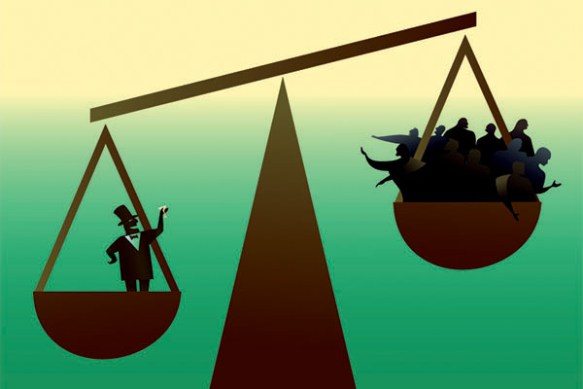
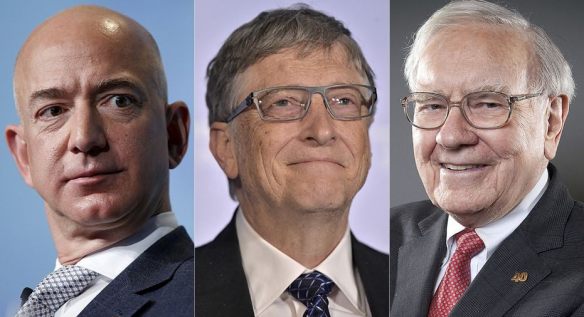
A new report from the Institute for Policy Studies found that, while tens of millions of Americans have lost their jobs during the coronavirus pandemic, America’s ultra-wealthy elite have seen their net worth surge by $282 billion in just 23 days. This is despite the fact that the economy is expected to contract by 40 percent this quarter. The report also noted that between 1980 and 2020 the tax obligations of America’s billionaires, measured as a percentage of their wealth, decreased by 79 percent. In the last 30 years, U.S. billionaire wealth soared by over 1100 percent while median household wealth increased by barely five percent. In 1990, the total wealth held by America’s billionaire class was $240 billion; today that number stands at $2.95 trillion. Thus, America’s billionaires accrued more wealth in just the past three weeks than they made in total prior to 1980. As a result, just three people ­– Amazon CEO Jeff Bezos, Microsoft co-founder Bill Gates and Berkshire Hathaway’s Warren Buffet – own as much wealth as the bottom half of all U.S. households combined.

The Institute for Policy Studies’ report paints a picture of a modern day oligarchy, where the super-rich have captured legislative and executive power, controlling what laws are passed. The report discusses what it labels a new “wealth defense industry” – where “billionaires are paying millions to dodge billions in taxes,” with teams of accountants, lawyers, lobbyists and asset managers helping them conceal their vast fortunes in tax havens and so-called charitable trusts. The result has been crippled social programs and a decrease in living standards and even a sustained drop in life expectancy – something rarely seen in history outside of major wars or famines. Few Americans believe their children will be better off than they were. Statistics suggest they are right.

Billionaires very theatrically donate a fraction of what they used to give back in taxes, making sure to generate maximum publicity for their actions. And they secure positive coverage of themselves by stepping in to keep influential news organizations afloat. A December investigation by MintPress found that Gates had donated over $9 million to The Guardian, over $3 million to NBC Universal, over $4.5 million to NPR, $1 million to Al-Jazeera, and a staggering $49 million to the BBC’s Media Action program. Some, like Bezos, prefer to simply outright purchase news organizations themselves, changing the editorial stance to unquestioning loyalty to their new owners.

The spike in billionaire wealth comes amid an unprecedented economic crash; 26.5 million Americans have filed for unemployment over the last five weeks, and that number is expected to continue to rise dramatically. While the super-rich are holed up in their mansions and yachts, the 49-62 million Americans designated as “essential workers” must continue to risk their lives to keep society functioning, even as many of them do not even earn as much as the $600 weekly increase in unemployment benefits the CARES act stipulates. Many low paid workers, such as grocery store employees, have already fallen sick and died. The mother of one 27-year-old Maryland worker who contracted COVID-19 and died received her daughter’s last paycheck. It amounted to $20.64.

Amazon staff, directly employed by Bezos, also risk their lives for measly pay. One third of all Amazon workers in Arizona, for example, are enrolled in the food stamps program, their wages so low that they cannot afford to pay for food. The vast contrast in the effect that COVID-19 has had on the super wealthy versus the rest of us has many concluding that billionaires’ wealth and the poverty of the rest of the world are two sides of the same coin: that the reason people working full-time still cannot afford a house or even to eat is the same reason people like Bezos control more wealth than many countries. Bezos’ solution to his employees’ hunger has been to set up a charity and ask for public donations to help his desperate workers.

The majority of millennials, most of them shut out from attaining the American dream, already prefer socialism to capitalism, taking a dim view of the latter. The latest news that the billionaire class is laughing all the way to the bank during a period of intense economic suffering is unlikely to improve their disposition.


Alan MacLeod is a Staff Writer for MintPress News. After completing his PhD in 2017 he published two books: Bad News From Venezuela: Twenty Years of Fake News and Misreporting and Propaganda in the Information Age: Still Manufacturing Consent. He has also contributed to Fairness and Accuracy in Reporting, The Guardian, Salon, The Grayzone, Jacobin Magazine, Common Dreams the American Herald Tribune and The Canary.