Elite television news rescued by COVID

By Jon Rappoport

Source: NoMoreFakeNews.com

Yet another consequence of the fake pandemic is the propping up of that doddering old fool, elite television news.

The COVID story doesn’t need Walter Cronkite. It only needs wall to wall. From 5AM to midnight, pandemic updates (mixed now with riot coverage), and the network ratings get well. The ratings jump out of the dumpster and rumble on the studio set and do cartwheels.

I’ve written a number of articles about network television news. Here are excerpts—


NEWS ABOUT THE NEWS.

The elite anchor is not a person filled with passion or curiosity. Therefore, the audience doesn’t have to be passionate or filled with curiosity, either.

The anchor is not a demanding voice on the air; therefore, the audience doesn’t have to be demanding.

The anchor isn’t hell-bent on uncovering the truth. For this he substitutes a false dignity. Therefore, the audience can surrender its need to wrestle with the truth and replace that with a false dignity of its own.

The anchor takes propriety to an extreme: it’s unmannerly to look below the surface of things. Therefore, the audience adopts those manners.

On air, the anchor is neutral, a castratus, a eunuch.

This is a time-honored ancient tradition. The eunuch, by his diminished condition, has the trust of the ruler. He guards the emperor’s inner sanctum. He acts as a buffer between his master and the people. He applies the royal seal to official documents.

Essentially, the television anchor is saying, “See, I’m ascetic in the service of truth. Why would I hamstring myself this way unless my mission is sincere objectivity?”

All expressed shades of emotion occur and are managed within that persona of the dependable court eunuch. The anchor who can move the closest to the line of being human without actually arriving there is the champion. In recent times, it was Brian Williams—until his “conflations” and “misremembrances” surfaced, and he was exiled to the wasteland of MSNBC.

The vibrating string between eunuch and human is the frequency that makes an anchor “great.” Think Cronkite, Chet Huntley, Edward R Murrow. Huntley was just a touch too masculine, so they teamed him up with David Brinkley, a medium-boiled egg. Brinkley supplied twinkles of comic relief.

The cable news networks don’t have anyone who qualifies as an elite anchor. Wolf Blitzer of CNN made his bones during the first Iraq war only because his name fit the bombing action so well. Brit Hume of FOX has more anchor authority than anyone now working in network television, but he’s semi-retired, content to play the role of contributor, because he knows the news is a scam on wheels.

There are other reasons for “voice-neutrality” of the anchor. Neutrality conveys a sense of science. “We did the experiment in the lab and this is how it turned out.”

Neutrality implies: we, the news division, don’t have to make money (a lie); we’re not like the cop shows; we’re on a higher plane; we’re performing a public service; we’re a responsible charity.


From the early days of television, there has been a parade of anchors/actors with know-how—intonation, edge of authority, parental feel, the ability to execute seamless blends from one piece of deception to the next:

John Daly, Douglas Edwards, Ed Murrow, Chet Huntley, David Brinkley, Harry Reasoner, Walter Cronkite, Dan Rather, and more recently, second-stringers—Brian Williams, Diane Sawyer, Scott Pelley.

They’re all gone.

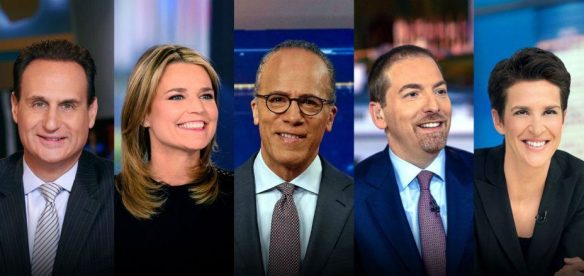
Now we have Lester Holt, David Muir, and the newly appointed Norah O’Donnell. They couldn’t sell water in the desert.

Lester Holt is a cadaverous presence on-air, whose major journalistic achievement thus far is interrupting Donald Trump 41 times during a presidential debate; David Muir has the gravitas of a Sears underwear model; Norah O’Donnell, long-term, will have the energy needed to illuminate a miniature Xmas-tree light bulb.

The networks have no authoritative anchor-fathers waiting in the wings. They don’t breed them and bring them up through the minor leagues anymore.

Instead, armies of little Globalists, and ideologues who don’t realize they’re working for Globalists, have been infiltrating the news business. At best, they’re incompetent.

Thus, news-production techniques that enable an ongoing illusion of oceanic authority collapse like magnetic fields that have been suddenly switched off.

The selective mood lighting, the restful blue colors on the set, the inter-cutting of graphics and B-roll footage, the flawless shifts to reporters in far-flung places…it’s as if all these supporting features have suddenly been overcome by actors in a stage play who are abruptly stepping out of character. The spell is broken.

Elite mainstream news, in a fatuous attempt to save itself, is trying a democratic approach. Anchors are sharing more on-air minutes with gaggles of other reporters. But this is counter-productive in the extreme. The News has always meant one face and one authority and one voice and one tying-together of all broadcast elements. It’s as if, in a hypnotherapist’s office, the therapist decides to bring in colleagues to help render the patient into an alpha-state.

If by some miracle, the news bosses could raise Walter Cronkite, “the father of our country,” from the dead and put him back in the chair… but too many years have gone by; years of unaccomplished anchors. The horse is out of the barn, the cat is out of the bag.

This is why major news outlets have been appealing to social media/big tech for help, AKA censorship of independent voices.

One veteran news director told me several years ago, “We don’t have the stars [elite anchors] anymore. The star system is dead. You could comb all the local news outlets in America, and you wouldn’t find one face and voice who could really carry the freight. They’ve vanished. The up and coming people are lame. We’ve made them that way. It’s some cockeyed standard of equality we’ve internalized. And now we’re paying the price.”


The news is all about manipulating the context of stories. The thinner the context, the thinner the mind must become to accept it.

Imagine a rectangular solid. The news covers the top surface. Therefore, the viewer’s mind is trained to work in only two dimensions. Then it can’t fathom depth, and it certainly can’t appreciate the fact that the whole rectangular solid moves through time, the fourth dimension.

First, we have the studio image itself, the colors in foreground and background, the blend of restful and charged hues. The anchor and his/her smooth style.

Then we have the shifting of venue from the studio to reporters in the field, demonstrating the reach of coverage: the planet. As if this equals authenticity.

Actually, those reporters in the field rarely dig up information on location. A correspondent standing on a rooftop in Cairo could just as easily be positioned in a bathroom in a Las Vegas McDonald’s. His report would be identical.

The managing editor, usually the elite news anchor, chooses the stories to cover and has the final word on their sequence.

The anchor goes on the air: “Our top story tonight, more signs of gridlock today on Capitol Hill, as legislators walked out of a session on federal budget negotiations…”

The viewer fills in the context for the story: “Oh yes, the government. Gridlock is bad. Just like traffic on the I-5. We want the government to get something done, but they won’t.”

The anchor: “The Chinese government reports the new flu epidemic has spread to three provinces. Forty-two people have already died, and nearly a hundred are hospitalized…”

The viewer again supplies context, such as: “Flu. Dangerous. Epidemic. Get my flu shot.”

The anchor: “A new university study states that gun owners often stock up on weapons and ammunition…”

The viewer: “People with guns. Why do they need a dozen weapons? I don’t need a gun. The police have guns. Could I kill somebody if he broke into the house?”

The anchor: “Doctors at Yale University have made a discovery that could lead to new treatments in the battle against autism…”

Viewer: “Good. More research. Laboratory. The brain.”

If, at the end of the newscast, the viewer bothered to review the stories and his own reactions to them, he would realize he’d learned nothing. But reflection is not the game.

In fact, the flow of the news stories has washed over him and created very little except a sense of (false) continuity.

Therefore, every story on the news broadcast achieves the goal of keeping the context thin—night after night, year after year. The overall effect of this staging is: small viewer’s mind, small viewer’s understanding.

Next we come to words and pictures. More and more, news broadcasts are using the rudimentary film technique of a voice narrating what the viewer is seeing on the screen.

People are shouting and running and falling in a street. The anchor or a field reporter says: “The country is in turmoil. Parliament has suspended sessions for the third day in a row, as the government decides what to do about uprisings aimed at forcing democratic elections…”

Well, the voice must be right, because we’re seeing the pictures. If the voice said the riots were due to garbage-pickup cancellations, the viewer would believe that, too.

We see Building #7 of the WTC collapse. Must have been the result of a fire. The anchor tells us so. Words give meaning to pictures.

Staged news.

Since the dawn of time, untold billions of people have been urging a “television anchor” to “explain the pictures.”

The news gives them that precise solution, every night.

“Well, Mr. Jones,” the doctor says, as he pins X-rays to a screen in his office. “See this? Right here? We’ll need to start chemo immediately, and then we may have to remove most of your brain, and as a follow-up, take out one eye.”

Sure, why not? The patient saw the pictures and the anchor explained them.

Eventually, people get the idea and do it for themselves. They see things, they invent one-liners to explain them.

They’re their own anchors. They short-cut and undermine their own experience with vapid summaries of what it all means.

For “intelligent” viewers, there is a sober mainstream choice in America, a safety valve: PBS. That newscast tends to show more pictures from foreign lands.

“Yes, I watch PBS because they understand the planet is interconnected. It isn’t just about America. That’s good.”

Sure it’s good, if you want the same thin-context or false-context reports on events in other countries. Instead of the two minutes NBC might give you about momentous happenings in Syria, PBS will give you four minutes.

PBS experts seem kinder and gentler. “They’re nice and they’re more relaxed. I like that.”

Yes, the PBS experts are taking Valium, and they’re not drinking as much coffee as the CBS experts.


When network television news was created in the late 1940s, no one in charge knew how to do it. It was a new creature.

Sponsors? Yes. A studio with a desk and an anchor? Yes. A list of top stories? Yes. Important information for the public? Yes.

Of course, “important information” could have several definitions—and the CIA already had a few claws into news, so there would be boundaries and fake stories within those boundaries.

The producers knew the anchor was the main event; his voice, his manner, his face. He was the actor in a one-man show. But what should he project to the audience at home?

The first few anchors were dry sandpaper. John Cameron Swayze at NBC, and Douglas Edwards at CBS. But Swayze, also a quiz show host, broke out of the mold and imparted a bit of “cheery” to his broadcasts. A no-no. So he was eventually dumped.

In came a duo. Chet Huntley and David Brinkley. NBC co-anchors from 1956 to 1970. Chet was the heavy, with a somber baritone, and David was “twinkly,” as he was called by network insiders. He lightened the mood with a touch of sarcasm and an occasional grin. It worked. Ratings climbed. Television news as show biz started to take off. At the end of every broadcast, there was: “Good night, Chet.” “Good night, David.” The audience ate it up. They loved that tag.

However, rival CBS wasn’t standing still. They offloaded their anchor, Douglas Edwards, a bland egg, and brought in Walter Cronkite, who would go on to do 19 years in the chair (1962-1981). Walter was Chet Huntley with a difference. As he grew older, he emerged as a father, a favorite uncle, with an authoritative hills-and-valleys baritone that created instant trust. Magic. A news god was born.

Despite many efforts at the three major networks, no anchor over the past 40 years has been able to pull off the full Cronkite effect.

The closest recent competitor—until he was fired for lying and exiled to the waste dump at MSNBC—was Brian Williams. Williams artfully executed a reversal of tradition. He portrayed the youthful prodigy, a gradually maturing version of a newsboy who once bicycled along country roads, threw folded up papers on front porches, and knew all his customers by name. A good boy. A local boy. Your neighbor under the maple trees of an idyllic town. Cue the memories.

By the time Williams took over the helm at NBC, television news was decidedly a team operation. There were reporters in the field. The technology enabled the anchor to go live to these bit players, who tried to exude the impression they were actually running down leads and interviewing key sources on the spot—when in fact they could just as easily be doing their stand-ups from a hot dog cart outside 30 Rockefeller Plaza, the home studio of the network—because most of their information was really coming from inside that studio.

Nevertheless, the team was everything. The anchor was a manager, and his job was to impart an authentic feel to every look-in, from the White House to Paris to Berlin to Jerusalem to Beijing to a polar bear on an iceberg.

And local television news was blowing up to gargantuan proportions. Every city and town and village and hamlet seemed to have its own gaggle of hearty faces delivering vital info of interest to the citizenry. Branding and shaping this local phenomenon evolved into: FAMILY. Yes, that was the ticket. These bubbly, blown-dry, enthused, manic news and weather and sports hawks were really “part of the community.” Local News was no longer shoveled high and deep with an air of objectivity. “Aloof” was out. Share and care was in. What that had to do with actual news was anyone’s guess, but there it was. “Hi, we’re your team at KX6, and we feel what you feel and we live here with you and we know when the roads are icy and the wrecks pile up on the I-15 and the cops arrest someone for cocaine possession and when the charity bake sale is coming up to pay for [toxic] meds for seniors and when your cousin Judy passes away we mourn as you do…”

News for and by a fictional collective.

Disney news.

A caricature of a simulacrum of an imitation.

The discovery was: the viewing audience wanted news as a cartoon.

The problem is: this model deteriorates. The descending IQ of the news producers and anchors and reporters undergoes a grotesque revolution. Year by year, broadcasts make less sense. Even on the national scene, NBC hands its prime anchor spot to Lester Holt, who plays the old Addams Family living corpse, Lurch.

ABC, always looking for a new face, goes all in with David Muir, a Sears underwear-model type.

CBS counters with a youngish cipher, Jeff Glor, after ridding itself of Scott Pelley, who, true to his on-camera persona, might show up on The Young and the Restless as a lunatic surgeon doing operations without anesthetic.

The networks are losing it.

It’s a sight to behold.

Cable news is even worse. The longest surviving anchor is Wolf Blitzer at CNN. Wolf’s energy level tops out as a man in a tattered bathrobe, in his kitchen, chatting with his cousin while they play checkers.


When professionals broadcast one absurdity after another, they begin to see the effects are actually strengthening their own position of authority.

It’s a revelation. It’s also a continuation of the tradition of the Trickster archetype. For example, with just a few minor adjustments, Brian Williams can be seen as the sly Reynard the Fox…

From the viewpoint of elite television news, controlling the minds of its audience depends on what’s politely called “cognitive dissonance”:

As the anchor recites a news story, the viewer sees an obvious hole through which he could drive a truck.

The story makes no sense, yet it’s being presented as bland fact. The trusted anchor clearly has no problem with it.

What’s the viewer to do? He experiences a contradiction, a “dissonance.”

For example, this year’s flu vaccine. The US government has admitted the vaccine is geared to a flu virus that isn’t circulating in the population. Therefore, even by conventional standards, the vaccine is useless. But the kicker is, the CDC says people should take the vaccine anyway.

The anchor relays all this information—and never seriously questions the situation, never torpedoes the government for recommending the vaccine.

The average viewer feels a tug, a pulse of discomfort, a push-pull. The vaccine story is idiocy (side one), but the trusted anchor accepts it (side two).

Dissonance.

The top chiefs of news—and top propaganda operatives—anticipate cognitive dissonance. In a real sense, they want it to happen. They make it happen. Over and over.

Why?

Because it throws the viewer into a tailspin. And in that mental state, in his effort to resolve the contradiction, he will normally choose to…give in. Surrender. Believe in the anchor. It’s the easier path.

The viewer will even doubt his own perception. “I see no good reason for Building 7 to collapse, but the news doesn’t bring that up, so…it must be me.”

This is the power of the news. It presents absurdities and then moves right along, as if nothing has happened.

The introduction of contradiction, dissonance, and absurdity parading as ordinary reality is an intentional feature of brainwashing.

On the nightly news, the anchor reports that US government debt has risen by another three trillion dollars. He then cuts to a statement from a Federal Reserve spokesman: the new debt level isn’t a problem; in fact, it’s sound monetary policy; it strengthens the economy.

The viewer, caught up in this absurdity, tries to make sense of it, then gives up and passively accepts it. Brainwashing.

Smoothly transitioning from this story, the anchor relays information from the CDC: vaccination rates must achieve 90% in the population, in order to protect people from dangerous viruses. The viewer thinks, “Well, my daughter is already vaccinated, so if she comes into contact with a child who isn’t vaccinated, why would there be a problem? Why does 90% of the population have to be vaccinated to keep her safe? She’s already vaccinated.”

The viewer wrestles with this craziness for a moment, then gives in and accepts what the CDC and the anchor are saying. More passivity. More brainwashing.

The anchor moves right along to the next story: “The US is experiencing one of the coldest winters in history, further evidence of the effects of global warming, according to scientists at the United Nations.”

The viewer shakes his head, tries to deal with this dissonance, surrenders, and accepts what he is hearing. Deeper passivity is the result. Deeper brainwashing.

On and on it goes, day after day, month after month, year after year, on the news.

Contradiction, absurdity, dissonance; acceptance, surrender, passivity.

The same general formula is used in interrogations and formal mind control. It adds up to disorientation of the target.

Most disoriented people opt for the lowest- common-denominator solution: give in; accept the power of the person of authority.

Among the many supporters of conventional news is the education system. Most teachers never learn logic, and they don’t teach it. The result? Their students never gain the ability or the courage to reject the news and its dissonances.

What little these students gain from 12 or 16 years of schooling they eventually sacrifice on the altar of consensus reality—as broadcast every night on the screen before them.


Salvador Dali, surrealist, was one of the most reviled painters of the 20th century.

He disturbed Conventional Folk who just wanted to see an apple in a bowl on a table.

Dali’s apples and bowls were executed with a technical skill few artists could match—except the apples were coming out of a woman’s nose while she was ironing the back of a giraffe, who was on fire.

“It doesn’t go together! It doesn’t make sense! He’s Satan!”

Yet, these same Folk sit in front of the television screen every night and watch the entirely surreal network news. Elite anchors seamlessly and quickly move from blood running in the streets of a distant land to a hairdryer product-recall to an unseasonal hail storm in Michigan to a debate about public policy on pedophiles to genetically engineered mosquitoes in Florida to a possible breakthrough in storing computer simulations of human brains for later recapture to squirrels gathering nuts in New Jersey.

Nothing surreal about this??

When the elite anchor goes on air and digs in, he’s paid to be seamless. He could be transitioning from mass killings in East Asia to sub-standard air conditioners, and he makes the audience track through the absurd curve in the road.

The elite anchor should have a voice that soothes just a bit but brooks no resistance. It’s authoritative but not demanding.

Scott Pelley (CBS) was careful to watch himself on this count, because his tendency was to shove the message down the viewer’s throat like a surgeon making an incision with an icepick. Pelley was a high-IQ android who was training himself to be human.

Diane Sawyer wandered into sloppiness, like a housewife who’s still wearing her bathrobe at 4 in the afternoon. She exuded sympathetic syrup, as if she’d had a few cocktails for lunch. And she affected a pose of “caring too much.”

Brian Williams was head and shoulders above his two competitors. You had to look and listen hard to spot a speck of confusion in his delivery. He knew how to believe his act was real. He could also flick a little aw-shucks apple-pie at the viewer. Country boy who moved to the big city.

Segues, blends are absolutely vital. These are the transitions between one story and another. “Earlier today, in Boston.” “Meanwhile, in New York, the police are reporting.” “But on the Hill, the news was somewhat disappointing for supporters of the president.”

Doing excellent blends can earn an anchor millions of dollars. The audience doesn’t wobble or falter or make distinctions between what went before and what’s coming now. It’s all one script. It’s one winding weirdness of story every night.


And NOW, we have COVID, and we have riots. The current stories— the lies are egregious and relentless, the editorializing is cheesy. The omissions are Grand Canyons.

Surreal, cognitively dissonant, smoothly blended, outrageous:

The News Business. As Usual.

But with the junior varsity anchors, and their lack of skill, the networks need overwhelming stories to sell their act. They need COVID and riots. They have to have government manufacturing chaos and destruction and tighter control, in order to keep viewers coming back night after night.

You’ve got elite Globalists and elite government on one edge, and elite news on the other edge. They feed into each other. They bolster each other.

So why must they spend so much time censoring dissent?

Because freedom exists.

Because, no matter what, it always will.

And underestimating its power, time and time again, has proven to be a colossal mistake.
The System Is Rigged: Qualified Immunity Is How the Police State Stays in Power

By John W. Whitehead

Source: Mint Press News

The system is rigged, the government is corrupt, and “we the people” continue to waste our strength by fighting each other rather than standing against the tyrant in our midst.

Because the system is rigged, because the government is corrupt, and because “we the people” remain polarized and divided, the police state will keep winning and “we the people” will keep losing.

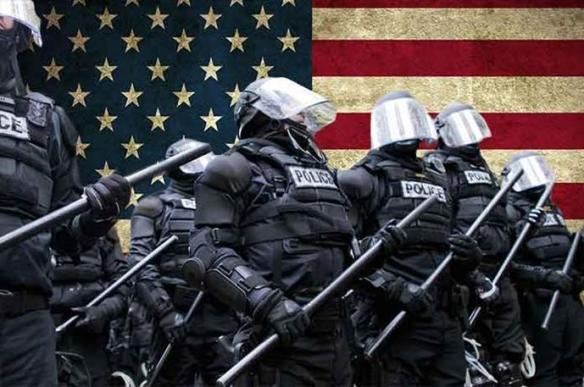
Because the system is rigged and the U.S. Supreme Court—the so-called “people’s court”—has exchanged its appointed role as a gatekeeper of justice for its new role as maintainer of the status quo, there will be little if no consequences for the cops who brutalize and no justice for the victims of police brutality.

Because the system is rigged, there will be no consequences for police who destroyed a private home by bombarding it with tear gas grenades during a SWAT team raid gone awry, or for the cop who mistakenly shot a 10-year-old boy after aiming for and missing the non-threatening family dog, or for the arresting officer who sicced a police dog on a suspect who had already surrendered.

This is how unarmed Americans keep dying at the hands of militarized police.

By refusing to accept any of the eight or so qualified immunity cases before it this term that strove to hold police accountable for official misconduct, the Supreme Court delivered a chilling reminder that in the American police state, ‘we the people’ are at the mercy of law enforcement officers who have almost absolute discretion to decide who is a threat, what constitutes resistance, and how harshly they can deal with the citizens they were appointed to ‘serve and protect.”

This is how qualified immunity keeps the police state in power.

Lawyers tend to offer a lot of complicated, convoluted explanations for the doctrine of qualified immunity, which was intended to insulate government officials from frivolous lawsuits, but the real purpose of qualified immunity is to rig the system, ensuring that abusive agents of the government almost always win and the victims of government abuse almost always lose.

How else do you explain a doctrine that requires victims of police violence to prove that their abusers knew their behavior was illegal because it had been deemed so in a nearly identical case at some prior time: it’s a setup for failure.

Do you know how many different ways a cop can kill, maim, torture and abuse someone without being held liable?

The cops know: in large part due to training classes that drill them on the art of sidestepping the Fourth Amendment, which protects us from being bullied, badgered, beaten, broken and spied on by government agents.

This is how “we the people” keep losing.

Although the U.S. Supreme Court recognized in Harlow v. Fitzgerald (1982) that suing government officials for monetary damages is “the only realistic avenue” of holding them accountable for abusing their offices and violating the Constitution, it has ostensibly given the police and other government agents a green light to shoot first and ask questions later, as well as to probe, poke, pinch, taser, search, seize, strip and generally manhandle anyone they see fit in almost any circumstance, all with the general blessing of the courts.

Whether it’s police officers breaking through people’s front doors and shooting them dead in their homes or strip searching motorists on the side of the road, these instances of abuse are continually validated by a judicial system that kowtows to virtually every police demand, no matter how unjust, no matter how in opposition to the Constitution.

Make no mistake about it: this is what constitutes “law and order” in the American police state.

These are the hallmarks of a police state: where police officers, no longer mere servants of the people entrusted with keeping the peace, are part of an elite ruling class dependent on keeping the masses corralled, under control, and treated like suspects and enemies rather than citizens.

Unfortunately, we’ve been traveling this dangerous road for a long time now.

A review of critical court rulings over the past several decades, including rulings affirming qualified immunity protections for government agents by the U.S. Supreme Court, reveals a startling and steady trend towards pro-police state rulings by an institution concerned more with establishing order, protecting the ruling class, and insulating government agents from charges of wrongdoing than with upholding the rights enshrined in the Constitution.

Indeed, as Reuters reports, qualified immunity “has become a nearly failsafe tool to let police brutality go unpunished and deny victims their constitutional rights.” Worse, as Reuters concluded, “the Supreme Court has built qualified immunity into an often insurmountable police defense by intervening in cases mostly to favor the police.”

The system is rigged.

Police can claim qualified immunity for warrantless searches. In Anderson v. Creighton, the Supreme Court ruled that FBI and state law enforcement agents were entitled to qualified immunity protections after they were sued for raiding a private home without a warrant and holding family members at gunpoint, all in a search for a suspected bank robber who was not in the house.

Police can claim qualified immunity for warrantless arrests based on mere suspicion. In Hunter v. Bryant, the Court ruled that police acted reasonably in arresting James Bryant without a warrant in order to protect the president. Bryant had allegedly written a letter that referenced a third-party plot to assassinate President Ronald Reagan, but police had no proof that he intended to harm Reagan beyond a mere suspicion. The charges against Bryant were eventually dropped.

Police can claim qualified immunity for using excessive force against protesters. In Saucier v. Katz, the Court ruled in favor of federal law enforcement agents who forcefully tackled a protester as he attempted to unfurl a banner at Vice President Gore’s political rally. The Court reasoned that the officers acted reasonably given the urgency of protecting the vice president.

Police can claim qualified immunity for shooting a fleeing suspect in the back. In Brosseau v. Haugen, the Court dismissed a lawsuit against a police officer who shot Kenneth Haugen in the back as he entered his car in order to flee from police. The Court ruled that in light of existing case law, the cop’s conduct fell in the “hazy border between excessive and acceptable force” and so she did not violate clearly established law.

Police can claim qualified immunity for shooting a mentally impaired person. In City of San Francisco v. Sheehan, the Court ruled in favor of police who repeatedly shot Teresa Sheehan during the course of a mental health welfare check. The Court ruled that it was not unreasonable for police to pepper spray and shoot Sheehan multiple times after entering her room without a warrant and encountering her holding a knife.

Police officers can use lethal force in car chases without fear of lawsuits. In Plumhoff v. Rickard, the U.S. Supreme Court declared that police officers who used deadly force to terminate a car chase were immune from a lawsuit. The officers were accused of needlessly resorting to deadly force by shooting multiple times at a man and his passenger in a stopped car, killing both individuals.

Police can stop, arrest and search citizens without reasonable suspicion or probable cause. In a 5-3 ruling in Utah v. Strieff, the U.S. Supreme Court effectively gave police the go-ahead to embark on a fishing expedition of one’s person and property, rendering Americans completely vulnerable to the whims of any cop on the beat.

Police officers can stop cars based on “anonymous” tips or for “suspicious” behavior such as having a reclined car seat or driving too carefully. In a 5-4 ruling in Navarette v. California, the U.S. Supreme Court declared that police officers, under the guise of “reasonable suspicion,” can stop cars and question drivers based solely on anonymous tips, no matter how dubious, and whether or not they themselves witnessed any troubling behavior. Then in State v. Howard, the Kansas Supreme Court declared that motorists who recline their car seats are guilty of suspicious behavior and can be subject to warrantless searches by police. That ruling, coupled with other court rulings upholding warrantless searches and seizures by police renders one’s car a Constitution-free zone.

Americans have no protection against mandatory breathalyzer tests at a police checkpoint, although mandatory blood draws violate the Fourth Amendment (Birchfield v. North Dakota). Police can also conduct sobriety and “information-seeking” checkpoints (Illinois v. Lidster and Mich. Dep’t of State Police v. Sitz).

Police can forcibly take your DNA, whether or not you’ve been convicted of a crime. In Maryland v. King, a divided U.S. Supreme Court determined that a person arrested for a crime who is supposed to be presumed innocent until proven guilty must submit to forcible extraction of their DNA. Once again the Court sided with the guardians of the police state over the defenders of individual liberty in determining that DNA samples may be extracted from people arrested for “serious” offenses. The end result of the ruling paves the way for a nationwide dragnet of suspects targeted via DNA sampling.

Police can use the “fear for my life” rationale as an excuse for shooting unarmed individuals. Upon arriving on the scene of a nighttime traffic accident, an Alabama police officer shot a driver exiting his car, mistakenly believing the wallet in his hand to be a gun. A report by the Justice Department found that half of the unarmed people shot by one police department over a seven-year span were “shot because the officer saw something (like a cellphone) or some action (like a person pulling at the waist of their pants) and misidentified it as a threat.”

Police have free reign to use drug-sniffing dogs as “search warrants on leashes.” In Florida v. Harris, a unanimous U.S. Supreme Court determined that police officers may use highly unreliable drug-sniffing dogs to conduct warrantless searches of cars during routine traffic stops. The ruling turns man’s best friend into an extension of the police state, provided the use of a K-9 unit takes place within a reasonable amount of time (Rodriguez v. United States).

Not only are police largely protected by qualified immunity, but police dogs are also off the hook for wrongdoing. The Fourth Circuit Court of Appeals ruled in favor of a police officer who allowed a police dog to maul a homeless man innocent of any wrongdoing.

Police can subject Americans to strip searches, no matter the “offense.” A divided U.S. Supreme Court actually prioritized making life easier for overworked jail officials over the basic right of Americans to be free from debasing strip searches. In its 5-4 ruling in Florence v. Burlington, the Court declared that any person who is arrested and processed at a jail house, regardless of the severity of his or her offense (i.e., they can be guilty of nothing more than a minor traffic offense), can be subjected to a strip search by police or jail officials, which involves exposing the genitals and the buttocks. This “license to probe” is now being extended to roadside stops, as police officers throughout the country have begun performing roadside strip searches—some involving anal and vaginal probes—without any evidence of wrongdoing and without a warrant.

Police can break into homes without a warrant, even if it’s the wrong home. In an 8-1 ruling in Kentucky v. King, the U.S. Supreme Court placed their trust in the discretion of police officers, rather than in the dictates of the Constitution, when they gave police greater leeway to break into homes or apartments without a warrant. Despite the fact that the police in question ended up pursuing the wrong suspect, invaded the wrong apartment and violated just about every tenet that stands between us and a police state, the Court sanctioned the warrantless raid, leaving Americans with little real protection in the face of all manner of abuses by police.

Police can use knock-and-talk tactics as a means of sidestepping the Fourth Amendment. Aggressive “knock and talk” practices have become thinly veiled, warrantless exercises by which citizens are coerced and intimidated into “talking” with heavily armed police who “knock” on their doors in the middle of the night. Andrew Scott didn’t even get a chance to say no to such a heavy-handed request before he was gunned down by police who pounded aggressively on the wrong door at 1:30 a.m., failed to identify themselves as police, and then repeatedly shot and killed the man when he answered the door while holding a gun in self-defense.

Police can carry out no-knock raids if they believe announcing themselves would be dangerous. Police can perform a “no-knock” raid as long as they have a reasonable suspicion that knocking and announcing their presence, under the particular circumstances, would be dangerous or futile or give occupants a chance to destroy evidence of a crime (Richards v. Wisconsin). Legal ownership of a firearm is also enough to justify a no-knock raid by police (Quinn v. Texas). For instance, a Texas man had his home subject to a no-knock, SWAT-team style forceful entry and raid based solely on the suspicion that there were legally-owned firearms in his household. The homeowner was actually shot by police through his closed bedroom door.

Police can recklessly open fire on anyone that might be “armed.” Philando Castile was shot and killed during a routine traffic stop allegedly over a broken tail light merely for telling police he had a conceal-and-carry permit. That’s all it took for police to shoot Castile four times in the presence of his girlfriend and her 4-year-old daughter. A unanimous Supreme Court declared in County of Los Angeles vs. Mendez that police should not be held liable for recklessly firing 15 times into a shack where a homeless couple had been sleeping because the grabbed his BB gun in defense, fearing they were being attacked.

Police can destroy a home during a SWAT raid, even if the owner gives their consent to enter and search it. In West v. Winfield, the Supreme Court provided cover to police after they smashed the windows of Shaniz West’s home, punched holes in her walls and ceilings, and bombed the house with so much tear gas that it was uninhabitable for two months. All of this despite the fact that the suspect they were pursuing was not in the house and West, the homeowner, agreed to allow police to search the home to confirm that.

Police can suffocate someone, deliberately or inadvertently, in the process of subduing them. “I can’t breathe” has become a rallying cry following the deaths of Eric Garner and George Floyd, both of whom died after being placed in a chokehold by police. Dozens more have died in similar circumstances at the hands of police who have faced little repercussions for these deaths.

As I make clear in my book Battlefield America: The War on the American People, we are dealing with a nationwide epidemic of court-sanctioned police violence carried out with impunity against individuals posing little or no real threat.

So what’s the answer to reforming a system that is clearly self-serving and corrupt?

Abolishing the police is not the answer: that will inevitably lead to outright anarchy, which will give the police state and those law-and-order zealots all the incentive it needs to declare martial law.

Looting and violence are not the answer: As Martin Luther King Jr. recognized, “A riot merely intensifies the fears of the white community while relieving the guilt.” Using the looting and riots as justification for supporting police brutality is also not the answer:  As King recognized, “It is not enough … to condemn riots… without, at the same time, condemning the contingent, intolerable conditions that exist in our society. These conditions are the things that cause individuals to feel that they have no other alternative than to engage in violent rebellions to get attention. And I must say tonight that a riot is the language of the unheard. And what is it America has failed to hear? It has failed to hear that the plight of the negro poor has worsened over the last twelve or fifteen years. It has failed to hear that the promises of freedom and justice have not been met. And it has failed to hear that large segments of white society are more concerned about tranquility and the status quo than about justice and humanity.”

Police reform is necessary and unavoidable if we are to have any hope of living in an America in which freedom means something more than the right to stay alive, but how we reform the system is just as important as getting it done.

We don’t need to wait for nine members of a ruling aristocracy who primarily come from privileged backgrounds and who have a vested interest in maintaining the status quo to fix what’s broken in America.

Nor do we need to wait for 535 highly paid politicians to do something about these injustices only when it suits their political ambitions

And we certainly don’t need to wait for a president with a taste for totalitarian tactics to throw a few crumbs our way.

This is as much a local problem as it is a national one.

Be fair. Be nonviolent. Be relentless in your pursuit of justice for all.

Let’s get it done.

Why America’s “Revolution” Won’t be Televised. No one is Aiming at the Empire

Protesters jump on a street sign near a burning barricade near the White House during a demonstration against the death of George Floyd on May 31, 2020 in Washington, DC. Photo: AFP

By Pepe Escobar

Source: Global Research

The Revolution Won’t Be Televised because this is not a revolution. At least not yet. 

Burning and/or looting Target or Macy’s is a minor diversion. No one is aiming at the Pentagon (or even the shops at the Pentagon Mall). The FBI. The NY Federal Reserve. The Treasury Department. The CIA in Langley. Wall Street houses. 

The real looters – the ruling class – are comfortably surveying the show on their massive 4K Bravias, sipping single malt.

This is a class war much more than a race war and should be approached as such. Yet it was hijacked from the start to unfold as a mere color revolution.

US corporate media dropped their breathless Planet Lockdown coverage like a ton of – pre-arranged? – bricks to breathlessly cover en masse the new American “revolution.” Social distancing is not exactly conducive to a revolutionary spirit.

There’s no question the US is mired in a convoluted civil war in progress, as serious as what happened after the assassination of Dr Martin Luther King in Memphis in April 1968.

Yet massive cognitive dissonance is the norm across the full “strategy of tension” spectrum. Powerful factions pull no punches to control the narrative. No one is able to fully identify all the shadowplay intricacies and inconsistencies.

Hardcore agendas mingle: an attempt at color revolution/regime change (blowback is a bitch) interacts with the Boogaloo Bois – arguably tactical allies of Black Lives Matter – while white supremacist “accelerationists” attempt to provoke a race war.

To quote the Temptations: it’s a ball of confusion.

Antifa is criminalized but the Boogaloo Bois get a pass (here is how Antifa’s main conceptualizer defends his ideas). Yet another tribal war, yet another – now domestic – color revolution under the sign of divide and rule, pitting Antifa anti-fascists vs. fascist white supremacists.

Meanwhile, the policy infrastructure necessary for enacting martial law has evolved as a bipartisan project.

We are in the middle of the proverbial, total fog of war. Those defending the US Army crushing “insurrectionists” in the streets advocate at the same time a swift ending to the American empire.

Amidst so much sound and fury signifying perplexity and paralysis, we may be reaching a supreme moment of historical irony, where US homeland (in)security is being boomerang-hit not only by one of the key artifacts of its own Deep State making – a color revolution – but by combined elements of a perfect blowback trifecta:  Operation PhoenixOperation Jakarta; and Operation Gladio.

But the targets this time won’t be millions across the Global South. They will be American citizens.

Empire come home 

Quite a few progressives contend this is a spontaneous mass uprising against police repression and system oppression – and that would necessarily lead to a revolution, like the February 1917 revolution in Russia sprouting out of the scarcity of bread in Petrograd.

So the protests against endemic police brutality would be a prelude to a Levitate the Pentagon remix – with the interregnum soon entailing a possible face-off with the US military in the streets.

But we got a problem. The insurrection, so far purely emotional, has yielded no political structure and no credible leader to articulate myriad, complex grievances. As it stands, it amounts to an inchoate insurrection, under the sign of impoverishment and perpetual debt.

Adding to the perplexity, Americans are now confronted with what it feels like to be in Vietnam, El Salvador, the Pakistani tribal areas or Sadr City in Baghdad.

Iraq came to Washington DC in full regalia, with Pentagon Blackhawks doing “show of force” passes over protestors, the tried and tested dispersal technique applied in countless counter-insurgency ops across the Global South.

And then, the Elvis moment: General Mark Milley, chairman of the Joint Chiefs of Staff, patrolling the streets of DC. The Raytheon lobbyist now heading the Pentagon, Mark Esper, called it “dominating the battlespace.”

Well, after they got their butts kicked in Afghanistan and Iraq, and indirectly in Syria, full spectrum dominance must dominate somewhere. So why not back home?

Troops from the 82nd Airborne Division, the 10th Mountain Division and the 1st Infantry Division – who lost wars in Vietnam, Afghanistan, Iraq and, yes, Somalia – have been deployed to Andrews Airbase near Washington.

Super-hawk Tom Cotton even called, in a tweet, for the 82nd Airborne to do “whatever it takes to restore order. No quarter for insurrectionists, anarchists, rioters and looters.” These are certainly more amenable targets than the Russian, Chinese and Iranian militaries.

Milley’s performance reminds me of John McCain walking around in Baghdad in 2007, macho man-style, no helmet, to prove everything  was OK. Of course: he had a small army weaponized to the teeth watching his back.

And complementing the racism angle, it’s never enough to remember that both a white president and a black president signed off on drone attacks on wedding parties in the Pakistani tribal areas.

Esper spelled it out: an occupying army may soon be “dominating the battlespace” in the nation’s capital, and possibly elsewhere. What next? A Coalition Provisional Authority?

Compared to similar ops across the Global South, this will not only prevent regime change but also produce the desired effect for the ruling oligarchy: a neo-fascist turning of the screws. Proving once again that when you don’t have a Martin Luther King or a Malcolm X to fight the power, then power crushes you whatever you do.

Inverted Totalitarianism

The late, great political theorist Sheldon Wolin had already nailed it in a book first published in 2008: this is all about Inverted Totalitarianism.

Wolin showed how “the cruder forms of control – from militarized police to wholesale surveillance, as well as police serving as judge, jury and executioner, now a reality for the underclass – will become a reality for all of us should we begin to resist the continued funneling of power and wealth upward.

“We are tolerated as citizens only as long as we participate in the illusion of a participatory democracy. The moment we rebel and refuse to take part in the illusion, the face of inverted totalitarianism will look like the face of past systems of totalitarianism,” he wrote.

Sinclair Lewis (who did not say that, “when fascism comes to America, it will come wrapped in the flag and waving the cross”) actually wrote, in It Can’t Happen Here (1935), that American fascists would be those “who disowned the word ‘fascism’ and preached enslavement to capitalism under the style of constitutional and traditional native American liberty.”

So American fascism, when it happens, will walk and talk American.

George Floyd was the spark. In a Freudian twist, the return of the repressed came out swinging, laying bare multiple wounds: how the US political economy shattered the working classes; failed miserably on Covid-19; failed to provide affordable healthcare; profits a plutocracy; and thrives on a racialized labor market, a militarized police, multi-trillion-dollar imperial wars and serial bailouts of the too big to fail.

Instinctively at least, although in an inchoate manner, millions of Americans clearly see how, since Reaganism, the whole game is about an oligarchy/plutocracy weaponizing white supremacism for political power goals, with the extra bonus of a steady, massive, upwards transfer of wealth.

Slightly before the first, peaceful Minneapolis protests, I argued that the realpolitik perspectives post-lockdown were grim, privileging both restored neoliberalism – already in effect – and hybrid neofascism.

President Trump’s by now iconic Bible photo op in front of St John’s church – including a citizen tear-gassing preview – took it to a whole new level. Trump wanted to send a carefully choreographed signal to his evangelical base. Mission accomplished.

But arguably the most important (invisible) signal was the fourth man in one of the photos.

Giorgio Agamben has already proved beyond reasonable doubt that the state of siege is now totally normalized in the West. Attorney General William Barr now is aiming to institutionalize it in the US: he’s the man with the leeway to go all out for a permanent state of emergency, a Patriot Act on steroids, complete with “show of force” Blackhawk support.

Four Reasons Civilization Won’t Decline: It Will Collapse

By Craig Collins

Source: CounterPunch

As modern civilization’s shelf life expires, more scholars have turned their attention to the decline and fall of civilizations past.  Their studies have generated rival explanations of why societies collapse and civilizations die.  Meanwhile, a lucrative market has emerged for post-apocalyptic novels, movies, TV shows, and video games for those who enjoy the vicarious thrill of dark, futuristic disaster and mayhem from the comfort of their cozy couch.  Of course, surviving the real thing will become a much different story.

The latent fear that civilization is living on borrowed time has also spawned a counter-market of “happily ever after” optimists who desperately cling to their belief in endless progress.  Popular Pollyannas, like cognitive psychologist Steven Pinker, provide this anxious crowd with soothing assurances that the titanic ship of progress is unsinkable.  Pinker’s publications have made him the high priest of progress.[1] While civilization circles the drain, his ardent audiences find comfort in lectures and books brimming with cherry-picked evidence to prove that life is better than ever, and will surely keep improving.  Yet, when questioned, Pinker himself admits, “It’s incorrect to extrapolate that the fact that we’ve made progress is a prediction that we’re guaranteed to make progress.”[2]

Pinker’s rosy statistics cleverly disguise the fatal flaw in his argument.  The progress of the past was built by sacrificing the future—and the future is upon us.  All the happy facts he cites about living standards, life expectancy, and economic growth are the product of an industrial civilization that has pillaged and polluted the planet to produce temporary progress for a growing middle class—and enormous profits and power for a tiny elite.

Not everyone who understands that progress has been purchased at the expense of the future thinks that civilization’s collapse will be abrupt and bitter.  Scholars of ancient societies, like Jared Diamond and John Michael Greer, accurately point out that abrupt collapse is a rare historical phenomenon.  In The Long Descent, Greer assures his readers that, “The same pattern repeats over and over again in history.  Gradual disintegration, not sudden catastrophic collapse, is the way civilizations end.”  Greer estimates that it takes, on average, about 250 years for civilizations to decline and fall, and he finds no reason why modern civilization shouldn’t follow this “usual timeline.”[3]

But Greer’s assumption is built on shaky ground because industrial civilization differs from all past civilizations in four crucial ways.  And every one of them may accelerate and intensify the coming collapse while increasing the difficulty of recovery.

Difference #1:  Unlike all previous civilizations, modern industrial civilization is powered by an exceptionally rich, NON-renewable, and irreplaceable energy source—fossil fuels.  This unique energy base predisposes industrial civilization to a short, meteoric lifespan of unprecedented boom and drastic bust.  Megacities, globalized production, industrial agriculture, and a human population approaching 8 billion are all historically exceptional—and unsustainable—without fossil fuels.  Today, the rich easily exploited oilfields and coalmines of the past are mostly depleted.  And, while there are energy alternatives, there are no realistic replacements that can deliver the abundant net energy fossil fuels once provided.[4]  Our complex, expansive, high-speed civilization owes its brief lifespan to this one-time, rapidly dwindling energy bonanza.

Difference #2:  Unlike past civilizations, the economy of industrial society is capitalist.  Production for profit is its prime directive and driving force.  The unprecedented surplus energy supplied by fossil fuels has generated exceptional growth and enormous profits over the past two centuries.  But in the coming decades, these historic windfalls of abundant energy, constant growth, and rising profits will vanish.

However, unless it is abolished, capitalism will not disappear when boom turns to bust.  Instead, energy-starved, growth-less capitalism will turn catabolic.  Catabolismrefers to the condition whereby a living thing devours itself.  As profitable sources of production dry up, capitalism will be compelled to turn a profit by consuming the social assets it once created.  By cannibalizing itself, the profit motive will exacerbate industrial society’s dramatic decline.

Catabolic capitalism will profit from scarcity, crisis, disaster, and conflict.  Warfare, resource hoarding, ecological disaster, and pandemic diseases will become the big profit makers.  Capital will flow toward lucrative ventures like cybercrime, predatory lending, and financial fraud; bribery, corruption, and racketeering; weapons, drugs, and human trafficking.  Once disintegration and destruction become the primary source of profit, catabolic capitalism will rampage down the road to ruin, gorging itself on one self-inflicted disaster after another.[5]

Difference #3:  Unlike past societies, industrial civilization isn’t Roman, Chinese, Egyptian, Aztec, or Mayan.  Modern civilization is HUMAN, PLANETARY, and ECOCIDAL.  Pre-industrial civilizations depleted their topsoil, felled their forests, and polluted their rivers.  But the harm was far more temporary and geographically limited. Once market incentives harnessed the colossal power of fossil fuels to exploit nature, the dire results were planetary.  Two centuries of fossil fuel combustion have saturated the biosphere with climate-altering carbon that will continue wreaking havoc for generations to come.  The damage to Earth’s living systems—the circulation and chemical composition of the atmosphere and the ocean; the stability of the hydrological and biogeochemical cycles; and the biodiversity of the entire planet—is essentially permanent.

Humans have become the most invasive species ever known.  Although we are a mere .01 percent of the planet’s biomass, our domesticated crops and livestock dominate life on Earth.  In terms of total biomass, 96 percent of all the mammals on Earth are livestock; only 4 percent are wild mammals.  Seventy percent of all birds are domesticated poultry, only 30 percent are wild.  About half the Earth’s wild animals are thought to have been lost in just the last 50 years.[6]  Scientists estimate that half of all remaining species will be extinct by the end of the century.[7] There are no more unspoiled ecosystems or new frontiers where people can escape the damage they’ve caused and recover from collapse.

Difference #4:  Human civilization’s collective capacity to confront its mounting crises is crippled by a fragmented political system of antagonistic nations ruled by corrupt elites who care more about power and wealth than people and the planet.  Humanity faces a perfect storm of converging global calamities.  Intersecting tribulations like climate chaos, rampant extinction, food and freshwater scarcity, poverty, extreme inequality, and the rise of global pandemics are rapidly eroding the foundations of modern life.

Yet, this fractious and fractured political system makes organizing and mounting a cooperative response nearly impossible.  And, the more catabolic industrial capitalism becomes, the greater the danger that hostile rulers will fan the flames of nationalism and go to war over scarce resources.  Of course, warfare is not new.  But modern warfare is so devastating, destructive, and toxic that little would remain in its aftermath.  This would be the final nail in civilization’s coffin.

Rising From the Ruins?

How people respond to the collapse of industrial civilization will determine how bad things get and what will replace it. The challenges are monumental.  They will force us to question our identities, our values, and our loyalties like no other experience in our history.  Who are we?  Are we, first and foremost, human beings struggling to raise our families, strengthen our communities, and coexist with the other inhabitants of Earth?  Or do our primary loyalties belong to our nation, our culture, our race, our ideology, or our religion?  Can we put the survival of our species and our planet first, or will we allow ourselves to become hopelessly divided along national, cultural, racial, religious, or party lines?

The eventual outcome of this great implosion is up for grabs.  Will we overcome denial and despair; kick our addiction to petroleum; and pull together to break the grip of corporate power over our lives?  Can we foster genuine democracy, harness renewable energy, reweave our communities, re-learn forgotten skills, and heal the wounds we’ve inflicted on the Earth?  Or will fear and prejudice drive us into hostile camps, fighting over the dwindling resources of a degraded planet?  The stakes could not be higher.

Notes.

[1] His books include: The Better Angels of Our Nature and Enlightenment Now: The Case for Reason, Science, Humanism, and Progress.

[2] King, Darryn. “Steven Pinker on the Past, Present, and Future of Optimism” (OneZero, Jan 10, 2019) https://onezero.medium.com/steven-pinker-on-the-past-present-and-future-of-optimism-f362398c604b

[3] Greer, John Michael.  The Long Descent (New Society Publishers, 2008): 29.

[4] Heinberg, Richard. The End Of Growth. (New Society, 2011): 117.

[5] For more on catabolic capitalism see: Collins, Craig. “Catabolism: Capitalism’s Frightening Future,”CounterPunch (Nov. 1, 2018). https://www.counterpunch.org/2018/11/01/catabolism-capitalisms-frightening-future/

[6] Carrington, Damian. “New Study: Humans Just 0.01% Of All Life But Have Destroyed 83% Of Wild Mammals,” The Guardian (May 21, 2018). https://www.theguardian.com/environment/2018/may/21/human-race-just-001-of-all-life-but-has-destroyed-over-80-of-wild-mammals-study

[7] Ceballos, Ehrlich, Barnosky, Garcia, Pringle & Palmer. “Accelerated Modern Human-Induced Species Losses: Entering The 6th Mass Extinction,” Science Advances. (June 19, 2015). http://advances.sciencemag.org/content/1/5/e1400253

Revolution Is Inevitable and Necessary

By Jason Holland

Source: Dissident Voice

None are so hopelessly enslaved, as those who falsely believe they are free. The truth has been kept from the depth of their minds by masters who rule them with lies. They feed them on falsehoods till wrong looks like right in their eyes.

— Johann Wolfgang von Goethe, Bk. II, Ch. 5; source: Die Wahlverwandtschaften, Hamburger Ausgabe, Bd. 6 (Romane und Novellen I), dtv Verlag, München, 1982, p. 397 (II.5).

I keep plotting a revolution no one else seems to be interested in having. So be it. I’ll have my solitary revolution. There will be no pink hats, guillotines, or marches, just me and a bitter jaded middle finger saluting towards the firmaments in utter rejection of most what this society represents. Although I hold no lasting contempt for anyone in this society because I understand we all have fallen into cultural traps and have done things that we believed we had to do so that we could be accepted, or just to be allowed to sleep indoors somewhere and be fed; we’ve had to commodify and sell out pieces of ourselves to serve the desires of those in a system of power who sanction and control the flow of money backed by military forces and institutions of incarceration, and this way of being was set into motion a long time ago, but it doesn’t have to continue if that’s not what we really desire, but for right now it’s close to all we know.

So, it does seem a revolution of sorts is inevitable due to inequality reaching grotesque heights of avarice where there is no longer any excuse for the wealthy to hide behind in order to explain why it is they have so much and others have so little. However, this just emphasizes the point that this population is largely not wise enough yet to create a revolution worth having, because a more enlightened culture would have taken a stand a long time ago before things became an emergency. Every second we acquiesce to power and don’t push for something radically better we compound an already grim situation. Globally there seems to be a majority who don’t understand what it is to be free, they merely fight to be better treated servants. So it’s highly likely their coming revolution will be a flailing inchoate attempt at something marginally better than what is here now and won’t set out to correct much, if any, of the underlying structural problems.

Consequently, the odds are the revolution we’ll end up with will circle directly back to where we are now or worse in no time at all. But my critiques and frustrations are mine, not a concern for the coming revolution. I must remember it’s their revolution, not mine. I’m not invited to theirs — well, that’s not entirely true.  I just have to ignore most of what I believe to be true, then I’m invited. As things are, I have only a single pathetic pity party scheduled as an event to prove my revolution ever existed, but I should be appreciative of what I have and cease bemoaning what I do not.

So this is where I will make my stand. The beginning and likely end of my revolution of one. In reality my revolution is simply a rough translation through the English language describing my light of truth within, which I’ve gone to great pains to keep safe, dry, and burning from a clean source of fuel. Probably all done in futility except to selfishly inoculate my own mind from the lurking darkness of the culture cave; still, a lingering desire remains to light a path out for others to follow who have become stuck watching dark Platonic shadows flicker across the walls.

With that said, here’s the path I’m lighting with argumentation and I believe it to be a solid one.  We, as in the we consisting of the global middle/lower classes of the entire planet, aka the 99%, are not a free people now nor have ever truly been free while living in the bounds of a social hierarchy. While many a winsome word has been applied to parchment declaring this or that people free, unfortunately soon thereafter the founding document is handed over to record keepers to energize the narratives of posterity while the same ole domination and ownership-driven society meters out the same ole grind. The reward and punishment operant conditioning culture is uniformly applied and chosen specifically to keep people compliant, reactive, and rutted into perpetual business as usual subservience to authoritative forces.

Constitutions supply grandiose ideas which are undermined by underlying conditional legislature where the original words are made into feckless futile notions that allows the ruling authority to do all the draconian bullshit they’ve always done with prettier sounding words. The powers that be couch authoritarian ideas in language that sometimes sounds reasonable on the surface but ultimately leads people to a deleterious state of believing they are free when they are nothing close to any working definition of freedom. Freedom is a condition which is now only possible within our own minds, but our physical bodies are fodder for the whims of a class of people who clearly believe themselves superior to just about everyone else.

Those causing the most damage are simply playing out a cultural role that’s a legacy of deceit passed down from one generation to the next, and each falling prey to traps of chasing after things; endless shiny carrots on shiny sticks. And not just chasing, but lusting, demanding, an obsessive hedonistic pursuit wanting total ego domination at any macabre cost. Pure obsession with the chase. While irony sits on many of their own bookshelves as Melville’s whale tale of wisdom lies fallow and ignored serving only as bookcase filler to give guests the impression they’re well read.

The ego-driven mind thinks primarily in the language of temporal imperatives. Short term must do this, must do that kind of thinking where all thought is disseminated through a lens of self importance with agendas to accomplish to validate that self importance. And if it thinks itself important enough it will eventually see itself as messianic. After they have assumed role of savior it’s just logically congruent that the ruling class allocate all the resources they desire for themselves so they can help all the people they will eventually save, and they need deep pockets to be the inspiration for the entire world.

Over time the ruling class creates rules and cultural dogmas that they claim are for the good of the people, but oddly enough their beliefs always result in making them richer and giving them more power. What an odd purported symbiosis they have dreamed up. The surest sign of being under an authoritarian power is when they make it really difficult to live independent of them. They demand you be hooked up to their electrical grid, pay taxes to live on the land, and hooked into the public water system. Total forced dependency on their system and it is barely noticed yet subtly removing choice and creating an artificial cage. Creating dependency is the best way to control people, and tyranny is then accepted under the umbrella of the common good, so the messianic ones can provide shelter from the storm while, of course, the common person sacrifices most of their free will in the process in a Faustian bargain which is the default role we are thrust into in this world of imperial forces.

Social hierarchies hold their grip on power in increasingly sophisticated ways. They’ve mostly advanced past public executions to keep people in line. They’ve learned it’s far more effective to manipulate minds into believing all are equals and free, and stoke the fear response towards something external that threatens that equality and freedom. It’s become understood by hierarchy that if the ruling power is perceived as the threat they are far more likely to be ousted from that power, so the engines of power must diffuse the blame of their actions lest they be held responsible for the tyranny they impose.

So semi-plausible sounding fears are brought to the forefront so they can provide you with adequate safety, which gives them the power to deprive you of the liberty they are telling you they are protecting, since you know they care so much about you. The gas-lighting of the masses creates reactionary conditioning that puts people in a state where they no longer trust their own mind and become prone to believing all the fears power claims are real. And fear is then used as a prod to move the human animal in a chosen direction power wishes.

Revolution of a real kind, one where our relationship to power radically changes, will be a series of progressions in pulling our minds out of this culture trap. Change will come in relation to how well we come to understand the implications of centralized power and ultimately integrate that knowledge into how we live. Further, how well we learn to work together cooperatively in a voluntary manner will correlate  directly to how likely it is our species survives past the next hundred years. But curing ourselves of  these brutal mental afflictions is not an easy path to traverse. However, I’ll argue a radical change is needed if we want to once again have human lives worth living with real choice and agency over our own mind, body, and time.

Why Assets Will Crash

By Charles Hugh Smith

Source: Of Two Minds

This is how it happens that boats that were once worth tens of thousands of dollars are set adrift by owners who can no longer afford to pay slip fees.

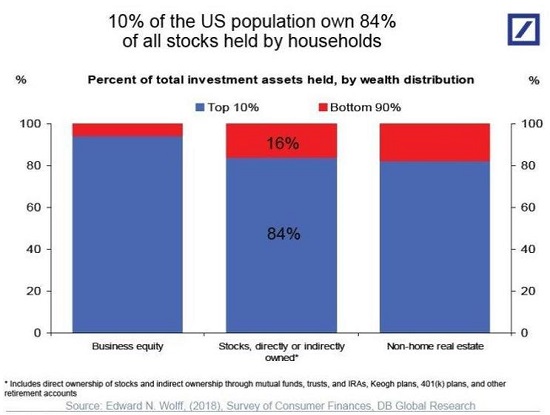
The increasing concentration of the ownership of wealth/assets in the top 10% has an under-appreciated consequence: when only the top 10% can afford to buy assets, that unleashes an almost karmic payback for the narrowing of ownership, a.k.a. soaring wealth and income inequality: assets crash.

Most of you are aware that the bottom 90% own very little other than their labor (tradeable only in full employment) and modest amounts of home equity that are highly vulnerable to a collapse of the housing bubble. (The same can be said of China’s middle class, only more so, as 75% of China’s household wealth is in real estate, more than double the percentage of wealth held in housing in U.S. households.)

As the chart illustrates, the top 10% own 84% of all stocks, over 90% of all business equity and over 80% of all non-home real estate. The concentration of ownership of assets such as vintage autos, collectibles, art, pleasure craft and second homes in the top 10% is likely even greater.

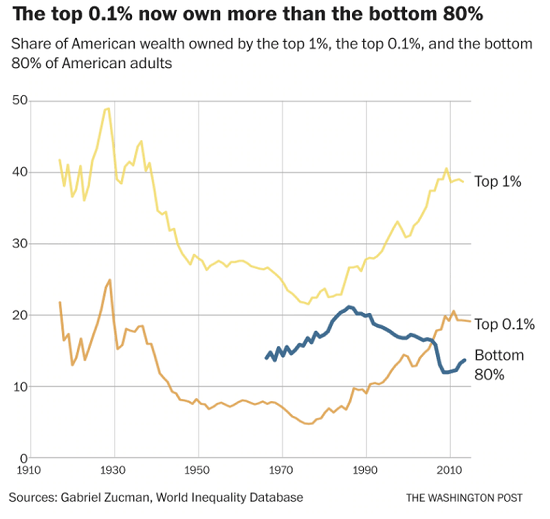
The more expensive the asset, the greater the concentration of ownership, as the top 5% own roughly 2/3 of all wealth, the top 1% own 40% and the top 0.1% own 20%. In other words, the more costly the asset, the narrower the ownership. (Total number of US households is about 128 million, so the top 5% is around 6 million households and the top 1% is 1.2 million households.)

This means the pool of potential buyers is relatively small, even if we include global wealth owners.

Since price is set on the margins, and assets like houses are illiquid, then we can anticipate all the markets for assets owned solely by the wealthy to go bidless–yachts, collectibles, vacation real estate–because the pool of buyers is small, and if that pool gets cautious due to a drop in net worth/unearned income, there won’t be any buyers except at the margins, at incredible discounts.

As we know, in a neighborhood of 100 homes currently valued ar $1 million each, when a desperate seller accepts $500,000, the value of the other 99 homes immediately drops to $500,000.

Since few of the current bubble-era asset valuations are supported by actual income fundamentals, then the sales price boils down to a very small number of potential buyers and what they’re willing to pay.

Houses have a value based on rent, of course, but rents will drop very quickly for the same reason: prices are set on the margins. The most desperate landlords will drop rents and re-set the rental market from the margins. If demand plummets (which it will as people can no longer afford rents in hot urban markets once they lose their jobs), then vacancies will soar and rents will crash as a few desperate landlords will take $1200/month instead of $2500/month.

Due to the multi-year building boom of multi-family buildings in hot job markets (which inevitably leads to an over-supply once the boom ends), there are now hundreds of vacancies where there were once only a few dozen, and thousands where there were previously only hundreds.

As millions of wait staff, bartenders, etc. who made good money in tips find their jobs have vanished, all the urban hotspots will see mass out-migration: Seattle, Portland, the S.F. Bay Area, L.A., NYC, Denver, etc. as demand for rentals will evaporate and rents will be set on the margins by the most desperate landlords. Everyone holding out for the previous bubble-era rent will have $0 income as their units are vacant.

Tech start-ups and Unicorns are melting like ice cubes in Death Valley, and tech-sector layoffs are already in the tens of thousands. This wave of highly paid techies losing their jobs will become a tsunami, further reducing the pool of people who can afford rents of $2,500 to $3,000 for a studio or one-bedroom apartment.)

The concentration of ownership generates a self-reinforcing feedback that further depresses prices: since the top 10% own most of the assets of the nation, they are most prone to a reversal of “the wealth effect.” As their assets soared in value, the top 10% felt wealthier and more confident in future gains, enabling them to borrow and spend freely on second homes, pleasure craft, new vehicles, collectibles, luxury travel, etc.

Once even one class of assets plummets in value–for example, the recent decline in the stock market– the wealth effect reverses and the top 10% feel poorer and less confident about future gains, and thus less enthused about borrowing and spending. The demand for other costly assets quickly evaporates, further reducing the wealth of the “ownership class,” which further reduces their desire and ability to buy bubble-era assets.

The high-priced assets owned by the top 10% will be the assets least in demand due to their high cost and potential for enormous losses: nothing loses value faster in a recession that narrowly owned assets such as vintage cars, art, vacation homes, yachts, etc.

Once assets start sliding in value, the reverse wealth effect quickly dries up demand for all asset classes with narrow ownership. Since these assets are illiquid–that is, the market for them is thin, with buyers few and far between–the prices are set by a very shallow pool of buyers and desperate sellers.

Consider a pleasure craft that retails new for $120,000. In the boom era of rising stocks and housing, a used boat might fetch $65,000. But as the wealth of the small pool of households able to buy and maintain a costly craft evaporates, the number of qualified buyers evaporates, too.

The seller might be aghast by an offer of $35,000 and reject it angrily. Six months later, he’s praying someone will take it off his hands for $15,000, and in another six months, he’ll accept $500 just to get out from underneath the insurance, slip-rental and licencing fees.

This is how it happens that boats that were once worth tens of thousands of dollars are set adrift by owners who can no longer afford to pay slip fees, and vacation homes are abandoned and auctioned off for overdue property taxes: the market for these luxuries dries up and blows away, i.e. goes bidless–there are no buyers at any price.

Once housing and real estate valuations fall, that will trigger a decline in the value of all other costly, narrowly owned assets, which will reinforce the reverse wealth effect.

This is the systemic payback for concentrating ownership of assets in the hands of the few: when their bubble-era priced assets plummet in value, the bottom falls out of all assets with narrow ownership. The price of superfluous assets such as boats, vintage cars, collectibles, art and vacation homes can quickly fall to a fraction of bubble-era valuations, destroying much of what was always fictional capital.

(For more on the intrinsic fragility of a system that concentrates ownership in the hands of the few, please read Our Inevitable Collapse: We Can’t Save a Fragile Economy With Bailouts That Increase Fragility May 1, 2020.)

The Federal Reserve reckons it can “save” the bubble-era valuations of junk bonds by being the “buyer of last resort,” but it will end up being the “only buyer,” effectively making the system even more fragile and prone to collapse.

The public will eventually have to decide if the nation’s central bank should be bailing out assets owned by the financial elite while the upper-middle class watches its assets collapse in value.

America’s Super-Rich See Their Wealth Rise by $282 Billion in Three Weeks of Pandemic

America’s billionaires have accrued more wealth in the past three weeks alone than they made in total prior to 1980.

Source: Mint Press News

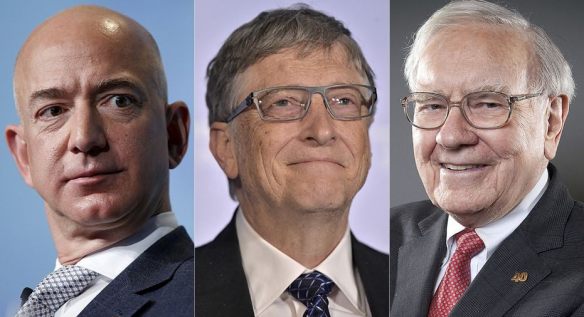
A new report from the Institute for Policy Studies found that, while tens of millions of Americans have lost their jobs during the coronavirus pandemic, America’s ultra-wealthy elite have seen their net worth surge by $282 billion in just 23 days. This is despite the fact that the economy is expected to contract by 40 percent this quarter. The report also noted that between 1980 and 2020 the tax obligations of America’s billionaires, measured as a percentage of their wealth, decreased by 79 percent. In the last 30 years, U.S. billionaire wealth soared by over 1100 percent while median household wealth increased by barely five percent. In 1990, the total wealth held by America’s billionaire class was $240 billion; today that number stands at $2.95 trillion. Thus, America’s billionaires accrued more wealth in just the past three weeks than they made in total prior to 1980. As a result, just three people ­– Amazon CEO Jeff Bezos, Microsoft co-founder Bill Gates and Berkshire Hathaway’s Warren Buffet – own as much wealth as the bottom half of all U.S. households combined.

The Institute for Policy Studies’ report paints a picture of a modern day oligarchy, where the super-rich have captured legislative and executive power, controlling what laws are passed. The report discusses what it labels a new “wealth defense industry” – where “billionaires are paying millions to dodge billions in taxes,” with teams of accountants, lawyers, lobbyists and asset managers helping them conceal their vast fortunes in tax havens and so-called charitable trusts. The result has been crippled social programs and a decrease in living standards and even a sustained drop in life expectancy – something rarely seen in history outside of major wars or famines. Few Americans believe their children will be better off than they were. Statistics suggest they are right.

Billionaires very theatrically donate a fraction of what they used to give back in taxes, making sure to generate maximum publicity for their actions. And they secure positive coverage of themselves by stepping in to keep influential news organizations afloat. A December investigation by MintPress found that Gates had donated over $9 million to The Guardian, over $3 million to NBC Universal, over $4.5 million to NPR, $1 million to Al-Jazeera, and a staggering $49 million to the BBC’s Media Action program. Some, like Bezos, prefer to simply outright purchase news organizations themselves, changing the editorial stance to unquestioning loyalty to their new owners.

The spike in billionaire wealth comes amid an unprecedented economic crash; 26.5 million Americans have filed for unemployment over the last five weeks, and that number is expected to continue to rise dramatically. While the super-rich are holed up in their mansions and yachts, the 49-62 million Americans designated as “essential workers” must continue to risk their lives to keep society functioning, even as many of them do not even earn as much as the $600 weekly increase in unemployment benefits the CARES act stipulates. Many low paid workers, such as grocery store employees, have already fallen sick and died. The mother of one 27-year-old Maryland worker who contracted COVID-19 and died received her daughter’s last paycheck. It amounted to $20.64.

Amazon staff, directly employed by Bezos, also risk their lives for measly pay. One third of all Amazon workers in Arizona, for example, are enrolled in the food stamps program, their wages so low that they cannot afford to pay for food. The vast contrast in the effect that COVID-19 has had on the super wealthy versus the rest of us has many concluding that billionaires’ wealth and the poverty of the rest of the world are two sides of the same coin: that the reason people working full-time still cannot afford a house or even to eat is the same reason people like Bezos control more wealth than many countries. Bezos’ solution to his employees’ hunger has been to set up a charity and ask for public donations to help his desperate workers.

The majority of millennials, most of them shut out from attaining the American dream, already prefer socialism to capitalism, taking a dim view of the latter. The latest news that the billionaire class is laughing all the way to the bank during a period of intense economic suffering is unlikely to improve their disposition.


Alan MacLeod is a Staff Writer for MintPress News. After completing his PhD in 2017 he published two books: Bad News From Venezuela: Twenty Years of Fake News and Misreporting and Propaganda in the Information Age: Still Manufacturing Consent. He has also contributed to Fairness and Accuracy in Reporting, The Guardian, Salon, The Grayzone, Jacobin Magazine, Common Dreams the American Herald Tribune and The Canary.

Death: A Simple Idea with a Powerful Punch

By Edward Curtin

Source: Off-Guardian

Since death is one idea that has no history except as an idea and not a reality any of us have experienced, it is the most frightening idea there is and also quite simple. It is the ultimate unknown. It has always haunted human beings, whether consciously or unconsciously.

It lies at the root of war, violence, religion, art, love, and civilization. The good and the bad, the beautiful and the ugly, why we like to win and not lose, pass and not fail, “pass on” and not die. It is so funny and so sad. We would be lost without it, even when we feel lost when thinking about it. And it is fundamental for understanding the action and reaction to Covid-19.

Societies have always been people banded together in the face of death. And since people are not just physical beings but symbolic creatures who can think and imagine the past and the future, societies are necessarily mythic symbol systems whose job is not only to protect people physically, but symbolically as well.

Sometimes, however, the protection is a protection racket with racketeers holding people hostage to fabricated fears that keep them locked in a living-death.

Thus death, this most potent imaginative idea and reality that doesn’t exist except as a mystery about which anything we say is speculation, can be used for good and evil, depending on who controls society.

Death is the great fear, the human haunting that hangs by a thread over life like the sword of Damocles.

In 1944 in a newspaper column, George Orwell made an astute remark:

There is little doubt that the modern cult of power worship is bound up with the modern man’s feeling that life here and now is the only life there is. If death ends everything, it becomes much harder to believe that you can be in the right even if you are defeated…. I would say that the decay in the belief in personal immortality has been as important as the rise of machine civilization.

Beliefs, of course, like “personal immortality” and all others, such as the recent rise in the belief in atheism, which is as much a belief as belief in God, are, partially at least, relative to time and place, and develop out of social storytelling. The “hard facts” on which many feel their lives and security rest are themselves dependent upon the symbols which give them legitimacy.

Reality is indeed precarious with society suspended by a web of myths and symbols. It is through cultural and social symbol systems that society’s meaning is transmitted to individuals, and it is within the symbol systems that the control and release of action resides.

In today’s electronic mass media world, those who control the mass media that control the narrative flow – the storytelling – control the majority’s beliefs and actions.

Since society is held together by this myth system – the beliefs and values people live for and live by – that sustains it, societies have always had to offer symbolic “answers” to death. For without a meaningful symbolic for coming to terms with death, human action would be stymied and people would be reduced to what the psychiatrist Allan Wheelis termed “intense, preoccupying yearning.”

Today we can hear such yearning everywhere.

Shortly after Orwell made his prescient comment in The Tribune, nuclear weapons were developed and used by the United States to kill hundreds of thousands of innocent Japanese civilians. With those weapons and their use, the ages-old symbolic narrative of life and death was transformed in a flash.

“The significance of the possibility of nuclear death is that it radically affects the meaning of death, of immortality, of life itself,” wrote Hans Morgenthau.

The traditional symbolic sources that once served to allow humans to transcend death were fundamentally undercut, and the search for new modes of death transcendence was carried on beneath the portentous covering of the nuclear umbrella.

A qualitative transformation in the meaning of human existence was thus brought about as humans, who had the weapons, replaced the belief in God as the holder of the power over life and death, since nuclear war could result in the extinction of human life, leaving no one left to die.

This is our world today, and it is where the Covid-19 story takes place. A world not just of nuclear fear, but a host of other fears constantly inflamed by the mass media that hypnotize people through the conjuring of death-fear.

In his great work on group psychology, Freud showed us how it was not just mental contagion and the herd instinct that got people to join in group behavior. People could be induced to become little children and obey their leaders because they have “an extreme passion for authority.”

When leaders speak, the children hear the inner voices of their parents telling them to be careful, be very careful, the bogeyman is everywhere, so listen and obey. Freud, the Jewish atheist, and Dostoevsky, the Russian Orthodox Christian, were in agreement about people’s desire to give up their freedom to authority figures who would allegedly shelter them within their warm embrace.

The easiest way to do this is to convince people that death is stalking them, for the bogeyman is always death in one form or another.

It works to get people to support the terrifying sadism of wars against fabricated “others,” who are always portrayed as aliens who are out to kill the good people.

It works to get people to give up their freedoms out of fear of “terrorists,” who are said to slide and hide in the interstices of everyday life, ready to pounce and kill at any moment.

And it works to get people to obey orders to protect themselves from terrifying viruses that are lying in wait everywhere to strike them dead.

In his novel The Brothers Karamazov, Dostoevsky said that people want miracles, mystery, and authority, not freedom. His Grand Inquisitor, while a fictional creation, lives on in reality.

For the Grand Inquisitor represents those power elites across the world who wish to cower people into accepting their dicta on Covid-19 as truth without questioning its logic or rationale.

To question has become an act of insubordination deserving death by censorship or the defiling of one’s name via the term “conspiracy theorist,” a name used by the CIA to dismiss anyone questioning its murder of President Kennedy. Death comes in many forms, and the fear of it has always been used by the powerful to render the common people speechless and obedient.

How can any thinking person, anyone not totally crippled by fear, not question what is going on with the coronavirus disaster when reading what Peter Koenig, a thirty-year veteran economist of the World Bank and World Health Organization, writes in his article The Farce and Diabolical Agenda of a ‘Universal Lockdown’:

The pandemic was needed as a pretext to halt and collapse the world economy and the underlying social fabric.

There is no coincidence. There were a number of preparatory events, all pointing into the direction of a worldwide monumental historic disaster. It started at least 10 years ago – probably considerably earlier – with the infamous 2010 Rockefeller Report, which painted the first phase of a monstrous Plan, called the “Lock Step” scenario. Among the last preparatory moves for the “pandemic” was Event 201, held in NYC on 18 October 2019.

The event was sponsored by the Johns Hopkins Center for Public Health, the Bill and Melinda Gates Foundation (BMGF) and the World Economic Forum (WEF), the club of the rich and powerful that meets every January in Davos, Switzerland. Participating were a number of pharmaceuticals (vaccine interest groups), as well as the Centers for Disease Control and Prevention (CDC)’s of the US and – of China.

One of the objectives of Event 201 was a computer simulation of a corona virus pandemic. The simulated virus was called SARS-2-nCoV, or later 2019-nCoV. The simulation results were disastrous, killing 65 million people in 18 months and plunging the stock market by more than 30% — causing untold unemployment and bankruptcies. Precisely the scenario of which we are now living the beginning.

The Lock Step scenario foresees a number of ghastly and disturbing events or components of The Plan to be implemented by the so called Agenda ID2020, a Bill Gates creation, fully integrated into the UN’s Sustainable Development Goals (SDG) – target date for completion – 2030 (also called Agenda 2030, the hidden agenda unknown to most of the UN members), the same target date for completion of the Agenda ID02020.

I ask the question but I am afraid I know the answer: miracle, mystery, and authority usually defeat evidence and simple logic. Fear of death and free thought scare children. The Grand Inquisitor lives on:

But man seeks to bow before that only which is recognized by the greater majority, if not by all his fellow-men, as having a right to be worshipped; whose rights are so unquestionable that men agree unanimously to bow down to it.

Death: A simple idea with such a powerful punch.