New Cambridge Analytica Leaks Reveal Psychological Manipulation of Global Population

“We use the same techniques as Aristotle and Hitler. We appeal to people on an emotional level to get them to agree on a functional level.”

By Derrick Broze

Source: The Mind Unleashed

On New Year’s Day 2020, Twitter account @HindsightFiles began posting documents from data firm Cambridge Analytica (CA) which expose the extensive infrastructure used to manipulate voters on a global scale.

More than 100,000 documents are said to be released in the coming months, revealing Cambridge Analytica’s activity in a shocking 68 countries, including elections in Malaysia, Kenya, and Brazil. The Guardian reported that the documents come from Brittany Kaiser, a former employee of Cambridge Analytica who turned whistleblower and star of the documentary The Great Hack.

Kaiser told the Guardian:

“I’m very fearful about what is going to happen in the U.S. election later this year, and I think one of the few ways of protecting ourselves is to get as much information out there as possible.”

The latest CA whistleblower has said the dumps will contain previously unreleased emails, project plans, case studies, and negotiations. The HindsightFiles twitter account has posted data on the relationship between Cambridge Analytica and John Bolton, former National Security Adviser to the Trump administration. In 2013, the John Bolton Super PAC paid Cambridge Analytica $650,000 for voter data analysis and digital video ad targeting.

The documents provide more details on that relationship, including using psychographics to play on voters hopes and fears. Psychographics is a methodology which focuses on consumers psychological attributes. Research firms attempt to develop a psychographic profile on various segments of the population by studying personality, opinions, interests, attitudes, values, and behaviors.

Cambridge Analytica first made headlines following the 2016 Presidential election after it was revealed the company had gained access to 87 million Facebook profiles. Whistleblower Christopher Wylie exposed how he helped set up CA and obtain the data of millions of Americans. This is when the public began to understand the scope of Cambridge Analytica’s operations.

In 2015, the UK-based political consulting firm, worked on behalf of Ted Cruz’s campaign to help him win the 2016 Republican nomination. Cambridge Analytica was also involved in campaigns to promote Brexit, as well as promoting the 2016 Trump Presidential campaign. Donald Trump would eventually hire Steven Bannon as the chief strategist for his White House. Bannon previously served as CA’s vice president and was the executive chairman of Breitbart News.

It was through Bannon that whistleblower Christopher Wylie and CA CEO Alexander Nix came to know billionaire Robert Mercer. Bannon arranged for Mercer to invest five million dollars into the creation of Cambridge Analytica. Mercer wanted to work with the group to influence the U.S. elections. When the public became aware of the manipulation by CA, Bannon denied having any knowledge of the scheme. Wylie, however, said Cambridge Analytica was Bannon’s psychological warfare mindfuck.”

Cambridge Analyitca itself is a web of shadowy companies invested in behavioral researching and influencing mass behavior. Cambridge was born out of the Strategic Communications Laboratories (SCL), founded by Nigel Oakes and Alexander Nix. SCL claimed to have an expertise in Psychological Operations, and worked as part of military and political operations around the world. An article by the Register noted that SCL provided training to 15 (UK) Psychological Operations Group and had access to secret information.

The Great Hack documentary details how SCL started out as a military contractor called SCL Defense before shifting to using their data to influence elections. According to the New Yorker, SCL was born out of another organization created by Oakes, the Behavioral Dynamics Institute (BDI). Oakes told Marketing in a 1992 interview:

We use the same techniques as Aristotle and Hitler. We appeal to people on an emotional level to get them to agree on a functional level.”

Although Cambridge Analytica has officially shut down, company executives set up a new company in 2017 called Emerdata Limited.  It was also reported that SCL executives joined Emerdata, including Rebekah Mercer, daughter of billionaire Robert Mercer. The Mercer family have been consistent supporters of President Donald Trump.

The latest leaks from Cambridge Analytica seem poised to expose more lurid details of the inner workings of the disturbing relationship between big data and political operatives. Both the history of the company and its executives are a clear example of the growing trend of politicians seeking to use data gathered by social media companies to better understand and manipulate the minds of potential voters. Stay tuned to the Mind Unleashed for updates on this developing story.

It’s the DNC, Stupid: Democratic Party, Not Russia, Has Delegitimized the Democratic Process

By Elizabeth Vos

Source: Consortium News

Establishment Democrats and those who amplify them continue to project blame for the public’s doubt in the U.S. election process onto outside influence, despite the clear history of the party’s subversion of election integrity. The total inability of the Democratic Party establishment’s willingness to address even one of these critical failures does not give reason to hope that the nomination process in 2020 will be any less pre-ordained.

The Democratic Party’s bias against Sen. Bernie Sanders during the 2016 presidential nomination, followed by the DNC defense counsel doubling down on its right to rig the race during the fraud lawsuit brought against the DNC, as well as the irregularities in the races between former DNC Chairwoman Debbie Wasserman Schultz and Tim Canova, indicate a fatal breakdown of the U.S. democratic process spearheaded by the Democratic Party establishment. Influences transcending the DNC add to concerns regarding the integrity of the democratic process that have nothing to do with Russia, but which will also likely impact outcomes in 2020.

The content of the DNC and Podesta emails published by WikiLeaks demonstrated that the DNC acted in favor of Hillary Clinton in the lead up to the 2016 Democratic primary. The emails also revealed corporate media reporters acting as surrogates of the DNC and its pro-Clinton agenda, going so far as to promote Donald Trump during the GOP primary process as a preferred “pied-piper candidate.” One cannot assume that similar evidence will be presented to the public in 2020, making it more important than ever to take stock of the unique lessons handed down to us by the 2016 race.

Social Media Meddling

Election meddling via social media did take place in 2016, though in a different guise and for a different cause from that which are best remembered. Twitter would eventually admit to actively suppressing hashtags referencing the DNC and Podesta emails in the run-up to the 2016 presidential election. Additional reports indicated that tech giant Google also showed measurable “pro-Hillary Clinton bias” in search results during 2016, resulting in the alleged swaying of between 2 and 10 millions voters in favor of Clinton.

On the Republican side, a recent episode of CNLive! featured discussion of the Cambridge Analytica scandal, in which undecided voters were micro-targeted with tailored advertising narrowed with the combined use of big data and artificial intelligence known collectively as “dark strategy.” CNLive! Executive Producer Cathy Vogan noted that SCL, Cambridge Analytica’s parent company, provides data, analytics and strategy to governments and military organizations “worldwide,” specializing in behavior modification. Though Cambridge Analytica shut down in 2018, related companies remain.

The Clinton camp was hardly absent from social media during the 2016 race. The barely-legal activities of Clintonite David Brock were previously reported by this author to have included $2 million in funding for the creation of an online “troll army” under the name Shareblue. The LA Times described the project as meant to “to appear to be coming organically from people and their social media networks in a groundswell of activism, when in fact it is highly paid and highly tactical.” In other words, the effort attempted to create a false sense of consensus in support for the Clinton campaign.

In terms of interference in the actual election process, the New York City Board of Elections was shown to have purged over one hundred thousand Democratic voters in Brooklyn from the rolls before the 2016 primary, a move that the Department of Justice found broke federal law. Despite this, no prosecution for the breach was ever attempted.

Though the purge was not explicitly found to have benefitted Clinton, the admission falls in line with allegations across the country that the Democratic primary was interfered with to the benefit of the former secretary of state. These claims were further bolstered by reports indicating that voting results from the 2016 Democratic primary showed evidence of fraud.

DNC Fraud Lawsuit

The proceedings of the DNC fraud lawsuit provide the most damning evidence of the failure of the U.S. election process, especially within the Democratic Party. DNC defense lawyers argued in open court for the party’s right to appoint candidates at its own discretion, while simultaneously denying any “fiduciary duty” to represent the voters who donated to the Democratic Party under the impression that the DNC would act impartially towards the candidates involved.

In 2017, the Observer reported that the DNC’s defense counsel argued against claims that the party defrauded Sanders’ supporters by favoring Clinton, reasoning that Sanders’ supporters knew the process was rigged. Again: instead of arguing that the primary was neutral and unbiased in accordance with its charter, the DNC’s lawyers argued that it was the party’s right to select candidates.

The Observer noted the sentiments of Jared Beck, the attorney representing the plaintiffs of the lawsuit:

…“People paid money in reliance on the understanding that the primary elections for the Democratic nominee —nominating process in 2016 were fair and impartial, and that’s not just a bedrock assumption that we would assume just by virtue of the fact that we live in a democracy, and we assume that our elections are run in a fair and impartial manner. But that’s what the Democratic National Committee’s own charter says. It says it in black and white.”

The DNC defense counsel’s argument throughout the course of the DNC fraud lawsuit doubled down repeatedly in defense of the party’s right to favor one candidate over another, at one point actually claiming that such favoritism was protected by the First Amendment. The DNC’s lawyers wrote:

“To recognize any of the causes of action that Plaintiffs allege would run directly contrary to long-standing Supreme Court precedent recognizing the central and critical First Amendment rights enjoyed by political parties, especially when it comes to selecting the party’s nominee for public office.” [Emphasis added]

The DNC’s shameless defense of its own rigging disemboweled the most fundamental organs of the U.S. body politic.  This no indication that the DNC will not resort to the same tactics in the 2020 primary race,

Tim Canova’s Allegations

If Debbie Wasserman Schultz’s role as disgraced chairwoman of the DNC and her forced 2016 resignation wasn’t enough, serious interference was also alleged in the wake of two contests between Wasserman Schultz and professor Tim Canova in Florida’s 23rd congressional district. Canova and Wasserman Schultz first faced off in a 2016 Democratic primary race, followed by a 2018 general congressional election in which Canova ran as an independent.

Debacles followed both contests, including improper vote counts, illegal ballot destruction, improper transportation of ballots, and generally shameless displays of cronyism. After the controversial results of the initial primary race against Wasserman Schultz, Canova sought to have ballots checked for irregularities, as the Sun-Sentinel reported at the time:

“[Canova] sought to look at the paper ballots in March 2017 and took Elections Supervisor Brenda Snipes to court three months later when her office hadn’t fulfilled his request. Snipes approved the destruction of the ballots in September, signing a certification that said no court cases involving the ballots were pending.”

Ultimately, Canova was granted a summary judgment against Snipes, finding that she had committed what amounted to multiple felonies. Nonetheless, Snipes was not prosecuted and remained elections supervisor through to the 2018 midterms.

Republicans appear no more motivated to protect voting integrity than the Democrats, with The Nation reporting that the GOP-controlled Senate blocked a bill this week that would have “mandated paper-ballot backups in case of election machine malfunctions.”

Study of Corporate Power

A 2014 study published by Princeton University found that corporate power had usurped the voting rights of the public: “Economic elites and organized groups representing business interests have substantial independent impacts on U.S. government policy, while average citizens and mass-based interest groups have little or no independent influence.”

In reviewing this sordid history, we see that the Democratic Party establishment has done everything in its power to disrespect voters and outright overrule them in the democratic primary process, defending their right to do so in the DNC fraud lawsuit. We’ve noted that interests transcending the DNC also represent escalating threats to election integrity as demonstrated in 2016.

Despite this, establishment Democrats and those who echo their views in the legacy press continue to deflect from their own wrongdoing and real threats to the election process by suggesting that mere discussion of it represents a campaign by Russia to attempt to malign the perceptionof the legitimacy of the U.S. democratic process.

Hillary Clinton’s recent comments to the effect that Congresswoman Tulsi Gabbard is being “groomed” by Russia, and that the former Green Party Presidential candidate Dr. Jill Stein is a “Russian asset”, were soon echoed by DNC-friendly pundits. These sentiments externalize what Gabbard called the “rot” in the Democratic party outward onto domestic critics and a nation across the planet.

Newsweek provided a particularly glaring example of this phenomenon in a recent op-ed penned by columnist Naveed Jamali, a former FBI double agent whose book capitalizes on Russiagate. In an op-ed titled: Hillary Clinton Is Right. Tulsi Gabbard Is A Perfect Russian Asset – And Would Be A Perfect Republican Agent,” Jamali argued:

“Moscow will use its skillful propaganda machine to prop up Gabbard and use her as a tool to delegitimize the democratic process.” [Emphasis added]

Jamali surmises that Russia intends to “attack” our democracy by undermining the domestic perception of its legitimacy. This thesis is repeated later in the piece when Jamali opines: “They want to see a retreat of American influence. What better way to accomplish that than to attack our democracy by casting doubt on the legitimacy of our elections.” [Emphasis added]

The only thing worth protecting, according to Jamali and those who amplify his work (including former Clinton aide and establishment Democrat Neera Tanden), is the perception of the democratic process, not the actual functioning vitality of it. Such deflective tactics ensure that Russia will continue to be used as a convenient international pretext for silencing domestic dissent as we move into 2020.

Given all this, how can one expect the outcome of a 2020 Democratic Primary — or even the general election – to be any fairer or transparent than 2016?


Elizabeth Vos is a freelance reporter, co-host of CN Live! and regular contributor to Consortium News. 

Russiagate: The Miserable Truth

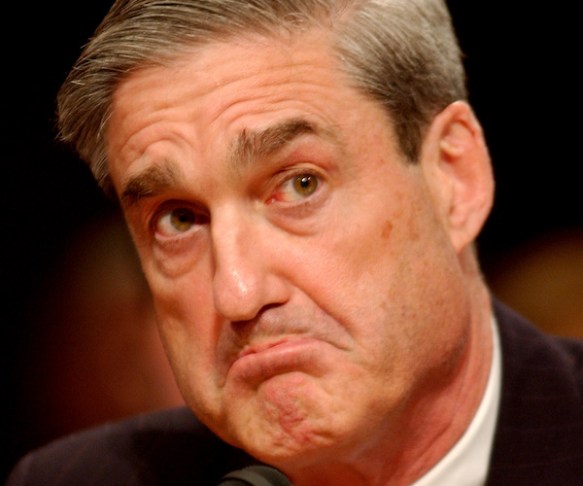
in Washington, DC on April 14, 2004. Robert Mueller named special prosecutor for Russia probe, Washington DC, USA – 17 May 2017 (Rex Features via AP Images)

By Barry Kissin

Source: OpEdNews.com

Introductory Disclaimer: I have never voted Republican for Federal office and I deplore most of what Fox News has to offer. I am currently registered Democrat in order to vote in the Presidential primary for either Bernie Sanders or Tulsi Gabbard.

Going on three years ago, on Nov. 12, 2016, my local newspaper, the Frederick News-Post, published my letter that stated: “Hillary Clinton was a terrible candidate. In an effort to deflect attention from the DNC rigging of her primary contest with Bernie Sanders, she resorted to somehow blaming the Russians. This was part of a pathological pattern, whose ultimate purpose was and is to remove the main obstacle (Russia under Putin) to neo-con schemes for global domination.”

We do not want to further demonize Russia (or Iran). This is unwarranted and dangerous to human survival. Its purpose is to aggressively assert American Empire against all limitations and to justify the astronomical sums we spend on war and weapons.

Hillary touted that all of our 17 intelligence agencies concluded with “high confidence” that the Russians meddled in our election for Trump’s benefit. False. The assessor was John Brennan, then spy-in-chief, who put together a secret panel of his choices from FBI, CIA and NSA in order to produce his miserable invention of the who, how and why the Russians did their dastardly meddling.

See Washington Post, June 23, 2017: “CIA Director John Brennan first alerts the White House in early August [2016] that Russian President Vladimir Putin had ordered an operation to defeat or at least damage Hillary Clinton and help elect her opponent, Donald Trump” based on what Brennan claimed was some source “deep inside the Russian government that detailed Russian President Vladimir Putin’s direct involvement in a cyber campaign”. Which source had supplied “Putin’s specific instructions on the operation’s audacious objectives”? No evidence has ever been produced backing up any of this.

Enter Mueller, a “deep state” hack if there ever was one. It bears mentioning that Mueller is the grandnephew of Richard Bissel, second in command at the CIA when JFK fired him after the Bay of Pigs fiasco. Mueller is married to the granddaughter of General Charles Cabell, third in command at the CIA, also fired by JFK; Mueller’s wife is also a grandniece of Earl Cabell, Mayor of Dallas when JFK was assassinated there, who was recently uncovered to have been a CIA asset. Small world.

Mueller’s career is replete with the production of disinformation and cover-ups. My community, home of Fort Detrick, got a dose of Mueller at work in the Amerithrax investigation. That investigation is the one in which Mueller framed Detrick scientist Bruce Ivins for sending the anthrax letters in order to cover up that the weaponization of the anthrax attack was a unique CIA technology.

On behalf of his current handlers, Mueller sang and danced his way into various indictments, most of which truly had nothing to do with Russiagate, but he couldn’t pull off even trying to nail Trump for collusion.

Of course, this isn’t the end of it. Pathetically, Democrats are pretending that Russiagate was nevertheless worthwhile (thus compounding the stupidity) on the basis that Trump obstructed justice, and also that we now know we have to protect our precious Presidential election from the Russians.

Obstructed what? Obstructed an investigation into the fabricated charge of collusion? Mueller just testified (on July 24) that whatever Trump did, it neither curtailed nor hindered his investigation, which after more than two years could neither find nor manufacture any evidence of collusion.

But now let’s drill down into this mantra of Russian meddling. According to the Mueller report, there were two facets: 1.) hacking of the DNC emails then sourcing to Wikileaks; and 2.) social media campaign. The social media campaign is a joke. The hacking story is more serious.

According to Mueller, it was the Russian company Internet Research Agency (IRA) that on behalf of the Russian government conducted the Facebook campaign. At page 25 of Vol. 1, Mueller informs us that this Russian company purchased 3,500 ads for a total expenditure of $100,000, which I ask you to compare to the $81 million spent on Facebook ads by the Trump and Clinton campaigns.

It’s sillier than that. According to Facebook’s testimony before Congress, most of the ads the IRA purchased were after the election and most said nothing about either Hillary or Trump. But they tended to promote “divisiveness” according to Mueller. Absurd!

We also now have a recently unsealed ruling by the U.S. District Court for D.C. that ordered Mueller to cease and desist from claiming that IRA was acting on behalf of the Kremlin – his linchpin claim — supported by no substantive evidence.

The most credible analyst of the hacking story has been completely (and deliberately) ignored by mainstream media. The implications of his analysis are so unsettling (dangerous) that even most alternative media avoid acknowledging him. But I believe “unsettling” is necessary to the process of waking up from the fairy tales Americans rely on, so I will lay out the truth about the stolen emails. This truth is simple and clear and unsettling.

The “most credible analyst” is named William Binney. He is a 32-year veteran of the NSA who, when he left the NSA in 2001, was the “Technical Leader” for intelligence, the senior technical analyst at the NSA. Binney resigned and blew the whistle when he discovered that his surveillance program was being used to spy on Americans without probable cause. Binney went on to co-found Veteran Intelligence Professionals for Sanity (VIPS) comprised of our smartest and bravest intelligence veterans whose very first effort in Feb., 2003 was to debunk Colin Powell’s UN presentation and to warn against “a war [upon Iraq] for which we see no compelling reason and from which we believe the unintended consequences are likely to be catastrophic.”

The VIPS forensic analysis of the hacking story in all of its painstaking detail can be accessed at ConsortiumNews.com. Here is a takeaway: On July 5, 2016, the intrusion into the DNC emails transferred data at an average speed of 22.7 megabytes per second, a speed that far exceeded the capability of the Internet as of July 2016. The speed of that data transfer corresponds with the speed of copying to a thumb drive (memory stick). Thus, there was no hack via the internet; it was a leak by someone with physical access to a DNC computer or server, most probably an insider.

We know who that insider was. His name, Seth Rich; a 27-year old DNC staffer who supported Bernie Sanders, and who was murdered in Washington, D.C on July 10, 2016. Two gun shots in the back. D.C. police said Rich was the victim of a “random burglary,” but nothing was taken, not his expensive watch, nor his money, nor his credit cards, nor his cell phone.

On August 9, 2016, Julian Assange was interviewed on Dutch TV in a segment available on YouTube at https://www.youtube.com/watch?v=Kp7FkLBRpKg Without violating the Wikileaks cardinal rule of never revealing sources, Assange came as close as he could to identifying Seth Rich as the source of the DNC emails. On that same date, Wikileaks offered a $20,000 reward for information leading to the conviction of Rich’s killer or killers.

William Binney informs us that in response to a FOIA request seeking records of communications between Seth Rich and others including Julian Assange, the NSA revealed that it has 15 documents, 32 pages of relevant records, but that it is all classified.

Next witness, Seymour Hersh. Wikipedia: “Hersh first gained recognition in 1969 for exposing the My Lai Massacre and its cover-up during the Vietnam War, for which he received the 1970 Pulitzer Prize for International Reporting. During the 1970s, Hersh covered Watergate for The New York Times and revealed the clandestine bombing of Cambodia. In 2004, he reported on the US military’s mistreatment of detainees at Abu Ghraib prison. He has won two National Magazine Awards and five George Polk Awards. In 2004, he received the George Orwell Award. More recently, Hersh uncovered that Obama, and Trump in 2017, blamed chemical attacks in Syria on Assad as a pretext for bombing Syria when in fact the chemical attacks were staged by the “rebels” we support.

In Nov. 2016, when Hersh did not realize he was being recorded, the recording became available months later on youtube at https://www.youtube.com/watch?v=rwMKFnzLoxQ , here’s what Hersh said: “All I know comes off an FBI report”. Paraphrasing : The D.C. police got a warrant to search Rich’s apartment. They seized his computer and turned it over to the FBI’s cyber unit. What the [FBI] report says is that sometime in late spring/early summer, [Seth Rich] makes contact with Wikileaks. That’s in his computer; [Rich]; had submitted some juicy emails from the DNC. He offered an extensive sample”, and said, “I want money; anyway Wikileaks got access.

Hersh goes on to say: “Brennan’s an a**hole. I’ve known all these people for years. I have somebody on the inside who will go and read a file for me. This person is unbelievably accurate and careful. He’s a very high level guy. It’s a Brennan operation. [Russiagate] was an American disinformation operation.”

Seth Rich had to be eliminated before Russiagate could be perpetrated.

Expect Increased Smearing Of Progressives As Russian Assets

By Caitlin Johnstone

Source: CaitlinJohnstone.com

After WikiLeaks documents provided irrefutable evidence that the Democratic National Committee had violated its charter by rigging its primary for Hillary Clinton against Bernie Sanders, what should have happened is this:

  • The DNC apologizing profusely to the public for violating the promises it had made to the electorate.
  • Massive, sweeping changes to bring transparency and public accountability to the DNC’s inner workings, including a complete overhaul of staff and leadership.
  • If at all possible, a complete do-over of the primary vote.
  • A dedication to attacking Trump’s right-wing policies from the left, showing the public that a progressive approach works better than a conservative one.

If this had happened Americans would not only be living in a vastly saner political landscape, but Trump probably would not have won in 2016. If the Democratic establishment had shown clearly and unequivocally that it was remorseful for its malfeasance and made an immediate overhaul that people could see for themselves, they wouldn’t have alienated nearly as many voters.

Instead, what happened was the DNC changing absolutely nothing, Nanci Pelosi saying she doesn’t see anything wrong with primary rigging, and the Democratic Party shrieking about Russia for more than two years.

Watching the establishment Russia narrative take hold of public consciousness was like watching a zombie outbreak. First it infected the slow ones, the virulent Clintonites who never had any natural defense against CIA/CNN narratives, which was disturbing and distressing but not at all surprising. Then, bit-by-bit, the Russia hysteria began to creep leftward. Progressives I’d been fighting alongside in 2016 began succumbing to the Russiagate mind virus in 2017, folding under peer pressure and aggressive mass media manipulation. Some of them held strong for a few months, then when one of the hollow but oh-so-confident-sounding “bombshell” Russiagate reports struck them in the right way at the right time they made public social media posts saying they were now convinced.

I watched them drop like flies. To this very day I still see Russia hysteria on my social media feeds from progressive Berniecrats I’d followed early on who transformed into McCarthyite cold war hawks at some point in the interim. When I post something skeptical of the establishment Russia narrative on Twitter I see accounts with red roses next to their name, a sign of support for the Democratic Socialists of America, arguing with me and accusing me of sympathizing with Trump and Putin.

Writers like Max Blumenthal and Glenn Greenwald have been warning since the outbreak of this pernicious mass manipulation that it would be used to target the left, but their warnings went unheeded as more and more progressive minds were funneled into the belief that the best way to fight Trump was to get behind the Russia hysteria bandwagon and push with all your might. And now, even as America’s 2020 presidential race is barely in its infancy, we are already beginning to see Russiagate used to smear anyone to the left of Hillary Clinton as Russian dupes.

I’d like to draw attention to a few recent social media posts which have gained a lot of traction in the last few days, not for the impact those posts have but for what they portend for the rest of the 2020 race. The first is from the Twitter account for the Russiagate documentary Active Measures, and it received thousands of shares:

“Bernie was the one Democrat not to vote to keep sanctions on Deripaska (he also voted against Russia sanctions and Magnitsky),” the post reads. “@SenSanders won’t stand up to billionaires in Russia and he wants you to to believe he’ll stand up to them in America. #fraud”

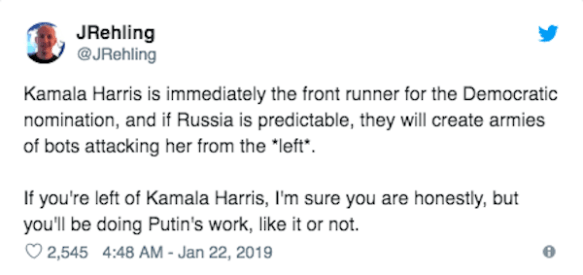
The second comes from professional linguist and engineer John Rehling, who has over 50 thousand Twitter followers, and it received hundreds of shares:

“Kamala Harris is immediately the front runner for the Democratic nomination, and if Russia is predictable, they will create armies of bots attacking her from the *left*,”  reads Rehling’s (now deleted) tweet. “If you’re left of Kamala Harris, I’m sure you are honestly, but you’ll be doing Putin’s work, like it or not.”

The third comes from Shareblue manipulator Caroline Orr, just one of many similar posts that she has made in recent days. Orr has also launched a GoFundMe to investigate Tulsi Gabbard’s imaginary Putin-Assad ties/score a free vacation to Hawaii, and is also circulating the baseless rumor that “Russian-linked accounts” are pushing for a Bernie-Tulsi 2020 ticket. Note the URL Orr highlighted in the tweet below featuring her allegation that Gabbard is “pro-Putin” and “pro-Assad”.

https://twitter.com/RVAwonk/status/1085084216726044672

In each case, posts punching left with accusations of Kremlin servitude gained traction with their followers, which means there is already an audience for this schtick. And, again, the presidential race has barely even begun. Things are likely to get a whole lot uglier between now and November 2020.

This is your life for the next two years, progressives. This is what those of you who drank the Russiagate Kool-Aid have helped buy for what passes for America’s political left today. You can expect such accusations to get far more common and far more aggressive as this thing drags on. The left can either play along with this and let centrist cold war rhetoric suck all the oxygen out of the room for the advancement of progressive policies, or they can fight back against this moronic facilitation of longstanding intelligence community agendas.

This use of Russiagate to herd the political left toward supporting America’s “center” (so-called only because it is the mainstream view, which in turn is only due to plutocratic narrative control) will actively move things further into corporatist dystopia. Supporting a “moderate” Democratic Party while the Republican Party always pushes as far to the right as it possibly can is guaranteeing a continuous overall movement to the right, which is why the gains made by the left in the early 20th century are almost gone now. If you have one person half-pulling westward on one end of a rope and another person tugging eastward with all their might, they’re going to move steadily east.

The slow, incremental changes advocated by the political “center” are code for no change whatsoever; they’re just buying time so that their corporate sponsors, who themselves never slow down, can finish shoring up control before the public forces them to scale back. If progressives don’t start attacking this “Move right or you’re a Russian agent” schtick directly and with full force, it will snuff them out completely.

Cyberwar: #RussiaGate Is US

By Rob Williams

Source: Project Censored

The following is a critical book review of Kathleen Hall Jamieson’s Cyberwar: How Russian Hackers and Trolls Helped Elect A President – What We Don’t, Can’t, And Do Know (Oxford: Oxford University Press, 2018).

“Russia hacked the 2016 US election!”

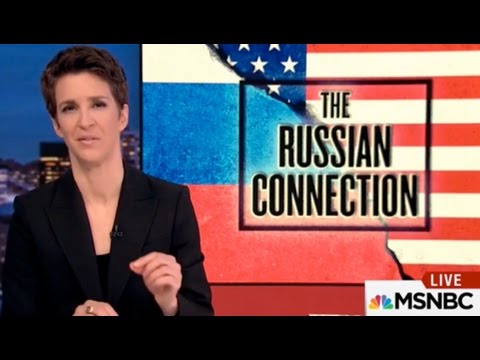
Since November 2016, the US “news” chatterati – pundits and poets, priests, prognosticators and politicians – have repeated this statement ad nauseum. The #RussiaGate story has become a commonly-accepted article of faith amongst the US neoliberal faithful – disgruntled Clintonistas, bereaved “Bernie Bros,” US news flaks, and anyone else who dislikes the current occupant of the White House. If the “Russia hacked the 2016 US election” meme warriors had a high-viz US standard bearer, it would probably be popular MSNBC performance artist Rachel “All Russia, All The Time” Maddow, who serves up the #RussiaGate sauce with reckless abandon to high TeeVee viewer ratings, earning somewhere between $30 and $40 K daily in salary. (LINK to RM mashup here).

And now, we have a scholarly book published by Oxford University Press with an epic title – Cyberwar: How Russian Hackers and Trolls Helped Elect A President – What We Don’t, Can’t, And Do Know – that purports to prove that Russia’s cyber-meddling helped sabotage the HRC campaign, swinging the 2016 US presidential election in favor of DJT.

To approach Cyberwar, first consider everything on the table re: the 2016 US presidential election.

Here‘s just a short list.

Witness the two most unpopular presidential candidates in US political history (one of whom confidently encouraged the other to run, convinced she could beat him); massive and well-documented bipartisan digital vote count manipulation (“electile dysfunction”) courtesy the 2002 “Help America Vote Act” (Orwell would be impressed); the grotesque (human) nature of Donald J Trump and Republicans’ comical attempts to first displace and then eventually come to terms with his 2016 candidacy; the complete corruption of the national Democratic Party leadership, which did everything it could to crown HRC the Dem standard bearer, from systematically undermining insurgent Vermont “progressive” Bernie Sanders’ presidential bid (read the 110 page report “Democracy Lost” for detailed descriptions of how the DNC manipulated 2016 Democratic primary outcomes in 11 swing states) to diverting DNC fundraising – millions of dollars collected from the pockets of ordinary Americans – away from so-called “down ballot” local office races and into HRC presidential campaign coffers during the heated months of 2016.

There’s so much more, but I’ll simply stop there.

Rather than looking in the 2016 mirror, however, US blames…Russians?

To be clear, I approached Cyberwar with an open mind. I am a big fan of the book’s author, distinguished US media scholar Kathleen Hall Jamieson (KHJ), longtime badass in the world of political communications scholarship, and current Elizabeth Ware Packard Professor at the Annenberg School for Communication at the University of Pennsylvania and the Director of the Annenberg Public Policy Center. Jamieson’s got street cred. However, after a close read and re-read of KHJ’s new book, including all the footnotes, Cyberwar left me unconvinced by its “more or less” central conclusion – “Russia trolled and hacked the 2016 US election, sorta!” In fact, I’d suggest that Cyberwar is a deeply problematic book, a fascinating scholarly study in “manufacturing consent” – the term Edward Herman and Noam Chomsky borrowed from Walter Lippman to title their 1988 book of the same name – describing how US elites “massage” US news channels like the New York Times, “filtering” into public view the “news” stories most beneficial to their strategic goals, while downplaying or censoring other worthy “news” stories of significance.

To fully understand my critique of Cyberwar, start with Jamieson’s credulous acceptance of “facts” provided by the US “intelligence community” (my new favorite Orwellian trope) re: the Russian government’s “interference” to advance her Cyberwar case. More on that in a moment. In the meantime, here is KHJ’s central Cyberwar claim, summarized in a single long sentence, slightly paraphrased for brevity, from her book’s conclusion: “In the run up to the 2016 US presidential election, Russian trolls and hackers carried out a strategically systematic and ultimately successful communications campaign to discredit Democratic presidential candidate Hillary Rodham Clinton and support Republican presidential candidate Donald J. Trump through sufficiently widespread messaging that focused on issues compatible with Trump’s strategic needs, addressing constituencies he had to mobilize and demobilize, by employing persuasive, visually evocative and well-targeted content that was amplified in swing states through sharing, liking, and commenting.” (p. 203).

It’s a mouthful, I know, and when you read it over a few times, removing both Clinton and Trump’s names, you quickly realize that this is what ANY strategic political campaign using digital tools –Cyberspace’s unique power and reach – would set out to do to try and win any election, anywhere. Russian president Vladimir Putin himself concedes that Russia wages “campaigns of political influence” wherever and whenever they can, just as the US and other powerful countries do and have done for decades, using as many communications tools as they can leverage.

So – how does Jamieson set out to prove Russian Cyberwar? She divides her book into four parts.

Part One of Jamieson’s book explores “who did it, why, and what research says about it might matter.” Here, KHJ flags the Internet Research Agency (IRA), a Russian troll farm, and introduces the reader to her previous ground-breaking work on communications effects research – how techniques like agenda-setting, framing, priming and “contagion creation” have worked over time to influence US voter decisions, and thus, perhaps, election outcomes. Big caveat here, that KHJ leaves unacknowledged. To wit – presumably, Russian “trolls” share the same primary goal as ALL trolls on the Internet, namely, maximizing audience engagement (and thus profit) through the creation and deployment of relevant content, with their chief “currency” being click-throughs, likes, shares, retweets, etc.

In Part Two of Cyberwar, Jamieson looks at what she calls “the prerequisites of [Russian] troll influence.” “Were the extent and virality of Russian social media content and the nature, coverage, and exposure of Russian-hacked Democratic materials,” she asks, “sufficient and sufficiently persuasive to plausibly affect the outcome of an election decided in three states by about 78,000 votes?” (p. 65). Hint – her final answer is a circumspectly strong “maybe.”

Part Three of Cyberwar finds KHJ considering “how the Russians affected the news and debate agendas in the last month of the presidential campaign.” Here, Jamieson looks at how “Russian hacked content” (her words) transformed the nature of US news coverage surrounding HRC in the month before the 2016 election, with a particular focus on the “drip drip drip” impact of “WikiLeak’d” emails illegally obtained from Democratic National Committee (DNC) servers, as well as FBI director James Comey’s role, during October 2016, in reopening the investigation into “newly-found” HRC emails, which KHJ argues helped shape public impressions around HRC for undecided US voters in the days just before the election.

Jamieson uses Cyberwar Part Four to provide a brief summary of “what we don’t, can’t, and do know about how Russian hackers and trolls helped elect Donald Trump.” “My case that the uses of Russian-hacked (emphasis added) Democratic materials influenced voters is built on scholars’ understandings of the effects of linguistic priming, media agenda setting, and framing the susceptibilities of late deciders, the dispositions of those who view both candidates unfavorably, the effects of imbalances in the amount of negative information available about alternative candidates, and scholarship on how debates affect voter attitudes,” Jamieson concludes. “It is scaffolded on evidence that the hacked content not only altered the media and debate agendas but also increased the negative press about Clinton. And it is bolstered by the possibility that Russian access and anticipated use of illegally gotten or fabricated Democratic content shaped a key decision by FBI director Comey.” (210)

To be fair, Cyberwar is an engaging read. Jamieson is a fine scholarly writer, and she has a field day digging into the aesthetics of individual Russian troll farm memes – complete with pictures. (The “Army Of Jesus” Facebook page, purportedly created by Russian trolls, features a boxing glove clad HRC sporting devil horns engaged in a fierce arm-wrestling match with Aryan Jesus himself. Hilarious.) KHJ also does a credible job tracing the evolution of the US news narrative around HRC in the weeks leading up to the 2016 election, showing how pivotal moments may have influenced voter perceptions about both HRC and DJT.

However! Individual Russian troll farm memes and evolving US “news” media coverage negatively impacting HRC do NOT a strategic Kremlin-led messaging campaign make.

Cyberwar continually flirts with a central question (which has become a story routinely told by US “news” media outlets)  – “Was Russian troll farming some sort of Kremlin-staged strategic cyber-op?” – without ever really answering it. The result is a book-length begging of this very important question, and here we come to the primary problem with Cyberwar– and it’s a whopper. Jamieson build her case for the Russian “tanking” of HRC’s candidacy on two central assumptions, both unproven.

Assumption #1: Jamieson implicitly asserts in Cyberwar that the Russians “hacked” into the Democratic National Committee (DNC) computer servers (as well as other hacks) and obtained digital copies of thousands of what became publicly damning emails from members of the DNC leadership team – Clinton campaign advisor John Podesta, HRC herself, and others – and then (by extension) tried to leverage the contents of these stolen documents for months in US social media spaces (and, by extension, influenced the shaping of US news narratives about HRC.) Interestingly, KHJ sneaks in “Russia hacked” and “Russian-stolen Democratic content” language into the last third of her book, without directly addressing this BIG rhetorical move or providing any proof that the Russians did so. Instead, she appears to implicitly draw on “evidence” for Russian hacking provided by the US “intelligence community” – former FBI director turned Trump special prosecutor Bob Mueller, former director of national intelligence James Clapper, and former National Security Agency director Michael Hayden chief among them. (Mueller, Clapper, Hayden – three US government officials who have all been less than honest with the American people, and I’m being generous.)

The counternarrative to the “Russia hacked into the DNC computers” story? Information was “leaked” from inside the DNC, not hacked from the outside. How might we know? Former NSA cryptographer Bill Binney, former CIA official Ray McGovern, and many other members of the 2003-founded Veteran Intelligence Professionals for Sanity (VIPS) argue that, based on their review of computer bit rate information, the stolen DNC content traveled at bandwidth rates too high to have been an external “hack,” but rather an internal “leak.” The reality? We’ll never know for sure, because the DNC refused to hand over their compromised computer servers to the FBI, instead contracting with Crowd Strike, a private US cybersecurity firm, to ascertain affirmative Russian hacking involvement (#Surprise!). For interested readers, NSA whistleblower Bill Binney discusses his “leak versus hack” conclusions on this recent episode of Brass Check TV between 1:27 – 1:37 here.

Assumption #2: In Cyberwar, Jamieson implies that WikiLeaks closely collaborated with the Russian government, or at the very least (it’s a bit hard to tell from her lack of analysis here), Putin used WikiLeaks as its public relations machine to destroy HRC’s reputation and elevate DJT as a presidential candidate. In other words, from his Ecuadorian embassy prison, Assange was in close cahoots with Putin, Cyberwar implies, or at the very least, Assange served as a “useful idiot” for the Kremlin. Here again, KHJ offers no proof, other than continually flagging the usual suspects, Russian troll farmers and hackers, as well as other sources such as the popular RT (formerly Russia Today) news channel for alleged disinformation shenanigans, such as broadcasting an exclusive in-depth interview between independent British journalist John Pilger and WikiLeaks’ co-founder Julian Assange on November 6, 2016, two days before the election.

Side note – this interview, entitled “Secret World of US Election,” is fascinating (see here).

RT/Russia Today now carries a variety of US news shows  hosted by US news journalists now unable to find access to the US airwaves, individuals like former MSNBC journalist Ed Schultz (now deceased), former US talk show host Larry King, and Pulitzer Prize winning former New York Times foreign correspondent Chris Hedges. Ironically, RT’s news content is often much more in-depth than any stories provided by the US corporate commercial TeeVee channels – watch any episode of Chris Hedges’ “On Contact,” for example, to hear perspectives on US politics you’ll rarely find on any other US news channel. On December 31, 2018, RT aired an episode of Larry King’s program talking with longtime Russia expert and War With Russia? author Stephen Cohen, and the show begins with King parroting the “Russia interfered in the US election” meme, a claim Cohen respectfully disputes before launching into a cogent and thoughtful analysis of the importance of a 21st century US-Russia “partnership” (not “friendship”) instead of more US/NATO aggression on Russia’s borders,  and how DJT’s overtures to Russia have been continually hamstrung by US political and media elites. Here’s a link for further listening. It bears repeating, and King and Cohen discuss this at some length, that Cohen’s point of view re: Russia is now considered “radical” in US policy-making circles, despite the Cold War between the US and Russia having been officially over for thirty years.

Back to WikiLeaks and the organization’s alleged conspiring with the Kremlin. Suffice to say, as the world’s first truly “stateless” news organization, WikiLeaks’ role as a powerful platform for publishing information provided by corporate and state insiders-turned-whistleblowers has been consistently credible and accurate, as well as proving a colossal PITA for US political and economic elites on all sides of the aisle. And yes, Assange and WikiLeaks have reserved special ire for the Clintons, and indeed, Assange admitted to actively working with the DJT campaign in the months leading up to the 2016 US presidential election. To implicitly blame the Russians for WikiLeaks’ behavior, however, as KHJ does in Cyberwar, is disingenuous at best.

Here’s a single example of this troublesome conflation based on faulty assumptions from page 149 pf KHJ’s Cyberwaranalysis: In early October 2016, Jamieson asserts, “a DHS-ODNI intelligence report confirmed that the Russians were behind the hacking of the DNC…and a first tranche of Russian-hacked Podesta emails was WikiLeak’d.” She then goes on to detail (rightly in my estimation) the damning impact of these documents on US news coverage of HRC’s campaign. But read her sentence above again to understand the broad leaps she is making, which go well beyond Russian troll farmers.

And here is the rub. At day’s end, Jamieson’s case for Russian Cyberwar squarely rests on these two assumptions, both unproven. The result? KHJ makes mountains out of molehills – amateurish Russian troll farming on Facebook and Twitter, and (maybe?) a “campaign of influence targeting HRC” is transmogrified, in her implicit final analysis AND by uncritical coverage of her Cyberwar book in the popular US news media, into Putin’s Russian government strategically penetrating to the very heart of the US electoral process, “gaming” the outcome against HRC and in favor of DJT. In this tense geopolitical moment, when corporate for-profit and “deep state” US “news” media mouthpieces supporting the Empire’s “full-spectrum dominance” of planet Earth on the Pentagon’s behalf are blindly thrashing about looking for someone (or some country) to blame, Cyberwar only adds fuel to the fires of the #RussiaGate hysteria.

Bigger picture? Even more troublesome for any American who still believes in the transformative power of free, open, and democratic discourse are the ways in which the two-year-old #RussiaGate tale is now being leveraged by US elites here in the “Homeland.” “Behavioral microtargeting,” a digital communications strategy pioneered in 2016 by UK-based Cambridge Analytica CEO Alexander Nix, Trump chief strategist Steve Bannon, and Facebook (unwittingly?) through “data breaches” of 50 million (with an M) Facebook user accounts, is now being used in state and local political races around the US as a viable political strategy. Social media censorship, meanwhile, is emerging as a strategic US synergistic state/corporate response to so-called “fake news” – witness neoliberal think tank Atlantic Council’s recent collaboration with Facebook to “purge” more than 800 “suspect” Facebook accounts, or Google’s “algorithmic censorship,” gaming its algorithm to marginalize US news outlets – TruthDig, Alternet, TruthOut, WWSA – critical of the US imperial status quo, or the complete purging of controversial independent analyst and so-called “conspiracy theorist” Alex Jones from pretty much ALL mainstream (read corporate) US digital platforms – all happened within the past year. And, as US comedienne Michelle Wolf pointed out at the annual Washington Press Club banquet last spring, MOUNDS of money are being made by US neoliberal “news” outlets – clicks, ratings, book sales – through this sort of Trump-bashing and fear-mongering, while pressing issues impacting the lives of ordinary Americans – “still no clean water in Flint, Michigan!” – are completely ignored. #RussiaGate, in sum, is now a rationale for demonizing, marginalizing, and censoring any US individual or organization that does not tow the #RussiaGate party line.

Despite the US news-induced hysteria surrounding the #RussiaGate tale, voices of reason persist. Most prominent include Rolling Stone investigative journalist Matt Taibbi, LA-based nightclub comedian Jimmy Dore (who regularly covers the excesses of the #RussiaGate story with his comedic colleagues on is popular YouTube channel “The Jimmy Dore Show”), and Nation reporter Aaron Maté, whose December 28, 2018 article calls BS on the #Russiagate nonsense. The complete title of Maté’s article? “New Studies Show Pundits Are Wrong About Russian Social-Media Involvement in US Politics – Far from being a sophisticated propaganda campaign, it was small, amateurish, and mostly unrelated to the 2016 election.” (read Maté’s piece here). Maté, who has covered the #RussiaGate story extensively since 2016, provides in-depth analysis of two new reports alleging Russian cyber meddling – one produced by the University of Oxford’s Computational Propaganda Research Project and the other by the US consulting corporation with deep ties to the national security state, New Knowledge. I encourage interested readers to take the time to read his story.

Maté’s conclusion, meanwhile, is worth quoting here at length:

Based on all of this data, we can draw this picture of Russian social-media activity: It was mostly unrelated to the 2016 election; microscopic in reach, engagement, and spending; and juvenile or absurd in its content. This leads to the inescapable conclusion, as the New Knowledge study acknowledges, that “the operation’s focus on elections was merely a small subset” of its activity. They qualify that “accurate” narrative by saying it “misses nuance and deserves more contextualization.” Alternatively, perhaps it deserves some minimal reflection that a juvenile social-media operation with such a small focus on elections is being widely portrayed as a seismic threat that may well have decided the 2016 contest.

Indeed.

Would that Kathleen Hall Jamieson was not a bit more “nuanced” in “contextualizing” her Cyberwar analysis.

What to do? The best answer is critical media literacy education – moving beyond partisan politics and moral panics to more thoughtfully engage these important political questions in open dialogue and debate.

Until we do so, we will continue to be enthralled by the #RussiaGate tale, with potentially deleterious geopolitical consequences. (Again, Cohen’s interview with Larry King is a good starting place).

To wit, in Pogo’s famous phrase – “we have met the enemy and he is US.”

Senate Report on Russian Interference Was Written By Disinformation Warriors Behind Alabama ‘False Flag Operation’

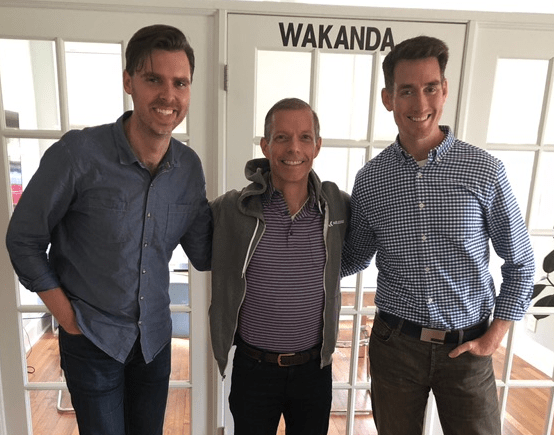
Hailed by Congress and the media as defenders of democracy, high-tech Russiagate hustlers Jonathon Morgan and Ryan Fox have been exposed for waging “an elaborate ‘false flag’ operation” to swing the 2017 Alabama senate race.

By Dan Cohen

Source: Gray Zone

On December 17, two reports detailing ongoing Russian interference operations commissioned by the Senate Intelligence Committee were made public. They generated a week’s worth of headlines and sent members of Congress and cable news pundits into a Cold War frenzy. According to the report, everything from the Green Party’s Jill Stein to Instagram to Pokemon Go to the African American population had been used and confused by the deceptive Facebook pages of a private Russian troll farm called the Internet Research Agency.

Nevermind that 56% of the troll farm’s pages appeared after the election, that 25% of them were seen by no one, or that their miniscule online presence paled in comparison to the millions of dollars spent on social media by the two major presidential campaigns and their supporters to sway voters. This was an act of war that demanded immediate government action.

According to Sen. Mark Warner, the Democratic chair of the Senate Intelligence Committee, the reports were “a wake up call” and a “bombshell” that was certain to bring “long-overdue guardrails when it comes to social media”. His Republican counterpart on the committee, North Carolina Senator Richard Burr, hailed the research papers as “proof positive that one of the most important things we can do is increase information sharing between the social media companies who can identify disinformation campaigns and the third-party experts who can analyze them.”

But the authors of one of the reports soon suffered a major blow to their credibility when it was revealed that they had engaged in what they called a “Russian style” online disinformation operation aimed to swing a hotly contested special senate election. The embarrassing revelation has already resulted in one of the authors having his Facebook page suspended.

The well-funded deception was carried out by New Knowledge, a private cyber intelligence firm founded by two self-styled disinformation experts who are veterans of the Obama administration: Jonathon Morgan and Ryan Fox.

‘It may be designed to manipulate you’

Morgan began his career as a product manager at AOL before founding a series of start ups, some with funding from the United States Agency for International Development and Silicon Valley billionaire Pierre Omidyar’s Omidyar Network. Once a Brookings Institution researcher and special advisor to the Obama White House and State Department, Morgan founded Data for Democracy, a volunteer organization said to use “public data to monitor the election system for signs of fraud.” Morgan also developed technology for the Defense Advanced Research Projects Agency (DARPA), the arm of the Department of Defense created for basic, applied technological research, and futuristic war toys.

Rising through the ranks of the national security apparatus, Morgan ultimately emerged as a go-to source for credulous reporters seeking to blame Hillary Clinton’s loss to Donald Trump on Russian disinformation.

In an interview with the local CBS affiliate in Austin, Texas, Morgan told viewers that feelings of discontent were telltale signs that they had been duped by Russian disinformation. “If it makes you feel too angry or really provokes that type of almost tribal response, then it may be designed to manipulate you… People should be concerned about things that encourage them to change their behavior,” he warned.

Fox, for his part, is a 15-year veteran of the National Security Agency and was a computer analyst for the Joint Special Operations Command (JSOC) military unit. JSOC is notorious for its spree of atrocities across the Middle East including digging their bullets out of dead pregnant women’s bodies in Afghanistan. Comparatively little information is available about Fox’s background.

Since receiving an $11 million investment from venture capital firm, GGV Capital, in August 2017, New Knowledge has positioned itself as one of the leading private intelligence firms taking on the scourge of Russian disinformation. The outfit made its biggest splash on December 17th when it published one of the two Senate Intelligence Committee-commissioned reports.

The report, titled “The Tactics and Tropes of the Internet Research Agency,” was oversseen by Renee DiResta, a former Wall Street trader and tech specialist who was recruited by Obama’s State Department to devise strategies for combating online ISIS propaganda. The New York Times described DiResta as one among a small group of “hobbyists” who “meticulously logged data and published reports on how easy it was to manipulate social media platforms.”

The hobby lobby of online obsessives converged at New Knowledge this year to sound the alarm on supposed Russian disinformation. In a New York Times op-ed published as Americans went to cast their votes in the midterm elections, Morgan and Fox alleged that the Kremlin was secretly running hundreds of propaganda websites in an effort to swing the outcomes. That assertion ran counter to the narrative the two operatives had been spinning out just months before.

In an interview earlier in the year, Ryan Fox suggested that despite the Trump administration’s multiple rounds of sanctions against Russia, Vladimir Putin was so satisfied with the state of U.S. affairs that the Kremlin had actually cut back on its supposed interference. “Strategically, are they content with the way things are? Does it play in their favor to do anything right now? That’s a valid question,” Fox said. “Keep up the momentum, keep poking away. But do they have to implement drastic measures like hacking the DNC and exposing thousands of emails? Probably not.”

More recently, Fox claimed to have identified hundreds of Russian-controlled Facebook and Twitter accounts active in France’s Yellow Vest movement, which has raged against the country’s neoliberal leadership and sparked anxiety among centrist elites across the Atlantic.

However, Fox produced no evidence to support his incendiary accusation, prompting reporters to qualify his assertions as “very likely” and write that he merely “believes” Russian interference took place.

Drafting the dubious bot dashboard

Morgan is also one the developers of the Hamilton 68 dashboard, an online project dedicated to inflaming public outrage over online Russian bots. Funded by the German Marshall Fund’s Alliance for Securing Democracy – which is itself backed by NATO and USAID – Hamilton 68 claims to track hundreds of accounts supposedly linked to Russian influence operations. The effort has largely succeeded in drawing positive media attention despite one of its founders, Clint Watts, admitting that the Twitter accounts it follows may actually be real people who are not Russian at all.

When Morgan was asked what techniques Hamilton 68 uses to identify Russian influence operations, he offered a confident-sounding but ultimately empty answer: “We developed some techniques for determining who matters in a conversation… Using some of those techniques, we’ve identified a subset of accounts that we’re very confident are core to furthering the Russian narrative in response to mainstream events.”

Because Morgan and his colleagues have explicitly refused to name the accounts monitored by Hamilton 68, his claims can never be proven.

In a lengthy profile of the musicologist-turned-New Knowledge “online detective” Kris Shaffer, Foreign Policy described the supposed methodology he employed to identify Russian disinfo operations: “By working with massive datasets of tweets, Facebook posts, and online articles, he is able to map links between accounts, similarities in the messages they post, and shared computer infrastructure.”

The article added an extraordinarily revealing disclaimer: “This method of analysis is in its infancy, remains a fairly blunt instrument, and still requires human intervention. It sometimes mistakes real people who post anti-imperialist arguments about U.S. foreign policy for Kremlin trolls, for example.”

It may have been that New Knowledge had no knowledge at all of Kremlin botnets, but their reports were nonetheless treated as gospel by droves of credulous reporters eager to make their name in the frenzied atmosphere of Russiagate.

“We orchestrated an elaborate ‘false flag’ operation”

According to an internal New Knowledge report first seen by the New York Times, the firm carried out a multi-faceted influence operation designed to undermine a 2017 bid by right-wing Republican former state supreme court judge Roy Moore for an open Alabama senate seat. By its own admission, New Knowledge’s campaign capitalized on the the sexual assault allegations against Moore to “enrage and energize Democrats” and “depress turnout” among Republicans.

To accomplish this, the New Knowledge team created a Facebook page aimed at appealing to conservative Alabamians by encouraging them to endorse an obscure patio supply salesman-turned-write-in candidate named Mac Watson. They hoped the subterfuge would peel votes away from Moore. It was precisely the kind of tactic that New Knowledge claims Russian troll farms carry out to sow divisions among the American electorate.

Morgan told the New York Times the effort stopped there. But the New Knowledge report says the Facebook page “boosted” Watson’s campaign and even arranged interviews for him with The Montgomery Advertiser and the Washington Post. At the same time, Watson’s Twitter following mysteriously jumped from 100 to about 10,000.

Of the dozens of conservative Alabamian Facebook pages the Watson campaign messaged, the New Knowledge-run page was the only one that responded to it. “You are in a particularly interesting position and from what we have read of your politics, we would be inclined to endorse you”, they wrote. New Knowledge then “asked Mr. Watson whether he trusted anyone to set up a super PAC that could receive funding and offered advice on how to sharpen his appeal to disenchanted Republican voters.”

While Watson communicated with the deceptive Facebook page, the New Knowledge operators never revealed their identity, and the page disappeared the day after the vote. “It was weird,” Watson commented to the New York Times. “The whole thing was weird.”

New Knowledge then sought to manufacture a link between Roy Moore’s campaign and the Kremlin by claiming thousands of his Twitter followers were Russian bots. Mainstream media outlets credulously ran with the narrative, insinuating that the Christian theocrat Moore was secretly backed by Russia.

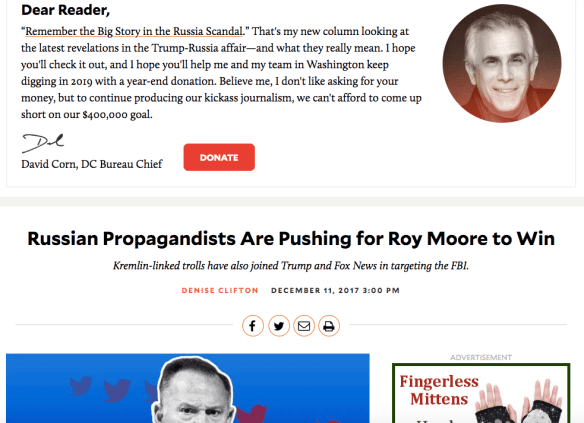
The Montgomery Observer first reported the alleged link: Russian invasion? Roy Moore sees spike in Twitter followers from land of Putin. From there, it was picked up by Mother Jones, whose headline read: Russian Propagandists Are Pushing for Roy Moore to Win. But there was no proof of any Russian connection to the accounts. To bolster its evidence-free claim, Mother Jones simply turned to Hamilton 68, the highly suspect Russian influence monitoring system that Morgan helped design.

Today, as can be seen below, Mother Jones is using a bogus story generated by a disinformation campaign to raise funds for more Russiagate coverage.

As the Russian bot narrative peaked, Moore blamed the Jones campaign for manufacturing the scare. “It’s not surprising that they’d choose the favorite topic of MSNBC and the Fake News outlets — the Russia conspiracy. Democrats can’t win this election on the issues and their desperation is on full display.”

Moore’s opponent, Jones, said he had no knowledge of the operation.

Moore was roundly mocked in liberal circles as a conspiratorial crank, but New Knowledge’s internal report contained a stunning admission: “We orchestrated an elaborate ‘false flag’ operation that planted the idea that the Moore campaign was amplified on social media by a Russian botnet,” its authors revealed.

While the New York Times says the internal report does not confirm that New Knowledge purchased the bot account themselves, the accounts’ flagrant use of Cyrillic language and profile pictures of famous singers including Britney Spears, Christina Aguilera and Avril Lavigne strongly suggest that whoever bought them went to extreme lengths to leave the appearance of a Russian hand.

Disinfo ops to “strengthen American democracy”

The Alabama disinformation campaign was carried out through a network of Silicon Valley tech entrepreneurs and former Obama administration officials who have joined the private sector to leverage liberal anti-Trump outrage into profits.

Billionaire Reid Hoffman, who co-founded the employment networking site LinkedIn, provided $100,000 for the black ops campaign. The money was then pipelined through American Engagement Technologies, which is headed by Mikey Dickerson, a former Google engineer who founded the United State Digital Service. Dickerson is also Executive Director of the New Data Project, an organization dedicated to “testing new approaches” and “serving as an advanced technology research lab for progressives.”

A colleague of Hoffman’s claimed the purpose of his investments was to “strengthen American democracy.”

Since the New York Times’ exposé, Facebook released a statement announcing its suspension of “five accounts run by a multiple individuals for engaging in coordinated inauthentic behavior,” including Morgan’s account. The social media platform has opened an investigation, though it has not revealed what the other pages are or who operated them.

The headline of the New York Times story about the Facebook suspensions appeared to have been crafted to keep the focus on Russia while deflecting scrutiny from the group of Democratic Party-linked hustlers that orchestrated the disinformation operation. It read: “Facebook Closes 5 Accounts Tied to Russia-Like Tactics in Alabama Senate Race.”

For his part, Sen. Jones has demanded an investigation. “I think we’ve all focused too much on just the Russians and not picked up on the fact that some nefarious groups, whether they’re right or left, could take those same playbooks and start interfering with the elections for their own benefit,” he said. “I’d like to see the Federal Election Commission and the Justice Department look at this to see if there were any laws being violated and, if there were, prosecute those responsible.”

Facing an inquiry for possible violations of election laws, Morgan issued a mealy-mouthed statement claiming he “did not participate in any campaign to influence the public and any characterization to the contrary misrepresents the research goals, methods and outcome of the project.”

https://twitter.com/jonathonmorgan/status/1075575821362958337

While the impact of the disinformation campaign on the Alabama senate race may never be quantified, the cynicism behind it is hard to understate. A group of Democratic Party operatives with close ties to the national security state waged a cynical campaign of online deception against the American public, while marketing themselves as the guardians against from foreign interference. Few, if any, Russian hackers could have done as much damage to the already worn fabric of American democracy as they have.


Washington’s Russiagate Conspiracy Theory on Life Support

By Tony Cartalucci

Source: Land Destroyer

The latest bid to keep Washington’s desperate Russiagate conspiracy theory alive has energized distilled segments of the public still convinced of Moscow’s global omniscience and its role in manipulating and undermining virtually every aspect of their daily lives.

But recent “revelations” are simply the same accusations made against a Russian-based click-bait farm, repackaged and respun.

The Washington Post’s article, “New report on Russian disinformation, prepared for the Senate, shows the operation’s scale and sweep,” would in fact present no new report. Instead, it would present repackaged narratives involving “Russia’s disinformation campaign around the 2016 election.” 

The Washington Post would claim:

The report, obtained by The Washington Post before its official release Monday, is the first to study the millions of posts provided by major technology firms to the Senate Intelligence Committee, led by Sen. Richard Burr (R-N.C.), its chairman, and Sen. Mark Warner (Va.), its ranking Democrat. The bipartisan panel also released a second independent report studying the 2016 election Monday. Lawmakers said the findings “do not necessarily represent the views” of the panel or its members.

The two reports were put out by Oxford University’s Computational Propaganda Project and New Knowledge. No information is provided by the Washington Post as to what either of these organizations are, who runs them, or who funds them.

Both reports rehash allegations claiming the Russia-based Internet Research Agency (IRA) conducted an extensive influence campaign through social media during the 2016 US elections.

The total amount of money spent on such operations amounted to approximately $100,000 in Facebook ads. To put this amount in context, the very same Washington Post would report in April 2017 that the total amount spent on the 2016 elections amounted to $6.5 billion – in other words – the amount allegedly spent on Facebook ads by IRA was about 0.001% of total US campaign spending.

Both reports cited by the Washington Post and presented to US Congress did not dispute this. Instead, they attempted to claim the impact of IRA’s activities far exceeded this $100,000 in ads.

The New Knowledge report would claim:

The Instagram and Facebook engagement statistics belie the claim that this was a small operation — it was far more than only $100,000 of Facebook ads, as originally asserted by Facebook executives,” the New Knowledge white paper said. “The ad engagements were a minor factor in a much broader, organically driven influence operation. 

And to unskeptical, untrained eyes, the figures presented by both Oxford and New Knowledge tabulating millions of views, shares, and likes do appear to “belie the claim that this was a small operation.”

Context is King 

But organically driven influence simply means whatever was posted by IRA was picked up by ordinary people and spread by them, not IRA. And while the numbers presented by Oxford and New Knowledge may seem impressive, how do they compare to the “scale and sweep” of the 2016 candidates’ efforts on Facebook?

Since neither group of “researches” bothered to provide this important context, it is fortunate that the Western media itself has, albeit deeply buried in older articles.

It stands to reason that the $81 million US President Donald Trump and presidential candidate Hillary Clinton spent on Facebook – according to TechCrunch – also translated into “organically driven influence.”

In fact, a 2017 Washington Post op-ed titled, “Why Russia’s Facebook ad campaign wasn’t such a success,” would explain:

…the Russian content was just a tiny share of the 33 trillion posts Americans saw in their Facebook news feeds between 2015 and 2017. Any success the ads had in terms of reach seems attributable largely to the sheer doggedness of the effort, with 80,000 Facebook posts in total. Facebook reported that a quarter of the ads were never seen by anyone. And — with the average Facebook user sifting through 220 news-feed posts a day — many of the rest were simply glanced at, scrolled past and forgotten. 

With $81 million spent on Facebook by the Trump and Clinton campaigns, mostly to mobilize core supporters to donate and volunteer, a low-six-figure buy is unlikely to have tipped the election.

In proper context, whatever IRA’s $100,000 bought them, Trump and Clinton’s $81 million bought them much more of.

So what is Oxford University’s Computational Propaganda Project and why is it publishing a 47-page report (.pdf) claiming, “Russia’s IRA launched an extended attack on the United States by using computational propaganda to misinform and polarize US voters,” when freely available facts reported on by the Western media itself proves exactly the opposite?

And what is New Knowledge and why is it publishing a 101-page report (.pdf) claiming $100,000 in Facebook ads constitutes a, “long-running and broad influence operation” when the Washington Post itself has featured experts depicting it as anything but?

Who is Keeping Russiagate on Life Support? 

Oxford University’s Computational Propaganda Project is funded by the US National Science Foundation and the European Research Council as well as by Oxford University itself.

The fact that the former two sponsors are supposedly dedicated to funding scientific pursuits yet are funding the Project’s role in buttressing Western propaganda – specifically that aimed at Russia and China – is particularly troubling.

New Knowledge is more interesting still. It poses as a business claiming to provide the service of, “protecting brands from social media disinformation attacks.” It explains further on its “Our Company” page that:

New Knowledge is a team of national security, digital media and machine learning experts with decades of experience who are dedicated to defending public discourse and providing brands with disinformation protection.

New Knowledge claims it provides clients with a “dashboard” to track and alert them to “disinformation attacks” on their brands. It is difficult to believe anyone would pay New Knowledge for their “services” when most companies already have marketing teams more than capable of minding their brand.

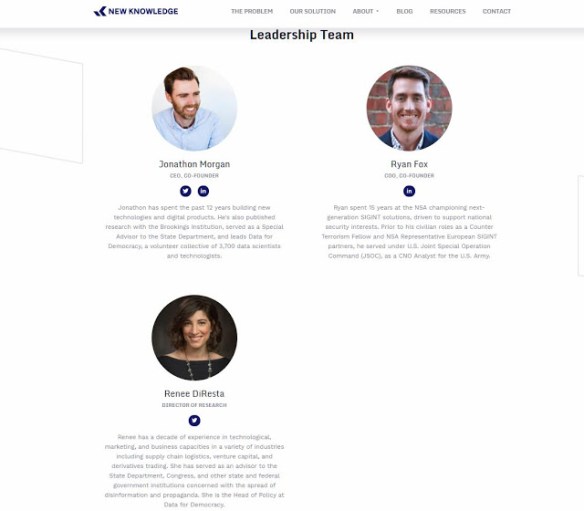
Further down on the same page is New Knowledge’s “Leadership Team.”

It includes CEO Jonathon Morgan who boasts of contributing to corporate-financier funded Brookings Institution – a pro-war policy think tank. He also claims to have served as a “Special Advisor to the State Department.”

There is also COO Ryan Fox, who claims he spent 15 years at the National Security Agency (NSA) focusing on signals intelligence and before that as an analyst for the US Army.

Renee DiResta –  New Knowledge’s director of research – also claims to have worked as an adviser to the US State Department as well as for Congress and other state and federal government institutions regarding “the spread of disinformation and propaganda.”

Both the Oxford operation and New Knowledge intentionally omitted context from their lengthy reports to deliberately portray a minuscule click-bait operation as a threat to American national security. If the $100,000 spent by IRA on Facebook ads was compared side-by-side to the gargantuan sums spent by Trump and Clinton during the 2016 campaign – and that fraction of 1% properly presented to the public – the Russiagate conspiracy theory would drop dead instantly.

No genuine researcher would have committed to reports of up to 100 pages long and failed to put IRA’s impact into proper context and provided a sense of proportion within the 2016 elections IRA supposedly attempted to influence.

But an Oxford-based team funded by the US government might. So might New Knowledge – lined by “advisers” to the US State Department and former employees of the NSA.

It is ironic that amid supposed efforts to expose Russia’s attempts to target the American public with propaganda, it is Oxford, New Knowledge, and the US Congress itself which requested and approved of deliberate propaganda – aimed at targeting the American public to keep the Russiagate conspiracy alive.

Why?

Because Russiagate serves as a central pillar in cultivating hatred across the West against Russia – serving as a pretext for continued expansion of NATO along Russia’s borders, creating leverage against Moscow regarding US wars of aggression across North Africa, the Middle East, and Central Asia, and the undermining of Russia’s position in global energy markets.

There hasn’t been a conflict of confrontation the US has elected to pursue that hasn’t included crude, baseless propaganda aimed at manipulating the American public. Iraq had “weapons of mass destruction.” Now Russia has “Facebook ads of mass persuasion.”


Update:

Facebook suspends account for “New Knowledge” CEO Jonathan Morgan


Related Video:

The Battle for Our Minds

By Patrick Lawrence

Source: Consortium News

After reading The New York Times piece “The Plot to Subvert an Election” I put the paper down with a single question.

Why, after two years of allegations, indictments, and claims to proof of this, that, and the other did the newspaper of record—well, once the newspaper of record—see any need to publish such a piece? My answer is simple: The orthodox account of Russia-gate has not taken hold: It has failed in its effort to establish a consensus of certainty among Americans. My conclusion matches this observation: The orthodox narrative is never going to achieve this objective. There are too many holes in it.

“The information age is actually a media age,” John Pilger, the noted British–Australian journalist, remarked during a symposium four years ago, when the Ukraine crisis was at its peak. “We have war by media; censorship by media; demonology by media; retribution by media; diversion by media—a surreal assembly line of obedient clichés and false assumptions.” Pilger revisited the theme in a piece last week on Consortium News, arguing that once-tolerated, dissenting opinion has in recent years “regressed into a metaphoric underground.”

There are battlefields in Syria, Ukraine, Yemen, and elsewhere, but perhaps the most consequential battle now being fought is for our minds.

Those who dispense with honest intellectual inquiry, healthy skepticism of all media, and an insistence that assertions require supporting evidence should not win this war. The Times piece by Scott Shane and Mark Mazzetti—two of the paper’s top-tier reporters—is a case in point: If the Russia-gate narrative were so widely accepted as their report purports, there would have been no need to publish such a piece at this late date.

Many orthodox narratives are widely accepted however among a public that is not always paying attention. The public too often participates in the manufactured consent. Usually it take years for the truth to be widely understood. Sometimes it comes when the U.S. admits it decades later, such as the role of the CIA in the coups in Iran and Chile. Other times it comes through admissions by former U.S. officials, such as former Defense Secretary Robert McNamara about the Vietnam War.

Even Recent Narratives are Fraying

There are more recent examples of official narratives quickly fraying if not starting to fall apart, though Establishment media continues to push them.

For instance, there are serious doubts about who was responsible for alleged chemical weapons attacks in Syria. The most significant was in Eastern Ghouta in August 2013 followed by attacks in Khan Sheikhoun (April 2017) and Douma (April 2018).

The corporate media accounts of each of these attacks have been countered with persuasive evidence against the prevailing view that the government of Bashar al–Assad was to blame. It has been provided journalists (Seymour Hersh ), a scientist (Theodore Postol ), and on-the-ground correspondents and local witnesses. These reports are subject to further verification. But by no means do official narratives stand without challenge.

There is also the case of Malaysian Flight MH–17, shot down over Ukrainian territory in June 2014. The official report, issued a year later, concluded that the plane was downed by Ukrainian rebels using a Russian-supplied missile. The report was faulty from the first: Investigators never visited the site , some evidence was based on a report produced by Bellingcat , an open-source web site affiliated with the vigorously anti–Russian Atlantic Council, and Ukraine was given the right to approve the report before it was issued.

Last week the Russian military disclosed evidence that serial numbers found in the debris at the MH–17 crash site indicate the missile that downed the plane was produced at a Soviet military-production plant in 1986 owned by Ukraine. Let us see further verification of this evidence (although I seriously doubt any Western correspondent will seek any). The official report of 2015 noted the serial numbers, so we know they are authentic, but it did not use them to trace the missile’s provenance.

There is also the seriously muddled case of the poisoning of the Skripals in Britain.  Why hasn’t the Western media dug into this story rather than accept at face value the pronouncements of the British government?

A month ago I lamented the damage Russia-gate has done to many of our most important institutions, the press not least among them. What is the corporate media thinking? That once President Trump is dumped, all will return to normal and professional standards will be restored? One can also argue the reverse: that adversarial journalism has returned to the White House beat largely out of personal animus towards Trump and that it will disappear again once a more “normal” president is in office.

As Pilger put it, “This is a seismic shift, with journalists policing the new ‘groupthink,’ as [Robert] Parry called it, dispensing myths and distractions, pursuing its enemies.”

In other words, Establishment journalism has shifted far afield from its traditional ideals of non-partisan, objective reporting and is instead vying for your mind to enlist it in its agenda to promote American interests abroad or one party or the other at home.

We can’t let them get away with it. Our minds are our own.