Deafening Silences: propaganda through censorship, smearing and coercion

By Dr Piers Robinson

Source: Off-Guardian

There is a case to be made that the most important part of any propaganda campaign is the drive to ensure that certain voices, claims and arguments either never see the light of day or otherwise remain contained within “fringe” or “alternative” circles.

Since the start of the COVID event, authorities around the world have sought to implement quite extraordinary policies including the so-called “locking down” of entire populations, compulsory masking and coercion through, for example, the mandating of multiple ‘vaccine’ injections. Many of these policies fly in the face of long-established and well-evidenced public health approaches to dealing with respiratory viruses whilst the scientific cogency of these measures – including lockdowns, community masking and “vaccine” injections – is coming under increased scrutiny.

At the same time, the catastrophic consequences, the so-called “collateral damage” (a military euphemism for wartime civilian casualties), of these extreme policies for populations around the world is becoming well-established. Randomised controlled trials of the injections to date have not shown net overall benefit, while accumulating evidence from passive reporting suggests they may be a cause of significant levels of harm. A central part of selling these extreme, and ultimately highly destructive, policies has involved the use of propaganda.

One of the problems with researching and writing about propaganda is that many people believe it to be alien to democratic states. However, as Edward Bernays, considered by many to be a key figure in the development of 20th century propaganda techniques, explained and promoted…

the conscious and intelligent manipulation of the organized habits and opinions of the masses is an important element in democratic society.

At least to an extent, this belief in propaganda rests upon an assumption or belief that people are ultimately selfish, egotistical, power-hungry and hedonistic beings who require guidance and incentive; it therefore follows that propaganda is required by powerful actors in order to provide a degree of structure, order and purpose to a given society. In contrast, if one assumes that humans are ultimately good and well-inclined towards each other and to the natural world, and that they are capable of great things if conditions permit, propaganda emerging from self-interested and powerful actors equates to a parasite within the human mind that seeks to lead humans away from their better instincts [1].

To this one might add the propensity of those with power to define themselves as the arbiters of truth and morality:

The moral attitudes of dominant and privileged groups are characterised by universal self-deception and hypocrisy. The unconscious and conscious identification of their special interests with general interests and universal values […]. […] the intelligence of privileged groups is usually applied to the task of inventing specious proofs for the theory that universal values spring from, and that general interests are served by, the special privileges which they hold.[2]

Whatever one’s position on the justifiability of propaganda, and although we usually call these techniques by different names today, employing euphemisms such as “public relations” or “strategic communication”, it is a fact that techniques of manipulation are part and parcel of contemporary liberal democracies.

PROMOTING THE NARRATIVE

In the case of the COVID-19 event, propaganda has been deployed across democracies on an unprecedented scale. In order to gain compliance with the unorthodox and intrusive measures adopted during the COVID-19 event many forms of “non-consensual persuasion” have been employed, ranging from manipulated messaging designed to increase “fear levels” through to coercion.

Indeed, very early on it came to light that behavioural scientists were providing advice to the UK government’s Scientific Advisory Group for Emergencies (SAGE). UKColumn reported that this group, named the “Scientific Pandemic Influenza group on Behaviour (SPI-B)”, was (re)convened on 13 February 2020. One document produced by this group identified “options for increasing adherence to social distancing measures” which include persuasion, incentivization and coercion.

In the section on “persuasion” it states that the…

perceived level of personal threat needs to be increased among those who are complacent, using hard-hitting emotional messaging

The document also referred to using…

media to increase sense of personal threat.

Many of these “behavioural science” approaches to manipulation used in the UK context have been documented in Laura Dodsworth’s influential work State of Fear whilst Dr Gary Sidley has written about the remarkable reluctance of anyone in authority to accept responsibility for the deliberate manipulation of the public. Dr Colin Alexander has, for some time, been tracking the propaganda output across the UK public sphere.

More widely, and as described by Iain Davis, these approaches have been paralleled at the global level. In February 2020, according to Davis, the World Health Organisation (WHO) had established the Technical Advisory Group on Behavioural Insights and Sciences for Health (TAG);

The group is chaired by Prof. Cass Sunstein and its members include behavioural change experts from the World Bank, the World Economic Forum, and the Bill and Melinda Gates Foundation. Professor Susan Michie, from the UK, is also a TAG participant*.

Since then, Susan Michie has taken over as chair.

CREATING DEAFENING SILENCES

One aspect of the COVID-19 event propaganda has been the aggressive promotion of official narratives; but just as important has been the suppression and censorship of those questioning authorities. Indeed, there is a case to be made that the most important part of any propaganda campaign is the drive to ensure that certain voices, claims and arguments either never see the light of day or otherwise remain contained within “fringe” or “alternative” circles.

Part of this process of suppressing arguments and opinion involves superficially well-meaning attempts to manage what has been increasingly labelled as “misinformation” and “disinformation”. Elizabeth Woodworth documents the emergence of the so-called Trusted News Initiative (TNI) prior to the 2020 COVID-19 event and which involved a coalition of mainstream/legacy media establishing a network that would serve to combat “misinformation” and “bias”. She quotes the then BBC Director-General Tony Hall:

“Last month I convened, behind closed doors, a Trusted News Summit at the BBC, which brought together global tech platforms and publishers. The goal was to arrive at a practical set of actions we can take together, right now, to tackle the rise of misinformation and bias … I’m determined that we use [the BBC’s] unique reach and trusted voice to lead the way – to create a global alliance for integrity in news. We’re ready to do even more to help promote freedom and democracy worldwide”

By 2020, according to Woodworth, the TNI had incorporated “Twitter, Microsoft, Associated Press, Agence France-Presse, Reuters, and the Reuters Institute for the Study of Journalism” and, predictably, adopted the role of tackling “harmful coronavirus disinformation”.

In the UK at least, there has also been military involvement with the 77th Brigade operating as part of the COVID-19 communication strategy. 77th Brigade activities include information warfare and “supporting counter-adversarial information activity” which includes…

creating and disseminating digital and wider media content in support of designated tasks.

Tobias Ellwood, who is both a Member of Parliament and Chair of the House of Commons Defence Select Committee, is, remarkably, a reservist with 77th Brigade. In an answer to a written question in parliament it was confirmed that “members of the Army’s 77th Brigade” are…

currently supporting the UK government’s Rapid Response Unit in the Cabinet Office and are working to counter dis-information about COVID-19.

The Rapid Response Unit itself was established in 2018 in order to, according to its head Fiona Bartosch, counter “misinformation” and “disinformation”, and “reclaim a fact-based public debate”.

The World Health Organisation (WHO) has also followed a similar tack cautioning the public about “misinformation” and “disinformation”. In a release titled “Let’s flatten the infodemic curve”, they advise people to refer to “factcheckers” and legacy media:

When in doubt, consult trusted fact-checking organizations, such as the International Fact-Checking Network and global news outlets focused on debunking misinformation, including the Associated Press and Reuters

The WHO describes in detail its involvement with social media and “big tech”:

“WHO has been working closely with more than 50 digital companies and social media platforms, including Facebook, Twitter, LinkedIn, TikTok, Twitch, Snapchat, Pinterest, Google, Viber, WhatsApp and YouTube, to ensure that science-based health messages from the organization or other official sources appear first when people search for information related to COVID-19. WHO has also partnered with the Government of the United Kingdom on a digital campaign to raise awareness of misinformation around COVID-19 and encourage individuals to report false or misleading content online. In addition, WHO is creating tools to amplify public health messages – including its  WHO Health Alert chatbot, available on WhatsApp, Facebook Messenger and Viber – to provide the latest news and information on how individuals can protect themselves and others from COVID-19.”

AN INSTITUTIONALISED CULTURE OF CENSORSHIP AND SUPPRESSION OF “WRONG THINK”

These developments, along with others to be documented in due course via work at PANDA, would appear to have had major consequences in terms of suppression of debate. A preliminary examination of events over the last 2.5 years indicates this suppression has operated in at least three different ways:

  • direct censorship through removal of content and deplatforming;
  • sponsoring of hostile coverage designed to smear and intimidate anyone raising critical questions regarding the COVID-19 narrative;
  • coercive approaches involving threats to livelihood and employment.

I shall deal with each in turn.

• Censorship and deplatforming

Formal approaches to censorship via state-backed action were seen early on in the UK context with the regulatory body OFCOM issuing guidelines to broadcasters.

Dodsworth (p.31) reports that broadcasters were instructed to be alert to:

health claims related to the virus which may be harmful; medical advice which may be harmful: accuracy or material misleadingness in programmes in relation to the virus or public policy regarding it”(Dodsworth p. 31).

One possible manifestation of this policy was the remarkable instruction issued to Oxford professor Sunetra Gupta. On October 14, 2020, she appeared on BBC News to talk about the lockdowns imposed in the north of England. It is claimed that just before she went on air, one of the producers told her not to mention the Great Barrington Declaration, a document signed by eminent scientists setting out an alternative policy that would avoid lockdowns and other unorthodox measures.

Across social media, from almost day one of the COVID-19 event, tech giants (“big tech”) were willingly signing up to a strategy of censorship.

In April 2020 it was reported that YouTube CEO Susan Wojcicki had declared that it would act to remove anything going against World Health Organization” recommendations. Notable removals from YouTube included interviews with Dr John Ioannidis of Stanford University and British physician Professor Karol Sikora whilst US Senator Rand Paul’s speech questioning the efficacy of facemasks in August 2021 was removed by YouTube. Dr Robert Malone, inventor of part of the MRnA technology used in the COVID-19 injections, and who has become a notable critic of official policies and narratives, was also removed from Twitter.

A large part of the policing of debate across social media platforms has involved issuance of warnings that a given post violates “community standards” in some way and some, such as LinkedIn, state that content at variance with authorities can lead to censoring. As Dr David Thunder has documented, the exact wording of Linkedin’s policy on “misinformation” states: “Do not share content that directly contradicts guidance from leading global health organizations and public health authorities.“

Thunder notes:

What does this actually mean, in practice? It means that some select persons, just because they got nominated to a “public health authority” or a “leading global health organization,” are protected by Linkedin from any robust criticism from the public or from other scientists.

Furthermore, censorship and suppression of academic debate has been reported with respect to academic journals whereby articles and research running against the so-called scientific consensus appear to have been unfairly removed or blocked. For example Dr Peter McCullough reports unjustified censorship of a peer reviewed and published article relating to COVID-19 whilst, more broadly, undue suppression of legitimate research findings was reported by Dr Tess Lawrie with respect to Ivermectin trials. All of these are worrying indications that academic processes themselves have become subject to nefarious censorship and control.

The censorship continues unabated and it might even be intensifying. Whilst detailed and systematic research should be conducted in order to identify the scale and range of the censorship that has been occurring, it is reasonably clear now that, relative to pre-2020, the levels are unprecedented and represent a normalization, or routinization, of censorship.

• Character Assassination through Smearing

Suppression of debate is achieved not only through formal censorship, but also through indirect tactics whereby attempts are made to destroy the reputation of those challenging power. Although perhaps not widely appreciated, the tactic of character assassination appears to have become more prevalent in recent years and it appears to be an important feature of contemporary propaganda and our ‘democratic’ landscape.

Broadly speaking, smear campaigns are designed to avoid substantive rational debate and instead denigrate the person making the argument – ‘playing the man rather than the ball’ or ‘shooting the messenger’. A feature of smear campaigns is the use of identity politics sensibilities such as concern (legitimate) over racism and the deployment of pejorative and tendentious labels. For example, those questioning COVID-19 policies have sometimes been described as far right or fascist whilst pejorative use of the term “conspiracy theorist” is frequently employed to describe those questioning official narratives.

Smear campaigns can be justifiably seen as underhand and disreputable approaches to challenging dissenting voices and they frequently pass off without observers or even the victims being fully aware that they are being targeted: those ordering or enabling the smears have good reason to avoid being uncovered whilst those executing the smears, i.e. the journalists, will defend their hit pieces as legitimate critique.

In the case of the COVID-19 event, however, at least one high level smear campaign has been identified.

At the time of the release of the Great Barrington Declaration (GBD) during autumn 2020, the authors were only aware of a barrage of hostile media attention such as the above noted instruction by the BBC to Professor Sunetra Gupta to not mention the Declaration during an interview. But at least some of the hostile coverage was not simply a spontaneous reaction by journalists but had been initiated by high-level officials. When the GBD was published, leaked emails showed Anthony Fauci and National Institute of Health director Francis Collins discussing the need to swiftly shut it down. Collins wrote in an email that this…

proposal from the three fringe epidemiologists … seems to be getting a lot of attention … There needs to be a quick and devastating published takedown of its premises.

Rather than a civilised and robust scientific debate, a smear campaign followed.

Other prominent instances, unproven but which bear the hallmarks of a directed smear campaign, include repeated attacks on the popular US podcaster Joe Rogan. In the European sphere, Professor Bhakdi, an early and prominent critic of COVID-19 policies has been repeatedly accused of anti-semitism and is now being prosecuted by the German authorities for inciting hatred (*see Endnotes for alt. link -Ed.). None of the accusations made in these attacks appear to be reasonable. Rogan, for example, was chastised for promoting the use of Ivermectin with many journalists referring to it, misleadingly, as “horse dewormer”. The vast bulk of Bhakdi’s work and output concerns the COVID-19 policies and, relatively speaking, his references to any issue related to Judaism is at most vanishingly small.

A subtle and arguably more widespread form of smearing involves the routine labelling of information by social media companies as harmful; for example the independent UK-based outlet OffGuardian has its tweets subject to a blanket warning suggesting their output might be ‘unsafe’ and contain…

violent or misleading content that could lead to real-world harm.

Such labelling is, arguably, defamatory.

• Coercion

Suppression of inconvenient opinions works through both the realm of information – censoring a person’s voice or ad hominem attacks – but also through action in the real, “material”, world via coercion. This could be the creation of conditions that deter people from speaking their mind by offering material incentives or, alternatively, threatening to deplete someone’s material circumstances. Put simply, the threat of loss of earnings.

In the case of the COVID-19 event the role of coercion can be seen through the threats to employment experienced by those challenging the narrative.

For example, Professor Julie Ponesse was forced from her position at Western University in Canada because of her refusal to receive the COVID-19 injection following the issuing of “vaccine” mandate there whilst a similar fate was suffered by Dr Aaron Kheriarty (Professor at University of California Irvine, School of Medicine and director of the Medical Ethics Program). Other academics have cited lack of institutional support with respect to their academic freedom, such as Professor Martin Kuldorff.

The coercive nature of mandates is particularly pernicious in that their implementation in universities forces ‘dissident’ academics to either go against their beliefs and opinions and comply or otherwise leave their posts. The disciplining effect is, of course, much more widely felt across the academy: the few who lose their posts serve as a warning to everyone else to reconsider their beliefs and actions. In particular, younger academics and those completing their PhDs will come to understand that compliance with the dominant narrative is the only realistic option if they are to realise their goal of an academic career.

The tactics of censorship, smearing and coercion are synergistic and help construct an environment in which self censorship becomes ubiquitous: Deplatforming of dissident scientists sends a clear warning as to the subject matter and issues that are off limits whilst examples of smearing highlight the potential unpleasant consequences of discussing such issues.

Coercion acts as a final hardstop for anyone entertaining the possibility of risking talking about censored issues and riding out the smears that will result: loss of job and income is simply too much to bear. Overall, the role of authorities in enabling censorship and coercion results in, broadly speaking, an institutionalised culture in which suppression of opinions and debate becomes the norm.

THE DANGERS TO DEMOCRACY AND RATIONAL DEBATE: ONLINE HARM LEGISLATION AND DIS/MISINFORMATION ‘FACT CHECKERS’

Clearly this situation has deleterious consequences for rational debate and democracy. John Stuart Mill explained that silencing the expression of an opinion robs us all of the opportunity to either hear an argument that might turn out to be true, or refine or reject an opinion that is faulty. There are very good reasons for this, as Mill notes:

First: the opinion which it is attempted to suppress by authority may possibly be true. Those who desire to suppress it, of course deny its truth; but they are not infallible. … All silencing of discussion is an assumption of infallibility.

And:

if wrong, they lose, what is almost as great a benefit, the clearer perception and livelier impression of truth, produced by its collision with error.

Scientific and scholarly research demands such openness to questioning and critique and, behind concepts such as tenure, is the core grounding for the academy that scholars need to be allowed to present what might appear to be controversial and even offensive (to some) opinions.

Of course, there are well argued and established limits to freedom of expression – incitement to violence for example – but we are not talking about the usual areas of debate and controversy that lie at the limits of permissible speech. Rather, we are talking about the right of people to raise questions and concerns about policies that directly affect them, such as lockdown, masking and ‘vaccinations’, and, moreover, the right of credentialed experts to raise such questions in the public sphere. That the censorship, smearing and coercion of such people has come to be tolerated is a clear indicator of how far our democracies have slipped into an authoritarian abyss.

And things are, potentially, about to become even worse with the pushing through of so-called ‘online harm bills’ including in the UK, Europe and Canada. In the UK, the proposed bill creates a category of legal but ‘harmful’ speech: as described by the pressure group Big Brother Watch:

Under the threat of penalties, the legislation will compel online intermediaries to censor swathes of online discussion including in matters of general discourse and public policy. Harmful content is defined entirely by the Secretary of State who is also granted a host of executive powers throughout the legislation.

Liberty has explained further the potential dangers of such developments:

We are concerned that the ‘legal but harmful’ category set out in the OSB is inadequately prescribed by law and risks disproportionately infringing on individuals’ right to freedom of expression and privacy. In particular, we are concerned about the wide definition of online harm as meaning “physical or psychological harm” (clause 187). This is an extremely low threshold, and encompasses innumerable kinds of harm, the extent of which in our view far exceeds the qualifications on Article 10 provided by the ECHR and HRA.

And, as Lord Sumption points out regarding the proposed UK online harm bill:

The real vice of the bill is that its provisions are not limited to material capable of being defined and identified. It creates a new category of speech which is legal but ‘harmful’. The range of material covered is almost infinite, the only limitation being that it must be liable to cause ‘harm’ to some people. Unfortunately, that is not much of a limitation. Harm is defined in the bill in circular language of stratospheric vagueness. It means any ‘physical or psychological harm’. As if that were not general enough, ‘harm’ also extends to anything that may increase the likelihood of someone acting in a way that is harmful to themselves, either because they have encountered it on the internet or because someone has told them about it.”

It is likely that such legislative developments will operate in tandem with so-called “fact checking” entities and algorithms that work to define and then exclude what is defined as “misinformation”, “disinformation”, and now “malinformation”.

The latter two are being defined now as, respectively, false information spread in order to mislead or cause harm and accurate information which is used out of context in order to harm or mislead. These terms are so nebulous that they will enable authorities to proscribe virtually any serious debate or criticism in the public sphere.

Here we see the continuing development and entrenchment of the mis/disinformation fact checking industry noted earlier. During the COVID-19 event the United Nations itself started working with the public relations entity Purpose to “combat the growing scourge of COVID-19 misinformation” which is described as a “virus spread by people”.

Purpose states:

[t]hrough Verified, we are leveraging the UN brand, as well as popular brands that connect audiences online and offline: from Cartoon Network in Brazil to Flipkart in India.

UNESCO, similarly, is promoting education about so-called “conspiracy theories”. Remarkably, and in apparent contradiction to rhetoric regarding inclusiveness and community-driven decisionmaking, the WHO actually asks people to report on people spreading “misinformation”: As such, an un-elected international organization is actively advocating for the suppression of free speech in democratic societies.

Entities tasked with deciding what is true and what is false, as opposed to allowing ideas and arguments to be openly debated as Mill would suggest, are already creating the link between dis/misinformation and harm. For example, the Institute for Strategic Dialogue, a state-sponsored think tank, attacked the disparate groups questioning the COVID-19 response with a publication titled “Between Conspiracy and Extremism: A Long COVID Threat?” The institute tweeted:

Today we launch a new series of reports on the global anti-lockdown movement, beginning with this paper examining how COVID restrictions have brought together a broad church of activists in a conspiracy-extremist movement we call a ‘hybrid threat’

On the issue of coercive measures, the recent passing of a bill in California, that will enable doctors who spread ‘false information’ to be charged with ‘unprofessional conduct’ and have their licenses revoked, is a worrying sign of just how aggressive authorities are becoming.

The trajectory here is clear to discern and it entails the move to a world where the truth is defined by factcheckers and authorities, and legislation provides the underlying coercive framework to ensure any deviance is punished. This is entirely at odds with basic principles of open debate, objective scholarship and freedom of expression and is not compatible with democracy.

THE END OF DEMOCRACY?

There is nothing new about censorship, smearing and coercion in western democracies. For some time now, those questioning, for example, western foreign policy have been subjectedto such tactics whilst the broader 9/11 global war on terror spawned wide ranging examples of censorship, smearing and coercion in order to shore up official narratives and the belligerent wars that have been fought under its banner.

Indeed, in the realm of foreign policy and war, the prevalence of propaganda and associated drives to marginalise dissent are well known to researchers in these fields. And, today, in 2022, we are witnessing a preeminent example of coercion as we see the Wikileaks founder, Julian Assange, facing the prospect of deportation to the US and the rest of his life in prison. His crime was to reveal accurate information about the 9/11 wars, especially those in Iraq and Afghanistan. There is little reason to doubt that authorities in the West are seeking to make a powerful example of Assange; a warning to the rest of us as to the price of questioning our governments when they commit illegal wars of aggression.

What is new with the COVID-19 event is a combination of the spread of these strategies of suppression and a sharp uptick in awareness amongst increasingly large swathes of the population as to the existence of propaganda in democracies. The spread can be seen in how it is now a large number of medical scientists who have been at the receiving end of drives to suppress debate, whereas before it was often just a handful of relatively unknown dissident social scientists researching foreign policy issues.

Regarding public awareness, attempting to censor high profile researchers from the medical sciences alerts more of the public as to what is going on.

And, of course, as we rapidly see the dissident scientists now being vindicated by the facts – lockdowns don’t work, the “vaccinations” can harm etc – more people become aware of the basic truth that the official COVID-19 response has been underpinned by ferocious propaganda campaigns designed to silence any experts speaking truth to power.

It is also apparently the case that trust in mainstream, or legacy, media continues a sharp decline whilst, presumably, increasing numbers of people seek out the new independent media platforms and go to organisations such as PANDA and HART for reliable information on COVID-19 related issues and more widely. [3]

And yet the broader trajectory for our public spheres looks ominous.

Further legislative measures to redefine free speech, networks of sponsored factcheckers defining what is and what is not, resources poured into censoring, smearing and coercing dissident voices all parallel what some analysts argue is a wider drive to restructure Western societies.

Ending any semblance of democracy may indeed be the goal, starting with the ending of freedom of expression. There are likely to be dark days ahead and it has never been so important for there to be a robust and uncompromising defence of freedom of expression.

Endnotes:

  1. Thanks to Colin Alexander for comments on the justifiability of propaganda and to David Bell, Maryam Ebadi, Gary Sidley and David Thunder for other comments and feedback.
  2. Niebuhr, R., (1932), Moral Man and Immoral Society: A Study in Ethics and Politics. New York: Charles Scriber’s Sons.
  3. The array of new and independent media and organisations is vast; some of those, with which the author is most familiar, include media such as OffGuardianMultipolarthe GrayzoneUnlimited HangoutUKColumn; and Organisations such as Brownstone InstituteWould Council for HealthChildren’s Health DefenceGlobal Collateral.

A Tool of Control: How Health Officials Weaponize Language to Manage Public Perception of COVID Vaccines

The deployment of clever linguistic tricks has created a hostile upside-down universe, where even the vaccine-injured are tarnished as “anti-vaxxers” or liars rather than acknowledged as ex-vaxxers who took risks that turned out to be life-changing.

By Children’s Health Defense Team

Source: The Defender

Psychological and linguistic manipulation are, for those in power, proven tools for building, consolidating and maintaining dominance — a reality keenly depicted in George Orwell’s never-more-relevant novel, “1984.”

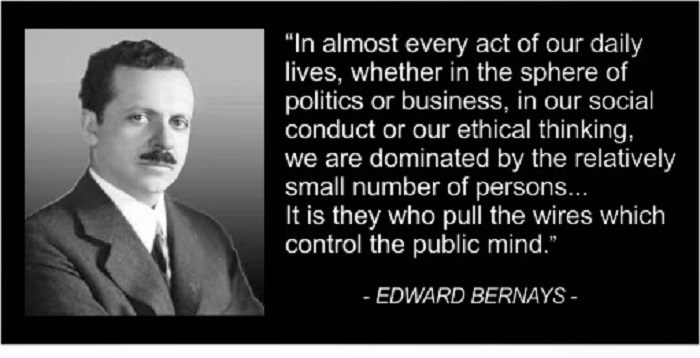
As phrased by master propagandist Edward Bernays, an approximate contemporary of Orwell’s, the mind of the people “is made up for it by the group leaders in whom it believes and by those persons who understand the manipulation of public opinion.”

Recent events surrounding COVID vaccines have shown that medicine and public health — with the help of a complicit media — are particularly skilled at “pull[ing] the wires which control the public mind.”

The clever bag of linguistic tricks deployed by the medical cartel includes seeding evocative terms such as “vaccine hesitancy” and “lockdowns” (which is prison terminology) into popular and scientific discourse, forging slippery new definitions of words with formerly fixed meanings (such as “pandemic,” “herd immunity” and “vaccine”), and circling failed products back around by giving them the positive spin of “boosters.”

Ominously, medicine’s and public health’s verbal assaults encourage shaming of, or violence against, those who ask questions, while upholding the disingenuous pretense that vaccine mandates are compatible with freedom.

In this hostile upside-down universe, even the vaccine-injured are tarnished as “anti-vaxxers” or liars rather than acknowledged as ex-vaxxers who took risks that turned out to be life-changing.

‘Much like other stressors’

One of the more insulting recent examples of linguistic weaponization involves a dubious psychiatric cover term, “functional neurological disorder” (FND), that is suddenly being trumpeted as an explanation for the tsunami of adverse events — especially severe neurological reactions — being reported all over the world in the aftermath of COVID vaccination.

Psychiatrists conveniently define FND — which they also refer to as a “psychogenic” (originating in the mind) or “conversion” disorder — as “real” nervous system symptoms that “cause significant distress or problems functioning” but are “incompatible with” or “can’t be explained by” recognized neurological diseases or other medical conditions.

Lest members of the public derive a “simplistic impression of potential links between the [COVID] vaccine and major neurological symptoms,” neurologists pushing the FND story have hastened to reassure people that the “close development of functional motor symptoms after the vaccine does not implicate the vaccine as the cause of those symptoms.”

One of these individuals is National Institutes of Health-funded neurologist Alberto Espay, who implausibly adds that COVID vaccination (which entails injection with high-risk substances and technologies) is just “a stressor or precipitant, much like any other stressor … such as a motor vehicle accident or sleep deprivation.”

Officials and the media are audaciously trotting out the FND narrative on both sides of the pond, as evidenced by a recent Daily Mail headline that read, “Videos of people ‘struggling to walk’ after getting their COVID vaccine are NOT result of jab itself but a condition triggered by stress or trauma.”

Helping with the spin, a member of the UK’s Joint Committee on Vaccination and Immunization straight-facedly attributed this “stress” to coercion, stating: “If people begin to feel they are being kind of forced against their will to do something, then in a sense that’s quite a damaging thing to do because it gives people the impression vaccination is something being imposed on them.”

Hammering home the point that “there is nothing to see here,” Kings College London physician Matthew Butler solemnly (and without evidence) agrees that FND — though “serious and debilitating” — “does not implicate any vaccine constituents and should not hamper ongoing vaccination efforts.”

Butler is the lead author of a May 2020 paper proposing FND patients’ “abnormal body-focussed attention” be treated with psychedelics such as LSD and psilocybin — never mind that psychedelics themselves, admit Butler and co-authors, “sometimes produce abnormal physical and motor effects,” including seizures.

An all-too-familiar game

To past victims of vaccine injury, the “it’s all in your mind” sleight-of-hand being summoned to dismiss COVID vaccine injuries is all too familiar.

Consider autism, which psychiatrists blamed, in its earliest days, on emotionally distant “refrigerator moms.”

In more recent decades, families affected by autism have experienced the double whammy of regulatory indifference to likely culprits (including not just neurotoxic vaccines but other probable environmental triggers) alongside brazen denial of autism’s escalating prevalence.

Young people injured by human papillomavirus (HPV) vaccines tell similar stories of “denial and dismissal of reported harms and deaths.” Researchers who in 2017 reviewed the serious adverse events reported during two of the largest HPV vaccine clinical trials noted that “Practically, none of the serious adverse events occurring in any arm of both studies were judged [by the manufacturers] to have been vaccine-related.”

In the face of severe symptoms such as heart-attack-like chest pain, numbness and swelling of extremities, hair loss, whole-body aches and extreme fatigue, boys and girls injured by HPV vaccines have been repeatedly subjected to medical gaslighting — told they are “crazy” and just need to “slow down.”

In one incident in Australia, after “26 girls presented to the school’s sick bay with symptoms including dizziness, syncope [fainting] and neurological complaints” within two hours of receiving HPV vaccines at school, pharma-funded researchers had the chutzpah to dismiss the safety signal and characterize the episode as a “mass psychogenic event” — which they defined as “the collective occurrence of a constellation of symptoms suggestive of organic illness but without an identified cause in a group of people with shared beliefs about the cause.”

Recognize, question and reclaim

The medical-public health-pharma cartel, the “small cabal of wealthy countries, corporations and individuals” that support it, and their media mouthpieces are supremely confident in their ability to manage public perceptions through words and narratives, whether for the purpose of “mystifying” the public about key events, securing buy-in for oppressive policies or sowing discord to divide and conquer. (As journalists Caitlin Johnstone and Glenn Greenwald also remind us, many media personalities are intelligence agency veterans or assets, and the “sole owner of the Washington Post is a CIA contractor.”)

Thus, it pays to be attentive to how health authorities use language, for “the more you know about language, the more immune you become to its effects.”

Beyond noticing the manipulation, we must also stop ceding the linguistic terrain to our would-be manipulators — for example, by eschewing weaponized vocabulary such as the pejorative term “vaccine hesitancy.”

Catholic journalist Jane Stannus points out that the term “vaccine hesitant” portrays those who decline COVID (or other) vaccines as “‘trapped by irrational fears’ in a state of inaction or ignorantly opposed to science,” with the strong suggestion “that such backward and weak-minded persons are worthy of contempt, especially compared with the enlightened, confident people who signed up for the vaccine immediately.”

The unfortunate corollary of such language is the “witch hunt on the unvaccinated” that we are already witnessing, “an act of violence against the fabric of society,” says Stannus, that is “a greater evil … than the shared suffering of disease.”

We can and urgently need to see through these shenanigans and reclaim our humanity.

Fast-moving current events are proving those who have declined COVID injections are the wise ones, with science proving them correct in just about every way.

Whether we consider the many suspected dangers of products unleashed on the public less than a year ago, or the injuries and deaths occurring on a never-before-seen scale (including in teens who had their lives ahead of them), or the clear superiority of natural immunity, or the fact that the injections don’t even do the one thing the clinical trials alleged they could do (i.e., keep more severe illness at bay), it is clear that citizens who would rather think for themselves than swallow prefabricated lies are the ones who are going to come out ahead.

ACCORDING TO THE FATHER OF PROPAGANDA AN INVISIBLE GOVERNMENT CONTROLS OUR MINDS WITH A THOUGHT PRISON

By Sigmund Fraud

Source: Waking Times

“Who are the men who without our realizing it, give us our ideas, tell us whom to admire and whom to despise, what to believe about the ownership of public utilities, about the tariff, about the price of rubber, about the Dawes Plan, about immigration; who tell us how our houses should be designed, what furniture we should put in them, what menus we should serve on our table, what kind of shirts we must wear, what sports we should indulge in, what plays we should see, what charities we should support, what pictures we should admire, what slang we should affect, what jokes we should laugh at?” ~ Edward Bernays, Propaganda

Authored by Edward Bernays and published in 1928, the book Propaganda still holds its position as the gold standard for influencing and manipulating public behavior. Drawing on his expertise in psychology while using the language of manipulation, Bernays pioneered social engineering via mass media, and his work lives on in the distorted, statist, consumer world we have today.

But who are the ones behind the curtain telling us what to think by directing our attention onto the things which serve interests?

Interestingly, chapter III of Propaganda is titled, ‘The New Propagandists, and is devoted to explaining why the controls for mass manipulation are so closely guarded by a relatively tiny elite who sit in the shadows, out of the public eye, choosing what we are to see and to think, even controlling the politicians we elect to represent us.

If we set out to make a list of the men and women who, because of their position in public life, might fairly be called the molders of public opinion we could quickly arrive at an extended list of persons mentioned in “Who’s Who…”

Such a list would comprise several thousand persons. But it is well known that many of these leaders are themselves led, sometimes by persons whose names are known to few.

Such persons typify in the public mind the type of ruler associated with the phrase invisible government.

An invisible government of corporate titans and behind the scenes influencers who’s mark on culture cannot be understated today. Bernays continues:

The invisible government tends to be concentrated in the hands of the few because of the expense of manipulating the social machinery which controls the opinions and habits of the masses.

The public relations counsel, then, is the agent who, working with modern media communication and the group formation of society, brings an idea to the consciousness of the public. But he is a great deal more than that. He is concerned with courses of action, doctrines, systems and opinions, and the securing of public support for them.

Ultimately, the goal of this type of mass-produced, pop-culture propaganda is to weaken the individual’s ability to think critically, thereby creating an environment where many people look to one another for approval, always second-guessing their own faculties. When this happens, the strength of the collective group begins to take form and multiply, and ideas can be implanted into the popular culture, taking root in the form of widespread conformist behavior.

Thinking critically means making reasoned judgments that are logical and well thought out. It is a way of thinking in which one doesn’t simply accept all arguments and conclusions to which one is exposed without questioning the arguments and conclusions. It requires curiosity, skepticism and humility. People who use critical thinking are the ones who say things such as, “How do you know that?” “Is this conclusion based on evidence or gut feelings?” and “Are there alternative possibilities when given new pieces of information?””  [Source]

Final Thoughts

The takeaway here is that not much has changed in 100 years of corporate/statist American culture, other than the technical capacity to scale this ever upward. Our lives are still heavily influenced by the likes of the described by Bernays. There is one advantage we do have now, however, as technology has given us greater access to the truth and we are now free to split from the matrix psychologically by understanding what it is and how it influences our lives. If we choose to do so, that is, if we choose to take the red pill.

In order to understand your life and your mission here on earth in the short time you have, it is imperative to learn to see the thought prison that has been built around you, and to actively circumnavigate it. Free-thinking is being stamped out by the propagandists, but our human tendency is to crave freedom, and with the aid of truth, we are more powerful than the control matrix and the invisible government.

The Art of Doublespeak: Bellingcat and Mind Control

By Edward Curtin

Source: Behind the Curtain

In the 1920s, the influential American intellectual Walter Lippman argued that the average person was incapable of seeing or understanding the world clearly and needed to be guided by experts behind the social curtain.  In a number of books he laid out the theoretical foundations for the practical work of Edward Bernays, who developed “public relations” (aka propaganda) to carry out this task for the ruling elites.  Bernays had honed his skills while working as a propagandist for the United States during World War I, and after the war he set himself up as a public relations counselor in New York City.

There is a fascinating exchange at the beginning of Adam Curtis’s documentary, The Century of Self, where Bernays, then nearly 100 years old but still very sharp, reveals his manipulative mindset and that of so many of those who have followed in his wake.  He says the reason he couldn’t call his new business “propaganda” was because the Germans had given propaganda a “bad name,” and so he came up with the euphemism “public relations.”  He then adds that “if you could use it [i.e. propaganda] for war, you certainly could use it for peace.”  Of course, he never used PR for peace but just to manipulate public opinion (he helped engineer the CIA coup against the democratically elected Arbenz government in Guatemala in 1954 with fake news broadcasts).  He says “the Germans gave propaganda a bad name,” not Bernays and the United States with their vast campaign of lies, mainly aimed at the American people to get their support for going to a war they opposed (think weapons of mass destruction).  He sounds proud of his war propaganda work that resounded to his credit since it led to support for the “war to end all wars” and subsequently to a hit movie about WWI, Yankee Doodle Dandy, made in 1942 to promote another war, since the first one somehow didn’t achieve its lofty goal.

As Bernays has said in his book Propaganda,

The American motion picture is the greatest unconscious carrier of propaganda in the world today.

He was a propagandist to the end.  I suspect most viewers of the film are taken in by these softly spoken words of an old man sipping a glass of wine at a dinner table with a woman who is asking him questions. I have shown this film to hundreds of students and none has noticed his legerdemain.  It is an example of the sort of hocus-pocus I will be getting to shortly, the sly insertion into seemingly liberal or matter-of-fact commentary of statements that imply a different story.  The placement of convincing or confusing disingenuous ingredients into a truth sandwich – for Bernays knew that the bread of truth is essential to conceal untruth.

In the following years, Bernays, Lippman, and their ilk were joined by social “scientists,” psychologists, and sundry others intent on making a sham out of the idea of democracy by developing strategies and techniques for the engineering of social consensus consonant with the wishes of the ruling classes.  Their techniques of propaganda developed exponentially with the development of technology, the creation of the CIA, its infiltration of all the major media, and that agency’s courting of what the CIA official Cord Meyer called in the 1950s “the compatible left,” having already had the right in its pocket. Today most people are, as is said, “wired,” and they get their information from the electronic media that is mostly controlled by giant corporations in cahoots with government propagandists.  Ask yourself: Has the power of the oligarchic, permanent warfare state with its propaganda and spy networks increased or decreased over your lifetime. The answer is obvious: the average people that Lippman and Bernays trashed are losing and the ruling elites are winning.

This is not just because powerful propagandists are good at controlling so-called “average” people’s thinking, but, perhaps more importantly, because they are also adept – probably more so – at confusing or directing the thinking of those who consider themselves above average, those who still might read a book or two or have the concentration to read multiple articles that offer different perspectives on a topic.  This is what some call the professional and intellectual classes, perhaps 15-20 % of the population, most of whom are not the ruling elites but their employees and sometimes their mouthpieces.  It is this segment of the population that considers itself “informed,” but the information they imbibe is often sprinkled with bits of misdirection, both intentional and not, that beclouds their understanding of important public matters but leaves them with the false impression that they are in the know.

Recently I have noticed a group of interconnected examples of how this group of the population that exerts influence incommensurate with their numbers has contributed to the blurring of lines between fact and fiction. Within this group there are opinion makers who are often journalists, writers, and cultural producers of some sort or other, and then the larger number of the intellectual or schooled class who follow their opinions.  This second group then passes on their received opinions to those who look up to them.

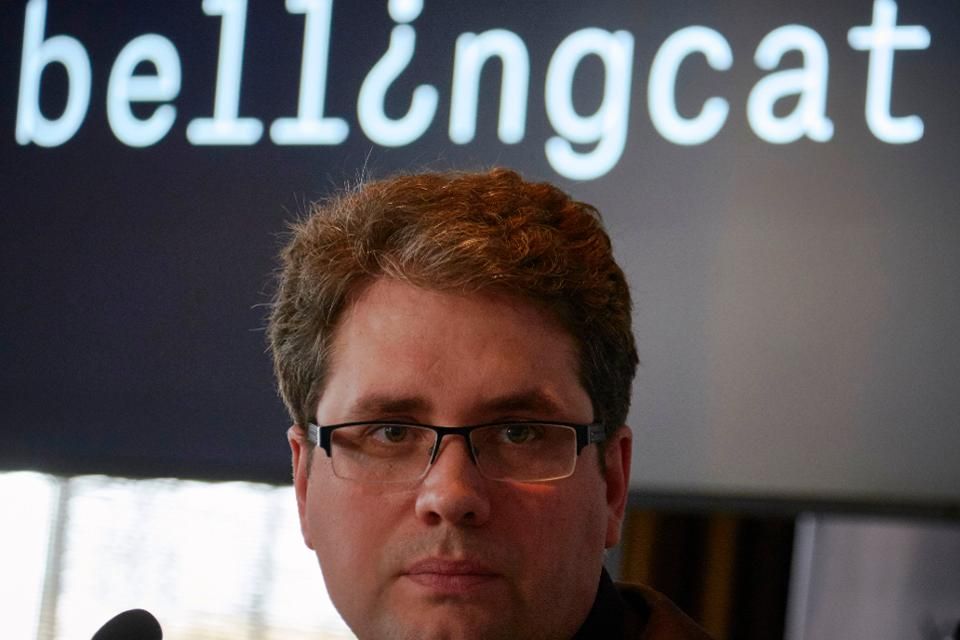
There is a notorious propaganda outfit called Bellingcat, started by an unemployed Englishman named Eliot Higgins, that has been funded by The Atlantic Council, a think-tank with deep ties to the U.S. government, NATO, war manufacturers, and their allies, and the National Endowment for Democracy (NED), another infamous U.S. front organization heavily involved in so-called color revolution regime change operations all around the world, that has just won the International Emmy Award for best documentary. The film with the Orwellian title, Bellingcat: Truth in a Post-Truth World, received its Emmy at a recent ceremony in New York City.  Bellingcat is an alleged group of amateur on-line researchers who have spent years shilling for the U.S. instigated war against the Syrian government, blaming the Douma chemical attack and others on the Assad government, and for the anti-Russian propaganda connected to, among other things, the Skripal poisoning case in England, and the downing of flight MH17 plane in Ukraine. It has been lauded by the corporate mainstream media in the west.  Its support for the equally fraudulent White Helmets (also funded by the US and the UK) in Syria has also been praised by the western corporate media while being dissected as propaganda by many excellent independent journalists such as Eva Bartlett, Vanessa Beeley, Catte Black, among others.  It’s had its work skewered by the likes of Seymour Hersh and MIT professor Theodore Postol, and its US government connections pointed out by many others, including Ben Norton and Max Blumenthal at The Gray Zone. And now we have the mainstream media’s wall of silence on the leaks from the Organization for the Prohibition on Chemical Weapons (OPCW) concerning the Douma chemical attack and the doctoring of their report that led to the illegal U.S. bombing of Syria in the spring of 2018.  Bellingcat was at the forefront of providing justification for such bombing, and now the journalists Peter Hitchens, Tareq Harrad (who recently resigned from Newsweek after accusing the publication of suppressing his revelations about the OPCW scandal) and others are fighting an uphill battle to get the truth out.

Yet Bellingcat: Truth in a Post-Truth World won the Emmy, fulfilling Bernays’ point about films being the greatest unconscious carriers of propaganda in the world today.

Who presented the Emmy Award to the film makers, but none other than the rebel journalist Chris Hedges.  Why he did so, I don’t know.  But that he did so clearly sends a message to those who follow his work and trust him that it’s okay to give a major cultural award to a propaganda outfit.  But then, perhaps he doesn’t consider Bellingcat to be that.

Nor, one presumes, does The Intercept, the billionaire Pierre Omidyar owned publication associated with Glen Greenwald and Jeremy Scahill, and also read by many progressive-minded people. The Intercept that earlier this year disbanded the small team that was tasked with reviewing and releasing more of the massive trove of documents they received from Edward Snowden six years ago, a minute number of which have ever been released or probably ever will be. As Whitney Webb pointed out, last year The Intercept  hosted a workshop for Bellingcat.  She wrote:

The Intercept, along with its parent company First Look Media, recently hosted a workshop for pro-war, Google-funded organization Bellingcat in New York. The workshop, which cost $2,500 per person to attend and lasted five days, aimed to instruct participants in how to perform investigations using “open source” tools — with Bellingcat’s past, controversial investigations for use as case studies…Thus, while The Intercept has long publicly promoted itself as an anti-interventionist and progressive media outlet, it is becoming clearer that – largely thanks to its ties to Omidyar – it is increasingly an organization that has more in common with Bellingcat, a group that launders NATO and U.S. propaganda and disguises it as “independent” and “investigative journalism.”

Then we have Jefferson Morley, the editor of The Deep State, former Washington Post journalist, and JFK assassination researcher, who has written a praiseworthy review of the Bellingcat film and who supports Bellingcat.  “In my experience, Bellingcat is credible,” he writes in an Alternet article, “Bellingcat documentary has the pace and plot of a thriller.”

Morley has also just written an article for Counterpunch“Why the Douma Chemical Attack Wasn’t a ‘Managed Massacre’” – in which he disputes the claim that the April 7, 2018 attack in the Damascus suburb was a false flag operation carried out by Assad’s opponents. “I do not see any evidence proving that Douma was a false flag incident,” he writes in this article that is written in a style that leaves one guessing as to what exactly he is saying.  It sounds convincing unless one concentrates, and then his double messages emerge.  Yet it is the kind of article that certain “sophisticated” left-wing readers might read and feel is insightful.  But then Morley, who has written considerably about the CIA, edits a website that advertises itself as “the thinking person’s portal to the world of secret government,” and recently had an exchange with former CIA Director John Brennan where “Brennan put a friendly finger on my chest,” said in February 2017, less than a month after Trump was sworn in as president, that:

With a docile Republican majority in Congress and a demoralized Democratic Party in opposition, the leaders of the Deep State are the most—perhaps the only—credible check in Washington on what Senator Bob Corker (R-Tenn.) calls Trump’s “wrecking ball presidency.”  

Is it any wonder that some people might be a bit confused?

“I know what you’re thinking about,” said Tweedledum; “but it isn’t so, nohow.”

“Contrariwise,” continued Tweedledee, “if it was so, it might be; and if it were so, it would be; but as it isn’t, it ain’t.  That’s logic.”

As a final case in point, there is a recent book by Stephen Kinzer, Poisoner in Chief: Sidney Gottlieb And The CIA Search For Mind Control, the story of the chemist known as Dr. Death who ran the CIA’s MK-ULTRA mind control project, using LSD, torture, electric shock therapy, hypnosis, etc.; developed sadistic methods of torture still used in black sites around the world; and invented various ingenious techniques for assassination, many of which were aimed at Fidel Castro.  Gottlieb was responsible for brutal prison and hospital experiments and untold death and suffering inflicted on all sorts of innocent people.  His work was depraved in the deepest sense; he worked with Nazis who experimented on Jews despite being Jewish himself.

Kinzer writes in depth about this man who considered himself a patriot and a spiritual person – a humane torturer and killer.  It is an eye-opening book for anyone who does not know about Gottlieb, who gave the CIA the essential tools they use in their “organized crime” activities around the world – in the words of Douglass Valentine, the author of The CIA as Organized Crime and The Phoenix Program. Kinzer’s book is good history on Gottlieb; however, he doesn’t venture into the present activities of the CIA and Gottlieb’s patriotic followers, who no doubt exist and go about their business in secret.

After recounting in detail the sordid history of Gottlieb’s secret work that is nauseating to read about, Kinzer leaves the reader with these strange words:

Gottlieb was not a sadist, but he might well have been…. Above all he was an instrument of history.  Understanding him is a deeply disturbing way of understanding ourselves.

What possibly could this mean?  Not a sadist?  An instrument of history?  Understanding ourselves?  These few sentences, dropped out of nowhere, pull the rug out from under what is generally an illuminating history and what seems like a moral indictment. This language is pure mystification.

Kinzer also concludes that because Gottlieb said so, the CIA failed in their efforts to develop methods of mind control and ended MK-ULTRA’s experiments long ago. Why would he believe the word of a man who personified the agency he worked for: a secret liar? He writes,

When Sydney Gottlieb brough MK-ULTRA to its end in the early 1960s, he told his CIA superiors that he had found no reliable way to wipe away memory, make people abandon their consciences, or commit crimes and then forget them.

As for those who might think otherwise, Kinzer suggests they have vivid imaginations and are caught up in conspiracy thinking: “This [convincing others that the CIA had developed methods of mind control when they hadn’t] is Sydney Gottlieb’s most unexpected legacy,” he asserts. He says this although Richard Helms, the CIA Director, destroyed all MK-Ultra records. He says that Allen Dulles, Gottlieb, and Helms themselves were caught up in a complete fantasy about mind control because they had seen too many movies and read too many books; mind control was impossible, a failure, a myth, he maintains. It is the stuff of popular culture, entertainment. In an interview with Chris Hedges, interestingly posted by Jefferson Morley at his website, The Deep State, Hedges agrees with Kinzer.  Gottlieb, Dulles, et al. were all deluded.  Mind control was impossible.  You couldn’t create a Manchurian Candidate; by implication, someone like Sirhan Sirhan could not have been programmed to be a fake Manchurian Candidate and to have no memory of what he did, as he claims.  He could not have been mind-controlled by the CIA to perform his part as the seeming assassin of Senator Robert Kennedy while the real killer shot RFK from behind. People who think like this should get real.

Furthermore, as is so common in books such as Kinzer’s, he repeats the canard that JFK and RFK knew about and pressured the CIA to assassinate Fidel Castro. This is demonstrably false, as shown by the Church Committee and the Assassinations Record Review Board, among many others. That Kinzer takes the word of notorious liars like Richard Helms and the top-level CIA operative Samuel Halpern is simple incredible, something that is hard to consider a mistake.  Slipped into a truth sandwich, it is devoured and passed on. But it is false. Bullshit meant to deceive.

But this is how these games are played. If you look carefully, you will see them widely.  Inform, enlighten, while throwing in doubletalk and untruths.  The small number of people who read such books and articles will come away knowing some history that has no current relevance and being misinformed on other history that does. They will then be in the know, ready to pass their “wisdom” on to those who care to listen. They will not think they are average.

But they will be mind controlled, and the killer cat will roam freely without a bell, ready to devour the unsuspecting mice.

According to the Father of Propaganda an Invisible Government Controls Our Minds with a Thought Prison

By Sigmund Fraud

Source: Waking Times

“Who are the men who without our realizing it, give us our ideas, tell us whom to admire and whom to despise, what to believe about the ownership of public utilities, about the tariff, about the price of rubber, about the Dawes Plan, about immigration; who tell us how our houses should be designed, what furniture we should put in them, what menus we should serve on our table, what kind of shirts we must wear, what sports we should indulge in, what plays we should see, what charities we should support, what pictures we should admire, what slang we should affect, what jokes we should laugh at?” ~ Edward Bernays [b.11/22/1891, d. 3/9/1995]  Propaganda

Authored by Edward Bernays and published in 1928, the book Propaganda still holds its position as the gold standard for influencing and manipulating public behavior. Drawing on his expertise in psychology while using the language of manipulation, Bernays pioneered social engineering via mass media, and his work lives on in the distorted, statist, consumer world we have today.

But who are the ones behind the curtain telling us what to think by directing our attention onto the things which serve interests?

Interestingly, chapter III of Propaganda is titled, ‘The New Propagandists, and is devoted to explaining why the controls for mass manipulation are so closely guarded by a relatively tiny elite who sit in the shadows, out of the public eye, choosing what we are to see and to think, even controlling the politicians we elect to represent us.

If we set out to make a list of the men and women who, because of their position in public life, might fairly be called the molders of public opinion we could quickly arrive at an extended list of persons mentioned in “Who’s Who…”

Such a list would comprise several thousand persons. But it is well known that many of these leaders are themselves led, sometimes by persons whose names are known to few.

Such persons typify in the public mind the type of ruler associated with the phrase invisible government.

An invisible government of corporate titans and behind the scenes influencers who’s mark on culture cannot be understated today. Bernays continues:

The invisible government tends to be concentrated in the hands of the few because of the expense of manipulating the social machinery which controls the opinions and habits of the masses.

The public relations counsel, then, is the agent who, working with modern media communication and the group formation of society, brings an idea to the consciousness of the public. But he is a great deal more than that. He is concerned with courses of action, doctrines, systems and opinions, and the securing of public support for them.

Ultimately, the goal of this type of mass-produced, pop-culture propaganda is to weaken the individual’s ability to think critically, thereby creating an environment where many people look to one another for approval, always second-guessing their own faculties. When this happens, the strength of the collective group begins to take form and multiply, and ideas can be implanted into the popular culture, taking root in the form of widespread conformist behavior.

Thinking critically means making reasoned judgments that are logical and well thought out. It is a way of thinking in which one doesn’t simply accept all arguments and conclusions to which one is exposed without questioning the arguments and conclusions. It requires curiosity, skepticism and humility. People who use critical thinking are the ones who say things such as, “How do you know that?” “Is this conclusion based on evidence or gut feelings?” and “Are there alternative possibilities when given new pieces of information?””  [Source]

Final Thoughts

The takeaway here is that not much has changed in 100 years of corporate/statist American culture, other than the technical capacity to scale this ever upward. Our lives are still heavily influenced by the likes of the described by Bernays. There is one advantage we do have now, however, as technology has given us greater access to the truth and we are now free to split from the matrix psychologically by understanding what it is and how it influences our lives. If we choose to do so, that is, if we choose to take the red pill.

In order to understand your life and your mission here on earth in the short time you have, it is imperative to learn to see the thought prison that has been built around you, and to actively circumnavigate it. Free-thinking is being stamped out by the propagandists, but our human tendency is to crave freedom, and with the aid of truth, we are more powerful than the control matrix and the invisible government.

War, Media Propaganda, and the Police State

looks-like-youve-had-a-bit-too-much-to-think-support-your-local-thought-police-dont-speak-out-or-question-closed-minds-stop-thought-crimes

By James F. Tracy

Source: Memory Hole

The following essay is intended to provide a brief overview of topics addressed in a discussion graciously recorded by Julie Vivier at the offices of the Center for Research on Globalization in Montreal Canada on August 5, 2014.-JFT

Modern propaganda techniques utilized by the corporate state to enforce anti-democratic and destructive policies routinely entail the manufacture and manipulation of news events to mold public opinion and, as Edward Bernays put it, “engineer consent” toward certain ends.

Such events include not only overt political appeals, but also acts of seemingly spontaneous terrorism and militarism that traumatize the body politic into ultimately accepting false narratives as political and historical realities.

Western states’ development and utilization of propaganda closely parallels the steady decay of political enfranchisement and engagement throughout the twentieth century. Upon securing a second term in 1916, the Democratic administration of Woodrow Wilson plunged the United States into the most violent and homicidal war in human history. Wilson, a former Princeton University academician  groomed for public office by Wall Street bankers, assembled a group of progressive-left journalists and publicists to “sell the war” to the American people.

George Creel, Walter Lippmann, Edward Bernays and Harold Lasswell all played influential roles in the newly-formed Committee on Public Information, and would go on to be major figures in political thought, public relations, and psychological warfare research.

The sales effort was unparalleled in its scale and sophistication. The CPI was not only able to officially censor news and information, but essentially manufacture these as well. Acting in the role of a multifaceted advertising agency, Creel’s operation “examined the different ways that information flowed to the population and flooded these channels with pro-war material.”

The Committee’s domestic organ was comprised of 19 subdivisions, each devoted to a specific type of propaganda, one of which was a Division of News that distributed over 6,000 press releases and acted as the chief avenue for war-related information. On an average week, more than 20,000 newspaper columns carried data provided through CPI propaganda. The Division of Syndicated Features enlisted the help of popular novelists, short story writers, and essayists. These mainstream American authors presented the official line in a readily accessible form reaching twelve million people every month. Similar endeavors existed for cinema, impromptu soapbox oratory (Four Minute Men), and outright advertising at home and abroad.[1]

With the experiences and observations of these war marketers variously recounted and developed throughout the 1920s (Lippmann, Public Opinion, The Phantom Public, Bernays, Propaganda, Crystallizing Public Opinion, Creel, How We Advertised America, Lasswell, Propaganda and the World War), alongside the influence of their elite colleagues and associates, the young publicists’ optimism concerning popular democracy guided by informed opinion was sobered with the realization that public sentiment was actually far more susceptible to persuasion than had been previously understood. The proposed solutions to guarantee something akin to democracy in an increasingly confusing world lay in “objective” journalism guided by organized intelligence (Lippmann) and propaganda, or what Edward Bernays termed “public relations.”

The argument laid out in Lippmann’s Public Opinion was partly motivated by the US Senate’s rejection of membership in the League of Nations. An adviser to the Wilson administration, a central figure behind intelligence gathering that informed postwar geopolitical dynamics laid out at the Paris Peace Conference, and an early member of the Council on Foreign Relations, Lippmann increasingly viewed popular democracy as plagued by a hopelessly ill-informed public opinion incapable of comprehending the growing complexities of modern society. Only experts could be entrusted with assessing, understanding, and acting on the knowledge accorded through their respective professions and fields.

Along these lines, journalism should mimic the then-fledgling social sciences by pursuing objectivity and deferring to the compartmentalized expertise of established authority figures. News and information could similarly be analyzed, edited, and coordinated to ensure accuracy by journalists exercising similar technocratic methods. Although Lippmann does not exactly specify what body would oversee such a process of “organized intelligence,” his postwar activities and ties provides a clue.

Edward Bernays’ advocacy for public opinion management is much more practical and overt. Whereas Lippmann suggests a regimented democracy via technocratic news and information processing, Bernays stresses a privileged elite’s overt manipulation of how the populace interprets reality itself. Such manipulation necessitates contrived associations, figures and events that appear authentic and spontaneous. “Any person or organization depends ultimately on public approval,” Bernays notes,

“and is therefore faced with the problem of engineering the public’s consent to a program or goal … We reject government authoritarianism or regimentation, but we are willing to be persuaded by the written or spoken word. The engineering of consent is the very essence of the democratic process, the freedom to persuade and suggest.[2]

Bernays demonstrates an affinity with Lippmann’s notion of elite expediency when pursuing prerogatives and decision-making the public at large cannot be entrusted to interpret. In such instances,

democratic leaders must play their part in leading the public through the engineering of consent to socially constructive goals and values. This role naturally imposes upon them the obligation to use educational processes, as well as other available techniques, to bring about as complete an understanding as possible.[3]

Written in the early 1950s, these observations become especially apt in the latter half of the twentieth century, where the US is typically a major aggressor in foreign (and eventually domestic) affairs. Yet what does Bernays mean by, for example, “educational processes”? An indication may be found by noting his central role in the promotion of tobacco use, municipal water fluoridation, and the overthrow of the democratically-elected Arbenz regime in Guatemala.[4]

With the advent of the national security state in 1947, secret programs emerge where the people are as a matter of course intentionally left unaware of the state’s true rationales and objectives.

Indeed, a wealth of contemporary historical examples suggest how the “engineering of consent” is wholly calculating and anti-democratic, and where the crises requiring such drastic and immediate public relations and military measures are themselves the result of the same leadership’s policies and actions. The US economic provocation of the Japanese attack on Pearl Harbor and the Tonkin Gulf incident precipitating US military occupation of Vietnam are obvious examples of such manufactured events.

Similar techniques are apparent in the major political assassinations of the 1960s, where to this day the public is prompted to partake in the false reality that Lee Harvey Oswald was the sole culprit in the murder of President John F. Kennedy, much as Sirhan Sirhan was responsible for the death of Senator Robert F. Kennedy.

In fact, in each instance overwhelming evidence points to Central Intelligence Agency involvement in orchestrating the assassinations while training and presenting Oswald and Sirhan as the would-be assassins.

The US government’s assassination of Dr. Martin Luther King Jr., probably the most influential African American public persona of the twentieth century, is not even open to debate, having been soundly proven in a court of law.[5] Yet as with the Kennedys, it is a genuine public relations achievement that much of the American population is oblivious to the deeper dynamics of these political slayings that are routinely overlooked or inaccurately recounted in public discourse.

Along these lines, in the historical context of Operation Gladio, the Oklahoma City Murrah Federal Building bombing, the events of September 11, 2001, the London 7/7/2005 bombings, and lesser episodes such as the “shoe” and “underwear” bombers, the engineering of consent has reached staggering new heights where state-orchestrated terrorism is used to mold public opinion toward acceptance of militarized policing operations, the continued erosion of civil liberties, and major sustained aggression against moderate Middle Eastern nations to cartelize scarce resources and politically reconfigure an entire region of the world.

Again, the public is essentially compelled to believe that political extremism of one form or another is the cause of each event, even in light of how the sophistication and scope of the Oklahoma City and 9/11 “attacks” suggest high-level forces at work. If one is to delve beneath the public relations narrative of each event, the recent Newtown massacre and Boston Marathon bombing likewise appear to have broader agendas where the public is again purposely misled.

Conventional journalists and academics are reluctant to publicly address such phenomena for fear of being called “conspiracy theorists.” In the case of academe this has severely curtailed serious and potentially crucial inquiry into such deep events and phenomena in lieu of what are often innocuous intellectual exchanges divorced from actually existing social and political realities that cry out for serious interrogation and critique.

The achievements of modern public relations are further evident in the Warren and 9/11 Commissions themselves, both of which have spun the fantastic myths of Allan Dulles and Peter Zelikow respectively, and that today maintain footholds in public discourse and consciousness.

Indeed, the “conspiracy theory” meme, a propaganda campaign waged by the CIA beginning in the mid-1960s to counter criticism of the Warren Commission report, is perhaps as little-known as Operation Mockingbird, the CIA program where hundreds of journalists and publishers actively devoted their services to spread Agency disinformation. The overall effect of these combined operations has been an immensely successful program continues to shape the contours of American political life and mediated reality.[6]

The present socio-political condition and suppression of popular democracy are triumphs of modern propaganda technique. So are they also manifest in the corporate state’s efforts to engineer public acquiescence toward such things as the colossal frauds of genetically modified organisms masquerading as “food,” toxic polypharmacy disguised as “medicine,” and the police state and “war on terror” seeking to preserve “national security.”

Notes

[1] Aaron Delwiche, “Propaganda: Wartime Propaganda: World War I, The Committee on Public Information,” accessed September 28, 2014 at http://www.propagandacritic.com/articles/ww1.cpi.html; George Creel, How We Advertised America, New York: Harper and Brothers, 1920. Available at http://archive.org/details/howweadvertameri00creerich

[2] Edward Bernays, Public Relations, Norman OK: University of Oklahoma Press, 1952, 159-160.

[3] Ibid. 160.

[4] “You can get practically any ideas accepted,” Bernays reflected on the campaign to fluoridate New York City’s water supply. “If doctors are in favor, the public is willing to accept it, because a doctor is an authority to most people, regardless of how much he knows, or doesn’t know … By the law of averages, you can usually find an individual in any field who will be willing to accept new ideas, and the new ideas then infiltrate the others who haven’t accepted it. Christopher Bryson, The Fluoride Deception, New York: Seven Stories Press, 2004, 159.

[5] William F. Pepper, An Act of State: The Execution of Martin Luther King, New York: Verso, 2003.

[6] James F. Tracy, “Conspiracy Theory: Foundations of a Weaponized Term,” Global Research, January 22, 2013.