Wealth Identity Politics: Billionaires Acting Like A Persecuted Minority Is Peak Capitalism

By Caitlin Johnstone

Source: CaitlinJohnstone.com

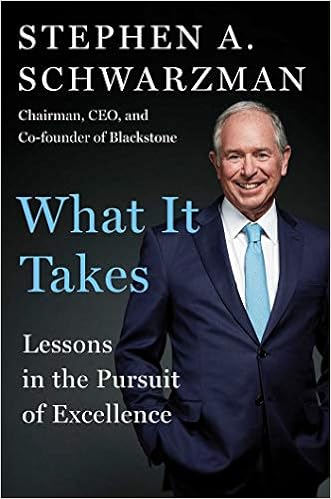
“I guess maybe Bernie Sanders shouldn’t exist,” said billionaire Steve Schwarzman while seated in a library building named after billionaire Steve Schwarzman and promoting a book with billionaire Steve Schwarzman’s face on it.

According to Bloomberg this humble response from the always modest billionaire Steve Schwarzman came in response to a question posed by an audience member about a Sanders tweet in which the Vermont Senator said that billionaires should not exist. The comment was reportedly met with enthusiastic applause.

Blackstone CEO Schwarzman, who has previously compared tax increases on the wealthy to the Nazi invasion of Poland, is an oligarch by any reasonable definition. As one of America’s top individual campaign donors he is immensely influential; his plutocratic power is so deeply interwoven with the highest levels of government that his book’s 14 pages of acknowledgements describe cuddly relationships with a who’s-who of top US officials, including the last five presidents. According to a recent report by The Intercept, two Brazilian firms owned by Schwarzman “are significantly responsible for the ongoing destruction of the Amazon rainforest, carnage that has developed into raging fires that have captivated global attention.”

It is very telling that this oligarch sees an equivalence between (A) saying that an elite class should not control such vast amounts of wealth and (B) saying actual people should not exist. What this tells us is that Schwarzman sees being a billionaire as a fundamental part of his identity, making the idea that he shouldn’t control billions of dollars indistinguishable from saying that he himself should not exist. From his point of view he’s just doing the same thing that Sanders is doing: Bernie’s saying the thing that Schwarzman is shouldn’t exist, and Schwarzman is saying that Bernie himself shouldn’t exist. To him they’re the same.

This statement gives us a bit of insight into the way billionaires see themselves as fundamentally different than the rest of us, forming an egoic identity construct out of being a billionaire in the same way a medieval king would form an egoic identity construct out of that position. This anti-billionaire rhetoric is perceived as an attack on their very identity, which is why they are spinning it as though Sanders is calling for the elimination of actual people.

Predictably, Fox News is now trotting out billionaires to defend themselves from this outrageous billionairephobic bigotry, with Home Depot founder and major Republican Party donor Ken Langone receiving a warmly sycophantic reception from Fox’s Mornings with Maria.

“What the hell has he done for the little people?” Langone asked his host Maria Bartiromo. “What jobs has he created?”

Langone went on to detail all the many jobs he’s “created” (read: how many people he’s needed to hire to help him reap lucrative profits from an already existing demand) without bothering to explain what hoarding billions of dollars in offshore accounts has to do with job creation. Exponents of the “billionaires create jobs” argument always avoid this glaring plot hole like the plague.

Again, we see in Langone’s emotional response two things: that he sees ordinary citizens as “the little people” innately different from himself, and that he perceives the push toward greater economic equality as an existential threat.

“If you go back to 1933, with different words, this is what Hitler was saying in Germany,” Langone has said of the rising pushback against wealth and income inequality. “You don’t survive as a society if you encourage and thrive on envy or jealousy.”

These outbursts are reminiscent of one we saw a couple of years ago on an MSNBC interview with resort tycoon Stephen Cloobeck, who expressed outrage at the way progressives are using “the millionaire or billionaire word” to discuss issues with class and economic justice, saying he’d instructed Democratic Party leaders to bring a stop to this rhetoric or lose plutocratic funding.

“It is very, very disturbing when I hear the millionaire or billionaire word,” Cloobeck said, as though he was uttering an ethnic slur for an oppressed minority and not a conventional label for a class that effectively owns the US government. “And I’ve told them to stop it. Knock it off.”

We’re seeing this hilarious conflation of economic justice with the persecution of minorities and the elimination of actual human beings more and more often, so we should probably come up with a name for it. I’d like to propose that we label this phenomenon “wealth identity politics”, and it is capitalism’s dumbest turn yet.

It’s especially dumb because the billionaire class has already proven with its actions that it cannot exist without actively working to manipulate governments in a way that undeniably subverts democracy and the will of the people. The debate over whether or not billionaires should exist is long settled. They should not.

A few million dollars will buy you a nice car, a nice house and some nice clothes. A few billion dollars will buy you the ability to control public narratives using media ownership, lobbyists and think tanks, thereby manipulating entire governments and international affairs. Believing that it makes sense to have an elite class which controls this much wealth and power is exactly as stupid as believing it makes sense to have a total monarchy.

Billionaires should not exist, for the same reason that kings and pharaohs should not exist. The leadership of our world should not belong to a class of highly mediocre people who have nothing noteworthy between their ears apart from a knack for accumulating dollars. The ability to amass wealth is not a valid basis upon which to determine who leads us. Our fate as a species should be in all our hands.

The 5-Step CEO pay scam

Grossly widening inequalities of income and wealth cannot be separated from grossly widening inequalities of political power in America. This corruption must end.

By Robert Reich

Source: Nation of Change

Average CEO pay at big corporations topped 14.5 million dollars in 2018. That’s after an increase of 5.2 million dollars per CEO over the past decade, while the average worker’s pay has increased just 7,858 dollars over the decade. 

Just to catch up to what their CEO made in 2018 alone, it would take the typical worker 158 years.

This explosion in CEO pay relative to the pay of average workers isn’t because CEOs have become so much more valuable than before. It’s not due to the so-called “free market.”

It’s due to CEOs gaming the stock market and playing politics.

How did CEOs pull this off? They followed these five steps:

First: They made sure their companies began paying their executives in shares of stock.

Second: They directed their companies to lobby Congress for giant corporate tax cuts and regulatory rollbacks.

Third: They used most of the savings from these tax cuts and rollbacks not to raise worker pay or to invest in the future, but to buy back the corporation’s outstanding shares of stock.

Fourth: This automatically drove up the price of the remaining shares of stock.

Fifth and finally: Since CEOs are paid mainly in shares of stock, CEO pay soared while typical workers were left in the dust.

How to stop this scandal? Five ways:

1. Ban stock buybacks. They were banned before 1982 when the Securities and Exchange Commission viewed them as vehicles for stock manipulation and fraudThen Ronald Reagan’s SEC removed the restrictions. We should ban buybacks again.

2. Stop corporations from deducting executive pay in excess of 1 million dollars from their taxable income – even if the pay is tied to so-called company performance. There’s no reason other taxpayers ought to be subsidizing humongous CEO pay.

3. Stop corporations from receiving any tax deduction for executive pay unless the percent raise received by top executives matches the percent raise received by average employees.

4. Increase taxes on corporations whose CEOs make more than 100 times their average employees.

5. Finally, and most basically: Stop CEOs from corrupting American politics with big money. Get big money out of our democracy. Fight for campaign finance reform.

Grossly widening inequalities of income and wealth cannot be separated from grossly widening inequalities of political power in America. This corruption must end.

What globalism did was to transfer the US economy to China

By Paul Craig Roberts

Source: Intrepid Report

The main problem with the US economy is that globalism has been deconstructing it. The offshoring of US jobs has reduced US manufacturing and industrial capability and associated innovation, research, development, supply chains, consumer purchasing power, and tax base of state and local governments. Corporations have increased short-term profits at the expense of these long-term costs. In effect, the US economy is being moved out of the First World into the Third World.

Tariffs are not a solution. The Trump administration says that the tariffs are paid by China, but unless Apple, Nike, Levi, and all of the offshoring companies got an exemption from the tariffs, the tariffs fall on the offshored production of US firms that are sold to US consumers. The tariffs will either reduce the profits of the US firms or be paid by US purchasers of the products in higher prices. The tariffs will hurt China only by reducing Chinese employment in the production of US goods for US markets.

The financial media is full of dire predictions of the consequences of a US/China “trade war.” There is no trade war. A trade war is when countries try to protect their industries by placing tariff barriers on the import of cheaper products from foreign countries. But half or more of the imports from China are imports from US companies. Trump’s tariffs, or a large part of them, fall on US corporations or US consumers.

One has to wonder that there is not a single economist anywhere in the Trump administration, the Federal Reserve, or anywhere else in Washington capable of comprehending the situation and conveying an understanding to President Trump.

One consequence of Washington’s universal economic ignorance is that the financial media has concocted the story that “Trump’s tariffs” are not only driving Americans into recession but also the entire world. Somehow tariffs on Apple computers and iPhones, Nike footwear, and Levi jeans are sending the world into recession or worse. This is an extraordinary economic conclusion, but the capacity for thought has pretty much disappeared in the United States.

In the financial media the question is: Will the Trump tariffs cause a US/world recession that costs Trump his reelection? This is a very stupid question. The US has been in a recession for two or more decades as its manufacturing/industrial/engineering capability has been transferred abroad. The US recession has been very good for the Asian part of the world. Indeed, China owes its faster than expected rise as a world power to the transfer of American jobs, capital, technology, and business know-how to China simply in order that US shareholders could receive capital gains and US executives could receive bonus pay for producing them by lowering labor costs.

Apparently, neoliberal economists, an oxymoron, cannot comprehend that if US corporations produce the goods and services offshore that they market to Americans, it is the offshore locations that benefit from the economic activity.

Offshore production started in earnest with the Soviet collapse as India and China opened their economies to the West. Globalism means that US corporations can make more money by abandoning their American work force. But what is true for the individual company is not true for the aggregate. Why? The answer is that when many corporations move their production for US markets offshore, Americans, unemployed or employed in lower paying jobs, lose the power to purchase the offshored goods.

I have reported for years that US jobs are no longer middle-class jobs. The jobs have been declining for years in terms of value-added and pay. With this decline, aggregate demand declines. We have proof of this in the fact that for years US corporations have been using their profits not for investment in new plant and equipment, but to buy back their own shares. Any economist worthy of the name should instantly recognize that when corporations repurchase their shares rather than invest, they see no demand for increased output. Therefore, they loot their corporations for bonuses, decapitalizing the companies in the process. There is perfect knowledge that this is what is going on, and it is totally inconsistent with a growing economy.

As is the labor force participation rate. Normally, economic growth results in a rising labor force participation rate as people enter the work force to take advantage of the jobs. But throughout the alleged economic boom, the participation rate has been falling, because there are no jobs to be had.

In the 21st century, the US has been decapitalized and living standards have declined. For a while the process was kept going by the expansion of debt, but consumer income has not kept place and consumer debt expansion has reached its limits.

The Fed/Treasury “plunge protection team” can keep the stock market up by purchasing S&P futures. The Fed can pump out more money to drive up financial asset prices. But the money doesn’t drive up production, because the jobs and the economic activity that jobs represent have been sent abroad. What globalism did was to transfer the US economy to China.

Real statistical analysis, as contrasted with the official propaganda, shows that the happy picture of a booming economy is an illusion created by statistical deception. Inflation is undermeasured, so when nominal GDP is deflated, the result is to count higher prices as an increase in real output, that is, inflation becomes real economic growth. Unemployment is not counted. If you have not searched for a job in the past 4 weeks, you are officially not a part of the work force and your unemployment is not counted. The way the government counts unemployment is so extraordinary that I am surpised the US does not have a zero rate of unemployment.

How does a country recover when it has given its economy away to a foreign country that it now demonizes as an enemy? What better example is there of a ruling class that is totally incompetent than one that gives its economy bound and gagged to an enemy so that its corporate friends can pocket short-term riches?

We can’t blame this on Trump. He inherited the problem, and he has no advisers who can help him understand the problem and find a solution. No such advisers exist among neoliberal economists. I can only think of four economists who could help Trump, and one of them is a Russian.

The conclusion is that the United States is locked on a path that leads directly to the Third World of 60 years ago. President Trump is helpless to do anything about it.

The Global Climate Movement is Failing: Why?

By Robert J. Burrowes

It has been satisfying to note the significant response to two recent climate campaigns: the actions, including the recent Global Climate Strike, initiated by school students inspired by Greta Thunberg and the climate actions organized by Extinction Rebellion.

While delighted that these campaigns have finally managed to mobilize significant numbers of people around the existential threat the climate catastrophe poses to life on Earth, I would like to briefly raise some issues for consideration by each of those involved in the climate movement as well as those considering involvement.

I do this because history provides clearcut and compelling lessons on how to make such movements have the impact we need and, so far, the climate movement is not doing several vital things if we are to indeed be successful. And I would like to be successful.

So here are five key issues that I would address as soon as possible.

  1. Analyze the climate catastrophe within the context of the ongoing and broader environmental disaster that is currently taking place.
  2. Analyze the climate catastrophe and environmental disaster to better understand the political, economic and social systems and structures, as well as the individual behaviours, that are driving them.
  3. Based on these analyses, reorient the movement’s strategic focus: that is, who and what is the movement trying to change?
  4. And then identify the nature of the behavioural changes we are asking of people and their organizations, and how these will be achieved.
  5. In what timeframe?

Let me briefly elaborate why I believe these issues are so important.

  1. Earth’s biosphere is under siege, not just the climate.

There is no point mobilizing action to halt ongoing destruction of the climate while paying insufficient attention to the vast range of other threats to key ecosystems that make life on Earth possible. I understand that most movements, whether concerned with peace, the environment or social justice, for example, tend to confine their concern to one issue. Unfortunately, however, we no longer have the luxury of doing that given the multifaceted existential threats to life on Earth.

The biosphere is under siege on many fronts with military violence, radioactive contamination (from nuclear weapons testing, nuclear waste from power plants including Fukushima and Chernobyl, depleted uranium weapons…), destruction of the rainforests and oceans, contamination and depletion of Earth’s fresh water supply, geoengineering, 5G and many other assaults inflicting ongoing and uncontained damage on Earth and its species. See, for example, ‘5G and the Wireless Revolution: When Progress Becomes a Death Sentence’.

This has critical implications for the strategic goals we set ourselves in our struggle to save not only the climate but the many vital ecosystems of Earth’s biosphere. In short, if we ‘save the climate’ but rainforests are destroyed or nuclear war takes place, then saving the climate will have been a pyrrhic victory.

  1. Politicians are a ‘sideshow’ with negligible power.

Hence, it is a waste of time lobbying them to do such things as ‘declare a climate emergency’, ‘phase out all fossil fuel extraction and transform our economy to 100% renewable energy by 2030’, ‘recognize indigenous sovereignty’ and ‘implement a Green New Deal’.

The global elite, which is insane, is ‘running the show’, including the key political, economic, military and social structures and the bulk of the politicians we supposedly elect. This means that the global elite holds the levers of power over the world capitalist system, national military forces and the major international political and economic organizations such as the United Nations, the World Bank and the International Monetary Fund. For brief explanations of this, with references to many more elaborate accounts, see the section headed ‘How the World Works: A Brief History’ in ‘Why Activists Fail’, as well as ‘Exposing the Giants: The Global Power Elite’ and ‘The Global Elite is Insane Revisited’.

But separately from the role of the global elite in managing the major political, economic and social systems and structures in order to extract maximum corporate profit, individual behaviours, particularly the consumption patterns of people in industrialized countries, are also driving the destruction of Earth’s biosphere. Why? Because our parenting and teaching models are extraordinarily violent and leave the typical human living in an unconsciously terrified, self-hating and powerless state and addicted to using consumption as a key means to suppress awareness of how they feel. See ‘Love Denied: The Psychology of Materialism, Violence and War’ and ‘Do We Want School or Education?’ and, for more detail, ‘Why Violence?’ and ‘Fearless Psychology and Fearful Psychology: Principles and Practice’.

3 & 4. If we understand the above two points, we can reorient our efforts.

This means that instead of powerlessly lobbying politicians, we can change our strategic focus to maximize our strategic impact. So, on the one hand for example, we can tackle corporations profiting from the manufacture, sale and use of military weapons, the extraction and sale of fossil fuels or the manufacture and sale of the poison glyphosate (‘Roundup’), by designing and implementing thoughtful strategies of nonviolent action to end their manufacture and sale of these life-destroying products. For comprehensive guidance on campaigning strategically, see Nonviolent Campaign Strategy. For a list of the strategic goals necessary to effectively tackle the climate catastrophe or end war, for example, see ‘Strategic Aims’. And for a brief explanation of how to make a nonviolent action have maximum impact, see ‘Nonviolent Action: Why and How it Works’.

On the other hand, we can encourage responsible and systematic reductions of consumption in all key areas – water, household energy, transport fuels, metals, meat, paper and plastic – while dramatically expanding individual and community self-reliance in 16 areas in industrialized countries as outlined in ‘The Flame Tree Project to Save Life on Earth’. Or, more simply, we can encourage people to make the Earth Pledge (below).

Once enough people commit to one or the other of these two approaches (to substantially reduce consumption and increase local self-reliance), then three vital outcomes will be achieved:

  1. it will progressively reduce resource extraction from, and pollution of, Earth’s biosphere,
  2. it will functionally undermine capitalism and the ongoing industrialization process, and
  3. it will remove the fundamental driver of the global elite’s perpetual war: our collective demand for the goods and services made available by the elite’s theft of resources from countries they invade and exploit on our behalf.

I am well aware of the captivating power of turning up in a shared space with a vast bunch of other people with whom we agree. Unfortunately, while it might be a lot of fun, it is usually a waste of time strategically. Even the largest worldwide mobilization in human history (against the imminent US-led war on Iraq) on 15 February 2003, in which 30,000,000 people participated in more than 600 cities around the world, was ineffective. See ‘Why Activists Fail’.

Of course, if you still want a large public action, then you need to make sure the gathering has strategic focus. For example, instead of using it to powerlessly beg politicians to fix things for us, make it an occasion where participants can publicly commit to taking powerful action themselves by signing the Earth Pledge.

The Earth Pledge

Out of love for the Earth and all of its creatures, and my respect for their needs, from this day onwards I pledge that:

  1. I will listen deeply to children (see explanation below)
  2. I will not travel by plane
  3. I will not travel by car
  4. I will not eat meat and fish
  5. I will only eat organically/biodynamically grown food
  6. I will minimize the amount of fresh water I use, including by minimizing my ownership and use of electronic devices
  7. I will not buy rainforest timber
  8. I will not buy or use single-use plastic, such as bags, bottles, containers, cups and straws
  9. I will not use banks, superannuation (pension) funds or insurance companies that provide any service to corporations involved in fossil fuels, nuclear power and/or weapons
  10. I will not accept employment from, or invest in, any organization that supports or participates in the exploitation of fellow human beings or profits from killing and/or destruction of the biosphere
  11. I will not get news from the corporate media (mainstream newspapers, television, radio, Google, Facebook, Twitter…)
  12. I will make the effort to learn a skill, such as food gardening or sewing, that makes me more self-reliant
  13. I will gently encourage my family and friends to consider signing this pledge.

To reiterate: It is delusional to believe that we can sustain the existing levels of consumption and preserve Earth’s biosphere. Because, in the end, it is our over-consumption that is driving the destruction. As an aside, this is also why the various Green New Deal proposals being put forward are misconceived: each of the versions that I have checked is essentially a wish-list of desirable changes ‘demanded’ of governments while missing the fundamental point that if people still want to fly, drive, eat meat and fish, or food that is poisoned, use electronic devices…, they are paying the elite to maintain existing structures of violence and exploitation, to continue killing people (to steal their resources) and to destroy the biosphere. And this, of course, means that we are directly complicit in the violence, exploitation and destruction. After all, why should the elite listen to our demands for change when we spend our money supporting their existing profit-maximizing, people-killing and biosphere-destroying behaviours?

If this all seems too challenging, then I invite you to consider doing the emotional healing necessary so that you can act powerfully in response to this crisis. See ‘Putting Feelings First’. If you want to help children to do so, consider making ‘My Promise to Children’ which will require capacity in ‘Nisteling: The Art of Deep Listening’.

  1. The timeframe to which we are working is vital.

Given the ever-increasing body of evidence that suggests human extinction will occur by 2026, there is no point working to the elite-sponsored IPCC timeframe, designed to maximize corporate profits-as-usual for as long as possible. We do not have, for example, until 2030 to contain the temperature increase to 1.5 degrees celsius above the pre-industrial level or, say, mid-century to fully reign in carbon, methane and nitrous oxide emissions. We have nothing like this much time. Moreover, anyone paying attention to the state and ongoing destruction of the world’s rainforests and oceans, the ‘insect apocalypse’ and the accelerating rate of species extinctions (with one million species now under threat) should perceive this intuitively unless (unconsciously) terrified and hence delusional.

But for a fuller elaboration of the short timeframe we have left, if we take into account the synergistic psychological, sociological, political, economic, climate, ecological, military and nuclear considerations that each play a part in shaping this timeframe, see ‘Human Extinction by 2026? A Last Ditch Strategy to Fight for Human Survival’.

Conclusion

By now, of course, many people will be overwhelmed by what they have read above (if they got this far). So this is why those who feel able to grapple with the evidence presented are also the ones most likely to have the courage to join me in taking the action outlined and gently encouraging others in the movement to reconsider and reorient movement strategy too.

It also means that the climate movement and those with whom we must work, such as those in the labour, women’s, antiwar, indigenous rights and environment movements, have considerably more work to do if we are to achieve the outcomes we all want.

Unless enough of us are able to embrace the path outlined above, human extinction in the near term is inevitable because our efforts will be wasted on actions that cannot have the necessary impact given the full dimensions of the crisis.


Biodata: Robert J. Burrowes has a lifetime commitment to understanding and ending human violence. He has done extensive research since 1966 in an effort to understand why human beings are violent and has been a nonviolent activist since 1981. He is the author of ‘Why Violence?’ His email address is flametree@riseup.net and his website is here.

Comparative Political Leadership: Gandhi vs. Contemporary Leaders

By Robert J. Burrowes

On 2 October 2019, it will be the 150th anniversary of the birth of Mohandas K. Gandhi in Gujarat, India. I would like to reflect on the visionary leadership that Gandhi offered the world, briefly comparing it with some national leaders of today, and to invite you to emulate Gandhi’s leadership.

While Gandhi is best remembered for being the mastermind and leader of the decades-long nonviolent struggle to liberate colonial India from British occupation, his extraordinary political, economic, social, ecological, religious and moral leadership are virtually unknown, despite the enormous legacy he left subsequent generations who choose to learn from what he taught. This legacy is available online in the 98-volume Collected Works of Mahatma Gandhi.

While touching on Gandhi’s legacy in each of these regards, I would particularly like to highlight Gandhi’s staggering legacy in four of these fields by briefly comparing his approach to politics, economics, society and the environment with the approach of contemporary political leaders such as Jair Bolsonaro (Brazil), Xi Jinping (China), Emmanuel Macron (France), Viktor Orbán (Hungary), Narendra Modi (India), Binjamin Netanyahu (Israel), Shinzo Abe (Japan), Vladimir Putin (Russia), Mohammad bin Salman (Saudi Arabia), Boris Johnson (UK) and Donald Trump (USA).

Before doing so, let me offer a little basic background on Gandhi so that the foundational framework he was using to guide his thinking and behaviour is clear.

Gandhi in Brief

In order to develop his understanding of the human individual and human society, as well as his approach to conflict, Gandhi engaged in ongoing research throughout his life. He read avidly and widely, as well as keenly observing the behaviour of those around him in many social contexts in three different countries (India, England and South Africa). Shaped also by the influence of his mother and his Hindu religion, this led to Gandhi’s unique understanding of the human individual and his approach to the world at large.

For a fuller elaboration of the points about Gandhi discussed below and the precise references, see relevant chapters and sections on Gandhi in The Strategy of Nonviolent Defense: A Gandhian Approach.

Gandhi’s conception of the human individual and human nature

In order to understand Gandhi generally, it is imperative to comprehend his conceptions of the human individual and human nature simply because these are the foundation of his entire philosophy.

Gandhi attached enormous importance to individual responsibility. He also had a very positive view of human nature. Gandhi believed that humans could respond to ‘the call of the spirit’ and rise above selfishness and violence. Moreover, this was necessary in their quest for self-realization. Self-realization, as the Gandhian scholar Professor Arne Naess explains it, ‘involves realizing oneself as an autonomous, fully responsible person’.

In Gandhi’s view, this quest is an individual one that relies on nonviolence, self-reliance, and the search for truth. ‘To find Truth completely is to realize oneself and one’s destiny.’ But what should guide this search? According to Gandhi, it can only be the individual conscience: The ‘inner voice’ must always be ‘the final arbiter when there is a conflict of duty’. And in his view, ‘the voice of God, of Conscience, of Truth or the Inner Voice or “the still small Voice” mean one and the same thing.’

This point is centrally important, because the usual descriptions of Gandhian nonviolence stress its morality, humility and sacrifice while neglecting the fundamental norm ‘that you should follow your inner voice whatever the consequences’ and ‘even at the risk of being misunderstood’.

The point, of course, is that creation of the nonviolent society which Gandhi envisioned required the reconstruction of the personal, social, economic and political life of each individual. ‘We shall get nothing by asking; we shall have to take what we want, and we need the requisite strength for the effort.’ Consequently, the individual required increased power-from-within through the development of personal identity, self-reliance and fearlessness.

So what is fearlessness? For Gandhi, it means freedom from all external fear, including the fear of dispossession, ridicule, disease, bodily injury and death. In his view, progress toward the goal of fearlessness requires ‘determined and constant endeavour’. But why is fearlessness so important? Because a person who is fearless is unbowed by the punitive power of others and that makes them powerful agents of change.

Gandhi’s approach to society and political economy

Gandhi’s conception of society is based on a rejection of both capitalism and socialism.

In relation to capitalism, he rejected the competitive market and private property, with their emphasis on individual competitiveness and material progress and their consequent greed and exploitation of the weak. He also rejected the major institutions of capitalism, including its parliamentary system of democracy (which denied sovereignty to the people), its judicial system (which exacerbated conflict and perpetuated elite power), and its educational system (which divorced education from life and work).

In relation to socialism, he rejected its conception of conflict in terms of class war, its claim that state ownership and centralization are conducive to the common welfare, its emphasis on material progress, and its reliance on violent means.

The Gandhian vision of future society is based on a decentralized network of self-reliant and self-governing communities using property held in trust, with a weak central apparatus to perform residual functions. His vision stresses the importance of individuals being able to satisfy their personal needs through their own efforts – including ‘bread labor’ – in cooperation with others and in harmony with nature.

For Gandhi, this horizontal framework is necessary in order to liberate the exploiter and exploited alike from the shackles of exploitative structures. This is vitally important because, in his view, ‘exploitation is the essence of violence.’ Self-reliance and interdependence must be built into the structure in order to enhance the capacity for self-regeneration and self defense and to eliminate the potential for structural violence inherent in any dependency relationship.

This social vision was clearly evident in Gandhi’s ‘constructive program’, which was intended to restructure the moral, political, social and economic life of those participating in it. The constructive program was designed to satisfy the needs of each individual member of society and was centrally concerned with the needs for self-esteem, security, and justice. The program entailed many elements, some of which are outlined below in order to illustrate this point.

A crucial feature of the constructive program was the campaign for communal unity. This was intended to encourage reciprocal recognition of the identity of Hindus, Muslims, Christians, Jews and those of other religions. According to Gandhi, all people should have the same regard for other faiths as they have for their own.

The campaign to liberate women was intended to secure self esteem, security, and justice for those most systematically oppressed by India’s patriarchal society. ‘Woman has been suppressed under custom and law for which man was responsible… In a plan of life based on nonviolence, woman has as much right to shape her own destiny as man.’

The campaign for the removal of untouchability was meant to restore self-esteem, dignity, and justice to the Harijans (Gandhi’s term for those without caste) in Hindu society. Similarly, the constructive program was concerned with recognizing the needs of indigenous peoples and lepers throughout India. ‘Our country is so vast… one realizes how difficult it is to make good our claim to be one nation, unless every unit has a living consciousness of being one with every other.’

The khadi (handspun/handwoven cloth) and village industries programs were intended to make the villages largely self-reliant and Indians proud of their identity after centuries of oppression and exploitation under British imperial rule. Khadi, Gandhi argued, ‘is the symbol of unity of Indian humanity, of its economic freedom and equality.’ The struggle for economic equality was aimed at securing distributive justice for all. It meant ‘leveling down’ the rich, who owned the bulk of the nation’s wealth, while raising the living standards of ‘the semi-starved’ peasant millions.

Thus, Gandhi stressed the centrality of the individual and the importance of creating a society that satisfied individual human needs. ‘The individual is the one supreme consideration’; individuals are superior to the system they propound. In fact: ‘If the individual ceases to count, what is left of society?… No society can possibly be built on a denial of individual freedom.’

According to Gandhi then, the foundation of this nonviolent society can only be the nonviolent individual: No one need wait for anyone else before adopting the nonviolent way of life. Hesitating to act because the whole vision might not be achieved, or because others do not yet share it, is an attitude that only hinders progress.

So how is this nonviolent society to come into being? For Gandhi, the aim is not to destroy the old society now with the hope of building the new one later. In his view, it requires a complete and ongoing restructuring of the existing social order using nonviolent means. And while it might not be possible to achieve it, ‘we must bear it in mind and work unceasingly to near it’.

The political means for achieving this societal outcome entailed three essential elements: personal nonviolence as a way of life, constructive work to create new sets of political, social, economic and ecological relationships, and nonviolent resistance to direct and structural violence.

Gandhi the nonviolent conflict strategist

So what did nonviolence mean to Gandhi?

According to Gandhi: ‘Ahimsa [nonviolence] means not to hurt any living creature by thought, word or deed.’ The individual, humanity, and other life forms are one: ‘I believe in the essential unity of [humanity] and for that matter of all that lives.’

Given Gandhi’s understanding that conflict is built into structures and not into people, and that violence could not resolve conflict (although it could destroy the people in conflict and/or the issues at stake) his religious/moral belief in the sanctity of all life compelled him to seek a way to address conflict without the use of violence. Moreover, despite his original training as a lawyer in England and his subsequent practice as a lawyer in South Africa, Gandhi soon rejected the law as a means of dealing with conflict too, preferring to mediate between conflicting parties in search of a mutually acceptable outcome.

According to Gandhi, British imperialism and the Indian caste system were both examples of structures that were perpetuated, in large part, as a result of people performing particular roles within them. The essence of Gandhi’s approach was to identify approaches to conflict that preserved the people while systematically demolishing the evil structure. Moreover, because he saw conflict as a perennial condition, his discussions about future society are particularly concerned with how to manage conflict and how to create new social arrangements free of structural violence.

More importantly, according to Gandhi conflict is both positive and desirable. It is an important means to greater human unity. Professor Johan Galtung explains this point: ‘far from separating two parties, a conflict should unite them, precisely because they have their incompatibility in common.’ More fundamentally, Gandhi believed that conflict should remind antagonists of the deeper, perhaps transcendental, unity of life, because in his view humans are related by a bond that is deeper and more profound than the bonds of social relationship.

So how is conflict to be resolved? In essence, the Gandhian approach to conflict recognizes the importance of resolving all three corners of what Galtung calls the ‘conflict triangle’: the attitude, the behavior, and the goal incompatibility itself. The Gandhian method of conflict resolution is called ‘satyagraha’, which means ‘a relentless search for truth and a determination to reach truth’, it is somewhat simplistically but more widely known (and practiced) in English as ‘nonviolent action’ (or equivalent names). While the perpetrator of violence assumes knowledge of the truth and makes a life-or-death judgment on that basis, satyagraha, according to Gandhi, excludes the use of violence precisely because no one is capable of knowing the absolute truth. Satyagraha, then, was Gandhi’s attempt to evolve a theory of politics and conflict resolution that could accommodate his moral system.

It is for this reason then that ‘Satyagraha is not a set of techniques’. This is because the actions cannot be detached from the norms of nonviolence that govern attitudes and behavior. Therefore, an action or campaign that avoids the use of physical violence but that ignores the attitudinal and behavioral norms characteristic of satyagraha cannot be classified as Gandhian nonviolence. Moreover, the lack of success of many actions and campaigns is often directly attributable to a failure to apply these fundamental norms to their practice of ‘nonviolent action’ (by whatever name it is given locally). To reiterate: ‘Satyagraha is not a set of techniques’.

But Gandhi was not just committed to nonviolence; he was committed to strategy as well. Because he was a shrewd political analyst and not naive enough to believe that such qualities as truth, conviction and courage, nor factors such as numbers mobilized, would yield the necessary outcomes in conflict, he knew that strategy, too, was imperative.

Consequently, for example, he set out to develop a framework for applying nonviolence in such a way that desirable outcomes were built into the means of struggle. ‘They say “Means are after all means”. I would say “means are after all everything”. As the means so the end.’

Gandhi the ecologist

According to Karl Marx, the crisis of civilization was created by the production relations of capitalism; for Gandhi, it was created by the process of industrialization itself. This process both stimulated and was fueled by the unrestrained growth of individual wants. The remedy, according to Gandhi, lay in individuals transforming themselves and, through this transformation, founding a just social order.

He argued that social transformation, no matter how profound, would be neither adequate nor lasting if individuals themselves were not transformed. A part of this strategy was ‘the deliberate and voluntary reduction of wants’. Gandhi did not begrudge people a reasonable degree of physical well-being, but he made a clear distinction between needs and wants. ‘Earth provides enough to satisfy every [person’s] need but not for every [person’s] greed.’

But, as with everything else in Gandhi’s worldview, he did not just advocate this simple material lifestyle; he lived it, making and wearing his own khadi, and progressively reducing his personal possessions.

Contemporary Political Leaders

While contemporary national leaders obviously display a wide variety of styles, it is immediately evident that individuals such as Jair Bolsonaro (Brazil), Xi Jinping (China), Emmanuel Macron (France), Viktor Orbán (Hungary), Narendra Modi (India), Binjamin Netanyahu (Israel), Shinzo Abe (Japan), Vladimir Putin (Russia), Mohammad bin Salman (Saudi Arabia), Boris Johnson (UK) and Donald Trump (USA) might be readily identified as representative of virtually all of them.

And whatever one might say about each of these leaders, it is clear from both their words and behaviour that none of them regards the human individual and their conscience as the foundation on which their national societies or even global society should be built. On the contrary, individuals are destroyed, one way or another, so that society is not inconvenienced more than minimally by any semblance of ‘individuality’ or individual conscience.

Moreover, while in some countries there are clearly articulated doctrines about reducing inequality and, in a few cases, some effort to achieve this, there is little or no concerted effort to restructure their national societies and economies so that inequality is eliminated; on the contrary, the wealth of the few is celebrated and defended by law. None of these leaders wears a local equivalent of khadi to express their solidarity with those less privileged and model a lifestyle that all can (sustainably) share.

The oppression of certain social groups, such as women, indigenous peoples, racial and religious minorities, particular castes or classes, those of particular sexual and identity orientations or with disabilities, remains widespread, if not endemic, in each of these societies with considerably less than full effort put into redressing these forms of discrimination.

Not one of these leaders could profess an ecological worldview (and national policies that reflected a deep commitment to environmental sustainability) or the simplicity of material lifestyle that Gandhi lived (and invited others to emulate).

And not one of them could pretend that killing fellow human beings was abhorrent to them with each of these countries and their leaders content to spend vast national resources on military violence rather than even explore the possibility of adopting the strategically superior (when properly understood and implemented) strategy of nonviolent defense that Gandhi advocated. ‘I have always advised and insisted on nonviolent defence. But I recognize that it has to be learnt like violent defence. It requires a different training.’ See The Strategy of Nonviolent Defense: A Gandhian Approach or, more simply, Nonviolent Defense/Liberation Strategy.

For just a taste of the discriminatory, destructive and violent policies of contemporary political leaders, see ‘Equality Reserved: Saudi Arabia and the Convention to End All Discrimination against Women’, ‘156 Fourth World Nations suffered Genocide since 1945: The Indigenous Uyghurs Case’, ‘Weaponizing Space Is the New Bad Idea Coming From Washington D.C.’ and ‘Report Shows Corporations and Bolsonaro Teaming Up to Destroy the Amazon’. But for further evidence of the support of contemporary political leaders for violence and exploitation in all of their forms, just consult any progressive news outlet.

As an aside, it is important to acknowledge that the world has had or still does have some national leaders with at least some of Gandhi’s credentials. It also has many community leaders who display at least some of these credentials too, which is why there are so many social movements working to end violence, inequality, exploitation and ecological destruction in their many forms.

Was Gandhi realistic? Was he right?

But even if you concede that Gandhi was a visionary, you might still ask ‘Was Gandhi realistic?’ Surely it is asking too much for modern political leaders to live simply and nurture ecological sustainability, to work energetically against all forms of inequality and discrimination, and to deal with conflicts without violence, for example. Especially in a world where corporations are so powerful and drive so much of the inequality, violence and ecological destruction that takes place.

Of course, ‘Was Gandhi realistic?’ is the wrong question. With human beings now on the brink of precipitating our own extinction – see ‘Human Extinction by 2026? A Last Ditch Strategy to Fight for Human Survival’ – the more appropriate question is ‘Was Gandhi right?’

And if he was, then we should be attempting to emulate him, however imperfect our attempts may be. Moreover, we should be endeavouring to improve on his efforts because no-one could credibly suggest that Gandhi’s legacy has had the impact that India, or the world, needs.

Can we improve on Gandhi?

Of course we can. As Gandhi himself would want us to do: ‘If we are to make progress, we must not repeat history but make new history. We must add to the inheritance left by our ancestors.’

One key area in which I would improve on Gandhi is an outcome of doing decades of research to understand the fundamental cause of violence in human society: the dysfunctional parenting and teaching models we are using which inflict virtually endless ‘visible’, ‘invisible’ and ‘utterly invisible’ violence on children and adolescents. See Why Violence?’, Fearless Psychology and Fearful Psychology: Principles and Practice and ‘Do We Want School or Education?’

This cause must be addressed if we are to have any chance of eliminating the staggering and unending violence, in all of its forms, from our families, communities and societies while empowering all individuals to deal fearlessly and nonviolently with conflict.

Hence, I would encourage people to consider making ‘My Promise to Children’ which will require them to learn the art of nisteling. See ‘Nisteling: The Art of Deep Listening’.

For those who need to heal emotionally themselves in order to be able to engage with children in this way, see ‘Putting Feelings First’.

There are several vitally important reasons why a radical reorientation of our parenting and teaching models is necessary as part of any strategy to end human violence. One reason is that the emotional damage inflicted on children leaves them unconsciously terrified and virtually powerless to deal with reality; that is, to respond powerfully to (rather than retreat into delusion about) political, military, economic, social and ecological circumstances. As casual observation confirms, most individuals in industrialized societies become little more than mindlessly obedient consumers under the existing parenting and teaching models. See ‘Love Denied: The Psychology of Materialism, Violence and War’. This is as far as it can get from Gandhi’s aspiration to generate individuals who are fearless.

Moreover, at their worst, these parenting and teaching models generate vast numbers of people who are literally insane: an accurate description of most of the political leaders mentioned earlier but particularly those who pull the strings of these leaders. See ‘The Global Elite is Insane Revisited’.

Another reason that a radical reorientation of our parenting and teaching models is necessary is so that we produce a far greater number of people of conscience who can think, plan and act strategically in response to our interrelated existential crises. Too few people have these capacities. See, for example, ‘Why Activists Fail’ and ‘Nonviolent Action: Why and How it Works’. Consequently, most activism, and certainly that activism on issues vital to human survival, lacks the necessary strategic orientation, which is explained in Nonviolent Campaign Strategy.

A fourth reason that transformed parenting and teaching approaches are necessary is that it will open up a corner of the ‘conflict square’ that Gandhi (and Galtung) do not discuss: the feelings, particularly fear, that shape all conflicts (that is, the other three corners of the ‘conflict square’: attitude, behaviour and goal incompatibility) and then hold them in place. Fear and other suppressed feelings are central to any conflict and these must be heard if conflict is to be resolved completely. But, more fundamentally, conflict is much less likely to emerge (and then become ‘frozen’) if fear and other feelings are not present at the beginning. Imagine how much easier it would be to deal with any situation or conflict if the various parties involved just weren’t scared (whether of the process and/or certain possible outcomes). See ‘Challenges for Resolving Complex Conflicts’.

Anyway, separately from the above, if you share Gandhi’s understanding that the Earth cannot sustain the massive overconsumption that is now destroying our biosphere, consider participating in a project that he inspired: The Flame Tree Project to Save Life on Earth.

And consider signing the online pledge of The Peoples Charter to Create a Nonviolent World.

Or, if none of the above options appeal or they seem too complicated, consider committing to:

The Earth Pledge

Out of love for the Earth and all of its creatures, and my respect for their needs, from this day onwards I pledge that:

  1. I will listen deeply to children (see explanation above)
  2. I will not travel by plane
  3. I will not travel by car
  4. I will not eat meat and fish
  5. I will only eat organically/biodynamically grown food
  6. I will minimize the amount of fresh water I use, including by minimizing my ownership and use of electronic devices
  7. I will not buy rainforest timber
  8. I will not buy or use single-use plastic, such as bags, bottles, containers, cups and straws
  9. I will not use banks, superannuation (pension) funds or insurance companies that provide any service to corporations involved in fossil fuels, nuclear power and/or weapons
  10. I will not accept employment from, or invest in, any organization that supports or participates in the exploitation of fellow human beings or profits from killing and/or destruction of the biosphere
  11. I will not get news from the corporate media (mainstream newspapers, television, radio, Google, Facebook, Twitter…)
  12. I will make the effort to learn a skill, such as food gardening or sewing, that makes me more self-reliant
  13. I will gently encourage my family and friends to consider signing this pledge.

Despite the now overwhelming odds against human survival, can we get humanity back on track? Gandhi would still be optimistic: ‘A small body of determined spirits fired by an unquenchable faith in their mission can alter the course of history.’

Are you one of those ‘determined spirits’?


Biodata: Robert J. Burrowes has a lifetime commitment to understanding and ending human violence. He has done extensive research since 1966 in an effort to understand why human beings are violent and has been a nonviolent activist since 1981. He is the author of Why Violence? His email address is flametree@riseup.net and his website is here.

Freedom Rider: Protest and the Corporate Media

By Margaret Kimberly

Source: Black Agenda Report

The corporate media are steadfast partners with the United States government and faithfully follow the party line on foreign policy issues.

“The networks and the newspapers can seldom be believed.”

Corporate media always let us know who is in with the in-crowd and who is on the outs with the United States government. They don’t do so with any transparency, but by promoting some stories and disappearing others. They give great attention to events that they believe are advancing U.S. interests. The invisibility treatment goes to those who tell inconvenient truths and defy American dictates.

Protests in Hong Kong against the Chinese government and in Moscow against the Russian government are covered extensively. But only those who know where to look are aware that the #NoMoreTrump campaign in Venezuela drew thousands of people into the streets of Caracas. Likewise only the most discerning are aware that Haitians are part of the Venezuela story. Their corrupt leadership stole millions of dollars that the pre-sanctions Venezuela government set aside for the benefit of the Haitian people. Thousands of Haitians expressed their anger in the only way they can, with sustained mass demonstrations.

“Only those who know where to look are aware that the #NoMoreTrump campaign in Venezuela drew thousands of people into the streets of Caracas.”

The bias isn’t confined to the global south. The yellow vest protests continue throughout France after nearly one year with no sign of letting up, but media coverage has diminished. Of course, even in this instance there is a pecking order. The yellow vests get some attention but African immigrants protesting their plight in France receive hardly any.

The corporate media are steadfast partners with the United States government and faithfully follow the party line on foreign policy issues. They may provide hours of coverage to protests in Hong Kong but won’t mention that the organizers meet with State Department officials. They don’t bother to tell the history of Hong Kong and how it was stolen by the British during the Opium Wars. Hong Kong is part of China and it is up to that government to make decisions about its future. It is indeed suspicious when “pro democracy” demonstrators wave the American flag and the Union Jack.

“The yellow vest protests continue throughout France after nearly one year with no sign of letting up.”

The story of the Moscow protests is similar. Alexei Navalny is once again the leader. He is supported by Mikhail Khodorkovsky, a former oligarch now living in exile after Vladimir Putin imprisoned him for 10 years. Khodorkovsky uses his remaining wealth to further many anti-government actions. This easily verified fact is seldom mentioned when American media tell the story.

The reporting about these manipulated protests is blatant in its disregard for the truth. Yellow vest protesters have been shot in the eyes by police bullets and hundreds have been injured. The Moscow police release most arrested protesters within a day, and unlike in France no one has lost an eye.

The yellow vests put Emanuel Macron on the ropes and he is unlikely to be re-elected. The depth of anger directed at the neo-liberal schemes which tear at the French safety net is clear and his political viability is in doubt. But the Moscow protests orchestrated by a media savvy movement are of far less significance. There is no indication that they have moved beyond a core group of Vladimir Putin opponents or that they reflect the ideology of the nation at large.

“It is indeed suspicious when “pro democracy” demonstrators wave the American flag and the Union Jack.”

Russians were very angry when Putin proposed raising the retirement age, a quite logical response to neo-liberal mischief. But there is no indication that the inability of his opponents to get on the ballot for Moscow municipal elections is a cause for concern among the masses of people.

In Hong Kong the hand of the United States government and its NGOs is obvious. Following the money shows who is leading the less than spontaneous demonstrations. In Moscow the new neo-liberals want to replace the old ones and do so at the urging of people who would attack Russian sovereignty vis a vis the United States.

China and Russia are full of contradictions that cause confusion among the uninformed. Neither country is democratic in the way that Americans understand but, then again, their country isn’t either. The important point is that they are viewed as enemies by a nation which isn’t satisfied unless all others are allies, lap dogs or utterly destroyed.

Every act condoned by the U.S. is a sign of desperation, including threats to physically blockade Venezuela, or goading subservient allies like the U.K. to seize Iranian oil tankers, and now to making it appear that those labeled adversaries are endangered by street protests. The tanker has now sailed on after Iran proved that it wouldn’t be intimidated and can play the same game. Nicolas Maduro is still the president of Venezuela and all the attempts of the U.S. and the cheer leading of friends in media won’t change that fact.

“The task is to oppose U.S. interventions and to defend the rights of all people to practice self-determination.”

Trump administration “maximum pressure” has led to China buying Venezuela’s oil and Iran leaving the nuclear power agreement that allies wanted to preserve. American foreign policy victories exist only as propaganda. The ship, like the seized Iranian oil tanker, has sailed and they are left with lies spread by a compliant media. As always, beware when the designation of friends and foes come from the networks and the newspapers. They can seldom be believed.

One need not like or dislike targeted foreign leaders in order to understand what is happening. The hegemon is in trouble and has picked a foolish trade fight with China which has been no more successful than any other policy decision. The task is to oppose U.S. interventions and to defend the rights of all people to practice self-determination. Supporting faux democracy movements will not lead to justice. Every effort to disrupt the world order just leads to more defeats for the U.S. and that is the best outcome of all.


Margaret Kimberley’s Freedom Rider column appears weekly in BAR, and is widely reprinted elsewhere. She maintains a frequently updated blog as well at http://freedomrider.blogspot.com . Ms. Kimberley lives in New York City, and can be reached via e-Mail at Margaret.Kimberley(at)BlackAgendaReport.com.

The Real Big Brother

By Eric Zuesse

Source: Consortium News

Jeff Bezos is the owner of The Washington Post, which leads America’s news-media in their almost 100 percent support and promotion of neoconservatism, American imperialism and wars. This includes sanctions, coups, and military invasions against countries that America’s billionaires want to control but don’t yet control — such as Venezuela, Syria, Iran, Russia, Libya, and China.

These are aggressive wars against countries which have never aggressed against the United States. They are not, at all, defensive, but the exact opposite. It’s not necessarily endless war (even Hitler hadn’t planned that), but war until the entire planet has come under the control of the U.S. Government, a government that is itself controlled by America’s billionaires, the funders of neoconservatism and imperialism — in both major American political parties, think tanks, newspapers, TV networks, etcetera.

Bezos has been a crucial part of neoconservatism, ever since, at the June 6-9 2013 Bilderberg meeting, he arranged with Donald Graham, the Washington Post’s owner, to buy that newspaper, for $250 million. Bezos had already negotiated, in March of that same year, with the neoconservative CIA Director, John Brennan, for a  $600 million ten-year cloud computing contract that transformed Amazon corporation, from being a reliable money-loser, into a reliably profitable firm.

That caused Bezos’s net worth to soar even more (and at a sharper rate of rising) than it had been doing while it had been losing money. He became the most influential salesman not only for books, but for the CIA, and for such mega-corporations as Lockheed Martin. Imperialism has supercharged his wealth, but it didn’t alone cause it. Bezos might be the most ferociously gifted business-person on the planet.

Some of America’s billionaires don’t care about international conquest as much as he does, but all of them at least accept neoconservatism; none of them, for example, establishes and donates large sums to, anti-imperialistic organizations; none of America’s billionaires is determined to end the reign of neoconservatism, nor even to help the fight to end it, or at least to end its grip over the U.S. government. None. Not even a single one of them does.

Plutocrat Bezos at the Pentagon with then Defense Secretary Ash Carter, May 2016. (Wikimedia Commons)

But many of them establish and donate large sums to neoconservative organizations, or run neocon organs such as The Washington Post.  That’s the way billionaires are, at least in the United States. All of them are imperialists. They sponsor it; they promote it and hire people who do, and demote or get rid of people who don’t. Expanding an empire is extremely profitable for its aristocrats, and always has been, even before the Roman Empire.

Bezos wants to privatize everything around the world that can become privatized, such as education, highways, health care, and pensions. The more that billionaires control those things, the less that everyone else does; and preventing control by the public helps to protect billionaires against democracy that would increase their taxes and government regulations that would reduce their profits by increasing their corporations’ expenses. So, billionaires control the government in order to increase their takings from the public.

With the help of the war promotion of  The Washington Post, Bezos is one of the world’s top personal sellers to the U.S. military-industrial complex. He controls and is the biggest investor in Amazon corporation, whose Web Services division supplies all cloud-computing services to the Pentagon, CIA and NSA. (He’s leading the charge in the most advanced facial recognition technology too.)

In April there was a headline, “CIA Considering Cloud Contract Worth ‘Tens of Billions’,” which contract could soar Bezos’s personal wealth even higher into the stratosphere, especially if he wins all of it (as he previously did).

He also globally dominates, and is constantly increasing his control over the promotion and sale of books and films, because his Amazon is the world’s largest retailer (and now also one of the largest publishers, producers and distributors.) That, too, can have a huge impact upon politics and government, indirectly, by promoting the most neocon works helping to shape intellectual discourse (and voters’ votes) in the country.

Bezos is crushing millions of retailers by his unmatched brilliance at controlling one market after another as Amazon or as an essential middleman for — and often even a controller of — Amazon’s retail competitors.

He is a strong believer in “the free market”, which he has mastered perhaps better than anyone. This means that Bezos supports the unencumbered ability of billionaires, by means of their money, to control and eventually absorb all who are less powerful than they.

Because he is so enormously gifted himself at amassing wealth, he has thus-far been able to rise to the global top, as being one of the world’s most powerful individuals. The wealthiest of all is King Salman— the owner of Saudi Arabia, whose Aramco (the world’s largest oil company) is, alone, worth over a trillion dollars. (Forbes and Bloomberg exclude monarchs from their wealth-rankings.)

In fact, Bloomberg is even so fraudulent about it as to have headlined on Aug. 10, “The 25 wealthiest dynasties on the planet control $1.4 trillion” and violated their tradition by including on their list one monarch, King Salman, whom they ranked at #4 as owning only $100 million, a ludicrously low ‘estimate’, which brazenly excluded not just Aramco but any of the net worth of Saudi Arabia.

Bloomberg didn’t even try to justify their wacky methodology, but merely presumed the gullibility of their readers for its acceptance. That King, therefore, is at least seven times as rich as Bezos is. He might possibly be as powerful as Bezos is. The supreme heir is lots wealthier even than the supreme self-made billionaire or “entrepreneur” is.

Certainly, both men are among the giants who bestride the world in our era. And both men are libertarians — champions of the belief that property rights (of which, billionaires have so much) are the basis of all rights, and so they believe that the wealthiest people possess the most rights of all, and that the poorest people have the least, and that all persons whose net worths are negative (having more debts than assets) possess no rights except what richer people might donate to or otherwise grant to them, out of kindness or otherwise (such as familial connections).

This — privatization of everything — is what libertarianism is: a person’s worth is his or her “net worth” — nothing else. That belief is pure libertarianism. It’s a belief that many if not most billionaires hold. Billionaires are imperialistic because they seek to maximize the freedom of the super-rich, regardless of whether this means increasing their takings from, or ultimately impoverishing, everyone who isn’t super-rich. They have a coherent ideology. It’s based on wealth. The public instead believes in myths that billionaires enable to be promulgated.

Like any billionaire, Bezos hires and retains employees and other agents who do what he/she wants them to do. This is their direct power. But billionaires also possess enormous indirect power by means of their interdependencies upon one-another, as each large corporation is contractually involved with other corporations, especially with large ones such as they; and, so, whatever power any particular billionaire possesses is actually a shared power, along with the others. (An example was the deal Bezos made with Graham.)

Collectively, they network together, even with ones they might never even have met personally, but only through their representatives, and even with their own major economic competitors. This is collective power which billionaires possess in addition to their individual power as hirers of employees and other agents.

Whereas Winston Smith, in the prophetic allegorical novel 1984, asked his superior and torturer O’Brien, “Does Big Brother exist?”

“‘Of course he exists. The Party exists. Big Brother is the embodiment of the Party.’

‘Does he exist in the same way as I exist?’

‘You do not exist,’ said O’Brien.”

This collective power is embodied by Bezos as well as any billionaire does.  A few of the others may embody it too, such as Bill Gates, Warren Buffett, Larry Ellison, Mark Zuckerberg, Charles Koch, Sergey Brin, Michael Bloomberg, George Soros,  and Jack Dorsey.  They compete against each other, and therefore have different priorities for the U.S. government; but, all of them agree much more than they disagree in regards to what the Government “should” do (especially that the U.S. military should be expanded — at taxpayer’s expense, of course, not their own).

Basically, Big Brother, in the real world is remarkably coherent and unified — far more so than the public is — and this is one of the reasons why they control Government, bypassing the public.

Here is how all of this plays out, in terms of what Bezos’s agents have been doing:

His Amazon pays low to no federal taxes because the Federal Government has written the tax-laws to encourage companies to do the types of things that Bezos has always wanted Amazon to do.

The U.S. government consequently encourages mega-corporations through taxes and regulations to crush small firms by making it harder for them to grow. That somewhat locks-in the existing aristocracy to be less self-made (as Bezos himself was, but his children won’t be).

Elected politicians overwhelmingly support this because most of their campaign funds were donated by super-rich individuals and their employees and other agents. It’s a self-reinforcing system. Super-wealth controls the government, which (along with the super-wealthy and their corporations) controls the public, which reduces economic opportunity for them. The end-result is institutionally reinforced extreme wealth-inequality, becoming more extreme all the time.

The billionaires are the real Big Brothers. And Bezos is the biggest of them all.

There Is No Normal

By James Howard Kunstler

Source: Kunstler.com

The wheel of time rolls forward, never retracing its path, but because it is a wheel, and we are riding in it, a persistent illusion persuades us that the landscape is recognizably the same, and that our doings within the regular turning of the seasons seem comfortably normal. There is no normal.

There is for us, at this moment in history, an especially harsh turning (so Strauss and Howe would say) as our journey takes the exit ramp out of the high energy era into the next reality of a long emergency. The human hive-mind senses that something is different, but at the same moment we’re unable to imagine changing all our exquisitely tuned arrangements — especially the thinking class in charge of all that, self-enchanted with pixeled fantasies. The dissonance over this is driving America crazy.

The wheel hit a deep pothole in 2008 turning onto the off-ramp and has been wobbling badly ever since. 2008 was a warning that going through the motions isn’t enough to sustain a sense of purpose, either nationally or for individuals trying to keep their lives together ever more desperately. The cultural memory of the confident years, when we seemed to know what we were doing, and where we were going, dogs us and mocks us.

The young adults feel all that most acutely. The pain prompts them to want to deconstruct that memory. “No, it didn’t happen that way,” they are saying. All those stories about the founding of this society — of those Great Men with their powdered hair-doos writing the national charter, and the remarkable experience of the past 200-odd years — are wrong! There was nothing wonderful about it. The whole thing was a swindle!

They are feeling the wheel’s turning most painfully, since they know they will see many more turnings in the years ahead, and the direction of the wheel is vectoring downward for them. The bottom-line is less of everything, not more. That is a new ethos here in America and it’s hardly comforting: Less income, fewer comforts, more literal hardships, fewer consolations for the universal difficulty of being alive. No wonder they are angry.

It’s this simple. We landed in the New World five hundred years ago. It was full of good things that human beings had barely begun to exploit, laid out like a banquet. There was plenty of good virgin soil for growing food, the best timber in the world, clean rivers and great lakes, ores full of iron, gold, and silver, and down deep a bonanza of coal and oil to drive the wheel through very flush times. The past century was particularly supercharged, the oil years.

Imagine living through the very start of all that, the blinding, fantastic newness of modernity! Look back at the stories and images around Teddy Roosevelt and his times, and the confidence of that era just astonishes you, An emergent cavalcade of wonders: electricity, telephones, railroads, subways, skyscrapers! And in a few more years movies, cars, airplanes, radio. Even the backstage wonders of the day were astonishments: household plumbing for all, running hot water, municipal water and sewer systems, refrigeration, tractors! It’s hard to conceive how much these developments changed the human experience of daily life.

Even the traumas of the 20th century’s world wars did not crush that sense of amazing progress, at least not in North America, spared the wars’ mighty wreckage. The post-war confidence of American society achieved a level of in-your-face laughable hubris — see the USA in your Chevrolet! — until John Kennedy was shot down, and after that the delirious moonshot euphoria steadily gave way to corrosive skepticism, anxiety, acrimony, and enmity. My generation, booming into adulthood, naively thought they could fix all that with Earth Day, tofu, and computers, and keep the great wheel rolling down into an even more glorious cybernetic nirvana.

Fakeout. That’s not where the wheel is going. We borrowed all we possibly could from the future to pretend that the system was still working, and now the future is at the door like a re-po man come to take away both the car and the house. The financial scene is an excellent analog to our collective psychology. Its workings depend on the simple faith that its workings work. So, it is easy to imagine what happens when that faith wavers.

We’re on the verge of a lot of things coming apart: supply lines, revenue streams, international agreements, political assumptions, promises to do this and that. We have no idea how to keep it together on the downside. We don’t even want to think about it. The best we can do for the moment is pretend that the downside doesn’t exist. And meanwhile, fight both for social justice and to make America great again, two seemingly noble ideas, both exercises in futility. The wheel is still turning and the change of season soon upon us. What will you do?