Saturday Matinee: Making Waves

Film Review: ‘Making Waves: The Art of Cinematic Sound’

A lively movie-love documentary looks at the history of sound design in Hollywood, as innovated by artists of technology like Walter Murch.

By Owen Gleiberman

Source: Variety

Among the pivotal and juicy nuggets of film history recounted in “Making Waves: The Art of Cinematic Sound,” Midge Costin’s wonkishly engaging movie-love documentary, there’s one that speaks volumes about the foundation of the New Hollywood.

It’s 1967, and George Lucas, who is three years away from making his first film, is on the set of “Finian’s Rainbow,” the clomping warhorse of a Hollywood musical that his buddy and fellow film-school brat Francis Ford Coppola has been hired to direct. Coppola, who already dreams of making his own more personal film, asks Lucas if he knows a good sound designer; Lucas tips him off to his USC colleague Walter Murch. Coppola and Murch then team up to make “The Rain People,” a road odyssey they literally shoot across the country, with Murch using the new Nagra Portable Audio Recorder. That’s when these filmmakers have their aha moment. “If we can make a film out of a shoe store in Nebraska,” realizes Murch, “then why do we have to be in Hollywood?” At that point the three head up to San Francisco to form American Zoetrope.

The New Hollywood kicked into high gear in 1969, and it was a revolution in countless ways. Yet when you think back to so many of its classics — “Mean Streets” and “Dog Day Afternoon,” “McCabe and Mrs. Miller” and “The French Connection” — the fact that they were shot on locations that became the films’ realities was central to their aesthetic. It was the new world of aural recording that made that possible. As much as anything, the ’70s film revolution was a sound revolution.

This hit home to me when “Making Waves” dissected the sequence in Robert Altman’s “Nashville” where Ronee Blakley’s Barbara Jean arrives at an airport that’s a mad swirl of scrambling civilians, random traffic, baton twirlers marching in formation, with the film’s main characters sprinkled throughout the jamboree. “Nashville” is my favorite movie, and I have a burnt-in visual impression of that sequence — but watching it in “Making Waves,” you realize that apart from several master shots, the images aren’t as packed and teeming as you might think. What’s packed and teeming is the soundtrack, a layered experiential hubbub that goes beyond even Altman’s famous “overlapping dialogue,” since most of what we’re hearing in this sequence isn’t dialogue. It’s the airplanes, the marching band, the nattering newscaster, all woven into something close to life.

“Making Waves” is about the evolution of film technology, yet the key to its appeal is that it revels in the holistic, aesthetic side of technology: not just buttons and dials and gizmos, but technology as an expression of something human. As lovingly directed by Midge Costin, a veteran sound editor, the film explores landmark moments in movie sound, like the fact that contemporary sound design really began with “King Kong” (1933), which pioneered effects that are still in use today, or that it was Barbra Streisand’s insistence on making the 1976 version of “A Star Is Born” an enveloping experience that pushed movie theaters into using stereophonic systems (she also spent four months and an additional $1 million on the film’s sound editing, unheard of at the time), or the fact that Ben Burtt devoted the better part of a year to coming up with the right modified animal sounds for the voice of Chewbacca (but would you have guessed that the bluster of the fighter jets in “Top Gun” was also modified animal sounds?), or that on “Apocalypse Now” there were half a dozen sound editors, each in charge of a different element (choppers, munitions, the boat), to forge a total symphonic effect.

Or take “The Godfather.” “The Rain People” turned out to be a disaster for Coppola, to the point that Warner Bros. claimed the money they’d given him to make the film was a personal loan. They wanted it back (it was the equivalent of $3 million today), which bankrupted Zoetrope and put Lucas’s career on hold. That’s one reason Coppola took on what Murch calls “this sleazy gangster film that 12 other directors had turned down.”

Murch, once again, was Coppola’s sound designer, and though “The Godfather” is a profoundly realistic film, in the famous scene where Michael Corleone kills Sollozzo in the Italian restaurant, the hit is preceded by a close-up of Michael’s face accompanied by a slow-building electronic din that sounds like the expressionistic version of a screeching subway train. “What you’re listening to,” says Murch, “are Michael’s neurons clashing against each other.” I’ve seen “The Godfather” a dozen times, but when that moment happens I’m so in the moment that I have never consciously heard that sound.

“Making Waves” presents Walter Murch as the grand architect of the Hollywood sound revolution — though the film doesn’t shortchange the extraordinary achievements of Ben Burtt, recruited out of USC by George Lucas to do “Star Wars,” or Gary Rydstrom, who became the sound guru of Pixar. (His first achievement: making those lamps in John Lasseter’s minute-and-a-half 1986 showpiece short “Luxo Jr.” “speak.”) The film also recognizes Orson Welles as the supreme cinema magician who first grasped, based on his radio experience, that sound was the art of illusion: creating an aural landscape to fill the spaces a camera could only show you. (It was the sound in “Citizen Kane” that let you feel those spaces.) The film salutes the directors who worked hand in glove with their sound wizards, notably David Lean and Alfred Hitchcock, Lucas and Spielberg, as well as Kubrick, Altman, and David Lynch.

But it’s Murch’s story that’s the archetype. Born in 1943, he recorded sounds off the radio as a boy, splicing and re-arranging them — and then, in 1953, when he first encountered music concrète from France, he felt like he was part of a movement. The works of John Cage were an influence, revealing a kind of sonic ideology in which anything you could hear became “music.” So were the Beatles, whether it was the future-shock distortion of “Tomorrow Never Knows” or the hipster music concrète of “Revolution 9.”

As a teenager, Murch soaked up Bergman and Kurosawa (both of whom cast spells with sound), and he then moved to Paris and connected with the New Wave, but at USC he returned to his tape-manipulating roots; he fused the mind of a scientist and the heart of an artist. Murch became a collector of sounds, and then a symphonist, forging a new kind of immersion in “Apocalypse Now.” Ben Burtt collected sounds, too, and one of the revelations of “Making Waves” is that many of the movie sounds we think of as futuristic, like the gun blasts in “Star Wars,” are things that were painstakingly culled from this world. (In their paradigm-shifting space opera, Lucas and Burtt actually cut against the eerie synthesized future sounds in films like the 1953 “The War of the Worlds.”)

“Making Waves” is a brisk 94 minutes, the last half hour of which is a quick-study primer on the categories of movie sound. The film is quite educational. I confess I had no idea that a “Foley” refers to a highly specific sound that’s crafted and post-synched — and that the term was named after Jack Foley, the sound editor who was ordered to make the armies of “Spartacus,” with their clanking armor, sound more realistic, and did so by employing such advanced technological devices as jingling car keys. In the years since “The Matrix,” anything has seemed possible. “These days,” observes David Lynch, “there’s so many tools to manipulate a sound that now, if you can think it you can do it.” That said, I wish “Making Waves” focused a little less on movies defined by their visionary action sequences: “Star Wars,” “Apocalypse Now,” “Saving Private Ryan,” “The Matrix.” I get that each of those films were game-changers, but if anything the movie teaches you to hear the expressive magic in the quietest of sounds — to know that when you’re listening to a movie, there’s always more than meets the ear.

Watch Making Waves on Hoopla here: https://www.hoopladigital.com/title/12896425

Saturday Matinee: Taking Liberties

“Taking Liberties” (2007) is a British documentary directed by Chris Atkins. Using a mix of animation, news footage and interviews, it examines how Labour has overreacted to the terror threat, using it as an excuse to weaken civil liberteis including the right to protest, right to freedom of speech, right to privacy, right not to be detained without charge, presumption of innocence until proven guilty, and protections against torture. In short, it’s a cinematic chronicle of the origin of the modern British surveillance state under the Blair ministry.

Saturday Matinee: Trust Machine

TRUST MACHINE is the first blockchain-funded, blockchain-distributed, and blockchain-focused documentary. It explores the evolution of cryptocurrency, blockchain and decentralization, including the technology’s role in addressing important real-world problems, such as world hunger and income inequality.

Watch the full film on Kanopy.

Saturday Matinee: Zeitgeist

Source: Top Documentary Films

Documentary Zeitgeist: The Movie, authored by Peter Joseph, reflects on the the myth of Jesusthe attacks of 9/11, and the Federal Reserve Bank as well as on a number of conspiracy theories related to those three main topics. It was released free online via Google Video in June 2007. A remastered version was presented as a global premiere on November 10, 2007 at the 4th Annual Artivist Film Festival & Artivist Awards. The film has attracted significant public interest.

If you dig deep enough into any one of the issues and resolutions presented in the film you’ll find that there are actual facts to support each one of them. We have been lied to! It’s as simple as that. We need to wake up on a planetary level and work towards a fossil fuel free planet. We can’t afford to wait and debate whether “God” exists or not. Stop nitpicking the particulars and act. We’re running out of time and most importantly resources. If there is a God, I doubt he likes this use of money and the monetary system and how those in power (with money) have used it to benefit only themselves and further destroy the environment and all life on this planet.

Think about it. Six corporations, (mostly made up of families who have married each other for years) are determining the fate of the human race and the planet, through their advertising money spent and blatant misuse and abuse of power. Are we going to stand here like sheep? Or are we going to work together and help change the future of humankind for the betterment of all?

We choose to be greedy, we choose to be hateful, we chose to segregate each other into categories, we chose to twist the rules, omit a word, and judge where none of us has a right to judge. We can only do the best we can. It’s not even about faith really, it’s about being deeply human. How we choose to deal with our humanity is just a choice. We all have the same finish line to look forward to. Faith is what you choose to hope for after you cross it.

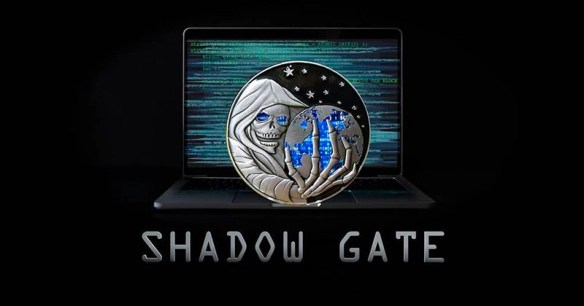
Saturday Matinee: ShadowGate

Who is Millie Weaver, why was she arrested ahead of ‘Shadow Gate’ release? Internet helps raise $13K of $20K

The arrest comes in the wake of her documentary release on the topic of the US ‘shadow government’ which was all set to be screened on YouTube

By Jyotsna Basotia

Source: Meaww.com

In a shocking piece of news, investigative reporter Millie Weaver and her husband were arrested at their home. The arrest comes in the wake of her documentary release on the topic of the US “shadow government” which was all set to be screened on YouTube as she had teased in her last tweet. While there seems to be no confirmation as to why she was taken by the officers, a string of speculative theories seem to have popped up on social media.

Born on February 6, 1991, in San Bernardino, California, United States, Weaver was an aspiring actress and singer who went on to be a political activist and reporter. She is a mother to a four-year-old son and a nine-month-old daughter, as per a report from YHStars.com. Not just that, the same report says that the 29-year-old was named as one Newsmax’s “30 Most Influential Republicans Under 30.”

On August 11, 2020, she posted the trailer with the caption: “The ObamaGate scandal only scratches the surface. This may the biggest whistleblowing event to date. Official Trailer – Shadow Gate.” After the shocking news, the tweet went viral with over 7,000 retweets and 8,000 likes in a few hours. The narration in the trailer says, “Both parties are equally guilty in what should turn out to be an even bigger scandal. Shadow Gate the tactical and operational role the shadow government played behind the scenes carrying out the coup against President Trump.” The trailer also detailed that the documentary would detail who the real puppetmasters and string-pullers are.

As per a USSA News report, her documentary ‘Shadow Gate’ was all set to tell the tale of two whistleblowers who claim that a secretive network of government and military insiders have ‘backdoor’ access to intelligence agencies and information on elite personalities including politicians which would be used to blackmail powerful people. Not just that, the film was also set to show how military psychological warfare programs are used against people through mainstream corporate media and social media.

According to the same report, one of the whistleblowers in the film named Tore was recently suspended by Twitter. When reporter Spiro Skouras tried getting in touch with the Portage County Sheriff’s Office, they confirmed Weaver is in their custody and said that she was served a secret indictment. Currently, she is being charged for tampering with evidence, obstruction of justice, and domestic violence. As per the Sheriff’s Office, she is being held without bond and will remain in custody over the weekend until she appears before a judge on Monday morning, August 17.

The news first surfaced on Twitter when Weaver posted a video of officers knocking her door and announcing her arrest in front of crying children. When she asked the reason, she was told that a “Grand Jury indicted her for burglary”. The one-minute 50-second clip soon made its way to Twitter and was posted by several social media users.

https://twitter.com/MarkDice/status/1294352410693967872

Cassandra Fairbanks shared a fundraiser on Twitter and tried to seek help from people for her release. The GoFundMe page reads: “Millie Weaver, the popular independent journalist, was arrested today in a shocking raid. No information is publicly available, and in cell phone footage of the arrest, Millie repeatedly asks what the arrest is for, with police providing no answers. Whatever the case, we know Millie will need financial help — to pay for a lawyer and other expenses.”

It further adds: “I have just spoken with a work colleague of Millie, and with her friend Tore, who have given me their approval to launch this fundraiser. They confirm that it will not conflict with any other actions to help Millie. All proceeds will be transferred to Millie or her designate as soon as she’s out of custody.” At the time of writing, $13,880 has been raised of $20,000 goal and in an update, the organizer Ezra Levant posted: “I have been in touch with Millie’s friend Tore about connecting with legal counsel. I won’t disclose anything confidential, but it is my goal to help support any legal effort, including (if applicable) paying bail.”

Wild theories started to spiral out of nowhere, many of which said that she was arrested for allegedly obtaining leaked government documents. However, there is no confirmed report or news and MEA World Wide cannot independently verify these claims or allegations.

Saturday Matinee: Afghanistan War Exposed: An Imperial Conspiracy

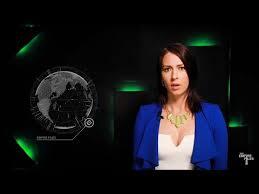
Every American Should Watch Abby Martin’s New Afghanistan War Documentary

Abby Martin’s new documentary, “Afghanistan War Exposed: An Imperial Conspiracy,” is a tour de force, a must watch for every American seeking a holistic understanding of American’s longest-running war.

By MintPress News Desk

The perpetual occupation of Afghanistan has become so normalized that it mostly serves as background noise to most Americans. It’s even jokingly referred to as the “Forever War,” accepted as just another constant reality. A soldier dies now and again, a couple of dozen civilians get killed in another bombing. It’s never enough to stir the population to pressure Washington enough to stop it. And the endless war drags on.

From George W. Bush to Barack Obama, to Donald Trump, every U.S. president has promised to end the war. But their plans to bring the troops home inevitably require first sending more troops to the country. You can’t look at all this rhetoric and reality and not conclude that the United States wants to stay in Afghanistan forever. And there is a reason, despite an unresolvable military quagmire, that the Empire won’t let go of Afghanistan.

In this latest “Empire Files” documentary, journalist Abby Martin covers reveals the reality of  America’s Wars in Afghanistan, from the CIA construct of the 1980s through today’s senseless stalemate. MintPress brings you documentary in its entirety, published with permission from filmmaker Abby Martin.

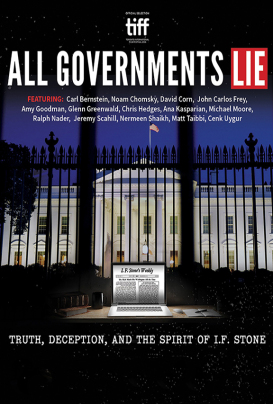
Saturday Matinee: All Governments Lie

All Governments Lie

Truth, Deception, and the Spirit of I.F. Stone

Source: Kanopy

Independent journalists expose government lies and corporate deception, inspired by the legendary investigative journalist I.F. Stone.

With government deception rampant, and intrusion of state surveillance into private life never more egregious, independent voices like Glenn Greenwald, Jeremy Scahill, and Amy Goodman are crucially important. All three are inspired by the iconoclastic rebel journalist named I. F. Stone, whose fearless, independent reporting from 1953 to 1971 filled a tiny 4-page newsletter which he wrote, published and carried to the mailbox every week.

This documentary will change the way you look at the mainstream media. Giant media conglomerates are increasingly reluctant to investigate or criticize government policies, particularly on defense, security and intelligence issues.


Watch the film on Kanopy here.

Saturday Matinee: Matangi / Maya / M.I.A.

Synopsis from MIADocumentary.com

Drawn from a cache of personal video recordings from the past 22 years, director Steve Loveridge’s Sundance award winning MATANGI / MAYA / M.I.A. is a startlingly personal profile of the critically acclaimed artist, chronicling her remarkable journey from refugee immigrant to pop star.

She began as Matangi. Daughter of the founder of Sri Lanka’s armed Tamil resistance, she hid from the government in the face of a vicious and bloody civil war. When her family fled to the UK, she became Maya, a precocious and creative immigrant teenager in London. Finally, the world met her as M.I.A. when she emerged on the global stage, having created a mashup, cut-and-paste identity that pulled from every corner of her journey along the way; a sonic sketchbook that blended Tamil politics, art school punk, hip-hop beats and the unwavering, ultra-confident voice of a burgeoning multicultural youth.

Never one to compromise on her vision, Maya kept her camera rolling throughout. MATANGI / MAYA / M.I.A. provides unparalleled, intimate access to the artist in her battles with the music industry and mainstream media as her success and fame explodes, becoming one of the most recognizable, outspoken and provocative voices in music today.

Watch the full film on Kanopy here: https://www.kanopy.com/product/matangi-maya-mia-0