The other day I joined the rush to explore ChatGPT, signing up at the OpenAI website. I gave it my full legal name and correct birth date, and asked it to pretend I had died and to write my obituary. The result was 300 words describing a somewhat boring paragon of a man.
Except maybe for the boring part, I am not that man, much less that paragon.
The obit wasn’t completely wrong, but it did nothing to undermine ChatGPT’s reputation for “uneven factual accuracy.” It said I was born in Ohio (true), but in Cleveland (false) in 1957 (false). It said I was a “committed environmentalist” (true; I worked for the late lamented Worldwatch Institute for the best part of my career), and that I was an active member of “several environmental organizations” (somewhat true, off and on). It described me as an “avid cyclist” (kind of true, but the last time I did a century ride was 1987).
So much for the hits. The misses include accounts of me as:
A “devoted husband” to my wife of 40 years, Mary (my marriage, to a fine woman not named Mary, lasted 26 years) and a “loving father” to two children (one, in fact)
A “brilliant engineer” with a degree in electrical engineering from Ohio State University who worked for Boeing, General Electric, and SpaceX (wrong on all counts)
Someone who “was instrumental in the development of several renewable energy projects” (my wife and I put a few solar panels on our garage roof, but that’s it)
An “active member” of a church who spent “many hours volunteering at the food bank” (I am neither very religious nor, it shames me to admit, very generous with my personal time)
The obituary proclaimed that my “death” had “left a deep void in the lives of his family, friends, and colleagues” and that I would be “deeply missed by all who knew him.” Well, that would be gratifying—if there is a me to be gratified—but I’ll settle for a drunken wake where somebody plays “Won’t Get Fooled Again.”
Maybe everyone should try this. You too might be amused and/or appalled by the plausible distortions and lies a quasi-intelligent computer program can gin up by accessing the petabytes of data (“data”?) on the Internet—accounts of people and events that are bogus but increasingly, and seamlessly, hard to tell from reality.
I am not a tech nerd and my grasp of what ChatGPT does is rudimentary. But I find it disturbing that this expression of artificial intelligence will instantly fabricate a profile and populate it with—not questions, or blanks to be filled in—but invented factoids tailored to fit a particular format. And this reservation isn’t just me being PO’d about my obit (I’m actually grateful my Internet footprint isn’t bigger); prominent tech geeks also have misgivings. Here’s Farhad Manjoo, for instance:
ChatGPT and other chatbots are known to make stuff up or otherwise spew out incorrect information. They’re also black boxes. Not even ChatGPT’s creators fully know why it suggests some ideas over others, or which way its biases run, or the myriad other ways it may screw up. …[T]hink of ChatGPT as a semi-reliable source.
Likewise Twitter and other social media, whose flaws and dangers are well known by now, and feared by some of the experts who know them best. The most recent book from revered tech guru and virtual reality pioneer Jaron Lanier is called Ten Arguments for Deleting Your Social Media Accounts Right Now. Chapter titles include “Quitting Social Media Is the Most Finely Targeted Way to Resist the Insanity of Our Time,” “Social Media Is Making You into an Asshole,” “Social Media Is Undermining Truth,” and “Social Media Is Making Politics Impossible.”
About those politics: ChatGPT and its successors and rivals, whatever their virtues, are the latest agents in the corruption of the public sphere by digital technology, threatening to extend and deepen the misinformation, fabulism, and division stoked by Twitter and other digital media. Once again, a powerful new technology is out the door and running wild while society and regulators struggle to understand and tame it.
It’s hard to see how this can end well.
An earlier post in this series (DR5) looked at recent archaeological evidence suggesting that humans have explored lots of different means of governing ourselves over the last several thousand years. Eventually, for several reasons, we seem to have ended up with large, top-down, hierarchical organizations. These have lots of problems that won’t be reviewed here, but neuroscientist and philosopher Eric Hoel argues that at least they freed us from the “gossip trap.”
Hoel thinks the main reason small prehistoric human groups didn’t evolve hierarchical governing systems is because of “raw social power,” i.e., gossip:
[Y]ou don’t need a formal chief, nor an official council, nor laws or judges. You just need popular people and unpopular people.
After all, who sits with who is something that comes incredibly naturally to humans—it is our point of greatest anxiety and subject to our constant management. This is extremely similar to the grooming hierarchies of primates, and, presumably, our hominid ancestors.
“So,” Hoel says, “50,000 BC might be a little more like a high school than anything else.”
Hoel believes that raw social power was a major obstacle to cultural development for tens of thousands of years. When civilization did finally arise, it created “a superstructure that levels leveling mechanisms, freeing us from the gossip trap.”
But now, Hoel says, the explosion of digital media and their functions have resurrected it:
[I]f we lived in a gossip trap for the majority of our existence as humans, then what would it be, mentally, to atavistically return to that gossip trap?
Well, it sure would look a lot like Twitter.
I’m serious. It would look a lot like Twitter. For it’s on social media that gossip and social manipulation are unbounded, infinitely transmittable.
…Of course we gravitate to cancel culture—it’s our innate evolved form of government.
Allowing the gossip trap to resume its influence on human affairs—and turbocharging it the way digital media are doing—seems like a terrible way to run a PTA or a garden club, let alone a community or a nation.
The industrialization of made-to-order opinions, “facts,” and “data” via AI and social media, despite efforts to harness them for constructive ends, is plunging us into an epistemological crisis: “How do you know?” is becoming the most fraught question of our time. T.S. Eliot said that “humankind cannot bear very much reality,” but now we are well into an era when we can’t even tell what it is—or in which we simply make it up to please ourselves. The more convincing these applications become, the less anchored we are to the “fact-based” world.
We’ve struggled with this for centuries. Deception is built into nature as an evolutionary strategy, and humans are pretty good at it, both individually and at scale by means of propaganda, advertising, public relations, and spin. These all prey on human social and cognitive vulnerabilities (see DR4).
Humans can only perceive the world partially and indirectly. It starts with our senses, which ignore all but a tiny fraction of the vast amount of data that’s out there. (Sight, for instance, captures only a sliver of the electromagnetic spectrum.) In addition, we’re social creatures and our perceptions of what’s real are powerfully shaped by other people. And now comes the digital mediation of inputs, in which information and data come from the ether via often faceless and anonymous sources and are cloaked or manipulated in ways we may never detect or suspect.
Digital media curate our information about reality, like all media do. But things have changed in the last few decades, and especially in the last few years. It’s been only a generation or so since the old days when Walter, or Chet and David, or any of hundreds of daily newspapers told us what was going on in the world. In those days the curation was handled by a relatively small number of individuals with high profiles. We knew, or could learn, something about who they were and where their biases lay. They were professionals, which also counted for something. There’s no perfect system and this one wasn’t either, but its chain of information custody was a far cry from the distant, anonymized, chat-botted, and algorithm-driven inputs flooding the public sphere now.
One liberal pundit recently noted that the increasing ideological specialization of media outlets “compels customers who care about getting a full and nuanced picture not to buy from just one merchant … .” That’s good advice. But you don’t have to force yourself, teeth clenched, to watch Fox News or MSNBC to get a different point of view; just sit down with your neighbors for a civil chat. In fact, getting away from our TVs and into a room with other people now and then would be good for all of us.
This being a blog about deliberative democracy, I default to deliberation in response to many of our political ills. Deliberation can’t fix everything, and no doubt we will get fooled again—but the tools of democratic deliberation can be used to mitigate the seemingly ubiquitous attempts at manipulation and deceit that surround us. Humans have struggled for a long time to build institutions to check our worst tendencies and have had some success. Digitally mediated information poses a fresh threat and we need institutions to meet these new circumstances.
Deliberative settings built for shaping community action should be among those new institutions. At the very least, they will outperform the social processes seen in high school cafeterias. The methods and structures of deliberative democracy can shorten the chain of information custody as well as restore and nurture the direct human presence of neighbors and fellow citizens: they’re sitting around the same table, and you will see them later at the local school or grocery store. Like them or not (or vice versa), they remain a potent element of our daily lives—a source of influence that can work for good or ill. Deliberation channels normal human interactions in ways that can benefit the community, help check the kinds of fantasist catastrophes so prevalent in digital media, and ground our perceptions of reality in the shared concerns of a community of people who may be less than friends but far more than strangers.
You feel it, don’t you? There’s something deeply wrong with our world. And I don’t refer to the planet’s geosphere. I mean, there’s something deadly wrong with society overall, and the ways in which we interact and react. Something is coming, and many understand what it is.
“We are like people under [a] sentence of death, waiting for the date to be set. We sense that something is about to happen. We know that things cannot go on as they are. History has reached an impasse. We are now on a collision course. Something is about to give.” – Reverend Billy Graham
A few years ago, I wrote a report on NEO entitled “Vladimir Putin’s Third Way: As Seen Through the Nooscope.” The piece covered Mr. Putin’s “Third Way” of governance, and a stunning invention by his now chief of staff Anton Vaino. The invention, the Nooscope was reportedly a device capable of measuring the noosphere, or the highest stage of biospheric development, that of humankind’s rational activities. And through the measurement of humanity’s activities, along with the use of advanced artificial intelligence (AI), the Russian leadership seemed to be seeking a new order not simply of which countries have a say so, but a system that could elevate humanity to its next logical level.
At first, the western academic and journalistic communities exhibited acute curiosity mixed with tongue in cheek skepticism such as is always leveled at Russian ideas. Then, of course, a maze of misinterpretations and distractive propaganda campaigns buried Putin’s ideas, and the probability that our collective conscious and energy can be measured for good. Sure, Google, Amazon, and a hundred other entities powered by Big and Minute data operate such measurements for profit, day in and day out. But those pesky Russians using advanced thinking and algorithms to fix humanity’s woes! This kind of idea had to be branded ridiculous propaganda. But is it?
Let’s remember that it was Plato who predicted that Noocracy was humanity’s future political system. The philosopher also claimed that Democracy (“the authority of the crowd”) and other forms of governance would eventually be replaced by a system such as that Vladimir Putin has suggested. So-called “Russia experts” scoff at the noosphere as a part of Russian Cosmism. However, a Rand Corporation report in 2020 acknowledge the developing noosphere, and made recommendations for the United States to considered adapting U.S. grand strategy to the information age—noopolitik, which favors the use of “soft power”—as a successor to realpolitik, with its emphasis on “hard power.” So, the bastardization of Mr. Putin’s “Third Way” concepts by the likes of the Brookings Institute and authors Clifford G. Gaddy and Barry W. Ickes (2009),
The theories of Pierre Teilhard de Chardin and Édouard Le Roy, who were the practical co-founders of the noosphere, in the early 1900s dealt with a noosphere wrapping Earth as a progression of the teleological character of evolution. Or, for lack of a better description, a result of an overarching “goal-directed evolution.”
Another report I completed that was never published deals with what I believe Putin has been working on. His “Third Way” and nooscope experiments having been put on hold by a new Cold War these days, is for purpose, I believe. There are those in the west who would welcome a new and more successful way of governance. And, there are those who are terrified that the Nooscope/Noosphere project will put an end to their engine of power. The latter group are certainly not attempting to halt the development of the noosphere, but they are trying to ensure it is the west that harnesses it for their purposes. This is one reason you see the western tech giants “all in” to try and censor the opposing side. Anyone who disagrees with the liberal order now, is an enemy of “the state.” As evidence, consider, that NASA and Cisco are currently collaborating on something called the Planetary Skin Insitute, a cousin or competitor to the Nooscope.
Putin’s “Third Way,” what an intriguing and potentially game changing thing! After having written about Russia’s emergence for a decade now, I continually recall what a speech V.V. Putin wrote an editorial for a German newspaper concerning his much-maligned Lisbon to Vladivostok proposed unified market. The quote below is from Putin’s editorial:
“We propose the creation of a harmonious economic community stretching from Lisbon to Vladivostok. In the future, we could even consider a free trade zone or even more advanced forms of economic integration. The result would be a unified continental market with a capacity worth trillions of euros.”
This was 2010, and the notion scared the hell out of everybody at the World Economic Forum, including the janitor. It was at about this time that the hierarchy decided that Putin and Russia as the boy from Leningrad envisioned it, must go. And here we are, witnessing a proxy war with one purpose, to tear a deep crevice in between Europe and Asia. The situation is a bit like the space race back in the late 1950s and early 1960s. Washington and the old gang in London cannot have the Russians controlling this evolved human potential. If anyone is going to take advantage of this noosphere, it’s going to be the same elites who dumbed our schoolchildren down to iPhone troglodytes.
Read the chapter Getting Back on Track Through Noopolitik, in the Rand report. It’s not a recommendation for the planet, but one for the deep state that currently has a former US president on trial to keep him out of office. You see, the liberal order is already manipulating the noosphere through owned media, academia, and government. To these people the sphere of human consciousness hugging our globe needs to be seeded with the “right” ideas. They seek to transform us, to evolve earth into the same slave planet it’s always been, only more efficient. It’s evil. A modern version of the worst parts of the Bible. The Matrix movie or 1984, take your pick.
We have to stop them. Or, wait until Jesus comes back.
Let’s start with the basics. Roughly 5% of the human race currently live in the United States of America. That very small fraction of humanity, until quite recently, enjoyed about a third of the world’s energy resources and manufactured products and about a quarter of its raw materials. This didn’t happen because nobody else wanted these things, or because the US manufactured and sold something so enticing that the rest of the world eagerly handed over its wealth in exchange. It happened because, as the dominant nation, the US imposed unbalanced patterns of exchange on the rest of the world, and these funnelled a disproportionate share of the planet’s wealth to itself.
There’s nothing new about this sort of arrangement. In its day, the British Empire controlled an even larger share of the planet’s wealth, and the Spanish Empire played a comparable role further back. Before then, there were other empires, though limits to transport technologies meant that their reach wasn’t as large. Nor, by the way, was any of this an invention of people with light-coloured skin. Mighty empires flourished in Asia and Africa when the peoples of Europe lived in thatched-roofed mud huts. Empires rise whenever a nation becomes powerful enough to dominate other nations and drain them of wealth. They’ve thrived as far back as records go and they’ll doubtless thrive for as long as human civilisations exist.
America’s empire came into being in the wake of the collapse of the British Empire, during the fratricidal European wars of the early 20th century. Throughout those bitter years, the role of global hegemon was up for grabs, and by 1930 or so it was pretty clear that Germany, the Soviet Union or the US would end up taking the prize. In the usual way, two contenders joined forces to squeeze out the third, and then the victors went at each other, carving out competing spheres of influence until one collapsed. When the Soviet Union imploded in 1991, the US emerged as the last empire standing.
Francis Fukuyama insisted in a 1989 essay that having won the top slot, the US was destined to stay there forever. He was, of course, wrong, but then he was a Hegelian and couldn’t help it. (If a follower of Hegel tells you the sky is blue, go look.) The ascendancy of one empire guarantees that other aspirants for the same status will begin sharpening their knives. They’ll get to use them, too, because empires invariably wreck themselves: over time, the economic and social consequences of empire destroy the conditions that make empire possible. That can happen quickly or slowly, depending on the mechanism that each empire uses to extract wealth from its subject nations.
The mechanism the US used for this latter purpose was ingenious but even more short-term than most. In simple terms, the US imposed a series of arrangements on most other nations that guaranteed the lion’s share of international trade would use US dollars as the medium of exchange, and saw to it that an ever-expanding share of world economic activity required international trade. (That’s what all that gabble about “globalisation” meant in practice.) This allowed the US government to manufacture dollars out of thin air by way of gargantuan budget deficits, so that US interests could use those dollars to buy up vast amounts of the world’s wealth. Since the excess dollars got scooped up by overseas central banks and business firms, which needed them for their own foreign trade, inflation stayed under control while the wealthy classes in the US profited mightily.
The problem with this scheme is the same difficulty faced by all Ponzi schemes, which is that, sooner or later, you run out of suckers to draw in. This happened not long after the turn of the millennium, and along with other factors — notably the peaking of global conventional petroleum production — it led to the financial crisis of 2008-2010. Since 2010 the US has been lurching from one crisis to another. This is not accidental. The wealth pump that kept the US at the top of the global pyramid has been sputtering as a growing number of nations have found ways to keep a larger share of their own wealth by expanding their domestic markets and raising the kind of trade barriers the US used before 1945 to build its own economy. The one question left is how soon the pump will start to fail altogether.
When Russia launched its invasion of Ukraine in February 2022, the US and its allies responded not with military force but with punitive economic sanctions, which were expected to cripple the Russian economy and force Russia to its knees. Apparently, nobody in Washington considered the possibility that other nations with an interest in undercutting the US empire might have something to say about that. Of course, that’s what happened. China, which has the largest economy on Earth in purchasing-power terms, extended a middle finger in the direction of Washington and upped its imports of Russian oil, gas, grain and other products. So did India, currently the third-largest economy on Earth in the same terms; as did more than 100 other countries.
Then there’s Iran, which most Americans are impressively stupid about. Iran is the 17th largest nation in the world, more than twice the size of Texas and even more richly stocked with oil and natural gas. It’s also a booming industrial power. It has a thriving automobile industry, for example, and builds and launches its own orbital satellites. It’s been dealing with severe US sanctions since not long after the Shah fell in 1978, so it’s a safe bet that the Iranian government and industrial sector know every imaginable trick for getting around those sanctions.
Right after the start of the Ukraine war, Russia and Iran suddenly started inking trade deals to Iran’s great benefit. Clearly, one part of the quid pro quo was that the Iranians passed on their hard-earned knowledge about how to dodge sanctions to an attentive audience of Russian officials. With a little help from China, India and most of the rest of humanity, the total failure of the sanctions followed in short order. Today, the sanctions are hurting the US and Europe, not Russia, but the US leadership has wedged itself into a position from which it can’t back down. This may go a long way towards explaining why the Russian campaign in Ukraine has been so leisurely. The Russians have no reason to hurry. They know that time is not on the side of the US.
For many decades now, the threat of being cut out of international trade by US sanctions was the big stick Washington used to threaten unruly nations that weren’t small enough for a US invasion or fragile enough for a CIA-backed regime-change operation. Over the last year, that big stick turned out to be made of balsa wood and snapped off in Joe Biden’s hand. As a result, all over the world, nations that thought they had no choice but to use dollars in their foreign trade are switching over to their own currencies, or to the currencies of rising powers. The US dollar’s day as the global medium of exchange is thus ending.
It’s been interesting to watch economic pundits reacting to this. As you might expect, quite a few of them simply deny that it’s happening — after all, economic statistics from previous years don’t show it yet, Some others have pointed out that no other currency is ready to take on the dollar’s role; this is true, but irrelevant. When the British pound lost a similar role in the early years of the Great Depression, no other currency was ready to take on its role either. It wasn’t until 1970 or so that the US dollar finished settling into place as the currency of global trade. In the interval, international trade lurched along awkwardly using whatever currencies or commodity swaps the trading partners could settle on: that is to say, the same situation that’s taking shape around us in the free-for-all of global trade that will define the post-dollar era.
One of the interesting consequences of the shift now under way is a reversion to the mean of global wealth distribution. Until the era of European global empire, the economic heart of the world was in east and south Asia. India and China were the richest countries on the planet, and a glittering necklace of other wealthy states from Iran to Japan filled in the picture. To this day, most of the human population is found in the same part of the world. The great age of European conquest temporarily diverted much of that wealth to Europe, impoverishing Asia in the process. That condition began to break down with the collapse of European colonial empires in the decade following the Second World War, but some of the same arrangements were propped up by the US thereafter. Now those are coming apart, and Asia is rising. By next year, four of the five largest economies on the planet in terms of purchasing power parity will be Asian. The fifth is the US, and it may not be in that list for much longer.
In short, America is bankrupt. Our governments from the federal level down, our big corporations and a very large number of our well-off citizens have run up gargantuan debts, which can only be serviced given direct or indirect access to the flows of unearned wealth the US extracted from the rest of the planet. Those debts cannot be paid off, and many of them can’t even be serviced for much longer. The only options are defaulting on them or inflating them out of existence, and in either case, arrangements based on familiar levels of expenditure will no longer be possible. Since the arrangements in question include most of what counts as an ordinary lifestyle in today’s US, the impact of their dissolution will be severe.
In effect, the 5% of us in this country are going to have to go back to living the way we did before 1945. If we still had the factories, the trained workforce, the abundant natural resources and the thrifty habits we had back then, that would have been a wrenching transition but not a debacle. The difficulty, of course, is that we don’t have those things anymore. The factories were shut down in the offshoring craze of the Seventies and Eighties, when the imperial economy slammed into overdrive, and the trained workforce was handed over to malign neglect.
We’ve still got some of the natural resources, but nothing like what we once had. The thrifty habits? Those went whistling down the wind a long time ago. In the late stages of an empire, exploiting flows of unearned wealth from abroad is far more profitable than trying to produce wealth at home, and most people direct their efforts accordingly. That’s how you end up with the typical late-imperial economy, with a governing class that flaunts fantastic levels of paper wealth, a parasite class of hangers-on that thrive by catering to the very rich or staffing the baroque bureaucratic systems that permeate public and private life, and the vast majority of the population impoverished, sullen, and unwilling to lift a finger to save their soi-disant betters from the consequences of their own actions.
The good news is that there’s a solution to all this. The bad news is that it’s going to take a couple of decades of serious turmoil to get there. The solution is that the US economy will retool itself to produce earned wealth in the form of real goods and non-financial services. That’ll happen inevitably as the flows of unearned wealth falter, foreign goods become unaffordable to most Americans, and it becomes profitable to produce things here in the US again. The difficulty, of course, is that most of a century of economic and political choices meant to support our former imperial project are going to have to be undone.
The most obvious example? The metastatic bloat of government, corporate and non-profit managerial jobs in American life. That’s a sensible move in an age of empire, as it funnels money into the consumer economy, which provides what jobs exist for the impoverished classes. Public and private offices alike teem with legions of office workers whose labour contributes nothing to national prosperity but whose pay cheques prop up the consumer sector. That bubble is already losing air. It’s indicative that Elon Musk, after his takeover of Twitter, fired some 80% of that company’s staff; other huge internet combines are pruning their workforce in the same way, though not yet to the same degree.
The recent hullaballoo about artificial intelligence is helping to amplify the same trend. Behind the chatbots are programs called large language models (LLMs), which are very good at imitating the more predictable uses of human language. A very large number of office jobs these days spend most of their time producing texts that fall into that category: contracts, legal briefs, press releases, media stories and so on. Those jobs are going away. Computer coding is even more amenable to LLM production, so you can kiss a great many software jobs goodbye as well. Any other form of economic activity that involves assembling predictable sequences of symbols is facing the same crunch. A recent paper by Goldman Sachs estimates that something like 300 million jobs across the industrial world will be wholly or partly replaced by LLMs in the years immediately ahead.
Another technology with similar results is CGI image creation. Levi’s announced not long ago that all its future catalogues and advertising will use CGI images instead of highly-paid models and photographers. Expect the same thing to spread generally. Oh, and Hollywood’s next. We’re not too far from the point at which a program can harvest all the footage of Marilyn Monroe from her films, and use that to generate new Marilyn Monroe movies for a tiny fraction of what it costs to hire living actors, camera crews and the rest. The result will be a drastic decrease in high-paying jobs across a broad swathe of the economy.
The outcome of all this? Well, one lot of pundits will insist at the top of their lungs that nothing will change in any way that matters, and another lot will start shrieking that the apocalypse is upon us. Those are the only two options our collective imagination can process these days. Of course, neither of those things will actually happen.
What will happen instead is that the middle and upper-middle classes in the US, and in many other countries, will face the same kind of slow demolition that swept over the working classes of those same countries in the late 20th century. Layoffs, corporate bankruptcies, declining salaries and benefits, and the latest high-tech version of NO HELP WANTED signs will follow one another at irregular intervals. All the businesses that make money catering to these same classes will lose their incomes as well, a piece at a time. Communities will hollow out the way the factory towns of America’s Rust Belt and the English Midlands did half a century ago, but this time it will be the turn of upscale suburbs and fashionable urban neighbourhoods to collapse as the income streams that supported them disappear.
This is not going to be a fast process. The US dollar is losing its place as the universal medium of foreign trade, but it will still be used by some countries for years to come. The unravelling of the arrangements that direct unearned wealth to the US will go a little faster, but that will still take time. The collapse of the cubicle class and the gutting of the suburbs will unfold over decades. That’s the way changes of this kind play out.
As for what people can do in response this late in the game, I refer to a post I made on The Archdruid Report in 2012 titled “Collapse Now and Avoid the Rush”. In that post I pointed out that the unravelling of the American economy, and the broader project of industrial civilisation, was picking up speed around us, and those who wanted to get ready for it needed to start preparing soon by cutting their expenses, getting out of debt, and picking up the skills needed to produce goods and services for people rather than the corporate machine. I’m glad to say that some people did these things, but a great many others rolled their eyes, or made earnest resolutions to do something as soon as things were more convenient, which they never were.
Over the years that followed I repeated that warning and then moved on to other themes, since there really wasn’t much point to harping on about the approaching mess when the time to act had slipped away. Those who made preparations in time will weather the approaching mess as well as anyone can. Those who didn’t? The rush is here. I’m sorry to say that whatever you try, it’s likely that there’ll be plenty of other frantic people trying to do the same thing. You might still get lucky, but it’s going to be a hard row to hoe.
Mind you, I expect some people to take a different tack. In the months before a prediction of mine comes true, I reliably field a flurry of comments insisting that I’m too rigid and dogmatic in my views about the future, that I need to be more open-minded about alternative possibilities, that wonderful futures are still in reach, and so on. I got that in 2008 just before the real estate bubble started to go bust, as I’d predicted, and I also got it in 2010 just before the price of oil peaked and started to slide, as I’d also predicted, taking the peak oil movement with it. I’ve started to field the same sort of criticism once again.
We are dancing on the brink of a long slippery slope into an unwelcome new reality. I’d encourage readers in America and its close allies to brace themselves for a couple of decades of wrenching economic, social, and political turmoil. Those elsewhere will have an easier time of it, but it’s still going to be a wild ride before the rubble stops bouncing, and new social, economic, and political arrangements get patched together out of the wreckage.
Is the human race under spiritual attack? And did the esoteric philosopher and clairvoyant Rudolf Steiner warn about it over a century ago when he said a ‘vaccine’ would be the delivery system for the defeat of humanity?
For many, the overly-authoritarian response by governments worldwide to Covid-19 pointed to some deeper, more sinister, driving force. But it hasn’t just been the governments that seemed to be acting strange. Over the last two years we’ve witnessed people across a broad spectrum of society meekly submit to draconian attacks on their freedoms, many even fiercely defending the assault. In the same way, we’ve seen politicians and parties who once ran on platforms of personal freedom and economic autonomy almost overnight turn into overbearing control freaks, intent on micromanaging every aspect of our lives. How has this happened?
Recently, the term ‘mass formation psychosis’ has been on everybody’s lips. It’s defined as a psychological phenomenon whereby a mass of people voluntarily go through a process of deindividuation and a herd mentality forms. Due to their contagious nature, the thoughtforms affecting these deindividuated people, catalysed by the positive feedback loops of news programmes, social media and peer interaction, spread like wildfire throughout the population. In the past, this used to be called mob psychology, or more plainly, the madness of crowds.
Psychology: from Science to the Occult
Someone for whom the events of the past couple of years would not have been so surprising was the Austrian esoteric philosopher and mystic Rudolf Steiner, who died almost a century ago. Throughout the course of his life Steiner wrote numerous books and delivered thousands of lectures on his theories, contributing greatly to diverse spheres from architecture to education, and agriculture to beekeeping. His highly unique – and sometimes controversial – insights and methods led to the founding of the spiritual movement known as Anthroposophy, which emphasises the existence of a boundless potential for human beings.
Unlike some esoteric thinkers, Steiner saw the great importance of materialistic science, but argued that it was vital to see it as only a single aspect of reality which should ideally be combined with what he called ‘spiritual science’ – gained by mystical experience – in order to present the full picture. After all, breakthroughs often occur when scientists receive insights from beyond the material realm, as in the famous case of James Watson, credited with the discovery of the double helix shape of DNA which came to him in a dream featuring two intertwined serpents. Similarly, Dmitri Mendeleev, created the period table after a dream of “… a table where all the elements fell into place as required.” These cases go to show that not all scientific discoveries are the result of logical deduction and experimentation.
In fact, Steiner, who had been on the receiving end of mystical insights since childhood, honed his clairvoyant skills to such an extent that the information he received from non-conventional sources became more than the occasional flash of insight, His quest became the establishment of methods for obtaining objective extrasensory perception – a task he considered of paramount importance for he believed an epic battle was being fought in the spiritual realm that would have disastrous consequences for humankind unless it was addressed head-on.
Spirits of Darkness
His clearest warnings about the future fate of humanity came in a series of lectures delivered towards the end of his life in Dornach, Switzerland; these lectures are reproduced in the book The Fall of the Spirits of Darkness. Although Steiner’s detractors say his prose can be leaden, his lectures meandering, and his concepts difficult to grasp, he is remarkably clear and straightforward when it comes to the fate that awaits humanity if our obsession with scientific materialism is allowed to reign free without being pulled back into balance by the counterbalancing forces of spirituality.
This is most clearly illustrated in the final two lectures in the series – 13 and 14 – which are respectively titled The Fallen Spirits’ Influence in the World and Into the Future. Steiner posits that an unseen battle took place in the early 19th century which certain ‘spirits of darkness’ lost. These spirits were duly ejected from their heavenly realms and cast down into a more material plane of existence i.e. here. He is remarkably precise about when this occurred: autumn 1879.
These newly arrived spirits joined those who were already here – the ones that have been existing alongside and influencing humanity since the mythological times associated with the Fall. Given that it takes time for these malign spirits to work their way through human societies, it wasn’t until 1914 when their malign influence manifested in human society in the form of the First World War – a disastrous event the cause of which still puzzles secular historians.
Lucifer and Ahriman – the Leaders of the Pack
The spirits Ahriman and Lucifer have been hacking humanity for thousands of years, says Steiner, with Lucifer being the ‘light bringer’ intent on making us more spiritual and granting us more free will, and Ahriman doing the opposite and making us more materialistic and easier to control. In simplistic terms, Lucifer is an ascending influence, which Ahriman is a descending one.
Why should they want to do this? Well, we just don’t know – it’s difficult for our human minds to figure out what makes angels and demons tick. But whenever there’s one of those periodic battles in the spirit world, Steiner said, it tends to result in a new batch of reinforcements being thrown down into the material realm to join forces with those already here.
Steiner told us that Ahriman – a demon first identified by the Zoroastrians in ancient Persia – has the upper hand right now. He had a personal beef with Ahriman and had seen his face in vision – in fact he was still carving a likeness of it out of wood at the time of his death. Ahriman’s main aim seems to be to drag humankind into a purely materialistic state devoid of any form of spirituality, removing even the impulse to connect with our souls. The method of attack would be through science and technology, and by taking possession of the minds of powerful and influential people in order to push through this agenda. These controlled people could be scientists, politicians, religious leaders, or anyone with any influence. Thus, demonic forces would work through these people, and the people themselves, blinded by all-too-human failings such as greed or a lust for power, would lack the basic awareness to recognise what was occurring.
A New Religion for a New Age
The background to this power grab was the rise of atheism and the worship of science and progress. Now, we have a situation in which a purely materialist perspective is presented as the only explanation for all creation. Atheism has, for some, become a de facto religion, while the rich traditions of native spirituality have been side-lined and crushed under its heel. People, animals and in fact all life is regarded in the same cold manner; merely receptacles of proteins and genetic code that can be exploited. The endgame of this play is presented as a bleak, monochrome world expunged of spirit and light, where humans – their minds and spirits broken – are herded together and monitored like lab animals.
We can see how this scenario is being expedited. The CEOs of tech corporations are viewed almost as saints or Bodhisattvas, dangling the carrot of eternal life in the form of uploading the ‘data’ contained within our brains onto microchips. At the same time, politicians, corporate scientists, civil servants and economists are regarded as technocratic engineers tasked with ensuring the smooth functioning of the juggernaut of the material economy. Free will? The implicit assumption is that this will be unnecessary once the AI powered algorithms – which know us better than we do – reach escape velocity. At this stage, human life would have no intrinsic value, and the shells of our former selves would be occupied by the demonic army that Steiner warned us was waiting for its moment.
In the Blood
Some people say that Rudolf Steiner predicted a vaccine would appear which would be the delivery system for the final defeat of humankind. In light of the clandestine efforts made over the last two years to inject almost everybody on the planet with a gene editing treatment, his prescience seems remarkable – but how true is it? Amazingly, Steiner was remarkably clear (by his own standards) about the physical process by which this takeover would occur. He states in his final lecture in The Fall of the Spirits of Darkness that the spiritual world where entities such as angels, demons and archangels dwell is within the human blood. He meant this quite literally, saying:
“Both the Archangels and the Angels had their dwelling place in the blood, as it were. Truly, the blood is not something merely for chemists to analyse; it is also the dwelling place of entities from higher worlds.”
To that end, he speculated that the delivery mechanism will be in the form of a vaccine, injected directly into our bodies.
“Today [in 1917] bodies are vaccinated against one thing and another; in future, children will be vaccinated with a substance which it will certainly be possible to produce, and this will make them immune so that they do not develop foolish inclinations connected with spiritual life – ‘foolish’ here, of course, in the eyes of the materialists.”
This ‘vaccine’, he goes on to say, would block off any communication from the spirit world, meaning no messages or impulses would be able to get through from the ‘spirits of light’ whose aim is always to help humanity progress and fulfil our destiny. Positive impulses which were once transmitted to us would be permanently locked out by the vaccine, and instead the hapless victims would only be able to receive the impulses coming to them from disruptive sources, which we can imagine today might include the media, the education system and even established religion. There would be great confusion, he says, and Ahrimanic forces will turn people’s thoughts upside down and inside out. Everything that once was good and sensible will appear evil and crazy, while everything that was once considered insane and evil will be presented as sensible and good.
Squid Games: From Wetiko to The Matrix
Does this all sound implausible, the ramblings of a long-dead mystic? Many will no doubt say that it does, and that there are more earthly and plausible explanations for the psychic epidemic which has gripped the world. Perhaps Steiner was speaking metaphorically after all, some may reason. Nevertheless, the phenomenon to which Steiner alluded bears striking similarities to the Native American concept of the demonic force they call wetiko. The author Paul Levy has written extensively about this, defining it as “a contagious psychospiritual disease of the soul, a parasite of the mind that is currently being acted out en masse on the world stage via a collective psychosis of titanic proportions.”
Listening to a recent Legalise Freedom podcast entitled Covid-19: War on Humanity, Emma Farrell, a plant healer who uses shamanic techniques to access inner realms, made the observation that she and others in the same field had seen a veritable horde of spiritual parasitic entities attached to people over the last two years – as if a floodgate had been opened and they had poured through it. These entities, she says, come in all shapes and sizes but there are two very common and recognisable ones, one of which is squid-like. These squid-like beings, she says, attach themselves to unprotected people and harvest their spiritual energy by causing division and discord among us.
This struck me as interesting as we’ve seen this squid archetype move into human consciousness over the past few years, not least becoming apparent through popular culture. Many people have reported having dreams of octopus or squid-like creatures, and artists such as Peter Yankowski have painted pictures of these visions. Indeed, the villainous machines that control humans and harvest their energies in the Matrix movies look like robotic squids, while one of the top Netflix series of 2021 was Squid Game, a grim and violent survival thriller that posits human nature as intrinsically barbaric. What’s more, the resurgence in popularity of H.P. Lovecraft’s supernatural tales of horrors from the deep adds another tentacled layer to this rugose cake.
And let’s not forget when Goldman Sachs, one of the world’s largest investment banks, was memorable described by Rolling Stone journalist Matta Taibbi as a “great vampire squid wrapped around the face of humanity, relentlessly jamming its blood funnel into anything that smells like money.” The description is apt, after all, what is the purpose of an investment bank other than to turn every aspect of the sacred world into a monetised asset that can be traded, exploited and leveraged?
The Path Back to Sanity
Could this manifestation of a squid/octopus archetype into human consciousness be what Steiner was warning us about? Are there really spiritual entities within our blood that could account for billionaire technocrats’ obsession with injecting substances into us that are said to contain nanoparticles we know very little about? And how does this sit with the psychospiritual disease of wetiko outlined by Paul Levy, and the concept of ‘mass formation psychosis’ being talked about in the alternative media?
Perhaps the truth lies somewhere in the nexus of these concepts, with the implicit suggestion that we should not rest in our deep enquiry into the manner of the affliction that is currently so prevalent across the world. Only by doing so can we hope to find the necessary tools and weapons to fight back against it.
Or maybe the Ahrimanic demons that Steiner warned us about, the wetiko mind parasites Paul Levy writes of, and the tentacled entities that have squirmed into our collective consciousness via popular culture are all playing on the same team. If so, what does our team look like? And how do we win this game? Perhaps the fight is a necessary one at this juncture in human development, and that by defeating these ‘spirits of darkness’ we can progress to a higher level.
Whatever the case, referring back to the old adage alluded to earlier, people it’s said, might go mad in crowds, but the path back to sanity happens one person at a time.
On a video podcast the other day, I made reference to the lockdown orders of March 2020. The host turned off the recording. He said it was fine to talk about this subject but from now on please refer to “the events of March 2020” with no specifics.
Otherwise, it will be taken down by YouTube and Facebook. He needs those platforms for reach, and reach is necessary for his business model.
I complied, but I was spooked. Are we really now in the position that talking about what happened to us is verboten on mainstream venues? Sadly, that seems to be where we headed. In big and small ways, and throughout the culture and the whole world, we are bit by bit being trained to forget and hence not learn and thus repeat the whole thing.
This makes no sense since nearly every public issue in play today traces to those fateful days and the fallout thereof, including censorship, the entrenchment of industry-government oligarchs, the corruption of media and tech, the educational upheaval, the abuse of courts and law, and the developing financial and banking crisis.
And yet hardly anyone wants to speak about the topic frankly. It is too upsetting. There is too much at stake. We cannot risk being canceled, the single greatest fear of every aspirational professional in today’s world. Plus too many powerful people were in on it and don’t want to admit it. It would appear that the whole subject is being memoryholed in ways of which they all approve.
For nearly two years, or longer, respectable intellectuals knew not to dissent from the prevailing norms and challenge the whole machinery. This was true of Washington think tanks, which went on their merry way from March 2020 either celebrating the “public health response” or just remaining quiet. The same was true of the leadership of major political parties and third parties.
Most religious leaders stayed quiet too, even as their doors were padlocked for as long as 2 holiday seasons. Civic organizations played along. If you thought that the job of the ACLU was to defend civil liberties, you were wrong: they one day decided that lockdowns, mandatory masks, and forced shots were essential to their mission.
So many were compromised over 3 years. These same people now just want the whole subject to go away. We find ourselves in an odd position, having experienced the biggest trauma in our lives and in many generations and yet there is precious little open talk about it. Brownstone was established to fill this void but we’ve become a target as a result.
The search engines have been gamed for the better part of 3 years to keep the science channeled in only one direction. If web platforms step out of line, it is easy enough for search engines and social-media companies to tag them as problematic and thus throttle their reach. But for Substackers – and they are being targeted now too – it would be hard to find out anything other than what the oligarchs want you to believe.
This silent treatment is filtering down to every aspect of our lives and becoming entrenched in the political culture too. Here is an example from this week.
When Donald Trump returned from his theatrical and ridiculous indictment on nothing in New York, he flew immediately back to Mar-a-Lago where he told his story to people gathered in a pastiche-baroque ballroom. He told of the fake news, the attempted impeachments for Russia and Ukraine, the plots and schemes, and onward to the fake ballots and the FBI raid on his home, and now this preposterous new thing.
It was a solid narrative overall. But his story left out a hugely important detail. He said not one word about Covid lockdowns and Operation Warp Speed that was supposed to be the great fix for the virus but flopped. This was a rather important detail to leave out since it wrecked the economy, the Bill of Rights, education, and led to a massive demographic upheaval in addition to the continuing fallout in terms of culture, economics, and everything else.
It also caused him to lose the presidency, whether because the shock resulted in mass demoralization (this was certainly not a path to making America great again) or because of the mail-in ballots made possible by Covid restrictions, or probably both. However you look at it, it was the most disastrous decision of his presidency or possibly any presidency in history.
How in the world are we just supposed to pretend that this did not happen? And yet he is playing along simply because he does not want to admit error. He thinks it makes him appear weak. Nor does he still slam the successor presidency for mask and shot mandates even though hundreds of millions were affected by them. He would rather not bring up the topic at all, lest doing so raises questions about his own judgment in those fateful days of March 2020.
Meanwhile, the DNC does not want to admit that it celebrated and built on Trump’s biggest disaster while the RNC does not want to discuss that the policies they decry from the DNC actually began under the RNC. And so you have a kind of “mutually assured destruction” pact between them that needs no plot or contract. In silencing all talk about this, each party is only doing what is in its interest.
We can fully expect that these issues will be locked out of the campaign narratives in 2024 just as they were in 2020 and 2022. Everyone seems to agree: the less said the better. And this is precisely why the announced candidacy of Robert Kennedy, Jr., has triggered the usual and expected gaslighting from the mainstream media. The plan is to flog him into marginalization. And if that doesn’t work, they will flog and flog again.
We are seeing a real-time example of how history is really written. The narrative is more self-serving than we knew. If all the power centers in society get something tremendously wrong, an informal conspiracy of silence develops around it, with the hope of just wiping it from the history books.
As Michael Senger has written, “Lockdowns met little resistance in part because they reinforced existing power structures. The rich got richer, the Zoom class got a vacation, workers got stimulus, while some business owners, their employees, and the most vulnerable had to sacrifice everything for this fantasy.”
And we can add to that: government gained vastly more power. In fact, Covid became the template for the biggest expansion of government power over the population in world history, more effective than ancient myths about god-like rulers, heresy trials and witch burnings of the Middle Ages, sedition purges of the 18th and 19th centuries, red scares of the 20th centuries, the Cold War, or even the wars on terror. Fear of infectious disease was more effective than all of them for ratcheting up despotism.
When something works this well for the most powerful people in society, why not just keep quiet about it?
The tellers of tales can write stories but they cannot invent their own realities. There will be no restoration of liberty, rights, and truth until we come to terms with what happened, why, and how to prevent it in the future. Playing along with this conspiracy of silence surrounding a policy that effectively blotted out every advance in human rights since the Magna Carta is a disastrous error that could lead to the entrenchment of a new dark age.
As an Australian, it troubles me that if the whole world lived like us, we would need 4.5 planet Earths. Thanks to over-consuming nations like mine, worldwide we are living as if we have 1.75 planet Earths, a figure that has increased from 1 (that is, living within our means) since 1970. What this boils down to is that those of us in the global north are taking from both countries in the global south and future generations to fuel our lifestyles today. The ‘Earth Overshoot’ research is supported by the work of the late Earth System Scientist, Professor Will Steffen, who brought to our attention The Great Acceleration, whereby “[a]fter 1950 we can see that major Earth System changes became directly linked to changes largely related to the global economic system.” Steffen is referring to our growth-based economies, and while three percent economic growth each year might sound small, it means that within 24 years we will be consuming twice as many resources as today, and within 100 years 19 times as many. As economist Kenneth Boulding said: “[a]nyone who believes that exponential growth can go on forever in a finite world is either a madman or an economist.”
For this reason, I am a big proponent of degrowth in over-consuming nations in order to fit back within planetary boundaries. For anyone not familiar with the term, degrowth is a planned, democratic reduction in material and energy use in high-income nations while improving the well-being of people in those nations. It is more than this though. While very often the focus of degrowth is on how life can be better in a smaller economy, Federico Demaria and Serge Latouche argue that “[t]he point of degrowth is to escape from a society that is absorbed by the fetishism of growth…. It implies decolonization of the imaginary and the implementation of other possible worlds”. In this respect, the former definition of degrowth applies only to over-consuming nations, while the latter definition applies to all nations, and to all people. It is this second definition of degrowth to which this essay relates.
The concept of degrowth is powerful because it is clear that we need systemic change to avoid ecological collapse: business as usual with a “green tinge” isn’t going to be enough. It is also true that individual change drives cultural change which can be the key to unlocking political change leading to fundamental change. On this point, I find it fascinating to consider how “growth has entered our minds and souls”, and how an awareness of these “mental infrastructures of growth” might free us from growthism and help unlock the cultural changes that will bring about the necessary systemic changes.
With this in mind, here are a couple of points to consider in relation to how growth may be enshrined in the psychological structure of our collective minds, largely based on the work of Harald Welzer:
Our dreams for the future are centred around it being better than today, in the sense of ‘more’ (e.g., a bigger house, a larger salary, more travel).
We see ourselves as something to continually develop and optimise, our lives are seen as a process of creating biographies or filling curriculum vitae.
While we used to see paid labour as drudgery and something we did until we had met our needs, now we view it as noble, esteemed even, to be sought out and with no end. Sadly, this cultural 180° turnaround becomes a regret of many as they are dying.
Similarly, society views ‘hard-work’ as virtuous and thus ‘hard-work’ entitles those who undertake it to whatever their heart desires without limit or consideration of the harm caused, their purchases being the fruits of their labour.
We typically live by the rhythms of the industrial workday via a standardised worldwide time regime, unaware that there is a natural rhythm of time (for example, consider that in 2023 there will be 13 moons but only 12 calendar months or that, on the whole, our pace of work is unchanged by the seasons).
It is a collective belief that we should be able to own parcels of land, excluding others from that land. An example of this is that home (and correspondingly land) ownership in Australia is described as the ‘Great Australian Dream’, a term derived from the ‘American Dream’ of the same nature.
In various ways, these – and probably many more aspects of our modern day lives – relate back to the surpluses created by industrialisation (enabling the future to have more than today, a concept that is “historically quite recent”), the enclosure of the commons (the very foundation of growth-dependent capitalism) and the subsequent imperative to work to have our needs met (rather than simply being able to directly meet our needs). Our ability to recognise and unpick these ‘mental infrastructures’ – that is, the worldview that influences all of our actions – will be key to throwing off the shackles of growth and unlocking a culture of sufficiency, whereby we recognise when we have ‘enough’ in a material sense and from then on meet our “nonmaterial needs nonmaterially”, increasing our sense of wellbeing and contentment.
The work of Antonio Gramsci on cultural hegemony is relevant in unlocking a culture of sufficiency. Michael Mezz describes Gramsci’s theory on how the ruling class maintains power via a cultural form of dominance:
“…the ruling class creates an ideology in which its own values become common sense for the rest of society and Gramsci argued that the role of the state is to maintain institutions such as media and the education system that educate the masses on the cultural ideology of the ruling class. The goal of that education being that the working class develop a sense of freedom and a good life that serves the purposes of the people in power. In other words, the working class starts to value things like innovation and productivity and economic growth that doesn’t actually serve them.”
Gramsci tells us that the way to overcome cultural hegemony is by creating a new culture that is not based on the values of the ruling class. A counter-culture, if you like.
So, what are the counter-hegemonic narratives that we can begin to embrace? What would a mind and soul not infiltrated by growth look like? There is much to learn from indigenous cultures on this topic. As Jeff Sparrow highlights in his book, Crimes Against Nature, First Nation Australians found paid labour to be antithetical to their egalitarian lifestyles:
“Today, we take the wages system for granted. It appears normal, almost eternal, since we can barely conceive of an alternative. It did not seem normal to pre-colonial people. In Australia, as elsewhere in the world, they found capitalist practices utterly horrifying…. Indigenous people, accustomed to an egalitarian ethos and to work carried out for the collective good, saw the authority exerted by employers as tyranny. As late as 1888, a churchman complained of the difficulty he had in persuading Indigenous people that one man was innately better than another, that a certain individual, by virtue of his possessions, mandated obedience from his fellows…. Indigenous people did not despise wage labour primarily because of the effort that it entailed. Rather, they thought the work demanded by capitalists stripped life of its humanity.”
Furthermore, First Nations people lived with the rhythms of nature, not the industrial workday, and there was no private land ownership, they had the wisdom to know that “… you are undone if you once forget that the fruits of the earth belong to us all, and the earth itself to nobody” (Jean-Jacques Rousseau).
There are many examples of counter-hegemonic narratives arising more recently too. The following list is skewed more towards examples from the global North because the global North represents the vast majority of the over-consumption and is therefore where cultural change is most needed. Such examples include:
Those people, like the Futuresteaders and others who practice voluntary simplicity and frugal abundance, who appreciate the simple things in life, and find happiness in what they have rather than what they want. Seeking only ‘enough’ and not ‘more’ represents an affront to the dominant culture of dreams of the future being materially greater than today. This point is relevant only to those whose needs are already met. Of course, those who are living in conditions of deprivation should have access to ‘more’, until they too have ‘enough’.
People who choose to spend their time doing work that is traditionally undervalued and lacking in both career trajectory and pay increases, but is socially valuable, forgoing future surpluses (think of the stay-at-home parents, childcare workers, teachers, nurses, carers, small farmers, those who work part-time voluntarily, and those who volunteer their time to worthy but under-funded causes).
The move towards minimalism which seeks to value time and non-material items over ‘the grind’ and the accumulation of things as a reward for hard work. The Tiny House Movement shows us that it is possible to enjoy living with less, including the freedom of a smaller mortgage.
The tang ping (lying flat) movement in China and quiet quitting in the U.S.A. are taking back our right to be humans, not simply workers who devote more time than they would like to paid labour.
Anyone advocating for job guarantees, enabling anyone who wants to work to do so. Job guarantees seek to remove the artificial scarcity of employment we see today, where the threat of joblessness looms ever large and we constantly need to better ourselves so that we can compete for work. Those who advocate for a Universal Basic Income – an unconditional liveable wage for all – are fighting to remove the need for waged employment at all.
People organising for the community rather than the individual are prioritising others over their own interests, giving up the opportunity to build their own CVs in favour of the greater good, and there are some wonderful examples of such union building here, here and here.
The move towards a 4-day work week challenges the dominant narrative that more time at work is better.
The many activists calling out the harm caused by the carbon-intensive lifestyles revered by the dominant culture, such as Greta Thunberg (who beautifully articulated in her book, The Climate Book, that “we all have a responsibility to find quick ways of making that [extremely high-emitting] lifestyle socially unacceptable”), activists who block private jets, people promoting going flight free, and those seeking to reduce the dominance of cars on our streets. For these people, simply having the means to live a materially intensive lifestyle – regardless of the hard work involved in acquiring those means – isn’t enough to justify the harm it causes.
The locals of the Greek Island Ikaria, who do things in their own time, not that of the industrial workday. This fascinating paper describes “people arriving to appointments in ‘Ikarian time’, that is, a ‘few hours late’ or shopkeepers telling bewildered tourists that ‘the shop will open when it is time to open’”.
There are, of course, many other wonderful counter-culture examples beyond this short list – this is merely scratching the surface – but the point is that we need to advance these, and those of the same theme, until they become the leading narrative.
Unpicking the dominant, growth-based worldview will mean closely analysing the stories we have been told (and who those stories might serve), and bravely and courageously assessing whether all of this growth really does bring us ‘the good life’. We will likely find that we can achieve ‘a good life’ (that is, harmony with ourselves, our community, and the physical world) by living simpler but more meaningful lives. Perhaps we will even come to realise the very wise words of English writer, Alan Watts: “the meaning of life is just to be alive. It is so plain and so obvious and so simple. And yet, everybody rushes around in a great panic as if it were necessary to achieve something beyond themselves”. The way that growth manifests in our minds, our thoughts, our dreams, and our souls is important to consider because if we can create a culture of sufficiency, we will have found the key to systemic change and avoiding ecological catastrophe. I’m sure we can all agree that this is a worthy task indeed.
As has been carefully documented, under cover of the ‘virus’/‘vaccine’ narrative, the Global Elite is implementing long-planned and profound changes to 200 areas of human life.
Needless to say, with some people already resisting and more people likely to perceive the truth of what is happening and join the resistance with the passage of time, policing the imposition of this program will be a critical factor in ensuring its success.
As indicated then, just one area in which profound change will take place is policing.
Future policing will be done by a smaller number of militarily-equipped police, transhuman police and technocratic police supported by corporate private security technology. In this article, I will briefly outline the key changes to policing, in these three distinct categories, and also explain why these changes must be resisted and how we can do this most effectively.
Fewer and MilitarizedPolice
Reflecting a longer term trend, in 2019 the International Association of Chiefs of Police reported that ‘Law enforcement agencies across the United States are struggling to recruit and hire police officers.’ While police killings of innocent civilians – see ‘Mapping Police Violence’ and ‘Not just “a few bad apples”: U.S. police kill civilians at much higher rates than other countries’ – failed to rate a mention in the report, it did at least acknowledge ‘Scrutiny of the police, cellphone recordings of interactions between the police and public, media coverage, and popular entertainment portrayals of police have led many young people to view police differently than their parents may have.’ See ‘The State of Recruitment: A Crisis for Law Enforcement’.
In late 2021, two years into policing the pandemic, US police reported a substantially increased rate of retirement and resignation among police officers, with more than five times as many police leaving the New York Police Department in 2021 as left in 2020. According to the report: ‘In the wake of a spasmodic year of protests and pandemic, plus an aftermath of violent crime, the profession may be fast approaching a generational and possibly historic reckoning.’ See ‘Law enforcement faces unprecedented challenges in hiring and keeping recruits’.
But on top of long-standing issues in relation to police numbers exacerbated by political direction of policing behaviour while enforcing ‘pandemic’ lockdown measures, it is clear that the number of serving police has been reduced throughout the past three years by using two additional mechanisms: In many places, forcing those who resisted the ‘kill shot’ to resign from service – see, for example, ‘Victoria Police facing exodus due to draconian Covid rules’ – and, everywhere, by killing off a proportion of the police who were mandated to take the shot (which will continue to have impact in the years ahead).
Apart from this, the damaged reputation police suffered as a result of their role in enforcing the Elite program against those people willing to nonviolently protest the violation of their constitutional and human rights, has meant that the conscience-based resignation rate of police has risen – see, for example, ‘Conscientious Resignation of Police Officer in Australia’ – while recruitment has suffered in many places.
In any case, two critical questions to ask are these: Were government policies that led to police violence during the pandemic designed to provoke public anger and induce police retirements and resignations as ways of reducing police numbers easily? And was official interference in police decisions about whether or not to investigate injection deaths partly designed to disenchant conscientious officers and induce further resignation/retirements?
Why would governments do this? Could it be part of a plan to facilitate the transformation of how policing is conducted? After all, the World Economic Forum has been clear about the Elite intention to robotize the workforce, with more than half of human workers projected to be replaced by robots within a few years. See ‘Machines Will Do More Tasks Than Humans by 2025 but Robot Revolution Will Still Create 58 Million Net New Jobs in Next Five Years’. So why should we expect police to be forced out of the workforce, one way or another, at a lesser rate than elsewhere?
Moreover, there is an additional problem: Any human police officer with a reasonably ‘normal’ psychological profile has a conscience. And these will not serve well in enforcing the coming technocratic order.
Separately from the numbers issue, the ongoing militarization of police forces around the world has been noted by many scholars. For a summary of some issues in relation to policing in the USA, see this article written in 2017: ‘Why are Police in the USA so Terrified?’
But it is clear that the trend to militarize policing has been accelerating for some years. In a recent article US constitutional attorney John Whitehead succinctly elaborates this trend as just one of the features to be expected from the US government in 2023:
‘Militarized police. Having transformed local law enforcement into extensions of the military, the Department of Homeland Security, the Justice Department and the FBI are moving into the next phase of the transformation, turning the nation’s police officers into techno-warriors, complete with iris scanners, body scanners, thermal imaging Doppler radar devices, facial recognition programs, license plate readers, cell phone extraction software, Stingray devices and so much more.’ See ‘What to Expect from the Government in 2023? More of the Same’ and ‘Stingray Tracking Devices: Who’s Got Them?’
So police numbers are being reduced and police are being militarized. But that is not all.
Transhuman Police
A critical component of the Elite program is to turn those not killed into transhuman slaves.
While many people involved in this field are concerned with treating disabilities to improve the life experience of those afflicted, and some are engaged in ongoing discussions to consider the ethical issues this raises, it is clear that this is the sanitized version of a program that has far more hideous implications. For a sanitized version, watch this video of a World Economic Forum discussion held on 24 January 2020: ‘When Humans Become Cyborgs’.
But, for the Elite, there is little point deploying these technologies unless they can be controlled by Elite agents. After all, as the World Economic Forum made clear in 2016, by 2030 ‘You’ll Own Nothing. And You’ll Be Happy.’ See ‘8 predictions for the world in 2030’.
Obviously, if you are to own nothing and be happy about it, either you have reached some exalted state of human consciousness in which possessions no longer matter or someone is messing with your mind so that you believe what is not true.
And the best way to mess with someone’s mind is to implant a microchip into their body that enables control of that mind by someone else.
After all, altering what people think, feel, believe and do – through genetic manipulation and implanting technologies – is the very essence of transhumanism. So, to reiterate, transhumanists don’t want individuals with free will, they want individuals whose thoughts, feelings and behaviour can be controlled; that is, they want slaves. While this is explained at some length in the article ‘Beware the Transhumanists’ above, it is also made emphatically clear by World Economic Forum spokesperson, Professor Yuval Noah Harrari, in a 3-minute video which includes these words:
COVID is critical because this is what convinces people to accept, to legitimize, total biometric surveillance.
We now see mass surveillance systems established, even in democratic countries which previously rejected them, and we also see a change in the nature of surveillance. Previously, surveillance was mainly above the skin, now it’s going under the skin….
In summary then, the technology now available after decades of effort enables receiver nanochips to be sprayed, injected or otherwise implanted into human bodies. With the ongoing deployment of 5G (which includes extensive space and ground-based technologies: see ‘Deadly Rainbow: Will 5G Precipitate the Extinction of All Life on Earth?’), just one outcome of these combined technologies is that it will be possible to direct the individual behaviour of each person so implanted with directions from an external source.
You can watch a description of how the Covid-19 shots have been used to inject nanotechnology into the bodies of people which, under the direction of other individuals via EMF signals, can be assembled to establish a permanent communication and control link between the transhuman and those responsible for controlling it. Watch Maria Zeee’s interview of Dr. David Nixon who shows real time video footage of the nanotechnology inside the Covid-19 injections assembling robotic arms that guide the nanotechnology development: ‘World First: Robotic Arms Assembling Via Nanotech Inside COVID-19 “Vaccines” – Filmed in Real Time’.
There is another excellent video interview by Dr. Faiez Kirsten of Dr. Ana Mihalcea discussing the transhumanist agenda. This includes consideration of how geoengineering – by spraying metal particulates (such as aluminium, barium and strontium) and synthetic biology into the atmosphere – is being used to modify all life on this planet (‘to modify every cell, every microbe, to digitize it and then to fuse it in its natural state with synthetic biology’), the role of electromagnetic frequencies (EMF) such as 5G in this scheme, and the purpose of nanotechnology ingredients in the injections. In essence, they conclude,besides killing vast numbers of people, they want to control the minds of those left alive. In summarizing, Mihalcea emphasised that her research demonstrates that the unvaccinated are not safe and they must take further action to defend their health from the synthetic biology attacks through atmospheric geoengineering and contaminated food.
‘We are running out of time as the human species and our planet is being destroyed via synthetic biology. If you want to survive and you want your children and grandchildren to have a chance of survival you must rise now and you must fight.’ Watch ‘A Discussion with Dr Ana Mihalcea on Transhumanism and EDTA Chelation’.
Moreover, given that the control technology of its transhuman slaves will be owned by corporate executives, this means that the Elite will be able to control everything from the launch of nuclear weapons (by using remote control to direct the chosen individual in a particular chain of command to order [or execute] the launch of one or more nuclear weapons at the target[s] nominated at the time[s] specified), deploy ‘cyborg soldiers’, ‘cyborg workers’ and ‘cyborg consumers’ to do as directed and, of course, ‘cyborg police’ to carry out the orders issued by those controlling the command technology.
In the case of transhuman police, this could range from duties resembling those now performed by police to any other task whatsoever to which they are assigned. And because the implanted chip will override free will, the transhuman individual will have no awareness of choice and will simply robotically perform the tasks delivered by an artificial intelligence program to the technological implants in its body and brain.
So whether programmed to issue a fine, kill a noncompliant individual, forcibly relocate one or more people from a rural area to the nearest ‘smart city’ or simply go home, the cyborg police officer will do as directed without thought or feeling of its own.
Technocratic Police and Corporate Private Security
And this is clearly evident in relation to police work where, beyond even the measures outlined above, a substantial range of new technologies will robotize policing, particularly in relation to primary functions: surveillance and control.
In essence, an increasing number of policing functions are being technologized to make policing more ruthlessly efficient. This involves use of a range of technologies such as 5G, the Internet of Things (IoT), the Internet of Bodies (IoB), the Internet of Places (IoP), artificial intelligence (AI), geofencing, digital identity, surveillance and facial recognition (3D) cameras, smart street poles and lights (which gather data via facial recognition cameras and environmental sensors, display digital signage and use speakers to instruct the immediate population how to behave), license plate readers and vehicle kill switches as well as autonomous and electromagnetic weapons.
But how these technologies are combined and deployed varies. To illustrate this, consider the Israeli private security company Gabriel Protects which offers a suite of surveillance and control services: ‘Preempt and contain physical threats in real time with smart technology. Billions are spent monitoring and recording security incidents. Gabriel detects and responds to them. Gabriel’s next generation security technology instantly detects and automates the response to violent threats, saving precious time and lives.’
As Whitney Webb explains: ‘much of the company’s future vision coincides with the vision of the intelligence agencies backing it – pre-crime, robotic policing and biometric surveillance.’ Hence, under the guise of stopping mass shootings ‘a surveillance system backed by top Mossad, CIA and FBI officials is being installed in schools, houses of worship, and other civilian locations’ throughout the USA. The Gabriel system includes the company’s ‘threat detection’ technology, which involves the use of ‘smart cameras’ that use AI as well as facial recognition and related technologies to detect weapons, ‘fights’ and ‘abnormal behavior’ in a particular area. The cameras throughout a facility, along with ‘smart shield’ panic buttons which can be activated both manually and remotely, are meant to act as ‘activation triggers’, with the triggering largely automated and managed by AI. When a trigger is set off, the Gabriel system enters the appropriate ‘alert mode’, which includes emergency, panic, silent panic and yellow (for minor incidents). Once activated, the panic button offers two-way communication, a live video feed and gunshot detection by acoustic means. See ‘CIA and Mossad-linked Surveillance System Quietly Being Installed Throughout the US’ and ‘Anonymous Philanthropist Gifts Israeli Life-Saving Tech to 500 US Synagogues and Schools’.
As one would expect, given the company is providing technologies that enable implementation of the Elite program to lock us all into their ‘smart cities’, Gabriel intends to expand far beyond schools and houses of worship to retail stores, warehouses, data centers and banks and is already heavily reliant on AI and machine learning while using drones and robots as security tools. Beyond this, it intends to develop predictive policing (‘pre-crime’) capabilities. See ‘Incident Response Solutions’ and ‘Disrupting Legacy Security’. Of course, ‘pre-crime’ protocols are designed to ‘eliminate public dissent’. See ‘CIA and Mossad-linked Surveillance System Quietly Being Installed Throughout the US’.
Gabriel is not the only corporation researching and providing technologies in these fields. Another prominent corporation is Palantir Technologies. There are others.
Needless to say, these corporations have close ties to the academy, the military and the intelligence community as well, all of which are also playing key roles in imposing the Elite program.
Obviously, these surveillance and control technologies are being widely deployed around the world with countries like China, Israel (including in Palestine) and the United States leading the way.
But ‘explosive ordnance disposal robots’ have been used offensively since 1993 when a one-metre tall, 218-kilogram remote-controlled robot was sent into an apartment, used a television camera to locate a suspect hidden in a cupboard and then, under the remote-control direction of a technician, used a high-pressure water gun to knock the shotgun out of the suspected gunman’s hands, enabling the county police department’s version of a SWAT team to arrest him.
More dramatically, a police ‘killer robot’ has already been used to kill a suspected gunman. In 2016, police in Dallas in the USA crudely attached a bomb to a robot originally designed to investigate and safely discharge explosives and then deployed it near a suspect where it was detonated remotely. See ‘How the Dallas Police Used an Improvised Killer Robot to Take Down the Gunman’.
The fundamental point is that human police officers are being replaced by a series of technologies guided by artificial intelligence and ending with the use of autonomous weapons systems (AWS).
And these technologies are already being widely deployed and used as part of the ongoing Elite program to build a technocratic state that will subvert human identity, privacy, dignity, volition and freedom.
How Can We Resist this Technocratic Policing Model Effectively?
A long-planned, vast range and parallel sequence of measures is being rapidly implemented to capture political, social, economic, medical and technological control of the human population. The intention is to kill off a substantial proportion of humanity and imprison those left alive as transhuman slaves in the Elite’s technocratic (surveillance and control) ‘smart’ cities, which will be policed by a range of current and emerging technologies.
And, as I have explained previously – see ‘We Are Being Smashed Politically, Economically, Medically and Technologically by the Elite’s ‘Great Reset’: Why? How Do We Fight Back Effectively?’ – because the Global Elite controls conventional political, economic, financial, technological, medical, educational, media and other important levers of society, the Elite has control of how events unfold while simultaneouslygiving it control of the narrative about what is taking place. As a result, the truth about the Elite planis easily concealed. Consequently, effective resistance to this complex and sophisticated program requires a response based on a full understanding of the Elite’s deeper agenda and that is equally sophisticated.
This means that we cannot rely on any conventional channel, political, legal or otherwise.
Hence, the most effective defence against any aspect, including the technocratic policing model, of the full program that Elite agents in the World Economic Forum and elsewhere are imposing on us is to take action now that prevents foundational components of their program from being put into place.
Obviously, this requires us to clearly identify the foundations on which the Elite program is being built and to then mobilize as many people as possible, in as many countries as possible, to nonviolently noncooperate with the building of these foundations or, to the extent they exist already, to disrupt them so that they cannot function effectively.
And the time to do this is now.
If we do this effectively, the technologies – including 5G, Artificial Intelligence (AI), digital ID, Central Bank Digital Currencies (CBDCs), geofencing, a plethora of ‘Smart’ devices, and the surveillance and facial recognition cameras – that will make the technocratic policing model possible will be stopped before they are fully deployed.
So if you are interested in being strategic in your resistance to the ‘Great Reset’ and its related agendas, you are welcome to participate in the ‘We Are Human, We Are Free’ campaign which identifies a list of 30 strategic goals for doing so.
One of these strategic goals reads as follows:
‘To cause the police and security personnel to resist the introduction and use of those surveillance and control technologies – including (among many others) 5G, 6G, the Internet of Things (IoT), artificial intelligence (AI), geofencing, smart street poles and lights (which gather data via facial recognition cameras and environmental sensors, display digital signage and use speakers to instruct the immediate population how to behave), digital identity, surveillance and facial recognition cameras, license plate readers, vehicle kill switches, drones (used as aerial police), robots (including as a ‘deadly force option’), autonomous and electromagnetic weapons – that are being used to transform policing to collect your data and control your behaviour as part of the ongoing Elite program to build a technocratic prison that will subvert human identity, human dignity, human volition, human privacy and/or human freedom.’
So one vital role that you can play is to talk to individual police officers that you know personally, inform them of the role they are slated to play in the coming technocratic order, and invite them to consider the implications of this for them and their loved ones, and then listen to them as they talk about it.
And you can visit your local police station or write them a letter to raise awareness of what is happening and ask them to consider whether this is a future they wish for themselves or their family.
In addition, you can download the ‘We Are Human, We Are Free’ one-page flyer that identifies a short series of crucial nonviolent actions that anyone can take. This flyer, now available in 23 languages (Chinese, Croatian, Czech, Danish, Dutch, English, Finnish, French, German, Greek, Hebrew, Hungarian, Italian, Japanese, Malay, Polish, Portuguese, Romanian, Russian, Serbian, Spanish, Slovak and Turkish) with several more languages in the pipeline, can be downloaded from here: ‘One-page Flyer’.
Moreover, if this strategic resistance to the ‘Great Reset’ (and related agendas) appeals to you, consider joining the ‘We Are Human, We Are Free’ Telegram group (with a link accessible from the website).
And if you want to organize a mass mobilization, such as a rally, at least make sure that one or more of any team of organizers and/or speakers is responsible for inviting people to participate in this campaign and that some people at the event are designated to hand out the one-page flyer about the campaign.
Ideally, prior to any such event, a liaison team should visit the police responsible for policing the event to discuss it but also raise awareness of how police are being used by the Elite in this context. See ‘Nonviolent Activism and the Police’ and ‘How To Do Police Liaison’.
At this point too, it is worth keeping in mind that in virtually all contexts, including when dealing with police, it is invaluable to listen, deeply. This should help you understand the other person better and might help open a door to greater awareness on their part in the future. In any case, it is a great gift, whatever its immediate outcome. See ‘Nisteling: The Art of Deep Listening’.
If you like, you can also watch, share and/or organize to show, a short video about the campaign here: ‘We Are Human, We Are Free’ video.
In parallel with our resistance, we must create the political, economic and social structures that serve our needs, not those of the Elite. That is why long-standing efforts to encourage and support people to grow their own biodynamic/organic food – see ‘23 Reasons You Should Start a Garden in 2023’ – participate in local trading schemes (involving the exchange of knowledge, skills, services and products with or without a local medium of exchange), such as Local Exchange Trading Systems and Community Exchange Systems, as well as develop structures for cooperation, governance, nonviolent defence and networking with other communities are so important.
Conclusion
To summarize very simply: human police officers are being militarily-equipped in the short term, to be rapidly replaced by transhuman police as well as ‘technocratic police’: artificial intelligence (AI) that will direct policing and involve transhuman police, drones, robots and autonomous & electromagnetic weapons systems (AWS). This is one small but vital part of the comprehensive Elite program to kill off most of us, enslave those left alive, enclose the Commons forever and capture all wealth.
Hence, one valuable function we can perform is to inform police of this and invite them to resist it.
Of course, it is not a message that will resonate with every police officer or every member of the community, for that matter. As you already know.
But it is crucial that we keep telling the truth and giving people chances to perceive the deeper Elite program and what it portends for humanity. Because it is not a future any human being, including police officer, should want to embrace if they value human identity, privacy, dignity, volition and freedom for themselves or their children.
Hence, our persistence in presenting the information, while listening well when appropriate, is crucial to mobilizing the resistance we need to succeed.
4/2023
Biodata: Robert J. Burrowes has a lifetime commitment to understanding and ending human violence. He has done extensive research since 1966 in an effort to understand why human beings are violent and has been a nonviolent activist since 1981. He is the author of ‘Why Violence?’ His email address is flametree@riseup.net and his website is here.
“In my seventy-plus years from 1946 to now, the chorus of fear-mongering bullshit has never ceased – only grown louder. The joke is on us. Ha Ha Ha.”
– Oliver Stone, Chasing the Light
Perhaps silence is the best response to the endless cavalcade of official lies that is United States history. The Internet and digital technology have allowed those lies to increase exponentially in number and frequency with the result that people’s minds have become like 7-Eleven stores, open 24/7 for snack-crap “news.”
But once you become conscious that it’s lies night and day, it sets your head aswirl and plunges your soul into depths of despair. You are tempted to retreat from such knowledge and talk of trees and trivia. But you are ashamed of your country. It’s hard to laugh. You feel you are drowning. You flounder and gasp for air. You look around and wonder why most people are able to go their merry ways believing the lies and whistling in the dark. Junk news nation, indeed.
Yes, there are alternative voices who tell the truth, but their audiences and monetary support are very small or non-existent compared to the corporate mainstream media and those who shout and scream across the Internet as they take in a lot of money from naive followers. The recent revelations about Alex Jones’s wealth probably don’t bother his diehard fans, but they should. Likewise, the funding sources for websites and writers of various persuasions are important to know, for they reveal possible biases in their work. Snake oil salesmen are commonplace, and there are many naive customers lining up for their wares.
Wealth and power are the main drivers of the media chicanery that has captured so many minds. Writers, of course, should be fairly paid for their work, but in this Internet age, most are not. As with the movies and book publishing, the income gap between the big names – the celebrity stars – and less well-known writers, even if their work is excellent, is huge.
Some sites and writers make a lot of money, but who they are is a guessing game. No one’s talking. Some regularly tell their readers that if they don’t receive enough contributions, they will be unable to continue to write or publish, even when the sites do not pay their contributors. Whether this is good marketing or income-by-threat is up for grabs. Whichever it is, it seems to work, as far as I can tell, for these writers and websites don’t disappear.
Money is the dirty secret of all news and commentary. To paraphrase someone: It is very difficult to get truth from writers whose income is dependent on pleasing those who fund them.
You may have noticed how many former military officers, CIA agents, mainstream journalists, pharmaceutical company executives, and sundry other government and corporate bigwigs appear in the mainstream and alternative media to support or oppose government policies. The mainstream ones doing the propaganda they always did, while the alternative ones appear as converts to the dissident faith. No one ever explains how and by whom these people are financed or how their lucrative pensions affect their consciences. “Former” is a funny word. Ha Ha Ha.
Confidence “men” come in all shapes and sizes with no one talking money.
So let me fess up. I received about $200 in support last year for edwardcurtin.com, my website. Nothing before that and not a cent over the last 5-6 years for many hundreds of articles that have appeared very widely across the Internet. Before the Internet, publications paid for work, mine and others. Not now, at least for me. How much money writers are receiving, and who is supporting their sites, is a taboo subject.
So I am thinking about selling mugs at my site with my name and mug shot on them and a line of supplements that will increase one’s testosterone and estrogen in equal measure to make sure no one takes offense in this era of delicate feelings. Ha Ha Ha. Yes, the joke is on us. I identify as a man since I am one. Don’t be offended.
Jokes aside, as Leonard Cohen sang:
“Oh, like a bird on the wire Like a drunk in a midnight choir I have tried in my way to be free”
If you are stubborn enough and have the good fortune to find inspiration from those brave dissidents who have gone before us and those who continue to lead us on, you realize silence is betrayal and that you must speak, even if all seems hopeless at times. Even when no one is paying you, or maybe more accurately, because no one is paying you. Even though it is hopeless, even though it isn’t. This is another secret. There are many.
It’s been twenty years since the U.S. brutally invaded Iraq. When George W. Bush, at a staged pseudo-event in Cincinnati on October 7, 2002, as he set Americans up for the invasion of Iraq in March 2003, said, “Facing clear evidence of peril, we cannot wait for the final proof, the smoking gun, that could come in the form of a mushroom cloud,” no one laughed him out of the house. His claim was simply an evil joke that was reported as truth. It was all predictable, blatant deception. And the media played along with such an absurdity, which is their job and what they always do. I pointed it out at the time in a newspaper column, but who listened to a hick writer in a regional newspaper.
Iraq obviously had no nuclear weapons or the slightest capability to deliver even a firecracker on the U.S. But the mainstream media, Senator Joe Biden, politicians galore, celebrities like Oprah Winfrey with her guest, the eventually disgraced Judith Miller of the New York Times, the despicable Tony Blair, et al., all supported Bush’s blatant lies. Soon Colin Powell, the “hero” of George H. W. Bush’s 1991 made-for-TV Gulf War of aggression against Iraq, would do his Pinocchio act at the United Nations and the U.S. military was off to get Saddam Hussein, Osama bin Laden’s evil twin, both the latest Hitlers until Vladimir Putin replaced them. I guess I skipped some others such as Muammar Gaddafi and Bashar Al-Assad. New Hitlers proliferate so fast it’s hard to keep track of them. Ha Ha Ha. The joke is on us.
As everyone knows, or should, more than a million Iraqis died because of George W. Bush, but how many cared? How many cared when once Bush was gone, Barack Obama, aided and abetted by the cackling Hilary Clinton, destroyed Libya and ignited the war against Syria? You want examples? There are too many to name here. But let it be said these lies span all American administrations, whether it’s Bill Clinton continuously bombing Iraq and Serbia through Trump bombing Syria and Somalia, up to the present day with Biden attacking Russia via Ukraine, etc. All these presidents are liars, but their followers treat them otherwise. Biden says Jimmy Carter asked him to deliver his eulogy. What does that tell you? Shall we laugh? Sing?
On the clear understanding That this kind of thing can happen Shall we laugh? Shall we laugh? Shall we laugh?
Shall we laugh harder if I mention the Covid-19 propaganda and all those writers who have failed to even address it, as they have failed to question 9/11 and other obvious official lies? Is it not evident that if they did so, their money flows might dry up? Here and no further is a widespread rule, for they must adhere to the boundaries imposed by “responsible thought” and the “no go” zones with which they tie their own hands in order to keep their wallets full.
If you are lucky, as I was, when you are young you discover how fearful of free thought and how corrupt our institutional authorities are. You don’t spend decades feasting off the spoils of those institutions only to “wake up” once you have made your name and secured your fortune, which seems to be the way of so many wise luminaries of the Internet Age who are either trying to ease their consciences as they get ready to kick the bucket or are perhaps putting us on.
When I was twenty-four years-old, I accepted my first teaching job at a small Catholic college where I taught theology. I had been trained in the latest and best scholarly work of the most renown international theologians. Rather than indoctrinating my students with rote learning, I taught them to read widely and think deeply in the tradition of a liberal arts education. To seek out the best scholarship.
But doing so became quickly apparent to the college and Church authorities who were stuck in the inquisitorial age of obedience or else and no thinking allowed. Although my students loved my courses and felt freed up for the first time to think about their spiritual lives, I was hounded to correct my heretical teaching, which of course I refused to do.
At one point when I was at lunch in the cafeteria, a nun who was a professor, stole my brief case with my notes and left the cafeteria. One of my students saw her do this and chased her into the ladies’ room where the nun hid in a stall. The nun kept flushing the toilet to scare the student away, but the student wouldn’t let her out until she returned the briefcase. Ha Ha Ha. It sounds funny to recount but was an example of my experience at this college. Someone vandalized my office door and ripped down anti-war posters that were on it. I was gone from that college soon thereafter. It taught me a lot. Obey or else.
Heresy: The Latin word is from Greek hairesis, a taking or choosing for oneself, a choice.
At another teaching job a year or so later, I had a more chilling experience. I was known as an anti-war activist, a conscientious objector from the Marines, etc., and one day, a late Friday afternoon when few were around, an administrator asked to meet me on a deserted stairwell where he proceeded in hushed tones to try to convince me to join him in Army Intelligence to spy on others. He said I would be perfect for the job since I was known as an anti-war dissident. I told him to fuck off, but I was shocked by his double life and his request.
I have since learned that this guy the spy was not an anomaly, for government confidence men are widespread.
I’ve had many other such early experiences for which I am very grateful, even though when I was fired from jobs and lost income it was traumatic at the time. By my thirtieth year, I knew the system was corrupt to its core and subsequent experience has only ratified that conclusion. I got the joke.
I recount these incidents not because my experiences are singular and I’m special, for others have suffered the same youthful fate. But such good fortune can fortify you for life or break your spirit. If the former, you don’t wait to retire to push back against all the lies or regret your past. You find that it’s all good and life has set you on the heretic’s path of freedom and choice. You realize that what you went through is absolutely nothing compared to people around the world who have and continue to suffer at the hands of the U.S. military industrial complex. You realize your experiences are trivial in the larger scope of things and that your government’s conduct is beyond condemnation. It is an abomination. You feel ashamed to live in a land where killing is a game.
The sociologist Peter Berger puts it well in his little classic, Invitation to Sociology, when he discusses experiences that lead to seeing through the play-acting nature of social life:
Experiences such as these may lead to a sudden reversal in one’s view of society – from an awe-inspiring vision of an edifice made of massive granite to the picture of a toy-house precariously put together with papier mâché. While such metamorphosis may be disturbing to people who have hitherto had great confidence in the stability and rightness of society, it can also have a very liberating effect on those more inclined to look upon the latter as a giant sitting on top of them, and not necessarily a friendly giant at that. It is reassuring to discover that the giant is afflicted with a nervous tick.
Notice the giant George W. Bush’s clicking eyes as he delivers his “facing clear evidence of peril” lies for the invasion of Iraq. He and his presidential good friends are cardboard cartoon characters whose eyes reveal their evil intentions. “It’s a Barnum and Bailey world/Just as phony as it can be,” but it would all fall to pieces if it weren’t for you and me failing to see through all the bad actors, not just presidents but the whole cast of characters that populate the Spectacle of news and opinion.
The Russians are coming! Ha Ha Ha. Yes, Oliver, the joke’s on us.
But it’s not really funny, except in the most sardonic and dark way, for we now do really face clear evidence of peril as a result of Biden and his crazy predecessors who have run U.S. foreign policy for so long. They have brought us to the edge of nuclear war with Russia by surrounding Russia with NATO bases and nuclear weapons, while doing the same to China.
Bertolt Brecht was right in his poem “To Those Born After”:
Truly I live in dark times!
Frank speech is naïve. A smooth forehead
Suggests insensitivity. The man who laughs
Has simply not yet heard
The terrible news.
What kind of times are these, when
To talk about trees is almost a crime
Because it implies silence about so many horrors?
When the man over there calmly crossing the street
Is already perhaps beyond the reach of his friends





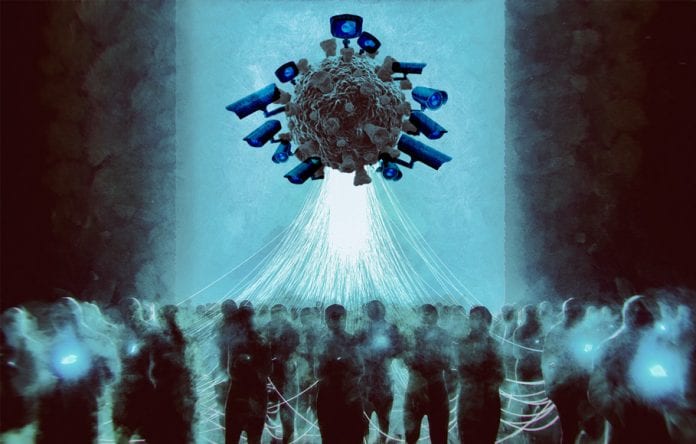
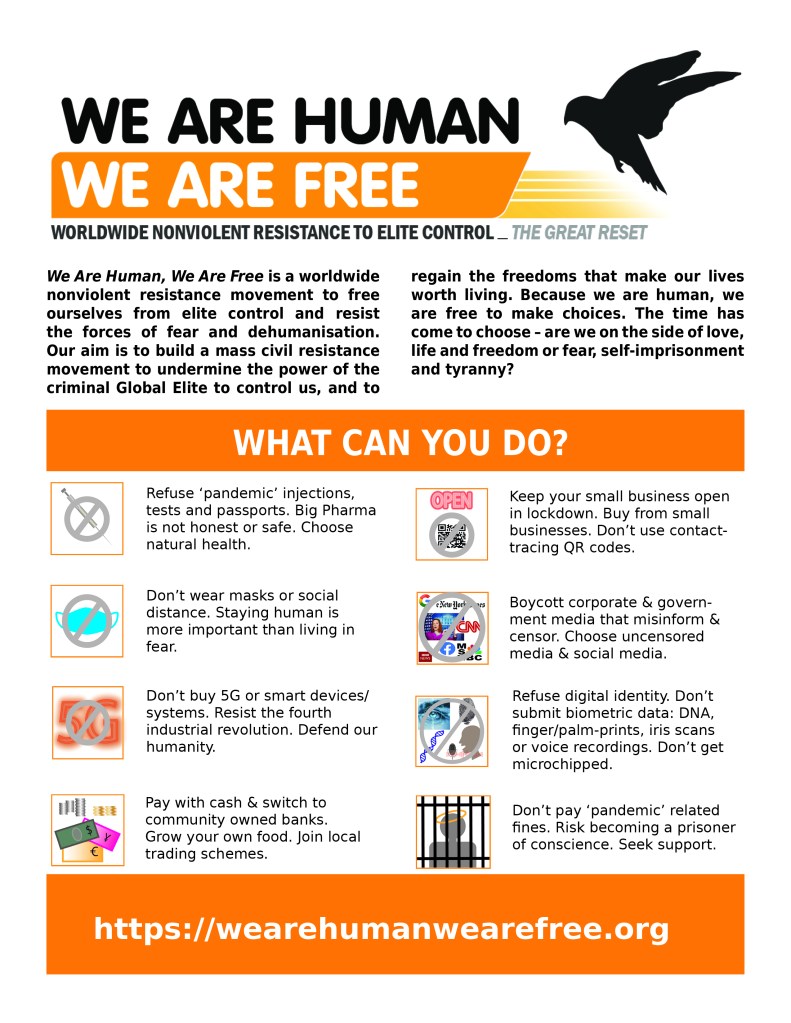

 After the Crash