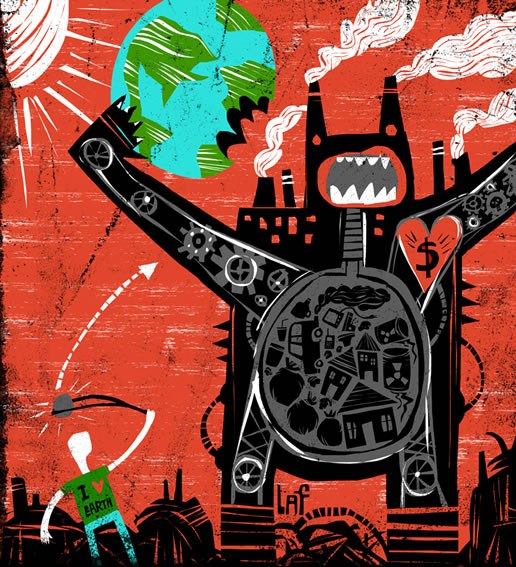
The Disintegrated Mind: The Greatest Threat to Human Survival on Earth

“Triple Portrait” by Sophie Kahn

By Robert J. Burrowes

Like many people who have struggled to understand why human beings are driving the sixth mass extinction event in Earth’s history, which now threatens imminent human extinction as well, over many decades I have explored the research and efforts of a great many activists and scholars to secure this understanding. However, with many competing ideas from the fields of politics, economics, sociology and psychology, among others, this understanding has proved elusive. Nevertheless, I have reached an understanding that I find compelling: Human beings are driving the sixth mass extinction event in Earth’s history because of the disintegrated nature of the human mind.

While the expression ‘mental disintegration’ has been used in a number of contexts previously, for the purpose of my discussion in this article I am going to redefine it, explain how it originates, describe several ways in which it manifests behaviorally and the profoundly dysfunctional outcomes this generates, and suggest what we can do about it.

Given that the expression, as I am using it, describes a shocking psychological state but also one that is so widespread it afflicts virtually everyone, it can be described as posing the greatest threat to human survival on Earth. Why? Simply because it caused – and now prevents virtually everyone from thinking, feeling, planning and behaving functionally in response to – the multifaceted threats to humanity and the biosphere.

So, for the purpose of this article: Mental disintegration describes a state in which the various parts of the human mind are no longer capable of working as an integrated unit. That is, each part of the mind – such as memory, thoughts, feelings, sensing capacities (sight, hearing…), ‘truth register’, conscience – function largely independently of each other, rather than as an integrated whole. The immediate outcome of this dysfunction is that human behaviour lacks consideration, conviction, courage and strategy, and is simply driven compulsively by the predominant fear in each context.

The reason this issue first attracted my attention was because, on many occasions, I observed individuals (ranging from people I knew, to politicians) behaving in ways that seemed outrageous but it was also immediately apparent that the individual was completely unaware of the outrageous nature of their behaviour. On the contrary, it seemed perfectly appropriate to them. With the passage of time, however, I have observed this dysfunctionality in an enormously wide variety of more subtle and common forms, making me realise just how widespread it is even if it goes largely unrecognized. After all, if virtually everyone does it in particular contexts, then why should it be considered ‘abnormal’?

One version of this mental disintegration is the version usually known as ‘cognitive dissonance’. The widely accepted definition of this state, based on Leon Festinger’s research in the 1950s, goes something like this: Cognitive dissonance theory suggests that we have an inner drive to hold all of our attitudes, beliefs, values and behavior in harmony and to avoid disharmony (or dissonance). This is known as the principle of cognitive consistency. When there is an inconsistency between attitudes, beliefs and/or values on the one hand and behaviors on the other (dissonance), something must change to eliminate the dissonance.

The problem with this approach to the issue is that it assumes awareness of the inconsistency on the part of the individual impacted and also assumes (based on Festinger’s research) that there is some inclination to seek consistency. But my own observations of a vast number of people in a substantial variety of contexts over several decades have clearly revealed that, in very many contexts, individuals have no awareness of any discrepancy and, hence, have no inclination to seek consistency between their attitude, belief and/or value and their behavior. Moreover, even if they do have some awareness of the inconsistency, most people simply act on the basis of their predominant emotion – usually fear – in the context and pass it off with a rationalization. For example, that their particular work/role is so important that it justifies their excessive consumption on a planet of limited and unequally shared resources.

Consequently, to choose an obvious example, most climate, environmental, anti-nuclear and anti-war activists fail to grapple meaningfully with the obvious contradiction between their own over-consumption of fossil fuels and resources generally and the role that consumption of these resources plays in driving the climate and environmental catastrophes as well as war. The idea of reducing their own personal consumption is beyond serious contemplation (let alone action). And, of course, it goes without saying that the global elite suffers this disintegration of the mind by failing to connect their endless acquisition of power, profit and privilege at the expense of all others and the Earth, with the accelerating and multifaceted threats to human survival including the future of their own children. But the examples are endless.

In any case, leaving aside ‘cognitive dissonance’, there are several types of mental disintegration as I define it in this article. Let me briefly give you five examples of mental disintegration before explaining why it occurs.

  1. Denial is an unconscious mental state in which an individual, having been given certain information about themselves, others they know or the state of the world, deny the information because it frightens them. This is what happens for a ‘climate denier’, for example. For a fuller explanation, see ‘The Psychology of Denial’.
  2. The ‘Magic Rat’ is an unconscious mental state in which a person’s fear makes them incapable of grappling with certain information, even to deny it, so they completely suppress their awareness of the information immediately they receive it. For four examples of this psychological phenomenon, which President Trump exemplifies superbly, see You Cannot Trap the “Magic Rat”: Trump, Congress and Geopolitics’.
  3. Delusion is an unconscious mental state in which a person is very frightened by certain information but the nature of the circumstances make it impossible to either deny or suppress awareness of the information so they are compelled to construct a delusion in relation to that particular reality in order to feel safe. For a fuller explanation, see The Delusion “I Am Not Responsible”’.
  4. Projection is an unconscious mental state in which a person is very frightened of knowing a terrifying truth so they ‘defend’ themselves against becoming aware of this truth by (unconsciously) identifying a more palatable cause for their fear and then ‘defending’ themselves against this imagined ‘threat’. Political leaders in Israel do this chronically in relation to the Palestinians, for example. But the US elite also does this chronically in relation to any competing ideas in relation to political and economic organization in other countries. See ‘The Psychology of Projection in Conflict’.
  5. Lies arise from a conscious or unconscious mental state in which a person fears blame and/or punishment for telling an unpalatable truth (such as one that will self-incriminate) so they unconsciously employ tactics, including lying, to avoid this blame and punishment (and thus project the blame onto others). When people lie unconsciously, it means they are lying to themself as well; that is, constructing a lie without awareness that they are doing so. For a fuller explanation, see Why Do People Lie? And Why Do Other People Believe Them?’

So why does this mental disintegration – this disintegration of the mind so that its many components are essentially unaware of the others – happen? In brief, it happens because, throughout childhood, each individual is endlessly bombarded with ‘visible’, ‘invisible’ and ‘utterly invisible’ violence in the name of socialization, which is more accurately labeled ‘terrorization’. This is done to ensure that the child is obedient despite the fact that obedience has no evolutionary functionality whatsoever. See Why Violence? and Fearless Psychology and Fearful Psychology: Principles and Practice.

A primary outcome of this terrorization in materialist cultures is that the child learns to suppress their awareness of how they feel by using food and material items to distract themselves. By doing this, the child rapidly loses self-awareness and learns to consume as the substitute for this awareness. Clearly, this has catastrophic consequences for the child, their society and for nature (although it is immensely profitable for elites and their agents). For a fuller explanation, see ‘Love Denied: The Psychology of Materialism, Violence and War’.

Beyond this, however, this terrorization ensures that the human mind is so disintegrated that virtually all humans have no problem living in denial, delusion and projection and using ‘magic rats’ and lies on a vast range of issues because they simply have no awareness of reality in that context. Different parts of their disintegrated mind simply hold one element of their mind separately from all others (thus obscuring any denial, delusion and projection and the use of ‘magic rats’ and lies), consequently precluding any tendency to restore integrity from arising.

This is why, for example, most people can lie ‘outrageously’, including under oath, without the slightest awareness that they are doing so and which, as an aside, is why oaths to tell the truth in court, and even lie detector tests, are utterly meaningless. If the person themself is unaware they are lying, it is virtually impossible for anyone else – unless extraordinarily self-aware – to detect it. And, of course, judges and juries cannot be self-aware or they would not agree to perform their respective roles in the extraordinarily dysfunctional and violent legal system. See ‘The Rule of Law: Unjust and Violent’.

In essence then, the process of ‘socializing’ (terrorizing) a child into obedience so that they will ‘fit into’ their particular society has the outcome of scaring them into suppressing their awareness of reality, including their awareness of themself. In this circumstance, the individual that now ‘survives’ does so as the ‘socially-constructed delusional identity’ (that is, obedient and, preferably, submissive individual) that the significant adults in their childhood terrorized them into becoming.

To reiterate: Because social terrorization destroys the emergence of an integrated mind that would enable memory, sensing capacities, thoughts, feelings, conscience, attitudes, beliefs, values and behaviours to act in concert, the typical individual will now invariably act in accord with the unconscious fear that drives every aspect of their behavior (and ‘requires’ them to endlessly seek approval to avoid the punishment threatened for disobedience when they were a child).

Moreover, this disintegrated mind has little or no capacity to ‘observe reality’ in any case, such as seek out genuine news sources – like the one you are reading now – that accurately report the biodiversity, climate, environmental, military and nuclear catastrophes and, having done so, to be truly aware of this news in the sense of deeply comprehending its meaning and implications for their own behaviour.

So, to elaborate one of the examples cited above, even most individuals who self-identify as climate, environmental, anti-nuclear and/or anti-war ‘activists’ go on over-consuming (which is highly socially approved in industrialized societies) without any genuine re-evaluation of their own behaviour in light of what should be the observed reality about these crises (or, if their mind allows a ‘re-evaluation’ to commence, to dismiss it quickly with a rationalization that their over-consumption is somehow justified).

One obvious outcome of this is that elite-controlled corporations and their governments can largely ignore ‘activist’ entreaties for change because activist (and widespread) over-consumption constitutes financial endorsement of the elite’s violent and exploitative economy. In other words: If people are buying the products (such as fossil fuels for their car and air travel, and hi-tech devices), made possible by fighting the wars and exploiting the people in countries where the raw materials for this production are secured, then why pay attention to calls for change? Dollars speak louder than words.

So what can we do?

Well, given that the above describes just a small proportion of the psychological dysfunctionality of most humans, which is why we remain on the fast track to extinction despite overwhelming evidence of the profound changes that need to occur – see ‘Human Extinction by 2026? A Last Ditch Strategy to Fight for Human Survival’ – I encourage you to seriously consider incorporating strategies to address this dysfunctionality into any effort you make to improve our world.

For most people, this will include starting with yourself. See ‘Putting Feelings First’.

For virtually everyone, it will include reviewing your relationship with children and, ideally, making ‘My Promise to Children’.

For those who feel readily able to deal with reality, consider campaigning strategically to achieve the outcomes we need. See Nonviolent Campaign Strategy or Nonviolent Defense/Liberation Strategy. The global elite is deeply entrenched – fighting its wars, exploiting people, destroying the biosphere – and not about to give way without a concerted effort by many of us campaigning strategically on several key fronts.

If you recognize the pervasiveness of the fear-driven violence in our world, consider joining the global network of people resisting it by signing the online pledge of The Peoples Charter to Create a Nonviolent World.

But, most fundamentally of all, if you understand the simple point that Earth’s biosphere cannot sustain a human population of this magnitude of which more than half endlessly over-consume, then consider accelerated participation in the strategy outlined in The Flame Tree Project to Save Life on Earth.

Or, if this feels too complicated, consider committing to:

The Earth Pledge 

Out of love for the Earth and all of its creatures, and my respect for their needs, from this day onwards I pledge that:

  1. I will not travel by plane
  2. I will not travel by car
  3. I will not eat meat and fish
  4. I will only eat organically/biodynamically grown food
  5. I will minimize the amount of fresh water I use, including by minimizing my ownership and use of electronic devices
  6. I will not buy rainforest timber
  7. I will not buy or use single-use plastic, such as bags, bottles, containers, cups and straws
  8. I will not use banks that provide any service to corporations involved in fossil fuels, nuclear power and/or weapons
  9. I will not accept employment from, or invest in, any organization that supports or participates in the exploitation of fellow human beings or profits from killing and the destruction of the biosphere
  10. I will not get news from the corporate media (mainstream newspapers, television, radio, Facebook…)
  11. I will make the effort to learn a skill, such as food gardening or sewing, that makes me more self-reliant
  12. I will gently encourage my family and friends to consider signing this pledge.

Conclusion

There is a vast array of ‘professional help’, literature, video material, lecturers and other ‘resources’ from a wide range of perspectives that advocate and ‘teach’ one or a variety of ways that people can use to change their behaviour to get improved outcomes in their lives (whether from a personal, economic, business, political or other perspective). Virtually all of these constitute nothing more than psychological ‘tricks’ to achieve a short-term outcome by ‘working around’ the fundamental truth: As a result of terrorization during childhood, virtually all humans are unconsciously terrified and this makes their behaviour utterly dysfunctional.

The point is this: there is no trick that can get us out of the catastrophic mess in which we now find ourselves. Only the truth can do that. Psychological and behavioural dysfunctionalities notwithstanding, if we do not address this fear as part of our overall strategy, then this fear will destroy us in the end. And the evidence of that lies simply in the fact that the daily updates on the already decades-long but ongoing horrific biodiversity, climate, environmental, nuclear, war and humanitarian crises are testament to our ongoing failure to respond appropriately and powerfully. Because our (usually unconscious) fear prevents us from doing so.

So if you believe that human beings are going to get out of our interrelated social, political, economic, military, nuclear and ecological crises with a largely psychologically dysfunctional population, I encourage you to re-evaluate that belief (paying attention, if you can, to how your disintegrated mind intervenes to prevent you doing so). And I encourage you to ask yourself if the value we get out of improving the psychological functionality of our species might not be worth considerable effort as part of our overall strategy to avert human extinction.


Biodata: Robert J. Burrowes has a lifetime commitment to understanding and ending human violence. He has done extensive research since 1966 in an effort to understand why human beings are violent and has been a nonviolent activist since 1981. He is the author of Why Violence? His email address is flametree@riseup.net and his website is here.

Social Media and the Society of the Spectacle

By Kenn Orphan

Source: CounterPunch

“The reigning economic system is a vicious circle of isolation. Its technologies are based on isolation, and they contribute to that same isolation. From automobiles to television, the goods that the spectacular system chooses to produce also serve it as weapons for constantly reinforcing the conditions that engender “lonely crowds.”

― Guy Debord, The Society of the Spectacle

“The conscious and intelligent manipulation of the organized habits and opinions of the masses is an important element in democratic society. Those who manipulate this unseen mechanism of society constitute an invisible government which is the true ruling power of our country. We are governed, our minds are molded, our tastes formed, our ideas suggested, largely by men we have never heard of. This is a logical result of the way in which our democratic society is organized. Vast numbers of human beings must cooperate in this manner if they are to live together as a smoothly functioning society.”

― Edward Bernays, Propaganda

“We think we’re searching Google; Google is actually searching us. We think that these companies have privacy policies; those policies are actually surveillance policies. We’re told that if we have nothing to hide, then we have nothing to fear. The fact is, what they don’t tell us and what we are forgetting, that if you have nothing to hide, then you are nothing, because everything about us that makes us our unique identities, that gives us our individual spirit, our personality, our sense of freedom of will, freedom of action, our sense of our right to our own futures, that’s what comes from within. Those are our inner resources. That’s our private realm. And it’s intended to be private for a reason, because that is how it grows and flourishes and turns us into people who assert moral autonomy—an essential element of a flourishing, democratic society.”

― Shoshana Zuboff, author of Master or Slave: The Fight for the Soul of Our Information Civilization 

“Under observation, we act less free, which means we effectively are less free.”

― Edward Snowden

Recently I was rereading some of Guy Debord’s The Society of the Spectacle. I was reminded of how essential this work by the late French Marxist philosopher is to today’s age of social media. Debord’s understanding of how the forces of capital shape our collective experiences and thoughts speaks to our time where algorithms dominate the trajectory of the psyche against a craven backdrop of what political philosopher Sheldon Wolin has described as “inverted totalitarianism.”

Every day we are bombarded with the imagery of empire and capital. It is relentless. Our minds have become both a marketplace and a commodity to be traded. And it is a lucrative industry with Facebook and Google as prime examples. Their data collection and surveillance typify a conjoining of the state and capitalist economy; and they have carved out insidious new spaces in the human brain to coerce self-imposed censorship and conformity to the prevailing consumerist global order.

This social conditioning is a process which requires mass compliance. The infamous propagandist for industry and vaunted “father of public relations” Edward Bernays understood that. It takes time to manipulate the multilayered strata of the human psyche, especially in regard to large populations of people. But history is replete with tragic examples of its successful implementation by powerful interests. Today those interests lie squarely with capital and empire; but the effects are the same, distraction, censorship, alienation, coerced, compliance with the norms of the status quo and the numbing of the critical mind.

Debord said, “Such a perfect democracy constructs its own inconceivable foe, terrorism. Its wish is to be judged by its enemies rather than by its results. The story of terrorism is written by the state and it is therefore highly instructive. The spectating populations must certainly never know everything about terrorism, but they must always know enough to convince them that, compared with terrorism, everything else seems rather acceptable, or in any case more rational and democratic.” This profound observation is even more important today. The state, via mass media, informs us of the villains and phantoms they believe we should fear. Other, far more destructive, deadly and oppressive threats such as the continued proliferation of nuclear arms, catastrophic climate change, collapse of ecosystems, dangers to public health from industrial pollutants, vastly unequal, racist and brutal economic and legal systems, militarism or plutocratic tyranny can then be relegated as non-issues, or at least lesser ones.

Most people on the planet will not suffer or die from a terrorist attack, but they are very likely to be severely affected by the other issues mentioned above. Imagery on portable screens that virtually everyone in the West and around the world has access to communicates messages that may speak to some of these dire or existential problems, but they do so in an abstract manner that divorces the observer from the subject.

As Debord observed, this kind of culture of spectacle informs our personal relationships as well. Whether one is “present” on social media or not has become a sort of litmus test of ones presence in life itself. “Likes” or emojis have replaced and truncated language to such an extent that now older forms of communication are often looked at with novelty, suspicion, or even disgust. What’s more is that emojis in social media, particularly Facebook, have been employed all too often as tools of ridicule or even harassment of weak or vulnerable people. But what is perhaps the most striking about the current social media age is its repetitive narrative of self-aggrandizement. One so repetitive and hypnotic that it almost appears invisible. The “selfie” and “status update” are examples of the unending drive of social media to create a false sense of self to present to the world. Of course this self must conform and be well adjusted to consumerist society in one form or another lest it be tagged for “mental health issues,” subversive thought or behavior, or simply be rendered unnoticed or unimportant by society in general.

Indeed, I am certain Debord would be horrified at the age of social media. At no other time in human history has there been a greater confluence of authoritarian dominance or social control implemented in such an intimate and ubiquitous manner. Unlike Debord’s time, social media provides a new medium to not only socially condition the masses but for the corporate state to gather what was once private information about those masses via their personally owned devices and apps.

That it masquerades as a form of democracy is equally disturbing, especially since at its core it represents the policing of thought and dampening of dissent. He wrote as if penning a prophecy: “The spectator’s consciousness, imprisoned in a flattened universe, bound by the screen of the spectacle behind which his life has been deported, knows only the fictional speakers who unilaterally surround him with their commodities and the politics of their commodities. The spectacle, in its entirety, is his “mirror image.””

This spectacle reigns supreme in today’s social media culture. It is essential to its formulation and operating guidelines. Under such a paradigm history must be sterilized of analysis and ultimately atomized into unrelated instances to make an eternal present, divorced from any transformative potential. Therefore corporations and industries which have long records of polluting the environment or lying to the public about the safety of their products can continue to expand and even be celebrated by the corporate owned media. Religious institutions with long histories of abuse, patriarchy and repression can maintain their status as trusted institutions. The military can repeat the lie over and over that it is noble despite a history drenched in the blood of well documented atrocities and ongoing crimes. The United States and many other nations can keep calling themselves democracies despite quite obvious facts that strongly refute that designation. The mere notion of revolution then is made to be farcical or even dangerous. After all, how could revolution ever be seen as necessary within a democracy?

Social media does not necessarily signal the death of democratic freedom, but in its current form and under the aegis of capital it is certainly a nail in its coffin. This is because under such circumstances it is incapable of being anything other than a means for capital accumulation for the corporate state and a platform for its narrative, and it will do this through ever more invasive, censorial and repressive means. As Edward Snowden pointed out, people are less free when they feel that they are being observed. This is especially so when the observer is the state. Several studies have indicated that there is a sharp decline in certain online searches among the general public following any indication that government agencies are logging those searches, even if those citizens have not committed any crime. And the chilling effect is not unfounded. One incident involved an innocent couple who were visited by counter-terrorism police after searching Google for pressure cookers and backpacks. Since the internet has become the world’s public library, the implications for democracy are as dire as they are clear.

Unplugging from any of this isn’t easy, nor is it necessarily virtuous, but there are ways to divest from its social control personally and collectively. There are also ways to use it which defy its dominant algorithms. Détournement, which merely means rerouting or hijacking in French, is one of those ways. This involves inverting the imagery or messages of capital and empire to illustrate and even amplify their mendacity. It has a long history of effective use in bending the dominant narrative to one which reflects reality.

All of this is not to say that technology or social media are inherently bad, but to recognize that much of it has become a vehicle for a rather pernicious authoritarianism. And its danger lies in the fallacy of its benign appearance. Whether it be Google maps or one of countless other “helpful” apps one uses on a daily basis, surveillance capital becomes a means of controlling behavior, transactions, choices, as well as determining which members of society present a threat to the order. In other words, conformity is strongly reinforced while any form of dissent is rendered dangerously subversive. But although the algorithmic maps to our collective psyche are being endlessly drawn by programmers and their corporate and state masters, we still have the agency to navigate these landscapes with our eyes open. And indeed, the best tool we possess will always be that critically informed dissent the powerful so fear the most.

The Path To Liberating Humanity Is The Same As The Path To Liberating The Individual

By Caitlin Johnstone

Source: CaitlinJohnstone.com

The path to enlightenment is the process of becoming clearly aware of all the different aspects of the way you operate inside, which enables you to relate to life as it’s actually appearing instead of through the filters of old conditioned mental habits. The path to the liberation of our species is the process of collectively becoming clearly aware of the reality of our situation as opposed to the false narratives about it, so that we can begin solving our problems as they actually are instead of the way the establishment media describes them. These two processes are recursive mirrors of each other; one describes the process on the micro scale, the other on the macro, but they occur in the exact same way.

People sometimes complain that I talk about the problems that humanity faces without ever offering any solutions. I disagree with this criticism; I talk about the solution to our problem all the time, using plain language that anyone can understand. It just often goes in one ear and out the other, because it’s not the sort of answer that people have been conditioned to listen for.

When people ask for solutions to our problems, they’re conditioned by the standard rhetoric of our time to get an essay about labor organization, political activism, consumer activism, cryptocurrencies or technological innovations, depending on where they’re at on the political spectrum. What they are not conditioned to listen for is the most direct and honest answer that I am able to give them: that we’ve got to move from an unhealthy relationship with mental narrative into a healthy one.

This is not some lofty or impractical suggestion, it’s just the thing that we need to do in order to pull up and away from our ecocidal, omnicidal trajectory and move into a healthy collaboration with each other and with our ecosystem. As long as our minds are susceptible to the manipulations of the powerful people who rule us by controlling the dominant narratives in our world, we’ll be bent to the will of sociopathic plutocrats and opaque government agencies until we plunge forever into the darkness of extinction or dehumanizing dystopia. Individuals are capable of transcending the unwholesome relationship with mental narrative which dominates conventional human consciousness, so that’s a potentiality which exists within our species as a collective as well.

This is the only off-ramp that I can see from the armageddon superhighway. It’s impossible to get the people to use the power of their numbers to unseat their oppressors as long as their oppressors are able to control the thoughts that they think in their heads. Political organization and activism can be thwarted by mass media campaigns which manipulate the majority into continuing to support the status quo. Cryptocurrencies and technological innovations are impotent as long as those in power can control the stories that the majority tells itself about how they work and what should be done with them. You won’t engage in revolutionary behavior if you’re being manipulated into not wanting to. So we’ve got to become impossible to manipulate.

This is the solution, and it’s very achievable. For millennia humanity has been writing about the capacity within all of us to transcend our old conditioning patterns and perceive the world free from the filters of mental narrative. They wrote about it within the limitations that existed on their expression at the time, coloring their descriptions with their respective religious beliefs, linguistic and cultural conventions, and what understanding of the mind they had access to in a pre-science world, and their ideas were generally cloistered within small esoteric circles due to the limited nature of communication, but the underlying message was always the same: reality is not what our thoughts describe, and we are all capable of perceiving beyond that mental veil.

Up until now, the phenomenon of what many refer to as enlightenment has been a fairly rare occurrence within our species (though I suspect not quite as rare as some claim). According to some teachers who’ve been coaching people through the process for decades, it seems to be happening more and more frequently today. The teacher Adyashanti writes the following:

There’s a phenomenon happening in the world today. More and more people are waking up—having real, authentic glimpses of reality. By this I mean that people seem to be having moments where they awaken out of their familiar senses of self, and out of their familiar senses of what the world is, into a much greater reality—into something far beyond anything they knew existed.

These experiences of awakening differ from  person to person. For some, the awakening is sustained over time, while for others the glimpse is momentary—it may last just a split second. But in that instant, the whole sense of “self ” disappears. The way they perceive the world suddenly changes, and they find themselves without any sense of separation between themselves and the rest of the world. It can be likened to the experience of waking up from a dream—a dream you didn’t even know you were in until you were jolted out of it.

In the beginning of my teaching work, most of the people who came to me were seeking these deeper realizations of spirituality. They were seeking to wake up from the limiting and isolated senses of self they had imagined themselves to be. It’s this yearning that underpins all spiritual seeking: to discover for ourselves what we already intuit to be true— that there is more to life than we are currently perceiving.

But as time  has passed, more  and  more  people are coming to me who have already had glimpses of this greater reality.

Renowned author and teacher Eckhart Tolle agrees:

I see signs that it is already happening. For the first time there is a large scale awakening on our planet. Why now? Because if there is no change in human consciousness now, we will destroy ourselves and perhaps the planet. The insanity of the collective egoic mind, amplified by science and technology, is rapidly taking our species to the brink of disaster. Evolve or die: that is our only choice now. Without considering the Eastern world, my estimate is that at this time about ten percent of people in North America are already awakening. That makes thirty million Americans alone, and in addition to those people in other North American countries, about ten percent of the population of Western European countries are also awakening. This is probably enough of a critical mass to bring about a new earth. So the transformation of consciousness is truly happening even though they won’t be reporting it on tonight’s news. Is it happening fast enough? I am hopeful about humanity’s future, much more so now than when I wrote The Power of Now. In fact that is why I wrote that book. I really wasn’t sure that humanity was going to survive. Now I feel differently. I see many reasons to be hopeful.

You are of course free to believe these guys or not, but I personally don’t see any incentive for them to be disingenuous about what they’re seeing in their field of work. The best way to make a fortune as a spiritual teacher is to gather a large cult-like following around yourself under the presentation of having attained something exceedingly special and rare, not to say essentially “Yeah this is happening all over the place now; it’s no big deal. What happened to me is becoming as common as grass.”

So why the change? Why after millennia of enlightenment remaining a rare phenomenon are we suddenly seeing it becoming more common?

I don’t know. Maybe it’s got something to do with the fact that we’re at evolve-or-die time as a species, and something primal deep within us is leaping to clear that hurdle in the same way all organisms fight to survive with everything they’ve got. Maybe it’s got something to do with our exponentially improved ability to network and share information, making useful pointers and teachings which guide the way to enlightenment vastly more accessible. Maybe our unprecedented access to information itself is the cause; billions of human brains suddenly connected to mankind’s entire collective archive of knowledge is in and of itself a drastic change in human consciousness. Maybe it’s all three. Maybe it’s something else we can’t see yet. But it does appear to be happening.

So what is enlightenment? There are as many answers to this question as there are people interested in it. Many will tell you that it’s a “merging with the divine” or some other unhelpful word salad of metaphysical specialness. Others will tell you that it’s a recognition of your own true nature as pure awareness which witnesses the play of forms. Others will say it’s the awakening of an energy in the spine known as kundalini, whose rise up through the crown of the head transforms your way of functioning. Others will say it’s simply seeing life as it is, unfiltered by mental conditioning. Go to online spiritual discussion forums and you’ll find people arguing about this question with the same vitriolic fervor as you see between different political ideologies in the forums you’re probably more familiar with.

Personally I haven’t found it very useful to talk about enlightenment as one specific thing that happens in one specific instance, like a lightbulb flicking on once and then you’re done. There are many different aspects to the human condition, and you can be very conscious of the way some of them are happening and deeply unconscious of others. The fiery shopkeeper guru Nisargadatta Maharaj, for example, was profoundly lucid on the nature of awareness and the field of consciousness which appears within it, able to speak with earth-shaking clarity that radically changed people’s lives despite having little education. But he was also a chain smoker and died of lung cancer, unable to bring clear seeing to that particular unwholesome aspect of his functioning. Neuroanatomist Jill Bolte Taylor had a stroke in a specific part of the linguistic center of her brain, permanently changing her relationship with mental narrative and bringing her a tremendous amount of inner peace, but she can’t teach people how to get there for themselves because she didn’t consciously walk through any path to get there.

Enlightenment is more like the process of turning on the lights in a very large house, room by room. For some people the kitchen light is on, but the entire upstairs floor is dark. Others have the lights on in the master bedroom and the basement, but everything in between is endarkened.

Some people have a very clear understanding of the nature of awareness and thought, which tends to get the most play in the discussion of spiritual enlightenment. But others have flicked the lights on in the way their bodily energy systems operate, able to experience and use those energies in a way that other people just aren’t conscious of. Others have enlightened their previously repressed childhood traumas, and are able to clearly understand how their experiences in life have shaped the way they’re conditioned to think and behave. Others have enlightened their emotionality, and have a deep, emotionally rich relationship with life while others sedate and ignore their emotions. Others have enlightened their inner guidance system and are able to perceive a tug toward wise decisions which lead them to take beneficial actions. None of these are any more special or important than the other, they’re just different rooms in the house that either have the lights on or off.

Whenever you hear about a spiritual teacher conducting themselves in a way that could be described as un-enlightened, sleeping with students or having childish temper tantrums or whatever, it doesn’t necessarily mean that they’re not enlightened in some sense. It could just mean that they’re enlightened in one way but not the other. In one way they’re able to relate to life with great clarity, and in another they’re just as confused and clumsy as anyone else. The lights are on in the attic but not the living room.

And, to bring this home to the opening paragraph of this essay, the same is true of the process of enlightening the world. There are a great many ways in which humanity is asleep at the wheel, and we’re going to have to bring the light of truth to all of them.

We’re going to have to bring the light of truth to the ways we’ve all been lied to by our teachers, by our politicians and by our media. We’re going to have to bring the light of truth to the horrors of war and the sinister motives behind it. We’re going to have to bring the light of truth to what we’re doing to our ecosystem and the forces which incentivize us to play along with ecocide. We’re going to have to bring the light of truth to the ways we enslave and are enslaved by each other in our interpersonal relationships, and how we enslave and are enslaved by our current social systems. We’re going to have to bring the light of truth to racism, sexism and other forms of bigotry and the ways that they prevent us from having wholesome relationships with each other. We’re going to have to bring the light of truth to the manipulations of the financial sector, money in politics, the evils of factory farming, the prison system, the war on drugs, and the structures which keep economic injustice in place. We can’t fight problems if we can’t see them clearly, so we’ve got to help each other turn the lights on in all of those areas. We’ve got to enlighten them.

None of the steps taken on this path toward the enlightenment of humanity are any more or less important than any other. One rebel may spend their energy exposing the false narratives of the news media. One rebel may bring attention to the plight of the Palestinians. One rebel may spend years making a documentary exposing the senseless butchery of dolphins in Taiji. One rebel may help film the unseen cruelty of factory farming. One rebel might share her story and expose the reality of rape culture. One rebel might help show everyone all the genocide and exploitation that went into creating their country as it currently exists, and help them come to a mature relationship with and response to that reality. One rebel might make art encouraging people to open their eyes to what’s really going on. Each of these small rebellions help flick on the lights of the house that is our world, and we need all of it.

With intense, sincere inner work, we can flick on the lights of our inner world room-by-room so that we can relate to life as it actually is in more and more ways. With intense, sincere outer work, we can flick on the lights of our outer world room-by-room and begin solving the problems that had previously been obscured by blackouts and propaganda disinfo. These movements are fundamentally the same. They both complement each other, and they’re both indispensable.

Cyberpunk: The Human Condition amid High-tech Alienation and Urban Dystopia

By Raymond Lam

Source: BuddhistDoor.net

I love the seashore and the countryside, but I have spent most of my life in cities, with little to no time spent in the country. I grew up in Brisbane, Australia (which, despite its beauty and vibrant coffee culture, is hardly a skyscraper metropolis) and have spent a good deal of time in Hong Kong. Over the years I have visited Shanghai, Tokyo, and Seoul—cities that have long inspired novelists and artists in cyberpunk circles.

Cyberpunk features “technologized” cities with endless skyscrapers shimmering in an ocean of neon lights and elevated railways. These cityscapes are often bathed in darkness, shadow, and rain. More often than not, the protagonists of these stories are lone-wolf types, running through grungy alleys and estranged from wider society. As a genre of writing, film, and animation, the dystopian cyberpunk imagination has been immensely influential in both Asian and Western pop culture, exemplified by the Blade Runner movies, The Matrix franchise, and the Japanese anime Ghost in the Shell.

To many social commentators, cyberpunk carries eerie reminders of certain characteristics of urban living today—an endless feed of information, insecurity, and distractions through the Internet and social media, the press and media serving as distractions or brainwashing rather than useful information, and social alienation and unfulfilling work. In these activities is an almost gleeful dismissiveness of the need to reflect on human nature and what it means to be a human being: a key concern of religions and philosophical schools through the ages.

As Buddhistdoor Global columnist Paola Di Maio notes about our headlong trajectory into developing communication between human beings and AI: “Excited at the prospect of scientific advances, researchers seem to ignore that enhanced cognition comes with enhanced responsibility, maturity, and responsible decision-making abilities.” This is the key concern and, as it happens, the idea of human interface with computers or “mind technologies” is about as cyberpunk as it gets.

There are far more informed writers who have unpacked the themes of cyberpunk exhaustively, but I find this description particularly useful for grasping the general aesthetic and spirit. This is from an essay by Lawrence Person: “Classic cyberpunk characters were marginalized, alienated loners who lived on the edge of society in generally dystopic futures where daily life was impacted by rapid technological change, an ubiquitous datasphere of computerized information, and invasive modification of the human body.” (Slashdot.org) Surely many of these themes sound familiar?

The eminent science fiction writer J. G. Ballard (1930–2009) defied assumptions about traditional storytelling and sought to upend the archetypes that were assumed to be universal, saying that he wanted a storytelling style that possessed “more psycho-literary ideas, more meta-biological and meta-chemical concepts, private time systems, synthetic psychologies and space-times, more of the sombre half-worlds one glimpses in the paintings of schizophrenics.” (Ballard 2017, 103) Most interestingly, Ballard criticized the “external” emphasis of so much science fiction of his day (such as on space travel), declaring: “The biggest developments of the immediate future will take place, not on the Moon or Mars, but on Earth, and it is inner space, not outer, that needs to be explored. The only truly alien planet is Earth.” (Ballard 2017, 103)

My opinion is that good cyberpunk is itself a kind of literary expression of contemporary inner preoccupations and concerns. Take the notion of loneliness, for example. Some good research has been done about urban life and its correlation with loneliness, but the results are ambiguous. One study found that urban life is undoubtedly more stressful than rural life (and has been so since the Industrial Revolution), yet how lonely one feels is a very difficult thing to measure. If we are to take seriously Ballard’s notion that the best kind of science fiction is about inner space, then perhaps we have also been distracted by the neon cityscapes of gritty cyberpunk metropolises.

The interesting stuff is not happening in an action-packed helipad gunfight with a hypersonic jet on top of a tower owned by a futuristic robotics corporation. It is happening in the neurotic mind of one of that corporation’s low-level office workers, humiliated in public through a thoughtless social media post by her supervisor, who himself seeks distraction from his instantly replaceable managerial role by interfacing his brain with a computer’s pornographic VR program. It is not just about cybernetics and the development of androids, but how society changes as a result of them.

I like to think that, perhaps one day in the future, when meditation practice centers are hidden away in glass and metal skyscrapers—some of them already are in the worlds biggest cities—and temples of traditional Asian design are surrounded by looming corporate structures, these loci of spiritual meaning and truly human work will have helped to fortify the inner worlds of these cities’ denizens against the darker side of cyberpunk. Ballard was right. The true struggle for meaning and dignity is more often on the inside, even in a society dominated by neon, nightfall, and neuro-computers.

References

Ballard, J. G. 2017. “Which way to inner space?” In Science Fiction Criticism: An Anthology of Essential Writings. Edited by Rob Latham. London and New York: Bloomsbury.

The ‘Hidden Mechanisms’ That Help Those Born Rich to Excel in Elite Jobs

When two sociologists interviewed highly paid architects, TV producers, actors, and accountants, they encountered work cultures that favor the already affluent.

By Joe Pinsker

Source: The Atlantic

Over the past five years, the sociologists Daniel Laurison and Sam Friedman have uncovered a striking, consistent pattern in data about England’s workforce: Not only are people born into working-class families far less likely than those born wealthy to get an elite job—but they also, on average, earn 16 percent less in the same fields of work.

Laurison and Friedman dug further into the data, but statistical analyses could only get them so far. So they immersed themselves in the cultures of modern workplaces, speaking with workers—around 175 in all—in four prestigious professional settings: a TV-broadcasting company, a multinational accounting firm, an architecture firm, and the world of self-employed actors.

The result of this research is Laurison and Friedman’s new book, The Class Ceiling: Why It Pays to Be Privileged, which shows how the customs of elite workplaces can favor those who grew up wealthier. The authors describe a series of “hidden mechanisms”—such as unwritten codes of office behavior and informal systems of professional advancement—that benefit the already affluent while disadvantaging those with working-class backgrounds.

In January, shortly before the book’s U.K. release, I interviewed Laurison, a professor at Swarthmore College, who told me that while England’s class politics do differ from those of the U.S., his and Friedman’s findings about “money, connections, and culture” broadly apply to Americans as well. This conversation has been edited for length and clarity.

Joe Pinsker: In the book, you write about a financial cushion available to certain college graduates that you refer to as “the bank of mom and dad.” How does this work, and what are its consequences for who gets a chance at certain jobs?

Daniel Laurison: I think the image that we have—or the ideology, if you want to be political about it—is once you’re 18 or so, you make your own way and your class origin is not an important part of how your career goes from there. But what my co-author Sam and I found was, that’s not at all true.

In the book, we talked about people pursuing acting, which is a very contingent, hard path to pursue. Most people, when they start, aren’t making most of their money from acting, and so people who are able to rely on their parents to help them are much more able to pursue acting fully, because they don’t have to worry about maintaining a regular, full-time job just to eat and live.

That’s the starkest example in the book, but there are lots of other ways that having money from your parents can make a difference in your career. In the U.K., if you work in London, you’re likely to earn a lot more, and you’re more likely to be at the center of your field. And living in London is very expensive. So a lot of people who are living in London got some help from their parents to make a down payment on a house or some help with the rent, which was the case in fields other than acting, too. And the other place I think parents’ help makes a big difference is in who can take unpaid or very low-paid internships, which are the entry points for lots of high-status, high-paid careers.

Pinsker: And once people get these sorts of jobs, you write about the importance of “sponsorship”—basically, when some senior employee informally takes someone younger under their wing and helps them advance through the company. What did you notice about how those systems of sponsorship worked?

Laurison: I think that a lot of people, on some level what they think they’re doing when they sponsor young co-workers is spotting talent—they called it “talent-mapping” in the accounting firm we studied. But a lot of people we talked to were also able to reflect and say, “Part of why I was excited about that person, probably, is because they reminded me of a younger version of myself.” The word we use in sociology is homophily—people like people who are like themselves.

One of the big ideas of the book, for me, is it’s really hard for any given individual in any given situation to fully parse what’s actual talent or intelligence or merit, and what’s, Gosh, that person reminds me of me, or I feel an affinity for them because we can talk about skiing or our trips to the Bahamas. Part of it is also that what your criteria are for a good worker often comes from what you think makes you a good worker.

Pinsker: In the workplaces you studied, who tended to lose out in these systems of sponsorship?

Laurison: In three of the four fields we studied, it was poor and working-class people, and also women and people of color. There are lots of axes along which homophily can cloud senior people’s judgment about who’s meritorious.

Pinsker: You also talk a lot about the unwritten codes of behavior that can shape who advances and who doesn’t at certain workplaces. What’s an example of how that played out?

Laurison: Probably the best example of this is the television-production firm we studied. The name that we gave to the culture there was “studied informality”—nobody wore suits and ties, nobody even wore standard business casual. People were wearing sneakers and all kinds of casual, fashionable clothes. There was a sort of “right” way to do it and a “wrong” way to do it: A number of people talked about this one man—who was black and from a working-class background—who just stood out. He worked there for a while and eventually left. He wore tracksuits, and the ways he chose to be casual and fashionable were not the ways that everybody else did.

There were all kinds of things, like who puts their feet up on the table and when they do it, when they swear—things that don’t seem like what you might expect from a place full of high-prestige, powerful television producers. But that was in some ways, I think, more off-putting and harder to navigate for some of our working-class respondents than hearing “just wear a suit and tie every day” might have been. The rules weren’t obvious, but everybody else seemed to know them.

Pinsker: And trying to figure that out comes at an emotional and psychological cost, no?

Laurison: For a lot of people from poor and working-class or lower-middle-class backgrounds, being in these environments felt like you had to put on a performance all day. They didn’t feel at home and comfortable in their work environment—even people who had been quite successful, who had gotten toward the top of their occupations.

Part of that is because folks are comfortable in the culture, the class, the location, the people who they grew up with. And working in an occupation or professional culture that is radically different in some ways than what your family knows and does is challenging. But one way to address this is to change workplace cultures to be closer to what poor and working-class people—and women, racial and ethnic minorities, and other historically excluded groups—bring rather than just trying to teach those “others” how to adapt.

Pinsker: In the book, it was jarring to see over and over how invisible all of these processes tend to be, and how this obscures the way that people actually get and then excel in elite jobs. Some people you talked to clearly downplayed the help they’d gotten—what do you think was behind that?

Laurison: In both the U.S. and the U.K., there’s a really strong, widely shared implicit belief—in the U.S., it’s the American dream—that success and worth are nearly identical, that if you are really rich, you must be really smart and hardworking, and if you are poor, you must have messed up in some really big way. People want to believe that they got where they are because they’re smart and talented. And that’s often true to some extent, but it’s also true that there’s any number of people who are probably equally smart and talented who are not in their positions, because of the barriers that are erected. It’s hard to sit with the idea that maybe somebody else deserves to be where they are more than they do, and I think almost everybody wants to be able to tell a story of making it on their own.

A lot of the book is about the barriers that exist, but you can take that argument too far. I wouldn’t say that most of the really successful people we interviewed were bad at their jobs. But I think, for a lot of people, examining the ways that privileges you have are unearned is the same thing as saying “You are bad” or “You don’t deserve anything,” because we’ve got this deep connection between ideas of worth and ideas of success.

Pinsker: Having finished a research project like this, what do you think needs to change about the way these workplaces function? Do you think there are things that companies could do better?

Laurison: On one level, as long as access to education and jobs is unequal in terms of race, in terms of class, you’re not going to have equal representation of all the parts of society in many prestigious or exclusive occupations. So in a way, it’s about much bigger questions than a single company can deal with.

At the same time, I think there really are things that companies can do. You can affirmatively try to hire the people who don’t look like the people who are already there in terms of their race, gender, class origin, and other statuses. And you can try to think about what expectations or cultures at your firm are not really about the outcomes your firm needs to pay the most attention to.

To give an example from my own work, I know that in colleges and universities, students from poor and working-class backgrounds are much less likely to feel comfortable going to office hours than everybody else. So I require everybody, of any class background, to come talk to me, in an effort to make office hours open to everybody. I think there are analogies in other fields—there are unwritten rules where we can figure out what the norms are and then be explicit about them.

But still, there’s this larger question of how much inequality there is in the first place. If it wasn’t possible for somebody to make 10 times, 15 times what someone else does at the same organization, then it would matter a lot less how far people got in different organizations in terms of their earnings. And the broader context of the book is that part of what legitimizes big inequalities is the belief that outcomes are meritocratic.

Inventing the Future: The Collective Joy of Mark Fisher’s ‘k-punk’

By Michael Grasso

Source: We Are the Mutants

k-punk
By Mark Fisher
Foreword by Simon Reynolds, Edited by Darren Ambrose
Repeater Books, 2018

A little over two years ago, theorist and cultural critic Mark Fisher took his own life at the age of 48. I remember feeling numb at hearing the news; not out of sadness but more a sense of deja vu, of familiarity. I’d been through something similar already with David Foster Wallace’s suicide back in 2008; his Infinite Jest (1996) was one of the single most searing, searching moral indictments of the post-Cold War social and political order in the West, and a tremendously important work to me personally. Fisher toiled in very much the same fields in his writings. Both men had used their own struggles with depression (and in Wallace’s case, addiction) to fuel their insights into a world order that had run out of promise, of hope for the future. Wallace died two months before Barack Obama was elected, in the midst of the 2008 financial crisis; Fisher immediately after the election of Donald Trump. One American election offered (misplaced) hope, the other, a terminal kind of despair.

Over the past year or so I’ve also had the opportunity, while finishing my Master’s degree, to delve deeply into the work of cultural critic Walter Benjamin, who came to intellectual maturity in the Weimar Republic and found himself an exile with the rise of the Nazis in 1933. Like Wallace and Fisher, Benjamin used the cultural environment around him to help explain the world, to make sense of the turmoil that was roiling the once-orderly social order around him. Benjamin also killed himself, as he fled from the Nazi invasion of France in 1940 at the age of 48, just like Fisher. The parallels between all three men, to my mind, were uncanny. In the end, I feel the same thing got all three of these men: the encroaching feeling of dread at observing a world that had spun off its axis, beyond their ability to explain it.

I offer all this as a preface to my review of Mark Fisher’s collected online and unpublished writings, k-punk (Repeater Books, 2018), because I find myself thinking more often these days about the void of Fisher’s loss rather than the wealth of writings that he gave us while he was alive. And I feel like my despair essentially misunderstands what Mark Fisher was all about. The overwhelming feeling of most of the writings collected in k-punk is one of utter joy, whether it’s in celebrating a lost piece of media that Fisher wants us to know about, or his just and righteous delight in explaining exactly what late capitalism is doing to all of us.

A couple of years ago, my podcast partner Rob MacDougall and I had occasion to talk about the intellectual history of defining and preventing sexual harassment in the workplace for our podcast about WKRP in Cincinnati. And I’ll never forget the way he explained how clearly and uncompromisingly that defining a social problem can be the most important first step in combating it. He said, “Language is technology. Until you can name [something], you can’t get at it.” And I think that’s the legacy of Mark Fisher in a lot of ways. He gave us new terms—“pulp modernism,” “the precariat,” “hauntology,” “capitalist realism,” “acid communism”—that helped define not only our problems but our collective dreams for a better world. Like Benjamin before him, Fisher used his precise and profoundly moral observations of the world around him to give us a vocabulary to understand and express what is being done to us and how we can find our way out of it.

First things first: k-punk is a monster. Repeater Books has collected Fisher’s blog posts and unpublished writings in a massive 800-page tome. Given that the average length of one of these essays is about 3-4 pages, what you end up with is a bewilderingly encyclopedic collection of Fisher’s thoughts on seemingly everything. The conversion of once-hyperlink-laden web text to paper is sometimes jarring—the editor Darren Ambrose has done yeoman work in providing footnotes to mark where links to other bloggers and commenters once lay—but the reader almost never feels lost in figuring out what Fisher was trying to say. The foreword is by Fisher’s contemporary and friend, the music critic Simon Reynolds, whose seminal 2005 work on post-punk, Rip It Up and Start Again, is a favorite of mine. The same author’s 2011 Retromania: Pop Culture’s Addiction to Its Own Past was, like Fisher’s work, a major inspiration for my own Master’s capstone project on nostalgia and its use in museums. Reynolds’ foreword is not only a heartfelt and deeply touching tribute to Fisher’s life and work, it also illustrates well the cultural milieu in which both men worked in the early part of this century. Getting to know someone better by reading their blog everyday is a deeply familiar mode to me and many members of my generation, and here Reynolds nails the somewhat uncanny feeling of getting to be best friends with someone you’ve only hung out with a few times in person. Probably it will be less strange for the generations who come after us. I do admit stifling a chuckle as one of the first essays in this paperback collection is a “tag five friends” meme; seeing such an essentially “online” phenomenon in print, in an esteemed cultural critic’s essay collection no less, would probably be considered “weird” in the Fisherian “weird/eerie” schema: an intruder from Outside whose alien presence inflects its surroundings.

In his foreword, Reynolds dubs Fisher a member of a disappearing breed: “the music critic as prophet.” Both Reynolds and Fisher came of age in the golden era of British publications like the NME, which treated its readers with a modicum of sophistication and intellectual respect. British music critics in the 1980s were never afraid to throw in references to contemporary political philosophers and cultural critics from the world of academia, nor were they reluctant to blur the lines between artist and critic. Fisher himself offers tribute to one of these writer-artists in “Choose Your Weapons,” an essay focusing on NME writer and Art of Noise member/ZTT Records co-founder Paul Morley, as well as his fellow NME writer Ian Penman. Reynolds sees Fisher as the clear heir to this type of rock journalist; Fisher even had his own musical group in the early 1990s, D-Generation, which peppered press releases and music with references to cultural theory.

As mentioned above and in my earlier piece on him, Fisher was never afraid to unearth a piece of forgotten media from his childhood or adolescence for examination in the cold light of our present late capitalism. His mourning for the loss of risk-taking on the part of the gatekeepers at public broadcasters such as the BBC is well-known. (I highly recommend the essay “Precarity and Paternalism” in k-punk for Fisher’s breathtaking rhetorical link between the blandness of pop culture today and the burning down of the public sphere under neoliberalism.) But what k-punk puts forth clearly (and Reynolds makes clear in his foreword) is that Fisher was never solely a backwards-looking critic. In these essays you can see him fully engaged in the contemporary cultural scene in a way that can sometimes get lost in his reputation as “the hauntology guy.” I found Fisher’s recuperation of Donnie Darko director Richard Kelly’s odd little Twilight Zone riff from 2009, The Box, to be downright essential in explaining why I liked it so much but couldn’t articulate why at the time. Ironically, Fisher avers that it is a rare piece of American hauntology (an aesthetic I’ve been desperately trying to quantify here at We Are the Mutants), with Kelly exploring the legacy of his NASA employee dad during NASA’s own final years of glory as a public agency (the late ’70s era of the Viking and Voyager probes) before the ultimately doomed Shuttle program. As someone who only gave the k-punk blog a cursory look prior to Fisher’s death, being far more familiar with his published writings, reading Fisher on the Christopher Nolan Batman trilogy or on contemporary television series that I watched from the beginning, like Breaking Bad and The Americans, hit me in that same Fisherian-weird way.

Even though the essays in the k-punk collection are organized by content type—reviews of books, music, television/film, political writings, interviews—it’s easy to note Fisher’s evolution as a writer, with each content area organized chronologically within. Perhaps this is only my prejudice, but I notice in the early years of Fisher’s k-punk posts a distinct anxiety of influence with older writers and theoreticians, out of which he eventually matures. His early-’00s work centers writers and thinkers like J.G. Ballard, Franz Kafka, Dennis Potter, even Freud and Spinoza. Slavoj Žižek also looms very large, probably for no other reason than that he was (and still is) one of the only voices engaging intelligently with the political impact of the pop culture detritus of late capitalism. But it’s in this occasional early tension with Žižek that you start to see Fisher make his own conclusions, state his own thoughts. It’s not necessarily that Fisher ever makes an explicit break with Žižek; it’s just that you see him mentioned less and less and, finally, not at all.

It was in music that Fisher saw the greatest potential for social and cultural revolution. It’s become a thoroughly lazy trope among armchair cultural critics to keep quoting that bit from Plato’s Republic about how changing a society’s music will change the society, but Fisher actually convinces the reader of that idea, in a profoundly vital and contemporary context. For Fisher, mod, glam, and to a certain extent punk all offered the working classes a chance to grab the same aristocratic glamor and glory to which the bourgeoisie had always had access. (Reading Fisher on the unearthly magical “glamour” of pop stars gets me thinking about Kieron Gillen’s “gods come to earth as pop stars” comic The Wicked + the Divine; I’d be shocked if Gillen wasn’t a k-punk reader from way back.) I personally find Fisher far stronger on post-punk. His multi-part examination of The Fall and Mark E. Smith is downright essential; I thought often while reading how much I wish Fisher could have read Richard McKenna’s Sapphire And Steel-referencing encomium to Smith. A pure love of Green Gartside of Scritti Politti and his dance-floor theoretics, so beloved by that very same theory-soaked 1980s NME, shines through in several k-punk essays. Fisher’s multiple essays on the goth aesthetic (and adjunct aesthetic movements like steampunk) are insightful, even as he holds goth at a bit of a remove as compared to post-punk and dance music. His essays on the Cure, Nick Cave, and specifically Siouxsie Sioux’s visual aesthetic from early swastika-armband-wearing punk provocateur to glittering Klimt spectacle on A Kiss in the Dreamhouse are particularly good.

And it’s here in Fisher’s music writing that we see yet another evolution, this time in three phases roughly analogous to the Marxist-Fichtean dialectic. Fisher begins with an arguably essentialist, archetypal, borderline Paglian view of the aristocratic charisma inherent in pop music; moves to a canny and earnest recognition of the purely proletarian qualities of post-punk and dance music (and the paradoxically populist power of the “public information” aesthetic of hauntological music); and then shifts to an eventual synthesis of these very different conceptions of music-as-liberation.

That synthesis was to be the topic of his next book, Acid Communism, the preface for which is included at the end of k-punk: Fisher was going to look back at the origin point for neoliberalism in the 1970s and pinpoint exactly where the workers’ movement and the left had begun to lose the battle for power. Through a re-examination of the 1960s New Left under thinkers such as Herbert Marcuse, Fisher locates the real revolutionary promise and potential in the bewildering flowering of popular culture that occurred in the ’60s, as well as the profound societal change that this revolution in culture propelled. “Mass culture—and music culture in particular—was a terrain of struggle rather than a dominion of capital,” Fisher notes. The true conflict of workers’ leftism vs. neoliberalism, Fisher argued, happened nearly a decade before neoliberalism’s origin point, in the struggle between the liberal Cold War orthodoxies in the West and the profoundly psychedelic movement of the youth rebelling against these staid establishment cultural tendencies. In America, of course, this series of youth movements became inexorably intertwined with resistance to the Vietnam War, perhaps to its detriment. Fisher posits instead a youth movement that worked against the assumptions of Cold War-era society on a much more elemental level. He finds much more interesting the movements where the left chafed against the High Cold War hegemony of labor-leftism in the West and indeed the very idea of work, and sees glimmers of his “acid communism” in social milieus as disparate as Paris in 1968, the British miners’ strike (aided by students) in 1972, the GM strike in Lordstown Ohio in 1972, and Bologna in 1977. The essential question asked in all these times and places: what if the revolution happens and we are in thrall to just another set of labor bureaucrats? One might answer that this actually happened with the ascension of the Baby Boomers to places of authority in the supposedly kinder, gentler, more “diverse” digital capitalism we live with today.

Obviously, virtually every bit of cultural writing that Fisher published was viewed through the prism of a leftist politics, but in the Politics and Interviews sections of k-punk, we get those politics unfiltered through any particular piece of pop culture. Here is where you see Fisher at his most passionate, his most personal, his most vital. Most important, in my mind, is his relentless insistence that capitalism kills both body and soul. While a Marxist theory of alienation is certainly nothing new, Fisher’s own personal experiences with being a member of the “precariat,” dealing with the peculiar doublethink of the purported “freedom” of the gig economy, demonstrates how the market hands us all slavery in the guise of self-actualization. And here is where Fisher’s writing intersects with his profound personal interest in public health, specifically mental health. Digital technology allows the gig worker to be relentlessly surveilled and ruthlessly “reviewed”; the disappearance of the old forms of authority and hierarchy in the workplace are distributed among one’s fellow consumers to create a web of virtual bureaucracy that creates constant cognitive dissonance and the distinct feeling that one is truly never off the job. From the ancient dream of never working to the modern reality of constantly working: Fisher thus asks us over and over if it’s any wonder we are all anxious and depressed?

It’s glaringly obvious stuff to most of us living in 2019, but again: Fisher’s moral clarity shines through and illuminates the darker corners of a world to which we’ve all slowly acquiesced. And yes, Mark Fisher did suffer from severe depression himself. One of the editorial decisions that I disagree with most is the stated decision to not include Fisher’s more “pessimistic” work from earlier in his career. Here is k-punk‘s editor Ambrose on this decision:

A very small number of early k-punk posts, e.g. on antinatalism, are excluded by virtue of the fact that they seemed wildly out of step with Mark’s overall theoretical and political development, and because they seemed to reflect a temporary enthusiasm for a dogmatic theoretical misanthropy he repudiated in his later writing and life.

You still see glimpses of this pessimism and near-nihilism in a few of the essays; a startlingly good review of Mel Gibson’s The Passion of the Christ where Fisher sees its neo-Gnostic underpinnings, or a deep intrigue with the antinatalist works of horror writer and philosopher Thomas Ligotti (who would find unexpected mass popularity with Nic Pizzolatto’s use of Ligotti in the first season of True Detective). But speaking as someone who suffers with mental illness and profound depression, let me make clear: it is absolutely reasonable to expect someone even as optimistic and positive as Fisher to occasionally look at the world with abject despair. Moreover, I believe it is more than merely reasonable, it’s necessary. To dispute or deny that anyone with a modicum of political awareness would not be occasionally nihilistically fucking depressed with the world as it is today seems a massive mistake to me.

Immediately before presenting the unfinished introduction to Acid Communism, we’re presented with two of Fisher’s most famous essays: his polemic against the contemporary left’s tendency towards ideological puritanism, “Exiting the Vampire Castle,” and his personal memoir of living (and working) with depression, “Good For Nothing.” No two pieces in this book depict the central contradictions and tensions of Fisher’s ethics and philosophy more clearly. “Vampire Castle” is, in my personal opinion, one of Fisher’s greatest missteps and the one piece of his writing where I most see a distressing tendency towards a lack of empathy for his comrades. In the essay, Fisher excoriates a certain faction of the left and its tendency to center “identity politics.” He further posits that these identity-based politics are a way in which the mechanisms of late capitalist control attempt to neuter and split the political left, a profoundly “individualistic” movement rather than one that builds cross-cultural solidarity. Fisher states that humorless scolds participating in “call-out culture” are preventing the left from building true power. Every time I go back to this essay, I initially find myself seeing some some modicum of logic in Fisher’s arguments. But then I remember how much of the modern capitalism that Fisher despised is literally built on the backs of genocide, racism, slavery, colonialism. I remember all of capitalism’s own constant essentializing and dividing of the proletariat, purely on the basis of identity, a superstructure that has systematically disenfranchised entire peoples on this globe, and ultimately I react with, “This is the kind of take that only a white guy from Britain could make.” It’s tone-deaf, destructive, and has given fuel to the worst strains of white exceptionalism and disdain for so-called “idpol” on the left in the past few years. I would argue that nothing good and quite a bit that is bad has come from it.

In fact, I wish someone would’ve told Mark how harmful this piece was. I have a feeling all it would have taken is one person—a woman, a person of color, an indigenous person, someone queer—to explain to him that while there should obviously be solidarity on the left, there are profound issues of historical materialism here that stretch back centuries, unfinished work that needs a profound upheaval and seizure of power from below (and yes, to some degree the anger and fury and the positive social knock-on effects of a “call-out culture”) to even begin to deal with restoratively. I want to believe he’d understand. It can be true that the capitalist powers-that-be love watching the left devour their own over issues that might seem personalized and “individual” to a white British man, but it can also be true that the profound historical injustices inflicted on colonized peoples the world over need to be centered in any revolutionary left solidarity. Both can be true.

And then you have “Good For Nothing,” an essay that I can say confidently has saved my life, maybe several times, since I first read it a few years ago. It is overflowing with empathy: for those of us hedged in by our class identities and made to feel inferior, uneducated, unworthy, a cog in a machine that only views us for how useful we can be to an employer or to the economy. It is a crisp distillation of every piece of personal writing Fisher ever wrote about the dehumanizing and alienating collective psychological effects of neoliberalism. Most importantly, it is a clarion call for solidarity:

For some time now, one of the most successful tactics of the ruling class has been responsibilisation. Each individual member of the subordinate class is encouraged into feeling that their poverty, lack of opportunities, or unemployment, is their fault and their fault alone. Individuals will blame themselves rather than social structures, which in any case they have been induced into believing do not really exist (they are just excuses, called upon by the weak)…

Collective depression is the result of the ruling class project of resubordination. For some time now, we have increasingly accepted the idea that we are not the kind of people who can act. This isn’t a failure of will any more than an individual depressed person can “snap themselves out of it” by “pulling their socks up.” The rebuilding of class consciousness is a formidable task indeed, one that cannot be achieved by calling upon ready-made solutions—but, in spite of what our collective depression tells us, it can be done. Inventing new forms of political involvement, reviving institutions that have become decadent, converting privatised disaffection into politicised anger: all of this can happen, and when it does, who knows what is possible?

This call for collective action on a political, economic, psychological, and even spiritual level is the voice of Mark Fisher’s that I remember and hold close to my heart every day. In every one of us there is a person worthy of respect and dignity, regardless of how “useful” we might be to a boss or a manager; in all of us a person who deserves not to live a life of misery, a person worthy of joy and music and glamour. That’s the Mark Fisher who throbs under the surfaces of nearly every one of these 800 pages. k-punk is a fitting tribute to a thinker who showed us the wonder in our past and the promise in our future, if we but remembered each other and not merely ourselves.


Michael Grasso is a Senior Editor at We Are the Mutants. He is a Bostonian, a museum professional, and a podcaster. You can read his thoughts on museums and more on Twitter at @MuseumMichael.

Capitalism, Empire, and the Infernal Gloom Machine

By Jason Holland

Source: Dissident Voice

Depression is built into this machine and the evidence is plastered on the morose faces of people caught in the clutches of its business as usual activities. Depression is found in the insurmountable debts we owe for spending a lifetime of preparation and labor to serve the machine. In addition to debt, the machine awards us for our servitude with trinkets, gadgets, doodads and gizmos that provide a moment of hollow amusement and then sit on shelves in garages and decay. They represent the planned obsolescence of the human heart. The sacrifice paid for our fetish with materialism is the actual quality of our lives.

The gloom machine tells us the quality of our lives is defined by the machine in the driveway, and the machine that flushes away our excrement, and the machine that chills the tortured slaughtered animal flesh for later consumption, and the machine that flashes pornographic images and supplies numbers detailing how much we are liked by our so called friends. But to us humans it seems that quality of life is more appropriately measured in the amount of disposable time we have to pursue that which we want, and the quality of the community around us, and living without being chronically stressed with threats of being displaced from the land upon which we live for not working hard enough for the machine.

Depression is waking up at 6 in the morning in darkness to sit in traffic for an hour to arrive at a job that we don’t want to be at, only to serve the machinations of people with nothing but greed in their overstuffed bellies. And we go to these jobs so that we can pay rents that are unaffordable, and to service debt we’ll never escape, and we go home in darkness to our lonely lives in places where community is absent with a view of an equally lonely tree or a man-made retention pond which is an upgrade over the view of staring directly at your neighbor’s domicile. Depression is the realization there is no vacation on the horizon, no respite, just more of the same. Depression is knowing that such a life is better than many others have it.

Depression is recognizing the cynics were right about this society, that Cohen spoke truth when he sullenly moaned:

Everybody knows that the dice are loaded
Everybody rolls with their fingers crossed
Everybody knows the war is over
Everybody knows the good guys lost
Everybody knows the fight was fixed
The poor stay poor, the rich get rich
That’s how it goes
Everybody knows

Depression is watching art die. The surrealist, the bohemian, the rock ’n roll, and the anti-authoritarian soul has lain down and pledged fealty to the dollar. For money, they’re now all willing to become ready made predictable cubes to be packaged and sold in plastic wrap placed in cleverly designed boxes which deliver to the depressed public what they want, more of something that’s pretty on the outside and vacant within. We are left with monthly subscriptions of more tales of self aggrandizement for the throngs of temporarily embarrassed millionaires.

Depression is watching the worst of us rise to legitimacy and awarded iniquitous riches for it. The popular is depressive, musical hack Cardi B sings about her money money money and she is loved. Jordan Peterson sells cheap self help stolen from better written material decades ago amalgamated with misogyny and dictates of hierarchal subjugation and becomes wildly popular. Trump purveys hatred of people of color and a love of authoritarianism and the depressive people, oh do they eat it up. This is sickness, depressive sickness.

Depression is acceptance of the violent now. The grossly unhappy men with their armaments spread their gloom and horror across the planet and claim righteousness for doing so. Depression is watching society applaud murderous hearts for their crimes who don badges and camouflage and have holidays to celebrate their violent history, while villains are made of those who simply don’t want to stand up for songs of oppression. Thank you for your service to the machine.

Depression is watching notions of resistance and revolution take form in slightly altered subservience. The great reformation desired now is for a “green new deal” that doesn’t come close to mitigating the impending culling of humanity from soon to be ecological catastrophes. Their plans offer only more endless work at the behest of the gloom machine while promising healthcare that will never happen, less debt it will also never deliver, and affordable housing that still won’t solve homelessness. They don’t want to break the machine, just tweak it, and they lack the ability to do that even. Never have I borne witness to such eager slaves and such depressive aspirations. The people seem to adore their cubicle lives, their environmental destruction, their corporations, their debts, their corrupt leaders, their prisons, their banks, and their taxes.

They want to continue to be put to work under the thumb of the status quo western civilization authoritarian mind and this is all the depressed mentally dominated masses can think of as a possible improvement. Instead of wanting to taste real liberty and be actual equals, their dreams are limited to being better treated servants. The gloom machine chugs along fueled with dimwitted ideas sold by boxed-in thinkers without any possibility of escaping the darkness, rather simply offering a more cushy seat for viewing the end of everything.

The machine bellows out demanding more, more, you owe me more, and somehow those wearing red, white, and blue agree and celebrate the demands of the machine. These debts we owe are servitude. The numbers held in digital machines are immoral which demand one must wake up to a dreary existence to do more of what is killing our souls along with the flora and fauna around us.

Depression is the downtrodden plebs who celebrate their corrupt democracy, which is in reality a thinly veiled oligarchy that should be obvious to all. They prop up a system of voting that allows the election of the presidency, a position that shouldn’t exist in the first place in an egalitarian society, to be awarded to candidates who don’t capture the most votes. What little democracy there is in a representative system is lost in totality when the winner of elections need not win the majority of votes. The gloom machine is straight up tyranny.

A non-depressed society would reject being served faux democracy. They’d reject a system absent of reason or compassion and disdain would be for ideas of continuing to support such a destructive way of being. But instead, within the gloom machine shame is reserved for those who don’t want to take part in the busted system, and it venerates those who cast votes for imperialist conquerers and planet destroyers, and those voters are lauded as doing their civic duty for taking part in open public corruption.

Depression is the insincere know it all crowd who are incapable of honest debate and have rarely endeavored to open a book of substance or engage in critical thought, but they know trivialities which they mistake as facts and wisdom. They know arrogance well and emanate it with aplomb. They know how to believe all they see in the corporatized media, but thinking without boundaries or limitations is beyond their capacity. This is not even depression, this is tragedy.

Depression is watching the trees be plowed down for more tract housing, a portion of which will sit empty for years because no one can afford to move there, and even if they could it’s a heinous boring life that awaits which is only significantly better compared to being homeless. Depression is knowing this is the reason why we are rapidly destroying our habitable environment and commencing a 6th mass extinction event which is now accelerating.

Depression is to know there is nothing we can do to stop the country we live in from mercilessly killing innocent people all over the world for no reason other than more economic expansion and our sadistic ideas of exceptionalism that entail spreading pain and hardship so a few elites can have more of what they already have more than enough of.

Depression is the powerlessness to change anything of significance. There is no other way they say other than the desolate gloom machine, they say this is how it must be. And so we remain here waiting for the horror that is soon to approach us all as the gloom descends in ever quickening waves.

A zombified indoctrinated populace can see no other way than capitalism and beating each other over the heads to satiate egos in needless competition that is unnecessary for survival and deleterious to the common good. Capitalism is the primary tool of empire, and a word that should be synonymous with depression. It’s the accumulation of resources in an effort to gain more power in man-made markets to leverage that power over other people and get them to do what the person with the most power desires. Capitalism’s depressing ideology is defined by the lecherous desire for more for the sake of it so the winner can pound their simian chest in victorious celebration of the devastation they’ve created.

Capitalism is inherently unsustainable due the way it allows power to coalesce via the leveraging abilities given to money to buy land, the means of production, elections, and advertising. It allows the whims of the few to overrun the needs of the many where those with the worst intentions aspire to gain more than others because they will attempt to fill the void in their hearts with self importance expressed via power over others. This is why it cannot be used.

If there is no central currency or advantage to collecting huge amounts of resources then the motivation to hoard would evaporate, as those resources would simply rot or become a burden to maintain. There’s no fun in that kind of hoarding. The “fun” comes to the simpleton power seeker when they acquire power to make others do what they want and thus gain the ephemeral validation they so desperately seek.

If one runs the math on players competing for money at different rates of gain over a certain amount of time, there will be a doubling effect which becomes exponential. And this effect will accelerate as it plunders along due to gains in leverage which allows for ever greater amounts of money to be made at faster rates. Eventually it always ends the way a game of monopoly ends, someone has all the power and everyone else is subservient to that entity/person.

These dour thoughts manifest from the recognition of the stranglehold empire has over our lives. The depression is the result of the myriad of expectations I can’t let go of that wants to see a kinder more egalitarian and sustainable world emerge while knowing how unlikely it is. Our collective depression is rooted in the foundations of social hierarchy and its economic tools of control, and understanding what a perfect trap it is, and so it goes, and everyone doesn’t know, but they feel it, though.

GIVE AMERICA’S ‘HELICOPTER PARENTS’ A BREAK

Hovering parents don’t need lectures. They need a more equal nation.

By Sam Pizzigati

Source: OtherWords

A good many of us aging baby boomers are having trouble relating to the “helicopter parents” of our modern age — those moms and pops constantly hovering over their kids, filling their schedules with enrichment activities of every sort, worrying nonstop about their futures.

Back in the middle of the 20th century, baby boomers didn’t grow up like that. We lived much more “free-range” childhoods. We pedaled our bikes far from hearth and home. We organized our own pick-up games. We spent — wasted! — entire summers doing little bits of nothing.

We survived. So did our parents. So why do parents today have to hover so much?

The standard explanation: Times have changed. Yes, today’s parents take a more intense approach to parenting. But they have no choice. The pressures of modernity make them do it.

Economists Matthias Doepke of Northwestern University and Fabrizio Zilibotti of Yale have followed all the debate over helicopter parenting, and they’re not jumping on this blame-modernity bandwagon. If the pace and pressures of our dangerous digital times are driving parents to hover, the pair points out, then we ought to see parents helicoptering across the developed world.

We’re not.

In fact, researchers have found significant differences in parenting styles from one modern industrial nation to another. Parents in some nations today have parenting styles as relaxed as anything aging baby boomers experienced back in the 1950s. In other nations, by contrast, parents seem as intense as today’s helicoptering norm in the United States.

How can we account for these differences?

Doepke and Zilibotti have a compelling explanation. Levels of helicopter parenting, they note, track with levels of economic inequality. The wider a society’s income gaps, the more parents hover.

The two countries most notorious for their helicopter parenting, China and the United States, just happen to sport two of the world’s deepest economic divides. And those more relaxed parenting days of mid-20th century America? They came at a time when the United States shared income and wealth much more equally than the United States does today.

What’s going on here? Why should economic inequality have any impact on parenting styles?

In severely unequal nations, the evidence suggests, childhoods have become high-stakes competitions. Only the “winners” go on to enjoy comfortable lives when they grow up. You either make it into the ranks of your nation’s elite or you risk struggling on a treadmill that never ends.

In more equal societies, you don’t have to matriculate at the “best” schools or score a high-status internship to live a dignified life. In societies with income and wealth more evenly distributed, broad swatches of people — not just elites — live comfortably. That leaves parents, as Doepke puts it, “more room to relax and let the kids just enjoy themselves.”

Parents in highly unequal nations can’t afford to relax. They have too much to do. They have to shape their kids into winners. But the competition their children face will always be rigged, because the already affluent in deeply unequal societies have more time and money to invest in that shaping.

Researchers Doepke and Zilibotti call for greater public investments in social services — like quality child care — to narrow the competitive advantage that wealth bestows upon affluent American families.

The investments they recommend would certainly help ease the pressure on working households. Would they be enough to get our parents more relaxed? Not likely, not so long as rewards keep concentrating in the pockets of the few at the expense of the many.

Our helicopter parents, in short, don’t need fixing. Our economic system does.