In a tyrannical dictatorship, the press is operated by employees of the government. In a Free Democracy™️, the press is operated by employees of the oligarchs who operate the government.
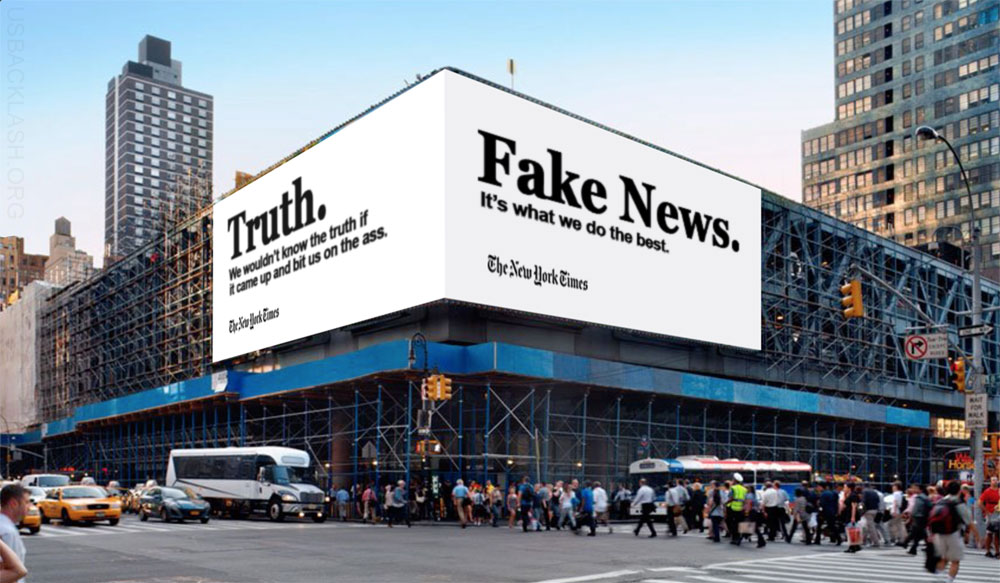
The New York Times has published another CIA press release disguised as news, this time aimed at whipping up paranoia toward anyone who criticizes the US proxy war in Ukraine.
The article is titled “Putin’s Next Target: U.S. Support for Ukraine, Officials Say”. Its author, Julian E Barnes, has written so many New York Times articles with headlines ending in the words “Officials Say” that we can safely assume the primary reason for his continued employment in that paper is because empire managers within the US government have designated him someone who can be trusted to print what they want printed. This designation would make him a reliable supplier of “scoops” (read: regurgitations of unevidenced government claims) for The New York Times.
“American officials said they are convinced that Mr. Putin intends to try to end U.S. and European support for Ukraine by using his spy agencies to push propaganda supporting pro-Russian political parties and by stoking conspiracy theories with new technologies,” Barnes writes.
Of course the report never gets any more specific than that, and of course the “American officials” Barnes cites promote their unevidenced assertions under cover of complete anonymity.
“The American officials spoke on the condition their names not be reported so they could discuss sensitive intelligence,” Barnes writes.
One of the most pathetic attempts at proxy war propaganda to date. If you criticize the US role in fueling the Ukraine war, then you have fallen under the spell of the all-powerful Putin’s “disinformation” and “conspiracy theories.” https://t.co/83OlgOUAQd
The only named source cited in the article is a CIA veteran named Beth Sanner, who says that “Russia will not give up on disinformation campaigns,” but adds that “we don’t know what it is going to look like.”
And that’s really the whole article right there. Putin is going to be using his spy agencies to promote political parties and messages which support ending the practice of pouring billions of dollars of weapons into Ukraine, but nobody knows what that will look like exactly, so we all have to just be sort of generally distrustful toward anyone who doesn’t think it’s a swell idea to perpetuate a horrific war with potentially world-ending consequences, because they might be part of an unspecified Russian influence operation.
We saw a similar report from CNN a few weeks ago, in which the public was warned that Russia’s FSB is working to convert westerners into mouthpieces for Russian propaganda using methods so sneaky and subtle that those westerners wouldn’t even know it’s happening. Again, details were extremely vague and the only obvious response to the information provided is for everyone to just get really paranoid toward anyone saying anything that doesn’t support current US foreign policy toward Russia.
As a thought experiment, imagine what it would look like if the CIA or some other agency wanted to advance US information interests by making the public distrustful of any people or information which go against US strategic objectives. Try to imagine some of the things they might say or do.
Do you imagine it would look much different than what we’re seeing currently? Feeding trusted mainstream news reporters extremely vague stories about the Kremlin trying to deceive people into opposing the longstanding agendas of the US intelligence cartel, using online media and social subversion? Can you think of a more effective way to help shore up trust in your preferred narratives and sow distrust in narratives you do not prefer?
Here’s another one: imagine a state media outlet for a tyrannical dictatorship. Think about how its news stories are made, how it would often take orders from the government on what to report and what not to report, and how all its printing or broadcasting would always align with the information interests of that government.
Now ask yourself: in what material way is that reporting different from these CIA press releases we’re seeing from outlets like The New York Times and CNN? In both scenarios the government is feeding the media information it wants printed, and in both scenarios there will be consequences if the media don’t obey. In our hypothetical dictatorship those consequences might be more severe, but in our real life scenario the consequences are no less real.
If Mr Barnes had refused to work on this story, he would have lost his “scoop” and it would have been given to someone else, perhaps at a competing outlet. If Barnes ceased uncritically reporting unevidenced assertions from anonymous government officials, his prominence in the mainstream media would quickly fizzle, and his career would dry up. If The New York Times ceased functioning as a reliable outlet for the credulous printing of unevidenced government claims, then the government agencies who’ve been elevating the paper to prominence with their artificial “scoops” can take those hot stories to another competing outlet and let them get the subscriptions and the glory.
In both scenarios, the government is able to get its propaganda messaging printed as hard news reporting. In one scenario the reporter reports what the government wants because they work for the government, in the other scenario the reporter reports what the government wants because that’s the only way to have a career in media outlets that are owned and controlled by the plutocrats who benefit from the political status quo the government is premised upon. The only major difference is that in our hypothetical dictatorship, the public probably knows it’s being fed propaganda, and is therefore more likely to take what they’re being told with a grain of salt.
In a tyrannical dictatorship, the press is operated by employees of the government. In a Free Democracy™️, the press is operated by employees of the oligarchs who operate the government. In both cases you’re getting state propaganda, but in one of them the propaganda is disguised as objective news reporting.
“But these weren’t the kind of monsters that had tentacles and rotting skin, the kind a seven-year-old might be able to wrap his mind around—they were monsters with human faces, in crisp uniforms, marching in lockstep, so banal you don’t recognize them for what they are until it’s too late.” ― Ransom Riggs, Miss Peregrine’s Home for Peculiar Children
Enough already.
Enough with the distractions. Enough with the partisan jousting.
Enough with the sniping and name-calling and mud-slinging that do nothing to make this country safer or freer or more just.
We have let the government’s evil-doing, its abuses, power grabs, brutality, meanness, inhumanity, immorality, greed, corruption, debauchery and tyranny go on for too long.
We have seen this convergence before in Hitler’s Germany, in Stalin’s Russia, in Mussolini’s Italy, and in Mao’s China: the rise of strongmen and demagogues, the ascendency of profit-driven politics over deep-seated principles, the warring nationalism that seeks to divide and conquer, the callous disregard for basic human rights and dignity, and the silence of people who should know better.
Yet no matter how many times the world has been down this road before, we can’t seem to avoid repeating the deadly mistakes of the past.
This is not just playing out on a national and international scale. It is wreaking havoc at the most immediate level, as well, creating rifts and polarities within families and friends, neighborhoods and communities that keep the populace warring among themselves and incapable of presenting a united front in the face of the government’s goose-stepping despotism.
We labor today under the weight of countless tyrannies, large and small, disguised as “the better good,” marketed as benevolence, enforced with armed police, and carried out by an elite class of government officials who are largely insulated from the ill effects of their actions.
For too long now, the American people have rationalized turning a blind eye to all manner of government wrongdoing—asset forfeiture schemes, corruption, surveillance, endless wars, SWAT team raids, militarized police, profit-driven private prisons, and so on—because they were the so-called lesser of two evils.
Yet the unavoidable truth is that the government—through its acts of power grabs, brutality, meanness, inhumanity, immorality, greed, corruption, debauchery and tyranny—has become almost indistinguishable from the evil it claims to be fighting, whether that evil takes the form of terrorism, torture, drug trafficking, sex trafficking, murder, violence, theft, pornography, scientific experimentations or some other diabolical means of inflicting pain, suffering and servitude on humanity.
At its core, this is not a debate about politics, or constitutionalism, or even tyranny disguised as law-and-order. This is a condemnation of the monsters with human faces who walk among us.
Many of them work for the U.S. government.
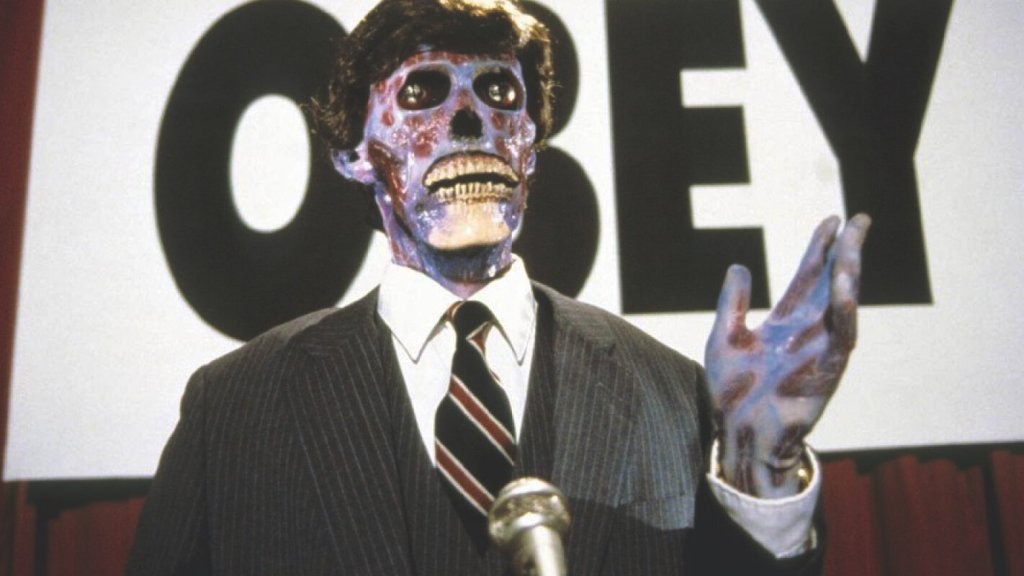
This is the premise of John Carpenter’s film They Live, which was released thirty-five years ago and remains unnervingly, chillingly appropriate for our modern age.
Best known for his horror film Halloween, which assumes that there is a form of evil so dark that it can’t be killed, Carpenter’s larger body of work is infused with a strong anti-authoritarian, anti-establishment, laconic bent that speaks to the filmmaker’s concerns about the unraveling of our society, particularly our government.
Time and again, Carpenter portrays the government working against its own citizens, a populace out of touch with reality, technology run amok, and a future more horrific than any horror film.
In Escape from New York, Carpenter presents fascism as the future of America.
In The Thing, a remake of the 1951 sci-fi classic of the same name, Carpenter presupposes that increasingly we are all becoming dehumanized.
In Christine, the film adaptation of Stephen King’s novel about a demon-possessed car, technology exhibits a will and consciousness of its own and goes on a murderous rampage.
In In the Mouth of Madness, Carpenter notes that evil grows when people lose “the ability to know the difference between reality and fantasy.”
And then there is Carpenter’s They Live, in which two migrant workers discover that the world is not as it seems. In fact, the population is actually being controlled and exploited by aliens working in partnership with an oligarchic elite. All the while, the populace—blissfully unaware of the real agenda at work in their lives—has been lulled into complacency, indoctrinated into compliance, bombarded with media distractions, and hypnotized by subliminal messages beamed out of television and various electronic devices, billboards and the like.
It is only when homeless drifter John Nada (played to the hilt by the late Roddy Piper) discovers a pair of doctored sunglasses—Hoffman lenses—that Nada sees what lies beneath the elite’s fabricated reality: control and bondage.
When viewed through the lens of truth, the elite, who appear human until stripped of their disguises, are shown to be monsters who have enslaved the citizenry in order to prey on them.
Likewise, billboards blare out hidden, authoritative messages: a bikini-clad woman in one ad is actually ordering viewers to “MARRY AND REPRODUCE.” Magazine racks scream “CONSUME” and “OBEY.” A wad of dollar bills in a vendor’s hand proclaims, “THIS IS YOUR GOD.”
When viewed through Nada’s Hoffman lenses, some of the other hidden messages being drummed into the people’s subconscious include: NO INDEPENDENT THOUGHT, CONFORM, SUBMIT, STAY ASLEEP, BUY, WATCH TV, NO IMAGINATION, and DO NOT QUESTION AUTHORITY.
This indoctrination campaign engineered by the elite in They Live is painfully familiar to anyone who has studied the decline of American culture.
A citizenry that does not think for themselves, obeys without question, is submissive, does not challenge authority, does not think outside the box, and is content to sit back and be entertained is a citizenry that can be easily controlled.
In this way, the subtle message of They Live provides an apt analogy of our own distorted vision of life in the American police state, what philosopher Slavoj Žižek refers to as dictatorship in democracy, “the invisible order which sustains your apparent freedom.”
Tune out the government’s attempts to distract, divert and befuddle us and tune into what’s really going on in this country, and you’ll run headlong into an unmistakable, unpalatable truth: what we are dealing with today is an authoritarian beast that has outgrown its chains and will not be restrained.
We’re being fed a series of carefully contrived fictions that bear no resemblance to reality.
Despite the fact that we are 17,600 times more likely to die from heart disease than from a terrorist attack; 11,000 times more likely to die from an airplane accident than from a terrorist plot involving an airplane; 1,048 times more likely to die from a car accident than a terrorist attack, and 8 times more likely to be killed by a police officer than by a terrorist , we have handed over control of our lives to government officials who treat us as a means to an end—the source of money and power.
As the Bearded Man in They Live warns, “They are dismantling the sleeping middle class. More and more people are becoming poor. We are their cattle. We are being bred for slavery.”
We have bought into the illusion and refused to grasp the truth.
From the moment we are born until we die, we are indoctrinated into believing that those who rule us do it for our own good. The truth is far different.
The powers-that-be want us to feel threatened by forces beyond our control (terrorists, pandemics, mass shootings, etc.).
They want us afraid and dependent on the government and its militarized armies for our safety and well-being.
They want us distrustful of each other, divided by our prejudices, and at each other’s throats.
We are little more than expendable resources to be used, abused and discarded.
In fact, a study conducted by Princeton and Northwestern University concluded that the U.S. government does not represent the majority of American citizens. Instead, the study found that the government is ruled by the rich and powerful, or the so-called “economic elite.” Moreover, the researchers concluded that policies enacted by this governmental elite nearly always favor special interests and lobbying groups.
In other words, we are being ruled by an oligarchy disguised as a democracy, and arguably on our way towards fascism—a form of government where private corporate interests rule, money calls the shots, and the people are seen as mere subjects to be controlled.
Rest assured that when and if fascism finally takes hold in America, the basic forms of government will remain: Fascism will appear to be friendly. The legislators will be in session. There will be elections, and the news media will continue to cover the entertainment and political trivia. Consent of the governed, however, will no longer apply. Actual control will have finally passed to the oligarchic elite controlling the government behind the scenes.
Sound familiar?
Clearly, we are now ruled by an oligarchic elite of governmental and corporate interests.
We have moved into “corporatism” (favored by Benito Mussolini), which is a halfway point on the road to full-blown fascism.
Corporatism is where the few moneyed interests—not elected by the citizenry—rule over the many. In this way, it is not a democracy or a republican form of government, which is what the American government was established to be. It is a top-down form of government and one which has a terrifying history typified by the developments that occurred in totalitarian regimes of the past: police states where everyone is watched and spied on, rounded up for minor infractions by government agents, placed under police control, and placed in detention (a.k.a. concentration) camps.
For the final hammer of fascism to fall, it will require the most crucial ingredient: the majority of the people will have to agree that it’s not only expedient but necessary.
But why would a people agree to such an oppressive regime?
Fear is the method most often used by politicians to increase the power of government. And, as most social commentators recognize, an atmosphere of fear permeates modern America: fear of terrorism, fear of the police, fear of our neighbors and so on.
The propaganda of fear has been used quite effectively by those who want to gain control, and it is transforming the populace into fearful, compliant, pacified zombies content to march in lockstep with the government’s dictates.
This brings me back to They Live, in which the real zombies are not the aliens calling the shots but the populace who are content to remain controlled.
When all is said and done, the world of They Live is not so different from our own. As one of the characters points out, “The poor and the underclass are growing. Racial justice and human rights are nonexistent. They have created a repressive society, and we are their unwitting accomplices. Their intention to rule rests with the annihilation of consciousness. We have been lulled into a trance. They have made us indifferent to ourselves, to others. We are focused only on our own gain.”
We, too, are focused only on our own pleasures, prejudices and gains. Our poor and underclasses are also growing. Injustice is growing. Inequality is growing. A concern for human rights is nearly nonexistent. We too have been lulled into a trance, indifferent to others.
Oblivious to what lies ahead, we’ve been manipulated into believing that if we continue to consume, obey, and have faith, things will work out. But that’s never been true of emerging regimes. And by the time we feel the hammer coming down upon us, it will be too late.
So where does that leave us?
The characters who populate Carpenter’s films provide some insight.
Underneath their machismo, they still believe in the ideals of liberty and equal opportunity. Their beliefs place them in constant opposition with the law and the establishment, but they are nonetheless freedom fighters.
When, for example, John Nada destroys the alien hypno-transmitter in They Live, he delivers a wake-up call for freedom. As Nada memorably declares, “I have come here to chew bubblegum and kick ass. And I’m all out of bubblegum.”
In other words: we need to get active and take a stand for what’s really important.
Stop allowing yourselves to be easily distracted by pointless political spectacles and pay attention to what’s really going on in the country.
As I make clear in my book Battlefield America: The War on the American People and in its fictional counterpart The Erik Blair Diaries, the real battle for control of this nation is taking place on roadsides, in police cars, on witness stands, over phone lines, in government offices, in corporate offices, in public school hallways and classrooms, in parks and city council meetings, and in towns and cities across this country.
All the trappings of the American police state are now in plain sight.
Wake up, America.
If they live (the tyrants, the oppressors, the invaders, the overlords), it is only because “we the people” sleep.
“Man is born free but everywhere is in chains.”—Jean-Jacques Rousseau
Authoritarian control freaks out to micromanage our lives have become the new normal or, to be more accurate, the new abnormal when it comes to how the government relates to the citizenry.
This overbearing despotism, which pre-dates the COVID-19 hysteria, is the very definition of a Nanny State, where government representatives (those elected and appointed to work for us) adopt the authoritarian notion that the government knows best and therefore must control, regulate and dictate almost everything about the citizenry’s public, private and professional lives.
Indeed, it’s a dangerous time for anyone who still clings to the idea that freedom means the right to think for yourself and act responsibly according to your best judgment.
This tug-of-war for control and sovereignty over our selves impacts almost every aspect of our lives, whether you’re talking about decisions relating to our health, our homes, how we raise our children, what we consume, what we drive, what we wear, how we spend our money, how we protect ourselves and our loved ones, and even who we associate with and what we think.
You can’t even buy a stove, a dishwasher, a showerhead, a leaf blower, or a lightbulb anymore without running afoul of the Nanny State.
In this way, under the guise of pseudo-benevolence, the government has meted out this bureaucratic tyranny in such a way as to nullify the inalienable rights of the individual and limit our choices to those few that the government deems safe enough.
Yet limited choice is no choice at all. Likewise, regulated freedom is no freedom at all.
Indeed, as a study by the Cato Institute concludes, for the average American, freedom has declined generally over the past 20 years. As researchers William Ruger and Jason Sorens explain, “We ground our conception of freedom on an individual rights framework. In our view, individuals should be allowed to dispose of their lives, liberties, and property as they see fit, so long as they do not infringe on the rights of others.”
The overt signs of the despotism exercised by the increasingly authoritarian regime that passes itself off as the United States government (and its corporate partners in crime) are all around us: censorship, criminalizing, shadow banning and de-platforming of individuals who express ideas that are politically incorrect or unpopular; warrantless surveillance of Americans’ movements and communications; SWAT team raids of Americans’ homes; shootings of unarmed citizens by police; harsh punishments meted out to schoolchildren in the name of zero tolerance; community-wide lockdowns and health mandates that strip Americans of their freedom of movement and bodily integrity; armed drones taking to the skies domestically; endless wars; out-of-control spending; militarized police; roadside strip searches; privatized prisons with a profit incentive for jailing Americans; fusion centers that spy on, collect and disseminate data on Americans’ private transactions; and militarized agencies with stockpiles of ammunition, to name some of the most appalling.
Yet as egregious as these incursions on our rights may be, it’s the endless, petty tyrannies—the heavy-handed, punitive-laden dictates inflicted by a self-righteous, Big-Brother-Knows-Best bureaucracy on an overtaxed, overregulated, and underrepresented populace—that illustrate so clearly the degree to which “we the people” are viewed as incapable of common sense, moral judgment, fairness, and intelligence, not to mention lacking a basic understanding of how to stay alive, raise a family, or be part of a functioning community.
When the dictates of petty bureaucrats carry greater weight than the individual rights of the citizenry, we’re in trouble, folks.
Federal and state governments have used the law as a bludgeon to litigate, legislate and micromanage our lives through overregulation and overcriminalization.
This is what happens when bureaucrats run the show, and the rule of law becomes little more than a cattle prod for forcing the citizenry to march in lockstep with the government.
Overregulation is just the other side of the coin to overcriminalization, that phenomenon in which everything is rendered illegal, and everyone becomes a lawbreaker.
You don’t have to look far to find abundant examples of Nanny State laws that infantilize individuals and strip them of their ability to decide things for themselves. Back in 2012, then-New York Mayor Michael Bloomberg infamously proposed a ban on the sale of sodas and large sugary drinks in order to guard against obesity. Other localities enacted bans on texting while jaywalking, wearing saggy pants, having too much mud on your car, smoking outdoors, storing trash in your car, improperly sorting your trash, cursing within earshot of others, or screeching your tires.
Yet while there are endless ways for the Nanny State to micromanage our lives, things become truly ominous when the government adopts mechanisms enabling it to monitor us for violations in order to enforce its many laws.
Nanny State, meet the all-seeing, all-knowing Surveillance State and its sidekick, the muscle-flexing Police State.
You see, in an age of overcriminalization—when the law is wielded like a hammer to force compliance to the government’s dictates whatever they might be—you don’t have to do anything “wrong” to be fined, arrested or subjected to raids and seizures and surveillance.
You just have to refuse to march in lockstep with the government.
As policy analyst Michael Van Beek warns, the problem with overcriminalization is that there are so many laws at the federal, state and local levels—that we can’t possibly know them all.
“It’s also impossible to enforce all these laws. Instead, law enforcement officials must choose which ones are important and which are not. The result is that they pick the laws Americans really must follow, because they’re the ones deciding which laws really matter,” concludes Van Beek. “Federal, state and local regulations — rules created by unelected government bureaucrats — carry the same force of law and can turn you into a criminal if you violate any one of them… if we violate these rules, we could be prosecuted as criminals. No matter how antiquated or ridiculous, they still carry the full force of the law. By letting so many of these sit around, just waiting to be used against us, we increase the power of law enforcement, which has lots of options to charge people with legal and regulatory violations.”
This is the police state’s superpower: empowered by the Nanny State, it has been vested with the authority to make our lives a bureaucratic hell.
The groundwork laid with COVID-19 is a prologue to what will become the police state’s conquest of a new, relatively uncharted, frontier: inner space, specifically, the inner workings (genetic, biological, biometric, mental, emotional) of the human race.
Consider how many more ways the government could “protect us” from ourselves under the guise of public health and safety.
For instance, under the guise of public health and safety, the government could use mental health care as a pretext for targeting and locking up dissidents, activists and anyone unfortunate enough to be placed on a government watch list.
When combined with advances in mass surveillance technologies, artificial intelligence-powered programs that can track people by their biometrics and behavior, mental health sensor data (tracked by wearable data and monitored by government agencies such as HARPA), threat assessments, behavioral sensing warnings, precrime initiatives, red flag gun laws, and mental health first-aid programs aimed at training gatekeepers to identify who might pose a threat to public safety, these preemptive mental health programs could well signal a tipping point in the government’s efforts to penalize those engaging in so-called “thought crimes.”
This is how it begins.
On a daily basis, Americans are already relinquishing (in many cases, voluntarily) the most intimate details of who we are—their biological makeup, our genetic blueprints, and our biometrics (facial characteristics and structure, fingerprints, iris scans, etc.)—in order to navigate an increasingly technologically-enabled world.
Having conditioned the population to the idea that being part of society is a privilege and not a right, such access could easily be predicated on social credit scores, the worthiness of one’s political views, or the extent to which one is willing to comply with the government’s dictates, no matter what they might be.
COVID-19 with its talk of mass testing, screening checkpoints, contact tracing, immunity passports, and snitch tip lines for reporting “rule breakers” to the authorities was a preview of what’s to come.
We should all be leery and afraid.
At a time when the government has a growing list—shared with fusion centers and law enforcement agencies—of ideologies, behaviors, affiliations and other characteristics that could flag someone as suspicious and result in their being labeled potential enemies of the state, it won’t take much for any of us to be considered outlaws or terrorists.
After all, the government likes to use the words “anti-government,” “extremist” and “terrorist” interchangeably. The Department of Homeland Security broadly defines extremists as individuals “that are mainly antigovernment, rejecting federal authority in favor of state or local authority, or rejecting government authority entirely.”
At some point, being an individualist will be considered as dangerous as being a terrorist.
When anything goes when it’s done in the name of national security, crime fighting and terrorism, “we the people” have little to no protection against SWAT team raids, domestic surveillance, police shootings of unarmed citizens, indefinite detentions, and the like, whether or not you’ve done anything wrong.
In an age of overcriminalization, you’re already a criminal.
All the government needs is proof of your law-breaking. They’ll get it, too.
“Method, Method, what do you want from me? You know that I have eaten of the fruit of the unconscious.” – Jules Laforgue, Moralités légendaires
The other day my wife attended an event at a well-appointed home in town where men in dark suits stood around to provide a sense of security that no harm would come to the visitors, even though the angel of death had visited this house on previous occasions, for it was a funeral home, well-steeped in boxing people up for the journey to the underworld. So to call it a “home” is really a misnomer; that might sound cozy, but it is really a way station for the dead. A layover.
Mistakenly thinking that she was attending a traditional wake and the dead person’s corpse would be there in a coffin, I suggested that she check out the casket and, if she liked its wood and the softness of its velvet liner, to inquire whether they had any sales going on, especially if they had a buy-one-get-one-free sale like the local supermarket often has for English muffins and other goodies.
I think she forgot to ask, but she did tell me that the elderly woman who died had been cremated weeks ago and that her ashes were in a box on a table. Boxes, ah, little boxes.
***
I have long wondered why so many people are enchanted by sunsets, why they travel to see them and gasp in wonder that the sun disappears and night comes on. Colorful yes, but not as glorious as the sunrise, the rosy-fingered dawn of every new day. Why celebrate the death of the day and our journey into the underworld of sleep and the cave of dreams rather than the dawn of our awakening and new life. Jokes aside, morbidity is not life-affirming. The true apocalypse – Greek apokalyptein, uncover, disclose, reveal – is every dawn’s epiphany when we can dream while awake and create.
***
In Apuleius’s Metamorphoses there is the story of Cupid and Psyche, the former being a male god and the latter a female human. Psyche, who has lost her lover Cupid but wants him back, is tricked by the goddess Aphrodite who challenges her, if she wants Cupid back, to take the dangerous journey to the underworld to retrieve a box of beauty cream. Psyche goes and gets the box but is tempted to open it since it would enhance her already beautiful human appearance. When she does, she falls into a deathlike sleep. It’s an old story, forever new. Switch the sexes if you wish. Take 200 vitamin pills a day as many billionaires and other assorted crazies do intent on becoming immortal gods. Good luck. Get uploaded or downloaded into a computer, whichever it is, and live forever. Maybe watch the sun set or perchance wake up. And although Psyche is given a Hollywood ending when she is saved by Zeus and made immortal with the other gods in Olympus, that’s just an old movie. We live by facts these days, not myths. Ah, boxes.
***
The Boxer by Simon & Garfunkel I am just a poor boy, though my story’s seldom told I have squandered my resistance for a pocketful of mumbles Such as promises All lies and jest Still a man hears what he wants to hear And disregards the rest, hmm
***
Children love boxes within which they often hide their collections for safekeeping. Give a child a box with a lid and it will be filled in no time. Filled with little things that symbolize for children the vast infinity of secret space that is their hold on time. Children are born poets and philosophers who over time are usually dulled by adults around them from whom they learn to hide their secrets and the questions these secrets raise. The secrets often fester and die, only to live on in repressed lives. I knew a man who collected cigar boxes. They were everywhere in his house when he died. Most were empty. His wife outdid him with her collection of empty boxes: shoe boxes, jewelry boxes, every kind of box imaginable. All empty. Were they waiting to be filled? With what? Secrets? Another woman I knew had a box with an envelope inside marked, “My Father’s Magic Envelope – AKA Miracles.” It was empty. She pictured herself as a boxer in a sketch she drew, a child without a face with boxing gloves. I can only guess at the secrets she was fighting to remember or forget. The experimental method is based on repetition, but so too is trauma. Internment is not just for the dead.
***
Boxed in, boxed up, housed, enclosed. trapped, contained, caged , enveloped, bounded, penned, corralled, trapped: calling from my cell for help? The screen lights up with a concatenation of phantom images that seize the mind, what the Greeks called eidolon.
***
Let’s forget about Pandora’s box, which was actually a jar in the original story. Its last content being hope. I once knew a girl named Hope. She was very seductive. But I sensed she was trouble and escaped when she started to open up about her secrets. I wasn’t very curious, just afraid. So long, Hope, “it’s time that we began to laugh and cry and cry and laugh about it all again.” Thanks, Leonard.
***
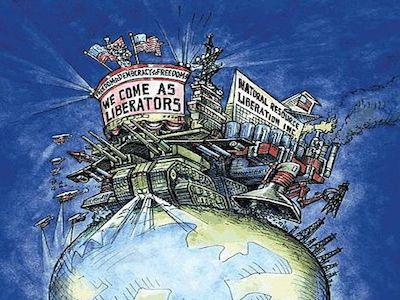
There are countless political analyses of what drives the United States’ ruling forces in their systematic, brutal, and remorseless wars of aggression around the world. The perpetual effort to expand an empire originally built on the blood of indigenous people. The refusal to live in peace within national boundaries. The pushing of NATO expansion up to Russia’s borders. It seems insane, which of course it is. But what is behind such madness? The secret may be quite simple. Again the ancient Greeks come to mind as Roberto Calasso writes in The Marriage of Cadmus and Harmony, quoting the historian Jacob Burckhardt, when he wrote of the secret of war-loving Sparta: “But the power of Sparta seems to have come into being almost entirely for itself and for its own self-assertion, and its constant pathos was the enslavement of subject peoples and the extension of its own dominion as an end unto itself.” Power as an end in itself. Realizing this is apocalyptic in the revelatory sense, for it opens the box on the secret nihilism of the U.S. ruling elites.
***
I am waiting to get some intimations of immortality by recollecting my early childhood and I am waiting for the green mornings to come again youth’s dumb green fields come back again and I am waiting for some strains of unpremeditated art to shake my typewriter and I am waiting to write the great indelible poem and I am waiting for the last long careless rapture and I am perpetually waiting for the fleeing lovers on the Grecian Urn to catch each other up at last and embrace and I am waiting perpetually and forever a renaissance of wonder
– Lawrence Ferlinghetti, “I Am Waiting,” for jazz accompaniment
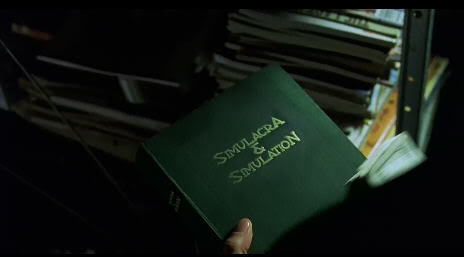
There’s a big word that you can add to your vocabulary: Simulacrum. It is a hard word to wrap your head around, but one you are not too likely to forget. Indeed, you should not forget it!
Collins defines it as: “1) an image; likeness; 2) a vague representation; semblance; 3) a mere pretense; sham.”
Cambridge Dictionary says: “something that looks like or represents something else”.
Purdue University put it this way: “Something that replaces reality with its representation.”
Jean Baudrillard wrote about this in a 1981 paper called “The Precession of Simulacra”, where he digs deeper, making a distinction between a simulation and a simulacrum.
Whereas representation attempts to absorb simulation by interpreting it as a false representation, simulation envelops the whole edifice of representation itself as a simulacrum. Such would be the successive phases of the image:
it is the reflection of a profound reality;
it masks and denatures a profound reality;
it masks the absence of a profound reality;
it has no relation to any reality whatsoever;
it is its own pure simulacrum.
So, the switch for reality is anti-reality: “The simulacrum is never what hides the truth – it is truth that hides the fact that there is none.”
This whole process does not happen in a vacuum because it involves human agency. Reality exists but human perception distorts it.
Just for review, reality slips into distortion, then into simulation, then finds its resting place in a state of simulacrum. Reality is subsumed by the simulacrum.
An example of simulacrum in the making
It is estimated that 90 percent of all online content will be generated by AI by 2025. This means news, social media posts, chats, pictures, videos, podcasts, websites, etc. A deluge of fake social media accounts will be run by AI. In short, everything.
“What generative AI can do, essentially, is create new things that would have thus far been seen as unique to human intelligence or creativity, Generative AI can create across all media, so text, video, audio, pictures – every digital medium can be powered by generative AI. So, I think these valuations that you’re seeing for OpenAI are actually going to go up and you’re going to start to see even more generative AI companies which have universal applications across many industries in 2023.”
People will remember back to 2023 images and think that nothing has changed in 2025.
Warning : The Total Collapse Of Reality Could Be At Hand
As described above, a simulacrum is anti-reality.
This is not a paradigm shift of reality. This is not a “new realty”. This is not reality, period. Unfortunately, billions of people risk being captured by it.
While everyone is looking at shiny new simulacra forming right before their eyes, reality is escaping out the back door.
“A treasure stumbled upon, suddenly; not gradually accumulated, by adding one to one. The accumulation of learning, ‘adding to the sum-total of human knowledge’; lay that burden down, that baggage, that impediment. Take nothing for your journey; travel light.” – Norman O. Brown, Love’s Body
These are “heavy” times, colloquially speaking. Forebodings everywhere. Everything broken. People on edge, nervous, filled with anxiety about they know not what since it seems to be everything. The economy, politics, elections, endless propaganda, the war in Ukraine, censorship, the environment, nuclear war, Covid/vaccines, a massive world-wide collapse, the death of democratic possibilities, the loss of all innocence as a very weird and dangerous future creeps upon us, etc. Only the most anesthetized don’t feel it.
The anxiety has increased even as access to staggering amounts of knowledge – and falsehoods – has become available with the click of a button into the digital encyclopedia. The CIA’s MK-Ultra mind control program has gone digital. The more information, the more insubstantial the world seems, but it is not an insubstantiality that connects to hope or faith but to despair. Across the world people are holding their breath. What’s next?
Roberto Calasso, the late great Italian writer, wrote that we live in “the unnamable present,” which seems accurate. Information technology, with its easily available marriage of accurate and fraudulent information, affects people at the fathomless depths of the mind and spirit. Yet it is taken-for-granted that the more such technological information there is available, as well as the ease with which one can add one’s two-cents to it, is a good thing, even as those powerful deep-state forces that control the Internet pump out an endless stream of purposely dissembling and contradictory messages. Delusions of omnipotence and chaos everywhere, but not in the service of humanity. Such chaos plays in chords D and C – Depressing and Controlling.
In the midst of this unnamable present, all of us need to dream of beauty and liberation even as we temporarily rely on digital technology for news of the wider world. For the local news we can step outside and walk and talk to people, but we can’t endlessly travel everywhere, so we rely on the Internet for reports from elsewhere. Even as we exercise great effort to discern facts from fictions through digital’s magic emanations, we hunger for some deeper experiences than the ephemerality of this unnamable world. Without it we are lost in a forest of abstractions.
While recently dawdling on a walk, I stopped to browse through tables of free books on the lawn of my local library. I was looking for nothing but found something that startled me: a few descriptive words of a child’s experience. I chanced to pick up an old (1942), small autobiography by the English historian, A. L. Rowse – A Cornish Childhood. The flyleaf informed me that it was the story of his pre-World War I childhood in a little Cornish village in southwestern England. The son of a china-clay worker and mother of very modest means, Rowse later went on to study at Oxford and became a well-known scholar and author of about a hundred books. In other words, a man whose capacious mind was encyclopedic long before the Internet offered its wares of information about everything from A to Z.
Since my grandfather, the son of an Irish immigrant father and English mother, had spent his early years working in a bobbin factory in Bradford, England, a polluted mill town in the north, before sailing at age 11 from Liverpool to New York City aboard the Celtic with his four younger siblings sans parents, I had an interest in what life was like for poor children in England during that era. How circumstances influenced them: two working-class boys, one who became an Oxford graduate and well-known author; the other who became a NYC policeman known only to family and friends. The words Rowse wrote and I read echoed experiences that I had had when young; I wondered if my grandfather had experienced something similar. Rowse writes this on pages 16-17 where I randomly opened the book:
A little group of thatched cottages in the middle of the village had a small orchard attached; and I remember well the peculiar purity of the blue sky seen through the white clusters of apple-blossom in spring. I remember being moon-struck looking at it one morning early on my way to school. It meant something for me; what I couldn’t say. It gave me an unease at heart, some reaching outwards toward perfection such as impels men into religion, some sense of the transcendence of things, of the fragility of our hold upon life . . . . I could not know then that it was an early taste of aesthetic sensation, a kind of revelation which has since become a secret touchstone of experience for me, an inner resource and consolation. . . . In time it became my creed – if that word can be used of a religion which has no dogma, no need of dogma; for which this ultimate aesthetic experience, this apprehension of the world and life as having value essentially in the moment of being apprehended qua beauty, I had no need of religion. . . . in that very moment it seemed that time stood still, that for a moment time was held up and one saw experience as through a rift across the flow of it, a shaft into the universe. But what gave such poignancy to the experience was that, in the very same moment that one felt time standing still, one knew at the back of the mind, or with another part of it, that it was moving inexorably on, carrying oneself and life with it. So that the acuity of the experience, the reason why it moved one so profoundly, was that at bottom it was a protest of the personality against the realization of its final extinction. Perhaps, therefore, it was bound up with, a reflex action from, the struggle for survival. I could get no further than that; and in fact have remained content with that.
I quote so many of Rowse’s words because they seem to contain two revelations that pertain to our current predicament. One a revelation that opens onto hope; the other a revelation of hopelessness. On the one hand, Rowse writes beautifully about how a patch of blue sky through apple blossoms (and his reading Wordsworth’s Intimations of Immortality) could open his heart and soul to deep aesthetic consolation. Calasso, in discussing “absolute literature” and the Bhagavad Gita in Literature and the Gods, refers to this experience with the word ramaharsa or horripilation, the happiness of the hairs. It is that feeling one has when one experiences a thrill so profound that a shiver goes down one’s spine and one experiences an epiphany. Your hairs and other body parts stand up, whether it’s from a patch of blue, a certain spiritual or erotic/love encounter, or a line of poetry that takes your breath away. Such a thrill often happens through a serendipitous stumbling.
For Rowse, the epiphany was bounded, like a beautiful bird with its wings clipped; it was an “aesthetic experience” that seemed to exclude something genuinely transcendent in the experiential and theological sense. Maybe it was more than that when he was young, but when this scholar described it in his 39th year, this intellectual could only say it was aesthetic.
C. S. Lewis, in the opening pages of The Abolition of Man, echoing Coleridge’s comment about two tourists at a waterfall, one who calls the waterfall pretty and the other who calls it sublime (Coleridge endorsing the later and dismissing the former with disgust), writes, “The feelings which make a man call an object sublime are not sublime feelings but feelings of veneration.” In other words, the sublime nature of a patch of blue sky through apple blossoms in the early morn cannot be reduced to a person’s subjective feelings but is objectively true and a crack into the mystery of transcendence. To see it as a protest against one’s personal extinction and to be content to “get no further than that” is to foreclose the possibility that what the boy felt was not what the man thought; or to quote Wordsworth about what seems to have happened to Rowse: “Shades of the prison house begin to close/Upon the growing boy,” and that is that.
But we are even a longer way gone from when Rowse wrote his remembrances. In our secular Internet age, first society and now its technology, not aesthetics or the religion of art, have replaced God for many people, who, like Rowse, have lost the ability to experience the divine. It embarrasses them. Something – an addiction to pseudo-knowledge? – blocks their willingness to be open to surpassing the reasoning mind. We think we are too sophisticated to bend that low even when looking up. “The pseudomorphism between religion and society” has passed unobserved, as Calasso puts it:
It all came together not so much in Durkheim’s [French sociologist 1858-1917] claim that “the religious is the social,’ but in the fact that suddenly such a claim sounded natural. What was left in the end was naked society, but invested now with all the powers inherited, or rather burgled, from religion. The twentieth century would see its triumph. The theology of society severed every tie, renounced all dependence, and flaunted the distinguishing feature: the tautological, the self-advertising. The power and impact of totalitarian regimes cannot be explained unless we accept that the very notion of society has appropriated an unprecedented power, one previously the preserve of religion. . . . Being anti-social would become the equivalent of sinning against the Holy Ghost. . . . Society became the subject above all subjects, for whose sake everything is justified.
For someone like Rowse, the Oxford scholar and bibliophile, writing in the midst of WW II about his childhood before WW I, an exquisite aesthetic explanation suffices to explain his experience, one that he concludes was perhaps part of an evolutionary reflex action connected to the struggle for survival. Thus this epiphany of beauty is immured in sadness rather than opening out into possible hope. Lovely as his description is, it is caged in inevitability, as if to say: Here is your bit of beauty on your way to dusty death. It is a denial of freedom, of spiritual reality, of what Lewis refers to for brevity’s sake as ‘the Tao,’ what the Chinese have long meant as the great thing, the correspondence between the outer and the inner, a reality beyond causality and the controlling mind.
Now even beauty has been banned behind machine experiences. But the question of beauty is secondary to the nature of reality and our connection to it. The fate of the world depends upon it. When the world is too much with us and doom and gloom are everywhere, where can we turn to find a way forward to find a place to stand to fight the evils of nuclear weapons, poverty, endless propaganda, and all the other assorted demons marauding through our world?
It will not be to machines or more information, for they are the essence of too-muchness. It will not come from concepts or knowledge, which Nietzsche said made it possible to avoid pain. I believe it will only come from what he suggested: “To make an experiment of one’s very life – this alone is freedom of the spirit, this then became for me my philosophy.” And before you might think, “Look where it got him, stark raving mad,” let me briefly explain. Nietzsche may seem like an odd choice to suggest as insightful when it comes to openness to a spiritual dimension to experience since he is usually but erroneously seen as someone who “killed God.” Someone like Gandhi might seem more appropriate with his “experiments with truth.” And of course Gandhi is very appropriate. But so too are Emerson, Thoreau, Jung, and many others, at least in my limited sense of what I mean by experiment. I mean experimenting-experiencing (both derived from the same Latin word, expereri, to try or test) by assuming through an act of faith or suspension of disbelief that if we stop trying to control everything and open ourselves to serendipitous stumbling, what may seem like simply beautiful aesthetic experiences may be apertures into a spiritual energy we were unaware of. James W. Douglass explores this possibility in his tantalizing book, Lightning East to West: Jesus, Gandhi, and the Nuclear Age, when he asks and then explores this question: “Is there a spiritual reality, inconceivable to us today, which corresponds in history to the physical reality which Einstein discovered and which led to the atomic bomb?”
I like to think that my grandfather, although a man not very keen on things spiritual, might have, in his young years amidst the grime and fetid air of Bradford, chanced to look up and saw a patch of blue sky through the rising smoke and felt the “happiness of the hairs” that opened a crack in his reality to let the light in.
Roberto Calasso quotes this from Nietzsche:
That huge scaffolding and structure of concepts to which the man who must clings in order to save himself in the course of life, for the liberated intellect is merely a support and a toy for his daring devices. And should he break it, he shuffles it around and ironically reassembles it once more, connecting what is least related and separating what is closest. By doing so he shows that those needful ploys are of no use to him and that he is no longer guided by concepts but by intuitions.
I have an intuition that there are hierophanies everywhere, treasures to be stumbled upon – by chance. If we let them be.
My eyes already touch the sunny hill, going far ahead of the road I have begun. So we are grasped by what we cannot grasp; It has its inner light, even from a distance –
And changes us, even if we do not reach it, Into something else, which, hardly sensing it, we already are; A gesture waves us on, answering our own wave. . . But what we feel is the wind in our faces.
“Western civilization is a loaded gun pointed at the head of this planet.”
~ Terence McKenna
The word civilization from Latin is civis, which means citizen, and civitas, which means city-state. It is seen as ‘enlightened culture’ instead of barbarism. A more modern take on the Latin root of this word would be a society which has developed a writing system, government, production of surplus food, division of labor, and ‘urbanization.’ The two trouble spots here are the false belief in the necessity of government and of urbanization. Both indicate collectivism instead of the individual and independent rule, in what should properly be a voluntary society. Regardless, a so-called ‘civil society’ today is what would be thought of as a mature, progressive, and non-barbarous state of ‘superiority.’ The ancient Greeks clarified this as far back as the fifth century BCE, and felt themselves above others who were not as worthy in their minds. As time passed, a citizen was not just a resident of a particular area, but in reality, became the property of the State, or more accurately, a lifetime indentured servant.
A common truth that should be recognized, is that in order to be a citizen in the modern world, one must be considered of secondary importance to the State or nation, and therefore a pawn or slave of that State or nation. After all, initially, ‘citizenship’ is decided simply by state of birth, or by parent’s state of birth. Each individual has no say in their original and usually lifetime citizenship, and this classification, as in herd animals, is a label decided by the ruling political class. This is not any indication of freedom, as should be quite obvious, but is a pronouncement of inferiority to rule, which negates from birth the individual in favor of the State. There is no need to get further into the particulars of this type of human ownership in this discussion, but sufficed to say, how can one be considered to be free when born a slave?
The subject here is the fate of what is considered Western Civilization, and why it is doomed to not only failure, but complete collapse as a political and ruling force. In fairness, all civilizations eventually fail, and in my opinion, this is mainly due to the false belief that a system of top-down rule, restrictive laws, and completely concentrated co-existence, is necessary for sustained survival. While the division of labor is extremely useful in many if not most aspects of modern life, total concentration of populations is not mandatory for civilization to survive and prosper. But it is the desired outcome by those who rule, (consider ‘smart cities’) because it allows for easier control over the masses of common people, who always far outnumber the ruling class, and are therefore considered a continuous threat to their power.
The ‘West’ has claimed to be the most superior, most benevolent, most enlightened, and most powerful group of nation-states for centuries, but it is coming apart at the seams so quickly that its influence and grip on the rest of the world could end in short order. But is that the designed plan, or is it due to outrageous arrogance, criminal excess at every level of existence, devastation of the monetary and economic systems, widespread brutal aggression, or all the above?
Western civilization is certainly on the brink of extinction, and the sought after replacement is that of a technocratic world governing system run by the very few. It seems the further man supposedly advances, the more backward is his pretend progress. Certainly, and positively in the U.S, intelligence levels and the ability to think critically have all but disappeared; this in a time when western society is ‘claimed’ to be the most ‘educated.’ In fact, the exact opposite is the case, as schooling in this country has caused mass ignorance and stupidity over generations, all by design. In order to control the people, the West decided long ago to purposely dumb down the common population, and indoctrinate them to such an extent, as to make impotent the idea of individual legitimate thought, and any ability to question authority. This tactic by the State was successful in its mission, but also successful in creating its own demise. This is quite the irony, but then that is the way of the madness of humanity.
Consider our current reality for a moment, and then consider the outcome of this political experiment. This nation, although never totally free, was one of wonder for a good portion of its history. 170 years ago, nearly 100% literacy was common, classical education was brilliant, and children were intelligent, driven, responsible, and grown up by the time they were in their mid-teens or before. Most all were entrepreneurs and understood moral principles, self-responsibility, and the importance of family. They based their lives on logic and reason, and due to these attitudes, were incredibly valuable to the building of independent, honest, virtuous, and vital societies. If one is to compare that to today’s population, an awakening should immediately occur.
Currently, this country is in the midst of a complete and total mental breakdown of the masses, in that they are not, generally speaking, responsible for themselves, and are dependent on an evil and heinous government. The intellectual capabilities of the general population have descended into the realm of effective illiteracy of the majority, regardless of age. Hate is the new norm accepted by the proletariat, sexual perversion is in full view of all, and promoted by the State. Theft, looting, property destruction, and violence at every turn, are openly ignored, while being sanctioned by government and its complicit mouthpieces in the rotten media. Constant war is tolerated, the murdering military is lauded as heroes, while truthtellers are shamed, threatened, and ostracized, and in some cases eliminated. ‘Reverse’ racism is rampant and applauded, while society has become married to victimization as a way of life. Self-esteem, confidence, responsible behavior, empathy, and the drive to succeed have disappeared from view. Total government control, destruction of wealth of all but the super-rich, blanket surveillance, lockdowns, ludicrous and immoral mandates, mass bio-weapon tyranny, tremendous property theft, and purposeful murder of innocents is routine, and mostly ignored. Entire towns and cities are being intentionally destroyed, thousands burned to death with microwave or directed energy weapons, or by other atrocious means, while those affected clamor for more government assistance, instead of eliminating the criminal and murderous State that is at the heart of all this barbarous madness.
The governing systems of Western societies have no intention, and never have, to free or protect the people, as the only goal sought by these evil ruling monsters, is power and control of all by brute force, lies, propaganda, and murder. Western civilization will be purposely relegated to the dustbin of history; the result being the swift and merciless destruction of life and all societal cohesion. Without mass dissent and non-compliance, bogus ‘climate change,’ currency destruction, digitization of all aspects of life, concentration of populations, famine, property theft, war, and transhumanism, will lead to even more perverse behavior, idiocy, and mass indifference of the majority.
This will signal the end of an era, and the beginning of a permanent hell on earth. This was caused by the masses of collective hordes ignoring their responsibility to themselves, in favor of the expectation of total dependence instead of individual excellence. No one can hide from reality forever, as it will eventually catch up and swallow you whole.
The State cannot rule successfully unless the people voluntarily allow it, and choose to surrender to obedience and a life of slavery. Only people who will accept and be convinced of truth, and have the courage to act on that truth, can be of use to freedom. All others, those who do not want to know the truth, those who continue to cling to the State’s false narratives, and who seek a master, should be absolutely avoided, as they will never help or improve themselves, and therefore will be of no value to those who seek real freedom.
“Violence is not necessary to destroy a civilization. Each civilization dies from indifference toward the unique values which created it.”
~ Nicolas Gomez Davila, 1913-1994, Columbian writer
Human life is a story. And yet it is not one single story. It is an open book full of rich, amazing, powerful, and sometimes dangerous, stories. Humanity is quite literally living its own 1001 Nights yet across millennia. And just like that book of masterful storytelling, there have been incredible stories that filled the minds, and hearts, of many millions of people throughout the ages. We live upon and within a story each second of our lives. Some of these stories are greater than others – more epic, more powerful, and more influential. Others are daily stories that fill our pockets and arrange our hours. Yet over and above our stories there has always been a grand narrative. It is this grand, sweeping story that narrates, and influences, the general direction in which humanity moves. And this grand narrative is often so compelling, so full of persuasive detail, that we believe in it wholeheartedly. Like an amazing tale told to a child before bedtime, this tale then becomes woven into that night’s dream. Upon waking, the dream feels so real that it lingers far long into the day and until it is replenished once again before bedtime. And yet sometimes, within special circumstances, the dream is so captivating and convincing that it causes the dreamer never to awaken. The dreamer continues to dream the dream that they were told before sleeping.
Human history is like a dream within a dream – an inversion within an illusion. And as many dreamers know, there are levels within dreams. Like a Russian Matryoshka doll, there are nesting layers of stories that all combine to create an overarching narrative body or realm. And many people, like good dreamers, find themselves caught up within one of the layers. And it can be almost impossible to get out. Even though we are technically awake, we are also dreaming. Why? Because we are living through particular stories and narratives that have been sown, implanted, or entwined in our heads. They get into our subconscious and from that privileged position they begin to influence our behaviour and thinking from behind the scenes. Even when we think we are awake, we are never free from those stories, narratives, and constructs that manage our perceptions and create the arc of our dreaming lives. To truly be awake, a person would need to know how to drop all these stories and step out of the construct; that is, to turn ourselves the right way up within the inversion. This may actually have been achieved by a few people, yet it has always been considered something odd, esoteric, or mystical to do so. Because to the dreamers, anyone who steps out of the dream must be some weird eccentric, must they not? Or that is perhaps just how the main story goes.
‘We are dreaming the wrong dreams.” ~Anon
The mainstream story doesn’t like very much when dreamers – sorry, people – try to leave. Why would people want to leave when the story is so compelling? Overall, however, this is rarely a problem as so few people ever realize that it is all a dream within a dream, so the issue hardly ever comes up. So, shall we get back to our story?
… Things in life are not as they seem… Human life is lived as a normalization of this inverted reality construct. That is why life is filled with so many irregularities, oddities, and downright madness. We all know, or instinctively feel, that something has gone astray.
We now believe in anything because nothing seemingly has any truth to it. We’ve become lost within the reflections of our own mirror world. Seeing our reflections smile back at us, we are content with the distraction. Everything must be okay, we tell our reflections – the governments wouldn’t lie to us, would they? We’re protected by benevolent authoritative structures that care for us like our mothers. Oh dear. Topsy-Turvey.
To let you in on a little secret… it’s been like this for a long time. Only that until recently, the waking dream of the Inversion was good at keeping everyone asleep (except the rare few) because the trickle of consciousness within the reality construct was low. But something has been happening – if you haven’t noticed? There’s been cracks in the veil; and more consciousness has been seeping through. And it’s been getting into our heads, even if we hadn’t noticed. Gradually, people have been gaining more and more awareness over this thing they call the ‘human condition.’ There have been a few exceptional individuals within each generation that spoke about these things, or even wrote about them; but few people listened and fewer still read any of their writings (because they had been kept illiterate). But still, the gradual seeping of consciousness into this reality construct continued. And the insights kept coming. Some people were inspired; others gained revelations. But the numbers remained small. The Inversion continued to impose itself; to keep the blinders on the dreamers whilst turning up the music. Greater distractions were offered; a glittering array of entertainment sprang up. And incentives were given to those people who began to open just one of their eyes. Those few who suspected something were spotted early on and fast-tracked up the hierarchy of the ‘people pyramid’ so that they benefited most from the pleasures and gains of the Inversion. Then these higher ups would want to invest in keeping the system exactly how it was – a protection of self-interests. The masses of dreamers – the sleeping mob as they were called – remained swaying to the lullaby. But slowly, the frequency of the lullaby was being changed. A new vibration was being added. I think you get the gist of where this is going.
And it arrives to here: where you are sitting right now.


 After the Crash