WHY IS NON-CONFORMITY YOUR GREATEST ASSET IN THESE STRANGE TIMES?

By Dylan Charles

Source: Waking Times

Have you noticed that in most of the great works of dystopian science fiction and cinema there’s a recurring theme of mass conformity to uncomfortably rigid and enforced social norms?

There’s always an impenetrable bureaucracy which has reduced the masses to statistical averages to be more efficiently managed. The system is never benign and loving, because paradoxically, at the top of the pyramid there always resides a single individual ruler, who is invariably psychotic, having no contact with reality. His psychosis is mirrored by the masses, and paradoxically, the individual is overrun by the mass so the the mass can be overrun by an individual.

The citizen-collective in these stories is intrinsically recognized as inhuman, unnatural, malignant and dangerous. It is compassionless, irrational, illogical and excessively emotional. To behold such a well-behaved and compliant hive stirs the primal fear of dying before death, of not-living while alive, and of an existence devoid of meaning.

The hero in these stories is always the lone individual who finds it unbearable to subjugate his autonomy to the herd. As much as he understands the consequences for non-conformity he simply cannot refuse the risk of rebellion, and is compelled to covertly express his distinctiveness. Once he experiences the thrill of making some small departure from the standard, he is thereby morally obliged to further differentiate himself, ultimately arousing the fury of the state which aims to brutally suppress him in order to maintain its position of absolute authority.

George Orwell’s 1984 is a favored example of this because the book takes you inside the mind of someone who cannot resist the pull of inner authenticity, self-integrity and truth. Aroused by truth and love, the protagonist, Winston Smith, is simply incapable of squashing his internal drive towards individuation from the party-mind, and sets out on a futile endeavor to experience the joys of having a genuine human existence… if only for a moment.

“So long as human beings stay human, death and life are the same thing.” ~Winston Smith, 1984

I won’t spoil it for you, but it doesn’t go well. He gets a short glimpse of what life could be like outside of the prison of total obedience, but is quickly punished. And horribly so.

Our natural drive towards individuation and authenticity is such a powerfully buoyant force that to subjugate it requires a tremendous counter force. Fear is typically what does the trick. Fear is the glue that holds the collective together.

What many people don’t realize is that this same story plays out metaphorically in our personal lives all day everyday, and without a proper understanding of how the mind seeks safety amongst the tribe, we’re at the mercy of the default programs running in the subconscious mind.

This is where we are wired to conform to the group, because the subconscious mind is the survival-seeking mechanism at the root of consciousness, and it compels us to pursue the safety of not being rejected, abandoned, ridiculed or ostracized. It looks at what everyone else is doing and it imitates, emulates, copies, and mimics the most common behaviors it sees in the tribe around us, now matter how insane or psychotic they are.

It has the faulty perception that to exist outside of the tribe is fatal, when in today’s society, the opposite is true.

But the good life lies beyond the herd, because by its very nature, the herd is a reduction to an average. It is by definition mediocre.

Just look at the quality of the average today. Unhealthy, unhappy, broke, dissatisfied, depressed, emotional, disconnected, dysfunctional and delusional. Being average here is deadly.

The good life is found in your authenticity and individuality. This is the part of you that has access to those non-average, non-mediocre experiences which make life worth living and inspire you to live deeply into your definition of success. Without the nuances of individual experience and authentic expression, life is dull, stupid, frightful and boring.

Culturally we have a history of valuing the individual in his own right. We’ve always revered him over the collective and credit the ingenuity and creativity of individualistic, non-conformist thinking for shaping the system and circumstances which built the foundation of the prosperity we enjoy today. This is reflected in a few excellent quotes from some of our most revered American authors, speaking from a time when there was no herd mentality, only individuals collaborating to build something unique:

“All greatness of character is dependent on individuality. The man who has no other existence than that which he partakes in common with all around him, will never have any other than an existence of mediocrity.”~James Fenimore Cooper

“If a man does not keep pace with his companions, perhaps it is because he hears a different drummer. Let him step to the music which he hears, however measured or far away.” ~Henry David Thoreau

“They [conformists] think society wiser than their soul, and know not that one soul, and their soul, is wiser than the whole world… Society everywhere is in conspiracy against the manhood of every one of its members… Whoso would be a man, must be a nonconformist… Nothing is at last sacred but the integrity of your own mind.” ~Ralph Waldo Emerson

Again, your best, most prosperous life is dependent on your willingness and ability to differentiate yourself from this sick tribe. The subconscious, however, wants you to feel safe, which is not the same thing as being safe, nor happy. And this is why your individuality is essential to real happiness and prosperity. It represents the drive to express your most extraordinary qualities, which is required to bring your true nature to completion.

Carl Jung elucidated this process of individuation, which is the psyche’s journey toward full maturation and independence. Individuation is, as he put it is, ‘to divest the self of false wrappings.’ The false wrappings of today’s world are revealed in how you self-sabotage and how you hold yourself back from your potential.

What repetitive behaviors do you engage in that you wish you didn’t? Where did the programs for these behaviors originate? Are they yours by choice, or are they learned from others, perhaps your family or tribe of origin? What do you repeatedly do, or not do, that takes your further and further from living the life you deserve and desire?

Here’s a final quote by Carl Jung on the importance of expressing your uniqueness and allowing for your individuation.

“Insofar as society is itself composed of de-individualized human beings, it is completely at the mercy of ruthless individualists. Let it band together into groups and organizations as much as it likes – it is just this banding together and the resultant extinction of the individual personality that makes it succumb so readily to a dictator. A million zeros joined together do not, unfortunately, add up to one.

Ultimately everything depends on the quality of the individual, but our fatally shortsighted age thinks only in terms of large numbers and mass organizations, though one would think that the world had seen more than enough of what a well disciplined mob can do in the hands of a single madman… People go on blithely organizing and believing in the sovereign remedy of mass action, without the least consciousness of the fact that the most powerful organizations in the world can be maintained only by the greatest ruthlessness of their leaders and the cheapest of slogans.” ~Carl Jung


HOW TO OVERCOME THE FEAR OF MORTALITY

By Gary Z McGee

Source: Waking Times

“I believe in everything; nothing is sacred. I believe in nothing; everything is sacred.” ~Tom Robbins

Some say death is a compass. Others say it’s a crossroads. Some say death is the beginning of time. Others say it’s the end of the beginning. But no matter what people say, death is nonnegotiable. It is coming for us all. We ignore this knowledge at our own great peril.

Staring into the headlights of our own death, some of us are consciously aware of these lights, but a lot of us are unconscious to them. For some of us, the lights are speeding right towards us, and death is nigh. For most of us, the lights are far off, dimly lit on the horizon. But all of us will eventually be ran over by the vehicle of Death.

So, what is a stumbling, fumbling mortal to do? How do we square the circle of knowing that we will die? How do we navigate this Mobius Strip of doom? How do we loosen the noose so that we can at least live a decent life?

Knowing how to deal with the fear of mortality is probably the most important life skill that we can have. But it’s a two-sided coin. On the one side, the fear of mortality is the fear of death. On the other side, the fear of mortality is the fear of life. Both must be honored, honed, and humored before sublimity is ours.

The fear of death:

“The more unlived your life, the greater your death anxiety. The more you fail to experience your life fully, the more you will fear death.” ~Irvin Yalom

Know this, right at the jump: There is no escape. You can’t have your cake and eat it too. A life well-lived is a life lived staring death in the face. You can’t be an adventurous artist or a drunken spirit and still be a law-abiding citizen or solid oak in a comfortable yard. If you want to get drunk, you have to accept the nausea and the hangover. If you want to say yes to sunlight and adventure, you have to say yes to filth and danger.

Everything is within you, demon and diamond, power and pain, the laughter of life and the trepidation of death. Say yes to it all, shirk nothing. Don’t try to lie to yourself. You are not going to live forever. You are not immortal. You are a butterfly in a tsunami. Don’t fight it. Surrender to it. Let it guide you. Let it drive you. Become one with the tempest. You have this one life. Make the best of it.

Reconcile your mortal fear, assimilate your existential angst, integrate your death anxiety. Defy death by confronting it head-on. Die inside it. Burn off the dross. Lose your sentimental baggage, your naivete, your innocence. Then resurrect yourself into a person with the fortitude to handle the pain. For Pain is the ultimate teacher. Especially the pain that Death teaches. Learn from it. Let it shape you. Let it sharpen you into an instrument worthy of magnificence. As Atticus cryptically stated, “Let my death be a long and magnificent life.”

In the end, death makes philosophers of us all.

The fear of life:

“Life will break you. Nobody can protect you from that, and living alone won’t either, for solitude will also break you with its yearning. You have to love. You have to feel. It is the reason you are here on earth. You are here to risk your heart. You are here to be swallowed up. And when it happens that you are broken, or betrayed, or left, or hurt, or death brushes near, let yourself sit by an apple tree and listen to the apples falling all around you in heaps, wasting their sweetness. Tell yourself you tasted as many as you could.” ~Louise Erdrich

Life will break your heart. Oh well. Let it break. Your heart was made to break open, suck the whole of experience into it—good and bad—and then come back together again. That’s what makes you stronger. Paraphrasing Samuel Becket here: Ever loving. Ever broken hearted. No matter. Love again. Break your heart open again. Break it better.

Life is less about receiving flowers, rainbows, and sunshine and more about how well you navigate thorns, storms, and darkness. Don’t avoid the thorns at the expense of the rose. Don’t avoid the storm at the expense of adventure. Don’t avoid the darkness at the expense of seeing beyond the light. Pain should not be avoided at the expense of wholeness; wholeness should be embraced at the risk of pain. As James Hillman powerfully stated, “We are composed of agonies not polarities.”

It’s what you do with these agonies that will decide the wholeness of your life. Being whole is not never breaking. Not at all. Being whole is breaking and then coming back together again stronger than you were before. And it never ends. It’s a constant: get wounded, mend your wounds, and then transform them into sacred wounds. That’s a well-lived life.

Another way of looking at the life-death-rebirth cycle is in terms of wholeness. There is no point in the cycle that is not the beginning and the end of every other point in the cycle. That is what you are. You are wholeness perceiving fractured aspects of the whole as points along the way.

During dark times, when it feels like you’ve been buried in failure and pain, remember this feeling of wholeness, and then flip the script and imagine you’ve been planted instead. Now all there is left to do is to take this wholeness and bloom into sublimity.

Discover the Sublime:

“There are heights of the soul from which even tragedy ceases to look tragic.” ~Nietzsche

When you assimilate your fear of life and death, you experience a state of cosmic sublimity. You rise above all the pains and pleasures, all the ups and downs, all the fear and angst and hunger. All the heaviness of mortality slips away into lightheartedness. Amor fati overwhelms you and all you can do is step into the powerful role of being love itself. You fall in love with being in love with your fate.

In this state of cosmic sublimity, all the pain, all the pleasure, all the ups and downs, all the fear and love of life become mere ingredients for your own immortality project, your magnum opus, your ultimate work of art.

Where a plant blooms into a flower, a human blooms into a piece of art. When you’re in the throes of an artistic process, you are flourishing. You touch the Philosopher’s Stone. The transcendent shines through the art. The sublime shines through you. It all comes together in that sacred space between life and death: surrender.

The cosmic sublime is an ontological pivot point, a perspective in which death is also rapture and resurrection, and the death of the ego is linked to creativity. It’s a movement into psychological depth.

If you want to discover the sublime, meditate on death. Meditate on eternity. Meditate on interconnectedness. Meditate on pain and probability. When you become deeply aware of your mortality it gives you a sense of purpose and energy. Find ways to transform this purpose and energy into vitality, creativity, and power. Seek expansion. Transform energy into synergy. Express the infinite in the tangible and bounded form of a work of art. Bring magic elixir back to “the tribe” and change the way the tribe sees the world.

Nostalgic for the Future

By Edward Curtin

Source: Behind the Curtain

Despite its pedigree as a fundamental element in civilization’s greatest stories, nostalgia has come to be associated with treacly sentimentality, defeatism, and spurious spiritual inclinations.  Homer, Vergil, Dante, the Biblical writers, and their ilk would demur, of course, but they have been dead for a few years, so progress’s mantra urges us to get on with it.  This is now.

But now is always, and like its twin – exile – nostalgia is perpetual.  The aching for “home” – from Greek algos, pain + nostos, homecoming – is not simply a desire for the past, whether in reality or imagination, time or place, but a passionate yearning for the best from the past to be brought into the future.

Nostalgia may be more a long ache of old people, but it is also a feeling that follows everyone along life’s way.  Its presence may be shorter in youth, and it may be brief, intermittent, and unrecognized, but it is there.  Surely it grows with experience.  As everyone knows, a taste, a smell, a sight, a sound, a song – can conjure up a moment’s happiness, a reverie of possibility.  Paradise regained, but differently.  A yearning recognized, as with seeing for the first time how Van Gogh’s blue paint opens a door to ecstasy or a line of poetry cracks open a space in one’s heart for prospective love.  Hope reborn as an  aperture to the beyond reimagined and made possible.

There is no need to ever leave where we are to find that we are already no longer there, for living is a perpetual leaving-taking, and the ache of loss is its price.

But like all pains, it is one we wish to relieve in the future; and in order to make a future, we must be able to imagine or remember it first.  We are all exiled in our own ways. Home was yesterday, and our lost homes lie in our futures, if we hold to the dream of homecoming, whatever that may mean to each person.  But it also has a universal meaning, since we dwell on this earth together, our one home for our entire human family.

You may think I am engaging in fluff and puff and flimsy imaginings.  But no.

All across the world there are hundreds of millions of exiles, forced by wars, power politics, poverty, starvation, destructive capitalism, and modernization’s calamitous consequences to leave their homes and suffer the disorientation of wandering.  Emigration, immigration, salvaging bits of the old in the new strange lands – thus is their plight.  So much lost and small hopes found in nostalgic remembering. Piecing together the fragments.

But in a far less physical sense, the homeless mind is the rule today.  There are very few people these days who don’t wish to somehow return to a time when the madness that engulfs us didn’t exist; to escape the whirligig of fragmented consciousness in which the world appears – i.e. is presented by the media – as a pointillistic painting whose dots move so rapidly that a coherent picture is near impossible.  This feeling is widespread.  It is not a question of politics.  It crisscrosses the world following the hyper-real unreality of the technologies that join us in a state of transcendental homelessness and anxiety.  All the propaganda about a “new normal” and a digital disembodied future ring hollow. The Great Reset is the Great Nightmare.  Nothing seems normal anymore and the future seems even less so.

The world has become Weirdsville. This is something that most people – young and old – feel, even if they can’t articulate it.  The feeling that all the news is false and that some massive con game is underway is pandemic.

Here is an insignificant bit of nostalgia.  I mention it because it points beyond itself, then and now.  It has always been nostalgia for the future.  I think it is a commonplace experience.

When I was in high school, there was a tiny cheese shop on Lexington Avenue and 85th St. in New York City near the subway that I took to and home from school.  It was the size of a walk-in closet.  Thousands of cheeses surrounded you when you entered. The smells were overwhelming.  I would often stop in there with empty pockets on my way home from school.  The proprietor, knowing I was in awe of the thousands of cheeses, would often give me little samples with pieces of crusty French bread.  He would regale me with tales of Paris and the histories of the various European cheeses. He would emphasize their livingness, how they breathed.  By the door was a large basket filled with long loaves of fragrant French bread flown in every morning from Paris by Air France.  These were the days before every supermarket sold knockoff versions of the genuine thing.  Each long loaf was in a colorful French tricolored paper bag.

Those loaves of bread in the French colors always transported me to Paris, a place I had never been, but whose language I was studying.  Then, and for years afterwards, I was nostalgic for a Paris that was not yet part of my physical experience.  How could this be? I asked myself.  One day I realized that I was not nostalgic for Paris or the cheese shop, nor for the cheese or the bread, which I had tasted many times, but for the paper bags the bread came in.  Why?

This question perplexed me until I realized my notion of nostalgia was wrong.  For those bags had always represented the future for me, the birds of flight a sign of freedom beckoning as my youthful world expanded.  My nostalgia for the Air France bags was a way to go back to go forward, not to wallow in sentimentality and the “good old days,” but to read the entrails for their prophetic message: the small-life world is limiting – expand your horizons.

It was not a question of jumping on a plane and going somewhere different, although that in time would also be good.  It was not an invitation to revisit that cheese shop, as if that were possible, for the store was long gone and in any case it would not mean the same thing.  It was not a desire to become a teenager again. You cannot repeat an experience, despite F. Scott Fitzgerald writing:  “You can’t repeat the past?…Why of course you can.”

The past in that sense is quicksand, a death wish.  For many people (and this is the prevalent understanding of nostalgia as an exclusively negative way of thinking), embittered nostalgia is their way of denying the present and the future, often by the fictitious creation of “the good old days” when everything was supposedly so much better.

But nostalgia can also be an impetus to create a better future, a reminder that good aspects of what has been lost need to be regained to change the course of the present’s future trajectory.

Today most people are bamboozled by world events, as an idiot wind blows through the putrescent words of the media sycophants who churn out their endlessly deceptive and confusing propaganda on behalf of their elite masters.  Given a few minutes peace of mind to analyze this drivel – a tranquility destroyed by the electronic frenzy – it becomes apparent that their fear, anxiety, and contradictory reports are intentional, part of a strategy to pound down the public into drooling, quaking morons.

But many people in their better moments do recall times when they experienced glimpses of a better life, transitory as those experiences might have been.  Moments when they felt more at home in their skin in a world where they belonged and they could make better sense of the news they received.  Not lost and wandering and constantly fearfully agitated by a future seemingly chaotic, leading to dusty death in a story told by an idiot full of sound and fury signifying nothing.

I suggest that those nostalgic moments revolve around the changing nature of our experience of space and time.  There was a time when time was time and space and speed had some human meaning, for people lived within the limits of the natural world of which they were a part.  As I wrote once before:

In former days you could cross over to other people’s lives and come back with a different perspective, knowing what was obvious was true and that to exist meant to be composed of flesh and blood like all the others in different places and to be bound by the natural cycles of life and death, spring and fall, summer and winter. There were limits then, on the land, water, and even in the sky, where space too had dimensions and the stars and planets weren’t imaginary landing strips for mad scientists and their partners in celluloid fantasies.

In that rapidly disappearing world where people felt situated in space and time, life was not yet a holographic spectacle of repetitive images and words, a pseudo-world of shadowy figures engaging in pseudo-debates on electronic screens with people traveling from one place to another only to find that they never left home. When the mind is homeless and the grey magic of digital propaganda is its element, life becomes a vast circinate wandering to nowhere. The experience of traveling thousands of miles only to see the same chain of stores lining the same roads in the same towns across a country where the same people live with their same machines and same thoughts in their same lives in their same clothes. A mass society of mass minds in the hive created by cell phones and measured in nanoseconds where the choices are the freedom to choose what is always the same within a cage of categories meant to render all reality a ‘mediated reality.’

Nostalgia is always about time and space. In that sense, it is equivalent to all human experience that also takes place within these dimensions.  And when technology has radically disrupted our human sense of limits in their regard, it becomes harder and harder to feel at home, to dwell enough to grasp what is happening in the world.

I believe that many people feel nostalgic for slower and more silent days when they could hear themselves think a bit.  When the sense of always being on the go and lacking time predominates as it does today, thinking becomes very difficult.  To think, one must dethrone King Rush and silence Queen Noise, the two conditions that the speed and noise of digital technology render impossible.  Tranquilized by the beeping trivia pouring out of the omnipresent electronic gadgets, the very devices being used by the elites to control the masses, a profound grasp of the source of one’s disquietude is impossible. The world becomes impossible to read. The sense of always being away, ungrounded, and mentally homeless in a cacophonous madhouse becomes the norm.  One feels sick in heart and mind.

Most people sense this, and whether they think of it as nostalgia or not, I believe they feel that something important is missing and that they are wandering like rolling stones, as Dylan voiced it so poetically, with no direction home.

How does it feel?  It feels lousy.

So it’s not a question of returning to “the good old days.”  The future beckons.  But if we don’t find a way to rediscover those essential human needs of slowness and silence, to name but two, I am afraid we will find ourselves speeding along into an inferno of our own making, where it’s noisy as hell and not fit for human habitation.

They don’t just lie to us about wars; they lie to us about everything

By Caitlin Johnstone

Source: Intrepid Report

Propaganda isn’t just about manufacturing consent for wars and ridiculous governmental measures we’d never normally accept. That’s what most people think of when they hear that word, but there’s so very, very much more to it than that.

The lion’s share of propaganda goes not toward convincing us to accept new agendas of the powerful, but toward keeping us entranced in the status quo dream world which enables the powerful to have power in the first place. Toward normalizing status quo systems and training us to shape ourselves to fit into them like neat little cogs in a well-oiled machine.

And it’s not even a grand, monolithic conspiracy in most cases. The giant corporations who indoctrinate us with their advertisements, their Hollywood movies and shows, their apps, their websites and their news media are all naturally incentivized to point us further and further into delusion by the fact that they benefit from the status quo systems which have elevated them to wealth.

So day in and day out we are presented with media which train us what to value, where to place our interest and attention, what success looks like, and how a normal human behaves on this planet. And it always aligns perfectly with the interests of the rich and powerful.

They don’t just teach us what to believe. They teach us who we are. They give us the frameworks upon which we cast our ambitions and evaluate our success, and we build psychological identities out of those constructs. I am a businessman. I am unemployed. My life is about making money. My life is about disappointing people. I am a success. I am a failure. They invent the test of our adequacy, and they invent the system by which we are graded.

These artificial constructs take up such vast portions of our personal psychology that people will live their entire lives completely enslaved to them, making them their entire focus. This enslavement is so pervasive that people will often even take their own lives based on what those made-up constructs tell them about who they are and what they’re worth.

And it’s all a lie. A dream world, made entirely of narrative, constructed by the powerful for the benefit of the powerful. Things as intimate as the thoughts in our heads and the movement of our interest and attention are controlled and dominated with iron-fisted force, all for the benefit of some stupid made-up games about imaginary money and fictional authority.

So most of us sleepwalk through life chasing make believe goals and fleeing artificially constructed demons. Too preoccupied with the illusion to look up and notice the thunderous majesty of life as it really is, and usually too confused to truly perceive it even on those rare occasions when we snap out of the trance for a moment to make an effort.

Untangling yourself from this dream world isn’t easy. It takes time. It takes work. It takes a deep, sustained curiosity about what’s really going on underneath all the muddled mental chatter, about what life truly is underneath all the stories we’ve been told about what life is, about who we truly are underneath all the stories we’ve been told about who we are.

The difference between what we’ve been told and what we find over the course of this investigation is the difference between dream and waking life. The real world is as different from the status quo narrative about the world as it is from any other work of fiction. The two things really could not be any more different.

And the good news is that just as your false view of yourself and your world shaped your human expression in the service of the powerful, the rolling back of that mind fog shapes your human expression into something else entirely. Something grounded in reality. Something authentic. Something primal. Something that exists not for the benefit of some faceless oligarchic empire, but for the same reason the grass grows and the galaxies spin in the cosmos.

And that’s what humanity looks like on the other side of this awkward transition phase that our species is going through at this adolescent point in its development. Free from illusion. In harmony with the real. Enslaved to nobody. Striding clear-eyed into the mystery of what’s to come.

THE POWER OF MAGIC ELIXIR

By Gary Z McGee

Source: Waking Times

“Solitude is fine, but you need someone to tell that solitude is fine.” ~Honoré de Balzac

Solitude and meditation are a combination of the most powerful tools known to mankind, provided one can eventually swap them out for the equally powerful tool of magic elixir.

But let’s not get ahead of ourselves. Let’s not make the mistake of putting the cart in front of the horse. In order to discover magic elixir, one must first dare solitude and meditation. This requires a Hero’s Journey of sorts: a separation phase, an initiation phase, and a return phase. Let’s break it down.

Into the Wild (Separation Phase):

“It is what one takes into solitude that grows there, the beast within included.” ~Nietzsche

Sometimes the only way to realize that life is beautiful is to look at it in a beautiful way.

This is not a plea for donning rose-colored glasses. Not at all. It is an appeal to leave the all-too-familiar rust, dust, dullness, naivete, softness, and fragility of the comfort zone. It’s a call to beauty, the beauty of adventure. The beauty of living between worlds and gaining the wherewithal to migrate back and forth.

Solitude is powerful because it separates us from the rat race and reveals interconnected beauty. We go from being a rat in a cage to a creature enthralled by its connection with Nature as a whole. We go from being a millstone in a daily grind to being a whetstone that we can sharpen ourselves against. We go from being a cog in the clockwork to an alarm clock that awakens us to higher awareness. In solitude, we can no longer pretend that we are asleep.

Most members of the herd never taste solitude. They get caught up in the rat race, trapped in their cultural conditioning, stuck in religious indoctrination, or imprisoned in political brainwashing. They lose sight of the underlying essence. They sacrifice their wildness for mildness. And when it comes that their life requires a little bite, they discover that they have no teeth.

Solitude rewilds the domesticated animal and teaches it how to regrow its teeth. In conservation biology the term “rewilding” is the rehabilitation process of captive animals. In the case of rewilding the world, or The Great Rewilding, the captive animal just happens to be human.

Understand: rewilding does not mean regressing. It’s not a call back into the cave. Not at all. It’s exactly the opposite. It’s the call of the wild which helps us realize that civilization has become the modern-day Plato’s Cave. The call of the wild is the heart’s longing for itself to become open-hearted once again. Rewilding is simply a healthy means toward achieving that end.

Rewilding begins within. If you rewild yourself again and again, you might earn the right to rewild the world.

Learn to be nourished by solitude rather than defeated by it. Solitude will break you. That’s fine. Let it. You have to feel your brokenness. You have to fall in love with it. Otherwise, you will only ever be a fool of your hope and never authentically hopeful.

The Hope-fool, Hopeless, Hopeful Dynamic (Initiation Phase):

“Life has no meaning. Each of us has meaning and we bring it to life. It is a waste to be asking the question when you are the answer.” ~Joseph Campbell

Confucius described the “fasting of the heart” as a form of meditation which leads to letting our preconceptions go and making room to receive.

The Hope-fool enters their solitude filled with preconceptions and expectations. Their cup is overflowing with delusions of grandeur and pigeonholed meaning. They have yet to bring their own meaning to life because they are drowning in the delusion that existence is meaningful.

In order to bring one’s own meaning to life, the individual must die to their preconceived notion that life is meaningful. That is to say, the individual must become hopeless.

Losing all hope is the beginning of meaningful hope. It’s the crossing of the first threshold. It’s surrendering to the fall into the rabbit hole. It’s taking the red pill after forsaking the blue. It’s embracing the Desert of the Real upon exiting Plato’s Cave. It’s “making room to receive.” What does one receive? Truth. Hard truth. The harsh truth that reality is fundamentally meaningless.

This harsh truth is a dark gift. It’s the psychological death of the old self and the birth of a new more capable self. It’s a painful rebirth. It’s tempest-testing, honor-honing, humor-sharpening. The reward is deep insight.

This deep insight forms a mirror inside us which reflects the world as it is rather than how we were conditioned, indoctrinated, or brainwashed into seeing it. From this deep reflection we become a drop on Indra’s Web, reflecting the whole. We fractal out. We fractal in. We interconnect. The hope-fool collapses into hopelessness only to be resurrected into Hope, into providence. The uninitiated (Hope-fool) becomes the initiated (hopeless) becomes individuated (Hopeful).

Hopelessness is the crucible in which the elixir is cooked. Hope is the integration, containment, and encapsulation of the elixir that makes it magical.

Provident Reciprocity (The Return Phase):

“Everything that is formulated becomes more tolerable.” ~Emil Cioran

Having gleaned otherworldly secrets (deep wisdom, hopeless love, the experience of survival), it’s now time to transform it all into art.

Pain is the magic ingredient within art that makes it meaningful, valuable, and worthwhile. Art without pain is mere makeup. Art infused with pain is transcendent, otherworldly, transformative and transportive. The pain strikes at the heart of the human condition and drags us into heightened levels of experience.

This reveals a profound revelation: the heart of hope is hopelessness. It’s yin-yang perfect. It’s existentially masochistic. These are the profound ingredients of the storytelling medicine of magic elixir.

It’s painful to put yourself out there. It’s painful to be vulnerable, but those people who do that are the dreamers, the innovators, and the creators of magic elixir. They bring hard-earned secrets back to the tribe as a gift of tough love. They choose to become medicine, which could only be discovered while in the deep throes of allowing the journey to be the thing (hopelessness). Then they bring that powerful medicine back to the tribe in the form of hope.

Magic elixir is a squaring of the circle. It’s a hacking of the mind of God. Where the circle is the infinite interconnectedness between all things (God) and the square is the magic elixir (the meaning which contains it) that we bring back to the world.

Those carrying magic elixir have access to the crossroads between Nature and the human soul. They can bridge the gap between the sacred and the banal. It’s on the bridge back to the tribe where they repackage and recode their wisdom. They take what they learned in the wild and develop new forms of courage and endurance which they inject into their elixir.

They have learned how to compress Infinity into bounded form. They fit it into a frame, a book, a painting, a potion, or even a red pill. They bring it back to the tribe, or they leave it on the trail for others to discover. It becomes legendary, mythological, something that ordinary people can get drunk on and gain access to extraordinary experience.

Cultural transformation is the raison d’être of magic elixir. It keeps culture progressively evolving in a healthy way so that it doesn’t become stagnant, congealed, or stuck in dead patterns.

This provident reciprocity does not end. No. Process over outcome. Journey over destination. Those who once dared solitude must dare again. They are too busy connecting the finite with the infinite, dancing between worlds, and bridging gaps with mystic recalibrations and relearned myth to be overwhelmed by the tribe. They must flip scripts. They must turn tables. They must keep rediscovering solitude and returning with updated magic elixir that will continue to overwhelm the tribe.

THE POWER OF DISCERNMENT

By Kingsley L. Dennis

Source: Waking Times

At our general level of awareness there is often no perceptible or discernible pattern to the flow of events. Partly this stems from having been conditioned into perceiving a particular dominant reality program. We do not have access to objective reality, although there can be moments and instances when glimpses occur. The phenomenon of miracles is an example of this, when the laws of a reality outside of our own intervene/operate within our subjective reality. Likewise, many ancient tales, fables, allegories, etc, are representations of what we refer to as a ‘higher dimension’ operating within our own. Such impulses help us, whether we are conscious of it or not, to re-orientate our perception against the indoctrinated programming. What we often take to be reality is in fact only a very thin slice of a much ‘bigger picture.’

The act of discernment is an inward one; as such, it requires a disciplined focus. Yet as we have seen, modern societies not only do they not cater to such practices, but they also actively dissuade us from approaching them. The result of this is that people in general do not see – or feel – a need for such a discernment. Modern life keeps us occupied and diverted by other pursuits. Unfortunately, it is often the case that ‘shock impacts’ are required in order for us to shift our attention away from the ‘straight path’ of normalized living. And we’ve been living with such a ‘shock event’ for almost two years now since the outbreak of the pandemic. We could see our current predicament from this perspective: that modern life was in need of a ‘crisis point’ within its old patterns for there to arise within people the need for something else. It is in such moments of deep reflection that an inner realization may occur: the recognition that common (i.e., consensus) culture does not provide sufficient meaning for our lives. That is, there is the lack of any transcendental, metaphysical impulse. An awareness of such lack often occurs in times when there is a noticeable deterioration in social and cultural systems. Such recognition – or re-cognition – is not yet dominant among the majority of our modern so-called ‘civilized’ nations. Yet we are soon reaching that tipping point.

For too long we have been absent from the vale of ‘soul-making,’ to quote the poet John Keats. And yet the signs have always been there to guide the way. When our early cave-dwelling ancestors first made their handprints upon the walls of their caves they were signalling to the external world: ‘I am here – I exist.’ The inner spark of the human being was attempting to be heard – to be imprinted onto the outer life. It was an early stage in the expression of an interiorized human consciousness. In each epoch our consciousness perceives and interprets reality in a particular way. How we experience the reality around us influences our perception of it, and vice-versa. This is why our perceptions have always been a target for direct manipulation – it is our reality-sensing software.

As part of our steps toward discernment we can begin by a recognition of the following factors: i) acknowledgement of one’s situation and the need for self-development and/or life adjustment; and ii) the need for partial detachment from one’s social and cultural conditioning and external influences. By recognizing these two factors a person can make the first step to self-aware discernment. A gradual de-conditioning of the social personality (the persona) helps to develop a detached perspective and to see external impacts for what they are. In order to see and think clearly, we need to methodically de-clutter our social personality. Then, and only then, can a conscious step be taken toward inner freedom and genuine liberty. That is, the old patterns must become less determined, dogmatic, and fixed. Then through this space, where old belief patterns have left their moorings, can new perceptions emerge. As this process gradually unfolds it is important that each person stays grounded in the world – in their everyday lives – and not to entertain themselves with amusing fantasies or unwarranted intoxications. Furthermore, it is important to remember that in all we do we should be in harmony and balance, and not in conflict with our everyday life. Our dignity and decency is not in what it has achieved, nor what it is, but in what it can become. And this is a choice each person can make.

Our Choice

As in everything in our lives, we make a choice. When it comes down to basics – which it inevitably must do – then we find that we have a fundamental choice between living a life in Love or in Fear. In other words, if we choose Love then we side with compassion, empathy, creativity, connection, support, sharing, and resilience. And if we choose to align with the Fear then we give ourselves over to control, manipulation, anxiety, and vulnerability – all the expressions of a culture of oppression.

If we ascribe to a life lived as islands of separation, then inevitably we learn (or are conditioned) to place our trust externally upon a range of institutions; these may range from religious, work/career, social, educational, political, etc. And if these institutions fail us then we naturally feel vulnerability, or even betrayed. And yet the truth of the matter is that we betrayed ourselves in the first place by outsourcing our trust. If we live a life relying upon external systems, then we must be prepared to feel distraught should those external systems break-down. In such times of great transition, such as now, these social institutions are themselves very fragile. Further, many of these systems are now revealing themselves to be corrupt – or being utilized by corrupt human agents. Right now, I would say that we are witnessing the ‘great unravelling’ of many of our once trusted systems. We are seeing head-on the undoing of many dishonest, unethical, and toxic structures that inevitably can no longer serve our interests. This unravelling is revealing that our sense of vulnerability is partly the dismantling of our false assumptions. And further, that our sense of vulnerability is the fear of letting go. It is important to be open to receiving information, even if it is of the disagreeable kind. Yet in being open to such information does not mean we should adopt a position of fear. We have to make a choice of not accepting, or adopting, these external aspects of fear and toxicity. They do not ‘belong’ to us.

In knowing this, we are compelled to seek out those experiences that feel real to us, and which can assist us in developing as human beings. If there is a ‘truth’ to be discerned, then it must surely come not through artificial constructs but through our everyday personal experiences. To understand that which we call the ‘self’ is only a construct until we can experience it through the revelation brought about by others. Alone, we are unable to ‘see’ the self – no more than we can see our own faces. And just as we need a mirror in order to view our face, so too do we need other people and experiences in life to be as mirrors to reveal the workings of the inner Self. In the end, it is our participation in life that shall teach us the discernment we need to tell truth from falsehood. No online course or TV program can teach us this. Let us not back away from ourselves – let us invite us closer in.

Is it already too late to say goodbye?

By Jonathan Cook

Source: Jonathan Cook Blog

It seems we may have reached the moment when it is time to say goodbye. It has been fun, educational and sometimes cathartic – for me at least. I hope you got something from our time together too.

I am not going anywhere, of course. Not for now at least. I love to write. For as long as I feasibly can, I will continue to rail against injustice, call out corporate power and its abuses, and demand a fairer and more open society.

But I have to be realistic. I have to recognise that a growing number of you will not be joining me here on this page for much longer. And it feels rude after so much time together not to bid you a fond farewell before it is too late. I will miss you.

Many of you may have assumed it wouldn’t end this way. You probably imagined that I would get banned by Facebook or Twitter. You would be able to rally round, send in complaints worded in the strongest possible terms, and lobby for my reinstatement. Maybe even sign a petition.

But it isn’t going to end like that. There will be no bang. I have been too careful for that to be my fate. I have avoided rude and crude words. I have steered clear of insults (apologies if my responses have sometimes been a little caustic). I have not defamed anyone. I have avoided “fake news” – except to critique it. I have not peddled “conspiracy theories”, unless quoting the British Medical Journal on Covid now counts as misinformation (yes, I know for a few of you it does).

But none of that has helped. My blog posts once attracted tens of thousands of shares. Then, as the algorithms tightened, it became thousands. Now, as they throttle me further, shares can often be counted in the hundreds. “Going viral” is a distant memory.

No, I won’t be banned. I will fade incrementally, like a small star in the night sky – one among millions – gradually eclipsed as its neighbouring suns grow ever bigger and brighter. I will disappear from view so slowly you won’t even notice.

Which is why I am saying my goodbyes now while I can still reach you, my most obstinate followers.

But this isn’t really about one small light being snuffed out. This isn’t just about our relationship coming to an end. Something bigger, and more disturbing, is taking place.

Journalists like me are part of an experiment – in a new, more democratised media landscape. We have developed new reader-funded models so that we can break free of the media corporations, which until now ensured billionaires and the state controlled the flow of information in one direction only: to speak down to us.

The corporate media need corporate advertising – or their owners’ deep pockets – to survive. They don’t need you, except as a captive audience. You’re both their prisoner and their product.

But the lifeblood of a reader-funded journalist, as the name suggests, are readers. The more of you we attract, the better chance there is that we can generate donations and income and make the model sustainable. Our Achilles’ heel is our dependence on social media to find you, to keep reaching you, to offer you an alternative from the corporate media.

If Facebook (sorry, the Meta universe) and Twitter stop independent writers from growing their readerships by manipulating the algorithms, by ghosting and shadow-banning them, and by all the other trickery we do not yet understand, then new voices cannot grow their funding base and break free of corporate control.

And equally, for those like me who are already established and have significant numbers of readers, these tech giants can whittle them away one by one. Ostensibly, I have many tens of thousands of followers, but for several years now I have been reaching fewer and fewer of you. I am starved of connection. The danger, already only too obvious, is that my readership, and funding model, will slowly start to shrivel and die.

Joe Rogan, Russell Brand and a handful of titans of the new media age are so big they can probably weather it out. But the rest of us will not be so lucky.

Readers will lose sight of us, as our light slowly fades, and then we will be gone completely. Vanished.

I have lost count of the followers who – because, god knows, an algorithm slipped up? – tell me they have received a social media post many months after they last saw one from me. In the cacophony of media noise, they had not noticed that I had unexpectedly gone quiet until that reminder arrived or else they assumed I had given up writing.

Which is why, if you want to keep seeing posts from me and writers like me, if this is not soon to be a final goodbye, if you think it important to read non-corporate analysis and commentary, then you need to act. You should be bookmarking your favourite writers and visiting their sites regularly – not just when you are prompted to by Mark Zuckerberg.

You need to be an active consumer of news – not a passive one, as you were raised to be when the choice was between three TV channels and a dozen print newspapers.

You need to search out and maintain those connections before they are gone entirely and the window has closed. Because those voices you prize now will wither and decay like autumn leaves if they have no audience. If you leave it too long, even when you finally remember to go search for them, you may find they are no longer there to be discovered. You will have missed the chance to say goodbye.

So let us say it now, while we still can: Farewell.

UPDATE:

Writing is a solitary activity, and it can be easy to imagine that what was obvious inside your head will be clear to others when that idea takes its place in the outside world. But a proportion of early readers of this post have mistaken it for an actual goodbye, rather than as a cautionary tale of what has been happening and what is still to come. So let me reassure you: I am going to continue writing and you can continue reading me, so long as either Twitter and Facebook direct you to me or you make the effort to find me.

Here’s hoping that my goodbye will prove unnecessary.

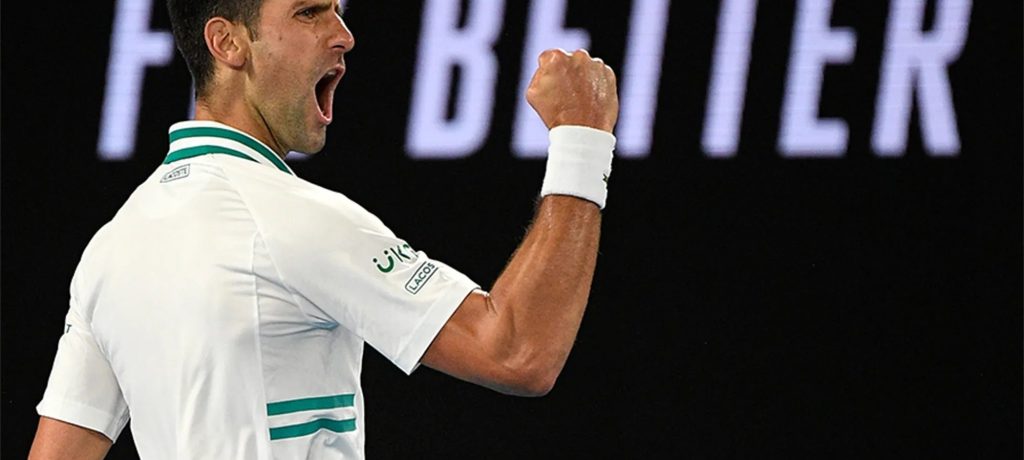
They are making an example of Novak Djokovic. Here’s why.

By Kit Knightly

Source: Off-Guardian

Tennis star Novak Djokovic is being deported from Australia, after losing his final appeal the WTA’s top-ranked player will not be allowed to defend his Australian Open title.

It was reported this morning that an Australian court had refused Djokovic’s appeal against the cancellation of his visa, and as such he’s being put on a plane and flown out of the country.

To be clear: This is all because he’s not “vaccinated” against Covid19, and vocally speaks out against the practice. The government have clearly and publicly admitted as much…but we’ll get to that.

The rejection of Djokovic’s medical exemption and subsequent deportation has been accompanied by a wave of vitriol in the press the likes of which we have rarely seen.

One Australian sports presenter was “accidentally” recorded calling him a “lying, sneaky arsehole” in a video that was later “leaked” to the press.

The Spectator has one piece which is nothing more than a slew of ad hominem and mockery, against not just Djokovic but all “anti-vaxxers” and “conspiracy theorists”, calling the Serbian a “conspiracy super-spreader”. They have another blaming his “arrogance for his downfall”.

The Daily Mail ran a story headlined: “Welcome to the Wacky World of Novak Djokovic… and meet his equally wacky wife!”, and two more opinion pieces claiming his arrogance has “trashed his reputation” and calling him “a loser”.

The Guardian‘s Australian Political Correspondent Sarah Martin defends the decision and jokingly refers to it as a “no dickheads” immigration policy, attacking Djokovic’s “anti-science god complex” and calling him an “all-round jerk”.

The childish name-calling just doesn’t end. Even his fellow players are sticking the boot in.

Stefanos Tsitsipas attacked Djokovic for attempting to “play by his own rules”, adding “A very small minority chose to follow their own way. It makes the majority look like they are all fools”, which is at least true, but not in the way he means it.

Spanish star Rafael Nadal said Djokovic should just follow the rules like everyone else, perhaps flashing the kind of attitude which allowed a fascist dictator to stay in power in his country for 40 years.

Some players, at least, have come to Djokovic’s defense, including Australia’s own Nick Kyrgios, who has said he is “ashamed” of the way Australia has handled the situation and chastised other players for not showing solidarity with Djokovic.

But why is this happening? Why are they trying to punish such a public figure, and why now?

Well, firstly, I’m not sure it is about punishing Djokovic, and not just because getting to leave Australia is an odd thing to be considered any kind of punishment these days.

Rather, it’s about the performance of punishing him. It’s about making an example of him. Not so much preventing him from playing, as much as denying him a platform.

The Australian government basically admits that in their legal justification for cancelling the visa.

Prime Minister Scott Morrison said Djokovic had been barred from entry for “breaching the rules…it’s as simple as that.” But he is either mistaken or lying, as he directly contradicts the case presented to the appeal court by the government.

Yes, the visa was first cancelled on a technicality about incorrect information but, a judge overruled that decision, allowing Djokovic to enter the country.

That’s when Immigration Minister Alex Hawke stepped in to personally revoke the visa under section 133 of the Immigration Act 1958.

Under this (worryingly vague) legislation, the Immigration Minister is granted the power to cancel any visa at all, if:

the Minister is satisfied that it would be in the public interest to cancel the visa.

This was the argument put to the appeals court, that the minister can expel anyone, for anything, if he believes it to be in the best interests of the public.

That’s public interest, NOT public health.

Hawke admits in his written statement that Djokovic presents a “negligible risk of Covid19 infection” to those around him. So it’s nothing to do with protecting people from infection or stopping the spread of the virus.

Public statements from officials suggest that they consider any “anti-vaxxer” to be a threat to the public interest by undermining the vaccination programme. Thus they can justify barring entry to Djokovic (or, it should be said, any other “anti-vaxxer”) under the guise of “public interest”.

It’s about control, it almost always is.

In short, the government are scared that Djokovic’s very presence in the country is a threat to their neo-fascist lockdown.

If you look closely at the media messaging, there’s more than a little fear behind the wall of abuse and mockery.

Article after article is at pains to point out that “the majority of normal Australians want the Joker gone”, or some variation on that sentiment. Somewhat desperately selling the line that nobody agrees with, or supports, Djokovic’s position.

A statement which is given the lie by the regular huge protests taking place all across Australia’s major cities (like this one, just this weekend, in Sydney).

The Australian government are worried they’ve turned their country into a powder keg of public resentment, and that the slightest social spark could set it off. Increasing the size of the (already huge) protests against the lockdowns and vaccine mandates, maybe even tipping the country into full-blown chaos.

One of the Spectator articles mentions that Australians have been living in a “police state” for two years, and then vaguely references the subsequent public anger, even whilst attempting to downplay it, misrepresent its cause, and turn it against the unvaccinated.

Australia has fallen. Peace, prosperity and freedom have been sacrificed on the altar of “safety”, and Covid “vaccination” has become a quasi-religious rite in their country, even more so than the rest of the world.

As such, the unvaccinated are slandered, punished, threatened and othered at every turn. Locked down, locked up and locked out.

Can you only imagine what could happen if people found out it was all for nothing? Or that the heaven-sent vaccines aren’t the magical solution to all that ails us?

In this kind of political climate they simply can’t afford to have an “anti-vaxxer” on national television, healthy and athletic and winning championships against a field of vaccinated rivals.

Especially when three vaccinated players have already dropped out with “breathing difficulties”

Before anyone accuses me of a surfeit of cynicism, let’s review the actual words of Alex Hawke from the appeal procedure [our emphasis]:

I consider that Mr Djokovic’s ongoing presence in Australia may lead to an increase in anti-vaccination sentiment generated in the Australian community, potentially leading to an increase in civil unrest of the kind previously experienced in Australia

Elsewhere Djokovic is described as a “talisman of a community of anti-vaccine sentiment”.

This kind of brutal treatment of publicly unvaccinated famous faces will likely only intensify. It’s already spreading from country to country, with France announcing Djokovic will not be allowed to defend his French Open title unless he gets vaccinated.

It seems pretty clear that the public shaming of Djokovic is a power-play to secure what they perceive as their own tenuous grip on the narrative, one that could have far-reaching consequences moving forward.

Consider, Djokovic is not barred from entry just for being unvaccinated, but also because he has publicly spoken out against vaccination.

Australia is now not only requiring you be “fully vaccinated” to enter the country, but has barred someone for even expressing anti-vaccine sentiment.

It’s no longer enough to conform by action, you must now conform by speech.

Next is thought, but even they would never try to legislate against that…right?