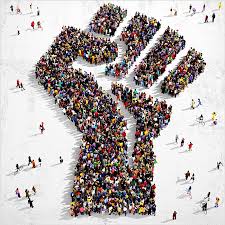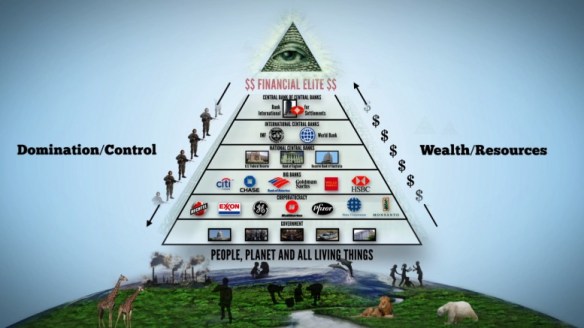
Western Elites Decrying ‘Populism’ Betrays Fear of Democracy

By Finian Cunningham

Source: Strategic Culture Foundation

A new dreaded word has entered into official Western media speak: “Populism”. Political parties and governments which are deemed to be illegitimate are invariably labeled with the prefix “populist”. There is a vague implication that “populist” parties are imbued with disreputable politics of xenophobia, racism, nationalism and even fascism.

But who is doing the “deeming” here? It is establishment political parties and politicians who have the advantage of establishment news media organizations conveying their words and terminology.

Take French President Emmanuel Macron. He may have coined a new political party, En Marche, but he is nevertheless a politician very much of the prevailing Western establishment. He is pro-European Union as it currently operates, albeit with reforming tweaks; he is pro-NATO, pro-Atlanticist; and pro-neoliberal economic policies.

Recently, Macron decried the rise of “populist” parties across Europe. He compared them to the spread of “leprosy” and claimed they were posing a morbid threat to the conventional order of politics. Macron was referring in particular to the new coalition government in Italy, comprising the anti-establishment Five Star Movement and the League.

The French leader could also have been referring to any number of governments as seen in Austria, Hungary and other Central European states which, like the new Italian government, have challenged the EU’s official stance overEU irregular migration into the bloc.

In this context, the word “populist” as used by Macron and other establishment politicians has the connotation of “racist” or “inhumane” owing to the opposition towards the uncontrolled influx of people from outside Europe.

The “populist” prefix is often used alongside the term “far-right”. Again, the implication is that somehow the largely newcomer parties are something that should be abhorred because they are tarnished with alleged proclivities towards fascism and authoritarianism.

To reinforce that implied demonization, it is often cited by Western establishment politicians and media that the “populist” parties in Europe are aligned with Russian President Vladimir Putin, if not stealthily bankrolled by the Kremlin.

American President Donald Trump also qualifies as “populist” according to the US political and media establishment. Again, the word is loaded to infer a uniquely noxious quality in the Trump presidency and his supporters, in the same way that Democrat presidential rival Hillary Clinton once haughtily denigrated Trump and his voter base as “deplorable”. It’s a way of sanitizing the establishment from any past, and far greater, sins.

The P-word does not always mean “rightwing nationalism”. The recent elected Mexican President, Andrés Manuel Lopez Obrador, has been described in Western media as a “leftwing populist”.

In Italy, the main ruling coalition party, the Five Star Movement, headed by Luigi Di Maio, is associated with leftwing social policy.

Parties and politicians deemed to be “populist” are eclectic and defy an easy categorization, as their detractors would perhaps like to assign them. Certainly, there is a strong common stance of being opposed to uncontrolled immigration. But it is too simplistic to explain such a stance as merely xenophobic or racist.

There are legitimate and reasonable concerns that the issue of large-scale immigration has been exploited by ruling establishments and their ideological backers as a way to undermine national sovereignty and workers’ rights, from the consequent lowering of wages and employment conditions.

There is also the legitimate concern in Europe that the migration phenomenon has been largely created by illegal wars pursued by the US and its European NATO allies. Why should European member states and ordinary taxpayers have to incur financial and cultural integration problems that have been largely manufactured by ruling elites who have never been held to account for their criminal wars?

So-called populist parties are also opposed to the seemingly slavish adherence by the European political establishment to neoliberal capitalism. There is a legitimate popular backlash to economic policies which are oppressive and destructive, and whose sole priority seems to be satisfying the profits of Big Business and transnational capital. Why should European governments be held in hock to fiscal rules and debt limitations set arbitrarily by institutions seemingly under the diktat of private banks?

There are several fundamental issues that form a groundswell of popular opposition towards the conventional ways of governance, both in Europe and the US. The failings of neoliberal capitalism and its rich-get-richer racket is surely top of the grievance list. So too is relentless, irrational militarism by Western governments, unleashing illegal wars and massive refugee problems, as well as stoking unnecessary hostility towards other powers like Russia, China, Iran and North Korea.

The conventional politics, that is, the ruling establishments and their dutiful news media, are increasingly seen as incompetent, if not bankrupt. The establishment across Western countries has lost legitimacy and “moral authority” in the eyes of masses of people. That dwindling authority of the ruling class in Western states is the real, morbid concern.

One factor for this is the growth of global communications and “alternative” media sources, which Western publics are availing of to inform themselves independently from the old information monopolies that served the established order. That is why the “problem” of alleged “Russian influence” has been invented. In a desperate gambit to distract the masses from noticing the real problem, which is the crumbling of legitimacy for the Western establishment and its obedient political parties.

The looming fear among the ruling order is the ever-growing dissent among the populace. It is a fear of their own inherent failing and impending doom in the face of democratic challenge to power.

It is not so much that Trump or the new Italian government or Hungarian leader Viktor Orban, and so on, represent a vanguard for renewed democracy. These changes are merely symptoms of a deeper popular opposition to the established way of conducting politics – the order that has prevailed for most of the seven-decade period following the Second World War.

There has always been a wariness among ruling elites on both sides of the Atlantic towards a genuine democratic order breaking out, as Noam Chomsky discusses in his book ‘Deterring Democracy’. Western elites have typically viewed the masses as “rabble rousers” who are deemed to be “incapable” of governing society in the “proper way” that benefits the elites, protects their profits and property, and safeguards their imperial war-making overseas.

This underlying tension about the control of political power in Western societies encapsulates the present historical juncture where the word “populist” is being increasingly deployed. It is a term of disparagement by a failing Western establishment. What the failed order is trying to do is divert genuine popular challenge by painting it as something uncouth, vulgar, noxious, or manipulated by foreign enemies like Russia.

As American political analyst Randy Martin notes: “Populism is a convenient term for those in power who seek to isolate those who would want to share, or worse, take that power.”

When you think of the original meaning of the word – “the people” – it is starkly revealing what is really at stake for those elites who wield the “populist” term as a disparagement.

Neo-Liberalism and the Retreat of Democracy

By David Schultz

Source: CounterPunch

Democracy across the world is under siege. This according to the latest Freedom House report documenting that for 2017, “democracy faced its most serous crisis in decades” as seventy-one countries experienced declines in freedom or fair government, including the United States, and only thirty-five an improvement. This was the twelfth consecutive year of decline in democracy world-wide.

The question is why? Why has confidence in democracy retreated? Freedom House does not provide an answer, but there is a reason. It is democracy’s marriage to neo-liberal capitalism has fostered the conditions leading to its own undoing, similar to the way Karl Marx once described in the Communist Manifesto the “gravedigger thesis” (What the Bourgeoisie therefore produces, above all, are its own grave diggers”) where capitalism would produce the conditions that would undermine its own existence.

From the 1960s until the early 1990s democracy was in the upswing internationally. African de-colonization produced initially popularly elected governments. In South America the demise of strongmen led to a wave of democratic regimes. And the fall of the Berlin Wall in 1989 and the break up of the USSR in 1991 produced the dismantling of communist authoritarian or totalitarian governments that made it possible for Francis Fukuyama to proclaim that democracy had won and emerged as the last grand global political meta-narrative.

Yet several problems upset this rosy picture. Most prominently, it was the marriage of these new emerging democracies with free market capitalism and the victory of neo-liberalism. Internationally as post-colonial and post-communist countries emerged, international organizations such as the World Bank and the IMF forced them to adopt market reforms, often pushing them into what was then called “shock therapy.” Shock therapy involved rapid privatization of state owned enterprises and rapid dismantling of welfare states. This shock therapy was often accompanied by significant corruption as a few rich oligarchs emerged who came to own these newly privatized state enterprises.

Simultaneously, emerging democracies were rapidly pushed into what sociologist Immanuel Wallerstein would call the world-capitalist system. This system turned politically to right in the 1970s and 1980s as Margaret Thatcher in the United Kingdom and Ronald Reagan in the United States pushed neo-liberalism or market fundamentalism as an alternative to the Keynesian welfare state that had dominated the west since the 1930s. It was adopted both for ideological reasons and because of what political economist James O’Connor would call the fiscal crisis of the state tht affect economics across the world in the 1970s. This was a crisis of declining profit among private businesses and therefore declining revenue for states to fund welfare programs. Something had to give, and it was the welfare state.

Neo-liberalism is a political economic theory of the state committed to the laissez-faire market fundamentalism ideology that traces back to Adam Smith and David Ricardo. It includes a belief in comparative advantage, a minimalist state, and market freedom, and is, as articulated in the 1990s and 2000s, driven by finance capital. At the state level, neo-liberalism defines a theory of public administration. If neo-liberalism includes a commitment to market fundamentalism, then that also means that it is dedicated to a politics of limited government. This includes privatization, deregulation, and a scaling back of many traditional functions that capitalist and communist states had performed since at least World War II. But neo-liberalism as a theory transcends the state, providing also an international economic theory committed to free trade and globalism.

This emergence of neo-liberalism in the 1970s and its linkage to democracy is central to the crisis affecting the latter. As neo-liberalism retrenched the welfare state and pushed globalism it was accompanied by a dramatic increase in economic inequality in the world, as Thomas Piketty has pointed out. This occurred in the US and much of the western world. But it also impacted newly emerging democracies in Africa, Eastern Europe, and South America. Pressures for shock therapy market reforms, austerity, and open borders meant export of jobs to other countries, dismantling of social safety nets, and other economic pressures placed on governments and ruling parties.

Politically voters turned on globalism and free trade. This happened here with Trump voters in 2016, but also in Brexit in the UK. But many voters also blamed immigrants for the loss of jobs or social unrest in places ranging from France, to Italy, to Hungary. The increasing economic gap between rich and poor and, more importantly, the erosion of the economic conditions of the working class soured them on democracy. This paved the way for the emergence of strongmen as political leaders, the rise of far-right nationalist parties, and disenchantment with democracy and democratic structures to deliver the economic goods.

What we see today then in terms of the decline in support for democracy across the world is a product of its marriage to neo-liberalism. Capitalism and democracy always had an uneasy co-existence, but the neo-liberal democracy variant demonstrates the powerful contradictions in them. Either their linkage is producing outright rejection of democracy or a populist, rightist version that is merely democracy in form but not in substance.

Peace is a Cliché: When the West cannot Control the World Unopposed it Means War

Dedicated to my friend, a philosopher, John Cobb, Jr.

By Andre Vltchek

Source: Dissident Voice

The West likes to think of itself as a truly “peace-loving part of the world”. But is it? You hear it everywhere, from Europe to North America, then to Australia, and back to Europe: “Peace, peace, peace!”

It has become a cliché, a catchphrase, a recipe to get funding and sympathy and support. You say peace and you really cannot go wrong. It means that you are a compassionate and reasonable human being.

Every year, there are “peace conferences” taking place everywhere where peace is worshipped, and even demanded. I recently attended one, as a keynote speaker, on the west coast of Denmark.

If a heavy-duty war correspondent like myself attends them, he or she gets shocked. What is usually discussed are superficial, feel-good topics.

At best, ‘how bad capitalism is’, and how ‘everything is about oil’. Nothing about the genocidal culture of the West. Nothing about continuous, centuries-long plunders and benefits that virtually all Westerners have been getting from it.

At worst, it is all about how bad the world is – “all people are the same” cliché. And, also, there are increasingly, bizarre, uninformed outbursts against China and Russia which are often labeled by Western neo-cons as “threat” and “rival powers”.

Participants of these gatherings agree “Peace is Good”, and “War is Bad”. This is followed by standing ovations and patting each other on the back. Few heartfelt tears are dropped.

However, reasons behind these displays are rarely questioned. After all, who would be asking for war? Who’d crave for violence, terrible injuries and death? Who’d want to see leveled, charred cities and abandoned, crying infants? It all appears to be very simple, and very logical.

But then, why do we not hear too often that “peace speech” pouring from the devastated and still de facto colonized African or the Middle Eastern countries? Aren’t they suffering the most? Shouldn’t they be dreaming about the peace? Or are all of us, perhaps, missing the main point?

My friend, a great Indian writer and thinker, Arundhati Roy wrote, in 2001, reacting to the Western “War on Terror”:

When he announced the air strikes, President George Bush said, “We’re a peaceful nation.” America’s favourite ambassador, Tony Blair, (who also holds the portfolio of Prime Minister of the UK), echoed him: “We’re a peaceful people.” So now we know. Pigs are horses. Girls are boys. War is Peace.

When it comes from the lips of the Westerners, is ‘peace’ really peace, is ‘war’ really a war?

Are people in that ‘free and democratic West’, still allowed to ask such questions? Or is the war and peace perception just a part of the dogma that is not allowed to be questioned and is ‘protected’ by both the Western culture and its laws?

I’m not in the West, and I don’t want to be. Therefore, I’m not sure what they are allowed to say or to question there. But we, those lucky people who are ‘outside’ and therefore not fully conditioned, controlled and indoctrinated, will definitely not stop asking these questions anytime soon; or to be precise, never!

*****

Recently, through Whatsapp, I received a simple chain of messages from my East African friends and Comrades – mostly young left-wing, revolutionary opposition leaders, thinkers and activists:

Free Africa is a socialist Africa! We are ready for war! The young Africans are on fire! Death to the imperialist forces! Viva Bolivarian revolution! South-South Cooperation! Today we take the battle to the streets! Africa Must Unite!

Such statements would sound almost ‘violent’ and therefore could be even be classified as ‘illegal’, if pronounced openly in the West. Someone could end up in Guantanamo for this, or in a ‘secret CIA prison’. A few weeks ago, I directly addressed these young people – leaders of the left-wing East African opposition – at the Venezuelan Embassy in Nairobi, Kenya. Yes, they were boiling, they were outraged, determined and ready.

For those who are not too familiar with the continent, Kenya has been, for years and decades, an outpost of the British, US and even Israeli imperialism in East Africa. It was playing the same role that West Germany used to play during the Cold War – a window shopping paradise, stuffed with luxury goods and services.

In the past, Kenya was supposed to dwarf the socialist experiment of Tanzania under the leadership of Nyerere.

Today, some 60 percent of Kenyans live in slums; some of the toughest in Africa. Some of these ‘settlements’, like Mathare and Kibera are housing at least one million people, in the most despicable, terrible conditions. Four years ago, when I was making my documentary film, in these slums, for South American network TeleSUR, I wrote:

…Officially, there is peace in Kenya. For decades, Kenya functioned as a client state of the West, implementing a savage market regime, hosting foreign military bases. Billions of dollars were made here. But almost nowhere on earth is the misery more brutal than here.

Two years earlier, while filming my “Tumaini” near Kisumu city and the Uganda border, I saw entire hamlets standing empty like ghosts. The people had vanished, died – from AIDS and hunger. But it was still called peace.

Peace it was when the US military medics were operating under the open sky, on desperately poor and sick Haitians, in the notorious slum of Cité Soleil. I saw and photographed a woman, laid on a makeshift table, having her tumor removed using only local anesthetics. I asked the North American doctors, why is it like this? I knew there was a top-notch military facility two minutes away.

“This is as close as we get to real combat situation”, one doctor replied, frankly. “For us, this is great training.”

After the surgery was over, the woman got up, and supported by her frightened husband, walked away towards the bus stop.”

Yes, all this is, officially, peace.

*****

In Beirut, Lebanon, I recently participated in discussion about “Ecology of War”, a scientific and philosophical concept created by several AUB Medical Center doctors from the Middle East. Doctor Ghassan ‘Gus’ Abu-Sitta, the head of the Plastic Surgery Department at the AUB Medical Center in Lebanon, explained:

The misery is war. The destruction of the strong state leads to conflict. A great number of people on our Planet actually live in some conflict or war, without even realizing it: in slums, in thoroughly collapsed states, or in refugee camps.

During my work, in almost all devastated corners of the world, I saw much worse things than what I described above. Perhaps I saw too much – all that ‘peace’ which has been tearing limbs from the victims, all those burning huts and howling women, or children dying from diseases and hunger before they reach their teens.

I wrote about war and peace at length, in my 840-page book Exposing Lies Of The Empire”.

When you do what I do, you become like a doctor: you can only stand all those horrors and suffering, because you are here to help, to expose reality, and to shame the world. You have no right to decompose, to collapse, to fall and to cry.

But what you cannot stand is hypocrisy. Hypocrisy is ‘bulletproof’. It cannot be illuminated by correct arguments, by logic and by examples. Hypocrisy in the West is often ignorant, but mostly it is just self-serving.

So, what is real peace for the people in Europe and North America? The answer is simple: It is a state of things in which as few Western people as possible are killed or injured. A state of things in which the flow of resources from the poor, plundered and colonized countries is pouring, uninterrupted, predominantly to Europe and North America.

The price for such peace? How many African, Latin American or Asian people die as a result of such arrangement of the world, is thoroughly irrelevant.

Peace is when the business interests of the West are not endangered, even if tens of millions of non-white human beings would vanish in the process.

Peace is when the West can, unopposed, control the world, politically, economically, ideologically and ‘culturally’.

“War” is when there is rebellion. War is when the people of plundered countries say “No!”. War is when they suddenly refuse to be raped, robbed, indoctrinated and murdered.

When such a scenario takes place the West’s immediate reaction ‘to restore peace’ is to overthrow the government in the country which is trying to take care of its people. To bomb schools and hospitals, to destroy supply of fresh water and electricity and to throw millions into total misery and agony.

As the West may soon do to North Korea (DPRK), to Cuba, Venezuela, Iran – some of the countries that are being, for now, ‘only’ tormented by sanctions and, foreign -sponsored, deadly “opposition”. In the Western lexicon, “peace” is synonymous to “submission”. To a total, unconditional submission. Anything else is war or could potentially lead to war.

For the oppressed, devastated countries, including those in Africa, to call for resistance, would be, at least in the Western lexicon, synonymous with the “call for violence”, therefore illegal. As ‘illegal’ as the calls were for resistance in the countries occupied by German Nazi forces during the WWII. It would be, therefore, logical to call the Western approach and state of mind, “fundamentalist”, and thoroughly aggressive.

Colonizing the Western Mind

By Jason Hirthler

Source: CounterPunch

In Christopher Nolan’s captivating and visually dazzling film Inception, a practitioner of psychic corporate espionage must plant and idea inside a CEO’s head. The process is called inception, and it represents the frontier of corporate influence, in which mind spies no longer just “extract” ideas from the dreams of others, but seed useful ideas in a target’s subconscious. Inception is a well-crafted piece of futuristic sci-fi drama, but some of the ideas it imparts are already deeply embedded in the American subconscious. The notion of inception, of hatching an idea in the mind of a man or woman without his or her knowledge, is the kernel of propaganda, a black art practiced in the States since the First World War. Today we live beneath an invisible cultural hegemony, a set of ideas implanted in the mass mind by the U.S. state and its corporate media over decades. Invisibility seems to happen when something is either obscure or ubiquitous. In a propaganda system, an overarching objective is to render the messaging invisible by universalizing it within the culture. Difference is known by contrast. If there are no contrasting views in your field of vision, it’s easier to accept the ubiquitous explanation. The good news is that the ideology is well-known to some who have, for one lucky reason or another, found themselves outside the hegemonic field and are thus able to contrast the dominant worldview with alternative opinions. On the left, the ruling ideology might be described as neoliberalism, a particularly vicious form of imperial capitalism that, as would be expected, is camouflaged in the lineaments of humanitarian aid and succor.

Inception 1971

In a short span of time in the 1970s, dozens of think tanks were established across the western world and billions of dollars were spent proselytizing the tenets of the Powell Memo in 1971, which galvanized a counter-revolution to the liberal upswing of the Sixties. The neoliberal economic model of deregulation, downsizing, and privatization was preached by the Reagan-Thatcher junta, liberalized by the Clinton regime, temporarily given a bad name by the unhinged Bush administration, and saved by telegenic restoration of the Obama years. The ideology that underlay the model saturated academia, notably at the University of Chicago, and the mainstream media, principally at The New York Times. Since then it has trickled down to the general populace, to whom it now feels second nature. Today think tanks like the Heritage Foundation, the Brookings Institute, Stratfor, Cato Institute, American Enterprise Institute, Council on Foreign Relations, Carnegie Endowment, the Open Society Foundation, and the Atlantic Council, among many others, funnel millions of dollars in donations into cementing neoliberal attitudes in the American mind.

The ideological assumptions, which serve to justify what you could call neocolonial tactics, are relatively clear: the rights of the individual to be free of overreach from monolithic institutions like the state. Activist governments are inherently inefficient and lead directly to totalitarianism. Markets must be free and individuals must be free to act in those markets. People must be free to choose, both politically and commercially, in the voting booth and at the cash register. This conception of markets and individuals is most often formulated as “free-market democracy,” a misleading conceit that conflates individual freedom with the economic freedom of capital to exploit labor. So when it comes to foreign relations, American and western aid would only be given on the condition that the borrowers accepted the tenets of an (highly manipulable) electoral system and vowed to establish the institutions and legal structures required to fully realize a western market economy. These demands were supplemented with notions of the individual right to be free of oppression, some fine rhetoric about women and minorities, and somewhat more quietly, a judicial understanding that corporations were people, too. Together, an unshackled economy and an unfettered populace, newly equipped with individual rights, would produce the same flourishing and nourishing demos of mid-century America that had been the envy of humanity.

A False Promise

This ‘Washington Consensus’ is the false promise promoted by the West. The reality is quite different. The crux of neoliberalism is to eliminate democratic government by downsizing, privatizing, and deregulating it. Proponents of neoliberalism recognize that the state is the last bulwark of protection for the common people against the predations of capital. Remove the state and they’ll be left defenseless. Think about it. Deregulation eliminates the laws. Downsizing eliminates departments and their funding. Privatizing eliminates the very purpose of the state by having the private sector take over its traditional responsibilities. Ultimately, nation-states would dissolve except perhaps for armies and tax systems. A large, open-border global free market would be left, not subject to popular control but managed by a globally dispersed, transnational one percent. And the whole process of making this happen would be camouflaged beneath the altruistic stylings of a benign humanitarianism.

Globalists, as neoliberal capitalists are often called, also understood that democracy, defined by a smattering of individual rights and a voting booth, was the ideal vehicle to usher neoliberalism into the emerging world. Namely because democracy, as commonly practiced, makes no demands in the economic sphere. Socialism does. Communism does. These models directly address ownership of the means of production. Not so democratic capitalism. This permits the globalists to continue to own the means of production while proclaiming human rights triumphant in nations where interventions are staged. The enduring lie is that there is no democracy without economic democracy.

What matters to the one percent and the media conglomerates that disseminate their worldview is that the official definitions are accepted by the masses. The real effects need never be known. The neoliberal ideology (theory) thus conceals the neoliberal reality (practice). And for the masses to accept it, it must be mass produced. Then it becomes more or less invisible by virtue of its universality.

A Pretext for Pillage

Thanks to this artful disguise, the West can stage interventions in nations reluctant to adopt its platform of exploitation, knowing that on top of the depredations of an exploitative economic model, they will be asked to call it progress and celebrate it.

Washington, the metropolitan heart of neoliberal hegemony, has numerous methods of convincing reluctant developing nations to accept its neighborly advice. To be sure, the goal of modern colonialism is to find a pretext to intervene in a country, to restore by other means the extractive relations that first brought wealth to the colonial north. The most common pretexts for intervention depict the target nation in three distinct fashions.

First, as an economic basket case, a condition often engineered by the West in what is sometimes called, “creating facts on the ground.” By sanctioning the target economy, Washington can “make the economy scream,” to using war criminal Henry Kissinger’s elegant phrasing. Iran, Syria, and Venezuela are relevant examples here. Second, the West funds violent opposition to the government, producing unrest, often violent riots of the kind witnessed in Dara, Kiev, and Caracas. The goal is either to capsize a tottering administration or provoke a violent crackdown, at which point western embassies and institutions will send up simultaneously cries of tyranny and brutality and insist the leader step aside. Libya, Syria, and Venezuela are instructive in this regard. Third, the country will be pressured to accept some sort of military fettering thanks to either a false flag or manufactured hysteria over some domestic program, such as the WMD restrictions on Iraq, chemical weapons restrictions on Syria, or the civilian nuclear energy restrictions on Iran. Given that the U.S. traffics in WMDs, bioweapons, and nuclear energy itself, insisting others forsake all of these is perhaps little more than racially motivated despotry. But significant fear mongering in the international media will provide sufficient moral momentum to ram through sanctions, resolutions, and inspection regimes with little fanfare.

Schooling the Savages

Once the pretext is established, the appropriate intervention is made. There’s no lack of latent racism embedded in each intervention. Something of Edward Said’s Orientalism is surely at play here; the West is often responding to a crude caricature rather than a living people. One writer, Robert Dale Parker, described western views of Asia as little more than, “a sink of despotism on the margins of the world.” Iran is incessantly lensed through a fearful distrust of the ‘other’, those abyssal Persians. Likewise, North Korea is mythologized as a kingdom of miniature madmen, possessed of a curious psychosis that surely bears no relation to the genocidal cleansing of 20 percent of its population in the Fifties, itself an imperial coda to the madness of Hiroshima.

The interventions, then, are little different than the missionary work of early colonizers, who sought to entrap the minds of men in order to ensnare the soul. Salvation is the order of the day. The mission worker felt the same sense of superiority and exceptionalism that inhabits the mind of the neoliberal. Two zealots of the age peddling different editions of a common book. One must carry the gospel of the invisible hand to the unlettered minions. But the gifts of the enlightened interloper are consistently dubious.

It might be the loan package that effectively transfers economic control out of the hands of political officials and into the hands of loan officers, those mealy-mouthed creditors referred to earlier. It may be the sanctions that prevent the country from engaging in dollar transactions and trade with numberless nations on which it depends for goods and services. Or it might be that controversial UNSC resolution that leads to a comprehensive agreement to ban certain weapons from a country. Stipulations of the agreement will often include a byzantine inspections regime full of consciously-inserted trip wires designed to catch the country out of compliance and leverage that miscue to intensify confrontational rhetoric and implement even more far-reaching inspections.

Cracking the Shell

The benign-sounding structural adjustments of the West have fairly predictable results: cultural and economic chaos, rapid impoverishment, resource extraction with its attendant ecological ruin, transfer of ownership from local hands to foreign entities, and death from a thousand causes. We are currently sanctioning around 30 nations in some fashion; dozens of countries have fallen into ‘protracted arrears’ with western creditors; and entire continents are witnessing huge outflows of capital–on the order of $100B annually–to the global north as debt service. The profiteering colonialists of the West make out like bandits. The usual suspects include Washington and its loyal lapdogs, the IMF, World Bank, EU, NATO, and other international institutions, and the energy and defense multinationals whose shareholders and executive class effectively run the show.

So why aren’t Americans more aware of this complicated web of neocolonial domination? Italian communist Antonio Gramsci, who pioneered the concept of cultural hegemony, suggested that the ruling ideologies of the bourgeoisie were so deeply embedded in popular consciousness that the working classes often supported leaders and ideas that were antithetical to their own interests. Today, that cultural hegemony is neoliberalism. Few can slip its grasp long enough to see the world from an uncolored vantage point. You’ll very rarely encounter arguments like this leafing through the Times or related broadsheets. They don’t fit the ruling dogma, the Weltanschauung (worldview) that keeps the public mind in its sleepy repose.

But French-Algerian philosopher Louis Althusser, following Gramsci, believed that, unlike the militarized state, the ideologies of the ruling class were penetrable. He felt that the comparatively fluid zones of Ideological State Apparatuses (ISAs) were contexts of class struggle. Within them, groups might attain a kind of ‘relative autonomy’, by which they could step outside of the monolithic cultural ideology. The scales would fall. Then, equipped with new knowledge, people might stage an inception of their own, cracking open the cultural hegemony and reshaping its mythos in a more humane direction. This seems like an imperative for modern American culture, buried as it is beneath the hegemonic heft of the neoliberal credo. These articles of false faith, this ideology of deceit, ought to be replaced with new declarations of independence, of the mind if not the mainstream.


Jason Hirthler is a veteran of the communications industry and author of The Sins of Empire: Unmasking American Imperialism. He lives in New York City and can be reached at jasonhirthler@gmail.com.

How Interlinked Corporations Rule The World

By Kris Kanthan

Source: Activist Post

Globalism is just like the mafia, but with lot more complexity and respectability. If you have watched mob films such as The Godfather, you can understand how the world works. For example, in Godfather II, a bunch of mobsters get together in Havana, Cuba, to celebrate Hyman Roth’s birthday. As the birthday cake is symbolically cut into pieces and distributed, Roth tells the group how Cuba will be split up amongst the guests. Extrapolate this scene to the world, you can visualize how the world works.

Corporations to Central Banks

The power structure of global elites is like nested Russian dolls made up of corporations. How many people realize that KFC, Taco Bell and Pizza Hut are owned by the same corporation? Or that HBO, CNN, TBS, TNT, Cartoon Network all report to the same boss? Or that whether you drink Budweiser, Corona, Stella, Busch or Michelob (and dozens of others), you end up paying one giant corporation?

Who controls these corporations? It’s not the CEO, as most people believe. The real control lies in the hands of the largest shareholders and/or the Board of Directors. The Board of Directors of all giant corporations are linked to each other by one or two degrees of separation. Some elites even sit on multiple boards at the same time. For example, Rochelle Lazarus sits on the boards of Merck, GE and Blackstone; Jon Huntsman sits on the boards of Hilton, Ford, Caterpillar and Chevron; and Timothy P. Flynn is a director at JP Morgan Chase, Wal-Mart, Alcoa and United Healthcare. Think for a moment how all these corporations would seem totally unrelated to a regular person.

Below is an image that show how the Boards at Netflix and Procter & Gamble are linked to some other popular corporations. (Note: this is a partial list of connections).

The Board of Directors report to the next level of bosses, the financial overlords. All the public corporations in the West – and much of the world now – are controlled by large shareholders, who are giant financial corporations. Thus a study in 2011 showed that fewer than 150 mega corporations pretty much control all the corporations in the world! Some of these have recognizable names such as Barclays or JP Morgan; other names such as State Street or AXA are hardly known outside the financial circles, yet they have incredible influence and wealth.

For these people, it doesn’t matter if you buy Pepsi or Coke; cars from GM or Ford or Toyota; or produce from Walmart or Safeway. It also doesn’t matter to them if you watch ABC or NBC or Fox. Your money goes to the same place.

There are also a few individuals like Carl Icahn or Paul Singer who can borrow billions of dollars at 0%, buy tons of shares of a corporation, change its policies (say, the dividends given out), and make a killing few months later. This is how the financial mafia’s shakedown works.

On the top of the food chain are the central banks who have the amazing ability to create money out of thin air. As Rothschild once said, “Give me control of a nation’s money supply, and I don’t care who makes the laws.” These people are the ultimate Godfathers of globalism. They determine the winners and the losers in capitalism, and thus control all the corporations (including the media), politicians, militaries, and the Deep States around the world.

How to use Corporations

All these corporations are but tools to be used for a higher purpose – controlling people. The financial system is the primary tool used to control nations. Any nation’s debt, wealth, credit rating, stock market, etc. can be manipulated by Wall Street, which is the financial weapon of mass destruction.

There are other corporations that wield power in less obvious ways. GMOs are effective weapons in controlling nations (if a country has to buy seeds and pesticides from foreign corporations every year, that country will stay submissive). Big Pharma and medicines also create dependencies in people and nations.

Above all, globalists strive for the ability to control what people think. This is where media, entertainment and the Internet come into play. Fortunately, all are corporatized, so that Facebook, Twitter, Google, mainstream media, and Hollywood can all work together to form the Ministry of Truth and control what people all over the world feel, think and believe.

The Internet is also a great tool to spy on people and leaders of nations all over the world. This comes in handy when uncooperative leaders have to be blackmailed or overthrown (example: anti-US Brazilian president, Rousseff, was removed by a leaked phone call. The NSA had spied on her and tapped her phone).

When Corporations Need Some Help…

Corporatocracy needs a lot of help in a “free market,” and that’s where military and politics come into play. Globalism demands that all the natural resources around the world be privatized, people of all nations be ready to work for the globalists, and all the economies be open for the corporations to sell their products. When nations resist this trend, they will suddenly face extraordinary problems. (Those who are familiar with John Perkins and his work as an “Economic Hit Man” understand this process.)

An ideal nation will be a vassal nation which will generously share and privatize its natural resources, provide cheap labor, open its markets to multi-national corporations, borrow excessive amounts from the World Bank and IMF, buy a lot of US treasury bonds, host US/NATO military bases, purchase US/EU weapons, and vote in the UN as instructed.

In the mafia movies, people who need to be persuaded may receive a dead fish wrapped in a newspaper or may wake up next to a horse’s head on their beds. In geopolitics, the warnings come in the form of color revolutions (Georgia, Ukraine), attacks by Islamic terrorists (Libya, Syria, Philippines), rise of separatist movements (Kurdistan, Balochistan), hostile attitudes from neighboring countries (Qatar, Iran), etc. If those don’t work, there will be sanctions (Venezuela) and eventually a shock and awe invasion. Unlike the mobster world who can simply carry out a helicopter attack(Godfather II), globalists put in a lot of efforts to justify their overt violence. This task of selling a war is carried out by press, pundits and politicians.

In my book, “Syria – War of Deception,” I explain the geopolitics of proxy wars, Islamic terrorism, and the struggle for global hegemony.

Politicians are also key stakeholders in globalism, and they sell to the public treaties such as NAFTA, WTO and TPP that give corporations power over individual nations. Secretary of State Hillary Clinton said in a speech (exposed by WikiLeaks) that the plan is to create a “hemispheric common market” that would be a union of North, Central and South Americas. There are also political unions that go beyond trade treaties – the creation of EU being an excellent example.

The Beginning of the end? 

People who’re not caught up in the daily drama can see enormous problems with the current system. Globalists have used fake, fiat money to push the U.S. and most nations around the world into colossal debt. The entire global economy is sustained by artificial interest rates, real estate bubbles, stock market bubbles, and fictitious assets such as $500 trillion of derivatives (when the global GDP is only $75 trillion). We live in a real world that’s dependent on a Ponzi system fueled by virtual assets. While globalists keep assuring us how wonderful things are, the uber rich now have more wealth than ever before – just one-fifth of one percent of the world have a net worth of $63 trillion!

Most leaders of countries around the world have bought into this globalist system, either willingly or grudgingly. However, there are a few who are still resisting it to various degrees – North Korea does it belligerently; Syria, Iran, Venezuela and Russia do it defensively; and some such as China, Myanmar and the Philippines do it in more nuanced ways.

There’s also resistance to globalism from the left and the right of the political spectrum, albeit for different reasons.

The next twenty years may be the most significant in modern human history. Entire nations, societies and our way of life may change irrevocably. Will there be a challenge to the current world order either from sovereign nations or grassroots level organizations? Or will we say, “fuggedaboutit” and meekly go along, hoping for the best?


Chris Kanthan is the author of a new book, Syria – War of Deception. It’s available in a condensed as well as a longer version. Chris lives in the San Francisco Bay Area, has traveled to 35 countries, and writes about world affairs, politics, economy and health. His other book is Deconstructing Monsanto.

America’s ‘Unlimited Imperialists’


By Francis Boyle

Source: Consortium News

Historically the latest eruption of American militarism in the 21st Century is akin to that of America opening the 20th Century by means of the U.S.-instigated Spanish-American War in 1898.

The then Republican administration of President William McKinley grabbed their colonial empire from Spain in Cuba, Puerto Rico, Guam, and the Philippines; inflicted a near genocidal war against the Filipino people; while at the same time illegally annexing the Kingdom of Hawaii and subjecting the Native Hawaiian people (who call themselves the Kanaka Maoli) to genocidal conditions.

Additionally, McKinley’s military and colonial expansion into the Pacific was also designed to secure America’s economic exploitation of China pursuant to the euphemistic rubric of the “open door” policy.   But over the next four decades America’s aggressive presence, policies, and practices in the so-called “Pacific” Ocean would ineluctably pave the way for Japan’s attack at Pearl Harbor on Dec. 7, 1941, and thus America’s precipitation into the ongoing Second World War.

Today a century later, the serial imperial aggressions launched, waged, and menaced by the neoconservative Republican Bush Junior administration, then the neoliberal Democratic Obama administration and now the reactionary Trump administration threaten to set off World War III.

This Time the Stakes are Higher

By shamelessly exploiting the terrible tragedy of September 11, the Bush Junior administration set forth to steal a hydrocarbon empire from the Muslim states and peoples of color living in Central Asia, the Middle East and Africa under the bogus pretexts of (a) fighting a war against “international terrorism” or “Islamic fundamentalism”; and/or (b) eliminating weapons of mass destruction; and/or (c) promoting democracy; and/or (d) self-styled humanitarian intervention and its avatar “responsibility to protect” (R2P).

Only this time the geopolitical stakes are infinitely greater than they were a century ago:  control and domination of the world’s hydrocarbon resources and thus the very fundaments and energizers of the global economic system – oil and gas.

The Bush Junior and Obama administrations targeted the remaining hydrocarbon reserves of Africa, Latin America (e.g., the Pentagon’s reactivating the Fourth Fleet in 2008), and Southeast Asia for further conquest and domination, together with the strategic choke-points at sea and on land required for their transportation (e.g., Syria, Yemen, Somalia, Djibouti).  Today the U.S. Fourth Fleet threatens oil-rich Venezuela and Ecuador, along with Cuba.

Toward accomplishing that first objective, in 2007, the neoconservative Bush Junior administration announced the establishment of the U.S. Pentagon’s Africa Command (AFRICOM) in order to better control, dominate, steal, and exploit both the natural resources and the variegated peoples of the continent of Africa, the very cradle of our human species.

In 2011 Libya and the Libyans proved to be the first victims to succumb to AFRICOM under the neoliberal Obama administration, thus demonstrating the truly bi-partisan and non-partisan nature of U.S. imperial foreign policy decision-making. Let us put aside as beyond the scope of this article, the American conquest, extermination, and ethnic cleansing of the Native Americans from the face of the continent.

Since America’s instigation of the Spanish-American War in 1898, U.S. foreign policy decision-making has been alternatively conducted by reactionary imperialists, conservative imperialists, and liberal imperialists for the past 120 years and counting.

Trump is just another representative for U.S. imperialism and neoliberal capitalism. He forthrightly and proudly admitted that the United States is in the Middle East in order to steal their oil. At least he was honest about it. Unlike his predecessors who lied about the matter going back to President George Bush Sr. with his War for Persian Gulf oil against Iraq in 1991. Just recently, Trump publicly threatened illegal U.S. military intervention against oil-rich Venezuela and now he’s poised to strike Syria.

It’s About Power, Not Just Resources

But oil and other resources are not the only U.S. motive. Enforcing its global power and undermining or removing leaders who defy it are also at play.

As my teacher, mentor, and friend, the late, great Professor Hans Morgenthau, who coined the term “unlimited imperialism” in his seminal 1948 critique of U.S. foreign policy, Politics Among Nations, said:

          “The outstanding historic examples of unlimited imperialism are the expansionist policies of Alexander the Great, Rome, the Arabs in the seventh and eighth centuries, Napoleon I, and Hitler. They all have in common an urge toward expansion which knows no rational limits, feeds on its own successes and, if not stopped by a superior force, will go on to the confines of the political world. This urge will not be satisfied so long as there remains anywhere a possible object of domination–a politically organized group of men which by its very independence challenges the conqueror’s lust for power. It is, as we shall see, exactly the lack of moderation, the aspiration to conquer all that lends itself to conquest, characteristic of unlimited imperialism, which in the past has been the undoing of the imperialistic policies of this kind…”

Since September 11, 2001, it is the Unlimited Imperialists along the lines of Alexander, Rome, Napoleon, and Hitler who have been in charge of conducting American foreign policy decision-making.  The factual circumstances surrounding the outbreaks of both the First World War and the Second World War currently hover like twin Swords of Damocles over the heads of all humanity.


Francis Boyle is a professor of international law at the University of Illinois Urbana-Champaign. Among his many books is “Destroying World Order.”

Mass Deception and the Prelude to World War

By Colin Todhunter

Source: Defend Democracy Press

In Libya, NATO bombed a path to Tripoli to help its proxy forces on the ground oust Gaddafi. Tens of thousands lost their lives and that country’s social fabric and infrastructure now lies in ruins. Gaddafi was murdered and his plans to assert African independence and undermine Western (not least French) hegemony on that continent have been rendered obsolete.

In Syria, the US, Turkey, France, Britain, Saudi Arabia and Qatar have been helping to arm militants. The Daily Telegraph’s March 2013 article “US and Europe in ‘major airlift of arms to Syrian rebels through Zagreb’” reported that 3,000 tons of weapons dating back to the former Yugoslavia had been sent in 75 planeloads from Zagreb airport to the rebels. The New York Times March 2013 article “Arms Airlift to Syria Rebels Expands, With CIA Aid” stated that Arab governments and Turkey had sharply increased their military aid to Syria’s opposition fighters. This aid included more than 160 military cargo flights.

Sold under the notion of a spontaneous democratic uprising against a tyrannical political leader, Syria is little more than an illegal war for capital, empire and energy. The West and its allies have been instrumental in organising the war as elaborated by Tim Anderson in his book ‘The Dirty War on Syria’.

Over the last 15 years or so, politicians and the media have been manipulating popular sentiment to get an increasingly war-fatigued Western public to support ongoing wars under the notion of protecting civilians or a bogus ‘war on terror’. They spin a yarn about securing women’s rights or a war on terror in Afghanistan, removing despots from power in Iraq, Libya or Syria or protecting human life, while then going on to attack or help destabilise countries, resulting in the loss of hundreds of thousands of civilian lives.

Emotive language designed to instill fear about potential terror attacks in Europe or myths about humanitarianism intervention are used as a pretext to wage imperialist wars in mineral-rich countries and geostrategically important regions.

Part of the battle for the public’s hearts and minds is to keep people confused. They must be convinced to regard these wars and conflicts as a disconnected array of events and not as the planned machinations of empire. The ongoing disinformation narrative about Russian aggression is part of the strategy. Ultimately, Russia (and China) is the real and increasingly imminent target: Moscow has stood in the way of the West’s plans in Syria and both Russia and China are undermining the role of the dollar in international trade, a lynchpin of US power.

The countries of the West are effectively heading for war with Russia but relatively few among the public seem to know or even care. Many are oblivious to the slaughter that has already been inflicted on populations with the help of their taxes and governments in far-away lands. With the reckless neoconservative warmonger John Bolton now part of the Trump administration, it seems we could be hurtling towards major war much faster than previously thought.

Most of the public remains blissfully ignorant of the psy-ops being directed at them through the corporate media. Given recent events in the UK and the ramping up of anti-Russia rhetoric, if ordinary members of the public think that Theresa May or Boris Johnson ultimately have their best interests at heart, they should think again. The major transnational corporations based on Wall Street and in the City of London are the ones setting Anglo-US policy agendas often via the Brookings Institute, Council on Foreign Relations, International Crisis Group, Chatham House, etc.

The owners of these companies, the capitalist class, have off-shored millions of jobs as well as their personal and company tax liabilities to boost their profits and have bankrupted economies. We see the results in terms of austerity, unemployment, powerlessness, privatization, deregulation, banker control of economies, corporate control of food and seeds, the stripping away of civil liberties, increased mass surveillance and wars to grab mineral resources and ensure US dollar hegemony. These are the interests the politicians serve.

It’s the ability to maximise profit by shifting capital around the world that matters to this class, whether on the back of distorted free trade agreements, which open the gates for plunder, or through coercion and militarism, which merely tear them down.

Whether it is the structural violence of neoliberal economic policies or actual military violence, the welfare of ordinary folk around the world does not enter the equation. In an imposed oil-thirsty, war-driven system of globalised capitalism and over-consumption that is wholly unnecessary and is stripping the planet bare, the bottom line is that ordinary folk – whether workers in the West, farmers in India or civilians displaced en masse in war zones like Syria – must be bent according to the will of Western capital.

We should not be fooled by made-for-media outpourings of morality about good and evil that are designed to create fear, outrage and support for more militarism and resource-grab wars. The shaping of public opinion is a multi-million-dollar industry.

Take for instance the mass harvesting of Facebook data by Cambridge Analytica to shape the outcomes of the US election and the Brexit campaign. According to journalist Liam O’Hare, its parent company Strategic Communications Laboratories (SCL) has conducted ‘behavioural change’ programmes in over 60 countries and its clients have included the British Military of Defence, the US State Department and NATO. According to O’Hare, the use of the media to fool the public is one of SCL’s key selling points.

Among its activities in Europe have been campaigns targeting Russia. The company has “sweeping links” with Anglo-American political and military interests. In the UK, the interests of the governing Conservative Party and military-intelligence players are brought together via SCL: board members include “an array of Lords, Tory donors, ex-British army officers and defense contractors.”

O’Hare says it is clear is that all SCL’s activities have been inextricably linked to its Cambridge Analytica arm. He states:

“International deception and meddling is the name of the game for SCL. We finally have the most concrete evidence yet of shadowy actors using dirty tricks in order to rig elections. But these operators aren’t operating from Moscow… they are British, Eton educated, headquartered in the City of London and have close ties to Her Majesty’s government”

So, what are we to make of the current anti-Russia propaganda we witness regarding the nerve agent incident in Salisbury and the failure of the British government to provide evidence to demonstrate Russian culpability? The relentless accusations by Theresa May and Boris Johnson that have been parroted across the corporate media in the West indicate that the manipulation of public perception is everything and facts count for little. It is alarming given what is at stake – the escalation of conflict between the West and a major nuclear power.

Welcome to the world of mass deception à la Edward Bernays and Josef Goebbels.

US social commentator Walter Lippmann once said that ‘responsible men’ make decisions and have to be protected from the ‘bewildered herd’ – the public. He added that the public should be subdued, obedient and distracted from what is really happening. Screaming patriotic slogans and fearing for their lives, they should be admiring with awe leaders who save them from destruction.

Although the West’s political leaders are manipulating, subduing and distracting the public in true Lippmannesque style, they aren’t ‘saving’ anyone from anything: their reckless actions towards Russia could lead towards a war that could wipe out all life on the planet.


* Colin Todhunter is a frequent contributor to Global Research and Asia-Pacific Research.

The Global Elite is Insane Revisited

By Robert J. Burrowes

In 2014 I wrote an article titled ‘The Global Elite is Insane’. I want to elaborate what I explained in the earlier article so that people have a clearer sense of what we are up against in our struggle to create a world of peace, justice and ecological sustainability.

Of course, as I explained previously, it is not just the global elite that is insane. All those individuals – politicians, businesspeople, academics, corporate media editors and journalists, judges and lawyers, bureaucrats…. – who serve the elite, including by not exposing and resisting it, are also insane. And it is important to understand this if we are to develop and implement effective strategies to resist elite violence, exploitation and destruction but also avert the now-imminent human extinction driven by their insane desire for endless personal privilege, corporate profit and political control whatever the cost to Earth’s biosphere and lifeforms (human and non-human alike).

But first, who constitutes the global elite? Essentially, it is those extremely wealthy individuals – notably including the Rothschild family, Jeff Bezos, Bill Gates, Warren Buffett, Amancio Ortega, Mark Zuckerberg, Carlos Slim, the Walton family and the Koch brothers – as well as the world’s other billionaires and millionaires. See ‘Bloomberg Billionaires Index’.

Testament to their secretly and long-accumulated wealth and power, a 2012 investigation concluded that rich individuals and their families have as much as $32 trillion of hidden financial assets – which excludes non-financial assets such as real estate, gold, yachts and racehorses – in offshore tax havens. See the Tax Justice Network.

If this sum was devoted to programs of social uplift then starvation, poverty, homelessness and other privations would vanish immediately and environmental restoration projects as well as research, development and implementation of visionary sustainability initiatives would flourish instantly. The idea of an ‘underdeveloped’ or ‘developing’ national economy would vanish from the literature on Africa, Asia and Central/South America.

In addition to these individuals, however, the global elite includes the major multinational corporations, particularly including the following – although, it should be noted, this list simplifies the picture considerably by ignoring the conglomerate nature of many of these corporations and not including many of the (more difficult to identify) private corporations that should be listed in any comprehensive presentation:

* the major weapons manufacturers (such as Lockheed Martin, Boeing, BAE Systems, Raytheon, Northrop Grumman and General Dynamics)

* the major banks (including Industrial & Commercial Bank of China, China Construction Bank, HSBC Holdings, JPMorgan Chase, Mitsubishi UFJ Financial Group and Bank of America) and their ‘industry groups’ like the International Monetary Conference

* the major investment companies (including BlackRock, Capital Group Companies, FMR, AXA, and JP Morgan Chase)

* the major financial services companies (including Berkshire Hathaway, AXA, Allianz and BNP Paribas)

* the major energy corporations including coal companies (such as Coal India, Adani Enterprises, China Shenhua Energy, China Coal Energy, Mechel, Exxaro Resources, Public Power, Glencore and Peabody Energy) as well as the oil and gas corporations (such as Saudi Aramco, Gazprom, Rosneft, PetroChina, ExxonMobil, Lukoil, BP, Royal Dutch Shell, Petrobras, Chevron, Novatek, Total S.A. and Eni)

* the major media corporations (including Alphabet [Google owner], Comcast, Disney, AT&T, News Corporation, Time Warner, Fox, Facebook, Bertelsmann and Baidu)

* the major marketing and public relations corporations (including Edelman, W2O Group, APCO Worldwide, Deksia, BrandTuitive, Fearless Media, and Citizen Group)

* the major agrochemical (pesticides, seeds, fertilizers) giants (including Bayer, Syngenta, Dow, Monsanto and DuPont)

* the major pharmaceutical corporations (including Johnson & Johnson, Roche, Pfizer, Novartis, Sanofi and GlaxoSmithKline)

* the major biotechnology (genetic mutilation) corporations (again including Johnson & Johnson, Roche, Pfizer and Novartis)

* the major mining corporations (including Glencore Xtrata, BHP Billiton, Rio Tinto, Vale, Anglo American, China Shenhua Energy, Freeport McMoRan Copper & Gold, and Barrick Gold)

* the major nuclear power corporations (including Areva, Rosatom, General Electric/Hitachi, Kepco, Mitsubishi, Babcock & Wilcox, BNFL, Duke Energy, McDermott International, Southern, NextEra Energy, American Electric Power, and Westinghouse)

* the major food multinationals (including Cargill, Archer Daniels Midland Company [ADM], Nestlé, PepsiCo, Coca-Cola, Unilever, Danone, General Mills, Kellogg’s, Mars, Associated British Foods and Mondelez)

* the major water corporations (including Veolia, Suez Environnement, ITT Corporation, United Utilities, Severn Trent, Thames Water, American Water Works).

Of course, the global elite also includes elite fora where various combinations of elite individuals from the corporate, political, media and academic worlds gather to plan their continuing violence against, and exploitation of, the Earth and its inhabitants. This is intended to consolidate and extend t heir control over populations, markets and resources to maximize their privilege, profit and power at the expense of the rest of us and life generally. Among intergovernmental organizations, it includes the United Nations, the World Bank and the International Monetary Fund.

A quick perusal of the agenda of such elite gatherings – including the World Economic Forum, the Bilderberg Group and the Trilateral Commission – reveals a comprehensive lack of interest, despite rhetoric and the occasional token mention, of pressing issues ranging from the threat of nuclear war and the climate catastrophe to the many ongoing wars, deepening exploitation within the global economy, extensive range of environmental threats and the refugee crisis, each of which they generated and now continue to deliberately exacerbate. See, for example, the agenda of the recent WEF meeting in Davos.

Primary servants of the global elite include political leaders in major industrialized countries (who legislate to progressively expand elite power, profit and privilege, such as Donald Trump’s recent tax cuts for the wealthy at the expense of social programs), the judges and lawyers (who defend elite power using the elite-designed and manipulated legal system: ever heard of a wealthy individual convicted in court and given any serious punishment or of any major corporation genuinely held to legal account for its exploitation of indigenous peoples or destruction of the natural environment?), as well as corporate media editors and journalists, entertainment industry personnel, academics, industry organizations (such as the European Round Table of Industrialists) that represent the interests of major corporations, so-called ‘think tanks’ (such as the Council on Foreign Relations and the Brookings Institution) and ‘philanthropic trusts’ (such as the Rockefeller, Carnegie and Ford foundations) all of which justify, ignore or divert attention from elite violence and exploitation.

Importantly too, primary servants of the global elite include those who work within elite-directed agencies, notably including those in the so-called ‘intelligence community’ (such as the US CIA, British MI6, Russian SVR RF, Chinese Ministry for State Security and Israeli Mossad), who perform elite functions in relation to spying, surveillance and secret assassinations (particularly of grassroots activists), ostensibly under the direction of national governments. But it also includes many lower-level servants such as those who work as political lobbyists or in the bureaucracy as well as the education, police and prison systems.

So why do I claim that the elite and those who serve them are insane?

Any dictionary will offer a simple definition of ‘sanity’ along the lines of ‘soundness of judgment or reason’ and ‘the ability to think and speak in a reasonable way and to behave normally’.

But if we use this definition of sanity then, obviously, ‘sanity’ must be interpreted to mean that it is ‘sound judgment, reasonable and normal’ to further perpetrate the violence and exploitation that are overwhelmingly characteristic of our world. After all, most people powerlessly accept this incredibly violent state of affairs and, if they discuss it, do so in terms of its merits, politically, economically, morally or otherwise. Few people argue, simply, that violence is just insane.

So I would like to propose a more rigorous definition of sanity: Sanity is the capacity to consider a set of circumstances, to carefully analyze the evidence pertaining to those circumstances, to identify the cause of any conflict or problem, and to respond appropriately, both emotionally and intellectually, to that conflict or problem with the intention of resolving it, preferably at a higher level of need satisfaction for all parties (including those of the Earth and all of its living creatures).

Clearly, my proposed definition of sanity is designed to imply that any conceptions we have of ‘sound judgment’, ‘reasonable’ and ‘normal’ mean that they are qualities we associate with individuals who possess the desirable capacity to improve the overall state of human affairs, whether an interpersonal relationship or geopolitically. This means, as an absolute minimum, the capacity to reduce violence or exploitation in one context or another.

You might, of course, accuse me of writing a definition of ‘sanity’ that serves my agenda to dramatically improve world order in the direction of peace, justice and sustainability. And you are right! But whose interest does it serve to have sanity defined as behavior that involves ‘sound judgment’ and is considered ‘reasonable and normal’ in the context of perpetuating extraordinary violence?

Alternatively, you might argue that my definition of insanity is too broad. Surely, you might say, we can account for many of the behaviors outlined above in terms of different belief systems, ideologies and religions. Doesn’t a person who believes in killing people to win wars (or for other reasons) just have a worldview different from those who believe that people should resolve conflict nonviolently? Doesn’t a capitalist just have a worldview different from those who believe that people should share resources equally? Doesn’t a person who believes in the unlimited accumulation of wealth just have a worldview different from those who believe in ecological sustainability?

But there is a more fundamental issue here. As I explained in my original article, cited at the beginning of this one: Do you really believe that someone who is capable of perpetrating extraordinary violence, inequity and biosphere-threatening behavior – and thus clearly incapable of experiencing and expressing the love, compassion, empathy and sympathy that would drive a nonviolent approach to the world – is sane? Given that emotional qualities such as love, compassion, empathy and sympathy are an evolutionary gift to those not seriously damaged during childhood, what happened to those individuals who do not possess them? See Why Violence?’ and Fearless Psychology and Fearful Psychology: Principles and Practice.

Or, to explain it based on my longer definition of sanity highlighted above: Casual observation of the state of our world, including the primary threat of near-term human extinction through climate catastrophe or nuclear war – see ‘On Track for Extinction: Can Humanity Survive?’ – clearly reveals that none of the elite is paying considered attention to the perilous state of our world, analyzing the evidence in relation to it, identifying the cause(s) driving it or responding powerfully to end it. Why is this?

In essence, it is because one manifestation of their insanity drives them to deny reality to make huge profits from weapons production used to kill people, the burning of climate-destroying fossil fuels, environmental destruction (through, for example, mining and rainforest logging), commercial farming based on the poisoning and genetic mutilation of foods, the mass production and sale of poisoned, processed and nutritionally-depleted foods, the consumption of health-destroying and dependency-creating drugs, and control over the sale of water, once considered a human right. Moreover, insanity makes the elite do everything in its power to maintain this highly profitable state of affairs. See ‘Profit Maximization is Easy: Invest in Violence’.

Moreover, of course, there is no evidence of committed elite engagement in efforts to end the many local wars (from which they make huge profits), end corporate exploitation of human beings (which kills, through starvation alone, 100,000 people every day but from which they make huge profits) and nonhuman beings (which drives 200 species of life to extinction daily but from which they make huge profits) or end local environmental destruction in a myriad ways (from which they make huge profits).

So, in summary, given our ongoing rush to extinction, it is clear that those who exacerbate this threat through failure to consider and act with awareness (as well as encourage aware action by others) fail to satisfy the definition of sanity that I offered above. In short: Gambling on the future of humanity is not sane.

As an aside, it should be noted: Often enough too, the elite can rely on a largely insane population to mindlessly consume the latest consumer product, no matter how unnecessary, or they can rely on their marketing and advertising agents to persuade those of us who show the slightest reluctance to buy the latest inanity.

So with an insane global elite and its many insane servants as well as a largely insane consumer population, what can those of us who have the sanity to respond powerfully to the many threats to our survival do?

Well, if you want a child who is emotionally and intellectually engaged with the world and therefore capable of responding powerfully to their circumstances (which includes being able to resist the lure of serving the elite and being suckered by its marketing), then terrorizing the child into obedience is not the way to go about it. So, you might like to consider making ‘My Promise to Children’.

If you are sane enough to investigate the evidence and to act intelligently and powerfully in response to it, I encourage you to do so. One option you have if you find the evidence in relation to one or more of the threats mentioned above compelling, is to join those participating in ‘The Flame Tree Project to Save Life on Earth’.

If you are self-aware enough to know that you are inclined to avoid ‘difficult issues’ and to take the action that these require, then perhaps you could tackle this problem at its source by ‘Putting Feelings First’. Unfortunately, as mentioned above, few of us had a childhood that nurtured our sanity.

If you want to mobilize people to campaign effectively on the climate, war, rainforest destruction or any other elite-driven violence that threatens our future, consider developing a comprehensive nonviolent strategy to do so. See Nonviolent Campaign Strategy.

And if you want to participate in the worldwide effort to end the insanity we call violence in all of its manifestations, you are welcome to consider signing the online pledge of The Peoples Charter to Create a Nonviolent World.

Elite insanity, if not stopped, will drive us out of existence. If you believe that the elite and their servants will ‘see the light’ before it is too late, I invite you to seek out the evidence to justify your belief. I have found none.

I also see no evidence that individual members of the elite will do the emotional healing necessary to be able to act sanely in response to the extinction-threatening crisis it has generated.

So it is up to those of us who can think and act sanely to stop the rush to extinction before it is too late.

Are you one of those people?


Biodata: Robert J. Burrowes has a lifetime commitment to understanding and ending human violence. He has done extensive research since 1966 in an effort to understand why human beings are violent and has been a nonviolent activist since 1981. He is the author of Why Violence? His email address is flametree@riseup.net and his website is here.

Robert J. Burrowes
P.O. Box 68
Daylesford, Victoria 3460
Australia

Email: flametree@riseup.net

Websites:
Nonviolence Charter
Flame Tree Project to Save Life on Earth
‘Why Violence?’
Feelings First
Nonviolent Campaign Strategy
Nonviolent Defense/Liberation Strategy
Anita: Songs of Nonviolence
Robert Burrowes
Global Nonviolence Network