Our Collective Trauma is the Road to Tyranny

American society spawns trauma and this trauma expresses itself in a variety of self-destructive pathologies, including the erosion of democracy and rise of neo-fascism.

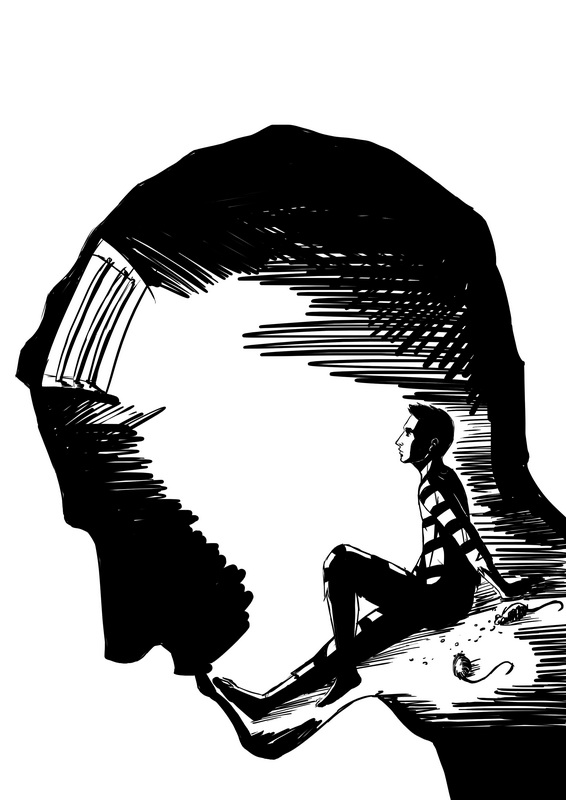
Welcome In – by Mr. Fish

By Chris Hedges

Source: ScheerPost

Corporate capitalism, defined by the cult of the self and the ruthless exploitation of the natural world and all forms of life for profit, thrives on the fostering of chronic psychological and physical disorders. The diseases and pathologies of despair — alienation, high blood pressure, diabetes, anxiety, depression, morbid obesity, mass shootings (now almost two per day on average), domestic and sexual violence, drug overdoses (over 100,000 per year) and suicide (49,000 deaths in 2022) — are the consequences of a deeply traumatized society. 

The core traits of psychopaths — superficial charm, grandiosity and self-importance, a need for constant stimulation, a penchant for lying, deception, manipulation and the inability to feel remorse or guilt — are celebrated. The virtues of empathy, compassion and self-sacrifice, are belittled, neglected and crushed. The professions that sustain community, such as teaching, manual labor, the arts, journalism and nursing, are underpaid and overworked. The professions that exploit, such as those in high finance, Big Pharma, Big Oil and information technology, are lavished with prestige, money and power.

“The fact that millions of people share the same vices does not make these vices virtues, the fact that they share so many errors does not make the errors to be truths, and the fact that millions of people share the same forms of mental pathology does not make these people sane,” Eric Fromm writes in The Sane Society.

The classic works on trauma by Dr. Bessel van der KolkDr. Gabor Maté and Dr. Judith Herman state bluntly that what is accepted as normal behavior in a corporate society is at war with basic human needs and our psychological and physical health. Huge segments of the American public, especially the tens of millions of people who have been discarded and marginalized, endure chronic trauma. Barbara Ehrenreich in “Nickel and Dimed: On (Not) Getting By in America” describes the life of the working poor as one long “emergency.”  This trauma is as destructive to us personally as it is socially and politically. It leaves us in a state of dysphoria where confusion, agitation, emptiness and loneliness define our lives. Whole segments of American society, especially the poor, have been rendered superfluous and invisible. As Dr. van der Kolk writes, “trauma is when we are not seen and known.”

“Our culture teaches us to focus on our personal uniqueness, but at a deeper level we barely exist as individual organisms,” Dr. van der Kolk notes.

Trauma numbs our capacity to feel. It fractures our self. It disconnects us from our bodies. It keeps us in a state of hyperarousal. It makes us confuse our desires, often artificially implanted by the consumer society, with our needs. Traumatized people view the world around them as hostile and dangerous. They lack a positive image of themselves and lose the capacity to trust. Many replace intimacy and love with sexual sadism, which is how we became a pornified culture. Trauma creates what the psychiatrist Robert Jay Lifton calls a “counterfeit” world defined by phantom enemies, lies and dark conspiracies. It negates a sense of purpose and a life of meaning. 

Trauma, Dr. Herman writes, “impels people both to withdraw from close relationships and to seek them desperately.” It induces feelings of shame, guilt, and inferiority, she writes, “as well as the need to avoid reminders of the trauma that occurs in daily life. Trauma severely compromises the capacity for intimacy. Trauma can dramatically reduce focus to extremely limited goals, often a matter of hours or days.” 

“If trauma entails a disconnection from the self, then it makes sense to say that we are being collectively flooded with influences that both exploit and reinforce trauma,” Dr. Maté writes. “Work pressures, multitasking, social media, news updates, multiplicities of entertainment sources — these all induce us to become lost in thoughts, frantic activities, gadgets, meaningless conversations. We are caught up in pursuits of all kinds that draw us on, not because they are necessary or inspiring or uplifting, or because they enrich or add meaning to our lives, but simply because they obliterate the present.”

Trauma also drives many to flee into the arms of those who are orchestrating the abuse.

Systematic and repetitive trauma, whether by a single abuser or a political system, destroys personal autonomy. The perpetrator becomes omnipotent. Resistance is accepted as futile. “The goal of the perpetrator is to instill in his victim not only fear of death but also gratitude for being allowed to live,” Dr. Herman writes. This trauma lays the foundation for the most insidious characteristic of all tyrannies, large and small. Total control. Prolonged trauma reduces its victims to a state of psychological infantilism. It conditions them to plead for their own enslavement.

“We are not content with negative obedience, not even with the most abject submission,” George Orwell wrote of the ruling “Inner Party” in his novel “1984.” “When finally you surrender to us, it must be of your own free will. We do not destroy the heretic because he resists us; so long as he resists us we never destroy him. We convert him, we capture his inner mind, we reshape him. We burn all evil and all illusion out of him; we bring him over to our side, not in appearance, but genuinely, heart and soul.”

Christian fascism, the subject of my book “American Fascists: The Christian Right and the War on America,” preys on this trauma. It replicates systems of control common to all tyrannies, including cults. Christian fascists skillfully break down adherents, severing them from their families and communities. They manipulate their shame, despair, feelings of worthlessness and guilt – the byproducts of their trauma – to demand total obedience to the church leadership, who are almost always white and male. These leaders, supposedly spokespeople for God, cannot be questioned or criticized. The connecting tissue among the disparate militia groups, QAnon conspiracy theorists, anti-abortion activists, right-wing patriot organizations, Second Amendment advocates, neo-Confederates and Trump supporters that stormed the Capitol on Jan. 6 is not only this Christian fascism but trauma.

“Totalitarian governments demand confession and political conversion of their victims,” Dr. Herman writes. “Slaveholders demand gratitude from their slaves. Religious cults demand ritualized sacrifices as a sign of submission to the divine will of the leader. Perpetrators of domestic battery demand that their victims prove complete obedience and loyalty by sacrificing all other relationships. Sex offenders demand that their victims find sexual fulfillment in submission. Total control over another person is the power dynamic at the heart of pornography. The erotic appeal of this fantasy to millions of terrifyingly normal men fosters an immense industry in which women and children are abused, not in fantasy but in reality.”

Donald Trump is a perpetrator and savior. He personifies the callous indifference of patriarchy, wealth, privilege and power towards the vulnerable, as well as the promise that once his cultish followers surrender to him they will be protected. He inspires in equal measure fear and solace.

“People who embrace the small tyrannies are much more susceptible to embracing the large ones,” Dr. Herman told me. “When you have a political party that embraces the subordination of women, the subordination of people of color, the subordination of gender non-conforming people, and the subordination of non-Christians, then it’s not a party that embraces democracy. It’s a party that is looking for a fascist leader and is going to find one.”

In Dr. van der Kolk’s “The Body Keeps Score: Brain, Mind, and Body in the Healing of Trauma,” he opens with stark statistics compiled by the Centers for Disease Control and Prevention showing that “one in five Americans was sexually molested as a child; one in four was beaten by a parent to the point of a mark being left on their body; and one in three couples engages in physical violence. A quarter of us grew up with alcoholic relatives, and one out of eight witnessed their mother being beaten or hit.”

The endemic trauma in American society, which is getting worse under the onslaught of the gig economy, pronounced social inequality, indiscriminate police violence, the climate crisis and the seizure of the political process and most institutions by corporations and the ruling oligarchs, is our most serious public health crisis. It has grave individual, social and political consequences. 

“If trauma is truly a social problem,” Dr. Herman in “Truth and Repair: How Trauma Survivors Envision Justice” writes, “then recovery cannot simply be a private individual matter. The wounds of trauma are not merely those caused by the perception of violence and exploitation. The actions or inactions of bystanders, all those who are complicit in or who prefer not to know about the abuse or who blame the victims, often cause deeper wounds.” “Full healing,” she adds, “because it originates in a fundamental injustice, requires a full hearing within the community to repair through some measure of justice the trauma survivors have endured.”

You can see my recent two-part interview with Dr. Herman here and here.You can see my interview with Dr. Maté here.

“Recovery has to take place in relationships,” Dr. Herman said in my interview. “When people feel reconnected to their communities and re-accepted in their communities, then the shame is relieved and the isolation is relieved, and that really creates the platform for healing.”

The key is community. Not virtual communities. But communities where we can reconnect and see in our wounds the wounds of others. It requires access, without onerous medical bills, to mental health professionals. It requires dismantling the corporate structures of oppression. It demands a new ethic, one that values empathy and self-sacrifice. We must reject the cynicism, indifference and cult of the self that all tyrannies inculcate in those they dominate to keep them passive. We must reach out to our neighbors, especially those in distress and those who are demonized. We must uncouple from consumer society and turn away from the allure of our cultural narcissism. 

The moral philosopher Bernard Williams argues that resentment and indignation are as important as empathy and connection to solidify social bonds. It is not only our own dignity we must protect, but the dignity of others. These “shared sentiments” he writes “bind people together in a community of feeling.” Acts of resistance around these “shared sentiments,” this “community of feeling,” establish ourselves as distinct, autonomous beings. We may not defeat these tyrannies, but by battling against them we free ourselves from the grip of the small and large tyrannies that deform American society.

Your Efforts Make A Difference, And We Can Win This Thing

By Caitlin Johnstone

Source: CaitlinJohnstone.com

We can win this thing and create a healthy, harmonious world, and the work each of us does to help bring this about makes a real difference. The more I observe and learn about human behavior, the more convinced of this I become.

Let me explain.

Every positive change in human behavior is always preceded by an expansion of consciousness. This is true whether you’re talking about positive behavioral changes in an individual or in a collective.

By “expansion of consciousness” I mean an increase in awareness — someone or a group of someones becoming more aware of something than they previously were:

  • Someone gaining a new perspective on the forces within themselves which drive them to seek out dysfunctional relationships.
  • An addict becoming more conscious of the inner dynamics that compel them to use.
  • A victim of abuse realizing that abuse is happening, and that a better life is possible, and that they deserve it.
  • A community becoming aware that their clergy have been sexually abusing children.
  • The US civil rights movement making Americans more aware of the injustice and destructiveness of racism.
  • Increased literacy and a greater ability to distribute the written word giving society a greater hunger for freedom and democracy and less tolerance for overt tyranny.
  • Etc.

Conditions don’t get better until the forces which give rise to them are clearly seen and understood. This movement from the darkness of unconsciousness into the light of awareness can create the illusion that things are getting worse, because they turn up so much ugliness.

After the 1955 lynching of Emmett Till, his mother made the decision to hold an open-casket funeral to expose the world to the cruelty that black Americans were being subjected to by showing his mutilated body to the public. In that moment it looked like the world was being made more ugly, because an ugliness that had previously gone unseen by many people was being published in papers across the country. But it was later said that “The open-coffin funeral held by Mamie Till Bradley exposed the world to more than her son Emmett Till’s bloated, mutilated body. Her decision focused attention on not only American racism and the barbarism of lynching but also the limitations and vulnerabilities of American democracy.”

Similarly, the dawn of the internet has turned up a tremendous amount of ugliness and cruelty that had previously gone unseen and unknown to most people. This can lead to the mistaken impression that the internet itself is making people more cruel and ugly than they previously were, but it isn’t. It’s just turning up humanity’s longstanding inner demons that had previously functioned solely in the dark.

It looks ugly, it moves in a sloppy, clumsy, two-steps-forward-one-step-back shamble, but human consciousness is undeniably expanding. We’re getting so much better at sharing ideas and information with each other that we’ve arguably changed more as a species in the last thirty years than we did in the previous thirty centuries. We might outwardly look similar to the way we looked in our grandparents’ time, but billions of human brains connected to each other through the internet is something that is wildly unprecedented in the entire history of our species. Nothing like this has ever happened before.

So humanity is indisputably becoming more conscious, as awkward and sloppy as our situation looks right now. We’re becoming more and more aware of the problems our species faces, and our rulers are having to do more and more work to pull the wool over our eyes and keep us marching in a way that is convenient to them.

Police brutality. The abuses of Israeli apartheid. The agony of poverty. The ravages of ecocide. The ways we’ve been deceived and manipulated by the mass media. People are becoming more and more aware of these things than they used to be, because the truth about them is suddenly vastly more visible now than it previously was.

And what’s exciting is that we all have the ability to participate in, and facilitate, this expansion of consciousness. We each have the ability to help humanity become more conscious in our own small way, thereby bringing us that much closer to a positive shift in our collective behavior.

Anything you can do to help make humanity a little more aware of the abusive nature of the systems which drive the problems we now face makes a difference, even if it’s a difference as small as making one single person a little bit more aware of one specific aspect of the tyranny we’re being subjected to. It doesn’t make a huge difference, but it does make a difference. And as long as it makes the slightest bit of difference, it is worth doing, because a lot of slight differences adds up to a massive difference. And there are a whole lot of people who have the ability to do this.

What this means is that we each have the ability to directly and meaningfully participate in the creation of a healthy world, because we are each able to directly and meaningfully advance the only factor that ever leads to positive changes in human behavior. We can do this through the new technologies which have expanded humanity’s ability to share ideas and information like videos, blogs, podcasts, tweets and memes, and we can do this through older means like holding demonstrations, creating art, distributing literature, writing messages on walls, and just having conversations.

Anything you can do to help people become more aware of injustice, abuses, propaganda and tyranny, whether in your own community or in the world, makes a difference. Does this mean you will single-handedly save the day like the protagonist in a Hollywood movie? No. That’s not how real change happens, and it never has been. Real change is the result of sustained efforts of many, many people whose individual actions could never achieve much on their own.

I think the protagonist-driven storytelling models humanity uses in its legends, folk tales, novels and films often plays an unwholesome role in distorting people’s expectations about the efficaciousness of their own individual actions. Those storytelling models are designed to appeal to the human ego, which gets a tremendous amount of energy and attention in this particular slice of spacetime, but they are not accurate representations of the way real change actually happens in real life. In real life, change happens because a great many people put their shoulders up against the change that was needed and shoved in the required direction.

So that’s what we can all do: we can all lean our shoulders into the expansion of human consciousness and shove. Spread awareness of what’s going on in the world, make people more aware that we’re all being deceived and manipulated at mass scale, and help people to see that a better world is possible. The more people open their eyes to what’s happening, the more shoulders there are to help join in our collective shove toward consciousness.

Ultimately what we’re looking at is humanity’s journey toward becoming a conscious species. One that’s no longer driven by unconscious animal impulses and the flailings of illusory egoic constructs in our psyches, and is instead driven by a lucid perception of reality and a desire for the greater good of all beings.

We can all play a role in this achievement, both by expanding our own consciousness as far as it can go by bringing clarity to our own minds, our own worldviews and our own inner processes, and by helping others to become more aware of the world around them. It won’t often unfold in a way that is elegant and linear and egoically pleasing, but it will unfold. And if it unfolds enough, positive change becomes inevitable.

Democracy Rising 28: AI, Gossip, and Our Epistemological Crisis

By Tom Prugh

Source: resilience

The other day I joined the rush to explore ChatGPT, signing up at the OpenAI website. I gave it my full legal name and correct birth date, and asked it to pretend I had died and to write my obituary. The result was 300 words describing a somewhat boring paragon of a man.

Except maybe for the boring part, I am not that man, much less that paragon.

The obit wasn’t completely wrong, but it did nothing to undermine ChatGPT’s reputation for “uneven factual accuracy.” It said I was born in Ohio (true), but in Cleveland (false) in 1957 (false). It said I was a “committed environmentalist” (true; I worked for the late lamented Worldwatch Institute for the best part of my career), and that I was an active member of “several environmental organizations” (somewhat true, off and on). It described me as an “avid cyclist” (kind of true, but the last time I did a century ride was 1987).

So much for the hits. The misses include accounts of me as:

  • A “devoted husband” to my wife of 40 years, Mary (my marriage, to a fine woman not named Mary, lasted 26 years) and a “loving father” to two children (one, in fact)
  • A “brilliant engineer” with a degree in electrical engineering from Ohio State University who worked for Boeing, General Electric, and SpaceX (wrong on all counts)
  • Someone who “was instrumental in the development of several renewable energy projects” (my wife and I put a few solar panels on our garage roof, but that’s it)
  • An “active member” of a church who spent “many hours volunteering at the food bank” (I am neither very religious nor, it shames me to admit, very generous with my personal time)

The obituary proclaimed that my “death” had “left a deep void in the lives of his family, friends, and colleagues” and that I would be “deeply missed by all who knew him.” Well, that would be gratifying—if there is a me to be gratified—but I’ll settle for a drunken wake where somebody plays “Won’t Get Fooled Again.”

Maybe everyone should try this. You too might be amused and/or appalled by the plausible distortions and lies a quasi-intelligent computer program can gin up by accessing the petabytes of data (“data”?) on the Internet—accounts of people and events that are bogus but increasingly, and seamlessly, hard to tell  from reality.

I am not a tech nerd and my grasp of what ChatGPT does is rudimentary. But I find it disturbing that this expression of artificial intelligence will instantly fabricate a profile and populate it with—not questions, or blanks to be filled in—but invented factoids tailored to fit a particular format. And this reservation isn’t just me being PO’d about my obit (I’m actually grateful my Internet footprint isn’t bigger); prominent tech geeks also have misgivings. Here’s Farhad Manjoo, for instance:

ChatGPT and other chatbots are known to make stuff up or otherwise spew out incorrect information. They’re also black boxes. Not even ChatGPT’s creators fully know why it suggests some ideas over others, or which way its biases run, or the myriad other ways it may screw up.  …[T]hink of ChatGPT as a semi-reliable source.

Likewise Twitter and other social media, whose flaws and dangers are well known by now, and feared by some of the experts who know them best. The most recent book from revered tech guru and virtual reality pioneer Jaron Lanier is called Ten Arguments for Deleting Your Social Media Accounts Right Now. Chapter titles include “Quitting Social Media Is the Most Finely Targeted Way to Resist the Insanity of Our Time,” “Social Media Is Making You into an Asshole,” “Social Media Is Undermining Truth,” and “Social Media Is Making Politics Impossible.”

About those politics: ChatGPT and its successors and rivals, whatever their virtues, are the latest agents in the corruption of the public sphere by digital technology, threatening to extend and deepen the misinformation, fabulism, and division stoked by Twitter and other digital media. Once again, a powerful new technology is out the door and running wild while society and regulators struggle to understand and tame it.

It’s hard to see how this can end well.

An earlier post in this series (DR5) looked at recent archaeological evidence suggesting that humans have explored lots of different means of governing ourselves over the last several thousand years. Eventually, for several reasons, we seem to have ended up with large, top-down, hierarchical organizations. These have lots of problems that won’t be reviewed here, but neuroscientist and philosopher Eric Hoel argues that at least they freed us from the “gossip trap.”

Hoel thinks the main reason small prehistoric human groups didn’t evolve hierarchical governing systems is because of “raw social power,” i.e., gossip:

[Y]ou don’t need a formal chief, nor an official council, nor laws or judges. You just need popular people and unpopular people.

After all, who sits with who is something that comes incredibly naturally to humans—it is our point of greatest anxiety and subject to our constant management. This is extremely similar to the grooming hierarchies of primates, and, presumably, our hominid ancestors.

“So,” Hoel says, “50,000 BC might be a little more like a high school than anything else.”

Hoel believes that raw social power was a major obstacle to cultural development for tens of thousands of years. When civilization did finally arise, it created “a superstructure that levels leveling mechanisms, freeing us from the gossip trap.”

But now, Hoel says, the explosion of digital media and their functions have resurrected it:

[I]f we lived in a gossip trap for the majority of our existence as humans, then what would it be, mentally, to atavistically return to that gossip trap?

Well, it sure would look a lot like Twitter.

I’m serious. It would look a lot like Twitter. For it’s on social media that gossip and social manipulation are unbounded, infinitely transmittable.

…Of course we gravitate to cancel culture—it’s our innate evolved form of government.

Allowing the gossip trap to resume its influence on human affairs—and turbocharging it the way digital media are doing—seems like a terrible way to run a PTA or a garden club, let alone a community or a nation.

The industrialization of made-to-order opinions, “facts,” and “data” via AI and social media, despite efforts to harness them for constructive ends, is plunging us into an epistemological crisis: “How do you know?” is becoming the most fraught question of our time. T.S. Eliot said that “humankind cannot bear very much reality,” but now we are well into an era when we can’t even tell what it is—or in which we simply make it up to please ourselves. The more convincing these applications become, the less anchored we are to the “fact-based” world.

We’ve struggled with this for centuries. Deception is built into nature as an evolutionary strategy, and humans are pretty good at it, both individually and at scale by means of propaganda, advertising, public relations, and spin. These all prey on human social and cognitive vulnerabilities (see DR4).

Humans can only perceive the world partially and indirectly. It starts with our senses, which ignore all but a tiny fraction of the vast amount of data that’s out there. (Sight, for instance, captures only a sliver of the electromagnetic spectrum.) In addition, we’re social creatures and our perceptions of what’s real are powerfully shaped by other people. And now comes the digital mediation of inputs, in which information and data come from the ether via often faceless and anonymous sources and are cloaked or manipulated in ways we may never detect or suspect.

Digital media curate our information about reality, like all media do. But things have changed in the last few decades, and especially in the last few years. It’s been only a generation or so since the old days when Walter, or Chet and David, or any of hundreds of daily newspapers told us what was going on in the world. In those days the curation was handled by a relatively small number of individuals with high profiles. We knew, or could learn, something about who they were and where their biases lay. They were professionals, which also counted for something. There’s no perfect system and this one wasn’t either, but its chain of information custody was a far cry from the distant, anonymized, chat-botted, and algorithm-driven inputs flooding the public sphere now.

One liberal pundit recently noted that the increasing ideological specialization of media outlets “compels customers who care about getting a full and nuanced picture not to buy from just one merchant … .” That’s good advice. But you don’t have to force yourself, teeth clenched, to watch Fox News or MSNBC to get a different point of view; just sit down with your neighbors for a civil chat. In fact, getting away from our TVs and into a room with other people now and then would be good for all of us.

This being a blog about deliberative democracy, I default to deliberation in response to many of our political ills. Deliberation can’t fix everything, and no doubt we will get fooled again—but the tools of democratic deliberation can be used to mitigate the seemingly ubiquitous attempts at manipulation and deceit that surround us. Humans have struggled for a long time to build institutions to check our worst tendencies and have had some success. Digitally mediated information poses a fresh threat and we need institutions to meet these new circumstances.

Deliberative settings built for shaping community action should be among those new institutions. At the very least, they will outperform the social processes seen in high school cafeterias. The methods and structures of deliberative democracy can shorten the chain of information custody as well as restore and nurture the direct human presence of neighbors and fellow citizens: they’re sitting around the same table, and you will see them later at the local school or grocery store. Like them or not (or vice versa), they remain a potent element of our daily lives—a source of influence that can work for good or ill. Deliberation channels normal human interactions in ways that can benefit the community, help check the kinds of fantasist catastrophes so prevalent in digital media, and ground our perceptions of reality in the shared concerns of a community of people who may be less than friends but far more than strangers.

The Way to Defeat the Globalist Reset: Local Production for Local Consumption…

By Peter Koenig

Source: Dissident Voice

The Globalists have semi-clandestinely introduced some kind of “covid-Martial Law” that overrules everything that is an otherwise Constitutional Right. We are in most of the western world a direct dictatorship. In most countries the Constitutional Amendment from “Democracy” to Dictatorship has happened clandestinely or at least semi-clandestinely. That’s what dictators do. Most of the people have no idea. Many of those who do know, don’t agree. They launch initiatives for new laws – that fall by the way side, because they have no teeth under a Martial Law-broken Constitution.

In Switzerland, the situation is slightly different, better of sorts. The Confederation Helvetica (CH) has a semi-direct Democracy. With 50,000 signatures, scrupulously verified for their validity, Swiss citizens can launch a referendum against a specific law. The referendum may eventually come to a popular vote, and a government/Parliament let law may be overruled. Though, this happens very rarely – the money lobby-propaganda is too strong – occasionally the people may have a chance. In these covid-times, it may actually happen.

We are currently undergoing the worst “tyrannification” of society in human history and in all western world countries. Covid-martial law overrules everything. This happened very fast. Within 18 months, from the beginning of 2020 to about mid-2021 citizens have basically no longer the very rights they could otherwise call as a human right. HRs have become worthless. In most cases police and military are under strict orders to obey. Those who don’t may lose their jobs, or worse.

Although, there are vivid and positive signs that the tides are turning. For example, at a London anti-covid-measures, anti-vaxx-certificates rally in London. Dr. Reiner Fuellmich, Corona Committee, spoke via a huge video screen to the crowd on Trafalgar Square, tens of thousands of people, telling them that class actions suits are under way in the US, Canada, and that institutions and individuals, especially those responsible for the invalid PCR-tests, particularly in Europe and the US, that are the basis for governments lying about “cases”, serving to manipulate up-and-down the “infection” figures, leading to false numbers on hospitalization and death, about a virus that is less deadly than the common flu. Yes, you read correctly, less deadly than the common flu. This is the onset to Nuremberg 2.0 – where justice will prevail, as much as light prevails over darkness.

Dr. Fuellmich closed his talk on a positive and encouraging note.

It is humanity, versus inhumanity. We are human. We can laugh, cry, sing and hug. The other side can’t. The other side has no access to the spiritual side. Therefore, the other side, without any doubt, the inhuman side, will lose this inhuman battle for life….

See this 10-min video.

The transformation is beginning to take place. This is the health side, the human side, the most immediately important side – where real science is overcoming “bought” science, in order to avoid a genocide of biblical proportions – which is the eugenists plan, probably developing over the past about 100 years. However, there are two other, complementary plans which also need to be stopped.

The first one of the two is the digitization of everything. It is already descending upon humanity, had actually started already decades ago – and is now in its final round – just so as to coincide with the massive population reduction. It includes not only digitization of all forms of monetary transactions – which is rapidly pushing forward, through Artificial Intelligence (AI) algorithms and most importantly, the vehicle to drive it all, the worldwide installation of 5G and soon to come 6G. This is foreseen to turn the entire globe into an electromagnetic field. And humans will be turned into “transhumans”, especially those that have survived the experimental, untested messenger spike protein injections called mRNA inoculations, falsely called “vaccines”.

This is not a joke. This is actually the plan already divulged in 2016 by Klaus Schwab, founder and forever CEO of the World Economic Forum (WEF) in an interview with Swiss French TV broadcast, see this 2-min video:

According to Klaus Schwab’s “The Great Reset”, algorithms, Artificial Intelligence (AI) and robots will soon rule the masses. By 2025, give or take a year or two, about half of today’s jobs will be run by AI. This electronic technology will in turn be ruled by some dirty-rich individuals, who somehow have given themselves the liberty to “run the world”. And we, the people, have let them.

They – the Deep Dark Statlers – call them Satanists – have planned this for about the last century. With great precision and intensity at times – and – what’s worse, much worse, right in front of our eyes. We have ignored them. Anybody who dared to draw attention to their evil machinations was dismissed with the convenient label “conspiracy theorist”.

Imagine, according to the Great Reset, half of our jobs will be taken over by AI, in just the next 5 years or so. By 2030, only about 5% to 10% of the current jobs will be existing and carried out by humans – maybe “transhumans”. All the others may be gone. Massive unemployment?  Maybe. But Schwab tries to tranquilize the world, saying that there will be new jobs for which newly unemployed people will be trained. They may be transhumans, because training is done by, and in partnership with, AI – and for the Epsilon People, the down-to-earth working class, robots will do the supervising.

This may sound depressing, despairing. It ain’t, if we think about the situation which we, pretty much on our own, have allowed to happen. It is not the end of the road, but only a stepping stone, onto which we too can step, when awakened – and not in anger, but with the bright spirit of light – a new world shaped by humans, shaped with the forces of light, Leaving the devil behind. Not even mentioning the beast. No letting it bother our minds. We are up to something much higher, much cleaner, clearer and much nobler. Our project is for humanity, for planet earth with all her sentient beings.

The simple model “Small is Beautiful” may be an appropriate vision forward. It may include another simple principle:
Local production for local consumption with local money, a local community run central bank working with a public banking system. Trade will be practiced with like-minded mostly neighboring sister countries, benefiting from comparative advantages. The money supply will be a reflection of the local economy. It will be backed by the local economy. Quite different from the current globalist-run fiat money pyramid.

This appears like a perfect recipe for de-globalization. And deglobalize we must. We must become again individuals that can and want to bond, not separate, individuals for whom solidarity is not just a term from a rusty vocabulary but means “we do it together”. This is the way to go, we will be satisfied with what we can achieve as a common, as a society with goals that serve the people, with values that do not depend on vertical growth, but rather reflect horizontal expansion of social infrastructure and well-being.

Let’s imagine a new type of economy with novel yardsticks – Happiness Indicators. Actually, not so novel, just not often talked about. In July 2011, the UN General Assembly adopted resolution 65/309 Happiness: Towards a Holistic Definition of Development inviting member countries to measure the happiness of their people and to use the data to help guide public policy. The first Happiness report was issued by the UN in April 2012.

If we are able to abandon the magical concept of “growth” and exchange it for happiness, we not only protect and preserve Mother Earth but will also preserve our human health – our sanity. Our today’s society is sick. It strives for ever more growth, for more possessions, for more affluence, for more control – but happiness that is the basis for a healthy life – is but an abstract term in today’s business-driven world. Happiness is more often than not confused with material wealth.

The no-growth, but social growth concept, is the basis for our escaping from the globalist agenda.

Human wealth comes from the heart. And it is through the heart that we may pass it on, replicate it. How does one define Happiness? There surely is no blueprint for happiness, as we are moving away from the all-modelled sets of values, away from the “musts” and the “Must-nots”.

The website “LifeHack.org” offers a few definitions of Happiness. Among them, the following two:

Happy people find balance in their lives. Folks who are happy have this in common: they’re content with what they have, and don’t waste a whole lot of time worrying and stressing over things they don’t. Unhappy people do the opposite: they spend too much time thinking about what they don’t have,; and,

According to the Dalai Lama, Happiness is not something readymade. It comes from your own actions. And let me add, from our actions driven by our heart and soul.

The General Assembly of the United Nations in its resolution 66/281 of 12 July 2012 proclaimed 20 March the International Day of Happiness recognizing the relevance of happiness and well-being as universal goals and aspirations in the lives of human beings around the world.

How does the UN define “Happiness”? Happiness is not contained in GDP, and less in GDP growth. To the contrary. It’s most important that we start detaching from material wealth, that we see the moral and friendship wealth in our society. That we see and strive for equality, inclusion, solidarity – that we learn to smile at each other, even in adverse situations. This requires an elevated spirit, a mentality of light that defeats satanic darkness.

Happy people abide by the golden rule: They let stuff go. Happy people realize this, are able to take things in stride, and move on – without fear.

That’s what we have to do – shed the fear – and move on, in a higher spiritual mode, floating out of the darkness into the light. It’s possible. Let’s give it a collective try. ‘They’ are blackmailing us into accepting the poisonous jab they fraudulently call vaccine. They may go as far as blocking us from getting food, from entering supermarkets without the vaccine certificate – or getting the test every time you need food. – No worries. They won’t succeed.

Is this ever-more encroaching human rights abuse-tyranny a malicious provocation? See this.

Are they on purpose driving people to the edge? To provoke a revolution? And bring in NATO and maybe even UN troops to subdue the upheavals, personal freedoms, national sovereignty – and even national borders towards a globalist world, a One World Order, a One Government world, led by the WEF and the club of billionaires directed by a satanic cult?

It is possible. But we are stronger. We will defeat this evil cult. Dr. Reiner Fuellmich et al, from the Corona Council, has already launched class action suits in Canada and the US and is taking legal actions against EU institutions and individuals. The tide is turning. Of course, you will not read or hear about it in the mainstream media.

Think small. Think community – your community, think self-sufficiency as much as possible. Think local production for local consumption with local money and local banks for the wellbeing of all within the community. Think trading with friends and with think-alike nations, societies, people.

We shall overcome – and we will.

COMMUNITY VERSUS COMMODITY: THE HIDDEN BATTLE THAT AFFECTS US ALL

By Gary Z McGee

Source: Waking Times

“We abuse the land because we see it as a commodity belonging to is. When we see the land as a community to which we belong, we may begin to use it with love and respect.” ~Aldo Leopold

If, as Krishnamurti said, “It’s no measure of health to be well adjusted to a profoundly sick society,” then it stands to reason that remaining “well adjusted” has kept us in a perpetual state of ecocide.

Our society poisons the air it breathes, the water it drinks, and the food it eats. And then it has the audacity to poison the minds of its citizens by convincing them that this is somehow “progress”.

The problem is that we don’t have a healthy sense of community. What little sense of community we do have is wrapped up in the unhealthy society that we were born into. It’s caught up in the nine-to-five daily grind and the rat-in-a-cage drudgery of a fear-based lifestyle that’s codependent upon a corrupt state. And this is happening on a global scale. You would be hard-pressed to find a healthy society: that is, a society that does not poison its air, water, food, and minds.

It all comes down to perspective—or the lack thereof. We have been conditioned by a sick society to perceive the world as a commodity that belongs to us. In order to cure ourselves, in order to no longer be sick, we must find a way to flip our perspective into perceiving the world as a community to which we belong.

It will require unlearning what we have learned from the profoundly sick society. It will require unwashing the brainwash and reconditioning the cultural conditioning. It will require living a courage-based lifestyle despite the fear-based lifestyle that surrounds us. It will require becoming interdependent from, rather than codependent on, the profoundly sick society. It will require obtaining an eco-centric perspective while rejecting the egocentric perspective that got us into this mess.

This will be an arduously Herculean task. But no battle is more important for the continued survival of our species.

World as Commodity:

“Do not become one of those who only has the courage of other people’s convictions.” ~A. Bartlett Giamatti

What makes it so difficult to flip our perspective? It’s the fact that the sick society keeps us comfortable, safe, and secure while at the same time that it keeps us unhealthy and codependent. The other reason is that it is so much easier to use the world as a commodity.

And that’s the rub. Nobody wants to take responsibility. Nobody wants to be uncomfortable, unsafe, or insecure. Everybody wants to take the easy road. And so the profoundly sick society just keeps on getting sicker.

It’s all too easy to simply rely upon unsustainable corporations that pollute the air and poison the water. In order to keep up with the rat race and keep food on the table, we are forced to rely on corrupt corporations and bureaucratic governments that are dead set on using the world as a commodity while calling it progress. After all, even unhealthy food is better than no food at all. Right?

And even when we do try to become independent and grow our own food or catch our own rainwater, we have overreaching governments with the monopoly on violence coming down on us and slapping us with fines or threatening us with jail time.

The ‘world as commodity’ is an unhealthy snake eating its own tail. Even worse, it gives birth to citizens that are codependent sheep grazing on the unhealthy snake shit and somehow managing to convince themselves it’s food. “Hell! If it’s cheap and easy and keeps me comfortable and safe from government oppression, I might as well eat it. Ignorance is bliss, right?” Right.

And that’s the real kicker. Any awareness of living in a sick society is easily pushed to the side and repressed through the psychosocial convenience of cognitive dissonance. Which usually sounds a little something like this: “It’s uncomfortable for me to believe that I live in a profoundly sick society, even though the evidence is overwhelming. So, rather than think about it, I’ll simply ignore it. After all, there are bills to pay. My kids need to eat (probably McDonald’s or Roundup-laced vegetables). Who do you think I am? Captain Fantastic?”

Satire aside, comfort and convenience are the front lines in the battle against the world as a commodity. If we have any chance of winning this battle, every single one of us will have to win that war at the front line. Which will mean a lot of discomfort and inconvenience.

World as Community:

“We are what we repeatedly do. Excellence, then, is not an act, but a habit.” ~Aristotle

The solution to winning the war against perceiving the world as a commodity is flipping our perspective and perceiving it as a community. Unfortunately, this will require discomfort and inconvenience.

This will require peeling away layer upon layer of cultural conditioning. The first layer is fear of the unknown. It’s the fear of trying something new, of making a healthy lifestyle change. It’s the fear of being ostracized or left out. It’s the fear of some arbitrary authority coming in with some arbitrary power and fining us with some arbitrary law.

So, the first thing we’ll need is courage. But not just any kind of courage. We’ll need a particular flavor of courage that is willing to be “the bad guy,” the maverick, the martyr. It will require the kind of courage that can stand up to codependent peer pressure and take independent leaps of courage, despite goodie-two-shoe conformists and weak-kneed milquetoasts.

The kind of courage that will make the sick society hate you for being healthy; when, really, it just hates itself for remaining sick. It’s the kind of courage that eco-centrically crushes out into healthy interdependence with cosmos, despite the sick society that egocentrically flushes everything away in codependent excess and greed.

The second thing we’ll need is the ability to question the sick society to the nth degree. But not just any kind of questioning. No. We need a particular flavor of questioning that is ruthless, penetrating, interrogating—no-holds-barred.

The kind of questioning that puts unsustainable corporations on blast. The kind of questioning that’s civilly disobedient. The kind of questioning that tears apart the outdated, xenophobic reasoning of the sick society; that reveals the chain-of-command as nothing more than an up-jumped human centipede, blind and poisonous to reason. Indeed. The kind of questioning that has shock value; that won’t allow the sick society to fall back into pretending it’s asleep.

Most of all, it will require us all to practice self-interrogation, self-improvement, and self-overcoming—all of which are exceedingly uncomfortable and inconvenient. Oh well.

When it comes down to it, things will probably get worse before they get better. Transitioning from a sick society that treats the world as a commodity to a healthy society that treats the world as a community will not be an easy task. Things may even slip into anarchy (no masters, no rulers). But even uncomfortable anarchy is healthier than comfortable tyranny, or convenient sickness. Especially when the tyranny and the sickness are ecocidal. Without a healthy planet there can be no healthy people. It really is that critical. Indeed. We may need to sow a little strategic disorder to reap a higher order.

The world can be a community to which we belong, full of compassion, respect, love, and tolerance. But only if we let it. And not if we continue to treat the world like a commodity that belongs to us.

Our tolerance of a ‘profoundly sick society’ can only go so far. Lest we inadvertently end up on the side of the executioners, we must draw the line somewhere. It must be drawn at sickness, at excess, at violence, at greed, and at ecocide. And only free, healthy, courageous individuals will have the wherewithal to draw it.

The Struggle for Peace in Afghanistan: Is Community Engagement the Key?

By Robert J. Burrowes

I have just read a superb book by Mark Isaacs, an Australian who has documented several years of effort by a group of incredibly committed young people in Afghanistan to build peace in that war-torn country the only way it can be built: by learning, living and sharing peace.

The book, titled The Kabul Peace House: How a Group of Young Afghans are Daring to Dream in a Land of War, records in considerable detail the struggle, both internal and external, to generate a peaceful future in Afghanistan. Some might consider this vision naive, others courageous, but few would doubt the simple reality: it is slow, daunting, incredibly difficult, often saddening, frightening, infuriating or painful, sometimes uplifting or hilarious and, just occasionally, utterly rewarding.

This is a human story written by a person who knows how to listen and to observe. And because the subject is about a group of ordinary Afghans and their mentor doing their best in the struggle to end one of the longest wars in human history, it is a story that is well worth reading.

This story is embedded in a combination of (brief) historical background on Afghanistan’s longstanding and central role in imperial geopolitics (including during ‘The Great Game’ of the 19th century) and more recent history on the progressive modernity of Afghanistan prior to the Soviet invasion in 1979 which was followed by an ongoing and multifaceted war in which the United States has played the most damaging role since its invasion of the country in 2001. But the background also includes a description of the ethnic diversity throughout the country, the role of religion and gender relations (and the challenges these social parameters present), as well as commentary on the social, economic and political regression as a result of the war’s many adverse impacts. So the book weaves a lot of strands into a compelling story of nonviolent resistance and regeneration against almost overwhelming odds.

However, that is not all. Given that all of the Afghans in this visionary community have each been traumatized by their unique experience of war, the book doesn’t shy away from describing the challenges this presents both to them personally and to the community, including its mentor and even some of the community’s many international visitors.

Most of the community members – whether Pashtun, Hazara, Uzbek, Turkmen, Tajik, Sayyid, Pashai… – have suffered serious loss during the war, especially those members who have had family and other relatives killed, or worse. Worse? you might ask. What is worse than death? Well, after reading this book, you will better understand that the context and the manner of death mean a great deal psychologically. None of the victims of this war died peacefully in their sleep after long and meaningful lives and this is just one part of the psychological trauma suffered by so many in this particular community but also in wider Afghan society.

So what does this community in Kabul do? Well, throughout its evolution and many manifestations, the community has done many things including run a variety of projects intended to foster understanding, cooperation and learning: nurture mutual respect among the diversity of people that constitute its membership, teach some of its members to read and write and facilitate learning opportunities in other contexts, teach the meaning and practice of nonviolence, give street kids the chance to learn skills that will make them employable, make duvets to give to people who go cold in Afghanistan’s freezing winters, teach and practice permaculture, organize protests against the war (including by flying kites instead of drones), and generally working to create a world that is green, equal and nonviolent.

If you think this sounds all good and straightforward, given slowly spreading acceptance of such ideas elsewhere (in some circles at least), then you might have underestimated their radical nature in a society in which ideas about nonviolence, equality and sustainability have, for the most part, not been previously encountered and have certainly not taken root. Isaacs records the observations of the group’s mentor on these subjects: ‘Over the years I have seen how the volunteers have changed within their personal lives, even if it means distancing themselves from the traditions of their own family…. But on a public level it’s much slower.’

This is understandable. As Isaacs notes, even in ordinary conversation and group discussions, ‘the weight of resistance, the taboos and the self-censorship’ made an impact on him. In a culture in which, in 2015, a woman in her twenties was stoned, her body run over by a car and then dumped in a river and set on fire because a mullah falsely accused her of burning the Quran, there is a long way to go.

One of the things that I found most compelling about the book is the occasional ‘biography’ of one of the community’s main characters. Given pseudonyms to avoid possible adverse repercussions, these stories provide real insight into the lives of certain community members and their struggle to leave home (in some cases), to join the community, to find their place within it and gain acceptance by the other members.

Some, like Hojar, are more outspoken and this, for a woman, is unusual in itself. Hojar is deeply aware of the gender inequality and violence against women in Afghanistan and will talk about it. This inspires other women, like Tara, who have not experienced this outspokenness before.

But Hojar’s life had started differently, in the mountains where, as a teenager, she was getting up at 3am to start baking bread for her four snoring brothers before milking the goats and sheep. ‘I am not a woman’, she thought, ‘I am a slave’. Fortunately and unusually, Hojar’s parents supported her desire to not marry at 13 or 15, but to continue her education and follow her dreams. It’s a long, painful, terrifying and fascinating journey but Hojar ended up in this novel community experiment in Kabul where her now college-educated talent was highly valued and put to wonderful use. She has my utmost admiration.

Unlike Hojar, other community members, like Horse, originally a shepherd in the mountains, are more circumspect on gender equality and other issues. But this doesn’t mean that Horse is not active, at times playing roles in the networking team, the accounts team and, particularly, as coordinator of the food cooperative which provided monthly gifts of food to the impoverished families of one hundred children who studied at the community’s street kids school. If you think raising donations to pay for this food was easy, particularly given the community decision to avoid the international aid sector to try to encourage Afghans to help their fellow Afghans, when more than half of the population lived below the poverty line and unemployment was at 40%, you will find it compelling to read how the teenaged Horse struggled with the monumental range of challenges he faced in that particular role. He has my admiration too.

Insaan, a doctor who mentors the community, provides a compelling story as well. Originally from another country, in 2002 a consultation with a patient at his successful medical practice inspired him to depart some time later. After spending more than two years in Pakistan, working with refugees from Afghanistan, he went to Afghanistan in 2004 to work for an international NGO in public health education in its central mountainous region.

His ongoing experience in this role, however, taught him that every problem the villagers faced had its origins in the war. And this underpinned his gradual transformation from health professional to peace activist. He discovered Thoreau, Gandhi and King, among others, and ‘became convinced of the power of love’. By 2008, Insaan had initiated his first multi-ethnic live-in community (although he did not live in it himself) in the mountains but in 2011, when his house was deliberately burned down, he departed for Kabul determined to restart the peace work he had begun in the mountains.

Starting with three young people who accompanied him from the mountains, the first manifestation of a live-in peace community in Kabul was soon underway. Endlessly paying attention, trying to provide guidance, reconcile those in conflict, and even withstanding threats of violence, Insaan’s love has undoubtedly been the glue that has held the growing and evolving community together. But not without cost. At times, Insaan has struggled, emotionally and otherwise, to survive in this perpetual war zone as the key figure holding this loving experiment together. He is a truly remarkable human being.

And it is because of the trauma that he and each of the other community members has suffered, that I hope that, in future, they can somehow dedicate time to their own personal, emotional healing. See ‘Putting Feelings First’ and ‘Nisteling: The Art of Deep Listening’. There is no better investment for any human being than to spend time consciously focusing on feeling the fear, pain, anger and sadness that we are taught and terrorized into suppressing during childhood (so that we become the obedient slaves that our society wants). Given the extraordinary violence that the people of Afghanistan have suffered and are still suffering, the value of making this investment would be even greater.

Anyway, if you want to read an account of the deeply personal human costs of war, and what one community is doing about it, read this book. It isn’t all pretty but, somehow, this remarkable community, through all of its manifestations over many years, its successes and failures, manages to inspire one with the sense that while those insane humans who spend their time planning, justifying, fighting and profiting from wars against people in other countries, those people on the receiving end of their violence are capable of visioning a better tomorrow and working to achieve it. No matter how difficult or how long it takes. Moreover, we can help too. See Nonviolent Campaign Strategy.

So allow yourself to be inspired by a group of young people, each of whom has lived their entire life in a country at war both with itself and with foreign countries, but has refused to submit to the predominant delusion that violence is the way out.


Biodata: Robert J. Burrowes has a lifetime commitment to understanding and ending human violence. He has done extensive research since 1966 in an effort to understand why human beings are violent and has been a nonviolent activist since 1981. He is the author of Why Violence? His email address is flametree@riseup.net and his website is here.

Art and Dreaming: Realizing our Power to Co-Create Reality

By Ruth Gordon

Source: Reality Sandwich

“True creativity doesn’t just make things; it feeds what feeds life. In modern culture where people are no longer initiated, the spirit goes unfed. To be seen, the uninitiated create insane things, some destructive to life, to feel visible and powerful. These creations are touted as the real world. They are actually forms of untutored grief signaling a longing for the true reality of village togetherness.”

Martín Prechtel, Secrets of the Talking Jaguar, p.232

These words, from a book detailing Martín Prechtel’s initiation as a Mayan Shaman, accurately sum up our modern world. In the humanitarian, ecological, and political crises we are facing, we are witnessing the effects of a severe spiritual hunger.

We in the Western world are a deeply wounded culture; our Indigenous traditions long destroyed, our common land stolen by the rich and powerful, we often now desperately seek comfort by any means possible – over-consumption of food, of social media, of drugs and alcohol, of our natural resources.

This way of being is known among North American Indigenous people by the name of “wetiko,” or the “disease of the white man.” In the traditional Algonquin myth, the “wetiko” is a rapacious spirit who lives in the dark forest and possesses people, filling them with an insane compulsion to consume and destroy. This spirit makes monsters out of humans, filling them with an insatiable drive to devour everything that crosses their path.

Today, we see wetiko everywhere – in our cruel systems of governance that refuse sanctuary to refugees fleeing conflict, while at the same time escalating those very conflicts, mostly for the single purpose of the highest possible short-term profit, in the disintegration of human community through separating and atomizing social structures and the corresponding upsurge of loneliness and despair, and in the continued addiction to economic growth despite clear and repeated warnings that this kind of globalized industry is killing our planet.

Wetiko functions like a virus – it’s highly contagious and most of us are infected with it to some degree. It’s at the root of the human conflicts that often derail attempts to create alternative ways of life. It’s not enough to simply wish for a better world, it’s not even enough to work hard at creating one. We need to be ready to transform our entire mode of perception, to boil down our ways of thinking and being and reconstruct ourselves from scratch, with consciousness of the wetiko-ized habits we often fall into.

In Dispelling Wetiko: Breaking the Curse of Evil, Paul Levy writes:

“The evil that is incarnating in our world simultaneously beckons and potentially actualizes an expansion of consciousness, all depending on our recognition of what is being revealed. It is as if hidden in the darkness is a spark of light that has descended into its depths, and when recognized in the darkness, this light returns to its source.”

(Levy, 2013, p. 145)

Levy’s idea, that hidden in the poison of wetiko lies its own antidote, offers a healing reference for how to approach what Prechtel calls “untutored grief”: the fecund raw material that, if not used to grow something new, becomes destructive. However, when we are educated, or “initiated” into ways of transforming our grief, of understanding what the darkness in us wants to bring to light, we often find we have stumbled upon a store of incredible potentiality – an almost boundless source of energy and power that we can refocus towards healing, if we choose to do so. Our collective shadows are potential treasure, showing us wounds that need healing, the deep behavioral structures that create conflict, and pushing us to grow beyond our self-limiting patterns. We find the light by going through the dark, not by avoiding it. We can only unfold our full potential for love, beauty, and creativity by recognizing the life-force that’s bound up in our trauma. It’s releasing that closed-off and separated aspect of ourselves that will make us whole.

There’s an interesting symbolic parallel in the human compulsion to dig, mine and extract precious metal. If we instead dug into the fertile ground of our consciousness and our imagination rather than into the physical Earth, would we then finally be able to create a sustainable form of the “treasure” we long for – the “true reality of village togetherness,” so overcoming our addiction to exploiting the Earth?

Consciousness and Creativity: We are the Universe Observing Itself

In Quantum Revelation: A Radical Synthesis of Science and Spirituality, Paul Levy describes how the science of quantum mechanics, although yet to really inform our everyday mode of being, could be a gateway for us: enabling us to understand the dreamlike nature of the world, to reconnect with the divine and infinitely creative aspects of existence. The central insight of quantum mechanics is that quantum particles respond differently depending on whether we are observing them or not. They are waves when we do not observe them and become particles when we do. This implies that quantum matter somehow knows when it is being observed, and subsequently changes both its form and behavior. This points to an astounding idea: that the world we perceive not only perceives us, but also manifests itself depending on our very mode of perception. Or, to put it another way, that the world we encounter depends on how we dream it up. It seems as if there are infinite possibilities of reality. The one that is activated depends only on our capacity to envision it, on the expansiveness and daring of our imagination.

Levy goes even further, asserting that we are living in a world that consciously responds to our consciousness, that, in fact, has created us for the purpose of understanding itself:

“[T]hrough us, the universe questions itself and tries out various answers on itself in an effort parallel to our own to decipher its own being. In the process of observing and reflecting upon our universe we are actually changing the universe’s idea of itself.”

(Chapter 5, “Cosmogenesis,” 2018)

If Levy is right, we are part of a cosmos that is self-creating and self-understanding. It is as if, through consciousness, the universe is craning its neck around to look at itself. We are its eyes, and its senses.

If we want to escape the hold of wetiko, to transition to a way of life that serves all beings, we need to value the power of our own creativity, and to understand that we are always creating the reality we experience, whether we are aware of it or not. The more conscious we are of our creative power, the more we can use it to dream up a world we want to live in; to orchestrate our lives with the same skill and precision as a highly trained conductor.

For this, we need to build a network of communities, (as in Tamera’s Healing Biotopes Plan), where we can study the raw matter of our cultural grief, where we can learn to compost it, and use it to grow new life, where we can discover how to create the “village togetherness” we all long for. We need spaces where we can experiment with and test out our powers of dreaming, encountering, understanding and interacting with the dreamlike nature of reality. We need spaces where we can build the self-confidence and courage that a “life artist” needs. We need public forums where our “life-art” is seen and honored. And all this needs to happen in a large enough group of people for our actions to hold weight, gather momentum and give courage to others.

As Paul Levy writes:

“The universe is a collectively shared dream that is too seemingly dense and solidified for any one person’s change in perspective to transform, but when a critical mass of people get into alignment and consciously put together what I call our “sacred power of dreaming” (our innate power to dream the universe into materialization), we can, literally, change the (waking) dream we are having.”

(Levy, Chapter 5: “Self-Excited Circuit,” 2018)

This is why it is so vital to build communities of trust – we will not be able to change the reality we are currently experiencing alone. However, by cooperating with others we will find the power to co-create paradise on Earth: a reality in which war and violence will be completely unthinkable, where we honor and respect the Earth as the sacred life giver it is, where we are able to fully use the creative potential that lies coiled within each of us. The field-creating power of a group of people can both activate our imaginative potential and provide the vessel in which to create the life we long for.

Waking Up to the Dreamlike Nature of Reality

Paying attention to our powers of dreaming is a simple first step towards comprehending the dreamlike nature of reality, as even those of us who believe that we are “not artistic” still dream each and every night, effortlessly creating symbols and stories that resonate through and inform us, if we take the time to remember and listen to them.

In the Tzutujil culture that Prechtel describes, families gathered each morning to share their dreams, which they saw as being the other half of waking life – just as real, and just as important:

“To a shaman a dream is not a creation of the mind, psyche or soul. It is the remembered fragment of the experience of one’s natural spirit in the twin world, the dreamworld … Although the landscape of dreams may seem different than the landscape of the awake world, it is actually the balanced opposite, reversed version, where our souls live out our bodies’ lives reenacted as if in a complex kind of mirror. Like the two opposing wings of a butterfly, the dreamworld is one wing and the awake world is the other wing. The butterfly must have both wings connected at the Heart in order to fly and function. Neither wing – dreams or waking – contains all of life. Real life occurs as a result of the interaction between the two. The life is the butterfly’s heart, and both dreaming and awake life are necessary to keep the heart alive.”

(Secrets of the Talking Jaguar, pp. 169–170)

As Prechtel goes on to say, “dreams read life back to us like a storyteller” and as such, can be excellent and often uncanny guides in life. I’m sure all of us have had the experience of a dream that seems wiser than we are, a dream that gives an answer to a problem, or that seems to foretell future events.

I’ve experienced personally how dreams can come into creative play with waking life. I once had a powerful dream in which a man, who in my waking life I was on the brink of falling in love with, guided me as I climbed down a building. He was agile, he knew the structure well, as it was his parent’s house, and he helped me down, showing me where to put my hands and feet. After I had this dream, I felt a deep certainty that I could trust this man. I understood that his role in my life right now was to accompany and guide me so that I could move forward, leaving behind the old structures of thought and being that no longer served me (structures he knew well, that he’d also “climbed down from” before). In my waking life, I had very little basis for such a deep trust at that point. I’d known this man a few months. And yet the indication of this dream turned out to be true. It encouraged me to trust him as a guide, and in turn, this faith allowed him (perhaps even prompted him) to actually play out this role in my waking life.

Was this dream reality not only informing but actually creating waking life? I think so. By believing in the certainty this dream instilled in me, I was able to act with faith and courage, which then allowed trust and intimacy to develop in waking reality.

For me, this is an example of those twin butterfly wings of the dreamworld and the waking world meeting at the heart’s center. Both dreamworld and waking life kept my heart alive at that time, nourishing and feeding it. These dual realities prompted me to be an artist: to act on my desires and impulses, to paint the world as I wished it to be.

Consciously Shaping Reality

The consequence of accepting our own creative powers and the dreamlike logic of existence are that we can begin to consciously shape reality. This is a deep responsibility – not anything we can take lightly.

Wetiko disrupts our natural experience of unity with all life. But in truth, we are inextricably interrelated with all other living beings, in the same way that a whirlpool is both identifiably different and part of the river it forms in. This knowledge comes with an immense duty to everything else that exists.

Our every thought, our every action, has an effect on the whole, unavoidably altering everything else in some way, however subtle. We do not need to become megalomaniacs about this – we are no more and no less important than any other human, plant or animal being. But we must understand, if we are to overcome wetiko’s hold on us, that all life, and all activity, constantly shifts the pattern of the whole.

Once we realize this, our everyday lives become imbued with a new sense of purpose and responsibility. Knowing that what we think, say and do alters the whole, guiding a new form of reality into being in each and every moment, means considering carefully how we want to exist in this world. It’s much easier to believe that we are powerless; then we can escape any sense of responsibility. Victimhood is much more comfortable than agency. But if we want to realize the role human beings can play in global transformation, we must be willing to step into agency. We must understand that our inherent creative powers are a divine gift. We’ve been given the capacity to make drastic alterations to the world – in the natural environment, in human society, perhaps even to outer space. Now we must choose whether we want to use these gifts in service of life or continue using them against it—and so push ourselves off the brink of abyss.

Let’s choose to use the wetiko virus rampaging through our human system to actualize an expansion of consciousness, to shine a light deep into the roots of our “untutored grief,” and begin to dream into our potential as deeply creative beings with the ability to create the reality of togetherness that we all long for.

The Lonely American

By Sean Posey

Source: The Hampton Institute

In 2015, psychotherapist Traci Ruble started a “community listening project” in San Francisco dubbed “Sidewalk Talk.” The project sends trained volunteers to meet strangers on the street and listen to them discuss their problems and concerns. In a promotional video, Ruble is shown with her fellow volunteers, asking people if they’d like to sit for a talk. “You want to be listened to? It feels good!” Sidewalk Talk has apparently caught on and is now in 29 cities across the country.

Are there large numbers of Americans so bereft of friends and confidants that they have only strangers in the street to confide in? There apparently are. New studies are showing that Americans are increasingly lonely, isolated, and unhappy. Unmoored from one another and from a (fading) sense of community. More and more of our fellow citizens are going through life alone. This has devastating consequences for individual health and portends a troubled future for the American experiment.

According to a recent Cigna study involving 20,000 adults, loneliness in America has reached “epidemic proportions.” “Most Americans,” the report states, “are now considered lonely.” When asked how often they feel like no one knows them well, 54 percent responded that they sometimes or always feel that way. Nearly half of respondents report feeling sometimes or always alone. The numbers are even more disturbing when broken down:

“We also see that roughly one in four respondents rarely/never feel as though there are people who really understand them (27%), that they belong to a group of friends (27%), can find companionship when they want it (24%), or again feel as though they have a lot in common with others (25%).” Only 53 percent of American have daily “meaningful in-person social interactions,” according to Cigna.

Loneliness and social isolation, both “actual and perceived,” have direct consequences on one’s health, according to a 2015 study published in the journal Perspectives on Psychological Science. The effects of loneliness on mortality are the equivalent of smoking 15 cigarettes a day, which makes prolonged loneliness a bigger individual health risk than obesity.

Loneliness is also connected, perhaps not surprisingly, to mental disorders. According to the National Institute of Mental Health , nearly one in five adults have a mental health condition. Mental health issues are now one of the fastest growing causes of long-term absences from work. More disturbing still is the connection between loneliness and suicide, which recently hit a 30-year high in America. Even the opioid crisis, a main contributor to the country’s declining life expectancy, has been connected to the loneliness epidemic. These deaths are increasingly classified by researchers and the media as “deaths of despair.”

The World Happiness Report 2017, compiled by a group of independent experts for the United Nations, recently delivered even more bad news for Americans. The introduction to the report (written by John F. Helliwell, Richard Layard, and Jeffrey Sachs) states “Happiness is increasingly considered the proper measure of social progress and the goal of public policy.”

The top countries on the list rank highly on six key factors, the report explains: “healthy years of life expectancy, social support (as measured by having someone to count on in times of trouble), trust (as measured by a perceived absence of corruption in government and business), perceived freedom to make life decisions, and generosity (as measured by recent donations).” Norway, Denmark, Iceland, and Switzerland are the happiest nations. The US, on the other hand, finished in 19th place. Rising levels of corruption and “declining social support” are listed among the primary reasons for America’s dismal placing.

While the phenomena of decreasing happiness and increasing loneliness are finally getting notice, much of the blame is often placed on recent developments in the country’s history, including the rise of neoliberalism (understandable) and the election of Donald Trump as president (equally understandable). However, historical roots and recent developments alike seem to constitute important elements of the country’s failure to develop a meaningful sense of community and attachment among its citizenry.

American culture is often described – rightly – as highly individualistic. Despite the Puritans and their quest for ” a city upon a hill,” as John Winthrop so memorably put it, the first immigrants to the New World often arrived seeking material, not spiritual, prosperity. “Even in the sixteenth century,” writes historian Leo Marx, “the American countryside was the object of something like a calculated real estate promotion.” This was a “business civilization,” as historian Morris Berman refers to it (something Calvin Coolidge echoed during the 1920s when he said, “The business of America is business”).

The peerless observer Alexis de Tocqueville saw this during his travels through the country in 1831. While de Tocqueville admired much of the American character, he understood the downside of the relentless individualism that permeated every aspect of social and cultural life: “They owe nothing to any man, they expect nothing from any man; they acquire the habits of always considering themselves as standing alone, and they apt to imagine that their whole destiny is in their hands.”

Americans proved to be relentless seekers; first moving beyond the Royal Proclamation line that the British issued to separate their colonies from Indian lands; and then, finally, fulfilling “Manifest Destiny” and closing the frontier in the 19th century. The existence of the frontier in American life nurtured a “dominant individualism,” according to historian Frederick Jackson Turner – one that failed to disappear with the frontier itself.

War, however, proved to be a force for increasing civic mindedness, and it provided a boon for voluntary associations – trends that no doubt helped combat the social isolation which certainly accompanied the settling of the country. According to historian Theda Skocpol, the five largest civic associations of the late 19th and early 20th centuries formed between 1864 and 1868.

Robert Putnam found similar evidence for an increase in civic mindedness among the generation shaped by World War II. In the seminal book Bowling Alone: The Collapse and Revival of American Community, Putnam calls the generation that fought the war the “long civic generation,” also known as the “Greatest Generation.” According to the Cigna study, they’re the generation least affected by the epidemic of loneliness. On the other hand, Generation Z (those born between 1995 and 2010) reported the highest levels of loneliness. The civic connectedness and civic mindedness of the Greatest Generation simply did not last. “The [generational] changes are probably part of a larger societal shift toward individual and material values and away from communal values,” Putnam writes in Bowling Alone.

There’s evidence to support his assertion. In Bowling Alone, Putnam cites a Roper study from 1972 that asked adults to identify essential elements of “the good life.” Approximately 38 percent chose “a lot of money,” but an equal percentage chose “a job that contributes to the welfare of society.” By 1996, the percentage of people who chose making a lot of money had risen to 63 percent. According to current research, 71 percent of millennials place a similar emphasis on making money.

But much like other Americans, outcomes for the wealthy compare poorly to those of their peers in other countries. For example, according to a 2007 study in the Journal of the American Psychological Association, the “richest, healthiest Americans” are as a sick as the poorest citizens in Britain. What’s the reason? The study’s author, Sir Michael Marmot of University College London Medical School, gives two reasons: Americans worker longer hours, are more stressed than their counterparts in other wealthy democracies, and Americans are apparently more likely to feel “friendless and isolated.”

This pervading sense of loneliness and disconnection, while felt particularly by the young, cuts across class, gender and race, according to Cigna. The rise of social media is sometimes blamed for an increase in feelings of loneliness and isolation, but its use did not figure as a major cause of loneliness in the study.

For much of the past century, some American artists and intellectuals have pointed fingers at the country’s culture – or what passes for culture – as being at the root of societal anomie. In 1950, playwright and novelist Thornton Wilder stated that a lack of a codification of ideals was making American life difficult to process. Americans, he said, were always on the move – a “very un-European” manner of life.

Famed sociologist Philip Slater delivered perhaps one of the most pointed critiques of American life in his 1970 book, The Pursuit of Loneliness. He declared the human desire for engagement, community, and yes, dependence, were frustrated at every turn by American life. “Americans have created a society in which they are automatic nobodies,” he writes, “since no one has any stable place or enduring connection.”

And it hasn’t only been liberals who have echoed such criticisms. Michael Hendrix writes in the National Review, “Americans conceive of themselves as individuals isolated from others in such a way that it becomes an imperative for them to form their own meaning for their own lives.” Clearly, many Americans aren’t forming a meaning for their own lives, at least not alone. The dismal statistics tell us as much. But as we have seen – with some exceptions – this is a problem as old as America itself. A country where individuals are adrift and leading lives without meaningful, connective and nourishing attachments is a country with a grim future indeed. And the problem is now accelerating, as levels of loneliness and disconnection rise among the millennials and Generation Z.

How will the country solve its most vexing problems when Americans are no longer capable of holding onto even the most elementary attachments to one another and their surrounding communities? We might find out, too late, that a society of atomized individuals is no society at all.