If……Then That’s Treason

[Source: dcclothesline.com]

By Michael Diamond

Source: Covert Action

The Perpetrators

This list of perpetrators is not meant to be exhaustive, but it can help us begin a conversation that should lead to indictments for treason, in addition to other crimes. The harms these perpetrators are doing must be stopped. Survival is at stake.

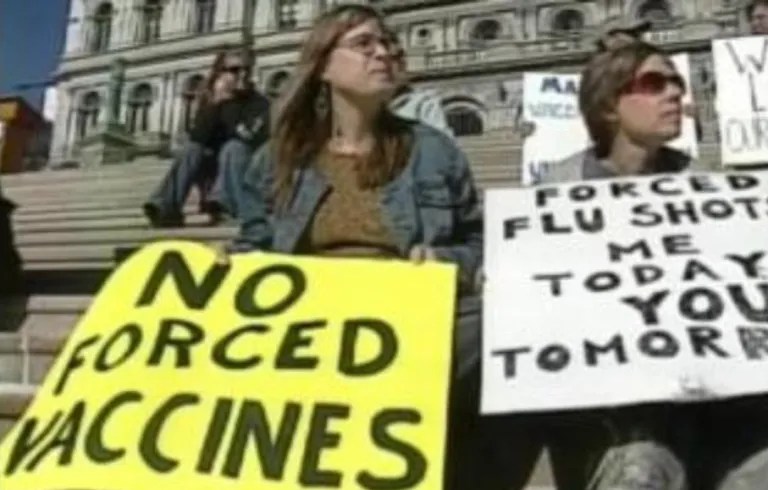
If COVID-19 was a laboratory-created disease for which people were denied palliative treatments and forced to receive harmful injections, then that was treason.

If global warming is occurring because of refusals by coal, oil and gas producers to curb those uses and switch to renewables, then that conduct was treason.

If coal, oil and gas producers knew of new energy technologies that could have eased our environmental crisis and stood in the way of their implementation, then that was treason.

If anyone in authority knew of new or unique energy technologies that could have eased our environmental crisis and stood in the way of implementation, then they were guilty of treason.

If harsh weather patterns and damaging weather events are being created that are destroying regions and parts of this country, then those manipulations of the weather are acts of treason.

If earthquakes, tsunamis, and fires are being created by weapons of war, like HAARP (High-frequency Active Auroral Research Program) and DEW (directed energy weapons), then bringing about that devastation is treasonous conduct.

If high-flying airplanes are spraying nanoparticulates of toxic metals and harmful materials upon the population, then those bombardments, which sorely affect physical health and mental acuities, are acts of treason.

If the communications industry persists in expanding wireless technology without allowing governmental oversight to make reasonable regulations for safety against harmful EMF (electro-magnetic frequency) exposures, then that conduct is treason.

If World Trade Center Buildings 1, 2 and 7 came down, not as a result of airplane collisions, but by controlled demolition, then that was treason.

If the Pentagon was struck on 9/11, not by an airplane but by one of our own missiles, then that was treason. 

If U.S. weapons-grade anthrax was used against Congressmen who were holding up passage of the USA Patriot Act after 9/11, then that was treason. 

The American people are now beset with harms from an extraordinary array of toxic chemical exposures that began four generations ago. If the large agricultural and industrial interests continue to harm our significantly burdened population with toxic exposures, then that will be treason.

The American people are now experiencing extensive health deficits, including physical, mental and behavioral declines. Our health-care system was created in the early 1900s. It was and continues to be dominated by allopathic medicine to the exclusion of a great number of safe, effective and inexpensive healing modalities. Pharmaceutical companies are the major beneficiaries of an insurance-funded allopathic system that’s incapable of bringing about adequate and preventive health care for all. Continued resistance by the pharmaceutical companies to necessary changes that must be made can and should be considered treason. 

What Is Treason?

The crime of treason is set forth in the U.S Constitution. “Treason against the United States, shall consist only in levying War against them, or in adhering to their Enemies, giving them Aid and Comfort.” See Article III, Section 3, Clause 1. A number of states have identical treason provisions.

The punishment for those who owe “allegiance to the United States” and commit treason is death or imprisonment for not less than five years and a fine of not less than $10,000. See 18 U.S. Code, Chapter 115, Section 2381.

People often make the mistake of believing that we need to be at war for there to be an indictment for treason. That is incorrect. To commit the crime of treason (the levying of war part), one need only use force to prevent the carrying out of laws or to affect the public policies of the nation.

For example, our history books are filled with charges of treason that were leveled against those who used force in efforts to stop the capture and return of runaway slaves before the Civil War. Defendants were charged with treason because they interfered with the Fugitive Slave Acts. Abraham Lincoln, as a young lawyer, participated in those cases. 

And the case of United States v. Aaron Burr, Circuit Court, D Virginia, 25 F. Cas 49 (1807) is most instructive. Chief Justice John Marshall presided over the trial of Aaron Burr who was charged with treason. Marshall carefully instructed the jury that they could find Burr guilty of treason only if they had proof that he used force in an effort to interfere with laws or public policies of the United States. Planning alone was insufficient, said the Chief Justice. There had to have been some force—like actually having soldiers marching with weapons to do harm.

The perpetrators listed above went far beyond planning. They used force to poison us, to kill us, to make this Earth less habitable for us, and to take us into unnecessary wars. They trampled upon our most sacred public policies of respect for due process, the expectation of health protections, and the basic right of reliance upon representative government to act on our behalf.

Misprision of Treason

Prosecutions for the crimes of treason will be relatively easy as a result of 18 USC, Chapter 115, Section 2382, which provides: “Whoever, owing allegiance to the United States and having knowledge of the commission of any treason against them, conceals and does not, as soon as may be, disclose and make known the same to the President or to some judge of the United States, or to the governor or to some judge or justice of a particular State, is guilty of misprision of treason and shall be fined under this title or imprisoned not more than seven years, or both.” A few states have identical misprision of treason statutes.

There are millions of upstanding and brave witnesses to the ongoing crimes of COVID-19. Thousands of them have been unfairly vilified and falsely charged with lying.

And so many witnesses know the details about how global warming was allowed to occur and how weather has been made into a weapon of mass destruction.

The bombing of people with nanoparticulates of poisonous materials requires meteorologists, air traffic controllers, and pilots to abide by the official story that trails in the sky are merely water vapor, even though the trails remain in the skies indefinitely. Anyone who has ever used a humidifier knows differently. Water vapor evaporates quickly.

Anyone with an eighth-grade science background can see through the falsehoods of the official story of the 9/11 attacks, especially the way in which Building 7 came down. It came down in its own footprint, seven hours after Buildings 1 and 2, having experienced nothing more than a few sporadic office fires.

Similarly, anyone who has any observational skills knows that an airplane with wide wings, massive engines, and a tall tail could not have hit the Pentagon on 9/11, leaving no aircraft debris and only one circular hole in the outside wall and circular holes in a succession of interior walls.

Everyone involved in the anthrax investigation knows that the anthrax used against U.S. Congressmen to assure passage of the USA Patriot Act was manufactured at a particular U.S. Army base.

And scientists who continually create new versions of things like forever chemicals are firsthand witnesses to how agricultural and manufacturing interests continue to knowingly make the world more toxic by the day.

Finally, the medical profession is filled with practitioners who have come to understand that there are gentler ways to assure that their patients survive and thrive. And millions of us have been successfully treated by alternative methods which are safe and inexpensive.

A Last Line of Defense

There are thousands of federal, state, and county prosecutors across the United States. All have a sworn obligation to investigate and bring crimes to the attention of grand juries in their jurisdictions. 

They should be thought of as our last line of defense. We might have only a decade before this Earth reaches the point of no return concerning habitability. Vested interests have largely captured both state and federal regulatory systems. The two major political parties are incapable of bringing forth adequate responses and leaders capable of quickly making necessary changes for our protection.

Meanwhile, public health continues to deteriorate. In 1970, René Dubos, a world renowned microbiologist, in an essay titled “The Limits of Adaptability,” pleaded for us to stop the toxic exposures that are so far beyond human tolerance. Not stopping the exposures, he feared, will lead us to the development of “a form of life that will retain little of true humanness.”

The evidence all around us makes it apparent that we are fast approaching that point. Certainly, the skills to bring about major analyses of current affairs is slipping away, as are the abilities to bring about large societal changes. Indeed, human consciousness itself is waning. So now, as never before, we need the prosecutors to fully investigate and prosecute the crimes of treason, while there is still time to turn this world around. 

The treasons that are now being carried out are interfering with and violating our basic rights. The perpetrators are making a mockery of what should be the blessings of life, liberty and justice. 

Arguments Against Despair

By David Edwards

Source: Media Lens

Eliot Jacobson is a retired professor of mathematics and computer science who regularly appears on our Twitter feed discussing the climate crisis. He sends tweets under the grim title, ‘Your “moment of doom” for the day’. These channel the latest news on rapidly rising carbon emissions and temperatures, catastrophic examples of extreme weather, and so on. It’s depressing fare, and Jacobson is candid about the level of anguish he feels:

‘I woke up feeling angry at about 2:30 AM this morning.

‘It’s easy to find something wrong with just about anything I look at. It’s all projection. I’ve been writing and deleting Tweets, but I still feel angry.

‘I’m angry that there’s very little I can do and there’s no way out.’

In a blog post, he wrote:

‘This sadness is so overwhelming, so all-consuming, that it takes my breath away. The things I do to cope with the weight of it all are mere distractions from this sadness. Volunteer for a few hours, then sadness. Go for a walk, then sadness. Listen to music, read, visit websites, then sadness. Visit with friends or family, then sadness. Sadness returns every time I have a moment to reflect on the predicament of the present moment.’

I’m no stranger to this emotional roller-coaster. 1988 was the big year for me, when NASA scientist James Hansen told the world we were heading for disaster. I had no difficulty believing him.

It seemed inconceivable to me that the profit motive driving global industry could be restrained, let alone reversed, in time. I was then working as a marketing manager for British Telecom in the West End of London where I set up a Green Initiatives Group. Small changes were made, but they were just window dressing – deeper changes impacting profit were completely unthinkable. It seemed obvious to me that this fundamentalist corporate resistance must, sooner or later, lead to disaster.

I first protested for action on climate change with Friends of the Earth on the streets of central London in October 1989. I was 27 when I started campaigning; I’m now 61. I’ve thought a lot, worried a lot, talked a lot, read a lot, and written a lot about these issues for three and a half decades, more than half my life.

It seems absolutely incredible to me – by which I mean it seems something that I honestly would not have believed was possible – that what seemed like an urgent crisis to me in the late 1980s can still seem like ‘hype’, a ‘liberal tax scam’, an ‘oligarch plot’ and ‘bourgeois hysteria’ to large numbers of people in 2023. In the 1980s, we said things would change when there were ‘bodies in the streets’ – but the bodies are all around us now, and there is still no sign of meaningful change.

I say all this to make clear that I am in no way complacent about, or indifferent to, the looming climate catastrophe (it seems absurd to even describe it as ‘looming’). My comments below are not intended to detract from the vital need to take immediate action; they are addressed to the despair that I know many people, like Jacobson, are feeling.

You, Me And The Mysterium Tremendum

After everything I have myself suffered, it seems to me that we have two main tasks at the present time: first, to do everything in our power to avert the terrifying crisis threatening us with extinction. Second, to do everything we can to transform the fear and suffering of our predicament into love and bliss.

The first of these is new. The second may sound preposterous, even annoying, but it has actually always been the great human task.

Many activists devoted to action, to change, despise the very idea that our own happiness should be any kind of concern. The suggestion is dismissed as self-indulgent ‘navel gazing’. We have to dispense with all such ‘sentimentality’ and focus on ‘hard politics’. We have to plunge into the darkness of realpolitik and fight for our lives. It’s going to be bruising, to hurt – forget all kitten-cuddling ideas about ‘love’ and feeling good. And how on earth can you feel ‘bliss’ when the world is falling apart? Such nonsense!

As so often, the anger is rooted in fear – the fear that such concerns will divert energy and attention away from what really matters. The counter-argument is that not giving a damn about personal feelings, about our needs as human beings in this short life, is actually one of the key factors that got us into this fine mess in the first place. (See my Cogitation: ‘Our Indifference To Ourselves’ – Beyond The ‘Virtue’ Of Self-Sacrifice – Parts 1 and 2)

Just as I can’t understand how so many people can fail to see the truth of the existential crisis we’re facing, I can’t understand how people can feel so absolutely certain about the significance, the meaning, of this crisis that they fall into absolute despair.

First of all, we need to remember that despair is a function of mind; it is not something mandated by Existence. As Thoreau noted, we have a choice:

‘However mean your life is, meet it and live it; do not shun it and call it hard names.’ (Thoreau, ‘Walden’, Oxford University Press, 1997, p.292)

This has been as true for everyone in human history facing death from illness, starvation, genocide, as it is for all of us now, facing extinction.

I find the universe so mysterious, so fundamentally Unknown, and even Unknowable, that I cannot establish a solid base of existential certainty that allows me to be confidently desperate about even this situation.

Of course, climate collapse is terrible for us – I don’t want to die, you don’t want to die; we don’t want so-called human ‘civilisation’ to disappear. But we all do have to die and the deeper significance of even a disaster on this scale is fundamentally unknown.

We are a miniscule part of billions of years of existence involving 200 billion galaxies each containing 200 billion stars, and who knows how many planets, swirling over distances that completely defy imagination – all of it emerging out of the mysterium tremendum, the how and why of Existence (we can’t say Creation; we don’t even know if it has a beginning or an end).

This immensity of space and time has led to this moment that stands before us. Here we are! Everything in this cosmos has led us here. We can’t just blame politicians, corporate executives and their journalistic enablers – the universe made them as they are and this is what the universe has given us to deal with.

Who are we to break down in despair as if we were certain about the final meaning of what is happening? What do we really know about anything? Do we really know enough to find a solid position from which we can cast judgement even on the extinction of human life, or even of all life, on this planet? 

In November, spiritual writer Steve Taylor posted a poem, ‘Being Watched by The Moon’, on Facebook. Taylor wrote of our cosmic near neighbour:

‘Then I noticed a look of concern on her face.

There was a glint of disapproval, a hint of dismay

in her gaze, as it followed me home

as if she was witnessing an accident, or a crime.

Had I done something wrong? I wondered.

Had I injured or offended someone?

Had I gone astray, and lost the meaning of my life?

But then I looked closer, and realised:

she wasn’t just watching me.

She was watching the whole world.’

A glint of ‘concern’, ‘disapproval’ and ‘dismay’, as if ‘witnessing an accident, or a crime’? Is this really the most likely reaction of the Moon? After all, she has seen a lot – she’s around 4.5 billion years old, about the same age as the Earth. Human beings have been around for just 2.8 million years, and in our problematic modern form for just 200,000 years. The Sun formed about 4.6 billion years ago from an enormous molecular cloud that gave birth to numerous other stars. Our star has about 5 billion years of life left; she’s in her prime. The universe itself is about 13.8 billion years old – at least in this cycle, if it is a cycle. We don’t know where all this comes from, what it means, what lies at the base of it all. 

Worst case scenarios suggest that human-induced climate change might devastate most animal and plant species to such an extent that it could take five million years for life to recover. But 5 million years is a blink of the cosmic eye to old-timers like the Moon, Earth and Sun whose memories stretch back, not millions, but billions of years. And if things don’t work out here post-climate collapse, maybe they’ll go better among the billions and billions of stars out there – that’s a lot of stars, a lot of possibility. From this perspective, one might surmise that human despair at the prospect of human extinction is one more manifestation of an egotism that causes us to vastly overestimate our own importance.

Might it alter our despairing perspective to consider that the enlightened mystics might be right in declaring that, not just plants and animals, but the entire universe is alive? We think life arises miraculously, ‘accidentally’ (what on earth does that mean?), Lazarus-like, from dead matter. But atoms are pretty lively phenomena; they are whizzing flea circuses of jumping sub-atomic particles, quantum waves and other forms of energy. Might we one day conclude that what we call life arises from these subtler forms of life? Is energy in some sense life?

And might our despair be leavened by the possibility, as mystics also insist, that, not just human beings, but the entire cosmos is conscious? What would it mean, if it turns out that even rocks are consciousness in a kind of coma; that evolution is ultimately a process of consciousness awakening from the slumber (not the death) of matter?

If everything is alive and everything is conscious, then even human beings are unable to inflict any real damage – a manifestation of eternal life rises and falls, comes and goes, but the ocean of living consciousness continues completely unharmed.

The universe seems to consist of objects, of material ‘things’. But that is not all: these rocks, animals, planets and stars appear in the something that is no-thing that we call space. Likewise, our awareness also provides an internal space in which sense perceptions, thoughts and emotions can appear and be known. We assume the universe is material and yet awareness seems non-material, seems entirely other than that which is material. Is it possible that external space and the internal space of awareness are related? Could they actually be the same phenomenon? We tend to see our internal space as an epiphenomenon of the brain, but is external space an epiphenomenon of matter?

Could the mystics even be right when they insist that awareness evolves in the universe by moving from ageing bodies to new ones? Westerners find this a childishly obvious example of wishful thinking. But does that make it untrue? Do we imagine that Buddha, Bodhidharma, Nagarjuna, Lao tse and all other enlightened humans were inventing when they made this claim over and over again? Could they even be right in arguing that consciousness moves from old, exhausted planets to fresh, new planets better suited to the continued evolution of consciousness?

If that sounds ludicrous, is it any crazier than the idea that the universe suddenly emerged from nothingness – nothing, nothing, nothing, then, Bang! – or that it has somehow always existed? These appear to be the only two possibilities, and yet both seem totally nonsensical to us. If the only logical possibilities seem impossible, how can we so confidently root our despair in our clearly inadequate human capacity for logic?

Satchitananda

I controversially suggested our task was to find bliss in the face of looming extinction. Is that possible? Is it moral even to try in the face of so much suffering?

Seasoned meditators tell us that the mysterious awareness perceiving these words is inherently blissful. Not just pleasurable, mind you – ecstatic. We are told the bliss is already there, is always there; that it is the very nature of awareness. The idea is captured in the Sanskrit epithet ‘satchitananda’, or ‘reality, consciousness, bliss’ – existence is aware and awareness is blissful.

This sounds counter-intuitive standing at a bus stop on a rainy Monday morning commute to work. We are here, we are aware, thank you very much, and we are emphatically not beaming with delight.

There are two possible explanations for this contradiction: either all the enlightened mystics were talking nonsense, or we are not in fact here, not in fact aware, and are therefore not able to experience the bliss that is here.

But if we’re not here, where on earth are we?

We are physically here, of course, but our minds are not in the present; they are in the past and in the future. Because the past and future do not exist, because they are mere ideas in the mind, when we are thinking we are absent; we are not truly here.

There are times when I sit in meditation for an hour when thoughts finally drop away; thoughts by which I am otherwise unceasingly plagued by day and night (dreams are thinking in pictures). When thoughts drop away, even for a moment, something very subtle, but very powerful slips through. In my experience, it emerges like a wispy strand of pink candy floss spinning out from some completely unknown depth and melting into my heart (my ‘dantian’ and ‘lower dantian’, in the terminology of Qigong). The melting is experienced as a sweetness, a delight, that glows with unconditional love for everyone and everything.

It is clear, sitting alone in a room, that this loving bliss is uncaused. I may have been as miserable as sin about the state of the world before slumping down to watch my thoughts and feelings – nothing in my world has objectively changed in that hour. In fact, as all the mystics insist, this loving delight has not been caused; it has simply been unveiled, revealed.

Thought is the veil. This is why we can’t feel the bliss of existence: it is hidden from us by layer upon layer of thought, rather like the multiple layers of cloud that typically greet solemn holidaymakers returning to Britain.

Human beings are the only animal that can become lost in the unreal world of mentation. All the virtuous, politically correct and well-intentioned thought by which we have always hoped to make the world a better place – the whole, misguided 17th and 18th century dream of the European ‘Enlightenment’ – has combined with all other thoughts to form an almost impenetrable barrier between us and the real source of civilisation, of personal and global salvation, within us.

The truth is that we have destroyed our planet and become almost completely estranged from the inherent bliss of being because we have sought civilisation and happiness in our heads. In reality, true civilisation – not the ability to build machines to pyrrhically ‘conquer’ nature, other animals and humans – is found when we transcend thought and connect deeply and often with our hearts.

‘The Best People In The World’ – Actual Human Civilisation

The very idea of technological ‘progress’ implies some kind of ‘Manifest Destiny’. It is our ‘destiny’ – the natural path of any ‘advanced’ civilisation on any planet – to develop ever more powerful technology, that we might one day voyage across the cosmic ocean just as we once voyaged across the water and air of our home planet.

But this may be wrong. It may be that the right option is to journey inwards in an exploration of being, of consciousness, to an unimagined brave new world of love and bliss.

Perhaps we don’t hear anything from highly technological ‘civilisations’ out there in the cosmos because the whole effort is a suicidal wrong turn that leads to near-instant decline and extinction. The cosmos may nevertheless be teeming with genuinely civilised beings who have gone in a very different direction.

After all, even on our planet, there have been examples of authentically civilised humans – people who live in their hearts rather than in their heads, who are free of our obsessive thinking. They appear to have rooted their daily lives in the kind of love and bliss that we in the West can only find in meditation.

In his book, ‘The Conquest of Paradise’, writer and ecologist Kirkpatrick Sale described the low-tech, Taino society encountered by the Spanish conquistadors in 1492:

‘So little a part did violence play in their system that they seem, remarkably, to have been a society without war (at least we know of no war music or signals or artifacts, and no evidence of intertribal combats) and even without overt conflict (Las Casas reports that no Spaniard ever saw two Tainos fighting).’ (Kirkpatrick Sale, ‘The Conquest of Paradise’, Papermac, 1992, p.99)

But the lack of violence was only one aspect of the Tainos’ towering civilisation:

‘And here we come to what was obviously the Tainos’ outstanding cultural achievement, a proficiency in the social arts that led those who first met them to comment unfailingly on their friendliness, their warmth, their openness, and above all – so striking to those of an acquisitive culture – their generosity.’ (p.99)

Even Admiral Cristobal Colon (‘Christopher Columbus’ in old money), the man who brought death and disaster to the lives of the Taino, recorded in his journal:

‘They are the best people in the world and above all the gentlest. They became so much our friends that it was a marvel… They traded and gave everything they had, with good will.’ (pp.99-100)

He continued:

‘I sent the ship’s boat ashore for water, and they very willingly showed my people where the water was, and they themselves carried the full barrels to the boat, and took great delight in pleasing us. They are very gentle and without knowledge of what is evil; nor do they murder or steal.’

Colon added:

‘They love their neighbours as themselves, and they have the sweetest talk in the world, and are gentle and always laughing.’ (p.100)

Sale wrote poignantly:

‘It is to be regretted that the Admiral, unable to see past their nakedness, as it were, knew not the real virtues of the people he confronted. For the Tainos’ lives were in many ways as idyllic as their surroundings, into which they fit with such skill and comfort. They were well fed and well housed, without poverty or serious disease. They enjoyed considerable leisure, given over to dancing, singing, ballgames, and sex, and expressed themselves artistically in basketry, woodworking, pottery, and jewellery. They lived in general harmony and peace, without greed or covetousness or theft.’ (pp.100-101)

American geographical scholar Carl Sauer concluded:

‘…the tropical idyll of the accounts of Columbus… was largely true’. (p.101)

The Tainos were human beings who lived in their hearts, not in their heads. They had no august universities packed with thinkers, philosophers and other half-crazed intellectuals; no 24/7 outpourings of media pollution – they lived in the bliss of awareness unclouded by obsessive thought.

As for us! By painful contrast, in his book, ‘Impact of Western Man’, historian William Woodruff commented on the society from which Colon had sailed:

‘No civilization prior to the European had occasion to believe in the systematic material progress of the whole human race; no civilization placed such stress upon the quantity rather than the quality of life; no civilization drove itself so relentlessly to an ever-receding goal; no civilization was so passion-charged to replace what is with what could be; no civilization had striven as the West has done to direct the world according to its will; no civilization has known so few moments of peace and tranquillity.’ (Sale, ibid, p.91, my emphasis)

To live in the head, to sacrifice the moment for the future, to prioritise the ‘serious’, ‘important’ work of the greedy, plotting mind over the bliss of the heart is to build a self-destructive, doomed version of fake ‘civilisation’.

Or consider the experience of the Mexican anthropologist Miguel Covarrubias on visiting the island of Bali in 1938. Covarrubias wrote:

‘No other race gives the impression of living in such close touch with nature, creates such a complete feeling of harmony between the people and the surroundings… The Balinese belong in their environment in the same way that a humming-bird or an orchid belongs in a Central American jungle.’ (Miguel Covarrubias, ‘Island of Bali’, KPI, 1986, p.11)

Covarrubias added:

‘A man is assisted by his neighbours in every task he cannot perform alone; they help him willingly and as a matter of duty, not expecting any reward other than the knowledge that, were they in his case, he would help in the same manner’. (p.14)

The result, Covarrubias wrote, was a village system which operated as ‘a closely unified organism in which the communal policy is harmony and cooperation – a system that works to everybody’s advantage’. (p.15)

In the late 1990s, I worked with the Swedish ecologist and activist Helena Norberg-Hodge who lived for many years among the people of Ladakh on the Tibetan plateau of Northern India. In her book ‘Ancient Futures’, Norberg-Hodge wrote of how she was bewildered by the strange fact that the Ladakhis were always smiling:

‘At first I couldn’t believe that the Ladakhis could be as happy as they appeared. It took me a long time to accept that the smiles I saw were real. Then, in my second year there, while at a wedding, I sat back and observed the guests enjoying themselves. Suddenly I heard myself saying, “Aha, they really are that happy”. Only then did I recognize that I had been walking around with cultural blinders on, convinced that the Ladakhis could not be as happy as they seemed. Hidden behind the jokes and laughter had to be the same frustration, jealousy, and inadequacy as in my own society. In fact, without knowing it, I had been assuming that there were no significant cultural differences in the human potential for happiness. It was a surprise for me to realize that I had been making such unconscious assumptions, and as a result I think I became more open to experiencing what was really there.’ (Helena Norberg-Hodge, ‘Ancient Futures – Learning From Ladakh,’ Sierra, 1992, p.84)

As amongst the Tainos, fighting in traditional Ladakhi society was unknown, disputes were settled quickly and peaceably, and when one person had a problem the entire community did its best to help:

‘In traditional Ladakh, aggression of any sort is exceptionally rare: rare enough to say that it is virtually non-existent… Even arguments are rare. I have hardly ever seen anything more than mild disagreement in the traditional villages—certainly nothing compared with what you find in the West.’ (p.46)

Norberg-Hodge concluded:

‘I have never met people who seem so healthy emotionally, so secure, as the Ladakhis.’ (p.85)

These societies that seem so ‘primitive’ and ‘uncivilised’ to goal-oriented, power-obsessed, head-trapped Europeans, were actually exemplars of authentic human civilisation.

I am not suggesting that we can become like the Tainos, Balinese and Ladakhis. If we are too high-tech primitive to save ourselves from climate disaster, we can obviously not hope to create that kind of paradise on earth.

What I am suggesting, though, is that the existence of these societies powerfully supports the contention of the mystics: that awareness unclouded by obsessive thinking is indeed in the nature of bliss and love. I am suggesting that such low-tech civilisations may exist in abundance, undetected, on other planets that will of course continue to thrive no matter what happens on our planet. I am also suggesting that you and I can create a little patch of this paradise in our own hearts.

Perhaps in our world as it is, genuinely civilised, loving societies are doomed to be destroyed by brutal, head-trapped, Western-style societies. But you and I still have the freedom, even in the face of this wider brutality, even in the face of environmental catastrophe, to live a life overflowing with love and bliss. Maybe that is all that is possible for us, and maybe that is enough. 

U.S. Government Likely Perpetrated Biggest-Ever Catastrophic Global Warming Event

By Eric Zuesse

Source: The Duran

On September 28th, the AP headlined “Record methane leak flows from damaged Baltic Sea pipelines” and reported that “Methane leaking from the damaged Nord Stream pipelines is likely to be the biggest burst of the potent greenhouse gas on record, by far. … Andrew Baxter, a chemical engineer who formerly worked in the offshore oil and gas industry, and is now at the environmental group EDF …  said, ‘It’s catastrophic for the climate.’” The article pointed out that methane “is 82.5 times more potent than carbon dioxide at absorbing the sun’s heat and warming the Earth.”

Russian President Vladimir Putin had been aiming ultimately (and maybe soon) to get the gas to Europe flowing again, and said to EU nations on September 16th, “Just lift the sanctions on Nord Stream 2, which is 55 billion cubic metres of gas per year, just push the button and everything will get going.”

Here is what U.S. President Joe Biden had already promised about that on February 7th:

If Germany — if Russia invades — that means tanks or troops crossing the — the border of Ukraine again — then there will be — we — there will be no longer a Nord Stream 2.  We will bring an end to it. 

Q    But how will you — how will you do that exactly, since the project and control of the project is within Germany’s control?

PRESIDENT BIDEN:  We will — I promise you, we’ll be able to do it

He had promised to cause permanently the end of Nord Stream if Russia invaded, which it did on February 24th. He fulfilled on that promise on September 27th.

Radek Sikorsky, who is a Member of the European Parliament and had been Poland’s Foreign Minister and is the husband of the famous writer against Russia Anne Applebaum, and has been affiliated with Oxford University, Harvard University, and NATO, tweeted on the day of the explosions, “Thank you, USA.” He also tweeted explanations: “All Ukrainian and Baltic sea states have opposed Nordstream’s construction for 20 years. Now $20 billion of scrap metal lies at the bottom of the sea, another cost to Russia of its criminal decision to invade Ukraine.” And: “Nordstream’s only logic was for Putin to be able to blackmail or wage war on Eastern Europe with impunity.”

Furthermore on September 27th, Germany’s Spiegel magazine reported that, as Reuters put it, “The U.S. Central Intelligence Agency (CIA) had weeks ago warned Germany about possible attacks on gas pipelines in the Baltic Sea” 

On September 28th, SouthFront headlined “No Way Back for Europe” and reported

It is reasonably suspected that the pipeline was blown up by the special services of the United States in order to finally stop the gas supplies to Germany from Russia.

On September 27, a detachment of warships led by the US amphibious assault ship USS Kearsarge reported on the completion of their tasks in the area of the alleged sabotage in the Baltic Sea and headed for the North Sea.

Since the beginning of September, suspicious activity by anti-submarine helicopters of the US Navy has been observed in the area. In the last few days, reconnaissance activities of NATO aircraft have significantly intensified in the Baltic Sea area. In particular, a US Boeing E-3 Sentry reconnaissance aircraft was on constant patrol over the Baltic States, and a US Joint STARS was spotted over Germany and Poland.

—————

Investigative historian Eric Zuesse’s new book, AMERICA’S EMPIRE OF EVIL: Hitler’s Posthumous Victory, and Why the Social Sciences Need to Change, is about how America took over the world after World War II in order to enslave it to U.S.-and-allied billionaires. Their cartels extract the world’s wealth by control of not only their ‘news’ media but the social ‘sciences’ — duping the public.

Wall Street’s Latest Scheme Is Monetizing Nature Itself

Just in time for the UN’s policy push for “30 x 30” – 30% of the earth to be “conserved” by 2030 – a new Wall Street asset class puts up for sale the processes underpinning all life.

By Ellen Brown

Source: ScheerPost.com

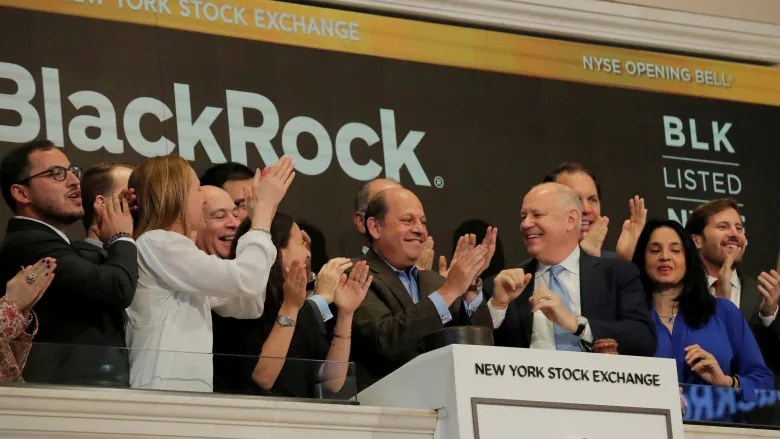
A month before the 2021 United Nations Climate Change Conference (known as COP26) kicked off in Scotland, a new asset class was launched by the New York Stock Exchange that will “open up a new feeding ground for predatory Wall Street banks and financial institutions that will allow them to dominate not just the human economy, but the entire natural world.” So writes Whitney Webb in an article titled “Wall Street’s Takeover of Nature Advances with Launch of New Asset Class”:

Called a natural asset company, or NAC, the vehicle will allow for the formation of specialized corporations “that hold the rights to the ecosystem services produced on a given chunk of land, services like carbon sequestration or clean water.” These NACs will then maintain, manage and grow the natural assets they commodify, with the end goal of maximizing the aspects of that natural asset that are deemed by the company to be profitable.

The vehicle is allegedly designed to preserve and restore Nature’s assets; but when Wall Street gets involved, profit and exploitation are not far behind. Webb writes:

[E]ven the creators of NACs admit that the ultimate goal is to extract near-infinite profits from the natural processes they seek to quantify and then monetize….

Framed with the lofty talk of “sustainability” and “conservation”, media reports on the move in outlets like Fortune couldn’t avoid noting that NACs open the doors to “a new form of sustainable investment” which “has enthralled the likes of BlackRock CEO Larry Fink over the past several years even though there remain big, unanswered questions about it.” 

BlackRock is the world’s largest asset manager, with nearly $9.5 trillion under management. That is more than the gross domestic product of every country in the world except the U.S. and China. BlackRock also runs a massive technology platform that oversees at least $21.6 trillion in assets. It and two other megalithic asset managers, State Street and Vanguard (BlackRock’s largest shareholder), already effectively own much of the world. Adding “natural asset companies” to their portfolios could make them owners of the foundations of all life. 

A $4 Quadrillion Asset — The Earth Itself

Partnering with the New York Stock Exchange team launching the NAC is the Intrinsic Exchange Group (IEG), major investors in which are the Rockefeller Foundation and the Inter-American Development Bank, notorious for imposing neo-colonialist agendas through debt entrapment. According to IEG’s website:

We are pioneering a new asset class based on natural assets and the mechanism to convert them to financial capital. These assets are essential, making life on Earth possible and enjoyable. They include biological systems that provide clean air, water, foods, medicines, a stable climate, human health and societal potential.

The potential of this asset class is immense. Nature’s economy is larger than our current industrial economy ….

The immense potential of “Nature’s Economy” is estimated by IEG at $4,000 trillion ($4 quadrillion). 

Webb cites researcher and journalist Cory Morningstar, who maintains that one of the aims of creating “Nature’s Economy” and packaging it via NACs is to drastically advance massive land grab efforts made by Wall Street and the oligarch class in recent years, including those made by Wall Street firms and billionaires like Bill Gates during the COVID crisis. The land grabs facilitated through the development of NACs, however, will largely target indigenous communities in the developing world. Morningstar observes:

The public launch of NACs strategically preceded the fifteenth meeting of the Conference of the Parties to the Convention on Biological Diversity, the biggest biodiversity conference in a decade. Under the pretext of turning 30% of the globe into “protected areas”, the largest global land grab in history is underway. Built on a foundation of white supremacy, this proposal will displace hundreds of millions, furthering the ongoing genocide of Indigenous peoples.

The UN’s “30 x 30”

The land grab of which Morningstar speaks is embodied in a draft agreement called the “Post-2020 Global Biodiversity Framework,” currently being negotiated among the 186 governments that are signatories to the Convention for Biological Diversity. Part I of its 15th meeting (COP15) closed on October 15, just ahead of COP26 (the 26th UN Climate Change Conference of the Parties) hosted in Glasgow from October 31 through November 12. COP26 focuses on climate change, while COP 15 focuses on preserving diversity. Part II of COP15 will be held in 2022. The draft text for the COP 15 nature pact includes a core pledge to protect at least 30% of the planet’s land and oceans by 2030.

In September 2020, 128 environmental and human rights NGOs and experts warned that the 30 x 30 plan could result in severe human rights violations and irreversible social harm for some of the world’s poorest people. Based on figures from a paper published in the academic journal Nature, they argued that the new target could displace or dispossess as many as 300 million people. Stephen Corry of Survival International contended: 

The call to make 30% of the globe into “Protected Areas” is really a colossal land grab as big as Europe’s colonial era, and it’ll bring as much suffering and death. Let’s not be fooled by the hype from the conservation NGOs and their UN and government funders. This has nothing to do with climate change, protecting biodiversity or avoiding pandemics – in fact it’s more likely to make all of them worse. It’s really all about money, land and resource control, and an all out assault on human diversity. This planned dispossession of hundreds of millions of people risks eradicating human diversity and self-sufficiency – the real keys to our being able to slow climate change and protect biodiversity.

30 x 30 in the United States

The 30 x 30 target was incorporated in President Biden’s Executive Order on Tackling the Climate Crisis at Home and Abroad dated January 27, 2021, which includes at Sec. 219 “the goal of conserving at least 30 percent of our lands and waters by 2030.” 

How that is to be done is not clearly specified, but proponents insist it is not a “land grab.” Critics, however, contend there is no other way to pull it off. Only about 12% of land and water in the U.S. is now considered to be “in conservation,” including wilderness lands, national parks, national wildlife refuges, state parks, national monuments, and private lands with permanent conservation easements (contracts to surrender a portion of property rights to a land trust or the federal government). According to environmental expert Dr. Bonner Cohen, raising that figure to 30%, adding 600 million acres to the total, “means putting this land and water (mostly land) off limits to any productive use in perpetuity. To accomplish this goal, the federal government will have to buy up – through eminent domain or other pressures on landowners making them ‘willing sellers’ of their property – millions of acres of private land.”

In July 2021, 15 governors wrote to the Administration opposing the plan, led by Gov. Pete Ricketts of Nebraska. Ricketts said in a press release

This requires restricting a land area the size of the State of Nebraska every year, each year, for the next nine years, or in other words a landmass twice the size of Texas by 2030.

This goal is especially radical given that the President has no constitutional authority to take action to conserve 30% of the land and water. 

The Real Threat to Mother Nature

The federal government may have no constitutional authority to take the land, but a megalithic private firm such as BlackRock could do it simply by making farmers and local residents an offer they can’t refuse. This ploy has already been demonstrated in the housing market. 

According to a survey reported in The Guardian on October 12, 2021, nearly 40% of U.S. households are facing serious financial problems, including struggling to afford medical care and food; and 30% of lower income households (those earning under $50,000 per year) said they had lost all their savings during the coronavirus pandemic. In the first quarter of 2021, 15% of U.S. home sales went to large corporate investors including BlackRock, which beat out families in search of homes just by offering substantially more than the asking price. Sometimes whole neighborhoods were bought up at once for conversion into rental properties. 

BlackRock’s chairman Larry Fink is on the board of the World Economic Forum, which until recently featured a controversial promotional video declaring “You will own nothing, and you’ll be happy.”

We all want a clean environment, and we want to preserve species biodiversity. But that includes human biodiversity – acknowledging the rights of rural landowners and Indigenous peoples, the land’s natural stewards. The greatest threat to the land is not the people living on it but those well-heeled investors who swoop in to buy up the rights to it, financializing the earth for profit. 

Not just private property but those public lands and infrastructure once known as “the commons” are now under threat. We face an existential moment in our economic history, in which accumulated private wealth is acquiring carte blanche control of the essentials of life. Whether that juggernaut can be stopped remains to be seen, but the first step in any defensive action is to be aware of the threat at our doorsteps.

Why is there no debate about ‘leaky’ vaccines?

By Jonathan Cook

Source: Jonathan Cook Blog

Do you know what “leaky vaccines” are? There’s a good chance you don’t because discussion about them has been mostly shunted to the fringes of the web, with videos on the subject even excised from Youtube. The subject is treated as though it is something only tinfoil hat-wearing loons would take seriously.

But leaky vaccines have been an established concern in the medical community for years. A paper discussing the potential problems with them was published in a reputable medical journal by experts well before anyone had heard of Covid.

In brief, leaky vaccines don’t offer full protection against the virus they are designed to deal with. Such vaccines don’t stop you from catching the virus. They work in the sense that they are likely to reduce your symptoms and lessen the chance of transmission to others.

That’s a good thing, but researchers have worried that leaky vaccines can have potential drawbacks, possibly very serious ones. If a vaccine erects an imperfect barrier against a virus, one the virus can sometimes breach even if weakly, the virus persists and has every incentive and opportunity to adapt. That is, it is encouraged to grow stronger.

Over time, variants of the virus are likely to find a way past the immune system’s defences mounted by the vaccine. Because the new variant has an evolutionary advantage over the original strain of virus, it comes to dominate – until a new variant supplants it in turn.

Endless arms race

In short, a leaky vaccine is at risk of becoming less effective over time. New vaccines may be needed in an endless arms race against the virus that encourages it to keep adapting and evolving to become ever more potent.

Most of us should be able to understand this problem because we have heard about it in a closely related medical context: so-called “superbugs“.

Antibiotics were invented nearly a century ago to put an end to deadly bacterial infections. They proved highly effective and saved many lives. They were so effective that doctors were encouraged by profit-seeking pharmaceutical companies – as well as the public’s desire for a pain-free life – to prescribe antibiotics for every tickly throat.

Making things worse, farmers looking to maximise profits had every incentive to routinely use antibiotics on livestock – to prevent illness and deaths among animals they packed into warehouses in unnatural and unsanitary conditions.

This abuse of antibiotics led to the current situation where some strains of bacteria have adapted so effectively they can resist every antibiotic on the market. These superbugs put hundreds of thousands of Americans in hospital every year and are reported to kill 35,000 of them annually.

‘Waning immunity’

So what does this have to do with Covid?

As you may have already guessed, the Covid vaccines are all leaky vaccines. In fact, it appears they were known to be leaky before the first person was vaccinated with them. It’s just no one thought to highlight it to us – not our politicians, the vaccine-makers or the corporate media.

We can see quite how leaky they are in the current obsession with “booster” shots to deal with what are being called “breakthrough” cases – only months after most people received what they assumed would be their one and only round of vaccination.

The justification for these boosters is framed as dealing with “waning immunity” and the fact that the delta variant is more “transmissable”. But this medical jargon, though reassuring, may in fact be concealing something significant about the direction the virus is heading in – something that was evident in earlier vaccine research.

‘Nastier’ viral strains

Until Covid, the only way to research how leaky vaccines worked in the midst of a major epidemic was by studying their use in animals. These studies were carried out in part because of concerns about what the effects of leaky vaccines might be if used during a human pandemic.

We now have that pandemic.

In 2015, four years before anyone had ever heard of Covid, the scientific journal PLOS Biology published a paper titled “Imperfect Vaccination Can Enhance the Transmission of Highly Virulent Pathogens”. It examined what happened in the treatment of chickens for a virus called Marek’s disease, caused by a strain of herpes more virulent – if you’re a chicken – than Ebola.

As one of the researchers concluded: “Our research demonstrates that the use of leaky vaccines can promote the evolution of nastier ‘hot’ viral strains that put unvaccinated individuals at greater risk.”

Uncharted territory

In other words, once you start routinely using a leaky vaccine, the very leakiness of the virus in the vaccinated population risks putting the unvaccinated in greater danger by exposing them to turbo-charged variants of the virus their immune systems struggle to overcome.

Because the vaccinated are less aware of being ill – they don’t take to their beds – they can become the equivalent of super-spreaders.

So the solution is simple, no? Just ensure everyone gets vaccinated. (We’ll draw a veil over the issue of what to do with those who can’t get vaccinated for medical reasons.)

But there is a potential problem here too. Because if the leaky vaccines simply allow the virus to adapt and evolve, never putting out the fire, the virus keeps spreading and could get more deadly over time. As with those superbugs, we could reach a point where much nastier strains of the virus become resistant to all the vaccines we have. Delta may be an early indication of how this might happen.

That’s the theory anyway. No one can be sure whether that is what will happen with the Covid pandemic for two reasons.

First, because – from what I can tell – a leaky vaccine has never before been used in the midst of a global pandemic. This is uncharted territory.

And second, because in the case of those chickens, the spread of the disease could be halted, in addition to vaccination, through the culling of infected animals. That – I should hope – is not a solution anyone is contemplating for dealing with Covid.

No debate

Now for the disclaimer. I am not a doctor. I don’t know what the most likely outcome of using leaky vaccines against Covid is, and I don’t claim to. In any case, I doubt most readers care what I think on the subject.

What I am concerned about – and I would hope most other people are too – is that experts in this field be allowed to have a medical debate about these issues in public.

Which is exactly what isn’t happening at the moment. Corporate media companies, from the New York Times and BBC to Facebook and Youtube – many of them invested in pharmaceuticals themselves – are deciding that you shouldn’t even know that the Covid vaccines are leaky, let alone the potential pitfalls.

Maybe that wouldn’t be so serious if we could trust the medical establishment and regulatory authorities to be doing that job for us. But it seems clear we can’t.

The truth is that most doctors, even eminent ones, are little better placed than you or me to judge the dangers of leaky vaccines. This is a very specialist field of research. Those qualified to have an expert opinion on the matter are mostly those doing advanced and very costly research for vaccine companies, especially those working on mRNA technology which has been so central to the Covid vaccination programme.

Difficult to whistleblow

But if there were really a problem with the leaky Covid vaccines, why isn’t this small group of experts not speaking up to warn us? Isn’t their silence proof that this is pure hyperbole?

Here we get to the rub.

Let’s take a comparable case. The first scientists to predict the current trajectory of climate change – to an extremely high degree of accuracy – did so back in the 1970s and 1980s and they worked for the oil companies. They kept their findings secret, as we now know many decades later.

Exxon, BP, Shell and the others invested huge sums in modelling climate change so they would be the first to understand the risks to their industry. They needed to know how long they could get away with destroying the planet before the damage became so apparent they would be required to reinvent themselves as pioneers of green technologies.

The crunch moment those scientists predicted was reached a few years back – about the time the oil companies indeed did start reinventing themselves as pioneers of green technologies.

Similarly, the scientists who best understand the risks of leaky vaccines are those employed by the vaccine companies.

There is no more reason to believe that they will whistleblow on the pharmaceuticals industry than the scientists who worked for the fossil fuel industry, or the tobacco industry, or the car industry.

Any scientist who does have concerns about leaky Covid vaccines knows that by speaking out they will make themselves unemployable, they will be labelled a crazy conspiracy theorist by the media, and in any case they will be unable to reach large audiences because social media companies will censor them either directly or through changes to the search engine algorithms.

Captured by the elite

So what is needed if we are to learn about scientific concerns relating to leaky vaccines in general and leaky Covid vaccines specifically, and not simply the talking points of Big Pharma, is for the odd expert to step forward as an industry whistleblower. Any who do are almost certain to be mavericks – those who have little to lose, those who have retired, those who already hold grievances with the way public health policy is made.

And these are precisely the people who have been raising their voices.

A few disgruntled, former insiders are speaking up – while most of their colleagues keep their heads down. Is that because their colleagues think that they are wrong? Or is it because their colleagues have more to lose – like all those scientists who worked for Exxon and BP and never got round to telling us about the evidence for climate change they had unearthed.

The problem is we just don’t know. And we don’t know because our system of information dissemination is entirely captured by corporate interests. The wealth-elite that profits from rapacious, conscience-less, profit-driven, consumption-led capitalism is also the elite that buys our political class, owns our media, funds our regulatory authorities.

Playing with fire

One expert whistleblower is Dr Robert Malone, who was given a platform this week by Jimmy Dore to express his fears that what happened to the chicken virus may also happen to Covid.

His view is that we are playing with fire by trying to enforce a mass vaccination programme through a mix of mandates, incentives and social pressure . He believes only the most vulnerable to Covid should be vaccinated. Meanwhile, doctors should be working on developing an armoury of repurposed drugs for the small numbers of younger and healthier people who suffer serious ill-effects from Covid.

This, in his view, would have been the wisest and safest strategy.

I don’t know whether he’s right, but I sure would like to hear his and other experts’ concerns being addressed in public – and ideally refuted – instead of what is happening: their concerns are being brushed under the carpet.

I don’t know whether these concerns have been ignored because they are fanciful nonsense, or because the medical establishment has no good arguments to counter them and doesn’t want to frighten us, the children.

Gutter journalism

My worries have only been heightened – and yours should be too – by the fact that no one appears willing to engage in any kind of debate about the potential problems with leaky Covid vaccines.

There should be no doubt that Dr Malone qualifies as an expert. He describes himself as the inventor of the very mRNA technology that is the basis of the Pfizer and Moderna vaccines.

But in practice, that authority to speak on the subject is being used against him. Which should set off alarm bells.

Here is one execrable attempt to discredit Dr Malone rather than address his concerns – this one from the supposedly prestigious Atlantic magazine. The article’s headline, “The Vaccine Scientist Spreading Vaccine Misinformation”, is designed to make us assume – as the author and editors doubtless hope we will assume without reading on – that the piece proves Dr Malone is peddling conspiracy theories.

That headline suggests that the doubts Dr Malone has raised about the safety of leaky Covid vaccines will be discredited in the article with countervailing scientific evidence, presumably from other experts.

The article, however, does nothing of the sort.

It is dedicated instead to painting Dr Malone as an embittered fantasist. It does so not with evidence but by quibbling over whether he can in fact be credited with inventing mRNA technology, as he says, or whether he was simply one of its leading pioneers.

Is Dr Malone the most knowledgeable person on mRNA technology or just one of a handful of them? Unless the first is true, the Atlantic implies, everything he has to say about the potential dangers of leaky Covid vaccines based on mRNA technology is worthless and can be safely discounted.

The Atlantic’s article is what we journalists call a hatchet job. It’s what journalists do when they have no evidence to make a stronger case. You play the man, not the ball. It is the very worst kind of gutter journalism.

Treated like child

I don’t know about you but that simply isn’t good enough for me. I want to hear what Dr Malone is saying and I want to hear experts who are as eminently qualified as him address his concerns. I’m not interested in having corporate journalists and editors no more qualified than me declare me a gullible fool for listening to him or for wanting to hear a scientific rejoinder to his arguments.

I also don’t want politicians and social media corporations deciding whether Dr Malone gets to speak, or the medical establishment pretending that he and the research literature he draws on don’t exist.

And I don’t want Pfizer and Moderna deciding for themselves – and without a proper discussion – whether I and my children should be made to take vaccines for the rest of our lives and whether that is a safe or wise strategy.

I can’t understand why anyone would not feel the same, unless they would prefer to be treated like a child, cocooned from taking any responsibility for their own and their family’s health, safe in the illusion that the establishment has never made a mistake or ever told a self-interested lie.

I want to be treated like a grown-up. I want Dr Malone treated like the expert he undoubtedly is. I want a conversation – before it’s too late to have a conversation.

UPDATE:

The Twitter warriors have been out in force again, insisting to me that there has been no silencing of a debate by experts on the potential dangers of leaky Covid vaccines, while paradoxically also telling me to pipe down as I ask for the chance to be exposed to that debate. Disappointingly, none of these enforcers of discourse conformity seems to be an expert on vaccines.

Strangely, we have gone from being subjected to the Atlantic magazine’s discourse policing on the issue of leaky vaccines to the Twitter mob’s discourse policing. That wasn’t quite the progress I was hoping for.

I wrote this post for two reasons.

First, when concerns about matters relating to Covid start to go viral (sic) – whether prompted by experts, as in this case, or not – it is incumbent upon our political and media class to engage with those concerns, not pretend they don’t exist or imperiously berate those who repeat the concerns.

Rightly, levels of trust in politicians and media have been falling ever lower. Treating sections of the public who entertain doubts as gullible fools who can be safely ignored will prove entirely counter-productive and simply fuel more cynicism towards our already largely unaccountable, corrupt systems of power.

And second, when potentially unjustified certainty on medical matters – especially by non-experts – translates into an attitude of rigid moral rectitude, as we are increasingly witnessing in Covid vaccine debates, we are in very dangerous, divisive territory.

When the majority is focused on finger-pointing, demanding that vaccine mandates and passports be required before fellow citizens are allowed to work or enter the public square, we ought to be pretty damn sure we know that the vaccines are absolutely essential for everyone and that they are the only safe medical option before us.

This is precisely not the time for lazy assumptions, group-think, censorship or standing back as the corporate media decides which experts should be allowed to be part of the public conversation.

One prominent web journalist led the charge against this piece, accusing me of being “disingenuous” in wanting an open debate among experts so we can all be clearer whether there are any potential dangers with leaky Covid vaccines.

But I think there are very good reasons to demand that debate.

If there is, in fact, genuine scientific uncertainty about where the enforcement of mass vaccination at the height of a pandemic might lead, then we ought to be a little more cautious and tolerant before directing our fire at those hesitant to vaccinate themselves or their children.

It might also be wise to demand a little more vociferously that other methods of treating Covid be developed, in addition to vaccines, and that public health care be properly funded rather than put all our eggs in the vaccine basket.

Whereas if there is certainty, then we can all rally enthusiastically behind these vaccines, our doubts assuaged.

My experience is, I suspect, common. I have been exposed on the web for many months to what may indeed be a “conspiracy theory” by dissident experts about leaky vaccines, and yet I haven’t been exposed to the pushback against this theory from similar experts in the “mainstream” corporate media. That shouldn’t be treated as my fault. It is a problem with the current, dominant, corporate media conversation.

If lots of experts know Dr Malone and others are talking nonsense, why did the Atlantic, for example, engage in a hatchet job on Dr Malone rather than quote some of those experts pointing out the glaring fallacies in his thinking?

I am a journalist, and so is my colleague-critic. We know that you play your strongest cards when you write a polemical piece. So why was the only card the Atlantic played the character assassination of Dr Malone? Any journalist happy with that approach is forgetting what journalism is there to do: inform public debate, not fuel hate mobs and prop up group-think.

When asked for links to the vigorous public debate on leaky vaccines that is supposedly taking place, my colleague declined to provide any. Instead he switched tactics and suggested that this be left to peer-reviewed papers in scientific journals.

But the concerns raised by experts that he seems so sure – as a complete non-expert – can be dismissed as quackery are out there on the web right now. They relate to public policy decisions that are being formulated right now. If they are indeed simply conspiracy theories, we don’t need to wait months or years for researchers to share their findings. We need these conspiracy theories engaged with and exposed right now.

You don’t put out a fire by turning your back on it. Those who prefer to silence debate, supposedly in the interests of science, only increase the division, they fuel the blame campaigns, they rationalise the demands for more censorship. And they drive those who refuse to accept the silence deeper into the opposing camp.

Interestingly, in response to my article someone did finally post a piece by an expert relevant to this debate – written, in fact, by one of the researchers behind the chicken study I cited above. It was published in a relatively obscure online publication, fittingly named The Conversation.

I will leave you to assess it as a response to Dr Malone’s concerns. Contrary to the certainty of the Twitter warriors, Prof Andrew Read appears to accept that the virus could adapt under pressure from the leaky Covid vaccines into nastier variants, though he also seems to think that this is not very likely and that there are ways to nullify that threat – mostly by intensifying the use of boosters and further refining the vaccines.

He concludes:

There are probably ways the available COVID-19 vaccines could be improved in the future to better reduce transmission. Booster shots, larger doses or different intervals between doses might help; so too, combinations of existing vaccines. Researchers are working hard on these questions. Next-generation vaccines might be even better at blocking transmission.

The fact that hardly anyone engaged in the social media “row” provoked by my post appeared to know of Prof Read’s rejoinder to the viral videos of Dr Malone underscores exactly the point I was making. It is the responsibility of corporate media like the BBC and New York Times to air these scientific debates through experts, not draw a veil over them.

We need less polarisation and more engagement with prevalent concerns or confusion about Covid and its treatment. And that surely won’t happen as long as the corporate media and Twitter warriors insist on policing the discourse.

Nature Is Not a Machine—We Treat It So at Our Peril

By Jeremy Lent

Source: resilience

From genetic engineering to geoengineering, we treat nature as though it’s a machine. This view of nature is deeply embedded in Western thought, but it’s a fundamental misconception with potentially disastrous consequences.

Climate change, avers Rex Tillerson, ex-CEO of ExxonMobil and erstwhile US Secretary of State,  “is an engineering problem, and it has engineering solutions.” This brief statement encapsulates how the metaphor of the machine underlies the way our mainstream culture views the natural world. It also hints at the grievous dangers involved in perceiving nature in this way.

This mechanistic worldview has deep roots in Western thought. The great pioneers of the Scientific Revolution, such as Galileo, Kepler, and Newton, believed they were decoding “God’s book,” which was written in the language of mathematics. God was conceived as a great clockmaker, the “artificer” who constructed the intricate machine of nature so flawlessly that, once it was set in motion, there was nothing more to do (bar the occasional miracle) than let it run its course. “What is the heart, but a spring,” wrote Thomas Hobbes, “and the nerves but so many strings?” Descartes flatly declared: “I do not recognize any difference between the machines made by craftsmen and the various bodies that nature alone composes.”

In recent decades, the mechanistic conception of nature has been updated for the computer age, with popularizers of science such as Richard Dawkins arguing that “life is just bytes and bytes and bytes of digital information” and as a result, an animal such as a bat “is a machine, whose internal electronics are so wired up that its wing muscles cause it to home in on insects, as an unconscious guided missile homes in on an aeroplane.” This digital metaphor of nature pervades our culture and is used unreflectively by those in a position to direct our society’s future. According to Larry Page, co-founder of Google, for example, human DNA is just “600 megabytes compressed, so it’s smaller than any modern operating system . . .  So your program algorithms probably aren’t that complicated.”

But nature is not in fact a machine nor a computer—and it can’t be engineered or programmed like one. Thinking of it as such is a category error with ramifications that are both deluded and dangerous.

A four-billion-year reversal of entropy

Ultimately, this machine metaphor is based on a simplifying assumption, known as reductionism, which approaches nature as a collection of tiny parts to investigate. This methodology has been resoundingly effective in many fields of inquiry, leading to some of our greatest advances in science and technology. Without it, most of the benefits of our modern world would not exist—no electrical grids, no airplanes, no antibiotics, no internet. However, over the centuries, many scientists and engineers have been so swept up by the success of their enterprise that they have frequently mistaken this assumption for reality—even when advances in scientific research uncover its limitations.

When James Watson and Francis Crick discovered the shape of the DNA molecule in 1953, they used metaphors from the burgeoning information revolution to describe their findings. The genotype was a “program” that determined the exact specifications of an organism, just like a computer program. DNA sequences formed the “master code” of a “blueprint” that contained a detailed set of “instructions” for building an individual. Prominent geneticist Walter Gilbert would begin his public lectures by pulling out a compact disk and proclaiming “This is you!”

Since then, however, further scientific research has revealed fundamental defects in this model. The “central dogma” of molecular biology, as coined by Crick and Watson, was that information could only flow one way: from the gene to the rest of the cell. Biologists now know that proteins act directly on the DNA of the cell, specifying which genes in the DNA should be activated. DNA can’t do anything by itself—it only functions when certain parts of it get switched on or off by the activities of different combinations of proteins, which were themselves formed by the instructions of DNA. This process is a vibrant, dynamic circular flow of interactivity.

This leads to a classic chicken-and-egg problem: if a cell is not determined solely by its genes, what ultimately causes it to “decide” what to do? Biologists who have researched this issue generally agree that the emergence of life on Earth was most likely a self-organized process known as autopoiesis—from the Greek words meaning self-generation—performed originally by non-living molecular structures.

These protocells essentially staged a temporary, local reversal of the Second Law of Thermodynamics which describes how the universe is undergoing an irreversible process of entropy: order inevitably becomes disordered and heat always flows from hot regions to colder regions. We see entropy in our daily lives every time we stir cream into our coffee, or break an egg for an omelet. Once the egg is scrambled, no amount of work will ever get the yolk back together again. It’s a depressing law, especially when applied to the entire universe which, according to most physicists, will eventually dissipate into a bleak expanse of cold, dark nothingness. Those first protocells, however, learned to turn entropy into order by ingesting it in the form of energy and matter, breaking it apart, and reorganizing it into forms beneficial for their continued existence—the process we know as metabolism.

Ever since then, for roughly four billion years, the defining quality of life has been its purposive self-organization. There is no programmer writing a program; no architect drawing up a blueprint. The organism is the weaver of its own fabric, using DNA as an instrument of transmission. It sculpts itself according to its own inner sense of purpose, which it inherited ultimately—like all of us—from those first autocatalytic cells: the drive to resist entropy and generate a temporary vortex of self-created order in the universe. In the words of philosopher of biology Andreas Weber,

“Everything that lives wants more of life. Organisms are beings whose own existence means something to them.”

This implies that, rather than being an aggregation of unconscious machines, life is intrinsically purposive. In recent decades, carefully designed scientific studies have revealed the deep intelligence throughout the natural world employed by organisms as they fulfil their purpose of self-generation. The inner life of a plant, biologists have discovered, is a rich plethora of complex experience. Plants have their own versions of our five senses, as well as up to fifteen other ways of sensing their environment for which we don’t have analogues. Plants act intentionally and purposefully: they have memories and learn, they communicate with each other, and can even allocate resources as a community through what biologist Suzanne Simard calls the “wood-wide web” of mycorrhizal fungi linking their roots together underground.

Extensive studies now point to the profound realization that every animal with a nervous system is likely to have some sort of subjective experience driven by feelings that, at the deepest level, are shared by all of us. Bees have been shown to feel anxious when their hives are shaken. Fish will make trade-offs between hunger and pain, avoiding part of an aquarium where they’re likely to get an electric shock, even if that’s where the food is—until they get so hungry that they’re willing to take a risk. Octopuses, one of the earliest groups to evolve separately from other animals about 600 million years ago, live predominantly solitary lives, but just like humans, get cozy with others when given a dose of the “love-drug” MDMA.

The ideology of human supremacy

As we confront the existential crises of the twenty-first century, the mechanistic thinking that brought us to this place may be driving us headlong toward catastrophe. As each new global problem appears, attention gets focused on short-term, mechanistic solutions, rather than probing deeper systemic causation. In response to the worldwide collapse of butterfly and bee populations, for example, some researchers have designed tiny airborne drones to pollinate trees as artificial substitutes for their disappearing natural pollinators.

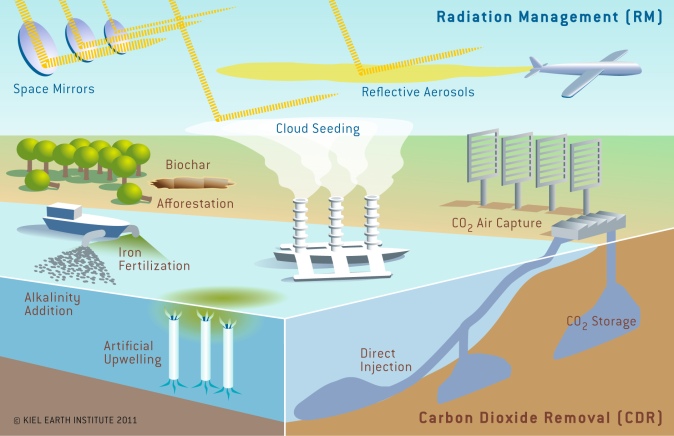
As the stakes get higher through this century, the dangers arising from this mechanistic metaphor of nature will only become more harrowing. Already, in response to the acceleration of climate breakdown, the techno-dystopian idea of geoengineering is becoming increasingly acceptable. Following Tillerson’s misconceived logic, rather than disrupt the fossil fuel-based growth economy, policymakers are beginning to seriously countenance treating the Earth as a gigantic machine that needs fixing, and developing massive engineering projects to tinker with the global climate.

Given the innumerable nonlinear feedback loops that generate our planet’s complex living systems, the law of unintended consequences looms menacingly large. The eerily named field of “solar radiation management”, for example, which has received significant financing from Bill Gates, envisages spraying particles into the stratosphere to cool the Earth by reflecting the Sun’s rays back into space. The risks are enormous, such as causing extreme shifts in precipitation around the world and exacerbating damage we’ve already done to the ozone layer. Additionally, once begun, it could never be stopped without immediate catastrophic rebound heating; it would further increase ocean acidification; and would likely turn the blue sky into a perpetual white haze. These types of feedback effects, arising from the innumerable nonlinear dynamic interdependencies of Earth’s complex systems, get marginalized by a worldview that ultimately sees our planet as a machine requiring a quick fix.

Further, there are deep moral issues that arise from confronting the inherent subjectivity of the natural world. Ever since the Scientific Revolution, the root metaphor of nature as a machine has infiltrated Western culture, inducing people to view the living Earth as a resource for humans to exploit without regard for its intrinsic value. Ecological philosopher Eileen Crist describes this as human supremacy, pointing out that seeing nature as a “resource” permits anything to be done to the Earth with no moral misgivings. Fish get reclassified as “fisheries,” and farm animals as “livestock”—living creatures become mere assets to be exploited for profit. Ultimately, it is the ideology of human supremacy that allows us to blow up mountaintops for coal, turn vibrant rainforest into monocropped wastelands, and trawl millions of miles of ocean floor with nets that scoop up everything that moves.

Once we recognize that other animals with a nervous system are not machines, as Descartes proposed, but likely experience subjective feelings similar to humans, we must also reckon with the unsettling moral implications of factory farming. The stark reality is that around the world, cows, chicken, and pigs are enslaved, tortured, and mercilessly slaughtered merely for human convenience. This systematic torment administered in the name of humanity to over 70 billion animals a year—each one a sentient creature with a nervous system as capable of registering excruciating pain as you or I—quite possibly represents the greatest cataclysm of suffering that life on Earth has ever experienced.

The “quantum jazz” of life

What, then, are metaphors of life that more accurately reflect the findings of biology—and might have the adaptive consequence of influencing our civilization to behave with more reverence toward our nonliving relatives on this beleaguered planet which is our only home?

Frequently, when cell biologists describe the mind-boggling complexity of their subject, they turn to music as a core metaphor. Denis Noble entitled his book on cellular biology The Music of Life, depicting it as “a symphony.” Ursula Goodenough describes patterns of gene expression as “melodies and harmonies.” While this metaphor rings truer than nature as a machine, it has its own limitations: a symphony is, after all, a piece of music written by a composer, with a conductor directing how each note should be played. The awesome quality of nature’s music arises from the fact that it is self-organized. There is no outside agent telling each cell what to do.

Perhaps a more illustrative metaphor would be a dance. Cell biologists increasingly refer to their findings in terms of “choreography,” and philosopher of biology Evan Thompson writes vividly how an organism and its environment relate to each other “like two partners in a dance who bring forth each other’s movements.”

Another compelling metaphor is an improvisational jazz ensemble, where a self-organized group of musicians spontaneously creates fresh melodies from a core harmonic theme, riffing off each other’s creativity in a similar way to how evolution generates complex ecosystems. Geneticist Mae-Wan Ho captures this idea with her portrayal of life as “quantum jazz,” describing it as “an incredible hive of activity at every level of magnification in the organism . . . locally appearing as though completely chaotic, and yet perfectly coordinated as a whole.”

What might our world look if we saw ourselves as participating in a coherent ensemble with all sentient beings interweaving together to collectively reverse entropy on Earth? Perhaps we might begin to see humanity’s role, not to re-engineer a broken planet for further exploitation, but to attune with the rest of life’s abundance, and ensure that our own actions harmonize with the Earth’s ecological rhythms. In the profound words of 20th century humanitarian Albert Schweitzer, “I am life that wills to live, in the midst of life that wills to live.” How, we may ask, might our future trajectory change if we were to reconstruct our civilization on this basis?

The Accelerating Destruction Of Earth’s Biodiversity: When Will We Act?

By Robert J. Burrowes

As those individuals aware of it will have observed, presumably with deep regret, the latest ‘International Day for Biological Diversity’passed on 22 May with the bulk of the human population continuing to act in ways that destroy Earth’s biosphere at an ever-accelerating rate.

Unaware that many authors continue to report the ongoing destructionof Earth’s biodiversity, which is under siege on a range of fronts by unchecked human destruction of Earth’s biosphere as well as particular assaults on Earth’s living creatures, responses to this ‘hidden’ path to human extinction continue to waver between non-existent and token.

Consequently, in such circumstances, the destruction of biodiversity might yet become the means by which Homo sapiens is consigned to the fossil record ‘beating’ nuclear war, the climate catastrophe and electromagnetic radiation as the fundamental driver of extinction.

Of course, these drivers are intimately related. Ongoing preparations for nuclear war (requiring the extraction of vast resources from the biosphere), the accelerating climate catastrophe and the ever-expanding electromagnetic contamination of the biosphere are all heavily implicated in driving the destruction of life on Earth and seriously addressing these issues is something only discussed in narrow, genuinely aware circles while official ‘concern’ and that of the human population generally continue to exhibit negligible engagement, perhaps ‘tut-tutting’ the latest news in the corporate media of the extinction of an iconic species. See For Whom the Bell TollsA Report on the State of Planet Earth at Year’s End 2020.

But given that 150-200 species of life on Earth (plants, birds, animals, fish, amphibians, insects, reptiles and microbes) become extinct daily, as noted in 2010 by Ahmed Djoghlaf, the secretary-general of the UN Convention on Biological Diversity who stated that ‘We are losing biodiversity at an unprecedented rate’, and with many biologists having noted that the species extinction rate is nearly 1,000 times the ‘natural’ or ‘background’ rate and ‘is greater than anything the world has experienced since the vanishing of the dinosaurs nearly 65m years ago’ – see ‘Protect nature for world economic security, warns UN biodiversity chief’ – only a delusional individual would argue that this issue is drawing the attention and profound action that is needed to halt this existential crisis.

And given that, back in 2010, the UN was arguing that the ‘economic case for global action to stop the destruction of the natural world is even more powerful than the argument for tackling climate change’ – see ‘UN says case for saving species “more powerful than climate change”’ – there is obviously no doubt that, officially and otherwise, the destruction of biodiversity has been neglected compared to the (admittedly also inadequate) attention given to the climate catastrophe.

So Homo sapiens moves quickly and efficiently to its own extinction, an inevitable consequence of the destruction of the web of life.

An important aspect of the destruction of biodiversity is what precedes the extinction of a species.

In their report compiled in 2017, Professors Gerardo Ceballos, Paul R. Ehrlich & Rodolfo Dirzo recorded that Earth continues to experience ‘a huge episode of population declines and extirpations, which will have negative cascading consequences on ecosystem functioning and services vital to sustaining civilization. We describe this as a “biological annihilation” to highlight the current magnitude of Earth’s ongoing sixth major extinction event.’ Moreover, local population extinctions ‘are orders of magnitude more frequent than species extinctions. Population extinctions, however, are a prelude to species extinctions, so Earth’s sixth mass extinction episode has proceeded further than most assume.’ See ‘Biological annihilation via the ongoing sixth mass extinction signaled by vertebrate population losses and declines’ and ‘Our Vanishing World: Wildlife’.

But, tragically, many additional species are now trapped in a feedback loop which will inevitably precipitate their extinction as well because of the way in which ‘co-extinctions’, ‘localized extinctions’ and ‘extinction cascades’ work once initiated and as has already occurred in almost all ecosystem contexts. See the (so far) six-part series ‘Our Vanishing World’. Have you seen a flock of birds of any size recently? A butterfly?

Why is this Happening?


The accelerating destruction of Earth’s biosphere is driven by one fundamental cause. Over-consumption by humans in industrialized countries. With nearly a billion people living in poverty and about 500 million indigenous peoples living or attempting to live subsistence lifestyles around the world, it is those populations in industrialized countries who are determined to consume more than they actually need and generally live unaware of their ecological impact who are destroying Earth’s biosphere.

Because whether consuming water, energy for household use, fossil fuels for vehicle or airline travel, paper, plastic, metals or meat, only a rare human is keeping track of, and consciously minimizing use of, these ‘end product’ resources which are extracted directly from, or manufactured with resources extracted from, Earth’s biosphere, with a byproduct of this production being a massive amount of waste material, much of it not able to be disposed of in any way that is remotely ecologically benign.

And because the extraction of resources from the biosphere to satisfy consumer demand fundamentally depends on state or private corporations making a profit from the extraction, corporations will exploit anywhere with negligible concern for the local environments destroyed.

To highlight the cost of our endlessly-expanding consumption, one only has to consider a few of the near ‘endless’ list of biosphere assaults adversely impacting the Earth and the species dependent on impacted ecosystems.

Did you know about the planned oil drilling in the staggeringly beautiful and, until now, pristine Okavango Delta in south-west Africa, and what this might mean for the region’s 18,000 elephants and other wildlife (not to mention the human population)? See ‘A Big Oil project in Africa threatens fragile Okavango region’.

Did you know about the ‘massive volumes of fracking waste’ being illegally dumped at Vaca Muerta in northern Patagonia in Argentina?Good for the biosphere and local wildlife do you think? See ‘Argentina’s Illegal Oil and Gas Waste Dumps Show “Dark Side” of Vaca Muerta Drilling, Says Criminal Complaint’.

And while there is a huge number of mines around the world inflicting massive damage on their immediate location – see ‘Environmental Nightmares Created by Open Pit Mines’ – mining is just one way to destroy the biosphere.

Rainforest destruction is another key driver of biosphere degradationin all parts of the world where rainforests are located, notably including the Amazon, Democratic Republic of the Congo, Indonesia and West Papua, and the range of assaults is breathtaking with logging, burning, land clearance to create cattle farms, palm oil and soybean plantations, dam building as well as mining and oil drilling just among the most damaging causes. See ‘Our Vanishing World: Rainforests’.

But, as hinted at above, the emission of ‘greenhouse gases’, notably carbon dioxide, methane and nitrous oxide is destroying the delicate composition of Earth’s atmosphere, to the detriment of the biosphere generally and with catastrophic implications for life on Earth. Despite largely successful efforts by the elite-controlled IPCC to delude people into believing that the global mean temperature has increased by only 1°C, in fact, since the pre-industrial era (prior to 1750)greenhouse gas (GHG) emissions have already caused the global temperature to rise by more than 2°C above this baseline (in February 2020). This occurred despite the Paris climate agreement in 2015 when politicians pledged to hold the global temperature rise to well below 2°C above the pre-industrial level and pledged to try to limit the temperature rise to 1.5°C above this level. See ‘2°C crossed’ and‘Human Extinction by 2026? A Last Ditch Strategy to Fight for Human Survival’.

And electromagnetic radiation is inflicting rapidly increasing damage to all forms of life with the deployment of 5G now in full swing. See ‘Deadly Rainbow: Will 5G Precipitate the Extinction of All Life on Earth?’

Of course, all forms of military violence – invariably done to gain control over biosphere resources – as well as the preparation for it, destroys vast areas of the natural environment (including the creatures that live in it) either deliberately or as ‘collateral damage’. See ‘Ten Reasons Why Militarism is Bad for the Environment’.

As can be readily observed, the destruction of biodiversity is a primary subset of the destruction of the biosphere. Every living organism needs habitat to survive. Every time we destroy part of the biosphere, we destroy the habitat of the organisms that live in it. But we also destroy life and biodiversity directly too. How much longer can the wolf, for example, hold on against the onslaught? See ‘Bill Allowing 90 Percent of Idaho’s Wolves to Be Killed Passes House and Senate’.

Humanity generally is so unconcerned about destruction of the biosphere and the biodiversity cost that goes with it, that we studiously ignore this cost, even when it impacts our closest relatives, human and otherwise. See West Africa’s chimpanzees are on the brink of extinction! and ‘Western Chimpanzee’.

And even the most iconic of species, such as the elephant, are not safe from the human onslaught. From 26 million elephants in 1800, the elephant population of Africa is down to 415,000, thanks to poaching for ivory, ‘trophy hunting’, destruction of habitat and other human causes. The International Union for the Conservation of Nature has now listed the African forest elephant as ‘critically endangered’ and the African savanna elephant as ‘endangered’. See ‘Disappearing Elephants’ and ‘Africa’s elephants now endangered by poaching, habitat loss’.

Of course, destruction of habitat takes an almost infinite variety of forms when it comes to Homo sapiens. The latest farming venture to threaten elephant habitat is just now being created. See ‘From poaching to avocados, Kenya’s elephants face new threat’.

Besides this, assaults on particular species are pushing many endangered species to the brink of extinction. Wildlife trafficking, for example, is worth up to $20 billion each year. Illegal wildlife products include jewelry, traditional medicine, clothing, furniture, and souvenirs, as well as some exotic pets, most of which are sold to unaware/unconcerned consumers in the West although China is heavily implicated too. And to mention elephants again in this context: every 15 minutes an elephant is killed for its tusks. See Stop Wildlife Trafficking.

But if we are not concerned about the iconic species, can you imagine the collective concern for those millions of creatures of which we have never even heard, let alone given a name? And yet, as the work of Professor Gerardo Ceballos and his colleagues cited above clearly suggests, there are many unknown or obscure species that are part of the ‘co-extinctions’, ‘localized extinctions’ and ‘extinction cascades’ that are driving the ‘biological annihilation’ that they have documented.

So What Can We Do?


Well, in theory, we can participate in official responses to this crisis. See ‘Previewing the UN Decade on Ecosystem Restoration’.

But, as history demonstrates, we would be unwise to rely on responses generated by the elite and promulgated through its agents. Such efforts are inevitably designed to subvert effective outcomes, which they do with unrelenting monotony to which the record of uninterrupted destruction readily testifies.

Nevertheless, there is a great deal that we can do, personally, that will make a difference.

As is always the case with threats to biodiversity, the fundamental response to this crisis involves producing and consuming less. A lot less. ‘A difficult ask’ you might say. And more difficult than you probably realize, given the fundamentally dysfunctional emotional state that drives human over-consumption in materialist societies in the first place. See ‘Love Denied: The Psychology of Materialism, Violence and War’.

But for those emotionally equipped for the challenge, you are welcome to join those who recognize the critical importance of reduced consumption and greater self-reliance by participating in The Flame Tree Project to Save Life on Earth which outlines a ‘step by step’ strategy for achieving these ends. In addition, you are welcome to consider signing the online pledge of The Peoples Charter to Create a Nonviolent World.

Of course, you can also campaign to do other things as well. Halting war and all military activity of any kind would save the biosphere enormous resources so effort put into that is worthwhile. If you would like to campaign, strategically, to halt war there is a list of strategic goals for doing so in Campaign Strategic Aims.

In fact, if you wish to focus on strategically resisting any of the four primary threats to human existence – nuclear war, the deployment of 5G, the collapse of biodiversity and/or the climate catastrophe – you can read about nonviolent strategy, including strategic goals to focus your campaigns, on that website too.

Equally fundamentally, if you would like to nurture children to become powerful individuals capable of acting strategically to prevent and respond to violence while able to critique society and elite propaganda, see ‘My Promise to Children’. A child who is emotionally whole does not need to use consumption as a substitute for giving up their unique identity as a survival strategy during childhood, as the ‘Love Denied’ article also explains.

As an aside, if you want a better fundamental understanding of how we reached this point, see Why Violence?Fearless Psychology and Fearful Psychology: Principles and Practice and ‘The Global Elite is Insane Revisited’.

And if the options above seem too complicated, consider committing to:

The Earth Pledge


Out of love for the Earth and all of its creatures, and my respect for their needs, from this day onwards I pledge that:

1. I will listen deeply to children. See ‘Nisteling: The Art of Deep Listening’.

2. I will not travel by plane
3. I will not travel by car
4. I will not eat meat and fish
5. I will only eat organically/biodynamically grown food

6. I will minimize the amount of fresh water I use, including by minimizing my ownership and use of electronic devices

7. I will not own or use a mobile (cell) phone
8. I will not buy rainforest timber
9. I will not buy or use single-use plastic, such as bags, bottles, containers, cups and straws

10. I will not use banks, superannuation (pension) funds or insurance companies that provide any service to corporations involved in fossil fuels, nuclear power and/or weapons

11. I will not accept employment from, or invest in, any organization that supports or participates in the exploitation of fellow human beings or profits from killing and/or destruction of the biosphere

12. I will not get news from the corporate media (mainstream newspapers, television, radio, Google, Facebook, Twitter…)

13. I will make the effort to learn a skill, such as food gardening or sewing, that makes me more self-reliant

14. I will gently encourage my family and friends to consider signing this pledge.

Conclusion


Halting the human rush to extinction through the destruction of biodiversity will require monumental effort. Raising awareness of this rapidly unfolding but still largely-hidden tragedy is, therefore, a high priority. But that is only the start. Enormous effort is required as well.

Of course, for those too terrified to contemplate the reality of ongoing destruction of Earth’s biodiversity and its implications for our own behaviour, denial or delusion are easy ‘psychological retreats’, particularly when our childhood survival largely depended on such tactics.

So it is going to take those who are powerful enough to deal with reality to make a stand.

We are on the cliff-edge of extinction. What will you do?

Biodata: Robert J. Burrowes has a lifetime commitment to understanding and ending human violence. He has done extensive research since 1966 in an effort to understand why human beings are violent and has been a nonviolent activist since 1981. He is the author of ‘Why Violence?’ His email address is flametree@riseup.net and his website is here.

Destroying The Web Of Life: The Destruction Of Earth’s Biodiversity Is Accelerating

By Robert J. Burrowes

In August 2010, the secretary-general of the UN Convention on Biological Diversity, Ahmed Djoghlaf, warned that ‘We are losing biodiversity at an unprecedented rate.’ According to the UN Environment Program, ‘the Earth is in the midst of a mass extinction of life’ with scientists estimating that ‘150-200 species of plant, insect, bird and mammal become extinct every 24 hours’ which is nearly 1,000 times the ‘natural’ or ‘background’ rate. Moreover, it ‘is greater than anything the world has experienced since the vanishing of the dinosaurs nearly 65m years ago.’ See ‘Protect nature for world economic security, warns UN biodiversity chief’.

Two months later, at the tenth meeting of the Conference of the Parties to the Convention on Biological Diversity, held from 18 to 29 October 2010, in Nagoya, Aichi Prefecture in Japan, a revised and updated Strategic Plan for Biodiversity, including the Aichi Biodiversity Targets, for the 2011-2020 period was adopted. See ‘Strategic Plan for Biodiversity 2011-2020, including Aichi Biodiversity Targets’.

You can read the 20 Aichi Biodiversity Targets on the Convention’s website. They were ambitious but represented a realistic assessment of what needed to be achieved by 2020 if national governments were to achieve the longer term goal of ‘Living in Harmony with Nature’ by 2050. The 2050 Vision for Biodiversity required ‘a significant shift away from “business as usual” across a broad range of human activities.’ See ‘Global Biodiversity Outlook 5’.

So how have we done in the past ten years?

In 2015, distinguished conservationists Professor Gerardo Ceballos, Anne H. Ehrlich and Professor Paul R. Ehrlich published their book titled The Annihilation of Nature: Human Extinction of Birds and Mammals which tells the story of humanity’s ‘massive and escalating assault on all living things on this planet’ precipitating what is now Earth’s sixth great mass extinction: ‘a time of darkness for our planet’s birds and mammals’.

Noting that the roots of this destruction ‘run deep through time’ with human hunting and other activities responsible for pushing populations of animals to extinction long before the agricultural revolution (which began about 10,000 years ago), they observe that the current collective assault on animals, plants and microbes has reached a level so horrendous that ‘any alarm call we might sound will be too faint to match the tragedy that is unfolding’. But while the decimation of life that is currently underway is being caused by Homo sapiens, the consequences of this decimation will also have impact on humanity itself because the life-forms being annihilated are ‘working parts of life-support systems on which civilization depends’.

Despite the impressive statistics that record the demise of life on Earth and the fundamental threat this extinction crisis poses, Cebellos and the Ehrlichs are well aware that the public and politicians generally are not reacting emotionally to this crisis as do those who are ‘deeply familiar with the impoverishment of nature’. They hope we can relate to the fate of the last Spix’s macaw, a male that searched fruitlessly for a mate until it disappeared from the savannah of northeastern Brazil in 2000.

And did you know that even the iconic African lion may be facing extinction in the wild? In 2015, as a result of decades of hunting, disease and habitat loss, only 23,000 lions remained in Africa’s vast savannahs: less than 10% of what roamed there in 1950. There are fewer lions today.

But separately from species extinctions, Earth continues to experience ‘a huge episode of population declines and extirpations, which will have negative cascading consequences on ecosystem functioning and services vital to sustaining civilization’. In a 2017 report, Professor Ceballos and his coauthors describe what they label ‘a “biological annihilation” to highlight the current magnitude of Earth’s ongoing sixth major extinction event.’ Moreover, local population extinctions ‘are orders of magnitude more frequent than species extinctions. Population extinctions, however, are a prelude to species extinctions, so Earth’s sixth mass extinction episode has proceeded further than most assume.’ See ‘Biological annihilation via the ongoing sixth mass extinction signaled by vertebrate population losses and declines’.

Beyond even this, however, many additional species are now trapped in a feedback loop that will inevitably precipitate their extinction as well because of the way in which ‘co-extinctions’, ‘localized extinctions’ and ‘extinction cascades’ work once initiated and as has already occurred in almost all ecosystem contexts. See the (so far) six-part series ‘Our Vanishing World’.

Have you seen a flock of birds of any size recently? A butterfly?

What Is Driving the Sixth Mass Extinction?

Homo sapiens. And the key tool is always destruction of habitat, whether on land or in the ocean.

Of course, particular human behaviours have a huge impact. Fighting wars (or even just wasting resources to manufacture weapons and other military infrastructure) is one (particularly given that the perpetual war in which the US is engaged is to secure resources and markets), destroying the climate is another and deploying 5G is yet another. But there are many other destructive human behaviours too.

Consider the forests. Just last year, 6.5 million hectares of pristine forest were cut or burnt down for purposes such as clearing land to establish cattle farms so that many people can eat cheap hamburgers, mining (much of it illegal) for a variety of minerals (such as gold, silver, copper, coltan, cassiterite and diamonds) and logging to produce woodchips so that some people can buy cheap paper (including cheap toilet paper). See ‘Our Vanishing World: Rainforests’.

One outcome of this destruction is that 40,000 tropical tree species are now threatened with extinction. In addition, rainforest destruction is also the primary cause of species extinctions globally given the number of species that live in rainforests. See ‘Global Assessment Report on Biodiversity and Ecosystem Services’.

Another outcome is that ‘the precious Amazon is teetering on the edge of functional destruction and, with it, so are we’. See ‘Amazon Tipping Point: Last Chance for Action’.

And in relation to another major habitat that is being destroyed, consider the world’s oceans. In summary, the oceans are warming, acidifying and deoxygenating; being contaminated with nuclear radiation, by offshore oil and gas drilling as well as oil spills; being damaged by deep sea mining; being polluted by industrial (including chemical) and farming wastes while being damaged in a myriad other ways and being overfished.

In short: the oceans are under siege on a vast range of fronts and are effectively ‘dying’. For a comprehensive 18-point summary, see ‘Our Vanishing World: Oceans’.

If you like, you can read comprehensive summaries of the fate of Earth’s birds and insects too. See ‘Our Vanishing World: Birds’ and ‘Our Vanishing World: Insects’.

What Is the State of Play in Early 2021?

In a report published by the Intergovernmental Science-Policy Platform on Biodiversity and Ecosystem Services (IPBES) in May 2020, the authors observe that ‘Nature is declining globally at rates unprecedented in human history – and the rate of species extinctions is accelerating, with grave impacts on people around the world now likely.’ With a total estimated number of animal and plant species on Earth of 8 million (of which 5.5 million are insect species), an accelerating daily extinction rate combined with an ongoing decline in ecosystem health, the report concludes that 1,000,000 species of life on Earth are threatened with extinction. See ‘Nature’s Dangerous Decline “Unprecedented”; Species Extinction Rates “Accelerating”’ and ‘A million threatened species? Thirteen questions and answers’.

And the latest edition of the Convention on Biological Diversity’s flagship publication ‘Global Biodiversity Outlook 5’ was published on 18 August 2020. It reports that ‘Humanity stands at a crossroads with regard to the legacy it leaves to future generations. Biodiversity is declining at an unprecedented rate, and the pressures driving this decline are intensifying. None of the Aichi Biodiversity Targets will be fully met.’

But this is an understatement, to put it politely.

In their commentary on this predicament in November 2020, scholars Ruchi Shroff and Carla Ramos Cortés note that ‘Despite wide-spread international calls to curb the sixth mass extinction, no single goal of the Convention of Biological Diversity’s Aichi Biodiversity Targets, for the second consecutive decade, have been met. In some cases, biodiversity loss has been made worse as no action has been taken to curb pesticide use, pollution, fossil fuels and plastics.’ See ‘The Biodiversity Paradigm: Building Resilience for Human and Environmental Health’.

But the destruction is far worse than suggested by this. Given, as already noted above, the ongoing destruction of rainforests and oceans, not to mention other habitats ranging from wetlands to deserts, the annihilation of life on Earth continues to accelerate with no indicators signaling that this destruction is being slowed in any way.

Therefore, destruction of biodiversity remains one of the four primary paths to human extinction (along with nuclear war, the deployment of 5G and the climate catastrophe).

Is It too Late to Do Anything?

It might be. As mentioned above: Because many species are now trapped in a feedback loop that will inevitably precipitate their extinction because of the way in which ‘co-extinctions’, ‘localized extinctions’ and ‘extinction cascades’ work once initiated, many further extinctions are now inevitable.

However, we can take action to save those individuals and species not yet trapped in a feedback loop and that might yet be saved. But if you wait for governments or corporations to act responsibly, you will wait in vain as the last 20 years has demonstrated.

So you have some powerful options to consider. The first, and most important, is to consider the ways in which you can reduce your own consumption. The planetary environment is only being destroyed so that governments and corporations can respond to consumer demand. Everything from military spending and war to the extraction and burning of fossil fuels are fundamentally driven by what you buy. And each and every item that you buy has a negative environmental impact. There are no exceptions.

If you reduce your own consumption and increase your self-reliance, you will reduce the burden that extraction, transport, manufacture and distribution of resources imposes on the natural environment resulting in the destruction of habitat and the annihilation of biodiversity.

One option to consider is ‘The Flame Tree Project to Save Life on Earth’ which outlines a graduated series of steps for reducing consumption and increasing self-reliance.

If you want to better understand why so many human beings are addicted to endless consumption, see ‘Love Denied: The Psychology of Materialism, Violence and War’. There is more detail on the origins of this behaviour in ‘Why Violence?’ and ‘Fearless Psychology and Fearful Psychology: Principles and Practice’.

If you are inclined to campaign to defend biodiversity in one context or another, whether by campaigning to end war, halt the climate catastrophe, stop the deployment of 5G or end wildlife trafficking for example, consider doing so strategically. See ‘Nonviolent Campaign Strategy’.

You might also consider signing the online pledge of ‘The People’s Charter to Create a Nonviolent World’.

Or, if the options above seem too complicated, consider committing to:

The Earth Pledge

Out of love for the Earth and all of its creatures, and my respect for their needs, from this day onwards I pledge that:

  1. I will listen deeply to children. See ‘Nisteling: The Art of Deep Listening’.
  2. I will not travel by plane
  3. I will not travel by car
  4. I will not eat meat and fish
  5. I will only eat organically/biodynamically grown food
  6. I will minimize the amount of fresh water I use, including by minimizing my ownership and use of electronic devices
  7. I will not own or use a mobile (cell) phone
  8. I will not buy rainforest timber
  9. I will not buy or use single-use plastic, such as bags, bottles, containers, cups and straws
  10. I will not use banks, superannuation (pension) funds or insurance companies that provide any service to corporations involved in fossil fuels, nuclear power and/or weapons
  11. I will not accept employment from, or invest in, any organization that supports or participates in the exploitation of fellow human beings or profits from killing and/or destruction of the biosphere
  12. I will not get news from the corporate media (mainstream newspapers, television, radio, Google, Facebook, Twitter…)
  13. I will make the effort to learn a skill, such as food gardening or sewing, that makes me more self-reliant
  14. I will gently encourage my family and friends to consider signing this pledge.

Conclusion

One species – Homo sapiens – is annihilating life on Earth, driving at least 200 species to extinction each day. In the time it took you to read this article, another species of life on Earth vanished into the fossil record.

This annihilation of life is driven by our over-consumption. As Mahatma Gandhi, already wearing his own homespun cloth, noted more than 100 years ago: ‘Earth provides enough for every person’s need but not for every person’s greed.’

Of course, many people around the world are not responsible for over-consuming; they live life on its margins, with barely enough to eat let alone thrive. And this reflects inequities built into a global economic system that prioritizes profit for the few, not resources for living for all.

So that means that the burden for reducing consumption must fall on those in industrialized societies who benefit from the maldistribution of planetary resources.

Ralph Waldo Emerson once noted that ‘The end of the human race will be that it will eventually die of civilization.’

If we are to prove him wrong, we do not have much time left.

This is because Homo Sapiens is a part of the web of life. And we are ruthlessly destroying that web.


Biodata: Robert J. Burrowes has a lifetime commitment to understanding and ending human violence. He has done extensive research since 1966 in an effort to understand why human beings are violent and has been a nonviolent activist since 1981. He is the author of ‘Why Violence?’ His email address is flametree@riseup.net and his website is here.