The “Phantom Legion” Problem

By Charles Hugh Smith

Source: Of Two Minds

Everything is presented as rock-solid until it falls apart.

Of the many signs of systemic decay in the late Roman Empire, one of particular relevance to our era is the Phantom Legion, military units that on paper were at full strength–and paid accordingly–but which were in reality no longer there: the paymaster collected the silver wages and recorded the unit’s roll of officers and soldiers, but it was all make-believe.

When the Empire’s wealth seems limitless, graft, embezzlement and fraud all seem harmless to those skimming the wealth. Look, the Empire is forever, what harm is there in my little self-interested skim?

This rot starts at the top, of course, and then seeps into every nook and cranny of the system. When those at the top are getting fabulously wealthy on modest salaries while claiming to serve the public, the signal is clear: go ahead and maximize your own private gain at the expense of the public and the state. Civic virtue–the backbone of the Empire–decayed into self-interest, incompetence and indulgence.

The “Phantom Legion” Problem has another wrinkle: the legion is reported at full strength, but the actual number of soldiers is far lower than the reported number, and the competence of the officers is so low that the legion is incapable of performing its duties. In other words, the numbers don’t reflect the actual utility-value of the legion as a combat unit: the soldiers may be ill-trained, ill-equipped and poorly fed, and the officers inexperienced, corrupt or just waiting for their term of duty to end.

In the present day, this is how The Phantom Legion Problem manifests: the agency / institution is reported at full strength and fully capable of performing all its duties, but beneath the surface it’s lacking experienced staff and competent leadership, and much of the staffing is in unproductive, dead-wood administrative positions.

Taking healthcare as an example, we find experienced frontline caregivers are retiring and not being replaced with equivalent numbers of staff with the equivalent experience. We find caregivers are burning out due to crushing workloads, or quitting the profession in order to have a family and get their life back.

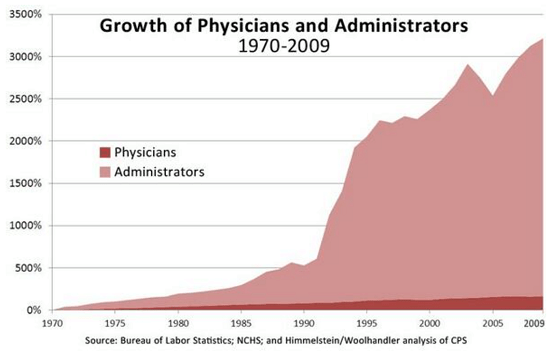
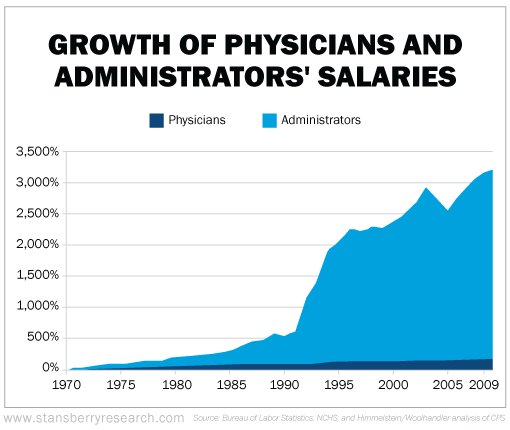
Meanwhile, the number of administrators increases, soaking up the system’s funding with endlessly expanding compliance data entry, reports, etc., all of which adds additional burdens on those actually providing care.

There’s always enough money to increase administrators’ salaries, but not enough to maintain essential systems or hire more caregivers.

The Phantom Legion Problem plays out in many ways in modern bureaucracies. The number of sworn officers in a police department may appear adequate but if many are assigned to desks, the PD is not actually at full strength.

If administrators are advanced due to their PR and financial skills rather than on their competence in actually leading the organization, the Phantom Legion problem is already terminal. the rot starts at the top, and those actually carrying the weight fulfilling the organization’s mission burn out, get disgusted and give up.

The problem with The Phantom Legion Problem is there is every incentive to hide the decay of systemic competence and capability behind glowing annual reports and ginned-up numbers. Only those within the organization know the truth and they are under pressure to keep quiet, lest they find themselves on the slow train to Siberia.

Here is how systems decay and collapse: everything is reported at full strength, but the numbers don’t reflect reality. Everything is presented as rock-solid until it falls apart. Everyone outside the system is in disbelief while insiders wondered how it held together as long as it did.

The New Abnormal: Authoritarian Control Freaks Want to Micromanage Our Lives

By By John & Nisha Whitehead

Source: The Rutherford Institute

“Man is born free but everywhere is in chains.”—Jean-Jacques Rousseau

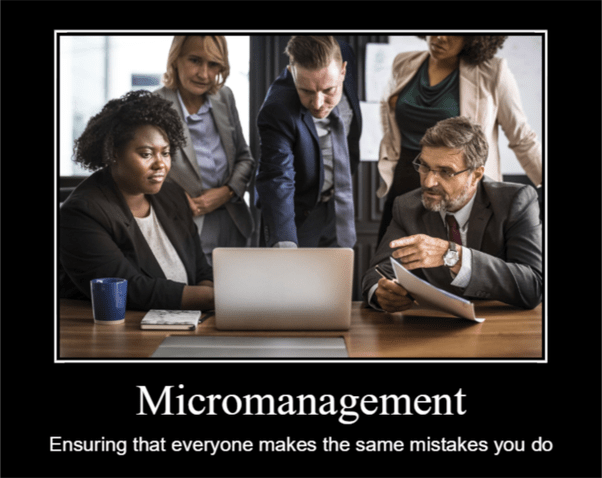
Authoritarian control freaks out to micromanage our lives have become the new normal or, to be more accurate, the new abnormal when it comes to how the government relates to the citizenry.

This overbearing despotism, which pre-dates the COVID-19 hysteria, is the very definition of a Nanny State, where government representatives (those elected and appointed to work for us) adopt the authoritarian notion that the government knows best and therefore must control, regulate and dictate almost everything about the citizenry’s public, private and professional lives.

Indeed, it’s a dangerous time for anyone who still clings to the idea that freedom means the right to think for yourself and act responsibly according to your best judgment.

This tug-of-war for control and sovereignty over our selves impacts almost every aspect of our lives, whether you’re talking about decisions relating to our health, our homes, how we raise our children, what we consume, what we drive, what we wear, how we spend our money, how we protect ourselves and our loved ones, and even who we associate with and what we think.

As Liz Wolfe writes for Reason, “Little things that make people’s lives better, tastier, and less tedious are being cracked down on by big government types in federal and state governments.”

You can’t even buy a stove, a dishwasher, a showerhead, a leaf blower, or a lightbulb anymore without running afoul of the Nanny State.

In this way, under the guise of pseudo-benevolence, the government has meted out this bureaucratic tyranny in such a way as to nullify the inalienable rights of the individual and limit our choices to those few that the government deems safe enough.

Yet limited choice is no choice at all. Likewise, regulated freedom is no freedom at all.

Indeed, as a study by the Cato Institute concludes, for the average American, freedom has declined generally over the past 20 years. As researchers William Ruger and Jason Sorens explain, “We ground our conception of freedom on an individual rights framework. In our view, individuals should be allowed to dispose of their lives, liberties, and property as they see fit, so long as they do not infringe on the rights of others.”

The overt signs of the despotism exercised by the increasingly authoritarian regime that passes itself off as the United States government (and its corporate partners in crime) are all around us: censorship, criminalizing, shadow banning and de-platforming of individuals who express ideas that are politically incorrect or unpopular; warrantless surveillance of Americans’ movements and communications; SWAT team raids of Americans’ homes; shootings of unarmed citizens by police; harsh punishments meted out to schoolchildren in the name of zero tolerance; community-wide lockdowns and health mandates that strip Americans of their freedom of movement and bodily integrity; armed drones taking to the skies domestically; endless wars; out-of-control spending; militarized police; roadside strip searches; privatized prisons with a profit incentive for jailing Americans; fusion centers that spy on, collect and disseminate data on Americans’ private transactions; and militarized agencies with stockpiles of ammunition, to name some of the most appalling.

Yet as egregious as these incursions on our rights may be, it’s the endless, petty tyrannies—the heavy-handed, punitive-laden dictates inflicted by a self-righteous, Big-Brother-Knows-Best bureaucracy on an overtaxed, overregulated, and underrepresented populace—that illustrate so clearly the degree to which “we the people” are viewed as incapable of common sense, moral judgment, fairness, and intelligence, not to mention lacking a basic understanding of how to stay alive, raise a family, or be part of a functioning community.

When the dictates of petty bureaucrats carry greater weight than the individual rights of the citizenry, we’re in trouble, folks.

Federal and state governments have used the law as a bludgeon to litigate, legislate and micromanage our lives through overregulation and overcriminalization.

This is what happens when bureaucrats run the show, and the rule of law becomes little more than a cattle prod for forcing the citizenry to march in lockstep with the government.

Overregulation is just the other side of the coin to overcriminalization, that phenomenon in which everything is rendered illegal, and everyone becomes a lawbreaker.

You don’t have to look far to find abundant examples of Nanny State laws that infantilize individuals and strip them of their ability to decide things for themselves. Back in 2012, then-New York Mayor Michael Bloomberg infamously proposed a ban on the sale of sodas and large sugary drinks in order to guard against obesity. Other localities enacted bans on texting while jaywalking, wearing saggy pants, having too much mud on your car, smoking outdoors, storing trash in your car, improperly sorting your trash, cursing within earshot of others, or screeching your tires.

Yet while there are endless ways for the Nanny State to micromanage our lives, things become truly ominous when the government adopts mechanisms enabling it to monitor us for violations in order to enforce its many laws.

Nanny State, meet the all-seeing, all-knowing Surveillance State and its sidekick, the muscle-flexing Police State.

You see, in an age of overcriminalization—when the law is wielded like a hammer to force compliance to the government’s dictates whatever they might be—you don’t have to do anything “wrong” to be fined, arrested or subjected to raids and seizures and surveillance.

You just have to refuse to march in lockstep with the government.

As policy analyst Michael Van Beek warns, the problem with overcriminalization is that there are so many laws at the federal, state and local levels—that we can’t possibly know them all.

“It’s also impossible to enforce all these laws. Instead, law enforcement officials must choose which ones are important and which are not. The result is that they pick the laws Americans really must follow, because they’re the ones deciding which laws really matter,” concludes Van Beek. “Federal, state and local regulations — rules created by unelected government bureaucrats — carry the same force of law and can turn you into a criminal if you violate any one of them… if we violate these rules, we could be prosecuted as criminals. No matter how antiquated or ridiculous, they still carry the full force of the law. By letting so many of these sit around, just waiting to be used against us, we increase the power of law enforcement, which has lots of options to charge people with legal and regulatory violations.”

This is the police state’s superpower: empowered by the Nanny State, it has been vested with the authority to make our lives a bureaucratic hell.

Indeed, if you were unnerved by the rapid deterioration of privacy under the Surveillance State, prepare to be terrified by the surveillance matrix that will be ushered in by the Nanny State working in tandem with the Police State.

The government’s response to COVID-19 saddled us with a Nanny State inclined to use its draconian pandemic powers to protect us from ourselves.

The groundwork laid with COVID-19 is a prologue to what will become the police state’s conquest of a new, relatively uncharted, frontier: inner space, specifically, the inner workings (genetic, biological, biometric, mental, emotional) of the human race.

Consider how many more ways the government could “protect us” from ourselves under the guise of public health and safety.

For instance, under the guise of public health and safety, the government could use mental health care as a pretext for targeting and locking up dissidents, activists and anyone unfortunate enough to be placed on a government watch list.

When combined with advances in mass surveillance technologies, artificial intelligence-powered programs that can track people by their biometrics and behavior, mental health sensor data (tracked by wearable data and monitored by government agencies such as HARPA), threat assessments, behavioral sensing warnings, precrime initiatives, red flag gun laws, and mental health first-aid programs aimed at training gatekeepers to identify who might pose a threat to public safety, these preemptive mental health programs could well signal a tipping point in the government’s efforts to penalize those engaging in so-called “thought crimes.”

This is how it begins.

On a daily basis, Americans are already relinquishing (in many cases, voluntarily) the most intimate details of who we are—their biological makeup, our genetic blueprints, and our biometrics (facial characteristics and structure, fingerprints, iris scans, etc.)—in order to navigate an increasingly technologically-enabled world.

Having conditioned the population to the idea that being part of society is a privilege and not a right, such access could easily be predicated on social credit scores, the worthiness of one’s political views, or the extent to which one is willing to comply with the government’s dictates, no matter what they might be.

COVID-19 with its talk of mass testing, screening checkpoints, contact tracing, immunity passports, and snitch tip lines for reporting “rule breakers” to the authorities was a preview of what’s to come.

We should all be leery and afraid.

At a time when the government has a growing list—shared with fusion centers and law enforcement agencies—of ideologies, behaviors, affiliations and other characteristics that could flag someone as suspicious and result in their being labeled potential enemies of the state, it won’t take much for any of us to be considered outlaws or terrorists.

After all, the government likes to use the words “anti-government,” “extremist” and “terrorist” interchangeably. The Department of Homeland Security broadly defines extremists as individuals “that are mainly antigovernment, rejecting federal authority in favor of state or local authority, or rejecting government authority entirely.”

At some point, being an individualist will be considered as dangerous as being a terrorist.

When anything goes when it’s done in the name of national security, crime fighting and terrorism, “we the people” have little to no protection against SWAT team raids, domestic surveillance, police shootings of unarmed citizens, indefinite detentions, and the like, whether or  not you’ve done anything wrong.

In an age of overcriminalization, you’re already a criminal.

All the government needs is proof of your law-breaking. They’ll get it, too.

Whether it’s through the use of surveillance software such as ShadowDragon that allows police to watch people’s social media activity, or technology that uses a home’s WiFi router and smart appliances to allow those on the outside to “see” throughout your home, it’s just a matter of time.

As I make clear in my book Battlefield America: The War on the American People and in its fictional counterpart The Erik Blair Diaries, it’s no longer a question of whether the government will lock up Americans for defying one of its numerous mandates but when.

What Happens When the Competent Opt Out?

By Charles Hugh Smith

Source: Of Two Minds

By this terminal stage, the competent have been driven out, quit or burned out.

What happens with the competent retire, burn out or opt out? It’s a question few bother to ask because the base assumption is that there is an essentially limitless pool of competent people who can be tapped or trained to replace those who retire, burn out or opt out, i.e. quit in favor of a lifestyle that doesn’t require much in the way of income or stress.

These assumptions are no longer valid. A great many essential services that are tightly bound to other essential services are cracking as the competent decide (or realize) they’re done with the rat-race.

The drivers of the Competent Opting Out are obvious yet difficult to quantify. Those retiring, burning out and opting out will deny they’re leaving for these reasons because it’s not politic to be so honest and direct. They will offer time-honored dodges such as “pursue other opportunities” or “family obligations.”

1. The steady increase in workloads, paperwork, compliance and make-work (i.e. work that has nothing to do with the institution’s actual purpose and mission) that lead to burnout. There is only so much we can accomplish, and if we’re burdened with ever-increasing demands for paperwork, compliance, useless meetings, training sessions, etc., then we no longer have the time or energy to perform our productive work.

I wrote a short book on my experience of Burnout. I believe it is increasingly common in jobs that demand responsibility and accountability yet don’t provide the tools and time to fulfill these demands. Once you’ve burned out, you cannot continue. That option no longer exists.

For others, the meager rewards simply aren’t worth the sacrifices required. The theme song playing in the background is the Johnny Paycheck classic Take this job and shove it.

Healthcare workloads, paperwork and compliance are one example of many. Failure to complete all the make-work can have dire consequences, so it becomes necessary to do less “real work” in order to complete all the work that has little or nothing to do with actual patient care. Alternatively, the workload expands to the point that it breaks the competent and they leave.

2. Loss of autonomy, control, belonging, rewards, accomplishment and fairness. Professor Christina Malasch pioneered research on the causes of burnout, which can be summarized as any work environment that reduces autonomy, control, belonging, rewards, accomplishment and fairness. Despite a near-infinite avalanche of corporate happy-talk (“we’re all family,”–oh, barf) this describes a great many work environments in the US: in a word, depersonalized. Everyone is a replaceable cog in a great impersonal machine optimized to maximize profits for shareholders.

3. The politicization of the work environment. Let’s begin by distinguishing between policies enforcing equal opportunity, pay, standards and accountability, policies required to fulfill the legal promises embedded in the nation’s social contract, and politicization, which demands allegiance and declarations of loyalty to political ideologies that have nothing to do with the work being done or the standards of accountability necessary to the operation of the complex institution or enterprise.

The problem with politicization is that it is 1) intrinsically inauthentic and 2) it substitutes the ideologically pure for the competent. Rigid, top-down hierarchies (including not just Communist regimes but corporations and institutions) demand expressions of fealty (the equivalent of loyalty oaths) and compliance to ideological demands (check the right boxes of party indoctrination, “self-criticism,” “struggle sessions,” etc.).

The correct verbiage and ideological enthusiasm become the basis of advancement rather than accountability to standards of competence. The competent are thus replaced with the politically savvy. Since competence is no longer being selected for, it’s replaced by what is being selected for, political compliance.

It doesn’t matter what flavor of ideological purity holds sway–conservative, progressive, communist or religious–all fatally erode competence by selecting for ideological compliance. Everyone knows the enthusiasm is inauthentic and only for show, but artifice and inauthenticity are perfectly adequate for the politicization taskmasters.

4. The competent must cover for the incompetent. As the competent tire of the artifice and make-work and quit, the remaining competent must work harder to keep everything glued together. Their commitment to high standards and accountability are their undoing, as the slack-masters and incompetent either don’t care (“I’m just here to qualify for my pension”) or they’ve mastered the processes of masking their incompetence, often by blaming the competent or the innocent for their own failings.

This additional workload crushes the remaining competent who then burn out and quit, go on disability or opt out, changing their lifestyle to get by on far less income, work, responsibility and far less exposure to the toxic work environments created by depersonalization, politicization and the elevation of the incompetent.

5. As the competent leadership leaves, the incompetent takes the reins, blind to their own incompetence. It all looked so easy when the competent were at the helm, but reality is a cruel taskmaster, and all the excuses that worked as an underling wear thin once the incompetent are in leadership roles.

By this terminal stage, the competent have been driven out, quit or burned out. There’s only slack-masters and incompetent left, and the toxic work environment has been institutionalized, so no competent individual will even bother applying, much less take a job doomed to burnout and failure.

This is why systems are breaking down before our eyes and why the breakdowns will spread with alarming rapidity due the tightly bound structure of complex systems.

A Nanny State Idiocracy: When the Government Thinks It Knows Best

By John & Nisha Whitehead

Source: The Rutherford Institute

“Whether the mask is labeled fascism, democracy, or dictatorship of the proletariat, our great adversary remains the apparatus—the bureaucracy, the police, the military.”—Simone Weil, French philosopher

It’s hard to say whether we’re dealing with a kleptocracy (a government ruled by thieves), a kakistocracy (a government run by unprincipled career politicians, corporations and thieves that panders to the worst vices in our nature and has little regard for the rights of American citizens), or if we’ve gone straight to an idiocracy

For instance, an animal welfare bill introduced in the Florida state legislature would ban the sale of rabbits in March and April, prohibit cat owners from declawing their pets, make it illegal for dogs to stick their heads out of car windows, force owners to place dogs in a harness or in a pet seatbelt when traveling in a car, and require police to create a public list of convicted animal abusers.

A Massachusetts law prohibits drivers from letting their cars idle for more than five minutes on penalty of a $100 fine ($500 for repeat offenders), even in the winter. You can also be fined $20 or a month in jail for scaring pigeons.

This overbearing Nanny State despotism is what happens when government representatives (those elected and appointed to work for us) adopt the authoritarian notion that the government knows best and therefore must control, regulate and dictate almost everything about the citizenry’s public, private and professional lives.

The government’s bureaucratic attempts at muscle-flexing by way of overregulation and overcriminalization have reached such outrageous limits that federal and state governments now require on penalty of a fine that individuals apply for permission before they can grow exotic orchids, host elaborate dinner parties, gather friends in one’s home for Bible studies, give coffee to the homeless, let their kids manage a lemonade stand, keep chickens as pets, or braid someone’s hair, as ludicrous as that may seem.

Consider, for example, that businesses in California were ordered to designate an area of the children’s toy aisle “gender-neutral” or face a fine, whether or not the toys sold are traditionally marketed to girls or boys such as Barbies and Hot Wheels. California schools are prohibited from allowing students to access websites, novels or religious works that reflect negatively on gays. And while Californians are free to have sex with whomever they choose (because that’s none of the government’s business), removing a condom during sex without consent could make you liable for general, special and punitive damages.

It’s getting worse.

Almost every aspect of American life today—especially if it is work-related—is subject to this kind of heightened scrutiny and ham-fisted control, whether you’re talking about aspiring “bakers, braiders, casket makers, florists, veterinary masseuses, tour guides, taxi drivers, eyebrow threaders, teeth whiteners, and more.”

For instance, whereas 70 years ago, one out of every 20 U.S. jobs required a state license, today, almost 1 in 3 American occupations requires a license.

The problem of overregulation has become so bad that, as one analyst notes, “getting a license to style hair in Washington takes more instructional time than becoming an emergency medical technician or a firefighter.”

This is what happens when bureaucrats run the show, and the rule of law becomes little more than a cattle prod for forcing the citizenry to march in lockstep with the government.

Overregulation is just the other side of the coin to overcriminalization, that phenomenon in which everything is rendered illegal and everyone becomes a lawbreaker.

As policy analyst Michael Van Beek warns, the problem with overcriminalization is that there are so many laws at the federal, state and local levels—that we can’t possibly know them all.

“It’s also impossible to enforce all these laws. Instead, law enforcement officials must choose which ones are important and which are not. The result is that they pick the laws Americans really must follow, because they’re the ones deciding which laws really matter,” concludes Van Beek. “Federal, state and local regulations — rules created by unelected government bureaucrats — carry the same force of law and can turn you into a criminal if you violate any one of them… if we violate these rules, we could be prosecuted as criminals. No matter how antiquated or ridiculous, they still carry the full force of the law. By letting so many of these sit around, just waiting to be used against us, we increase the power of law enforcement, which has lots of options to charge people with legal and regulatory violations.”

This is the police state’s superpower: it has been vested with the authority to make our lives a bureaucratic hell.

That explains how a fisherman can be saddled with 20 years’ jail time for throwing fish that were too small back into the water. Or why police arrested a 90-year-old man for violating an ordinance that prohibits feeding the homeless in public unless portable toilets are also made available.

The laws can get downright silly. For instance, you could also find yourself passing time in a Florida slammer for such inane activities as singing in a public place while wearing a swimsuit, breaking more than three dishes per day, farting in a public place after 6 pm on a Thursday, and skateboarding without a license.

However, the consequences are all too serious for those whose lives become grist for the police state’s mill. A few years back, police raided barber shops in minority communities, resulting in barbers being handcuffed in front of customers, and their shops searched without warrants. All of this was purportedly done in an effort to make sure that the barbers’ licensing paperwork was up to snuff.

In this way, America has gone from being a beacon of freedom to a locked down nation. And “we the people,” sold on the idea that safety, security and material comforts are preferable to freedom, have allowed the government to pave over the Constitution in order to erect a concentration camp.

We labor today under the weight of countless tyrannies, large and small, carried out in the so-called name of the national good by an elite class of governmental and corporate officials who are largely insulated from the ill effects of their actions.

We increasingly find ourselves badgered, bullied and browbeaten into bearing the brunt of their arrogance, paying the price for their greed, suffering the backlash for their militarism, agonizing as a result of their inaction, feigning ignorance about their backroom dealings, overlooking their incompetence, turning a blind eye to their misdeeds, cowering from their heavy-handed tactics, and blindly hoping for change that never comes. 

The overt signs of the despotism exercised by the increasingly authoritarian regime that passes itself off as the United States government (and its corporate partners in crime) are all around us: censorship, criminalizing, shadow banning and de-platforming of individuals who express ideas that are politically incorrect or unpopular; warrantless surveillance of Americans’ movements and communications; SWAT team raids of Americans’ homes; shootings of unarmed citizens by police; harsh punishments meted out to schoolchildren in the name of zero tolerance; community-wide lockdowns and health mandates that strip Americans of their freedom of movement and bodily integrity; armed drones taking to the skies domestically; endless wars; out-of-control spending; militarized police; roadside strip searches; privatized prisons with a profit incentive for jailing Americans; fusion centers that spy on, collect and disseminate data on Americans’ private transactions; and militarized agencies with stockpiles of ammunition, to name some of the most appalling.

Yet as egregious as these incursions on our rights may be, it’s the endless, petty tyrannies—the heavy-handed, punitive-laden dictates inflicted by a self-righteous, Big-Brother-Knows-Best bureaucracy on an overtaxed, overregulated, and underrepresented populace—that illustrate so clearly the degree to which “we the people” are viewed as incapable of common sense, moral judgment, fairness, and intelligence, not to mention lacking a basic understanding of how to stay alive, raise a family, or be part of a functioning community.

In exchange for the promise of an end to global pandemics, lower taxes, lower crime rates, safe streets, safe schools, blight-free neighborhoods, and readily accessible technology, health care, water, food and power, we’ve opened the door to lockdowns, militarized police, government surveillance, asset forfeiture, school zero tolerance policies, license plate readers, red light cameras, SWAT team raids, health care mandates, overcriminalization, overregulation and government corruption.

In the end, such bargains always turn sour.

We relied on the government to help us safely navigate national emergencies (terrorism, natural disasters, global pandemics, etc.) only to find ourselves forced to relinquish our freedoms on the altar of national security, yet we’re no safer (or healthier) than before.

We asked our lawmakers to be tough on crime, and we’ve been saddled with an abundance of laws that criminalize almost every aspect of our lives. So far, we’re up to 4500 criminal laws and 300,000 criminal regulations that result in average Americans unknowingly engaging in criminal acts at least three times a day. For instance, the family of an 11-year-old girl was issued a $535 fine for violating the Federal Migratory Bird Act after the young girl rescued a baby woodpecker from predatory cats.

We wanted criminals taken off the streets, and we didn’t want to have to pay for their incarceration. What we’ve gotten is a nation that boasts the highest incarceration rate in the world, with more than 2.3 million people locked up, many of them doing time for relatively minor, nonviolent crimes, and a private prison industry fueling the drive for more inmates, who are forced to provide corporations with cheap labor.

A special report by CNBC breaks down the national numbers:

One out of 100 American adults is behind bars — while a stunning one out of 32 is on probation, parole or in prison. This reliance on mass incarceration has created a thriving prison economy. The states and the federal government spend about $74 billion a year on corrections, and nearly 800,000 people work in the industry.

We wanted law enforcement agencies to have the necessary resources to fight the nation’s wars on terror, crime and drugs. What we got instead were militarized police decked out with M-16 rifles, grenade launchers, silencers, battle tanks and hollow point bullets—gear designed for the battlefield, more than 80,000 SWAT team raids carried out every year (many for routine police tasks, resulting in losses of life and property), and profit-driven schemes that add to the government’s largesse such as asset forfeiture, where police seize property from “suspected criminals.”

According to the Washington Post, these funds have been used to buy guns, armored cars, electronic surveillance gear, “luxury vehicles, travel and a clown named Sparkles.” Police seminars advise officers to use their “department wish list when deciding which assets to seize” and, in particular, go after flat screen TVs, cash and nice cars.

In Florida, where police are no strangers to asset forfeiture, Florida police have been carrying out “reverse” sting operations, where they pose as drug dealers to lure buyers with promises of cheap cocaine, then bust them, and seize their cash and cars. Over the course of a year, police in one small Florida town seized close to $6 million using these entrapment schemes.

We fell for the government’s promise of safer roads, only to find ourselves caught in a tangle of profit-driven red light cameras, which ticket unsuspecting drivers in the so-called name of road safety while ostensibly fattening the coffers of local and state governments. Despite widespread public opposition, corruption and systemic malfunctions, these cameras—used in 24 states and Washington, DC—are particularly popular with municipalities, which look to them as an easy means of extra cash.

One small Florida town, population 8,000, generates a million dollars a year in fines from these cameras. Building on the profit-incentive schemes, the cameras’ manufacturers are also pushing speed cameras and school bus cameras, both of which result in heft fines for violators who speed or try to go around school buses.

As I make clear in my book Battlefield America: The War on the American People and in its fictional counterpart The Erik Blair Diaries, this is what happens when the American people get duped, deceived, double-crossed, cheated, lied to, swindled and conned into believing that the government and its army of bureaucrats—the people we appointed to safeguard our freedoms—actually have our best interests at heart.

The problem with these devil’s bargains is that there is always a catch, always a price to pay for whatever it is we valued so highly as to barter away our most precious possessions.

We’ve bartered away our right to self-governance, self-defense, privacy, autonomy and that most important right of all: the right to tell the government to “leave me the hell alone.”

No More Mushrooms: Government is Bad

By Kirkpatrick Sale

Source: CounterPunch

In a book just recently published,  I began with a chapter on “Why Government is Bad.”  I first decided that this statement would be obvious to everyone.  After all, look around: city, state, national, these governments are all obvious malfunctioning, inept, and largely corrupted operations that clearly are not solving the important problems of our lives today—health, education (higher and lower), housing, transportation, energy, agriculture, civic participation, popular culture—nor the crises that threaten our futures, including global overheating, more new diseases, rising oceans, species extermination, depleting forests…–but need I go on?

But then I realized that though this all seemed so obvious to me,  most people live lives saturated with the propaganda that government is good, necessary for public order and social harmony and all that, and it has been with us as the foundation of our civilizations for centuries—and a lot of people, well really most  people, believe that’s true.  So I decided I had to lay out the reasons why government is wrong.

Start with what a government is.  At a minimum, it is a system of control over the members of a political body—Max Weber said that it was “the monopoly of the legitimate use of physical force within a given territory”—that includes the power to levy and collect taxes and raise and maintain an army.  You will notice the centrality of “control,” and its ancillary, “power.”

Now you can either like the idea of a large and usually distant body telling you what to do, how much money you can keep, whether you need to serve in its army, and such other limitations on your life as it may think of from time to time. Or feel that the fundamental values in a political society are, by contrast, individual liberty, familial integrity, and communal sovereignty, none of which are taken care of by government, nor even in the purview of  government. If one values those, one knows or very quickly comes to see that government is wrong: by its nature it is in the business of control, the antithesis of liberty, it calculates in terms of populations, not families, it takes as its form the nation-state or empire, caring little about community.  And its instrument is power, the power to create laws or edicts, to regulate, to tax, to raise armies, to declare war, to control the public in fact in any way that it sees fit or can get away with without resistance or rebellion.

But there is more: government by its nature tends to get bigger and stronger, to enlarge its scope, to expand its reach.  The rulers of any government, if only to expand the welfare of all, need continually to increase taxes and expand bureaucracy, and sometimes, again in the interest of all, to conquer other lands and rule other people.  Individual rulers may not hunger for more influence but they are at the head of a system—of princes and priests, of generals and bureaucrats, of satraps and underlords, of bankers and brokers—that does, with the result that inevitably the ruler oversees more power.

And more: government by nature seeks to centralize that power and  diminish other nodes where power may be exerted.  No matter what rules and constrictions may be devised—and the U.S. Founding Fathers, for example, devised many of them—they are insufficient to keep a central government, which accumulates wealth through taxes, from increasing its control over lesser forms of government and diminishing their purses and their powers; the more it is the piper, the more it calls the tune.  One reason that governments love wars is that it enables them to draw increasing authority, and taxes, from smaller entities, making lords into commanders, states into counties, effectively nullifying whatever influence lesser bodies and offices may have had.

But even more: modern governments, those that have developed since the onset and adoption of mechanical technology and professionalism—let’s say from the beginning of the 20th century—have magnified the errors of systems of state control.  They managed to generate two devastating world wars at the cost of millions of lives, to create systems of totalitarianism that cost 100 million more, to build welfare-warfare states of every description, and to create a world that is perpetually on the brink of a war that can annihilate us all.

So there is the indictment:  government is a system of human organization that lessens individual liberty, nullifies family, and emaciates community, invariably working to enlarge its power at the expense of other organizations, and inevitably grows to threaten human lives.  It does not matter what kinds of people are running it, what various combinations of checks and balances may be tried, whatever benefits it may be attempting to achieve, it cannot escape its inherent nature: if the Founding Fathers, among the brightest and most civic-minded cohorts ever assembled, could not devise a system to prevent increased authoritarianism and centralization, with three separate branches designed to restrain each other and a series of ten explicit limits on its reach, it may be said that no one could.  As the anti-Federalists, learned men who had studied the character of governments throughout history, warned them at the time.

I leave you with the wisdom of one Arthur Arnould, a Frenchman, from the February 1896 edition of a publication called The Rebel, put out in Boston:

An individual eats some mushrooms and is poisoned by them. The doctor gives him an emetic and cures him. He goes to the cook and says to him:

—“The mushrooms in white sauce made me ill yesterday! To­morrow you must prepare them with brown sauce.”

Our individual eats the mushrooms in brown sauce. Second poisoning, second visit of the doctor, and second cure by the emetic.

—“By Jove!” says he, to the cook, “I want no more mushrooms with brown or white sauce, to-morrow you must fry them.”

Third poisoning, with accompaniment of doctor and emetic.

—“This time,” cries our friend, “they shall not catch me again! . . . to-morrow you must preserve them in sugar.”

The preserved mushrooms poison him again.

But that man is an imbecile! you say. Why does he not throw away his mushrooms and stop eating them?

Be less severe, I beg you, because that imbecile is yourself, it is ourselves, it is all humanity.

Here are four to five thousand years that you try the State—that is to say Power, Authority, Government—in all kinds of sauces, that you make, unmake, cut, and pare down, constitutions of all patterns, and still the poisoning goes on. You have tried legitimate royalty, manufac­tured royalty, parliamentary royalty, republics unitary and centralized, and the only thing from which you suffer, the despotism, the dictature of the State, you have scrupulously respected and carefully preserved.

The Recession Will Be Unevenly Distributed

By Charles Hugh Smith

Source: Of Two Minds

Those households, enterprises and organizations that have no debt, a very low cost basis and a highly flexible, adaptable structure will survive and even prosper.

The coming recession will be unevenly distributed, meaning that it will devastate many while leaving others relatively untouched. A few will actually do better in the recession than they did in the so-called “recovery.”

I realize many of the concepts floated here are cryptic and need a fuller explanation: the impact of owning differing kinds of capital, fragmentation, asymmetry, opacity, etc. ( 2019: Fragmented, Unevenly Distributed, Asymmetric, Opaque).

These dynamics guarantee a highly uneven distribution of recessionary consequences and whatever rewards are generated will be reaped by a few.

One aspect of the uneven distribution is that sectors that were relatively protected in recent recessions will finally feel the impact of this one. Large swaths of the tech sector (which is composed of dozens of different industries and services) that were devastated in the dot-com recession of 2000-02 came through the 2008-09 recession relatively unscathed.

This time it will be different. The build-out of mobile telephony merging with the web has been completed, social media has reached the stagnation phase of the S-Curve and many technologies that are widely promoted as around the corner are far from profitability.

Then there’s slumping global demand for mobile phones and other consumer items that require silicon (processors) and other tech components: autos, to name just one major end-user of electronics.

The net result will be mass layoffs globally across much of the tech sector.Research is nice but it doesn’t pay the bills today or quiet the restive shareholders as profits tank.

The public sector is also ripe for uneven distribution of recessionary impacts.Local government and its agencies in boomtowns such as the SF Bay Area, Seattle, Los Angeles, NYC, etc. have feasted on soaring tax revenues and multi-billion dollar municipal bonds.

The Powers That Be in these boomtowns are confident that the good times will never end, and so the modest rainy-day funds they’ve set aside are widely viewed as immense bulwarks against recession when in reality they are mere sand castles that will melt away in the first wave.

A $1 billion reserve looks impressive in good times but not when annual deficits soar to $10 billion. Local governments depend on various revenue streams, and most rely on a mix of property, sales and income taxes, both wages (earned) and capital gains (unearned). All of these will be negatively impacted in the next recession.

Local governments are especially prone to The Ratchet Effect, the dynamic in which expenses move higher as revenues climb but the organization is incapable of shrinking, i.e. it only knows how to expand. This defines government as an organizational type.

Inefficiencies (including low-level corruption and fraud) pile up and are offset with higher revenues. When revenue crashes, the system is incapable of eliminating the inefficiencies or reducing benefits and headcount.

I call the endgame of The Ratchet Effect the Rising Wedge Model of Breakdown:

The Ratchet Effect is visible in organizations of all scales, from households to sprawling bureaucracies. The core of the Ratchet Effect is the ease with which the cost basis of an organization rises and the extreme resistance to any reduction in funding.

The psychology of this resistance is easy to understand: everyone hired in the expansion will fight to keep their job, regardless of the needs of the organization or the larger society. Every individual, department and division will fight with the fierceness of a cornered animal to retain their share of the budget, for their self-interest trumps the interests of the organization or society.

Since each “ratchet” will fight with desperate energy to resist being cut while those attempting to do the cutting are simply following directives, the group that has pulled out all the stops to resist cuts will typically win bureaucratic battles.

Broad-based cuts trigger Internecine Warfare Between Protected Fiefdoms as entrenched vested interests battle to shift the cuts to some politically less favored fiefdom. Bureaucracies facing cuts quickly shift resources to protecting their budget, leaving their mission on auto-control. (The Lifecycle of Bureaucracy December 2, 2010)

These dynamics create a rising wedge in which “minimum” costs continue to rise over time even if modest cuts are imposed from time to time. The eventual consequence is a cost basis that is so high that even a modest reduction collapses the organization.

In other words, incremental reductions and reforms have zero impact on the endgame. The organization has become so brittle that any structural reform triggers a breakdown.

Those households, enterprises and organizations that have no debt, a very low cost basis and a highly flexible, adaptable structure will survive and even prosper. Those with high debt loads, high fixed expenses and inflexible responses will find incremental reductions and reforms will have little impact on the endgame of breakdown and collapse.

This is one of the core topics of my latest book, Pathfinding our Destiny: Preventing the Final Fall of Our Democratic Republic.

Here’s a household example of the type of organization that won’t just survive but thrive in the recession: a household with $100,000 in revenues from multiple income sources and fixed expenses of $35,000, no debt and a management team (the spouses/adults) that’s willing to implement radical changes in lifestyle, expenses and work at the first disruption of revenues. The household that doesn’t just survive but thrives sees crisis / disruption as an opportunity, not a disaster to be mitigated with denial and wishful thinking.

The USA Is Now a 3rd World Nation

By Charles Hugh Smith

Source: Of Two Minds

I know it hurts, but the reality is painfully obvious: the USA is now a 3rd World nation.

Dividing the Earth’s nations into 1st, 2nd and 3rd world has fallen out of favor; apparently it offended sensibilities. It has been replaced by the politically correctdeveloped and developing nations, a terminology which suggests all developing nations are on the pathway to developed-nation status.

What’s been lost in jettisoning the 1st, 2nd and 3rd world categories is the distinction between developing (2nd world) and dysfunctional states (3rd world), states we now label “failed states.”

But 3rd World implied something quite different from “failed state”: failed state refers to a failed government of a nation-state, i.e. a government which no longer fulfills the minimum duties of a functional state: basic security, rule of law, etc.

3rd World referred to a nation-state which was dysfunctional and parasitic for the vast majority of its residents but that worked extremely well for entrenched elites who controlled most of the wealth and political power. Unlike failed states, which by definition are unstable, 3rd World nations are stable, for the reason that they work just fine for the elites who dominate the wealth, power and machinery of governance.

Here are the core characteristics of dysfunctional but stable states that benefit the entrenched few at the expense of the many, i.e. 3rd Worldnations:

1. Ownership of stocks and other assets is highly concentrated in entrenched elites. The average household is disconnected from the stock market and other measures of wealth; only a thin sliver of households own enough financial/speculative wealth to make an actual difference in their lives.

2. The infrastructure of the nation used by the many is poorly maintained and costly to operate as entrenched elites plunder the funding to pad their payrolls, pensions and sweetheart/insider contracts.

3. The financial/political elites have exclusive access to parallel systems of transport, healthcare, education, etc. The elites avoid trains, subways, lenders, coach-class air transport, standard healthcare and the rest of the decaying, dysfunctional systems they own that extract wealth from the debt-serfs.

They fly on private aircraft, have their own healthcare and legal services, use their privileges to get their offspring into elite universities and institutions and have access to elite banking and lending services that are unavailable to their technocrat lackeys and enforcers.

4. The elites fund lavish monuments to their own glory disguised as “civic or national pride.” These monuments take the form of stadiums, palatial art museums, immense government buildings, etc. Meanwhile the rest of the day-to-day infrastructure decays in various states of dysfunction.

5. There are two classes that only interact in strictly controlled ways: the wealthy, who live in gated, guarded communities and who rule all the institutions, public and private, and the debt-serfs, who are divided into well-paid factotums, technocrat lackeys and enforcers who serve the interests of the entrenched elites and rest of the populace who own virtually nothing and have zero power.

The elites make a PR show of being a commoner only to burnish the absurd illusion that debt-serf votes actually matter. (They don’t.)

6. Cartels and quasi-monopolies are parasitically extracting the wealth of the nation for their elite owners and managers. Google: quasi-monopoly. Facebook: quasi-monopoly. Healthcare: cartel. Banking: cartel. National defense: cartel. National Security: cartel. Corporate mainstream media: cartel. Higher education: cartel. Student loans: cartel. I think you get the point: every key institution or function is controlled by cartels or quasi-monopolies that serve the interests of the few via parasitic exploitation of the powerless.

7. The elites use the extreme violence and repressive powers of the government to suppress, marginalize and/or destroy any dissent. There are two systems of “law”: one for the elites ($10 million penalties for ripping off the public for $10 billion, no personal liability for outright fraud) and one for the unprotected-unprivileged: “tenners” (10-year prison sentences) for minor drug infractions, renditions or assassinations (all “legal,” of course) and institutional forces of violence (bust down your door on the rumor you’ve got drugs, confiscate your car because we caught you with cash, so you must be a drug dealer, and so on, in sickening profusion).

8. Dysfunctional institutions with unlimited power to extract money via junk fees, licensing fees, parking tickets, penalties, late fees, etc., all without recourse. Mess with the extractive, parasitic bureaucracy and you’ll regret it: there’s no recourse other than another layer of well-paid self-serving functionaries that would make Kafka weep.

9. The well-paid factotums, bureaucrats, technocrat lackeys and enforcers who fatten their own skims and pensions at the expense of the public and slavishly serve the interests of the entrenched elites embrace the delusion that they’re “wealthy” and “the system is working great.” These deluded servants of the elites will defend the dysfunctional system because it serves their interests to do so.

The more dysfunctional the institution, the greater their power, so they actively increase the dysfunction at every opportunity.

The USA is definitively a 3rd World nation. Read the list above and then try to argue the USA is not a 3rd World nation. Try arguing against the facts displayed in this chart:

I know it hurts, but the reality is painfully obvious: the USA is now a 3rd World nation.


Kafka Warned Us

By

Source: CounterPunch

Kafka’s The Trial can be read in retrospect as a prelude to the Twentieth/Twenty-First century. Although probably not written as prophecy, Kafka’s short unfinished book nevertheless provides a road map to the terrors of the current Surveillance State.

As readers of CounterPunch are all too familiar, modern man, as a single individual, is at the mercy of the modern state and those who, lurking in semi-secrecy, direct it.

Kafka’s The Trial superbly conveys the unease of our current existential situation.

Early one morning, The Trial’s main protagonist, Joseph K, awakes to find that, totally unexpectedly, he has been arrested. Throughout the book he endeavors to find the reason for his arrest without any definite success.

However, what he does discover is a vast semi-secret bureaucracy/organizaton whose inner workings and outward displays of power and decision making remain opaque at best.

Initally, Joseph K, believes that he lives in a “Rechtsstaat” (a state where the rule of law is respected) and thus where it is expected that all civilized norms and laws are upheld.

Yet, he soon comes to see that he has lived in a state of fundamental error and illusion about the true nature of his existence.

What appeared to him as a well ordered and just state is, all of a sudden, revealed to be a capricious omnipotent octopus capable of strangling (in this case literally) anyone deemed to be, for whatever reason, expendable.

All law is suspended or, at least, made a mockery of. All that remains are the inner, turgid demands of power.

Joseph K. is convinced of his innocence. But his conviction is no match for the monolithic power that stands against him. He is eventually crushed, if not by his enemy’s repetitive legal machinations, then by his fatalistic far-reaching administrative power.

In the end, the “Organization” which Joseph K has confronted is almighty and can be controlled by neither appeals to law, logic, or custom. In this, modern man is in a similar situation.

He stands, at any moment, beneath the mercy of a gigantic machinery that, if it wills, can almost casually set into motion his utter annihilation. The devastation and erasure of ones past, present, and future self is an ever-present possible function of the modern state. Advances in technology and organization make such a function all the more easier.

How to combat this greatest threat to humankind’s liberty will make the difference of whether or not future generations live in a world of securely grounded freedom or if they will succumb “like a dog” to the increasingly totalitarian powers of what we call today: the Surveillance State.