As humans, we have evolved with the natural environment over millennia. We have learned what to eat and what not to eat, what to grow and how to grow it and our diets have developed accordingly. We have hunted, gathered, planted and harvested. Our overall survival as a species has been based on gradual, emerging relationships with the seasons, insects, soil, animals, trees and seeds. And out of these relationships, we have seen the development of communities whose rituals and bonds have a deep connection with food production and the natural environment.
However, over the last couple generations, agriculture and food production has changed more than it had done over previous millennia. These changes have involved massive social upheaval as communities and traditions have been uprooted and have entailed modifying what we eat, how we grow our food and what we apply to it. All of this has been driven by geopolitical concerns and powerful commercial interests with their proprietary chemicals and patented seeds. The process of neoliberal globalisation is accelerating the process as farmers are encouraged to produce for global supply chains dominated by transnational agribusiness.
Certain crops are now genetically engineered, the range of crops we grow has become less diverse, synthetic biocides have been poured on crops and soil and our bodies have been subjected to a chemical bombardment. We have arrived at a point where we have lost touch with our deep-rooted microbiological and social connection with nature and have developed an arrogance that has placed ‘man’ above the environment and all other species. One of the consequences is that we have paid an enormous price in terms of the consequent social, environmental and health-related devastation.
Despite the promise and potential of science, it has too often in modern society become a tool of vested interests, an ideology wrapped in the vestiges of authority and the ‘superstition’ that its corporate-appointed priesthood should not be challenged nor questioned. Instead of liberating humankind, it has now too often become a tool of deception in the hands of agribusiness conglomerates which make up the oligopoly that controls what is an increasingly globalised system of modern food and agriculture.
These corporations have successfully instituted the notion that the mass application of biocides, monocropping and industrial agriculture are necessary and desirable. They are not. However, these companies have used their science and propaganda to project certainty in order to hide the fact that they have no real idea what their products and practices are doing to human health or the environment (and in cases when they do know, they do their best to cover it up or hide behind the notion of ‘commercial confidentiality’).
Soil microbiologists are still trying to fully comprehend soil microbes and how they function as anintegrated network in relation to plants. The agrochemical sector has little idea of how their biocides have affected soils. It merely churns out public relations spin that their inputs are harmless for soil, plants and human health. Such claims are not based on proper, in-depth, long-term studies. They are based on a don’t look, don’t find approach or a manipulation of standards and procedures that ensure their products make it on to the commercial market and stay there.
And what are these biocides doing to us as humans? Numerous studies have linked the increase in pesticide us with spiralling rates of ill health. Kat Carrol of the National Health Federation is concerned about the impacts on human gut bacteria that play a big role in how organs function and our neurological health. The gut microbiome can contain up to six pounds of bacteria and is what Carroll calls ‘human soil’. She says that with their agrochemicals and food additives, powerful companies are attacking this ‘soil’ and with it the sanctity of the human body.
And her concerns seem valid. Many important neurotransmitters are located in the gut. Aside from affecting the functioning of major organs, these transmitters affect our moods and thinking. Feed gut bacteria a cocktail of biocides and is it any surprise that many diseases are increasing?
For instance, findings published in the journal ‘Translational Psychiatry’ provide strong evidence that gut bacteria can have a direct physical impact on the brain. Alterations in the composition of the gut microbiome have been implicated in a wide range of neurological and psychiatric conditions, including autism, chronic pain, depression, and Parkinson’s Disease.
Environmental campaigner Dr Rosemary Mason has written extensively on the impacts of agrochemicals (especially glyphosate) on humans, not least during child and adolescent development. In her numerous documents and papers, she cites a plethora of data and studies that link the use of agrochemicals with various diseases and ailments. She has also noted the impact of these chemicals on the human gut microbiome.
The science writer Mo Costandi discusses the importance of gut bacteria and their balance. In adolescence the brain undergoes a protracted period of heightened neural plasticity, during which large numbers of synapses are eliminated in the prefrontal cortex and a wave of ‘myelination’ sweeps across this part of the brain. These processes refine the circuitry in the prefrontal cortex and increase its connectivity to other brain regions. Myelination is also critical for normal, everyday functioning of the brain. Myelin increases a nerve fibre’s conduction velocity by up to a hundred times, and so when it breaks down, the consequences can be devastating.
Other recent work shows that gut microbes control the maturation and function of microglia, the immune cells that eliminate unwanted synapses in the brain; age-related changes to gut microbe composition might regulate myelination and synaptic pruning in adolescence and could, therefore, contribute to cognitive development. Upset those changes, and, As Mason argues, there are going to be serious implications for children and adolescents. Mason places glyphosate at the core of the ailments and disorders currently affecting young people in Wales and the UK in general.
Yet we are still being subjected to an unregulated cocktail of agrochemicals which end up interacting with each other in the gut. Regulatory agencies and governments appear to work hand in glove with the agrochemical sector.
Carol Van Strum has released documents indicating collusion between the manufacturers of dangerous chemicals and regulatory bodies. Evaggelos Vallianatos has highlighted the massive fraud surrounding the regulation of biocides and the wide scale corruption at laboratories that were supposed to test these chemicals for safety. Many of these substances were not subjected to what was deemed proper testing in the first place yet they remain on the market. The late Shiv Chopra also highlighted how various dangerous products were allowed on the commercial market and into the food chain due to collusion between these companies and public officials.
Powerful transnational corporations are using humanity as their collective guinea pig. But those who question them, or their corporate science, are automatically labelled anti-science and accused of committing crimes against humanity because they are preventing their products from being commercialised ‘to help the poor or hungry’. Such attacks on critics by company mouthpieces who masquerade as public officials, independent scientists or independent journalists are mere spin. They are, moreover, based on the sheer hypocrisy that these companies (owned and controlled by elite interests) have humanity’s and the environment’s best interests at heart.
Many of these companies have historically profited from violence. Unfortunately, that character of persists. They directly profit on the back of militarism, whether as a result of the US-backed ‘regime change’ in Ukraine or the US invasion of Iraq. They also believe they can cajole (poison) nature by means of chemicals and bully governments and attack critics, while rolling out propaganda campaigns for public consumption.
Pesticides are in fact “a global human rights concern” and are in no way vital to ensuring food security. Ultimately, what we see is ignorance, arrogance and corruption masquerading as certainty and science.
…when we wound the planet grievously by excavating its treasures – the gold, mineral and oil, destroy its ability to breathe by converting forests into urban wastelands, poison its waters with toxic wastes and exterminate other living organisms – we are in fact doing all this to our own bodies… all other species are to be enslaved or driven to extinction if need be in the interests of human ‘progress’… we are part of the same web of life –where every difference we construct artificially between ‘them’ and ‘us’ adds only one more brick to the tombstone of humankind itself.”
from Micobes of the World Unite! by Satya Sager
The featured documentary, “Harvest of Greed,” investigates a number of the many issues brought about by the merger of Monsanto and Bayer AG. The merger was initially announced in May 2016, when Monsanto accepted Bayer’s $66 billion takeover offer — the largest all-cash buyout on record.1,2,3
The U.S. Department of Justice (DOJ) approved the merger in April this year,4 following the European Union’s (EU) approval in March. As a condition of the DOJ’s approval, Bayer will sell some of its assets to BASF — its German competitor — before the finalization of the merger.
This includes its soybean, cottonseed and glufosinate weed killer businesses, which overlap with Monsanto’s and were antitrust sticking points. Combined, Bayer and Monsanto used to control nearly 60 percent of the American cottonseed market. Monsanto also owns the rights to 80 percent of corn and 90 percent of soybeans grown in the U.S.5 The EU also demanded Bayer eliminate about $7.4 billion-worth of its various firms “to ensure fair competition.”6
Mega-Entity Now Controls Large Portion of Global Seed Supply
This new entity is now the largest seed and pesticide company in the world, controlling more than 25 percent of the global seed and pesticide supply. In all, just three companies now dominate the global seed and pesticide market.7 (In addition to the Bayer-Monsanto merger, the DOJ has also given the Dow-DuPont merger the green light, and the Federal Trade Commission recently approved ChemChina’s acquisition of Syngenta.)
The Bayer-Monsanto merger generated deep concerns right from the start, and anti-competition regulators were urged to investigate the takeover. Bernie Sanders went on record saying the takeover poses “a threat to all Americans” and needed to be blocked.8 He also urged the DOJ to “reopen its investigation of Monsanto’s monopoly over the seed and chemical market.” Farmers have also expressed concern over what the merger might do to prices, as less competition inevitably tends to lead to price hikes.
As just one example, the price of a bag of seed corn has risen from $80 to $300 over the past decade alone — a price hike attributed to the consolidation of seed companies and reduced competition. The merger of Bayer and Monsanto is predicted to make matters worse. Farmers also worry that consolidation will result in lower quality products by reducing incentive for innovation. Organic farmers have their concerns as well. As noted by Food and Power:9
“For Kristina Hubbard, director of advocacy and communications for the Organic Seed Alliance, the merger presents a particular threat to organic farmers. She notes that the National Organic Program’s regulations on organic seeds generally dictate that growers must use organic seeds to grow their crops. But there is an exception granted for non-organic seed when ‘an equivalent organically produced variety is not commercially available.’
Acceptable non-organic seeds are generally owned by the giant seed companies. ‘That exemption is important because currently the supply [of organic seeds] isn’t sufficient to meet the diverse and regional needs of all organic farmers,’ she says. With continued consolidation in the seed industry, she says farmers that rely on those non-organic seed options may find themselves faced with even fewer options as the merged companies cut down on research and development.”
Bayer-Monsanto Merger Unlikely to Benefit Anyone but Its Shareholders
Bayer AG’s CEO, Werner Baumann, has stated that “it is not our plan or our ambition or our intent to prevent farmers from having choice.”10 But the history of Monsanto and Bayer both suggest it would be naïve to believe him. As noted by Mark Connelly, an agriculture analyst at the investment group CLSA Americas, “These companies want to make more money, they want to raise prices. No company in this industry needs these deals in order to innovate.”11
One example of Monsanto’s strong-arm tactics included in the film is that of India, where more than 300,000 farmers have committed suicide due to farm-related debt. When the government attempted to regulate the price of seed — the main cause leading to these debts — Monsanto sued the Indian government.
Between 1997 and 2014, Monsanto also sued 147 farmers for “improperly reusing patented seeds.”12 They never lost a single case, even in cases where organic fields were contaminated or cross-pollinated with unwanted GE seeds.
Billions Against Bayer
In response to the announcement of the merger in 2016, the Organic Consumers Association (OCA) launched a boycott against Bayer. The “Billions Against Bayer” campaign is essentially a continuation of the successful “Millions Against Monsanto” campaign. Following the DOJ’s April approval of the merger, OCA renewed its call for consumers around the world to join the boycott. You can follow the campaign and get the latest news updates on Facebook.13 As noted in a September 2016 press release:14
“Two of the world’s most foul corporate criminals will be one. Monsanto will pack up its headquarters and head overseas. The much-maligned Monsanto name will be retired. But a corporate criminal by any other name — or size — is still a corporate criminal.
This merger only heightens the urgency, and strengthens our resolve, to hunt down the corporations that are poisoning everything in sight. We will follow them to the ends of the earth, if need be. We will expose their crimes. We will end the toxic tyranny. We will become the Billions Against Bayer. And we will need your help …”
Even many Bayer employees are leery of the merger. While both companies have checkered pasts, Bayer has managed to escape the brunt of the kind of criticism, if not hatred, leveled at Monsanto over the years.
According to the featured documentary, Bayer claims the merger has widespread support among its staff, yet when Bayer employees were approached under the promise of anonymity, the general consensus was one of dismay at inheriting Monsanto’s tarnished reputation. Such fears are likely to come true sooner rather than later. Activists in Argentina, for example, promise Monsanto’s ill reputation cannot be washed clean but will now transfer over to Bayer.
Glyphosate — A Toxic Legacy
Both Bayer and Monsanto insist that glyphosate, the active ingredient in Monsanto’s weed killer Roundup and other herbicide formulations, is “a very safe product when used properly.” In the video, Bayer CEO Werner Baumann stresses that more than 3,000 studies support the chemical’s safety. Yet numerous studies have reached the converse conclusion, showing it poses toxic risks to soil, animals and humans.
“The things you hear in the public debate are ultimately based on misinformation about the risks of this product,” Baumann says. “So, we think glyphosate, even if it does belong to our company, is a good product, and its license should be renewed.”
At the end of 2017, the EU did indeed renew its approval of glyphosate for the next five years,15 but the process was not without its critics, such as Martin Häusling, member of the Green Party and the European Parliament, who noted that many of the studies exonerating glyphosate were funded by Monsanto itself, while independent research keeps finding problems.
Indeed, scientists have discovered it not only may be carcinogenic,16 but may also affect your body’s ability to produce fully functioning proteins, inhibit the shikimate pathway (found in gut bacteria) and interfere with the function of cytochrome P450 enzymes (required for activation of vitamin D and the creation of nitric oxide and cholesterol sulfate).
Glyphosate also chelates important minerals, disrupts sulfate synthesis and transport, interferes with the synthesis of aromatic amino acids and methionine, resulting in folate and neurotransmitter shortages, disrupts your microbiome by acting as an antibiotic, impairs methylation pathways, and inhibits pituitary release of thyroid stimulating hormone, which can lead to hypothyroidism.
Recent Government Tests Show Roundup Is More Toxic Than Glyphosate in Isolation
Most recently, toxicology testing17 by the U.S. National Toxicology Program (NTP) concluded the Roundup formula is actually far more toxic than glyphosate alone.18 The NTP testing was done by request from the U.S. Environmental Protection Agency (EPA) following the International Agency for Research on Cancer (IARC) reclassification of glyphosate as a Class 2A probable carcinogen three years ago.19
At the time, the IARC noted concerns about glyphosate formulations possibly having increased toxicity due to synergistic interactions. As it turns out, that’s exactly what the NTP testing found. According to the NTP’s summary of the results, glyphosate formulations “significantly altered” the viability of human cells by disrupting the functionality of cell membranes.
Mike DeVito, acting chief of the NTP Laboratory commented on the results saying, “We see the formulations are much more toxic. The formulations were killing the cells. The glyphosate really didn’t do it.”
Internal documents from Monsanto, obtained through previous Freedom of Information Act (FOIA) requests, reveal Monsanto’s own employees have not been convinced the product is harmless either. For example, in a 2002 email, Monsanto executive William Heydens said, “Glyphosate is OK but the formulated product … does the damage.”20
Monsanto Charged With Crimes Against Humanity
October 16, 2016 (on World Food Day), Monsanto was put on trial for “crimes against nature and humanity” at a tribunal in The Hague, Netherlands. The steering committee21 included Vandana Shiva, Corinne Lepage (former environment minister of France), Giles-Eric Séralini (toxicologist researching toxicities of GMOs and glyphosate), and Olivier De Schutter (former U.N. Special Rapporteur on the Right to Food), among others. The legal opinion on the evidence presented at the tribunal was delivered April 18, 2017. As reported by Corporate Europe Observatory:22“The tribunal concluded that:
Monsanto has violated human rights to food, health, a healthy environment and the freedom indispensable for independent scientific research
‘Ecocide’ should be recognized as a crime in international law
Human rights and environmental laws are undermined by corporate-friendly trade and investment regulation”
When asked if Bayer will continue Monsanto’s underhanded business practices, Baumann said the new entity will be managed “according to our standards,” adding that “Bayer stands for transparency, reliability and a different style of debate.”
Monsanto — A Destroyer of the Natural World
In addition to GE seeds and its flagship product, Roundup, Monsanto has also been a leading producer of Agent Orange, PCBs, DDT, recombinant bovine growth hormone and aspartame — the history of which is summarized in “The Complete History of Monsanto, ‘The World’s Most Evil Corporation,’”23 originally published by Waking Times in 2014.24
Monsanto also made its mark on history by participating in the Manhattan Project to build the first atomic bomb, thereby becoming a “war horse” ally to the United States government — an alliance that still holds today. As noted in “The Complete History,” article:
“To add insult to world injury, Monsanto and their partners in crime Archer Daniels Midland, Sodexo and Tyson Foods write and sponsor The Food Safety Modernization Act of 2009: HR 875.25 This ‘act’ gives the corporate factory farms a virtual monopoly to police and control all foods grown anywhere, including one’s own backyard, and provides harsh penalties and jail sentences for those who do not use chemicals and fertilizers. President Obama … gave his approval.
With this Act, Monsanto claims that only GM [genetically modified] foods are safe and organic or homegrown foods potentially spread disease, therefore must be regulated out of existence for the safety of the world … As further revelations have broken open regarding this evil giant’s true intentions, Monsanto crafted the ridiculous HR 933 Continuing Resolution,26aka Monsanto Protection Act, which Obama robo-signed into law as well.
This law states that no matter how harmful Monsanto’s GMO crops are and no matter how much devastation they wreak upon the country, U.S. federal courts cannot stop them from continuing to plant them anywhere they choose. Yes, Obama signed a provision that makes Monsanto above any laws and makes them more powerful than the government itself.”
Bayer Also Has a Long, Dark, Destructive History of Genocide
Despite having a far “cleaner” public reputation than Monsanto, Bayer is really just more of the same. Founded in Germany in 1863 by Friedrich Bayer and Johann Wescott, it too has a long, sordid history of creating poisons and mass destruction.27 During World War II, Bayer (then I.G. Farben) produced Zyklon B gas, used in the Nazi gas chambers to eradicate 11 million people whose only crime was to be born a Jew.
According to Alliance for Human Research Protection, the company was also “intimately involved with the human experimental atrocities committed by Mengele at Auschwitz.”28 In one case, Bayer purchased 150 healthy female prisoners from the camp commander of Auschwitz for use as test subjects for a new sleep drug. All the test subjects died, and another order for prisoners was placed.
While some of its board members ended up being arrested and tried for their crimes against humanity, others escaped and helped create the Federal Reserve.29 If you think the passing of time might have made this corporate entity kinder, safer and gentler, think again.
In 2003, it was revealed Bayer sold blood-clotting medicine tainted with the HIV virus to Asian, Latin American and Europe in the mid-1980s.30 The drug, Factor VIII concentrate, was worth millions of dollars, and the company continued to sell the tainted drug for a year after the contamination was discovered. In Hong Kong and Taiwan alone, more than 100 hemophiliacs contracted HIV and died after using the medicine.
Bayer’s drug Trasylol — used to control bleeding during surgery — was also eventually found to be responsible for at least 1,000 deaths each month for the 14 years it was on the market.31 In 2006, documents proved Bayer hid evidence showing unfavorable results from the drug in order to continue selling it. Lawsuits have also been filed against Bayer for the untimely death of 190 young women taking their birth control pill Yaz, which raises your risk of blood clots by 300 percent.
Bayer Unlikely to Shift Public Perception of GMOs and Toxic Agriculture
Between 2006 and 2007, Bayer was also responsible for contaminating U.S. rice imports with three unapproved varieties of GE rice under development by Bayer CropScience. Bayer also makes neonicotinoid pesticides, suspected of being responsible for mass die-offs of bees around the world, thereby threatening the global food supply, and made the plastic chemical bisphenol-A, now known to have a dangerous impact on the human endocrine system.
In short, Bayer’s history is just as dark and unethical as Monsanto’s, if not more, and some have rightfully referred to the merger of these two destructive behemoths as a “marriage made in hell.”32 While change is possible, it seems improbable that this new Bayer-Monsanto mega-entity will radically change, and based on their combined histories, the world better get ready for a monumental fight.
Biotech Companies Are Gaining Power by Taking Over the Government
Monsanto and their industry allies will not willingly surrender their stranglehold on the food supply. They must be resisted and rolled back at every turn. There is no doubt in my mind that GMOs and the chemical-intensive agricultural model of which they are part and parcel, pose a serious threat to the environment and our health. Yet, government agencies not only turn a blind eye to the damage they are inflicting on the planet, but actively work to further the interests of the biotech giants.
This is not surprising. It is well-known that there is a revolving door between regulatory agencies and private corporations. This has allowed companies such as Monsanto to manipulate science, defang regulations and even control the free press, all from their commanding position within the halls of government.
Consider for a moment that on paper, the U.S. may have the strictest safety regulations in the world governing new food additives, but has repeatedly allowed GMOs and their accompanying pesticides such as Roundup to circumvent these laws.
In fact, the only legal basis for allowing GE foods to be marketed in the U.S. is the FDA’s tenuous claim that these foods are inherently safe, a claim which is demonstrably false. Documents released as a result of a lawsuit against the FDA reveal that the agency’s own scientists warned their superiors about the detrimental risks of GE foods. But their warnings fell on deaf ears.
Don’t Be Duped by Industry Shills!
In a further effort to deceive the public, Monsanto and its cohorts spoon-feed scientists, academics and journalists a diet of questionable studies that depict them in a positive light. By hiring “third-party experts,” biotech companies are able to take information of dubious validity, and present it as independent and authoritative.
Industry front groups also abound. The Genetic Literacy Project and the American Council for Science and Health are both Monsanto-funded. Even WebMD, a website that is often presented as a trustworthy source of “independent and objective” health information, is heavily reliant on advertising dollars. It is no coincidence that they promote corporate-backed health strategies and products.
There’s No Better Time to Act Than NOW — Here’s What You Can Do
The biotech giants have deep pocketbooks and political influence, and are fighting to maintain their position of dominance. It is only because of educated consumers and groups like the Organic Consumers Association (OCA) that their failed GMO experiment is on the ropes. We thank all of the donors who helped OCA achieve their fundraising goal. I made a commitment to triple match all donations to OCA during awareness week. It is with great pleasure to present a check to this fantastic organization for $250,000.
At the end of the day, we must shatter Monsanto’s grip on the agricultural sector. There is no way to recall GMOs once they have been released into the environment. The stakes could not be higher. Will you continue supporting the corrupt, toxic and unsustainable food system that Monsanto and its industry allies are working so hard to protect?
For more and more people, the answer is no. Consumers are rejecting genetically engineered and pesticide laden foods. Another positive trend is that there has been strong growth in the global organic and grass fed sectors. This just proves one thing: We can make a difference if we steadily work toward the same goal.
One of the best things you can do is to buy your foods from a local farmer who runs a small business and uses diverse methods that promote regenerative agriculture. You can also join a community-supported agriculture (CSA) program, where you can buy a “share” of the vegetables produced by the farm, so that you get a regular supply of fresh food. I believe that joining a CSA is a powerful investment not only in your own health, but in that of your local community and economy as well.
In addition, you should also adopt preventive strategies that can help reduce the toxic chemical pollution that assaults your body. I recommend visiting these trustworthy sites for non-GMO food resources in your country as well:
Monsanto and its allies want you to think that they control everything, but they are on the wrong side of history. It’s you, the informed and empowered, who hold the future in your hands. Let’s all work together to topple the biotech industry’s house of cards. Remember — it all starts with shopping smart and making the best food purchases for you and your family.
If you go see Alex Garland’s Annihilation (2018) – and I highly recommend you see this film in an actual movie theater with a big screen and big sound –, you are in for a trip. Not a road trip. Not a good trip. But a bad trip. You may ask why I am urging you to see a film that will pull the ground out from under you, defy delivering a tidy narrative, refuse to answer your questions, and leave you in a state of discombobulated horror as if you just experienced a 115 minute very bad trip. There are a lot of reasons to join Garland’s journey into a shaky world where reproduction leads to destruction and where the further you go into the film the further you will find yourself separated from any known reality (just as the further the main characters delve into the ominous and alien Shimmer, the further they come unglued). At one point in the film, female scientist Dr. Ventress (Jennifer Jason Leigh) questions whether all the women who reside at the film’s center have lost their minds. After watching the film, you may very well ask yourself the same thing. But that is the power of the film. By provoking the audience to lose their minds, toss all rational thought to the wind, and deconstruct the most primal notions of stability, this sci-fi horror film unveils the fears that seep through collective humanity like a terminal illness and show the unnatural and terrifying impact of human intervention with the natural world.
The movie is built on the basic sci-fi premise of a team of scientists sent on an expedition to explore an alien anomaly – in this case, the Shimmer. This mysterious form sprouted from an occurrence at a lighthouse and is rapidly devouring a national park and its surroundings, and it is hell bent on eating up all humankind and the earth it occupies (emphasis on the term occupation). Annihilation is astoundingly beautiful while also being exceptionally terrifying. It will take you into an alluring yet unnerving world that reflects our own world through myriad lenses. The Shimmer takes the very substance of all life – DNA – and refracts it into a kaleidoscopic array of mutant variations. Most of them are terrifying, even when they are beautiful, and the realm of this film is one of absolute instability.
Like the characters in the film, we presently occupy an environment of fear, where every day we are confronted with new terrors and new monsters bombarding the airwaves and the internet, a world which is being ripped from the core, where they natural landscape is threatened to be mutated by monster drills, where borders are pushed at us as if they are threats, and where females are both the source of growing power and the source of tremendous social anxiety. These and so many other things are delivered in Garland’s surreal portrait of four women on a scientific expedition into the unknown realm of the Shimmer which is rapidly consuming the southern gulf coast and mutating or killing everyone who enters it.
The film is based on Jeff VanderMeer’s 2014 novel, and your first question may be how well Garland has adapted the book for screen. Well, the book is the first thing he annihilates, so don’t attempt to compare. The material of the book inspired the film, but Garland acts not unlike the Shimmer. He has refracted the DNA of the book into its own species, something that none of us has ever seen before. In the film, the central Scientist Lena (Natalie Portman) discovers that all mutated plant species within the Shimmer are connected to one shared root system. VanderMeer’s book is like the movie’s root system from which Garland has conceived his own lusciously nightmarish film species, growing a whole forest of ideas and visions that multiply in glorious weirdness.
Garland outwardly states that he engages in an anarchistic approach to filmmaking. He resists leadership and debunks the idea of the auteur and refuses to be one (though both films he directed – Ex Machina (2014) and Annihilation bear striking similarities in aesthetics, production, and themes). An Alex Garland film is firmly and concretely an Alex Garland film. There is no way to mistake Garland’s use of glass and reflections (sliding doors as eerie otherworldly portals/prisons) or his cinematic obsession with reproduction (girl-bots and genetic engineering) for the films of anyone else. I commend Garland for his cooperative approach to filmmaking and for stepping back and letting people do what they are good at, trusting the experts he employs to do their job and refusing to interfere with their work. For example, when he partnered with Director of Photography Rob Hardy (also DP in Ex Machina), Garland didn’t dictate what lens or camera to use. He respects his DP as a collaborative artist within a team of collaborative artists, and he trusts that together they will produce uniquely beautiful and unsettling films. Likewise, Garland gives free reign to his actors to improvise, reinvent characters, and add their own unique dimensionality. His anarchistic approach to filmmaking shines through every surface of his films, and the surfaces in Annihilation indeed are magically shiny, slick with water, glistening with reflections, and refracted through glowing prisms.
Perhaps, Garland’s filmmaking anarchy also leads the audience to the sense that we are entering a world that never existed before because it only exists as a result of a distinct collaborative artistic process. It is a movie that can only result from a very specific mutation of elements. Just as the film relies on the image of cellular reproduction to create unique species that did not preexist, the cellular interaction of human creative DNA in Garland’s films creates a new species of movie, and for many, that is unsettling.
People are comfortable with what is familiar, and Annihilation is not like anything we have seen before, though we may recognize elements of its underlying DNA. The initial reference to the lighthouse as the locus for obliterating norms and a destination for the film’s team of women to reach echoes Virginia Woolfe’s desperate plea for female autonomy, creative freedom, and liberation in her 1927 novel To the Lighthouse. The four female protagonists are headed to the source of the reproductive anomaly (representing a breach in the traditional female role as birther and caregiver), and they are mirroring an early work of feminist fiction through the lens of sci-fi horror (because reproduction and all its ramifications both intrigue and terrifify men who want to understand and control something they can’t entirely understand and control). To reach the lighthouse, the women have to trek through Area X, a former national park which has now become a mutated kill zone that bears an eerie resemblance to the infamous Zone in Andrei Tarkovsky’s cinematic masterpiece Stalker (Сталкер, 1979). As in the Zone, Area X jumbles time, seems to be plagued with the aftermath of an environmental catastrophe, seeps water from every surface, glows with a haze of timeless loss, and destabilizes all sense of location (compasses fail), communication (technology signals drop), and unravels logic and reason. It also evokes the sense of some kind of radioactive disaster. To follow through on the film’s exploration of cancer as an act of self-destruction, radiation can cure (cancer) or kill (bombs). Finally, staying rooted in 1979, the film’s hazy dream/nighmarescape recalls the directorial style of Ridley Scott, and the Shimmer’s central root system – a seething undulating network of organs that combined look like a horrifically alien birth canal – harken back to H.R. Geiger renditions of a monster-breeding alien reproduction system in Scott’s Alien (1979). In other words, though Annihilation is its own cinematic species, it possesses the DNA of its cinematic and literary ancestors, which gives the audience a thread of familiarity even as we are being thrown into a psychedelic whirlwind of confusion and terror.
Both Annihilation and Ex Machina have very solid aesthetic and thematic grounding – the conjoining of the organic and the artificial which creates another dimension of being. Both films obsessively dissect, interrogate, and reconstruct ideas of reproduction and the murky, often shifting, line between reproduction and self-destruction.
Ex Machina explores the traditional horror film approach to reproduction by showing what happens when men try to take on the female role of reproducing through technological and/or scientific intervention. In this film, not only is the man the one reproducing, but he reproduces women as objects of male consumption – porno objects who can cook dinner, suck your dick, and kick up some dust on the dance floor. But in the end, man can’t outdo woman as the great reproducer. The girl-bots win, playing on man’s weak spots – all-consuming lust and ego – the man cancer that causes him to eat himself in an act of selfish self-desctruction. The robo-girls beat both their inventor, who thinks his brains can buy him a pussy (on all fronts), and the nerdy tech geek who likes to believe he’s above fetishizing women when actually his attraction to a girl is ruled more by his hard-on than intellectual intrigue. The only one either of these men is kidding is themselves. And they lose, and . . . they kind of get off on it, which flips us back into that loop that never seems to close.
Annihilation,on the other hand, puts women front and center. Female bodies invade a male genre – a troop of scientists and/or military guys sent on a mission to learn the secrets of and destroy a mysterious alien force – the Shimmer. We are not accustomed to seeing women in these roles, so the film annihilates traditional male-dominated sci-fi horror narratives. With another nod to Alien and a tribute to Sigourney Weaver’s Ripley, these women righteously bear automatic weapons to fend off the alien forces that threaten them. Remember how adept Ripley was at wielding a blow torch? In one scene Portman’s Lena obliterates a gigantic mutated crocodile without batting an eye. She literally never blinks! Unlike its predecessor Ex Machina which is fixated on male-reproduction of female bodies, Annihilation focuses on a group of women who have somehow failed to reproduce. The central character Lena has destroyed her marriage and therefore snuffed her possible future as a mother. Anya (Gina Rodriguez) has infiltrated her body with drugs and booze instead of babies. Radek (Tessa Thompson) has actually “felt” life through self-destruction (cutting herself to the extent that her arms are mapped with scars) rather than giving life through reproduction. Finally, Ventress has no connections to anyone, projects as if she is an ether trace of a rapidly vanishing body. Ventress is, it turns out, dying of cancer – the film’s stand-in metaphor for toxic reproduction, since cancer is the reproduction of cells to the point of biological annihilation.
The film opens with a close-up of cells multiplying under a microscope. We learn very quickly that they are cancerous cells from a female cervix – the gateway (or gatekeeper) to reproduction. From the film’s onset, reproduction is under attack (being annihilated). As we enter deeper into the Shimmer with the four women, we learn that cellular reproduction can be both beautiful and toxic. As Dr. Ventress states: “It is the source of all life, and of all death.” Therein lies the great conundrum, and the underlying horror of the movie (because this is a Sci-Fi horror film). By vividly exploring multiple angles of Reproduction Gone Wrong – from the Shimmer’s mutated plants and creatures to lethal cancer –, Annihilation taps into some of the most prevalent collective social fears. Over-population (one of the greatest threats to the planet) is shown as both beautiful (“Look at all those gorgeous and strange flowers!”) and as claustrophobic and strangulating (“Look how that mutated corpse is sprouting from a tapestry of flowers!”). Fear of scientific intervention in human creation and the potential horrors of genetic engineering confront us full-body through abominable mutated creatures, some of which literally open their mouths and swallow us. A rampaging bear howls with the voice of a dead woman. A female scientist sprouts stems and leaves and morphs into a cross-species plant.
At its core, the film confronts one of the biggest social fears that has been planted so deeply in the collective unconscious that many people are unaware of it. Even at this point in the 21st century when you would think people would “know better,” the large majority of the population – both male and female – rely on the traditional role of women as mother caregivers for a sense of stability. This film destabilizes patriarchal order by refusing to put its lead female characters in maternal roles and instead putting them in the traditional male shoes of scientists, and in Lena’s case – Scientist Soldier.
Unlike the women’s bodies, the land in the Shimmer has no problem reproducing. It reproduces itself crazy. It reproduces itself to annihilation, one of the great conundrums of the film – that reproduction (as in cancer) leads to complete destruction. Still, the women push through the Shimmer as it refracts all DNA, reproducing mutant and sometimes terrifying life forms. Climbing through overgrown plants, encountering hybrid animals, and camping out in abandoned houses and military encampments, the women make their way through an iridescent beautifully toxic world. Shimmering wet rainbows resemble the iridescence of a biologically disastrous oil spill. Though terrified and with the very ground of their minds unraveling, the women keep pushing, even as their numbers dwindle, and they confront such images as a live autopsy and its resulting mutation; a psychotic rampaging monster bear; tree-humans/human-trees; alligator-shark hybrids; and myriad other grotesque surprises.
In the end, however, the most terrifying image is the one of reproduction and destruction when Lena confronts herself and births her mutated, alien replicant via a seething, pulsing psychedelic vagina. At once curiously alluring and beautifully horrific, the magnum opus of the film occurs in a scene that defies description but must be experienced on the big screen as the vagina swirls in fleshy prismatic colors, its form both bulging and opening. In the climatic act of self-reproduction and destruction, the screen/vagina opens into a bottomless black birth canal and swallows the audience. There are fewer things more terrifying than a psychedelic vagina the size of a theater screen opening its black hole to swallow you alive while giving birth to your mutated duplicate self.
One of the many reasons this film is so unsettling and delivers such an overwhelming sense of dread is that it refuses to offer any middle ground. Everything is turned on its head. Actions and environments are extreme. Women bear arms instead of children. Interior landscapes are eerily sterile, filled with plastic zippered rooms, stainless steel furniture, and windows reflecting windows reflecting more windows. Not one organic thing lives in the lab, except the women (and one dying man and a few men in hazmat suits). Outside, the landscape is abominably fertile. Creatures are like beautifully terrifying genetic experiments. The land is so pregnant, you could practically barf looking at it. It is both bulging with life and seething with decay. Seemingly lovely flowers evoke feminist fiber art run amok. Humans and nature blend not into a vision of utopian bliss, but into an unnerving psychedelic bad trip. While reproduction is supposed to be the act of life, in this world it is a death sentence where living things reproduce themselves to annihilation, echoing the metaphor of cancer – a disease in which the body actually consumes itself with its own cellular reproduction. The film itself is an act of reproduction, reproducing itself in movie theaters while audiences succumb to, absorb, and are mutated by its toxic beauty. This is the kind of movie you don’t easily forget. It will infiltrate your dreams. Next time you take a hike through a densely wooded forest, you may think twice before exploring that abandoned cabin.
The mismatch between humans and nature and its potential for disastrous consequences leads to some excellent moments of sci-fi horror (you will be terrified) while also questioning the nightmarish impact and consequences of human exploitation of the environment/natural world. Let’s close those national parks and drill! But remember, if you keep on drilling, you may give birth to a monster. Throughout the film, music is critical to the movie’s unsettling hallucinatory delivery. With a soundtrack composed by Portishead’s Geoff Barrow and long-time composer Ben Salisbury, the music is as large and imposing of a character as the mutant bear. Alternating between soft acoustic guitar from another era, full orchestral strings, assaultive horns and bombastically creepy synths, the music doesn’t tell us how to feel, it immerses us in feeling. Complementing the film with orchestral moans and sonic decay, the music tips the scales of this movie toward outright Very Bad Trip. But it’s an entertaining trip!
Annihilation may be the most mind-boggling movie of the century. As it builds and breeds and breathes and opens its mouth and swallows us whole, the movie oozes questions and refuses answers. Told from the single POV of the unreliable narrator Lena, we don’t know what to believe and not believe, what is happening, what is a demented hallucination, what is past, present, or future. In one scene, Anya screams over and over: “Lena is a liar! Lena is a liar!” And maybe she is. We never know. Since the story is strictly told from Lena’s perspective, we don’t know if she is lying to us. When asked to recount what happened in the Shimmer, her most common reply is: “I don’t know.” She doesn’t know, and neither do we, just like in the world outside the Shimmer where we are bombarded with “fake news,” false alarms, and paranoid manufactured distractions to prevent us from getting to answers.
At this point, you may be asking, “But what about Oscar Isaak and his character Kane?” He exists in ghost form, in memory, propped up by life support, leaking blood from mutated organs, or as a reconstituted alien being. In other words, he has been stripped of solidity. The central conjoining entities in the film are Lena and Kane, but Lena destroyed their marriage in an act of self-destruction. Lena, who introduces the cancer cells in the beginning of the film, is a cancer herself, and oddly the lone survivor, perhaps because she is the mutant cell that consumes everything in an act of self-destruction that ironically keeps her alive. I know – what a lot of confusing hogwash.
But the world is confusing hogwash! We live in a time of questions not answers, a time of abstract fear that permeates everything and saturates our very souls with instability. The earth is dying; the System is lying; our hearts and land are crying; and there are no fucking answers.
Launching a cast of women in traditional male roles and playing on the trope of cancer as the ultimate method of lethal reproduction, Annihilation blows a hole through just about everything known and turns it in an unknown. It annihilates preconceptions about conception; rational thought; traditional gender roles; cinematic genre; social expectations; definitions of species; fundamental biology, earth science; the possibility of future; application of human thought to unanswerable questions; and the idea of self itself. And the annihilation is both beautiful and horrific. The movie screen seems to actually breathe with mutated life as it sucks us into its tantalizing bad trip. And I loved every minute of it. Personally, I’d rather be on a bad trip that explores socio-political fears and anxiety through a hallucinatory cinematic lens rather than succumb to the excessively toxic reproduction and biased distortion of an unreal reality.
As humans, we have evolved with the natural environment over millennia. We have learned what to eat and what not to eat, what to grow and how to grow it and our diets have developed accordingly. We have hunted, gathered, planted and harvested. Our overall survival as a species has been based on gradual, emerging relationships with the seasons, insects, soil, animals, trees and seeds. And out of these relationships, we have seen the development of communities whose rituals and bonds have a deep connection with food production and the natural environment.
However, over the last couple generations, agriculture and food production has changed more than it had done over previous millennia. These changes have involved massive social upheaval as communities and traditions have been uprooted and have entailed modifying what we eat, how we grow our food and what we apply to it. All of this has been driven by geopolitical concerns and powerful commercial interests with their proprietary chemicals and patented seeds. The process of neoliberal globalisation is accelerating the process as farmers are encouraged to produce for global supply chains dominated by transnational agribusiness.
Certain crops are now genetically engineered, the range of crops we grow has become less diverse, synthetic biocides have been poured on crops and soil and our bodies have been subjected to a chemical bombardment. We have arrived at a point where we have lost touch with our deep-rooted microbiological and social connection with nature and have developed an arrogance that has placed ‘man’ above the environment and all other species. One of the consequences is that we have paid an enormous price in terms of the consequent social, environmental and health-related devastation.
Despite the promise and potential of science, it has too often in modern society become a tool of vested interests, an ideology wrapped in the vestiges of authority and the ‘superstition’ that its corporate-appointed priesthood should not be challenged nor questioned. Instead of liberating humankind, it has now too often become a tool of deception in the hands of companies like Monsanto, Bayer and Syngenta which make up the oligopoly that controls what is an increasingly globalised system of modern food and agriculture.
These corporations have successfully instituted the notion that the mass application of biocides, monocropping and industrial agriculture are necessary and desirable. They are not. However, these companies have used their science and propaganda to project certainty in order to hide the fact that they have no real idea what their products and practices are doing to human health or the environment (and in cases when they do know, they do their best to cover it up or hide behind the notion of ‘commercial confidentiality‘).
Soil microbiologists are still trying to fully comprehend soil microbes and how they function as anintegrated network in relation to plants. The agrochemical sector has little idea of how their biocides have affected soils. It merely churns out public relations spin that their inputs are harmless for soil, plants and human health. Such claims are not based on proper, in-depth, long-term studies. They are based on a don’t look, don’t find approach or a manipulation of standards and procedures that ensure their products make it on to the commercial market and stay there. The devastating impacts on soil are increasingly clear to see.
And what are these biocides doing to us as humans? Numerous studies have linked the increase in pesticide us with spiralling rates of ill health. Kat Carrol of the National Health Federation is concerned about the impacts on human gut bacteria that play a big role in how organs function and our neurological health. The gut microbiome can contain up to six pounds of bacteria and is what Carroll calls ‘human soil’. She says that with their agrochemicals and food additives, powerful companies are attacking this ‘soil’ and with it the sanctity of the human body.
And her concerns seem valid. Many important neurotransmitters are located in the gut. Aside from affecting the functioning of major organs, these transmitters affect our moods and thinking. Feed gut bacteria a cocktail of biocides and is it any surprise that many diseases are increasing?
For instance, findings published in the journal ‘Translational Psychiatry’ provide strong evidence that gut bacteria can have a direct physical impact on the brain. Alterations in the composition of the gut microbiome have been implicated in a wide range of neurological and psychiatric conditions, including autism, chronic pain, depression, and Parkinson’s Disease.
Environmental campaigner Dr Rosemary Mason has written extensively on the impacts of agrochemicals (especially glyphosate) on humans, not least during child and adolescent development. In her numerous documents and papers, she cites a plethora of data and studies that link the use of agrochemicals with various diseases and ailments. She has also noted the impact of these chemicals on the human gut microbiome.
Writing in The Guardian, Mo Costandi discusses the importance of gut bacteria and their balance. In adolescence the brain undergoes a protracted period of heightened neural plasticity, during which large numbers of synapses are eliminated in the prefrontal cortex and a wave of ‘myelination’ sweeps across this part of the brain. These processes refine the circuitry in the prefrontal cortex and increase its connectivity to other brain regions. Myelination is also critical for normal, everyday functioning of the brain. Myelin increases a nerve fibre’s conduction velocity by up to a hundred times, and so when it breaks down, the consequences can be devastating.
Other recent work shows that gut microbes control the maturation and function of microglia, the immune cells that eliminate unwanted synapses in the brain; age-related changes to gut microbe composition might regulate myelination and synaptic pruning in adolescence and could, therefore, contribute to cognitive development. Upset those changes, and, As Mason argues, there are going to be serious implications for children and adolescents. Mason places glyphosate at the core of the ailments and disorders currently affecting young people in Wales and the UK in general.
Yet we are still being subjected to an unregulated cocktail of agrochemicals which end up interacting with each other in the gut. Regulatory agencies and governments appear to work hand in glove with the agrochemical sector.
Carol Van Strum has released documents indicating collusion between the manufacturers of dangerous chemicals and regulatory bodies. Evaggelos Vallianatos has highlighted the massive fraud surrounding the regulation of biocides and the wide scale corruption at laboratories that were supposed to test these chemicals for safety. Many of these substances were not subjected to what was deemed proper testing in the first place yet they remain on the market. Shiv Chopra has also highlighted how various dangerous products were allowed on the commercial market and into the food chain due to collusion between these companies and public officials.
Powerful transnational corporations are using humanity as their collective guinea pig. But those who question them or their corporate science are automatically labelled anti-science and accused of committing crimes against humanity because they are preventing their products from being commercialised ‘to help the poor or hungry’. Such attacks on critics by company mouthpieces who masquerade as public officials, independent scientists or independent journalists are mere spin. They are, moreover, based on the sheer hypocrisy that these companies (owned and controlled by elite interests) have humanity’s and the environment’s best interests at heart.
Many of these companies have historically profited from violence. Unfortunately, that character of persists. They directly profit on the back of militarism, whether as a result of the US-backed ‘regime change’ in Ukraine or the US invasion of Iraq. They also believe they can cajole (poison) nature by means of chemicals and bully governments and attack critics, while rolling out propaganda campaigns for public consumption.
Pesticides are in fact “a global human rights concern” and are in no way vital to ensuring food security. Ultimately, what we see is ignorance, arrogance and corruption masquerading as certainty and science.
“… when we wound the planet grievously by excavating its treasures – the gold, mineral and oil, destroy its ability to breathe by converting forests into urban wastelands, poison its waters with toxic wastes and exterminate other living organisms – we are in fact doing all this to our own bodies… all other species are to be enslaved or driven to extinction if need be in the interests of human ‘progress’… we are part of the same web of life –where every difference we construct artificially between ‘them’ and ‘us’ adds only one more brick to the tombstone of humankind itself.” – from ‘Micobes of the World Unite!’ By Satya Sager
Much of the argument in favour of GM agriculture involves little more than misrepresentations and un scrupulous attacks on those who express concerns about the technology and its impacts. These attacks are in part designed to whip up populist sentiment and denigrate critics so that corporate interests can secure further control over agriculture. They also serve to divert attention from the underlying issues pertaining to hunger and poverty and genuine solutions, as well as the self-interest of the pro-GMO lobby itself.
The very foundation of the GMO agritech sector is based on a fraud. The sector and the wider transnational agribusiness cartel to which it belongs have also successfully captured for their own interests many international and national bodies and policies, including the WTO, various trade deals, governments institutions and regulators. From fraud to duplicity, little wonder then the sector is ridden with fear and paranoia.
“They are scared to death,” says Marion Nestle, professor of nutrition, food studies, and public health at New York University and author of several books on food policy. She adds: “They have an industry to defend and are attacking in the hope that they’ll neutralize critics … It’s a paranoid industry and has been from the beginning.”
War against reason
Global corporations like Monsanto are waging an ideological war against not only critics but the public too. For instance, consider that the majority of the British public and the Canadian public have valid concerns about GM food and do not want them. However, the British government was found to have been secretly colluding with the industry and the Canadian government is attempting to soften up the public to try to get people to change their opinions.
Instead of respecting public opinion and serving the public interest by holding powerful corporations to account, officials seem more inclined to serve the interests of the sector, regardless of genuine concerns about GM that, despite what the industry would like to have believe, are grounded in facts and involve rational discourse.
Whether via the roll-out of GMOs or an associated chemical-intensive industrialised monocrop system of agriculture, the agritech/agribusiness sector wants to further expand its influence throughout the globe. Beneath the superficial façade of working in the interest of humanity, however, the sector is driven by a neoliberal fundamentalism which demands the entrenchment of capitalist agriculture via deregulation and the corporate control of seeds, land, fertilisers, water, pesticides and food processing.
If anything matters to the corporate agribusiness/agritech industry, contrary to the public image it tries to convey, it clearly has little to do with ‘choice’, ‘democracy’ or objective science. It has more to do with undermining and debasing these concepts and displacing existing systems of production: economies are “opened up through the concurrent displacement of a pre-existing productive system. Small and medium-sized enterprises are pushed into bankruptcy or obliged to produce for a global distributor, state enterprises are privatised or closed down, independent agricultural producers are impoverished” (Michel Chossudovsky in The Globalization of Poverty, p16).
“The World Bank, the World Trade Organization, the World Food Program, the Millennium Challenge, The Alliance for a Green Revolution in Africa, the U.S. Department of Agriculture, and industrial giants like Yara Fertilizer, Cargill, Archer Daniels Midland, Syngenta, DuPont, and Monsanto, carefully avoid addressing the root causes of the food crisis. The ‘solutions’ they prescribe are rooted in the same policies and technologies that created the problem in the first place: increased food aid, de-regulated global trade in agricultural commodities, and more technological and genetic fixes. These measures only strengthen the corporate status quo controlling the world’s food… The future of our food-and fuel-systems are being decided de facto by unregulated global markets, financial speculators, and global monopolies.”
And embedded within the system is a certain mentality. Whether it is the likes of Monsanto’s High Grant, Robb Fraley or Bill Gates, highly paid (multi-millionaire) white men with an ideological commitment to corporate power are trying to force a profitable but bogus model of food production on the world.
They do so while conveniently ignoring the effects of a system of capitalism that they so clearly promote and have financially profited from.
It is a capitalism and a system of agriculture propped up by the blood money of militarism (Ukraine and Iraq), ‘structural adjustment’ and strings-attached loans (Africa) or slanted trade deals (India) whereby transnational agribusiness drives a global agenda to suit its interests and eradicate impediments to profit. And it doesn’t matter how much devastation ensues or how unsustainable their model is, ‘crisis management’ and ‘innovation’ fuel the corporate-controlled treadmill they seek to impose.
Genuine solutions: agroecology, decentralisation and localism
However, what really irks the corporate interests which fuel the current GMO/chemical-intensive industrialised model of agriculture is that critics are offering genuine alternatives and solutions. They advocate a shift towards more organic-based systems of agriculture, which includes providing support to small farms and an agroecology movement that is empowering to people politically, socially and economically.
This represents a challenge to all good neoliberal evangelists (and outright hypocrites) with a stake in corporate agriculture who rely on smears to attack those who advocate for such things.
To understand what agroecology involves, let us turn to Raj Patel:
“To understand what agro-ecology is, it helps first to understand why today’s agriculture is called “industrial.” Modern farming turns fields into factories. Inorganic fertilizer adds nitrogen, potassium, and phosphorous to the soil; pesticides kill anything that crawls; herbicides nuke anything green and unwanted—all to create an assembly line that spits out a single crop… Agro-ecology uses nature’s far more complex systems to do the same thing more efficiently and without the chemistry set. Nitrogen-fixing beans are grown instead of inorganic fertilizer; flowers are used to attract beneficial insects to manage pests; weeds are crowded out with more intensive planting. The result is a sophisticated polyculture—that is, it produces many crops simultaneously, instead of just one.”
And it works. Look no further than what Cuba has achieved and the successes outlined in this article. Indeed, much has been written about agroecology and its potential for radical social change, its successes and the challenges it faces (see this, this and this). And now there a major new book from Food First and Groundswell International: Fertile Ground: Scaling agroecology from the ground up.
Executive Director of Food First Eric Holtz-Gimenez argues that agroecology offers concrete, practical solutions to many of the world’s problems that move beyond (but which are linked to) agriculture. In doing so, it challenges – and offers alternatives to – the prevailing moribund doctrinaire economics of a neoliberalism that drives a failing system (also see this and this) of GM/chemical-intensive industrial agriculture.
He adds that the scaling up of agroecology can tackle hunger, malnutrition, environmental degradation and climate change. By creating securely paid labour-intensive agricultural work, it can also address the interrelated links between labour offshoring by rich countries and the removal of rural populations elsewhere who end up in sweat shops to carry out the outsourced jobs: the two-pronged process of neoliberal globalisation that has devastated the economies of the US and UK and which is displacing existing indigenous food production systems and undermining the rural infrastructure in places like India to produce a reserve army of cheap labour.
When you fail to understand capitalism and the central importance of agriculture, you fail to grasp many of the issues currently affecting humanity. At the same time, when you are part of the problem and fuel and benefit from it, you will do your best to attack and denigrate anything or anyone that challenges your interests.
Last year it was 8 men, then down to 6, and now almost 5.
While Americans fixate on Trump, the super-rich are absconding with our wealth, and the plague of inequality continues to grow. An analysis of 2016 data found that the poorest five deciles of the world population own about $410 billion in total wealth. As of 06/08/17, the world’s richest five men owned over $400 billion in wealth. Thus, on average, each man owns nearly as much as 750 million people.
Why Do We Let a Few People Shift Great Portions of the World’s Wealth to Themselves?
Most of the super-super-rich are Americans. We the American people created the Internet, developed and funded Artificial Intelligence, and built a massive transportation infrastructure, yet we let just a few individuals take almost all the credit, along with hundreds of billions of dollars.
Defenders of the out-of-control wealth gap insist that all is OK, because, after all, America is a ‘meritocracy’ in which the super-wealthy have ‘earned’ all they have. They heed the words of Warren Buffett: “The genius of the American economy, our emphasis on a meritocracy and a market system and a rule of law has enabled generation after generation to live better than their parents did.”
But it’s not a meritocracy. Children are no longer living better than their parents did. In the eight years since the recession the Wilshire Total Market valuation has more than TRIPLED, rising from a little over $8 trillion to nearly $25 trillion. The great majority of it has gone to the very richest Americans. In 2016 alone, the richest 1% effectively shifted nearly $4 trillion in wealth away from the rest of the nation to themselves, with nearly half of the wealth transfer ($1.94 trillion) coming from the nation’s poorest 90%—the middle and lower classes. That’s over $17,000 in housing and savings per lower-to-middle-class household lost to the super-rich.
A meritocracy? Bill Gates, Mark Zuckerberg, and Jeff Bezos have done little that wouldn’t have happened anyway. ALL modern U.S. technology started with—and to a great extent continues with—our tax dollars and our research institutes and our subsidies to corporations.
Why Do We Let Unqualified Rich People Tell Us How To Live? Especially Bill Gates!
In 1975, at the age of 20, Bill Gates founded Microsoft with high school buddy Paul Allen. At the time Gary Kildall’s CP/M operating system was the industry standard. Even Gates’ company used it. But Kildall was an innovator, not a businessman, and when IBM came calling for an OS for the new IBM PC, his delays drove the big mainframe company to Gates. Even though the newly established Microsoft company couldn’t fill IBM’s needs, Gates and Allen saw an opportunity, and so they hurriedly bought the rights to another local company’s OS — which was based on Kildall’s CP/M system. Kildall wanted to sue, but intellectual property law for software had not yet been established. Kildall was a maker who got taken.
So Bill Gates took from others to become the richest man in the world. And now, because of his great wealth and the meritocracy myth, MANY PEOPLE LOOK TO HIM FOR SOLUTIONS IN VITAL AREAS OF HUMAN NEED, such as education and global food production.
—Gates on Education: He has promoted galvanic skin response monitors to measure the biological reactions of students, and the videotaping of teachers to evaluate their performances. About schools he said, “The best results have come in cities where the mayor is in charge of the school system. So you have one executive, and the school board isn’t as powerful.”
—Gates on Africa: With investments in or deals with Monsanto, Cargill, and Merck, Gates has demonstrated his preference for corporate control over poor countries deemed unable to help themselves. But no problem—according to Gates, “By 2035, there will be almost no poor countries left in the world.”
Warren Buffett: Demanding To Be Taxed at a Higher Rate (As Long As His Own Company Doesn’t Have To Pay)
Jeff Bezos: $50 Billion in Less Than Two Years, and Fighting Taxes All the Way
Since the end of 2015 Jeff Bezos has accumulated enough wealth to cover the entire $50 billion U.S. housing budget, which serves five million Americans. Bezos, who has profited greatly from the Internet and the infrastructure built up over many years by many people with many of our tax dollars, has used tax havens and high-priced lobbyists to avoid the taxes owed by his company.
Mark Zuckerberg (6th Richest in World, 4th Richest in America)
While Zuckerberg was developing his version of social networking at Harvard, Columbia University students Adam Goldberg and Wayne Ting built a system called Campus Network, which was much more sophisticated than the early versions of Facebook. But Zuckerberg had the Harvard name and better financial support. It was also alleged that Zuckerberg hacked into competitors’ computers to compromise user data.
Now with his billions he has created a ‘charitable’ foundation, which in reality is a tax-exempt limited liability company, leaving him free to make political donations or sell his holdings, all without paying taxes.
Everything has fallen into place for young Zuckerberg. Nothing left to do but run for president.
The False Promise of Philanthropy
Many super-rich individuals have pledged the majority of their fortunes to philanthropic causes. That’s very generous, if they keep their promises. But that’s not really the point.
American billionaires all made their money because of the research and innovation and infrastructure that make up the foundation of our modern technologies. They have taken credit, along with their massive fortunes, for successes that derive from society rather than from a few individuals. It should not be any one person’s decision about the proper use of that wealth. Instead a significant portion of annual national wealth gains should be promised to education, housing, health research, and infrastructure. That is what Americans and their parents and grandparents have earned after a half-century of hard work and productivity.
Since time immemorial, under the ruling thumb of the world’s dark overlords, humanity has been hacked, stymied, suppressed and coerced into submission through mind-controlling, soul-destroying atrocities. Those unable to see that just about every subject under the sun is a deception and how their family and friends are affected don’t yet realize the extent to which the dark overlords have us snugly stitched up.
However, alternative media sources tell us that people are awakening exponentially to the realization that they’re being stitched up and in the swathe of these awakened souls, more and more are playing their dutiful part in enlightening others.
So, here are 10 signs of our global mass awakening.
1. The fall and further fall of the mainstream media
Trust in the mainstream media has fallen to an all-time low and continues to plummet. Much of this has to do with an increasingly aware and disgruntled public: More and more people are able to discern a mainstream media totally lacking in integrity, thanks to the rising popularity of the independent/alternative media exposing the dishonesty.
Unlike the alternative/independent sources, the servile corporate-controlled mainstream media has been a highly effective tool used to manipulate the consensus reality of the masses for a number of powerful individuals having political and financial self-interests. A number of us know we have seen attempts by these elitist individuals controlling the mainstream media to thwart the rising popularity of the independent/alternative media through false, baseless accusations of ‘fake news.’ Indeed, it’s an attempt to discredit because it exposes the truth about the elite and reveals their hidden agendas….
Essentially, the unjust ‘fake news’ labelling of the independent/alternative media has backfired on the manipulators: Instead of achieving censorship it has given rise to further increasing support for the alternative/independent media, while the mainstream media has taken an even bigger fall. As many of us know, the real fake news exists in the mainstream media with its propaganda and mind control…
Given that these 2 paradigms cannot live side by side each other, which one will win the information war?
Besides the mainstream media, worldwide, an increasingly aware public show a growing distrust for Big Government and Big Business institutions from multiple polls.
The distrust and unpopularity implicitly expressed by the public on these crooked institutions with their resident crooks mainly come from the truth revelations put out by the alternative/independent media.
Further, this is what happens when Big Government and Big Business not only ignores the people’s voice in decision making, but also demonizes their dissension and public opinion, which only serves to fuel the public’s uprising.
3. Marches against Monsanto have intensified
There couldn’t be a better example of the public’s growing distrust in Big Business than Monsanto. As the years roll by marches against Monsanto from people of many different backgrounds all over the world have risen significantly and don’t look to be cooling down….
Although there are signs of Monsanto clawing back, in recent years earnings have plummeted. The earnings drop for the biotech company suggests a growing public disdain for their GM seeds as more and more people realize the dangers of GMO and its glyphosate herbicide.
More and more realize that Monsanto are out to patent, own and control every seed in the world. This threatens the destruction and diversity of every natural God-given seed….
4. Increasing health awareness
Although still very popular, people’s awareness of the dangers of fast food has increased, as indicated by recent erratic share prices in some of the major fast food corporations who’ve had to pull out all marketing stops to claw back on fallen share prices.
Reports indicate that last year people have shown more interest than ever in organic non-GMO healthier food options. Besides how these choices affect health, people’s increased interest and awareness has extended into concerns over the environment, animals and the workers involved in food production.
5. Increasing recognition of disinformation
People are increasingly seeing right through those various media sources with their dogmatic unhealthy skeptics, shills, trolls, pseudo-debunkers, controlled opposition agents, biasing, filtering and in-your-face lies intended to sell you the spin of disinformation to keep you ignorant, deceived and helplessly anesthetized in the matrix control system…
6. Increasing support for social media
The social media outlet has greatly contributed to our awakening. It has indeed provided a unique and effective platform for the people’s voice. No wonder the mainstream media and elitists are unpopular: It has allowed us to spread the word on subjects such as PizzaGate and the Clinton conspiracies….
Along with the alternative/independent media, the explosive interest in the social media outlet has not only changed our views but also continues to redefine journalism and how information is shared. How this is redefining media is a subject for another piece.
Simple to say we’re in a golden age of alternative/independent and social media which has contributed greatly to our global awakening.
7. Changing viewpoint towards the ‘Conspiracy Theorist’
Another blatant indicator confirming our awakening is a change in how the term ‘Conspiracy Theorist’ is now generally viewed.
Used frequently over the years in mainstream media the term ‘Conspiracy Theorist’ was invented in the ’60s by the CIA (Crooks In Action). It has been used as a cover up to discredit those aware of the facts on how the dark overlords and their associates have been involved in criminal activity….
No longer generally viewed as a label to slap on crazy kooks believing Richard Nixon was a werewolf… etc… Conspiracy Theory has become more generally viewed as either conspiracy fact or at least something worth investigating rather than flatly dismissing.
Our global mass awakening has got the dark overlords greatly concerned as they question the effectiveness of their control systems over us. How can they deal with our awakening in growing overwhelming numbers?
Desperately, in cahoots with their associates, they’re throwing everything at us ranging from the grossly suppressive, the extremely petty, the violent and the ridiculous to try to shut us up and deny our self-expression, keep us mentally, spiritually and physically enslaved in the matrix controlling system.
9. Awakening through unknown/unforeseen processes
Our awakening goes beyond the specific and measurable: We cannot simply quantify our awakening: There are circumstances occurring on a spiritual level that go beyond our limited understanding. Such as, for example, claims have been made recently of energetic emissions from our galactic centrethat could affect our spirituality and transform us….
10. Rise in local meet-up groups
As already mentioned, the Internet and social media has indeed been great for exchanging information to wake people up but what if these set ups become censored? Further, large groups, virtual or real, run the risk of infiltration for dumbing down and deliberate disinformation.
So the solution lies (in part) in the forming of local community-based in-person groups to cultivate the resistance and humanity; and local meet-up group numbers are already growing.
In conclusion
Will our mass awakening to the deception produce a turnaround — a world that makes a difference for everyone? A world where there are no predators, no controlling hierarchy, no blood-sucking vampiric slave-drivers at the top ruling the numerous enslaved at the bottom… no more fight for self-sufficiency because it’s already been achieved in the communities… etc.
The world is at a dangerous crossroads. The United States and its allies have launched a military adventure which threatens the future of humanity. Major military and covert intelligence operations are being undertaken simultaneously in the Middle East, Eastern Europe, sub-Saharan Africa, Central Asia and the Far East. The US-NATO military agenda combines both major theater operations as well as covert actions geared towards destabilizing sovereign states.
America’s hegemonic project is to destabilize and destroy countries through acts of war, covert operations in support of terrorist organizations, regime change and economic warfare. The latter includes the imposition of deadly macro-economic reforms on indebted countries as well the manipulation of financial markets, the engineered collapse of national currencies, the privatization of State property, the imposition of economic sanctions, the triggering of inflation and black markets.
The economic dimensions of this military agenda must be clearly understood. War and Globalization are intimately related. These military and intelligence operations are implemented alongside a process of economic and political destabilization targeting specific countries in all major regions of World.
Neoliberalism is an integral part of this foreign policy agenda. It constitutes an all encompassing mechanism of economic destabilization. Since the 1997 Asian crisis, the IMF-World Bank structural adjustment program (SAP) has evolved towards a broader framework which consists in ultimately undermining national governments’ ability to formulate and implement national economic and social policies.
In turn, the demise of national sovereignty was also facilitated by the instatement of the World Trade Organization (WTO) in 1995, evolving towards the global trading agreements (TTIP and TPP) which (if adopted) would essentially transfer state policy entirely into the hands of corporations. In recent years, neoliberalism has extend its grip from the so-called developing countries to the developed countries of both Eastern and Western Europe. Bankruptcy programs have been set in motion. Island, Portugal, Greece, Ireland, etc, have been the target of sweeping austerity measures coupled with the privatization of key sectors of the national economy.
The global economic crisis is intimately related to America’s hegemonic agenda. In the US and the EU, a spiralling defense budget backlashes on the civilian sectors of economic activity. “War is Good for Business”: the powerful financial groups which routinely manipulate stock markets, currency and commodity markets, are also promoting the continuation and escalation of the Middle East war. A worldwide process of impoverishment is an integral part of the New World Order agenda.
Beyond the Globalization of Poverty
Historically, impoverishment of large sectors of the World population has been engineered through the imposition of IMF-style macro-economic reforms. Yet, in the course of the last 15 years, a new destructive phase has been set in motion. The World has moved beyond the “globalization of poverty”: countries are transformed in open territories,
State institutions collapse, schools and hospitals are closed down, the legal system disintegrates, borders are redefined, broad sectors of economic activity including agriculture and manufacturing are precipitated into bankruptcy, all of which ultimately leads to a process of social collapse, exclusion and destruction of human life including the outbreak of famines, the displacement of entire populations (refugee crisis).
This “second stage” goes beyond the process of impoverishment instigated in the early 1980s by creditors and international financial institutions. In this regard, mass poverty resulting from macro-economic reform sets the stage of a process of outright destruction of human life.
In turn, under conditions of widespread unemployment, the costs of labor in developing countries has plummeted. The driving force of the global economy is luxury consumption and the weapons industry.
The New World Order
Broadly speaking, the main corporate actors of the New World Order are
• Wall Street and the Western banking conglomerates including its offshore money laundering facilities, tax havens, hedge funds and secret accounts,
• the Military Industrial Complex regrouping major “defense contractors”, security and mercenary companies, intelligence outfits, on contract to the Pentagon;
• the Anglo-American Oil and Energy Giants,
• The Biotech Conglomerates, which increasingly control agriculture and the food chain;
• Big Pharma,
• The Communication Giants and Media conglomerates, which constitute the propaganda arm of the New World Order.
There is of course overlap, between Big Pharma and the Weapons industry, the oil conglomerates and Wall Street, etc.
These various corporate entities interact with government bodies, international financial institutions, US intelligence. The state structure has evolved towards what Peter Dale Scott calls the “Deep State”, integrated by covert intelligence bodies, think tanks, secret councils and consultative bodies, where important New World Order decisions are ultimately reached on behalf of powerful corporate interests.
In turn, intelligence operatives increasingly permeate the United Nations including its specialized agencies, nongovernmental organizations, trade unions, political parties.
What this means is that the executive and legislature constitute a smokescreen, a mechanism for providing political legitimacy to decisions taken by the corporate establishment behind closed doors.
Media Propaganda
The corporate media, which constitutes the propaganda arm of the New World Order, has a long history whereby intelligence ops oversee the news chain. In turn, the corporate media serves the useful purpose of obfuscating war crimes, of presenting a humanitarian narrative which upholds the legitimacy of politicians in high office.
Acts of war and economic destabilization are granted legitimacy. War is presented as a peace-keeping undertaking.
Both the global economy as well as the political fabric of Western capitalism have become criminalized. The judicial apparatus at a national level as well the various international human rights tribunals and criminal courts serve the useful function of upholding the legitimacy of US-NATO led wars and human rights violations.
Destabilizing Competing Poles of Capitalist Development
There are of course significant divisions and capitalist rivalry within the corporate establishment. In the post Cold War era, the US hegemonic project consists in destabilizing competing poles of capitalist development including China, Russia and Iran as well as countries such as India, Brazil and Argentina.
In recent developments, the US has also exerted pressure on the capitalist structures of the member states of the European Union. Washington exerts influence in the election of heads of State including Germany and France, which are increasingly aligned with Washington.
The monetary dimensions are crucial. The international financial system established under Bretton Woods prevails. The global financial apparatus is dollarized. The powers of money creation are used as a mechanism to appropriate real economy assets. Speculative financial trade has become an instrument of enrichment at the expense of the real economy. Excess corporate profits and multibillion dollar speculative earnings (deposited in tax free corporate charities) are also recycled towards the corporate control of politicians, civil society organizations, not to mention scientists and intellectuals. It’s called corruption, co-optation, fraud.
Latin America: The Transition towards a “Democratic Dictatorship”
In Latin America, the military dictatorships of the 1960s and 1970s have in large part been replaced by US proxy regimes, i.e. a democratic dictatorship has been installed which ensures continuity. At the same time the ruling elites in Latin America have remoulded. They have become increasingly integrated into the logic of global capitalism, requiring an acceptance of the US hegemonic project.
Macro-economic reform has been conducive to the impoverishment of the entire Latin america region.
In the course of the last 40 years, impoverishment has been triggered by hyperinflation, starting with the 1973 military coup in Chile and the devastating reforms of the 1980s and early 1990s.
The implementation of these deadly economic reforms including sweeping privatization, trade deregulation, etc. is coordinated in liaison with US intelligence ops, including the “Dirty war” and Operation Condor, the Contra insurrection in Nicaragua, etc.
The development of a new and privileged elite integrated into the structures of Western investment and consumerism has emerged. Regime change has been launched against a number of Latin American countries.
Any attempt to introduce reforms which departs from the neoliberal consensus is the object of “dirty tricks” including acts of infiltration, smear campaigns, political assassinations, interference in national elections and covert operations to foment social divisions. This process inevitably requires corruption and cooptation at the highest levels of government as well as within the corporate and financial establishment. In some countries of the region it hinges on the criminalization of the state, the legitimacy of money laundering and the protection of the drug trade.
The above text is an English summary of Prof. Michel Chossudovsky’s Presentation, National Autonomous University of Nicaragua, May 17, 2016. This presentation took place following the granting of a Doctor Honoris Causa in Humanities to Professor Chossudovsky by the National Autonomous University of Nicaragua (UNAN)

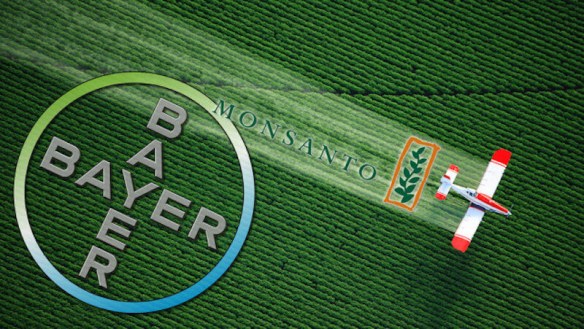



 After the Crash