One day men will say I gave birth to the 20th century. — Dialogue by Jack the Ripper I’ d like to think Darwin has a better case, but I see what he means. The century was indeed a stage for the dark impulses of the soul, and recently I’ve begun to wonder if Jack didn’t give birth to the 21st century, too. Twins. During 10 weeks in autumn 1888, a serial killer murdered five prostitutes in the Whitechapel area of London. The murders were linked because the Ripper left a trademark, surgically assaulting the corpses in a particularly gruesome way. “I look for someone with a thorough knowledge of human anatomy,” says Inspector Abberline of Scotland Yard. An elementary knowledge would have been sufficient.
The story of Jack the Ripper has been fodder for countless movies and books, and even periodic reports that the mystery has been “solved” have failed to end our curiosity. Now comes “From Hell,” a rich, atmospheric film by the Hughes Brothers (“Menace II Society“), who call it a “ghetto film,” although knowledge of film, not the ghetto, is what qualifies them.
Johnny Depp stars as Inspector Frederick Abberline, an opium addict whose smoke-fueled dreams produce psychic insights into crime. The echo of Sherlock Holmes, another devotee of the pipe, is unmistakable, and “From Hell” supplies its hero with a Watsonoid sidekick in Peter Godley (Robbie Coltrane), a policeman assigned to haul Abberline out of the dens, gently remind him of his duty, protect him from harm, and marvel at his insights. Depp plays his role as very, very subtle comedy–so droll he hopes we think he’s serious.
The movie feels dark, clammy and exhilarating–it’s like belonging to a secret club where you can have a lot of fun but might get into trouble. There’s one extraordinary shot that begins with the London skyline, pans down past towers and steam trains, and plunges into a subterranean crypt where a Masonic lodge is sitting in judgment on one of its members. You get the notion of the robust physical progress of Victoria’s metropolis, and the secret workings of the Establishment. At a time when public morality was strict and unbending, private misbehavior was a boom industry. Many, perhaps most, rich and pious men engaged in private debauchery.
The Hughes Brothers plunge into this world, so far from their native Detroit, with the joy of tourists who have been reading up for years. Their source is a 500-page graphic novel (i.e., transcendent comic book) by Alan Moore and Eddie Campbell, and some of their compositions look influenced by comic art, with its sharp obliques and exaggerated perspectives. The movie was shot on location with the medieval streets of Prague doubling for London, and production designer Martin Childs goes for lurid settings, saturated colors, deep shadows, a city of secret places protected by power and corruption.
We meet some of the prostitutes, particularly Mary Kelly (Heather Graham), who is trying to help her sisters escape from the dominance of the pimps. We see Abberline and Kelly begin a romance that probably would have been a lot more direct and uncomplicated at that time than it is in this movie. We see members of Victoria’s immediate family implicated in whoring and venereal mishaps, and we meet the Queen’s Surgeon, a precise and, by his own admission, brilliant man named Sir William Gull (Ian Holm). The investigation is interrupted from time to time by more murders, graphically indicated, and by forms of official murder, like lobotomy. Sir William is an especially enthusiastic advocate of that procedure, reinforcing my notion that every surgeon of any intelligence who practiced lobotomy did so with certain doubts about its wisdom, and certain stirrings of curious satisfaction.
Watching the film, I was surprised how consistently it surprised me. It’s a movie “catering to no clear demographic,” Variety reports in its review, as if catering to a demographic would be a good thing for a movie to do. Despite its gothic look, “From Hell” is not in the Hammer horror genre. Despite its Sherlockian hero, it’s not a Holmes and Watson story. Despite its murders, it’s not a slasher film. What it is, I think, is a Guignol about a cross-section of a thoroughly rotten society, corrupted from the top down. The Ripper murders cut through layers of social class designed to insulate the sinners from the results of their sins.
Editor’s note: In honor of Grant Morrison’s 56th birthday, enjoy Dan Sanchez’s excellent analysis of the humanist anti-militarist messages of Morrison’s body of work.
At this year’s Comic-Con (a huge event in the worlds of comics and superhero blockbusters), celebrated writer Grant Morrison:
“…told a crowd of 2,600 that he’s done all he can with traditional superheroes. He’s sick of the ‘military entertainment complex,’ in which today’s characters always seem to be working for the government…” [Rolling Stone]
The creative industry’s booming superhero sector would be wise to take this criticism to heart, as Morrison is the preeminent genius of the genre. He wrote the most commercially successful graphic novel ever, his 1989 Batman: Arkham Asylum, as well as the comic series All-Star Superman (2005–2008), widely acclaimed as one of the all-time best stories about that archetypal superhero.
“…at once a well-researched history, an entertaining memoir, intriguing cosmological analysis, and a surprising personal revelation…”
Morrison’s disdain for the militarization of his art form is in line with his upbringing. As he relates in Supergods, his father was:
“…a working-class World War II veteran who’d swapped his bayonet for a Campaign for Nuclear Disarmament badge and became a pacifist “Spy for Peace” in the Committee of 100.”
As Morrison has explained in interviews, his father did not suffer from “shell shock” so much as from a “political shock.” His dad remembered first believing that he was going to war to “fight fascism,” and then realizing that “we were just as bad as they were,” after witnessing atrocity after atrocity.
Raised by both parents according to “pacifist principles,” young Morrison once told a Boy Scouts recruiter:
“I refuse to be part of any paramilitary organization, and that includes the Boy Scouts.”
In the sixties, his father was arrested protesting the American nuclear missile bases then located in Scotland. Morrison tells of growing up in the terrifying shadow of:
“…the Bomb, always the Bomb, a grim and looming, raincoated lodger, liable to go off at any minute, killing everybody and everything. (…)
Accompanying imagery was provided by the radical antiwar samizdat zines my dad brought home from political bookstores on High Street. Typically, the passionate pacifist manifestoes within were illustrated with gruesome hand-drawn images of how the world might look after a spirited thermonuclear missile exchange.”
In his childhood home, these horrific images contested with the “shiny futurity” of the covers of his “mum’s beloved science fiction paperbacks.” This struggle played out on his TV screen as well, until victory was claimed for optimism by the dramatic arrival of superheroes into his life:
“On television, images of pioneering astronauts vied with bleak scenes from Hiroshima and Vietnam: It was an all-or-nothing choice between the A-Bomb and the Spaceship. I had already picked sides, but the Cold War tension between Apocalypse and Utopia was becoming almost unbearable. And then the superheroes rained down across the Atlantic, in a dazzling prism-light of heraldic jumpsuits, bringing new ways to see and hear and think about everything.”
Ironically, these saving superheroes entered Scotland in the duffle bags of the very same American soldiers who also delivered the Bomb. As Morrison put it in an interview, they brought with them both the disease and the cure.
The sunny, scifi superheroes of the “Silver Age” of comics flew and swung into Morrison’s psyche, saving him from the debilitating existential terror of the Bomb. For the Hulk, having a Gamma Bomb blow up in his face was only the beginning of his career. The Flash could outrun a nuclear blast wave without breaking a sweat. And Superman could stroll out of ground zero without so much as a sun tan.
“Before it was a Bomb, the Bomb was an Idea. Superman, however, was a Faster, Stronger, Better Idea. It’s not that I needed Superman to be “real,” I just needed him to be more real than the Idea of the Bomb that ravaged my dreams. I needn’t have worried; Superman is so indefatigable a product of the human imagination, such a perfectly designed emblem of our highest, kindest, wisest, toughest selves, that my Idea of the Bomb had no defense against him.”
For Morrison, the superheroes were a hopeful, defiant answer to nuclear nihilism, because they were:
“…the best current representation of something we all might become, if we allow ourselves to feel worthy of a tomorrow where our best qualities are strong enough to overcome the destructive impulses that seek to undo the human project…”
Since childhood, the superhero represented to Morrison the antithesis of the ultimate form of warfare. It is no wonder that he would now speak out against its military conscription.
Morrison later turned his love for superheroes into a career as comic book writer. Early in that career, Alan Moore, a fellow Brit, revolutionized the genre, starting in 1982 with his dark, deconstructionist Marvelman (later retitled Miracleman for fear of Marvel Comics’ lawyers). In this revised origin story, Moore recast Britain’s classic Superman-type character as having been engineered as a living weapon by the Royal Air Force.
Moore inaugurated what Morrison calls the “Dark Age” of superhero comics. Realism, political analogy, dystopia, mass carnage, graphic violence, and antiheroes characterized this new age, as well as higher literary standards.
Moore’s first American title was Watchmen (published in 1986–87 and made into a Hollywood movie in 2009). Written during the heightened nuclear tensions of the Reagan years, Moore’s Watchmen was also haunted by the Bomb. Morrison described it as a:
“…murder mystery set against a familiar backdrop of Cold War nuclear paranoia, but located in an alternate history where the appearance of one single American superhuman in 1959 had deformed and destabilized global politics, economies, and culture itself.”
That single superhuman was Doctor Manhattan, who placed his godlike powers in the service of the US government, swinging the Cold War’s balance of power in America’s favor, and making the Vietnam War a cakewalk instead of a quagmire.
Watchmen launched the comic world’s analog to pop music’s “British Invasion” of American culture, an invasion that also included writers such as Neil Gaiman and Morrison himself.
America’s answer to the British “Dark Age” Invasion was Frank Miller: especially his hardboiled 1986 Batman story The Dark Knight Returns. The story also features Superman, and in Hollywood influenced both The Dark Knight Rises and the upcoming Superman v Batman: Dawn of Justice. Morrison wrote:
“The thoroughly modern Batman of The Dark Knight Returns was an antiestablishment rebel and ruthless pragmatist, but Miller’s Superman was an idealistic government stooge in the pay of an all but mummified Ronald Reagan, president forever and ever, amen. A memorable sequence of panels introducing Superman to the story depicted a visual dissolve of the flag on the White House roof, where the rippling stripes of Old Glory morphed into an abstract close-up detail of the famous S shield.”
Morrison further characterized Miller’s Batman as:
“…no bleeding-heart liberal but a rugged libertarian.”
…and his Superman, in contrast, as a:
“…compromised champion of the powers that be, serving the letter of the law, no matter how corrupt its administration became.”
Miller’s story, like Moore’s, also featured the threat of nuclear war and such themes as superhero registration/regulation. And both Watchmen and The Dark Knight Returns are often assigned reading in university courses.
The Cold War, Reagan-era superhero could sometimes be a government stooge, like Moore’s Doctor Manhattan and Miller’s Superman. But in such instances, he was recognized as a stooge.
This has often not been the case for the post-Cold War super-stooge. Starting in the “humanitarian interventionist” Clinton era, the western superhero began celebrating what Charles Krauthammer called America’s “unipolar moment” by strutting the globe, not as government lackeys, but as government badasses.
This was especially the case in the title Stormwatch under the authorship of Warren Ellis, yet another Brit, starting in 1996. Ellis’s heroes were, as Morrison put it:
“…UN-sanctioned operatives with a mandate to monitor superhuman activity and to police violations of the various protocols and sanctions governing the use of extranormal abilities. Costumes became functional field outfits, designed for espionage and black-ops work. Ellis suggested a new take on the T.H.U.N.D.E.R. Agents–S.H.I.E.L.D. model, combining spy thrills with grimy, violent superheroics in a world of genetic manipulation, weaponized flesh, and budget restrictions.”
In 1999, Ellis went even further in this vein with The Authority. Ellis’s new superteam was an updated “Justice League,” with its own parallels of Superman and Batman. The powers and costumes were alike, but the similarities ended there. As Morrison wrote:
“The Justice League never resorted to lethal force, but Ellis’s heroes would happily cut off your head and beat you to death with it if that’s what it took to stop you from being a dictator or a “bastard.” These hombres meant business, and the bad guys could no longer rely on that handy code against killing, which had kept superheroes in check for so long.”
The “heroes” of the Authority decapitated, dismembered, and impaled with abandon. In Marvelman, Alan Moore graphically showed what would happen in the “real world” when supervillains got their hands on frail mortals. Now superheroes too were gleefully exploring the myriad ways to disrupt human anatomy.
The Authority was as ambitious as it was severe. As Morrison wrote:
“The opening page of The Authority no. 1 showed Earth as seen from space accompanied by a single caption. ‘They think there’s no one left to save the world.’”
But the classic superhero trope of “saving the world” had a distinctly imperial ring with this team of, in Morrison’s words, “strutting imperial warrior superhumans.”
“Unlike Alan Moore’s troubled heroes, the members of the Authority were comfortable with their powers, using them sensibly to fight “bastards” and improve the lot of everyone on planet Earth. It was the utopian vision of [Superman creators] Siegel and Shuster strained through British cynicism and delivered on the end of a spiked leather glove. It… suggested a new kind of superfascist, one who was on our side.”
Also unlike the superheroes of yesteryear, these “friendly” imperial superfascists did not shy away from incurring extensive “collateral damage,” if that’s what it took to terminate the superhuman dictators, terrorists, and other “bastards” plaguing the planet.
In one storyline, to defeat an enemy empire on a parallel Earth, the Authority wages total war on the planet. In the last battle, the team’s shaman, called the Doctor, floods the entire Italian peninsula with a move of two fingers, killing everyone on it, man, woman, and child.
The team leader then issues a triumphal global broadcast, announcing the regime change:
“This is Jenny Sparks for the Authority. Albion is free of the Blue. Sicily and the Italian capital infrastructure are gone. If needed, we can annihilate the Hanseatic regions within the hour. If we’re asked to, we will go into China and Japan. If we have to, we will personally expunge the royal blood and military rape culture from the face of the planet. We’re here to give you a second chance. Make a world worth living in. We are the Authority. Behave.”
Morrison liked both Stormwatch and The Authority, and was even creatively involved in the latter. But in hindsight, he now sees that their spirit presaged dark things to come, both in superhero fiction and global superpower reality.
“For a while, it was exciting. In The Authority, the no-nonsense army toughs were on our side for a change, but it was a particular kind of power fantasy: that of impotent liberals, who feared deep down that it was really only force and violence that got things done and not patient diplomacy, and that only soldiers and very rich people had the world figured out. Gifted Irish writer Garth Ennis had occupied this territory for years; his soldier-hardman heroes influenced the new generation of supermen and women. These books were a capitulation to a kind of thinking that would come to dominate the approaching first decade of the new millennium. Soon the no-compromise bomb and ‘cripple what you don’t agree with’ approach of the Authority would be put to practice in the real world with horrific results. And it wouldn’t be liberals doing the damage”
Throughout the 90s, Morrison’s own career was taking off as well, but in a decidedly non-militaristic direction. After the smash hit of his 1989 Arkham Asylum, he was a hot commodity in the comics industry. But his subsequent explorations of the superhero were worlds away from the “grim ‘n’ gritty” comics of the 80s and 90s.
In his titles Animal Man, Doom Patrol, and The Invisibles, Morrison preferred to explore the intersection of the cosmic, the quirky, and the counter-cultural. Morrison’s gonzo inventiveness and bubbling-over genius quickly made a splash. With obscure superheroes, he felt free to take the genre in radically experimental directions, infusing it with such elements as transcendentalism, surrealism, and even dadaism, making his books cult classics among more discerning and literary comic readers.
But sometimes quirkiness just isn’t called for, so in 1997, when he got a crack at the Justice League itself and its all-star roster (Superman, Batman, Wonder Woman, the Flash, etc) in the title JLA, he gave these iconic characters the iconic (yet still boldly and brilliantly inventive) treatment they deserved.
“There would be no obtrusive postmodern meta-tricks in JLA, just unadulterated, gee-whiz, unadorned sci-fi myths in comic form, giving back to the superheroes the respect and dignity a decade of ‘realism’ and harsh critique had stripped away.”
Morrison had no interest joining a paramilitary organization as a boy, and he had no interest writing one as an adult. And so Morrison’s Justice League members were not “operatives” or “imperial warrior superhumans,” but genuine superheroes.
In the first storyline, the Justice League repelled an alien invasion: and unlike the Authority, did so without harming innocents. In this story, it was the villains and not the heroes who promised to “make the world a better place” by taking it over and remaking it. Morrison ends the adventure with an exchange that cautions against interventionism:
Wonder Woman: “When does intervention become domination?”
Superman: “I can only tell you what I believe, Diana. Humankind has to be allowed to climb to its own destiny. We can’t carry them there.”
In another storyline, the League takes on the “Ultramarines,” who, like Marvelman, were bio-engineered, duped, and exploited by the military.
And in his final story, “World War III,” the great menace is not a person, but a psychic weapon on auto-pilot called Mageddon, which causes its victims to destroy each other by instilling in them “war fever.” Ages ago it destroyed its godlike creators, and now it threatens to destroy humanity by pitting it against itself.
The Justice League manages to temporarily confer superpowers to all the people of Earth, who then together vanquish Mageddon. For his finale, Morrison has an embodiment of war itself as the villain, and regular people rising up and becoming superheroes to defeat it. Thus, a decade before he wrote Supergods, Morrison had already manifested his vision of the superhero as:
“…the best current representation of something we all might become [represented by the population of Earth becoming superheroes], if we allow ourselves to feel worthy of a tomorrow where our best qualities are strong enough to overcome the destructive impulses [represented by Mageddon] that seek to undo the human project…”
Morrison returned to the Justice League in his 2000 graphic novel, JLA: Earth 2. The villains of that tale, the Crime Syndicate of America, are basically the Authority taken to its logical conclusion: a team of JLA-doppelgänger super-tyrants ruling an alternate Earth with an iron fist.
In a scene that will warm the hearts of hard money advocates and fans of George Orwell, paper money is seen raining down on the alternate-Earth city of Metropolis, causing brawls to break out as the impoverished subjects scramble for it. Next we see that the bills are being cast from an overhead satellite by Ultraman, the evil-twin version of Superman, who tells his robotic servant Brainiac:
“By the time they realize the notes are fake, the economy will be in ruins again.”
Down below, one of the citizens reaches his breaking point, a la Orwell’s Winston Smith.
“…not real! It’s crap! It’s just more crap from the sky! From Ultraman! I can’t take any more of them looking down at us as though we’re-”
A red light is seen penetrating the clouds, and “Winston” is incinerated mid-sentence. Ultraman, his eyes still glowing from his use of heat vision, says:
“They insult me within earshot. They know what to expect. Big Brother is watching you.”
He might have just as well echoed Ellis’s Jenny Sparks and said, “We are the Authority. Behave.”
Of course unlike in The Authority, the swaggering imperialists of the Crime Syndicate are obviously villains. And it is gratifying to see Morrison’s Justice League show them what real superheroes are made of. A similar feeling can also be had reading Morrison’s JLA/WildC.A.T.S. inter-series crossover, in which the League tackles (though later teams up with) another obnoxious paramilitary (C.A.T.S stands for Covert Action Teams) super-group of the “grim ‘n’ gritty” tradition.
Then 9/11 happened, and the militarization of the superhero, like the concurrent militarization of the police, went into overdrive.
What must have been particularly grating for Morrison, was that it was spearheaded by his own protege Mark Millar, a fellow Scot who had made his name after he was selected to take over writing The Authority on Morrison’s recommendation.
In his hugely influential The Ultimates, Millar gave the Avengers (Marvel Comics’ chief super-team) an Authority makeover. Captain America cut villains in half with his shield while shouting jingoistic catchphrases. The Hulk ate innocent people while rampaging, causing little more trouble for the team than a PR headache. And the whole team was a government project.
Morrison’s analysis of his friend’s title was as withering as it was perceptive and eloquent.
“The Ultimates, re-created with Mark Millar’s gleefully right-leaning heroes, gave a voice to Bush’s America’s posturing, superheroic fantasies of global law enforcement in a posttraumatic world. (…)
President George W. Bush himself turned up to welcome Captain America to the new millennium with the words “WELL, WHAT’S YOUR VERDICT ON THE 21ST CENTURY, CAPTAIN AMERICA? COOL OR UNCOOL?,” to which the Captain replied, “COOL, MISTER PRESIDENT. DEFINITELY COOL.” With photorealistic renderings of George W. Bush embracing an equally believable Captain America, there could be no mistaking the dizzying, stifling collapse of fact into fantasy. (…)
The fear of a sinister military-industrial underworld that haunted Moore’s Marvelman was inverted to become a joyous embrace of Republican America’s undeniable access to the best guns, the best soldiers, and the best superheroes in the world. For Mark Millar, it was a given that any real-world superhero would be co-opted by the powers that be and recruited as a soldier. The Moore-Miller Superman of the eighties, that helpless, unreconstructed tool of the ruling class, became the template for a new generation of reengineered characters. In The Ultimates, everyone worked for the government, but it was all cool. In the first decade of the twenty-first century, superheroes strove to preserve and embody the values of a defiant military-industrial corporate complex or they didn’t work at all. The brief era of The Authority had passed and left the “bastards” in charge as usual.”
For Morrison, all of this had a bleak upshot:
“The last pirate art form had swapped its Jolly Roger for the Stars and Stripes once again, and this time it looked as if there was no turning back.”
This is the key background to Morrison’s Comic-Con pronouncement discussed at the beginning. At that conference, he told ComicBook.com:
“…for the last fifteen years at least — certainly since 9/11 — I think America’s been processing the horror of those images through their art, through their popular art in particular.
That’s why I think superheroes became from ordinary people who went out at night to make the world a better place, they’ve become I think agents of the military-entertainment complex. The Avengers work for the government, and it’s been like that since Mark [Millar] did The Ultimates. Batman as seen by Christopher Nolan and subsequently is a soldier. He wears military gear with his ordinance and his machines. For me, it became quite reductive. It was an interesting way to look at it for a while, but it’s persisted for so long that I’m quite bored with the idea that the best superheroes can represent is some aggressive version of the military.”
Millar’s Ultimates seem to have been a major influence on the phenomenally successful Marvel Cinematic Universe films. Not all of that influence has been bad; two great characterizations — Tony Stark as a cocky billionaire playboy genius, played so perfectly by Robert Downey, Jr., and even the casting of Samuel L. Jackson as Nick Fury — both came straight from the pages of Ultimates. But the tight integration between the Avengers and the SHIELD government agency did too.
Thankfully, the Avengers of the films are not nearly as fascist as the Ultimates. In fact, to a large extent they take a marvelously anti-authoritarian and anti-militarist stance. See for example my articles on Captain America: Winter Soldier and Avengers: Age of Ultron.
Yet, the militarization of the Avengers is bleeding into its merchandise, even targeting its most impressionable audiences. For example, the title of an Avengers sticker book for children, “Top Agents & Most Wanted,” seems to recast the Avengers as some sort of super-FBI.
Fortunately, even after Ultimates, Morrison had not given up trying to remind people what a true superhero is. Superman and friends had saved Morrison’s psyche from the Bomb. Now Morrison would return the favor by saving Superman from possibly imminent militarization by writing All-Star Superman. Morrison wrote of how doing so brought his life full circle.
“I wrote my personal best story of the world’s greatest superhero, for my favorite artist to draw, overlooking a loch where Trident submarines still sailed in all their stately satanic splendor, with black bellies full of hellfire sufficient to blind and vaporize me in a fraction of a heartbeat, even as it liquefied the ancient stones of my walls, cracked Scotland in half, and turned the world into a refrigerated postnuclear litter tray. I wrote it scant miles from the former American navy base, where my parents had protested, where Dad had been arrested, and where American comics had arrived in Scotland with the sailors and submariners. It felt like ground zero, the center of a web of coincidence and personal mythology…”
All-Star Superman was Morrison’s defiant response to post-9/11 culture and what it was doing to the genre. In it, he even outdid his own work on JLA in beautifully distilling the essence of the superhero.
“As the first few years of the twenty-first century wore on, I wondered just how badly people, especially young people, were being affected by the overwhelmingly alarmist, frightening, and nihilistic mass media narratives that seemed to boil with images of death, horror, war, humiliation, and pain to the exclusion of almost everything else, on the presumed grounds that these are the kinds of stories that excite the jaded sensibilities of the mindless drones who consume mass entertainment. Cozy at our screens in the all-consuming glare of Odin’s eye, I wondered why we’ve chosen to develop in our children a taste for mediated prepackaged rape, degradation, violence, and “bad-ass” mass-murdering heroes.
And so All-Star Superman: our attempt at an antidote to all that, which dramatized some of the ideas in Supergods by positioning Superman as the Enlightenment ideal paragon of human physical, intellectual, and moral development that Siegel and Shuster had originally imagined. A Vitruvian Man in a cape, our restorative Superman would attempt to distill the pure essence of pop culture’s finest creation: baring the soul of an indestructible hero so strong, so noble, so clever and resourceful, he had no need to kill to make his point. There was no problem Superman could not solve or overcome. He could not lose. He would never let us down because we made him that way. He dressed like Clark Kent and took the world’s abuse to remind us that underneath our shirts, waiting, there is an always familiar blaze of color, a stylized lighting bolt, a burning heart.”
One scene bottles the lightning that is the superhero concept most elegantly of all. In a fleeting interlude between mega-crises, Superman’s super-hearing picks up the voice of a therapist stuck on a train, desperately trying to keep a suicidal patient on the phone until he can reach her. The troubled girl, with purple hair and facial piercings, drops her phone off the ledge of a skyscraper. She closes her tear-streaked eyes and prepares to jump. Suddenly Superman is standing behind her with his hand on her shoulder.
“Your doctor really did get held up, Regan. It’s never as bad as it seems.”
As she turns wide-eyed to face him, he says:
“You’re much stronger than you think you are. Trust me.”
Regan collapses into Superman’s arms, and he hugs her in silence as his cape billows in the wind.
These five panels and two dozen words have literally saved lives. At Comic-Con, Morrison spoke of how moved he was to meet actual kids who decided against committing suicide after reading this scene. It made him more convinced than ever that superheroes, when written as superheroes, can make a real and positive difference in people’s lives.
The Grant Morrison superhero is no souped-up super-soldier taking twisted pleasure in the hunting of men, like an American Sniper or an American Cop, using “saving people” as a mere excuse. He is not some semi-sadistic adolescent power fantasy.
The superhero according to Morrison takes what’s best in us, personifies it in a sigil-draped figure, and shows it springing into action, inspiring us to emulation.
The superhero according to Morrison takes what’s best in us, personifies it in a sigil-draped figure, and shows it springing into action, inspiring us to emulation. It imparts that not even the sky is the limit if we choose to bring out in ourselves those noble qualities which the superhero personifies.
Like Superman with the suicidal girl, the superhero reminds us that we’re stronger than we think we are. Stronger than despair. Stronger than hate. Strong enough to someday achieve scifi marvels. To even be stronger than the Bomb. Stronger than War.
Editor’s note: On this 87th anniversary of the birth of Philip K. Dick (December 16, 1928 – March 2, 1982), enjoy a deep dive into some of the more paranormal aspects of his life and how they relate to experiences of other visionaries.
This article will look at some of the similarities between the contact experiences of two American writers, Philip K Dick and Robert Anton Wilson. In the 1973-1974 time frame, both would have unusual experiences that they thought could be contact with an extraterrestrial civilization. Or some undefinable something that wanted them to think it was extraterrestrial. And as incredible as it sounds, some of their experiences are confirmed by other people, and include verified transmission of knowledge that it seems they could not have obtained from any human source. We will also look very briefly at some other possibly related contact experiences involving musician and cultural icon John Lennon, researcher into human-dolphin communication and consciousness Dr. John Lilly and the Swiss scientist and inventor of LSD Dr. Albert Hofmann.
NOTE: William Burroughs first told Robert Anton Wilson about the “23 Enigma”. Wilson and Kerry Thornley incorporated it into their ideas and created the related concept of the Discordian Law of Fives (2+3=5). The number 23 and the numbers 2 & 3 & 5 recur at multiple points in this article. In most cases I do not note them but the interested reader may wish to note how many times they recur and if it is more than expected by chance.
PHILIP K DICK
Philip K Dick was a science fiction writer with a prolific output from 1953 to 1981 of 121 short stories and 44 novels. Since his death in l982 he has become even better known. His stories have been made into major films like “Blade Runner”, “A Scanner Darkly,” and “Minority Report”. He has also been acknowledged as a major influence on other films, including “The Matrix”. The recent indie film “Radio Free Albemuth” is an excellent adaptation of Phil’s novel of the same name, dealing with Phil’s fictional version of the true events dealt with in this article.
PKD had themes that recur over and over again throughout his stories – What is real? What is human? How do we know that what we think of as reality is actually real? What defines humanity? Will humans be replaced by machines? PKD also had political themes and religious themes. Though he turned 40 in l968, he identified with the youth counterculture of the l960’s. He was against the Vietnam War and the Nixon administration. He refused to pay federal taxes in protest of the war, and his name appeared in published ads of writers and artists involved in the protest. The federal government confiscated his car for back taxes.
A typical PKD hero was a writer, small businessman, a TV repairman and/or a backyard inventor. He finds his life turned upside down when he discovers that reality is not what it seemed. He wages a fight against vast evil empires of heartless corporations, fascist governments, robots posing as humans, and alien invaders. He is often assisted by a beautiful and intelligent dark haired girl.
Starting in 1971, Phil was no longer just writing about government conspiracies, alternative realities, and struggles against an empire. He started living it. His home was broken in to. Things were damaged, papers were taken, but little of value was stolen. It did not seem like a traditional burglary. Strangely, part of Phil was actually relieved. He thought, “See! I’m not some crazy paranoid. They really are after me.” But he was also horrified and scared of what they would do next. It also validated him however. He must be getting through and having an impact if he was enough of a threat to have this done to him.
His wife Tessa confirms that in 1969 Phil got a phone call from a fan, Dr. Timothy Leary. She wonders if that call was wiretapped by Feds trailing Leary, and if Phil came on their radar screen then, if he had not before. When Leary escaped from Folsom prison, she wonders if Phil got attention because of the Leary connection. Phil claimed that he also talked to John Lennon as part of this same phone call. The connection was probably Rolling Stone writer Paul Williams, who knew PKD well and wrote about him in Rolling Stone magazine, and Williams was with Lennon and Leary in Canada.
President Nixon had called Leary “the most dangerous man in America”, a label he only used for one other person, Pentagon Papers leaker Daniel Ellsberg. Nixon had authorized a break in at Ellsberg’s psychiatrist’s office. The FBI, BNDD(DEA) and the CIA were involved in the hunt and recapture of Leary. Did one of those agencies do the break in looking for clues to where Leary was hiding? Nixon was also using the pretext of a marijuana conviction to try to get Lennon deported. The real reason was his anger over Lennon’s support of the anti-war movement, both lyrically and financially.
Aside from the Leary/Lennon connection, Phil had also attracted government attention on his own, as he had in the Ramparts magazine anti-war tax protest. He later found out that letters he had sent to Soviet scientists had been intercepted by the CIA. His books appeared on a list compiled by the government of works that promoted the drug culture. (This was ironic as Phil later became very anti-hard drugs, because he felt they robbed people of their humanity and led to tragic results). In between marriages, Phil opened his home to and hung out with drug users, small time criminals, political radicals, teenage runaways and street people. An Orange County cop told Phil “They don’t need crusaders here.” Phil says he was afraid to ask the cop who or what he thought he was crusading for.
Phil obsessed over who did the break in – the FBI? CIA? KGB? Local police? A right wing group like the Neo-Nazis? A criminal gang? But eventually something else even bigger would come along to obsess over.
In February and March of l974, Phil had amazing contact experiences that changed his life. He would spend the rest of his life trying to figure out what exactly happened, and who or what was responsible. His theories included mental illness at one end, to direct contact with God at the other end. In between were the theories of contact with an alien race, time travelers, an AI (Artificial Intelligence) computer from the future, a government agency or a secret society.
Eventually he came to call what contacted him VALIS, for Vast Active Living Intelligence System. Phil would have different ideas on what VALIS was – a satellite beaming information to him from an alien world or just a manifestation of God? He came to think VALIS was a satellite from advanced entities perhaps from the Sirius double star system. One of the missions of VALIS was to fight the Empire,(“The Empire never ended”) the continuation of the Roman Empire in the evil power elites in the East and West, who were secretly connected in their desire to keep their populations enslaved. The second mission of VALIS was to enlighten people with information and knowledge, to spark creativity, invention, art and innovation. This was also partially done through the true hidden and suppressed gospels of Jesus Christ which were revealed to the world in the Gnostic Gospels found at Nag Hammadi in 1945. This information is a living plasmate that comes alive in every person who reads the gospels or who reads about VALIS in the stories of Philip K Dick. The final mission of VALIS was to show Phil that this is a fake world, a “Black Iron Prison”, a “criminal virus” that occludes people from seeing that the world is alive. In fact the world that we see is fake, and we may be living in a computer simulation or a hologram. Now you can see why the creators of “The Matrix” acknowledge PKD as a major influence.
He would write what he called his Exegesis to investigate and explain what he came to call the “2-3-74” experience, meaning February and March of 1974. His Exegesis would grow to over 8,000 pages. Recently a 900 page version was published. Phil increasingly came to favor theological interpretations of VALIS, but at one point, after reading Arthur C. Clarke’s novel “Childhood’s End”, he expressed his experience in Clarke language and classic Sci-Fi terms:
(1)We are not only being watched; we are being controlled, but don’t know it; they remain beyond our threshold of vision.
(2) They work for a higher purpose, one we can’t understand but which fits our concepts of spiritual, moral purposes.
(3) We are instruments, therefore, of an invisible spiritual force which causes us to grow and develop in certain arranged directions.
(4) Some of us are either part of their race or can be elevated to their level, as they work through these individuals.
(5) The probable reason for their concealment is our evil qualities. We cannot be trusted, individually or collectively (man qua beast).
(6) A critical moment has approached or is approaching; this is a unique period in their work, therefore in our use-purpose.
(7) The extent of camouflage and delusion induced in us is extraordinary in amount and degree
Understand that the above formulation was not Phil’s favorite. As I stated he increasingly came to favor a more theological interpretation, bringing in elements from Buddha, Dionysus, and mysticism, but primarily Gnostic Christianity as revealed in the Nag Hammadi scriptures uncovered in 1945. But I like the formulation above because it is clear and concise and perhaps fits best with some of the other experiences we will look at later. Section #5 about concealment deals with a subject Phil talked a lot about, which was the fate of men like Socrates, Christ, Bruno, JFK , MLK and his friend Bishop Jim Pike. Given that history, VALIS must conceal itself most of the time, and rather than announce itself on the lawn of the White House, and be sent to federal prison or worse, it would reveal itself gradually in scattered trash, pulp magazines, rock music songs, comic books, B movies, episodes of “Star Trek”, sci-fi paperbacks and through an imperfect odd California science fiction writer.
In part of the 2-3-74 experience Phil saw a cartoon cat that appeared in the pink light of a rectangle that reflected the “Golden Ratio.” The Golden Ratio of 1.618 occurs throughout nature, and is seen in everything from galaxies to sea shells to flowers to the human face. Phil’s cat had just died and he said the cartoon cat came over to him and put his paw on his shoulder, as if to console him and tell him it will be all right.
In another part of the2- 3-74 experience, Phil said he experienced hundreds of abstract and expressionist art paintings. They were as vivid and colorful and real as anything he had ever seen in his life. He mentioned Kandinsky and Klee as the type of art that he saw.
Then throughout 1974 he experienced strange events, some seemingly “good”, and some seemingly “bad”. Strange synchronicities, “coincidences” that seemed to have underlying connections. If VALIS was a positive moral force aiding Phil and humanity, there were also other dark forces wanting to keep humanity enslaved and blind, and Phil feared these dark forces. He gave his son Christopher an improvised Christening with chocolate milk and a bit of hot dog bun, as a way to protect him from these dark forces.
Phil had multiple marriages and divorces and a documented history of mental illness; and of course, he had a vivid imagination, as seen in his stories. Add in that he had a reputation as a drug user, and it is tempting to write off these interesting but unverifiable experiences as hallucinations, insanity, and/or hoaxes.
It’s true that Phil had mental health issues, but they mostly revolved around depression. In this period, living with his wife Tessa and young son Christopher, he was happy most of the time. Phil did take legal uppers, and he experimented with LSD, but only twice. His reputation as a wild man drug user was exaggerated in the press. One time Phil was eating dinner at a sci-fi convention, and a fan snatched a pill beside his plate and swallowed it. “What’s going to happen to me?” the fan asked. Phil explained, “Well, if you have a sore throat it will feel better.”
First of all, it is doubtful that Phil would have been moved to devote the time and energy of an 8,000 page exegesis if all these events were just hoaxes or misperceptions. Secondly, a few key incidents have been verified either by outside facts and/or his wife at the time, Tessa.
Tessa B. Dick has written her own book called “Remembering Firebright: My Life with Philip K. Dick”. In a few instances she explains how she thinks Phil misconstrued ordinary facts into something fantastic. One senses she is honestly recounting things as best she can remember, and that like Phil, she has struggled over the years to understand these events. But on several key incidents, she largely confirms Phil’s account of events. She says that unusual and unexplainable things did happen.
One of these is the “Firebright” of the book’s title. Phil said this was a small baseball size sphere of blue light. He said he thought it facilitated communication between him and an alien satellite that was in orbit around the earth. This satellite explained mysteries of the universe to him, sometimes by historical figures he admired (or simulations thereof), like Francis Bacon and Thomas Aquinas. Tessa did not experience that aspect, but she states she did see Firebright, that she and Phil could see it together, and each correctly describe what it was doing. Was it a shared hallucination? Was it a shared reality?
Another incident described by Phil was when his radio kept playing, even after he turned it off and even after he unplugged it. He said the radio was saying messages attacking him. Tessa does confirm the radio kept playing even after being unplugged, and it was not the type that had batteries. She did not hear personal attacks on Phil, but normal pop songs. However, she can’t explain how or why it kept playing. She did note at the time that the neighbor’s apartment was mostly vacant, as if nobody actually lived there, but they had a lot of electronic equipment, so there may be a natural earth-bound explanation for the strange radio incident. She felt then and now that they were spying on someone, be it Phil or someone else. But that would not explain the mystery of “Firebirght”, nor would it explain the following mystery.
Sometime in the late summer of 1974, Phil reported drifting between sleep and waking while listening to the Beatles song “Strawberry Fields Forever,” sung by John Lennon. At the point in the song where it says “Living is easy with eyes closed,” Phil opened his eyes. He cried out to Tessa to “Call the doctor and tell him that Christopher has an inguinal hernia and he could die if it strangulated”. Tessa says Phil looked as if he were in a trance and she confirms what he said, and that he stated the medical terms correctly. She took their 14 month old son Christopher to a doctor, and the doctor confirmed Phil’s diagnosis, and the doctor scheduled and eventually did the potentially life-saving surgery as soon as Christopher was old enough, which was a couple of months later. In the meantime they were instructed to be careful not to let him cry for any prolonged period.
In subsequent conversations with the “normal” Phil, Tessa says he went back to not understanding the medical terms and was mispronouncing them. Who or what intervened and gave Phil the information that saved his son’s life? Was it VALIS?
I was able to recently ask Phil’s last wife Tessa about this incident. She again confirmed most of the elements of Phil’s story as correct. She said the doctor told her that if Christopher had been left to cry throughout the night for an extended period, the hernia could have strangulated and cut off blood flow, causing serious injury or even death. She does not remember the stereo being on, so unless Phil had the small radio on, she wondered if Phil heard “Strawberry Fields Forever” in his dream. I asked her how was Phil able to correctly diagnose the hernia? Was it VALIS, a religious miracle, just really good intuition or simply unexplainable? She stated:
“I have no earthly explanation for how Phil could have known that our son had a hernia. He did not change diapers, and he had little medical knowledge. I knew that something was wrong with our baby, but I had not yet discussed it with Phil.”
Phil felt that it was VALIS, and that it also intervened in his life in other positive ways. He says it prompted him to ask his agent for back royalties on books sold overseas, and he subsequently received substantial checks. He also had a sense of renewed creativity and in addition to the non-fiction Exegesis, the strange events in his life gave inspiration to several excellent novels, including “Radio Free Albemuth”, “VALIS”, “The Divine Invasion”, and others. His income from book sales greatly increased, and his novel “Do Androids Dream of Electric Sheep” was made into the movie “Blade Runner” (the title came from William Burroughs). He saw parts of the film before it was released and was greatly impressed. He told the makers of the film that it validated his entire career and even his life.
Tragically, he never got to see the entire film and the world got no more PKD stories. He had a series of strokes leading to a heart attack , which caused his death on March 2, 1982. Before he died and when he was in seemingly good health, he may have had a premonition about his death, as he told Tessa, whom he had divorced but was seeing again, “You will remember, and you will tell them”.
ROBERT ANTON WILSON
Robert Anton Wilson was an editor at Playboy magazine — a very good, interesting and well paid job. But he left the magazine in 1971 to pursue his other interests. These interests included sex, drugs, higher states of consciousness, libertarian economics, anarchist politics, Constitutional rights, philosophy, quantum physics, history, psychology and the occult.
Along with Robert Shea he wrote the “Illuminatus!” trilogy, the most complex exposure of the conspiracies running the world and/or satire of such theories. He wrote many successful books, and he approached all topics with his trademark agnosticism and maybe logic. This avoided the traps of dogmatism and guruism. He wrote about serious subjects with a sense of humor, but treated even seemingly crazy ideas seriously.
Within weeks of meeting Timothy Leary in 1964, he and his family saw their first UFO. Timothy Leary, who was kicked out of Harvard for his LSD experiments, would become a good friend, mentor, frequent teacher, major influence, sometime student, co-author, and partner in “thought crime”.
Philip K. Dick met several times with RAW, and they became correspondents. PKD famously said that “Wilson managed to reverse every mental polarity in me, as if I had been pulled through infinity.” PKD mentions RAW in his Exegesis, and RAW mentions PKD in his books. Just as PKD’s fiction seemingly came to life in his contact experiences, RAW’s fiction also escaped from the page into his life.
RAW embarked on a course of what he called “deliberately induced brain change.” From July 23, 1973 until October, 1974, he entered a belief system in which he was (perhaps) receiving telepathic messages from advanced entities on a planet near the double star Sirius.
Were these entities real? To him, at the time, they “seemed real enough”, though “not as real as the IRS”, but “easier to get rid of.”
In keeping with his model agnosticism and desire not to get trapped in any one reality tunnel, RAW undertook a multiple-paths-all-at-once approach to making contact with higher intelligence. He used incantations and rites by Aleister Crowley to invoke the Holy Guardian Angel. Wilson says that if you look at Crowley’s words on the page, they mostly seem like “pretentious rubbish”, but when read out loud, it “vibrates, moans and sings with eerie power.” He also used a hypnosis tape called “Beliefs Unlimited” by Dr. John Lilly, the pioneer in inter-species communication and consciousness research. At first he also used Mescaline and LSD. He later achieved similar results without any drugs. He also tried tantric sex with his wife with the goal of breaking through to new levels of consciousness (and having fun, which RAW always liked to do).
In a dream on July 23, 1973, he got the message “Sirius is very important.” He did not know what it meant. He found out that Sirius was a double star system about 8.6 light years away from Earth. Further research showed him that Sirius (maybe) played an important role in the belief systems of Crowley, the Freemasons, and various occult groups. He then found out that in the ancient Egyptian tradition, the dog star Sirius was celebrated from July 23 to September 8. This was the period when contact between Sirius and Earth was said to be strongest.
He wrote about his experiences in his book “Cosmic Trigger.” You don’t just read this book, you go along on his intellectual, spiritual and physical adventure with him. The topics he writes about start happening in his life. In similar and different ways to what happened to PKD, strange things, unexplained events and seeming “coincidences” linked by underlying synchronicity start to occur.
In this book he mentions Philip K. Dick and his novel “VALIS” based on real events. He notes some of the similarities and differences in their experiences. He also mentions a book by Robert KG Temple called “The Sirius Mystery”.
In reading Temple’s book, he learned that there was evidence (maybe) that Egypt, Sumeria and other ancient civilizations told legends of contact with advanced men who came down from the sky to teach them engineering, science and arts, and that these men came from the Sirius system. He learned that the Dogon tribe in West Africa also had legends of contact with entities from Sirius, and knew that Sirius had a companion star which was not visible to the naked eye. How did they know it existed? Because they really were visited long ago by entities from Sirius who told then about it? Well maybe. But maybe they learned about it from more recent European visitors. But if so why did they claim it was a long standing part of their belief system? What about all the other evidence of “Ancient Astronauts” and many peoples who tell legends of men from the sky, including stories from the Bible?
Wilson quotes this key part by Robert KG Temple from his book “The Sirius Mystery”:
“I would even venture that we may be under observation or surveillance at this very moment, with an extraterrestrial civilization based at the Sirius system, monitoring our development to see when we will be ready ourselves for their contacting us . . .Would they think that (this book) was their cue? If what I propose in this book really is true, then am I pulling a cosmic trigger?”
Most of the experiences Wilson describes are fascinating, but subjective and unverifiable. He himself comes to no definite conclusion about them. But one in particular stands out as unexplainable, and like the incident with Philip K. Dick and his son, it involves a child in danger. On April 26, 1974, Wilson was with a group of self-proclaimed witches in a new version of the Golden Dawn occult group. He had a vision of his son Graham lying on the ground with police walking toward him. He was afraid this indicated that Graham had been in an accident or some kind of trouble.
He invoked a cone of protection around his son and tried to send a message to call him in the morning. The next morning Graham did call and he explained that he and his friends had been illegally sleeping in a field. Police spotted their car, and walked towards them with their flashlights. They were certain they would be seen and then arrested, but amazingly, the cops did not see them and just walked away. This happened a few minutes before midnight, which was the same time that Wilson had his vision of Graham lying in a field with police walking towards him.
Wilson would later have another vision that a member of his family was in danger, and thought again it was Graham. Tragically, it turned out to be his daughter Luna, killed in a violent and senseless robbery. He writes movingly of her life and death. A lifelong opponent of the death penalty, even in his grief and anger, he does not want her killer to die, because he believes more than ever in the value of life over death.
Wilson comes to no final conclusions about his experiences. He suspects that the Holy Guardian Angel and the extraterrestrials from Sirius probably do not exist outside of our imaginations. But even if they are not literally real, RAW thinks that a belief in them was a tool to open up access to a previously untapped area of his brain.
On the other hand, remembering Arthur C. Clarke’s idea that any sufficiently advanced technology may be indistinguishable from magic, RAW wondered “what if Temple’s book was true?” What if PSI powers like ESP and telepathy are true? Stars can last 9 billion years. We are only half way through the life cycle of our star. That means there could be civilizations from Sirius or elsewhere that are one billion years more advanced than us. RAW asks what would be the technological capabilities and PSI powers of a civilization 100 million years, 500 million years, two billion years more advanced than we are now? RAW wonders if they will use psychic powers and/or technologically advanced communication methods to aid our evolution. Which sounds a lot like VALIS.
In his book “The Illuminati Papers”, Wilson quotes Dr. Ronald Bracewell from Stanford and Dr. Frank Drake of Cornell as saying that advanced aliens may have immortality and may be “trying to communicate with us right now.” Dr. Brian O’Leary, a Berkeley PHD and former NASA employee, states that aliens, be they extraterrestrial or inter-dimensional, may be on Earth now and have “technologies of consciousness.” Did an advanced race use “technologies of consciousness” to contact PKD and RAW?
Wilson in “Cosmic Trigger” also noted that the genius Tesla reported getting whole detailed descriptions and blue prints for inventions into his mind from an unknown source and sometimes had conversations with unseen entities. He reported that Dr. Jacques Valle told him that over 100 scientists had similar experiences of transmission of ideas but most are afraid to go public for fear of ridicule. Dr. Jack Sarfatti is one of the few who have gone public.
The discoverer of DNA, Nobel Prize winner Dr. Francis Crick, was a regular user of marijuana and may have first perceived the double helix shape of DNA while on LSD. Dr. Kary Mullis says taking LSD was one of the most important things he ever did and that he would not have won the Nobel prize for perfecting the PCR DNA method if he had not done it. He also had a strange UFO or Mothman Prophecies type encounter with an entity. Steve Jobs said taking LSD was one of the most important things he had done and convinced him that the goal of life was not just to make money but to invent and design things that would go into the stream of history and affect consciousness. Both the DNA and computer internet revolutions owe something to the (VALIS directed?) discovery of LSD Dr. Hofmann which we will examine. Is DMT or LSD a pathway to communication with higher intelligence? Or is it a pathway to open up previously untapped parts of our brain? Maybe. But this is a reason for LSD and other drugs to be legal, so they can be correctly manufactured and taken in safe doses at facilities with medical and psychological professionals. Both RAW and PKD strongly warned people not to take street drugs, they each saw the bad consequences that can result.
JOHN LENNON, DR JOHN LILLY, DR ALBERT HOFMANN
Finally I want to mention very briefly some other experiences that may have some similarities to the PKD and RAW experiences. John Lennon, as part of the Beatles and on his own, was a huge catalyst for the Sixties counter-culture revolution. Not only a force in music and the arts, he affected politics through his support of the anti-war movement and giving money to radical groups. He even gave money to Dr. Timothy Leary when he was on the run. John had a life-long interest in the subject of UFO’s, including subscribing to British journals on the subject. In a period when he separated from Yoko Ono and was living with May Pang, he actually saw a UFO from the balcony of his NY apartment. It was on August 23, 1974. John actually cried out for the UFO to take him. They took pictures but they did not come out. They called all their friends. One of their friends called the police and newspapers and was told others had seen it as well.
May Pang later said that Lennon told her “if the masses started to accept UFO’s, it would profoundly affect their attitudes toward life, politics, everything. It would threaten the status quo.” Pang also said that 1974 was not his first sighting. He told her more than once he suspected he had been abducted as a child and that this experience made him different from other people the rest of his life. Abducted by aliens? “Yes, but John didn’t go into detail about it”. Pang said.
Dr. John Lilly, MD, was a genius who pioneered human – dolphin communication and researched communication among whales and gorillas. He also researched human consciousness with himself as a test subject. He did experiments with LSD, Ketamine and other substances, sometimes in conjunction with an isolation tank he developed. His work with dolphins inspired the film “Day of the Dolphin” and his research on consciousness inspired the film “Altered States”.
Adam Gorightly wrote an article called “John Lilly, Ketamine and the Entities from ECCO”. He describes two incidents that have some similarities to the experiences discussed here. Adam told me he got the information from a book by Lilly called “John Lilly, So Far”. The first incident seems to have taken place in the summer of 1973, the summer of the RAW Sirius experience. Lilly took Ketamine and got into his hot tub. His body could not support itself and he sank under. He was drowning. His friend Phil Halecki had a sudden urge to call him. He called him at that moment. He got John’s wife Toni who said John was fine he was in the hot tub. Phil insisted she get him right now. She did and saw John face down and drowning. She saved him and performed CPR, which she had just learned the day before from a magazine article.
John felt he was saved by the work of what he playfully called the Earth Coincidence Control Office, or ECCO. He first encountered these entities of light and love as a child and given his religious upbringing he thought of them as angels. He came to believe that they arrange “coincidences” on Earth to assist in the growth of knowledge and for the greater good. ECCO sounds very similar to what PKD called VALIS, the Vast Active Living Intelligence System, which he felt intervened in his life to save his son, impart knowledge and fight the Empire. Both ECCO and VALIS also sound similar to the Carl Jung concepts of synchronicity, the collective unconscious and archetypes. They also resonate with what quantum physicist David Bohm called the “implicate order” and Celtic legends call Fairyland.
While ECCO works on the side of aiding humans, an entity Dr. Lilly called Solid State Intelligence (SSI) works to achieve dominance for computers and machines over all biological forms, in particular intelligent mammals like humans, dolphins and whales. Think of the machines in “The Matrix” or the mega computer Skynet in “The Terminator”. Dr. Lilly used computers and technology for good purposes but feared there use for bad purposes, by evil men of the military-industrial corporate state or even self-aware AI computers on their own.
The other incident is said by the book to have happened in the fall of 1974, but as the book is loose with dates and even years, I have reason to think it was probably 1973. John and Toni were on a flight to Los Angeles. Dr. Lilly took Ketamine on the flight and then looked at the Comet Kahoutek and it greatly increased in brightness. He then received a message that said SSI was going to shut down all systems at LAX. He told this to Toni, who disapproved of John’s increasing drug experiments and thought ECCO was nonsense. But minutes later, the pilot announced they could not land at LAX because a plane had crashed into power lines causing a black out. The plane landed safely elsewhere. Terence Kahoutek was not visible to the naked eye in 1974 but it was visible in 1973. There was a plane that hit power lines on November 17, 1973.
John later felt that the message was from ECCO about the dangers of SSI. Had the pilot attempted to land at LAX when the power and lights went out, he might have crashed. Did ECCO/VALIS send Dr. Lilly a warning? As it had sent to his friend when he was drowning? As ECCO/VALIS had sent to PKD and RAW about their sons? Dr. Lilly later got warning messages of nuclear devastation from ECCO in 1974.
Dr. Albert Hofmann was the Swiss chemist who had many great patents and discoveries, but his greatest was discovering LSD. He said that he had planned a career in the humanities or arts but that “Mystical experiences in childhood, in which nature was altered in magical ways” caused him to want to understand the world and he choose chemistry. At the website for the Albert Hofmann Foundation writer John Beresford notes that the first major step in the creation of the atom bomb happened on December 2, 1942, in Chicago. Enrico Fermi as part of the Manhattan Project caused the first nuclear chain reaction.
About 131 or 132 days later Dr. Hofmann had what he called in German a “Vorgefuhl”, which roughly translates as a presentiment, about LSD-25. He actually first discovered that 5 years ago, on November 16, 1938, but he had discarded it on the useless pile, no doubt with hundreds of other failures. Dr. Hofmann would not say if the Vorgefuhl happened when he was asleep or awake. But it was strong enough that it caused him to go back to this formula from 5 years ago, and on April 16, 1943 he (re) discovered LSD – 25, and changed the history of the world. World War II was raging and the stakes got even higher some 132 days before with the Chicago nuclear chain reaction.
Beresford writes:
“One is free to speculate that the “instruction” to re-synthesize LSD came from a spiritual power which intervenes in the affairs of man to restore order when the danger of disorder has become too great. The reckless act of science in Chicago in December, 1942 was remedied in Basel four months later with Albert Hofmann chosen as the instrument to perform the cure.”
What he describes sounds very much like VALIS. Along these lines one should also consider that the first detonation of an atom bomb occurred on July 16, 1945 (7/16=23?) at the Trinity Site at White Sands Missile Range, New Mexico. About two years later, around June 16, 1947, the “flying saucer” enters American culture with the reality (or myth) of a saucer crash at Roswell, New Mexico, just 114 miles to the east of the Trinity Site at White Sands Missile Range, New Mexico. On June 21, 1947 the Maury Island UFO is sighted in Puget Sound, Washington. On June 24, 1947 pilot Kenneth Arnold sees nine shining discs near Mt. Rainer in Washington. Others pilots also see them and a man photographs these discs.
Terence McKenna believed that the reality (or myth) of UFO’s were a confounding of the close minded scientific, corporate and government establishments, in the same way that the reality (or myth) of the resurrection of Jesus was a confounding of Greek empiricism and Roman Imperialism. McKenna felt that what he called the “Overmind” of the planet can create UFO’s, miracles and other events when technology and power out run ethics. His “Overmind” also sounds a lot like PKD’s VALIS, except it is probably not extraterrestrial in origin. But then again VALIS may not actually be extraterrestrial either, even if it wanted to appear to be so at times.
Carl Jung felt the massive wave post war UFO sightings indicated “changes in the constellation of psychic dominants, of the archetypes, or “gods” as they used to be called, which bring about, or accompany, long-lasting transformations of the collective psyche.” He compared them to the “signs and wonders” that accompanied the transition from paganism to Christianity. Constantine seeing a cross in the sky and the spinning disc and lights seen at Fatima in 1917 might also fit in here.
This entity, let us call it VALIS, is not necessarily always pro-Christianity, or pro or anti-technology, or UFO. As Dr. Jacques Vallee states it is a cultural thermostat. In the summer the thermostat cools your house, in the winter it warms it. At the time of the brutal Roman Empire the Christian idea of universal love was needed. When Christianity became a Roman Empire of its own, a new confounding was needed. (PKD=”The Empire never ended”) VALIS acted to spur science and technology when needed and to counter it when needed. Dr. Vallee felt these things have been with us a long time but ancient man called them gods from the sky, later man called them angels or demons, the Celts called them fairies.
Jung felt that some UFO’s were real in the sense that they are picked up on radar screens and in some cases can be photographed, and McKenna felt that they were “real” in every sense of the word, though most or all were probably not nuts and bolts craft and most or all were not probably not extraterrestrial in origin. It presents another way to think about unexplained things. These alternative ideas are explored best in “Passport to Magonia” by Dr. Jacques Vallee , “The Mothman Prophecies” and “Our Haunted Planet” by John Keel, “The Archaic Revival” by Terence McKenna and “Flying Saucers: A Modern Myth of Things Seen in the Skies” by Carl Jung.
We can perhaps tie the presentiment about LSD and the start of the UFO sightings to the end of WWII and the start of the nuclear era. Why did the experiences of PKD, RAW, Lennon and Lilly happen in the 1973/1974 era? Was it related to the Nixon drive for war abroad and a police state at home? Was there a higher danger for nuclear war or other calamity in this time frame? General Alexander Haig, in the waning days of the Nixon regime which ended on August 9, 1974, issued instructions to the military not to follow orders from the President, reportedly out of fears revolving around his drinking and mental state, and concerns he might start a nuclear war or use troops to refuse to cede power if impeached.
Philip K Dick felt VALIS had a political dimension. He had received the message “The Empire never ended”. He took this to mean the Roman Empire continued through Nazi Germany, through totalitarian communism in the East and the military-industrial complex ruling elite in the West. PKD felt The Nixon regime in particular had come to power through the murders of JFK, RFK and MLK, and now posed the threat of outright fascist dictatorship and a police state through the pretext of the War on Drugs and the criminalization of dissent and free thought. PKD thought VALIS helped to defeat Nixon in this crucial 1973/1974 period. In his novels the character President Ferris F Fremont was an even more McCarthyite and fascistic version of Nixon. “The Empire never ended.” That was the message PKD got from VALIS. The true Gnostic Christian rebels helped by VALIS defeated Nixon in August 1974.
Or was the 1973/1974 era also the time for a need for a change in culture and the arts, in ways that we cannot understand or explain? Was there, as Carl Jung would put it, a need for a change in the collective psyche?
CONCLUSION
RAW was excited when Ken Campbell did a stage play in Liverpool of “Illuminatus!” in 1986. In 2014 Ken’s daughter, Daisy Eris Campbell did a stage play of “Cosmic Trigger”. Graphic novelist Alan Moore has often talked about the influence RAW had on him. Moore has also stated that he has read and admired PKD. Moore supported the new play and provided the voice for an off stage character. Moore wrote the magnificent graphic novel “V for Vendetta” which was the basis for the film of the same name. RAW was quite happy when a German youth named Karl Koch adopted the name of his “Illuminatus!” anarchist hero Hagbard Celine as his computer hacker name and became (in)famous.
PKD, through the films “Blade Runner” and “The Matrix” as well as his many novels, stories and non-fiction, influenced modern science fiction, art, film, the Cyberpunk movement and the computer hacker culture. Influenced by PKD, RAW and Moore, the cyberpunks, white knight computer hackers and hacktivists try to turn the technology of the modern corporate police state against itself. The RAW influenced Alan Moore was very pleased when members of autonomous groups like the pro-democracy activists in Eastern Europe and the Middle East, Occupy and Anonymous started using the stylized Guy Fawkes masks used by his hero V from “V for Vendetta” in real life protests. Moore stated that when he wrote “V for Vendetta” he would have thought “wouldn’t it be great if these ideas actually made an impact? So when you start to see that idle fantasy intrude on the regular world…It’s peculiar. It feels like a character I created 30 years ago has somehow escaped from the realm of fiction.”
The change we want will not come from over optimism and simply waiting for God, the New Age , the UFO or LSD or any other one thing alone to rescue us. Nor will it come from over pessimism and thinking the Rockefellers and Bushes and their plutocratic ilk control the world and we are totally helpless to affect change. As RAW said those guys may think they run the world, “but I prefer to think me and my friends run the world”. He believed time would judge whether the power of money or the power of ideas would win in the long run. He felt the power of ideas would. If VALIS or something like it is actually real then it should be studied further, to find ways to connect to it, to enable it (or even just the untapped powerful parts of our brain) to assist us. But in the end it is up to us. Wilson said that any single act of love or hope could be the grain of sand that tips the scales towards utopia, while any single act of cruelty or injustice may be the grain of sand that tips the scales the other way, toward oblivion. It is up to all of us.
As Alan Moore said in 2014 in a promotion for the “Cosmic Trigger” play, “It is time to take the safety off and pull the Cosmic Trigger.”
Is VALIS real? Most seem to quickly write off the experiences of Philip K Dick and Robert Anton Wilson as products of their over active imaginations. Yet parts of their stories are verified by others and resist such easy explanations. Who or what gave Phil the information that probably saved his son Christopher’s life? What caused the accurate vision of Wilson? What caused Dr. Hofmann to ‘remember” a useless formula from years ago, which led to the (re) invention of LSD? Indeed what is the seemingly intelligent force behind evolution, that has taken us from amphibian to ape, from ape to caveman, and from caveman to Einstein, Shakespeare and Beethoven? And from there to what a 1,000 years from now? Philip K Dick said the Vast Active Living Intelligence System exists to 1) Fight the Empire in all its manifestations and 2) Exult, inspire and direct man to higher intelligence, creativity and achievement.
Whatever we are talking about, it seems unlikely it involves entities from across the galaxy – unless such distances can be traveled instantly. And it is not clear why entities light years away would take such an interest in us. So rather than ET’s the evidence is more supportive of Inter Dimensional entities. As some quantum physicists postulate, there may be multiple dimensions coexisting with us here on Earth. They have some capacity to communicate with us. At different times in history we have called these entities Gods, men from the sky, fairies, angels or aliens. They seem to communicate to certain individuals at certain critical times in our history. They may be part of the active intelligent force that has created our planet, the life on it and has directed our evolution.
Consider the words of Nobel Prize winning physicist Max Planck, think about the perfect rotation of our Earth around the sun, and reflect on how closely Planck’s description matches PKD’s concept of a Vast Active Living Intelligence System: “[As a hard headed physicist I tell you that] there is no such thing as matter as such. All matter originates and exists only by virtue of a force which brings the particle of an atom to vibration and holds this most minute solar system of the atom together. We must assume behind this force the existence of a conscious and intelligent mind. This mind is the matrix of all matter.”
Max Planck, The nature of Matter Speech, 1944
AK WILKS AUTHOR BIO
AK Wilks has a BA in Political Philosophy and a Juris Doctor in Law. He has worked as an attorney, researcher and writer. He is also a screenwriter. He is continuing his research into the subjects of PKD, RAW, LSD, HP Lovecraft, Crowley, the UFO enigma, contacts with higher intelligence and related subjects for a book and/or film.
Here’s something sure to raise “hackles” in corporate boardrooms everywhere: The hacker collective Anonymous is marching in cities around the world today in the name of a free Internet.
The more than 600 events scheduled coincide with Guy Fawkes Day, an English holiday that animates the plot of the popular anti-tyranny movie V for Vendetta. Guy Fawkes was a notorious rebel who tried to blow up the English Parliament in 1605.
The Free Flow of Information: Unstoppable
“This year you are invited to stand against censorship and tyranny, corruption, war, poverty,” Anonymous said in a video on the Million Mask March website. “Millions will unite around the globe on the 5th of November to make their voices heard and let the various governments of the world know that they’ll never stop the free flow of information.”
Most of the events will be held in the US and Europe. In London protesters will gather outside the Ecuadorian embassy, where Wikileaks founder Julian Assange has found temporary refuge from prosecution. Hacktivists see his prosecution as payback for his making public vast numbers of top-secret files. Another major demonstration is planned for Washington, DC.
Others actions are scheduled for remote areas like Greenland and even, purportedly, scientific stations in Antarctica.
Only a handful of events are planned in countries like Russia and China, which have a history of dealing harshly with protesters.
The Million Mask March website warns marchers to be prepared for government counter-measures.
“Don’t risk your safety. Depending upon your country, if you believe you must go with superhero costumes, flowers, peace signs and pink sunglasses, do it,” the site states. “Go with a buddy. Keep your cameras on, and never surrender your camera.”
“Governments Don’t Work for the Interest of the People”
While advising caution, Anonymous frames the rationale for the Million Mask March in the starkest terms.
“It must be clear by now that governments don’t work for the interest of the people, but for big banks and corporations,” the hacker collective says in the video. “Do you or your children really want to live in a world where the government spies on its own citizens and sees you as a potential terrorist or criminal?”
Anonymous also announced that it would release today the names of KKK members that it gathered from hacked websites and databases. This would be the group’s latest high-profile action.
Anonymous is credited with dozens of “hacktivist” activities — against a wide range of government and private entities that rouse its ire. Previous targets have included the governments of the US and Israel, the Church of Scientology, child pornography sites, major corporations and the rabidly anti-gay Westboro Baptist Church.
The hacker collective sees the Internet as “one of the last truly free vessels that we the citizens have access to” and it has come out against what they view as harmful to that freedom. This includes government initiatives such as the Stop Online Privacy Act, the Cyber Intelligence Sharing and Protection Act, and the Trans-Pacific Partnership.
T.A. Wardrope‘s new novel, Arcadian Gates, tells the story of how ten years ago, the entire nation was struck by a chemical weapon which destroyed most people’s memories. Akiry, a young woman who makes her way smuggling amongst the lower caste of the rebuilt country, is haunted by dreams of a daughter she otherwise does not remember. As civil war erupts in the city around her, she takes the last chance she has to find the truth about her daughter and her past.
We talked to author and Disinfo contributor T.A. Wardrope about his new book.
T.A., Thanks for talking to me. Can you tell me a little bit about what inspired Arcadian Gates and what your process was writing it?
The book began as a short story in a writing workshop. I had fun with it and so I just kept building it forwards and backwards for quite a few years. There was a substantial amount of world building that was a byproduct of writing Akiry’s story. Next thing I knew I had a book with a glossary and a map on the inside cover.
The story itself evolved as I tried to understand Akiry’s relationship to the world around her. I wanted a dystopia that was drawn from the lore and theories that Disinfo readers would recognize. Fringe stuff that you might hear about on Darkness Radio or Art Bell’s classic Coast to Coast AM. There’s kind of a unified conspiracy theory under the whole thing. A substantial amount of Terence McKenna and William Burroughs influence too. I joke that it is my “Streets of Fire”; one book that has everything I enjoy about science-fiction in the mix.
In your book almost an entire nation loses its memory due to a chemical weapon. Memory is always a fight, even in the best of times, it can be tricky and elusive, can you touch on how the loss of a nation’s memory changes everything?
Oh, I think we can just look around. I think that part of the book comes from a place of satire or critique. Americans, in particular, are very good at forgetting the lessons of the not-so-distant past. This bizarre hyper news cycle is a particularly troublesome symptom of this. By making something so very important for a few days, nothing becomes important at all. It’s very Orwellian.
But within the Administrated Republic, the weapon’s effect allows for a constantly shifting narrative of history. It’s the least subtle method of the winner defining history. Practically speaking, families are separated, identities destroyed, and personal empowerment disintegrated. It’s very hard for people to trust who they are if they don’t really know their past. Plus the shared experience allows for national community and a national wound that is easy to use as needed. Again, we can look at our recent history for evidence of that. That Administrated Republic just takes all of this to the next level of control. They had their reasons, though. I wanted them to be much more authentic than your standard dystopic power state. I had as much writing their side of things as I did the roughnecks in Akiry’s world.
You seem to have the chops of someone who has long been a student of the Sci-fi masters. What writer influenced you along your path?
Oh, thank you. There’s a solid foundation of Isaac Asimov, Frank Herbert, Ray Bradbury and David Drake. But the actual authors who had a direct influence on how I thought about the world of Arcadian Gates would be people like Philip K. Dick, William Burroughs, Samuel Delaney, J.G. Ballard, China Mieville, Moebius, Alan Moore, Robert Anton Wilson and Margaret Atwood. My program advisor at Hamline, Lawrence Sutin, is a PKD scholar so his input was especially helpful. I am a student of cinema too, so there’s plenty of influence from that realm. Some folks have asked me to write a screenplay version, but the book seems basically unfilmmable to me. Movies about underdog drug dealers don’t get the kind of budgets it would need to get made correctly.
Are there lessons to be learned from the Dystopian world that we see in Arcadian Gates?
I see it as satire in the tradition of 1984, Brave New World or We, so the lessons available in the story are just as evident in the world around us now. I think that one reason dystopia was so popular with young readers is that the world around them is a dystopia in many ways and fiction just distills that into a less confusing form. Arcadian Gates isn’t a YA book, by any means, but every part of it is drawn from history or historical theory. I didn’t write it for a particular moral, though, I wanted to keep it focused on how one woman navigates this world and how her actions reverberate throughout that world. I suppose the lesson is that history is a collision of millions of stories driven by many more decisions and desires. Akiry’s journey is one of those stories.
What are you up to next?
I am working on a pair of books drawn from the Sirius Business blog that runs here on Disinfo. One of those will actually be in the same continuity of Arcadian Gates. There will be a sequel to Arcadian Gates, as Akiry is just getting started. In between the books there are some short stories written that are both in continuity and some not at all related. Those could wind up in a collection at some point. Finally, I’m doing some more world building for a project that is firmly grounded in the horror side of things. Sometimes I wonder if I love the development stuff too much, even the shorts have considerable background to them.
More info on all of this stuff will pop up on social media. I’ve got more things planned in support of Arcadian Gates, too. Readings and maybe some convention visits. Being an indie author requires a having a finely honed sense of the balance between creative work and promotional work. I’ve still got a lot to learn in both of those aspects, I think. I’ll be learning advanced time engineering. Whiskey, too. Plenty of whiskey.
In honor of Guy Fawkes Day I’d like to bring attention to a few intriguing statements from Alan Moore (writer of the graphic novel V for Vendetta) on the connections between his fictions and reality from an interview he did shortly after the start of the Occupy Movement.
I suppose I’ve gotten used to the fact that some of my fictions percolate out into the material world.
…I suppose when I was writing V for Vendetta I would in my secret heart of hearts have thought: wouldn’t it be great if these ideas actually made an impact? So when you start to see that idle fantasy intrude on the regular world… It’s peculiar. It feels like a character I created 30 years ago has somehow escaped the realm of fiction.
…And when you’ve got a sea of V masks, I suppose it makes the protesters appear to be almost a single organism – this “99%” we hear so much about. That in itself is formidable. I can see why the protesters have taken to it. It turns protests into performances.
The mask is very operatic; it creates a sense of romance and drama. I mean, protesting, protest marches, they can be very demanding, very grueling. They can be quite dismal. They’re things that have to be done, but that doesn’t necessarily mean that they’re tremendously enjoyable – whereas actually, they should be.
I think it’s appropriate that this generation of protesters have made their rebellion into something the public at large can engage with more readily than with half-hearted chants, with that traditional, downtrodden sort of British protest. These people look like they’re having a good time. And that sends out a tremendous message.
The reason V’s fictional crusade against the state is ultimately successful is that the state, in V for Vendetta, relies upon a centralised computer network which he has been able to hack. Not an obvious idea in 1981, but it struck me as the sort of thing that might be down the line. This was just something I made up because I thought it would make an interesting adventure story. Thirty years go by and you find yourself living it.
I have no particular connection or claim to what [the protesters] are doing, nor am I suggesting that these people are fans of mine, or of V for Vendetta…So there’s always… Now I didn’t feel responsible, but…at the moment, the demonstrators seem to me to be making clearly moral moves, protesting against the ridiculous state that our banks and corporations and political leaders have brought us to.
…It would probably be better if the authorities accepted this is a new situation, that this is history happening. History is a thing that happens in waves. Generally it is best to go with these waves, not try to make them turn back – the Canute option. I’m hoping that the world’s leaders will realise this.
…Vox populi, Voice of the people. And I think that if the mask stands for anything, in the current context, that is what it stands for. This is the people. That mysterious entity that is evoked so often – this is the people.
Last July Moore was interviewed by Salon.com to talk about his new Kickstarter project, Jimmy’s End, but he also shared the following relevant observations about emerging NSA revelations, the surveillance state and technology:
There seems to be something going on, even from the briefest appraisal of the news, with the amount of events transpiring. This is such a connected world, it’s useless to isolate any part of it as a discrete phenomenon. You can’t really talk about the problems in Syria, because its problems are global. The waves of discontent and outrage — whether in the Arab countries, or in Brazil, or in America and Europe over the degrees to which its citizens are being monitored — are not separate phenomena. They are phenomena of an emergent world, and the existence of the Internet is one of its major drivers. We have got no idea how it’s going to turn out, because the nature of our society is such that if anything can be invented, then we will invent it. Sooner or later, if it is possible.
So the Internet is changing everything, but I wouldn’t yet want to say for good or ill. I suspect, as ever, that it will be an admixture of both. But we are all along for the ride, even those people like me who do not have Internet connections, mobile phones or even functioning televisions. I’m slowly disconnecting myself. Basically, it’s a feeling that if we are going to subject our entire culture to what is an unpredictable experiment, then I’d like to try to remain outside the petri dish. [Laughs] It’s only sensible to have somebody as a control.
To me, one of the biggest surprises of these recent surveillance revelations is how surprised people are. The level of surveillance we’ve had over here for the past 20 years now is ridiculous — and useless, I would add. Eerily enough, the security cameras on every street corner of Britain was instigated by the incoming Blair government in 1997, which was when I decided, back in 1982 or so, to set the first episode of “V for Vendetta,” which had cameras on every street corner. So yeah, we’ve had those for awhile; they’ve proliferated and multiplied for decades. More recently, there have been troops of police who have said that all these things are useful for is alienating the public. [Laughs] They are not actually useful in the prevention of crimes, or even actually apprehending their suspects.
Here’s the thing: If you’re monitoring every single thing that goes on in a given culture, if you have all the information that is there to be had, then that is the equivalent of having none of it. [Laughs] How are you going to process that amount of information? That’s when you get all these wonderful emerging paradoxes. Recently over here, there was a case where it was suspected that the people who monitor security screens were taking unnecessary toilet breaks and gossiping when they should be watching us. So it was decided that the only sensible thing to do was to put a security camera in the monitor room. [Laughs] This is answering the question that Juvenal asked so succinctly all those years ago: Who watches the watchmen? The answer is more watchmen! And yet more watchmen watch them, and of course it will eventually occur to them to ask: Can those people who are watching the people doing the watching really be trusted? Much better if they were under surveillance.
That’s the level of absurdity these Orwellian solutions bring to our increasingly complex world. George Orwell’s vision was 1947. Yes, the world was more complex than it had been, but nowhere near as complex as it was going to get. We currently have in Northampton — and I think we might be the first to have it — security cameras in some places that actually talk to you. “Pick that cigarette end up! Yes, you!” [Laughs] Which is so much like Patrick McGoohan’s vision for the Village in “The Prisoner,” all those years ago.
…Technology is always a two-edged sword. It will bring in many benefits, but also many disasters. Because of the complexity of our situation, we cannot predict what things will be until they happen. It’s just part of our responsibility as people in the modern world to do our very, very best to deal with them, and think them through, as they occur. While I’m remote from most technology to the point that I’m kind of Amish, I have played a couple of computer games — until I realized I was being bloodied with adrenalin over something that wasn’t real. At the end of a couple of hours of very addictive play, I may have procured the necessary amount of mushrooms to save a princess, but I also wasted hours of my life that I’ll never be able to get back. This is the reason I am not on the Internet. I am aware of its power as a distraction, and I don’t have the time for that.
Despite the constant clamor for attention from the modern world, I do believe we need to procure a psychological space for ourselves. I apparently know some people who try to achieve this by logging off, or going without their Twitter or Facebook for a limited period. Which I suppose is encouraging, although it doesn’t seem that remarkable from my perspective. I think that people need to establish their own psychological territory in face of the encroaching world.
Despite the fact that Moore said he disowned all Hollywood adaptations of his works, in my opinion the quality of his writing can transcend limitations inherent in such attempts, retaining power and resonance even in “watered down” form. Though I was disappointed by the film version of V for Vendetta overall, many who would not have otherwise been exposed to Moore’s work were able to absorb important aspects of his message through it and viral clips such as this:

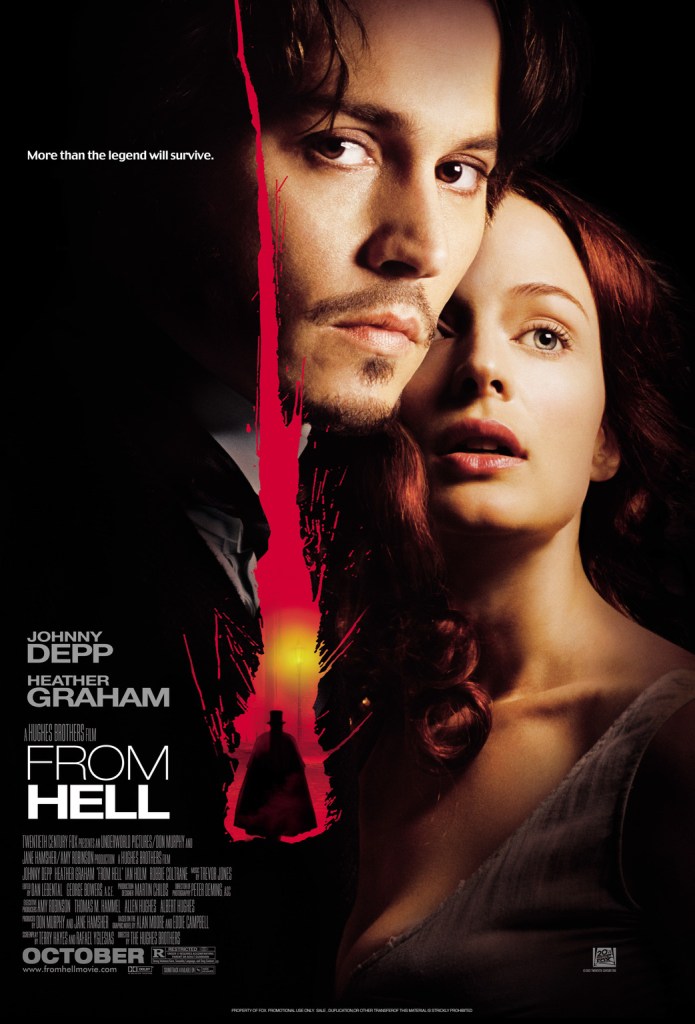


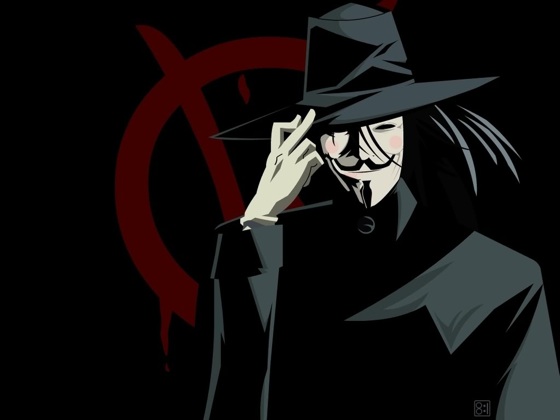
 After the Crash