We Create Our Own Reality

By Julien Charles

Source: Off-Guardian

The world watched in varying states of mind as the Davos set enjoyed its annual turn on the world stage, supping on sumptuous Atlantic crab and fresh Iberian pork, sustainable Norweigian cod, and the best Italian coffee.

When not tucking into a lavish feast, they bandied about their ideas for how the world ought to exploited (the key euphemisms here are “sustainable,” “stakeholder,” and “impossible beef.”)

Some revile and protest the annual ruling class summit, but many millions more embrace it, even gaze admirably at the mandarins of the new world order as they flit across mobile screens and offer uplifting quotes to curious media attendees.

Indeed, few seem to care as the cabal of monied interests chat amiably about centrally managed digital currencies, consolidating global health authority in unelected bodies, collapsing the world economy, generating needless food shortages, unpopular fake meat, and other new market opportunities. Fewer still see the implicit threat of globalist agendas to the rule of sovereign states.

There is such little resistance largely because billions of people believe what they read and what they are told by the news media. A healthy dose of distrust would serve the global populace well, if only it could release itself from the grip of mainstream corporate news.

In this respect, it’s worth remembering two quotes from the incomparable muckraker Upton Sinclair–author of the startling expose The Jungle.

In his book The Brass Check, Sinclair betrays the great lie of modern media, namely that it is independent. This easy falsehood is widely accepted. Millions of Americans believe that the truly deceitful media are the ones that YouTube labels as “state-affiliated media,” a damning modifier that instantly discredits every outlet so identified.

But Sinclair reminds us that “[Media] represents private interests, not public interests.” He could have gone farther and said mainstream media represents the private interests of elite capital. Marx said that every state serves a particular class. So does corporate media.

Sinclair later writes that, “It is difficult to get a man to understand something when his salary depends on his not understanding it.”

This second quote explains why so much of the MSM go along quite happily with the prescribed narrative from Washington. Their livelihoods depend on it. Occasionally a pious mainstream journalist will fiercely declare his independence from any malign editorial influence.

But as Michael Parenti responds,

“They like what you write because you write what they like.”

The principles of American exceptionalism are a prerequisite for any journalist hoping to earn a slot at a high-paying MSM outlet. They have long internalized the values of power. Put together, these quotes tell us that we are subjected to an official narrative that serves the interests of elite capital and is dutifully disseminated by a cabal of right-thinking stenographers.

The same elite interests that own the government own the media. Hence the narrative consistency.

ALTERNATE REALITY

Given that elite interests are largely out of step with the interests of the vast majority of Americans, we often find ourselves living in an alternate reality. The war in Ukraine is just the latest iteration. Most of the reality of the conflict has been obscured from view, sins of omission that ensure the public is largely misled. Fierce and ‘principled’ op-eds reinforce the bias. For instance, little attention is paid to:

Economic motivations underlying the conflict: arms sales for American defense contractors; oil and grain profits by crisis-oriented commodity monopolies; and broader agricultural profiteering by Monsanto and Dupont via a post-coup IMF agreement; the foreclosure of the Nord Stream 2 gas pipeline from the Baltic Sea into Germany, which opens the door to western consortiums supplying the shortfall.

Ukrainian academic Olga Baysha gave a telling interview to The Gray Zone. She noted how Volodymyr Zelensky’s neoliberal policies were sold as “westernization” and “modernization” to the Ukrainian public. But these were camouflage for privatization, deregulation, and downsizing of the public sphere, all commonplace neoliberal prescriptions for wealth extraction by global corporations. To secure this narrative, Zelensky shuttered opposition media channels and political parties, including sanctions and repression before the final step.

Zelensky was following the post-coup government’s deployment of ultranationalist battalions to violently extinguish the anti-coup resistance in Donbas. That “anti-terrorist operation” was really the beginning of a civil war by Kiev against its own population, including tanks and artillery, gunships and warplanes. The subsequent Minsk peace agreements were likewise largely ignored by the aggressive Kiev action against the East.

All of these political and national conflicts seem to evolve from—and devolve into—imperial economic relations. West against East, with Ukraine as a battleground. War is a revenue stream in capitalism. War is a profit center for the elites that own the media; it is only carnage for the lower classes. This distinction is rarely made.

WHY SOCIAL MEDIA HAS ABDICATED ITS ROLE

What is relatively unique in the propaganda about the Ukraine war is the degree to which social media has advanced its repressive apparatus in line with state directives. Social media became a serious thorn in the side of state power and corporate media when it consistently exposed falsehoods about the 2016 election, Russiagate, and the pandemic.

Though much war propaganda has been uncovered by scrupulous independent journalists (with a working class bias), the success of the Ukrainian narrative has been stupendous. Social media is falling in line, censoring or discrediting wrongthink whenever it appears.

What Google and YouTube and others are doing at the behest of the federal government is as Brett Weinstein said of the pandemic narrative, “They are infantilizing a huge fraction of the population. They are making certain discussions off limits.” We must “…adhere to certain pre-digested conclusions and we pretend that they emerged from evidence, which they do not.”

What we need is rational discussion. The answer to bad speech is more speech, not less. One would expect Google and YouTube and Facebook and Twitter to know this. In fact, it is very likely they do know this. As the venerable linguist politico Noam Chomsky once derisively commented, there’s no point in speaking truth to power: they already know the truth, and don’t care.

What has happened is what happens to all new media in a corporate fascist state: it is threatened until it complies with the official narrative being disseminated by the government, which is effectively owned by elite capital. Congress may have a word with Justice, and Justice may on a quiet Tuesday open the preliminaries of an antitrust investigation.

Suddenly the bright horizons of the Silicon giants are considerably dimmed. It is similar with the news media. The MSM rely too heavily on the gossip and good favor of well-placed officials; they bend too easily to the unspoken preferences of the advertisers who line their coffers; they keel too readily at the unctuous general who cavils over the soft treatment of a geopolitical rival. These perverse incentives are nicely modeled in Manufacturing Consent.

Elite capital may be loosely defined as those groups that are making enormous amounts of money off the status quo, even as many more millions are harmed by the same status quo. Elite capital used to be called “special interests.”

They are the rich and powerful billionaires who can be seen at Davos, on the boards and membership lists of the Rockefeller and Ford Foundations, the Bill and Melinda Gates Foundation and the Clinton Foundation; the Trilateral Commission and the Council on Foreign Relations; and in important think tanks like the Heritage Foundation, the American Enterprise Institute, the Brookings Institute, RAND Corporation, Cato, Hoover, CSIS, and Center for American Progress, among a proliferation of others.

They are thus not a monolithic or discrete coalition of individuals, but rather intertwined interests that share a common desire to uphold the existing establishment, by force or fraud.

MASTERS OF MYTH

Our current experience—in which we are terrifically afraid of a mild seasonal respiratory virus and terrifically xenophobic toward Russians—is reminiscent of the heyday of the Bush administration, when the neoconservative believers were riding high on a surfeit of manufactured intelligence.

Abetted by the ghoulish founder of Blairism, who claimed kindly London burghers might be liquidated by Arab WMDs in just 45 minutes. From launch to impact. From Baghdad missile shed to Kensington glade in less than an hour. Around that frightful time, George Bush’s svengali Karl Rove, educated a stunned reporter about what reality truly meant at the Metropole, in the imperium itself,

We’re an empire now, and when we act, we create our own reality. And while you’re studying that reality — judiciously, as you will — we’ll act again, creating other new realities, which you can study too, and that’s how things will sort out. We’re history’s actors … and you, all of you, will be left to just study what we do.”

That reality is what Henry Giroux called, “…the deadening unity and totalizing narratives that now marks dominant neoliberal and instrumental ideologies of the West.”

More than any moment in recent American history, we find ourselves under the spell of these reality makers, who have over the past five years produced a breathtaking array of crises that have utterly enthralled the population.

From the stunning election of a reeling madman, to chilling revelations of foreign influence, feckless investigations, failed impeachments, lethal pathogens launched from fog-draped bio labs in polluted Sino capitals, and finally to the good news of a redemptive election, only to be circumscribed by fatal new “variants” spread by pathologically stupid Trumpists.

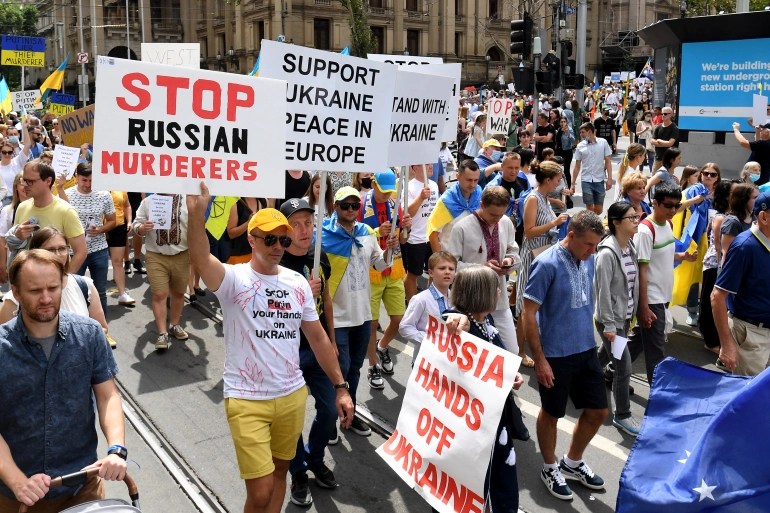
And finally, the plague is swept from the marquee by Russian imperialism on the march in Europe. The masses automatically swap their masks for Ukrainian flags. The fear and anger remain, but are merely redirected.

WAGE SLAVERY AND PUBLIC CONSCIOUSNESS

The indoctrination of individuals into the doctrinal system of American exceptionalism is driven not only by media consolidation but also economic enslavement. First a couple of figures—as if we need more—from a John Steppling’s essay on his Aesthetic Resistance blog. He notes that in 1870 some 67 percent of Americans were self-employed, probably artisans or farmers of some kind.

Once industrial capitalism particularly in urban areas grew, that number plummeted. Today it stands at 6 percent. The point being that the independence of millions of Americans has been compromised. Now they work—millions of them—not for themselves but for vast faceless corporations.

Companies that are essentially fascist constructs, whose decisions are inscrutable to most employees, and which typically sweep the scythe of cost cutting through the ranks every few years, and increasingly turn to automated processes that are merely overseen by an incrementally deskilled workforce.

This alienation from our own work was not unaccompanied by attendent catastrophes. Alongside the vast migration of men and women into wage labor came first a rise and then a fierce destruction of union representation. That too stands at around 7 percent today, once as high as 35 percent in the early to mid 20th century, when there were socialists roaming the untamed streets and word of a Bolshevik Revolution rippled through bourgeois mansions.

The currents of the time were not overlooked by the managers of the economy. The bankers bought the papers. The president created a commission for public information. The business roundtable sketched anti-labor plot lines. Sigmund Freud’s nephew invented the dark arts of public relations.

A similar phenomenon occurred after the cultural explosion of the Sixties. The neoliberal rollback of the so-called welfare state on one hand (happily embraced by hippies as they tossed aside their tasseled suede for wide lapels and polyester pantsuits) and the co-optation of counterculture on the other.

As hippies reproduced, they found themselves suddenly needing the money on offer from the corporate monoliths they once defaced the logos of. No longer able to sustain themselves as village artisans or independent producers, they succumbed to the economic pressures and joined the rat race.

Madison Avenue, a Cyclopean beast capable of the most astonishing mimetic performances, quickly absorbed the counterculture and regurgitated rebellion as offbeat consumerism.

Everything became a style code. Facing down a lynch mob or jackbooted police cordon was replaced with wearing Chuck Conners sneakers, running marathons in ‘Just Do It’ Nikes, or donning a Coca-Cola tee shirt with a sardonic grin. At the radical end of the spectrum, burning draft cards were replaced with ‘buy nothing’ anti-consumer holidays.

Irony supplants resistance, a concession of the educated classes to the diminished prospects for revolution.

And so, having been alienated from their work, having had their counterculture killed, gutted, dressed, and stuffed, the average person has little recourse for independent thinking. At work, he is conditioned by a corporate culture that esteems ‘yes men’, pathologizes optimism, and encourages virtue signaling on behalf of the corporate charter, the values of which one is welcome to adopt as one’s own.

Away from the office, he encounters an ersatz ‘culture’ of media news and entertainment that reifies the values of the corporate state, which ostensibly include diversity, multiculturalism, and inclusion. The news instantiates the tropes of the corporate news hour, which feature the sly demonization of other societies under the guise of national security and the banner of freedom.

Then entertainment reinforces them. One reads of new sanctions levied against a rogue regime in Caracas, and then watches a new action series on Netflix in which an earnest American thwarts a diabolical scheme by the brown Venezuelan with an unquenchable thirst for yanquee blood.

IDEOLOGIES AND SUB-IDEOLOGIES

But should one spy the troubling contradictions between our professed values of inclusion and our foreign policy of exclusion, there is nowhere to turn. Unless one knows about marginalized progressive websites, Noam Chomsky primers, or a nearby Communist Meet Up, one is left with the cardboard caricatures of corporate media, which go to great lengths to convince you those contradictions are all a misunderstanding—your own, to be sure.

Without ‘comrades’ to confirm your natural mistrust, it will tend to fade as the omnipresent corporate conditioning takes over.

Louis Althusser, the French Marxist philosopher, wrote that we are all conditioned by the Ideological State Apparatuses (ISAs) and repressed by Repressive State Apparatuses (RSAs). He said we are ‘interpellated’ by the ISAs into the helpful groupthink that sustains the status quo. Perhaps to keep his readers from guzzling Drano, he did concede that ‘interventions’ were possible in which a sub-ideology breaks through a crack in the dominant ideology.

What this intervention produces, though, is indeterminate. A riotous uprising that is brutally put down by some frightful caudillo general? Whose leaders are liquidated in the bowels of some rusting soccer stadium held over from the Pan Am Games? Or perhaps the glorious, dreamed of Revolution (capital ‘R’) that guts the capitalist oligarchy, assumes its productive forces, and achieves a breathtaking synthesis of revolutionary theory and worker power? The pipe-puffing Althusser declined to say.

REALITY REPEATS ITSELF: AMOR FATI?

It is no surprise when we see such little resistance in the population to the supplying of $40 billion in lethal aid to Ukraine, or to aggressive authoritarian mandates of the government regarding the pandemic. For all of the aforementioned reasons, the dominant response is unquestioning compliance and even gratitude.

After all, having never been taught the past, or having deliberately compartmentalized those troubling histories, we digest the official narrative like a child accepts the spoonfuls of baby food from a doting mother. Tens of millions of doses of soma shoveled down the hatch at daybreak or dusk, or both, do their numbing best to aid and abet digestion of those sometimes thorny narratives, so thick with intrigue and, not occasionally, senselessness. The reward of the incurious is consensus.

Within the official narratives themselves, there is at least one constant: the demonization of the other. We can easily see parallels in the gross caricature of unvaccinated individuals as pathogenic threats in need of the needle and the demonization of Russians as barbaric hordes in need of European refinements.

These depictions are not far from the efforts of German National Socialists to segregate non-Aryans, mostly of Jewish origin, from the righteous population of pure-blood Volk. Yet one needn’t leave one’s own history to see this blatant segregationist behavior. The dark era of Jim Crow, and the modern version of the carceral state, evince the deep hostility of society for the other, those that differ in skin color, sex, gender, sexual preference, religion, ideology, economic model, or worldview.

Edward Said notes in Orientalism how the western Orientalist needed to whittle down Islam to the caricature of “tent and tribe” in order to fit it into his orderly cosmology, in which the rationalism of the European Enlightenment prevailed. Today the West performs the same reductionist act on Eurasia.

Reclining in his sumptuous country estate, the elitist Marquis tells Charles Darnay in A Tale of Two Cities, “Repression is the only lasting philosophy. The dark deference of fear and slavery…will keep the dogs obedient to the whip, as long as this roof shuts out the sky.”

Like Sinclair, Charles Dickens historicized his novels, and it might be noted that the Marquis’ venerable roof would soon fall with the collapsing scenery of the French Revolution. Whenever we are sold those confident, end-of-history tales from the corridors of elite power—be it a French chateau or a chalet in the Swiss Alps—we’d do well to recall the timeless warning of every marketplace and bazaar: caveat emptor.
America, Meet Your New Dictator-in-Chief: The President’s Secret, Unchecked Powers

By John W. Whitehead & Nisha Whitehead

Source: The Rutherford Institute

“Life, liberty, and the pursuit of happiness have given way to permanent crisis management: to policing the planet and fighting preventative wars of ideological containment, usually on terrain chosen by, and favorable to, our enemies. Limited government and constitutional accountability have been shouldered aside by the kind of imperial presidency our constitutional system was explicitly designed to prevent.”— David C. Unger, The Emergency State: America’s Pursuit of Absolute Security at All Costs

America, meet your new dictator-in-chief.

As the New York Times reports, “Newly disclosed documents have shed a crack of light on secret executive branch plans for apocalyptic scenarios—like the aftermath of a nuclear attack—when the president may activate wartime powers for national security emergencies.”

The problem, of course, is that we have become a nation in a permanent state of emergency.

Power-hungry and lawless, the government has weaponized one national crisis after another in order to expand its powers and justify all manner of government tyranny in the so-called name of national security.

The seeds of this present madness were sown almost two decades ago when George W. Bush stealthily issued two presidential directives that granted the president the power to unilaterally declare a national emergency, which is loosely defined as “any incident, regardless of location, that results in extraordinary levels of mass casualties, damage, or disruption severely affecting the U.S. population, infrastructure, environment, economy, or government functions.

Comprising the country’s Continuity of Government (COG) plan, these directives (National Security Presidential Directive 51 and Homeland Security Presidential Directive 20) provide a skeletal outline of the actions the president will take in the event of a “national emergency.”

Just what sort of actions the president will take once he declares a national emergency can barely be discerned from the barebones directives. However, one thing is clear: in the event of a national emergency, the COG directives give unchecked executive, legislative and judicial power to the president.

The country would then be subjected to martial law by default, and the Constitution and the Bill of Rights would be suspended.

Essentially, the president would become a dictator for life.

It has happened already.

As we have witnessed in recent years, that national emergency can take any form, can be manipulated for any purpose and can be used to justify any end goal—all on the say so of the president.

The emergency powers that we know about which presidents might claim during such states of emergency are vast, ranging from imposing martial law and suspending habeas corpus to shutting down all forms of communications, including implementing an internet kill switch, and restricting travel.

Yet according to documents recently obtained by the Brennan Center, there may be many more secret powers that presidents may institute in times of so-called crisis without oversight from Congress, the courts, or the public.

It doesn’t even matter what the nature of the crisis might be—civil unrest, the national emergencies, “unforeseen economic collapse, loss of functioning political and legal order, purposeful domestic resistance or insurgency, pervasive public health emergencies, and catastrophic natural and human disasters”—as long as it allows the government to justify all manner of government tyranny in the name of so-called national security.

The war on COVID-19, the war on terror, the war on drugs, the war on illegal immigration: all of these programs started out as responses to pressing national concerns and have since become weapons of compliance and control in the police state’s hands.

Deploying the same strategy it used with 9/11 to acquire greater powers under the USA Patriot Act, the police state—a.k.a. the shadow government, a.k.a. the Deep State—has been planning and preparing for such crises for years now, quietly assembling a wish list of presidential lockdown powers that could be trotted out and approved at a moment’s notice.

Indeed, the Trump Administration even asked Congress to allow it to suspend parts of the Constitution whenever it deems it necessary during the COVID-19 crisis and “other” emergencies. The Department of Justice (DOJ) went so far as to quietly trot out and test a long laundry list of terrifying powers that override the Constitution.

We’re talking about lockdown powers (at both the federal and state level): the ability to suspend the Constitution, indefinitely detain American citizens, bypass the courts, quarantine whole communities or segments of the population, override the First Amendment by outlawing religious gatherings and assemblies of more than a few people, shut down entire industries and manipulate the economy, muzzle dissidents, “stop and seize any plane, train or automobile to stymie the spread of contagious disease,” reshape financial markets, create a digital currency (and thus further restrict the use of cash), determine who should live or die.

These are powers the police state would desperately like to make permanent.

In such a climate, the American president becomes dictator with permanent powers: imperial, unaccountable and unconstitutional.

Bear in mind that the powers the government officially asked Congress to recognize and authorize barely scratch the surface of the far-reaching powers the government has already unilaterally claimed for itself.

Unofficially, the police state with the president at its helm has been riding roughshod over the rule of law for years now without any pretense of being reined in or restricted in its power grabs by Congress, the courts or the citizenry.

Although the Constitution invests the President with very specific, limited powers, in recent years, American presidents have claimed the power to completely and almost unilaterally alter the landscape of this country for good or for ill.

The powers amassed by each successive president through the negligence of Congress and the courts—powers which add up to a toolbox of terror for an imperial ruler—empower whoever occupies the Oval Office to act as a dictator, above the law and beyond any real accountability.

As law professor William P. Marshall explains, “every extraordinary use of power by one President expands the availability of executive branch power for use by future Presidents.”

Moreover, it doesn’t even matter whether other presidents have chosen not to take advantage of any particular power, because “it is a President’s action in using power, rather than forsaking its use, that has the precedential significance.”

In other words, each successive president continues to add to his office’s list of extraordinary orders and directives, expanding the reach and power of the presidency and granting him- or herself near dictatorial powers.

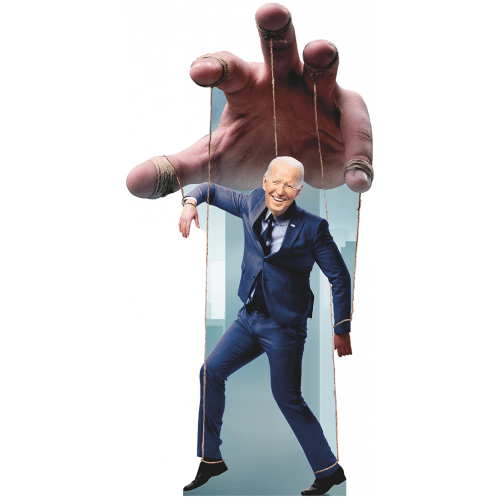
All of the imperial powers amassed by Barack Obama and George W. Bush—to kill American citizens without due process, to detain suspects indefinitely, to strip Americans of their citizenship rights, to carry out mass surveillance on Americans without probable cause, to suspend laws during wartime, to disregard laws with which he might disagree, to conduct secret wars and convene secret courts, to sanction torture, to sidestep the legislatures and courts with executive orders and signing statements, to direct the military to operate beyond the reach of the law, to operate a shadow government, and to act as a dictator and a tyrant, above the law and beyond any real accountability—were inherited by Donald Trump and passed along to Joe Biden.

These presidential powers—acquired through the use of executive orders, decrees, memorandums, proclamations, national security directives and legislative signing statements and which can be activated by any sitting president—enable past, president and future presidents to operate above the law and beyond the reach of the Constitution.

These are the powers that continue to be passed along to each successive heir to the Oval Office, the Constitution be damned.

This is what you might call a stealthy, creeping, silent, slow-motion coup d’état.

From Clinton to Bush, Obama to Trump, and now Biden, it’s as if we’ve been caught in a time loop, forced to re-live the same abuses over and over again: the same assaults on our freedoms, the same disregard for the rule of law, the same subservience to the Deep State, and the same corrupt, self-serving government that exists only to amass power, enrich its shareholders and ensure its continued domination.

We’ve been losing our freedoms so incrementally for so long—sold to us in the name of national security and global peace, maintained by way of martial law disguised as law and order, and enforced by a standing army of militarized police and a political elite determined to maintain their powers at all costs—that it’s hard to pinpoint exactly when it all started going downhill, but “we the people” are paying the price for it now.

We are paying the price every day that we allow the government to continue to wage its war on the American People, a war that is being fought on many fronts: with bullets and tasers, with surveillance cameras and license readers, with intimidation and propaganda, with court rulings and legislation, with the collusion of every bureaucrat who dances to the tune of corporate handouts while on the government’s payroll, and most effectively of all, with the complicity of the American people, who continue to allow themselves to be easily manipulated by their politics, distracted by their pastimes, and acclimated to a world in which government corruption is the norm.

Unless something changes in the way we deal with these ongoing, egregious abuses of power, the predators of the police state will continue to wreak havoc on our freedoms, our communities, and our lives.

If we continue down this road, there can be no surprise about what awaits us at the end.

After all, it is a tale that has been told time and again throughout history about how easy it is for freedom to fall and tyranny to rise, and it often begins with one small, seemingly inconsequential willingness on the part of the people to compromise their principles and undermine the rule of law in exchange for a dubious assurance of safety, prosperity and a life without care.

Unfortunately, the process of unseating a dictator and limiting the powers of the presidency is far from simple but at a minimum, it must start with “we the people.”

For starters, as I make clear in my book Battlefield America: The War on the American People and in its fictional counterpart The Erik Blair Diaries, we must recalibrate the balance of power.

Start locally—in your own communities, in your schools, at your city council meetings, in newspaper editorials, at protests—by pushing back against laws that are unjust, police departments that overreach, politicians that don’t listen to their constituents, and a system of government that grows more tyrannical by the day.

What we desperately need is a concerted, collective commitment to the Constitution’s principles of limited government, a system of checks and balances, and a recognition that they—the president, Congress, the courts, the military, the police, the technocrats and plutocrats and bureaucrats—answer to and are accountable to “we the people.”

This will mean that Americans will have to stop letting their personal politics and party allegiances blind them to government misconduct and power grabs.

It will mean holding all three branches of government accountable to the Constitution (i.e., vote them out of office if they abuse their powers).

And it will mean calling on Congress to put an end to the use of presidential executive orders, decrees, memorandums, proclamations, national security directives and legislative signing statements as a means of getting around Congress and the courts.

In other words, we’ve got to start making both the president and the police state play by the rules of the Constitution.

The REAL agenda behind the created food crisis

The created food crisis, whether real or a smoke-and-mirrors psy-op, is all about tearing down the global food system and “building back better” – a new dystopian food system built by corporate monoliths and rigidly controlled in the name of the greater good.

By Kit Knightly

Source: Off-Guardian

We’re in the early stages of a food crisis.

The press has been predicting this for years, but  up until now it always appeared to be nothing more than fearmongering, designed to worry or distract people, but the signs are there that this time, to quote Joe Biden, it “is going to be real”.

Nobody knows how bad it could get, except the people who are creating it.

Because the evidence is pretty clear, it is being deliberately & cold-bloodedly created. We’ve been documenting it for months.

We have Russia’s “special operation” in Ukraine driving up the price of staple foods, wheat and sunflower oil, as well as fertiliser.

We have the sudden “bird flu outbreak” driving up the price of poultry and eggs.

The soaring price of oil is driving up the cost of food distribution.

The inflation caused by huge influxes of fiat currency means families are spending more money on less food.

And as all this is happening, the US and UK (and maybe others, we don’t know) are literally paying farmers not to farm.

It’s pretty clear this is The Great Reset: Food Edition. The lockdown melody with slightly different lyrics. A process of breaking down the structures already in place so we can “build back better” with a more controlled and more corporatised food system

Just as the Covid “pandemic” was said to highlight “weaknesses in the multilateral system”, so this food crisis will show that our “unstable food systems are in need of reform” and we need to ensure our “food security”…or a thousand variations on that theme.

That’s not supposition. They already started, over a year ago.

The Journal of Agriculture, Food Systems & Community Developments published a paper in February 2021 titled:

Dismantling and rebuilding the food system after COVID-19: Ten principles for redistribution and regeneration

In an interview from July last year, Ruth Richardson the Executive Director of the NGO Global Alliance for the Future of Food literally said:

Our Dominant Food System Needs to Be Dismantled and Rebuilt”

Later, in September 2021, the UN convened the first-ever “Food Systems Summit”, whose mission statement included the line:

Rebuilding the food systems of the world will also enable us to answer the UN Secretary-General’s call to “build back better” from COVID-19.

Writing in the Guardian two weeks ago, George Monbiot, weathervane for every deep state agenda, states with his trademark lack of subtlety:

The banks collapsed in 2008 – and our food system is about to do the same…The system has to change.

But what does “change” and “rebuilt” actually mean in this context?

Well, that’s no mystery, they’ve been talking it up for years.

Almost all of these are stories from just the past month or so, many of them talking points at the World Economic Forum’s Davos Conference.

As is almost always the case, the problem to which they’re currently “reacting” already has a series of pre-ordained solutions.

Just as we saw lockdowns break the economy to pieces whilst the billionaire class land record profits whilst corporate megaliths expanded their monopolies, so too will any proposed food security policies end up benefiting the already mega-rich or installing infrastructure for corporate control.

They just announced the building of the largest “cultured meat factory” in the world. Fake meat, of course, can’t be raised at home and is subject to patented processes of creation. Genetically edited or modified plants and animals are likewise subject to patents.

Supranational companies, with profits larger than the budget of some nations, are developing carbon footprint tracker apps which reward people for making the “right decisions”. That could easily be applied to food.

Bill Gates has quietly become the largest owner of agricultural land in the United States. Land on which he can grow new Frankencrops, or which the US government will pay him not to use.

The play is clear: Right now they’re getting ready to tear all our old food systems down, with the stated aim of building them back better.

But better for them, not us.

The Subtleties of Anti-Russia Leftist Rhetoric

By Edward Curtin

Source: Behind the Curtain

While the so-called liberal and conservative corporate mainstream media – all stenographers for the intelligence agencies – pour forth the most blatant propaganda about Russia and Ukraine that is so conspicuous that it is comedic if it weren’t so dangerous, the self-depicted cognoscenti also ingest subtler messages, often from the alternative media.

A woman I know and who knows my sociological analyses of propaganda contacted me to tell me there was an excellent article about the war in Ukraine at The Intercept, an on-line publication funded by billionaire Pierre Omidyar I have long considered a leading example of much deceptive reporting wherein truth is mixed with falsehoods to convey a “liberal” narrative that fundamentally supports the ruling elites while seeming to oppose them.  This, of course, is nothing new since it’s been the modus operandi of all corporate media in their own ideological and disingenuous ways, such as The New York Times, CBS, the Washington Post, the New York Daily News, Fox News, CNN, NBC, etc. for a very long time.

Nevertheless, out of respect for her judgment and knowing how deeply she feels for all suffering people, I read the article.  Written by Alice Speri, its title sounded ambiguous – “The Left in Europe Confronts NATO’s Resurgence After Russia’s Invasion of Ukraine” – until I saw the subtitle that begins with these words: “Russia’s brutal invasion complicates…”  But I read on.  By the fourth paragraph, it became clear where this article was going.  Speri writes that “In Ukraine, by contrast [with Iraq], it was Russia that had staged an illegal, unprovoked invasion, and U.S.-led support to Ukraine was understood by many as crucial to stave off even worse atrocities than those the Russian military had already committed.” [my emphasis]

While ostensibly about European anti-war and anti-NATO activists caught on the horns of a dilemma, the piece goes on to assert that although US/NATO was guilty of wrongful expansion over many years, Russia has been an aggressor in Ukraine and Georgia and is guilty of terrible war crimes, etc.

There is not a word about the U.S. engineered coup in 2014, the CIA and Pentagon backed mercenaries in Ukraine, or its support for the neo-Nazi Azov Battalion and Ukraine’s years of attacks on the Donbass where many thousands have been killed.  It is assumed these actions are not criminal or provocative.  And there is this:

The uncertain response of Europe’s peace activists is both a reflection of a brutal, unprovoked invasion that stunned the world and of an anti-war movement that has grown smaller and more marginalized over the years. The left in both Europe and the U.S. have struggled to respond to a wave of support for Ukraine that is at cross purposes with a decades long effort to untangle Europe from a U.S.-led military alliance. [my emphasis]

In other words, the article, couched in anti-war rhetoric, was anti-Russia propaganda.  When I told my friend my analysis, she refused to discuss it and got angry with me, as if I therefore were a proponent of war.  I have found this is a common response.

This got me thinking again about why people so often miss the untruths lying within articles that are in many parts truthful and accurate.  I notice this constantly.  They are like little seeds slipped in as if no one will notice; they work their magic nearly unconsciously.  Few do notice them, for they are often imperceptible.  But they have their effects and are cumulative and are far more powerful over time than blatant statements that will turn people off, especially those who think propaganda doesn’t work on them.  This is the power of successful propaganda, whether purposeful  or not.  It particularly works well on “intellectual” and highly schooled people.

For example, in a recent printed  interview, Noam Chomsky, after being introduced as a modern day Galileo, Newton, and Descartes rolled into one, talks about propaganda, its history, Edward Bernays, Walter Lippman, etc.  What he says is historically accurate and informative for anyone not knowing this history.  He speaks wisely of U.S. media propaganda concerning its unprovoked war against Iraq and he accurately calls the war in Ukraine “provoked.”  And then, concerning the war in Ukraine, he drops this startling statement:

I don’t think there are ‘significant lies’ in war reporting. The U.S. media are generally doing a highly creditable job in reporting Russian crimes in Ukraine. That’s valuable, just as it’s valuable that international investigations are underway in preparation for possible war crimes trials.

In the blink of an eye, Chomsky says something so incredibly untrue that unless one thinks of him as a modern day Galileo, which many do, it may pass as true and you will smoothly move on to the next paragraph.  Yet it is a statement so false as to be laughable.  The media propaganda concerning events in Ukraine has been so blatantly false and ridiculous that a careful reader will stop suddenly and think: Did he just say that?

So now Chomsky views the media, such as The New York Times and its ilk, that he has correctly castigated for propagandizing for the U.S. in Iraq and East Timor, to use two examples, is doing “a highly creditable job in reporting Russian crimes in Ukraine,” as if suddenly they were no longer spokespeople for the CIA and U.S. disinformation.  And he says this when we are in the midst of the greatest propaganda blitz since WW I, with its censorship, Disinformation Governance Board, de-platforming of dissidents, etc., that border on a parody of Orwell’s Nineteen Eighty-Four. 

Even slicker is his casual assertion that the media are doing a good job reporting Russia’s war crimes after he earlier has said this about propaganda:

So it continues. Particularly in the more free societies, where means of state violence have been constrained by popular activism, it is of great importance to devise methods of manufacturing consent, and to ensure that they are internalized, becoming as invisible as the air we breathe, particularly in articulate educated circles. Imposing war-myths is a regular feature of these enterprises.

This is simply masterful.  Explain what propaganda is at its best and how you oppose it and then drop a soupçon of it into your analysis.  And while he is at it, Chomsky makes sure to praise Chris Hedges, one of his followers, who has himself recently wrote an article – The Age of Self-Delusion – that also contains valid points appealing to those sick of wars, but which also contains the following words:

Putin’s revanchism is matched by our own.

The disorganization, ineptitude, and low morale of the Russian army conscripts, along with the repeated intelligence failures by the Russian high command, apparently convinced Russia would roll over Ukraine in a few days, exposes the lie that Russia is a global menace.

‘The Russian bear has effectively defanged itself,’ historian Andrew Bacevich writes.

But this is not a truth the war makers impart to the public. Russia must be inflated to become a global menace, despite nine weeks of humiliating military failures. [my emphasis]

Russia’s revanchism?  Where?  Revanchism?  What lost territory has the U.S. ever waged war to recover?  Iraq, Syria, Cuba, Vietnam, Yugoslavia, etc.?  The U.S.’s history is a history not of revanchism but of imperial conquest, of seizing or controlling territory, while Russia’s war in Ukraine is clearly an act of self-defense after years of U.S./NATO/Ukraine provocations and threats, which Hedges recognizes.  “Nine weeks of humiliating military failures”? – when they control a large section of eastern and southern Ukraine, including the Donbass.  But his false message is subtly woven, like Chomsky’s, into sentences that are true.

“But this is not a truth the war makers impart to the public.”  No, it is exactly what the media spokespeople for the war makers – i.e. The New York Times (Hedges former employer, which he never fails to mention and for whom he covered the Clinton administration’s savage destruction of Yugoslavia), CNNFox News, The Washington Post, the New York Post, etc. impart to the public every day for their masters.  Headlines that read how Russia, while allegedly committing daily war crimes, is failing in its war aims and that the mythic hero Zelensky is leading Ukrainians to victory.  Words to the effect that “The Russian bear has effectively defanged itself” presented as fact.

Yes, they do inflate the Russian monster myth, only to then puncture it with the myth of David defeating Goliath.

But being in the business of mind games (too much consistency leads to clarity and gives the game away), one can expect them to scramble their messages on an ongoing basis to serve the U.S. agenda in Ukraine and further NATO expansion in the undeclared war with Russia, for which the Ukrainian people will be sacrificed.

Orwell called it “doublethink”:

Doublethink lies at the very heart of Ingsoc, since the essential act of the Party is to use conscious deception while retaining the firmness of purpose that goes with complete honesty.To tell deliberate lies while genuinely believing in them, to forget any fact that has become inconvenient, and then, when it becomes necessary again, to draw it back from oblivion for just so long as it is needed, to deny the existence of objective reality and all the while to take account of the reality one denies – all this is indispensably necessary….with the lie always one step ahead of the truth.

Revealing while concealing and interjecting inoculating shots of untruths that will only get cursory attention from their readers, the writers mentioned here and others have great appeal for the left intelligentsia.  For people who basically worship those they have imbued with infallibility and genius, it is very hard to read all sentences carefully and smell a skunk.  The subterfuge is often very adroit and appeals to readers’ sense of outrage at what happened in the past – e.g. the George W. Bush administration’s lies about weapons of mass destruction in Iraq.

Chomsky, of course, is the leader of the pack, and his followers are legion, including Hedges.  For decades they have been either avoiding or supporting the official versions of the assassinations of JFK and RFK, the attacks of September 11, 2001 that led directly to the war on terror and so many wars of aggression,and the recent Covid-19 propaganda with its devastating lockdowns and crackdowns on civil liberties.  They are far from historical amnesiacs, of course, but obviously consider these foundational events of no importance, for otherwise they would have addressed them.  If you expect them to explain, you will be waiting a long time.

In a recent article – How the organized Left got Covid wrong, learned to love lockdowns and lost its mind: an autopsy – Christian Parenti writes this about Chomsky:

Almost the entire left intelligentsia has remained psychically stuck in March 2020. Its members have applauded the new biosecurity repression and calumniated as liars, grifters, and fascists any and all who dissented. Typically, they did so without even engaging evidence and while shirking public debate. Among the most visible in this has been Noam Chomsky, the self-described anarcho-syndicalist who called for the unvaccinated to “remove themselves from society,” and suggested that they should be allowed to go hungry if they refuse to submit.

Parenti’s critique of the left’s response (not just Chomsky’s and Hedges’) to Covid also applies to those foundational events mentioned above, which raises deeper questions about the CIA’s and NSA’s penetration  of the media in general, a subject beyond the scope of this analysis.

For those, like the liberal woman who referred me to The Intercept article, who would no doubt say of what I have written here: Why are you picking on leftists? my reply is quite simple.

The right-wing and the neocons are obvious in their pernicious agendas; nothing is really hidden; therefore they can and should be opposed. But many leftists serve two masters and are far subtler. Ostensibly on the side of regular people and opposed to imperialism and the predations of the elites at home and abroad, they are often tricksters of beguiling rhetoric that their followers miss. Rhetoric that indirectly fuels the wars they say they oppose.

Smelling skunks is not as obvious as it might seem.  Being nocturnal, they come forth when most are sleeping.

Livelihoods in a Degrowth Economy

By Charles Hugh Smith

Source: Of Two Minds

Let’s consider livelihood options in an unsustainable economy of extremes that are unraveling, an economy that is being forced to transition to Degrowth.

Nassim Taleb’s book Antifragile explains the differences between fragile systems (systems that cannot survive instability), resilient systems (systems that can survive instability and stay the same) and antifragile systems (systems that adapt and emerge stronger).

The ideal way of life is antifragile: resilient enough to survive adversity and adaptable enough to evolve solutions to whatever comes our way.

The key antifragile traits are adaptability and rapid, flexible evolution. Adversity puts selective pressure on organisms: only those organisms which adapt successfully survive.

The more antifragile our livelihood and way of life, the better prepared we will be to recognize and pursue opportunities.

An unsustainable, unstable economy puts a great deal of pressure on its participants. Only those with the skills and agency to move, adapt and experiment will emerge stronger.

Adaptability requires agency. Those without much control are stuck with the consequences of others’ decisions and actions.

In my experience, self-reliance is integral to an antifragile way of life.Self-reliance and self-sufficiency are similar but not identical.

Self-sufficiency means reducing our dependence on resources provided by others: growing our own food, doing our own repairs, etc. Self-sufficiency can also be understood as shortening dependency chains.

Compare being dependent on food shipped thousands of miles to relying mostly on food grown within 50 miles of home. There are so many ways long supply chains can break down because the entire system breaks down if even one link in the dependency chain breaks.

Total self-sufficiency isn’t practical. We all rely on industrial production of metals, tools, plastics, fertilizers, etc. But reducing our dependence on systems that are fragile by consuming less and wasting nothing increases our antifragility.

Self-reliance is being able to take care of oneself, being independent in thought and action, and maintaining control of decision-making–what I’ve been calling agency.

Self-reliance means being able to go against the crowd. This requires independence and confidence in one’s inner compass.

Being able to take care of oneself means drawing upon inner resources, being able to identify the essentials of a situation and coming up with solutions that are within reach.

Since households with multiple incomes are far more resilient than households with all their eggs in one basket, our goal is to develop income streams that we control. The ownership is more important than the scale of the income. A modest income we control is far more antifragile than a larger income we have little control over.

Developing income streams is easier if we approach the task with an entrepreneurial mindset.

This mindset looks at work in terms of markets, unmet demand, pricing power, networks of trustworthy peers, trial and error (experiments), optimizing new skills, seeking mentors, learning to make clear-eyed assessments of what’s working and what isn’t, and then acting decisively on the conclusions.

All these skills can be developed. They are very useful in navigating unstable conditions because they prepare us to act decisively rather than passively await others to decide what happens to us.

Some skills can be applied to virtually every field: project management, bookkeeping, working well with others, computer skills and communicating clearly. Being a fast learner is valuable in every field.

In my books and blog posts, I’ve covered the difference between tradable work–work that can be done anywhere–and untradable work, work that can only be done locally. Having skills that are untradable is advantageous, as the competition is local rather than global.

Skills that can’t be automated are also advantageous. Robots are optimized for repetitive tasks and factory / warehouse floors with sensors. They are not optimized for tasks that must be figured out on the fly and that require multiple skills.

Who fixes the robot when it fails out in the field? Another robot? Who replaces the dead battery in the drone? Another drone? The point is there are real-world limits on robotics, artificial intelligence, machine learning and automation that proponents gloss over or ignore.

Those with multiple skills who can problem-solve on the fly will continue to be valuable.

The models of work are changing, and this offers a wider range of options which is especially valuable to those emerging from burnout.

Combining various kinds and modes of work is called hybrid work. This could be mixing work from home (remote work) with occasional visits to an office, or it could be mixing a part-time job with self-employment.

I’ve written about one example in Japan called Half Farmer, Half X, where young urban knowledge workers move to the countryside to pursue small-scale farming while keeping a part-time, high-pay tech job they do online. Since the cost of living is so much lower in the countryside, these hybrid workers don’t need to work many hours remotely to cover their expenses, nor do they need their small-scale farming to be highly profitable.

Not all work is paid. Indeed, only a slice of human work globally is paid. The work that gives us the greatest fulfillment may well be unpaid or poorly paid. We may have to do some work to pay the bills while looking forward to the work we do that doesn’t earn much money.

Personally, I have always been drawn to both knowledge work and hands-on work. I worked my way through my university with a part-time job in construction. This was the ideal mix for my enthusiasms. Whenever I’ve been limited to one or the other, I feel dissatisfied. For me, hybrid work means having both knowledge work and hands-on physical labor, and having control of both.

Many people believe they need additional credentials to expand their opportunities. The alternative is to accredit yourself.

Since I’m enthusiastic about working with fruit trees and vegetable gardens, let’s say I decide to offer my services to potential customers.

One avenue is to spend money and time to get a certificate in horticulture. Alternatively, I could take photos of my own yard to document the trees I planted and how fast they’ve grown under my care. In other words, I could accredit myself, providing direct evidence of my skills and experience.

Employers have learned that completing a credential doesn’t mean the graduate will be productive. The diploma doesn’t prove the graduate learned much or has what it takes to work well with others.

The diploma actually tells us very little about the graduate. We learn much more from someone who accredits themselves by documenting projects they’ve completed.

The only real source of prosperity is improving productivity: doing more with fewer resources and labor. Economists expected the adoption of computers and the Internet to boost productivity. Instead, productivity gains have been extremely modest, 1% or 2% per year, far lower than the 10% annual gains achieved during industrialization.

This productivity paradox has puzzled economists for decades. One reason why the productivity of knowledge work ((white-collar work) has barely improved when compared to factory productivity (blue-collar work) is the methodical optimization of tasks is more difficult to apply to knowledge work. Much of this work is done by rule of thumb and what was passed down by senior workers.

There are a number of reasons for this. One is it’s easier to study the assembly of products than it is to break down the production of services.

Another is that many fields of knowledge work are so new that it’s difficult to optimize tasks because they’re constantly changing.

A third factor is that we’ve been wealthy enough to waste labor and capital on unproductive bureaucratic friction. Just as we waste water when it’s abundant and free, we also waste energy and money when they’re abundant.

In Global Crisis, National Renewal I describe the changes in the process of obtaining a building permit in the past 40 years.

In the early 1980s, I could submit a set of plans for a modest house in the morning and pick up the approved plans and building permit that afternoon. Now the process takes many months, even though the house being built hasn’t changed much at all. What changed was the permit approval process became terribly inefficient.

Since there’s few incentives to improve efficiencies in bureaucracies, it now takes a decade or longer to approve a bridge or landfill While the number of professors and doctors has increased modestly, the number of university and hospital administrators has soared.

Now that energy will no longer be cheap over the long term, incentives to improve the productivity of knowledge work will increase.

Unsustainable economies are prone to sudden changes in finance and the availability of essentials. We’re accustomed to predictable stability, and so few are prepared to respond effectively to instability.

If our lives only work when things are stable, our way of life is fragile. Recall Sun Tzu’s advice: “If a battle cannot be won, do not fight it.” If we’re only prepared for everything to stay the same, we’re fighting a battle we can’t win. We want to be prepared for sudden changes and scarcities by planning ahead and being flexible, nimble and responsive.

One facet of being antifragile is having a buffer or cushion against sudden shocks. In a 2018 interview, Nassim Taleb said, “Money can’t buy happiness, but the absence of money can cause unhappiness. Money buys freedom… to choose what you want to do professionally.”

Taleb went on to note that it takes great discipline to keep enough money stashed to give us the freedom to maintain our agency when faced with adversity. Self-reliance requires a buffer so we have time to figure out solutions and the means to pursue them.

In my experience, our willingness to consider all options, our ability to make careful decisions and take decisive action are just as important as a cushion of cash. Cash widens our options, but if we’re frozen by inexperience and fear then our options are severely limited.

The wider our range of skills, the greater our opportunities to add value. The basic needs of human life must be met and so those who can meet those needs will always be valued. This range of skills is also a buffer because it gives us more options in adversity.

How much money do we need as a cushion? The less we need, the lighter our expenses and the more options we have. If we need $10,000 a month just to pay our basic expenses, that demands a large cushion. If we’ve simplified and downsized our way of life so $1,000 a month is enough to keep us going, our cushion can be much smaller.

In other words, frugality, self-reliance and simplicity are key parts of antifragility, for they lower the cost of freedom. Money can lose its value in crisis, but our buffer of skills and self-reliance cannot be taken from us or devalued by a global crisis.

One final consideration is timing. The sooner we start preparing for degrowth, the better off we’ll be. A Chinese proverb captures this succinctly: By the time you’re thirsty, it’s too late to dig a well.

The Illusion of Freedom: We’re Only as Free as the Government Allows

By John W. Whitehead & Nisha Whitehead

Source: The Rutherford Institute

“Rights aren’t rights if someone can take them away. They’re privileges. That’s all we’ve ever had in this country, is a bill of temporary privileges. And if you read the news even badly, you know that every year the list gets shorter and shorter. Sooner or later, the people in this country are gonna realize the government … doesn’t care about you, or your children, or your rights, or your welfare or your safety… It’s interested in its own power. That’s the only thing. Keeping it and expanding it wherever possible.”— George Carlin

We’re in a national state of denial.

For years now, the government has been playing a cat-and-mouse game with the American people, letting us enjoy just enough freedom to think we are free but not enough to actually allow us to live as a free people.

Case in point: on the same day that the U.S. Supreme Court appeared inclined to favor a high school football coach’s right to pray on the field after a game, the high court let stand a lower court ruling that allows police to warrantlessly track people’s location and movements through their personal cell phones, sweeping Americans up into a massive digital data dragnet that does not distinguish between those who are innocent of wrongdoing, suspects, or criminals.

Likewise, although the Supreme Court gave the go-ahead for a death row inmate to have his pastor audibly pray and lay hands on him in the execution chamber, it refused to stop police from using hidden cameras to secretly and warrantlessly record and monitor a person’s activities outside their home over an extended period of time.  

For those who have been paying attention, there’s a curious pattern emerging: the government appears reasonably tolerant of those who want to exercise their First Amendment rights in a manner that doesn’t challenge the police state’s hold on power, for example, by praying on a football field or in an execution chamber.

On the other hand, dare to disagree with the government about its war crimes, COVID-19, election outcomes or police brutality, and you’ll find yourself silenced, cited, shut down and/or branded an extremist.

The U.S. government is particularly intolerant of speech that reveals the government’s corruption, exposes the government’s lies, and encourages the citizenry to push back against the government’s many injustices. For instance, Wikileaks founder Julian Assange, the latest victim of the government’s war on dissidents and whistleblowers, is in the process of being extradited to the U.S. to be tried under the Espionage Act for daring to access and disclose military documents that portray the U.S. government and its endless wars abroad as reckless, irresponsible, immoral and responsible for thousands of civilian deaths.

Even political protests are fair game for prosecution. In Florida, two protesters are being fined $3000 for political signs proclaiming stating “F—k Biden,” “F—k Trump,” and “F—k Policing 4 Profit” that violate a city ban on “indecent” speech on signs, clothing and other graphic displays.

The trade-off is clear: pray all you want, but don’t mess with the U.S. government.

In this way, the government, having appointed itself a Supreme and Sovereign Ruler, allows us to bask in the illusion of religious freedom while stripping us of every other freedom afforded by the Constitution.

We’re in trouble, folks.

Freedom no longer means what it once did.

This holds true whether you’re talking about the right to criticize the government in word or deed, the right to be free from government surveillance, the right to not have your person or your property subjected to warrantless searches by government agents, the right to due process, the right to be safe from militarized police invading your home, the right to be innocent until proven guilty and every other right that once reinforced the founders’ belief that this would be “a government of the people, by the people and for the people.”

Not only do we no longer have dominion over our bodies, our families, our property and our lives, but the government continues to chip away at what few rights we still have to speak freely and think for ourselves.

My friends, we’re being played for fools.

On paper, we may be technically free.

In reality, however, we are only as free as a government official may allow.

We only think we live in a constitutional republic, governed by just laws created for our benefit.

Truth be told, we live in a dictatorship disguised as a democracy where all that we own, all that we earn, all that we say and do—our very lives—depends on the benevolence of government agents and corporate shareholders for whom profit and power will always trump principle. And now the government is litigating and legislating its way into a new framework where the dictates of petty bureaucrats carry greater weight than the inalienable rights of the citizenry.

With every court ruling that allows the government to operate above the rule of law, every piece of legislation that limits our freedoms, and every act of government wrongdoing that goes unpunished, we’re slowly being conditioned to a society in which we have little real control over our lives.

As Rod Serling, creator of the Twilight Zone and an insightful commentator on human nature, once observed, “We’re developing a new citizenry. One that will be very selective about cereals and automobiles, but won’t be able to think.”

Indeed, not only are we developing a new citizenry incapable of thinking for themselves, we’re also instilling in them a complete and utter reliance on the government and its corporate partners to do everything for them—tell them what to eat, what to wear, how to think, what to believe, how long to sleep, who to vote for, whom to associate with, and on and on.

In this way, we have created a welfare state, a nanny state, a police state, a surveillance state, an electronic concentration camp—call it what you will, the meaning is the same: in our quest for less personal responsibility, a greater sense of security, and no burdensome obligations to each other or to future generations, we have created a society in which we have no true freedom.

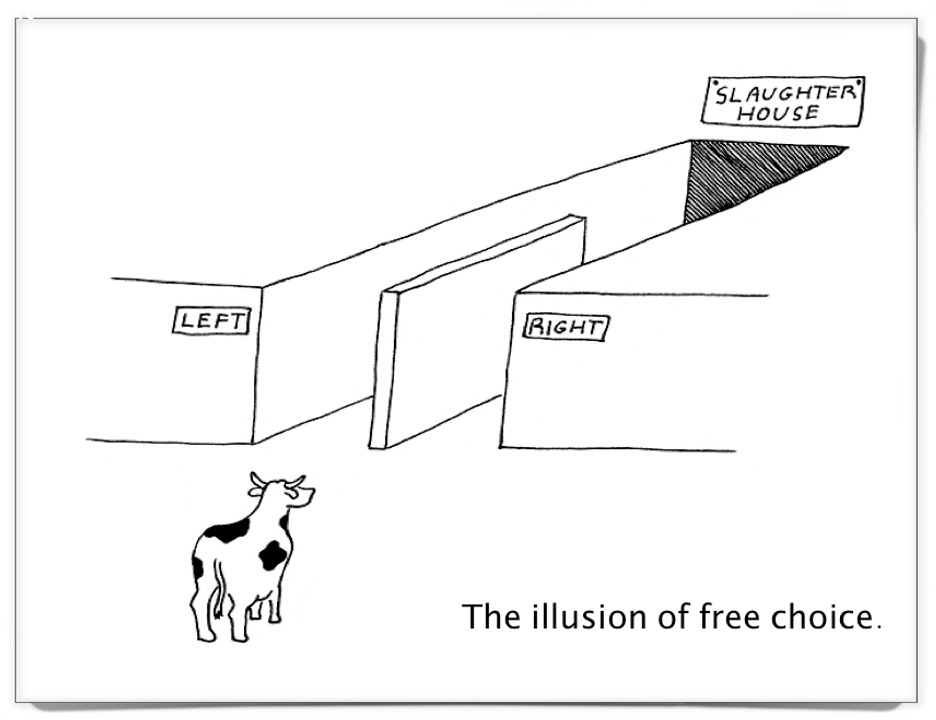
Government surveillance, police abuse, SWAT team raids, economic instability, asset forfeiture schemes, pork barrel legislation, militarized police, drones, endless wars, private prisons, involuntary detentions, biometrics databases, free speech zones, etc.: these are mile markers on the road to a fascist state where citizens are treated like cattle, to be branded and eventually led to the slaughterhouse.

Freedom, or what’s left of it, is being threatened from every direction. The threats are of many kinds: political, cultural, educational, media, and psychological. However, as history shows us, freedom is not, on the whole, wrested from a citizenry. It is all too often given over voluntarily and for such a cheap price: safety, security, bread, and circuses.

This is part and parcel of the propaganda churned out by the government machine.

That said, what we face today—mind manipulation and systemic violence—is not new. What is different are the techniques used and the large-scale control of mass humanity, coercive police tactics and pervasive surveillance.

We are overdue for a systemic check on the government’s overreaches and power grabs.

By “government,” I’m not referring to the highly partisan, two-party bureaucracy of the Republicans and Democrats. Rather, I’m referring to “government” with a capital “G,” the entrenched Deep State that is unaffected by elections, unaltered by populist movements, and has set itself beyond the reach of the law.

For years now, we have suffered the injustices, cruelties, corruption and abuse of an entrenched government bureaucracy that has no regard for the Constitution or the rights of the citizenry.

We have lingered too long in this strange twilight zone where ego trumps justice, propaganda perverts truth, and imperial presidents—empowered to indulge their authoritarian tendencies by legalistic courts, corrupt legislatures and a disinterested, distracted populace—rule by fiat rather than by the rule of law.

Where we find ourselves now is in the unenviable position of needing to rein in all three branches of government—the Executive, the Judicial, and the Legislative—that have exceeded their authority and grown drunk on power.

We are the unwitting victims of a system so corrupt that those who stand up for the rule of law and aspire to transparency in government are in the minority. This corruption is so vast it spans all branches of government: from the power-hungry agencies under the executive branch and the corporate puppets within the legislative branch to a judiciary that is, more often than not, elitist and biased towards government entities and corporations.

The predators of the police state are wreaking havoc on our freedoms, our communities, and our lives. The government doesn’t listen to the citizenry, it refuses to abide by the Constitution, which is our rule of law, and it treats the citizenry as a source of funding and little else.

The American kleptocracy (a government ruled by thieves) has sucked the American people down a rabbit hole into a parallel universe in which the Constitution is meaningless, the government is all-powerful, and the citizenry is powerless to defend itself against government agents who steal, spy, lie, plunder, kill, abuse and generally inflict mayhem and sow madness on everyone and everything in their sphere.

This dissolution of that sacred covenant between the citizenry and the government—establishing “we the people” as the masters and the government as the servant—didn’t happen overnight. It didn’t happen because of one particular incident or one particular president. It is a process, one that began long ago and continues in the present day, aided and abetted by politicians who have mastered the polarizing art of how to “divide and conquer.”

Unfortunately, there is no magic spell to transport us back to a place and time where “we the people” weren’t merely fodder for a corporate gristmill, operated by government hired hands, whose priorities are money and power.

As I make clear in my book Battlefield America: The War on the American People and in its fictional counterpart The Erik Blair Diaries, our freedoms have become casualties in an all-out war on the American people.

If we continue down this road, there can be no surprise about what awaits us at the end.

Monkeypox and the Covid-19 Vaccine

By Dr, Mike Williams

Source: UK Column

UK Column has covered various aspects of the Covid-19 virus and has looked in depth at the significant negative effects of the Covid-19 vaccine, including clotting, and also the change in immunological mechanisms after vaccination. Those mechanisms were used to explain the poor performance of the Covid-19 vaccine campaign, highlighted by an increased relative risk of infection for those vaccinated compared to the unvaccinated.

This article will address the current atypical spread of monkeypox virus around the world. To be clear, up until now, monkeypox hasn’t caused large clusters of infection in separate countries at the same time—that is highly unusual.

Monkeypox is one of the four genera of pox viruses that can infect humans. There are two distinct clades of monkeypox virus; the current infections are the West African version and are typically mild, with a death rate of less than one per cent. Chicken pox is an unrelated herpes, specifically Varicella virus.

It needs to be explained why we are seeing such a highly unusual pattern of infections. The medical concern is that we are witnessing an increase in human-to-human transmission.

Basic data

Current data indicate that there are 107 confirmed cases—of which 19 have been hospitalised—and 85 suspected cases, with four hospitalisations among them. Taking only the confirmed cases, we thus obtain an 18% hospitalisation rate; combining the cases of all statuses, we get a 12% hospitalisation rate. However, those percentages will change as the cases increase.

Early data suggest that there is an increased risk amongst men who have sex with men.

Background

In Stabilising the Code, we learned that:

In 2005, Drs. Weissman and Kariko discovered a way to protect foreign mRNA from the body’s immune system. That scientific milestone would be key to the advancement of the mRNA vaccines in 2020.

Specifically, they altered the genetic code of RNA.

Their key discovery, that modifying the RNA code (modifying the nucleoside uridine) resulted in ablating the innate immune response, involved toll-like receptors (TLR).

This discovery was adopted in the mRNA technology used in Covid vaccines, in order that the foreign vaccine mRNA could enter cells without being destroyed.

The RNA alteration results in the body’s immune defences—specifically, toll-like receptors (TLR)—not recognising foreign invaders like viruses. As I continued to set out in Stabilising the Code:

The key TLRs affected are TLR 3, TLR 7 and TLR 8. They act as sentries, whose job is to recognise foreign invaders by way of their form or patterns […]

That technology—altering RNA—was adopted for the Covid-19 mRNA vaccines.

Dominguez-Andres et al. discovered that not only had that technology worked well, but it appeared to have induced long term immune tolerance in the vaccinated: 

The response of innate immune cells to TLR4 and TLR7/8 ligands was lower after BNT162b2 vaccination[.]

Toll-like receptors were found not to work as well after vaccination as before. That was not supposed to happen. Obviously, you need your TLRs to be working in order to fend off viruses like monkeypox.

Mechanisms

Toll-like receptors

Stack and Bowie investigated monkeypox virus and the role of TLR 4:

Toll-like receptors (TLRs) have an anti-viral role in that they detect viruses, leading to cytokine and IFN induction, and as such are targeted by viruses for immune evasion. TLR4, although best known for its role in recognizing bacterial LPS, is also strongly implicated in the immune response to viruses […] This work reveals the molecular basis for poxviral antagonism of TLR4.

Harte et al. demonstrated that pox virus suppresses the host defence by blocking TLR 3:

Toll-like receptors (TLRs) are crucial in the innate immune response to pathogens, in that they recognize and respond to pathogen associated molecular patterns, which leads to activation of intracellular signaling pathways and altered gene expression […]
This study reveals a novel mechanism used by VV [pox virus] to suppress the host immunity. We demonstrate viral disabling of TLRs, providing further evidence for an important role for this family of receptors in the antiviral response.

Interferon

We also know that TLRs, upon detecting a virus, will activate other parts of the immune system. Khanmohammedi and Rezaei write:

Toll‐like receptors (TLR) play an important role in recognition of viral particles and activation of the innate immune system. Activation of TLR pathways leads to secretion of pro‐inflammatory cytokines, such as interleukin‐1 (IL‐1), IL‐6, and tumor necrosis factor‐α, as well as type 1 interferon […]
Robust induction of type I IFN through the activation of TLRs constitutes a critical aspect of antiviral immunity.

It being the case that TLRs activate other parts of the immune system—and given that, due to alterations in the vaccine mRNA, TLRs are no longer as responsive—we should expect to see a difference in downstream immunological profiles as well after vaccination.

Ivanova et al. have observed:

Myeloid cells with high expression of Toll-like receptors (TLR) and other pattern-recognition receptors are likely the first to respond to viral infection. Robust induction of type I IFN through the activation of TLRs constitutes a critical aspect of antiviral immunity[…]
IFN production is dependent on transcription factors IRF7 and IRF8, which interact with MyD88 (Lester and Li, 2014; Tailor et al., 2007; Xagorari and Chlichlia, 2008). Prior studies of immune responses during COVID-19 found increased activity of these innate immune pathways (Scagnolari et al., 2021; Xu et al., 2020; Zhou et al., 2020) […]
Differential gene expression analysis of pDCs from COVID-19 patients and immunized individuals revealed a dramatic upregulation of gene signature associated with type I and type II IFN production in the former and not the latter.

Clearly, the attenuation (weakening) of TLRs after Covid-19 vaccination is having a significant negative effect: in this case, the possible reduction of interferon in response to infection—an important defence against viruses.

Pox viruses

Pox viruses, like so many other viruses, have developed to try to outwit the human immune defences.

That has been observed in the science literature, such as Arndt et al., Evasion of the Innate Immune Type I Interferon System by Monkeypox Virus; and Johnstone et al., who demonstrate just why the virus needs to do so, in: In vitro inhibition of monkeypox virus production and spread by Interferon-β.

Indeed, pivotal to the success or failure of the monkeypox virus is its ability to overcome TLRs and switch off interferon.

Of course, once the immune system is primed to have a weaker response by TLRs and IFN, then it is more susceptible to pox infection. All that is then required to challenge it is exposure to the target virus. 

The immune system is a symphony of complex responses, so an altered TLR response does not guarantee successful infection upon exposure to monkeypox virus—but it does increase the chances of it, since a major, initial defence mechanism has been weakened; especially if other factors increase that susceptibility.

Who is being infected?

The list of those known to be infected with monkeypox in the recent outbreaks is almost exclusively male, with reports of male-to-male sex being a common factor. It is still very early in the investigation, so that picture may change. However, it is well understood that men who have sex with other men have a demonstrably increased risk of infection with such viruses.

The current published list of those infected with monkeypox has one woman on it. That, plus the relatively high percentage of gay and bisexual men on the list, suggests that monkeypox may be being spread through networks of sexual intercourse.

Kelleher writes in Pink News:

The UKHSA [UK Health Security Agency, formerly known as Public Health England—editorial note] has said cases are primarily being detected among gay and bisexual men, which has led to some level of concern in the LGBTQ+ community.

It’s thought that monkeypox is not sexually transmitted, but it’s possible that the virus is spreading through close contact in sexual networks, according to Mateo Prochazka, an epidemiologist with the UKHSA.

On 17 May, Prochazka said on Twitter that 57 per cent of the cases they had detected at that stage were among gay or bisexual men. That figure is “highly suggestive of spread in sexual networks”, he said.

The question has to be asked, though: why now? Men haven’t just started having sex with other men. And are all the cases connected?

The global incidences of monkeypox—and the apparent, highly unusual, velocity of spread—argues that something new has entered the equation; something has changed.

What is the new factor?

Lockdown my have played a part in immune reduction in adults, due to the deprival of human contact, as described in Medical News Today:

According to a paper by Stanford researcher Firdaus S. Dhabhar, Ph.D., in the journal Immunologic Research, “chronic stress can suppress protective immune responses and/or exacerbate pathological immune responses.”

For adults, it is the stress of isolation and the pandemic, rather than the lack of interaction with microbes, that is a concern for the immune system.

Yet most countries are relatively back to normal now, with people socialising again; and, unless there are chronic effects, the very fact that close contact is hypothesised as a mechanism of monkeypox spread argues against a policy of social isolation of those infected.

I suggest that we would be foolish to ignore chronic immune alteration due to Covid-19 mRNA vaccination, and the specific attenuation of TLRs that has been leading to altered interferon production and increasing susceptibility to viruses such as monkeypox.

Thankfully, most cases are mild, but tragically, we will see fatalities, as we do with other diseases. We will, no doubt, also be seeing more fear-mongering by the media and governments.

Of course, they have already started; in fact, long before the first reported cases this month even happened.

The Strengthening Global Systems to Prevent and Respond to High-Consequence Biological Threats tabletop exercise conducted in partnership with the Munich Security Conference (the largest annual meeting of the intelligence agencies of the Western world) in November 2021 seems accurately to have predicted this current monkeypox scenario—even down to the month it started.

Image source: Strengthening Global Systems to Prevent and Respond to High-Consequence Biological Threats, p. 10

How are these tabletop exercises so accurate in their predictions? 

According to that scenario, monkeypox is released as a biological weapon, billions across the globe will be affected, and hundreds of millions will die: 

The exercise scenario concludes with more than three billion cases and 270 million fatalities globally […]

Strengthening Global Systems to Prevent and Respond to High-Consequence Biological Threats, p. 8

Absent any other evidence, and on the balance of probabilities, what we are witnessing now suggests vaccine-induced immunological attenuation and foul play.

Saturday Matinee: All Light, Everywhere

Film Review: “All Light, Everywhere” — Darkness Visible

By Neil Giordano

Source: Arts Fuse

Do you trust what you see? How can you? Our eyes are no longer the primary way that we see; they have been swapped out for the filters of screens and technology. The suspicious mediation between cameras and our perception of ‘reality” has never been more ubiquitous — or more insidious. Perhaps what we don’t see, however, is at least as important as what we do see. But how can we become aware of what we don’t see?

These questions lie at the heart of the fascinating new documentary All Light, Everywhere, an entrancing blend of neuroscience, metaphysics, and technological history that has the smarts to apply some sly, subtle social commentary to its elusive subjects.

At first, the film seems to flitter among semi-connected topics: A marketing campaign that is testing its volunteers’ reactions to visual images; a tour of Axon Industries, the #1 maker of police body cameras, with its corporate spin doctor as our guide; an aerial composite-imaging system that was used secretly by Baltimore police to surveil the city. Interspersed into these “storylines” are narrated forays into the history of early photography along with B-roll of ordinary people preparing to view the 2017 solar eclipse with their own cameras (and eyes). This unrelenting focus on the production and consumption of visual imagery transforms the film into an almost fractal experience. It becomes a bit too much: the sheer ubiquity of people looking, eyes looking, images to be seen and consumed and interpreted, examinations of the various technologies serving up new pictures to be mediated. The unsettling point of this unconventional documentary seems to be to distort rather than clarify the subject at hand — and that may be just what director Theo Anthony wants.

The underlying political relevance of the film is transparent. We live in a surveillance society, consenting (though not always consciously) to being filmed, watched, and recorded by corporations hoping to sell us products based on the data they gather. The government snoops in the name of crime prevention and law enforcement. The value of the latter has been hotly debated in the last few years: George Floyd’s murder being a prime example. Here the police body cameras showed us what we believe to be an “objective” record of events, footage of police brutality and murder. But body camera images have been weaponized by both sides, each seeking to prove something that will help their case. What Axon Industries sells to police forces (and to the general public) is that they are confident their cameras will tell the “truth” about any police action. Accountability is promoted as their product’s best feature. But it is more than that — “behavior will change ” because of the presence of cameras, that they will inhibit bad behavior.

But what do body cameras actually show us? Are these videos an authentic record of reality? The documentary examines, abstractly at first and then far more concretely, how there is always bias. Where is the camera located on the body? Does its wide-angle lens distort our understanding of action? How is this data interpreted and by whom? There are so many levels of interpretation that “objectivity” has turned into a myth.

The film’s looks back into the past are also illuminating, unsettling illustrations of how camera technology has almost always been co-opted for violent and authoritarian uses, whether it be the American military tracking the enemy on the battlefield or in the early experiments in composite imaging used by police to profile criminals. The latter presages the now rampant use of facial recognition technology, its marketed value undercut by its practical limitations as well as ethical muddiness.

The irony is not lost that what we’re looking at is itself a film, another visual entity that requires us to watch and to mediate. The film’s meta-commentary confesses that its stochastic manipulation is by design. Highly kinetic editing leads our brains to make connections in ways that excited Eisenstein at the dawn of film a century ago: the whole is greater than the sum of the parts. The mind demands order, so the juxtaposition and collision of images generates meanings that did not exist in individual images.

Anthony draws on history to help us make sense of a visual world that is increasingly fleeting and fragmented. The film is reminiscent, in style and subject matter, of the works of Errol Morris. This goes for its sometimes desultory exposition, as well as its approach to epistemology. (Morris explores these issues in all of his films, as well as in his essays in his books Believing Is Seeing and The Ashtray.) In the third act of All Light, Everywhere, a well-placed quotation from Frederick Douglass summaries the central issue: “We all feel that there is something more. That the curtain has not yet been lifted. There is a prophet with us forever whispering that behind the seen lies the immeasurable unseen.” The “immeasurable unseen” may not be possible to capture on cameras, no matter how many we use or how hard we strive for an elusive objectivity. Perhaps it is more important for us to understand that urge for “something more” should lead to examining how, why, and for whom the image was made.

Watch All Light, Everywhere at Kanopy here: https://www.kanopy.com/en/product/12333392