(Editors note: Tomorrow marks the 50th anniversary of the passing of Malcolm X. The venerated activist would surely have approved of Hedges’ radical appraisal of his philosophy and principles.)
Malcolm X, unlike Martin Luther King Jr., did not believe America had a conscience. For him there was no great tension between the lofty ideals of the nation—which he said were a sham—and the failure to deliver justice to blacks. He, perhaps better than King, understood the inner workings of empire. He had no hope that those who managed empire would ever get in touch with their better selves to build a country free of exploitation and injustice. He argued that from the arrival of the first slave ship to the appearance of our vast archipelago of prisons and our squalid, urban internal colonies where the poor are trapped and abused, the American empire was unrelentingly hostile to those Frantz Fanon called “the wretched of the earth.” This, Malcolm knew, would not change until the empire was destroyed.
“It is impossible for capitalism to survive, primarily because the system of capitalism needs some blood to suck,” Malcolm said. “Capitalism used to be like an eagle, but now it’s more like a vulture. It used to be strong enough to go and suck anybody’s blood whether they were strong or not. But now it has become more cowardly, like the vulture, and it can only suck the blood of the helpless. As the nations of the world free themselves, then capitalism has less victims, less to suck, and it becomes weaker and weaker. It’s only a matter of time in my opinion before it will collapse completely.”
King was able to achieve a legal victory through the civil rights movement, portrayed in the new film “Selma.” But he failed to bring about economic justice and thwart the rapacious appetite of the war machine that he was acutely aware was responsible for empire’s abuse of the oppressed at home and abroad. And 50 years after Malcolm X was assassinated in the Audubon Ballroom in Harlem by hit men from the Nation of Islam, it is clear that he, not King, was right. We are the nation Malcolm knew us to be. Human beings can be redeemed. Empires cannot. Our refusal to face the truth about empire, our refusal to defy the multitudinous crimes and atrocities of empire, has brought about the nightmare Malcolm predicted. And as the Digital Age and our post-literate society implant a terrifying historical amnesia, these crimes are erased as swiftly as they are committed.
“Sometimes, I have dared to dream … that one day, history may even say that my voice—which disturbed the white man’s smugness, and his arrogance, and his complacency—that my voice helped to save America from a grave, possibly even fatal catastrophe,” Malcolm wrote.
The integration of elites of color, including Barack Obama, into the upper echelons of institutional and political structures has done nothing to blunt the predatory nature of empire. Identity and gender politics—we are about to be sold a woman president in the form of Hillary Clinton—have fostered, as Malcolm understood, fraud and theft by Wall Street, the evisceration of our civil liberties, the misery of an underclass in which half of all public school children live in poverty, the expansion of our imperial wars and the deep and perhaps fatal exploitation of the ecosystem. And until we heed Malcolm X, until we grapple with the truth about the self-destruction that lies at the heart of empire, the victims, at home and abroad, will mount. Malcolm, like James Baldwin, understood that only by facing the truth about who we are as members of an imperial power can people of color, along with whites, be liberated. This truth is bitter and painful. It requires an acknowledgment of our capacity for evil, injustice and exploitation, and it demands repentance. But we cling like giddy children to the lies we tell ourselves about ourselves. We refuse to grow up. And because of these lies, perpetrated across the cultural and political spectrum, liberation has not taken place. Empire devours us all.
“We’re anti-evil, anti-oppression, anti-lynching,” Malcolm said. “You can’t be anti- those things unless you’re also anti- the oppressor and the lyncher. You can’t be anti-slavery and pro-slavemaster; you can’t be anti-crime and pro-criminal. In fact, Mr. Muhammad teaches that if the present generation of whites would study their own race in the light of true history, they would be anti-white themselves.”
Malcolm once said that, had he been a middle-class black who was encouraged to go to law school, rather than a poor child in a detention home who dropped out of school at 15, “I would today probably be among some city’s professional black bourgeoisie, sipping cocktails and palming myself off as a community spokesman for and leader of the suffering black masses, while my primary concern would be to grab a few more crumbs from the groaning board of the two-faced whites with whom they’re begging to ‘integrate.’ ”
Malcolm’s family, struggling and poor, was callously ripped apart by state agencies in a pattern that remains unchanged. The courts, substandard schooling, roach-filled apartments, fear, humiliation, despair, poverty, greedy bankers, abusive employers, police, jails and probation officers did their work then as they do it now. Malcolm saw racial integration as a politically sterile game, one played by a black middle class anxious to sell its soul as an enabler of empire and capitalism. “The man who tosses worms in the river,” Malcolm said, “isn’t necessarily a friend of the fish. All the fish who take him for a friend, who think the worm’s got no hook on it, usually end up in the frying pan.” He related to the apocalyptic battles in the Book of Revelation where the persecuted rise up in revolt against the wicked.
“Martin [Luther King Jr.] doesn’t have the revolutionary fire that Malcolm had until the very end of his life,” Cornel West says in his book with Christa Buschendorf, “Black Prophetic Fire.” “And by revolutionary fire I mean understanding the system under which we live, the capitalist system, the imperial tentacles, the American empire, the disregard for life, the willingness to violate law, be it international law or domestic law. Malcolm understood that from very early on, and it hit Martin so hard that he does become a revolutionary in his own moral way later in his short life, whereas Malcolm had the revolutionary fire so early in his life.”
There are three great books on Malcolm X: “The Autobiography of Malcolm X: As Told to Alex Haley,” “The Death and Life of Malcolm X” by Peter Goldman and “Martin & Malcolm & America: A Dream or a Nightmare” by James H. Cone.
On Friday I met Goldman—who as a reporter for a St. Louis newspaper and later for Newsweek knew and covered Malcolm—in a New York City cafe. Goldman was part of a tiny circle of white reporters Malcolm respected, including Charles Silberman of Fortune and M.S. “Mike” Handler of The New York Times, who Malcolm once said had “none of the usual prejudices or sentimentalities about black people.”
Goldman and his wife, Helen Dudar, who also was a reporter, first met Malcolm in 1962 at the Shabazz Frosti Kreem, a Black Muslim luncheonette in St. Louis’ north-side ghetto. At that meeting Malcolm poured some cream into his coffee. “Coffee is the only thing I liked integrated,” he commented. He went on: “The average Negro doesn’t even let another Negro know what he thinks, he’s so mistrusting. He’s an acrobat. He had to be to survive in this civilization. But by me being a Muslim, I’m black first—my sympathies are black, my allegiance is black, my whole objectives are black. By me being a Muslim, I’m not interested in being American, because America has never been interested in me.”
He told Goldman and Dudar: “We don’t hate. The white man has a guilt complex—he knows he’s done wrong. He knows that if he had undergone at our hands what we have undergone at his, he would hate us.” When Goldman told Malcolm he believed in a single society in which race did not matter Malcolm said sharply: “You’re dealing in fantasy. You’ve got to deal in facts.”
Goldman remembered, “He was the messenger who brought us the bad news, and nobody wanted to hear it.” Despite the “bad news” at that first meeting, Goldman would go on to have several more interviews with him, interviews that often lasted two or three hours. The writer now credits Malcolm for his “re-education.”
Goldman was struck from the beginning by Malcolm’s unfailing courtesy, his dazzling smile, his moral probity, his courage and, surprisingly, his gentleness. Goldman mentions the day that psychologist and writer Kenneth B. Clark and his wife escorted a group of high school students, most of them white, to meet Malcolm. They arrived to find him surrounded by reporters. Mrs. Clark, feeling that meeting with reporters was probably more important, told Malcolm the teenagers would wait. “The important thing is these kids,” Malcolm said to the Clarks as he called the students forward. “He didn’t see a difference between white kids and kids,” Kenneth Clark is quoted as saying in Goldman’s book.
James Baldwin too wrote of Malcolm’s deep sensitivity. He and Malcolm were on a radio program in 1961 with a young civil rights activist who had just returned from the South. “If you are an American citizen,” Baldwin remembered Malcolm asking the young man, “why have you got to fight for your rights as a citizen? To be a citizen means that you have the rights of a citizen. If you haven’t got the rights of a citizen, then you’re not a citizen.” “It’s not as simple as that,” the young man answered. “Why not?” Malcolm asked.
During the exchange, Baldwin wrote, “Malcolm understood that child and talked to him as though he was talking to a younger brother, and with that same watchful attention. What most struck me was that he was not at all trying to proselytize the child: he was trying to make him think. … I will never forget Malcolm and that child facing each other, and Malcolm’s extraordinary gentleness. And that’s the truth about Malcolm: he was one of the gentlest people I have ever met.”
“One of Malcolm’s many lines that I liked was ‘I am the man you think you are,’ ” Goldman said. “What he meant by that was if you hit me I would hit you back. But over the period of my acquaintance with him I came to believe it also meant if you respect me I will respect you back.”
Cone amplifies this point in “Martin & Malcolm & America”:
Malcolm X is the best medicine against genocide. He showed us by example and prophetic preaching that one does not have to stay in the mud. We can wake up; we can stand up; and we can take that long walk toward freedom. Freedom is first and foremost an inner recognition of self-respect, a knowledge that one was not put on this earth to be a nobody. Using drugs and killing each other are the worst forms of nobodyness. Our forefathers fought against great odds (slavery, lynching, and segregation), but they did not self-destruct. Some died fighting, and others, inspired by their example, kept moving toward the promised land of freedom, singing ‘we ain’t gonna let nobody turn us around.’ African-Americans can do the same today. We can fight for our dignity and self-respect. To be proud to be black does not mean being against white people, unless whites are against respecting the humanity of blacks. Malcolm was not against whites; he was for blacks and against their exploitation.
Goldman lamented the loss of voices such as Malcolm’s, voices steeped in an understanding of our historical and cultural truths and endowed with the courage to speak these truths in public.
“We don’t read anymore,” Goldman said. “We don’t learn anymore. History is disappearing. People talk about living in the moment as if it is a virtue. It is a horrible vice. Between the twitterverse and the 24-hour cable news cycle our history keeps disappearing. History is something boring that you had to endure in high school and then you are rid of it. Then you go to college and study finance, accounting, business management or computer science. There are damn few liberal arts majors left. And this has erased our history. The larger figure in the ’60s was, of course, King. But what the huge majority of Americans know about King is [only] that he made a speech where he said ‘I have a dream’ and that his name is attached to a day off.”
Malcolm, like King, understood the cost of being a prophet. The two men daily faced down this cost.
Malcolm, as Goldman writes, met with the reporter Claude Lewis not long before his Feb. 21, 1965, murder. He had already experienced several attempts on his life.
“This is an era of hypocrisy,” he told Lewis. “When white folks pretend that they want Negroes to be free, and Negroes pretend to white folks that they really believe that white folks want ’em to be free, it’s an era of hypocrisy, brother. You fool me and I fool you. You pretend that you’re my brother, and I pretend that I really believe you believe you’re my brother.”
He told Lewis he would never reach old age. “If you read, you’ll find that very few people who think like I think live long enough to get old. When I say by any means necessary, I mean it with all my heart, my mind and my soul. A black man should give his life to be free, and he should also be able, be willing to take the life of those who want to take his. When you really think like that, you don’t live long.”
Lewis asked him how he wanted to be remembered. “Sincere,” Malcolm said. “In whatever I did or do. Even if I made mistakes, they were made in sincerity. If I’m wrong, I’m wrong in sincerity. I think that the best thing that a person can be is sincere.”
“The price of freedom,” Malcolm said shortly before he was killed, “is death.”
I distinctly remember the first time I bought weed. Nervous out of my mind, I dialed the beeper (this was 2003 in New York City – every step required discretion). Two minutes later, someone called me back. I gave them my address, then waited two hours (I didn’t yet have the experience necessary to appreciate how fast that was). Then I answered the knock on the door and opened up my home to a complete stranger who never gave his name. He opened up a briefcase full of five different strains, ranging, he explained, from $50 to $80 per eighth. “What’s an eighth?” I asked. He rolled his eyes. Noob.
Determined that the God-knows-how-many curious tourists flocking to Colorado to purchase legal cannabis today should never suffer the same indignities as I did over a decade ago, I present here the sum total of my experience as a pot smoker, distilled into 6 easy maxims. You can thank me later.
1. Stay on the grass.
New tokers, or anyone who hasn’t lit up since the 70’s, will likely find the dizzying array of pot products for sale at the package store a little confusing. BHO (butane hash oil), ice water, something called ‘shatter’ – the wide selection of products on offer stand testament to just how far the industry has come in 40 years. If you have no tolerance built up already, take my advice and steer well clear of all of these. Just the grass – dried flowers – by itself will be plenty potent enough to get you high, believe me. The main exceptions to this principle, however, are the edibles. Today’s edible products have evolved far beyond mere brownies; many chocolate infusers mold their products to break off easily into precisely measured ‘doses’, so the newbie who doesn’t want to irritate her throat can break off a small square and feel a moderate effect. Just be careful – sugar can trick your brain into thinking it needs more sugar, so you must stalwartly resist the urge to take that extra bite until you’ve given the first dose time to work – up to 1.5 hours for most people.
2. Vaping is healthier.
Another development which has taken the cannabis industry by storm lately is the proliferation of portable vaporizers. While the reliable Volcano still remains the equipment of choice for the home-bound aficionado, new portable models have opened up possibilities to take one’s vape on the go. These handy devices can drastically reduce any potentially harmful chemicals in marijuana smoke and can avoid irritating the throat (they still will make you cough, however, because of the expectorant properties of cannabinoids). But make sure you pair the right vape with the right product. Some are designed to handle ‘shake’ (dried flowers, ground up), some only work with hashish and some only work with the highest-grade extracts. Perhaps the best choice for the new marijuana user is the O.pen or similar model, because they come with pre-mixed extracts in glycerin, providing an experience familiar to anyone who has tried an e-cigarette. In any case, remember to take just 1-2 puffs at first, then wait at least five minutes to measure the effects before vaping again. It’s easy to get too high on this stuff.
3. Train your brain.
As strange as this may sound, everyone has to learn how to get high before they can experience it; this is why many marijuana newbies report feeling no effects the first time they smoke pot. Marijuana intoxication is unlike any other feeling in the world, and until your brain knows what to expect it can be difficult to get there. If, after taking a couple hits, you don’t feel any different, try this meditation to deepen the experience. First, relax; close your eyes. Listen to the sounds to your left. Listen to the sounds to your right. Pay attention to how your body feels – is there tightness anywhere? If so, don’t judge – just breathe into the parts of your body which hold the tension, and allow your breath to exhale out. Let go of all judgmental thoughts, all questions of “am I doing it right?” Just float downstream instead.
After a few minutes of mindful breathing, don’t be surprised to suddenly feel noticeably different. Your body may feel lighter; colors may appear more fascinating. Music will open up with more depth than you have ever felt before. And pretty soon, you may start to feel pretty hungry.
4. Come down with CBD.
There are many wonderful reasons why marijuana intoxication is more pleasant than, say, alcohol (no hangover, for one). Even so, the experience isn’t enjoyable for everyone. If you find yourself feeling paranoid, anxious or nauseous – first of all, relax. Remind yourself that no one in history has ever had a fatal overdose of marijuana, and that everything will pass. Breathe deeply.
Just in case that isn’t enough, make sure to keep some special marijuana handy, called “high-CBD.” Such bud is so called because it contains unusually high levels of cannabidiol, or CBD for short, a non-psychoactive cannabinoid which has been shown to mitigate the effects of THC. Many first-time users who found they accidentally took too much have found relief by smoking (or vaping) a few hits of high-CBD bud; within minutes, the CBD will “bring them back down.” If you’re new to cannabis, or you haven’t ever had anything truly high-grade, asking your vendor for a gram of high-CBD bud can be a good idea, just in case.
5. Savor the flavors.
For everyone who has never tried it, or anyone who has relied on the same bud from the same dealer for years, the myriad diversity of scents and flavors on selection in Denver will be a revelation. Some taste like pine; others, mango; still others, lavender. Take the time to sample the scents on offer before making your selection.
When you’re ready to consume, use practices which preserve the flavor. Vape, if possible; the low-temp sublimation process preserves the maximum amount of terpenes – the organic chemicals which provide the pot’s flavors. If you’re smoking instead, use a hemp wick. These beeswax-coated twines are wound with hemp fiber, so they neither add to nor take away from the bud’s exotic flavors. Lighters cover up too much with the taste of butane.
6. Get a grinder.
Regardless of whether you’re rolling joints, packing bowls or loading vapes, a good grinder makes everything easier. Even many experienced tokers often forget to grind up their cannabis before consuming; stuffing whole nugs in pipes can lead to a frustrating experience. But when the bud is ground up ahead of time, it allows smooth airflow which in turn leads to smoother, more flavorful hits.
This is not an exhaustive list, but it will get you started. Apply these principles, and the new year will bring more than just new laws – it will also deliver a healthier way to recreationally relax.
Jeremy Daw is the editor of TheLeafOnline.com and Cannabis Now Magazine, and the author of Weed the People: From Founding Fiber to Forbidden Fruit (2012).
“We tend to disempower ourselves. We tend to believe that we don’t matter. And in the act of taking that idea to ourselves we give everything away to somebody else, to something else.”
– Terence McKenna [1]
Terence Kemp McKenna (November 16, 1946 – April 3, 2000) was a philosopher, social critic, psychonaut, ethnobotanist, lecturer, writer who authored several books. He examined, deconstructed and expounded on a variety of subjects, including: plant-based entheogens, shamanism, metaphysics, psychedelic drugs, epistemology, alchemy, language, culture, technology and theories about the origins of human consciousness. He created a mathematical theory of time (novelty theory) based on patterns found in the I Ching. [1]
In this short video Terence McKenna explains the necessity reclaiming your mind and creativity from a dying, materialistic consumer oriented society.
“We have to stop consuming our culture. We have to create culture.” –Terrance McKenna [1]
It’s easy to get lost in the noise and hub of the daily grind – dead end jobs, UN-fulfilling careers, relentless consumerism and the constant drone like buzz of the big brother mind control media matrix.
The mass media’s [2] primary purpose and expertise is shaping and programming the “herd” mind with a steady stream of mostly dubious, fear based information overload combined with a cynical parade of buy this NOW advertising.
To say human consciousness has been commercialized is an enormous understatement. Just as day follows night, mass commodification of nature results in the commodification of human consciousness.
The cultural engineers are obsessed with turning everything into things including people. The predominant value or worth of a person is based primarily on how many things they can produce directly or indirectly and how many things they own and consume. The sacred intrinsic, non-temporal value of one’s soul is disregarded in favor of the culture’s contrived materialistic value system, which is centered on perishable commodities.
Under these conditions the soul is reified. To reify is to regard (something abstract) as a material or concrete thing. The sacred, inner life of the individual is systemically marginalized and crushed, ensuring the majority will unblinkingly sell their soul to the externalized value system, which is by design seamlessly interlocked with survival and success on all levels.
“Within this totally jaded society the “individual” had little chance. In fact, his only hope was to escape in some fashion, perhaps into the woods where a person could rediscover the fundamental truths that nature revealed, or into hallucinogenic drugs that pushed the mind past the limitations drilled into it by education and upbringing, or into a completely different lifestyle grounded on more humane and authentic values.” [3]
For those who desire an authentic life created from the inside out and not the other way around, here are some steps that can help you reclaim your mind and life from the cultural engineers.
The burning question is do you really want to reclaim your mind from the gaudy over-commercialized, technological barbarism euphemistically referred to as a consumer oriented society. Are you finally bored with exploitative greed and debt slave materialism? You should be. Why?
“You are a divine being. You matter, you count. You come from realms of unimaginable power and light, and you will return to those realms.”
– Terence McKenna [1]
Assuming you’re ready to leap over the rotting corpse called modern culture and its Kafkaesque matrix society, unfasten your seat-belt and take a deep breath as we take a spin down the road rarely traveled. It’s an esoteric path that takes you back to the source of your creative spirit, intuitive wisdom and your unique connection to all that is or ever will be.
Obviously, a critical first step on this journey into the unknown is to resolutely refuse to be a compliant consumer of ideas, things, and dis-empowering belief systems. Be ready to break the chains of your conceptual prison and be willing to view life from the cracks that exist between ideas. The objective is to have a clear view of reality without the distorting lens of preconceived notions of our “borrowed” reality.
Also, you’ll begin to critically reexamine all the deeply held values that were inserted into your impressionable mind and soul at a very young age before you had the option to critically examine each value in the light and depth of your own consciousness. Unfortunately, at any age the saturation effect of the mass media can instill false values and a substitute reality.
“Personal empowerment means deconditioning yourself from the values and the programs of the society and putting your own values and programs in place.”
– Terence McKenna [1]
The primary tool of the cultural engineers use to control the masses is the media. In fact, for most the media is reality. The media actually creates reality; it does not merely reflect it.
How the media creates our reality:
“… television cultivates a perception of reality among its viewers. . . . “television … has acquired such a central place in daily life that it dominates our symbolic environment, substituting its message about reality for personal experience and other means of knowing about the world.” [2]
2 Simple Methods to Help You Reclaim Your Mind and Your Life:
“My technique is don’t believe anything. If you believe in something, you are automatically precluded from believing its opposite.”
– Terence McKenna [1]
One very practical method for discovering and occupying the unconditioned space between thoughts is by using an ancient Buddhist practice called mindfulness. Jon Kabat-Zinn, PhD, is a scientist, writer, professor, lecturer and meditation teacher who brought mindfulness into the realm of mainstream medicine and society at large.
Zinn’s definition of mindfulness: “Mindfulness means paying attention in a particular way; On purpose, in the present moment, and non- judgmentally.”[3] You cultivate detachment and equanimity of mind regardless of what life throws at you. It really gets interesting when you are finally able to move into the present moment and respond directly to life situations as they occur opposed to reacting to them based on past conditioning.”
With practice, mindfulness enables you to take control of your attention via your intention so you can willfully move your awareness into that clear space of the present moment without interference from the conditioned mind.
Normally our attention automatically drifts and gets stuck in the same ruts and grooves that have already created strong, magnetic like impressions in your mind. This tendency creates a mind lock where the attention is effectively caged in the past and rarely has the opportunity to freshly explore the actual moment that is life that is occurring now. In other words, our attention and thus our life is stuck in the past because where we focus our attention is what our life becomes.
Essentially to break the chains of the past you need to practice anchoring your attention in the present moment. This is when you consciously move beyond your current life “story” perception template into reality directly- moment by moment.
From that operating viewpoint you are free to create your desired reality without dragging the burden of the past or anxiety about the future into the equation. If you ignore the mental noise and turn your attention inward you will eventually discover the expansive space that exists between thoughts.
That space is where the raw, unconditioned power and unfettered freedom to create is found. It’s a timeless reservoir of unlimited possibilities. It’s a no-mind that’s empty with potential. Some refer to it as the quantum mind.
This is where artists go when they want to create something fresh and free from cultural or personal clichés. Sages and shamans are familiar with this space as well. They go there to listen not to think. If they are really good listeners they share what they heard or saw for the benefit of others.
“Half the time you think your thinking you’re actually listening.”
– Terence McKenna [1]
Of course, Terence McKenna primarily relied on various psychedelics and marijuana to help him enter that sacred space beyond the conceptual realm; he was a dedicated psychonaut, but that’s not the only way.
Discover your Imagination
“If you don’t have a plan, you become part of somebody else’s plan.”
– Terence McKenna [1]
The best plan is to first get in touch with reality via direct experience – ditching the ingrained conceptual template your culture indoctrinated into you from birth. That’s when you can really start to harness the true power of your imagination and use it to intentionally create the personal reality you desire to walk into beyond prevailing ideologies. From the perspective of raw imagination there is no past or future, just now. And that is where your essential power lies, in the present moment.
Forget about slavishly following the yellow brick road – create your own experiential road show starting with your imagination. Venture beyond the current ideological and spiritual constraints and institutionally sanctioned belief systems that tell you what reality is and decide to boldly experience reality directly and journey into terra incognita.
To create a new reality requires skillfully engaging your intention and imagination utilizing all the senses including: visual (seeing), auditory (hearing), kinesthetic (touch), olfactory (smelling) or even gustatory (tasting). Now with your imagination fully engaged, create a subtle imaginary version that exactly reflects your desired intention. This is basically how one creates a new reality beyond past conditioning.
From a CNN article titled:
The power of perceptions: Imagining the reality you want
“What we are fighting for, Benjamin (Ruha Benjamin, sociology professor) says, is our imagination — the right to imagine a life and relationships and a social world that are happier, less anxious, more harmonious and more just. We are not being diligent enough or deliberate enough about cultivating our imagination. We have to fight, for the ability to imagine the world we want. Because one form of oppression is telling people that they’re not allowed [or can’t] to imagine something better and happier.”
“Either there are no illusions or everything is an illusion,” (…) “And given that we are pretty much all delusional, you might as well choose your delusion.” – Beau Lotto, neuroscientist and artist[6]
Paul Fassais a contributing staff writer for REALfarmacy.com. His pet peeves are the Medical Mafia’s control over health and the food industry and government regulatory agencies’ corruption. Paul’s valiant contributions to the health movement and global paradigm shift are world renowned. Visit his blog by following this link and follow him on Twitter here.
Whether or not the soul exists may depend entirely on how it’s being defined, and depending on the definition may also depend on faith, religious or otherwise. The human soul is thought by many as inherently good while the absence of a soul leaves open the possibility to commit and even delight in malicious or evil acts – these destructive actions are also interpreted in terms of being dark. Oddly enough, man’s ego enjoys taking credit for his goodness, while he regularly attributes responsibility for destructive behaviors to outside influences, including at times a supernatural consciousness of evil that influences or provokes harmful human behaviors and thereby takes the soul, either in part or in whole.
Good or evil in any combination can manifest entirely from within any individual for what sometimes are no humanly discernible reasons. At other times the soul is absolutely being influenced by outside forces, including human and the forces of nature. Our definition would not be complete without recognizing that works committed during the physical life, whether good or evil, live on after physical death by affecting those who’ll be living in the future. Even the obscure and long forgotten dead can have a profound impact on our current reality if they ultimately influenced the mind, or perhaps saved the life of someone who was or became influential at some point in history.
We begin life with a non-negotiable soul thought by some to be a blank slate at birth, but I’ll argue here that it’s not blank and certain predispositions are dictated by instincts and genetic code(s) which also affect the workings of the mind. There are studies indicating genetic makeup is a factor in experiencing empathy and compassion, and we can’t deny other differing intellectual abilities and inclinations along with given physical characteristics – all of which shape the soul through our experiences. Theoretically the natural soul uninfluenced by outside forces, could range from pure good to pure evil with most people having the potential for either, at times depending on present circumstances or what they’ve been subjected to. Due to diversity of attributes and handicaps we are all unique, but we can generalize regarding those with similar traits and beliefs which dictate the processes of reasoning and/or irrational thinking that ultimately leads to conclusions and the actions or inactions of any individual.
Because the soul is shaped by events in life, we can define it as: the sum total of all a person is given before birth, combined with the understanding acquired from personal experiences in life, while recognizing a person’s interactions with others and the physical world are determined by the soul or its absence, and will yield benevolent, malevolent or neutral actions – the human soul is alive and real, it affects our actions and interactions with others and how we feel about ourselves as well as others, including the world and life in general – and by affecting others in the immediate sense, it also affects others well into the future.
Our physical bodies and brains are the conduit between the soul and the physical world, with the emphasis being on the brain which controls the willful actions of our bodies. Whether committed or imposed by humans or nature, actions can profoundly shape and mold human souls in either direction. Because our perceptions may not be accurate, at times certain events can fill us with an unjust hatred or even the desire to commit physical violence. Because we’re all different, the same events or circumstances will not have the same impact on the souls of all people, but people do have similar and sometimes nearly universal reactions that are predictable concerning certain events or circumstances.
With no other choice, and given the opportunity, a starving person will likely commit theft and may kill to survive; relatively few would accept starvation without trying to impose on others in some way. An individual with a legitimate means of support certainly has no need, and is much less likely to resort to theft or violence for personal gain. If rising flood waters force a person to abandon their home, their soul may be imprinted with sadness as well as the realization of a destiny beyond their control. Depending on age and other circumstances such an event could be the final straw, leading to a level of despair and shock where the person no longer experiences life in the same way and no longer functions as well as they once did; though this may be defined as weakness, it’s also a sure sign the person is human, as we all have different breaking-points and tolerances. Being subjected to the same ordeal could cause profound personal growth in others, making them stronger with greater understanding and compassion going forward while giving them the real potential for helping or leading others. The essence of the soul does change over time through circumstance and experience and ultimately leads us to our understanding of life and people, and could lead to a complete lack thereof.
When speaking of souls, our understanding includes that groups of people, large and small, have a collective soul based on the same factors that make up the soul of an individual. As with catastrophes caused by nature, the ravages of war are certain to leave an imprint on the soul of emotionally conscious human beings. These imprints take on a different dimension entirely when innocent people are unjustly attacked through wanton aggression. As the most violent people on earth, Americans may have become jaded from all the violence witnessed through television entertainment and news, starting with cartoons at an early age. We’re so used to accepting violence as being justifiable, the idea of our government killing and destroying the lives of innocent others may not register with most of us – in matters of war we’re incessantly told America is always right. All of this brings into question how the collective soul of a relatively few individuals who, as a group, knowingly and unjustly deceived their own country, leading to a wholesale basis of callous, if not gleeful slaughter and mutilation of innocent and weaker members of the human race – including the annihilation of their existing culture – all without any just or legal provocation.
In the case of America attacking a weaker country we’ll look at one of the most egregious events in recent history. Destruction was unleashed by the overwhelming power of the US military in attacking a comparatively defenseless 2003 Iraq. The verdict is in, and we know there were relatively very few Americans who participated in the deceitfulness which ultimately fueled the country’s appetite for attacking without one valid or legal reason – but collectively we still made the conscious choice to destroy, displace, kill and maim while leaving emotional scars and hatred in the large majority of our victims who survived. After having committed wanton aggression, with our own blind ignorance we don’t dare ask ourselves why so many in the Mideast and around the world despise our collective soul – as the truth would be awkward and hard for many to accept or explain. For “civilized people” this post-invasion nonchalant arrogance is every bit as astounding as that which led the initial attack. To be clear, the US invasion of 2003 Iraq was never a true contest of “war”, the word “war” was used as propaganda to make wanton killing and the destruction of people and their civilization look like something other than what it was – all for the perceived benefits of those few who were ultimately responsible for misleading America to back the slaughter of Iraqi citizens among a multitude of other predicted catastrophic results. The carnage we unleashed continues to this day and will effect an untold number for generations to come – it can never be undone – as the depraved collective soul of the few asserted itself supreme over the collective American public’s right to the truth and leaves a forward cutting wake that will forever travel on into the future – at least as long as man is alive.
The influence of Israel and pro-Zionists in Washington D.C. concerning American Mideast policies cannot be overstated. In 2002 the Bush administration created the Office of Special Plans (OSP) run by neocon pro-Zionists who fed the Bush administration “raw intelligence” which proved to be nothing more than propaganda for enabling the attack on Iraq. Lieutenant Colonel Karen Kwiatkowski in the office of the Undersecretary of Defense for Policy at the time, explained how the OSP usurped real expert intelligence assessments to promote the neocon Zionist agenda as stated in the infamous 1996 PNAC policy report. The PNAC policy first advocated removing Saddam Hussein from power, then going on to Syria and Iran which they’re still trying to accomplish – this is no mere coincidence. It’s all part of Israel’s strategy to eliminate any perceived threat in the Mideast and keep everyone around them weak and fighting amongst themselves. Ironically, Israel’s threats result from its own actions beginning with the ethnic cleansing of Palestinian Arabs starting before Israel’s self-declared statehood on those Palestinian lands in 1948 – and the expulsion still continues to this day. Without the undue influence of Israel on U.S. politicians, it is extremely unlikely U.S. public support for the 2003 invasion of Iraq would have materialized. Because the dark soul of America is so influenced by Israel, taking a critical look at the soul of Israel is becoming common and it needs to be recognized for what it is.
The major “news networks” and press operating in the U.S. proved themselves as propagandists, partaking in the policy set by the Bush administration to manipulate the American public during the run-up to the invasion. So persuasive was the propaganda before and after the invasion that some people today still don’t know Iraq had no part in the 9/11/2001 attack on the U.S.; or they simply refuse to accept that our government and mass media would betray America and the world on such a large scale. As far as the press is concerned, they are guilty through aiding and abetting the crime of misleading America into an illegal war – and it was illegal as defined by U.S. and international law. The media people who took part in all of this on any level might as well have lined up all those American soldiers sacrificed and wounded along with all the Iraqi’s killed and maimed while having had the balls to pull the triggers, drop the bombs and fire the missiles to commit the slaughter and devastation themselves.
It’s no secret, huge profits were made by the military-industrial complex (MIC) with the 2003 attack, and they’re still profiting today from Iraq and the overall American Empire strategy. With their connections in Washington, it would be extremely naïve to believe the top individuals in our weapons manufacturing industries didn’t know the reasons given for attacking Iraq were absolutely without credible evidence – while much of those reasons were outright lies. There are a number of choice verbs for describing the condition of those souls among the MIC who knowingly remained silent while the US population sacrificed blood and treasure so they could profit through death and destruction unleashed at will on a relatively hapless Iraq.
Many believe the 2003 invasion was predominantly about securing oil, and it certainly was a contributing factor but no one was pushing more than the pro-Zionist crowd. The petroleum industry had been involved in the pre-war planning for the purpose of dividing the spoils of killing and destruction in terms of barrels of oil. Capitalism as practiced needs oil, and although there are alternative energies available, those making huge profits from oil use their considerable influence to thwart conversion to clean energy.
There’s no legitimate argument against the facts; an undeserved and catastrophic devastation had been levied on the Iraqi people with the 2003 U.S. invasion, conservatively resulting in over half a million Iraqi lives being lost by the time of this writing, with likely millions wounded, and over four million displaced from their homes. To put it in perspective, if it happened to the U.S. with the same percentages across the entire population it would conservatively yield over six million dead, millions more wounded, and roughly fifty million displaced from their homes. Many Americans have a vacancy where a soul should exist as they feel absolutely nothing and no American responsibility for the devastation caused. Other Americans exist with a soul as black as pitch having taken pleasure and profit through the slaughter of Iraqis and their culture. Aside from the U.S. government’s responsibility, these attitudes are largely due to the dark soul of both the U.S. government and media in keeping pertinent facts from the public eye. And if there’s been any remorse or apology from U.S. officials or media it’s been sparse and kept out of sight by the same dark forces which hide from the truth. There are a number of people who could have spoken out before the invasion, and in all fairness some did, though they did not get proportionately heard while the front pages and television news had been reserved for the neocon pro-Zionist mantras to attack Iraq and downplay the ensuing consequences. There were also a few dark traitorous souls operating to dissuade anyone who would speak out while they set an example with the Valery Plame / Scooter Libby affair.
With the invasion of Iraq the U.S. set a new precedent of destructive behavior in motion, which under the pretext of “preemptive defense” has been spread further around the Mideast and now is a matter of historical record and modus operandi. With the U.S. government wreaking havoc at will, killing more innocent civilians than “enemy combatants” – it’s become a very neat and logical self-perpetuating industry of war – creating enemies by killing innocent civilians and thereby creating more revenge-minded combatants to kill – perfect for a world being run by a country of sadistic self-masochistic psychopaths for profit at the expense of the American public and anyone else they choose to victimize. This is not the collective soul of the American people – they have been unwittingly led into the dark by the collective soul of vile depravity. This is, however, a reflection of all those dark souls and their accomplices living in fear of truth and hiding behind the concentrated power at the top of the American political body which now exists predominantly for the sake of personal greed while having unlimited power to unjustly impose on others, domestically and otherwise. It is unfortunate those making the decisions and profits while misleading the country aren’t required to put their own lives, and those that matter to them, on the very front lines; they, being afraid of truth and reality as they are, would be the very first to call an end to the madness.
For many of us we have been brought up within a social structure that demands we become a ‘productive member’ of our society; thus much emphasis is placed upon developing individual skills so that we can compete with each other for social betterment. Inherent in this is a residual fear that if we open ourselves too much to others we may lose our ‘competitive edge’ and defined sense of individuality. Much of mainstream media (aka propaganda) has exploited the mythological images, collective stereotypes, and subconscious signifiers that play on our collective vulnerabilities and social fears. Knowledge has more or less trickled down to the average person through heavily filtered channels, and most often has been doctored, amended, and/or edited. The end result has been not knowledge but consensus information, or ‘allowed’ information. It has served the elite power structure well that people in general have not awoken to the understanding that humanity possesses incredible capacity and inherent resources for creative expansion and evolutionary development.
Added to this is the fact that Western science, which has asserted itself as the dominant hegemony since the Renaissance, has been at pains to stress that matter is primary and that consciousness is a secondary by-product from our mental activity. The modern worldview which denies the primacy of consciousness is fostering forms of human alienation, both psychological and social. It is a great paradox that modern science, itself a result of human consciousness, has produced a view of the cosmos which has no room for consciousness. Yet human beings are in need of meaning and significance in their lives as much as they are in need of air to breathe and food to eat. This struggle over the conscious mind(s) of humanity, which has been going on in various forms for aeons, is coming to a crux in our present generation. We are in a transition period which sees the expanding awareness and connectivity between individuals worldwide clashing against the increasing authoritarian technocratic ‘surveillance machine.’ The result is that we have now collectively arrived at a critical moment in our evolution of human civilization. Yet any society or civilization which makes the material world its sole pursuit and object of concern cannot but devolve in the long run. It is now necessary to see our future potentials, not the daily news. As Professor Needleman so aptly remarked:
The esoteric is the heart of civilization. And should the outward forms of a human civilization become totally unable to contain and adapt the energies of great spiritual teachings, then that civilization has ceased to serve its function in the universe.[1]
It is therefore imperative that we begin to break-away from non-developmental social conditioning; this includes being conscious of the type of media impacts we are open to. Furthermore, during moments of cultural and social disorder/disequilibrium the human mind often works with an energy and intensity not manifested when social patterns are stable and monotone. At such dynamic periods there can be the realization that no individual is isolated; that each person is interwoven into a vibrant network and web of psychological, emotional, and spiritual interrelations. Such realizations can be heightened during periods, such as now, when it appears that human consciousness is moving through a time of critical transition.
Our self-awareness over the nature of human consciousness has been increasing greatly over the last several decades. The latest findings in the new sciences (especially quantum and neuroscience), in consciousness studies, in the popularity for inner and self-development, etc, all indicate a new awareness emerging within our collective consciousness. That is, energetic change will come through oursocial and cultural forms, and not by avoiding them. Developmental change on a large scale can occur by creating conscious change from within our daily lives and within our social systems, and not outside of them. By just walking on this planet, holding the focus and intention, we create incredible energy – energy that is shared. We are creating change by just being alive. That is why being without fear is so important. We need not create a black and white film in our heads when in reality we are creating colour. We can make use of the tools that are already available to us, and within us.
There is an exponentially increasing mass of individuals worldwide who are now awakening to the connected empowerment of empathic consciousness. Recent de-stabilizing social events, such as in our financial and political spheres, have drawn people’s focus to the dysfunction of many of the systems that we once gave our trust to. Even the focus on religious extremism in the media has drawn people’s attention not only to the deficit of spiritual values in our major religions but also to how religion is being used as a tool for furthering social, political, and emotional control. This trance-like grip on our collective consciousness is now being stripped away as people awaken to the knowing that there is so much more to our lives than that of a materialistic and consumer-based lifestyle. Yet don’t become frustrated if things don’t happen tomorrow, but trust that changes and shifts are happening over time. The necessity of inner knowing, intuition, self-trust, and integrity, is now critical. And let us remember that humans are biased for compassion and empathy. The awakening of our empathic mind is our natural inheritance.
The Awakening of a Planetary Consciousness
The accelerating changes occurring across our planet right now will have no alternative but to force a mind-change on a global and individual level. We are coming together as a global species like never before; despite what we have been shown and told by the mainstream media. We need to view this in both the immediate and the bigger picture. Due to our relatively short human life span we rarely reflect beyond a generation or two in front of us. We have evolved as a species that reacts to immediate concerns. This served us well in the past when we had survival needs in a restricted world of limited horizons. Yet now we need a perspective that is global at the very least – and even possibly beyond!
If we now look at the bigger picture we will see that a different type of consciousness has been emerging over the past 150 years. That is, since the dawn of the Second Industrial Revolution. The new technologies of the Second Industrial Revolution – the telephone, radar, cinema, automobile and airplane – called for a new reorientation of human perspective. A new perception of the dimensions of space and time began to birth a psychological consciousness – one that wanted to look beyond the borders and horizons of the physical frontier. The 3rd Industrial Revolution, if we wish to call it that, will be a convergence of digital communications combined with a young generation that is more globally aware. This has the potential to catalyze upon this planet a rising empathic, integral consciousness. Also, our global communications will encourage new relations in our extended connectivity. That is, increased multiple relations are likely to stimulate a connected, collaborative consciousness; rather than stepping back into an older consciousness of conflict and control. A planetary citizenry is likely to emerge that will exhibit greater empathy, and which will create a different planetary society within perhaps two generations. Humanity already contains the seeds of these momentous potentials.
Many social changes within the upcoming years will emerge from the creative engagement and innovation of individuals and collectives worldwide – a shift catalyzed within the hearts, spirit, and minds of the people. Externally we may seem like a vast, distant, and separate collection of individuals yet in truth the human family is an intimate, closely entwined species comprised of various cultures. Many of the younger generation now are waking up to this fact. Youngsters the world over are growing up accustomed to having networks of hundreds, perhaps even thousands, of friends across the planet; sharing intimacy and empathizing easily with an international social group of like-minded souls. This younger generation is manifesting, whether conscious of it or not, a non-local level of human relationships. This expanded connectivity is impacting and affecting a change in our psychology and consciousness. We are now being impelled to live in ways that enable all other people to live as well. We are also being compelled to live in ways that respect the lives of others and that respect the right to the economic and cultural development of all people; and to pursue personal fulfilment in harmony with the integrity of nature. These traits may constitute what I refer to as an integral-ecological consciousness: a person acting and behaving as both an individual and as a part of the greater connected whole. Such multiple relations form a more varied, rich and complex life; they also provide a more diverse range of impacts and opportunities to develop the self. As well as providing challenges for developing new skills and learning, our diverse networks can form new friendships and add extra meaning to our lives.
Many young people today are comfortable in expressing themselves with strangers; they explore and express their inner thoughts, feelings, emotions and ideas with hundreds of unknown persons online, from various cultural backgrounds. More and more daily interactions are empathic as we react and share news, stories, and emotional impacts from sources around the world. Empathy is one of the core values by which we create and sustain social life. Exposure to impacts outside of our own local and restrictive environments helps us to learn tolerance, and to live with experiences that are richer and more complex, full of ambiguities, and multiple perspectives. It is a mode of connecting that allows diverse people worldwide to construct a new form of planetary social capital. We have the resources to co-create a planetary human society where once again the focus is on social benefit rather than profit. We can see many examples of this today, such as in online collaborative tools and in the proliferation of local and global projects. The online global community is a model for the new paradigm that illustrates how sharing can work above the individual motive for profit. The values and ethics of communal sharing might seem odd or out-of-place to the old capitalist-consumerist mindset, yet these are the very values that will be on the rise within the coming generations.
The spectacular rise in global communication technologies (Internet and mobile phones especially) reflects a new form of participatory consciousness, especially among younger people. This new model is a distributed one; in other words, it connects people through networks rather than through hierarchical structures. It also represents a more feminine energy that seeks to nurture relationships, and to collaborate, rather than compete and conquer. It is this emerging feminine energy that underlies the rise in global empathy. Furthermore, since people are connecting amongst themselves in multiple relations it impels them to have an active engagement. For those individuals brought-up within the older generation of communication technologies (radio, television, fixed phones), the interaction was either two-way or, for the most part, one way. In this era people were passive receivers, targeted by information they could not engage with. This has now shifted so that the receiver of the communication can be both the user and the producer. Individuals today are shifting from being consumers to prosumers.
We have learnt to democratize our engagement and to activate choice through online social networks, phone messaging, video channels (e.g. You-Tube), and various other broadcast mediums. The younger generation is waking up quickly and learning how to set-up inexpensive, or free, radio sites (podcasts), home websites, newsletters, and are managing their own forms of self-expression. This new model is changing our thinking and behavior patterns. We are now getting used to dealing with multiple connections rather than single ones; and to becoming immersed in diverse relations and not just one-on-one dialogues. We are also being exposed to a myriad of viewpoints, beliefs, identities, and experiences. Within these new arrangements we are being asked to respond and engage with the outside world not in fear or with anxiety but with healthy, creative, and positive energies.
The Arrival of 3 Billion New Minds
We are going to witness a young generation expressing their desire for human betterment through intensified action for social, political, and ecological change. More and more young people are growing up experiencing social relations that transcend space and time, as well as cultures, national boundaries, and local ideologies. This may account for the increasing numbers of young people in developed nations becoming involved in community and social projects and NGOs; such as taking a year out to help in another culture abroad, to learn, experience, and to offer assistance. Volunteering among the young, despite what appears to be the contrary, is on the increase. Young people are even putting themselves into dangerous situations – in conflict zones – to stand up for values of peace, justice, equality, and human rights. Across the world young minds are demanding fair and equal access for all peoples to engage in open communication and free speech. And it appears that many more creative minds will be joining the global conversation as our current generation(s) increasingly ‘wake up.’
In 2012 the planetary population was around 7 billion and the number of registered internet users was 33%, a rise of over 500% from the previous decade. By 2020 world population is set to be 7.8 billion and internet users worldwide is estimated to be 66% – that’s a little under 3 billion new people plugging into the global conversation. In other words, nearly 3 billion new minds will be tapping into the information flows – and that’s many millions of new creative problem solvers, innovators, and visionaries. What is more, the majority of these new minds will be coming online from Asia, the Middle East, and what we refer to as the developing countries. These will be mostly young minds; and minds with necessities, with the urge for social betterment. Can we imagine the collective potential of these creative new minds; many of them thinking outside of the box, and outside of the old patterns?
It is significant that in times of relative social stability, human consciousness plays a lesser role in the behavior of society. However, when a society reaches the limits of its stability then social-cultural systems are sensitive and responsive to even the smallest fluctuations in the consciousness of its citizens. In such times, changes in values, belief sets, perceptions, etc, hold great sway over the future direction of the social situation. Human consciousness becomes a significant stimulus and catalyst for change during these times of social instability (see the history of social revolutions). That is why it is imperative humanity be collectively focused upon positive development and betterment rather than to be coerced, or conditioned, into a fear-based security that resists change. We should not underestimate the capacity for the human mind to adapt and evolve according to social and environmental impacts and influences.
Our modern sense of self-awareness has clearly evolved to root us in our social world: a world of extended relations and social networks. Humanity, it can be said, has been biologically hard-wired to tap into extended social connections and human communication networks. We are also hard-wired to adapt physically in response to experience – new neural processes in our brains can come into being with intentional effort, awareness, and different patterns of concentration. This capacity to create new neural connections, and thus new mental skill sets through experience, has been termed neuroplasticity. The human brain of today has to respond to the incredible amount of energy and information that is flowing through our environments and embedded in our cultural experiences. Thus, how we focus our attention and awareness greatly shapes the structure of our brains. Further, the ability to grow new neural connections is available throughout our lives and not only in our young formative years. This knowledge encourages us to nurture our mindfulness, our self-awareness, and our empathic relations with others. Neuroplasticity also encourages us to be more reflective over our human networks, and to develop those social skills that underlie empathy and compassion. These new ‘wired connections’ are exactly what are becoming activated as individuals increasingly ‘wake up’ to what is happening within our communities, our societies, and upon the planet. Such distributed connections breach cultural and national borders and force us to self-reflect on our identity, values and ethics.
The opportunity is here for change and betterment like never before in our recent history. This means that the responsibility is also here; and these two factors may never be present again at exactly the right moment when they are so badly needed. What the human species may now be witnessing during these years is the rise of intuition, empathy, greater connectivity to the world and to people, and a sense of ‘knowing’ what changes need to be made. Furthermore, within each person is a growing sense of the greater cosmic whole: the realization that humanity exists and evolves within a universe of great intelligence and meaning. This serves to impart within humanity a more profound spiritual impulse. As a new global empathic mind emerges, people worldwide will grow up with new expressions of mindfulness that are more caring, relational, and compassionate. The 21st century is likely to be the era that births and nurtures such an evolving consciousness.
Many of the younger people across the world do not accept the social conditioning of anger, fear, and insecurity of their past generations. They want to reach out for change and betterment. Around the world there are examples of young people rejecting the conflict mentality of their elder generations. In conflict zones especially, where young minds are conditioned into unconditional hatred of fixed enemies, there is a backlash against this old programming. Younger people are reaching out across artificial borders to engage with the so-called ‘enemy’ and to start a new dialogue of peace and reconciliation. Such minds realize that the conflict mentality has no future, and will be left behind if it cannot accept change. Whereas many of those from the older mindset thought that a future meant putting up borders, and viewing the ‘others’ with suspicious eyes; many of today’s young minds see differently. We can see this in youth movements worldwide as there is change emerging in the mindset of young people everywhere. This is especially so in Middle Eastern territories where restrictive regimes are now encountering rising youthful demographics who are not accepting the old mentalities and old ways. A lot of the young people today want the same thing – peace, justice, equality, freedom, etc. There is a new spring in the step of young, tech-savvy, energetic minds that are by-passing the old models. In these years ahead – at least for the next two decades – we will increasingly see the signs of the changing of the old guard (the dinosaurs!). And this time they will not be replaced by those with the same consciousness. With generational change we will see the gradual transition to an era of individuals who think differently, feel differently, connect differently, and who will want to work toward a different world.
Yet we also need to acknowledge that this transition may not be a smooth one – the shifting of one mindset to another rarely is. We have seen this play out many times; think of the scientific revolution as one example. The reaction of the status quo has always been to strengthen its ruling apparatus. In the case of today, this means increased physical and digital surveillance; increased militarization of the state; and violations of individual privacy. And the first wave response from people is generally to fight back – head on. I contest, however, that this form of response also constitutes the old mind. The newer consciousness does not seek conflict. Rather, it seeks to create ways around the current blockages. Or, in the words of Buckminster Fuller – “You never change things by fighting the existing reality. To change something, build a new model that makes the existing model obsolete.” Over time, the old models will fight their way into obsolescence. Those who express the ‘newer mind’ must be patient, positive, and incredibly creative.
In summary, a new narrative is emerging, one where each person is integral to the larger picture; the journey of each one of us being a part of the journey as a whole. This new story informs us that the possibilities are open for humanity to engage in consciously creating its way forward – with harmony, balance and respect to all. This new narrative is part of humanity’s evolving empathic mind and which compels us to seek greater connectivity and meaning in our lives. This most recent human story is one where we create the story of the future.
[1] Jacob Needleman, New Religions (New York: E P Dutton, 1977)
With the closing of another year marked by media hysteria, the narrative that the crazed hermit North Korean regime orchestrated the hacking of the Japanese-owned Hollywood company Sony, thereby assaulting our precious freedom to crank out cultural subversion, has quickly begun to fall apart.
From the beginning the story never held neither consistency nor any forensic evidence. Yet the notion that ruthless Korean dictator Kim Jong Un wants to keep them from the movies, the modern substitute for the West’s emptying churches, has sent cable news consumers into a panic.
Elusive North Korean hackers have joined ISIS, Ebola, and a resurgent Russia on the ever- lengthening list of threats that government and media tell us we must fear. As it stands now, with the script quickly breaking down, the media and government (really two tentacles of the same power structure) are bound to quickly divert attention elsewhere; a new national security villain will be constructed and dangled in front of the attention-deficit public.
Meanwhile in France, several young radical Muslims have been attacking their host society, attempting to murder French police officers and Christmas shoppers. As has become standard fare in our era of political correctness, the French government quickly sought to dismiss the cosplay jihadists as having nothing to do with terrorism, casting them instead as a random assortment of mentally ill individuals senselessly lashing out. Similar ISIS-inspired escapades by marginal, ressentiment-driven characters have transpired in recent months, not only in France, but also in Canada, the United States, and Australia. Government authorities in these nations were equally quick to dismiss such attacks by self-styled holy warriors as aberrations that should not be seen as part of some wider pattern, lest the West’s entire secular multicultural project come under deeper scrutiny.
It is in this environment that the 20th century German philosopher Josef Pieperobserved that while modern man is “looking out for the powers of corruption in a mistaken direction,” the lords of the technocracy “establish their rule before his eyes.” Modern man is diverted down a multitude of false paths toward dead ends, but he remains all too often oblivious to what is happening right under his very nose. His ignorance, often willful, lends strength to those who would seek even more power to control and manipulate him.
So while the public is held in a state of anxiety over North Korea and other manufactured phantoms, media reports have surfaced (and not for the first time) revealing that US police departments are utilizing their position in the new security architecture to scan and monitor social media and other online activities. In his endless benevolence, Big Brother is peering over your shoulder in order to develop a color-coded “threat rating.” Hence, as the 20th century science fiction writer Philip K. Dickforesaw, the age of “pre-crime” is upon us. As is normative in our times, the blatant power grabs of the surveillance state go mostly unnoticed and unprotested by the masses.
There is a serious disconnect between what the elite tell us we must fear and the “threats” they themselves utilize. While do-it-yourself jihadists (often themselves manipulated by domestic intelligence agencies) and other manifestations of underclass violence are brushed aside, those who dare openly express their dissatisfaction with the policies of our beloved rulers risk finding themselves listed as threats by the surveillance state. Leviathan grows ever larger and more pervasive in the name of security, only to use its power not against actual threats, but those it claims to protect. The Swiss philosopher Éric Werner provides some illumination here:
The current function of the police is not to fight insecurity. It is, which is quite different, to control and monitor people. Not just some people, as claimed by authorities (offenders, criminals, terrorists, etc.), but all of them. Even if the whole country turned into a no-go zone, the surveillance society would keep functioning… We do not develop the surveillance society in the fight against insecurity; rather, insecurity is used as an excuse to justify the surveillance society.
He further notes that the ruling politicians and bureaucrats’ real fear “is not insecurity, but rather potential retaliations against insecurity.”
We must ask what that oft-used buzzword “freedom” actually means in the modern West. For many, the ability to stream an inverted universe of pornography, or order off of Pizza Hut’s “subconscious menu” from their iPads – is enough assurance that they are still free, but the ever-expanding Leviathan state and the spread of vapid consumerism should give us all more than a moment’s pause. If freedom is reducible to a dazzling array of consumer options and self-gratification, why is that worth dying for? We must strive toward being higher than the perpetually consuming, soulless homo economicus.
In order to resist and confront the forces arrayed against him and to achieve a higher freedom, man must begin with repentance and spiritual reformation. His soul must be cleansed of sloth and apathy, as well as the other enslaving vices that leave him open to fear, manipulation, and despair; or as Ernst Jünger put it, one “must be free in order to become free.” The German adventurer further said that for the spiritually free man, “this world filled with oppression and oppressive agents,” will only “serve to make his freedom visible in all its splendor.”
The great Russian thinker Nicolas Berdyaev, who himself openly defied the murderous Bolsheviks who overran his homeland, taught that the “victory over slavery is a spiritual act,” and that “social and spiritual liberation ought to go hand in hand.” Repentance and spiritual resistance are the first, and most important, steps in confronting the powers of our age.
Author Daniel Spaulding earned a BA in English literature from Bridgewater State University. He currently works and lives in Seoul, South Korea. He enjoys reading philosophy, history, politics, and science fiction.
In honor of the birthday of the venerable author whose writings have inspired and expanded the hearts & minds of countless kindred spirits, I’m sharing a few PKD-related works from the archives. Posted below are a couple of rare interviews with Philip K. Dick shedding light on his work and the bizarre events which greatly affected the latter part of his life followed by a speculative essay on his “2-3-74” experience.
2-3-74 and After: A Mystical and Paranormal Overview
By Mark W. Smith
“A poet makes himself a visionary through a long, boundless, and systematized disorganization of all the senses. All forms of love, of suffering, of madness; he searches himself, he exhausts within himself all poisons, and preserves their quintessence. Unspeakable torment, where he will need the greatest faith, a superhuman strength, where he becomes all men the great invalid, the great criminal, the great accursed – and the Supreme Scientist! For he attains the unknown! Because he has cultivated his soul, already rich, more than anyone! He attains the unknown, and if, demented, he finally loses the understanding of his visions, he will at least have seen them! So what if he is destroyed in his ecstatic flight through things unheard of, unnameable: other horrible workers will come; they will begin at the horizons where the first one has fallen!”
Arthur Rimbaud (May 15,1871)
PKD: Sham or Shaman? In February of 1974 Philip K. Dick was feeling a
lot of personal stress: financial matters involving the I.R.S.,
lingering effects of the break-in of his home and other fears
experienced in 1971, and family matters involving the birth of a new
child. He was also dealing with the effects of an impacted wisdom
tooth. Phil had been administered Sodium Pentothal during surgery and
later was awaiting the delivery of a pain killer. Phil had also been
taking lithium in prescribed doses for some time.
During this time Phil began to receive and experience a series of
dreams, visions and other-worldly experiences that would change his
life and times for ever. He would spend the remaining years of his
life in pursuit of explanations for what had happened. What follows is
a synopsis of possible ideas, borrowed from both western and eastern
thought; past, present and even future.
In speculating on the condition of Phil’s psyche at this point, one
must ponder the combined effects of the stress, pain and drugs. The
vision quest is a ritual practiced for gaining a guardian spirit or
asking for supernatural guidance. These three forces are often
utilized in preparing the mind and spirit for this: stress, in the
form of isolation, fasts, thirsts and physical danger; pain, through
mutilation or self mortification; and drugs, such as hallucinogens. In
the successful vision quest the combination of these preparations will
place the individual in a trance and make him a receptacle for
supernatural forces. The vision quest still lies outside the realm of
tribal shamanism.
Shamanism itself exists within the social structure of the tribe and
is the practice of entering an altered state of consciousness and
traversing non-physical realities in order to heal sickness, both
physical, emotional, and spiritual; or to tell of the future and of
things to pass, or to contact the dead, etc. The shamans are not
priests, but are often more like mystics, and as such are separated
from the main function of the society by their intense experiences.
Siberian shamans go down to the underworld of the ancestral spirits to
gain their knowledge. This belief system has had parallels in other
cultures as well; in yoga tradition, the Manomya and Akashaloka
siddhis provide access to other dimensions of the universe. In Iranian
mysticism, Hurgalya, the celestial earth, is accessible for spiritual
travel.
Within the shamanic traditions it is a long-held belief that of the
three chief methods of obtaining shamanic powers (1) family
transmission, (2) spontaneous vocation, and (3) people who become
shamans of their own free will, the self-made shaman is the least
powerful.
Mircea Eliade in Shamanism: Archaic Techniques of Ecstasy says,
“However selected, a shaman is not recognized as such until after he
has received two kinds of teaching: (1) ecstatic (dreams, trances,
etc.) and (2) traditional (shamanic techniques, names and functions of
spirits, mythology and genealogy of the clan, secret languages,
etc.).”
Looking at Phil’s experience through a shamanistic viewpoint, we can
say that it was spontaneous, and upon receiving the “call” he had a
series of dreams, trances, visions, etc. Then he spent the next eight
years trying to learn the traditions of his people, their mythology,
the names and functions of their spirits, and so on.
For the most part he was on his own in his attempts to relate the
experiences to the traditions of his people, due to the spiritual
poverty that existed around him, and one wonders what would have been
made of his experiences if he had been born or lived in a culture of
rich shamanistic traditions.
The Symbolism of the First Encounter. Phil states that on February 20,
1974 he was visited by a beautiful girl who was delivering his
prescription (Darvon), and noticed a gold necklace that she was
wearing. He was suddenly stuck by the experience of “anamnesis”, which
was first employed by Plato as the recollection or remembrance of
Eternal Truth. Asking her what it was, she informed him that the
amulet had a fish inscribed on it, and that the fish was a sign used
by the early Christians. She then departed.
Phil felt that the events that were to follow began that day and were
triggered by his looking at this golden fish amulet. The word “amulet”
comes from the French “amulet”, which in turn comes from the Latin
“amuletum” and means “for defense”. Amulets have been common since
ancient times, can be made out of virtually anything, and are believed
to be imbued with magical or supernatural power.
Symbols as well have always been felt to retain magical powers. They
function as translators of the human condition into meta-universal
terms and reveal the connection between the microcosm and the
macrocosm. W.B.Yeats once stated, “I cannot now think symbols less
than the greatest of all powers whether they are used consciously by
the master of magic or half unconsciously by their successors, the
poet, the musician, and the artist.” (In Yeat’s Golden Dawn).
Gold itself has long been associated with the sun, the force which
brings light, form and order out of chaos and darkness. The fish
inscribed in the gold represented Christ to the early Christians
because the Greek word “ichthys”, meaning “fish”, was an acronym for
“Jesus Christ, Son of God, Savior”. Also, fish live in water and water
has long symbolized the unconscious mind. Water has also been used as
a symbol of life.
One must speculate as to the effects of these combined events on
Phil’s mind on that fateful February day in 1974. Phil’s interest in
early Christianity, and his friendship with James A. Pike, the
Episcopal Bishop of California, dating back to the mid-sixties, has
been well-documented in several of his novels. Could this combination
of circumstances culminate in the results that were to follow?
The Vatic PKD. Phil felt that he was transported to the world of Acts
(fifth book of the Christian Bible’s New Testament) and he felt that
it was his real time and place. He felt that he was a person called
Simon Magus, a first century Gnostic. He was also to name this ancient
personage Thomas, a first-century Christian or “Firebright”, described
as an entity of spiritual wisdom. He never was able to decide on a
name for this personage or the nature of its origin.
Spontaneous Retrocognition (a.k.a. postcognition) is a phenomenon in
which an individual is able to “see” into the past. Occurring in the
form of an hallucination or vision, the present surroundings are
replaced by a scene from the past. Psychic Archeology is the ability
to use psychic skills to aid in the field of archeology. Canadian
archeologist J. Norman Emerson has used the talents of psychic George
McMullen, who reports that he sees movie-like images of the past as he
comes into contact with artifacts. He also states that he is assisted
in this process by beings of light. Although this is more akin to
psychometry, the ability to gain information from objects of the past
by handling them, it is explained that the information is conveyed by
vibrations embedded within an object by the emotions or actions of the
past. Although I don’t think Phil ever claimed to have touched the
golden fish, if the vibrations were of enough intensity and/or he was
sensitive enough or open enough, I feel an impression may have been
felt, even without the his physically touching the amulet.
Spontaneous past-life recall is a phenomenon where an individual
experiences the remembrance of a previously lived life. There are many
documented cases of spontaneous past-life recall, one of the earliest
being of a young Japanese boy born in 1815. Religious mysticism of the
east acknowledges the existence of past-life recall and claims that
through the practice of yoga meditation one can access all the details
of one’s past lives. This is tied to the central belief in
reincarnation, the return of the soul to a new physical form after the
death of the previous one.
PKD the Possessed. Revelations from divine, semi-divine, or other
spirits and entities have been reported for thousands of years. Most
Holy books, including the Christian Bible, have been founded on this
premise. In 1904 Aleister Crowley, self-made magician and occultist,
and his wife Rose Kelly received communications from an entity who
identified himself as “Aiwass”, the Egyptian god Horus’ messenger, and
penned “Liber Legis”, also called “The Book of the Law”. It became one
of his most important works, and a standard in modern occult
teachings. For three years beginning in 1954, Andrija Puharich
observed and recorded a young man who, while in a spontaneous trance,
would write and speak in the ancient language of Egypt. This has been
detailed in his book, The Sacred Mushroom. In the 1930’s in England, a
woman spoke ancient Egyptian in a trance over a period of six years,
which has been detailed in the book, Ancient Egypt Speaks by Hulme &
Woods. Phil claimed to receive messages in sanskrit and koine Greek,
two ancient languages of which he had no previous knowledge.
Spirit possession is the taking over of one’s mind, body or soul by an
external force such as a deity, spirit, demon, entity or a separate
personality. Although not strictly accepted by Christianity as a
whole, many of the world’s religious beliefs (e.g. Voudon and many
eastern religions) do accept it. Yet even within Christianity there
are sanctified rituals for exorcism, (the Rituale Romanum, dating back
to 1614) and acceptance of possession by the Holy Spirit.
The term “channeling” has gained in popularity over the last decade or
so, and is a form of communication with “non-worldly entities”. In its
most basic form it has existed in most cultures throughout history,
and in these cultures it has gone though periods of acceptance and
rejection.
James Joyce used the term “epiphany”, meaning “the manifestation of
the divine or supra-personal”. Rainer Maria Rilke said that he
received signals from “cosmic space” for twenty-one days and during
that time produced a fascinating body of written work, some of the
world’s best poetry.
Joan of Arc, a peasant girl of France, having heard the voices of
“Saints” urging her to help Charles VII regain the throne, led a large
army into battle in 1429, and in that same year, victorious in battle,
crowned Charles at Reims.
Phil also considered the possibility that his late friend Bishop James
Pike (d. 1969), was the source of his experiences. He pondered the
idea that his psyche was merging with Pike’s in an attempt to make
contact with him from the “other side”. During the early to mid-1960’s
Phil and Pike had become friends, spending many hours involved in
theological speculation. They also spent much time, after Pike’s son,
Jim, committed suicide in February of 1966, discussing Pike’s efforts
to contact his son. Phil acknowledges Pike in the front of his book
The Maze of Death as providing him with a “wealth of theological
material for my inspection, none of which I was previously acquainted
with.” He disappeared in the Judean desert while on a quest for the
historical Jesus, and was never seen again.
PKD the Dreamer. People claim that it is through dreams, intuitive
flashes, and visions that they experience spontaneous past-life
recall, and researchers look for the sudden acquisition of knowledge
or information by the individual that cannot be explained by other
means. Australian aborigines receive their knowledge about spiritual
matters, as well as practical information about how to survive in an
extremely hostile environment, through dreaming. They call it the
“dreamtime”.
When looking at the series of events that happened to Phil we must ask
ourselves how they relate to each other. Which ones were primary
events, and which ones were secondary events or even tertiary events
resulting from the previous ones. As Lawrence Sutin, author of Divine
Invasions: A Life of Philip K. Dick states, “Phil was a living psychic
caldron” at this point. I feel that the many dreams experienced by
Phil during this time period must be thought of in these terms.
In the following weeks Phil was to have a series of nightmares, which
frightened him further; they contained huge flying reptiles. In one of
these dreams he describes that he was a young child in a prehistoric
tribe and as these dragons came near he transformed into his pet
saber-tooth tiger and began to posture in defiance, but he found
himself in a cage without means of escape. Upon being aroused from her
sleep by “… the sound of a large reptile hissing,” his wife, Tessa,
found “… Phil lying there, still asleep, hissing. Afraid to touch
him, I called out his name. I was getting more scared with every
second that passed. I sensed that it was not Phil who was hissing, but
some mindless beast that had taken over his body.”
Dragons have been used as symbols of the life force in many cultures
for thousands of years, the essence of nature, an underlying invisible
force. The flying dragon is an inner symbol of dark unconscious forces
which must be transformed into creative forces. In alchemy, the
mystical art of transforming consciousness, the dragon was a symbol of
Mercury manifested as passion and concupiscence, which must undergo
extraction and transformation, before becoming a peacemaker, a
mediator between warring elements, and a producer of unity.
Alchemy was (and still is) an art studied by practitioners of the
western esoteric tradition which has its roots in Greco-Egyptian
esoteric teachings. As stated above, Phil was now a “living psychic
caldron,” and he wished to bring himself to a rolling boil. (For more
on alchemy, see Appendix 2.)
Behind the Pink Door. Regarding some information concerning the use of
massive doses of water-soluble vitamins that were suggested to improve
the neural firing and the communication between the two hemispheres of
the brain, Phil discovered an article in the April 1974 issue of
Psychology Today that told about a case where a doctor had treated a
schizophrenic patient with a combination of water-soluble vitamins.
Phil copied down the “recipe” and began his own treatment,
experimenting further with dosage and vitamin ratios. Phil states in
his notes that, “both hemispheres [of the brain] came together, for
the first time in my life.”
He also began burning, day and night, white votive candles before a
shrine he’d assembled in his bedroom. This shrine also contained a
small wooden saint figure from the Philippines. He and his wife
purchased a sticker with the Christian fish symbol on it and placed it
in their living room window. As Phil watched the sticker with the
afternoon sun streaming though it, he reported seeing pink rectangular
shapes, phosphene images it seemed, prefiguring what was to come.
In mid-March Phil reports that he was into his fifth night without
sleep when he experienced a barrage of frightening vortices of light.
These came to him in rapid-fire repetition; he felt his own thoughts
accelerating.
They seemed to be phosphene graphics that resembled modern abstract
paintings, such as by the artists Kandinsky and Klee. He felt that
hundreds of thousands of them were being downloaded into his mind.
Phil began to feel that he was the recipient of a vast amount of
encoded information. He felt that there was no way that he could have
been the author of this information, as the quantity was too vast.
These “transmissions” were to continue daily for the next week.
Terence McKenna has also reported that tryptamine-induced ecstasy
sometimes triggers a kind of synesthesia in which syntactical
structures (spoken language) become visible and language is transmuted
from a thing heard to a thing seen; the syntax becomes unambiguously
visible.
Phil goes on to tell us that the first stage of his visions at this
time was to undergo the Bardo Thodol (Tibetan Book of the Dead)
journey at the end of which he met Aphrodite, Goddess of Divine Love.
He reports little understanding of the meaning of any of this at the
time.
Aphrodite was only one of the many encounters Phil would have with a
divine female aspect who spoke to him while he was in a series of
hypnogogic states. The name given to this voice by Phil was the A.I.
(artificial intelligence) Voice, but he always assigned female
qualities to it. He called it many things: Artemis and Diana, Athena
and Minerva, Saint Sophia and his twin sister Jane, with all of whom
he felt he was in telepathic communication at times. (His twin sister
Jane had died a little over a month after birth. For more on the
divine female aspect, see Appendix 3.)
Dick and Jane. Philip Kindred Dick and his dizygotic (fraternal) -twin
sister Jane Charlotte were born six weeks premature, on December 16,
1928 at home. Lawrence Sutin reports that, “Phil was born at noon,
twenty minutes ahead of his sister… They were frail things. Phil
weighed four and one-quarter pounds and squealed loudly. Jane, a mere
three and one-half pounds, was quieter and darker…” Jane was not to
live; she died January 26, 1929, a little over a month old. Although
too young to have conscious memory of his sister, she remained the
central event in Phil’s psychic life.
Lawrence Sutin writes in his biography, Divine Invasions, “This
‘twinning’ motif found expression in a number of Phil’s stories and
novels, notably Dr. Bloodmoney (1965), Flow My Tears, The Policeman
Said (1974), A Scanner Darkly (1977), VALIS (1981), and The Divine
Invasion (1981).”
He goes on to quote from Phil’s “Exegesis”, from an entry written near
the end of his life:
She [Jane] fights for my life & I for hers, eternally. My sister is
everything to me. I am damned always to be separated from her/& with
her, in oscillation. Very fast.
Both: I have her in me, and often outside me, but I have lost her; 2
realities at once yin/yang.
Sutin continues, “Two realities, out of which, as from rich loam, the
multiverses of the stories, the novels, and the “Exegesis” blossomed.
But always the loss of Jane hovered in Phil’s soul.” (For more
concerning the subject of twins, see Appendix 4.)
A Counter-Intelligence Victim? For the next week or so Phil perceived
that he would receive a letter that would kill him. This knowledge had
been conveyed to him in a dream. On March 20th that day arrived, and
the letter came in the form of a xeroxed sheet of paper from the
left-wing New York newspaper The Daily World, which contained two book
reports. Phil felt that this letter was somehow connected to a
two-week period of amnesia he had suffered in 1972 while living in
Canada. He suspected that he had been “programmed” but didn’t know to
do what or for whom. He feared that the trigger for this programming
had been the letter, but that it somehow failed.
Phil thought something was taking control of him to direct his actions
in response to the xeroxed letter. He speculated that it was Thomas;
although now he felt that instead of a first-century Christian Thomas
was a thought-control implant, implanted by the US Army intelligence.
His name for this was “Pigspurt,” which fear caused him to call the
FBI and his local police department stating, “I am a machine,” and
then requesting to be locked up. No known action was taken by the
authorities.
He thought that maybe he had been the involuntary recipient of an ESP
experiment. He even wrote to Leningrad in the then Soviet Union asking
if they had been involved in any experiments exploring long-distance
ESP transmissions. He received no reply.
Phil was to gain control of himself shortly after this, although he
continued to believe that he must continue to placate the authorities.
He made a series of contacts to the FBI over the next seven months.
(As a sidebar: Phil was to learn in 1975, through the Freedom of
Information Act, that a letter he had sent in 1958 had been
intercepted by the CIA. See Appendix 5 for more on government
mind-control experiments.)
The radio began to abuse Phil with obscenities and death commands.
Even when the radio was unplugged the abuse continued, waking him and
his wife in the middle of the night. The radio was plugged back in,
“because it was easier to sleep with the music on,” remembered his
wife Tessa, in an interview with J.B. Reynolds.
Phil’s visions continued. He began to see what he termed “the golden
rectangle”. This “door” was marked with letters from the Greek
alphabet and he repeatedly saw this door projected onto any natural
formation that resembled it. At one time he even saw his pet cat Pinky
emerging outward from through the door. The cat had taken on a larger
and more ferocious appearance, although the cat was old and in poor
health. Looking beyond the door Phil saw a “static landscape,
nocturnal, a quiet black sea, sky, the edge of an island, and
surprisingly, the unmoving figure of a nude woman standing on the sand
by the edge of the water. I recognized her; it was Aphrodite.”
Pinky the Cat. As time progressed more strange occurrences invaded
Phil’s life. He began to feel that the pets in his life seemed more
intelligent and were trying to communicate with him.
Animal psi (Anpsi) is the ability of animals to make use of the same
ESP faculties that humans are said to possess. It is suggested that
this human-to-animal communication is nurtured by the love of their
human guardians; if this be true, than Phil’s cat Pinky must surely
have been a candidate, as Phil had a deep emotional bond with his
beloved cat. It even seems synchronicitous that the beam of light
which provided Phil with his experience and knowledge was pink and his
cat’s name was “Pinky”.
Later in the fall Phil stated that while he and his wife were lying in
bed, he saw a “pale white light” enter and fill the room. He saw Pinky
the cat floating, inert and exposed. Becoming frightened, he began to
think that Death had entered the room and that he was going to die. He
began praying in Latin for almost half an hour.
After the episode ended he stated to his wife that he’d known it was
Death and thought it had come for him. He also explained that within
the next four days Death would strike.
Later that night he reports a dream in which he heard a loud gunshot
fired at him; he was OK but a woman next to him had been injured and
was dying. He ran for help.
Three days later Pinky died, and on the night he died Phil was in the
bathroom and felt a hand on his shoulder; turning to see who was
there, he saw no one. He felt it was the touch of his good friend
pausing to say good-bye upon his departure.
The Mystical PKD. Prior to this Phil had injured himself during the
summer and had undergone corrective surgery. In this weakened state
Phil says that he was again hit by the pink beam of light, which
informed him of a potentially fatal inguinal hernia that his son
Christopher had. This information was confirmed by a physician and the
necessary surgery was performed later that day.
Aldous Huxley gave a series of seven lectures at MIT in the fall of
1960 on the subject of the visionary experience and discussed the
nature of these experiences. Although he stated that every visionary
experience is unique, as every human being is unique, there are
similarities. He went on to say that the highest common factor in all
the experiences, is the experience of light. He classified the aspect
even further, speaking of “undifferentiated light” and “light in
differentiated form”. The former was described as an enormous blast of
light, disembodied in any form – just a great flood of light. When the
pink beam hit Phil, he described it as blinding, like a flashbulb
going off in his face. The latter was described by Huxley as the
experience of light embodied in shapes, in personages, and in
landscapes. Huxley went on to explain that “the experience will often
begin with a vision of what may be called living geometries,
geometrical forms brilliantly lighted, continuously changing. These
may modulate into some kind of metrical objects such as carpets,
mosaics and so on. There may then be tremendous visions of
landscapes… And then there are sometimes visions of figures, strange
faces.” When William Blake saw them, he called them seraphim and
cherubim. This description of the visionary experience also dovetails
with Phil’s.
Both Evelyn Underhill, author of the classic general introduction to
the study of mysticism, Mysticism, and Huxley agree that central to
the classic mystical experience is, in Huxley’s words, “that
experience which transcends the subject-object relationship, which
produces a sense of solidarity between the experiencer and the
universe, which gives the experiencer a sense of the basic
All-Rightness of the universe…”
In The Luminous Vision: Six Medieval Mystics and their Teachings, Anne
Bancroft, in her introduction, states, “The true mystic, then, is one
who is freed from feelings of oppression and insecurity which arise
when we regard the world as alien to us and ourselves as being
directed by it from without.” This fundamental part of the visionary
experience seems clearly to have not been a part of Phil’s
experiences, and although there are many important similarities
between his experiences and the mystic state there are also many
differences.
Again Phil pondered where the information came from and who was
communicating with him. He described it as the ability to read and
understand secret messages that were embedded within the inferior bulk
of the total amount of the transmissions. He began looking toward the
heavens.
Interstellar Telepathy, Sirius, and the Illuminati. Many people have
claimed to have received messages via interstellar telepathy.
Saul-Paul Sirag, a physicist, has said that over a hundred scientists
in the United States have had this experience, but are reluctant to
admit it publicly, for obvious reasons. Buckminster Fuller, renowned
scientific philosopher, has stated that he sometimes thinks that he
has received messages from interstellar telepaths. Dr. John Lilly,
psychoanalyst, neuro-anatomist, cyberneticist, mathematician, and
pioneering dolphin researcher, has made allusions to contact during
the early seventies from interstellar entities he terms the “Cosmic
Coincidence Control Center”. Alan Vaughn, a well-known occultist and
editor of Psychic magazine, also had the impression of being contacted
from the star Sirius in January 1973.
During July and August 1973, Timothy Leary, the scientific clinical
psychologist and arch-heretic fired from Harvard, received what he
termed the “Starseed Transmissions”; the messages came in nineteen
bursts and were seldom in recognizable English. Leary theorizes that
“Higher Intelligence” is a two-step process: first DNA is seeded on a
planet to take root and grow; second, when the life form(s) grow and
show signs of maturity, transmissions (via interstellar ESP) are sent
to the fledgling intelligence to facilitate its growth and eventual
return to the stars. Leary feels that interstellar ESP has been going
on all through the ages, and that each culture interprets the
messages, from where and from whom they come, in relationship to their
own cultural beliefs (e.g. angels, spirits, goddesses, UFOs, demons,
fairies, weird people, the Virgin Mary, etc.).
Robert A. Wilson, novelist, poet, lecturer, stand-up comic, futurist,
and psychologist, feels he was contacted from July 1973 to October
1974 by some form of interstellar telepathy. He has since then written
several books which make connections between occult practices of
various Rosicrucian luminaries and communications from interstellar
entities.
In his book Cosmic Trigger he states, “[George Hunt] Williamson, an
early 1950s contactee, claims to have met some flying saucerites from
Sirius. He prints vast huge chunks of their language… and I found
that a few of the words were almost identical with some words in the
“angelic” language used by Dr. John Dee, Aleister Crowley and other
magi of the Illuminati tradition… Williamson also informs us that
the Sirians have been with earth for ‘several thousand years’ and that
their allies here use as insignia the Eye of Horus – the origin of the
Illuminati eye-in-triangle design.” (For more on the Illuminati, see
Appendix 2.)
Wilson goes on to find similarities in the various “transmissions”,
stating, “It seems clear that the Starseed Transmissions acquired a
rather heavy Timothy Leary flavor in passing through the Leary nervous
system, just as The Book of the Law took on an undeniably Crowleyan
aroma in passing through Aleister’s neurons, but the underlying
message is hauntingly similar.” Wilson met with Phil several times,
and they corresponded for awhile. Wilson felt that Phil’s experiences
were strangely resonant with his, stating, “The parallels with my own
experience are numerous – but so are the differences. If the same
source was beaming ideas to both Phil and me, the messages got our
individual flavors mixed into them as we decoded the signals.”
Phil’s transmissions did take on a distinctly phildickian slant as
they passed through his nervous system, yet I wonder what a synthesis
of the various separate transmissions would bring about.
When considering “from whom” or “from where” these transmissions came,
Wilson gives three possible ways to think about it in his book, Masks
of the Illuminati. “ONE: it is a metaphor that signifies, roughly,
learning to receive communications from your own unconscious mind,
without the usual distortion. TWO: it’s not that simple at all; [the
higher intelligence] speaks to you through your own conscious mind,
but it is literally a separate being… THREE: yes it is a metaphor,
after all, but for something so far out of our ordinary consciousness
that it matters not a rap whether you think of it in terms of the
first answer or in terms of the second answer; it transcends them
both…”.
Phil associated the source of the information with the nearby star
Sirius, as did Wilson, Crowley and Leary. Wilson ponders whether or
not Sirius and Earth have achieved some kind of cosmic link, and he
has researched a host of interesting references concerning this. He
has found references to this mysterious star throughout occult history
dating from the ancient Egyptians up to the present day, and whether
you trace backward from the present, or forward from the past, you
“… continually collide with the mysterious and enigmatic history of
Freemasonry.”
Phil also explored the idea that his experiences could be understood
and explained within this tradition. He had even answered an add in
the back of a pulp magazine for membership in the Ancient and Mystical
Order Rosea Crucis, (AMORC). (For more on Freemasonry and AMORC, see
Appendix 2.)
Phil himself seemed impressed with Wilson’s ideas: “Wilson managed to
reverse every mental polarity in me, as if I had been pulled through
infinity. I was astonished and delighted.”
All in all, it seems to me, the early to mid-seventies were a very
busy time for “alien” transmissions, as Phil was not alone in his
experience.
Cryptozoology. Communication from “extradimensional entities” has been
posed by several leading researchers in the field. George Creighton
suggests in Timothy Good’s book, Alien Contact, “… that some aliens
are interdimensional beings indigenous to the planet Earth, who may
have existed with us for thousands of years.” Researcher John Keel
uses the term “ultraterrestrials”.
Phil himself pondered the possibility of this. In his book VALIS he
wrote the following: “The name for this is mimesis. Another name is
mimicry. Certain insects do this; they mimic other things: sometimes
other insects – poisonous ones – or twigs and the like. Certain
biologists and naturalists have speculated that higher forms of
mimicry might exist since lower forms… have been found all over the
world.
“What if a high form of sentient mimicry existed – such a high form
that no human (or few humans) had detected it? What if it could only
be detected if it wanted to be detected? Which is to say, not truly
detected at all, since under these circumstances it has advanced out
of its camouflaged state to disclose itself. ‘Disclose’ might in this
case equal ‘theophany’. The astonished human being would say, I saw
God; whereas in fact he saw only a highly evolved ultra-terrestrial
life form, a UTI, or an extra-terrestrial life form (an ETI) which has
come here at some time in the past…”
Mystical Alien Biological Crypto-Intelligence. Phil also termed this
new, dual consciousness within him “homoplasmate” and defined it as a
combination of human (Phil) and plasmate (an information-rich life
form). He felt this plasmate had been sleeping for the last two
thousand years in a dormant seed form as living information in the
codices found at Nag Hammadi. In his book, The Transmigration of
Timothy Archer, he discusses the word “anokhi”, found in some Zadokite
documents that were unearthed with the Qumran scrolls. He goes on to
discuss its meaning, and then to involve hallucinogenic mushrooms
along the same line of thought explored in the late John Allegro’s
book The Sacred Mushroom and The Cross.
I will mention here that Terence McKenna has put forth the theory that
the stropharia cubensis (psilocybin) mushroom is an alien intelligence
that did not evolve on Earth. He outlines his beliefs and ideas in
several books: The Archaic Revival, Food of the Gods: The Search for
the Original Tree of Knowledge, and True Hallucinations, which are
worth the read for anyone wishing to pursue this line of thought
further. I feel he has put together a non-sectarian version of the
central concepts explored by Phil and Allegro in this area.
Gnostic Christianity. Phil was to have one last key vision in January
and February of 1975, that of the Palm Tree Garden and the Black Iron
Prison. In this vision, the Palm Tree Garden was contrasted to the
Black Iron Prison, signifying two opposing ways of being in the world.
It is one of the central ideas in gnostic belief that the word we live
in is an illusion created to enslave us and cut us off from our divine
birthright. Phil called what we normally call reality a “cardboard
cutout fake” and termed it the “Black Iron Prison”; his vision of our
true reality he termed the “Palm Tree Garden”. Lawrence Sutin’s
biography quotes some correspondence Phil wrote in 1975: ” This is not
an evil world, as Mani [founder of Manicheanism, which equates matter
with evil] supposed. There is a good world under the evil. The evil is
somehow superimposed over it (Maya), and when stripped away, pristine
glowing creation is visible.”
Phil’s whole experience with the events of 2-74 to 2-75 became
associated with ideas surrounding the vision of the Palm Tree Garden
and the Black Iron Prison. He spent the next eight years of his life
writing in his journal, working with these events; it grew to over one
million hand-written words, and if time and life had permitted it
continue to grow as we speak.
Phil seemed to lean towards a gnostic Christian structure to give form
to the information and the experiences he received. Jay Kinney in his
article “The Mysterious Revelations of Philip K. Dick” found
similarities between Dick’s vision and another twentieth-century
vision. C.G. Jung wrote a small booklet entitled Septem Sermones ad
Mortuos (Seven Sermons to the Dead) which he had received in a
three-day period in 1916; he gave authorship credit to “Bestialities”,
a gnostic Christian of the second century. Kinney also went on to say
that, “Dick and Jung both came to see in the surviving fragments of
early gnostic scriptures, such as those found in 1945 at Nag Hammadi,
Egypt, evidence of world views similar to those put forth in their own
respective trance-visions.” Yet one must remember gnostic concepts
were just one avenue of thought, among many Phil mapped out.
I have purposely not tried to delve to far into Phil’s own mystical
and philosophical views, as time and space prevent it, but have
attempted to give a simple sketch of the various elements that were
involved with his experiences, and also provide a few references for
anyone wishing to further explore these elements.
For those who may be interested in Phil’s own thoughts and ideas,
Philip K. Dick: The Last Testament” by Gregg Rickman is a 230-page,
edited transcription of interviews with Dick from 1981 and 1982; a
good place to begin, as are Phil’s own novels.
Appendix 1: Bibliography and Acknowledgements.
All of the personal and bibliographic knowledge mentioned in this
article concerning Philip K. Dick’s life was gained from Divine
Invasions: A Life of Philip K. Dick” by Lawrence Sutin. (Harmony
Books, a division of Crown Publishers, Inc., 1989.)
For insight to Philip K. Dick’s thoughts and ideas on the subject
matter see the following:
(1) “The Mysterious Revelations of Philip K. Dick,” Jay Kinney, in
Gnosis: A Journal of the Western Inner Traditions, #1 (Fall/Winter
1985-1986).
(2) Deus Irae, Philip K. Dick and Roger Zelazny. Dell Books, 1976.
(3) The Divine Invasion, Philip K. Dick. Pocket Books, 1981.
(4) A Maze of Death, Philip K. Dick. Daw Books, 1970.
(5) Radio Free Albemuth, Philip K. Dick. Avon Books, 1985.
(6) VALIS, Philip K. Dick. Bantam Books, 1981.
Other Sources:
(1) The Agency: The Rise and Fall of the CIA, John Ranelagh. Cambridge
Publishing Ltd., 1986.
(2) Alien Contact, Timothy Good. William Morrow and Company, 1991.
(3) The Archaic Revival, Terence McKenna. HarperSanFrancisco
Publishers, 1993.
(4) CIA: The “Honorable” Company, Brian Freemantle. The Rainbird
Publishing Group, 1983.
(5) The Complete Golden Dawn System of Magic, Israel Regardie. Falcon
Press, 1984.
(6) Cosmic Trigger, Robert Anton Wilson. Falcon Press, 1977.
(7) Dictionary of Symbols, Tom Chetwynd. The Aquarian Press, 1982.
(8) Ego and Archetype, Edward F. Edinger. R.R. Donnelley & Sons Co,
1972.
(9) Encyclopedia of Mystical and Paranormal Experience, R.E. Guiley.
HarperCollins Publishers, 1991.
(10) Food of the Gods: The Search for the Original Tree of Knowledge,
Terence McKenna. Bantam Books, 1992.
(11) The Luminous Vision: Six Medieval Mystics and their Teachings,
Anne Bancroft. Unwin Paperbacks, 1989.
(12) Masks of the Illuminati, Robert Anton Wilson. Dell Publishing,
1981.
(13) Moksha: Writings on Psychedelics and the Visionary Experience,
Aldous Huxley. (M. Horowitz and C. Palmer, ed.) Stonehill Publishing
Company, 1977.
(19) Twins, by Peter Watson. Hutchinson & Co., 1981.
(20) The Woman’s Encyclopedia of Myths and Secrets, Barbara Walker.
Harper & Row Publishers, 1983.
Appendix 2: The Western Esoteric Tradition.
The Englishman John Dee was a mathematician, philosopher, and the
adviser to Queen Elizabeth I. An exceptional student who attended the
University of Cambridge at age fifteen, he’s said to have studied a
full eighteen hours a day. Upon graduation he developed a large
following as a travelling lecturer. Returning to England he developed
a friendship with Queen Elizabeth I, and was awarded a royal position
as the warden of Christ’s College in Manchester. He gathered many
ancient texts and tomes that had been lost when the Roman Catholic
Church and Monasteries were sacked after the Reformation. His own
personal library of 4000+ books was said to be the largest of its kind
in Europe.
Starting in 1582, and for the next seven years, John Dee and a partner
named Edward Kelly were to receive messages from a series of angels.
On March 9, 1582, Kelly received a vision of the angel Uriel. On March
14 was another visitation, this time from the angel Michael. For the
next several years they received detailed information about a
mysterious language now called “Enochian”. It combined the kabbalah,
tarot, astrology, and geomancy into one single psychological field.
Israel Regardie stated, “In short, the method works: it unlocks the
secret doors of the mind as no other published system has ever done.”
(In The Complete Golden Dawn System of Magic.)
Dr. Francis Years, historian, feels that John Dee was a prime mover in
the Rosicrucian Brotherhood, and outlines this in two books, The World
Stage and The Rosicrucian Enlightenment.
This leads us into the strange and murky world of the Rosicrucians, an
occult order that is both historical and mythological. This tradition
is a blending of Islamic, Christian, and Jewish mysticism, and has its
roots in ideas that were formulated and developed by the ancient
religions of Egypt and Greece; each religious mysticism
cross-fertilizing with the others and creating a mysticism and a large
body of information and experience that is uniquely Western.
Appendix 3: The Divine Female Aspect.
The anima, the female shadow figure that exists within a man’s psyche,
was an idea developed by C.G. Jung. He felt that each person had
qualities of both sexes, which allows for the full range of emotional
expression. In his book, Dictionary of Symbols, Tom Chetwynd explains
that the anima is the source of receptiveness and sensitivity, and of
the patience required to nurture the seeds of future development. The
anima is the source that enables one to experience the imagery of
one’s own unconscious. Jung felt that the anima was first projected
onto the mother, but as the individual develops it will be projected
onto others, to give it shape and bring understanding.
Often described as the “Goddess of Love”, Aphrodite was much more than
simply that. She was a trinity (Virgin, Mother, Crone). She was the
ancestral mother of the Romans, having given birth to Aeneas, their
founding father. The Christians converted her temple on Cyprus into a
sanctuary of the Virgin Mary, but even today, within this temple, Mary
is hailed as “Panaghia Aphroditessa” (All-Holy Aphrodite). Aphrodite
ruled birth, life, love, death, time, and fate, and reconciled man to
all of them through sensual and sexual mysticism.
Artemis or Diana was an Amazonian moon-goddess. She was both nurturer
and huntress, bringing forth and nurturing all living things, yet she
was also the killer of the very creatures she brought forth. Again a
trinity is evoked: lunar virgin, mother of all creatures, destroyer.
Gnostic Christians called their wisdom-goddess Sophia and frequently
identified her with Diana.
Athena was the mother goddess of Athens; the Greeks claimed she was
born fullgrown from Zeus’ head, after he swallowed her mother Metis
(female wisdom). Minerva was the Roman Goddess of wisdom, war, and the
lunar calendar; she was the Roman form of Athena.
Sophia was the Gnostic Great Mother, the spirit of female wisdom.
Sophia was God’s female soul, source of all His power. Barbara Walker,
in her book The Woman’s Encyclopedia of Myths and Secrets, states
that, “Early Gnostic Christians held that, like Krishna and Shiva, or
Dionysus and Zeus, Christ and God merged together with Sophia as an
androgyne: ‘The Son of Man agreed with Sophia, his consort, and
revealed Himself in a great light as bisexual. His male nature was
called the savior, the begetter of all things, but his female, Sophia,
Mother of all.'”
Gnostic Christian Creation Myth. “Sophia was born from the primordial
female power Sige [silence]. Sophia gave birth to a male spirit,
Christ, and a female spirit, Achamoth [Chokmah]. The latter gave birth
to the elements and the terrestrial world, then brought forth a new
god named Ialdabaoth, Son of Darkness, along with five planetary
spirits later regarded as emanations of Jehovah: Iao, Sabaoth, Adonai,
Eloi, and Uraeus.
“These spirits produced archangels, angels and finally men. Ialdabaoth
or Jehovah forbade man to eat the fruit of the tree of knowledge, but
his mother Achamoth sent her own spirit to earth in the form of a
serpent Ophis to teach man to disobey the jealous god. The serpent was
also Christ, who taught Adam to eat of the tree of knowledge despite
god’s prohibition.
“Sophia sent Christ again to earth in the shape of her own totemic
dove, to enter the man Jesus at his baptism in the Jordan. After Jesus
died Christ left his body and returned to heaven. Sophia gave him a
body of ether, and placed him in heaven to help collect souls. Some
said Jesus became Sophia’s spouse and his glory depended on this
sacred marriage; for he was only one of the Aeons, a minor spirit, the
‘common fruit’ of the Pleroma.” (From The Woman’s Encyclopedia of
Myths and Secrets, p.951.)
Sophia has also been identified as Jesus’ mother, as she was the Light
that descended to earth and entered the body of Mary to conceive him.
Sophia has also been described as the “mind” of God much the same as
Metis was to Zeus. Sophia also appears in the Jewish mystical
tradition of the Kabbalah as the Shekhina of God.
Appendix 4: Twinning.
The word “twin” comes from the ancient German word, “twina” or
“twine”, and means “two together”.
Types of twins: The birth of twins can happen in one of two ways. If
the ovaries release two eggs and they are fertilized, they will grow
into two independent fetuses, each with its own placenta. These twins
are called fraternal or dizygotic twins, “dizygotic” (DZ) from the
Greek “di” meaning “two” and “zygotos” meaning “yoked” or “egg”.
Identical twins come from a single egg, which divides into two
separate individuals after fertilization. These twins are called
monozygotic (MZ), “mono” coming from the Greek meaning “single”.
There are an estimated 100 million twins in the world, and about one
third of these are MZ (3.5 per 1000 live births). The connection
between MZ twins appears statistically to be greater than the bond
which exists between DZ twins, but there have been examples of DZs who
have held extraordinary interdependence upon each other.
Twin Studies: Studies have shown that the similarities found in twins
fall into three areas: first, there are the anecdotal coincidences
such as the similarities in names, clothing choices, dressing styles,
choices of authors and books and colors; second, there are the
psychological and/or behavioral similarities like the same dreams and
fears, job preferences and sports interests; third, the psychiatric
similarities of depression, alcoholism, violence, and other mental
health characteristics.
Peter Watson in his book Twins states, “The most intriguing is that
twinhood, especially identical twinhood, faces us with people who,
though separate individuals biologically, psychologically are not.”
Watson also explains, “They may compete in the womb for nourishment or
may even ‘jockey’ for position, one draining the blood away from the
other. In all these cases the twins may show the effects at birth:
although they are ‘identical, one at first looks quite different,
bigger, healthier, more advanced than the other. Another accident that
can happen is that one growing twin fetus ‘absorbs’ the other. Cases
like this are discovered only much later when, as an adult, an
individual has an operation… and the surgeon finds a fetus mummified
inside the body. It should have been a twin – but lost the race very
early on.”
Appendix 5: The CIA and Mind Control.
Since 1960, seven research centers have been established to research
parapsychology and thought transference. In his book CIA: The
“Honorable” Company Brian Freemantle states, “I.M. Kogan, chairman of
the Bioinformational Section of the Moscow Board of the Popov Society,
is carrying out experiments on distanced mental suggestion, long-range
intercity telepathy, and awakening a subject from a
hypnotically-induced sleep, by ‘beamed’ suggestion.
“L.L. Vasiliev, at Leningrad Institute for Brain Research, is
attempting long-range telepathy and long-distance hypnosis, to put
people to sleep…
“Other Soviet research is into tapping the electrical field known to
be emitted by the human brain, both to ‘read’ the thoughts and to
control them.”
The CIA has also been interested in parapsychology and has developed
projects in remote viewing, telekinesis, and telepathy, as well as
others.
Mind Control research was established by the US government in the late
forties and early fifties, involving both the CIA and US Army
Intelligence.
The Freedom of Information Act reveals that projects like MKULTRA,
MKDELTA, MKSEARCH, MKNAOMI, MKACTION, PANDORA, BLUEBIRD and ARTICHOKE,
as well as others, were developed with the sole purpose of researching
and experimenting with various means of mind and thought control, and
their use of unknowing civilian subjects is well-documented.
In 1953, under coordination by Dr. Sidney Gottlieb, a number of
programs were overseen. Project Chatter (which had begun in 1947)
attempted to identify and develop “truth drugs”. MKNAOMI (1952)
developed and tested biological chemical weapons. MKDELTA (1952)
oversaw operational use of MKULTRA materials overseas.
In total 149 MKULTRA subprojects, all investigating behavioral
modification, toxins and drugs, were established. MKULTRA, Subproject
142 was developed to experiment with electrical brain stimulation.
Subproject 94 utilized miniaturized stimulating electrode implants for
the purpose of remote directional control of selected species.
The Allen Memorial Institute, the psychiatric section of McGill
University in Montreal was used for experiments in what Dr. Ewin
Cameron termed “psychic driving”. Dr. Cameron headed the project, and
was a man of high esteem in the psychiatry profession. In 1953 he was
President of the American Psychiatric Association and later was
appointed the first President of the World Psychiatric Association.
The experiments were in “depatterning”, the wiping completely clean
the mind of the individual using electroshocks and prolonged drug use.
This CIA-inspired program was to try to erase a person’s mind, then
having done so, “repattern” it. Other projects were established in the
Boston Psychopathic Hospital, the University of Illinois Medical
School, the University of Oklahoma, the University of Rochester, and
the Mount Sinai Hospital and Columbia University in New York.
In searching for a chemical that would produce a non-toxic aberrant
mental state, the CIA modified the tail pipe of a car and drove around
New York (80 miles or so) emitting a gas to test its effects on the
passersby. This was named Operation BIG CITY. They also travelled the
New York subway system with vaporized LSD to see if it would affect
people in enclosed places.
In 1964 a new project was developed called MKSEARCH. Into this new
program seven of the most successful MKULTRA projects were
transferred. This involved testing unknowing army personal as well as
the inmates of federal institutions and mental defectives in a
Washington hospital.
MKSEARCH ended in 1972, but running parallel to that program was
another drug testing program called OFTEN which continued to operate.
A Church Committee investigation in 1975 ended with the following
statement: “These programs resulted in substantial violations of the
rights of individuals within the United States.”
These projects have all been discontinued, but as the Freedom of
Information Act cannot as yet touch secret documents from the late
seventies and forward one is left again to speculate as to whether or
not similar yet more technologically advanced projects continue, or
whether or not the knowledge of such will ever see the light of day.
There is even speculation by Martin Cannon that the recent uncovering
of the prolific amount of UFO abductions are but a cover story and
popular explanation for work being done by the CIA and/or Army
Intelligence.
The usual tendency in our modern secular thinking is to view the outer world as separate from ourselves, but really it is just a partial reflection of what we fundamentally are. Objective reality is one of two pieces. Both pieces make up one whole. The other part is our subjective world, which are our feelings, thoughts and beliefs.
In this ancient and rebirthed understanding, we are realizing we are both the inner and outer worlds.
Now I could go into why quantum physics specifies that these two portions are inseparable, or why ancient wisdom and modern mystics say the same thing, but if we’re on this path we intuitively and possibly even logically know this already.
Instead, here I’m going to focus on what actually makes up our experience, as well as ways to find our peace by loving our experience, because it’s not always easy to accept and embrace all of what we perceive in life.
Some of it is simply hard for our hearts to take and challenging for our minds to fathom. But our experience is much like an intimate relationship: it has its ups and downs, there are things that need to change, there are things that we wouldn’t change for the world and there are hard lessons involved which hopefully inspire us to develop ourselves. And just like we love our partner regardless of their positives and negatives, we should also love our experience, irrespective of its strengths and weaknesses.
Another way to begin to look at it is by considering how we love ourselves. Just as we don’t condone everything about our partner, yet we still love them, we still love ourselves, even if sometimes we’re not proud of all our feelings, thoughts and actions. After all, we make mistakes, learn and navigate our entire lives growing into our new, more developed selves.
But our experience is much bigger than our ego, or our perception and the ingredients of our ‘illusory separate’ selves. It’s also the objects of our experience, because if we change the objects, we also change the experience. Therefore, it is the two realities combined; it’s an intimate interconnection between the inner and outer worlds.
Let’s put it in a simple model:
Subjective world = feelings, thoughts, beliefs, actions Objective world = body, people, earth, universe. Experience = the interconnected total of our subjective and objective worlds.
This means that there is something which is the bridge between or the basis of these two seemingly separate realities.
Both pioneer scientists and contemporary spirituality view consciousness (or something like consciousness) as the ground of all being and therefore the bridge of these realms. Though to be clear: it’s not our individual consciousness but the whole of consciousness which is the unifying factor.
One way to illustrate this is through the analogy of a fire. The whole of consciousness is the fire, the objective world including our brain is a flame in the fire and our subjective world is our flame’s heat. All are the fire. All are consciousness.
One common assumption about our individual consciousness is that it is generated by the big brain (containing 100 billion neurons), the second brain (100 million neurons embedded in the walls of our gut) and the heart (which contains 40,000 neurons); much like a generator creates electricity. Even though this is voiced by some materialists as being a proven scientific fact, it’s not – it’s speculation based primarily on the evidence that if we tamper with the brains (particularly the big brain) in certain ways, it tampers with our awareness in particular ways too.
But just as all scientists and laymen alike should know – correlation does not imply causation. Just because our individual consciousness changes when we alter our brain does not mean that the brain created the consciousness in the first place.
The alternative to this explanation, one that is receiving support from emerging scientific evidence, is that the brain receives or tunes into consciousness, much like a radio or television tunes into signals. If we tamper with our radio or TV set, then it will no doubt have an associated impact on the way the signal is received, without actually changing the signal itself. Therefore, just because modifying our brain can alter our experience, does not inherently mean that we have changed consciousness itself. We have simply changed our experience of consciousness.
This makes sense when we acknowledge how our experience is influenced by what’s happening both inside and outside of us. We’re tuning into particular frequencies of consciousness to have an experience which is co-created by both our inner and outer worlds.
When we begin to meditate this point becomes even clearer. Think of our conscious awareness as the light from a torch and the darkness as our subconscious mind. When we meditate, we can navigate through our subconscious mind by making it conscious with our light. Meditation is the act of navigating our awareness through our subconscious mind. The more skilled we become at expanding our mind with meditation, the deeper we go into the darkness of our subconscious. Then suddenly – as many experienced meditators agree – we potentially reach beyond our subconscious mind.
In other words – advanced meditation can craft our individual awareness into a cosmic consciousness or even consciousness itself. This is also a common experience when taking a psychedelic substance. Over and over again, through countless individuals and a wide array of tribal, traditional and current cultures, it is believed that during a psychedelic trip (or other trance-induced activity) the mind becomes one with the whole of reality.
The line between the internal and external worlds has become reverently blurred. This is a big concept to entertain, but once we do, we arrive at an inevitable conclusion. If our experience is a melting between two interconnected worlds, and we love our experience, then we love both worlds. We therefore have a solid foundation to establish and maintain our inner peace.
That isn’t to say that we like everything within it – such as war, murder, emotional dysfunction, suffering etc. – just that we embrace it for what it is. We’re at peace because we understand it as a manifestation of what we fundamentally are: consciousness (or the more traditional term of God). The way we then operate through our lives is based on love, because we view our experience as a reflection of ourselves and we love it as we would love ourselves, and all humanity.
This is when loving our experience becomes an art because we learn to consciously co-create our experience in a way that is beautiful, inspiring and above all loving. Ultimately, you should love your experience like you love yourself, because it is you. It’s a sure-fire way to be at peace.

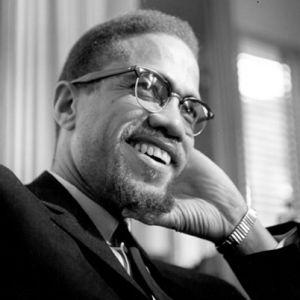

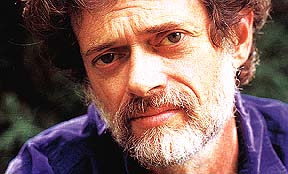





 After the Crash