In a recent conversation with a close friend we were talking about the insane firehose of fear-inducing narratives coming from the talking heads on TV, and she commented that, ‘it was all just a big distraction.’
I hear that a lot. It’s all just a big distraction.
Perhaps it’s true.
But a distraction from what, exactly?
I’m going to zoom all the way out for a few hundred words here. All the way out beyond the distraction from the economic and globalist reality bearing down on all of us. All the way out beyond the cultural revolution underpinning the agendas being pimped on us by mainstream media. All the way out beyond the technocratic, bio-fascist takeover coming from the world’s largest and most-overfunded organizations, like the WEF. All the way out, even, beyond the dehumanization and depopulation agenda becoming evermore clear to the layman in today’s post-Covid authoritarian world.
I’m going full spiritual here, because there’s something big that warrants your attention. Something which all the news, narratives and punditry never even skirt around, much less touch upon.
And that is the fact that you are so much more that what the material scientists and policy makers would have you believe. You’re being distracted from your connection to your higher self, to spirit itself.
It’s been a fascinating journey writing and publishing at Waking Times for over ten years. We’ve discussed in great detail the works of pioneering thinkers like Rupert Sheldrake and Graham Hancock, and even brought renewed attention to the works of people like Rudolf Steiner, Carl Jung and other intellectuals who’ve helped to walk us over the gap between science and spirit. The message that always stuck with me is that the true value of being human, as opposed to a mind-controlled robot, is their uniqueness, individuality and our unique human capacity experience wonder, mystery, and inspiration.
And we need inspiration right now. It’s the antidote to fear. And we need to wonder about the big picture. Your connection to your higher self and all the courage and humanity to be found within that. We need to wonder what we truly are, without all the dense commentary and negative social thought loops keeping us bound to the stupidity inherent in pop culture and group think.
What are you, truly?
“The cosmos is within us. We are made of star-stuff. We are a way for the universe to know itself.” ~Carl Sagan
Yeah, something like that.
The thing is, when you lose track of, or allow yourself to be distracted from, this reality, the walls of the world close in on you. You forget about the present moment and look at the future as a foe whose power comes from the failures of your past. You forget that you’re endowed with the power to create, as Paul Levy reminded us in a podcast I did with him. You forget that your natural state is independence and courage, and you forget that you always have instant access to access these qualities, should you desire to call them in.
When you’re distracted from the reality of your own sovereign standing as a unique and potentially powerful spiritual being, you’re unable to set your own sails according to your own life passions. You are rudderless in a sea of mediocrity and conformity, and thereby perpetually seek the false sense of security and safety that comes from thinking you’re part of a tribe. You self-sabotage and engage in all kinds of senseless self-destruction in order to numb the pain of denying your
Your connection to spirit is what gives your life meaning in a world where phoniness is front page news all day, everyday.
The reason why this connection matters is because you’re being put to the test. The test is whether or not you can keep yourself together through all of the bullshit we’re doggie-paddling around in, so that you can still manage to be effective in your own life rather than becoming food for the hostile beings that feed off fear and anxiety.
So, above all the information, data and reasoning required to find material truth in this world, you need to be connected to who you really are, and you need to know what’s right for you. Not what they say is right for you. These are distinctly different things. You need a connection to your spirit. Your higher self. You need access to the best part of your being.
The part of you that doesn’t need public consensus in order to make a decision regarding your personal health. That part of you that doesn’t check to see what everyone else is doing before declaring whatever it is you truly want out of this magical life. That part of you that wants to you be healthy, balanced and vital in a world of poison and pollution.
When you don’t know who or what you are, you look outward towards others to complete this complex puzzle. When you don’t know who you are, you deny your own inner wisdom. You concern yourself with things you have no power over. You live your life seeking approval, people pleasing and over-obligating yourself. When you don’t know who you are, you leave the door wide open for fear, self-doubt, worry, and overwhelm.
If it’s all a distraction, then it’s time you refocus and recover your energy and power from the rigid, thought-controlling social discredit system being built up around you. The only thing that can save any of us is if all us remember who we are.
“A man with outward courage dares to die; a man with inner courage dares to live.” ~Lao Tzu
The world watched in varying states of mind as the Davos set enjoyed its annual turn on the world stage, supping on sumptuous Atlantic crab and fresh Iberian pork, sustainable Norweigian cod, and the best Italian coffee.
When not tucking into a lavish feast, they bandied about their ideas for how the world ought to exploited (the key euphemisms here are “sustainable,” “stakeholder,” and “impossible beef.”)
Some revile and protest the annual ruling class summit, but many millions more embrace it, even gaze admirably at the mandarins of the new world order as they flit across mobile screens and offer uplifting quotes to curious media attendees.
Indeed, few seem to care as the cabal of monied interests chat amiably about centrally managed digital currencies, consolidating global health authority in unelected bodies, collapsing the world economy, generating needless food shortages, unpopular fake meat, and other new market opportunities. Fewer still see the implicit threat of globalist agendas to the rule of sovereign states.
There is such little resistance largely because billions of people believe what they read and what they are told by the news media. A healthy dose of distrust would serve the global populace well, if only it could release itself from the grip of mainstream corporate news.
In this respect, it’s worth remembering two quotes from the incomparable muckraker Upton Sinclair–author of the startling expose The Jungle.
In his book The Brass Check, Sinclair betrays the great lie of modern media, namely that it is independent. This easy falsehood is widely accepted. Millions of Americans believe that the truly deceitful media are the ones that YouTube labels as “state-affiliated media,” a damning modifier that instantly discredits every outlet so identified.
But Sinclair reminds us that “[Media] represents private interests, not public interests.” He could have gone farther and said mainstream media represents the private interests of elite capital. Marx said that every state serves a particular class. So does corporate media.
Sinclair later writes that, “It is difficult to get a man to understand something when his salary depends on his not understanding it.”
This second quote explains why so much of the MSM go along quite happily with the prescribed narrative from Washington. Their livelihoods depend on it. Occasionally a pious mainstream journalist will fiercely declare his independence from any malign editorial influence.
But as Michael Parenti responds,
“They like what you write because you write what they like.”
The principles of American exceptionalism are a prerequisite for any journalist hoping to earn a slot at a high-paying MSM outlet. They have long internalized the values of power. Put together, these quotes tell us that we are subjected to an official narrative that serves the interests of elite capital and is dutifully disseminated by a cabal of right-thinking stenographers.
The same elite interests that own the government own the media. Hence the narrative consistency.
ALTERNATE REALITY
Given that elite interests are largely out of step with the interests of the vast majority of Americans, we often find ourselves living in an alternate reality. The war in Ukraine is just the latest iteration. Most of the reality of the conflict has been obscured from view, sins of omission that ensure the public is largely misled. Fierce and ‘principled’ op-eds reinforce the bias. For instance, little attention is paid to:
Economic motivations underlying the conflict: arms sales for American defense contractors; oil and grain profits by crisis-oriented commodity monopolies; and broader agricultural profiteering by Monsanto and Dupont via a post-coup IMF agreement; the foreclosure of the Nord Stream 2 gas pipeline from the Baltic Sea into Germany, which opens the door to western consortiums supplying the shortfall.
Ukrainian academic Olga Baysha gave a telling interview to The Gray Zone. She noted how Volodymyr Zelensky’s neoliberal policies were sold as “westernization” and “modernization” to the Ukrainian public. But these were camouflage for privatization, deregulation, and downsizing of the public sphere, all commonplace neoliberal prescriptions for wealth extraction by global corporations. To secure this narrative, Zelensky shuttered opposition media channels and political parties, including sanctions and repression before the final step.
Zelensky was following the post-coup government’s deployment of ultranationalist battalions to violently extinguish the anti-coup resistance in Donbas. That “anti-terrorist operation” was really the beginning of a civil war by Kiev against its own population, including tanks and artillery, gunships and warplanes. The subsequent Minsk peace agreements were likewise largely ignored by the aggressive Kiev action against the East.
All of these political and national conflicts seem to evolve from—and devolve into—imperial economic relations. West against East, with Ukraine as a battleground. War is a revenue stream in capitalism. War is a profit center for the elites that own the media; it is only carnage for the lower classes. This distinction is rarely made.
WHY SOCIAL MEDIA HAS ABDICATED ITS ROLE
What is relatively unique in the propaganda about the Ukraine war is the degree to which social media has advanced its repressive apparatus in line with state directives. Social media became a serious thorn in the side of state power and corporate media when it consistently exposed falsehoods about the 2016 election, Russiagate, and the pandemic.
Though much war propaganda has been uncovered by scrupulous independent journalists (with a working class bias), the success of the Ukrainian narrative has been stupendous. Social media is falling in line, censoring or discrediting wrongthink whenever it appears.
What Google and YouTube and others are doing at the behest of the federal government is as Brett Weinstein said of the pandemic narrative, “They are infantilizing a huge fraction of the population. They are making certain discussions off limits.” We must “…adhere to certain pre-digested conclusions and we pretend that they emerged from evidence, which they do not.”
What we need is rational discussion. The answer to bad speech is more speech, not less. One would expect Google and YouTube and Facebook and Twitter to know this. In fact, it is very likely they do know this. As the venerable linguist politico Noam Chomsky once derisively commented, there’s no point in speaking truth to power: they already know the truth, and don’t care.
What has happened is what happens to all new media in a corporate fascist state: it is threatened until it complies with the official narrative being disseminated by the government, which is effectively owned by elite capital. Congress may have a word with Justice, and Justice may on a quiet Tuesday open the preliminaries of an antitrust investigation.
Suddenly the bright horizons of the Silicon giants are considerably dimmed. It is similar with the news media. The MSM rely too heavily on the gossip and good favor of well-placed officials; they bend too easily to the unspoken preferences of the advertisers who line their coffers; they keel too readily at the unctuous general who cavils over the soft treatment of a geopolitical rival. These perverse incentives are nicely modeled in Manufacturing Consent.
Elite capital may be loosely defined as those groups that are making enormous amounts of money off the status quo, even as many more millions are harmed by the same status quo. Elite capital used to be called “special interests.”
They are the rich and powerful billionaires who can be seen at Davos, on the boards and membership lists of the Rockefeller and Ford Foundations, the Bill and Melinda Gates Foundation and the Clinton Foundation; the Trilateral Commission and the Council on Foreign Relations; and in important think tanks like the Heritage Foundation, the American Enterprise Institute, the Brookings Institute, RAND Corporation, Cato, Hoover, CSIS, and Center for American Progress, among a proliferation of others.
They are thus not a monolithic or discrete coalition of individuals, but rather intertwined interests that share a common desire to uphold the existing establishment, by force or fraud.
MASTERS OF MYTH
Our current experience—in which we are terrifically afraid of a mild seasonal respiratory virus and terrifically xenophobic toward Russians—is reminiscent of the heyday of the Bush administration, when the neoconservative believers were riding high on a surfeit of manufactured intelligence.
Abetted by the ghoulish founder of Blairism, who claimed kindly London burghers might be liquidated by Arab WMDs in just 45 minutes. From launch to impact. From Baghdad missile shed to Kensington glade in less than an hour. Around that frightful time, George Bush’s svengali Karl Rove, educated a stunned reporter about what reality truly meant at the Metropole, in the imperium itself,
We’re an empire now, and when we act, we create our own reality. And while you’re studying that reality — judiciously, as you will — we’ll act again, creating other new realities, which you can study too, and that’s how things will sort out. We’re history’s actors … and you, all of you, will be left to just study what we do.”
That reality is what Henry Giroux called, “…the deadening unity and totalizing narratives that now marks dominant neoliberal and instrumental ideologies of the West.”
More than any moment in recent American history, we find ourselves under the spell of these reality makers, who have over the past five years produced a breathtaking array of crises that have utterly enthralled the population.
From the stunning election of a reeling madman, to chilling revelations of foreign influence, feckless investigations, failed impeachments, lethal pathogens launched from fog-draped bio labs in polluted Sino capitals, and finally to the good news of a redemptive election, only to be circumscribed by fatal new “variants” spread by pathologically stupid Trumpists.
And finally, the plague is swept from the marquee by Russian imperialism on the march in Europe. The masses automatically swap their masks for Ukrainian flags. The fear and anger remain, but are merely redirected.
WAGE SLAVERY AND PUBLIC CONSCIOUSNESS
The indoctrination of individuals into the doctrinal system of American exceptionalism is driven not only by media consolidation but also economic enslavement. First a couple of figures—as if we need more—from a John Steppling’s essay on his Aesthetic Resistance blog. He notes that in 1870 some 67 percent of Americans were self-employed, probably artisans or farmers of some kind.
Once industrial capitalism particularly in urban areas grew, that number plummeted. Today it stands at 6 percent. The point being that the independence of millions of Americans has been compromised. Now they work—millions of them—not for themselves but for vast faceless corporations.
Companies that are essentially fascist constructs, whose decisions are inscrutable to most employees, and which typically sweep the scythe of cost cutting through the ranks every few years, and increasingly turn to automated processes that are merely overseen by an incrementally deskilled workforce.
This alienation from our own work was not unaccompanied by attendent catastrophes. Alongside the vast migration of men and women into wage labor came first a rise and then a fierce destruction of union representation. That too stands at around 7 percent today, once as high as 35 percent in the early to mid 20th century, when there were socialists roaming the untamed streets and word of a Bolshevik Revolution rippled through bourgeois mansions.
The currents of the time were not overlooked by the managers of the economy. The bankers bought the papers. The president created a commission for public information. The business roundtable sketched anti-labor plot lines. Sigmund Freud’s nephew invented the dark arts of public relations.
A similar phenomenon occurred after the cultural explosion of the Sixties. The neoliberal rollback of the so-called welfare state on one hand (happily embraced by hippies as they tossed aside their tasseled suede for wide lapels and polyester pantsuits) and the co-optation of counterculture on the other.
As hippies reproduced, they found themselves suddenly needing the money on offer from the corporate monoliths they once defaced the logos of. No longer able to sustain themselves as village artisans or independent producers, they succumbed to the economic pressures and joined the rat race.
Madison Avenue, a Cyclopean beast capable of the most astonishing mimetic performances, quickly absorbed the counterculture and regurgitated rebellion as offbeat consumerism.
Everything became a style code. Facing down a lynch mob or jackbooted police cordon was replaced with wearing Chuck Conners sneakers, running marathons in ‘Just Do It’ Nikes, or donning a Coca-Cola tee shirt with a sardonic grin. At the radical end of the spectrum, burning draft cards were replaced with ‘buy nothing’ anti-consumer holidays.
Irony supplants resistance, a concession of the educated classes to the diminished prospects for revolution.
And so, having been alienated from their work, having had their counterculture killed, gutted, dressed, and stuffed, the average person has little recourse for independent thinking. At work, he is conditioned by a corporate culture that esteems ‘yes men’, pathologizes optimism, and encourages virtue signaling on behalf of the corporate charter, the values of which one is welcome to adopt as one’s own.
Away from the office, he encounters an ersatz ‘culture’ of media news and entertainment that reifies the values of the corporate state, which ostensibly include diversity, multiculturalism, and inclusion. The news instantiates the tropes of the corporate news hour, which feature the sly demonization of other societies under the guise of national security and the banner of freedom.
Then entertainment reinforces them. One reads of new sanctions levied against a rogue regime in Caracas, and then watches a new action series on Netflix in which an earnest American thwarts a diabolical scheme by the brown Venezuelan with an unquenchable thirst for yanquee blood.
IDEOLOGIES AND SUB-IDEOLOGIES
But should one spy the troubling contradictions between our professed values of inclusion and our foreign policy of exclusion, there is nowhere to turn. Unless one knows about marginalized progressive websites, Noam Chomsky primers, or a nearby Communist Meet Up, one is left with the cardboard caricatures of corporate media, which go to great lengths to convince you those contradictions are all a misunderstanding—your own, to be sure.
Without ‘comrades’ to confirm your natural mistrust, it will tend to fade as the omnipresent corporate conditioning takes over.
Louis Althusser, the French Marxist philosopher, wrote that we are all conditioned by the Ideological State Apparatuses (ISAs) and repressed by Repressive State Apparatuses (RSAs). He said we are ‘interpellated’ by the ISAs into the helpful groupthink that sustains the status quo. Perhaps to keep his readers from guzzling Drano, he did concede that ‘interventions’ were possible in which a sub-ideology breaks through a crack in the dominant ideology.
What this intervention produces, though, is indeterminate. A riotous uprising that is brutally put down by some frightful caudillo general? Whose leaders are liquidated in the bowels of some rusting soccer stadium held over from the Pan Am Games? Or perhaps the glorious, dreamed of Revolution (capital ‘R’) that guts the capitalist oligarchy, assumes its productive forces, and achieves a breathtaking synthesis of revolutionary theory and worker power? The pipe-puffing Althusser declined to say.
REALITY REPEATS ITSELF: AMOR FATI?
It is no surprise when we see such little resistance in the population to the supplying of $40 billion in lethal aid to Ukraine, or to aggressive authoritarian mandates of the government regarding the pandemic. For all of the aforementioned reasons, the dominant response is unquestioning compliance and even gratitude.
After all, having never been taught the past, or having deliberately compartmentalized those troubling histories, we digest the official narrative like a child accepts the spoonfuls of baby food from a doting mother. Tens of millions of doses of soma shoveled down the hatch at daybreak or dusk, or both, do their numbing best to aid and abet digestion of those sometimes thorny narratives, so thick with intrigue and, not occasionally, senselessness. The reward of the incurious is consensus.
Within the official narratives themselves, there is at least one constant: the demonization of the other. We can easily see parallels in the gross caricature of unvaccinated individuals as pathogenic threats in need of the needle and the demonization of Russians as barbaric hordes in need of European refinements.
These depictions are not far from the efforts of German National Socialists to segregate non-Aryans, mostly of Jewish origin, from the righteous population of pure-blood Volk. Yet one needn’t leave one’s own history to see this blatant segregationist behavior. The dark era of Jim Crow, and the modern version of the carceral state, evince the deep hostility of society for the other, those that differ in skin color, sex, gender, sexual preference, religion, ideology, economic model, or worldview.
Edward Said notes in Orientalism how the western Orientalist needed to whittle down Islam to the caricature of “tent and tribe” in order to fit it into his orderly cosmology, in which the rationalism of the European Enlightenment prevailed. Today the West performs the same reductionist act on Eurasia.
Reclining in his sumptuous country estate, the elitist Marquis tells Charles Darnay in A Tale of Two Cities, “Repression is the only lasting philosophy. The dark deference of fear and slavery…will keep the dogs obedient to the whip, as long as this roof shuts out the sky.”
Like Sinclair, Charles Dickens historicized his novels, and it might be noted that the Marquis’ venerable roof would soon fall with the collapsing scenery of the French Revolution. Whenever we are sold those confident, end-of-history tales from the corridors of elite power—be it a French chateau or a chalet in the Swiss Alps—we’d do well to recall the timeless warning of every marketplace and bazaar: caveat emptor.
“Life, liberty, and the pursuit of happiness have given way to permanent crisis management: to policing the planet and fighting preventative wars of ideological containment, usually on terrain chosen by, and favorable to, our enemies. Limited government and constitutional accountability have been shouldered aside by the kind of imperial presidency our constitutional system was explicitly designed to prevent.”— David C. Unger, The Emergency State: America’s Pursuit of Absolute Security at All Costs
America, meet your new dictator-in-chief.
As the New York Times reports, “Newly disclosed documents have shed a crack of light on secret executive branch plans for apocalyptic scenarios—like the aftermath of a nuclear attack—when the president may activate wartime powers for national security emergencies.”
The problem, of course, is that we have become a nation in a permanent state of emergency.
Power-hungry and lawless, the government has weaponized one national crisis after another in order to expand its powers and justify all manner of government tyranny in the so-called name of national security.
Just what sort of actions the president will take once he declares a national emergency can barely be discerned from the barebones directives. However, one thing is clear: in the event of a national emergency, the COG directives give unchecked executive, legislative and judicial power to the president.
The country would then be subjected to martial law by default, and the Constitution and the Bill of Rights would be suspended.
Essentially, the president would become a dictator for life.
It has happened already.
As we have witnessed in recent years, that national emergency can take any form, can be manipulated for any purpose and can be used to justify any end goal—all on the say so of the president.
The emergency powers that we know about which presidents might claim during such states of emergency are vast, ranging from imposing martial law and suspending habeas corpus to shutting down all forms of communications, including implementing an internet kill switch, and restricting travel.
Yet according to documents recently obtained by the Brennan Center, there may be many more secret powers that presidents may institute in times of so-called crisis without oversight from Congress, the courts, or the public.
It doesn’t even matter what the nature of the crisis might be—civil unrest, the national emergencies, “unforeseen economic collapse, loss of functioning political and legal order, purposeful domestic resistance or insurgency, pervasive public health emergencies, and catastrophic natural and human disasters”—as long as it allows the government to justify all manner of government tyranny in the name of so-called national security.
The war on COVID-19, the war on terror, the war on drugs, the war on illegal immigration: all of these programs started out as responses to pressing national concerns and have since become weapons of compliance and control in the police state’s hands.
Deploying the same strategy it used with 9/11 to acquire greater powers under the USA Patriot Act, the police state—a.k.a. the shadow government, a.k.a. the Deep State—has been planning and preparing for such crises for years now, quietly assembling a wish list of presidential lockdown powers that could be trotted out and approved at a moment’s notice.
Indeed, the Trump Administration even asked Congress to allow it to suspend parts of the Constitution whenever it deems it necessary during the COVID-19 crisis and “other” emergencies. The Department of Justice (DOJ) went so far as to quietly trot out and test a long laundry list of terrifying powers that override the Constitution.
We’re talking about lockdown powers (at both the federal and state level): the ability to suspend the Constitution, indefinitely detain American citizens, bypass the courts, quarantine whole communities or segments of the population, override the First Amendment by outlawing religious gatherings and assemblies of more than a few people, shut down entire industries and manipulate the economy, muzzle dissidents, “stop and seize any plane, train or automobile to stymie the spread of contagious disease,” reshape financial markets, create a digital currency (and thus further restrict the use of cash), determine who should live or die.
These are powers the police state would desperately like to make permanent.
In such a climate, the American president becomes dictator with permanent powers: imperial, unaccountable and unconstitutional.
Bear in mind that the powers the government officially asked Congress to recognize and authorize barely scratch the surface of the far-reaching powers the government has already unilaterally claimed for itself.
Unofficially, the police state with the president at its helm has been riding roughshod over the rule of law for years now without any pretense of being reined in or restricted in its power grabs by Congress, the courts or the citizenry.
Although the Constitution invests the President with very specific, limited powers, in recent years, American presidents have claimed the power to completely and almost unilaterally alter the landscape of this country for good or for ill.
The powers amassed by each successive president through the negligence of Congress and the courts—powers which add up to a toolbox of terror for an imperial ruler—empower whoever occupies the Oval Office to act as a dictator, above the law and beyond any real accountability.
Moreover, it doesn’t even matter whether other presidents have chosen not to take advantage of any particular power, because “it is a President’s action in using power, rather than forsaking its use, that has the precedential significance.”
In other words, each successive president continues to add to his office’s list of extraordinary orders and directives, expanding the reach and power of the presidency and granting him- or herself near dictatorial powers.
All of the imperial powers amassed by Barack Obama and George W. Bush—to kill American citizens without due process, to detain suspects indefinitely, to strip Americans of their citizenship rights, to carry out mass surveillance on Americans without probable cause, to suspend laws during wartime, to disregard laws with which he might disagree, to conduct secret wars and convene secret courts, to sanction torture, to sidestep the legislatures and courts with executive orders and signing statements, to direct the military to operate beyond the reach of the law, to operate a shadow government, and to act as a dictator and a tyrant, above the law and beyond any real accountability—were inherited by Donald Trump and passed along to Joe Biden.
These are the powers that continue to be passed along to each successive heir to the Oval Office, the Constitution be damned.
This is what you might call a stealthy, creeping, silent, slow-motion coup d’état.
From Clinton to Bush, Obama to Trump, and now Biden, it’s as if we’ve been caught in a time loop, forced to re-live the same abuses over and over again: the same assaults on our freedoms, the same disregard for the rule of law, the same subservience to the Deep State, and the same corrupt, self-serving government that exists only to amass power, enrich its shareholders and ensure its continued domination.
We’ve been losing our freedoms so incrementally for so long—sold to us in the name of national security and global peace, maintained by way of martial law disguised as law and order, and enforced by a standing army of militarized police and a political elite determined to maintain their powers at all costs—that it’s hard to pinpoint exactly when it all started going downhill, but “we the people” are paying the price for it now.
We are paying the price every day that we allow the government to continue to wage its war on the American People, a war that is being fought on many fronts: with bullets and tasers, with surveillance cameras and license readers, with intimidation and propaganda, with court rulings and legislation, with the collusion of every bureaucrat who dances to the tune of corporate handouts while on the government’s payroll, and most effectively of all, with the complicity of the American people, who continue to allow themselves to be easily manipulated by their politics, distracted by their pastimes, and acclimated to a world in which government corruption is the norm.
Unless something changes in the way we deal with these ongoing, egregious abuses of power, the predators of the police state will continue to wreak havoc on our freedoms, our communities, and our lives.
If we continue down this road, there can be no surprise about what awaits us at the end.
After all, it is a tale that has been told time and again throughout history about how easy it is for freedom to fall and tyranny to rise, and it often begins with one small, seemingly inconsequential willingness on the part of the people to compromise their principles and undermine the rule of law in exchange for a dubious assurance of safety, prosperity and a life without care.
Unfortunately, the process of unseating a dictator and limiting the powers of the presidency is far from simple but at a minimum, it must start with “we the people.”
Start locally—in your own communities, in your schools, at your city council meetings, in newspaper editorials, at protests—by pushing back against laws that are unjust, police departments that overreach, politicians that don’t listen to their constituents, and a system of government that grows more tyrannical by the day.
What we desperately need is a concerted, collective commitment to the Constitution’s principles of limited government, a system of checks and balances, and a recognition that they—the president, Congress, the courts, the military, the police, the technocrats and plutocrats and bureaucrats—answer to and are accountable to “we the people.”
This will mean that Americans will have to stop letting their personal politics and party allegiances blind them to government misconduct and power grabs.
It will mean holding all three branches of government accountable to the Constitution (i.e., vote them out of office if they abuse their powers).
The antiwar community has fractured at a time when it most needs to speak with one voice to end the war in Ukraine. About all we can agree on is that the war is a terrible thing that needs to be stopped. Beyond that, reasonable people disagree about messaging, and unreasonable people demonize those who disagree. The result is that average Americans who don’t usually follow politics, let alone international affairs, form opinions based on emotional responses to what they hear in mainstream media rather than what may be most likely to promote peace. This is true despite the fact that most would say that peace is what they want.
The ability to influence American thinking through emotional appeals is what those with the power to manipulate the media count on to serve imperialism’s aims. If we can at least agree that how we frame our response is important, people who sincerely want to do something to end the war might be able to agree on what message would most effectively sway public opinion in a way that might influence our government to act in the interest of peace.
The most fundamental disagreement is over whether it’s necessary to call Russia out as solely or even primarily at fault for the war, or whether it is important to provide the context needed to understand the US role in creating the conditions that led it to decide that it had no choice but to respond to Ukrainian actions in Donbass with military force.
Given that our goal is to influence public opinion, it’s understandable that most peace groups have opted to follow the lead of politicians and mainstream commentators and preface every statement with a condemnation of Russia. After all, since they believe these accusations are justified, they fear being seen as supportive of Russia if they only focus on what the US has done that promotes war and what it hasn’t done that might have prevented it. Some peace groups go so far as to ignore clear US provocations as unimportant. Since it was Russia that invaded, they believe that their proper job is to wave Ukrainian flags and protest Russia’s actions, despite the reality that this will have no beneficial effect on the course of the war.
Other peace activists feel that either approach absolves the US of responsibility for creating conditions that led to the conflict. Believing the US actually initiated the conflict, they argue that dating its onset as February 24 is not only misleading, but false. They see the conflict as having started long before the Russian invasion and argue that knowing what choices Putin had is relevant to assigning blame.
The truth is thatwe don’t have to agree on who is at fault if we don’t make that an issue.As a psychotherapist with training in family therapy, I know from experience that focusing on who is responsible for a problem almost never leads to a satisfactory solution. And from a practical standpoint, placing sole blame on Russia is counterproductive not only because it splits the antiwar movement, but because to much of the public it provides a justification for an aggressive US response. Avoiding a conflict over whether Russia should be characterized as the sole aggressor is why many want to limit the message to demanding that the US 1) stop arming Ukraine, 2) declare it will never support Ukraine joining NATO, and 3) push Ukraine to negotiate without preconditions.
From a family therapy perspective, trying to keep the discussion focused on a solution would certainly be the approach to take if the US actually wanted to end the conflict. Unfortunately, that doesn’t seem to be the case. The effect of sending increasingly lethal weapons and imposing sanctions that primarily harm civilians is to prolong the war and increase casualties of both soldiers and civilians on both sides.
Recent reports indicate that the effort to help a depleted Ukrainian military drive Russia out of Donbass is futile. However, this approach is very profitable for a weapons industry that generously funds the elections of members of Congress willing to serve its interests, which is no doubt why any debate about how the US should proceed assumes that it will involve continuing a strategy that has proven to result in arming extremists when used in places like Iraq and Afghanistan. And yes, there are extremists with significant influence in Ukraine despite media denials.
Clearly, the focus on providing weapons has redirected the public’s attention from the question of how to end the war to how best to punish Russia, regardless of how US strategy affect Ukrainian civilians. This is not by accident, but by design. That’s why it is necessary to challenge the distortions, omissions and outright lies that are used to influence public opinion to conform with the goals of American imperialism. Unfortunately, the inability to agree on the facts is what has led to the stark divisions among those wanting to do something to make the war to end. That is we have to put aside our pride and listen to each other to understand why a minority firmly believes that the consensus opinion of the majority is based on misplaced trust in mainstream media.
Most Americans think they are informed if they read mainstream media and watch a variety of TV news sources. Antiwar activists know differently, because we know we have been lied into war repeatedly, at least from Vietnam through Syria. Unfortunately, like the general public, many peace proponents have no idea how information that challenges the government’s narrative is being systematically suppressed in unprecedented ways.
It’s always been true that truth is the first casualty of war. In today’s hybrid warfare, it is more critical than ever to control the information domain. The way news is presented by government officials and approved media frames the way most people think about US foreign policy. This is why the idea of sending ever more powerful weapons to prolong a military conflict that cannot be won is never challenged. While the ultimate outcome of Russia’s invasion cannot be predicted with certainty, the one thing we know for sure is that providing increasingly lethal weaponry will lead to more death on both sides and do nothing to promote stability in the region.
Of course, there is much more that could be said about the tremendous amount of disinformation in the mainstream media regarding Ukraine. While much of it is relevant to understanding the situation, it is far beyond the scope of this essay. I can only recommend that those who are inclined to believe what they read or hear in government-approved media look at any of the credible alternative sources that present evidence of critical facts that are being withheld from them.
A good way to find them is to look at the list of websites that Prop or Not, a shadowy group that claims to be the arbiter of “reliable sources,” claims should not be trusted. Interspersed among many dubious websites listed are some of the most informative sources of information contradicting the mainstream narrative. These are sites with authors that include prominent investigative journalists and veterans of the CIA, NSA, State Department, high ranking White House positions and military intelligence. They cite their sources, which gives their articles far more credibility than the mostly anonymous sources favored by the New York Times and Washington Post when reporting on many of the same stories.
I urge anyone interested in finding a common message to present to the public to read the statement released by the US Peace Council.
The created food crisis, whether real or a smoke-and-mirrors psy-op, is all about tearing down the global food system and “building back better” – a new dystopian food system built by corporate monoliths and rigidly controlled in the name of the greater good.
The press has been predicting this for years, but up until now it always appeared to be nothing more than fearmongering, designed to worry or distract people, but the signs are there that this time, to quote Joe Biden, it “is going to be real”.
Nobody knows how bad it could get, except the people who are creating it.
Because the evidence is pretty clear, it is being deliberately & cold-bloodedly created. We’ve been documenting it for months.
We have Russia’s “special operation” in Ukraine driving up the price of staple foods, wheat and sunflower oil, as well as fertiliser.
We have the sudden “bird flu outbreak” driving up the price of poultry and eggs.
The soaring price of oil is driving up the cost of food distribution.
The inflation caused by huge influxes of fiat currency means families are spending more money on less food.
And as all this is happening, the US and UK (and maybe others, we don’t know) are literally paying farmers not to farm.
It’s pretty clear this is The Great Reset: Food Edition. The lockdown melody with slightly different lyrics. A process of breaking down the structures already in place so we can “build back better” with a more controlled and more corporatised food system
Just as the Covid “pandemic” was said to highlight “weaknesses in the multilateral system”, so this food crisis will show that our “unstable food systems are in need of reform” and we need to ensure our “food security”…or a thousand variations on that theme.
That’s not supposition. They already started, over a year ago.
The Journal of Agriculture, Food Systems & Community Developments published a paper in February 2021 titled:
Dismantling and rebuilding the food system after COVID-19: Ten principles for redistribution and regeneration
In an interview from July last year, Ruth Richardson the Executive Director of the NGO Global Alliance for the Future of Food literally said:
Our Dominant Food System Needs to Be Dismantled and Rebuilt”
Later, in September 2021, the UN convened the first-ever “Food Systems Summit”, whose mission statement included the line:
Rebuilding the food systems of the world will also enable us to answer the UN Secretary-General’s call to “build back better” from COVID-19.
Writing in the Guardian two weeks ago, George Monbiot, weathervane for every deep state agenda, states with his trademark lack of subtlety:
The banks collapsed in 2008 – and our food system is about to do the same…The system has to change.
But what does “change” and “rebuilt” actually mean in this context?
Well, that’s no mystery, they’ve been talking it up for years.
Almost all of these are stories from just the past month or so, many of them talking points at the World Economic Forum’s Davos Conference.
As is almost always the case, the problem to which they’re currently “reacting” already has a series of pre-ordained solutions.
Just as we saw lockdowns break the economy to pieces whilst the billionaire class land record profits whilst corporate megaliths expanded their monopolies, so too will any proposed food security policies end up benefiting the already mega-rich or installing infrastructure for corporate control.
They just announced the building of the largest “cultured meat factory” in the world. Fake meat, of course, can’t be raised at home and is subject to patented processes of creation. Genetically edited or modified plants and animals are likewise subject to patents.
Supranational companies, with profits larger than the budget of some nations, are developing carbon footprint tracker apps which reward people for making the “right decisions”. That could easily be applied to food.
Let’s consider livelihood options in an unsustainable economy of extremes that are unraveling, an economy that is being forced to transition to Degrowth.
Nassim Taleb’s book Antifragile explains the differences between fragile systems (systems that cannot survive instability), resilient systems (systems that can survive instability and stay the same) and antifragile systems (systems that adapt and emerge stronger).
The ideal way of life is antifragile: resilient enough to survive adversity and adaptable enough to evolve solutions to whatever comes our way.
The key antifragile traits are adaptability and rapid, flexible evolution. Adversity puts selective pressure on organisms: only those organisms which adapt successfully survive.
The more antifragile our livelihood and way of life, the better prepared we will be to recognize and pursue opportunities.
An unsustainable, unstable economy puts a great deal of pressure on its participants. Only those with the skills and agency to move, adapt and experiment will emerge stronger.
Adaptability requires agency. Those without much control are stuck with the consequences of others’ decisions and actions.
In my experience, self-reliance is integral to an antifragile way of life.Self-reliance and self-sufficiency are similar but not identical.
Self-sufficiency means reducing our dependence on resources provided by others: growing our own food, doing our own repairs, etc. Self-sufficiency can also be understood as shortening dependency chains.
Compare being dependent on food shipped thousands of miles to relying mostly on food grown within 50 miles of home. There are so many ways long supply chains can break down because the entire system breaks down if even one link in the dependency chain breaks.
Total self-sufficiency isn’t practical. We all rely on industrial production of metals, tools, plastics, fertilizers, etc. But reducing our dependence on systems that are fragile by consuming less and wasting nothing increases our antifragility.
Self-reliance is being able to take care of oneself, being independent in thought and action, and maintaining control of decision-making–what I’ve been calling agency.
Self-reliance means being able to go against the crowd. This requires independence and confidence in one’s inner compass.
Being able to take care of oneself means drawing upon inner resources, being able to identify the essentials of a situation and coming up with solutions that are within reach.
Since households with multiple incomes are far more resilient than households with all their eggs in one basket, our goal is to develop income streams that we control. The ownership is more important than the scale of the income. A modest income we control is far more antifragile than a larger income we have little control over.
Developing income streams is easier if we approach the task with an entrepreneurial mindset.
This mindset looks at work in terms of markets, unmet demand, pricing power, networks of trustworthy peers, trial and error (experiments), optimizing new skills, seeking mentors, learning to make clear-eyed assessments of what’s working and what isn’t, and then acting decisively on the conclusions.
All these skills can be developed. They are very useful in navigating unstable conditions because they prepare us to act decisively rather than passively await others to decide what happens to us.
Some skills can be applied to virtually every field: project management, bookkeeping, working well with others, computer skills and communicating clearly. Being a fast learner is valuable in every field.
In my books and blog posts, I’ve covered the difference between tradable work–work that can be done anywhere–and untradable work, work that can only be done locally. Having skills that are untradable is advantageous, as the competition is local rather than global.
Skills that can’t be automated are also advantageous. Robots are optimized for repetitive tasks and factory / warehouse floors with sensors. They are not optimized for tasks that must be figured out on the fly and that require multiple skills.
Who fixes the robot when it fails out in the field? Another robot? Who replaces the dead battery in the drone? Another drone? The point is there are real-world limits on robotics, artificial intelligence, machine learning and automation that proponents gloss over or ignore.
Those with multiple skills who can problem-solve on the fly will continue to be valuable.
The models of work are changing, and this offers a wider range of options which is especially valuable to those emerging from burnout.
Combining various kinds and modes of work is called hybrid work. This could be mixing work from home (remote work) with occasional visits to an office, or it could be mixing a part-time job with self-employment.
I’ve written about one example in Japan called Half Farmer, Half X, where young urban knowledge workers move to the countryside to pursue small-scale farming while keeping a part-time, high-pay tech job they do online. Since the cost of living is so much lower in the countryside, these hybrid workers don’t need to work many hours remotely to cover their expenses, nor do they need their small-scale farming to be highly profitable.
Not all work is paid. Indeed, only a slice of human work globally is paid. The work that gives us the greatest fulfillment may well be unpaid or poorly paid. We may have to do some work to pay the bills while looking forward to the work we do that doesn’t earn much money.
Personally, I have always been drawn to both knowledge work and hands-on work. I worked my way through my university with a part-time job in construction. This was the ideal mix for my enthusiasms. Whenever I’ve been limited to one or the other, I feel dissatisfied. For me, hybrid work means having both knowledge work and hands-on physical labor, and having control of both.
Many people believe they need additional credentials to expand their opportunities. The alternative is to accredit yourself.
Since I’m enthusiastic about working with fruit trees and vegetable gardens, let’s say I decide to offer my services to potential customers.
One avenue is to spend money and time to get a certificate in horticulture. Alternatively, I could take photos of my own yard to document the trees I planted and how fast they’ve grown under my care. In other words, I could accredit myself, providing direct evidence of my skills and experience.
Employers have learned that completing a credential doesn’t mean the graduate will be productive. The diploma doesn’t prove the graduate learned much or has what it takes to work well with others.
The diploma actually tells us very little about the graduate. We learn much more from someone who accredits themselves by documenting projects they’ve completed.
The only real source of prosperity is improving productivity: doing more with fewer resources and labor. Economists expected the adoption of computers and the Internet to boost productivity. Instead, productivity gains have been extremely modest, 1% or 2% per year, far lower than the 10% annual gains achieved during industrialization.
This productivity paradox has puzzled economists for decades. One reason why the productivity of knowledge work ((white-collar work) has barely improved when compared to factory productivity (blue-collar work) is the methodical optimization of tasks is more difficult to apply to knowledge work. Much of this work is done by rule of thumb and what was passed down by senior workers.
There are a number of reasons for this. One is it’s easier to study the assembly of products than it is to break down the production of services.
Another is that many fields of knowledge work are so new that it’s difficult to optimize tasks because they’re constantly changing.
A third factor is that we’ve been wealthy enough to waste labor and capital on unproductive bureaucratic friction. Just as we waste water when it’s abundant and free, we also waste energy and money when they’re abundant.
In Global Crisis, National Renewal I describe the changes in the process of obtaining a building permit in the past 40 years.
In the early 1980s, I could submit a set of plans for a modest house in the morning and pick up the approved plans and building permit that afternoon. Now the process takes many months, even though the house being built hasn’t changed much at all. What changed was the permit approval process became terribly inefficient.
Since there’s few incentives to improve efficiencies in bureaucracies, it now takes a decade or longer to approve a bridge or landfill While the number of professors and doctors has increased modestly, the number of university and hospital administrators has soared.
Now that energy will no longer be cheap over the long term, incentives to improve the productivity of knowledge work will increase.
Unsustainable economies are prone to sudden changes in finance and the availability of essentials. We’re accustomed to predictable stability, and so few are prepared to respond effectively to instability.
If our lives only work when things are stable, our way of life is fragile. Recall Sun Tzu’s advice: “If a battle cannot be won, do not fight it.” If we’re only prepared for everything to stay the same, we’re fighting a battle we can’t win. We want to be prepared for sudden changes and scarcities by planning ahead and being flexible, nimble and responsive.
One facet of being antifragile is having a buffer or cushion against sudden shocks. In a 2018 interview, Nassim Taleb said, “Money can’t buy happiness, but the absence of money can cause unhappiness. Money buys freedom… to choose what you want to do professionally.”
Taleb went on to note that it takes great discipline to keep enough money stashed to give us the freedom to maintain our agency when faced with adversity. Self-reliance requires a buffer so we have time to figure out solutions and the means to pursue them.
In my experience, our willingness to consider all options, our ability to make careful decisions and take decisive action are just as important as a cushion of cash. Cash widens our options, but if we’re frozen by inexperience and fear then our options are severely limited.
The wider our range of skills, the greater our opportunities to add value. The basic needs of human life must be met and so those who can meet those needs will always be valued. This range of skills is also a buffer because it gives us more options in adversity.
How much money do we need as a cushion? The less we need, the lighter our expenses and the more options we have. If we need $10,000 a month just to pay our basic expenses, that demands a large cushion. If we’ve simplified and downsized our way of life so $1,000 a month is enough to keep us going, our cushion can be much smaller.
In other words, frugality, self-reliance and simplicity are key parts of antifragility, for they lower the cost of freedom. Money can lose its value in crisis, but our buffer of skills and self-reliance cannot be taken from us or devalued by a global crisis.
One final consideration is timing. The sooner we start preparing for degrowth, the better off we’ll be. A Chinese proverb captures this succinctly: By the time you’re thirsty, it’s too late to dig a well.
Are we heading into another real estate bubble / crash? Those who say “no” see the housing shortage as real, while those who say “yes” see the demand as a reflection of the Federal Reserve’s artificial goosing of the housing market via its unprecedented purchases of mortgage-backed securities and “easy money” financial conditions.
My colleague CH at econimica.blogspot.com recently posted charts calling this assumption into question. The first chart (below) shows the U.S. population growth rate plummeting as housing starts soar, and the second chart shows housing unit per capita, which has just reached the same extreme as the 2008 housing bubble.
Demographics and housing do not reflect a housing shortage nationally, though there could be scarcities locally, of course, and other factors such as thousands of units being held off the market as short-term rentals or investments by overseas buyers who have no interest in renting their investment dwellings.
On a per capita basis, housing has reached previous bubble levels. That suggests housing shortages are artificial or local, not structural.
Next, let’s consider how the current housing bubble differs from previous bubbles in the late 1970s and 2000s. In my view, the previous bubbles were driven by demographics, inflation and monetary policy: in the late 70s, the 65 million-strong Baby Boom generation began buying their first homes, pushing demand higher while inflation soared, making real-world assets such as housing more desirable.
Once the Federal Reserve pushed interest rates to 18%, mortgage rates rose in lockstep and housing crashed as few could afford sky-high housing prices at sky-high mortgage rates.
The housing bubble of 2007-08 was largely driven by declines in mortgage rates (as the Fed pursued an “easy money” policy to escape the negative effects of the Dot-Com stock market bubble crash) and a loosening of credit/mortgage standards. These fueled a bubble that morphed into a speculative free-for-all of no-down payment and no-document loans.
This decline in the cost of borrowing money (mortgage rates) enabled a sharp rise in the price of housing, a speculative boom that was greatly accelerated by “innovations” in the mortgage market such as zero down payments loans, interest-only loans, home equity loans, and no-document “liar loans”–mortgages underwritten without the usual documentation of income and net worth.
These forces generated a speculative frenzy of house-flipping, leveraging the equity in the family home to buy two or three homes under construction and selling them before they were even completed for fat profits, and so on.
Needless to say, the pool of potential buyers expanded tremendously when people earning $25,000 a year could buy $500,000 houses on speculation.
Once the bubble popped, the pool of buyers shrank along with the home equity.
If we study this chart below of new home prices (courtesy of Mac10), we can see that the 21st century’s Bubble #2 rose as the Federal Reserve pushed mortgage rates far below historic norms. Once rates reached a bottom, the 7-year inflation of home prices (from 2011 to 2018) began rolling over.
This deflation of home prices was reversed by the pandemic recession, as the Fed’s vast expansion of credit and mortgage-buying, which pushed mortgage rates to new lows. Trillions of dollars in new credit and cash stimulus ignited a speculative frenzy in stocks, bonds and real estate, a frenzy which drove bubble #3 to extraordinary heights.
All this unprecedented fiscal and monetary stimulus also ignited inflation, and so rates are rising in response. Bubble #3 is already deflating, at least by the measure of new home prices.
But the current bubble has a number of dynamics that weren’t big factors in previous bubbles.
One is the rise of remote work. Many people have been working remotely since the late 1990s enabled Internet-based work, but the pandemic greatly increased the pool of employers willing to accept remote work as a permanent feature of employment.
This trend has been well documented, but the consequences are still unfolding: remote workers are no longer trapped in unaffordable, congested cities and suburbs.
Several other trends have attracted much less attention, but I see them as equally consequential.
1. Housing in many urban zones are out of reach of all but the top 10% without extraordinary sacrifice, and now that employment isn’t necessarily tied to urban zones, the bottom 90% of young people without family wealth or high incomes are coming to realize the benefits of urban living are not worth the extreme sacrifices needed to buy an overvalued house.
A middle-class life–home ownership, financial security, leisure and surplus income to invest in one’s family and well-being–is no longer affordable for the majority of young Americans.
Few are willing to concede this because it reveals the neofeudal nature of American life. Those who bought homes in coastal urban zones 20+ years ago are wealthy due to soaring housing valuations while young people can’t even afford the rent, much less buying a house.
If you’re not making $250,000 or more a year as a couple, the only hope for a middle-class life that includes leisure and some surplus income to invest is top move to some place with much lower housing and other costs. That place is rural America.
2. The benefits of urban living are deteriorating while the sacrifices and downsides are increasing. Urban living is fun if you’re wealthy, not so fun if you don’t have plenty of surplus income to spend.
Urban problems such as homelessness, traffic congestion and crime are endemic and unresolvable, though few are willing to state the obvious. Americans are expected to be optimistic and to count on some new whiz-bang technology to solve all problems.
Unfortunately, problems generated by dysfunctional, overly complex institutions, corruption and unaffordable costs can’t be solved by some new technology, and so the decay of cities will only gather momentum.
The hope that billions of federal stimulus funding would solve these problems is about to encounter reality as the funds dry up and all the problems remain or have actually expanded despite massive “investments” in solutions.
Few analysts have looked at the finances of high-cost cities. The decline in bricks-and-mortar retail, rising crime, soaring junk fees, rents and property taxes have all made urban small business insanely costly and therefore risky.
Small businesses are the core sources of employment and taxes. As high costs, crime, etc. choke small businesses, employment and tax revenues drop and commercial real estate sits empty, generating decay and defaults.
Once office and retail space is no longer affordable or necessary, commercial real estate crashes in value as owners who bought at the top default and go bankrupt.
People need shelter but they don’t need office space or to start a bricks-and-mortar retail business.
As urban finances unravel, cities won’t have the funding to run their bloated, inefficient, overly complex and unaccountable bureaucracies.
3. In geopolitics, we speak of the core and the periphery. Empires have a core (Rome and central Italy in the Roman Empire) and a periphery (Britain, North Africa, Egypt, the Levant).
As finances and trade decay and costs soar, the periphery is surrendered to maintain the core.
In urban zones, the same dynamic will become increasingly visible: the peripheral neighborhoods will be underfunded to continue protecting the wealthy enclaves.
Crime will skyrocket in the periphery even as residents of the wealthy enclaves see little decay in their neighborhoods.
This asymmetry–already extreme–will drive social unrest and disorder. This is a self-reinforcing feedback: as the periphery neighborhoods deteriorate, the remaining businesses flee and the smart money sells and moves away.
Tax revenues plummet and city services decay even further, persuading hangers-on to move before it gets even worse. Cities compensate for the lower revenues by increasing taxes on the remaining residents and cutting services.
Each turn of the screw triggers more closures and selling and fewer tax revenues.
4. Dependency chains will become increasingly consequential: the greater a city’s dependency on essentials trucked/shipped from hundreds or thousands of of kilometers/miles away, the more prone that city will be to disruptions of essentials: food, energy, materials and infrastructure.
Though few are willing to dwell on such vulnerabilities, most cities are totally dependent on diesel fueled fleets of trucks, rail and jet fuel for luxuries flown in from afar for virtually all goods. Cities produce very little in the way of essentials such as food and energy.
The past reliability of long supply chains has instilled a confidence that these supply chains stretching thousands of kilometers and miles are unbreakable and forever. They aren’t, and the initial disruptions will be a great shock to Americans who believe full gas tanks and fully stocked store shelves are their birthright.
5. As I’ve explained in my new book Global Crisis, National Renewal, the era of cheap, reliable abundance has drawn to a close and now we are entering an era of scarcity in essentials.
Another reality few discuss is the relative stability of global weather over the past 40 years. As weather becomes less reliable, so too do crop yields and food supplies.
Globalization has poured capital into expanding acreage under cultivation to the point that the planet’s forests are being decimated to grow more soy to feed animals to be slaughtered for human consumption.
On the margins, land that was once productive has been lost to desertification. Fresh water aquifers have been drained and glaciers feeding rivers are melting away. Soil fertility has declined even as fertilizer use has expanded.
The low-hanging fruit of GMO seeds, fertilizers, insecticides, herbicides and Green Revolution hybrids have all been plucked. The gains have been reaped but now the downsides of these dependencies are becoming increasingly consequential: fertilizer costs are rising fast, insects and diseases are evading chemicals and vaccines, and the vulnerabilities of mono-crop, industrialized agriculture and animal husbandry threaten to cascade into crop failures, soaring prices and shortages.
6. This will have two consequences: rural incomes which have been falling for decades due to globalization (i.e. bringing in cheap food from places with no environmental standards, cheap labor and few taxes / social costs) will start rising sharply, fueling a reversal in the long decline of rural communities based on agricultural income.
The soaring costs of essentials will reduce the disposable income of the bottom 90%, reducing the money they’ll have to spend on eating out, retail shopping, etc.–all the surplus spending that drives cities’ economies and tax revenues.
Few (if any) commentators forecast a cyclical reversal of the demographic trend of people moving from rural locales to cities. I think this trend has already reversed and will gather momentum as cities become increasingly unlivable, disposable incomes decline as scarcities push prices higher and people flee for lower cost, more secure environs.
7. As I often note, following what the super-wealthy are doing is a pretty sound investment strategy because the super-wealthy spend freely to buy the best advice and are highly motivated to protect their wealth.
People who live in well-known, highly desirable rural towns (Telluride, Jackson Hole, Lake Tahoe, etc.) are describing a feeding frenzy of wealthy urbanites buying multi-million dollar homes. Small cities such as Bozeman, MT and Ashville, NC are experiencing a flood of new residents that is straining infrastructure and pushing housing prices out of reach for local residents with average wages.
8. Rural towns in the U.S., Italy, Japan and even Switzerland are trying to attract new residents with offers of free land, subsidized rent, low cost homes, etc. This shows that the trends are global and not limited to any one nation. Would you take free land in rural America?
The decay of urban life isn’t yet consequential enough to push people into making a major move, but once someone has been robbed, repeatedly found human feces on their doorstep or experienced scarcities that trigger the madness of crowds, the decision to leave becomes much, much easier.
Some cities will manage the decline of employment and tax revenues more gracefully than others. Most will suffer from the dynamic I’ve often described on the blog: the Ratchet Effect. Costs move effortlessly higher as tax revenues have increased in one speculative bubble after another, but once revenues drop, cities have no mechanisms or political constituency to manage a sharp, long-term decline in revenues.
They then become prone to the other dynamic I’ve described, the Rising Wedge Breakdown (see chart below): as agencies and institutions become sclerotic, unaccountable and self-serving, even a relatively modest cut in revenues triggers institutional collapse, as the system requires 100% funding to function. A 10% reduction doesn’t cause a 10% decline in service, it causes an 50% decline in service, on the way to complete dysfunction.
Few believe cities can unravel, but remote work, geographic arbitrage (discussed below), tightening credit, rising crime, the decline of commercial real estate, end of massive stimulus, scarcities, the madness of crowds, the decline of civic services and amenities and an insanely high cost of living all have consequences and second-order effects.
What were beneficial synergies become fatal synergies as dynamics reverse and begin reinforcing each other.
So let’s put all this together.
A. The cycle of declining interest rates and inflation has ended and a cycle of much higher interest and mortgage rates and inflation is beginning. Higher mortgages rates will depress housing prices as only the highest income households will be able to afford today’s prices once mortgage rates rise.
B. The decay of urban finances and quality of life will accelerate as stimulus ends, credit dries up and inflation decimates disposable income.
C. The stress of trying to make enough money to afford the high costs of city/suburban living as the real estate bubble pops and the benefits of city living decline will burn out increasing numbers of people who will have no choice but to find more affordable, more secure and more livable places.
D. While the wealthy have already secured second or third homes in the toniest desirable towns, there are still opportunities for lower cost, more secure residences in rural areas.
E. This migration, even at the margins, will further depress urban housing prices and push prices in desirable rural locales higher.
F. This migration will have regional, ethnic and cultural variations. For example, some African-Americans leaving the upper Midwest are finding favor with communities in the South where family, church and cultural ties beckon.
G. Correspondent John F. used the phrase geographic arbitrage which means earning money remotely in high-wage sectors while living some place that’s low cost and secure.
I wrote about this many years ago in my post about young Japanese maintaining a part-time remote-work gig while pursuing farming in rural communities: Degrowth Solutions: Half-Farmer, Half-X (July 19, 2014).
H. Though monetary / inflationary forces will pop housing prices based solely on low mortgage rates, this doesn’t mean housing everywhere will decline: as burned out urbanites seek lower cost, more secure and livable places in rural locales, homes in desirable towns and small cities could rise sharply because they’re starting from such low levels.
I. If urban areas decay rapidly, housing prices could plummet much faster than most people think possible.
When cities lose employment, tax revenues and desirability, they can go down fast. Property values can fall in half and then by 90%.
How is this possible? Supply and demand: if demand falls off a cliff, there won’t be buyers for thousands of homes that come on the market all at once. This is just like a stock market in which buyers disappear, as no one wants to buy an asset that’s rapidly losing value.
As I’ve noted many times, prices for assets are set on the margins: the last sale of a house resets the price for the entire neighborhood.
The stock market is easily manipulated by the big players, who can stop a slide in prices by buying huge chunks of stocks and call options. There are no equivalent forces which can stop a decline in housing prices.
And since rates will rise regardless of what the Federal Reserve does because global capital is demanding a real return above inflation, then the hope for lower mortgage rates to support bubble-level housing prices will be in vain.
How low could housing go? As explained above, there will likely be very asymmetric declines and increases in housing valuations going forward. But on a technical-analysis level, we can anticipate a general decline to previous lows, first to the 2019 lows and then to the 2011 lows.
Some analysts believe inflation will funnel capital into housing as investors seek assets that will go up with inflation, but this is a murky forecast: the bottom 90% of American households are already priced out of coastal housing, so inflation only robs their wages of purchasing power. They don’t have any hope of buying a house anywhere near current prices.
Corporations are buying thousands of houses for the rental income, but once all the stimulus runs out and the excesses of speculation reverse, they’ll find few renters can afford their sky-high rents. At that point corporate buyers become corporate sellers, but they won’t find buyers willing or able to pay their asking prices, which are based on bubble pricing, not reality.
All these swirling currents will affect housing valuations in different places differently. Some areas could see 50% declines while others see 50% increases, regardless of mortgage rates or Fed policy.
What will become most desirable is a low cost of living, security and livability, which includes community, reduced dependency on long supply chains and local production of essentials.
We are all prone to believing the recent past is a reliable guide to the future. But in times of dynamic reversals, the past is an anchor thwarting our progress, not a forecast.
‘When one begins to meditate, one accomplishes the only really free deed in this human life… we are completely free in this. Meditation is the archetypal free deed. – Rudolf Steiner
Arguably one of the world’s most famous equations is Einstein’s E = mc2 where energy equals mass times the speed of light squared. I am now proposing my own equation, which likely will be nowhere near as recognized or celebrated. Nevertheless, I feel it has worth sharing. Here it is: M = EC2 What does it signify? It means: meditation equals extended mind times contact and communication. At this point, I feel that some explanation is required. Here goes.
Philosophers, artists, and scientists have been debating for centuries the questions concerning human consciousness: what it is and how it emerges. The question of human consciousness has also been at the heart of many wisdom teachings, although these have tended to be based on revelation rather than investigation and empirical research. Over the course of these varied discussions, debates have been divided between the materialistic approach (the mind is contained in the brain), and what may be rather loosely termed as the ‘spiritual-metaphysical’ worldview (the mind exists outside of the brain). In recent decades, thanks largely to the advance in technologies, scientists have been able to map and study the human brain – including neuronal patterns, brain disorders, and pathways of human thinking. Yet this has led, in main, to an increased certitude among many scientists of a material view of human consciousness.
In other words, consciousness exists as a by-product of the physical brain and, as such, cannot exist without brain function. This is the dominant view amongst materialist thinkers and scientists. In more recent years however, and with the further research into nonlocal and field phenomena, investigators have been re-visiting mainstream theories of human consciousness. Specifically, as the unified field theory gains more support pointing to the nature of a nonlocal, interconnected cosmos, a different perspective is emerging on how consciousness may operate. And an understanding on the true nature of consciousness will validate and give meaning to the act of meditation; specifically, how meditation may provide access to contact, and possibly communication, beyond the material realm. First, we need to explore current concepts and perspectives on human consciousness.
Concepts of Consciousness: 1 – The Turbine Theory
The dominant mainstream narrative concerning human consciousness is that it is generated by the brain as a form of by-product. This has been referred to as the ‘turbine theory,’ whereby just how electricity would be generated by a working turbine as a by-product, so too is human consciousness the by-product of a functioning human brain (motor). This theory postulates human consciousness as being local and produced from something tangible. Also, when this producer/motor stops functioning – i.e., the brain ceases to be alive – then consciousness, and related streams of experience, likewise stop. Medical science has gone a long way to validate the ‘turbine theory’ of consciousness by repeated experiments on how impaired brain functioning results in distorted consciousness.
The basic premise of this understanding of consciousness is that neuronal networks in the human brain have evolved to such a high state of complexity that they produce a level of self-consciousness above that of any other animal on the planet (except perhaps dolphins, porpoises, and whales). Here, the degree of consciousness produced by each specific living creature is related to the level of biological complexity. In recent years, there have been renewed calls for a neurological basis for consciousness. For many scientists working in this field, consciousness is a by-product of complexity; thus, complex systems produce varying levels of consciousness, and ‘how much consciousness they have depends on how many connections they have and how they’re wired up.’[1] Despite recent scientific theories of consciousness, most still cling to the basis of an old paradigm ‘turbine theory.’
In other words, that consciousness is a secondary phenomenon resulting from primary activity located in the human brain. Regardless of the attempts by mainstream science to strengthen their outlook on consciousness, this ‘complexity-produces-consciousness as a by-product’ perspective has so many holes. The many holes in this dominant yet conservative theory is owing to a range of experiences that throw doubt upon its validity. Challenges to the turbine theory of consciousness have come, as one example, from increasing evidence of ‘after death’ conscious experiences.
Concepts of Consciousness: 2 – The Cloud Theory
According to the orthodox view, consciousness ceases when the brain dies – i.e., no generator, no current. For many, this may seem like an obvious deduction. However, evidence to the contrary clearly contradicts this theory. Many cases have shown that human consciousness is maintained even though a person is technically declared brain dead. The near-death experience (known as NDE) has been reported by sufficiently large numbers of people who were declared brain-dead. Conscious experience in brain dead people has been reported in almost 25 percent of tracked cases. The NDE phenomenon has now been widely researched and discussed by many credible sources.[2] Furthermore, this phenomenon is not new and there are accounts of NDEs occurring in medieval times.[3] The existence of consciousness – a by-product of brain activity – in the absence of brain function cannot be accounted for by the mainstream turbine theory. There are also numerous indications that human consciousness exists in cases of permanent death. That is, many years after a person has died their consciousness remains available for contact and communication, such as through channelling or forms of ESP. There is now enough credible evidence to put doubt into the mainstream theory that consciousness is solely a by-product of localized brain activity.
One way to account for these anomalies would be to suggest that consciousness is in some way conserved beyond the brain – that is, as a nonlocal phenomenon. In this hypothesis, consciousness is something stored external to the brain. This can be framed in terms of a ‘cloud theory’ of consciousness, as this is similar to how information would be conserved on digital platforms accessed by computer networks or other cloud-enabled devices. Likewise, using this analogy, the mainstream ‘turbine theory’ of consciousness would be akin to an old-fashioned computer without Internet or built-in-memory that would lose all its data once switched off. In this regard, the cloud theory posits consciousness as nonlocal, rather than localized within the brain. Furthermore, the cloud theory allows for not only individual consciousness to be stored, and be recalled, but multiple.
This perspective of accessing multiple consciousnesses, beyond the individual one, is reminiscent of Jung’s collective unconscious. This theory would appear to support the observations of psychiatrists and consciousness researchers who have induced altered states of consciousness in their clients, including past life regression. When in altered states a vast majority of people have the capacity to recall almost everything that has happened to them, as well as in previous life incarnations. Moreover, their recall is not limited solely to their own experience but can also include the experiences of other people as well.[4] This cloud theory therefore suggests something akin to a collective field of consciousness that makes complete information available relative to the mode of access. This perspective shares similarities with the scientific research on the Akashic Field[5] and Morphic Resonance.[6] However, despite the appropriateness of the cloud theory of consciousness, it too does not account for all observations.
Concepts of Consciousness: 3 – The Unified Field Theory
In various recorded accounts of altered state consciousness, it appears that contact/access is not only made with traces of one’s nonlocal consciousness but also with distinctive separate conscious intelligence. That is, with an active consciousness that is not the consciousness of a human being. Such experiences, once the realm of mystical, shamanic, or indigenous traditions, has increasingly entered mainstream culture. Previously, such ‘encounters’ were labelled as supernatural or simply conveniently ignored as a quirky anomaly. However, as western science has developed its exploration of the inner realms (such as in transpersonal psychology and similar practices), such experiences have become more widespread and thus need to be accounted for. From this evidence a remarkable conclusion arises: that human consciousness can connect, and often communicate, with conscious entities that not only manifest a sense of self, but also carry distinct memories and information. This experience can neither be accounted for in the mainstream turbine theory nor the cloud theory of consciousness. We now need to consider yet another concept – that consciousness is a unified field phenomena with holographic qualities.
The unified field theory posits that consciousness may manifest in spacetime yet originates from a source that exists in a realm beyond spacetime. In other words, consciousness has its origins in a deeper dimension (in a ‘unified source field’) and yet manifests through physical-material reality. This concept would suggest that all forms of localized consciousness are expressions of a unified consciousness field that is beyond spacetime. The implications of this understanding are that consciousness is not ‘in’ the brain, ‘produced’ by the brain, nor ‘stored’ beyond the brain. Rather, the human mind is a localized aspect of a conscious intelligence that infuses the cosmos from its source beyond spacetime.
This may be a hard pill to swallow for many people. However, when we examine the phenomena that is consciousness, this perspective makes a lot of sense. The viewpoint of this new model says that the brain receives and interprets consciousness, which is an interrelated aspect of the cosmos, and then projects this as the individual mind. Yet the brain does not produce consciousness. This understanding, which is now increasingly supported by the very latest scientific findings, points toward a Unified Source Field (USF) as generating what we perceive as spacetime. The materiality of spacetime is thus a holographic projection, coded from an underlying cosmic intelligence-field. It is this underlying intelligence-field that is the source of all material reality and conscious life. Every element that emerges into physical reality is simultaneously interrelated with the underlying Unified Source Field. As such, each material element in existence is also in contact and communication with this unified intelligence-field. Human consciousness – the human mind – is at all times connected to a deeper dimension of Source consciousness.
A Deeper Dimension: Consciousness, Contact, Communication
The understanding that consciousness originates from a deeper dimension of reality beyond spacetime has been embraced by many well-known spiritual figures, mystics, visionaries, artists, and even a handful of intuitive scientists. It may one day come to represent the dominant understanding amongst humanity (as it perhaps once was). The universe has already been recognized by mainstream science as exhibiting an incredible – almost impossible – degree of coherence. Now we may know why this is. It is because there is no random cosmos, no separation of materiality and immateriality, no empty space, no ‘out there’ and ‘in here.’ Everything – absolutely everything – is an integral part of a nonlocal conscious field whose origin is a Unified Source Field (USF) existing beyond the spacetime dimension. What this implies is that there is an inherent form of order to the material dimension. The cosmos, and all aligned aspects within it, adheres to an intelligent, conscious impulse toward coherence and connection.[7] Perception too, as an attribute of consciousness, trends toward greater conscious coherence (awareness) and connection. At the core of this drive for connectivity, I suggest, is an urge for conscious awareness of Source (the Unified Source Field). And so, this leads me back to the equation at the beginning of this essay; what I call the meditation equation: M = EC2.
Meditation equals extended mind times contact and communication. Meditation has from time immemorial been a part of human life, even if not formally recognized as so. Meditation can take only a second. A quick pause of chatter in the mind. A momentary close of the eyes. A transitory step back from the entanglement in physical reality. A fleeting respite from external stimuli. A brief break from the outer world to focus upon the inner. And the inner world is expansive – it is where the origin resides. And in this state, contact can be made with those aspects in existence beyond our material reality. And with contact can also come communication.
As human beings, we are already in contact and communication with aspects beyond our perception or acknowledgment. We only do not recognize such contacts as so. The inner nudge, the inspirational idea, the coincidental happening, the inexpressible sense, the indescribable knowing. These are the contacts humanity has. What if we consciously take it to the next level by intending to listen to such contact? What if we then ask for communication? We can give ourselves permission to start asking for contact and communication whilst in a meditative state. By showing acceptance, and readiness to allow for contact and communication beyond our physical senses and sense-reality, we are acknowledging the interrelatedness of all life. And life wishes to communicate amongst itself. Sentient life wishes to be heard, and to share.
Life is not meaningless nor without purpose. Our inherent connectivity transcends localized space and time. The human being is intrinsically connected with the cosmos and with Source consciousness. One day, it is hoped, this understanding will be, for all of us, as clear as pure water; and we will laugh gently to ourselves thinking how it could ever have been otherwise.



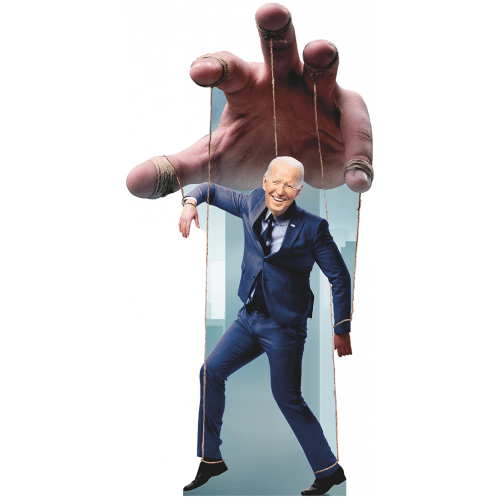


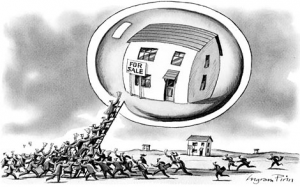
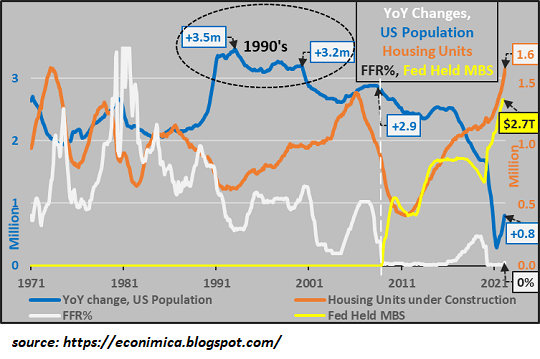
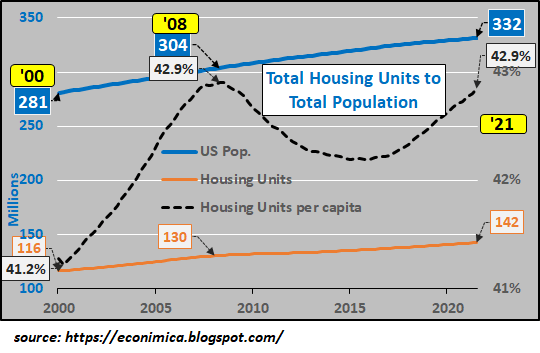
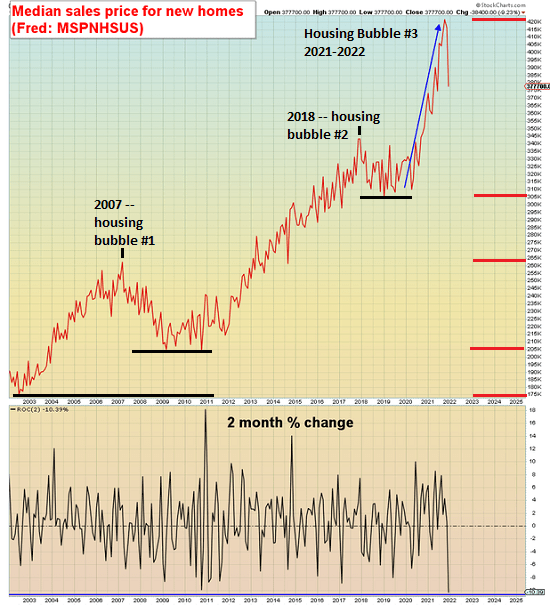
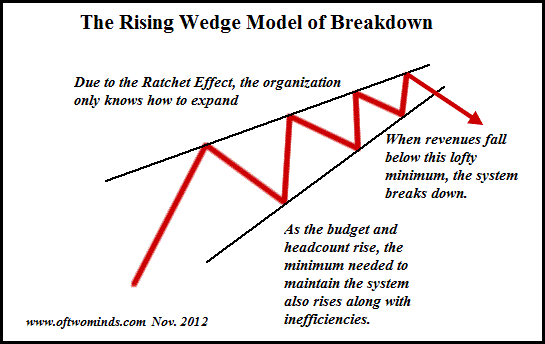

 After the Crash