
Inventing the Future: The Collective Joy of Mark Fisher’s ‘k-punk’

By Michael Grasso

Source: We Are the Mutants

k-punk
By Mark Fisher
Foreword by Simon Reynolds, Edited by Darren Ambrose
Repeater Books, 2018

A little over two years ago, theorist and cultural critic Mark Fisher took his own life at the age of 48. I remember feeling numb at hearing the news; not out of sadness but more a sense of deja vu, of familiarity. I’d been through something similar already with David Foster Wallace’s suicide back in 2008; his Infinite Jest (1996) was one of the single most searing, searching moral indictments of the post-Cold War social and political order in the West, and a tremendously important work to me personally. Fisher toiled in very much the same fields in his writings. Both men had used their own struggles with depression (and in Wallace’s case, addiction) to fuel their insights into a world order that had run out of promise, of hope for the future. Wallace died two months before Barack Obama was elected, in the midst of the 2008 financial crisis; Fisher immediately after the election of Donald Trump. One American election offered (misplaced) hope, the other, a terminal kind of despair.

Over the past year or so I’ve also had the opportunity, while finishing my Master’s degree, to delve deeply into the work of cultural critic Walter Benjamin, who came to intellectual maturity in the Weimar Republic and found himself an exile with the rise of the Nazis in 1933. Like Wallace and Fisher, Benjamin used the cultural environment around him to help explain the world, to make sense of the turmoil that was roiling the once-orderly social order around him. Benjamin also killed himself, as he fled from the Nazi invasion of France in 1940 at the age of 48, just like Fisher. The parallels between all three men, to my mind, were uncanny. In the end, I feel the same thing got all three of these men: the encroaching feeling of dread at observing a world that had spun off its axis, beyond their ability to explain it.

I offer all this as a preface to my review of Mark Fisher’s collected online and unpublished writings, k-punk (Repeater Books, 2018), because I find myself thinking more often these days about the void of Fisher’s loss rather than the wealth of writings that he gave us while he was alive. And I feel like my despair essentially misunderstands what Mark Fisher was all about. The overwhelming feeling of most of the writings collected in k-punk is one of utter joy, whether it’s in celebrating a lost piece of media that Fisher wants us to know about, or his just and righteous delight in explaining exactly what late capitalism is doing to all of us.

A couple of years ago, my podcast partner Rob MacDougall and I had occasion to talk about the intellectual history of defining and preventing sexual harassment in the workplace for our podcast about WKRP in Cincinnati. And I’ll never forget the way he explained how clearly and uncompromisingly that defining a social problem can be the most important first step in combating it. He said, “Language is technology. Until you can name [something], you can’t get at it.” And I think that’s the legacy of Mark Fisher in a lot of ways. He gave us new terms—“pulp modernism,” “the precariat,” “hauntology,” “capitalist realism,” “acid communism”—that helped define not only our problems but our collective dreams for a better world. Like Benjamin before him, Fisher used his precise and profoundly moral observations of the world around him to give us a vocabulary to understand and express what is being done to us and how we can find our way out of it.

First things first: k-punk is a monster. Repeater Books has collected Fisher’s blog posts and unpublished writings in a massive 800-page tome. Given that the average length of one of these essays is about 3-4 pages, what you end up with is a bewilderingly encyclopedic collection of Fisher’s thoughts on seemingly everything. The conversion of once-hyperlink-laden web text to paper is sometimes jarring—the editor Darren Ambrose has done yeoman work in providing footnotes to mark where links to other bloggers and commenters once lay—but the reader almost never feels lost in figuring out what Fisher was trying to say. The foreword is by Fisher’s contemporary and friend, the music critic Simon Reynolds, whose seminal 2005 work on post-punk, Rip It Up and Start Again, is a favorite of mine. The same author’s 2011 Retromania: Pop Culture’s Addiction to Its Own Past was, like Fisher’s work, a major inspiration for my own Master’s capstone project on nostalgia and its use in museums. Reynolds’ foreword is not only a heartfelt and deeply touching tribute to Fisher’s life and work, it also illustrates well the cultural milieu in which both men worked in the early part of this century. Getting to know someone better by reading their blog everyday is a deeply familiar mode to me and many members of my generation, and here Reynolds nails the somewhat uncanny feeling of getting to be best friends with someone you’ve only hung out with a few times in person. Probably it will be less strange for the generations who come after us. I do admit stifling a chuckle as one of the first essays in this paperback collection is a “tag five friends” meme; seeing such an essentially “online” phenomenon in print, in an esteemed cultural critic’s essay collection no less, would probably be considered “weird” in the Fisherian “weird/eerie” schema: an intruder from Outside whose alien presence inflects its surroundings.

In his foreword, Reynolds dubs Fisher a member of a disappearing breed: “the music critic as prophet.” Both Reynolds and Fisher came of age in the golden era of British publications like the NME, which treated its readers with a modicum of sophistication and intellectual respect. British music critics in the 1980s were never afraid to throw in references to contemporary political philosophers and cultural critics from the world of academia, nor were they reluctant to blur the lines between artist and critic. Fisher himself offers tribute to one of these writer-artists in “Choose Your Weapons,” an essay focusing on NME writer and Art of Noise member/ZTT Records co-founder Paul Morley, as well as his fellow NME writer Ian Penman. Reynolds sees Fisher as the clear heir to this type of rock journalist; Fisher even had his own musical group in the early 1990s, D-Generation, which peppered press releases and music with references to cultural theory.

As mentioned above and in my earlier piece on him, Fisher was never afraid to unearth a piece of forgotten media from his childhood or adolescence for examination in the cold light of our present late capitalism. His mourning for the loss of risk-taking on the part of the gatekeepers at public broadcasters such as the BBC is well-known. (I highly recommend the essay “Precarity and Paternalism” in k-punk for Fisher’s breathtaking rhetorical link between the blandness of pop culture today and the burning down of the public sphere under neoliberalism.) But what k-punk puts forth clearly (and Reynolds makes clear in his foreword) is that Fisher was never solely a backwards-looking critic. In these essays you can see him fully engaged in the contemporary cultural scene in a way that can sometimes get lost in his reputation as “the hauntology guy.” I found Fisher’s recuperation of Donnie Darko director Richard Kelly’s odd little Twilight Zone riff from 2009, The Box, to be downright essential in explaining why I liked it so much but couldn’t articulate why at the time. Ironically, Fisher avers that it is a rare piece of American hauntology (an aesthetic I’ve been desperately trying to quantify here at We Are the Mutants), with Kelly exploring the legacy of his NASA employee dad during NASA’s own final years of glory as a public agency (the late ’70s era of the Viking and Voyager probes) before the ultimately doomed Shuttle program. As someone who only gave the k-punk blog a cursory look prior to Fisher’s death, being far more familiar with his published writings, reading Fisher on the Christopher Nolan Batman trilogy or on contemporary television series that I watched from the beginning, like Breaking Bad and The Americans, hit me in that same Fisherian-weird way.

Even though the essays in the k-punk collection are organized by content type—reviews of books, music, television/film, political writings, interviews—it’s easy to note Fisher’s evolution as a writer, with each content area organized chronologically within. Perhaps this is only my prejudice, but I notice in the early years of Fisher’s k-punk posts a distinct anxiety of influence with older writers and theoreticians, out of which he eventually matures. His early-’00s work centers writers and thinkers like J.G. Ballard, Franz Kafka, Dennis Potter, even Freud and Spinoza. Slavoj Žižek also looms very large, probably for no other reason than that he was (and still is) one of the only voices engaging intelligently with the political impact of the pop culture detritus of late capitalism. But it’s in this occasional early tension with Žižek that you start to see Fisher make his own conclusions, state his own thoughts. It’s not necessarily that Fisher ever makes an explicit break with Žižek; it’s just that you see him mentioned less and less and, finally, not at all.

It was in music that Fisher saw the greatest potential for social and cultural revolution. It’s become a thoroughly lazy trope among armchair cultural critics to keep quoting that bit from Plato’s Republic about how changing a society’s music will change the society, but Fisher actually convinces the reader of that idea, in a profoundly vital and contemporary context. For Fisher, mod, glam, and to a certain extent punk all offered the working classes a chance to grab the same aristocratic glamor and glory to which the bourgeoisie had always had access. (Reading Fisher on the unearthly magical “glamour” of pop stars gets me thinking about Kieron Gillen’s “gods come to earth as pop stars” comic The Wicked + the Divine; I’d be shocked if Gillen wasn’t a k-punk reader from way back.) I personally find Fisher far stronger on post-punk. His multi-part examination of The Fall and Mark E. Smith is downright essential; I thought often while reading how much I wish Fisher could have read Richard McKenna’s Sapphire And Steel-referencing encomium to Smith. A pure love of Green Gartside of Scritti Politti and his dance-floor theoretics, so beloved by that very same theory-soaked 1980s NME, shines through in several k-punk essays. Fisher’s multiple essays on the goth aesthetic (and adjunct aesthetic movements like steampunk) are insightful, even as he holds goth at a bit of a remove as compared to post-punk and dance music. His essays on the Cure, Nick Cave, and specifically Siouxsie Sioux’s visual aesthetic from early swastika-armband-wearing punk provocateur to glittering Klimt spectacle on A Kiss in the Dreamhouse are particularly good.

And it’s here in Fisher’s music writing that we see yet another evolution, this time in three phases roughly analogous to the Marxist-Fichtean dialectic. Fisher begins with an arguably essentialist, archetypal, borderline Paglian view of the aristocratic charisma inherent in pop music; moves to a canny and earnest recognition of the purely proletarian qualities of post-punk and dance music (and the paradoxically populist power of the “public information” aesthetic of hauntological music); and then shifts to an eventual synthesis of these very different conceptions of music-as-liberation.

That synthesis was to be the topic of his next book, Acid Communism, the preface for which is included at the end of k-punk: Fisher was going to look back at the origin point for neoliberalism in the 1970s and pinpoint exactly where the workers’ movement and the left had begun to lose the battle for power. Through a re-examination of the 1960s New Left under thinkers such as Herbert Marcuse, Fisher locates the real revolutionary promise and potential in the bewildering flowering of popular culture that occurred in the ’60s, as well as the profound societal change that this revolution in culture propelled. “Mass culture—and music culture in particular—was a terrain of struggle rather than a dominion of capital,” Fisher notes. The true conflict of workers’ leftism vs. neoliberalism, Fisher argued, happened nearly a decade before neoliberalism’s origin point, in the struggle between the liberal Cold War orthodoxies in the West and the profoundly psychedelic movement of the youth rebelling against these staid establishment cultural tendencies. In America, of course, this series of youth movements became inexorably intertwined with resistance to the Vietnam War, perhaps to its detriment. Fisher posits instead a youth movement that worked against the assumptions of Cold War-era society on a much more elemental level. He finds much more interesting the movements where the left chafed against the High Cold War hegemony of labor-leftism in the West and indeed the very idea of work, and sees glimmers of his “acid communism” in social milieus as disparate as Paris in 1968, the British miners’ strike (aided by students) in 1972, the GM strike in Lordstown Ohio in 1972, and Bologna in 1977. The essential question asked in all these times and places: what if the revolution happens and we are in thrall to just another set of labor bureaucrats? One might answer that this actually happened with the ascension of the Baby Boomers to places of authority in the supposedly kinder, gentler, more “diverse” digital capitalism we live with today.

Obviously, virtually every bit of cultural writing that Fisher published was viewed through the prism of a leftist politics, but in the Politics and Interviews sections of k-punk, we get those politics unfiltered through any particular piece of pop culture. Here is where you see Fisher at his most passionate, his most personal, his most vital. Most important, in my mind, is his relentless insistence that capitalism kills both body and soul. While a Marxist theory of alienation is certainly nothing new, Fisher’s own personal experiences with being a member of the “precariat,” dealing with the peculiar doublethink of the purported “freedom” of the gig economy, demonstrates how the market hands us all slavery in the guise of self-actualization. And here is where Fisher’s writing intersects with his profound personal interest in public health, specifically mental health. Digital technology allows the gig worker to be relentlessly surveilled and ruthlessly “reviewed”; the disappearance of the old forms of authority and hierarchy in the workplace are distributed among one’s fellow consumers to create a web of virtual bureaucracy that creates constant cognitive dissonance and the distinct feeling that one is truly never off the job. From the ancient dream of never working to the modern reality of constantly working: Fisher thus asks us over and over if it’s any wonder we are all anxious and depressed?

It’s glaringly obvious stuff to most of us living in 2019, but again: Fisher’s moral clarity shines through and illuminates the darker corners of a world to which we’ve all slowly acquiesced. And yes, Mark Fisher did suffer from severe depression himself. One of the editorial decisions that I disagree with most is the stated decision to not include Fisher’s more “pessimistic” work from earlier in his career. Here is k-punk‘s editor Ambrose on this decision:

A very small number of early k-punk posts, e.g. on antinatalism, are excluded by virtue of the fact that they seemed wildly out of step with Mark’s overall theoretical and political development, and because they seemed to reflect a temporary enthusiasm for a dogmatic theoretical misanthropy he repudiated in his later writing and life.

You still see glimpses of this pessimism and near-nihilism in a few of the essays; a startlingly good review of Mel Gibson’s The Passion of the Christ where Fisher sees its neo-Gnostic underpinnings, or a deep intrigue with the antinatalist works of horror writer and philosopher Thomas Ligotti (who would find unexpected mass popularity with Nic Pizzolatto’s use of Ligotti in the first season of True Detective). But speaking as someone who suffers with mental illness and profound depression, let me make clear: it is absolutely reasonable to expect someone even as optimistic and positive as Fisher to occasionally look at the world with abject despair. Moreover, I believe it is more than merely reasonable, it’s necessary. To dispute or deny that anyone with a modicum of political awareness would not be occasionally nihilistically fucking depressed with the world as it is today seems a massive mistake to me.

Immediately before presenting the unfinished introduction to Acid Communism, we’re presented with two of Fisher’s most famous essays: his polemic against the contemporary left’s tendency towards ideological puritanism, “Exiting the Vampire Castle,” and his personal memoir of living (and working) with depression, “Good For Nothing.” No two pieces in this book depict the central contradictions and tensions of Fisher’s ethics and philosophy more clearly. “Vampire Castle” is, in my personal opinion, one of Fisher’s greatest missteps and the one piece of his writing where I most see a distressing tendency towards a lack of empathy for his comrades. In the essay, Fisher excoriates a certain faction of the left and its tendency to center “identity politics.” He further posits that these identity-based politics are a way in which the mechanisms of late capitalist control attempt to neuter and split the political left, a profoundly “individualistic” movement rather than one that builds cross-cultural solidarity. Fisher states that humorless scolds participating in “call-out culture” are preventing the left from building true power. Every time I go back to this essay, I initially find myself seeing some some modicum of logic in Fisher’s arguments. But then I remember how much of the modern capitalism that Fisher despised is literally built on the backs of genocide, racism, slavery, colonialism. I remember all of capitalism’s own constant essentializing and dividing of the proletariat, purely on the basis of identity, a superstructure that has systematically disenfranchised entire peoples on this globe, and ultimately I react with, “This is the kind of take that only a white guy from Britain could make.” It’s tone-deaf, destructive, and has given fuel to the worst strains of white exceptionalism and disdain for so-called “idpol” on the left in the past few years. I would argue that nothing good and quite a bit that is bad has come from it.

In fact, I wish someone would’ve told Mark how harmful this piece was. I have a feeling all it would have taken is one person—a woman, a person of color, an indigenous person, someone queer—to explain to him that while there should obviously be solidarity on the left, there are profound issues of historical materialism here that stretch back centuries, unfinished work that needs a profound upheaval and seizure of power from below (and yes, to some degree the anger and fury and the positive social knock-on effects of a “call-out culture”) to even begin to deal with restoratively. I want to believe he’d understand. It can be true that the capitalist powers-that-be love watching the left devour their own over issues that might seem personalized and “individual” to a white British man, but it can also be true that the profound historical injustices inflicted on colonized peoples the world over need to be centered in any revolutionary left solidarity. Both can be true.

And then you have “Good For Nothing,” an essay that I can say confidently has saved my life, maybe several times, since I first read it a few years ago. It is overflowing with empathy: for those of us hedged in by our class identities and made to feel inferior, uneducated, unworthy, a cog in a machine that only views us for how useful we can be to an employer or to the economy. It is a crisp distillation of every piece of personal writing Fisher ever wrote about the dehumanizing and alienating collective psychological effects of neoliberalism. Most importantly, it is a clarion call for solidarity:

For some time now, one of the most successful tactics of the ruling class has been responsibilisation. Each individual member of the subordinate class is encouraged into feeling that their poverty, lack of opportunities, or unemployment, is their fault and their fault alone. Individuals will blame themselves rather than social structures, which in any case they have been induced into believing do not really exist (they are just excuses, called upon by the weak)…

Collective depression is the result of the ruling class project of resubordination. For some time now, we have increasingly accepted the idea that we are not the kind of people who can act. This isn’t a failure of will any more than an individual depressed person can “snap themselves out of it” by “pulling their socks up.” The rebuilding of class consciousness is a formidable task indeed, one that cannot be achieved by calling upon ready-made solutions—but, in spite of what our collective depression tells us, it can be done. Inventing new forms of political involvement, reviving institutions that have become decadent, converting privatised disaffection into politicised anger: all of this can happen, and when it does, who knows what is possible?

This call for collective action on a political, economic, psychological, and even spiritual level is the voice of Mark Fisher’s that I remember and hold close to my heart every day. In every one of us there is a person worthy of respect and dignity, regardless of how “useful” we might be to a boss or a manager; in all of us a person who deserves not to live a life of misery, a person worthy of joy and music and glamour. That’s the Mark Fisher who throbs under the surfaces of nearly every one of these 800 pages. k-punk is a fitting tribute to a thinker who showed us the wonder in our past and the promise in our future, if we but remembered each other and not merely ourselves.


Michael Grasso is a Senior Editor at We Are the Mutants. He is a Bostonian, a museum professional, and a podcaster. You can read his thoughts on museums and more on Twitter at @MuseumMichael.
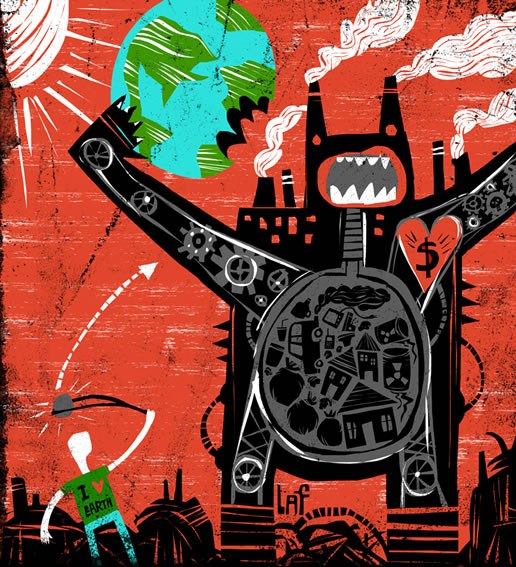
Capitalism, Empire, and the Infernal Gloom Machine

By Jason Holland

Source: Dissident Voice

Depression is built into this machine and the evidence is plastered on the morose faces of people caught in the clutches of its business as usual activities. Depression is found in the insurmountable debts we owe for spending a lifetime of preparation and labor to serve the machine. In addition to debt, the machine awards us for our servitude with trinkets, gadgets, doodads and gizmos that provide a moment of hollow amusement and then sit on shelves in garages and decay. They represent the planned obsolescence of the human heart. The sacrifice paid for our fetish with materialism is the actual quality of our lives.

The gloom machine tells us the quality of our lives is defined by the machine in the driveway, and the machine that flushes away our excrement, and the machine that chills the tortured slaughtered animal flesh for later consumption, and the machine that flashes pornographic images and supplies numbers detailing how much we are liked by our so called friends. But to us humans it seems that quality of life is more appropriately measured in the amount of disposable time we have to pursue that which we want, and the quality of the community around us, and living without being chronically stressed with threats of being displaced from the land upon which we live for not working hard enough for the machine.

Depression is waking up at 6 in the morning in darkness to sit in traffic for an hour to arrive at a job that we don’t want to be at, only to serve the machinations of people with nothing but greed in their overstuffed bellies. And we go to these jobs so that we can pay rents that are unaffordable, and to service debt we’ll never escape, and we go home in darkness to our lonely lives in places where community is absent with a view of an equally lonely tree or a man-made retention pond which is an upgrade over the view of staring directly at your neighbor’s domicile. Depression is the realization there is no vacation on the horizon, no respite, just more of the same. Depression is knowing that such a life is better than many others have it.

Depression is recognizing the cynics were right about this society, that Cohen spoke truth when he sullenly moaned:

Everybody knows that the dice are loaded
Everybody rolls with their fingers crossed
Everybody knows the war is over
Everybody knows the good guys lost
Everybody knows the fight was fixed
The poor stay poor, the rich get rich
That’s how it goes
Everybody knows

Depression is watching art die. The surrealist, the bohemian, the rock ’n roll, and the anti-authoritarian soul has lain down and pledged fealty to the dollar. For money, they’re now all willing to become ready made predictable cubes to be packaged and sold in plastic wrap placed in cleverly designed boxes which deliver to the depressed public what they want, more of something that’s pretty on the outside and vacant within. We are left with monthly subscriptions of more tales of self aggrandizement for the throngs of temporarily embarrassed millionaires.

Depression is watching the worst of us rise to legitimacy and awarded iniquitous riches for it. The popular is depressive, musical hack Cardi B sings about her money money money and she is loved. Jordan Peterson sells cheap self help stolen from better written material decades ago amalgamated with misogyny and dictates of hierarchal subjugation and becomes wildly popular. Trump purveys hatred of people of color and a love of authoritarianism and the depressive people, oh do they eat it up. This is sickness, depressive sickness.

Depression is acceptance of the violent now. The grossly unhappy men with their armaments spread their gloom and horror across the planet and claim righteousness for doing so. Depression is watching society applaud murderous hearts for their crimes who don badges and camouflage and have holidays to celebrate their violent history, while villains are made of those who simply don’t want to stand up for songs of oppression. Thank you for your service to the machine.

Depression is watching notions of resistance and revolution take form in slightly altered subservience. The great reformation desired now is for a “green new deal” that doesn’t come close to mitigating the impending culling of humanity from soon to be ecological catastrophes. Their plans offer only more endless work at the behest of the gloom machine while promising healthcare that will never happen, less debt it will also never deliver, and affordable housing that still won’t solve homelessness. They don’t want to break the machine, just tweak it, and they lack the ability to do that even. Never have I borne witness to such eager slaves and such depressive aspirations. The people seem to adore their cubicle lives, their environmental destruction, their corporations, their debts, their corrupt leaders, their prisons, their banks, and their taxes.

They want to continue to be put to work under the thumb of the status quo western civilization authoritarian mind and this is all the depressed mentally dominated masses can think of as a possible improvement. Instead of wanting to taste real liberty and be actual equals, their dreams are limited to being better treated servants. The gloom machine chugs along fueled with dimwitted ideas sold by boxed-in thinkers without any possibility of escaping the darkness, rather simply offering a more cushy seat for viewing the end of everything.

The machine bellows out demanding more, more, you owe me more, and somehow those wearing red, white, and blue agree and celebrate the demands of the machine. These debts we owe are servitude. The numbers held in digital machines are immoral which demand one must wake up to a dreary existence to do more of what is killing our souls along with the flora and fauna around us.

Depression is the downtrodden plebs who celebrate their corrupt democracy, which is in reality a thinly veiled oligarchy that should be obvious to all. They prop up a system of voting that allows the election of the presidency, a position that shouldn’t exist in the first place in an egalitarian society, to be awarded to candidates who don’t capture the most votes. What little democracy there is in a representative system is lost in totality when the winner of elections need not win the majority of votes. The gloom machine is straight up tyranny.

A non-depressed society would reject being served faux democracy. They’d reject a system absent of reason or compassion and disdain would be for ideas of continuing to support such a destructive way of being. But instead, within the gloom machine shame is reserved for those who don’t want to take part in the busted system, and it venerates those who cast votes for imperialist conquerers and planet destroyers, and those voters are lauded as doing their civic duty for taking part in open public corruption.

Depression is the insincere know it all crowd who are incapable of honest debate and have rarely endeavored to open a book of substance or engage in critical thought, but they know trivialities which they mistake as facts and wisdom. They know arrogance well and emanate it with aplomb. They know how to believe all they see in the corporatized media, but thinking without boundaries or limitations is beyond their capacity. This is not even depression, this is tragedy.

Depression is watching the trees be plowed down for more tract housing, a portion of which will sit empty for years because no one can afford to move there, and even if they could it’s a heinous boring life that awaits which is only significantly better compared to being homeless. Depression is knowing this is the reason why we are rapidly destroying our habitable environment and commencing a 6th mass extinction event which is now accelerating.

Depression is to know there is nothing we can do to stop the country we live in from mercilessly killing innocent people all over the world for no reason other than more economic expansion and our sadistic ideas of exceptionalism that entail spreading pain and hardship so a few elites can have more of what they already have more than enough of.

Depression is the powerlessness to change anything of significance. There is no other way they say other than the desolate gloom machine, they say this is how it must be. And so we remain here waiting for the horror that is soon to approach us all as the gloom descends in ever quickening waves.

A zombified indoctrinated populace can see no other way than capitalism and beating each other over the heads to satiate egos in needless competition that is unnecessary for survival and deleterious to the common good. Capitalism is the primary tool of empire, and a word that should be synonymous with depression. It’s the accumulation of resources in an effort to gain more power in man-made markets to leverage that power over other people and get them to do what the person with the most power desires. Capitalism’s depressing ideology is defined by the lecherous desire for more for the sake of it so the winner can pound their simian chest in victorious celebration of the devastation they’ve created.

Capitalism is inherently unsustainable due the way it allows power to coalesce via the leveraging abilities given to money to buy land, the means of production, elections, and advertising. It allows the whims of the few to overrun the needs of the many where those with the worst intentions aspire to gain more than others because they will attempt to fill the void in their hearts with self importance expressed via power over others. This is why it cannot be used.

If there is no central currency or advantage to collecting huge amounts of resources then the motivation to hoard would evaporate, as those resources would simply rot or become a burden to maintain. There’s no fun in that kind of hoarding. The “fun” comes to the simpleton power seeker when they acquire power to make others do what they want and thus gain the ephemeral validation they so desperately seek.

If one runs the math on players competing for money at different rates of gain over a certain amount of time, there will be a doubling effect which becomes exponential. And this effect will accelerate as it plunders along due to gains in leverage which allows for ever greater amounts of money to be made at faster rates. Eventually it always ends the way a game of monopoly ends, someone has all the power and everyone else is subservient to that entity/person.

These dour thoughts manifest from the recognition of the stranglehold empire has over our lives. The depression is the result of the myriad of expectations I can’t let go of that wants to see a kinder more egalitarian and sustainable world emerge while knowing how unlikely it is. Our collective depression is rooted in the foundations of social hierarchy and its economic tools of control, and understanding what a perfect trap it is, and so it goes, and everyone doesn’t know, but they feel it, though.

GIVE AMERICA’S ‘HELICOPTER PARENTS’ A BREAK

Hovering parents don’t need lectures. They need a more equal nation.

By Sam Pizzigati

Source: OtherWords

A good many of us aging baby boomers are having trouble relating to the “helicopter parents” of our modern age — those moms and pops constantly hovering over their kids, filling their schedules with enrichment activities of every sort, worrying nonstop about their futures.

Back in the middle of the 20th century, baby boomers didn’t grow up like that. We lived much more “free-range” childhoods. We pedaled our bikes far from hearth and home. We organized our own pick-up games. We spent — wasted! — entire summers doing little bits of nothing.

We survived. So did our parents. So why do parents today have to hover so much?

The standard explanation: Times have changed. Yes, today’s parents take a more intense approach to parenting. But they have no choice. The pressures of modernity make them do it.

Economists Matthias Doepke of Northwestern University and Fabrizio Zilibotti of Yale have followed all the debate over helicopter parenting, and they’re not jumping on this blame-modernity bandwagon. If the pace and pressures of our dangerous digital times are driving parents to hover, the pair points out, then we ought to see parents helicoptering across the developed world.

We’re not.

In fact, researchers have found significant differences in parenting styles from one modern industrial nation to another. Parents in some nations today have parenting styles as relaxed as anything aging baby boomers experienced back in the 1950s. In other nations, by contrast, parents seem as intense as today’s helicoptering norm in the United States.

How can we account for these differences?

Doepke and Zilibotti have a compelling explanation. Levels of helicopter parenting, they note, track with levels of economic inequality. The wider a society’s income gaps, the more parents hover.

The two countries most notorious for their helicopter parenting, China and the United States, just happen to sport two of the world’s deepest economic divides. And those more relaxed parenting days of mid-20th century America? They came at a time when the United States shared income and wealth much more equally than the United States does today.

What’s going on here? Why should economic inequality have any impact on parenting styles?

In severely unequal nations, the evidence suggests, childhoods have become high-stakes competitions. Only the “winners” go on to enjoy comfortable lives when they grow up. You either make it into the ranks of your nation’s elite or you risk struggling on a treadmill that never ends.

In more equal societies, you don’t have to matriculate at the “best” schools or score a high-status internship to live a dignified life. In societies with income and wealth more evenly distributed, broad swatches of people — not just elites — live comfortably. That leaves parents, as Doepke puts it, “more room to relax and let the kids just enjoy themselves.”

Parents in highly unequal nations can’t afford to relax. They have too much to do. They have to shape their kids into winners. But the competition their children face will always be rigged, because the already affluent in deeply unequal societies have more time and money to invest in that shaping.

Researchers Doepke and Zilibotti call for greater public investments in social services — like quality child care — to narrow the competitive advantage that wealth bestows upon affluent American families.

The investments they recommend would certainly help ease the pressure on working households. Would they be enough to get our parents more relaxed? Not likely, not so long as rewards keep concentrating in the pockets of the few at the expense of the many.

Our helicopter parents, in short, don’t need fixing. Our economic system does.

Elite Banking at Your Expense: How Secretive Tax Havens are Used to Steal Your Money

By Robert J. Burrowes

Tax havens are locations around the world where wealthy individuals, criminals and terrorists, as well as governments and government agencies (such as the CIA), banks, corporations, hedge funds, international organizations (such as the Vatican) and crime syndicates (such as the Mafia), can stash their money so that they can avoid regulation and oversight and, very often, evade tax. According to Nicholas Shaxson: ‘Tax havens are now at the heart of the global economy.’

Which is why, as he explains it: ‘The term “tax haven” is a bit of a misnomer, because such places aren’t just about tax. What they sell is escape: from the laws, rules and taxes of jurisdictions elsewhere, usually with secrecy as their prime offering.’ See ‘The tax haven in the heart of Britain’. A tax haven (or ‘secrecy jurisdiction’) then is a ‘place that seeks to attract business by offering politically stable facilities to help people or entities get around the rules, laws and regulations of jurisdictions elsewhere’. See Treasure Islands: Tax Havens and the Men Who Stole the World.

Tax havens are a vitally important part of the global infrastructure of corruption and criminality – see ‘Giant Leak of Offshore Financial Records Exposes Global Array of Crime and Corruption’ – that enables privileged individuals and their organizations to legally and illegally steal money from the rest of us, particularly those in developing countries, and to have the services of a vast network of accountants, bankers, lawyers and politicians (often from captured legislatures) to help them do it, and to ensure that they get away with it.

How many tax havens are there? Where are they? How much money do they have? Who uses them? Why? How do they work? Why does all this matter to us? And what can we do about them?

Tax Havens: how many and where are they?

In his book Treasure Islands: Tax Havens and the Men Who Stole the World, author and financial journalist Nicholas Shaxson identified about sixty ‘secrecy jurisdictions’ or ‘offshore groups’ around the world which he divided into four categories, as follows.

The most important category, by far, is those tax havens that form the spider’s network of havens centred on the City of London. It has three main layers: there are two inner rings – Britain’s Crown Dependencies of Jersey, Guernsey (which includes the sub-havens of Sark, Alderney and Brecqhou) and the Isle of Man, and its overseas territories such as the Cayman Islands, Bermuda, the British Virgin Islands and Gibralter – which are substantially controlled by Britain. The third layer is an outer ring with a more diverse array of havens, like Hong Kong, Singapore, the Bahamas, Dubai and Ireland, which are outside Britain’s direct control but have strong historical and current links to that country and the City of London (which I will discuss below). This network controls almost one half of all international bank assets.

The second category of tax havens is those in Europe notably including Switzerland, Luxembourg – see ‘Explore the Documents: Luxembourg Leaks Database’ – the Netherlands, Belgium and Austria, as well as microstates such as Liechtenstein and Monaco. While ‘Geneva bankers had sheltered the secret money of European elites since at least the eighteenth century’, the European havens ‘got going’ during World War I as governments raised taxes sharply to pay for the war.

The third category of tax havens is that focused on the United States. It has three tiers as well. At the federal level, the US government offers a range of tax exemptions, secrecy provisions and laws designed to attract foreign money. This means, for example, that US banks can legally accept proceeds from a range of crimes as long as the crimes are committed overseas. The second tier involves individual US states such as Florida (where Central/South American elites do their banking and the countries adversely impacted are prevented by US secrecy provisions from accessing relevant data, and where much Mob and drugs money is hidden too), Delaware, Nevada and Wyoming, where even terrorist money is protected by secrecy provisions. The third tier of the US network is the overseas satellites such as the American Virgin Islands, the Marshall Islands, Liberia and Panama, with the latter, according to Jeffrey Robinson, being ‘one of the filthiest money laundering sinks in the world’. See The Sink: Terror, Crime and Dirty Money in the Offshore World.

As Shaxson notes: ‘offshore finance has quietly been at the heart of Neoconservative schemes to project US power around the globe for years. Few people have noticed.’

The fourth category of tax havens identified by Shaxson includes those that do not fit in the categories above, such as Somalia and Uganda.

The (incomplete) list of tax havens on the website ‘Tax Havens of the World’ will give you some idea of where these secrecy jurisdictions are located but there are important omissions in this list, notably including the City of London Corporation.

For a brief look at 15 tax havens (again, notably excluding some of the most important) and some of the corporations that use them, see ‘What Are the World’s Best Tax Havens?’

And for a highly instructive and utterly sobering video documentary on British Tax Havens, see ‘The Spider’s Web: Britain’s Second Empire’. This documentary will inform you, among many more important things, that the building housing Her Majesty’s Revenue and Customs, the UK tax office, is owned by an offshore company in Bermuda!

To summarize the central aspect of the development of tax havens following World War II: ‘The British Establishment – an old boys network of privileged elites – had carved out a lucrative vehicle for themselves in the offshore world after the demise of Empire. They transformed themselves from administrators of Empire to financial handlers for the global elite and multinational corporations.’ See ‘The Spider’s Web: Britain’s Second Empire’.

Before concluding this section, it is worth emphasizing that, as Shaxson explains it, ‘the offshore world is not a bunch of independent states exercising their sovereign rights to set their laws and tax systems as they see fit. It is a set of networks of influence controlled by the world’s major powers, notably Britain and the United States. Each network is deeply interconnected with the others.’ He goes on: ‘The world’s most important tax havens are not exotic palm-fringed islands, as many people suppose, but some of the world’s most powerful countries.’ Shaxson quotes Marshall Langer, a prominent supporter of secrecy jurisdictions: ‘It does not surprise anyone when I tell them that the most important tax haven in the world is an island. They are surprised, however, when I tell them that … the island is Manhattan. Moreover, the second most-important tax haven … is located on an island. It is called the City of London.’

The City of London Corporation

What is the City of London Corporation, also known as the ‘Square Mile’? It is ‘a 1.22-square-mile slab of prime central London real estate that stretches from the Thames at Victoria Embankment, clockwise up through Fleet Street, the Barbican Centre, then to Liverpool Street in the north-east, then back down to the Thames just west of the Tower of London.’ See Treasure Islands: Tax Havens and the Men Who Stole the World.

According to Shaxson, the City of London Corporation, the ‘modern period’ of which dates from 1067 (yes, that is not a typing error), is ‘the local-government authority for the 1.2-square-mile slab of prime real estate in central London that is the City of London. The corporation is an ancient, semi-alien entity lodged inside the British nation state; a “prehistoric monster which had mysteriously survived into the modern world”, as a 19th-century would-be City reformer put it.’

Importantly, Shaxson explains, ‘the role of the City of London Corporation as a municipal authority is its least important attribute. This is a hugely resourced international offshore lobbying group pushing for international financial deregulation, tax-cutting and tax havenry around the world.’ Moreover, it is ‘the hub of a global network of tax havens sucking up offshore trillions from around the world and sending it, or the business of handling it, to London’. Notably, so powerful is the City of London that no sovereign or government of Britain in a thousand years has had the courage to seriously take it on and attempt to subject it to British government control. See ‘The tax haven in the heart of Britain’.

How much money is in Tax Havens?

So how much of the world’s wealth is stashed in tax havens around the globe? According to the Tax Justice Network in its 2012 report written by James S. Henry ‘The Price of Offshore Revisited: New Estimates for “Missing” Global Private Wealth, Income, Inequality, and Lost Taxes’: ‘A significant fraction of global private financial wealth – by our estimates, at least $21 to $32 trillion as of 2010 – has been invested virtually tax-free through the world’s still-expanding black hole of more than 80 “offshore” secrecy jurisdictions. We believe this range to be conservative…’ He goes on to emphasize that ‘this is just financial wealth. A big share of the real estate, yachts, racehorses, gold bricks – and many other things that count as non-financial wealth – are also owned via offshore structures where it is impossible to identify the owners’.

Henry also notes that given that Credit Suisse estimated global wealth in 2011 at $231 trillion, the amount of money in secrecy jurisdictions is conservatively estimated at 10% of global wealth.

But other figures do indeed suggest this estimate is low. Shaxson cites compelling evidence that ‘More than half of world trade passes, at least on paper, through tax havens. Over half of all banking assets and a third of foreign direct investment by multinational corporations, are routed offshore.’ Moreover, as long ago as 2008, the US Government Accountability Office reported that 83 of the 100 biggest corporations in the USA had subsidiaries in tax havens and the following year, using a broader definition, the Tax Justice Network discovered that ninety-nine of Europe’s hundred largest companies used offshore subsidiaries. And in each country, ‘the largest user by far was a bank’. See Treasure Islands: Tax Havens and the Men Who Stole the World.

In any case, the most recent estimate by the Tax Justice Network indicates ‘tax losses to profit shifting by multinational companies (a)pplying a methodology developed by researchers at the International Monetary Fund to an improved dataset… of around $500 billion a year’. See ‘New estimates reveal the extent of tax avoidance by multinationals’.

To reiterate then, on the understanding that these estimates are probably quite low, by 2010, between $US21 and $US32 trillion had been taken out of circulation so that it was beyond the laws, financial regulations and taxes that the rest of us cannot escape. But that figure has been added to by half a trillion dollars each year since, by moving more money into tax havens. And don’t forget: this figure does not include non-financial wealth. How many gold bricks, yachts, artworks and racehorses do you own and have stashed away somewhere free of scrutiny?

Who uses Tax Havens? And why?

As I mentioned above, tax havens are used by wealthy individuals (including businesspeople, sports and pop stars), criminals and terrorists, as well as governments (and their agencies), banks, corporations (such as Amazon and Google), international organizations and crime syndicates (such as the Medellin Cartel). While motives vary, in essence the lack of regulation and oversight, as well as tax evasion, are the reasons that individuals and organizations use them.

An individual might want to hide stolen wealth, to evade tax or cheat a divorced spouse out of their share of the family fortune. A bank, corporation, crime syndicate, international or terrorist organization might want to evade scrutiny of the source of their money and/or evade tax on windfall or even ongoing profits (legal and/or otherwise). A government might want to hide the ‘dirty money’ it uses to finance ‘black ops’ (that is, illegal and secret military violence such as that carried out by the CIA). But there are myriad explanations.

In John Christensen’s analysis of over 100 offshore clients of accounting firm Deloitte Touche he studied in Jersey, he found that the clients were engaging in insider trading, market rigging, failure to disclose conflicts of interest, weapons trading, illicit political donations, contract kickbacks, bribery, fraudulent invoicing, trade mispricing and tax evasion. See ‘The Spider’s Web: Britain’s Second Empire’.

Most people have heard of the money stashed away by corrupt dictators like Suharto in Indonesia, Ferdinand Marcos in the Philippines and Mobuto Sese Seko of Zaire (now Democratic Republic of the Congo) each of whom stole from the people of their country. However, they could only do this with the help of western enablers and ongoing elite resistance to developing country attempts to create a more transparent and fairer process for collecting tax on cross-border financial flows. As a result, Alex Cobham of the Tax Justice Network observes, worldwide, developing nations lose in excess of $1trillion per year in ‘capital flight’ and tax evasion to wealthy countries. See ‘The Spider’s Web: Britain’s Second Empire’.

But these more public examples, while terrible, tend to obscure two important facts. The amount stolen from sub-Saharan Africans, for example, between 1970 and 2008 was at least five times the total amount of their foreign debt during that period – see ‘The Spider’s Web: Britain’s Second Empire’ – and, by highlighting these examples, attention is drawn away from even worse and ongoing examples of such criminality by those corrupt/criminal individuals and organizations (including banks, accountancy and legal firms, corporations, international organizations, crime syndicates and governments) committed to using outright theft, fraud, money laundering and other devices to steal wealth from ordinary people all over the world.

So, for example, if one follows the money trails of various lucrative financial operations, some technically legal but immoral and others simply illegal, apart from the world’s major corporations, one quickly comes across the names of the major (and well known) banks and financial institutions (such as the Bank of England, Barclays, Goldman Sachs, JPMorgan Chase…), the ‘big four’ accountancy firms (Deloitte, Ernst & Young (EY), KPMG and PricewaterhouseCoopers), and elite lawyers (such as those in London’s ‘Magic Circle’, like Clifford Chance, Mourant du Feu & Jeune, and Slaughter and May). See, for example, Treasure Islands: Tax Havens and the Men Who Stole the World, ‘New estimates reveal the extent of tax avoidance by multinationals’ and ‘Looting with Putin’.

Apparently, like major corporations and crime syndicates, few banks, accountancy firms and lawyers have ethics policies that require them to follow the law and to exercise ‘due diligence’ (check out a client before signing a contract) so that they can steer clear of handling illegal and immoral profits, especially if they are monstrous.

In fact, according to a US Senate report, ‘virtually every major bank in the world – especially the biggest in North America and Europe – holds accounts for offshore banks and/or banks in suspect jurisdictions’. See The Sink: Terror, Crime and Dirty Money in the Offshore World.

As Eva Joly MEP, vice-chair of the Panama Papers Committee of the European Parliament, succinctly puts it: ‘Ordinary people are paying taxes. Rich people are not.’ See ‘The Spider’s Web: Britain’s Second Empire’.

The Vatican

But perhaps the example which best illustrates the moral depravity of those who use tax havens is the Vatican. In his carefully researched book Operation Gladio: The Unholy Alliance between the Vatican, the CIA and the Mafia author Paul L. Williams recounts the efforts of the CIA, former Nazis, the Sicilian/American Mafia, the Vatican and even Freemasonry to resist an anticipated postwar invasion of western Europe by those ‘Godless communists’ in the Soviet Union by establishing ‘stay-behind units’ (clandestine military and paramilitary units) throughout the countries of Europe (Belgium, Denmark, Italy, Netherlands, Norway, Portugal…) led by former Nazis and composed of ‘die-hard fascist fanatics’.

This alliance to fight the Cold War against the former Soviet Union and the rising tide of progressive governments in Europe and the rest of the world, particularly as the US war on Vietnam gathered pace, led, as Williams chillingly puts it, to ‘the toppling of governments, wholesale slaughter and financial devastation’ around the world. It was also, of course, the forerunner to its equivalent – Operation Condor – to resist, and destroy if possible, the spread of progressive movements, ranging from communism to liberation theology, throughout Central/South America.

While the Vatican played a number of unsavory roles in this alliance, including its facilitation of massive numbers of heroin addictions, its use of counterfeit securities, participation in false flag attacks that killed thousands and strings of gangland slayings, support of military juntas (that massacred tens of thousands) and the ‘purging’ of progressive priests (including Archbishop Óscar Romero of San Salvador and two Jesuit priests denounced by Fr. Jorge Mario Bergoglio, now Pope Francis, in Argentina: see ‘Who is Pope Francis? Jorge Mario Bergoglio and Argentina’s “Dirty War”’) while causing the financial destitution of thousands of families, one of its key ongoing functions, designed to maximize the Vatican’s power while highlighting its moral and spiritual bankruptcy, was to act as ‘God’s banker’ for many of these operations. See Operation Gladio: The Unholy Alliance between the Vatican, the CIA and the Mafia.

It did this, for example, by accepting Mafia/Medellin Cartel-collected drugs money (for a 15-20% cut) into the Vatican Bank (technically: Istituto per le Opere di Religione or Institute for the Works of Religion) and then laundering it through its shell companies – such as Cisalpine Overseas Bank, Astolfine SA, United Trading Corporation, Erin SA, Bellatrix SA, Belrose SA, Starfield SA and Nordeurop Establishment – in tax havens in the Bahamas, Liechtenstein, Luxembourg, Panama and Switzerland.

With the CIA providing services, such as the transport of Mafia/Medellin cocaine to drug dealers in the US, its share of the drug profits (cycled through its own CIA-controlled banks including Continental Illinois, Castle Bank & Trust, and Bank of Credit and Commerce International but eventually involving many of the most prestigious banks in the US, as the money was passed to the Vatican Bank) were used to finance key aspects of Operations Gladio and Condor with weapons also supplied by the CIA from NATO arsenals. But there was plenty of Vatican money in these Operations too.

As an aside, so devastating was the fallout from the ongoing exposure of the many aspects of Vatican corruption that, by the beginning of the twenty-first century, Roman Catholic membership was falling by 400,000 per year in the USA alone but the trend was even stronger in Europe with ‘magnificent churches and cathedrals’ becoming museums visited solely by tourists, parishes being boarded up, seminaries and convents closed, and parochial schools consolidated. And this was before the ‘plague of pedophilia’ had fully hit further decimating the Church’s tattered reputation. To this day, the Vatican Bank remains ‘one of the world’s leading laundries for dirty money’. See Operation Gladio: The Unholy Alliance between the Vatican, the CIA and the Mafia.

How do Tax Havens work?

Each tax haven offers its own unique combination of services. After all, it is a tough market competing for the world’s wealth and so each jurisdiction has developed its own set of services designed to maximize its attractiveness to potential clients. In essence, this means that there is some ongoing ‘competition’ to reduce regulatory and oversight requirements so that each tax haven can attract clientele. This has become so extreme that basic requirements of banking for those who do it legally, such as proof of identity, are not required in the offshore world. In fact, even your true name can be withheld if you wish. It is easier to avoid any risk of embarrassment from exposure this way.

As a result, virtually any jurisdiction will open an account (or as many accounts as you want) in whatever names you specify. Then, usually employing a variety of devices, ranging from secret bank accounts, nominee directors (usually locals who play no part in the organization bar give it their name) and structures such as shell companies (that exist on paper and perhaps a wall plaque somewhere, but nothing else) and trusts (which, unlike the legitimate version, appear to separate responsibility and control from the benefits of ownership but actually do not), to processes such as transfer pricing (a technique by which companies ‘shift paper profits into low-tax countries and costs into high-tax countries’ to minimize – or eliminate – tax payments) and often employing a convoluted process that rapidly shifts monies through several jurisdictions so that it becomes ‘untraceable’ (because authorities must get permission to access each jurisdiction in turn in any effort to trace the money), profits are effectively hidden and any accountability to authorities of any kind utterly eliminated. See Treasure Islands: Tax Havens and the Men Who Stole the World.

For one simple example of such a strategy, employing a technique known as the ‘double Irish, Dutch sandwich’ (which is legal), see Google shifted $23bn to tax haven Bermuda in 2017, filing shows. But you can read other examples here: ‘The tech giants will never pay their fair share of taxes – unless we make them’ and ‘7 Corporate Giants Accused of Evading Billions in Taxes’.

Why does the existence of Tax Havens matter to us?

Well, the simple answer to this question is that just a fraction of the money hidden in tax havens would feed, clothe, house and provide clean water, medical care and educational opportunities to everyone on Earth. It would eliminate the 100,000 deaths by starvation-related diseases each day. It would eliminate poverty and homelessness. And, as one byproduct of having these material needs met, it would facilitate the emergence of an informed, engaged and empowered human population to tackle the vast range of environmental, climate and military threats that currently threaten biosphere collapse and imminent human extinction. See ‘Human Extinction by 2026? A Last Ditch Strategy to Fight for Human Survival’.

As Professor Prem Sikka puts it more simply: Because of the penetration by financial services executives of the British state, including the Treasury ‘It deprives people of opportunities to have healthcare, education, security, justice and, ultimately, a fulfilling life.’ See ‘The Spider’s Web: Britain’s Second Empire’.

Fundamentally, then, tax havens and their secrecy are at the heart of those elite institutions and processes that functionally undermine democracy and give extraordinary power to certain anonymous individuals and their entities without accountability. See ‘The Spider’s Web: Britain’s Second Empire’.

Of course, the elites that control the tax haven networks are not about to let this change. Tax havens are simply too important as part of the global infrastructure for maintaining elite profit, power and privilege and for resisting grassroots efforts to bring peace, justice and ecological sanity to our world. And that is why they are protected by government legislation and legal systems, with an ‘army’ of accountants, auditors, bankers, businesspeople, lawyers and politicians ensuring that they remain protected.

So don’t forget: laws are designed to control and punish you, no matter how trivial your infringement: a parking fine, a littering offence, a petty theft. But if you have enough money, the law simply does not exist. And you can evade taxes legally and in the full knowledge that your vast profits (even from immorally-acquired wealth such as sex trafficking, gun-running, endangered species trafficking, conflict diamonds and drug trafficking) are ‘lawful’ and will escape regulation and oversight of any kind. See ‘The Rule of Law: Unjust and Violent’.

Let me give a personal example. I have been a war tax resister since 1983: I have a conscientious objection to paying taxes to the Australian government to deploy military forces in other countries to kill people in my name. So, instead of paying taxes to kill, for many years I donated the equivalent amount to organizations engaged in peace, development, environment and human rights work, and to ‘pay the rent’ for my use of indigenous land. As some of many outcomes to this conscientious and highly public resistance (garnering national media attention at times), in 1991 I was bankrupted, in 1992 I was convicted of contempt of court (for my conscientious refusal to cooperate with the bankruptcy trustee) and in 1993 my passport was seized. In 1999, I was advised that I will be ‘bankrupt forever’ because of my ongoing conscientious refusal to finance the killing.

In the same period, since 1983, trillions and trillions of dollars of tax have been illegally and secretly evaded as wealthy individuals and corporations, criminals and crime syndicates, international organizations and governments channel their incomes and profits through tax havens. Laws and legal systems throughout the world make this possible and, provided it is done correctly, it is quite straightforward to avoid any penalties for secretly evading payment of taxes or hiding money acquired through criminal activity. But the point, as you can see, is that tax evasion by wealthy individuals and corporations meant that many of these individuals and corporations didn’t pay taxes to kill people either. They just didn’t pay taxes at all.

Of course, their motive was personal gain, their way was legal, they incurred no penalty and, of course, they didn’t pay an equivalent amount to support peace and justice causes. More fundamentally, however, the trillions of dollars they took from the global economy were made by killing and exploiting people and the planet in a significant variety of other ways, ranging from sex trafficking, gun-running, conflict diamonds and trafficking in drugs and endangered species, to simply starving people to death at the rate of 100,000 people each day by managing the global economy, using tax havens as a primary tool, to extract maximum profit.

Richard Brooks documents how this legal exploitation occurs in another way in his book The Great Tax Robbery: How Britain Became a Tax Haven for Fat Cats and Big Business. The vast tax evasion by elites in Britain, including by diverting funds through tax havens, attracts just five prosecutions each year per £1 billion of evasion of direct taxes. In contrast, benefits fraud by those on unemployment and disability pensions attract 9,000 prosecutions each year per £1 billion of fraud. ‘So theft by the poor warrants the full force of the law’. But not theft by elites who write the law and largely control the political and legal processes in relation to it.

Hence, under the guise of ‘relationship taxing’ (that is, building a relationship between tax authorities and corporate executives and ‘tailoring’ tax payments to corporate wishes to the extent the law allows), corporations have long known that ‘If you don’t like the law… we’ll see what we can do’.

As is obvious from this example, attempts at government reform, including to defeat tax havens, in the direction of making elites financially and legally accountable, both nationally and internationally, for the responsibilities which the rest of us cannot escape, are invariably for show and, in any case, achieve zero of substance. For example, the attempt to ‘approve’ a blacklist of tax havens at the G20 gathering in 2009 was resisted by the Chinese premier on behalf of Chinese elites who, like other national elites keen to have political control but ‘judicial separation’ from their offshore centres, opposed the listing of notorious havens Hong Kong and Macau: see Treasure Islands: Tax Havens and the Men Who Stole the World. The global elite is clearly in control with national governments and international organizations powerlessly doing as instructed. So complete is this control, in fact, that Brooks notes that, in Britain, ‘Anti-tax avoidance laws had to be relaxed to accommodate companies’ tax avoidance schemes.’

Brooks concludes that ‘British taxation policy really had been so comprehensively captured by the world’s biggest corporations that screw-the-poor policies… could be written into the statute books at their whim, without a pang of conscience being felt anywhere in Whitehall.’ Clearly, however, his comment can be applied to virtually any government in the world.

So does it matter to you that these tax havens exist and do what they do?

What can be done about Tax Havens?

Authors such as Nicholas Shaxson and Richard Brooks suggest a raft of measures to correct the large number of ‘faults’ that facilitate the secrecy, protection from regulation and tax evasion that individuals, corporations, organizations, criminals and terrorists utilize in tax havens.

For Shaxson, these include financial reforms such as ‘blacklisting’ of tax havens so that their rogue state status is public knowledge; greater transparency, for example, through government sharing of information about the local income and assets of each other’s citizens and by requiring multinational corporate activities in each country to be made visible (rather than hidden behind ‘international’ figures); promoting the needs of developing countries which need their tax bases protected far more than they need aid or debt relief; confronting the British ‘spider’s web’ of tax havens by abolishing the City of London Corporation and submerging it into a unified and fully democratic London; taxing an entire multinational ‘group’ as a single unit and then allocating the appropriate amounts of its income out to the different jurisdictions in which it was earned and allow it to be taxed as each jurisdiction decides; onshore tax reform such as a land value tax (because land cannot be moved offshore and so tax on it must be paid locally), and by a direct distribution of mineral wealth in any country to each of its inhabitants (who can then be taxed); tackling the ‘enablers’ – the accountants, lawyers, individual bankers, businesspeople – and not just the clients, so that they go to jail; rethinking the meaning of ‘corporate responsibility’ (because corporations are given a wealth of capital in public infrastructure, an educated and healthy workforce… with which to work) so that corporations are transparent about their affairs and pay tax as part of their corporate responsibility; re-evaluating the meaning of corruption – insiders abusing the common good in secrecy and getting away with it and so worsening inequality and entrenching vested interests and unaccountable power – so that we see, more clearly, all of the actors and their activities; and changing the culture that fawns over people who abuse the system for personal gain. See Treasure Islands: Tax Havens and the Men Who Stole the World.

And some progress appears to be occurring along lines he suggests. For example, a version of automatic information exchange (AIE), by which governments make sure that essential information is made available to other jurisdictions as a matter of routine, has been discussed by the OECD and, while full of loopholes – see ‘Loophole USA: the vortex-shaped hole in global financial transparency’ – some commitments have been made. For the list of commitments as at November 2018, see ‘AEOI commitments’.

However, the USA has not made this commitment and while Switzerland, for example, finds this objectionable – see ‘The U.S. hasn’t signed the AEoI Agreement: Reciprocity demanded’ – the reality is that it makes little difference. For example, ICO Services, which specializes in the formation of offshore companies and offshore banking, will assist you to get around the AEoI requirement. Their website advertises that ‘asset holders need to start looking for alternative jurisdictions for protecting their assets. There are some reputable jurisdictions that are still outside the AEoI  – e.g. Cyprus  –  but U.S. states of Delaware and some others shouldn’t be dismissed.’

But if you want a more established name to help you take advantage of a tax haven in the USA, you really can’t go past Rothschild & Co. So, to check out what they are offering: ‘Here Is Rothschild’s Primer How To Launder Money In U.S. Real Estate And Avoid “Blacklists”’.

Moreover, the AEoI agreement ‘outlaws’ bank secrecy but not trust secrecy (which dates from the Crusades) on which the British model is based – ‘The Trust lies at the core of the British secrecy model’ – so it does not address the cornerstone of British tax haven secrecy and explains why the British were happy to see the Cayman Islands commit to the AEoI. In short: the British government would be happy to kill off bank secrecy so that they can capture a larger market share (based on Trust secrecy). See ‘The Spider’s Web: Britain’s Second Empire’.

Separately from this initiative, in 2018 the UK parliament enacted a new law requiring its overseas territories – including notorious tax havens like Bermuda, the Cayman Islands and the British Virgin Islands – to start disclosing the owners of corporations they register by 2020. In theory: ‘This could shut down a huge amount of offshore tax evasion and other financial crimes because individuals from anywhere in the world, including the United States, have long been able to set up secret corporations in these tax havens to stash their money.’ See ‘New UK Law May Shut Down the Biggest Tax Havens – Aside from the U.S.’

However, while the report pointed out that the new law obviously does not impact the USA (or, of course, Switzerland or …) and the easy rerouting options available if these havens are effectively (or even actually) shut down, it failed to mention that this initiative does not in any way address the City of London Corporation so the impact of this initiative must be very limited unless it is followed by some pretty drastic initiatives in Westminster, Washington, Bern and elsewhere.

In summary, while one cannot disagree with any of Shaxson’s fine suggestions or be displeased that public pressure has led to some effort being made by the OECD and the UK parliament to address elements of the tax haven scourge, the reality is that the extent of the changes necessary are not going to happen without enormous grassroots pressure, strategically applied, and they are very unlikely to happen as reforms of the existing capitalist system. This is simply because the global elite is solidly in control of the institutions and processes of global capitalism, including its compliant governments and international organizations, and will readily stymie any attempt at serious reform of tax havenry particularly given the number of major reforms needed and the number of nations in which these reforms must be enacted. To state two obvious examples: The City of London Corporation has not existed for 1,000 years because it has no defense. And the changes noted above have only made the US more attractive as a secrecy jurisdiction.

Meanwhile, with the aim of promoting ‘financial innovation’, Switzerland has recently made things easier for smaller financial technology companies thus making tax havenry more attractive to those who might not have otherwise considered it. See ‘Swiss watchdog to propose looser anti-money laundering rules for fintechs’.

So, given that most tax havens are protected by host government legislation and there is no international mechanism to control them, the tax haven industry generally is not under threat of being held to account in any significant way.

And, despite the more elaborate explanation offered above, there is a simple reason for this. Unofficially, of course, illegal money, laundered through tax havens, has become an essential and sometimes stabilizing element of the global financial system. See ‘Drug money saved banks in global crisis, claims UN advisor’.

So what can we do that will make a difference?

Given the deeply entrenched and long-standing nature of this problem, clearly it needs to be addressed at various levels.

Fundamentally, we can nurture our children so that we do not destroy their conscience. See ‘My Promise to Children’. Remember all of those corrupt/criminal accountants, bankers, businesspeople, priests and popes, lawyers and politicians that kept creeping up in the discussion above? The people who maintain the entire infrastructure that allows tax havens to exist and those who manage and profit from it too?

Do they care about you? Do they care about the people in Africa, Asia and Central/South America who starve as a result of the types of policies that allow tax havens to exist and function? Do they care about those driven into poverty and homelessness in modern industrial economies because vast sums are drained out of them and hidden in secrecy jurisdictions? Do they care about the people killed by the military and other violence from which they profit and then hide the proceeds to evade tax? Do they care about the Earth? Fundamentally, do they care about themselves?

Of course not! But this is only because they are extraordinarily psychologically damaged individuals. See ‘The Global Elite is Insane Revisited’ with a more complete explanation in Why Violence? and Fearless Psychology and Fearful Psychology: Principles and Practice.

If we inflict enormous violence on a child throughout their childhood to compel their obedience, how can we expect them to grow up to lead a life of integrity based on their conscience, courage, compassion, empathy and love? Those who use tax havens are truly ‘poor little rich boys’ (and girls). See ‘Love Denied: The Psychology of Materialism, Violence and War’ and ‘Why Set Up a Shell Company in Panama? The Psychology Driving Illicit Financial Flows’.

Beyond tackling the problem at its source however, we can also tackle manifestations of the problem but not by lobbying elites – and their political agents: there are no votes in it, in any case – to control this depravity for which they are well rewarded.

For a start we can boycott all of the major private banks in favor of those smaller or member-owned banks that have a serious commitment to peace, justice and ecological sustainability, or we can seek out equivalent institutions like credit unions. We can also create public banks based on ethical principles. See ‘What are Public Banks and How Do They Operate? An Introduction’.

We can boycott large corporations – like Amazon, Apple, Gap, Google, Ikea, Microsoft and Starbucks – that use tax havens. None of these corporations is a monopoly: there are alternatives which can be investigated and employed, assuming we can’t go without some version of the product or service they offer. Whenever you can, find a locally-owned outlet that offers a local product or service.

We can boycott the Catholic Church. God does not ask that you morally or financially support a corrupt organization that doesn’t understand or represent morality and spirituality. Remember, it was Jesus who threw the moneychangers out of the temple.

If our conscience speaks loudly enough, we can decline employment by any organization that is unethical, such as those that use tax havens.

We can refuse to gamble, refuse to buy the services of a sex worker (who might even be illegally trafficked into the work), refuse to buy the products of endangered species – see, for example, ‘Killing Elephants “for Pet Food” Condemned’ – and refuse to use illicit drugs. These products and services are virtually always offered by industries controlled by criminal organizations so by buying them you are only harming yourself and/or other people or species about whom you could choose to exercise a duty of care while also not contributing to the diversion of financial resources into tax havens.

We can encourage unions, with members who work for organizations using tax havens, to take a stand on the issue.

We can support existing organizations that work on the problem, preferably those that offer grassroots alternatives. The Tax Justice Network, an ‘activist think tank’, and its sister organization, the Global Alliance for Tax Justice, campaign for systemic change.

If we are genuinely ambitious, we can develop comprehensive nonviolent strategies to compel particular individuals and organizations to desist from using tax havens or even compel countries to close down tax havens. See Nonviolent Campaign Strategy. This can easily be part of a larger strategy to transform the global economy into one that satisfies human and ecological needs, particularly given the imminence of biosphere collapse, as noted above. See The Flame Tree Project to Save Life on Earth.

If violence and exploitation in all of their guises concern you, consider signing the online pledge of ‘The People’s Charter to Create a Nonviolent World’.

So here is a final question for you to consider: What might the world look like if all those trillions of dollars were being shared and spent where they are most needed?


Biodata: Robert J. Burrowes has a lifetime commitment to understanding and ending human violence. He has done extensive research since 1966 in an effort to understand why human beings are violent and has been a nonviolent activist since 1981. He is the author of Why Violence? His email address is flametree@riseup.net and his website is here.

Robert J. Burrowes
P.O. Box 68
Daylesford, Victoria 3460
Australia

Email: flametree@riseup.net

Websites:
Nonviolence Charter
Flame Tree Project to Save Life on Earth
‘Why Violence?’
Feelings First
Nonviolent Campaign Strategy
Nonviolent Defense/Liberation Strategy
Anita: Songs of Nonviolence
Robert Burrowes
Global Nonviolence Network

Art and Dreaming: Realizing our Power to Co-Create Reality

By Ruth Gordon

Source: Reality Sandwich

“True creativity doesn’t just make things; it feeds what feeds life. In modern culture where people are no longer initiated, the spirit goes unfed. To be seen, the uninitiated create insane things, some destructive to life, to feel visible and powerful. These creations are touted as the real world. They are actually forms of untutored grief signaling a longing for the true reality of village togetherness.”

Martín Prechtel, Secrets of the Talking Jaguar, p.232

These words, from a book detailing Martín Prechtel’s initiation as a Mayan Shaman, accurately sum up our modern world. In the humanitarian, ecological, and political crises we are facing, we are witnessing the effects of a severe spiritual hunger.

We in the Western world are a deeply wounded culture; our Indigenous traditions long destroyed, our common land stolen by the rich and powerful, we often now desperately seek comfort by any means possible – over-consumption of food, of social media, of drugs and alcohol, of our natural resources.

This way of being is known among North American Indigenous people by the name of “wetiko,” or the “disease of the white man.” In the traditional Algonquin myth, the “wetiko” is a rapacious spirit who lives in the dark forest and possesses people, filling them with an insane compulsion to consume and destroy. This spirit makes monsters out of humans, filling them with an insatiable drive to devour everything that crosses their path.

Today, we see wetiko everywhere – in our cruel systems of governance that refuse sanctuary to refugees fleeing conflict, while at the same time escalating those very conflicts, mostly for the single purpose of the highest possible short-term profit, in the disintegration of human community through separating and atomizing social structures and the corresponding upsurge of loneliness and despair, and in the continued addiction to economic growth despite clear and repeated warnings that this kind of globalized industry is killing our planet.

Wetiko functions like a virus – it’s highly contagious and most of us are infected with it to some degree. It’s at the root of the human conflicts that often derail attempts to create alternative ways of life. It’s not enough to simply wish for a better world, it’s not even enough to work hard at creating one. We need to be ready to transform our entire mode of perception, to boil down our ways of thinking and being and reconstruct ourselves from scratch, with consciousness of the wetiko-ized habits we often fall into.

In Dispelling Wetiko: Breaking the Curse of Evil, Paul Levy writes:

“The evil that is incarnating in our world simultaneously beckons and potentially actualizes an expansion of consciousness, all depending on our recognition of what is being revealed. It is as if hidden in the darkness is a spark of light that has descended into its depths, and when recognized in the darkness, this light returns to its source.”

(Levy, 2013, p. 145)

Levy’s idea, that hidden in the poison of wetiko lies its own antidote, offers a healing reference for how to approach what Prechtel calls “untutored grief”: the fecund raw material that, if not used to grow something new, becomes destructive. However, when we are educated, or “initiated” into ways of transforming our grief, of understanding what the darkness in us wants to bring to light, we often find we have stumbled upon a store of incredible potentiality – an almost boundless source of energy and power that we can refocus towards healing, if we choose to do so. Our collective shadows are potential treasure, showing us wounds that need healing, the deep behavioral structures that create conflict, and pushing us to grow beyond our self-limiting patterns. We find the light by going through the dark, not by avoiding it. We can only unfold our full potential for love, beauty, and creativity by recognizing the life-force that’s bound up in our trauma. It’s releasing that closed-off and separated aspect of ourselves that will make us whole.

There’s an interesting symbolic parallel in the human compulsion to dig, mine and extract precious metal. If we instead dug into the fertile ground of our consciousness and our imagination rather than into the physical Earth, would we then finally be able to create a sustainable form of the “treasure” we long for – the “true reality of village togetherness,” so overcoming our addiction to exploiting the Earth?

Consciousness and Creativity: We are the Universe Observing Itself

In Quantum Revelation: A Radical Synthesis of Science and Spirituality, Paul Levy describes how the science of quantum mechanics, although yet to really inform our everyday mode of being, could be a gateway for us: enabling us to understand the dreamlike nature of the world, to reconnect with the divine and infinitely creative aspects of existence. The central insight of quantum mechanics is that quantum particles respond differently depending on whether we are observing them or not. They are waves when we do not observe them and become particles when we do. This implies that quantum matter somehow knows when it is being observed, and subsequently changes both its form and behavior. This points to an astounding idea: that the world we perceive not only perceives us, but also manifests itself depending on our very mode of perception. Or, to put it another way, that the world we encounter depends on how we dream it up. It seems as if there are infinite possibilities of reality. The one that is activated depends only on our capacity to envision it, on the expansiveness and daring of our imagination.

Levy goes even further, asserting that we are living in a world that consciously responds to our consciousness, that, in fact, has created us for the purpose of understanding itself:

“[T]hrough us, the universe questions itself and tries out various answers on itself in an effort parallel to our own to decipher its own being. In the process of observing and reflecting upon our universe we are actually changing the universe’s idea of itself.”

(Chapter 5, “Cosmogenesis,” 2018)

If Levy is right, we are part of a cosmos that is self-creating and self-understanding. It is as if, through consciousness, the universe is craning its neck around to look at itself. We are its eyes, and its senses.

If we want to escape the hold of wetiko, to transition to a way of life that serves all beings, we need to value the power of our own creativity, and to understand that we are always creating the reality we experience, whether we are aware of it or not. The more conscious we are of our creative power, the more we can use it to dream up a world we want to live in; to orchestrate our lives with the same skill and precision as a highly trained conductor.

For this, we need to build a network of communities, (as in Tamera’s Healing Biotopes Plan), where we can study the raw matter of our cultural grief, where we can learn to compost it, and use it to grow new life, where we can discover how to create the “village togetherness” we all long for. We need spaces where we can experiment with and test out our powers of dreaming, encountering, understanding and interacting with the dreamlike nature of reality. We need spaces where we can build the self-confidence and courage that a “life artist” needs. We need public forums where our “life-art” is seen and honored. And all this needs to happen in a large enough group of people for our actions to hold weight, gather momentum and give courage to others.

As Paul Levy writes:

“The universe is a collectively shared dream that is too seemingly dense and solidified for any one person’s change in perspective to transform, but when a critical mass of people get into alignment and consciously put together what I call our “sacred power of dreaming” (our innate power to dream the universe into materialization), we can, literally, change the (waking) dream we are having.”

(Levy, Chapter 5: “Self-Excited Circuit,” 2018)

This is why it is so vital to build communities of trust – we will not be able to change the reality we are currently experiencing alone. However, by cooperating with others we will find the power to co-create paradise on Earth: a reality in which war and violence will be completely unthinkable, where we honor and respect the Earth as the sacred life giver it is, where we are able to fully use the creative potential that lies coiled within each of us. The field-creating power of a group of people can both activate our imaginative potential and provide the vessel in which to create the life we long for.

Waking Up to the Dreamlike Nature of Reality

Paying attention to our powers of dreaming is a simple first step towards comprehending the dreamlike nature of reality, as even those of us who believe that we are “not artistic” still dream each and every night, effortlessly creating symbols and stories that resonate through and inform us, if we take the time to remember and listen to them.

In the Tzutujil culture that Prechtel describes, families gathered each morning to share their dreams, which they saw as being the other half of waking life – just as real, and just as important:

“To a shaman a dream is not a creation of the mind, psyche or soul. It is the remembered fragment of the experience of one’s natural spirit in the twin world, the dreamworld … Although the landscape of dreams may seem different than the landscape of the awake world, it is actually the balanced opposite, reversed version, where our souls live out our bodies’ lives reenacted as if in a complex kind of mirror. Like the two opposing wings of a butterfly, the dreamworld is one wing and the awake world is the other wing. The butterfly must have both wings connected at the Heart in order to fly and function. Neither wing – dreams or waking – contains all of life. Real life occurs as a result of the interaction between the two. The life is the butterfly’s heart, and both dreaming and awake life are necessary to keep the heart alive.”

(Secrets of the Talking Jaguar, pp. 169–170)

As Prechtel goes on to say, “dreams read life back to us like a storyteller” and as such, can be excellent and often uncanny guides in life. I’m sure all of us have had the experience of a dream that seems wiser than we are, a dream that gives an answer to a problem, or that seems to foretell future events.

I’ve experienced personally how dreams can come into creative play with waking life. I once had a powerful dream in which a man, who in my waking life I was on the brink of falling in love with, guided me as I climbed down a building. He was agile, he knew the structure well, as it was his parent’s house, and he helped me down, showing me where to put my hands and feet. After I had this dream, I felt a deep certainty that I could trust this man. I understood that his role in my life right now was to accompany and guide me so that I could move forward, leaving behind the old structures of thought and being that no longer served me (structures he knew well, that he’d also “climbed down from” before). In my waking life, I had very little basis for such a deep trust at that point. I’d known this man a few months. And yet the indication of this dream turned out to be true. It encouraged me to trust him as a guide, and in turn, this faith allowed him (perhaps even prompted him) to actually play out this role in my waking life.

Was this dream reality not only informing but actually creating waking life? I think so. By believing in the certainty this dream instilled in me, I was able to act with faith and courage, which then allowed trust and intimacy to develop in waking reality.

For me, this is an example of those twin butterfly wings of the dreamworld and the waking world meeting at the heart’s center. Both dreamworld and waking life kept my heart alive at that time, nourishing and feeding it. These dual realities prompted me to be an artist: to act on my desires and impulses, to paint the world as I wished it to be.

Consciously Shaping Reality

The consequence of accepting our own creative powers and the dreamlike logic of existence are that we can begin to consciously shape reality. This is a deep responsibility – not anything we can take lightly.

Wetiko disrupts our natural experience of unity with all life. But in truth, we are inextricably interrelated with all other living beings, in the same way that a whirlpool is both identifiably different and part of the river it forms in. This knowledge comes with an immense duty to everything else that exists.

Our every thought, our every action, has an effect on the whole, unavoidably altering everything else in some way, however subtle. We do not need to become megalomaniacs about this – we are no more and no less important than any other human, plant or animal being. But we must understand, if we are to overcome wetiko’s hold on us, that all life, and all activity, constantly shifts the pattern of the whole.

Once we realize this, our everyday lives become imbued with a new sense of purpose and responsibility. Knowing that what we think, say and do alters the whole, guiding a new form of reality into being in each and every moment, means considering carefully how we want to exist in this world. It’s much easier to believe that we are powerless; then we can escape any sense of responsibility. Victimhood is much more comfortable than agency. But if we want to realize the role human beings can play in global transformation, we must be willing to step into agency. We must understand that our inherent creative powers are a divine gift. We’ve been given the capacity to make drastic alterations to the world – in the natural environment, in human society, perhaps even to outer space. Now we must choose whether we want to use these gifts in service of life or continue using them against it—and so push ourselves off the brink of abyss.

Let’s choose to use the wetiko virus rampaging through our human system to actualize an expansion of consciousness, to shine a light deep into the roots of our “untutored grief,” and begin to dream into our potential as deeply creative beings with the ability to create the reality of togetherness that we all long for.

How To Tell If Someone Is Controlled Opposition

By Caitlin Johnstone

Source: CaitlinJohnstone.com

Every day in my article comments and social media I get people warning me that this or that journalist, activist or politician is “controlled opposition”, meaning someone who pretends to oppose the establishment while covertly serving it. These warnings usually come after I’ve shared or written about something a dissident figure has said or done, and are usually accompanied by an admonishment not to ever do so again lest I spread their malign influence. If you’ve been involved in any kind of anti-establishment activism for any length of time, you’ve probably encountered this yourself.

Paranoia pervades dissident circles of all sorts, and it’s not entirely without merit, since establishment infiltration of political movements is the norm, not the exception. This article by Truthout documents multiple instances in which movements like the 1968 Chicago DNC protest and Peter Camejo’s 1976 anti-establishment presidential campaign were so heavily infiltrated by opaque government agencies that one out of every six people involved in them were secretly working for the feds. This trend of infiltration is known to have continued into the current day with movements like Occupy and Black Lives Matter, and we’d be ignorant not to assume that this has been at least as rampant in online circles where people organize and disseminate ideas and information.

So it’s understandable that people are extremely vigilant about prominent figures in dissident circles, and it’s understandable that people feel paranoid. Over and over again we see shining anti-establishment movements fizzle or rendered impotent, often seemingly with the help of people we once trusted, and it’s hard not to get frustrated and become suspicious of anyone who starts shining bright in antiwar, leftist, or other dissident circles.

The trouble with this paranoia and suspicion is that it doesn’t seem to function with any kind of intelligence. I have received such “controlled opposition” warnings about pretty much every prominent dissident figure in the English-speaking world at one time or another, and if I believed them all there’d be no one in the world whose words I could share or write about, including my own. I myself have been accused at different times of being a “plant” for the CIA, the Russians, Assad, the Chinese Communist Party, the Iranian mullahs, the alt-right, Trump, Pyongyang, and the Palestinians, which if all true would make me a very busy girl indeed. Since I know I’m not a plant for anybody, I know for myself that such accusations don’t come from a place of insight with any degree of reliability, and I’ve therefore had to find my own way to navigate this confusing landscape.

So since I know that infiltration and manipulation happens, but I don’t find other people’s whisperings about “controlled opposition” useful, how do I figure out who’s trustworthy and who isn’t? How do I figure out who it’s safe to cite in my work and who to avoid? How do I separate the fool’s gold from the genuine article? The shit from the Shinola?

Here is my answer: I don’t.

I spend no mental energy whatsoever concerning myself with who may or may not be a secret pro-establishment influencer, and for good reason. There’s no way to know for sure if an individual is secretly scheming to sheep dog the populace into support for the status quo, and as long as government agencies remain opaque and unaccountable there will never be a way to know who might be secretly working for them. What I can know is (A) what I’ve learned about the world, (B) the ways the political/media class is lying about what I know about the world, and (C) when someone says something which highlights those lies. I therefore pay attention solely to the message, and no attention to what may or may not be the hidden underlying agenda of the messenger.

In other words, if someone says something which disrupts establishment narratives, I help elevate what they’re saying in that specific instance. I do this not because I know that the speaker is legit and uncorrupted, but because their message in that moment is worthy of elevation. You can navigate the entire political/media landscape in this way.

Since society is made of narrative and power ultimately rests in the hands of those who are able to control those narratives, it makes no sense to fixate on individuals and it makes perfect sense to focus on narrative. What narratives are being pushed by those in power? How are those narratives being disrupted, undermined and debunked by things that are being said by dissident voices? This is the most effective lens through which to view the battle against the unelected power establishment which is crushing us all to death, not some childish fixation on who should or shouldn’t be our hero.

Have no heroes. Trust nobody but your own inner sense-maker. If someone says something that disrupts establishment narratives based on what you understand those narratives to be, go ahead and help throw what they’re saying into the gears of the machine. Don’t make a religion out of it, don’t get attached to it, just use it as a weapon to attack the narrative matrix.

This by the way is also a useful lens to look through in spiritual development, if you’re into that sort of thing. When you enter spiritual circles concerned with enlightenment, you’ll see all sorts of debates about what teachers are really enlightened and which ones are just pretending, and these conversations mimic precisely the exact kinds of debates you’ll see in marginalized political circles about who’s the real deal and who’s controlled opposition. But the truth is there’s no way to know with certainty what’s going on in someone else’s head, and the best thing to do is to stop concerning yourself with who has and has not attained some special realization or whatever and just focus on what they’re saying. If a spiritual teacher says something which helps you notice something you’d never noticed before about consciousness or perception, then use what they said and maybe stick around to see if they have anything else useful to say. If not, move on.

There’s no reason to worry about what journalists, activists and politicians are coming from a place of authenticity if you know yourself to be coming from a place of authenticity. As you learn more about the world and get better at distinguishing fact from narrative, you will get better and better at seeing the narrative matrix clearly, and you’ll come to see all the things that are being said about what’s going on in the world as weapons in the battle of narrative control. Pick up whatever weapons seem useful to you and use them in whatever ways they’ll be useful, without wasting energy concerning yourself with the individuals who created them. Call the bullshit what it is and use the truth for what it is.

Or maybe I’m fulla shit! Maybe I myself am being paid to say these things by some powerful influencer; you can’t know for sure. All you can know is what’s useful for you. If you really find it useful to try and organize individual dissident figures into “hero” and “controlled opposition” boxes, if that genuinely helps you take apart the system that’s hurting us all, you’d know that better than I would. But if you find what I’m saying here useful, pick it up and add it to your toolbox.

Death of Free Speech leads to Fascism

By Dmitry Orlov

Source: Club Orlov

Freedom of speech is rather important. If people do not feel free to express their thoughts, then all they can do is endlessly repeat what has been said before, creating an echo chamber which no new understandings can ever penetrate. What they repeat may have been a tissue of lies from the outset, or it may have been true or relevant once, but will become outdated and, essentially, as good as a lie.

Lies beget ignorance. Ignorance begets fear. Fear begets hatred. And hatred begets violence. The ability to speak our minds and to listen to others—even those who are said to be our enemies—is what separates us from wild beasts. Deprive us of this right, and sure as rain we degenerate into subhumans who claw at the ground, howl at the moon and gnaw on raw human flesh… or something like that.

The practice of free speech is quite a demanding art. Just being able to make intelligible sounds with your mouth or to poke at a keyboard in a way that pleases the spell-checker makes you no more an expert practitioner of free speech than does the ability to get up from your chair and walk to the bathroom make you a ballet dancer. Free speech encompasses the expression of fact and opinion. Facts cannot be fake, or you can stand accused of libel or of spreading disinformation. Opinion cannot be incendiary, or you can stand accused of undermining public order.

To be on the safe side, free speech should not contain performatives—speech acts that seek to alter the state of the world. Calls to action, unsolicited advice, coercion, intimidation, threats, personal categorizations and the like can all reasonably be banned without hurting the exercise of free speech at all. Demagoguery—attempts to manipulate public sentiment by exploiting popular desires, fears and prejudices—is rather unhelpful, although to some extent unavoidable. Some forms of free speech should be rightfully privileged over the rest: the literary arts (both fiction and nonfiction), cinematography, music, visual and performance arts are at the top; political slogans shouted over swine-toned music at an audience of sloppy drunks are definitely near the bottom.

The quality of society is directly proportional to the quality of its exercise of free speech, and to assure high quality some form of quality control is usually called for. Governments often have to backstop this need by legislating against certain forms of speech. The older standard against incendiary speech or speech that may cause a panic—shouting “Fire!” in a crowded theater—is justified as a matter of public safety. Newer standards against hate speech and discrimination are on shakier ground. They are essentially gag orders that drive the exercise of certain forms of speech underground, thereby making it harder to regulate and more dangerous. The expectation that banning “hate speech” will prevent hatred is unrealistic; nor is the expectation that haters can be compelled to do their hating in silence. Likewise, banning discriminatory speech can only suppress overt expressions of discrimination but not the behavior itself, making it more intractable, since nothing short of a lobotomy can prevent people from discriminating against those they find disagreeable.

Aside from government-provided backstops (which are blunt, inaccurate instruments) most of what provides for high-quality free speech is self-control and, to the extent that it is needed, self-censorship. Essentially, every negative form of free speech—disinformation, libel, demagoguery, manipulation, incendiary rhetoric, etc.—reduce the level of respect and trust between the speaker and the audience. Taken to an extreme, the concept of free speech itself becomes superfluous as everybody manifests their ignorance while spouting their worthless opinions without bothering to listen to anyone else—because everyone else is equally ignorant and their opinions are equally worthless and meaningless. The only thing that can prevent this backslide into worthlessness and meaninglessness is high standards of social adequacy.

But how can such high standards persist in a world of trolls and bots, of concocted false narratives endlessly blasted out at full volume, where a thought that is significantly longer than a tweet simply cannot be expressed? How can they be enforced if the modern value system requires tolerance, nondiscrimination and inclusiveness toward all—including the most miserable miscreants—lowering the price of admission to public discourse to zero? Surprisingly, it can, and it does persist: some writers find their readers and some performers find their audiences—somehow. Their numbers aren’t huge, but then, since quality is almost always inversely proportional to quantity, their small numbers don’t matter that much.

In fact, these numbers are so small that to ascribe any sort of significant agency to those who pay attention, or to those to whom they pay attention. The proper and essential function of free speech is not to somehow remake the world in one’s own image (you should consider yourself lucky if you can bring about a change in yourself, never mind make a difference in your own family or neighborhood). Its function is to keep you sane and grounded and to prevent you from cascading down through lies, ignorance, fear, hatred and violence, eventually degenerating into wild beasts who claw at the ground, howl at the moon and chew on each other…

The concocted false narratives endlessly blasted out at full volume make such work difficult. The narratives that are designed to generate a misplaced sense of agency are perhaps the most difficult veil to shred. No matter how many times I try to explain that the US is not a democracy and that it doesn’t matter who is president, these facts seem to just bounce off people’s heads. When I try to explain certain facts about technology—for instance, that wind and solar power unfortunately just don’t work and that the countries that pursue them are setting themselves up for economic disaster, but that for all of its dangers nuclear power does seem to have a very important future (although only in certain countries)—in response people demand to know whether or not I am “in favor” of nuclear power.

What a ridiculous question! That’s like you asking your flush toilet what it thinks of sewage treatment or your office chair whether it is in favor of a sedentary lifestyle. Just like the office chair and the toilet you and I, with respect to nuclear power, are not subjects but objects. If you are reading this, then you are willy-nilly in favor of nuclear power, because if the nuclear reactors were off your screen would be blank and you’d be sitting in the dark with the heat or the air conditioning not working. But that’s a false choice—simply because it isn’t on offer—any more than an office chair or a toilet can decide whether it wishes to be sat on or not.

And now there is another development that is making the exercise of free speech even more difficult: the phenomenon of “deplatforming.” Various companies, including Twitter, Facebook, PayPal, Patreon and various others, have taken it upon themselves to become arbiters of free speech and interpreters of the First Amendment. Their conceit is that their user base forms a “community” upon which they are entitled to impose “community standards.” In fact, they are privately owned for-profit companies and their clients are individuals or other companies, not communities. They may try to argue that they are publishers of some sort, and publishers are entitled to maintaining an editorial policy, but there is an unbridgeable gap between the editorial process and just typing some text and clicking “publish.” In fact, what they are attempting to do is perhaps best described as vigilante censorship. The most that they are entitled to do is refer their users for prosecution if there is reason to believe that their users have violated specific laws.

I became aware of this new “deplatforming” menace a couple of months ago, when some of my readers started abandoning Patreon after it deplatformed certain people. Prior to that my readership on Patreon had been growing nicely, but then the growth stalled. I’ll never know—and don’t really care—what was behind these decisions, since I don’t see them as legitimate. Typical parting comments from my readers were:

“You crossed the line with censorship and I cannot support this company.”

“I believe in freedom of speech. Censorship is not a virtue. Shame on you.”

“Patreon should not be a moral arbiter. You are supposed to be a payment platform.”

“This site cannot be trusted to support free speech.”

In short, Patreon’s censorship, which it disingenuously called “community standards,” was costing me money, and so I complained:

“Your editorial policy is costing me money. Since Patreon is just a paywalled blogging platform I don’t understand why you should have an editorial policy at all. If you find that your clients are violating state or federal laws you should refer them for prosecution; if not, I honestly do not understand what gives you the reason or the right, or the legal competence, to act as interpreters of the First Amendment.”

The answer I got back was rather terse: “…we do not disclose any details surrounding creator page removals…” First, that isn’t an answer to my question. Second, it shows a remarkable degree of contempt for any sort of fairness. Secret tribunals that result in “removals,” that are based on vague, private, arbitrary rules, that refuse to disclose the basis of their decisions, that cause financial losses but refuse acknowledge them or to compensate for them… doesn’t that sound just a tiny bit fascist?

And so I set up a SubscribeStar account where I publish all the same materials as on Patreon, and to which my readers have been gradually migrating. SubscribeStar is not quite as feature-rich as Patreon (yet) and it has been banned by PayPal (not a big loss; my readers seem to hate PayPal) but it does have the advantage of being honest: it is simply a blogging platform integrated with a paywall.

Meanwhile, the “deplatforming” has only grown worse. Most recently, CNN aired a public denunciation of RT (which it accused of being Russian), and based on this denunciation Facebook saw it fit to ban RT from Soapbox, Waste-Ed, Backthen as well shut down a personal project “In The Now” by the American journalist Anissa Naouai (because she works for RT). These were projects with millions of subscribers and billions of views. CNN’s denunciation was phrased as follows: these projects influence America’s young people! The bloody Russians are at it again, contaminating “our precious bodily fluids”!

None of this has anything at all to do with Russia, or the Russian government, or Putin personally. RT is government-financed, but so is BBC (which, it has now been admitted, lied about the fake chemical attacks in Syria’s Douma, causing Trump to unleash a volley of cruise missiles on Syria, most of which, luckily, the Syrians managed to shoot down). But while the British may lie as they wish (and provoke war crimes as a result) the Russians aren’t allowed to say anything at all—because they are Russian.

To understand the rationale behind this bout of Russophobia, it is important to understand that it has nothing to do with “containing Russia” or anything of the sort (that project has already failed). Instead, Russophobia neatly serves the internal political needs of the US and other Western countries. Two trends—the gradual suppression of free speech and the gradual dehumanization of Russians—go hand in hand. Free speech can be suppressed because of “Russian trolls” and election results can be manually rearranged as needed because of “Russian meddling.”

What makes such measures necessary? The West is experiencing an entire series of crises that is beginning to form the classical pattern defined by Lenin as the revolutionary situation: the elites can no longer rule as before while their subjects can no longer live as before. Western establishment (primarily its Deep State component) is forced to confront this problem. How can it preserve its power and maintain control, all without changing course or even swapping out it deeply unpopular public-facing figureheads? It has decided to deal with this crisis by suppressing the public will. Since such suppression is incompatible with maintaining the fiction of democratic governance, democracy has got to go. That’s where the Russians come in handy: if the voters don’t vote as programmed, then an entire election can be annulled because of “Russian meddling.” “Russian trolls” and Russian “fake news” are helpful too: they offer an excuse for suppressing free speech.

Having a phantom enemy is very helpful. First, there is nothing like the fear of an external enemy to force people to rally around their ruling elites. Second, since the enemy is a phantom, there is no danger of defeat in an actual war. But there is another danger: in the process of vilifying this phantom enemy, Russians as an ethnos are being progressively dehumanized. And the problem is that dehumanizing the enemy always results in degeneracy—not of the enemy, but of the dehumanizers themselves. Inevitably, it is the dehumanizers who end up running around on all fours, howling at the moon and having each other for dinner. Lies engender ignorance; ignorance engenders fear; fear engenders hatred; hatred engenders violence. At some point a horrific crime against Russians will take place, which will baptize both the Western elites and their Untermenschen in Russian blood, tying them together with bonds of criminal complicity. (This scenario has already been tested out in Eastern Ukraine.)

Before our eyes the most reactionary and the most chauvinistic and homicidal parts of Western financial elites are transforming Western “democracy” into a model terrorist dictatorship. But it is very hard to see what they could possibly hope to achieve other than the physical destruction of their own populations—if that can be considered an achievement. Perhaps their actual achievement will be in being able to carry out this destruction without having their own populations even notice that it is happening, lost as they are in a world of delusions fashioned out of false narratives endlessly blasted at them at high volume. We should feel lucky that a few voices are still able to pierce through the Bedlam, although we don’t know for how much longer. In the meantime, take a look around. This is what fascism looks like.

What happens to cognitive diversity when everyone is more WEIRD?

By Kensy Cooperrider

Source: aeon

For centuries, Inuit hunters navigated the Arctic by consulting wind, snow and sky. Now they use GPS. Speakers of the aboriginal language Gurindji, in northern Australia, used to command 28 variants of each cardinal direction. Children there now use the four basic terms, and they don’t use them very well. In the arid heights of the Andes, the Aymara developed an unusual way of understanding time, imagining the past as in front of them, and the future at their backs. But for the youngest generation of Aymara speakers – increasingly influenced by Spanish – the future lies ahead.

These are not just isolated changes. On all continents, even in the world’s remotest regions, indigenous people are swapping their distinctive ways of parsing the world for Western, globalised ones. As a result, human cognitive diversity is dwindling – and, sadly, those of us who study the mind had only just begun to appreciate it.

In 2010, a paper titled ‘The Weirdest People in the World?’ gave the field of cognitive science a seismic shock. Its authors, led by the psychologist Joe Henrich at the University of British Columbia, made two fundamental points. The first was that researchers in the behavioural sciences had almost exclusively focused on a small sliver of humanity: people from Western, educated, industrialised, rich, democratic societies. The second was that this sliver is not representative of the larger whole, but that people in London, Buenos Aires and Seattle were, in an acronym, WEIRD.

But there is a third fundamental point, and it was the psychologist Paul Rozin at the University of Pennsylvania who made it. In his commentary on the 2010 article, Rozin noted that this same WEIRD slice of humanity was ‘a harbinger of the future of the world’. He had seen this trend in his own research. Where he found cross-cultural differences, they were more pronounced in older generations. The world’s young people, in other words, are converging. The signs are unmistakable: the age of global WEIRDing is upon us.

This marks a major change of course for our species. For tens of thousands of years, as we fanned out across the globe, we adapted to radically different niches, and created new types of societies; in the process, we developed new practices, frameworks, technologies and conceptual systems. But then, some time in the past few centuries, we reached an inflection point. A peculiar cognitive toolkit that had been consolidated in the industrialising West began to gain global traction. Other tools were abandoned. Diversity started to ebb.

The WEIRD toolkit comprises our most basic frameworks for understanding the world. It touches on every aspect of experience: how we relate to space and time, to nature, to each other; how we filter our experiences and allocate our attention. Many of these mental frameworks are so ingrained we don’t notice them. They are like the glasses we’ve forgotten we’re wearing.

Consider our obsession with numbers. In global, industrialised cultures we take it for granted that we can – and should – quantify every aspect of experience. We count steps and calories, track interest rates and follower counts. Meanwhile, people in some small-scale societies don’t bother to track how old they are. Some couldn’t because their languages don’t have numbers beyond four or five. But WEIRD quantiphilia is quickly catching on. Hunter-gatherers in the Amazon are now eagerly learning Portuguese number words. In Papua New Guinea, once home to a rich variety of ‘body count’ systems – numbered landmarks on body, usually ranging to about 30 – children are learning English numbers instead.

Another peculiar part of the WEIRD toolkit is our fixation on time. We budget it, struggle to save it, agonise over losing it. We count days, hours and seconds. We are always oriented to exactly where we are on the long arrow of history. In the United States, for example, when doctors screen patients for cognitive impairment, one of the first questions they ask is the year, month and date.

To many in non-Western, non-industrialised groups, this fixation might seem odd. One early 20th-century ethnographer, Alfred Irving Hallowell, observed that the Ojibwe of native North America would be unruffled by not knowing whether it was a Thursday or Saturday. What would distress them, he remarked in 1957, is not knowing whether they were facing south or east. Not so for WEIRD people: our fixation on time appears to be balanced by a breathtaking obliviousness to space. A 2010 study found that Stanford students could not reliably point to North.

Now, such obliviousness to space is going global. Satellite-based navigation systems are displacing traditional techniques worldwide. It’s happening in the Arctic, as we have seen, but also in the Pacific. In Micronesia, seafaring was once accomplished with jawdropping precision by using a conceptual system so different from Western ones that scientists struggled to understand it. Today, this masterwork lives largely in museum exhibits.

Everyday ways of talking about space are undergoing a sea change, too. Very often, people in small-scale communities prefer to describe space using cardinal directions or local landmarks – often slopes, rivers or salient winds. Some of these systems, like the Gurindji compass terms, are highly elaborated. In contrast, WEIRD folks prefer to carve up the world in terms of their own bodily axes – their lefts and rights, fronts and backs. This ego-based frame of reference now appears to be taking hold broadly, spreading along with the influence of global languages such as Spanish.

Humanity is getting more ego-centred in other ways, too. It has long been observed that Western adults – and Americans in particular – privilege the individual over the group. We give our children unique names; we put them in bedrooms of their own; we emphasise their autonomy and needs. People in many other societies, most famously in East Asia, have historically privileged the collective instead. But Western-style individualism is gaining a foothold, even in the East. Japanese people have started giving their children unique names, too. A recent analysis of 78 countries found that, over the past half-century, markers of individualism have increased in the majority of them.

These are just some of the frameworks that are being displaced as global WEIRDing accelerates. Elsewhere, taxonomies, metaphors and mnemonics are evaporating. Many were never really documented in the first place. Researchers still don’t fully understand the conceptual system motivating khipus – the intricate string recording devices once made by the Inkas – but there’s no one left to explain it.

Human cognitive diversity joins a number of other forms of diversity that are disappearing. Diversity of mammals and plants, of languages and cuisines. But the loss of cognitive diversity raises issues all its own. Cognition is invisible and intangible, making it harder to track and harder to record. You can’t pin mindsets to a specimen board, or store them in a seed vault. It’s not easy to pose ways of knowing in a diorama. Thinking leaves footprints, of course – in language, in artifacts, in knotted string – but the act itself is ephemeral.

The loss of cognitive diversity raises an ethical dilemma, too. The forces that are eroding cognitive diversity – the forces of global WEIRDing – are often the same forces that are raising literacy levels worldwide, promoting access to education and opportunity in indigenous communities, and connecting people across the globe. Few would deny that these are positive developments for humanity. So we are left to ask, not only whether we can slow the loss of human cognitive diversity, but also whether we should even try.

Cognitive scientists such as myself are not used to grappling with these kinds of questions. Nor are we used to thinking about big trends in the human journey. But global WEIRDing is a trend we can’t ignore, one with scientific, humanistic and ethical implications. For much of human history, one of our most distinctive traits as a species has been our sheer diversity. But then our course began to change – and it’s time that cognitive scientists joined the conversation about where we’re going.