After the Crash

Dispatches From a Long Recovery (Est. 10/2024)

After the Crash

Philip K. Dick Makes Off-the-Wall Predictions for the Future: Mars Colonies, Alien Viruses & More (1981)

PhilipDick

By Colin Marshall

Source: Open Culture

Philip K. Dick died in 1982, but readers — more readers than ever, in all probability — still thrill to his daring, unconventional imagination, and how tightly he could weave the inventions of that imagination into mundane reality. (Sometimes they wonder, as in his meeting with God, to what extent he himself could tell the two apart.) And like many strong-visioned writers of what roughly fell into the category of science fiction, Dick got consulted now and again as something of a futurist.

In 1980, David Wallechinsky, Amy Wallace, and Irving Wallace (the Book of Lists people) rounded up visions of the future from all manner of sages past and present, prescient and incompetent, in order to create The Book of Predictions. Dick’s contributions, republished in the September 2003 issue of fanzine PKD Otaku, go like this.

  • 1983: The Soviet Union will develop an operational particle-beam accelerator, making missile attack against that country impossible. At the same time the U.S.S.R. will deploy this weapon as a satellite killer. The U.S. will turn, then, to nerve gas.
  • 1984: The U.S. will perfect a system by which hydrogen, stored in metal hydrides, will serve as a fuel source, eliminating a need for oil.
  • 1985: By or before this date there will be a titanic nuclear accident either in the U.S.S.R. or in the U.S., resulting in shutting down all nuclear power plants.
  • 1986: Such satellites as HEAO-2 will uncover vast, unsuspected high energy phenomenon in the universe, indicating that there is sufficient mass to collapse the universe back when it has reached its expansion limit.
  • 1989: The U.S. and the Soviet Union will agree to set up one vast metacomputer as a central source for information available to the entire world; this will be essential due to the huge amount of information coming into existence.
  • 1993: An artificial life form will be created in a lab, probably in the U.S.S.R., thus reducing our interest in locating life forms on other planets.
  • 1995: Computer use by ordinary citizens (already available in 1980) will transform the public from passive viewers of TV into mentally alert, highly trained, information-processing experts.
  • 1997: The first closed-dome colonies will be successfully established on Luna and Mars. Through DNA modification, quasi-mutant humans will be created who can survive under non-Terran conditions, i.e., alien environments.
  • 1998: The Soviet Union will test a propulsion drive that moves a starship at the velocity of light; a pilot ship will set out for Proxima Centaurus, soon to be followed by an American ship.
  • 2000: An alien virus, brought back by an interplanetary ship, will decimate the population of Earth, but leave the colonies on Luna and Mars intact.
  • 2012: Using tachyons (particles that move backward in time) as a carrier, the Soviet Union will attempt to alter the past with scientific information.

Cherry-pickers among us will fixate on Dick’s near-hits: the development of DNA modification, a 1985 nuclear accident in the U.S.S.R. (Chernobyl happened in 1986), and computer use by ordinary citizens (though our status as “mentally alert, highly trained, information-processing experts” admittedly remains questionable). Others might prefer to highlight the most improbable, such as the eliminated need for oil, the creation of artificial life, and not just the 21st-century existence but eventual time-traveling capabilities of the Soviet Union.

Still, even in his fiction, Dick does have his moments of prophecy, especially for those who share his paranoia that we’ve unwittingly let ourselves slip into surveillance-state conditions. But I’ve always found him best, especially in the what-if-Japan-won-the-war story The Man in the High Castle, as a teller of alternate histories, whether of the past, present, or future. These predictions, stretching from just after the writer’s death to just before our time, strike me as nothing so much as the premises for the best novel Philip K. Dick never wrote.

You can find 33 of his stories online here.

Related Content:

Philip K. Dick Takes You Inside His Life-Changing Mystical Experience

Robert Crumb Illustrates Philip K. Dick’s Infamous, Hallucinatory Meeting with God (1974)

33 Sci-Fi Stories by Philip K. Dick as Free Audio Books & Free eBooks

Philip K. Dick Previews Blade Runner: “The Impact of the Film is Going to be Overwhelming” (1981)

Arthur C. Clarke Predicts the Future in 1964 … And Kind of Nails It

Isaac Asimov Predicts in 1964 What the World Will Look Like Today — in 2014

Mark Twain Predicts the Internet in 1898: Read His Sci-Fi Crime Story, “From The ‘London Times’ in 1904”

In 1968, Stanley Kubrick Makes Predictions for 2001: Humanity Will Conquer Old Age, Watch 3D TV & Learn German in 20 Minutes

Colin Marshall hosts and produces Notebook on Cities and Culture as well as the video series The City in Cinema and writes essays on cities, language, Asia, and men’s style. He’s at work on a book about Los Angeles, A Los Angeles Primer. Follow him on Twitter at @colinmarshall or on Facebook.

When It Becomes Serious, First They Lie–When That Fails, They Arrest You

ost2

By Charles Hugh Smith

Source: Of Two Minds

When lying is no longer enough to gain compliance, then the organs of security are unleashed on dissent and resistance.

“When it becomes serious, you have to lie.” Jean-Claude Juncker simply gave voice to what the world’s leaders practice on a daily basis, because now it’s always serious.


And why is it now serious? Persuading tax donkeys and debt serfs that everything is going their way is now impossible without lies. Persuading the populace that the leadership is working on their behalf was jettisoned in the wake of the 2008 bailout of bankers and parasites.

Stripped of the artifice that they care about anything other than preserving the wealth of their cronies, global political leaders now rely on propaganda: narratives designed to manage expectations and perceptions, bolstered by carefully tailored official statistics.

Reliance on lies erodes legitimacy. As the rich get richer and the burdens on tax donkeys and debt serfs increase, the gulf between the official happy-story narrative and reality widens to the breaking point, and faith in the narrative and the leadership espousing it declines.

When 20% of the populace no longer believe the lies and begins questioning the state’s enforcement of the status quo, the government devotes its resources to punishing dissenters and resisters. Whistleblowers are charged with trumped-up crimes; those publicly refuting the status quo’s narrative of lies are harassed and discredited, and those who resist state enforcement of parasitic cronyism are set up, beaten, entrapped, investigated, interrogated and arrested once suitably Kafkaesque charges can be conjured up by the apparatchiks of enforcement.

Why 20%? It’s the Pareto Distribution (the 80/20 rule): the 20% of any populace that accepts a new trend, technology or narrative has an outsized influence over the other 80%.

Governments operate on the premise that propaganda and threats will always be enough to cow their populaces into compliance and bribes will induce complicity. When lies, bribes and threats no long work, the state unleashes its full pathological powers on dissent.

The last mass campaign of political suppression in the U.S. occurred in the late 1960s and early 1970s, when resistance to the war of choice in Vietnam reached mainstream proportions.

The U.S. government was accustomed to manipulating and managing the populace with very simple propaganda: Communism is our deadly enemy, we must fight it everywhere on the planet, etc. But when thousands of American service personnel started coming home in body bags from the latest “we must fight Communism everywhere because it’s dangerous to us” war in East Asia, this simplistic justification made no sense: what existential threat to the U.S. did a Communist Vietnam pose?

The U.S. has faced only two existential threats to its sovereignty since 1860: World War II (1941-45) and the potential for a nation-destroying nuclear war with the Soviet Union. The idea that the U.S. was existentially threatened by falling dominoes in East Asia was always ludicrous, and the U.S. status quo (the political leadership, the Deep State, private industry profiting from war, etc.) soon abandoned the absurd justification.

Vietnam was always more of a domestic-politics issue than a geopolitical one: the Democrats feared being perceived as being “weak on Communism” because that impacted the results of elections. Throwing treasure and American lives away in Vietnam was pure domestic politics from 1961-68 (once mired, Democrats feared being tagged as the party that “lost Vietnam”), and thereafter the treasure and lives were sacrificed on the equally contrived Nixon-Kissinger policy of avoiding losing geopolitical face with a withdrawal that amounted to surrender.

Though it is not well known, the Federal Bureau of Investigation (FBI) was ordered to devote essentially all its resources to suppressing dissent in these years. Teams assigned to organized crime were reassigned to track down draft resisters and other political malcontents. COINTELPRO was a vast program devoted to illegally entrapping, beating up and undermining any and all political resistance to the war and the government’s increasingly heavy-handed oppression of dissent.

For more on COINTELPRO, please read War at Home: Covert action against U.S. activists and what we can do about it.

Simply put: when lies no longer work, governments freak out and devote their resources not to eliminating wars of choice, cronyism and corruption but to suppressing dissent and resistance to those policies.

The U.S. government has always been free to pursue wars of choice with its professional military, with little risk of widespread political blowback. A variety of “splendid little wars” have been waged, generally for conquest or enforcement of hemispheric hegemony. The government’s success in rallying the nation during World War II instilled a false confidence that merely raising the flag of existential threat would be enough to eliminate dissent and elicit compliance in the masses.

Vietnam was the first time the American public went through the process of buying the usual “threat” justification for war, questioning the threat and eventually rejecting the state’s narrative. The government responded by lashing out at its own citizenry, engaging in a full spectrum of illegal and blatantly immoral actions designed not to right wrongs or fix broken policies, but to suppress dissent and resistance to destructive policies and broken systems.

The U.S. government is not unique in this; on the contrary, all governments, by their very nature as concentrations of coercive power, will pursue the same path. Rather than confess the government is operated by cronies, for cronies, the machinery of the state will increasingly be turned on its citizenry.

Rendering unto Caesar that which is Caesar’s is no longer enough; abiding by the laws of the land are no longer enough. What the state demands is not just compliance with its countless laws and regulations, but absolute obedience to its narratives and policies.


Anyone who withholds obedience is quickly deemed a traitor–not to the nation or its Constitution, but to the state itself, which is ultimately a collection of cronies and self-serving vested interests protecting their fiefdoms at the expense of the citizenry.

When lying is no longer enough to gain compliance, then the organs of security are unleashed on dissent and resistance. This process is well under way in nation-states around the world.

If I had to pick the two key operative dynamics of the next 20 years, I would choose:

1. The over-expansion and implosion of credit/debt bubbles.

2. The over-reach of the central state as it seeks to win the hearts and minds of its people by ruthlessly suppressing dissent.

The two dynamics are of course causally connected. Central states depend entirely on credit bubbles for their financial survival, and on enforcing increasingly untenable official narratives for their legitimacy.

Both are unraveling, and will continue to unravel, no matter how many state resources are thrown at the symptoms of political illegitimacy, rather than at the root causes of that illegitimacy.


Boston Marathon Bombings’ Guilty Verdict Exposed as a Gross Travesty of Justice

b_w0h3guiaatqhk

By Joachim Hagopian

With the official government narrative of the 9/11 attack filled with a plethora of lies that have since been subsequently exposed, the next biggest “war on terror” event on US soil that the feds failed to stop was the April 2013 Boston Marathon bombings. And now the lone living suspect from that horrific crime that killed three people, left 17 limbless and injured 264 victims (though that number’s been accused of being purposely inflated) has now been found guilty of all 30 counts after the jury’s 11 hour deliberation earlier this week. As we mark the second anniversary of this tragic event and the second and final phase of the trial beginning on Monday that will decide the fate of Dzhokhar Tsarnaev – whether he’ll live out the rest of his life in prison or be put to death, a critical review of preceding events and developments surrounding his high profile, extremely significant case seems both timely and much needed.

Despite Dzhokhar Tsarnaev pleading not guilty to the 30 counts (17 carrying the death penalty) he was charged within a week after the April 15th bombings last year, his lead defense attorney Judy Clark several days ago conceded to the jury that her client was guilty in her closing argument. Apparently blaming the dead brother whose due process was denied became Dzhokhar’s only defense strategy. The defense team insisted that he was coerced and bullied by his older brother into committing alleged acts of terrorism. Considering no real solid proof other than photos placing Dzhokhar and older brother Tamerlan both wearing backpacks at the scene of the crime where the two bombs exploded was even presented at the trial, no justice for either the Tsarnaevs nor the many victims can possibly come from this guilty verdict.

If the purpose of the US judicial system in criminal trials is to ensure that all factual evidence surrounding an alleged crime or crimes be accurately and fairly presented so that the jurors can properly assess the best semblance of the truth as presented by both prosecution and defense in order for the jury to adjudicate and decide a defendant’s true guilt or innocence, this trial was a complete travesty of justice. And if a basic tenet of the justice system in the United States holds that a defendant is considered innocent until proven guilty, then again this verdict outcome is an obscene farce and a shameful joke exposing America’s justice system for its gross injustice. Just as the 9/11 commission failed to adequately address and answer dozens of questions that its official narrative failed to deliver, and years earlier the Warren Commission failed JFK and America, so does the prosecution’s case of evidence of Tsarnaev’s guilt fail to be convincing, much less provide definitive and unequivocal proof that the 21-year old Chechen American with his brother committed the Boston Marathon crimes.

And the prime reason why is that so much of the testimony and so called evidence was based on the FBI and local law enforcement’s dishonest versions of events that were based near exclusively on the government’s one star witness’s faulty, changeable, non-credible accounting of events. The identity of this sole witness that even through the trial was never revealed, testified in court by his fake name “Danny.” Later it was learned that Danny’s real name was Dun Meng. A Chinese national finishing his masters at Northeastern University in engineering, during his alleged carjacking, Meng claimed that the deceased brother Tamerlan confessed that he and his younger brother were responsible for both the Marathon bombings as well as the murder of the MIT campus policeman.

Throughout his trial testimony, the key witness maintained constant eye contact with what seemed almost like his handler, Northeastern University criminology professor James Fox. Fox clearly acted as Meng’s coach and gatekeeper ensuring that Fox would be present in a tentative interview with WhoWhatWhy journalist Russ Baker though it turned out Fox made sure it never happened. In a television interview with the immigrant gas station attendant that Meng ran to when he escaped, it was Fox once again guarding his henhouse, making sure the attendant stayed on script, an odd role for a criminology professor. But in a case where the entire story was badly scripted by the feds, necessitating absolute control over all outgoing information to the public, Professor Fox was merely playing his part. And that part also included state propagandist. Samplings from articles he wrote for the Boston Globe, starting with his response to the difficulty of finding a cemetery that would accept Tamerlan Tsarnaev’s body, he wrote:

I truly understand and appreciate why many folks want nothing to do with the corpse of a man who apparently hated America and our way of life… If and when Dzhokhar Tsarnaev were scheduled to die, his name and image would be plastered all over the news, further increasing his undeserved celebrity in the minds of those on the political fringe who view our government as evil and corrupt… The bombing seems to have been an attack against American life, not specifically American lives. Those killed and injured were unfortunate surrogates of the intended target: America and the freedoms we enjoy.”

When the strength of the state’s evidence to convict and execute a man relies solely on one incognito witness whose tightly controlled testimony repeatedly kept changing depending on whom he talked to, how can a guilty verdict be considered legitimate or fair? Virtually the entire guilt or innocence of Dzhokhar Tsarnaev rested on what this one alleged witness claimed, yet he kept changing his story on numerous occasions despite his gatekeeper’s best intentions.

The other so called incriminating evidence used against Dzhokhar was a bogus, totally unbelievable written confession that he is purported to have written in the dark on the inside wall of the boat he was hiding out in. Dzhokhar was supposedly laying there nearly bleeding to death from the alleged gunshot exchange with police a few hours earlier. Yet on video footage the young man is seen emerging unassisted from the boat appearing bloodless and uninjured only to be admitted minutes later to the emergency hospital room in critical condition suffering from a deeply sliced neck wound that prevented him from speaking for weeks. How did that happen while in police custody? And that came after a swarm of police shot a slew of bullet holes into the boat while Tsarnaev supposedly lay there gravely injured.

Just as the French authorities made sure that no prisoners were allowed to be taken alive in the alleged Hebdo Paris crime spree in January, nor in Osama bin Laden’s alleged execution in Pakistan in 2011, nor in the JFK assassination, that barrage of gunfire into that boat by FBI and/or local police was also intended to kill the only suspect. That way the government’s complicity, criminal involvement and subsequent cover-up would have conveniently been eliminated – wiped clean of any messy complications in the form of a suspect trial and the truth inadvertently leaking out. So the US government proceeds with a pseudo-trial that kept the defendant silent and unable to ever present his side of the story. In effect, he may as well have been silenced by the bullets intended to kill him.

Another of the dozens of discrepancies in this case is over how and when older brother Tamerlan actually died. A series of photos of a naked and handcuffed Tamerlan were taken as the police placed him into custody and inside a patrol car. Both CNN and the Boston Globe reported that Tamerlan was alive in police custody. Yet the feds’ official line was that after the brothers robbed a 7-Eleven, Tamerlan was killed in the Watertown shootout with the police while Dzhokhar backed the car over him as he made his temporary getaway. It can only be one or the other. The photos don’t lie. Cops do.

For so many incredulous inconsistencies to actually be accepted as convincing “evidence” while so many discrepant facts directly contradict state evidence, and then the “no questions asked” defense and mainstream media throughout the trial passively swallowing it hook, line and sinker in its rush to convict Dzhokhar Tsarnaev (trial being over in less than a month with 95 witnesses) is utterly preposterous and again, a complete and total miscarriage of justice. For nearly two years all the potential defense witnesses were constantly harassed, deported, jailed, and even killed, thus, virtually silencing any chance of a fair defense for Dzhokhar.

But then the propaganda lies built into this case from the start were designed to convict the brothers as the patsy fall guys all along. Going back to the JFK assassination and Lee Harvey Oswald, every false flag operation has its unwitting stooges who are used by the feds as props to take the sole blame. From President Obama to the FBI to their propagandist presstitutes, they were all publicly weighing in their guilty verdicts no sooner than the release of the photos that within days of the bombings identified the two brothers as the only prime suspects, thus prejudicing the entire case, effectively swaying Americans into believing that the one suspect still alive was guilty long before his trial ever began. And we know based on both Obama and the FBI’s track records that they both are constantly lying through their teeth and obviously cannot be trusted.  The overwhelming majority of American citizens per last August’s CNN poll, an all-time high of 87%, of Americans simply do not trust their own government, knowing that they are constantly being lied to every day. And with so many blatant holes in the state’s case, anyone half aware and informed of what’s been allowed to go down in the Boston Marathon bombings case would be near 100% certain that the government is once again producing an over-the-top false narrative designed to hide its own criminality. But then the US federal government’s become a militarized dictatorship, part of an international crime cabal that uses state propaganda as effectively as the Nazis ever did.

All kinds of unexplained anomalies are rampant throughout this case. A number of paid mercenaries from Craft International, a paramilitary private security contractor out of Texas (not unlike notorious Blackwater/aka Xe/aka Academi) were also spotted in photos wearing those same black colored government-issued-like backpacks. The question of whether any of them laid their backpack and its contents on the ground never quite came up in the trial. Apparently these guys were part of a Homeland Security training exercise that just happened to be training at the exact same time and place as the so called terrorists on that Boston Marathon day. Think about those odds, kind of like America’s entire national air defense on 9/11 conveniently being absent, purposely diverted to training exercises in the Atlantic just so the 9/11 false flag could be executed as planned. In Boston the unmistakable heavy presence of the military and special ops personnel assembled en-masse instantly on the scene after the marathon explosions is yet another giveaway indicating that the feds had something if not everything to do with this tragedy.

Clearly it was a training exercise alright, Bostonians was used as a guinea pig litmus test for assessing how a large US urban population of over a million people would react to a first practice, simulation dry-run of martial law in America, conveniently prepping us for what’s to come. The 2012 National Defense Authorization Act upheld by the US Supreme Court a year ago now permits the US military to invade our homes without warrant, arrest us without charges, and imprison us indefinitely without trial, legal representation or due process. After the marathon bombings the feds’ stand down order issued over an expansive, densely populated metropolitan area to remain in their homes while a massive police state-army dressed and armed for war against its own people without warrants entered thousands of homes with automatic weapons drawn in the largest, monster-scale manhunt in US history searching for one teenager from a family with whom the feds were already very familiar.

Perhaps the most respected independent news team that’s been diligently investigating the Boston Marathon bombings the last two years – WhoWhatWhy – has asserted that older brother Tamerlan was most likely an FBI informant. Through court motions last year Dzhokhar’s defense team submitted evidence that the FBI had approached the older Tsarnaev brother in an effort to recruit him to spy on his fellow Boston Chechen and Muslim community. The US intel community has a verifiably long history both here and around the globe of seeking out troubled youth and young people like the Tsarnaevs as informants in its worldwide clandestine operations.

The FBI and CIA’s common misuse of paying informants to entrap others globally into joining plots of terrorism was well documented in researcher-author Trevor Aaronson’s book The Terror Factory: Inside the FBI’s Manufactured War on Terrorism. Between 9/11 and 2011 he confirmed that 508 defendants were recruited by informants paid up to $100,000 in multiple sting operations. In fact, in all but only three high profile cases were the FBI and their informants not involved. Again, this demonstrates that the US government’s calling card around the world reads “Terrorism-R-US,” just another M.O. for squandering hard earned taxpayer dollars to keep its invented “war on terror” very much ongoing and alive forever.

What seems most probable are efforts by the FBI to recruit Tamerlan to become a snitch in the neocons’ self-serving war on terror. Yet this piece of crucial evidence has been purposely withheld from all court proceedings and MSM’s dubious, half-ass coverage. 26-year old Tamerlin was a down on his luck, unemployed boxer whose dream of Olympic gold had been shattered, married to a nurse’s aide working 60 hours a week to make ends meet. Yet WhoWhatWhy states that just two days prior to the bombings, Tamerlan could afford sending his mother in Russia $900 cash along with paying for the backpacks (or were they government issued?), ammunition and bomb-making materials. Yet this critical piece of information was also prohibited from further inquiry during the trial.

Of course the FBI predictably denied any Tsarnaev solicitation to become an informant. Prior to last month’s trial, the US Circuit Court judge presiding over the case explicitly ordered that the brother’s involvement with FBI not be allowed to enter his courtroom during the trial. It remains to be seen if Judge George A. O’Toole will permit the defense to present this critical information during the upcoming sentencing phase. Because the government has so much to hide and has failed to address so many discrepancies in the case for obvious high stakes reasons, it probably won’t be included, which of course only reinforces what many of us already know, that this trial is but a sham for police state propaganda and truth suppression.

Of all the receipts for typical everyday items purchased, the only receipts found in Tamerlan’s pockets were receipts for his self-incriminating bomb-making materials. That’s almost like finding the unblemished passport belonging to the lead 9/11 box-cutter a couple blocks from the towers’ ashes the day after, or the Hebdo gunman’s wallet with ID left carelessly on purpose in the cab so those terrorists could instantly be identified. This calling card pattern smacks of yet another inside job rendition with the same shabby, grubby fed fingerprints carelessly smudged all over it.

Another inconsistent weakness in the prosecution’s case was the sophistication required for making the “pressure-cooker” bombs used at the marathon. Supposedly Tamerlan learned off an al Qaeda internet website where the article’s authors mention the directions being beyond the scope of a novice. Throughout the trial, the prosecution team would go back and forth promoting the notion of the bombs’ complexity whenever it served their purpose. For example, as the reason used to justify the FBI interrogating Dzhokhar for two days straight without reading him his Miranda rights, the FBI suspected that others were also involved, partially based on the bombs seeming more than homemade-like. Yet whenever it would come up as a reason to mitigate seeking the death penalty, the notion of lone wolves would get drummed home every time.

The traces of bomb materials in Tamerlan’s apartment underwent the same flip floppy logic as a transparent prosecution ploy used to convict the younger brother. Three times the feds changed their tune on traces of the bomb material being found in the apartment and whether the brothers had outside help or not. These discrepancies consistently went unchallenged by the defense during the trial as if pre-scripted to let the shady government off the hook in its back and forth rendition of “truth,” protecting the feds’ cover-up lies of discrepancy in order to allow the US government to get away with its incriminating part.

The one thread of unfailing consistency throughout this entire two year story is the constant inconsistencies and the countless conspicuously avoided bottom line questions that smack of inside cover-up. Initially the Tsarnaevs were not the suspects. Apparently once the photos of the Tsarnaev brothers at the Boston Marathon were made public asking for help in identifying their names, overheard on a Boston police scanner and then scooped up immediately by social media network sources, the names Mike Mulugeta and Sunil Trapathi were erroneously identified as the suspects. The fact that the FBI knew who the two men in those photos were because they had previous dealings with them enough to place them on a no fly list, the FBI willfully lied to America pretending it needed the public’s assistance to identify them. And then the police put out false names of innocent people as suspects. Mike Mulugeta reportedly was shot dead though any actual accounts confirming his death are completely absent. However, East Indian American and Brown University student Sunil Trapathi who had been reported missing since mid-March was found floating face down in pond water in Providence, Rhode Island about a week after the Marathon explosions. What little information about his suspicious death was released through his family and the question of whether the death resulted from foul play is still largely unknown.

More bogus, planted propaganda against the brothers shortly after they were identified as the prime suspects was the FBI claim linking them to the triple murder case in Waltham, Massachusetts that took place on September 11th, 2011. Only during the trial did it come out that there existed absolutely no evidence that Tamerlan was involved. Yet the systematic damage of misinformation supporting the brothers’ guilt was already done, ensuring that in the court of public opinion the Tsarnaevs were guilty as charged right from the get-go.

Here the Tsarnaev brothers were supposedly on a no fly list acting as more evidence supporting prior contact with intelligence agencies, yet Tamerlan was permitted to fly to known terrorist hotbed Chechnya and neighboring Dagestan from January 21, 2012 to July 17, 2012. His family members insist he spent his entire time with family, among them a distant cousin who heads a non-violent organization critical of Western policies toward Islam. Yet his visit was used by prosecution as so called evidence that the older brother was “radicalized” there and came home an inspired terrorist seeking revenge on America.

New York Times article dated April 20, 2013 suggests that Tamerlan was first approached by the FBI in January 2011 after a return trip from Russia. Russian intelligence services that monitored phone calls in Chechnya warned the FBI in March 2011 that Tamerlan was becoming a potential threat. Thus two plus years well in advance of the bombings, the FBI was already cognizant of Tamerlan’s extremist leaning activities. Yet the FBI allowed him to travel yet again to Russia despite being on a no fly list and less than nine months after his return from that final trip abroad, the Boston Marathon bombings occurred. This damning piece of government evidence makes the feds minimally guilty of criminal gross negligence if not actually a criminal accomplice.

Yet another despicable chapter to this tragic saga is the FBI’s murder of Tamerlan Tsarnaev’s friend in Florida. Within weeks after the Boston bombings, an unarmed Ibragim Todashev was shot by an FBI agent previously reprimanded for excessive force as an Oakland police officer. Initially the FBI lied about the circumstances, falsely claiming Todashev wielded a knife. The victim’s family is suing the FBI for $30 million. Even after admitting the lie about the victim brandishing a weapon, the Justice Department (overseeing the FBI) and a Florida prosecutor cleared the murdering FBI agent of any wrongdoing. The official government’s response that in effect supports such egregious acts of violence toward innocent civilians strongly indicates that the victim knew too much and the crime syndicate’s answer for people aware of the feds’ evildoing is to systematically assassinate those who might incriminate the federal government. Neutralizing perceived threats is standard operating procedure.

As an aside, the Tsarnaev brothers’ uncle who went public shortly after the bombings blasting his nephews as “losers” was married for several years in the 1990’s to the daughter of well-known CIA career officer Graham Fuller. Fuller is the CIA architect for creating the Mujahedeen movement that fought the Soviets in Afghanistan in the 1980’s, the same outfit whose leader Osama bin Laden emerged as the so called 9/11  al Qaeda mastermind.  Fuller was a committed advocate for using Islamic fundamentalists as US proxy war mercenaries. Another coincidence that the CIA VIP’s son-in-law and his nephews came from Chechnya, a hotspot for separatist Muslim terrorist activity?

Once again the United States government appears to be at least complicit in another state crime against its own citizens… and then applying a media blackout to any real investigative reporting that would ask the dozens of questions to get to the truth. Even the defendant’s legal representation abandoned Tsarnaev’s right to a fair trial, and by co-opting to act in accordance with the government’s “no questions asked” implicitly applied gag-rule, it too is complicit in this heinous crime for neither seeking the truth nor any real justice for either the defendants or the scores of victims. The US crime cabal and its fabricated “war on terror” is perpetuated globally, both on US soil and around the world as an ongoing crime against humanity. The truth behind 9/11 is in-our-face, and so is the truth behind these Boston bombings. The criminals in Washington must pay for their crimes.

Joachim Hagopian is a West Point graduate and former US Army officer. He has written a manuscript based on his unique military experience entitled “Don’t Let The Bastards Getcha Down.” It examines and focuses on US international relations, leadership and national security issues. After the military, Joachim earned a master’s degree in Clinical Psychology and worked as a licensed therapist in the mental health field for more than a quarter century. He now concentrates on his writing and has a blog site at http://empireexposed. blogspot. com/He is also a regular contributor to Global Research and a syndicated columnist at Veterans Today.

All For One: Individual attunement to collective evolution

https%3A%2F%2Fscontent-a.xx.fbcdn.net%2Fhphotos-xpa1%2Ft1.0-9%2F15766_822467467786350_6373119796713415991_n

By Mark Rockeymoore

Source: Sacred Space in Time

The energies of the day demand expression. Unconscious passage through life typifies the oceanic experience of the human family. One often seems more important than all.

The ability of life to provide exactly what is needed in order to challenge our ingrained patterns remains the test of self-awareness. Interactions with life in the form of other things and people – as well as ourselves – is reflected in the very cells of our bodies, affecting the aging process and self expression. Following periods of intense introspection and recrimination, often, times of outward projection into life and the world result. These times reveal the crux of our individual journeys, reveal the heart of who we are, the soul of what we’ve come to do, the spirit of our collective evolution through time and space.

There are very few who are actively aware of this growth. Even still, the conscious progression of the human race is stultified by seemingly oppositional forces that can seem human and other at times. Where and how stoppages to the flow of energy occur, or originate, is meaningless when it comes down to it. That they occur is the issue and how to move through and past them is the goal. The cascade of thoughts, words and actions that represent our general passage through life characterize our personalities and, if limited in understanding, become the self we call I, or me. In time habit coalesces and stagnates, thoughts influence the body’s capacity for growth and hearts harden, souls settle into beingness closed off from true inner growth and the capacity to shift, to change.

Once this point is reached, the actual cells of the body become more attuned to emotional states and the neuropeptides that shift them than the nutrients provided by the foods we eat and, as a result, the body ages and weakens and the world bears down upon us in all of its terrible and wondrous horror and splendor. Fear, as an expression of lower urges overwhelms the individual’s capacity for free and open thought and patterns of thought cycle through the mind endlessly, on repeat, ushering us through the final years and into the grave, unfulfilled, regretful and longing for relief and surcease from the pain and agony of life.

As we travel through our days we are being bombarded by energies. Coming from the earth, from the sun, from the planets, from the stars. The emanations of extra-solar bodies suffuse our physical bodies and interact with our energetic states, shifting our emotional expression accordingly. The extent to which this is unacknowledged is dependent upon the individualized state of self-awareness. The empathic connection between people often relegates the souled individual to claiming imposed emotional states as their own, tossed to and fro by emotions coming from outside, mistaken for originating inside. Understanding that thought precedes emotion allows the empath to recognize which emotions are coming from within and which are coming from without.  Active awareness in the form of mindfulness ushers in the state of conscious personal growth in the area of psychology and spirituality.

Outward projection of inner imperatives represent a clarity of understanding that can become the lived expression of those who consciously follow evolutionary processes ancient in conception and that seem to typify the human experience regardless of culture or geography. The many forms of psychological and spiritual practice are girded by an underlying reality that we all share as conscious beings immersed within the quantum zero-point field entangled intricately, our every action superimposed by endless potentiality, directed by individuated conscious volition.  Being true to Self, then, is merely the understanding that whatever is in the moment should be the focus of attention and intent.

As science is continually discovering, what we think, say and do is meaningful in an individual and also in a collective sense. Understanding that life responds to the perceiver, that consciousness is the fundamental state of existence itself is confirmation of every utterance of every sage in every culture in every corner of the world. The cyclical and spiral-like nature of existence resounds across the void of consciousness as lives coalesce around the shared journey and our interactions shoot off sparks of infinite possibility with each choice as the implicit wave-function collapses into the mundanity of normative perception and the days proceed as any other. We are fooled by sameness, bamboozled by boredom, into ignoring the magic of daily life. Effectively blinded to the terrific, inured to the amazing.

While, collectively, the human family remains mired in darkness, the awakening process as experienced by a significant proportion of the world’s population is indeed having an effect. Exuberant proclamations of ascension and wonder abound within minority communities of spiritual aspirants and projections of paradoxical incredulity are savaged by the sleeping minds, intellectually bound to dead paradigms and enclosed conceptions of egoic imposition. And yet, each and every contribution by all incarnate souls contributes to the whole and the manifest state of beingness in all of its infinite and eternal inscrutability represents an inexorable evolutionary drive shared by all expressions of consciousness in every potential form possible.

The heart of who we are is compassion. Electromagnetic thrums of intentionality emanate outwards from each person, affecting their immediate and distant surroundings through waves of interconnectivity at the quantum level. The soul of what we’ve come to do is transcendent, encompassing the purposing of soul-groups infinite in conception and eternal in origin, beyond the capacity of any egotistical personality structure to fully encompass within the purview of limited awareness.  The spirit of our collective evolution is grounding, into the moment, into the space of our lives as lived, our experiences as interpreted, our thoughts and feelings as expressed. In each moment we represent the eternal and each choice is a resounding foray into creation for better or worse, polarized pinpoints of potentiality sent out into the void lovingly received and transmitted to, through and around every iota of being and consciousness in creation and beyond. All, is more important than one.

Judith Miller’s Blame-Shifting Memoir

Judy Miller 409By Veteran Intelligence Professionals for Sanity

Source: Consortium News

U.S. intelligence veterans recall the real story of how New York Times reporter Judith Miller disgraced herself and her profession by helping to mislead Americans into the disastrous war in Iraq. They challenge the slick, self-aggrandizing rewrite of history in her new memoir.

MEMORANDUM FOR: Americans Malnourished on the Truth About Iraq

FROM: Veteran Intelligence Professionals for Sanity (VIPS)

SUBJECT: A New “Miller’s Tale” (with apologies to Geoffrey Chaucer)

On April 3, former New York Times journalist Judith Miller published an article in the Wall Street Journal entitled “The Iraq War and Stubborn Myths: Officials Didn’t Lie, and I Wasn’t Fed a Line.” If this sounds a bit defensive, Miller has tons to be defensive about.

In the article, Miller claims, “false narratives [about what she did as a New York Times reporter] deserve, at last, to be retired.” The article appears to be the initial salvo in a major attempt at self-rehabilitation and, coincidentally, comes just as her new book, The Story: A Reporter’s Journey, is to be published today.

In reviewing Miller’s book, her “mainstream media” friends are not likely to mention the stunning conclusion reached recently by the Nobel Prize-winning International Physicians for the Prevention of Nuclear War and other respected groups that the Iraq War, for which she was lead drum majorette, killed one million people. One might think that, in such circumstances – and with bedlam reigning in Iraq and the wider neighborhood – a decent respect for the opinions of mankind, so to speak, might prompt Miller to keep her head down for a while more.

In all candor, after more than a dozen years, we are tired of exposing the lies spread by Judith Miller and had thought we were finished. We have not seen her new book, but we cannot in good conscience leave her WSJ article without comment from those of us who have closely followed U.S. policy and actions in Iraq.

Miller’s Tale in the WSJ begins with a vintage Miller-style reductio ad absurdum: “I took America to war in Iraq. It was all me.” Since one of us, former UN inspector Scott Ritter, has historical experience and technical expertise that just won’t quit, we asked him to draft a few paragraphs keyed to Miller’s latest tale. He shared the following critique:

Miller’s Revisionist History

“Judith Miller did not take America to war in Iraq. Even a journalist with an ego the size of Ms. Miller’s cannot presume to usurp the war power authorities of the President of the United States, or even the now-dormant Constitutional prerogatives of Congress. What she is guilty of, however, is being a bad journalist.

“She can try to hide this fact by wrapping herself in a collective Pulitzer Prize, or citing past achievements like authoring best-selling books. But this is like former Secretary of State Colin Powell trying to remind people about his past as the National Security Advisor for President Reagan or Chairman of the Joint Chiefs of Staff under Presidents George H. W. Bush and Bill Clinton.

“At the end of the day Mr. Powell will be judged not on his previous achievements, but rather on his biggest failure – his appearance before the United Nations Security Council touting an illusory Iraqi weapons-of-mass-destruction threat as being worthy of war. In this same vein, Judith Miller will be judged by her authoring stories for the ‘newspaper of record’ that were questionably sourced and very often misleading. One needs only to examine Ms. Miller’s role while embedded in U.S. Army Mobile Exploitation Team Alpha, hunting for weapons of mass destruction during the 2003 invasion, for this point to be illustrated.

“Miller may not have singlehandedly taken America and the world to war, but she certainly played a pivotal role in building the public case for the attack on Iraq based upon shoddy reporting that even her editor at the New York Times has since discredited – including over reliance on a single-source of easy virtue and questionable credibility – Ahmed Chalabi of the Iraqi National Congress. The fact that she chose to keep this ‘source’ anonymous underscores the journalistic malfeasance at play in her reporting.

“Chalabi had been discredited by the State Department and CIA as a reliable source of information on Iraq long before Judith Miller started using him to underpin her front-page ‘scoops’ for the New York Times. She knew this, and yet chose to use him nonetheless, knowing that then Secretary of Defense Donald Rumsfeld was fully as eager to don the swindlers’ magic suit of clothes, as was the king in Hans Christian Anderson’s fairy tale. In Ms. Miller’s tale, the fairy-tale clothes came with a WMD label and no washing instructions.

“Ms. Miller’s self-described ‘newsworthy claims’ of pre-war weapons of mass destruction stories often were – as we now know (and many of us knew at the time) – handouts from the hawks in the Bush administration and fundamentally wrong.

“Like her early reporting on Iraq, Ms. Miller’s re-working of history to disguise her malfeasance/misfeasance as a reporter does not bear close scrutiny. Her errors of integrity are hers and hers alone, and will forever mar her reputation as a journalist, no matter how hard she tries to spin the facts and revise a history that is highly inconvenient to her. Of course, worst of all, her flaws were consequential – almost 4,500 U.S. troops and 1,000,000 Iraqis dead.”

Relying on the Mistakes of Others

In her WSJ article, Miller protests that “relying on the mistakes of others and errors of judgment are not the same as lying.” It is almost as though she is saying that if Ahmed Chalabi told her that, in Iraq, the sun rises in the west, and she duly reported it, that would not be “the same as lying.”

Miller appears to have worked out some kind of an accommodation with George W. Bush and others who planned and conducted what the post-World War II Nuremburg Tribunal called the “supreme international crime,” a war of aggression. She takes strong issue with what she calls “the enduring, pernicious accusation that the Bush administration fabricated WMD intelligence to take the country to war.”

Does she not know, even now, that there is abundant proof that this is exactly what took place? Has she not read the Downing Street Memorandum based on what CIA Director George Tenet told the head of British Intelligence at CIA headquarters on July 20, 2002; i. e., that “the intelligence and facts were being fixed around the policy” of making war for “regime change” in Iraq?

Does she not know, even at this late date, that the “intelligence” served up to “justify” attacking Iraq was NOT “mistaken,” but outright fraud, in which Bush had the full cooperation of Tenet and his deputy John McLaughlin? Is she unaware that the Assistant Secretary of State for Intelligence at the time, Carl Ford, has said, on the record, that Tenet and McLaughlin were “not just wrong, they lied … they should have been shot” for their lies about WMD? (See Hubris: The Inside Story of Spin, Scandal, and the Selling of the Iraq War by Michael Isikoff and David Corn.)

Blame Blix

Miller’s tale about Hans Blix in her WSJ article shows she has lost none of her edge for disingenuousness: “One could argue … that Hans Blix, the former chief of the international inspectors, bears some responsibility,” writes Miller. She cherry-picks what Blix said in January 2003 about “many proscribed weapons and items,” including 1,000 tons of chemical agent, were still “not accounted for.”

Yes, Blix said that on Jan. 27, 2003. But Blix also included this that same day in his written report to his UN superiors, something the New York Times, for some reason, did not include in its report:

“Iraq has on the whole cooperated rather well so far with UNMOVIC in this field. The most important point to make is that access has been provided to all sites we have wanted to inspect and with one exception it has been prompt. We have further had great help in building up the infrastructure of our office in Baghdad and the field office in Mosul. Arrangements and services for our plane and our helicopters have been good. The environment has been workable.

“Our inspections have included universities, military bases, presidential sites and private residences. Inspections have also taken place on Fridays, the Muslim day of rest, on Christmas day and New Years day. These inspections have been conducted in the same manner as all other inspections.” [See “Steve M.” writing (appropriately) for “Crooks and Liars” as he corrected the record.]

Yes, there was some resistance by Iraq up to that point. Blix said so. However, on Jan. 30, 2003, Blix made it abundantly clear, in an interview published in The New York Times, that nothing he’d seen at the time justified war. (The byline was Judith Miller and Julia Preston.)

The Miller-Preston report said: “Mr. Blix said he continued to endorse disarmament through peaceful means. ‘I think it would be terrible if this comes to an end by armed force, and I wish for this process of disarmament through the peaceful avenue of inspections,’ he said. …

“Mr. Blix took issue with what he said were Secretary of State Colin L. Powell’s claims that the inspectors had found that Iraqi officials were hiding and moving illicit materials within and outside of Iraq to prevent their discovery. He said that the inspectors had reported no such incidents. …

“He further disputed the Bush administration’s allegations that his inspection agency might have been penetrated by Iraqi agents, and that sensitive information might have been leaked to Baghdad, compromising the inspections. Finally, he said, he had seen no persuasive indications of Iraqi ties to Al Qaeda, which Mr. Bush also mentioned in his speech. ‘There are other states where there appear to be stronger links,’ such as Afghanistan, Mr. Blix said, noting that he had no intelligence reports on this issue.”

Although she co-authored that New York Times report of Jan. 30, 2003, Judith Miller remembers what seems convenient to remember. Her acumen at cherry picking may be an occupational hazard occasioned by spending too much time with Chalabi, Rumsfeld and other professional Pentagon pickers.

Moreover, Blix’s February 2003 report showed that, for the most part, Iraq was cooperating and the process was working well:

“Since we arrived in Iraq, we have conducted more than 400 inspections covering more than 300 sites. All inspections were performed without notice, and access was almost always provided promptly. In no case have we seen convincing evidence that the Iraqi side knew in advance that the inspectors were coming. …

“The inspections have taken place throughout Iraq at industrial sites, ammunition depots, research centres, universities, presidential sites, mobile laboratories, private houses, missile production facilities, military camps and agricultural sites. …

“In my 27 January update to the Council, I said that it seemed from our experience that Iraq had decided in principle to provide cooperation on process, most importantly prompt access to all sites and assistance to UNMOVIC in the establishment of the necessary infrastructure. This impression remains, and we note that access to sites has so far been without problems, including those that had never been declared or inspected, as well as to Presidential sites and private residences. …

“The presentation of intelligence information by the US Secretary of State suggested that Iraq had prepared for inspections by cleaning up sites and removing evidence of proscribed weapons programmes.

“I would like to comment only on one case, which we are familiar with, namely, the trucks identified by analysts as being for chemical decontamination at a munitions depot. This was a declared site, and it was certainly one of the sites Iraq would have expected us to inspect.

“We have noted that the two satellite images of the site were taken several weeks apart. The reported movement of munitions at the site could just as easily have been a routine activity as a movement of proscribed munitions in anticipation of imminent inspection.”

Blix made it clear that he needed more time, but the Bush administration had other plans. In other words, the war wasn’t Blix’s fault, as Judy Miller suggests. The fault lay elsewhere.

When Blix retired at the end of June 2004, he politely suggested to the “prestigious” Council on Foreign Relations in New York the possibility that Baghdad had actually destroyed its weapons of mass destruction after the first Gulf War in 1991 (as Saddam Hussein’s son-in-law, Hussein Kamel, who had been in charge of the WMD and rocket programs assured his debriefers when he defected in 1995). Blix then allowed himself an undiplomatic jibe:

“It is sort of fascinating that you can have 100 per cent certainty about weapons of mass destruction and zero certainty of about where they are.”

For the Steering Group, Veteran Intelligence Professionals for Sanity (VIPS)

William Binney, former Technical Director, National Security Agency (ret.)

Thomas Drake, former Senior Executive, NSA

Daniel Ellsberg, former State and Defense Department official, associate VIPS

Frank Grevil, former Maj., Army Intelligence, Denmark, associate VIPS

Katharine Gun, former analyst, GCHQ (the NSA equivalent in the UK), associate VIPS

Matthew Hoh, former Capt., USMC, Iraq & Foreign Service Officer, Afghanistan, associate VIPS

Brady Kiesling, former Political Counseler, U.S. Embassy, Athens, resigned in protest before the attack on Iraq, associate VIPS.

Karen Kwiatkowski, former Lt. Col., US Air Force (ret.), at Office of Secretary of Defense watching the manufacture of lies on Iraq, 2001-2003.

Annie Machon, former officer, MI5 (the CIA equivalent in the UK), associate VIPS

David MacMichael, former Capt., USMC & senior analyst, National Intelligence Council (ret.)

Ray McGovern, former Capt., Army Infantry/Intelligence & CIA presidential briefer (ret.)

Elizabeth Murray, former Deputy National Intelligence Officer for the Near East, National Intelligence Council (ret.)

Todd E. Pierce, Maj., former U.S. Army Judge Advocate (ret.)

Scott Ritter, former Maj., USMC, former UN Weapon Inspector, Iraq

Coleen Rowley, Division Council & Special Agent, FBI (ret.)

Greg Thielmann, former Office Director for Strategic, Proliferation, and Military Affairs in the State Department’s Bureau of Intelligence and Research

Peter Van Buren, former diplomat, Department of State, associate VIPS

Ann Wright, Col., US Army (ret.) & US diplomat (resigned in March, 2003 in opposition to the war on Iraq)

Tsarnaev Guilty of 30 Counts in Boston Bombing Show Trial

show tri·al

noun
noun: show trial; plural noun: show trials
  1. a judicial trial held in public with the intention of influencing or satisfying public opinion, rather than of ensuring justice.

Yesterday Dzhokhar Tsarnaev was found guilty of all 30 counts he was charged for in the Boston Marathon bombing trial. For those following the case who think critically, this came as no surprise not because of any hard evidence proving Tsarnaev’s guilt, but because on the second day of the trial Tsarnaev’s attorney Judy Clarke declared Tsarnaev was guilty in her opening statement saving the state the time and effort of having to prove its case and answer numerous glaring unanswered questions such as the ones asked by WhoWhatWhy and 21st Century Wire.

Now that this particular show trial is over, the government and corporate media will attempt to brush all uncomfortable questions under the rug and, as with JFK, WACO, Oklahoma City Bombing, Columbine, 9/11, Sandy Hook, etc., it will be left to independent researchers and journalists to search for the truth.

For more information about the Boston bombing that the government/corporate-stream media has largely ignored, read this compendium of research and analysis from the Memory Hole blog: http://memoryholeblog.com/2014/04/13/boston-marathon-bombing-a-compendium-of-research-and-analysis/

It’s the End of the World as We Know It . . . and He Feels Fine

paul_kingsnorth

By Daniel Smith

Source: NYTimes Magazine

Late one night last August, on the chalk downlands of southern England, Paul Kingsnorth stood in a field beside an old-growth forest, two yurts and a composting toilet. Kingsnorth is 41, tall, slim and energetic, with sweeping brown hair and a sparse beard. He wears rimless glasses and a silver stud in his ear, and he talks with great ardor, often apologizing for having said too much or for having said it too strongly.

On this occasion, Kingsnorth was silent. It was the final night of Uncivilization, an outdoor festival run by the Dark Mountain Project, a loose network of ecologically minded artists and writers, and he was standing with several dozen others waiting for the festival’s midnight ritual to begin. Kingsnorth, a founder of the group, had already taken part in several sessions that day, including one on contemporary nature writing; a panel about the iniquities of mainstream psychiatric care; and a reading from his most recent book, “The Wake,” a novel set in the 11th century and written in a “shadow language” — a mash-up of Old and modern English. He had also helped his two young children assemble a train set while trying to encapsulate his views on climate change and environmental degradation in what Kingsnorth describes as an era of global disruption. The “human machine,” as he sometimes puts it, has grown to such a size that breakdown is inevitable. What, then, do we do?

In the clearing, above a pyre, someone had erected a tall wicker sculpture in the shape of a tree, with dense gnarls and hanging hoops. Four men in masks knelt at the sculpture’s base, at cardinal compass points. When midnight struck, a fifth man, his head shaved smooth and wearing a kimono, began to walk slowly around them. As he passed the masked figures, each ignited a yellow flare, until finally, his circuit complete, the bald man set the sculpture on fire. For a couple of minutes, it was quiet. Then as the wicker blazed, a soft chant passed through the crowd, the words only gradually becoming clear: “We are gathered. We are gathered. We are gathered.”

After that came disorder. A man wearing a stag mask bounded into the clearing and shouted: “Come! Let’s play!” The crowd broke up. Some headed for bed. A majority headed for the woods, to a makeshift stage that had been blocked off with hay bales and covered by an enormous nylon parachute. There they danced, sang, laughed, barked, growled, hooted, mooed, bleated and meowed, forming a kind of atavistic, improvisatory choir. Deep into the night, you could hear them from your tent, shifting every few minutes from sound to sound, animal to animal and mood to mood.

The next morning over breakfast, Dougie Strang, a Scottish artist and performer who is on Dark Mountain’s steering committee, asked if I’d been there. When he left, at 3 a.m., he said, people were writhing in the mud and singing, in harmony, the children’s song “Teddy Bears’ Picnic.” (“If you go down in the woods today, you’re sure of a big surprise.”) “Wasn’t it amazing?” he said, grinning. “It really went mental. I think we actually achieved uncivilization.”

The Dark Mountain Project was founded in 2009. From the start, it has been difficult to pin down — even for its members. If you ask a representative of the Sierra Club to describe his organization, he will say that it promotes responsible use of the earth’s resources. When you ask Kingsnorth about Dark Mountain, he speaks of mourning, grief and despair. We are living, he says, through the “age of ecocide,” and like a long-dazed widower, we are finally becoming sensible to the magnitude of our loss, which it is our duty to face.

Kingsnorth himself arrived at this point about six years ago, after nearly two decades of devoted activism. He had just completed his second book, “Real England,” a travelogue about the homogenizing effects of global capitalism on English culture and character. “Real England” was a great success — the first of his career. All the major newspapers reviewed the book; the archbishop of Canterbury and David Cameron (then the opposition leader) cited it in speeches; Mark Rylance, the venerated Shakespearean actor, adopted it as a kind of bible during rehearsals for his hit play “Jerusalem.” Yet Kingsnorth found himself strangely ambivalent about the praise. “Real England” was a painful book to write. For months he interviewed publicans, shopkeepers and farmers fighting to maintain small, traditional English institutions — fighting and losing. Everywhere Kingsnorth traveled, he saw the forces of development, conglomeration and privatization flattening the country. By the time he published his findings, he was in little mood to celebrate.

At the same time, he felt his longstanding faith in environmental activism draining away. “I had a lot of friends who were writing about climate change and doing a lot of good work on it,” he told me during a break from his festival duties. “I was just listening and looking at the facts and thinking: Wow, we are really screwed here. We are not going to stop this from happening.”

The facts were indeed increasingly daunting. The first decade of the 21st century was shaping up to be the hottest in recorded history. In 2007, the Arctic sea ice shrank to a level not seen in centuries. That same year, the NASA climatologist James Hansen, who has been ringing the climate alarm since the 1980s, announced that in order to elude the most devastating consequences, we’d need to maintain carbon dioxide in the atmosphere at a level of 350 parts per million. But we’d already surpassed 380, and the figure was rising. (It has since reached 400 p.p.m.) Animal and plant species, meanwhile, were dying out at a spectacular rate. Scientists were beginning to warn that human activity — greenhouse-gas emissions, urbanization, the global spread of invasive species — was driving the planet toward a “mass extinction” event, something that has occurred only five times since life emerged, 3.5 billion years ago.

“Everything had gotten worse,” Kingsnorth said. “You look at every trend that environmentalists like me have been trying to stop for 50 years, and every single thing had gotten worse. And I thought: I can’t do this anymore. I can’t sit here saying: ‘Yes, comrades, we must act! We only need one more push, and we’ll save the world!’ I don’t believe it. I don’t believe it! So what do I do?”

The first thing that Kingsnorth did was draft a manifesto. Also called “Uncivilization,” it was an intense, brooding document that vilified progress. “There is a fall coming,” it announced. “After a quarter-century of complacency, in which we were invited to believe in bubbles that would never burst, prices that would never fall . . . Hubris has been introduced to Nemesis.”

The initial print run of “Uncivilization” was only 500 copies. Yet the manifesto gained widespread attention. The philosopher John Gray reviewed it in The New Statesman. Professors included it on their reading lists. An events space in Wales invited Kingsnorth and Dougald Hine, Dark Mountain’s co-founder, to put on a festival; 400 people showed up. Doug Tompkins, the billionaire who started the outdoor-apparel company the North Face, and his wife, Kristine Tompkins, the former C.E.O. of Patagonia, offered financing and invited Kingsnorth and his family to spend two months on land they own in southern Chile.

There were others, however, who saw Kingsnorth’s new work as a betrayal. With waters rising, deserts spreading and resource wars looming, how could his message be anything but reckless — even callous? He and his sympathizers were branded “doomers,” “nihilists” and (Kingsnorth’s favorite epithet) “crazy collapsitarians.” One critic, a sustainability advocate, published an essay in The Ecologist — a magazine Kingsnorth once helped run — comparing Dark Mountaineers to the complacent characters in the Douglas Adams novel “The Restaurant at the End of the Universe”: “Diners [who] enjoyed watching the obliteration of life, the universe and everything whilst enjoying a nice steak.”

Kingsnorth regards such charges with equanimity, countering that the only hope he has abandoned is false hope. The great value of Dark Mountain, he has claimed, is that it gives people license to do the same. “Whenever I hear the word ‘hope’ these days, I reach for my whiskey bottle,” he told an interviewer in 2012. “It seems to me to be such a futile thing. What does it mean? What are we hoping for? And why are we reduced to something so desperate? Surely we only hope when we are powerless?”

Instead of trying to “save the earth,” Kingsnorth says, people should start talking about what is actually possible. Kingsnorth has admitted to an ex-activist’s cynicism about politics as well as to a worrying ambivalence about whether he even wants civilization, as it now operates, to prevail. But he insists that he isn’t opposed to political action, mass or otherwise, and that his indignations about environmental decline and industrial capitalism are, if anything, stronger than ever. Still, much of his recent writing has been devoted to fulminating against how environmentalism, in its crisis phase, draws adherents. Movements like Bill McKibben’s 350.org, for instance, might engage people, Kingsnorth told me, but they have no chance of stopping climate change. “I just wish there was a way to be more honest about that,” he went on, “because actually what McKibben’s doing, and what all these movements are doing, is selling people a false premise. They’re saying, ‘If we take these actions, we will be able to achieve this goal.’ And if you can’t, and you know that, then you’re lying to people. And those people . . . they’re going to feel despair.”Whatever the merits of this diagnosis (“Look, I’m no Pollyanna,” McKibben says. “I wrote the original book about the climate for a general audience, and it carried the cheerful title ‘The End of Nature’ ”), it has proved influential. The author and activist Naomi Klein, who has known Kingsnorth for many years, says Dark Mountain has given people a forum in which to be honest about their sense of dread and loss. “Faced with ecological collapse, which is not a foregone result, but obviously a possible one, there has to be a space in which we can grieve,” Klein told me. “And then we can actually change.”

Kingsnorth would agree with the need for grief but not with the idea that it must lead to change — at least not the kind of change that mainstream environmental groups pursue. “What do you do,” he asked, “when you accept that all of these changes are coming, things that you value are going to be lost, things that make you unhappy are going to happen, things that you wanted to achieve you can’t achieve, but you still have to live with it, and there’s still beauty, and there’s still meaning, and there are still things you can do to make the world less bad? And that’s not a series of questions that have any answers other than people’s personal answers to them. Selfishly it’s just a process I’m going through.” He laughed. “It’s extremely narcissistic of me. Rather than just having a personal crisis, I’ve said: ‘Hey! Come share my crisis with me!’ ”

In 2012, in the nature magazine Orion, Kingsnorth began to publish a series of essays articulating his new, dark ecological vision. He set his views in opposition to what he called neo-environmentalism — the idea that, as he put it, “civilization, nature and people can only be ‘saved’ by enthusiastically embracing biotechnology, synthetic biology, nuclear power, geoengineering and anything else with the prefix ‘new’ that annoys Greenpeace.” Or as Stewart Brand, the 75-year-old “social entrepreneur” best known as the publisher of the ” Whole Earth Catalog,” has put it: “We are as gods and have to get good at it.”

For Kingsnorth, the notion that technology will stave off the most catastrophic effects of global warming is not just wrong, it’s repellent — a distortion of the proper relationship between humans and the natural world and evidence that in the throes of crisis, many environmentalists have abandoned the principle that “nature has some intrinsic, inherent value beyond the instrumental.” If we lose sight of that ideal in the name of saving civilization, he argues, if we allow ourselves to erect wind farms on every mountain and solar arrays in every desert, we will be accepting a Faustian bargain.

When Kingsnorth describes how he came to this way of thinking, he nearly always begins with an ancient chalk hill outside Winchester, not far from the site of the recent Uncivilization festival. It was 1992, and the conservative British government was about to break ground on a vast network of highways across England.

The highways were proposed three years earlier by Margaret Thatcher, whose administration announced that they would constitute the “biggest road-building program since the Romans.” As it happened, they would also cut through areas that had remained unspoiled since the Romans. Direct opposition to the program began at a hill called Twyford Down, through which the government planned to build a six-lane highway. The purpose of the road was to reduce the commute to London by a matter of minutes. In 1992, a small band of radicals calling themselves the Dongas staged a demonstration. Soon road protests were popping up across the country, drawing support from itinerant hippies, the working classes and the nobility.

Students of popular movements often credit the road protests of the 1990s with radicalizing a generation of British youth. This is certainly true of Kingsnorth. While at Oxford, he spent many weekends at Twyford Down — locking arms, waving placards, shouting slogans. He found it intoxicating to put himself on the line for a cause. At Twyford Down, he was arrested for the first time, for chaining himself, along with 50 others, to a bridge. He loved it. (He later sued the police and received a settlement of $5,000.) Kingsnorth was even more intoxicated by the proud impracticality of the protests. The core of the demonstrators’ complaints was not that the new highways would worsen air pollution, cause car accidents or fracture communities; it was that some things, like wilderness and beauty, were — despite, or perhaps because of, their “uselessness” — more important than getting to work on time. The motivation was raw, intuitive and, in its Wordsworthian love of the Arcadian, very, very English. In an essay titled “Confessions of a Recovering Environmentalist,” Kingsnorth wrote that after Twyford Down, he “vowed, self-importantly, that this would be my life’s work: Saving nature from people. Preventing the destruction of beauty and brilliance, speaking up for the small and the overlooked and the things that could not speak for themselves.”

It proved easier to make this vow than to act on it. The chief obstacle was his father: a driven, competitive man who scraped his way up from a working-class background to become the head of a manufacturing firm. Kingsnorth’s father was not without a love of the outdoors, but it was a striving, willful kind of love. He often took Kingsnorth on long, arduous hiking trips, forcing him to carry heavy packs and disappearing far up the trail to teach his son the virtues of independence and struggle.

These trips were both trials and revelations. It was while backpacking with his father on the moors of Cornwall and atop the hills of Northumberland that Kingsnorth had his first cathartic experiences in nature — experiences that were responsible for the direction his life was now taking. But his father wasn’t prone to seeing that as a consolation. “I’d gone off to Oxford as a guy in jeans and a T-shirt,” Kingsnorth says, “then I started wearing tie-dye tops and putting beads in my hair and walking around in big boots, as dudes do.”

Kingsnorth wouldn’t tell his father about his arrest for 10 years. Nor would he find a way to elude the expectations placed on him. His 20s were an awkward — and not very successful — mix of idealism and ambition. At Oxford he was editor of Cherwell, the university’s longest-running student newspaper, whose staff has included Graham Greene, W. H. Auden and (on the business end) Rupert Murdoch. He parlayed this honor into an entry-level position as a researcher at The Independent, in London. He was miserable. He found the work frivolous and his superiors out of touch. In 1995, seven years after the creation of the Intergovernmental Panel on Climate Change and six years after a global treaty regulating CFCs, he had to explain to an editor the difference between global warming and ozone depletion.

Kingsnorth lasted on Fleet Street for less than a year. He stayed in London another two, working for a poorly run nonprofit, writing a protest novel no one wanted to publish and getting increasingly fed up with the congestion and noise. Finally he returned to Oxford, figuring he would freelance. The rent was cheap, and in the late 1990s the pubs were filled with green activists and writers. But Kingsnorth has always found it difficult to stand still — another trait, he says, he inherited from his father. In 2001, hungry to travel, he took his agent’s advice to write a book about the growing anti-globalization movement, which came to prominence two years before when thousands gathered to protest the World Trade Organization in Seattle.

For Kingsnorth, the anti-globalization movement was both opportunity and mission. He attended mass protests in Prague, where he was tear-gassed for the first time, and Genoa, where the police shot and killed a young anarchist two streets from where Kingsnorth was marching. The experiences radicalized him anew. “It was similar to what I’d felt at the road protests,” he told me. “Here’s millions of people who don’t like this way of measuring the world, don’t like this way of living, don’t like this way of seeing the world.” He made reporting trips to four continents, tracing the movement’s roots and common themes.

His timing could not have been worse. His book came out in March 2003, during the first week of the Iraq war. It landed “with an inaudible thud.” He returned to Oxford and spent the next few years writing pamphlets, articles and another novel (for which, again, he could not find a publisher), and he began “Real England.”

In August 2007, as he was picking flowers in the small back garden of his house, he got a call that his father had killed himself. Kingsnorth’s father had been living in Cyprus, in semiretirement. His marriage had fallen apart. He had a nervous breakdown and spent time in a psychiatric hospital. One morning, he wrote a bitter suicide note, got in his car and drove full speed into a parked truck.

Kingsnorth’s reaction to his father’s death was conflicted. He’d often suspected that behind his own drive to achieve — to have his opinions aired on television and his books published by mainstream presses, to lead mass movements — was a need to satisfy his father’s more conventional expectations of him. Now that need was obsolete. He felt a sense of release, as if he’d been given permission to say what he wanted to say, in any way he wanted to say it. He felt he could finally, with a clear conscience, “go to the margins.” All he had to do was figure out what that meant.

“Do you know what the ‘first follower’ is?” Dougald Hine, Dark Mountain’s co-founder, asked me. It was Friday at dusk during the Uncivilization festival, and we had taken our dinners out to the woods to talk. We were sitting on logs, our paper plates balanced on our knees.

The first follower is a concept introduced by the musician and entrepreneur Derek Sivers in a short TED talk titled, “How to Start a Movement.” In the talk, Sivers shows an amateur video that begins with a shirtless man gyrating wildly on a hillside at what seems to be a concert. For a while the man dances alone, swinging his hips and arms as if possessed, or more likely high. Eventually someone joins him, and they hold hands and gyrate together. Before you know it, a full-fledged dance party has broken out.

“The point being,” Hine said, “that the first follower transforms you from a lunatic into someone who’s got the beginning of something.”

For Hine, the equivalent of the lone dancer was a pair of blog posts Kingsnorth wrote in late 2007. The first was a bilious rant announcing his retirement from journalism. (“The media can go hang. I’ve had it. I’m out.”) The second, written after yet another international climate conference sputtered out, expressed his “joyous” abandonment of hope that global warming could be stopped. Hine was just turning 30. A scruffy, bright-eyed man with an unruly mop of hair, he had for years worked, unhappily and off and on, as a radio reporter for the BBC. Like Kingsnorth, he quit in a spasm of disgust. Also like Kingsnorth, Hine experienced a transformation in his feelings about climate change: first an obsessive phase of turning off light switches and idling electronics; then a despondent “Oskar Schindler phase of ‘It’s never enough’ ”; then a point of curious repose. He emailed Kingsnorth and introduced himself. In the fall of 2008, they met at a pub in Oxford to discuss how they might collaborate.

During their first meeting, Kingsnorth and Hine spent most of their time exchanging influences — “showing each other our maps,” is how Hine puts it. Hine talked about his passion for the author and critic John Berger, who for the past four decades has lived and farmed in a small French village, and for the late Austrian priest and polymath Ivan Illich, a fierce critic of Western culture. Kingsnorth, in turn, introduced Hine to the American poet Robinson Jeffers, who quickly became a kind of lodestar for Dark Mountain.

Jeffers is little read today, but he was one of the most celebrated writers of the 1930s and 1940s. A friend of Edward Weston and D. H. Lawrence, he lived, as one critic put it, “like a reclusive movie-star-wizard” in a stone tower overlooking the Pacific, writing hundreds of poems endowed with the spirit of what he came to call Inhumanism — “a shifting of emphasis and significance from man to not-man.” At a time when the Great Depression was destroying millions of lives and Europe was militarizing for a new war, Jeffers saw human history as an inexorable, almost naturally destructive force. “The beauty of modern/Man is not in the persons,” he wrote in “Rearmament,” a poem that became the epigraph for “Uncivilization,’, “but in the/Disastrous rhythm, the heavy and mobile masses, the dance of the/Dream-led masses down the dark mountain.”

Kingsnorth and Hine’s aspirations for their manifesto weren’t revolutionary, but neither were they nihilistic. Each man draws a distinction between a “problem,” which can be solved, and a “predicament,” which must be endured. “Uncivilization” was firm in its conviction that climate change and other ecological crises are predicaments, and it called for a cadre of like-minded writers to “challenge the stories which underpin our civilization: the myth of progress, the myth of human centrality and the myth of separation from ‘nature.’ ”

Writers whose work more or less fit the manifesto’s bill answered Kingsnorth’s and Hine’s call. In 2010, he and Hine published the first in what has become a series of Dark Mountain books — literary journals, essentially — hard-bound and lavishly illustrated. Naomi Klein is by far the best known of the contributors, but the series also includes lengthy interviews with the cultural ecologist David Abram and the social critic Derrick Jensen.

Kingsnorth and Hine consider the books to be the heart of Dark Mountain’s work. Had it not been for the surge of interest that greeted the manifesto, Kingsnorth might have stopped there, retreating into the private life of a father and an artist. Retreat was, after all, what he was after — or what he thought he was after. In 2009, he and his wife, a psychiatrist with the National Health Service, decided to move from Oxford to Cumbria, in the far north of England. Kingsnorth wanted to spend his time writing; taking his children for hikes in the hills, as his father had taken him; and improving his skills on the scythe, a tool he valued for its simplicity and efficiency. (For the past three summers, he has taught scything classes in the area around his home.) Instead he found himself at the head of a burgeoning organization that even its critics might concede was changing the environmental debate in Britain and the rest of Europe. It was a slightly awkward position. Just when Kingsnorth had publicly abandoned faith in movements, he became the leader of one.

On the first night of the Uncivilization festival, in an open-sided shelter made of soft-wood planks and cedar shingles drawn from the surrounding woods, there was a concert. A choral group from London, the Songlines Choir, stood in front of a wide clay fireplace and performed music from Cape Verde and Turkey, as well as a song based on a poem that appeared in the third Dark Mountain book. The song centered on the plaintive, almost pleading refrain, “What matters is already here.” All the performers were dressed in fire-engine red. Later, a singer-songwriter named Marmaduke Dando — he describes himself, alternately, as “a neo-pagan vaudeville crooner” and the “bard of disempire” — sang a bitter and languid ballad titled “Love My Country, Hate My State.”

Watching the concert at the edge of the shelter, I met a young woman, Sarah Thomas, who’d spent the summer backpacking around England. Halfway through the show, we decided to check out an art project by Strang, the Scottish artist, that had emerged as the festival’s most popular draw. It was raining, and we walked up and down hills in the dark until we came to a tiny makeshift hut with a red door and a round wooden sign that read “Charnel House for Roadkill.”

The installation was inspired by a Barry Lopez essay in which he suggests that people pay respect to the lives of animals killed crossing roads and highways. (“You never know,” Lopez writes, “the ones you give some semblance of a burial, to whom you offer an apology, may have been like seers in a parallel culture. It’s an act of respect, a technique of awareness.”) The hut was cramped and eerie, decorated with the bones of small animals in illuminated glass cases. Haunting music was piped in from an iPod. You walked through a curtain, sat down and put on a heavy papier-mâché mask — a badger surrogate. Directly across from you, seated behind a window in the back wall, was another person — a volunteer — also wearing a badger mask. He or she sat silently, except when mirroring whatever movements you made, until, driven by emotion, fatigue, satisfaction or plain discomfort, you left.

Sitting in the hut, the air stale and the light almost nonexistent, I thought of something Hine told me earlier. “People think that abandoning belief in progress, abandoning the belief that if we try hard enough we can fix this mess, is a nihilistic position,” Hine said. “They think we’re saying: ‘Screw it. Nothing matters.’ But in fact all we’re saying is: ‘Let’s not pretend we’re not feeling despair. Let’s sit with it for a while. Let’s be honest with ourselves and with each other. And then as our eyes adjust to the darkness, what do we start to notice?’ ”

Hine compared coming to terms with the scope of ecological loss to coming to terms with a terminal illness. “The feeling is a feeling of despair to begin with, but within that space other things begin to come through.” Yet arriving at this acute state of “awareness of what’s worth doing with the time you’ve got left” isn’t always easy for Dark Mountain’s followers. “Some people come here,” Hine told me, “they get very excited by the fact that people are inspired, and they go: ‘Right! Great! So what’s the plan?’ ” He and Kingsnorth have worked hard to check this impulse, seeing Dark Mountain as a space to set aside what Kingsnorth refers to as “activist-y” urges.

This wasn’t always the case. At the first festival, in 2010, Kingsnorth behaved the way he thought the leader of a new movement ought to behave. He proselytized. He lectured. He gave a talk that he describes as “Here’s what’s wrong with environmentalism, and this is what must change!” But he quickly concluded that a didactic tone was inappropriate for the new group. Dark Mountain had more in common with the anarchism of Occupy Wall Street than with the collectivism of 350.org: everyone was to choose his or her own course of action. Recently, Kingsnorth and Hine decided not to hold any more festivals. They want to focus their limited resources on publishing more books more frequently, but they also don’t want the gatherings to ossify into a predictable program — or worse, an annual party.

For more conventional activists, Dark Mountain’s insistence on remaining impractical can be not only disorienting but also irksome. George Monbiot, one of the England’s most prominent environmental journalists, is among Kingsnorth’s oldest friends. In 2009, after the manifesto was published, he and Kingsnorth held a debate in The Guardian, for which Monbiot writes a column. It was a heated exchange. Kingsnorth argued that civilization was approaching collapse and that it was time to step back and talk about how to live through it with dignity and honor. Monbiot responded that “stepping back” from direct political action was equivalent to a near-criminal disavowal of one’s moral duty. “How many people do you believe the world could support without either fossil fuels or an equivalent investment in alternative energy?” he asked. “How many would survive without modern industrial civilization? Two billion? One billion? Under your vision, several billion perish. And you tell me we have nothing to fear.”

Naomi Klein also sees a troubling abdication in Kingsnorth’s work. “I like Paul, but he’s said rather explicitly that he’s giving up,” she told me. “We have to be honest about what we can do. We have to keep the possibility of failure in our minds. But we don’t have to accept failure. There are degrees to how bad this thing can get. Literally, there are degrees.”

On the surface, it can indeed seem as if Kingsnorth is giving up. Last week, he and his wife made a long-planned move to rural Ireland, where they will be growing much of their own food and home schooling their children — a decision, he explained to me, that stemmed in part from a desire to distance himself from technological civilization and in part from wanting to teach his children skills they might need in a hotter future. Yet Kingsnorth has never intended to retreat altogether. For the past three years, he has spent a good portion of his time trying to stop a large supermarket from being built in Ulverston, in northern England. “Why do I do this,” he wrote to me in an email, anticipating my questions, “when I know that in a national context another supermarket will make no difference at all, and when I know that I can’t stop the trend caused by the destruction of the local economy, and when I know we probably won’t win anyway?” He does it, he said, because his sense of what is valuable and good recoils at all that supermarket chains represent. “I’m increasingly attracted by the idea that there can be at least small pockets where life and character and beauty and meaning continue. If I could help protect one of those from destruction, maybe that would be enough. Maybe it would be more than most people do. “

It’s an ethic reflected in the novel he has just published. When he was a schoolboy, Kingsnorth told me, his teachers described the Norman Conquest, in 1066, as a swift transformation. An army of Norman and French soldiers from across the channel invaded England and swept away Anglo-Saxon civilization. The old ways vanished, and a new world emerged. He was surprised to learn, much later, that a resistance movement bedeviled the conquerors for a full decade. These resisters were known as the Silvatici, or “wild men.” Eventually William the Conqueror drove them from the woods and slaughtered every last one of them. They were doomed from the start, and knew it. But that hadn’t stopped them from fighting.

In Kingsnorth’s telling, it also didn’t stop them from wondering whether they should keep fighting. On the afternoon following the concert, standing in the wooden shelter, he described his novel as being both about the collapse of a civilization and about the collapse of long-cherished certainties about what it means to be civilized. His introductory remarks were lively and entertaining, but nervously so, as if he were reluctant to begin. Later, he told me it was the first time he’d ever read publicly from the book. He read a strange excerpt, a sort of dream vision about a young boy and a stag. “I have no idea which part of my subconscious I dredged this up from,” he later wrote me, “but the conversation they end up having is pretty much the conversation I have with myself at the moment when it comes to what the hell I can possibly do to be of any use at all”:

when will i be free saes the cilde to the stag

and the stag saes thu will nefer be free

then when will angland be free

angland will nefer be free

then what can be done

naht can be done

then how moste i lif

thu moste be triewe that is all there is

be triewe

be triewe

“I hope these ramblings are of some use to you!” he signed off. “I will have a glass of wine now and try not to worry about it.”

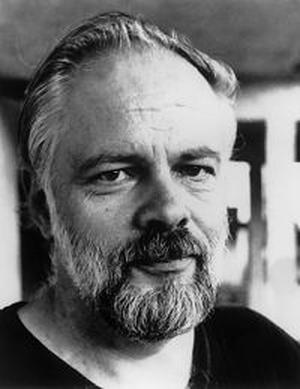
Report: Whites More Likely To Be Named CEOs Than Equally Sociopathic Black Candidates

americanpsycho8

Editor’s Note: Good satire always has a firm basis in truth.

Source: The Onion

ALEXANDRIA, VA—Shedding light on the striking lack of diversity within the highest ranks of corporate America, a report from the Executive Leadership Council released Tuesday reveals that white individuals are far more likely to be named CEOs than equally sociopathic black candidates.

Despite widespread evidence that minority executives are just as misanthropic and unprincipled as their Caucasian peers, the study found that less than 1 percent of Fortune 500 companies have black chief executives, demonstrating that the upper levels of the business world frequently remain inaccessible to even the most morally bankrupt of African-Americans.

“Our data shows that when white megalomaniacs and black megalomaniacs contend for the highest corporate positions in the U.S., the latter are routinely passed over,” said the report’s lead author, Sandra Norwood, pointing to dozens of recent instances in which African-American individuals who had proven track records of undermining their colleagues’, employees’, and shareholders’ interests in order to further their own selfish ambitions were not even offered an interview for a company’s top seat. “Vindictive, unscrupulous blacks simply aren’t granted these leadership opportunities, despite possessing the same willingness to maximize short-term profit by eliminating health insurance benefits for part-time employees or commit accounting fraud in order to inflate the value of their personal stock options.”

“These are heartless sadists who have put in countless hours of backstabbing and forsaken all ethical constraints in order to bolster their own power, and yet time and time again they are denied a place at the top of the corporate ladder simply because of the color of their skin,” she continued.

According to the report, even when companies were presented with numerous highly qualified minority candidates with no moral compass and a history of increasing earnings by knowingly rushing an unsafe product to market or outsourcing thousands of manufacturing jobs to overseas sweatshops, the top-tier positions still tended to be awarded almost exclusively to deceitful, empathy-devoid whites.

In fact, the study found that, when presented with identical résumés of potential CEOs who had hid billions of dollars of revenue in offshore tax havens and poached several engineers from a rival business in order to illegally gain confidential trade secrets—one labeled with a common Caucasian name and the other with a traditionally African-American name—boards of directors were far more likely to select the applicant with the white-sounding name. Such findings suggest that many at the highest corporate level still hold inherent biases against amoral, power-hungry egotists of color.

“Even in 2015, many corporate boards will automatically discount a black candidate even if they have demonstrated that they are fully capable of using aggressive intimidation tactics to prevent their company’s workers from forming a labor union,” Norwood said. “Board members often are more comfortable working with lying, underhanded double-crossers who are similar to themselves. Therefore, the individual that they ultimately promote to CEO tends to come from the same cultural background that turned them into destructive, unrepentant monsters.”

According to sources, the dearth of black CEOs within corporate America has prompted a number of companies to institute personnel outreach programs to identify and cultivate malevolent young African-Americans who they believe have the potential to one day violate insider trading laws and initiate spurious patent lawsuits against smaller competitors in order to overwhelm them with legal fees and force them out of the industry.

However, after years of confronting the “glass ceiling” that prevents them from advancing as far as their white peers, many blindly ambitious blacks told reporters they are skeptical that these programs will have a meaningful impact on African-Americans who aspire to become CEOs so that they can immediately downsize as many low-level personnel as necessary to hit profit targets that trigger lucrative personal bonuses.

“When you’re black, you have to be twice as ruthless and deceptive just to reach the senior level, but then you can pretty much forget about ever having a shot at the corner office,” said William Coleman, the sole African-American vice president at a prominent Wall Street financial services group, who says he has yet to be recognized for allocating the risk of his firm’s portfolio of unstable derivatives investments entirely onto the municipal worker pension funds it administers. “My company just elected a white external candidate for our CEO role even after I successfully shifted the blame for a botched merger onto a fellow senior manager before personally firing him and claiming his successes as my own. It’s like they refuse to see how deeply predatory and full of hatred I am.”

“My race shouldn’t be a factor when I’ve proven that I’m a borderline psychopath who will step over anybody in my way to sate my fanatical lust for power,” he continued. “When it comes to succeeding in the business world, that’s all that should matter.”


Related Video:


Lara Trace Hentz

INDIAN COUNTRY NEWS

In Saner Thought

"It is the duty of every man, as far as his ability extends, to detect and expose delusion and error"..Thomas Paine

ZEDJournAI

Human in Algorithms

Rooster Crows

From the Roof Top

Aisle C

I See This

The Free

blog of the post capitalist transition.. Read or download the novel here + latest relevant posts

अध्ययन-अनुसन्धान(Essential Knowledge of the Overall Subject)

अध्ययन-अनुसन्धानको सार