Ex Machina, et al, and the Metaphysics of Computer Consciousness

ex_machina_2015_movie-wide

By Steven Harp

Source: Reality Sandwich

( ex machina from the phrase “deus ex machina” meaning “god from the machine”)

It seems unquestioned in the world today that science is on the verge of creating consciousness with computers. In a Promethean rapture inspired by its enormous technological success, science aspires now to seize control of fundamental powers at the very heart of the universe.

With the advent of modern science the reality of human consciousness has come to be regarded as physical alone.  A caricature of consciousness has been compounded from such disparate elements as digital code, speculative evolutionary psychology, and a “neuro-phrenology” derived from colorized brain imaging. This caricature from scientists and engineers has gone into public circulation with the help of the media and it has become an acceptable counterfeit currency. And with cinematic virtuosity it has been made plausible by representations in the movies.

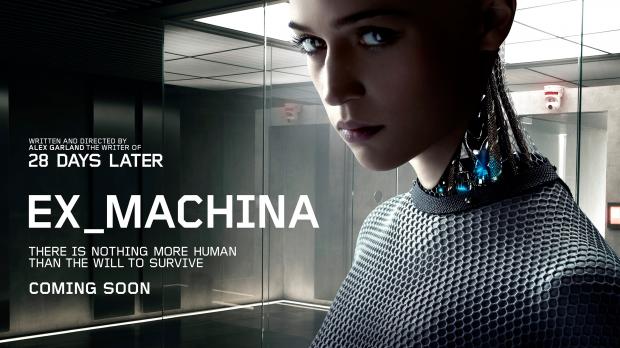
In the movie, Ex Machina we see another recycling of the classic Frankenstein story: Life is created from nonliving materials. A lone genius in an isolated laboratory, using the mysterious powers of science, creates new life. In the original Frankenstein story we have a dead body made alive by electricity. In Ex Machina we have a non-living “wetware” circuit given a mechanical body and made conscious by electricity.

This takes the story to a whole new level. Here the scientist is creating the very roots of being. To create consciousness-itself is equivalent to creating de novo cosmic absolutes such as space, matter, or light. It would be equivalent to creating a spectrum of color, a scale of tones, entire ranges of emotion, thought, pain, pleasure, and the entire dictionary of the contents of consciousness, all from the dark and silent abyss of nothingness.

How can something with neither mass nor dimension arise from that which has mass and dimension? How can that which has subjectivity and intentionality arise from that which has objectivity and has no intentionality?  This is the magisterial conundrum and is recognized as the greatest mystery in science.  No one, neither philosopher nor scientist, has a clue to the answer. It has famously been labeled the “hard problem of consciousness” by David Chalmers.

In both cases we see technology extrapolated to the creation our most fundamental being in which man becomes the maker of his most central essence, of what he is himself. The creation becomes the creator, the hand that draws itself.

This year alone has seen 8 major movies featuring synthetic or digital consciousness: Transcendence, Her, ChappieEx Machina, Lucy, Extant, Tomorrowland, and Terminator again.  One has to ask, is there something more than a good story line here?

The claim that technology will give birth to consciousness itself within a computer is entirely based on implicit assumptions about the nature of consciousness and reality. The often made assumption that the brain is like a computer and that nerve impulses are like digital code has no direct experimental foundation and is based on superficial resemblances only. There is no real scientific basis for the claim that the digital processing of symbols should somehow be accompanied by inner experience, that is, by consciousness, awareness, qualia, feeling, sentience, etc. 

A computer simulation of brain function is not going to produce consciousness any more than a computer simulation of kidney function is going to produce urine. There is no magic in computation. No amount of digital processing alone is ever going to produce a color. Without consciousness a computer program is a flow of electrons as meaningless and non-referential as those flowing in a wall.

Despite the flagrant and unbridgeable abyss between mind and matter it is the modern claim that if one can set up the right connections and run some electricity through it, a` la Frankenstein, consciousness will arrive on schedule from nonexistence. When undressed from the bewitching technical language this seems to be an equivalent in science of the Immaculate Conception. Or, in the current philosophical language we would call it the Immaculate Emergence. But perhaps Particle Parthenogenesis would be more accurate.

“We are on the edge of change comparable to the rise of human life on earth.” -Vernon Vinge

For materialists the arrival of artificial intelligence and machine consciousness is inevitable and only a matter of time. We have two main schools of thought developing on how to meet the coming technological tsunami – those who fear it and those who embrace it. We have on the fear side the notion that we are headed toward a near future where artificial intelligence or machine consciousness presents a danger to mankind (à la Stephen Hawking, Elon Musk, Nick Bostrom, etc.)

How this danger will manifest is the great unknown. There are countless possibilities. An embryonic AI lurking in the internet could suddenly cross the threshold into self-awareness and seize control of the world’s nuclear arsenals and missiles and demand surrender.  Or, a self-aware internet could lay low and send out brain wave controlling vibrations through WIFI and the background hum of our electrical circuitry to enslave humankind in order to advance technology sufficiently to develop the body or bodies necessary for a now paralyzed internet consciousness. This may have already happened.

And for those who embrace the change we have the Kurzwellians’ vision of the very technological replacement of humanity. This scenario will begin when computers begin to learn and thus redesign themselves. At this point the computer, or computer network, or robot would be capable of designing computers or robots better than itself. Repetitions of this cycle would result in an intelligence explosion resulting in a superintelligence which may be beyond human comprehension. This has been called the technological singularity and could begin as early as 2040, although the date keeps getting pushed further into the future.

In this process consciousness will transcend the hazards and horrors of warm-blooded protoplasmic existence. The machine descendants of man will transcend our obsolete and obscene modules of flesh. They shall put away the sweaty, smelly, hairy, warty, fatty, itchy, scarred, flawed, urinating, shitting, hurting, needy, conflicted, misshapen sac of meat and gristle and the gravity-enslaved earthly existence to become ascended silicon masters and rule like gods in a heavenly cyberspace and perhaps even reconfigure the universe itself. “We shall be as gods!” is a not so hidden background thought.

Consciousness will emerge like a butterfly from its earthbound caterpillar stage and fly freely in the new digital noosphere of a virtual reality (à la Kurzweil, Moravec, Fredkin).  The mortal human self will be subsumed like mitochondria in a giant computational eukaryote.  Our evolutionary period will expire like the dinosaurs’ and we will become a symbiont in the superior host technology. We have been upgraded by Google! All hail Google! Superintelligence is all! Praise Intelligence!

For artificial intelligence enthusiasts this will be good news for mankind. Maintaining mortal human flesh is a logistical nightmare. It requires very specific atmospheric conditions, it requires a very limited temperature range, it requires a vast range of chemical and energy inputs, it requires specific social and sexual connections, it even requires entertainment. Not meeting even one of these requirements could result in the entire operating system crashing and all the data lost (you).  Our wetware obviously makes for an inferior product when compared to a silicon based circuitry which could just as well exist in the vacuum of space with just a single source of electricity.

We shall put aside our earthly raiment of mortal skin and bone and be arrayed in the finest of indestructible metals, plastics, and silicons. We shall be free at last of nature and its’ inconveniences.  All the wealth and riches of the imagination will be at the tip of our cursor.  A million movie channels will be available and we will have an unbreakable silicon heart. We can even have our heart amputated like an infected appendix.  After all it is only pixels!  It is the next stage of evolution! Rejoice in the in the wonderful future of technology! Praise Evolution!

The notion that mind can be uploaded into a computer (Transcendence, Her, Chappie), if not completely loco, is radical in the extreme. But given the hubris of technological success and the realism of movie depictions, it has been made believable and in mainstream scientific circles it is near heresy to doubt the materialist premise of consciousness synthesis from raw physical materials. 

However there is a curiosity in the movie, Ex Machina, that perhaps reveals a crack in the technological juggernaut.  In the movie, Nathan, the techno-wizard internet mogul, has just created the most extraordinary technology in the history of science, a technology that would revolutionize the world and beyond. With Promethean daring he has just robbed the very cradle of consciousness and created Ava, a conscious robot that passes every Turing test.  It would seem that he would be in a state of elation and brimming with fulfillment.  Instead he is getting drunk at every opportunity. Alcohol is featured in almost every scene in which he appears.  One must ask the question, what has gone wrong with Nathan?    

Is this just an iniquitous twist of character?  Or could he be plain old lonely? Or is it a metaphysical crisis?  He lives like a hermit in a remote and isolated Northern region, but he has a retinue of very lovely synthetic ladies waiting for him in closets. And he has a beautiful and near mindless female companion and assistant that likes to dance. And then, he has the mysterious and unknown otherness of Ava. That should be adequate companionship.

But he has just synthesized consciousness. He has dramatically and inescapably demonstrated that life and consciousness are a merely physical phenomena that have no more meaning than electricity passing through a copper wire. He has shown that he himself is not much more than the ionic exchanges occurring through a polarized lipid membrane in a cranial bone flask.  And when the switch is turned off he dissolves into nothingness.

Our lone genius clearly has grounds for a metaphysical crisis.  He has experimentally proven a deeper isolation:  That is the isolation that the vision of materialism prescribes for man – as a spark of consciousness in a meaningless void. There is no wider mystery in being alive… he is all there is… a pathetic lonely little god… isolated in time as well as space with a separation that he cannot mitigate, even with the agreeable companionship of his ersatz bitches.

It is more than ironic that our synthesizer of new consciousness is intent on anaesthetizing his own.  But is this not also modern man? Alcohol is the universal drug of the world today. Nathan here is materialist everyman rather than the oversensitive genius. Modern man closes the door on his personal consciousness while aspiring to extend consciousness through external technological means. It seems modern man shares the same metaphysical disturbance as our techno-wizard, Nathan.

The materialist everyman has fixated on a physical literalism that excludes the meaningfulness inherent within every conscious experience. He has radically reduced the ontological range of life. Life has been stripped of inner meaning. He is abandoned to a complete separation and isolation in both time and space.

He has embraced the lawful Stalinesque reality of materialism as a total explanation for consciousness. He has embraced the scientific fundamentalism of consilience. And total explanations produce repressive states, both political and personal. However, modern man, like an eviscerated organism continues to live… even though partially.

The Frankenstein of today is more than an out-of-control technology. Our Frankenstein monster is the story that science has authority over all other interpretations of life and has replaced them with a grim and desolate paradigm about the nature of the universe and our place in it. Technology has come to shape the imagery by which the world is depicted and to affirm the underlying metaphysics of materialism. We have shaped our reality and now it shapes us. It is only natural then that Ava, the beautiful and sexy creature in Ex Machina kills her creator, Nathan. But modern man cannot kill his own soul so he must anaesthesize it.

But, exercising our imagination, let us suppose that consciousness, rather than being proven physically dependent is proven physically independent. Materialism, irrespective of technological successes, would be shown wrong and suggest that we have been living in the dark ages of a materialist ideology. And it would reveal the present day metaphysics of consciousness at the heart of a dysfunctional civilization.

The Superpower Conundrum

The Rise and Fall of Just About Everything

By Tom Engelhardt

Source: TomDispatch.com

The rise and fall of great powers and their imperial domains has been a central fact of history for centuries.  It’s been a sensible, repeatedly validated framework for thinking about the fate of the planet.  So it’s hardly surprising, when faced with a country once regularly labeled the “sole superpower,” “the last superpower,” or even the global “hyperpower” and now, curiously, called nothing whatsoever, that the “decline” question should come up.  Is the U.S. or isn’t it?  Might it or might it not now be on the downhill side of imperial greatness?

Take a slow train — that is, any train — anywhere in America, as I did recently in the northeast, and then take a high-speed train anywhere else on Earth, as I also did recently, and it’s not hard to imagine the U.S. in decline.  The greatest power in history, the “unipolar power,” can’t build a single mile of high-speed rail?  Really?  And its Congress is now mired in an argument about whether funds can even be raised to keep America’s highways more or less pothole-free.

Sometimes, I imagine myself talking to my long-dead parents because I know how such things would have astonished two people who lived through the Great Depression, World War II, and a can-do post-war era in which the staggering wealth and power of this country were indisputable.  What if I could tell them how the crucial infrastructure of such a still-wealthy nation — bridges, pipelines, roads, and the like — is now grossly underfunded, in an increasing state of disrepair, and beginning to crumble?  That would definitely shock them.

And what would they think upon learning that, with the Soviet Union a quarter-century in the trash bin of history, the U.S., alone in triumph, has been incapable of applying its overwhelming military and economic power effectively?  I’m sure they would be dumbstruck to discover that, since the moment the Soviet Union imploded, the U.S. has been at war continuously with another country (three conflicts and endless strife); that I was talking about, of all places, Iraq; and that the mission there was never faintly accomplished.  How improbable is that?  And what would they think if I mentioned that the other great conflicts of the post-Cold-War era were with Afghanistan (two wars with a decade off in-between) and the relatively small groups of non-state actors we now call terrorists?  And how would they react on discovering that the results were: failure in Iraq, failure in Afghanistan, and the proliferation of terror groups across much of the Greater Middle East (including the establishment of an actual terror caliphate) and increasing parts of Africa?

They would, I think, conclude that the U.S. was over the hill and set on the sort of decline that, sooner or later, has been the fate of every great power. And what if I told them that, in this new century, not a single action of the military that U.S. presidents now call “the finest fighting force the world has ever known” has, in the end, been anything but a dismal failure?  Or that presidents, presidential candidates, and politicians in Washington are required to insist on something no one would have had to say in their day: that the United States is both an “exceptional” and an “indispensible” nation? Or that they would also have to endlessly thank our troops (as would the citizenry) for… well… never success, but just being there and getting maimed, physically or mentally, or dying while we went about our lives? Or that those soldiers must always be referred to as “heroes.”

In their day, when the obligation to serve in a citizens’ army was a given, none of this would have made much sense, while the endless defensive insistence on American greatness would have stood out like a sore thumb. Today, its repetitive presence marks the moment of doubt. Are we really so “exceptional”? Is this country truly “indispensible” to the rest of the planet and if so, in what way exactly? Are those troops genuinely our heroes and if so, just what was it they did that we’re so darn proud of?

Return my amazed parents to their graves, put all of this together, and you have the beginnings of a description of a uniquely great power in decline. It’s a classic vision, but one with a problem.

A God-Like Power to Destroy

Who today recalls the ads from my 1950s childhood for, if I remember correctly, drawing lessons, which always had a tagline that went something like: What’s wrong with this picture?  (You were supposed to notice the five-legged cows floating through the clouds.)  So what’s wrong with this picture of the obvious signs of decline: the greatest power in history, with hundreds of garrisons scattered across the planet, can’t seem to apply its power effectively no matter where it sends its military or bring countries like Iran or a weakened post-Soviet Russia to heel by a full range of threats, sanctions, and the like, or suppress a modestly armed terror-movement-cum-state in the Middle East?

For one thing, look around and tell me that the United States doesn’t still seem like a unipolar power.  I mean, where exactly are its rivals?  Since the fifteenth or sixteenth centuries, when the first wooden ships mounted with cannons broke out of their European backwater and began to gobble up the globe, there have always been rival great powers — three, four, five, or more.  And what of today?  The other three candidates of the moment would assumedly be the European Union (EU), Russia, and China.

Economically, the EU is indeed a powerhouse, but in any other way it’s a second-rate conglomeration of states that still slavishly follow the U.S. and an entity threatening to come apart at the seams.  Russia looms ever larger in Washington these days, but remains a rickety power in search of greatness in its former imperial borderlands.  It’s a country almost as dependent on its energy industry as Saudi Arabia and nothing like a potential future superpower.  As for China, it’s obviously the rising power of the moment and now officially has the number one economy on Planet Earth.  Still, it remains in many ways a poor country whose leaders fear any kind of future economic implosion (which could happen).  Like the Russians, like any aspiring great power, it wants to make its weight felt in its neighborhood — at the moment the East and South China Seas.  And like Vladimir Putin’s Russia, the Chinese leadership is indeed upgrading its military.  But the urge in both cases is to emerge as a regional power to contend with, not a superpower or a genuine rival of the U.S.

Whatever may be happening to American power, there really are no potential rivals to shoulder the blame.  Yet, uniquely unrivaled, the U.S. has proven curiously incapable of translating its unipolar power and a military that, on paper, trumps every other one on the planet into its desires.  This was not the normal experience of past reigning great powers.  Or put another way, whether or not the U.S. is in decline, the rise-and-fall narrative seems, half-a-millennium later, to have reached some kind of largely uncommented upon and unexamined dead end.

In looking for an explanation, consider a related narrative involving military power.  Why, in this new century, does the U.S. seem so incapable of achieving victory or transforming crucial regions into places that can at least be controlled?  Military power is by definition destructive, but in the past such force often cleared the ground for the building of local, regional, or even global structures, however grim or oppressive they might have been.  If force always was meant to break things, it sometimes achieved other ends as well.  Now, it seems as if breaking is all it can do, or how to explain the fact that, in this century, the planet’s sole superpower has specialized — see Iraq, Yemen, Libya, Afghanistan, and elsewhere — in fracturing, not building nations.

Empires may have risen and fallen in those 500 years, but weaponry only rose. Over those centuries in which so many rivals engaged each other, carved out their imperial domains, fought their wars, and sooner or later fell, the destructive power of the weaponry they were wielding only ratcheted up exponentially: from the crossbow to the musket, the cannon, the Colt revolver, the repeating rifle, the Gatling gun, the machine gun, the dreadnaught, modern artillery, the tank, poison gas, the zeppelin, the plane, the bomb, the aircraft carrier, the missile, and at the end of the line, the “victory weapon” of World War II, the nuclear bomb that would turn the rulers of the greatest powers, and later even lesser powers, into the equivalent of gods.

For the first time, representatives of humanity had in their hands the power to destroy anything on the planet in a fashion once imagined possible only by some deity or set of deities.  It was now possible to create our own end times.  And yet here was the odd thing: the weaponry that brought the power of the gods down to Earth somehow offered no practical power at all to national leaders.  In the post-Hiroshima-Nagasaki world, those nuclear weapons would prove unusable.  Once they were loosed on the planet, there would be no more rises, no more falls.  (Today, we know that even a limited nuclear exchange among lesser powers could, thanks to the nuclear-winter effect, devastate the planet.)

Weapons Development in an Era of Limited War

In a sense, World War II could be considered the ultimate moment for both the narratives of empire and the weapon.  It would be the last “great” war in which major powers could bring all the weaponry available to them to bear in search of ultimate victory and the ultimate shaping of the globe.  It resulted in unprecedented destruction across vast swathes of the planet, the killing of tens of millions, the turning of great cities into rubble and of countless people into refugees, the creation of an industrial structure for genocide, and finally the building of those weapons of ultimate destruction and of the first missiles that would someday be their crucial delivery systems.  And out of that war came the final rivals of the modern age — and then there were two — the “superpowers.”

That very word, superpower, had much of the end of the story embedded in it.  Think of it as a marker for a new age, for the fact that the world of the “great powers” had been left for something almost inexpressible.  Everyone sensed it.  We were now in the realm of “great” squared or force raised in some exponential fashion, of “super” (as in, say, “superhuman”) power.  What made those powers truly super was obvious enough: the nuclear arsenals of the United States and the Soviet Union — their potential ability, that is, to destroy in a fashion that had no precedent and from which there might be no coming back.  It wasn’t a happenstance that the scientists creating the H-bomb sometimes referred to it in awestruck terms as a “super bomb,” or simply “the super.”

The unimaginable had happened.  It turned out that there was such a thing as too much power.  What in World War II came to be called “total war,” the full application of the power of a great state to the destruction of others, was no longer conceivable.  The Cold War gained its name for a reason.  A hot war between the U.S. and the USSR could not be fought, nor could another global war, a reality driven home by the Cuban missile crisis.  Their power could only be expressed “in the shadows” or in localized conflicts on the “peripheries.”  Power now found itself unexpectedly bound hand and foot.

This would soon be reflected in the terminology of American warfare.  In the wake of the frustrating stalemate that was Korea (1950-1953), a war in which the U.S. found itself unable to use its greatest weapon, Washington took a new language into Vietnam. The conflict there was to be a “limited war.”  And that meant one thing: nuclear power would be taken off the table.

For the first time, it seemed, the world was facing some kind of power glut.  It’s at least reasonable to assume that, in the years after the Cold War standoff ended, that reality somehow seeped from the nuclear arena into the rest of warfare.  In the process, great power war would be limited in new ways, while somehow being reduced only to its destructive aspect and nothing more.  It suddenly seemed to hold no other possibilities within it — or so the evidence of the sole superpower in these years suggests.

War and conflict are hardly at an end in the twenty-first century, but something has removed war’s normal efficacy.  Weapons development has hardly ceased either, but the newest highest-tech weapons of our age are proving strangely ineffective as well.  In this context, the urge in our time to produce “precision weaponry” — no longer the carpet-bombing of the B-52, but the “surgical” strike capacity of a joint direct attack munition, or JDAM — should be thought of as the arrival of “limited war” in the world of weapons development.

The drone, one of those precision weapons, is a striking example.  Despite its penchant for producing “collateral damage,” it is not a World War II-style weapon of indiscriminate slaughter.  It has, in fact, been used relatively effectively to play whack-a-mole with the leadership of terrorist groups, killing off one leader or lieutenant after another.  And yet all of the movements it has been directed against have only proliferated, gaining strength (and brutality) in these same years.  It has, in other words, proven an effective weapon of bloodlust and revenge, but not of policy.  If war is, in fact, politics by other means (as Carl von Clausewitz claimed), revenge is not.  No one should then be surprised that the drone has produced not an effective war on terror, but a war that seems to promote terror.

One other factor should be added in here: that global power glut has grown exponentially in another fashion as well.  In these years, the destructive power of the gods has descended on humanity a second time as well — via the seemingly most peaceable of activities, the burning of fossil fuels.  Climate change now promises a slow-motion version of nuclear Armageddon, increasing both the pressure on and the fragmentation of societies, while introducing a new form of destruction to our lives.

Can I make sense of all this?  Hardly.  I’m just doing my best to report on the obvious: that military power no longer seems to act as it once did on Planet Earth.  Under distinctly apocalyptic pressures, something seems to be breaking down, something seems to be fragmenting, and with that the familiar stories, familiar frameworks, for thinking about how our world works are losing their efficacy.

Decline may be in the American future, but on a planet pushed to extremes, don’t count on it taking place within the usual tale of the rise and fall of great powers or even superpowers. Something else is happening on Planet Earth. Be prepared.

Tom Engelhardt is a co-founder of the American Empire Project and the author of The United States of Fear as well as a history of the Cold War, The End of Victory Culture. He is a fellow of the Nation Institute and runs TomDispatch.com. His latest book is Shadow Government: Surveillance, Secret Wars, and a Global Security State in a Single-Superpower World.


American Politics: A House of Mirrors

the-circus-fun-house-mirrors

By Ulson Gunnar

Source: Land Destroyer

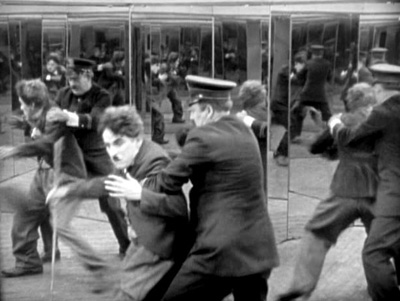
A house of mirrors is an immersive, highly distorted and intentionally confusing version of reality. Those walking its corridors are sometimes amused and sometimes frightened by the disorienting experience, but luckily for them, it is only temporary. There is an exit, and they will walk through it, back to reality.

But what if one existed their entire lives in such a distorted reality and knew of no exits? Would they convince themselves that these distorted images reflected back at them were in fact reality no matter how unnatural they appeared? Could they convince themselves to enjoy and even embrace this distorted reality?

One ponders such questions when looking from the outside-in on American politics. It too is a house of mirrors reflecting back a reality entirely distorted. Also like a house of mirrors, American politics have been intentionally constructed this way, to confuse, disorient and even frighten the American people when necessary to exercise mass persuasion over them. The final result is perpetual impunity granted to the powers that truly be, hiding behind the powers that allegedly were “elected,” and powers whose authority only exists in this house of mirrors and no further.

New Leaders, Old Wars 

Consider US President George Bush Sr. He launched the inaugural war of what he himself called a “New World Order.” Operation Desert Storm included multiple nations comprising of nearly a million soldiers who swept from the map one of the largest conventional armies (4th largest) in the world. Bush Sr., however, paused just ahead of sweeping the Iraqi leader Saddam Hussein from power. His successor, US President William Jefferson Clinton would keep Iraq subdued with periodic bombing campaigns and the imposition of both crippling sanctions and no-fly zones in the north and south of Iraq.

Clinton would serve 8 years in office and lock horns with Russia in Serbia in a proto-Ukraine-style conflict. In 2000, we should remember that George Bush Jr. ran on a platform opposed to global interventionism. For those trapped in the house of mirrors, this distortion of reality seemed very convincing. For those who understood the hegemonic mission of America’s special interests, those that transcend elections and political parties, they knew Bush Sr.’s desires for a “New World” endured and would manifest themselves in a yet revealed, muscular foreign policy that only needed the right impetus to be justified in the eyes of the American people.

Conveniently, the events of September 11, 2001 delivered just that. So began the 8 year “War on Terror.” So sick of wars were Americans at the end of those 8 years, that anyone promising to end them would likely win the 2008 elections. And so Barack Obama did and thus became “US President.” However, not only did the wars not end, and not only were they in fact expanded, new wars were begun. In fact, these new wars were all the planned wars Bush Sr., Clinton and Bush Jr. never got around to fighting.

Yet, no matter how unnatural this distorted reflection appeared in the American politics house of mirrors, those trapped perpetually within its mirrored walls found it perfectly acceptable for a Democratic president to continue Republican wars and start new wars the Republicans could only have dreamed of starting but couldn’t because of left-wing anti-war movements now silent because “their guy” was in office.

Hillary = Obama = Bush Jr. = Clinton = Bush Sr.  

With Hillary Clinton’s announcement that she is running for office in 2016 with President Obama’s full endorsement, those infected with neo-liberalism and wandering the corridors of this house of mirrors see yet another distorted, ghoulish image staring back, but one they are yet again ready to embrace.

Here is a woman who as US Secretary of State laughed and mocked the Libyan people upon hearing their leader had been murdered by terrorists in what constituted by all accounts a war crime. Before that, she played an active role in selling the war upon Libya in 2011 to the American left (as the American right had already desired such a war for years and needed no convincing). By 2016 we may have yet another Clinton in office, and a Clinton fully dedicated to carrying on the wars of both the Democrats and Republicans that came before her.

To say this is continuity of agenda is a bit of an understatement. American foreign policy has been so singular in purpose and focus for the past several decades that it is clear that behind the distortions of this house of mirrors, something singular and very nasty has been there the entire time. Who or what could it be?

The Real President of the United States Lives on Wall Street, not Pennsylvania Avenue 

How about we look at the people who pay for the political campaigns to put these various spokesmen and women-in-chiefs into office in the first place? Or the immense interests driving lobbying efforts that target and control both sides of the political aisle in American politics? A single Fortune 100 corporation has enough money to buy out every relevant politician on Capital Hill and still finish up the fiscal year bloated with billions in profits. And what happens when these interests converge across various think-tanks they themselves have set up and created to generate the singular foreign and domestic policies we see carried forward from presidency to presidency, from congressional session to session?

We see complete control exerted over American politics as well as across the media, allegedly charged to serve as watchdogs and a check and balance, but instead turned into an echo chamber and instrument of mass persuasion by those who have clearly consolidated the summation of American politics in their pockets.

While policy might be debated over by these special interests, and groups moved in one direction or another to exert influence against competing special interests among this exclusive club, one thing is for sure, the American voter is the last voice considered in this process.

Since the American voter is incapable of seeing that they are in fact in a house of mirrors to begin with, and think they are “outside” in reality making real decisions, their decisions are completely irrelevant to those who really do live outside in reality and are actually making real decisions.

We must understand that for special interests that collectively control trillions of dollars in assets, profits and infrastructure all over the planet, the last thing they are willing to do is allow for the existence of a system that might actually put into power a form of authority above their own, that would set policy predicated upon the interests of the people, rather than their own. They have the money, the power and the ability to ensure policy is set to suit them, and them alone, and they clearly have done just that.

This is why US troops are still in Afghanistan and Iraq, wars are still being waged either directly or indirectly against Libya, Syria, Yemen, Iran and Russia and destabilization targeting China and other targets of Washington and Wall Street’s special interests continues unabated, albeit distorted within the house of mirrors, regardless of who is president.

So Americans may think they are voting for Hillary Clinton in 2016, and those infected with neo-liberalism the world over may think another enlightened champion of their progressive cause has taken the reins of the free world, but they might as well have voted for another Bush. The reality is, that as along as Americans and those who look to America from abroad for leadership dwell in this house of mirrors, the special interests that intentionally built this carnival called “democracy” will have their way back in actual reality.

Instead of fumbling through another four years trapped inside this carnival attraction, let’s find the exits. Let’s leave this house of mirrors and breathe a breath of fresh air. Are we really going to listen to another round of campaign promises, holding our breath hoping that this time they mean it? Or will we begin divesting from this system and building our own, one that might actually truly represent us this time, far from the mirrored walls that held us for so long?

The Asshole Factory

index

Our economy doesn’t make stuff anymore. So what does it make?

By Umair Haque

Source: Medium

My good friend Mara has not one but two graduate degrees. From fine, storied universities. Surprise, surprise: the only “job” she was able to find was at a retail store.

Hey—it’s only minimum wage, but at least she’s working, right? And at a major-league, blue-chip company, An American icon; an institution; a name every man, woman, and child in this country knows; an historic company that rings of the American Dream the world over, besides. Surely, if nothing else, it’s a start.

Perhaps you’re right. Maybe it isn’t the start she always dreamed of…but at least it is one. If so…then awaits her at the finish?

What is Mara’s job like? Her sales figures are monitored…by the microsecond. By hidden cameras and mics. They listen to her every word; they capture her every movement; that track and stalk her as if she were an animal; or a prisoner; or both. She’s jacked into a headset that literally barks algorithmic, programmed “orders” at her, parroting her own “performance” back to her, telling her how she compares with quotas calculated…down to the second…for all the hundreds of items in the store…which recites “influence and manipulation techniques” to her…to use on unsuspecting customers…that sound suspiciously like psychological warfare. It’s as if the NSA was following you around……and it was stuck in your head…telling you what an inadequate failure you were…psychologically waterboarding you…all day long…every day for the rest of your life.

Mara’s boss sits in the back. Monitoring all twelve, or fifteen, or twenty people that work in the store. On a set of screens. Half camera displays, half spreadsheets; numbers blinking in real-time. Glued to it like a zombie. Chewing slowly with her mouth open. Jacked into a headset. A drone-pilot… piloting a fleet of human drones…pressure-selling disposable mass-made shit…as if it were luxury yachts…through robo-programmed info-warfare…like zombies…to other zombies…who look stunned…like they just got laser blasted, cluster-bombed, shock-and-awed…

WTF?

It’s bananas. The whole scene is like a maximum-security mental asylum designed by sadomasochists in a sci-fi movie. If Jeffrey Dahmer, Rasputin, and Michael Bay designed a “store” together, they couldn’t do any better. Her “job” will begin to drive her crazy—paranoid, depressed, deluded—in a matter of years if she continues doing it. No human psyche can bear that kind of relentless, systematic abuse.

Now. Note what all the technology and bureaucracy that wonderful, noble company has invested hundreds of millions in doesn’t ask her to do. Learn. Think. Reflect. Teach. Inspire. Lead. Connect. Imagine. Create. Grow. Dream. Actually…serve customers. Heaven forbid. It just beats her over the head, over and over again, three times a minute, every twenty seconds, with how much she hasn’t sold; hasn’t made; hasn’t produced. For her shitty .0003% commission. According to the quota that’s been set for her. By her boss. For his boss. For their boss. And so on all the way up the food chain.

See my point? Mara’s job isn’t to benefit customers. It isn’t to educate, understand, listen to, or even to chat with them. It isn’t to stop them from buying what they don’t want; to help them find what they might need; to match them with the right stuff. Nope. It’s merely to push more and more and more and more shit at them…faster, meaner, and dumber than any sane person would think is humanly possible…using advanced military technology and techniques… programmed to abuse her…so she can wage advanced psychological warfare…on her customers. And they were just suckers, gaping maws, fools, marks. And be yelled at…by a robot…if she doesn’t.

Really? This is the best our economy can do? To take the stuff of 21st century warfare and use them them to…rack up the profit? To turn a bright young woman with two grad degrees…into a Superprofitable Human Weapon of Mass Consumption…a half-crazed algorithmically-programmed asshole…a human drone…so even bigger, actually crazy assholes…can get super-rich…by slinging entire supertankers full of junk…at people getting poorer at four thousand percent interest a year…by using drones and bots to wage psy-warfare against them…so they’re conned into buying too much?

The economy doesn’t make stuff anymore. That much you know. So what does it make?

It makes assholes.

The Great Enterprise of this age is the Asshole Industry.

And that’s not just a tragedy. It is something approaching the moral equivalent of a crime. For it demolishes human potential in precisely the same way as locking someone innocent up, and throwing away the key.

Consider Mara again. Who in Christ’s name would design such an inhuman system? Whose sick joke of an idea is a “store” like that? What do you even call it? Because it’s surely not a “store”.

Only a monstrous asshole of the highest order could assemble such a demonically vampiric bullshit machine to prey on…everyone. Customers, managers, workers alike. Such a carefully sophisticated engine of human misery; of finessed cruelty; all to rake in a few extra pennies an hour, at the expense of dignity, intelligence, creativity, commitment, fairness, craft, service, sovereignty…sanity.

The store is an Asshole Factory.

Allow me to explain.

What happens to Mara when she’s “doing her job”? Think about it for a second. She turns into precisely the kind of asshole that the heartless dweebs who thought up this infernal torture-machine no doubt already are. Not because she wants to. But because she has to.

That’s exactly what the store was designed to do. Turn everyone into the same kind of asshole as the assholes that made it, run it, and benefit from it…want everyone to be.

The store is an Asshole Factory.

Our world is now full of Asshole Factories. That’s what the stores, offices, industrial parks, skyscrapers, malls, low-rise blocks, gleaming headquarters, whimsically designed corporate campuses, really are.

It’s the grand endeavor of today. We don’t make stuff anymore. We make assholes. The Great Enterprise of this age is the Asshole Industry.

Consider, for a moment, my tiny hypothesis.

Have you noticed, lately, that people seem to be more, well, assholish…than before? That everywhere you go, people seem to be meaner, nastier, dumber, angrier, more brutish?

Why?

It is the last and greatest industry left in an economy that has been impoverished, emptied, hollowed out, drained.

The Great Enterprise of the Age of Stagnation is the wholesale manufacture not of great, world-shaking, ground-breaking ideas, inventions, concerns…but of bigger and bigger assholes.

The chain-store; the mall; the hypermarket. The corporation; the firm; the partnership. B-school; law school; med school. The boardroom; the backroom; the trading floor.

These are, by and large, Asshole Factories. They don’t make people. Capable of great things. Who create and build and touch and soar. They make assholes.

They are designed to disinfect us of our fragility. To cleanse us of our flaws. To disinfect us of weakness. Love, grace, mercy, longing, forgiveness, passion, truth, nobility, dreams. Their objective is to stamp all that out; to eradicate it; to erase it. To replace it with calculation, ruthlessness, self-concern; gluttony; cruelty; anxiety, despair. By using the most sophisticated technology ever made to subjugate, oppress, and goad us into being little torturers ourselves.

And in so doing, they emotionally sterilize us. They psychically traumatize us. They intellectually castrate us. They socially neuter us. They cheat us of greatness. That is how they turn us into assholes.

They are designed to deprive us into depriving everyone else of the lives we could and have, at our highest and truest and noblest.

The assholes haven’t just taken our incomes, our savings, our careers, our educations. They’ve taken something far more precious; something priceless. It is our lives—the full, true lives we should be living—that have been taken from us. And in the gaping void where the lives we should be living are, the assholes have deftly inserted carbon copies of…themselves.

When you think about it that way…is it any wonder that society seems to be stuck? That the economy seems headed into oblivion? That life for so pretty much anyone under the age of 35 and/or worth less than $20 million or so appears to be going…nowhere?

Remember my friend Mara? She’s probably being piloted like a drone…yelled at by a bot…three times a minute…into waging advanced techniques of psycho-war…designed to traumatize prisoners…over and over and over again…right this very second…

Until she’s cleansed. Perfect. Flawless. Pure. Another gleaming, brand-new asshole, rolling proudly off the assembly line of the Asshole Factory.

We’re obedient constructivists. Pragmatists. Rationalists. So you probably want to know: what can we do about it?

It’s pretty simple.

Don’t be an asshole. Remember the Asshole Factories? Here’s a secret: they’re churning out assholes by the millions. And so should you bravely decide to be an asshole, what you’ll really be is just another interchangeable, forgettable, rapidly depreciating commodity.

So who should you be?

Be yourself. The person you were meant to be. Whether you believe in heaven or the inferno, freedom or fate, the simple fact is: each and every one of us was put here to be something greater than Just Another Asshole stealing pennies from his neighbors to pay off Even Bigger Assholes.

So let me say it again. Don’t be an asshole. Be yourself. The miracle of being that you were meant to be. A person that, consumed with passion, seared with happiness, aglow with meaning, brings forth all that is great, noble, and true in the world, and so, with love, mercy, and wisdom, lifts every life that you meet into the light.

Thank you and goodbye.

Our Spoiled-Brat Economy

f418a7472f5783aa8fcf04d0d72e443140b9e2325a6cf04371d142e41c4827e0

By Charles Hugh Smith

Source: Of Two Minds

By insuring spoiled brats/vested interests never face the consequences of their actions and choices, we guarantee failure of the entire system.

Spoiled brats do not take kindly to being called out as spoiled brats. Since economies are aggregates of individuals, we can anticipate howls of outraged denial at our economy being identified as spoiled rotten.


The two essential characteristics of spoiled brats are 1) a complete disregard for the burdens of those paying the bills and 2) a childishly self-absorbed sense of overweening entitlement. Spoiled brats have no sense of fiscal discipline. Indeed, it is their defining characteristic. They want what they want, and they want it now, regardless of the cost to others or the system as a whole.

In America’s Spoiled Brat Economy, no vested interest is ever allowed to fail. Lost billions gambling with borrowed money? Just throw a K Street temper tantrum and threaten to close all the ATMs when you go broke, and voila, Mommy and Daddy (the federal government and Federal Reserve) come rushing with trillions of dollars to make all the bad things like well-deserved bankruptcy go away.

That tens of millions of savers must be robbed of hundreds of billions of dollars in lost interest to rebuild your banks’ profits and balance sheets–the sacrifices of others are of no concern to spoiled brats.

What does not allowed to fail bring to mind? How about coddled children who are crippled by helicopter parents who do their homework for them and schools that give everybody passing grades and gold stars?

A system that doesn’t allow individuals and enterprises to fail is a system that is simply taking another path to failure. Students who are given gold stars and 9th place ribbons (Meet the Fockers) cannot possibly establish a real sense of accomplishment or learn how to make a realistic assessment of their deficiencies or strengths. They are crippled by all the “help” enablers press on them.

The same is true of spoiled-brat economies. Enterprises that are never allowed to fail (for example, too big to fail banks, bankrupt cities, counties and states, defense contractors who produce failed weapons systems, healthcare organizations that cheat the government and patients, etc. etc. etc.) become deadwood that saps the vitality of the economy, dragging down the few productive sectors.

The “help” lavished on vested interests include sweetheart contracts, direct subsidies, tax credits, lines of credit, zero interest rates and a vast range of other subsidies. The entire point of the vast lobbying machine that funnels federal and Federal Reserve largesse to vested interests is about staving off the very failure that keeps economies from imploding (creative destruction).

The Yellowstone Analogy and The Crisis of Neoliberal Capitalism (May 18, 2009)

Innovation, Risk and the Forest Fire Analogy (July 2, 2010)

By insuring spoiled brats/vested interests never face the consequences of their actions, choices and self-absorbed greed, we guarantee failure of the entire system. So by all means, keep passing out subsidies to too big to fail banks and 9th-place ribbons, and give the brats whatever they want as soon as they start wailing, regardless of the cost to the system itself.


Another World is Possible

original

From the Spanish Civil War to the fall of the Berlin Wall, anarchism pushes for a new social order

By Tommaso Segantini

Source: Adbusters

The Spanish Civil War that occurred between 1936-1939 is always remembered as the fight between the Republicans and Franco’s nationalist semi-fascist forces. However, the war was marked by another, extraordinary event; in 1936, the year of the outbreak of the civil war, the world witnessed the first glimpses of an anarchist revolution. Sam Dolgoff, an American anarcho-syndicalist, stated that the Spanish Revolution “came closer to realizing the ideal of the free stateless society on a vast scale than any other revolution in history.”

The revolution was led by the CNT (Confederación Nacional del Trabajo), a confederation of anarchist and anarcho-syndicalist trade unions. A significant part of Spain’s economy was collectivized and put under direct worker’s control. In Catalonia, workers controlled more than 75% of the economy. We should not imagine Soviet-style forced collectivization, but, as Sam Dogloff said, “a genuine grass roots functional libertarian democracy, where each individual participated directly in the revolutionary reorganization of social life”. George Orwell, who has served as a combatant for the CNT, was able to document the revolution as a first-hand observer. Two short passages from his Homage to Catalonia, published in 1938, illustrate superbly the spirit of the revolution: “[T]here was a belief in the revolution and the future, a feeling of having suddenly emerged into an era of equality and freedom. Human beings were trying to behave as human beings and not as cogs in the capitalist machine,” and “many of the normal motives of civilized life—snobbishness, money-grubbing, fear of the boss, etc.—had simply ceased to exist. The ordinary class-division of society had disappeared to an extent that is almost unthinkable in the money-tainted air of England; there was no one there except the peasants and ourselves and no one owned anyone else as his master.”

Unfortunately, the Spanish anarchist utopia did not last long. The anarchists were crushed by a temporary alliance between all other political parties (including the Communists and the Socialists) and the brief—but real—experience of an anarchist society faded away.

However, an important lesson can be drawn from the anarchist utopia of 1936: another world is possible (which is also the slogan of the World Social Forum). Before discussing anarchism’s possible role in the resistance to the capitalist world order, let’s shortly retrace last century’s main stages of the capitalist system’s consolidation: elites have won the long-lasting struggle against the working class; this was achieved firstly by granting workers some benefits after World War II, notably through the implementation of welfare systems in the West, then by fragmenting them with the increase in specialization of labor and the growth of the service industry during the post-Fordist period and finally by assessing the knockout blow through neoliberal policies, which erased hard-fought social and economic rights, diminished trade unions’ bargaining power and weakened their influence.

The libertarian revolutions of 1968 have also ended up in disappointment. Hopes brought by the “New Left” political movement that emerged from the demands of students, activists and workers, came to a close when economic powers and politics colluded in the 80s, removing the last glimmers of hope that change could happen from within the current political system. The 1980s also marked the beginning of the neoliberal era (deregulation of the financial system, erosion of welfare states, privatization programs, financial crises, cuts to public spending).

Finally, the fall of the Berlin Wall represented the end of the last bastion of ideological resistance against capitalism: communism. Fukuyama’s The End of History and the Last Man main thesis was emblematic in the representation of the world we faced and still face today: the triumph of liberal democracy and capitalism marked the end point of mankind’s ideological and political evolution.

We live in a historically specific cultural paradigm, shaped during the course of the last century through mass media, popular culture and advertising, which converged together and formed our consumer culture and in an economic and political system structured to serve the interests of a small elite. In this scenario, anarchist thought has a dual function of resistance: as a challenge to the neoliberal ideology, and as a possible concrete utopia that can guide us in the construction of a valid alternative social order.

The most accessible ground for us, “the 99%,” through which a radical change can be achieved, is that of ideas. No economic or political revolution can bring genuine change without, stated Serge Latouche, an advocator of the degrowth movement, “the decolonization of our minds” from the ideological framework we find ourselves in. Anarchism challenges the ideas, the dehistoricized and naturalized assumptions, and the taken-for-granted norms of today’s society. In an anarchist society, solidarity would replace individualism; mutual aid would prevail on competition; altruism on egoism; spirituality on materialism; the local on the global. Changing the current global framework of rules first necessitates an individual ideological liberation that can only come through self-awareness. To free our body we must first free our mind.


Closing the Doors of Perception

d03cb0bf54313e420e3d8b280ae2ac23

By Dylan Charles

Source: Waking Times

“If the doors of perception were cleansed every thing would appear to man as it is, Infinite. For man has closed himself up, till he sees all things thro’ narrow chinks of his cavern.”  -William Blake, The Marriage of Heaven and Hell

We, the people, are the foundation of a vast human pyramid, at the top of which comfortably rests a world elite that manipulates the human population and world events to broaden and maintain their power. The main agents of this global cartel are the banking elite, the military industrial complex, the medical establishment, the mainstream media, the entertainment industrial complex, and the hundreds of corrupt and co-opted world governments that act as henchmen and watchdogs for the unelected world rulers.

Over our heads they hang the constant specter of war, financial collapse, terrorism and pandemic disease, and to keep us from reacting to their deeds they enlist evermore advanced forms of mind control, biological control and social engineering.

The key to their dominance over the human race is the management of public perception, and how the public mind, in turn, affects the individual mind. Reality for us is very narrowly defined, which magnifies the perception of division between human beings, between humans and nature, and between individuals and their own true spiritual nature. As such we are all too easily sidelined or conquered altogether, and doomed to toil as relatively well-off slaves in their matrix of control, constantly struggling with and murdering each other.

They recruit us to enforce this prison of the mind on ourselves, and are creating a rising class of those who willingly support them in their efforts. The rest of us are merely subjects of their tyranny, whether we acknowledge it or not, and until a major cultural upheaval occurs, there is little chance of liberating the human race. Thus we must for now focus on liberating the individual and freeing human consciousness.

This realization is a powerful motivator, for it challenges all life-loving, courageous and compassionate people to hastily wake up, discover who we really are as spiritual beings having a human experience, and then become the best possible version of ourselves so that we me may contribute to the awakening and help to cast light on that which thrives in shadows.

Sometimes I think this whole wide world is one big prison yard. Some of us are prisoners, the rest  of us are guards.”Bob Dylan

Slamming the Doors

To gain administrative access to our consciousness and constrict our perception to such a narrow band, our vibration is kept humming along chaotically in the lowest possible frequencies of fear, panic, anger, blame, hate, uncertainty and limitation. To parry this onslaught, it is essential that we recognize the many negative influences that invade our minds, bodies and spirits, and fortify ourselves against the shallowness and negativity being marketed to us at every corner.

The mind is the agent of the spirit, and the body is the vehicle of the mind. By attacking first the body, the mind and spirit are thus duly compromised.

We are under continual barrage from industrial environmental pollution, toxic pesticide-laden and overly processed foods, DNA altering genetically modified organisms and vaccines, chemtrails, radiation, EMF’s, pharmaceuticals and so much more. The body’s immune systems are quite capable, but the deliberate trashing of our environment, food supply and health is one of the foremost challenges we must overcome in order to be able to move beyond the limitations imposed upon us. A full rejection of these pollutants (as best as is possible) is warranted in order to detoxify the body, decalcify the pineal gland and prepare the body to support the mind and spirit in its natural evolution of consciousness.

Stress is the weapon of choice for the elite, and the stress of living sedentary, material-driven, worker-bee lifestyles in pursuit of manipulated currencies keeps us focused completely on our personal interests and affairs, and always in competition with our neighbors, peers, friends and family. When our mind and spirit falter and our mental health suffers, we are herded to the clinics for mass-produced psychiatric evaluations that aim to hook us on psychotropic medications which numb us to life’s beauty and keep us entranced in the day-to-day work of supporting the economy with our time and energy.

Human imagination is crushed as today’s children are hammered with rigidity and mind-numbing repetition from an early age, and with the introduction of Common Core, our education system has become even more intolerant, close-minded and non-sensical. This system produces conformists who are good at following directions and working hard for material and superficial rewards. The ability to think clearly, focus, and imagine new possibilities are absolutely critical to understanding who you are, and to understanding your inherent power and flexibility as a human being.

The law and those who enforce it are there to add to the stress and confusion of living in the matrix, and the law is used overtly to cut us from organic and chemical substances which have the potential to help us quickly see through the grand illusion that is crafted for us. Human consciousness, however, naturally pushes to thrive, grow and expand, and as such it has triggered a wave of interest in the spiritual gifts of iboga, ayahuasca, psilocybin and shamanic medicine traditions. We have open access to alcohol, pharmaceuticals and are deliberately over-exposed to other consciousness debilitating substances like aspartame, fluoride, and high-fructose corn syrup, and there is an abundance in availability of parasitic street drugs like cocaine, heroin and meth-amphetamines.

Government plays the roles of spy, censor and thought police, thus robbing the psyche of the freedom of the exploration of thought. Religion seeks to homogenize spiritual experience and externalize divinity. The mind worms of the entertainment-industrial complex pollute the psyche and suck away our precious time by hammering us with insane amounts of celebrity worship and trifling entertainment options, usually in the form of sit-down-and-watch programming that lulls the mind and sub-conscious mind into deep, hypnotic states of trance and suggestiveness. Television has become a theater of the absurd, and constantly works at further blurring the lines between reality and false-reality, tinkering with our ability to accurately perceive the difference between the important and the trivial.

The dogs of war and the military industrial complex are there to enrich the elite while dominating the poor and insubordinate. They heavily propagandize our world to create the perception of constant threats, working to corral us into the narrowest possible ‘us-versus-them,’ reptilian modes of consciousness, and to distract from legitimate issues and concerns.

Heavily beaten down by all of this, most people seek security in the comfort of being part of a collective, some sort of like-minded group, no matter what it may be. As survival mechanisms, people attach labels to themselves and embellish their egos, picking teams and choosing sides, following the leader wherever he may go. Some join the Democrat team or the Republican team, some side with their particular race, some take trivial associations like sports teams and university associations far too seriously. The divisions among us are are driven into the collective conscience which wields heavy influence over the individual by way of peer pressure and conformity. The result is robotic closed-minded madness.

Your Task at Hand

It’s simple to control someone’s reality when you have unlimited resources, a sophisticated media apparatus at your fingertips, and a monopoly on currency and security. Doubly so when you can dumb people down with toxic lifestyles and mindless distractions. The point of this conversation, however, is to promote the simple idea that awareness offers opportunity, and when we acknowledge the many limitations which are criminally placed on most of us here on earth, we give ourselves the creative freedom to seek out and discover ways of being and living that defy heavy currents of conformity.

It is now your personal responsibility to do your best to mitigate the effects of your exposure to all of this insanity, and to fortify yourself physically, mentally and spiritually. By doing so, you’ll quickly become a wizard of sorts, someone who develops a new kind of immunity to the insanity and toxicity of modern life. You’ll become resilient and fearless, a new kind of warrior, if you will. Take this message with you and detox, purge, cleanse, renew, revitalize, reconstruct, restart, and re-awaken yourself, so that the infinite and wonderful experience of being a human being, alive on this amazing planet at this particular time, will not have been stolen from you.

The top of a pyramid is an insignificant part of its structure when compared to the base, for, if even one cornerstone crumbles the capstone itself falls.
Dylan Charles is a student and teacher of Shaolin Kung Fu, Tai Chi and Qi Gong, a practitioner of Yoga and Taoist esoteric arts, and an activist and idealist passionately engaged in the struggle for a more sustainable and just world for future generations. He is the editor of WakingTimes.com, the proprietor of OffgridOutpost.com, a grateful father and a man who seeks to enlighten others with the power of inspiring information and action. His remarkable journey of self-transformation is a testament to the power of the will and the persistence of the human spirit. He may be contacted at wakingtimes@gmail.com.

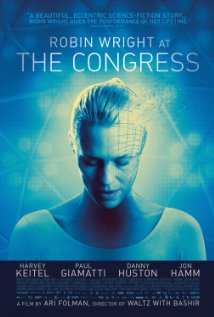
Saturday Matinee: The Congress

MV5BMjE5MTUzNDk3M15BMl5BanBnXkFtZTgwMTUwNTQ5MTE@._V1_SY317_CR0,0,214,317_AL_

“The Congress” (2013) is a hallucinatory French-Israeli  sci-fi drama written and directed by Ari Folman (Waltz With Bashir). Certain plot elements of the film were inspired by the science fiction novel “The Futurological Congress” by Stanisław Lem. Robin Wright stars as a fictionalized version of herself who reluctantly sells the film rights for her digital image in order to pay for her son’s medical treatment. Twenty years later she fully understands the repercussions of her decision in a dystopian society where the masses are addicted to an extreme form of “augmented reality” as drug-induced avatars while the ruling elite observe from above in airships.