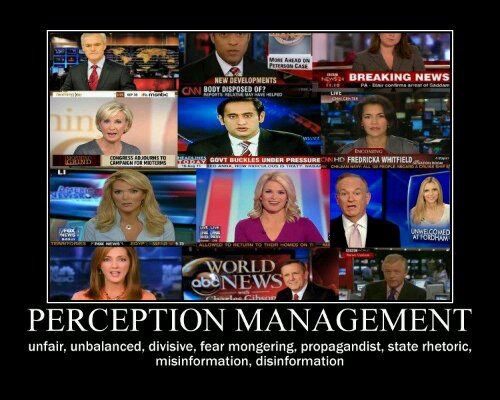
How to Reclaim your Mind and Life from the Cultural Engineers

terence_piv

By Paul Fassa

Source: RealFarmacy.com

“We tend to disempower ourselves. We tend to believe that we don’t matter. And in the act of taking that idea to ourselves we give everything away to somebody else, to something else.”
– Terence McKenna [1]

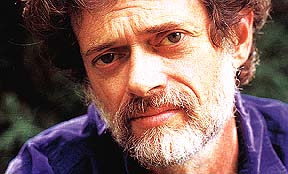
Terence Kemp McKenna (November 16, 1946 – April 3, 2000) was a philosopher, social critic, psychonaut, ethnobotanist, lecturer, writer who authored several books. He examined, deconstructed and expounded on a variety of subjects, including: plant-based entheogens, shamanism, metaphysics, psychedelic drugs, epistemology, alchemy, language, culture, technology and theories about the origins of human consciousness. He created a mathematical theory of time (novelty theory) based on patterns found in the I Ching. [1]

In this short video Terence McKenna explains the necessity reclaiming your mind and creativity from a dying, materialistic consumer oriented society.

“We have to stop consuming our culture. We have to create culture.” –Terrance McKenna [1]

It’s easy to get lost in the noise and hub of the daily grind – dead end jobs, UN-fulfilling careers, relentless consumerism and the constant drone like buzz of the big brother mind control media matrix.

The mass media’s [2] primary purpose and expertise is shaping and programming the “herd” mind with a steady stream of mostly dubious, fear based information overload combined with a cynical parade of buy this NOW advertising.

To say human consciousness has been commercialized is an enormous understatement. Just as day follows night, mass commodification of nature results in the commodification  of human consciousness.

The cultural engineers are obsessed with turning everything into things including people. The predominant value or worth of a person  is based primarily on how many things they can produce directly or indirectly and how many things they own and consume. The sacred intrinsic, non-temporal value of one’s soul is disregarded in favor of the culture’s contrived materialistic value system, which is centered on perishable commodities.

Under these conditions the soul is reified. To reify is to regard (something abstract) as a material or concrete thing. The sacred, inner life of the individual is systemically marginalized and crushed, ensuring  the majority will unblinkingly sell their soul to the externalized value system, which is by design seamlessly interlocked with survival and success on all levels.

“Within this totally jaded society the “individual” had little chance. In fact, his only hope was to escape in some fashion, perhaps into the woods where a person could rediscover the fundamental truths that nature revealed, or into hallucinogenic drugs that pushed the mind past the limitations drilled into it by education and upbringing, or into a completely different lifestyle grounded on more humane and authentic values.” [3]

For those who desire an authentic life created from the inside out and not the other way around, here are some steps that can help you reclaim your mind and life from the cultural engineers.

The burning question is do you really want to reclaim your mind from the gaudy over-commercialized, technological barbarism euphemistically referred to as a consumer oriented society. Are you finally bored with exploitative greed and debt slave materialism? You should be. Why?

“You are a divine being. You matter, you count. You come from realms of unimaginable power and light, and you will return to those realms.”
– Terence McKenna [1]

Assuming you’re ready to leap over the rotting corpse called modern culture and its Kafkaesque matrix society, unfasten your seat-belt and take a deep breath as we take a spin down the road rarely traveled. It’s an esoteric path that takes you back to the source of your creative spirit, intuitive wisdom and your unique connection to all that is or ever will be.

Obviously, a critical first step on this journey into the unknown is to resolutely refuse to be a compliant consumer of ideas, things, and dis-empowering belief systems. Be ready to break the chains of your conceptual prison and be willing to view life from the cracks that exist between ideas. The objective is to have a clear view of reality without the distorting lens of preconceived notions of our “borrowed” reality.

Also, you’ll begin to critically reexamine all the deeply held values that were inserted into your impressionable mind and soul at a very young age before you had the option to critically examine each value in the light and depth of your own consciousness. Unfortunately, at any age the saturation effect of the mass media can instill false values and a substitute reality.

“Personal empowerment means deconditioning yourself from the values and the programs of the society and putting your own values and programs in place.”
– Terence McKenna [1]


The primary tool of the cultural engineers use to control the masses is the media. In fact, for most the media is reality. The media actually creates reality; it does not merely reflect it.

How the media creates our reality:

“… television cultivates a perception of reality among its viewers. . . . “television … has acquired such a central place in daily life that it dominates our symbolic environment, substituting its message about reality for personal experience and other means of knowing about the world.” [2]

2 Simple Methods to Help You Reclaim Your Mind and Your Life:

“My technique is don’t believe anything. If you believe in something, you are automatically precluded from believing its opposite.”
– Terence McKenna [1]


One very practical method for discovering and occupying the unconditioned space between thoughts is by using an ancient Buddhist practice called mindfulness. Jon Kabat-Zinn, PhD, is a scientist, writer, professor, lecturer and meditation teacher who brought mindfulness into the realm of mainstream medicine and society at large.

Zinn’s definition of mindfulness: “Mindfulness means paying attention in a particular way; On purpose, in the present moment, and non- judgmentally.”[3] You cultivate detachment and equanimity of mind regardless of what life throws at you. It really gets interesting when you are finally able to move into the present moment and respond directly to life situations as they occur opposed to reacting to them based on past conditioning.”

With practice, mindfulness enables you to take control of your attention via your intention so you can willfully move your awareness into that clear space of the present moment without interference from the conditioned mind.

Normally our attention automatically drifts and gets stuck in the same ruts and grooves that have already created strong, magnetic like impressions in your mind. This tendency creates a mind lock where the attention is effectively caged in the past and rarely has the opportunity to freshly explore the actual moment that is life that is occurring now. In other words, our attention and thus our life is stuck in the past because where we focus our attention is what our life becomes.

Essentially to break the chains of the past you need to practice anchoring your attention in the present moment. This is when you consciously move beyond your current life “story” perception template into reality directly- moment by moment.

From that operating viewpoint you are free to create your desired reality without dragging the burden of the past or anxiety about the future into the equation. If you ignore the mental noise and turn your attention inward you will eventually discover the expansive space that exists between thoughts.

That space is where the raw, unconditioned power and unfettered freedom to create is found. It’s a timeless reservoir of unlimited possibilities. It’s a no-mind that’s empty with potential. Some refer to it as the quantum mind.

This is where artists go when they want to create something fresh and free from cultural or personal clichés. Sages and shamans are familiar with this space as well. They go there to listen not to think. If they are really good listeners they share what they heard or saw for the benefit of others.

“Half the time you think your thinking you’re actually listening.”
– Terence McKenna [1]

Of course, Terence McKenna primarily relied on various psychedelics and marijuana to help him enter that sacred space beyond the conceptual realm; he was a dedicated psychonaut, but that’s not the only way.

Discover your Imagination

“If you don’t have a plan, you become part of somebody else’s plan.”
– Terence McKenna [1]

The best plan is to first get in touch with reality via direct experience – ditching the ingrained conceptual template your culture indoctrinated into you from birth. That’s when you can really start to harness the true power of your imagination and use it to intentionally create the personal reality you desire to walk into beyond prevailing ideologies. From the perspective of raw imagination there is no past or future, just now. And that is where your essential power lies, in the present moment.

Forget about slavishly following the yellow brick road – create your own experiential road show starting with your imagination. Venture beyond the  current ideological and spiritual constraints and institutionally sanctioned belief systems that tell you what reality is and decide to boldly experience reality directly and journey into terra incognita.

To create a new reality requires skillfully engaging your intention and imagination utilizing all the senses including: visual (seeing), auditory (hearing), kinesthetic (touch), olfactory (smelling) or even gustatory (tasting). Now with your imagination fully engaged, create a subtle imaginary version that exactly reflects your desired intention.  This is basically how one creates a new reality beyond past conditioning.

From a CNN article titled:

The power of perceptions: Imagining the reality you want

“What we are fighting for, Benjamin (Ruha Benjamin, sociology professor) says, is our imagination — the right to imagine a life and relationships and a social world that are happier, less anxious, more harmonious and more just. We are not being diligent enough or deliberate enough about cultivating our imagination. We have to fight, for the ability to imagine the world we want. Because one form of oppression is telling people that they’re not allowed [or can’t] to imagine something better and happier.”

“Either there are no illusions or everything is an illusion,” (…) “And given that we are pretty much all delusional, you might as well choose your delusion.” –  Beau Lotto, neuroscientist and artist[6]

Paul Fassa is a contributing staff writer for REALfarmacy.com. His pet peeves are the Medical Mafia’s control over health and the food industry and government regulatory agencies’ corruption. Paul’s valiant contributions to the health movement and global paradigm shift are world renowned. Visit his blog by following this link and follow him on Twitter here.

Sources:
[1] http://www.endalldisease.com/73-mindblowing-terence-mckenna-quotes/
[2] http://people.missouristate.edu/MichaelCarlie/what_I_learned_about/media.htm NOTE: The term “mass media” refers to the Internet, radio, television, commercial motion pictures, videos, CDs, and the press (newspapers, journals, and magazines) – what are referred to collectively as broadcast and print media.
[3] http://www.shmoop.com/1960s/culture.html
[4] http://www.webmd.com/jon-kabat-zinn (bio)
[5] http://www.wildmind.org/applied/daily-life/what-is-mindfulness
[6] http://www.cnn.com/2012/04/11/health/enayati-power-perceptions-imagination/

Edward Abbey’s FBI File

ed-abbey

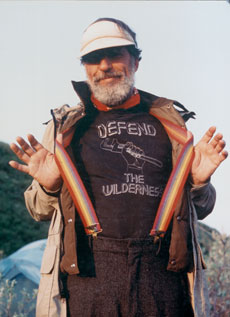
(Editor’s note: in honor of author/activist Edward Abbey, who was born on this day in 1927, you can learn a little more about his life through this overview of the FBI’s file on the courageous iconoclast beginning in his college days followed by a short video essay filmed in Moab.)

By David Gessner

Source: Orion Magazine

THE FILE BEGINS in 1947, when Abbey, just twenty and freshly back from serving in the army in Europe, posts a type-written notice on the bulletin board at the State Teacher’s College in Pennsylvania. The note urges young men to send their draft cards to the president in protest of peacetime conscription, exhorting them to “emancipate themselves.” It is at this point that Abbey becomes “the subject of a communist index card” at the FBI, and from then until the end of his life the Bureau will keep track of where Abbey is residing. They will note when he heads west and when, as acting editor of the University of New Mexico’s literary magazine, The Thunderbird, he decides to print an issue with a cover emblazoned with the words: “Man will not be free until the last king is strangled with the entrails of the last priest!” The quote is from Diderot, but Abbey thinks it funnier to attribute the words to Louisa May Alcott. And so he quickly loses his editorship while the FBI adds a few more pages to his file. Also quoted in full in his files is a letter to the editor of the New Mexico Daily Lobo, in which he writes: “In this day of the cold war, which every day shows signs of becoming warmer, the individual who finds himself opposed to war is apt to feel very much out of step with his fellow citizens.” He then announces the need to form a group to “discuss implications and possibilities of resistance to war.”

The files contain interviews with fellow students and teachers at the University of New Mexico, who talk of Abbey’s “instability and poor judgment,” with one interviewee saying that, as an editor, Abbey showed “a stubborn ego, a taste for shocking the reader, a lack of maturity.” Abbey, according to other colleagues, was “indiscreet in his individualism” and “demonstrated a somewhat radical rebellious quality . . .” Though the interviews are mildly damning, no one questioned the subject’s loyalty to his country.

One wonders how Abbey would have fared these days. Would the FBI, or the NSA, have simply kept tabs on him or actually called him in for questioning? So many of his views, and so much of his personality, match just the sort of profile we have come to associate with our rather broad definition of domestic terrorism. It isn’t just his gun advocacy, or his monkey wrenching. It’s his belief that wilderness is a place where the last free men can retreat when the tyrants take over. He writes:

Democracy has always been a rare and fragile institution. . . . As social conflict tends to become more severe . . . there will inevitably be a tendency on the part of the authoritarian element—always present in our history—to suppress individual freedoms, to utilize the refined techniques of police surveillance (not excluding torture of course) in order to preserve—not wilderness!—but the status quo . . .

It’s a type of sentiment that anticipates our government’s reaction to 9/11. Thoreau said that under a government that unjustly imprisons its own, “the true place for the just man is also a prison.” Prison is exactly where Abbey’s monkey wrenching and FBI record might have landed him in today’s world.

Abbey’s beliefs in freedom and resistance, and his message of aggressive nonconformity, of screw-you freedom, were perfect for the ’60s and ’70s. But it’s hard to imagine that the same message would get a similar reaction today, or to see, at least at first, how his spirit might be adapted to fit our times. For instance, isn’t monkey wrenching dead as a legitimate possibility for the environmental movement? I must admit that in my own grown-up life as a professor and father I don’t blow a lot of things up. For most of us who care about the environment, Wallace Stegner provides a much more sensible model.

But I don’t want to be so quick to toss Abbey on the scrap heap. If the times have changed, Abbey’s ideas about freedom have in some ways never been more relevant. Many of the things that he foresaw have come to pass: we currently live in an age of unprecedented surveillance, where the government regularly reads our letters (now called e-mails) and monitors our movements. Abbey offers resistance to this. Resistance to the worst of our times, the constant encroaching on freedom and wildness. He says to us: Question them, question their authority. Don’t be so quick to give up the things you know are vital no matter what others say.

David Gessner is the author of nine books, including the forthcoming All the Wild That Remains: Edward Abbey, Wallace Stegner, and the American West from which this essay is adapted. He is the founder of the journal Ecotone.


Production notes by Ned Judge:
An eight minute film essay that I co-produced and directed with Ed Abbey in 1985. At the time I was working for a network magazine show. The executive producer took me to lunch one day. He told me that he was having trouble with his son who was 18. The son thought his dad was a corporate whore. He had told his father if he had any balls at all he’d put Ed Abbey on his show. That’s why the EP was talking to me. Would I see if it was possible? I had an acquaintance who knew Ed and he passed the request along. Ed responded that he’d give it a try. He signed the contract and wrote a script. We met in Moab and went out to Arches National Park to shoot some practice sessions with a home video camera. We would review them at the motel in the evening. After a day or two, Ed was feeling pretty comfortable on camera so we scheduled the shoot. We were all happy with the way it went. But then we ran head-on into network reality. Roger Mudd, the show’s host, was extremely negative about putting an “eco-terrorist” on the show. The executive producer had no choice but to cave. So this Abbey essay was put on the shelf and never aired. Abbey died 3 years later in March 1989.

How the War on Drugs Advances Transnational Capitalism

dwc-cvr-small_72web

How US drug policy in the Americas is a pretext for extending militarization and global capitalism south of the border.

By Mark Karlin

Source: Alternet

Dawn Paley, a Canadian journalist, offers a transformative view of the US war on drugs in the Western Hemisphere (with the exclusion of Canada as a targeted nation because it is a neoliberal partner of the United States in exploitation). Her just-released book,  Drug War Capitalism, is a sweeping, exhaustively detailed analysis that reveals the insidious actual goals of the US-led and funded militarization south of the border in the name of destroying drug cartels. As Paley writes, “This war is about control over territory and society [and market share, cheap labor, mineral rights and profits], much more so than it is about cocaine or marijuana.”

The following is the Truthout interview with Dawn Paley about  Drug War Capitalism:

Mark Karlin: You state the so-called war on drugs is really a war on people. This is a key point in your exhaustively documented and cogently threaded book. Can you expand on that – and of course you are talking about a certain class and background of person: the indigenous and the poor south of the US Border?

Dawn Paley: There is excellent work being done in the US examining and resisting the impacts of the drug war, specifically when it comes to the mass incarceration of young people from communities of color on that pretext.  Drug War Capitalism looks at how the drug war is deployed south of the US border, where the key mechanism for social control is the use of terror against the people/ el pueblo/los pueblos. Some activists and writers use words like social cleansing to describe the impacts of drug war militarization and paramilitarization, and how both primarily target poor young men in urban and rural environments. The case of Ayotzinapa, with the disappearance of 43 students and the murder of three others (one of the disappeared students is now confirmed to have been murdered) by municipal police in Iguala, Guerrero, is just the latest example of how often the victims of the drug war come from marginalized – and often well organized – communities and groups.

In the US, many people have been turned into frightened puppets who support any action in the name of the war on terrorism, even when such military and police action has to do with the goal of expanding transnational business opportunities. How is this analogous to the use of the war on drugs as a cover for US military intervention in Mexico, Central America, Colombia and the rest of most of the Western Hemisphere, with the exclusion of Canada? After all, doesn’t the US benefit by having a state of violence among the poor and socially marginal people keep them from considering populist political rebellion in these nations?

I’d like to approach this question a little differently, and ask instead why it is that the hundreds of thousands of people who mobilized throughout the United States against the unjust war in Iraq were able to make the connection between US invasions and oil extraction, and why it has been so difficult for folks to mobilize and make the same connections to resource extraction and capitalism in the case of the US-backed war on drugs in Colombia, Mexico and elsewhere.

Once we can start to make the connections between US-backed war agendas in the form of Plan Colombia or the Merida Initiative and the expansion of capitalism in Mexico and Colombia, a lot of things begin to make sense. In the immediate term, the militarization and the paramilitarization stemming from these plans to sow terror and strengthen the state repressive apparatus, which, as we are well aware, works to protect transnational capital, like mining companies or oil companies.

Over the longer term, the structural reforms that go hand in hand with Plan Colombia and the Merida Initiative deepen neoliberalism. With the privatization of Petroleos Mexicanos (Pemex), Mexico’s state oil company, for example, 70 percent of Mexico’s federal budget is at stake, something I argue could lead to a previously unknown level of austerity in Mexico. Already financially starved sectors like health and public education could be impacted, as could existing subsidies for transportation, basic goods and otherwise.

As the privatization of Pemex kicks in and the effects begin to be felt over the next decade, should people rise up in protest, the fact that police and military forces as well as nominally non-state armed actors were strengthened through the Merida Initiative will certainly come in handy in order to control dissent.

You bring up how narcotrafficking money laundering has been profitable for banks and even that the cash liquidity of such funds helped some large US banks survive the 2008 implosion of the economy. In addition, drug cartels invest a lot of their money – 85 percent of which you note is generated in the US, in the cocaine market – in legitimate businesses. Aren’t narcotraffickers often the shady cousins of neoliberal capitalists, who collaborate for mutual benefit at times?

I suppose you could say that, yes. The book doesn’t focus on the role of banks, as this is one of the areas of the drug war that has been extensively covered in the mainstream media. However, There’s a tendency towards showing images of Mexican traffickers with stacks of US dollars, but their proceeds represent a fraction of the overall cash generated because of prohibition. I think it’s important to point out that when we talk about the wealth generated by the drug trade it is essential to remember that the vast majority of that cash is generated in the United States and helps prop up the US economy in various ways.

Perhaps the linchpin to your investigative reporting is that the war on drugs is a cover, in many ways, for the expropriation of land for excavation and fossil fuel companies – as well as the creation of secure manufacturing, assembly and marketing environments for other international corporations. I know that specific alliances of corruption are often difficult to ascertain when it comes to the so-called war on drugs, but how do paramilitary groups (sometimes drug cartels), the military and the police play a role in securing land and providing security for transnational corporations. As you point out, large corporations and their employees are rarely victims of violence in the nations that have been targeted for drug war capitalism.

Colombia provides us with the strongest examples of this: paramilitaries hired to kill union organizers, or companies like BP and Drummond using paramilitaries to ensure they had access to lands for mining and pipeline building. These cases are extensively documented by court cases which have led to settlements for victims.

In a place like Ciudad Juarez we see how, for example, it is workers and their families who are terrorized by the drug war, and especially by state forces, while police go to great extents to protect the US-based owners of manufacturing plants when they visit the city. In the book I document how communal landowners dedicated to protecting their land from resource extraction are threatened by Federal Police deployed in the name of fighting the war on drugs, or how they are murdered by so called cartel hitmen, who I consider to be more akin to paramilitaries. And this is just the beginning. Unfortunately these trends are likely to become more obvious in Mexico, as they did in Colombia, as time goes on.

What role did NAFTA and other trade agreements play in having laid the groundwork for killing, kidnapping and displacing people to seize land for excavation and fossil fuel development? As a further note, you are a Canadian, and Canadian mining companies appear to play a large role in land seizures, hiring of enforcers (in many cases assassins and torturers), and cooperation with corrupt governments, police and even drug cartels. Is it safe to assume that this is with the full support of the Harper government?

Well, in Colombia it was actually Plan Colombia that paved the way for the Canada-Colombia Free Trade Agreement and the US-Colombia Free Trade Agreement. They didn’t advertise it at the time, but following Plan Colombia it was made clear by officials from both the US and Colombia that though the flow of drugs wasn’t reduced, Plan Colombia was a success because it created the conditions for the implementation of these new free trade agreements.

In some ways NAFTA, which became active in January 1994, happened too soon. Let me explain: While NAFTA went a long way towards destroying local economies especially in rural areas and impoverishing small farmers, by 2008 when the Merida Initiative kicked off, it left much to be desired in terms of how open the Mexican economy actually was to transnational capital. At that time, the Mexican government continued to be the full owner of the Federal Electricity Commission and the national oil company, Pemex.

Communal landowners were refusing to enter into privatization schemes made possible when Article 27 of the Mexican Constitution was changed prior to the signing of NAFTA in 1992. Elite Mexican families took control over certain sectors of the economy that were privatized, as NAFTA era privatizations did not include regulations that meant that US bidders would be considered on equal footing with national bidders. All of these elements, among others, meant that Mexico was ripe for a new round of neoliberalism and austerity that would open new areas for investment. That’s part of what the Merida Initiative has provided a platform to do.

NAFTA was a key ingredient in opening up Mexico’s mining sector. Large scale, modern mining, especially gold mining, provides us with a bit of a preview of the kinds of conflicts that could erupt if widespread private sector oil and gas exploration and exploitation goes ahead in Mexico. Gold mining in Mexico is dominated by companies based in Canada, which gives them a litany of financial as well as diplomatic and legal supports for their activities. In the book, I document cases where these Canadian mining companies take advantage of the conditions created by the Merida Initiative in order to push their projects forward.

It appears ironic that the free trade treaties squeeze out small business people and entrepreneurs, benefiting almost exclusively the large multinational corporations. After all, the promoters of the treaties claim that they stimulate the business environment for everyone. You provide evidence, however, on why that is just a sales point for free trade agreements, but hardly the reality.

Free trade agreements decimate local economies and small businesses. They allowed the US and other nations to dump their subsidized agricultural products, like corn, into a diverse national market that included many small holders, as in Mexico, who operate with very few subsidies. There are social classes that benefit greatly from these kinds of agreements, but they are the minority, in the US as well as in target countries like Mexico. Rendering small farms and family businesses unprofitable is more than an economic issue: It is a root cause of forced migration, of displacement, and in the destruction of social and community fabric. This, in turn, is beneficial in terms of increasing state and corporate control over peoples’ lives and lands.

You provide a good deal of clarity on how Plan Colombia was the model for the Mérida Initiative in Mexico. What was the real priority of Plan Colombia in terms of creating a nation that is structured to provide an accommodating and secure environment for transnational businesses?

I believe the real priority of Plan Colombia was just that: improving the conditions for investment throughout the country. Officially this takes a couple of forms, including regulatory and judicial reforms and the extension of police forces and soldiers throughout the national territory. Off the books, it is known that paramilitary groups work closely with police and soldiers throughout the country, and that this tends towards benefiting the activities of transnational companies.

One of the implications of the US working to graft its legal model on nations south of the border is that it appears likely to increase prison populations. Given that the United States has the highest percentage of its population incarcerated, that is an ominous portent, isn’t it?

It is indeed. The Merida Initiative also included funds for building and expanding Mexico’s prison facilities and training Mexican prison guards in the ways of US jailers.

That brings us back to the first question. Who is responsible for the social cleansing that is a significant component of the violence associated with the alleged war on drugs? Who gains from killing “disposable people”?

There are cases where we can talk about individuals responsible for killings, but the approach I take in the book is to try and present what I argue are structural elements which allow this kind of killing and terror to take place. Certainly US-funded militarization is a key component. There’s the media and the government, which blame victims for their own deaths by linking them with drug trafficking. Then there is the impunity, the fact that those responsible for criminal acts not only get away with their crimes, but that various levels of government are actively involved and thus also cover their tracks. That impunity exists at a national level in Mexico and elsewhere, but it is allowed to thrive because it is backed by the US State Department, which boasts that it has had closer relations with the Mexican government since the beginning of the Merida Initiative than at any previous juncture.

One of your key points is that the US State Department basically concedes that the flow of drugs into the US will never really significantly diminish. However, as you point out, by constantly militarizing nations south of the border, the US is able to – through its Northern and Southern Commands – gain large footholds in the militaries, police, paramilitaries (who not infrequently are at the service of global corporations) and even drug cartels that can cooperate to favor US financial interests. In that sense, we are really talking about drug war capitalism, aren’t we?

We are! I hope folks will be inspired to pick up  Drug War Capitalism and explore these issues. In the conclusion, I write that I consider the book to be an early attempt to articulate and make visible connections between the war on drugs and the expansion of capital. Sadly, as recent events in Ayotzinapa, Guerrero and Tlatlaya, Mexico State, have shown, it is likely to become increasingly obvious that the drug war is in fact a war on the people, waged in large part by US-backed state forces.

The FBI is Great at Disrupting (Its Own) “Terror Plots”

index

By Kevin Carson

Source: Center for a Stateless Society

On January 14 the US Department of Justice announced that the Joint Terrorism Task Force had disrupted the latest “domestic terrorism plot” — this time by “a Cincinnati-area man … to attack the U.S. Capital and kill government officials.” House Speaker  John Boehner immediately cited the disrupted plot as evidence that Congress should think carefully before refusing to renew the NSA’s bulk data collection powers. Only it turns out the feds had at least as much to do with hatching the plot as did the alleged plotter, Christopher Cornell.

The FBI investigator became aware of Cornell’s pro-ISIS comments on Twitter thanks to a tip-off from an unnamed informant who “began cooperating with the FBI in order to obtain favorable treatment with respect to his criminal exposure on an unrelated case.” The informant, on FBI orders, arranged two meetings with Cornell where they discussed attacks on the capital, after which the FBI arrested him to “prevent” the attacks. In other words, it identified Cornell as a suspect entirely on the basis of his expression of radical political opinions, with the help of a jailhouse snitch who rolled over in response to prosecutorial blackmail. And the actual “plot” was worked out only in subsequently arranged meetings in which one party — working for the FBI — may well have been leading Cornell. It wasn’t for nothing that ecological activist Judi Bari said “the first person to mention bringing dynamite is probably a fed.”

In this the Cornell case has a lot in common with a great many other so-called “domestic terrorism plots” federal law enforcement has “disrupted,” going back to the Lackawanna Six. A good example is the so-called “plot” of the Newburgh Four, who supposedly plotted to blow up synagogues and attack a military base. The judge commented that the government “came up with the crime, provided the means, and removed all relevant obstacles,” in the process making a terrorist out of a man “whose buffoonery is positively Shakespearean in scope” (“US: Terrorism Prosecutions Often An Illusion,” Human Rights Watch, July 21, 2014).

This reminds me of a story I read — from Dilbert cartoonist Scott Adams, I think — about a software company that offered programmers a bonus for every bug they detected in code. Predictably, creating bugs to “detect” became a major source of revenue for employees. H.L. Mencken once remarked on government’s tendency “to keep the populace alarmed (and hence clamorous to be led to safety) by menacing it with an endless series of hobgoblins, all of them imaginary.”

We see this in the dismaying, Starship Troopers-like media narrative involving any and all armed government personnel in uniform. Last weekend’s highest U.S. box office receipts came not from Selma (the story of oppressed people organizing to fight for their freedom) but from American Sniper. The latter movie glorifies a vile wretch who gloated over all the “savages” (his word for any male age 16 to 60) he murdered in Iraq, on the grounds that he was saving American troops from being shot at. Never mind that the people in Iraq were shooting back at an invading army in their own country. Domestically, we see the same phenomenon with shows like COPS, and local news coverage of police in paramilitary gear (breathlessly referred to as “the authorities” by nitwit reporters) storming alleged “meth labs.”

And remember, the very concept of a “sting operation” (also known as “entrapment”) invokes the principle that some human beings are superior to the law. The first professional police forces were justified on the grounds that they were simply being paid to exercise the same posse comitatus powers of “citizen’s arrest” possessed by any other member of society. By that standard, if it’s illegal for an ordinary citizen to solicit or instigate illegal activity, it should be illegal for anyone — including uniformed state officials.

But most importantly, this is an example of how the state mostly “solves” problems of its own making — and has an incentive to keep creating more problems to justify giving it the power and resources to “solve” them.


Fascism and War: Elite Tools to Crush and Kill Dissent

facism

By Julie Lévesque

Source: GlobalResearch.ca

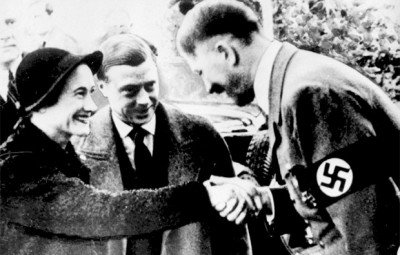
The Duke and Duchess of Windsor in 1937 with Adolf Hitler.

The Duke and Duchess of Windsor in 1937 with Adolf Hitler.

Dr. Jacques Pauwels is not the kind of historian you often hear about in the mainstream media. He’s obviously not the kind of “expert” they refer to for historical facts. Actually, one crucial propaganda method consists in excluding current events from their historical context.

Listening to Pauwels makes one realize the scope of the lies we’ve been fed about the Second World War, fascism and democracy, and how myths related to previous wars need to be upheld in the mainstream discourse to satisfy never ending war propaganda needs.

In a speech held December 15 in Montreal, he explained that World Wars I and II were all about crushing mass revolutionary movements.

The myth of the Good War

Every time Westerners’ approval for war is required, the myth of the good war surfaces: the Second World War was a good war, a necessity to quench Hitler’s blood thirst. Pauwels tears this myth apart, uncovering the vicious nature of the western elite.

The reasons for the US involvement in World War II lie in the social-economic conditions of the time, not in an outpouring of compassion destined to save humanity from fascism. The US elite was actually in favor of fascism, a very convenient tool to crush the mass revolutionary movement embodied by the Russian Revolution and the USSR.

WWII was in fact a continuity of WWI. “We are always told that WWI started with the assassination of Archduke Franz Ferdinand, but it’s not true”, Pauwels says. It is indeed a well established myth carried on by various sources, whether history is written by “thousands of eminent experts, scholars, and leaders” like in Encyclopedia Britannica, or by just about anybody, like in Wikipedia:

The outbreak of war

With Serbia already much aggrandized by the two Balkan Wars (1912–13, 1913), Serbian nationalists turned their attention back to the idea of “liberating” the South Slavs of Austria-Hungary. Colonel Dragutin Dimitrijević, head of Serbia’s military intelligence, was also, under the alias “Apis,” head of the secret society Union or Death, pledged to the pursuit of this pan-Serbian ambition. Believing that the Serbs’ cause would be served by the death of the Austrian archduke Francis Ferdinand, heir presumptive to the Austrian emperor Francis Joseph, and learning that the Archduke was about to visit Bosnia on a tour of military inspection, Apis plotted his assassination. (World War I, Encyclopedia Britannica)

The immediate trigger for war was the 28 June 1914 assassination of Archduke Franz Ferdinand of Austria, heir to the throne of Austria-Hungary, by Yugoslav nationalist Gavrilo Princip in Sarajevo. This set off a diplomatic crisis when Austria-Hungary delivered an ultimatum to the Kingdom of Serbia,[10][11] and international alliances formed over the previous decades were invoked. Within weeks, the major powers were at war and the conflict soon spread around the world. (World War I, Wikipedia)


Both WWI and WWII had two dimensions: the vertical dimension, namely the rivalry between empires, and the horizontal one, class warfare, Pauwels explains.

These wars were actually the best way for the western elite to cope with the ever growing revolutionary and democratic movements fueled by dire economic conditions and which threatened the established order.

In Nietzsche’s view for example, Pauwels says “war was the solution against revolution, since in a war, there are no discussions, like there is in a democracy. In a war, the minority, the elite, decides and the majority, the proletarians, obey.”

For members of the elite like Malthus, “the system could not be the cause of poverty since they were profiting from it. The cause of poverty was the poor: there were too many of them. Therefore the solution to poverty and threatening revolutionary movements was simply to eliminate poor people and what better solution than war to kill poor people?”

After WWI though, “revolution was no longer a simple idea but rather something concrete: the Soviet Union.” That’s when fascism came to the rescue. “Fascism was the instrument used by the elite to further the objectives of 1914, namely put an end to revolutions and communism.”

Communism and socialism were gaining worldwide momentum after WWI. “The German industrial and financial elite wished to crush the revolutionary movement and destroy the Soviet Union. Adolf Hitler was their instrument.”

According to popular belief Western leaders were defending democracy, engaged in a war against Germany to save humanity from fascism and the US involvement in the war led to the downfall of Hitler’s war machine. Nothing is further from the truth. “Hitler was supported by other European countries and the US because they wanted him to destroy the USSR, the cradle of the revolution.” The exact opposite occurred: it was the USSR that defeated Nazi Germany, losing over 20 million souls in the battle.

The US even recruited the best Nazi scientists, technicians and engineers to work for them after the war. That piece of history called Operation Paperclip (picture below) has yet to find its way in Encyclopedia Britannica.

WWII was the victory of American Imperialism, a term which is rarely used today even if it best describes the reality the world has been living in ever since.

But even more surprising is the surviving myth that we are going to war to save the world from evil dictators or terrorists and that the western world fights for freedom and democracy. Thanks to the “stenographers of power”, the tactic is still reliable and used several decades later.

Visit Jacques Pauwels’ web site at http://www.jacquespauwels.net/about/. His articles and books are available in several languages. See also Jacques Pauwels’ articles on Global Research.

Zombie Apocalypse and the Politics of Artificial Scarcity

By Colin Jenkins

Source: The Hampton Institute

cdc_zombie_attacksDystopian narratives have long been an alluring and thought-provoking form of entertainment, especially for those who take an interest in studying social and political structures. From classics like Nineteen Eighty-Four and Brave New World to the current hit, The Hunger Games, these stories play on our fears while simultaneously serving as warning signs for the future.

Their attractiveness within American society is not surprising. Our lives are driven by fear. Fear leads us to spend and consume; fear leads us to withdraw from our communities; and fear leads us to apathy regarding our own social and political processes. This fear is conditioned as much as it is natural. The ruling-class handbook, Machiavelli’s The Prince, made it clear: “Since love and fear can hardly exist together, if we must choose between them, it is far safer to be feared than loved.”

The idea of apocalypse is a central tenet of human society. We’ve been taught about Armageddon, Kali Yuga, Judgement Day, Yawm ad-Dīn, nuclear holocaust, the end times, the four horsemen, and the Sermon of the Seven Suns. Hierarchical societal arrangements leave us feeling powerless. Exploitative systems like capitalism leave us feeling hopeless. And the widespread deployment of fear ultimately keeps us in our place, and out of the business of those who own our worlds.

The last half-century has brought us the zombie apocalypse – a fictional world where the human race has largely been transformed into a brainless, subhuman hoard of flesh-eaters, with only a few random survivors left to carve out any semblance of life they can find in a barren landscape. The emergence and immense popularity of the TV show The Walking Dead is the latest, and perhaps most influential, piece in a long line of narratives centered within themes of survival, human interaction, and scarcity.
Human Nature and Interaction

Behind all political battles, social critiques, and theoretical inquiries lies the most fundamental question: when left to our own accord, how will we interact with one another? How one answers this question usually goes a long way to how one perceives the world, and how issues are viewed and opinions are formed. To our dismay, potential answers are typically presented in dualities. Are we good or evil? Competitive or cooperative? Generous or greedy? Violent or peaceful?

A common theme among religion has been that human beings are “born into sin” and heavily influenced by “evil forces” to do harmful things. One who embraces this theme will tend to have less faith in humanity than one who does not. For, if we really are engaging in a daily struggle to resist the powers of evil, it is reasonable to assume that evil will take hold of many. How can we trust anyone who, at a moment’s notice, could potentially lose the ability to act on their own conscience? The common theme of our dominant economic system – capitalism – is that human beings are inherently competitive and self-centered. When combined, it is easy to see how such ideologies may create intensely authoritative and hierarchical systems. After all, people who are influenced by strong and evil metaphysical forces while also being drawn toward callous, self-interest certainly cannot be trusted with free will.

This lesson is drilled deep into our psyches with each episode of The Walking Dead, where the potential threat of flesh-eating zombie hoards become an afterthought to the clear and present danger of “evil” humans who are out to get one another. Whether it’s a sadistic governor charming an entire town with violent gladiator events, an outlaw gang with the obligatory pedophile, or a pack of hipster cannibals salivating at the thought of eating their next visitor, the intended theme is clear – human beings are not capable of co-existing, even in a world where they rarely interact.

But is this idea accurate? Are we really drawn toward conflict? Must we compete with one another to survive? Is it appropriate to apply Darwin’s evolutionary theories in a social sense where the “fit” are meant to gain wealth and power over the “weak”? Or are we, as Peter Kropotkin theorized in his classic Mutual Aid, more inclined to mimic most other species on Earth, which have been observed over the course of centuries to exhibit “Mutual Aid and Mutual Support carried on to an extent which made me suspect in it a feature of the greatest importance for the maintenance of life, the preservation of each species, and its further evolution?”

There is ample evidence that we are drawn to cooperation. “Caring about others is part of our mammalian heritage, and humans take this ability to a high level,” explains neuroscientist Sandra Aamodt. “Helping other people seems to be our default approach, in the sense that we’re more likely to do it when we don’t have time to think a situation through before acting. After a conflict, we and other primates-including our famously aggressive relatives, the chimpanzees-have many ways to reconcile and repair relationships.” Studies have shown that in the first year of life, infants exhibit empathy toward others in distress. Evolutionary Anthropologist Michael Tomasello has put “the concept of cooperation as an evolutionary imperative to the test with very young children, to see if it holds for our nature and not just our nurture. Drop something in front of a two-year-old, he finds, and she is likely to pick it up for you. This is not just learned behavior, he argues. Young children are naturally cooperative.”

So, if we are truly inclined to cooperate with one another, why is there so much division and turmoil in the world? The answer to this question may be found by assessing not only the mechanisms of capitalism, but more importantly in the creation of artificial scarcity as a means to maintain hierarchies.
Capitalism and Artificial Scarcity

It is no secret that capitalism thrives off exploitation. It needs a large majority of people to be completely reliant on their labor power. It needs private property to be accessible to only a few, so that they may utilize it as a social relationship where the rented majority can labor and create value. It needs capital to be accessible to only a few, so that they may regenerate and reinvest said capital in a perpetual manner. And it needs a considerable population of the impoverished and unemployed – “a reserve army of labor,” as Marx put it – in order to create a “demand” for labor and thus make such exploitative positions “competitive” to those who need to partake in them to merely survive. It needs these things in order to stay intact – something that is desirable to the 85 richest people in the world who own more than half of the world’s entire population (3.6 billion people).

But wealth accumulation through alienation and exploitation is not enough in itself. The system also needs to create scarcity where it does not already exist. Even Marx admitted that capitalism has given us the productive capacity to provide all that is needed for the global population. In other words, capitalism has proven that scarcity does not exist. And, over the years, technology has confirmed this. But, in order for capitalism to survive, scarcity must exist, even if through artificial means. This is a necessary component on multiple fronts, including the pricing of commodities, the enhancement of wealth, and the need to inject a high degree of competition among people (who are naturally inclined to cooperation).

Since capitalism is based in the buying and selling of commodities, its lifeblood is production. And since production in a capitalist system is not based on need, but rather on demand, it has the tendency to produce more than it can sell. This is called overproduction. Michael Roberts explains:

Overproduction is when capitalists produce too much compared to the demand for things or services. Suddenly capitalists build up stocks of things they cannot sell, they have factories with too much capacity compared to demand and they have too many workers than they need. So they close down plant, slash the workforce and even just liquidate the whole business. That is a capitalist crisis.

When overproduction occurs, it must be addressed. There are multiple ways to do this. Marx addressed three options: “On the one hand by enforced destruction of a mass of productive forces; on the other, by the conquest of new markets, and by the more thorough exploitation of the old ones.” Another is through the destruction of excess capital and commodities. Whichever measure is taken, it is paramount that the economy must emerge from a starting point that is different from the ending point where the crisis began. This is accomplished through creating scarcity, whether in regards to labor, production capacity, or commodities and basic needs.

Maintaining scarcity is also necessary for wealth enhancement. It is not enough that accumulation flows to a very small section of the population, but more so that a considerable portion of the population is faced with the inherent struggles related to inaccessibility. For example, if millions of people are unable to access basic needs such as food, clothing, shelter, and healthcare, the commodification of those needs becomes all the more effective. On the flip side, the mere presence of accessibility – or wealth – which is enjoyed by the elite becomes all the more valuable because it is highly sought after.

In this sense, it is not the accumulation of personal wealth that creates advantageous positions on the socioeconomic ladder; it’s the impoverishment of the majority. Allowing human beings access to basic necessities would essentially destroy the allure (and thus, power) of wealth and the coercive nature of forced participation. This effect is maintained through artificial scarcity – the coordinated withholding of basic needs from the majority. These measures also seek to create a predatory landscape – something akin to a post-apocalyptic, zombie-filled world where manufactured scarcity pits poor against poor and worker against worker, all the while pulling attention away from the zombie threat.
Control through Commodification

A crucial part of this process is commodification – the “transformation of goods and services, as well as ideas or other entities that normally may not be considered goods, into commodities” that can be bought, sold, used and discarded. The most important transformation is that of the working-class majority who, without the means to sustain on their own, are left with a choice between (1) laboring to create wealth for a small minority and accepting whatever “wages” are provided, or (2) starving.

In The Socioeconomic Guardians of Scarcity, Philip Richlin tells us that:

“When society deprives any community or individual of the necessities of life, there is a form of violence happening. When society commodifies the bare necessities of life, they are commodifying human beings, whose labor can be bought and sold. Underneath the pseudo-philosophical rationalizations for capitalism is a defense of wage slavery. For, if your labor is for sale, then you are for sale.”

We are for sale, and we sell ourselves everyday – in the hopes of acquiring a wage that allows us to eat, sleep, and feed our families. In the United States, the 46 million people living in poverty haven’t been so lucky. The 2.5 million who have defaulted on their student loans have been discarded. The 49 million who suffer from food insecurity have lost hope. The 3.5 million homeless are mocked by 18.6 million vacant homes. And the 22 million who are unemployed or underemployed have been deemed “unfit commodities” and relegated to the reserve army of labor.

The control aspect of the commodification of labor comes in its dehumanizing effect – an effect that was commonly recognized among 18th and 19th century thinkers. One of those thinkers, Wilhelm Von Humboldt, when referring to the role of a wage laborer, explained “as whatever does not spring from a man’s free choice, or is only the result of instruction and guidance, does not enter into his very nature; he does not perform it with truly human energies, but merely with mechanical exactness, suggesting that “we may admire what he (the laborer) does, but we despise what he is,” because he is essentially not human.

The worker, in her or his role in the capital-labor relationship, exists in a position of constant degeneration. This is especially true with the onset of mass production lines and the division of labor – both of which are inevitable elements within this system. “As the division of labor increases, labor is simplified,” Marx tells us. “The special skill of the worker becomes worthless. He becomes transformed into a simple, monotonous productive force that does not have to use intense bodily or intellectual faculties. His labor becomes a labor that anyone can perform.” As automation and technology progress, such specialized task-mastering even seeps into what was once considered “skilled” labor, thus broadening its reach.

In this role, workers are firmly placed into positions of control within a highly authoritative and hierarchical system.
A World beyond Profit

Dystopian narratives are no longer fiction. From birth, we are corralled into a system that scoffs at free will, stymies our creative and productive capacities, and leaves us little room to carve our own paths. The constructs directed from above are designed to strip us of our inclination to care and cooperate, and make us accept the need to step over one another to get ahead. This is not our nature. Whether we’re talking about Kropotkin’s studies in “the wild” or Tomasello’s experience with children, observable evidence tells us we’ve been duped.

Another world is not just possible; it is inevitable if we are to exist in the long-term. In Post-Scarcity Anarchism, Murray Bookchin offers a glimpse into this world not constructed on labor, profit, and artificial scarcity:

“It is easy to foresee a time, by no means remote, when a rationally organized economy could automatically manufacture small “packaged” factories without human labor; parts could be produced with so little effort that most maintenance tasks would be reduced to the simple act of removing a defective unit from a machine and replacing it by another-a job no more difficult than pulling out and putting in a tray. Machines would make and repair most of the machines required to maintain such a highly industrialized economy. Such a technology, oriented entirely toward human needs and freed from all consideration of profit and loss, would eliminate the pain of want and toil-the penalty, inflicted in the form of denial, suffering and inhumanity, exacted by a society based on scarcity and labor.”

The barren landscape for which we’ve been placed has a future beyond Hershel’s overrun farm, the confines of a prison, the Governor’s creepy town of Woodbury, and the trap known as Terminus. It has a future beyond the artificial constructs of capitalism and hierarchy. Human nature is talking to us… and we’re starting to listen.

The Dire State of Our Nation (What You Won’t Hear from the Politicians)

Unknown-18

By John W. Whitehead

Source: The Rutherford Institute

No matter what the politicians might say about how great America is, the fact is that the nation seems to be imploding. Consider the following facts:

Our government is massively in debt. Currently, the national debt is somewhere in the vicinity of $18 trillion. More than a third of our debt is owned by foreign countries, namely China and Japan.

Our education system is abysmal. Despite the fact that we spend more than most of the world on education ($115,000 per student), we rank 36th in the world when it comes to math, reading and science, far below most of our Asian counterparts. Even so, we continue to insist on standardized programs such as Common Core, which teach students to be test-takers rather than thinkers.

Our homes provide little protection against government intrusions. Police agencies, already empowered to crash through your door if they suspect you’re up to no good, now have radars that allow them to “see” through the walls of your home.

Our prisons, housing the largest number of inmates in the world and still growing, have become money-making enterprises for private corporations that rely on the inmates for cheap labor.

We are no longer a representative republic. The U.S. has become a corporate oligarchy. As a recent survey indicates, our elected officials, especially those in the nation’s capital, represent the interests of the rich and powerful rather than the average citizen.

We’ve got the most expensive, least effective health care system in the world compared to other western, industrialized nations.

The air pollution levels are dangerously high for almost half of the U.S. population, putting Americans at greater risk of premature death, aggravated asthma, difficulty breathing and future cardiovascular problems.

Despite outlandish amounts of money being spent on the nation’s “infrastructure,” there are more than 63,000 bridges—one out of every 10 bridges in the country—in urgent need of repair. Some of these bridges are used 250 million times a day by trucks, school buses, passenger cars and other vehicles.

Americans know little to nothing about their rights or how the government is supposed to operate. This includes educators and politicians. For example, 27 percent of elected officials cannot name even one right or freedom guaranteed by the First Amendment, while 54 percent do not know the Constitution gives Congress the power to declare war.

Nearly one out of every three American children live in poverty, ranking us among the worst in the developed world.

Patrolled by police, our schools have become little more than quasi-prisons in which kids as young as age 4 are being handcuffed for “acting up,” subjected to body searches and lockdowns, and suspended for childish behavior.

We’re no longer innocent until proven guilty.  In our present surveillance state, that burden of proof has now been shifted so that we are all suspects to be spied on, searched, scanned, frisked, monitored, tracked and treated as if we’re potentially guilty of some wrongdoing or other.

Parents, no longer viewed as having an inherent right to raise their children as they see fit, are increasingly being arrested for letting their kids walk to the playground alone, or play outside alone. Similarly, parents who challenge a doctor’s finding or request a second opinion regarding their children’s health care needs are being charged with medical child abuse and, in a growing number of cases, losing custody of their children to the government.

Private property means little at a time when SWAT teams and other government agents can invade your home, break down your doors, kill your dog, wound or kill you, damage your furnishings and terrorize your family.

Court rulings undermining the Fourth Amendment and justifying invasive strip searches have left us powerless against police empowered to forcefully draw our blood, forcibly take our DNA, strip search us, and probe us intimately.

Americans have no protection against police abuse. It is no longer unusual to hear about incidents in which police shoot unarmed individuals first and ask questions later.

If there is any absolute maxim by which the federal government seems to operate, it is that the American taxpayer always gets ripped off. This is true, whether you’re talking about taxpayers being forced to fund high-priced weaponry that will be used against us, endless wars that do little for our safety or our freedoms, or bloated government agencies such as the National Security Agency with its secret budgets, covert agendas and clandestine activities.

Americans are powerless in the face of militarized police. As police forces across the country continue to be transformed into extensions of the military, Americans are finding their once-peaceful communities transformed into military outposts, complete with tanks, weaponry, and other equipment designed for the battlefield.

Now these are not problems that you can just throw money at. As I point out in my book A Government of Wolves: The Emerging American Police State, these are problems that will continue to plague our nation unless and until Americans wake up to the fact that we’re the only ones who can change things.

For starters, we’ll need to actually pay attention to what’s going on around us, and I don’t mean by turning on the TV news, which is little more than government propaganda. Pay attention to what your local city councils are enacting. Pay attention to what your school officials are teaching and not teaching. Pay attention to whom your elected officials are allowing to wine and dine them.

Most of all, stop acting like it really matters whether you vote for a Republican or Democrat, because it doesn’t, and start acting like citizens who expect the government to work for them, rather than the other way around.

While that bloated beast called the federal government may not listen to you, you can have a great impact on your local governing bodies if you’ll just take a stand. This will mean gathering together with your friends and neighbors and, for example, forcing your local city council to start opposing state and federal programs that are ripping you off. And if need be, your local city council can refuse to abide by the dictates that continue to flow from Washington, DC.

All of the signs point to something nasty up ahead. The time to act is now.

The Victory of ‘Perception Management’

wpid-facebook_-1640825551

By Robert Parry

Source: Consortium News

To understand how the American people find themselves trapped in today’s Orwellian dystopia of endless warfare against an ever-shifting collection of “evil” enemies, you have to think back to the Vietnam War and the shock to the ruling elite caused by an unprecedented popular uprising against that war.

While on the surface Official Washington pretended that the mass protests didn’t change policy, a panicky reality existed behind the scenes, a recognition that a major investment in domestic propaganda would be needed to ensure that future imperial adventures would have the public’s eager support or at least its confused acquiescence.

This commitment to what the insiders called “perception management” began in earnest with the Reagan administration in the 1980s but it would come to be the accepted practice of all subsequent administrations, including the present one of President Barack Obama.

In that sense, propaganda in pursuit of foreign policy goals would trump the democratic ideal of an informed electorate. The point would be not to honestly inform the American people about events around the world but to manage their perceptions by ramping up fear in some cases and defusing outrage in others – depending on the U.S. government’s needs.

Thus, you have the current hysteria over Russia’s supposed “aggression” in Ukraine when the crisis was actually provoked by the West, including by U.S. neocons who helped create today’s humanitarian crisis in eastern Ukraine that they now cynically blame on Russian President Vladimir Putin.

Yet, many of these same U.S. foreign policy operatives – outraged over Russia’s limited intervention to protect ethic Russians in eastern Ukraine – are demanding that President Obama launch an air war against the Syrian military as a “humanitarian” intervention there.

In other words, if the Russians act to shield ethnic Russians on their border who are being bombarded by a coup regime in Kiev that was installed with U.S. support, the Russians are the villains blamed for the thousands of civilian deaths, even though the vast majority of the casualties have been inflicted by the Kiev regime from indiscriminate bombing and from dispatching neo-Nazi militias to do the street fighting.

In Ukraine, the exigent circumstances don’t matter, including the violent overthrow of the constitutionally elected president last February. It’s all about white hats for the current Kiev regime and black hats for the ethnic Russians and especially for Putin.

But an entirely different set of standards has applied to Syria where a U.S.-backed rebellion, which included violent Sunni jihadists from the start, wore the white hats and the relatively secular Syrian government, which has responded with excessive violence of its own, wears the black hats. But a problem to that neat dichotomy arose when one of the major Sunni rebel forces, the Islamic State, started seizing Iraqi territory and beheading Westerners.

Faced with those grisly scenes, President Obama authorized bombing the Islamic State forces in both Iraq and Syria, but neocons and other U.S. hardliners have been hectoring Obama to go after their preferred target, Syria’s President Bashar al-Assad, despite the risk that destroying the Syrian military could open the gates of Damascus to the Islamic State or al-Qaeda’s Nusra Front.

Lost on the Dark Side

You might think that the American public would begin to rebel against these messy entangling alliances with the 1984-like demonizing of one new “enemy” after another. Not only have these endless wars drained trillions of dollars from the U.S. taxpayers, they have led to the deaths of thousands of U.S. troops and to the tarnishing of America’s image from the attendant evils of war, including a lengthy detour into the “dark side” of torture, assassinations and “collateral” killings of children and other innocents.

But that is where the history of “perception management” comes in, the need to keep the American people compliant and confused. In the 1980s, the Reagan administration was determined to “kick the Vietnam Syndrome,” the revulsion that many Americans felt for warfare after all those years in the blood-soaked jungles of Vietnam and all the lies that clumsily justified the war.

So, the challenge for the U.S. government became: how to present the actions of “enemies” always in the darkest light while bathing the behavior of the U.S. “side” in a rosy glow. You also had to stage this propaganda theater in an ostensibly “free country” with a supposedly “independent press.”

From documents declassified or leaked over the past several decades, including an unpublished draft chapter of the congressional Iran-Contra investigation, we now know a great deal about how this remarkable project was undertaken and who the key players were.

Perhaps not surprisingly much of the initiative came from the Central Intelligence Agency, which housed the expertise for manipulating target populations through propaganda and disinformation. The only difference this time would be that the American people would be the target population.

For this project, Ronald Reagan’s CIA Director William J. Casey sent his top propaganda specialist Walter Raymond Jr. to the National Security Council staff to manage the inter-agency task forces that would brainstorm and coordinate this “public diplomacy” strategy.

Many of the old intelligence operatives, including Casey and Raymond, are now dead, but other influential Washington figures who were deeply involved by these strategies remain, such as neocon stalwart Robert Kagan, whose first major job in Washington was as chief of Reagan’s State Department Office of Public Diplomacy for Latin America.

Now a fellow at the Brookings Institution and a columnist at the Washington Post, Kagan remains an expert in presenting foreign policy initiatives within the “good guy/bad guy” frames that he learned in the 1980s. He is also the husband of Assistant Secretary of State for European Affairs Victoria Nuland, who oversaw the overthrow of Ukraine’s elected President Viktor Yanukovych last February amid a very effective U.S. propaganda strategy.

During the Reagan years, Kagan worked closely on propaganda schemes with Elliott Abrams, then the Assistant Secretary of State for Latin America. After getting convicted and then pardoned in the Iran-Contra scandal, Abrams reemerged on President George W. Bush’s National Security Council handling Middle East issues, including the Iraq War, and later “global democracy strategy.” Abrams is now a senior fellow at the Council on Foreign Relations.

These and other neocons were among the most diligent students learning the art of “perception management” from the likes of Raymond and Casey, but those propaganda skills have spread much more widely as “public diplomacy” and “information warfare” have now become an integral part of every U.S. foreign policy initiative.

A Propaganda Bureaucracy

Declassified documents now reveal how extensive Reagan’s propaganda project became with inter-agency task forces assigned to develop “themes” that would push American “hot buttons.” Scores of documents came out during the Iran-Contra scandal in 1987 and hundreds more are now available at the Reagan presidential library in Simi Valley, California.

What the documents reveal is that at the start of the Reagan administration, CIA Director Casey faced a daunting challenge in trying to rally public opinion behind aggressive U.S. interventions, especially in Central America. Bitter memories of the Vietnam War were still fresh and many Americans were horrified at the brutality of right-wing regimes in Guatemala and El Salvador, where Salvadoran soldiers raped and murdered four American churchwomen in December 1980.

The new leftist Sandinista government in Nicaragua also was not viewed with much alarm. After all, Nicaragua was an impoverished country of only about three million people who had just cast off the brutal dictatorship of Anastasio Somoza.

So, Reagan’s initial strategy of bolstering the Salvadoran and Guatemalan armies required defusing the negative publicity about them and somehow rallying the American people into supporting a covert CIA intervention inside Nicaragua via a counterrevolutionary force known as the Contras led by Somoza’s ex-National Guard officers.

Reagan’s task was made tougher by the fact that the Cold War’s anti-communist arguments had so recently been discredited in Vietnam. As deputy assistant secretary to the Air Force, J. Michael Kelly, put it, “the most critical special operations mission we have … is to persuade the American people that the communists are out to get us.”

At the same time, the White House worked to weed out American reporters who uncovered facts that undercut the desired public images. As part of that effort, the administration attacked New York Times correspondent Raymond Bonner for disclosing the Salvadoran regime’s massacre of about 800 men, women and children in the village of El Mozote in northeast El Salvador in December 1981. Accuracy in Media and conservative news organizations, such as The Wall Street Journal’s editorial page, joined in pummeling Bonner, who was soon ousted from his job.

But these were largely ad hoc efforts. A more comprehensive “public diplomacy” operation took shape beginning in 1982 when Raymond, a 30-year veteran of CIA clandestine services, was transferred to the NSC.

A slight, soft-spoken New Yorker who reminded some of a character from a John le Carré spy novel, Raymond was an intelligence officer who “easily fades into the woodwork,” according to one acquaintance. But Raymond would become the sparkplug for this high-powered propaganda network, according to a draft chapter of the Iran-Contra report.

Though the draft chapter didn’t use Raymond’s name in its opening pages, apparently because some of the information came from classified depositions, Raymond’s name was used later in the chapter and the earlier citations matched Raymond’s known role. According to the draft report, the CIA officer who was recruited for the NSC job had served as Director of the Covert Action Staff at the CIA from 1978 to 1982 and was a “specialist in propaganda and disinformation.”

“The CIA official [Raymond] discussed the transfer with [CIA Director] Casey and NSC Advisor William Clark that he be assigned to the NSC as [Donald] Gregg’s successor [as coordinator of intelligence operations in June 1982] and received approval for his involvement in setting up the public diplomacy program along with his intelligence responsibilities,” the chapter said.

“In the early part of 1983, documents obtained by the Select [Iran-Contra] Committees indicate that the Director of the Intelligence Staff of the NSC [Raymond] successfully recommended the establishment of an inter-governmental network to promote and manage a public diplomacy plan designed to create support for Reagan Administration policies at home and abroad.”

During his Iran-Contra deposition, Raymond explained the need for this propaganda structure, saying: “We were not configured effectively to deal with the war of ideas.”

One reason for this shortcoming was that federal law forbade taxpayers’ money from being spent on domestic propaganda or grassroots lobbying to pressure congressional representatives. Of course, every president and his team had vast resources to make their case in public, but by tradition and law, they were restricted to speeches, testimony and one-on-one persuasion of lawmakers.

But things were about to change. In a Jan. 13, 1983, memo, NSC Advisor Clark foresaw the need for non-governmental money to advance this cause. “We will develop a scenario for obtaining private funding,” Clark wrote. (Just five days later, President Reagan personally welcomed media magnate Rupert Murdoch into the Oval Office for a private meeting, according to records on file at the Reagan library.)

As administration officials reached out to wealthy supporters, lines against domestic propaganda soon were crossed as the operation took aim not only at foreign audiences but at U.S. public opinion, the press and congressional Democrats who opposed funding the Nicaraguan Contras.

At the time, the Contras were earning a gruesome reputation as human rights violators and terrorists. To change this negative perception of the Contras as well as of the U.S.-backed regimes in El Salvador and Guatemala, the Reagan administration created a full-blown, clandestine propaganda network.

In January 1983, President Reagan took the first formal step to create this unprecedented peacetime propaganda bureaucracy by signing National Security Decision Directive 77, entitled “Management of Public Diplomacy Relative to National Security.” Reagan deemed it “necessary to strengthen the organization, planning and coordination of the various aspects of public diplomacy of the United States Government.”

Reagan ordered the creation of a special planning group within the National Security Council to direct these “public diplomacy” campaigns. The planning group would be headed by the CIA’s Walter Raymond Jr. and one of its principal arms would be a new Office of Public Diplomacy for Latin America, housed at the State Department but under the control of the NSC.

CIA Taint

Worried about the legal prohibition barring the CIA from engaging in domestic propaganda, Raymond formally resigned from the CIA in April 1983, so, he said, “there would be no question whatsoever of any contamination of this.” But Raymond continued to act toward the U.S. public much like a CIA officer would in directing a propaganda operation in a hostile foreign country.

Raymond fretted, too, about the legality of Casey’s ongoing involvement. Raymond confided in one memo that it was important “to get [Casey] out of the loop,” but Casey never backed off and Raymond continued to send progress reports to his old boss well into 1986. It was “the kind of thing which [Casey] had a broad catholic interest in,” Raymond shrugged during his Iran-Contra deposition. He then offered the excuse that Casey undertook this apparently illegal interference in domestic politics “not so much in his CIA hat, but in his adviser to the president hat.”

As a result of Reagan’s decision directive, “an elaborate system of inter-agency committees was eventually formed and charged with the task of working closely with private groups and individuals involved in fundraising, lobbying campaigns and propagandistic activities aimed at influencing public opinion and governmental action,” the draft Iran-Contra chapter said. “This effort resulted in the creation of the Office of Public Diplomacy for Latin America and the Caribbean in the Department of State (S/LPD), headed by Otto Reich,” a right-wing Cuban exile from Miami.

Though Secretary of State George Shultz wanted the office under his control, President Reagan insisted that Reich “report directly to the NSC,” where Raymond oversaw the operations as a special assistant to the President and the NSC’s director of international communications, the chapter said.

“Reich relied heavily on Raymond to secure personnel transfers from other government agencies to beef up the limited resources made available to S/LPD by the Department of State,” the chapter said. “Personnel made available to the new office included intelligence specialists from the U.S. Air Force and the U.S. Army. On one occasion, five intelligence experts from the Army’s 4th Psychological Operations Group at Fort Bragg, North Carolina, were assigned to work with Reich’s fast-growing operation.”

A “public diplomacy strategy paper,” dated May 5, 1983, summed up the administration’s problem. “As far as our Central American policy is concerned, the press perceives that: the USG [U.S. government] is placing too much emphasis on a military solution, as well as being allied with inept, right-wing governments and groups. …The focus on Nicaragua [is] on the alleged U.S.-backed ‘covert’ war against the Sandinistas. Moreover, the opposition … is widely perceived as being led by former Somozistas.”

The administration’s difficulty with most of these press perceptions was that they were correct. But the strategy paper recommended ways to influence various groups of Americans to “correct” the impressions anyway, removing what another planning document called “perceptional obstacles.”

“Themes will obviously have to be tailored to the target audience,” the strategy paper said.

Casey’s Hand

As the Reagan administration struggled to manage public perceptions, CIA Director Casey kept his personal hand in the effort. On one muggy day in August 1983, Casey convened a meeting of Reagan administration officials and five leading ad executives at the Old Executive Office Building next to the White House to come up with ideas for selling Reagan’s Central American policies to the American people.

Earlier that day, a national security aide had warmed the P.R. men to their task with dire predictions that leftist governments would send waves of refugees into the United States and cynically flood America with drugs. The P.R. executives jotted down some thoughts over lunch and then pitched their ideas to the CIA director in the afternoon as he sat hunched behind a desk taking notes.

“Casey was kind of spearheading a recommendation” for better public relations for Reagan’s Central America policies, recalled William I. Greener Jr., one of the ad men. Two top proposals arising from the meeting were for a high-powered communications operation inside the White House and private money for an outreach program to build support for U.S. intervention.

The results from the discussions were summed up in an Aug. 9, 1983, memo written by Raymond who described Casey’s participation in the meeting to brainstorm how “to sell a ‘new product’ – Central America – by generating interest across-the-spectrum.”

In the memo to then-U.S. Information Agency director Charles Wick, Raymond also noted that “via Murdock [sic] may be able to draw down added funds” to support pro-Reagan initiatives. Raymond’s reference to Rupert Murdoch possibly drawing down “added funds” suggests that the right-wing media mogul had been recruited to be part of the covert propaganda operation. During this period, Wick arranged at least two face-to-face meetings between Murdoch and Reagan.

In line with the clandestine nature of the operation, Raymond also suggested routing the “funding via Freedom House or some other structure that has credibility in the political center.” (Freedom House would later emerge as a principal beneficiary of funding from the National Endowment for Democracy, which was also created under the umbrella of Raymond’s operation.)

As the Reagan administration pushed the envelope on domestic propaganda, Raymond continued to worry about Casey’s involvement. In an Aug. 29, 1983, memo, Raymond recounted a call from Casey pushing his P.R. ideas. Alarmed at a CIA director participating so brazenly in domestic propaganda, Raymond wrote that “I philosophized a bit with Bill Casey (in an effort to get him out of the loop)” but with little success.

Meanwhile, Reich’s Office of Public Diplomacy for Latin America (S/LPD) proved extremely effective in selecting “hot buttons” that would anger Americans about the Sandinistas. He also browbeat news correspondents who produced stories that conflicted with the administration’s “themes.” Reich’s basic M.O. was to dispatch his propaganda teams to lobby news executives to remove or punish out-of-step reporters – with a disturbing degree of success. Reich once bragged that his office “did not give the critics of the policy any quarter in the debate.”

Another part of the office’s job was to plant “white propaganda” in the news media through op-eds secretly financed by the government. In one memo, Jonathan Miller, a senior public diplomacy official, informed White House aide Patrick Buchanan about success placing an anti-Sandinista piece in The Wall Street Journal’s friendly pages. “Officially, this office had no role in its preparation,” Miller wrote.

Other times, the administration put out “black propaganda,” outright falsehoods. In 1983, one such theme was designed to anger American Jews by portraying the Sandinistas as anti-Semitic because much of Nicaragua’s small Jewish community fled after the revolution in 1979.

However, the U.S. embassy in Managua investigated the charges and “found no verifiable ground on which to accuse the GRN [the Sandinista government] of anti-Semitism,” according to a July 28, 1983, cable. But the administration kept the cable secret and pushed the “hot button” anyway.

Black Hats/White Hats

Repeatedly, Raymond lectured his subordinates on the chief goal of the operation: “in the specific case of Nica[ragua], concentrate on gluing black hats on the Sandinistas and white hats on UNO [the Contras’ United Nicaraguan Opposition].” So Reagan’s speechwriters dutifully penned descriptions of Sandinista-ruled Nicaragua as a “totalitarian dungeon” and the Contras as the “moral equivalent of the Founding Fathers.”

As one NSC official told me, the campaign was modeled after CIA covert operations abroad where a political goal is more important than the truth. “They were trying to manipulate [U.S.] public opinion … using the tools of Walt Raymond’s trade craft which he learned from his career in the CIA covert operation shop,” the official admitted.

Another administration official gave a similar description to The Miami Herald’s Alfonso Chardy. “If you look at it as a whole, the Office of Public Diplomacy was carrying out a huge psychological operation, the kind the military conduct to influence the population in denied or enemy territory,” that official explained. [For more details, see Parry’s Lost History.]

Another important figure in the pro-Contra propaganda was NSC staffer Oliver North, who spent a great deal of his time on the Nicaraguan public diplomacy operation even though he is better known for arranging secret arms shipments to the Contras and to Iran’s radical Islamic government, leading to the Iran-Contra scandal.

The draft Iran-Contra chapter depicted a Byzantine network of contract and private operatives who handled details of the domestic propaganda while concealing the hand of the White House and the CIA. “Richard R. Miller, former head of public affairs at AID, and Francis D. Gomez, former public affairs specialist at the State Department and USIA, were hired by S/LPD through sole-source, no-bid contracts to carry out a variety of activities on behalf of the Reagan administration policies in Central America,” the chapter said.

“Supported by the State Department and White House, Miller and Gomez became the outside managers of [North operative] Spitz Channel’s fundraising and lobbying activities. They also served as the managers of Central American political figures, defectors, Nicaraguan opposition leaders and Sandinista atrocity victims who were made available to the press, the Congress and private groups, to tell the story of the Contra cause.”

Miller and Gomez facilitated transfers of money to Swiss and offshore banks at North’s direction, as they “became the key link between the State Department and the Reagan White House with the private groups and individuals engaged in a myriad of endeavors aimed at influencing the Congress, the media and public opinion,” the chapter said.

The Iran-Contra draft chapter also cited a March 10, 1985, memo from North describing his assistance to CIA Director Casey in timing disclosures of pro-Contra news “aimed at securing Congressional approval for renewed support to the Nicaraguan Resistance Forces.”

The chapter added: “Casey’s involvement in the public diplomacy effort apparently continued throughout the period under investigation by the Committees,” including a 1985 role in pressuring Congress to renew Contra aid and a 1986 hand in further shielding the Office of Public Diplomacy for Latin America from the oversight of Secretary Shultz.

A Raymond-authored memo to Casey in August 1986 described the shift of the S/LPD office – where Robert Kagan had replaced Reich – to the control of the Bureau of Inter-American Affairs, which was headed by Assistant Secretary of State Elliott Abrams, who had tapped Kagan for the public diplomacy job.

Even after the Iran-Contra scandal unraveled in 1986-87 and Casey died of brain cancer on May 6, 1987, the Republicans fought to keep secret the remarkable story of the public diplomacy apparatus. As part of a deal to get three moderate Republican senators to join Democrats in signing the Iran-Contra majority report, Democratic leaders agreed to drop the draft chapter detailing the CIA’s domestic propaganda role (although a few references were included in the executive summary). But other Republicans, including Rep. Dick Cheney, still issued a minority report defending broad presidential powers in foreign affairs.

Thus, the American people were spared the chapter’s troubling conclusion: that a secret propaganda apparatus had existed, run by “one of the CIA’s most senior specialists, sent to the NSC by Bill Casey, to create and coordinate an inter-agency public-diplomacy mechanism [which] did what a covert CIA operation in a foreign country might do. [It] attempted to manipulate the media, the Congress and public opinion to support the Reagan administration’s policies.”

Kicking the Vietnam Syndrome

The ultimate success of Reagan’s propaganda strategy was affirmed during the tenure of his successor, George H.W. Bush, when Bush ordered a 100-hour ground war on Feb. 23, 1991, to oust Iraqi troops from Kuwait, which had been invaded the previous August.

Though Iraqi dictator Saddam Hussein had long been signaling a readiness to withdraw – and Soviet President Mikhail Gorbachev had negotiated a withdrawal arrangement that even had the blessings of top U.S. commanders in the field – President Bush insisted on pressing ahead with the ground attack.

Bush’s chief reason was that he – and his Defense Secretary Dick Cheney – saw the assault against Iraq’s already decimated forces as an easy victory, one that would demonstrate America’s new military capacity for high-tech warfare and would cap the process begun a decade earlier to erase the Vietnam Syndrome from the minds of average Americans.

Those strategic aspects of Bush’s grand plan for a “new world order” began to emerge after the U.S.-led coalition started pummeling Iraq with air strikes in mid-January 1991. The bombings inflicted severe damage on Iraq’s military and civilian infrastructure and slaughtered a large number of non-combatants, including the incineration of some 400 women and children in a Baghdad bomb shelter on Feb. 13. [For details, see Consortiumnews.com’s “Recalling the Slaughter of Innocents.”]

The air war’s damage was so severe that some world leaders looked for a way to end the carnage and arrange Iraq’s departure from Kuwait. Even senior U.S. military field commanders, such as Gen. Norman Schwarzkopf, looked favorably on proposals for sparing lives.

But Bush was fixated on a ground war. Though secret from the American people at that time, Bush had long determined that a peaceful Iraqi withdrawal from Kuwait would not be allowed. Indeed, Bush was privately fearful that the Iraqis might capitulate before the United States could attack.

At the time, conservative columnists Rowland Evans and Robert Novak were among the few outsiders who described Bush’s obsession with exorcising the Vietnam Syndrome. On Feb. 25, 1991, they wrote that the Gorbachev initiative brokering Iraq’s surrender of Kuwait “stirred fears” among Bush’s advisers that the Vietnam Syndrome might survive the Gulf War.

“There was considerable relief, therefore, when the President … made clear he was having nothing to do with the deal that would enable Saddam Hussein to bring his troops out of Kuwait with flags flying,” Evans and Novak wrote. “Fear of a peace deal at the Bush White House had less to do with oil, Israel or Iraqi expansionism than with the bitter legacy of a lost war. ‘This is the chance to get rid of the Vietnam Syndrome,’ one senior aide told us.”

In the 1999 book, Shadow, author Bob Woodward confirmed that Bush was adamant about fighting a war, even as the White House pretended it would be satisfied with an unconditional Iraqi withdrawal. “We have to have a war,” Bush told his inner circle of Secretary of State James Baker, national security adviser Brent Scowcroft and Gen. Colin Powell, according to Woodward.

“Scowcroft was aware that this understanding could never be stated publicly or be permitted to leak out. An American president who declared the necessity of war would probably be thrown out of office. Americans were peacemakers, not warmongers,” Woodward wrote.

The Ground War

However, the “fear of a peace deal” resurfaced in the wake of the U.S.-led bombing campaign. Soviet diplomats met with Iraqi leaders who let it be known that they were prepared to withdraw their troops from Kuwait unconditionally.

Learning of Gorbachev’s proposed settlement, Schwarzkopf also saw little reason for U.S. soldiers to die if the Iraqis were prepared to withdraw and leave their heavy weapons behind. There was also the prospect of chemical warfare that the Iraqis might use against advancing American troops. Schwarzkopf saw the possibility of heavy U.S. casualties.

But Gorbachev’s plan was running into trouble with President Bush and his political subordinates who wanted a ground war to crown the U.S. victory. Schwarzkopf reached out to Gen. Powell, chairman of the Joint Chiefs of Staff, to make the case for peace with the President.

On Feb. 21, 1991, the two generals hammered out a cease-fire proposal for presentation to the NSC. The peace deal would give Iraqi forces one week to march out of Kuwait while leaving their armor and heavy equipment behind. Schwarzkopf thought he had Powell’s commitment to pitch the plan at the White House.

But Powell found himself caught in the middle. He wanted to please Bush while still representing the concerns of the field commanders. When Powell arrived at the White House late on the evening of Feb. 21, he found Bush angry about the Soviet peace initiative. Still, according to Woodward’s Shadow, Powell reiterated that he and Schwarzkopf “would rather see the Iraqis walk out than be driven out.”

In My American Journey, Powell expressed sympathy for Bush’s predicament. “The President’s problem was how to say no to Gorbachev without appearing to throw away a chance for peace,” Powell wrote. “I could hear the President’s growing distress in his voice. ‘I don’t want to take this deal,’ he said. ‘But I don’t want to stiff Gorbachev, not after he’s come this far with us. We’ve got to find a way out’.”

Powell sought Bush’s attention. “I raised a finger,” Powell wrote. “The President turned to me. ‘Got something, Colin?’,” Bush asked. But Powell did not outline Schwarzkopf’s one-week cease-fire plan. Instead, Powell offered a different idea intended to make the ground offensive inevitable.

“We don’t stiff Gorbachev,” Powell explained. “Let’s put a deadline on Gorby’s proposal. We say, great idea, as long as they’re completely on their way out by, say, noon Saturday,” Feb. 23, less than two days away.

Powell understood that the two-day deadline would not give the Iraqis enough time to act, especially with their command-and-control systems severely damaged by the air war. The plan was a public-relations strategy to guarantee that the White House got its ground war. “If, as I suspect, they don’t move, then the flogging begins,” Powell told a gratified president.

The next day, at 10:30 a.m., a Friday, Bush announced his ultimatum. There would be a Saturday noon deadline for the Iraqi withdrawal, as Powell had recommended. Schwarzkopf and his field commanders in Saudi Arabia watched Bush on television and immediately grasped its meaning.

“We all knew by then which it would be,” Schwarzkopf wrote. “We were marching toward a Sunday morning attack.”

When the Iraqis predictably missed the deadline, American and allied forces launched the ground offensive at 0400 on Feb. 24, Persian Gulf time.

Though Iraqi forces were soon in full retreat, the allies pursued and slaughtered tens of thousands of Iraqi soldiers in the 100-hour war. U.S. casualties were light, 147 killed in combat and another 236 killed in accidents or from other causes. “Small losses as military statistics go,” wrote Powell, “but a tragedy for each family.”

On Feb. 28, the day the war ended, Bush celebrated the victory. “By God, we’ve kicked the Vietnam Syndrome once and for all,” the President exulted, speaking to a group at the White House. [For more details, see Robert Parry’s Secrecy & Privilege.]

So as not to put a damper on the post-war happy feelings, the U.S. news media decided not to show many of the grisliest photos, such as charred Iraqi soldiers ghoulishly still seated in their burned-out trucks where they had been incinerated while trying to flee. By that point, U.S. journalists knew it wasn’t smart for their careers to present a reality that didn’t make the war look good.

Enduring Legacy

Though Reagan’s creation of a domestic propaganda bureaucracy began more than three decades ago – and Bush’s vanquishing of the Vietnam Syndrome was more than two decades ago – the legacy of those actions continue to reverberate today in how the perceptions of the American people are now routinely managed. That was true during last decade’s Iraq War and this decade’s conflicts in Libya, Syria and Ukraine as well as the economic sanctions against Iran and Russia.

Indeed, while the older generation that pioneered these domestic propaganda techniques has passed from the scene, many of their protégés are still around along with some of the same organizations. The National Endowment for Democracy, which was formed in 1983 under the supervision of Walter Raymond’s NSC operation, is still run by the same neocon, Carl Gershman, and has an even bigger budget, now exceeding $100 million a year.

Gershman and his NED played important behind-the-scenes roles in instigating the Ukraine crisis by financing activists, journalists and other operatives who supported the coup against elected President Yanukovych. The NED-backed Freedom House also beat the propaganda drums. [See Consortiumnews.com’s “A Shadow Foreign Policy.”]

Two other Reagan-era veterans, Elliott Abrams and Robert Kagan, have both provided important intellectual support for continuing U.S. interventionism around the world. Earlier this year, Kagan’s article for The New Republic, entitled “Superpowers Don’t Get to Retire,” touched such a raw nerve with President Obama that he hosted Kagan at a White House lunch and crafted the presidential commencement speech at West Point to deflect some of Kagan’s criticism of Obama’s hesitancy to use military force.

A New York Times article about Kagan’s influence over Obama reported that Kagan’s wife, Assistant Secretary of State Victoria Nuland, apparently had a hand in crafting the attack on her ostensible boss, President Obama.

According to the Times article, the husband-and-wife team share both a common world view and professional ambitions, Nuland editing Kagan’s articles and Kagan “not permitted to use any official information he overhears or picks up around the house” – a suggestion that Kagan’s thinking at least may be informed by foreign policy secrets passed on by his wife.

Though Nuland wouldn’t comment specifically on Kagan’s attack on President Obama, she indicated that she holds similar views. “But suffice to say,” Nuland said, “that nothing goes out of the house that I don’t think is worthy of his talents. Let’s put it that way.”

Misguided Media

In the three decades since Reagan’s propaganda machine was launched, the American press corps also has fallen more and more into line with an aggressive U.S. government’s foreign policy strategies. Those of us in the mainstream media who resisted the propaganda pressures mostly saw our careers suffer while those who played along moved steadily up the ranks into positions of more money and more status.

Even after the Iraq War debacle when nearly the entire mainstream media went with the pro-invasion flow, there was almost no accountability for that historic journalistic failure. Indeed, the neocon influence at major newspapers, such as the Washington Post and the New York Times, only has solidified since.

Today’s coverage of the Syrian civil war or the Ukraine crisis is so firmly in line with the State Department’s propaganda “themes” that it would put smiles on the faces of William Casey and Walter Raymond if they were around today to see how seamlessly the “perception management” now works. There’s no need any more to send out “public diplomacy” teams to bully editors and news executives. Everyone is already onboard.

Rupert Murdoch’s media empire is bigger than ever, but his neocon messaging barely stands out as distinctive, given how the neocons also have gained control of the editorial and foreign-reporting sections of the Washington Post, the New York Times and virtually every other major news outlet. For instance, the demonizing of Russian President Putin is now so total that no honest person could look at those articles and see anything approaching objective or evenhanded journalism. Yet, no one loses a job over this lack of professionalism.

The Reagan administration’s dreams of harnessing private foundations and non-governmental organizations have also come true. The Orwellian circle has been completed with many American “anti-war” groups advocating for “humanitarian” wars in Syria and other countries targeted by U.S. propaganda. [See Consortiumnews.com’s “Selling ‘Peace Groups’ on US-Led Wars.”]

Much as Reagan’s “public diplomacy” apparatus once sent around “defectors” to lambaste Nicaragua’s Sandinistas by citing hyped-up human rights violations now the work is done by NGOs with barely perceptible threads back to the U.S. government. Just as Freedom House had “credibility” in the 1980s because of its earlier reputation as a human rights group, now other groups carrying the “human rights” tag, such as Human Rights Watch, are in the forefront of urging U.S. military interventions based on murky or propagandistic claims. [See Consortiumnews.com’s “The Collapsing Syria-Sarin Case.”]

At this advanced stage of America’s quiet surrender to “perception management,” it is even hard to envision how one could retrace the many steps that would lead back to the concept of a democratic Republic based on an informed electorate. Many on the American Right remain entranced by the old propaganda theme about the “liberal media” and still embrace Reagan as their beloved icon. Meanwhile, many liberals can’t break away from their own wistful trust in the New York Times and their empty hope that the media really is “liberal.”

To confront the hard truth is not easy. Indeed, in this case, it can cause despair because there are so few voices to trust and they are easily drowned out by floods of disinformation that can come from any angle – right, left or center. Yet, for the American democratic Republic to reset its goal toward an informed electorate, there is no option other than to build institutions that are determinedly committed to the truth.

Investigative reporter Robert Parry broke many of the Iran-Contra stories for The Associated Press and Newsweek in the 1980s. You can buy his latest book, America’s Stolen Narrative, either in print here or as an e-book (from Amazon and barnesandnoble.com). You also can order Robert Parry’s trilogy on the Bush Family and its connections to various right-wing operatives for only $34. The trilogy includes America’s Stolen Narrative. For details on this offer, click here.