Whether civil war is coming will depend on the degree of stoicism prevalent among the Deplorable multitudes.
I hear the sons of the city and dispossessed Get down, get undressed Get pretty but you and me We got the kingdom, we got the key We got the empire, now as then We don’t doubt, we don’t take direction Lucretia, my reflection, dance the ghost with me
9/11 opened the gates to the Global War on Terror (GWOT), later softened by Team Obama to the status of Overseas Contingency Operations (OCO) even as it was suavely expanded to the bombing, overt or covert, of seven nations.
9/11 opened the gates to the Patriot Act, whose core had already been written way back in 1994 by one Joe Biden.
1/6 opens the gate to the War on Domestic Terror and the Patriot Act from Hell, 2.0, on steroids (here is the 2019 draft ), the full 20,000 pages casually springing up from the sea like Venus, the day after, immediately ready to roll.
And as the inevitable companion to Patriot Act 2.0, there will be war overseas, with the return in full force, unencumbered, of what former CIA analyst Ray McGovern memorably christened the MICIMATT (Military-Industrial-Congressional-Intelligence-Media-Academia-Think Tank) complex.
And when MICIMATT starts the next war, every single protest will be branded as domestic terrorism.
The faux coup
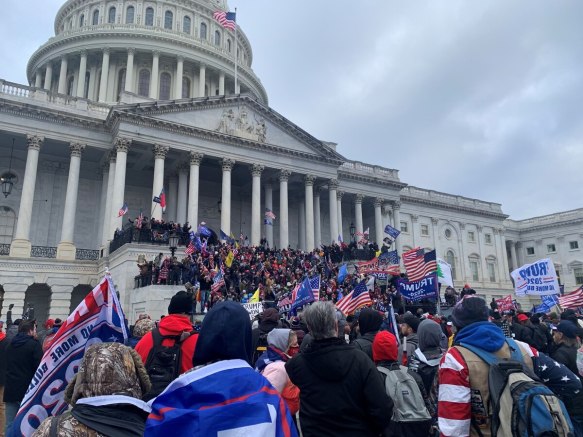
Whatever really happened on 1/6 in the militarized Valhalla of a superpower that spent untold trillions of dollars on security since the start of the millennium, the elaborate psy op/photo-op circus – complete with a strategically photogenic MAGA Viking actor – could never had happened if it was not allowed to happen.
Debate will rage till Kingdom Come on whether the break in was organic – an initiative by a few hundred among at least 10,000 peaceful protestors surrounding the Capitol – or rather a playbook color revolution false flag instigated by an infiltrated, professional Fifth Column of agent provocateurs.
What matters is the end result: the manufactured product – “Trump insurrection” – for all practical purposes buried the presentation, already in progress, of evidence of electoral fraud to the Capitol, and reduced the massive preceding rally of half a million people to “domestic terrorism”.
That was certainly not a “coup”. Top military strategist Edward Luttwak, now advising the Pentagon on cyber-war, tweeted, “nobody pulls a coup during the day”. That was just “a show, people expressing emotions”, an actually faux coup that did not involve arson or widespread looting, and relatively little violence (compare it to Maidan 2014): talk about “insurrectionists” walking inside the Capitol respecting the velvet ropes.
A week before 1/6, a dissident but still very connected Deep State intel op offered this cold, dispassionate view of the Big Picture:
“Tel Aviv betrayed Trump with a new deal with Biden and so they threw him to the dogs. Sheldon Adelson and the Mafia have no trouble switching sides for the winner by hook or crook. Pence and McConnell also betrayed Trump. It was as though Trump walked as Julius Caesar into the Roman Senate to be stabbed to death. Any deal Trump makes with the system or Deep State will not be kept and they are secretly talking about ending him forever. Trump has the trump card. Martial law. Military tribunals. The Insurrection Act. The question is whether he will play it. Civil war is coming irrespective of what happens to him, sooner or later.”
Whether civil war is coming will depend on the degree of stoicism prevalent among the Deplorable multitudes.
Alastair Crooke has brilliantly outlined the Top Three main issues that shape Red America’s “Epiphany”: stolen elections; lockdown as a premeditated strategy for the destruction of small and mid-size businesses; and the dire prospect of ‘cancellation’ by an incoming woke ‘soft totalitarianism’ orchestrated by Big Tech.
Cue to a Corpse Reading a Teleprompter, also known as The President-Elect, and his own ominous words after 1/6: “Don’t dare call them protesters. They were a riotous mob. Insurrectionists. Domestic terrorists.” Some things never change. George W. Bush, immediately after 9/11: “Either you’re with us, or with the terrorists”.
That’s the hegemonic, set in stone, narrative now being implemented with an iron fist by Big Tech. First they come for POTUS. Then they come for you. Anyone, anywhere, not following Big Tech’s Techno-Feudalist diktat WILL be cancelled.
Bye bye Miss American Pie
And that’s why the drama is way, way, bigger than a mere discombobulated POTUS.
Every single institution controlled by the ruling class – from schools to mass media to the way workplaces are regulated – will go after the Deplorables with no mercy.
Professional CIA killer and liar John Breenan, key conceptualizer of totally debunked Russiagate, tweeted about the necessity of, in practice, setting up re-education camps. Media honchos called for “cleansing the movement”.
Politically, the Deplorables only have Trumpism. And that’s why Trumpism, with a possible avenue to become an established third party, must be smashed. As much as the 0.0001% is more terrified by the possibility of secession or armed revolt, they need urgent pre-emptive action against what is, for now, a nationalist mass movement, however inchoate its political proposals.
The “unknown unknown”, to evoke notorious neo-con Donald Rumsfeld, is whether the exasperated plebs will eventually reach for the pitchforks – and make the 0.0001% feudal hacienda ungovernable. And then there’s a literally smokin’ element – those half a billion guns out there.
The 0.0001% knows for sure that Trump, after all, was never a radical revolutionary change agent. Inchoately, he channeled Red America’s hopes and fears. But instead of the promised glitzy palace adorned with gold, what he delivered was a shack in the desert.
Meanwhile, Red America, intuitively, understood that Trump at least was a useful conduit. He lay bare how the corrupt swamp actually moves. How these “institutions” are mere corporate puppets – and completely ignore the common man. How the Judiciary is utterly corrupt – when even POTUS cannot get a hearing. How Pharma and Tech actually expanded the MICIMATT (MICIMAPTT?) And most of all, how the two party paradigm is a monstrous lie.
So where will 75 million disenfranchised voters – or 88 million Twitter followers – go?
As it stands, we’re deep into Hardcore Class War. The Top of the Scam Gang are in full control. The remains of “Democracy” have gelled into Mediacracy. Ahead, there’s nothing but ruthless purge, protracted crackdown, censorship, blanket surveillance, smashing of civil liberties, a single narrative, overarching cancel (in)culture. It gets worse: next week, this paranoid apparatus merges with the awesome machinery of the United States Government (USG).
So welcome to Full Spectrum Domestic Dominance. Germany 1933 on steroids. 1984 redux: no wonder the hashtag #1984 was banned by Twitter.
Cui bono? Techno-Feudalism, of course – and the interlocking tentacles of the trans-humanist Great Reset. Defy it, and you will be cancelled.
Bye bye Miss American Pie. That’s the legacy of 1/6.
It’s been obvious for a long time that the best way to stop the rise of right-wing extremism in America that everyone’s so worried about today is not to pass a bunch of authoritarian laws, but to reverse the policies of soul-crushing neoliberalism and domestic austerity which led to Donald Trump. Instead of doing this, the next president is already pushing a Patriot Act sequel and reducing the stimulus checks he’d promised the public before he’s even been sworn in.
President-elect Biden promised unambiguously that if voters gave the Democratic Party control of the Senate by electing Raphael Warnock and Jon Ossoff in Georgia earlier this month, checks of $2,000 would “go out the door immediately”. Warnock blatantly campaigned on the promise of $2000 checks if elected, literally using pictures of checks with “$2000” written on them to do so. This was not an unclear promise by any stretch of the imagination, yet when Biden unveiled the “American Rescue Plan” on Thursday, the number 1400 was written where the number 2000 should have been.
Boss: Here's your check. Employee: This is $1400. You said $2000 for the job. Boss: Yeah but that's minus the $600 I paid you for the last job. You're welcome.
The argument being pushed out at the moment is that when Democrats were blatantly promising stimulus checks of $2000 what they really meant was that Americans would receive $1400 on top of the $600 checks they’d received earlier, and everyone should have just known this somehow (perhaps via some sort of psychic precognition or sorcery). Which of course makes as much sense as someone hiring you to do a job for a given amount of money and then paying you the amount promised minus the amount you’d made at your last job.
It’s just so emblematic of US austerity policies, which are so normalized they don’t even use that word. Keep people stretched so thin that even a paltry $2000 after months and months of nothing can be spun as an excessively exorbitant indulgence which must be scaled back to keep it reasonable. In reality a grand total of $2600 in the richest nation on earth after all this time would still be a huge slap in the face, but generations of media spin have gone into keeping Americans from attaining that level of rightful entitlement.
So as of this writing the internet is full of angry Americans actually typing the words “$1400 is not $2000”, which is totally bananas. People should not have to say that the number 1400 is not the same as the number 2000. It feels like if my Twitter feed was full of people saying “Cars are not birds”, or “Pogs are not iPhones”, or “Mimes are not salad”. People should not have to make such self-evident clarifications.
But they apparently do need to make such clarifications, because scumbags like Adam Schiff are looking them right in the eye, sharing information that says “$1,400 checks” on it, and telling them that it says “$2000 relief checks”.
2 + 2 = 5.
So again, it’s pretty clear that America isn’t going to attempt to reverse the conditions which created Trump and all the extremist factions that everyone’s been freaking out about since the Capitol riot. Obama led to Trump, and the strategy going forward is to just keep tightening the neoliberal screws like both Obama and Trump did throughout their entire administrations. And, of course, to advance new “domestic terrorism” laws.
As we discussed previously, Biden has often boasted of being the original author of the Patriot Act years before it was rapidly rolled out amid the fear and blind obsequiousness of the aftermath of 9/11. Now in the aftermath of the Capitol riot we are seeing a push to roll out new authoritarian laws around terrorism, this time taking aim at “domestic terror”, which were also in preparation prior to the event used to manufacture support for them.
In a new article for Washington Monthly titled “It’s Time for a Domestic Terrorism Law“, Bill Scher argues against left-wing critics of the coming laws like Glenn Greenwald and Jacobin‘s Luke Savage saying such “knee-jerk reactions” against potential authoritarian abuses fail to address the growing problem. He opens with the acknowledgement that “Joe Biden’s transition team was already working on a domestic terrorism law before the insurrection,” and then he just keeps on writing as though that’s not weird or suspicious in any way.
Scher lists among the growing threat of domestic terror not just white supremacists and right-wing extremists but “extremist left-wing domestic terrorism” as well. He approvingly cites Adam Schiff’s Confronting The Threat of Terrorism Act, which “creates a definition of domestic terrorism broadly encompassing plots that carry a ‘substantial risk of serious bodily injury’ along with an ‘intent to intimidate or coerce a civilian population’ or ‘influence the policy of a government by intimidation or coercion.’” The ACLU has unequivocally denounced Schiff’s bill, saying it “would unnecessarily expand law enforcement authorities to target and discriminate against the very communities Congress is seeking to protect.”
This is sketchy. Anonymous FBI officials basically tell NBC the violence at the Capitol could have been stopped if it wasn't for free speech and the first amendment. They're priming us for domestic terrorist laws.https://t.co/wJP7UhEIFB
“FBI intelligence analysts gathered information about possible violence involving the U.S. Capitol on Jan. 6., but the FBI never distributed a formal intelligence bulletin, in part because of concerns that doing so might have run afoul of free speech protections, a current and two former senior FBI officials familiar with the matter told NBC News,” the article warns, making sure to inform readers that “experts say the lack of a domestic terrorism statute constrains the FBI from treating far-right and far-left groups the same as Americans who are radicalized to violence by Al Qaeda or ISIS ideology.”
We can expect to see more such articles going forward.
The only way to sincerely believe more Patriot Act-like laws will benefit Americans is to believe that the US will only have wise and beneficent leaders going forward, and the only way to sincerely believe the US will only have wise and beneficent leaders going forward is to be completely shit-eating stupid. The trajectory has already been chosen, and that trajectory is the one that has already given rise to Trump. Continuing along that same trajectory can only give rise to something far uglier, and that something far uglier will have whatever new authoritarian powers are added by Joe Biden.
They’re not actually worried about “domestic terror”, they’re worried about any movement which threatens to topple the status quo. They want to make sure they can adequately spy, infiltrate, agitate and incarcerate into impotence any movement which provides a threat to America’s rulers and the system which funnels them wealth and power at the expense of everyone else. The movements which most threaten this are not rightists, who are generally more or less aligned with the interests of the oligarchic empire, but the left.
This is who they’ll end up targeting going forward, and whatever Biden and Company wind up rolling out to fight “domestic terrorism” will help them do so.
Anyone who believes locking President Donald Trump out of his social media accounts will serve as the first step on the path to healing the political divide in the United States is likely to be in for a bitter disappointment.
The flaws in this reasoning need to be peeled away, like the layers of an onion.
Twitter’s decision to permanently ban Trump for, among other things, “incitement of violence” effectively cuts him off from 88 million followers. Facebook has said it will deny Trump access to his account till at least the end of his presidential term.
The act of barring an elected president, even an outgoing one, from the digital equivalent of the public square is bound to be every bit as polarising as allowing him to continue tweeting.
These moves threaten to widen the tribal divide between the Democratic and Republican parties into a chasm, and open up a damaging rift among liberals and the left on the limits of political speech.
Claims of ‘stolen’ election
The proximate cause of Facebook and Twitter’s decision is his encouragement of a protest march on Washington DC last week by his supporters that rapidly turned violent as several thousand stormed the Capitol building, the seat of the US government.
Five people are reported to have died, including a police officer struck on the head with a fire extinguisher and a woman who was shot dead inside the building, apparently by a security guard.
The protesters – and much of the Republican party – believe that Trump’s Democratic opponent, Joe Biden, “stole” November’s presidential election. The storming of the Capitol occurred on the day electoral college votes were being counted, marking the moment when Biden’s win became irreversible.
Since the November election, Trump has cultivated his supporters’ political grievances by implying in regular tweets that the election was “rigged”, that he supposedly won by a “landslide”, and that Biden is an illegitimate president.
The social networks’ immediate fear appears to be that, should he be allowed to continue, there could be a repetition of the turmoil at the Capitol when the inauguration – the formal transfer of power from Trump to Biden – takes place next week.
No simple solutions
Whatever we – or the tech giants who now dominate our lives – might hope, there are no simple solutions to the problems caused by extreme political speech.
To many, banning Trump from Twitter – his main megaphone – sounds like a proportionate response to his incitement and his narcissistic behaviour. It appears to accord with a much-cited restriction on free speech: no one should be allowed to shout “Fire!” in a crowded theatre.
But that comparison serves only to blur important distinctions between ordinary speech and political speech.
The prohibition on shouting “Fire!” reflects a broad social consensus that giving voice to a falsehood of this kind – a lie that can be easily verified as such and one that has indisputably harmful outcomes – is a bad thing.
There is a clear way to calculate the benefits and losses of allowing this type of speech. It is certain to cause a stampede that risks injury and death – and at no gain, apart from possibly to the instigator’s ego.
It is also easy to determine how we should respond to someone who shouts “Fire!” in a crowded theatre. They should be prosecuted according to the law.
Who gets to decide
Banning political speech, by contrast, is a more complicated affair because there is rarely consensus on the legitimacy of such censorship, and – as we shall see – any gains are likely to be outweighed by the losses.
Trump’s ban is just the latest instance in a growing wave of exclusions by Twitter and Facebook of users who espouse political views outside the mainstream, whether on the right or the left. In addition, the tech giants have been tinkering with their algorithms to make it harder to find such content – in what amounts to a kind of pre-censorship.
But the critical issue in a democracy is: who gets to decide if political speech is unreasonable when it falls short of breaching hate and incitement laws?
Few of us want state institutions – the permanent bureaucracy, or the intelligence and security services – wielding that kind of power over our ability to comment and converse. These institutions, which lie at the heart of government and need to be scrutinised as fully as possible, have a vested interest in silencing critics.
There are equally good grounds to object to giving ruling parties the power to censor, precisely because government officials from one side of the political aisle have a strong incentive to gag their opponents. Incitement and protection of public order are perfect pretexts for authoritarianism.
And leaving the democratic majority with the power to arbitrate over political speech has major drawbacks too. In a liberal democracy, the right to criticise the majority and their representatives is an essential freedom, one designed to curb the majority’s tyrranical impulses and ensure minorities are protected.
‘Terms of service’
In this case, however, the ones deciding which users get to speak and which are banned are the globe-spanning tech corporations, the wealthiest companies in human history.
Facebook and Twitter have justified banning Trump, and anyone else, on the grounds that he violated vague business “terms of service” – the small print on agreement forms we all sign before being allowed access to their platforms.
But barring users from the chief means of communication in a modern, digitised world cannot be defended simply on commercial or business grounds, especially when those firms have been allowed to develop their respective monopolies by our governments.
Social media is now at the heart of many people’s political lives. It is how we share and clarify political views, organise political actions, and more generally shape the information universe.
The fact that western societies have agreed to let private hands control what should be essential public utilities – turning them into vastly profitable industries – is a political decision in itself.
Political pressures
Unlike governments, which have to submit to intermittent elections, tech giants are accountable chiefly to their billionaire owners and shareholders – a tiny wealth elite whose interests are tied to greater wealth accumulation, not the public good.
But in addition to these economic imperatives, the tech companies are also increasingly subjected to direct and indirect political pressures.
Sometimes that occurs out in the open, when Facebook executives get hauled before congressional committees to explain their actions. And doubtless pressure is being exerted too out of sight, behind closed doors.
Facebook, Twitter, Google and Apple all want their respective, highly profitable tech monopolies to continue, and currying favour with the party in power – or the one coming into power – is the best strategy for avoiding greater regulation.
Either way, it means that, in their role as gatekeepers to the global, digital public square, the tech giants exercise overtly political powers. They regulate an outsourced public utility, but are not subject to normal democratic oversight or accountability because their relationship with the state is veiled.
Censorship backfires
Banning Trump from social media, whatever the intention, will inevitably look like an act of political suppression to his supporters, to potential supporters and even to some critics who worry about the precedent being set.
In fact, to many it will smack of vengeful retaliation by the “elites”.
Consider these two issues. They may not seem relevant to some opponents but we can be sure they will fuel his supporters’ mounting sense of righteous indignation and grievance.
First, both the department of justice and the federal trade commission under Trump have opened anti-trust investigations of the major tech corporations to break up their monopolies. Last month the Trump administration initiated two anti-trust lawsuits – the first of their kind – specifically against Facebook.
Second, these tech giants have chosen to act against Trump now, just as Biden prepares to replace him in the White House. Silicon Valley was a generous funder of Biden’s election campaign and quickly won for itself positions in the incoming administration. The new president will decide whether to continue the anti-trust actions or drop them.
Whether these matters are connected or not, whether they are “fake news” or not, is beside the point. The decision by Facebook and Twitter to bar Trump from its platforms can easily be spun in his supporters’ minds as an opportunistic reprisal against Trump for his efforts to limit the excesses of these overweening tech empires.
This is a perfect illustration of why curbs on political speech – even of the most irresponsible kind – invariably backfire. Censorship of major politicians will always be contested and are likely to generate opposition and stoke resentment.
Banning Trump won’t end conspiracy theories on the American right. It will intensify them, reinforce them, embolden them.
Obnoxious symptom
So in the cost-beneft calculus, censoring Trump is almost certain to further polarise an already deeply divided American society, amplify genuine grievances and conspiracy theories alike, sow greater distrust towards political elites, further fracture an already broken political system and ultimately rationalise political violence.
The solution is not to crack down on political speech, even extreme and irresponsible speech, if it does not break the law. Trump is not the cause of US political woes, he is one obnoxious symptom.
The solution is to address the real causes, and tackle the only too justified resentments that fuelled Trump’s rise and will sustain him and the US right in defeat. Banning Trump – just like labelling his supporters “a basket of deplorables” – will prove entirely counter-productive.
Fixing a broken system
Meaningful reform will be no simple task. The US political system looks fundamentally broken – and has been for a long time.
It will require a much more transparent electoral system. Big donor money will have to be removed from Congressional and presidential races. Powerful lobbies will need to be ousted from Washington, where they now act as the primary authors of Congressional legislation promoting their own narrow interests.
The old and new media monopolies – the latter our new public square – will have to be broken up. New, publicly funded and publicly accountable media models must be developed that reflect a greater pluralism of views.
In these ways, the public can be encouraged to become more democratically engaged, active participants in their national and local politics rather than alienated onlookers or simple-minded cheerleaders. Politicians can be held truly accountable for their decisions, with an expectation that they serve the public interest, not the interests of the most powerful corporations.
The outcome of such reforms, as surveys of the American public’s preferences regularly show, would be much greater social and economic equality. Joblessness, home evictions and loss of medical cover would not stalk so many millions of Americans as they do now, during a pandemic. In this environment, the wider appeal of a demagogue like Trump would evaporate.
If this all sounds like pie-in-the-sky idealism, that in itself should serve as a wake-up call, highlighting just how far the US political system is from the liberal democracy it claims to be.
Americans appear too divided and distracted to recognize that the architects of the Patriot Act and the failed War on Terror now have their sights set on the American homeland.
The first week of 2021 kicked off with chaos at the Capitol in Washington D.C. Was it a protest, a riot or an insurrection? Were there provocateurs, and if so, were they Antifa, the cops, and/or the Feds? As usual, everyone on the internet thinks they know the answer within ten minutes. Unfortunately, this genuinely leads to the spreading of unfounded theories – many based on nothing but speculation and emotion. But while the public is debating over theories and arguing amongst themselves, the newly emboldened Military Industrial Complex is eagerly anticipating the incoming Biden Administration as an opportunity to expand the War on Domestic Terror.
In the immediate aftermath of the “storming of the Capitol”, the media pundits, intelligence community, and politicians began foaming at the mouth in excitement over the chance to push through Domestic Terror legislation. Michigan representative Elissa Slotkin, also former Acting Assistant Secretary of Defense and CIA analyst, said, “the post 9/11 era is over. The single greatest national security threat right now is our internal division. The threat of domestic terrorism.” Slotkin went on to say that she urges the Biden administration to “understand that the greatest threat now is internal.”
The post 9/11 era is over. The single greatest national security threat right now is our internal division. The threat of domestic terrorism. The polarization that threatens our democracy. If we don't reconnect our two Americas, the threats will not have to come from the outside. pic.twitter.com/ADgGcf7qEo
TLAV writer Whitney Webb responded to Slotkin’s comment by reminding the audience that, “before Congress, Elissa worked for the CIA and the Pentagon and helped destabilize the Middle East during the Bush and Obama admins. What she says here is essentially an open announcement that the US has moved from the “War on [foreign] terror” to the “War on domestic terror”.”
The Federal Bureau of Investigations (FBI) also reportedly released a bulletin warning that “domestic extremists” are planning a nationwide protest to stop Joe Biden from being sworn in as President. According to ABC News, “The FBI has also received information in recent days on a group calling for “storming” state, local and federal government courthouses and administrative buildings in the event President Donald Trump is removed from office prior to Inauguration Day. The group is also planning to “storm” government offices in every state the day President-elect Joe Biden will be inaugurated, regardless of whether the states certified electoral votes for Biden or Trump.”
Since the bulletin has not been publicly released the report should be viewed skeptically. However, it’s only one of many emerging reports and articles stoking the flames of civil war and internal chaos. The fact of the matter is that this is not a new attempt to demonize the American people. This current effort is simply a continuation of the effort to label Americans as terrorists that has been taking place since at least the mid-1990’s following the Oklahoma City bombing false flag. These efforts were expanded further after the attacks of 9/11. In fact, as most readers know by now, it was Joe Biden who wrote the anti-terror legislation in the 90’s which became the basis for the Patriot ACT after 9/11.
While the “War on Terror” launched by the George W. Bush administration was focused on imaginary enemies in Iraq, Afghanistan, Libya, Iran, Syria, and elsewhere, there has also been a steady push to focus on the American public. In the first years of the Obama administration we saw the rise of the “Tea Party” movement, the American Libertarian movement, and Liberal Progressives who opposed the war machine, the surveillance state, and the militarization of the police. Organizations like the Southern Poverty Law Center (SPLC) did their best to label activists “extremists” for constitutionally protected activism and organizing. In 2010, the SPLC even came up with a “Patriot Hit List” of so-called extremists.
The post-9/11 era saw the creation of Fusion Centers; centralized systems that pool and analyze intelligence from federal, state, local, and private sector entities. The National Network of Fusion Centers was created after the 9/11 attacks to provide for more streamlined communication between federal and local agencies. The Fusion Centers have been criticized as violations of civil liberties and a danger to separation of federal and local governments. They have been exposed for targeting of protesters of the Dakota Access Pipeline and most infamously, in 2009 it was revealed that the Missouri Information Analysis Center (MIAC) was targeting supporters of third party candidates, Ron Paul supporters, anti-abortion activists, and “conspiracy theorists” as potential domestic extremists.
The 2010’s also saw the passing of the 2012 National Defense Authorization Act which included provisions allowing for indefinitely detaining Americans who have been labeled potential terrorists. Under these provisions, Americans lose the ability to have access to a lawyer and the right to a speedy trial. The measures were approved every year during the Obama and Trump administrations.
The truth is that the United States has long been pushing for a focus on Domestic Terror and Extremism, and regardless of what really happened at the Capitol on January 6, the event is being used as a way to justify the push for strengthening domestic terror legislation.
Another organization that is helping propel the “rise of domestic terror” narrative is the Center for Strategic & International Studies (CSIS), an organization with deep ties to the intelligence community and Western Military Industrial Complex. In October, the CSIS released a study claiming that two-thirds of the terrorist plots and attacks in the United States in the first eight months of 2020 were carried out by white supremacists and like-minded extremists. Coincidentally, journalist John Vibes recently reported that, “the Center for Strategic and International Studies (CSIS) is listed as the “most recent employment” for three selections on Biden’s Department of Defense agency review team: Kathleen Hicks, who is a former defense official under President Barack Obama, as well as Melissa Dalton, and Andrew Hunter.”
The most likely candidate for new domestic terror legislation is the “The Domestic Terrorism Prevention Act”, originally passed by the House in 2020, would create “dedicated domestic terrorism offices within the Department of Homeland Security, the Department of Justice, and the Federal Bureau of Investigation to analyze and monitor domestic terrorist activity and require the Federal Government to take steps to prevent domestic terrorism.”
Another domestic terror bill that has previously been considered is the “Confronting the Threat of Domestic Terror Act”. The bill was introduced by Rep. Adam Schiff, who claimed that “the legislation is narrowly crafted and includes protections to ensure it is not misused.” However, the American Civil Liberties Union warned, “people of color and other marginalized communities have long been targeted under domestic terrorism authorities for unfair and discriminatory surveillance, investigations, and prosecutions. Law enforcement agencies’ use of these authorities undermines and has violated equal protection, due process, and First Amendment rights.”
This is a crucial time for the American experiment. Will the American people allow themselves to be divided to the point of calling for domestic terror legislation to be used on their neighbors, co-workers, friends and family? With the public inundated with fears of civil war, stolen elections, rampant disinformation, and general exhaustion with COVID-19 measures, it appears to be a very critical moment which may decide whether America is destined for a renewed desire for liberty, truth, and free speech, or an accelerated push towards tyranny.
When watching this Jimmy Dore Show about the Capitol incident one can clearly see that some of the police were reluctant to intervene against the surprise visitors. Some even took selfies with them. The police may have been overwhelmed and decided that more fighting would have been counterproductive. Or, maybe, they let it happen on purpose?
The LIHOP theory is often applied to the 9/11 incident in 2001. The FBI and others knew that terrorist from the Middle East were about to use air planes to attack within the U.S. but it was decided to let that happen and to use the event for political gain. That political gain came in form of the Patriot Act which gave the government more power to spy on its citizens, and in form of the war of terror on the Middle East.
Even weeks before Wednesday’s event there had been lots of open source chatter about a big protest in Washington and plans to take on the Capitol. Like in in 455, when the Vandals sacked Rome, there was little done by the local authorities to prevent that. The actors in both incidents have by the way remarkable similarities.
If we consider that ‘Vandals’ storming the Capitol was known to be upcoming and that the vandals actually managed to do it, we have to look for potential aims of those who might have allowed it to happen.
Two are sticking out. The ‘Domestic terrorism’ issues and the mass destruction of communication channels used by Trump and the political right.
President-elect Joe Biden characterized the mob that stormed the U.S. Capitol on Wednesday as domestic terrorists, referring to the violence as “one of the darkest days in the history of our nation.”
…
Mr. Biden has said he plans to make a priority of passing a law against domestic terrorism, and he has been urged to create a White House post overseeing the fight against ideologically inspired violent extremists and increasing funding to combat them.Federal law defines domestic terrorism as dangerous and illegal acts intended to coerce a population or influence the government. While it can be charged in some states, no generic federal crime exists. Domestic terrorism spans extremist ideologies, but it has been predominantly a far-right phenomenon in recent decades, according to researchers.
In 2019 Adam Schiff, the unhinged Russia basher who has falsely claimed that he had evidence of a Trump collusion with Russia, introduced a ‘domestic terrorism’ bill that will now likely be taken up.
Rep. Adam Schiff (D-Calif.), the chairman of the House Intelligence Committee, introduced legislation Friday that would make domestic terrorism a federal crime.The Confronting the Threat of Domestic Terrorism Act would create a federal criminal statute that would cover domestic acts of terror committed by those without links to foreign organizations.
…
“The attack in El Paso by a white supremacist is only the most recent in a disturbing and growing trend of domestic terrorism, fueled by racism and hatred. The Confronting the Threat of Domestic Terrorism Act would for the first time create a domestic terrorism crime, and thus provide prosecutors with new tools to combat these devastating crimes,” Schiff said in a statement.
The actual bill Schiff introduce is quite generic and covers a wide range of actions as well as attempts to take such actions or conspiring to do them:
Whoever, in a circumstance described in subsection (b), and with the intent to intimidate or coerce a civilian population, influence the policy of a government by intimidation or coercion, or affect the conduct of a government by mass destruction, assassination, or kidnapping—
(A) knowingly kills, kidnaps, maims, commits an assault resulting in serious bodily injury, or assaults with a dangerous weapon any person within the United States; or
(B) creates a substantial risk of serious bodily injury to any other person by knowingly destroying or damaging any structure, conveyance, or other real or personal property within the United States or by attempting or conspiring to destroy or damage any structure, conveyance, or other real or personal property within the United States,
in violation of the laws of any State, or the United States, shall be punished under section 2332b(c).
Any prosecutor will be able to use the wording of the law to indict someone who has been talking about bashing a road sign for ‘domestic terrorism’.
Such a law will of course not only be used against the ‘white supremacists’ who Schiff claims to dislike but, as ACLU pointed out, primarily against the left and minorities:
People of color and other marginalized communities have long been targeted under domestic terrorism authorities for unfair and discriminatory surveillance, investigations, and prosecutions. Law enforcement agencies’ use of these authorities undermines and has violated equal protection, due process, and First Amendment rights. Law enforcement agencies already have all the authorities they need to address white supremacist violence effectively. We therefore urge you instead to require agencies to provide meaningful public data on their use of resources and failure to prioritize white supremacist violence.The ACLU strongly urges you to oppose H.R. 4192, Confronting the Threat of Domestic Terrorism Act because it is unnecessary and would serve to target the very communities that Congress is seeking to protect.
As a second consequence of the Capitol incident the tech monopoly companies, which are largely aligned with the corporate Democrats, took coordinated action to disrupt the communication between Trump and his political followers as well as within the general political right.
Ben Collins @oneunderscore__ – 21:19 UTC · Jan 8, 2021
BREAKING: Twitter is taking dramatic action on remaining QAnon accounts for breaking their “Coordinated Harmful Activity” rules, some of whom heavily promoted Wednesday’s storming of the Capitol.
Mike Flynn, Sidney Powell, 8kun’s Ron Watkins banned.
Twitter’s statement below:
Thousands of Twitter accounts, mostly not prominent ones, were culled over night.
The banning of Trump has nothing to do with the actual content of Trump’s or others’ communications:
Byron York @ByronYork – 23:53 UTC · Jan 8, 2021
Twitter has permanently banned President Trump, and they did it on the basis of two unobjectionable tweets. Example: Twitter says Trump’s ‘I won’t go to inauguration’ tweet will ‘inspire’ violence. https://blog.twitter.com/en_us/topics/c…
The was an organized and likely long planned campaign initiated by the incoming Biden administration. Trump’s tweets and followers were probably the biggest traffic generators Twitter and Facebook ever had. They would not have killed off that profitable source of revenues if the incoming administration had not threatened them with new regulations.
Michael Tracey condemned this campaign in a series of tweets:
Twitter’s stated rationale for banning Sidney Powell, Mike Flynn, and others — “behavior that has the potential to lead to offline harm” — is extraordinarily creepy and could be used against virtually anyone if the powers-that-be decided it was politically necessary
Purging the sitting President from his primary communications platform is absolute authoritarian lunacy
It was obvious within about 10 minutes on Wednesday that this “crisis” would be exploited to drastically ramp up censorship and suppress political speech
None of this is about “safety,” it’s about purposely inflating a threat in order to assert political and cultural dominance
If we’re accepting this new “incitement” doctrine there are thousands of activists who could be purged/criminalized for “inciting” an enormous wave of violent riots over the summer. But thankfully there’s a thing called “protected speech,” although it’s quickly being shredded
The most extreme, coordinated corporate censorship offensive in modern history and liberals/leftists are in a mindless celebratory stupor. Pathetic shills
Corporate liberals and leftists have been absolutely obsessed with purging the internet of political undesirables since 2016, and this “crisis” is the perfect opportunity to finally fulfill their deepest authoritarian wish
The new corporate authoritarian liberal-left monoculture is going to be absolutely ruthless — and in 12 days it is merging with the state. This only the beginning
Must just be a total coincidence that YouTube also happened to terminate Steve Bannon. Definitely not a coordinated political revenge campaign by the tech oligarchs as they wait for a Democratic administration to come in
Notice that the threat of “violence” Twitter says justifies their political purge never applies to traditional forms of state violence — Trump’s tweets announcing bombings or assassinations were never seen as necessitating some disciplinary intervention in the name of “safety”
Make no mistake. Both actions that follow from the ludicrous Capitol ‘sacking’, Biden’s ‘domestic terrorism’ act and the systematic eradication of communication channels for people with certain opinions, will primarily be used against the left.
When President Biden starts his first war all significant protest against it will be declared to be ‘domestic terrorism’. All communication against it will be ‘inciting’ and therefore banned. We know this because it has always been like this.
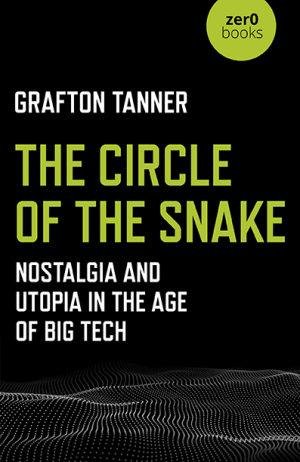
The Circle of the Snake: Nostalgia and Utopia in the Age of Big Tech
By Grafton Tanner
Zero Books, 2020
I’m sure many members of Generation X have taken a moment to look around the pop culture landscape over the past decade and a half and had a sudden moment of realization: there are certainly a whole lot of people trying to sell me things using the media of my youth. Ultimately, this is nothing new. I remember when every pop culture moment, from sitcoms to TV commercials, seemed to be using the Baby Boomers’ favorite songs to sell them cars and sneakers. But in 2020, the dominance of these re-treaded properties is even more nakedly cynical, whether its the endless sequels of the Star Wars and Marvel cinematic universes, or the easy-to-consume, signifier-filled pastiches of the worlds of Stranger Things and Ready Player One. The cultural marketplace, as dominated by bloated media and tech empires, no longer sees any need to admit the novel, the fresh, the unusual.
Both the “why” and the “how” of this cultural and technological tendency are explored by author Grafton Tanner in his new book, The Circle of the Snake: Nostalgia and Utopia in the Age of Big Tech. (Disclosure: Tanner is an occasional contributor to We Are The Mutants.) Tanner explores not only the pop culture properties that utilize nostalgia in an effort to assuage the anxieties of contemporary life in the aftermath of the 2008 financial rupture; he also explains how tech companies use the feedback from algorithmic analysis to keep consumers locked into a never-ending cycle—an ouroboros—of digital satisfaction of their subconscious desires for an older, more secure time. This nostalgic digital utopia, in turn, keeps consumers constantly “on,” working through endless “quests” that approximate proactivity but in the end keep people locked into pointless and unproductive cycles of feedback, emotional satisfaction, and control. “Recommender systems and predictive analytics—the very tools that allow our contemporary media to function—zero in on quick reactions, such as a flash of anger or a swell of nostalgia,” says Tanner in his Introduction. “These reactions are noted by algorithms, which then make recommendations based on them… The result is a nostalgic feedback loop wherein old ideas travel round.”
Tanner examines how the Big Tech tendency towards technolibertarianism and monopoly over the past 20 years has created the material conditions for this self-reinforcing system of psychic feedback. With an increasing belief in culture as disposable and “just for fun,” the material and political implications of this system of control are obfuscated. The way that these cultural narratives award Big Tech further and deeper power over all of us is merely part of the game. And we are enlisted as active players, not merely passive viewers, as in the era of television’s height. The online world, Tanner notes, demands a keen eye for analysis and a deep capacity for paying attention. The technolibertarian and neoliberal alike view our tech-suffused world—everyone is plugged in, 24/7—as a kind of utopia-in-waiting, or indeed a permanent utopia, where the idealized past can be endlessly revisited and basked in, while the present never changes from its current state of cultural and political stasis. This virtual plaza of commerce, emotional satisfaction, the illusion of proactivity, and control and surveillance describe the boundaries of Big Tech’s dominance of both our material and psychic space at the beginning of the 2020s.
The interview below was conducted in November and December 2020 via email and has been lightly edited for clarity.
***
GRASSO: Given the topic of your first book for Zero, Babbling Corpse: Vaporwave and the Commodification of Ghosts, the topic for The Circle of the Snake seems like a natural outgrowth. But from reading the book it also seems like there were a lot of specific events and observations about the world of Online and Big Tech over the past few years that led to the book’s development. What are the origins of The Circle of the Snake, and what kinds of specific cultural developments led you to propose and write the book?
TANNER: I can pinpoint the exact moment I knew I was going to write a book on Big Tech. I was living in a kind of exile in 2016, in this small town in Georgia, trying to piece my life back together after a series of false starts after college. I was sitting in a Barnes & Noble reading the 2016 Tech Issue of The Atlantic, and there was a story by Bianca Bosker about former Google employee Tristan Harris, who left the Valley and started an advocacy group called Time Well Spent because he thought Big Tech was eroding mental health. He was on a mission to fix Big Tech by making it work for us, not against us. But the piece didn’t make me feel better about tech. In fact, it was terrifying: here is an ex-Valley technocrat, mournful that he had invented habit-forming technology with severe public side effects, asking us to not only forgive him, but believe in him to create newer, better tech. I was incensed.
Shortly thereafter, we learned that Cambridge Analytica sharpened their psychographic modeling techniques by harvesting Facebook data from millions of users without their permission, all to aid in the election of Donald Trump. There was suddenly this huge backlash against Big Tech. I was supportive of it, but I also understood it came a little too late. Tech critics had been sounding the alarm for years and years. It took the election of a fascist for the left to wake up to the tech nightmare, only to realize the ones promising to end the nightmare were former technocrats themselves.
And yet, as many were loudly critiquing Big Tech for its role in throwing elections, spreading fascism, and worsening mental health, the culture industry was churning out politically retrograde nostalgia-bait. Was it really that the techlash had made everyone even more nostalgic for the pre-digital past? Or was there some kind of connection between nostalgia and Big Tech? These were the questions I had in mind when I started writing.
GRASSO: I think one of the things I like best about the book is your fusion of theory, philosophy, and epistemology with the material and economic realities of 21st century Big Tech and Big Media. Throughout the book you explore concepts such as surveillance, sublimity, nostalgia (of course), and virtuality with concrete examples from the online plaza. Essentially, if I’m not mistaken, you’re saying that the people who created the feedback loops that keep us hooked on technology and the internet and mine our data for still more ways to sell to us have themselves studied their philosophy, economic history, and techniques of mass psychology and persuasion with great attention?
TANNER: Persuasion techniques, yes, but I wouldn’t go so far as to say the technocrats have studied much else beyond their limited worldview, which is scientistic. Yes, technocrats like James Williams and Tristan Harris like to cite philosophers, but they usually do it to support their self-help solutions to the attention economy. Wake up with a little philosophy, they say, because reading Socrates is better for the mind than scrolling through Twitter. It’s a very neckbeard way of thinking about cultural consumption.
Make no mistake: these technocrats are uninterested in anything other than making a lot of money. If that means learning psychological techniques of persuasion with Stanford psychologist B.J. Fogg, then so be it. They weren’t and aren’t trying to make the world a better place or something. Like the banks before the Great Recession, the technocrats are out to make a quick buck by any means necessary, and they would have kept on doing what they were doing if the bubble hadn’t burst. People were disgruntled with Facebook for years before Cambridge Analytica, and tech critique was already a robust genre by 2016. But it took a kind of implosion, a Great Recession-style reckoning with Big Tech, to change the public opinion. Honestly, the technocrats would probably benefit from studying a little history and philosophy, instead of cloistering themselves in the ideological fortress of STEM.
GRASSO: I think one of the “oh shit” moments in the text for me was finding out that the Black Mirror special choose-your-own-adventure episode “Bandersnatch,” which I quite liked mostly for its material and inspirational signifiers (early ’80s computing, references to Philip K. Dick) was also used to mine viewers’ data in a delightfully dark real-life Dickean stroke. It’s not merely that nostalgia offers us a safe place from the dangerous present, but that those who create these nostalgic visions are working hand-in-hand with the very media empires that make us crave the past: another ouroboros.
TANNER: “Bandersnatch” not only exploits viewers’ nostalgia for its own gain, but it further normalizes the feeling of being controlled. Everyone today knows we’re being controlled from afar: by Twitter, Instagram, Amazon, insurance companies, think tanks, banks, and so forth. We are part of this giant social experiment called consumer capitalism. The purpose is to find out what we’ll buy. But we aren’t being controlled by future gamers or, as much as Elon Musk would like to believe, programmers in this computer simulation we call life. “Bandersnatch” is a work of fiction masquerading a horrible fact—that Netflix is the one controlling us, that we are not as in control as we think. The irony, of course, is that we relinquish our control via the technology we use every day, but we ultimately have very little choice in the matter. Students use devices at school, and jobs often require employees to have smartphones. We aren’t puppets, but we’re by no means totally free either.
GRASSO: So that leads me to asking you about your critique of specific media franchises: Stranger Things and the endless array of sequels and especially reboots we’ve seen since the end of the aughts. You very cannily explore Stranger Things‘ reliance on physical signifiers of commodities and objects that are no longer extant but remind us of the shackles of our technology-laden present (the old landline telephone, the shopping mall) as a key to its appeal to both Gen-Xers who were there and Zoomers who weren’t. Likewise the cinematic reboot is a way to cheaply create product and content that will connect with multiple generations. This element of “spot the Easter egg, aren’t you smart?” for older generations melds with the offer of a trip to a now-alien time for younger generations. These franchises seem to simultaneously reward passive immersion in nostalgia with an illusion of proactivity.
TANNER: Well, the spot-the-Easter-egg activities are very often nostalgic exercises themselves. Viewers are invited to find the nostalgic signifiers, even if they don’t know what they are. That’s the brilliance of Easter egg marketing for advertisers: you might not know what the hidden clue means, but you know it’s a clue and so you make note of it. Of course, the “real” fans will be able to cite all the references, but regular viewers can sometimes recognize a clue, like a corded phone or a VCR or a reference to an older movie, when they see it.
Easter egg marketing is the advertising tactic of choice in the prosumer age. It turns watching into a game. And it’s very heuristic. The films with the most Easter eggs inspire the most “count them all” YouTube videos or Buzzfeed listicles. The problem here isn’t that movies and series reference a bunch of older media; the problem is that Easter eggs reference certain things and leave others out, thus establishing these unnecessary pop culture canons. I don’t care that the Halloween franchise makes reference to itself. It’s an extended universe at this point—of course it’s going to do that. What I find questionable is its constant updating in an attempt to recapture the magic of the original film. I’m always signaling my love of Halloween III: Season of the Witch, but that film is too wacky to be included in the Halloween universe, because the franchise is desperately trying to give us the original again, as if it were the first time, without all the messy parts of the sequels. The Halloween filmmakers want to keep the bloodline of the first film pure, which means anything standing in the way must be excised.
GRASSO: You mark the period between 9/11 and the financial crisis of 2008 (and its aftermath) as the final foreclosure of any alternative to our current future and one of the dividing lines between an idealized past depicted in our nostalgic media and the forever Now. Unsurprisingly, so many of the elements of online life we now recognize as irredeemably toxic (social media, ranking and rating apps, tentpole cinematic universes full of identical sequels) began around the end of the Bush years as well.
TANNER: One of these days, I’m going to write a history-critique of the 2000s. I find the decade fascinating. It was probably the nadir of contemporary culture. Mark Fisher called it “the worst period for (popular) culture since the 1950s.”
It’s true: there was no breaking point at which contemporary nostalgia ramped up. It was a gradual shift between 9/11 and the Great Recession. Directly after 9/11, the U.S. was reeling from shock. Before nostalgia set in later in the decade, there was a feeling of futurelessness, as Robert Jay Lifton wrote—a feeling that there can be no future after 9/11, that the fear of another terrorist attack foreclosed the future altogether, that if people could fly planes into buildings on a regular weekday morning, then anything horrific is possible. During these years, we saw the birth of cinematic universes with the Star Wars prequels and the first megabudget superhero films. Of course, there were Batman, Superman, and Star Wars films before the twenty-first century, but it was after 9/11 that we saw the avalanche of these movies, several of which could not have been made without post-9/11 Pentagon support, with its bloated influence and near-endless supply of capital. You cannot downplay the reach these films have. They’re seen all over the world. And they aren’t just pro-military propaganda, they are engines of nostalgia.
After the Great Recession, nostalgia calcified. People were moving back in with their parents, revisiting old memories to soothe the anxiety of joblessness. Financial recessions are progressive only for the bankers, if they’re bailed out. For workers, they’re regressive. They set people back and invite the sufferers to hide away from it all. There is nothing wrong with this reaction. We cannot blame people who were hit by the Recession for their nostalgia. But we can blame the ones who caused it. And austerity measures only increase the desire to escape into nostalgic feelings. In short, financial meltdowns are crises that affect the future because they erase the plausibility of surviving the present.
GRASSO: You state that nostalgia is not only an emotion used to track us and to trigger specific emotional responses (which themselves are often assuaged by consumption), but also, possibly most importantly, to control us. And that control is not only physical/material but also social/aesthetic, limiting our options to wander away from the digital plaza. How do nostalgia and nostalgic media help this attempt by the market to quantify, objectify, and commodify us, the consumer?
TANNER: Content creators—a sickening term that reduces art and culture to commodities—understand the value of nostalgia. Consumer scientists have known for years that nostalgia sells. If anger draws your attention to the screen, then nostalgia triggers you to buy what will soothe the anger. That’s the cycle we’re dealing with in the present century.
And the worse things get, the more that nostalgia will naturally rise to the surface for many people. It’s not that media companies force-feed nostalgia to us. Many people are already feeling the emotion. It’s inescapable because nostalgia is a modern condition. Corporations merely go the extra mile by locking nostalgia into these feedback loops. The more you feed nostalgia into the cultural industry, the more of it you will consume because entire companies depend on you to want it. We live in a world of disruption, and every modern displacement is accompanied by nostalgia. Corporate capital knows this and depends on it.
GRASSO: Two of the specific technologies you talk about, Instagram and virtual reality, have undergone mutations in their appeals to our desire to escape the modern world. Instagram started off as a fairly disposable nostalgic evocation of the Polaroid camera aesthetic and has become a playground for big-money influencers and exhibitionists; virtual reality has evolved into just another facet of the internet’s control apparatus, despite its conceptual origins in early ’80s cyberpunk and its promised potential to give people the ability to create their own worlds. Why do these technologies seem to always mutate in the direction of greater commercialization and/or control, despite their initial apparent harmlessness or revolutionary promise?
TANNER: In the case of Instagram, its nostalgia factor was mainly due to the horrible photo quality of early smartphone cameras. With some Wi-Fi, a phone, and an app, you could take photos anywhere and upload them on the spot, which was enticing enough for many people to do just that, but you couldn’t deny the photo quality was very poor. So one way to deal with this poor quality was to saturate photos in a kind of analog haze, which could be done by applying one of several different stock filters. I can’t emphasize this enough: so much of our nostalgic appetite in the early 2010s was whetted by the inability to take and post a decent looking digital photo.
Whether it’s Instagram or virtual reality, digital technology is never totally harmless. It’s like when Tristan Harris and the Center for Humane Tech guys tell us we can have our digital cake and eat it too. You can’t have “humane tech” because tech is driven by the profit motive, which itself is often powered by another force: the military. Have you seen this new recruiting ad for the Marine Corps? It’s basically telling young people that joining the military will be an escape from the overwhelming anxieties of the digital age. The scariest thing about the ad is that it conceals the long relationship between tech and the military. Which is to say, the “tech” presented in the ad couldn’t exist without the military-industrial complex. At this point, any new, possibly revolutionary digital technology will either be bought out by a Big Tech monopoly or put to use on the battlefield.
GRASSO: As far as solutions and escapes from this predicament go, you talk a little bit about the ineffectual attempts of former technocrats to try to ameliorate our enslavement to the internet and social media with apps that limit time on websites or “safety labels,” and find them all wholly wanting. Likewise, you mention attempts to make nostalgia something constructive, playful, reflective (in the schema of Svetlana Boym). And yet the very structure of the internet and Big Media as it stands now denies all alternatives to the current control stasis. What does a constructivist nostalgia look like? Where could it exist in the cracks of the current marketplace? Is there a place for nostalgia as a political instrument of the left outside of the usual avenue of Left Melancholy?
TANNER: I’m currently writing a history of nostalgia, out fall 2021 with Repeater Books, called The Hours Have Lost Their Clock: A Recent History of Nostalgia. In it, I put forth a theory of radical nostalgia, drawing on the work of Alastair Bonnett and Svetlana Boym. Radical nostalgia is the third “R” beyond reflective and restorative nostalgia, which Boym coined. She was right about nostalgia, but over the first two decades of the present century, restorative nostalgia ballooned while the reflective strains were edged to the margins. But there needs to be this third form, radical nostalgia, because the melancholic disposition of reflective nostalgia just hasn’t been working for the left and the restorative tint has proven to be destructive.
Radical nostalgia is the act of looking back to those moments when collective action stood up to capital. It yearns for the social movements of the past. It aches for them. It isn’t interested in “getting back there,” in restoring what’s been lost, but in learning from those who came before: the struggle for indigenous rights, the staunch anti-capitalism of Martin Luther King Jr., Stonewall, the Battle of Seattle. When Richard Branson signals his support for LGBTQ+ communities, that isn’t radical nostalgia. There’s nothing radical about it; it’s mere nostalgia. Radical nostalgia looks to these and other movements to continue the fight for a more egalitarian future. It is inherently anti-fascist.
Radical nostalgia takes the action step of restorative and the aching heart of reflective nostalgia and fuses them together. It knows that the past isn’t perfect, which means what we yearn for shouldn’t be either. Restorative nostalgia is too clean, too high-definition. Reflective nostalgia kicks the can around, although reflectors might recognize the problems of the past long before the restorers do. But radical nostalgia knows that everything is imbued with horror, the past especially. Many revolutionary movements of the past suffered from machismo and intolerance, even in their own collectives. Radical nostalgia knows this and endeavors to leave it in the past. Some things must remain buried.
And radical nostalgia is one perspective we can take to resist the utopian thinking of tech. At this point, Big Tech is about the only entity that circulates visions of the future, but those visions are falling out of favor thanks to the techlash. Get ready, because they will absolutely be replaced with a different utopian vision: the humane tech movement. We’re going to be dealing with the technocrats for years. It’s going to seem like we should trust Tristan Harris and the Center for Humane Tech guys. They’re going to be pushing their vision of the future for years to come. But they are the new boss, same as the old. Only collective action, informed by the decolonial and anti-fascist movements of history, can resist what’s coming in the next decade and beyond.
The latest example of hypocrisy is Dr. Deborah Birx, White House coronavirus advisor. It turns out she traveled to meet her family for Thanksgiving after telling Americans not to travel, not to gather with family outside their immediate households.
Gavin Newsom, the governor of California, told the public they should celebrate Thanksgiving outdoors. Then he was caught having dinner, indoors, at a restaurant, unmasked, with 12 people.
There are other examples.
The usual explanation: these officials are arrogant and believe they’re above the law. They want to thumb their noses at the little people.
Yes, no doubt. But a more direct reason is staring us in the face.
The hypocritical officials know the whole COVID pandemic is a fraud.
They know there is no danger.
They know the lockdowns are unnecessary.
That’s why these officials break their own rules.
Why would they expose themselves to “the virus,” unless they knew they were safe?
Some of them believe they’re trapped in a political apparatus that offers no exit. They must go along with the show. They must participate in the fraud because, for example, federal dollars flow into their states, and those dollars are contingent on “playing the COVID game.”
Other officials have been bribed, blackmailed, threatened.
Regardless, they know they can flout their own rules because there is no health risk, no danger.
The risk is on the level of betting on a boxing match, when the bout is fixed, and you know who will win.
People will say, “These officials aren’t smart enough to figure out COVID is a fraud.”
You don’t have to be smart, you don’t have to understand all the intricate details of the fake test, the fake case and death numbers based on the test. You just need to understand enough.
You just need to be clued in.
This would suggest the COVID fraud is an open secret, shared by many in power. I believe that is exactly the case.
For purposes of comparison, consider a level of “secret understanding” slightly above that of politicians. Government scientists.
These scientists are fully aware that the PCR test for COVID is a complete hoax—for reasons I’ve detailed over the past nine months. Therefore, the scientists also know the case numbers based on those tests are fraudulent. And they know the case numbers are used as the rationale for the lockdowns.
That’s a lot of knowing. That’s a lot of “open secret.”
Here’s another comparison. PCR techs in labs all over the world, who are running the test, are fully cognizant of the crimes they’re committing every day—by utilizing “too many cycles” and therefore destroying any shred of validity when diagnosing ANYTHING.
Sharing this open secret among themselves, they otherwise remain silent.
Getting the picture?
The open secret of the COVID fraud isn’t confined to a dozen people in a sealed room. It’s high and wide. It’s understood by many in positions of power and responsibility, all over the world.
You can add your own lists of “secret sharers.” Mainstream physicians, for example. Physicians who are in charge of administering the COVID vaccines they know are unnecessary and dangerous. They also remain silent. So do certain news media people.
And since there are so many people who know the real score, we can begin to see the degree and extent of complicity that is driving the whole pandemic hoax.
This isn’t only a small conspiracy of movers and shakers who planned it and launched it.
This is a very wide-ranging conspiracy of silence.
“Don’t blame me. I’m just following orders.”
“But you know COVID is a total fraud.”
“Of course I know.”
“And you know others who know.”
“Many others.”
“Case closed.”
Which is to say, case WIDE OPEN.
The COVID situation is directly analogous to the Nazi, USSR, and Chinese bureaucracies; faceless workers passing on and obeying orders.
Many of the workers know those orders, no matter how they are dressed up, are arbitrary and evil.
The orders are initiated to destroy lives and freedom, and are transferred through the human machinery of The Complicit Silent Ones.
It should not be considered radical or extremist to oppose mass murder for profit and power.
It should not be considered radical or extremist to oppose the globe-spanning power alliance that is perpetrating most of that mass murder on the world stage today.
It should not be considered radical or extremist to oppose the existence of secretive government agencies which have extensive histories of committing horrific crimes.
It should not be considered radical or extremist to say that everyone ought to have a basic standard of living instead of being deprived of food, shelter and medicine if they have the wrong imaginary numbers in their bank account.
It should not be considered radical or extremist to oppose the existence of a small class of elites who use their vast fortunes to manipulate our entire society toward their advantage.
It should not be considered radical or extremist to want plutocrats and government agencies to stop deliberately manipulating people’s minds using mass media propaganda.
It should not be considered radical or extremist to want everyone to have an equal chance of getting their voice heard in our information ecosystem instead of a few select power-serving lackeys.
It should not be considered radical or extremist to want a society that is ruled by the many for the benefit of the many instead of one that is run by the few for the benefit of the few.
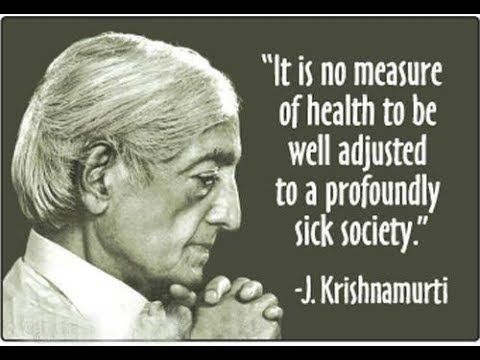
It is very normal, sane and healthy to want a world where everyone has what they need to live, where everyone is free to do, say and think whatever they like as long as it isn’t hurting anyone else, and where nobody is being murdered by powerful governments. This is a very basic, intuitive, common sense desire to have for yourself and for your fellow human beings; it’s wanting for your society what you want for yourself.
Yet people who promote policies which are aimed at creating this kind of world are consistently marginalized and dismissed as radicals and extremists. It’s okay to say you oppose war in principle, but if you oppose any specific acts of warmongering being perpetrated by your government you’ll get labeled a Russian asset, a dictator apologist and all sorts of other pejorative labels which exist solely to justify keeping you off of mainstream platforms. It’s okay to think we should live in peaceful collaboration with each other and our ecosystem, but if you promote specific policies to make that happen you’re an evil commie, a class warrior and a moonbat in the same way.
Simply advocating sanity over insanity gets you shoved out of sight and out of mind by the narrative managers responsible for preserving a world order that is stark raving insane from top to bottom. If you oppose the systems exploited by the ruling power establishment which murders, exploits and oppresses people at home and abroad all day every day while destroying the very ecosystem we depend on for survival, then you are branded a lunatic and your wrongthink quarantined so as not to infect the mainstream herd.
This dynamic is made possible by the fact that the powerful are constantly pouring their wealth and influence into manufacturing the collective delusion that madness is sanity and sickness is health. The plutocrat-controlled political class and the plutocrat-owned media class feed the public an unceasing stream of propaganda aimed at convincing them that capitalism is totally working, that western imperialism is a kooky conspiracy theory, and that the military, police and politicians are our friends. This is what’s constantly being done by mainstream news media, and with varying degrees of subtlety it’s what is being done by every show on television and every movie churned out by Hollywood as well.
But that’s all it is: a collective propaganda-induced delusion. In reality it is the mainstream promoters of the establishment-authorized status quo who are the violent extremists, and it is those who desire health and sanity who are the moderates.
The madness of our world will necessarily continue for as long as we are unable to collectively find our way out of it, and we will be unable to collectively find our way out of it for as long as they are able to keep us collectively confused about what is madness and what is sanity. About what is normal and what is abnormal. About what is moderate and what is extreme.
If you oppose the madness of our world, don’t make an identity out of being a “radical”. Don’t build an egoic structure around life on the fringe. You are not radical, and your ideas should not be fringe. To live a revolutionary life, you should insist on the normality and mundaneness of your own position. Sanity should not be special and unusual, and we should not participate in the delusion that it is.
Let your life be an expression of the common sense ordinariness of revolution.