
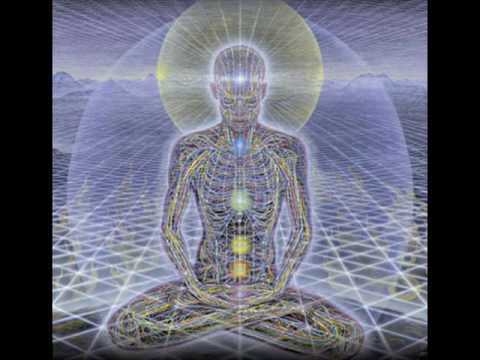
Buddhism and the Brain

741-hz-consciousness-expansion-is-bes-airl-hear-the-messages-of-the-universe-in-your-mind

Many of Buddhism’s core tenets significantly overlap with findings from modern neurology and neuroscience. So how did Buddhism come close to getting the brain right?

By David Weisman

Source: Seed Magazine

Over the last few decades many Buddhists and quite a few neuroscientists have examined Buddhism and neuroscience, with both groups reporting overlap. I’m sorry to say I have been privately dismissive. One hears this sort of thing all the time, from any religion, and I was sure in this case it would break down upon closer scrutiny. When a scientific discovery seems to support any religious teaching, you can expect members of that religion to become strict empiricists, telling themselves and the world that their belief is grounded in reality. They are always less happy to accept scientific data they feel contradicts their preconceived beliefs. No surprise here; no human likes to be wrong.

But science isn’t supposed to care about preconceived notions. Science, at least good science, tells us about the world as it is, not as some wish it to be. Sometimes what science finds is consistent with a particular religion’s wishes. But usually not.

Despite my doubts, neurology and neuroscience do not appear to profoundly contradict Buddhist thought. Neuroscience tells us the thing we take as our unified mind is an illusion, that our mind is not unified and can barely be said to “exist” at all. Our feeling of unity and control is a post-hoc confabulation and is easily fractured into separate parts. As revealed by scientific inquiry, what we call a mind (or a self, or a soul) is actually something that changes so much and is so uncertain that our pre-scientific language struggles to find meaning.

Buddhists say pretty much the same thing. They believe in an impermanent and illusory self made of shifting parts. They’ve even come up with language to address the problem between perception and belief. Their word for self is anatta, which is usually translated as ‘non self.’  One might try to refer to the self, but the word cleverly reminds one’s self that there is no such thing.

When considering a Buddhist contemplating his soul, one is immediately struck by a disconnect between religious teaching and perception. While meditating in the temple, the self is an illusion. But when the Buddhist goes shopping he feels like we all do: unified, in control, and unchanged from moment to moment. The way things feel becomes suspect. And that’s pretty close to what neurologists deal with every day, like the case of Mr. Logosh.

Mr. Logosh was 37 years old when he suffered a stroke. It was a month after knee surgery and we never found a real reason other than trivially high cholesterol and smoking. Sometimes medicine is like that: bad things happen, seemingly without sufficient reasons. In the ER I found him aphasic, able to understand perfectly but unable to get a single word out, and with no movement of the right face, arm, and leg. We gave him the only treatment available for stroke, tissue plasminogen activator, but there was no improvement. He went to the ICU unchanged. A follow up CT scan showed that the dead brain tissue had filled up with blood. As the body digested the dead brain tissue, later scans showed a large hole in the left hemisphere.

Although I despaired, I comforted myself by looking at the overlying cortex. Here the damage was minimal and many neurons still survived. Still, I mostly despaired. It is a tragedy for an 80-year-old to spend life’s remainder as an aphasic hemiplegic. The tragedy grows when a young man looks towards decades of mute immobility. But you can never tell with early brain injuries to the young. I was yoked to optimism. After all, I’d treated him.

The next day Mr. Logosh woke up and started talking. Not much at first, just ‘yes’ and ‘no.’ Then ‘water,’ ‘thanks,’ ‘sure,’ and ‘me.’ We eventually sent him to rehab, barely able to speak, still able to understand.

One year later he came back to the office with an odd request. He was applying to become a driver and needed my clearance, which was a formality. He walked with only a slight limp, his right foot a bit unsure of itself. His voice had a slight hitch, as though he were choosing his words carefully.

When we consider our language, it seems unified and indivisible. We hear a word, attach meaning to it, and use other words to reply. It’s effortless. It seems part of the same unified language sphere. How easily we are tricked! Mr. Logosh shows us that unity of language is an illusion. The seeming unity of language is really the work of different parts of the brain, which shift and change over time, and which fracture into receptive and expressive parts.

Consider how easily Buddhism accepts what happened to Mr. Logosh. Anatta is not a unified, unchanging self. It is more like a concert, constantly changing emotions, perceptions, and thoughts. Our minds are fragmented and impermanent. A change occurred in the band, so it follows that one expects a change in the music.

Both Buddhism and neuroscience converge on a similar point of view: The way it feels isn’t how it is. There is no permanent, constant soul in the background. Even our language about ourselves is to be distrusted (requiring the tortured negation of anatta). In the broadest strokes then, neuroscience and Buddhism agree.

How did Buddhism get so much right? I speak here as an outsider, but it seems to me that Buddhism started with a bit of empiricism. Perhaps the founders of Buddhism were pre-scientific, but they did use empirical data. They noted the natural world: the sun sets, the wind blows into a field, one insect eats another. There is constant change, shifting parts, and impermanence. They called this impermanence anicca, and it forms a central dogma of Buddhism.

This seems appropriate as far as the natural world is concerned. Buddhists don’t apply this notion to mathematical truths or moral certainties, but sometimes, cleverly, apply it to their own dogmas. Buddhism has had millennia to work out seeming contradictions, and it is only someone who was not indoctrinated who finds any of it strange. (Or at least any stranger than, say, believing God literally breathed a soul into the first human.)

Early on, Buddhism grasped the nature of worldly change and divided parts, and then applied it to the human mind. The key step was overcoming egocentrism and recognizing the connection between the world and humans. We are part of the natural world; its processes apply themselves equally to rocks, trees, insects, and humans. Perhaps building on its heritage, early Buddhism simply did not allow room for human exceptionalism.

I should note my refusal to accept that they simply got this much right by accident, which I find improbable. Why would accident bring them to such a counterintuitive belief? Truth from subjective religious rapture is also highly suspect. Firstly, those who enter religious raptures tend to see what they already know. Secondly, if the self is an illusion, then aren’t subjective insights from meditation illusory as well?

I don’t mean to dismiss or gloss over the areas where Buddhism and neuroscience diverge. Some Buddhist dogmas deviate from what we know about the brain. Buddhism posits an immaterial thing that survives the brain’s death and is reincarnated. After a person’s death, the consciousness reincarnates. If you buy into the idea of a constantly changing immaterial soul, this isn’t as tricky and insane as it seems to the non-indoctrinated. During life, consciousness changes as mental states replace one another, so each moment can be considered a reincarnation from the moment before. The waves lap, the sand shifts. If you’re good, they might one day lap upon a nicer beach, a higher plane of existence. If you’re not, well, someone’s waves need to supply the baseline awareness of insects, worms, and other creepy-crawlies.

The problem is that there’s no evidence for an immaterial thing that gets reincarnated after death. In fact, there’s even evidence against it. Reincarnation would require an entity (even the vague, impermanent one called anatta) to exist independently of brain function. But brain function has been so closely tied to every mental function (every bit of consciousness, perception, emotion, everything self and non-self about you) that there appears to be no remainder. Reincarnation is not a trivial part of most forms of Buddhism. For example, the Dalai Lama’s followers chose him because they believe him to be the living reincarnation of a long line of respected teachers.

Why have the dominant Western religious traditions gotten their permanent, independent souls so wrong? Taking note of change was not limited to Buddhism. The same sort of thinking pops up in Western thought as well. The pre-Socratic Heraclitus said, “Nothing endures but change.” But that observation didn’t really go anywhere. It wasn’t adopted by monotheistic religions or held up as a central natural truth. Instead, pure Platonic ideals won out, perhaps because they seemed more divine.

Western thought is hardly monolithic or simple, but monotheistic religions made a simple misstep when they didn’t apply naturalism to themselves and their notions of their souls. Time and again, their prominent scholars and philosophers rendered the human soul exceptional and otherworldly, falsely elevating our species above and beyond nature. We see the effects today. When Judeo-Christian belief conflicts with science, it nearly always concerns science removing humans from a putative pedestal, a central place in creation. Yet science has shown us that we reside on the fringes of our galaxy, which itself doesn’t seem to hold a particularly precious location in the universe. Our species came from common ape-like ancestors, many of which in all likelihood possessed brains capable of experiencing and manifesting some of our most precious “human” sentiments and traits. Our own brains produce the thing we call a mind, which is not a soul. Human exceptionalism increasingly seems a vain fantasy. In its modest rejection of that vanity, Buddhism exhibits less error and less original sin, this one of pride.

How well will any religion apply the lessons of neuroscience to the soul? Mr. Logosh, like every person who’s brain lesion changes their mind, challenges the Western religions. An immaterial soul cannot easily account for even a stroke associated with aphasia. Will monotheistic religions change their idea of the soul to accommodate data? Will they even try? It is doubtful. The rigid human exceptionalism is cemented firmly into dogma.

Will Buddhists allow neuroscience to render their idea of reincarnation obsolete? This is akin to asking if the Dalai Lama and his followers will decide he’s only the symbolic reincarnation of past teachers. This is also doubtful, but Buddhism’s first steps at least made it possible. Unrelated to neuroscience and neurology, in 1969 the Dalai Lama said his “office was an institution created to benefit others. It is possible that it will soon have outlived its usefulness.” Impermanence and shifting parts entail constant change, so perhaps it is no surprise that he’s lately said he may choose the next office holder before his death.

Buddhism’s success was to apply the world’s impermanence to humans and their souls. The results have carried this religion from ancient antiquity into modernity, an impressive distance. With no fear of impermanent beliefs or constant change, how far will they go?

The Reason You Work So Hard to Participate in the Rat Race

6a01116888abb7970c01a3fd366b75970b-800wi-800x425

By M.J. Higby

Source: Waking Times

Ralph Waldo Emerson once said, “A man in debt is so far a slave.” Money has no intrinsic value yet we spend our days damaging our health and spirit in order to obtain it. Why do we sacrifice our well-being for it? Is it the cliché that “we just want to provide a better life for our kids than we had?” Is it just way of the civilized world? The most important question to ask, however, is what power do we have to change this way of thinking and living? The reality is simple: money is a vehicle for social control. Debt makes us good, obedient workers and citizens.

The traditional workweek started in 1908 at The New England Cotton Mill in order to allow followers of the Jewish religion to adhere to Sabbath.  With the passage of The Fair Labor Standards Act in 1938, the 40-hour workweek became the norm. Data from the 2013 American Community Survey showed that the average commute time in America is about 26 minutes each way. According to a Gallup poll, the average workweek in America is 34.4 hours, however, when only taking into account full time workers, that average shoots up to 47, or 9.4 hours per day during a 5-day workweek. Keeping averages in mind then, between commuting, working and figuring in an hour for lunch (usually less), that puts us at approximately 11 hours and 40 minutes for the average full time worker. If you have a family with young kids, just add in another few hours for homework, baths, etc.

When the day is done, how much time do you have for yourself? To exercise, meditate or otherwise unwind the way that all the healthy living gurus preach? And how much of yourself, your presence of mind, is left to devote to family? We give the company the heat of our most intense mental fire while our families get the smoke. Yet Jeb Bush, the 2016 GOP presidential hopeful, says we need to work more.

The answer to why we put ourselves through this daily grind is multifaceted. The most pervasive reason is workplace and societal pressures. We are raised in a matrix of sorts. The cycle starts around the age of five when we are expected to adhere to a regimented 8-hour day of school. At this age, we don’t have the intellect to question why, so we mechanistically follow the path that’s laid out. This daily path becomes engraved in our minds and becomes as automatic as the sun’s daily journey. Our school system is adept at churning out working class individuals en masse.  We are taught along the way not to question authority, again adhering to the working class mentality.

On the opposite end of the spectrum are those in power. They are the ones that like to color outside the lines. Many books abound with titles such as The Wisdom of Psychopaths that illustrate how people with psychopathic traits, ones who don’t tend to follow rules, are often found in managerial roles such as CEOs all the way up to presidents of countries. With these rare manipulative, coldhearted personalities in place and the rest of us following like good sheeple without questioning, the stage is set for compliance.

If you have been in the working world long enough, then the following statement should ring true: if you work extra hours, you are a great worker; if you decline, you’re useless and apathetic. In the work world, there’s typically no in between. The pressure to succeed for the pride and benefit of the company unfortunately supersedes that of the pressure to be a good parent, sibling, son or daughter. According to a study done by the economic policy institute, between 1948 and 2013, productivity has grown 240% while income for non-managerial workers has grown by 108%. To make up for this discordance, pride of doing what’s best for the company has been employed as a motivational tactic. This tactic has been used as a sharp IV needle that’s been inserted into our veins and we have willingly ingested the contents that are injected through it. Pressure to conform toward achieving the company’s goals has overcome our will to be compensated accordingly.

The other side of this pressure comes from society as a whole outside the education/workplace. A close friend of mine works for a state court and makes about $40K/year. He is also a self-employed business owner on the off hours. I estimate that he works about 70-80 hours a week. He owns a home in a well-to do neighborhood and he drives a seventy thousand dollar luxury car. This crystallizes the saying ‘big hat, no cattle.’ But when a lie is told over and over, the lie becomes the truth.

When we look at someone who drives a luxury car and lives in an upscale part of town, we see this as success because of how often that visual of it has been pounded tirelessly into our minds. We fail to see that these are nothing but symbols of success and false ones at that. They appear real because as a society, we have been conditioned to see them this way by the advertising industry. In the book, The Millionaire Next Door, the authors annihilate this illusion. Numbers don’t lie and the statistics show that most true millionaires, those with a net worth of over one million dollars, do not own those luxuries that we typically associate with success and wealth. They view them as the reality of what they are: a depreciating liability. According to the book, the typical millionaire owns a home in the two to three hundred thousand dollar-range and a non-luxury automobile. If something goes wrong with either, they have the cash reserves to fix it. On the other hand, the commonplace owner of the luxury home and car can’t afford the roof and the tires respectively without going deeper into debt if they should need replacing.

Ownership of these symbols of wealth becomes a self-perpetuating illusion to satisfy the psychological need for acceptance. Unfortunately, human behavior dictates that emotional needs often override logical thinking. It’s been said that the borrower is slave to the debt-owner and with luxury items, debt is the rule, not the exception. Debt is healthy for those in power and contributes to a needy and thus obligated worker.

The current wisdom of slave, spend and save for retirement has only one destiny. That destiny can be summed up in three sentences. Spend your healthiest and most productive years working to support a life of materials and thus illusions of success while elevated stress damage your health. During this time, be sure to save enough money for retirement so you can enjoy those years of the subsequent poor health. And lastly, do it in the name of pride for your company and country.

I take pride in being American, as I’m sure most Americans do, however, if you’re reading this you’re likely smart enough to see the holes in the daily grind. It saps our creative potential and our physical, as well as our spiritual energy. We don’t need any studies to tell us how stressed we are and subsequently, how unhealthy we are. The physical manifestations of stress such as obesity, hypertension, heart disease, increased risk of cancer, depression, anxiety and many others tell us all we need to know. They tell us that we need a better work/life balance. They tell us that the pendulum has swung too much in the direction of work and away from life. Fortunately, there’s a way that we can take it back.

The most important way to restore this balance is to realize the power that we, as consumers, hold. Tyler Durden, the protagonist in the film, Fight Club said it best…

“…advertising has us chasing cars and clothes, working jobs we hate so we can buy shit we don’t need.”

The marketing and advertising industry know, more than anyone else, what motivates the human mind and how to tap into those instinctual drives. To defend against this industries seductiveness, we need to journey within ourselves and bring to light what’s really important to us. What most of us will find is that experiences and time well spent, not materials, are what makes us happy. In the book, aptly titled Well Being, the authors Tom Rath and Jim Harter discuss how experiences have been proven to make us happier than material posessions.

We revel in the anticipation of the experience, we enjoy the experience itself and we look back on it fondly for as long as we live. We do this while the expensive car or house that we borrowed money long ago to obtain falls apart causing us to borrow more money. If we live according to the rule that everything we purchase, with the exception of a home, is acquired by cash, then we fail to become slaves to debt and by extension, work. We no longer relinquish our power to creditors.

Oscar Wilde was famously quoted as saying that anyone who lives within their means suffers from a lack of imagination. Materialistically speaking, living by this notion will bind us with shackles to a life of debt servitude. When we rip those shackles of debt from our wrists, our minds become clear and we see what truly makes us happy. We spend more time with friends and family. We focus on our passions and hobbies. In essence, we get back to the foundation of what it means to be human. After all, none of us will ever arrive upon the mountain of our last moments of existence wishing we spent more time at the office. We will instead arrive wishing we completed that book, that painting or that experience with those we love most. For those can be purchased not with debt, but with time. And there is no more cunning, covert and deceitful thief of time as that villain we call debt.


About the Author

M.J. Higby practices medicine in Phoenix, AZ. He is passionate about martial arts, most notably Brazilian Jiu Jitsu. He enjoys writing about mental, spiritual and physical well being and questioning the methods by which we attain it. You can reach him on Facebook and Twitter @MJHigby

Life in VALIS

216377

By Kingsley L. Dennis

Source: Reality Sandwich

VALIS is a 1981 science fiction novel by Philip K. Dick. The title stands for Vast Active Living Intelligence System, which in some respects is very close to the living intelligence I discuss in this series of essays.[i] A living intelligence also suggests a non-local field view of reality. The latest findings in the quantum sciences (notably quantum mechanics and biophysics) posit a field-view understanding that is said to underpin the construction of our universe, and hence the nature of our reality.

In the past, various people — mystics, psychologists, and consciousness researchers — have alluded to this intelligence field by a variety of names: cosmic consciousness, superconsciousness, transpersonal consciousness, integral consciousness, etc. All these descriptions share common themes; namely, a heightened sense of intuition and empathy, a feeling of greater connectivity to the world and to people, a sense of ‘inner knowing’ (gnosis), and the realization that humanity exists and evolves within a universe of intelligence and meaning. Forms and intimations of these new consciousness patterns are already emerging in the world, but as yet they have not become a part of our accepted paradigm.

As Dr. Richard Bucke stated in his work Cosmic Consciousness, the early signs of this new evolutionary development have been appearing within humankind for some time:

The simple truth is, that there has lived on the earth, ‘appearing at intervals’, for thousands of years among ordinary men, the first faint beginnings of another race … This new race is in the act of being born from us, and in the near future it will occupy and possess the earth.1

Such signs — or evolutionary mutations — have included, for example, visionaries, mystics, artists, psychics, and a smattering of young gifted children. I would posit that social and cultural events have occurred throughout world history that have served to seed higher functioning into human consciousness. Such events would have taken the form of artistic movements; scientific innovations; faith movements; cultural/social revolutions; architecture; fraternities; myths and legends; sporting fixtures, and more. All such socio-cultural impacts affect human consciousness in a way that prepares the human mind for periods of development and change. Within these seemingly random occurrences lie the components that act as the ‘technologies’ for developing human consciousness. In recent years we have seen the rapid expansion of our informational flows, and thus human awareness in general.

The increasing manifestation of a collective human consciousness — or rather a collective of minds accessing the living intelligence — is most likely to be in line with certain evolutionary necessities. Preparation has been necessary through a succession of events that form an overall pattern of mutually reinforcing stimuli aimed at raising humanity’s psychic awareness. This includes the expansion of intellect, psychological awareness, social development, humanitarianism, empathy, and creativity. These developments have also served to stimulate human intuition. In other words, there have been moments throughout recent human history that helped prepare the ‘mental soil’ for new patterns of consciousness to slowly seed and grow. According to one well-placed commentator on this subject:

The human being’s organism is producing a new complex of organs in response to such a need. In this age of the transcending of time and space, the complex of organs is concerned with the transcending of time and space. What ordinary people regard as sporadic and occasional bursts of telepathic or prophetic power are…nothing less than the first stirrings of these same organs.2

Similarly, the revered Persian poet Jalalludin Rumi stated,

New organs of perception come into being as a result of necessity/Therefore, O man, increase your necessity, so that you may increase your perception.[ii]

On the whole, socio-cultural and material forces are slow to react to changes in expressions of human consciousness. Yet this is nothing new, as throughout history there have been individuals who, feeling the need for transformational change, have been caught up in social-cultural upheavals. These events and human efforts, according to Gopi Krishna, indicate a stirring of the human evolutionary impulse:

I can safely assert that the progress made by mankind in any direction, from the subhuman level to the present, has been far less due to man’s own efforts than to the activity of the evolutionary forces at work within him. Every incentive to invention, discovery, aesthetics, and the development of improved social and political organizations invariably comes from within, from the depths of his consciousness by the grace of … the superintelligent Evolutionary Force in human beings.3

I would further add that in order for continued human development to occur there are particular periods of human history wherein humanity becomes ready, or in need of, the activation of particular faculties — our evolutionary potentials. During such transitional periods humanity will acquire — or be coerced into developing — new capacities for accessing consciousness (a.k.a. the living intelligence).  As in all paradigm shifts, old energies must inevitably give way to the new.

In the years ahead a new wave of young people will be manifesting a consciousness that is simultaneously open to spiritual impulses as well as to the latest in scientific research. A new generation will be growing up with the desire to develop a collective sense of wellbeing, connectedness, empathy and creative vision. What we refer to as the ‘nonlocal’ will to them be the same as integral interconnectedness, and will feel natural and normal. New patterns of thinking and a stronger sense of intuition will also be a sign that greater access to the field of living intelligence is occurring. This access is the same as, in our older language, direct interaction with nonlocal and non-ordinary states of consciousness.

The experience of direct nonlocal consciousness used to be the domain of experienced practitioners (shamans, mystics, psychics) who would have undergone rigorous and lengthy training. Our ‘everyday consciousness’ of the local view of the universe has been until now largely unprepared for the realms of non-ordinary reality. In Western civilization especially, the nonlocal mode of perception (subjective experience) has not been encouraged, or even recognized. As such it has lain dormant, atrophied, and largely left to the province of the esoteric sciences. The myopic, linear, and rational view of reality has resulted in the dominating values of competition, power, ego, and greed. A nonlocal, intuitive sense of reality, however, will be one that embraces the values of Connection ~ Communication ~ Collaboration ~ Consciousness ~ Compassion. It is my view that the new generation(s) of young people in the world will be the first to embody these values in a widespread manner — thus ushering in a new epoch for the development of human consciousness.

Connected to Living Information

It appears that the Earth is now receiving different forms of energetic impacts — especially electromagnetically — which will alter the Earth’s resonant energy signature. As the Earth’s magnetic field is not a static shield, but rather like an oscillating wave, fluctuations in the field are known to affect living systems upon the Earth. Biological bodies, being electrical energy units, are sensitive to external energetic and atmospheric variations, though usually these reactions operate at a subconscious level. Likewise, magnetic variations can have unusual effects on human consciousness. Our sciences are now understanding more and more how human life – our thoughts, emotions, and behavior — are affected directly by fluctuations in Earth’s magnetic field.[iii] As the energetic resonance of the Earth alters over time, this will undoubtedly affect how human DNA calibrates itself as a newborn child enters into the world.

The knowledge that human DNA can be influenced and modulated by frequencies (sound, light, language, and thought) has been utilized by various spiritual traditions over the ages. This can be seen in the variety of exercises that utilize thought focus (prayer), sounds (music, chanting, singing), light (both natural light and produced light, such as in stained glass), and language (specific recitations such as a mantra and zikr). Similarly, various shamanic practices have alluded to the notion that DNA can be accessed through deliberate, conscious intention.4 DNA appears to function, therefore, not only as a protein builder (the minority function) but also as a medium for the storage, receiving, and communication of information.

If we understand that information is processed by us on a neurobiological level, then we can accept that our nervous systems are channels for information. Since we know that DNA is present throughout our cellular structure, we can be sure that our complete physiology is involved in and related to external energy fields — electromagnetism, gamma bursts, solar rays, as well as consciousness fields.

It appears that part of our human DNA ‘energetic signature’ can be re-calibrated in our lifetime through exercising various techniques, as in a range of meditative practices and associated stimuli (as described above). For many people, these are the exact practices that have guided them through their lives. It may be that in past epochs direct intervention — such as wisdom teachings, mystery schools, and the like — were required in preparing individuals to access the living intelligence as the current environment alone was not sufficient to provide the catalytic trigger.

This situation, I speculate, may now be changing. The young children being born today appear to be already more connected with a form of intuitive intelligence. Contact with one’s own intuitive intelligence is another way of saying a person manifests a degree of gnosis. And true gnosis is a form of transceiving of information; that is, the receiving as well as transmitting of nonlocal information. Such gnosis is likely to be in the form of informational exchange between the human nervous system and living intelligence, which together in-form the body consciousness field. A more coherent connection between a person and the living intelligence field suggests greater potential/capacity for a self-initiated awakening, without the need for external teaching environments. It may be the case that humanity has just been waiting for the establishment of an energetically conducive environment. And that time may now be at hand.

Fields of Resonance

In preceding years the human socio-cultural environment was not conducive to individual development on a large scale. For this reason many wisdom teachings or streams of perennial wisdom had to operate quietly, or as clandestine operations. And yet the human capacity to access consciously the living intelligence field is without doubt an in-born natural ability. Only that for most people this capacity has lain dormant as, like an under-exercised muscle, it was never properly used. As one source recently pointed out — ‘The information you need is encoded in the structural makeup of every single cell in your body. Contact is there.’5 The same source also noted that:

When you are aware of your totality, the Life-impulse will transmit to you everything that you need to know in any given situation. Its message will always come as your first spontaneous impulse. Be attentive.6

We now know that the entire genetic information for a human body is contained in each of the body’s many trillion cells. It may be the case — only speculative at this stage — that accessing the living intelligence also operates through connection/communication with the information that is en-folded in these communicating fields of energy. That is, our human physiology — DNA, cellular structure, nervous system, etc. — acts as a whole, coherent, transceiving apparatus that filters our consciousness from the nonlocal intelligence field. The bodily ‘transceiving apparatus’ resonates with the various energy fields that originate literally under our feet as well as above our heads.

Geologists are developing their understanding of how Earth energies are transmitted both along the surface of the crust as well as within the core of the Earth. Latest research indicates that the Earth’s core behaves more along the lines of a crystalline structure, rather than as the molten mass that many of us imagine. In 1936 it was discovered (by the seismologist Inge Lehmann) that the Earth has a solid inner core distinct from its liquid outer core. This solid inner core was deduced by observing how earthquake-generated seismic waves were being reflected off the boundary of the inner core. Likewise, the outer core was found to be liquid, as earlier suspected. However, more recent observations have shown that the inner core is not completely uniform. Rather, it contains large-scale structures indicated by seismic waves that pass more rapidly through some parts of the inner core than through others. It has even been suggested that the inner solid core is formed from iron crystals. What is known by science is that the inner core, through its dynamo action, plays a significant role in the generation of Earth’s magnetic field. Similarly, the crust of the Earth is known to support a network of energized, or ‘magnetized’ paths — variously called ley lines, Earth grid, pilgrimage routes, etc. It appears that the Earth manifests particular tracks, or routes, of increased energy upon which it is said many ancient temples, ceremonial sites, gatherings, and the like have been based. Indeed, many gatherings and buildings today continue to be based upon certain accepted energized ‘hot spots.’ Quite literally, the energy fields of the Earth pulsate under our very feet. In addition to this, above our heads the Earth’s magnetic field, interacting with solar and cosmic rays, envelopes humanity in a bubble of fluctuating energy.

The latest findings in science tell us that the Earth’s electromagnetic field is a sensitive membrane that responds to solar activity such as sun spot cycles, solar flares, coronal mass ejections, and solar winds. We also know from neuroscience that human brain activity creates small electrical charges. Further, the human heart is now understood to act as a vibrant generator of electromagnetic energy. Collate this with a human nervous system and cellular structure that communicates as a coherent quantum field, then we have intrinsic resonance between human biology and our terrestrial, solar, and cosmic environments. We are literally living amidst a VALIS Vast Active Living Intelligence System.

This understanding connects us with notions of a nonlocal field of consciousness that has been referred to over the years as the noosphere (Teilhard de Chardin; Vladimir Vernadsky); Overmind (Sri Aurobindo); and the world sensorium (Oliver Reiser). We can also consider this ‘noosphere/overmind’ — a.k.a. living intelligence field — as emerging as a form of planetary consciousness. If this is the case, then humanity may be instrumental in facilitating the emergence of a single planetary organism with a shared living intelligence (i.e., consciousness). A collectively aligned conscious and aware human civilization could become a physical channel for this living intelligence. This suggests that, as a species, we would have arrived at the point where we now needed to interiorize the evolutionary process for further development to occur.

The manifestation of consciousness through humanity appears to be undergoing an increased psychic compression that may serve to synchronize life on this planet. This process, in fact, is nothing ‘esoteric’ as it has been part of human civilization from the first day our ancestors began to worship an external presence. The convergence of human consciousness/thought patterns takes place in ceremonial worship, and is central to human prayer. If we look at the salah practice of formal worship in Islam (it constituting one of the Five Pillars of Sunni Islam), we see that this ritual prayer obliges the worshipper to pray five times a day facing Mecca. These specifically designated times of concentrated states of consciousness create an intense convergence and focused stream of energy across the globe directed toward the geographical location of Mecca. We have many other forms of consciousness convergence (or mental synchronization) upon this planet, throughout a myriad of socio-cultural-religious-spiritual ceremonies, events, gatherings, etc. For example, the ‘Global Consciousness Project’[iv], established by Roger Nelson at Princeton University, has demonstrated how human consciousness becomes collectively coherent and synchronized at moments of global emotional release. In the past, however, heightened synchronization in the human collective consciousness field was induced by external triggers[v]. It is to be speculated whether a change is underway upon this planet that will result in supporting greater coherence in the human consciousness field. If this is the case, we may suspect that this will facilitate a clearer contact between the human transceiving apparatus (the human body) and the nonlocal living intelligence field.

It is my own sense that the coming generation(s) will be among the first to awaken en masse to an era of instinctual gnosis. That is, a generation of instinctively aware young children who inherently feel an intentional connection and communion between their ‘self’ and the living intelligence. This contact will be a young person’s primary contact in their life, providing trustful feelings and instinctual guidance. This, we can hope, will assist in making our epochal and monumental planetary transition less turbulent and more coherent. The 13th century Persian poet Jalāl ad-Dīn Rūmī – known in the West simply as Rumi – suggested this intentional coherence when he accurately wrote about the distinction between acquired and instinctual intelligence:

Two Kinds of Intelligence

There are two kinds of intelligence: One acquired,
as a child in school memorizes facts and concepts
from books and from what the teacher says,
collecting information from the traditional sciences
as well as from the new sciences.

With such intelligence you rise in the world.
You get ranked ahead or behind others
in regard to your competence in retaining
information. You stroll with this intelligence
in and out of fields of knowledge, getting always more
marks on your preserving tablets.

There is another kind of tablet, one
already completed and preserved inside you.
A spring overflowing its springbox. A freshness
in the center of the chest. This other intelligence
does not turn yellow or stagnate. It’s fluid,
and it doesn’t move from outside to inside
through the conduits of plumbing-learning.

This second knowing is a fountainhead

from within you, moving out. 7

This ‘second knowing’ which is the ‘fountainhead’ within us corresponds to the source of living intelligence – present within our very cells. Through accessing this contact/communication we are likely to find ourselves actively engaging with a developmental impulse unfolding upon this planet.

Notes 

1 Bucke, R. (1972/1901) Cosmic Consciousness: A Study in the Evolution of the Human Mind. London:  The Olympia Press.

2 Shah, I. (1982) The Sufis. London:  Octagon, p.54

 3 Krishna, G. (1993) Higher Consciousness and Kundalini. Ontario, CA:  F.I.N.D. Research Trust, p.166

 4 Narby, J. (1999) Cosmic Serpent: DNA and the Origins of Knowledge. London:  Phoenix.

 5Carey, K. (1995/1982) The Starseed Transmissions. New York:  HarperCollins, p.47

 6Carey, K. (1995/1982) The Starseed Transmissions. New York:  HarperCollins, p.41

7 Jalāl ad-Dīn Rūmī, ‘Two Kinds of Intelligence’, Mathnawi IV:1960-1968 (Trans. Coleman Barks) 

[i] See the first part –  The Rise of an Intuitive Humanity

[ii] Taken from Rumi’s Masnavi

[iii] See research material at HeartMath Institute – https://www.heartmath.org/research/research-library/

[iv] See http://noosphere.princeton.edu/

[v] Examples include the death of Princess Diana in the UK, and the World Trade Center collapse in the US.


Why the Darknet Matters

shutterstock_251313145-650

By Luther Blissett and J. F. Sebastian of Arkesoul

In February 2015 Ross Ulbricht was convicted of money laundering, computer hacking and conspiracy to traffic narcotics for his role (either with or as Dread Pirate Roberts) in creating and administrating the darknet market Silk Road. For this, U.S. District Judge Katherine Forrest sentenced Ulbricht to life in prison without possibility for parole. Why was Ulbricht treated more severely than most murderers and child molesters (not to mention wall street and state criminals who do far more societal harm than all others combined)? The only logical explanation is that they needed to make an example out of him not just for his actions but for what he represented. The draconian sentence sends a message that the government is doubling down on its destructive and wasteful war on drugs and is clearly threatened by agorists (ie. those advocating for a society of voluntary exchanges and counter-economics without violence or authority) who utilize the darknet to make their ideas manifest. To understand the scope of the threat this poses to governments one must understand what the darknet is.

The darknet is an anonymous overlay network accessed through special software, configurations and/or protocols. It was created in the 1970s to designate anonymous networks isolated from ARPANET (an early form of the internet) which, for security purposes, had addresses hidden from network lists and were unresponsive to pings or other inquiries. The World Wide Web content that exists on darknets (known as the dark web) can only be accessed through anonymous browsers such as the Freenet or TOR Browser Bundle. The darknet and dark web are part of the deep web, the content of the World Wide Web not discoverable by means of standard search engines.

Interest in and use of the darknet has grown dramatically since TOR was released to the public in 2003. Much like when the internet was new, the darknet is often slow, though it has more to do with the complex random rerouting necessary for anonymity than the hardware or infrastructure. And like the early internet, the darknet is widely viewed as the new “wild west”. The darknet does attract its share of fringe subcultures including cryptoanarchists, transhumanists, digital pirates, sexual fetishists, drug users and dealers of different types, etc., but the groups that have arguably been the most empowered by the technology are political dissidents such as whistleblowers and activists.

As governments and corporations gain increasing power over the physical realm through laws, economics, violence and surveillance, one of the few remaining options for anyone wanting to bring about systemic change without fear of retribution, is the darknet. The government would of course never openly admit their fear of such a threat, though it’s apparent that law enforcement and intelligence agencies (who behave as if they’re entitled to the right to monitor all activity) are threatened enough even by less overtly political darknet sites such as Silk Road. They may claim concern over drug gang violence and addiction justifies the crackdown, but if that were actually the case they would have ended the war on (some) drugs years ago when more than enough data was available proving harm reduction to be a more humane and effective strategy.

Of course violent and cruel behavior can be found on the darknet, just as it exists offline. One could argue such cases should be investigated in ways that don’t jeopardize the anonymity of all users. What about the safety of victims attempting to evade dangerous individuals and groups? Whistleblowers need anonymity as well if releasing information on crimes committed by people in power.

As law enforcement struggles to defeat darknet anonymity with new tools such as Memex (a data-trawling program), programmers innovate to make darknet sites more decentralized, private, secure, and user friendly. Improved user interface will draw more users to the darknet, especially as awareness of internet privacy and security issues increase. Government efforts to police and regulate the darknet will also increase further as aspects of the darknet become both more mainstream and fringe, the darknet marketplace expands exponentially and improved cryptocurrencies are developed to meet demand.

As is, the Darknet is a system that is continually evolving. And, inasmuch as it poses a threat and a risk to authority, there is friction between the two. On the one hand, there is the axiom for control and security, which often times conflates manipulation with exploitation. On the other, freedom and liberty of expression, which often times conflates a lack of cohesion with relativism.

Regarding the first side of the debate, it’s a natural product of strategic rationality to calculate safe scenarios as to ensure survival. Vertical hierarchies often times result in perverse agendas that funnel the interests of the few on the top. However, these exist to ensure safety for a particular collective. That is the very paradox of government: The criterion for peace, however illusory, is to make up a contract with the State and its people. “I give up certain rights in exchange of safety”. This is game theory: Predict the behavior of others so as to ensure safety. The government fulfills this need through law and order. Let’s minimise risk, and up control as well as safety, which produces a space to live and grow. In this model, the assumption is to always expect the worst, while paradoxically ensuring productivity through an illusory cohesion and identity. In a collective that is afraid of itself, everybody is “doing their part”, but as well miss out on having a say on the big issues. Government is a fail switch for everything absurd, illogical, and different. The infamous saying applies: “Fear what you don’t understand”.

On the other side of the debate, the inverse is suiting. Greater freedom involves having a voice. The trade off is becoming segregated as an outsider, because having an opinion comes with a price. Refusing to accept the “game rules” of “law and order”, is anathema to cohesion and identity. This philosophy is natural to fringe culture, because often times fringe culture is made up of victims of a system that doesn’t respond to the needs and demands of its people. That’s the problem: If everybody played by the rules, including those at the top, then the big illusion would make sense. There’d be intrinsic justice to the operational structures of society. That’s another paradox, power perverts when it should essentially allow and protect human flourishing and expression. That’s what we are taught, right? Civilization is supposed to be good. But it seems more and more evident that we haven’t yet learnt how to keep our governments at bay and working for the people. Because ideas fracture models by confronting power structures of domination and corruption, we essentially have a duty to be creative and protect what we rightfully are as a species. Ideas are revolutionary, because they add to the frame of possibilities and suggest ways in which the old modes of thinking are outdated. They pose a danger for the status quo, insofar as they fragment cultural psyches. They allow people to think. This is not what Government wants. Our freedom in exchange for safety. Censorship in exchange for control. Our voices in exchange for capital.

At odds, therefore, is the fear for different things versus the need for expression. The Darknet is an idea. It’s not perfect. It fails in many ways, particularly in allowing terrible transactions to happen. However, these are already there with or without the Darknet. If the government was smarter, it would learn to cooperate with the Darknet. It would stop trying to silence voices by hammering the stick. It would offer incentives for creativity and solutions. Yes, the Darknet might be a channel for people to do bad things. But it also allows for new and positive changes. Change is good. Change is evolution. We move forward as we learn. At some point, the Darknet will learn how to push the bad and to cohere the good. If we admonish the Darknet we also chastise our right to expression. We need to challenge our governments, and the Darknet meets that demand. One could argue there’s many pressing problems as important (if not more so) as electronic freedom, but few could have as much of an effect on the outcome of every other struggle. Government can’t silence our voices, it must adapt to them. The battle over the Darknet symbolizes a crossroads in history where decisions made now will have an increasingly large impact on our lives in the future. If freedom prevails, we have an opportunity to make a great idea function for an even greater and much more illuminating goal.


Some day, we could be a shining beacon of hope for the oppressed people of the world just as so many oppressed and violated souls have found refuge here already. Will it happen overnight? No. Will it happen in a lifetime? I don’t know. Is it worth fighting for until my last breath. Of course. Once you’ve seen what’s possible, how can you do otherwise? How can you plug yourself into the tax eating, life sucking, violent, sadistic, war mongering, oppressive machine ever again? How can you kneel when you’ve felt the power of your own legs? Felt them stretch and flex as you learn to walk and think as a free person? I would rather live my life in rags now than in golden chains. And now we can have both! Now it is profitable to throw off one’s chains, with amazing crypto technology reducing the risk of doing so dramatically. How many niches have yet to be filled in the world of anonymous online markets? The opportunity to prosper and take part in a revolution of epic proportions is at our fingertips!

I have no one to share my thoughts with in physical space. Security does not permit it, so thanks for listening. I hope my words can be an inspiration just as I am given so much by everyone here.
Dread Pirate Roberts  [3/20/2012]

LEVIATHAN: The end of history has arrived and it is in post-Soviet Russia

leviathan

By Lauren Carroll Harris

Source: Adbusters

Within contemporary Russian film, it seems there is an ability to make the grandest statements from the smallest stories. From the insides of tiny flats, dying towns and treeless bays, directors like Andrey Zvyagintsev are able to tell big morality tales of corruption, futility, class and superstition that are at once national and universal in their scope and ambition. Zvyaginstev’s latest film, Leviathan, offers the newest iteration of these massive themes.

Our ‘Job’, Kolya, is a hotheaded everyman, whose house and land are to be seized, razed and developed by the corrupt major. His old lawyer friend from Moscow, Dmitri, must resort to blackmail to defend him, his second wife Lilya looks on despairingly, and his son Roma is busy learning how to drink in the ruins of a nearby church. Our protagonist is never idealized, nor is his gut reaction – to fight – rendered noble, it is merely taken for granted that he is on the edge of a last chance cliff. This is a story of one man against a terrible system and his fate is sealed from the start. It follows that even Leviathan’s portrayals of beautiful things are heavy with doom: the whale carcass in the film’s poster is the film’s strongest visual statement of political futility.

In all these contemporary Russian films I’ve seen – Zvyaginstev’s third film Elena, last year’s The Fool – concepts of social justice are dismissed as naive. The protagonists inch closer to their foregone conclusions blindly, the humor is black and the philosophical currency is fatalism. As in last year’s Two Days, One Night, there is humanity in the fightback, but unlike that film, Leviathan and its cohort underline the tragedy and futility of the fightback. The tides, the courts, the politicians, the priests – all carry on, undeterred. The end of history may have arrived, but not in post-Soviet Russian cinema, where it is accepted that history merely repeats, and repeats and repeats. What if there’s no march of progress? What if the world is growing flatter? Those questions at Leviathan’s heart are threatening for their antithetical stance to one of capitalism’s most inherent and foundational myths: that progress and growth is happening and will always happen. But what I found the most demoralizing thing about Leviathan is that it forestalls the march of progress because its only vision of post-capitalist political change is backwards – towards Stalinism. In that respect, the film is emblematic of the world’s lack of political imagination of visualizing alternatives to the current neoliberal ways of doing and thinking – in that way it is complementary with capitalism’s ‘end of history’ narrative.

In this respect, Leviathan’s global success – it is perhaps the most critically lauded foreign art-house film of 2015 so far – may speak to the way in which it tells Westerners what they already know and want to hear about Russia. It illuminates the truths about that post-socialist country that those in the West look down upon with the assurance of someone from a self-declared ‘democracy’ and reinforces Russia as blackly enigmatic. Never mind the continued use of torture in the USA, or the flagrant assaults on the human rights of asylum seekers in Australia: to foreign viewers, the idea of Russia as a black-hole for human rights is a seductive myth that distracts from their own societies’ hypocrisies.

Perhaps the most despairing storytelling technique in Leviathan is the visual concealment of key plot points. The film’s grimmest, most violent moments – Lilya’s affair with Dmitri, their altercation in the wilderness, Kolya’s retaliative attack, Dmitri’s beating at the hands of the mayor’s thugs – none of these are shown, just the moments leading up to them and following them. There’s something distinctly anti-Hollywood in Zvyaginstev’s withholding and something more violent. What we imagine is far more brutal, far more sinister and the present state of everything is both unimaginable and bitterly accepted. If Leviathan is a masterpiece, and by all critical consensus it is, it’s a masterpiece of political pessimism. The end of history has arrived and it is in post-Soviet Russia.

—Lauren Carroll Harris is a PhD Candidate and Sydney based writer.

The Crisis of the Now: Distracted and Diverted from the Ever-Encroaching Police State

corp_media_500

By John W. Whitehead

Source: The Rutherford Institute

“When a population becomes distracted by trivia, when cultural life is redefined as a perpetual round of entertainments, when serious public conversation becomes a form of baby talk, when, in short, a people become an audience and their public business a vaudeville act, then a nation finds itself at risk: culture-death is a clear possibility.”—Author Neil Postman

Caught up in the spectacle of the forthcoming 2016 presidential elections, Americans (never very good when it comes to long-term memory) have not only largely forgotten last year’s hullabaloo over militarized police, police shootings of unarmed citizens, asset forfeiture schemes, and government surveillance but are also generally foggy about everything that has happened since.

Then again, so much is happening on a daily basis that it’s understandable if the average American has a hard time keeping up with and remembering all of the “events,” manufactured or otherwise, which occur like clockwork and keep us distracted, deluded, amused, and insulated from reality while the government continues to amass more power and authority over the citizenry.

In fact, when we’re being bombarded with wall-to-wall news coverage and news cycles that change every few days, it’s difficult to stay focused on one thing—namely, holding the government accountable to abiding by the rule of law—and the powers-that-be understand this. As investigative journalist Mike Adams points out:

This psychological bombardment is waged primarily via the mainstream media which assaults the viewer by the hour with images of violence, war, emotions and conflict. Because the human nervous system is hard wired to focus on immediate threats accompanied by depictions of violence, mainstream media viewers have their attention and mental resources funneled into the never-ending ‘crisis of the NOW’ from which they can never have the mental breathing room to apply logic, reason or historical context.

Consider if you will the regularly scheduled trivia and/or distractions in the past year alone that have kept us tuned into the various breaking news headlines and entertainment spectacles and tuned out to the government’s steady encroachments on our freedoms:

Americans were riveted when the Republican presidential contenders went head-to-head for the second time in a three-hour debate that put Carly Fiorina in a favored position behind Donald Trump; Hillary Clinton presented the softer side of her campaign image during an appearance on The Tonight Show with Jimmy Fallon; scientists announced the discovery of what they believed to be a new pre-human species, Homo naledi, that existed 2.8 million years ago; an 8.3 magnitude earthquake hit Chile; massive wildfires burned through 73,000 acres in California; a district court judge reversed NFL player Tom Brady’s four-game suspension; tennis superstar Serena Williams lost her chance at a calendar grand slam; and President Obama and Facebook mogul Mark Zuckerberg tweeted their support for a Texas student arrested for bringing a homemade clock to school.

That was preceded by the first round of the Republican presidential debates; an immigration crisis in Europe; the relaxing of Cuba-U.S. relations; the first two women soldiers graduating from Army Ranger course; and three Americans being hailed as heroes for thwarting a train attack in France. Before that, there was the removal of the Confederate flag from the South Carolina statehouse; shootings at a military recruiting center in Tennessee and a movie theater in Louisiana; the Boy Scouts’ decision to end its ban on gay adult leaders; the first images sent by the New Horizons spacecraft of Pluto; and the victory over Japan of the U.S. in the Women’s World Cup soccer finals.

No less traumatic and distracting were the preceding months’ newsworthy events, which included a shooting at a Charleston, S.C., church; the trial and sentencing of Boston Marathon bomber suspect Dzhokhar Tsarnaev; the U.S. Supreme Court’s affirmation of same-sex marriage, Obamacare, lethal injection drugs and government censorship of Confederate flag license plates; and an Amtrak train crash in Philadelphia that left more than 200 injured and eight dead.

Also included in the mix of distressing news coverage was the death of 25-year-old Freddie Gray while in police custody and the subsequent riots in Baltimore and city-wide lockdown; the damning report by the Dept. of Justice into discriminatory and abusive practices by the Ferguson police department; the ongoing saga of Hillary Clinton’s use of a private email account while serving as secretary of state; the apparently deliberate crash by a copilot of a German jetliner in the French Alps, killing all 150 passengers and crew; the New England Patriots’ fourth Super Bowl win; a measles outbreak in Disneyland; the escalating tensions between New York police and Mayor Bill de Blasio over his seeming support for anti-police protesters; and a terror attack at the Paris office of satire magazine Charlie Hebdo.

Rounding out the year’s worth of headline-worthy new stories were protests over grand jury refusals to charge police for the deaths of Eric Garner and Michael Brown; the disappearance of an AirAsia flight over the Java Sea; an Ebola outbreak that results in several victims being transported to the U.S. for treatment; reports of domestic violence among NFL players; a security breach at the White House in which a man managed to jump the fence, cross the lawn and enter the main residence; and the reported beheading of American journalist Steven Sotloff by ISIS.

That doesn’t even begin to touch on the spate of entertainment news that tends to win the battle for Americans’ attention: Bruce Jenner’s transgender transformation to Caitlyn Jenner; the death of Whitney Houston’s daughter Bobbi Kristina Brown; Kim Kardashian’s “break the internet” nude derriere photo; sexual assault allegations against Bill Cosby; the suicide of Robin Williams; the cancellation of the comedy The Interview in movie theaters after alleged terror hack threats; the wedding of George Clooney to Amal Alamuddin; the wedding of Angelina Jolie and Brad Pitt; the ALS ice bucket challenge; and the birth of a baby girl to Prince William and Kate.

As I point out in my book Battlefield America: The War on the American People, these sleight-of-hand distractions, diversions and news spectacles are how the corporate elite controls a population by entrapping them in the “crisis of the NOW,” either inadvertently or intentionally, advancing their agenda without much opposition from the citizenry.

Professor Jacques Ellul studied this phenomenon of overwhelming news, short memories and the use of propaganda to advance hidden agendas. “One thought drives away another; old facts are chased by new ones,” wrote Ellul.

“Under these conditions there can be no thought. And, in fact, modern man does not think about current problems; he feels them. He reacts, but he does not understand them any more than he takes responsibility for them. He is even less capable of spotting any inconsistency between successive facts; man’s capacity to forget is unlimited. This is one of the most important and useful points for the propagandists, who can always be sure that a particular propaganda theme, statement, or event will be forgotten within a few weeks.”

But what exactly has the government (aided and abetted by the mainstream media) been doing while we’ve been so cooperatively fixated on whatever current sensation happens to be monopolizing the so-called “news” shows?

If properly disclosed, consistently reported on and properly digested by the citizenry, the sheer volume of the government’s activities, which undermine the Constitution and in many instances are outright illegal, would inevitably give rise to a sea change in how business is conducted in our seats of power.

Surely Americans would be concerned about the Obama administration’s plans to use behavioral science tactics to “nudge” citizens to comply with the government’s public policy and program initiatives? There would be no end to the uproar if Americans understood the ramifications of the government’s plan to train non-medical personnel—teachers, counselors and other lay people—in “mental first aid” in order to train them to screen, identify and report individuals suspected of suffering from mental illness. The problem, of course, arises when these very same mental health screeners misdiagnose opinions or behavior involving lawful First Amendment activities as a mental illness, resulting in involuntary detentions in psychiatric wards for the unfortunate victims.

Parents would be livid if they had any inkling about the school-to-prison pipeline, namely, how the public schools are being transformed from institutions of learning to prison-like factories, complete with armed police and surveillance cameras, aimed at churning out compliant test-takers rather than independent-minded citizens. And once those same young people reach college, they will be indoctrinated into believing that they have a “right” to be free from acts and expressions of intolerance with which they might disagree.

Concerned citizens should be up in arms over the government’s end-run tactics to avoid abiding by the rule of law, whether by outsourcing illegal surveillance activities to defense contractors, outsourcing inhumane torture to foreign countries, causing American citizens to disappear into secret interrogation facilities, or establishing policies that would allow the military to indefinitely detain any citizen—including journalists—considered a belligerent or enemy.

And one would hope American citizens would be incensed about being treated like prisoners in an electronic concentration camp, their every movement monitored, tracked and recorded by a growing government surveillance network that runs the gamut from traffic cameras and police body cameras to facial recognition software. Or outraged that we will be forced to fund a $93 billion drone industry that will be used to spy on our movements and activities, not to mention the fact that private prisons are getting rich (on our taxpayer dollars) by locking up infants, toddlers, children and pregnant women?

Unfortunately, while 71% of American voters are “dissatisfied” with the way things are going in the United States, that discontent has yet to bring about any significant changes in the government, nor has it caused the citizenry to get any more involved in their government beyond the ritualistic election day vote.

Professor Morris Berman suggests that the problems plaguing us as a nation—particularly as they relate to the government—have less to do with our inattention to corruption than our sanctioning, tacit or not, of such activities. “It seems to me,” writes Berman, “that the people do get the government they deserve, and even beyond that, the government who they are, so to speak.”

In other words, if we end up with a militarized police state, it will largely be because we welcomed it with open arms. In fact, according to a recent poll, almost a third of Americans would support a military coup “to take control from a civilian government which is beginning to violate the constitution.”

So where does that leave us?

As legendary television journalist Edward R. Murrow warned, “Unless we get up off our fat surpluses and recognize that television in the main is being used to distract, delude, amuse, and insulate us, then television and those who finance it, those who look at it, and those who work at it, may see a totally different picture too late.”

Catalyzing the Shamanic Archetype

mushrooms_art2

By Paul Levy

Source: Reality Sandwich

The following is excerpted from Awakened By Darkness: When Evil Becomes Your Father.

Spiritual awakenings oftentimes get precipitated by experiences of wounding, abuse and trauma, which is to say that in a genuine spiritual awakening there is often a co-joining of healthy and pathological factors. The idea is to nourish the healthy aspects of the process so that they become stronger, while allowing the pathological factors to naturally fall away as they become integrated into the wholeness of the newly emerging psyche. To quote the great Hindu saint Ramakrishna, “How to get rid of the lower self? The blossom vanishes of itself as the fruit grows, so will your lower self vanish as the divine grows in you.”

Being wounded almost always initiates and catalyzes the “shamanic archetype” to begin to form-ulate and crystallize itself in the unconscious. Shamanism is the root from which humanity’s various spiritual disciplines have issued; the earliest origins of modern psychotherapy known to history lie in archaic shamanism. When the shamanic archetype is activated, it precipitates a deeper part of the psyche to become mobilized, as people enacting the shamanic archetype journey deep inside themselves, flying on the wings of their creative imagination to become familiar with and address what has gotten activated within them. The shamanic archetype becomes catalyzed in us by a severe emotional and spiritual crisis, oftentimes organically growing out of unresolved abuse issues from childhood—this was certainly true for me.

The shamanic archetype is one of the major processes currently animated in the collective psyche of our species. We’d have to be truly “disturbed” if our emotions aren’t disturbed by the diabolic and dark shadow forces playing out their polarizing, manipulative and exploitive agendas in our world. How we hold what has gotten triggered within us as we both witness and participate in these distressing dramas determines whether the latent shamanic archetype within us manifests in service of our—and our planet’s—healing or not. Just as dreams are the unconscious’s way of balancing a one-sidedness in an individual’s psyche, the shamanic archetype is the dynamically evolving pattern of healing that is being constellated in the collective unconscious as a compensatory response to the trauma and abuse playing itself out on the world stage.

A person would never—if they were in their right mind—choose to be a shaman. It’s not the sort of thing that someone takes a weekend workshop or a class and then becomes a shaman. Becoming a shaman is a vocation, which is to say that it is something one is “called” to do; this calling is typically conceived of as coming from the spirits, i.e., from an autonomous spiritual factor deep within the psyche. Etymologically, the word “calling” has to do with hearing a voice—the voice of the other within ourselves—with which, like a living person, we develop an ongoing and deepening relationship. This inner figure has from time immemorial been referred to by a multiplicity of names—our muse, ally, guiding spirit, angel, genius and daemon, to name but a few. Attracting many names to itself is typical of something numinous; one name doesn’t quite “do it.”

If it is a true calling and we resist, however, we can fall ill, go crazy or even die; the point is that the stakes are high, and being called to shamanize is something to take seriously. It necessarily involves making a descent into the underworld of the unconscious—into the netherworld of the shadow—where we have to confront our own dark side and madness; this is why in a shamanic initiatory experience, the potential shaman looks like they’re having a psychotic break. A Siberian shaman reminds us, “If you find the spirit of madness, you will begin to shamanize.” Becoming a shaman is not for the faint of heart; the initiate typically has to go through a death experience, whose other side, if all goes well, is rebirth. The suffering involved—which is actually a purification—is intense. Speaking of what he calls “shamanic suffering,” Holger Kalweit, author of Dreamtime and Inner Space: The World of the Shaman, writes that the suffering a potential shaman goes through is “a suffering intense enough to kill.” I can totally relate; after the abuse from my father, it was as if the doors of my unconscious opened up, unleashing formidable energies that easily could have killed me.

A key part of the shaman’s initiation is to come to terms with evil. Mircea Eliade refers to shamans as “pre-eminently the antidemonic champions; they combat not only demons [who Eliade refers to as “the true enemies of humanity”] and disease, but also black magicians…. What is fundamental and universal is the shaman’s struggle against what we could call ‘the powers of evil.’” In my life, my encounter with the evil that came through both my father and psychiatry were the forms that my descent into the underworld took; if I hadn’t re-contextualized these experiences as being part of a deeper shamanic initiatory process, I would have been stuck in and personally identified with these experiences in their literal rather than symbolic form, possibly for the rest of my life, which would have been truly tragic. Von Franz wrote, “The symbolic inner experiences which the Shaman lives through during his period of initiation are identical with the symbolic experiences the man of today lives through during the individuation process…curing the soul of individuals and collective states of possession is really the principal task of the Shaman.” The mission of the shaman is to heal—both individually and collectively—the state of possession by unconscious psychic forces of the members of their community, as well as the community as a whole.

In indigenous, shamanic communities, the role of the shaman does not exist in isolation, but as a role that the community collaboratively dreams up for the health and sanity of the wider community. The role of the shaman is relational in nature—only taking on its meaning in relation to others as well as the surrounding environment—not something that exists independent of the field in which the shaman lives. Being a role in the field, in the ideal sense the position of shaman need not be monopolized by or restricted to one person; a shaman is a role that any and everyone can pick up as we become more creative and fluid within ourselves. In a genuinely healthy community, roles are very fluid, which is to say—in a form of “collective shamanism”—the role of the shaman can potentially be played out at various times by each of its members. Because the role is being shared by all of its members, different people can play the shamanic role without necessarily having to descend into the depths of hell; they are required, however, to self-reflectively deal with how their own unconscious darkness is contributing to the collective shadow that is getting dreamed up in and through the community.

We are all potentially “shamans-in-training,” in the sense that we are all being called—both individually and collectively—to deal with the darkness that seems to be ruling our world. The formless archetype of the shaman/healer is thirsting for sentient instruments to express and actualize itself in embodied form. Recognizing, and saying “Yes” to the deeper shamanic calling that is pulsing through our veins inspires us to breathe life into and incarnate the figure of the shaman who lives within us. We are being invited by the universe to step into our shamanic “garments” and consciously participate in our own evolution. Instead of our ritual implements being drums and rattles, however, as “modern-day shamans” our accessories might be something like the keyboard of a computer or the tools of multi-media, as we work to inspire change in the underlying consciousness of the field by a keystroke or the creative use of a video camera or website. Co-operating with our deeper shamanic calling constellates the universe to support us in our endeavor, as the universe itself is the sponsor of our calling. Assenting to our calling gets us “in-phase” with ourselves such that we become our own best ally.

The psyche is easily dissociable; due to trauma it can readily fragment into seemingly separate parts. Being wounded creates a dissociation in us, in the sense that we dis-associate from and lose connection with parts of ourselves. People of shamanic temperament, however, are able to turn the psyche’s natural ability to dissociate to their advantage. They are able to purposely dissociate, which is very different from the unconscious pathology of dissociative disorder. The shaman’s ability to dissociate, and fluidly travel between different reference points within themselves helps them to re-member their dis-membered selves, as well as to retrieve the split-off, and hence unconscious, soul of the community.

A shaman often suffers from the plight of their people. Due to their “standing” at the gateway between the conscious and unconscious aspects of their own mind as well as the community at large, they are able—like a healing enzyme—to act as agents transforming and raising unconscious contents into conscious awareness, making these contents available to the community. I think of Jung—a deeply shamanic personality—who was afflicted with dreams and visions of bloodbaths and catastrophes in Europe which he wasn’t able to understand until soon thereafter the First World War broke out, and he realized that his personal experiences reflected the collective situation that was brewing in the cauldron of humanity’s unconscious.

People going through a spiritual awakening/shamanic initiation find themselves, as if living in an archetypal fairy tale, inhabiting a deeper mythic realm where everything that happens is in-fused with deeper meaning. This deeper meaning doesn’t come from outside of us; we are the arbiters of meaning—“meaning-generators.” Instead of being mute and having no say in things, our world is always speaking to us symbolically, speaking “through” things (so to speak); this can take a little while to interpret, integrate and to learn to navigate. The goal is to bring together the two worlds so that we can fluidly travel between the everyday world of ordinary reality and the deeper mythological, symbolic realm, a dimension which is always having its say—the question is whether we recognize what is being said. This is analogous to having a fluid back and forth, give and take relationship between the conscious and unconscious minds within ourselves.

A key part of the shaman’s vocation is to be able to “see” the spirits, which is to be able to recognize and develop relationship with the forces of the unconscious. Wetiko can be thought of as having its own spirit; this is why I am continually pointing out the importance of “seeing” how this spirit operates—out in the world, through others, via our relationships and within our own mind. Seeing “the spirits,” which von Franz points out is today simply called “the unconscious” takes away their autonomy and seeming power over us, while expanding the light of our consciousness in the service of individuation. The more individuated we become, the wider is our consciousness of the realm of the unconscious which spreads out before us in, as and through the world. To wake up to the dreamlike nature of reality is to realize that we are surrounded on all sides by the unconscious; dreams themselves are the unmediated expression of the unconscious. The process of becoming conscious doesn’t banish the unconscious, but rather, aids us in developing the trust to give ourselves over to it time and again, thereby learning how to receive its gifts of wisdom. When we shed light on the darkness of the unconscious, it’s not that all of its contents become illumined; rather, there becomes a more permeable boundary for the unconscious contents to emerge into consciousness, as well as for consciousness to step into the world of the unconscious.

The shaman is akin to and a kin of the figure of the artist. To quote anthropologist Carlton Coon, “Whatever else he may be, the shaman is a gifted artist.” Mythologist Joseph Campbell draws a parallel between artists and ancient shamans when, speaking about modern artists, he says that “the whole unconscious has opened up and they fall into it.” We continually deepen our individuation only insofar as we don’t cling to our conscious experience, but allow ourselves to submerge into the depths of the unconscious however and wherever it shows up, trusting that we will be able to creatively express—and hence, become conscious of—what is moving us. As Jung points out, “The unconscious no sooner touches us than we are it—we become unconscious of ourselves.” This ongoing dynamic of falling into and giving shape and form to the unconscious, then stepping out of and contemplating what has just come through us—going back and forth between the subjective and objective domains—furthers our realization of the unconscious, both within ourselves and in the world at large. Through this process, the shamanically-oriented person is adding consciousness to and assimilating the unconscious in the field, while simultaneously metabolizing the unconscious parts of themselves that have been activated.

The shamanic personality’s ability to fluidly navigate back and forth between the conscious mind and the deep waters of the unconscious contrasts with people who fall into their unconscious and, unfortunately, become overwhelmed by the experience, losing both the ability to creatively express their experience, as well as their sense of self. The shaman learns to swim, surf and snorkel in the waters of the unconscious while the failed shaman, whatever label we call them by (schizophrenic, bi-polar, etc.), drowns in the depth of its waters. This is why it is profoundly important, as Jung realized, to have a strongly developed sense of ego when we encounter these deeper, more powerful realms, for if we don’t we can easily get swallowed up and lose ourselves. We need a strong sense of self in order to get in relationship with these powerful energies.

As the shaman travels between the worlds of the conscious and the unconscious, the boundary between these two worlds becomes more permeable. There is no clear demarcation point between the conscious and the unconscious; an un-boundaried continuum, one starts where the other leaves off. In their journey, shamans create a bridge so that the conscious mind and the unconscious can more easily pass between, influence and illumine each other, which transfigures everything. Over time these two seemingly opposite realms begin to become indistinguishable from and turn into each other, while at the same time, paradoxically, becoming more distinct from each other. Inseparably and reciprocally co-arising in their interaction, both the conscious and unconscious minds are dynamically contained within the wider totality of psyche.

The psyche is simultaneously “historical”—in the sense that its development can only be understood in the context of its personal and collective past—and “trans-historical,” which is to say that the psyche atemporally abides outside of linear time, yet simultaneously generates events experienced by humans in historical time. Though within its very structure is written the whole history of humanity, the psyche is at the same time teleological, in that it is purposeful, seeking its own actualization. Jung writes, “Anything psychic is Janus-faced: it looks both backwards and forwards.” The psyche is like a pivot through which, both on the individual and collective levels, we choose either to look backwards and re-create the unhealed past, or step into consciously participating in our own creative future evolution in the present. In a spiritual awakening/shamanic initiation, it is as if we are connecting with a healed, whole and awake part of us that, atemporally speaking—outside of linear time—has always existed. We begin to cooperate with and surrender to a deeper impulse within us, as if we are allowing ourselves to be drawn into the strange attractor that is ourselves, a process which can only take place in the present moment. By becoming aware of and stepping into this higher-dimensional part of ourselves, we are attracting this particular part of ourselves, with its corresponding universe, into materialization; this is the sacred power of dreaming.

This seemingly bi-polar process of oscillating between the polarities of the conscious and the unconscious is an apt description of the shaman’s journey between the worlds. As this process unfolds in and over time, a center or mid-point emerges, which contains, embraces and unites the opposites: this is, in Jung’s language, “the Self.” The Self is an expression of the intrinsic wholeness within us, a wholeness which already exists but is paradoxically brought forth into consciousness via this process of collaboration with the unconscious. At points this descent can be experienced as if we are just recursively playing out our unhealed abuse issues (the iteratio stage of alchemy), but is in actuality a deepening descent down a spiral, a circumambulation which ultimately illumines the center point—the Self. Transforming consciousness, the Self acts like a magnet, attracting to itself that which is proper to it. Jung comments, “We can hardly escape the feeling that the unconscious process moves spiral-wise round a center, gradually getting closer, while the characteristics of the center grow more and more distinct. Or perhaps we could put it the other way round and say that the center—itself virtually unknowable—acts like a magnet on the disparate materials and processes of the unconscious and gradually captures them as in a crystal lattice…. Often one has the impression that the personal psyche is running around this central point like a shy animal, at once fascinated and frightened, always in flight, and yet steadily drawing nearer.”

As the shaman’s accomplishment deepens, they are able to tap into and participate in the primordial, timeless source of creativity itself. A person’s ability to heal and facilitate healing for others depends upon their ability to link to the larger world of the “pleroma” (a field of abundant potential, boundless luminosity and creativity, and infinite sentience). Approaching the numinosity of the pleroma is therapeutic at its core—what Jung calls “the real therapy”—as it releases us from what he calls “the curse of pathology.” Connecting with this more expanded perspective within us alchemically transforms what seemed to be pathological into something expressing and leading us closer to the numinosum.

Archetypally, shamans take on and into themselves the illness of those they are working with, falling ill themselves. As a result of the abuse from my father, I feel like I have been sick for years, suffering under the burden of a shamanic sickness. The wetiko bug that used my father to get into me has activated my psychic immune system to go into overdrive to deal with this toxic invader. I have “taken on” my father’s pathology, which carries a double meaning: to “take on” means to confront, as well as to take within myself (so as to suffer with). I’ve been slowly transmuting the virulence of the wetiko germ that I “caught” from my father; this book is my latest attempt to shed light on—and “make light” (of)—what has gotten triggered within me. What makes a shaman an accomplished shaman, however, is that they are somehow able to work with and metabolize the illness, integrating it into the wholeness of their being and subsequently finding their way back to health; this process nonlocally helps the person(s) who were originally ill. In addition, this helps the whole universe, by eliminating that personalized quanta of sickness from the collective field—“lightening” the shadow in the collective unconscious ever so slightly.

I am in no way claiming that I am an accomplished shaman—this is true only in my wildest dreams—but what I am saying is that the archetype of the shaman—which is related to the archetype of the wounded healer—is one of the deeper processes that has shaped and given meaning to the experiences in my life. In addition, the shamanic archetype is one of the fundamental underlying patterns that is informing all of our processes, both individually and collectively, as a species. Humanity as a whole is going through a profound shamanic initiation of epic proportions, writ large on the world stage as well as within each of our hearts and minds. When we realize this, we can connect with each other so as to collaboratively help each other successfully pass through our shared ordeal. What a radical idea!


The Role of Dystopian Fiction in a Dystopian World

images

By Luther Blissett and J. F. Sebastian of Arkesoul

A few years ago, Neal Stephenson wrote a widely-shared article called Innovation Starvation for the World Policy Institute. He began the piece lamenting our inability to fulfill the hopes and dreams of mid-20th century mainstream American society. Looking back at the majority of sci-fi visions of the era, it’s clear many thought we’d be living in a utopian golden age and exploring other planets by now. In reality, the speed of technological innovation has seemingly declined compared to the first half of the 20th century which saw the creation of cars, airplanes, electronic computers, etc. Stephenson also mentions the Deepwater Horizon oil spill and Fukushima disasters as examples of how we’ve collectively lost our ability to “execute on the big stuff”.

Stephenson’s explanation for this predicament is two-fold; outdated bureaucratic structures which discourage risk-taking and innovation, and the failure of cultural creatives to provide “big visions” which dispute the notion that we have all the technology we’ll ever need. While there’s much to be said about archaic, inefficient (and corrupt) bureaucracies, there’s also a compelling argument invoked over the cultural importance of storytelling and art and how best to utilize it. One of the solutions offered by Stephenson, in this regard, is Project Hieroglyph which he describes as “an effort to produce an anthology of new SF that will be in some ways a conscious throwback to the practical techno-optimism of the Golden Age.”

While Project Hieroglyph may be a noble endeavor, one could argue that it’s based on a flawed premise. The role of science fiction has never been just about supplying grand visions for a better future, but to make sense of the present. There seems to be an assumption that the optimistic Golden Age had a causal relationship with a perceived technological golden age when it may have simply been a reflection of it— just as dystopian sci-fi reflects and strongly resonates with the world today. Stephenson may be correct in his view that much SF today is written in a “generally darker, more skeptical and ambiguous tone”, but this more nuanced perspective does not necessarily signify the belief that “we have all the technology we’ll ever need”. Rather, it reflects decades of collective experience and knowledge of unforeseen and cumulative effects of technologies. Nor does such fiction focus only on destructive effects of technology, as large a component of the narrative it may be simply because it makes for better drama and the subtext is often intended as a critique rather than celebration. For example, the archetypal hacker protagonists of technocratic cyberpunk dystopias employ technology for more positive ends (though some question whether good SF, as in speculative fiction, needs to involve new technology at all).

A particularly positive function for dystopian sci-fi is its use as rhetorical shorthand. It’s increasingly common in public discourse on major issues of the day to invoke dystopian references. Disastrous social effects of peak oil or post-collapse are often characterized as Mad Max scenarios. Various negative aspects of genetic modification and pharmaceutical development conjure Brave New World. Anxiety over out-of-control AI and resultant devaluing of human life brings to mind films as varied as Blade Runner, The Matrix and Terminator films. The expanding police/surveillance state is reminiscent of 1984 and numerous classics which have followed in its footsteps including V for Vendetta and Brazil. General fears of duplicitous, psychopathic power elites and social manipulation have elevated They Live from relatively obscure b-movie to cult classic. The entry of the term “zombie apocalypse” into the popular lexicon may in part stem from fear (and uncomfortable recognition) of images of viral social disintegration and martial law-enforced containment efforts depicted throughout various media. The burgeoning omnipotence of multinational corporations and hackers in Mr. Robot may have been the stuff of cyberpunk dystopias such as Neuromancer and Max Headroom 30 years ago, yet, it still has much to contribute to the public discourse as contemporary drama. Such visions may not prevent (or have not prevented) the scenarios they warn us of but have provided a vocabulary and framework for understanding such problems, and who’s to say how much worse it could be had such cautionary memes never existed?

The prophetic nature of storytelling, inasmuch as it derives from the minds of authors, artists and commentators that coexist with tensions and contexts particular to their epochs, resonate with the oughts, ifs, and whats inherent to our daily lives. As it were, the cautionary element of narrative is a natural product of the human mind, and the premium of what involves sharing our mental reserves to the world. To creatively dwelve and concoct problems and solutions from experience, is an axiom analogous to that of the categorical imperative—purely, and in abstract terms of what rationality involves. Yet, often times, we find material that is in favor of cultural malaise; of all things pathological in our society, such as censorship, conformity, bureaucracy, authoritarianism, militarism, and capital marketing; things which underpin issues that, if left untouched, can engulf the real brilliance of our spirit.

Stephenson fails to see this point. SF, as any form of intelligent culture, denounces and opposes systems of oppression, and even shows us the how, when, and why—the frameworks, the makings of apparent utopias into dystopias. Dystopian storytelling can serve the efforts of downtrodden creators with utopian ideals as effectively as utopian stories can reframe a societal trajectory led by beneficiaries of real world dystopia (though it may be experienced as utopia for a privileged few). SF does not only conjure visions of better futures. They lend us vocabularies and syntaxes to understand, and impede the fallenness of a confused, and ever increasingly isolated humanity. They are languages that pervade our interiorities, and that allow the exterior to change.

At the core, SF is prophecy through reasoned extrapolation and artistic intuition. This is what SF stands for when properly aligned with the subjectivities of the oppressed, and not with the voices of oppression: true testaments of a space and a time; visions of the future that carefully partake in not committing the mistakes of the past; and tools for our personal and collective flourishing.