What’s Wrong With TED Talks?

2009-02-04-DSC05656

Though it was released late last year, I just recently found this provocative speech from Benjamin Bratton which addresses problems of the TED talks format ironically delivered as a TED talk (hat tip to 21st Century Wire).

Many of the issues brought up by Bratton have previously been addressed through satire in various Onion Talks.

Despite its problems, in defense of TED it is to their credit that they allowed a forum for an anti-TED presentation. There have also been a few thought provoking TED talks that I felt did not fall into the trap of over-simplification and yet conveyed ideas elegantly and efficiently. Unfortunately, some of those have been censored for ideological reasons, including this must-see talk by Nick Hanauer about economic inequality:

The War Activists

By David Swanson

Originally posted at ConsortiumNews.com

War activists, like peace activists, push for an agenda.  We don’t think of war activists as “activists” because they rotate in and out of government positions, receive huge amounts of funding, have access to big media, and get meetings with top officials just by asking — without having to generate a protest first.

They also display great contempt for the public and openly discuss ways to manipulate people through fear and nationalism — further shifting their image away from that of popular organizers. But war activists are not journalists, not researchers, not academics. They don’t inform or educate. They advocate. They just advocate for something that most of the time, and increasingly, nobody wants.

William Kristol and Robert Kagan and their organization, the Foreign Policy Initiative, stand out as exemplary war activists. They’ve modified their tone slightly since the days of the Project for the New American Century, an earlier war activist organization. They talk less about oil and more about human rights. But they insist on U.S. domination of the world. They find any success by anyone else in the world a threat to the United States.

And they demand an ever larger and more frequently used military, even if world domination can be achieved without it. War, for these war activists, is an end in itself. As was much more common in the 19th century, these agitators believe war brings strength and glory, builds character, and makes a nation a Super Power.

Kristol recently lamented U.S. public opposition to war. He does have cause for concern. The U.S. public is sick of wars, outraged by those in Iraq and Afghanistan, and insistent that new ones not be begun. In September, missile strikes into Syria were successfully opposed by public resistance. In February, a new bill to impose sanctions on Iran and commit the United States to joining in any Israeli-Iranian war was blocked by public pressure. The country and the world are turning against the drone wars.

The next logical step after ending wars and preventing wars would be to begin dismantling the infrastructure that generates pressure for wars. This hasn’t happened yet. During every NCAA basketball game the announcers thank U.S. troops for watching from 175 nations. Weapons sales are soaring. New nukes are being developed. NATO has expanded to the edge of Russia. But the possibility of change is in the air. A new peace activist group at WorldBeyondWar.org has begun pushing for war’s abolition.

Here’s Kristol panicking:

“A war-weary public can be awakened and rallied. Indeed, events are right now doing the awakening. All that’s needed is the rallying. And the turnaround can be fast. Only 5 years after the end of the Vietnam war, and 15 years after our involvement there began in a big way, Ronald Reagan ran against both Democratic dovishness and Republican détente. He proposed confronting the Soviet Union and rebuilding our military. It was said that the country was too war-weary, that it was too soon after Vietnam, for Reagan’s stern and challenging message. Yet Reagan won the election in 1980. And by 1990 an awakened America had won the Cold War.”

Here’s Kagan, who has worked for Hillary Clinton and whose wife Victoria Nuland has just been stirring up trouble in Ukraine as Assistant Secretary of State. This is from an article by Kagan much admired by President Barack Obama:

“As Yan Xuetong recently noted, ‘military strength underpins hegemony.’ Here the United States remains unmatched. It is far and away the most powerful nation the world has ever known, and there has been no decline in America’s relative military capacity — at least not yet.”

This pair is something of a good-cop/bad-cop team. Kristol bashes Obama for being a wimp and not fighting enough wars. Kagan reassures Obama that he can be master of the universe if he’ll only build up the military a bit more and maybe fight a couple more wars here and there.

The response from some Obama supporters has been to point out that their hero has been fighting lots of wars and killing lots of people, thank you very much. The response from some peace activists is to play to people’s selfishness with cries to bring the war dollars home. But humanitarian warriors are right to care about the world, even if they’re only pretending or badly misguided about how to help.

It’s OK to oppose wars both because they kill huge numbers of poor people far from our shores and because we could have used the money for schools and trains. But it’s important to add that for a small fraction of U.S. military spending we could ensure that the whole world had food and clean water and medicine. We could be the most beloved nation. I know that’s not the status the war activists are after. In fact, when people begin to grasp that possibility, war activism will be finished for good.

David Swanson is a peace pundit, antiwar author and talk radio host. He is syndicated by PeaceVoice. His books include War No More. He hosts Talk Nation Radio.

More about the Foreign Policy Initiative from Abby Martin, who was recently a target of their attacks:

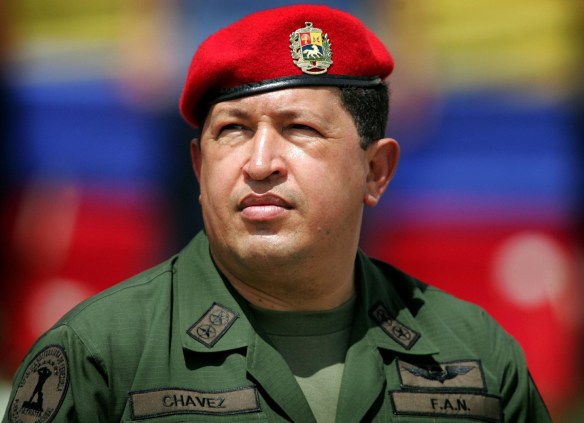
Did the CIA Kill Hugo Chavez?

Chavez

Today marks the first anniversary of the death of Venezuelan President Hugo Chavez. As Washington DC and U.S. corporate media do everything in their power to shift popular support towards the conservative opposition, now is a good time to remember what Chavez and his party stood for, why the U.S. hated him so much, why his people loved him, and how and why the CIA may have assassinated him. These and other topics are discussed in the interview transcript below with author and historian William Blum by John Robles first published by Stop NATO. For more details about likely CIA involvement in the death of Hugo Chavez, read http://www.madcowprod.com/2013/03/08/who-killed-hugo-chavez/.

The CIA has Attempted to Assassinate 50 Foreign Leaders Including Chavez

The late Venezuelan President Hugo Chavez was warned by Fidel Castro to be careful of a very specific attack, namely a quick jab from an infected needle. Such a warning coming from a leader who has reportedly been the target of CIA assassination plots more than 600 times in over 50 years, was sure to be heeded.

Was the illness of Hugo Chavez a completely deniable assassination by the CIA? William Blum spoke with the VOR’s John Robles and discussed this issue and more.

Robles: I’ve read your Anti-Empire report regarding Hugo Chavez. Can you give us your comments on speculation that he was assassinated by the CIA?

Blum: I cannot prove it of course, but I believe he was. It would be totally in keeping with the entire history of the CIA and its attitude towards people like Hugo Chavez.

The CIA has attempted to assassinate more than 50 foreign leaders and successfully at least half the time. And very few of them were as despised by the US government as Chavez was, I would say. So, there would be no reason at all to expect that the CIA would not at least plan on killing, and the nature of his ailment is very odd.

He went from a cancer, which would not go away despite several sessions of chemotherapy and what have you. Then it went to serious lung infections, which would not go away no matter what they did. And then it went to, suddenly, a massive heart attack. All in the same man with no apparent cause, he was only 58-years-old, and as far as we know he was a very healthy until this happened, it is all very odd.

And given the great motivation that the US Government and the persons in the CIA has put for killing a man like Hugo Chavez, I’m pretty sure that the CIA played a role in this.

Robles: Do you know or have you heard of any credible new technology or new programs that could deliver such a cancer?

Blum: The means would be a needle with a quick, sharp jab and what you need is getting one person close enough to Chavez to do that.

Chavez was always in the public eye, he was always embracing people. There must have been countless occasions in the past few years when he was vulnerable to a quick jab by a needle that would be the method of transmitting the ailments.

Robles: Did he ever complain that he had been poked by something in public? Were there any reports of anything like that happening that you had heard about?

Blum: He did mention that Fidel Castro warned him about just that. He said: “A quick jab with a needle, and they’ll do…I don’t know what!” Actually he was told by Fidel.

Robles: A quick jab with a needle. Do you think that happened with Fidel because he had become very ill?

Blum: Well, Fidel…According to Cuban intelligence, there were more than 600 attempts on the life of Fidel Castro by the CIA. There is an entire book on that subject by Cuban intelligence.

And many of the methods were pretty bizarre, including an exploding cigar, but over the course of 50 years the Cubans claim there were more than 600 attempts on his life and it may have taken just one with Chavez.

Robles: Have you heard anything from your sources or from where you get some of your information? Have you heard anything detailing any connection between these two US Air Force attaches that were expelled from the country and the death of Hugo Chavez?

Blum: No. I would assume that there is a connection but I don’t know if the Venezuelan government has actually said so.

Getting back to Chavez’s case, we have to keep in mind that four other South American leaders, prominent people on the left, all came down with cancer within the past year or two.

Robles: I think it was seven, wasn’t it, altogether?

Blum: The four that I named in my report…You can add the ones that you know just for my information… were Cristina Fernandez…

Robles: De Kirchner, right…

Blum: of Argentina, Dilma Rousseff of Brazil, Fernando Lugo of Paraguay, the former Brazilian head of state Lula da Silva. Who would you add into that list?

Robles: Well, and then of course Hugo Chavez himself…

Blum: Castro is one of them…

Robles: I would add Castro to the list and Kirchner’s husband who died of a mysterious heart attack as well.

Blum: Right.

Robles: We might add that as a mysterious illness, not exactly a cancer but…

Blum: Right! If the CIA was involved it doesn’t have to be cancer necessarily of course.

Robles: Oh, sure, it could be anything. Have you heard anything about cancer strains or any kind of killing weapons like this, any kind of biological weapons that would give maybe cancer-like symptoms, not exactly a certain type of cancer?

Blum: I very well may have read of such over the years. I have read so much about the CIA, but at the moment I can’t think of anything to supply you with that information. Although we do know, it is well known, that for decades the CIA was looking for a method of killing somebody which would not leave a trace. The CIA itself has used those words. For the entire period of the Cold War that was a major stated project of the CIA. But where that stands today, I have no idea.

Robles: Yes, of course that is all very secret and no one is going to talk about it, but perhaps there are some echoes or some whispers? Maybe somebody has come out and said something? What other reasons would you give to back up the argument that he was assassinated?

Blum: I will mention there is no one in the entire universe who was more hated, no leader more hated than Chavez was by the US government. In the eyes of the US power that be, Chavez was worse than Fidel Castro and Salvador Allende.

Robles: Why was he so hated?

Blum: Because he was the most outspoken leader in the world when it came to criticizing US foreign policy. He never pulled his punches for a moment, he made a claim that it was all crimes against humanity and the US leaders were war criminals, and he said so explicitly. It is unusual for a head of state to be talking that way. And at the UN he attacked Bush in front of the whole world.

Robles: Oh yes, I remember he said that the Devil had been there the day before or something, and it still smelled like sulfur.

Blum: Yes, Bush had spoken to the UN before Chavez from the same platform. And Chavez said there was a smell of sulfur in the air because of that.

Robles: That’s usually the domain of the United States, I mean… Isn’t it? I mean Bush was calling everybody the axis of evil, and all this stuff, branding everyone evil. Wasn’t that kind of a shock to see the same thing done to an American leader?

Blum: Yeah, it is a shock for anyone under any circumstances to be so outspoken in the criticism of the US foreign policy. It is a point in Chavez’s favor that he could have the honesty and the courage to say such things, which very much needed to be said.

Robles: So, you supported the way he stood up?

Blum: Well, in general yes. I think there certainly were times when he may have overdone it, even for me. I mean, he felt obliged to comment on everything under the sun, and I thought several times that he could have held off on saying certain things, they were not serving any good purpose. But that’s a minor criticism of his overall marvelous record.

Robles: You say he had a marvelous record. What do you think were his major achievements in your opinion?

Blum: What he’s brought to the poor people of Venezuela in the way of education and healthcare, and housing, and what have you. And what he brought to the rest of the South America, he formed various anti-US empire blocs which stood in the way of expansion of the US influence.

He and others formed a new…A counter to the OAS, the Organization of American States, which for decades has been dominated and corrupted by the US and Canada. And they formed a new organization in South America excluding the US and Canada. So it was that simple.

Robles: Do you think his achievements will continue or do you think the US will be successful in rolling back everything he did? Which of course I assume they would want to.

Blum: Yes, they would want to. But if Maduro who was chosen and backed by Chavez, wins, and he is expected to win in the election next month, then most of it will continue, I assume.

Stop NATO e-mail list home page with archives and search engine:
http://groups. yahoo.com/ group/stopnato/ messages

Stop NATO website and articles:
http://rickrozoff. wordpress. com

Podcast Roundup

1/11 Guillermo Jimenez and writer/activist Larry Pinkney discuss the recent release of Lynne Stewart in the context of past and present COINTELPRO actions against activists at Traces of Reality:

1/13 On the Black Agenda Report they commemorate the life of Amiri Baraka, discuss the war on poverty, important people-powered movements for 2014, failures of the moderate democrats and the International Criminal Court, the Washington Post as CIA asset, and an update on the Dallas 5:

1/13 Guy Evans and independent journalist Rania Khalek discuss positive aspects and limitations of independent media, the school-to-prison pipeline, Nelson Mandela, the NSA and other topics on Smells Like Human Spirit:

1/15 On the C-Realm Podcast, KMO and David J. Blacker explore the themes of David’s new book, The Falling Rate of Learning and the Neoliberal Endgame. They cover big questions related to technology and economics such as “If public education in the 20th Century was shaped by the needs of capitalist production, what form does education take when what Capitalists really need a growing segment of the population to do is go away?”:

1/16 Another great Smells Like Human Spirit interview featuring former LAPD police officer and whistleblower Michael Ruppert. They discuss JFK, the rise of corporate power, and the future of the surveillance state among other topics:

Upper 1 Percent Plan Total Control of Internet News

internet-censorship

By Wayne Madsen

Previously published in the Wayne Madsen Report.

With the impending demise of World Wide Web “net neutrality,” which has afforded equal access for website operators to the Internet, the one percent of billionaire investors are busy positioning themselves to take over total control of news reporting on the Internet.

In the latest move by billionaires to monopolize the Internet, Huffington Post founder Arianna Huffington and billionaire Nick Berggruen announced the creation of World Post, a news and views website that will be officially launched at the World Economic Forum conclave of one percenters in Davos, Switzerland.

Among the announced contributors to World Post are Microsoft owner Bill Gates, Google CEO Eric Schmidt, and former British Prime Minister Tony Blair.

The move by Huffington and Berggruen follows the creation of the “investigative” news website First Look, Inc. by PayPal’s billionaire founder Pierre Omidyar. First Look plans to distribute the remaining cache of National Security Agency (NSA) documents originally leaked by NSA whistleblower Edward Snowden to journalist and lawyer Glenn Greenwald.

Another billionaire who has joined the rush to seize part of the Internet is hedge fund tycoon George Soros. Soros has backed two media operations, Pro Publica, which promised to disclose many Snowden documents but has not followed through, and Project Syndicate, which paves the Internet with editorials backing all of Soros’s global initiatives.

Greenwald and his associates have published only one percent of the estimated 50,000 documents downloaded by Snowden from classified NSA databases. In a recent interview by Israel’s Channel Ten, Greenwald made it very clear that he would release more documents concerning NSA surveillance of Israeli leaders based on what the Obama administration does with regard to convicted and jailed Israeli spy Jonathan Pollard. There are increasing calls for Pollard’s release from prison and permission for him to move to Israel.

Greenwald stated to Israeli television that the slow pace of document release would continue and that he agreed with Israel on the issue of Pollard: “I think you are absolutely right to contrast the Jonathan Pollard case with revelations of American spying on their closest allies within the Israeli government, because it does underlie, underscore exactly the hypocrisy that lies at the center of so much of what the U.S. government does.”

Pollard is serving a life sentence in the Butner, North Carolina, federal penitentiary for disclosing a cache of documents that resulted in a number of U.S. intelligence assets in the Middle East being compromised to Mossad. The Mossad approached the U.S. assets and offered them a deal: cooperate with Mossad or risk being outed to their governments as CIA assets. In either case, the assets faced a certain death sentence: disclosure of work for Israel or the United States would have been met with the same fate of execution as spies.

A number of American journalists are now coming out in support of clemency for Pollard to placate Israel over the NSA spying reports leaked by Greenwald. First Look’s initial operating budget is $250 million. Along with Greenwald, journalists such as The Nation’s Jeremy Scahill; Dan Froomkin, formerly with The Washington Post; and Entertainment Weekly.com’s Bill Gannon jumped ship to sign on to First Look. The hiring of an entertainment editor who once worked for Lucas Films, the producer of Star Wars movies, raised eyebrows among those who believed Greenwald and Omidyar intended First Look to be a no-nonsense news operation. It now seems certain that First Look will be no different than Disney Corporation’s running of ABC News.

There have been some outrageous examples of corporate parents spiking stories by their news divisions in order to avoid bad publicity. In 2006, ABC News was pressured by Disney and its then-CEO Michael Eisner to kill an investigation of pedophiles being employed by Disney World in Orlando. The end of net neutrality will stymie and possibly eliminate investigative reporting on the Internet as we now know it.

The formation of the two newest media companies follows Amazon CEO Jeff Bezos’ acquisition of The Washington Post. It is believed that Bezos will begin to streamline the newspaper with more focus on Internet distribution than the print run.

Under President Obama, the Federal Communications Commission and Federal Trade Commission have done little to advance the cause of net neutrality. In fact, the regulatory agencies have gone the other way in order to facilitate the creation of a multi-tiered Internet that will permit high bandwidth access in a “pay to play” scheme. In other words, only billionaires like Omidyar, Berggruen, Bezos, and others will have access to the top tier of the Internet to distribute varnished “news” reports.

Those media organizations without deep pockets will be relegated to the slower tiers of the Internet, sharing limited bandwidth with pornography, quack medicine, and get-rich-quick scam operators.

Rupert Murdoch’s British Sky Broadcasting and Virgin Media, formerly owned by Sir Richard Branson, have been at the forefront of establishing a “two-speed Internet.”

It is painfully clear that the top one percent are feverishly engaged in an orgy of carving up the Internet after the collapse of net neutrality for the benefit of corporatism and oligarchic control over news dissemination.

It is noteworthy that Obama’ old friend from Columbia and Harvard and his first FCC chairman, Julius Genachowski, has just joined a new firm after offering only lukewarm support for net neutrality. Genachowski now works for the eternally dubious Carlyle Group.

There is little wonder why one of World Post’s first contributors will be Google’s Schmidt, the frequent habitué of the Davos and Bilderberg secret conclaves of financial and political vipers who run the world. The journalists who have joined the frenzy to climb into the one percenters’ Internet top tier deserve nothing but condemnation from their peers.

Wayne Madsen is a Washington, DC-based investigative journalist and nationally-distributed columnist. He is the editor and publisher of the Wayne Madsen Report.

The Last Gasp of American Democracy

tumblr_lyzbbcoWqZ1qjg60ao1_500

Chris Hedges’ regular columns for Truthdig.com are consistently informative and provocative, but his latest piece offers a particularly critical analysis of the current political moment in the United States. In the following excerpt he ruminates on a number of recent actions of our modern corporate totalitarian state:

Via Truthdig:

The object of efficient totalitarian states, as George Orwell understood, is to create a climate in which people do not think of rebelling, a climate in which government killing and torture are used against only a handful of unmanageable renegades. The totalitarian state achieves this control, Arendt wrote, by systematically crushing human spontaneity, and by extension human freedom. It ceaselessly peddles fear to keep a population traumatized and immobilized. It turns the courts, along with legislative bodies, into mechanisms to legalize the crimes of state.

The corporate state, in our case, has used the law to quietly abolish the Fourth and Fifth amendments of the Constitution, which were established to protect us from unwarranted intrusion by the government into our private lives. The loss of judicial and political representation and protection, part of the corporate coup d’état, means that we have no voice and no legal protection from the abuses of power. The recent ruling supporting the National Security Agency’s spying, handed down by U.S. District Judge William H. Pauley III, is part of a very long and shameful list of judicial decisions that have repeatedly sacrificed our most cherished constitutional rights on the altar of national security since the attacks of 9/11. The courts and legislative bodies of the corporate state now routinely invert our most basic rights to justify corporate pillage and repression. They declare that massive and secret campaign donations—a form of legalized bribery—are protected speech under the First Amendment. They define corporate lobbying—under which corporations lavish funds on elected officials and write our legislation—as the people’s right to petition the government. And we can, according to new laws and legislation, be tortured or assassinated or locked up indefinitely by the military, be denied due process and be spied upon without warrants. Obsequious courtiers posing as journalists dutifully sanctify state power and amplify its falsehoods—MSNBC does this as slavishly as Fox News—while also filling our heads with the inanity of celebrity gossip and trivia. Our culture wars, which allow politicians and pundits to hyperventilate over nonsubstantive issues, mask a political system that has ceased to function. History, art, philosophy, intellectual inquiry, our past social and individual struggles for justice, the very world of ideas and culture, along with an understanding of what it means to live and participate in a functioning democracy, are thrust into black holes of forgetfulness.

The political philosopher Sheldon Wolin, in his essential book “Democracy Incorporated,” calls our system of corporate governance “inverted totalitarianism,” which represents “the political coming of age of corporate power and the political demobilization of the citizenry.” It differs from classical forms of totalitarianism, which revolve around a demagogue or charismatic leader; it finds its expression in the anonymity of the corporate state. The corporate forces behind inverted totalitarianism do not, as classical totalitarian movements do, replace decaying structures with new structures. They instead purport to honor electoral politics, freedom of expression and the press, the right to privacy and the guarantees of law. But they so corrupt and manipulate electoral politics, the courts, the press and the essential levers of power as to make genuine democratic participation by the masses impossible. The U.S. Constitution has not been rewritten, but steadily emasculated through radical judicial and legislative interpretation. We have been left with a fictitious shell of democracy and a totalitarian core. And the anchor of this corporate totalitarianism is the unchecked power of our systems of internal security.

Our corporate totalitarian rulers deceive themselves as often as they deceive the public. Politics, for them, is little more than public relations. Lies are told not to achieve any discernable goal of public policy, but to protect the image of the state and its rulers. These lies have become a grotesque form of patriotism. The state’s ability through comprehensive surveillance to prevent outside inquiry into the exercise of power engenders a terrifying intellectual and moral sclerosis within the ruling elite. Absurd notions such as implanting “democracy” in Baghdad by force in order to spread it across the region or the idea that we can terrorize radical Islam across the Middle East into submission are no longer checked by reality, experience or factually based debate. Data and facts that do not fit into the whimsical theories of our political elites, generals and intelligence chiefs are ignored and hidden from public view. The ability of the citizenry to take self-corrective measures is effectively stymied. And in the end, as in all totalitarian systems, the citizens become the victims of government folly, monstrous lies, rampant corruption and state terror.

Read the full article here: http://www.truthdig.com/report/page2/the_last_gasp_of_american_democracy_20140105

Saturday Matinee: Max Headroom

“Max Headroom: 20 Minutes Into the Future” (1985) was a television movie originally broadcast on Britain’s Channel 4 and served as a pilot for a series co-produced with ABC in 1987. It’s widely considered the earliest science fiction TV movie and series of the cyberpunk subgenre. Part of the reason for its enduring cult status is the sharp social satire of its vision of the future which remains topical to this day.

The film takes place in a corporate dystopia controlled by an oligarchy of media conglomerates. Like in Orwell’s 1984, television is used as a tool for propaganda as well as mass surveillance. Similar to Winston Smith, the protagonist of 1984, reporter Edison Carter works within the system while questioning the ethics of his employer, but unlike Smith, Carter has enough clout and connections to challenge the system and whistleblow  while retaining relative autonomy. He is helped by his producer Theora Jones, computer hacker Bryce Lynch, pirate broadcaster Blank Reg, and rogue artificial intelligence personality Max Headroom.

In Max Headroom: 20 Minutes Into the Future, Edison uncovers a conspiracy involving a new commercial technology called blip-verts: subliminal advertising that can cram greater amounts of data into minds of viewers but with devastating side-effects. During the struggle to bring the investigative report to the airwaves, Max Headroom is accidentally unleashed.