False Flagging the World towards War. The CIA Weaponizes Hollywood

PROPAGANDA

By Larry Chin

Source: GlobalResearch.ca

Almost all wars begin with false flag operations.

The coming conflicts in North Korea and Russia are no exception.

Mass public hysteria is being manufactured to justify aggression against Moscow and Pyongyang, in retaliation for acts attributed to the North Korean and Russian governments, but orchestrated and carried out by the CIA and the Pentagon.

The false flagging of North Korea: CIA weaponizes Hollywood

The campaign of aggression against North Korea, from the hacking of Sony and the crescendo of noise over the film, The Interview, bears all the markings of a CIA false flag operation.

The hacking and alleged threats to moviegoers has been blamed entirely on North Korea, without a shred of credible evidence beyond unsubstantiated accusations by the FBI. Pyongyang’s responsibility has not been proven. But it has already been officially endorsed, and publicly embraced as fact.

The idea of “America under attack by North Korea” is a lie.

The actual individuals of the mysterious group responsible for the hacking remain conveniently unidentified. A multitude of possibilities—Sony insiders, hackers-for-hire, generic Internet vandalism—have not been explored in earnest. The more plausible involvement of US spying agencies—the CIA, the NSA, etc. , their overwhelming technological capability and their peerless hacking and surveillance powers—remains studiously ignored.

Who benefits? It is illogical for Pyongyang to have done it. Isolated, impoverished North Korea, which has wanted improved relations with the United States for years (to no avail), gains nothing by cyberattacking the United States with its relatively weak capabilities, and face the certainty of overwhelming cyber and military response. On the other hand, Washington benefits greatly from any action that leads to regime change in North Korea.

But discussion about Pyongyang’s involvement—or lack of—risks missing the larger point.

This project, from the creation of The Interview to the well-orchestrated international incident, has been guided by the CIA, the Pentagon, and the State Department from the start. It is propaganda. It is a weapon of psychological warfare. It is an especially perverted example of military-intelligence manipulation of popular culture for the purpose of war.

There is nothing funny about any of it.

The Interview was made with the direct and open involvement of CIA and Rand Corporation operatives for the express purpose of destabilizing North Korea. Star and co-director Seth Rogen has admitted that he worked “directly with people who work in the government as consultants, who I’m convinced are in the CIA”. Originally conceived to be a plot taking place in an “unnamed country”, Sony Pictures co-chairman Michael Lynton, who also sits on the board of the Rand Corporation, encouraged the film makers to make the movie overtly about murdering Kim Jong-Un. Bruce Bennett, the Rand Corporation’s North Korean specialist, also had an active role, expressing enthusiasm that the film would assist regime change and spark South Korean action against Pyongyang. Other government figures from the State Department, even operatives connected to Hillary Clinton, read the script.

The infantile, imbecilic, tasteless, reckless idiots involved with The Interview, including the tasteless Rogen and co-director Evan Goldberg, worked with these military-intelligence thugs for months. “Hung out” with them. They do not seem to have had any problem being the political whores for these Langley death merchants. In fact, they had fun doing it. They seem not to give a damn, or even half a damn, that the CIA and the Pentagon have used them, and co-opted the film for an agenda far bigger than the stupid movie itself. All they seem to care about was that they are getting publicity, and more publicity, and got to make a stupid movie. Idiots.

The CIA has now succeeded in setting off a wave of anti-North Korea war hysteria across America. Witness the ignorant squeals and cries from ignorant Americans about how “we can’t let North Korea blackmail us”, “we can’t let Kim take away our free speech”. Listen to the ridiculous debate over whether Sony has the “courage” to release the film to “stand up to the evil North Koreans” who would “blackmail America” and “violate the rights” of idiot filmgoers, who now see it as a “patriotic duty” to see the film.

These mental midgets—their worldviews shaped by the CIA culture ministry with its endorsed pro-war entertainment, violent video games, and gung-ho shoot ‘em ups—are hopelessly brain-curdled, irretrievably lost. Nihilistic and soulless, as well as stupid, most Americans have no problem seeing Kim Jong-Un killed, on screen or in reality. This slice of ugly America is the CIA’s finest post-9/11 army: violent, hate-filled, easily manipulated, eager to obey sheeple who march to whatever drumbeat they set.

And then there are the truly dumb, fools who are oblivious to most of reality, who would say “hey lighten up, it’s only a comedy” and “it’s only a movie”. Naïve, entitled, exceptionalist Americans think the business of the war—the murderous agenda they and their movie are helping the CIA carry out —is all just a game.

The CIA’s business is death, and that there are actual assassination plans in the files of the CIA, targeting heads of state. Kim Jong-Un is undoubtedly on a real assassination list. This is no funny, either.

The real act of war

The provocative, hostile diplomatic stance of the Obama administration speaks for itself. Washington wanted to spark an international incident. It wants regime change in Pyongyang, does not care what North Korea or China think, and does not fear anything North Korea will do about it.

On the other hand, imagine if a film were about the assassination of Benjamin Netanyahu and the toppling of the government in Tel Aviv. Such a film, if it would ever be permitted even in script form, would be stopped cold. If it made it through censors that “magically” never slowed down The Interview (and yes, there is censorship in America, a lot of it) Obama would personally fly to Tel Aviv to apologize. At the very least, Washington would issue statements distancing themselves from the film and its content.

Not so in the case of The Interview. Because American elites actually want the Kim family murdered.

Despite providing no proof of North Korean involvement, President Barack Obama promised a “proportional response”. Promptly, North Korea’s Internet was mysteriously shut down for a day.

Unless one is naïve to believe in this coincidence, all signs point to US spy agencies (CIA, NSA, etc.) or hackers working on behalf of Washington and Langley.

Given the likelihood that North Korea had nothing to do with either the hacking of Sony, the initial pulling of the movie (a big part of the publicity stunt, that was not surprisingly reversed) or the “blackmailing” of moviegoers, the shutting down of North Korea’s Internet was therefore a unilateral, unprovoked act of war. Washington has not officially taken responsibility. For reasons of plausible denial, it never will.

Perhaps it was a dry run. A message. The US got to test how easily it can take down North Korea’s grid. As we witnessed, given overwhelming technological advantage, it was very easy. And when a war against Pyongyang begins in earnest, American forces will know exactly what they will do.

The US is flexing its Asia-Pacific muscles, sending a message not only to Pyongyang, but to China, a big future target. Some of the other muscle-flexing in recent months included the anti-Beijing protests in Hong Kong (assisted by the CIA and the US State Department), ongoing provocations in the South China Sea over disputed oil, and new defense agreements that place new anti-missile systems and missile-guided naval vessels to the region.

The bottom line is that America has once again been mobilized into supporting a new war that could take place soon. The CIA and Sony have successfully weaponized a stupid movie, making it into a cause and a battle cry.

If and when bombs fall on North Korea, blood will be on the hands of the makers of The Interview, every single executive who allowed it to be made, and the hordes who paid to see it.

If America were a decent, sane society, The Interview would be exposed, roundly denounced, boycotted and shunned. Instead it is celebrated.

The CIA should be condemned. Instead, Seth Rogen hangs out with them. America, increasingly dysfunctional, loves them. Obeys them.

The false flagging of Russia

Regarding The Interview, Russian Foreign Ministry spokesman Alexander Lukashevich issued a statement in sympathy with North Korea, correctly calling the film’s concept aggressive and scandalous, and decried the US retaliatory response as counterproductive and dangerous to international relations.

Of course. Washington has no interest in improved international relations.

The Russians should know.

Like Kim Jong-Un, Vladimir Putin has been vilified, demonized and false-flagged, incessantly. If Kim is today’s object of ridicule, Putin is Evil Incarnate.

Consider the hysterical, desperate provocations by Washington in recent months.

A US-NATO coup, engineered by the CIA, toppled the government of Ukraine, planting a pro-US neo-Nazi criminal apparatus on Russia’s doorstep. The CIA and its worldwide network of propagandists pinned the blame on Putin and Russia for aggression, and for obstructing “democracy”.

The MH-17 jetliner is downed by Ukrainian operatives, with the support of the CIA, Mi-6, etc. etc. This false flag operation was blamed on Russia— “Putin’s Missile”. The US and NATO are still trying to pin these murders on Putin.

The war against the Islamic State—a massive CIA false flag operation—seeks to topple with the the Assad government as well as to militarily counter Russia. The ongoing Anglo-American conquest of regional oil and gas supplies, and energy transport routes is also aimed at checkmating Russia and China across the region.

The US and NATO have attacked the Russian federation with sanctions. The US and Saudi Arabia have collapsed oil prices, to further destroy the Russian economy. Full-scale military escalations are being planned. The US Congress is pushing new legislation tantamount to an open declaration of war against Russia.

What next? Perhaps it is time for the CIA to produce a Seth Rogen-James Franco movie about assassinating Putin. Another “parody”. Or how about a movie about killing Assad, or anyone else the United States wants to make into a Public Enemy? Don’t think Langley isn’t working on it.

The return of the Bushes (who were never gone) 

In the midst of all escalating war hysteria comes news that Jeb Bush is “actively exploring” running for president in 2016. The long predicted return of the Bush family, the kings of terrorism, the emperors of the false flag operation, back to the White House appears imminent.

The CIA will have its favorite family back in the Oval Office, with true CIA scion to manage the apocalyptic wars are likely to be launched in earnest in the next two years: Russia/Ukraine, North Korea, the Middle East.

Jeb Bush will “finish the job”.

The 2016 presidential “contest” will be a charade. It is likely to put forth two corrupt establishment political “friends” posing as adversaries, when in fact, they are longtime comrades and conspirators. On one side, Hillary (and Bill) Clinton. On the other side, Jeb Bush, with George H.W., George W. and all of the Bush cronies crawling back out of the rotten woodwork. The fact is that the Clintons and Bushes, and their intertwined networks, have run the country since the 1980s, their respective camps taking turns in power, with Obama as transitional figurehead (his administration has always been run by neoliberal elites connected to the Clintonistas, including Hillary Clinton herself).

The collective history of the Bushes stretches back to the very founding of the American intelligence state. It is the very history of modern war criminality. The resume is George H.W. Bush—the CIA operative and CIA Director—is long and bloody, and littered with cocaine dust. The entire Bush family ran the Iran-Contra/CIA drug apparatus, with the Clintons among the Bush network’s full partners in the massive drug/weapons/banking frauds of that era, the effects of which still resonate today. And we need not remind that the Bush clan and 9/11 are responsible for the world of terror and false flag foreign policy and deception that we suffer today.

While it remains too early to know which way the Establishment will go with their selection (and it depends on how world war shakes out between now and 2016), it is highly likely that Jeb

Bush would be the pick.

Hillary Clinton has already been scandalized—“Benghazi-ed”. Jeb Bush, on the other hand, has ideal Establishment/CIA pedigree. He has waited years for the stupid American public to forget the horrors that his family—Georges H.W. and W.— brought humanity. And now Americans , with their ultra-short memories, have indeed forgotten, if they had ever understood it in the first place.

And the American public does not know who Jeb Bush is, beyond the last name. Jeb Bush, whom Barbara Bush always said was the “smart one”, has been involved in Bush narco-criminal business since Iran-Contra. His criminal activities in Florida, his connection with anti-Castro Cuban terrorists and other connections are there, for those who bother to investigate them. His Latin American connections—including his ability to speak fluent Spanish, a Latin wife and a half-Latin son (George P. Bush, the next up and coming political Bush)—conveniently appeals to the fastest-growing demographic, as well as those in the southern hemisphere drug trade. Recent Obama overtures towards the Latino demographic—immigration, Cuba—appear to be a Democratic Party move to counter Jeb Bush’s known strengths in the same demographic.

Today, in the collective American mind, Kim Jong-Un and Vladimir Putin are “the bad guys”. But the mass murdering war criminal Bushes are saints. “Nice guys”.

A Jeb Bush presidency will be a pure war presidency, one that promises terror, more unspeakable than we are experiencing now, lording it over a world engulfed in holocaust.

This is not a movie.

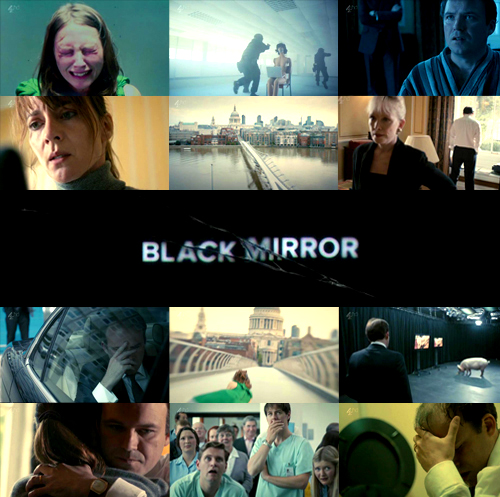
Saturday Matinee: Black Mirror

bm1

“Black Mirror” (2011 – ) is a British anthology series created by satirist Charlie Brooker exploring potential unintended social/psychological effects of technology. It’s sort of an updated and darker version of The Twilight Zone offering (often pessimistic) commentary on society, government, culture and relationships.

Season 1

The National Anthem

15 Million Merits
http://www.dailymotion.com/video/xyllhh_black-mirror-15-million-merits_shortfilms

The Entire History of You

Season 2

Be Right Back

White Bear

The Waldo Moment

White Christmas

Deep Politics of the Sony Hack

interview-cancelled-theatres-not-showing-sony-hack-movie-seth-rogen-james-franco

When news of the Sony hack first broke in late November it seemed of relatively little importance. Stories about hacking and stolen data are increasingly common these days and Sony wasn’t a particularly sympathetic victim in light of their DRM rootkit CD scandal a few years ago. I have mixed feelings about Sony as I do with most tech/entertainment conglomerates. On one hand I appreciate the media storage innovations they’ve helped develop over the years, but with rare exceptions (eg. Starship Troopers and Attack the Block), I’ve been less fond of the content they’ve produced. Some of the worst U.S. propaganda films have been from Sony/TriStar, such as Airforce One, Black Hawk Down and Zero Dark Thirty, indicating at least some filmmakers within the studio have strong government ties. Though I’ve yet to see “The Interview”, it would be no surprise if the comedy contained elements of propaganda as well.

It wasn’t initially clear if the hacks were directly related to The Interview (and still isn’t in terms of hard evidence) but the story did serve as a reminder of the importance of internet privacy and security. Leaked information also provided an interesting glimpse into the arrogant and racist culture of the upper echelons of typical multinational corporations. About a week ago after threats allegedly from the hackers began escalating (soon after the CIA torture report story started to gain momentum), a number of theater chains announced they wouldn’t screen The Interview and a few days later Sony shelved the film completely. The decision received widespread condemnation (including harsh words from Obama), but since Sony is dealing with three class action lawsuits related to leaked personal information from the hacking, they’re probably reasonably worried about further litigation due to larger leaks and possible terrorist attacks (whether “real” or hoaxed). But the most alarming aspect of the hacking story is the reaction from the U.S. government, especially last Friday’s official press release from the FBI blaming North Korea.

Typical of U.S. government agencies, they provided zero hard evidence yet attempt to justify the absence by claiming “the need to protect sensitive sources and methods precludes us from sharing all of this information…“. So what did they provide to support their conclusion? From the press release:

  • Technical analysis of the data deletion malware used in this attack revealed links to other malware that the FBI knows North Korean actors previously developed. For example, there were similarities in specific lines of code, encryption algorithms, data deletion methods, and compromised networks.
  • The FBI also observed significant overlap between the infrastructure used in this attack and other malicious cyber activity the U.S. government has previously linked directly to North Korea. For example, the FBI discovered that several Internet protocol (IP) addresses associated with known North Korean infrastructure communicated with IP addresses that were hardcoded into the data deletion malware used in this attack.
  • Separately, the tools used in the SPE attack have similarities to a cyber attack in March of last year against South Korean banks and media outlets, which was carried out by North Korea.

None of this qualifies as a smoking gun because tools and codes used by hackers are not unique identifiers (it’s not uncommon for them to share or duplicate hacking techniques). It doesn’t matter if there’s similarities with previous alleged North Korean hacking attempts or links to North Korean infrastructure because such incriminating data can be fabricated by true hackers. But the FBI tips their hand with the following paragraph where they state: “North Korea’s attack on SPE reaffirms that cyber threats pose one of the gravest national security dangers to the United States.” In other words, they’re pushing a “cyber terror” scenario which could possibly lead to a “cyber Patriot Act” and increased geopolitical aggression. The national security state wants the Sony hack to be a “cyber 9/11” though they may also exploit larger attacks in the future (whether “genuine” or false-flag).

In the same paragraph the FBI states with absolutely no self-awareness or shame of hypocrisy:  “North Korea’s actions were intended to inflict significant harm on a U.S. business and suppress the right of American citizens to express themselves. Such acts of intimidation fall outside the bounds of acceptable state behavior. The FBI takes seriously any attempt—whether through cyber-enabled means, threats of violence, or otherwise—to undermine the economic and social prosperity of our citizens.

It’s obviously not considered a crime by the FBI when the U.S. government and collaborators in the private sector spy on us, suppress our freedom of speech, and/or threaten our livelihoods, and where were they when the big banks wrecked the economy? From a government that has inflicted horrific torture and countless other crimes, who are they to determine what falls outside the bounds of “acceptable state behavior”?

On the day before the release of the FBI statement, White House press secretary Josh Earnest ominously announced “[members of the national security team] would be mindful of the fact that we need a proportional response, and also mindful of the fact that sophisticated actors, when they carry out actions like this, are oftentimes — they’re not always but often seeking to provoke a response from the United States of America. They may believe that a response from us in one fashion or another would be advantageous to them.

When pressed on how provoking a response might be advantageous, Earnest argues “it’s not hard to imagine that there may be some organizations or individuals who would perceive a specific response from the United States as something that might enhance their standing, either among their cohorts or colleagues, or even on the international stage.” Translation: shouldn’t all brainwashed Americans realize that being sabotaged, embargoed, and/or bombed by the U.S. is considered a badge of honor and prestige among the Axis of Evil?

As for what exactly the White House considers a “proportional response”, Earnest tenaciously sticks to his talking points: “I wouldn’t speculate at this point about the range of options that are currently under consideration.  I also wouldn’t commit at this point to being entirely transparent about what that response is… I don’t anticipate that we’ll be in a position where we’re going to be able to be completely forthcoming about every single element of the response that has been decided upon… it would be inappropriate to get ahead of that investigation to start publicly discussing what our response is going to be, particularly in light of the fact that I’m confident that at least some of the measures that will be considered as a response are the kinds of things we wouldn’t want to telegraph in advance… I think I’ve been pretty candid about the fact that I’m not talking in a lot of detail about what our response is going to be.” etc…

As usual, the government is only interested in advancing a narrative that can further their agenda in secrecy (whether or not they were directly involved in setting up the crime). As with 9/11, it will be up to independent researchers and critical thinkers to ask “who truly benefits?” Who has the greatest means, motive and opportunity?

Podcast Roundup

12/2: On The Progressive Commentary Hour host Gary Null has an in-depth conversation with Peter Levenda on the Nazi legacy, its survival and influence in world events, and its continuation to this day:

Show link: http://s35.podbean.com/pb/1448aab68f3651499d84a256f2ad4c14/54820c63/data1/blogs18/371244/uploads/PCH_120214.mp3


12/3: Host KMO and partner Olga have a wide-ranging discussion with podcaster Duncan Crary, and entrepreneur Vic Christopher on localism, architecture and regenerating community among other topics on the C-Realm podcast:

Show link: http://www.c-realm.com/wp-content/uploads/443_Troy.mp3


12/3:  On the latest episode of Guns and Butter, host Bonnie Faulker interviews Judyth Vary Baker (an ex-girlfriend of Lee Harvey Oswald) on the connection between cancer causing bioweapons research and the JFK assassination:

Show link: http://archives.kpfa.org/data/20141203-Wed1300.mp3


12/4: Freeman and author Jamie Hanshaw discuss propagandistic and ritualistic aspects of the American Music Awards on The Free Zone:

Show link: http://freeman.theanomalieschannel.com/amas-american-mind-control-awards.mp3


12/5:  On the Corbett Report, Lionel of LionelMedia.com joins James Corbett for an epic discussion on fake stories in the media, manipulation of the historical record, the fake Syria sniper boy video, the Corbett/Lionel law, and the importance of self-correction.

http://www.corbettreport.com/mp3/2014-12-04%20Lionel.mp3


Miguel Conner and author Valarie Ziegler discuss the Gnostic subtext of Patrick McGoohan’s The Prisoner, one of the greatest television programs of the 60s:


Paolo Bacigalupi’s “The Doubt Factory”

17516ca2d2a275f5973e5f4b86d3fe4c

By Cory Doctorow

Source: BoingBoing.net

Paolo Bacigalupi is one of science fiction’s most versatile writers. From his justly lauded dystopian debut novel The Windup Girl to his environmental YA thriller Ship Breaker to his ha-ha-only-serious zombies-apocalypse-as-allegory-for-race-in-America Zombie Baseball Beatdown, he’s never been shy about switching modes and moods. All his books have a two things in common: technical brilliance and nuanced, important treatments of social issues. It’s a killer combination.

His latest novel, a YA thriller called The Doubt Factory, is right in the Bacigalupi pocket in that its storytelling is utterly different from anything else he’s published, deals with a vital social issue, and is a technical marvel of the form. Specifically, it’s a thriller about corporate distortion of communications whose third act is so tense, so taut, and so fantastically turned that I didn’t move a muscle except to turn the page for an hour while I read straight through about 150 pages’ worth of buildup and climax.

The Doubt Factory‘s protagonist is a girl called Alix who attends an elite prep school that is paid for through her father’s high-flying PR clients. As the book opens, Alix is bored in class, watching out the window, when she spies a young black man who exudes calmness and mastery. When the school’s authoritarian principal comes out to chase the intruder off the school lawn, the guy lays the principal out with one punch, eases him to the ground, and makes his way calmly off campus before the slow-moving rent-a-cops even know what’s going on.

This is Alix’s first encounter with “2.0,” a guerrilla protest group about which almost nothing is known, except that they appear to be attacking her dad’s clients. But as 2.0 grows more audacious in its actions at Alix’s school, it quickly becomes apparent that their real target is Alix’s family — and possibly Alix herself. Alix’s life becomes a benign jail of private bodyguards who shadow her every step, punctuated by ninja-like visits from the young black man, who has the ability to alter his appearance and slip right through even the tightest security cordons. And now, Alix is asking questions about her dad’s line of work — questions she’s never asked before.

In The Doubt Factory, Bacigalupi expertly tells the tale of how FUD-generating “communications consultants” have distorted our public discourse on behalf of their fantastically profitable clients, for whom a little delay in regulatory action is worth billions, and for whom the occasional class-action payout is just part of the cost of doing business, expertly calibrated and factored into the bottom line.

Bacigalupi also explores modern protest tactics, dramatizing an incisive critique of hacktivism and leaking and pointing to ways of stirring up trouble that might have a deeper and longer impact than what has gone before.

But as good as The Doubt Factory is as polemic, it’s even better as a novel. There is just so much nail-biting tension, so many unexpected turns and twists in the caper plots that run throughout the book, and it’s so well done, that it’s certain to find a large and appreciative audience. The combination of a book with a conscience and a set of serious adrenal glands is unlikely and extremely effective.

Cynicism, Recession, and the Resurgence of Cyberpunk

books

By Marshall Sandoval

Source: PopMatters

Human nature might be augmented and highly channeled by technology, but human nature stays the same. And that tech might actually amplify all the worst things about us too.

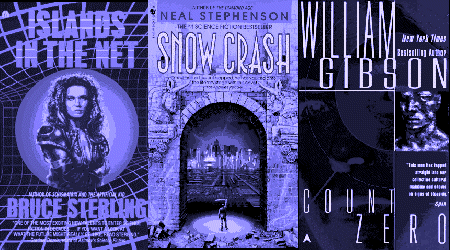
Cyberpunk has seen a recent resurgence in video games. Seemingly every game developer working today has a William Gibson book tucked under their arm or follows @swiftonsecurity (a satirical Twitter account that imagines a Taylor Swift consumed with cyber security). Cyberpunk video games are pervasive, including cyberpunk game jam projects on itch.io, Twine games, indie titles, and major AAA releases. All of these projects embrace cyberpunk themes and aesthetics. Observers credit the current trend to a number of cyclical and cultural factors. After talking to the indie developers behind a number of exciting cyberpunk titles at the center of this resurgence, I believe that the creators of these games are overwhelmingly inspired by the headlines in today’s newspapers.

It seems like no coincidence that these games have all appeared in a short time period following the economic recession. On the most basic level of analysis, it seems that these games may be providing a sense of escape from recent economic events. Last Life developer Sam Farmer notes, “I’m gonna go back to my film school class on Sci-Fi and Fantasy and say that it’s escapism. Horror, in general, and escapism, in particular, is often more popular in times of economic downturn, when you want to be somewhere else.”

Garrett Cooper’s Black Ice is an action game which casts the player as a hacker taking down corporate servers. Promoting the game, he’s found that cyberpunk narratives may be popular for reflecting reality as much as for providing an escape. He says, “I’ve talked to people about my game. I say, ‘All the corporations are evil.’ So they’re like, ‘Oh. So you’re talking about real life?’ I’m like, ‘No. Not exactly.’ That’s what people feel. The fantasy of being the one guy that can take something technological and turn it against the corporation.”

Games writer Austin Walker is an academic and cyberpunk superfan who sees the same throughline in these games and the literary roots of the genre. Walker says, “A key to traditional cyberpunk again and again is that there is economic inequality. We are positioning ourselves somewhere on that scale of how we feel about this stuff. Cyberpunk stories do that too. Usually they position the hero at the bottom of that; they’re usually in or near poverty.” In a time of extreme real-world inequality, cyberpunk stories locate players in a fantasy of rising up to subvert the system and taking down greedy corporations.

David Pittman’s indie project Neon Struct deals with a fictional near-future surveillance state. The game was heavily influenced by the recent leaks about actual domestic surveillance in the present day in the United States. Pittman says, “Edward Snowden’s release of NSA documents in 2013 was an essential part of the inception of Neon Struct (formerly Die Augen der Welt, or ‘The Eyes of the World’). I have strong feelings about the abuse of surveillance by the U.S. government, and I’ve known for close to a year that I wanted to make a game about it.” He’s quick to add, “Despite my own interest and leaning in the real world debate over mass surveillance, I am developing a way to introduce the story, which does not require the player character to actually leak any classified information. I don’t want to assume that the player shares my biases.” Nonetheless, it’s clear that the forthcoming project was informed by recent events.

Other examples of indie games providing commentary on and gaining inspiration from world events abound. Brigador is an isometric cyberpunk shooter with an extremely stylish trailer, and developer Jack Monahan lists a surprising influence. Monahan says, “While I’m not sure if the author would agree with the genre classification {of cyberpunk}, my brother and I both read and enjoyed (and were worried by) a book called Cities Under Siege: The New Military Urbanism by Stephen Graham. Like William Gibson said, the future caught up to all of his writing, more or less. We basically are living in a dystopic future”. Notably, Monahan made these statements before the recent military-style urban clashes in Ferguson, Missouri. The aforementioned Last Life is shaped by real world advances in medicine and philosophical debates about transhumanism. Matt Conn is seeking to expand LGBT representation in the games space with the cyberpunk RPG R.O.M. He says, “Because I did GaymerX and prior to that I did a startup that was very successful and then crashed. Seeing how all that happened, I feel like I have an interesting perspective of the tech scene and the LGBT rights scene.” These varied examples show the differing events influencing today’s cyberpunk boom.

As strongly as these games are influenced by the socio-political climate, it is reductionist to say this is the only thing bringing cyberpunk back into prominence. Again, Austin Walker says, “It’s tempting to just say, ‘Oh that’s happening again. We’re getting concerned again about things like privatization and inequality.’ I think that’s part of it. I don’t know if I’d be comfortable saying, ‘This is the one reason why’”. Many developers also noted the power of nostalgia as a reason for the influx of cyberpunk games. Alex Preston a developer behind Hyper Light Drifter says, “I think my generation is coming into its own, creatively, and we have a fondness for these themes and ideas. A lot of us grew up with books, films, and games that touched on these themes, and it bleeds through in our creative work. I think nostalgia is a powerful force.”

Likewise, Brendan Chung, creator of ‘90s-influenced hacker game Quadrilateral Cowboy has noticed the cyclical nature of cyberpunk themes. He says, “My guess is that the people who grew up fiddling with old PC tech are now at an age where they now have the skillset and financial means to make their own games. Now that we can make games, we’re making things that harken back to one of the things that got us interested in games in the first place.” Nostalgia for ‘80s and ‘90s cyberpunk is another likely force bringing these kinds of games back to the games market.

Additionally, I kept hearing indie developers suggest their own outlook about the state of the world today is extremely bleak. Conn says, “On a more philosophical note, this is a way of writing about the future we kind of want to see. Even if it’s dystopian or dark. I think that for a lot of us, it’s very scary going into the future.” A similarly grim outlook is shared by Monahan. He says, “I think the dystopic elements of cyberpunk point to a certain cynicism that things aren’t going to get any better. Human nature might be augmented and highly channeled by technology, but human nature stays the same. And that tech might actually amplify all the worst things about us too.” Monahan also sees this cynicism in the nostalgia that drives the cyberpunk resurgence. He adds, “So much great work from the ‘80s was in a similar vein. I think of Snake Plissken’s deadpan response to news that the president’s plane has gone down: ‘President of what?’. There’s a disillusionment from the classic era of cyberpunk that makes a revival now seem fairly natural, I think.” Natural or not, the revival is in full force, and it’s becoming a strong and subversive undercurrent in the indie games space.

Franco Berardi on the Digital Colonization of Human Experience

rupertmurdock-digital-immigrant

By Franco Berardi

Source: Adbusters

The Spanish colonization of Mesoamerica was essentially a process of symbolic and cultural submission.

The “superiority” 
of the colonizers lay on the operational effectiveness of their technical production. The colonization destroyed the cultural environment in which indigenous communities had been living for centuries: the alphabetic technology, the power of the written word overwhelmed, jeopardized and finally superseded the indigenous cultures. The conquistadors re-coded the cultural universe of nowadays Mexico and Central America.

Before the arrival of the Spanish invaders Malinche (Malinalli in Nahuatl language, Marina for the Spaniards), the daughter
 of a noble Aztec family, was given away as 
a slave to passing traders after her father died and her mother remarried. By the time Cortés arrived, she had learned the Mayan dialects spoken in the Yucatan while still understanding Nahuatl, the language of the Aztecs. As a youth she was given as tribute again, this time to the invaders.

She became the lover of Cortés and accompanied him as interpreter. She translated the words exchanged by Cortés and Moctezuma, king of the Aztec population of Tenochtitlan, and she translated the conqueror’s words when he met crowds of indigenous persons. She translated for Nahuatl-speaking people the words of Christian conquerors and of Christian priests. The Christian message melted with pre-colonisation mythologies, and the modern Mexican culture emerged. She and Cortés had a child, Martín, the first Mexican. She betrayed her own people by linking with the invaders. By the moral point of view, however, she owed nothing to her own people who had sold her into slavery, and treated her as a servant. She betrayed the conquerors, too, though they did not realize it as such.

Malinche is the ultimate symbol of the end of a world, and also the symbol of the formation of a new semiotic and symbolic space. Only when you are able to see the collapse as the end of a world, can a new world be imagined. Only when you are free from hope (which is the worst enemy of intelligence) can you start seeing a new horizon of possibility. This is the lesson that Malinche is teaching us.

DEMOCRACY

On 31 October 2011, George Papandreou announced his government’s intentions to hold a referendum for the acceptance of the terms of a Eurozone bailout deal. He wanted the Greek people to decide if the diktat of the financial class that was strangling Greek society would be accepted or rejected. Overnight, the elected Prime Minister of Greece was obliged to resign. In the very place where it was invented and named twenty-five centuries ago, democracy was finally cancelled. It will never again come to life. Financial abstraction has swallowed the destiny of billions of people. European workers’ salaries have been halved in the last ten years and unemployment and precariousness are on the rise. Meanwhile, profits skyrocket.

WAR

The Eurasian continent is heading toward a proliferation of fragmentary conflict. At the same time, the infinite war launched by Cheney and Bush has paved the way to the establishment of the Caliphate. In Japan, the Prime Minister travels the world looking for allies against China. In India, a racist mass murderer (neoliberal of course) has been elected Prime Minister. In Europe, a Euro-Russian war is in the making at the Ukrainian border. In Ferguson, Missouri, another racialized killing reveals the American police state and the poverty industrial complex — two million homeless in the US and counting. In Gaza, Israel bombards the world’s largest open air prison and blames the victims, most of them children, for dying while the world looks on. In Northern Africa, Western powers prepare for the next season of Gaddafi blowback. In Liberia, Ebola fans the flames of civil and regional war, one bleeding eyeball at a time. In Mexico, a momentary silence shrouds the bloodiest drug war humanity has ever known, with cartels ranking among the wealthiest corporations.

While capitalism will continue to thrive thanks to massive slavery and eco-catastrophe, the next 20 years will be marked by the clash between financial abstraction and biofascism. A social, cognitive breakdown is estranging the masses from the body, so the decerebrated body is taking the form of aggression. Those who have been lost in the competition react under the banners of aggressive identification. We can even see fascism revived by the vengeful spirit of the dispossessed.

BIO-FINANCIAL POWER

Nation states are over, stripped by the global machine
 of finance, computation and all-pervading behavioral Big Data algorithms. Global corporations are replacing nation states as holders of power. We now embrace the first stages of the automation of mind, language and emotions … the architecture of bio-financial power. Power, in fact, is no longer political or military. It is based more and more on the penetration of techno-linguistic automatisms into the sphere of language. Soon, life will be based on the automation of cognitive activity. Who cares if the US military machine is running on empty because of Bush’s self-defeating strategy — it’s a remnant of geopolitical thinking now dead.

THE CIRCLE

Mediocre as it is, Dave Eggers’s novel 
The Circle is a metaphor for the relation between technology, communication, emotion and power. “The Circle” is the name of the most powerful corporation 
in the world, a sort of conglomerate of Google, Facebook, Paypal and YouTube. Three men lead the company: Stockton 
is a financial shark, Bayley is a utopian and Ty Gospodinov is the project’s hidden mastermind.

The main character of the book is Mae, a young woman hired by The Circle during “the Completion,” the final phase in the implementation of TrueYou, a program intended to enforce the recording of every instant of life for pervasive, ceaseless sharing. Mae becomes the corporation’s spokesperson, the face that appears every day on the infinite channels of The Circle’s television network — the ambassador of the new credo.

The Circle is all about the utter
 capture of human attention: ceaseless communication, mandatory friendliness and creation of a new neediness — the obsessive need to express and share. One may remark that Eggers is simply re-enacting Orwell more than 60 years after the publishing of 1984. That’s true, but in the final pages of the novel, Eggers goes further than Orwell, when Ty exposes the transhuman potency of the totalitarian nightmare.

In the last scene of the novel, the inventor and founder of The Circle manages to covertly meet Mae, the newbie seducing
 the global audience. He has lost control of his own creature, the project he originally conceived, and is deprived of all power in its unstoppable self–deployment.

“I did not intend any of this to happen. And it’s moving so fast. I didn’t picture a world where Circle membership was mandatory, where all government and all life was channeled through one network … there used to be the option of opting out. But now that’s over. Completion is the end. We are closing the circle around everyone. It’s a totalitarian nightmare.”

The automaton cannot be stopped, as even the creator himself becomes overpowered by his own invention: the circle of continuous attention, the circle of perfect transparence of everybody to everybody, the circle of total power and of total impotence.

PLEASURE, AFFECTION AND EMPATHY

At the beginning of the 21st century we are in a position that is similar to the position of Malinche: the conqueror is here, peaceful or aggressive, functionally superior, unattainable, incomprehensible. The bio-info automaton is taking shape from the connection between electronic machines, digital languages and minds formatted in such a way to comply with the code. The automaton’s flow of enunciation emanates a connective world that the conjunctive codes cannot interpret, a world that is symbolically incompatible with the social civilization that was the outcome of five centuries of Humanism, Enlightenment and Socialism.

The automaton is the reification of the networked cognitive activity of millions of semio-workers around the globe. Only if they become compatible with the code, the program, can semio-workers enter in the process of networking.

This implies the de-activation of old, subconsciously engrained, modes of communication and perception (compassion, empathy, solidarity, ambiguousness and irony), paving the way to the assimilation of the conscious organism with the digital automaton.

Will the general intellect be able to disentangle itself from the automaton? Can consciousness act on neural evolution? Will pleasure, affection, empathy find a way to re-emerge? Will we translate into human language the connective language of the automated meaning-making machine buzzing and buzzing in our heads?

These are questions that only 
Malinche can answer, opening to the incomprehensible other, betraying her people and reinventing language in order to express what can not be said.

—Franco “Bifo” Berardi is an Italian Marxist theorist and activist in the autonomist tradition. He writes about the condition of media, mental breakdown
 and information technology within post-industrial capitalism. His next book, Heroes, dedicated to the suicidal wave provoked by financial nihilism, will be out in the first months of 2015.