
How Evil Wins: The Hypocritical Double Standards of Political Outrage

By John W. Whitehead

Source: The Rutherford Institute

“She was asked what she had learned from the Holocaust, and she said that 10 percent of any population is cruel, no matter what, and that 10 percent is merciful, no matter what, and that the remaining 80 percent could be moved in either direction.”—Kurt Vonnegut

Please spare me the media hysterics and the outrage and the hypocritical double standards of those whose moral conscience appears to be largely dictated by their political loyalties.

Anyone who believes that the injustices, cruelties and vicious callousness of the U.S. government are unique to the Trump Administration has not been paying attention.

No matter what the team colors might be at any given moment, the playbook remains the same. The leopard has not changed its spots. Scrape off the surface layers and you will find that the American police state that is continuing to wreak havoc on the rights of the people under the Trump Administration is the same police state that wreaked havoc on the rights of the people under every previous administration.

Brace yourselves.

While we squabble over which side is winning this losing battle, a tsunami approaches.

Case in point: in Charlottesville, Va.—home of Thomas Jefferson, the author of the Declaration of Independence, champion of the Bill of Rights, and the nation’s third president—city councilors in a quest for so-called “equity” have proposed eliminating Jefferson’s birthday as a city holiday (which has been on the books since 1945) and replacing it with a day that commemorates the liberation of area slaves following the arrival of Union troops under Gen. Philip Sheridan.

In this way, while the populace wages war over past injustices, injustice in the here and now continues to trample innocent lives underfoot. In Charlottesville, as in the rest of the country, little is being done to stem the tide of the institutional racism that has resulted in disproportionate numbers of black Americans being stopped, frisked, shot at, arrested and jailed.

Just recently, in fact, Phoenix police drew their guns, shouted profanities, assaulted and threatened to shoot a black couple whose 4-year-old daughter allegedly stole a doll from a dollar store. The footage of the incident—in which the cops threaten to shoot the pregnant, young mother in the head in the presence of the couple’s 1- and 4-year-old daughters—is horrifying in every way.

Tell me again why it’s more important to spend valuable political capital debating the birthdays of dead presidents rather than proactively working to put a stop to a government mindset that teaches cops it’s okay to treat citizens of any color with brutality and a blatant disregard for their rights?

It doesn’t matter that Phoenix and Charlottesville are 2100 miles apart. The lethal practices of the American police state are the same all over.

No amount of dissembling can shield us from the harsh reality that the danger in our midst is posed by an entrenched government bureaucracy that has no regard for the Constitution, Congress, the courts or the citizenry.

We’ve got to get our priorities straight if we are to ever have any hope of maintaining any sense of freedom in America. As long as we allow ourselves to be distracted, diverted, occasionally outraged, always polarized and content to view each other—rather than the government—as the enemy, we’ll never manage to present a unified front against tyranny (or government corruption and ineptitude) in any form.

Mind you, by “government,” I’m not referring to the highly partisan, two-party bureaucracy of the Republicans and Democrats. Rather, I’m referring to “government” with a capital “G,” the entrenched Deep State that is unaffected by elections, unaltered by populist movements, and has set itself beyond the reach of the law.

This is the hidden face of a government that has no respect for the freedoms of its citizenry.

So stop with all of the excuses and the hedging and the finger-pointing and the pissing contests to see which side can out-shout, out-blame and out-spew the other. Enough already with the short- and long-term amnesia that allows political sycophants to conveniently forget the duplicity, complicity and mendacity of their own party while casting blame on everyone else.

This is how evil wins.

This is how freedom falls and tyranny rises.

This is how good, generally decent people—having allowed themselves to be distracted with manufactured crises, polarizing politics, and fighting that divides the populace into warring us vs. them camps—fail to take note of the looming danger that threatens to wipe freedom from the map and place us all in chains.

Anytime you have an entire nation so mesmerized by the antics of the political ruling class that they are oblivious to all else, you’d better beware. Anytime you have a government that operates in the shadows, speaks in a language of force, and rules by fiat, you’d better beware. And anytime you have a government so far removed from its people as to ensure that they are never seen, heard or heeded by those elected to represent them, you’d better beware.

The world has been down this road before.

As historian Milton Mayer recounts in his seminal book on Hitler’s rise to power, They Thought They Were Free:

Most of us did not want to think about fundamental things and never had. There was no need to. Nazism gave us some dreadful, fundamental things to think about—we were decent people‑—and kept us so busy with continuous changes and ‘crises’ and so fascinated, yes, fascinated, by the machinations of the ‘national enemies’, without and within, that we had no time to think about these dreadful things that were growing, little by little, all around us.

We are no longer living the American Dream. We’re living the American Lie.

Indeed, Americans have been lied to so sincerely, so incessantly, and for so long by politicians of all stripes—who lie compulsively and without any seeming remorse—that they’ve almost come to prefer the lies trotted out by those in government over less-palatable truths.

The American people have become compulsive believers: left-leaning Americans are determined to believe that the world has become a far more dangerous place under Trump, while right-leaning Americans are equally convinced that Trump has set us on a path to prosperity and security.

Nothing has changed.

The police state is still winning. We the people are still losing.

In fact, the American police state has continued to advance at the same costly, intrusive, privacy-sapping, Constitution-defying, heartbreaking, soul-scorching, relentless pace under the current Tyrant-in-Chief as it did under those who occupied the White House before him (Obama, Bush, Clinton, etc.).

Police haven’t stopped disregarding the rights of citizens. Having been given the green light to probe, poke, pinch, taser, search, seize, strip, shoot and generally manhandle anyone they see fit in almost any circumstance, all with the general blessing of the courts, America’s law enforcement officials are no longer mere servants of the people entrusted with keeping the peace. Indeed, they continue to keep the masses corralled, under control, and treated like suspects and enemies and slaves rather than citizens.

SWAT teams haven’t stopped crashing through doors and terrorizing families. Nationwide, SWAT teams continue to be employed to address an astonishingly trivial array of criminal activities or mere community nuisances including angry dogs, domestic disputes, improper paperwork filed by an orchid farmer, and misdemeanor marijuana possession. With more than 80,000 SWAT team raids carried out every year on unsuspecting Americans for relatively routine police matters and federal agencies laying claim to their own heavily armed law enforcement divisions, the incidence of botched raids and related casualties continue to rise.

The Pentagon and the Department of Homeland Security haven’t stopped militarizing and federalizing local police. Police forces continue to be transformed into heavily armed extensions of the military, complete with jackboots, helmets, shields, batons, pepper-spray, stun guns, assault rifles, body armor, miniature tanks and weaponized drones. In training police to look and act like the military and use the weapons and tactics of war against American citizens, the government continues to turn the United States into a battlefield and “we the people” into enemy combatants.

Schools haven’t stopped treating young people like hard-core prisoners. School districts continue to team up with law enforcement to create a “schoolhouse to jailhouse track” by imposing a “double dose” of punishment for childish infractions: suspension or expulsion from school, accompanied by an arrest by the police and a trip to juvenile court. In this way, the paradigm of abject compliance to the state continues to be taught by example in the schools, through school lockdowns where police and drug-sniffing dogs enter the classroom, and zero tolerance policies that punish all offenses equally and result in young people being expelled for childish behavior.

For-profit private prisons haven’t stopped locking up Americans and immigrants alike at taxpayer expense. States continue to outsource prison management to private corporations out to make a profit at taxpayer expense. And how do you make a profit in the prison industry? Have the legislatures pass laws that impose harsh penalties for the slightest noncompliance in order keep the prison cells full and corporate investors happy.

Censorship hasn’t stopped. First Amendment activities continue to be pummeled, punched, kicked, choked, chained and generally gagged all across the country. The reasons for such censorship vary widely from political correctness, safety concerns and bullying to national security and hate crimes but the end result remained the same: the complete eradication of what Benjamin Franklin referred to as the “principal pillar of a free government.”

The courts haven’t stopped marching in lockstep with the police state. The courts continue to be dominated by technicians and statists who are deferential to authority, whether government or business. Indeed, the Supreme Court’s decisions in recent years have most often been characterized by an abject deference to government authority, military and corporate interests.

Government bureaucrats haven’t stopped turning American citizens into criminals. The average American now unknowingly commits three felonies a day, thanks to an overabundance of vague laws that render otherwise innocent activity illegal, while reinforcing the power of the police state and its corporate allies.

The surveillance state hasn’t stopped spying on Americans’ communications, transactions or movements. On any given day, whether you’re walking through a store, driving your car, checking email, or talking to friends and family on the phone, you can be sure that some government agency, whether it’s your local police, a fusion center, the National Security Agency or one of the government’s many corporate partners, is still monitoring and tracking your every move.

The TSA hasn’t stopped groping or ogling travelers. Under the pretext of protecting the nation’s infrastructure (roads, mass transit systems, water and power supplies, telecommunications systems and so on) against criminal or terrorist attacks, TSA task forces (comprised of federal air marshals, surface transportation security inspectors, transportation security officers, behavior detection officers and explosive detection canine teams) continue to do random security sweeps of nexuses of transportation, including ports, railway and bus stations, airports, ferries and subways, as well as political conventions, baseball games and music concerts. Sweep tactics include the use of x-ray technology, pat-downs and drug-sniffing dogs, among other things.

Congress hasn’t stopped enacting draconian laws such as the USA Patriot Act and the NDAA. These laws—which completely circumvent the rule of law and the constitutional rights of American citizens, continue to re-orient our legal landscape in such a way as to ensure that martial law, rather than the rule of law, our U.S. Constitution, becomes the map by which we navigate life in the United States.

The Department of Homeland Security hasn’t stopped being a “wasteful, growing, fear-mongering beast.” Indeed, this is the agency that is notorious for militarizing the police and SWAT teams; spying on activists, dissidents and veterans; stockpiling ammunition; distributing license plate readers; contracting to build detention camps; tracking cell-phones with Stingray devices; carrying out military drills and lockdowns in American cities; using the TSA as an advance guard; conducting virtual strip searches with full-body scanners; carrying out soft target checkpoints; directing government workers to spy on Americans; conducting widespread spying networks using fusion centers; carrying out Constitution-free border control searches; funding city-wide surveillance cameras; and utilizing drones and other spybots.

The military industrial complex hasn’t stopped profiting from endless wars abroad. America’s expanding military empire continues to bleed the country dry at a rate of more than $15 billion a month (or $20 million an hour). The Pentagon spends more on war than all 50 states combined spend on health, education, welfare, and safety. Yet what most Americans fail to recognize is that these ongoing wars have little to do with keeping the country safe and everything to do with enriching the military industrial complex at taxpayer expense.

The Deep State’s shadow government hasn’t stopped calling the shots behind the scenes. Comprised of unelected government bureaucrats, corporations, contractors, paper-pushers, and button-pushers who are actually calling the shots behind the scenes, this government within a government continues to be the real reason “we the people” have no real control over our so-called representatives. It’s every facet of a government that is no longer friendly to freedom and is working overtime to trample the Constitution underfoot and render the citizenry powerless in the face of the government’s power grabs, corruption and abusive tactics.

And the American people haven’t stopped acting like gullible sheep. In fact, many Americans have been so carried away by their blind rank-and-file partisan devotion to their respective political gods that they have lost sight of the one thing that has remained constant in recent years: our freedoms are steadily declining. And it doesn’t really matter whether it’s a Democrat or a Republican at the helm, because the bureaucratic mindset on both sides of the aisle now seems to embody the same philosophy of authoritarian government.

So you can try to persuade yourself that you are free, that you still live in a country that values freedom, and that it is not too late to make America great again, but to anyone who has been paying attention to America’s decline over the past 50 years, it will be just another lie.

The German people chose to ignore the truth and believe the lie.

They were not oblivious to the horrors taking place around them. As historian Robert Gellately points out, “[A]nyone in Nazi Germany who wanted to find out about the Gestapo, the concentration camps, and the campaigns of discrimination and persecutions need only read the newspapers.”

The warning signs were definitely there, blinking incessantly like large neon signs.

“Still,” Gellately writes, “the vast majority voted in favor of Nazism, and in spite of what they could read in the press and hear by word of mouth about the secret police, the concentration camps, official anti-Semitism, and so on. . . . [T]here is no getting away from the fact that at that moment, ‘the vast majority of the German people backed him.’”

Half a century later, the wife of a prominent German historian, neither of whom were members of the Nazi party, opined: “[O]n the whole, everyone felt well. . . . And there were certainly eighty percent who lived productively and positively throughout the time. . . . We also had good years. We had wonderful years.”

In other words, as long as their creature comforts remained undiminished, as long as their bank accounts remained flush, as long as they weren’t being discriminated against, persecuted, starved, beaten, shot, stripped, jailed and turned into slave labor, life was good.

Life is good in America, too.

Life is good in America as long as you’re not one of the hundreds of migrant children (including infants, toddlers, preschoolers) being detained in unsanitary conditions by U.S. Border Patrol without proper access to food and water, made to sleep on concrete floors, go without a shower for weeks on end, and only allowed to brush your teeth once every 10 days.

Life is good in America as long as you don’t have to come face to face with a trigger-happy cop hyped up on the power of the badge, trained to shoot first and ask questions later, and disposed to view people of color as a suspect class.

Life is good in America as long as you’re able to keep sleep-walking through life, cocooning yourself in political fantasies that depict a world in which your party is always right and everyone else is wrong, and distracting yourself with bread-and-circus entertainment that bears no resemblance to reality.

Life is good in America as long as you’ve got enough money to spare that you don’t mind being made to pay through the nose for the government’s endless wars, subsidization of foreign nations, military empire, welfare state, roads to nowhere, bloated workforce, secret agencies, fusion centers, private prisons, biometric databases, invasive technologies, arsenal of weapons, and every other budgetary line item that is contributing to the fast-growing wealth of the corporate elite at the expense of those who are barely making ends meet—that is, we the 99%.

Life is good in America for the privileged few, but as I make clear in my book Battlefield America: The War on the American People, it’s getting worse by the day for the rest of us.
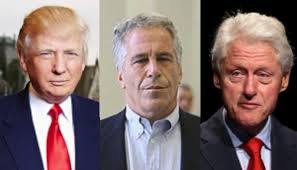
The Heart of Darkness: The Sexual Predators Within America’s Power Elite

By John W. Whitehead

Source: The Rutherford Institute

“As political and economic freedom diminishes, sexual freedom tends compensating to increase. And the dictator (unless he needs cannon fodder and families with which to colonize empty or conquered territories) will do well to encourage that freedom.”—Aldous Huxley, Brave New World

Power corrupts.

Anyone who believes differently hasn’t been paying attention.

Politics, religion, sports, government, entertainment, business, armed forces: it doesn’t matter what arena you’re talking about, they are all riddled with the kind of seedy, sleazy, decadent, dodgy, depraved, immoral, corrupt behavior that somehow gets a free pass when it involves the wealthy and powerful elite in America.

In this age of partisan politics and a deeply polarized populace, corruption—especially when it involves sexual debauchery, depravity and predatory behavior—has become the great equalizer.

Take Jeffrey Epstein, the hedge fund billionaire / convicted serial pedophile recently arrested on charges of molesting, raping and sex trafficking dozens of young girls.

It is believed that Epstein operated his own personal sex trafficking ring not only for his personal pleasure but also for the pleasure of his friends and business associates. According to The Washington Post, “several of the young women…say they were offered to the rich and famous as sex partners at Epstein’s parties.” At various times, Epstein ferried his friends about on his private plane, nicknamed the “Lolita Express.”

This is part of America’s seedy underbelly.

As I documented in the in-depth piece I wrote earlier this year, child sex trafficking—the buying and selling of women, young girls and boys for sex, some as young as 9 years old—has become big business in America. It is the fastest growing business in organized crime and the second most-lucrative commodity traded illegally after drugs and guns.

Adults purchase children for sex at least 2.5 million times a year in the United States.

It’s not just young girls who are vulnerable to these predators, either.

According to a 2016 investigative report, “boys make up about 36% of children caught up in the U.S. sex industry (about 60% are female and less than 5% are transgender males and females).”

Who buys a child for sex?

Otherwise ordinary men from all walks of life. “They could be your co-worker, doctor, pastor or spouse,” writes journalist Tim Swarens, who spent more than a year investigating the sex trade in America.

Ordinary men, yes.

But then there are the extra-ordinary men, such as Jeffrey Epstein, who belong to a powerful, wealthy, elite segment of society that operates according to their own rules or, rather, who are allowed to sidestep the rules that are used like a bludgeon on the rest of us.

These men skate free of accountability by taking advantage of a criminal justice system that panders to the powerful, the wealthy and the elite.

Over a decade ago, when Epstein was first charged with raping and molesting young girls, he was gifted a secret plea deal with then-U.S. Attorney Alexander Acosta, President Trump’s current Labor Secretary, that allowed him to evade federal charges and be given the equivalent of a slap on the wrist: allowed to “work” at home six days a week before returning to jail to sleep. That secret plea deal has since been ruled illegal by a federal judge.

Yet here’s the thing: Epstein did not act alone.

I refer not only to Epstein’s accomplices, who recruited and groomed the young girls he is accused of raping and molesting, many of them homeless or vulnerable, but his circle of influential friends and colleagues that at one time included Bill Clinton and Donald Trump. Both Clinton and Trump, renowned womanizers who have also been accused of sexual impropriety by a significant number of women, were at one time passengers on the Lolita Express.

As the Associated Press points out, “The arrest of the billionaire financier on child sex trafficking charges is raising questions about how much his high-powered associates knew about the hedge fund manager’s interactions with underage girls, and whether they turned a blind eye to potentially illegal conduct.”

In fact, a recent decision by the Second Circuit Court of Appeals allowing a 2,000-page document linked to the Epstein case to be unsealed references allegations of sexual abuse involving “numerous prominent American politicians, powerful business executives, foreign presidents, a well-known Prime Minister, and other world leaders.”

This is not a minor incident involving minor players.

This is the heart of darkness.

Sex slaves. Sex trafficking. Secret societies. Powerful elites. Government corruption. Judicial cover-ups.

Once again, fact and fiction mirror each other.

Twenty years ago, Stanley Kubrick’s final film Eyes Wide Shut provided viewing audiences with a sordid glimpse into a secret sex society that indulged the basest urges of its affluent members while preying on vulnerable young women. It is not so different from the real world, where powerful men, insulated from accountability, indulge their base urges.

These secret societies flourish, implied Kubrick, because the rest of us are content to navigate life with our eyes wide shut, in denial about the ugly, obvious truths in our midst.

In so doing, we become accomplices to abusive behavior in our midst.

This is how corruption by the power elite flourishes.

For every Epstein who is—finally—called to account for his illegal sexual exploits after years of being given a free pass by those in power, there are hundreds (perhaps thousands) more in the halls of power and wealth whose predation of those most vulnerable among us continues unabated.

While Epstein’s alleged crimes are heinous enough on their own, he is part of a larger narrative of how a culture of entitlement becomes a cesspool and a breeding ground for despots and predators.

Remember the “DC Madam” who was charged with operating a phone-order sex business? Her clients included thousands of White House officials, lobbyists, and Pentagon, FBI, and IRS employees, as well as prominent lawyers, none of whom were ever exposed or held accountable.

Power corrupts.

Worse, as 19th-century historian Lord Acton concluded, absolute power corrupts absolutely.

It doesn’t matter whether you’re talking about a politician, an entertainment mogul, a corporate CEO or a police officer: give any one person (or government agency) too much power and allow him or her or it to believe that they are entitled, untouchable and will not be held accountable for their actions, and those powers will eventually be abused.

We’re seeing this dynamic play out every day in communities across America.

A cop shoots an unarmed citizen for no credible reason and gets away with it. A president employs executive orders to sidestep the Constitution and gets away with it. A government agency spies on its citizens’ communications and gets away with it. An entertainment mogul sexually harasses aspiring actresses and gets away with it. The U.S. military bombs a civilian hospital and gets away with it.

Abuse of power—and the ambition-fueled hypocrisy and deliberate disregard for misconduct that make those abuses possible—works the same whether you’re talking about sex crimes, government corruption, or the rule of law.

It’s the same old story all over again: man rises to power, man abuses power abominably, man intimidates and threatens anyone who challenges him with retaliation or worse, and man gets away with it because of a culture of compliance in which no one speaks up because they don’t want to lose their job or their money or their place among the elite.

It’s not just sexual predators that we have to worry about.

For every Jeffrey Epstein (or Bill Clinton or Harvey Weinstein or Roger Ailes or Bill Cosby or Donald Trump) who eventually gets called out for his sexual misbehavior, there are hundreds—thousands—of others in the American police state who are getting away with murder—in many cases, literally—simply because they can.

The cop who shoots the unarmed citizen first and asks questions later might get put on paid leave for a while or take a job with another police department, but that’s just a slap on the wrist. The shootings and SWAT team raids and excessive use of force will continue, because the police unions and the politicians and the courts won’t do a thing to stop it.

The war hawks who are making a profit by waging endless wars abroad, killing innocent civilians in hospitals and schools, and turning the American homeland into a domestic battlefield will continue to do so because neither the president nor the politicians will dare to challenge the military industrial complex.

The National Security Agency that carries out warrantless surveillance on Americans’ internet and phone communications will continue to do so, because the government doesn’t want to relinquish any of its ill-gotten powers and its total control of the populace.

Unless something changes in the way we deal with these ongoing, egregious abuses of power, the predators of the police state will continue to wreak havoc on our freedoms, our communities, and our lives.

Police officers will continue to shoot and kill unarmed citizens. Government agents—including local police—will continue to dress and act like soldiers on a battlefield. Bloated government agencies will continue to fleece taxpayers while eroding our liberties. Government technicians will continue to spy on our emails and phone calls. Government contractors will continue to make a killing by waging endless wars abroad.

And powerful men (and women) will continue to abuse the powers of their office by treating those around them as underlings and second-class citizens who are unworthy of dignity and respect and undeserving of the legal rights and protections that should be afforded to all Americans.

As Dacher Keltner, professor of psychology at the at the University of California, Berkeley, observed in the Harvard Business Review, “While people usually gain power through traits and actions that advance the interests of others, such as empathy, collaboration, openness, fairness, and sharing; when they start to feel powerful or enjoy a position of privilege, those qualities begin to fade. The powerful are more likely than other people to engage in rude, selfish, and unethical behavior.”

After conducting a series of experiments into the phenomenon of how power corrupts, Keltner concluded: “Just the random assignment of power, and all kinds of mischief ensues, and people will become impulsive. They eat more resources than is their fair share. They take more money. People become more unethical. They think unethical behavior is okay if they engage in it. People are more likely to stereotype. They’re more likely to stop attending to other people carefully.”

Power corrupts.

And absolute power corrupts absolutely.

However, it takes a culture of entitlement and a nation of compliant, willfully ignorant, politically divided citizens to provide the foundations of tyranny.

As researchers Joris Lammers and Adam Galinsky found, those in power not only tend to abuse that power but they also feel entitled to abuse it: “People with power that they think is justified break rules not only because they can get away with it, but also because they feel at some intuitive level that they are entitled to take what they want.”

As I point out in my book Battlefield America: The War on the American People, for too long now, Americans have tolerated an oligarchy in which a powerful, elite group of wealthy donors is calling the shots. They have paid homage to patriotism while allowing the military industrial complex to spread death and destruction abroad. And they have turned a blind eye to all manner of wrongdoing when it was politically expedient.

We need to restore the rule of law for all people, no exceptions.

Here’s what the rule of law means in a nutshell: it means that everyone is treated the same under the law, everyone is held equally accountable to abiding by the law, and no one is given a free pass based on their politics, their connections, their wealth, their status or any other bright line test used to confer special treatment on the elite.

This culture of compliance must stop.

The empowerment of petty tyrants and political gods must end.

The state of denial must cease.

Let’s not allow this Epstein sex scandal to become just another blip in the news cycle that goes away all too soon, only to be forgotten when another titillating news headline takes its place.

Sex trafficking, like so many of the evils in our midst, is a cultural disease that is rooted in the American police state’s heart of darkness. It speaks to a far-reaching corruption that stretches from the highest seats of power down to the most hidden corners and relies on our silence and our complicity to turn a blind eye to wrongdoing.

If we want to put an end to these wrongs, we must keep our eyes wide open.

It’s Time to Declare Your Independence from Tyranny, America

Photo by Alla Sokolova

By John W. Whitehead

Source: The Rutherford Institute

“These are the times that try men’s souls. The summer soldier and the sunshine patriot will, in this crisis, shrink from the service of their country; but he that stands it now deserves the love and thanks of man and woman. Tyranny, like hell, is not easily conquered; yet we have this consolation with us, that the harder the conflict, the more glorious the triumph.”—Thomas Paine, December 1776

It’s time to declare your independence from tyranny, America.

For too long now, we have suffered the injustices of a government that has no regard for our rights or our humanity.

Too easily pacified and placated by the pomp and pageantry of manufactured spectacles (fireworks on the Fourth of July, military parades, ritualized elections, etc.) that are a poor substitute for a representative government that respects the rights of its people, the American people have opted, time and again, to overlook the government’s excesses, abuses and power grabs that fly in the face of every principle for which America’s founders risked their lives.

We have done this to ourselves.

Indeed, it is painfully fitting that mere days before the nation prepared to celebrate its freedoms on the anniversary of the Declaration of Independence, the City Council for Charlottesville, Virginia—the home of Thomas Jefferson, author of the Declaration—voted to do away with a holiday to honor Jefferson’s birthday, because Jefferson, like many of his contemporaries, owned slaves. City councilors have opted instead to celebrate “Liberation and Freedom Day” in honor of slaves who were emancipated after the Civil War.

This is what we have been reduced to: bureaucrats dithering over meaningless trivialities while the government goosesteps all over our freedoms.

Too often, we pay lip service to those freedoms, yet they did not come about by happenstance. They were hard won through sheer determination, suffering and sacrifice by thousands of patriotic Americans who not only believed in the cause of freedom but also had the intestinal fortitude to act on that belief. The success of the American revolution owes much to these men and women.

In standing up to the British Empire and speaking out against an oppressive regime, they exemplified courage in the face of what seemed like an overwhelming foe.

Indeed, imagine living in a country where armed soldiers crash through doors to arrest and imprison citizens merely for criticizing government officials.

Imagine that in this very same country, you’re watched all the time, and if you look even a little bit suspicious, the police stop and frisk you or pull you over to search you on the off chance you’re doing something illegal.

Keep in mind that if you have a firearm of any kind (or anything that resembled a firearm) while in this country, it may get you arrested and, in some circumstances, shot by police.

If you’re thinking this sounds like America today, you wouldn’t be far wrong.

However, the scenario described above took place more than 200 years ago, when American colonists suffered under Great Britain’s version of an early police state. It was only when the colonists finally got fed up with being silenced, censored, searched, frisked, threatened, and arrested that they finally revolted against the tyrant’s fetters.

No document better states their grievances than the Declaration of Independence, drafted by Thomas Jefferson.

A document seething with outrage over a government which had betrayed its citizens, the Declaration of Independence was signed on July 4, 1776, by 56 men who laid everything on the line, pledged it all—“our Lives, our Fortunes, and our sacred Honor”—because they believed in a radical idea: that all people are created to be free.

Labeled traitors, these men were charged with treason, a crime punishable by death. For some, their acts of rebellion would cost them their homes and their fortunes. For others, it would be the ultimate price—their lives.

Yet even knowing the heavy price they might have to pay, these men dared to speak up when silence could not be tolerated. Even after they had won their independence from Great Britain, these new Americans worked to ensure that the rights they had risked their lives to secure would remain secure for future generations.

The result: our Bill of Rights, the first ten amendments to the Constitution.

Imagine the shock and outrage these 56 men would feel were they to discover that 243 years later, the government they had risked their lives to create has been transformed into a militaristic police state in which exercising one’s freedoms—at a minimum, merely questioning a government agent—is often viewed as a flagrant act of defiance.

In fact, had the Declaration of Independence been written today, it would have rendered its signers extremists or terrorists, resulting in them being placed on a government watch list, targeted for surveillance of their activities and correspondence, and potentially arrested, held indefinitely, stripped of their rights and labeled enemy combatants.

The danger is real.

We could certainly use some of that revolutionary outrage today.

Certainly, we would do well to reclaim the revolutionary spirit of our ancestors and remember what drove them to such drastic measures in the first place.

Then again, perhaps what we need to do is declare our independence from the tyranny of the American police state.

It’s not a radical idea.

It has been done before.

The Declaration of Independence speaks volumes about the abuses suffered by early Americans at the hands of the British police state.

Read the Declaration of Independence again, and ask yourself if the list of complaints tallied by Jefferson don’t bear a startling resemblance to the abuses “we the people” are suffering at the hands of the American police state.

If you find the purple prose used by the Founders hard to decipher, here’s my translation of what the Declaration of Independence would look and sound like if it were written in the modern vernacular:

There comes a time when a populace must stand united and say “enough is enough” to the government’s abuses, even if it means getting rid of the political parties in power.

Believing that “we the people” have a natural and divine right to direct our own lives, here are truths about the power of the people and how we arrived at the decision to sever our ties to the government:

All people are created equal.

All people possess certain innate rights that no government or agency or individual can take away from them. Among these are the right to Life, Liberty and the pursuit of Happiness.

The government’s job is to protect the people’s innate rights to Life, Liberty and the pursuit of Happiness. The government’s power comes from the will of the people.

Whenever any government abuses its power, it is the right of the people to alter or abolish that government and replace it with a new government that will respect and protect the rights of the people.

It is not wise to get rid of a government for minor transgressions. In fact, as history has shown, people resist change and are inclined to suffer all manner of abuses to which they have become accustomed.

However, when the people have been subjected to repeated abuses and power grabs, carried out with the purpose of establishing a tyrannical government, people have a right and duty to do away with that tyrannical Government and to replace it with a new government that will protect and preserve their innate rights for their future wellbeing.

This is exactly the state of affairs we are under suffering under right now, which is why it is necessary that we change this imperial system of government.

The history of the present Imperial Government is a history of repeated abuses and power grabs, carried out with the intention of establishing absolute Tyranny over the country.

To prove this, consider the following:

The government has, through its own negligence and arrogance, refused to adopt urgent and necessary laws for the good of the people.

The government has threatened to hold up critical laws unless the people agree to relinquish their right to be fully represented in the Legislature.

In order to expand its power and bring about compliance with its dictates, the government has made it nearly impossible for the people to make their views and needs heard by their representatives.

The government has repeatedly suppressed protests arising in response to its actions.

The government has obstructed justice by refusing to appoint judges who respect the Constitution and has instead made the Courts march in lockstep with the government’s dictates.

The government has allowed its agents to harass the people, steal from them, jail them and even execute them.

The government has directed militarized government agents—a.k.a., a standing army—to police domestic affairs in peacetime.

The government has turned the country into a militarized police state.

The government has conspired to undermine the rule of law and the constitution in order to expand its own powers.

The government has allowed its militarized police to invade our homes and inflict violence on homeowners.

The government has failed to hold its agents accountable for wrongdoing and murder under the guise of “qualified immunity.”

The government has jeopardized our international trade agreements.

The government has overtaxed us without our permission.

The government has denied us due process and the right to a fair trial.

The government has engaged in extraordinary rendition.

The government has continued to expand its military empire in collusion with its corporate partners-in-crime and occupy foreign nations.

The government has eroded fundamental legal protections and destabilized the structure of government.

The government has not only declared its federal powers superior to those of the states but has also asserted its sovereign power over the rights of “we the people.”

The government has ceased to protect the people and instead waged domestic war against the people.

The government has plundered our seas, ravaged our Coasts, and destroyed the lives of the people.

The government has employed private contractors and mercenaries to carry out acts of death, desolation and tyranny, totally unworthy of a civilized nation.

The government through its political propaganda has pitted its citizens against each other.

The government has stirred up civil unrest and laid the groundwork for martial law.

Repeatedly, we have asked the government to cease its abuses. Each time, the government has responded with more abuse.

An Imperial Ruler who acts like a tyrant is not fit to govern a free people.

We have repeatedly sounded the alarm to our fellow citizens about the government’s abuses. We have warned them about the government’s power grabs. We have appealed to their sense of justice. We have reminded them of our common bonds.

They have rejected our plea for justice and brotherhood. They are equally at fault for the injustices being carried out by the government.

Thus, for the reasons mentioned above, we the people of the united States of America declare ourselves free from the chains of an abusive government. Relying on God’s protection, we pledge to stand by this Declaration of Independence with our lives, our fortunes and our honor.

That was 243 years ago.

In the years since early Americans first declared and eventually won their independence from Great Britain, we—the descendants of those revolutionary patriots—have through our inaction and complacency somehow managed to work ourselves right back under the tyrant’s thumb.

Only this time, the tyrant is one of our own making: the American Police State.

The abuses meted out by an imperial government and endured by the American people have not ended. They have merely evolved.

“We the people” are still being robbed blind by a government of thieves.

We are still being taken advantage of by a government of scoundrels, idiots and monsters.

We are still being locked up by a government of greedy jailers.

We are still being spied on by a government of Peeping Toms.

We are still being ravaged by a government of ruffians, rapists and killers.

We are still being forced to surrender our freedoms—and those of our children—to a government of extortionists, money launderers and corporate pirates.

And we are still being held at gunpoint by a government of soldiers: a standing army in the form of a militarized police.

Given the fact that we are a relatively young nation, it hasn’t taken very long for an authoritarian regime to creep into power.

Unfortunately, the bipartisan coup that laid siege to our nation did not happen overnight.

It snuck in under our radar, hiding behind the guise of national security, the war on drugs, the war on terror, the war on immigration, political correctness, hate crimes and a host of other official-sounding programs aimed at expanding the government’s power at the expense of individual freedoms.

The building blocks for the bleak future we’re just now getting a foretaste of—police shootings of unarmed citizens, profit-driven prisons, weapons of compliance, a wall-to-wall surveillance state, pre-crime programs, a suspect society, school-to-prison pipelines, militarized police, overcriminalization, SWAT team raids, endless wars, etc.—were put in place by government officials we trusted to look out for our best interests and by American citizens who failed to heed James Madison’s warning to “take alarm at the first experiment on our liberties.”

In so doing, we compromised our principles, negotiated away our rights, and allowed the rule of law to be rendered irrelevant.

There is no knowing how long it will take to undo the damage wrought by government corruption, corporate greed, militarization, and a nation of apathetic, gullible sheep.

The problems we are facing will not be fixed overnight: that is the grim reality with which we must contend.

Frankly, as I make clear in my book Battlefield America: The War on the American People, we may see no relief from the police state in my lifetime or for several generations to come.

That does not mean we should give up or give in or tune out.

Remember, there is always a price to be paid for remaining silent in the face of injustice.

That price is tyranny.

As Edmund Burke, the eighteenth-century British statesman and author who supported the American colonists warned, “The only thing necessary for the triumph of evil is for good men to do nothing.”

WHY WE’RE A CULTURE OF ADDICTS

By Leslie Garrett

Source: Waking Times

If there’s one constant among addicts of all types, it’s shame. It’s what makes us lie and hide. It’s what keeps us from asking for help – though we don’t think we need it because we’re also good at lying to ourselves.

About why we eat. Or shop. Or gamble. Or drink.

Dr. Gabor Maté knows the feeling well. Maté, a renowned doctor, speaker, and author, has seen it in the heroin-addicted men and women he treats in Vancouver’s Downtown Eastside. He sees it in the behavior of well-respected workaholics. The cosmetic surgery junkies. The power seekers. The ‘I Brake for Garage Sales’ shoppers.

He’s seen it in the mirror.

Maté, author of the groundbreaking book In the Realm of the Hungry Ghosts: Close Encounters with Addiction, believes shame is behind our unwindable ‘war on drugs.’ Our ‘tough on crime’ policies. Our judgment of addicts. Our marginalization of street junkies.

Maté knows, as so many of our spiritual teachers have tried to teach us, that our judgments of others are really all about us.

Maté, who serves as resident doctor at The Portland Hotel, a Vancouver housing project for adults coping with mental illness, addiction, and other challenges, saw himself in the stories of the women and men who, day after day, came to see him for treatment and who slowly, over years, revealed to him their pain.

Those of us still hiding and denying? Gabor Maté sees us too.

Haunted

Gabor Maté was born into the Jewish ghetto of Budapest in 1944, just weeks before the Nazis seized Hungary, to a loving but overwhelmed mother and an absent father, who had been sent to a forced-labor camp. Just months later, his grandparents were killed at Auschwitz. At a year old, he was handed by his mother to a gentile stranger who was assigned his safety.

Maté understands now that those early experiences – or, more accurately, his mother’s frantic state of mind – guided the neural circuitry in his still-developing brain. Impaired circuitry that virtually prescribed a future of addiction and its close cousin, attention-deficit disorder (ADD).

Over years of hearing the stories of street drug users, examining his own past, and putting it together with his medical training, Maté became convinced that – as he says in a recent interview:

both addiction and ADD are rooted in childhood loss and trauma.

It’s a novel – and surprisingly controversial – approach, examining not the addiction but the pain behind it. Fighting not the substance but the circumstances that lead someone to seek out that self-soothing.

Circumstance Over Substance

Addiction, says Maté, is nothing more than an attempt to self-medicate emotional pain.

Absolutely anything can become an addiction… It’s not the external behaviors, it’s our relationship to it.

Maté calls addicts ‘hungry ghosts,’ a reference to one of the six realms of the Buddhist Circle of Life. These hungry ghosts are depicted with large empty bellies, small mouths, thin necks — starving for external satisfaction, seeking to fill but never being full, desperate to be soothed.

We all know that realm, he says, at least some of the time. The only difference between the identified addict and the rest of us is a matter of degrees.

It’s a view that has earned him some critics, not least of which is the Canadian Conservative government, which has sought to shut down the safe-injection site he helps oversee. The conventional medical community certainly hasn’t embraced his ideas. Addiction is typically viewed through one of two lenses: as a genetic component or as a moral failure.

Both, says Maté, are wrong.

And he says he’s got the brain science to prove it.

“A Warm, Soft Hug”

Maté points to a host of studies that clearly show how neural circuitry is developed in early childhood. Human babies, more than any other mammals, do most of their maturing outside the womb, which means that their environment plays a larger role in brain development than in any other species.

Factor in an abusive, or at least stressful, childhood environment and you’ve produced impaired brain circuitry – a brain that seeks the feel-good endorphins and stimulating dopamine that it is unable, or poorly able, to produce on its own. A brain that experiences the first rush of heroin as a “warm, soft hug,” as a 27-year-old sex trade worker described it to Maté.

It’s the adversity that creates this impaired development, says Maté, not the genetics emphasized by the medical community.

And our response to addicts – criminalization, marginalization, ostracism – piles on that adversity, fueling the addictive behavior.

The good news is that addiction can be prevented, but only if you start early. Maté writes in Hungry Ghosts:

[Prevention] needs to begin in the crib, and even before then… in the social recognition that nothing is more important for the future of our culture than the way children develop.

What about those children who are now addicted adults? Unprecedented brain research has revealed that brains can, essentially, be rewired. He continues:

Our brains are resilient organs… Some important circuits continue to develop throughout our entire lives, and they may do so even in the case of a hard-core drug addict whose brain ‘never had a chance’ in childhood.

What’s more, Maté, unlike many of his medical counterparts, factors in our potential for recovery, even transformation:

something else in us and about us: it is called by many names, ‘spirit’ being the most democratic and least denominational.

The Illusion of Choice

We’d like to think that addicts have a choice, that they can just choose to stop — even if it’s hard.

But Maté insists that the ability to choose is limited by the addict’s physiology and personal history. He states:

The more you’re driven by unconscious mechanisms, because of earlier defensive reaction to trauma, the less choice you actually have… Most people have much less choice in things than we actually recognize.

These unconscious impulses are why we find ourselves with our hands in a bag of chocolate after an argument with our spouse. It’s why we’re on Craigslist arranging a sexual encounter while our wife sleeps beside us. It’s why a respected medical doctor finds himself lying to his wife. Again.

“‘Have you been obsessing and buying?’ she’s asked me a number of times in the past few weeks,” Maté writes in Hungry Ghosts. “I look directly at my life partner of thirty-nine years and I lie. I tell myself I don’t want to hurt her. Nonsense. I fear losing her affection. I don’t want to look bad in her eyes. I’m afraid of her anger. That’s what I don’t want.”

For years, Maté struggled with a shopping addiction, spending thousands of dollars on classical music CDs in a single spree, then unable to resist the impulse to do it again weeks later after promising his wife he’d stop. It’s an addiction he refers to as wearing ‘dainty white gloves’ compared to the grinding drug abuse of his Downtown Eastside patients.

But, he writes, “I’ve come to see addiction not as a discrete, solid entity – a case of either you’ve got it or you don’t got it – but as a subtle and extensive continuum.”

Unless we become fully aware of the drivers of our addiction, he says, we’ll continue to live a life in which ‘choice’ is an illusion.

“Passion Creates, Addiction Consumes”

Is there a difference between a drug addiction and being hooked on a behavior — like sex? The medical community continues to debate the question, but Maté is adamant.

All addictions, whether to drugs or to behaviors such as compulsive sexual acting out, involve the same brain circuits, the same brain chemicals and evoke the same emotional dynamics… Behavior addictions trigger substances internally. So (behavior addicts) are substance addicts.

Where do we draw the line between addiction and, well, passion? What about the Steve Jobs of the world, who drive themselves — and others — to push harder, work longer, produce more and do everything better?

Daniel Maté, Gabor’s son and an editor of his books, says:

A lot of people make wonderful contributions to the world at their own cost… We often lionize unhealthy things.

To determine whether we’re serving a passion or feeding an addiction, Daniel Maté suggests that it comes down to a simple question, answered honestly: Are you free or are you not free?

His father takes it further.

What function is the addiction performing in your life? What questions is it answering . . . and how do we restore that?

Or, as he writes in Hungry Ghosts, “Passion creates, addiction consumes.”

Compassion for the Addict — and Ourselves

Responding to addiction requires us not only to care for the body and mind but also the soul, Maté says. The spiritual element of his practice is critical, he says, not only to understand the hard-core street addict but also our own struggle.

We lack compassion for the addict precisely because we are addicted ourselves in ways we don’t want to accept and because we lack self-compassion. – Gabor Maté

And so we treat the addict as an ‘other’ – this criminal, this person making poor choices – to whom we can feel superior.

Compassion is understanding, and to understand is to forgive.

We need, he says, to turn compassion into policy.

Maté summed it up nicely in a 2010 talk at Reed College:

To . . . point the finger at that street-corner drug addict who’s in that position because of that early trauma is blind to say the very least… I think that if we developed a more compassionate view of addiction and a more deep understanding of the addict and if we recognized the similarities between the ostracized addict at the social periphery and the rest of society, and if we did so with compassion both for them and for the rest of us, we would not only have more efficient, more successful drug treatment programs, we would also have a better society.

The Omnipresent Surveillance State: Orwell’s 1984 Is No Longer Fiction

By John W. Whitehead

Source: The Rutherford Institute

“You had to live—did live, from habit that became instinct—in the assumption that every sound you made was overheard, and, except in darkness, every movement scrutinized.”—George Orwell, 1984

Tread cautiously: the fiction of George Orwell has become an operation manual for the omnipresent, modern-day surveillance state.

It’s been 70 years since Orwell—dying, beset by fever and bloody coughing fits, and driven to warn against the rise of a society in which rampant abuse of power and mass manipulation are the norm—depicted the ominous rise of ubiquitous technology, fascism and totalitarianism in 1984.

Who could have predicted that 70 years after Orwell typed the final words to his dystopian novel, “He loved Big Brother,” we would fail to heed his warning and come to love Big Brother.

“To the future or to the past, to a time when thought is free, when men are different from one another and do not live alone— to a time when truth exists and what is done cannot be undone: From the age of uniformity, from the age of solitude, from the age of Big Brother, from the age of doublethink — greetings!”—George Orwell

1984 portrays a global society of total control in which people are not allowed to have thoughts that in any way disagree with the corporate state. There is no personal freedom, and advanced technology has become the driving force behind a surveillance-driven society. Snitches and cameras are everywhere. People are subject to the Thought Police, who deal with anyone guilty of thought crimes. The government, or “Party,” is headed by Big Brother who appears on posters everywhere with the words: “Big Brother is watching you.”

We have arrived, way ahead of schedule, into the dystopian future dreamed up by not only Orwell but also such fiction writers as Aldous Huxley, Margaret Atwood and Philip K. Dick.

“If liberty means anything at all, it means the right to tell people what they do not want to hear.”―George Orwell

Much like Orwell’s Big Brother in 1984, the government and its corporate spies now watch our every move. Much like Huxley’s A Brave New World, we are churning out a society of watchers who “have their liberties taken away from them, but … rather enjoy it, because they [are] distracted from any desire to rebel by propaganda or brainwashing.” Much like Atwood’s The Handmaid’s Tale, the populace is now taught to “know their place and their duties, to understand that they have no real rights but will be protected up to a point if they conform, and to think so poorly of themselves that they will accept their assigned fate and not rebel or run away.”

And in keeping with Philip K. Dick’s darkly prophetic vision of a dystopian police state—which became the basis for Steven Spielberg’s futuristic thriller Minority Report—we are now trapped in a world in which the government is all-seeing, all-knowing and all-powerful, and if you dare to step out of line, dark-clad police SWAT teams and pre-crime units will crack a few skulls to bring the populace under control.

What once seemed futuristic no longer occupies the realm of science fiction.

Incredibly, as the various nascent technologies employed and shared by the government and corporations alike—facial recognition, iris scanners, massive databases, behavior prediction software, and so on—are incorporated into a complex, interwoven cyber network aimed at tracking our movements, predicting our thoughts and controlling our behavior, the dystopian visions of past writers is fast becoming our reality.

Our world is characterized by widespread surveillance, behavior prediction technologies, data mining, fusion centers, driverless cars, voice-controlled homes, facial recognition systems, cybugs and drones, and predictive policing (pre-crime) aimed at capturing would-be criminals before they can do any damage.

Surveillance cameras are everywhere. Government agents listen in on our telephone calls and read our emails. Political correctness—a philosophy that discourages diversity—has become a guiding principle of modern society.

“People sleep peaceably in their beds at night only because rough men stand ready to do violence on their behalf.”―George Orwell

The courts have shredded the Fourth Amendment’s protections against unreasonable searches and seizures. In fact, SWAT teams battering down doors without search warrants and FBI agents acting as a secret police that investigate dissenting citizens are common occurrences in contemporary America. And bodily privacy and integrity have been utterly eviscerated by a prevailing view that Americans have no rights over what happens to their bodies during an encounter with government officials, who are allowed to search, seize, strip, scan, spy on, probe, pat down, taser, and arrest any individual at any time and for the slightest provocation.

“The creatures outside looked from pig to man, and from man to pig, and from pig to man again; but already it was impossible to say which was which.”―George Orwell, Animal Farm

We are increasingly ruled by multi-corporations wedded to the police state.

What many fail to realize is that the government is not operating alone. It cannot. The government requires an accomplice. Thus, the increasingly complex security needs of the massive federal government, especially in the areas of defense, surveillance and data management, have been met within the corporate sector, which has shown itself to be a powerful ally that both depends on and feeds the growth of governmental overreach.

In fact, Big Tech wedded to Big Government has become Big Brother, and we are now ruled by the Corporate Elite whose tentacles have spread worldwide. For example, USA Today reports that five years after the 9/11 terrorist attacks, the homeland security business was booming to such an extent that it eclipsed mature enterprises like movie-making and the music industry in annual revenue. This security spending to private corporations such as Google, Amazon, Microsoft and others is forecast to exceed $1 trillion in the near future.

The government now has at its disposal technological arsenals so sophisticated and invasive as to render any constitutional protections null and void. Spearheaded by the NSA, which has shown itself to care little to nothing for constitutional limits or privacy, the “security/industrial complex”—a marriage of government, military and corporate interests aimed at keeping Americans under constant surveillance—has come to dominate the government and our lives. At three times the size of the CIA, constituting one third of the intelligence budget and with its own global spy network to boot, the NSA has a long history of spying on Americans, whether or not it has always had the authorization to do so.

Money, power, control. There is no shortage of motives fueling the convergence of mega-corporations and government. But who is paying the price? The American people, of course.

Orwell understood what many Americans, caught up in their partisan flag-waving, are still struggling to come to terms with: that there is no such thing as a government organized for the good of the people. Even the best intentions among those in government inevitably give way to the desire to maintain power and control over the citizenry at all costs. As Orwell explains:

The Party seeks power entirely for its own sake. We are not interested in the good of others; we are interested solely in power, pure power. What pure power means you will understand presently. We are different from the oligarchies of the past in that we know what we are doing. All the others, even those who resembled ourselves, were cowards and hypocrites. The German Nazis and the Russian Communists came very close to us in their methods, but they never had the courage to recognize their own motives. They pretended, perhaps they even believed, that they had seized power unwillingly and for a limited time, and that just around the corner there lay a paradise where human beings would be free and equal. We are not like that. We know what no one ever seizes power with the intention of relinquishing it. Power is not a means; it is an end. One does not establish a dictatorship in order to safeguard a revolution; one makes the revolution in order to establish the dictatorship. The object of persecution is persecution. The object of torture is torture. The object of power is power. Now you begin to understand me.

“The further a society drifts from truth the more it will hate those who speak it.” ― George Orwell

How do you change the way people think? You start by changing the words they use.

In totalitarian regimes—a.k.a. police states—where conformity and compliance are enforced at the end of a loaded gun, the government dictates what words can and cannot be used. In countries where the police state hides behind a benevolent mask and disguises itself as tolerance, the citizens censor themselves, policing their words and thoughts to conform to the dictates of the mass mind.

Dystopian literature shows what happens when the populace is transformed into mindless automatons. In Ray Bradbury’s Fahrenheit 451, reading is banned and books are burned in order to suppress dissenting ideas, while televised entertainment is used to anesthetize the populace and render them easily pacified, distracted and controlled.

In Huxley’s Brave New World, serious literature, scientific thinking and experimentation are banned as subversive, while critical thinking is discouraged through the use of conditioning, social taboos and inferior education. Likewise, expressions of individuality, independence and morality are viewed as vulgar and abnormal.

And in Orwell’s 1984, Big Brother does away with all undesirable and unnecessary words and meanings, even going so far as to routinely rewrite history and punish “thoughtcrimes.” In this dystopian vision of the future, the Thought Police serve as the eyes and ears of Big Brother, while the Ministry of Peace deals with war and defense, the Ministry of Plenty deals with economic affairs (rationing and starvation), the Ministry of Love deals with law and order (torture and brainwashing), and the Ministry of Truth deals with news, entertainment, education and art (propaganda). The mottos of Oceania: WAR IS PEACE, FREEDOM IS SLAVERY, and IGNORANCE IS STRENGTH.

All three—Bradbury, Huxley and Orwell—had an uncanny knack for realizing the future, yet it is Orwell who best understood the power of language to manipulate the masses. Orwell’s Big Brother relied on Newspeak to eliminate undesirable words, strip such words as remained of unorthodox meanings and make independent, non-government-approved thought altogether unnecessary. To give a single example, as psychologist Erich Fromm illustrates in his afterword to 1984:

The word free still existed in Newspeak, but it could only be used in such statements as “This dog is free from lice” or “This field is free from weeds.” It could not be used in its old sense of “politically free” or “intellectually free,” since political and intellectual freedom no longer existed as concepts….

Where we stand now is at the juncture of OldSpeak (where words have meanings, and ideas can be dangerous) and Newspeak (where only that which is “safe” and “accepted” by the majority is permitted). The power elite has made their intentions clear: they will pursue and prosecute any and all words, thoughts and expressions that challenge their authority.

This is the final link in the police state chain.

“Until they became conscious they will never rebel, and until after they have rebelled they cannot become conscious.”—George Orwell

Americans have been conditioned to accept routine incursions on their privacy rights. In fact, the addiction to screen devices—especially cell phones—has created a hive effect where the populace not only watched but is controlled by AI bots. However, at one time, the idea of a total surveillance state tracking one’s every move would have been abhorrent to most Americans. That all changed with the 9/11 attacks. As professor Jeffrey Rosen observes, “Before Sept. 11, the idea that Americans would voluntarily agree to live their lives under the gaze of a network of biometric surveillance cameras, peering at them in government buildings, shopping malls, subways and stadiums, would have seemed unthinkable, a dystopian fantasy of a society that had surrendered privacy and anonymity.”

Having been reduced to a cowering citizenry—mute in the face of elected officials who refuse to represent us, helpless in the face of police brutality, powerless in the face of militarized tactics and technology that treat us like enemy combatants on a battlefield, and naked in the face of government surveillance that sees and hears all—we have nowhere left to go.

We have, so to speak, gone from being a nation where privacy is king to one where nothing is safe from the prying eyes of government. In search of so-called terrorists and extremists hiding amongst us—the proverbial “needle in a haystack,” as one official termed it—the Corporate State has taken to monitoring all aspects of our lives, from cell phone calls and emails to Internet activity and credit card transactions. Much of this data is being fed through fusion centersacross the country, which work with the Department of Homeland Security to make threat assessments on every citizen, including school children. These are state and regional intelligence centers that collect data on you.

“Big Brother is Watching You.”―George Orwell

Wherever you go and whatever you do, you are now being watched, especially if you leave behind an electronic footprint. When you use your cell phone, you leave a record of when the call was placed, who you called, how long it lasted and even where you were at the time. When you use your ATM card, you leave a record of where and when you used the card. There is even a video camera at most locations equipped with facial recognition software. When you use a cell phone or drive a car enabled with GPS, you can be tracked by satellite. Such information is shared with government agents, including local police. And all of this once-private information about your consumer habits, your whereabouts and your activities is now being fed to the U.S. government.

The government has nearly inexhaustible resources when it comes to tracking our movements, from electronic wiretapping devices, traffic cameras and biometrics to radio-frequency identification cards, satellites and Internet surveillance.

Speech recognition technology now makes it possible for the government to carry out massive eavesdropping by way of sophisticated computer systems. Phone calls can be monitored, the audio converted to text files and stored in computer databases indefinitely. And if any “threatening” words are detected—no matter how inane or silly—the record can be flagged and assigned to a government agent for further investigation. Federal and state governments, again working with private corporations, monitor your Internet content. Users are profiled and tracked in order to identify, target and even prosecute them.

In such a climate, everyone is a suspect. And you’re guilty until you can prove yourself innocent. To underscore this shift in how the government now views its citizens, the FBI uses its wide-ranging authority to investigate individuals or groups, regardless of whether they are suspected of criminal activity.

“Nothing was your own except the few cubic centimetres inside your skull.” ― George Orwell

Here’s what a lot of people fail to understand, however: it’s not just what you say or do that is being monitored, but how you think that is being tracked and targeted. We’ve already seen this play out on the state and federal level with hate crime legislation that cracks down on so-called “hateful” thoughts and expression, encourages self-censoring and reduces free debate on various subject matter.

Say hello to the new Thought Police.

Total Internet surveillance by the Corporate State, as omnipresent as God, is used by the government to predict and, more importantly, control the populace, and it’s not as far-fetched as you might think. For example, the NSA is now designing an artificial intelligence system that is designed to anticipate your every move. In a nutshell, the NSA will feed vast amounts of the information it collects to a computer system known as Aquaint (the acronym stands for Advanced QUestion Answering for INTelligence), which the computer can then use to detect patterns and predict behavior.

No information is sacred or spared.

Everything from cell phone recordings and logs, to emails, to text messages, to personal information posted on social networking sites, to credit card statements, to library circulation records, to credit card histories, etc., is collected by the NSA and shared freely with its agents in crime: the CIA, FBI and DHS. One NSA researcher actually quit the Aquaint program, “citing concerns over the dangers in placing such a powerful weapon in the hands of a top-secret agency with little accountability.”

Thus, what we are witnessing, in the so-called name of security and efficiency, is the creation of a new class system comprised of the watched (average Americans such as you and me) and the watchers (government bureaucrats, technicians and private corporations).

Clearly, the age of privacy in America is at an end.

“If you want a picture of the future, imagine a boot stamping on a human face—for ever.”—Orwell

So where does that leave us?

We now find ourselves in the unenviable position of being monitored, managed and controlled by our technology, which answers not to us but to our government and corporate rulers. This is the fact-is-stranger-than-fiction lesson that is being pounded into us on a daily basis.

It won’t be long before we find ourselves looking back on the past with longing, back to an age where we could speak to whom we wanted, buy what we wanted, think what we wanted without those thoughts, words and activities being tracked, processed and stored by corporate giants such as Google, sold to government agencies such as the NSA and CIA, and used against us by militarized police with their army of futuristic technologies.

To be an individual today, to not conform, to have even a shred of privacy, and to live beyond the reach of the government’s roaming eyes and technological spies, one must not only be a rebel but rebel.

Even when you rebel and take your stand, there is rarely a happy ending awaiting you. You are rendered an outlaw.

So how do you survive in the American surveillance state?

We’re running out of options.

As I make clear in my book Battlefield America: The War on the American People, we’ll soon have to choose between self-indulgence (the bread-and-circus distractions offered up by the news media, politicians, sports conglomerates, entertainment industry, etc.) and self-preservation in the form of renewed vigilance about threats to our freedoms and active engagement in self-governance.

Yet as Aldous Huxley acknowledged in Brave New World Revisited: “Only the vigilant can maintain their liberties, and only those who are constantly and intelligently on the spot can hope to govern themselves effectively by democratic procedures. A society, most of whose members spend a great part of their time, not on the spot, not here and now and in their calculable future, but somewhere else, in the irrelevant other worlds of sport and soap opera, of mythology and metaphysical fantasy, will find it hard to resist the encroachments of those would manipulate and control it.”

Five Keys to Inner Strength From Five Years in Prison

By Ross Ulbricht

Source: Bitcoin Magazine

October 1, 2018, marked five years since I was imprisoned. My physical surroundings today are ironically similar to what they were after my arrest back in 2013. I’m in the SHU again (Special Housing Unit, aka “the hole”). It means permanent lockdown, separated from the general prison population, in a small cell. There is a slot in the heavy metal door for food trays, a small steel toilet, a concrete bunk with thick rings at four points (I guess that’s how I’ll get strapped down if I go crazy), chipped paint on the walls and floor with gang names and desperate Bible quotes etched in, and everywhere thick marks counting the days spent here by former inhabitants (some collections are terrifyingly large).

The initial shock of entering the cell — and all it meant for my immediate future — gave way after a few days to a helpless, restless dread and a burning need to get out. This feeling had to be stuffed down to avoid madness, and eventually a numb acceptance took over, but it was a precarious arrangement. Desperate frustration simmered constantly beneath the surface.

When I was first arrested, I was put in the hole against my will at three different prisons as they bounced me across the country from San Francisco where I was arrested to New York where I was prosecuted. The only reason I was given for this was that I was “high profile.” After six weeks, I was let out and never returned … until now. This time, I’m actually glad to be here because the alternative is life-threatening.

I was forced by some other inmates to make a choice: assault someone or be assaulted. Morally I knew I couldn’t initiate violence against another, but if I refused, I would be seriously hurt and would face an uncertain future, not knowing how long I’d be in the hole under protective custody or whether I’d be sent to another prison where I’d meet the same fate.

When the dreadful situation arose, I managed to ask for protective custody before anything happened to me. I was immediately cuffed and escorted to this cell where I’m writing from. I chose the hole rather than hurt another man.

When they dropped me in the SHU after my arrest, I did my best, but it was a tough six weeks, going from a life of freedom straight in. I broke down when I got my first phone call, and, after one week, I completely lost track of time and grounding. It makes me anxious just remembering it.

Maybe after five-plus years I’m used to doing time, but I think it’s how I’ve done my time that has made me mentally tough, that has made the difference between how I handled the hole back then and how I’m handling it now. I want to share this hard-won wisdom with you. Here are the five keys to inner strength I’ve learned from five years in prison.

Patience

My first night locked up was in a San Francisco holding cell: just painted concrete, toilet and sink. There was blood splatter staining the wall. I was so impatient for that night to be over. I almost felt I couldn’t survive it, as if it would never end. Of course it did, but I’ve never felt time move so slowly.

Prison has its own pace. One time, getting two pages of medical records printed took three months. I once had a faucet running day and night for five weeks before it was fixed. A clogged toilet took two months and a complaint to the Office of the Inspector General. Another time, I spotted a letter addressed to me in the corner of a guard’s office. It had been there for four months.

I’ve learned that patience means doing what you can today then letting go. It means settling in to this moment and letting things come in their own time. Impatience and boredom do not bring results faster, but they do rob you of your happiness here and now.

Will to Fight

After a long day of working in the lab as an undergraduate research assistant back in 2005, my mentor asked me if I had ever boxed. I told him no, nor had I been in a real fight. Compared to many, I had a sheltered upbringing in safe schools and neighborhoods. I had no need to fight. He pulled out some 14-ounce gloves and we went a few rounds in the hall outside our office, blowing off steam and having fun. From then on, whenever the stress of work got high, we’d get the gloves out at night before heading home.

When I was arrested and thrown in jail, I faced an opponent in a real fight for the first time in my life. The prosecution wanted to take my life as I knew it. They wanted — and still want to — keep me in a cage forever. I found myself on an alien battlefield and my opponent had every advantage. Being initially locked up in a detention center was like fighting while under water, most of my energy going to day-to-day survival and dealing with prison bureaucracy.

At trial, I stepped into the ring hoping for a chance, for a fair fight. When my lawyer wasn’t allowed to cross-examine the prosecution’s witnesses and I wasn’t allowed to call my own, my hands were tied behind my back. And when the prosecution was allowed to hide corrupt agents from my jury and present unreliable and tainted digital evidence, they were handed a metal bat. It wasn’t a fight. It was a massacre. The defeats kept coming, first at the appellate court, then at the Supreme Court.

I remember one time when I decided to stay out late on the prison yard. The sun was setting, and it was just me and a few others out there. I walked over to a metal picnic table where a man I’ll call Big Mike sat alone. Big Mike was the biggest person I’ve ever met. He weighs twice as much as I do, and his arms are as thick as my legs. He once told me that he doesn’t work out because he gets too big and scares people. We chatted for a while and he told me about the arguments he was preparing for his next motion to the court.

“I need to keep working on my case every single day until I go free,” I said, inspired by his efforts.

His expression became stern. He stared me down then went into a half hour rant that only ended because we were called off the yard for the night. “Yes you do,” he said. “No one is going to fight for your freedom like you. These people got you tied in a knot and you’ll never get out if you don’t struggle and fight. You’re fighting for your life. They took your life from you. Only you can get it back.” He was still going as we walked into the cell block.

Big Mike had fought his entire life. He grew up on the streets of Philly. He fought to survive, and now he was fighting the last shreds of doubt and defeat still left in my heart. He won that night and lit a fire in me that’s been burning ever since.

The will to fight is primal. It’s in all of us. Like me, many of us have never needed it and it lays dormant. Yet you don’t need to wait until you are under attack and your life is in danger to learn to fight. You can fight for who you love, for what matters, for what you believe in, like your life depends on it. And truly it does because a life worth living is worth fighting for.

Forgiveness

A few months after I was sentenced, I lay down on my bunk after the cell door had been locked for the night. As my conscious mind slowed down and sleep approached, the faces of those who put me away for life bubbled up and captured my attention: the judges, prosecutors, politicians and agents, and they were looking down on me with mocking smiles. A cocktail of emotions accompanied these images, including anger, frustration, helplessness, even the beginnings of hate. My heart beat fast and my mind raced until I snapped fully awake and lay there trying to drift off again. After a few cycles of this, I sat up in bed. This wasn’t the first time I couldn’t stop these negative feelings. I had to get a grip.

While I was tossing and turning, those people were probably sleeping, comfortable and sound, in big comfy beds in big comfy houses. Or were they? Maybe they were also sitting up at night tormented by the thought of all the people like me they had condemned. Or maybe they didn’t care and rationalized the pain away. The truth, I realized, was that I had no idea. And further, all my anger wasn’t hurting them one bit. It was all right there with me in that cell. I wasn’t getting back at them by holding a grudge, but I was poisoning my mind.

As revolting as it felt at first, I had to forgive them. I purposely cultivated thoughts like “It wasn’t personal, they don’t even know me” and “Their hearts must be so calloused by what they do, I feel sorry for them.” I focused on feelings of love and kindness and imagined them radiating out and healing those who had hurt me. I don’t know if that had an effect on any of them, but I certainly started sleeping better.

As time went on, I became ruthless with these hateful thoughts whenever they entered my mind and would rewire them immediately as I had that night. I could not indulge in them because I had come to learn this simple truth: hate does not hurt the hated, it hurts the hater. It’s been years since I wasted my energy hating those people and I’m so much better off for having forgiven them.

Faith

Being condemned to grow old and die in prison with two life sentences plus 40 years is like staring into an abyss. My future as I knew it disappeared, replaced by darkness and uncertainty. In the face of this nightmare, faith became a matter of survival.

The day I was sentenced I returned to the detention center and was given hugs, condolences and a hot meal from my fellow prisoners. When I found some time alone that night, I saw two roads before me. One was a downward spiral. I could see that the further I went down, the harder it would be to claw my way back. At the bottom, the demons of despair, hatred and crushing sadness were waiting to devour me. The other path soared upward, but I couldn’t find the steps. There weren’t any. There was no reason to hope that I could hold onto.

In the following months, I had to leap, stumble and scramble toward that upward path. With all evidence to the contrary, I had to have faith that God would see me through whatever was to come. I realized I’m not strong enough on my own to keep from falling into that ever-present abyss. It may be irrational to believe without proof, to have faith, but it’s also irrational to forsake the hope, love and joy that faith brings, because it gives you the strength to fight and ultimately win. In a situation as desperate as mine, keeping faith alive is the difference between freedom and a slow, caged death.

Acceptance and Gratitude

There are endless opportunities for suffering in prison. You can suffer when they lock you in the cell and you feel like you’ll explode if you can’t get out; when your back spasms from the hard bunk; when you’re sick and feel isolated; when you notice the filth; when the door slams and locks behind your loved ones after a visit; when you feel like you’re drowning and just need one last day of freedom to breathe; when you wish you could keep sleeping but you have to get your boots on because what if a riot pops off; when you imagine the shank you saw pierce the last man is piercing your flesh; when you realize you haven’t had a moment of privacy in years and everything around you is cold and hard; when someone dies and you never got to say goodbye to.

I’ve had countless occasions for suffering. In each case the pain is unavoidable. It hits without warning and you feel it, whether you like it or not. And of course, the nature of pain is to not like it. Our natural reaction is to resist it, to fight it, to push it away or down. This aversion to pain is suffering.

To resist what is so and long for something better is to suffer. Pain and suffering seem hopelessly entangled in prison, but I’ve learned that suffering is not the unavoidable consequence of pain.

While pain is inevitable in my circumstances, suffering is entirely optional. Pain, even emotional pain, is just a physical sensation: the knot in my stomach, the ache in my heart and head. It is neither positive nor negative on its own. It just is. Suffering is our negative response to pain which compounds and amplifies it and drags it on and on.

I’ve come to believe that the antidote to suffering, the path out of it, is acceptance and gratitude. Acceptance turns “I can’t take another day in this hell” into “I am where I am, and yes, it hurts.” Gratitude goes a step further: “At least I have clean water and enough food. At least I’m alive and surviving. Thank you.” Suffering always arises in the context of inadequacy because you want what you don’t have. Acceptance and gratitude flip your context to one of abundance because you are focused on what you do have and are thankful for it. It’s the difference between misery and joy and it’s available to each of us every moment of the day.

So here I am in the hole, counting my many blessings and refusing to indulge in suffering. Hopefully, you can benefit from these five keys to inner strength without having to go through what I have. That would be a nice silver lining, to know what’s happened to me can make a difference for you. That is one more thing to be grateful for.

Technotyranny: The Iron-Fisted Authoritarianism of the Surveillance State

By John W. Whitehead

Source: Activist Post

“There will come a time when it isn’t ‘They’re spying on me through my phone’ anymore. Eventually, it will be ‘My phone is spying on me.’” ― Philip K. Dick

Red pill or blue pill? You decide.

Twenty years after the Wachowskis’ iconic 1999 film, The Matrix, introduced us to a futuristic world in which humans exist in a computer-simulated non-reality powered by authoritarian machines—a world where the choice between existing in a denial-ridden virtual dream-state or facing up to the harsh, difficult realities of life comes down to a red pill or a blue pill—we stand at the precipice of a technologically-dominated matrix of our own making.

We are living the prequel to The Matrix with each passing day, falling further under the spell of technologically-driven virtual communities, virtual realities and virtual conveniences managed by artificially intelligent machines that are on a fast track to replacing us and eventually dominating every aspect of our lives.

Science fiction has become fact.

In The Matrixcomputer programmer Thomas Anderson a.k.a. hacker Neo is wakened from a virtual slumber by Morpheus, a freedom fighter seeking to liberate humanity from a lifelong hibernation state imposed by hyper-advanced artificial intelligence machines that rely on humans as an organic power source. With their minds plugged into a perfectly crafted virtual reality, few humans ever realize they are living in a dream world.

Neo is given a choice: to wake up and join the resistance, or remain asleep and serve as fodder for the powers-that-be. “You take the blue pill and the story ends. You wake in your bed and believe whatever you want to believe,” Morpheus says to Neo in The Matrix. “You take the red pill and you stay in Wonderland, and I show you how deep the rabbit hole goes.

Most people opt for the red pill.

In our case, the red pill—a one-way ticket to a life sentence in an electronic concentration camp—has been honey-coated to hide the bitter aftertaste, sold to us in the name of expediency and delivered by way of blazingly fast Internet, cell phone signals that never drop a call, thermostats that keep us at the perfect temperature without our having to raise a finger, and entertainment that can be simultaneously streamed to our TVs, tablets and cell phones.

Yet we are not merely in thrall with these technologies that were intended to make our lives easier. We have become enslaved by them.

Look around you. Everywhere you turn, people are so addicted to their internet-connected screen devices—smart phones, tablets, computers, televisions—that they can go for hours at a time submerged in a virtual world where human interaction is filtered through the medium of technology.

This is not freedom.

This is not even progress.

This is technological tyranny and iron-fisted control delivered by way of the surveillance state, corporate giants such as Google and Facebook, and government spy agencies such as the National Security Agency.

We are living in a virtual world carefully crafted to resemble a representative government, while in reality we are little more than slaves in thrall to an authoritarian regime, with its constant surveillance, manufactured media spectacles, secret courts, inverted justice, and violent repression of dissent.

So consumed are we with availing ourselves of all the latest technologies that we have spared barely a thought for the ramifications of our heedless, headlong stumble towards a world in which our abject reliance on internet-connected gadgets and gizmos is grooming us for a future in which freedom is an illusion.

It’s not just freedom that hangs in the balance. Humanity itself is on the line.

Indeed, while most people are busily taking selfies, Google has been busily partnering with the NSA, the Pentagon, and other governmental agencies to develop a new “human” species.

Essentially, Google—a neural network that approximates a global brain—is fusing with the human mind in a phenomenon that is called “singularity.” Google will know the answer to your question before you have asked it, said transhumanist scientist Ray Kurzweil. “It will have read every email you will ever have written, every document, every idle thought you’ve ever tapped into a search-engine box. It will know you better than your intimate partner does. Better, perhaps, than even yourself.”

But here’s the catch: the NSA and all other government agencies will also know you better than yourself. As William Binney, one of the highest-level whistleblowers to ever emerge from the NSA said, “The ultimate goal of the NSA is total population control.”

Cue the dawning of the Age of the Internet of Things, in which internet-connected “things” will monitor your home, your health and your habits in order to keep your pantry stocked, your utilities regulated and your life under control and relatively worry-free.

The key word here is control.

In the not-too-distant future, “just about every device you have — and even products like chairs, that you don’t normally expect to see technology in — will be connected and talking to each other.”

By 2020, there will be 152 million cars connected to the Internet and 100 million Internet-connected bulbs and lamps. By 2021, it is estimated there will be 240 million wearable devices such as smartwatches, keeping users connected it real time to their phones, emails, text messages and the Internet. By 2022, there will be 1.1 billion smart meters installed in homes, reporting real-time usage to utility companies and other interested parties.

This “connected” industry—estimated to add more than $14 trillion to the economy by 2020—is about to be the next big thing in terms of societal transformations, right up there with the Industrial Revolution, a watershed moment in technology and culture.

Between driverless cars that completely lacking a steering wheel, accelerator, or brake pedal and smart pills embedded with computer chips, sensors, cameras and robots, we are poised to outpace the imaginations of science fiction writers such as Philip K. Dick and Isaac Asimov. (By the way, there is no such thing as a driverless car. Someone or something will be driving, but it won’t be you.)

The aim of these internet-connected devices, as Nest proclaims, is to make “your house a more thoughtful and conscious home.” For example, your car can signal ahead that you’re on your way home, while Hue lights can flash on and off to get your attention if Nest Protect senses something’s wrong. Your coffeemaker, relying on data from fitness and sleep sensors, will brew a stronger pot of coffee for you if you’ve had a restless night.

Internet-connected techno gadgets as smart light bulbs can discourage burglars by making your house look occupied, smart thermostats will regulate the temperature of your home based on your activities, and smart doorbells will let you see who is at your front door without leaving the comfort of your couch.

Nest, Google’s $3 billion acquisition, has been at the forefront of the “connected” industry, with such technologically savvy conveniences as a smart lock that tells your thermostat who is home, what temperatures they like, and when your home is unoccupied; a home phone service system that interacts with your connected devices to “learn when you come and go” and alert you if your kids don’t come home; and a sleep system that will monitor when you fall asleep, when you wake up, and keep the house noises and temperature in a sleep-conducive state.

It’s not just our homes that are being reordered and reimagined in this connected age: it’s our workplaces, our health systems, our government and our very bodies that are being plugged into a matrix over which we have no real control.

Moreover, given the speed and trajectory at which these technologies are developing, it won’t be long before these devices are operating entirely independent of their human creators, which poses a whole new set of worries.

As technology expert Nicholas Carr notes, “As soon as you allow robots, or software programs, to act freely in the world, they’re going to run up against ethically fraught situations and face hard choices that can’t be resolved through statistical models. That will be true of self-driving cars, self-flying drones, and battlefield robots, just as it’s already true, on a lesser scale, with automated vacuum cleaners and lawnmowers.”

For instance, just as the robotic vacuum, Roomba, “makes no distinction between a dust bunny and an insect,” weaponized drones will be incapable of distinguishing between a fleeing criminal and someone merely jogging down a street.

For that matter, how do you defend yourself against a robotic cop—such as the Atlas android being developed by the Pentagon—that has been programmed to respond to any perceived threat with violence?

Unfortunately, in our race to the future, we have failed to consider what such dependence on technology might mean for our humanity, not to mention our freedoms.

Ingestible or implantable chips are a good example of how unprepared we are, morally and otherwise, to navigate this uncharted terrain. Hailed as revolutionary for their ability to access, analyze and manipulate your body from the inside, these smart pills can remind you to take your medication, search for cancer, and even send an alert to your doctor warning of an impending heart attack.

Sure, the technology could save lives, but is that all we need to know? Have we done our due diligence in dealing with the ramifications of giving the government and its cronies access to such intrusive programs? For example, asks reporter Ariana Eunjung Cha, “How will patients be assured that the technology won’t be used to compel them to take medications they don’t really want to take? Could what started as a voluntary experiment be turned into a compulsory government identification program that could erode civil liberties?

Let me put it another way.

If you were shocked by Edward Snowden’s revelations about how NSA agents have used surveillance to spy on Americans’ phone calls, emails and text messages, can you imagine what unscrupulous government agents could do with access to your internet-connected car, home and medications?

All of those internet-connected gadgets we just have to have (Forbes refers to them as “(data) pipelines to our intimate bodily processes”)—the smart watches that can monitor our blood pressure and the smart phones that let us pay for purchases with our fingerprints and iris scans—are setting us up for a brave new world where there is nowhere to run and nowhere to hide.

Imagine what a SWAT team could do with the ability to access, monitor and control your internet-connected home: locking you in, turning off the lights, activating alarms, etc.

Thus far, the public response to concerns about government surveillance has amounted to a collective shrug.

After all, who cares if the government can track your whereabouts on your GPS-enabled device so long as it helps you find the fastest route from Point A to Point B? Who cares if the NSA is listening in on your phone calls and downloading your emails so long as you can get your phone calls and emails on the go and get lightning fast Internet on the fly? Who cares if the government can monitor your activities in your home by tapping into your internet-connected devices—thermostat, water, lights—so long as you can control those things with the flick of a finger, whether you’re across the house or across the country?

It’s hard to truly appreciate the intangible menace of technology-enabled government surveillance in the face of the all-too-tangible menace of police shootings of unarmed citizens, SWAT team raids, and government violence and corruption.

However, both dangers are just as lethal to our freedoms if left unchecked.

Consider that on any given day, the average American going about his daily business is monitored, surveilled, spied on and tracked in virtually every way by both government and corporate eyes and ears.

Whether you’re walking through a store, driving your car, checking email, or talking to friends and family on the phone, you can be sure that some government agency, whether the NSA or some other entity, will be listening in and tracking your behavior.

This doesn’t even begin to touch on the corporate trackers that monitor your purchases, web browsing, Facebook posts and other activities taking place in the cyber sphere.

In other words, there is no form of digital communication that the government cannot and does not monitor: phone calls, emails, text messages, tweets, Facebook posts, internet video chats, etc., are all accessible, trackable and downloadable by federal agents.

The government and its corporate partners-in-crime have been bypassing the Fourth Amendment’s prohibitions for so long that this constitutional bulwark against warrantless searches and seizures has largely been rendered antiquated and irrelevant.

We are now in the final stage of the transition from a police state to a surveillance state.

Having already transformed local police into extensions of the military, the Department of Homeland Security, the Justice Department and the FBI are in the process of turning the nation’s police officers into techno-warriors, complete with iris scanners, body scanners, thermal imaging Doppler radar devices, facial recognition programs, license plate readers, cell phone Stingray devices and so much more.

Add in the fusion centers and real-time crime centers, city-wide surveillance networks, data clouds conveniently hosted overseas by Amazon and Microsoft, drones equipped with thermal imaging cameras, and biometric databases, and you’ve got the makings of a world in which “privacy” is reserved exclusively for government agencies.

In other words, the surveillance state that came into being with the 9/11 attacks is alive and well and kicking privacy to shreds in America. Having been persuaded to trade freedom for a phantom promise of security, Americans now find themselves imprisoned in a virtual cage of cameras, wiretaps, sensors and watchful government eyes.

Just about every branch of the government—from the Postal Service to the Treasury Department and every agency in between—now has its own surveillance sector, authorized to spy on the American people.

And of course that doesn’t even begin to touch on the complicity of the corporate sector, which buys and sells us from cradle to grave, until we have no more data left to mine. Indeed, Facebook, Amazon and Google are among the government’s closest competitors when it comes to carrying out surveillance on Americans, monitoring the content of your emails, tracking your purchases and exploiting your social media posts.

“Few consumers understand what data are being shared, with whom, or how the information is being used,” reports the Los Angeles Times. “Most Americans emit a stream of personal digital exhaust — what they search for, what they buy, who they communicate with, where they are — that is captured and exploited in a largely unregulated fashion.”

It’s not just what we say, where we go and what we buy that is being tracked.

We’re being surveilled right down to our genes, thanks to a potent combination of hardware, software and data collection that scans our biometrics—our faces, irises, voices, genetics, even our gait—runs them through computer programs that can break the data down into unique “identifiers,” and then offers them up to the government and its corporate allies for their respective uses.

For instance, imagine what the NSA could do (and is likely already doing) with voiceprint technology, which has been likened to a fingerprint. Described as “the next frontline in the battle against overweening public surveillance,” the collection of voiceprints is a booming industry for governments and businesses alike. As The Guardian reports, “voice biometrics could be used to pinpoint the location of individuals. There is already discussion about placing voice sensors in public spaces, and … multiple sensors could be triangulated to identify individuals and specify their location within very small areas.”

The NSA is merely one small part of a shadowy permanent government comprised of unelected bureaucrats who march in lockstep with profit-driven corporations that actually runs Washington, DC, and works to keep us under surveillance and, thus, under control. For example, Google openly works with the NSA, Amazon has built a massive $600 million intelligence database for CIA, and the telecommunications industry is making a fat profit by spying on us for the government.

In other words, Corporate America is making a hefty profit by aiding and abetting the government in its domestic surveillance efforts.

Control is the key here.

Total control over every aspect of our lives, right down to our inner thoughts, is the objective of any totalitarian regime.

George Orwell understood this. His masterpiece, 1984, portrays a global society of total control in which people are not allowed to have thoughts that in any way disagree with the corporate state. There is no personal freedom, and advanced technology has become the driving force behind a surveillance-driven society. Snitches and cameras are everywhere. And people are subject to the Thought Police, who deal with anyone guilty of thought crimes. The government, or “Party,” is headed by Big Brother, who appears on posters everywhere with the words: “Big Brother is watching you.”

Make no mistake: the Internet of Things is just Big Brother in a more appealing disguise.

Now there are still those who insist that they have nothing to hide from the surveillance state and nothing to fear from the police state because they have done nothing wrong. To those sanctimonious few, secure in their delusions, let this be a warning: the danger posed by the American police state applies equally to all of us, lawbreaker and law-abider alike.

In an age of too many laws, too many prisons, too many government spies, and too many corporations eager to make a fast buck at the expense of the American taxpayer, there is no safe place and no watertight alibi.

We are all guilty of some transgression or other.

Eventually, as I make clear in my book Battlefield America: The War on the American People, we will all be made to suffer the same consequences in the electronic concentration camp that surrounds us.

CODEPINK Denounces Illegal Entry and Arrest at DC Venezuelan Embassy and Vows to Keep Fighting to Protect the Embassy

By Medea Benjamin and Ariel Gold

Source: Code Pink

Thursday, May 16, Washington D.C. — At 9:30 AM in the morning, D.C. police officers illegally entered the Venezuelan embassy in Washington D.C. in the Georgetown neighborhood and arrested four activists lawfully living in the building since April 10, as guests of the legitimate Venezuelan government. The four activists are Margaret Flowers and Kevin Zeese (with the group Popular Resistance), Adrienne Pine (an academic) and David Paul (a CODEPINK member). They are part of the Embassy Protection Collective that has been living in the embassy since April 10.

“They are charged with ‘interference with certain protective functions.’ It is notable that they were not charged with trespassing, which makes it perfectly clear that the US government does not want to be in the position of having to explain who is lawfully in charge of these premises,” says the Embassy Protection Collective’s attorney Mara Verheyden Hilliard. “What we are seeing today is the most extraordinary violation of the Vienna Convention. The fact that the State Department has broken into a protected diplomatic mission to arrest the peace activists inside is something that will have repercussions the world over.”

“We denounce these arrests, as the people inside were there with our permission, and we consider it a violation of the Vienna Conventions,” says Deputy Foreign Minister Carlos Ron. “We do not authorize any of the coup leaders to enter our embassy in Washington DC. We call on the US government to respect the Vienna Conventions and sign a Protecting Power Agreement with us that would ensure the integrity of both our Embassy in Washington DC and the US Embassy in Caracas.” The US has been negotiating with Switzerland to take charge of its Caracas Embassy and Venezuela has been negotiating with Turkey to take charge of its DC Embassy. These critical negotiations will be broken, however, if the US illegally hands over the Venezuelan Embassy to the forces of opposition leader Juan Guaido.

On April 10, members of the Embassy Protection Collective, including activists from CODEPINK, Popular Resistance and the ANSWER Coalition, moved into the Venezuelan embassy in the Georgetown neighborhood of Washington, D.C. to serve as an interim embassy protection force to prevent the Trump administration from allowing representatives of non-elected opposition leader Juan Guiado from taking over the building as part of a repeatedly attempted and failed coup.

From April 10-April 30, members of the Embassy Protection Collective were able to come and go freely from the building, with up to 50 activists sleeping there. On April 30, a group of Guaidó supporters —coinciding with Guaidó’s failed call for an uprising inside Venezuela — descended on the embassy, determined to oust the activists and seize the building. They blared sirens, horns, and megaphones and surrounded the perimeter of the building with tents, refusing to allow food, medicine, supplies, or people to enter. Multiple peace activists were physically assaulted and arrested in attempts to approach the building with food. On May 8, Potomac Electric Power Company (Pepco), assisted by the Secret Service, cut electricity despite all utility bills being paid in full.

The Collective maintains that the arrests are illegal under Articles 22 and 45 of the 1961 Vienna Conventions on Diplomatic Relations, in which diplomatic premises are “inviolable” and agents of the receiving State may not enter them, except with the consent of the head of the mission. The Trump Administration has not only allowed illegal seizures of diplomatic premises belonging to Venezuela, but has actively facilitated it by giving the Military Attache building and the New York City Consulate to the opposition.

“This struggle is far from over. We will continue to fight to stop this embassy from being handed over by the Guaidó supporters,” says CODEPINK Codirector Medea Benjamin. “The Embassy Protection Collective recognizes that turning over the embassy over to Guaidó would place the U.S. embassy in Caracas in jeopardy. We will continue to use all methods at our disposal to keep the Venezuelan Embassy in Washington D.C. empty until a diplomatic solution — a Protecting Power Agreement — can be worked out between the U.S. and the Venezuelan governments.”

A Protecting Power Agreement would allow third countries to take charge of both the Venezuela and US Embassies. Such an agreement could lead to further negotiations to avoid a military conflict that would be catastrophic for Venezuela, the United States, and for the region. It could lead to a catastrophic loss of lives and mass migration from the chaos and conflict of war, exacerbating the existing humanitarian crisis stoked by U.S. economic sanctions. It could cost the United States trillions of dollars and become a quagmire similar to the U.S. intervention in Iraq and Afghanistan.


Related Article:

Who’s behind the pro-Guaido mob that besieged Venezuela’s embassy in Washington?