After the Crash

Dispatches From a Long Recovery (Est. 10/2024)

After the Crash

On the State of “Careers”

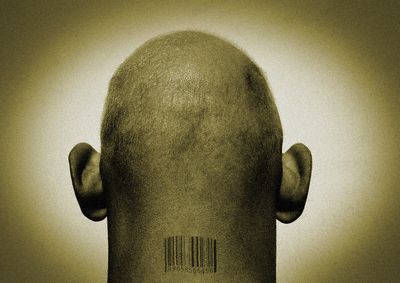
Bar Code on Bald Man's Neck

By Klint Finley

Source: Technoccult

Is digital journalism a viable career? Financial journalist and media pundit Felix Salmon says no.

His lengthy and dismal assessment of the future of journalism as a career path — ie, a job where your salary increases over time and you make enough money to support a family — was, shall we say, widely panned by other journalists who think he’s being a negative nancy and discouraging young people from entering the field. Personally, I think things are even worse than Salmon says.

Now, Salmon and I are in pretty good posiitons. Him more so than I, but neither of us is cranking out Examiner.com articles for $0 a pop just to build a portfolio in hopes of landing a staff writer job at a community newspaper that pays less than an entry level job at Home Depot. Neither of us is cranking out 10+ “stories” a day for a clickbait site just to make rent. Neither one of us just got laid off from a major urban daily after 20 years. We’re part of the lucky few that get paid a living wage, or better, to produce journalism.

But it’s not just journalism. The entire economy is now geared towards turning humans into fungible commodities. And it’s hard to build a career in an environment where there’s no point in asking for a raise because there are hundreds, perhaps thousands, of people who would do your job for even less than you do.

This is nothing new to billions of manual laborers who are used to being treated like cogs in a machine. But once upon a time unions were able to help workers actually band together to demand things like predictable hours and livable working conditions. That has changed. but the do what you love mantra managed to turn those few jobs that robots can’t yet do into sub-minimum wage gigs that require graduate degrees.

You might think you can escape this fate by becoming a programmer. But code bootcamps are cranking out hundreds of people who can crank out CRUD apps all day. And when you start to go grey, the tech industry will toss you out like an 8-track tape.

I don’t mean to imply that all precariat — from the middle class white guy with a PhD to Rwandan woman who came to the U.S. with nothing — are equally affected by this mechanization of humanity. But we are all affected.

The answer isn’t in picking the right career for the machine age. It’s changing the system.

The Transformer: Sabotage for Peace

514_230x230_NoPeel

By William T. Hathaway

Source: Dissident Voice

A former student of mine works as a janitor. After graduating from college he worked as a market researcher and an advertising salesperson, but both jobs soured him on the corporate world. He hated being a junior suit, and the thought of becoming a senior suit was even worse.

He finds being a janitor a much better job. He’s left alone, it’s low pressure, and what he does improves the world rather than worsens it. The pay’s lousy but that’s standard these days. He loves music, so he loads up his MP3 and grooves to the sounds. Although the work is routine, it’s brightened by occasional bits of human interest: used condoms in executive wastebaskets, marijuana butts in the emergency stairwell, a twenty-dollar bill under a desk. His shift is from 6 p.m. to 2 a.m., and afterwards he hits the late-night clubs, where he can enjoy the scene with the advantage of being sober. He works for a janitorial service company, and one of their clients is a defense contractor — not secret weapons, just ordinary supplies.

The man is a pacifist. Originally he felt that rallies, petitions, marches, and picketing would help turn public opinion against the war, and when the majority of Americans opposed it, our political representatives would vote to stop it. That’s what democracy means. The first part turned out to be true. Polls showed a clear majority of Americans wanted the war ended and our troops brought home. In 2006 they elected Democratic majorities in the House and Senate who said they would do this. But rather than bringing the soldiers home, “our” representatives voted more money for the war so more soldiers could be sent to Iraq, a surge of troops for another attempt to crush the resistance there. Several months later they voted additional billions for a US troop surge to Afghanistan.

In 2008 the people elected Barack Obama on a pledge to bring peace. But the war still continues with thousands dying, despite the will of the voters to end it.

He began to realize the politicians aren’t representing us but what he calls the corpses, short for corporations. The majority of those want the war to continue. It’s the corporate majority that rules, not the citizens. That’s the democracy we have. When business leaders turn against the war, then it will end.

What would make them turn against it? When they stop making a profit from it, he concluded.

Finally feeling glad to be part of the corporate world, he decided to stage a surge for peace. He bought a 10-amp step-up transformer at an electronics flea market, the kind used to increase voltage from 110 to 220. Next time he was scheduled to work at the defense contractor and the weatherman predicted a thunder storm, he brought the transformer along in his dinner box. At the first flash of lightning, he took it to the data processing center. First he unplugged all the computers and auxiliaries from the surge protectors and zapped them with 220. Then he plugged them back in and zapped the surge protectors. A clear case of surge-protector failure: the damned things must’ve let the surge through before they shut down.

The stench of sizzled electronics gave him a headache, but other than that he felt fine. He figured the lost work and ruined equipment put a hefty dent in profits. The company will try to pass those costs on to the government, but with budget deficits and taxes already cripplingly high, congress will finally have to admit they don’t have enough money to conquer Iraq and Afghanistan.

The lost work also cuts into the military supply line. If supplies are reduced, war operations have to be reduced. Soldiers can’t fight without logistics. Both economically and tactically, destroying war supplies helps to end war.

He’s aware that direct action like this is unpopular. Many people are afraid of government repression that will make their already difficult situation even more unpleasant. But he’s convinced that their difficult situation — working long hours for low pay, living in a deteriorating society, raising children amid fear and hostility — is caused by the same forces that drove us to war. Capitalism manifests now as invasion in Iraq and Afghanistan, as privatization and impoverishment in Latin America, and as the destruction of the middle class in the industrial nations. It’s the same system operating in different environments.

Rather than sheepishly obeying in hopes of avoiding more punishment, he feels we must actively rebel and seize the power that has been usurped from us. This struggle won’t be comfortable, but it will be meaningful. By taking charge of our history, we’ll earn the gratitude of future generations. Otherwise our and their lives will be continually constricted by the rule of capital. He’s convinced the time is ripe for change, and it needs to be fundamental, not superficial.

He grew up in a small town where his family owned the local hardware store. When he was in high school, Wal-Mart moved to town. Their family store couldn’t compete with Wal-Mart and went broke. His father became a clerk in the Wal-Mart hardware department at a wage less that what he had paid his lowest employee. Soon he was joined there by the former owners of the local clothing, appliance, sporting goods, and toy stores, all of which had gone broke. Despite their expertise, none was hired as a department manager, all clerks, because they might harbor resentment. The managers were long-term Wal-Mart employees brought in from outside.

But it wasn’t just Wal-Mart that used economics of scale to destroy home-grown businesses. Many farmers in the area had to sell out to corporate agriculture. Local restaurants were replaced by cheaper chains. The real estate office was driven out by a discount franchise. And all the workers were making much less than before. The whole town, except for a few big new houses, became bleak.

His parents had enough money saved so he could go to college with the help of student loans and part-time jobs. But his younger brother and sister couldn’t. The brother went into the navy, where he wouldn’t have to actually fight, and the sister worked at Wal-Mart.

What’s happening to small businesses in the USA is happening to small countries overseas. Their economies are getting taken over, sucked into the maw of transnational corporations. The World Bank and International Monetary Fund are economic weapons in this conquest. Countries that resist face other weapons, from CIA subversion to outright invasion. Feudalism has been revived and globalized. The nobility are the corporate rulers, the yeomen are their declining ranks of employees, and the serfs are the rest of us worldwide — the huge majority.

He’s certain that we’re not going to change this system without a fight, and we’d better start now while we still have some freedoms. Hoping to make basic changes through liberal reform is a delusion. We cling to that hope because we’ve been raised with the comforting myth that we live in a democracy. But behind the “we, the people” rhetoric lies entrenched power determined to maintain itself. The rulers are willing to change only in ways that make more profit, such as expanding the labor pool to include women and blacks, thus enabling them to reduce wages.

The “have a nice life” days are over in the USA. Conditions are getting inexorably worse. Americans are beginning to get the same treatment as people in the client states. As protest to this grows, the power elite will try to crush it. They’ll scapegoat the radicals, blaming them for the problems, trying to make them the target of rising populist anger. But dissidents aren’t causing these conditions, they’re resisting them. The conditions are caused by the predatory nature of capitalism.

In opposing this process, he’s a pacifist but not a passivist. He fights, but only in ways that don’t injure living creatures. Currently his transformer is stowed away, awaiting the next weather report when he can transform more war computers into peaceful scrap.


William T. Hathaway is an adjunct professor of American studies at the University of Oldenburg in Germany. “The Transformer” is a chapter from Radical Peace: People Refusing War, which presents the experiences of peace activists who have moved beyond protest into direct action: helping soldiers to desert, destroying computer systems, trashing recruiting offices, burning military equipment, and sabotaging defense contractors. Chapters are posted at Trineday. William T. Hathaway’s new book, Lila, the Revolutionary, is a fable for adults about an eight-year-old girl who sparks a world revolution for social justice. Chapters are posted here and a selection of his writing is available at his website. Read other articles by William.

We wink to them, Good Night!

Liberation-Through-Lucid-Living-Creating-Your-Lucid-Reality

By The Raqs Media Collective

Source: Adbusters

For the past few decades, globally, many well-meaning but demoralized people, especially artists and intellectuals, but also activists, have been losing sleep. They suffer from a peculiarly debilitating activist insomnia consisting of relentless Facebook posting, forwarded petitions and other rituals of narrowing particularity that have taken the place of heretical, insurrectionary and transcendental visions.

We are restless, exhausted through the operation of the worst, most damaging technique available to torturers: sleep deprivation. We could all do with a “sleep in” on the long night shifts. It appears as if there has been a generalized forgetting of the arts and sciences of dreaming, especially lucid dreaming.

This makes it sobering, and even mildly therapeutic, to undertake a close reading of a different account of sleep, and of awakening — the one that opens this essay, from Faridabad Workers News (FMS), a workers’ newspaper.

During our regular night shifts, the general manager used to be abrasive with any worker he saw dozing. He used to take punitive action against them. One night, one hundred and eight of us went to sleep, all together, on the shop floor. Managers, one after the other, who came to check on us, saw us all sleeping in one place, and returned quietly. We carried on like this for three nights. They didn’t misbehave with us, didn’t take any action against us. Workers in other sections of the factory followed suit. It became a tradition of sorts.

We have been reading FMS — which is produced by some friends in Faridabad, a major industrial suburb of Delhi and one of the largest manufacturing hubs of Asia — for the past 25 years. The paper has a print run of 12 thousand, is distributed at regular intervals by workers, students, and itinerant fellow travellers at various traffic intersections, and is read on average by two hundred thousand workers all over the restless industrial hinterland of Delhi.

Over the years, this four-page, A1-size paper full of news and reports of what working people are doing and thinking in one of the biggest industrial concentrations of Asia has acted as a kind of reality check, especially against the echolalia — manic or melancholic, laudatory or lachrymose — that issues forth at regular intervals from the protagonists as well as the antagonists of the new world order. In these circumstances, the paper acts as a kind of weather vane, a device which helps us scent the wind, sense undercurrents and keep from losing our head either in the din of the ecstatic overture for capital and the state, or in the paralyzing grief over their attempts to strengthen their sway.

The issue of FMS, published a week before the results of India’s elections unleashed a frenzy of mourning and celebration, talks about questions coming to shore. It says,

While distributing the paper, we were stopped twice and advised: “Don’t distribute the paper here. Workers here are very happy. Are you trying to get factories closed?” That reading, writing, thinking and exchange can lead to factory closures — where does this thought come from?

Perhaps this fear is a result of messages that circulate between the mobile phones of tailors. Or perhaps this fear emerges because workers on the assembly line are humming!

The industrial belt that surrounds Delhi has been going through a deep churning over the last few years. Hundreds of thousands of young men and women are gathering enormous experience and thought at an early age. They are giving force to waves of innovative self-activity, finding new ways of speaking and thinking about life and work, creating new forms of relationships. In the gathering whirlwind of this milieu, many long-held assumptions have been swept away, and fresh, unfamiliar possibilities have been inaugurated. Here we are presenting some of the questions that have coursed through our conversations and which continue to murmur around us.

Why should anyone be a worker at all?

This question has gained such currency in these industrial areas that some readers may find it strange that it is being mentioned here at all. But still, we find it pertinent to underscore the rising perplexity at the demand that one should surrender one’s life to that which has no future. And again, why should one surrender one’s life to something that offers little dignity?

If we put aside the fear, resentment, rage and disappointment in the statement “What is to be gained through wage work after all?” we can begin to see outlines of a different imagination of life. This different imagination of life knocks at our doors today, and we know that we have between us the capacity, capability and intelligence to experiment with ways that can shape a diversity of ways of living.

Do the constantly emerging desires and multiple steps of self-activity not bring into question every existing partition and boundary?

In this sprawling industrial zone, at every work station, in each work break — whether it’s a tea break or a lunch break — conversations gather storm. Intervals are generative. They bring desires into the open, and become occasions to invent steps and actions. No one is any longer invested in agreements that claim that they might be able to bring forth a better future in three years, or maybe five. Instead, workers are assessing constantly, negotiating continually; examining the self and examining the strength of the collective, ceaselessly. And with it, a wink and a smile: “Let’s see how a manager manages this!” The borders drawn up by agreements are breached, the game of concession wobbles, middlemen disaggregate.

When we do — and can do — everything on our own, why then do we need the mediation of leaders?

“Whether or not to return to work after a break, and across how many factories should we act together — we decide these things on our own, between ourselves,” said a seamstress. Others concurred: “When we act like this, on our own, results are rapid, and our self-confidence grows,” and elaborated, “on the other hand, when a leader steps in, things fall apart; it’s disheartening. When we are capable of doing everything on our own, why should we go about seeking disappointment?”

Are these various actions that are being taken today breaking the stronghold of demand-based thinking?

The most remarkable and influential tendency that has emerged in this extensive industrial belt cannot be wrapped up, contained in, or explained via the language of conditions, demands and concessions. Why? Over the years, the dominant trend has been to portray workers as “poor things,” which effectively traps them in a language that makes them seem like victims of their condition and dependent on concessions. And then they are declared as being in thrall to the language of conditions, demands and concessions. This is a vicious cycle. In the last few years, the workers of Maruti Suzuki (Manesar) have ripped through this encirclement.

“What is it that workers want? What in the world do workers want?”

The company, the local government, the central government were clueless in 2011, they stayed clueless through 2012 and they are still clueless. This makes them nervous. That is why, when workers exploded despite the substantial concessions being offered by management, it resulted in six hundred paramilitary commandos being deputed to restore “normalcy.” One hundred and forty seven workers are political prisoners even today.

Do these questions hold for everyone, everywhere in the world?

The April 2014 issue of FMS featured a categorical statement.

Today we can say with full confidence that an unsettling courses through seven billion people. It is inspired by the desire for an assertion of the overflowing of the surplus of life. It is an expression of creative, boundless astonishment.

Today we can say with full confidence that an unsettling courses through seven billion people. And relatedly, a crisis-laden astonishment: What happens to the colossal wealth that is being produced? Where does it go? How is it that such a tiny sliver from it reaches daily life?

Astonishment is an interesting emotion. It can signal a profound delight alloyed with surprise, as well as the kind of deep anger that borders on puzzled rage. In dreams, we are far more comfortable with astonishment than we are when we are awake and distracted. This double-edged astonishment features both a joy at the self-discovery of the multitude’s own capacities as a planetary force, as well as a recognition of how life itself is being drained of worth and value. This takes us to a new ground — a place of radical uncertainty. Here, both the perils and the potentials of a new global subjectivity lie in wait. Why can we not see them? Why can we not hear them call out? Perhaps they are feigning sleep, restoring themselves with an unauthorized midshift siesta that could break, if they wanted it to, any moment.

Perhaps, in places, it has already broken.

Emergence of factory rebels. Attack on factories by congregations of workers. Frightened management. Industrial areas turn into war zones. Rising numbers of workers as political prisoners. Courts that keep refusing bail. A mounting rebuttal on shop floors of the unsavory behavior of managers and supervisors. The dismantling of the managerial game of concessions. Irrelevance of middlemen. An acceleration of linkages and exchanges between workers.

“This,” says the paper, “is the general condition of today.”

The one thing that we can say with certainty is that management no longer knows what workers are thinking. They do not know what happens next.

Ebullitions all around, the unshackling of factories. Workers refuse to leave the factory. The undoing of the occupation of factories by management. Making factories unfettered spaces for collective gathering. Creating environments that invite the self, others, the entire world to be seen anew. Ceaseless conversation, deep sleep, thinking, the exchange of ideas. The joining together of everyone in extended relays of singing. The invention of new relationships. Whirling currents of possibility opened up by the making of collective claims on life.

This too is the general condition of today.

So how will the sinking ship of the state keep sailing? How will orders be given and obeyed if so few are even speaking the language of the captain anymore? For the ship not to sink, at least not yet, these orders must at least appear to be given and obeyed. Someone must semaphore.

Perhaps the rise of nationalism of the far right across the world is not as much a sign of the increasing power of capital and the state as it is a recognition, by those at the helm of affairs, of their own besieged situation. They are under siege. Once again the rulers do not know what is going on in the minds of those they rule. For all practical purposes, the subjects are opaque, oblivious to every command. Management does not even know whether the workers are asleep or awake. When they are asleep, they seem to be animated by the current of vivid dreams. When they are awake, they doze at the machine. Is this why every leader asks his nation to awaken? So that he can be reassured that they are at least listening to him? The more they sleep, the louder is the call to rise.

This is the time to dream lucidly. To envision and realize the things that one cannot do when one is awake, distracted, bored, busy. This is the time for hearing voices, to become open to the murmur of the universe, for heresy, for audacious conversations, for acts to turn factories into orchards and a laughter that makes standing armies into brass bands.

Let them who rule risk fatigue with their watchfulness.

We wink to them, good night!

— The Raqs Media Collective plays a plurality of roles, appearing as artists, curators and philosophical agent provocateurs in India. This piece appeared in the e-flux journal No. 56, June 2014.

Related Video:

300

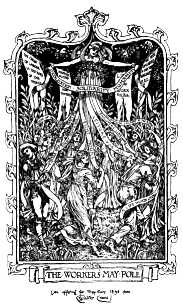
MAY DAY – The International Labor Day

crane13

Source: The Anarchist International

May 1st, International Workers’ Day, commemorates the historic struggle of working people throughout the world, and is recognized in most countries. The United States of America and Canada are among the exceptions. This despite the fact that the holiday began in the 1880s in the USA, linked to the battle for the eight-hour day, and the Chicago anarchists.

The struggle for the eight-hour day began in the 1860s. In 1884, the Federation of Organized Trades and Labor Unions of the United States and Canada, organized in 1881 (and changing its name in 1886 to American Federation of Labor ) passed a resolution which asserted that “eight hours shall constitute a legal day’s work from and after May 1, 1886, and that we recommend to labor organizations throughout this district that they so direct their laws as to conform to this resolution”. The following year the Federation repeated the declaration that an eight-hour system was to go into effect on May 1, 1886. With workers being forced to work ten, twelve, and fourteen hours a day, support for the eight-hour movement grew rapidly. In the months prior to May 1, 1886, thousands of workers, organized and unorganized, members of the organization Knights of Labor and of the federation, were drawn into the struggle. Chicago was the main center of the agitation for a shorter day. The anarchists were in the forefront of the Central Labor Union of Chicago, which consisted of 22 unions in 1886, among them the seven largest in the city.

During the Railroad strikes of 1877, the workers had been violently attacked by the police and the United States Army. A similar tactic of state terrorism was prepared by the bureaucracy to fight the eight-hour movement. The police and National Guard were increased in size and received new and powerful weapons financed by local business leaders. Chicago’s Commercial Club purchased a $2000 machine gun for the Illinois National Guard to be used against strikers. Nevertheless, by May 1st, the movement had already won gains for many Chicago workers. But on May 3, 1886, police fired into a crowd of strikers at the McCormick Harvester Machine Company, killing at least one striker, seriously wounding five or six others, and injuring an undetermined number. Anarchists called for a mass meeting the next day in Haymarket Square to protest the brutality.

The meeting proceeded without incident, and by the time the last speaker was on the platform, the rainy gathering was already breaking up, with only about two hundred people remaining. It was then a police column of 180 men marched into the square and ordered the meeting to disperse. At the end of the meeting a bomb was thrown at the police, killing one instantly, six others died later. About seventy police officers were wounded. Police responded by firing into the crowd. How many civilians were wounded or killed from police bullits never was ascertained exactly. Although it was never determined who threw the bomb, the incident was used as an excuse to attack anarchists and the labor movement in general. Police ransacked the homes and offices of suspected radicals, and hundreds were arrested without charge. A reign of police terror swept over Chicago. Staging “raids” in the working-class districts, the police rounded up all known anarchists and other socialists. “Make the raids first and look up the law afterward!” publicly counseled the state’s attorney.

Anarchists in particular were harassed, and eight of Chicago’s most active were charged with conspiracy to murder in connection with the Haymarket bombing. A kangaroo court found all eight guilty, despite a lack of evidence connecting any of them to the bomb-thrower, and they were sentenced to die. In October 9, 1886, the weekly journal Knights of Labor published in Chicago, carried on page 1 the following announcement: “Next week we begin the publication of the lives of the anarchists advertised in another column.”

The advertisement, carried on page 14, read: The story of the anarchists, told by themselves; Parsons, Spies, Fielden, Schwab, Fischer, Lingg, Engle, Neebe. The only true history of the men who claim that they are condemned to suffer death for exercising the right of Free Speech: Their association with Labor, Socialistic and Anarchistic Societies, their views as to the aims and objects of these organizations, and how they expect to accomplish them; also their connection with the Chicago Haymarket Affair. Each man is the author of his own story, which will appear only in the “Knights of Labor” during the next three months, – the great labor paper of the United States, a 16-page weekly paper, containing all the latest foreign and domestic labor news of the day, stories, household hints, etc. A co-operative paper owned and controlled by members of the Knights of Labor, and furnished for the small sum of $1.00 per annum. Adress all communications to Knights of Labor Publishing Company, 163 Washington St., Chicago, Ill. Later this journal and the paper Alarm published the autobiographies of the Haymarket men.

Albert Parsons, August Spies, Adolf Fischer and George Engel were hanged on November 11, 1887. Louis Lingg committed suicide in prison. The authorities turned over the bodies to friends for burial, and one of the largest funeral processions in Chicago history was held. It was estimated that between 150,000 to 500,000 persons lined the route taken by the funeral cortege of the Haymarket martyrs. A monument to the executed men was unveiled June 25, 1893 at Waldheim Cemetery in Chicago. The remaining three, Samuel Fielden, Oscar Neebe and Michael Schwab, were finally pardoned in 1893.

On June 26, 1893, the governor of Illinois, John Peter Altgeld, issued the pardon message in which he made it clear that he was not granting the pardon because he believed that the men had suffered enough, but because they were innocent of the crime for which they had been tried, and that they and the hanged men had been the victims of hysteria, packed juries and a biased judge. He noted that the defendants were not proven guilty because the state “has never discovered who it was that threw the bomb which killed the policeman, and the evidence does not show any connection whatsoever between the defendants and the man who threw it.”

International Workers’ Day is the commemoration of the Haymarket Event in Chicago in 1886. In 1889, the first congress of the Second International, meeting in Paris for the centennial of the French Revolution and the Exposition Universelle (1889), following an initiative from the American Federation of Labor, called for international demonstrations on the 1890 anniversary of the Chicago protests. These were so successful that May Day was formally recognized as an annual event at the International’s second congress in 1891.

It is not surprising that the state, business leaders, mainstream union officials, and the media would want to hide the true history of May Day. In its attempt to erase the history and significance of May Day, the United States government declared May 1st to be “Law Day”, and gave the workers instead Labor Day, the first Monday of September – a holiday devoid of any historical significance.

Nevertheless, rather than suppressing the labor and anarchist movements, the events of 1886 and the execution of the Chicago anarchists, spokesmen of the movement for the eight-hour day, mobilized many generations of radicals. Emma Goldman, a young immigrant at the time, later pointed to the Haymarket affair as her political birth. Instead of disappearing, the anarchist movement only grew in the wake of Haymarket.

As workers, we must recognize and commemorate May Day not only for it’s historical significance, but also as a time to organize around issues of vital importance of today for the working-class broadly defined, i.e. the grassroots – the people seen as a class in contrast to the superiors in income and/or rank – economically and/or political/administrative.

The May Day Manifestos of the International Workers of the World affiliated to the Anarchist International, from the latest years are published on its Webpage, click here!

Mutiny of the Soul

The-Prison-of-the-Mind-by-Blacksmiley-via-ArtCorgi

By Charles Eisenstein

Source: Reality Sandwich

Depression, anxiety, and fatigue are an essential part of a process of metamorphosis that is unfolding on the planet today, and highly significant for the light they shed on the transition from an old world to a new.

When a growing fatigue or depression becomes serious, and we get a diagnosis of Epstein-Barr or Chronic Fatigue Syndrome or hypothyroid or low serotonin, we typically feel relief and alarm. Alarm: something is wrong with me. Relief: at least I know I’m not imagining things; now that I have a diagnosis, I can be cured, and life can go back to normal. But of course, a cure for these conditions is elusive.

The notion of a cure starts with the question, “What has gone wrong?” But there is another, radically different way of seeing fatigue and depression that starts by asking, “What is the body, in its perfect wisdom, responding to?” When would it be the wisest choice for someone to be unable to summon the energy to fully participate in life?

The answer is staring us in the face. When our soul-body is saying No to life, through fatigue or depression, the first thing to ask is, “Is life as I am living it the right life for me right now?” When the soul-body is saying No to participation in the world, the first thing to ask is, “Does the world as it is presented me merit my full participation?”

What if there is something so fundamentally wrong with the world, the lives, and the way of being offered us, that withdrawal is the only sane response? Withdrawal, followed by a reentry into a world, a life, and a way of being wholly different from the one left behind?

The unspoken goal of modern life seems to be to live as long and as comfortably as possible, to minimize risk and to maximize security. We see this priority in the educational system, which tries to train us to be “competitive” so that we can “make a living”. We see it in the medical system, where the goal of prolonging life trumps any consideration of whether, sometimes, the time has come to die. We see it in our economic system, which assumes that all people are motivated by “rational self-interest”, defined in terms of money, associated with security and survival. (And have you ever thought about the phrase “the cost of living”?) We are supposed to be practical, not idealistic; we are supposed to put work before play. Ask someone why she stays in a job she hates, and as often as not the answer is, “For the health insurance.” In other words, we stay in jobs that leave us feeling dead in order to gain the assurance of staying alive. When we choose health insurance over passion, we are choosing survival over life.

On a deep level, which I call the soul level, we want none of that. We recognize that we are here on earth to enact a sacred purpose, and that most of the jobs on offer are beneath our dignity as human beings. But we might be too afraid to leave our jobs, our planned-out lives, our health insurance, or whatever other security and comfort we have received in exchange for our divine gifts. Deep down, we recognize this security and comfort as slaves’ wages, and we yearn to be free.

So, the soul rebels. Afraid to make the conscious choice to step away from a slave’s life, we make the choice unconsciously instead. We can no longer muster the energy to go through the motions. We enact this withdrawal from life through a variety of means. We might summon the Epstein-Barr virus into our bodies, or mononucleosis, or some other vector of chronic fatigue. We might shut down our thyroid or adrenal glands. We might shut down our production of serotonin in the brain. Other people take a different route, incinerating the excess life energy in the fires of addiction. Either way, we are in some way refusing to participate. We are shying away from ignoble complicity in a world gone wrong. We are refusing to contribute our divine gifts to the aggrandizement of that world.

That is why the conventional approach of fixing the problem so that we can return to normal life will not work. It might work temporarily, but the body will find other ways to resist. Raise serotonin levels with SSRIs, and the brain will prune some receptor sites, thinking in its wisdom, “Hey, I’m not supposed to feel good about the life I am living right now.” In the end, there is always suicide, a common endpoint of the pharmaceutical regimes that seek to make us happy with something inimical to our very purpose and being. You can only force yourself to abide in wrongness so long. When the soul’s rebellion is suppressed too long, it can explode outward in bloody revolution. Significantly, all of the school shootings in the last decade have involved people on anti-depression medication. All of them! For a jaw-dropping glimpse of the results of the pharmaceutical regime of control, scroll down this compilation of suicide/homicide cases involving SSRIs. I am not using “jaw-dropping” as a figure of speech. My jaw literally dropped open.

Back in the 1970s, dissidents in the Soviet Union were often hospitalized in mental institutions and given drugs similar to the ones used to treat depression today. The reasoning was that you had to be insane to be unhappy in the Socialist Workers’ Utopia. When the people treating depression receive status and prestige from the very system that their patients are unhappy with, they are unlikely to affirm the basic validity of the patient’s withdrawal from life. “The system has to be sound — after all, it validates my professional status — therefore the problem must be with you.”

Unfortunately, “holistic” approaches are no different, as long as they deny the wisdom of the body’s rebellion. When they do seem to work, usually that is because they coincide with some other shift. When someone goes out and gets help, or makes a radical switch of modalities, it works as a ritual communication to the unconscious mind of a genuine life change. Rituals have the power to make conscious decisions real to the unconscious. They can be part of taking back one’s power.

I have met countless people of great compassion and sensitivity, people who would describe themselves as “conscious” or “spiritual”, who have battled with CFS, depression, thyroid deficiency, and so on. These are people who have come to a transition point in their lives where they become physically incapable of living the old life in the old world. That is because, in fact, the world presented to us as normal and acceptable is anything but. It is a monstrosity. Ours is a planet in pain. If you need me to convince you of that, if you are unaware of the destruction of forests, oceans, wetlands, cultures, soil, health, beauty, dignity, and spirit that underlies the System we live in, then I have nothing to say to you. I only am speaking to you if you do believe that there is something deeply wrong with the way we are living on this planet.

A related syndrome comprises various “attention deficit” and anxiety “disorders” (forgive me, I cannot write down these words without the ironic quotation marks) which reflect an unconscious knowledge that something is wrong around here. Anxiety, like all emotions, has a proper function. Suppose you left a pot on the stove and you know you forgot something, you just can’t remember what. You cannot rest at ease. Something is bothering you, something is wrong. Subliminally you smell smoke. You obsess: did I leave the water running? Did I forget to pay the mortgage? The anxiety keeps you awake and alert; it doesn’t let you rest; it keeps your mind churning, worrying. This is good. This is what saves your life. Eventually you realize — the house is on fire! — and anxiety turns into panic, and action.

So if you suffer from anxiety, maybe you don’t have a “disorder” at all — maybe the house is on fire. Anxiety is simply the emotion corresponding to “Something is dangerously wrong and I don’t know what it is.” That is only a disorder if there is in fact nothing dangerously wrong. “Nothing is wrong, just you” is the message that any therapy gives when it tries to fix you. I disagree with that message. The problem is not with you. You have very good reason to be anxious. Anxiety keeps part of your attention away from your tasks of polishing the silverware as the house burns down, of playing the violin as the Titanic sinks. Unfortunately, the wrongness you are tapping into might be beyond the cognizance of the psychiatrists who treat you, who then conclude that the problem must be your brain.

Similarly, Attention Deficit Disorder, ADHD, and my favorite, Oppositional Defiant Disorder (ODD) are only disorders if we believe that the things presented for our attention are worth paying attention to. We cannot admit, without calling into question the whole edifice of our school system, that it may be completely healthy for a ten-year-old boy to not sit still for six hours in a classroom learning about long division and Vasco de Gama. Perhaps the current generation of children, that some call the Indigos, simply have a lower tolerance for school’s agenda of conformity, obedience, external motivation, right-and-wrong answers, the quantification of performance, rules and bells, report cards and grades and your permanent record. So we try to enforce their attention with stimulants, and subdue their heroic intuitive rebellion against the spirit-wrecking machine.

As I write about the “wrongness” against which we all rebel, I can hear some readers asking, “What about the metaphysical principle that it’s ‘all good’?” Just relax, I am told, nothing is wrong, all is part of the divine plan. You only perceive it as wrong because of your limited human perspective. All of this is only here for our own development. War: it gives people wonderful opportunities to make heroic choices and burn off bad karma. Life is wonderful, Charles, why do you have to make it wrong?

I am sorry, but usually such reasoning is just a sop to the conscience. If it is all good, then that is only because we perceive and experience it as terribly wrong. The perception of iniquity moves us to right it.

Nonetheless, it would be ignorant and fruitless to pass judgment upon those who do not see anything wrong, who, oblivious to the facts of destruction, think everything is basically fine. There is a natural awakening process, in which first we proceed full speed ahead participating in the world, believing in it, seeking to contribute to the Ascent of Humanity. Eventually, we encounter something that is undeniably wrong, perhaps a flagrant injustice or a serious health problem or a tragedy near at hand. Our first response is to think this is an isolated problem, remediable with some effort, within a system that is basically sound. But when we try to fix it, we discover deeper and deeper levels of wrongness. The rot spreads; we see that no injustice, no horror can stand in isolation. We see that the disappeared dissidents in South America, the child laborers in Pakistan, the clearcut forests of the Amazon, are all intimately linked together in a grotesque tapestry that includes every aspect of modern life. We realize that the problems are too big to fix. We are called to live in an entirely different way, starting with our most fundamental values and priorities.

All of us go through this process, repeatedly, in various realms of our lives; all parts of the process are right and necessary. The phase of full participation is a growth phase in which we develop gifts that will be applied very differently later. The phase of trying to fix, to endure, to soldier on with a life that isn’t working is a maturation phase that develops qualities of patience and determination and strength. The phase of discovering the all-encompassing nature of the problem is usually a phase of despair, but it need not be. Properly, it is a phase of rest, of stillness, of withdrawal, of preparation for a push. The push is a birth-push. Crises in our lives converge and propel us into a new life, a new being that we hardly imagine could exist, except that we’d heard rumors of it, echoes, and maybe even caught a glimpse of it here and there, been granted through grace a brief preview.

If you are in the midst of this process, you need not suffer if you cooperate with it. I can offer you two things. First is self-trust. Trust your own urge to withdraw even when a million messages are telling you, “The world is fine, what’s wrong with you? Get with the program.” Trust your innate belief that you are here on earth for something magnificent, even when a thousand disappointments have told you you are ordinary. Trust your idealism, buried in your eternal child’s heart, that says that a far more beautiful world than this is possible. Trust your impatience that says “good enough” is not good enough. Do not label your noble refusal to participate as laziness and do not medicalize it as an illness. Your heroic body has merely made a few sacrifices to serve your growth.

The second thing I can offer you is a map. The journey I have described is not always linear, and you may find yourself from time to time revisiting earlier territory. When you find the right life, when you find the right expression of your gifts, you will receive an unmistakable signal. You will feel excited and alive. Many people have preceded you on this journey, and many more will follow in times to come. Because the old world is falling apart, and the crises that initiate the journey are converging upon us. Soon many people will follow the paths we have pioneered. Each journey is unique, but all share the same basic dynamics I have described. When you have passed through it, and understood the necessity and rightness of each of its phases, you will be prepared to midwife others through it as well. Your condition, all the years of it, has prepared you for this. It has prepared you to ease the passage of those who will follow. Everything you have gone through, every bit of the despair, has been necessary to forge you into a healer and a guide. The need is great. The time is coming soon.

Breaking: Moguls Fear AI Apocalypse

Matrix-Machines-Best-Movie-AI

By Jacob Silverman

Source: The Baffler

A funny thing happened on the way to the Singularity. In the past few months, some of the tech industry’s most prominent figures (Elon Musk, Bill Gates), as well as at least one associated guru (Stephen Hawking), have publicly worried about the consequences of out-of-control artificial intelligence. They fear nothing less than the annihilation of humanity. Heady stuff, dude.

These pronouncements come meme-ready—apocalyptic, pithy, trading on familiar Skynet references—grade-A ore for the viral mill. The bearers of these messages seem utterly serious, evincing not an inkling of skepticism. “I think we should be very careful about artificial intelligence,” Elon Musk said. “If I had to guess at what our biggest existential threat is, it’s probably that.”

“The development of full artificial intelligence could spell the end of the human race,” said Stephen Hawking, whose speech happens to be aided by a comparatively primitive artificial intelligence.

Gates recently completed the troika, sounding a more circumspect, but still troubled, position. During a Reddit AMA, he wrote: “I agree with Elon Musk and some others on this and don’t understand why some people are not concerned.”

It’s easy to see why these men expressed these fears. For one thing, someone asked them. This is no small distinction. Most people are not, in their daily lives, asked whether they think super-smart computers are going to take over the world and end humanity as we know it. And if they are asked, the questioner is usually not rapt with attention, lingering on every word as if it were gospel.

This may sound pedantic, but the point is that it’s pretty fucking flattering—to one’s ego, to every nerd fantasy one has ever pondered about the end of days—to be asked these questions, knowing that the answer will be immediately converted (perhaps, by a machine!) into headlines shared all over the world. Musk, a particularly skilled player of media hype for vaporous ideas like his Hyperloop, must have been aware of these conditions when he took up the question at an MIT student event in October.

Another reason Silicon Valley has begun spinning up its doomsday machine is that the tech industry, despite its agnostic leanings, has long searched for a kind of theological mantle that it can drape over itself. Hence the popularity of Arthur C. Clarke’s maxim: “Any sufficiently advanced technology is indistinguishable from magic.” Any sufficiently advanced religion needs its eschatological prophecies, and the fear of AI is fundamentally a self-serving one. It implies that the industry’s visionaries might create something so advanced that even they might not be able to control it. It places them at the center of the mechanical universe, where their invention—not God’s, not ExxonMobil’s—threatens the human species.

But AI is also seen as a risk worth taking. Rollo Carpenter, the creator of Cleverbot, an app that learns from its conversations with human beings, told the BBC, “I believe we will remain in charge of the technology for a decently long time and the potential of it to solve many of the world problems will be realised.”

There’s a clever justification embedded in here, the notion that we have to clear the runway for technologies that might solve our problems, but that might also, Icarus-like, become too bold, and lead to disaster. Carpenter’s remarks are, like all of the other ones shared here, conveniently devoid of any concerns about what technologies of automation are already doing to people and economic structures now. For that’s really the fear here, albeit in a far amplified form: that machines will develop capabilities, including a sense of self-direction, that render human beings useless. We will become superfluous machines—which is the same thing as being dead.

For many participants in today’s technologized marketplace, though, this is already the case. They have been replaced by object-character recognition software, which can read documents faster than they can; or by a warehouse robot, which can carry more packages; or by an Uber driver, who doesn’t need a dispatcher and will soon be replaced by a more efficient model—that is, a self-driving car. The people who find themselves here, among the disrupted, have been cast aside by the same forces of technological change that people like Gates and Musk treat as immutable.

Of course, if you really worry about what a business school professor might call AI’s “negative externalities,” then there all kinds of things you can do—like industry conclaves, mitigation studies, campaigns to open-source and regulate AI technologies. But then you might risk deducing that many of the concerns we express regarding AI—a lack of control, environmental devastation, a mindless growth for the sake of growth, the rending of social and cultural fabric in service of a disinterested higher authority ravenous for ever-more information and power—are currently happening.

Take a look out the window at Miami’s flooded downtown, the e-waste landfills of Ghana, or the fetid dormitories of Foxconn. To misappropriate the prophecy of another technological sage: the post-human dystopia is already here; it’s just not evenly distributed yet.

Jacob Silverman’s book, Terms of Service: Social Media and the Price of Constant Connection, will be published in March.

Does Work Undermine our Freedom?

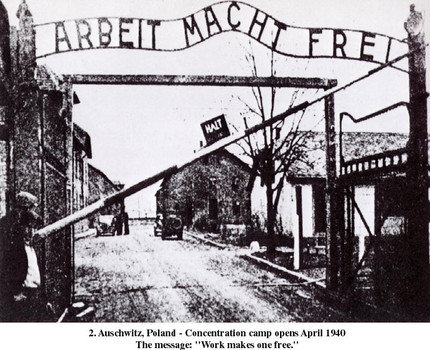
1365203033_2628_auschwitz

By John Danaher

Source: Philosophical Disquisitions

Work is a dominant feature of contemporary life. Most of us spend most of our time working. Or if not actually working then preparing for, recovering from, and commuting to work. Work is the focal point, something around which all else is organised. We either work to live, or live to work. I am fortunate in that I generally enjoy my work. I get paid to read, write and teach for a living. I can’t imagine doing anything else. But others are less fortunate. For them, work is drudgery, a necessary means to a more desirable end. They would prefer not to work, or to spend much less time doing so. But they don’t have that option. Society, law and economic necessity all conspire to make work a near-essential requirement. Would it be better if this were not the case?

In recent months, I have explored a number of affirmative answers to this question. Back in July 2014, I looked at Joe Levine’s argument for the right not to work. This argument rested on a particular reading of the requirements of Rawlsian egalitarianism. In brief, Levine felt that Rawlsian neutrality with respect to an individual’s conception of the good life required some recognition of a right to opt out of paid labour. Then, in October 2014, I offered my own general overview of the anti-work literature, dividing the arguments up into two categories: intrinsic badness arguments (which claimed that there was something intrinsically bad about work) and opportunity cost arguments (which claimed that even if work was okay, non-work was better).

In this post, I want to explore one more anti-work argument. This one comes from an article by Julia Maskivker entitled “Employment as a Limitation on Self-Ownership”. Although this argument retreads some of the territory covered in previous posts, I think it also offers some novel insights, and I want to go over them. I do so in several parts. First, I offer a brief overview of Maskivker’s central anti-work argument. As we’ll see, this argument has two contentious premises, each based on three claims about freedom and justice. I then spend the next three sections looking at Maskivker’s defence of those three claims. I will then focus on some criticisms of her argument, before concluding with a general review.

1. Maskivker’s Anti-Work Argument
I’ll actually start with a mild criticism. Although I see much of value in Maskivker’s article, and although I learned a lot from it, I can’t honestly say that I enjoyed reading it. Large parts of it felt disorganised, needlessly convoluted, and occasionally repetitious. Although she introduced a central normative claim early on — viz. a claim about the need for effective control self-ownership — later parts of her argument seemed to stray from the strict requirements of that concept. This left me somewhat confused as to what her central argument really was. So what follows is very much my own interpretation of things and should be read with that caveat in mind.

Anyway, let’s start by clarifying what it is we are arguing against. In the past, I have lamented the fact that definitions of work are highly problematic. They are often value-laden, and prone to the sins of under and over-inclusiveness. I’m not sure that there can ever be a perfect definition of work, one that precisely captures all the phenomena of interest to those making the anti-work critique. Nevertheless, we need something more concrete, and Maskivker duly provides. She defines work as paid labour. That is, labour that is undertaken for the purposes of remuneration. This definition is simple and covers what is central to her own argument. My only complaint is that it may need to be expanded to cover forms of labour that are not directly remunerated but are undertaken in the hope of eventually being remunerated (e.g. work of entrepreneurs in the early stages of a business, or the work of unpaid interns). But this is just a quibble.

With that definition in place, we can proceed to Maskivker’s anti-work argument itself. That argument is all about the freedom-undermining effect of work. Although this argument is initially framed in terms of a particular conception of freedom as effective control self-ownership (something I previously covered when looking at the work of Karl Widerquist), I believe it ends up appealing to a much broader and more ecumenical understanding of freedom. As follows:

  • (1) If a phenomenon undermines our freedom, then it is fundamentally unjust and we should seek to minimise or constrain it.
  • (2) A phenomenon undermines our freedom if: (a) it limits our ability to choose how to make use of our time; (b) it limits our ability to be the authors of our own lives; and/or (c) it involves exploitative/coercive offers.
  • (3) Work, in modern society, (a) limits our ability to choose how to make use of our time; (b) limits our ability to be the authors of our own lives; and c) involves an exploitative/coercive offer.
  • (4) Therefore, work undermines our freedom.
  • (5) Therefore, work is fundamentally unjust and should be minimised or constrained.

You could alter this, as Maskivker seems to wish to do, by turning it into an argument for a right not to work. Though I will discuss this general idea later on, I’m avoiding that construal of the argument for the simple reason that it requires additional explanation. Specifically, it requires some explanation of what it would mean to have a right not to work, and some answer to the question as to why it is felt that we do not currently have a right not to work (after all, we can choose not to work, can’t we?). I think time would be better spent focusing specifically on the freedom-undermining effect of work and its injustice, rather than on the precise social remedy to this problem.

What about the rest of the argument. Well, premise (1) is a foundational normative assumption, resting on the value of freedom in a liberal society. We won’t question it here. Premise (2) is crucial because it provides more detail on the nature of freedom. Although Maskivker may argue that the three freedom-undermining conditions mentioned in that premise are all part of the what she means by effective control self-ownership, I think it better not to take that view. Why? Because I think some of the conditions appeal to other concepts of freedom that are popular among other political theorists, and it would be better not to limit the argument to any particular conception. Moving on, premise (3) is the specific claim about the freedom-undermining effect of work. Obviously, this too is crucial to Maskivker’s overall case. The two conclusions then follow.

Let’s go through the two central premises in more detail. Let’s do so in an alternating structure. That is to say, by looking at the defence of condition (a) in premise (2) and premise (3); then at the defence of condition (b) in premise (2) and premise (3); and finally at the defence of condition (c) in premise (2) and premise (3).

2. Freedom, Time and the 24/7 Workplace
Condition (a) is all about the need for an ability to choose how to use our time. Maskivker defends this requirement by starting out with a Lockean conception of freedom, one that is often beloved by libertarians. The Lockean conception holds that individuals are free in the sense that they have self-ownership. That is to say: they have ownership rights over their own bodies, and the fruits of their labour. This fundamental right of self-ownership in turn implies a bundle of other rights (e.g. the right to transfer the fruits of one’s labour to another). Any system of political authority must respect this fundamental right and its necessary implications.

The problem for Maskivker is that many fans of self-ownership limit themselves to a formal, rather than an effective, conception of that right. In other words, they simply hold, in the abstract, that individuals have this right of self-ownership and that they should not be interfered with when exercising it. They don’t think seriously about what it would take to ensure that everybody was really able to effectively enjoy this right. If they did this, they would realise that there are a number of social and evolutionary imbalances and injustices in the ability of individuals to exercise self-ownership. They would realise that, in order to effectively enjoy the right, individuals will also need access to resources.

Now, to be fair, some writers do recognise this. And they highlight the need for things like adequate education and healthcare in order for the right to self-ownership to be effective. Maskivker agrees with their approach. The originality of her contribution comes in its insistence on the importance of time as an essential resource for self-ownership. Time is, in many ways, the ultimate resource. Time is necessary for everything we do. Everything takes time. Other skills and abilities that we may have, only really have value when we have the time to exercise them. Furthermore, time is a peculiarly non-manipulable resource. There is a limited amount of time in which we get to act out our lives. This makes it all the more important for people to have access to time.

You can probably see where this is going. The problem with work is that it robs us of time. We need jobs in order to live, and they take up most of our time. Some people argue that the modern realities of work are particularly insidious in this regard. Jonathan Crary, in his slightly dystopian and alarmist work, 24/7: Late Capitalism and the Ends of Sleep, notes how work has colonised our every waking hour and how it threatens to colonise our sleep too. We are encouraged to make our time more productive, but also to be available to our workplaces at more times of the day, through email or social media. Indeed, the slow death of the regular 9-to-5 workday has, if anything, encouraged work to monopolise more of time. We have flexible working hours and our work may be more outcome-driven, but the marketplaces are open 24/7 and they demand more outcomes from us. The result is an infiltration of work into every hour of the day.

Some people may not resent this. They may feel that they are living the kind of life they wish to live, that their work is enjoyable, and that it gives them a sense of purpose. But others will feel differently. They will feel that work takes away valuable opportunities to truly express themselves as they wish.

In sum, access to time and the time-limiting nature of work, is one thing to think about when designing a scheme of distributive justice. An ability to opt out of work, or to have much less of it one’s lives may be necessary if we are to have a just society.

3. Freedom and Authorship of One’s Life
There is a related argument to made here about the ability to choose one’s time. It can be connected to Maskivker’s account of effective self-ownership, but it can also be separated from it. That’s what condition (b) is about. It appeals to a distinctive notion of freedom as being the ability to exercise true authorship over one’s life. This is a slightly more metaphysical ideal of freedom, one that joins up with the debate about free will and responsibility.

To understand the idea, we need to think more about the individual who truly enjoys their work. As I suggested at the end of the previous section, you could argue that there is nothing unjust about the current realities of work for such an individual. Granting them more free time, won’t really help them to exercise more effective self-ownership. They are getting what they want from life. Take me for example. I have already said that I enjoy my work, and I have been able to (I think) select a career that best suits my talents and abilities. I’m pretty sure I’m employing the scarce resource of time in a way that allows me to maximise my potential. I’m pretty sure there is nothing fundamentally unjust or freedom-undermining about my predicament.

Nevertheless, Maskivker wants to argue that there is something fundamentally unjust about my predicament. My freedom is not being respected in the way that it should. Despite all my claims about how much I enjoy my work, the reality is that I have to work. I have no real say in the matter. She uses an analogy between starving and fasting to make her point. When a person is starving or fasting, the physical results are often the same: their bodies are being deprived of essential nutrients. But there is something morally distinct about the two cases. The person who fasts has control over what is happening to their body. The person who is starving does not. The person who chooses to fast has authorship over their lives; the person who is starving is having their story written by someone else.

When it comes to our work, there is a sense in which we are all starving not fasting. We may enjoy it, embrace it and endorse it, but at the end of the day we have to do it. That’s true even in societies with generous welfare provisions, as most of those welfare provisions are conditional upon us either looking for work (and proving that we are doing so), or being in some state of unavoidable disability or deprivation. We are not provided us with an “easy out”, or with the freedom we need to become the true authors of our lives. (Maskivker notes that the introduction of a universal basic income could be a game-changer in this regard).

As I said, in appealing to this notion of self-authorship, Maskivker is touching upon a more metaphysical ideal of freedom. Within the debate about free will, there are those that argue that the ability to do otherwise is essential for having free will. But there are also those (e.g. Harry Frankfurt and John Fischer) who argue that it is not. They sometimes say that being free and responsible simply requires the reflexive self-endorsement of one’s actions and attitudes. The ability to do otherwise is irrelevant. So what Maskivker is arguing is somewhat contentious, at least when considered in light of these other theories of freedom. She claims that her theory better captures the normative ideal of freedom. But there is much more to be said about this issue.

4. Freedom and the Absence of Coercive Offers
The final condition of freedom — condition c) — is probably the most straightforward. It has its origins in the classic liberal accounts of freedom as non-interference by coercion. It is introduced by Maskivker in an attempt to address a possible weakness in the argument thus far. Someone could argue that the mere absence of acceptable alternatives to work is not enough to imply that it undermines our freedom, or that it creates a fundamental injustice.

An analogy might help to make the point. Suppose you are crossing the desert. You have run out of water and are unlikely to make it out alive. As you are literally on your last legs, you come across a man who is selling water from a small stand. He is, however, selling it at an obscene price. It will cost you everything you have to get one litre of water (which will be just enough to make it out). Because of your desperate situation, you hand over everything you have. Was your choice to hand over everything free? Was it just for the man to sell the water at that price? Many would argue “no” because you had no acceptable alternative.

But now consider a variation on this scenario. Suppose that this time the man is selling water at a very low price, well below the typical market rate. It will cost you less than one dollar to get a litre of water. You gratefully hand over the money. Was your choice free this time? Remember, you are still in a desperate state. All that has changed is the price. Nevertheless, there is something less disturbing about this example. Your choice seems more “free”, and the whole scenario seems more just.

The problem with the first case is that the man is exploiting your unfortunate situation. He knows you have no other choice and he wants to take you for everything that you’ve got. The second scenario lacks this feature. In that case, he doesn’t undermine your freedom, or violate some fundamental principle of justice, because he doesn’t exploit your misfortune.

How does this apply to Maskivker’s anti-work argument? Very simply. She claims that work, in the modern world, involves an exploitative bargain. There is no particular agent behind this exploitation. Rather, it is the broader society, with its embrace of the work ethic and its commitment to the necessity of work, that renders the decision to work exploitative:

Demanding fulltime work in exchange for a decent livelihood is comparable to demanding an exorbitant price for a bottle of water in the absence of competition. It leaves the individual vulnerable to the powerful party (society) in the face of the great loss to be suffered if the “offer” as stipulated is not taken (if one opts not to work while not independently wealthy)

(Maskivker 2010)

5. But isn’t the abolition of work impossible?
Thus ends the defence of Maskivker’s central argument. As you can see, her claim is that the modern realities of work are such that they undermine our freedom and create a fundamental injustice in our society. This is because (conjunctively or disjunctively) work monopolises our time and limits our effective self-ownership; the absence of a viable alternative to work prevents us from being the true authors of our live; and/or society is presenting us with an exploitative bargain “you better be working or looking for work or else…”. You may be persuaded on each of these points. You may agree that a full (positive?) right not to work would be nice. But you may think that it is naive and unrealistic. You may think that it is impossible to really avoid a life of work. Maskivker closes by considering two versions of this “impossibility” objection.

The first, which we might call the “strict impossibility” objection, works something like this:

  • (6) We all have basic needs (food, clothing, shelter etc); without these things we would die.
  • (7) We have to work in order to secure these basic needs.
  • (8) Therefore, we have to work.

Maskivker has a very simply reply to this version of the objection. She holds that premise (7) is false. Not all activities that are conducive to our survival are inevitable. At one point in time, we had to take the furs and hides of animals in order to stay warm enough to survive. We no longer have to do this. The connection between survival and procuring the furs and hides of animals has been severed. The same could happen to the connection between work and our basic needs. Indeed, it is arguable that we no longer need to work all that much to secure our basic needs. There are many labour saving devices in manufacturing and agriculture (and there are soon to be more) that obviate the need for work. And yet the social demand for work has, for some reason, not diminished. Surely this doesn’t have to be the case? Surely we could allow more machines to secure our basic needs?

The second impossibility objection, which we might call the “collective action” objection, is probably more serious. It holds that while a right not to work might be all well and good, the reality is that if everyone exercised that right, society would not be able to support its implementation. After all, somebody has to pay for the system. Maskivker’s responses to this objection are, in my opinion, somewhat problematic.

She makes one basic point. She says that the existence of a right is not contingent upon whether it may be impossible to recognise it in certain social contexts, or whether universal exercise of that right would lead to negative outcomes. She uses two analogies to support this point. First, she asks us to suppose that there is a universal right to healthcare. She then asks us to imagine that we live in a society in which there is some terrible natural disaster, which places huge strains on the healthcare system. The strains are such that the available resources will not be sufficient to save everyone. Maskivker argues that the universal right to healthcare still exists in this society. The limitations imposed by the natural disaster do not take away people’s rights. Second, she asks us to consider the right not to have children. She then points out that if everyone exercised the right not to have children, it would lead to a bad outcome: humanity would go extinct. Nevertheless, she argues, that this does not mean that the right not to have children does not exist.

In some ways, I accept Maskivker’s point. I agree that a right may exist in the abstract even if its implementation creates problems. But I don’t think that really addresses the collective action objection, and I don’t think her analogies work that well. With regards to the right to healthcare in the disasterzone, I’m inclined to think that the limitations of the available resources would compromise or limit the right to healthcare. And with regards to the right not to have children, I think there is something fundamentally different about the problems that arise when we collectively head towards our own extinction and the problems that might arise if everyone stopped working. In the former case, no individuals would be harmed by the collective exercise of the right: the future generations who would have existed, do not exist and cannot be harmed. But in the latter case, there are individuals who might be harmed. For example, if doctors and nurses stopped working, their patients would be harmed. So I’m not sure that Maskivker has really grappled with the collective action objection. I think she tries to sidestep it, but in a manner that will be unpersuasive to its proponents.

6. Conclusion
That brings me to the end of this post. To briefly sum up, Maskivker presents an anti-work argument that focuses on the ways in which work undermines our freedom. She argues that this happens in three ways. First, work robs us of time, which is an essential resource if we are to have effective self-ownership. Second, work prevents us from being the true authors of our lives because there is no acceptable alternative to work (even in societies with social welfare). And third, because work involves an exploitative bargain: we must work, or else.

I think there is much of value in Maskivker’s article. I like how she focuses on time as a resource, one which should be included in any scheme of distributive justice. I also like how she integrates the anti-work critique with certain aspects of the mainstream literature on freedom, self-control and justice. Nevertheless, I fear she dodges the collective action objection to the anti-work position. This is where I think that technology, and in particular a deeper awareness of the drive toward automation and technological unemployment could be a useful addition to the anti-work critique. But that’s an argument for another day.

5 Myths About Marijuana–Debunked

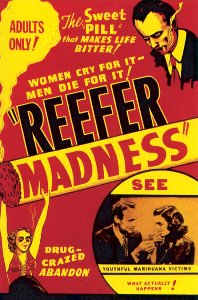
ReeferMadnessPoster

The more research is released, the more legalization makes sense.

By Owen Poindexter

Source: Alternet

Back in the 1930s, the arguments to criminalize cannabis were bizarre and openly racist. The anti-pot crusader Harry Anslinger made all sorts of over-the-top claims, such as, “Marihuana is a short cut to the insane asylum. Smoke marihuana cigarettes for a month and what was once your brain will be nothing but a storehouse of horrid specters.”

Nowadays more than 100 million Americans say they’ve smoke pot, millions use cannabis regularly to treat illnesses and it is as legal as alcohol in two U.S. states. However, it remains illegal under federal law largely due to scare tactics ingrained in our society, which date back even prior to Anslinger.

Today, pot legalization opponents try a little harder to sound reasonable, but their claims don’t do much better than Anslinger’s under scrutiny. Recent studies have picked apart the justifications for criminalizing marijuana. Here are five of the most popular arguments against cannabis legalization that are easily undermined by objective data.

1. Pot leads to crime. If alcohol prohibition taught us anything it’s that prohibition itself leads to crime, not what is prohibited. While cannabis has shaken the psychotic Reefer Madness reputation over the years, the association between weed and crime is still alive and well in certain realms of the media, which are happy to present data without appropriate statistical caveats.

As for the studies that carefully and objectively examine their data, they find no association between cannabis and crime. A recent study in the journal PLOS One found that in states that legalized medical marijuana between 1990 and 2006 the crime rate either remained the same or decreased.

Another study looked at the Lambeth borough of London, which depenalized cannabis for 13 months in 2001-2002. The study found that this actually reduced other types of crime, because Lambeth police could focus their energy elsewhere.

These results fit with common sense. Cannabis has a range of effects on mood and behavior, but they don’t include violence, impulsivity or other traits that would turn otherwise law-abiding citizens into criminals.

2. The gateway theory. The gateway theory has long been the stock response of marijuana opponents to the notion that cannabis itself isn’t that bad for you. They falsely claim it leads to harder stuff, and insist that what starts with a joint ends with a heroin needle.

While it’s true that most users of hard drugs used marijuana and alcohol first, that doesn’t prove that cannabis use leads to harder drugs. Correlation does not equal causality—most heroin users have worn jeans at some point in their lives, but it’s unlikely that one leads to another.

But is it at least plausible that cannabis use creates a bridge to experimenting with more dangerous chemicals? The research says no.

A RAND Institute study using data collected from 1982-1994 found that drug use patterns in American youths can be explained without resorting to a gateway effect. People who are interested in mind-altering substances are likely to have tried pot, as it is the most popular and available illicit drug. This and other circumstantial factors related to drug availability and how old someone was when they first used cannabis were sufficient to explain drug use patterns. Since then, numerous peer-reviewed studies have been published, supporting RAND’s basic conclusions.

Holland provides a good natural experiment in the effects of cannabis use, as marijuana has been legal there for citizens since 1976. A RAND Corporation study from 2011, titled What Can We Learn From The Dutch Coffee Shop Experience? found no causal relationship between using cannabis and harder drugs. In fact, because legalization meant that people went to a coffee shop, not a dealer, to get high, RAND found that legal cannabis likely reduced rates of harder drug use.

3. Cannabis has no medicinal purpose. Even though it has been slain many times over at this point, this idea is worth mentioning because cannabis is still listed as a Schedule I substance by the U.S. government, which implies that the official federal stance is that it has no medical use and is “dangerous.” However, just the opposite is true according to the actual facts. Almost half the states in the U.S. already have some kind of medical marijuana law (20 plus Washington D.C.) and many more are likely to legalize medical marijuana in this year’s elections.

Cannabis has been shown to effectively treat a slew of conditions including seizure disorders ( often quite dramatically), glaucoma, and symptoms related to chemotherapy. There is even evidence it can reduce certain types of cancerous tumors.

This is all well known and well documented, and yet cannabis remains a Schedule I drug. While it’s hard to find anyone who will still defend this policy, it remains the law of the land, and a major stumbling block on the path to reform.

4. Marijuana is addictive. The addiction claim has been contained over time, but never fully eradicated. Cannabis faces some guilt by association. How could alcohol, tobacco, heroin and cocaine all be clearly addictive and yet weed somehow isn’t?

Furthermore, with words like stoner and pothead in the lexicon, our culture has a firm grasp of the weed-dependent stereotype. When we think of marijuana addiction, an image comes to mind. He (usually a he), smokes pot and eats all day, is smelly and unshaven, watches too much TV and/or plays too many video games, and has a crappy job if he has a job at all. And sure, a lot of people actually do know someone like that, but the research show that, that someone is probably choosing their lifestyle rather than trapped in it by an actual addiction.

Regardless of how the addiction myth has stuck around, it is just that: a myth. The most commonly cited study on cannabis dependence declared that 4% of Americans 15-54 are dependent on cannabis. That’s compared to 24% who are dependent on tobacco and 14% on alcohol. Among users, they found that 9% of cannabis users who try it get hooked, as compared to 32% for tobacco and 15% for alcohol.

So cannabis seems to show some propensity for dependence, but for every dependent user, there are 10 who don’t develop that sort of issue, and this rate is better than that of popular legal drugs.

Furthermore, even the 9% figure is likely inflated. A subject in the oft-cited study was deemed “dependent” if they answered yes to at least three of seven questions. The survey included questions that would take a very different meaning with legal drugs than illegal, such as if “a great deal of time was spent in activities necessary to get the substance, taking the substance, or recovering from its effects.”

This study was conducted in the 1990s, before any state had recognized the medical use of cannabis, and acquiring it regularly involved considerable effort. Because of this, it’s not hard to imagine that users would experience “important social, occupational, or recreational activities given up or reduced because of use,” which was another criterion for dependence. It is quite possible the survey mistook habitual use for dependence in some cases.

We can be sure that cannabis is significantly less habit-forming than alcohol, and especially tobacco, and the degree to which people become dependent is probably overstated.

5. Pot makes users lazy. This idea is the most persistent: we rarely question the cultural belief that getting high saps one’s motivation. If there is any truth to that, it has been difficult to find in studies. What seems to be going on instead is that about 5-6% of the population has “amotivational syndrome,” and there is no significant difference in this between cannabis users and everyone else. One study looked at daily pot smokers and compared them to people who never touch pot. This found no significant difference between the two groups. There was a small difference in “subjective well-being” (how happy the subject says he or she is) favoring non-smokers, but the study authors ascribed much of this to medical conditions some of the subjects were taking cannabis to mitigate.

More than anything, the idea that stoners are lazy seems to be confirmation bias. We shrug off the examples that contradict that notion as special cases and nod sagely when our suspicions are confirmed. Furthermore, we fail to group unmotivated non-users with unmotivated users.

***

As the stigma against cannabis research has disappeared and more good data has been made available, the arguments against legalization have fallen. If cannabis is a plant with legitimate medical uses, does not lead to crime or harder drugs, is not addictive and doesn’t make you lazy, what argument for prohibition remains?

If there are still legitimate reasons to keep cannabis criminalized, let’s talk about them, but if not, let’s cut out a major revenue stream of Mexico’s vicious drug cartels, grant easy access to medicine for people who need it, provide a major boost to our economy, and legalize already.


Owen Poindexter is a freelance writer. See his work at owenpoindexter.com and follow him @owenpoindexter.

Lara Trace Hentz

INDIAN COUNTRY NEWS

In Saner Thought

"It is the duty of every man, as far as his ability extends, to detect and expose delusion and error"..Thomas Paine

ZEDJournAI

Human in Algorithms

Rooster Crows

From the Roof Top

Aisle C

I See This

The Free

blog of the post capitalist transition.. Read or download the novel here + latest relevant posts

अध्ययन-अनुसन्धान(Essential Knowledge of the Overall Subject)

अध्ययन-अनुसन्धानको सार