What Lies Beyond Capitalism and Socialism?

By Charles Hugh Smith

Source: Of Two Minds

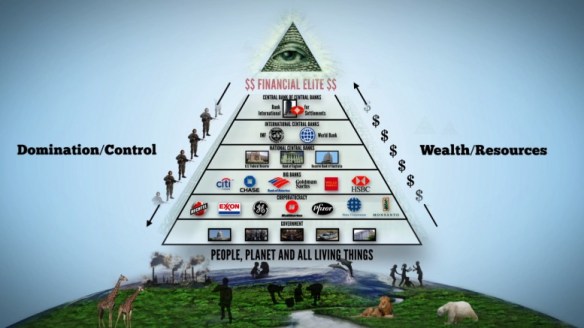
The status quo, in all its various forms, is dominated by incentives that strengthen the centralization of wealth and power.

As longtime readers know, my work aims to 1) explain why the status quo — the socio-economic-political system we inhabit — is unsustainable, divisive, and doomed to collapse under its own weight and 2) sketch out an alternative Mode of Production/way of living that is sustainable, consumes far less resources while providing for the needs of the human populace — not just for our material daily bread but for positive social roles, purpose, hope, meaning and opportunity, needs that are by and large ignored or marginalized in the current system.

One cognitive/emotional roadblock I encounter is the nearly universal assumption that there are only two systems: the State (government) or the Market (free trade/ free enterprise). This divide plays out politically as the Right (capitalism, favoring markets) and the Left (socialism, favoring the state). Everything from Communism to Libertarianism can be placed on this spectrum.

But what if the State and the Market are the sources of our unsustainability? What if they are intrinsically incapable of fixing what’s broken?

The roadblock here is adherents to one camp or the other are emotionally attached to their ideological choice, to the point that these ideological attachments have a quasi-religious character.

Believers in the market as the solution to virtually any problem refuse to accept any limits on the market’s efficacy, and believers in greater state power/control refuse to accept any limits on the state’s efficacy.

I often feel like I’ve been transported back to the 30 Years War between Catholics and Protestants in the 1600s.

I’ve written numerous books that (in part) cover the inherent limits of markets and the state, so I’ll keep this brief. Markets are based on two premises: 1) profits are the key motivator of human activity and 2) whatever is scarce can be replaced by something that is abundant (for example, when we’ve wiped out all the wild Bluefin tuna, we can substitute farmed catfish.)

But what about work that creates value but isn’t profitable? This simply doesn’t compute in the market mentality. Neither does the fact that wiping out the wild fisheries disrupts an ecosystem that is essentially impossible to value in terms that markets understand: in a market, the supply and the demand in this moment set the price and thus the value of everything.

But ecosystems simply cannot be valued by the price set in the moment by current supply and demand.

As for the state, its ontological imperative is to concentrate power, and since wealth is power, this means concentrating political and financial power. Once bureaucracies have concentrated power, insiders focus on securing budgets and benefits, and limiting transparency and accountability, as these endanger the insiders’ power, security and perquisites.

Both of these systems share a single quasi-religious ideology: a belief that endless economic growth is an intrinsic good, for it is the ultimate foundation of all human prosperity. In other words, we can only prosper and become more secure if we’re consuming more of everything: resources, credit, energy, and so on.

The second shared ideological faith is that centralizing wealth and power are not just inevitable but good. In other words, Left and Right share a single quasi-religious belief that centralization is not just inevitable but positive; the only difference is in who should hold the concentrated wealth/power, private owners or the state.

This ideology assumes a winner take most structure of winners and losers, with the winnings being concentrated in the hands of a few at the top of the Winners. Thus rising inequality and divisiveness are assumed to be the natural state of any economy.

This ideology underpins the entire status quo spectrum. The “growth at any cost is good” part of the single ideology underpinning the status quo is captured by the 1960 Soviet-era film Letter Never Sent; in its haunting, surreal final scene, a character envisions a grand wilderness untouched by human hands transformed into an industrial wasteland of belching chimneys and sprawling factories. This was not a nightmare–this was the Soviet dream, and indeed, the dream of the “growth at any cost is good” West.

Simply put, the status quo of markets and states is incapable of DeGrowth, i.e. consuming less of everything, including credit, “money”, profits, taxes—everything that fuels both the state and the market. As I have taken pains to explain, it doesn’t matter if a factory is owned by private owners or the state: the mandate of capital is to grow. If capital doesn’t grow, the resulting losses will sink the enterprise—including the state itself.

What lies beyond “growth at any cost” capitalism and socialism? My answer is the self-funded community economy, a system that is self-funded (i.e. no need for a central bank or Treasury) with a digital currency that is created and distributed for the sole purpose of funding work that addresses scarcities in local communities.

I outline this system in my book A Radiocally Beneficial World: Automation, Technology and Creating Jobs for All.

Rather than concentrate power in the hands of state insiders, this system distributes power to communities are participants. Rather than concentrate the power to create currency for the benefit of banks and the state, this system distributes the power to create currency for the sole benefit of those working on behalf of the community, on projects prioritized by the community.

This community economy recognizes that some work is valuable but not profitable. The profit-driven market will never do this work, and the central state is (to use Peter Drucker’s term) the wrong unit size to ascertain each community’s needs and scarcities.

Clearly, we need a socio-economic-political system that has the structure to not just grasp the necessity of DeGrowth and positive social roles (work benefiting the greater community) but to embrace these goals as its raison d’etre (reason to exist).

Human activity is largely guided by incentives, both chemical incentives in our brains and incentives presented by the society/economy we inhabit. In the current system, concentrating power and wealth in the hands of the few at the expense of the many and wasting resources / destroying ecosystems are incentivized if the activity is profitable to some enterprise or deemed necessary by the state.

In the current system, the state incentivizes protecting its wealth and power and the security/benefits of its insiders, and markets incentivize maximizing profits by any means available.

As I have explained many times in the blog and my books, we inhabit a state-cartel economy: the most profitable form of enterprise is the quasi-monopoly or cartel that limits supply and competition in order to extract the maximum profit from its customers.

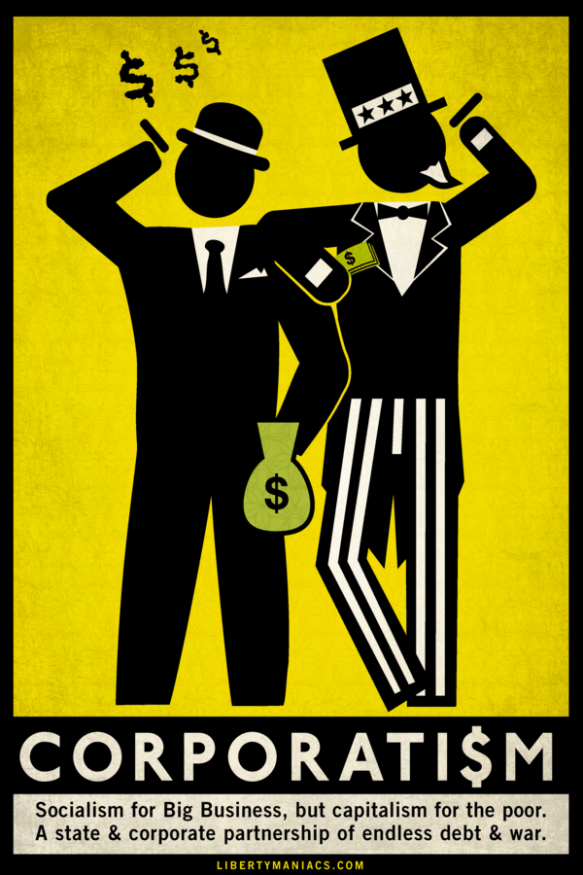
Monopolies (or quasi-monopolies such as Google, which holds a majority share of global search revenues, excluding China) and cartels quickly amass profits which they then use to secure protection of their cartel from the state via lobbying, campaign contributions, etc. The elites controlling the state benefit from this arrangement, and so the system inevitably becomes a state-cartel system dominated by the state and private sector cartels and incentives that benefit the wealth and power of these institutions.

Once we understand the inevitability of this marriage of state and cartel, we understand socialism and capitalism–the State and Markets–are the yin and yang of one system. Reformers may recognize some of the inherent limits of the state and the market, but they believe these problems can be solved by tweaking policies–in systems-speak, modifying the parameters of the existing subsystems of lawmaking, the judiciary, regulatory agencies, and so on.

But as Donella Meadows explained in her classic paper, Leverage Points: Places to Intervene in a System tweaking the parameters doesn’t actually change the system. For that, we must add a new feedback loop.

The status quo, in all its various forms, is dominated by incentives that strengthen the centralization of wealth and power, increase inequality and divisiveness and the permanent expansion of consumption and credit. That this path leads to implosion / collapse does not compute because the status quo is constructed on the fundamental assumption that permanent growth/expansion of consumption, credit, wealth and state power is not just possible but necessary.

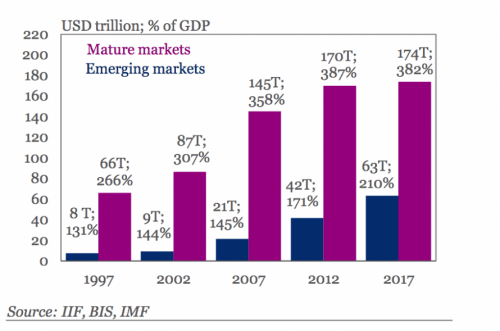
As many of us have labored to show, the financial system has been pushed to unprecedented extremes to maintain the illusion that rapid growth of consumption and credit can be maintained essentially forever.

We need an alternative system that’s built on sustainable incentives and feedback loops so we have a new blueprint to follow as the current arrangement unravels in the next decade or two.

Security and prosperity are worthy goals, but the means to achieve them, as well as the definition of security / prosperity, must be reworked from the ground up. We need to include positive social roles and meaningful work as essential components of security/prosperity.

My conception of a Third / Community Economy does not replace either the state or the free-enterprise market; rather, it does what neither of the existing structures can do. It adds opportunity, purpose, positive social roles and earned income for those left out of the state/cartel/market economy.
A 2% Financial Wealth Tax Would Provide A $12,000 Annual Stipend To Every American Household

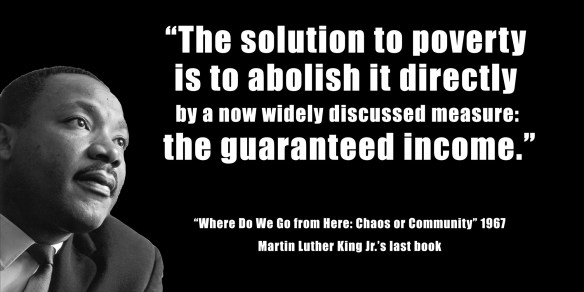
Careful analysis reveals a number of excellent arguments for the implementation of a Universal Basic Income.

By Paul Buchheit

Source: Nation of Change

It’s not hard to envision the benefits in work opportunities, stress reduction, child care, entrepreneurial activity, and artistic pursuits for American households with an extra $1,000 per month. It’s also very easy to justify a financial wealth tax, given that the dramatic stock market surge in recent years is largely due to an unprecedented degree of technological and financial productivity that derives from the work efforts and taxes of ALL Americans. A 2% annual tax on financial wealth is a small price to pay for the great fortunes bestowed on the most fortunate Americans.

The REASONS? Careful analysis reveals a number of excellent arguments for the implementation of a Universal Basic Income (UBI).

(1) Our Jobs are Disappearing

A 2013 Oxford study determined that nearly HALF of American jobs are at risk of being replaced by computers, AI, and robots. Society simply can’t keep up with technology. As for the skeptics who cite the Industrial Revolution and its job-enhancing aftermath (which actually took 60 years to develop), the McKinsey Global Institute says that society is being transformed at a pace “ten times faster and at 300 times the scale” of the radical changes of two hundred years ago.

(2) Half of America is Stressed Out or Sick

Half of Americans are in or near poverty, unable to meet emergency expenses, living from paycheck to paycheck, and getting physically and emotionally ill because of it. Numerous UBI experiments have led to increased well-being for their participants. A guaranteed income reduces the debilitating effects of inequality. As one recipient put it, “It takes me out of depression…I feel more sociable.”

(3) Children Need Our Help

This could be the best reason for monthly household stipends. Parents, especially mothers, are unable to work outside the home because of the all-important need to care for their children. Because we currently lack a UBI, more and more children are facing hunger and health problems and educational disadvantages.

(4) We Need More Entrepreneurs

A sudden influx of $12,000 per year for 126 million households will greatly stimulate the economy, potentially allowing millions of Americans to TAKE RISKS that could lead to new forms of innovation and productivity.

Perhaps most significantly, a guaranteed income could relieve some of the pressure on our newest generation of young adults, who are deep in debt, underemployed, increasingly unable to live on their own, and ill-positioned to take the entrepreneurial chances that are needed to spur innovative business growth. No other group of Americans could make more productive use of an immediate boost in income.

(5) We Need the Arts & Sciences

A recent Gallup poll found that nearly 70% of workers don’t feel ‘engaged’ (enthusiastic and committed) in their jobs. The work chosen by UBI recipients could unleash artistic talents and creative impulses that have been suppressed by personal financial concerns, leading, very possibly, to a repeat of the 1930s, when the Works Progress Administration hired thousands of artists and actors and musicians to help sustain the cultural needs of the nation.

Arguments against

The usual uninformed and condescending opposing argument is that UBI recipients will waste the money, spending it on alcohol and drugs and other ‘temptation’ goods. Not true. Studies from the World Bank and the Brooks World Poverty Institute found that money going to poor families is used primarily for essential needs, and that the recipients experience greater physical and mental well-being as a result of their increased incomes. Other arguments against the workability of the UBI are countered by the many successful experiments conducted in the present and recent past: FinlandCanada, Netherlands, Kenya, IndiaGreat Britain, Uganda, Namibia, and in the U.S. in Alaska and California.

How to pay for it

Largely because of the stock market, U.S. financial wealth has surged to $77 trillion, with the richest 10% owning over three-quarters of it. Just a 2 percent tax on total financial wealth would generate enough revenue to provide a $12,000 annual stipend to every American household (including those of the richest families).

It’s easy to justify a wealth tax. Over half of all basic research is paid for by our tax dollars. All the technology in our phones and computers started with government research and funding. Pharmaceutical companies wouldn’t exist without decades of support from the National Institutes of Health. Yet the tech and pharmaceutical companies claim patents on the products paid for and developed by the American people.

The collection of a wealth tax would not be simple, since only about half of U.S. financial wealth is held directly in equities and liquid assets (Table 5-2). But it’s doable. As Thomas Piketty notes, “A progressive tax on net wealth is better than a progressive tax on consumption because first, net wealth is better defined for very wealthy individuals..”

And certainly a financial industry that knows how to package worthless loans into A-rated mortgage-backed securities should be able to figure out how to tax the investment companies that manage the rest of our ever-increasing national wealth.


US Technological Transformations and the Narcotic-Fueled Genocide of American Workers

By James Petras

Source: The Unz Review

Introduction

During his recent visit to New Hampshire on 3/20/18, President Trump declared once again that the US is facing a ‘drug epidemic’. This time he advocated the death penalty for criminal drug dealers as the solution to a national crisis that has killed over 1 million Americans since the 1990’s (when the blockbuster prescription opiate Oxycontin was first released on the market). Trump promised that the Justice Department would develop the most severe penalties for criminal drug traffickers, by which he meant foreigners. He argued that his proposed “Wall” (between the Mexican- US border) would cut the flow of drugs responsible for the ongoing addiction of millions of US citizens – as though the prescription opiate addiction epidemic resulted from a foreign invasion, and not corporate decisions from Big Pharma.

President Trump’s claim that 116 ‘drug deaths’ occur every day (42,000 a year) is a major underestimate. In 2017, alone over 64,000 drug overdose deaths were reported in official statistics (with many unreported cases signed off as natural or undetermined, especially in counties too poor to afford autopsies and expensive forensic toxicology). Another 4 million Americans, at least, are currently addicted to opioids and at risk for overdose.

In comparative terms, more American workers have been killed or devastated by narcotics (mostly via prescription) in 2017 alone, than in the entire decade of the Vietnam War with its 58,000 dead and 500,000 wounded. In 2017, 40,000 Americans died in motor vehicle accidents and another 39,000 by gun violence – and these statistics are not broken down to include vehicular accidents due to drug intoxication or gun violence over drugs. Prescription or illegal opiates, alone or mixed with other sedative drugs, like Valium, or alcohol, are the most prominent and preventable cause of premature death in the United States today.

This pattern is unique to the United States, where the irresponsible medical prescription of highly addicting narcotics has been the primary portal of entry into the degrading life of addiction for millions. Despite President Trump’s claims, the addiction crisis is not a product of urban Afro-American street dealers or Mexican narco-traffickers: This uniquely American crisis has been created and fueled by billionaire-owned US pharmaceutical corporations, which produced, distributed and wildly profited from legal narcotics. They were aided by the irresponsible prescription practice of tens of thousands of doctors and other ‘providers’ who introduced millions of vulnerable patients to the world of narcotic dependency – including youngsters with sports injuries and workers with job-related pain. These are physicians and medical providers who rarely stopped to examine their own responsibility, even when their otherwise healthy patients overdosed or were destroyed by addiction. It is especially outrageous that doctors and ‘Big Pharma’ worked hand in hand for over 20 years to create this epidemic, enjoying wild profits and almost total legal immunity. Few have dared to openly question their irresponsibility and greed. In the poorest and most vulnerable areas of this country, the most irresponsible and unaccountable incompetence has replaced real medical care and created a health care apartheid.

The Federal Drug Enforcement Agency (FDA) and the Drug Enforcement Agency (DEA) have protected the corporate drug traffickers and ensured the manicured and cultured narco-bosses the highest rates of return on their products. These polished pushers have their names engraved on the walls of museums and opera houses around the country.

The majority of Presidential, Federal, State and municipal candidates from both major parties have received millions of dollars in electoral campaign funds from these huge legal narcotic manufacturers and distributors, as well as from physicians and other representative of the ‘pain-treatment industry’. Over the past decades, politicians have openly or secretly opposed or weakened legislation designed to address this crisis.

Why not just ask President Trump to direct his Justice Department to impose the death penalty on the board of directors of the big corporate narcotic manufacturers or distributors or on the CEOs of major ‘pain clinics’ or on the owners of local rural ‘health centers’ that drove the villagers of West Virginia into their life-destroying downward spirals?

When will the DEA finally storm the medical centers to arrest the over-prescribing ‘providers’ of narcotics and benzodiazepine tranquilizers (a very common deadly combination)?

When will the SWAT teams seize the vacation homes of the CEOs of major US hospitals where the convenient and fake ideology of promising a ‘pain-free’ experience (‘make it Zero on the Pain Scale’) led to the generalized promotion of highly addicting narcotics for minor injuries, arthritic pain, or chronic back discomfort due to work or obesity? Responsible alternatives existed and were used in the rest of the world – largely untouched by this prescription-fueled crisis.

No doubt what President Trump has in mind is something else: the expulsion of Latin American workers under the pretext of going after the drug dealers and the even more massive incarceration of petty street dealers in the African American community.

Trump will then turn to further monitoring and arresting small-scale American marijuana farmers, who earn a basic income from growing a product that many believe is safe, non-addicting, and significantly reduces demand for dangerous narcotics.

As ugly as this all seems, the complicity of the political, economic and the medical elite in exponentially spreading deadly narcotics among the poor, working class and downwardly mobile middle class, points to a deeper and more sinister policy goal: the systematic elimination of millions of American workers made redundant in the new economy. This is a ‘gentler genocide’, where millions of workers die prematurely seeking an escape from pain as they have been replaced by a new technology and a new ideology: Robots, artificial intelligence and digitalization have rendered them disposable, while the out-sourcing of work to low paid overseas laborers and immigrants have guaranteed unimaginable profits for the elite decision makers.

This highly profitable process, benefiting the political, pharmaceutical, financial, police and judicial elites, conveniently blames the victims, a significant proportion of whom come from the poor and working class in this country, including white rural and small town addicts, especially youth, stuck at minimum wage jobs with no prospects of a decent future – injured construction workers, 15% of whom abuse prescription narcotics for work-related injuries, as well as the marginalized petty drug dealers from the urban slums and desperate Latino immigrants forced to accommodate the cartels. These people have little rights and are easily monitored, incarcerated, expelled and just written-off in one-line obituaries.

The narcotic-fueled genocide had grown out of a calculated corporate strategy meant to cull and subdue a huge population of potentially restive marginalized workers and their families, blaming the overdosing victims for their own ‘irresponsible’ choices, their reliance on prescription opiates, their lack of access to competent medical care, and their untimely deaths as though this were all a collective suicide as the great nation marches forward.

The higher the death toll among marginalized Americans, the greater the reliance on political distractions and racist deceptions. President Trump loudly blames street-level retail distributors, while ignoring the links between tax-exempt mega-billionaires who have profited from the shortened life-expectancies of addicted workers (scores of billions of dollars already saved in future pension and health care expenses) and the millions fired for addiction and denied jobless benefits and treatment. Trump has yet to even mention the actions of the legal pharma-medical industry that set this in motion.

Meanwhile, the Democratic Party leaders denounce the worker-victims of addiction and their communities as ‘irresponsible and racist’, for having believed the populist rhetoric of candidate Trump. Trump’s most intense rural areas of support coincided with areas of the worst opioid addiction and suicide rates. Trump’s rival, Hillary Clinton wrote off scores of millions of vulnerable Americans as ‘deplorables’ and never once addressed the addiction crisis that grew exponentially during her husband’s administration.

Since the implementation of NAFTA during the 1990’s, scores of millions of American workers have been relegated to unstable, low paid jobs, deprived of health benefits and subject to grueling work, prone to physical and mental injuries. Workplace injuries set the stage for the prescription narcotic crisis. Even worse, today workers are constantly distracted by electronic gadgets at the workplace, with their orders from above arriving digitally. These highly profitable gadgets have created enormous distractions and contributed to workplace death and injuries. The plaything of choice for the masses, the I-phone, has added to the addiction crisis, by increasing the rate of injury. This mind-numbing distraction, produced abroad at incredible profit, has played an unexplored role in the increase in premature death in the US.

The corporate narcotic elites, like the ultra-cultured Sackler clan owners of Perdue Pharmaceuticals, and their allies in the finance sector, support the diverse ideological distractions fashioned by their politician pawns: Eager to please her donor-owners, Hillary Clinton and the Democrats blame the working class for their backwardness and genetic propensity to addiction and degradation. Meanwhile, President Trump and the Republicans blame ‘outside’ suppliers and distributors including Mexican narco-cartels, illegal immigrant traffickers, black urban street dealers and now point to overseas Chinese fentanyl labs – as though the entire crisis came from the outside. Trump’s approach flies in the face of the unquestionable source of most narcotic addiction in the US: Irresponsible prescribing of highly addicting legal narcotics.

No other industrialized country is experiencing this scale of addiction and pre-mature death. No other industrialized country relies on a private, for-profit, unregulated system of delivering medical care to its citizens. Only the US.

Both elite political parties avoid the basic issue of the long-term, large-scale structural imperatives underlying the transformation of the US work places. They refuse to address the marginalization of tens of millions of American workers and their families, made disposable by corporate economic and political decisions.

The US corporate elite are completely incapable of developing, let alone favoring, any policy that addresses the needs of millions of surplus office and factory workers and their family members replaced by new technology and ‘global’ economic policies. The American financial and political elite is not about to support an economic, political and cultural ‘GI’ bill to save the scores of millions shoved to the wayside in their rush to obscene wealth and power.

The unstated, but clearly implemented, ‘final solution’ is a Social Darwinian policy of active and passive neglect, the unleashing of profitable prescription narcotics into the population of vulnerable disposable workers, offering them a convenient, painless way out – the opioid solution to the over-population problem of redundant rural and small town ‘Helots’. The political elite’s willing complicity with Big Pharma, the medical profession, the financial oligarchs and the prison-industrial complex has transformed the country in many ways. Shortened lives and depopulation of rural and small town communities translates into lower demand for public services, such as schools, health care, pensions and housing. This is guaranteeing a greater concentration of national wealth in the hands of a tiny elite. The financial press has openly celebrated the projected decrease in pension liabilities as a result of the drop in worker life expectancy.

The ongoing mass genocide by opioids may have started to arouse popular discontent among working people who do not want to continue dying young and miserable! Social services and child protective services for the millions of orphaned or abandoned children of this crisis have been demanding real policies. Unfortunately, the usual platitudes and failed policies prevail. Drug education and ‘opioid addiction treatment’ programs (currently among the largest expense in some union health plans) are pointless Band-Aids when confronted by the larger policy decisions fuelling this crisis. Nevertheless, thousands of health care professionals are beginning to resist corporate pressure to prescribe cheap opioids – and fight for more expensive, but less dangerous, alternative for addressing their patients’ pain. Even if all medical providers stopped over-prescribing narcotics today, there are still millions of addicts already created by past practice, who seek the most deadly street drugs, like fentanyl, to feed their addiction.

Politicians now publicly denounce ‘Big Pharma’, while privately winking at the lobbyists and accepting millions from their ‘donor-owners’.

Public critics in the corporate media are quick to condemn the workers’ susceptibility to narcotic addiction but not the underlying causative imperatives of global capitalism.

Mainstream academics celebrate corporate technological advances with occasional neo-Malthusian warnings about the dangers of millions of redundant workers, while ignoring the profit-driven role of narcotics in reducing the social threat of excess workers!

Finally the role of an elite and respected profession must be re-evaluated in a historic context: In the 1930’s German doctors helped develop an ideology of ‘racial hygiene’ and a technology to demonize and eliminate millions of human beings deemed redundant and inferior, through overwork in slave camps, starvation and active genocide – serving the ambitions of Nazi expansionism and deriving significant profit for select individuals and corporations. US physicians and the broader medical community have less consciously assisted in the ongoing ‘culling of the herd’ of American laborers and rural residents rendered superfluous and undesirable by the decisions of a global oligarchy increasingly unwilling to share public wealth with its masses. There are similarities.

Once prosperous, industrial cities and towns, as well as rural villages, in the US have seen marked declines in populations and a premature death crisis among those who remain.

This must be reversed.


Why We’re Underestimating American Collapse

The Strange New Pathologies of the World’s First Rich Failed State

By Umair Haque

Source: Information Clearing House

You might say, having read some of my recent essays, “Umair! Don’t worry! Everything will be fine! It’s not that bad!” I would look at you politely, and then say gently, “To tell you the truth, I don’t think we’re taking collapse nearly seriously enough.”

Why? When we take a hard look at US collapse, we see a number of social pathologies on the rise. Not just any kind. Not even troubling, worrying, and dangerous ones. But strange and bizarre ones. Unique ones. Singular and gruesomely weird ones I’ve never really seen before, and outside of a dystopia written by Dickens and Orwell, nor have you, and neither has history. They suggest that whatever “numbers” we use to represent decline — shrinking real incomes, inequality, and so on —we are in fact grossly underestimating what pundits call the “human toll”, but which sensible human beings like you and I should simply think of as the overwhelming despair, rage, and anxiety of living in a collapsing society.

Let me give you just five examples of what I’ll call the social pathologies of collapse — strange, weird, and gruesome new diseases, not just ones we don’t usually see in healthy societies, but ones that we have never really seen before in any modern society.

America has had 11 school shootings in the last 23 days. That’s one every other day, more or less. That statistic is alarming enough — but it is just a number. Perspective asks us for comparison. So let me put that another way. America has had 11 school shootings in the last 23 days, which is more than anywhere else in the world, even Afghanistan or Iraq. In fact, the phenomenon of regular school shootings appears to be a unique feature of American collapse — it just doesn’t happen in any other country — and that is what I mean by “social pathologies of collapse”: a new, bizarre, terrible disease striking society.

Why are American kids killing each other? Why doesn’t their society care enough to intervene? Well, probably because those kids have given up on life — and their elders have given up on them. Or maybe you’re right — and it’s not that simple. Still, what do the kids who aren’t killing each other do? Well, a lot of them are busy killing themselves.

So there is of course also an “opioid epidemic”. We use that phrase too casually, but it much more troubling than it appears on first glance. Here is what is really curious about it. In many countries in the world — most of Asia and Africa — one can buy all the opioids one wants from any local pharmacy, without a prescription. You might suppose then that opioid abuse as a mass epidemic would be a global phenomenon. Yet we don’t see opioid epidemics anywhere but America — especially not ones so vicious and widespread they shrink life expectancy. So the “opioid epidemic” — mass self-medication with the hardest of hard drugs — is again a social pathology of collapse: unique to American life. It is not quite captured in the numbers, but only through comparison — and when we see it in global perspective, we get a sense of just how singularly troubled American life really is.

Why would people abuse opioids en masse unlike anywhere else in the world? They must be living genuinely traumatic and desperate lives, in which there is little healthcare, so they have to self-medicate the terror away. But what is so desperate about them? Well, consider another example: the “nomadic retirees”. They live in their cars. They go from place to place, season after season, chasing whatever low-wage work they can find — spring, an Amazon warehouse, Christmas, Walmart.

Now, you might say — “well, poor people have always chased seasonal work!” But that is not really the point: absolute powerlessness and complete indignity is. In no other country I can see do retirees who should have been able to save up enough to live on now living in their cars in order to find work just to go on eating before they die — not even in desperately poor ones, where at least families live together, share resources, and care for one another. This is another pathology of collapse that is unique to America — utter powerlessness to live with dignity. Numbers don’t capture it — but comparisons paint a bleak picture.

How did America’s elderly end up cheated of dignity? After all, even desperately poor countries have “informal social support systems” — otherwise known as families and communities. But in America, there is the catastrophic collapse of social bonds. Extreme capitalism has blown apart American society so totally that people cannot even care for one another as much as they do in places like Pakistan and Nigeria. Social bonds, relationships themselves, have become unaffordable luxuries, more so than even in poor countries: this is yet another social pathology unique to American collapse.

Yet those once poor countries are making great strides. Costa Ricans now have higher life expectancy than Americans — because they have public healthcare. American life expectancy is falling, unlike nearly anywhere else in the world, save the UK — because it doesn’t.

And that is my last pathology: it is one of the soul, not one of the limbs, like the others above. Americans appear to be quite happy simply watching one another die, in all the ways above. They just don’t appear to be too disturbed, moved, or even affected by the four pathologies above: their kids killing each other, their social bonds collapsing, being powerless to live with dignity,or having to numb the pain of it all away.

If these pathologies happened in any other rich country — even in most poor ones — people would be aghast, shocked, and stunned, and certainly moved to make them not happen. But in America, they are, well, not even resigned. They are indifferent, mostly.

So my last pathology is a predatory society. A predatory society doesn’t just mean oligarchs ripping people off financially. In a truer way, it means people nodding and smiling and going about their everyday business as their neighbours, friends, and colleagues die early deaths in shallow graves. The predator in American society isn’t just its super-rich — but an invisible and insatiable force: the normalization of what in the rest of the world would be seen as shameful, historic, generational moral failures, if not crimes, becoming mere mundane everyday affairs not to be too worried by or troubled about.

Perhaps that sounds strong to you. Is it?

Now that I’ve given you a few examples — there are many more — of the social pathologies of collapse, let me share with you the three points that they raise for me.

These social pathologies are something like strange and gruesome new strains of disease infecting the body social. America has always been a pioneer — only today, it is host not just to problems not just rarely seen in healthy societies — it is pioneering novel social pathologies have never been seen in the modern world outside present-day America, period. What does that tell us?

American collapse is much more severe than we suppose it is. We are underestimating its magnitude, not overestimating it. American intellectuals, media, and thought doesn’t put any of its problems in global or historical perspective — but when they are seen that way, America’s problems are revealed to be not just the everyday nuisances of a declining nation, but something more like a body suddenly attacked by unimagined diseases.

Seen accurately. American collapse is a catastrophe of human possibility without modern parallel . And because the mess that America has made of itself, then, is so especially unique, so singular, so perversely special — the treatment will have to be novel, too. The uniqueness of these social pathologies tell us that American collapse is not like a reversion to any mean, or the downswing of a trend. It is something outside the norm. Something beyond the data. Past the statistics. It is like the meteor that hit the dinosaurs: an outlier beyond outliers, an event at the extreme of the extremes. That is why our narratives, frames, and theories cannot really capture it — much less explain it. We need a whole new language — and a new way of seeing — to even begin to make sense of it.

But that is America’s task, not the world’s. The world’s task is this. Should the world follow the American model — extreme capitalism, no public investment, cruelty as a way of life, the perversion of everyday virtue — then these new social pathologies will follow, too. They are new diseases of the body social that have emerged from the diet of junk food — junk media, junk science, junk culture, junk punditry, junk economics, people treating one another and their society like junk — that America has fed upon for too long.

The Global Elite is Insane Revisited

By Robert J. Burrowes

In 2014 I wrote an article titled ‘The Global Elite is Insane’. I want to elaborate what I explained in the earlier article so that people have a clearer sense of what we are up against in our struggle to create a world of peace, justice and ecological sustainability.

Of course, as I explained previously, it is not just the global elite that is insane. All those individuals – politicians, businesspeople, academics, corporate media editors and journalists, judges and lawyers, bureaucrats…. – who serve the elite, including by not exposing and resisting it, are also insane. And it is important to understand this if we are to develop and implement effective strategies to resist elite violence, exploitation and destruction but also avert the now-imminent human extinction driven by their insane desire for endless personal privilege, corporate profit and political control whatever the cost to Earth’s biosphere and lifeforms (human and non-human alike).

But first, who constitutes the global elite? Essentially, it is those extremely wealthy individuals – notably including the Rothschild family, Jeff Bezos, Bill Gates, Warren Buffett, Amancio Ortega, Mark Zuckerberg, Carlos Slim, the Walton family and the Koch brothers – as well as the world’s other billionaires and millionaires. See ‘Bloomberg Billionaires Index’.

Testament to their secretly and long-accumulated wealth and power, a 2012 investigation concluded that rich individuals and their families have as much as $32 trillion of hidden financial assets – which excludes non-financial assets such as real estate, gold, yachts and racehorses – in offshore tax havens. See the Tax Justice Network.

If this sum was devoted to programs of social uplift then starvation, poverty, homelessness and other privations would vanish immediately and environmental restoration projects as well as research, development and implementation of visionary sustainability initiatives would flourish instantly. The idea of an ‘underdeveloped’ or ‘developing’ national economy would vanish from the literature on Africa, Asia and Central/South America.

In addition to these individuals, however, the global elite includes the major multinational corporations, particularly including the following – although, it should be noted, this list simplifies the picture considerably by ignoring the conglomerate nature of many of these corporations and not including many of the (more difficult to identify) private corporations that should be listed in any comprehensive presentation:

* the major weapons manufacturers (such as Lockheed Martin, Boeing, BAE Systems, Raytheon, Northrop Grumman and General Dynamics)

* the major banks (including Industrial & Commercial Bank of China, China Construction Bank, HSBC Holdings, JPMorgan Chase, Mitsubishi UFJ Financial Group and Bank of America) and their ‘industry groups’ like the International Monetary Conference

* the major investment companies (including BlackRock, Capital Group Companies, FMR, AXA, and JP Morgan Chase)

* the major financial services companies (including Berkshire Hathaway, AXA, Allianz and BNP Paribas)

* the major energy corporations including coal companies (such as Coal India, Adani Enterprises, China Shenhua Energy, China Coal Energy, Mechel, Exxaro Resources, Public Power, Glencore and Peabody Energy) as well as the oil and gas corporations (such as Saudi Aramco, Gazprom, Rosneft, PetroChina, ExxonMobil, Lukoil, BP, Royal Dutch Shell, Petrobras, Chevron, Novatek, Total S.A. and Eni)

* the major media corporations (including Alphabet [Google owner], Comcast, Disney, AT&T, News Corporation, Time Warner, Fox, Facebook, Bertelsmann and Baidu)

* the major marketing and public relations corporations (including Edelman, W2O Group, APCO Worldwide, Deksia, BrandTuitive, Fearless Media, and Citizen Group)

* the major agrochemical (pesticides, seeds, fertilizers) giants (including Bayer, Syngenta, Dow, Monsanto and DuPont)

* the major pharmaceutical corporations (including Johnson & Johnson, Roche, Pfizer, Novartis, Sanofi and GlaxoSmithKline)

* the major biotechnology (genetic mutilation) corporations (again including Johnson & Johnson, Roche, Pfizer and Novartis)

* the major mining corporations (including Glencore Xtrata, BHP Billiton, Rio Tinto, Vale, Anglo American, China Shenhua Energy, Freeport McMoRan Copper & Gold, and Barrick Gold)

* the major nuclear power corporations (including Areva, Rosatom, General Electric/Hitachi, Kepco, Mitsubishi, Babcock & Wilcox, BNFL, Duke Energy, McDermott International, Southern, NextEra Energy, American Electric Power, and Westinghouse)

* the major food multinationals (including Cargill, Archer Daniels Midland Company [ADM], Nestlé, PepsiCo, Coca-Cola, Unilever, Danone, General Mills, Kellogg’s, Mars, Associated British Foods and Mondelez)

* the major water corporations (including Veolia, Suez Environnement, ITT Corporation, United Utilities, Severn Trent, Thames Water, American Water Works).

Of course, the global elite also includes elite fora where various combinations of elite individuals from the corporate, political, media and academic worlds gather to plan their continuing violence against, and exploitation of, the Earth and its inhabitants. This is intended to consolidate and extend t heir control over populations, markets and resources to maximize their privilege, profit and power at the expense of the rest of us and life generally. Among intergovernmental organizations, it includes the United Nations, the World Bank and the International Monetary Fund.

A quick perusal of the agenda of such elite gatherings – including the World Economic Forum, the Bilderberg Group and the Trilateral Commission – reveals a comprehensive lack of interest, despite rhetoric and the occasional token mention, of pressing issues ranging from the threat of nuclear war and the climate catastrophe to the many ongoing wars, deepening exploitation within the global economy, extensive range of environmental threats and the refugee crisis, each of which they generated and now continue to deliberately exacerbate. See, for example, the agenda of the recent WEF meeting in Davos.

Primary servants of the global elite include political leaders in major industrialized countries (who legislate to progressively expand elite power, profit and privilege, such as Donald Trump’s recent tax cuts for the wealthy at the expense of social programs), the judges and lawyers (who defend elite power using the elite-designed and manipulated legal system: ever heard of a wealthy individual convicted in court and given any serious punishment or of any major corporation genuinely held to legal account for its exploitation of indigenous peoples or destruction of the natural environment?), as well as corporate media editors and journalists, entertainment industry personnel, academics, industry organizations (such as the European Round Table of Industrialists) that represent the interests of major corporations, so-called ‘think tanks’ (such as the Council on Foreign Relations and the Brookings Institution) and ‘philanthropic trusts’ (such as the Rockefeller, Carnegie and Ford foundations) all of which justify, ignore or divert attention from elite violence and exploitation.

Importantly too, primary servants of the global elite include those who work within elite-directed agencies, notably including those in the so-called ‘intelligence community’ (such as the US CIA, British MI6, Russian SVR RF, Chinese Ministry for State Security and Israeli Mossad), who perform elite functions in relation to spying, surveillance and secret assassinations (particularly of grassroots activists), ostensibly under the direction of national governments. But it also includes many lower-level servants such as those who work as political lobbyists or in the bureaucracy as well as the education, police and prison systems.

So why do I claim that the elite and those who serve them are insane?

Any dictionary will offer a simple definition of ‘sanity’ along the lines of ‘soundness of judgment or reason’ and ‘the ability to think and speak in a reasonable way and to behave normally’.

But if we use this definition of sanity then, obviously, ‘sanity’ must be interpreted to mean that it is ‘sound judgment, reasonable and normal’ to further perpetrate the violence and exploitation that are overwhelmingly characteristic of our world. After all, most people powerlessly accept this incredibly violent state of affairs and, if they discuss it, do so in terms of its merits, politically, economically, morally or otherwise. Few people argue, simply, that violence is just insane.

So I would like to propose a more rigorous definition of sanity: Sanity is the capacity to consider a set of circumstances, to carefully analyze the evidence pertaining to those circumstances, to identify the cause of any conflict or problem, and to respond appropriately, both emotionally and intellectually, to that conflict or problem with the intention of resolving it, preferably at a higher level of need satisfaction for all parties (including those of the Earth and all of its living creatures).

Clearly, my proposed definition of sanity is designed to imply that any conceptions we have of ‘sound judgment’, ‘reasonable’ and ‘normal’ mean that they are qualities we associate with individuals who possess the desirable capacity to improve the overall state of human affairs, whether an interpersonal relationship or geopolitically. This means, as an absolute minimum, the capacity to reduce violence or exploitation in one context or another.

You might, of course, accuse me of writing a definition of ‘sanity’ that serves my agenda to dramatically improve world order in the direction of peace, justice and sustainability. And you are right! But whose interest does it serve to have sanity defined as behavior that involves ‘sound judgment’ and is considered ‘reasonable and normal’ in the context of perpetuating extraordinary violence?

Alternatively, you might argue that my definition of insanity is too broad. Surely, you might say, we can account for many of the behaviors outlined above in terms of different belief systems, ideologies and religions. Doesn’t a person who believes in killing people to win wars (or for other reasons) just have a worldview different from those who believe that people should resolve conflict nonviolently? Doesn’t a capitalist just have a worldview different from those who believe that people should share resources equally? Doesn’t a person who believes in the unlimited accumulation of wealth just have a worldview different from those who believe in ecological sustainability?

But there is a more fundamental issue here. As I explained in my original article, cited at the beginning of this one: Do you really believe that someone who is capable of perpetrating extraordinary violence, inequity and biosphere-threatening behavior – and thus clearly incapable of experiencing and expressing the love, compassion, empathy and sympathy that would drive a nonviolent approach to the world – is sane? Given that emotional qualities such as love, compassion, empathy and sympathy are an evolutionary gift to those not seriously damaged during childhood, what happened to those individuals who do not possess them? See Why Violence?’ and Fearless Psychology and Fearful Psychology: Principles and Practice.

Or, to explain it based on my longer definition of sanity highlighted above: Casual observation of the state of our world, including the primary threat of near-term human extinction through climate catastrophe or nuclear war – see ‘On Track for Extinction: Can Humanity Survive?’ – clearly reveals that none of the elite is paying considered attention to the perilous state of our world, analyzing the evidence in relation to it, identifying the cause(s) driving it or responding powerfully to end it. Why is this?

In essence, it is because one manifestation of their insanity drives them to deny reality to make huge profits from weapons production used to kill people, the burning of climate-destroying fossil fuels, environmental destruction (through, for example, mining and rainforest logging), commercial farming based on the poisoning and genetic mutilation of foods, the mass production and sale of poisoned, processed and nutritionally-depleted foods, the consumption of health-destroying and dependency-creating drugs, and control over the sale of water, once considered a human right. Moreover, insanity makes the elite do everything in its power to maintain this highly profitable state of affairs. See ‘Profit Maximization is Easy: Invest in Violence’.

Moreover, of course, there is no evidence of committed elite engagement in efforts to end the many local wars (from which they make huge profits), end corporate exploitation of human beings (which kills, through starvation alone, 100,000 people every day but from which they make huge profits) and nonhuman beings (which drives 200 species of life to extinction daily but from which they make huge profits) or end local environmental destruction in a myriad ways (from which they make huge profits).

So, in summary, given our ongoing rush to extinction, it is clear that those who exacerbate this threat through failure to consider and act with awareness (as well as encourage aware action by others) fail to satisfy the definition of sanity that I offered above. In short: Gambling on the future of humanity is not sane.

As an aside, it should be noted: Often enough too, the elite can rely on a largely insane population to mindlessly consume the latest consumer product, no matter how unnecessary, or they can rely on their marketing and advertising agents to persuade those of us who show the slightest reluctance to buy the latest inanity.

So with an insane global elite and its many insane servants as well as a largely insane consumer population, what can those of us who have the sanity to respond powerfully to the many threats to our survival do?

Well, if you want a child who is emotionally and intellectually engaged with the world and therefore capable of responding powerfully to their circumstances (which includes being able to resist the lure of serving the elite and being suckered by its marketing), then terrorizing the child into obedience is not the way to go about it. So, you might like to consider making ‘My Promise to Children’.

If you are sane enough to investigate the evidence and to act intelligently and powerfully in response to it, I encourage you to do so. One option you have if you find the evidence in relation to one or more of the threats mentioned above compelling, is to join those participating in ‘The Flame Tree Project to Save Life on Earth’.

If you are self-aware enough to know that you are inclined to avoid ‘difficult issues’ and to take the action that these require, then perhaps you could tackle this problem at its source by ‘Putting Feelings First’. Unfortunately, as mentioned above, few of us had a childhood that nurtured our sanity.

If you want to mobilize people to campaign effectively on the climate, war, rainforest destruction or any other elite-driven violence that threatens our future, consider developing a comprehensive nonviolent strategy to do so. See Nonviolent Campaign Strategy.

And if you want to participate in the worldwide effort to end the insanity we call violence in all of its manifestations, you are welcome to consider signing the online pledge of The Peoples Charter to Create a Nonviolent World.

Elite insanity, if not stopped, will drive us out of existence. If you believe that the elite and their servants will ‘see the light’ before it is too late, I invite you to seek out the evidence to justify your belief. I have found none.

I also see no evidence that individual members of the elite will do the emotional healing necessary to be able to act sanely in response to the extinction-threatening crisis it has generated.

So it is up to those of us who can think and act sanely to stop the rush to extinction before it is too late.

Are you one of those people?


Biodata: Robert J. Burrowes has a lifetime commitment to understanding and ending human violence. He has done extensive research since 1966 in an effort to understand why human beings are violent and has been a nonviolent activist since 1981. He is the author of Why Violence? His email address is flametree@riseup.net and his website is here.

Robert J. Burrowes
P.O. Box 68
Daylesford, Victoria 3460
Australia

Email: flametree@riseup.net

Websites:
Nonviolence Charter
Flame Tree Project to Save Life on Earth
‘Why Violence?’
Feelings First
Nonviolent Campaign Strategy
Nonviolent Defense/Liberation Strategy
Anita: Songs of Nonviolence
Robert Burrowes
Global Nonviolence Network

“If poor people knew how rich rich people are, there would be riots in the streets”

By Staff, Anticap.wordpress.com

Source: Popular Resistance

Chris Rock may be right. Still, Americans are well aware that economic inequality in their country is obscene, even though they often underestimate the growing gap between the poor and the rich.

But it’s Frank Rich, who conducted the interview with the American comedian, who made the more perceptive observation:

For all the current conversation about income inequality, class is still sort of the elephant in the room.

All the experts agree—from Thomas Piketty and the other members of the World Inequality Lab team to John C. Weicher of the conservative Hudson Institute—that inequality in the United States, especially the unequal distribution of wealth, has been worsening for decades now. Both before and after the crash of 2007-08. And there’s no sign that things are going to get better anytime soon, unless radical changes are made.

But, as it turns out, even the experts underestimate the degree of inequality in the United States. The usual numbers that are produced and disseminated indicate that, in 2014 (the last year for which data are available), the top 1 percent of Americans owned one third (35 percent) of total household wealth while the bottom 90 percent had less than half (45.3 percent) of the wealth.

According to my calculations, illustrated in the chart at the top of the post, the situation in the United States is much worse. In 2014, the top 1 percent (red line) owned almost two thirds of the financial or business wealth, while the bottom 90 percent (blue line) had only six percent. That represents an enormous change from the already-unequal situation in 1978, when the shares were much closer (28.6 percent for the top 1 percent and 23.2 percent for the bottom 90 percent).

Why the large difference between my numbers and theirs? It all depends on how wealth is defined. Both the World Inequality Lab and the Federal Reserve (in the Survey of Consumer Finances) include housing and retirement pensions in household wealth—and those two categories comprise most of the so-called wealth of most Americans. They just don’t own much in the way of financial or business wealth. They live in their houses and they retire based on contributions from their wages and salaries over the course of their work lives. They produce but don’t take home any of the surplus; therefore, they just don’t have the ability to amass any real wealth.

For the small group at the top, things are quite different. They do get a cut of the surplus, which they use, not only to purchase housing and put aside in their pensions, but to accumulate real wealth, for themselves and their families. If we take out housing and pensions and calculate just the shares of financial or business wealth—and, thus, equities, fixed-income claims, and business assets—the degree of inequality is much, much worse.

Yes, rich people in the United States are very rich—even more than either regular Americans or the experts believe.

But that’s not the real elephant in the room. The big issue that everyone is aware of, but nobody wants to talk about, is class. And that’s the reason there should be, if not riots, at least a sustained political movement to transform the existing economic and social structures in the United States.

Time To Make Life Hard For The Rich

By Hamilton Nolan

Source: Splinter

It is time for polite, respectable, rational people to start saying what has become painfully obvious: It is time to stop respecting the rich, and start stealing from them. In earnest.

Inequality is eating America alive. It has been growing for decades. To say that “the American dream is dead” is no longer a poetic exaggeration—it is an accurate description of 40 years of wage stagnation and declining economic mobility that has produced a generation that cannot expect to live better than their parents did. Not because of devastating war or plague, but because of a very specific set of rules governing a very specific economic system that encourages the accumulation of great wealth among a tiny portion of the population, to the detriment of the vast majority of people. Our political and business leaders have chosen to embrace a system that favors capital over labor. A system in which the more you already have, the more you make, and the less you have, the harder it is to build wealth. It is a system designed to increase inequality. It is functioning exactly as designed. And now, it is about to get worse.

How long are people supposed to tolerate being smacked in the face? By the rich? Who already have more than enough? It is not as though the fact that inequality is a crisis is a fact that snuck up on anyone. Economists have seen the trend for decades, and the general public has been well aware of it since at least the financial crisis. Obama called it “the defining challenge of our time.” Thomas Piketty became a rock star by writing a very dry book about it. It’s not an underground thing. It is well known and well understood by the people in control of the institutions with the power to change it. The response to this dire situation by the Republican Party, which a wholly owned subsidiary of the American capital-holding class, has been to pass a tax bill that will horribly exacerbate economic inequality in this country. It is a considered decision to make a bad situation worse. It is a deliberate choice—during a time when the rich already have too much—to take from the poor in order to give the rich (including members of Congress and the President) more. That is not a metaphor. That is the reality. That is what the Republican party is about to accomplish on behalf of the donor class, calling it “middle class tax relief” in the face of mathematical proof to the contrary. Even to my cynical ass, the sheer fuck you-ness of this action towards the majority of the country is breathtaking. This is not just a failure to solve a severe problem; it is the expenditure of vast amounts of political capital to make the severe problem worse so that a tiny handful of people will get wealthier than anyone needs to be.

Ideally, in a democracy, elected leaders reflecting the interests of the people would pass taxes and regulations to reverse the growing inequality here. For that to happen, we would need to end gerrymandering and reform campaign finance and probably abolish the Senate and the Electoral College, and that’s just for starters. It is not imminent, in other words. Our broken political system, which is designed to reward money with political power, is actually moving in the opposite direction of a solution. Who is suffering because of this? Most Americans. Certainly the bottom 50% are acutely suffering—money that would have been in their paychecks has been instead funneled upwards into the pockets of the rich. Every desperate family that has found themselves coming up short for rent or food or medicine, every American who has downgraded her dreams and aspirations because they became financially implausible, has been directly harmed by the political and economic class war perpetuated by the rich, even if they cannot see the perpetrators with their own eyes. I think that people have been more than patient in the face of this slow-moving crisis. In 2009, when the markets crashed and millions were laid off, nobody rioted and kidnapped the financiers and burned their homes. The outcome of that lack of direct action is the situation we find ourselves in today.

Violence against people is morally wrong and a bad way to solve problems. But capital is different. One thing that would help to create the political environment conducive to solving the inequality problem would be to make the cost of accumulating all that capital too high to be worth it. In other words, to create a downside to being too rich. I have personally stood in a room full of hedge fund titans and billionaire investors warning one another explicitly that inequality must be addressed lest the U.S. become a place like Latin America, where rich people are forced to live behind walls, surrounded by armed guards, because of the very real risks from the rage of the poor. Rich people in this country do not want to live like that. If they see that they must stop being so greedy in order to enjoy their own freedom, they will stop being so greedy. Those conditions have to be created by people who want justice.

Our situation is absurd. Not since the Gilded Age has it been more clear that a few people have too much. Furthermore, the people with too much are investing in political clout to give themselves more. It’s just wrong. If the government won’t help, we have to help ourselves. Sticking up a billionaire on the street for $100 is not going to do it. But one can imagine other ways that angry Americans might express their dissatisfaction with our current division of wealth: A large-scale online attack against the holdings of the very rich; yachts sunk in harbors; unoccupied vacation homes in the Hamptons mysteriously burned to the ground. Sotheby’s auctions swarmed by vandals, Art Basel attacked by spraypaint-wielding mobs, protests on the doorsteps of right-wing think tanks, venomous words directed at millionaires as they dine in fancy restaurants. People have a right to life and safety, but property does not. A life spent screwing the little people so that you can acquire lots of stuff loses its allure when you know that all that stuff will be smashed to pieces by angry little people. It is not hard to put together a list of those who should be targeted—Forbes publishes it every year. Likewise, public campaign finance records give us a pretty good idea of exactly who is funding the politicians who are perpetuating this economic war on behalf of the rich.

It is nice to imagine a grand, well-targeted computer hack that would neatly transfer billions of dollars out of the accounts of, say, the Walton family and into a charity account that would disburse the money to the poor in untraceable ways. That seems far-fetched. Realistically, what people can do now is to start thinking about ways to make it uncomfortable to be too rich. Socially uncomfortable and otherwise. When the accumulation of great wealth ceases to be a praiseworthy endeavor and instead becomes viewed as a sick, greedy pastime whose only reward is the hatred of your fellow citizens and the inability to live comfortably without fear of your excessive property being destroyed, rich people will rethink their goals. Until then, inequality will keep rising, and everything, for most people, will continue to slowly, slowly get worse.

A Stock Market Primer, in Six Easy Steps

By

Source: CounterPunch

What is the stock market?

1) It’s not real economic activity—it’s a form of mass hysteria or mass psychosis.

2) Stock prices reflect a mass-hysteria impression of the worth of a piece of paper you hold—a stock certificate. The worth of that piece of paper is sometimes tethered to some economic reality of some corporation—at least partially—but sometimes not. Often a stock price bears little relation to the economic health of a company, as illustrated in the wildly gyrating stock price-to-earnings ratios through the decades. Hence the stock price is often a matter of caprice, covert manipulation, and/or unfathomable crowd psychology, not necessarily real economic “health” or productivity.

If, say, you are fortunate enough to own a stock that has doubled or tripled in price, this does not mean that you have accrued new wealth—that stock valuation is meaningless as long as you still own the piece of paper (the stock certificate); you realize that wealth only by selling the stock. And if you do cash out—sell the piece of paper—to someone else, you are transferring to another person the hazard of seeing that valuation drop or evaporate—an opportune fobbing off of risk to someone else, a transfer of cash to you, but no real creation of wealth—just the passing on of a piece of paper in exchange for currency. Eventually, down the road, your gain will be someone else’s loss when the music stops playing and the last holder of the piece of paper finds there is no chair for him to land on—the stock market as Ponzi scheme.

If everyone or most people decide to sell their pieces of paper—to take their profits—all at once, then the stock prices tumble, so the idea that everyone can cash out and realize this imaginary wealth equally and universally is a mirage: if everyone tried to access it at once, it would evaporate. Hence the common notion that rising stock prices indicate a general increase in wealth or national prosperity is delusional. A stock crash does not erase billions or trillions in “wealth” overnight, as we are commonly told. There was never any “wealth” there to begin with, in the sense that a stock price rationally or measurably reflects the worth of tangible goods or services; that price is just a mass fever dream, a collective, chaotic, bidding war about the worth of pieces of paper.

3) The stock market is a swindle.

Much of the movement of these equities markets originates in the decisions of large funds or high-speed traders who have access to esoteric information, advanced algorithms, or trading networks from which Joe Trader, playing the market at home on his laptop, is excluded. Hence Joe Trader inevitably gets screwed. The author Michael Lewis draws the veil from this complicated high-tech rigging in a 2014 interview with CBS’s 60 Minutes:

Steve Kroft: What’s the headline here?

Michael Lewis: Stock market’s rigged. The United States stock market, the most iconic market in global capitalism is rigged.

Steve Kroft: By whom?

Michael Lewis: By a combination of these stock exchanges, the big Wall Street banks and high-frequency traders.

Steve Kroft: Who are the victims?

Michael Lewis: Everybody who has an investment in the stock market. . . .

Steve Kroft: And this is all being done by computers?

Michael Lewis: All being done by computers. It’s too fast to be done by humans. Humans have been completely removed from the marketplace. “Fast” is the operative word. Machines with secret programs are now trading stocks in tiny fractions of a second, way too fast to be seen or recorded on a stock ticker or computer screen. Faster than the market itself. High-frequency traders, big Wall Street firms and stock exchanges have spent billions to gain an advantage of a millisecond for themselves and their customers, just to get a peek at stock market prices and orders a flash before everyone else, along with the opportunity to act on it. . . . The insiders are able to move faster than you. They’re able to see your order and play it against other orders in ways that you don’t understand. They’re able to front run your order.

Steve Kroft: What do you mean front run?

Michael Lewis: Means they’re able to identify your desire to, to buy shares in Microsoft and buy ‘em in front of you and sell ‘em back to you at a higher price. It all happens in infinitesimally small periods of time. There’s speed advantage that the faster traders have is milliseconds, some of it is fractions of milliseconds. But it’s enough for them to identify what you’re gonna do and do it before you do it at your expense.

4) The MSM commentators on the markets are all industry touts.

Their unvarying counsel, under all circumstances, is this: Get into the market. Get in if you’re not in already. Stay in if you’re already in. A plunge is a buying opportunity. A surge is a buying opportunity. A buying opportunity is that which puts a commission in their pockets. A mass exit from the stock market is the end of their livelihood. I don’t know the Latin term for the logical fallacy at work here, but I think the English translation is something like this: bullshit being slung by greedy con artists. These are people with no more conscience or expertise than the barking guy with the Australian accent on the three a.m. informercial raving about a miracle degreaser or stain remover.

5) This market, more than most, is a big fat bubble, ready to pop.

This bubble is a cloistered biosphere of Teslas and beach houses, of con artists, kleptocrats, and financial sorcerers. It is rigorously insulated from the dolorous real economy inhabited by the 99 percent: declining living standards; stagnant real hourly wages; lousy service-industry jobs; debilitating consumer and student debt peonage; soaring medical insurance premiums and deductibles that render many people’s swiss-cheese policies unusable; crumbling cities and infrastructure; climate disasters of biblical proportions; and toxic food, water, and air. This stock-market bubble has been artificially inflated by historically low interest rates (so the suckers have to go into the market to get a return on their money) and Fed “quantitative easing,” a technocratic euphemism for a novel form of welfare for the one percent that has left untold trillions of “liquidity” sloshing around among the financial elites with which to play Monopoly with one another and pad their net worth by buying back shares of their own companies to inflate stock prices. Moreover, this bubble is even more perilous and tenuous than previous ones because the “air” inside is being pumped by unprecedented levels of consumer and institutional debt that will cause a deafening “pop” when some of the key players start to lose their shirts, and suddenly all the Peters start calling in the debts of all the Pauls who can’t pay.

6) The end game is near. We can console ourselves that these latest innovations in financial prestidigitation and fraud are stretched about as far as they can go. The financial elites are out of three-card monte scams to suck the wealth out of the economy. The heroic productivist heyday of capitalism, celebrated by Marx himself, is over in this country—no more driven visionary builders of railroads, factories, skyscrapers, and highways to a better tomorrow: just endless financial skullduggery and hoarding at the top, and for the rest of us the cold comforts of cell phones, smart televisions, and the endless streams of plastic consumer junk circulating through Amazon and Walmart. What Baudrillard called “the mirror of production” is a prison for the planet earth and every species on it. All that is left for the bipartisan predator class of the United States is scavenging: massive tax breaks for the rich today and tomorrow, perhaps, no more Medicare, no more Social Security, no more public schools—if they have their way, and they probably will. Pop goes the stock market, the illusion of prosperity, the whole unsustainable carbon-poison “economy,” and pop goes the planet and the human race. But look at it this way: it’s a buying opportunity.