The Pentagon Budget as Corporate Welfare for Weapons Makers

By William Hartung (with introduction by TomDispatch)

Source: TomDispatch.com

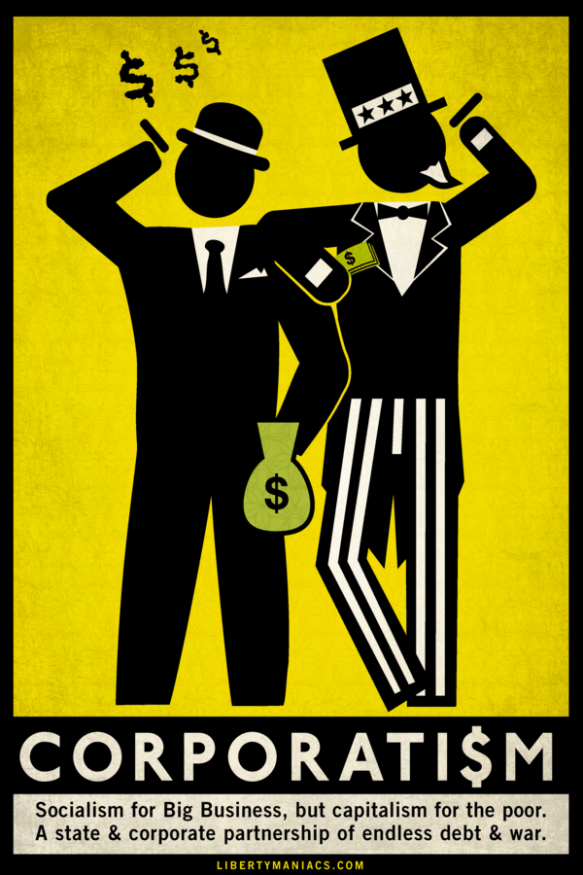
What company gets the most money from the U.S. government? The answer: the weapons maker Lockheed Martin. As the Washington Post recently reported, of its $51 billion in sales in 2017, Lockheed took in $35.2 billion from the government, or close to what the Trump administration is proposing for the 2019 State Department budget. And which company is in second place when it comes to raking in the taxpayer dollars? The answer: Boeing with a mere $26.5 billion. And mind you, that’s before the good times even truly begin to roll, as TomDispatch regular and weapons industry expert William Hartung makes clear today in a deep dive into the (ir)realities of the Pentagon budget.  When it comes to the Department of Defense, though, perhaps we should retire the term “budget” altogether, given its connotation of restraint. Can’t we find another word entirely? Like the Pentagon cornucopia?

Sometimes, it’s hard to believe that perfectly sober reportage about Pentagon funding issues isn’t satire in the style of the New Yorker’s Andy Borowitz.  Take, for instance, a recent report in the Washington Examiner that Army Secretary Mark Esper and other Pentagon officials are now urging Congress to release them from a September 30th deadline for fully dispersing their operation and maintenance funds (about 40% of the department’s budget).  In translation, they’re telling Congress that they have more money than even they can spend in the time allotted.

It’s hard to be forced to spend vast sums in a rush when, for instance, you’re launching a nuclear arms “race” of one by “modernizing” what’s already the most advanced arsenal on the planet over the next 30 years for a mere trillion-plus dollars (a sum that, given the history of Pentagon budgeting, is sure to rise precipitously).  In that context, let Hartung usher you into the wondrous world of what, in the age of The Donald, might be thought of (with alliteration in mind) as the Plutocratic Pentagon. Tom

How the Pentagon Devours the Budget
Normalizing Budgetary Bloat
By William D. Hartung

Imagine for a moment a scheme in which American taxpayers were taken to the cleaners to the tune of hundreds of billions of dollars and there was barely a hint of criticism or outrage.  Imagine as well that the White House and a majority of the politicians in Washington, no matter the party, acquiesced in the arrangement.  In fact, the annual quest to boost Pentagon spending into the stratosphere regularly follows that very scenario, assisted by predictions of imminent doom from industry-funded hawks with a vested interest in increased military outlays.

Most Americans are probably aware that the Pentagon spends a lot of money, but it’s unlikely they grasp just how huge those sums really are.  All too often, astonishingly lavish military budgets are treated as if they were part of the natural order, like death or taxes.

The figures contained in the recent budget deal that kept Congress open, as well as in President Trump’s budget proposal for 2019, are a case in point: $700 billion for the Pentagon and related programs in 2018 and $716 billion the following year.  Remarkably, such numbers far exceeded even the Pentagon’s own expansive expectations.  According to Donald Trump, admittedly not the most reliable source in all cases, Secretary of Defense Jim Mattis reportedly said, “Wow, I can’t believe we got everything we wanted” — a rare admission from the head of an organization whose only response to virtually any budget proposal is to ask for more.

The public reaction to such staggering Pentagon budget hikes was muted, to put it mildly. Unlike last year’s tax giveaway to the rich, throwing near-record amounts of tax dollars at the Department of Defense generated no visible public outrage.  Yet those tax cuts and Pentagon increases are closely related.  The Trump administration’s pairing of the two mimics the failed approach of President Ronald Reagan in the 1980s — only more so.  It’s a phenomenon I’ve termed “Reaganomics on steroids.”  Reagan’s approach yielded oceans of red ink and a severe weakening of the social safety net.  It also provoked such a strong pushback that he later backtracked by raising taxes and set the stage for sharp reductions in nuclear weapons.

Donald Trump’s retrograde policies on immigration, women’s rights, racial justice, LGBT rights, and economic inequality have spawned an impressive and growing resistance.  It remains to be seen whether his generous treatment of the Pentagon at the expense of basic human needs will spur a similar backlash.

Of course, it’s hard to even get a bead on what’s being lavished on the Pentagon when much of the media coverage failed to drive home just how enormous these sums actually are. A rare exception was an Associated Press story headlined “Congress, Trump Give the Pentagon a Budget the Likes of Which It Has Never Seen.” This was certainly far closer to the truth than claims like that of Mackenzie Eaglen of the conservative American Enterprise Institute, which over the years has housed such uber-hawks as Dick Cheney and John Bolton.  She described the new budget as a “modest year-on-year increase.” If that’s the case, one shudders to think what an immodest increase might look like.

The Pentagon Wins Big

So let’s look at the money.

Though the Pentagon’s budget was already through the roof, it will get an extra $165 billion over the next two years, thanks to the congressional budget deal reached earlier this month.  To put that figure in context, it was tens of billions of dollars more than Donald Trump had asked for last spring to  “rebuild” the U.S. military (as he put it).  It even exceeded the figures, already higher than Trump’s, Congress had agreed to last December.  It brings total spending on the Pentagon and related programs for nuclear weapons to levels higher than those reached during the Korean and Vietnam wars in the 1950s and 1960s, or even at the height of Ronald Reagan’s vaunted military buildup of the 1980s. Only in two years of Barack Obama’s presidency, when there were roughly 150,000 U.S. troops in Iraq and Afghanistan, or about seven times current levels of personnel deployed there, was spending higher.

Ben Freeman of the Center for International Policy put the new Pentagon budget numbers in perspective when he pointed out that just the approximately $80 billion annual increase in the department’s top line between 2017 and 2019 will be double the current budget of the State Department; higher than the gross domestic products of more than 100 countries; and larger than the entire military budget of any country in the world, except China’s.

Democrats signed on to that congressional budget as part of a deal to blunt some of the most egregious Trump administration cuts proposed last spring.  The administration, for example, kept the State Department’s budget from being radically slashed and it reauthorized the imperiled Children’s Health Insurance Program (CHIP) for another 10 years.  In the process, however, the Democrats also threw millions of young immigrants under the bus by dropping an insistence that any new budget protect the Deferred Action for Childhood Arrivals, or “Dreamers,” program.  Meanwhile, the majority of Republican fiscal conservatives were thrilled to sign off on a Pentagon increase that, combined with the Trump tax cut for the rich, funds ballooning deficits as far as the eye can see — a total of $7.7 trillion worth of them over the next decade.

While domestic spending fared better in the recent congressional budget deal than it would have if Trump’s draconian plan for 2018 had been enacted, it still lags far behind what Congress is investing in the Pentagon.  And calculations by the National Priorities Project indicate that the Department of Defense is slated to be an even bigger winner in Trump’s 2019 budget blueprint. Its share of the discretionary budget, which includes virtually everything the government does other than programs like Medicare and Social Security, will mushroom to a once-unimaginable 61 cents on the dollar, a hefty boost from the already startling 54 cents on the dollar in the final year of the Obama administration.

The skewed priorities in Trump’s latest budget proposal are fueled in part by the administration’s decision to embrace the Pentagon increases Congress agreed to last month, while tossing that body’s latest decisions on non-military spending out the window.  Although Congress is likely to rein in the administration’s most extreme proposals, the figures are stark indeed — a proposed cut of $120 billion in the domestic spending levels both parties agreed to. The biggest reductions include a 41% cut in funding for diplomacy and foreign aid; a 36% cut in funding for energy and the environment; and a 35% cut in housing and community development.  And that’s just the beginning.  The Trump administration is also preparing to launch full-scale assaults on food stamps, Medicaid, and Medicare.  It’s war on everything except the U.S. military.

Corporate Welfare

The recent budget plans have brought joy to the hearts of one group of needy Americans: the top executives of major weapons contractors like Lockheed Martin, Boeing, Northrop Grumman, Raytheon, and General Dynamics. They expect a bonanza from the skyrocketing Pentagon expenditures. Don’t be surprised if the CEOs of these five firms give themselves nice salary boosts, something to truly justify their work, rather than the paltry $96 million they drew as a group in 2016 (the most recent year for which full statistics are available).

And keep in mind that, like all other U.S.-based corporations, those military-industrial behemoths will benefit richly from the Trump administration’s slashing of the corporate tax rate.  According to one respected industry analyst, a good portion of this windfall will go towards bonuses and increased dividends for company shareholders rather than investments in new and better ways to defend the United States.  In short, in the Trump era, Lockheed Martin and its cohorts are guaranteed to make money coming and going.

Items that snagged billions in new funding in Trump’s proposed 2019 budget included Lockheed Martin’s overpriced, underperforming F-35 aircraft, at $10.6 billion; Boeing’s F-18 “Super Hornet,” which was in the process of being phased out by the Obama administration but is now written in for $2.4 billion; Northrop Grumman’s B-21 nuclear bomber at $2.3 billion; General Dynamics’ Ohio-class ballistic missile submarine at $3.9 billion; and $12 billion for an array of missile-defense programs that will redound to the benefit of… you guessed it: Lockheed Martin, Raytheon, and Boeing, among other companies.  These are just a few of the dozens of weapons programs that will be feeding the bottom lines of such companies in the next two years and beyond.  For programs still in their early stages, like that new bomber and the new ballistic missile submarine, their banner budgetary years are yet to come.

In explaining the flood of funding that enables a company like Lockheed Martin to reap $35 billion per year in government dollars, defense analyst Richard Aboulafia of the Teal Group noted that “diplomacy is out; air strikes are in… In this sort of environment, it’s tough to keep a lid on costs. If demand goes up, prices don’t generally come down. And, of course, it’s virtually impossible to kill stuff. You don’t have to make any kind of tough choices when there’s such a rising tide.”

Pentagon Pork Versus Human Security

Loren Thompson is a consultant to many of those weapons contractors.  His think tank, the Lexington Institute, also gets contributions from the arms industry.  He caught the spirit of the moment when he praised the administration’s puffed-up Pentagon proposal for using the Defense Department budget as a jobs creator in key states, including the crucial swing state of Ohio, which helped propel Donald Trump to victory in 2016.  Thompson was particularly pleased with a plan to ramp up General Dynamics’s production of M-1 tanks in Lima, Ohio, in a factory whose production line the Army had tried to put on hold just a few years ago because it was already drowning in tanks and had no conceivable use for more of them.

Thompson argues that the new tanks are needed to keep up with Russia’s production of armored vehicles, a dubious assertion with a decidedly Cold War flavor to it.  His claim is backed up, of course, by the administration’s new National Security Strategy, which targets Russia and China as the most formidable threats to the United States.  Never mind that the likely challenges posed by these two powers — cyberattacks in the Russian case and economic expansion in the Chinese one — have nothing to do with how many tanks the U.S. Army possesses.

Trump wants to create jobs, jobs, jobs he can point to, and pumping up the military-industrial complex must seem like the path of least resistance to that end in present-day Washington.  Under the circumstances, what does it matter that virtually any other form of spending would create more jobs and not saddle Americans with weaponry we don’t need?

If past performance offers any indication, none of the new money slated to pour into the Pentagon will make anyone safer.  As Todd Harrison of the Center for Strategic and International Studies has noted, there is a danger that the Pentagon will just get “fatter not stronger” as its worst spending habits are reinforced by a new gusher of dollars that relieves its planners of making any reasonably hard choices at all.

The list of wasteful expenditures is already staggeringly long and early projections are that bureaucratic waste at the Pentagon will amount to $125 billion over the next five years.  Among other things, the Defense Department already employs a shadow work force of more than 600,000 private contractors whose responsibilities overlap significantly with work already being done by government employees.  Meanwhile, sloppy buying practices regularly result in stories like the recent ones on the Pentagon’s Defense Logistics Agency losing track of how it spent $800 million and how two American commands were unable to account for $500 million meant for the war on drugs in the Greater Middle East and Africa.

Add to this the $1.5 trillion slated to be spent on F-35s that the nonpartisan Project on Government Oversight has noted may never be ready for combat and the unnecessary “modernization” of the U.S. nuclear arsenal, including a new generation of nuclear-armed bombers, submarines, and missiles at a minimum cost of $1.2 trillion over the next three decades.  In other words, a large part of the Pentagon’s new funding will do much to fuel good times in the military-industrial complex but little to help the troops or defend the country.

Most important of all, this flood of new funding, which could crush a generation of Americans under a mountain of debt, will make it easier to sustain the seemingly endless seven wars that the United States is fighting in Afghanistan, Pakistan, Syria, Iraq, Libya, Somalia, and Yemen.  So call this one of the worst investments in history, ensuring as it does failed wars to the horizon.

It would be a welcome change in twenty-first-century America if the reckless decision to throw yet more unbelievable sums of money at a Pentagon already vastly overfunded sparked a serious discussion about America’s hyper-militarized foreign policy.  A national debate about such matters in the run-up to the 2018 and 2020 elections could determine whether it continues to be business-as-usual at the Pentagon or whether the largest agency in the federal government is finally reined in and relegated to an appropriately defensive posture.


William D. Hartung, a TomDispatch regular, is the director of the Arms and Security Project at the Center for International Policy and the author of Prophets of War: Lockheed Martin and the Making of the Military-Industrial Complex.


US Collapse – the Spectacle of Our Time

By Finnian Cunningham

Source: Axis of Logic

May you live in interesting times, goes the Chinese proverb. Few can doubt that we are indeed living in such an interesting time. Big changes are afoot in the world, it seems.

None more so than the collapsing of the American Empire.

The US is going through an historic “correction” in the same way that the Soviet Union did some 30 years ago when the latter was confronted with the reality of its unsustainable political and economic system. (That’s not meant to imply, however, that socialism is unviable, because arguably the Soviet Union had fatally strayed from its genuine socialist project into something more akin to unwieldy state capitalism.)

In any case, all empires come to an end eventually. History is littered with the debris of countless empires. Why should the American Empire be any different? It’s not. Only arrogant “American exceptionalism” deludes itself from the reality.

The notable thing is just how in denial the political class and the US news media are about the unfolding American crisis.

This is partly where the whole “Russiagate” narrative comes into play. Blaming Russia for allegedly destabilizing US politics and society is a cover for denial over the internal rot facing the US.

Some may scoff at the very idea of an “American Empire”. That’s something Europeans did, not us, goes the apologist for US power. The quick retort to that view is to point out that the US has over 1,000 military bases in more than 100 countries around the world. If that is not a manifestation of empire then what is?

For seven decades since the Second World War, “Pax Americana” was the grandiose name given to US imperial design for the global order. The period was far from peaceful as the vainglorious name suggests. Dozens of wars, proxy conflicts and violent subversions were carried by the US on every continent in order to maintain its empire. The so-called “global policeman” was more often a “global thug”.

That US empire is now teetering at the cusp of an emerging multipolar world order led by China, Russia and other rising powers.

When US leaders complain about China and Russia “reshaping the global order” to reflect their interests what the American leaders are tacitly admitting is the coming end of Washington’s presumed hegemony.

Rather than accepting the fate of demise, the US is aggressively resisting by denigrating China and Russia’s power as somehow illegitimate. It’s the classic denial reaction of a sore loser.

So, what are the telltale signs that the US is indeed undergoing a seminal “correction” — or collapse?

The heyday of American capitalism is well passed. The once awesome productive system is a skeleton of its former self. The rise of massive social poverty alongside obscene wealth among a tiny elite is a sure sign that the once mighty American economy is chronically moribund. The country’s soaring $20 trillion national debt is another symptom of chronic atrophy.

Recent self-congratulatory whooping by President Trump of “economic recovery” is like the joy felt from looking at a mirage. The roaring stock market is an elite phenomenon which can just as easily slump over night.
What the champagne bubbles can’t disguise is the structural failing of US capitalism to reverse exploding inequality and endemic poverty across America. The national prowess of US capitalism has been superseded by global capitalism where American corporations among others scour the planet for cheap labor and tax havens. There is no going back to a supposed golden age, no matter how much Trump crows about “America First”.

The other side of the coin from historic US economic demise is the concomitant rise in its militarism as a way to compensate for its overall loss of power.

It is no coincidence that since the end of the Cold War following the dissolution of the Soviet Union, US military interventions around the world have erupted with increased frequency and duration. The US is in a veritable permanent state of war actively deploying its forces simultaneously in several countries, particularly in the oil-rich Middle East.

Washington of course gives itself a fig leaf cover by calling its surge in militarism a “war on terror” or “defending allies”. But, increasingly, US war conduct is seen for what it plainly is — violation of international law and the sovereignty of nations for the pursuit of American imperial interests.

In short, the US is patently lashing out as a rogue regime. There’s no disguising that fiendish fact.

In addition to waging wars, bombing countries, sponsoring terrorist proxies and assassinating enemies at will with drones, Washington is increasingly threatening others with military aggression. In recent months, North Korea and Iran have been openly threatened based on spurious claims. Russia and China have also been explicitly warned of American aggression in several strategic documents published by the Trump administration.

The grounds for American belligerence are baseless. As noted, the real motive is to do with compensating for its own inherent political, economic and social crises. That then amounts to American leaders inciting conflicts and wars, which is in itself a grave violation of international law — a crime against peace, according to Nuremberg principles.

The American Empire is failing and flailing. This is the spectacle of our time. The Western mainstream news media are either blind, ignorant or complicit in denying the historic collapse. Such media are indulging reckless fantasies of the US political class to distract from the potential internal implosion. Casting around for scapegoats to “explain” the deep inherent problems, the political class are using Russia and alleged Russian “interference” as a pretext.

World history has reached a foreboding cross-roads due to the collapsing of the American Empire. Can we navigate a safe path forward avoiding catastrophic war that often accompanies the demise of empires?

A lot, it seems, depends on ordinary American people becoming politically organized to challenge their dysfunctional system run by and for the elites. If the American people cannot hold their elites to account and break their corrupt rule, overhauling it with something more equitable and democratic, then the world is in peril of being plunged into total war. We can only but wish our American brothers and sisters solidarity and success.

Big Pharma, Big Oil and Big Banks Meet the Definition of Terrorists

Common threads persist throughout definitions of terrorism: violence, injury or death, intimidation, intentionality, multiple targets and political motivation. Big pharma, big oil and big banks meet them all.

By Paul Buchheit

Source: Mint Press News

Various definitions of terrorism have been proposed in recent years, by organizations such as the FBI, the State DepartmentHomeland Security, and the ACLU. Some common threads persist throughout the definitions: violence, injury or death, intimidation, intentionality, multiple targets, political motivation. All the criteria are met by pharmaceutical and oil and financial companies. They have all injured and intimidated the American public, and caused people to die, with intentionality shown by their refusal to acknowledge evidence of their misdeeds, and political motives clear in their lobbying efforts, where among all U.S. industries Big Pharma is #1, Big Oil is #5, and Securities/Investment #8.

The terror inflicted on Americans is real, and is documented by the facts to follow.

Big Pharma: Qualifying for Trump’s Call for Capital Punishment for Drug Dealers

In a Time Magazine article a young man named Chad Colwell says “I got prescribed painkillers, Percocet and Oxycontin, and then it just kind of took off from there.” Time adds: “Prescriptions gave way to cheaper, stronger alternatives. Why scrounge for a $50 pill of Percocet when a tab of heroin can be had for $5?” About 75% of heroin addicts used prescription opioids before turning to heroin.

Any questions about Big Pharma’s role in violence and death in America have been answered by the Centers for Disease Control and the American Journal of Public Health. Any doubts about Big Pharma’s intentions to intimidate the public have been put to rest by the many occasions of outrageous price gouging. And any uncertainty about political pressure is removed by its #1 lobbying ranking.

As for malicious intentions, Bernie Sanders noted, “We know that pharmaceutical companies lied about the addictive impacts of opioids they manufactured.” Purdue Pharma knew all about the devastating addictive effects of its painkiller Oxycontin, and even pleaded guilty in 2007 to misleading regulators, doctors, and patients about the drug’s risk. Now Purdue and other drug companies are facing a lawsuitfor “deceptively marketing opioids” and ignoring the misuse of their drugs.

No jail for the opioid pushers, though, just slap-on-the-wrist fines that can be made up with a few price increases. But partly as a result of Pharma-related violence, Americans are suffering “deaths of despair”— death by drugs, alcohol and suicide. Suicide is at its highest level in 30 years.

Big Oil: Decades of Terror

Any doubts about the ecological terror caused by fossil fuel companies have been dispelled by the World Health Organization, the American Lung Association, the United Nations, the Pentagon, cooperating governments, and independent research groups, all of whom agree that human-induced climate change is killing people.

The oil industry’s intentionality and political motives have been demonstrated by their refusal to admit the known truth, starting with Exxon, which has covered up its own climate research for 40 years, and continuing through multi-million dollar lobbying efforts by Amoco, the US Chamber of Commerce, General Motors, Koch Industries, and other corporations in their effort to dismantle the Kyoto Protocol against global warming.

Big Banks: Leaving Suicidal Former Homeowners Behind

Any doubts about the violence stemming from the 2008 mortgage crisis have been resolved by studies of recession-caused suicides. Both the British Journal of Psychiatry and the National Institutes of Healthfound definite links between the recession and the rate of suicides.

As with Big Pharma and Big Oil, intentionality and political motives are evident in the banking industry’s lobbying efforts on behalf of deregulation — leading to the same conditions that threatened American homeowners in 2008. There has also been a surge in the number of non-bank lenders, who are less subject to regulation.

Making it all worse are private developers, who make most of their profits by building fancy homes for the rich. And by avoiding affordable housing. Since the recession, Blackstone and other private equity firms — with government subsidies — have been buying up foreclosed houses, holding them till prices appreciate, and in the interim renting them back at exorbitant prices.

This is leaving more and more Americans out in the cold — literally. A head of household in the U.S. needs to make $21.21 an hour to afford a two-bedroom apartment at HUD standards, much more than the $16.38 they actually earn. Since the recession, the situation has continually worsened. From 2010 to 2016 the number of housing units priced for very low-income families plummeted 60 percent.

Here’s the big picture: Since the 1980s there’s been a massive redistribution of wealth from middle-class housing to the investment portfolios of people with an average net worth of $75 million. It’s not hard to understand the “deaths of despair” caused by the terror inflicted on people losing their homes.


What Lies Beyond Capitalism and Socialism?

By Charles Hugh Smith

Source: Of Two Minds

The status quo, in all its various forms, is dominated by incentives that strengthen the centralization of wealth and power.

As longtime readers know, my work aims to 1) explain why the status quo — the socio-economic-political system we inhabit — is unsustainable, divisive, and doomed to collapse under its own weight and 2) sketch out an alternative Mode of Production/way of living that is sustainable, consumes far less resources while providing for the needs of the human populace — not just for our material daily bread but for positive social roles, purpose, hope, meaning and opportunity, needs that are by and large ignored or marginalized in the current system.

One cognitive/emotional roadblock I encounter is the nearly universal assumption that there are only two systems: the State (government) or the Market (free trade/ free enterprise). This divide plays out politically as the Right (capitalism, favoring markets) and the Left (socialism, favoring the state). Everything from Communism to Libertarianism can be placed on this spectrum.

But what if the State and the Market are the sources of our unsustainability? What if they are intrinsically incapable of fixing what’s broken?

The roadblock here is adherents to one camp or the other are emotionally attached to their ideological choice, to the point that these ideological attachments have a quasi-religious character.

Believers in the market as the solution to virtually any problem refuse to accept any limits on the market’s efficacy, and believers in greater state power/control refuse to accept any limits on the state’s efficacy.

I often feel like I’ve been transported back to the 30 Years War between Catholics and Protestants in the 1600s.

I’ve written numerous books that (in part) cover the inherent limits of markets and the state, so I’ll keep this brief. Markets are based on two premises: 1) profits are the key motivator of human activity and 2) whatever is scarce can be replaced by something that is abundant (for example, when we’ve wiped out all the wild Bluefin tuna, we can substitute farmed catfish.)

But what about work that creates value but isn’t profitable? This simply doesn’t compute in the market mentality. Neither does the fact that wiping out the wild fisheries disrupts an ecosystem that is essentially impossible to value in terms that markets understand: in a market, the supply and the demand in this moment set the price and thus the value of everything.

But ecosystems simply cannot be valued by the price set in the moment by current supply and demand.

As for the state, its ontological imperative is to concentrate power, and since wealth is power, this means concentrating political and financial power. Once bureaucracies have concentrated power, insiders focus on securing budgets and benefits, and limiting transparency and accountability, as these endanger the insiders’ power, security and perquisites.

Both of these systems share a single quasi-religious ideology: a belief that endless economic growth is an intrinsic good, for it is the ultimate foundation of all human prosperity. In other words, we can only prosper and become more secure if we’re consuming more of everything: resources, credit, energy, and so on.

The second shared ideological faith is that centralizing wealth and power are not just inevitable but good. In other words, Left and Right share a single quasi-religious belief that centralization is not just inevitable but positive; the only difference is in who should hold the concentrated wealth/power, private owners or the state.

This ideology assumes a winner take most structure of winners and losers, with the winnings being concentrated in the hands of a few at the top of the Winners. Thus rising inequality and divisiveness are assumed to be the natural state of any economy.

This ideology underpins the entire status quo spectrum. The “growth at any cost is good” part of the single ideology underpinning the status quo is captured by the 1960 Soviet-era film Letter Never Sent; in its haunting, surreal final scene, a character envisions a grand wilderness untouched by human hands transformed into an industrial wasteland of belching chimneys and sprawling factories. This was not a nightmare–this was the Soviet dream, and indeed, the dream of the “growth at any cost is good” West.

Simply put, the status quo of markets and states is incapable of DeGrowth, i.e. consuming less of everything, including credit, “money”, profits, taxes—everything that fuels both the state and the market. As I have taken pains to explain, it doesn’t matter if a factory is owned by private owners or the state: the mandate of capital is to grow. If capital doesn’t grow, the resulting losses will sink the enterprise—including the state itself.

What lies beyond “growth at any cost” capitalism and socialism? My answer is the self-funded community economy, a system that is self-funded (i.e. no need for a central bank or Treasury) with a digital currency that is created and distributed for the sole purpose of funding work that addresses scarcities in local communities.

I outline this system in my book A Radiocally Beneficial World: Automation, Technology and Creating Jobs for All.

Rather than concentrate power in the hands of state insiders, this system distributes power to communities are participants. Rather than concentrate the power to create currency for the benefit of banks and the state, this system distributes the power to create currency for the sole benefit of those working on behalf of the community, on projects prioritized by the community.

This community economy recognizes that some work is valuable but not profitable. The profit-driven market will never do this work, and the central state is (to use Peter Drucker’s term) the wrong unit size to ascertain each community’s needs and scarcities.

Clearly, we need a socio-economic-political system that has the structure to not just grasp the necessity of DeGrowth and positive social roles (work benefiting the greater community) but to embrace these goals as its raison d’etre (reason to exist).

Human activity is largely guided by incentives, both chemical incentives in our brains and incentives presented by the society/economy we inhabit. In the current system, concentrating power and wealth in the hands of the few at the expense of the many and wasting resources / destroying ecosystems are incentivized if the activity is profitable to some enterprise or deemed necessary by the state.

In the current system, the state incentivizes protecting its wealth and power and the security/benefits of its insiders, and markets incentivize maximizing profits by any means available.

As I have explained many times in the blog and my books, we inhabit a state-cartel economy: the most profitable form of enterprise is the quasi-monopoly or cartel that limits supply and competition in order to extract the maximum profit from its customers.

Monopolies (or quasi-monopolies such as Google, which holds a majority share of global search revenues, excluding China) and cartels quickly amass profits which they then use to secure protection of their cartel from the state via lobbying, campaign contributions, etc. The elites controlling the state benefit from this arrangement, and so the system inevitably becomes a state-cartel system dominated by the state and private sector cartels and incentives that benefit the wealth and power of these institutions.

Once we understand the inevitability of this marriage of state and cartel, we understand socialism and capitalism–the State and Markets–are the yin and yang of one system. Reformers may recognize some of the inherent limits of the state and the market, but they believe these problems can be solved by tweaking policies–in systems-speak, modifying the parameters of the existing subsystems of lawmaking, the judiciary, regulatory agencies, and so on.

But as Donella Meadows explained in her classic paper, Leverage Points: Places to Intervene in a System tweaking the parameters doesn’t actually change the system. For that, we must add a new feedback loop.

The status quo, in all its various forms, is dominated by incentives that strengthen the centralization of wealth and power, increase inequality and divisiveness and the permanent expansion of consumption and credit. That this path leads to implosion / collapse does not compute because the status quo is constructed on the fundamental assumption that permanent growth/expansion of consumption, credit, wealth and state power is not just possible but necessary.

As many of us have labored to show, the financial system has been pushed to unprecedented extremes to maintain the illusion that rapid growth of consumption and credit can be maintained essentially forever.

We need an alternative system that’s built on sustainable incentives and feedback loops so we have a new blueprint to follow as the current arrangement unravels in the next decade or two.

Security and prosperity are worthy goals, but the means to achieve them, as well as the definition of security / prosperity, must be reworked from the ground up. We need to include positive social roles and meaningful work as essential components of security/prosperity.

My conception of a Third / Community Economy does not replace either the state or the free-enterprise market; rather, it does what neither of the existing structures can do. It adds opportunity, purpose, positive social roles and earned income for those left out of the state/cartel/market economy.

A 2% Financial Wealth Tax Would Provide A $12,000 Annual Stipend To Every American Household

Careful analysis reveals a number of excellent arguments for the implementation of a Universal Basic Income.

By Paul Buchheit

Source: Nation of Change

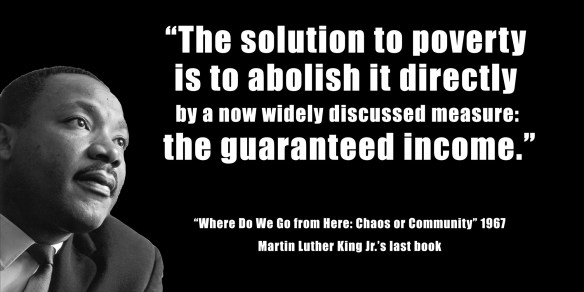
It’s not hard to envision the benefits in work opportunities, stress reduction, child care, entrepreneurial activity, and artistic pursuits for American households with an extra $1,000 per month. It’s also very easy to justify a financial wealth tax, given that the dramatic stock market surge in recent years is largely due to an unprecedented degree of technological and financial productivity that derives from the work efforts and taxes of ALL Americans. A 2% annual tax on financial wealth is a small price to pay for the great fortunes bestowed on the most fortunate Americans.

The REASONS? Careful analysis reveals a number of excellent arguments for the implementation of a Universal Basic Income (UBI).

(1) Our Jobs are Disappearing

A 2013 Oxford study determined that nearly HALF of American jobs are at risk of being replaced by computers, AI, and robots. Society simply can’t keep up with technology. As for the skeptics who cite the Industrial Revolution and its job-enhancing aftermath (which actually took 60 years to develop), the McKinsey Global Institute says that society is being transformed at a pace “ten times faster and at 300 times the scale” of the radical changes of two hundred years ago.

(2) Half of America is Stressed Out or Sick

Half of Americans are in or near poverty, unable to meet emergency expenses, living from paycheck to paycheck, and getting physically and emotionally ill because of it. Numerous UBI experiments have led to increased well-being for their participants. A guaranteed income reduces the debilitating effects of inequality. As one recipient put it, “It takes me out of depression…I feel more sociable.”

(3) Children Need Our Help

This could be the best reason for monthly household stipends. Parents, especially mothers, are unable to work outside the home because of the all-important need to care for their children. Because we currently lack a UBI, more and more children are facing hunger and health problems and educational disadvantages.

(4) We Need More Entrepreneurs

A sudden influx of $12,000 per year for 126 million households will greatly stimulate the economy, potentially allowing millions of Americans to TAKE RISKS that could lead to new forms of innovation and productivity.

Perhaps most significantly, a guaranteed income could relieve some of the pressure on our newest generation of young adults, who are deep in debt, underemployed, increasingly unable to live on their own, and ill-positioned to take the entrepreneurial chances that are needed to spur innovative business growth. No other group of Americans could make more productive use of an immediate boost in income.

(5) We Need the Arts & Sciences

A recent Gallup poll found that nearly 70% of workers don’t feel ‘engaged’ (enthusiastic and committed) in their jobs. The work chosen by UBI recipients could unleash artistic talents and creative impulses that have been suppressed by personal financial concerns, leading, very possibly, to a repeat of the 1930s, when the Works Progress Administration hired thousands of artists and actors and musicians to help sustain the cultural needs of the nation.

Arguments against

The usual uninformed and condescending opposing argument is that UBI recipients will waste the money, spending it on alcohol and drugs and other ‘temptation’ goods. Not true. Studies from the World Bank and the Brooks World Poverty Institute found that money going to poor families is used primarily for essential needs, and that the recipients experience greater physical and mental well-being as a result of their increased incomes. Other arguments against the workability of the UBI are countered by the many successful experiments conducted in the present and recent past: FinlandCanada, Netherlands, Kenya, IndiaGreat Britain, Uganda, Namibia, and in the U.S. in Alaska and California.

How to pay for it

Largely because of the stock market, U.S. financial wealth has surged to $77 trillion, with the richest 10% owning over three-quarters of it. Just a 2 percent tax on total financial wealth would generate enough revenue to provide a $12,000 annual stipend to every American household (including those of the richest families).

It’s easy to justify a wealth tax. Over half of all basic research is paid for by our tax dollars. All the technology in our phones and computers started with government research and funding. Pharmaceutical companies wouldn’t exist without decades of support from the National Institutes of Health. Yet the tech and pharmaceutical companies claim patents on the products paid for and developed by the American people.

The collection of a wealth tax would not be simple, since only about half of U.S. financial wealth is held directly in equities and liquid assets (Table 5-2). But it’s doable. As Thomas Piketty notes, “A progressive tax on net wealth is better than a progressive tax on consumption because first, net wealth is better defined for very wealthy individuals..”

And certainly a financial industry that knows how to package worthless loans into A-rated mortgage-backed securities should be able to figure out how to tax the investment companies that manage the rest of our ever-increasing national wealth.


NYT: Don’t Be Progressive, Be a ‘Liberal’

By Jim Naureckas

Source: FAIR

A New York Times op-ed by political scientist (and former Bob Kerrey aide) Greg Weiner (7/13/18) may well be the New York Times–iest op-ed ever.

Its ostensible subject is why Democrats should call themselves “liberals” and not “progressives.” But in making that case, it hits most of the main points of the New York Times‘ ideology—one that has guided the paper since the late 19th century.

First and foremost, it’s a defense of the status quo. “The basic premise of liberal politics,” Weiner writes, “is the capacity of government to do good, especially in ameliorating economic ills.” But not too much good, mind you:  “A liberal can believe that government can do more good or less,” he stresses. Weiner draws a contrast with progressives: “Where liberalism seeks to ameliorate economic ills, progressivism’s goal is to eradicate them.”

So Lyndon Johnson’s Great Society is cited negatively as an example of “a progressive effort to remake society by eradicating poverty’s causes”—in the process supporting  “community action” and  financing the “political activism”—presented without explanation as a self-evident evil.  The explanation, presumably, is that the poor should remain passive as they remain poor, gratefully accepting the handouts that “alleviate” their plight, as “cutting checks,” as Weiner puts it, is “something government does competently.”

Coupled with this anxiety about “eradicating poverty’s causes” is the confident assurance that the truth is always somewhere in the middle. “Unlike liberalism, progressivism is intrinsically opposed to conservation,” Weiner warns:

Nothing structurally impedes compromise between conservatives, who hold that the accumulated wisdom of tradition is a better guide than the hypercharged rationality of the present, and liberals, because both philosophies exist on a spectrum.

Conservatives make better partners for liberals than progressives, because “one can debate how much to conserve.” But you can’t debate how much to progress, apparently: “Progressivism is inherently hostile to moderation because progress is an unmitigated good.”

In other words: Equality and justice, sure, but let’s not rush into things, is the “liberal’s” advice. He endorses “policies [that] develop gradually and command wide consensus—at least under normal circumstances.” (Progressives have an unnerving desire to “depress the accelerator.”)

Something that doesn’t change is the right wing of the left’s attraction to redbaiting. Weiner praises “the Cold War liberal who stood for social amelioration and against Soviet Communism,” a figure who “was often maligned by progressives.” Without coming out and accusing progressives of Stalinism, he describes progressives’ response to critics as “a passive-aggressive form of re-education,” one that “supersedes the rights of its opponents.” The example he gives of this is the “progressive indifference to the rights of those who oppose progressive policies in areas like sexual liberation”—an odd arena to cite, since the main “rights” that opponents of “sexual liberation” have demanded in recent years are the “right” of small businesses to discriminate against gay customers and the “right” to check the chromosome status of people who use public restrooms.


You can send a message to the New York Times at letters@nytimes.com  (Twitter:@NYTimes). Please remember that respectful communication is the most effective.

US Technological Transformations and the Narcotic-Fueled Genocide of American Workers

By James Petras

Source: The Unz Review

Introduction

During his recent visit to New Hampshire on 3/20/18, President Trump declared once again that the US is facing a ‘drug epidemic’. This time he advocated the death penalty for criminal drug dealers as the solution to a national crisis that has killed over 1 million Americans since the 1990’s (when the blockbuster prescription opiate Oxycontin was first released on the market). Trump promised that the Justice Department would develop the most severe penalties for criminal drug traffickers, by which he meant foreigners. He argued that his proposed “Wall” (between the Mexican- US border) would cut the flow of drugs responsible for the ongoing addiction of millions of US citizens – as though the prescription opiate addiction epidemic resulted from a foreign invasion, and not corporate decisions from Big Pharma.

President Trump’s claim that 116 ‘drug deaths’ occur every day (42,000 a year) is a major underestimate. In 2017, alone over 64,000 drug overdose deaths were reported in official statistics (with many unreported cases signed off as natural or undetermined, especially in counties too poor to afford autopsies and expensive forensic toxicology). Another 4 million Americans, at least, are currently addicted to opioids and at risk for overdose.

In comparative terms, more American workers have been killed or devastated by narcotics (mostly via prescription) in 2017 alone, than in the entire decade of the Vietnam War with its 58,000 dead and 500,000 wounded. In 2017, 40,000 Americans died in motor vehicle accidents and another 39,000 by gun violence – and these statistics are not broken down to include vehicular accidents due to drug intoxication or gun violence over drugs. Prescription or illegal opiates, alone or mixed with other sedative drugs, like Valium, or alcohol, are the most prominent and preventable cause of premature death in the United States today.

This pattern is unique to the United States, where the irresponsible medical prescription of highly addicting narcotics has been the primary portal of entry into the degrading life of addiction for millions. Despite President Trump’s claims, the addiction crisis is not a product of urban Afro-American street dealers or Mexican narco-traffickers: This uniquely American crisis has been created and fueled by billionaire-owned US pharmaceutical corporations, which produced, distributed and wildly profited from legal narcotics. They were aided by the irresponsible prescription practice of tens of thousands of doctors and other ‘providers’ who introduced millions of vulnerable patients to the world of narcotic dependency – including youngsters with sports injuries and workers with job-related pain. These are physicians and medical providers who rarely stopped to examine their own responsibility, even when their otherwise healthy patients overdosed or were destroyed by addiction. It is especially outrageous that doctors and ‘Big Pharma’ worked hand in hand for over 20 years to create this epidemic, enjoying wild profits and almost total legal immunity. Few have dared to openly question their irresponsibility and greed. In the poorest and most vulnerable areas of this country, the most irresponsible and unaccountable incompetence has replaced real medical care and created a health care apartheid.

The Federal Drug Enforcement Agency (FDA) and the Drug Enforcement Agency (DEA) have protected the corporate drug traffickers and ensured the manicured and cultured narco-bosses the highest rates of return on their products. These polished pushers have their names engraved on the walls of museums and opera houses around the country.

The majority of Presidential, Federal, State and municipal candidates from both major parties have received millions of dollars in electoral campaign funds from these huge legal narcotic manufacturers and distributors, as well as from physicians and other representative of the ‘pain-treatment industry’. Over the past decades, politicians have openly or secretly opposed or weakened legislation designed to address this crisis.

Why not just ask President Trump to direct his Justice Department to impose the death penalty on the board of directors of the big corporate narcotic manufacturers or distributors or on the CEOs of major ‘pain clinics’ or on the owners of local rural ‘health centers’ that drove the villagers of West Virginia into their life-destroying downward spirals?

When will the DEA finally storm the medical centers to arrest the over-prescribing ‘providers’ of narcotics and benzodiazepine tranquilizers (a very common deadly combination)?

When will the SWAT teams seize the vacation homes of the CEOs of major US hospitals where the convenient and fake ideology of promising a ‘pain-free’ experience (‘make it Zero on the Pain Scale’) led to the generalized promotion of highly addicting narcotics for minor injuries, arthritic pain, or chronic back discomfort due to work or obesity? Responsible alternatives existed and were used in the rest of the world – largely untouched by this prescription-fueled crisis.

No doubt what President Trump has in mind is something else: the expulsion of Latin American workers under the pretext of going after the drug dealers and the even more massive incarceration of petty street dealers in the African American community.

Trump will then turn to further monitoring and arresting small-scale American marijuana farmers, who earn a basic income from growing a product that many believe is safe, non-addicting, and significantly reduces demand for dangerous narcotics.

As ugly as this all seems, the complicity of the political, economic and the medical elite in exponentially spreading deadly narcotics among the poor, working class and downwardly mobile middle class, points to a deeper and more sinister policy goal: the systematic elimination of millions of American workers made redundant in the new economy. This is a ‘gentler genocide’, where millions of workers die prematurely seeking an escape from pain as they have been replaced by a new technology and a new ideology: Robots, artificial intelligence and digitalization have rendered them disposable, while the out-sourcing of work to low paid overseas laborers and immigrants have guaranteed unimaginable profits for the elite decision makers.

This highly profitable process, benefiting the political, pharmaceutical, financial, police and judicial elites, conveniently blames the victims, a significant proportion of whom come from the poor and working class in this country, including white rural and small town addicts, especially youth, stuck at minimum wage jobs with no prospects of a decent future – injured construction workers, 15% of whom abuse prescription narcotics for work-related injuries, as well as the marginalized petty drug dealers from the urban slums and desperate Latino immigrants forced to accommodate the cartels. These people have little rights and are easily monitored, incarcerated, expelled and just written-off in one-line obituaries.

The narcotic-fueled genocide had grown out of a calculated corporate strategy meant to cull and subdue a huge population of potentially restive marginalized workers and their families, blaming the overdosing victims for their own ‘irresponsible’ choices, their reliance on prescription opiates, their lack of access to competent medical care, and their untimely deaths as though this were all a collective suicide as the great nation marches forward.

The higher the death toll among marginalized Americans, the greater the reliance on political distractions and racist deceptions. President Trump loudly blames street-level retail distributors, while ignoring the links between tax-exempt mega-billionaires who have profited from the shortened life-expectancies of addicted workers (scores of billions of dollars already saved in future pension and health care expenses) and the millions fired for addiction and denied jobless benefits and treatment. Trump has yet to even mention the actions of the legal pharma-medical industry that set this in motion.

Meanwhile, the Democratic Party leaders denounce the worker-victims of addiction and their communities as ‘irresponsible and racist’, for having believed the populist rhetoric of candidate Trump. Trump’s most intense rural areas of support coincided with areas of the worst opioid addiction and suicide rates. Trump’s rival, Hillary Clinton wrote off scores of millions of vulnerable Americans as ‘deplorables’ and never once addressed the addiction crisis that grew exponentially during her husband’s administration.

Since the implementation of NAFTA during the 1990’s, scores of millions of American workers have been relegated to unstable, low paid jobs, deprived of health benefits and subject to grueling work, prone to physical and mental injuries. Workplace injuries set the stage for the prescription narcotic crisis. Even worse, today workers are constantly distracted by electronic gadgets at the workplace, with their orders from above arriving digitally. These highly profitable gadgets have created enormous distractions and contributed to workplace death and injuries. The plaything of choice for the masses, the I-phone, has added to the addiction crisis, by increasing the rate of injury. This mind-numbing distraction, produced abroad at incredible profit, has played an unexplored role in the increase in premature death in the US.

The corporate narcotic elites, like the ultra-cultured Sackler clan owners of Perdue Pharmaceuticals, and their allies in the finance sector, support the diverse ideological distractions fashioned by their politician pawns: Eager to please her donor-owners, Hillary Clinton and the Democrats blame the working class for their backwardness and genetic propensity to addiction and degradation. Meanwhile, President Trump and the Republicans blame ‘outside’ suppliers and distributors including Mexican narco-cartels, illegal immigrant traffickers, black urban street dealers and now point to overseas Chinese fentanyl labs – as though the entire crisis came from the outside. Trump’s approach flies in the face of the unquestionable source of most narcotic addiction in the US: Irresponsible prescribing of highly addicting legal narcotics.

No other industrialized country is experiencing this scale of addiction and pre-mature death. No other industrialized country relies on a private, for-profit, unregulated system of delivering medical care to its citizens. Only the US.

Both elite political parties avoid the basic issue of the long-term, large-scale structural imperatives underlying the transformation of the US work places. They refuse to address the marginalization of tens of millions of American workers and their families, made disposable by corporate economic and political decisions.

The US corporate elite are completely incapable of developing, let alone favoring, any policy that addresses the needs of millions of surplus office and factory workers and their family members replaced by new technology and ‘global’ economic policies. The American financial and political elite is not about to support an economic, political and cultural ‘GI’ bill to save the scores of millions shoved to the wayside in their rush to obscene wealth and power.

The unstated, but clearly implemented, ‘final solution’ is a Social Darwinian policy of active and passive neglect, the unleashing of profitable prescription narcotics into the population of vulnerable disposable workers, offering them a convenient, painless way out – the opioid solution to the over-population problem of redundant rural and small town ‘Helots’. The political elite’s willing complicity with Big Pharma, the medical profession, the financial oligarchs and the prison-industrial complex has transformed the country in many ways. Shortened lives and depopulation of rural and small town communities translates into lower demand for public services, such as schools, health care, pensions and housing. This is guaranteeing a greater concentration of national wealth in the hands of a tiny elite. The financial press has openly celebrated the projected decrease in pension liabilities as a result of the drop in worker life expectancy.

The ongoing mass genocide by opioids may have started to arouse popular discontent among working people who do not want to continue dying young and miserable! Social services and child protective services for the millions of orphaned or abandoned children of this crisis have been demanding real policies. Unfortunately, the usual platitudes and failed policies prevail. Drug education and ‘opioid addiction treatment’ programs (currently among the largest expense in some union health plans) are pointless Band-Aids when confronted by the larger policy decisions fuelling this crisis. Nevertheless, thousands of health care professionals are beginning to resist corporate pressure to prescribe cheap opioids – and fight for more expensive, but less dangerous, alternative for addressing their patients’ pain. Even if all medical providers stopped over-prescribing narcotics today, there are still millions of addicts already created by past practice, who seek the most deadly street drugs, like fentanyl, to feed their addiction.

Politicians now publicly denounce ‘Big Pharma’, while privately winking at the lobbyists and accepting millions from their ‘donor-owners’.

Public critics in the corporate media are quick to condemn the workers’ susceptibility to narcotic addiction but not the underlying causative imperatives of global capitalism.

Mainstream academics celebrate corporate technological advances with occasional neo-Malthusian warnings about the dangers of millions of redundant workers, while ignoring the profit-driven role of narcotics in reducing the social threat of excess workers!

Finally the role of an elite and respected profession must be re-evaluated in a historic context: In the 1930’s German doctors helped develop an ideology of ‘racial hygiene’ and a technology to demonize and eliminate millions of human beings deemed redundant and inferior, through overwork in slave camps, starvation and active genocide – serving the ambitions of Nazi expansionism and deriving significant profit for select individuals and corporations. US physicians and the broader medical community have less consciously assisted in the ongoing ‘culling of the herd’ of American laborers and rural residents rendered superfluous and undesirable by the decisions of a global oligarchy increasingly unwilling to share public wealth with its masses. There are similarities.

Once prosperous, industrial cities and towns, as well as rural villages, in the US have seen marked declines in populations and a premature death crisis among those who remain.

This must be reversed.


Why We’re Underestimating American Collapse

The Strange New Pathologies of the World’s First Rich Failed State

By Umair Haque

Source: Information Clearing House

You might say, having read some of my recent essays, “Umair! Don’t worry! Everything will be fine! It’s not that bad!” I would look at you politely, and then say gently, “To tell you the truth, I don’t think we’re taking collapse nearly seriously enough.”

Why? When we take a hard look at US collapse, we see a number of social pathologies on the rise. Not just any kind. Not even troubling, worrying, and dangerous ones. But strange and bizarre ones. Unique ones. Singular and gruesomely weird ones I’ve never really seen before, and outside of a dystopia written by Dickens and Orwell, nor have you, and neither has history. They suggest that whatever “numbers” we use to represent decline — shrinking real incomes, inequality, and so on —we are in fact grossly underestimating what pundits call the “human toll”, but which sensible human beings like you and I should simply think of as the overwhelming despair, rage, and anxiety of living in a collapsing society.

Let me give you just five examples of what I’ll call the social pathologies of collapse — strange, weird, and gruesome new diseases, not just ones we don’t usually see in healthy societies, but ones that we have never really seen before in any modern society.

America has had 11 school shootings in the last 23 days. That’s one every other day, more or less. That statistic is alarming enough — but it is just a number. Perspective asks us for comparison. So let me put that another way. America has had 11 school shootings in the last 23 days, which is more than anywhere else in the world, even Afghanistan or Iraq. In fact, the phenomenon of regular school shootings appears to be a unique feature of American collapse — it just doesn’t happen in any other country — and that is what I mean by “social pathologies of collapse”: a new, bizarre, terrible disease striking society.

Why are American kids killing each other? Why doesn’t their society care enough to intervene? Well, probably because those kids have given up on life — and their elders have given up on them. Or maybe you’re right — and it’s not that simple. Still, what do the kids who aren’t killing each other do? Well, a lot of them are busy killing themselves.

So there is of course also an “opioid epidemic”. We use that phrase too casually, but it much more troubling than it appears on first glance. Here is what is really curious about it. In many countries in the world — most of Asia and Africa — one can buy all the opioids one wants from any local pharmacy, without a prescription. You might suppose then that opioid abuse as a mass epidemic would be a global phenomenon. Yet we don’t see opioid epidemics anywhere but America — especially not ones so vicious and widespread they shrink life expectancy. So the “opioid epidemic” — mass self-medication with the hardest of hard drugs — is again a social pathology of collapse: unique to American life. It is not quite captured in the numbers, but only through comparison — and when we see it in global perspective, we get a sense of just how singularly troubled American life really is.

Why would people abuse opioids en masse unlike anywhere else in the world? They must be living genuinely traumatic and desperate lives, in which there is little healthcare, so they have to self-medicate the terror away. But what is so desperate about them? Well, consider another example: the “nomadic retirees”. They live in their cars. They go from place to place, season after season, chasing whatever low-wage work they can find — spring, an Amazon warehouse, Christmas, Walmart.

Now, you might say — “well, poor people have always chased seasonal work!” But that is not really the point: absolute powerlessness and complete indignity is. In no other country I can see do retirees who should have been able to save up enough to live on now living in their cars in order to find work just to go on eating before they die — not even in desperately poor ones, where at least families live together, share resources, and care for one another. This is another pathology of collapse that is unique to America — utter powerlessness to live with dignity. Numbers don’t capture it — but comparisons paint a bleak picture.

How did America’s elderly end up cheated of dignity? After all, even desperately poor countries have “informal social support systems” — otherwise known as families and communities. But in America, there is the catastrophic collapse of social bonds. Extreme capitalism has blown apart American society so totally that people cannot even care for one another as much as they do in places like Pakistan and Nigeria. Social bonds, relationships themselves, have become unaffordable luxuries, more so than even in poor countries: this is yet another social pathology unique to American collapse.

Yet those once poor countries are making great strides. Costa Ricans now have higher life expectancy than Americans — because they have public healthcare. American life expectancy is falling, unlike nearly anywhere else in the world, save the UK — because it doesn’t.

And that is my last pathology: it is one of the soul, not one of the limbs, like the others above. Americans appear to be quite happy simply watching one another die, in all the ways above. They just don’t appear to be too disturbed, moved, or even affected by the four pathologies above: their kids killing each other, their social bonds collapsing, being powerless to live with dignity,or having to numb the pain of it all away.

If these pathologies happened in any other rich country — even in most poor ones — people would be aghast, shocked, and stunned, and certainly moved to make them not happen. But in America, they are, well, not even resigned. They are indifferent, mostly.

So my last pathology is a predatory society. A predatory society doesn’t just mean oligarchs ripping people off financially. In a truer way, it means people nodding and smiling and going about their everyday business as their neighbours, friends, and colleagues die early deaths in shallow graves. The predator in American society isn’t just its super-rich — but an invisible and insatiable force: the normalization of what in the rest of the world would be seen as shameful, historic, generational moral failures, if not crimes, becoming mere mundane everyday affairs not to be too worried by or troubled about.

Perhaps that sounds strong to you. Is it?

Now that I’ve given you a few examples — there are many more — of the social pathologies of collapse, let me share with you the three points that they raise for me.

These social pathologies are something like strange and gruesome new strains of disease infecting the body social. America has always been a pioneer — only today, it is host not just to problems not just rarely seen in healthy societies — it is pioneering novel social pathologies have never been seen in the modern world outside present-day America, period. What does that tell us?

American collapse is much more severe than we suppose it is. We are underestimating its magnitude, not overestimating it. American intellectuals, media, and thought doesn’t put any of its problems in global or historical perspective — but when they are seen that way, America’s problems are revealed to be not just the everyday nuisances of a declining nation, but something more like a body suddenly attacked by unimagined diseases.

Seen accurately. American collapse is a catastrophe of human possibility without modern parallel . And because the mess that America has made of itself, then, is so especially unique, so singular, so perversely special — the treatment will have to be novel, too. The uniqueness of these social pathologies tell us that American collapse is not like a reversion to any mean, or the downswing of a trend. It is something outside the norm. Something beyond the data. Past the statistics. It is like the meteor that hit the dinosaurs: an outlier beyond outliers, an event at the extreme of the extremes. That is why our narratives, frames, and theories cannot really capture it — much less explain it. We need a whole new language — and a new way of seeing — to even begin to make sense of it.

But that is America’s task, not the world’s. The world’s task is this. Should the world follow the American model — extreme capitalism, no public investment, cruelty as a way of life, the perversion of everyday virtue — then these new social pathologies will follow, too. They are new diseases of the body social that have emerged from the diet of junk food — junk media, junk science, junk culture, junk punditry, junk economics, people treating one another and their society like junk — that America has fed upon for too long.