People Who Publicly Fret About Assange Rape Allegations Are Lying

By Caitlin Johnstone

Source: CaitlinJohnstone.com

A few hours ago I stumbled across a tweet by Huffington Post UK editor Basia Cummings which made my blood boil. Actress and activist Pamela Anderson had just spoken to the press with WikiLeaks editor-in-chief Kristinn Hrafnsson about their visit with Assange at Belmarsh prison, decrying the WikiLeaks founder’s cruel treatment and unjust prosecution. Basia Cummings took this opportunity to call her social media followers in to make fun of Anderson’s clothing.

“Pamela Anderson arrives at Belmarsh to visit Julian Assange wearing… a bespoke cape/blanket referencing ‘Cromwell’ and free speech’. It’s a look,” Cummings said.

But what really got me were the comments the tweet elicited.

“Is it possible to unwank over someone?” asked one user.

“Pamela Anderson arrives at Belmarsh to visit Julian Assange to supply him with some material for his cell wank bank,” said another.

“Cum blanket,” said another.

“She banged Kid Rock. Enough said,” said another.

This is just a small sampling from a quick skim. There are many, many others. I won’t quote them all.

I found this so deeply illustrative of the way mainstream liberals throw every value they claim to stand for right in the garbage as soon as it becomes an obstacle to their petty partisan attacks. They all warned that Trump was campaigning on a platform of xenophobia, homophobia and demagoguery, but as soon as he was elected they began launching phony Russiagate attacks which themselves were rife with xenophobia, homophobia and demagoguery. Liberal pundits who rightly criticized Bush for his unforgivable invasion of Iraq now attack Trump for being insufficiently hawkish toward Russia and its allies. These mindless automatons don’t actually stand for anything beyond blind partisan loyalty.

In the same way that they will happily wipe their asses with any of their pretend values the second it becomes politically convenient to do so, mainstream liberals will also fabricate grave, solemn concerns about things they never actually cared about before as soon as it can be used as an angle of partisan attack.

Feminist writer Naomi Wolf began her excellent 2010 essay titled “J’Accuse: Sweden, Britain, and Interpol Insult Rape Victims Worldwide” with the words, “How do I know that Interpol, Britain and Sweden’s treatment of Julian Assange is a form of theater? Because I know what happens in rape accusations against men that don’t involve the embarrassing of powerful governments.” Wolf argued that “men are pretty much never treated the way Assange is being treated in the face of sex crime charges,” and she was absolutely correct.

As a survivor of multiple sexual assaults, I have found it unspeakably infuriating the way this same patriarchal imperialist system which has allowed rape culture to thrive throughout the entirety of its existence has suddenly become deeply, deeply concerned about plot hole-riddled and completely unproven allegations against a man who just so happens to have published humiliating truths about that very same imperialist system. This same warmongering power structure which has never given a shit about women beyond our ability to fly a stealth bomber and squeeze new recruits out of our vaginas suddenly has the full force of its propaganda machine whipping liberals into a hysteria about allegations of acts that aren’t even illegal in the nations those liberals live in. Acts that these liberals have never even thought about pushing to make laws against in their own governments.

Do you know how you can be absolutely certain that anyone you see on social media rending their garments about Assange’s Swedish allegations is completely full of shit? Because no matter how hard you search through their post history, you will never, ever find any similarly enthusiastic push to ban the actions that Assange is accused of in their own government. In their own land, where their own daughters and sons will be impacted. They focus solely on shaky allegations against a target of the CIA and the Pentagon which are alleged to have happened in Sweden, a nation with very different sexual consent laws than the nations of these English-speaking concern trolls.

Without conceding that any part of the unproven allegations against Assange are true, it’s important to note that the United States, from which many of these Assange haters express their grave concern about Assange’s Swedish accusations, has no laws whatsoever about non-consensual condom removal, and other western judicial systems are barely even beginning to touch on the subject. None of these nations convict men for initiating sex while the woman is half-asleep, as Assange’s rape allegation asserts, and virtually every woman you know has had sex initiated with her by a sexual partner while she was half-asleep. Yet none of the blue-checkmarked journalists you see calling Assange a “rapist” on social media have ever written any articles demanding that laws be passed in their own countries calling for women to receive legal protection from this.

The people pretending to care about these allegations do not care about rape, and they do not care about women. I recently had my Twitter privileges suspended by someone who called me a “rape apologist” for not automatically subscribing to the “believe all women” meme in the case of a known CIA target, and, when I informed him that I myself am a rape victim, this man called me a liar. I went off on him, and he reported me. This man has never cared about rape or women, and it’s entirely likely that he’s done things to women that push the same boundaries on sexual consent he’s accusing Assange of doing, or worse.

I suspect that goes the same for a lot of the concern trolling Assange-hating men I encounter online whose suddenly holier-than-thou position on initiating sex with a sleepy woman you’ve just been intimate with probably does not line up all that well with their own sexual past. I mean, let’s get real. I’m a woman, my friends are women, I’ve been in a lot of book clubs and mom’s groups and out on a lot of girl’s nights and I know that if you want to get a conversation really fired up, just mention how annoying it is when a bloke wakes you up prodding you with his dick. It’s relatable and a rich vein to mine anecdote-wise. This is a universal experience for a western woman, and yeah, I think it’s rapey and gross and I would love for it to stop, but don’t pretend you care about that now any more than you did before you realized it was a way you could smear Assange. Be real. If you weren’t campaigning for it to be outlawed in your own state or country before, you need to at least be making noises about it now first, and you know and I know that that simply isn’t happening.

In fact, as the years pass, it is becoming entirely possible that the publicity around the allegations against Assange will not change one thing about rape law in any of the western countries which pretend to be so outraged by it other than to be considered a useful hack for smearing a journalist for exposing the patriarchal imperialist system under which rape culture continues to thrive. It has been nine years; nothing has changed. I think we can safely say that after nine years and no change that this has never been an honest concern for the health and well-being of the women involved and for women in general, because if it was then those laws would be ubiquitous across western democracies. Yet again, the suffering of women will be used by the powerful to hide their crimes and entrench more deeply the suffering for the women who work tirelessly as human shields protecting their children from the effects of war and poverty in a predatory capitalist system which is incapable of valuing women’s work.

Of course we should want these things to be illegal. Of course it should be illegal to deliberately have unprotected penetration without consent. Of course it should be illegal to initiate sex without fully awake and enthusiastic consent. Of course we should all want to live in a world where everyone is protected from any sexual interaction happening without their permission. But these people are not interested in creating that world. These people are interested in supporting the same rapey power establishment which has no regard for the sovereignty of entire nations, much less the individual sovereignty of womens’ bodies. They pretend to be on the side of women, but they are actually on the side of the worst aspects of patriarchy, because they have formed an egoic identification with the political structures which are built upon those aspects. That’s what concern trolling is.

This is just one of the many ways in which authentic feminism, authentic advocacy for the real interests of real women, has been co-opted for the benefit of a depraved establishment which has never cared about women and never will. We see it in the way the mass media celebrates women ascending to leadership positions of the military-industrial complex and the National Guard, and the way the presidential candidacy of a woman who embodies all the sickest aspects of the patriarchy was billed as a path to victory for feminism. The healthy impulse to elevate a gender that had an enslaved status in our society since the dawn of civilization has been hijacked by perverse agendas, and it needs to be reclaimed.

Whenever you see anyone claiming to be deeply, deeply concerned about the Swedish allegations against Assange, ask them what they’ve been doing to fight for legal changes which protect women from the things Assange is accused of doing. Then watch them squirm.

For more info on the gaping plot holes in the “Assange is a rapist” smear, check out this section from my mega-article Debunking All The Assange Smears.

Annihilation: Alex Garland’s Bad Trip Through Dis-ease and Over-Reproduction

By Kim Nicolini

Source: CounterPunch

If you go see Alex Garland’s Annihilation (2018) – and I highly recommend you see this film in an actual movie theater with a big screen and big sound –, you are in for a trip. Not a road trip. Not a good trip. But a bad trip. You may ask why I am urging you to see a film that will pull the ground out from under you, defy delivering a tidy narrative, refuse to answer your questions, and leave you in a state of discombobulated horror as if you just experienced a 115 minute very bad trip. There are a lot of reasons to join Garland’s journey into a shaky world where reproduction leads to destruction and where the further you go into the film the further you will find yourself separated from any known reality (just as the further the main characters delve into the ominous and alien Shimmer, the further they come unglued). At one point in the film, female scientist Dr. Ventress (Jennifer Jason Leigh) questions whether all the women who reside at the film’s center have lost their minds. After watching the film, you may very well ask yourself the same thing. But that is the power of the film. By provoking the audience to lose their minds, toss all rational thought to the wind, and deconstruct the most primal notions of stability, this sci-fi horror film unveils the fears that seep through collective humanity like a terminal illness and show the unnatural and terrifying impact of human intervention with the natural world.

The movie is built on the basic sci-fi premise of a team of scientists sent on an expedition to explore an alien anomaly – in this case, the Shimmer. This mysterious form sprouted from an occurrence at a lighthouse and is rapidly devouring a national park and its surroundings, and it is hell bent on eating up all humankind and the earth it occupies (emphasis on the term occupation). Annihilation is astoundingly beautiful while also being exceptionally terrifying. It will take you into an alluring yet unnerving world that reflects our own world through myriad lenses. The Shimmer takes the very substance of all life – DNA – and refracts it into a kaleidoscopic array of mutant variations. Most of them are terrifying, even when they are beautiful, and the realm of this film is one of absolute instability.

Like the characters in the film, we presently occupy an environment of fear, where every day we are confronted with new terrors and new monsters bombarding the airwaves and the internet, a world which is being ripped from the core, where they natural landscape is threatened to be mutated by monster drills, where borders are pushed at us as if they are threats, and where females are both the source of growing power and the source of tremendous social anxiety. These and so many other things are delivered in Garland’s surreal portrait of four women on a scientific expedition into the unknown realm of the Shimmer which is rapidly consuming the southern gulf coast and mutating or killing everyone who enters it.

The film is based on Jeff VanderMeer’s 2014 novel, and your first question may be how well Garland has adapted the book for screen. Well, the book is the first thing he annihilates, so don’t attempt to compare. The material of the book inspired the film, but Garland acts not unlike the Shimmer. He has refracted the DNA of the book into its own species, something that none of us has ever seen before. In the film, the central Scientist Lena (Natalie Portman) discovers that all mutated plant species within the Shimmer are connected to one shared root system. VanderMeer’s book is like the movie’s root system from which Garland has conceived his own lusciously nightmarish film species, growing a whole forest of ideas and visions that multiply in glorious weirdness.

Garland outwardly states that he engages in an anarchistic approach to filmmaking. He resists leadership and debunks the idea of the auteur and refuses to be one (though both films he directed – Ex Machina (2014) and Annihilation bear striking similarities in aesthetics, production, and themes). An Alex Garland film is firmly and concretely an Alex Garland film. There is no way to mistake Garland’s use of glass and reflections (sliding doors as eerie otherworldly portals/prisons) or his cinematic obsession with reproduction (girl-bots and genetic engineering) for the films of anyone else. I commend Garland for his cooperative approach to filmmaking and for stepping back and letting people do what they are good at, trusting the experts he employs to do their job and refusing to interfere with their work. For example, when he partnered with Director of Photography Rob Hardy (also DP in Ex Machina), Garland didn’t dictate what lens or camera to use. He respects his DP as a collaborative artist within a team of collaborative artists, and he trusts that together they will produce uniquely beautiful and unsettling films. Likewise, Garland gives free reign to his actors to improvise, reinvent characters, and add their own unique dimensionality. His anarchistic approach to filmmaking shines through every surface of his films, and the surfaces in Annihilation indeed are magically shiny, slick with water, glistening with reflections, and refracted through glowing prisms.

Perhaps, Garland’s filmmaking anarchy also leads the audience to the sense that we are entering a world that never existed before because it only exists as a result of a distinct collaborative artistic process. It is a movie that can only result from a very specific mutation of elements. Just as the film relies on the image of cellular reproduction to create unique species that did not preexist, the cellular interaction of human creative DNA in Garland’s films creates a new species of movie, and for many, that is unsettling.

People are comfortable with what is familiar, and Annihilation is not like anything we have seen before, though we may recognize elements of its underlying DNA. The initial reference to the lighthouse as the locus for obliterating norms and a destination for the film’s team of women to reach echoes Virginia Woolfe’s desperate plea for female autonomy, creative freedom, and liberation in her 1927 novel To the Lighthouse. The four female protagonists are headed to the source of the reproductive anomaly (representing a breach in the traditional female role as birther and caregiver), and they are mirroring an early work of feminist fiction through the lens of sci-fi horror (because reproduction and all its ramifications both intrigue and terrifify men who want to understand and control something they can’t entirely understand and control). To reach the lighthouse, the women have to trek through Area X, a former national park which has now become a mutated kill zone that bears an eerie resemblance to the infamous Zone in Andrei Tarkovsky’s cinematic masterpiece Stalker (Сталкер, 1979). As in the Zone, Area X jumbles time, seems to be plagued with the aftermath of an environmental catastrophe, seeps water from every surface, glows with a haze of timeless loss, and destabilizes all sense of location (compasses fail), communication (technology signals drop), and unravels logic and reason. It also evokes the sense of some kind of radioactive disaster.  To follow through on the film’s exploration of cancer as an act of self-destruction, radiation can cure (cancer) or kill (bombs). Finally, staying rooted in 1979, the film’s hazy dream/nighmarescape recalls the directorial style of Ridley Scott, and the Shimmer’s central root system – a seething undulating network of organs that combined look like a horrifically alien birth canal – harken back to H.R. Geiger renditions of a monster-breeding alien reproduction system in Scott’s Alien (1979). In other words, though Annihilation is its own cinematic species, it possesses the DNA of its cinematic and literary ancestors, which gives the audience a thread of familiarity even as we are being thrown into a psychedelic whirlwind of confusion and terror.

Both Annihilation and Ex Machina have very solid aesthetic and thematic grounding – the conjoining of the organic and the artificial which creates another dimension of being. Both films obsessively dissect, interrogate, and reconstruct ideas of reproduction and the murky, often shifting, line between reproduction and self-destruction.

Ex Machina explores the traditional horror film approach to reproduction by showing what happens when men try to take on the female role of reproducing through technological and/or scientific intervention. In this film, not only is the man the one reproducing, but he reproduces women as objects of male consumption – porno objects who can cook dinner, suck your dick, and kick up some dust on the dance floor. But in the end, man can’t outdo woman as the great reproducer. The girl-bots win, playing on man’s weak spots – all-consuming lust and ego – the man cancer that causes him to eat himself in an act of selfish self-desctruction. The robo-girls beat both their inventor, who thinks his brains can buy him a pussy (on all fronts), and the nerdy tech geek who likes to believe he’s above fetishizing women when actually his attraction to a girl is ruled more by his hard-on than intellectual intrigue. The only one either of these men is kidding is themselves. And they lose, and . . . they kind of get off on it, which flips us back into that loop that never seems to close.

Annihilation, on the other hand, puts women front and center. Female bodies invade a male genre – a troop of scientists and/or military guys sent on a mission to learn the secrets of and destroy a mysterious alien force – the Shimmer.  We are not accustomed to seeing women in these roles, so the film annihilates traditional male-dominated sci-fi horror narratives. With another nod to Alien and a tribute to Sigourney Weaver’s Ripley, these women righteously bear automatic weapons to fend off the alien forces that threaten them. Remember how adept Ripley was at wielding a blow torch? In one scene Portman’s Lena obliterates a gigantic mutated crocodile without batting an eye. She literally never blinks! Unlike its predecessor Ex Machina which is fixated on male-reproduction of female bodies, Annihilation focuses on a group of women who have somehow failed to reproduce. The central character Lena has destroyed her marriage and therefore snuffed her possible future as a mother. Anya (Gina Rodriguez) has infiltrated her body with drugs and booze instead of babies. Radek (Tessa Thompson) has actually “felt” life through self-destruction (cutting herself to the extent that her arms are mapped with scars) rather than giving life through reproduction. Finally, Ventress has no connections to anyone, projects as if she is an ether trace of a rapidly vanishing body. Ventress is, it turns out, dying of cancer – the film’s stand-in metaphor for toxic reproduction, since cancer is the reproduction of cells to the point of biological annihilation.

The film opens with a close-up of cells multiplying under a microscope. We learn very quickly that they are cancerous cells from a female cervix – the gateway (or gatekeeper) to reproduction. From the film’s onset, reproduction is under attack (being annihilated). As we enter deeper into the Shimmer with the four women, we learn that cellular reproduction can be both beautiful and toxic. As Dr. Ventress states: “It is the source of all life, and of all death.” Therein lies the great conundrum, and the underlying horror of the movie (because this is a Sci-Fi horror film). By vividly exploring multiple angles of Reproduction Gone Wrong – from the Shimmer’s mutated plants and creatures to lethal cancer –, Annihilation taps into some of the most prevalent collective social fears. Over-population (one of the greatest threats to the planet) is shown as both beautiful (“Look at all those gorgeous and strange flowers!”) and as claustrophobic and strangulating (“Look how that mutated corpse is sprouting from a tapestry of flowers!”). Fear of scientific intervention in human creation and the potential horrors of genetic engineering confront us full-body through abominable mutated creatures, some of which literally open their mouths and swallow us. A rampaging bear howls with the voice of a dead woman. A female scientist sprouts stems and leaves and morphs into a cross-species plant.

At its core, the film confronts one of the biggest social fears that has been planted so deeply in the collective unconscious that many people are unaware of it.  Even at this point in the 21st century when you would think people would “know better,” the large majority of the population – both male and female – rely on the traditional role of women as mother caregivers for a sense of stability. This film destabilizes patriarchal order by refusing to put its lead female characters in maternal roles and instead putting them in the traditional male shoes of scientists, and in Lena’s case – Scientist Soldier.

Unlike the women’s bodies, the land in the Shimmer has no problem reproducing. It reproduces itself crazy. It reproduces itself to annihilation, one of the great conundrums of the film – that reproduction (as in cancer) leads to complete destruction. Still, the women push through the Shimmer as it refracts all DNA, reproducing mutant and sometimes terrifying life forms. Climbing through overgrown plants, encountering hybrid animals, and camping out in abandoned houses and military encampments, the women make their way through an iridescent beautifully toxic world. Shimmering wet rainbows resemble the iridescence of a biologically disastrous oil spill. Though terrified and with the very ground of their minds unraveling, the women keep pushing, even as their numbers dwindle, and they confront such images as a live autopsy and its resulting mutation; a psychotic rampaging monster bear; tree-humans/human-trees; alligator-shark hybrids; and myriad other grotesque surprises.

In the end, however, the most terrifying image is the one of reproduction and destruction when Lena confronts herself and births her mutated, alien replicant via a seething, pulsing psychedelic vagina. At once curiously alluring and beautifully horrific, the magnum opus of the film occurs in a scene that defies description but must be experienced on the big screen as the vagina swirls in fleshy prismatic colors, its form both bulging and opening. In the climatic act of self-reproduction and destruction, the screen/vagina opens into a bottomless black birth canal and swallows the audience. There are fewer things more terrifying than a psychedelic vagina the size of a theater screen opening its black hole to swallow you alive while giving birth to your mutated duplicate self.

One of the many reasons this film is so unsettling and delivers such an overwhelming sense of dread is that it refuses to offer any middle ground. Everything is turned on its head. Actions and environments are extreme. Women bear arms instead of children. Interior landscapes are eerily sterile, filled with plastic zippered rooms, stainless steel furniture, and windows reflecting windows reflecting more windows. Not one organic thing lives in the lab, except the women (and one dying man and a few men in hazmat suits). Outside, the landscape is abominably fertile. Creatures are like beautifully terrifying genetic experiments. The land is so pregnant, you could practically barf looking at it. It is both bulging with life and seething with decay. Seemingly lovely flowers evoke feminist fiber art run amok. Humans and nature blend not into a vision of utopian bliss, but into an unnerving psychedelic bad trip. While reproduction is supposed to be the act of life, in this world it is a death sentence where living things reproduce themselves to annihilation, echoing the metaphor of cancer – a disease in which the body actually consumes itself with its own cellular reproduction. The film itself is an act of reproduction, reproducing itself in movie theaters while audiences succumb to, absorb, and are mutated by its toxic beauty. This is the kind of movie you don’t easily forget. It will infiltrate your dreams. Next time you take a hike through a densely wooded forest, you may think twice before exploring that abandoned cabin.

The mismatch between humans and nature and its potential for disastrous consequences leads to some excellent moments of sci-fi horror (you will be terrified) while also questioning the nightmarish impact and consequences of human exploitation of the environment/natural world. Let’s close those national parks and drill! But remember, if you keep on drilling, you may give birth to a monster. Throughout the film, music is critical to the movie’s unsettling hallucinatory delivery. With a soundtrack composed by Portishead’s Geoff Barrow and long-time composer Ben Salisbury, the music is as large and imposing of a character as the mutant bear. Alternating between soft acoustic guitar from another era, full orchestral strings, assaultive horns and bombastically creepy synths, the music doesn’t tell us how to feel, it immerses us in feeling. Complementing the film with orchestral moans and sonic decay, the music tips the scales of this movie toward outright Very Bad Trip. But it’s an entertaining trip!

Annihilation may be the most mind-boggling movie of the century. As it builds and breeds and breathes and opens its mouth and swallows us whole, the movie oozes questions and refuses answers. Told from the single POV of the unreliable narrator Lena, we don’t know what to believe and not believe, what is happening, what is a demented hallucination, what is past, present, or future. In one scene, Anya screams over and over: “Lena is a liar! Lena is a liar!” And maybe she is. We never know. Since the story is strictly told from Lena’s perspective, we don’t know if she is lying to us. When asked to recount what happened in the Shimmer, her most common reply is: “I don’t know.” She doesn’t know, and neither do we, just like in the world outside the Shimmer where we are bombarded with “fake news,” false alarms, and paranoid manufactured distractions to prevent us from getting to answers.

At this point, you may be asking, “But what about Oscar Isaak and his character Kane?” He exists in ghost form, in memory, propped up by life support, leaking blood from mutated organs, or as a reconstituted alien being. In other words, he has been stripped of solidity. The central conjoining entities in the film are Lena and Kane, but Lena destroyed their marriage in an act of self-destruction. Lena, who introduces the cancer cells in the beginning of the film, is a cancer herself, and oddly the lone survivor, perhaps because she is the mutant cell that consumes everything in an act of self-destruction that ironically keeps her alive. I know – what a lot of confusing hogwash.

But the world is confusing hogwash! We live in a time of questions not answers, a time of abstract fear that permeates everything and saturates our very souls with instability. The earth is dying; the System is lying; our hearts and land are crying; and there are no fucking answers.

Launching a cast of women in traditional male roles and playing on the trope of cancer as the ultimate method of lethal reproduction, Annihilation blows a hole through just about everything known and turns it in an unknown. It annihilates preconceptions about conception; rational thought; traditional gender roles; cinematic genre; social expectations; definitions of species; fundamental biology, earth science; the possibility of future; application of human thought to unanswerable questions; and the idea of self itself. And the annihilation is both beautiful and horrific. The movie screen seems to actually breathe with mutated life as it sucks us into its tantalizing bad trip. And I loved every minute of it. Personally, I’d rather be on a bad trip that explores socio-political fears and anxiety through a hallucinatory cinematic lens rather than succumb to the excessively toxic reproduction and biased distortion of an unreal reality.

Writing Nameless Things: An Interview with Ursula K. Le Guin

Photo by Motoya Nakamura/The Oregonian

(Editor’s note: in light of the recent passing of Ursula K. Le Guin we should appreciate even more the wisdom and insight communicated through her novels as well as in this article from last November, one of Le Guin’s last published in-depth interviews.)

David Streitfeld interviews Ursula K. Le Guin

Source: Los Angeles Review of Books

GREAT HONORS ARE flowing to Ursula K. Le Guin. Last year, the Library of America began a publishing program devoted to her work, a rare achievement for a living writer. The second and third volumes, containing much of her classic early SF, are now out. Her collected shorter fiction has been published in two volumes by Saga Press. In 2014, she received the National Book Foundation Medal for Distinguished Contribution to American Letters. This year, once again, she was on the betting list for the Nobel Prize in Literature. Le Guin lives quietly in Portland, Oregon, with her husband of many decades, Charles.

¤

DAVID STREITFELD: How’s your health?

URSULA K. LE GUIN: Okay.

How’s your mood?

Okay. [Laughs.] One slows down increasingly in one’s upper 80s, believe me. I’ve dropped most of my public obligations. I say, “No, thank you,” a lot. It’s too bad. I love reading at Powell’s Books. I’m a ham. Their audiences are great. But it is just physically impossible.

Much of the work in these two new Library of America volumes was done in a short span of time — a few years during the late 1960s and early ’70s. You were on fire, writing The Left Hand of Darkness (1969) and The Dispossessed (1974) practically back to back. That was a period when you also wrote the first Earthsea novels.

I worked just as hard before that and just as hard after. The work of that period isn’t all my significant work. There’s pretty good stuff after.

You were also raising three young children.

I had a child under age five for seven or eight years. Number three came along slightly unexpectedly, about the time number two was beginning to go off to kindergarten. I could not possibly have done it if Charles had not been a full-time parent. Over and over I’ve said it — two people can do three jobs but one person cannot do two. Well, sometimes they do, but it’s a killer.

How did you pace yourself?

I was very careful in those years not to work to a deadline. I never promised a book — ever. I left myself what leeway I could in what I did when. My actual time to work on my writing was going to be limited to what was left after the needs of my kids. I don’t want to be pollyannish, but the fact is both jobs were very rewarding. They were immediately rewarding. I enjoy writing and I enjoyed the kids.

I remember you once said that having kids doesn’t make the writing easier but it makes it better. Still, it took a lot of juggling.

When I discovered I was pregnant the third time, I went through a bad patch. How are we going to do this whole thing all over again? Pregnancy can be pretty devouring. But it was an easy pregnancy, a great baby, and we were really glad we did. There was all this vitality in the house.

It was clearly a time of great fecundity in all sorts of ways.

Apparently I could do it on both fronts. I was healthy and the kids were healthy. That makes such a difference. But it all didn’t seem remarkable. I was of a generation when women were expected to have kids.

When did you write?

After the kids were put to bed, or left in their bed with a book. My kids went to bed much earlier than most kids do now. I was appalled to learn my grandchildren were staying up to 11:00. That would have driven me up the wall. We kept old-fashioned hours — 8:00 p.m., 9:00 p.m. I would go up to the attic, and work 9:00 to midnight. If I was tired, it was a little tough. But I was kind of gung-ho to do it. I like to write. It’s exciting, something I’m really happy doing.

Does being in the Library of America make you feel you’ve joined the immortals? You’re now up there with all the greats — Twain, Poe, Wharton.

I grew up with a set of Mark Twain in the house. Collections of authors’ work were not such a big deal. And my agent was hesitant about the contract, since the pay upfront was less than she’s used to settling for. She’s a good agent. Her job is to make money. What I did not realize is that being published in the Library of America is a real and enduring honor. Especially while you’re still alive. Philip Roth and I make a peculiar but exclusive club.

The first book of yours in the Library of America came out last year. It was called “The Complete Orsinia,” and had some of your less famous work.

I bullied Library of America into doing it first. I didn’t realize I was bullying them, but I was. They were very good-natured about it.

Malafrena (1979), the novel that is the volume’s centerpiece, takes place during a failed revolution in the early 19th century in an imaginary European country somewhere near Hungary.

It’s one of my works that is neither fantasy nor science fiction. So what do you call it? It’s not alternative history because it’s fully connected to real European history. There is no name for it. That’s my problem, I do nameless things.

It’s been a long journey for some of these books. Fifty years ago, they were originally published as SF paperbacks.

I’m not remotely ashamed of their origins, but I am not captivated by them either the way some people are. Some people are fascinated by the pulps — there’s something remote and glamorous in the whole idea of a 25-cent book. I am in the middle of rereading Michael Chabon’s The Amazing Adventures of Kavalier & Clay. Michael is enthralled by the whole comic book thing. That is perfectly understandable and I enjoy his fascination, but my mind doesn’t work that way. I am into content. Presentation is something that just has to be there.

Fifty years ago, science fiction and fantasy were marginal genres. They weren’t respectable. In 1974, you gave a talk entitled “Why Are Americans Afraid of Dragons?”

There’s a tendency in American culture to leave the imagination to kids — they’ll grow out of it and grow up to be good businessmen or politicians.

Hasn’t that changed? We seem inundated with fantasy now.

But much of it is derivative; you can a mash lot of orcs and unicorns and intergalactic wars together without actually imagining anything. One of the troubles with our culture is we do not respect and train the imagination. It needs exercise. It needs practice. You can’t tell a story unless you’ve listened to a lot of stories and then learned how to do it.

You’ve been concerned recently about some of the downsides of the imagination.

I feel fine as far as literature is concerned. The place where the unbridled imagination worries me is when it becomes part of nonfiction — where you’re allowed to lie in a memoir. You’re encouraged to follow the “truth” instead of the facts. I’m not a curmudgeon, I’m just a scientist’s daughter. I really like facts. I have a huge respect for them. But there’s an indifference toward factuality that is encouraged in a lot of nonfiction. It worries me for instance when writers put living people into a novel, or even rather recently dead people. There’s a kind of insolence, a kind of colonialization of that person by the author. Is that right? Is that fair? And then, when we get these biographers where they are sort of making it up as they go along, I don’t want to read that. I find myself asking, what is it, a novel, a biography?

How do you feel about ebooks these days?

When I started writing about ebooks and print books, a lot of people were shouting, “The book is dead, the book is dead, it’s all going to be electronic.” I got tired of it. What I was trying to say is that now we have two ways of publishing, and we’re going to use them both. We had one, now we have two. How can that be bad? Creatures live longer if they can do things in different ways. I think I’ve been fairly consistent on that. But the tone of my voice might have changed. I was going against a trendy notion. There’s this joke I heard. You know what Gutenberg’s second book was, after the Bible? It was a book about how the book was dead.

You’re now a member of the American Academy of Arts and Letters.

I almost wasn’t. It’s so embarrassing. Either the letter got lost in the mail or I tossed it thinking it was junk, but in either case I never got the invitation. They waited and waited and waited and finally got in touch with my agent, who immediately got in touch with me. I wrote them and said, “I wasn’t pulling a Dylan.” But they must have wondered.

It’s another honor, a significant one. What does it mean to you?

To paraphrase Mary Godwin’s line about the vindication of the rights of women, it’s a vindication of the rights of science fiction. To have my career recognized on this level makes it a lot harder for the diehards and holdouts to say, “Genre fiction isn’t literature.”

Do they still say that?

You’d be surprised.

You once clarified your political stance by saying, “I am not a progressive. I think the idea of progress an invidious and generally harmful mistake. I am interested in change, which is an entirely different matter.” Why is the idea of progress harmful? Surely in the great sweep of time, there has been progress on social issues because people have an idea or even an ideal of it.

I didn’t say progress was harmful, I said the idea of progress was generally harmful. I was thinking more as a Darwinist than in terms of social issues. I was thinking about the idea of evolution as an ascending staircase with amoebas at the bottom and Man at the top or near the top, maybe with some angels above him. And I was thinking of the idea of history as ascending infallibly to the better — which, it seems to me, is how the 19th and 20th centuries tended to use the word “progress.” We leave behind us the Dark Ages of ignorance, the primitive ages without steam engines, without airplanes/nuclear power/computers/whatever is next. Progress discards the old, leads ever to the new, the better, the faster, the bigger, et cetera. You see my problem with it? It just isn’t true.

How does evolution fit in?

Evolution is a wonderful process of change — of differentiation and diversification and complication, endless and splendid; but I can’t say that any one of its products is “better than” or “superior to” any other in general terms. Only in specific ways. Rats are more intelligent and more adaptable than koala bears, and those two superiorities will keep rats going while the koalas die out. On the other hand, if there were nothing around to eat but eucalyptus, the rats would be gone in no time and the koalas would thrive. Humans can do all kinds of stuff bacteria can’t do, but if I had to bet on really long-term global survival, my money would go to the bacteria.

In your 2014 acceptance speech for the National Book Foundation medal, you said, “Hard times are coming.”

I certainly didn’t foresee Donald Trump. I was talking about longer-term hard times than that. For 30 years I’ve been saying, we are making the world uninhabitable, for God’s sake. For 30 years!

And then, right after the election, you came up with a new model of resistance that elevates not the warrior but water: “The flow of a river is a model for me of courage that can keep me going — carry me through the bad places, the bad times. A courage that is compliant by choice and uses force only when compelled.”

It’s rooted firmly in Lao Tzu and the Tao Te Ching. He goes very deep in me, back to my teenage years.

Is this a notion that comes out of an earlier work?

Most of my real work was fictional, where you don’t express things like that directly. You build it in. Like in my novel The Lathe of Heaven (1971). George, the hero, is kind of watery. He goes with the flow, as they used to say. I was dubious about publishing that piece about water as a blog entry. It was so direct, and sounded like I was trying to be some sort of guru.

You are direct.

I like to hide it in fiction when I can. But I hardly ever write fiction anymore.

For a year or two, you thought you never would again.

But then I suddenly went and wrote a little story called “Calx” for Catamaran, and then in September a long story called “Pity and Shame.” I should have remembered what all good SF writers know: prediction is not our game.

Are you getting weary of being honored and lionized?

Always remember, you’re talking to a woman. And for a woman, any literary award, honors, notice of any sort has been an uphill climb. And if she insists upon flouting convention and writing SF and fantasy and indescribable stuff, it’s even harder.

And now?

I don’t think the rewards have been overdone. I think I’ve earned them. They are welcome and useful to me because they shore up my self-esteem, which wobbles as you get old and can’t do what you used to do.

Gandhi’s Truth: Ending Human Violence One Commitment at a Time

By Robert J. Burrowes

Gandhi Jayanti – 2 October, the date of Mohandas K. Gandhi’s birth in 1869 and the International Day of Nonviolence – offers an opportunity to reflect on human violence and to ponder ways to end it. There may be a fast way to end human violence but, if there is, Gandhi did not know it. Nor do I. Nor does anyone else that I have read or asked either. But this does not mean there is no way to end human violence.

Human violence has a cause. See ‘Why Violence?’ and ‘Fearless Psychology and Fearful Psychology: Principles and Practice’. It has many manifestations. And it can be ended. But if this is to happen, then many of us must make the commitment to work towards that end. This is because, as Gandhi noted: ‘The future depends on what we do in the present.’

In other words, if human violence is to end, it will happen because individuals and organizations commit themselves to joining the effort to do so. Here is a sample of individuals around the world who have made that commitment, each in their own unique way. You are invited to join them.

HRH Prince Simbwa Joseph was born to a Ugandan Royal Family in Kampala. He abhors violence and is involved in many charities for helping those in need, as well as human rights organisations. He is currently manager of Nsambu and Company Advocates – a law firm and one of the oldest legal chambers in Uganda and East Africa, having been established in 1970. Among other engagements, he is also president of the African Federation Association in Uganda, which is a member of the World Federalist Movement Institute for Global policy. Following negotiations with Prince Simbwa as project manager in 2014, and involving the Ugandan Vice-President in launching the project, the World Sustainability Fund and its partners agreed to provide €1.5m to launch the AFA-WFM permanent office in Kampala in support of efforts to assist Uganda to achieve the UN Millennium Development Goals. In Prince Simbwa’s words: ‘Today the world is on tension due to so many things in social, economic, political disparities and pending nuclear wars. We are concerned as global citizens because if violence or war escalates those whom we call “Nalumanya ne Salumanya” in our local Luganda language (literally meaning “those concerned and less concerned”) shall be trapped equally…. Anti-apartheid icon Nelson Mandela and elder statesman appealed to the world during his lifetime to reinvent Indian freedom fighter Mahatma Gandhi’s nonviolent approach to solving conflicts.’

Lily Thapa is the inspirational founder president, in 1994, of Women for Human Rights, single women group (WHR) in Nepal. WHR is an NGO ‘dedicated to creating an active network of single women on a regional, national and international level. By working exclusively with and for them, WHR is dedicated to addressing the rights of single women and creating a just and equitable society where the lives of single women are strengthened and empowered.’ Rejecting the label ‘widow’, WHR ‘issued a national declaration to use the term “single women” instead of “widow”. The word “widow” (“Bidhwa” in Nepali) carries negativity and disdainful societal views which leaves many single women feeling humiliated and distressed.’ Working to empower women economically, politically, socially and culturally in order to live dignified lives and enjoy the value of human rights, WHR works at the grassroots, district, regional, national, South Asian and international levels. Lily has pointed out that there are ‘285 million single women in the world, among them 115 million fall below the poverty line and 38 million conflict-affected single women have no access to justice; these women are last.’ You can read more about Lily and WHR’s monumental efforts on their website. Recently, Lily was awarded the South Asian ‘Dayawati Modi Stree Shakti Samman’, which is ‘presented annually to a woman who has dared to dream and has the capability to translate that dream into reality’.

John McKenna’s commitment is to end discrimination in all of its forms against those with disabilities. In one recent article, the Australian surveyed the value of recent disability-mitigating technologies becoming available. In his thoughtful article ‘What’s App?’ he assessed the value of technologies that, for example, assist people who are blind, people who have problems with speech, and people with disabilities who are getting older.

In a nonviolent action to draw attention to the horror of drone murders, US grandmother Joy First was one of four nonviolent activists arrested at the Wisconsin Air National Guard Base (Volk Field) during one of the monthly vigils (held for over five years now) by Wisconsin Coalition to Ground the Drones and End the Wars. Volk Field is a critical component of the drone warfare program being conducted by the US government in a number of countries in the Middle East and Africa. At Volk Field personnel are trained to operate the RQ-7 Shadow Drone, which has been used for reconnaissance, surveillance, and target acquisition. You can read more about drone warfare and resistance to it in Joy’s highly informative article ‘Four Citizen Activists Arrested at Volk Field as they Attempt to Identify the Base as a Crime Scene’.

Father Nithiya is the National Programme Coordinator of the Association of Franciscan Families of India (AFFI). Their inspirational work is focused on two campaigns: the Violence of Extreme poverty and hunger and the Right to Food Campaign, as well as the National Campaign to Stop Violence Against Women. In relation to the latter campaign, AFFI has released a DVD and a booklet as a result of a four day intensive national consultation and training organised by them in 2016. Through their vast network of educational, social and medical ministries, AFFI has committed itself to stopping violence against women using various strategies all over the country, especially through their schools and colleges. Identifying ten types of violence against women – gender selection, female foeticide, child marriage, child abuse, harassment at work, prostitution and trafficking, domestic violence and Eve teasing, child labour, effects of alcoholism of men, and unemployment and underemployment of women – the DVD and booklet include analytical data, information about the legal framework and redress mechanisms. The aim is to empower women for their safety and security. Fr. Nithiya has given seminars to teachers and students to raise awareness of how they can stop any form of violence against women in their personal life, in their families, communities and society at large. The aim is to make these AFFI resources available in various Indian languages.

In one of her many engagements, Nobel Peace laureate Mairead Maguire from Northern Ireland continues her ongoing solidarity work in support of the Rohingya, the ethnic group in Burma currently suffering the genocidal assault of the Burmese government and its military forces, the Tatmadaw. In a recent evocative appeal to their fellow laureate Aung San Suu Kyi, signed by Mairead and four other laureates, they asked ‘How many Rohingya have to die; how many Rohingya women will be raped; how many communities will be razed before you raise your voice in defence of those who have no voice? Your silence is not in line with the vision of “democracy” for your country that you outlined to us, and for which we all supported you over the years.’ See ‘Five Nobel Laureates urge Aung San Suu Kyi to defend Rohingya Muslims’.

So if you would like to join the individuals above, as well as those individuals and organizations in 101 countries who have made the commitment to work to end human violence, you can do so by signing the online pledge of ‘The People’s Charter to Create a Nonviolent World’ which, thanks to Antonio Gutiérrez Rodero in Venezuela, is also available in Spanish.

If you also subscribe to Gandhi’s belief that ‘Earth provides enough to satisfy every [person’s] needs, but not every [person’s] greed’, then you might consider participating in ‘The Flame Tree Project to Save Life on Earth’ which he inspired as well.

And if you wish to use nonviolence, as Gandhi developed and employed it, for your campaign or liberation struggle, you will be given clear guidance on how to do so on these websites that draw heavily on his work: Nonviolent Campaign Strategy and Nonviolent Defense/Liberation Strategy.

Will enough people make the commitment to end human violence? Will you? As Gandhi warns us, fear of inadequate outcomes is no excuse for inaction: ‘You may never know what results come of your actions, but if you do nothing there will be no results.’


Biodata: Robert J. Burrowes has a lifetime commitment to understanding and ending human violence. He has done extensive research since 1966 in an effort to understand why human beings are violent and has been a nonviolent activist since 1981. He is the author of ‘Why Violence?’ His email address is flametree@riseup.net and his website is here.

Robert J. Burrowes
P.O. Box 68 Daylesford
Victoria 3460 Australia

Email: flametree@riseup.net

Websites:

http://thepeoplesnonviolencecharter.wordpress.com (Nonviolence Charter) http://tinyurl.com/flametree (Flame Tree Project to Save Life on Earth) http://tinyurl.com/whyviolence (‘Why Violence?’) https://nonviolentstrategy.wordpress.com/ (Nonviolent Campaign Strategy) https://nonviolentliberationstrategy.wordpress.com/ (Nonviolent Defense/Liberation Strategy) http://anitamckone.wordpress.com (Anita: Songs of Nonviolence) http://robertjburrowes.wordpress.com (Robert) https://globalnonviolencenetwork.wordpress.com/ (Global Nonviolence Network)

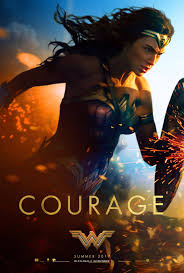
Wonder Woman Is a Hero Only The Military-Industrial Complex Could Create

By Jonathan Cooke

Source: TruePublica

For a while I have been pondering whether to write a review of the newly released Wonder Woman, to peel back the layers of comic-book fun to reveal below the film’s disturbing and not-so-covert political and militaristic messages.

There is usually a noisy crowd who deride any such review with shouts of “Lighten up, it’s only a movie!” – as though popular culture is neither popular nor culture, the soundtrack to our lives that slowly shapes our assumptions and our values, and does so at a level we rarely examine critically.

My argument is that this much-praised Gal Gadot vehicle – seemingly about a peace-loving superhero, Wonder Woman, from the DC Comics stable – is actually carefully purposed propaganda, designed to force-feed aggressive western military intervention, dressed up as humanitarianism, to unsuspecting audiences.

In short, this is straight-up propaganda for the military-industrial complex. It would have looked and sounded identical had it been scripted by a joint team from the Pentagon and the Israel Defense Forces.

My reticence to review the film has lifted after reading the latest investigations of Tom Secker and Matthew Alford into the manifold ways the U.S. military and security services interfere in Hollywood, based on a release of 4,000 pages of documents under Freedom of Information requests.

In their new book National Security Cinema, the pair argue that the Pentagon, CIA and National Security Agency have meddled in the production of at least 800 major Hollywood movies and 1,000 TV titles. That is likely to be only the tip of the iceberg, as they concede:

“It is impossible to know exactly how widespread this military censorship of entertainment is because many files are still being withheld.”

They write that their book “details how U.S. government involvement also includes script rewrites on some of the biggest and most popular films, including James Bond, the Transformers franchise, and movies from the Marvel and DC cinematic universes.”

The need for Pentagon toys

This isn’t just about minor adjustments, but wholesale collusion between film-makers and the military: “If there are characters, action or dialogue that the DoD [Department of Defense] don’t approve of then the film-maker has to make changes to accommodate the military’s demands. If they refuse then the Pentagon packs up its toys and goes home. To obtain full cooperation the producers have to sign contracts — Production Assistance Agreements — which lock them into using a military-approved version of the script.”

The fact that script-writers, producers and directors on these mega-budget pictures know their film may never make it into production if it does not get a thumbs-up from the Pentagon inevitably influences the choice of subjects, the political and military premises of selected films, and the story lines.

One movie, Countermeasures, was ditched after the military objected to a script that “included references to the Iran-Contra scandal … Similarly Fields of Fire and Top Gun 2 were never made because they couldn’t obtain military support, again due to politically controversial aspects of the scripts.”

One can imagine just how stringent the conditions imposed by the Pentagon must be, if it felt compelled to reject a movie like Top Gun 2, the sequel to the “flyboys with toys” killing fest that starred a young Tom Cruise.

The two authors add: “The documents also record the pro-active nature of the military’s operations in Hollywood and that they are finding ways to get involved during the earliest stages of development, ‘when characters and storylines are most easily shaped to the Army’s benefit’.”

Bad apples, not bad institutions

In addition, film-makers are pressured into changing scripts that suggest institutional or systemic problems in the U.S. security agencies.

The two authors observe that producer Jerry Bruckheimer has admitted that the script of the film Enemy of the State was changed under pressure from the NSA so that the wrongdoings at the heart of the film would be the responsibility of a single individual, not the agency itself.

“This idea of using cinema to pin the blame for problems on isolated rogue agents or bad apples, thus avoiding any notion of systemic, institutional or criminal responsibility, is right out of the CIA/DOD’s playbook,” they observe.

So not only are movies critical of U.S. and western politics and militarism almost certain to be off-limits for a big-budget production, but that void is certain to be filled by film proposals the studio is confident will win approval from the Pentagon, CIA and NSA.

And this is, of course, on top of the fact that the Hollywood money-men are themselves part of a larger globalized financial elite that depends on the proceeds of the homeland security industry, arms manufacturers and war profiteers. These financiers are certain to prefer funding films that support a neoliberal worldview at home and a neoconservative policy of warmongering abroad.

As Secker and Alford conclude: “In societies already eager to use our hard power overseas, the shaping of our popular culture to promote a pro-war mindset must be taken seriously.

Gal Gadot and the IDF

All of this is the context for deciphering the egregious propaganda in favor of western military violence, and the portrayal of peace-seeking as “appeasement”, that is Wonder Woman.

There has been plenty of guffawing at Middle East countries, including Lebanon, for seeking to ban Wonder Woman because it stars Gal Gadot, an Israeli beauty queen turned actress.

In fact, it is understandable that the Lebanese might object to a film heavily promoting Gadot as the world’s savior, given that she served in the Israeli army, one that brutally occupied parts of their country for two decades, until 2000, and continues to maintain a belligerent occupation of the Palestinians.

But there is also an undeniable irony to Gadot playing an Amazonian goddess who opposes the militarism of men, and cannot bear to see the suffering of children in war, when in real life she publicly cheered on the Israeli army’s massive bombardment in 2014 of the imprisoned population of Gaza, which led to the killing of some 500 Palestinian children there.

But more importantly, it is not just that Gadot, a former IDF soldier, is now the face of Wonder Woman; it is that the film’s superhero character too almost perfectly embodies the shared militaristic values of the IDF and the Pentagon. If there is one film whose script suggests it was jointly engineered by the Pentagon and Israeli army, it is Wonder Woman.

Hillary Clinton as Wonder Woman?

The film is set near the end of the First World War, a cataclysmic confrontation between two colonial powers, Britain and Germany, each trying to assert its dominance in Europe. The film-makers blur their focus sufficiently to gloss over the problem that there were no good guys in that “war to end all wars”. Instead in true Hollywood fashion, the First World War is presented simply as a prelude (or prequel) to the Second World War and the rise of the Nazis.

The Germans are murderous villains, while the British are the flawed – until Gadot shows them the error of their ways – defenders of humanity. In fact, the film prefers to cast the anti-German side as “Allies”, the humane members of the world community, represented by the U.S. – Chris Pine is the male lead and Gadot’s love interest – and a ragtag support group that includes a Scot, a native American, and a generic Arab, presumably symbolizing “moderate” Arab states like Saudi Arabia, Egypt and Jordan.

The British leadership is trying to find ways to make peace and bring the war to an end, but is stymied by an evil presence. A German super-general, Erich Ludendorff (Danny Huston), believes he can win the war decisively by developing a horrifying gas that will wipe out men, women and children, forcing the British to surrender on his terms. To demonstrate his power, he tests the gas on innocent villagers on the front lines in Belgium.

All of this might sound disconcertingly familiar to anyone who has been following the western media-scripted coverage that has for several years now been trying to promote more aggressive “humanitarian intervention” in Syria – and before that, in Libya and Iraq.

Is Ludendorff supposed to be Bashar Assad, the evil Syrian president who – as long as we discount the dissenting voices of some experts – has twice used the chemical weapon sarin against innocent civilians?

Are the British leaders, seeking a peace deal with the Germans, supposed to be those “appeasers” in the West who have stood in the way of “intervention” in Syria, blocking no-fly zones and bombing runs that could bring down the Syrian government?

And in an even more disturbing, if now outdated, parallel, given the film’s insistent identity politics, is Wonder Woman – the Amazonian who brings peace through overpowering military violence – a stand-in for Hillary Clinton? When the movie was in production, the filmmakers must have assumed it would be released as Clinton was enjoying her early months in office as the first female U.S. president.

The use of Wonder Woman to justify Clinton’s well-documented blood lust–the woman who laughed as “our rebels” murderously sodomized Libya’s Col Gaddafi, saying: “We came, we saw, he died” – would have proved timely had the U.S. election turned out differently.

War is Peace, Ignorance is Strength

Those who have not seen the film, and take it seriously as entertainment, may wish to skip this section, which includes a significant spoiler.

The source of man’s evil in Wonder Woman is the only surviving Greek god, Ares, who is hiding somewhere in the human world. Wonder Woman believes she can end all war and human suffering only if she can locate Ares and kill him – before he kills her.

No one in the human world, of course, believes Wonder Woman, and foolishly they dismiss her ideas as lunacy. And for a while Wonder Woman makes a terrible mistake in thinking the German Ludendorff (Saddam / Gaddafi / Assad) is Ares. It is late in the film that she discovers she has been on the wrong scent.

Humankind’s ultimate enemy is not Ludendorff, but the kindly Sir Patrick Morgan (David Thewlis), the British leader who has spent the entire film counseling for negotiations and peace with the Germans.

The ultimate evil, the wolves in sheep’s clothing, Wonder Woman finds, are  those among us who preach fraternity, compassion and turning the other cheek. They make possible the killing of the innocents.

Those who appear to care, those who seem to offer a route out of bloodshed and war – those who defeat the aims and threaten the profits of the military-industrial complex – are in truth nothing more than appeasers. Their efforts are certain, even intended, to lead to greater suffering.

Militarism, superior firepower, and an absolute belief in the justness of one’s cause, as Wonder Woman is reminded by her Amazonian tutors during her childhood Krav Maga training (Gadot was herself an Israeli army combat trainer) are the way to save mankind from the evildoers.

There is no time to delay, to stand back, to question or to negotiate. Wonder Woman is outraged by the dithering of the men around her. She wants to be at the front line as soon as possible, to kick ass.

“War is peace, freedom is slavery, ignorance is strength” – and all of it is good for business, the film Wonder Woman concludes in truly Orwellian fashion.

A veneer of identity politics

Of course, this story – like all effective propaganda – is supposed to work its magic at a subconscious level, where it cannot be interrogated by our reason and our critical faculties. But even so, a few critics – themselves enthusiastic liberal interventionists – seem to have intuited the movie’s message.

Perhaps not surprisingly, a reviewer with the clearest sense of how the film panders to the pro-war sentiments and identity politics of many liberals is the film critic of the conservative Washington Free Beacon.

Sonny Bunch applauds the way the film “highlights the need for the strong to intervene on behalf of the weak and the oppressed, and treats as villains quislings who sue for a peace that will bring only more destruction.

But he also understands how the film has been crafted to make its war-mongering more palatable to liberals. Wonder Woman, he writes, proves “you could slap an identity politics veneer on just about any neoconservative policy and progressives would lap it up. … Liberal interventionism is back, baby!”

Drooling from liberals

And sure enough, the community of largely liberal film reviewers has mostly drooled over Wonder Woman. Despite dire acting from Gadot, preposterous dialogue and a risible screenplay, the film has racked up an astounding 92 percent approval rating from critics on the review aggregator website Rotten Tomatoes.

Here is a brief selection of their assessments:

Dana Stevens, of Slate: “This is a movie about battling evil that pauses to ask what evil is and whether it’s necessary to understand its nature in order to defeat it.”

Mick LaSalle, of the San Francisco Chronicle: “What lingers … is the feeling of hope that the movie brings, that it someday might be possible for female rationality to defeat male brutality.”

Richard Brody, of the New Yorker: Wonder Woman is “an entry in the genre of wisdom literature that shares hard-won insights and long-pondered paradoxes of the past with a sincere intimacy.”

A. O. Scott, of the New York Times: “Her sacred duty is to bring peace to the world. Accomplishing it requires a lot of killing, but that’s always the superhero paradox. … Unlike most of her male counterparts, its heroine is not trying to exorcise inner demons or work out messiah issues. She wants to function freely in the world, to help out when needed and to be respected for her abilities. No wonder she encounters so much resistance.”

The paradoxes of power

Wonder Woman grapples with the paradoxes of military power every American interventionist and Israeli patriot understands. To save the “beautiful children”, she must sometimes rush to intervene and kill with extreme prejudice, even if the other side’s children are among those who are sacrificed.

Wonder Woman wants to “function freely”: she must enjoy the right to go wherever her interests take her. She cannot be shackled by borders in her quest for justice. She is there to “help out” others in trouble, even if she alone gets to decide who needs help and what counts as trouble. And she needs “respect”, and is prepared to force others to accord it to her, through her superior strength if need be.

She will face “much resistance” because others are jealous of her power and her freedoms. They are the evildoers, and they must and will be defeated.

Is it any surprise that in the Hollywood-Pentagon-IDF world of Wonder Woman, the values of a female superhero sound exactly like those of the military men who run the West’s wars?

Now roll on “Wonder Woman 2: Time to Intervene (Humanely)”.

Saturday Matinee: Wing Chun

fd191ca5

“Wing Chun” (1994) is a martial arts comedy directed by Yuen Woo-Ping (True Legend, Iron Monkey) starring Michelle Yeoh and Donnie Yen. Loosely based on a true story, the film tells the story of Wing Chun (Yeoh), a talented kung fu master who lives in a mountain village with her father, sister and aunt. After rescuing a widow from bandits, she must defend herself and her village while dealing with drama related to a childhood friend Leung (Yen), who returns after many years of studying kung fu.

Watch the full film here.

American Psycho: Sex, Lies and Politics Add Up to a Terrifying Election Season

hillary-trump

By John W. Whitehead

Source: The Rutherford Institute

“I have all the characteristics of a human being: blood, flesh, skin, hair; but not a single, clear, identifiable emotion, except for greed and disgust. Something horrible is happening inside of me and I don’t know why. My nightly bloodlust has overflown into my days. I feel lethal, on the verge of frenzy. I think my mask of sanity is about to slip.”—Patrick Bateman in American Psycho

When it comes to sexual predators, there should be no political bright line test to determine who gets a free pass and who goes to jail based on which candidate is better suited for office.

Yet almost 20 years after Bill Clinton became the first and only sitting president to be sued for sexual harassment and impeached for lying under oath about his sexual escapades while in office, the Left and the Right are still playing politics with women’s rights.

I should know.

As one of Paula Jones’ lawyers in her sexual harassment lawsuit against Bill Clinton (Hillary Clinton infamously and erroneously accused me of being part of a “vast right-wing conspiracy”), I saw first-hand how quickly Hillary Clinton and the nation’s leading women’s rights groups demonized any woman who dared to accuse Bill Clinton of sexual misconduct while turning a blind eye to a long list of incidents involving groping, propositioning, and pressuring women for sexual favors.

Trust me, it was a very long list.

As journalist Marjorie Williams documented in “Clinton and Women” for Vanity Fair:

“The man in question [Bill Clinton] has been sued for sexual harassment over an episode that allegedly included dropping his trousers to waggle his erect penis at a woman who held a $6.35-an-hour clerical job in the state government over which he presided. Another woman has charged that when she asked him for a job he invited her into his private office, fondled her breasts, and placed her hand on his crotch. A third woman confided to friends that when she was a 21-year-old intern she began an affair with the man… Actually, it was less an affair than a service contract, in which she allegedly dashed into his office, when summoned, to perform oral sex on him… Let us not even mention the former lover who was steered to a state job; or the law-enforcement officers who say the man used them to solicit sexual partners for him; or his routine use of staff members, lawyers, and private investigators to tar the reputation of any woman who tries to call him to account for his actions.”

I also witnessed first-hand the hypocrisy of the Religious Right, which was eager to stand in judgment over Clinton for his marital infidelity, while at the same time turning a blind eye to the indiscretions of other conservative politicians in their midst.

Fast forward 20 years, and the women’s rights groups that were silent when Bill Clinton was being outed as a sexual predator have suddenly found their voice and their outrage in the face of accusations that Donald Trump groped and kissed women without their consent. Likewise, the religious groups that were aghast over Clinton’s sexual immorality have somehow created a sliding scale of sin that allows them to absolve Trump of his own indiscretions.

It’s like being in the Twilight Zone.

Only instead of Rod Serling’s imaginary “land of both shadow and substance, of things and ideas,” we’re trapped in an all-too-real land of politics and lies, where freedom and integrity play second fiddle to ambition and greed.

Nothing is real.

This year’s presidential contest and its candidates have, through their double-talking and lies, pulled back the curtain to reveal that what we see is all part of an elaborate hoax, a cruel game where “we the people” are just pawns to be used, abused, discarded and demonized when convenient.

Consider if you will: Bill Clinton was accused of using various and sundry women for sex. For years, he lied about his affairs and accused his accusers of smear campaigns. Only when caught red-handed, did he finally admit—sort of—to having sexual relations with certain women. At no time did he ever apologize for abusing his authority and disrespecting women.

Trump not only is accused of making sexual advances on various women, but he also used Clinton’s sexual victims to score points off Hillary.

And Hillary, in turn, has used and abused both Clinton and Trump’s sexual victims in order to advance her own political ambitions.

As Melinda Henneberger and Dahlia Lithwick wrote for Slate back in 2008:

Hillary Clinton the candidate has largely benefited from her husband’s extracurricular activities… Sure, her husband’s behavior has humiliated her. But she has also helped him humiliate the women he’s been involved with… One of the most troubling things about Hillary Clinton is that she is never above cashing in on [the politics of victimization].

Are you starting to get it yet?

All this talk about sexual predators is just so much political maneuvering to score points off one another. Neither Hillary Clinton nor Donald Trump care one whit about the victims of sexual harassment.

Frankly, they don’t seem to care much about the rest of the populace, either.

For all intents and purposes, we’re all victims of a perverse, perverted, psychotic mindset that views the citizenry as lesser beings: lacking in value, unworthy of respect, and completely undeserving of the legal rights and protections that should be afforded to all Americans.

In the eyes of Bill, Hillary, Donald and the powers-that-be, we’re all little more than “bimbos,” “trailer trash,” “nuts and sluts,” “loony toons,” “fat pigs, dogs, slobs and disgusting animals.”

In other words, we’re all Paula Jones. And Gennifer Flowers. And Juanita Broaddrick.  And Kathleen Willey. And Eileen Wellstone. And Cristy Zercher. And Connie Hamzy. And Monica Lewinsky. For that matter, we’re all Jill Harth. And Cassandra Searles. And Jessica Leeds. And Kristin Anderson, too

This is what happens when politics is allowed to trump principle: “we the people” lose.

The women’s movement lost when it chose politics over principle, then and now.

Women have been suffering because of that choice ever since. As feminist Jessica Valenti acknowledged in the Washington Post, “For women in America, equality is still an illusion. We’re basking in a ‘girl power’ moment that doesn’t exist—it’s a mirage of equality that we’ve been duped into believing is the real thing. Because despite the indisputable gains over the years, women are still being raped, trafficked, violated and discriminated against—not just in the rest of the world, but here in the United States… It’s time to stop fooling ourselves. For all our ‘empowered’ rhetoric, women in this country aren’t doing nearly as well as we’d like to think.”

The Religious Right lost when it chose politics over principle, then and now.

By compromising their values, they have made themselves completely irrelevant in matters of public policy. “As an organized and potent force in national politics, the Christian right has faded into nothingness,” policy analyst Paul Waldman concluded for the Washington Post. “It now exists for nothing more than to be patted on the head and sent on its way with an encouragement to vote in November.”

The media—through its careful crafting of news stories to advance one politician over another—chose politics over principle, then and now. Barring a few exceptions, they have become little more than mouthpieces for the corporate elite.

The citizenry is faced with a choice right now: to be distracted by mudslinging and circus politics or to forge a new path for the nation that rejects politics in favor of locally-based, transformative grassroots activism.

“Perhaps you think that by voting at least you’re doing your small part, making your small contribution. But contributing toward what?” asks commentator Dan Sanchez.

Sanchez continues:

Candidates are package deals. Any candidate will violate the rights of some, even if they respect or defend the rights of others. Objectors say it’s about going in the general right direction, making choices out of which the good outweighs the bad, that do a net amount of good, that is good “on balance.” But that is collectivist speak. There is no “good on balance” for the people whose lives are run over by the candidate you empowered: for the child who is bombed by Hillary’s foreign policy, for the man who is shot by Trump’s police state, or the people Gary Johnson and Bill Weld kept in cages when they were governors.

Sanchez is right: the act of voting is indeed futile.

Voting in this political climate merely advances the agenda of the police state and affirms the government’s pillaging, raping, killing, bombing, stealing, shooting and many acts of tyranny and injustice.

Mark my words: no matter who wins this election, the predators of the police state will continue to wreak havoc on our freedoms, our communities, and our lives.

After all, police officers are still shooting unarmed citizens. Government agents—including local police—are still being armed to the teeth and encouraged to act like soldiers on a battlefield. Bloated government agencies are still fleecing taxpayers. Government technicians are still spying on our emails and phone calls. And government contractors are still making a killing by jailing Americans for profit and waging endless wars abroad.

Are any of these issues being discussed right now? Not a single one.

It boggles the mind.

How is it possible that out of 318 million Americans in this country, we have been saddled with two candidates whose personal baggage and troubled histories make them utterly unfit for office anywhere but in the American police state?

We need to stop being victimized by these political predators.

As I make clear in my book Battlefield America: The War on the American People, I’m not just talking about the ones running for office, but the ones who are running the show behind the scenes—the shadow government—comprised of unelected government bureaucrats whose powers are unaffected by elections, unaltered by populist movements, and beyond the reach of the law.

Stop voting for their puppet candidates. Stop tolerating their long list of abuses. Stop making excuses for a system that long ago ceased to be legitimate. Most of all, stop playing by their rules and make them start playing by ours.

My fear is that we are nearing the point of no return.

“We the people”—men and women alike— have been victims of the police state for so long that not many Americans even remember what it is to be truly free anymore. Worse, few want to shoulder the responsibility that goes along with maintaining freedom.

Yet as John Adams warned, “A government once changed from Freedom, can never be restored. Liberty, once lost, is lost forever.

There is no way to erase the scars left by the government’s greed for money and power, its disregard for human life, its corruption and graft, its pollution of the environment, its reliance on excessive force in order to ensure compliance, its covert activities, its illegal surveillance, and its blatant disdain for the rule of law.

Still, we can forge a new path.

There is so much work to be done in order to right what is wrong with our nation, and there is so little time to fix what has been broken.

Let’s not waste any more time on predator politics. Let’s get to work.

The Courage to Speak Truth to Power

blunt

By Zoe Blunt

Source: DGR News Service

The more we challenge the status quo, the more those with power attack us. Fortunately, social change is not a popularity contest.

Activism is a path to healing from trauma. It’s taking back our power to protect ourselves and our future.

From a spoken-word presentation in Victoria BC, 2009

Thank you for the opportunity to launch my speaking career. Some of you may know me as a writer and an advocate for social and environmental justice. Others may know me as a cat-sitter, odd-jobber, and temp slave. (Laughter)

I knew when I started out as an activist that I would never be a millionaire and I was right. But I have a certain freedom and flexibility that your average millionaire might envy.

The market demand for social justice advocates is huge right now. It’s a growth industry. And the job security is fantastic – there is no shortage of urgent issues demanding our attention. Experience is not necessary, people come to activism at every age and stage in their lives. It’s that easy!

OK, it’s not actually that easy. (Laughter) But it is a fascinating time to be a “radical.”

There is a great tradition of courage and action here on Vancouver Island. There is potential for even greater future action, so we are doing everything we can to nurture that potential. Building community, linking up networks, teaching, learning, coming together, healing – this is all part of the movement.

For most of my adult life, I suffered from social phobia. I was afraid of authority, filled with self-doubt, paralyzed by anxiety. Getting interviewed live on national TV doesn’t make that go away. But hiding under the covers doesn’t cure it either. So my insecurities and I just have to get out there and do our best.

What compels me is the knowledge that we’re rewriting the script – the one that says, “You don’t make a difference. It is what it is, you can’t fight city hall, the big guys always win.” We can remember that we are not powerless. And when we choose to stand up, it is a huge adrenaline rush – bigger than national TV or swinging from a tree top. That’s the reward – that flood of excitement that comes from taking back our power and using it effectively, for the collective good.

It helps to get love letters from friends and strangers who want to thank me for standing up for what’s important, and who get inspired to take action themselves.

But it’s not all warm fuzzies and celebratory toasts. We face backlash and punishment and threats to our lives and safety.

I led a workshop for new activists this year, and I asked them, “Who are your heroes?”

They named a dozen. Gandhi. Martin Luther King. Tommy Douglas. Rosa Parks. These folks led amazing, heroic movements, but our discussion focused on the ferocious backlash they faced. British media reports on Gandhi when he was challenging the monarchy had the same tone as white Southerners responding to Rosa Parks refusing to give up her seat on the bus. It was vicious. “Uppity and no-good” were some of the polite terms. They were targeted with hate speech and death threats. We hear the same now about whistleblowers. And feminists and environmentalists. It can be terrifying.

The more we challenge the status quo, the more the entrenched powers attack us. The more effective we are, the more they attack us. As Gandhi said: “First the ignore you, then they ridicule you, then they fight you, then you win.”

The fight for justice and liberation won’t be won by popularity contests.

Every campaigner finds their own way of dealing with the counter-attacks. Some laugh it off. Some pray, some cry on their friends’ shoulders. Some go on the counter-offensive, some compose songs, some write long academic papers deconstructing their opponents’ logic. The important thing is, they deal with it, and they don’t give up.

We take care of each other as a community. Because we are all so fragile. Because there is so much trauma and despair everywhere and it affects everyone. But inside that despair, in all of us, there is a solid core of love for the earth and the knowledge that we can act in self-defense. That’s where we find strength.

It’s humbling to note that the economic downturn has done more to preserve habitat and stop climate change than all of our conservation efforts of the past years combined. We take responsibility for recycling and turning down the thermostat, but who is responsible for the scale of destruction from the Tar Sands? That project is the equivalent of burning all of Vancouver Island to the ground. It negates everything we could hope to do as individuals to fight climate change.

How do we deal with that horrible reality? I couldn’t, for the first year of the campaign. I didn’t want to look at the pictures and hear the news stories about the water and air pollution and the rates of illness among the Lubicon Cree people. The scale and the horror of it were too great.

I’ve worked on toxics campaigns and I dread them. Old-growth campaigns are inspiring, because where the action is, the forest is still standing – it’s beautiful and magical and we’re defending nature’s cathedral from the bulldozers and chainsaws. The good earth is here, and the evil destructive forces are over there. It’s clearcut, so to speak. But when a toxics campaign is underway, the damage has been done. The landscape is poisoned and people have cancer and spontaneous abortions, and the birds, the fish, the animals, are dead and dying. It is a scene of despair.

If it sounds traumatizing, it is. And we are all traumatized.

Look at this landscape – concrete, pavement, bricks and mortar, toxic chemicals, but underneath, the earth is still there. We have whole ecosystems slashed and burned without so much as a by-your-leave. We’ve lost whole communities of spruce, marmots, murrelets, arbutus, sea otters, and geoducks. These are terrible losses.

And we humans suffer on every level. Is there anyone here who doesn’t know someone who’s had cancer? Who hasn’t seen the damage caused by diseases of civilization? Who here hasn’t been forced to do without for lack of money? Are there any women here who have never been sexually harassed or raped or assaulted?

(Silence)

Something fundamental has been taken from us here. How do we deal with these losses?

I consider myself fortunate because after a lifetime of abuse from my family and male partners, I participated in six months of Trauma Recovery and Empowerment at the Battered Women’s Support Centre in Vancouver.

And I got to know the stages of trauma recovery:
Acknowledge the loss, understand the loss, grieve the loss.

And the stages of grief:
Denial, anger, bargaining, depression, and acceptance.

These steps are a natural and necessary response to the loss of a loved one, and also to the loss of our humanity and the places we love.

There are people living in national sacrifice zones, people who burn with determination to make change. They are angry, and they have a right to be. I am angry because I’m not dead inside, in spite of all they’ve done to me. Anger is part of the process of grief, and it’s useful. It grabs us by the heart when people are hurting the ones we love.

For me, part of the process is taking action – rejecting helplessness and taking back power. Stopping the bleeding and comforting the wounded.

I fall in love with places and I want to protect them. I fell in love with the Elaho Valley and some of the world’s biggest Douglas Firs in 1997. That forest campaign was a pitched battle, far from the urban centers, against one of the biggest logging companies on the coast at that time.

In the third year of the campaign, I walked into my favourite campsite shaded by majestic cedars. I saw the flagging tape and the clearcut boundaries laid out, and I realized it was all doomed. I could see the end result in my mind’s eye: stumps and slash piles as far as the eye could see, muddy wrecked creeks, a smoldering ruin.

I realized no one was going to come and save this place – not Greenpeace or the Sierra Club, no MP’s private member’s bill, or whatever petition or rally was being planned back in the city. It was as good as gone. All we had to do was stand aside and do nothing, and this incredible, irreplaceable forest would be just a sad memory.

But after that realization, and after the despair that followed, I had a profound sense of liberation. If it is all doomed, then anything we do to resist is positive, right? Anything that stops the logging, even for a minute, or slows it down, or costs the company money, or exposes it to public embarrassment and hurts its market share, is positive – it keeps the future alive for that one more minute, one more hour, one more day. It was a revelation.

Acceptance, for me, meant being able to act to defend the place I loved. It meant standing up to the bullies and refusing to let them take anything more from me.

In the third year of the Elaho campaign, it was just a handful of people rebuilding the blockades, defying the court orders and continuing the resistance. We didn’t quit when the police came, or when we were called “terrorists” and “enemies of BC.” We didn’t quit even after 100 loggers came and burned our camp to the ground and put three people in the hospital.

The attack was a horror show. People were in shock. But a crew was back with a new camp five days later. By then, the raid was national news. And our enemies had nothing left to throw at us. The loggers didn’t know what to do next. Short of killing us, what more could they do?

We had called their bluff.

We didn’t know about the negotiations going on behind the scenes. We didn’t realize that we had already cost the loggers more than they could hope to recoup by logging the entire rest of the valley. (They were operating on very slim profit margins.) We found out when the announcement came that the logging would stop. And it never started again. We won. Now the Elaho Valley is protected by the Squamish Nation — and by provincial legislation — as a Wild Spirit Place.

The violence of the mob showed the level of fear and desperation of the losing side. It was their weapon of last resort and it didn’t work. And they lost.

In the fourth year of the stand for SPAET – the campaign to stop the development and protect the caves, the garry oaks, and the wetlands on Skirt Mountain – we faced the same tactics. We were called “terrorists,” and in 2007, the developers sent 100 goons to rough up people at a small rally. And again, most of our comrades are still in shock. There’s only a handful of us still bashing away at the next phase of development.

We are winning. The other side has thrown everything they have at us and they have nothing left.

There are still sacred sites on SPAET. The cave is still there, buried under concrete.

Meanwhile, the developer’s little empire fell apart, either because of our boycott campaign, bad karma, or because it was operating on the slimmest of shady margins. We took the next phase of development to court. Our campaign, and the economic downturn, turned out to be enough to scare off investors and cancel the project, at least for now.

This work is difficult, painful, and traumatic. So the first step to courage is to acknowledge that pain and loss. We need to name what has been taken from us. Then we can cry, and rage, and grieve. We can name the ones who are doing the damage. We can reach down inside and find our core strength and our truth, and use it. That’s where courage comes from.

Martin Luther King said, “Justice shall roll down like waters, righteousness like a mighty stream.” But I’m impatient. I want to see that mighty stream now – what’s the hold-up? What’s holding us back, when there’s so much to do?

We’re not heroes, actually – none of us is smart enough, or tough enough, or connected enough, to take this on alone. We don’t have superpowers. We are only human, we struggle and suffer and sometimes, we win.

Some folks assume I have some vision, some over-arching game plan, some magic power that gives me an edge. Nope. Most of the time I am just flailing around on the political landscape, taking potshots when I see an opening. Sometimes it’s intuition, and it pays off. When we are right, it is amazing. When we win, it sets a precedent for the future.

In order for evil to prevail, all that’s required is for good people to do nothing. Don’t be one of those good people.

Activism is part of the healing. It’s taking action to protect ourselves and our future.

Thank you for the opportunity to tell these stories today.

(Applause)

Also read how Zoe Blunt moved from “flailing around on the political landscape” to strategic activism: Deep Green Resistance: Words as tactical weapons