Sino-Russia Energy Deals to Defeat US/NATO Expansionism

By Salman Rafi Sheikh

Source: New Eastern Outlook

While the recent meeting between Russia’s Vladimir Putin and China’s Xi in Beijing may not in itself be an extra-ordinary event, its significance against the backdrop of the on-going tussle between Russia and the US/NATO is quite unmistakable – not only for Russia itself, but for the US/NATO as well. Even though Russia does not really need China’s help to defend its sovereignty militarily or otherwise, it remains that China’s open support for Russia’s stance against the US plan to push NATO into Ukraine as a geo-political tool does debunk the US propaganda of Russian “isolation.” More than anything else, China’s growing strategic alliance allows Russia a great opportunity to withstand possible Western sanctions, or European decision to reduce its supply of gas from Russia. But co-operation in one field is often not possible without co-operation in other fields. That’s why the long joint statement issued after the meeting laid a lot of stress on jointly opposing Western plans to destabilise regions adjacent to mainland China and Russia i.e., Ukraine, Taiwan, and Hong Kong. As the sides reiterated:

“The sides oppose further enlargement of NATO and call on the North Atlantic Alliance to abandon its ideologized cold war approaches, to respect the sovereignty, security and interests of other countries, the diversity of their civilizational, cultural and historical backgrounds, and to exercise a fair and objective attitude towards the peaceful development of other States.”

While the fact that both Russia and China oppose Western expansionism both via NATO or anti-China AUKUS (Australia, United Kingdom and United States) treaty has already unsettled Western echelons of power, it is the growing co-operation between Russia and China in the energy sector that is most likely to defeat US designs vis-à-vis forcing Russia to submit. This is particularly significant given that the US is particularly interested in hurting Russia’s gas and oil sales. US President Biden recently said this, while standing next to his German counterpart, without mincing any words only recently on February 7:

“What everybody forgets here is Russia needs to be able to sell that gas and sell that oil.  Russia relies — a significant part of Russia’s budget — it’s the only thing they really have to export.  And if, in fact, it’s cut off, then they’re going to be hurt very badly, as well.  And it’s of consequence to them as well.  This is not just a one-way street.”

Moscow is, obviously, not unaware of this design. When Putin visited Beijing, he did not just attend the Winter Olympics; in fact, Putin signed a billion dollar oil and gas deal with Beijing. “Our oilmen have prepared very good new solutions on hydrocarbon supplies to the People’s Republic of China,” Putin said in Beijing. Besides the new deal, China also promised to ramp up Russia’s Far East exports. A new 30-year contract to supply 10 billion cubic meters (bcm) per year to China from Russia’s Far East was signed. With China supporting Russia’s stance on Ukraine, China’s increasing purchase of Russian oil and gas sent a powerful signal to the world that both superpowers will be taking care of each other’s interests against the combined strength of predatory western alliance, making their claims of punishing Russia hollow.

The announcement also comes against the backdrop of US claims that they – US and its allies – have a wide range of “tools” at their disposal to punish any state, including China, if they try to “backfill US exports controls” imposed on Russia. As Ned Price of the White House recently claimed in his press briefing:

“Putin knows that this would be of massive consequence to his country and to his economy. This – a closer relationship with the PRC, a closer relationship between Russia and the PRC – is not going to make up for that; it is not going to account for that. One final point. We have – and when I say we I mean collectively, the United States and our allies and partners – we have an array of tools that we can deploy if we see foreign companies, including those in China, doing their best to backfill U.S. export control actions, to evade them, to get around them.”

China’s deal, therefore, very clearly defies US threats, showing how the politics of sanctions – which is Washington’s favourite geo-political “tool” – cannot really deter states like China and Russia, who, too, posses enough “tools” to stage a counter-attack. The oil & gas deals are a manifestation of that counter-attack.

Even as many political pundits in the West have highlighted, the US plan against Russia cannot work unless Washington can first wean China away. The fact that Washington’s ties with Beijing are as bad as with Moscow means that Washington does not have enough geo-political capacity to dictate policies and decisions by really isolating Russia. Although it might still impose sanctions, China is unlikely to be bothered by them, thus defeating Washington’s plan to inflict an unacceptable level of damage on Russia, which also already has US$640 billion in foreign exchange reserves to withstand western sanctions.

But, as mentioned above, the real factor bothering the West is not what Russia can or might do in the wake of a conflict around Ukraine; the real factor is the almost absolute convergence between Russia and China on almost all issues of global politics – a fact duly highlighted via the said joint statement. This statement is not about their bi-lateral relations; in fact, it is an elaborate commentary on the challenges they are facing from the West and how these very challenges have transformed and elevated their ties to a level not known in the contemporary era.

Therefore, in the wake of US/European pressure on Russia and Moscow’s massive new deals with China means the Biden administration will now have to come up with a new plan to defeat Russia, or altogether drop its project. With Russia now clearly able to diversify its oil and gas deals away from Europe, the question is: can Europe itself do without Russia and without facing any economic backlash? It was only last week the UK government announced a whooping 54 per cent increase in domestic energy bills, causing a political outcry against the Johnson administration. The unnecessary war in Russia is already starting to bite back the war-wagers themselves.

Assange prosecution relied on false testimony from a diagnosed sociopath and convicted pedophile

By Caitlin Johnstone

Source: Intrepid Report

The Icelandic newspaper Stundin reports that a key witness in the US prosecution of Julian Assange has admitted in an interview with the outlet that he fabricated critical accusations in the indictment against the WikiLeaks founder.

“A major witness in the United States’ Department of Justice case against Julian Assange has admitted to fabricating key accusations in the indictment against the Wikileaks founder,” Stundin reports. “The witness, who has a documented history with sociopathy and has received several convictions for sexual abuse of minors and wide-ranging financial fraud, made the admission in a newly published interview in Stundin where he also confessed to having continued his crime spree whilst working with the Department of Justice and FBI and receiving a promise of immunity from prosecution.”

BREAKING: Lead witness in US case against Julian Assange admits to fabricating evidence against him in exchange for a deal with the FBI #Assange https://t.co/kZxsTi62q0

— WikiLeaks (@wikileaks) June 26, 2021

This major witness would be Iceland’s Sigurdur “Sigi” Thordarson, a paid FBI informant who after his short-lived association with WikiLeaks has been found guilty of sexually abusing nine boys as well as embezzlement, fraud, and theft in his home country. A court-appointed psychologist has found him to be a sociopath.

“The court found that Sigurður is by all definitions a sociopath, suffering from a severe anti-social personality disorder. However, the court found that he did know the difference between right and wrong and could not be considered insane and could therefore stand trial,” Iceland Magazine reported in 2015 during Thordarson’s child abuse case.

This was all public knowledge when the US government was building its case to extradite Julian Assange to America and try him under the Patriot Act for journalistic activity which exposed US war crimes, a prosecution for which Assange is still locked up in Belmarsh Prison pending Washington’s appeal of a UK court’s denial of the extradition request. And now we know for a fact that the odious person whose testimony formed the basis for much of that prosecution was lying.

“US officials presented an updated version of an indictment against him to a Magistrate court in London last summer,” Stundin says. “The veracity of the information contained therein is now directly contradicted by the main witness, whose testimony it is based on.”

What this means is that the US decided to add more accusations to its previous indictment because charging a journalist for standard journalistic practices was too weak on its own, and now this decision has bitten them in the ass.

The article’s authors explain that contrary to the claims in that indictment, “Thordarson now admits to Stundin that Assange never asked him to hack or access phone recordings of MPs” and “further admits the claim, that Assange had instructed or asked him to access computers in order to find any such recordings, is false.”

Judge Baraitser: “he also asked [Thordarson] to hack into computers to obtain information including audio recordings of phone conversations between high-ranking officials, including members of the Parliament, of the government of “NATO country 1”.”
This is false, says Thordarson https://t.co/oDXLARJuGK

— Kristinn Hrafnsson (@khrafnsson) June 26, 2021

Thordarson’s testimony was cited extensively by British Magistrate Vanessa Baraitser when she was providing her ruling on the extradition request which is currently under appeal, and it looks pretty silly now that we know it was bogus. Her ruling repeats the prosecution’s claim that Assange “asked Teenager to hack into computers to obtain information including audio recordings of phone conversations between high-ranking officials, including members of the Parliament,” but Thordarson has now recanted this claim.

While the judgement on the extradition request reads, “It is alleged that Mr. Assange and Teenager failed a joint attempt to decrypt a file stolen from a ‘NATO country 1′ [ code for Iceland] bank”, Thordarson told Stundin that “this actually refers to a well publicised event in which an encrypted file was leaked from an Icelandic bank and assumed to contain information about defaulted loans provided by the Icelandic Landsbanki,” and that “Nothing supports the claim that this file was even ‘stolen’ per se, as it was assumed to have been distributed by whistleblowers from inside the failed bank.”

While the ruling repeats the claim that Assange “used the unauthorized access given to him by a source, to access a government website of NATO country-1 used to track police vehicles,” Thordarson told Stundin that “Assange never asked for any such access.”

It should be. https://t.co/PhTi8PIKLJ

— Glenn Greenwald (@ggreenwald) June 26, 2021

These revelations are entirely damning.

“This is the end of the case against Julian Assange,” tweeted NSA whistleblower Edward Snowden, adding, “If Biden continues to seek the extradition of a publisher under an indictment poisoned top-to-bottom with false testimony admitted by its own star witness, the damage to the United States’ reputation on press freedom would last for a generation. It’s unavoidable.”

“Now it’s time to have an international inquiry on how Sweden, UK, US, Ecuador and Australia have handled the Julian Assange case. My FOIA provides evidence nothing is normal in this case,” tweeted investigative journalist Stefania Maurizi.

It just says so much that the most powerful government in the world, with all its essentially limitless resources, needed to build its case against Assange on false testimony from a diagnosed sociopath and convicted child molester. That’s how strong their case was against a journalist whose only “crime” was telling the truth about the powerful.

This after we learned that Assange and his lawyers were spied on by the CIA, that he is being tortured, that his seven-year de facto imprisonment prior to his two-year stay in Belmarsh was arbitrary detention and unjust from the very beginning, and that the pretext for keeping him there was itself fallacious.

This is a farce. The fact that this man remains behind bars is an outrage.

VANDANA SHIVA ON THE TAKING DOWN OF BILL GATES’ EMPIRES

By Dr. Mercola

Source: Waking Times

In this interview, Vandana Shiva, Ph.D., discusses the importance and benefits of regenerative agriculture and a future Regeneration International project that we’ll be collaborating on.

We’re currently facing enormously powerful technocrats who are hell-bent on ushering in the Great Reset, which will complete the ongoing transfer of wealth and resource ownership from the poor and middle classes to the ultra-rich. Perhaps the most well-known of the individuals pushing for this is Bill Gates who, like John Rockefeller a century before him, rehabilitated his sorely tarnished image by turning to philanthropy.

However, Gates’ brand of philanthropy, so far, has helped few and harmed many. While his PR machine has managed to turn public opinion about him such that many now view him as a global savior who donates his wealth for the good of the planet, nothing could be further from the truth.

Gates’ Stranglehold on Global Health

The magnitude of Gates’ role over global health recently dawned on me. I believe the COVID-19 catastrophe would not have been possible had it not been for the World Health Organization, which Gates appears to exert shadow-control over. Remember, it was primarily the WHO that facilitated this global shutdown and adoption of freedom-robbing, economy-destroying measures by virtually every government on the planet.

When then-President Trump halted U.S. funding of the WHO in 2020, Gates became the biggest funder of the WHO. As explained in “WHO Insider Blows Whistle on Gates and GAVI,” the WHO has turned global health security into a dictatorship, where the director general has assumed sole power to make decisions that member states must abide by, but according to a long-term WHO insider, Gates’ vaccine alliance GAVI actually appears to be the directing power behind the WHO.

The two — Gates and the WHO — have been working hand in hand pushing for a global vaccination campaign, and Gates has a great deal of money invested in these vaccines. We’ve also seen extraordinary efforts to censor natural alternatives and inexpensive, readily available and clearly effective drugs, such as hydroxychloroquine and ivermectin, and it appears the reason for this is probably because they’re competitors to the vaccine.

Emergency use authorization for pandemic vaccines are only given when there are no other treatments, so vilifying alternatives has been a key strategy to protect vaccine profits.

The Parallels Between Rockefeller and Gates

As noted by Shiva, the comparisons between Rockefeller and Gates are quite apt. Rockefeller created not just Big Oil but also Big Finance and Big Pharma. He had intimate connections with IG Farben.1 There was a Standard Oil IG Farben company. Without the fossil fuels of Standard Oil, IG Farben couldn’t have made synthetic fertilizers or fuels.

In 1910, Rockefeller and Carnegie produced The Flexner Report,2 which was the beginning of the end for natural medicine in the conventional medical school curriculum. They eliminated it because it saw natural medicine as a hugely competitive threat to the new pharmaceuticals that were primarily derived from the oil industry.

Much of Rockefeller’s history has been captured by Lily Kay,3 who sifted through Molecular Vision of Life’s archives. There, she discovered that the Nazi regime, which was a eugenics regime that thought some people were inferior and needed to be exterminated to keep the superior race pure, didn’t vanish when Germany lost the war.

Eugenics simply migrated to the U.S., and was taken up by Rockefeller under the term of “social psychology as biological determinants.” The word gene did not exist at that time. Instead, they called it “atoms of determinism.” Rockefeller paid for much of the eugenics research, which ultimately resulted in the silencing and suppression of true health.

To be healthy means to be whole, and wholeness refers to the “self-organized brilliance of your integrated body as a complex system,” Shiva says. That’s what Ayurveda is based on, and even this ancient system of medicine has been attacked in recent times. The notion of genetic determination ignores this foundational wholeness, seeking instead to divide the human body into mechanical components controlled by your genes.

“Coming back to the parallels, Rockefeller was behind it because he was driving the chemical industry. When the wars were over, they said, ‘Oh my gosh, we have all these chemicals to sell.’ And they invented the Green Revolution and pushed the Green Revolution on India.

Rockefeller, the World Bank, the USA all worked together, and if the farmers of India are protesting today, it’s a result of Rockefeller’s initiative, the Green Revolution in India. Most people don’t realize what high cost India has borne; what high cost the state of Panjon has born.

Then you have Gates joining up with Rockefeller and creating the Alliance for the Green Revolution in Africa (AGRA) … which pretends to be his solution to climate change. I say, ‘My god, what kind of stage has the world reached that absolute nonsense can pass the science?’ I’ll give you just three examples from his chapter on agriculture, in which he talks about how we grow things.

First of all, plants are not things. Plants are sentient beings. Our culture knows it. We have the sacred tulsi. We have the sacred neem. We have the sacred banyan. They are sentient beings. So many people are awake to animal rights. I think we need more people awake to plant rights and really tell Mr. Gates, ‘No, plants are not things.’

He goes on to celebrate Norman Borlaug, who was in the DuPont defense lab, whose job it was to push these four chemicals by adapting the plants [to them]. So, he created the dwarf variety, because the tall varieties are free varieties … [Gates] says we’re eating food because of Borlaug. No, people are starving because of Borlaug. The farmers are dying because of Borlaug.”

Gates Offers Problems as Solutions

Gates hails synthetic fertilizer is the greatest agricultural invention. “Doesn’t he realize synthetic nitrogen fertilizers are creating desertification, dead zones in the ocean, and nitrous oxide, which is a greenhouse gas?” Shiva says. In short, he’s offering the problem as the solution. Gates also, apparently, does not understand that nitrogen-fixing plants can fix nitrogen. He incorrectly claims that plants cannot fix nitrogen.

“There’s an extinction taking place. Most people think the sixth mass extinction is about other species. They don’t realize large parts of humanity are being pushed to extinction. ~ Vandana Shiva“

Gates is equally wrong about methane production from livestock. “Have you smelt methane behind nomadic tribes?” Shiva asks. “Have you ever smelt methane behind our sacred cow in India? No, they don’t emit methane.” The reason cows in concentrated animal feeding operations (CAFOs) emit methane that stinks to high heaven is because they’re fed an unnatural diet of grains and placed in crowded quarters. It’s not a natural phenomenon. It’s a man-made one.

“You know what Mr. Gates wants to teach us? He says cows make methane because of their poor stomachs,” Shiva says. “They call them containers. I think we should sue him for undoing basic biology 101. You’ve talked about how he controls the WHO. He’s also trying to take control of the Food and Agricultural Organization (FAO).

[FAO] has recognized ecological agriculture is the way to go and supported [regenerative] agriculture up until last year, when Gates started to take charge. Now he’s moving the food summit to New York. Five hundred organizations have said, ‘This is no longer a food summit, it’s a poison summit. The poison cartel and Bill Gates are running it to push more poisons, now under new names. So, we have a lot of work to do.’”

The answer to the environmental problems we face is not more of the very things that created the problems in the first place, which is what Gates proposes. The answer is regenerative agriculture and real food.

“When people are eating healthy food, there is no problem,” Shiva says. “[Gates] wants to commit a crime against our gut microbiome, pushing more fake food through Impossible Food. And he wants to create conditions so that real food will disappear. That’s why we all have to organize together and the scientists have to start being protected.

There’s an extinction taking place. They call it the sixth mass extinction. Most people think the sixth mass extinction is about other species. They don’t realize large parts of humanity are being pushed to extinction. Food is health, as Hippocrates said, [and that requires] indigenous systems of learning, ecological agriculture, small farmers.

In Bill Gates’ design, all this that makes life, life, that makes society, society, that makes community, community, that makes healthy beings, he would like to push this to extinction because he’s afraid of independence, freedom, health and our beingness. He wants us to be ‘thingness,’ but we are beings …

The worst crime against the Earth and against humanity is using gene editing technologies for gene drives, which is a collaboration of Gates with DARPA, the defense research system. Gene drives are deliberately driving [us] to extinction. Now he does it in the name of ending malaria. No. It’s about driving to extinction.

Amaranth is a sacred food for us. It’s a very, very important source of nutrition … There’s an application in that DARPA-Gates report of driving the amaranth to extinction through gene rights. And when this was raised at the Convention on Biological Diversity, do you know what he did? He actually hired a public relations agency and bribed government representatives to not say no. Can you imagine?”

Gates’ Long-Term Play

Gates clearly had a long-term vision in mind from the start. His growing control of the WHO began over a decade ago. Over this span of time, he also started transitioning into Big Pharma and the fake food industry, which would allow his influence over the WHO’s global health recommendations to really pay off.

While fake foods have many potential problems, one in particular is elevated levels of the omega-6 fat linoleic acid (LA). If you eat real food, you’re going to get more than enough LA. Our industrial Western diet, however, provides far more than is needed for optimal health already, and engineered meats are particularly loaded with LA, as they’re made with genetically modified soy oil and canola oil.

This massive excess of LA will encourage and promote virtually all degenerative diseases, thereby accelerating the destruction of human health. In addition to that, Gates is also investing in pharmaceuticals, which of course are touted as the answer to degenerative disease. Again, his solutions to ill health are actually the problem. Shiva says:

“Gates … [is] entering every field that has to do with life. Our work in Navdanya, which means nine seeds, is basically work on biodiversity in agriculture. We started to bring together all the work that he’s doing in taking over. I mentioned the Rockefeller Green Revolution, now the Gates-Rockefeller Green Revolution in Africa. The next step he wants to push is … digital agriculture.

He calls it Gates Ag One,4 and the headquarters of this is exactly where the Monsanto headquarters are, in St. Louis, Missouri. Gates Ag One is one [type of] agriculture for the whole world, organized top down. He’s written about it. We have a whole section on it in our new report,5 ‘Gates to a Global Empire.’”

Stolen Farmer Data Is Repackaged and Sold Back to Them

What does digital agriculture entail? For starters, it entails the introduction of a digital surveillance system. So far, Shiva’s organization has managed to prevent Gates from introducing a seed surveillance startup, where farmers would not be allowed to grow seeds unless approved by Gates surveillance system.

The data mining, Shiva says, is needed because they don’t actually know agriculture. This is why Gates finances the policing of farmers. He needs to mine their data to learn how farming is actually done. This knowledge is then repackaged and sold back to the farmers. It’s evil genius at its finest.

Through his funding, Gates now also controls the world’s seed supply, and his financing of gene editing research has undercut biosafety laws across the world. As explained by Shiva, the only country that doesn’t have biosafety laws is the U.S. “The rest of the world does because we have a treaty called the Cartagena Protocol on Biosafety,” she says.

“While he created the appearance of philanthropy, what he’s doing is giving tiny bits of money to very vital institutions. But with those bits of money, they attract government money, which was running those institutions. Now, because of his clout, he is taking control of the agenda of these institutions. In the meantime, he’s pushing patenting, be it on drugs, vaccines or on seeds.”

Taken together, Gates ends up wielding enormous control over global agriculture and food production, and there’s virtually no evidence to suggest he has good intentions.

The Anatomy of Monopolization

The company that collects patents on gene-edited organisms, both in health and agriculture, is Editas, founded by a main financial investor for the Gates Foundation. Gates is also a big investor in Editas.

“So, here’s a company called Editas to edit the world as if it is a Word program. The two scientists who got the Nobel Prize this year have both been funded in their research by Gates. My mind went back to how Rockefeller financed the research, got the Nobel Prize, and then made the money.

So, you finance the research. Then you finance the public institutions, whether they be national or international. You invest and force them down the path where they can only use what is your patented intellectual property. And, as he has said in an interview, his smartest investment was vaccines, because it is a 1-to-20 return. Put $1 in and make $20. How many billions of dollars have been put in? You can imagine how many trillions will be made.

At the end of it, where does food come from? It comes from seed. He wants to control it. It comes from land. He’s controlling that. He’s became the biggest farmland owner [in the U.S.]. But you need weather [control]. You need a stable climate.

So, what could be a weapon of control of agriculture? Weather modification. He calls it geoengineering. This is engineering of the climate. Again, making it look like he’s going to solve global warming by creating global cooling.”

As explained by Shiva, Gates is also heavily invested in climate modification technologies that not only will destabilize the earth’s climate systems more, but also can be weaponized against the people by controlling rainfall and drought. In India, they’ve been having massive hail during harvest time, which destroys the harvest.

Is the UN Subservient to Gates?

According to Shiva, Gates is also corrupting the United Nations system, just like he’s corrupted world governments and the WHO, and in so doing, he’s destroying the efforts built over the last three decades to protect the global environment.

“Whether it be the climate treaty, the biodiversity treaty or the atmospheric treaties, he is absolutely behaving as if the UN is his subservient institution,” Shiva says. “[He thinks] governments and regulatory bodies should not exist … and that people in democracy have no business to speak. [If they do], they’re conspiracy theorists.”

Taking Down Gates’ Empires

As it stands right now, ordinary people are forced to fight battles that are in actuality rooted in institutional, structural and societal crimes. These crimes really need to be addressed the way Rockefeller’s Standard Oil empire was addressed. In the case of Gates, his empire is actually multiple empires, and they all need to be dismantled. To that end, I will be collaborating with Shiva and Regeneration International, which she co-founded, on a project to boycott Gates’ empires.

“I’ve noticed that no matter what the movement, they’re using the word regeneration now. It could be a health movement, a democracy movement, a peace movement, a women’s movement — everyone has realized that regeneration is what we have to shift to,” Shiva says.

“So, what do we need to be doing in the next decade? For me, the next decade is the determining decade, because these petty minds’ insatiable greed want to go so fast that if, in the next decade, we don’t protect what has to be protected, build resilient alternatives and take away the sainthood from this criminal, they will leave nothing much to be saved.

The poison cartel is also big pharma. People think agriculture is here, medicine is there. No. The same criminal corporations gave us agrichemicals. They gave us bad medicine that creates more disease than it solves. So, Big Pharma, Big Ag, Big Poison — it’s all one. And Bill Gates is holding it all together even more, and trying to make them bigger because he has investments in all of them …

I think [seeds] is where we have to begin … I’m hoping that we will be able, together, to launch a global movement soon to take back our seeds from the international seed banks. The strategy is we need to remind the world that these are public institutions [and] that they’re accountable to the farmers whose collections these [seeds] are …

On the food question, I think that’s the big one because food and health go [together]. In Ayurveda, it says food is the best medicine, and if you don’t eat good food, then no medicine can cure whatever disease you have. The best medicine is good eating. And Hippocrates said ‘Let food be thy medicine.’ So, I think this is the time to really grow a very big global campaign for food freedom.

Food freedom means you cannot destroy our right to grow food. Secondly, you cannot destroy our governments’ obligations to us to support regenerative agriculture rather than support degenerative agriculture and subsidize it. And third, I think we should call for a worldwide boycott of lab foods …

Another part of this should be, don’t let big tech enter our bodies. Let big tech not enter life sciences … These guys will make life illegal. Living will be illegal except as a little piece in their machine through their permission.”

Each year, Navdanya holds a two-week campaign on food freedom starting October 2, which is nonviolence day. We now need to take that campaign to the global stage, and I will do my part to aid this effort. So, mark your calendar and prepare to join us in a global boycott of food that makes you sick — processed food, GMO foods, lab-created foods, fake meats, all of it.

More Information

You can learn more about Shiva’s work and her many projects on Navdanya.org. During the first week of April every year, Navdanya gives a five-day course called Annam, Food as Health, via Zoom. In this course, you’ll learn about soil and plant biodiversity and healthy eating for optimal health.

You can also learn more by reading the report “Earth Rising, Women Rising: Regenerating the Earth, Seeding the Future,” written by female farmers. And, again, mark your calendars and plan your participation in the food freedom campaign, starting October 2, 2021.

“When all the spiritual forces, all of nature’s forces and most of people’s forces are aligned together, what can [a few] billionaires, technocrats — who want to be richer than they are, greedier than they are, more violent than they are — do?” Shiva says. “They don’t count in the long run, really. It’s just that we cannot afford to not do the things that we can do.”

Destroying The Web Of Life: The Destruction Of Earth’s Biodiversity Is Accelerating

By Robert J. Burrowes

In August 2010, the secretary-general of the UN Convention on Biological Diversity, Ahmed Djoghlaf, warned that ‘We are losing biodiversity at an unprecedented rate.’ According to the UN Environment Program, ‘the Earth is in the midst of a mass extinction of life’ with scientists estimating that ‘150-200 species of plant, insect, bird and mammal become extinct every 24 hours’ which is nearly 1,000 times the ‘natural’ or ‘background’ rate. Moreover, it ‘is greater than anything the world has experienced since the vanishing of the dinosaurs nearly 65m years ago.’ See ‘Protect nature for world economic security, warns UN biodiversity chief’.

Two months later, at the tenth meeting of the Conference of the Parties to the Convention on Biological Diversity, held from 18 to 29 October 2010, in Nagoya, Aichi Prefecture in Japan, a revised and updated Strategic Plan for Biodiversity, including the Aichi Biodiversity Targets, for the 2011-2020 period was adopted. See ‘Strategic Plan for Biodiversity 2011-2020, including Aichi Biodiversity Targets’.

You can read the 20 Aichi Biodiversity Targets on the Convention’s website. They were ambitious but represented a realistic assessment of what needed to be achieved by 2020 if national governments were to achieve the longer term goal of ‘Living in Harmony with Nature’ by 2050. The 2050 Vision for Biodiversity required ‘a significant shift away from “business as usual” across a broad range of human activities.’ See ‘Global Biodiversity Outlook 5’.

So how have we done in the past ten years?

In 2015, distinguished conservationists Professor Gerardo Ceballos, Anne H. Ehrlich and Professor Paul R. Ehrlich published their book titled The Annihilation of Nature: Human Extinction of Birds and Mammals which tells the story of humanity’s ‘massive and escalating assault on all living things on this planet’ precipitating what is now Earth’s sixth great mass extinction: ‘a time of darkness for our planet’s birds and mammals’.

Noting that the roots of this destruction ‘run deep through time’ with human hunting and other activities responsible for pushing populations of animals to extinction long before the agricultural revolution (which began about 10,000 years ago), they observe that the current collective assault on animals, plants and microbes has reached a level so horrendous that ‘any alarm call we might sound will be too faint to match the tragedy that is unfolding’. But while the decimation of life that is currently underway is being caused by Homo sapiens, the consequences of this decimation will also have impact on humanity itself because the life-forms being annihilated are ‘working parts of life-support systems on which civilization depends’.

Despite the impressive statistics that record the demise of life on Earth and the fundamental threat this extinction crisis poses, Cebellos and the Ehrlichs are well aware that the public and politicians generally are not reacting emotionally to this crisis as do those who are ‘deeply familiar with the impoverishment of nature’. They hope we can relate to the fate of the last Spix’s macaw, a male that searched fruitlessly for a mate until it disappeared from the savannah of northeastern Brazil in 2000.

And did you know that even the iconic African lion may be facing extinction in the wild? In 2015, as a result of decades of hunting, disease and habitat loss, only 23,000 lions remained in Africa’s vast savannahs: less than 10% of what roamed there in 1950. There are fewer lions today.

But separately from species extinctions, Earth continues to experience ‘a huge episode of population declines and extirpations, which will have negative cascading consequences on ecosystem functioning and services vital to sustaining civilization’. In a 2017 report, Professor Ceballos and his coauthors describe what they label ‘a “biological annihilation” to highlight the current magnitude of Earth’s ongoing sixth major extinction event.’ Moreover, local population extinctions ‘are orders of magnitude more frequent than species extinctions. Population extinctions, however, are a prelude to species extinctions, so Earth’s sixth mass extinction episode has proceeded further than most assume.’ See ‘Biological annihilation via the ongoing sixth mass extinction signaled by vertebrate population losses and declines’.

Beyond even this, however, many additional species are now trapped in a feedback loop that will inevitably precipitate their extinction as well because of the way in which ‘co-extinctions’, ‘localized extinctions’ and ‘extinction cascades’ work once initiated and as has already occurred in almost all ecosystem contexts. See the (so far) six-part series ‘Our Vanishing World’.

Have you seen a flock of birds of any size recently? A butterfly?

What Is Driving the Sixth Mass Extinction?

Homo sapiens. And the key tool is always destruction of habitat, whether on land or in the ocean.

Of course, particular human behaviours have a huge impact. Fighting wars (or even just wasting resources to manufacture weapons and other military infrastructure) is one (particularly given that the perpetual war in which the US is engaged is to secure resources and markets), destroying the climate is another and deploying 5G is yet another. But there are many other destructive human behaviours too.

Consider the forests. Just last year, 6.5 million hectares of pristine forest were cut or burnt down for purposes such as clearing land to establish cattle farms so that many people can eat cheap hamburgers, mining (much of it illegal) for a variety of minerals (such as gold, silver, copper, coltan, cassiterite and diamonds) and logging to produce woodchips so that some people can buy cheap paper (including cheap toilet paper). See ‘Our Vanishing World: Rainforests’.

One outcome of this destruction is that 40,000 tropical tree species are now threatened with extinction. In addition, rainforest destruction is also the primary cause of species extinctions globally given the number of species that live in rainforests. See ‘Global Assessment Report on Biodiversity and Ecosystem Services’.

Another outcome is that ‘the precious Amazon is teetering on the edge of functional destruction and, with it, so are we’. See ‘Amazon Tipping Point: Last Chance for Action’.

And in relation to another major habitat that is being destroyed, consider the world’s oceans. In summary, the oceans are warming, acidifying and deoxygenating; being contaminated with nuclear radiation, by offshore oil and gas drilling as well as oil spills; being damaged by deep sea mining; being polluted by industrial (including chemical) and farming wastes while being damaged in a myriad other ways and being overfished.

In short: the oceans are under siege on a vast range of fronts and are effectively ‘dying’. For a comprehensive 18-point summary, see ‘Our Vanishing World: Oceans’.

If you like, you can read comprehensive summaries of the fate of Earth’s birds and insects too. See ‘Our Vanishing World: Birds’ and ‘Our Vanishing World: Insects’.

What Is the State of Play in Early 2021?

In a report published by the Intergovernmental Science-Policy Platform on Biodiversity and Ecosystem Services (IPBES) in May 2020, the authors observe that ‘Nature is declining globally at rates unprecedented in human history – and the rate of species extinctions is accelerating, with grave impacts on people around the world now likely.’ With a total estimated number of animal and plant species on Earth of 8 million (of which 5.5 million are insect species), an accelerating daily extinction rate combined with an ongoing decline in ecosystem health, the report concludes that 1,000,000 species of life on Earth are threatened with extinction. See ‘Nature’s Dangerous Decline “Unprecedented”; Species Extinction Rates “Accelerating”’ and ‘A million threatened species? Thirteen questions and answers’.

And the latest edition of the Convention on Biological Diversity’s flagship publication ‘Global Biodiversity Outlook 5’ was published on 18 August 2020. It reports that ‘Humanity stands at a crossroads with regard to the legacy it leaves to future generations. Biodiversity is declining at an unprecedented rate, and the pressures driving this decline are intensifying. None of the Aichi Biodiversity Targets will be fully met.’

But this is an understatement, to put it politely.

In their commentary on this predicament in November 2020, scholars Ruchi Shroff and Carla Ramos Cortés note that ‘Despite wide-spread international calls to curb the sixth mass extinction, no single goal of the Convention of Biological Diversity’s Aichi Biodiversity Targets, for the second consecutive decade, have been met. In some cases, biodiversity loss has been made worse as no action has been taken to curb pesticide use, pollution, fossil fuels and plastics.’ See ‘The Biodiversity Paradigm: Building Resilience for Human and Environmental Health’.

But the destruction is far worse than suggested by this. Given, as already noted above, the ongoing destruction of rainforests and oceans, not to mention other habitats ranging from wetlands to deserts, the annihilation of life on Earth continues to accelerate with no indicators signaling that this destruction is being slowed in any way.

Therefore, destruction of biodiversity remains one of the four primary paths to human extinction (along with nuclear war, the deployment of 5G and the climate catastrophe).

Is It too Late to Do Anything?

It might be. As mentioned above: Because many species are now trapped in a feedback loop that will inevitably precipitate their extinction because of the way in which ‘co-extinctions’, ‘localized extinctions’ and ‘extinction cascades’ work once initiated, many further extinctions are now inevitable.

However, we can take action to save those individuals and species not yet trapped in a feedback loop and that might yet be saved. But if you wait for governments or corporations to act responsibly, you will wait in vain as the last 20 years has demonstrated.

So you have some powerful options to consider. The first, and most important, is to consider the ways in which you can reduce your own consumption. The planetary environment is only being destroyed so that governments and corporations can respond to consumer demand. Everything from military spending and war to the extraction and burning of fossil fuels are fundamentally driven by what you buy. And each and every item that you buy has a negative environmental impact. There are no exceptions.

If you reduce your own consumption and increase your self-reliance, you will reduce the burden that extraction, transport, manufacture and distribution of resources imposes on the natural environment resulting in the destruction of habitat and the annihilation of biodiversity.

One option to consider is ‘The Flame Tree Project to Save Life on Earth’ which outlines a graduated series of steps for reducing consumption and increasing self-reliance.

If you want to better understand why so many human beings are addicted to endless consumption, see ‘Love Denied: The Psychology of Materialism, Violence and War’. There is more detail on the origins of this behaviour in ‘Why Violence?’ and ‘Fearless Psychology and Fearful Psychology: Principles and Practice’.

If you are inclined to campaign to defend biodiversity in one context or another, whether by campaigning to end war, halt the climate catastrophe, stop the deployment of 5G or end wildlife trafficking for example, consider doing so strategically. See ‘Nonviolent Campaign Strategy’.

You might also consider signing the online pledge of ‘The People’s Charter to Create a Nonviolent World’.

Or, if the options above seem too complicated, consider committing to:

The Earth Pledge

Out of love for the Earth and all of its creatures, and my respect for their needs, from this day onwards I pledge that:

  1. I will listen deeply to children. See ‘Nisteling: The Art of Deep Listening’.
  2. I will not travel by plane
  3. I will not travel by car
  4. I will not eat meat and fish
  5. I will only eat organically/biodynamically grown food
  6. I will minimize the amount of fresh water I use, including by minimizing my ownership and use of electronic devices
  7. I will not own or use a mobile (cell) phone
  8. I will not buy rainforest timber
  9. I will not buy or use single-use plastic, such as bags, bottles, containers, cups and straws
  10. I will not use banks, superannuation (pension) funds or insurance companies that provide any service to corporations involved in fossil fuels, nuclear power and/or weapons
  11. I will not accept employment from, or invest in, any organization that supports or participates in the exploitation of fellow human beings or profits from killing and/or destruction of the biosphere
  12. I will not get news from the corporate media (mainstream newspapers, television, radio, Google, Facebook, Twitter…)
  13. I will make the effort to learn a skill, such as food gardening or sewing, that makes me more self-reliant
  14. I will gently encourage my family and friends to consider signing this pledge.

Conclusion

One species – Homo sapiens – is annihilating life on Earth, driving at least 200 species to extinction each day. In the time it took you to read this article, another species of life on Earth vanished into the fossil record.

This annihilation of life is driven by our over-consumption. As Mahatma Gandhi, already wearing his own homespun cloth, noted more than 100 years ago: ‘Earth provides enough for every person’s need but not for every person’s greed.’

Of course, many people around the world are not responsible for over-consuming; they live life on its margins, with barely enough to eat let alone thrive. And this reflects inequities built into a global economic system that prioritizes profit for the few, not resources for living for all.

So that means that the burden for reducing consumption must fall on those in industrialized societies who benefit from the maldistribution of planetary resources.

Ralph Waldo Emerson once noted that ‘The end of the human race will be that it will eventually die of civilization.’

If we are to prove him wrong, we do not have much time left.

This is because Homo Sapiens is a part of the web of life. And we are ruthlessly destroying that web.


Biodata: Robert J. Burrowes has a lifetime commitment to understanding and ending human violence. He has done extensive research since 1966 in an effort to understand why human beings are violent and has been a nonviolent activist since 1981. He is the author of ‘Why Violence?’ His email address is flametree@riseup.net and his website is here.

Deadly Rainbow: Will 5G Precipitate the Extinction of All Life on Earth?

By Robert J. Burrowes

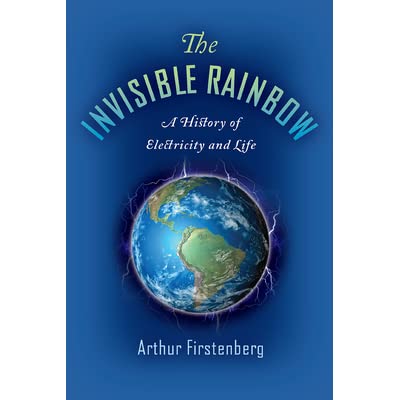
In his recently revised and updated book The Invisible Rainbow: A History of Electricity and Life, scientist Arthur Firstenberg has made both science and history comprehensible by explaining the importance and significance to life on Earth of a vital consideration that has long been ‘invisible’: electricity.

Indeed, as Firstenberg makes clear, if we want to understand life on Earth, we cannot do so without understanding the role that electricity plays in making life possible, healing it and, if abused, threatening us all.

Firstenberg’s book is unusual on at least two counts. Based on decades of scientific research, he carefully explains each point in language accessible to the non-scientist while documenting his case with exceptional clarity and detail complemented by a 138-page bibliography.

If you want to really understand this issue, and what is at stake, you will be doing yourself a favor by reading this book.

The Universe, Electricity and Life: In Brief

As Firstenberg’s subtitle promises, his book includes a history of electricity and its role in the Universe but particularly on Earth.

‘Almost all of the matter in the universe is electrically charged…. The stars we see are made of… charged particles in constant motion. The space between the stars and galaxies, far from being empty, teems with electrically charged subatomic particles, swimming in vast swirling electromagnetic fields, accelerated by those fields to near-light speeds. Plasma is such a good conductor of electricity, far better than any metals, that filaments of plasma – invisible wires billions of light-years long – transport electromagnetic energy in gigantic circuits from one part of the universe to another…. Under the influence of electromagnetic forces, over billions of years, cosmic whirlpools of matter collect along these filaments, like beads on a string, evolving into the galaxies that decorate our night sky.’

The Milky Way, the galaxy in which Earth is located, is a medium-sized spiral galaxy that is 100,000 light-years across; it rotates around its center every 250,000,000 earth years, generating around itself a galactic-size magnetic field. Filaments of plasma, 500 light-years long, generate additional magnetic fields.

Our sun, also made of plasma, sends out an ocean of electrons, protons and helium ions in a steady current called the solar wind. This wind bathes the Earth before diffusing out into the plasma between the stars.

The Earth, with its core of iron, rotates on its axis in the electric fields of the solar system and the galaxy, in turn generating its own magnetic field that traps and deflects the charged particles of the solar wind wrapping the Earth in an envelope of plasma called the magnetosphere. Some of the particles from the solar wind collect in layers we call the Van Allen belts where they circulate 600 to 35,000 miles overhead.

The sun also bombards the Earth with ultraviolet light and X-rays. In addition, atomic nuclei and subatomic particles (known as cosmic rays) shower the Earth from all directions as well. It is these cosmic rays from Space and the radiation emitted by uranium and other radioactive elements in Earth’s crust that provide the small ions that carry the electric currents that surround us in the lower atmosphere.

It is within this electromagnetic environment – a fairly constant vertical field averaging 130 volts per meter – that all life, including Homo Sapiens, evolved on Earth.

In fair weather, the ground beneath us has a negative charge and the ionosphere above us a positive charge. ‘Electricity courses through the sky far above us, explodes downward in thunderstorms, rushes through the ground beneath us, and flows gently back up through the air in fair weather.’ This happens in an endless cycle as about 100 bolts of lightning, each delivering a trillion watts of energy, strike the Earth every second.

Every living thing is part of this circuit. The current enters our heads from the sky, circulates through our meridians, and enters the earth through the soles of our feet. This current provides the energy for growth, healing, and life itself. See ‘Putting the Earth Inside a High-Speed Computer’.

The strength of the atmospheric electrical current is between 1 and 10 picoamperes (trillionths of an ampere) per square meter. Dr. Robert Becker found that 1 picoampere is all the current that is necessary to stimulate healing in frogs…. It is these tiny currents that keep us alive and healthy. See ‘Planetary Emergency’.

The fundamental point about all this is simple: The Earth is incredibly delicately balanced with a great many forces making up this balance and thus making life possible.

One of the many ways in which we have been disrupting this balance is by disturbing the global electrical circuit, that evolved over eons and sustains all life, without paying genuine and sincere attention to what we are doing and what this means for the Earth and all of its inhabitants, including us.

Given the profound implications of generating ‘electric pollution’, some might label this behaviour insane. It is certainly unaware.

Human-Generated Electricity on Earth

It was in 1746 that scientists were finally able to ‘capture’ electricity so that a start could be made on using it directly for human ends. Sure, the wider implications of its use were not considered but it offered opportunities not previously available. And when the damage from its use, on humans and other living organisms, started and then rapidly picked up pace, the association between the spread of electricity (particularly through the telegraph wires in the mid-nineteenth century and electric lighting a few decades later) and the adverse health and environmental impacts were not made, or ignored when they were. And so diseases not previously recorded in the medical literature started to appear: anxiety disorder, influenza, diabetes, heart disease and cancer.

But it wasn’t just us that was impacted; so were the other living organisms of our planet.

And now we are bathed in the 60-cycle current in our house-wiring; the ultrasonic frequencies in our computers, Wi-Fi routers and modems; the radio waves in our televisions; the microwaves in our cell phones and the electromagnetic radiation generated by everything from baby monitors to ‘smart’ devices of all kinds, as well as the vast network of satellites, transmission towers and power lines all endlessly but variably impacting, adversely, virtually every human being on Earth. And if 5G is deployed, there will be nowhere on Earth that is safe for humans, insects, birds, animals and plants.

We will have fundamentally altered the very conditions that made the evolution of life on Earth possible.

An exaggeration?

Here is the briefest sample of the damage existing human-generated electromagnetic radiation is causing life on Earth.

Forests

Apart from being logged mercilessly, burned down to create cattle or soy farms or palm oil plantations, destroyed by the endless proliferation of mining for various mineral resources including coal and oil, damaged by dam construction, wildlife poaching and the extraction of resources like rayon, viscose and modal to make clothing, and adversely impacted in many other ways, forests are being destroyed by electromagnetic radiation inflicted by humans. While acid rain and global warming have been blamed for much of the ‘forest die-off’ that has occurred over the past 40 years, the evidence that electromagnetic radiation has been the real, or at least primary, cause is rather overwhelming once the full circumstances of the damage are seriously investigated. While Firstenberg cites many very compelling examples, the case of the Amazon rainforest makes the point rather starkly.

In 2005, it was noticed that trees were dying without obvious cause. This has been blamed on global warming which caused an unusual drought in that year. However, on 27 July 2002, the US-financed and Raytheon-built System for Vigilance of the Amazon (SIVAM), a $US1.4 billion system of radars and sensors, began its monitoring activities in a two million square mile area of remote wilderness.

Ostensibly to deprive drug traffickers and guerrillas a safe haven, it also ‘required pretending that blasting the rainforest with radiation at levels that were unprecedented in the history of the world was of no consequence to the forest’s precious inhabitants, human or otherwise’. So the system’s ‘25 enormously powerful surveillance radars, 10 Doppler weather radars, 200 floating water-monitoring stations, 900 radio-equipped “listening posts”, 32 radio stations, 8 airborne state-of-the-art surveillance jets equipped with fog-penetrating radar, and 99 “attack/trainer” support aircraft’ can track individual human beings and ‘hear a twig snap’ anywhere in the Amazon.

Again, at the cost of electromagnetically damaging every living organism in the rainforest.

To reiterate though, the Amazon is not the only forest in the world adversely impacted by electromagnetic radiation with many studies examining the issue, wherever they are conducted, consistently revealing forest damage by electromagnetic radiation from civilian and military installations (and even recovery when, as happens occasionally, the local radiation stops).

Insects

In 1901, Marconi sent the world’s first long-distance radio transmission from the Isle of Wight, off the southern coast of England. By 1906 and now host to the greatest density of radio transmissions in the world, the island was almost empty of bees. ‘Thousands, unable to fly, were found crawling and dying on the ground outside their hives’. And healthy bees, imported from the mainland, began dying within a week of arrival. ‘Isle of Wight disease’ was then reported in European countries, South Africa, Australia and North America over following decades with almost everyone assuming it was infectious. Despite various suspected diseases and parasites accused over many decades, each was eventually ‘cleared’ of causing the problem.

But in the second half of the 1990s, the ‘disappearing bee’ problem again accelerated and acquired the name ‘colony collapse disorder’ in 2007 as bee populations were decimated in many parts of the world. And despite the resistance of beekeepers (who are largely convinced that infectious diseases are driving bee losses and that toxic pesticides are necessary to kill mites), some scientists were starting to investigate the impact of electromagnetic radiation on bees. The simplest experiments involved placing a cell phone inside a bee hive: ‘The results of such experiments, considering the complete denial by our society that wireless technology has any environmental effects at all, have been almost unbelievable.’

‘The quickest way to destroy a bee hive, investigators have found, is to place a wireless telephone inside it.’ Landmark research conducted originally in 2009 and then subsequently, which involved placing two cell phones in a hive for 30 minutes at a time every few days, demonstrated that electromagnetic fields interfere with cellular metabolism: bees practically could not metabolize sugars, proteins or fats and, as in humans but far more rapidly, their cells become oxygen starved. Three months, at this modest level of exposure, would destroy a hive.

One particularly nasty development that occurred in the (northern) Winter of 2006-2007 that is considered by some the likely immediate cause of the disastrous colony collapse disorder at the time, is that the US military’s HAARP – High-frequency Active Auroral Research Project – in Alaska reached full power with the installation of the last of its 180 antennas at that time. HAARP is the most powerful radio transmitter on Earth and ‘turned the ionosphere itself – the life-giving layer of sky to which every creature is tuned – into a gigantic radio transmitter’. Why? HAARP was being used for US military communications, particularly with submarines. Even in 1988, when HAARP was still being planned, physicist Richard Williams, a consultant to Princeton University’s David Sarnoff Laboratory, called the project ‘an irresponsible act of global vandalism’ given the power levels that were to be used.

In fact, according to other researchers, the HAARP project has also been used to research and develop electromagnetic weapons, such as directed energy beams. See ‘HAARP: Secret Weapon Used For Weather Modification, Electromagnetic Warfare’.

But whatever its functions, even though now transferred to the University of Alaska Fairbanks, Ulrich Warnke points out that the frequencies of HAARP superimpose unnatural magnetic fields on the natural resonant frequencies of the sky, the daily variations of which have not changed since life appeared on Earth. This is disastrous for bees because they ‘lose an orientation that served them for millions of years as a reliable indicator of the time of day’.

Of course bees are not the only insects adversely impacted by this recent human obsession with electromagnetic radiation. Experiments with other insects, such as ants and fruit flies, again simply using exposure to cell phones rather than any specialized equipment, revealed equally instructive results. A few minutes exposure for a few days, for example, dramatically reduced the reproductive success of the flies. And exposed to phones turned off, in standby mode and then turned on, ants displayed a variety of behaviors including leaving their nest and taking all of their eggs, larvae and nymphs with them.

As an aside, experiments of this nature also revealed ‘intensity windows’ of maximal effect. This means that ‘the greatest damage is not always done by the greatest levels of radiation. Holding your cell phone away from your head may actually worsen the damage.’ And even a cell phone that is turned off but has the battery in it, is ‘clearly and obviously dangerous’.

Birds

The disastrous effects of radio waves on birds were first noted in the 1930s. It was immediately obvious, for example, to diverse groups of people who worked with pigeons – those involved in pigeon racing and those still using pigeons for military communications – when the birds lost their way during the rapid expansion of radio broadcasting. But by the late 1990s, as cell phone towers proliferated and vastly greater numbers of birds were unable to fly home, pigeon-racing plummeted compelling pigeon-fanciers to revisit an issue they had earlier set aside. Unfortunately, it was too late. In 1998, shortly after Motorola’s launch of 66 Iridium satellites had begun providing the first cell phone service from Space, 90% of pigeons being raced in various locations in the United States over a two-week period vanished.

Of course, it is not just pigeon populations that are being decimated. Wherever dramatic bird population declines are being studied and electromagnetic radiation is considered as a possible factor (which is not always the case), the results usually reveal a link even if the damaging impact is variable.

If electromagnetic radiation totally disorients pigeons, how do migratory birds navigate? Often enough, they don’t. For example, in 2004, scientists at the University of Oldenburg in Germany were shocked to discover that migratory songbirds they had been studying were no longer able to orient themselves for their migratory journeys. Conducting a simple experiment – surrounding the aviaries of European robins with grounded aluminium sheeting to remove the influence of electromagnetic radiation – the immediate and positive impact ‘on the birds’ orientation capabilities was profound’, they noted in a study published in 2014.

One series of studies was conducted by wildlife biologist Alfonso Balmori Martínez in Spain for more than a decade from the 1990s, after noting the dramatic increase in leukemias, cancers, headaches, insomnia, memory loss, heart arrhythmias and acute neurological reactions suffered by people near a new installation of antennas adjacent to a local school. His subsequently published research revealed, among many other points, the following: kestrels vanishing from breeding sites after antennas for mobile telecommunications were installed, nest abandonment by storks near the radiation beams from telephone masts, rock doves dead near phone masts, plumage deterioration and locomotive problems in magpies at points highly contaminated with microwave radiation, and a dramatic decline in sparrow populations in irradiated areas, which matched a European-wide trend with, for example, sparrows in the UK declining by 75% between 1994 and 2002. Balmori’s conclusion was simple: ‘This coincides with the rollout of mobile telephony.’

One of the problems peculiar to birds, already identified by Canadian researchers in the 1960s, is that ‘feathers make fine receiving aerials for microwaves’.

By the way, have a ponder what happens when a bird (or animal, reptile, amphibian, fish or even insect, for that matter) is radio tagged so that its behavior can be monitored. It exposes the creatures to immediate radiation, in comparison to that from distant cell phone towers, thus adversely impacting their functioning and altering their behavior! Firstenberg characterized this procedure, politely in my view, as ‘scientific folly’. Other scientists have documented many serious, adverse impacts from radio tagging but the practice is far from over with most wildlife scientists simply assuming that tagging has zero impact.

Amphibians

The ongoing serious decline of frogs, toads, salamanders and other amphibians all over the world has been notable since at least the 1980s. Not something you think about?

Well, amphibians have been falling silent for a range of reasons but, once again, electromagnetic radiation is a key one. Notably, even iconic species, such as the famous and highly protected Golden Toad, named for its brightly colored skin and resident of the Monteverde Cloud Forest Preserve in Costa Rica, have gone extinct without any real fight to save them.

Puzzling to most scientists was the fact that amphibians have been vanishing even in ‘many pristine, remote environments that they thought to be unpolluted’. And they were pristine, except for the ‘invisible pollutant’ that permeated even these environments: electromagnetic radiation.

Needless to say, the usual range of scientific studies has long since proved that exposure of amphibians to electromagnetic radiation is ‘incompatible with [their] survival’.

As Firstenberg notes:

Environmentalists, for the most part, like the rest of modern humanity, have one terrific blindspot: they don’t acknowledge electromagnetic radiation as an environmental factor, and they are comfortable with placing power lines, telephone relay towers, cell towers, and radar stations in the middle of the most remote, pristine mountainous locations, never realizing that they are intensely polluting those environments.

The key question is this: Will humanity, and not just environmentalists, wake up to the threat posed by electromagnetic radiation in time?

Humans

In this brief review, I am not going to discuss the extensive evidence of the damage to human health caused by electromagnetic radiation. But there is not a significant, modern human disease – diabetes, ‘influenza’, cancer, heart disease, strokes, obesity… – and a host of other mental and physical ill-effects (including anxiety, memory loss, impaired motor function, attention-deficit, sleep disturbance, reduced lung capacity, higher white cell counts and headaches as well as a disturbed balance in the boy/girl birth ratio) that can be fully understood without understanding the impact of living in a disturbed electrical environment. Again, Firstenberg spells it out in gruesome detail.

However, to mention two brief examples: Firstenberg explains how electromagnetic radiation damages the mitochondria – thus inhibiting cellular metabolism – with disastrous consequences for those many individuals impacted. However, they are only rarely medically diagnosed as such. And the effects of radio waves on blood sugar are extremely well documented but none of this research has been done in the United States or western Europe.

As an aside, you might be interested to know that a large, rapid, qualitative change in the Earth’s electromagnetic environment has occurred six times in Earth’s history, as noted by Firstenberg: in 1889 power line harmonic radiation began (accompanied by the 1889 pandemic of influenza), in 1918 the radio era began (accompanied by the ‘Spanish’ influenza pandemic), in 1957 the radar era began (accompanied by the Asian flu pandemic), in 1968 the satellite era began (accompanied by the Hong Kong flu pandemic), and twice more coinciding with changes that you can read in the book.

Since a few months before the book was published in February 2020, however, the deployment of 5G technology has been proceeding in earnest, as discussed below. Interesting that during this time people have also been impacted by a ‘virus’ labeled COVID-19, don’t you think?

Anyway, as you probably guessed as well, electromagnetic radiation causes biological damage to fruit trees, crops, farm birds and animals too, with adverse implications for the human food supply (apart from the shocking impact from the mass killing of pollinators such as bees).

What is the State of Play Now?

Despite its enormous health hazards and implications for military violence, as well as its potential for intrusive surveillance, which is also extensively documented – see How Big Wireless Lobbied Governments to Build 5G for Citizen Data Collection and Surveillance – and the vulnerability of satellites to cyber attacks with potentially horrific consequences – see ‘Hackers could shut down satellites – or turn them into weapons’ – the deployment of 5G has begun. From the elite perspective, it is critical to implementation of the so-called fourth industrial revolution. See Techno-Tyranny: How The US National Security State Is Using Coronavirus To Fulfill An Orwellian Vision.

This means that the existing fleet of functional satellites orbiting Earth, which totaled 2,666 on 1 April 2020 – see ‘Satellite Database’ – but has already grown by a couple of hundred since then, will be vastly expanded to tens of thousands in the near future.

For example, the Elon Musk corporation SpaceX has already launched 538 satellites into Space and is planning to launch another 60 every two weeks into the ionosphere. See ‘538 Satellites and Counting’. Again: ‘The ionosphere is a source of high voltage that controls the global electric circuit, which in turn provides the energy for life.’

Moreover, on 26 May 2020 SpaceX filed an application with the Federal Communications Commission (FCC) in the USA for 30,000 ‘next-generation’ (‘Gen2’) satellites. ‘If and when [SpaceX’s] Starlink signs up millions of paying customers, it is possible that nothing will survive – no humans, no animals, and no insects. It is likely that it will be blamed on COVID-19, unless this world wakes up in time.’ See ‘Putting the Earth Inside a High-Speed Computer’.

But SpaceX is not the only satellite corporation although it has a large scheme compared to most of its major competitors, except OneWeb (UK/USA) which submitted a plan to the FCC in the USA on 27 May 2020 for 48,000 satellites.

Some other private corporations or government agencies that have satellite constellations they are planning to expand include Boeing (USA), Spire Global (Luxembourg, Scotland, USA), Iridium (USA), Orbcomm (USA), Globalstar (USA), Telesat (Canada), Eutelsat (Europe), the National Aeronautics and Space Administration’s (NASA) Earth Observing System (USA), the Pentagon’s Space Development Agency (USA) with plans for hundreds or potentially thousands of satellites in seven layers – see ‘National Defense Space Architecture (NDSA), Systems, Technologies, and Emerging Capabilities (STEC)’ – the Russian Satellite Communications Company, GLONASS (Russia) and the BeiDou Navigation Satellite System (China).

Yet other groups, such as Amazon, are planning major constellations – see ‘Amazon to offer broadband access from orbit with 3,236-satellite “Project Kuiper” constellation’ – and Facebook has an experimental satellite license.

In addition, the new corporation Lynk (USA) has been deploying ‘cell-towers-in-space’ satellites and boasts ‘We will connect all 5.2 billion mobile phones on the planet, everywhere.’ How? ‘Subscribers receive coverage from terrestrial towers when they have it and satellite towers when they need it, all from their existing phone.’

As has been noted before this, the slowly-evolving night sky that creatures from Earth have observed for billions of years will be rapidly obliterated in what will presumably be the first instance of astronomical pollution. Stars visible to the naked eye will vanish from view.

On 23 March 2020, the ‘Secure 5G and Beyond Act of 2020’ became law in the United States. See Secure 5G and Beyond Act of 2020. It’s purpose?

To require the President [within 180 days] to develop a strategy to ensure the security of next generation mobile telecommunications systems and infrastructure in the United States and to assist allies and strategic partners in maximizing the security of next generation mobile telecommunications systems, infrastructure, and software, and for other purposes.

So 5G technology is now being rapidly rolled out with elite agents in the telecommunications industry advertising bigger and faster downloads. They just don’t mention that it will kill us.

‘Why not?’ you might ask. ‘Won’t it kill them too?’

Yes, but they are insane which, in this case, means that their minds are incapable of paying attention to, and considering, the ‘big picture’ (including all of the ecological and social variables impacted by their decisions) because their focus is on limited imperatives, such as profit. This is why all of those scientific studies that have consistently exposed the extreme dangers of electromagnetic radiation over recent decades have not only been ignored but great effort, including through the corporate media, has been made to prevent public discussion of the impacts based on the knowledge in this research.

For brief explanations of this insanity, see ‘The Global Elite is Insane Revisited’ and ‘Love Denied: The Psychology of Materialism, Violence and War’ with fuller explanations in ‘Why Violence?’ and Fearless Psychology and Fearful Psychology: Principles and Practice.

This insanity is why the global elite, through its corporate and political agents, is endlessly manipulating us into fighting their wars – even dragging us to the brink of nuclear war – destroying the climate and the environment, driving the collapse of biodiversity, and generating a vast range of political, economic and social crises without ever considering the fundamental outcome – its deleterious impact on all life – of their behaviors. 5G is just the latest manifestation of this insanity.

Of course, all of these crises could be resolved if we were dealing with people who were sane. And if most of us were not readily distracted from paying attention to reality. See ‘The Disintegrated Mind: The Greatest Threat to Human Survival on Earth’.

Resisting the Deployment of 5G

Given the military and surveillance implications of 5G, if you think that governments are particularly concerned to investigate and consider the extensive evidence of the enormous hazards of 5G, you might find it sobering to read the dismissive three paragraphs given to the subject in the European Parliament’s official report on 5G. See 5G Deployment: State of Play in Europe, USA and Asia’.

The reality, as touched on just above, is that elite interests are shaping what happens. You still don’t think so?

In 2002, Gro Harlem Brundtland, the Director-General of the World Health Organization (WHO) and the former Prime Minister of Norway, ordered people entering her office in Geneva to not carry a cell phone. Why? Because cell phones gave her a headache. The following year Brundtland was no longer the Director-General of the WHO. ‘No other public officials have repeated her mistake.’ See The Invisible Rainbow: A History of Electricity and Life.

Nevertheless, the resistance to 5G is rapidly gaining pace with concerned scientists and activists setting the pace. For example, you can see a ‘List of Cities, Towns, Councils and Countries that have Banned 5G’.

And if you wish to join those resisting the deployment of 5G, options include signing the International Appeal: Stop 5G on Earth and in Space, supporting legal challenges such as this one in Denmark – see ‘State of Play and Danish Suing FiveG Network’ – and simply getting rid of your mobile (cell) phone. See ‘End Cellphones Here on Earth (ECHOEarth)’.

Moreover, if you wish, you can campaign strategically to halt the deployment of 5G. You can read a list of strategic goals, as well as how to develop a local strategy to prevent/halt the deployment of 5G, at Nonviolent Campaign Strategy.

Separately from this, if you would like to join the worldwide movement of people working to end all violence, you can do so by signing the online pledge of The Peoples Charter to Create a Nonviolent World.

Conclusion

So what is Arthur Firstenberg’s chilling conclusion?

‘You cannot contaminate the global electrical circuit with millions of pulsed, modulated electronic signals without destroying all of life.’

But, as outlined above, since ‘controlling’ electricity in 1746, humans have been increasingly contaminating the global electrical circuit and it has culminated in what will now be the final electromagnetic assault on Earth.

Which means that unless we can halt the launch of these 5G satellites and the rollout of the technology ‘on the ground’ we will be ‘destroying all of life’. And while some groups advocate measures to protect ourselves as individuals, inadequate though these must be in the unfolding circumstances, no amount of measures to individually protect ourselves from this electromagnetic radiation will protect ‘all of life’ in the wild.

According to Ross Adey, the grandfather of bioelectromagnetics and atmospheric physicist Neil Cherry, we are electrically tuned to the world around us and ‘the safe level of exposure to radio waves is zero’.

There is virtually no time left to understand and act powerfully on that knowledge. What will you do?


Biodata: Robert J. Burrowes has a lifetime commitment to understanding and ending human violence. He has done extensive research since 1966 in an effort to understand why human beings are violent and has been a nonviolent activist since 1981. He is the author of Why Violence? His email address is flametree@riseup.net and his website is here.


Four Reasons Civilization Won’t Decline: It Will Collapse

By Craig Collins

Source: CounterPunch

As modern civilization’s shelf life expires, more scholars have turned their attention to the decline and fall of civilizations past.  Their studies have generated rival explanations of why societies collapse and civilizations die.  Meanwhile, a lucrative market has emerged for post-apocalyptic novels, movies, TV shows, and video games for those who enjoy the vicarious thrill of dark, futuristic disaster and mayhem from the comfort of their cozy couch.  Of course, surviving the real thing will become a much different story.

The latent fear that civilization is living on borrowed time has also spawned a counter-market of “happily ever after” optimists who desperately cling to their belief in endless progress.  Popular Pollyannas, like cognitive psychologist Steven Pinker, provide this anxious crowd with soothing assurances that the titanic ship of progress is unsinkable.  Pinker’s publications have made him the high priest of progress.[1] While civilization circles the drain, his ardent audiences find comfort in lectures and books brimming with cherry-picked evidence to prove that life is better than ever, and will surely keep improving.  Yet, when questioned, Pinker himself admits, “It’s incorrect to extrapolate that the fact that we’ve made progress is a prediction that we’re guaranteed to make progress.”[2]

Pinker’s rosy statistics cleverly disguise the fatal flaw in his argument.  The progress of the past was built by sacrificing the future—and the future is upon us.  All the happy facts he cites about living standards, life expectancy, and economic growth are the product of an industrial civilization that has pillaged and polluted the planet to produce temporary progress for a growing middle class—and enormous profits and power for a tiny elite.

Not everyone who understands that progress has been purchased at the expense of the future thinks that civilization’s collapse will be abrupt and bitter.  Scholars of ancient societies, like Jared Diamond and John Michael Greer, accurately point out that abrupt collapse is a rare historical phenomenon.  In The Long Descent, Greer assures his readers that, “The same pattern repeats over and over again in history.  Gradual disintegration, not sudden catastrophic collapse, is the way civilizations end.”  Greer estimates that it takes, on average, about 250 years for civilizations to decline and fall, and he finds no reason why modern civilization shouldn’t follow this “usual timeline.”[3]

But Greer’s assumption is built on shaky ground because industrial civilization differs from all past civilizations in four crucial ways.  And every one of them may accelerate and intensify the coming collapse while increasing the difficulty of recovery.

Difference #1:  Unlike all previous civilizations, modern industrial civilization is powered by an exceptionally rich, NON-renewable, and irreplaceable energy source—fossil fuels.  This unique energy base predisposes industrial civilization to a short, meteoric lifespan of unprecedented boom and drastic bust.  Megacities, globalized production, industrial agriculture, and a human population approaching 8 billion are all historically exceptional—and unsustainable—without fossil fuels.  Today, the rich easily exploited oilfields and coalmines of the past are mostly depleted.  And, while there are energy alternatives, there are no realistic replacements that can deliver the abundant net energy fossil fuels once provided.[4]  Our complex, expansive, high-speed civilization owes its brief lifespan to this one-time, rapidly dwindling energy bonanza.

Difference #2:  Unlike past civilizations, the economy of industrial society is capitalist.  Production for profit is its prime directive and driving force.  The unprecedented surplus energy supplied by fossil fuels has generated exceptional growth and enormous profits over the past two centuries.  But in the coming decades, these historic windfalls of abundant energy, constant growth, and rising profits will vanish.

However, unless it is abolished, capitalism will not disappear when boom turns to bust.  Instead, energy-starved, growth-less capitalism will turn catabolic.  Catabolismrefers to the condition whereby a living thing devours itself.  As profitable sources of production dry up, capitalism will be compelled to turn a profit by consuming the social assets it once created.  By cannibalizing itself, the profit motive will exacerbate industrial society’s dramatic decline.

Catabolic capitalism will profit from scarcity, crisis, disaster, and conflict.  Warfare, resource hoarding, ecological disaster, and pandemic diseases will become the big profit makers.  Capital will flow toward lucrative ventures like cybercrime, predatory lending, and financial fraud; bribery, corruption, and racketeering; weapons, drugs, and human trafficking.  Once disintegration and destruction become the primary source of profit, catabolic capitalism will rampage down the road to ruin, gorging itself on one self-inflicted disaster after another.[5]

Difference #3:  Unlike past societies, industrial civilization isn’t Roman, Chinese, Egyptian, Aztec, or Mayan.  Modern civilization is HUMAN, PLANETARY, and ECOCIDAL.  Pre-industrial civilizations depleted their topsoil, felled their forests, and polluted their rivers.  But the harm was far more temporary and geographically limited. Once market incentives harnessed the colossal power of fossil fuels to exploit nature, the dire results were planetary.  Two centuries of fossil fuel combustion have saturated the biosphere with climate-altering carbon that will continue wreaking havoc for generations to come.  The damage to Earth’s living systems—the circulation and chemical composition of the atmosphere and the ocean; the stability of the hydrological and biogeochemical cycles; and the biodiversity of the entire planet—is essentially permanent.

Humans have become the most invasive species ever known.  Although we are a mere .01 percent of the planet’s biomass, our domesticated crops and livestock dominate life on Earth.  In terms of total biomass, 96 percent of all the mammals on Earth are livestock; only 4 percent are wild mammals.  Seventy percent of all birds are domesticated poultry, only 30 percent are wild.  About half the Earth’s wild animals are thought to have been lost in just the last 50 years.[6]  Scientists estimate that half of all remaining species will be extinct by the end of the century.[7] There are no more unspoiled ecosystems or new frontiers where people can escape the damage they’ve caused and recover from collapse.

Difference #4:  Human civilization’s collective capacity to confront its mounting crises is crippled by a fragmented political system of antagonistic nations ruled by corrupt elites who care more about power and wealth than people and the planet.  Humanity faces a perfect storm of converging global calamities.  Intersecting tribulations like climate chaos, rampant extinction, food and freshwater scarcity, poverty, extreme inequality, and the rise of global pandemics are rapidly eroding the foundations of modern life.

Yet, this fractious and fractured political system makes organizing and mounting a cooperative response nearly impossible.  And, the more catabolic industrial capitalism becomes, the greater the danger that hostile rulers will fan the flames of nationalism and go to war over scarce resources.  Of course, warfare is not new.  But modern warfare is so devastating, destructive, and toxic that little would remain in its aftermath.  This would be the final nail in civilization’s coffin.

Rising From the Ruins?

How people respond to the collapse of industrial civilization will determine how bad things get and what will replace it. The challenges are monumental.  They will force us to question our identities, our values, and our loyalties like no other experience in our history.  Who are we?  Are we, first and foremost, human beings struggling to raise our families, strengthen our communities, and coexist with the other inhabitants of Earth?  Or do our primary loyalties belong to our nation, our culture, our race, our ideology, or our religion?  Can we put the survival of our species and our planet first, or will we allow ourselves to become hopelessly divided along national, cultural, racial, religious, or party lines?

The eventual outcome of this great implosion is up for grabs.  Will we overcome denial and despair; kick our addiction to petroleum; and pull together to break the grip of corporate power over our lives?  Can we foster genuine democracy, harness renewable energy, reweave our communities, re-learn forgotten skills, and heal the wounds we’ve inflicted on the Earth?  Or will fear and prejudice drive us into hostile camps, fighting over the dwindling resources of a degraded planet?  The stakes could not be higher.

Notes.

[1] His books include: The Better Angels of Our Nature and Enlightenment Now: The Case for Reason, Science, Humanism, and Progress.

[2] King, Darryn. “Steven Pinker on the Past, Present, and Future of Optimism” (OneZero, Jan 10, 2019) https://onezero.medium.com/steven-pinker-on-the-past-present-and-future-of-optimism-f362398c604b

[3] Greer, John Michael.  The Long Descent (New Society Publishers, 2008): 29.

[4] Heinberg, Richard. The End Of Growth. (New Society, 2011): 117.

[5] For more on catabolic capitalism see: Collins, Craig. “Catabolism: Capitalism’s Frightening Future,”CounterPunch (Nov. 1, 2018). https://www.counterpunch.org/2018/11/01/catabolism-capitalisms-frightening-future/

[6] Carrington, Damian. “New Study: Humans Just 0.01% Of All Life But Have Destroyed 83% Of Wild Mammals,” The Guardian (May 21, 2018). https://www.theguardian.com/environment/2018/may/21/human-race-just-001-of-all-life-but-has-destroyed-over-80-of-wild-mammals-study

[7] Ceballos, Ehrlich, Barnosky, Garcia, Pringle & Palmer. “Accelerated Modern Human-Induced Species Losses: Entering The 6th Mass Extinction,” Science Advances. (June 19, 2015). http://advances.sciencemag.org/content/1/5/e1400253

Our Vanishing World: Oceans

By Robert J. Burrowes

As the human onslaught against life on Earth accelerates, no part of the biosphere is left pristine. The simple act of consuming more than we actually need drives the world’s governments and corporations to endlessly destroy more and more of the Earth to extract the resources necessary to satisfy our insatiable desires. In fact, an initiative of the World Economic Forum has just reported that ‘For the first time in history, more than 100 billion tonnes of materials are entering the global economy every year’ – see ‘The Circularity Gap Report 2020’ – which means that, on average, every person on Earth uses more than 13 tonnes of materials each year extracted from the Earth.

As I have explained elsewhere, however, the psychological damage we have all suffered, which leaves us with unmet but critically important emotional needs (and, in many cases, the sense that our lives are meaningless), cannot be rectified by material consumption. Despite this, most of us will spend our lives engaged in a futile attempt to fill the aching void in our psyche by consuming and accumulating, at staggering cost to the Earth. Identifying when we have ‘enough’ is a capacity that most modern humans have never acquired for reasons that can be easily explained. See ‘Love Denied: The Psychology of Materialism, Violence and War’.

Hence, our world continues to vanish, as has been extensively documented. For a summary, see ‘Human Extinction Now Imminent and Inevitable? A Report on the State of Planet Earth’.

And nowhere is this more evident than in the planet’s oceans, which are being systematically destroyed and where life is being progressively extinguished.

In fact, our destruction of the oceans is now so advanced that the fish, mammals (including seals, whales, manatees, sea otters and polar bears), crustaceans (including crabs, lobsters, crayfish, shrimps, prawns, krill and barnacles), coral reefs (made up of coral polyps, marine invertebrate animals that live in colonies) and the millions of species that live in and around them (including sponges, mollusks, sea anemones, seahorses, sea turtles as well as crustaceans and an enormous variety of fish), plants (such as algae, seaweed and seagrass), microscopic organisms (residing in the ocean and on the ocean floor), invertebrates (such as sea urchins and sea slugs), birds (including better known ones such as penguins, auks, murres, razorbills, puffins, tubenoses – such as the albatross and petrels – pelicans and gulls and a great many species that are less well known), and the other lifeforms that live in and on the ocean are vanishing rapidly.

Starkly illustrating the catastrophic nature of what is taking place, one recent incident alone killed 100 million Pacific cod. See ‘Ocean heat waves like the Pacific’s deadly “Blob” could become the new normal’. But, tragically, such incidents are no longer unusual and, of course, they generate cascading impacts. See, for example, ‘Fish all gone!… Millions of small sea birds died since 2015’.

‘How can we destroy the oceans?’ you might ask. Unfortunately, far too easily when you consider the range of assaults to which they are being subjected.

So let me give you a brief 18-point outline of what we are doing that is destroying the oceans – where life on Earth originated and which remains the planet’s main life support system by dominating the processes that keep our planet habitable such as regulating the climate by absorbing excess carbon dioxide and heat – while also giving you some idea of the impacts of this on the creatures that live in and on the oceans.

As a result of human activities that generate carbon emissions, we are dumping ever-increasing amounts of carbon dioxide into the oceans which have absorbed 20–30% of total anthropogenic emissions in the last two decades. This is causing the oceans to warm, acidify and lose oxygen, among several other adverse outcomes. See ‘The Ocean and Cryosphere in a Changing Climate: A Special Report of the Intergovernmental Panel on Climate Change’. p. 450. These adverse changes, in turn, generate a range of ‘downstream’ negative impacts. However, there are other human activities unrelated to carbon emissions that are destroying the oceans too.

So here is the summary.


  1. The oceans are warming.

In relation to warming, the oceans have been heating up for several decades and, since 2005, the increase has been unchecked. Moreover, it is occurring at all ocean depths, including in the deep ocean (below 2,000 metres). In addition, the rate of warming has been increasing and the rate of ocean uptake of atmospheric CO2 has continued to strengthen in the last two decades in response to the increasing concentration of CO2 in the atmosphere. This is causing the upper ocean to stratify making the surface ocean less dense over time, compared to the deeper ocean, and inhibiting the exchange between surface and deep waters.

As one result of this ocean warming, the range of some species has expanded and, in the case of tropical species that have expanded into higher latitudes, it has led to increased grazing on some coral reefs, rocky reefs, seagrass meadows and epipelagic (near-surface) ecosystems, leading to altered ecosystem structure.

Ocean warming has also contributed to changes in the biogeography of organisms ranging from phytoplankton to marine mammals, consequently changing community composition, and in some cases, altering interactions between organisms. The net outcome is an adverse impact on marine organisms and fisheries with serious implications for human communities and food production.

Ocean warming is also manifesting in a range of diverse and unpredicted ways with one of the more catastrophic aberrations, touched on above, being the occurrence of ‘blobs’: huge patches of unusually warm ocean water that can be millions of square kilometres in size. These ‘marine heatwaves’ wreak havoc, sometimes killing millions of ocean creatures in a single incident (including by disturbing food chains), forcing others to relocate, and perhaps generating unusual blooms of toxic algae. See ‘Ocean heat waves like the Pacific’s deadly “Blob” could become the new normal’.

Among its other impacts, the warming oceans mean there is more available energy that can be converted into cyclonic winds. Research on this subject indicates that there has been ‘an increase in intense hurricane activity over the past 40 years’. See ‘Hurricanes and Climate Change’ and Changes in Tropical Cyclone Number, Duration, and Intensity in a Warming Environment. These events cause landslides, collapses in fisheries, and damage to reefs and shallow-water habitats. When they impact on coastal communities, they kill people and destroy properties, among other outcomes. See ‘The state of our oceans – The damaging effects of ocean pollution’.

Warming oceans also cause coral bleaching. This is because corals have algae that live in their tissues and these algae provide the coral with essential nutrients and give them their color. The warming oceans cause this relationship to become stressed, forcing the algae out of the coral. As a result, the coral becomes white, loses its main food source, and becomes more vulnerable to disease. See ‘Coral Bleaching’.

Warmer ocean water causes sea level rise too because warmer water has a greater volume than colder water. Of course, sea level rise also occurs because of the additional water from melting land ice and a devastating level of rise from this cause is already ‘locked in’ because of past emissions. See ‘Sea Level Rise!’

Ocean warming and increased stratification disturb ocean nutrient cycles and this is having a regionally variable (but usually adverse) impact on many species too.

And finally, ocean warming – most likely from ice loss in the Arctic – is weakening the Atlantic Meridional Overturning Circulation (AMOC) which is one of the key drivers of global ocean circulation; it includes the Gulf Stream that transports warm and salty tropical waters north to the western coasts of Europe where the warm water releases heat to the atmosphere, playing a key role in the warming of western Europe and thus its functional habitability. Once the tropical water reaches the south and east of Greenland, it cools before sinking to the base of the North Atlantic Ocean because it is saltier and thus denser than the surrounding fresh water. The water is then pushed south along the abyss of the Atlantic Ocean completing what has been, from a human viewpoint, a perpetual cycle. See Arctic sea-ice decline weakens the Atlantic Meridional Overturning Circulation and Global Ocean Circulation Appears To Be Collapsing Due To A Warming Planet’. How much longer it will be so appears to defy reliable scientific assessment. But as it breaks down, the adverse outcomes multiply rapidly.

In fact, ocean circulation generally is being impacted by the warming climate, as established by a recently concluded study:

Ocean circulation plays a vital role in regulating the weather and climate and supporting marine life…. Here, we show for the first time, independent satellite observational evidence demonstrating that the large-scale ocean gyres are moving poleward during the past four decades. Further analysis based on climate models and various other data sets reveal that the poleward shifting of the ocean gyre circulation is most likely to be a consequence of global warming, which so far has not been well recognized by the public and the scientific community…. Such changes have had disastrous consequences…. See Poleward shift of the major ocean gyres detected in a warming climate.


  1. The oceans are becoming more acidic.

In response to the increasing carbon uptake the oceans are also becoming more acidic. This has probably been the case for three-quarters of the near-surface open ocean since prior to 1950 and it is very likely that over 95% of the near surface open ocean has now been affected. See ‘The Ocean and Cryosphere in a Changing Climate: A Special Report of the Intergovernmental Panel on Climate Change’. p. 450.

In a stark warning issued by the International Programme on the State of the Ocean (IPSO) in 2013, scientists had already noted that the oceans are becoming more acidic at the fastest rate in 300m years. Why? Because of carbon dioxide emissions from burning fossil fuels. ‘This [acidification] is unprecedented in the Earth’s known history. We are entering an unknown territory of marine ecosystem change, and exposing organisms to intolerable evolutionary pressure. The next mass extinction may have already begun.’ See ‘Rate of ocean acidification due to carbon emissions is at highest for 300m years’.

In its latest report, issued in 2018, IPSO declared the following: ‘The ocean, by its breadth and depth, occupies more than 97% of the living space on Earth. It dominates the processes that keep our planet habitable…. But this protection comes at a cost as the ocean is now becoming more acidic…. For too long we have mistaken the immensity of the ocean for inviolability, but those days are gone, and we stand at a critical juncture. Cutting emissions, while essential, will not alone solve the environmental problems we face.’ See ‘Eight urgent fundamental and simultaneous steps needed to restore ocean health, and the consequences for humanity and the planet of inaction or delay’.


  1. The oceans are deoxygenating.

Oxygen in the air or water is of paramount importance to most living organisms. Unfortunately, as a recent report documents in considerable detail (and which confirms earlier research), oxygen levels are currently declining across the ocean (and not just in the more widely known ocean ‘dead zones’: see below). See ‘Ocean deoxygenation: Everyone’s problem. Causes, impacts, consequences and solutions’.

Deoxygenation of the ocean is the result of two overlying causes – eutrophication (the process by which a body of water becomes overly enriched with minerals and nutrients thus inducing excessive growth of algae which absorb the oxygen at the expense of the water body) as a result of nutrient run-off from land and deposition of nitrogen from the burning of fossil fuels, as well as the heating of ocean waters as another outcome of burning fossil fuels, primarily causing a change in ventilation with the overlying atmosphere so that the oceans hold less soluble oxygen (and which is compounded by reduced ocean mixing and changes in currents and wind patterns). Ocean deoxygenation is but the latest consequence of our activities on the ocean to be recognized and is yet another ‘major stressor’ on marine systems.

Eutrophication has been identified as a problem in 900 separate areas of the ocean, with 700 of these suffering hypoxia (low oxygen) as a result. But because ocean warming lowers oxygen directly, it is now impacting vast areas of the ocean as well. As a result, ‘the ocean has now become a source of oxygen for the atmosphere even though its oxygen inventory is only about 0.6% of that of the atmosphere’. Moreover, different analyses have concluded that global ocean oxygen content has decreased by 1-2 % since the middle of the 20th century. Given existing trends in the factors driving this change, the rate of loss must accelerate.

Obviously, the future intensification and expansion of low oxygen zones will have further adverse ecosystem and biogeochemical consequences, particularly in combination with, and sometimes synergistically with, other threats. For example, ‘ocean warming accompanied by deoxygenation will drive habitat contraction and fragmentation in regions where oxygen levels decline below metabolic requirements’.


  1. The oceans are being contaminated with nuclear radiation.

Despite an extensive and ongoing coverup by the Japanese government and nuclear corporations as well as the International Atomic Energy Agency (IAEA), vast amounts of radioactive waste are being dumped into the biosphere from the TEPCO nuclear power plant at Fukushima in Japan including by discharge into the Pacific Ocean. This is killing an incalculable number of fish and other marine organisms and indefinitely contaminating expanding areas of that ocean. See ‘Fukushima: A Nuclear War without a War: The Unspoken Crisis of Worldwide Nuclear Radiation’, ‘2019 Annual Report – Fukushima 8th Anniversary’, ‘Eight years after triple nuclear meltdown, Fukushima No. 1’s water woes show no signs of ebbing’ and ‘Fukushima’s Three Nuclear Meltdowns Are “Under Control” – That’s a Lie’.

In addition, one critical legacy of the US military’s 67 secretive and lethal nuclear weapons tests on the Marshall Islands between 1946 and 1958 is the ‘eternally’ radioactive garbage left behind and now leaking into the Pacific Ocean. See ‘The Pentagon’s Disastrous Radioactive Waste Dump in the Drowning Marshall Islands is Leaking into the Pacific Ocean’.

And, of course, there are up to 70 ‘still functional’ nuclear weapons as well as nine nuclear reactors lying on the ocean floor as a result of accidents involving nuclear warships and submarines. These are leaking an unknown amount of radiation into the oceans. See ‘Naval Nuclear Accidents: The Secret Story’, ‘A Nuclear Needle in a Haystack: The Cold War’s Missing Atom Bombs’ and, for one specific example (the former Soviet submarine Komsomolets), see ‘Soviet nuclear submarine emitting radiation “100,000 times normal level” into sea, scientists find’.


  1. The oceans are being contaminated as a result of offshore oil and gas drilling, as well as oil spills.

The complex but far-from-perfect technologies and the many environmental challenges associated with oil and gas drilling in the ocean have ensured the near-routine occurrence of often disastrous accidents which invariably lead to fossil fuels and other contaminants being discharged into the ocean, sometimes on a vast scale.

The classic case, of course, was the BP-leased Deepwater Horizon rig which had drilled a well to 35,055 feet (10 kilometers) while operating in 4,130 feet (1 kilometer) of water. The oil rig exploded and sank in the Gulf of Mexico on 20 April 2010 releasing 5 million barrels of oil into the ocean making it the worst environmental disaster in US history. It caused extensive damage to the ocean, corals and beaches and killed millions of fish, birds and marine mammals in and on the ocean. Despite a ‘clean up’, only one quarter of the oil was ever removed from the ocean. See ‘The Dangers of Offshore Drilling’.

The simple reality is that despite the industry’s safety claims, oil rig fires are commonplace. See ‘Why Is Offshore Drilling So Dangerous?’

And so are oil spills into the ocean for other reasons, including from tankers – see ‘Top 10 Worst Oil Spills’ – as the Exxon Valdez disaster in 1989 demonstrated all too graphically. See ‘The Complete Story of the Exxon Valdez Oil Spill’.

Often enough as well, oil is discharged into the ocean as a result of military activities and war. During the Gulf War in 1991, for example, vast quantities of oil were released into the Persian Gulf as a military tactic. See ‘The World’s Largest Oil Spill: The Gulf War Kuwait, 1991’ and Gulf War Oil Disaster: A Brief History’.


  1. The oceans are being damaged by deep sea mining.

Recent technological advances spurred by growing demand for minerals used in consumer electronics has led to increased interest in deep sea mining as the next frontier in resource extraction. Hailed as the new ‘global gold rush’, deep sea mining entails extracting minerals from deposits in the deep sea (approximately 400 to 6,000 meters below sea level) for use in emerging and high technology, among other sectors. Predictably, deep sea mining shares many features with past resource scrambles, including a general disregard for environmental and social impacts, and the marginalization of indigenous peoples and their rights. See ‘Broadening Common Heritage: Addressing Gaps in the Deep Sea Mining Regulatory Regime’ and ‘Deep-sea mining possibly as damaging as land mining, lawyers say’.

Beyond these adverse impacts, however, recent research makes it increasingly clear that deep sea mining poses a grave threat to vital seabed functions, including those played by hydrothermal vents and cold seeps, for example, which support remarkable biodiversity and sequester disproportionate amounts of carbon. Moreover, recent scientific breakthroughs have further revealed that most of the excess heat resulting from increased atmospheric concentrations of greenhouse gases has been absorbed by the deep ocean, thereby significantly limiting the climate catastrophe’s impacts on the ocean’s surface and on land. See ‘Deep sea ecology: hydrothermal vents and cold seeps’ and ‘Broadening Common Heritage: Addressing Gaps in the Deep Sea Mining Regulatory Regime’.

In essence, deep sea mining threatens the ‘common heritage’ the seabed provides through its substantial contributions to biodiversity, climate regulation and heat storage.


  1. The oceans are being polluted with industrial (including chemical) and farming wastes including pesticides and fertilizers which are generating ‘dead zones’, regions of the oceans that are devoid of life.

Despite the existence of the ‘Convention on the Prevention of Marine Pollution by Dumping of Wastes and other Matter’ (otherwise known as the London Dumping Convention, 1972), an international treaty ‘that created a global system to protect the marine environment from pollution caused by ocean dumping’ – and certainly including radioactive wastes, fossil fuels, some toxic wastes, biological and chemical warfare agents, and persistent synthetic materials such as plastic – and supposedly ‘ensures that the few materials that are permitted for ocean disposal are carefully evaluated to make sure that they will not pose a danger to human health or the environment’ – see ‘1972 Prevention of Marine Pollution by Dumping of Wastes and Other Matter (London Convention)’ – the Convention must be one of the least comprehensive and most violated in international law. In any case, there is no evidence that it has any restraining impact on the actions of states or corporations as the evidence above and below demonstrates.

For example, a vast runoff of industrial wastes (including heavy metals), agricultural poisons, fossil fuels and other wastes is discharged into the ocean, adversely impacting life at all ocean depths – see ‘Staggering level of toxic chemicals found in creatures at the bottom of the sea, scientists say’ – and, as noted above, generating ocean ‘dead zones’ (of which there are many hundred): regions that have too little oxygen to support marine organisms. See ‘Ocean Dead Zones Are Getting Worse Globally Due to Climate Change’ and ‘Ocean “dead zones” are spreading – and that spells disaster for fish’.


  1. The oceans are being polluted by nitrogen.

While nitrogen is vital to the health of the ocean, like everything else that makes up the ocean, it must be in balance, not fluctuating beyond very narrow parameters. See ‘Understanding nitrogen’s role in the ocean’.

But it is now well past the point when this state has been the case.

This is because nitrogen is one important element of the industrial and agricultural pollution just mentioned. It is the nitrogen component in the runoffs of these wastes (such as fertilizers and sewage) into the ocean that causes harmful algal blooms, eutrophication and ocean dead zones (hypoxia) while making marine life more vulnerable to disease, reducing biodiversity in shallow estuarine waters, degrading ocean ecosystems and contributing to global warming. ‘Algal blooms deplete dissolved oxygen, causing marine wildlife to suffer and become more vulnerable to toxins and disease. Nitrogen in the blooms also produces nitrous oxide (N20), a greenhouse gas far more potent than carbon dioxide. This contributes to global warming, which further degrades oceans by increasing acidity in the water as the oceans absorb more and more carbon.’ See ‘Stop Nitrogen Pollution of Oceans – Green Algal Slime Busters’.


  1. The oceans are being polluted with discharges from warships, commercial shipping and cruise ships: bilge water, ballast water, sewage, graywater and general rubbish.

Despite the 1973 International Convention for the Prevention of Pollution from Ships, known as the MARPOL Convention, which has been routinely added to over subsequent years and gives the impression of being comprehensive, there is obviously little interest in abiding by the terms of the Convention and little evidence that most ship crews do so. Moreover, given that many provisions of the Convention focus on minimizing discharges within 12 nautical miles of land, that leaves a great deal of ocean into which such discharges can be done legally even if disposal of plastics beyond the 12 mile limit remains illegal.

In addition, while the MARPOL Convention was theoretically designed to minimize releases by both operational and accidental causes, laws do not prevent accidents as the long list of oil tanker accidents, touched on above, such as that of the Odyssey in 1988, the Exxon Valdez in 1989 and the Haven in 1991, resulting in massive oil discharges into the ocean reminds us. See, for example, ‘Top 10 Worst Oil Spills’.

But the law is violated deliberately in any case. Bilge water – a filthy, oily mess of fresh water, seawater, chemicals, oil, sludge, and other fluids from a ship – is found at the very bottom of the ship where the two sides of the hull meet. Seawater is pumped into large ships to cool their engines and as the water moves through the cooling system it picks up loose oil and waste from the engine and this, together with oil drips from the pipes and machinery fittings, ends up in the bilge well of the ship. See ‘What is Bilge Water?’

However, despite the MARPOL Convention, across the world many oceangoing vessels break these international laws and empty their untreated bilge water into the ocean. For example, in 2016 Princess Cruises, one of 10 brands owned by Carnival Corporation, the world’s largest cruise holiday company, was fined £32million for bypassing oil treatment systems on their vessels, deliberately and illegally dumping thousands of gallons of oil and waste off the UK coast. See ‘Cruise line fined £32m for using “magic pipe” to dump oily waste into UK waters’.

And while we are on cruise ships, of which there are more than 300 carrying half a million passengers annually – see ‘2018 Worldwide Cruise Line Passenger Capacity’ – the glossy advertising brochures do not tell you the extraordinary downside of this holiday/travel option which, among many other problems, are an ecological nightmare for our oceans. Altogether, the 16 major cruise lines generate over one billion gallons of sewage each year, much of it raw or poorly treated and simply discharged into the ocean. And apart from the carbon emissions (with one cruise ship producing 13 million cars worth of CO2 each day) and the oily bilge water, grey water and various other pollutants are a concern both while at sea and docked in port. See ‘16 Things Cruise Lines Never Tell You’.

And while some shipwrecks are a source of fascination for scuba divers and treasure hunters, the vast bulk of the estimated 3 million shipwrecks, particularly more recent ones, are just more junk (or even sources of contamination) in the ocean. See ‘How Many Shipwrecks Are There?’


  1. The oceans are being used as a vast rubbish dump, resulting in such phenomena as the Great Pacific Garbage Patch.

We are making the oceans a rubbish dump for vast quantities of pollutants and contaminants, ranging from plastic, microplastics, microbeads and microfibers to toxic and radioactive wastes.

In relation to plastic, a major scientific study involving 24 expeditions conducted between 2007 and 2013, which was designed to estimate ‘the total number of plastic particles and their weight floating in the world’s oceans’ the team of scientists estimated that there was ‘a minimum of 5.25 trillion particles weighing 268,940 tons’. See ‘Plastic Pollution in the World’s Oceans: More than 5 Trillion Plastic Pieces Weighing over 250,000 Tons Afloat at Sea’ and ‘Full scale of plastic in the world’s oceans revealed for first time’.

Since then, of course, the problem has become progressively worse with vast quantities of plastic (entangled in other garbage) forming into floating garbage patches that are vast in size. See ‘Plastic Garbage Patch Bigger Than Mexico Found in Pacific’ and ‘Plastic Chokes the Seas’.

Furthermore, a recent UN report documenting marine debris – that is, rubbish in the ocean – noted the increasing number of marine species impacted by debris through ingestion and entanglement and provided further information on the types of impacts occurring, particularly with respect to microplastics and their physical and chemical effects. The report paid particular attention to ‘persistent, bio-accumulative and toxic substances’ (PBTs), noting the recent studies of the presence of toxic chemicals derived from plastics in marine taxa in a separate appendix. See ‘Marine Debris: Understanding, Preventing and Mitigating the Significant Adverse Impacts on Marine and Coastal Biodiversity’.

Another article highlights the now ubiquitous nature of the ocean garbage problem: There is rubbish everywhere, literally. See ‘How an Uninhabited Island Got the World’s Highest Density of Trash’.

‘Does it matter?’ you might ask. According to a UN report, it matters a great deal: marine debris is harming an increasing number of species, now more than 800, and previous research places the cost of pollution caused by marine debris at $13 billion annually. See ‘New UN report finds marine debris harming more than 800 species, costing countries millions’.


  1. The oceans are being overfished and illegally fished.

Apart from the destruction wrought by aquaculture, considered in the next section, the world’s oceans are being plundered mercilessly for remaining fish stocks. In 2017, a report from the United Nations Conference on Trade and Development (UNCTAD) noted that ‘The international community is harvesting fish at unsustainable biological levels. The Mediterranean Sea is about 70 per cent exploited; the Black Sea 90 per cent.’ Of course, the fact that the fishing industry is subsidized to the tune of $US35billion annually (more than one-fifth of the annual fish market of $US150billion) adds enormous additional incentive to fish the world’s oceans. Needless to say, these subsidies facilitate ‘a race to the bottom’ as fishing fleets compete to harvest increasing amounts of fish ‘at a time when seafood is already a scarce resource’. See ‘Next month’s ocean conference eyes cutting $35 billion in fisheries subsidies – UN trade officials’.

Unfortunately too, despite supposed ambitions to end illegal, unreported and unregulated (IUU) fishing methods, the annual value of fish caught these ways is estimated at $US23billion. See ‘More Plastic than Fish or How Politicians Help Ocean Destruction’.

In essence, with a global fishing fleet of 4.6 million vessels, massive government subsidies to encourage over-fishing, virtually nothing done to prevent illegal and unregulated fishing, and almost half the human population relying on fish for an adequate diet, the increasing biological unsustainability of fishing is destined, particularly when considered in conjunction with other threats mentioned above and below, to wreak ongoing havoc on fish populations (as well as species caught incidentally as ‘bycatch’) until the oceans are emptied of fish.

Moreover, given the ever-neglected synergistic impacts of the many threats discussed in this article, as well as the inevitably increasing number of incidents – such as the ‘blob’ that suddenly killed 100 million Pacific cod mentioned above – this can now happen very quickly.

Of course, it is not just fish that are being taken from the ocean. Many other species are heavily impacted too.

Whales have been hunted mercilessly for a very long time with the total number in the ocean reduced from about 5 million 500 years ago to about 1 million now. This has caused enormous damage to the ocean but also the biosphere as a whole given the prodigious capacity of whales to sequester carbon, for example. See ‘How Whales Sequester Tonnes of CO2: Our Secret Weapon against Climate Change’. Apart from the ongoing hunting – see ‘Iceland is killing fin whales for Japanese pet treats’ – whales are now killed by many other human activities ranging from entanglement in discarded fishing gear and consumption of plastic – see ‘Plastic Waste Kills Six-Ton Whale’ – to seismic airguns which are a probable cause of beach strandings – see ‘337 Dead Whales In Chile Is Worst Case Of Mass Deaths So Far’ – as explained below.

And sea otters – which play a vital role in maintaining the health of the ocean’s kelp forests by eating the sea urchins that eat the kelp – have also been mercilessly slaughtered in vast numbers for their fur pelts in the past. More recently, however, they are being hunted by killer whales which have changed their diet to include otters because their main food source, the great whale, has been almost entirely wiped out by commercial hunting. See ‘Sea Otters as Habitat Protectors’.


  1. The oceans are being subjected to destructive fishing practices, such as bottom trawling, blast fishing, cyanide fishing, ghost fishing and aquaculture.

Some fishing methods are so destructive that they cause harm to the ocean environments where fish are caught. ‘Bottom trawling’ is one such practice: it involves fishing boats dragging large, heavy nets along the ocean floor and it is practiced on a huge scale all around the world. Blast fishing involves the use of explosives and cyanide fishing uses poison.

Damage to the surrounding ocean – including corals, sponges, and other organisms living on the seabed – is inevitable ‘collateral damage’ to these types of fishing. See ‘The state of our oceans – The damaging effects of ocean pollution’.

But if you think the above fishing practices are bad, consider ‘ghost fishing’: the damage done by the (at least) 640,000 tonnes of fishing gear that is lost or abandoned in the oceans each year. Official estimates indicate that ‘ghost gear’ makes up 10% of waste in the oceans. Moreover, while it has an enormous adverse impact on ocean life, derelict gear also detrimentally alters seabed and marine environments. See ‘Our oceans are haunted: How “ghost fishing” is devastating our marine environments’ and ‘Ghost Fishing? 640,000 Tonnes of Fishing Gear Dumped in Oceans Every Year’.

And if the existing overfishing and illegal fishing are not doing enough damage to Earth’s oceans, every year 80 million tons – almost half of annual seafood consumption – is produced by ‘aquaculture’: an industry that builds floating cages for salmon, artificial ponds for prawns on the coasts, and tanks for seafood in factory buildings – that is, aquatic factory farms. Of course, aquaculture is not the solution to overfishing: it is worsening the problem. ‘Trawler fleets sweep up vast quantities of wild fish and grind them into fishmeal and fish oil to feed farmed fish. Far from being “sustainable”, this is an incredibly inefficient and wasteful process: it takes up to five kilos of edible fish such as anchovies, mackerels or sardines, for example, to produce a single kilo of salmon.’

Moreover, as traditional stocks of species used to make fishmeal and fish oil collapse, the industry becomes less discriminating in its selection of targeted species and frequently includes juveniles as well as rare and endangered species, including turtles, stingrays and sharks. Predictably investigators researching the problem ‘did not have to dig deep to uncover shocking evidence of how this industry is trashing the oceans, but the full scale of its impacts is concealed from public view’. See ‘Fishing for Catastrophe: How global aquaculture supply chains are leading to the destruction of wild fish stocks and depriving people of food in India, Vietnam and The Gambia’, ‘Stop plundering the oceans for industrial aquaculture!’ and ‘Until the Seas Run Dry: How industrial aquaculture is plundering the oceans’.

Another problem with aquaculture is the way in which disease and parasites can spread among the intensively-farmed fish with, for example, the sea louse causing enormous problems among farmed salmon in Scotland, Norway, and Canada reducing the amount of fish produced by tens of thousands of tons per year and causing increasingly drastic – that is, inhumane and environmentally harmful – responses to be attempted. See ‘Salmon farming in crisis: “We are seeing a chemical arms race in the seas”’.

But disease and parasites can spread from the intensively farmed fish to wild populations too and, for example, this is causing populations of wild salmon and trout to decrease. See ‘The state of our oceans – The damaging effects of ocean pollution’.


  1. The oceans are being damaged by sand mining.

The largest mining endeavour on Earth, accounting for 85% of all mineral extraction, is sand mining. See ‘The Hidden Environmental Toll of Mining the World’s Sand’. However, one study has suggested that existing figures ‘grossly underestimate global sand extraction and use’ because official statistics widely under-report sand use and typically ‘do not include nonconstruction purposes such as hydraulic fracturing and beach nourishment’. See ‘Global Patterns and Trends for Non‐Metallic Minerals used for Construction’ and ‘The world is facing a global sand crisis’.

More problematically than inaccurate official statistics, however, is that sand mining, of all mining activity, is ‘the least regulated, and quite possibly the most corrupt and environmentally destructive.’ See ‘The Hidden Environmental Toll of Mining the World’s Sand’.

Why is sand mined? Sand is mainly used for the concrete that goes into building but it is also a key ingredient for roads, glass and electronics. In addition, massive amounts of sand are mined for land reclamation projects, shale gas extraction and beach renourishment programs. See ‘A looming tragedy of the sand commons’ and ‘The world is facing a global sand crisis’.

Of course, not all of this sand comes from the oceans but plenty of it does. Moreover: ‘As land quarries and riverbeds become tapped out, sand miners are turning to the seas, where thousands of ships now vacuum up huge amounts of the stuff from the ocean floor.’ See ‘The Deadly Global War for Sand’.

For example, Britain now gets up to a quarter of its sand from sand banks off East Anglia in the North Sea, dredging up to 10 million tons from a region where there has been concern that the loss of sediment accelerates rampant coastal erosion, as well as damaging sea-bed communities such as crabs and starfish. See ‘A new sand and gravel map for the UK Continental Shelf to support sustainable planning’ and ‘The Hidden Environmental Toll of Mining the World’s Sand’.

But much of the sand dredged from the ocean is used for land reclamation projects, particularly in Asia. Most notoriously, Singapore has created an extra 50 square miles of land, expanding its area by 20 percent. How? It imported more than half-a-billion tons of sand, most of it from Indonesia, where at least 24 small islands have reportedly been removed from the map. But countries like the Philippines, Malaysia and China are also reclaiming vast quantities of sand, usually to expand or build coastal cities and, in China’s case, to dump on reefs and make islands to consolidate its territorial claims to the South China Sea. See ‘The Hidden Environmental Toll of Mining the World’s Sand’.

Does this cause much damage to the ocean floor? According to a United Nations Environment Program report: ‘Dredging and extraction… from the benthic (sea bottom) zone destroys organisms, habitats and ecosystems and deeply affects the composition of biodiversity, usually leading to a net decline in faunal biomass and abundance’. See ‘Sand, rarer than one thinks’.


  1. The oceans are being damaged by port and harbour dredging.

There is growing economic and social demand for the development of coastal regions all over the world. Virtually all of these activities, such as coastal construction, land reclamation, beach reclamation and port construction/maintenance, involve dredging: the ‘excavation, transportation and disposal of soft-bottom material’ such as sand and debris from the bottom of ports, harbors, and marinas usually so that facilities are kept deep enough for ships to use. Dredging is also carried out where a river or ocean currents drop lots of sediment onto the seabed, to improve water drainage from a river so that flood risk is reduced and to remove sediments on the seabed if they are contaminated with environmental pollutants.

But, of course, all of this comes at a cost to the local ecology. Notably, in many cases, dredging has contributed to the loss of coral reef habitats. This can occur directly, due to the removal or burial of reefs, or indirectly, as a consequence of stress to corals caused by elevated turbidity and sedimentation. Dredging can also affect surrounding areas in a number of ways including turbid plumes, sedimentation and the release of contaminants. See ‘Environmental impacts of dredging and other sediment disturbances on corals: A review’.

Dredging does not only adversely impact coral reefs, however. Dredging also kicks up a lot of debris into the water disturbing the resident plants and animals. And when the collected sediment is dumped at sea, it again disturbs the resident organisms.


  1. The oceans are being damaged by the increasing spread of invasive species.

Invasive species are those animals or plants from another region of the world that arrive in a new environment where they do not belong. They can be introduced to an area by ship ballast water, accidental release, ocean temperature rises allowing them to migrate, attachment to ship hulls or floating plastic, and most often, by people. Invasive species usually do not have natural predators in their new environment which means their populations can increase rapidly. They often compete with indigenous species for local resources, can permanently alter habitats, destroy biodiversity and lead to the extinction of plants and animals. See ‘What is an invasive species?’

The lionfish is an excellent example. A carnivorous fish native to the Indo-Pacific, it is now an invasive species in the Atlantic, notably the U.S. southeast and Caribbean coastal waters. Because the lionfish is a top predator, it has the capacity to harm reef ecosystems by competing for food and space with overfished native stocks such as snapper and grouper. Scientists fear that lionfish will also kill off species, such as algae-eating parrotfish, that will allow seaweed to overtake the reefs. The lionfish population is continuing to grow – a mature female releases roughly two million eggs a year – and to expand its range. With no known predators, this invasive species is causing enormous damage in its new home. See ‘What is a lionfish?’

You can read more examples of invasive species in the article ‘5 Invasive Species You Should Know’.


  1. The oceans are being damaged by the live trade in fish and coral for the aquarium industry.

Because it is difficult to breed marine fish in aquariums, they must be captured from the wild. The tropical seas around Indonesia, the Philippines, Sri Lanka, the Maldives, and the central Pacific Islands including Hawaii are particularly popular as sources for these fish but there are other sources too. Because ornamental fish are in high demand and can have a very high market value, they are being caught in ever larger numbers threatening the sustainability of the fishery and the habitat in which they are caught. For example, the Yellow Tang, which cannot be bred in captivity, is one of Hawaii’s most targeted fish with fishers taking somewhere between 2 and 10 million Yellow Tangs every year. As a result, its population has plunged in recent years. See ‘The state of our oceans – The damaging effects of ocean pollution’ and ‘The Hawaii Legislature wants to stop the aquarium fish trade. The governor has other ideas’.

Not content with reef fish alone, however, since 1990 the aquarium trade has seen a shift in consumer preference from fish-only aquariums to miniature reef ecosystems. As a result, the most recent estimates suggest that the trade targets over 150 species of stony corals, hundreds of species of non-coral invertebrates, and at least 1,472 reef fish species from 50 families.

Hence, with about 1,800 species of fish traded internationally for some 2,000,000 (private and public) aquariums worldwide – see ‘Revealing the Appetite of the Marine Aquarium Fish Trade: The Volume and Biodiversity of Fish Imported into the United States’ – and the industry worth about $5billion annually – see ‘The Hawaii Legislature wants to stop the aquarium fish trade. The governor has other ideas’ – the trade in fish and coral is now a major global enterprise.

Little, if any of it, however, is sustainable. Even worse, virtually all of the saltwater fish that are captured for aquariums are caught illegally using cyanide. This also kills non-targeted fish and coral (at the rate of one square meter per fish captured) as collateral damage. As the coral on the reef is progressively killed, reef fish, crustaceans, plants, and other animals no longer have food, shelter, and breeding grounds and these impacts ripple up the food chain affecting thousands of species. Given that reef habitats provide food for tens of millions of people and contribute to the livelihoods, through commercial fishing and tourism, of many more, capturing fish using cyanide is utterly destructive. See ‘The Horrific Way Fish Are Caught for Your Aquarium – With Cyanide’.


  1. The oceans are being damaged by the increasing level of noise pollution.

Several studies have revealed the nature and extent of the damage caused to ocean life by human activities that generate noise in the oceans. And there have been calls by scientists to protect marine life from such noise. See, for example, ‘Marine Life Needs Protection from Noise Pollution’.

The main noises are generated by nuclear explosions, ship-shock trials (explosions used by the Navy to test the structural integrity of their ships), seismic airgun arrays, military sonars, supertankers, warships, merchant vessels (of which there are now more than 53,000 in the world: see ‘Number of ships in the world merchant fleet’), fishing vessels and pleasure craft (such as speed boats and jet skis). For example, seismic airgun surveys to discover oil and gas deposits are loud enough ‘to penetrate hundreds of kilometers into the ocean floor, even after going through thousands of meters of ocean’. See ‘A Review of the Impacts of Seismic Airgun Surveys on Marine Life’.

The damage these noises cause to marine mammals include disruption of feeding and breeding habitats – see ‘Fin whale (Balaenoptera physalus) population identity in the western Mediterranean Sea’ – hearing loss – see ‘Marine seismic surveys and ocean noise: time for coordinated and prudent planning’ – physiological changes such as stress responses to trauma and a weakened immune system; behavioral alterations such as avoidance responses; a change in vocalizations or through masking (obliterating sounds of interest); interference with communications, particularly among species, such as humpback and fin whales, that communicate over distances of at least tens of kilometers; and through impacts on prey. Seismic airguns are a probable cause of whale strandings (‘beachings’) and deaths as well. See ‘A Review of the Impacts of Seismic Airgun Surveys on Marine Life’.

But studies of fish, turtles and invertebrates such as squid also reveal a range of adverse impacts to anthropogenic noise including seismic air guns. Fish have exhibited damaged ears, decreased egg viability, increased embryonic mortality and damage to brain cells. Turtles have exhibited behavioural change and hearing loss with squid suffering internal injuries with organs and ears badly damaged. See ‘A Review of the Impacts of Seismic Airgun Surveys on Marine Life’.


  1. The oceans are being damaged by wildfires.

Just because the oceans cannot burn, it does not mean that they are not adversely impacted by wildfires. Apart from the people and wildlife they kill, wildfires leave vast amounts of charred plants and ash behind which subsequent rains wash into creeks and rivers where it flows into coastal lakes, estuaries, and seagrass and seaweed beds with a range of adverse impacts on the ocean and life that occupies these areas. For a fuller explanation in one recent context, see ‘Australia’s Marine Animals Are the Fires’ Unseen Victims’.


Summary

As can be seen from the evidence presented above, the oceans are under siege on a vast range of fronts. They are being stripped of everything of value to humans (ranging from its many creatures, such as fish and whales, to products such as sand, oil and minerals) while having a monumental range and quantity of garbage and pollutants (ranging from household to radioactive waste) dumped into them.

Is anything being done? Not really. There are some tokenistic efforts to tackle the plastics problem by cleaning the occasional beach and ongoing calls to limit certain forms of resource exploitation or waste dumping but all international laws in relation to this are largely ignored with impunity. Other efforts have less than marginal impact. Of course, there is also plenty of talk, including that which will take place at the forthcoming UN Ocean Conference in June 2020 when powerful corporate interests will again ensure that nothing profound happens.

So while there is considerable but still utterly inadequate attention given to the climate catastrophe and some activists draw attention to other threats to human survival (such as the nuclear threat, the biodiversity crisis, the dangers of electromagnetic radiation and especially 5G, geoengineering, and destruction of the rainforests), the ongoing threat to the biosphere as a whole, including the oceans, attract only marginal attention and, sometimes, tokenistic responses.

And because human beings are so psychologically dysfunctional and, so far at least, incapable of responding strategically to our multifaceted crisis, the urge to consume and accumulate will continue to overwhelm serious efforts to avert our own extinction.


Saving the Earth’s Oceans

If you wish to fight powerfully to save Earth’s biosphere, including the oceans, consider joining those participating in ‘The Flame Tree Project to Save Life on Earth’ which outlines a simple program to systematically reduce your consumption and increase your self-reliance over a period of years.

Given the fear-driven violence in our world which also generates the addiction of most people in industrialized countries to the over-consumption that is destroying Earth’s biosphere – see ‘Love Denied: The Psychology of Materialism, Violence and War’ – consider addressing this directly starting with yourself – see ‘Putting Feelings First’ – and by reviewing your relationship with children. See ‘My Promise to Children’ and ‘Nisteling: The Art of Deep Listening’. For fuller explanations, see ‘Why Violence?’ and ‘Fearless Psychology and Fearful Psychology: Principles and Practice’.

If you wish to campaign strategically to defend the oceans then consider joining those working to halt the climate catastrophe, end military activities of all kinds including war, and halt all forms of resource extraction from the oceans as well. See Nonviolent Campaign Strategy which already includes a comprehensive list of the strategic goals necessary to achieve two of these outcomes in ‘Strategic Aims’.

In those cases where corrupt or even electorally unresponsive governments are leading the destruction of the oceans – by supporting, sponsoring and/or engaging in environmentally destructive practices – it might be necessary to remove these governments as part of the effort. See Nonviolent Defense/Liberation Strategy.

You might also consider joining the global network of people resisting violence in all contexts, including against the biosphere, by signing the online pledge of ‘The People’s Charter to Create a Nonviolent World’.

Or, if none of the above options appeal or they seem too complicated, consider committing to:

The Earth Pledge

Out of love for the Earth and all of its creatures, and my respect for their needs, from this day onwards I pledge that:

  1. I will listen deeply to children (see explanation above)
  2. I will not travel by plane
  3. I will not travel by car
  4. I will not eat meat and fish
  5. I will only eat organically/biodynamically grown food
  6. I will minimize the amount of fresh water I use, including by minimizing my ownership and use of electronic devices
  7. I will not buy rainforest timber
  8. I will not buy or use single-use plastic, such as bags, bottles, containers, cups and straws
  9. I will not use banks, superannuation (pension) funds or insurance companies that provide any service to corporations involved in fossil fuels, nuclear power and/or weapons
  10. I will not accept employment from, or invest in, any organization that supports or participates in the exploitation of fellow human beings or profits from killing and/or destruction of the biosphere
  11. I will not get news from the corporate media (mainstream newspapers, television, radio, Google, Facebook, Twitter…)
  12. I will make the effort to learn a skill, such as food gardening or sewing, that makes me more self-reliant
  13. I will gently encourage my family and friends to consider signing this pledge.

Do all these options sound unpalatable? Prefer something requiring less commitment? You can, if you like, do as most sources suggest: nothing (or its many tokenistic equivalents). I admit that the options I offer are for those powerful enough to comprehend and act on the truth. Why? Because there is so little time left and I have no interest in deceiving people or treating them as unintelligent and powerless. See ‘Human Extinction by 2026? A Last Ditch Strategy to Fight for Human Survival’.


Conclusion

Every person on Earth depends directly on the ocean. It covers 71% of the Earth’s surface and contains about 97% of the Earth’s water. It generates 50 percent of the oxygen we need and is home to up to 80 percent of all life.

Yet human activity is destroying it. You can make choices that make a difference. Or leave it to others.


Biodata: Robert J. Burrowes has a lifetime commitment to understanding and ending human violence. He has done extensive research since 1966 in an effort to understand why human beings are violent and has been a nonviolent activist since 1981. He is the author of ‘Why Violence?’ His email address is flametree@riseup.net and his website is here.

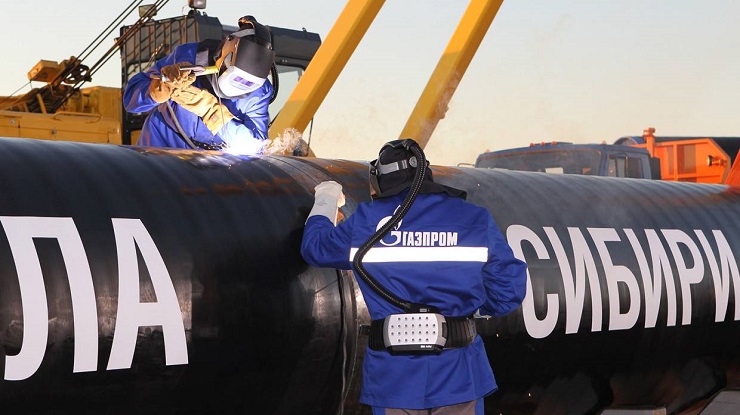
PG&E: Monopoly Power and Disasters by the Rich 1%

By Peter Phillips and Tim Ogburn

Source: Project Censored

The Pacific Gas and Electric Company (PG&E) has diverted over $100 million from safety and maintenance programs to executive compensation at the same time it has caused an average of more than one fire a day for the past six years killing over 100 people.

PG&E is the largest privately held public utility in the United States. A new research report shows that 91% of PG&E stocks are held by huge international investment management firms, including BlackRock and Vanguard Group. PG&E is an ideal investment for global capital management firms with monopoly control over five million households paying $16 billion for gas and electric in California. The California Public Utility Commission (PUC) has allowed an annual return up to 11%.

Between 2006 and the end of 2017, PG&E made $13.5 billion in net profits. Over those years, they paid nearly $10 billion in dividends to shareholders, but found little money to maintain safety on their electricity lines. Drought turned PG&E’s service area into a tinderbox at the same time money was diverted from maintenance to investor profits.

A 2013 Liberty Consulting report showed that 60% of PG&E’s power lines were at risk of failure due to obsolete equipment and 75% of the lines lacked in-line grounding. Between 2008 and 2015, the CPUC found PG&E late on thousands of repair violations. A 2012 report further revealed that PG&E illegally diverted $100 million from safety to executive compensation and bonuses over a 15-year period.

PG&E has caused over 1,500 fires in the past six years. PG&E electrical equipment has sparked more than a fire a day on average since 2014—more than 400 in 2018—including wildfires that killed more than 100 people.

In October 2017, multiple PG&E linked fires (Tubbs, Nuns, Adobe fires and more) in Northern California scorched more than 245,000 acres, destroyed or damaged more than 8,900 homes, displaced 100,000 people and killed at least 44.

In November, 2018, the PG&E caused Camp fire burned 153,336 acres, killing 86 people, and destroying 18,804 homes, business, and structures. The towns of Paradise and Concow were mostly obliterated. Overall damage was estimated at $16.5 billion.

PG&E has caused some $50 billion in damages from massive fires started by their failed power lines. They filed bankruptcy in January 2019 to try to shelter their assets. PG&Es 529 million shares went from a high of $70 per share in in 2017 to a low of $3.55 in 2019. Shares are currently trading at $10.55 with zero returns.  At this point PG&E actually owes more in damages then the net worth of the company.

All but two members of the board of director resigned in early 2019, and the CEO was replaced. A new board of directors was elected by an annual stockholders meeting in June of 2019. PG&E now has a board of directors whose primary interest in 2020 is returning PG&E stock values to $50-70 range and returning to annual dividend payments in the 8-11% rate.

The new PG&E management took widespread aggressive action during the fire-season of 2019 shutting down electric power to over 2.5 million people statewide. Nonetheless, a high voltage power line malfunctioned in Sonoma county lead to the Kincade fire that burned 77,758 acres destroying 374 structures, and forced the evacuation 190,000 Sonoma county residents. Estimated damages from this fire are $10.6 billion.

The fourteen new PG&E directors were essentially hand-picked by PG&Es major stockholder firms like Vanguard Holdings 2019 (47.5 million shares 9.1%) and BlackRock (44.2 million shares 8.5%). A new PG&E Director, Meridee Moore, SF area founder & CEO of $2 billion Watershed Asset Management, is also a board member of BlackRock.

Only three of the new fourteen directors live in PG&Es service area (four if we count the newly appointed CEO from Tennessee). One board member lives the LA area. The remainder of the board live outside California, including three from Texas, two from the mid-west and the remaining four from New York or east coast states. Pending PG&E Bankruptcy court approval, new directors are slated to receive $400,000 each in annual compensation.

Ten of the new 2020 directors have direct current links with capital investment management firms. The remainder have shown proven loyalty experience on behalf of capital utility investors making the entire PG&E board a solid united group of capital investment protectors, whose primary objective is to return PG&E stock values to pre-2017 highs with a 11% return on investment. They claim that wide-spread blackouts will be needed for up to ten years.

All fourteen PG&E board members are in the upper levels of the 1% richest in the world. As millionaires with elite university educations, the PG&E board holds little empathy for the millions of Californians living paycheck to paycheck burdened with some of the highest utility bills in the country. PG&E shuts off gas and electric to over 250,000 families annually for late payments.

The PG&E 2020 board is in service to transnational investment capital. This creates a perfect storm for the continuing transfer of capital from the 99% to the richest 1% in the world, all with uncertain  blackouts, serious environmental damage, widespread fires, with multiple deaths and injuries.

We need to liquidate PG&E for the criminal damages it has afflicted on California. The “PG&E solution” is to manage PG&E democratically on the basis of human need, rather than private profit. It is time to take a stand for a publicly owned California Gas and Electric Company as the way to reverse the transfer of wealth to the global 1% and provide Californians with safe, low-cost and more renewable energy. All power to the people!

For the full report with all PG&E board names see:  www.projectcensored.org/pge


Peter Phillips, Political Sociologist at Sonoma State University; author Giants: The Global Power Elite, (New York: Seven Stories Press, 2018); past director of Project Censored; co-author/editor of fourteen Censored yearbooks, 1997 to 2011; co-author of Impeach the President, (New York: Seven Stories Press, 2007); and winner of the Dallas Smythe Award from the Union for Democratic Communications.

Tim Ogburn, 20-year manager for the California EPA; founder and co-chair of the Environmental Industry Coalition of the United States in Washington, D.C.; published in numerous technical and trade journals regarding public/private partnerships; International Environmental Technology consultant in India, Philippines, Malaysia, Thailand, Egypt, and Israel; Consultant to USAID, US Department of Commerce, U.S. State Department; and has given Congressional Presentations on the environmental technology industry before Congress.


Related Podcast:

Project Censored – 02.04.20

As Northern California communities tally the toll of disastrous fires and repeated power shutoffs,Peter Phillips and Tim Ogburn say it’s time to replace the investor-owned Pacific Gas & Electric Co.with a public power authority. They say the recent installation of a new board of directors at PG&Ewon’t solve the problems, because the new directors, like their predecessors, represent the global one-percent,not the utility’s customers.