Nullify Government Tyranny: In 2020, Harness the Power of Your Discontent

By John W. Whitehead

Source: The Rutherford Institute

“The people have the power, all we have to do is awaken that power in the people. The people are unaware. They’re not educated to realize that they have power. The system is so geared that everyone believes the government will fix everything. We are the government.”—John Lennon

Twenty years into the 21st century, and what do we have to show for it?

Government corruption, tyranny and abuse have propelled us at warp speed towards a full-blown police state in which egregious surveillance, roadside strip searches, police shootings of unarmed citizens, censorship, retaliatory arrests, the criminalization of lawful activities, warmongering, indefinite detentions, SWAT team raids, asset forfeiture, police brutality, profit-driven prisons, and pay-to-play politicians have become the new normal.

Here’s just a small sampling of the laundry list of abuses—cruel, brutal, immoral, unconstitutional and unacceptable—that have been heaped upon us by the government over the past two decades.

The government failed to protect our lives, liberty and happiness. The predators of the police state wreaked havoc on our freedoms, our communities, and our lives. The government didn’t listen to the citizenry, refused to abide by the Constitution, and treated the citizenry as a source of funding and little else. Police officers shot unarmed citizens and their household pets. Government agents—including local police—were armed to the teeth and encouraged to act like soldiers on a battlefield. Bloated government agencies were allowed to fleece taxpayers. Government technicians spied on our emails and phone calls. And government contractors made a killing by waging endless wars abroad.

The American President became more imperial. Although the Constitution invests the President with very specific, limited powers, in recent years, American presidents (Trump, Obama, Bush, Clinton, etc.) claimed the power to completely and almost unilaterally alter the landscape of this country for good or for ill. The powers that have been amassed by each successive president through the negligence of Congress and the courts—powers which add up to a toolbox of terror for an imperial ruler—empower whomever occupies the Oval Office to act as a dictator, above the law and beyond any real accountability. The presidency itself has become an imperial one with permanent powers.

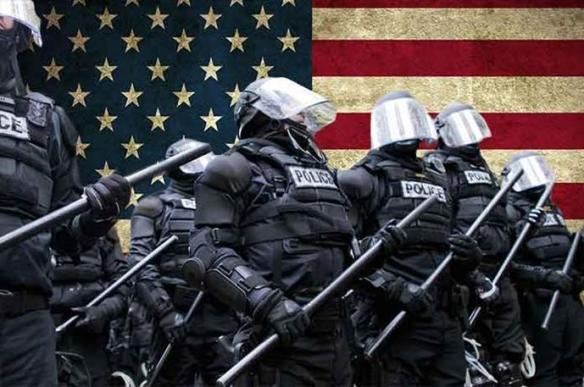
Militarized police became a power unto themselves, 911 calls turned deadly, and traffic stops took a turn for the worse. Lacking in transparency and accountability, protected by the courts and legislators, and rife with misconduct, America’s police forces became a growing menace to the citizenry and the rule of law. Despite concerns about the government’s steady transformation of local police into a standing military army, local police agencies acquired even more weaponry, training and equipment suited for the battlefield. Police officers were also given free range to pull anyone over for a variety of reasons and subject them to forced cavity searches, forced colonoscopies, forced blood draws, forced breath-alcohol tests, forced DNA extractions, forced eye scans, forced inclusion in biometric databases.

The courts failed to uphold justice. With every ruling handed down, it becomes more apparent that we live in an age of hollow justice, with government courts more concerned with protecting government agents than upholding the rights of “we the people.” This is true at all levels of the judiciary, but especially so in the highest court of the land, the U.S. Supreme Court, which is seemingly more concerned with establishing order and protecting government agents than with upholding the rights enshrined in the Constitution. A review of critical court rulings over the past two decades, including some ominous ones by the U.S. Supreme Court, reveals a startling and steady trend towards pro-police state rulings by an institution concerned more with establishing order and protecting the ruling class and government agents than with upholding the rights enshrined in the Constitution.

The Surveillance State rendered Americans vulnerable to threats from government spies, police, hackers and power failures. Thanks to the government’s ongoing efforts to build massive databases using emerging surveillance, DNA and biometrics technologies, Americans have become sitting ducks for hackers and government spies alike. Billions of people have been affected by data breaches and cyberattacks. On a daily basis, Americans have been made to relinquish the most intimate details of who we are—our biological makeup, our genetic blueprints, and our biometrics (facial characteristics and structure, fingerprints, iris scans, etc.)—in order to navigate an increasingly technologically-enabled world.

Mass shootings claimed more lives. Mass shootings have taken place in virtually every venue, including at churches, in nightclubs, on college campuses, on military bases, in elementary schools, in government offices, and at concerts. However, studies make clear that the government’s gun violence—inflicted on unarmed individuals by battlefield-trained SWAT teams, militarized police, and bureaucratic government agents trained to shoot first and ask questions later—poses a greater threat to the safety and security of the nation than any mass shooter.

Debtors’ prisons made a comeback. Not content to expand the police state’s power to search, strip, seize, raid, steal from, arrest and jail Americans for any infraction, no matter how insignificant, state courts were given the green light to resume their practice of jailing individuals who are unable to pay the hefty fines imposed by the American police state. These debtors’ prisons play right into the hands of the corporations that make a profit by jailing Americans. This is no longer a government “of the people, by the people, for the people.” It has become a government “of the rich, by the elite, for the corporations,” and its rise to power has been predicated on shackling the American taxpayer to a debtors’ prison guarded by a phalanx of politicians, bureaucrats and militarized police with no hope of parole and no chance for escape.

The cost of endless wars drove the nation deeper into debt. America’s war spending has already bankrupted the nation to the tune of more than $20 trillion dollars. Policing the globe and waging endless wars abroad hasn’t made America—or the rest of the world—any safer, but it has made the military industrial complex rich at taxpayer expense. Approximately 200,000 US troops are stationed in 177 countries throughout the world, including Africa, where troops reportedly carry out an average of 10 military exercises and engagements daily. Meanwhile, America’s infrastructure is falling apart. The interest on the money America has borrowed to wage its wars will cost an estimated $8 trillion.

“Show your papers” incidents skyrocketed. We are not supposed to be living in a “show me your papers” society. Despite this, the U.S. government has introduced measures allowing police and other law enforcement officials to stop individuals (citizens and noncitizens alike), demand they identify themselves, and subject them to patdowns, warrantless searches, and interrogations. These actions fly in the face of longstanding constitutional safeguards forbidding such police state tactics.

The government waged war on military veterans. The government has done a pitiful job of respecting the freedoms of military veterans and caring for their needs once out of uniform. Despite the fact that the U.S. boasts more than 20 million veterans who have served in World War II through the present day, the plight of veterans today is America’s badge of shame, with large numbers of veterans impoverished, unemployed, traumatized mentally and physically, struggling with depression, suicide, and marital stress, homeless, subjected to sub-par treatment at clinics and hospitals, left to molder while their paperwork piles up within Veterans Administration offices, and increasingly treated like criminals—targeted for surveillance, censorship, threatened with incarceration or involuntary commitment, labeled as extremists and/or mentally ill, and stripped of their Second Amendment rights—for daring to speak out against government misconduct.

Free speech was dealt one knock-out punch after another. Protest laws, free speech zones, bubble zones, trespass zones, anti-bullying legislation, zero tolerance policies, hate crime laws, shadow banning on the Internet, and a host of other legalistic maladies dreamed up by politicians and prosecutors (and championed by those who want to suppress speech with which they might disagree) conspired to corrode our core freedoms, purportedly for our own good. On paper—at least according to the U.S. Constitution—we are technically free to speak. In reality, however, we are only as free to speak as a government official—or corporate entities such as Facebook, Google or YouTube—may allow. The reasons for such censorship varied widely from political correctness, so-called safety concerns and bullying to national security and hate crimes but the end result remained the same: the complete eradication of free speech.

The government waged a renewed war on private property. The battle to protect our private property has become the final constitutional frontier, the last holdout against our freedoms being usurped. We no longer have any real property rights. That house you live in, the car you drive, the small (or not so small) acreage of land that has been passed down through your family or that you scrimped and saved to acquire, whatever money you manage to keep in your bank account after the government and its cronies have taken their first and second and third cut…none of it is safe from the government’s greedy grasp. At no point do you ever have any real ownership in anything other than the clothes on your back. Everything else can be seized by the government under one pretext or another (civil asset forfeiture, unpaid taxes, eminent domain, public interest, etc.).

Schools became even more like prisons. So-called school “safety” policies—which run the gamut from zero tolerance policies that punish all infractions harshly to surveillance cameras, metal detectors, random searches, drug-sniffing dogs, school-wide lockdowns, active-shooter drills and militarized police officers—have turned schools into prisons and young people into prisoners. From the moment a child enters one of the nation’s 98,000 public schools to the moment she graduates, she will be exposed to a steady diet of draconian zero tolerance policies that criminalize childish behavior, overreaching anti-bullying statutes that criminalize speech, school resource officers (police) tasked with disciplining and/or arresting so-called “disorderly” students, standardized testing that emphasizes rote answers over critical thinking, politically correct mindsets that teach young people to censor themselves and those around them, and extensive biometric and surveillance systems that, coupled with the rest, acclimate young people to a world in which they have no freedom of thought, speech or movement.

The Deep State took over. The American system of representative government was overthrown by the Deep State—a.k.a. the police state a.k.a. the military/corporate industrial complex—a profit-driven, militaristic corporate state bent on total control and global domination through the imposition of martial law here at home and by fomenting wars abroad. The “government of the people, by the people, for the people” has perished. In its place is a shadow government, a corporatized, militarized, entrenched bureaucracy that is fully operational and staffed by unelected officials who are, in essence, running the country and calling the shots in Washington DC, no matter who sits in the White House. Mind you, by “government,” I’m not referring to the highly partisan, two-party bureaucracy of the Republicans and Democrats. Rather, I’m referring to “government” with a capital “G,” the entrenched Deep State that is unaffected by elections, unaltered by populist movements, and has set itself beyond the reach of the law. This is the hidden face of a government that has no respect for the freedom of its citizenry. This shadow government, which “operates according to its own compass heading regardless of who is formally in power,” makes a mockery of elections and the entire concept of a representative government.

The takeaway: Everything the founders of this country feared has come to dominate in modern America. “We the people” have been saddled with a government that is no longer friendly to freedom and is working overtime to trample the Constitution underfoot and render the citizenry powerless in the face of the government’s power grabs, corruption and abusive tactics.

So how do you balance the scales of justice at a time when Americans are being tasered, tear-gassed, pepper-sprayed, hit with batons, shot with rubber bullets and real bullets, blasted with sound cannons, detained in cages and kennels, sicced by police dogs, arrested and jailed for challenging the government’s excesses, abuses and power-grabs?

No matter who sits in the White House, politics won’t fix a system that is broken beyond repair.

For that matter, protests and populist movements also haven’t done much to push back against an authoritarian regime that is deaf to our cries, dumb to our troubles, blind to our needs, and accountable to no one.

So how do you not only push back against the police state’s bureaucracy, corruption and cruelty but also launch a counterrevolution aimed at reclaiming control over the government using nonviolent means?

You start by changing the rules and engaging in some (nonviolent) guerilla tactics.

Take part in grassroots activism, which takes a trickle-up approach to governmental reform by implementing change at the local level (in other words, think nationally, but act locally).

And then, nullify everything the government does that flies in the face of the principles on which this nation was founded.

If there is any means left to us for thwarting the government in its relentless march towards outright dictatorship, it may rest with the power of juries and local governments to invalidate governmental laws, tactics and policies that are illegitimate, egregious or blatantly unconstitutional.

In an age in which government officials accused of wrongdoing—police officers, elected officials, etc.—are treated with general leniency, while the average citizen is prosecuted to the full extent of the law, nullification is a powerful reminder that, as the Constitution tells us, “we the people” are the government.

For too long we’ve allowed our so-called “representatives” to call the shots. Now it’s time to restore the citizenry to their rightful place in the republic: as the masters, not the servants.

Nullification is one way of doing so.

Various cities and states have been using this historic doctrine with mixed results on issues as wide ranging as gun control and healthcare to “claim freedom from federal laws they find onerous or wrongheaded.” Most recently, a growing number of communities—including more than a 100 counties, cities and towns in Virginia—have declared themselves to be Second Amendment sanctuaries and adopted resolutions opposing any “unconstitutional restrictions” on the right to keep and bear arms. It is mass movements such as these that the government fears most.

Indeed, any hope of freeing ourselves rests—as it always has—at the local level, with “we the people.” One of the most important contributions an individual citizen can make is to become actively involved in local community affairs, politics and legal battles. As the adage goes, “Think globally, act locally.”

America was meant to be primarily a system of local governments, which is a far cry from the colossal federal bureaucracy we have today. Yet if our freedoms are to be restored, understanding what is transpiring practically in your own backyard—in one’s home, neighborhood, school district, town council—and taking action at that local level must be the starting point.

Responding to unmet local needs and reacting to injustices is what grassroots activism is all about. Attend local city council meetings, speak up at town hall meetings, organize protests and letter-writing campaigns, employ “militant nonviolent resistance” and civil disobedience, which Martin Luther King Jr. used to great effect through the use of sit-ins, boycotts and marches.

Let’s not take the mistakes, carnage, toxicity and abuse of this past decade into 2020.

As long as we continue to allow callousness, cruelty, meanness, immorality, ignorance, hatred, intolerance, racism, militarism, materialism, meanness and injustice—magnified by an echo chamber of nasty tweets and government-sanctioned brutality—to trump justice, fairness and equality, there can be no hope of prevailing against the police state.

As I make clear in my book Battlefield America: The War on the American People, we could transform this nation if only Americans would work together to harness the power of their discontent and push back against the government’s overreach, excesses and abuse.

Neoliberal Economics Destroyed the Economy and the Middle Class

By Paul Craig Roberts

Source: PaulCraigRoberts.com

According to official US government economic data, the US economy has been growing for 10.5 years since June of 2009. The reason that the US government can produce this false conclusion is that costs that are subtrahends from GDP are not included in the measure. Instead, many costs are counted not as subtractions from growth but as additions to growth. For example, the penalty interest on a person’s credit card balance that results when a person falls behind his payments is counted as an increase in “financial services” and as an increase in Gross Domestic Product. The economic world is stood on its head.

It is aggregate demand that drives the economy. Payments made on a rise in interest rates on credit card balances from 19% to a 29% penalty rate reduce consumers’ ability to contribute to aggregate demand by purchasing goods and the services of doctors, lawyers, plumbers, electricians, and carpenters. Contrary to logic, the fee is magically counted in the “financial services” category as a contributor to GDP growth. The extortion of a fee that reduces aggregate demand lowers GDP, but builds paper wealth in the financial services sector.

GDP growth is also artificially inflated by counting as GDP abstract concepts that do not produce income streams. For example, for homeowners the US Department of Commerce estimates the rental values of owner-occupied housing, that is, the amount owners would be paying if they rented instead of owned their homes, and counts this imputed rent as GDP.

These and other absurdities have caused economist Michael Hudson to conclude correctly that the “financial reality of how the U.S. economy works is no longer captured in GDP statistics.”
https://michael-hudson.com/2019/10/asset-price-inflation-and-rent-seeking/

Today we have two economies. One is the real economy of production and consumption. The other is the financialized economy of paper wealth. The former is doing poorly, and the latter is doing well. The financialized economy is growing much faster than the real economy. Indeed, the real economy might not be growing at all.

Michael Hudson describes the difference. The stock market is at all time highs that have created massive wealth in financial assets for stock and bond owners. In the real economy the situation is totally different: “The Federal Reserve’s Report on the Economic Well-Being of U.S. Households in 2018 reports that 39% of Americans do not have $400 cash available for a medical or other emergency, and that a quarter of adults skipped medical care in 2018 because they could not afford it ( https://www.federalreserve.gov/publications/files/2018-report-economic-well-being-us-households-201905.pdf ). The latest estimates by the U.S. Government Accountability Office (GAO) report that nearly half (48 percent) of households headed by someone 55 and older lack any retirement savings or pension benefits ( https://www.aarp.org/retirement/retirement-savings/info-2019/no-retirement-money-saved.html ). Even in what the press calls an economic boom, most Americans feel stressed and many are chronically angry and worried. According to a 2015 survey by the American Psychological Association, financial worry is the “number one cause of stress in America today” ( https://www.apa.org/news/press/releases/2015/02/money-stress ).

The data is completely clear. The rich are becoming much richer, and the rest are becoming poorer. Michael Hudson explains:

“The creation and trading of property and financial assets at rising prices has been fueled by rising debt levels owed to the financial sector. This sector’s returns therefore are best seen not as real wealth on the asset side of the balance sheet, but as overhead on the liabilities side. And the process is multi-layered: income accruing to the financial wealth owned by the top 10 Percent is paid mainly by the bottom 90 percent in the form of rising debt service and other returns to financial and other property.

“In the textbook models of industrial capitalism’s mass production and consumption, an asset’s price is determined by its cost of production. If the price rises above this level, competitors will offer it cheaper. But in the financialized economy an asset’s price is determined by how much credit buyers can borrow to buy it, not by its cost of production. A home is worth as much as a bank will lend to a bidder.

“The engine of industrial capitalism and its consumer society is a positive feedback loop in which widely shared income growth, expanding consumption and markets generated yet more investment and growth. By contrast, the feedback loop of financial capitalism is an exponential growth of credit-driven debt, driving up asset prices and hence requiring yet more borrowing to buy homes, retirement income and other assets. Corporate management and investment today is mainly about obtaining capital gains for real estate, stocks and bonds than about earning income.

“We illustrate this by charting the flow of income and capital gains in the real estate sector to show the dominance of asset-price gains over net rental income – and how rental income is used up paying interest in our financialized economy. Likewise, corporate income is spent (and new debt taken on) largely for stock buybacks to raise share prices. The resulting dynamic is exponential and destabilizing.”

This dynamic is destabilizing, because as more of consumers’ discretionary income is drawn off to service mortgage, credit card, automobile and student debt and for compulsory health insurance, less is left to purchase the goods and services in the real economy. Consequently, credit-driven debt grows faster than the income that services it, and this impoverishes the 90%. However, for the 10%, money creation by the Federal Reserve in order to protect the balance sheets of the “banks too big to fail or jail” drives up the values of financial assets. As a result the distribution of income and wealth becomes hightly polarized.

Think about the many Americans who meet their living expenses by making only the minimum payment on their credit card balance. At 19% interest their debt grows monthly. Eventually they hit a credit card debt cap and can no longer use the card to cover their living expenses. But they have the burden of a large debt balance to service without an income stream capable of servicing it.

Think about the corporation that decapitalizes itself in order to produce short to intermediate term capital gains for shareholders and executives by indebting the firm in order to buy back the firm’s shares. The end result is that all income goes for debt service.

In a financialized economy, the only possible outcomes are debt forgiveness or collapse.

As Michael Hudson makes clear, the combination of nonsensical categories in the National Income and Product Accounts and a financialized economy means we have no accurate picture of the economy’s condition. Michael Hudson has a proposal for correcting these problems and making GDP accounting more accurate, but as ecological economists such as Herman Daly have made clear, GDP measurement also omits the external costs of production. This means that we do not know whether GDP is growing or declining. It is entirely possible that the ecological and social costs of an increase in GDP (as currently measured) are greater than the value of the increased output. (See Paul Craig Roberts, The Failure of Laissez-Faire Capitalism, https://www.amazon.com/Failure-Laissez-Faire-Capitalism/dp/0986036250/ref=sr_1_2?crid=16NHZEQ9G3JRW&keywords=paul+craig+roberts+books&qid=1576440032&s=books&sprefix=Paul+Craig%2Caps%2C173&sr=1-2 )

Perhaps the major way in which GDP is overstated is the exclusion of external or social costs. External or social costs are costs of producing a product that the producer does not incur but imposes on third parties or on the environment. For example, untreated sewage dumped into a stream imposes costs on people downstream. Runoff of chemical fertilizers from commercial farming produces dead zones in the Gulf of Mexico and toxic algal blooms such as Red Tide that result in massive fish kills, make seafood unsafe, cause human ailments and adversely impact the tourist trade of beach areas. The result is lost incomes, ruined vacations, health expenses, and none of these costs are born by the commercial farmers.

Real estate development produces massive external costs. Scenic views from existing properties are blocked, thus reducing their values. Construction noise and congestion impose costs on existing residents and reduces the quality of their lives. Water runoff problems are often created. Infrastructure has to be provided, such as larger highways to provide evacuation from hurricane-impacted areas, usually financed by taxpayers. If the global warming case is correct, the external cost of human economic activity can be the life of the planet.

Lakshmi Sarah in the May/June, 2019, issue of the Sierra Club magazine provides an excellent detailed account of the external costs of coal-fired power plants being built in India by the Indian conglomerate Tata with a loan from the International Finance Corporation, a branch of the World Bank. The ground water in the area has been ruined and is no longer drinkable. Farmers are no longer able to grow crops on half of the area farmland. Heated wastewater that is dumped into the Gulf of Kutch is destroying fishing. The ecology and the livelihoods of the population are essentially destroyed. None of these costs are born by the private power companies.

Tired of being doormats for capitalists and the World Bank, the residents of the affected provinces rebelled. They have succeeded in getting their case before the US Supreme Court. It seems that the International Finance Corporation is so accustomed to financing projects that produce large external costs that it overlooked its obligation to examine the environmental impact of the projects it finances. This oversight resulted in Indian farmers and fishermen getting their case before the US Supreme Court. The International Finance Corporation’s lawyers argued that the World Bank lending agency had “absolute immunity.” The Supreme Court said no and remanded the case to the circuit court to rule on the damages.

Perhaps the most surprising thing about this apparent victory for ordinary faraway little people in an American court against the World Bank, a principle instrument of American imperialism, is that the Trump administration appeared in court as a friend of the Indian farmers and fishermen. The US Solicitor General, represented by Jonathan Ellis, rejected the notion that international orgnizations have absolute immunity. The Establishment exists on its immunity. Here we see the ultimate reason that the ruling Establishment wants rid of Trump.

Already the senior staff of the International Finance Corporation have come to the realization that they have other responsibilities than just to shuffle money out the lending shute. If the Indian farmers and fishermen succeed in protecting themselves from ruination by external costs, perhaps Americans who suffer external costs will follow their lead.

Perhaps economists will also come to the realization that they owe us accurate GDP accounting and not fanciful accounts that serve elite wealth in the financialized economy.

Costs Are Spiraling Out of Control

By Charles Hugh Smith

Source: Of Two Minds

And how do we pay for these spiraling out of control costs? By borrowing more, of course.

If we had to choose one “big picture” reason why the vast majority of households are losing ground, it would be: the costs of essentials are spiraling out of control. I’ve often covered the dynamics of stagnating income for the bottom 90%, and real-world inflation, i.e. a decline in purchasing power.

But neither of these dynamics fully describes the relentless upward spiral of the cost basis of our economy, that is, the cost of big-ticket essentials: housing, education and healthcare.

The costs of education are spiraling out of control, stripping households of income as an entire generation is transformed into debt-serfs by student loan debt. The soaring costs of healthcare are a core driver of higher costs in the education complex (and government in general), and to cover these higher costs, counties raise property taxes, which add additional cost burdens to households and enterprises as rents rise.

Rising rents push the cost structure of almost every enterprise and agency higher.

Then there’s the asset inflation created by central bank ZIRP (zero interest rate policy) which has inflated a second echo-bubble in housing that has pushed home ownership out of reach of many, adding demand for rental housing that has pushed rents into the stratosphere in Left and Right Coast cities.

The increasing dominance of monopolies and cartels has eliminated competition in sector after sector. Monopolies and cartels skim immense profits even as the value, quality and quantity of their products and services decline: The U.S. Only Pretends to Have Free Markets From plane tickets to cellphone bills, monopoly power costs American consumers billions of dollars a year.

Thanks to their political influence, monopolies and cartels have legalized looting, raising prices and evading anti-trust regulations because they can pay whatever it takes in our pay-to-play political system.

Let’s look at a few charts that illustrate the relentless rise in costs:

Do you reckon these two charts are connected–soaring costs and ballooning administrative payrolls?

Student loan debt is soaring above $1.5 trillion, guaranteeing profits to lenders and debt-serfdom to the students exiting with degrees that are in over-supply, i.e. possessing little scarcity value in an over-credentialed economy:

The echo housing bubbles in many locales exceed the nosebleed valuations of the previous bubble:

And how do we pay for these spiraling out of control costs? By borrowing more, of course:

Even at low rates of interest, the cost of servicing skyrocketing debt increases, leaving less net income to support additional borrowing.

What will it take to radically reduce the cost basis of our economy? A fundamental re-ordering that breaks up all the cartels and monopolies that push prices higher even as they deliver lower quality goods and services would be a good start.

How Facebook Has Become The Strategic Media Mouthpiece For The Global Elite

By Richard Enos

Source: Collective Evolution

It’s not clear whether Facebook was truly conceived by an innocent genius with noble intent, but one fact has become abundantly clear: Facebook is now a mouthpiece and tool for the proliferation of mainstream perception. This is specifically designed to enrich the global elite and continue to disenfranchise ordinary citizens and any attempts to bring important truths to light that would threaten the elite. And, of course, Mark Zuckerberg is now a ‘junior partner’ in this global elite.

The episode of the Jimmy Dore show found in the video below, which is worth watching to get the full context of the discussion, introduces whistleblower Vikram Kumar, a former promoter of third-party videos on Facebook. Dore brings interesting insights into Facebook’s latest strategies in terms of controlling the news commentary. He explains how Facebook is proliferating the establishment’s narrative while limiting and blocking alternative voices which, of course, Facebook characterizes as ‘Fake News’. Here, Kumar discusses Mark Zuckerberg’s testimony in Congress to this effect:

Back in 2017 there was that TechCrunch report that said that Facebook was taking measures to stop the spread of ‘Fake News’ by banning certain political accounts from promoting their videos on their newsfeed. So when I heard Mark Zuckerberg in 2018 telling Congress that he would be doing the same thing, I thought, what changed between 2017 and 2018? Are they taking new measures, are they re-taking the measures?  And it wasn’t until a week later that I realized that Variety Magazine reported that Facebook Watch, which is Facebook’s media platform, had reached a multi-million dollar deal with CNN, Fox News, ABC, and large media outlets.

The congressional testimony was the perfect opportunity for the political establishment, the media establishment, and the tech companies to form an alliance against small media outlets.


One of the biggest issues to remedy was the lack of viewership that traditional mainstream media was getting from young people, which is really the target market not only for advertisers but the social engineering wing of the global elite as well. Here’s how Kumar describes it:

As you know, young people, they don’t watch cable… the viewership of Fox News, CNN, and ABC are dying off, they’re getting older and older, and so what Facebook is, is access to young people, right, and so they viewed small anti-establishment media outlets such as yourself as an existential threat to their next generation of revenue.

Tech companies view media companies extremely valuably, you could go back to 1996, there was that merger between Microsoft, General Electric and NBC to create MSNBC.com. A lot of people don’t know that the ‘MS’ in MSNBC stands for Microsoft, and the reason why media companies and tech companies are so intertwined with each other is ’cause you can influence young people so much when you have the distribution network of something like Facebook, and with Facebook Watch, and their media platform, and their deal with CNN, Fox News, and ABC, they’re able to indoctrinate the next generation of young people. And so they want to take viewership away from shows like yours, and put those young people that haven’t been paying attention with cable news back into the pockets of companies like Fox News, ABC, and CNN.

Every media company wants some of that Facebook Watch dough. And so the companies that have coverage that Facebook doesn’t like are out of there, and new companies that have coverage that Facebook likes are back into the deal. And so Facebook is already taking steps to craft the political landscape in the framing that they find positively. And so you get that whole thing where Facebook shuts down over 800 political pages and accounts, and even legitimate political pages that expose things like police brutality… you’re already seeing a coordinated effort from the establishment media and tech companies to kind of craft the narrative for young people.

This is how that Variety Magazine article Kumar talked about characterizes the deal between Facebook and Mainstream Media:

After going through the fake-news wringer, Facebook is shelling out money on original news content. The strategy is partly aimed at driving up viewing on its Facebook Watch platform — but it also is supposed to demonstrate the social-media giant’s commitment to funding trustworthy journalism.

A corporate conglomerate now giving itself the authority to judge what is and isn’t trustworthy journalism. What could possibly go wrong?

Is Facebook Still Just A Tech Company?

The slippery slope that Facebook is trying to anchor itself to is as clear as the nose on Mark Zuckerberg’s face. He continues to want us to think about Facebook as a social media platform whose objective is still ‘to make the world more open and connected,’ yet at the same time he wants Facebook to become the prime arbiter of the ‘news that is fit to print,’ or in this case, to decide which sources of news will benefit and not benefit from Facebook’s tremendous reach. The same Variety article reinforces the idea that Facebook is trying to have things both ways, gaining the advantages of defining itself as a tech company, and not taking on the liabilities inherent in being a media company:

In the past, CEO Mark Zuckerberg has remarked that Facebook is a technology company — not a media company. Asked whether Facebook is now in fact a media company, given that it’s paying for a growing slate of content, Brown responded, “Having worked for big media companies, I don’t think Facebook is a media company. But are we responsible for the media on Facebook? Yes.”

The fact is that we have entered into somewhat uncharted territory in terms of what defines a media company since the rise of the Internet. We can only hope that we will collectively awaken to the fact that Facebook has clearly gone beyond being a platform that provides equal access to all voices and commentaries, and has given in to the temptation to control the flow and proliferation of information. As this Wired article starts off,

FACEBOOK STEADFASTLY RESISTS categorization as a traditional media company. Instead, CEO Mark Zuckerberg insists on calling the social network a technology platform—even though nearly half of all American adults get their news on Facebook. These old arguments no longer work, especially as Facebook starts making its own video content.

It is incumbent upon the awakening community to clearly grasp what is happening here and to act accordingly in terms of our future engagement with social media sites like Facebook. It is important to see how Bill Clinton’s Telecommunications Act of 1996, which allowed media cross-ownership that led to mergers between tech companies and media companies, was a seed that has already started to bear the fruit of an Orwellian dystopia, where the global elite are permitted to continue to proliferate mainstream propaganda and limit exposure to alternative views that are a threat to their agenda.

The American Empire Will Fall, Not America Itself

Credit: JOEL PETT

By Gunnar Olson

Source: Land Destroyer

The collapse of an entire nation is as spectacular as it is rare. For a nation to simply cease to exist it must suffer such absolute defeat across the entire spectrum of what constitutes a nation; economically, militarily, culturally, socially and politically.

What is much more common is a transition from existing, prevailing socioeconomic, political and military orders to new ones driven by new, emerging special interests. It can happen quickly and violently, or take place as a long-term process with ups and downs and both constructive and destructive processes intertwining.

For the United States, a massive nation with the third largest population on the planet, the largest military and still currently the largest economy, for it to suffer such full-spectrum defeat is impossible.

What is not impossible is for the small handful of special interests currently directing US policy foreign and domestic, to find itself displaced by a new order consisting of entirely different kinds of special interests and, hopefully, special interests that better reflect the best interests of the United States as a whole and function more sustainably among the nations of the world rather than hovering above them.

It is a process that is already ongoing.

America’s Prevailing Order is Fading 

The current special interests driving US foreign and domestic policy are centered around Wall Street and Washington and represent an increasingly unrealistic, unsustainable, archaic network based on traditional banking, energy and manufacturing monopolies.

Many of the tools used by these special interests to maintain and expand their power and influence including mass media, extensive lobbying, networks dedicated to political subversion abroad and political distractions at home find themselves increasingly ineffective as both the American people and nations around the globe become increasingly familiar with them and as they begin developing effective countermeasures.

While US special interests dedicate a seemingly immense amount of time countering “Russian” or “Chinese” “propaganda,” it is primarily alternative media from the United States and its partner nations that have done the most to expose and diminish the unwarranted influence wielded from Wall Street and Washington. Wikileaks is a prime example of this.

As America’s elite and their networks weaken, alternatives continue to grow stronger.

An unsustainable socioeconomic and political model, coupled with equally unsustainable military campaigns abroad along with a political and media strategy that is no longer even remotely convincing even to casual observers demarks what is an irreversible decline of America’s current, prevailing order.

America’s Elite Face Challenges from Within as Well as From Abroad

The topic of Chinese corporations out-competing long-established US monopolies has become an increasingly common topic across global media. It is indeed this process that has precipitated the seemingly pointless and futile US-led trade war against China, a futile exercise that seems to only highlight the decline of America’s established elite rather than address it.

Corporations like Huawei, despite facing serious setbacks owed to US sanctions and efforts to undermine them, still move forward, while their US competitors continue to struggle. This is because despite setbacks, Huawei is built upon a solid foundation of business and economic fundamentals, while its American counterparts, despite their initial advantages owed to a lack of competition, have neglected and continue to neglect such fundamentals.

But Chinese corporations aren’t the only challengers America’s established elite face.

Within the US itself some of the most innovative and disruptive companies in the world are cropping up, challenging not only foreign competition but also long-established monopolies based in the US.

Electric vehicle manufacturer Tesla is a perfect example of this. Its breakneck pace of innovation, high-profile successes and the disruptive impact it is having on traditional car manufacturing is setting back the American car industry first and foremost. It also poses a serious threat to the petroleum-centric energy model the US has adopted and propagated globally for over a century.

American car manufacturing monopolies have spent decades developing a model of planned obsolescence and marketing gimmicks as a stand-in for genuine consumer value and innovation. The industry has become a means of simply making as much money as possible and to increase profits each year, with “making cars” merely the means through which this money and the influence it buys is being accumulated.

Tesla has for years now been growing both in terms of business and in terms of sociopolitical influence. US car manufacturing monopolies have attempted to ape the most superficial aspects of Tesla’s appeal, but have entirely failed to examine or replicate the substance that drives the new company’s success.

Just as the US elite have attempted to use what could be described as “dirty tricks” rather than direct competition to deal with competitors like Huawei abroad, similar “dirty tricks” have been employed against disruptive companies within the US itself like Tesla. Attempts by faux-unions to complicate Tesla’s US-based factories are one example of this.

US-based aerospace manufacturer SpaceX is another example of an American-bred competitor directly challenging (and threatening) long-established US monopolies, in this case aerospace monopolies like Lockheed Martin, Boeing and Northrop Grumman.

SpaceX is not only driving aerospace innovation forward at breakneck speeds, it is driving down the overall cost of access to space at the same time. It is doing this at such impressive rates that established aerospace monopolies like Lockheed, Boeing and Northrop, even with their immense lobbying networks, are unable to dissuade SpaceX customers (including the US government itself) from purchasing rides on its rockets.

Bloated monopolies who have become overly reliant on maintaining profits through lobbying and political games have little means to overhaul their massive organizations in the face of real competition as it emerges. Because of this, the prevailing order driving US policy faces an insurmountable obstacle that already appears to have resulted in terminal decline and displacement.

Those doing the displacing stand to assume the position at the levers of American power and influence, with an opportunity to set an entirely new course into the future that will have a fundamental impact on both the American nation and its people, and the nations of the world it will interact with.

America’s New Order May Seek Genuine Competition and Collaboration 

Tesla and SpaceX are prominent examples, but by no means the only examples of the ongoing transition that is increasingly evident within America. There are emerging innovations and companies threatening virtually every area America’s current elite dominate. From the alternative media targeting the deeply rooted corporate media of America, to a growing movement of local organic farmers chipping away at America’s massive agricultural monopolies, there are already many tangible examples of a transition taking place; a positive transition that those interested in truly addressing the negative aspects of America’s current role globally can invest in or contribute toward.

In what is perhaps a hopeful sign of the new America that might emerge as this process continues forward is the fact that emerging disruptors like Tesla are not afraid of collaborating with other nations, seeking to simply do business rather than construct a global spanning network aimed at dominating others. Tesla’s massive Gigafactory going into operation in Shanghai, China takes place as the US attempts to sever China’s access to the economic benefits of doing business with the US for purely political and hegemonic purposes.

Despite the apparent hostilities between the US and nations like Russia and China, the consensus in nations targeted by America’s current prevailing order is one of simply wanting to do business on equal terms. Whatever hostility may exist is reserved not for America as a nation or as a people, but toward the handful of special interests obstructing constructive competition and collaboration between these nations and the US.

In the near to intermediate future, this process will continue to resemble a bitter struggle as US special interests attempt to maintain their grip on power, fighting against inevitable decline and displacement, and against competitors both abroad and within the US itself.

Beyond that, there is a hopeful future where the US finds itself a constructive member of a multipolar world, constructively competing against and collaborating with nations rather than attempting to assert itself over them.

Because of this, it is important for nations and peoples to refrain from unnecessary, broad hostilities and to instead patiently weather current efforts emanating from Wall Street and Washington. It is important to establish ties and relations with US interests genuinely interested in true competition and collaboration and who represent America’s future, and to distinguish them from deeply rooted US interests that represent America’s abusive past and and are responsible for America’s current decline.

The foreign policies of Moscow, Beijing and even of many emerging and developing nations may seem overly passive or appeasing, but around the capitals of the world many are aware of the transition taking place in America and are attempting to position themselves advantageously for the fall of the American Empire so they can do business with those who assume the levers of power in America once it does.

Get Ready For An Economic Wake-Up Call This Holiday Season

By Brandon Smith

Source: Alt-Market.com

If we are to measure the concept of “economic recovery” in real terms, then we would have to look at the fundamentals (not stock markets) and whether or not they’re improving. Unfortunately, not all economic data is presented to the public honestly. Very often it is mired and obscured in a fog of disinformation and false standards.

I would point out, though, that there is relatively accurate information out there in certain areas of the global economy, and it tells us our economic structure is destabilizing. Beyond that, even the rigged numbers are moving into negative territory. But what does all this mean for the holiday retail season, one of the mainstream’s favorite gauges of US financial health? And, if 2019’s holiday profits sink, what does this tell us is going to happen in 2020?

First, let’s start with what we know…

Since we live in a “globalized” economy where everything is supposedly “interdependent”, it helps to examine international export numbers. The US doesn’t manufacture and export much of anything anymore beyond agricultural products, but global markets do expect us to consume the goods of other nations. A decline in exports indicates a failing global economy, but in particular a failing US consumer economy.

The obvious example would be China, which has seen plunging export data at least the past three months, though many will argue that this is merely due to tariffs and the trade war. However, it’s not just China that is showing signs of collapse.

South Korea, another major manufacturing and export hub in Asia (5th largest in the world) has seen declining exports for 11 consecutive months. South Korean shipping is crumbling in November and the media is blaming the trade war, as some SK companies would be “hit indirectly” because they sell intermediate goods to China are are linked to US companies in China. But this makes little sense. Tariffs are highly targeted to specific companies and specific goods, and so far the US has not directed major tariff attention at South Korea beyond the auto market.  Also, the new KORUS deal between Trump and SK is different only cosmetically to original trade agreements, yet, South Korean exports continue to fall.

The same situation can be seen in Japan, with Japanese exports witnessing a 9.2% year-over-year drop in October, the largest decline in 3 years. Japan has seen three consecutive months of declines in exports.

And what about Europe? While Germany, the manufacturing powerhouse of the EU, finally saw a jump in exports to the US this past month, overall the European Union has seen consistently poor export performance for the past year, and Germany itself is hovering on the edge of recession with 0.1% official GDP growth. Many economist already consider Germany to be in recession, as official GDP numbers are constantly manipulated by governments to the upside.

But let’s not forget about the US. Remember how Trump promised that the trade war would result in a renaissance for US manufacturing and that millions of industrial jobs would be returning to our shores? Well, as I’ve warned consistently for the past couple years, there is NO WAY corporations will be bringing manufacturing jobs and factories back to the US without ample incentives. Trump already gave companies tax cuts without demanding anything in return, and the cost/benefit ratio of building new factories and paying American workers top dollar versus keeping existing factories in Asia and dealing with 10%-25% tariffs just doesn’t add up to a new US rust belt renaissance.

While manufacturing jobs have increased, US manufacturing activity has declined.  Meaning, there simply isn’t enough demand for the goods being produced.  US manufacturing ISM index just sank this month and has been sinking for the past four month into negative territory. While US PMI manufacturing data jumped this month, it is still well below the 10 year average and is also very low compared to past holiday seasons, which almost always see a spike in manufacturing.  US manufacturing remains at a historic low of 11% of US GDP and production output has decline steadily since January of this year.

The question is, will the vast decline in global manufacturing translate to a crash in consumer demand?  We know that US credit dependency has skyrocketed in the past few years, but will more debt result in more profits for retailers?  This is highly unlikely, as US retail sales growth, for example, has been in decline at the same time that consumer debt has been rising.  Why?  Credit delinquencies have been relatively stable (so far) this year, so my theory is that people in the US are paying off previous debts by taking on new debt. They are kicking the can on their insolvency.

We have seen this kind of destructive credit death cycle before – Right before the crash of 2008.

So what does all this mean? And why is the media portraying the trade war with China as the cause of the global export and shipping crisis when clearly most of the world is not directly or even indirectly tied to the tariffs?

As noted above, the narrative that is being pushed is that we live in an “interdependent” and globalized world, and that nations cannot function economically without cooperation. The trade war, I believe, is a smokescreen designed by the globalist establishment to do two things specifically:

1) It is being created to hide a crash in the greater economy. Notice that almost no one in the mainstream is talking about a collapse in global production and multiple fundamentals due to DEMAND; instead they constantly talk about the trade war and exports. The trade war is becoming the scapegoat for the implosion of the market bubble engineered by globalists and central banks through a decade of stimulus measures.

The collapse of the economic bubble is being caused in part by massive debt and a lack of consumer demand due to lack of consumer savings and cash flow. The trade war has little to do with it, and I suspect we would be seeing sharp declines in the US economy in particular even without the trade war.

2) The trade war creates a false dichotomy in which many Americans will be lured into blaming China and other nations for their economic ills, and China and the rest of the world will be lured into blaming America. It also reasserts the globalist propaganda argument that when nations and economies “go rogue”, they hurt everyone; therefore, more global controls and centralization will have to be established in order to prevent nationalism from harming the rest of the world.

And what does this all have to do with the Christmas shopping season? Like the end of last year, I think we are in for another ugly holiday retail event – Perhaps far worse than before. All the manufacturing and export data indicates that this will be the case. If so, then the mainstream narrative of recovery, long perpetuated as fact by the media and the Federal Reserve for the past several years, will finally die.

The only thing that might elevate holiday numbers would be increased price inflation in goods, but I predict that even inflation misrepresented as “profits” will not save Christmas stats this year.  Some skeptics of the ongoing crash will argue that Black Friday numbers this year were the best since 2013, therefore the holiday season will be a good one.  These people don’t know their economic history.  In most cases, holiday seasons that start off with a high traffic Black Friday end with poor overall sales data, including 2013.  This is because consumers that are cash strapped are more likely to buy early during Black Friday sales and spend far less over the rest of the season.

In the mind of the average American consumer, holiday retail sales are a primary indicator of the health of the economy. A dramatic crash in Christmas retail will end the delusion of a stable US system and cause the public to start asking questions. Economics is 50% math and 50% psychology. The math in the US economy says we are in the middle of a crash. The psychological orientation of the public has been on the opposite end of spectrum, but is now slowly moving to meet with reality. When the psychological delusion ends, the game is over. And, for the globalists a new game begins.

Order out of chaos is their motto for a reason…

The global “reset” as they sometimes refer to it, has already been triggered. Going into 2020, the question is will the fantasy fall completely away to reveal the grotesque economic swamp our foundation has been built on top of? Or, will the delusion drag on for at least one more year? Given the current data, I suspect the party is over. But it is difficult to predict how the public will react to a financial crash. Sometimes people have no choice but to acknowledge the danger in front of them, but sometimes they simply bury their heads in the sand deeper and hope that by dragging out the inevitable the inevitable will become forgettable.

Corporate America Is an Anti-Social Black Plague: Negative Network Effects Run Amok

By Charles Hugh Smith

Source: Of Two Minds

The anti-social carnage unleashed by Corporate America’s “lock-in” / negative network effects has no real limits.

Here’s the U.S.economy in a nutshell: Corporate America is an anti-social Black Plague, gorging on cartel-monopoly profits reaped from negative network effects running amok, enriching the few at the expense of the many and concentrating political power in the hands of the most rapacious, anti-democratic corporate sociopaths.

Let’s start with network effects: the conventional definition is “When a network effect is present, the value of a product or service increases according to the number of others using it.”

So for example, when telephone service was only available to a few users, its value was limited. As more people obtained telephone service, the value of the network increased to both its owners and to users, who could reach more people and conduct commerce more easily as a result of having telephone service.

In the conventional analysis, negative network effects occur from “congestion,” i.e. the network is adding new users so quickly that “more users make a product less valuable.”

But this superficial analysis misses the fatally anti-social consequences of corporate negative network effects, a dynamic described by analyst Simons Chase in this essay. Here is an excerpt:

Even the most imaginative and far-reaching narratives about non-obvious economic fragility and off balance sheet risks are mere rants without constructive ideas about causes and solutions.

Consider network effects, the popular economic construct applied to market concentration and increasing returns for strategies pursued by some leading tech companies. This dynamic economic agent is also known as demand side economies of scale.

W. Brian Arthur, the economist credited with first developing the theory, described the condition of increasing returns as a game of strategic positioning and building up a user base to the point where ‘lock in’ of dominant players occurs. Companies able to tap network effects have been rewarded with huge valuations and highly defensible businesses.

But what about negative network effects? What if the same dynamic applies to the U.S.’s pay-to-play political industry where the government promotes or approves of something through a policy, subsidy or financial guarantee due to private sector influence.

Benefits accrue only to the purchaser of the network effects, and consumers, induced by the false signal of large network size, ultimately suffer from asymmetric risk and experience what I’m calling a loss of intangible net worth for each additional member after the ‘bandwagon’ wares off.

If this were the case, then you would see companies experience rapid revenue growth (out of line with traditional asset leverage models), executives accumulating huge fortunes and political campaign coffers swelling.

But the most striking feature would be the anti-social outcomes, the ones not available without the instant critical mass of government-supported network effects, the ones that, at scale, monetize a society’s intangible net worth.

Some products tied to these metrics include: prescriptions drugs, junk food targeting children, mortgages, diplomas, and social media. The list of industries that are likely to have gained through the purchasing of network effects in D.C. maps closely to the decay that is visible in U.S. society.

The loss of intangible capital and other manifestations of non-obvious economic fragility (to use Simons’ apt phrase) is the subject of my latest book, Will You Be Richer or Poorer? Profit, Power and A.I. in a Traumatized World, in which I catalog the anti-social consequences of negative network effects and other forces eroding our nation’s intangible capital.

Consider Facebook, a classic case of negative network effects running amok, creating immensely anti-social consequences while reaping billions in profits: Facebook isn’t free speech, it’s algorithmic amplification optimized for outrage (TechCrunch.com).

The full social cost of social media’s negative network effects are difficult to tally, but studies have found that loneliness and alienation are correlated to how many hours a day individuals spend on social media. (An Internet search brings up dozens of reports such as NPR’s Feeling Lonely? Too Much Time On Social Media May Be Why.)

Facebook is trying to leverage its social media “lock-in” to issue its own global currency and both Facebook and Google are trying to offer banking services without any of the pesky regulations imposed on legitimate banks. (Will $10 million in lobbying do the trick? How about $100 million? We’ve got billions to “invest” in corrupting and controlling public agencies and political power.)

Once Corporate America locks in cartel-monopoly power, i.e. you have to use our services and products, the corporate sociopaths use their billions in market cap and profits to buy the sociopaths in government. Pay-to-play is the real political machinery; “democracy” is the PR fig-leaf to mask the private sector “lock-in” (monopoly) and the public-sector “lock-in” (regulatory influence, anti-competitive barriers to entry, the legalization of corporate fraud, cooking the books, embezzlement, etc.)

Consider Boeing, an effective monopoly which used $12 billion in profits to buy back its own shares and “invested” millions in buying political influence so it could minimize public-sector oversight.

Rather than spend the $12 billion designing a new safe aircraft, Boeing cobbled together a fatally flawed design dependent on software, as described in The Case Against Boeing (The New Yorker) to maximize the profitability of its “lock-in”.

Google is running amok on so many levels, it’s difficult to keep track of its anti-social “let’s be evil, it’s so incredibly profitable” agenda: Google’s Secret ‘Project Nightingale’ Gathers Personal Health Data on Millions of Americans (Wall Street Journal). The goal, of course, is to reap more billions in profits for insiders and corporate sociopaths.

The anti-social carnage unleashed by Corporate America’s “lock-in” / negative network effects has no real limits. Consider the essentially limitless private and social damage caused by Big Tech: Child Abusers Run Rampant as Tech Companies Look the Other Way (New York Times).

Then there’s the opioid epidemic, whose casualties run into the hundreds of thousands, an epidemic that was entirely a creature of Corporate America seeking to maximize “lock-in” profits by buying regulatory approval and pushing false claims that the corporate products were safe and non-addictive.

Note the media sources of these reports: these are the top tier of American journalism, not some easily dismissed alt-media source.

What does this tell us? It tells us the anti-social consequences are now so extreme and so apparent that the corporate media cannot ignore them. Once Corporate America locks-in market, financial and political power, it acts as a virulent Black Plague on the social order, legitimate democracy, and an entire spectrum of intangible social capital including the rule of law.

As Simons put it: “The ethical dimension underpinning the whole system is this: what’s moral is what’s legal and what’s legal is for sale.” Where does this Black Plague pathology take us? To a collapse of the status quo which enabled it, cheered it, and so richly rewarded it.

Political Collapse: The Center Cannot Hold

By Kirkpatrick Sale

Source: CounterPunch

Have you noticed? From Hong Kong to Baghdad, Paris to Tehran, 2019 is shaping up to be, as the New York Times dubbed it, “the year of the protest.” Violent—and often deadly—anti-government protests are breaking out throughout the world in an unprecedented fashion, in rich countries as well as poor, as people everywhere are expressing their anger at corrupt, inefficient, brutal, and unresponsive regimes.

But what isn’t so much in the news is worse—worse enough that they don’t want to tell you. At the moment, there are no less than 65 countries are now fighting wars—there are only 193 countries recognized by the United Nations, so that’s a third of the world. These are wars with modern weapons, organized troops, and serious casualties—five of them, like Afghanistan, Libya, Syria, Somalia, and Yemen, with 10,000 or more deaths a year, another 15 with more than 1,000 a year—all of them causing disruptions and disintegrations of all normal political and economic systems, leaving no attacked nation in a condition to protect and provide for its citizens. From 2015 to 2019 more state-based conflicts were engaged in than at any time since World War II, with an estimated 1 million deaths in all.

In addition, there are at least 638 other conflicts between various insurgent and separatist militias, armed drug bands, and terrorist organizations, increasing each year as states fail or collapse completely.

What has made the wars and internal disputes even more egregious as the years go on is that chaotic weather has a direct effect on how societies function. Agriculture, of course, is impacted by higher temperatures, lack of rain, droughts, and wildfires, and crops have failed in many places over the last five years, including North and Central Africa, the Middle East, India, Pakistan, northern China, northern Europe, Argentina, Brazil, Central America, and even parts of North America. The collapse of Syria, for example, and subsequent civil wars were made more devastating if not directly caused by the drought of 2006-2011, in which 75 per cent of the farms failed and 85 per cent of the livestock died. And an official United Nations report in 2019, by 100 experts from 52 countries, warned that things will only get worse, with the world’s land and water resources exploited at “unprecedented rates,” threatening “the ability of humanity to feed itself.”

One obvious consequence, beyond death, famine, disease and starvation, is, as the U.N. report’s lead author says, “a massive pressure for migration,” a desperate attempt to find some refuge and relief when homes have been destroyed and families are uprooted. According to the United Nations, in what I regard as a certain undercount, in 2019 there were 272 million migrants worldwide, up from 258 million in 2017, with the weather in 2019 causing more refugees even than warfare. (The unprecedented crisis at the U.S. southern border in 2019 is only one manifestation of the porous and chaotic collapse of boundaries across the Americas, Africa, and most of Asia.) And meanwhile, the International Committee of the Red Cross in 2018 estimated that more than 100,000 people are simply “missing,” a figure it admits “represents only a fraction” of those who are unaccounted for by any government or organization.

Given the turmoil over wars and immigration threats, it is not surprising that half the world is without coherent government.

Organizations that track these things say that of the 174 covered nations, 76 are in various stages of collapse—that would be 43 per cent—and that excludes a dozen smaller nations that are locked into autocracy and poverty. These include seven completely failed states—Congo-Brazzaville, Central African Republic, Syria, Yemen, Somalia, South Sudan, and Venezuela—and another seven that are on the edge—Guinea, Haiti, Iraq, Zimbabwe, Afghanistan, Chad, and the Sudan—plus 19 that are in an “alert” category, meaning that some but not all government functions have failed, 15 in Africa and 4 in Asia.

In other words, many political systems in the world have effectively collapsed, people are dispossessed and without governments, and almost everywhere else, including the U.S. and Europe, governments are severely strained and political rifts abound. The vote for Brexit in the U.K., the election of Donald Trump (and the subsequent attempts to overturn it), the turmoil that erupted in December 2018 in France and Belgium, the continued protests in Poland were all examples of the population of developed nations coming to see that the attempt to establish capitalist-led democracies in an internationalist arrangement of benefit to corporate and banking interests just was not working, and a rising segment of what were called “deplorables” in America did not want any longer to be powerless, manipulated, and disdained. These turmoils also demonstrated that the established powers in these countries, especially the U.S. and Britain, resisted all of these attempts to change the status quo and in effect ignored or tried to thwart the popular will (cf. the “impeachment” farce)—the developed world’s form of the failed state. Those fissures have widened as the years have worn on, and as one astute observer, James Kunstler, put it in 2019, “The West is enduring paroxysms of political uproar and disenchantment.”

And here’s something weird that sums it all up. It is the opinion of two recent political scientists that “the state system seems to be failing all over the world,” and they have proposed a new study called “archy” to examine how to grow, maintain, and fund states so as to avert their collapse. No better evidence of the seriousness of the world’s “uproar and disenchantment” can there be when academics need to create a discipline to overcome it.

Yeats summed it up some years ago: “The center cannot hold. Mere anarchy is loosed upon the world.”


Kirkpatrick Sale’s new book The Collapse of 2020 will be published in January.