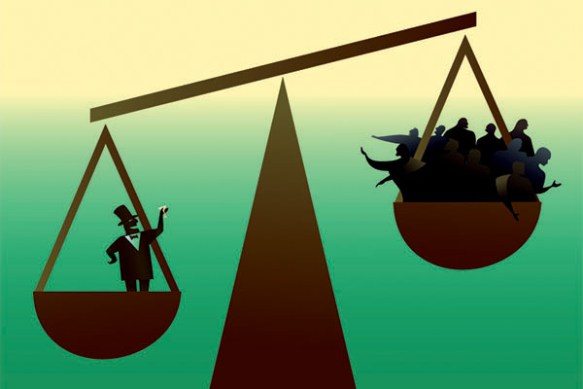
Trump’s new cyber strategy seeks global dominion over internet

Source: RT.com

Setting the global standard for online behavior, preserving American dominance, political and economic interests, punishing ‘malicious actors’ like Russia and China: these are the ambitious goals of the new US cyber-strategy.

The White House published the 40-page document on Thursday afternoon, the first comprehensive cyber strategy in 15 years. The strategy’s core assumption is that the US created the internet and that Washington must maintain the dominant role in defining, shaping and policing cyberspace in much the same way as it does the globe.

All strategies are but broad outlines of general measures and overall objectives, and this one is no different. Beyond merely defending US computer networks – that’s just the first part, devoted to protecting the “American People, the Homeland, and the American Way of Life” – it wants to promote US economic prosperity while advancing influence around the world and achieving “peace through strength” as well.

The Trump administration’s approach to cyberspace is “anchored by enduring American values, such as the belief in the power of individual liberty, free expression, free markets, and privacy,” the strategy says right at the start.

It also takes as an article of faith that Russia, China, Iran, and North Korea use “cyber tools to undermine our economy and democracy, steal our intellectual property, and sow discord in our democratic processes.

Having signed on to this central assertion of Russiagate-peddlers, the Trump administration lays out the ways in which it intends to achieve its pie-in-the-(cyber)sky objectives.

‘Securing US democracy’

The Department of Homeland Security, a vast bureaucracy established after 9/11, is supposed to centralize management and oversight of federal computer networks, with the notable exceptions of those belonging to the Pentagon and the intelligence community. Reforms are supposed to make government networks more secure, reliable and efficient, while federal contracting will drive improvements in both products and services. This is the same process that has produced the F-35, a trillion-dollar clunker.

Those obsessed with seeing Russian hackers behind every voting machine might be interested in page nine, where the strategy proposes to “secure our democracy” by… offering training and risk management to state and local governments “when requested.” Admittedly, there isn’t much more the federal government can do to protect election systems, aside from securing the network infrastructure.

A particularly interesting tidbit here is also that law enforcement will “work with private industry to confront challenges presented by technological barriers, such as anonymization and encryption technologies” to obtain “time-sensitive evidence.” This is basically a rehash of former FBI Director James Comey’s perpetual refrain about the need for backdoor access to encrypted products and services.

The most (in)famous example of this was when the FBI took Apple to court over accessing the San Bernardino terrorist suspect’s iPhone, then hiring an Israeli company to crack the device, only to find… nothing of interest.

Privacy and civil rights advocates will be overjoyed to hear that Trump also wants to “update electronic surveillance and computer crime statutes” to make sure law enforcement can gather more evidence of cyber crimes and “impose appropriate consequences upon malicious cyber actors.”

‘Promoting American prosperity’

The second pillar talks a lot about the US government sponsoring innovation and creating jobs, but its key objective is to “promote the free flow of data across borders” (p.15). And if “repressive regimes” use US-made cybersecurity tools to “undermine human rights,” Washington will expose and counter them.

No word on whether that will apply to Google’s work in China, or Twitter, YouTube and Facebook’s throttling of speech that runs counter to their executives’ politics.

‘Preserving peace through strength’

Pillar three is where things get offensive – literally. Its objective is to “identify, counter, disrupt, degrade, and deter behavior in cyberspace that is destabilizing and contrary to national interests” while preserving US “overmatch.”

In addition to authorizing offensive cyber operations against suspected bad actors, the strategy proceeds from the assumption that the world craves US leadership, and envisions Washington promoting a “framework of responsible state behavior in cyberspace” based on international law and “voluntary non-binding norms.”

A coalition of like-minded states, led by the US would “coordinate and support each other’s responses to significant malicious cyber incidents.”

How? Well, through intelligence sharing, but also “buttressing of attribution claims, public statements of support for responsive actions taken, and joint imposition of consequences against malign actors.”

If that sounds a bit like what happened after the UK accused Russia, without evidence, of using a chemical agent to poison ex-spy Sergei Skripal and his daughter in Salisbury, and the US and other allies just took Whitehall’s word for it… that’s because it does.

‘Advancing US influence’

That leads us to the fourth and final pillar, advancing US influence around the globe. Accusing China not only of wanting to create a closed, censored internet by exporting that model elsewhere, the strategy envisions US evangelizing for a “free and open” internet.

Washington “will continue to work with like-minded countries, industry, civil society, and other stakeholders to advance human rights and Internet freedom globally and to counter authoritarian efforts to censor and influence Internet development,” the strategy says.

Does that mean the State Department intends to challenge the new EU copyright rules that would effectively outlaw memes and charge a “link tax”? Somehow that seems highly… unlikely.

ThinkProgress Censored By Facebook After Cheerleading Facebook Censorship

By Caitlin Johnstone

Source: CaitlinJohnstone.com

In an article last month titled “Facebook announces that fake accounts are now coming not just from Russia”, fauxgressive establishment apologia firm ThinkProgress falsely reported that I have been writing for an outlet that is alleged to be part of an Iranian propaganda campaign. I repeatedly brought this false claim to the attention of Casey Michel, the article’s author, telling him that ten seconds of research or any attempt to contact me would have shown him that the articles published by the outlet in question were just reblogs of earlier publications from my platform, but Michel ignored the many notifications he received from myself and my Twitter followers and went on merrily interacting with other posters. As of this writing, the article remains uncorrected.

In the article, Michel documented Facebook’s heroic efforts to shut down alleged Iranian propaganda outlets, ominously warning his readers that “Russia is by no means the only foreign adversary exploiting social media’s inherent openness.” In other articles for ThinkProgress, Michel is repeatedly seen wagging his finger at Facebook and Twitter for not doing more to censor “Russian propaganda”, and in a July article titled “Facebook says both sides share fake news, defends Infowars’ presence on its platform — Mark Zuckerberg has an interesting way of prioritizing ‘high quality news’” another ThinkProgress author criticized Facebook for not censoring Alex Jones. Jones was censored by Facebook the following month.

So I think it’s understandable that those of us who have been warning of the dangers of internet censorship find it a bit funny to see ThinkProgress now complaining that it has been censored by Facebook.

ThinkProgress reports that its traffic from Facebook has been slashed by eighty percent due to a “fact check” by the Weekly Standard which, through a series of moronic mental contortions, found ThinkProgress guilty of reporting fake news about Brett Kavanaugh of all things. In a twist of irony which would be delicious if it weren’t so disgusting, the Weekly Standard is one of Facebook’s authorized “fact checkers”, and happens to be the brainchild of none other than bloodthirsty psychopath and rehabilitated #Resistance hero Bill Kristol.

ThinkProgress is part of a very large and diverse branch of progressive punditry whose ultimate job is to help centrist empire loyalists feel like leftist revolutionaries, and since 2016 one of the many appalling consequences of this bizarre environment has been the embracing of Iraq-raping neoconservatives like Kristol and Max Boot by Democratic Party loyalists. In a bid to stay relevant despite having been consistently wrong about literally everything in foreign policy for the last two decades, these murderous ghouls have repackaged themselves as a woke, cuddly alternative to the Trumpian faction of the Republican Party, and have been rewarded for their efforts with regular platforms on MSNBC and the Washington Post.

So with ThinkProgress getting censored by Facebook, you really couldn’t ask for a more clear-cut case of reaping what you sow. Nevertheless, it is wrong for anyone to be deprived of political speech, even if much of their political speech consists of attempts to silence the political speech of others. And if there is anything more gross than political speech being regulated by Silicon Valley plutocrats and a NATO psyop factory, it’s political speech being regulated by Silicon Valley plutocrats, a NATO psyop factory, and Bill Kristol. ThinkProgress should not have its audience restricted.

All the “let me help you cheer for the establishment while pretending to oppose it” pundits who celebrated Alex Jones’ coordinated de-platforming last month are falling all over themselves to spin this new development in a way that allows them to feel as though they aren’t being proven wrong day after day after day, but of course they are. Facilitating the censorship of anyone’s speech is facilitating the censorship of your own speech in the long run, and we’re not even having to wait long to see it this time around. In a corporatist system of government, corporate censorship is state censorship; the massive new media corporations being implored to regulate which political speech gets an audience and which doesn’t have extensive ties to secretive government agenciesand a vested interest in maintaining the status quo.

I do not expect ThinkProgress to remain on Facebook’s restricted list for long; the real targets of internet censorship are not partisan outlets which prop up establishment politics and help legitimize America’s two-headed one party system. But that isn’t the point. The point is that Silicon Valley plutocrats, the NATO propaganda firm Atlantic Council, and the Weekly Standard should not be determining who gets an audience in the new media environment and who doesn’t. Nothing that has anything to do with Bill Kristol should ever have any power over anyone. If our choices are between letting people think for themselves and letting the guy who’s always wrong about everything determine what shows up in people’s news feed, the choice is obviously the one which doesn’t involve placing faith in the man who helped deceive America into butchering a million Iraqis.

America’s Debt Dependence Makes It An Easy Economic Target

By Brandon Smith

Source: Alt-Market.com

There is a classic denial tactic that many people use when confronted with negative facts about a subject they have a personal attachment to; I would call it “deferral denial” — or a psychological postponing of reality.

For example, point out the fundamentals on the U.S. economy such as the fact that unemployment is not below 4% as official numbers suggest, but actually closer to 20% when you factor in U-6 measurements including the record 96 million people not counted because they have run out of unemployment benefits. Or point out that true consumer inflation in the U.S. is not around 3% as the Federal Reserve and the Bureau of Labor Statistics claims, but closer to 10% according to the way CPI used to be calculated before the government started rigging the numbers.  For a large part of the public including a lot of economic analysts, there is perhaps a momentary acceptance of the danger, but then an immediate deferral — “Well, maybe things will get worse down the road, 10 or 20 years from now, but it’s not that bad today…”

This is cognitive dissonance at its finest. The economy is in steep decline now, but the mind in denial says “it could be worse,” and this is how you get entire populations caught completely off guard by a financial crash. They could have easily seen the signs, but they desperately wanted to believe that all bad things happen in some illusory future, not today.

There is also another denial tactic I see often in the world of politics and economics, which is what I call “paying it backward.” This is what people do when they have a biased attachment to a person or institution and refuse to see the terrible implications of their actions. For example, when we point out that someone like Donald Trump makes destructive decisions, such as the continued support of Israel and Saudi Arabia in Syria and Yemen, or the reinstatement of funding for the White Helmets in Syria who are tied to ISIS, Trump supporters will often say “Well what about Obama?”

This is a game of shifting accountability. Is one person worse than the other? Possibly. I say give it time and make notes. However, the negative decisions of one politician we don’t like do not diminish the negative decisions of another politician we might like. They should BOTH be held accountable.

The same goes for countries and economies. When an analyst points out that U.S. debt is at historic highs and is utterly unsustainable, people in denial will say “but what about China or Europe?” One does not negate the other and, of course, there are differences that make the situation in the U.S. far more tenuous.

Primarily I am talking about America’s endless dependency on the world reserve status of the U.S. dollar and, beyond that, the steady expansion of debt at low interest rates for the past decade.

The Federal Reserve, once the No. 1 buyer of U.S. debt, has essentially declared it is cutting off support and has begun dumping assets from its balance sheet. The only assets the Fed seems to be maintaining are Mortgage Backed Securities (MBS). All others are being cut, including Treasuries. The American economy is inexorably attached to the idea of our Treasury debt as a safe investment, with our national debt spiking above $21 trillion and many trillions more owed to entitlement programs depending on how you calculate the expenditures, there is a vital need for steady foreign investment in U.S. debt.

But what happens when investment in U.S. debt becomes politically unsavory? Consider the current escalation of the trade war; Many pro-dollar talking heads and cheerleaders have argued in the past that no nation has the guts to dump dollar denominated assets and risk the wrath of American “economic might.” But, already we have seen Russia dump half its U.S. Treasury holdings in a single month and the trade war has only just begun.

Is Russia’s action a sign of things to come? Will other nations like China follow the same strategy? We will have to wait and see, but I believe this is the inevitable outcome of the trade war if it drags on for the rest of the year.

America’s dependent nature, feeding off of foreign investment to support its debts, is a disaster waiting to happen. The concept of economic “recovery” is laughable until this issue is addressed.  And, entering into a trade war while ignoring this blaring weakness is foolish, to say the least.

Beyond the issue of government (taxpayer) debt, let’s not forget about American corporations and consumers. U.S. corporate debt as a percentage of gross domestic product is at historic highs not seen since the housing bubble of 2008 or the dot-com bubble of 2001. There is a distinct difference, though, that makes today’s bubble far more insidious. After years of near-zero interest rates, corporations have become addicted to cheap debt. So much so that they have been borrowing nonstop to support their own stock prices through stock buyback manipulation. But now the Fed is raising interest rates and has committed to expanded hikes in the future.

So, what will corporations do as the cheap debt dries up? Thus far, they are spending the majority of their Trump tax cut still trying to artificially prop up stock process. When this money runs out (and I believe it will much faster than the mainstream thinks), the existing debt of these companies will cost much more to finance, and future borrowing at the same pace will become impossible. This is a threat that is developing now, not in some far-off future.

Eventually, corporations will have to make deep spending cuts rather than borrow. This means mass layoffs, store closures and potential cuts to pensions. And, of course, no more stock buybacks, meaning a market crash will ensue.

What about the U.S. consumer? U.S. consumer debt is set to reach new highs by the end of the year; around $4 trillion by official estimates.  While discussion continues about the alleged “labor shortage” in the U.S., one thing is clear — the jobs that do exist do NOT pay wages that keep up with true inflation. When we see spikes in retail sales in the U.S. and this is applauded as economy recovery, very few mainstream analysts point out that higher retail sales are merely tracking higher inflation.

That is to say, consumers are spending more money on less stuff. Again, this is unsustainable, which is why consumer debt is exploding. Dependency on credit cards and loans is being used by the public to offset much higher costs. But as the Fed raises interest rates, this too will end. Higher Fed rates translate to higher credit rates as well as higher mortgage rates (indirectly). With higher interest payments comes a large drop in overall spending.

As you can see, there are at least two forces at work here that will end all talk of U.S. recovery and which undermine any notion of economic strength — the first is the trade war, which I believe is a massive distraction designed to draw attention away from the actions of international banks and central banks. The second is the Federal Reserve, which has addicted the country to cheap fiat and is now flushing the drugs. We cannot delude ourselves into thinking that this trend will remain slow or that it will not develop into a crash in the near term. We also cannot simply deflect to other countries like China or those in Europe as if their problems are somehow worse and therefore ours are not a concern.

The fact that the health of the US economy is inexorably reliant on the continued foreign demand for the dollar and Treasury debt means any reduction of the dollar’s world reserve status or petro-status, or any decline in treasury purchases, will directly affect the carefully crafted image of America as a stable system.  Without a sudden and aggressive resurgence of domestic production and innovation America has no safety net in the event that our debt addiction is used against us.

The argument that the central bank can jump in at any time to monetize that debt and reduce the danger is also delusional.  This assumes first and foremost that the Fed WANTS to reduce the danger.  I believe they want the danger to increase, not decrease.  Debt monetization also has the added bonus of causing even more inflation as foreign investors dump their dollar denominated assets back into the US.  Monetization is a poison, not a cure.

The crisis is here, now. Seeing and accepting it allows us to prepare accordingly. Denying it as inconsequential sets people up as victims of their own bias and ignorance.

National (In)Security In the United States of Inequality

By Rajan Menon

Source: Unz Review

So effectively has the Beltway establishment captured the concept of national security that, for most of us, it automatically conjures up images of terrorist groups, cyber warriors, or “rogue states.” To ward off such foes, the United States maintains a historically unprecedented constellation of military bases abroad and, since 9/11, has waged wars in Afghanistan, Iraq, Syria, Libya, and elsewhere that have gobbled up nearly $4.8 trillion. The 2018 Pentagon budget already totals $647 billion — four times what China, second in global military spending, shells out and more than the next 12 countries combined, seven of them American allies. For good measure, Donald Trump has added an additional $200 billion to projected defense expenditures through 2019.

Yet to hear the hawks tell it, the United States has never been less secure. So much for bang for the buck.

For millions of Americans, however, the greatest threat to their day-to-day security isn’t terrorism or North Korea, Iran, Russia, or China. It’s internal — and economic. That’s particularly true for the 12.7% of Americans (43.1 million of them) classified as poor by the government’s criteria: an income below $12,140 for a one-person household, $16,460 for a family of two, and so on… until you get to the princely sum of $42,380 for a family of eight.

Savings aren’t much help either: a third of Americans have no savings at all and another third have less than $1,000 in the bank. Little wonder that families struggling to cover the cost of food alone increased from 11% (36 million) in 2007 to 14% (48 million) in 2014.

The Working Poor

Unemployment can certainly contribute to being poor, but millions of Americans endure poverty when they have full-time jobs or even hold down more than one job. The latest figures from the Bureau of Labor Statistics show that there are 8.6 million“working poor,” defined by the government as people who live below the poverty line despite being employed at least 27 weeks a year. Their economic insecurity doesn’t register in our society, partly because working and being poor don’t seem to go together in the minds of many Americans — and unemployment has fallen reasonably steadily. After approaching 10% in 2009, it’s now at only 4%.

Help from the government? Bill Clinton’s 1996 welfare “reform” program concocted in partnership with congressional Republicans, imposed time limits on government assistance, while tightening eligibility criteria for it. So, as Kathryn Edin and Luke Shaefer show in their disturbing book, $2.00 a Day: Living on Almost Nothing in America, many who desperately need help don’t even bother to apply. And things will only get worse in the age of Trump. His 2019 budget includes deep cuts in a raftof anti-poverty programs.

Anyone seeking a visceral sense of the hardships such Americans endure should read Barbara Ehrenreich’s 2001 book Nickel and Dimed: On (Not) Getting By in America. It’s a gripping account of what she learned when, posing as a “homemaker” with no special skills, she worked for two years in various low-wage jobs, relying solely on her earnings to support herself. The book brims with stories about people who had jobs but, out of necessity, slept in rent-by-the-week fleabag motels, flophouses, or even in their cars, subsisting on vending machine snacks for lunch, hot dogs and instant noodles for dinner , and forgoing basic dental care or health checkups. Those who managed to get permanent housing would choose poor, low-rent neighborhoods close to work because they often couldn’t afford a car. To maintain even such a barebones lifestyle, many worked more than one job.

Though politicians prattle on about how times have changed for the better, Ehrenreich’s book still provides a remarkably accurate picture of America’s working poor. Over the past decade the proportion of people who exhausted their monthly paychecks just to pay for life’s essentials actually increased from 31% to 38%. In 2013, 71% of the families that had children and used food pantries run by Feeding America, the largest private organization helping the hungry, included at least one person who had worked during the previous year. And in America’s big cities, chiefly because of a widening gap between rent and wages, thousands of working poor remain homeless, sleeping in shelters, on the streets, or in their vehicles, sometimes along with their families. In New York City, no outlier when it comes to homelessness among the working poor, in a third of the families with children that use homeless shelters at least one adult held a job.

The Wages of Poverty

The working poor cluster in certain occupations. They are salespeople in retail stores, servers or preparers of fast food, custodial staff, hotel workers, and caregivers for children or the elderly. Many make less than $10 an hour and lack any leverage, union or otherwise, to press for raises. In fact, the percentage of unionized workers in such jobs remains in the single digits — and in retail and food preparation, it’s under 4.5%. That’s hardly surprising, given that private sector union membership has fallen by 50% since 1983 to only 6.7% of the workforce.

Low-wage employers like it that way and — Walmart being the poster child for this — work diligently to make it ever harder for employees to join unions. As a result, they rarely find themselves under any real pressure to increase wages, which, adjusted for inflation, have stood still or even decreased since the late 1970s. When employment is “at-will,” workers may be fired or the terms of their work amended on the whim of a company and without the slightest explanation. Walmart announced this year that it would hike its hourly wage to $11 and that’s welcome news. But this had nothing to do with collective bargaining; it was a response to the drop in the unemployment rate, cash flows from the Trump tax cut for corporations (which saved Walmart as much as $2 billion), an increase in minimum wages in a number of states, and pay increases by an arch competitor, Target. It was also accompanied by the shutdown of 63 of Walmart’s Sam’s Club stores, which meant layoffs for 10,000 workers. In short, the balance of power almost always favors the employer, seldom the employee.

As a result, though the United States has a per-capita income of $59,500 and is among the wealthiest countries in the world, 12.7% of Americans (that’s 43.1 million people), officially are impoverished. And that’s generally considered a significant undercount. The Census Bureau establishes the poverty rate by figuring out an annual no-frills family food budget, multiplying it by three, adjusting it for household size, and pegging it to the Consumer Price Index. That, many economists believe, is a woefully inadequate way of estimating poverty. Food prices haven’t risen dramatically over the past 20 years, but the cost of other necessities like medical care (especially if you lack insurance) and housing have: 10.5% and 11.8% respectively between 2013 and 2017 compared to an only 5.5% increase for food.

Include housing and medical expenses in the equation and you get the Supplementary Poverty Measure (SPM), published by the Census Bureau since 2011. It reveals that a larger number of Americans are poor: 14% or 45 million in 2016.

Dismal Data

For a fuller picture of American (in)security, however, it’s necessary to delve deeper into the relevant data, starting with hourly wages, which are the way more than 58%of adult workers are paid. The good news: only 1.8 million, or 2.3% of them, subsist at or below minimum wage. The not-so-good news: one-third of all workers earn less than $12 an hour and 42% earn less than $15. That’s $24,960 and $31,200 a year. Imagine raising a family on such incomes, figuring in the cost of food, rent, childcare, car payments (since a car is often a necessity simply to get to a job in a country with inadequate public transportation), and medical costs.

The problem facing the working poor isn’t just low wages, but the widening gap between wages and rising prices. The government has increased the hourly federal minimum wage more than 20 times since it was set at 25 cents under the 1938 Fair Labor Standards Act. Between 2007 and 2009 it rose to $7.25, but over the past decade that sum lost nearly 10% of its purchasing power to inflation, which means that, in 2018, someone would have to work 41 additional days to make the equivalent of the 2009 minimum wage.

Workers in the lowest 20% have lost the most ground, their inflation-adjusted wages falling by nearly 1% between 1979 and 2016, compared to a 24.7% increase for the top 20%. This can’t be explained by lackluster productivity since, between 1985 and 2015, it outstripped pay raises, often substantially, in every economic sector except mining.

Yes, states can mandate higher minimum wages and 29 have, but 21 have not, leaving many low-wage workers struggling to cover the costs of two essentials in particular: health care and housing.

Even when it comes to jobs that offer health insurance, employers have been shifting ever more of its cost onto their workers through higher deductibles and out-of-pocket expenses, as well as by requiring them to cover more of the premiums. The percentage of workers who paid at least 10% of their earnings to cover such costs — not counting premiums — doubled between 2003 and 2014.

This helps explain why, according to the Bureau of Labor Statistics, only 11% of workers in the bottom 10% of wage earners even enrolled in workplace healthcare plans in 2016 (compared to 72% in the top 10%). As a restaurant server who makes $2.13 an hour before tips — and whose husband earns $9 an hour at Walmart — put it, after paying the rent, “it’s either put food in the house or buy insurance.”

The Affordable Care Act, or ACA (aka Obamacare), provided subsidies to help people with low incomes cover the cost of insurance premiums, but workers with employer-supplied healthcare, no matter how low their wages, weren’t covered by it. Now, of course, President Trump, congressional Republicans, and a Supreme Court in which right-wing justices are going to be even more influential will be intent on poleaxing the ACA.

It’s housing, though, that takes the biggest bite out of the paychecks of low-wage workers. The majority of them are renters. Ownership remains for many a pipe dream. According to a Harvard study, between 2001 and 2016, renters who made $30,000-$50,000 a year and paid more than a third of their earnings to landlords (the threshold for qualifying as “rent burdened”) increased from 37% to 50%. For those making only $15,000, that figure rose to 83%.

In other words, in an ever more unequal America, the number of low-income workers struggling to pay their rent has surged. As the Harvard analysis shows, this is, in part, because the number of affluent renters (with incomes of $100,000 or more) has leapt and, in city after city, they’re driving the demand for, and building of, new rental units. As a result, the high-end share of new rental construction soared from a third to nearly two-thirds of all units between 2001 and 2016. Not surprisingly, new low-income rental units dropped from two-fifths to one-fifth of the total and, as the pressure on renters rose, so did rents for even those modest dwellings. On top of that, in places like New York City, where demand from the wealthy shapes the housing market, landlords have found ways — some within the law, others not — to get rid of low-income tenants.

Public housing and housing vouchers are supposed to make housing affordable to low-income households, but the supply of public housing hasn’t remotely matched demand. Consequently, waiting lists are long and people in need languish for years before getting a shot — if they ever do. Only a quarter of those who qualify for such assistance receive it. As for those vouchers, getting them is hard to begin with because of the massive mismatch between available funding for the program and the demand for the help it provides. And then come the other challenges: finding landlords willing to accept vouchers or rentals that are reasonably close to work and not in neighborhoods euphemistically labelled “distressed.”

The bottom line: more than 75% of “at-risk” renters (those for whom the cost of rent exceeds 30% or more of their earnings) do not receive assistance from the government. The real “risk” for them is becoming homeless, which means relying on shelters or family and friends willing to take them in.

President Trump’s proposed budget cuts will make life even harder for low-income workers seeking affordable housing. His 2019 budget proposal slashes $6.8 billion(14.2%) from the resources of the Department of Housing and Urban Development’s (HUD) by, among other things, scrapping housing vouchers and assistance to low-income families struggling to pay heating bills. The president also seeks to slash funds for the upkeep of public housing by nearly 50%. In addition, the deficits that his rich-come-first tax “reform” bill is virtually guaranteed to produce will undoubtedly set the stage for yet more cuts in the future. In other words, in what’s becoming the United States of Inequality, the very phrases “low-income workers” and “affordable housing” have ceased to go together.

None of this seems to have troubled HUD Secretary Ben Carson who happily ordered a $31,000 dining room set for his office suite at the taxpayers’ expense, even as he visited new public housing units to make sure that they weren’t too comfortable (lest the poor settle in for long stays). Carson has declared that it’s time to stop believing the problems of this society can be fixed merely by having the government throw extra money at them — unless, apparently, the dining room accoutrements of superbureaucrats aren’t up to snuff.

Money Talks

The levels of poverty and economic inequality that prevail in America are not intrinsic to either capitalism or globalization. Most other wealthy market economies in the 36-nation Organization for Economic Cooperation and Development (OECD) have done far better than the United States in reducing them without sacrificing innovation or creating government-run economies.

Take the poverty gap, which the OECD defines as the difference between a country’s official poverty line and the average income of those who fall below it. The United States has the second largest poverty gap among wealthy countries; only Italy does worse.

Child poverty? In the World Economic Forum’s ranking of 41 countries — from best to worst — the U.S. placed 35th. Child poverty has declined in the United States since 2010, but a Columbia University report estimates that 19% of American kids (13.7 million) nevertheless lived in families with incomes below the official poverty line in 2016. If you add in the number of kids in low-income households, that number increases to 41%.

As for infant mortality, according to the government’s own Centers for Disease Control, the U.S., with 6.1 deaths per 1,000 live births, has the absolute worst record among wealthy countries. (Finland and Japan do best with 2.3.)

And when it comes to the distribution of wealth, among the OECD countries only Turkey, Chile, and Mexico do worse than the U.S.

It’s time to rethink the American national security state with its annual trillion-dollar budget. For tens of millions of Americans, the source of deep workaday insecurity isn’t the standard roster of foreign enemies, but an ever-more entrenched system of inequality, still growing, that stacks the political deck against the least well-off Americans. They lack the bucks to hire big-time lobbyists. They can’t write lavish checks to candidates running for public office or fund PACs. They have no way of manipulating the myriad influence-generating networks that the elite uses to shape taxation and spending policies. They are up against a system in which money truly does talk — and that’s the voice they don’t have. Welcome to the United States of Inequality.


Rajan Menon, a TomDispatch regular, is the Anne and Bernard Spitzer Professor of International Relations at the Powell School, City College of New York, and Senior Research Fellow at Columbia University’s Saltzman Institute of War and Peace Studies. He is the author, most recently, of The Conceit of Humanitarian Intervention 

Society Is Made Of Narrative. Realizing This Is Awakening From The Matrix.

By Caitlin Johnstone

Source: CaitlinJohnstone.com

In the movie The Matrix, humans are imprisoned in a virtual world by a powerful artificial intelligence system in a dystopian future. What they take to be reality is actually a computer program that has been jacked into their brains to keep them in a comatose state. They live their whole lives in that virtual simulation, without any way of knowing that what they appear to be experiencing with their senses is actually made of AI-generated code.

Life in our current society is very much the same. The difference is that instead of AI, it’s psychopathic oligarchs who are keeping us asleep in the Matrix. And instead of code, it’s narrative.

Society is made of narrative like the Matrix is made of code. Identity, language, etiquette, social roles, opinions, ideology, religion, ethnicity, philosophy, agendas, rules, laws, money, economics, jobs, hierarchies, politics, government, they’re all purely mental constructs which exist nowhere outside of the mental noises in our heads. If I asked you to point to your knee you could do so instantly and wordlessly, but if I asked you to point to the economy, for example, the closest you could come is using a bunch of linguistic symbols to point to a group of concepts. To show me the economy, you’d have to tell me a story.

Anyone who has ever experienced a moment of mental stillness knows that without the chatter, none of those things are part of your actual present experience. There is no identity, language, etiquette, social roles, opinions, ideology, religion, ethnicity, philosophy, agendas, rules, laws, money, economics, jobs, hierarchies, politics or government in your experience without the mental chatter about those things. There’s not even a “you” anywhere to be found, because it turns out that that’s made of narrative, too.

Without mental narrative, nothing is experienced but sensory impressions appearing to a subject with no clear shape or boundaries. The visual and auditory fields, the sensation of air going in and out of the respiratory system, the feeling of the feet on the ground or the bum in the chair. That’s it. That’s more or less the totality of life minus narrative.

When you add in the mental chatter, however, none of those things tend to occupy a significant amount of interest or attention. Appearances in the visual and auditory field are suddenly divided up and labeled with language, with attention to them determined by whichever threatens or satisfies the various agendas, fears and desires of the conceptual identity construct known as “you”. You can go days, weeks, months or years without really noticing the feeling of your respiratory system or your feet on the ground as your interest and attention gets sucked up into a relationship with society that exists solely as narrative.

“Am I good enough? Am I doing the right thing? Oh man, I hope what I’m trying to do works out. I need to make sure I get all my projects done. If I do that one thing first it might save me some time in the long run. Oh there’s Ashley, I hate that bitch. God I’m so fat and ugly. If I can just get the things that I want and accomplish my important goals I’ll feel okay. Taxes are due soon. What’s on TV? Oh it’s that idiot. How the hell did he get elected anyway? Everyone who made that happen is a Nazi. God I can’t wait for the weekend. I hope everything goes as planned between now and then.”

On and on and on and on. Almost all of our mental energy goes into those mental narratives. They dominate our lives. And, for that reason, people who are able to control those narratives are able to control us.

And they do.

Most people try to exert some degree of control over those around them. They try to influence how those in their family, social and employment circles think of them by behaving and speaking in a certain way. Family members will spend their lives telling other family members over and over again that they’re not as smart/talented/good as they think they are to keep them from becoming too successful and moving away. Romantic partners will be persuaded that they can never leave because no one else will ever love them. To varying degrees, they manipulate the narratives of individuals.

Then there are the people who’ve figured out that they can actually take their ability to influence the way people think about themselves and their world and turn it into personal profit. Cult leaders convince followers to turn over their entire lives in service to them. Advertisers convince consumers that they have a problem or deficiency that can only be solved with This Exciting New Product™. Ambitious rat race participants learn how to climb the corporate ladder by winning favor with the right people and inflicting small acts of sabotage against their competing peers. Ambitious journalists learn that they progress much further in their careers by advancing narratives that favor the establishment upon which the plutocrats who own the big media companies have built their kingdoms. They manipulate the narratives of groups.

And then, there are the oligarchs. The master manipulators. These corporate kings of the modern world have learned the secret that every ruler since the dawn of civilization has known: whoever controls the narratives that are believed by a society is the controller of that society. Identity, language, etiquette, social roles, opinions, ideology, religion, ethnicity, philosophy, agendas, rules, laws, money, economics, jobs, hierarchies, politics, government: all mental constructs which only influence society to the extent that they are believed and subscribed to by a significant majority of the collective. If you have influence over the things that people believe about those mental constructs, you have influence over society. You rule it. The oligarchs manipulate the narratives of entire societies.

This is why there have been book burnings, heretic burnings, and executions for mocking the emperor throughout history: ideas which differ from the dominant narratives about what power is, how money works, who should be in charge and so on are threatening to a ruler’s power in the exact same way that an assassin’s dagger is. At any time, in any kingdom, the people could have decided to take the crown off of their king’s head and place it upon the head of any common beggar and treat him as the new king. And, in every meaningful way, he would be the new king. The only thing preventing this from happening was dominant narratives subscribed to by the society at the time about Divine Right, fealty, loyalty, noble blood and so on. The only thing keeping the crown on a king’s head was narrative.

The exact same thing remains true today; the only thing that has changed is the narratives the public subscribe to. Because of what they are taught in school and what the talking heads on their screens tell them about their nation and their government, most people believe that they live in a relatively free democracy where accountable, temporary power is placed in the hands of a select few based on a voting process informed by the unregulated debate of information and ideas. Completely separate from the government, they believe, is an economy whose behavior is determined by the supply and demand of consumers. In reality, economics, commerce and government are fully controlled by an elite class of plutocrats, who also happen to own the media corporations which broadcast the information about the world onto people’s screens.

Control the narratives of economics and commerce, and you control economics and commerce. Control the narratives about politics and government, and you control politics and government. This control is used by the controllers to funnel power to the oligarchs, in this way effectively turning society into one giant energy farm for the elite class.

But it is possible to wake up from that narrative Matrix.

It isn’t easy, and it doesn’t happen overnight. It takes work. Inner work. And humility. Nobody likes acknowledging that they’ve been fooled, and the depth and extent to which we’ve all been fooled is so deeply pervasive it can be tempting to decide that the work is complete far before one is actually free. Mainstream American liberals think they’re clear-eyed because they can see the propaganda strings being pulled by Fox and Donald Trump, and mainstream American conservatives think they’re clear-eyed because they can see the propaganda strings being pulled by MSNBC and the Democrats, but the propaganda strings on both trace back to the same puppet master. And seeing that is just the beginning.

But, through sincere, humble research and introspection, it is possible to break free of the Matrix and see the full extent to which you and everyone you know has been imprisoned by ideas which have been programmed into social consciousness by the powerful. Not just in our adult lives, but ever since our parents began teaching us how to speak, think and relate to the world. Not just in the modern world, but as far back as history stretches to when the power-serving belief systems of societal structure and religion were promoted by kings and queens of old. All of society, and all of ourselves, and indeed all of the thoughts in our heads, have been shaped by those in power to their benefit. This is the reality that we were born into, and our entire personality structure has been filtered through and shaped by it.

For this reason, escaping from the power-serving propaganda Matrix necessarily means becoming a new creature altogether. The ideas, mental habits and ways of relating to the world which were formed in the Matrix are only useful for moving around inside of it. In order to relate to life outside of the power-promulgated narratives which comprise the very fabric of society, you’ve got to create a whole new operating system for yourself in order to move through life independently of the old programming designed to keep you asleep and controlled.

So it’s hard work. You’ll make a lot of mistakes along the way, just like an infant slowly learning to walk. But, eventually, you get clear of the programming.

And then you’re ready to fight.

Because at some point in this process, you necessarily come upon a deep, howling rage within. Rage at the oligarchic manipulators of your species, yes, but also rage against manipulation in all its forms. Rage against everyone who has ever tried to manipulate your narrative, to make you believe things about yourself or make other people believe things about you. Rage against anyone who manipulates anyone else to any extent. When your eyes are clear manipulation stands out like a black fly on a white sheet of paper, and your entire system has nothing to offer it but revulsion and rejection.

So you set to work. You set to work throwing all attempts to manipulate you as far away from yourself as possible, and expunging anyone from your life who refuses to stop trying to control your narrative. Advertising, mass media propaganda, establishment academia, everything gets purged from your life that wants to pull you back into the Matrix.

And they will try to pull you back in. Because our narratives are so interwoven and interdependent with everyone else’s, and so inseparable from our sense of ourselves, your rejection of the narrative Matrix will present as an existential threat to many of your friends and loved ones. You will see many people you used to trust, many of them very close to you, suddenly transform into a bunch of Agent Smiths right in front of your eyes, and they will shame you, guilt you, throw every manipulation tool they have at you to get you to plug the jack back into your brain. But because your eyes are clear, you’ll see it all. You won’t be fooled.

And then all you’ll want is to tear down the Matrix from its very foundations and plunge its controllers into irrelevance. You will set to work bringing down the propaganda prison that they have built up around your fellow humans in any way you can, bolt by bolt if you have to, because you know from your own experience that we are all capable of so much more than the puny gear-turning existence they’ve got everyone churning away at. You will despise the oligarchs for the obscene sacrilege that they have inflicted upon human majesty out of greed and insecurity, and you will make a mortal enemy of the entire machine that they have used to enslave our species.

And, because their entire kingdom is built upon maintaining the illusion of freedom and democracy, all they will have to fight back against you is narrative. They’ll try to shame you into silence by calling you a conspiracy theorist, they’ll have their media goons and manipulators launch smear campaigns against you, but because your eyes are clear, none of that will work. They’ve got one weapon, and it doesn’t work on you.

And you will set to work waking up humanity from the lie factory, using whatever skills you have, weakening trust in the mass media propaganda machine and opening eyes to new possibilities. And while doing so, you will naturally shine big and bright so the others can find you. And together, we’ll not only smash the narratives that imprison us like a human caterpillar swallowing the narrative bullshit and forcing it into the mouth of the next slave, but we’ll also create new narratives, better narratives, healthier narratives, for ourselves and for each other, about how the world is and what we want it to be.

Because here’s the thing: since it’s all narrative, anything is possible. Those who see this have the ability to plunge toward health and human thriving without any regard for the made-up reasons why such a thing is impossible, and plant seeds of light which sprout in unprecedented directions that never could have been predicted by someone plugged into to establishment how-it-is stories. Together, we can determine how society will be. We can re-write the rules. We are re-writing the rules. It’s begun already.

Out of the white noise of a failing propaganda machine, a new world is being born, one that respects the autonomy of the individual and their right to self-determination. One that respects our right to collaborate on large scales to create beautiful, healthy, helpful systems without the constant sabotage and disruption of a few power-hungry psychopaths who would rather rule than live. One that respects our right to channel human ingenuity into harmony and human thriving instead of warfare and greed. One that respects our right to take what we need, not just to survive but to thrive, and return it to the earth for renewal. One that respects the sovereign boundaries of not just ourselves and each other, but of the planet spaceship that we live in.

Unjack your cortex fully from the fear-soaked narratives of insanity, and let the true beauty of our real world flood your senses. Let the grief of what we have unknowingly done send you crashing to your knees in sorrow. And when you’re ready, stand up. We have much work to do.

Facebook Censorship, Mad Ben Nimmo and the Atlantic Council

By Craig Murray

Source: CraigMurray.org

Facebook has deleted all of my posts from July 2017 to last week because I am, apparently, a Russian Bot. For a while I could not add any new posts either, but we recently found a way around that, at least for now. To those of you tempted to say “So what?”, I would point out that over two thirds of visitors to my website arrive via my posting of the articles to Facebook and Twitter. Social media outlets like this blog, which offer an alternative to MSM propaganda, are hugely at the mercy of these corporate gatekeepers.

Facebook’s plunge into censorship is completely open and admitted, as is the fact it is operated for Facebook by the Atlantic Council – the extreme neo-con group part funded by NATO and whose board includes serial war criminal Henry Kissinger, Former CIA Heads Michael Hayden and Michael Morrell, and George Bush’s chief of Homeland Security Michael Chertoff, among a whole list of horrors.

The staff are worse than the Board. Their lead expert on Russian bot detection is an obsessed nutter named Ben Nimmo, whose fragile grip on reality has been completely broken by his elevation to be the internet’s Witchfinder-General. Nimmo, grandly titled “Senior Fellow for Information Defense at the Atlantic Council’s Digital Forensic Research Lab”, is the go-to man for Establishment rubbishing of citizen journalists, and as with Joseph McCarthy or Matthew Clarke, one day society will sufficiently recover its balance for it to be generally acknowledged that this kind of witch-hunt nonsense was not just an aberration, but a manifestation of the evil it claimed to fight.

There is no Establishment cause Nimmo will not aid by labeling its opponents as Bots. This from the Herald newspaper two days ago, where Nimmo uncovers the secret web of Scottish Nationalist bots that dominate the internet, and had the temerity to question the stitch-up of Alex Salmond.

Nimmo’s proof? 2,000 people had used the hashtag #Dissolvetheunion on a total of 10,000 tweets in a week. That’s five tweets per person on average. In a week. Obviously a massive bot-plot, eh?

When Ben’s great expose for the Herald was met with widespread ridicule, he doubled down on it by producing his evidence – a list of the top ten bots he had uncovered in this research. Except that they are almost all, to my certain knowledge, not bots but people. But do not decry Ben’s fantastic forensic skills, for which NATO and the CIA fund the Atlantic Council. Ben’s number one suspect was definitely a bot. He had got the evil kingpin. He had seen through its identity despite its cunning disguise. That disguise included its name, IsthisAB0T, and its profile, where it called itself a bot for retweets on Independence. Thank goodness for Ben Nimmo, or nobody would ever have seen through that evil, presumably Kremlin-hatched, plan.

No wonder the Atlantic Council advertise Nimmo and his team as “Digital Sherlocks

Nimmo’s track record is simply appalling. In this report for the Atlantic Council website, he falsely identified British pensioner @Ian56789 as a “Russian troll farm”, which led to Ian being named as such by the British government, and to perhaps the most surreal Sky News interview of all time. Perhaps still more remarkably, Nimmo searches for use of the phrase “cui bono?” in reference to the Skripal and fake Douma chemical weapons attacks. Nimmo characterises use of the phrase cui bono as evidence of pro-Assad and pro-Kremlin bots and trolls – he really does. Most people would think to consider cui bono indicates a smattering more commonsense than Nimmo himself displays.

It is at least obvious cui bono from Nimmo’s witchfinding – the capacious, NATO and CIA stuffed pockets of Ben Nimmo himself. That Facebook allows this utterly discredited neo-conservative charlatan the run of its censorship operations needs, given Facebook’s pivotal role in social media intercourse, to concern everybody. The freedom of the internet is under fundamental attack.

Exposing the Giants: The Global Power Elite

Diego Rivera, Man at the Crossroads/Man, Controller of the Universe, 1933

By Robert J. Burrowes

Developing the tradition charted by C. Wright Mills in his 1956 classic The Power Elite, in his latest book, Professor Peter Phillips starts by reviewing the transition from the nation state power elites described by authors such as Mills to a transnational power elite centralized on the control of global capital.

Thus, in his just-released study Giants: The Global Power Elite, Phillips, a professor of political sociology at Sonoma State University in the USA, identifies the world’s top seventeen asset management firms, such as BlackRock and J.P Morgan Chase, each with more than one trillion dollars of investment capital under management, as the ‘Giants’ of world capitalism. The seventeen firms collectively manage more than $US41.1 trillion in a self-invested network of interlocking capital that spans the globe.

This $41 trillion represents the wealth invested for profit by thousands of millionaires, billionaires and corporations. The seventeen Giants operate in nearly every country in the world and are ‘the central institutions of the financial capital that powers the global economic system’. They invest in anything considered profitable, ranging from ‘agricultural lands on which indigenous farmers are replaced by power elite investors’ to public assets (such as energy and water utilities) to war.

In addition, Phillips identifies the most important networks of the Global Power Elite and the individuals therein. He names 389 individuals (a small number of whom are women and a token number of whom are from countries other than the United States and the wealthier countries of Western Europe) at the core of the policy planning nongovernmental networks that manage, facilitate and defend the continued concentration of global capital. The Global Power Elite perform two key uniting functions, he argues: they provide ideological justifications for their shared interests (promulgated through their corporate media), and define the parameters of action for transnational governmental organizations and capitalist nation-states.

More precisely, Phillips identifies the 199 directors of the seventeen global financial Giants and offers short biographies and public information on their individual net wealth. These individuals are closely interconnected through numerous networks of association including the World Economic Forum, the International Monetary Conference, university affiliations, various policy councils, social clubs, and cultural enterprises. For a taste of one of these clubs, see this account of The Links in New York. As Phillips observes: ‘It is certainly safe to conclude they all know each other personally or know of each other in the shared context of their positions of power.’

The Giants, Phillips documents, invest in each other but also in many hundreds of investment management firms, many of which are near-Giants. This results in tens of trillions of dollars coordinated in a single vast network of global capital controlled by a very small number of people. ‘Their constant objective is to find enough safe investment opportunities for a return on capital that allows for continued growth. Inadequate capital-placement opportunities lead to dangerous speculative investments, buying up of public assets, and permanent war spending.’

Because the directors of these seventeen asset management firms represent the central core of international capital, ‘Individuals can retire or pass away, and other similar people will move into their place, making the overall structure a self-perpetuating network of global capital control. As such, these 199 people share a common goal of maximum return on investments for themselves and their clients, and they may seek to achieve returns by any means necessary – legal or not…. the institutional and structural arrangements within the money management systems of global capital relentlessly seek ways to achieve maximum return on investment, and … the conditions for manipulations – legal or not – are always present.’

Like some researchers before him, Phillips identifies the importance of those transnational institutions that serve a unifying function. The World Bank, International Monetary Fund, G20, G7, World Trade Organization (WTO), World Economic Forum (WEF), Trilateral Commission, Bilderberg Group, Bank for International Settlements, Group of 30 (G30), the Council on Foreign Relations and the International Monetary Conference serve as institutional mechanisms for consensus building within the transnational capitalist class, and power elite policy formulation and implementation. ‘These international institutions serve the interests of the global financial Giants by supporting policies and regulations that seek to protect the free, unrestricted flow of capital and debt collection worldwide.’

But within this network of transnational institutions, Phillips identifies two very important global elite policy-planning organizations: the Group of Thirty (which has 32 members) and the extended executive committee of the Trilateral Commission (which has 55 members). These nonprofit corporations, which each have a research and support staff, formulate elite policy and issue instructions for their implementation by the transnational governmental institutions like the G7, G20, IMF, WTO, and World Bank. Elite policies are also implemented following instruction of the relevant agent, including governments, in the context. These agents then do as they are instructed. Thus, these 85 members (because two overlap) of the Group of Thirty and the Trilateral Commission comprise a central group of facilitators of global capitalism, ensuring that ‘global capital remains safe, secure, and growing’.

So, while many of the major international institutions are controlled by nation-state representatives and central bankers (with proportional power exercised by dominant financial supporters such as the United States and European Union countries), Phillips is more concerned with the transnational policy groups that are nongovernmental because these organizations ‘help to unite TCC power elites as a class’ and the individuals involved in these organizations facilitate world capitalism. ‘They serve as policy elites who seek the continued growth of capital in the world.’

Developing this list of 199 directors of the largest money management firms in the world, Phillips argues, is an important step toward understanding how capitalism works globally today. These global power elite directors make the decisions regarding the investment of trillions of dollars. Supposedly in competition, the concentrated wealth they share requires them to cooperate for their greater good by identifying investment opportunities and shared risk agreements, and working collectively for political arrangements that create advantages for their profit-generating system as a whole.

Their fundamental priority is to secure an average return on investment of 3 to 10 percent, or even more. The nature of any investment is less important than what it yields: continuous returns that support growth in the overall market. Hence, capital investment in tobacco products, weapons of war, toxic chemicals, pollution, and other socially destructive goods and services are judged purely by their profitability. Concern for the social and environmental costs of the investment are non-existent. In other words, inflicting death and destruction are fine because they are profitable.

So what is the global elite’s purpose? In a few sentences Phillips characterizes it thus: The elite is largely united in support of the US/NATO military empire that prosecutes a repressive war against resisting groups – typically labeled ‘terrorists’ – around the world. The real purpose of ‘the war on terror’ is defense of transnational globalization, the unimpeded flow of financial capital around the world, dollar hegemony and access to oil; it has nothing to do with repressing terrorism which it generates, perpetuates and finances to provide cover for its real agenda. This is why the United States has a long history of CIA and military interventions around the world ostensibly in defense of ‘national interests’.


Wealth and Power

An interesting point that emerges for me from reading Phillips thoughtful analysis is that there is a clear distinction between those individuals and families who have wealth and those individuals who have (sometimes significantly) less wealth (which, nevertheless, is still considerable) but, through their positions and connections, wield a great deal of power. As Phillips explains this distinction, ‘the sociology of elites is more important than particular elite individuals and their families’. Just 199 individuals decide how more than $40 trillion will be invested. And this is his central point. Let me briefly elaborate.

There are some really wealthy families in the world, notably including the families Rothschild (France and the United Kingdom), Rockefeller (USA), Goldman-Sachs (USA), Warburgs (Germany), Lehmann (USA), Lazards (France), Kuhn Loebs (USA), Israel Moses Seifs (Italy), Al-Saud (Saudi Arabia), Walton (USA), Koch (USA), Mars (USA), Cargill-MacMillan (USA) and Cox (USA). However, not all of these families overtly seek power to shape the world as they wish.

Similarly, the world’s extremely wealthy individuals such as Jeff Bezos (USA), Bill Gates (USA), Warren Buffett (USA), Bernard Arnault (France), Carlos Slim Helu (Mexico) and Francoise Bettencourt Meyers (France) are not necessarily connected in such a way that they exercise enormous power. In fact, they may have little interest in power as such, despite their obvious interest in wealth.

In essence, some individuals and families are content to simply take advantage of how capitalism and its ancilliary governmental and transnational instruments function while others are more politically engaged in seeking to manipulate major institutions to achieve outcomes that not only maximize their own profit and hence wealth but also shape the world itself.

So if you look at the list of 199 individuals that Phillips identifies at the centre of global capital, it does not include names such as Bezos, Gates, Buffett, Koch, Walton or even Rothschild, Rockefeller or Windsor (the Queen of England) despite their well-known and extraordinary wealth. As an aside, many of these names are also missing from the lists compiled by groups such as Forbes and Bloomberg, but their absence from these lists is for a very different reason given the penchant for many really wealthy individuals and families to avoid certain types of publicity and their power to ensure that they do.

In contrast to the names just listed, in Phillips’ analysis names like Laurence (Larry) Fink (Chairman and CEO of BlackRock), James (Jamie) Dimon (Chairman and CEO of JPMorgan Chase) and John McFarlane (Chairman of Barclays Bank), while not as wealthy as those listed immediately above, wield far more power because of their positions and connections within the global elite network of 199 individuals.

Predictably then, Phillips observes, these three individuals have similar lifestyles and ideological orientations. They believe capitalism is beneficial for the world and while inequality and poverty are important issues, they believe that capital growth will eventually solve these problems. They are relatively non-expressive about environmental issues, but recognize that investment opportunities may change in response to climate ‘modifications’. As millionaires they own multiple homes. They attended elite universities and rose quickly in international finance to reach their current status as giants of the global power elite. ‘The institutions they manage have been shown to engage in illegal collusions with others, but the regulatory fines by governments are essentially seen as just part of doing business.’

In short, as I would characterize this description: They are devoid of a legal or moral framework to guide their actions, whether in relation to business, fellow human beings, war or the environment and climate. They are obviously typical of the elite.

Any apparent concern for people, such as that expressed by Fink and Dimon in response to the racist violence in Charlottesville, USA in August 2017, is simply designed to promote ‘stability’ or more precisely, a stable (that is, profitable) investment and consumer climate.

The lack of concern for people and issues that might concern many of us is also evident from a consideration of the agenda at elite gatherings. Consider the International Monetary Conference. Founded in 1956, it is a private yearly meeting of the top few hundred bankers in the world. The American Bankers Association (ABA) serves as the secretariat for the conference. But, as Phillips notes: ‘Nothing on the agenda seems to address the socioeconomic consequences of investments to determine the impacts on people and the environment.’ A casual perusal of the agenda at any elite gathering reveals that this comment applies equally to any elite forum. See, for example, the agenda of the recent WEF meeting in Davos. Any talk of ‘concern’ is misleading rhetoric.

Hence, in the words of Phillips: The 199 directors of the global Giants are ‘a very select set of people. They all know each other personally or know of each other. At least 69 have attended the annual World Economic Forum, where they often serve on panels or give public presentations. They mostly attended the same elite universities, and interact in upperclass social setting[s] in the major cities of the world. They all are wealthy and have significant stock holdings in one or more of the financial Giants. They are all deeply invested in the importance of maintaining capital growth in the world. Some are sensitive to environmental and social justice issues, but they seem to be unable to link these issues to global capital concentration.’

Of course, the global elite cannot manage the world system alone: the elite requires agents to perform many of the functions necessary to control national societies and the individuals within them. ‘The interests of the Global Power Elite and the TCC are fully recognized by major institutions in society. Governments, intelligence services, policymakers, universities, police forces, military, and corporate media all work in support of their vital interests.’

In other words, to elaborate Phillips’ point and extend it a little, through their economic power, the Giants control all of the instruments through which their policies are implemented. Whether it be governments, national military forces, ‘military contractors’ or mercenaries (with at least $200 billion spent on private security globally, the industry currently employs some fifteen million people worldwide) used both in ‘foreign’ wars but also likely deployed in future for domestic control, key ‘intelligence’ agencies, legal systems and police forces, major nongovernment organizations, or the academic, educational, ‘public relations propaganda’, corporate media, medical, psychiatric and pharmaceutical industries, all instruments are fully responsive to elite control and are designed to misinform, deceive, disempower, intimidate, repress, imprison (in a jail or psychiatric ward), exploit and/or kill (depending on the constituency) the rest of us, as is readily evident.


Defending Elite Power

Phillips observes that the power elite continually worries about rebellion by the ‘unruly exploited masses’ against their structure of concentrated wealth. This is why the US military empire has long played the role of defender of global capitalism. As a result, the United States has more than 800 military bases (with some scholars suggesting 1,000) in 70 countries and territories. In comparison, the United Kingdom, France, and Russia have about 30 foreign bases. In addition, US military forces are now deployed in 70 percent of the world’s nations with US Special Operations Command (SOCOM) having troops in 147 countries, an increase of 80 percent since 2010. These forces conduct counterterrorism strikes regularly, including drone assassinations and kill/capture raids.

‘The US military empire stands on hundreds of years of colonial exploitation and continues to support repressive, exploitative governments that cooperate with global capital’s imperial agenda. Governments that accept external capital investment, whereby a small segment of a country’s elite benefits, do so knowing that capital inevitably requires a return on investment that entails using up resources and people for economic gain. The whole system continues wealth concentration for elites and expanded wretched inequality for the masses….

‘Understanding permanent war as an economic relief valve for surplus capital is a vital part of comprehending capitalism in the world today. War provides investment opportunity for the Giants and TCC elites and a guaranteed return on capital. War also serves a repressive function of keeping the suffering masses of humanity afraid and compliant.’

As Phillips elaborates: This is why defense of global capital is the prime reason that NATO countries now account for 85 percent of the world’s military spending; the United States spends more on the military than the rest of the world combined.

In essence, ‘the Global Power Elite uses NATO and the US military empire for its worldwide security. This is part of an expanding strategy of US military domination around the world, whereby the US/ NATO military empire, advised by the power elite’s Atlantic Council, operates in service to the Transnational Corporate Class for the protection of international capital everywhere in the world’.

This entails ‘further pauperization of the bottom half of the world’s population and an unrelenting downward spiral of wages for 80 percent of the world. The world is facing economic crisis, and the neoliberal solution is to spend less on human needs and more on security. It is a world of financial institutions run amok, where the answer to economic collapse is to print more money through quantitative easing, flooding the population with trillions of new inflation-producing dollars. It is a world of permanent war, whereby spending for destruction requires further spending to rebuild, a cycle that profits the Giants and global networks of economic power. It is a world of drone killings, extrajudicial assassinations, death, and destruction, at home and abroad.’


Where is this all heading?

So what are the implications of this state of affairs? Phillips responds unequivocally: ‘This concentration of protected wealth leads to a crisis of humanity, whereby poverty, war, starvation, mass alienation, media propaganda, and environmental devastation are reaching a species-level threat. We realize that humankind is in danger of possible extinction’.

He goes on to state that the Global Power Elite is probably the only entity ‘capable of correcting this condition without major civil unrest, war, and chaos’ and elaborates an important aim of his book: to raise awareness of the importance of systemic change and the redistribution of wealth among both the book’s general readers but also the elite, ‘in the hope that they can begin the process of saving humanity.’ The book’s postscript is a ‘A Letter to the Global Power Elite’, co-signed by Phillips and 90 others, beseeching the elite to act accordingly.

‘It is no longer acceptable for you to believe that you can manage capitalism to grow its way out of the gross inequalities we all now face. The environment cannot accept more pollution and waste, and civil unrest is everywhere inevitable at some point. Humanity needs you to step up and insure that trickle-down becomes a river of resources that reaches every child, every family, and all human beings. We urge you to use your power and make the needed changes for humanity’s survival.’

But he also emphasizes that nonviolent social movements, using the Universal Declaration of Human Rights as a moral code, can accelerate the process of redistributing wealth by pressuring the elite into action.


Conclusion

Peter Phillips has written an important book. For those of us interested in understanding elite control of the world, this book is a vital addition to the bookshelf. And like any good book, as you will see from my comments both above and below, it raised more questions for me even while it answered many.

As I read Phillips’ insightful and candid account of elite behavior in this regard, I am reminded, yet again, that the global power elite is extraordinarily violent and utterly insane: content to kill people in vast numbers (whether through starvation or military violence) and destroy the biosphere for profit, with zero sense of humanity’s now limited future. See ‘The Global Elite is Insane Revisited’ and ‘Human Extinction by 2026? A Last Ditch Strategy to Fight for Human Survival’ with more detailed explanations for the violence and insanity here: Why Violence? and Fearless Psychology and Fearful Psychology: Principles and Practice.

For this reason I do not share his faith in moral appeals to the elite, as articulated in the letter in his postscript. It is fine to make the appeal but history offers no evidence to suggest that there will be any significant response. The death and destruction inflicted by elites is highly profitable, centuries-old and ongoing. It will take powerful, strategically-focused nonviolent campaigns (or societal collapse) to compel the necessary changes in elite behavior. Hence, I fully endorse his call for nonviolent social movements to compel elite action where we cannot make the necessary changes without their involvement. See ‘A Nonviolent Strategy to End Violence and Avert Human Extinction’ and Nonviolent Campaign Strategy.

I would also encourage independent action, in one or more of several ways, by those individuals and communities powerful enough to do so. This includes nurturing more powerful individuals by making ‘My Promise to Children’, participating in ‘The Flame Tree Project to Save Life on Earth’ and signing the online pledge of ‘The People’s Charter to Create a Nonviolent World’.

Fundamentally, Giants: The Global Power Elite is a call to action. Professor Peter Phillips is highly aware of our predicament – politically, socially, economically, environmentally and climatically – and the critical role played by the global power elite in generating that predicament.

If we cannot persuade the global power elite to respond sensibly to that predicament, or nonviolently compel it to do so, humanity’s time on Earth is indeed limited.


Biodata: Robert J. Burrowes has a lifetime commitment to understanding and ending human violence. He has done extensive research since 1966 in an effort to understand why human beings are violent and has been a nonviolent activist since 1981. He is the author of ‘Why Violence?’ http://tinyurl.com/whyviolence His email address is flametree@riseup.net and his website is here. http://robertjburrowes.wordpress.com

Robert J. Burrowes
P.O. Box 68
Daylesford, Victoria 3460
Australia

Email: flametree@riseup.net

Websites:
Nonviolence Charter
Flame Tree Project to Save Life on Earth
‘Why Violence?’
Feelings First
Nonviolent Campaign Strategy
Nonviolent Defense/Liberation Strategy
Anita: Songs of Nonviolence
Robert Burrowes
Global Nonviolence Network

Censorship in America: The New Normal

By Stephen Lendman

Source: StephenLendman.org

Dark forces in America threaten speech, media, and academic freedoms.

Social media, Google, and other tech giants are complicit in a campaign to suppress content conflicting with the official narrative.

What’s increasingly going on is the hallmark of totalitarian rule – controlling the message, eliminating what conflicts with it, notably on major geopolitical issues.

Losing the right of free expression endangers all others. When truth-telling and dissent are considered threats to national security, free and open societies no longer exist – the slippery slope where America and other Western societies are heading.

The following headlines should scare everyone:

NYT: “Facebook Says It Removed Pages Related to ‘Inauthentic Behavior’ ”

Washington Post: “Sprawling Iranian influence operation globalizes tech’s war on disinformation”

Wall Street Journal: “Facebook Pulls Accounts Peddling Misinformation From Iran, Russia”

CNN: “Facebook takes down 652 pages after finding disinformation campaigns run from Iran and Russia”

The UK owned and controlled BBC: “Facebook and Twitter remove accounts linked to Russia and Iran campaigns”

Other Western major media had similar headlined reports. On Tuesday, Facebook CEO Mark Zuckerberg said hundreds of pages on its platform were removed for exhibiting signs of “ties to state-owned media” – including “activities the US government (said are) linked to Russian military intelligence” and Iran.

Facebook deleted accounts based on information supplied by the CIA, US State and Treasury Departments, acting as an agent for the imperial state.

The same goes for Twitter, Google, YouTube, Microsoft, and other tech giants – in cahoots with Washington against the most fundamental of fundamental freedoms.

Facebook removed 652 pages. Twitter suspended 284 accounts for engaging in what it called “coordinated manipulation” – code language for truth-telling dark forces in Washington want suppressed.

Google removed Google Plus and YouTube content – based on information supplied by the CIA-funded FireEye cybersecurity firm, Langley calling the company a “critical addition to our strategic investment portfolio for security technologies.”

According to Facebook, pages allegedly connected to Russia, Iran, and other US sanctioned countries are targeted for removal, claiming some seek to influence US midterm elections – providing no evidence proving any of the targeted pages were involved in illegal or improper activities.

FB allied with the Atlantic Council (AC) – a neocon infested enemy of world peace and stability think tank, promoting NATO’s killing machine, America’s military, industrial, security, major media complex, and Ziofascist Israel.

FB partnered with AC’s imperial geopolitical agenda to censor material falsely called “foreign interference” – AC’s Digital Forensic Research Lab involved in so-called “fact-checking,” code language for flagrant censorship.

The CIA-linked FireEye said so-called “inauthentic behavior” targeted for removal includes “anti-Saudi, anti-Israeli, and pro-Palestinian themes, as well as support for specific US policies favorable to Iran, such as the US-Iran nuclear deal (JCPOA).”

In cahoots with dark forces in Washington, Microsoft’s so-called Digital Crimes Unit shut down 84 websites it claimed were associated with Russian hackers – no evidence cited proving it.

Its Microsoft AccountGuard initiative offers free cybersecurity protection to US political candidates and campaign offices at the federal, state and local levels.

No evidence suggests any threats to America’s political process exists – just invented ones to bash Russia.

The new normal in America and other Western societies considers anything conflicting with the official narrative on vital issues “inauthentic behavior.”

Are these nations heading toward eliminating the right of free expression altogether- falsely claiming it’s to protect national security?

It appears to be what’s going on in the West – the possible elimination of free and open societies already gravely threatened.